From the FasterSkier archive — posts syndicated from athletes’ and coaches’ own blogs between 2004 and 2012, kept online as published. Current coverage is at fasterskier.com.

Tag: Josef Wenzl

  • An Exhausted Harvey Barely Misses Lahti Final; Hamilton Races Through Chest Cold for 20th

    An Exhausted Harvey Barely Misses Lahti Final; Hamilton Races Through Chest Cold for 20th

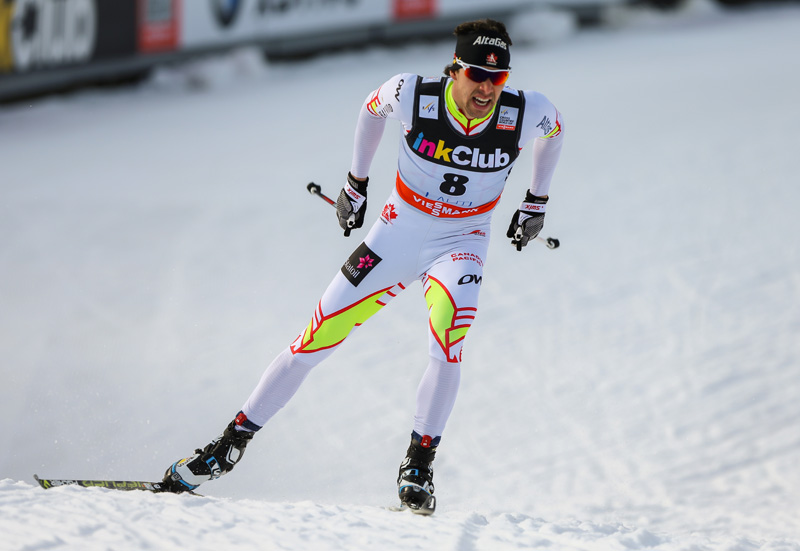
    Canadian Alex Harvey races to a 14t place finish in the men's 1.5 k freestyle qualifier in Lahti, Finland. Harvey would later finish seventh overall after a small collision in his semifinal. (Photo: Fischer/Nordic Focus)
    Canadian Alex Harvey races to a 14th in the men’s 1.5 k freestyle qualifier in Lahti, Finland. Harvey would later finish seventh overall after a small collision in his semifinal. (Photo: Fischer/Nordic Focus)

    It was a long and tiring journey to Lahti, Finland for Alex Harvey. After suffering cramps in the Olympic 50 k, excessive travel, a lack of training gear, and general exhaustion, the Quebec native bounced back for a top ten finish in Saturday’s World Cup 1.5 k freestyle sprint, placing seventh.

    “I was a bit tired,” said the 25-year-old in a phone interview after his finish. “My quads were just sore from cramping in the 50 k and rough travel days and running a bunch. It’s just a bad combo. I was pretty confident with my shape, but I didn’t really know [what would happen]. I’m happy to be back in the top ten.”

    After wrapping up Olympic racing in Russia less than a week ago, Harvey and the rest of the Canadian squad embarked on their journey to Finland, which ended up being “super long.” Their bags were checked all the way through to Helsinki, and when they were forced to spend the night in Frankfurt they were left without their essential gear. Arriving in Lahti late on Wednesday, they only had time to go for a quick run.

    “I’ve done a lot of running since the 50 k and my legs are pretty sore from running that much,” said Harvey.

    But the Canadian didn’t let the exhaustion damper his desire to succeed. Heading into Saturday’s race, Harvey said he was “hungry” for a top finish.

    Harvey, who finished 14th in the qualification round skied smoothly through the quarterfinals, finishing second behind Russia’s Alexei Petukhov for an automatic advancement to the semifinals.

    In the semifinals he looked just as strong headed into the finish as part of a three-way battle for second with Swedish teammates Teodor Peterson and Emil Jönsson. That was when misfortune got the best of the Canadian.

    Peterson, who was skiing behind Jönsson, stepped on his teammates pole. With a broken pole and the prospects of advancing slim-to-none, Jönsson did what any teammate would have done: moved out of the way for Peterson. Unfortunately for Harvey, this meant that Swede headed in his direction, almost causing a hard collision.

    “I thought for sure I was going to crash,” said Harvey. “I went out of balance and that’s how I missed the way to the final. I was coming with a lot of speed into that final corner, but even after that stumble I was able to reaccelerate and hold of [Josef] Wenzl who was coming up.” Finishing third in his heat, his time wasn’t fast enough to earn him a position as a lucky-loser in the final.

    No one will know whether or not Harvey would have advanced without the hindrance, but Harvey had no ill feelings toward the Swede who prevented him from finding out.

    “I think for Jönsson it was the right thing to do. He was out of the race with a broken pole and his teammate was right behind him. You can’t stay there and let your teammate get blocked so you’ve got to go out, but I’m the one who got skied on,” said Harvey.

    Overall, Harvey was “super happy” to see that he could perform well even while fighting fatigue, adding with a laugh that “when you are on the top ten in the World Cup you get paid, and anytime you get paid to do cross country ski racing it can’t be a bad day.”
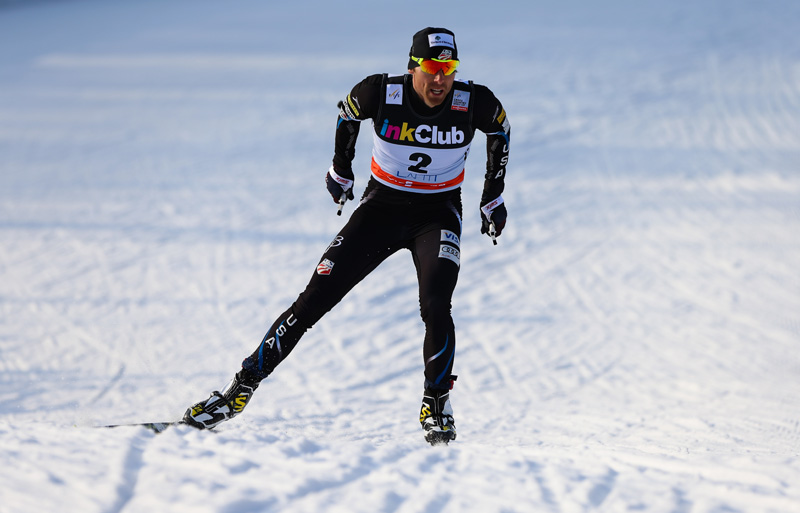
    Andy Newell of the U.S. Ski Team skied to a 23rd place in Saturday's qualification round of the 1.5 k freestyle sprint in Lahti, Finland. After loosing both a ski and a pole in his quarterfinal, the 25-year-old finished 25th. (Photo: Fisher/NordicFocus)
    Andy Newell of the U.S. Ski Team skied to a 23rd place in Saturday’s qualification round of the 1.5 k freestyle sprint in Lahti, Finland. After loosing both a ski and a pole in his quarterfinal, the 29-year-old finished 28th. (Photo: Fisher/NordicFocus)

    Two other North Americans qualified for the finals with the U.S. Ski Team duo of Andy Newell and Simi Hamilton finishing 23rd and 29th.

    Hamilton, who was dealing with a chest cold, wasn’t sure he would enter today’s race but woke up Saturday morning deciding to give the sprint a shot.

    “Maybe not the smartest call, but I’m feeling somewhat okay now and just looking forward to getting totally healthy before Drammen,” wrote Hamilton after ending his day in 20th position. “I knew after my qualifier that I had very few matches to burn for the quarter, so I just tried to stay relaxed and conserve energy, especially after I got tangled with another racer right out of the start lanes. I fought hard knowing that places for points count right now as World Cup Finals gets closer.”

    Newell, who is also recovering from illness, had some trouble in his quarterfinal after attempting to avoid a collision with Russian Nikita Kriukov at the start he bumped into a Norwegian. Loosing both a pole and a ski in the process, Newell was taken out of contention from the very beginning. With the setback, Newell finished 28th overall.

    “It’s really frustrating when stuff like that happens especially toward the end of the season when we’re fighting for world cup points. So I had to ski back to get my missing ski and finish off the heat,” Newell wrote in an email.

    Newell, who suffered from a debilitating sickness in the men’s relay “bounced back a couple days ago,” according the U.S. Ski Team women’s coach Matt Whitcomb. Even with the status of his health improving, it’s been a hard few week for the American sprinting veteran.

    “It’s been a little bit of a tough go for a guy that’s ready to rip,” said Whitcomb.

    World Cup action in Lahti continues Sunday with a 15 k freestyle for the men.

    Men’s 1.5 k freestyle sprint results

  • Hattestad Flawless in Olympic Tune-Up Win

    Ola Vigen Hattestad (NOR) celebrates his victory in Toblach, Italy.  Photo: flyingpointroad.com
    Ola Vigen Hattestad (NOR) celebrates his victory in Toblach, Italy. Photo: flyingpointroad.com

    It is difficult to pick a favorite in the men’s Olympic sprint, but Norwegian Ola Vigen Hattestad made a strong case for that designation, winning the final pre-Games tune-up in Toblach, Italy.

    Teammate Eirik Brandsdal finished second and German Josef Wenzl rounded out the podium in third.

    “I was told after Norwegian Championships that I wasn’t ready for Sochi but I think today I showed that I am,” Hattestad said after winning each of his heats in the skate event.

    The 2009 World Champion in the skate sprint, Hattestad does not have an Olympic medal, placing ninth in 2006 and a heart-breaking fourth in 2010. He famously gave up his spot in the team sprint in 2010, missing another shot at Olympic hardware.

    The Toblach course, with a one steep climb, specs out as relatively flat compared to Sochi, but Hattestad showed top form against a robust field that was missing only a handful of the World’s best sprinters.

    Hattestad qualified in seventh, just over a second behind the fastest man, Jovian Hediger of Switzerland.

    He then proceeded to execute flawlessly in the quarterfinals and semis, maintaining position toward the front while remaining patient, and taking advantage of the draft on a long gradual descent through the backstretch in the stadium.

    In the quarters he waited until halfway down the stretch before stepping out from behind Roman Schaad of Switzlerand. Driving a strong no-pole skate, Hattestad blew by the leader to take the lead around the hairpin into the home straight to advance easily.

    The semis played out in nearly identical fashion with merely a change of Swiss leader. This time it was Jovian Hediger who led Hattestad down the final descent. Once again the Norwegian stepped out, and once again he slingshotted into first, and skied away to a spot in the finals.

    In both the quarters and semis, Wenzl followed Hattestad drafting his lanky competitor to set up a clear run to the line. In the first heat, Wenzl lost out to Schaad but advanced as a lucky loser, while in the semis he bested Brandsdal in a photo finish, leaving the Norwegian to wait for a lucky loser slot in the finals.

    In the final, Hattestad gambled on his strength and shifted strategies, moving to the lead early. He held his position over the last climb and into the descent, a bold move given his own success following in earlier heats.

    In the women’s race, completed just minutes earlier, American Kikkan Randall employed similar tactics with unfortunate results. Randall was swept up by the pack and pinched out around the last corner. It was Marit Bjørgen (NOR) and Denise Herrmann (GER) in the top two spots — women who were bringing up the rear entering the descent.

    Hattestad, however, opted to be aggressive, and at the crux, did what he needed to do. Over the top of the final climb, he gained a small gap, just enough space to break the draft. He was first into a no-pole skate as the terrain flattened, and Brandsdal, leading the chasers, had no chance of closing.

    Afterward Hattestad said that he executed as planned, knowing he was “strong enough to lead” in the finals.

    Brandsdal and Wenzl duked it out for second, with Wenzl showing no disappointment in his third place result.

    The German jumped across the line, letting out a yell that matched Hattestad’s finishing celebration.

    “This was a really great result for me today,” Wenzl said at the post-race press-conference. “I have been quite strong this season and I am glad that it continues. Sochi will be difficult. It will be a much harder course than today so we will see what happens. But today was great.”

    He earned his second podium of the season while making his third finals appearance — all in freestyle sprints.

    Brandsdal was also pleased, seeing no shame in losing out to Hattestad.

    “Ola was very strong but I did my best,” Brandsdal said. “I think my shape is where it should be and it feels good heading to Sochi.”

    Brandsdal will be making his Olympic debut, while Wenzl will be looking to improve upon his thirty-first in the classic sprint at the 2010 Games.

    Of Note:

    – Just 4.01 seconds separated the first and thirtieth qualifiers.

    – Great Brittain’s Andrew Musgrave was the first man out, missing the heats by .07 seconds.

    – Musgrave was followed by Dario Cologna (SUI) who appears in good form after revering from an injury.

    – Hediger crashed in the finals, tripping entering the last hill. It appeared to be an unforced error. Despite the crash, Hediger still set a personal best, placing sixth.

    – Emil Joensson (SWE) crashed in the semis after qualifying second. A favorite in the 2010 Olympic sprint, Joennson failed to make the finals in Vancouver.

    – Several Russian Olympic distance skiers, including Alexander Legkov and Illia Chernousov, started the sprint. Legkov was 58th and Chernousov 63rd.

    Results

    Eirik Brandsdal (NOR), Ola Vigen Hattestad (NOR) and Josef Wenzl (GER) claim the podium in Toblach.  Photo: Fischer / Nordic Focus.
    Eirik Brandsdal (NOR), Ola Vigen Hattestad (NOR) and Josef Wenzl (GER) claim the podium in Toblach. Photo: Fischer / Nordic Focus.
  • Harvey Claims Victory, Newell Falls for Sixth in Szklarska Poręba

    Harvey Claims Victory, Newell Falls for Sixth in Szklarska Poręba

    Alex Harvey (CAN) Celebrates his win in Saturday's 1.5 k sprint. Harvey, who claimed his first ever world cup victory on the Polish course, qualified seventh and skied a tactical and smart race to take the win (Photo: Fischer/Nordic Focus)
    Alex Harvey (CAN) celebrates his win in Saturday’s 1.5 k sprint. Harvey, who claimed his first ever world cup victory on the Polish course, qualified seventh and skied a tactical and smart race to take the win (Photo: Fischer/Nordic Focus)

    Consistent improvement is the theme of Canadian Alex Harvey’s 2013/2014 racing season. Glancing at his results from the beginning of the season in November, a series of 30’s and 40’s scatter the page. When you look at the last few weeks, however, he’s been consistently in the top ten.

    The upward trend has continued in Szklarska Poreba, Poland, where he claimed victory in the World Cup freestyle sprint.

    The victory marks a first for the Quebec native. Despite the fact that Harvey has a world championship in the team sprint under his belt from 2011 with Devon Kershaw, and has claimed multiple stage World Cup victories, Saturday’s win marks the first time the 25-year-old has sat atop the podium in an individual World Cup race.

    To earn his victory, Harvey bested Josef Wenzl of Germany and Baptiste Gros of France, who placed second and third. Frenchman Cyrill Gaillard and Martin Jaeger of Switzerland rounded out the top five.

    Canadian Alex Harvey crosses the finish line ahead of German Josef Wenzl for the win in Saturday’s 1.5 k freestyle sprint. (Photo: Fischer/Nordic Focus)

    The 1.5 k course in Szklarska Preba was fast and icy, making for a dangerous day. In a men’s race filled with sprint specialists, the heats were bound to tight. Racers not only had to maneuver the tactics of the pack, but also had to stay on their feet.

    Despite the hazardous conditions, Harvey knew that he had the fitness to take it all the way.  All he need to do was get into the front to stay away from the messy fray the ensued behind him.

    “The conditions were getting icy and a little dangerous so I knew I had to get out in front. I wasn’t afraid of being tired because I knew I was in great shape so my tactic was to stay out in front today. I had no choice,” said Harvey in a press release.

    While Harvey was able to get out in front in the A-final, he was not as fortunate in his semifinal. After a relaxed start he found himself at the back of the pack, unable to maneuver to the front. Going around the last corner into the finish he was stuck behind the three skiers in front of him.

    In an attempt to get around them he swerved into an adjacent lane. The move did him no good, as he finished fourth in the semifinal, two spots away from automatic qualification. Fortunately for Harvey, his semifinal heat was faster that the second and he was able to advance to the A-final as lucky looser.

    Justin Wadsworth, Canadian Head Coach, believed that Harvey’s ability to learn is what earned him a spot on the podium today.

    “He (Harvey) is really good tactically and he learns from his mistakes. In the semifinal, he saw he got out and had a slow start and didn’t fight for a position and was caught in the back of the group the whole way,” Wadsworth said in an interview. “He easily could have given up a position or two out of the start but he really pushed hard on the side to move up.”

    German Josef Wenzl qualified sixth and finished second in the 1.5 k sprint in Szklarska Poreba. (Photo: Fischer/Nordic Focus)

    From the start, Harvey went head-to-head with Gros on the only climb of the course. The Frenchman gained a slight gap, but Harvey knew that he didn’t need to worry as he had some of the fastest skis on the course.

    “Alex knew that the skis were super fast. Everyone said we had the fastest skis out there; us and the U.S.,” said Wadsworth. “You need those kind of skis on those fast downhill finishes.”

    Coming into the finish, Harvey and Wenzl sped past Gros and rocketed into the stadium. Harvey gained the lead, and Wenzel hopped in the lane behind him. From there, Harvey’s first career World Cup was his for the taking.

    Behind Harvey was American Andy Newell, who earlier in the day had placed second in the qualification round. Newell had been feeling optimistic about his chances all day, and after lunging through the legs of Wenzl in his semifinal to take second position he advanced to the A-final.

    “I was pretty fired up going into today and knew it was a good chance to be on the podium.” Newell said in an interview. “ But it was a very nerve-racking sprint course out there because of the way it plays out because of the tactics.”

    Tactically, Newell had been skiing extremely well all day, but in the last S-turn leading into the finish disaster struck. In a risky move, Newell tried to edge around Gros to claim a better position in the final stretch, but there was not enough space.

    Newell then hit a V-board, overcorrected, and bumped into Gros.

    “It was too much of a gamble on my part. I had been feeling good in the finish stretches all day and I knew I could have passed those guys. At that point in the race I felt like I had a podium basically wrapped up and I shouldn’t have made that gutsy pass like that. It was kind of dumb.”

    After bumping into Gros, Newell fell hard on the corner, and was knocked out of contention.

    “It’s really frustrating. I haven’t been that angry or upset after a race in a long time,” he said of his feelings post-race.

    Despite the disappointing, result Newell is keeping his sprits high and sights set on the future.

    “It’s always good to be racing heats,” the veteran racer said of his experience racing today. “I felt like I had a good finish speed today and good lunges. It’s great to be able to practice that stuff. Things are looking good. We have one more skate sprint before the Olympics so I just keep hoping to improve on that.“

    The men's podium in the 1.5 k sprint in Szklarska
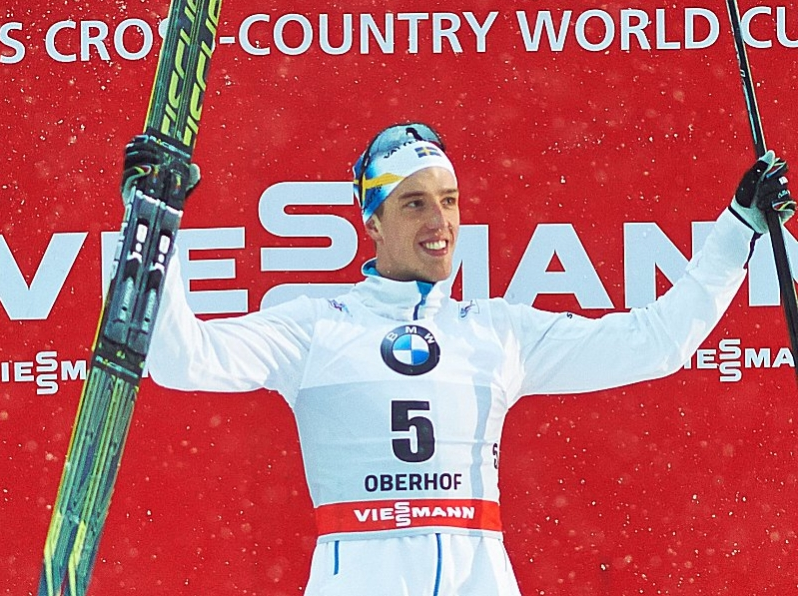
    The men’s podium in the 1.5 k sprint in Szklarska Poreba, Poland. (l-r) Baptiste Glos (FRA), Alex Harvey (CAN), and Josef Wenzl (GER). (Photo: Fischer/Nordic Focus)

    Harvey was also focused on chat he could take away from the day’s race. The Canadian, who was the third in the Tour de Ski sprint rankings, was happy with the win because it validated the success he found in the Tour. “It is great to get another podium. I felt pretty good coming back from the Tour de Ski, but you just never know. This race confirms things for me,” said Harvey in a press release.

    While the Norway, Sweden, and Finland were all holding their respective national championships and thus had no racers in Saturday’s World Cup, Harvey felt that the competition was just as competitive as usual. “The Russians have been the ones to beat in sprinting and I was able to do that today,” he said.

    Wadsworth also felt some validation from the result, as the entire Canadian team had a very slow start to this year’s ski season.

    “Our whole goal this year was to build towards Sochi and not worry too much about the early season. A lot of the other teams were trying to qualify people. We put the training in, and I think it’s starting to show,” he said.

    It certainly appears that the Canadian training is paying off in such an important Olympic year, with Perianne Jones finishing tenth in the women’s race, and Devon Kershaw making the quarterfinals to finish 18th.

    “[Perianne Jones] had a good result today. Devon [Kershaw] actually felt good but just got in some traffic, but he said it’s the best he’s felt all year. It’s starting to come around,” said Wadsworth.

    With the Olympics looming, many teams are focused on making sure that their teams are ready, both physically and mentally, to get their best results possible.

    For Harvey and Kershaw that meant taking last week off from World Cup racing to revive and train in Switzerland. While their plan had been to race in the Czech Republic, they were so enthralled with the good skiing, culture, and atmosphere of Switzerland, they made a spur of the moment decision to stay an extra week.

    Wadsworth supported the decision and believes that his team will be at their best over the next weeks. “Everything is going the right direction. We just need to stay healthy and stay focused on the process. We just have to take care of the things we need to take care of: quality training and a good team vibe,” he said.

    The World Cup continues for the min in Szklarska Poreba tomorrow with a 15 k classic mass start.

    Qualification

    Final Results

  • Halfvarsson Wins First World Cup in Stage 2 of Tour de Ski

    Halfvarsson Wins First World Cup in Stage 2 of Tour de Ski

    Calle Halvarsson winner of Stage 2 in the Tour de Ski, photo credited to Fischer/Nordic Focus
    Calle Halfvarsson winner of Stage 2 in the Tour de Ski (Photo: Fischer/Nordic Focus)

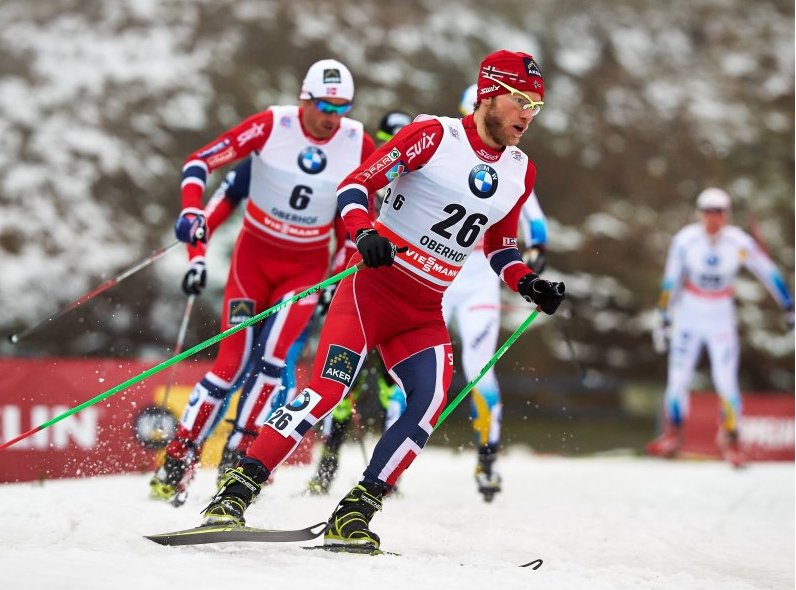
    Headwinds and a thick falling snow couldn’t stop Sweden’s Calle Halfvarsson from skiing away from the field to win his first World Cup race and Stage 2 of the Tour de Ski today in Oberhof, Germany.  The 1.5 k sprint course was narrow and relatively flat, features that kept the racing close and entanglements frequent.  Success found skiers like Halfvarsson who stayed out of trouble and who had a strong finishing kick.

    The opening heat to the men’s quarterfinals promised to be an interesting contest, with Alex Harvey and Devon Kershaw starting together and expectations high after their success yesterday on the same course.  Josef Wenzl of Germany was the first off the line, and appeared to be a reluctant leader. Kershaw, skiing aggressively from the gun, briefly took over the lead before Wenzl recaptured it as the group ascended the first climb.

    Wenzl kept the lead throughout the heat, with Harvey behind him and Kershaw threatening on the outside.  As the group approached the finish line, Harvey jumped out from behind Wenzl into the far lane with Maciej Storega of Poland behind Harvey and Kershaw trailing Wenzl.

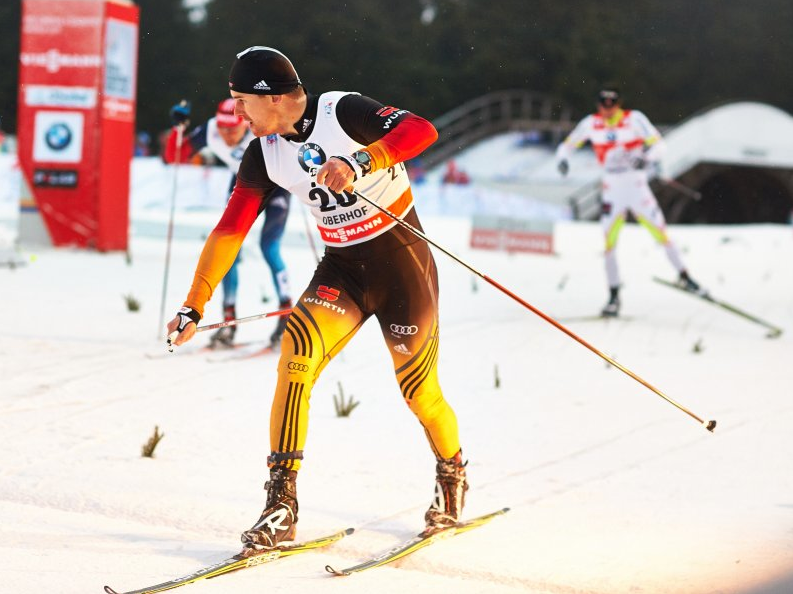
    Wenzl, Oberhof.   Photo credit Fischer/Nordic Focus
    Wenzl (Photo: Fischer/Nordic Focus)

    Wenzl easily crossed the line in first, and Storega took advantage of a slight gap between Harvey and Wenzl to lunge between the lanes to nip Kershaw for third place.

    In heat two, Germany’s Sebastian Eisenlauer was the early leader. Eisenlauer led until Russia’s Alexander Legkov overtook him on the final climb into the stadium. Duvillard of France looked to make up ground late in the climb but caught a ski, sending him down and out of the race.

    Skiing powerfully into the finish, Legkov won the heat with Eisenlauer in second.

    Heat three saw Carl Quickland of Sweden fall just off the starting line, and he spent the remainder of the race catching up.  Norway’s Petter Northug and Russia’s Evgeniy Belov jostled around an early corner, with Belov at one point skiing with one ski between Northug’s legs.  Norway’s Martin Johnsrud Sundby led before Halfvarsson took over on the first climb and proceeded to stretch the group out.

    Northug battled furiously to stay with Halfvarsson as he skied away from him and Sundby into the stadium.  Halvarsson finished the heat in first with Northug in second and Sundby and Belov in the third and fourth respectively.  The fast pace set by Halfvarsson was quick enough to give Sundby and Belov the coveted lucky loser positions in the semifinals.

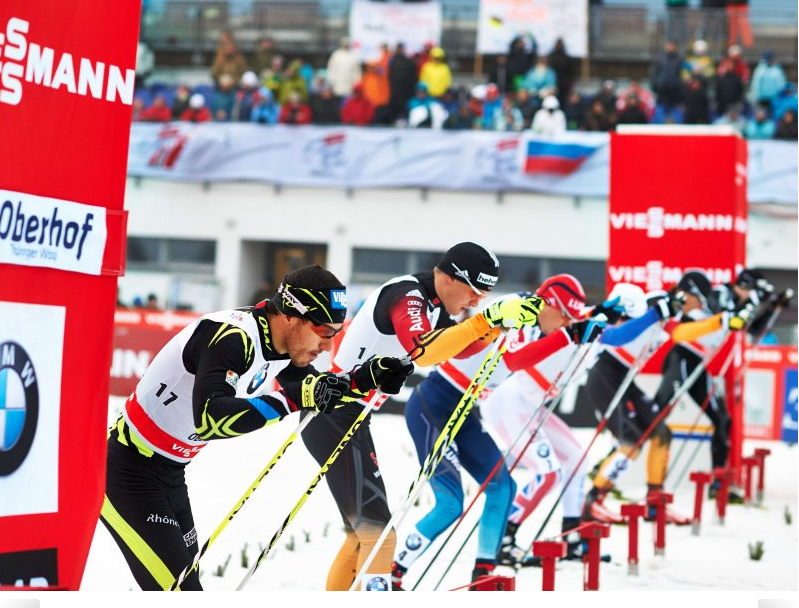
    Heat Start, Oberhof. (Photo: Fischer/Nordic Focus)
    Heat Start, Oberhof. (Photo: Fischer/Nordic Focus)

    Heat four was lead out of the gates by Tim Tscharnke of Germany, with Andy Newell staying just behind him in second.  Newell’s careful positioning through the race kept him in second position leading into the finishing stretch, where he stepped out into the far lane to out sprint Tscharnke.  Newell, however, was foiled by a clever Jens Eriksson who pipped Newell at the last moment with a late surge in the near lane to win the heat with Newell in second.

    Heat five was led by the Norwegian Finn Haagen Krogh, who seemed to be commanding the race until he caught a ski edge and was turned sideways, sending him to the back of the pack.  He did his best to battle back but when he could not make up the lost ground, he pulled up and skied into the stadium frustrated. Federico Pellegrino of Italy took the heat followed by Ales Rayzm of the Czech Republic.

    In the first semifinal heat, Wenzl had a false start, looking for another quick opening. On the restart Eisenlauer took the lead with Northug and Harvey behind the German.  As the group started the first climb and passed under a bridge, it appeared that Legkov stepped on Harvey’s ski on the choppy climb, bringing the Canadian down.  Harvey quickly regained himself and did his best to make up lost ground.

    Alex Harvey, Oberhof.  Photo credit Fischer/Nordic Focus
    Alex Harvey (Photo: Fischer/Nordic Focus)

    Squeezing himself past Wenzl, Northug took the lead into the stadium.  Wenzl, though, had more energy at the end and bested Northug on the outside lane, with Sundby finishing in third.

    The second Semifinal saw Pellegrino take pole position out of the gate with Halfvarsson and Eriksson lingering behind and Newell skiing mid-pack.  Newell, looking to make a move, was caught out in the tricky final climb into the stadium, and found himself in fifth position and out of contesting the heat.

    In the final meters, Eriksson jumped into the outside lane to try and out sprint Pellegrino, while Halfvarsson repeated Eriksson’s quarterfinal strategy and took the inside lane to win the heat. Pellegrino held off Eriksson for second.

    The temperamental weather of Oberhof changed at the start of the men’s final with a thick snowfall descending as Sundby, Pellegrino, Northug, Halfvarsson, Wenzl, and Eriksson took the line. Northug false started and the racers were brought back to the line.

    On the restart Halfvarsson took over the race as the group approached the first climb, and once the ascent began Halfvarsson went to work on trying to open up a gap between himself and his competitors.  On the second climb he managed to break apart the heat, with Pelegrino following his skis and Sundby battling to catch up.

    Halfvarsson skied into the stadium facing falling snow and a headwind to win the race in a commanding fashion.  Pellegrino took second, while Sundby finished in third place for the third time today in his best ever sprint performance.

    Jens Eriksson was fourth, a personal best, while Wenzl was fifth, and Northug sixth.

    Calle Halfvarsson told FIS after the race, “I felt strong today and I pushed hard on the big hill each round. It’s my first victory and podium at the same time as an individual. The result is very important for my confidence for the upcoming competitions and also for the Olympics.”

    Harvey’s 11th place was good enough to keep him in the leader’s bib as the Tour de Ski continues on Tuesday freestyle sprint in Lenzerheide, Switzerland.  “I am happy with my qualification,” he told FIS. “It’s great I kept the leader’s bib after the first two stages.”

    Results

    Martin Johnsrud Sundby, photo credited to Fischer/ Nordic Focus
    Martin Johnsrud Sundby (Photo: Fischer/ Nordic Focus)
  • Brandsdal Stays In, Comes Out on Top

    Brandsdal Stays In, Comes Out on Top

    Men's Milano Sprint Podium.

    MILAN, Italy – Inside or out was the question of the day, and the right choice in the men’s final was in.

    Eirik Brandsdal (NOR) won his first race of the season, and just the second of his career when he held the inside line into the homestretch in the Milan freestyle sprint.

    Germany’s Josef Wenzl was just behind in second, with Teodor Peterson (SWE) riding an aggressive lane change in the final 200 meters to claim third.

    Racing before a large and enthusiastic crowd in downtown Milan, Wenzl and Brandsdal matched up in all three heats en route to a 1-2 finish.

    A total of .2 seconds separated the pair in the quarters and semis, and each man took a turn in the top spot.

    But only the final matters at the end of the day, and what a final it was.

    Five of the six men qualified in the top-9 with Sprint Cup leader Alexei Petukhov (RUS) and Peterson posting the second and third best times. Top qualifier Matias Strandvall was eliminated in the semis when he broke a pole late in the race.

    The Finn just missed out on advancing as a lucky loser after finishing third in his heat while poling without a basket and a good 10 inches of shaft.

    The two loop Milan course features a wide swooping corner into the homestretch with plenty of room for skiers to attack.

    The space provided the big choice—take the long route to the outside, carrying more speed, and where the snow was firmer and faster, or staying tight on the best line through the more heavily skied and softer track.

    Brandsdal went wide in his quarterfinal, but felt the distance wasn’t worth the speed, and switched for the semis.

    “More people had used the track there [on the left] so it was more softer,” he told FasterSkier. “I just had to compare that to taking a longer line.”

    He said that in the semi the strategy “worked really good,” and planned to employ it in the final.

    But with Wenzl skiing right to one side in the semi, there would be no secrets.

    “Wenzl, he was in my semifinal, and he saw me do that [stay left], so I was a little bit concerned he would take that line in the finish,” Brandsdal said.

    The Norwegian described his plan “as a risk,” but at the end Wenzl stayed wide, giving Brandsdal the space he needed to work.

    The heat was hotly contested, and the first and second place finishers were almost an afterthought with most eyes focused on a hard-charging Petukhov, and Peterson.

    In what appears to be a new strategy, Petukhov showed patience early in his heats, waiting for at least a lap before moving into position.

    He did the same in the final, but may have left his attack too late. He climbed into fourth as the last corner approached, and needing the space, swung well to the outside, Peterson just ahead to his right.

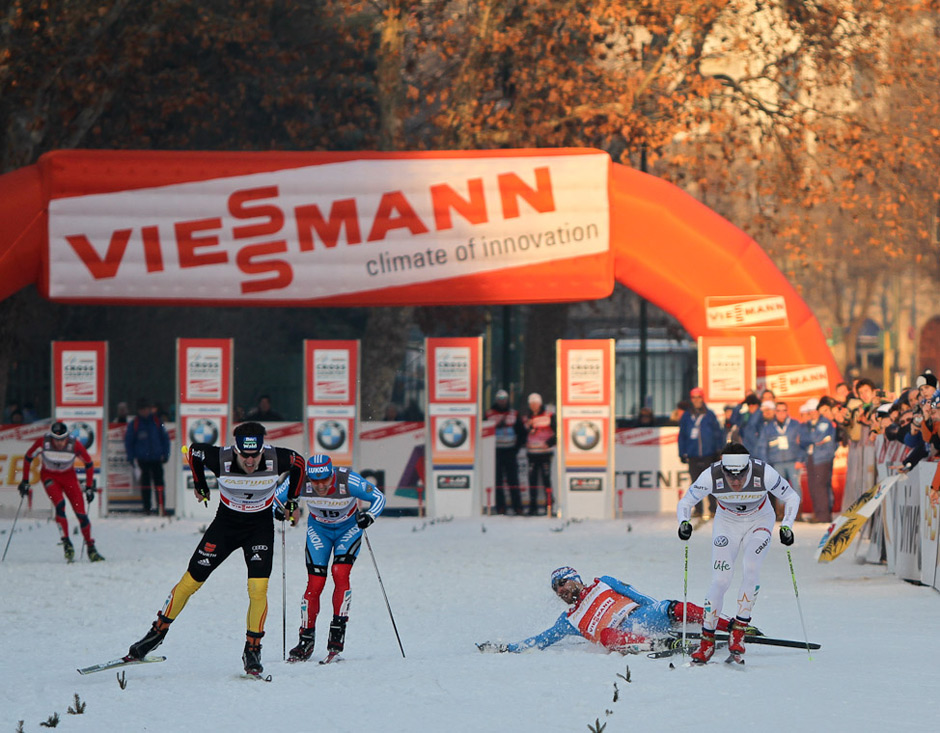
    Peterson (r) and Wenzl (l) head to the line as Petukhov hits the snow. Brandsdal is out of the frame to the left.

    The Swede, however, mirroring an identical move her performed in the semis, did not hold his line into the third lane, instead continuing out, and cutting in front of Petukhov.

    The Russian had nowhere to go, catching his ski on Peterson and crashing down.

    “Sometimes it is really close in the finals,” Swedish coach Rikard Grip told FasterSkier when asked about Peterson’s aggressive tactics.

    Women’s winner Ida Ingemarsdotter (SWE) used the outside lane to overtake Kikkan Randall (USA), and the plan was for Peterson to use the same strategy, though Grip noted that he did not head out directly as discussed.

    Whether the move was one of devious intent, or merely the execution of pre-planned tactics, to reach the firmer snow on the outside, is unknown. Either way it landed the Swede on the podium, but was not enough to take Wenzl and Brandsdal.

    Wenzl also carefully considered his path through the corner. He knew what had worked for Brandsdal, but felt cutting in too tightly would cause him to lose speed, so opted for the wider line.

    Brandsdal’s planning extended beyond the last corner. He saw one key to the narrow and windy city-sprint course.

    “When you wanted to advance, you had to go 100% for it,” Brandsdal told FasterSkier. “Because if you tried 90% you wouldn’t succeed…When I really wanted to attack, I went for it. It worked today.”

    Both he and Wenzl are well suited to the flat course, the German more so.

    “I have many power and when it is flat, it is a little bit better for me,” Wenzl said. “I can work more with this power,” he added pointing to his well-muscled torso.

    For Brandsdal, it is less about power and more finesse, but the results were the same.

    “When I am in good shape I manage to be calm and use my technique,” he said. “Then usually the flat terrain fits me pretty good.”

    Brandsdal in qualifying.

    A veteran of nearly two-dozen World Cup sprint races, Brandsdal has been through the wringer on more than one occasion, but still is challenged to stay relaxed and execute his plan.

    After a hard fought semifinal, Brandsdal said the adrenalin was so intense that he had to retire to a changing room to try to calm down.

    “I couldn’t land afterwards,” he described feeling after the semi.

    It took a coach to help bring him back to earth and focus on the finals.

    The Norwegian entered the race well rested and well trained, having skipped the entire Tour de Ski.

    Wenzl, Peterson, and Petukhov all raced the first the first six stages of the Tour to hit the two sprints.

    For Wenzl, however, the Tour sprints were only secondary.

    “I went to the Tour de Ski for training,” he told FasterSkier. “I think this was very good for me. The sprints at the Tour were ok, but first was training. I went really hard and my feeling is very good now. The competition is the hardest training.”

    Wenzl earned his first podium since 2009, and had his best finish since bursting onto the scene by winning the city sprint in Dusseldorf in 2008.

    All six skiers in the final will have a chance to face off again in Sunday’s team sprint on the same course.

    Complete Results

  • What Was He Thinking?! World Cup Athletes and Coaches on D-Dorf Team Sprint

    What Was He Thinking?! World Cup Athletes and Coaches on D-Dorf Team Sprint

    Stupid, nonsensical, and “completely in the wrong.”

    Those were the descriptions by elite cross-country skiers and coaches of German sprinter Josef Wenzl’s actions in the Dusseldorf team sprint on Sunday.

    Wenzl’s aggressive attempt at passing Norwegian John Kristian Dahl in the race’s final corner ended with both athletes sprawled in the snow, watching a clear podium finish pass them by in the form of Anders Gloersen (NOR), Emil Joensson (SWE), and David Hofer (ITA).

    “Everyone knows that it makes no sense to pass on those final corners; it is simply too dangerous. I can’t understand what

    Oystein Pettersen (R) gestures at German sprinter Josef Wenzl.

    Wenzl was thinking,” wrote U.S. Ski Team Head Coach Chris Grover in an e-mail. “I feel bad for [Dahl’s team]. They deserved to be on the podium and receiving their prize money.”

    Wenzl did not show any contrition afterwards—indeed, video from the finish pen showed him jawing with Dahl’s teammate Oystein Pettersen, even exchanging a few grabs and light pushes. But later in the day, Wenzl did apologize, according to Vidar Lofshus, the sports director for the Norwegian ski team.

    “Wenzl showed great sportsmanship by taking all the blame for the incident, and has excused his behavior to Dahl,” Lofshus wrote in an e-mail to FasterSkier.

    By Monday, tempers had cooled. Pettersen even told Norwegian media that he had lunch with Wenzl after the incident. But that didn’t change the result sheet—nor the fact that Dahl and Pettersen had missed out at a shot at the $12,000 check for the winning team.

    The Norwegians saw the collision as a clear case of obstruction by Wenzl, Lofshus said. And indeed, International Ski Federation (FIS) rules state that it is the responsibility of a passing skier to avoid interference.

    But according to the Norwegian newspaper Dagbladet, the race jury ruled that Dahl was equally at fault as Wenzl, because he took a step to the outside of the corner, towards the German. While the Norwegians disagreed, Lofshus said that “there will be no appeal or protest.”

    Pierre Mignerey, a jury member and the assistant cross-country race director for FIS, declined to comment. The jury, though—which included two Germans out of five total members—was the only group willing to take any blame from Wenzl’s shoulders. In interviews and e-mails with four North American athletes and coaches, all took Wenzl’s actions to task.

    “I don’t know what [Wenzl] was thinking. They had pulled away from the pack,” said U.S. sprinter Andy Newell in an interview

    John Kristian Dahl (L) and Josef Wenzl collide in the final corner of Sunday's Dusseldorf team sprint.

    Sunday. “They went two wide into that corner—you don’t ever want to do that at any time in a race, not to mention if you have the podium already wrapped up.”

    Canadian sprinter Devon Kershaw also placed responsibility squarely on Wenzl, saying that Dahl had the best line heading into the final turn. But he also said that he recognized it can be tough for sprinters to think clearly at the end of a race. Instead, they’re “completely blasted, stressed out, and amped knowing they have a chance to win the whole thing.”

    Kershaw is no stranger to full-contact racing himself—in a Tour de Ski city sprint in Prague in 2008, he made his own Wenzl-esque kamikaze attack against Swedish skier Marcus Hellner.

    “I moved in on him, when there was absolutely no reason to—and we both went down,” Kershaw wrote in an e-mail on Monday. “I had qualified first, and was poised to perhaps slot into the top three in the overall tour had I moved through my quarterfinal. Instead, even though Hellner and I had a gap, I took him out fighting for the best line for no reason, and it was a disaster.”

    As his own actions demonstrated, “stupid things happen in sprint racing,” Kershaw said.

    “With so many dudes, so little space and really only one ‘direct line,’ it’s not really a surprise when things like this happen,” he added.

    Especially on the tight and technical Dusseldorf course, where, according to U.S. sprinter Kikkan Randall, “it’s a tricky course to stay on your own feet anyway, let alone with a bunch of people around.”

    Dahl and Wenzl in the snow as the podium finishers go by.

    Add a home crowd and put thousands of dollars on the line, and you’ve got a potent mix for a 25-year-old German. Dusseldorf is Wenzl’s stomping grounds—it’s where he had his first and only victory, in 2007. But after he finished 46th in Saturday’s sprint and didn’t even make the heats, German Head Coach Jochen Behle ripped Wenzl publicly, telling the press that he “expected much more.”

    So if there was any rational explanation for Wenzl’s actions on Sunday, it was that they were born out of desperation: over the last two seasons, he had only once finished on the podium in an individual sprint—and that was at a race in Whistler with a weak field.

    And the crash notwithstanding, Wenzl still seemed to impress Behle with his performance in the team sprint, which left the Germans just one clean corner away from the podium. After the race, Behle told Die Welt newspaper that his men had skied well, “even if the results are not exactly what I wanted to see.”

  • Norwegians Men Win in Dusseldorf, with Crash-Marred Finale

    If Josef Wenzl wants to race at the 2011 World Ski Championships in Norway, he probably can do it without a bodyguard. But that’s only thanks to the last-minute heroics of the sprinter Anders Gloersen (NOR).

    Wenzl, a German, squandered a sure podium finish for himself and the top Norwegian pair in Sunday’s team sprint in Dusseldorf, crashing out on the final corner and taking John Kristian Dahl along with him.

    Gloersen ended up being the beneficiary, going from zero to hero as he passed Dahl and Wenzl and overtook Emil Jonsson (SWE) in a frantic finishing sprint for the win. The Italian team of David Hofer and Fabio Pasini was third, while no North American teams made it past the semifinals.

    Had Wenzl’s blunder given the Swedes a victory at the expense of the Norwegians, their most hated rivals, it’s very possible that the German would have needed an armed escort through the streets of Oslo. As it was, Dahl was steaming, and he and Wenzl exchanged some heated words, finger-pointing, and bib-grabbing as they picked themselves up and skied into the finishing pen.

    Both had good reason to be angry. With a mere two hundred meters to go in the men’s final, Dahl and Wenzl had chased down the Russian leader Nikolay Morilov, and they held a big lead over the chasing pack as they barreled into the final corner, a sharp righthander.

    But instead of slotting in behind and waiting for the finishing stretch to unleash his sprint, Wenzl went for broke, staying abreast of Dahl and leaving the Norwegian little room to maneuver on the inside of the corner. Dahl tried to shove Wenzl away, but it was too late. Both of them crashed, allowing Jonsson and Gloersen to fly by.

    “I don’t know what [Wenzl] was thinking. They had pulled away from the pack,” said U.S. sprinter Andy Newell. “They went two wide into that corner—you don’t ever want to do that at any time in a race, not to mention if you have the podium already wrapped up.”

    The winning Norwegians will go home with $6,000 apiece, while Wenzl, Dahl, and their two teammates get nothing.

    Ola Vigen Hattestad, the other half of Gloersen’s winning team, said that he felt sorry for Dahl, but he also said that “team sprint has its own rules.”

    The two top North American teams—Andy Newell and Simi Hamilton for the U.S., and Stefan Kuhn and Len Valjas for the Canadians—surely left Dusseldorf with a greater understanding of those rules. Their races, like Dahl’s and Wenzl’s, were also undone by crashes.

    Hamilton and Newell were skiing well together, according to U.S. Ski Team Head Coach Chris Grover. Both men, he said, had been holding position in the middle of the pack in their semifinal heat.

    But with one lap to go before tagging off to Newell for the anchor leg, Hamilton crashed on the back side of the course’s one hill, courtesy of Sebastian Eisenlauer—Wenzl’s teammate.

    “The German seemed to just cut over and get on top of his skis,” Grover said. “Simi went face down, and that was it—we were behind by a big margin when he tagged off to Andy. That was the end of the day.”

    The crash was especially disappointing, Grover said, because the Americans’ semifinal heat was the fastest by a big margin. That meant that Newell and Hamilton could likely have advanced as lucky losers had they not managed to finish in the top three teams, which get automatic berths in the finals.

    The experience, Newell said, was still valuable for both athletes—especially Hamilton, who got his first team sprint start on the World Cup. Smooth exchanges are key on the technical Dusseldorf course, where passing is difficult, and Newell said that his team had some “really good” tags.

    “It was good practice, and we were having a great run,” Newell said. “We were running right in the front four or five for most of the entire race, and we were having a…pretty easy time getting around people.”

    The story for the top Canadians was similar, with Kuhn crashing at a crucial moment in his semifinal. Kuhn’s team had three laps to go when a Norwegian fell in directly in front of him.

    “It was a really critical spot,” said Canadian Head Coach Justin Wadsworth. “[Valjas] did a good job to pass one or two teams after that, but it’s over by then.”

    Unlike the Americans, though, Wadsworth’s team got both the long and short ends of the stick on Sunday, with the pain of the Kuhn’s crash assuaged somewhat by the podium finish of the Canadian women. The latter result was only made possible thanks to a last-minute faceplant by the Slovenian team, which had had third place under wraps.

    “We benefited from one crash today, and we had another that kind of worked against us,” Wadsworth said. “That’s just team sprinting—it’s crazy out there.”

    Link to full results.

  • Dusseldorf City Sprint Preview – Get Yer Popcorn Ready!

    Dusseldorf City Sprint Preview – Get Yer Popcorn Ready!

    Since 2002, the city sprint in Dusseldorf, Germany, has become a fixture on the International Ski Federation’s (FIS’s) World Cup calendar. One of three regular city sprints on the circuit, Dusseldorf features a flat, extremely fast, and almost dangerously narrow and twisty sprint course.

    Over the last eight seasons, the German city has become renown for carnage and upsets, almost as much as for cross-country skiing in a unique location and with a great crowd atmosphere.

    Racers in the 2009 edition of the Dusseldorf World Cup. Photo courtesy of World Cup Dusseldorf.

    Every year, 3,000 cubic meters of artificial snow are trucked in from a nearby indoor ski slope, and the German organizers cover the boardwalk along the Rhine River and pack in thousands of fans. Dusseldorf is often a bit of a spectacle, as according to FIS, over 350,000 fans packed into the city to catch the World Cup in 2008. And speaking of spectacles, the 2006 edition of the race featured the little incident in which Oeystein “Sausage” Pettersen (NOR) earned his nickname.

    Dusseldorf is notable for the lack of high-powered distance and all-around World Cup skiers. Top overall contenders like Lukas Bauer (CZE), Marcus Hellner (SWE), and Petter Northug (NOR) will be absent on the men’s side, and Marit Bjoergen (NOR) and Justyna Kowalczyk (POL) will also take the weekend off. This typically results in a few surprises – last season, Sweden’s 20-year-old Hanna Falk came out of nowhere to stand on the top of the women’s podium.

    Dusseldorf is also home to a few consistently impressive city sprinters. Germany’s Josef Wenzl is a bit of a one-trick pony on the World Cup, as he skis amazingly in Dusseldorf, but struggles in most other locales. While last season he faltered, failing to make the heats, Wenzl has been in the A-Final in Dusseldorf three times, including two podium finishes in his four starts. He might not win, but it’s tough to count out a fast sprinter with that track record on home turf, especially when German Head Coach Jochen Behle backs him.

    The Norwegian Sprintgutta has traditionally been a strong presence as well, and this year is no different. Of the eight men sent to Dusseldorf by Norway, six have stood on the podium there before. Anders Gloersen and Eirik Brandsdal finished second and third, respectively, last season. The stacked Russian sprint team will also make an appearance – Alexei Petukhov won in Dusseldorf last year, while Nikita Kriukov and Alexander Panzhinskiy, the top two finishers in the sprint at the 2010 Olympics, are both on the start list.

    As for the North American contingent, Kikkan Randall is the only American woman racing, and she has skied well at the city venue in the past. According to U.S. Ski Team (USST) Head Coach Chris Grover, Randall has some unfinished business on the boardwalk.

    “Last year in Dusseldorf, she got tangled up and fell down in her quarterfinal right after the start,” Grover said, “She never had a chance to demonstrate her ability.”

    The two-woman Canadian sprint squad is undeniably led by Chandra Crawford (CAN). Crawford considers the Dusseldorf sprint a bit of a specialty, and she has made the heats in all of her starts there. She has been targeting the upcoming weekend all year for her first big performance.

    Last season, Crawford finished 12th at the venue, punching her ticket to the Olympic Games. According to her blog, this season she looks to crack the top 20, which would cement her spot on the World Ski Championships team.

    Dasha Gaiazova, Crawford’s counterpart, has been strong in both sprint and distance races this season, and there is no reason for that success not to continue, especially with a smaller field making for slightly less-competitive qualification.

    Andy Newell (USA) will undoubtedly lead the North American men, as he proved in Kuusamo that he is top sprinting shape, and like Randall, he undoubtedly has an axe to grind from last year’s Dusseldorf event, where he qualified third but failed to reach the A-Final. While Newell’s arrival has been delayed by transportation and passport problems, so long as he arrives in time to hit the start line, he will still be a contender.

    The performances of the other American men are harder to predict, however. Simi Hamilton had a breakout sprint season last year; however that was mainly due to his classic sprinting speed, and so far this year he has been hampered by a leg injury. According to his blog, the injury is now in the rearview mirror, and he will be looking for an opportunity to mix it up in at least one heat.

    Torin Koos has been traveling and racing in Europe separate from the USST this year, but after finishing second in a sprint event in Norway last weekend, Koos was chosen to step up for his first World Cup of the season.

    As for Chris Cook, his season has started out slowly, and he will need to take a big jump if he wants to advance on the fast course, with so many top sprinters taking to the start line.

    In the absence of top male all-around threats Devon Kershaw (CAN) and Alex Harvey (CAN), the Canadians are rolling with a pure sprint squad for the weekend. Classic sprint specialist Stefan Kuhn, breakout talent Lenny Valjas, and Phil Widmer will all start. Kuhn and Valjas qualified last weekend in Kuusamo’s classic sprint – look for them to build on those strong results in the slightly reduced field.

    Brent McMurtry (CAN) also gets the call for the Canadian team, and after two weekends which saw him fail to score World Cup points, he will hope to make a break through.

  • Team 6: Germany

    Team 6: Germany

    Germany

    Nations Cup Ranking: 6th (4308 pts)

    Men: 4th (2453 pts)

    Women: 8th (1855 pts)

    2010/2011 A Team

    Men

    Tobias Angerer

    Jens Filbrich

    Axel Teichmann

    Tim Tscharnke

    Women

    Stefanie Boehler

    Nicole Fessel

    Evi-Sachenbacher Stehle

    Miriam Goessner

    Katrin Zeller

    What you may have missed last season:

    Tim Tscharnke rising to German sprinting domination. The 21 year-old kid with no previous World Cup points cruised onto the circuit and took home over 100 World Cup points, looking incredibly comfortable doing so. The kid was a consistent sprinter, and turned more than a few heads when he tagged off to Axel Teichmann with a 20 meter lead on the Norwegians in the last leg of the Team Sprint. And if Teichmann had a little bit more hustle, the two could have taken home a gold medal.

    As for the women, one pleasant surprise was biathlete Miriam Goessner, who came fifth in the prologue on the Tour de Ski, and managed to ski both biathlon and cross country races. She was part of the German silver medal relay team. However, she has one small flaw. She can only skate ski. Literally. She started zero classic races on the World Cup.

    What You Should Know For This Season

    After 15 straight seasons of scoring points for the Germans on the World Cup, Rene Sommerfeldt has packed it in. His female teammate Claudia Nystad has opted to end her career as well, and the loss of such legends will be felt.

    Germany is a legitimate heavyweight on the World Cup season after season, and the loss of two world class skiers will hurt. Look to others to pick up the slack, and not just previous standouts Axel Teichmann and Tobias Angerer, both of whom are still stellar skiers, especially Angerer. While he seems to have slipped a little since winning back to back Crystal Globes in ’06 and ’07, the 33 year-old can still punch out top results, coming home from the Olympics with a silver medal from the Pursuit, and finishing fourth in the 50 k. You can never count out Angerer – in addition to his ability to ski strong distance either classic or skate, last year he collected a silver medal in a sprint on the World Cup as well.

    While the rivalry between Axel Teichmann and Petter Northug has pretty much ended on the course due to Northug consistently knocking the stuffing out of Teichmann, the German is still stoking the fires. However, he still won’t be beating Petter Northug in a sprint finish, and he will still be rocking a killer goatee. The FasterSkier staff is also considering starting an Alex Teichmann look-alike contest – it’s just that epic.

    As Teichmann is just awful on the anchor leg of the relay, there was talk of Tscharnke being his replacement in order to combat the Northug-effect, and with the retirement of the Sommerfeldt, that seems likely.

    Stefanie Boehler is back for another kick at the can after a tough 2010 season, which saw her record her worst point total in five years. On the plus side, according to her FIS profile she lists her occupation as ‘Sports Soldier’, which is pretty cool.

    Boehler's FIS profile picture

    Katrin Zeller, who is now second on the German female depth chart, is probably the quietest, most consistent skier on the World Cup. In virtually all of her World Cup starts (some 20-odd) she finished in the 15th to 30th range, which is incredible. If she can manage to ratchet up her speed a few notches, Germany will have a legitimate overall threat.

    Who You Should Watch

    Miriam Goessner is the best bet. The Germans desperately need another young woman to step up, and while the 20 year-old may lack experience, her success at the World Cup level cannot be discounted. The retirement of Nystad and the aging of Sachenbacher-Stehle is a sign that the guard is changing in Germany. While Goessner can only step up in skate, if she does it well enough, it won’t matter. Ole Einar Bjoerndalen and Lars Berger, anyone?

    Also, Josef Wenzl is worth a look, but only at the Dusseldorf, Germany, city sprints. The guy has made a career out of racing well in one place. In four trips to the city on the Rhine, he has finished 1st, 2nd, 5th and 40th.  While the 40th placing was last season, this year he kicked off his season with a 6th place in Munio, Finland sprint. So as long as he avoids the yearly shenanigans, he could do well.

  • The Hottest Skier – March’s Sweetest Sixteen

    The Hottest Skier – March’s Sweetest Sixteen

    What?  Yeah, that’s right, there are lots of great reasons to be a Nordic skier, but one of them is that there are a whole lot of fit, attractive people wearing spandex.  Here is a list of some of the hottest European skiers on the World Cup.  We may have forgotten a few so feel free to write them into the comment section and we will add them to the list.  We did not want the North Americans to dominate so we made an executive decision to eliminate all of them… sorry Andy and Morgan.

    Superficial?  Certainly, but remember that it is spring time, and you’re supposed to be having fun.

    All of our photos of these athletes are from races, so we are using google images to supplement.  If you don’t have a poster on your wall, google will provide.

    Please vote at the bottom of the page.  We will tally the scores and then enter a second round of voting to determine the winners!

    The ‘Research’ Center

    Therese Johaug

    Ladies:

    Sandrine Bailly: website , google images

    Marit Bjoergen: google images

    Stephanie Boehler: website, google images

    Nichole Fessel: google images

    Arriana Follis: google images

    Ella Gjoemle: google images

    Anna Haag: website , google images

    Nat Herz: google images

    Astrid Uhrenholdt Jacobsen: website , google images

    Therese Johaug: website , google images

    Charlotte Kalla: google images

    Magdalena Neuner: google images

    Madoka Natsumi: google images

    Stephanie Santer: google images

    Kristina Smigun: google images

    Kristin Stoermer Steira: google images

    Guro Stroem Solli: google images

    Evi Sachenbacher Stehle: google images

    Claudia Nystad: google images

    Petter Northug (photo: Ida Karlsson)

    Men:

    Roland Clara: google images

    Dario Cologna: google images

    Giorgio Di Centa: google images

    Valerio Checchi: google images

    Jens Filbrich: google images

    Jean Marc Gaillard: google images

    Ola Vigen Hattestad: google images

    Marcus Hellner: google images

    Nat Herz: google images

    Nikita Kriukov: google images

    Toni Livers: google images

    Petter Northug: google images

    Johan Olsson: google images

    Teodor Peterson: google images

    Daniel Rickardsson: google images

    Eldar Roenning: google images

    Josef Wenzl: google images

    Vote For Your Top 5 Favorite

    [poll id=”32″]