From the FasterSkier archive — posts syndicated from athletes’ and coaches’ own blogs between 2004 and 2012, kept online as published. Current coverage is at fasterskier.com.
In speaking with representatives from each of the leagues featured in this series, a few main points rose to the foreground in this discussion: the level of competition matters, how the policy came about matters, and how a program can enhance athlete support holistically by relieving wax-related expenses – measured both in time and dollars – matters.
Also note that these conversations took place in late-April, prior to further discussions at the U.S. Ski & Snowboard spring congress sessions in May where subsequent conversations among leadership may have occurred. Should significant changes occur, FasterSkier will continue to follow the story.
Here are links to earlier installments in this five-part series. The first two parts (part one; part two) spoke to the perspectives of high level wax technicians and industry representatives, while part three focused on the Wisconsin Nordic Ski League.
University of Colorado head coach Jana Weinberger waxes skis for her athletes during an 2022 RMISA/US SuperTour race weekend in Sun Valley. (Photo: Tobias Albrigtsen / @untraceableg)
The Evolution of Western Club Wax-Protocols
There’s a lot to unpack surrounding the impact of wax policies on the sport, and it is not reasonable to project that what makes sense for junior club programs can be extrapolated to the sport as a whole, which includes everything from the recreational level to masters racing to the World Cup. However, as a major player in the U.S. development pathway and a collective that encompasses a large volume of the nation’s athlete base, considering the evolution and impact of wax policies at the club level provides valuable insight into what the objectives and outcomes may be more broadly.
Conversations on this subject began long before any official policies were accepted, and their initial aim was to uniformly address the use of fluorocarbons at Junior National Qualifiers (JNQs). With both the health of athletes and coaches, and the inequity of buying power among clubs, the goal was to reduce spending and expensive fluorinated top coats.
Timelines are now blurred, but long-time Sun Valley Ski Education Foundation Program Director Rick Kapala indicated that Rocky Mountain had perhaps been the division who got the ball rolling. Though the policies have since converged on a single wax call made in advance by host coaches depending on forecasted conditions, Kapala explained that at the onset, Intermountain’s policy was only focused on the elimination of pure fluoros.
Long-time SVSEF XC Program Director Rick Kapala explains the evolution and impact of IMD’s wax protocol. (Photo: SVSEF.org)
“Initially, Intermountain had what we could call ‘wax policy-lite’… Our policy was: you can use any wax as long as it wasn’t pure-fluoro. You can use a high-fluoro, a low-flouro, or non-fluorinated version, and of course, in different brands, that meant different things. But basically, we went for a number of years with a no powder, no liquid and no rub-on policy. And that had some effect on trying to mitigate the arms race, if you will.”
Executive Director at Methow Valley Ski Education Foundation Pete Leonard explained that the Pacific Northwest Ski Association, for whom he is the Nordic Director, was developed with a similar progression.
“It initially started in the fluorocarbon era, moving away from powdering skis to just having blocks and liquids – the top coat type of applications – and then to a base paraffin application… I think we had a year of that and then [the policy] went to fluoro-free – the same basic, simple base paraffin called several days out.”
Further motivation to align policies stemmed from “cross-pollination” between these three leagues, which with the addition of the California-Nevada Far West division and Alaska, encompass the Western region as defined by U.S. Ski & Snowboard. In particular, these divisions overlap during the Junior National Super Qualifier Event held in January at Soldier Hollow, hence landing on a very similar model.
“There’s a little bit of a cascade effect, and it’s just simpler for us to match what IMD has,” Leonard explained.
Kapala felt strongly that it was important to emphasize that this slow progression happened organically, which he felt was in stark contrast to the Wisconsin Nordic Ski League, where a sponsorship proposal made by a corporate entity included stipulations on waxing at league events.
“It’s a wholly different thing when a grassroots community, like a bunch of clubs in a division, promulgates a policy that they think results in the best athletic outcomes,” he said. “And it is very important to differentiate the genesis of a given policy… the order in which you arrive at a policy really informs a lot of the motivations about why you’re doing what you’re doing.”
Kapala said IMD would have “given the Heisman” to a wax company that required a policy; however, Swix products have been selected based on trust in the availability for all programs.
“We settled on Swix without getting into the specifics of brand value,” he said. “I.e., Swix is better than Start, and Start is better than Toko, or whatever – it’s just simply because virtually everybody knew they had enough access to that wax.”
A scene from the start line of a 2018 Intermountain JNQ in Bozeman, MT. (Photo: Sun Valley Ski Education Foundation Facebook)
Observed Program Benefits
There’s a sizable jump between eliminating fluoros and further reducing a wax box to a small array of products, but Kapala emphasized that these “athletic outcomes” are the central tenet around which discussions regarding changes take place within Intermountain. How does the protocol impact the opportunity and capacity for athletes from clubs of all sizes to be successful on race day and have a positive experience in the sport?
We’ll start with the impact to a program’s budget, which on its own is a source of inequality among clubs in a given region. Speaking specifically for Intermountain, but also the West more broadly, Kapala pointed out that there are a number of “super clubs” whose financial means and staff power made it hard for smaller clubs to compete in an open wax environment.
“They’re usually clubs that are in these mountain towns that are part of [larger] ski foundations or clubs that are multi-discipline, really big clubs. And so they have a lot of administrative function, a lot of underpinning financial security, and so on.”
He was quick to include SVSEF in that pool, saying cost was not a primary concern when it came to his wax purchasing or race staffing prior to the enactment of IMD’s policy.
He went on to explain that within Intermountain, there are six JNQs which are subject to the wax policy, plus an Intermountain opener. However, what he called the “lion’s share” of races, including U.S. Nationals, SuperTours, and any Canadian-based races, remain open wax events where the policy does not apply. Still, with IMD’s policy in place, Kapala said SVSEF has been able to shave $5,000 dollars annually off its spending on wax, equating to a reduction of 30-40%.
“The question then is: ‘What am I doing with that $5,000?’” posed Kapala. “Well, what I’m really doing with it now, in my particular case, we have put that money into our merit scholarship program. So instead of me spending money on just making sure I have every wax in the universe in my wax box, I’m actually leveraging those dollars to help kids get to training camps or to go to competitions they wouldn’t normally be able to afford. And that’s huge.”
Rather than ignoring the impact this reduction in spending has on the landscape for suppliers, he acknowledged that this could be detrimental, as other clubs are likely reducing their spending by similar percentages. But bringing the focus back to the athletes, he said, “what we’re really spending less of is human capital on things other than coaching.”
For Kapala, this makes the cost-benefit analysis check out.
“We think being available to coach kids – that are especially young in their developmental process – at events like JNQs, is actually what the [coaching] game should be all about. So while it’s true that there can be impacts regarding the finances, it is also undoubtedly true that athletic outcomes – true athletic outcomes, the actual ones that we should be concerned about – are actually being serviced way more effectively. And if those two competing interests are both true, we have to pick one. And the one we’re picking is we’re making it more fair for athletes.”
August Teague supports AVSC alumna Kate Oldham while teching at the 2022 FIS World Junior Ski Championships in Lygna, NOR. (Photo: flyingpointroad.com)
Speaking for what he has observed within his own program and the Rocky Mountain Nordic division more broadly, August Teague – Cross-country Program Director at the Aspen Valley Ski and Snowboard Club (AVSC) – shared similar sentiments.
“I guess the real question to me becomes: ‘What is the purpose of a waxing protocol and at what level and why? And I certainly believe that barriers to entry in sport are a real good reason to have a waxing protocol, and time allocation or time management.”
Adding specificity to the statement, he said, “The biggest thing that I see is that I can spend more time coaching instead of teching. And there certainly is an argument as to the need for better wax techs both from this country and elsewhere, but I think that’s a separate discussion than the coaching discussion and where my time is best served.”
While the AVSC nordic program is significantly smaller than that of SVSEF, Teague also noted differences in how his monetary budget is allocated. “We have started to explore structures more than we ever have. So money that was being spent on product is now being spent on different structure devices and/or ways to test that structure.”
Similarly, Steamboat Winter Sports Club U16/U18/U20 head coach Josh Smullin wrote to FasterSkier that the protocol has supported a safer environment for both coaches and athletes while on the road. In particular, he cited driving – there are roughly 3,200 serious injuries and 600 fatalities on average annually in Colorado – as a place where some relief in the toll on coaches during a race weekend has shown value.
“It used to be that we coaches were up late waxing,” he explained. “Waking up the next morning to go set up at the venue, and then would drive many hours home after the race. A waxing protocol has helped us to be safer drivers, less sleep deprived, and more present with the athletes.”
Smullin also commented on ventilation, which remains important for the health of waxers even without fluorinated products.
“At many of our home clubs we have some sort of ventilated wax facility. We do not have that on the road [while staying in hotels] unless the weather is nice and we are able to wax outside. Regardless of the fluoro ban, [proper] ventilation is healthier for coaches and athletes.”
Methow Valley Nordic skiers take to the course during the December 2021 Ski Rodeo event. (Photo: Methow Valley Nordic Ski Education Foundation Facebook)
“Everybody’s got their opinion…” said Leonard on behalf of PNSA. “There’s no overarching study on these things, and costs, and whether there’s a major difference [in ski speed], but I think what is clear to the coaches is that there’s less time spent testing glide products at races and there’s less of an incentive to do that, especially with the calling it [a few days] prior. There’s also more time that they can focus during that weekend on other things, like with the athletes and their preparation, instead of testing wax, waxing skis and leaving [coaching and direct athlete support] right up to the race time.”
For Leonard, the question of whether the policy widens the gap for skiers based on the quality or condition specificity of their skis was not a priority when it came to identifying how the policy has served PNSA teams. For a club based in the Methow Valley which travels to regional competitions across Oregon and Washington, as well as to the Super Qualifier in Utah, the policy has reduced the toll of travel.
“I don’t know that it’s necessarily a parity – it’s really difficult to get that down.. but I think for us, calling the wax several days out just makes it simpler for people, and there is less [equipment and product] to travel with, one less thing to think about when you’re booking hotels, and all those details. It makes it simpler for teams.”
He said he has also found it quicker and easier to apply structure on race day without the variable of glide wax testing. And without the need to cart around as much product and equipment, getting his athletes’ skis race ready has been “way easier to manage”.
“Rather than bringing a wax box with several waxes in it, irons, enough benches that you can get your whole team through, scrapers, brushes, etc. – already, you’re packing the van to the ceiling and then, sometimes it’s driving eight hours, or for the Super Q for us, it’s driving four hours to the airport, [hauling our skis and gear through the airport on both ends], then driving another hour-plus to SoHo, and then doing it all again on the way back.”
Stay tuned for the final installment, where you can read more on leveling the playing field, the arms race (or lack thereof) for skis, and the reception among Western Division coaches.
As FasterSkier staff stroll into an upcoming weekend with no cross-country World Cups, it’s time to scramble and score some holiday gifts for friends and loved ones. Christmas is around the corner. It’s never too late for Hanukkah (Hanukkah ended on December 10). We’re keeping with the cat theme in this second gift idea for the season. It’s from one of Bend, Oregon’s iconic cats, Dave Smullin. This is how Smullin helps spread the love of nordic sport.
***
2018 gift guide – Cross Country Cat
If you’re a family that cares about Nordic skiing, you’ll like this simple kid-friendly book. Cross Country Cat, written by Mary Calhoun and illustrated by Erick Ingraham, is a story of intrepid fortitude and grit that illustrates both the joy and effort required to become a proficient cross-country skier. I recommend this book as a great read for “Nordic” families and as an inspiration and celebration for all skiers.
Henry, the hind-leg-walking Siamese cat, is accidentally left behind on a family ski trip to a mountain cabin in Colorado. Locked out of the cabin, he finds the wooden skis and pine-bough poles that “The Kid” had made for him. He packs a bag full of mice, straps on the skis, and heads for home and family in a snowstorm. Henry’s progression as a skier from plodder to skating cat mirrors the progress we see in beginning skiers, as he is eventually skating and gliding effortlessly down the hills. The understated illustrations evoke a real feeling for kicking and gliding through winter solitude.
Of course, there are fears and obstacles to overcome: he is out of his element and alone in the wild; his interactions with elk, blue jays and snowshoe hares are unsettling; and he must escape from the jaws of a coyote! Wonderful metaphors and lessons to apply to skiing and life.
Cross Country Cat became a favorite of our family when my then four-year-old son Josh received it as a Christmas present from Grandma Jeanne. Josh (current SSWSC Nordic Coach) and my daughter Emily loved it, and still, love skiing.
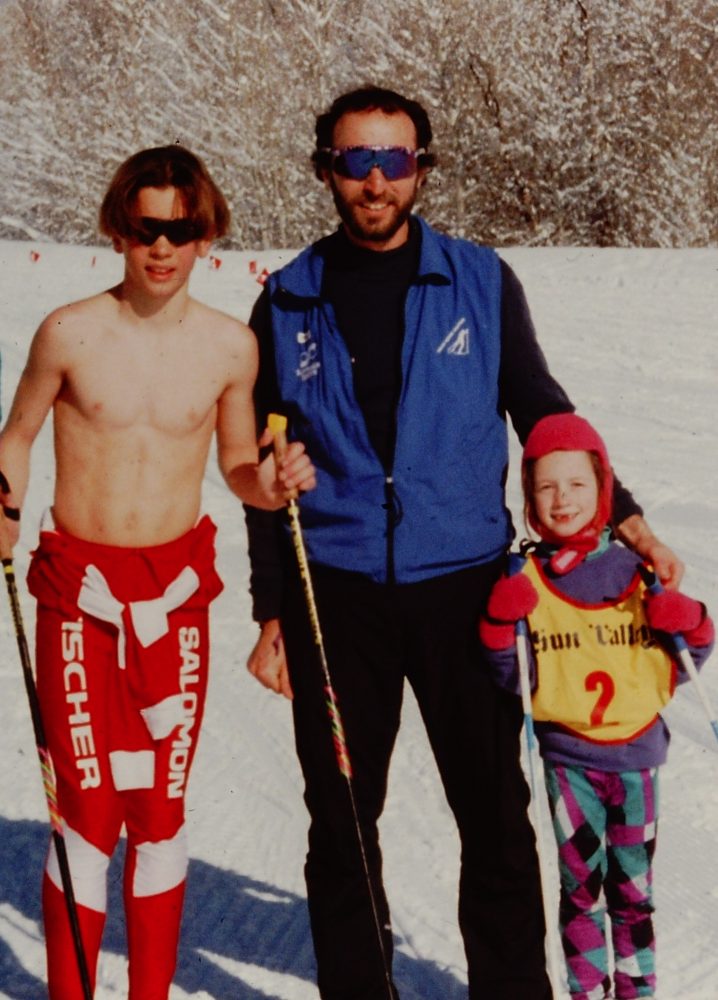
Dave Smullin (center), Josh Smullin (no shirt), and Emily Smullin (right). (Photo: courtesy Dave Smullin)
But this book brings tears and cheers from more than just children. In the early 2000s, as coach of the Redmond High School Nordic ski team, I began giving it to graduating seniors at the annual awards ceremony. Every year, those skiers and their parents and siblings – who have been introduced to and become so dedicated to team and sport – have tearful moments receiving their books and reflecting on how XC has transformed them as people and as a family. It’s crazy cool to see the impact that XC has on these young people and their families.
I hope that this book brings much meaning and joy to you, your family, and your Nordic community.
–Dave Smullin
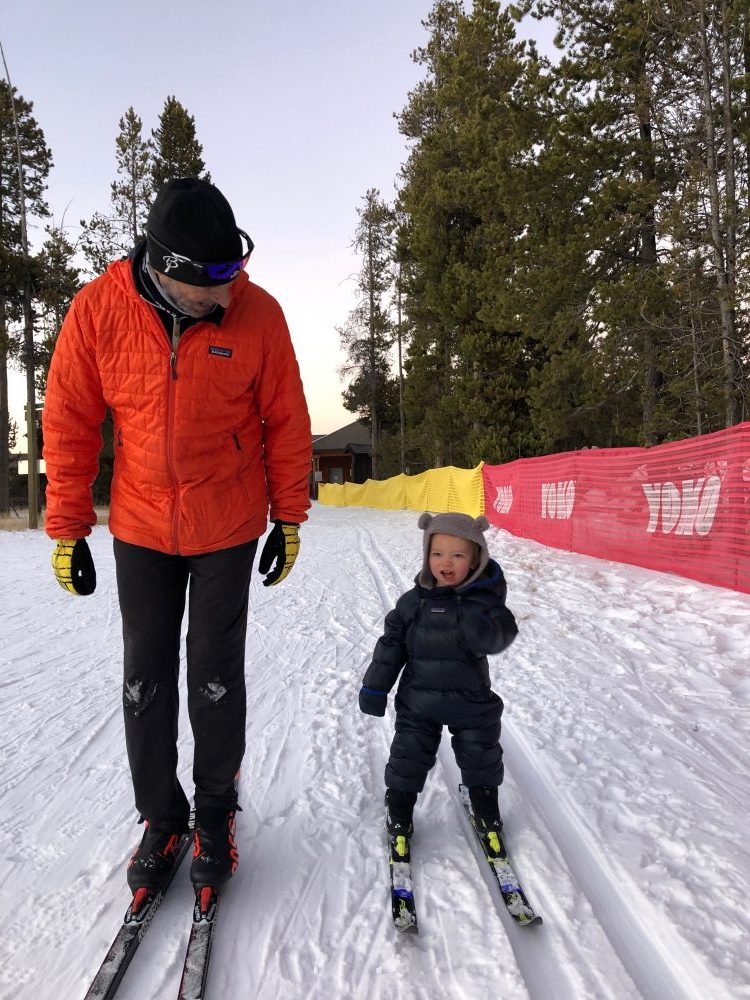
Seasoned cat Dave Smullin (left) with new cat and grandson Simi (right). (Photo: courtesy Dave Smullin)
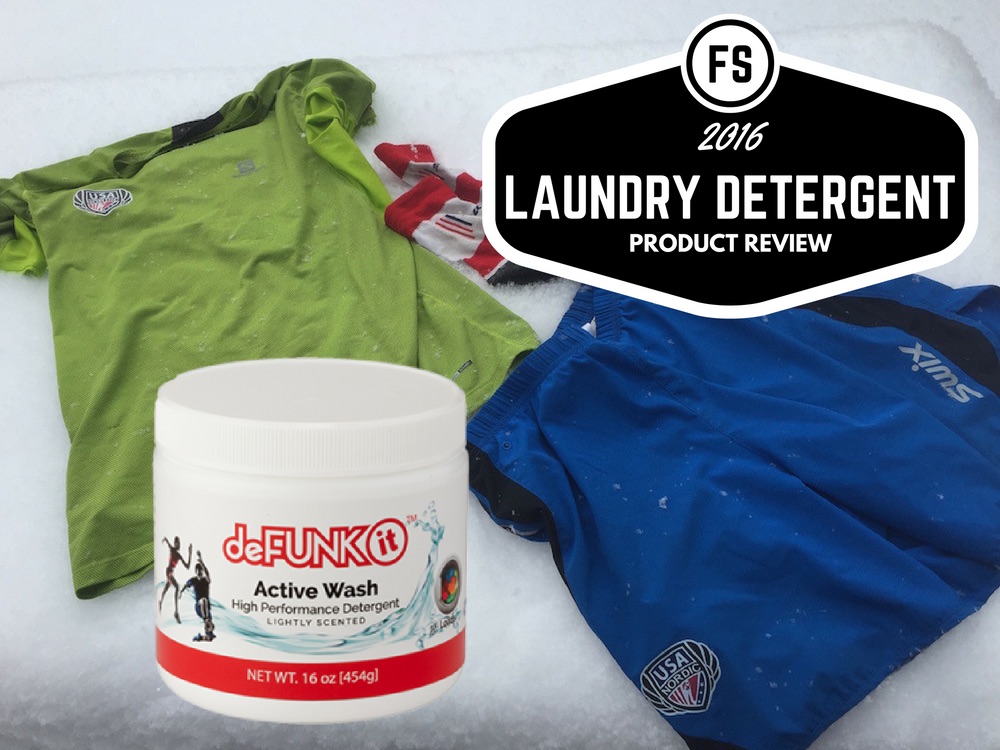
Putting deFUNKit, a high-performance laundry detergent, to the test.
Funkadelic
In my classic whap stick review, I chided readers for not knowing the “Keeping it 100” reference and noted that if you didn’t know it that you were officially out of touch because you were too old. Now I’m turning the tables on y’all with my latest wild assertion that if you don’t know the “We Want The Funk” reference, well, you’re out of touch because you are too young. George Clinton and Parliament are one of the most influential bands of all time, so if you aren’t already intimately familiar with this legendary group and song, well, you need to “get woke”. There, now that I have suitably confused everyone, let’s get rolling.
I often rotate in experts for certain reviews, as I believe it is particularly important to not only have diversity of voice, but also to use people with extensive experience and expertise in any given area. This means that test teams can vary in size from project to project, but there is almost always one constant — the core group of my trusty colleagues at the Steamboat Springs Winter Sports Club (SSWSC). I am incredibly fortunate to be a part of this amazing organization for all sorts of reasons and we are a very close-knit group. It’s a good thing, too, as this latest undertaking took took our relationships to the next level. How? Well, we just spent a week smelling each other every night before dinner.
Long and Lonely Road
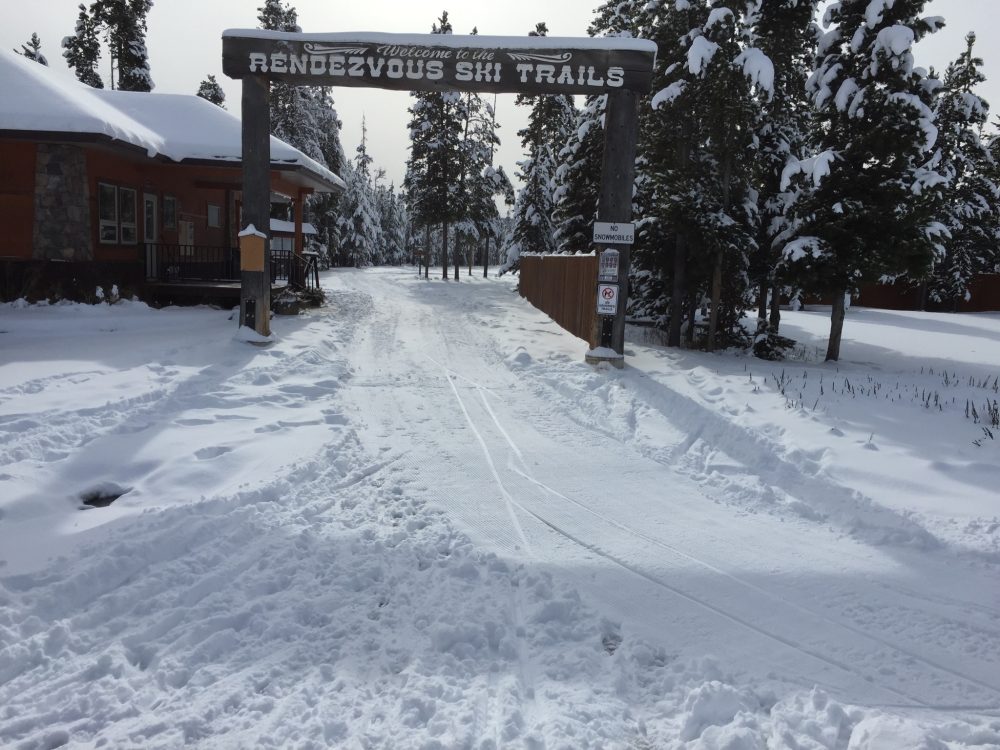
The trailhead at Rendezvous Ski Trails, as seen in late November of this year in West Yellowstone, Mont. (All photos: FBD)
Like many Nordic teams, SSWSCXC just returned from our annual early season training trip to the West Yellowstone Ski Festival.
At these training camps all of the coaches ski together (naturally) and dine together, but without a doubt this was the first time that we sat at meals and discussed not only how often we were all changing our socks and underwear, but also how these pieces smelled. I’ve heard that conduct of this nature is nothing new for Vail coaches Dan Weiland and Eric Pepper, but this is just one of many reasons why those two are usually found dining alone.
#TBT shot to a young Dan Weiland sitting alone at his junior high lunch table, completely devoid of friends, as fellow reclusive loner Eric Pepper looks on from a distance. It was here in these moments of desperate loneliness that the personality traits necessary to be a nordic coach were forged.
As you all know by now, the FBD has a reputation for looking real nice for the ladies. In our journey together to right the wrongs in the world of ski gear, we’ve tackled thick puffies, thin puffies, base layers, skate rollerskis and classic rollerskis, and we’re doing it people, we’re making a difference. It used to be that I’d see Josh Smullin in outfits like this every day, but now the frequency is down to every second or third day.
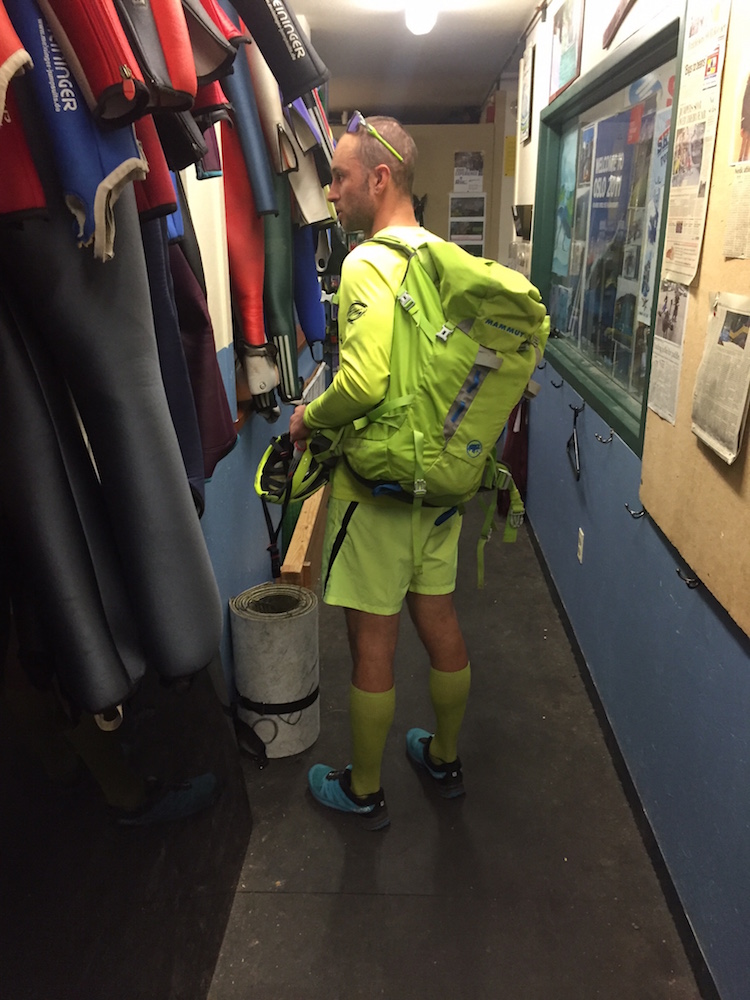
’90s neon, knee-high compression socks? Check. Matchy-matchy ’90s neon shirt, short, backpack combo? Check. ’90s neon man-purse fanny pack? Check. Prepare to deploy, Outfit Of The Day.
Baby steps. Baby steps.
So the fashion bar has been raised. Good. Very good. But looking good is only part of the picture. What if your outfit is “lit” but you smell like sh*t? I can tell you right now that this is a deal-breaker. I don’t care how fast you ski, how good you look and how savage your latest outfit is, if your base layers smell like Dave “Slow Ski” Cieslowski’s hockey equipment after spending a month in his trunk in July, you’re going to be relegated to the Weiland/Pepper lunch table in no time.
But fear not stinky nordie, all is not lost.
By now you’re probably thinking, “What the hell is this lunatic talking about? This is the craziest gear review I have ever read.”
I (along with my readers, editors, friends, neighbors, and local law enforcement) often find myself asking that very question, so let’s dive right in. Since thanks to all of you loyal readers, I have rapidly risen to the most influential and trusted gear reviewer in the galaxy, I am therefore frequently contacted by companies from all walks of life with every crazy product you can possible imagine. Some are cool, some are dumb, but occasionally something bubbles up that really catches my eye. This was one of them: a laundry detergent that supposedly allows you to wear base layers for multiple workouts without washing. Since no one is lazier than me, I was immediately intrigued.
The product in question is called, deFUNKit and here’s how it works. You simply do a normal load of laundry with their special detergent, then do repeat the same load with two different sets of their reagents (concurrently), and voila, your B.O. is now officially banished. Or so the story goes.
Test Protocol
To test this product, three brave men and one very brave woman descended on West Yellowstone, Mont., with only the shirts on their backs, almost literally. We brought a combination of wool and synthetic socks, undies and base layers to see if this mystery potion could stand up to real-life, real-world, real-stink testing. The plan was to ski in the same clothes for as long as possible and ride the party train until someone in the group “threw the flag.” Due to 1960s HVAC technology in our rooms, some of us wore one outfit for a.m. workouts and another in the p.m. to allow for drying, while others just went for it (more on that later).
Base layers: Swix synthetic top, Craft synthetic bottoms
Socks: SmartWool
Fundies: Victoria’s Secret (Yes, really. And no, people, this is not Josh Smullin, even though he is from Alaska)
Hours of usage
This is where it got real. There was a fair amount of variance in the final data mainly because one tester got super fired up and went “raw dog,” wearing the exact same outfit for the entire camp. This put their testing hours up to the extremely impressive level of 18 hours, split fairly evenly over 12 workouts. This is TRAINING HOURS, too, for much like my podcast colleagues Dean Nigglesson and Kristor Svonn, we only start our watches when we’re actually skiing (except for Smullin, who started his at breakfast — or “Bekfast, as he calls it — but that’s another story).
When you add up time at the wax table, the walk to and from the tracks and the occasional, “rushing to get lunch so I don’t have time to change clothes after my ski” hours, this brave soul logged over 35 hours in the same socks, undies and base layers, all without a single trip to the very nasty looking hotel washing machines.
The rest of us stuck to the protocol a bit more vigorously (or perhaps more cowardly) and racked up a range of 8-14 ski hours in each the a.m. outfit and the p.m. outfit, with another 60-75 percent of additional wear time, bringing total “on body” time for each outfit to 12-25 hours, again, split fairly evenly over seven sessions in the a.m. and another seven in the p.m.
The conditions skiing ranged from -10 to 7 degrees Celsius (14-45 Fahrenheit), with the majority of the workouts being Level 1 cruisers, but a few of us raced and had a couple of interval sessions thrown in for good measure, so there was ample opportunity to build up the funk. All in all, it was probably a very representative sample of typical skier usage and wear patterns.
Results
So does this stuff work? In a word, yes, amazingly well. One of the coaches’ wives is pregnant and with an already very acute sense of smell, the impending bambino has enhanced her olfactory system to the point of “super smeller” status, and bless her soul, she very bravely volunteered to sniff test us each night. Yup, I told you we are a very tightly-knit group.
Remarkably, even by the end of the camp, no one scored lower than a ‘7’ on the stink index (with 10 being ‘fresh as a daisy’ and 1 being ‘Weiland/Pepper lunch table’). This is pretty incredible given the high number of training hours. Even the “one outfit cowboy” came through with flying colors, which is nothing short of remarkable.
To be clear, we all came into this with a very health dose of skepticism. Mr. Reliable noted in his log, “I was very unsure about this whole plan at the start of this test, so much so that I brought several sets of back-up clothes in case this failed spectacularly.”
The AK Brawler agreed, “I really didn’t think this product was going to work, so I brought lots of spare clothes. Amazingly, I did not need any of them. I couldn’t believe it.”
Captain Deodorant Conspiracy noted, “I am very surprised. This product works way better than expected.” And then the kicker, “I went the whole week doing every workout in the same outfit and I think I can keep going. In fact, I think I AM going to keep this rolling, just to see how far I can take it.” Wow.
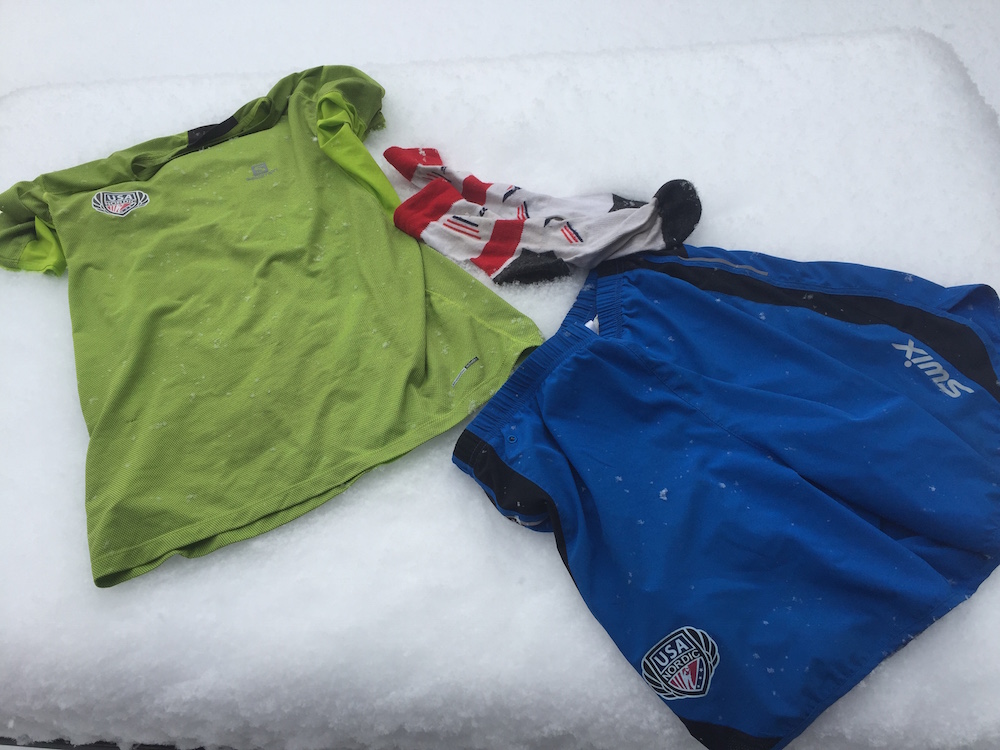
My beloved Salomon summer training “Please don’t hit me” rollerski top and trusty Swix socks/shorts.
Since no one is a bigger numbers nerd than yours truly, I couldn’t help but attempt to make the data set as statistically significant as possible, so prior to the camp in West, I logged 31 hours of rollerskiing, running and strength (divided over 12 workouts) in one outfit. The temperature in this workouts ranged from 11 to 26° C (52-79 Fahrenheit) and was often quite sunny. I managed to talk a few reluctant coaches into giving me the sniff test (though not the cowardly Captain Deodorant Conspiracy, whose fear of germs eclipses that of even my own) and they were also amazed to discover that the outfit (at right) was still quite pleasant.
So with multiple fabrics, multiple testers, multiple brands, multiple sexes, widely divergent approaches to personal grooming and government conspiracies, not to mention highly variant body chemistries, in every piece of clothing on every single reviewer, we found a significant decrease in smell. Every single investigator felt as though they could ski in socks and “unmentionables” for a minimum of four workouts and base layers for a minimum of eight. That’s a lot. And that was the low end. On the upper end, estimates vary here as well, but “intimates” made it upwards of 10 days and base layers maxed out the test. I think that pretty much says it all.
The After-Life
But what about life after skiing? Is there life after skiing? I realize I am getting a little philosophical here, but not to worry, I’m not speaking in terms of the after-life, I’m speaking in terms of the after-workout. In other words, do you need to wash your everyday fundies, well, every day?
“Back in the day,” I would prepare myself for a night on the town with a shower, shave and a nice, new, crisp pair of “knickers”, knowing very well that the chances of a member of the opposite sex actually seeing them were quite small. We were a good team though, as my BVDs had my back and dutifully played along with this ruse every Friday and Saturday night. I also did my part and got the troops ready for battle through proper and efficient rotation in the meticulous FBD laundry regimen. I figured it was the least I could do. Business is all about mitigating risk and optimizing your chances for success…
However, those days are now long gone, as every game is now a home game, but my focus on proper hygiene persists nonetheless. So the question at hand is can this miracle solvent work its wonder on not just athletic garments, but also daily wear?
To execute this phase of testing, I must confess that there’s a certain psychological barrier that must first be crossed, for, to put it bluntly, getting up every day and putting on 10-day-old drawers just feels weird. Or at least it did in the beginning. But being the good scientist that I am, I decided to break it down methodically.
Having a clean undercarriage goes a long way, regardless of your underwear status.
Firstly, is there anything magical about wearing your man-panties for 24 hours? Why not 26 hours? Or 17.2? The answer here is fairly obvious in that it is logical and convenient to synchronize a “wear cycle” with your daily cycle. Certainly there are many options and variations here, but a common regimen for many working professions is to wake up, shower, put on clean underwear, then go to work. So would you change your tighty whities halfway through the day or just before dinner (you aren’t really still wearing these guys, are you? If so, you need to seek professional help immediately)? You could, but it really doesn’t make any sense, baring any “accidents” or unforeseen circumstances.
The point here is that under normal operations, underwear rotation schedules are not analogous to tire or oil changes in that there is not a mechanical or chemical breakdown taking place that requires attention after a set period of time. If it took the Earth 18 or 28 hours for one revolution, you’d probably wear your skivvies for 18 or 28 hours, respectively, and think nothing of it.
Having said this, clearly there is some type of ceiling (“The Cotton Ceiling?”). Remember, the core of my hypothesis is that users install new undergarments after a shower, when presumably the whole undercarriage is all cleaned up, so there are in fact some chemical reactions that need to be taken into consideration. Leave cheese in your car on a hot day and you’ll be treated to an olfactory assault when you return to your vehicle, so by not coordinating and synchronizing the daily shower/undy swap, are we just begging for some crotch-pot cooking?
The answer to this seems to be no. Without getting too graphic here, objects begin to smell when bacteria collects, colonizes and grows. Showers help prevent this on you and DeFUNKit helps prevent this in your clothing. So yes, there is a Santa Claus, and yes, all of your lazy, single dudes out there, you can in fact “safely” extend the wear cycle of your Jockeys. During a research project at the University of Michigan’s Biological Field Station, one of my colleagues was completely bought in to his “Four Wears Per Pair™” (FWPP) theory (forward, backward, inside out forward, inside out backward). While somewhat ingenious, I can tell you for a fact that all of our female colleagues found both this theory and process to be repulsive and let’s just say he had lots of quality time alone in his cabin. The point here being that this new laundry formulation will allow for extended wear cycles without suffering the shame, stigmas and practical difficulties associated with the FWPP lifestyle choice.
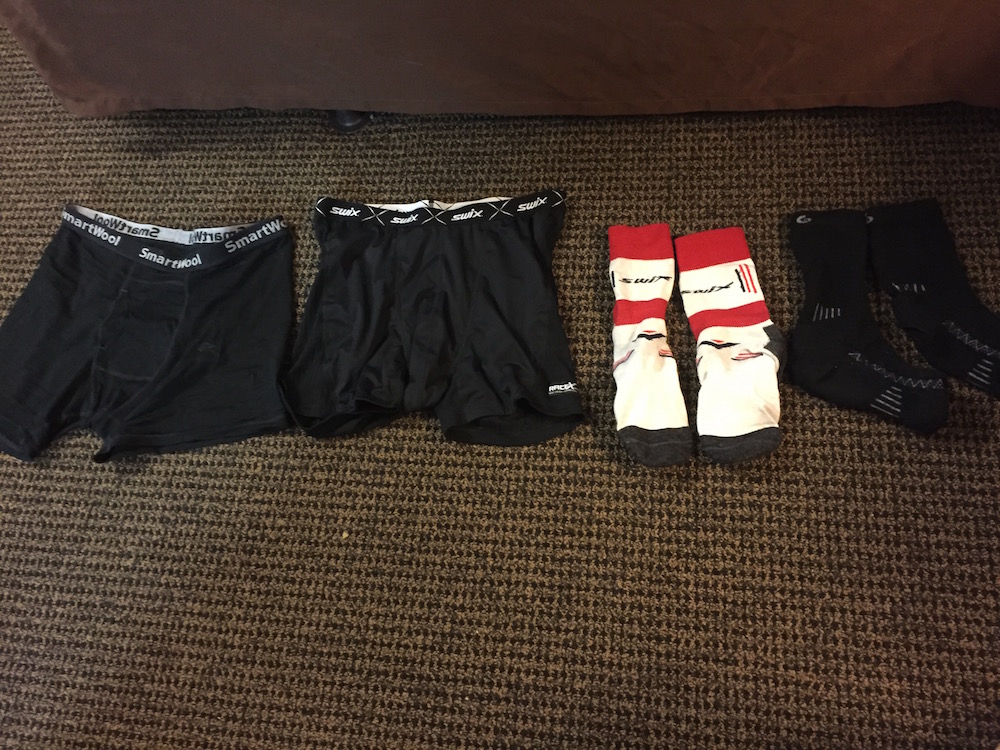
Test fleet ready for action.
How do I know this? Because I tested it. I had a “control” pair of Underoos that were in the rotation that were not treated with deFunkit, and an identical pair (SmartWool boxer briefs) that was treated. To ease the psychological torment of coming out of the shower clean and putting on the same pair of underwear that I had been wearing for 10 days, I alternated between the two configurations until someone said “Uncle.”
(If you’re thinking, did this nut really wear the same pair of underwear for 10 days? Yup, I did. Ten fricking days.) The non-treated pair made it four days before they were pulled from the rotation, but the treated pair was still going strong on Day 10. The only reason this test ended was I was leaving for West and I made the executive decision to start that trip w/ “a clean slate,” so everything went into the washer.
Now might be a good time to note that while I was the only person twisted (and thorough) enough to specifically “A:B” my test fleet (think of the most awful ski testing scenario that you could possibly imagine), our entire test team had a decent baseline on smell accumulation on all of their garments. Everyone in this group has literally dozens of years of skiing experience and overall a very good sense of how many days of use each given piece can withstand before things get ugly. So while my test was the only direct comparison between treated and non-treated, everyone on the team had a very good idea of the non-wash lifespan of their non-treated garments and all found significant deltas between treated and non-treated articles.
Applications
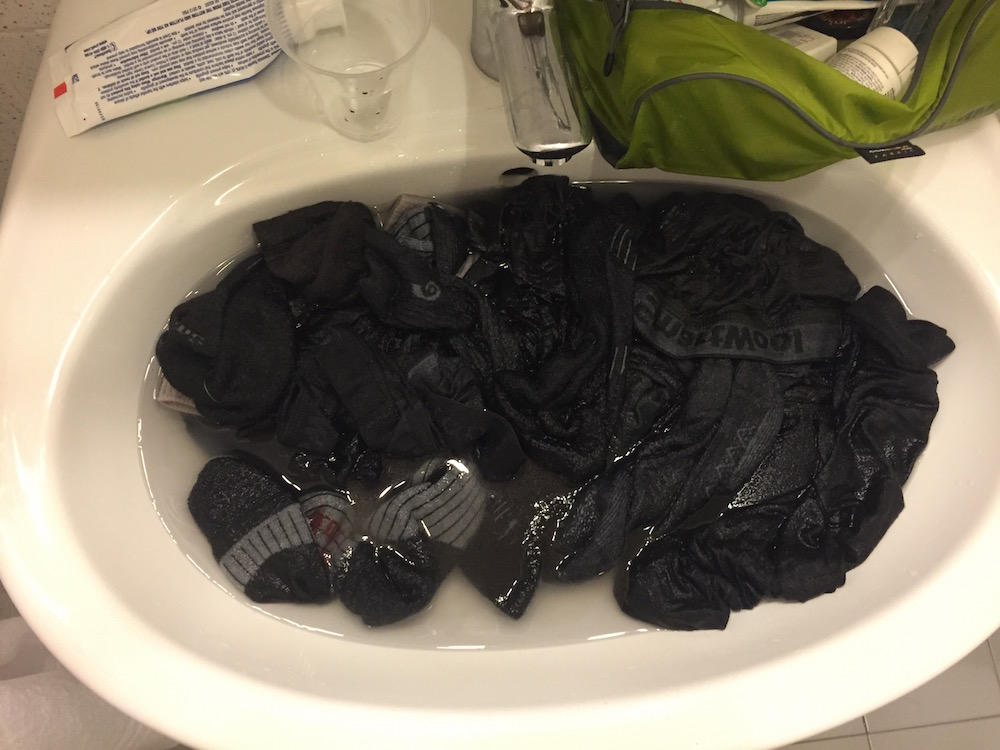
Some of the applications of this product are quite obvious: training camps, hut trips, camping/backpacking and the like, immediately spring to mind. In the past, essentially your only options on these adventures were to grin and bear it, or if you were lucky enough to be someplace with running water, you could annoy your roommates with “sock soup.”
Sock soup.
Not having to subject oneself to the indignity and inconvenience of sink laundry makes this product basically a no brainer for all of these scenarios, as this stuff will absolutely help you come out the other side smell much, much more pleasant.
Now, having said this, the elephant in the room is you. Both of our test environments (West and Steamboat) had showers. Some of the test team showered after every workout, some only once per day. Some of us wore deodorant, some did not, but regardless, we were all starting every workout fairly to completely clean. If you’re someplace where regular showers aren’t an option or you’re one of those repulsive, stinky hippies that refuses to shower, you’ve got bigger problems than can be solved with DeFunkIt — you are a disgusting, filthy, despicable human who needs to learn basic grooming and self-respect. Yes, DeFunk will most certainly help if you can’t/won’t shower, but if you’ve got a really bad case of stank, well, there’s only so much we can do here people. This is NOT a deodorant, cologne (God help us) or anything weird like that, it’s a treating process that helps to repel odor. If you absolutely reek though, well, guess what, you’re on a one-way trip to the aforementioned lunch table w/ Dan and Pep. I just wanted to get that out there.
Disclaimer: If you’re someplace where regular showers aren’t an option or you’re one of those repulsive, stinky hippies that refuses to shower, you’ve got bigger problems than can be solved with deFunkit.
Going Green
This is the deodorant you use when you think we didn’t land a man on the moon.
Another important dimension that came up in our summary and review meeting is the potential ecological impact of this product. The manufacturer reports that the preparation will last for up to 20 washes. This means that once you have treated your clothing, you can not only wear everything many more times between washes, but you can “refresh” this effect by simply doing a load of laundry with regular detergent. Undoubtedly there will be some type of degradation curve in effectiveness, but even so, if articles are only making it five or so wears near the end of the treatment cycle before requiring washing, you are still way ahead in the game.
One more interesting angle here is the stress that laundry machines places on clothes and how significantly trips through these machines reduces the lifespan of clothing — a very interesting observation that should be factored in this equation — if one treatment of DeFunkIt results in a four- to 10-fold decrease in wash frequency, not only are you saving water and electricity (dryers, in particular, are noted energy hogs), but you will also be greatly extending the life of your garments.
Conclusions
You know those car commercials which offer ridiculous, seemingly unobtainable mileage estimates for their vehicle? They often conclude with their get-out-of-jail-free statement of, “Your actual mileage may vary.” Well, same deal here. We did our best to expose a wide variety of different brands, different fabrics and different people to a fairly grueling week of testing. Overall, everyone was incredibly impressed with the findings and in some cases, people were ready to keep the test going. Will you have the same results? Probably, but who knows. I’d be amazed if it didn’t work at all for you and it could actually work better. Or perhaps worse. But I’d be shocked if it didn’t work at all.
We have not yet had the opportunity to test how this treatment process will hold up after regular washings. Does this treatment really last 20 “normal” washes? Who knows. We simply cannot answer that question at this time. We have no reason to believe that it won’t, but at the same time we always approach claims from ANY company with a fair amount of caution. The fact that everything that they’ve told us thus far has proven to be true certainly makes us optimistic, but again, our mileage may vary. As may yours.
In conclusion, is this product worthwhile? Absolutely. For $20 and one extra trip through the washer, you can wear all of your ski crap for several additional workouts without grossing out all of the dudes/babes at the coffee shop. If you’re lazy (like me), you can throw a few pairs of “civilian clothes” into the machine at the same time and not only free up more of your valuable time for important things like playing Noah Hoffman’s Fantasy XC league, but hell, who knows, you could perhaps even ski more. And you’re saving water, saving energy and extending the life of your clothes. To me, that’s well worth 20 bucks.
I think most nordic skiers have a love/hate relationship with rollerskis (or whap sticks, as my good buddy Zach Caldwell likes to call them). Firstly, we’re skiers and the last time I checked, skiing happens on snow, not asphalt. So there’s that. And then there’s the whole idea of taking these infernal contraptions out on the open road without any viable method of stopping. For anyone with even the slightest understanding of physics, traffic laws and the highly unpredictable nature of modern drivers, this is obviously a bad idea. Hold that thought.
The test array (All photos: FBD)However, as the old adage goes, “Skiers are made in summer,” and you hate the idea of losing to, well, anyone, so you check your dignity at the door, find a pair of skiing boots and poles that you’re mad at and drag yourself out the door for another battle with gravity, nearly invisible wheel-jamming rocks and the unwashed masses. If you’re in any sort of major metropolitan area in the U.S., you also need to fully activate your “abuse shields” as it is almost inevitable that you’ll be tormented, taunted and just generally verbally abused for having the nerve to go out on public roads for a little exercise. What the hell is wrong with you anyway? We all know that roads are for cars and nothing else — no bikes, no runners, no dog walkers and for heaven’s sake, certainly not for rollerskiers.
Ah, but your high-and-mighty ass has races to win. You’re a (wo)man of principle, you remember your eighth-grade civics class about taxes and their role in funding public roads and you believe stopping is highly overrated. Besides, you know these roads like, “the back of your hand,” and somehow implicit in this ridiculous statement is the assertion that you therefore also know the exact location of all possible hazards and obstacles.
Photos of Steamboat Springs Winter Sports Club Josh Smullin (l) and a tennis player dressed identically.In addition to your lovable, reasonable and logical, “I know my rights” side, you’re also a nordic skier, so you’re also cursed/blessed with a streak of non-conformity. Yes, you. You’re a rebel. Maybe not in the traditional sense, but a rebel nonetheless. You don’t drink alcohol (empty calories), smoke (uh, hellooooo, can you say VO2 impairment?), or stay up past 9 p.m. (dismal Firstbeat recovery score anyone?), but just last month you deviated slightly from your tried-and-true ration of protein to complex carbohydrates in your recovery smoothie. So take that, James Dean, there’s a new sheriff in town: he’s a footloose and fancy-free bad-boy rebel and he’s going to throw caution into the wind and go rollerskiing.
Okay, now that this is settled, the question then becomes, “Which whap sticks are right for me, FBD?” And this is where the story gets good, too, for as much information as there is on snow skis, there’s a dearth of information on the dreaded rollerski. Hell, it’s kinda hard to even find places that sell these bizarre instruments of death, nonetheless provide a detailed comparison on which model to best injure yourself, so pow, that’s where we come in.
Diving right in
First of all, with a few notable exceptions, almost all of the skis that we tested were good; three were very good. There were definitely differences between the skis though, so depending on the road surface where you train, the type of training you are doing and your goals, the best ski for one skier may not be the best for another. Given this, we have put together both a quantitative chart so you can see the empirical test scores, as well as a qualitative section in which we’ve described the best fit for each individual ski. We believe that with a careful period of introspection, goal setting and road-frictional coefficient calculations, combined with a thorough perusal of both the qualitative and quantitive sections, you’ll find yourself the happiest you’ve even been in your life.
Testing HQ in Steamboat Springs, Colo. Rollerskis for this review were also tested in Park City, Utah, and Philadelphia.Next is the issue of speed — this is huge in snow-ski testing (basically the entire point of testing is to find the ski/grind/wax combo that is the fastest), but this is generally not the case for rollerskis. Racing aside (and who is crazy enough to race these barbaric skin-removal torture devices?), the overwhelming percentage of athletes are looking for the rollerskis that best simulate being on snow and meets as many of personal the training parameters outlined above. In addition, almost every rollerski wheel can be swapped out for faster wheels, so it is generally quite easy for an athlete to “tune” their whap sticks to whatever speed you are the most comfortable screaming down hills on something with no brakes, into traffic. As a result, you will see essentially no references to “ski speed” in the rest of this review, as any ski can be made fast. Chapters could be written on the many schools of thought on “best” rollerski speed, but that’s not the purpose of this review — we did our best to provide an objective, comprehensive and unbiased look at as many brands as possible and make recommendations to everyone in the ski that is best for them.
Best Overall
Just as with snow skis, there is an element of personal preference in rollerski selection, so to help address and negate this, we had a test team of seven people. In total, we had over 150 years of ski experience, an Olympic gold medalist, a world champion, and three veterans of World Cup ski-testing protocols. This was an extremely well-qualified group, so we believe this analysis to be very fair and balanced. We love skiing and we love gear, so we took this very seriously and put a ton of time into it, because that’s what we do. And we even managed to have a little fun along the way, which is good, as I’m pretty sure that I read somewhere that this is supposed to be fun.
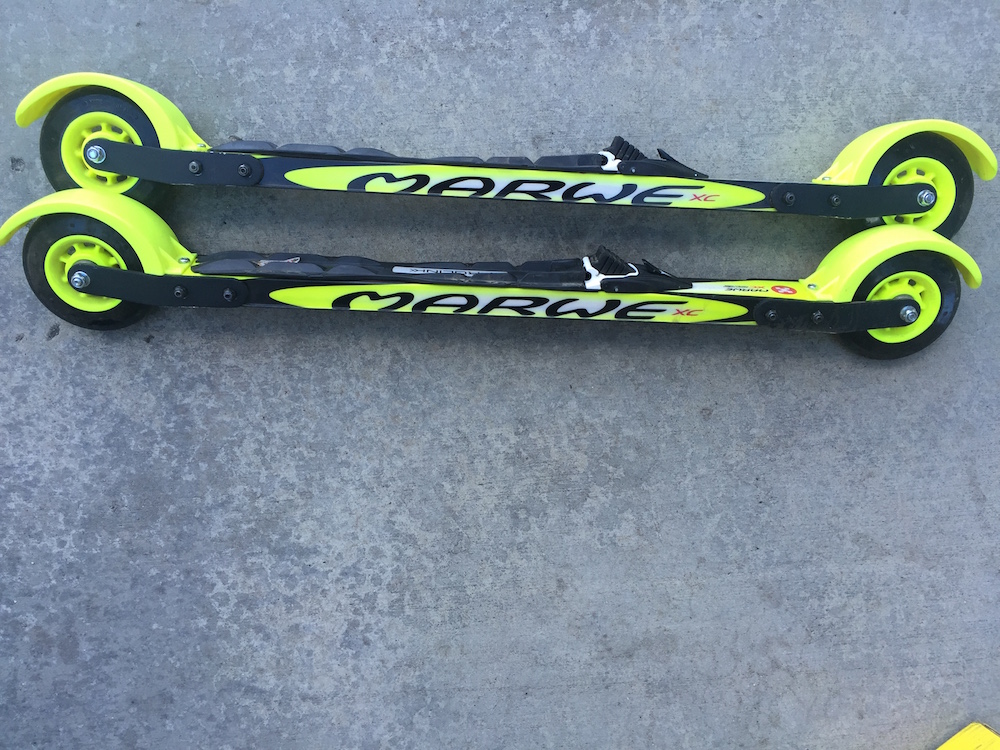
While most of the skis in this test will work fairly well for a wide range of athletes for most conditions, three pairs scored consistently the highest among all of the testers: Marwe, IDT and Pursuit. The former was not much of a surprise, as Marwe is a well-respected and established brand.
Look no further than U.S. biathlete Tim Burke’s garage and you’ll see why Marwes are the choice of many top skiers worldwide. They have a nice feel, are very stable, hold up well and offer a wide variety of wheels speeds, so you can’t go wrong with these skis.
Weighing in at 0.91 kg, they are the lightest of the three top skis and their individual performance ratings was at or near the top in every category (see review matrix below*).
*Note: Every tester had a private scoring matrix that no other reviewer saw until the testing was complete. All of those scores were averaged to create the matrix shown above.
Also, this matrix has been updated to include model names.
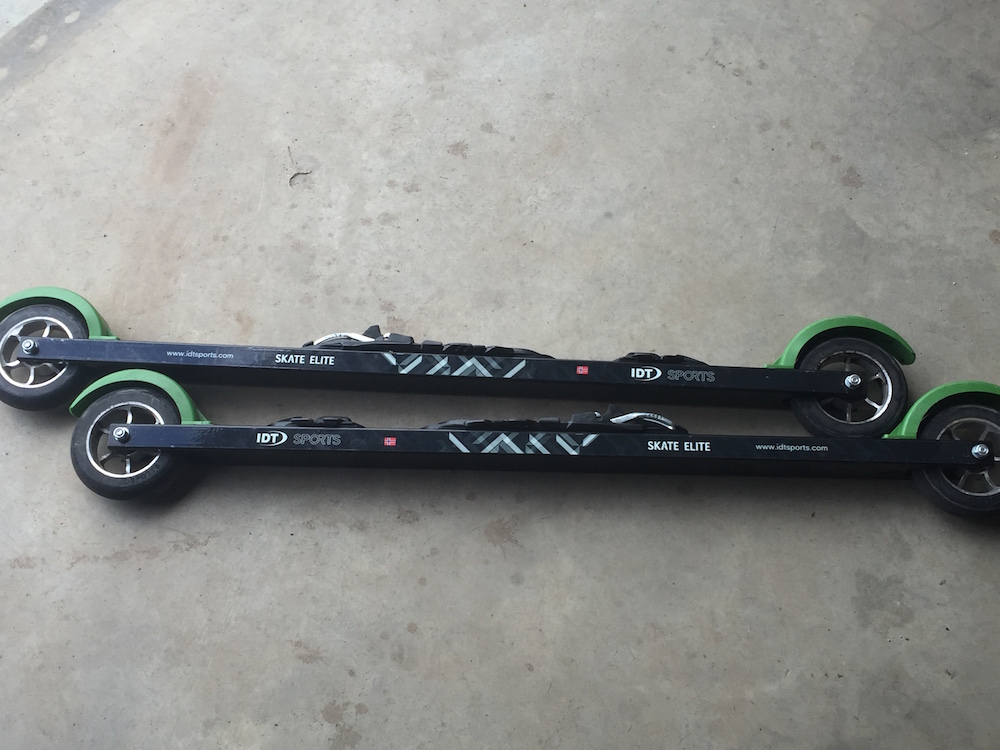
The second top performer was the IDT (0.99 kg) — another great all-around ski. We all loved everything about this ski and it also scored high marks across the board in every category. They were the longest ski tested and many of us felt this contributed to this ski being the one that many believed felt the most like skiing on snow.
One tester was concerned that the added length would be cumbersome in corners, but most felt that this was not a problem and overall this ski scored well in all areas. The biggest drawback is that they’re made in Norway and they’re just getting their U.S. distribution rolling (get it, ROLLING, see what I did there?), so purchasing a pair in the U.S. right now may not be all that easy. IDT specifically stated that this product will be readily available in the U.S. “very soon” though, whatever that means. This is a great ski for long, cruiser workouts.
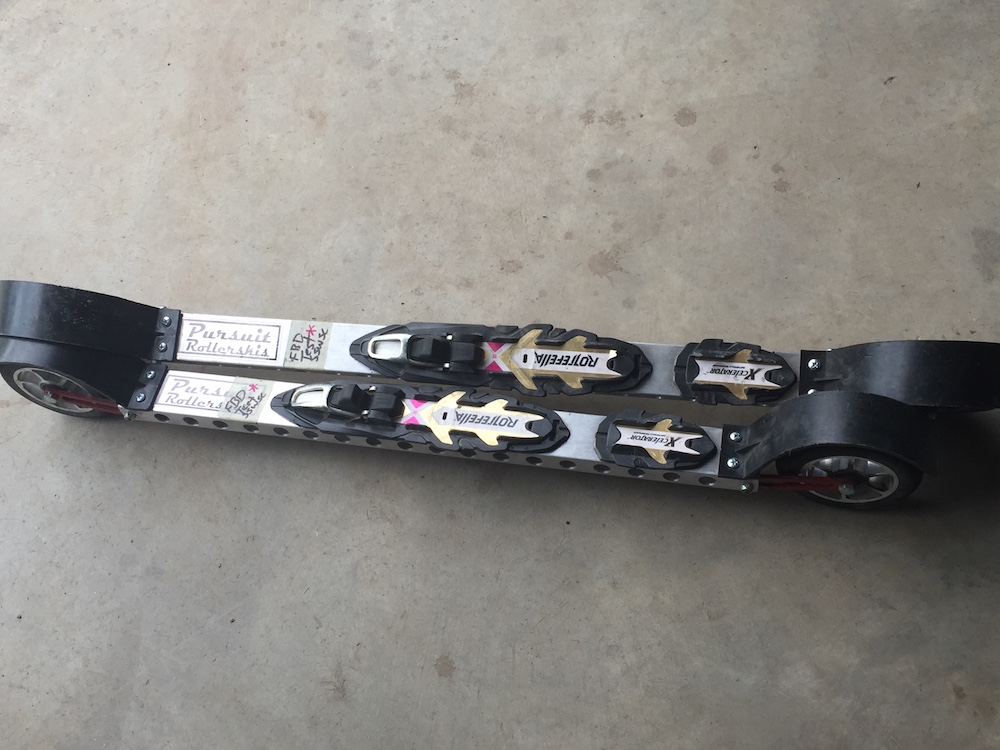
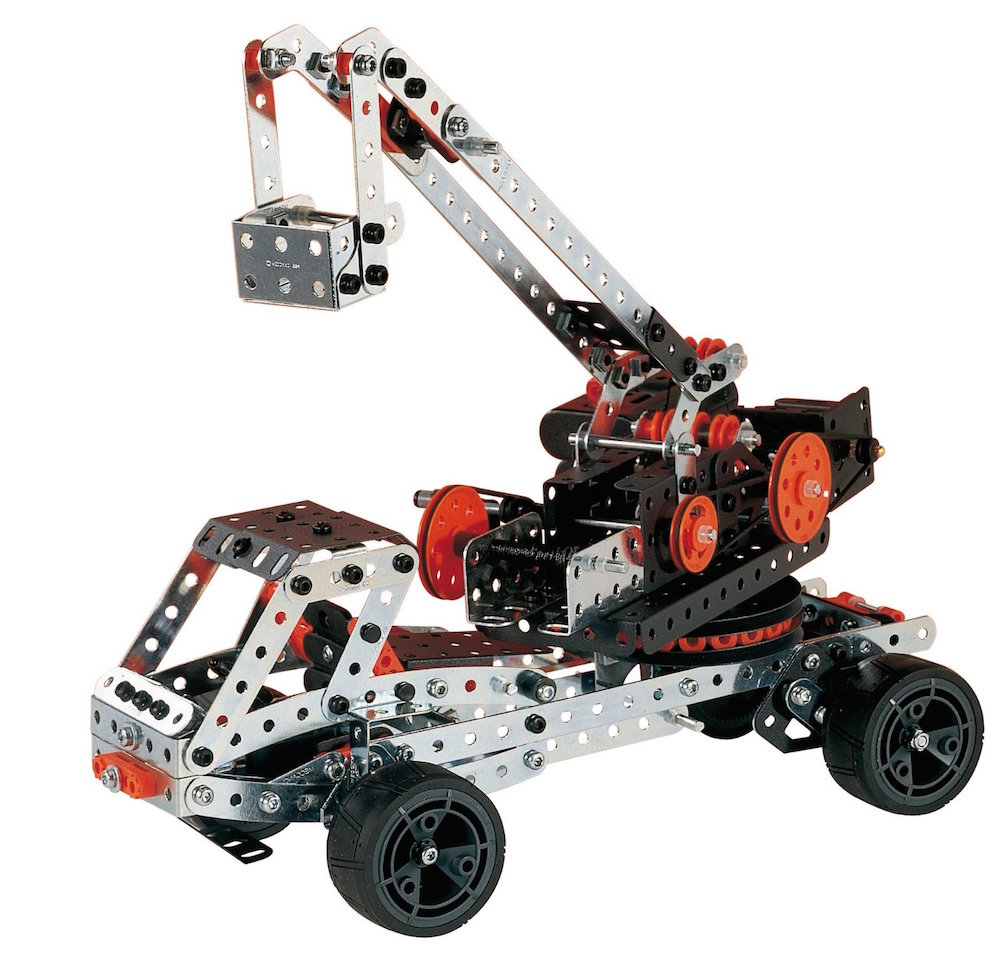
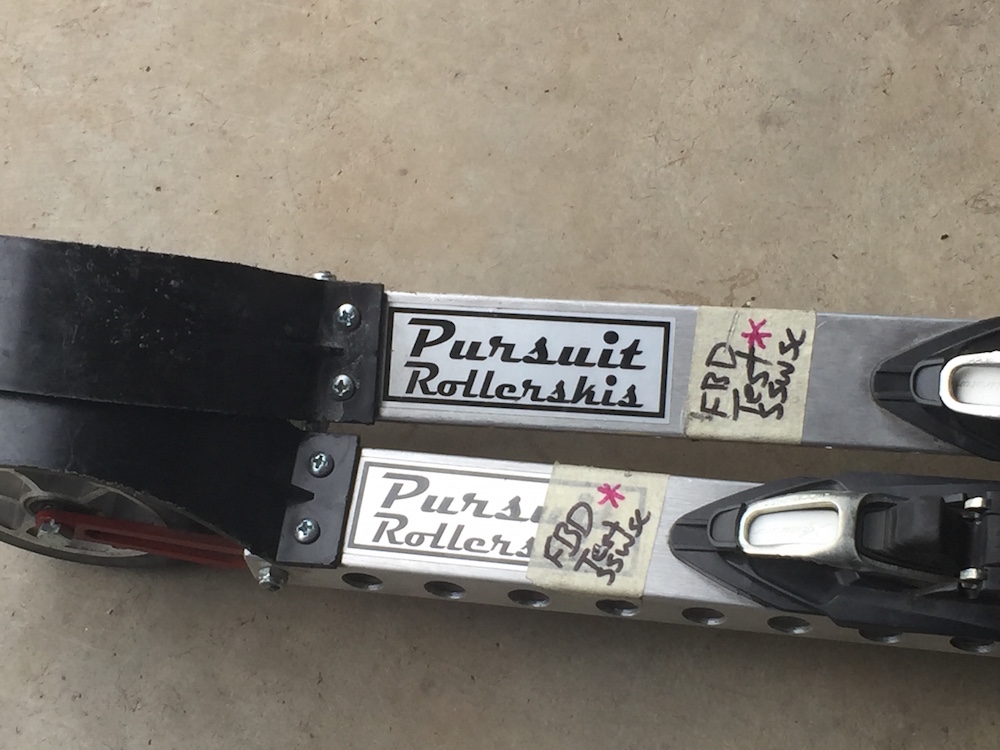
By far the biggest surprise of the testing was the Pursuit Fork Flex (1.03 kg). First of all, far be it for me to speak “out of school,” but the Pursuits aren’t exactly the sexiest skis out there: the best way to describe their appearance is that they are the result of the ultimate-nerd collabro of an erector set…
Metal-toy Erector Set
meets science fair…
Science fair
meets nordic skier.
Josh Smullin (l) in a pumpkin suit.
Yes, scary, I know. But, but, BUT, this just goes to show you how good these skis really are, as every one of us picked them up and thought, “Yeah, these things are going to suck,” but then we skied them and were quickly singing another tune: great feel, stability and flex.
Pursuit skate rollerskis
No one had skied them previously, so none of us knew what to expect, but independently, everyone scored them very highly, with most testers ranking them their overall favorite. Wow. Every good scientific study does its best to minimize bias, but that’s obviously very difficult when the name brand of the ski is staring right at you — so for these skis to score the highest marks with no preconceived notions of their strengths shows just how good these skis really are.
The price is right, too, as they’re over a $100 cheaper than most of the other skis reviewed. It will be interesting to see how well they stand the test of time, but they’re off to a great start.
Specialty Skis
What is particularly interesting about the skis in this next group is all of them do a certain thing(s) very well. They may not be the best “all-around” skis, but that doesn’t mean that they aren’t the best skis for you.
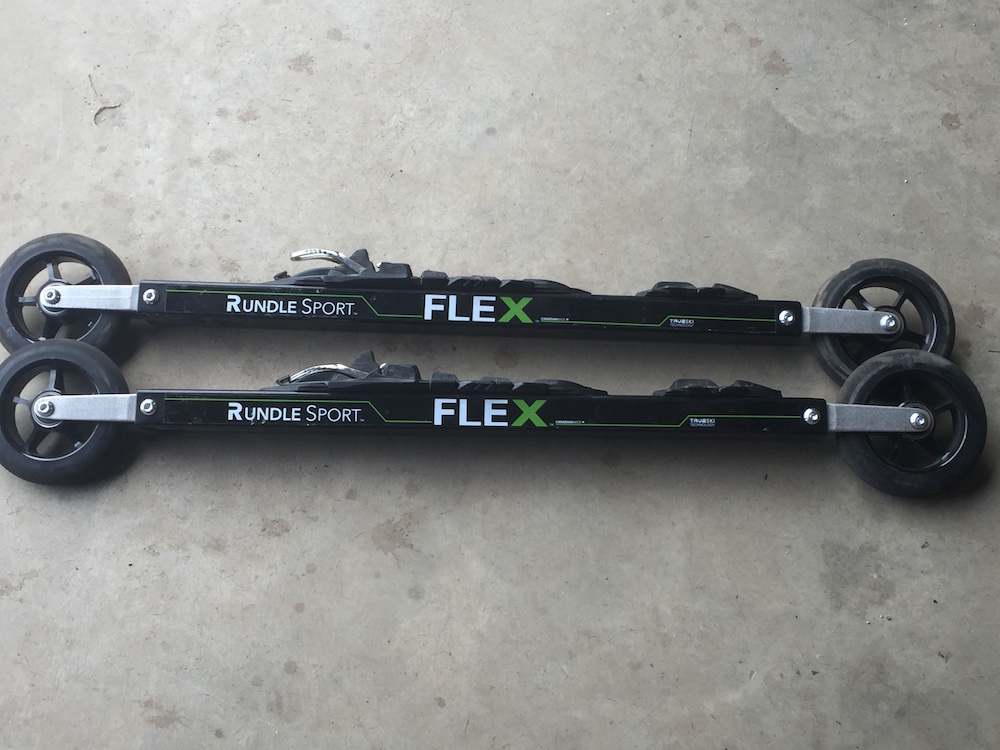
First and foremost, we were very eager to try the Rundle Sport FLEX (1.07 kg). This ski was reported to be more comfortable and more forgiving than most other skis and the entire test team was excited about checking this out for ourselves. Are these skis noticeably smoother on rough pavement? In a word, yes. So if you’re stuck in an area with the dreaded “chip ‘n’ seal”:
A “chip ‘n’ seal” road in the U.S. (Photo: Wikipedia)
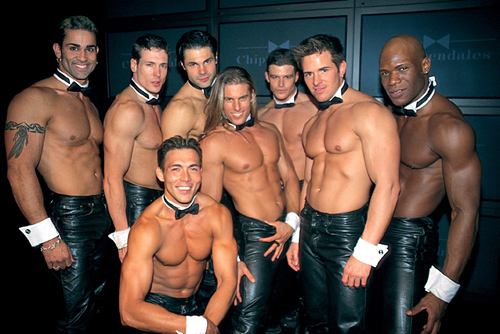
not to be confused with Chippendales (who are suitable for any road surface)…
Chippendales
…these skis are for you. Where you won’t like them is on high-speed descents or hard cornering. So if you’re rollerskiing’s answer to Bode Miller, you believe all time spent traveling in a straight line is time wasted, or hair-on-fire downhills are your jam, you’re not going to be feeling the love with the Rundles. If you’re recovering from injury, are forced to train on bad roads or are just all about comfort, snap these up now and these are the most comfortable skis we tested.
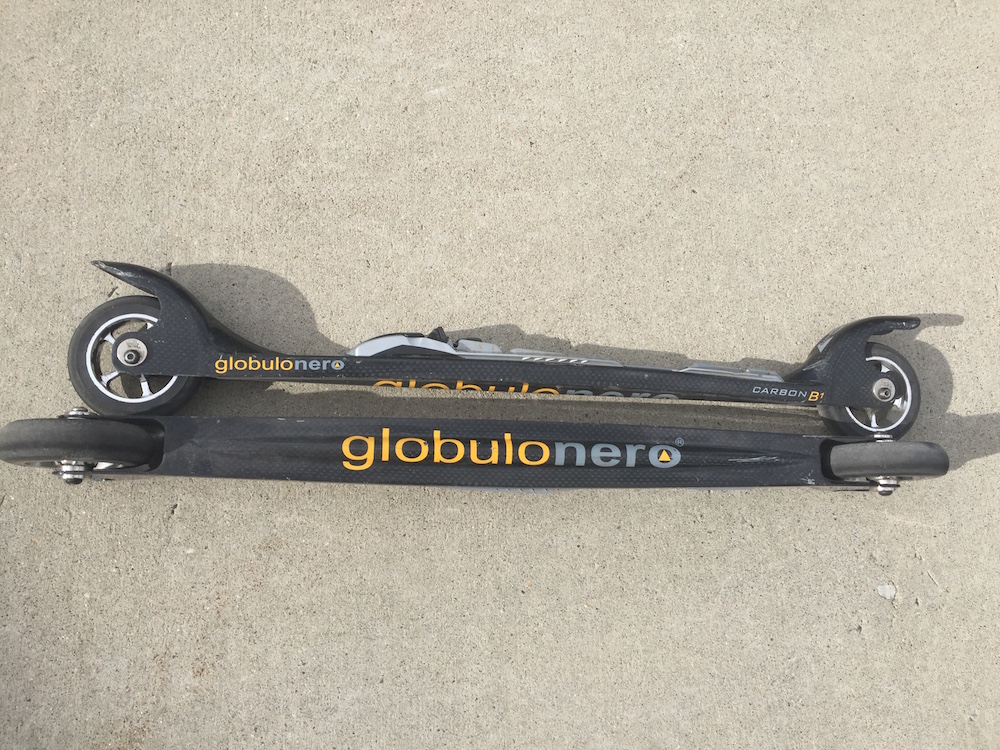
The GlobuloNero (0.89 kg) is made in Italy. Full disclosure: I love Italy. Amazing food, fashion, culture and style, but Italians do things their own way. For example, they use the word ‘schedule’ very differently than people in most other countries, as their use is really more of an aspiration or suggestion for things like trains and planes than it is a predictor of what time any given form of government-run transportation will actually arrive. That is, if it arrives.
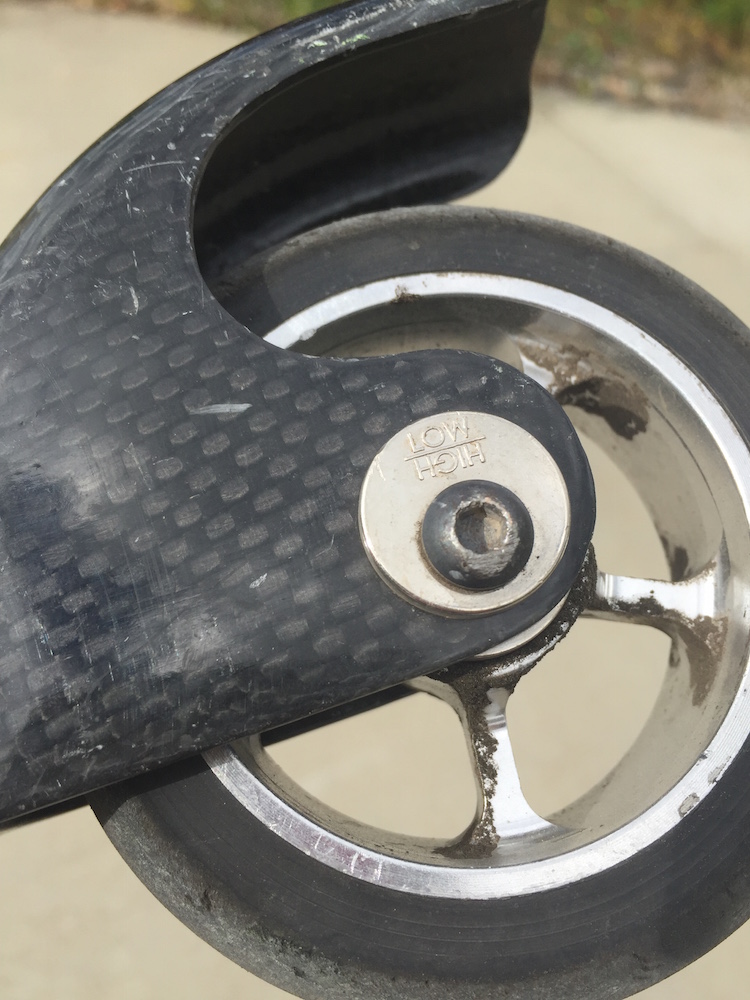
My missing GlobuloNero part
This ski fits that concept perfectly: they are the Ferrari of skis. If and when they finally do arrive, they come with a silk scarf, a bottle of cologne and a nice bottle of red wine. They are all carbon, including the fenders, and as such, they are just oozing with style. Like the Ferrari, they also have their idiosyncrasies. For example, the “nut” that holds the axle in place is, naturally, a custom shape, so losing it is like losing your baggage in the Rome airport: you won’t be traveling anywhere soon. I know this for a fact, too, as I did somehow manage to lose this crazy piece when it mysteriously decided to abandon ship mid-workout to start a new life nested into the roadside bushes. Despite many calls to many places, surprisingly no one had what looks like it should be a very common part.
Just as I had begun to accept the fact that these Italian works of art would forever be relegated to the floor of my garage, Eagle Eyes Smullin retracted our steps (well, strides) and somehow managed to find this part as it was setting up shop in the drainage ditch. That’s some Teammate of the Year sh*t right there.
Other reviewers didn’t score them as highly as me, but I love these skis. Maybe it’s because they’re like me — smooth, stylish and sexy, but also temperamental. Like the IDTs, they can also be difficult to find in the States. Unlike the IDTs however, there appears to be no plan to improve this, which, well, is what it is. The company also claims that they are designed for skiers over 70 kg (154 lbs) which is weird, as you don’t usually see carbon-fibre components with minimum weights, but hey, they’re Italian, remember? And stop asking so many questions — your train is going to eventually get here. Maybe.
Don’t forget either, this is a gear and style column and no skis have more style than the GlobuloNero. C’mon, everyone and their brother has a set of Marwes or Swenors, right? So if you’re one of those people who likes to look good, doesn’t mind waiting six months for these to arrive from Europe and won’t throw a fit when your Ferrari breaks down yet again, you owe it to yourself to buy a set of these. Other skis may score a bit higher or have their own performance niche, but Globos have style. Start the ordering process now and you might just have them for next summer. Maybe. If not, have a nice glass of chianti and go sit in your Ferrari that currently won’t start for some strange reason. Any good Italian will tell you that it’s too nice a day to go rollerskiing anyway.
This was the lightest (0.80 kg) and shortest ski in the test, and not surprisingly the most twitchy and tippy. This skis felt smooth when you were on top of them, but balance was a challenge. Now, for small, light skiers or younger athletes, these might be perfect. Plus, they are a coach’s dream: learn how to be stable on these bad boys and you’ll have Andy Newell’s cat-like reflexes in no time. Assuming you have the balance for them, they will likely excel for hard-charging juniors looking to impress U.S. national-team coach Matt Whitcomb by breaking lots of sh*t on the agility course at a regional elite camp. So if that’s you — you ski Soldier Hollow often or your preferred training loop is a bike path, filled with the tight, blind corners (which seem to be obligatory in most ski-town bike paths), self-absorbed dog walkers with their 30 foot, knee-level, rollerskier snare line — these skis are for you.
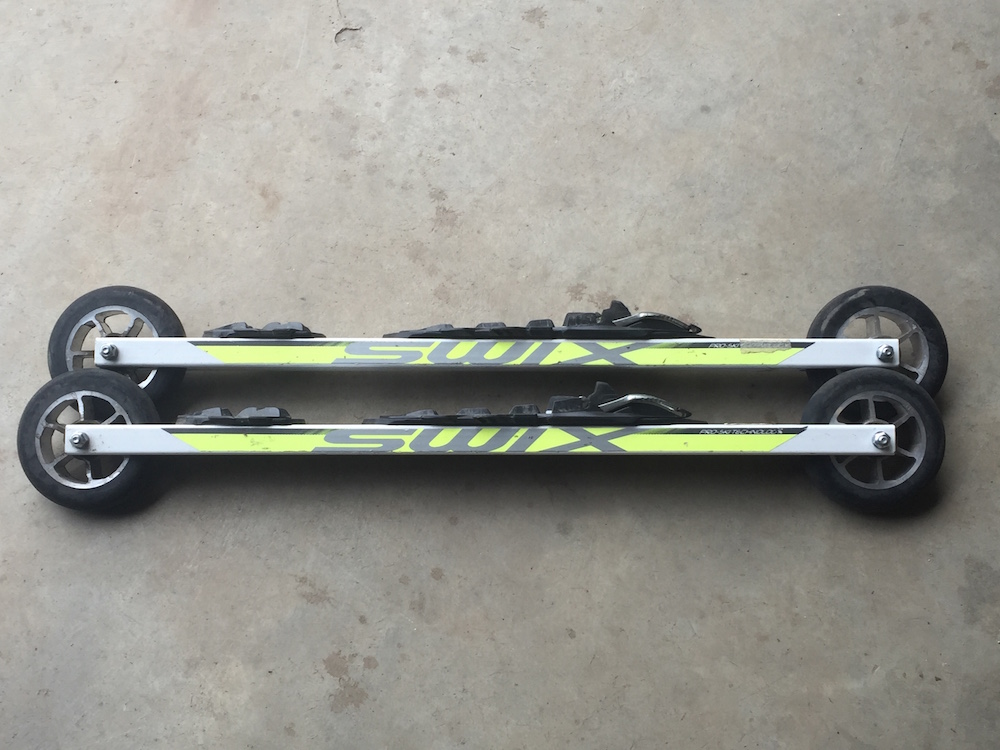
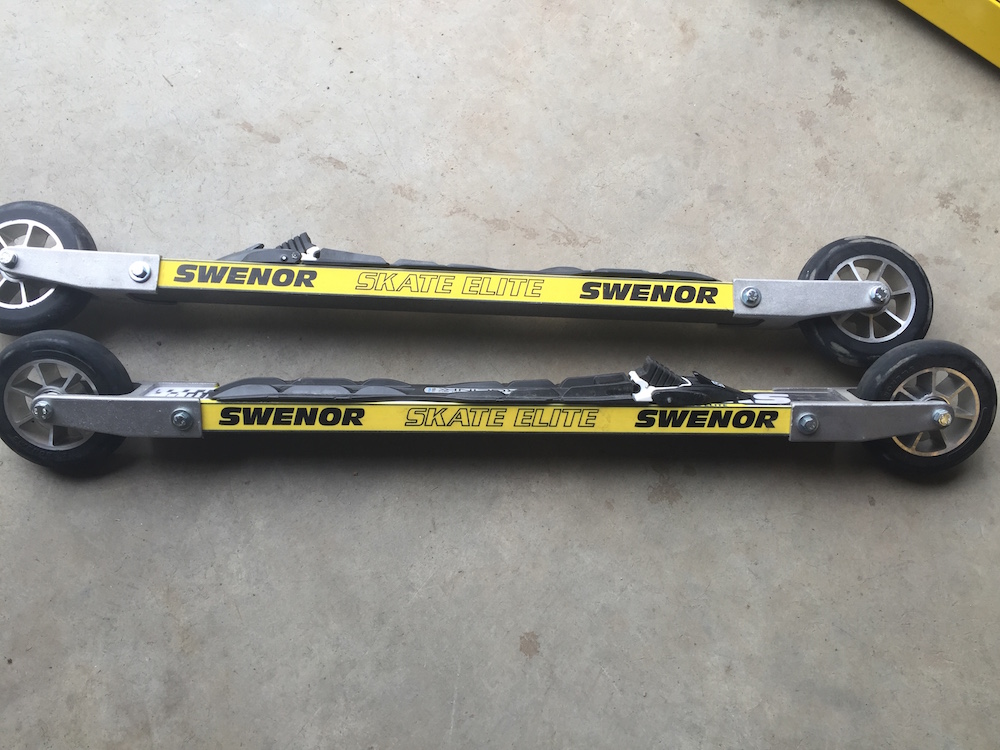
It always warms my cold heart when companies go “all in,” on these tests and send everything but the kitchen sink. That was the case here, as Swenor sent us two pairs of skate skis and three pairs of classic. I love the enthusiasm and aggressive product positioning, but the problem here is that we didn’t love the skis. To be clear, we didn’t hate them, but we didn’t love them either (at least for skate; the classic scored better and that review will be coming shortly).
What’s wrong with these skis? Well, nothing actually, but as the test matrix shows, the Skate Elite (1.05 kg) got edged out in basically every category. It is still a very solid ski and its performance was solid in every category but of the seven testers, not one single person had them in their top group. For the record, everyone (that’s right, all seven testers) had the Marwe, IDT and Pursuit in their top three. Not everyone had these three in the same order, but everyone had them as their top three (and as noted, every tester had a private scoring matrix that wasn’t shared until the testing was complete). The fact that the Skate Elite never made the top three on anyone’s list meant that in good conscience we simply couldn’t group this ski with the Marwe, IDT and Pursuit.
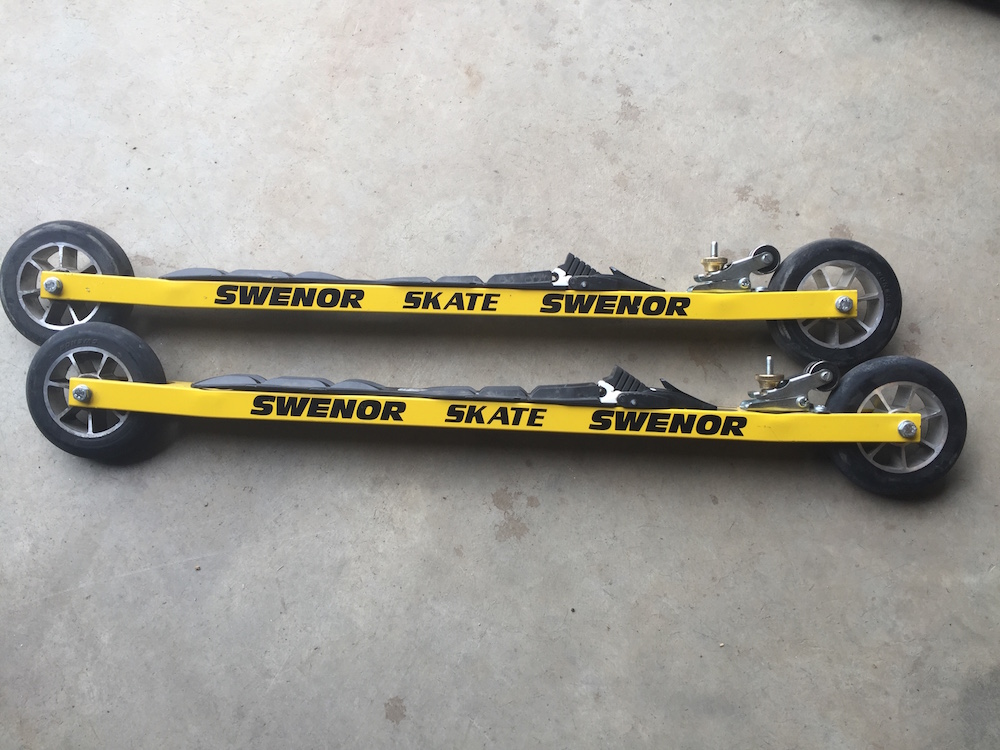
Swenor Skate rollerskis
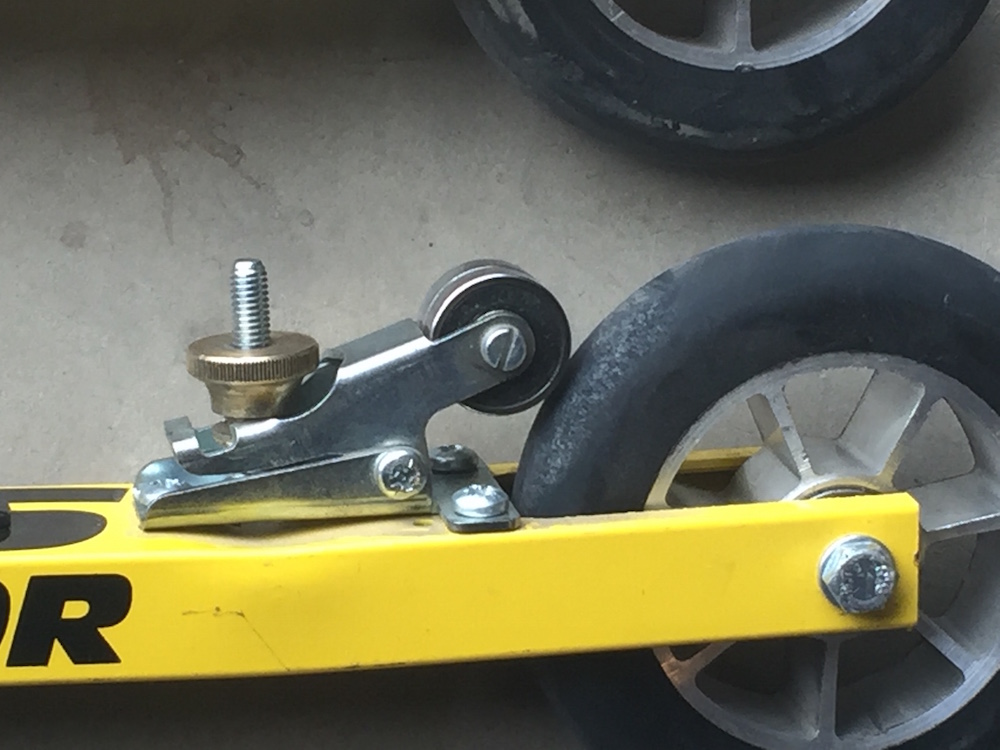
The second ski from Swenor, the Skate (0.94 kg) fared worse. No one was particularly impressed with this ski’s performance on rough pavement and they had the added distraction of being quite loud and rattly (for reasons we will go into shortly). Both a strength and weakness was that this was the only ski with built in speed reducers. This is a strength, as it seems like the ability to even somewhat regulate your speed could come in handy from time to time. It’s a weakness as, god damn it, these things were loud.
Swenor Skate rollerski brake
The mechanism itself isn’t all that user-friendly either, as it required bending down to turn a dial on the ski to add resistance. This is really more of a “hey, this downhill looks steep, I’d better pull over and add some rolling resistance so I don’t die,” type of system, than a braking system per se. I can just hear all of the haters out there firing up their Internets to fire off a scathing missive about FBD being a “brake hater,” (Is that even a thing?), so let’s all save each other some time and I’ll go on record right here saying I love the concept of brakes. What sane person doesn’t? I’d just like them to work, that’s all.
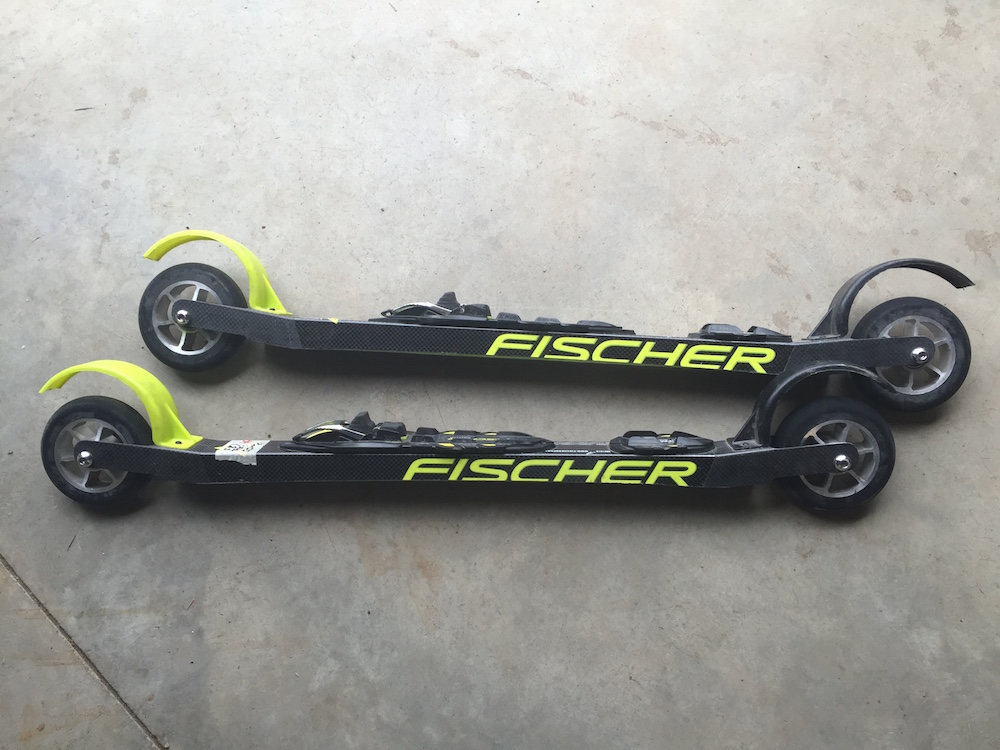
To be blunt, this ski was a disappointment. Fischer makes great snow skis, so we were expecting big things from them. They got off to a great start as they look sexy as hell, but things went downhill as soon as we picked them up, for despite being carbon, these skis were the heaviest in the entire test, by a lot (1.22 kg).
The situation got even weirder (not the Jersey Shore guy, who is already quite weird) when we skied them too, for again, despite being carbon, the ride was just OK and surprisingly non-compliant for a carbon ski. This was surprising. To be clear, this is still not a bad ski, but simply not as good as others in the test. The fact that we had such high hopes for the ski probably also increased our disappointment to some degree. This SHOULD be a great ski, we all wanted it to be a great ski, it just wasn’t. The weight was an added buzzkill.
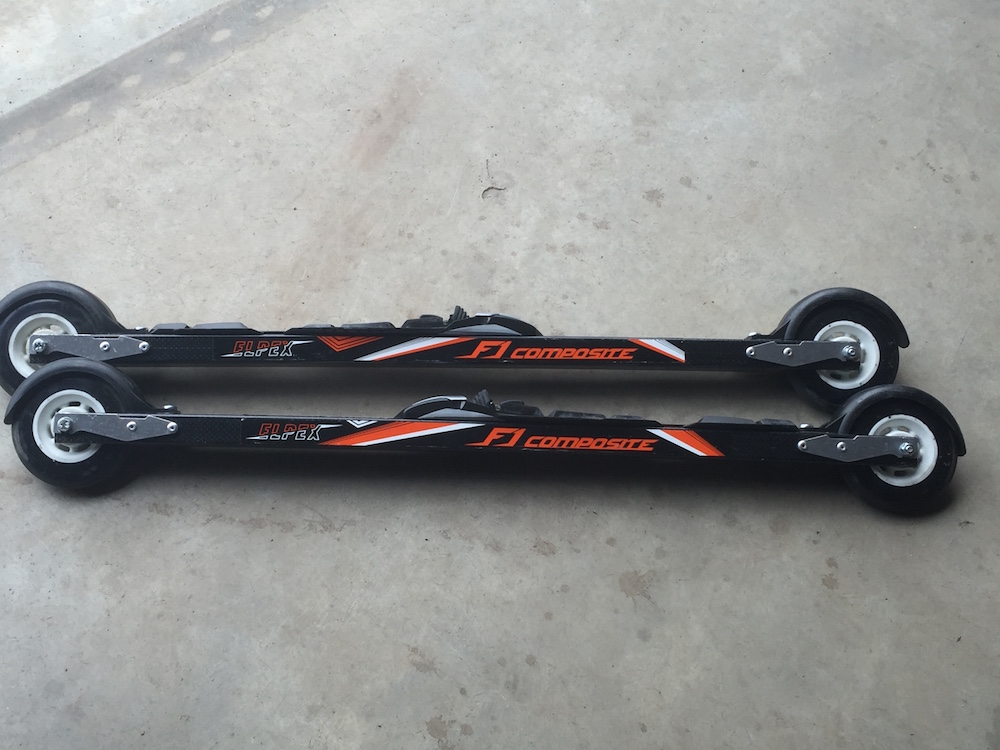
The biggest disappointment of the test was the Elpex F1 Composite (1.03 kg). We were all super-psyched to try this ski, but one didn’t have to ski far to realize that something was wrong, very wrong. In fact the skis felt so off that we believe there may have been a binding mounting error, as this ski felt like you were riding a bicycle backwards to every tester. Hopefully this problem can be identified and corrected, as we still believe that this ski has promise.
This has got to stop
Lastly, the one area that we’ve danced around a bit, but is never far from our mind, is safety. Quite simply, venturing out onto open roads with no viable method of controlling your speed is nothing short of insane. Yes, you can moderate your risk a bit by picking safer courses, but even so, you don’t seriously think that nothing is ever going to suddenly appear in your way on even the most deserted country road or bike path, do you? Unless you’ve taken over for Matt Damon on an abandon space station on Mars, you’re going to encounter obstacles in your path on training skis.
The problem is that rollerski brakes have previously all been pretty crappy. A few differently companies have tried, but the end results have been underwhelming, with all of the systems having problems of some sort. Or almost all of them.
One reviewer’s rollerski rankingOne of the big revelations of this test was putting an after-market braking system from the Rollerski Shop though its paces. I am very pleased to report that the system worked quite well. It’s design is quite simple and effective: a lever arm applies pressure to your rear wheel. The lever arm is engaged by a pull handle that hooks to either a waist strap or your drink belt. It takes a little fooling around to get the whole system tensioned correctly, but once you do, it works well (this video offers some truly compelling footage of the system in action).
Don’t get me wrong, 180 mm Shimano disc-brake rotors these are not, but of all of the braking systems I have ever tried, this one is by far the best. It adds essentially no weight to your skis, it is quiet, effective and can be activated easily and quickly. Remember, it’s not just that this makes you safer on your existing courses, but it also opens up a whole new set of options for you. How many times have you not done a potentially great training loop because there’s some nasty intersection at the bottom of a big hill? Or blind corner? Or dead end? Or lake, if you’re skiing with Billy Demong? If you’re too cool for school and think brakes are only for people with no skills and no balls, take it easy Rambo and justify the purchase by telling yourself that you’re finally going to be able to ski “Dead Man’s Hill,” or whatever the equivalent is in your town (every town has one). When the brake just happens to save you from a crash when a delivery truck driver suddenly pulls out of a driveway or a 150-lb, learning-impaired Great Dane comes charging toward you, poised for a powerful, collarbone shattering head-on collision, you can thank me later.
So what are you waiting for? Go treat yourself to a brand, spankin’ new set of whap sticks. After all, who deserves it more than you, right? Do us a favor too and spring for the brakes as well. Not only do we want everyone to be safe out there, but it just so happens that we have a few more amazing clothing reviews coming in the next few weeks and we want each and every one of you healthy, happy and safe so you all can bask in the glory that is FBD gear reviews.
Jessie Diggins (U.S. Ski Team) racing to fourth in the women’s freestyle sprint qualifier at Stage 3 of the Ski Tour Canada in Quebec City. She went on to place 13th after a crash in her quarterfinal. In an interview earlier this month, Diggins said her reliance on sport psychology has helped her make gains, especially in her consistency last season. (Photo: FlyingPointRoad.com/NNF)
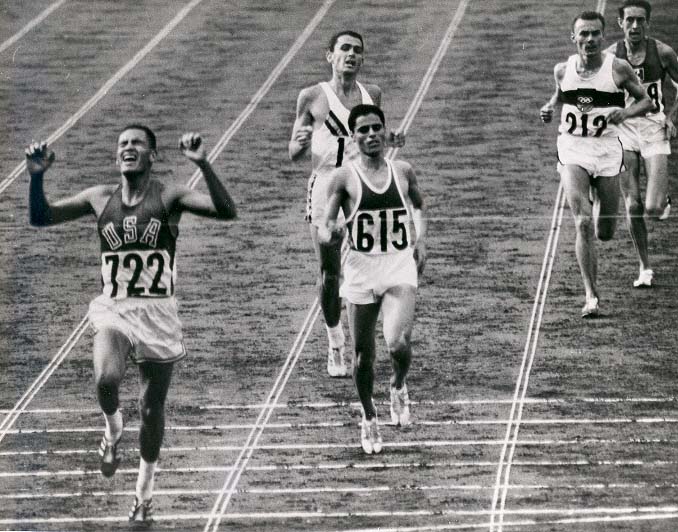
At the 1964 Tokyo Summer Olympics, Billy Mills was America’s best hope in the 10,000 meters: a 25-lap race of high-turnover running coupled with a Grandmaster’s chess match worth of strategy. Coming into the Games, Mills was an outlier. In other words, he was not considered a medal contender; he’d need to improve his 10,000 time by nearly two minutes to contend for the podium.
In an archival video from Tokyo, around 1:15 in, the television announcer makes subtle note of Mills.
“Billy Mills is right in there for the U.S., a man no one expects to win this particular event,” the announcer said at the time.
A minute later we see Mills and world-record holder, Australian Ron Clarke, running one-two — jostling, throwing elbows with fewer than 400 meters to the tape. One particularly robust shot from Clarke almost trips up Mills. About then, third-place runner, Mohammed Gammoudi from Tunisia, pounces. He’s a blur as he accelerates between Mills and Clark.
It appears Mills is a bronze-medal lock. Gammoudi, chased by Clark, drop Mills by five meters, the finish only moments away.
At far left, Billy Mills, of the Oglala Lakota (Sioux) Tribe, representing the U.S. as he crossed the finish line first for the gold medal in the 10,000 meters at the 1964 Olympic Games in Tokyo. (Photo Official Marine Corps Photo # A411758)
Mills’ story is well documented. His belief in self, his ability to mentally break down an epic distance into small discrete moments, helped him close the two-minute gap he once faced. Mills later said, in this video, that he started to think about how he’d first decrease his time by 25 seconds. He concluded that simply holding a faster pace for one second longer per lap would do the job. Afterall, it’s a 25-lap race. Mills’ logic followed that a 50-second decrease would require the faster pace for two seconds longer per lap.
A simple pattern and a simple remedy, but not such a simple plan to execute on the Olympic stage.
On that day in 1964, Mills set a remarkable personal best as he outsprinted Clark and Gammoudi for the gold.
Sport is inherently measurable. At its most basic, there’s the win or the loss. In sports like cross-country skiing, where there’s one winner, most athletes fill in the ranks from second to, say, 50th. Yet, the non-winners still strive. They train. They attempt to fine-tune their “engines” for a window of elite performance that may last only a few weeks annually or even a single race. All this in an attempt to decrease the physical performance gap between themselves and the winner.
Still, sometimes that’s not enough for the breakthrough. Using Mills’ example, he’d say the mental piece was the breakthrough.
Rich Gordin, a Utah-based sport psychologist, asked this author to watch the Billy Mills clip. It’s also something he’s recommended to many top nordic athletes. Through his first foray into psychology and sport in the ’70s with the University of Utah’s women’s gymnastics team, perennial NCAA champions, to his work with the 2010 Olympic-medal-winning U.S. Nordic Combined Team, Gordin remains bullish on psychology’s place in sport.
Yet Gordin says many elite athletes are reluctant to seek the help of a psychologist.
“Most of the endurance runners and cross-country skiers are primarily, I think, initially most interested in their physiology,” he said. “I can put somebody on a treadmill and I can tell you their VO2 max, I can tell you their lactate threshold, I can tell you biomechanically exactly how your skis are and where your poles are.”
Sport psychology, Gordin admits, is less data-driven.
“Why is it not utilized as much is because you cannot see it,” he said. “It’s harder to measure. Cross-country skiers are very much like endurance runners. When you bring a sport-psych person in, a mental trainer, they don’t really get it … because they think it’s all physiological; ‘if I’m physiologically able to pound someone into the dirt, that’s all I need.’ ”
Initially, Gordin needs to establish athlete buy-in. That, he said, begins with the basic belief system. In this case, the idea that an athlete believes they can accomplish a specific goal.
“And it’s not a fake thing. It’s not a little red choo-choo train, ‘I think I can I think I can.’ That’s superficial. It’s a start, but it’s not enough,” he said. “I’m talking about anybody I’ve ever worked with. And when these people finally flip the switch — I call it flipping the switch when it happens — it clicks. You have to believe you belong there.”
“It’s not a little red choo-choo train, ‘I think I can I think I can.’ … You have to believe you belong there.” — Rich Gordin, professor at Utah State University and sports psychologist
Sophie Caldwell (U.S. Ski Team) racing to 22nd in the women’s freestyle sprint qualifier at Stage 3 of the Ski Tour Canada in Quebec City. (Photo: FlyingPointRoad.com/NNF)
Pam Lemons is a Park City-based sport psychologist employed by the U.S. Ski & Snowboard Association (USSA) counseling cross-country and mogul skiers, and non-snow athletes like golfers, lacrosse and soccer players. She’s one puzzle piece that has allowed the U.S. women’s nordic team to believe. Lemons said that belief, and the reality of consistently performing well has been created incrementally.
A psychologist for multiple USSA teams, Lemons emphasizes core mental practices for effective physical athletic performance. She teaches skiers to communicate, set clear goals, and practice purposefully. Purposeful practice, Lemons explained, makes effective and efficient use of the athlete’s time.
“So when you go out and you are doing double-pole intervals, you don’t just go out and wing it,” she said. “You have a very specific goal in mind for that particular day, and the whole premise — and I try to get the athletes to understand this — is if you just go out there and wing it, then you are not building upon the structures that are going to make you better.”
The mental training Lemons prescribes also places a premium on journaling.
“The journaling allows for a record. We are looking for trends so we can if we see that there is a trend in behavior. Then we know, especially in cross-country, when they get so tired and their energy output is great it could be that, ‘Oh my gosh, I noticed that at the end of the camp that I’m not as successful at double poling or sprinting.’ Maybe they are tired. We will be able to see that from a mental standpoint and from a physical standpoint. Much the same as you do training journals. It is a training: it’s mental training.”
In the journal, Lemons asks that athletes document specific goals. She calls these goals “OFI’s” — Opportunities For Improvement. For example, if a skier is focusing on striding, they outline that as a journal entry.
“And they might say, ‘Today my training went really well. I felt strong. I felt like my technique was excellent, but my kick wasn’t what it should be,’ ” she suggested. “ ‘And so the kick then, tomorrow when I do my training, I will focus on sending my legs,’ or whatever they need to do, they will have a specific technique that they may work on.
“I have them document that, and then at the end of the week they can determine whether or not it was successful,” she continued. “And maybe they did something really, really well and they didn’t do something as well. That’s an OFI — they then become the goals for the next day or the next week.”
The journal becomes part-training log and part-guide, a reference for each athlete to discover where they have been, where they’d like to go and how to get there.
Lemons had this anecdote about why journaling is effective. “I had one athlete at a camp, and she came back from the camp and she said it was a horrible camp. I said, ‘Really? Tell me why.’ ‘Oh my gosh, it was the worst camp ever … I didn’t do x, y, and z.’ And I said, ‘Well, let’s see what the goals were for that camp? Let’s just look at it and see what you were planning on doing and what you did.’”
The athlete fortunately had a written record — the OFI’s and the goals — to cross reference.
“‘Did you meet goal number one?’ ” Lemons asked. “ ‘Oh yeah, I did.’ ‘Did you meet goal number two?’ ‘Oh yeah, I did.’ The reason she said the camp was awful was because the last day she was stinking it up. In her mind, all she remembered was that last day. Because she journaled, she really then changed her whole reflection about that camp.”
The skier was able to understand she was, in fact, moving closer to her overall goals. In this instance, the journal can be a safety net. According to Lemons, here’s why: humans have a tendency to recall, say during a weeklong training camp, the first and last things that occurred.
“It’s called primacy and latency,” Lemons explained. “You don’t want to leave your reflection to your memory. You want to be able to document these things.”
The journaling allows athletes to thwart our wiring for primacy and latency, allowing them to see the bigger picture and discrete trends.
Sport Psychology at the National Level
Chris Grover, head coach of the U.S. Cross-Country Ski Team, has been part of the team’s coaching staff since 1999. He took a two-year hiatus in 2004 and has been with the national team since 2006. During his tenure, he’s seen sport psychology become more fully integrated into the team’s methodology.
Grover noted that he’s witnessed a simple yet critical change: the increased number of providers available to U.S. Ski Team athletes.
“When I began working for the national team again in 2006, we were looking at one provider for the entire team in kind of one-size-fits-all strategy,” Grover said. “And now we are using one, two, three, four, five, I believe five different providers for the team. People can find someone that they really click with, someone that they like to work with.”
According to Grover, like any group, the needs of the team are varied. As a result, the team does not use group-wide sessions as a regular practice. It’s up to the athlete and provider to do what works best.
Grover said he does intervene when the situation arises.
“Where we do interact is [when] we are seeing behaviors or lack of skills or what have you with an individual athlete and we are talking about that with them and then encouraging them to discuss that topic with their provider,” he said. “We are talking directly with the provider in order to make sure the athlete is getting those needs attended to.”
North of the border in Canada, the understanding that sport psychology should hold a firm place in coaching and mentoring nordic skiers is not lost on Justin Wadsworth, Cross Country Canada’s head coach for the last five seasons. (Wadsworth was interviewed for this article before he stepped down from the position this spring.)
One key difference between the Canadian and U.S. models are the number of providers associated with the Canadian program.
“We have one team sport psychologist that works with the whole team, and then he is available to work individually as well if it was a match,” Wadsworth explained. “If they choose to go outside our team sport psychologist, we ask them that if they work with a psychologist to make sure that that psychologist is working with our team psychologist so at least things are getting downloaded and there are notes being taken and referenced back to our team sport psychologist.”
Wadsworth’s belief in sport psychology is profound. His wife, multiple Olympic medalist Beckie Scott, worked personally with noted sport psychologist Terry Orlick.
“I saw it with my wife,” Wadsworth said. “It was night and day when she started working with Terry Orlick. Though her gains with him, it was, I would say, life changing or career changing.”
At the same time, that close-to-home success story sometimes led to frustration.
“I’ve also seen those athletes that I know for sure could be in the top 30 and it’s all mental,” Wadsworth said. “And that’s the most frustrating thing because you really try to get people to work with a psychologist. But again, it’s not one of those things you see benefits from right away, and it’s really hard to show small progress. So its really, really tough. I would say ninety percent of our team needs real hardcore sport-psychology work. And about ten percent of that ninety percent is actually doing it right now.”
Wadsworth said large budget cuts prevented him from fully implementing team wide use of sport psychology. But at the top end of sport, Wadsworth believes sport psychology remains a game changer.
“It’s probably more important than the physical training,” he said. “Any monkey can do the hours and the work, but to have the confidence and the confidence to rest and have the confidence when you come to the winter and have a game plan, all that stuff just doesn’t fall in your lap. You have to work on it.”
The Junior Scene
For some, perfection is a carrot. Yet a lack of perfection is something most junior skiers — arguably the most important part of any development pipeline — know well. There’s the expectations of coaches, peers and parents, all of them constantly wired to as-it-happens results. Add that mental pressure to a junior skier’s changing body and it’s no wonder some coaches turn to sport psychology.
Josh Smullin, head coach of the Steamboat Springs Winter Sports Club’s U20/U18/U16 cross-country teams, holds a master’s in sport psychology. Smullin has provided psychological-skills training to athletes of all disciplines at the Winter Sports Club, and he asserted those skills can help improve an athlete’s performance.
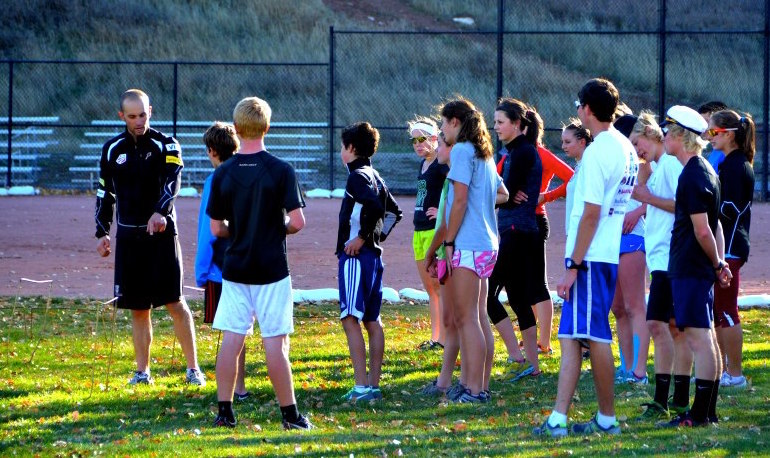
Josh Smullin, Head Nordic Coach at Steamboat Springs Winter Sports Club, directing a fall workout in Steamboat Springs, CO. (Courtesy photo)
One common issue Smullin has grappled with recently is helping his junior athletes navigate the different rates at which teenagers develop muscle. Watch any boys’ U16 race and you’ll see some kids honed and toned, while others remain sinew and bones. Smullin said he has encountered this with one of his most driven athletes.
“That’s a really challenging thing, when you have an athlete that doesn’t develop early and they are getting beat by guys that don’t, say, train as much as them or have as good of technique,” he explained.
As he counsels athletes, Smullin highlights a core tenant of sport psychology: “Focusing on the things they have control of,” he said. “That’s perfecting their technique, utilizing what they have as their strengths. For instance, I have a small guy who can really climb well. Maybe they are going make their make their move on the steep hill that the bigger guy might not be able to. Maybe all his muscle and his mustache will not be an advantage.”
Facial hair aside, keeping all kids in the sport remains a goal. Smullin says he emphasizes the long term.
“Keeping the kids that are getting beat just because of their size motivated,” he said. “And showing them that you believe in them. At some point down the road, they are going to make that jump, and when they do, they are going to have all the other skills developed.”
The timing of physical maturity, however, is a two-sided equation.
“It’s also a major challenge to coach the kids that mature early, and I was one of them,” Smullin said. “They develop a mindset, ‘Oh, I’m just better than all these kids’. They don’t learn to associate hard work with what leads to their success; they just think they are better, and they are for a little bit because they are bigger and stronger and have more testosterone. But the problem for them is, the only reason you are faster is because you developed a little faster. These guys are fighting right below you, getting the better technique and doing whatever it takes to keep up with you right now, so that’s the other side of it.”
The pipeline from the junior ranks to the World Cup constricts as skiers age. The competition gets tighter, opportunities more difficult to achieve. Some athletes slow down, some get faster. Winning and losing are part of the learning experience. As clubs are responsible for developing athletes that can stay in the game, perhaps placing a premium on mental training along with logging hours makes the most sense. Yet with juniors, it’s a balancing act.
Smullin admits, kids are already taxed. Realistically, sport psychology does not allow juniors to supplant training hours with mental training.
“Ultimately, we have to prioritize the time we do have with the kids, and some of these programs, we take a lot of their time and they have busy lives,” he said as he considered how athletes try to fit it all in.
Even with his psychology background, Smullin believes the greatest benefits sport psychology provides may come on the latter end of a junior skier’s race path. Smullin recalled the skier who remains a late bloomer.
“Let’s say that kid has to be in the sport and stay in the sport to have any chance,” he explained. “Second thing, they have to do the training. That’s the most important to even have a chance. Sport psychology can’t just overcome someone who trains 400 hours beating someone who trains 600 hours. Where sport psychology will likely make the biggest difference in terms of performance is when somebody is at the top level and all the fitness and the skills are so close — how are you going to beat somebody who is very similar to you and gain that extra 20 to 30 seconds?”
The International Scene and Mental Management
Jessie Diggins, of the U.S. Ski Team (USST) and Stratton Mountain School (SMS) T2 Team, racked up 16 top-10 World Cup results this past season, including five podiums and a career-first World Cup win. Posting consistent results and hyped as a podium threat throughout the season is a good problem to have. Yet success brings with it expectations and intense pressure.
Diggins, 24, has worked with the same sport psychologist since she joined the USST five years ago. Along the way, she realized that mental training is as important as her raw skiing speed. One aspect of mental training she cultivated is her ability to compartmentalize pre-race jitters. She calls it, “taking the nervous butterflies and making them fly in formation.”
Diggins clarified over the phone that stress is not always a negative.
“That’s not to say that all stress is bad stress,” she said earlier this month. “[My psychologist] has helped me learn that when I’m nervous before a race, to see that as at a sign that I am ready. You wouldn’t be nervous if you didn’t have a chance. So when I get those pre-race jitters, instead of being like, ‘Oh no, I’m wasting all this energy,’ I embrace it. This is my body telling me it knows something big is about to go down. It knows I am ready. It knows that that I’ve prepared.”
Beyond pre-race anxiety management, Diggins said she has learned to separate racing goals from results goals.
“You might finish a race, and you might think, ‘Wow, that was a kickass race. I felt completely together,’ and then you look at the results sheet and you are like, ‘crap,’ ” Diggins said. “So one thing she has helped me is to not simply put a number on a result sheet. To evaluate my performance independently from what anybody else thinks. Maybe my goal was to be super calm testing skis because I know it is going to be a tricky klister situation and I want to be super efficient and not be panicky. If I’ve accomplished that, then I can feel good about what I have done that day regardless how the race went.
“That is one way to keep the pressure of feeling like everyone is expecting me to get top-five in this result, or I’ve podiumed on this course before, what do I do? You just break it down into smaller goals for the day and you evaluate yourself on those goals, not on results.”
The U.S. women placed a historic second for their best-ever relay finish on Sunday at the World Cup 4 x 5 k in Nove Mesto, Czech Republic. From left to right: Jessie Diggins, Sophie Caldwell, Sadie Bjornsen, and Liz Stephen. (Photo: Fischer/NordicFocus)
It’s a rare athlete who finds themselves unchallenged over the course of their career. Diggins’ arc was on an upswing this season while her U.S. teammate, veteran Liz Stephen, who prevously had been punching the accelerator full gas, experienced a deceleration. Stephen’s 2014/2015 World Cup campaign was stellar; she finished the season ranked seventh in the distance overall and 10th overall on the World Cup — both career bests.
“I came off one of my best seasons ever, last spring, and I was really inspired and psyched,” Stephen, 29, said over the phone earlier this month.
But back at her training base in Park City last summer, she reflected that perhaps at times she became a bit overambitious with her training load.
“I think that I kind of hit a stalemate in terms of my mental enjoyment of the sport,” Stephen said. “At some point I didn’t know whether I was just so burned out mentally that I felt tired all the time or whether I was tired and I felt bad mentally. I think they are kind of hand in hand and it’s hard to tell which is which. But at some point, you kind of realize that this is not the mental state I want to be in.”
Stephen explained she never really could pull up from her perceived performance nosedive except during team relays on the World Cup, where she said, “I have a sense to be be able to forget my own issues because it’s for somebody else.”
Her ability to suffer for others paid off — the two World Cup relays in 2016 amounted to a third place followed by a best-ever second place for the U.S. women. And in the final stage of the Tour de Ski in Val di Fiemme, Italy, Stephen busted out a prime solo performance as she posted the second-fastest climb time up the Alpe Cermis. She finished the Tour in 19th overall.
Beyond the relays, Stephen’s evaluation of her season was blunt: “When you stack yourself up against you, sometimes you are your biggest enemy out there,” she said of her inability to breakout. “And I found that it was really hard to get out of my own way this year.”
Despite the harsh self-assessment, Stephen was still nominated to the A-team — at season’s end, she was 28th overall on the Distance World Cup. But she still considered the season below her expectations.
“All of a sudden I’m at the older end of the spectrum,” she said. “And I think that the sport has gone from being just this happy-go-lucky, fun, ‘I ski because I love it’ thing, to why am I doing this? And what is the purpose of being 29 and pursuing a medal or whatever it is that I am pursuing? The thought now is kind of, ‘I need to restructure why I am skiing. What is my purpose in the sport? Why is sport important be it skiing or anything else? And what am I setting out to do?’ … I spent the year doing what I should’ve loved to be doing and just not being able to do it the best I could because I was too worried that what I was doing was not meaningful enough, and that’s not the way I want to live my life.”
Heavy questions — questions with no immediate easy answer for an elite athlete trying to reset for the 2016/2017 race cycle.
Stephen stated several times that her goals in life are simple: to live an inspired life, live a meaningful life and to try to give other people meaning and purpose in their lives, too.
“It’s really easy to to think that what you are doing is not affecting others and that’s really hard for me to swallow,” Stephen said.
Fortunately, Stephen’s dilemma is not hers to solve alone.
“I think that the psychologist helps the athlete figure out why they are doing what they are doing so that then they can work backward and say, ‘OK, if your purpose is to inspire people, how are we going to take that feeling of purpose because somehow a medal doesn’t do it for you … in terms of like a goal? … We want you to figure out how to purposefully live this skiing lifestyle for the next two years in a way that in turn can get you to perform to your highest ability,’” she observed.
Stephen acknowledged her life as an elite athlete remains a gift. Yet staying positive when results don’t come is downright gritty mental work.
When asked how confident she felt looking at an 18-month grind ahead of the next Winter Olympics, she replied, “I think that it depends on the day you ask me, honestly. Right now I don’t feel invincible. I don’t feel confident. … Right now, if I had to suit up, the fitness is not there and I know that. The part I love about this, or part of it, is the training. Like I tend to overdue do it, because I just love the training, it is why I am involved in sport and the community and that’s what got me in it, that’s why I’m still doing it.”
In cross-country skiing, success is measured in seconds. Maybe that’s the margin for a training-camp invite or a European race trip. As sport psychology becomes more readily available and a greater part of the success equation, mental training may become as routine as checking the HRM and uploading the data to a training log.
Helping athletes stay positive, reflective and making their endeavors meaningful can be a struggle at any level of competition — Bill Koch League through the World Cup. Sport psychology appears to be another tool to make improvements and balance success and perceived failure.
Lemons, the USSA psychologist, had these parting words as she questioned why sport psychology wasn’t more of a regular part of sport, “If you can even improve a little bit, if you can maximize your opportunity, why not?”
Josh Smullin lowering off the Col du Chardonnet. (Photo: Nick Pope)
“At some point late in the season, when skiing around on small groomed loops becomes a chore, rather than a passion, it’s time for an adventure where you are going out of your comfort zone,” Josh Smullin, head coach of the U20/U18/U16 teams at the Steamboat Springs Winter Sports Club, said of his decision to ski the classic Verbier Haute Route this past March. “I am pretty comfortable in pretty much anything cross-country skiing, but this was a way to go on a ‘bigger adventure.’ ”
That big adventure took Smullin from the whirlwind of coaching and klister at Junior Nationals and SuperTour Finals to a place more sublime — a place where, functionally speaking, a climbing rope, crampons and ice axe are a skier’s best friend: Chamonix, France. It’s there, in arguably the world’s alpine climbing epicenter, that Smullin set off on a planned seven-day, six-night ski tour from Chamonix to Zermatt, Switzerland. On the way, Smullin, 34, would immerse himself in a cycle of rustic fondue meals and ski belays.
He explained the nuts and bolts of the trip require a 35-liter pack, warm and cold weather clothing, and a willingness to be in your ski boots most of the day. Mind some mild discomfort and possible blisters and this hardcore Euro-tour becomes accessible. (Smullin decided to rent boots and skis in Chamonix rather than travel with his personal setup.) The adventure entails long grinds across vast glaciers, boot packing up chutes, and if it’s your first night on the Verbier route, a night’s rest in the classic Trient Hut. Smullin said the Trient was no exception — each hut seemed like a secluded James Bond lair hanging on a precipice.
But before you think it’s a posh cruiser, to those new to exposed sidehill skinning and switching from ski crampons to boot crampons and back again, it’s a headfirst plunge into ski mountaineering.
“There is a lot of switching back and forth, transitioning between all that stuff,” Smullin said.
Beyond the stellar big alpine-wall vistas, Smullin was there to grow as a skier. “I’m scared of heights,” Smullin remarked of his willingness to tempt himself with big vertical voids. “I’ve repelled two hundred feet. I’ve bungee jumped 134 meters in New Zealand. I’m not paralyzed by height, but for me this stuff was pretty big exposure and I did something that scared me everyday. Something that took me out of my comfort zone.”
Among the objective hazards one might reasonably fear are avalanche terrain, crevasses, high-angle skiing and the likelihood of low-visibility navigation. So that’s where the guide came in — Smullin says the guide made the unsettling and exposed situations tolerable.
“I’m glad that I had a guide, Smullin reflected. “I certainly wouldn’t have been able to go all of places we did, or ski the lines I did by myself.”
Admittedly, Smullin says he’s become a bit of a snow snob back in Steamboat Springs, Colo.
“I’m a fair-weather skier and I go when its powder in Steamboat and that’s about it,” he said. “There [on the Haute Route], you have to be ready for all the conditions.”
In other words, in the likely event you’re not “slaying” powder, you take what you get in the mountains. That could be ice, breakable-crust, corn, navigating through avalanche debris, or unbelievable powder. Expect the full package of snow types — other than at the resort in Verbier, which the group skied during their tour, there’s no grooming along the route.
Beyond the point-to-point ski touring, Smullin craved turns. So having a guide who knew the prime ski lines amongst the maze of couloirs was critical.
“For me, the main reason I had the guide was the actual skiing we were doing in the afternoon,” he explained. Wake up time each morning was a brisk 6 a.m. or earlier, with the day’s tour to the next hut beginning an hour later. Smullin’s group, including a total of three clients and a guide, would arrive at the next hut expecting to make a quick turnaround. “We would not rest for very long. We would get in there, eat something, and then scope out whatever the sweetest line was and give it a go.”
This is where a season’s worth of cross-country ski fitness paid dividends.
Steep skinning up to a col on the Verbier Haute Route (Photo: Josh Smullin)
“Being fit you have more options to do more things,” Smullin said. “The majority of people on these trips get to the hut, sit down and get a bottle of wine plus a fondue or a rosti, and chill the rest of the evening. We were in the minority.”
On a cloudless day, with the group scanning the craggy panorama from a hut balcony, Smullin got what he came for: a one-stop shop for fear induced butterflies and Steamboat-like powder.
“We got to the hut and the guide pointed up to the highest peak in front of us,” he recalled. “I wasn’t sure if he was being serious … but he was! We arrived at the spine of the summit and it was a steep drop off on both sides. We were traversing across to get to the tight entrance of this couloir. I was pretty nervous and it was probably the steepest longest powder run I’ve ever done. As I committed to dropping in and made the first turn, my mood shifted from terror to shear joy.”
Two thousand feet later, Smullin was all grins.
Part of maintaining that grin is knowing what you signed up for Smullin said. If you plan on taking Smullin’s lead and booking a post-race season trip next spring, here’s a few key pieces of info.
First, the huts have bunk style rooms and can be a bit noisy. Bring industrial strength ear plugs.
Second, decide if you are willing to join a group made up of strangers, as Smullin did.
“That is a consideration for people. There are some guides that won’t take people that don’t know each other,” he explained. “You have to decide if are you willing to pay more for that and have a group of people that you know their speed, their goals, and are all working together towards that? Or if you go with an unknown group, you have to be OK with going whatever speed the other people in your group are. There can be vast differences in fitness, goals and ski ability, so that is a gamble.”
“The majority of people on these trips get to the hut, sit down and get a bottle of wine plus a fondue or a rosti, and chill the rest of the evening. We were in the minority.” — Josh Smullin
Either way, the Alps’ hut system offers a way for adventurous skiers to move light and fast. The huts are staffed and serve hot meals and drinks. Ski packs along the Haute Route can remain light as the hut’s provide bedding and the next day’s lunch can be purchased along the way.
The Verbier Haute Route isn’t exactly a 20-kilometer skate loop or even a day’s long tour in the Colorado backcountry. It’s part high-mountain culture, part steep skiing, part touring and sight seeing, and a whole big part of living the skiing life.
“I guess, I have skied in some respect nearly everyday of the winter from October on,” Smullin said. “So I could have gone somewhere else, for warmer weather. But, certain times of the year are ideal for some adventures and not ideal for others. The end of the cross country race season matches up quite well with the ideal time to ski the Haute Route. In my mind, skiing the Haute Route is about being a complete skier. It’s an activity where you get the exercise, learn new skills and get the payoff for your hard work with the powder turns!”
Afternoon lap #2. (Photo: Nick Pope)
Cabane du Trient. (Photo: Nick Pope)
Day 4. Skinning out of Cabane du Trient. (Photo: Nick Pope)
A party approaches the Cabane du Trient. (Photo: Nick Pope)
Final ladder on the Pas de Chêvre. (Photo: Nick Pope)
Skinning into the clouds. (Photo: Nick Pope)
Climbing towards the Fenêtre du Saliena. (Photo: Nick Pope)
Descending the Glacier d’Arpette. (Photo: Nick Pope)
Heading for the mogul stash in Verbier. (Photo: Nick Pope)
Afternoon lap #1. (Photo: Nick Pope)
Skiing down from Grands Montets. (Photo: Nick Pope)
Day 3. 5:48 departure for dawn patrol before breakfast. (Photo: Nick Pope)
Booting up towards the Pas de Chêvre. (Photo: Nick Pope)
Evening powder run down from the Col des Plines. (Photo: Nick Pope)
The mighty Grand Combin. (Photo: Nick Pope)
Ready to dig into rösti at Cabane des Dix. (Photo: Nick Pope)


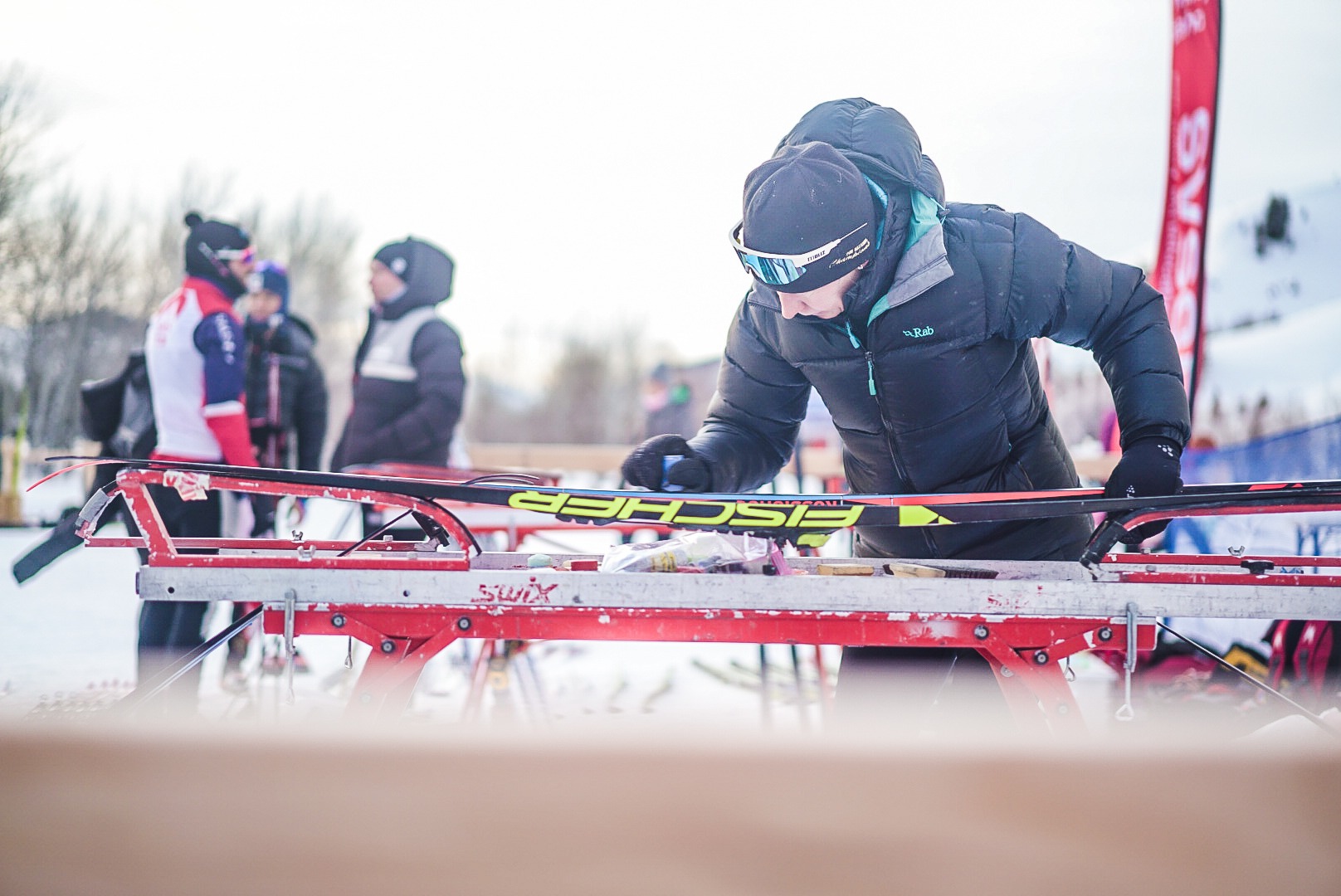
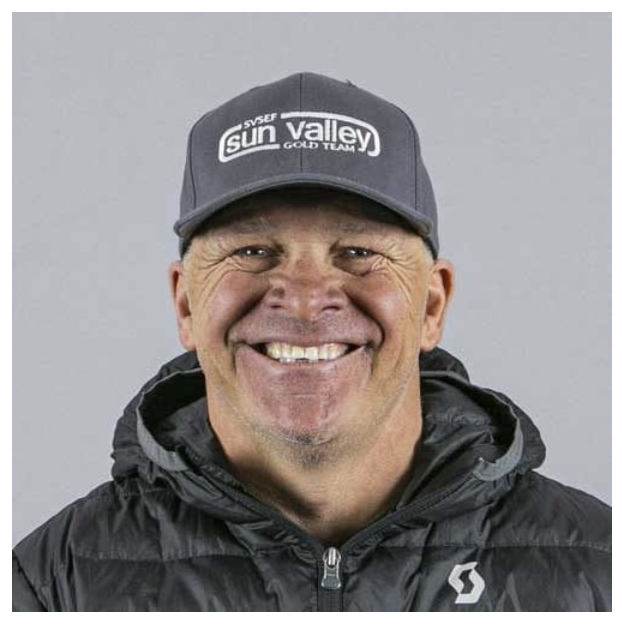
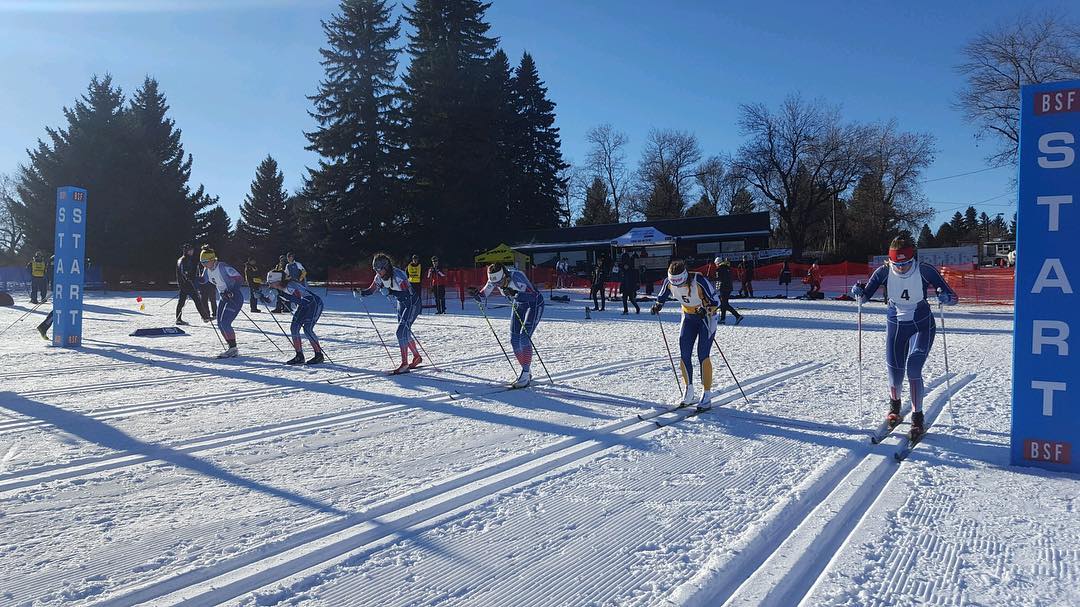

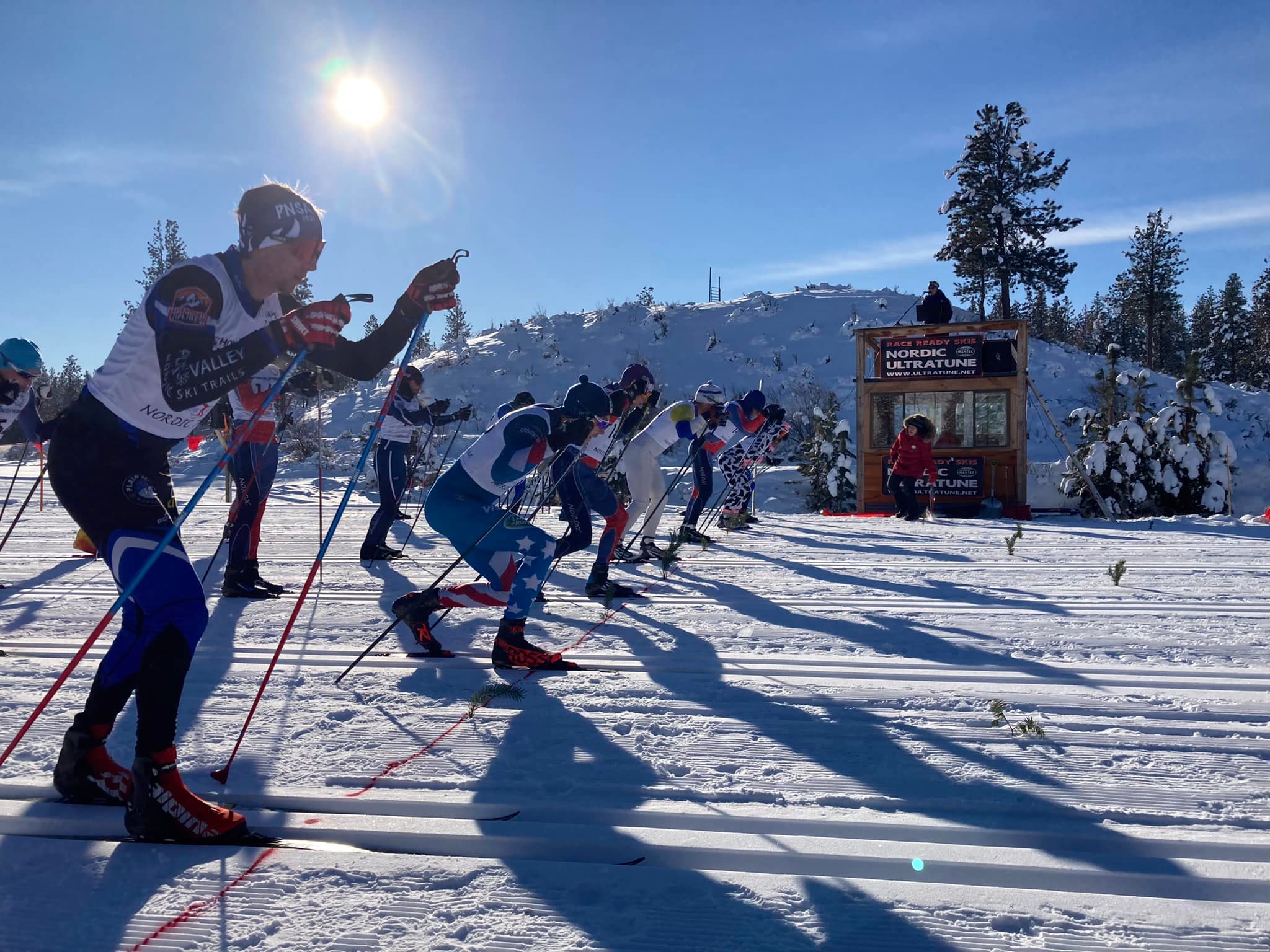
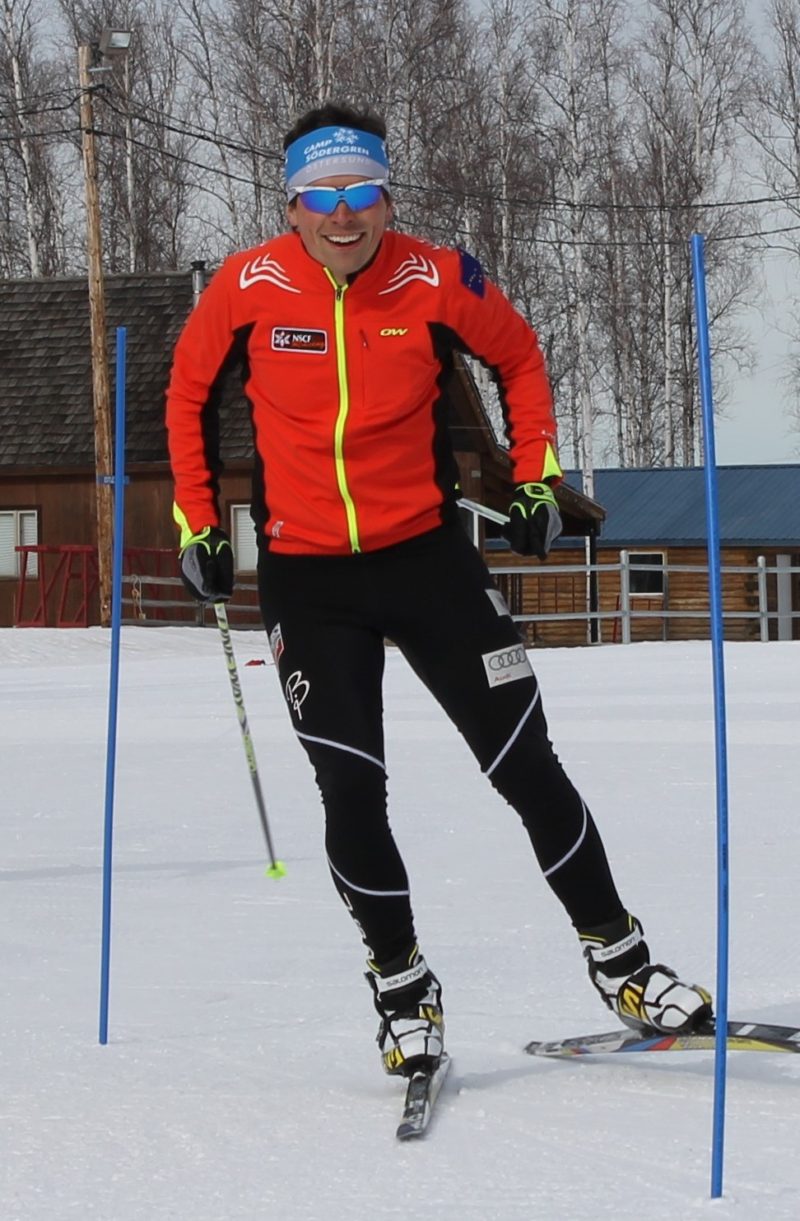 He said he has also found it quicker and easier to apply structure on race day without the variable of glide wax testing. And without the need to cart around as much product and equipment, getting his athletes’ skis race ready has been “way easier to manage”.