Tag: Jostein Vinjerui

  • She almost retired at 26. Now, at her first Olympics, Astrid Øyre Slind has a gold medal at age 38.

    She almost retired at 26. Now, at her first Olympics, Astrid Øyre Slind has a gold medal at age 38.

    This article was made possible through the generous support of our voluntary subscribers who have helped put our Nat Herz on the ground at the Olympics. If you value coverage like this, please support FasterSkier with a voluntary subscription.

    Astrid Øyre Slind races in Norway earlier this season (Federico Modica/NordicFocus)

    PREDAZZO, ITALY — When Astrid Øyre Slind was 26, she almost retired from cross-country skiing.

    She was a good skier, just not quite good enough to break into the international circuit from her home country of Norway, where competition in cross-country is cutthroat. She was, in her own words, “stuck,” feeling like being an athlete wasn’t worth it any more.

    “If you try for the same thing for 10 years, you get disappointed in yourself that you’re not getting better,” she said. “You’re working your ass off, and you’re still not there.”

    But Slind didn’t retire. Instead, she mixed up her training plan, found a new coach and spent years racing on a lower-level long-distance circuit — the minor league baseball of cross-country skiing.

    Nearly a decade later, in 2022, she returned to the international stage, and soon after made her first-ever World Cup podium, against Olympic-caliber competition.

    This season, she finally qualified to race at her first Olympics, at age 38. 

    In Thursday’s 10-kilometer freestyle race, Slind finished a painful fourth place, just seconds from a medal. But on Saturday, she led the Norwegian women’s relay team to gold — punctuating a career arc that few novelists could have scripted.

    “Her story, I think it’s really important to tell,” said Pål Golberg, another Norwegian skier who found success late in his career.

    Slind, he said, was not an athlete with exceptional physical talent, nor especially good technique, and at times she was “struggling to find her way.” 

    But there’s still a message embedded in her success.

    “You can get really far just by hard working,” Golberg said. “And she’s a perfect example.”

    At a news conference after Saturday’s relay, Slind said she’d accomplished something she’d been working toward since childhood.

    Slind, at lower left, celebrates her Olympic relay medal with, in clockwise order, Heidi Weng, Karoline Simpson-Larsen and Kristin Austgulen Fosnaes. (Federica Vanzetta/NordicFocus)

    “It’s kind of crazy to say, but it’s actually been a dream for 30 years,” she said. “And it’s something I’ve given up on during the way there — and then started to believe again.”

    She added: “It’s nice to finally make it.”

    Not a top prospect

    Cross-country skiers can be competitive into their late 30s, but few of them stay in the sport that long. In Thursday’s freestyle race, Slind was the oldest competitor, and one of just two of the 111 athletes who was born in the 1980s.

    Slind grew up in the village of Oppdal in Central Norway, in a family of skiers. Her father, Peder Einar Slind, is a ski coach who once spent a year in Western Massachusetts on an exchange with a collegiate cross-country ski coach there. 

    Astrid also has two ski racing sisters: a younger one, Kari, and a twin, Silje.

    Both still compete at a high level on European circuits. Kari, in fact, had the first breakthrough at the international level, nearly landing on the World Cup podium in her mid-20s. Experts thought she would be “the biggest of them,” said Birger Lofaldli, a reporter at Adresseavisen, the Slinds’ local newspaper.

    In this archival photo, Kari Øyre Slind, center, poses with American skier Jessie Diggins and Slind’s friend Ragnhild Haga after a strength training session in Norway years ago. (Roar Hjelmeset)

    “But Astrid came back,” Lofaldli said. “And now she’s greater than ever.”

    Astrid did not grow up as a top prospect. 

    Unlike Kari, she never qualified to represent Norway at the World Championships for juniors, a proving ground for young athletes.

    But Astrid was always skiing, she said in an interview in November. Her father would take the sisters out to play on skis; the twins were always pushing each other, with Kari “chasing us behind,” Astrid said.

    At three years old, she added, the twins were “crying ourselves in” to local club races in Oppdal, where their parents initially didn’t want them to compete.

    “Silje and I really wanted to go,” Astrid said. “From that day, we’ve just been skiing as long as the snow is out, and loving it.”

    ‘Crazy training’ with a new coach

    After failing to break into Norway’s national team and the top-level World Cup circuit in her 20s, Slind spent years racing on a tour called the Ski Classics. The circuit features distance races as long as 90 kilometers, or 56 miles. 
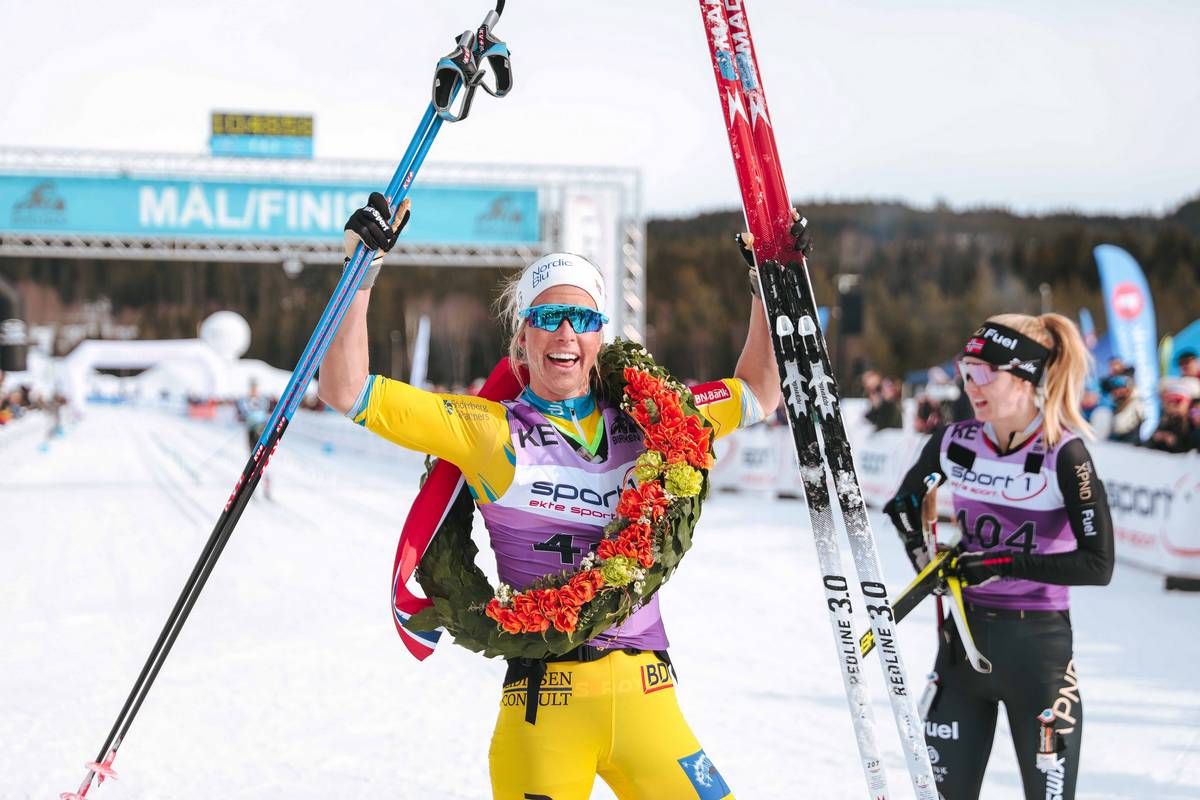
    Slind celebrates winning the Birkebeiner, a long-distance race that finishes in Lillehammer, Norway. (Federico Modica/NordicFocus)

    She had her ups and downs there, too. In one especially tough year, Slind said, she had trained too much — so much, that she could barely race — and was again thinking about quitting the sport.

    Instead, she started talking about her problems with a teammate, Chris Jespersen, another Norwegian who was a few years older and had also struggled to stay at the highest level of the sport.

    “He was like, ‘You know what? I really think I can make a good skier out of you — I’ve made all the mistakes myself. I can see what you’re doing. Let’s try to figure it out together,’” Slind said.

    Jespersen, at the time, was not a coach, just an “athlete who had ideas,” Slind said. 

    But at that point, Slind said, she had nothing to lose, so the two started working together. They made a deal: When they disagreed — if Slind, for example, wanted to push herself to do more training but Jespersen thought it was too much — Jespersen would get the last word.

    It turned out that Jespersen had a knack for explaining what Slind needed to do differently with her ski technique, in a way that she could understand. He was also a good check on what Slind describes as her impulse to do “crazy training” — things like a six-hour session of skiing with the arms-only double pole technique, with hard intervals in the middle of it, or workouts where she’d try to keep up with her team’s strongest men.

    Slind had done more of those kinds of sessions as she moved into the Ski Classics circuit, where she discovered that she “needs a lot of training to be at a good enough level.”

    “I think it was what put a spark in my skiing again,” she said.

    But Jespersen, she added, helped rein her in when the crazy training got a little too crazy.

    “He wasn’t too eager, and he wasn’t too defensive,” she said. “It was kind of the perfect balance for me.”

    A breakthrough, and medals

    Slind’s breakthrough came in the winter of 2022-2023, when she finally qualified to return to the World Cup circuit after a nearly nine-year absence.

    Two months into the season, after nine races, Slind stood on the podium for the first time. Later that season, she won a bronze medal at the World Championships in the skiathlon, and a gold medal with Norway’s relay team.

    Still, it hasn’t always been easy since then. 

    Last season, she raced at what was effectively a home World Championships, in the city of Trondheim just a two-hour drive from her hometown. Amid challenging snow conditions and constant rain, her results were disastrous, including a mishap with a ski during the skiathlon, and she finished with no individual medals — just a silver from the relay.

    Then, at the Olympics this year, she was oh-so-close to a medal in the 10-kilometer freestyle race in fourth, just 3.3 seconds behind bronze medal-winner Jessie Diggins of the U.S.

    Slind was also painfully close in her first Olympic race, the skiathlon, where she was skiing in medal position before being overtaken by a teammate and ultimately fading to eighth.

    “I completely died out there,” Slind said in an interview afterward. “I’m not a good enough skier today.”

    In Sunday’s relay, though, Slind was one of the strongest athletes in the race, putting pressure on the Swedish star Ebba Andersson, who ultimately crashed twice and cost her team the gold medal.

    Slind leads the Olympic relay on Saturday. (Nathaniel Herz/FasterSkier)

    The performance caps a storybook turnaround — one so improbable that Slind probably wouldn’t have believed it herself, said Jostein Vinjerui, a Norwegian coach who works with Slind’s club team, Aker Dæhlie.

    “If you’d have asked her during the Beijing Olympics, four years ago, if she’d be able to do the Olympics in four years time, I think she would have laughed, I’m pretty sure,” Vinjerui said. “It’s just an amazing story, being 38 years old now and winning a first gold medal.”

    More Olympic medals are possible for Slind: The Norwegian coaches have named her to the two-person team sprint squad, and she and Julie Bjervig Drivenes will be podium contenders in the event Wednesday. Slind is also expected to vie for medals Sunday in the longest race of the Games, the 50-kilometer competition in the classical technique.

    After the relay gold, Slind said at the news conference that she’s good at turning depressing results into motivation for the next event.

    “Maybe the two other races just made me more on fire for today, and really wanting to show what I’m good for,” she said. “And I will take that with me into the 50 k.”


    Help Support Our Olympic Coverage!

    FasterSkier will have our own Nat Herz on the ground at the Olympics, which, to be honest, is a very big financial lift for us. If you value the thoughtful work and access FasterSkier provides at championships like this one, please consider becoming a Voluntary Subscriber. Your support directly fuels the work we do to cover the people, places, and moments that make our sport special.

    Join the FasterSkier community!
  • He’s 24 years old and just won two U.S. championship races. Here’s why he could retire at the end of the season.

    He’s 24 years old and just won two U.S. championship races. Here’s why he could retire at the end of the season.

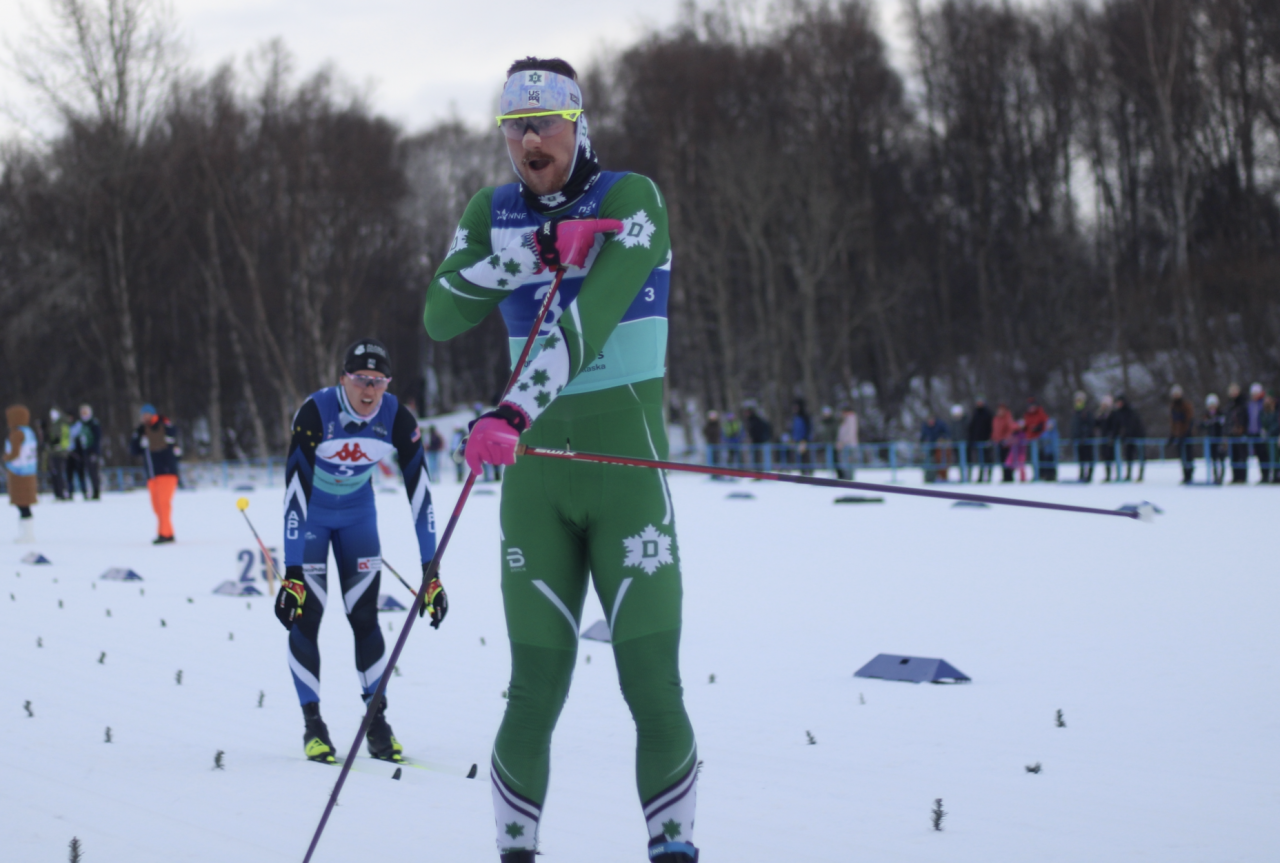
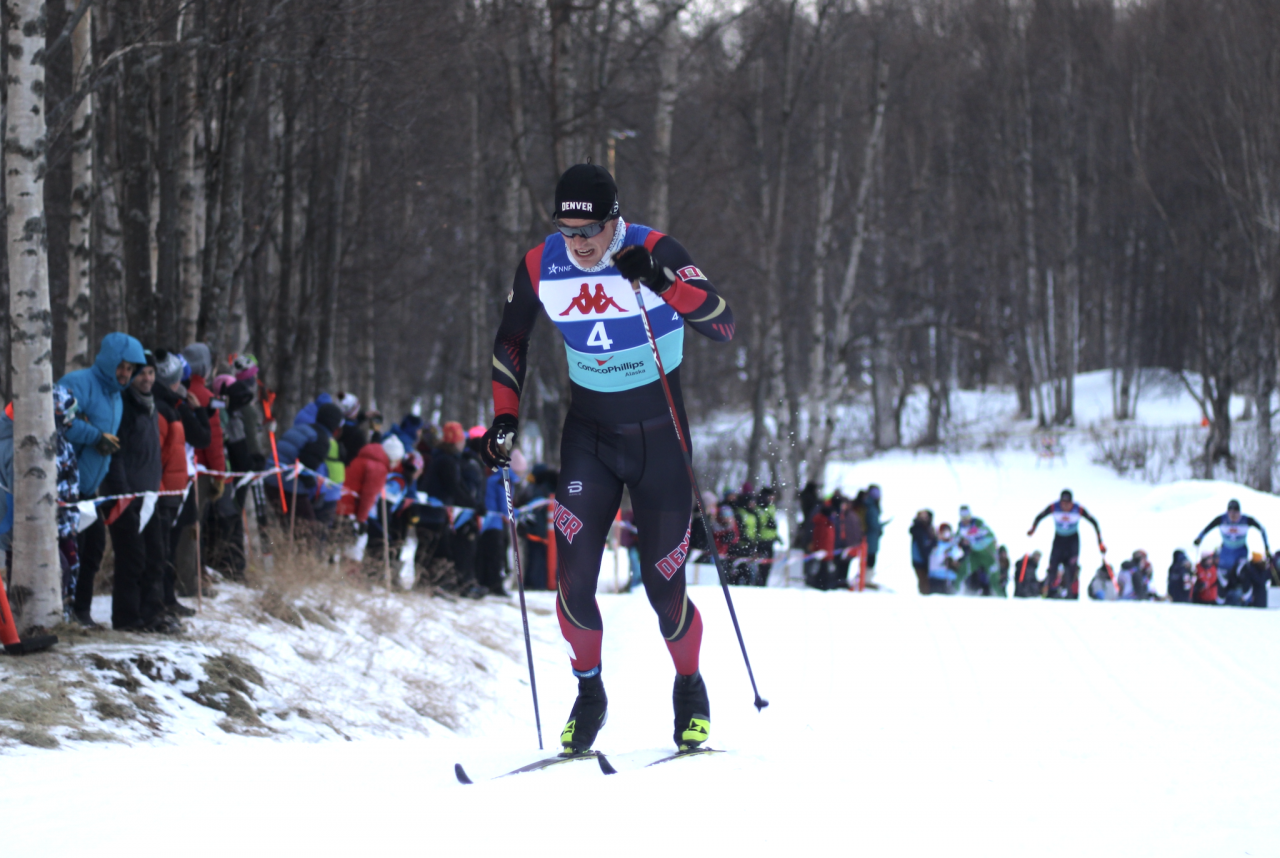
    Norway’s Andreas Kirkeng, racing for the University of Denver, skied away from the men’s pack at U.S. Nationals on Sunday. (Nathaniel Herz/FasterSkier)

    ANCHORAGE — The winner of two of three U.S. National Championships races in Alaska this week is just 24 years old, and poised for what could be a long career in cross-country skiing.

    But instead, Andreas Kirkeng is considering retirement.

    The explanation is simple: The star University of Denver athlete is not American. He’s Norwegian.

    And in Norway, aspiring to be a top cross-country skier is like trying to become an astronaut: Many, many try, and nearly all of them fail, because the field is so deep and talented.

    “I genuinely believe he could be one of the best World Cup skiers in the world. It’s a bummer that it’s just so hard to be Norwegian — any other country on Earth and they’d greenlight you for the Olympics for the next 10 years,” said Luke Jager, one of the Americans edged out by Kirkeng at nationals this week. “I’ve been telling everyone in the world: Everybody who knows that guy needs to tell him to not quit skiing next year.”

    Kirkeng won his second race at U.S. Nationals on Sunday in dominating fashion, dropping the top Americans in the field on the last of four five-kilometer laps in the classical technique.

    Because Kirkeng was ineligible for the U.S. championship, Dartmouth College’s John Steel Hagenbuch claimed the title by finishing second, narrowly edging Jager, who skis for Alaska Pacific University. Will Koch, skiing for the University of Colorado, was third.

    John Steel Hagenbuch points to the Dartmouth College snowflake on his arm to celebrate winning a national title at Anchorage’s Kincaid Park on Sunday. He finished behind Kirkeng but ahead of all the other Americans in the race, with Luke Jager just behind him. (Nathaniel Herz)

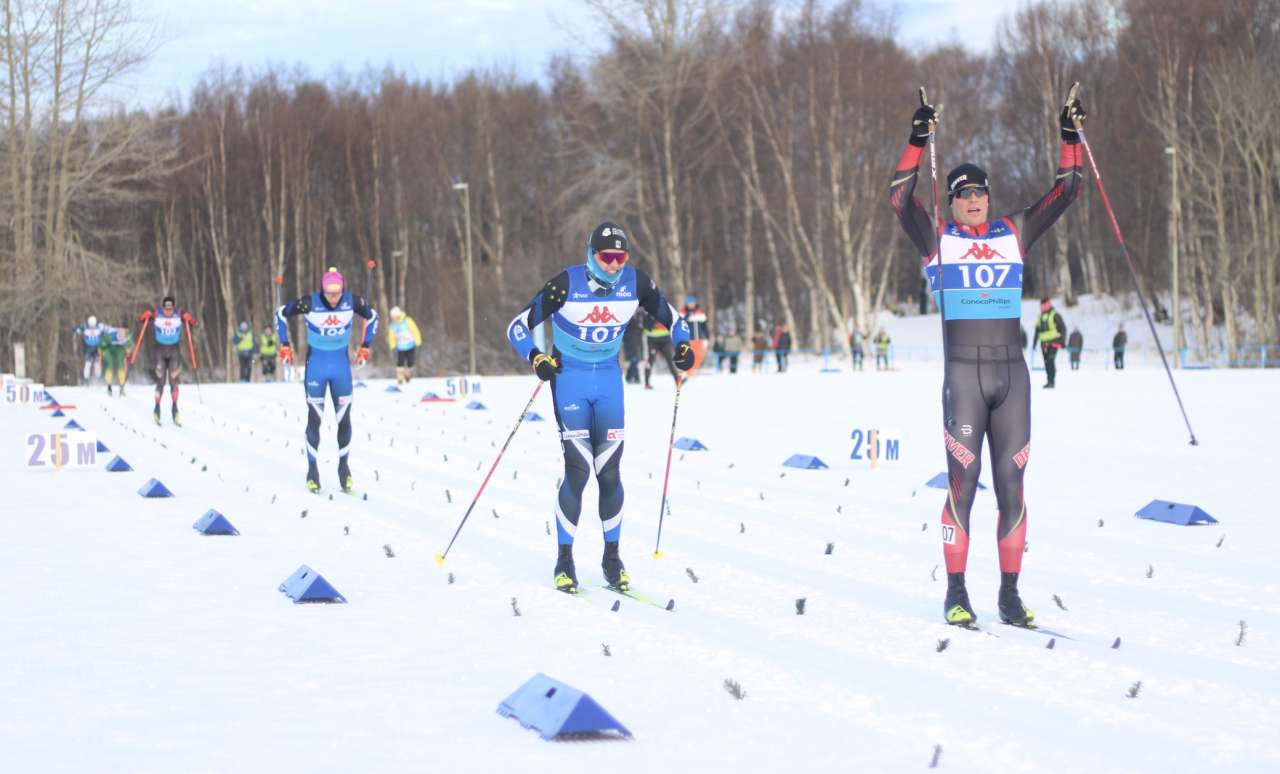
    But Kirkeng has been the undisputed star of the week at Anchorage’s Kincaid Park, where he also won Saturday’s classical technique sprint race by beating Jager on the homestretch.

    In Thursday’s 10-kilometer skate-technique distance race, he finished second, less than a second behind Hagenbuch.

    After Sunday’s event, Kirkeng conceded that he hasn’t made up his mind about his future — and noted that his girlfriend told him the day before that it would be “sad” if he retired.

    But, he added: “I’ve been ski racing for 13, 14 years. At some point you have to do something else.”

    Observers offered mixed opinions about the significance of Kirkeng’s results in Anchorage, with U.S. Olympian Scott Patterson saying that they might not have translated into a top-30 finish on the World Cup, the top international circuit.

    But Jostein Vinjerui, who coaches an elite professional team based in Norway, Aker Daehlie, said he thinks Kirkeng’s results show some promise.

    “It would be very sad if he gives up now,” Vinjerui said in a phone interview Sunday. “He should at least test one year in Norway, what he can do there. Because the U.S. level now is pretty good.”

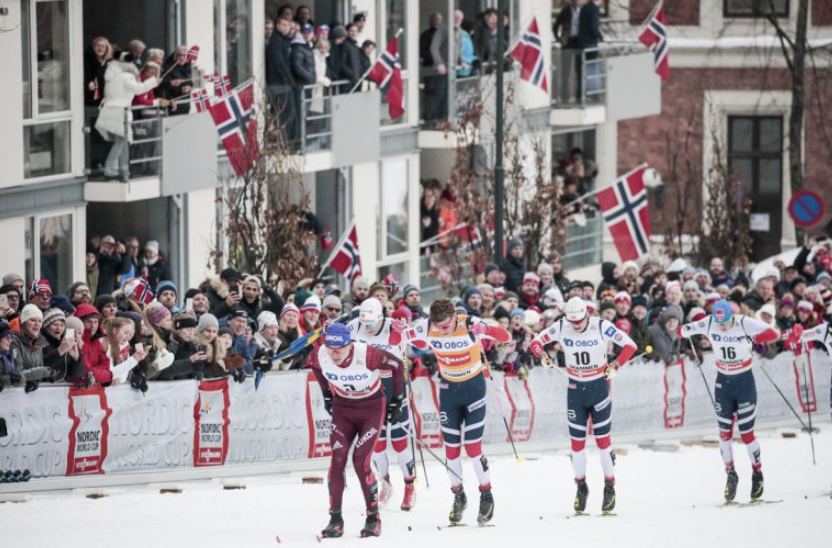
    Kirkeng grew up in Lier, a community not far from Oslo and just a few miles from Drammen — the city that long hosted an iconic World Cup sprint race every year, with loads of snow trucked in and smoothed over its streets.

    Athletes race at the Drammen World Cup sprint in 2018. (Fischer/Nordic Focus)

    “When I was in elementary school, I would walk straight out of class to Drammen to watch,” Kirkeng said.

    There were numerous areas with snowmaking to cross-country ski near his home, and Kirkeng’s family also had a cabin in the mountains.

    He joined a club program in elementary school and made junior national and regional ski teams. But Kirkeng lost some of his motivation after a tough first year as an adult competitor, when a high-intensity block training program “sort of killed” him, he said.

    It was time for Kirkeng to try something new and different, he said, and he decided to follow his brother to the University of Denver. Kirkeng is now a senior studying finance on a full scholarship — and has broadened his horizons.

    “It’s actually crazy — I’m telling all my friends in Norway it’s the best thing you can do,” he said. “You get everything covered, you have chances to train, and you get an education and ski at the highest level.”

    The dilemma confronting him at the end of the season is stark.

    To make a career of ski racing back in his home country, he’d have to fight his way into the elite Norwegian men’s field — the strongest in the world.

    Organizers cap the number of skiers from each country who can start each race on the World Cup. But even so, Norway’s male athletes regularly take five of the top six places in distance events — beating the best competitors from all other nations, including the U.S.

    Dozens of other Norwegians toil in relative obscurity on the country’s domestic race circuit, fighting to earn a single chance to prove themselves on the World Cup. Kirkeng has never gotten a World Cup start, even as some of the U.S. athletes he’s beaten have been racing on the circuit for years.

    Kirkeng his win in Saturday’s sprint race at Kincaid Park, where he narrowly beat Luke Jager. (Nathaniel Herz/FasterSkier)

    Just last week, the Norwegian team had an athlete drop out before the start of one of the season’s marquee World Cup events, the Tour de Ski. The first alternate declined his spot because he got sick, and the second alternate, Haavard Moseby, finished on the podium in one of the stages.

    “For Andreas, it’s almost impossible, as a Norwegian,” said Florian Knopf, a German athlete who races with Kirkeng in Denver. “He’s super strong. But the Norwegians have 10 other guys like that, even better.”

    Knopf is in a similar position in his home country, where, if he returns to full-time ski racing, he’ll be on the bubble to qualify for international events.

    “You have to be brutally honest with yourself, and also ask yourself what you want in life. Being 25 years old and still being able to ski among the best is making me really happy,” Knopf said. But, he added: “I know many Germans who are Olympians who are not happy.”

    Knopf and Kirkeng will also leave Denver with college degrees — meaning that continuing as ski racers would require them to forsake other professional opportunities. Both have applied for jobs on Wall Street.

    “The only struggle is his brain is almost as good as his ski talent,” said Selma Anderson, Kirkeng’s girlfriend and a teammate at Denver.

    Kirkeng said he’s been contemplating his options to continue ski racing. There’s a marathon circuit in Europe; he could also try to work part-time and ski part-time. But he’s not sure he wants to ski race if he can’t fully dedicate himself to training.

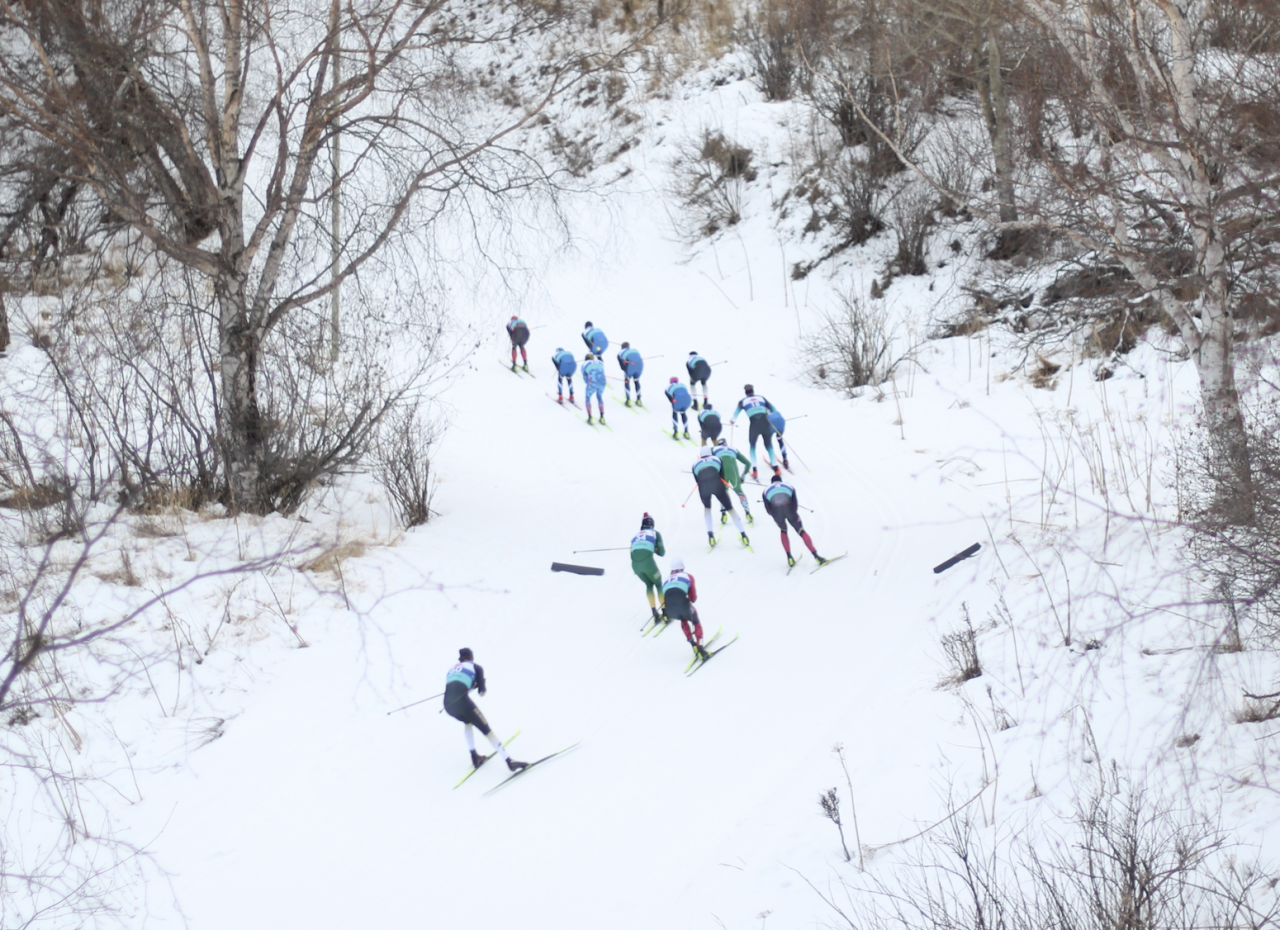
    Kirkeng skied in the men’s lead pack for most of Sunday’s race at U.S. Nationals before breaking away for the win. (Nathaniel Herz/FasterSkier)

    “It would be really cool to give it a shot and see where it brings me,” Kirkeng said. “And I’m definitely open to it. But at the same time, I feel I’ve been doing it for so many years now.”

    Jager, the American skier, is still making his pitch. He said he thinks that Kirkeng’s intellect and education serve as a fallback that can allow the Norwegian to keep ski racing for longer without risking his future.

    “I know he’s got the whole finance thing going on. But for me, that’s all the more reason to postpone that as long as possible,” Jager said. “He can go be the Wolf of Wall Street when he’s in his 30s.”

    Full results from Sunday.

  • Norway had 10 wax techs. Estonia had a fanny pack and a borrowed wax bench.

    Norway had 10 wax techs. Estonia had a fanny pack and a borrowed wax bench.

    This coverage is made possible through the generous support of Marty and Kathy Hall and A Hall Mark of Excellence Award. To learn more about A Hall Mark of Excellence Award, or to learn how you can support FasterSkier’s coverage, please contact info@fasterskier.com.

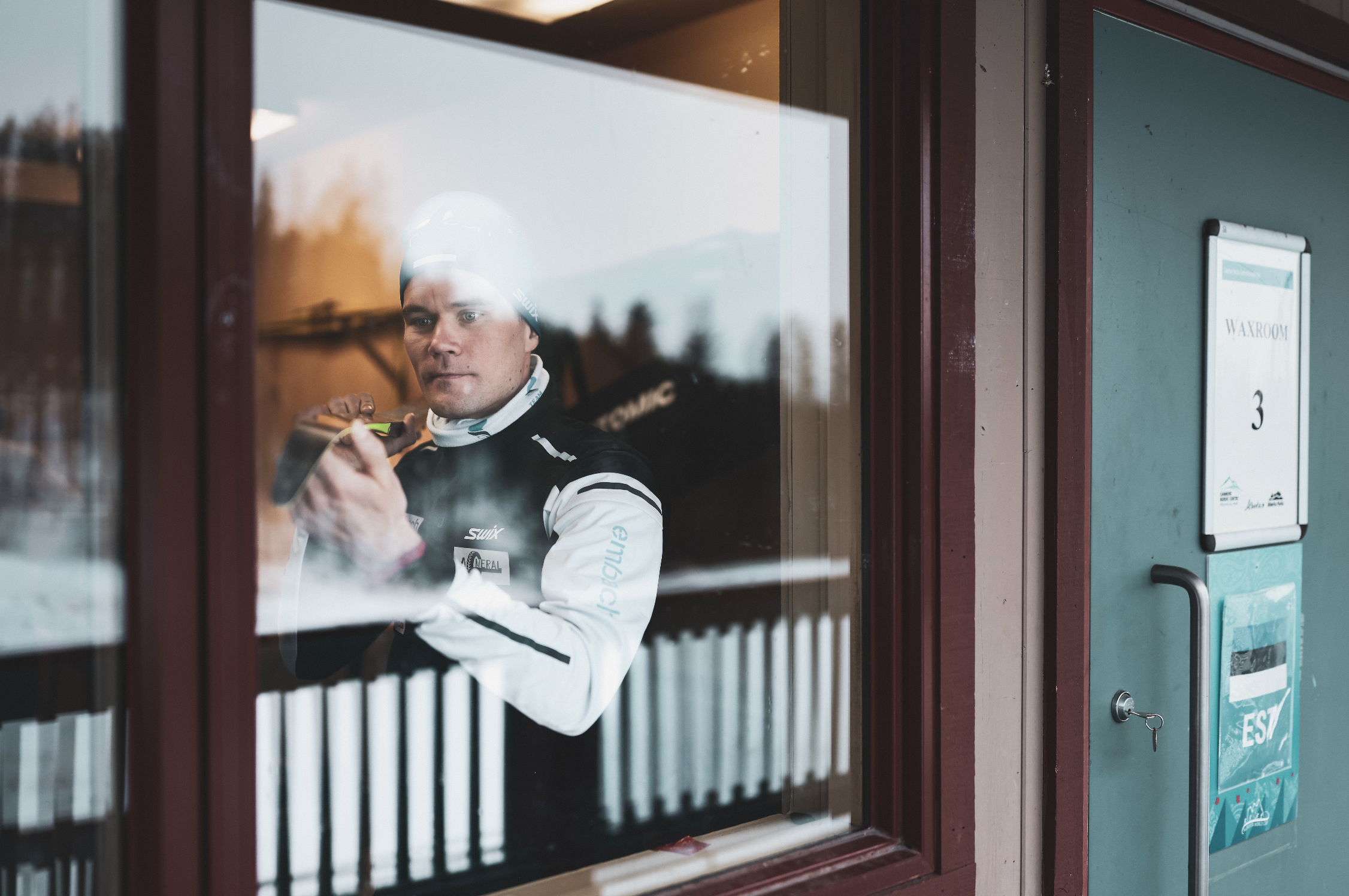
    Alvar Johannes Alev inspects a ski in Canmore this month. (Federico Modica for FasterSkier)

    CANMORE, ALBERTA — With his fanny pack of kick wax and Kia minivan, you could have easily mistaken Alvar Johannes Alev for a weekend warrior cross-country ski dad in this Canadian mountain town.

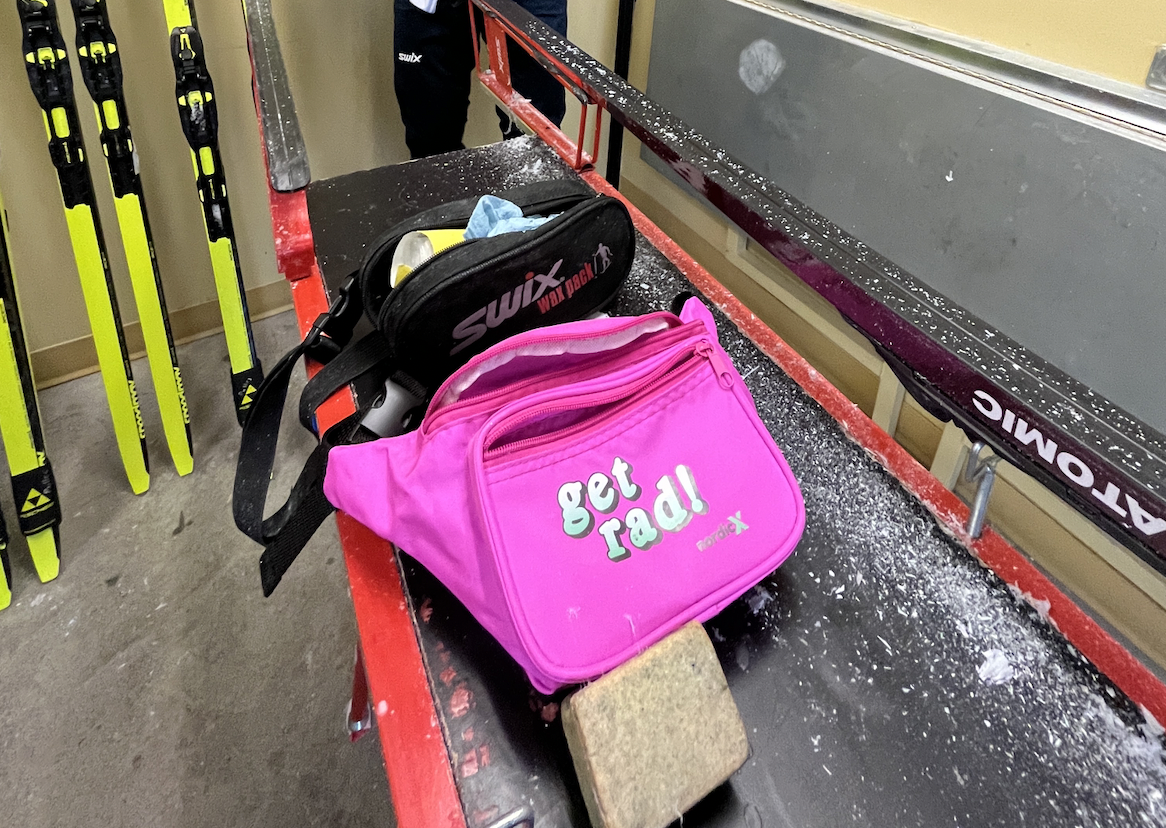
    Except it turns out that the 30-year-old is one of the fastest men on cross-country skis from his home country of Estonia. And his fanny pack held the ski wax he used in the lead-up to racing in Canmore against the best athletes on the planet, on the elite-level World Cup circuit.

    The Estonians relied on these bags of waxes for training in Canmore. (Nathaniel Herz/FasterSkier)


    Teams from other competing nations had armies of paid and volunteer ski technicians, coaches, even chefs helping them as the World Cup travels through Canada and Minnesota this month. Norway brought 10 wax technicians and four coaches on the trip, team officials said.

    Alev and his two Estonian teammates were almost completely on their own in Canmore, without dedicated support staff except race-day waxing help from Finland.

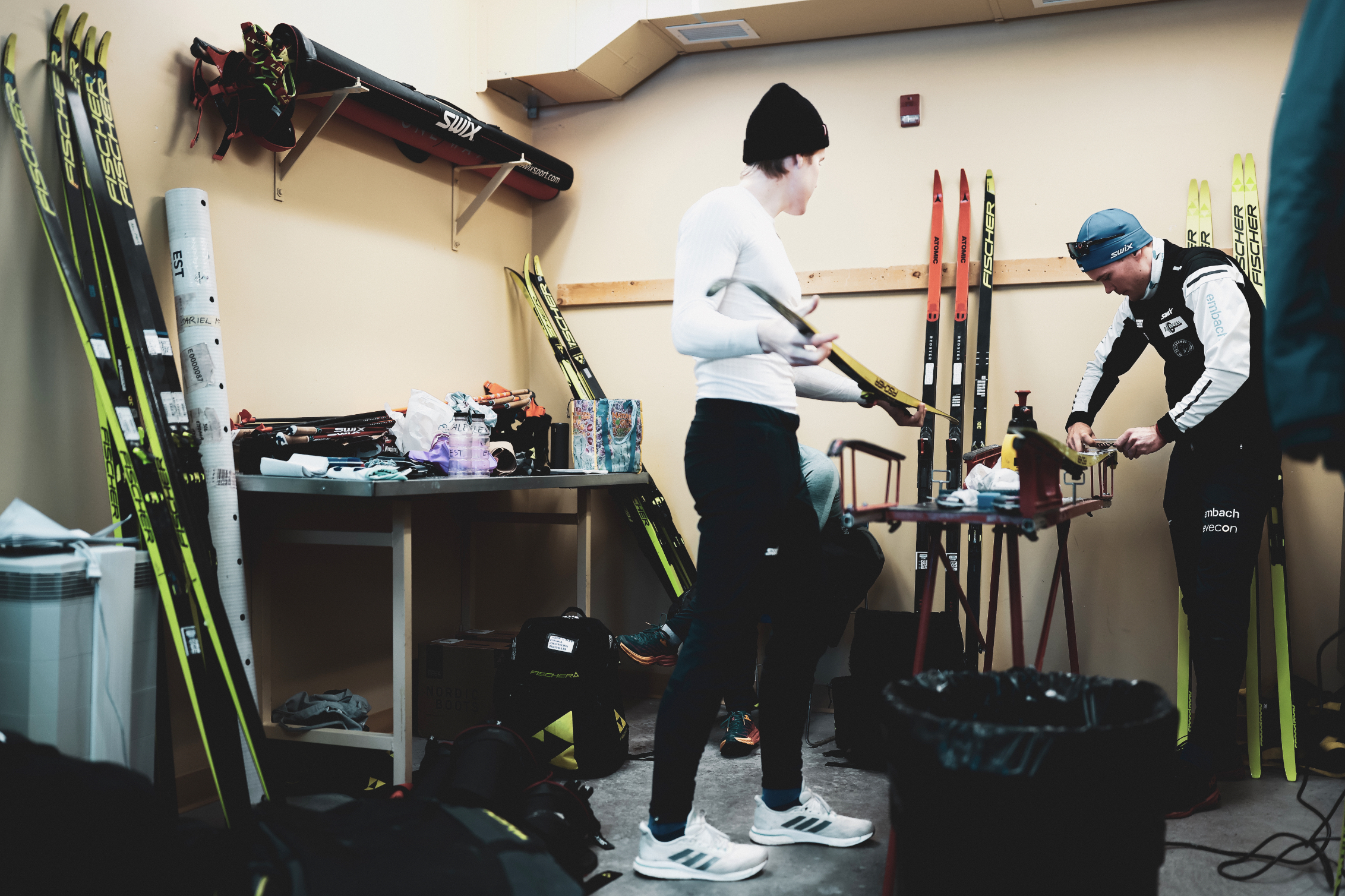
    The Estonians were athletes, baggage handlers, drivers, team captains and ski testers wrapped into one, using a wax bench borrowed from another team.

    In Canmore, they stayed at an AirBnB and drove their own rental car, rather than paying for rooms at the official race hotel and riding buses scheduled by the organizers. In Minnesota, they depended on help from Minneapolis-based Team Birkie, and stayed at a home offered up by a local.

    “I can imagine that our team looks a bit homeless compared to the big nations,” Kristjan Koll, the head of Estonia’s national ski association, said in an interview from his home country. But, he added: “In general, we manage quite well, considering how little resources we have.”

    The Estonians do have paid coaches and a wax technician who support them when the World Cup is in Europe—though the staff is far smaller than those of wealthier teams from Scandinavia, Canada and the U.S.

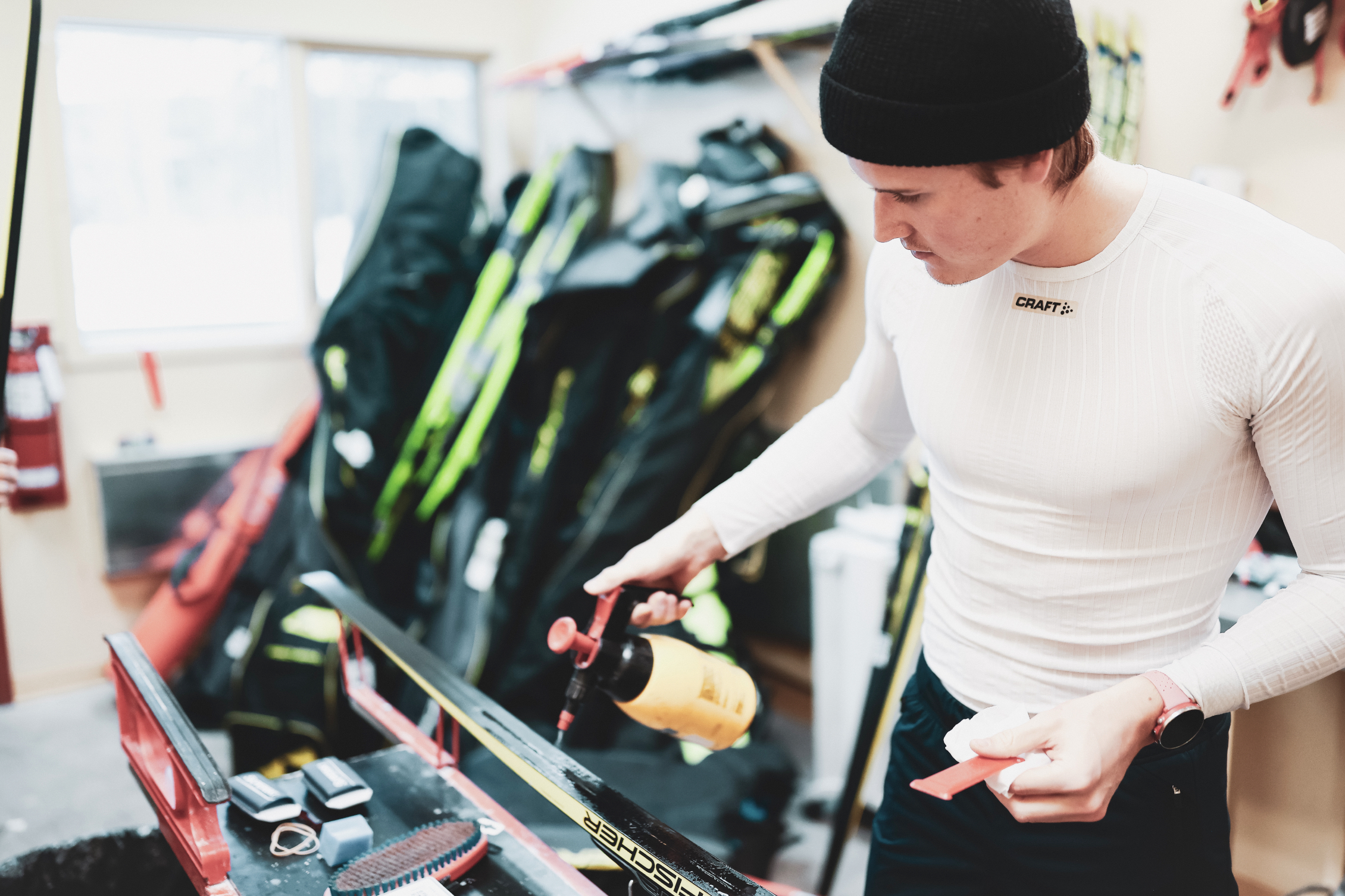
    Christopher Kalev, an Estonian who attends University of Alaska Fairbanks, cleans a ski in Canmore this month. (Federico Modica for FasterSkier)

    For the North American races, the cost was too high for the Estonians to send support staff, so the association gave athletes the option to travel to the events by themselves.

    Alev, an Olympian who once raced for the University of Colorado, traveled from his current home base in Norway; his teammates for the month, Mariel Pulles and Christopher Kalev, are both students at University of Alaska Fairbanks.

    Kalev, 24, who made his World Cup debut in Canmore, said he knew what to expect.

    “We’re used to it—it’s been going on like this for a while now,” he said. “If you don’t get your expectations too high, it’s going to be okay.”

    Partnerships boost other small World Cup teams

    The Estonians’ predicament in Canmore, if a somewhat extreme example, underscores what some coaches and pundits increasingly describe as a threat to cross-country skiing’s identity as a global sport: the big divide between the haves and the have-nots.

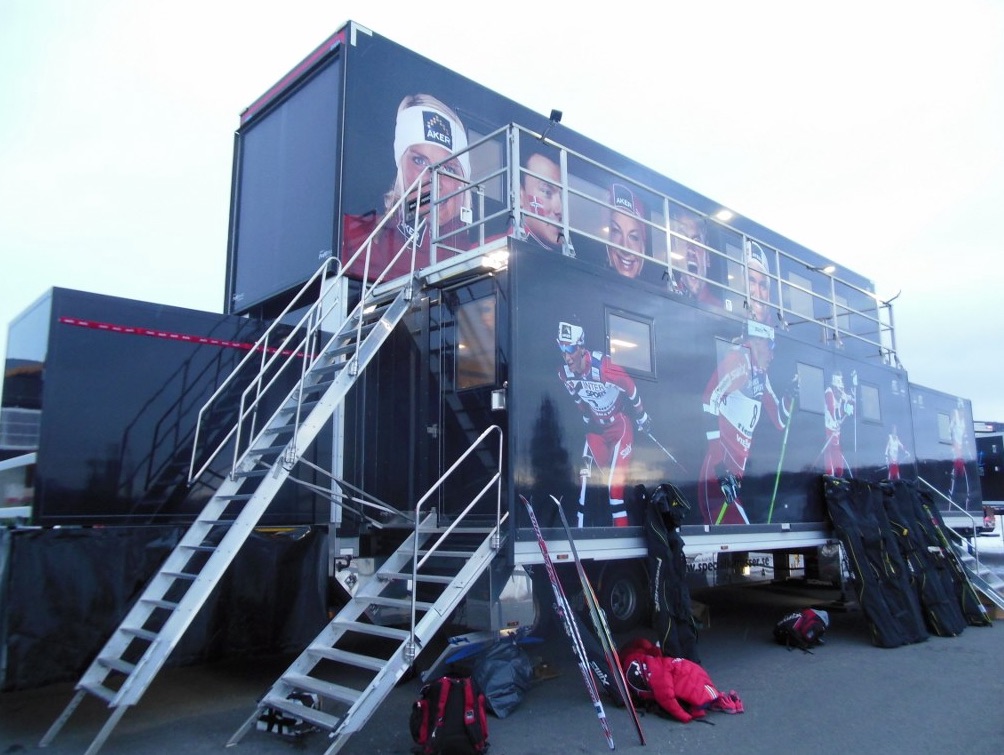
    There’s no limit to the amount of money that powerhouse nations like Norway, Sweden and Finland can spend to boost their teams’ chances. They travel the World Cup circuit with enormous semi trucks that have been converted into mobile ski waxing facilities, and with substantial staffs who care for athletes’ needs.

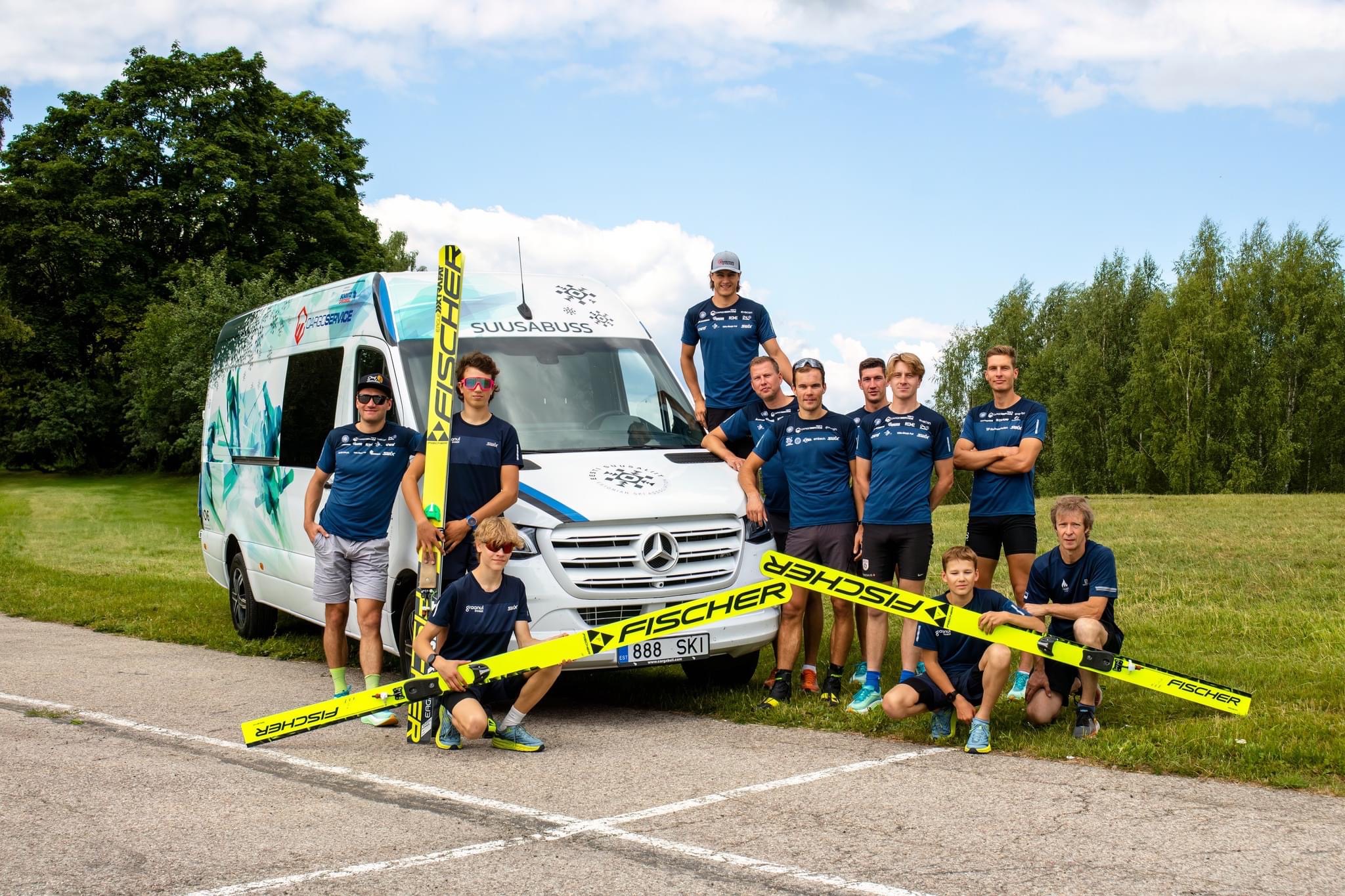
    The U.S. team has its own truck, too, while the Estonians were thrilled to acquire a “Suusabuss,” or ski bus, for the winter—a glorified van.

    Estonian skiers and their new “suusabuss,” or ski team van. (Courtesy Estonian Ski Association)

    Koll, a former elite racer himself, said that the organization that manages the World Cup circuit — the International Ski Federation, known as FIS — has made some “good decisions over the years” to level the playing field. But more needs to be done, he added.

    “We should and need to think about how we could support the smaller nations, especially if it is FIS’s desire to widen the reach of the cross-country program so that we have World Cups in different parts of the world,” Koll said. “Every nation is different. But on some level, we share the struggles, and in the end, I think that the common goal for everyone is that our athletes will be on the start line and the sport will be interesting.”

    In an interview, FIS’s coordinator for World Cup cross-country skiing, Doris Kallen, said she’d like to hear small nations’ own ideas about what her organization could do to help them. But she added that the question is a “bit tricky.”

    “At FIS, a lot lies in the hands of the national ski federations. And it’s not actually FIS that can impact things,” she said. “We can impact things by rules, for example, and regulations. We can make it mandatory or not. But with every action you take there is a reaction, which might impact another small nation in a negative way.”

    One option for the Estonians could be to lean harder into their existing ski waxing partnership with the Finns, said Jostein Vinjerui, a coach who leads a multinational team, Aker Daehlie, with athletes from Great Britain, Latvia, Ireland and the Czech Republic.

    The British component of Vinjerui’s team has its own partnership with the Norwegian squad, which transports some of Great Britain’s equipment, tunes many of the team’s skis with stone grinding machines and places joint orders of ski waxes to secure bulk discounts.

    One of the waxing trucks that Norway’s cross-country ski team has used on the World Cup circuit. (Courtesy Noah Hoffman)

    “The way Norway is treating us is a very good role model,” Vinjerui said.

    FIS incentivizes such partnerships by giving extra race course access to coaches and wax testers from collaborating nations.

    But that incentive only applies to agreements between two nations, according to Vinjerui; FIS grants no additional access if a third or fourth country participates.

    Vinjerui and Norway’s ski waxing manager, Tord Hegdahl, are eager to share insights from their decade-long partnership, Venjerui said. And there seems to be general interest in collaboration from teams competing on the World Cup, he added.

    But FIS hasn’t prioritized it, he said.

    “Other issues, they find more important,” Vinjerui said.

    “It just comes down to the money”

    The Estonians have been on both sides of cross-country skiing’s financial divide.

    In the 1990s, when Estonia was a newly independent nation after the fall of the Soviet Union, it had to create its own cross-country skiing program on a shoestring budget.

    One athlete, Andrus Veerpalu, borrowed money from his coach to feed his family; he and his teammates at one point carried bags of their food, on foot, to a train that took them to a training camp in Finland.

    Andrus Veerpalu skiing at a race in Estonia in 2011. (Nathaniel Herz/FasterSkier)

    But the Estonians improved, won an array of medals at the Olympics and World Championships and secured major endorsement deals and sponsors—before Veerpalu failed a doping test in 2011 and one of his sons, eight years later, was caught in his own blood doping scandal.

    Sponsors fled the ski association, which has been trying to resurrect itself since then.

    “For the small nations, it would really help if we got some extra funding from somewhere,” said Koll, the ski association director.

    Alev, the senior member of Estonia’s team in North America, has shown flashes of potential. He finished 31st in a season-opening World Cup race in Finland in November and was picked for Estonia’s relay team at last year’s World Championships, and at the Olympic Games in Beijing in 2022.

    Christopher Kalev, left, and Alvar Johannes Alev wax their own skis at a World Cup event in Canmore in February, 2024. (Federico Modica for FasterSkier)

    In Canmore, his top finish in three events was 35th. One of his races was derailed by what he described as a frustratingly slow pair of skis—though he said he probably chose the wrong pair to race on, and that the problem didn’t seem to be the wax applied by the Finnish team.

    “I guess the ratio is like that: One out of three races, you will have to take some setbacks,” he said.

    Alev said he hadn’t given much thought to what, exactly, could be done to help teams like his be more competitive with powerhouse ski nations.

    But, he added: “It just comes down to the money.”

    “And it’s just not easy to get it,” he said. “Once there’s a solution for that main problem, then everything starts coming together.”

  • The Devon Kershaw Show: Summer break’s over, with Team Aker Daehlie’s Jostein Vinjerui

    The Devon Kershaw Show: Summer break’s over, with Team Aker Daehlie’s Jostein Vinjerui

    We know, we know…we’re way overdue for the promised summer content. Is it even summer any more?

    Anyway: We’re excited to bring you this episode with Jostein Vinjerui, one of the coaches with Team Aker Daehlie, the international squad that boasts athletes from Great Britain, Latvia and, for the first time this upcoming season, the U.S., in Sophia Laukli.

    We actually will be back soon, with at least one episode on our schedule for recording in the next week. Send us your questions, comments and hate mail to devon@fasterskier.com and nat@fasterskier.com.

  • Nordic Nation: Coaching Britain Up – Hans Kristian Stadheim and Jostein Vinjerui

    Nordic Nation: Coaching Britain Up – Hans Kristian Stadheim and Jostein Vinjerui

    As far as teams go on the cross-country World Cup, Great Britain arrives at the show with perhaps the smallest team roster and staff. Somehow, they often roar when considering the results. We know British Nordic from the sharp end skiing of Andrew Musgrave, and sprinters Andrew Young and James Clugnet. 

    Like all teams on the circuit, the human capital behind the Lycra-clad skiers make the travel, training, and race grind happen. In this episode of Nordic Nation we speak with the two coaches leading the British team – Hans Kristian Stadheim and Jostein Vinjerui. The two coaches are Norwegian and are based in Norway full-time. Which makes things easy considering the three thoroughbreds of the British team – Musgrave, Young, and Clugnet – live in Norway as well.

    British Coach : Hans Kristian Stadheim. (Photo: British Nordic)


    British Coach Jostein Vinjerui. (Photo: British Nordic)

    The organizational model premised on elite athletes living abroad, in this case Norway, outside their home country might not be for every team. In the case of Britain, so far, it appears to have worked. The athletes and coaches are able to capitalize on their personal and professional relationships to tap into Norway’s cross-country ski know-how and arguably overreach when it comes to the expectations of a non-traditional ski nation like Britain.

    We should note that Vinjerui and Stadheim, as well as their skiers, host a podcast that’s a fun and informative listen. You can find their podcast, Inside Cross-Country Skiing, wherever you get your podcasts. 

    Thanks for listening and we hope your spring is going well.