Tag: junior development

  • Auburn Ski Club Seeks Head Coach for Nordic Development Program

    Auburn Ski Club Seeks Head Coach for Nordic Development Program

    Auburn Ski Club (ASC) is a historic non-profit organization dedicated to providing snow sports opportunities to the greater Northern California region since 1928. Today, ASC operates a snow sports Training Center on Donner Summit that provides athletic programs, USSS/FIS competition and training venues, and youth snow sports teams ranging from entry-level to elite for Alpine, Snowboard, Nordic, and Biathlon. The Training Center’s cross-country venue also operates as a 25-kilometer Nordic Center open to the public.

    ASC is now hiring a Head Coach for its Nordic Development Program.

    Position Overview

    The Head Coach of the Nordic Development Program leads the Devo 1 and Devo 2 teams, where U10 through U14 athletes move from learning to ski toward learning to train. This is the stage of the pipeline that determines whether a young skier stays in the sport. ASC is looking for a coach who understands that skill, confidence, and enjoyment at this age build better racers than early specialization does.

    The Head Coach takes graduates of the Super Sliders program and prepares them, technically and personally, for the Competition Team. The role covers session planning and on-snow coaching, technical progression across both Devo groups, support and training of assistant coaches and parent volunteers, and steady communication with families. It suits a coach who wants ownership of a program rather than a set of practices, and who is comfortable being the person a nine-year-old remembers as the reason they kept skiing.

    The Details

    • Annual salary based on experience
    • Salary structure includes coaching hours, administrative responsibilities, and flex time off
    • Health insurance offered
    • ASC 401(k) program with annual 3% salary match

    Key Responsibilities

    Coaching & Athlete Development

    • Lead the Devo 1 and Devo 2 programs year-round, on snow and in dryland
    • Plan and deliver weekly training across the Devo schedule, including weekday afternoon sessions under the Nordic Center lights and Saturday mornings
    • Build technical progressions appropriate to the age group: classic stride with coordinated pole use, skate skiing with and without poles, V1, step turns, hockey stops, terrain reading, pacing over varied distances, and smooth transitions between techniques
    • Run Devo 1 as a train-to-learn environment and Devo 2 as a learn-to-train environment, with a clear and deliberate step between them
    • Teach athletes to take care of their own equipment as they approach the Competition Team, including ski selection, basic tuning, and hot waxing
    • Introduce racing as something athletes look forward to, supporting Devo skiers at local and Far West Nordic events without making competition the price of admission
    • Identify athletes ready to move up, and prepare both the athlete and the family for that step
    • Keep retention and long-term participation as measures of the program’s success alongside results

    Program Leadership & Collaboration

    • Work with Super Sliders staff so athletes arriving in Devo 1 meet a familiar teaching language and a consistent standard
    • Coordinate with Competition Team coaching staff to keep one continuous progression across the Nordic pipeline
    • Recruit, train, schedule, and support assistant coaches and parent volunteers, including the volunteer sessions Devo families are asked to fill
    • Support ASC-hosted racing, including Far West Nordic qualifying events held on the Training Center trails
    • Contribute to registration, retention, and program growth planning with Nordic program leadership
    • Build a culture of mentorship and sportsmanship across the ASC Nordic community

    Community & Regional Engagement

    • Serve as a visible and positive presence in the Far West Nordic community
    • Work with regional programs on development events, clinics, and youth racing opportunities
    • Support initiatives that create access and opportunity for athletes at every level, including needs-based scholarship efforts
    • Potential leadership role representing ASC at the FW Junior Committee or FW Board

    Communication & Family Engagement

    • Maintain consistent, proactive communication with athletes and families
    • Lead parent education on what development looks like at this age, and on what it does not need to look like
    • Guide families through equipment decisions, including fall meetings ahead of the season
    • Help families understand the pathway ahead while keeping expectations honest and athlete-centered

    What ASC Offers

    Leadership & Professional Growth

    ASC is committed to investing in coaching development and leadership growth. The Head Coach will receive:

    • Support identifying and attending regional and national camps
    • Increased investment in coaching certifications and continuing education
    • Opportunities for leadership development within a growing organization

    Athlete Support Philosophy

    ASC believes opportunity and access are critical to athlete success. Coaches work within a system that actively supports:

    • Needs-based scholarships
    • Athlete development scholarships
    • Offseason camp and training support opportunities
    • Long-term athlete development pathways

    Benefits

    • Use of the CA Gold pass
    • Opportunity to shape the foundation of Nordic skiing in the Far West region
    • Support for professional growth and development opportunities

    How to Apply

    Please email a cover letter and resume to info@asctrainingcenter.org.

    Email subject line: ASC Nordic Devo Head Coach

  • ‘With Experience Comes Stronger Performance:’ Watching Junior Progress at REGs

    ‘With Experience Comes Stronger Performance:’ Watching Junior Progress at REGs

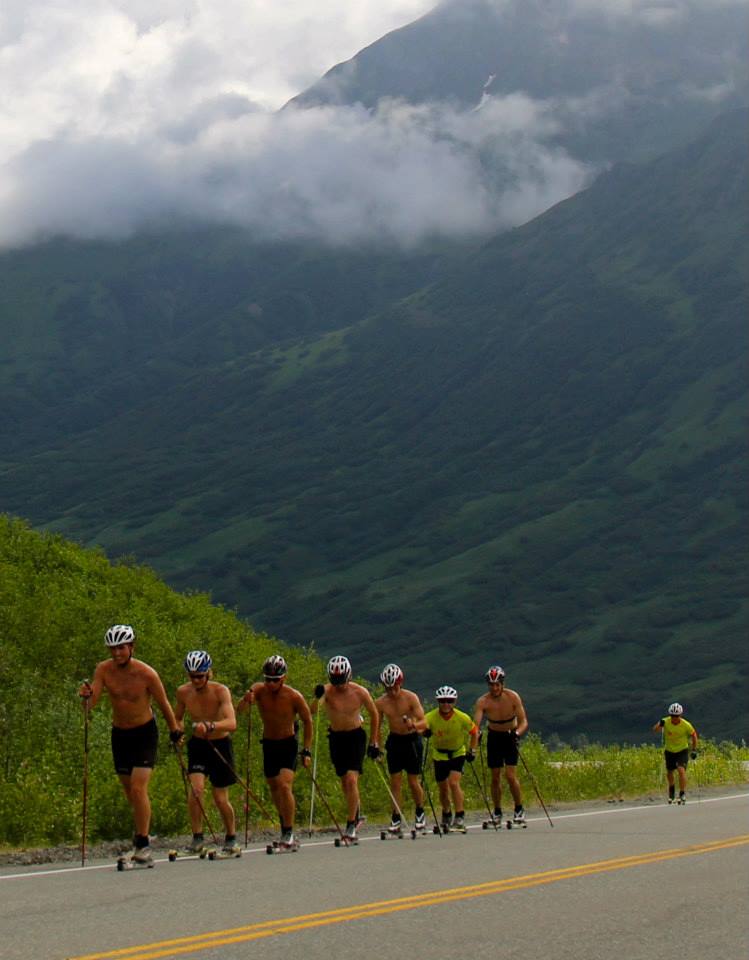
    Athletes in training at the Alaskan Regional Elite Group camp, which wrapped up last week in Anchorage. Photo: Bryan Fish.
    Athletes in training at the Alaskan Regional Elite Group camp, which wrapped up last week in Anchorage. (Photo: Bryan Fish)

    There is an agility test that junior skiers take every summer when they attend a Regional Elite Camp in the East, West, Central or Alaska regions. The test was first implemented three springs ago when coaches across the country saw a need to develop technique and agility in young skiers. They added an obstacle course that summer to the other strength and general fitness tests already on the camp schedule; if athletes could quickly and successfully move around cones on rollerskis, it would eventually translate to better racing down the road in the way of tactical competency in mass starts and more skilled navigation through a tightly grouped field.

    The last of four REG camps held throughout the U.S. wrapped up last week, in Alaska, and the agility test that once challenged junior skiers now has to be made more difficult in order to push the ability levels of the skiers who show up. A backwards skiing section was added this year to a course that also includes tight corners on pavement and an off-road segment.

    “I remember the first year, [the agility test] was pretty eye-opening,” said U.S. Ski Team development coach Bryan Fish said on the phone this week from Park City, Utah. “Now the athletes are getting used to it.”

    The need for a tougher agility test at REGs is part of a larger upward trend being seen in junior skiing nationwide. As a specific example, Fish says he has noticed improvement in close-quarters skiing over the past few years amongst the juniors he observes in competition at World Junior and U23 Championships.

    “When I go to junior worlds and see a mass start or sprinting, our athletes are moving through the field better tactically and technically,” he said. “Yeah, we’re seeing increase in performance.”

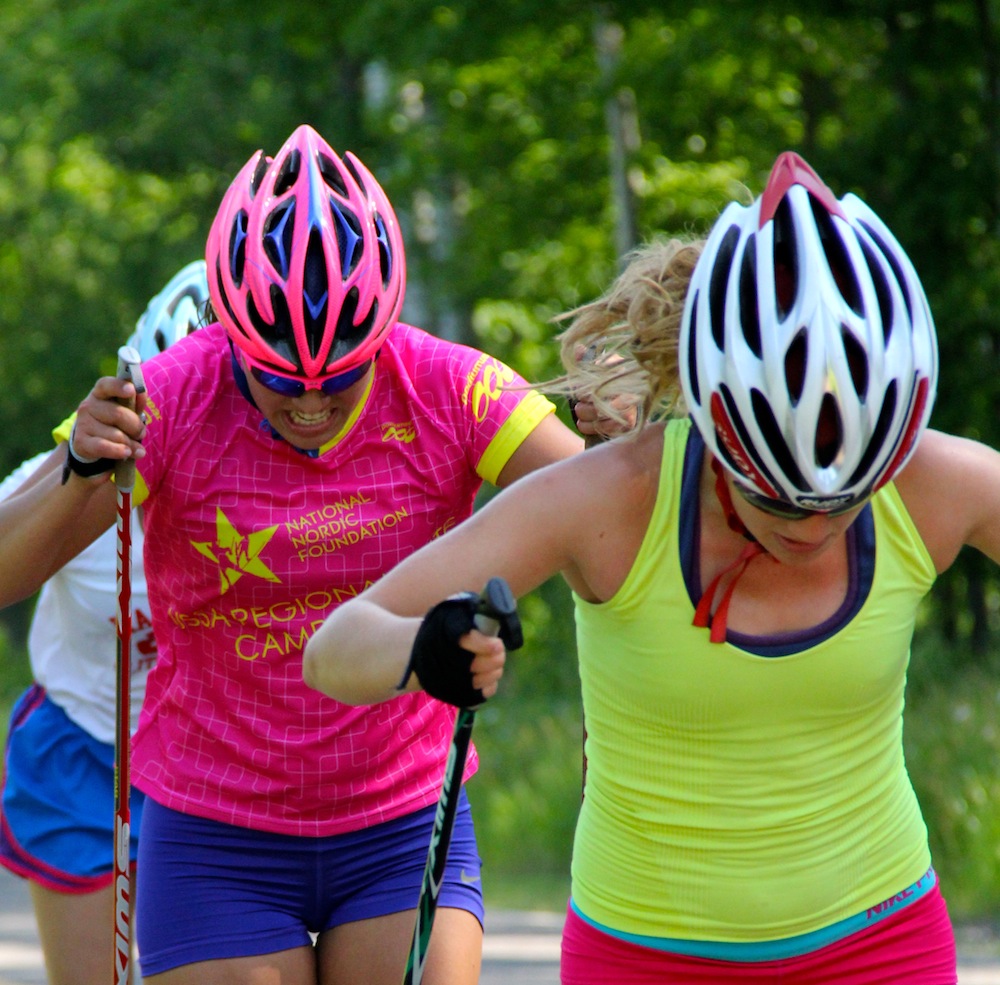
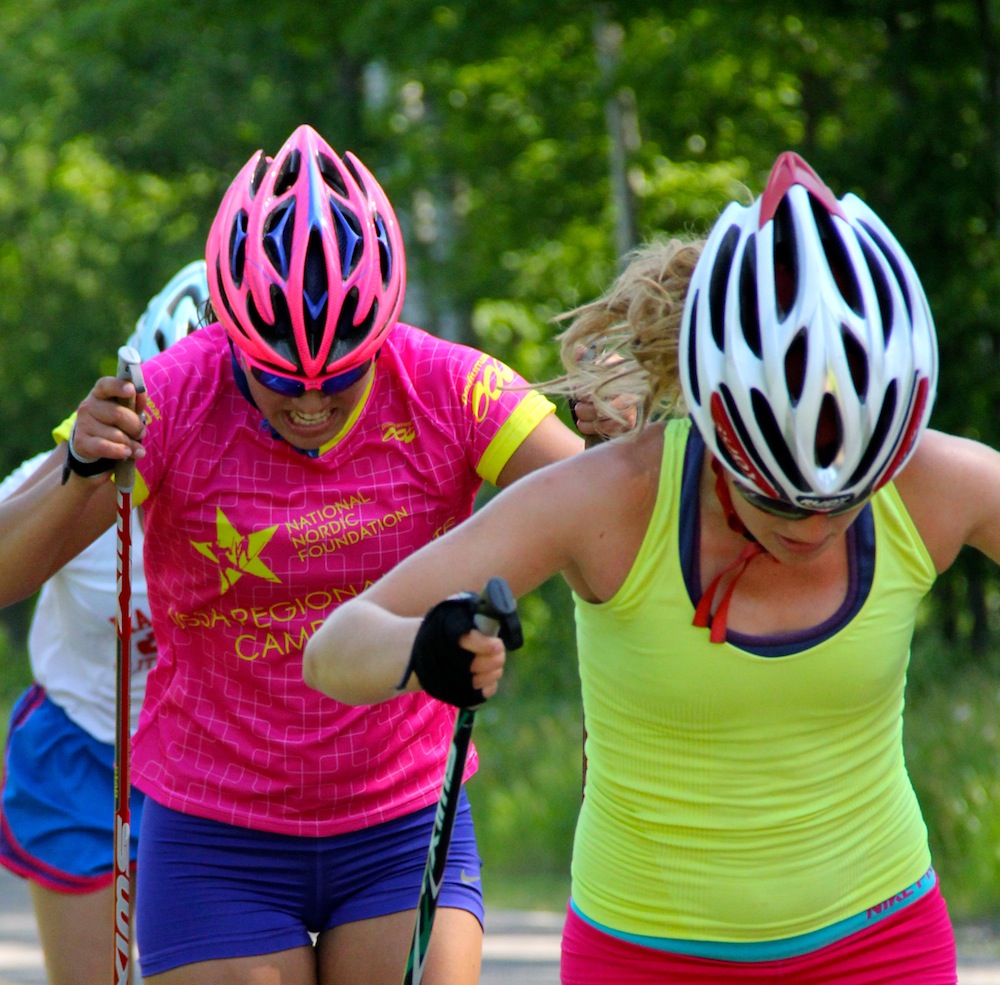
    Junior girls double-poling at a recent REG. Photo: Bryan Fish.
    Junior girls double-poling at a recent REG. (Photo: Bryan Fish)

    Fish recently returned from Anchorage, Alaska, where the last of the four REG camps concluded last week. REG camps are a cooperative development effort between regional and club coaches and the U.S. Ski and Snowboard Association — the camps run by the regions and supported by USSA — and their end goal is to help make the U18 and U20 skiers who attend into better athletes. Athletes are invited to work with area coaches in group workouts, testing and some seminars based on their Junior National results and national ranking.

    “Our goal is to get athletes together more frequently and learning from one another,” Fish said. “That’s how they get better. That’s why we do international competition: they get pushed and hopefully rise to the occasion. Through experience both in camps and competition, that’s how we’re seeing our progress.”

    Fish attended three out of the four camps this summer, and fellow USST coaches Jason Cork and Matt Whitcomb took part in the fourth. At each location Fish says he and his colleagues saw clear athlete progress across several categories, which he takes as measurements of successful camps.

    In addition to requiring a harder agility test, athletes generally scored higher in the REG general strength test. Most of the juniors who qualify for an international trip last winter have attended an REG or one of the other steps in USSA’s development pipeline, which includes the National U16 Camp, REGs, the National Elite Group and the National Training Group. And at those higher steps, more athletes are being engaged: where participation was once around 50% for the NEG and NTG projects, it has risen to around 70%.

    Fish also estimates that more area coaches have volunteered at camps each year, contributing to more collaboration between clubs and a better learning experience for the coaches who then return home to work with own teams.

    “Every year we get more coaches partaking in these camps, and that’s something we’ve been pushing for — not just athlete participation, but also us as coaches,” Fish said. “Getting together and sharing ideas and working together.

    “Clubs, coaches and regions are critical in working with our athletes on a daily basis and that is where a great deal of the work is done.”

    What’s driving such progress? In part, Fish thinks it’s the camps themselves. Four years ago, on top of adding an agility test to REGs, coaches created the National U16 Camp (formerly known as the National J2 Camp) as another way to improve junior athlete development nationwide. It was the brainchild of Rick Kapala, Janice Sibilia, Ali (Dienes) Sehnert and Josh Smullin, who have since directed the camp each year.

    Fish believes the addition of another step to the national development pipeline has been a critical part of growing junior success in the U.S. Every one of the juniors who qualified for the U18 trip to Norwegian Junior Nationals last winter, for example, had been through the J2 camp. On that trip, the U.S. girls turned heads with a silver medal in the relay.

    “This’ll be the fourth year of the U16 camp…and I remember rolling into where the first one was, in Houghton, and questioning whether that age group was appropriate to have a national camp,” Fish said. “And when I walked away I had no question it was a very good step.”

    No small amount of credit goes to the National Nordic Foundation, the non-profit that raises hundreds of thousands of dollars every year to help defray the costs of travel to camps and international competition for nordic athletes from the junior level through the World Cup team.

    “NNF is instrumental in financial support and their involvement in development projects has allowed the growth and support of many of these projects,” Fish said.

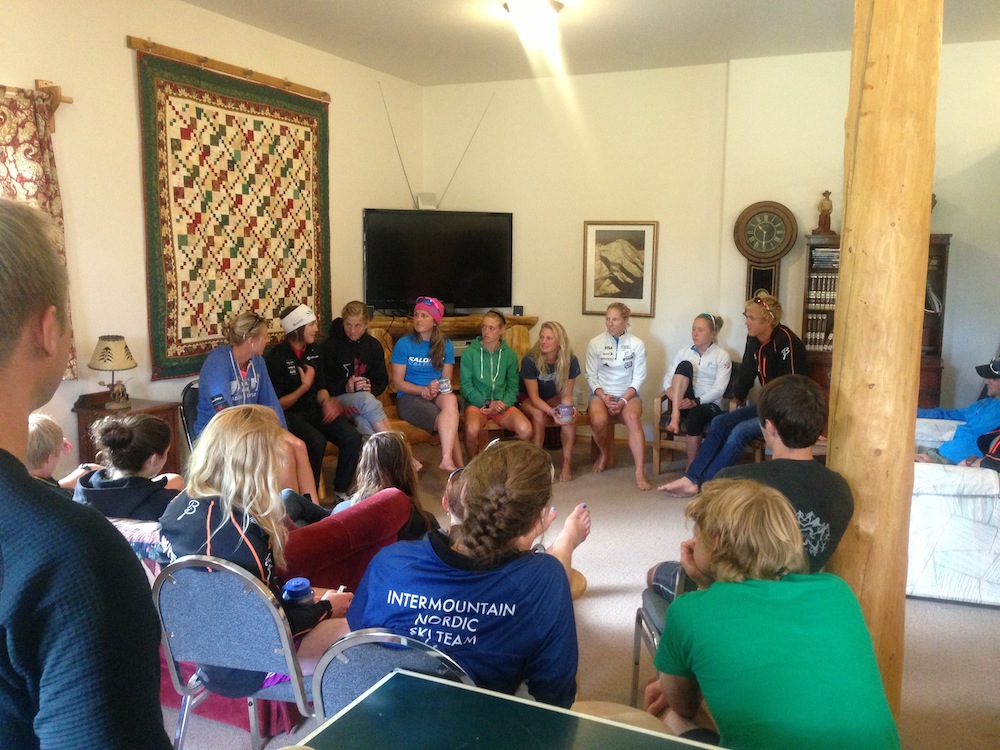
    U.S. Ski Team athletes give a talk to junior skiers at the Alaskan REG. Photo: Eric Strabel.
    U.S. Ski Team athletes give a talk to junior skiers at the Alaskan REG. (Photo: Eric Strabel)

    He also thinks the presence of stronger role models for young American skiers have directly and indirectly influenced stronger junior skiing. The U.S. has been steadily improving on the World Cup for several years now, and this winter a World Championship gold medal became a feasible end goal for aspiring American skiers, courtesy of Kikkan Randall and Jessie Diggins.

    “With the path that’s being put forth by our camp and competition structure, our goal, along with what our U.S. Ski Team athletes are doing, is providing this clear path that these athletes can actually see from an American standpoint, from an American example,” Fish said. “Here are the steps and those are the athletes that are actually doing it on an international stage. It’s very powerful to have that as an actual example instead of just being theoretical — something that is very tangible, that these juniors can truly see happening.”

    In a direct way, USST athletes were a resource to juniors at REGs. At the East, West and Alaska camps, local national team members took part in group workouts and gave presentations outside of training, and Jessie Diggins made a video for the Central REG. In Stratton, Vt., Andy Newell, Sophie Caldwell, Diggins and Simi Hamilton joined the juniors. In Park City, Noah Hoffman and Liz Stephen joined the Western REG. In Alaska, most of the U.S. women’s team, plus Erik Bjornsen and international guests Astrid Jacobsen and Bettina Gruber, gave talks to the juniors gathered in Anchorage.

    The development pipeline is designed to challenge juniors incrementally and allow them to thrive at each step of the way, with World Cup, World Championship and Olympic success held as the goal at the end of the ladder. After a few years of regional and club coaches tinkering with the intermediate rungs, Fish thinks most of the right elements are finally there for effective development nationwide.

    “Just last year, [we started] this brand new Norwegian Junior National partnership, where we had Norwegians at our Junior Nationals and we sent some to theirs,” Fish said. “I feel we’re finally to a point where we have the pieces in place, and then it’s just continuing to be innovative and look at the quality of these steps.”

    The next step, Fish says, is to further develop a national competition calendar that fosters stepwise athlete development. The SuperTour calendar, as it happens, is being revamped this summer.

    “They’re looking at the SuperTour calendar and looking at these steps, but I feel there’s more we can do there,” Fish said. “But it’s just this whole building process, and I think we’ve been doing a better job of putting in these tangible steps.

    “Providing those steps and additional opportunities is one of those pieces…that has provided these athletes with the opportunity to get together with higher frequency,” he continued. “Athletes learn from one other and motivate one another, and create a strong team culture, but it also gives us coaches another opportunity to work together and share ideas. But the bottom line is we’re trying to provide experience [to] our athletes. With more experience comes stronger performance.”