Tag: junior olympics

  • Woods, Hanneman, Diggins complete individual title sweep at Junior Olympics

    Woods, Hanneman, Diggins complete individual title sweep at Junior Olympics

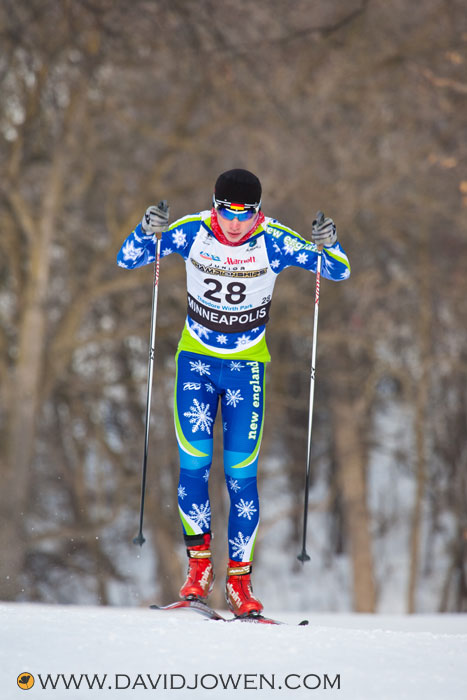
    New England's Tyler Foulkes (Stratton Mountain School) captured his first Junior National title in the J2 5k freestyle race on Friday. Photo: David J. Owen Photography

    Going into the third day of Junior Olympic competition, Friday’s skate individual start, four athletes had a chance to sweep all individual events: Hamish McEwen (Cambridge Sports Union) in J2 boys, Marion Woods (Alaska Winter Stars) in J2 girls, Logan Hanneman (FAST) in J1 boys, and Jessie Diggins (CXC) in OJ girls. When the day was finished, only McEwen was knocked off the top step of the podium.  (He was still second!) Woods, Hanneman, and Diggins each succeeded in the rare feat of winning all individual events at the Junior Olympics.

    As a result of the wet snow on Wednesday and below freezing temperatures overnight, the course set up firm and lightning fast.  Silas Talbot (Alaska Winter Stars) called the course “challenging.” “It was a little scary on the downhills.  There were some tough turns at the bottom of hills.  You had to ski as fast as you could, but be sure to be in control.”  Still, athletes commended the course conditions.  J1 Sawyer Kesselheim: “It was a good course.  I’m glad they raked the corners. It kept it really nice. I thought it would get more chopped up.”

    For the J2 boys, Stratton Mountain School’s Tyler Foulkes managed to upset the previously dominant McEwen.  Foulkes finessed the technical course to a 18-second win. This margin of victory is even more impressive when one considers the short time the athletes spent on the course; the top-10 skiers were all under 12 minutes. Foulkes was joined on the podium by McEwen (2nd) and Durango Nordic’s Haakon Sigurslid.

    J2 Girls Podium: Halie Lange, NE (5th), Sarissa Lammers, AK (3rd), Marion Woods, AK (1st), Annika Miller, IM (2nd) and Maggie Williams, IM (4th). Photo: David J. Owen Photography

    As anticipated based on previous results, Marion Woods was the J2 girls golden girl yet again.  Second-place finisher Anika Miller (Payette Lakes Sports) started 4th in the bib order, ten spaces ahead of Woods, so she had the disadvantage in terms of splits. Splits given on the long climb just short of 5 km had Miller clearly leading, until Woods and Sarrissa Lammers came by. Woods had made up the 15-second spread on Lammers, but Lammers bravely hung on up the long climb, earning her best result at JOs thus far.

    In the J1 girls 5 km, Corey Stock earned her second gold and third podium result.  At the finish, she was embraced by her coach who said, “Next year, we’ll do some training, and it will hurt less!” obviously referring to her late season return to racing after compartment syndrome surgery.

    Runner-up Heather Mooney was just two seconds behind Stock. Mooney went into the race with a plan that she executed. “My plan was to ski the first kilometer really whippy, and then to relax and ski the transitions well.  At about three and a half kilometers, I just went as hard as possible.”  Mooney, who is a senior at Stratton Mountain School, noted Stratton’s role in her success. “The biggest thing is just being around a group of great girls to train with.  There’s also the academic flexibility to come to a race like this and know the school is totally behind it.”

    Stratton Mountain School’s Cambria McDermott earned third place, just seven seconds out from the win.

    Logan Hanneman is all smiles following his podium ceremony for the men's J1 10k freestyle race. Photo: David J. Owen Photography

    Logan Hanneman (FAST) took over the J1 boys race in lap one and then held it throughout.  On the first lap, Patrick Caldwell looked to be a contender. He was tied with Hanneman at just under 4 kilometers, and then 10 seconds down (but in second place) at the lap.  However, Caldwell faded on lap two and finished fifth. Second and third for the J1s went to APUNSC teammates Forrest Mahlen and Jack Novak.

    J1 boys fourth-place finisher Sawyer Kesselheim (Bridger Ski Foundation) might be a name to watch in the future.  Kesselheim, who was tenth in the sprint and fifth in the classic, did not even qualify for last year’s Junior Olympics. He used to be a soccer player, but last year he quit and “really committed to skiing.” This is the first year he trained for skiing year-round. Kesselheim played the pacing game just right; he was in a three-way tie for seventh at the lap.  “I had a slower first lap and tried to build over the second lap.  I think I found a pace I could maintain.”

    Jessie Diggins once again showed complete domination over the OJ girls field, winning the 5 km race by 51 seconds!

    Hometown favorite Jessie Diggins on course. Photo: David J. Owen Photography

    Given Diggins’ results at the World Championships, and throughout the week at the Junior Olympics, Annie Pokorny’s second-place finish must have felt as good as gold.  While Pokorny doesn’t consider herself a power skier (she usually races in the West), she was delighted to find that the firm conditions worked for her.  “It was probably my best 5 km skate ever, easily…” Pokorny, who will be at Middlebury next year, took time to thank Minneapolis Junior Olympics volunteers: “This event is so well organized.  It is really easy to be a skier here.”

    Kinsey Loan (APUNSC) missed second-place by the narrowest of margins, just four tenths of a second.  Loan had a clear plan for racing the firm and fast course: go as hard as possible.  “With the fast snow and so many downhills, I tried to race this like a sprint.”  In planning her tactics, Loan is able to draw upon her experience in two sports.  She says she races nationally on her bike in the summer (road and mtb).  “Skiing and cycling complement each other very nicely.” Success in the OJ boys race depended on a fast second lap.

    Dartmouth’s David Sinclair was down to George Cartwright at 5 km, but turned it on in lap two to take the win. Third-place Silas Talbot also had a strong second lap, moving from fifth at 5 km to third at the finish. Without yet having seen the official split, he said, “The beginning was slower.  It took a while to get into it.” George Cartwright’s pacing was just the opposite.  He took a four-second lead through 5 km, but ultimately finished second by the narrowest of margins, just seven-tenths of a second off Sinclair.

    In the Alaska Cup competition, New England brought a solid lead into Friday’s races. While current points had not yet been tabulated as of this writing, it seems unlikely that Alaska’s Friday performance was enough to make up the significant points gap.  The fact that the cup will likely go to New England makes tomorrow’s relay races all the more important.  While the cup is determined by place points, each age group’s relay will go to the team who can string together the fastest skiers.  Anticipate that underdog Alaska will fight for the win in every race, while the Midwest will hope to upset in one or more.

  • Junior Nationals Racing Kicks off with Monday’s Sprints

    Junior Nationals Racing Kicks off with Monday’s Sprints

    The 2011 Junior Olympics, hosted by the City of Lakes Nordic Foundation in Minneapolis, MN, kicks off Monday afternoon with freestyle sprint racing action.  Racing begins at 12:30pm with the J2 boys qualifying rounds and continues through to the evening semi-finals and finals, held under the lights from 6pm to 8pm.

    Teams arrived between Thursday and Saturday and have been enjoying the urban format of this year’s Junior Olympics.  All teams stay at the Minneapolis Marriott City Center and share shuttle buses to the course, 15 minutes away, for training and racing each day.

    The Junior Olympics were officially opened at Sunday’s opening ceremonies.  Athletes gathered at the hotel and paraded through a section of Minneapolis’s extensive skyway system to the IDS Center, several blocks away.  Video coverage of the opening ceremonies is available below.

    Particularly exciting for the Midwest team is the return of Jessie Diggins from the World Championships. Diggins, an OJ who is fresh off anchoring the United States women to 9th place in the 4 x 5k relay, is expected to compete in Minneapolis.

    Live footage of the race is expected to be available for those who cannot be in Minneapolis to watch.  Click the following links for more detailed information, schedule, start lists, live coverage, course maps and more.  For more information, visit http://www.jo2011.com.
    Start Lists/Results

    Live Results

    Course Maps

    Schedule

    Event Guide

    Photographs

    Video of Opening Ceremonies

    Watch the Race Live

    Webcam (shows the Button Hook at 4.75k of the 5k course and wax testing zone in background, does not show the sprint course.)

  • Skate races wrap up individual competition at Junior Nationals

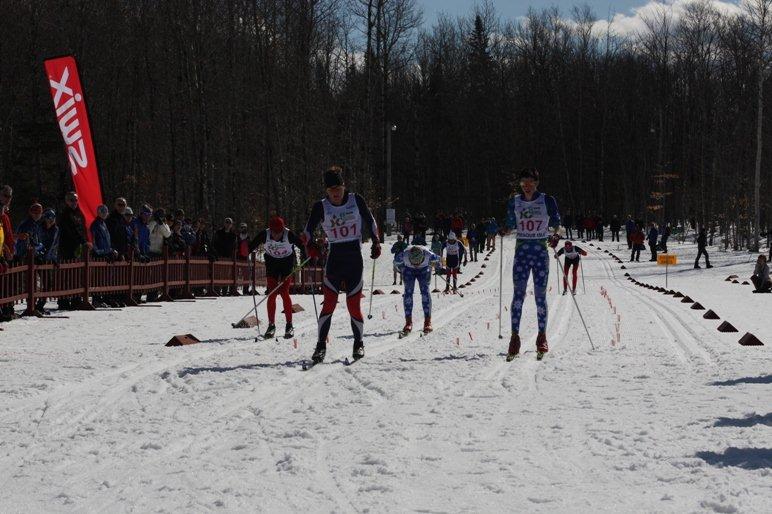
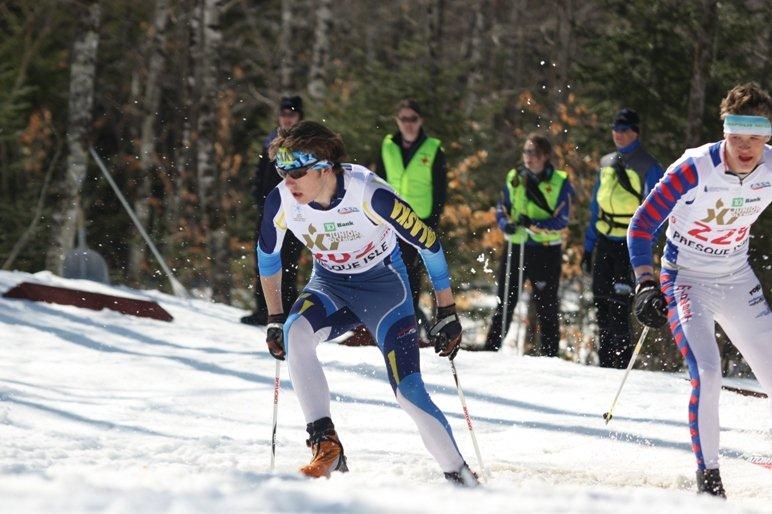
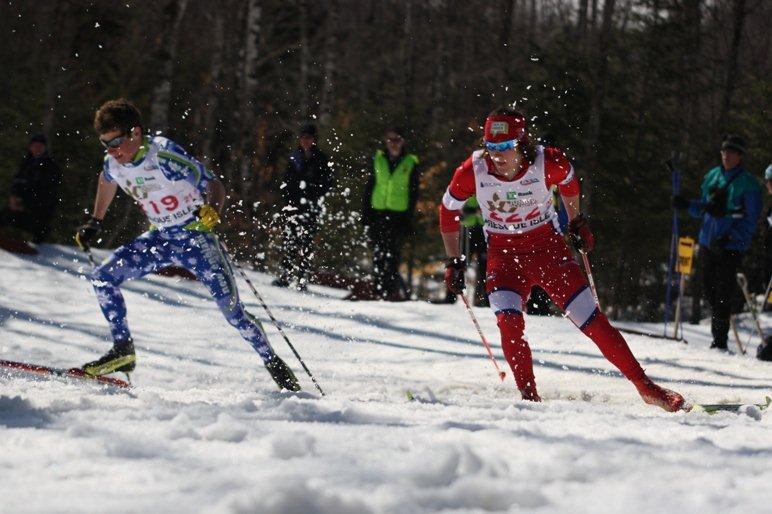
    Today was the third day of racing here in Presque Isle, Maine, and the final day of individual competition: the distance skate races. The J2, J1 and OJ women as well as the J2 boys raced 5k, while the J1/OJ men raced 10k.

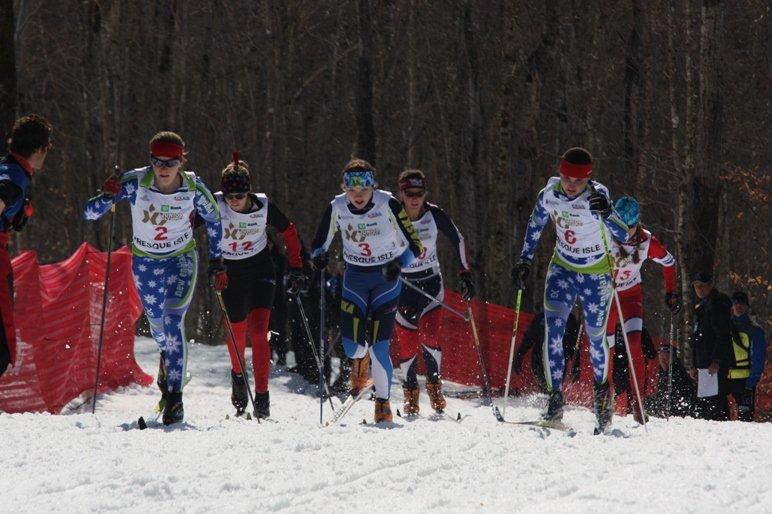
    To start the day off, New England’s Corey Stock claimed the top spot on the podium once again for the J2 girls race. 8.2 seconds behind Stock was Intermountain racer Sloan Storey. Intermountain backed up this 2nd place finish by putting two more racers, Annika Miller and Maggie Williams, in the 3rd and 4th spots. Rounding out the top five was Alaska’s Celia Haering, just 28.9 seconds off the lead.

    The second race of the day was the J2 boys, which Patrick Caldwell won in a dominating performance, 25.1 seconds ahead of Intermountain skier Cole Morgan. Intermountain kept up their strong performance by placing two more in the top five with Marc Jackson in third, .3 behind Morgan, and Aren Burkemo in 5th. Jack Hegman of New England was also in the top five with a 4th place finish—30.8 seconds off his teammate Caldwell.
    The third race of the day proved to be an extremely tight race for the J1/OJ women. Just a minute separated New England winner Corinne Prevot from 50th place.

    “I really wanted to be on the podium this week,” said Prevot “and it feels really good to actually be here!”

    The Mid West OJ women raced very well putting three skiers in the top 5 behind Prevot with Corrine Malcolm 2nd, Eleanor Magnuson 3rd and Lynn Duijndam 4th. Alaska’s Jessie Yeaton rounded out the top five.

    Rocky Mountain skier Michaela Frias won the women’s J1 race by 3.8 seconds over Intermountain’s Katie Gill, who took 2nd. Annie Hart of the Midwest region, Hannah Boyer of Alaska, and Jessica Jortberg of Rocky Mountain took third, fourth and fifth, locking out any racers from the Alaska Cup points leaders New England.

    The last race of the day was the men’s J1/OJ 10k. Top overall honors went to J1 Alaskan Scott Patterson who dominated the rest of the J1 field by 1:26.1. Behind Patterson in the J1 category the race was quite close with only nine seconds separating 2nd and 5th. Claiming 2nd for Alaska was Forrest Mahlen, while Will Wicherski of Intermountain took 3rd, Rocky Mountain’s Mike Vigers nabbed 4th and Jack Novak of Alaska finished out the top five.

    Patterson claimed his 7th junior national title with his win, but despite his dominating win wasn’t alone out on the course. He caught OJ winner Sam Tarling mid way through after starting 15 seconds behind. Once he had been reeled in, though, Tarling hung strong and stayed with Patterson from there.

    “I tried to drop him,” said Patterson, “but there weren’t really any hills big enough to get a gap.”

    For Tarling, it was the downhills that helped keep him in the game. “I’m heavier than he is, so I caught up on the downhills after he would get a little gap on the climbs.”

    Although it wasn’t the overall win for Tarling, the New Englander was quite content with his first Junior National victory in the OJ class. He held off the rest of the field by more than 20 seconds, besting runner-up Dave Norris, who took 2nd for Alaska. Intermountain’s Erik Fagerstrom was 3rd, Alaska’s Jordan Buetow was 4th, and New England’s Chase Marston grabbed 5th.

    There is sure to be some shifting in the Alaska Cup standings following the skate races. This should make for a very fun and interesting skate relay race tomorrow as teams make their last efforts to keep the cup from New England’s hands. For more results and Alaska Cup standings visit: http://www.summittiming.com/race_results/2010/jos/

  • Blue Skies Through the Lens of Flying Point Road at Junior Nationals

    The collegiate skiers competing at the NCAA Championships in Steamboat, CO have nothing on the juniors racing in Presque Isle, ME this week… at least as the weather is concerned.  Flying Point Road captures the scene, desire and spirit that is Junior Nationals.

    Please visit Flying Point Road to see more of their photos.

  • Distance Races on the Classic Boards at Junior Nationals – Photos Added

    Distance Races on the Classic Boards at Junior Nationals – Photos Added

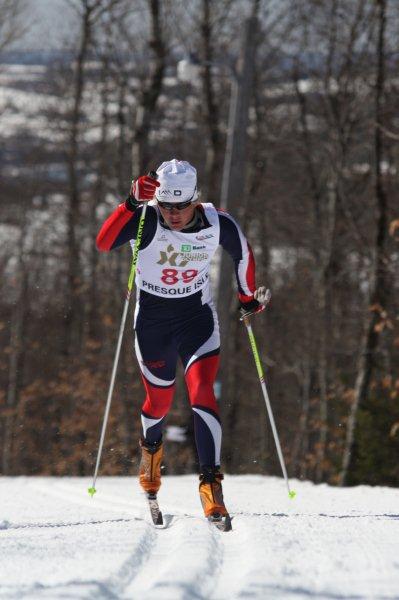
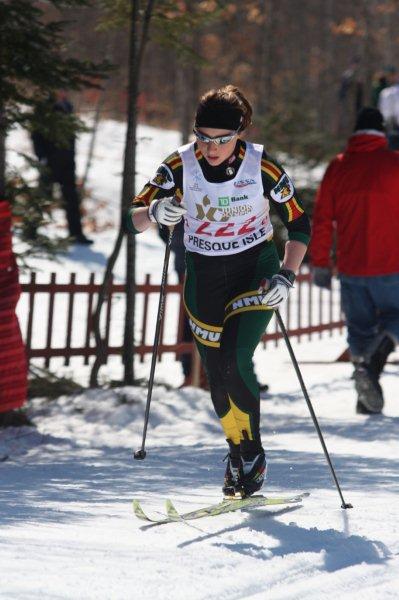
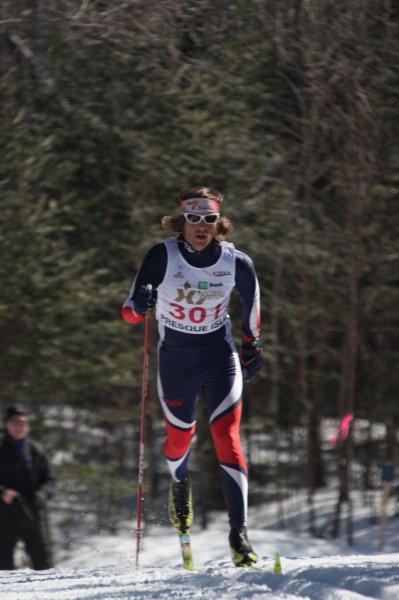
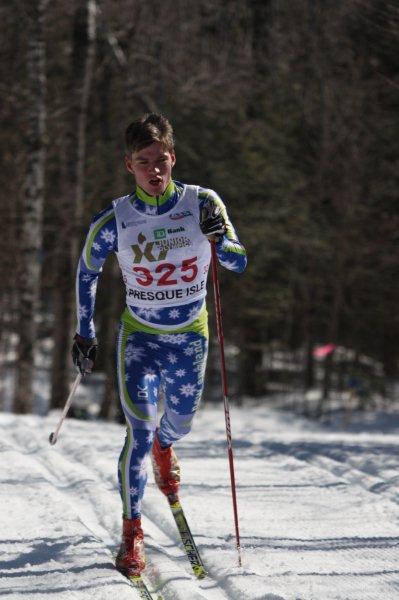
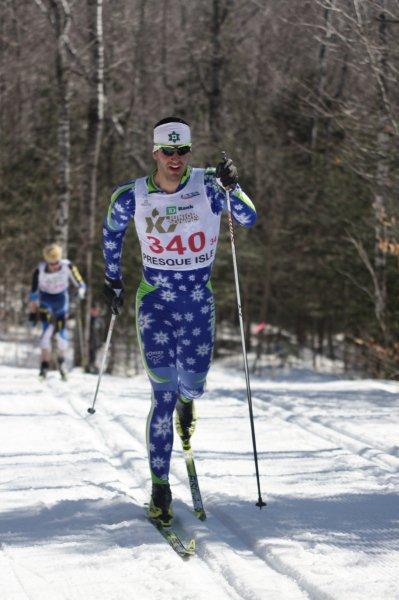
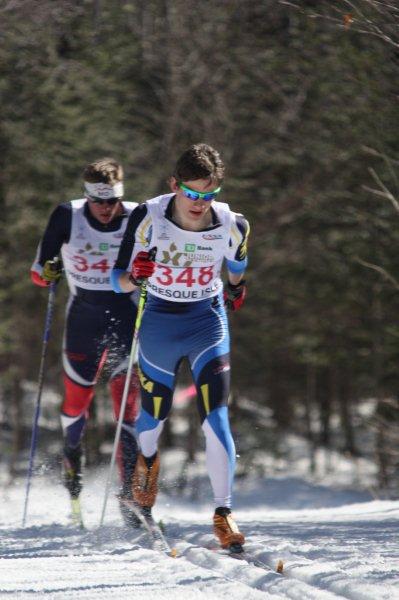
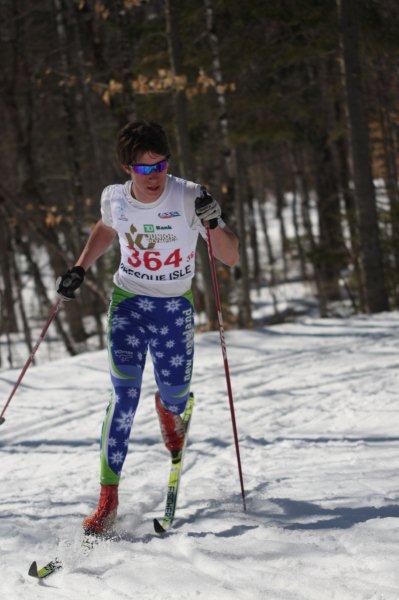
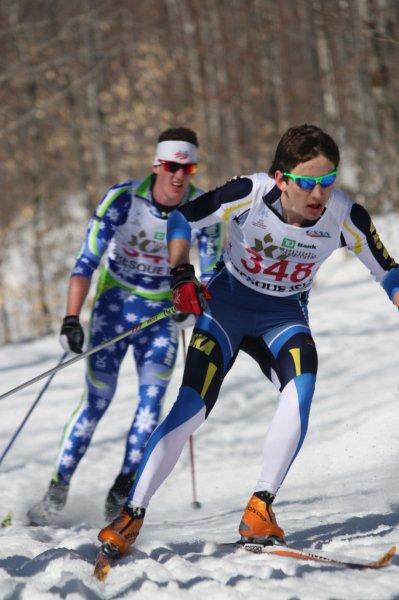
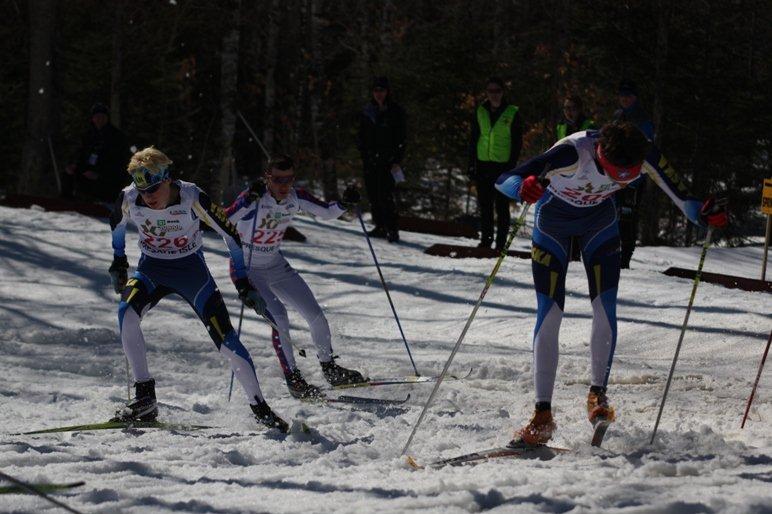
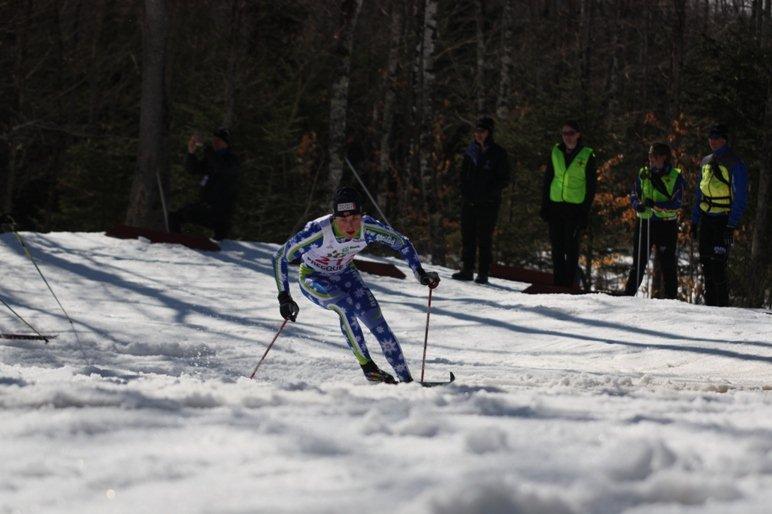
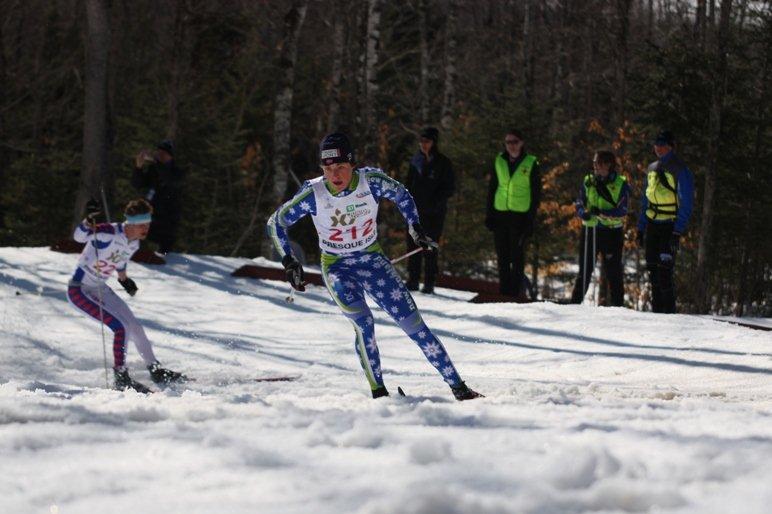
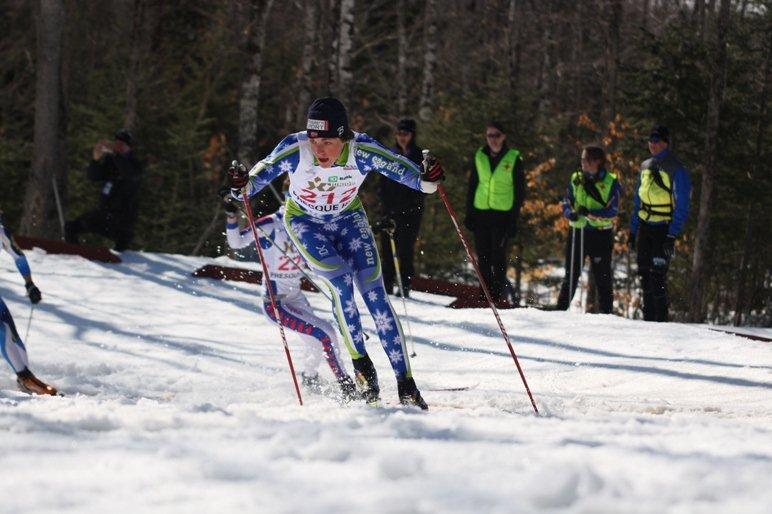
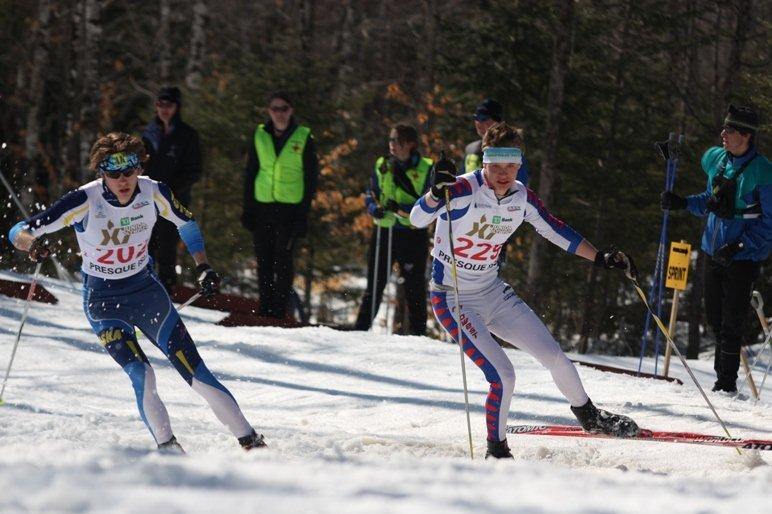
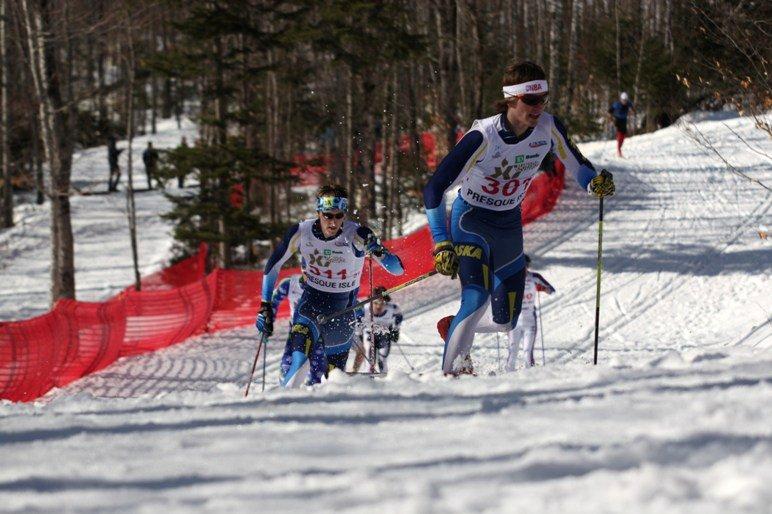
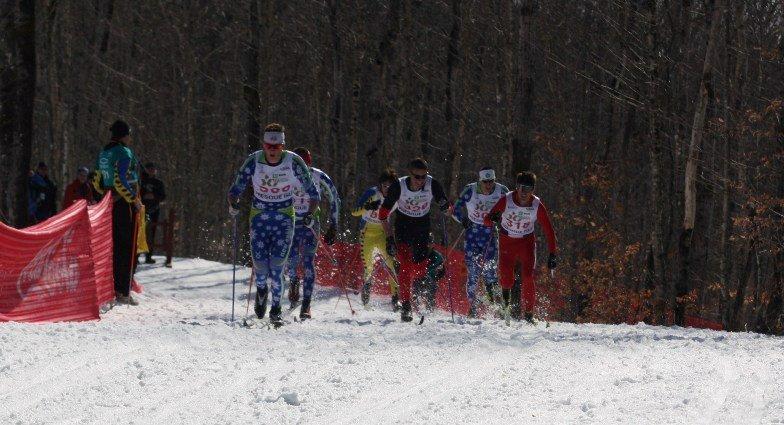
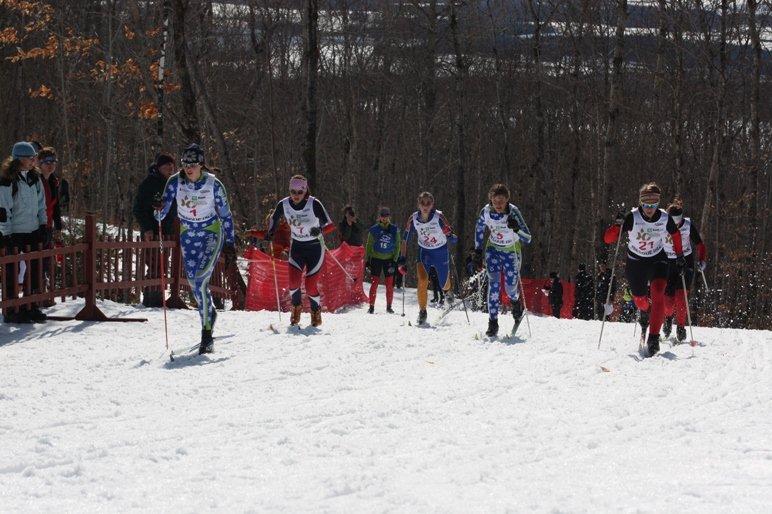
    Today was the second day of racing here in Presque Isle and was the first day of distance, with the J2’s skiing classic 5ks, while the J1/OJ women and men skied 10k and 15ks. The J2 girls started at 10a.m and the boys at 10:30. The conditions for this race were hard and fast making the race very interesting.

    Corey Stock of New England and Cole Morgan of Intermountain (who also celebrated a birthday today) each repeated their championship performances from Mondays sprint races. Stock won her race by 13.5 seconds over teammate Heather Mooney, while Morgan barely squeaked out another victory by .6 seconds over New England’s Jack Hegman.

    The J1/OJ girl’s races were equally as entertaining with PNSA skier Annie Pokorny coming out on top for J1 girls by 7.8 seconds over Midwest racer Annie Hart. The OJ women also had a very close race with only 30 seconds between the winner Kaitlynn Miller of New England claiming her second title and fifth place Corrine Prevot of New England. This only leads one to wonder how close the race would have been if it had stayed a mass start.

    “I was pretty disappointed that it wasn’t a mass start”, said Prevot “I think I could have skied well in the mass start”.

    This was the general feeling of many of the athletes who were very excited about a mass start this year at JO’s.

    A couple of the athletes that didn’t mind having an individual start were among the J1/OJ boys field.

    One of these athletes is second place David Sinclair of New England who finished 12.9 seconds behind Alaska’s Scott Patterson. Instead of being let down by having no mass start, Sinclair used the individual start to his advantage.

    Sinclair explained “I saw the start list and noticed that Dave Norris (OJ boy’s winner from Alaska) was starting 30 seconds behind me, so when he caught me at 6k I just stayed on his tails and tried to match his rhythm until he lost me at 13.5k”.

    Two other boys that were happy for the individual start were Dave Norris and Sam Tarling of New England.

    “The individual start didn’t matter”, said Norris “I just wanted to go out hard and see if anyone else could match me”.

    Tarling was also excited to have the individual start as he felt it “favored him in a 15k classic race”.

    For both of these athletes the race style worked out very well for them as they both skied away from the field by almost a minute while only 3.3 seconds separated Norris and Tarling.

    Today didn’t show the same dominance from team New England, as the results showed a much more even distribution of teams throughout each of the age groups. The hunt for the prestigious Alaska cup is still on and the fight will continue Friday here in Presque Isle, Maine with the distance skate race.

    Complete Results.

  • A Glimpse of the JN Sprints

    A Glimpse of the JN Sprints

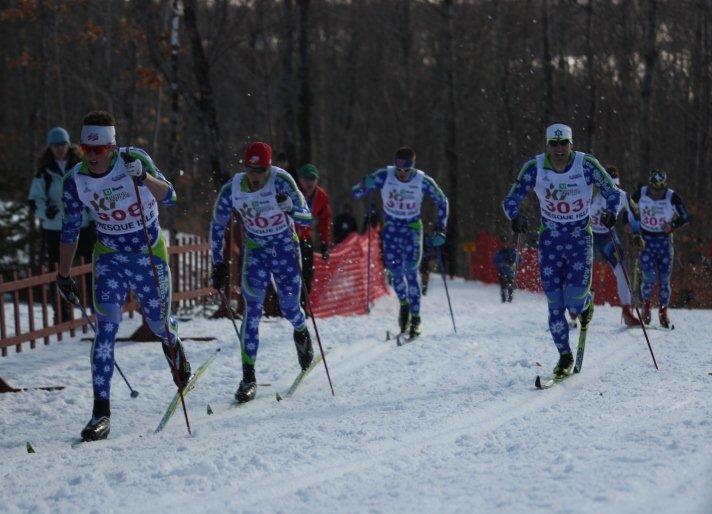
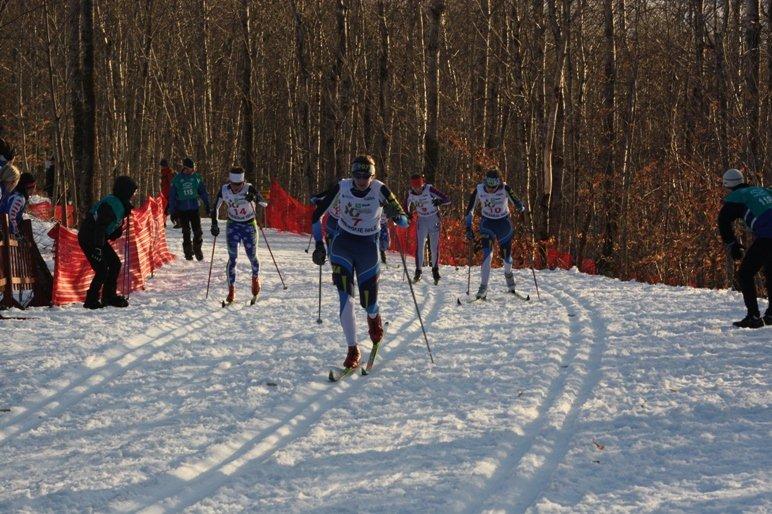
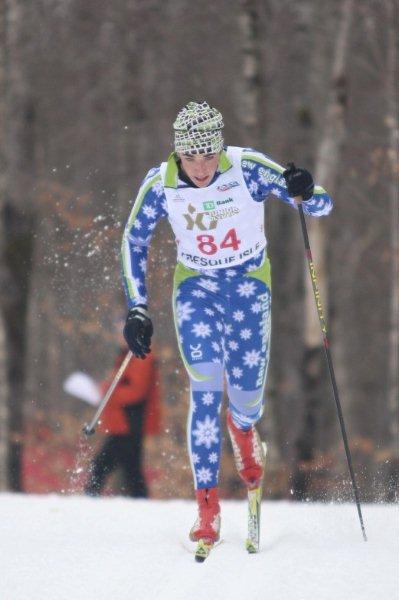
    Even when captured static in an image these guys still look fast.  A look at the Junior National sprint race through the lens of Boulder Nordic Sport and FasterSkier’s Shane MacDowell.

  • Talking to Junior National Sprint Champions

    Yesterday showed a hard day of racing with constantly changing conditions, but for six junior skiers, the hard work paid off in the form of a national title.  Five of the winners were from New England and one from Intermountain.

    From the get go, most of the races were up in the air for who could grab the title in each of the age groups.  J1 women’s winner Isabel Caldwell qualified 19th for J1 girls, nearly 15 seconds behind Stella Holt of Intermountain who won the J1/OJ qualifier.

    “My prelim wasn’t great”, said Caldwell, “I screwed up a little bit and felt pretty flat”.

    The same went for New England racer and OJ boys champion Alex Schulz, who said he was worried after the prelims that he wouldn’t qualify considering that this season hasn’t been the best he’s had in recent years.

    In the case of Alex Schulz and the rest of the New England boys, there was a good amount of team racing that helped each of them to succeed in all of their races.  According to Schulz he and teammate Skyler Davis talked about working together to keep advancing through the rounds.

    “I knew Skyler was a fast starter and could get out fast”, said Schulz “so I just skied with him and when Skyler broke a pole it paved the way for me to win”.

    Not all of the athletes had to work as hard for their national titles once they got into the rounds.  Two of these racers are Intermountain J2 boy Cole Morgan and New England J1 boy David Sinclair.  Morgan won his prelim by five seconds while Sinclair also won his prelim.

    “After winning the prelim by five seconds, I was pretty confident I could win”, said Morgan, but “I was still pretty worried about the New England kids after seeing how strong they were”.

    Sinclair skied his final heat as if he were the one who had won his prelim by a large margin.  Sinclair decided to work with his teammate Hans Halvorsen in the final heat and on the first long climb decided to put his head down and go for it.

    “I just went as hard as I could up that hill and didn’t look back”, said Sinclair.  “By the time I got through the camel humps and up the last hill, my coach told me I had a big gap so I just relaxed the last 100 yards”.

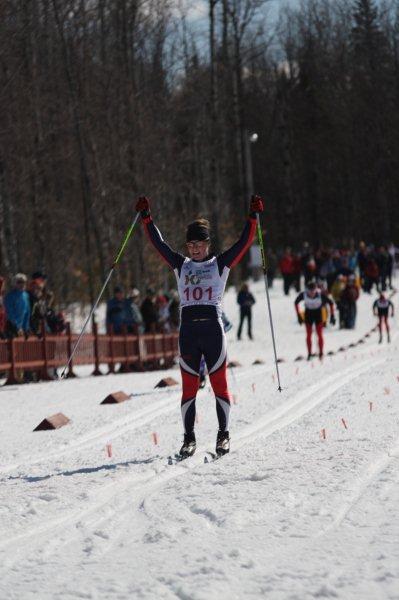
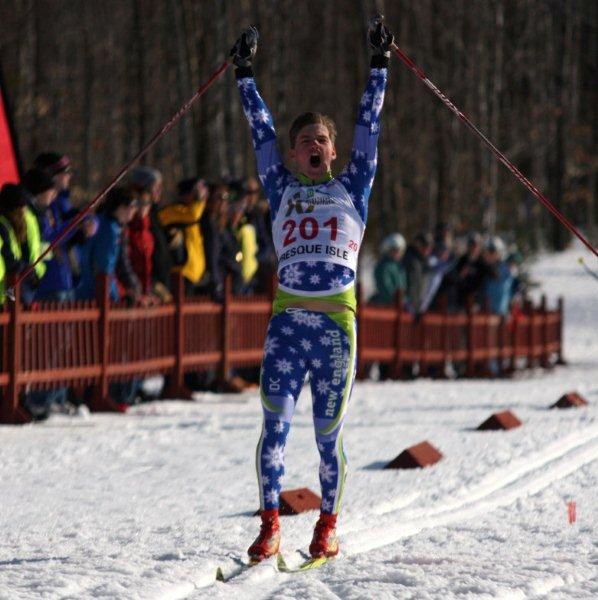
    As Sinclair crossed the line with a large lead he threw up his arms and let out a victory yell.

    “I didn’t even think about it”, Sinclair said, I realized I was about to win a national title and it was just a spur of the moment thing.”

    Tomorrows 5, 10 and 15k classic races should be very interesting since conditions are still proving to be difficult and unusual for northern Maine.

  • The Man and the Method: John Morton, Morton Trails

    The Man and the Method: John Morton, Morton Trails

    Aerial of the trails at the Nordic Heritage Center in Presque Isle, ME
    John Morton

    John Morton received this year’s EISA Service Award for the work he has done in trail design which has so positively affected many communities and nordic skiers; racers and recreational tourists alike.  Many of the EISA college races are run on trails that he has designed or modified, including the new homologated race courses at Trapps Family Lodge in Stowe, VT, and The Jackson Touring Center in New Hampshire.

    Morton is a two-time Olympian who grew up in Walpole, New Hampshire competing in slalom, downhill and jumping, as well as cross country. His aptitude for cross country skiing emerged when he attended Middlebury College, where he was EISA champion twice and a runner-up at the NCAA’s.  He coached at Dartmouth for 11 years (“I have mixed loyalties!” he admits) before starting Morton Trails.

    In the last 18 years he has designed trails not only for private landowners,  schools, and resorts, but for major international events such as the World University Games and Biathlon World Cups – and  in locations ranging from Alaska and Wisconsin to South Korea and the Scottish Highlands.

    One of the many world-class race venues designed by Morton Trails is the site of the upcoming Junior Olympics: the Nordic Heritage Center in Presque Isle, Maine, a venue run by the Maine Winter Sports Center (MWSC).  Here is the story of the how this venue came to be, and Morton’s design philosophy.

    Nordic Heritage Center: A world-class facility

    “The goal from the beginning was to create a facility that could bid for and host major national and international events.” – John Morton, on the Presque Isle course design.

    Striking a Balance:

    One of the toughest balancing points of trail design – specifically competition centers such as the Nordic Heritage Center –  is to meet the needs of a wide range of trail users. Often, sites get funding for trail construction with an elite level competition in mind.

    But Morton considers the whole ski community when he begins creating course composition.

    “In reality,” Morton says, “most of the use of the facility is going to be local residents or high school kids, or college teams, or recreational skiers, and to me, it’s a terrible waste of resources if a trail is built for a specific event but then it isn’t suitable for any other uses after that.”

    “My general philosophy is to try to make the climbs manageable,” continues Morton, “in other words, I’m not afraid to put tough climbs in, because that’s part of the sport, but I’m not into making them crippling.”

    There are, Morton concedes, several “relatively” challenging downhills and corners on the Heritage Center courses – an average skier might find them technically demanding, but not dangerous, whereas a talented racer will find them “really exciting and invigorating.”

    “They’re fun,” says Morton, “they make the uphills worth it. . .that’s one of the goals. . . to make the descents worth the climb!”

    Morton concludes, “The goal is to make a trail that is challenging for the elite racers but still be manageable for everybody else and I think that the Presque Isle site fulfills that goal.”

    On course: Racers at a 2009 Eastern Cup competition

    The Vision:

    Though John Morton was the heavy hand behind trail design, the vision of such a nordic center came from Andy Shepard, who partnered with Max Cobb to work on the plan.  Shepard, president and chief executive of Maine Winter Sports Center, grew up skiing in Yarmouth, Maine, and studied engineering at the University of Maine. Working at the Freeport L.L. Bean Center for 16 years, Shepard has been a life-long advocate of healthy living, with an emphasis on outdoor sport.

    Also growing up on the east coast, Cobb loved the sport of biathlon (he says he was first motivated to try the sport after an inspirational talk by then-Dartmouth coach, John Morton).  Cobb has worked with the U.S. Biathlon team since 1989 and is now the Executive Director.  Cobb is a well respected and often requested TD and referee for major international biathlon events, including his recent role as manager of biathlon at the Vancouver Olympics.

    Shepard brought vision and enthusiasm, and Cobb had international experience and biathlon expertise.  John Morton, with his own racing experience, knowledge of the east coast, and design expertise, was just the man they needed to help them find a location and plan an optimal venue.

    Shepard and Cobb already had in mind a general area where they wanted to build the center: Aroostook County.  The northern most county in Maine, Aroostook first saw its nordic introduction in the 1870’s, when several Swedish families brought their native activity to their new home in America.

    Aroostook County, the northern most county in Maine

    Rural Areas = successful Nordic racers

    In communicating with competitors and coaches in Scandinavia, Cobb learned that it was becoming harder and harder to find successful athletes who came from larger towns and cities like Stockholm and Oslo.  Instead, most of the successful racers came from rural areas – often significantly disadvantaged areas.  In these areas the children were hard workers, and without the “popular distractions” of urban areas, the young athletes were willing to fully commit themselves to the sport.

    It did not escape the men’s notice that Aroostook County also saw a bountiful and reliable amount of snowfall each year.

    Presenting their Mission

    The three men initiated the project by making a presentation to the Libra Foundation, whose mission is to enrich the communities and enhance the quality of life of Maine citizens.  When presenting their idea their purpose was clear and simple.  “We wanted to reestablish nordic skiing as a lifestyle in Aroostook County,” says Morton.  They were subsequently awarded a large grant and the project began in earnest.

    “I knew from Day 1 that the goal was to create a world class competition facility.”

    Morton had already been designing courses for 10 years by the time he was contacted by Shepard, and he knew what he was looking for when searching out possible venues.  One of the proposed areas, an abandoned airstrip, was tempting as a way of recycling an abandoned site and regenerating the community around it, but because of the general nature of an airstrip – think 2 miles of very wide, flat terrain – it did not have the variety that Morton knew was needed.

    The location Morton kept coming back to was a large ridge known as the Quoggy Joe Ridge, which at one time had been a small alpine area.  The ridge not only had ideal terrain, but as Morton explained, “it was desirable because it was equidistant between Caribou, Presque Isle, and Fort Fairfield – three key communities in the central part of the county.”

    The downside: there were nearly ten different landowners who had stake in the area.  To the rescue: Brian Hamel, of Loring Development.  Though Hamel reportedly rolled his eyes at Morton’s proposed location, he then went about making the acquisition happen. Hamel negotiated purchase agreements and easements to secure the property, and with this major obstacle out of the way, the development began.

    A racer skis through the stadium

    On Site Construction – And – An Unique Feature

    While Morton designed the trails, Shephard raised additional funding  and Cobb looked into the details of the biathlon area.  Another man who, according to Morton, “deserves a lot of credit” is Max Saenger.  Saenger was the MWSC program director at the time (and most recently the Vancouver Olympic sports manager for biathlon) and had the charge of overseeing all on-site construction of facilities around the Heritage Lodge.

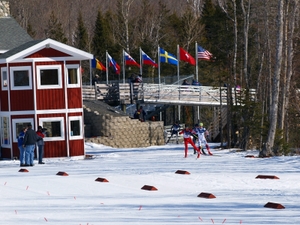
    One thing that was troubling Morton was the limited area on the ridge in which to fit the penalty loop for the biathlon range.  It was Cobb who proposed the idea of looping the penalty lane around the main lodge.  By building a bridge from the spectator areas to the lodge, it would not only make this proposition feasible, but could also make for more exciting viewing of the races.

    So that is exactly how the penalty loop was designed, and as far as Morton knows it is the only penalty lap designed in this unique way.  When the 2006 Biathlon Junior World Championships was held at the Heritage Center, the feature was greeted with enthusiasm, as was every aspect of the range and trails. The facility received rave reviews from coaches, athletes, and spectators alike.

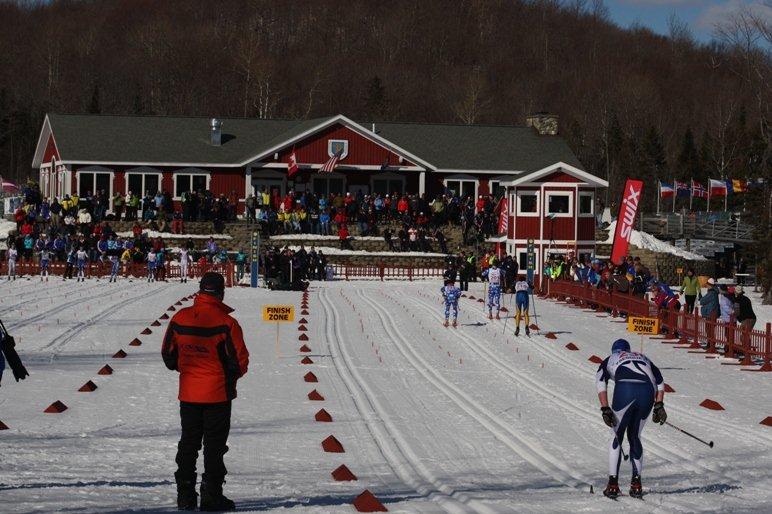
    Racers ski on the lap course that circles the lodge

    And now. . .

    Now in its eighth year, the Nordic Heritage Center will further it’s achievements when it hosts nearly 1,000 athletes (ages 14-19), coaches, and spectators at the 2010 Junior Olympics.

    With 10-15” of snow base on the recently widened trails, the Center and its race courses are ready for action.

    Morton Trails

    Maine Winter Sports Center

    2010 Junior Olympics

    5km Junior Olympic skate course at the Nordic Heritage Center, Presque Isle
  • Timing Company Wanted for JOs 2011

    Timing Company Wanted for JOs 2011

    The City of Lakes Nordic Ski Foundation has issued a Request for Proposal to provide event timing and results reporting at the 2011 USSA Cross Country Junior Olympics scheduled for March 7-12, 2011 and related Cross Country Junior Olympics Qualifying events scheduled for January 23-24, 2010 and January 22-23, 2011.  All events will be held at Theodore Wirth Park in Minneapolis, Minnesota.

    The City of Lakes Nordic Ski Foundation is a 501(c)3 non-profit corporation based in Minneapolis.  The Foundation will host the 2011 Cross Country Junior Olympics, awarded to the Twin Cities in November, 2008 by the United States Ski and Snowboard Association (USSA).

    To obtain a copy of the RFP, contact Margaret Adelsman at the City of Lakes Nordic Ski Foundation at margaret@cityoflakesloppet.com.  Responses to the RFP must be received at the Foundation by September 15, 2009.

    JOs 2011

  • Video: Junior Olympics Classic Race

    We missed the girls (sorry!!) but were able to get lots of footage from the J1/OJ boys 10km classic race at Auburn Ski Club on Friday. Enjoy!

    Part 1:

    Part 2:

    Part 3: