Tag: junior racing

  • Long-Term Development in Nordic Skiing: What We Say vs. What We Actually Do

    Long-Term Development in Nordic Skiing: What We Say vs. What We Actually Do

    This article was made possible through the generous support of our voluntary subscribers. If you value coverage like this, please support FasterSkier with a voluntary subscription.
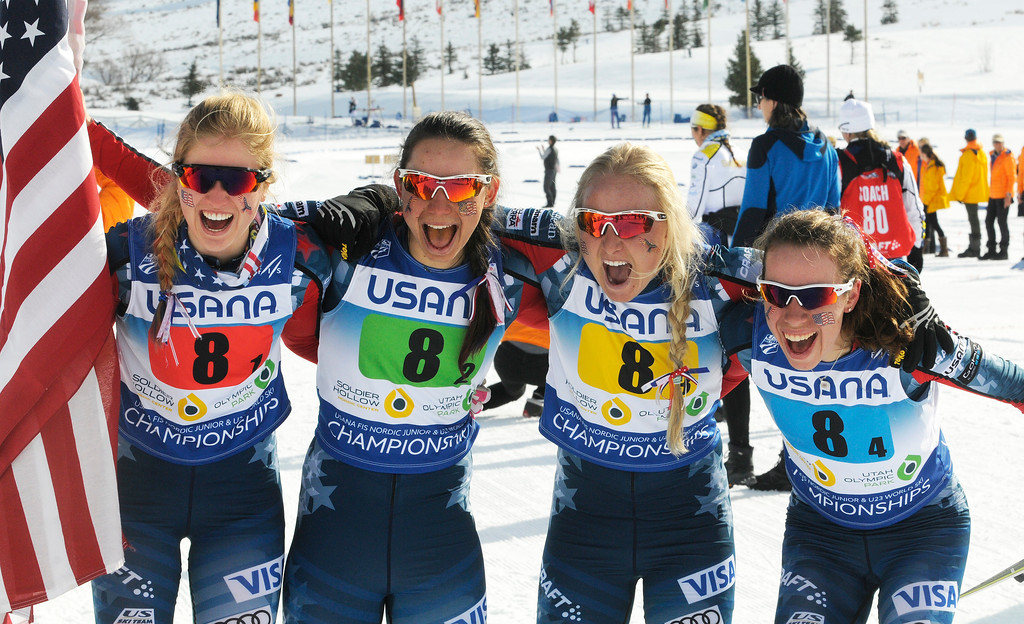
    The U.S. women’s relay after taking a historic third in the 4 x 3.3 k relay at 2017 Junior World Championships on Sunday at Soldier Hollow in Midway Utah, with (from left to right) Hailey Swirbul, Julia Kern, Hannah Halvorsen, and Katharine Ogden. (Photo: U.S. Ski Team/Tom Kelly)

    As the season winds down, it’s worth stepping back and asking a simple question: Does the way we develop young skiers in the United States reflect the philosophy we say we believe in? I know everyone is probably done with hearing about how the Norwegians do it, so let’s look at what we say we know and what we embrace.

    Many coaches and programs describe cross-country skiing as a lifetime sport. We talk about patience and say it takes ten years or more to develop as a skier. Clubs reference long-term athlete development models, and parents hear that endurance sports reward athletes who build gradually and peak later in life.

    All of that is true.

    But much of the system we’ve built rewards the opposite.

    Once rankings, camp selections, college recruiting, and program reputation become tied to junior results, the incentives quietly shift. Development begins to be measured by podiums and training hours rather than movement quality, long-term improvement, or whether athletes are still engaged in the sport five or ten years later.
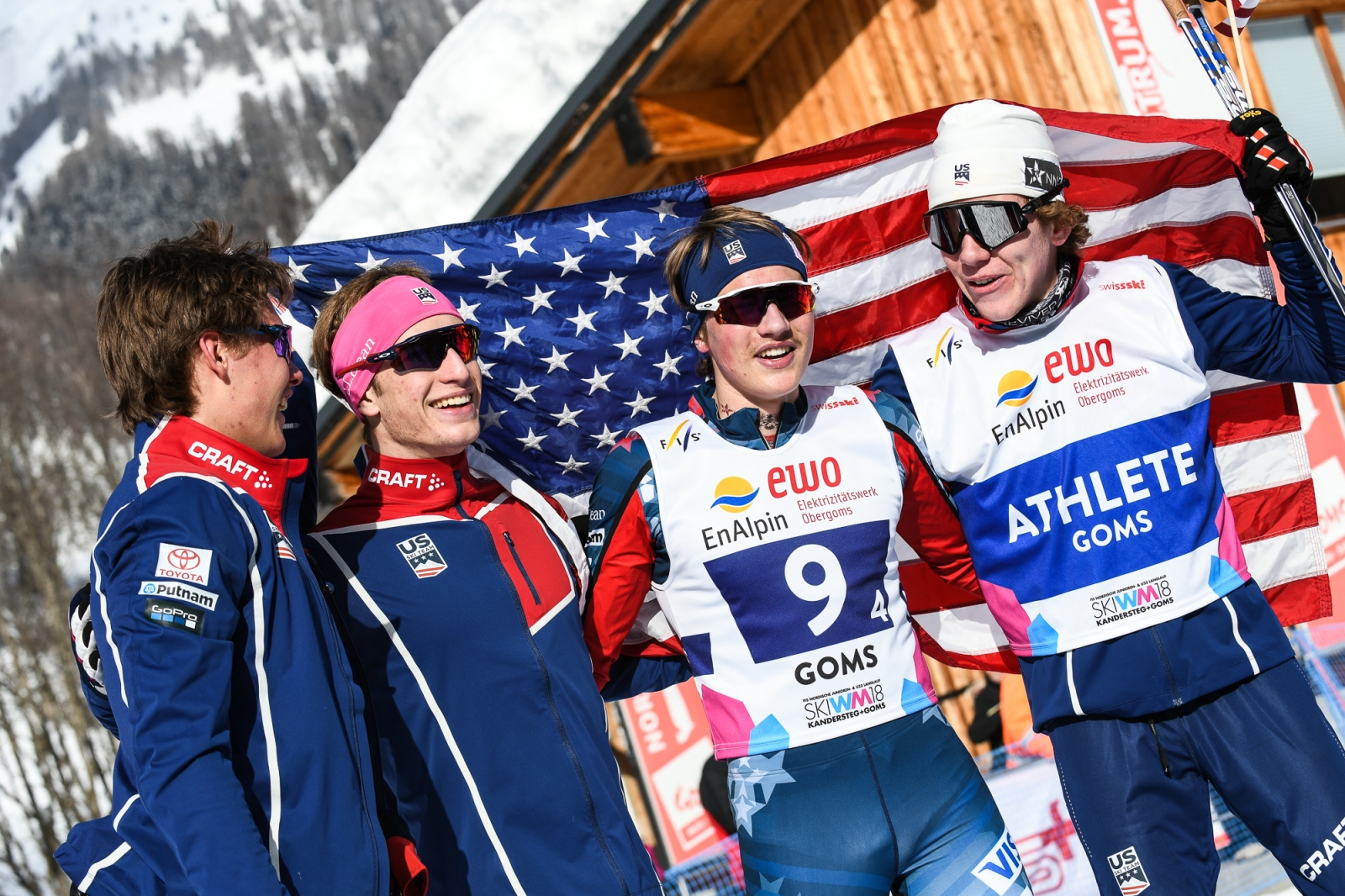
    The U.S. men’s silver-medal relay at 2018 Junior World Championships in Goms, Switzerland, with (from left to right) Luke Jager, Hunter Wonders, Gus Schumacher, and Ben Ogden. (Photo: JWSC2018.ch)

    What is long-term development

    Aerobic capacity develops over years, often decades. Technical efficiency improves gradually. The durability required to handle training load is built slowly through years of training.  Most elite endurance athletes reach their peak in their mid-twenties or early thirties, not in high school.

    If peak performance happens ten or fifteen years after an athlete first enters the sport, the early years should focus less on maximizing results and more on building the foundation that supports long-term growth.

    That foundation includes several elements.

    Movement skill. Nordic skiing is a technical sport, and the best skiers move efficiently long before their physiology fully matures. This efficiency is critical to managing training loads in the future. More efficiency in technique equals less stress and load from training.

    General athletic development. Running, biking, jumping, climbing, and playing other sports all contribute to coordination and resilience. Athletes who move well tend to adapt better to training later.

    Motivation. The most valuable asset a young athlete has isn’t VO₂ max or the hours trained by some arbitrary definition. It’s the desire to keep showing up year after year.
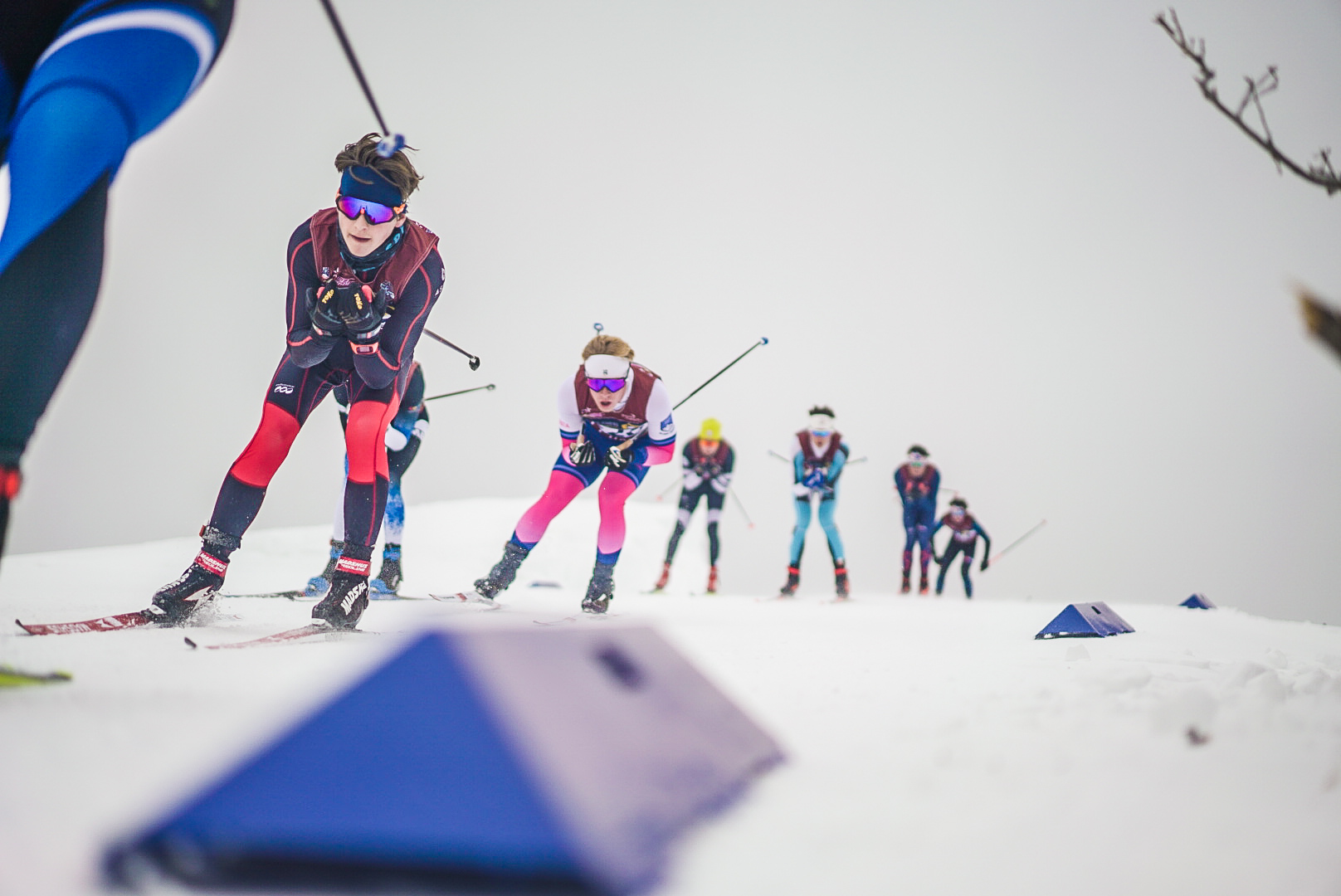
    Junior athletes race during the 2022 U.S. Cross Country Championships in Soldier Hollow, UT. (Photo: Tobias Albrigtsen / @untraceableg)

    The System Sends Mixed Signals

    In practice, the system often sends young athletes a different message.

    Junior racing has become increasingly competitive. Rankings exist even for younger age groups, and selections for camps, trips, and development programs often depend on early results. National events and development pathways can make performance at 14 or 15 feel like it carries some long-term significance. Yet we also claim to know that identifying future elite athletes at that age is extremely unreliable. If that’s true, it’s worth asking why the system places so much weight on those results.

    One example is allowing U14 athletes to ski up in order to qualify for Junior Nationals. It doesn’t happen frequently, but it happens every year. It’s hard to reconcile that with the philosophy of not rushing development. If long-term development truly matters, governing bodies should show leadership and address this issue.

    In some regions of the country, qualifier races have U16 athletes seeded in the start list with U18 and U20 athletes. People say it doesn’t matter because we separate them in the results. I disagree, the are intermingled with much older and more developed athletes. But more than that it is again the message begin sent?

    At the same time, training culture has shifted. Training data is widely shared, and conversations often revolve around hours. Young athletes begin comparing workloads long before their bodies are ready to handle them. Often the more is better attitude prevails, even though we say that we should be working on other skill aspects of development.

    These pressures can push athletes toward earlier specialization and higher training loads than their stage of development requires. A 14-year-old begins to feel like they need to train like a college skier. A 15-year-old worries that missing races or reducing training volume might put them behind.

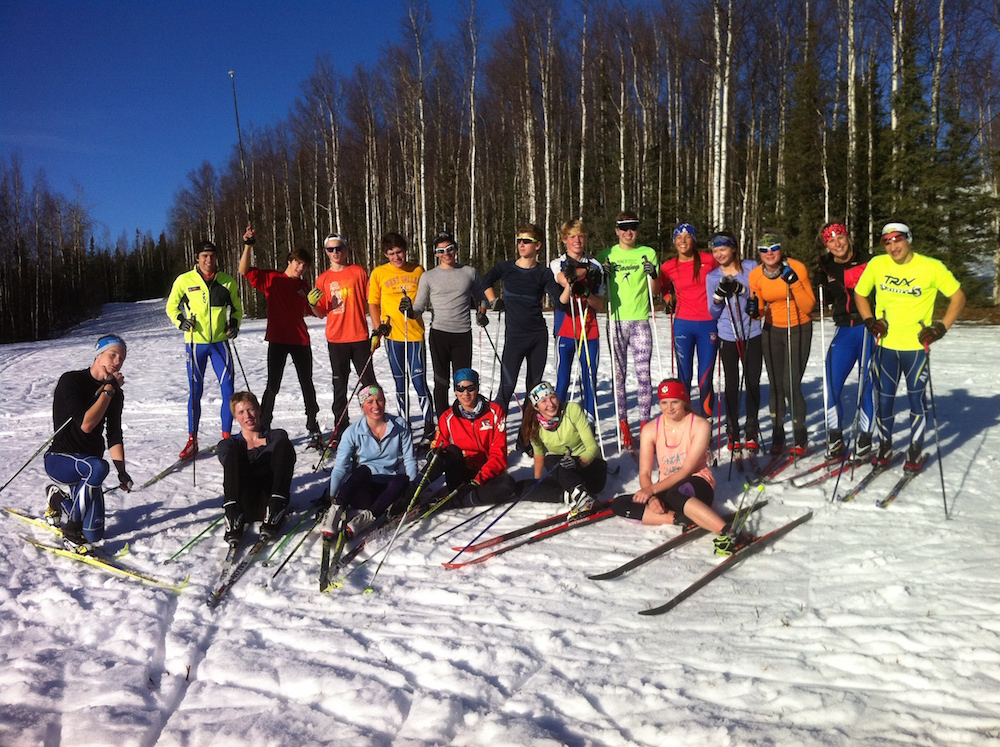
    The Boulder Nordic Junior Race Team out for an adventure ski in 2014. (Photo: BNST)

    What are the impacts of the mixed signals

    The most visible consequence is burnout. Many people challenge the idea of burnout. But after more than forty years around this sport, I’ve seen the pattern repeatedly. Just because we don’t measure something well doesn’t mean it isn’t happening.

    Coaches who have spent time around junior skiing see the pattern: talented athletes who disappear from the sport sometime between their late teens and early twenties. Sometimes academics, finances, or changing interests are the reason. But often the explanation is simpler, they are tired from too much too early and to intense.

    There are also physical consequences. Adolescence is a complex period of growth and development. Training loads that are manageable for more mature athletes are impossible for a developing body. When volume and intensity climb too quickly, overuse injuries and chronic fatigue become more likely.

    Early specialization is not the problem. Rather, it is ineffective programming that has these young athletes training like more mature athletes.  This early training focus limits athletic development. Athletes may accumulate impressive training hours but miss the movement diversity that builds long-term durability.

    The biggest loss in this process is one that is unseen because those athletes are lost from the sport.

    From a coaching perspective, the shift shows up in small ways. Conversations revolve around weekly training hours instead of how well athletes are skiing. Easy sessions slowly become harder. Fatigue accumulates while movement quality quietly declines. None of this happens overnight, but over time, the focus drifts away from skill development and toward simply doing more.

    Development in endurance sports isn’t about accumulating work. It’s about adapting to the work being done and building the capacity to handle more later. A training log that looks impressive at 15 doesn’t necessarily translate into success at 25. What matters more is whether the athlete remains healthy, motivated, and technically sound over the long term.

    Hailey Swirbul celebrates the U16 Junior National Championship title in the Freestyl Mass Start in Stowe, Vermont, in 2014. (Photo: Voisin/FasterSkier)

    What Good Development Actually Looks Like

    If long-term development is the goal, the early years should look different from elite training. Young skiers benefit from variety. Running, cycling, hiking, and other sports build coordination and resilience. The goal isn’t to replicate elite training programs but to create athletes who move well and enjoy being active.

    Technique deserves major attention. Nordic skiing rewards efficiency, and athletes who develop strong movement patterns early often progress faster later because every hour of training becomes more productive. Training volume should increase gradually over time. Consistency across years matters far more than pushing limits in any single season.

    Most importantly, development should seek to preserve motivation. The sport needs athletes who remain engaged long enough to realize their potential. We often see athletes try to do a big training year to catch up or reach a target training volume. It rarely works out.

    The Problem With “More Volume” Thinking

    In Nordic skiing, training volume carries a certain mystique. Conversations quickly turn to hours, weekly totals, yearly totals, and stories of elite athletes training 800 to 1,000 hours per year.

    It’s easy to see why. Endurance sports reward consistency and large training volumes. But a subtle misunderstanding often occurs. Volume stops being seen as the result of long-term development and starts being treated as the cause of performance.

    Correlation becomes mistaken for causation.

    Hunter Wonders (APU/Alaska) winning the U16 Boys Mass Start Freestyle race at the US Junior National Championship in Stowe, Vermont. (Photo: Voisin/FasterSkier)

    High Volume Works for Elite Skiers

    At the elite level, high training volume makes sense. World Cup athletes have spent years building the capacity to handle that workload. Their aerobic systems are highly developed, their movement patterns are efficient, and their bodies have adapted gradually.

    High volume works because it sits on top of a massive foundation: technical skill, durability, and years of progressive training.

    The problem arises when that model gets copied without the same foundation underneath it.

    The Missing Variable: Training Age

    One of the most overlooked concepts in endurance development is training age. Training age refers to how many years an athlete has spent consistently adapting to structured training. Two 18-year-old skiers may have very different training ages. One may have spent eight years gradually building capacity. Another may have entered the sport recently and increased training dramatically. On paper, their training logs may look similar. In reality, their ability to adapt to those loads can be very different.

    Training only produces progress when adaptation occurs. Without adaptation, training simply builds fatigue.

    The U18 Girls field works its way past the Loppet Foundation Adventure Center in Minneapolis during Junior Nationals on March 11th, 2022. (Photo: David J Owen Photography)

    The Efficiency Problem

    Elite skiers move extremely well. Their technique allows them to ski long distances while conserving energy and minimizing unnecessary muscular stress. Developing this efficiency early is critical. In the future, it will allow the athletes to train large volumes without the metabolic and neuromuscular stress that can lead to overtraining.

    Young athletes often lack efficiency. When technique is still evolving, large training volumes can actually slow technical development. Fatigue reinforces inefficient movement patterns that later become difficult to change.

    For developing skiers, time spent improving movement quality can be far more valuable than time spent extending distance.

    The Cost of Chasing Hours

    There is also a practical cost to the “more volume” mindset. Elite athletes structure their lives around training. Sleep, nutrition, and recovery are integrated into the system. Young athletes are balancing school, travel, social life, and other commitments. When training volume climbs, something gives. Sleep declines, recovery becomes inconsistent, and fatigue accumulates.

    Under those conditions, simply adding more hours rarely produces better results.

    What Volume Should Really Represent

    Training volume does matter. Endurance sports ultimately require substantial workloads. But volume should be viewed as a long-term outcome of development, not a short-term objective. Successful endurance athletes rarely build training hours quickly. They accumulate them gradually across many seasons, allowing their bodies to adapt step by step. By the time they reach elite levels, high training volumes feel natural because they have spent years building the durability to support them.

    The 2026 US Ski and Snowboard Junior National Championships in Cable, Wisconsin, hosted by the American Birkebeiner Ski Foundation. (Photo: Tryg Solberg)

    A Better Question to Ask

    Instead of asking how many hours an athlete should train, a better question might be:

    What training can this athlete adapt to right now?

    For some athletes, the answer may involve increasing volume. For others, improving technique, strength, or intensity distribution may produce greater gains. Development is not identical for every athlete. What matters is finding the training load that promotes consistent adaptation rather than constant fatigue.

    Why This Matters for the Future of the Sport

    Cross-country skiing, like all endurance sports, depends on long-term participation. The sport needs athletes who remain engaged, not only as competitors but as lifelong skiers, coaches, and community members.

    A development system that pushes athletes too hard, too early risks losing them before they reach their potential. It also narrows the pathway to elite performance by favoring early maturity and filtering out late developers.

    If Nordic skiing truly wants to remain a lifetime sport, its development culture must reflect that philosophy.

    Closing

    Cross-country skiing has always valued endurance. That value should extend beyond physiology and into how we develop athletes. Endurance isn’t just about how long someone can ski hard on race day. It’s about how long they can remain engaged in the process of improving.

    If we truly believe Nordic skiing is a lifetime sport, then our development system should not resemble a funnel that selects kids out at every progressive age group. It should look more like a runway, where every young athlete has the opportunity and the time to fully develop their potential, not just the ones who mature early.


    Help Support Our Olympic Coverage!

    If you value the thoughtful work and access FasterSkier provides, please consider becoming a Voluntary Subscriber. Your support directly fuels our work to cover the people, places, and moments that make our sport special.

    Join the FasterSkier community!


    The 2026 US Ski and Snowboard Junior National Championships in Cable, Wisconsin, hosted by the American Birkebeiner Ski Foundation. (Photo: Tryg Solberg)
  • The Pros & Cons of League-wide Wax Protocols: the Wisconsin Nordic Ski League

    The Pros & Cons of League-wide Wax Protocols: the Wisconsin Nordic Ski League

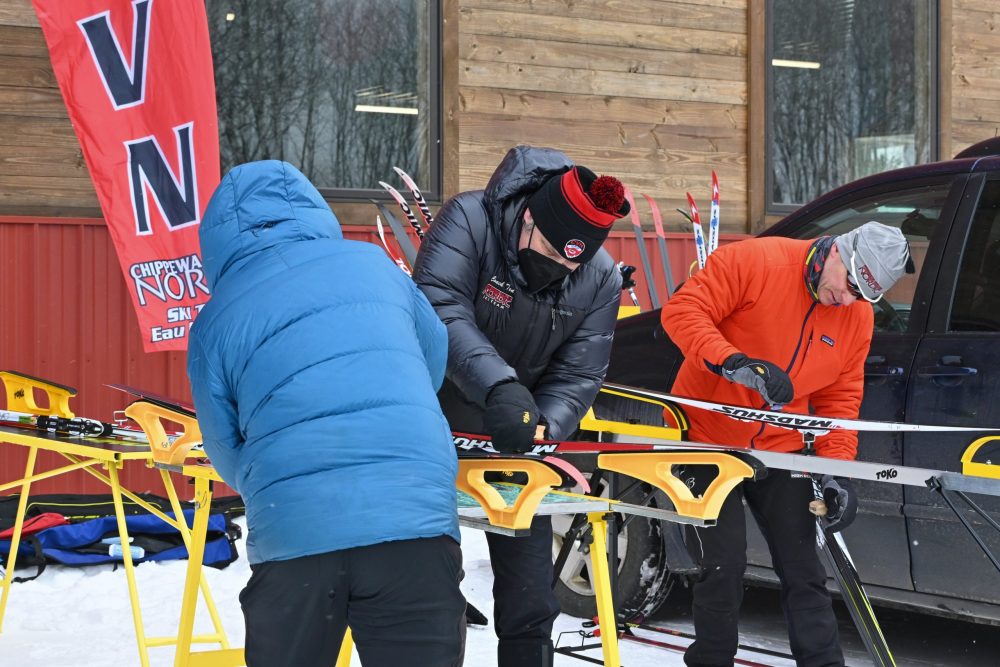
    Chippewa Valley Nordic coaches prep classic skis for their athletes at the 2022 Wisconsin Northern Conference meet. (Photo: Chippewa Valley Nordic)

    In case you missed it, here’s part 1 and part 2 of this series, in which industry representatives and expert ski technicians discuss ski performance theory and what impact a single-wax policy may have on competitive skiing. 

    What goes on inside the wax cabins and trucks at high-level competitions from the SuperTour to the World Cup seems, in equal parts, expertise, artistry, and alchemy. And, for those looking to understand to which conditions their pair of race skis might be best suited, the basic insights into ski performance provided in previous installments of this story provide ample fodder for consideration and experimentation on the ski track.

    However, these insights may not fully resonate at a meet where coaches are furiously corking in kick wax on benches set in the snow for skiers who only recently took up the sport. Or a league which simultaneously supports competitive racers and participation-based programs, and ultimately just wishes to see the sport grow and thrive at all levels. 

    In speaking with representatives from leagues that have implemented a single-wax protocol, it is clear that there are a myriad of factors involved in the decision making process beyond ski performance theory that might skew the cost-benefit analysis on any inequity in ski speed derived from putting all racers on Swix HS6. 

    Ben Popp – executive director at the American Birkebeiner Ski Foundation, Wisconsin Nordic Ski League President, and volunteer coach – discusses the wax policy and sponsorship package accepted by the league this season. (Photo: American Birkebeiner Ski Foundation)

    To unpack the counterpoints, we’ll begin again in Wisconsin, with a conversation with American Birkebeiner Ski Foundation Executive Director Ben Popp, who also sits as president of the Wisconsin Nordic Ski League (WNSL) and is a volunteer ski coach for the youth program in Spooner, 30 miles southeast of the Birkie finish line in Hayward. 

    Before jumping into the conversation, a nuanced reminder to readers that will be revisited in subsequent stories: the WNSL wax policy is unique in that the policy was included in a sponsorship proposal from Swix, which offered the league $10,000 per year over a three year period. Under the policy, all athletes would race on Swix HS5, HS6, or HS7 hard wax in cold or moderate temperatures, with HS7 and HS8 liquids used in warmer conditions. In other leagues, there may be special pricing available through this manufacturer, but this was not the origin of the policy.

    In what the single-wax policy implies: rather than spending money on a robust wax box, programs would only need to purchase the five aforementioned products for glide. The event hosts determine which wax is most appropriate for the conditions a few days prior to the race, allowing coaches and athletes to wax their skis accordingly before travel. 

    While questions of the financial impact on other wax manufacturers and the loss of experience for developing high-level wax technicians remain present, it’s also worth noting that this policy only applies to events that are organized by the WNSL; this small list of events includes only the northern, central, and southern conference meets, and the Wisconsin state championship – two races per year for each club or school. Regional Junior National Qualifiers (JNQs) and other local events not organized by the league remain open. Simply put, the wax protocol only applies to what Popp described as “a sliver of all of Wisconsin skiing.”

    According to Popp, in considering the proposal presented by Swix, there was one key word on the minds of WNSL board members: opportunity.

    “The checkbook for the Wisconsin Nordic league, before this year, never had more than $2,000 in it,” he stated matter-of-factly in the call.

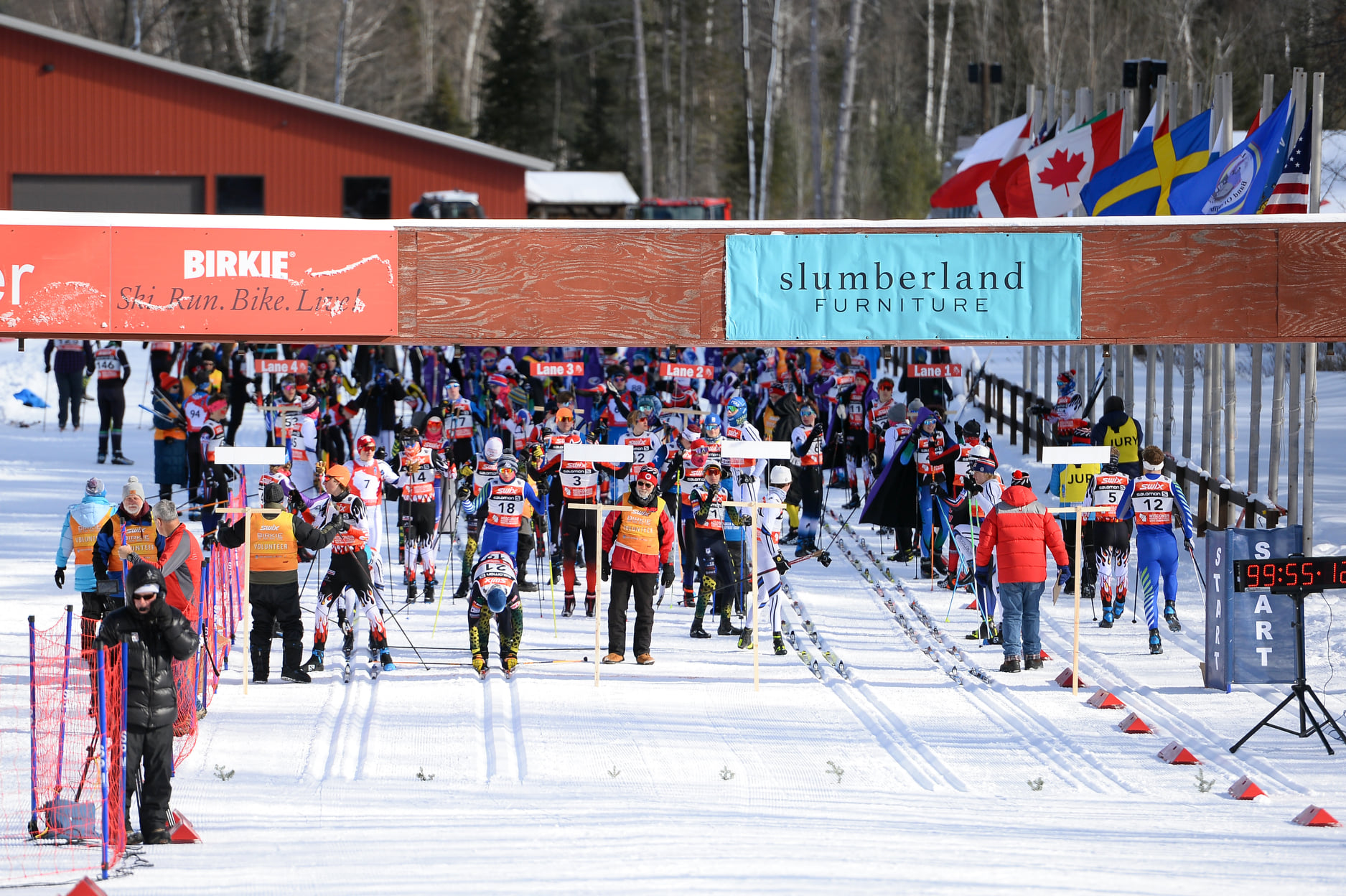
    Wisconsin skiers line up at the Birkie Trailhead in Cable for the state championships. (Photo: Once in a Blue Moon Studio / Kelly Randolph Photography)

    Another key distinction is that the state of Wisconsin is among the few remaining states in which high school and club level programming fall under the same umbrella, without financial support from the high schools that offer skiing. This means small participation-based programs with volunteer coaches compete against well-established clubs who can support kids whose goals extend to representing the Great Lakes Division at Junior Nationals; it’s a state of vastly different programs with vastly different budgets. And it stands in contrast to Wisconsin’s neighbor, Minnesota, with whom Wisconsin used to compete against for spots on the Midwest regional team for JNs. It’s a nuanced structure that Popp explained has constrained the potential of the league historically.

    “Even though the league has been around for a while, I think it’s still in its real infancy. It’s completely volunteer run, but yet we’re in a climate that has metropolitan areas where there is snow, so we’ve got a ton of opportunity. But I think we have to look at, ‘How can we start to grow the league?’”

    Under the constraints of the previous budget, the WNSL was limited in its ability to promote development in programming state-wide, and Popp explained that primarily, the board only planned the state meet and agreed upon its rules. That leaves little room for supporting new teams, planning summer camps, and other initiatives that might grow the league and the sport more broadly. A 500% increase in funds would allow the WNSL to hire a part-time administrator, who could improve inter-team communication, oversee a league schedule, and perhaps most importantly, continue fundraising initiatives to support broader development. 

    “Our goal is to create opportunities for kids to cross country ski and race in the state of Wisconsin. So we have to look at, ‘What is the best way we can do that?’ And we’ve been doing the same thing for a long time, and we’ve gotten the same result. So if we now say, ‘We want to grow the sport in our state’, I think we have to look at a variety of options. We see what the results are in a couple years, and then we’ll readjust from there.” 

    Athletes from Rhinelander, WI compete at the frosty state championship meet in Cable. (Photo: Rhinelander Nordic Ski Team)

    While the WNSL is interested in supporting the upper tiers of youth racing, Popp explained that the main objectives remain at the participation level: improving access to ski programming and helping get more kids on skis.

    “I feel that we don’t necessarily have to focus on the high end of development. I think that happens organically and naturally rises… the bigger and broader a base that we can build, it’s just going to build that up much higher of a pyramid.”

    In his mind, implementing a wax policy fits with this initiative by removing a potential hurdle for smaller teams and coaches with limited background knowledge. 

    “In making it simple [to wax], it really makes a small team, the newer teams – it lowers the barrier to entry a little bit. Like, ‘Okay, now, me as a new coach, or as a new team, this waxing thing isn’t quite as overwhelming and doesn’t seem like such a heavy lift that I can actually now get into this without being completely overwhelmed.’ So I look at it as a tool for trying to create growth at the very basic level for newer teams.” 

    As the Swix sponsorship proposal was accepted in November 2021, last season was the first in which the conference and state championships operated under the wax policy. Popp reflected on the impact of the sponsorship and protocol through the first year. 

    “I personally think it was beneficial. Obviously, it helped from a sponsorship standpoint to help us grow our league and invest back in the skiers of Wisconsin. Again, personally, I think it helps sort of lower that barrier to entry for some of the newer and inexperienced teams. And whether it does or does not make it fair or unfair, if you will, to the skiers – I think you’re always going to have that in some way, shape or form. There’s a reason skiing is going to be different than track… there’s always going to be a set of variables.” 

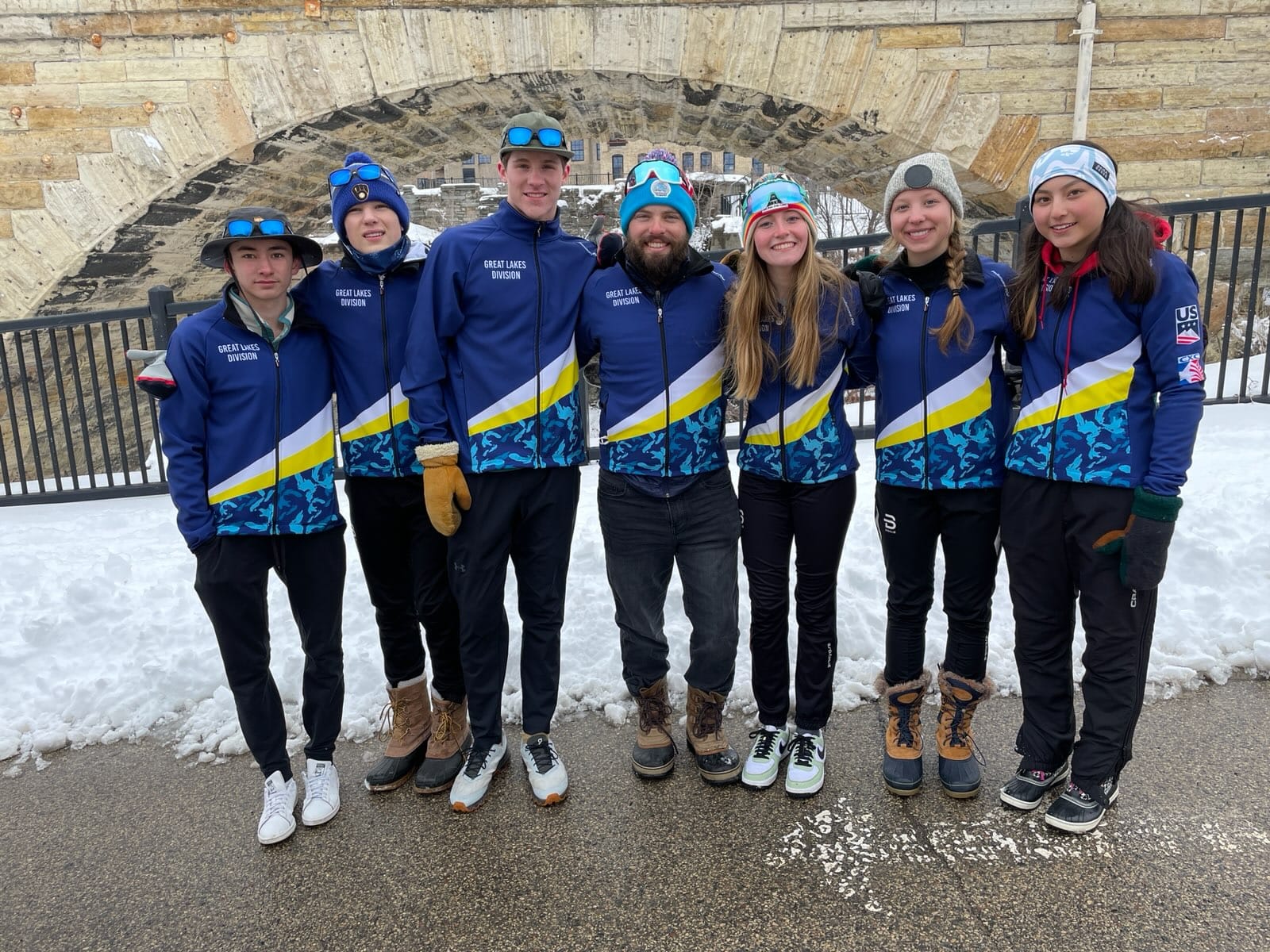
    Chippewa Valley Nordic skiers compete for the Great Lakes division team at the 2022 Junior National Championships in Minneapolis, MN. (Photo: Chippewa Valley Nordic)

    Speaking to the reception of the policy more broadly by WNSL teams, Popp expressed it was “overwhelmingly supported”. He indicated that a of the larger programs who had already put together well-equipped wax boxes were reluctant initially, but ultimately, those teams were still taking athletes to JNQs and other events where those waxes were fair game, so they would not go to waste. 

    Mostly, Popp felt that the results seen at the WNSL championship events were as expected, indicating that the wax call likely had minimal impact on the race outcomes. 

    “Because it was relatively benign in terms of the amount of races [where it was enforced], and then two: there weren’t some funky results at the state meet or the conference meets where [the policy was] used – the best kids still won, so there were no surprising results. And because the amount of wax that people had to buy and the cost level of it was really pretty low – I think the benefit of what this can bring in the future, ‘Let’s see.’ I would say the coaches that I’ve talked to certainly felt like, as a whole, it wasn’t detrimental. And if it leads to some growth and benefit for us in the league in the coming years then… we’ll just have to see.”

    Stay tuned for the next aspect of the league-wide wax protocol story, where we consider the evolution and outcomes of policies enacted at the club level by the Rocky Mountain Nordic (RMN), Pacific Northwest Ski Association (PNSA), and Intermountain Division (IMD).

  • Plain Valley Nordic: The Little Team that Could

    Plain Valley Nordic: The Little Team that Could

    As the 2022 Junior National Championships kick off, we’re featuring a small team from the Pacific Northwest who has sent eleven athletes to Minneapolis, MN, including the author of this story. To follow JN’s, you can view a livestream of races on the National Nordic Foundation (NNF) Facebook page, and find live results on SuperiorTiming.com.

    By Isabel Menna

    In March of 2021, in the tiny resort town of Jackson, Wyoming, the Intermountain Division Junior National Ski Team hosted the U.S. Western Youth Nordic Championships. As the first racer from the Plain Valley Nordic Team (PVNT) entered the start gate on day one of racing, the announcer, after initially mangling the racer’s name, asked over the PA: “Where the heck is Plain, Washington?” By the time a PVNT racer entered the start gate on the final day of the championships, however, that same announcer implored the crowd to “watch out for this young gal from the Plain team. These Plain kids know how to ski – and fast!”

    PVNT had become the talk of the weekend, with two of its boys racing onto the podium each day, taking the top two steps on Saturday and placing five in the top-20 each day. The PVNT girls placed two in the top five each day, including on the podium Saturday.

    Downtown Plain, WA and a portion of the Plain Valley Nordic Trails.
    (Photo: Plain Valley Ski Trails)

    Plain, Washington, the postage stamp-sized hamlet of Leavenworth at the terminal end of the Chumstick Highway, is a mix of farms, church camps, homesteaders, and retirees from the West Side. Its hub, and one of fewer than a half-dozen commercial operations within it, is Plain Hardware, a modern-day trading post offering everything from lumber and nails to espresso and outdoor clothing. The Hardware Store’s owner Rob Whitten is the visionary and founder of Plain Valley Ski Trails, a 25 km network of cross-country skiing and snowshoeing trails. PVNT is the Trails’ affiliated ski racing team, also founded by Whitten in 2015.

    PVNT is an all-but-unique organization in the United States. Like most junior ski teams, PVNT is open to any child in first through twelfth grade. Unlike most teams though, that means any child at all, not just those who can afford the equipment, fees, and travel. Expensive sports like cross-country ski racing have become pay-to-play in many instances, meaning just that: only those who can pay, can play.

    PVNT was organized intentionally to buck that unfortunate trend. The majority of children and teenagers on the Plain team come from modest income families. Nonetheless, for nominal tuition, waived in many cases, every racer is provided with year-round, high-level coaching, practice and race skis (both skate and classic), roller skis (both skate and classic), poles, boots, wax, race suits, team coats, race fees, travel in team vans, and room and board for away races and camps. As racers move into the oldest age group, they are asked to bear some of the financial burden but only if their family can afford to do so.

    The PVNT model, devised by Whitten, is not uncommon from those found in some European countries, though the source of funding is slightly different. The base, and largest portion, of PVNT’s funding is provided by one hundred percent of the income generated from sales of passes to the Trails.

    The self-effacing Whitten formulated the model as a way of giving back to the community. PVNT Director Chistie Saugen says “it’s as simple as Rob loving cross country skiing, ski racing and his community, which, in turn, has inspired many in the wider community. Volunteer hours, grants, and donations from supporters, including at the team’s annual auction and from the Plain Valley Adventure Women (a program specifically organized to help financially support the race team), also provide essential financial support to PVNT, without which many of the kids might not otherwise spend winters outside being healthy and happy with friends and teammates.”

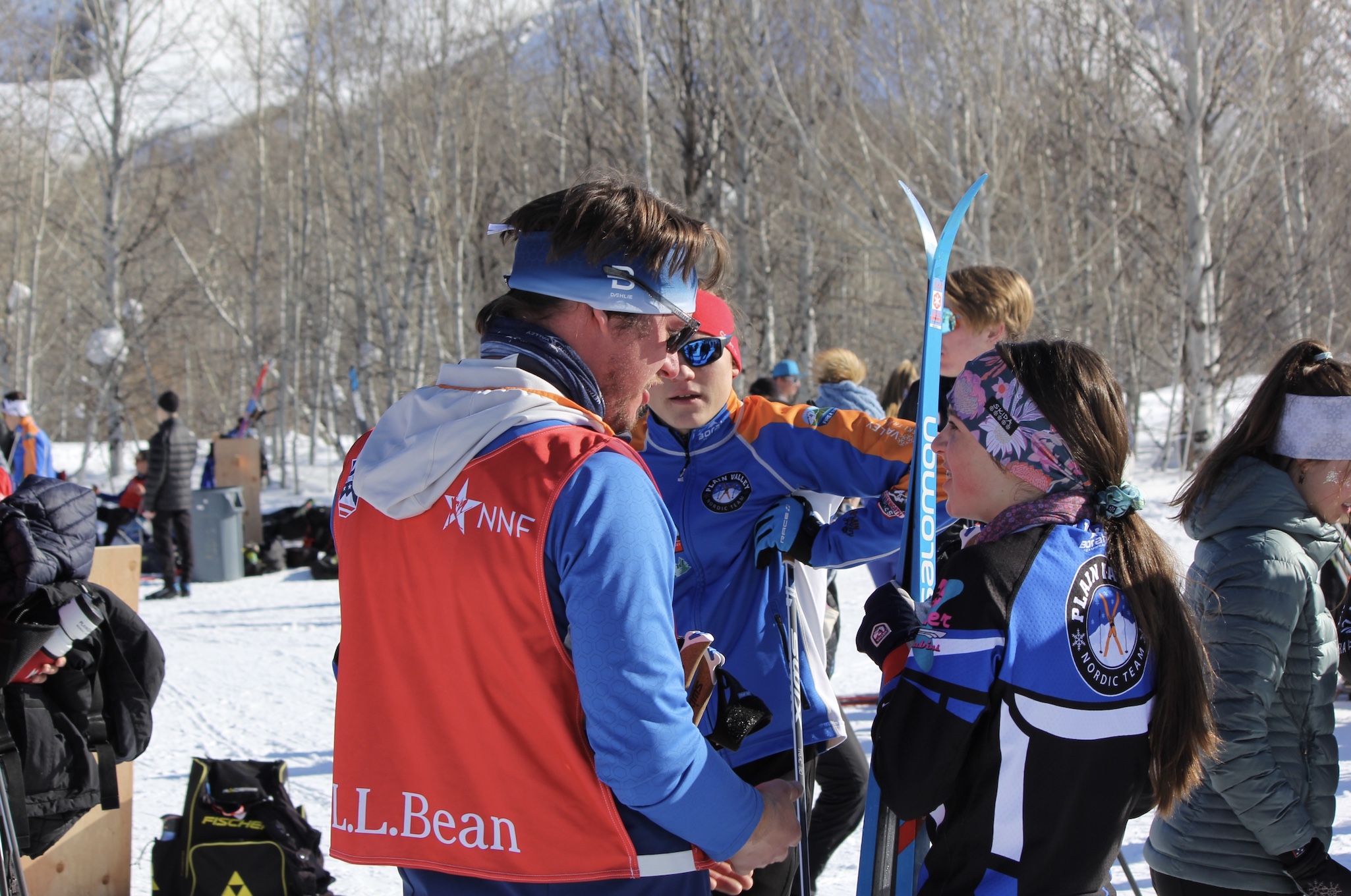
    Plain Valley Nordic Team head coach, Pierre Niess, discusses race tactics with team skiers in Sun Valley, Idaho.
    (Photo: Isabel Menna)

    While most of the team lives in the Plain Valley, a significant percentage, particularly in the older age group, hails from Wenatchee, Leavenworth, and even Seattle. The main draw for these racers is the coaching staff, headed by Pierre Niess, who grew up skiing in the French Alps and came to PVNT from the staff of the Nordic ski program at the University of New Mexico. After hearing of an opening for a head coach at what was described to him as an “experimental, fresh approach to the typical ski racing program,” Niess decided to take a chance. Since then, he and Whitten have not looked back or taken a breath.

    The pair began with a roster of five, with few, if any, knowing the difference between skate and classic skiing, let alone how to race. Inspired by their love of ski racing and the enthusiasm of the kids, the two planned big and methodically, though admittedly with no shortage of trial-and-error. They brought their expertise to bear, enlisted and trained volunteers, improved and expanded the trails and just grounded out the hours, year after year, to build a competitive team. Today, they oversee a burgeoning, three-tiered program of over one hundred skiers.

    Niess and Whitten’s success is not limited to numbers though. A repeat performance at Western Youth Championships in McCall, Idaho, at the end of next month, is more than plausible, as is the team sending in March, to the United States Nordic Junior National Championships in Minnesota, more than ten of its racers.

    As of the first of this year, Whitten, who served as the executive director of the team from its inception, passed those reigns to the former volunteer coordinator, administrator, registrar and mother of three on the team, Saugen. Whitten will continue with the team as an advisor and volunteer. He will also continue his stewardship of the trail system complex, which crosses more than a score of privately held parcels of land. The relationships Whitten has honed with the generous landowners is fundamental to the team’s success, not only as its financial base, but for its training grounds.

    On those trails, in addition to his expertise, Niess brings to bear his view of PVNT as an “educational program.” While hesitant to state a personal coaching philosophy, per se, he did continue by saying: “We use skiing as a tool in a competitive environment to help prepare children to be the best version of themselves in a competitive world.” Niess went on to explain that he tries “to find out what each individual wants – what their goal in the sport is – and then guide them toward it, all the while recognizing that we are dynamic as people and goals change over time.”

    As to the sport itself, Niess feels that cross country ski racing has a nuanced appeal: “Because our race season is comparatively short, that makes it precious. Cross country skiing has the benefit of no shackles. Because of the long ‘off’ season, we use a wide diversity of cross-training, all to the benefit of skiers in the winter. This versatility in training, I believe, is unparalleled in all of sport.”

    Niess’ approach to coaching is employed and adapted throughout the program. One of the first coaches to join on under Niess is the development team head coach, Angie Stay. Stay, in concert with Niess, reflected that she sees “sports and competition as way to make children better as individuals, and better members of their community. I love that these kids are part of something bigger than themselves.”

    Stay went on to explain that most of the skiers in the development layer of the program are quite young. “So, we train through play. They learn to ski almost without knowing it. It’s so rewarding to see the vast improvement in not just ability but attitudes and confidence from the first day of practice, at which many just want to sit in the snow, to the end of the season when they are all energetically and enthusiastically playing sharks and minnow or capture the flag on their Nordic skis!”

    At all stages of the PVNT children’s development as skiers and ski racers, director Saugen is most happy that they are enjoying themselves. “Look,” she says, “cross country skiing is fun and that is great in itself. More importantly though, these kiddos have fun being together. In addition to skiing, they run together, bike together, [and] alpine ski together.”

    On the snow, “we have kids who range from those who simply enjoy being physically active in the winter to those who will go on to race at Junior Nationals, in college or more. Yet, they all cheer each other on no matter the goal. It’s not about competing against each other, but with each other.” Off the snow, “our goal as an organization is to allow any kid who wants to be on this team to be on the team, no matter their family’s ability to pay. Affordability is the centerpiece of this program. With that in mind, I would like to thank all our pass-holders, supporters, and landowners for embracing this mission and remind each of them that they are integral to the healthy, happy development of our kids.”

    Saugen concluded by remarking that “our growth in numbers and goals come with a big price and we are all working awfully hard to make it happen now and in the future. Fortunately, we are lucky to have such a wonderful community and one of the best coaches around, in my opinion.”

    The author, Isabel Menna is a U18 racer for the Plain Valley Nordic Team. (Photo: Jim Menna)

    It is not just Saugen’s opinion. Last season, Niess was named the Pacific Northwest Ski Association’s (PNSA) Outstanding Nordic Coach of the Year. Whitten received PNSA’s Norrie Lamson Award “for outstanding service to juniors and [junior] race programs over a period of years.”

    PVNT, the little team that could, has come a long way in a short time and is making goals come true for children throughout the Valley.

  • NENSA Lays Out Contingencies for the 2020/2021 Race Season

    NENSA Lays Out Contingencies for the 2020/2021 Race Season

    For skiers and race organizers, remaining nimble and realistic are keystone 2020 attributes as the global pandemic commands our attention. Amidst the disruption, the New England Nordic Ski Association (NENSA) remains committed to organizing races for the 2020-2021 season. Justin Beckwith, Competitive Program Director at NENSA, said the aim is clear during uncertain times: under-promise and over-deliver. 

    An older photo of NENSA athletes competing at the 2011 Eastern High School Championships in Rumford, Maine. This season will have a decidedly different look. (Photo courtesy Janice Sibilia.)

    As a case study, New England poses several challenges. Geographically several states with differing Covid-19 mandates share borders or are within relatively close proximity to one another. In this piece, we’ll use Vermont as our Covid-19 focal point. Vermont’s Agency for Commerce and Community Development has posted criteria for those traveling from out of state along with a map to make travel decisions easier. 

    On the color-coded map depicting both state and county borders, it’s easy to determine who can travel to Vermont seamlessly with zero quarantine requirements. (There are no travel restrictions within Vermont.)  

    Hypothetically, using the current data, if you are a ski racer from a New England county and your county has between 400-799 active cases per million or greater, you are likely looking at a 14-day quarantine when entering Vermont, “or a 7-day quarantine followed by a negative test in [your] home state and enter Vermont without further quarantine restrictions.”

    Currently, much of Massachusetts falls in the 400-799 active caseload category, as do several counties in Maine and a single New Hampshire county. 

    This all gets tricky for those crossing state borders to race.  

    Compounding the complexity, each state has unique caps on maximum group sizes for outdoor events. In Vermont, a state with favorable Covid-19 metrics relative to the nation as a whole, “outdoor organized events” are limited to 150 people. Skiers, coaches, spectators, volunteers, and officials — they add up quickly. The aim is to minimize the total number of individuals on-site for a race. That, said Beckwith, requires rolling race start times and the ability for racers to arrive promptly and leave the venue quickly post-race. 

    NENSA Competitive Programs Director Justin Beckwith at NENSA’s 2018 App Gap Challenge rollerski race, up the Appalachian Gap in Fayston, Vt.

    “We are trying to really promote the local races, so we are saying stay home, try a popular race so to speak, that is a good step for a high school kid versus going to an Eastern Cup during a year where we would rather have slightly reduced field sizes to make it easier to pull events off,” said Beckwith. “Once you get to 100 competitors, that is pretty close with volunteers and coaches, if not over, to the cap here in Vermont.”. 

    Here’s our closer look at NENSA’s plan and how it may over-deliver. Regional will be the operative word as NENSA is encouraging skiers to minimize out-of-state travel. 

    “We are starting with the language of advising people to race within their region. Vermonters could go to the two Eastern Cups in Vermont, maybe they slide over to the one in Dublin, New Hampshire because it is not that far away,” Beckwith said. “Kids from Maine would do the Eastern Cup in Maine, they could slide over to New Hampshire and do those.”

    On NENSA’s website, they have a dedicated page for COVID-19 considerations. There, interested racers can find specific contingencies for Eastern Cups, Eastern High School and U16 Championships, Women’s Day, the BKL Festival, and popular racing. Across the board, all NENSA races will be individual start (no mass start or sprint heats for the 2020-2021 season). 

    With the Eastern Cups arguably the most complex, we’ll focus on those contingencies. The streamlining and social distancing begins on October 1, when NENSA will open their portal for purchasing a bib and timing chip. The bib and timing chip remains with the skier for the season. Beckwith said NENSA plans for “touchless registration and timing” and no day of race registration.   

    Plan 1:

    • All races will be individual start with start times organized by age group.  
    • On the Wednesday before the race, all athletes, coaches, athlete relatives attending the race, volunteers, timers, and staff must complete an on-line NENSA Event Health Screening Tool. This includes a temperature check. 
    • Limited spectators will be allowed at the venue with the possibility of no movement beyond their personal vehicles. 
    • No on-site indoor waxing will be available. 
    • Likely limited coach access to the course. 
    • Bathrooms will be assigned by state. 
    • All present at the race site must wear a “face covering and cover their mouth and nose at all times. Athletes/coaches must cover their nose and mouth in the start and finish area and if they are within 6 ft of another individual on course.”

    Plan 2:

    • Essentially, Plan 2 calls for eastern Cups to be moved to February or early March. 

    Plan3: 

    • “Regional races within states in New England – states determine “Championship” Teams.  

    Plan 4:

    This plan, the last on the list, appears to be a fall back in which even a semi-large gathering of people is untenable. 

    • Races will be run over the course of nine days. Racers sign up for a start time and complete their race. NENSA makes clear in Plan 4 that during hours when racers will be present, NENSA timers and race marshals will officiate.

    Beckwith added that no Eastern Cup races have been calendared with U.S. Ski & Snowboard, however, a schedule of events can be found on the NENSA site. 

    The most critical piece, reiterated numerous times by Beckwith, was safety. That tenant is front and center on the NENSA website: “Our first objective is to ensure the health of our community in New England,” reads the language. 

    “You have to think about this in the context of staying healthy and allowing everybody to participate,” Beckwith said. “Trying to deliver a little lower level event and do a really good job versus ‘oh yeah this is business as usual.’ We are probably going to have people go to all the races. I do not think we are going to prohibit that. But we might, for instance, format the Junior National criteria in a way so people feel like they don’t have to go to every race. It is again going to come down to education and messaging.”


  • NSCF-FXC Seeks Assistant Coach

    NSCF-FXC Seeks Assistant Coach

    NSCF FXC Racing logo

    Nordic Ski Club of Fairbanks’ Fairbanks Cross Country (NSCF-FXC) junior racing program is looking for an assistant coach to begin work this summer.

    Early season with NSCF-FXC
    NSCF-FXC Comp Team enjoying an early October ski last year. (Courtesy photo)

    Our team has been steadily growing and improving since its inception in 2006; the program currently engages more than 120 athletes on an annual basis and qualified 17 athletes to Junior Nationals and Arctic Winter Games this season.

    Athletes in the FXC racing program are split among three tiers and the prospective coach would work with all groups over the course of the year, although primary responsibilities would be with the Jr. Devo (late elementary) and Comp Team (high school and post-graduate).  This position could also be involved in a potential expansion of our masters program.

    The assistant coach is a year-round position and generally involves 5-6 days and 20-30 hours of work per week, although additional hours are required at busier times of year.  The starting wage is $19/hr ($20/hr with completion of USSA L100 coaches certification).  The coaching schedule can allow for additional employment within the local ski community (high school coaching, lessons, grooming, etc.) and the Fairbanks community at large.  The University of Alaska offers a wide variety of college and graduate level courses at its Fairbanks campus for those wishing to further their education.

    buy ortho tri-cyclen, buy yaz online

    The ideal candidate would have raced at the collegiate level or higher, be enthusiastic about and have experience coaching or working with youth, possess excellent communication and organization skills, and be able to complete miscellaneous projects in a timely manner with minimal oversight.  The assistant coach must be able to pass a background check and possess a valid driver’s license.  If not already certified, it would be expected that the candidate completes the USSA Level 100 certification within 90 days of hire (with educational costs to be covered).

    For a broader sense of the NSCF as a whole, please consult our website: www.nscfairbanks.org, or the NSCF-FXC Facebook page for a better picture of our program.  For questions or to submit an application, contact NSCF-FXC Head Coach and Director of Skier Development Pete Leonard at pete@peterleonard.net or (907) 978-6325.  Applications should be submitted to the aforementioned email address and should include a cover letter, resume and contact information for three references.  Initial review of applications will begin April 1, and the position will remain open until filled.  Ideally the candidate would be on the ground in Fairbanks by late May or early June.

    Summer training with NSCF-FXC
    Summer training with NSCF-FXC
  • When the Town Fits…

    When the Town Fits…

    Whitefish, Montana, from a ski run called “Inspiration” (Photo courtesy of PJ Sullivan, creative commons content)

    Heaven is pretty much how Robin Brooks feels about her job as the head coach of the Glacier Nordic Team in Whitefish, Montana. Sometimes, coincidences just seem to happen at the right time: Brooks was looking for a new home, Whitefish was looking for her.

    The 25-year-old Seattle native left her parents’ driveway and set out on a 12-month bicycle tour across the U.S. in September of 2009. Brooks spent most of that time on her own, exploring new areas of her home country and trying to figure out what she wants in life.  She found it in Whitefish. While she was camping there in August, only a couple of weeks before her 365-day bike tour was officially finished, she called her dad to check in and tell him about this amazing little town she had landed in.

    Her father, Don Brooks, had just seen an ad on FasterSkier a few days earlier, which announced that the Glacier Nordic Team in Whitefish was looking for a head coach.

    Robin (left) and sister Holly Brooks at the 2010 West Yellowstone Ski Festival

    “I decided I was very interested in living here. I liked the feel of the town, I liked the downtown area, there was a farmer’s market with live music and that was something I really looked for. And growing up in Seattle, I always wanted to have skiing out my door, and there is amazing mountain biking and running here,” Brooks said.

    Brooks has been skiing since she was 2 years old, and started racing with the youth ski program at Snoqualmie Pass, coached by her dad. She always loved skiing, and imagined that some day, she’d be living in a place with consistent snow in the winter. Like Whitefish.

    Why Whitefish?

    The only thing Brooks was missing in Whitefish was an established social network, something she had identified as important to her during her long bike ride.

    But Brooks was willing to take a gamble on that. The opportunity was too good to give up.

    “I’ve always been independent, and always gone into things with the attitude that I will make it work,” Brooks said.

    Her gut feeling turned out to be the right choice for Brooks.

    “I was really excited and very nervous at the same time. Part of me didn’t expect the job to be offered me. But I was psyched to know I was coming back to Whitefish and this area, excited to work with the team, and definitely nervous since I had never been a head coach,” Brooks said.

    In terms of building that social network she was looking for in the place she wants to call home, the Whitefish community has been more than welcoming as well, Brooks added.

    “The ski community has been fantastic. The parents have really made a great effort to include me and help me get involved,” Brooks said, adding that she stayed with one of the ski team families for a couple of weeks while looking for a place to rent. Living with them also helped her get to know the community better.

    Also, it turned out that two of Brooks’ good friends from junior skiing in Seattle now live in Whitefish. One of them, Noah Young, will be her assistant coach this season.

    Although Brooks is a city kid and grew up in Seattle, she’s been drawn to smaller places since she graduated from high school and took off for college. A 2008 graduate, Brooks was an environmental studies major at St. Lawrence University in Canton, New York, a town of roughly 5,900 people. She skied for St. Lawrence for four years on the collegiate circuit.

    Last year, Brooks spent the winter in Cle Elum, Wash., a town of less than 2,000 people about two hours from Seattle, just east of Snoqualmie Pass. While living in Cle Elum, she helped coach the Bush School nordic team, a private high school ski squad from Seattle that trains and races at Snoqualmie.


    Learning on the job

    Holly Brooks with the Glacier Nordic Ski Team at the 2010 West Yellowstone Ski Festival.

    While Brooks doesn’t have a long list of formal coaching experiences beyond her winter with the Bush school, she feels well-prepared to start building training plans and setting goals for the athletes. For starters, her sister Holly Brooks has been coaching at Alaska Pacific University for several years, and she also raced for the U.S. Ski Team at the 2010 Olympics. Holly offers help and advice whenever Robin needs input.

    Additionally, Robin said that she spends a lot of her time looking up coaching and physiology resources online – and, with years of personal competitive experience at the junior national and collegiate level, Brooks has a good understanding of what it takes to bring out the best in young racers.

    The Glacier Nordic Team has seven competitive skiers this season, and Brooks thinks two of them could qualify for the J1-Scandinavian Cup races this winter. 17-year-olds Stella Holt and Jack Steele have to make the U.S. team at National Championships in Maine in early January, but Brooks is optimistic.

    The five other athletes on the team are good development skiers, Brooks said, and she added that she’s hopeful at least two of those will qualify for the Intermountain Division team racing at Junior Nationals in Minneapolis in March.

    “They’re all looking good, and I’m happy with where they are at this point, so they should be able to qualify,” Brooks said.

    Challenges and surprises

    Technically, the head coach position in Whitefish is a part-time job, and Brooks thought she would get a second job to help make ends meet and stay busy. But that remained a thought.

    “I am a lot busier than I expected, making training plans, doing one to two practices a day with the team, all the logistics for the different ski events…the meeting list, the board, the parents, and doing some training on my own,” Brooks said. “It’s definitely a learning experience for me. Things that don’t seem like they should take very long take forever.”

    Since Brooks doesn’t know the area well, she said she also spends a lot of time trying to scout out good places for her team to do different workouts. The nordic area at the downhill resort is no longer groomed and maintained, so the team has to train on a local golf course. But Brooks said she’s hoping to find other good locations for on-snow workouts.

    As far as Brooks’ own athletic goals, they have been scaled back this season to make room for her kids. She has skied since she was two years old, raced through her youth, junior and collegiate years, and now, she said, she’s ready to step down from the start line and onto the side line.

    “It won’t be a lot of racing for me, but that’s okay,” Brooks says, noting that she still has some competitiveness left in her. “There is a Tuesday night race series in town that I’ll try to jump in, and I’ll definitely do some local races as long as I’m not coaching the whole time.”

    The Brooks family: (left to right) Mother Chris Syrjala, brother Scott Brooks, Holly Brooks, Robin Brooks and father Don Brooks.
  • What Happens To Successful World Junior Racers?

    What Happens To Successful World Junior Racers?

    Identifying talent in endurance athletics at a young age can be a challenging task.  My goal in this article is to give you a sense of what different levels of success at WJC/U23s might indicate and how much variability there is between athletes in this respect.

    Our basic tool will be a graph of FIS points versus age for distance results, broken down by their best result (finishing place) at WJC/U23s.  This gives us a total of eight panels representing the men and women whose best results were between 1-5, 6-10, etc.  If you’re in the 1-5 group, that means your best result at any WJC/U23’s was between 1st and 5th.  For each group, I’ve plotted their FIS points (in distance races) versus age.  Each dot represents one race by one athlete.  The blue trend lines are for everyone in that panel.  The red lines are for only the American’s in that panel.

    If an athlete’s name appears next to one of the red lines, that means they are the only American appearing in that panel.  Otherwise, the trend lines are averaging over multiple athletes.  These graphs are fairly large, so you might want to click on them for a larger version.

    There’s a lot of interesting stuff going on here.  Let’s ignore the Americans for a moment and just look at the blue trend lines.  We’d expect the 1-5 group to have the most future success overall, and that is the case.  (More dots near the bottom.)  As we move right to the 6-10, 11-15 and 16-20 groups the cloud of points mostly creeps upwards, but less so by the time we’re comparing the 11-15 and 16-20 groups.

    We might also expect the trend lines in the groups to flatten sooner and at a higher level as we move rightward.  This would correspond to skiers who see less success at WJC/U23s not improving as much or leaving the sport earlier, or both.  This kind of happens, but with some weird caveats.  The men seem to follow this pattern until we get to the 16-20 group.  Why do the 16-20 athletes continue to improve past age 23 where the 11-15 athletes don’t?  The answer is likely our old friend, selection bias.

    Success in ski racing serves as kind of a signaling mechanism as to whether you should continue racing.  Skiers who’s top WJC/U23 result is between 16-20 are more likely to stop pursuing an international racing career as their results have signaled that they won’t be successful.  The only ones who do continue are the ones who beat the odds and see some measure of success.

    Another interesting aspect of these data is the evident plateau effect between ages 20-23.  Notice how many of the blue trend lines flatten out suddenly at these ages.  More so with the women, but we see it in the 11-15 and 16-20 groups for the men as well.  What might be causing this?  My best guess is that it’s another artifact of selection bias.

    My guess would be that the ages 20-23 are crucial for deciding whether you’re going to be a successful international ski racer.  Athletes steadily improve up to that point and then have a decision to make.  Do I continue racing or hang up my skis and go to school, get a job, get married, have kids, etc.?  The plateau in the trend lines come from those athletes that stop improving between those ages.  These athletes are likely to stop pursuing a serious racing career (or at least many of them do).  The ones who continue are, by necessity, the skiers who end up achieving some measure of success.

    That’s why we often see this dramatic improvement from ages 16-20, a plateau from 20-23, and then continued improvement from 24 on.  It’s important to realize that this doesn’t mean that if you somehow push through ages 20-23 regardless of how much success you’re having, that somehow you’ll magically get faster simply by passing the age of 23.  The trend lines simply reflect the individual decision different athletes are making about their likely future success.  I’d guess that a similar plateau effect is happening in the men’s 1-5 and 6-10 panels, but we don’t see it because it’s happening to a much smaller fraction of the athletes, so the trend line isn’t picking it up.

    Now let’s look at what’s going on with the Americans.  Kris Freeman, Rob Whitney and Noah Hoffman are the only Americans in the men’s 1-5, 6-10 and 11-15 panels, respectively.  Each of the other red trend lines are based upon multiple athletes.  For example, the red trend line in the women’s 1-5 panel is based upon Liz Stephen and Morgan Arritola.  The truly bizarre looking red trend line in the women’s 6-10 panel is based upon Kikkan Randall, Nicole DeYong, Taz Mannix and Kristina Trygstad-Saari.  Both Randall and DeYong have significantly improved their distance results of late, which accounts for the line bending down suddenly past age 25.

    Kris Freeman has been more or less “typical” for those athletes achieving a top result at WJC/U23s.  Rob Whitney had a very promising beginning, relative to his peers, but encountered some serious difficulties around age 22-23.  Noah Hoffman seems to be tracking the trend for his peers, or perhaps a bit better.

    The most important thing I want to emphasize in these data is how variable they are.  Generally speaking, of course, it’s better to have good results (not just at WJCs, all the time!).  But if anything, this graph indicates just how crude a predictor WJC/U23s can be for future success on the World Cup.  There are plenty of athletes who’ve landed top results at WJCs but haven’t gone on to do much else.  Conversely, there are plenty of skiers who never cracked the top 15 at WJCs but ended up having a very long and successful career.  There are, as in the rest of life, many different paths to success.

    Be sure to check out StatisticalSkier.com over the next week or so, as I’ll be posting versions of this graph featuring athletes from nations other than the US.

  • Junior Camps: Norway Style

    Junior Camps: Norway Style

    Ragnhild Bolstad of Hedmark Skikrets based in east central Norway has organized training camps for the top regional juniors in east central Norway for more than a decade. When putting together camp training schedules for junior skiers, Bolstad has some key ingredients in mind: The social aspect is huge. The athletes want some feedback on where they are and where they can improve. Strength is important and roller skiing is often over-emphasized.

    Ragnhild Bolstad (left) skiwalking with a group of junior girls near Rena in Hedmark. (Photo: Inge Scheve)

    Building an environment

    First and foremost, a lot of the skiers train alone or with a limited group of other skiers and coaches. Bolstad tries to compose a training camp schedule that exposes the skiers to other coaches, technique sessions and workouts that are fun to do in a big group, such as relays and group challenges.

    “The number one objective of these camps is to get together with others on the same ambition level, compete and compare themselves to others,” Bolstad says. Additionally, they want to get some pointers, learn something new to take home and get a break from their regular training routine.

    “It’s always useful for the skiers to get feedback on how they ski, whether its roller skiing or on snow,” Bolstad says. During a camp, skiers often do more than in a regular week, both in terms of intensity and volume, so variety is a big component, she says. “My philosophy is that they can easily do a lot of easy distance and volume on their own, but that they enjoy doing intensity with other, and that they push themselves more when they do intervals and mock races at in a camp setting,” Bolstad says. “I usually recommend that they come to the camp well rested and take care to do a very easy week following a camp.”

    Add more strength

    One area where Bolstad thinks there is room for improvement is strength.

    “A lot of the time it seems like strength is just a few minutes of abs and core at the end of a workout, but I think we can do more here. Strength is becoming increasingly important in cross-country skiing, so it should be a natural component of a camp too. Some coaches believe you need a sophisticated gym to do a structured strength workout, but you can do a lot just with the elements you find outside,” she says, mentioning rock ledges for benches, rocks for cones, grassy areas instead of foam mats, and tree branches for hang-ups and pull-ups, as well as simple things like elastic bands that are easy to roll up and bring on a workout. “I think most juniors do some sort of strength at least 2 or 3 times per week at home.”

    Bolstad also thinks including strength into roller ski workouts provides better use of the time on roller skis than just logging miles and hours on the pavement.

    Juniors working on specific strength at Rena in Hedmark. (Photo: Inge Scheve)

    Roller skiing is over-emphasized

    Bolstad believes a lot of skiers overestimate the importance of roller skiing.

    “Certainly, you need some and most skiers should do two roller ski workouts per week in the meat of the dryland season, but I don’t think there is much value in more than 3 or max 4 roller ski sessions per week,” she says, explaining that while specific to skiing, there are other aspects of training that needs attention during the dryland season.

    “Roller skiing is a great alternative to other endurance training, and is definitely useful in keeping the ski muscles sharp, staying up on technique and getting a load off your legs, but there is nothing that beats running in developing capacity,” Bolstad says. She swears by running, skiwalking and bounding with poles as some of the most efficient, versatile and enjoyable forms of dryland training.

    “I firmly believe in running with poles, bring them everywhere, and run in a lot of different terrain, such as wetlands and gnarly trails to improve both strength and balance. Use your poles everywhere,” says Bolstad, adding that part of what makes skiing so great is the nature experience. Roller skiing confines athletes to the pavement, while running opens up much more terrain.

    Favor mountain biking

    Bolstad also believes cycling has a place in a well-rounded varied dryland program. However, she recommends mountain biking and trail riding over road biking.

    “When riding trails, you ride in and out of the saddle, you have to balance your bike through turns and over obstacles and you really have to engage your core, which develops balance and core strength to a much greater degree than riding on roads.”

    Issues and training principles

    Finally, Bolstad also makes sure every junior camp has some sort of theoretical content. She usually sets up at least one lecture on a relevant topic, ranging from training principles and fundamentals, doping and eating disorders.

    This last year, she invited officials from Anti-Doping Norway to talk about diet and dietary supplements in the context of doping.

    “Ambitious athletes are willing to stick to a strict and sometimes almost extreme diet, and for some the step to supplements is not that far. What is doping? And what are the gray areas?” Bolstad also notes that once skiers reach the junior level, they can be tested for doping at sanctioned events, so she felt that it would be useful for them to know what the procedure is like.

    This spring, Bolstad organized a lecture from the new initiative Sunn Jenteidrett (“Healthy Girl Sports”), which was launched as a joint project from the Norwegian Ski Association, Norwegian Biathlon Association, Norwegian Track and Field Association, and Norwegian Orienteering Association. The project is also backed by the Olympic Development Center (Olympiatoppen), the Norwegian Athletic Association (NIF) and the national lottery (Norsk Tipping). The project focuses on female athletes age 13-22 and emphasizes on building supportive training environments, increasing awareness of eating disorders and information on how to find resources. The project also teaches young athletes – both girls and boys – how to plan meals before, during and after workouts and competitions, as well as how to eat right and what to eat, since many junior skiers move away from home to attend ski academies during their high school years. Young athletes who attend ski academies often live in apartments near their schools and have to cook for themselves during the week. For a lot of juniors, this is their first experience with living alone.

    “A lot of people think eating disorders only affect girls, but the truth is that a lot of boys also have trouble getting the right balance in their diets, maybe for different reasons. Also, eating disorders are something that affects everyone in the sport, from coaches to teammates and everyone in the support system. It’s important to talk about it, and to let the athletes know that there are resources out there, how to help and how to get help.”

    So bottom line, the most important aspects with junior camps include building an environment among regional athletes where they can learn from each other, test their limits and get feedback on their technique and progress.

    The junior racer on camps: Socially rewarding and bloody serious

    Maja Solbakken, 17, from Engerdal on the Swedish border is one of Norway’s promising young skiers. She’s attended a number of ski camps since she was 13 or 14 years old, and raves about the value of the experience. For her, the most important take-aways from the camps are the friendships that she has formed with skiers from different parts of the country, and the intensity and focus that only happens in a camp environment.

    “It’s so nice to hang out with other kids who have ambitions in skiing. It’s a really social experience, and every time I go, I get really motivated to keep training hard,” Solbakken says, explaining that training with celebrity coaches and other skiers you usually only see during the race season, she really wants to show off her best game.

    “You push a lot of limits when you’re at the camps. I’ve done uphill intervals to the point of throwing up. There are coaches there from the junior national teams or regional teams, and you just really want to show what you’ve got,” Solbakken says.

    Solbakken doesn’t think the national team coaches base their team selection on the junior camps, but she certainly thinks that skiers who look like they work hard and have the right attitude can get on their radars during the camps.

    “The national team coaches are at all the big races in the winter, so if you’ve made a good impression in the summer, there’s a chance that they’ll remember that. I think they observe a lot during the camps,” Solbakken says.

    Feedback and pushing limits

    Solbakken enjoys going to the camps to get feedback on her technique and progress from coaches that she doesn’t work with on a regular basis. Also, she says it’s inspiring to be coached by some of the top World Cup racers. National team skiers often serve as assistant coaches on the summer ski camps that attract junior skiers from all over the country.

    “We had Astrid Uhrenholdt Jacobsen as our strength and plyometrics coach last summer. She was really nice, but she required full attention to the task while training and didn’t take any crap. So we got some really intense, focused and efficient workouts there. That was really motivating,” Solbakken recalls.

    Solbakken says that the summer camps are the highlights of her summer training program.

    “The camps really mean a lot to me as an athlete and as a person,” Solbakken says, adding that she hopes to come back as a coach some day. “Only the top skiers in the country are invited to coach at the national summer ski camps. It would be a big honor to be asked one day.”

    Maja Solbakken (Photo: Inge Scheve)