Tag: Junior World Championships

  • “You Can’t Live Nervous”

    “You Can’t Live Nervous”

    Finals week has a way of compressing time. Days shrink into problem sets and exams; nights stretch just long enough to make sleep negotiable. When Jack Lange logged onto Zoom from Hanover in late November, he was finishing his senior fall at Dartmouth, a mechanical engineering major balancing equations while packing for a training block at Silver Star. The snow out west wasn’t cooperating. Races were being reformatted. Nothing felt settled.

    That uncertainty didn’t seem to bother him much.

    “We’re wrapping up school right now and then heading to Silver Star next Tuesday,” Lange said. “Hopefully, the snow conditions there improve a little bit.”

    It was a measured answer—calm, almost deliberately so. Over the next hour, that calm would reveal itself not as indifference, but as something learned the hard way.

    Young Jack Lange skiing in a New England BKL race. (Photo: Heidi Lange)

    A kid who wasn’t supposed to be good at this

    Lange grew up in Vermont’s Upper Valley, skiing out of Green Woodlands and the Ford Sayre Bill Koch League. It was the kind of childhood that feels almost mythic now: full-moon skis to a cabin, hot chocolate on a frozen pond, friends everywhere.

    “I’ve always just made sure that that’s the thing that comes first,” he said. “Getting outside and enjoying being outside and enjoying pushing myself and having fun.”

    He played everything. Soccer, where he was very aware he wasn’t the best. Swimming, where he gravitated toward breaststroke. Cross-country running. Mountain biking. For a while, he did both alpine and Nordic skiing, until a choice had to be made.

    “My sister was doing more Nordic and more of my friends were on the Nordic,” he said. “So I just went with Nordic.”

    Lange and friends meeting Jessie Diggins and Sophie Caldwell Hamilton at the Quebec World Cup. (Photo: Heidi Lange)

    It wasn’t a natural fit at first. Lange remembers being the odd kid out on relay day—the one paired with a skier from another team because the numbers didn’t work.

    “I wasn’t good at it,” he said simply.

    What hooked him wasn’t speed. It was curiosity.

    “I really like the amount that you can learn from being out in training,” he said. “Not even structured training—just being outside and having fun. I really enjoy the process of figuring out how hard I can push myself.”

    By freshman year of high school, something shifted. He trained more. He paid attention. And suddenly the results were better than expected.

    “That was kind of the confidence boost that launched me into, like, ‘Oh, this is something I can do.’”

    2019 Junior National Championships in Alaska. Lange finished in fifth place with Dartmouth teammate Wally Magill in first. (Photo: Heidi Lange)

    The pressure builds—and breaks

    Lange’s junior years were uneven. Seasons were disrupted. Races were canceled. One winter meant nine consecutive weekends racing at Craftsbury, all interval starts—an exercise in patience for someone who loved head-to-head competition.

    “I love mass starts,” he said. “I love racing next to people. Mind games and competitiveness.”

    By his senior year, he had narrowed his focus to Junior Nationals. The goal was simple: qualify. Nothing more.

    When he arrived at the 2019 Junior National Championships in Alaska, he was the last skier to qualify from New England. He started near the back in the 5-kilometer skate race at Kincaid Park.

    “My goal for the entire season was to make JN’s,” he said. “And I was there, and I was like, I’m in Alaska. This is kind of crazy.”

    Mid-race, a coach called out a split.

    “One of the New England coaches is like, ‘You’re like three seconds out of top ten,’” Lange recalled. “And I was like, that’s pretty funny.”

    He kept skiing. He finished fifth.

    “That was way, way beyond where I ever could have expected to be.”

    There’s a photo from that day—Lange among a group of skiers who would later become familiar names on the U.S. Ski Team. At the time, it felt surreal. In hindsight, it was clear it wasn’t the performance itself that mattered most, but the conditions under which it happened: no expectations, no fear.

    That lesson wouldn’t fully sink in until later.

    Lange with his parents, Heidi and Greg. (Photo: courtesy photo)

    Dartmouth, and the weight of wanting it too much

    Lange chose Dartmouth largely because it felt right. He wanted engineering. He liked the people. He trusted the coach.

    “Brayton [Osgood] is such an amazing coach to work with,” Lange said. “He’s never the guy to show up and be like, ‘This is what you’re doing.’ He’s super approachable. He really wants us to find our spot in the sport.”

    At Dartmouth, skiing wasn’t isolated from the rest of life—it was embedded within it. That integration became most visible during the most stressful week of the year: NCAAs, which overlap directly with finals.

    “My freshman year, that finals week with NCAAs was kind of a dark time,” Lange said. “I was close to tears on the start line of the 20k race. Just so much pressure, so overwhelmed.”

    He remembers warming up briefly, then stopping.

    “I skied like fifteen minutes in the warm-up and just put my skis down,” he said. “I was completely broken.”

    A kilometer into the race, he was in dead last.

    And then something shifted.

    “I saw Brayton on the side of the trail,” Lange said. “And I was like, you know—I don’t need to take this so seriously. I can show up, do my best at everything, and give 100 percent effort. If I do that, it’s gonna come through.”

    It did. That race became one of his best of the season.

    Dartmouth Ski Team (Photo: courtesy photo)

    The things that make it lighter

    The story of Dartmouth skiing is often told through tradition—green suits, first-years with mohawks, time trials. Lange points to different details.

    There’s a sauna in the locker room.

    “That’s a prime spot to get to know the team,” he said. “We rip this on all the time.”

    There’s also life beyond skiing. Every non-freshman on the men’s team is in a fraternity. Lange lives in the Zeta Psi house with teammates and classmates—engineers, computer scientists, people whose lives orbit entirely different centers.

    “I’m surrounded by a ton of people who have no clue what skiing means to me,” he said. “And that’s been a really huge part of being at Dartmouth.”

    His best season, he said, came immediately after pledging.

    “It taught me how to not put as much pressure on myself,” Lange said. “How to make this a sustainable thing that I could really enjoy.”

    That balance—academic, athletic, social—isn’t accidental.

    “None of the three would be as good without the others,” he said.

    Lange’s favorite race: Prospect relay with Cam Wolfe and Cooper Camp. (Photo: Heidi Lange)

    “You can’t live nervous”

    Lange keeps a training log. He trains consistently. He admits he’s overcooked himself before. What he doesn’t do is chase numbers obsessively.

    “I don’t think I’ve ever had an hour’s target that I’m trying to hit,” he said. “I’ve just trained for the enjoyment of it.”

    There was a time, early on, when outside voices crept in.

    “I was getting a lot of people saying, ‘You’re training too much. You’re doing this wrong,’” he said. “I got a little worked up about it and a little nervous.”

    He paused.

    “You can’t live nervous.”

    It’s the line that keeps resurfacing, whether he’s talking about high school racing, college pressure, or the future beyond Dartmouth.

    “I think anyone who’s in high school, middle school—just go out there because you enjoy it,” he said. “You’re gonna have crappy days. But if you go out there every day and just have a good time, and surround yourself with people you like to be around, things will work out.”

    That philosophy shapes how he defines success now. Lange talks about team first. About racing in a green suit. About showing up energized.

    “The guys here are here for the right reasons,” he said. “They’re skiing because they really enjoy skiing. That’s super energizing.”

    Lange with his long time coach and mentor, Dennis Donahue. (Photo: Heidi Lange)

    A quiet kind of confidence

    Ask Lange where he sees himself years down the road, and he doesn’t reach for outcomes. He talks about process.

    “The process of showing up every day,” he said. “How can I be the best athlete I can be today? That’s the most rewarding thing.”

    Skiing, he believes, has taught him how to live—how to work, how to recover, how to stay curious.

    “Wherever I am fifteen years from now,” he said, “all of the lessons that I’ve learned are still going to be extremely relevant and important.”

    For now, there are finals to finish and skis to pack. The snow will either come or it won’t. The races will sort themselves out.

    Lange will keep doing what he’s learned to do best: show up, stay loose, and ski without fear.

    Because speed, he’s learned, is hard to find when you’re holding your breath.

    Love Stories Like This? Help Keep Them Coming.

    Feature stories like this one take time, access, and care to produce. If you value thoughtful storytelling and independent ski journalism, please consider becoming a Voluntary Subscriber. Your support directly fuels the work we do to cover the people, places, and moments that make our sport special.

    Join the FasterSkier community!


    Enjoying adventures with Luke Allan. (Photo: Jack Lange)
  • US World Junior Championship/U23 Teams Named Following Nationals in Houghton

    US World Junior Championship/U23 Teams Named Following Nationals in Houghton

    The 2019 U20 World Juniors 4 x 5 k relay first place team from the U.S. All the members of the 2019 team have qualified for U23 World Championships. (Photo: JWSC2019 / Mikaela Takala)

    Following a record-setting number of athletes competing in the U.S. Nationals in Houghton last week— over 400 skiers from across the US made the trip to the Copper Country—US Ski and Snowboard has announced the selections for the US World Junior and U23 Championships, to be held in Whistler, British Columbia from January 28th-February 4th. Athlete selections have also been announced for the U18 Nordic Nation’s Cup Trip, to be held in Jyvaskyla, Finland February 17th-19th.

    The sheer number of competitors at US Nationals, along with a continued trend towards more competition to make one of US Ski and Snowboard’s Development trips is a “sign that we’re continuing in the right direction,” said US Ski and Snowboard Cross Country Development Director Bryan Fish. “The showing from our U23 athletes on the World Cup to the number of U18 skiers that are competitive to make the [Nordic Nation’s Cup] trip is a sign of not only strength, but crucially, depth in our development system.”

    Fish added that the competition at US Nationals—as well as diversity of clubs and regions where skiers are coming from—drives home a clear message: “If there’s one thing that we’re doing right [in US Skiing],” he said, “it’s that we’re working together.”

    The 2023 Women’s Senior field rolls out during the 20 k Classic Mass Start. (Photo: FasterSkier)
    U23 Team

    FIS World U23 Ski Championships will take place in Whistler, British Columbia from January 28th-February 4th. The following skiers have qualified to compete in those championships:

    Male
    • J.C. Schoonmaker (University of Alaska – Anchorage) 
    • Gus Schumacher (Alaska Winter Stars)
    • Luke Jager (University of Utah)
    • Zanden McMullen (APU Nordic Ski Center)
    • John Steel Hagenbuch (Dartmouth College)
    • Qualified but declined:  Ben Ogden (University of Vermont/SMS T2)
    Female
    • Sophia Laukli (University of Utah)
    • Novie McCabe (University of Utah) 
    • Sydney Palmer-Leger (University of Utah)
    • Anabel Needham (Michigan Tech.)
    • Kendall Kramer (University of Alaska – Fairbanks)
    JC Schoonmaker during this year’s Tour de Ski. (Photo: Nordic Focus)
    World Juniors Team

    The FIS World Junior Ski Championships will take place from January 28th-February 4th, 2023 in Whistler, British Columbia.

    Male
    • Adrik Kraftson (Northern Michigan University)
    • Anders Weiss (Montana State University)
    • Max Kluck (Bridger Ski Foundation)
    • Jack Lange (Dartmouth College)
    • Jack Conde (Montana State University)
    • Qualified but declined: Tabor Greenberg (Green Mountain Valley School)
    • Alternates:  Luka Riley (University of Colorado), Trey Jones (Steamboat Springs Winter Sport)
    Female
      • Samantha Smith (Sun Valley)
      • Nina Schamberger (Summit Nordic Ski Club)
      • Haley Brewster (University of Vermont)
      • Ava Thurston (Dartmouth College)
      • Rose Horning (Ski and Snowboard Club Vail)
      • Hattie Barker (University of New Hampshire)
    • Alternates: Greta Hansen (Minneapolis Ski Club), Emma Reeder (Dartmouth College)
    Gus Schumacher with US Ski Team D-Team Greta Anderson and Bernie Nelson following his win in the 10 k Classic at 2020 World Juniors in Oberwiesenthal, Germany. (photo: courtesy Greta Anderson)

    The FIS World U23 Ski Championships are in North America! Thinking of going to watch the best skiers of tomorrow, today, in-person? Check out Whistler’s guide to Nordic skiing here!
    U18 Nordic Nation’s Cup Team

    The US delegation to the Nordic Nation’s Cup will compete in Jyvaskyla, Finland from February 17th-19th.

    Male
      • Tabor Greenberg (Green Mountain Valley School)
      • Benjamin Barbier (Steamboat Springs Winter Sport)
      • Finegan Bailey (Stratton Mountain School)
      • Owen Young (Alaska Winter Stars)
      • Landon Wyatt (Bridger Ski Foundation)
      • Davis Isom (Minneapolis Ski Club)
    • Alternates:  Murphy Kimball (Alaska Winter Stars), Justin Lucas (APU Nordic Ski Center)
    Female
      • Samantha Smith (Sun Valley)
      • Nina Schamberger (Summit Nordic Ski Club)
      • Rose Horning (Ski and Snowboard Club Vail)
      • Ally Wheeler (Casper Nordic)
      • Sydney Drevlow (Loppet Nordic Race)
      • Neve Gerard (Mt. Bachelor)
    • Alternates: Lena Poduska (Jackson Hole), Delaney Jackson (Mt. Bachelor)
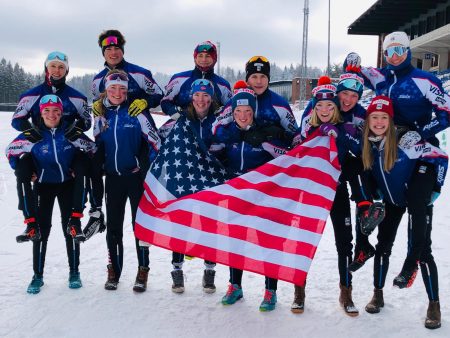
    The U18 Nations Cup team poses with the flag in Otepaa, Estonia. Bottom row (from left to right): Annie McColgan (Mt Bachelor SEF), Kate Oldham (AVSC), Charlotte Ogden (SMS), Abigail Streinz (Craftsbury), Adriana Proffitt (Alaska Nordic Racing), Nina Seeman (SMS); Top row: Lane Myshrall (PCSS), Will Koch (SMS), Brian Bushey (GMVS), Michael Earnhart (Alaska Nordic Racing), Joshua Valentine (GMVS), Kai Mittelsteadt (Bridger SF). (Photo: Jane Mittelsteadt)
    Coaching Staff

    Coaching Staff for World Juniors/U23

    Full Points List

    Selection Criteria

    The selection criteria for World Juniors, U23, and U18 are primarily based off objective criteria, with some room for subjective discretion based on the desire of US Ski and Snowboard to fill their FIS allotment for the competition – which currently stands at 8 athletes per gender for World Junior/U23 Ski Championships, with four starting spots/gender allotted for each race. The objective criteria is primarily based on results in three different competitions: 1) the World Cup, 2) FIS points, 3) US Nationals.

    Full selection criteria can be found here.

    Summary on how those three qualification different pathways work:

    1. World CupA top 30 individual result during Period I of the World Cup (Ruka through Davos, this year) automatically qualifies an athlete for the World U23 or World Juniors team. This is a pathway primarily used by U23 athletes who are racing Period I of the World Cup.
    2. FIS pointstwo results in FIS races that earn below 50 points for men, or 50 points for women, during the same period as Period I of the World Cup also serves as an automatic qualifier. This is also a pathway primarily used by U23 athletes, but one used by those who are on the SuperTour during Period I.
    3. US Nationalstop two of three results at the 2023 US Cross-Country Ski Championships in Houghton, using the old World Cup point system (read how that works here), are counted towards the points total for selection. This pathway is primarily used by athletes qualifying for World Juniors. It is also the only pathway for athletes qualifying for the U18 Nordic Nation’s Trip.
    US U23 Team member Sophia Laukli recently stepped onto a World Cup podium for the first time after cresting the Alpe di Cermis in 3rd place at the 2023 Tour de Ski. (Photo: Nordic Focus)
    Selection Analysis

    The selection criteria for U23 and World Juniors has not seen broad change for some time, but what has changed recently is just how many U23 skiers are now qualifying for the U23 Championships based on their World Cup results. Of the male contingent representing the US this year in Whistler, nearly the entire team qualified based off World Cup results, with Ben Ogden notably declining the spot he earned based on his seven top 30 individual results during the qualifying period this season. Gus Schumacher, JC Schoonmaker, and Luke Jager also qualified via the World Cup on the Men’s side, while Sophia Laukli and Novie McCabe did so on the Women’s side. 

    The fact that the best U23 athletes in the country are racing—and doing well—on the World Cup just reiterates something that US ski fans have been able to see for some time. This is an extraordinarily talented group of athletes able to compete at high levels at younger ages than previous generations of American skiers. That spells out progress for the US skiing development system, but what will follow from are implications on a domestic circuit that has typically centered around US Nationals as the primary means of qualifying for Junior World Championship teams. With a number of high-level skiers choosing to race in Houghton last week, it’s clear that Nationals still is an important part of the ski calendar, but this aspect of the competition is likely to be diminished as the US sees more skiers performing well on the World Cup.

    One of the other unique aspects of the “trips” qualification this year is that the World U23/Junior Championships are in North America. Junior Worlds competitions so often are staged in Europe that US Ski and Snowboard has always designed its junior programming with that assumption, and with the goal of acquainting young American skiers with the travel and competition demands of competing in a primarily European sport. With Whistler being an exception to the rule for World Juniors, the U18 Nordic Nation’s Cup (to be held in Jyvaskyla, Finland) is the sole opportunity for young skiers to head to Europe to compete. It’s also worth noting that this U18 trip did not happen last year, as the Nordic Nation’s Cup was part of the wave of COVID cancellations that interrupted the European calendar last January.

    Those two factors have combined to produce an unusually high number of World Juniors skiers choosing to either also race the U18 Nordic Nation’s Cup or race the Nordic Nation’s Cup instead of going to World Juniors in Whistler. That could strike some as odd at first, but there is plenty of individualized thought affecting when and where U18 skiers that are already qualifying for World Juniors should be first getting international experience, and how to balance individual goals with more domestic goals, such as doing well at Junior Nationals, in a way that captures their desires and goals in the sport. 

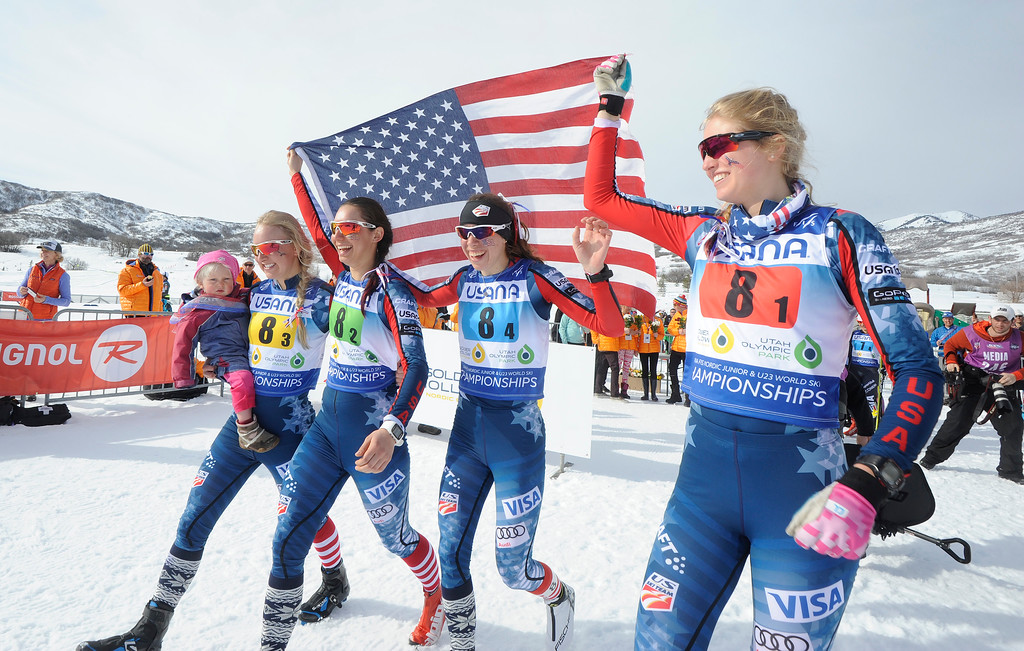
    The U.S. women’s relay after taking a historic third in the 4 x 3.3 k relay at 2017 Junior World Championships on Sunday at Soldier Hollow in Midway Utah, with (from left to right) Hannah Halvorsen, Julia Kern, Katharine Ogden, and Hailey Swirbul. (Photo: U.S. Ski Team/Tom Kelly)

    1/16/23 Correction: A previous version of this article reported Ben Ogden’s club as just Stratton Mountain School T2. Ogden is also a part of the University of Vermont Ski Team.

  • Q & A with New Faces on the US Ski Team: Michael Earnhart

    Q & A with New Faces on the US Ski Team: Michael Earnhart

    U.S. Ski & Snowboard recently announced its U.S. Ski Team nominations for the 2022-23 season. Of the 22 athletes named to the team this season, six were not on the previous year’s roster, either newly named or renamed: Michael Earnhart, Walker Hall, Zak Ketterson, Will Koch, Finn O’Connell, and Sammy Smith.

    To help fans get to know these new(er) faces, FasterSkier is doing a series of interviews, providing insights into the factors that have contributed to development, progress, and growth for these athletes last season. In this installment, we talk with Michael Earnhart following his nomination to the U.S. Ski Team on its D-Team. Earnhart discusses growing up skiing in Alaska, his successes as a junior, and what to expect as he joins the U.S. team alongside Junior World Championship teammates this season.

    Michael Earnhart playing with his dog around his hometown of Anchorage Alaska. Earnhart was recently nominated to the US Ski Team D-Team. (Photo: Michael Earnhart).

    FasterSkier/Ben Theyerl (FS): Can you just tell us a little bit about yourself? Where are you from, who have you skied for in the past and who are you skiing for now?

    Michael Earnhart (ME): I’m from Eagle River, Alaska, which is just outside of Anchorage. I trained with Alaska Nordic Racing, and then last year moved into Anchorage to train full-time with APU (Alaska Pacific University). I’ve just been trying to stay in Anchorage and Alaska as much as possible because I really think it’s the best place to be a skier in the U.S.

    I’ve also gone on two different U.S. Ski Team trips. I started out with the Nordic Nations Cup (U18) and then I’ve gone to World Junior Championships (World Juniors) the past two years in a row, with this past year being the World Junior Championships that helped me qualify for the U.S. Ski Team.

    FS: I wanted to hop in right there, congratulations on officially joining up with the U.S. Team. Can you take us through the process that led you to this point – when did you think that joining the national team was a goal you could realistically set for yourself? And what was the process of reaching that goal once it was set?

    Michael Earnhart. (Photo: Michael Earnhart).

    ME: In the beginning, I was just into running through elementary and middle school, and just wanted to be competitive in skiing for the running aspect of what I was doing, not really thinking about skiing so much. My freshman year of high school I made it to JNs (Junior Nationals) and ended up getting a Top-10 which was when I was like ‘wow, you know, this skiing thing is really cool.’

    From that point on, I started focusing more on skiing and got lucky because I was naturally talented to some degree. But I worked hard and was able to make my first international trip (the U18 Nordic Nations trip). That was my first time wearing the red, white, and blue, and I very much went ‘yep, this is what I want to do.’ I wanted to wear that U.S. race suit full time.

    FS: Did you make it out to Bend camp this spring? How was the first experience joining up with the team?

    ME: I did make it out and it was really fun. Those people on the team are some of the nicest people I know, and so it was good to spend time with them in general, but being at a camp where the goal is to put in some big volume was super beneficial to my training. You also get to just learn different techniques for training from everyone and you’re really motivated. It was all super great.

    FS: I’d also note some of those people you’re joining the team alongside. Will Koch and Walker Hall are both joining the D-team with you, and you have experience racing with them at Junior Worlds, but primarily from competing against them in the past. What has the experience been reaching the point of your career where your top competitors are becoming your teammates?

    ME: It’s definitely interesting. I’ve known these guys for years as competitors. Like I think I used to in the summer months be thinking things like ‘ok, how do I beat Walker [Hall]?’ And now this summer, I’m living with him and we’re training together. We both want to do well on the international level, and so it makes sense and I’m really excited about it.

    Earnhart as part of the US U18 Nordic Nations Team. ((Photo: Jane Mittelsteadt).

    FS: You mentioned that you’re skiing for APU, which gives you plenty of examples of U.S. Ski Team members to look up to. You’ve already said that you think Anchorage is the best spot for you to be training, and being from there, I was wondering if you have any reflections on what about it makes it that way?

    ME: There’s a lot. You can train at sea-level, and you can train at altitude. You have snow from October through May. We have great roller skiing in the summer and good running temperatures then too. It also stays fairly moderate temperature-wise – like Fairbanks gets too cold to ski sometimes. So, it boils down to access and climate.

    I would also add that the community is just really large – there’s more skiers than just APU out here. We’ve got older people, middle-aged people who get out on the ski trails too and give us a lot of support.

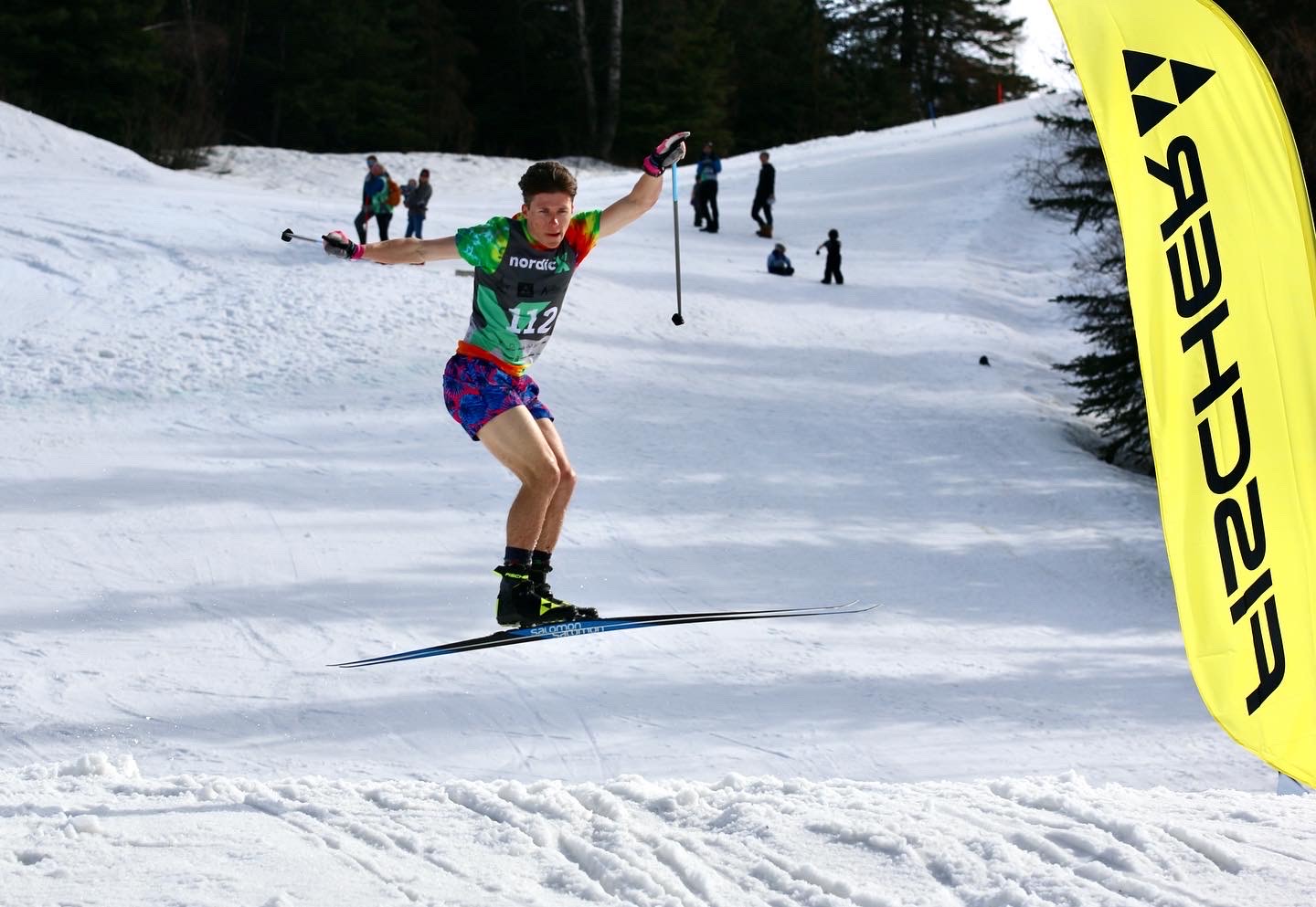
    Michael Earnhart taking part in Anchorage’s NordicX event last April. (Photo: Ophira Group / NordicX)

    FS: Let’s back up and talk about this past season. If you take us back to last Fall, what were your goals going into this season?

    ME: My goal was to make Junior World Championships again, and then just perform as well as I could there. Making the [US Ski Team] D-Team was on my mind, but I didn’t want to set any specific numbers results-wise that I thought would get me there. I didn’t want to say that I had to get a top-15 at Worlds or go for the win or whatever, it was just going to be do whatever I could to get myself onto the D-Team.

    FS: I did notice that after Junior Worlds you chose to race in Minneapolis at Junior Nationals (JNs), and you dominated that U20 category. What was your thinking in doing that versus say, going to OPA Cup finals?

    ME: There were a couple things going on there, but I think the big thing was that it was my last year as a junior so I may as well go have some fun with the guys that I’ve grown up skiing with in Alaska. I wanted to have one more fun time at JNs and I knew I could potentially win some races. I wanted to have a kind of “finish” to my time as a junior and mark it by spending time with the people that have helped me along the way the last four or five years in skiing.

    FS: Quick follow-up: Any comments on the choice of a mullet in Minneapolis?

    ME: You know, I started doing that a couple years ago. I like the idea of growing your hair out all winter to cut it for spring racing. I had a friend cut my hair in the hotel bathroom the night before the first race, and well, I thought it looked pretty good, so…

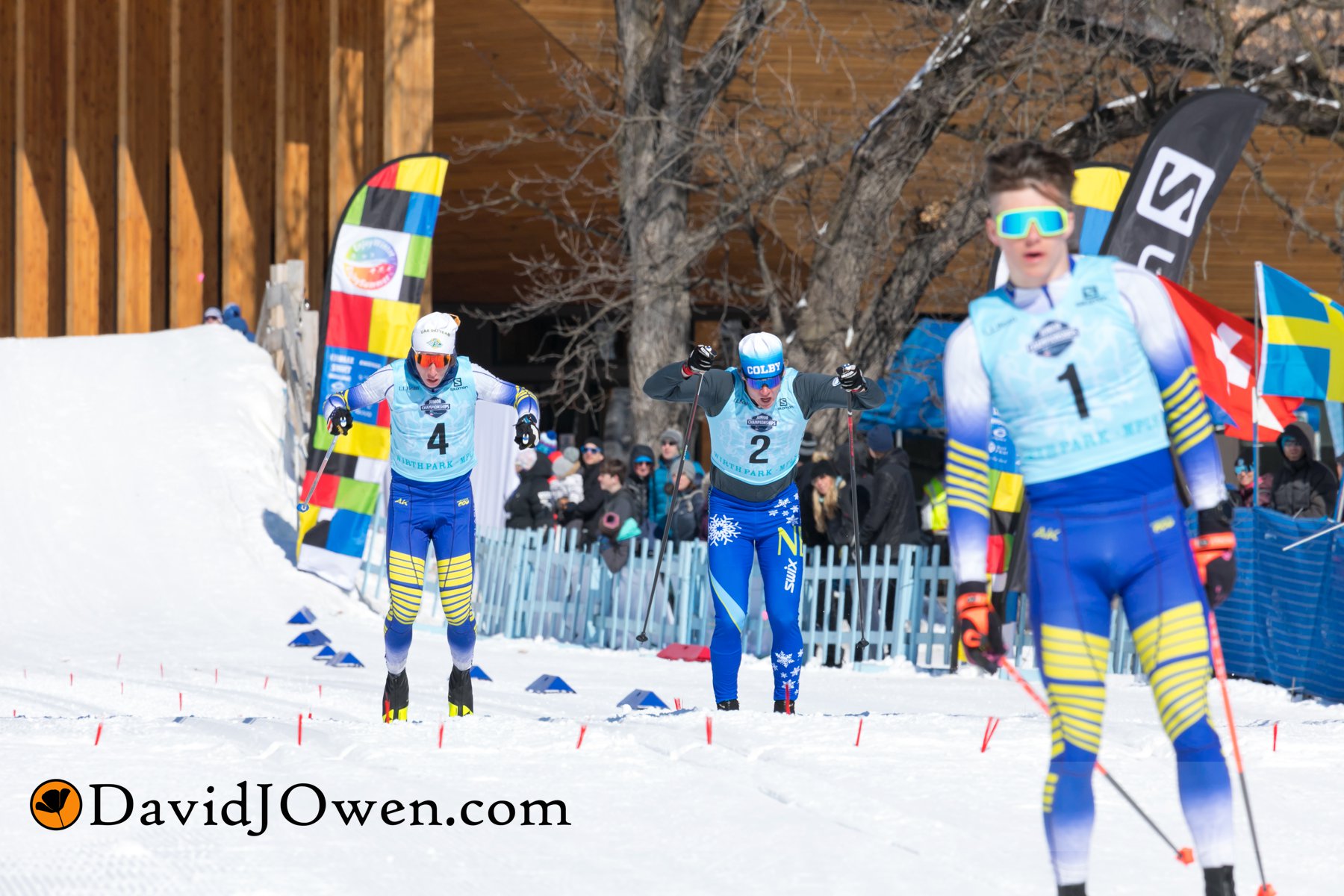
    Michael Earnhart (bib 1) rocking the mullet in question at 2022 JNs in Minneapolis. (Photo: David J Owen Photography)

    FS: I think we all did. If you could pick one highlight from this season, what would it be?

    ME: For me, that’s pretty easily the relay at Junior Worlds. Even though we only got 3rd place when we wanted to win. I felt like it showed that the generation that came just before us, yes, they could get the US a gold medal and make history. But we’re here too, able to get a podium. I think it shows that US skiing is here to stay – we’re going to keep getting better. I’m really proud of having been a part of that.

    FS: That brings us up to this training year. What are you thinking your goals are individually this next season? And what do you want to accomplish alongside those team members that you’re joining the U.S. Ski Team with?

    ME: It’s hard to say right at the moment. I’m kind of at a weird age now being a first year U23, especially when we have so many fast U23s on the team already. I don’t have any specific goals set yet. I just really want to have a productive training year and race as fast as I can. Maybe some top-10s at U.S. Nationals – if you’re looking for a number, I’d put that out there.

    I just want to be as close to winning as I can, and any race that I do, just race hard.

    Michael Earnhart skiing in the suit of his home club Alaska Pacific University (APU). (Photo: Tobias Albrigtsen / @untraceableg).

    FS: All sounds good to me. Thanks so much for helping us get up to speed, and good luck next season!

    ME: You bet, thank you.

  • With ‘Bigger Target’ on His Back, Torchia Joins U.S. Ski Team, Sticks with NMU

    With ‘Bigger Target’ on His Back, Torchia Joins U.S. Ski Team, Sticks with NMU

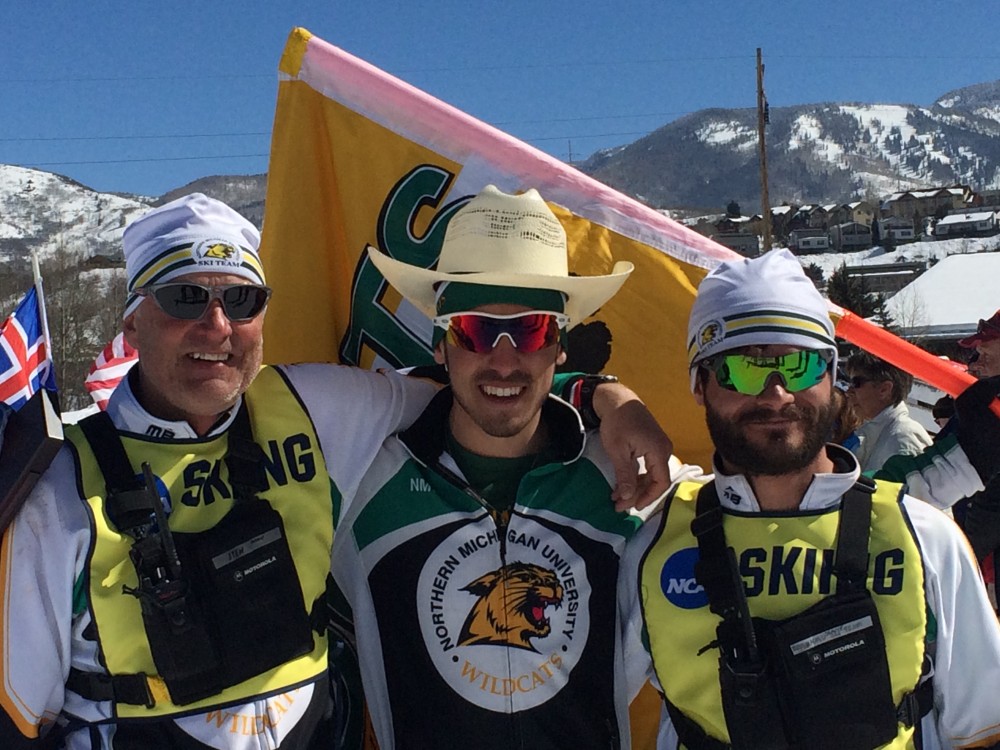
    Ian Torchia (center) with Northern Michigan University nordic head coach Sten Fjeldheim (l) and assistant coach, Shane MacDowell after Torchia placed second in the men's 10 k freestyle race at this year's NCAA Championship races in Steamboat Springs, Colo. (Photo: Courtesy Photo)
    Ian Torchia (c) with Northern Michigan University Head Coach Sten Fjeldheim (l) and assistant coach Shane MacDowell after Torchia placed second in the men’s 10 k freestyle at 2016 NCAA Championship in Steamboat Springs, Colo. He went on to place fourth in the 20 k classic mass start. (Courtesy photo)

    As the youngest in a family of five, it’s no wonder that Ian Torchia, an incoming junior at Northern Michigan University (NMU), considers himself “scrappy.” It’s also no wonder that, when it comes to sport, Torchia takes on skiing with tooth-and-claw grit. Within the first few hours of being a freshman on the NMU ski team, the Rochester, Minn., native established himself as tenacious if nothing else.

    “Watching him ski on the treadmill the first time I worked with him, he was just raw,” Sten Fjeldheim, head coach of the NMU men’s and women’s nordic teams reflected in a phone interview. “His technique was, well, not pretty, but I knew he had a heck of an engine from his running times.”

    After Torchia finished his freshman year just outside qualifying for NCAA Skiing Championships, he made it a goal to reach the championships the following year. As a sophomore, he not only qualified for NCAA’s, but he went on to place second in the men’s 10-kilometer freestyle and fourth in the 20 k classic mass start at the 2016 championships in Steamboat Springs, Colo.

    By the end of his first two years at NMU, the 20-year-old Torchia had also tapped into another tool: technique. He asked his college coaches ceaseless questions, watched countless ski videos and began to implement what he saw on the screen into his own skiing.

    “He’s just really good at being a student of his own sport: skiing,” Fjeldheim said of Torchia’s technical improvements. 

    However, the sophomore’s upward climb last season didn’t end with his work on the NMU ski team. In January, he won the junior men’s 10 k freestyle at U.S. nationals in Houghton, Mich. Also at nationals, he placed seventh among seniors in the men’s 15 k classic, and at 2016 Junior World Championships in Romania, he raced to 15th in the junior men’s 15 k freestyle.

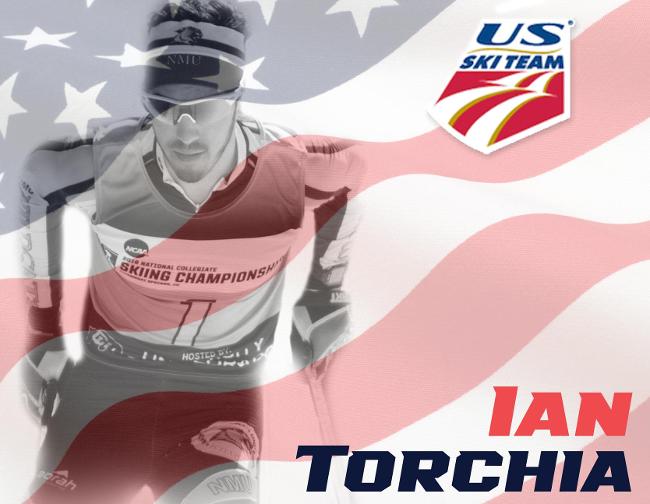
    NMU designed the above image for a press release after Ian Torchia was nominated to the U.S. Ski Team D-Team. (Photo: NMU Wildcats/Twitter)
    NMU designed the above image for a press release after Ian Torchia was nominated to the U.S. Ski Team D-Team. (Photo: NMU Wildcats)

    Most recently, Torchia discovered he was among 16 athletes nominated to the U.S. Cross Country Ski Team.

    “I was on my way to go cliff jumping when Bryan Fish [U.S. Ski Team development coach] called me,” Torchia said on the phone. “The celebratory back flip didn’t go too well.” (According to Torchia, the backflip was more of a “back flop.”)

    Though perhaps brazen when it comes to black flips and Lake Superior bluffs, the main sentiment Torchia spoke of was that of humility.  In his eyes, the opportunity to ski for U.S. Ski Team ‘D’ (or development) Team is an opportunity to once again put his tenacity to the test.

    “You know, there’s still two more levels of the U.S. Ski Team to go,” Torchia said of the ‘A’ and ‘B’ team levels. “If anything, [the nomination] just motivates me to train harder. I mean, the way I see it, it’s an honor to be named. I get invited to the camps and I get the uniform. It puts a bigger target on my back, but I’m OK with that.”

    U.S. Ski Team (USST) Head Coach Chris Grover explained in an email that the team was “looking for athletes who can deliver big results in Europe against tough fields,” he wrote. “Ian was the standout USA male once again at World Juniors and posted his second consecutive top-15 result there.”

    At the 2015 Junior World Championships in Kazakhstan, Torchia notched 11th in the 20 k skiathlon.

    Moving forward, Torchia plans to accept the nomination and attend the two USST summer training camps, the first one taking place in Bend, Ore., this month and the second in Anchorage, Alaska. According to Fjeldheim, not much will change for Torchia in regards to training.

    “He’ll pretty much be on the same training plan that he’s been on,” Fjeldheim said. “But I think the opportunity for him to ski with some other national-team skiers is going to be good.”

    Along with accepting the nomination, Torchia also plans to continue attending NMU as a full-time student and eventually earn a degree in exercise science.

    Ian Torchia (c) with his parents Mike (l) and Patricia after this year's U.S. nationals in Houghton, Mich. (Courtesy photo)
    Ian Torchia (c) with his parents Mike (l) and Patricia after this year’s U.S. nationals in Houghton, Mich. (Courtesy photo)

    “I think my mom would kill me if I wasn’t in school,” Torchia said.

    But his reasons for staying in school extend beyond his so-called death sentence, even if it means suffering through organic chemistry finals. To Torchia, continuing his education sends a broader message to other nordic athletes, especially those trying to determine whether skiing in college can lead to a ski career.

    “One of the main reasons why I wanted this to happen is to show that you can do it while you’re in college,” Torchia said of his national-team nomination. “It is hard to balance school and skiing, but it’s doable. [College skiing] is a pipeline.”

    School, Torchia insisted, also gives him options outside of skiing.

    “Make sure to have balance in your life between skiing and make sure skiing isn’t the only thing in your life,” Torchia said of how he found success in sport. “We kind of take that mentality here at NMU. We have the top GPA of all the sports teams here, so it’s both skiing and school. It’s a lifestyle and we love it. It’s hard, but you got to go for it.”

    Beyond the importance Torchia finds in education, his NMU teammates and coaches also played a large role in his decision to continue his ski career on the college path. He cited post-practice conversations and training plans his coaches provided as a staple to his success.

    “I could not have done this without Sten and [NMU assistant coach] Shane MacDowell,” Torchia said.

    “Ian always shows up with a smile on his face,” Fjeldheim said. “Yeah, he like to pull pranks on me and his teammates every now and then and we prank him back, but he’s a great kid to have on your team as far as sportsmanship goes and manners. He’s very humble.”

    “It’s a lifestyle and we love it. It’s hard, but you got to go for it.” — Ian Torchia, NMU junior and U.S. Ski Team rookie

    With teammates like Adam Martin and Jake Brown, both first-team All Americans at this year’s NCAA Championships, Torchia views his peers as motivation and proof of where they, too, are headed.

    “You can never get too big of a head around here because there will always be someone to serve you a piece of humble pie,” Torchia said. “I can say that I won’t be the last one to be named [to the U.S. SKi Team] out of NMU.”

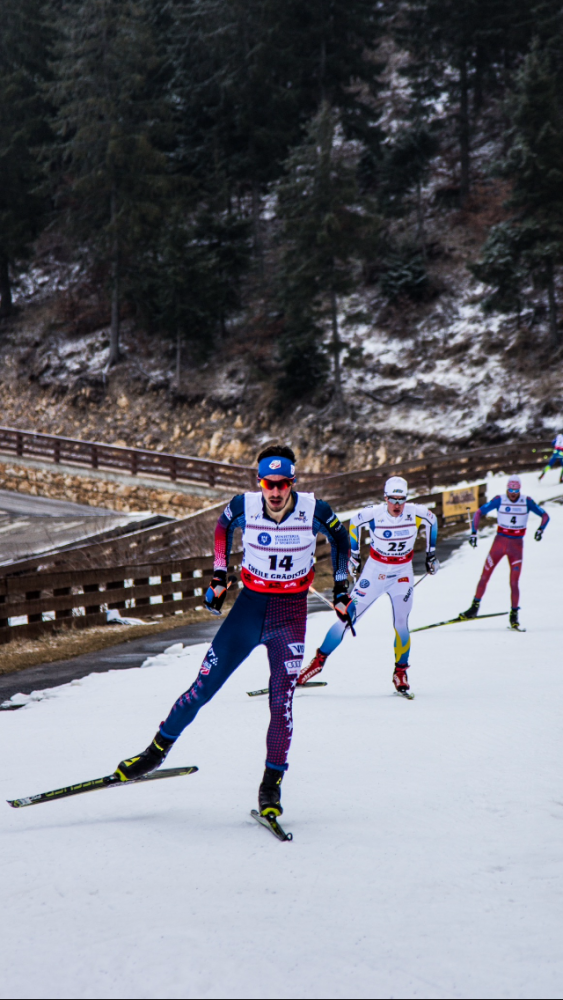
    Ian Torchia (14) racing to a 15th in the men's 15 k freestyle at 2016 Junior World Ski Champioships in Rasnov Romania. (Photo: Thomas O'Hara)
    Ian Torchia (14) racing to 15th in the men’s 15 k freestyle at 2016 Junior World Ski Champioships in Rasnov Romania. (Photo: Thomas O’Harra)

    With the nomination, Torchia is undecided as to where his ski career will be drawn after graduation day. Though not currently on the CXC team, joining the program is one potential route for him post-college. 

    “Kind of this past year, I guess I really thought about skiing after college,” Torchia said. “Right now, Kyle Bratrud is [in Marquette] skiing for [Central Cross Country] and we’re getting [Dartmouth grad] Oscar Friedman up here. I think we’re going to make a return to the days when CXC was a really a powerhouse. I can see myself here. We’ll see. It’s still a long way away.”

    While Torchia’s five-year plan remains flexible, his 14 weeks of summer are at least set to go. This includes attending the two USST training camps, training in Marquette, Mich. (potentially with the likes of Kris Freeman, he said), and wedding crashing.

    “I’m going to go home, surprise my mom on Mother’s Day and then head out to Bend for the camp there,” Torchia said. “Then I’ll come back [to Marquette] for June and then go out to Anchorage for that camp. And then it’s my sister’s wedding in Colorado. So it should be a fun summer.”

    Particularly fun due to the training crew he plans to surround himself with.

    “Basically the entire [NMU] guy’s team is going to be [in Marquette] this summer,” Torchia said. “We call it the Marquette Training Group: MTG. So, MTG 2.0 is kicking off this summer. We’re hoping that a few guest stars show up; there’s rumors that Bird [Kris Freeman] and Tad Elliott and Paddy Caldwell and Brian Gregg might be up here. So it’s going to be pretty kickass.”

    While the USST nomination makes him a new training target to many, Torchia remains humble of where he’s been and where he’s headed. For now, he appears to prefer taking it one step at a time up the ski ladder — even when it comes to housing.

    “I’ve got the Trailer Park Room,” he said, indicating that as one of the younger athletes, it may have fallen on him to take on the tiny living quarters in the NMU men’s ski house for the summer. “It’s the smallest room in the house, but I kind of like it. It doesn’t have a closet, very narrow and small, but I don’t know, I like it.”

    Northern Michigan University's Ian Torchia celebrating his nomination to the U.S. Ski Team D-Team this spring with a cliff jumping back-flip. According to Torchia, it ended as more of a "backflop." (Photo: Abby Cook)
    Northern Michigan University’s Ian Torchia celebrating his nomination to the U.S. Ski Team D-Team this spring with a cliff jumping back-flip. According to Torchia, it ended as more of a “backflop.” (Photo: Abby Cook)
  • Challenges Both New and Familiar For American TD of Junior/U23 World Championships in Kazakhstan

    Challenges Both New and Familiar For American TD of Junior/U23 World Championships in Kazakhstan

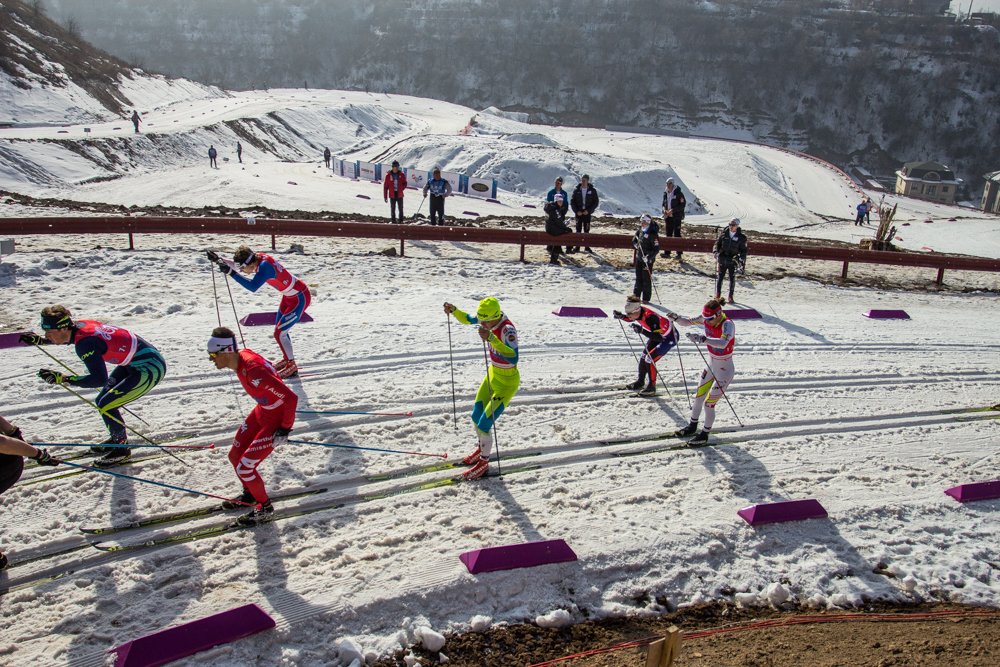
    The venue in Almaty, Kazakhstan, was faced with problems of snow shortages during Junior and U23 World Championships in early February. Here, American Thomas O'Harra (back left) staying with the leaders during the first leg of the junior men's relay; his team would go on to finish 11th. (Photo: Logan Heinemann)
    The venue in Almaty, Kazakhstan, was faced with problems of snow shortages during Junior and U23 World Championships in early February. Here, American Thomas O’Harra (back left) staying with the leaders during the first leg of the junior men’s relay; his team would go on to finish 11th. (Photo: Logan Hanneman)

    Most of the Americans who headed to Almaty, Kazakhstan, for FIS Junior and U23 World Championships were going to race.

    Another man from Alaska? Not so much.

    Matt Pauli, a heavily-involved member of the Nordic Ski Association of Anchorage and an International Ski Federation Technical Delegate (TD) traveled to Almaty to TD the competitions.

    TD’s have a long list of responsibilities before, during, and after competition, including overseeing preparation of the competition courses, advising the local organizing committee, and attending jury and team captains meetings.

    So how, out of all the FIS TD’s in the world, did Pauli end up in Kazakhstan?

    “As FIS TD’s we all bring different strengths to the table,” Pauli explained in an email. “I come from a comp committee, trail maintenance, and trail grooming side. I would like to think I am competent as a TD. I have been involved with cross country ski competition organization and officiating well over 30 years now, starting with the first and only World Cup held in Anchorage in 1983.”

    He also worked as a Technical Delegate Assistant (TDA) in Kazakhstan when the country hosted Asian Winter Games in 2011. He believes that might have helped him get the assignment for Junior/U23’s, which is a particularly important event for FIS. He also hoped it might be a springboard for other championship assignments in the future; among other Americans, Al Serrano has recently held these appointments.

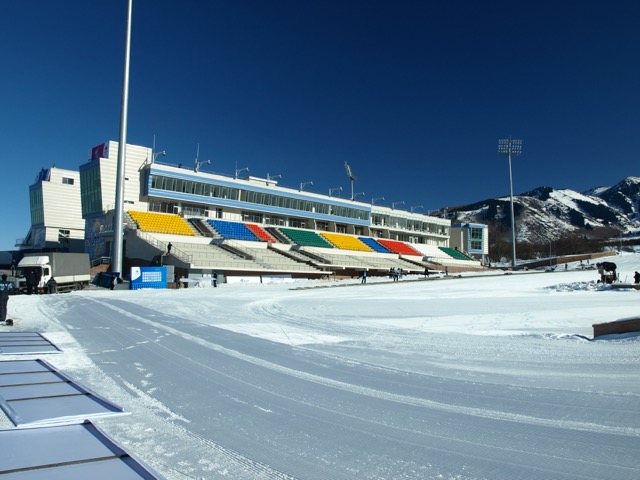
    The stadium at Soldatskoe, about an hour outside the city, which has less smog, more snow, and the ability to better host mass-start type events. Pauli believes this venue would be a better location for cross country and biathlon racing if Kazakhstan wins its bid for the 2022 Olympic Games. (Photo: Matt Pauli)
    The stadium at Soldatskoe, about an hour outside the city, which has less smog, more snow, and the ability to better host mass-start type events. Pauli believes this venue would be a better location for cross country and biathlon racing if Kazakhstan wins its bid for the 2022 Olympic Games. (Photo: Matt Pauli)

    “I was hoping to be in Falun [for World Championships] at this time, not as a TD or jury member, but as a member of the grooming crew,” wrote Pauli, who is on the grooming staff for NSA Anchorage. “I worked with the Chief of Comp, Tomas Jons, at Canmore (he was TD). He was looking for FIS TD’s that knew a thing or two about grooming. It almost worked out but I did have to withdraw my name due to the ‘regular’ job. That, and my wife would like to see me once in a while in the winter and February/March is really busy in Anchorage despite our low snow conditions.”

    Despite the current call of duty to his job as an OSHA safety compliance officer, Pauli says that his flexibility with work is actually one of the strengths that he hopes will cause FIS to continue to call on him.

    “I have a steady ‘regular’ job that is very accommodating to my ski activities and I get my work done,” he explained. “I am happy to take care of events here at home, let FIS know I am available for the coming season, and see what comes up. I think my flexibility is a strength, plus I can speak German if that is helpful.”

    We asked Pauli a few questions about his experience in Almaty, especially considering Kazakhstan’s current bid to host the 2022 Olympic Games. This interview has been edited and condensed.

    FasterSkier: Had you ever seen the venue before the event began, and how long in advance did you travel over?

    Matt Pauli: I had never been to this venue since it was brand new, but I had been to Almaty in the past. I was TDA for the 2011 Asian Winter Games (AWG). Cross country events for the AWG were held at the Soldatskoe venue which is about an hour drive east of the city.

    I arrived two days before the first competition, which is generally adequate.

    FS: I’ve heard some reports that there wasn’t so much snow. What were you able to do about that?

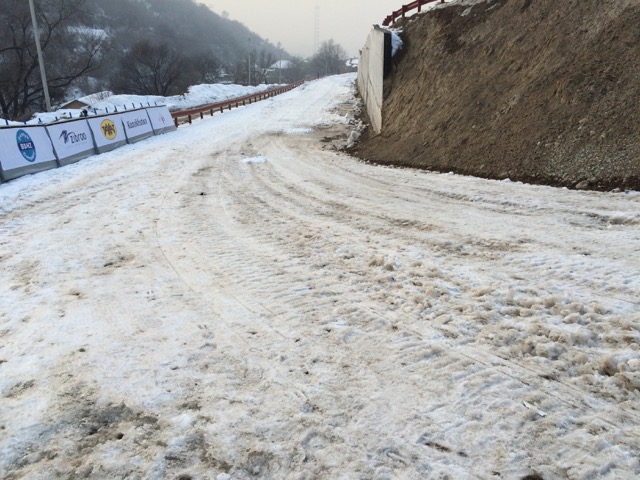
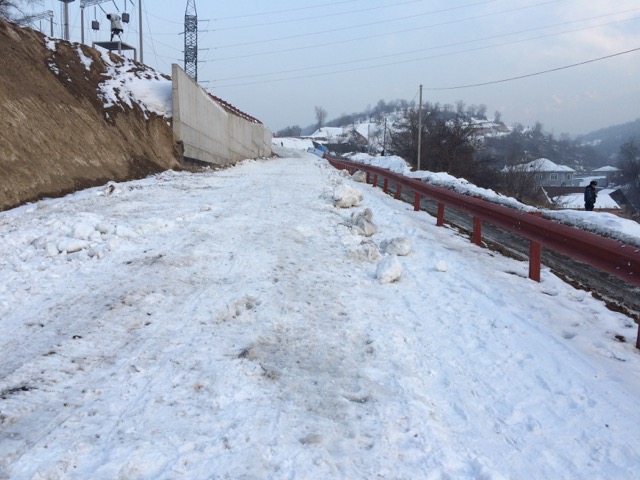
    The "red loop" of the Almaty race trails before the skiathlon competitions. (Photo: Matt Pauli)
    The “red loop” of the Almaty race trails before the skiathlon competitions. (Photo: Matt Pauli)

    MP: Approximately two weeks before the event, realizing that snow conditions were not favorable to hosting a world championship event, I was asked if I could go over earlier. Work commitments prevented me from doing so. In the interim, the TDA, Georgy Kadykov, arrived three days before me. Georgy is Russian and was the chief of competition for Sochi 2014. He was the TD from the AWG and a good number of the JWSC/U23 volunteers had worked at Sochi, including the Sport Manager. I had been in regular email contact with FIS, the OC representative, the Chief of Competition, and the homologation inspector.

    I really don’t think being there a week in advance would have changed a lot of the conditions faced by the athletes and coaches. A Skype call which took into account Alaska, Europe, Almaty time differences was held to get a first hand report from the TDA. The message was clear at that time that conditions were not optimal. At this point, a plan of action was determined and the OC was told what was needed.

    FS: When you arrived, what kind of shape were things in?

    Another section of the red loop. (Photo: Matt Pauli)
    Another section of the red loop. (Photo: Matt Pauli)

    MP: I arrived at 3 am, went to my hotel to get a short nap, and had breakfast with the FIS representative Michal Lamplot and Georgy. There, I received the report on conditions and what the OC was beginning to do. We left shortly after that to see the venue where we took a walk of the Blue 2.5. There was really only a viable 800 meter sprint loop and okay skiing on the lower 2.5 k blue loop. The upper 2.5 K blue was in good shape. That portion was in good shape and actually utilized more of the natural terrain as well as running through the apple tree groves. After all, Kazakhstan is the birthplace of apples.  The red loops were nowhere near skiable.

    Daily afternoon debrief meetings continued with city officials and competition committee (CC) members for the rest of the week. The message I understood was that city officials accepted the fact they were not ready and that work would continue throughout the week to ensure the event would go as planned. We then drafted a plan on how much snow was needed to be hauled or produced to start making race course(s). At this point we also determined that there was no way a viable sprint course was going to be ready in two days.

    Postponing the first day of racing was a good decision. It did mean a double sprint day, all juniors and all U23, so the days became that much more hectic. It also meant that juniors would get one less rest day. The jury appreciated this flexibility amongst the teams. As anyone knows, beginning a championship event with a sprint event always raises the stress level. Having a World Cup timing crew in Swiss Timing helps. The local comp committee did a very good job in getting the events in.

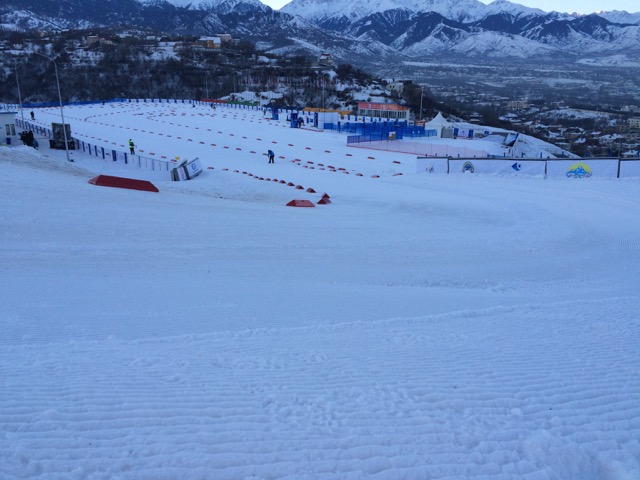
    The blue loop, here about to drop into the stadium, had slightly better snow conditions. (Photo: Matt Pauli)
    The blue loop, here about to drop into the stadium, had slightly better snow conditions. (Photo: Matt Pauli)

    Conditions in Almaty are not unlike conditions I have experienced here in the U.S. at national championship events.

    FS: What about the smog? In general, is that something that is on TD’s radar, or is there any precedent for how to handle unusual factors that may affect athletes’ health and performance?

    MP: The only reason air quality was on my radar was because of my prior visit in 2011. I knew how athletes liked to take either a morning or evening run. I wondered how they would accomplish that.

    Air quality concerns are out of the TD’s control. Weather events on-site are more readily addressed by a TD. This could include temperature, high winds, snowfall, icy conditions. A TD takes these issues into account to discuss with the jury if an event should be postponed, program changed, or even canceled.

    FS: In terms of smog, it seems like Almaty isn’t the only place you could imagine it being a problem. I know Salt Lake City has some crazy inversions sometimes too, and there were smog problems at the Beijing Olympics.

    Smog and haze hung in the background as Scott Patterson (APU) raced to a career-best 13th in the 15 k freestyle at U23 World Championships in Almaty, Kazakhstan. (Photo: Bryan Fish/USSA)
    Smog and haze hung in the background as Scott Patterson (APU) raced to a career-best 13th in the 15 k freestyle at U23 World Championships in Almaty, Kazakhstan. (Photo: Bryan Fish/USSA)

    MP: Almaty can be compared to Salt Lake City on a number of factors. They both sit at the foothills of massive mountain ranges. They are both at elevation. They both have high volumes of vehicular traffic.

    But Soldier Hollow is probably not impacted as much as the Almaty city venue. The Soldatskoe venue east of Almaty is similarly not impacted. It is actually very similar to Soldier Hollow, including the name which I believe translates to “Soldiers Valley.” We deal with similar inversions here in Alaska.

    FS: Were there a lot of spectators, and was it a spectator-friendly venue? Are there other things the venue is able to take advantage of in terms of being close to a big city?

    MP: Depending on the event, locals did show up to watch. I did note that there were less parents than what I observed from the 2014 JWSC/U23 in Val di Fiemme. I would imagine travel considerations had a lot to do with that. The stadium was very spectator-friendly, although it had a hard time accommodating all the race formats. It is just not a good stadium for mass starts and skiathlon.

    Any city can benefit from having a ski venue as close to the population as possible.  Unfortunately, the constructed trail system was not really done with the beginner or intermediate skier in mind. It is a racing venue.

    The venue had a stunning backdrop with 3000 to 4000 meter peaks to the south. But the actual race trails were not aesthetically pleasing. Steel guardrails for fencing required the addition of pads. Concrete formwork was used for trail set backs. The stadium was set on an excavated plateau. Skiers passed adjacent to and under high voltage powerlines since a substation existed at the top of the red loops. You could hear the crackle as well as having your hair stand-up on end when skiing under it.

    FS: How was the local organizing committee? Was it easy to work with them to implement changes that you thought were necessary?

    MP: The OC was the city of Almaty with direct contact with the mayor. We (FIS, Jury) were briefed on the city’s intent of hosting all events at the the new venue. While we understood this, we also expressed our concern on the lack of course preparation.

    The vice-mayor took up our concerns immediately and the trucks started hauling snow. This continued throughout the week, following daily afternoon briefings on what needed attention. This did impact training and course inspection, and in some cases created some significant safety hazards between machines and athletes. Some of this was created by the on-going trailwork, and some by the athletes, coaches, and technicians themselves. It was not ideal.

    When I was given the TD assignment in Spring 2013, I figured the event would be at Soldatskoe. It was not until July 2014 that I learned the city venue was being developed as the location for the championships. The final trail design had not taken place, construction was just beginning. They had held a World Cup Nordic Combined event there on a smaller trail system, so it seemed that the city venue would be acceptable.

    The frequency of venue reports was agreed to with the OC/CC at the Fall 2014 FIS meeting in Zurich. The information we received was really no different than what I have received in the US for similar competitions. Sometimes it is just real difficult to admit that you are falling behind and need assistance. The OC had committed to a very optimistic construction schedule in completing the venue. The last excavator actually left the stadium at the end of December.

    I really had no issues with the CC. They were not unlike any of the comp committees I have headed up, been a part of, or had to interact with as a TD. While there was a difference in language, there was no difference on putting on a quality ski competition.

    FS: Thinking about Almaty’s Olympic bid, do you think this is a potential Games venue?

    MP: Cross country and biathlon events would be better off held at Soldatskoe.  There was a significant investment there in terms of competition buildings, trails, and other infrastructure for the AWG. There would definitely need to be some transportation upgrades as well as lodging facilities constructed. For the city venue a lot of work would need to be done in order to have a viable stadium for all events required of an Olympic competition calendar. Since it is adjacent to the jumps, it fits the bill for Nordic Combined events. But mass start events are not a good option for the city venue. The team sprint would be difficult to fit in the stadium. I think it would be important for another high level event be held at the Soldatskoe venue.

  • O’Harra 14th in Classic Sprint for Junior Worlds Best; Stewart-Jones Leads Three Canadian Women in Heats

    O’Harra 14th in Classic Sprint for Junior Worlds Best; Stewart-Jones Leads Three Canadian Women in Heats

    An exhausted-and-ecstatic Fredrik Riseth of Norway after winning his first Junior World Championships title on Tuesday in the 1.3 k classic sprint. (Photo: FIS)
    An exhausted-and-ecstatic Fredrik Riseth of Norway after winning his first Junior World Championships title on Tuesday in the 1.3 k classic sprint. (Photo: FIS)

    Last year in his FIS Junior World Ski Championships debut, Thomas O’Harra placed 54th in the freestyle sprint in Val di Fiemme, Italy. Another year older and with another season of training under his belt, the 18-year-old Alaska Pacific University (APU) skier placed 14th on Tuesday in the opening race of 2015 Junior Worlds in Almaty, Kazakhstan: the 1.3-kilometer classic sprint.

    Thomas O'Harra (APU) leading his freestyle-sprint quarterfinal with Sun Valley's Miles Havlick (3) and Kris Freeman last month at 2015 U.S. nationals in Houghton, Mich.
    APU’s Thomas O’Harra (13) leading his freestyle-sprint quarterfinal with Sun Valley’s Miles Havlick (3) and Kris Freeman (8) last month at 2015 U.S. senior nationals in Houghton, Mich. He went on to place 18th overall.

    O’Harra qualified 18th and went on to place third in his quarterfinal, 2.92 seconds behind the winner of his heat, Ludek Seller of the Czech Republic, and 0.35 seconds behind Russia’s Alexander Bakanov, who also automatically advanced in second.

    O’Harra’s quarterfinal was the slowest of the five, which prevented him from moving on to the semifinals as a lucky loser. But at the end of the day, 14th was still way better than 54th.

    “I don’t know if I can say I was expecting it, but I definitely knew that if I had a good race, I could get into the top 30,” O’Harra wrote in an email on Tuesday. “Coming into the sprint, my goal was to qualify. Ultimately though, my goal was to get into the top 10. Once I had qualified, I focused more on trying to advance out of my quarterfinal.”

    He reflected that his quarterfinal was “pretty hard right off the bat … everyone was jostling for position.” Knowing that he needed a top-two in his heat to guarantee a spot in the semifinal, O’Harra followed Bakanov in his track to the finish and lunged between the Russian’s legs as Bakanov let up near the line. And while it wasn’t quite enough, O’Harra was pleased to finish well within the top 30.

    “Today was a much better experience than last year’s sprint!” he wrote. “Last year I tripped myself going up the first hill and ended up 54th — not exactly super-duper. I think that a year’s more experience helped a lot. I was definitely a lot more collected and calm this year, both going into the race and during the race.”

    He was also optimistic about another top 30 in Wednesday’s 10 k freestyle.

    “I think that I’m in a really good place right now, but I didn’t actually try to peak specifically for these races, mainly because there is still a lot of racing left this season,” he wrote.

    “Last year I tripped myself going up the first hill and ended up 54th — not exactly super-duper. I think that a year’s more experience helped a lot.” — Thomas O’Harra, 14th in 2015 Junior World Championships 1.3 k classic sprint

    O’Harra led the North Americans in the junior men’s sprint, which Norway’s Fredrik Riseth won outright in 3:01.25. The Norwegian qualified fifth behind Finland’s Lauri Vuorinen (the top men’s qualifier in 3:01.88), and Riseth went on to win his quarterfinal and his semifinal before beating Bakanov by 4.85 seconds in the final.

    Norway’s Johannes Høsflot Klæbo made the podium as well in third, 8 seconds behind Riseth. Germany’s Marius Cebulla was fourth (+10.04), Sweden’s Oskar Svensson finished fifth (+10.11), and Vuorinen was sixth (+21.67).

    Riseth’s father, Svein Riseth, told Langrenn that he was impressed with his son’s result. While he knew Fredrik was in great shape, Svein wasn’t sure he had enough left after dominating his quarterfinal and semifinal. The contender he was most concerned about was Fredrik’s Byåsen IL teammate, Høsflot Klæbo.

    “Johannes is not only a good skier, but he is mentally and tactically strong,” Svein said, according to a translation. “It is outrageously fun two Byåsen runners entered the podium. Not just for the team but for [Trondheim] skiing.”

    While no other North American men qualified in the top 30, Canada’s Julian Smith (Georgian Bay) placed 39th, 3.82 seconds from 30th. Americans Evan Weinman (Middlebury) and Peter Holmes (University of New Hampshire) were 46th and 48th, respectively, Canada’s Alexis Dumas (CNEPH/NST-Junior) ranked 53rd, Ricardo Izquierdo-Bernier (CNEPH/NST-Junior) was 56th, American Gavin Hess (UNH) 58th, and Canadian Philippe Boucher (CNEPH/NST-Junior) 59th.

    Stewart-Jones Leads Three Canadian Women in the Heats

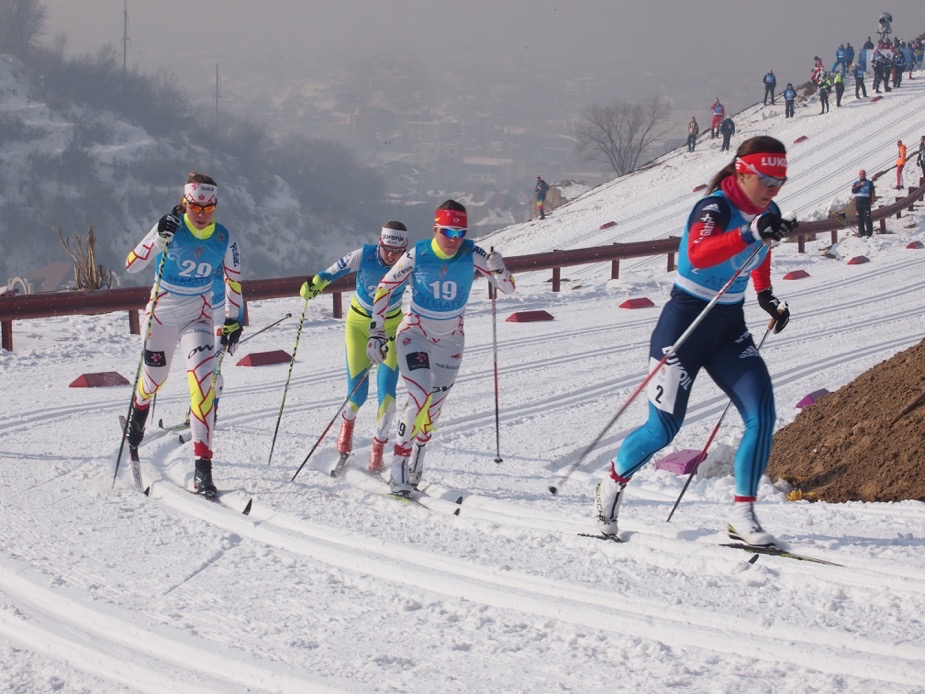
    Canadian National Junior Team members Katherine Stewart-Jones (19) and Maya MacIsaac-Jones (29) chase Russia's Natalia Nepryaeva (2) in the quarterfinal of the 1.3 k classic sprint on the opening day of 2015 Junior World Championships in Almaty, Kazakhstan. (Photo: Lisa Patterson/CCC)
    Canadian National Junior Team members Katherine Stewart-Jones (19) and Maya MacIsaac-Jones (29) chase Russia’s Natalia Nepryaeva (2) in the quarterfinal of the 1.3 k classic sprint on the opening day of 2015 Junior World Championships in Almaty, Kazakhstan. (Photo: Lisa Patterson/CCC)

    In the women’s 1.3 k classic sprint, Katherine Stewart-Jones knew what was coming, or at least what to expect, in her third time qualifying for the Junior Worlds heats.

    The 19-year-old Canadian National Junior Team member qualified in 19th, 13.61 seconds behind Russia’s Yulia Belorukova, the top qualifier in 3:29.24. Stewart-Jones then finished fourth in her quarterfinal, 9.77 seconds after another Russian, Natalia Nepryaeva, who won the heat. Their quarterfinal was the second slowest and Stewart-Jones did not advance, putting her in 19th overall.

    “I am satisfied with my result,” Stewart-Jones, the top North American female junior of the day, wrote in an email. “I definitely had the goal to make it past the quarter-finals because last year I was extremely close. I can’t really be disappointed with how it turned out because I gave everything I had.”

    “I definitely had the goal to make it past the quarter-finals because last year I was extremely close. I can’t really be disappointed with how it turned out because I gave everything I had.” — Katherine Stewart-Jones, 19th in 2015 Junior World Championships 1.3 k classic sprint

    Last year at Junior World Championships, she placed 15th in the freestyle sprint, and the year before, she was 25th at the 2013 Junior Worlds in Liberec, Czech Republic.

    But for the first time on Tuesday, she raced against one of her fellow national-junior team members in the heats: Maya MacIsaac-Jones of Rocky Mountain Racers (RMR).

    “We both had a really good start so it was fun to ski at the front together for the first part of the race,” Stewart-Jones explained. “After the long downhill I was in third place but then I made a bit of a tactical mistake. At the start of the long uphill I went right behind a Russian but she slowed down. When I went to make the pass and change lanes I lost my momentum.”

    MacIsaac-Jones, 19, made the top-30 qualifying cutoff in 29th and ended up fifth in her first time racing the heats at that level, 12.05 seconds behind the winner.

    “Katherine and I have raced together for a long time, and since there are so many things at World Juniors that are different from racing in Canada, it was nice to have a familiar face beside me,” MacIsaac-Jones wrote in an email. “My ‘realistic’ goal for today was to qualify, and my ‘dream’ goal was to get a top-15 result. I am very happy to have qualified for the heats, especially to have qualified with two of my teammates, but I am disappointed that I wasn’t able to move on past the quarter final.”

    Her previous best in her last Junior Worlds in 2013 was 36th in the classic sprint. On Tuesday, she placed 25th overall. The third Canadian woman to make the rounds, Sophie Carrier-Laforte (Skinouk/NST-Junior) qualified in 23rd and placed 22nd overall after finishing fifth in her quarterfinal, 12.21 seconds behind Austria’s Lisa Unterweger, who won the heat.

    “It was a lot of fun to be racing with so many other Canadian girls in the heats today,” MacIsaac-Jones wrote. “We have all been training really hard for these championships, so it feels great to show the world what Canadian girls can do!

    “This experience is definitely different from my experience in Liberec 2013,” she explained “I feel like I am in a lot better distance racing shape than I was in Liberec, and I should have a chance to race most or all of the distance races, which will be a lot of fun. This being my second Championships, I feel like I have a bit of a better idea of what to expect and how to prepare for racing on the international scene.”

    Stewart-Jones was also looking forward to the distance races after placing 31st in the skiathlon in Val di Fiemme last year.

    “I would like to make a top 15 in a distance race and I believe that I can,” she wrote.

    Nakkertok Head Coach Kieran Jones wrote in an email that Stewart-Jones’ performance on Tuesday wasn’t a surprise.

    “We have been targeting top 30’s at World Juniors since the start of the year. While I was pretty excited for the classic sprint, I would say that it’s definitely not her strongest event,” he noted. “It’s more of a good indicator that the fitness and speed is where we want it to be. Katherine is rock solid — once she gets rolling, she’s great at managing her energy, enthusiasm, and focus.”

    He explained that she’s shooting for top-30 results in both Wednesday’s 5 k freestyle and Friday’s 10 k skiathlon.

    “Personally, I think she has a shot at a top 10 in the 5 km if everything goes to plan,” Jones wrote. “She is also really looking forward to the relay — this year the Canadian women’s team is one of the strongest it has been in a long time, and she wants to help them have a strong finish.”

    Germany's Victoria Carl after notching her second Junior World Championships title and third podium in the first race of 2015 Junior Worlds in Almaty, Kazakhstan. (Photo: FIS)
    Germany’s Victoria Carl after notching her second Junior World Championships title and third podium in the first race of 2015 Junior Worlds in Almaty, Kazakhstan. (Photo: FIS)

    Just 0.26 seconds from qualifying in the top 30, Julia Kern of the Cambridge Sports Union led the U.S. junior women in 31st. Vivian Hett (Northern Michigan University) placed 36th, 3.89 seconds from 30th, and Hailey Swirbul (Aspen Valley Ski & Snowboard Club) was 40th.

    Canada’s Annah Hanthorn (Whitehorse) finished 45th, and American Kristen Bourne (NMU) placed 46th.

    Germany’s Victoria Carl racked up her second Junior Worlds title since she last raced at the championships in 2013 (where she won the 5 k freestyle and placed second in the classic sprint). Carl, 19, qualified fourth and won her quarterfinal and semifinal before topping the final as well in 3:29.01, 1.64 seconds ahead of Belorukova in second.

    Another one of the women in the Stewart-Jones/MacIsaac-Jones quarterfinal, Nepryaeva placed third in the final, 2.18 seconds back from the win. The Russian edged Norway’s Lotta Udnes Weng by 0.2 seconds for the podium, and Weng’s sister Tiril Udnes Weng placed fifth, 6.42 seconds after Carl. Germany’s Jenny Mann finished sixth in the final (+30.43).

    First Impressions

    The junior classic sprint was originally scheduled for Monday, then pushed back a day to allow more time to extend the 800-meter loop to 1.3 k. In addition to concerns about dirt and rocks on the trail, the air quality in Almaty continues to pose one of the biggest problems for athletes, with several U.S. athletes bringing ventilation masks to the championships.

    “The air quality is certainly an issue, but we all share this challenge,” U.S. Ski Team Development Coach Bryan Fish wrote in an email. “Many of our athletes purchased filtering masks before arriving. The same ones used [at the Summer Games] in Beijing.

    “They don’t wear them all the time — primarily when skiing,” he added. “The trails are uphill, so it depends how high the inversion is. Unfortunately there is no way to escape it in the city.  All the teams are staying in the city except Russia is an hour away in the mountains.”

    According to O’Harra, “Skiing here is… thin. When we arrived, there was only about 2.5k of trail, and that was full of rocks. The volunteers and organizers have done an amazing job, though! They have been blowing snow around the clock, and their hard work definitely shows,” he wrote. “The smog varies. It pretty much always sits down in the bottom of the valley, and most days it creeps up to where the trails are as we ski. It was definitely hazy today, but there have been worse days. I don’t think that it hindered my performance, but I still don’t like having it around.”

    MacIsaac-Jones wrote that the skiing over the last week had not been ideal; the postponement of the first race “altered everyone’s race preparations, and we have been dealing with heavy smog all week.”

    She added that there was adequate snow on the sprint course, “and there should be enough for the skate race tomorrow. The snow here is artificial, cold and hard-packed right now, which is great for me because it is similar to the snow I am used to training on in Canmore, Alberta,” she wrote.

    “The skiing here is nothing like I have seen before,” Stewart-Jones explained. “The race site is built at the top of a huge sand hill in the middle of the city. All the trails weave around the hill and the snow is all man made. … The smog is definitely an issue; I have been coughing a lot more than usual.”

    Through email exchanges, her coach Jones has been keeping tabs on the conditions.

    “That stuff is out of our control,” he wrote. “That’s always been the message — control what you can, and don’t worry about anything else. … Kath is great at that, so I wasn’t worried.”

    — Chelsea Little contributed reporting

    Results: Men | Women

  • A Guide to the Development Trips Selected at the U.S. Cross Country Championships

    5904_MattieWattsQuarter.jpg-628x250

    (Press release)

    Every year, the U.S. Cross Country Skiing Championships, often called “Nationals” plays host to the skiers not racing in Europe, skiers making a jump to the next step, beyond racing in the U.S. to international competition and a global ski career.

    “A popular question is, ‘How do we obtain International success in Cross Country skiing?’ ” explains U.S. Ski Team Development Coach, Bryan Fish. “Obviously, it takes hard work and well-planned consistent training, however success also stems from knowing the key opportunities as an upcoming skiers.  These opportunities are both domestic and abroad.”

    The 2015 US Cross Country Skiing Championships January 2-10 on at Michigan Tech Nordic Training Center in Houghton, Michigan is that opportunity. These are the events that are measured as key pillars in becoming a World Class skier. “ALL athletes need a FIS license for these trips.  Some/parents/ coaches encourage their athletes to not purchase a FS license until they qualify for the U18 trip for example.  This however means they go into these races with no FIS profile and hence poor starting positions at the races. FIS licenses are good to have in advance for this purpose.”

    So athletes need a FIS license, a Passport, but what of the trips? What are the details? Here are the basic sketches of the NNF funded, USSA sanctioned devo trips at the US Cross Country Skiing Championships. Skiers will be competing for berths in the following three critical international development teams. Selection for the teams is competitive and spots are limited.

    • The U18 Trip – Often called the Scando Trip, this competition is geared for 16 and 17 year old athletes en route to a career of international racing. An annual two week trip focused on raising the level of skiing awareness for developing Americans this event focuses athletes by exposing them to stronger competitive events, skiing clubs and programs in Scandinavia.

                Details: Feb 1-11 Örnsköldsvik, Sweden (Trip total: 12 athletes – 6 female & 6 male)

    • The WJC / U23 Championships– Internationally recognized as a stepping stone to World level skiing, racers who go on to World Cup success often have posted results in the top ten at World Junior competitions (for athletes under 20 years old) or the U23 World Championships (for athletes under 23). The NNF funds the majority of this trip, subsidizing the individual costs for those that qualify through strong domestic racing.

                 Details: Jan 28 – Feb 9 Almaty, Kazakhstan (22 athletes – Juniors  = 6 female & 6 male; Under-23 = 5 female & 5 male)

    • The World Cup/ World Championships (Double points for US Champs to name SuperTour Leaders & compete for World Champ berths) – Skiing’s highest level of competition, young skiers have the capacity to make this leap early if talent allows. (Jessie Diggins and Sadie Bjornsen are examples of women who raced from a young age at the World Championships.)

                 Details: Based off points selections. Numbers will vary.

    Each of these teams builds towards the next team, the next level, the next caliber of racing.  Success requires step-by step-opportunities to allow the athletes to grow and improve their skiing. Lastly, all of this takes money and the USST does not provide funding. The National Nordic Foundation was founded by Reid Lutter for this very reason back in 1995. The NNF funds the majority of the expenses associated with these events as NNF Pillar Projects.

    “Step one for every developing skier is taking part in events like the US Cross Country Skiing Championships,” Fish continued. “You have to toe the start line and compete for a position to qualify for one of these teams. “

    For more information on the U.S. Cross Country Skiing Championships, log onto www.nordicchampionships.org

    For more information including the criteria in determining each of these teams, log onto the USSA website at: www.ussa.org

    To learn more about the National Nordic Foundation, log onto www.nationalnordicfoundation.org.

  • Russia Reigns Junior Worlds 5/10 k Classic; Two Canadians in Top 15 (Updated)

    Russia Reigns Junior Worlds 5/10 k Classic; Two Canadians in Top 15 (Updated)

    Russia Roman Kaygorodov racing to his first Junior World title on Sunday in the 10 k classic individual start in Val di Fiemme, Italy. (Photo: Fiemme2014)
    Russia Roman Kaygorodov racing to his first Junior World title on Sunday in the 10 k classic individual start in Val di Fiemme, Italy. (Photo: Fiemme2014)

    Note: This article has been updated to include comments from Canadians Ricardo Izquierdo-Bernier, Scott Hill and Katherine Stewart-Jones.

    Russia went out on a high note on the last day of individual racing at Junior World Championships in Val di Fiemme, Italy, with Natalia Nepryaeva and Roman Kaygorodov winning the women’s 5- and men’s 10-kilometer classic individual starts, respectively, on Sunday.

    Russia's 18-year-old Natalia Nepryaeva celebrates her 2.7-second victory in Sunday's 5 k classic individual start for her first title at Junior World Championships in Val di Fiemme, Italy. (Photo: Fiemme2014)
    Russia’s 18-year-old Natalia Nepryaeva celebrates her 2.7-second victory in Sunday’s 5 k classic individual start, her first title at Junior World Championships in Val di Fiemme, Italy. (Photo: Fiemme2014)

    For Nepryaeva, 18, the victory was her first at the world championships and she did so by edging Sweden’s Sofia Henriksson by 2.7 seconds in 14:05. Another Russian, Anastasia Sedova rounded out the podium in third, 13.6 seconds after her teammate.

    “I am exhausted, but winning a gold medal in a world championship is an incredible satisfaction,” Nepryaeva told FIS after the race. “I kept focused on my pace throughout the whole race, although I wasn’t sure I was going to be able to climb the last uphill. There was another girl in front of me and I kept skiing really close to her to keep control of my pace. I am really happy for the other girls in my team too, it’s a great day for Russia.”

    For Henriksson, 19, the silver marked her first individual podium at her fourth Junior World Championships.

    “I feel so happy today because I have been struggling for this medal for so long,” she told FIS. “In 2012 in Erzurum in the 5km Classic I finished fourth, only one second behind the bronze medal. It feels good to break up the three Russians.”

    As Nepryaeva and Henriksson passed through the intermediate checkpoints, it was clear they were gunning for top two. Nepryaeva narrowly prevailed on a hilly and challenging course at Lago di Tesero, leading four Russians in the top six, with Alisa Zhambalova in fourth (+16.4), Germany’s Julia Belger in fifth (+24.2) and Russia’s Yulia Belorukova in sixth (+27.4).

    In the men’s race, Kaygorodov, 18, won his first race at the championships in 26:36.9 for his first title (and podium) as well, beating Swedish runner-up Jens Burman by 5.5 seconds. Norway’s Petter Reistad was another 0.3 seconds back in third.

    “I can’t believe it!” Kaygorodov told FIS. “In the first part I didn’t want to push too much, the snow was pretty slow and I wanted to save most of my energy for the last lap. When I finished this race I was totally exhausted, and for me this result will be unforgettable.”

    Burman said he felt like he had good power and energy throughout his race.

    “I think that was a good race for me,” he told FIS. “I don’t do anything in particular to get encouragement or motivation, I only think I have to go fast.”

    Canada's Ricardo Izquierdo-Bernier leads a teammate at 2014 Junior World Championships in Val di Fiemme, Italy. (Photo: Ricardo Izquierdo-Bernier)
    Canada’s Ricardo Izquierdo-Bernier leads a teammate in the 20 k skiathlon on Jan. 31 at 2014 Junior World Championships in Val di Fiemme, Italy. (Photo: Ricardo Izquierdo-Bernier)

    France’s Jules Lapierre and Valentin Chauvin were fastest through the first checkpoint, but Kaygorodov picked it up for the last half of the race and put time into his competitors over the final kilometers.

    Lapierre ended up fourth (+12.9) and Chauvin placed seventh (+18.4), while Sweden’s Simon Lageson placed fifth (+13.5) and Marcus Ruus took sixth (+16.9).

    Monday’s relays were the final races on the schedule, with Sweden winning the women’s 4 x 3.3 k, defending their title from last year with Anna Dyvik, Henriksson, Maja Dahlqvist, and Jonna Sundling.

    Canada placed 10th with Frédérique Vézina, Dahria Beatty, Anne-Marie Comeau, and Katherine Stewart-Jones. The Americans finished 12th of 14 teams with Nichole Bathe, Marion Woods, Stephanie Kirk, and Sloan Storey.

    Norway won the men’s 4 x 5 k with Eivind Krane Heimdal, Reistad, Johan Hoel, and Eirik Sverdrup Augdal. The U.S. men placed 12th of 18 teams, with Adam Martin, Lars Hannah, Thomas O’Harra, and Patrick Caldwell Canada was 13th with Ricardo Izquierdo-Bernier, Alexis Dumas, Scott Hill, and Benjamin Wilkinson-Zan.

    Two Canadians in Individual Top 15

    Izquierdo-Bernier (Fondeurs Laurentides), who’s living in France with his family until August, when he’ll return to Montreal, notched 14th in the 10 k on Sunday.

    In an email, he xplained his goal was top 20 in one race at his first Junior World Championships.

    “I had identified the skiathlon to be my best chance to accomplish it, but bad skies in the classic part ruined my race … it’s part of cross country,” he explained of the preceding race, in which he placed 57th.  “Sunday morning I had no expectations, my only goal was to do a good race in classic and keep a steady pace for the 2 laps. Up to now this year in classic, I didn’t have any good race and the result of Sunday morning surprised me a little!”

    Throughout the 10 k, he focused on managing himself and his effort.

    “I knew that I had a good race but I was not expecting to finish in the top 20,” Izquierdo-Bernier wrote. “After the race I was watching the screen with the timings, as the other skiers were ending their race and my time was staying tin the top ones. As the last racer  finished, I was very happy and my goal was achieved.”

    Izquierdo-Bernier moved to the French Alps, specifically the Vercors, for his father’s sabbatical year.

    “Last summer I trained at the training center in Québec and when I came to France I trained 2 months with some French athletes and had finalised my preparation alone with a personal coach,” he explained.

    Dahria Beatty (Alberta World Cup Academy) racing to 29th in Friday's 10 k skiathlon at Junior World Championships in Val di Fiemme, Italy.  She notched 15th in the 5 k classic on Sunday. (Photo: FlyingPointRoad.com/Proceeds go to the National Nordic Foundation)
    Dahria Beatty (Alberta World Cup Academy) racing to 29th in Friday’s 10 k skiathlon at Junior World Championships in Val di Fiemme, Italy. She notched 15th in the 5 k classic on Sunday. (Photo: FlyingPointRoad.com/Proceeds go to the National Nordic Foundation)

    The lone Canadian man in the top 40, he shared a personal best in the top 15 with Dahria Betty of the Alberta World Cup Academy (AWCA), who was 15th in the women’s 5 k.

    For Beatty, 19, the result was her best in three world championships after she placed 20th in the freestyle sprint on Jan. 29. She explained in an email that her goal was top 15.

    “I am really happy to have achieved that,” Beatty wrote. “The 5k classic was the race I was most looking forward to as I prefer classic races to skate races. I’d like to think I can be both a sprinter and a distance skier, and I hope that I showed that with my 20th place finish in the skate sprint the first day!”

    Her plan for the 5 k was to start fast but relax on the climbs, then push hard over the remaining parts of the course.

    “I didn’t push enough on the second last climb in the skiathlon Friday so I made sure not to make that mistake again today and went all all out up the climb at 3.5km,” she wrote. “All along I was getting splits that I was leading at my bib, which is what I was hoping for. It’s always great to cross the line in first and see your name with a 1 beside it even if you know it won’t last. I had the chance to sit in the winners chair for a minute too which is always great!”

    The 2014 U.S. women's Junior World Championships team (Photo: Sloan Storey)
    The 2014 U.S. women’s Junior World Championships team (Photo: Sloan Storey)

    Two Americans tied for the best U.S. result of the day in 26th: Nichole Bathe (University of Alaska-Fairbanks) and Adam Martin (Northern Michigan University). For both, it was their first top 40 at their first world championships.

    “My goal going into to today’s race was to top 40 and to just feel like I was skiing strong and to really leave it all out there,” Bathe wrote on Sunday. “I didn’t know what place I was in while racing, I went off third so there where only two girls started ahead of me so I just went out as hard as I could and tried to hold on and set down a time that would hold to a certain extent.”

    After breaking through with her first podium at U.S. nationals a month ago, Bathe explained that results like third-place in the nationals classic sprint gave her confidence, but she also knew she would be racing at another level internationally.

    “I knew … these girls … are the fastest juniors in the world and that it was going to be tough to even hang in there,” she wrote. “I’m feeling pretty good about where I am at, I’m looking ahead to the next couple weekends of racing leading into the end of the collegiate year knowing that those are going to be some tough races so I’m just gonna try and keep everything going for another month and a half and hope that it all goes well.”

    Martin wasn’t sure how he’d stack up in the 10 k after placing 40th in the preceding 20 k skiathlon on Jan. 31. He thought top 30 “would be cool,” but tried not to dwell on results — instead focusing on having a strong race in difficult conditions. He remembered seeing the thermometer read 8 degrees Celsius (46 Fahrenheit) at one point.

    “The race was back seeded with the best ranked skiers starting last, so I tried not to think too much about splits, but they did help me gauge that I was picking up a few spots towards the end,” Martin wrote. “I was pleased when I saw that I was 26th. More so,  I was happy that I was 1:24 off of the leader. While this certainly is a notable amount of time back in a 10k, it seems like a margin that I can hopefully work with.”

    About 3 1/2 seconds after Martin, Caldwell (Dartmouth College) placed 29th. Two days earlier, he notched 10th in a 20 k skiathlon.

    Woods, a University of Vermont freshman, placed 34th, and her U.S. teammate Storey (University of Utah) was 43rd.

    Canada’s Katherine Stewart-Jones (Nakkertok) finished 36th, Anne-Marie Comeau of the Pierre-Harvey Training Centre (CNEPH) was a second behind in 38th. Also of CNEPH, Vézina finished 51st of 72 women.

    Stewart-Jones wrote in an email that she was aiming for top 25 and felt good before falling on a downhill after the first 2 k.

    “After that I really picked it up,” she added. “I have had a lot of fun so far. … I also improved my placings in every single race, so it is encouraging to see that improvement!”

    Comeau, 17, wrote than her goal was to have fun and give 100 percent. She had already placed 21st in the 10 k skiathlon, and two years ago at Junior Worlds, she was 18th in the skiathlon.

    “I’m happy about the result,” she wrote Sunday. “I felt good during my race and I gave all that I had! I think that’s important.”

    Also for Canada, Hill (NDC Thunder Bay) placed 45th, Dumas (Skibec) was 1.2 seconds behind in 46th, and Wilkinson-Zan (NDC Thunder Bay) placed 66th of nearly 100 men.

    “Going into this season I had my sights set on a top 10 at world juniors,” Hill wrote in an email. “Unfortunately I wasn’t feeling that great leading into the championships and I knew that I wasn’t going to get to the top 10 unless I was in good race shape.

    Rain before his race, which made the snow wet and heavy and ruined the tracks on the hill made things tougher.

    “I knew I wasn’t capable of reaching my original race goal but I was still hoping for a top 30 so I was disappointed with where I ended up,” he explained. “I have been disappointed with my racing in Italy but I really like the venue and courses, more than last year in the Czech Republic. This year I was solely focused on my racing and results compared to last year where I was more just trying to get experience. My season has been good up until now and I hope I can rest up and finish the season on a strong note at nationals.”

    Among the U.S. men, Hannah (Steamboat Springs Winter Sports Club) finished 57th in the 10 k and Cole Morgan (University of Vermont) was 68th.

    Sunday’s 5/10 k classic results: Women | Men

    Monday’s relay results: Women | Men

  • Junior/U23 World Championships Open with Skate Sprints; Diggins Second

    Junior/U23 World Championships Open with Skate Sprints; Diggins Second

    Jessie Diggins up front in the women's 1.2 k freestyle sprint at U23 World Championships on Wednesday in Val di Fiemme, Italy. The fastest qualifier, the U.S. Ski Team member went on to place second in the final. (Photo: FlyingPointRoad.com/Proceeds go to the National Nordic Foundation)
    Jessie Diggins up front in the women’s 1.2 k freestyle sprint at U23 World Championships on Wednesday in Val di Fiemme, Italy. The fastest qualifier, the U.S. Ski Team member went on to place second in the final. (Photo: FlyingPointRoad.com/Proceeds go to the National Nordic Foundation)

    The International Ski Federation (FIS) Nordic Junior and U23 World Ski Championships showcase the highest level of competition among the best up-and-coming skiers around the globe, especially during Wednesday’s opening freestyle sprints. As Canadian Katherine Stewart-Jones put it: “Every second counts.”

    Diggins Wins Prelim; Second in U23 Women’s Final

    A variety of nations produced top results for both U23 men and women. In the men’s 1.5-kilometer race, six different countries occupied the top eight (Russia, France, Switzerland, Italy, Norway, and Germany) and in the women’s 1.2 k sprint, eight nations finished in the top 12 (Germany, USA, Italy, Sweden, Slovenia, France, Russia, and Norway).

    The U23 women's freestyle sprint top three jumping for joy at the finish (from left to right): runner-up Jessie Diggins (USA), winner Elisabeth Schicho (GER) and Giulia Stuerz (ITA) in third. (Photo: Fiemme2014)
    The top three women of Wednesday’s U23 freestyle sprint jumping for joy at the finish (from left to right): runner-up Jessie Diggins (USA), winner Elisabeth Schicho (GER) and Giulia Stuerz (ITA) in third. (Photo: Fiemme2014)

    The athletes woke up to sunny, crisp and cold morning on Wednesday in Val di Fiemme Italy. They later warmed up and began their qualification rounds — for some, the most difficult part of sprint racing because you must push yourself as hard as you can go with no one around to go head-to-head against. Those who best demonstrated this skill included American Jessie Diggins, who won the women’s qualifier, and Russia’s Sergey Ustiugov, the men’s qualifying winner.

    “The goal of coming here was to hopefully race fast, but my biggest goal was just to have fun and see the team,” Diggins told FasterSkier. “It was so good to practice dealing with pressure and use this as a tune-up race to get more experience and hopefully make the final. My goal was to make the final and get the experience, and get the tactical practice.”

    The 22-year-old U.S. Ski Team member, who’s headed to her first Olympics next week, went on to place second to Germany’s Elisabeth Schicho in the final. After winning his first World Cup in a freestyle sprint in Nove Mesto, Ustiugov, 21, tallied his third U23 victory on the first day of competition in Val di Fiemme.

    Russia's Sergey Ustiugov on his way to winning Wednesday's freestyle sprint on the first day of U23 World Championships in Val di Fiemme, Italy. (Photo: Fiemme2014)
    Russia’s Sergey Ustiugov on his way to winning Wednesday’s freestyle sprint on the first day of U23 World Championships in Val di Fiemme, Italy. (Photo: Fiemme2014)

    “I hoped I could get a medal and eventually I made it,” Ustiugov said, according to a Fiemme2014 press release. “I felt very comfortable all the way through since the qualifications. In the final heat I started slow ‘cause I wanted to see what the others meant to do. Halfway to the finish I decided it was the right time to attack.”

    In the final, Ustiugov attacked on the first climb to create a significant gap on his competitors. Behind him, Switzerland’s Roman Schaad tried to close on him and France’s Paul Goalabre. In the end, Goalabre overtook Schaad with a few powerful pole plants landed him with a second-place finish, leaving third to Schaad. American Erik Bjornsen (U.S. Ski Team) placed 18th.

    In the women’s final, Diggins also kept the pace as high as possible from start to finish. Nevertheless, Schicho stuck with the young U.S. Ski Team member and overtook Diggins in a final sprint to the finish, winning by a clear margin.

    “In the final I knew that I hadn’t been skiing the finishing lanes very well today, but if I could tire people out, that was going to be my chance to win it,” Diggins said. “So I went to the front and just hammered and pulled a big gap on the field except for [Schicho], who hung with me. She had a great finishing speed. Going down the last hill into the finish she slingshot me and then just skied off and I just had nothing.”

    Diggins added that she was satisfied with the race and looking forward to finishing out her tapering period before peaking for Sochi.

    “I am more than happy, today is pretty much a golden day,” Schicho, 22, said of her first U23 podium in a press release. “I am really proud … I felt really fit and my skis were perfect.”

    A home-crowd favorite, Giula Stuerz of Italy also made the podium in third.

    Tiberghien (2) nips Svensson for the freestyle-sprint victory on the first day of 2014 Junior World Championships in Val di Fiemme, Italy. (Photo: Fiemme2014)
    France’s Jean Tiberghien (2) nips Sweden’s Oskar Svensson (4) for the freestyle-sprint victory on the first day of 2014 Junior World Championships in Val di Fiemme, Italy. (Photo: Fiemme2014)

    Tiberghien, Sundling Tally Junior Sprint Titles

    The junior men’s 1.5 k final began in a controlled manner, without any significant moves up the first hill. Then, on the last climb, France’s Jean Tiberghien (the second-fastest qualifier after fellow Frenchman Lucas Chanavat) took the lead and attacked, testing the reaction skills of Sweden’s Oskar Svensson and Finland’s Joni Maki. Neither were able to respond, and Tiberghien, 18, entered the final straightaway with a decent gap. Ultimately, however, he had to outlunge Svensson at the finish, beating the Swede by a toe. For Tiberghien, it was his first title in his first Junior World Championship. Maki placed third.

    “Becoming the world champion is simply amazing and fulfilling,” Tiberghien said in a press release. “Everything was awesome and everything went in the right direction. I still have to realize that I won the gold medal, it’s even better than a dream.”

    Sundling leads Weng in the junior women's 1.2 k freestyle sprint on Wednesday at Junior World Championships in Val di Fiemme, Italy. (Photo: Fiemme2014)
    Jonna Sundling of Sweden leads Norway’s Lotta Udnes Weng in the junior women’s 1.2 k freestyle sprint on Wednesday at Junior World Championships in Val di Fiemme, Italy. The two placed first and second in the final, respectively. (Photo: Fiemme2014)

    In the junior women’s 1.2 k final, the race tactics couldn’t have been more different. The winner of both her quarterfinal and semifinal, Sweden’s Jonna Sundling attacked the first climb and reached the top of the hill with a clear margin over her competitors. With such a gap, the 19-year-old Sundling was untouchable and secured her first individual junior-world title. Norway’s Lotta Udnes Weng and Russia’s Yulia Belorukova completed the podium in second and third, respectively.

    The top Canadian, Stewart-Jones placed 15th in the junior women’s sprint.

    “I was super excited with how things turned out today,” she wrote in an email. “This year I have been disappointed with my qualifiers, but today I was able to have a solid one. My skis were really good, and the rest of the team seemed to agree … I did not expect to make top 15, but I am satisfied for sure!”

    Results:

    U23: Women | Men

    Junior: Men | Women

  • Americans Notch 10th, 12th in Junior Worlds Relays

    Americans Notch 10th, 12th in Junior Worlds Relays

    The junior men's relay gets underway on the last day of competition at the 2013 Junior World Championships in Liberec, Czech Republic. Photo: Eric Packers.
    The junior men’s relay gets underway on the last day of competition at the 2013 Junior World Championships in Liberec, Czech Republic. Photo: Eric Packers.

    Ask any athlete what their favorite race is, and nine times out of ten their answer will be: “relays.” The four-person event fittingly caps off the World Junior Championships every year — the preceding individual races identify new world champions, but the relay is where athletes go to truly ski for flag and country.

    It was with awareness of this fact that the American 4 x 5 k and 4 x 3.3 k relay teams lined up together for their final races of the week on Sunday in Liberec, Czech Republic. On a fast, hard track the U.S. women placed tenth, matching their 2012 performance in Turkey, and the men finished twelfth.

    Heather Mooney (Middlebury College) scrambling for the U.S. in the 4x3.3 k relay at World Junior Chamionships. Photo: Eric Packer.
    Heather Mooney (Middlebury College) scrambling for the U.S. in the 4×3.3 k relay at World Junior Chamionships. Photo: Eric Packer.

    Is it what they were hoping for? Yes and no. A few standout individual legs highlighted the group performance while a mishap or two dashed greater team ambitions. But sometimes racing is a mixed bag, and at the end of a week of high profile skiing most athletes were riding the high of competing against the best in the world.

    One of the standout performances came from Heather Mooney (Middlebury College) in the women’s relay. She scrambled for the U.S. on classic skis to put the team in ninth at the first exchange and within nine seconds of third place.

    Skiing in her favorite relay position, Mooney held on to the leaders for a good while. Russia’s team led the pack through the first leg, and Mooney kept the blue suit within her sights for longer than she expected to.

    “My skis were really fast, so I’d gain a lot on the down hills, and also on the double pole parts I was able to pick up some time,” she wrote in an email. “3 k races are always the most difficult for me, definitely the most painful races out there. Coming up the big hill, about three minutes to go, I was hurting a lot, and just out of contact with the pack.”

    Through the pain Mooney noticed the Russian scrambler, Alisa Zhambalova, not too far away, and the sight gave her a second wind.

    “I really wanted to give our team a chance, so tried to really dig deep to tag off in that pack,” she said.

    Mary O'Connell (Dartmouth College), U.S. leg number two. Photo: Eric Packer
    Mary O’Connell (Dartmouth College), U.S. leg number two. Photo: Eric Packer

    She nearly succeeded, and came through the tag zone just behind the Norwegian team at the back of the chase group.

    “Knowing your teammates are counting on you, it makes it a little easier to find the truly painful gear,” Mooney said. “My goal was to get there today, without blowing up, so although I wasn’t able to bring it in with the pack, I’m happy I was able to ‘roll my eyes back,’ as Pepa [Miloucheva] tells me!”

    Mooney tagged off to Mary O’Connell (Dartmouth College) 29 seconds behind the leaders, and from there O’Connell sought to reel the Norwegian team in.

    “Heather had a great leg,” O’Connell said. “I left the exchange zone and saw Norway right ahead of me and tried to bridge the gap. But then I sorta just died.”

    She gave everything she had, but felt tired during her leg.

    “I just felt…a little off my game,” O’Connell said. “I was pretty disappointed with my leg. Relays are hard because you’re not just racing for yourself but for your team, but I can say that I gave everything I had all the way.”

    She posted the 11th-fastest split to hand off to Emily Hannah (Harvard University) in tenth place, 1:23 down to the leaders. The U.S. would hold the position for the remainder of the relay. Hannah and Corey Stock (Dartmouth College), the American’s anchor, skied the rest of the race by themselves and finished 2:43 off Sweden’s winning time.

    Hannah also said she felt off after a week’s worth of racing.

    Emily Hannah (Harvard University) skiing the third leg for the U.S. Photo: Eric Packer.
    Emily Hannah (Harvard University) skiing the third leg for the U.S. Photo: Eric Packer.

    “I did not feel very good today, I just felt flat and tired, like I didn’t have anything extra to give,” she said. “Even though it wasn’t my best race, though, I had a lot of fun… I am really glad that I got to see the level that international skiers my age are at; it gives me a more definite sense of where I need to be.”

    At the end of the day, the team focused on positives from the team camaraderie and a hard-working support crew.

    “Again, the team is great here,” O’Connell said. “Everyone is so supportive and the coaches and wax techs just did an amazing job.”

    Mooney agreed, adding that it was eye-opening simply to be in Liberec against the best U20s in the world.

    “It is really motivating to be here, to see what the best looks like,” she said. “I’m excited to go home, into the rest of the season and next year, really knowing what I need to try and get there.”

    Women’s 4×3.3 k relay results

    Cory Stock (Dartmouth College) bringing it home. Photo: Eric Packer.
    Cory Stock (Dartmouth College) bringing it home. Photo: Eric Packer.


    Junior Men’s Relay

    Like the women, American men’s squad approached the race on Sunday with an extra sense of higher purpose. On top of all the usual relay excitement they wanted to redeem themselves of disappointing individual results from earlier in the week, and to it together on the dramatic team stage.

    The Americans’ second man, Ben Saxton (F.A.S.T. Performance Training), put it this way: “We were super mentally ready to hang with the big dogs, to suffer and hurt and be in the hunt.”

    Logan Hanneman (University of Alaska, Fairbanks) closely tailing the Russian leader in the early kilometers of the 4x5 k relay. Photo: Eric Packer.
    Logan Hanneman (University of Alaska, Fairbanks) closely tailing the leaders in the first leg of the relay before an unlucky fall. Photo: Eric Packer.

    Such a mentality can be powerful, and perhaps it was that desire to suffer with the leaders that  propelled Logan Hanneman (University of Alaska, Fairbanks) to position the American team just behind the leaders early in the scramble leg, right around fourth place.

    Things were looking good for the U.S. until bad luck struck on Hanneman’s second lap. He fell on an inopportune downhill and the pack got away from him with the lost momentum. The race suddenly became a matter of catching up for the remaining three and a half legs.

    “My leg was going really well, until I fell on the second lap on this huge downhill,” Hanneman said. “So I lost a lot of places. So that wasn’t so great, but I was right with the leaders until then.”

    He tagged off to Saxton in 14th, 34 seconds behind Russia at the front of the pack. Hanneman was, understandably, frustrated with the end result, both from his relay and from earlier in the championships.

    “The week was interesting. I know I can ski better, however I played the cards I was dealt,” he said. “That’s racing. It was another great experience though.”

    Out on the course, Saxton did his best to catch back on to the pack. He skied the seventh-fastest split out of the second-leg skiers to do it, passing five teams along the way to bring the U.S. back in the hunt for a top-10. Though happy with that kind of feedback, Saxton noted that attempts to ski well from that far back were difficult.

    Ben Saxton (F.A.S.T. Performance Training) on the second leg. Photo: Eric Packer.
    Ben Saxton (F.A.S.T. Performance Training) on the second leg. Photo: Eric Packer.

    “I went pretty hard out of the start and tried to relax on the hills the first lap,” Saxton said. “The problem wasn’t the fitness, it was that when we weren’t in the top group the pace was just slower and we proceeded to lose time. Trying to bridge that gap was suicide, but we were losing time staying there so it was a weird situation.”

    In addition to the physical challenges of closing the deficit, it was a tough spot to ski from mentally, particularly because the team had been so fired up before the start.

    “That fall could’ve happened to anyone, it was just a very unfortunate fall,” Saxton said. “Everyone just went their hardest. It was really just such a bummer because we were more mentally ready than I’ve ever seen us.”

    Saxton tagged off to Kyle Bratrud (Northern Michigan University) in ninth, who skied the first skate leg on “pretty tired” legs. He skied with a Japanese athlete for most of the 5 k and handed the race off to Sawyer Kesselheim (Bridger Ski Foundation) in 11th, 1:22 down from the leaders.

    Kesselheim skied with Japan’s Tomoki Sato skied and caught up to another skier on the last climb before the finish, only to get passed again in the final stretch.

    “I pushed hard up the last hill and created a gap but got out-sprinted in the finishing zone,” Kesselheim said. “I wish I could have saved more for the end but it was fun and a good experience.”

    Though unhappy with their result on paper, the team was able to focus on highlights from the week at the conclusion of the race. They’re more motivated than ever, and for at least one athlete the best part of the week was that the individual competitors came together as a team by the end of the week.

    “The greatest part of the week was the people,” Saxton said. “The friends I got to know better from America and those new ones I met just this week will never really leave and in cross country skiing, which is a sport that’s incredibly people-driven, that’s quite the gift to take from any trip, especially this one.”

    Men’s 4x5k relay results


    Special thanks to Eric Packer for his photos.


    Kyle Bratrud (Northern Michigan University) on leg 3. Photo: Erick Packer.
    Kyle Bratrud (Northern Michigan University) on leg 3. Photo: Erick Packer.
    Sawyer Kesselheim (Bridger Ski Foundation) anchoring. Photo: Eric Packer.
    Sawyer Kesselheim (Bridger Ski Foundation) anchoring. Photo: Eric Packer.
    An American cheer squad:  Liz Guiney, Annie Pokorny and Sloan Storey. Photo: Eric Packer.
    An American cheer squad: Liz Guiney, Annie Pokorny and Sloan Storey. Photo: Eric Packer.