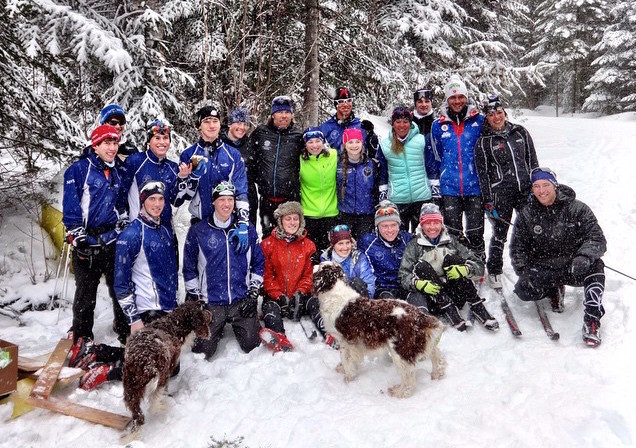
Earlier this month, Will Sweetser, competitive sports director at the Maine Winter Sports Center (MWSC), revealed on his Facebook page that his 15-year term with the program had drawn to a close:
“I can’t thank all of you who’ve made Maine Winter Sports Center and Maine Winter Sports Center Athletes such a success enough. Wish that I could give another 15 years to establishing my dream in Maine,” he wrote.
“Don’t know yet where I’ll be,” Sweetser, 44, added in a comment. “Sudden news.”
While the Maine native said in a phone interview he wasn’t able to elaborate on the departure at the time, he noted, “The leadership of Maine Winter Sports Center is shifting a little and we’re moving a different direction. I’m on to my next adventure; I have no idea what that’s going to be be…”
On April 13, Sweetser was vacationing at a family residence in Florida with his wife Sarah Dominick, an assistant nordic coach at Bowdoin College in Brunswick, Maine. The two live nearly 300 miles north of Brunswick in Stockholm, Maine, between the MWSC’s base in Caribou and Fort Kent.
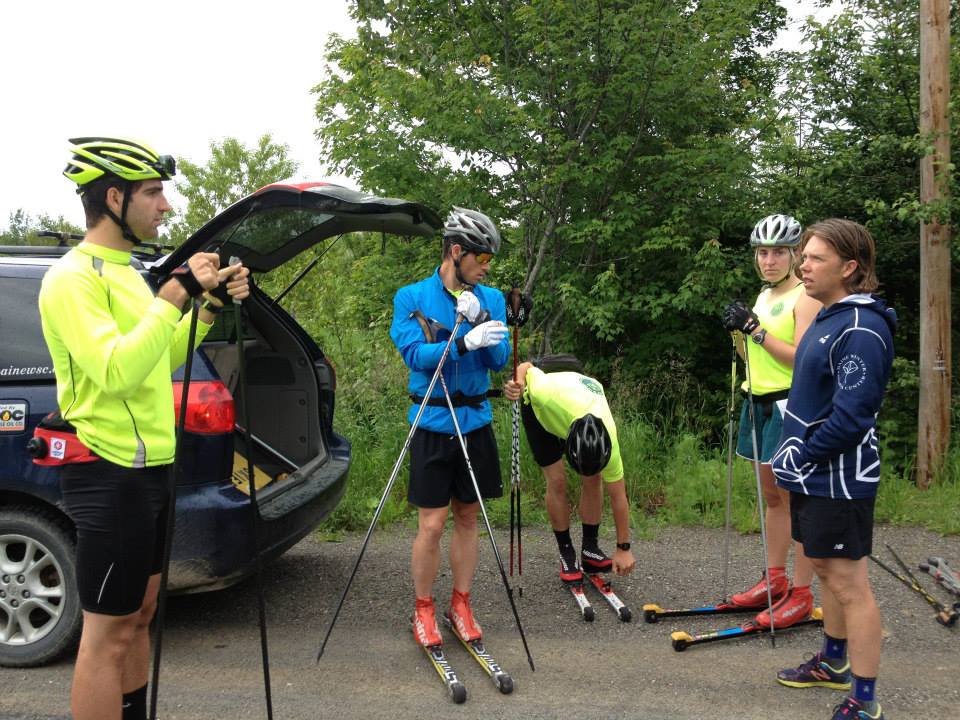
Originally from Auburn, Sweetser skied for Dartmouth, and Dominick was an All-American skier at Bates College and former MWSC coach. Sweetser has coached at Bates, the Jackson Hole Ski Club in Wyoming, and Carrabassett Valley Academy and Rangeley Lakes Ski Club in Maine.
“We were committed to raising a family in Maine and it came as a surprise,” Sweetser said of the recent news, adding that he and Dominick “will be searching for something new to do while we’re expecting a baby.”
Their first child is due in October.
“I’m really proud of the work that the organization has done in the field of competitive skiing [and] biathlon and I’m very thankful for all the time that I had with fantastic young athletes in the state of Maine,” Sweetser added.
He started the position as head of the cross-country team in 2000. Along with Sweetser’s departure, the Olympic Development Team (ODT) program is being restructured, according to MWSC President and Chief Executive Andy Shepard.
That means that ODT athletes, including Welly Ramsey, and biathletes Casey Smith, Russell Currier and Katrina Howe, will have to finance their travel for the coming 2015/2016 season.
“In the short term — this coming season — the program will be more of a Training Center program,” Shepard wrote in an email. “We will continue to offer coaching for the athletes who want to train with us. We are also looking at opportunities to provide part-time coaching positions to provide some funding for them.”
For the coming season, the MWSC, which has an annual total budget of $1.1 million, according to Shepard, will shift its focus to its junior and postgraduate programs. In 2013/2014, the center operated with about a $1.4 million dollar budget, supplied by the Libra Foundation.
“The staffing structure we have had historically is set up to support those [junior and postgraduate] programs effectively,” Shepard wrote. “We have had a lot of success over the years placing kids from our programs on Olympic Teams. We are very proud of that heritage and are committed to continuing that tradition in the future. We just need to find a way to do so in a sustainable way. We hope to have a coach on board soon and will work with that coach to create a new vision for that program.”
He explained that they were looking to fill Sweetser’s position in the “next couple weeks.”
“While racing is a part of a much larger outdoor education program structure, we’re very proud of our role in racing in Maine and it will remain a critical part of our programming moving forward,” Shepard wrote. “Maine has some of the top skiers and biathletes in the country and we want them to be able to stay at home to pursue their Olympic dreams.”
Currier described the ODT cuts as “unfortunate, but it isn’t necessarily unfair,” he said in a phone interview. “Getting athletes on the World Cup is a goal for MWSC, but it’s not the primary goal. If anything, it’s sort of an indirect goal. … Ultimately, the primary goal is to build a skiing community, not just a few fast athletes. So when the budget got stretched a little thin, they had to re-prioritize what is important.
“While we still have training sessions for really good athletes, most of the resources and development will go toward that younger, local group,” he added. “It’s kind of a double edged sword. It’s fair, but it’s difficult for me.”
Cash Flow
In February 2014, MWSC discovered it would lose its funding from the Libra Foundation in April 2014. The program immediately launched two fundraising efforts, the first of which involved asking Maine-based foundations and corporations for three years of support with a goal of raising $550,000 by March 2014. The second spawned from an initial matching gift from Presque Isle native Mary Barton Smith, who pledged $100,000 plus a $400,000 matching grant.
A few months later, Smith donated another $2 million with an additional $3 million in matching to kick off the program’s $20-million endowment campaign for the long-term sustainability of the MWSC.
In the last 14 months, Shepard noted that the center has made “significant progress in our fundraising,” raising $3.9 million dollars. Two million of that was toward the program’s $20-million endowment and another $3 million would come from Smith’s pledged matched funding.
“We still have a lot of work to do, but we are off to a great start,” he wrote.
This season, the MWSC is increasing its Adventure Initiative Program from five sessions last year to 10 sessions this year, “including the possibility of a month-long program in the Patagonia region next fall,” Shepard explained. “We are increasing our budget for the Junior Race program and we are working on an exciting new biathlon program that we plan to announce in May. We have also launched a new initiative, collaborating with land trusts in Maine to provide trail design, programming, gear and leadership development.”
But for the program’s highest-level skiers, funding cuts to the ODT (specifically to travel outside the East) and the cross-country coaching void have led many to reconsider their futures at Maine Winter Sports.
The Initial Shock and What’s Next
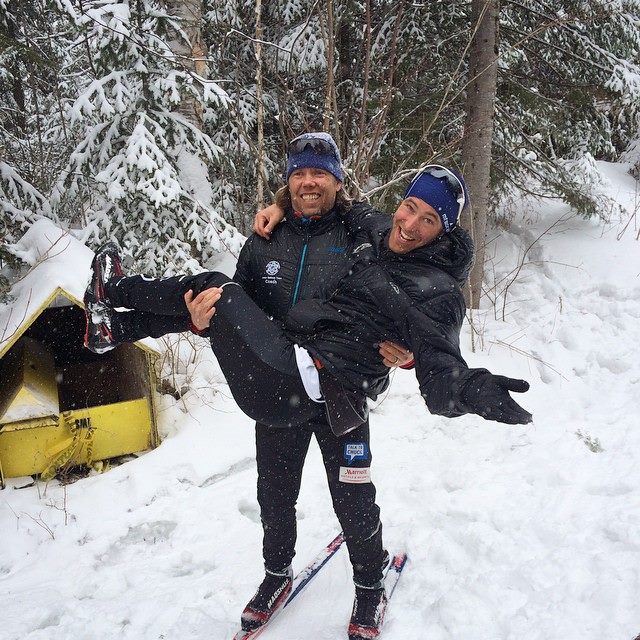
When Ramsey, one of seven members on the 2014/2015 MWSC cross-country team, heard his coach of six years was leaving, he described it as “quite a shock,” in an online message to FasterSkier.
“We came close to a breakthrough this season, and I hope any future success of mine will be rightfully attributed to him,” he wrote. “The man has had an amazing impact on my life, playing coach, friend, co-worker, mentor, employer, disciplinarian, and much more. He always went the extra mile and I can unequivocally say that I wouldn’t be here without him.”
Ramsey added that Sweetser was “responsible for nearly every Maine skier developed in the past 15 years,” and helped propel MWSC’s junior team to one of its most successful seasons last winter despite the loss of its development coach, Amber Dodge. In an email, Dodge explained that she took a job as youth program manger with the New England Nordic Skiing Association (NENSA) last fall after moving in with her boyfriend and ski racer Kris Freeman in Thornton, N.H., last summer.
“I learned so much as a coach, thanks to Will and [biathlon director] Seth [Hubbard],” she wrote of her three years with the MWSC. “I miss the athletes I worked with dearly as we were able to spend so much time with them year round.”
Ramsey explained he was “currently in negotiations with the Maine Winter Sports Center about my future with the program, and have contacted other clubs with whom I can see my career excelling.”
He would like to stay in Maine “and continue helping develop the next generation of athletes, but I do need to make the choices which are best for my career,” he added. “Whether I stay or go will hinge largely on how effectively I fundraise this spring. Later this month, I’ll lay things out and assess my move based on fundraising potential, race and wax support, and training group. I have a big year of training planned and I’m excited for the opportunities this seemingly precipitous event has yielded, both in Maine and elsewhere.”
His teammate, Austin Huneck described the news about Sweetser as “a huge shock to everyone.” Huneck started as a postgraduate under his guidance two years ago and felt he had made major gains in the time since.
“It’s very sad for me to see him go after everything he has done to help MWSC and athletes across the state,” Huneck wrote in an online message. “It’s hard to put into words how much Will has done for the ski community during his years with Maine Winter. He has helped me grow so much as an athlete and a person, and I’m not sure I would be were I am today without him. I know whatever he goes on to do next will be a great adventure. I’m grateful to have known him as not only my coach but as my friend.”
While he had initially planed to return to MWSC for his third season, Huneck explained that his plans are “very up in the air.”
“Will being gone does have an impact on my decision to return, but I know Seth Hubbard and [program director] Mike Smith at Maine Winter will do a great job to hire a new coach to fill his shoes,” he wrote. “MWSC has seen a loss of funding for the elite level athlete support going into next year, and this is also going to have a big impact on my decision. I am currently looking into attending college next season, and speaking with coaches at other clubs around the country. But at this time, I cannot say what my plans are for sure.”
For the last two summers, Omar Bermejo of the U.S. Paralympics Development Team has spent his summers training with the cross-country team in Maine. He currently lives in Casper, Wyo.
“Will Sweetser is a great coach, without him in my corner the year before the Sochi Paralympics I don’t think I would have been as happy as I am with my performance and progression in the sport of Cross Country skiing,” Bermejo, a MWSC cross-country team member, wrote in an email. “It was a shock to me and to other athletes the sudden departure of Will from MWSC.
“As far as my career, I had spoken to Will about the possibility of returning to MWSC this year but I will not be going due to his departure,” he added. “Lucky for me he will be moving closer to me here in Wyoming, where I intend to seek his help to improve my technique.”
Sweetser did not say whether he and his wife planned to move from Maine.
Howe, a biathlete with the program, wrote in an email that she was “devastated to hear about his departure from MWSC. Although he wasn’t my coach … I got to work with him quite often and thoroughly enjoyed it. I haven’t worked with many coaches who love skiing as much as Will does.
“For Will and his wife Sarah it’s truly a lifestyle, not just a job,” she added. “They will be sorely missed at MWSC … As with the departure of any coach, good or bad, it’s an opportunity for growth and change in the program. Hopefully the position will be filled by someone who shares the love and enthusiasm for skiing that Will has.”
In the aftermath of the ODT cuts, Howe explained she was unsure of her plans going forward.
“Ideally I’ll be in a position to continue with biathlon but if that doesn’t happen my backup plan is to get reacquainted with my classic skis and jump into some cross country races this coming winter,” she wrote. “At some point I see myself becoming a coach, but I can’t say how soon that will be.”