From the FasterSkier archive — posts syndicated from athletes’ and coaches’ own blogs between 2004 and 2012, kept online as published. Current coverage is at fasterskier.com.

Tag: Justin Freeman

  • Wednesday Workout: Warmup/Wake-Up with Justin Freeman

    Wednesday Workout: Warmup/Wake-Up with Justin Freeman

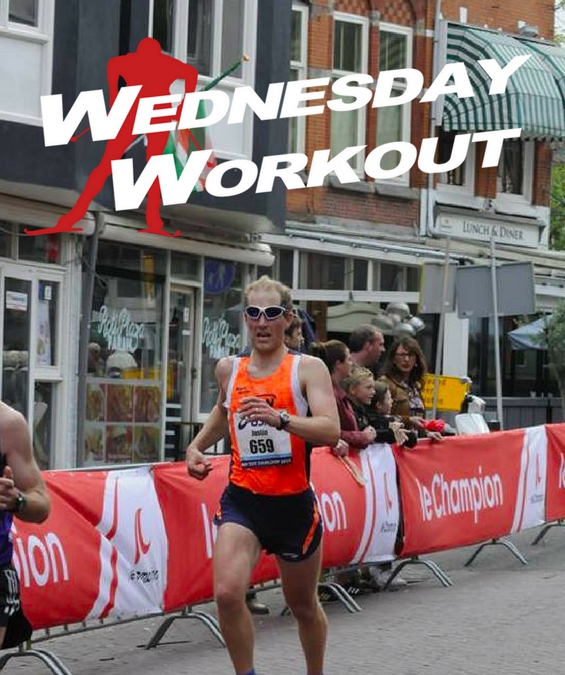
    Justin Freeman racing in the 10-mile "Dam tot Damloop" in Amsterdam last fall. (Courtesy photo)
    Justin Freeman racing in the 10-mile “Dam tot Damloop” in Amsterdam last fall. (Courtesy photo)

    Looking for way to boost the worth of your interval workouts? Justin Freeman, a 2006 Olympic cross-country skier and older brother of Kris Freeman, suggests taking a look at your warmup. He recommends incorporating technique drills prior to harder efforts to improve muscle strength, speed and stability, while also warding off injuries.

    ***

    It’s not when the white lines of the track lanes blur together and you push through anyways or the precious sip of water during recovery time that make or break a workout. It’s the warmup. At least, that’s what Justin Freeman, 39, discovered after training with the Leiden Atletiek running group in Leiden, South Holland, this past year.

    Justin Freeman (r) racing the 15-kilometer Zevenheuvelenloop in Nimegen last fall.  (Courtesy Photo)
    Justin Freeman (in orange) racing the 15-kilometer Zevenheuvelenloop in Nijmegen, the oldest city in the Netherlands, last fall. (Courtesy photo)

    After moving to the Netherlands last July for a teaching job at the American School of the Hague, Freeman traded ski trails for the track and began attending the the Leiden Atletiek club’s weekly Wednesday night workouts.

    “It’s a pretty neat running club,” Freeman said on the phone from the Netherlands. “There’s a huge variety from young kids to retired people. And there’s different training each day. There’s also a number of training groups. My training group is coached by Brom Wassenaar, who is a former Dutch Olympian.”

    Now in his second year as a member to the group, Freeman found the greatest gains he made in his running came from changing his warmup routine before interval workouts.

    “We do ten to fifteen minutes of running technique drills, focused on sort of generating power, quick foot strike, kind of getting off your feet,” Freeman said. “I’ve actually found after doing those drills and doing some accelerations, I’m much faster in my first interval. Usually if I haven’t done a fair amount of speed, I’m very low off the line … this has really helped me to have go-to speed off the start and I’m holding back on the first interval.”

    The Workout

    Warmup: 15 minutes running

    (Freeman adds an extra 20 minutes to his warmup by biking to practice from home)

    Additional warmup/wake-up technique: 5 minutes of drills, 2 accelerations, 5 minutes of drills 2 accelerations, 5 minutes of drills, 2 accelerations

    Freeman’s suggested running-technique drills:

    • 3-steps of high knees followed by a hold, repeated
    • Two footed hops with resistance (partner holds shoulders down) for 20meters followed by 20 meters no resisitance
    • Hang from top of fence for 30 seconds and drop down into strides
    • High knee, followed by butt kick, repeated

    5 minutes to change into spikes and get water

    The set: 5 x 1,000 meters on the track at faster than race pace with 3-minute recovery

    (Freeman estimates them as approximately 3 minutes per 1,000 meters)

    Cool down: 10 minutes on foot

    (He adds an extra 20 minutes to his cool down by biking home)

    Total time: 1-1.75 hours

    Freeman’s Top-Two Finds for Better Workouts

    1. Work the Warmup. “I am increasingly sold on finding some kind of form or technique drill to do as part of a warmup,” he said. “If you’re doing a rollerski workout and you’re working on quickness or going up hills, then do some drills beforehand where you really practice quickness and going up hills … or if you’ve got a coach with you, do a little technique review before you go into the workout so you can really bring whatever technical change you’re making into the workout.”
    2. Appreciate Training Partners Who Push You. “Having lived in central New Hampshire for as long as I did and finding people who are significantly faster than me to run with … would’ve pretty much meant driving to Boston, which I wasn’t about to do, certainly not every week,” Freeman said. “So just the chance to be out for a workout and have someone unequivocally faster to run with is really neat.”
  • Video: Freeman Makes it a Three-Peat, Rorabaugh Comes from Behind to Win Craftsbury Mass Starts

    Video: Freeman Makes it a Three-Peat, Rorabaugh Comes from Behind to Win Craftsbury Mass Starts

    Having trouble viewing the video? Watch here. 

    CRAFTSBURY, Vt. — Kris Freeman earned his third win of the weekend Sunday, with a 20.4-second lead in the men’s 15-kilometer classic mass start on the snowy trails of the Craftsbury Outdoor Center. With snow falling throughout the entirety of the three-lap course, Freeman overcame the elements to create a large gap over his competitors at the 10 k mark in the SuperTour and Eastern Cup race.

    He skied alone for the final 5 k of race, plowing through the fresh snow with ease and strength.With a time of 42:46.4 Freeman crossed the line with no one else in sight.  He raised his hands above his head, celebrating his many wins in Craftsbury. Freeman’s success comes before his eighth career World Championships which will take place in Falun, Sweden Feb. 18. Freeman travels to Europe Thursday to prepare for the event.

    In a battle for second, Gordon Vermeer of the Craftsbury Green Racing Project and Lex Treinen of Alaska Pacific University charged down the finishing stretch, lunging to see who would claim the second rung of the podium. In the end it was Vermeer who would come out on top, besting Treinen by 0.01 seconds. The two finished 20.4 and 20.5 seconds behind Freeman.

    In fourth and fifth were Eric Packer of APU and Justin Freeman skiing for Holderness. Packer finished 27.1 seconds back from the first Freeman. The victor’s brother, Justin Freeman, finished 28.6 seconds behind his training partner.

    Women’s 10 k Classic Mass Start:

    Having trouble viewing the video? Watch here.

    In the women’s 10 k classic mass start it was Becca Rorabaugh who rocketed to the top of the podium to earn her first SuperTour win. After skiing the seventh-fastest split at the 5 k mark, she accelerated to make contact with the lead pack of Anja Gruber of Far West Elite, Chelsea Holmes of APU, and Mary Rose of the Sun Valley Ski Education Foundation. With roughly a kilometer to go, Rorabaugh was sitting in with the lead pack but took command into the stadium after utilizing a strong double-pole. She crossed the the line with a time of 33:24.0.

    Close behind was Mary Rose who earned her second podium of the weekend after winning Saturday’s 10 k freestyle. She trailed Rorabaugh by 0.9 seconds. Third went to Gruber, who came across the line 4.1 seconds back from the leader.

    Rounding out the top-5 were Kaitlynn Miller and Caitlin Patterson, both of the Craftsbury Green Racing Project. The two

    In the junior women’s 5 k Mae Chalmers won with a time of 17:51.2. Her male counterpart, Adam Gluek of Ford Sayre, won the junior men’s 5 k. He crossed the line in 15:03.4.

    Sunday’s races concluded the three-day weekend of the Craftsbury SuperTour, Dartmouth Carnival, and Eastern Cup. SuperTour racing continues Feb. 21 in Haywood, Wisconsin at the American Birkebiener.

    Results: Women | Men | Girl’s 5 k | Boy’s 5 k 

    Junior 5 k Classic Mass Starts: 

    Having trouble viewing the video? Watch here.

  • First to Top of Toll Road, Stephen Shatters Another Hill Climb Record

    First to Top of Toll Road, Stephen Shatters Another Hill Climb Record

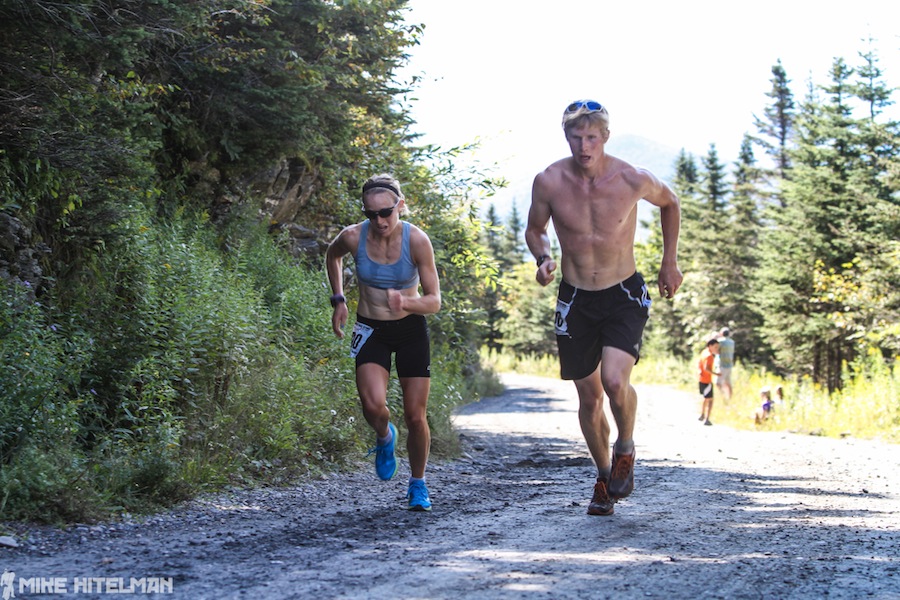
    Olympian Liz Stephen challenges Patrick O’Brien of the Craftsbury Green Team during the 6th Annual Race To The Top of Vermont on Aug. 25.
    Olympian Liz Stephen challenges Patrick O’Brien of the Craftsbury Green Team during the 6th Annual Race To The Top of Vermont on Aug. 25. (Photo: Race To The Top Of Vermont)

    Editor’s note: This story has been updated to include the overall women’s course record, set by mountain biker Lea Davidson last year.

    Before last Sunday, Liz Stephen isn’t sure if she had ever been to the top of Mount Mansfield’s Toll Road, which winds for 4.3 miles up 2,564 vertical feet in Stowe, Vt. Didn’t matter.

    The 6th Annual Race To The Top Of Vermont was another hill climb, and the 26-year-old affectionately known as “spider monkey” on the U.S. Ski Team had a goal of winning, setting the run course record and beating mountain bikers in the process.

    “My goal was to try and get both the record for the women’s run, but also knew there was an overall bike and run record as well that was worth a bit of money,” Stephen wrote in an email earlier this week. “So I was shooting for that as well.”

    The runnning time to beat was 39:17.7 minutes, set in 2011 by defending champ Kasie Enman of Huntington, Vt. (the overall women’s course record was 37:18.7, set by m0untain biker Lea Davidson of Jericho last year). Stephen, who hails from East Montpelier, shattered the run record by nearly two minutes in 37:22 (and missed the overall record by about 3 seconds). She beat the first female mountain biker, Marilyn Ruseckas of Warren, by almost seven minutes.

    Runner-up Ida Sargent, another Vermont native and Stephen’s teammate on the national team, explained she never saw much of Stephen in her third consecutive Race To The Top. Last year, Sargent placed third behind Enman, who was third on Sunday. Enman had a baby this spring and ran slightly behind Sargent for the entire race, but Sargent explained she could hear people cheering for Enman for much of it.

    “[Liz] was gone when the gun went off so I was running my own race,” Sargent, 25, wrote in an email. “But there were lots of guys around me to run with. Liz was absolutely amazing and it was really cool to see her run that fast. She’s a speedy mountain goat!”

    Add that to the list of nicknames for the World Cup phenom, who placed fifth at World Championships last season in the 10-kilometer freestyle individual start on a grueling course at 4, 700-feet above sea level in Val di Fiemme, Italy.

    The toll road peaked at 4,393 feet atop Vermont’s highest peak.

    “It’s true that I like to go ahead early when I can, but it doesn’t always work out,” Stephen explained. “With these types of races, it is pretty hard not to just go as hard as you possibly can.  The goal for me was to pace it well so I could run as fast as I could.”

    The fruits of her effort paid off and indicated her fitness was on track three months before winter racing resumes in Europe.

    “However, I am a cross country skier and that is about fitness, power, strength, mental toughness, and technique, among other factors, so I will just keep training the way I have been training and preparing for the winter races,” she wrote.

    Stephen also used the race as a fundraiser, publicizing her participation on a website to raise money for Vermont skiers gearing up for the 2014 Olympics in Sochi, Russia. As of Friday, she’d raised $2,450 dollars. Sargent (Craftsbury Green Racing Project) was also included in the fundraiser.

    “The fundraising effort has gone great, so far,” Stephen explained. “We will leave the fund up until the day the Olympics begin, so it will give people a good amount of time if they would like to contribute at some point between now and then. The response is always great in this area when you ask for help and support of one sort or another. We have such incredible communities that care about one another and want to be involved here in Vermont.”

    Sargent has been recovering from Achilles tendinitis and hadn’t originally planned to race, fearing the consistent uphill grade could do a number on her.

    “So I just went to the race planning to run and hike up and cheer for my teammates but then I got the race itch and couldn’t help not putting on a bib,” she wrote. “I was really excited to be able to race and mostly not have my Achilles bother at all. And I was a minute faster than last year which is a very promising sign about my fitness.”

    Sargent explained she hasn’t been running as much this summer as past years and didn’t think too highly of her running shape going into Sunday’s race.

    “It’s a really hard race but it was a beautiful day on top and awesome to see so many people out there running, biking, and hiking up the mountain,” she wrote. “The local support was incredible. It’s very inspiring and I’m very thankful!”

    Stephen placed 10th overall and Sargent was 31st behind men’s winner Eric Blake of West Hartford, Conn, who broke the men’s course record by a minute and 2 seconds in 32:51.3. A 2006 Olympic nordic skier, Justin Freeman of New Hampton, N.H., was second in his debut Race To The Top in 34:42.3. Craftsbury GRP skiers Gordon Vermeer was fifth (36:14.6), Pat O’Brien was ninth (37:20.5) and Andrew Dougherty was 19th (39:57).

    The top mountain biker, Gered Dunne won in 32:58.2, but Freeman edged second-place biker Jake Hollenbach by nearly 19 seconds. In an email, Freeman, 36 explained Blake started conservatively before making a small move about a half-mile in. Third-place finisher Josh Ferenc followed, and Freeman fell a few seconds behind.

    “Around the mile mark Blake made a bigger move, dropping Ferenc, who faded hard,” he explained. “I ran with him for less than a minute and then started to gap him. I didn’t look back, but I could tell from listening to people cheer that I built a lead of between 20 and 30 seconds by about a mile to go. From there Ferenc was slowly gaining but not enough to catch me.”

    Freeman beat Ferenc by 11.7 seconds.

    “I was disappointed not to go under the old record, but I am actually pretty happy to be only two minutes behind Blake,” he wrote. “Josh Ferenc has defeated me handily the two previous times I have raced him this summer, so it was nice to come in ahead of me (I agreed with him that I am now a runner/skier, so he need not suffer the stigma of having been beat by someone who is just a skier). I will probably go back next year, and I think I have it in me to run about a minute faster.”

    In terms of hill climbs, Freeman stated that this was like most others.

    “It’s an uphill run, so it requires going really hard, but in terms of racing tactics it is pretty straightforward,” he wrote. “You go as fast as you can without building too much lactate. The grade varies a lot more than Mt. Washington, which gives some chances for something resembling recovery, but in the end it is like any other 35-minute hill climb.”

    As for what’s next, Stephen and Sargent are due to meet up with the U.S. Ski Team in Lake Placid, N.Y., next week. The annual fall camp ends with the Climb to the Castle on Sept. 15 – a rollerski race which the multiple-time defending champion Stephen essentially owns.

    “The Climb to the Castle is a great test of fitness as well as just a good, hard effort, both mentally and physically,” Stephen wrote. “I look at it as a good way to practice race prep routines and race day nerves, as this race makes me so dang nervous every year!”

    Results

  • Freeman Done with U.S. Nationals, For Now

    2012 U.S. Nationals
    Justin Freeman (Salomon/Holderness) races to 27th place in the 30 k classic mass start on Jan. 6 at the 2012 U.S. Cross Country Championships at Black Mountain in Rumford, Maine. Photo: Flying Point Road/All Flying Point Road photo proceeds donated to the National Nordic Foundation.

    RUMFORD, Maine – Swirling around the Black Mountain venue was news that Justin Freeman was done. After 16 consecutive U.S. Cross Country Championships, including his recent appearance at this year’s nationals, the 35-year-old Olympian, national champion and brother of current U.S. Ski Team veteran, Kris, wouldn’t be back.

    Of course, that all depended, Freeman said in phone conversation on Saturday.

    “It’s my last consecutive nationals,” he clarified. “It’s unlikely that I won’t be back.”

    Soon after placing 27th in the 30 k classic mass start on Friday, the father of two drove 2 ½ hours home to New Hampton, N.H., where he had to teach at the New Hampton School on Saturday.

    For Freeman, missing Sunday’s classic sprints was part of being a math-department head at a boarding school. He also had his wife and two daughters, 5-year-old Iris and 3-year-old Sage, to get back to after nearly a week away.

    That’s why he wouldn’t likely be able to make next year’s U.S. Nationals, especially if the event is held in Soldier Hollow, Utah. Based on the championships’ two-year rotation, Freeman figured it wouldn’t be within driving distance of New Hampshire, and a long flight and time away from his family would make the trip difficult, he said.

    “It’ll probably be a while before it’s back in the East again,” Freeman said. “Who knows where I’ll be.”

    That said, the national 10 k classic champion from 2005 was far from retired with his sights set on other distance races this season and running in the spring, summer and fall.

    Sure, he found less and less time to get on snow each year, what with kids and a full-time job in central New Hampshire. His training had dwindled significantly; in his blog, Freeman wrote he had accumulated a training deficit of 2,000 hours in the last six years, “plus another 2000 hour sleep deficit since becoming a father.

    Yet every year, Freeman made a point to race at nationals, and 46 consecutive times, he toed the line with some of the best racers in the U.S. This year, he made the top 30 twice in as many races, placing 28th in the 15 k freestyle on Jan. 5.

    In a blog post titled “Better Than Kris,” Freeman joked that he placed one spot higher than his younger brother, who was 29th the same day in the Tour de Ski 35 k freestyle pursuit in Toblach, Italy.

    “We joke, but even when we were racing each other, we always wanted each other to do well,” Freeman said.

    For the most part, he met his expectations at nationals this year despite going out too hard in both distance races. After the first of four laps in the 15 k, Freeman said he realized he was in the top 10. He knew that wasn’t necessarily good news.

    “Tad (Elliott) and Noah (Hoffman) were really pushing the pace hard at the front,” Freeman said of the young USST members, which placed first and fourth, respectively. “Even before they really started working I was spit off the back. … It’s nice to see that we’ve got some skiers in this country that are very clearly at a whole other class of the sport.”

    Once at that level as a 2006 Olympian, Freeman isn’t exactly out of it. While he can only fit in a few hours a week of ski-specific training, some of which is with the family and chariot strapped to his waist, he planned to continue racing this season at Eastern Cup distance events, Canadian nationals and Ski to the Clouds, a race up Mount Washington touted as North America’s toughest 10 k. Freeman was its four-time defending champion.

    As for the Canadian championships at the end of March, Freeman said the timing should be right.

    “I’ve got the week off,” he said of his plan to make the races in Mont-Sainte-Anne, Quebec. He last raced Canadian nationals four years ago.

    “I should be in fairly good shape by then,” he said. “Get a chance to ski a little faster.”

    Despite winning the 2011 New England Grand Prix, a seven-event road race series involving a half marathon, 10 k, 6 k, 5 k, 8-miler, 5-miler and marathon, Freeman said his running didn’t necessarily translate to skiing. Every year, he said he delayed his Nov. 1 deadline to start dryland training and kept running instead.

    Regardless, his skiing goals still lingered, and he would keep racing “until the results sheet starts saying that it’s not worth it for me anymore,” Freeman said.

    While his training might not be on par with on his U.S. Ski Team days, as he fits about 1 ½ to two hours a day in when he can, Freeman said it’s working for now.

    “I’m getting to that age where it gets very dangerous to expect improvement. That’s not what biology is trying to do for me,” said Freeman, who also teaches science.

    But he also wasn’t giving up.

    “I’ll be racing in one form or another for at least another 50 years,” he said. “Probably won’t be U.S. Nationals.”

  • Eastern Cup Action Finishes in New Hampshire

    Eastern Cup Action Finishes in New Hampshire

    Recent thaws and frozen nights in the Northeast created icy fast conditions for the final weekend of Eastern Cup racing. The Eastern Cup racing series is the highest level of competition hosted by New England Nordic Skiing Association (NENSA) that allows serious racers and citizens to race against each other in first class settings. The series is used as the seeding basis for the naming of the New England Junior Olympic team that will fly out to compete against other regional team in Minneapolis, MN, in March later this season for the 2011 Junior Olympics.

    Day 1: 10 k freestyle

    Saturday’s race was held on Dartmouth College’s own course on Oak Hill. Fast speeds required careful thinking to safely navigate the course as fast as possible. The final results had some packs of ten to twenty skiers within a one minute time spread.

    Hannah Dressigacker of the Craftsbury Green Racing Project (CGRP) was the first across the line in a time of 27:47.2, ahead by a significant seventy-five seconds in an otherwise tightly packed women’s field. Next across was NCAA winner Alison Crocker, former Dartmouth skier and a Rhodes Scholar currently conducting post-doctoral work in astrophysics.  Snagging the final spot on the podium and leading the rest of the tightly packed women’s field was Saratoga biathlete Carly Wynn.

    Patrick O’Brien (CGRP) showed the top form that has earned him the season points leader’s bib and won the men’s race in a time of 24:33.3. Bret Bedard of Berkshire Trails was next, only six seconds back from O’Brien. Rounding out the top three was Michael Lessard, racing his first post-collegiate year with Maine Winter Sports Club (MWSC).

    Day 2: 5/ 10 k classic

    The final day of Eastern Cup action took place at Holderness School on the Cheri Walsh course. Snow conditions were similar to yesterday’s race, icy tracks and little extra snow that made for some klister waxing and fast skiing.

    Hannah Dressigacker (CGRP) skis to victory at Holderness

    Dressigacker (CGRP), starting fifteen seconds back from season points leader Corey Stock of Cambridge Sports Union (CSU), hung on tight and managed to cross the finish line only five seconds after Stock for a ten-second win in a time of 15:07.2. Stock’s performance was nothing short of impressive, finishing the series with two first place and two second place finishes after starting the season late to allow more recovery time from summer surgery. Fresh from racing in Europe and coming in for the last podium spot was Heather Mooney of the Stratton Mountain School (SMS).

    In the men’s race, the top two spots were taken by Justin Freeman of Holderness School and Patrick O’Brien (CGRP) respectively, both who have been trading blows back and forth in several high-level classic races this season. Freeman, former US Olympic skier, finished with a blazing fast time of 25:57.6. O’Brien was ten seconds back from Freeman and earned more points to add to an already impressive lead in the points series for the Easter Cup. O’Brien’s teammate Tim Reynolds (CGRP) was third for the day, coming in behind by thirteen seconds.

    Justin Freeman (498) thundering down the finishing stretch

    After racing, skiers congregated inside to award prizes for the day’s finishers, recognize the season’s leaders in points and the naming of the New England Junior Olympic Team. O’Brien and Stock won for the overall men and women’s category, while skiers Tyler Foulkes (SMS) and Cate Brams (CSU) were the points winners of the J2 category.

    The Eastern Cup ended with NENSA Competitive Programs Director Janice Sibilia and Head Coach of the New England Junior Olympic team Matt Boobar congratulated racers for an excellent season, particularly to the skiers named that were competing against high-class athletes trying to earn the points to make the team. Boobar commended the team for their season performance and emphasized that while the depth of the Eastern Cup series makes being named to the team difficult, it creates a high level group that will defend their two-year championship streak.

    Results for the full weekend can be found here.

  • Kris Wins Battle of Freeman Brothers on Mt. Washington–UPDATED

    Kris Wins Battle of Freeman Brothers on Mt. Washington–UPDATED

    Kris Freeman taking a feed from his father Donavon during Saturday's Mt. Washington Road Race. Photo courtesy of the Freeman family.

    Kris Freeman may not have won Saturday’s Mt. Washington Road Race, but he did run quickly enough to win the next best thing: the title of Fastest Freeman.

    Kris held off his brother, Justin, to finish the uphill running race in a time of 1:07:56, good enough for 15th place out of a field of over 900—just over seven and a half minutes back from the winner, Chris Siemers of Colorado. Justin was 16 seconds and two places behind Kris, in 17th.

    The road race is 7.6 miles of pure pain—the grade averages 12 percent—and to add insult to injury, the temperature at the start was sweltering.

    “Those switchbacks—usually you take the shortest line, but I was trying to take the shadiest line,” Kris said.

    Justin, a former national cross-country ski champion and accomplished runner, said that he led his brother for the first two miles of the race before Kris passed him at a water station in the middle of a steep pitch, “going significantly faster.”

    “He reeled me in, and then put some distance on me,” he said.

    But given the slow, grueling nature of the climb, Kris was never out of sight.

    “I could see him pretty much the whole way,” Justin said.

    By six miles, Kris had roughly 40 seconds on Justin, who at that point was doing battle with the top female, a 23-year-old Ethiopian named Shewarge Amare. (Amare was on the way to setting a course record despite running in a pair of borrowed shoes—she locked hers in the car.)

    Justin Freeman during the Mt. Washington Road Race. Photo courtesy of the Freeman family.

    A Gatorade feed from the Freeman parents at mile six gave Justin a bit more gas for the finish, and by the top, he had closed the gap back down to 16 seconds and held off Amare—“the power of sexism getting me up the hill,” he said.

    In an interview, Kris said that he’d been traveling for the last week, visiting camps for children with diabetes, and that he “wasn’t feeling great.”

    Going in, he’d had two goals (or three, if you count beating Justin): to place in the top 10, and to be the first New Hampshire resident over the line.

    While he didn’t quite accomplish the former, Kris’s victory over Justin ensured the latter, earning him a $100 prize and a trophy, Justin said.

    The race also offered Kris a chance to hone his protocol for insulin dosing during races. After getting equipped with a new continuous glucose monitor this spring, Freeman, who is diabetic, has used the information gleaned from it to develop a new blood sugar management strategy.

    For past races, Freeman has administered a big insulin dose directly before the start. (Insulin is the hormone that reduces blood sugar levels.) But the information he got from the glucose monitor showed him that the insulin was taking nearly an hour to kick in, leaving him with still-dropping blood sugar levels at the end of a race that took a toll on his body.

    So for his last two trials, Freeman has given himself a smaller dose of insulin 45 minutes before the race. With this new method, the insulin kicks in just as the race is starting, and is essentially out of his system by the finish—which Freeman said has worked much better.

    “I definitely think this is going to be the future of how I do it,” he said.

    Both Freemans said that they would like to return to the mountain next year; Kris would like to break 1:05:00, which he said was possible “on a different day.”

    After the weekend, Kris said that he was going back out on the road for two more weeks for more diabetes-related work, before heading out on the U.S. Ski Team’s trip to New Zealand for on-snow training.

    While the recent travel has been slightly distracting, Freeman said, he hasn’t been neglecting workouts—he still put in 77 hours in the first month of the training year.

    Link to full results

  • Freeman 2011 Campaign to Focus on Tour de Ski, World Champs.

    Freeman 2011 Campaign to Focus on Tour de Ski, World Champs.

    Kris Freeman racing in the 15 k freestyle in Canmore last year

    Kris Freeman is healthy, and his training for the 2010-2011 season is underway. That means his brother Justin had better watch his back.

    The two typically go head-to-head in a handful of running races and uphill time trials each summer, and this year is no different. After Justin got the upper hand in April’s 14-mile Muddy Moose, the brothers will toe the start line in the granddaddy of all mountain runs on June 19th: the Mt. Washington Road Race.

    “I like to think that one of us will be the first New Hampshire finisher, and I’m hoping a top-ten finish will be realistic there, but you get some of the best mountain runners in the world,” Freeman said. “So it will be interesting—there aren’t too many 175-pound mountain runners out there.”

    After enduring a nightmarish series of illnesses early this spring—flu, vomiting flu, sinus infection—Freeman is back at it, and training is going “really well.”

    In an interview Thursday, he said that he’s been doing some cycling, kayaking, and a few short double-pole rollerskis.

    Freeman said that he doesn’t like to do too much rollerskiing this time of year, but that “specificity is going to come in pretty quick.”

    He’ll be in Bend later this month with the U.S. Ski Team, and Freeman said he’ll also be attending more of the team’s camps over the summer, “building up a base again.”

    Freeman’s goals for the upcoming year are to stay healthy for the duration of the winter, and to peak for two events: World Championships in Oslo, and also the 2011 Tour de Ski, which he will be racing for the first time.

    Freeman during the 30 k pursuit at the Olympics

    Freeman will be going full-gas at the Tour; he said that there’s no way to go into that event “and race it half-ass.”

    “From what I’ve seen of the other athletes, you either go in well, and perform well and come out stronger, or you go in [poorly] and come out blown,” he said. “So I’m hoping to be the first there.”

    Freeman still has some testing to do with a new continuous glucose monitor before entering the Tour; his first simulation will be a 30 k race effort in Bend.

    “Hopefully, that will give me some valuable information about how to dose myself,” he said.

    Depending on the outcome, Freeman may do his next trials on the treadmill at the Center of Excellence in Park City, or just stick to “on-the-ground testing.”

    Regardless, he’ll seek to avoid the two hypoglycemic (low blood-sugar) episodes that he experienced this winter, which he said derailed him for months. One of those, at the 30 k pursuit at the Olympics, left him collapsed on the side of the trail.

    Freeman’s 2010-2011 schedule won’t see him doing much racing on American soil, so he hasn’t aligned himself with a club to provide him with support at North American races. (The U.S. Ski Team announced earlier this spring that they had cut their domestic service staff.)

    For Spring Series, Freeman said that he may work with NENSA or Fischer, or that the U.S. Ski Team may have someone on hand at those races.

  • Olympians Victorious at the Bretton Woods Nordic Marathon

    Olympians Victorious at the Bretton Woods Nordic Marathon

    Justin Freeman wins New England Ski Museum's Bretton Woods Marathon.

    Bretton Woods, N.H. (March 13, 2010) – Olympians towered over their respective fields at the New England Ski Museum’s Bretton Woods Nordic Marathon at Omni Mount Washington Resort presented by CNL Lifestyle Properties, LLC, which took place on Saturday, March 13. Crossing the finish line of the 50-kilometer race only minutes after many of the racers passed the race’s half-way mark was 2006- Olympian-turned-educator Justin Freeman (New Hampton, N.H.) with a crushing time of 2 hours, 21 minutes and 18 seconds (2:21:18.8); the women’s 50-K race was won by 3-time Olympian (1988, 1992, 1994) Dorcas Denhartog-Wonsavage who finished in 3:02:52. In the 25-K race the UVM Catamounts dominated, with UVM racer Fritz Horst (Bennington, Vt.) taking first in the men’s race with a time of 1:13:22, Catamount racer, Mary Stewart (Ripton, Vt.) took first in the women’s race in a time of 1:24:43.

    Rounding out the top three for the 50-K men’s race were Tim Whiton (Portland, Maine), a coach at Bowdoin College and Phil Lawson (Bethlehem, N.H.) Following Wonsavage in the women’s 50-K were Alison Crocker (Amherst, Mass.) and Joann Hanowski (Underhill Center, Vt.) Placing second and third in the Men’s 25-K race were St. Lawrence University racer Adam Terko (Shelburne, Vt.) and Charlie Gunn (Henniker, N.H.) who was that event’s first Master racer. Janey McClelland (Keene Valley, N.Y.) another UVM racer was second in the women’s 25-K race; she was followed by third place finisher, St. Lawrence University skier Leah Hart (Meredith, N.H.)

    The New England Ski Museum conducts the Bretton Woods Nordic Marathon as a fund-raising event, and the event appeals to a wide variety of Nordic skiers, including serious Masters-age racers, a smattering of collegiate racers and a growing number of more casual citizen racers and recreational skiers. This year a total of 182 people signed up to compete or participate in either the 25-K or 50-K distance. There was an option to be a part of the event on an untimed basis, and a growing number of skiers elect to ski in that category and enjoy the challenge while socializing with friends.

    The event enjoyed outstanding support by local, regional and national sponsors including Omni Mount Washington Resort, CNL Lifestyle Properties, SWIX, Northeast Delta Dental, Coca Cola/Powerade, World Cup Supply, Darn Tough and Chutter’s. Complete results for the event are posted on the website: www.brettonwoods.com, (follow links to Nordic skiing and racing.)

    The New England Ski Museum is currently exhibiting artifacts from Nordic skiing’s origins in the mountains of Asia and displays that depict the sport’s development in the U.S. More information on the event and the New England Ski Museum, including membership applications and a link to the museum’s online store, is available at www.skimuseum.org.

  • Olympians Ready for Ski to the Clouds

    Pinkham Notch, NH— On Sunday March 8, 2009, Great Glen Trails will host Ski to the Clouds: North America’s Toughest 10k presented by Maxiglide. This year’s race will feature Olympians and last year’s champions.

    In 2008, Olympians and top college skiers took on the challenge of Ski to the Clouds, and the same is true in 2009. Last year’s overall winner and 2006 Olympian, Justin Freeman of New Hampton, NH and The Factory Team will return to defend his title. Kelsey Allen of NENSC and Franconia, NH, 2008’s women’s champion, will also return to defend her title.

    Other top athletes scheduled to race include: 1998 Olympian Marc Gilbertson of Rossignol and Hyde Park, VT; 1992 and 1994 Olympic biathlete Duncan Douglas from Honeoye Falls, NY, representing the New York Ski Educational Foundation; and current U.S. Biathlon team member and Army World Class Athlete Program racer Jesse Downs of Jericho Center, VT.

    Last year was also the first year of the race’s new incarnation, which included 4k of racing on the trail system at Great Glen Trails before the climb up the Mt. Washington Auto Road. The 2009 race will be contested on the same 10-kilometer course making it the toughest 10k in North America. The race will finish at the site of the historic Halfway House on the Mt. Washington Auto Road, just below 4000 feet above sea level. Ski to the Clouds is true freestyle event: skiers can use either skating or classic technique in this mass start race. There will not be separate categories for each discipline.

    Thanks to generous support from Maxiglide, Ski to the Clouds will offer prize money for the top performers. With a total prize purse of $1400, cash prizes will be awarded to the fastest male and female competitors and to the fastest male and female over the age of 40. Great Glen Trails will also offer a prize raffle.

    For more information and to register for Ski to the Clouds, go to www.SkiToTheClouds.com.

    Great Glen Trails is open daily for cross country skiing and snowshoeing with 40km. SnowCoach tours up the Mt. Washington Auto Road are also running daily. Complete details and snow conditions available at 603.466.2333 or www.GreatGlenTrails.com.

    Ski to the Clouds

  • Understanding and Using Training Levels

    Understanding and Using Training Levels

    Justin Freeman is a US Olympian in cross-country skiing. He races for the Saab Salomon Factory Team – http://www.enjoywinter.com This article first appeared in Ski Post – http://www.skipost.com

    Levels One and Two

    Skiers talk a lot about training levels, usually numbering them one through five, but, if my experience over the past decade and a half is any indication, truly understanding when and how to use the various levels is rare. This is the first in a three-part article about proper use of the various training levels. It is based on my background both as a skier and as a runner, and includes some of my thoughts based on the writings of the running coach Jack Daniels, whose books make interesting reading, particularly for skiers looking for a fresh point of view about training.

    Level one is the place where most of us spend most of our training time. Despite this, it can be a little tricky to either stay in or to define. Basically, level one is an easy training pace where you can still talk as you run or ski (or bike or paddle, etc.). Level one is often defined as a heart rate between 60% and 70% of your maximum heart rate, or as some similar fraction of your heart rate reserve (the difference between your min and max heart rates). You might also define it as a pace where your blood lactate level is below your resting lactate level, because you are working hard enough to pump blood and clear lactate but not hard enough to build any lactic acid in your muscles.

    For some people, heart rates (or even blood lactates) are an effective way to define levels. But for many people, levels are found more intuitively. For them especially, it is important to remember a few things that level one is not. It is not (and I have been as guilty of this as anyone) standing around on skis talking to your friends. It is not going for a ski with your family (as noble and good a thing as this is to do) or with your old high school buddy who has put on 50 pounds and can barely struggle up a slight incline. It isn’t even going for a run where you walk up the hills just because your heart rate starts to climb a bit.

    Similarly, level one is not refusing to be passed by someone and so trying to appear nonchalant as you huff and puff a few strides ahead of her. It is not running at the pace that you could back when you were ten years younger and trained twice as much. And it is not flying down the other side of a mountain you just ran up because your heart rate monitor says your pulse is dropping.

    While the above reminders are important, most people do have a good intuitive grasp of level one. Level two, though, is tricky. Level two is harder than level one, with higher rate and lactate, but still well below the pace or effort of even a marathon. Both level one and level two are basically for building aerobic capacity and capillary density and also for practicing technique. Because level two, being faster than level one, makes you more tired, many skiers oppose the idea of level two in general, describing it with the phrase “level two happens” (after the bumper sticker “#$*% happens”).

    Interestingly, while skiers sometimes refer to level two as the “junk zone” runners have the opposite understanding, preferring level two and calling level one “junk miles.” I believe this is mostly because runners tend to train many fewer hours than skiers, so training a little faster all the time is not as detrimental. But there are many times skiers can use level two. First, when learning new technique, it is often hard to stay in level one; giving yourself permission to spend most of a workout in level two can help you master new motions more quickly. During phases of training where you do few or no intensity sessions, a day of level two can give you a little taste of speed. And master skiers who struggle with limited time can get extra training value out of an hour on snow by skiing a bit faster some days.

    Certainly level two can be overdone. I know plenty of runners who insist on training (and even warming up) at paces just a minute per mile slower than their 10k PRs, and then wonder why they tire quickly on interval days. This is far more damaging to a training program than going a bit too slow on easy days, and that is why most coaches discourage level two. But for the reasons outlined above, level two is sometimes the way to go, and athletes who have the knowledge and courage to vary their easy training can use level two to their advantage.