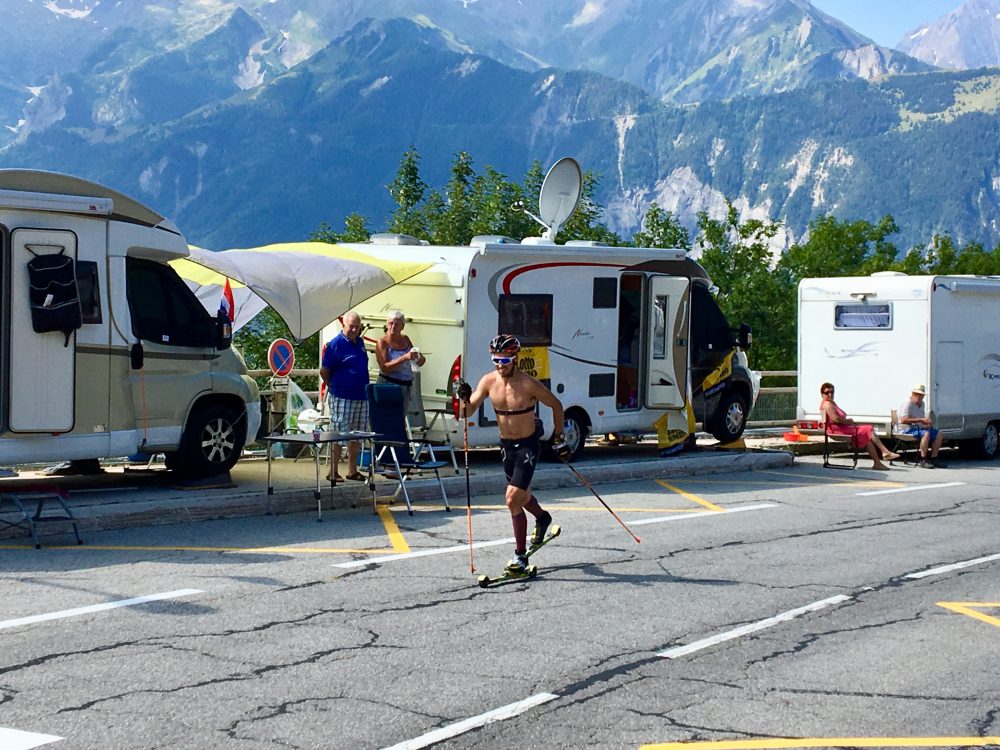

Skiing-wise, Ian Torchia has nearly done it all. And now, in life, he’s ready to do some more.
In an Instagram post following the American Birkiebeiner, Torchia announced that he is retiring from professional skiing with his trademark blend of gratitude and humor, saying, “In the end I won’t remember the races won (a few) or lost (many more) but the lifelong bonds of teammates, the support of friends and family, and how special the ski community as a whole is.”
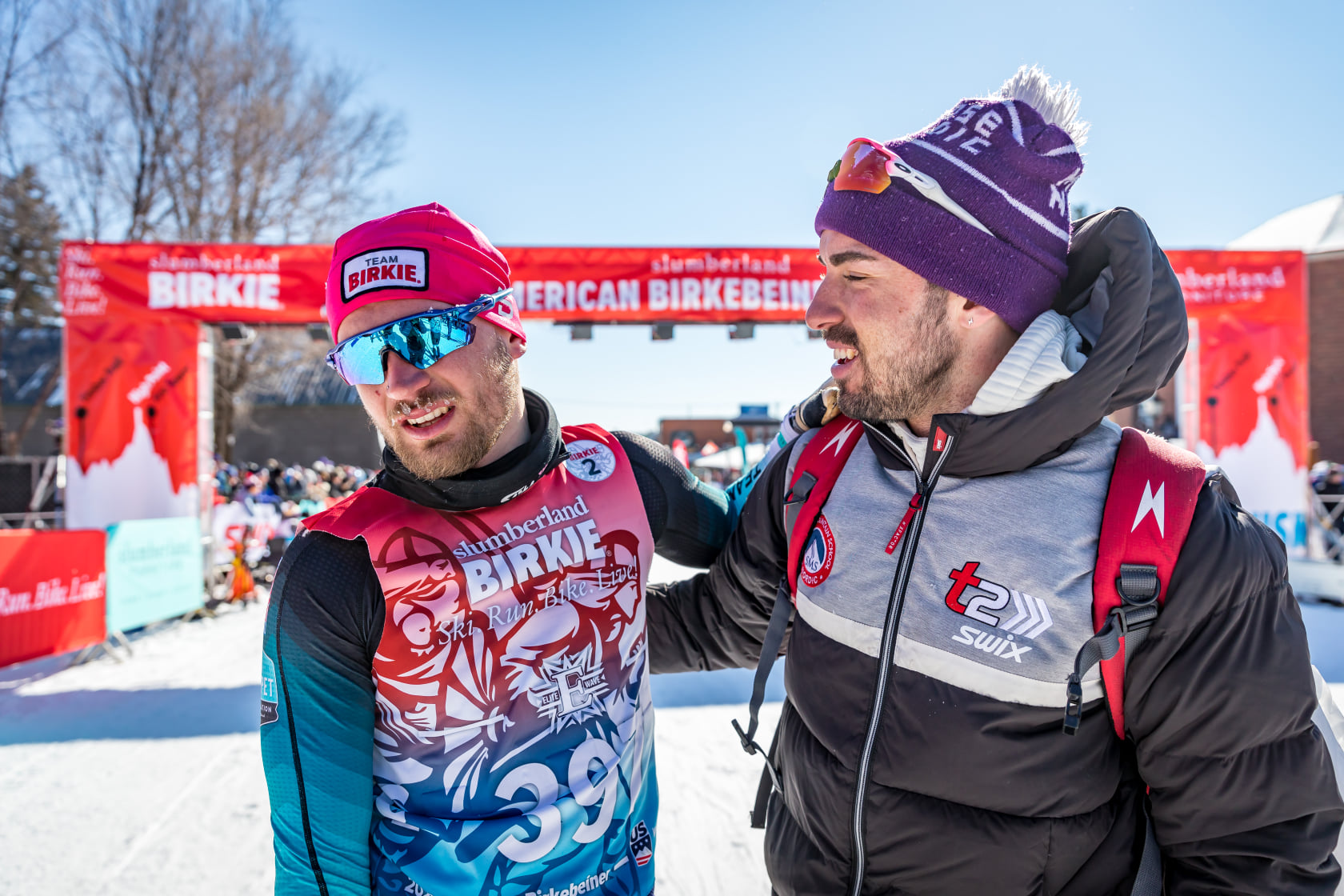
Heading into retirement, Torchia seemed to take a victory lap through the Midwest marathon circuit, starting with a win in the 37 k classic City of Lakes Loppet in Minneapolis on February 5th. He then went back-to-back to the following weekend at the Mora Vassaloppet, winning both the 48 k skate and classic races within one weekend. At the Birkie on February 26th, Torchia finished 5th in the 50 k skate, roughly 15 seconds behind the winner, Gerard Agnellet of France. Not a bad run.
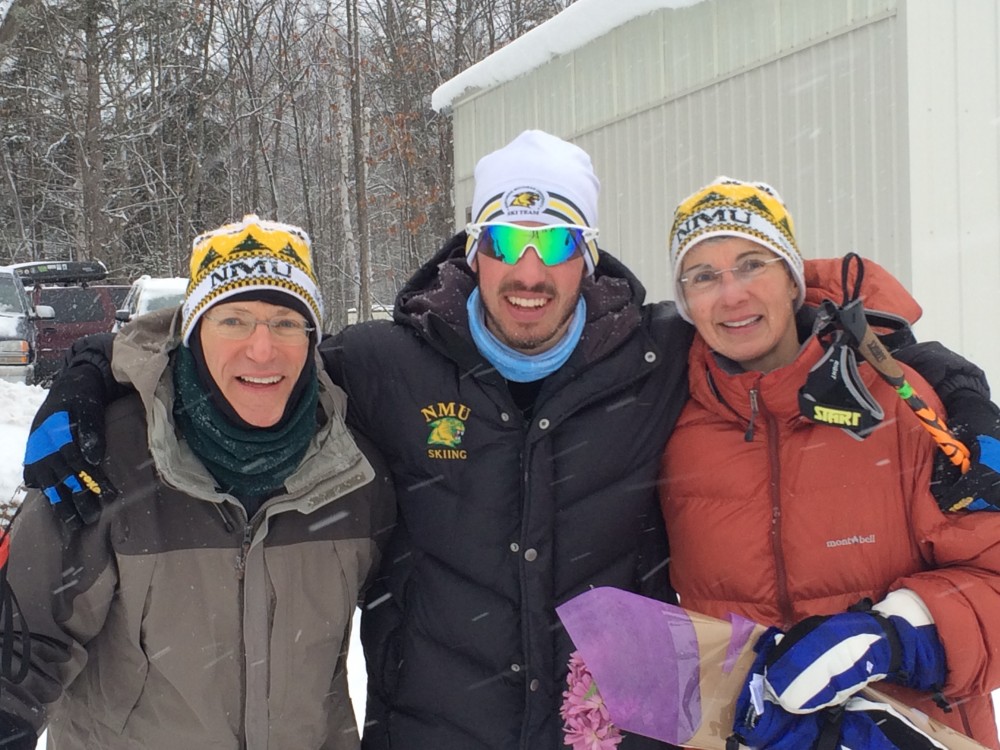
That skiing contains truths about how to live a good life is not a unique notion, but Torchia had a one-of-a-kind knack for finding those truths and sharing what he learned. He also did so, of course, while racing very fast. Torchia lived out the wildest dreams that every young Midwestern kid has when lined up for the Junior Birkie – coming from Rochester, Minnesota to win a junior national title, ski for legendary coach Sten Fjeldheim at Northern Michigan University (NMU), add to that program’s legacy by winning a NCAA title in 2018, be nominated to the US Ski Team, race the World Cup, win the Birkie in 2021, and become training partners with some of the best athletes in the US, like Jessie Diggins.
It’s been a busy path that’s seen him in constant movement. But that suits Torchia.
When FasterSkier caught up with him less than a week after his announced retirement, he was stepping out from a visit to the St. Louis Aquarium on a day trip with his brother’s kids. Already on the move, Torchia was gracious enough to share what’s next, and what, in these early days of retrospection, he has learned from our sport.
This interview has been edited for length and clarity.
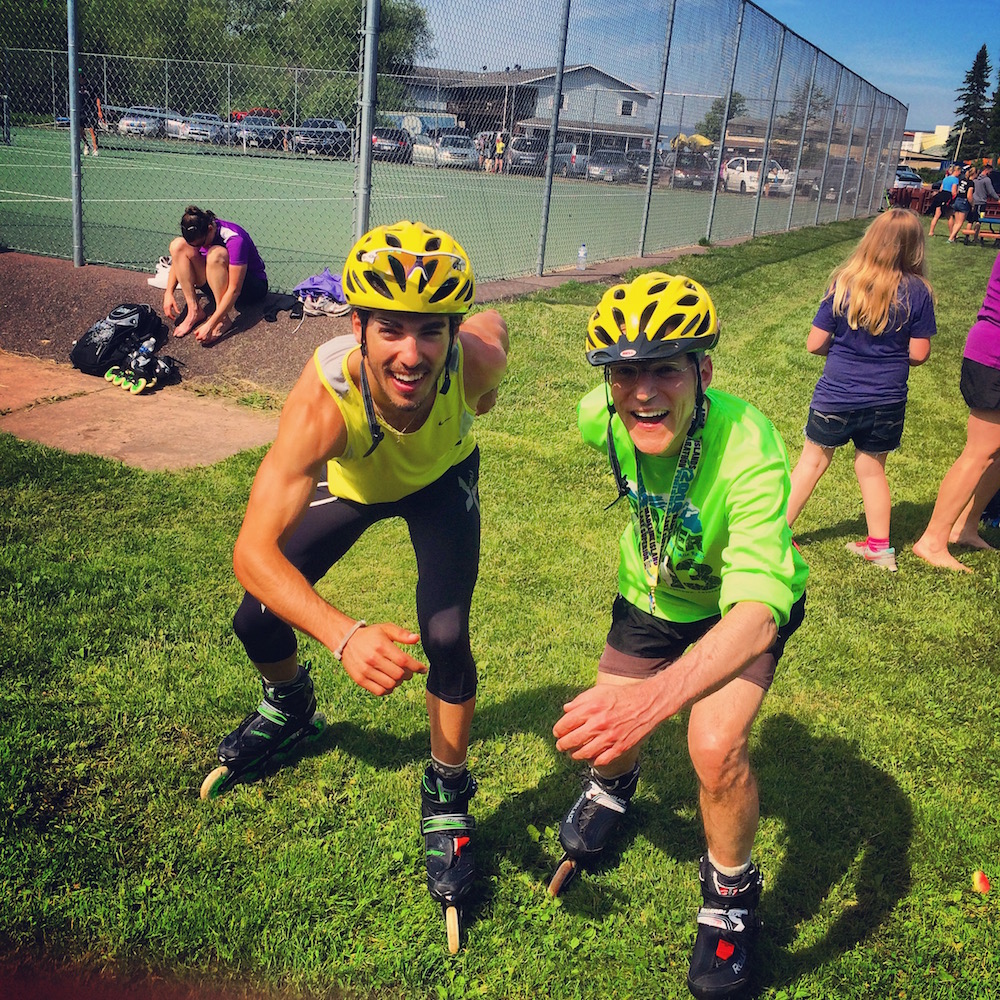
While my dad (affectionately called Sir) has given countless gems of advice, the above is one that I remember the most as he has always emphasized humility in the face of success.” (Courtesy Photo)
On the decision to retire and what comes next:
Ben Theyerl / FasterSkier (FS) : Starting with a pretty simple question; how are you feeling right now?
Ian Torchia (IT): I’m feeling great. I’m in St. Louis with my brother’s family and their five kids. It’s been a little bit of a whirlwind. I’m just taking a week off – not running or doing anything which I haven’t done in a long, long time. But I’m just feeling very energetic about what’s next.
I’m looking forward to a second interview for a job right now. I want to get some experience as a medical scribe before going to medical school to become an osteopathic physician. Between that, taking the MCAT, and a few prerequisites, it’s going to be a busy next two years.
FS: I know you just retired, but have to ask, any plans to throw your hat into citizen races the rest of the season?
IT: Maybe the Great Bear Chase. Realistically, my next race effort is going to be in Marquette, MI with my college buddies. There’s a route [in Marquette] where you go down County Road 510 to the Lake (Superior) and back, it’s 18mi or so, and we’ve wondered whether on an icy day you could do it in under an hour.
FS: Have you thought about what racing looks like next season for you?
IT: I want to do Senior Nationals in [Houghton, Michigan]. I wouldn’t do it if it wasn’t in Houghton (Torchia is based out of Ann Arbor, MI). And probably, the Birkie.
FS: Which races would you want to race again at Nationals? Like are you targeting the 30 k, or have you thought that far yet?
IT: I mean, I had a lot of fun with sprint’s this year, and I qualified for my first final at Nationals, so while I haven’t thought too much about it, I’m going to miss doing those types of races so why not do one more? It’s more just that I want to do the races that I know that I like racing. A shorter, classic race is not really my forte, but like a longer classic race, or a skate marathon, I’m game. I think it’s a skate 30 k at Nationals next year, so that would be cool.
FS: With your goals set towards medical school, have you put any thought towards where you’d like to go?
IT: This is all early, but Pacific Northwest University in Yakima, Washington has an osteopathic school, and I think it’d be really cool to move out West for four years. But Kameron and I (Torchia’s wife) have definitely talked about coming back to the Midwest when everything’s said and done. And specifically, Marquette. We just love that place so much.
FS: Backing up, what was the process of coming to the decision that now is the right time to step away from professional skiing?
IT: I think it started at the beginning of the training season in May. I talked about it with my wife, and we both agreed that I should give it my best shot to qualify for the Olympics, because that’s always been my goal. At the time we also looked out beyond this season and said, ‘you know, the journey to become a doctor is a long one,’ and I need to get started at some time. I wasn’t thinking beyond this season with skiing, and personally, I was okay with that.
A lot of it comes down to just wanting other parts of my life. It’s hard being away from Kameron and our dog. I give a lot of props to the members of the US Ski Team who are away from their loved ones for four to five months every winter. It’s hard to do it, and yeah, one big reason to retire was actually being able to live with my wife.
Number two is, and I don’t want it to be misconstrued, but skiing at a professional level means being a little selfish – it is a big focus on you and yourself, and everyone around you is working for you. I think about life, and at some point, I wanted to step back and give back, and I think that’s the main goal I have now. My goal to become an osteopathic physician is based around helping others, and there’s a lot of cool things in skiing to do that work on inspiring the youth and inspiring each other.
FS: Yeah, on the skiing end, I think I can say I’m sure there’s at least a hundred kids who would sign up for an “Ian Torchia skate clinic” at Wirth Park (in Minneapolis) anytime.
IT: (Laughing) Well, thanks. That’s something I want to try to bring here, actually, to Ann Arbor and downstate Michigan. When I go skiing on the one snowmaking loop around here, I really don’t see that many kids out. So if in these next few years, I could get something going where I can help bring even more kids out from Detroit and get them on skis, it would be really cool. I’d love to do that.
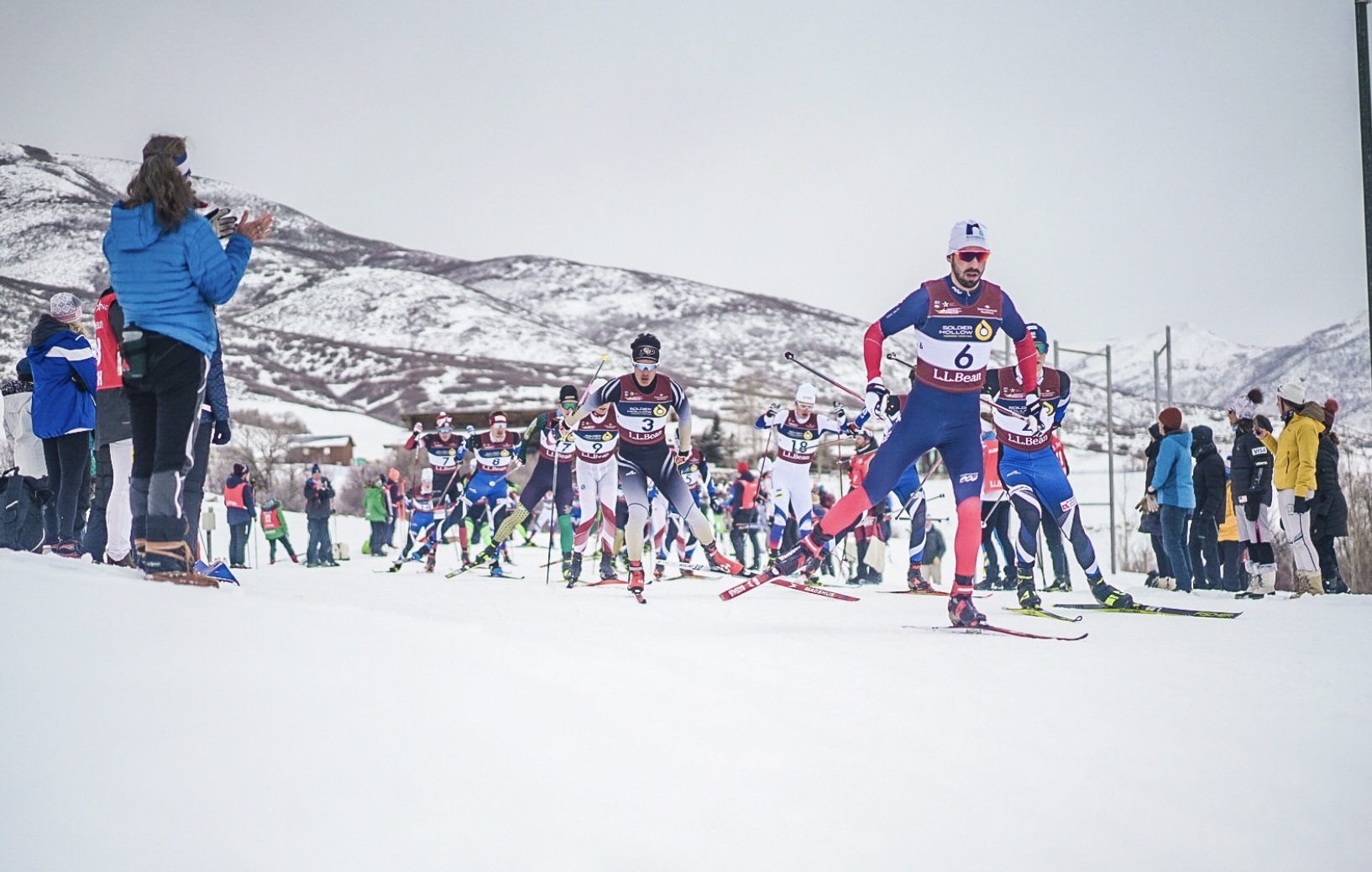
On a life, so far, spent skiing:
FS: I know it’s early, but I wanted to go all the way back and get your retrospective on your time in skiing, if you’re okay with that?
IT: Oh that’s all I’ve been thinking about, so yeah.
FS: You’re from Minnesota, which is pretty well-known, but what’s glanced over is you’re from Rochester, which is I-90, not I-94 — it’s south of most of the ski leagues and big clubs. Coming from there, what drew you to Nordic skiing over say, running, which you and your older brothers were also very successful in?
IT: I credit my mom for starting all of this. Like, they put me on skis the day before I turned two, apparently, and I definitely don’t remember that.
Beyond that, my parents started the high school team here in 2000 when I was five. I have four older siblings who are all four plus years older than me, and so since my mom had no choice but to bring me along, I was an honorary member of the team. That Rochester team has just grown and grown over the years – right now there’s like 200 kids every year and over half of those are newcomers who just want to try it out. I think they’re getting their first snowmaking loop now, which with the way things are going is important to being able to have a place to ski [in Rochester].
It was an unusual place to start skiing. My family was building the team, and I got to help build the trails. I look back and it may be what led me to love skate more than classic, since we didn’t have classic trails in high school.
I loved it. It was unique, but I wouldn’t have changed it for the world.
FS: Then from there it was a Junior Nationals title, the Northern Michigan (NMU) team, NCAA championships, the US ski teams, the Birkie win. You’ve seen a lot of the sport. What does that journey look like from where you’re sitting right now?
IT: (pausing) I mean, yeah, it really is just looking back on it all. It sounds funny to say, but I look at that Junior Nationals title my junior year of high school as a pivotal moment in my life. I give a lot of credit to Sten Fjeldheim who met with me like a week after that happened. I was thinking I was going to run in college, and I ended up winning my first junior nationals race, he sent me an email, and the rest is history. It’s the one moment I look back on and go, where would I be now?
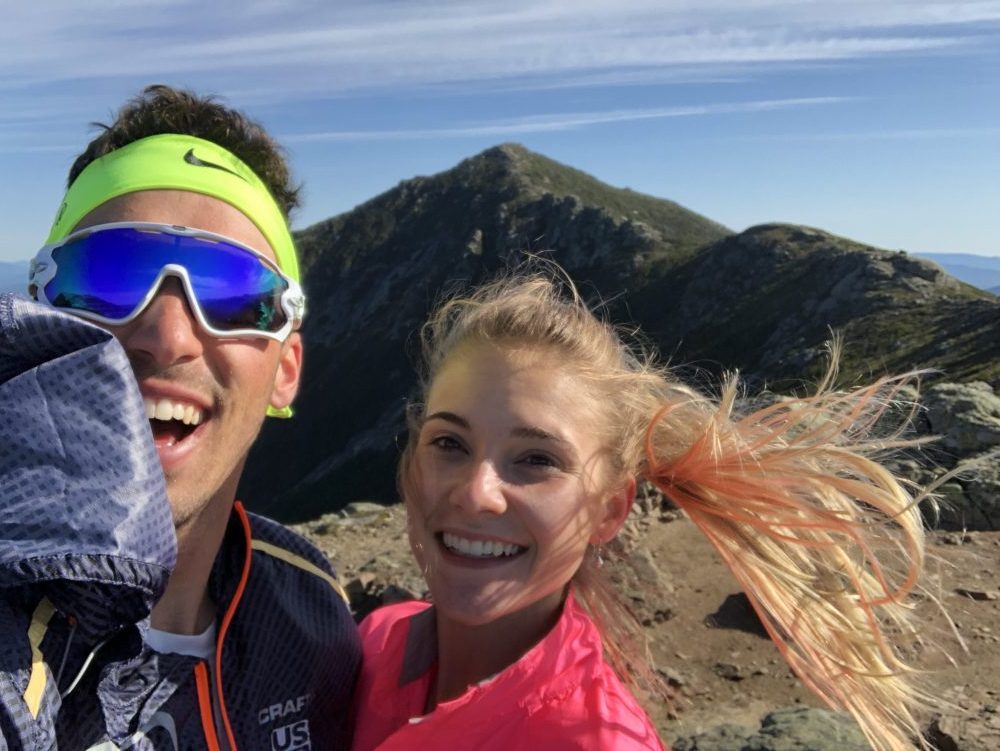
So I guess I would say to Sten, ‘Thanks for finding me and putting me on the path I’m on.’ I’m grateful for everyone who’s helped me out on the way. The support, as I look back on it, is insane. My best friends have come from skiing. My wife – I wouldn’t know her if it wasn’t for skiing (Kameron and Ian were teammates at NMU). It’s shaped my life.
Yeah, I’m done with the professional side of it, but I’m going to be doing the Birkie for many years to come.
FS: To return to that moment, you mentioned Sten and NMU. That’s a big legacy in Midwestern and US skiing that you were instrumental in sustaining. What made Sten and that experience special?
IT: I was just getting a massage from this guy in Marquette, and we were talking about Sten, and my masseuse of all people was like, ‘man, Marquette would be a different place if Sten Fjeldheim had never been here.’ And it’s so true. He transformed not only the Northern Michigan team into a powerhouse but helped make Marquette a skiing community. And he’s just a force of nature. The first time I ever talked to him, even across the phone, I was getting fired up. As soon as I hung up the phone, I wanted to ski for that guy. He has a way of lighting a fire inside you and getting you to be your best self. I definitely miss being coached by him.
Marquette is my favorite place in the world and I’m lucky to say that it’s my wife’s too. It just has everything that you could ever want. Every year, it seemed I would find a new thing that I was like, ‘Oh my gosh, you can do this here.’ Freshman year it was just running on trails all the time, the next it was mountain biking, and the next I discovered surfing on Lake Superior. It’s a cool playground with a Midwest community and a Midwest vibe, and it would be great one day to return there. I have a pipe dream that my friends could all live next to each other, and yeah, that would just be too good to be true.
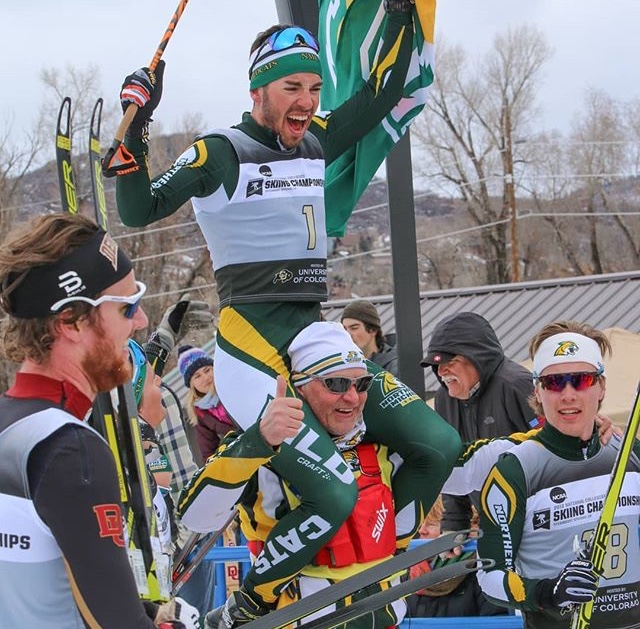
FS: That’s going to be quite the lineup in the waves out there.
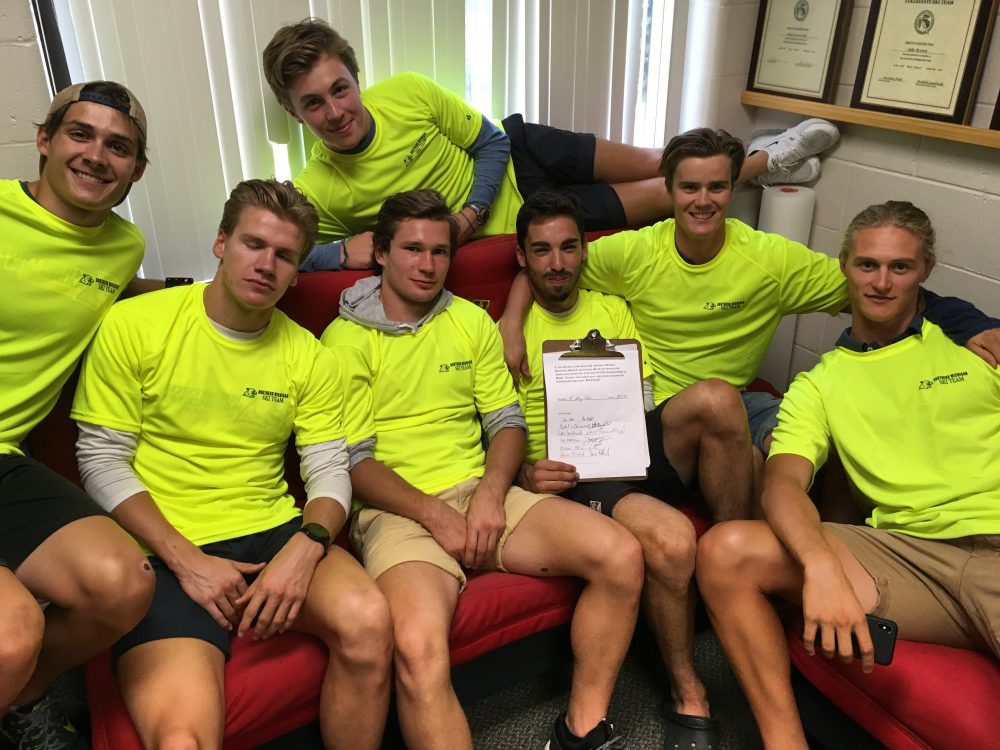
Both talking here and reading back on a few interviews you’ve done with FasterSkier, I keep being struck by just how much you seem to revel in both the sport of Nordic skiing, and the people who you do the sport with. A couple of years ago, you said [to FasterSkier] that one of your all-time favorite moments was having three All-Americans from NMU in the same year with you, Adam Martin, and Jake Brown.
What is special about nordic skiing as a sport for you? What’s been at the center of the sport for you as you kind of climbed up its ranks?
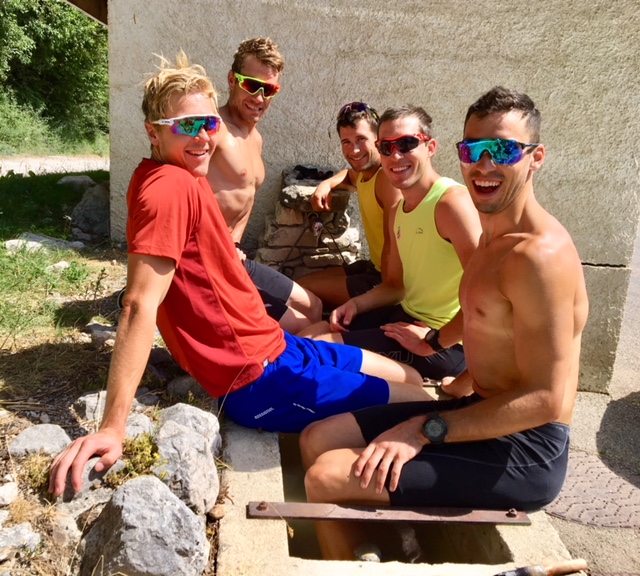
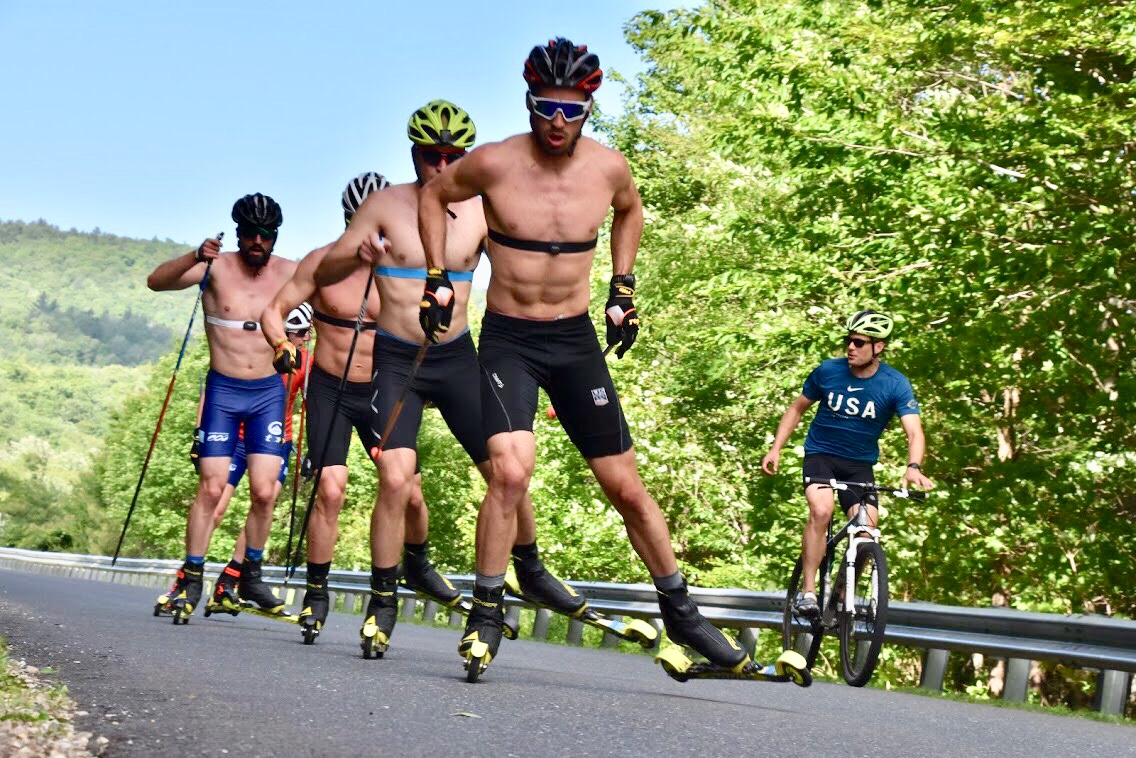
IT: It sounds cliche, but it’s not the destination. It’s the journey along the way. My favorite memories are out, training on the roads, doing three-hour ODs, the trails and the van rides.
It’s crazy people who love to be out in crazy weather pushing their hardest. Like, you don’t need any team bonding activities when you’re out on a rainy cold three-hour OD. That’s the thing bringing you together.
FS: Two-part question: Looking back over everything, what’s one – your favorite result? And two – your favorite moment?
IT: Favorite result; winning NCAAs was really special. It wasn’t the hardest I’d pushed in a race, but the tactics are what I’m really proud of. I think oftentimes I feel like I have a responsibility in a pack to go hard, and so it was a testament to my teammates that a sprint developed there and I was able to come out on top.
Favorite moment: The Birkie Classic [last year] because I hadn’t won the day before (the 2020 Birkie was raced over four days, with a Saturday race featuring an elite skate race, and a Sunday race featuring an elite classic race) and there were just crazy conditions. I bonked and pushed through it.
FS: I mean, I’ve been on the Birkie trail all my life, and watching you trudge through those conditions (a couple of inches of new, wet, heavy, snow covered what was essentially ice during the race) was one of the crazier scenes I’ve ever seen.
IT: It was hard to understand-type ‘crazy.’
FS: Picking the Birkie as a favorite moment reminds me that you’ve really been one of the more fun athletes to watch at that race the past couple of years. Not only last year, but also the year before — I have to imagine skiing with Niklas Dyrhaug was pretty cool.
IT: Oh yeah, thanks for bringing that up. I was proud of that one too, because I was having cramps about halfway through and pushed through those and just kind of stayed in it. I wasn’t battling it out with Dyrhaug at the end, but got into a sprint for second and ended up with it. That was definitely a special race too.
I mean, just doing this is making me realize there’s many little special moments along the way. Just a lot of special moments…
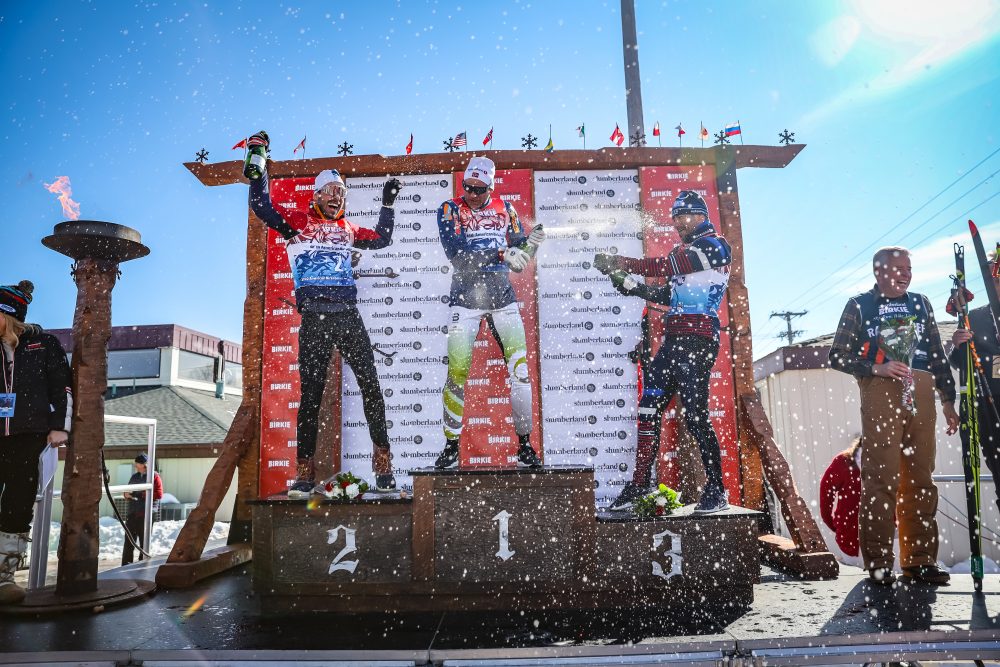
FS: Which brings you to where you are now. I know that’s a lot of big questions but…
IT: I should also say that Stratton (Mountain School) was huge the past couple of years. I hadn’t had a great last year of college, but they still brought me on the team and that was just the most unique experience. Getting to learn alongside Jessie (Diggins), Simi and Sophie (Hamilton), and Kyle Bratrud. Pat (O’Brien) especially drew me to that team. It was just like Marquette with it being another special pocket of the world in Vermont where Nordic skiing is just the thing.
FS: Yeah, like you just rattled off being teammates with Jessie, Sophie, and Simi – that’s three of the most influential athletes in US skiing history right there…
IT: I mean, yeah. I have an Instagram post about it from right after Jessie won the silver (medal, in the Olympic 30 k freestyle). I had a matched interval bounding workout last fall where I was at threshold, and she had max. five-minute sets. We’re fifteen seconds into the first one and she was already breathing like a truck. Then she just keeps it pinned there for the next, I don’t even know, thirty or thirty-five minutes.
I was watching the Olympic 30 k live and was like, ‘Oh my gosh, I’ve seen this film before.’ When you see her doing that on the television, it’s pretty cool. When she’s right next to you it makes you go, ‘Ok, if I want to be that good, I have to work this hard.’
FS: She goes out and turns in a performance that’s not just the iconic moment of the Olympics for skiing, but for the whole country. That’s a pretty unique way to experience it.
IT: Just one of the coolest.
FS: So, after all that then, do you have any other thoughts?
IT: I’m just lucky, and happy…and probably gotta get back to the aquarium.
FS: Well then, I’ll end by saying congratulations from all of us out there in skiing.
IT: Thanks man. Thanks everyone.