From the FasterSkier archive — posts syndicated from athletes’ and coaches’ own blogs between 2004 and 2012, kept online as published. Current coverage is at fasterskier.com.

Tag: Karl Schultz

  • “It’s a Good Time to be an American Ski Racer”: A Look Inside the OPA Cup Finals Trip to Sappada, ITA

    “It’s a Good Time to be an American Ski Racer”: A Look Inside the OPA Cup Finals Trip to Sappada, ITA

    While World Cup Finals were underway in mid-March in Falun, Sweden, a second contingent of top American skiers was lining up roughly 2,000 kilometers south to race in the OPA Cup Finals in Sappada, Italy. Located along the northern edge of Italy near the Austrian border, the small town is nestled among the spectacular, jagged massifs of the Italian Dolomites, roughly an hour’s drive east of Toblach, which typically hosts the final stages of the Tour de Ski. The team spent the week prior to competition training in Toblach, which features similarly spectacular views, along with the benefits of the delicious food and drink one might expect when traveling in Italy. 

    For those unfamiliar with the OPA Cup, it is an international race series featuring predominantly European athletes racing just below the World Cup level. The US Ski & Snowboard development program typically facilitates a trip to OPA Cup Finals to provide athletes who may not have earned World Cup starts the opportunity to experience high level competition overseas. Qualification is based on national rankings, beginning with those racing on the World Cup, and proceeding through the top domestic racers, depending on declines. Often, there is overlap between the teams for the FIS Junior/U23 World Ski Championship teams and the OPA Cup teams, which may conveniently allow some athletes to prolong their stay in Europe and attend both events. 

    “Generally the trip is geared toward athletes that are a bit older, who either have had World Cup starts or on track for that,” explained US Ski Team Development Team coach Greta Anderson.
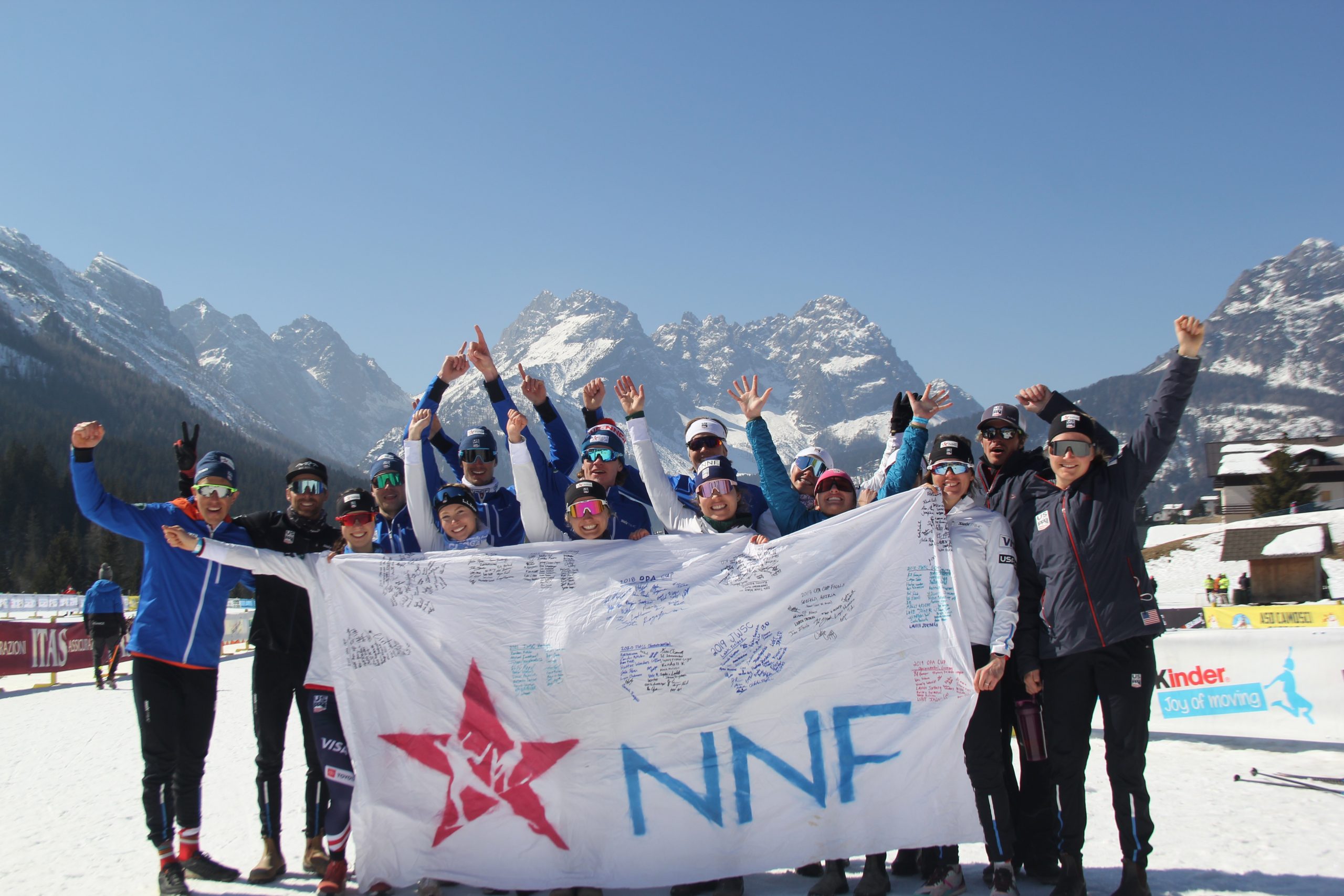
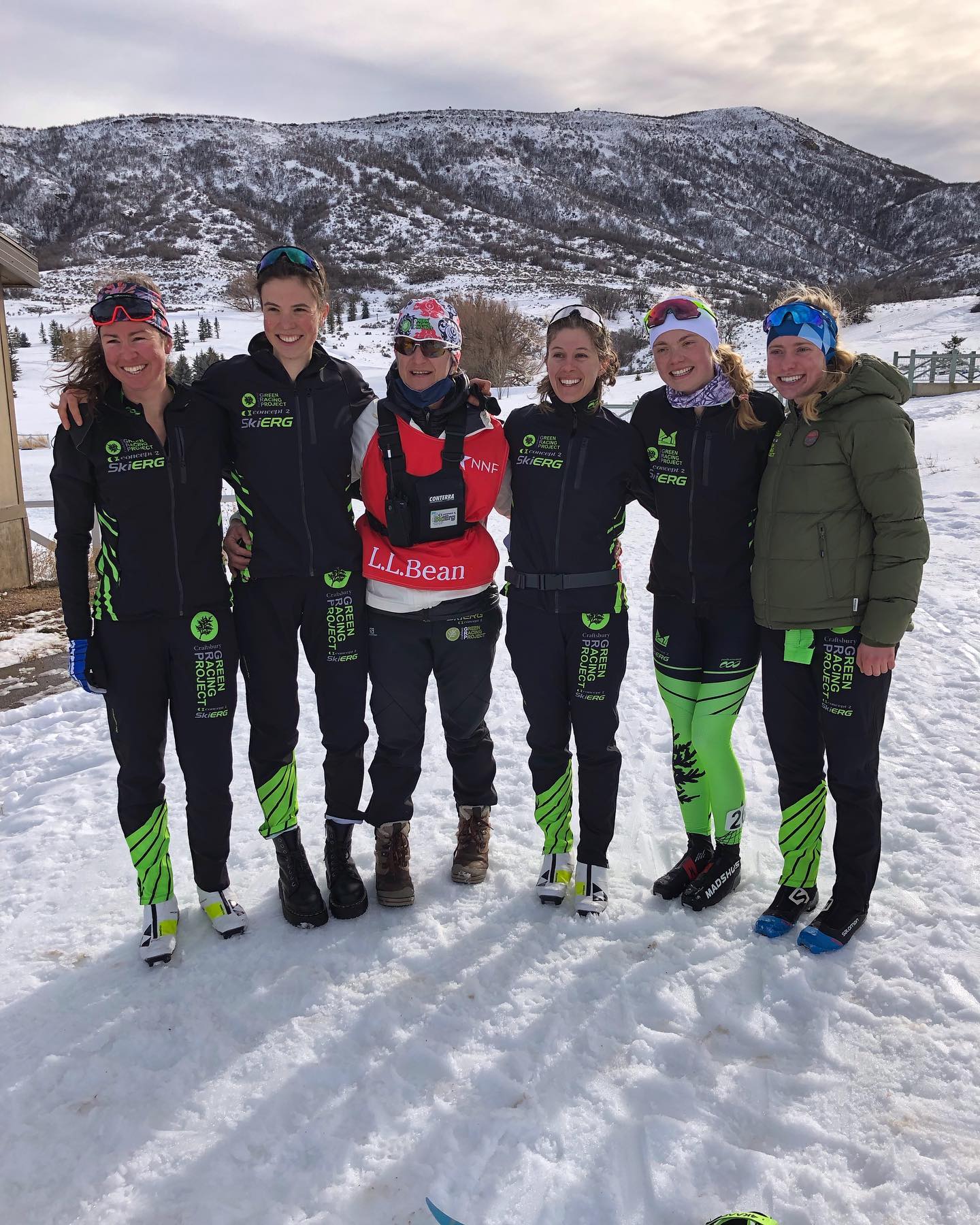
    The American OPA Cup Finals team celebrates fast races and bluebird days in Sappada, Italy. (Photo: Bryan Fish/NNF)

    Identifying it on its list of “Pillar Projects”, the National Nordic Foundation (NNF) helps subsidize the cost of the trip for the qualified athletes. The trip can accommodate up to 16 skiers, who are generally kept to an approximately even male to female ratio through the qualification criteria. This year, due to conflicting schedules and a number of declines, thirteen athletes attended, with nine women and four men. 

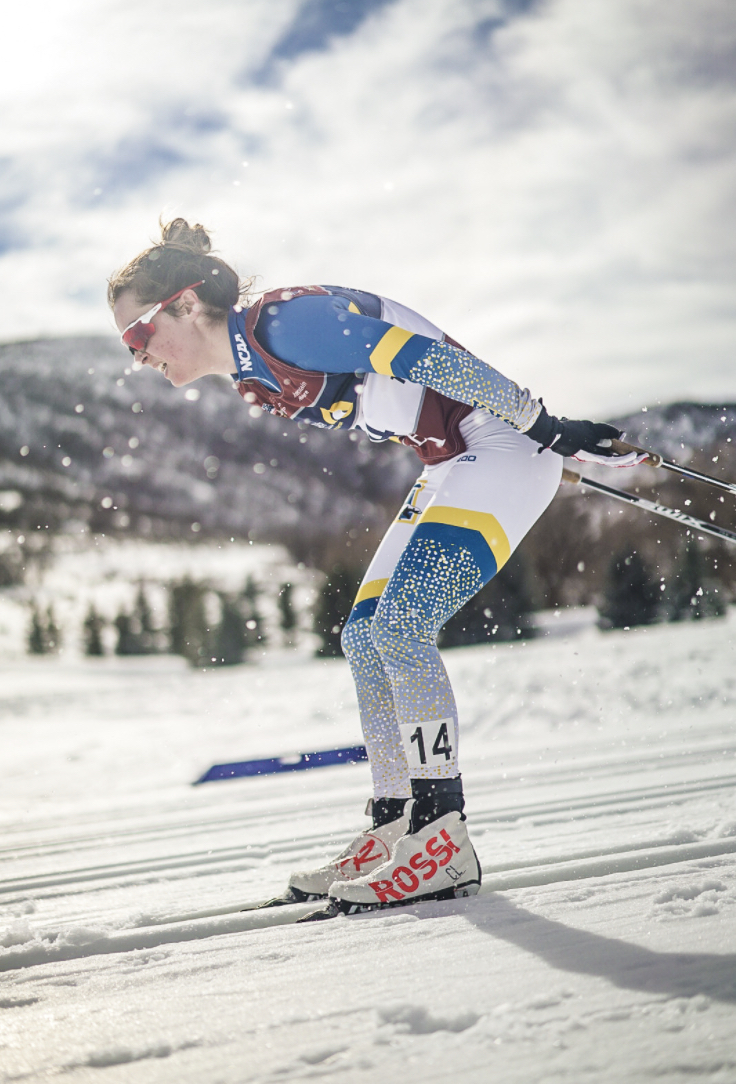
    In alphabetical order, the senior men included: Braden Becker (CGRP), Logan Diekmann (BSF Pro), Finn O’Connell (BSF Pro), Karl Schultz (SVSEF). Senior women included: Mariah Bredal (BSF Pro), Margie Freed (CGRP), Alex Lawson (CGRP), Hannah Rudd (BSF Pro), Becca Rorabaugh (APU), Lina Sutro (SMS T2), and Alayna Sonnesyn (SMS T2). 

    This year, two U20 athletes headed from World Juniors in Lygna, NOR to Italy along with D-Team coaches Anderson and Bryan Fish: Kate Oldham (Aspen Valley Ski Club) and Annie McColgan (UVM). 

    “It’s pretty cool that we have more racers that are racing professionally or post collegiately than, I think, ever in the US, and they have more clubs and places to choose from,” said Anderson. “There were several athletes that, especially because racing was shut down on the East Coast last year and I happened to be in Alaska and wasn’t wasn’t traveling very much before I took this job, it was kind of the first time I’ve gotten to work with them, or the first time I’ve gotten to work with them in three or four years. So it was really cool to get to know Alayna Sonnesyn a little better and Lina Sutro a little better, and Margie Freed and Alex Lawson, who I’ve seen race many times, but it was the first time I’ve gotten to really work with them and get to know them. The same with Braden Becker and Karl Schultz… So it was a pleasure on the trip to get to work with some new athletes that have come through different development systems and are excited about and ready to make that next step. And this racing circuit is a really good opportunity for that.”

    Anderson took the lead with organizing the trip and supporting athletes, working alongside US Ski & Snowboard Cross Country Sport Development Manager and long-time OPA Finals trip lead coach Bryan Fish. The wax support staff included BSF Pro Team head coach Andy Newell, former APU athlete and current staff member Peter Kling, and Jackson Hole comp team coach Jon Filardo. 

    US Ski & Snowboard Cross Country D-Team head coach Greta Anderson supports athletes during the Sun Valley SuperTour races in January. (Photo: Tobias Albrigtsen / @untraceableg)

    Anderson identified the OPA Finals trip as a key development opportunity for a number of reasons: though perhaps lower pressure than World Cup, it’s a professional race circuit with small but competitively dense fields, athletes race aggressively and tactically in a style younger athletes who have not yet raced at this level may not have experienced, and it offers the opportunity for an athlete to dial in some of the small but significant factors details that support success adapting to a new and different environment following long international travel.

    “Bryan’s been doing [the OPA Cup Finals] trip for a long time,” Anderson said. “So Peter Kling, who was on a coaching staff, and Becca Rorabaugh, they were like, ‘I’m pretty sure that we were on Bryan’s first ever OPA Cup trip.’ And it used to be that we started at the bottom of the results sheet and started looking upward for names. And right now we’re starting at the top and we don’t have to look very far down.”

    In two days of racing, the US had seven top-10 finishes, with another set of athletes finishing well-within the top-20. Highlighting the US team was SMS T2’s Sonnesyn, who took third in the 10 k classic on Saturday the 12th, and won the 10 k skate the following day. 
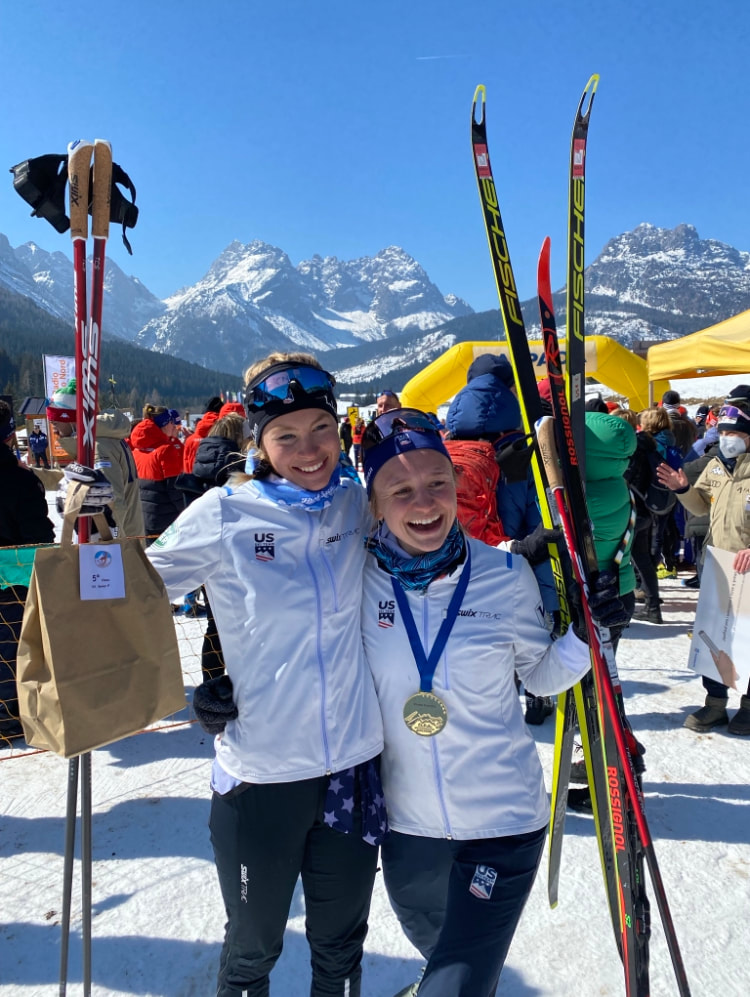
    Alayna Sonnesyn (SMS T2) takes the win in the 10 k skate at Opa Cup Finals in Sappada, ITA, with Mariah Bredal (BSF Pro) finishing just behind in fifth. (Photo courtesy of Alayna Sonnesyn)

    “It’s pretty special,” Anderson said of the performances in Sappada. “It’s awesome to get to see that. For Alayna to start a race and say like, ‘What’s my plan to try to win this?’ It’s not just, ‘Hey, we’re here to participate and learn,’ but ‘Hey, we’re here to participate and learn but also we’re going to try to win.’ And I think, with that comes — not only from staff but from racers — this level of professionalism. Okay, we’re going to select skis. We’re going to make sure we’re organized and in a good place. Where can we be? Where can we do feeds? How can we set you up to have the success you need to have? 

    “It just feels like a really good time to be an American ski racer.”

    After winning two of the first five SuperTour races this season, and finishing on the podium in each of the others, Sonnesyn was offered starts at the Tour de Ski, where she hoped she could achieve strong enough international results to qualify for the Olympic Team. But these goals did not come to fruition; Sonnesyn struggled to find the same race sensations while on the World Cup and tap into the fitness she knew was still there, which was reflected in results below her expectations. She shared her disappointment openly on her blog and social media, providing a relatable and important example to her followers that the pro-skier journey is not immune to bumps in the road. 

    “My experience on the World Cup this year – it was quite demoralizing, to be honest,” said Sonnesyn in a call from the airport as she was on her way to SuperTour Finals in Whistler. “And then, after the Tour de Ski, I got COVID. And it just really put a damper on the whole winter for me. And I started questioning like, ‘Okay, am I fit? And I like, can I race? Well, like, what have I been training for? This is really bad timing with COVID, too.’ So I was just pretty down. But then I was able to have really great SuperTour races, back in January and February, and then to be able to race internationally again in Italy. It wasn’t a World Cup, but it was still very high level of racing. So to have it go so well kind of reaffirmed to me that I belong on the international stage. And I definitely needed that, a little bit, just to give myself more confidence moving forward and motivation as well. So I’m really excited about the races and how they went and what I did to prepare for them and kind of my mental attitude around them, too.”
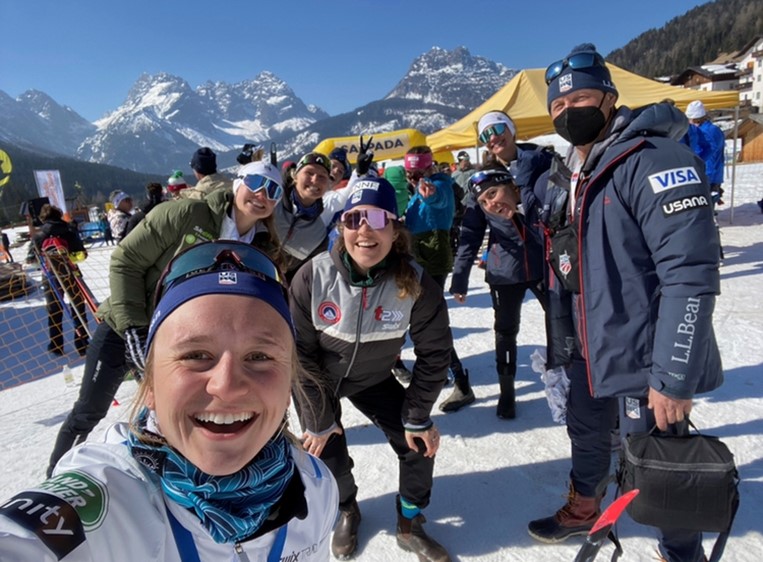
    A selfie in Sappada: the American team prepares for race day at Opa Cup Finals. (Photo: Alayna Sonnesyn)

    As she reflected on the trip and her experiences racing internationally over the last few seasons, Sonnesyn echoed Anderson’s sentiments about the progression of the American team at the event.

    “Compared to my first OPA Cup trip, which was in 2018, I think there were maybe two or three top 10 performances. And they were exciting, but for the most part, it was kind of like, ‘We’re just here to get the experience. We’re not really sure what we’re doing.’ And I think that the way the US is developing right now, the way that new courses are being built in Cable or Duluth, or wherever it is – they are preparing us better for racing internationally. And I think that was shown in the results that we had in Sappada. And it was just so exciting during that 10 k skate on Sunday to cross the finish line in first, and then turn around and see a ton of my other US teammates come in right behind me. That’s not something that was happening four years ago. So I think we are really developing and that is a huge thanks to so many different people and so many reasons, but it’s exciting to see.”

    Sonnesyn also spoke to the importance these international opportunities have provided her specifically, speaking from the perspective of what she dubbed a “bubble athlete” who has oscillated between World Cup and domestic racing over the last four seasons. She got her first World Cup starts in Quebec in March, 2019, and has been offered starts beginning in Period 2 each season since. Though this is a key stepping stone in the process toward consistent World Cup racing, she expressed that bubble athletes can have a challenging time planning seasons in advance and need to be prepared to adapt quickly to more frequent overseas travel.

    “I think that every single experience that an athlete has going and racing internationally, and traveling, and competing at that higher level, it all adds up to be super beneficial and a great learning experience. For example, I have gotten really great at overcoming jet lag, which the first couple of international trips I went on, I had no idea how to handle. I tried my best to do what I could, but it’s hard. And also to know what little things you want from home, like after being in Europe for four or five weeks, what do you really want from the US? 

    “And then also, how do you work in a new environment? A lot of times, if you’re going over to the World Cup, sometimes you’re provided a wax tech or sometimes not, or you have to bring your own, but you have to be willing to work with whoever you get.” 

    Sonnesyn explained that on the Sappada trip, she had worked with each of the techs before, but on her first trip in 2018, it was her first experience working with those wax staff members. Given the importance of ski choice and wax, working together effectively is imperative to an athlete’s success, but it requires dialogue and practice. 

    “Being ready to communicate effectively with the staff, what do you need? How do you want your skis prepared? What do you need from a hotel? All those things seem like such small little details, but they really add up with the more experiences you have.”
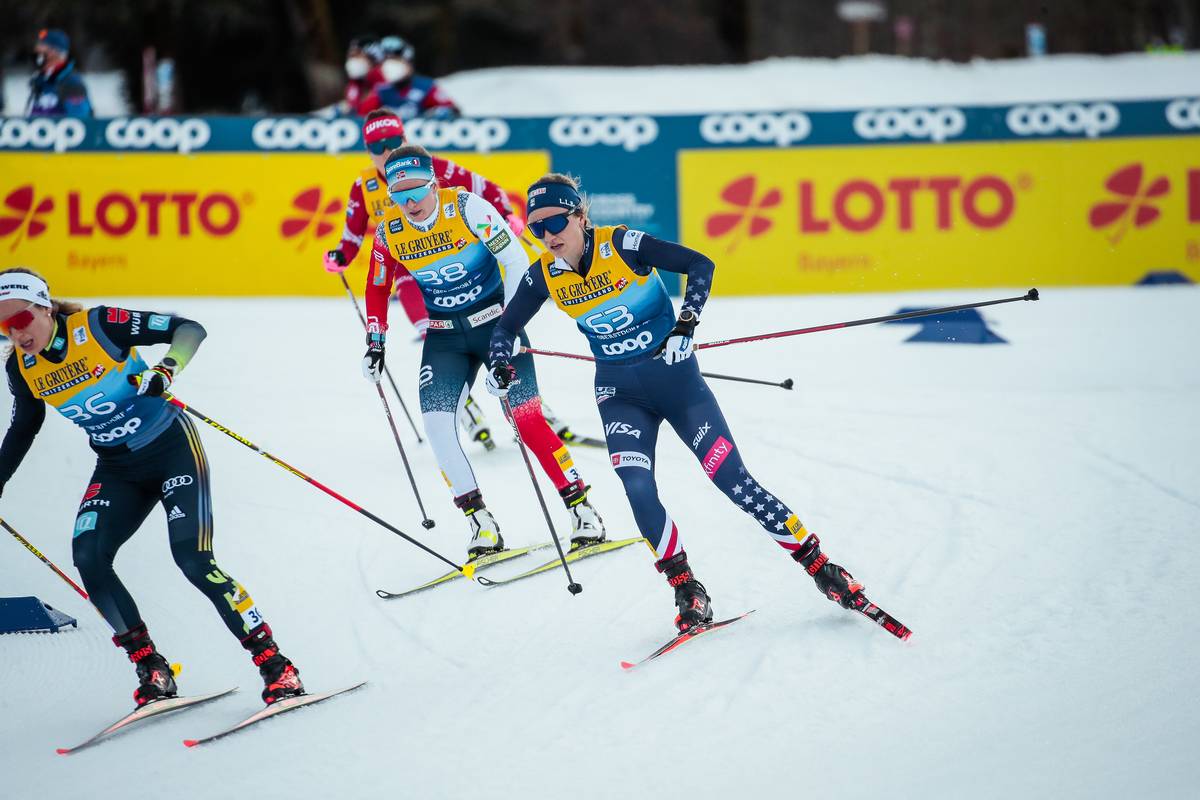
    Alayna Sonnesyn races in Oberstdorf, Germany during the 2021/22 Tour de Ski. (Photo: NordicFocus)

    She also spoke to the differences in the style of racing between the US and her international experiences, and how a trip like Sappada better athletes for what they might encounter should they be offered a World Cup start down the line. 

    “When it comes to racing: the courses in Europe are very challenging and very technical. Downhills, uphills, flats – whatever it is, there’s a lot of it, and you have to be ready to go for it. And then the competitors are fierce. They know how to be aggressive in a race, and you have to know how to hold your own. So it just helps to have that experience to understand how you approach the race. How aggressive are you going to be? How are you going to pace the race? How are you going to handle others around you?”

    With the highest levels of competition for our sport happening across the pond, it is easy to understand why opportunities like the OPA Cup trip provide an essential bridge for developing athletes. But it is not simply the facilitation of this trip that has led to marked improvement for the American team.

    “I think we’re open to change right now,” Anderson said as she reflected on her key takeaways from the experience in Italy and her first season coaching the D-Team. “I think the US, in a year with COVID, and lots of challenges logistically and politically in the world, we handle those changes better than almost any other country does. And I think that’s really shown here.” 

    Alex Lawson skates to 7th in the 10 k skate during OPA Cup Finals in Sappada, ITA. (Photo: Bryan Fish / NNF)

    While the OPA Cup crew was putting together a very solid day in the 10/15 k skate, the team of Rosie Brennan, Zak Ketterson, Scott Patterson, and Jessie Diggins had taken the win in the thrilling 4 x 5 k mixed relay in Falun. As the team in Sappada mingled near the finish to support the final racers as they skied through, Anderson said that a Swiss national team coach walked over and showed them the World Cup result on the phone. 

    Layered on top of the broader success at the OPA Cup Finals, Anderson expressed that this opened her athletes’ eyes to what might be possible for them in the years to come also. In particular, the Falun results of Zak Ketterson, a newcomer to the World Cup who ended his debut season with a 15th place finish in the 15 k skate and a mixed relay win.

    “[The guys racing at OPA Cup] are like, ‘Oh, man, I beat Zak sometimes’, or ‘I’m right with him’, ‘I trained with him in college.’ The level of confidence that brings… ‘Maybe maybe I can do that too.’”

    Moreover, Anderson expressed that this relay gold medal speaks to the equity of skiing in the US. “That we have good female athletes, and we have good male athletes, and we have a good balance of the two, and teams that are mutually supportive of each other,” she said. “Not every country has that.” 

    Boiling down the experience and her feelings as the season wraps up, Anderson concluded, “I have nothing but good things to say about our athletes right now. I’m really impressed with them. They handle the change better than anyone, and I think as a staff and from an organizational perspective, we’re trying to keep up, remove barriers, make sure they’re supported. And we’re open to trying new things, and it seems that we’re excelling in places where we’re willing to experiment and get our feet wet.”

    Kate Oldham (AVSC) races the 10k classic during Opa Cup Finals in Sappada, ITA. (Photo: Bryan Fish / NNF)

    Providing additional insights from the perspective of an OPA Cup Finals first-timer, FasterSkier also heard from U20 athlete Kate Oldham, who trains with the Aspen Valley Ski & Snowboard Club (AVSC) and competes for Middlebury College. Oldham took 11th place in both the 10 k classic and skate in the junior women’s category. 

    “Sappada was incredible,” Oldham wrote. “In congruence with the pre-camp in Toblach, the OPA Cup trip was unforgettable… My favorite ski to-date was on a long ski over the pass from Cortina to Toblach, stopping midway for trail side pastries and cappuccinos! Being with a group of older athletes was a valuable change from the World Junior trip because each team member brought new energy and experience to the group. Between that and the gelato shop next door to our hotel, the trip couldn’t have gotten much better!  

    “One of the things I think are most valuable about training and racing camps is the exposure to coaches and athletes outside one’s home team. For years I have been seeking out opportunities to attend regional and national camps that would bring new perspectives, training groups, and social dynamics to push me and help me adapt my own training method while making friends from schools and clubs all over the country. This winter I was lucky enough to have both my club coach and a group of skilled and passionate wax technicians/trip leaders selected from all around the US to lead the trips to Junior World Championships and OPA Cup finals. I know that over the six years I’ve been skiing competitively I have developed the competence to independently navigate high-level skiing events, but having techs to guide me through the process at the international level was extremely helpful, particularly when one of them I had worked closely with for those six years of training and racing.

    “With new coaches come new perspectives. Another set of eyes, a different experience, or a new phrase can be all it takes for the pieces of new advice to click into place. Or maybe a coach has a different perspective on the bigger picture of skiing that resonates with you unlike the philosophy you previously knew… which of the infinitely wide range of mindsets in ski racing works best for you? Which one reminds you why you love ski racing? Which one helps you stay motivated through the hardest parts of the season when the last thing you want to do is get out the door for training? Which one eases the heartbreak of coming so close to a goal but falling short despite your hardest effort? Without a doubt, cross country skiing is a delicate balance of internal and external factors, but having great teammates and coaches like the ones I got to know and work with in Europe this winter is certainly a key ingredient to the recipe for success in the lifelong pursuit of excellence on the race course and off.” 

    Full Results for OPA Cup Finals

  • It’s Ogden and Ketterson Again in the Craftsbury SuperTour Freestyle Sprint

    It’s Ogden and Ketterson Again in the Craftsbury SuperTour Freestyle Sprint

    SuperTour racing continued on Friday in Craftsbury, Vermont, as part of the Henchey Memorial Carnival, which also included Eastern Cup and collegiate racing. The three-day event is presented by the Craftsbury Outdoor Center, NENSA, U.S. Ski & Snowboard, and the University of Vermont (UVM), the EISA carnival host school.

    Racers were faced with snowy conditions for the opening 1.4-kilometer freestyle sprint as a winter storm made its way across the Northeast. Friday morning’s grooming report mentioned 6 inches of fresh snow, as more continued to fall throughout the morning. 

    On the women’s side, last weekend’s 10k freestyle winner, Alayna Sonnesyn (SMS T2), won the qualifier in 3:58.27, ahead of BSF Pro Team’s Lauren Jortberg in second and APU’s Rosie Frankowski in third. Perhaps a nod to the wintery conditions, these top three finishers were separated by over six seconds.

    Sonnesyn advanced from the first heat of the quarterfinals into the semis, where she finished third in the first heat behind Katharine Ogden (SMS T2) and Ava Thurston (Mansfield Nordic Club), who crossed the line together, roughly 0.4 seconds ahead of Sonnesyn. As the second semi, which was won by Jortberg, was roughly four seconds faster on average, Sonnesyn did not earn a lucky loser spot in the final. Instead, Jortberg advanced with Anna Bizyukova of UVM, Frankowski, and Craftsbury’s own Margie Freed. 

    Despite the trend seen in the qualifier, the final featured tight racing, with the top five athletes finishing within two seconds of one another. Just 0.6 seconds separated second from fifth.

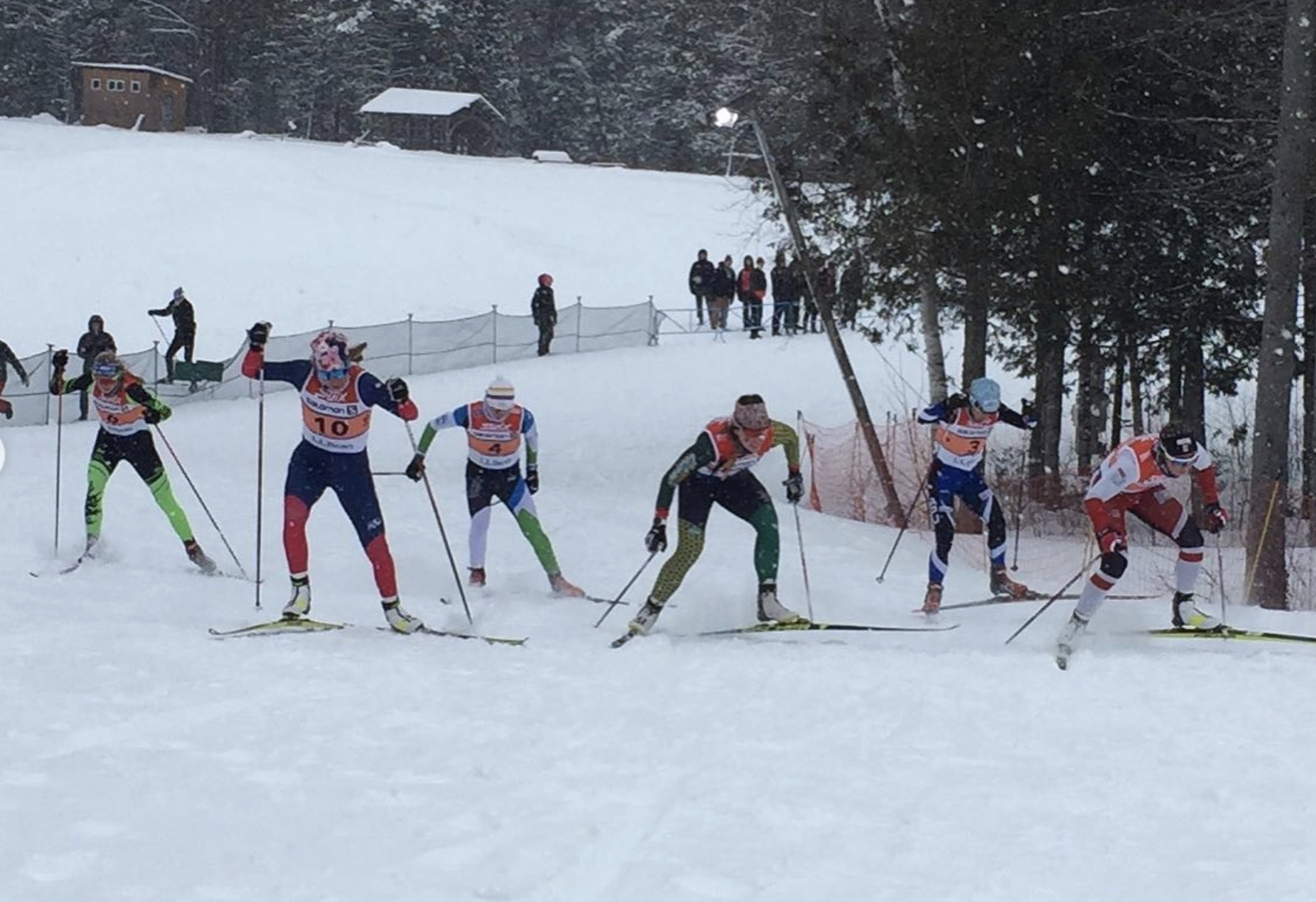
    A scene from the women’s final of the 1.4k freestyle sprint in Craftsbury. (Photo: Instagram @nensa_nordic)

    Coming out on top was Ogden, who won the final in 3:59.08. After racing on the World Cup from the opening races in Ruka through the midway point of the Tour de Ski, Ogden has gone three-for-three in SuperTour sprints since returning stateside, winning classic sprints in Soldier Hollow and Lake Placid before checking off a skate win today.

    Just behind, Jortberg took second place (+1.30) with U18 athlete Thurston closing in third (+1.78). Bizyukova was next to the line in fourth (+1.86), with Frankowski less than a meter behind in fifth (+1.91). Freed rounded out the women’s final in sixth (+4.51).

    “I think that the biggest thing to note about today was that it was blizzarding!” wrote Ogden in a post-race email. “The heavy falling snow made the heat racing very tactical and rewarded being very quick off of the line. There was one lane on the course that was packed down by traffic and the other areas were pretty soft!”

    Ogden was just 11 points behind Caitlin Patterson on the Olympic qualification distance list, based on the athletes’ best two distance races on the SuperTour or at the U.S. Cross Country Championships, during which Ogden competed in only one race – the 10k individual start classic where she was second to Patterson. The following weekend in Sun Valley, she was second in one distance race and fourth in the other, behind three Olympians and ahead of Patterson in each. As the races at U.S. Nationals were scored at a higher point value, Patterson took the final Olympic spot, leaving Ogden on the wrong side of the cusp. 

    Nevertheless, Ogden has found silver linings in the additional time back east. 

    “It was a blast to be able to race with the EISA. I miss skiing for Dartmouth (Ogden graduated in 2021), so it was fun getting to ski with some of my old teammates and some new Dartmouth skiers. It was also pretty great to ski in lots of natural snow, we rarely get a snowstorm this big anymore and it was undeniably very fun.” 

    The women’s podium after the opening freestyle sprint race which kicked off a weekend of SuperTour, Eastern Cup, and EISA racing. (Photo: APU Nordic Ski Center / Instagram)

    As Thurston is, remarkably, still in high school, Bizyukova was the top collegiate racer to earn today’s EISA sprint title. The second and third placed collegiate racers both hailed from Dartmouth College, with Callie Young finishing fifth in the first semifinal and 10th overall, and Jasmine Drolet taking sixth in the second semi for 11th overall.  

    The men of the Sun Valley Ski Education Foundation (SVSEF) Gold Team swept the top-three spots in the men’s qualifier, with Karl Schulz leading the way in 3:23.48. Peter Holmes was 0.33 behind in second, with Johnny Hagenbuch in third (+1.21).

    Schulz carried momentum from the qualifier win into the first quarterfinal, which he won by half a second, but his day ended soon after in the semifinal. Racing in a fast first heat that contained two eventual podium winners and found both lucky losers, Schulz was fifth in the heat, +1.72 behind winner Matias Øvrum of UVM. Sam Wood (SVSEF) was second in the heat, ahead of last weekend’s sprint winner Zak Ketterson (Team Birkie) and Gregory Burt (UVM). 

    In the second semi, which was nearly three seconds slower, Canada’s Étienne Hébert (CNEPH) edged out Holmes by 0.1 seconds to go 1-2 and advance to the final round. 

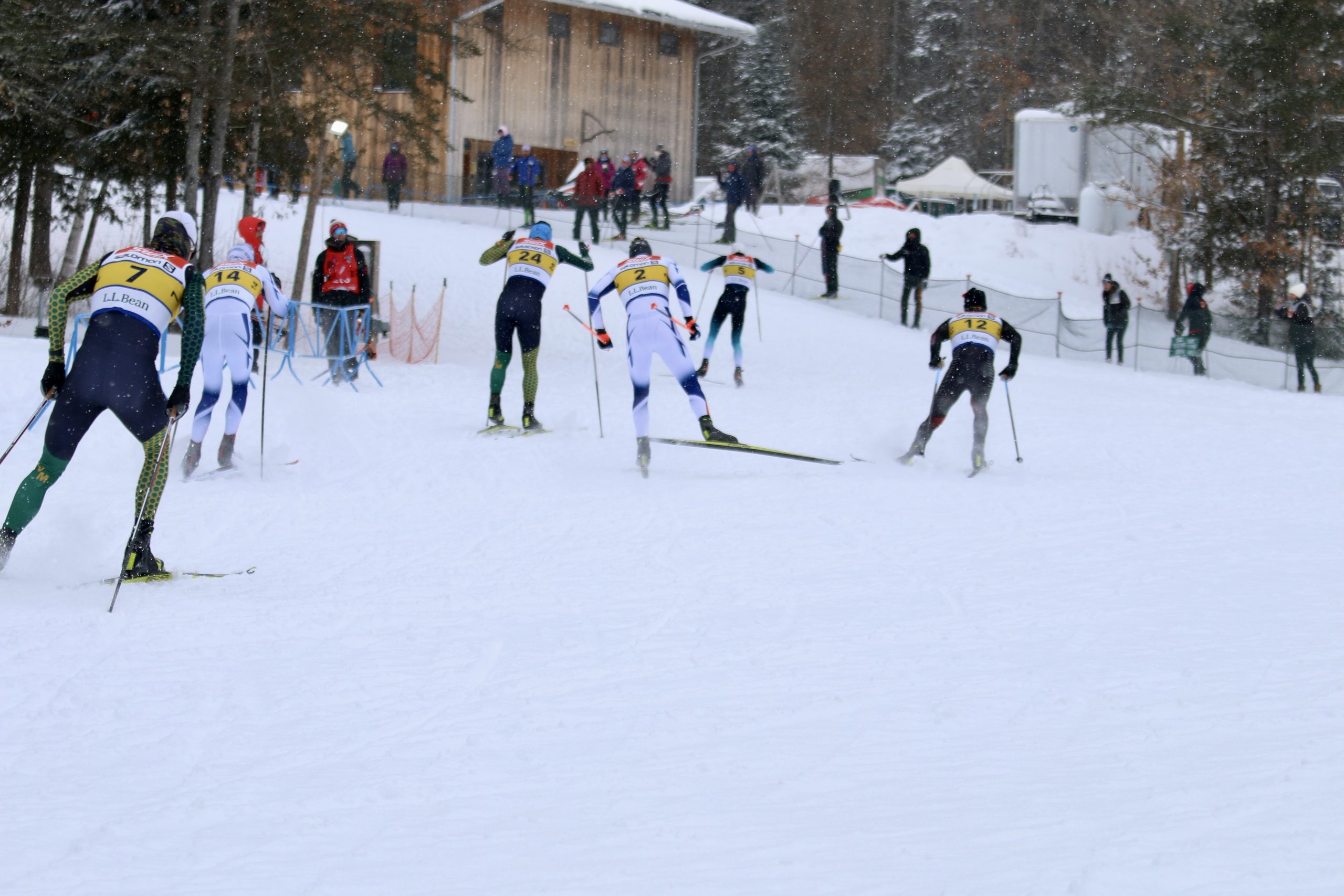
    Zak Ketterson leads up the final climb in the men’s freestyle sprint final in Craftsbury. (Photo courtesy Zak Ketterson)

    The top two spots in the final were decided by a close finish between Ketterson and Øvrum, with Ketterson crossing 0.28 ahead in a time of 3:22.57 to earn his third SuperTour sprint title of the season. Øvrum was second, though he was named the collegiate race winner for UVM, with Hébert crossing the line a few meters behind on his own in third (+2.17). 

    “I’ve always really liked racing at Craftsbury,” Ketterson wrote to FasterSkier after the race. “It’s an awesome place and this year Team Birkie has been lucky enough to stay right at the Outdoor Center. The race course is right out our back door!”

    Ketterson also provided insights to the final round for those following from afar.

    “The final was really close! I gave it everything I had at the top of the last hill but I definitely started to get tired and bogged down a bit into the finish. Matias skied a smart race and gave me a really good challenge in the last few meters but luckily I was able to fend him off. It was a tricky day with super soft fresh snow and I’m happy I was able to execute.”

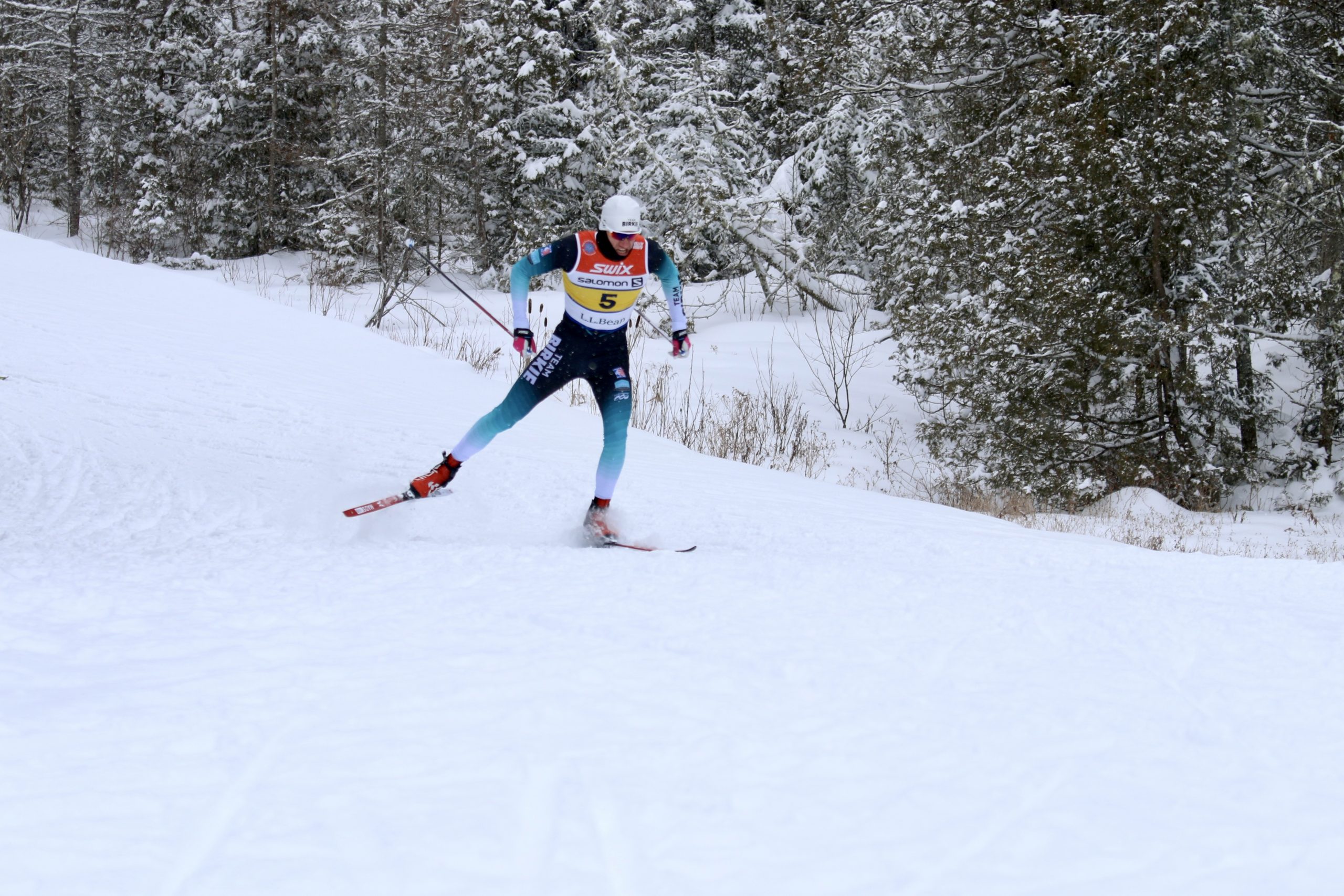
    Zak Ketterson races a snowy freestyle sprint qualifier in Craftsbury. (Photo courtesy Zak Ketterson)

    Wood was fourth in the men’s final (+6.9), with Burt fifth (+7.17), and Holmes sixth (+10.82).

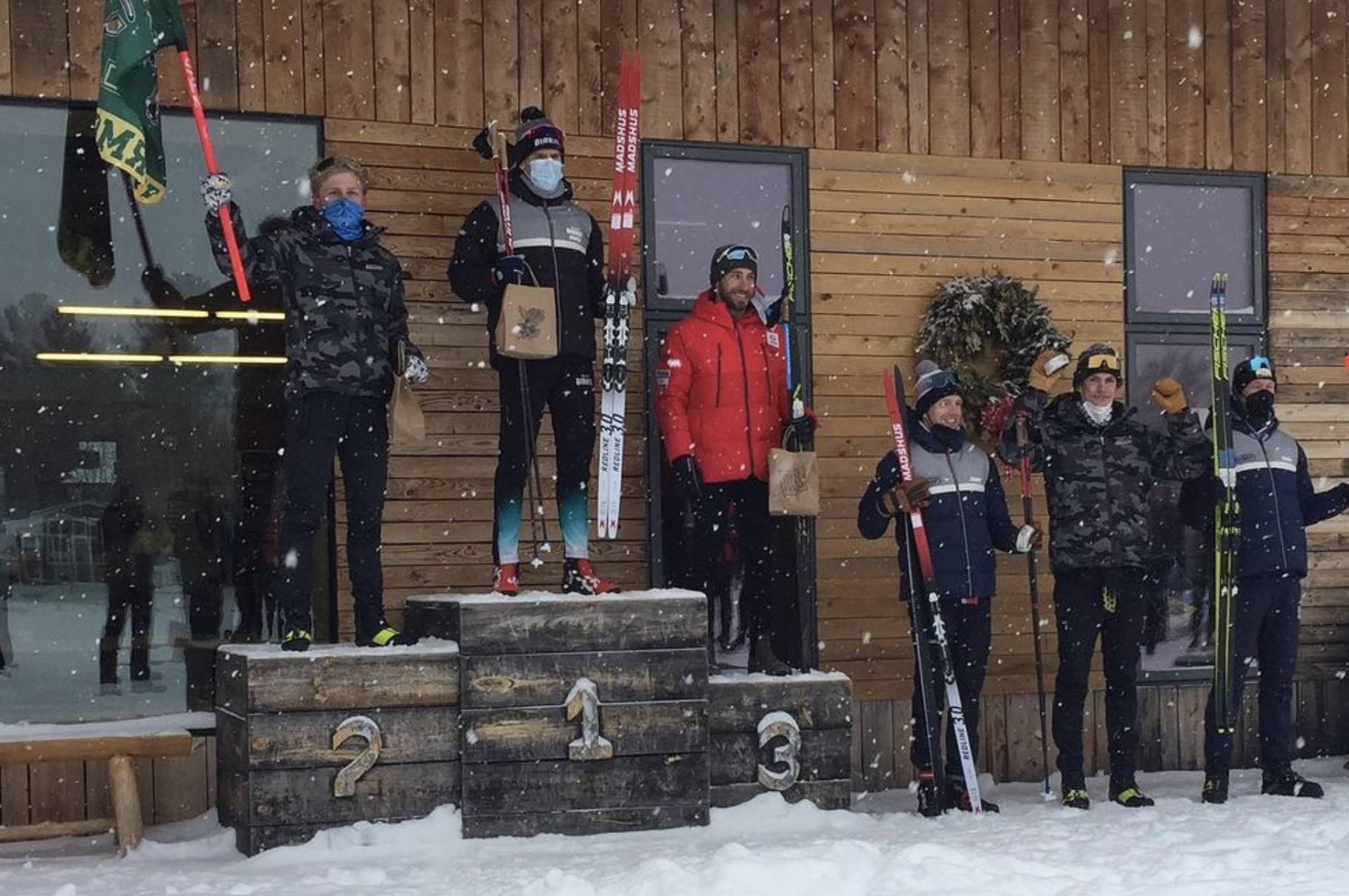
    The men’s freestyle sprint podium after the opening day of SuperTour racing in Craftsbury. (Photo: Instagram @nensa_nordic)

    As mentioned, Øvrum was the top collegiate racer, with Burt second, going one–two for UVM. Third place among college athletes was Allan Luke of Dartmouth, who finished sixth in the first semifinal and 12th overall. 

    Craftsbury’s Day 1 coverage of the the 2022 Henchey Memorial Carnival: SuperTour, NENSA Eastern Cup and UVM EISA carnival.

    Results:

    Women’s Qualifier | Heats | Collegiate

    Men’s Qualifier | Heats | Collegiate

    Full Heat Brackets


  • In-Depth Race Coverage: Slow Heats with Tight Finishes in the SoHo SuperTour Classic Sprint

    In-Depth Race Coverage: Slow Heats with Tight Finishes in the SoHo SuperTour Classic Sprint

    By Rachel Bachman Perkins and Ben Theyerl 

    Precipitation was no longer a threat for the final day of racing in Soldier Hollow on Friday, a 1.5-kilometer classic sprint offered alongside the 2022 U.S. Cross Country Championships, yet classified as SuperTour only. However, athletes still faced unseasonably warm weather as blazing sun brought temperatures into the low 50’s on course during the midday heats. 

    Howling wind and rippling bibs could be heard as background noise as Adam Verrier called the event on the livestream, creating extra work for the athletes who would fight through degrading course conditions throughout the heats. This extra work showed in the times on course; with the combination of freestyle technique and significantly faster course conditions, Sunday’s sprint races featured times over a minute faster on average. A similar difference was seen even between the qualifier today at 9 a.m., when temperatures were still colder and tracks firmer, and the heats which began at 12:30 p.m. 

    Warm temperatures, degrading tracks, and loose granular spray set the stage for a challenging classic sprint in Soldier Hollow. (Photo: Tobias Albrigtsen / @untraceableg)

    “Sprint” seemed to perhaps be a misnomer, as times in the women’s heats climbed over five minutes and were well above four minutes in the men’s heats. Combined with a qualifier, this meant athletes who raced through the final saw between 16 and 20 minutes of racing, testing their endurance and fitness differently from the average sprint event.   

    Women’s Race: Katharine Ogden on Top from Qualifier to Final

    On the heels of a second place finish in yesterday’s 15k classic, Katharine Ogden (USST/SMS T2) set the bar in the qualifier, finishing in 3:51.79.

    Julia Richter (U of Utah) was the second fastest qualifier (+0.77), ahead of Lauren Jortberg (BSF Pro) in third (+1.48). Both Ogden and Jortberg won their quarterfinal to advance comfortably into the semis, however, Richter took fifth in Heat 4 and did not advance.

    In the first semifinal, two Craftsbury teammates Annika Landis and Caitlin Patterson led the way in the opening climb, with Ogden and Sydney Palmer-Leger (USST/U of Utah) sitting in third and fourth a few strides behind. Descending from the high point, a third Craftsbury racer, Michaela Keller-Miller, had pulled to the front, but was quickly overtaken by Patterson and Ogden as the pack headed into the final short herringbone climb before the long descent toward the stadium. Patterson and Ogden sat in low tucks, letting their fast skis glide as long as possible before transitioning to doublepole as they headed over the bridge and into the finish. 

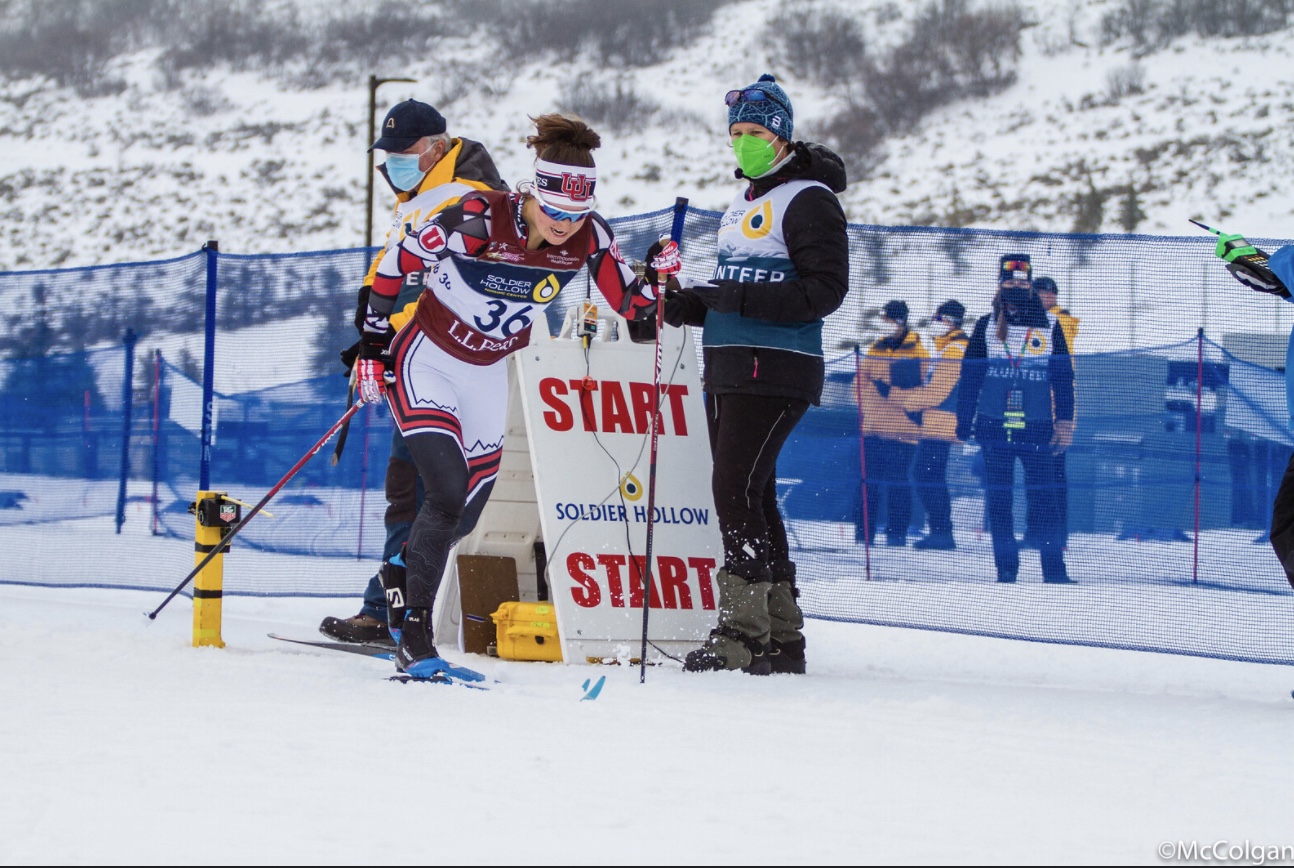
    Sydney Palmer-Leger heads out for the 10k interval start classic race during the 2022 U.S. Cross Country Championships in Soldier Hollow. (Photo: John McColgan)

    Upping the power in the final 200m, Palmer-Leger accelerated to make contact with Patterson as the women crossed over the bridge, but Patterson had better glide in the quick descent from the bridge’s exit, maintaining an advantage as they headed into the final stretch. Patterson tucked in on the tails of Ogden in the left-most track to go one-two in the heat, with Palmer-Leger not quite in the fight for an automatic qualifier spot finishing 1.5 seconds behind Patterson in third. 

    In the second semi, Bridger Ski Foundation (BSF) Pro Team members, Lauren Jortberg and Hannah Rudd lead the charging, looking as if their skis were gliding well as they pushed the downhills, perhaps with compromised kick as both showed signs of slipping in the final punchy climb. 

    In the long glideout, Lauren Jortberg moved from the far left side of the course outside of the track into the second track, losing some time on Rudd who had stuck with the second track from the start. Nevertheless, both held a significant gap over the remainder of the heat as they doublepoled over the bridge and into the finish lanes. Rudd took the win in 4:55.52, roughly +0.7 seconds ahead of Jortberg in second. 

    A few meters behind, Craftsbury teammates Margie Freed and Alexandra Lawson raced side by side to third and fourth, and as the heat proved to be seven seconds faster on average than the first, both advanced to the final.

    As the women’s final headed out of the stadium and toward the first climb, Lauren Jortberg who was the first in a train of two BSF skiers, had her ski stepped on as she was switching from doublepole to a run outside the track. This caused Jortberg to stand up, spin sideways and crash in slow motion. Rudd, who was just behind, quickly moved around Jortberg without going down, soon taking the lead charging up to top of the first climb with Patterson, Freed, and Ogden close behind.

    Patterson looked strong with solid kick as she chased a slipping Rudd up and over the final long climb, but it was Ogden on fast skis who quickly moved into second on the subsequent downhill.

    Over the last punchy climb the women ran. Heading into the long glideout, Ogden was off the front in the left-most track, but Rudd and Patterson remained within reach a few ski lengths behind. Descending off the bridge, the top three accordioned together, all choosing the same track with Ogden confidently leading the way to the finish. Patterson, who was in third, moved into her own lane to the right, slowly gaining ground on Rudd as they headed to the line. 

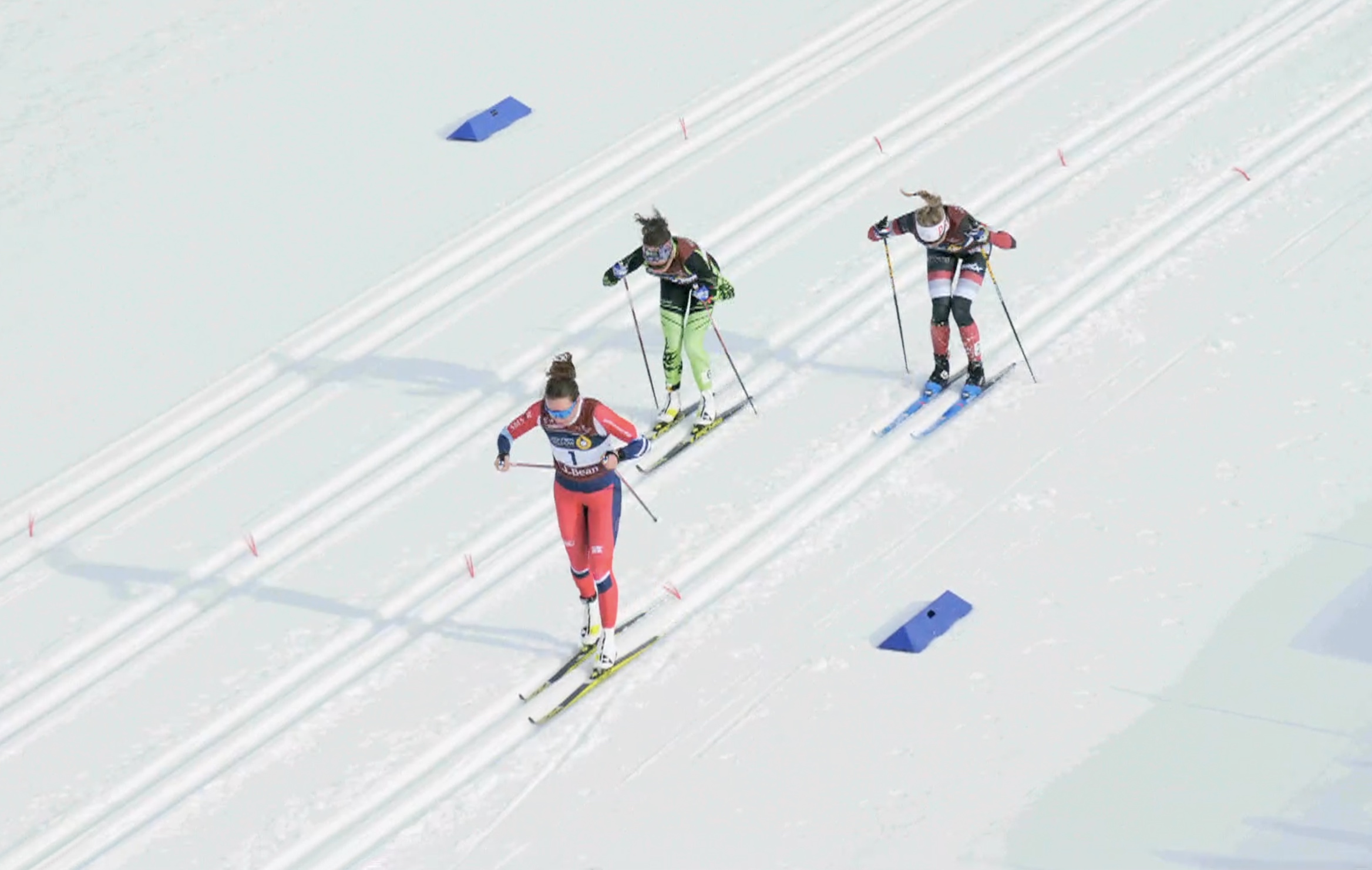
    Katharine Ogden leads Caitlin Patterson and Hannah Rudd to the line during the SuperTour classic sprints in Soldier Hollow. (Photo: Livestream Screenshot)

    Ogden maintained her lead to stop the clock in 5:01.63, while Patterson edged out Rudd for second (+0.98) and third (+1.53), respectively. After regaining contact with the pack following her crash, Jortberg finished fourth (+6.64), with Lawson fifth (+7.11), and Freed sixth (+21.55).

    “I was having a lot of fun out there today!” Ogden wrote to FasterSkier after the race. “The sprint was definitely on the long side, especially late in the day, but that did not significantly affect my strategy; I am confident in my endurance as well as my short duration power. I was really excited to have fast skis from Pat [O’Brien] and it was fun to experience the high level of sprinting in the U.S. currently. I also haven’t really done a full sprint day in a while so that was a lot of fun! It was also so impressive to see Caitlin get her fourth podium in as many races and to see Hannah Rudd have an incredible breakout performance today!”

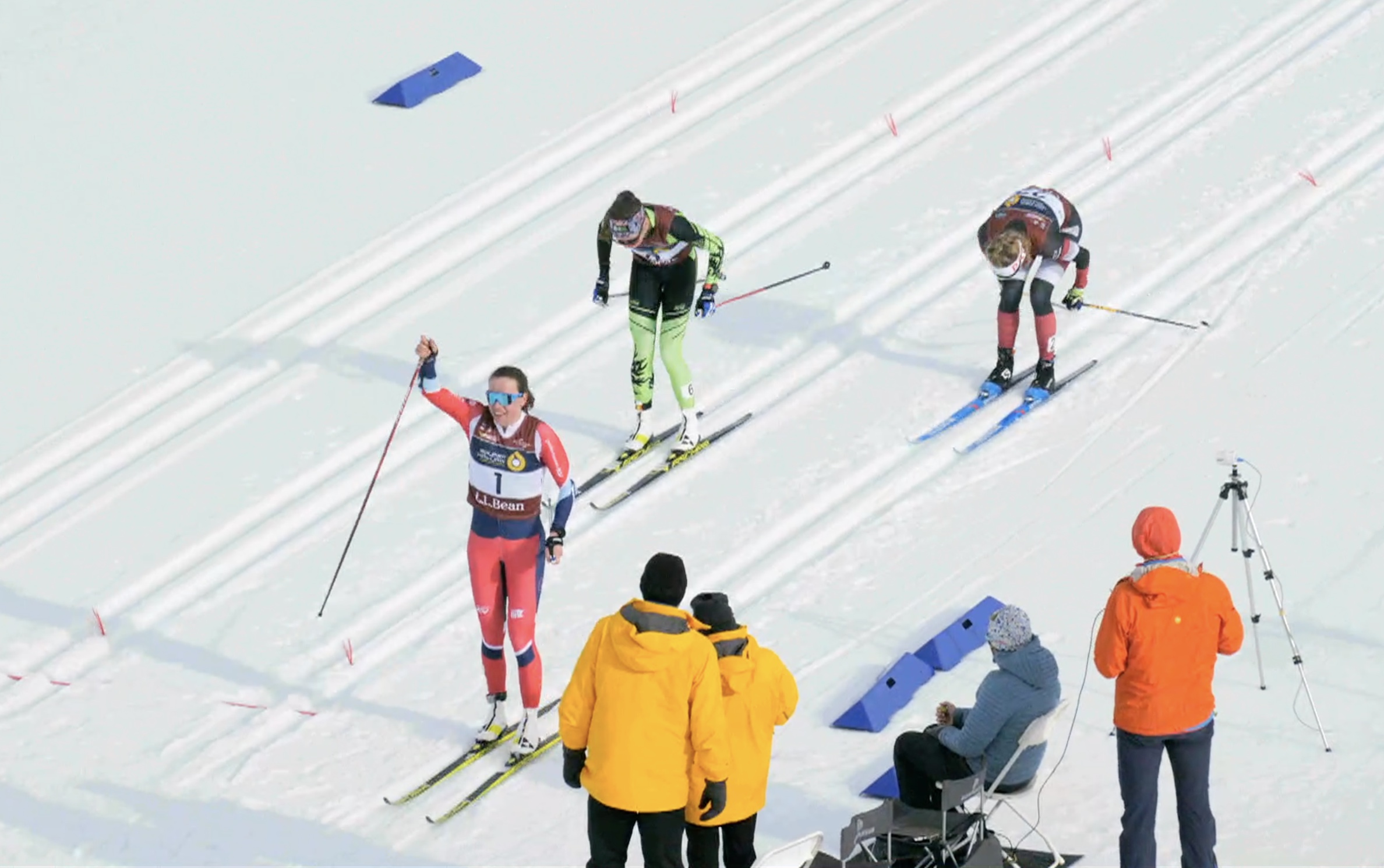
    Katharine Ogden celebrates her win in the classic sprint while Caitlin Patterson edges out Hannah Rudd for second and third. (Photo: Livestream Screenshot)

    In a post-race email, Patterson reflected on her experience racing through the heats. 

    “My racing today went fairly well, and it was a beautiful day to be out skiing and spectating,” wrote Patterson. “The sun-warmed snow became quite wet and broken apart for the heats, and combined with the wind, it certainly made a long sprint with plenty of herringbone and some sloppy tracks. I tried not to really think about the time duration much, it was mostly about getting from start to finish, however long it would take. All of the heats required some scrappy skiing, moving around through the slush and timing the length of the tuck. Now I’m really looking forward to some recovery after a good week!”

    Patterson also spoke to the week of racing in Soldier Hollow, where she finished on the podium four times in as many races, including wins in both the 10k individual classic and the skate sprint. But she was not the only person in a green suit putting together a successful week. Yesterday, she shared the distance classic podium with teammate Adam Martin. On Tuesday, Crafstbury went 3-4-5 in the 20k skate, with Lawson and Freed leading a chase group behind Frankowski and Patterson. And today, five CGRP women raced in the semis, with three advancing to the final. 

    “Everyone at Nationals is really feeling the fatigue, and myself and my team were no exception out there today. The race coughs are becoming quite terrible from so many days of racing at altitude, which is not the most fun to be coughing uncontrollably in this time of COVID. However, I was really proud of our whole team, with 5 women in the top 10! We have a really strong group, as evidenced by the performances in the distance races too; it came as no surprise to me that the women were awesome today, because training and doing intervals all summer and fall we’ve been neck-in-neck and pushing each other.”

    The women of Craftsbury with coach Pepa Miloucheva. CGRP put five women into the semifinal and three into the final of the SuperTour classic sprint in Soldier Hollow. (Photo: Facebook Crafsbury Green Racing Project)

    For Rudd, this was her first career SuperTour podium. Originally from Plymouth, MN, she graduated from University of Alaska Anchorage (UAA) in May, 2020 before heading to Bozeman to join the newly minted BSF Pro Team. Placing in the top-10 in each of the three stages of the 2022 U.S. Cross Country Championships, Rudd has steadily worked her way up the results list, finishing 10th in Sunday’s freestyle sprint, 8th in the 20k mass start free, and 6th in the 10k interval start classic. She ends her week in Soldier Hollow on a podium high note. 

    Hannah Rudd is a member of the BSF Pro Team based in Bozeman, MT. (Photo: bridgerskifoundation.org)

    “Yesterday was a pretty exciting day for me!,” Rudd wrote to FasterSkier after the race. “The sprint course at Soldier Hollow this year was very challenging as it included three solid climbs. During the qualifier, the course remained very firm and fast. However, the temperature quickly began to rise throughout the day, and by the time the quarterfinals began, the sun was baking the course, the wind was blowing, and temps were nearing 50 degrees. This made the snow begin to transform and slow down and turned the tracks into mashed potatoes in some sections. 

    “I woke up in the morning feeling quite tired from the past week of racing so I was not sure how the day was going to play out,” Rudd continued. “I ended up qualifying in 22nd, so it was clear that I had some work to do in the heats. I felt like I was able to gain momentum and energy throughout the day, and progressed through the quarters, and semis and onto the final. Going into the final, I knew that my team’s skis were running really well so I tried to ski big and relaxed and put myself in a good position for the last downhill. It was pretty neat to be in a final with my BSF teammate Lauren Jortberg, who is an incredible sprinter and someone that I have learned a lot about sprint racing from over the past few years. I was extremely excited to land myself a spot on the podium and think it will help me to continue building momentum and confidence for the rest of the season!” 

    The podium ceremony for the women’s final following the SuperTour classic sprint in Soldier Hollow. Katharine Ogden took the win ahead of Caitlin Patterson and Hannah Rudd, with Lauren Jortberg 4th, Alexandra Lawson 5th, and Margie Freed 6th. (Photo: Facebook Craftsbury Green Racing Project)
    Men’s Race: Colorado’s Magnus Bøe Upsets Schoonmaker in the Final 

    In qualifying, JC Schoonmaker (USST/UAA) showed why he has been the U.S. Ski Team’s most reliable fixture of World Cup Classic heats this season, winning the qualifying with a time of 3:08.43, 6.42 seconds ahead of 2nd place Peter Holmes (Sun Valley SEF). Andreas Kirkeng (University of Denver) rounded out the top 3 (+6.57), in a field where the top 30 were all within 20 seconds of each other.

    With a dominant performance in qualification, the racing throughout the day always seemed to have one eye on where Schoonmaker was in the field. In his quarterfinal, Schoonmaker looked to start conservatively from the back of the field, which led the whole heat to sit back as well. When he moved to the front at the beginning of the first climb, the race surged forward with him. No one could match him, however, and he finished with a comfortable lead, with Kjetil Bånerud (NMU) taking the 2nd semifinal spot (+1.02).

    JC Schoonmaker prepares for a sunny and warm classic sprint in Soldier Hollow. (Photo: Tobias Albrigtsen / @untraceableg)

    The following two quarterfinals also previewed the competitors, and their preferred way of attacking the course, that would define the semifinal and final racing later on.

    The second heat set a stark contrast in pace to the previous heat, with Noel Keefe (U of Utah) and Bill Harmeyer (SMS T2) leading the field out hard from the gun. Hunter Wonders (APU) and Johnny Hagenbuch (SVSEF) were able to keep with the pair though, and ended up out-sprinting Keefe and Harmeyer going into the finish. Still, the duel between Keefe and Harmeyer led to a blistering pace for the heat overall, and they would claim the lucky loser spots for the semifinals.

    Then came the 3rd quarterfinal, featuring winner of today’s most aggressive racer award (unofficially handed out here, by Fasterskier), Ian Torchia (SMS T2), who in every heat he was in today would hammer out to the front of the pack while others seemed content to let the field play out. He was joined in the heat by Magnus Bøe (U of Colo.), who made his move on the first climb, stayed out in front, and came through in first place. Torchia, meanwhile, held onto second to advance automatically to the semifinal.

    The semifinals marked more an amalgamation of race strategies than anything unique. But it was an amalgamation – which requires multiple parts. And indeed, on a course known for rewarding smart-racing, and in conditions – above freezing, on man-made, wind-swept snow – that reward smart waxing as well.

    Magnus Bøe and JC Schoonmaker are off the line during the 2022 U.S. Cross Country Championships freestyle sprint stage. (Photo: Tobias Albrigtsen / @untraceableg)

    The first semifinal featured Schoonmaker and Bøe, both of which stayed back in the back during the early part of the course. Going into the first climb, Bøe took a look back, saw Schoonmaker and Harmeyer were sitting in fifth and sixth place, respectively, and decided to attack. He led over the top, into the downhill, and up the final climb. Schoonmaker successfully did maneuver through the pack to counter the move, and on the final climb took the outside line up, cutting in to tuck behind Bøe going into the final downhill. When they came up, Schoonmaker had used the draft to put himself out front, while Bøe held off a late-surge from Hunter Wonders (APU) to take the second qualifying spot into the finals.

    The second semifinal was again led out by Ian Torchia, who was then followed by former sprint National Champion Tyler Kornfield (APU). Kornfield seemed content to sit behind Torchia until the first climb, when he put in a burst of speed and broke open the field. The smartest racer, however, may have been Karl Schulz (SVSEF), who rode Kornfield’s attack, and then drafted, to go into the final climb with speed. By the time he hit the downhill, he had a gap which would remain unclosed. Kornfield, who had gone into the downhill in second, found himself joined by Noel Keefe and Ian Torchia into the final sprint for the second spot. As it would happen, all three would make it through to the finals, with Kornfield in second, and Keefe and Torchia being rewarded for their efforts early in the race by claiming the two lucky loser spots to the final.

    The A-final then looked like this: JC Schoonmaker, Magnus Bøe, Karl Schulz, Tyler Kornfield, Noel Keefe, and Ian Torchia.

    JC Schoonmaker races the qualifier during the SuperTour classic sprints in Soldier Hollow, UT. (Photo: Tobias Albrigtsen / @untraceableg)

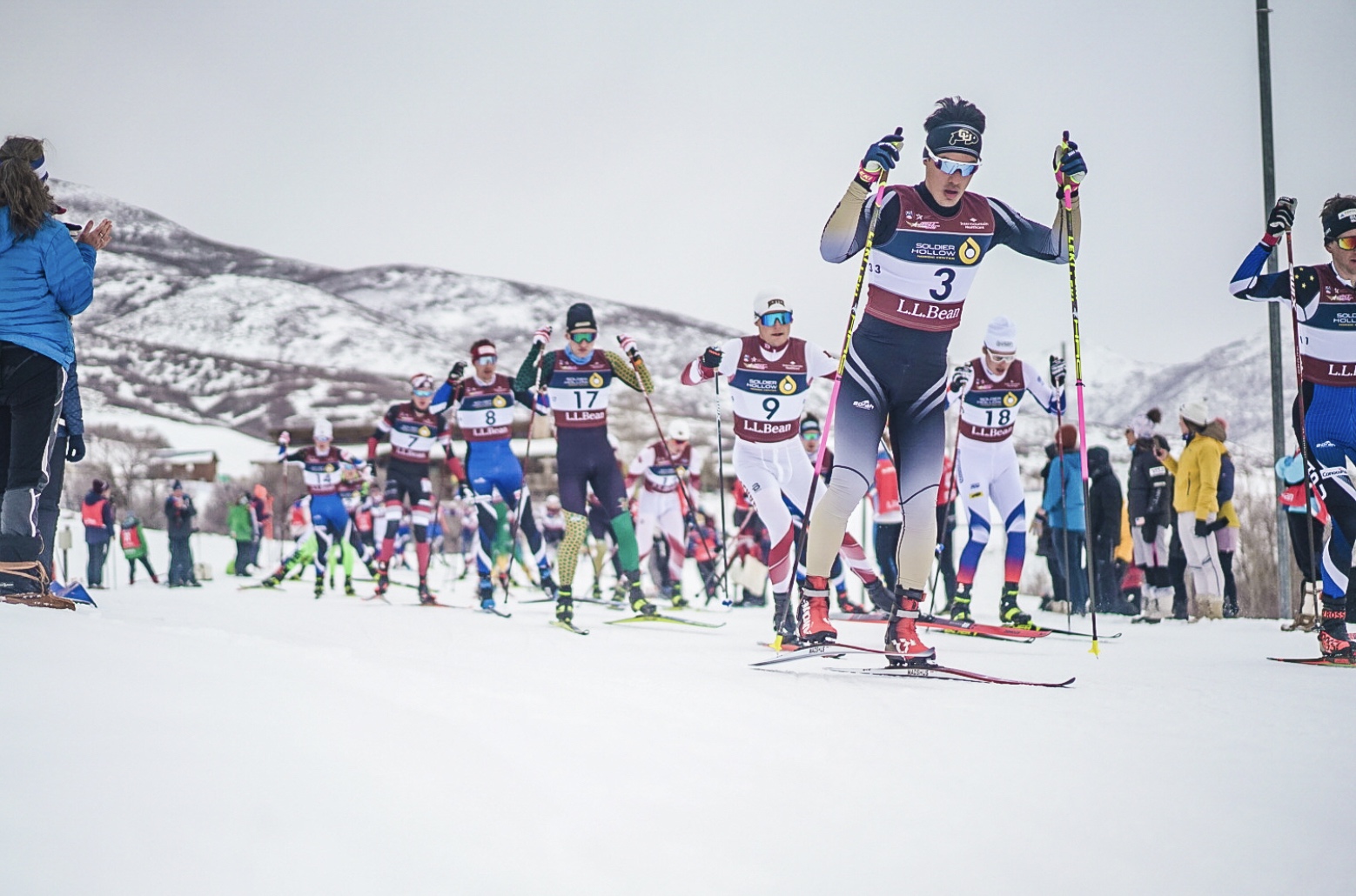
    With memories of Schoonmaker’s dominating qualifier in mind, it seemed like the field orbited around him off the line. Schulz found himself in front, but not going full bore to open the field up. Even Torchia, when he did make a move to the front, didn’t seem to do so with the same force that had marked his quarter and semifinal attacks. Schoonmaker waited until the first climb to move to the front, and then the final really was on. Schultz seized on the attack, and then put an extra-push into the downhill to try and open up an unclosable gap like he had in his semifinal. It was a good move, but one that didn’t prove to have the same force as his previous attack, and going into the final climb he was joined up with Bøe and Schoonmaker. 

    Then, Schoonmaker’s pace seemed to drop-off, with a few noticeable slips that progressed into a herringbone. Bøe, meanwhile, went for the herringbone from the get-go. He was the one that made contact with Schulz before the course gave way to a final downhill on the day. Schultz held a gap on the field through the glideout and over the bridge, but it proved not to be enough of a margin to feel comfortable in the final stretch. Meanwhile, Schoonmaker had fallen back to fifth.

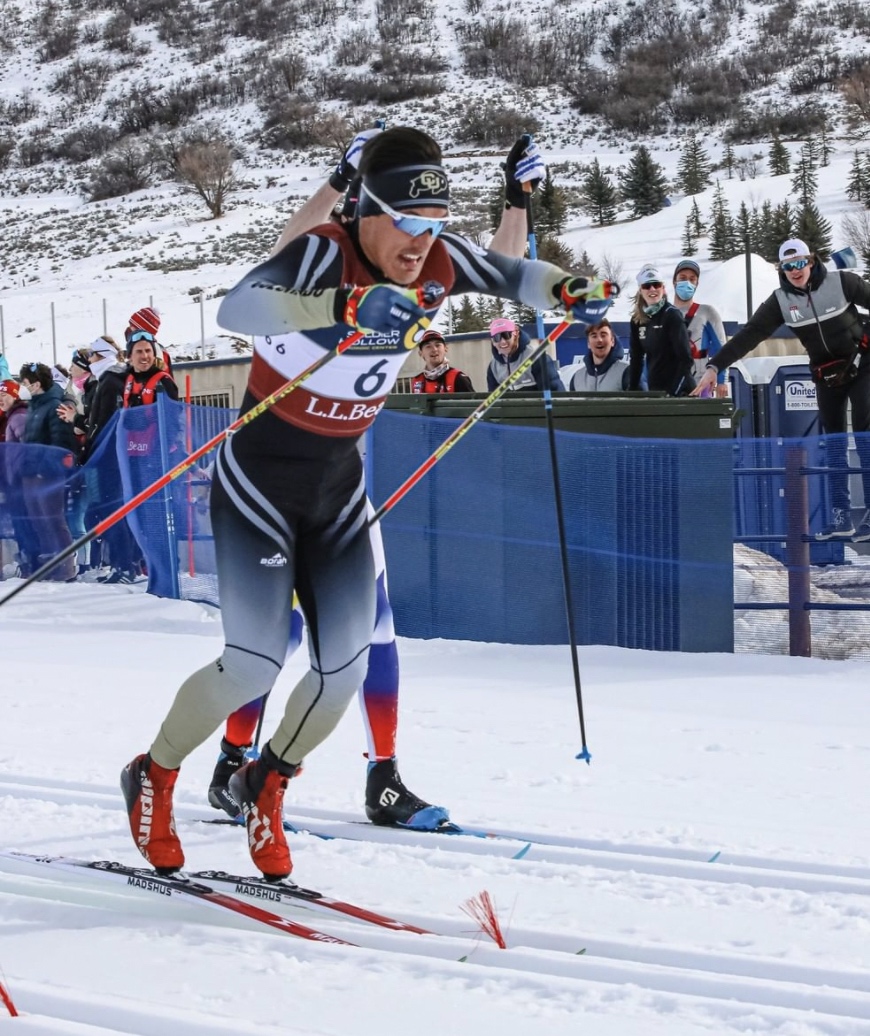
    Utilizing his dominating doublepole sprint, when they hit the final 100m it was all Bøe, who closed a significant gap to catch Schulz in the final 50 meters. Looking as if he was leaping forward with each push, Bøe switched lanes, overtaking Schultz just before the line and letting out a fist pump as he realized a SuperTour – and collegiate – victory in a time of 4:08.28. Pushing to the line, Schulz was a close second (+0.35). (Video clip here.)

    Magnus Bøe overtakes Karl Schultz just before the finish of the men’s classic sprint final. (Photo: Instagram @cubuffs)

    After a gap, Schoonmaker, who was fighting for the final podium spot alongside Kornfield and Torchia, crossed the line outside of the track in third place (+4.53). Kornfield was a half second back from Schoonmaker for fourth (+5.10), with Torchia fifth (+5.64), and Keefe sixth (+11.02).

    After the race Bøe explained that he changed his tactics in the heats relative to Sunday’s freestyle sprint, though he joked he thought it wise not to reveal everything. 

    “Today was a windy and slow-condition day,” Bøe wrote in an email. “There was headwind in the first half, and tailwind in the second half. Hence, pulling during the first half would be pointless. Furthermore, the second half, particularly for the last downhill there was very little to gain on the slipstream, due to the low speed and the ‘suctiony’ snow (cold conditions create better glide for the person coming behind on ‘heated tracks’). Therefore during all my heats I pretty much went all out from the top of the last uphill all the way to the finish, which on sunday would’ve been a suicide.”

    Bøe walked through the final, including how he reacted to lead changes and adjusted his strategy when the race began to play out differently than anticipated. 

    “The final started off very slow, but then the positioning battle developed gradually from under the bridge. My main focus was to keep my eyes on JC, since he was clearly the favorite of the day, and I knew I would do well if I laid it up to beat him. Hence I never fell for the temptation of passing him, even though I had many chances of doing so. However, he did get tired during the last climb and tried to get others to pass him. This is when Karl took off and gained a massive gap that at first seemed too late to close. As soon as I realized that JC might not be able to catch up, I committed to catching Karl by myself. I made sure to put in a great push before the downhill straight, and did the ‘supertuck’ to gain every single inch I could. Once I started double poling towards the last bend it was just heads down and maximum effort. Was never certain I would catch Karl, I thought maybe he’d have something left at the very end. But lucky for me he didn’t and I had just enough to pull it off.”

    University of Colorado’s Magnus Bøe heads out for the men’s 30k mass start free during the 2022 U.S. Cross Country Championships in Soldier Hollow. (Photo: Tobias Albrigtsen / @untraceableg)

    A dual citizen of Korea and Norway, 23-year-old Bøe has already built a robust resume in international ski racing, including competing for Korea during the 2018 Olympics in Pyeongchang. Earlier this week, Bøe was fifth in Sunday’s freestyle sprints and finished 11th in the 15k classic. His only down race of the series happened in the 30k mass start freestyle, where he finished 43rd (+12:30.9).

    “This week of racing has been up and down, from a miserable 30km where I got lapped, to today’s win. It’s been a lot of fun, and not least has been helpful for my shape. Next up is the Super Tour in Sun Valley, which I am looking forward to. Think I would be able to build on top of what I gained during this week.”

    For Schultz, today also marked a career-first SuperTour podium. The 23-year-old Lake Placid, NY Native raced for the University of Vermont (UVM) until graduating in May, 2020, then heading to Sun Valley. Schultz had a podium just-miss earlier this year in a freestyle sprint where he finished fourth during the opening weekend of SuperTour racing in Duluth, MN. 

    “I was pretty fatigued from the three races prior,” Schultz wrote after the race. “I knew there was a decent headwind on that first climb, so I decided I’d tuck in behind up and over the first climb. I figured I’d need to save my strength for the final climb and long finishing straight, so I played my cards well and pushed where I needed to, and it just worked perfectly. I’ve learned sprinting is about preserving energy for critical parts of the course, it couldn’t have gone better.”

    “And I won’t lie,” Schultz continued. “The spectators and everyone cheering allowed me to find another gear, especially up the last climb. I dug deeper than I have before.”

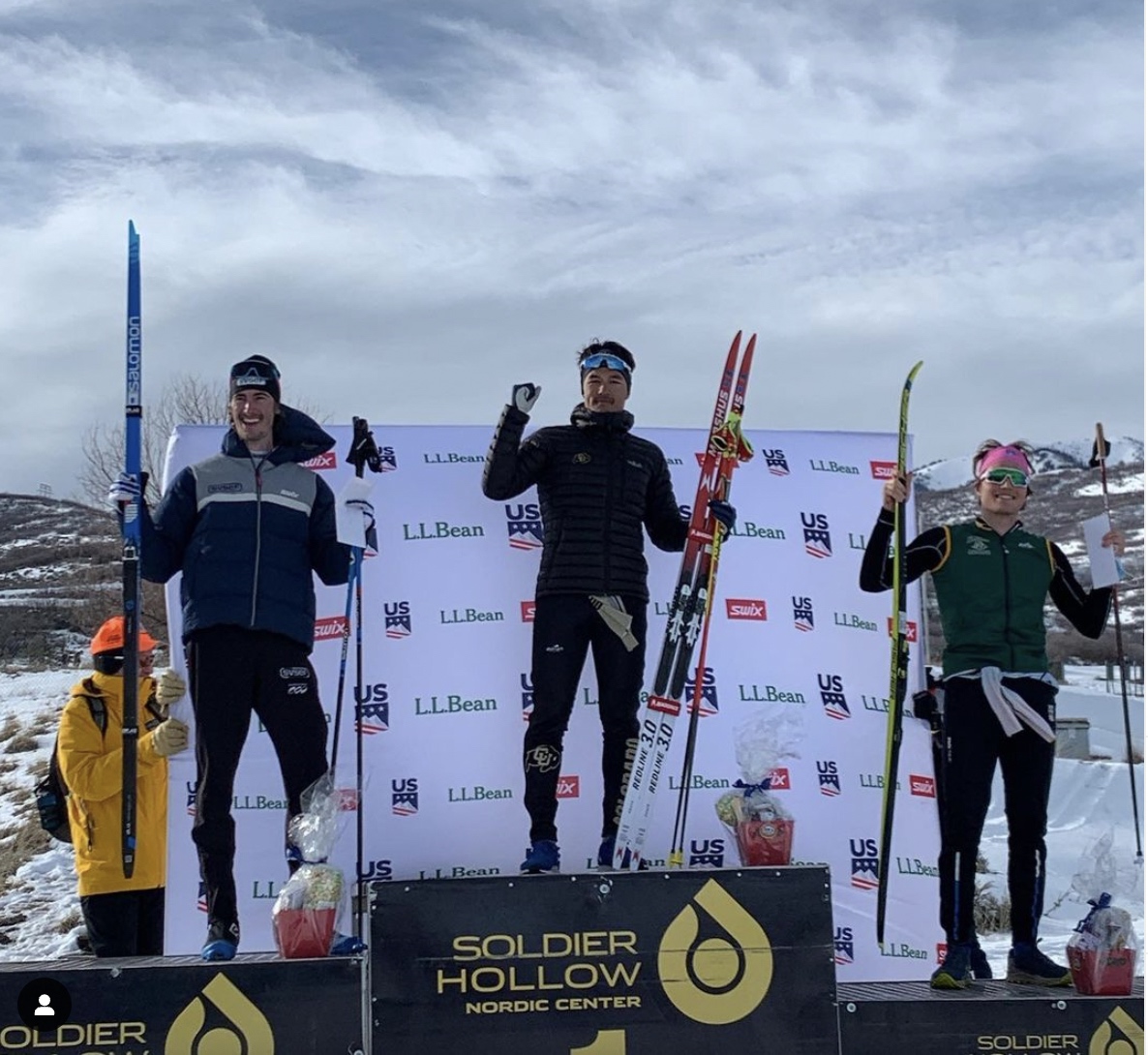
    The men’s podium of the SuperTour 1.5k classic sprint in Soldier Hollow: Magnus Bøe took the win ahead of Karl Schultz and JC Schoonmaker. (Photo: Instagram @nysefnordic)

    Writing to FasterSkier after the race, Schoonmaker explained how changing conditions forced athletes to make tough decisions about skis as well as tactics. 

    “It was a pretty crazy difference from this morning to the afternoon,” Schoonmaker explained. “The morning was icy and fast and the heats got really sloppy and slow.  I had amazing skis in the morning and in the heats I struggled a bit with choosing whether to go for more kick or glide. I ended up asking for less kick to free the ski up a bit and I’m still not sure what was the right call. It was just really challenging conditions.”

    Schoonmaker also explained that he had made fewer adjustments to the technique he had found such success with in Sunday’s skate sprint, however, the final proved to break the mold of what has historically proven to be the recipe for Soldier Hollow sprint racing.

    “For this course I tried to take a somewhat similar approach as in the skate race by respecting the draft on the last downhill and trying to be careful about the guys behind me there. In the quarterfinal I felt I was able to ski away and create a big enough gap so that I couldn’t get sucked back in by the draft. In the semifinal, I tried to stay more in the pack and use the draft for myself. The final was tricky because I was going to try and use the draft again but Karl put in a really good move on the last hill that I couldn’t match. Then I was leading the rest of the pack and I decided to push over and try to catch Karl rather than go to the back to find the draft. It ended up not working out so great, but I’m happy with the day and the tough effort.” 

    We conclude a week of racing at Soldier Hollow, then, with a race that highlighted the strength and depth of the domestic circuit of U.S. skiing at present. Variable conditions on a technical course, which racers approached with tactics as diverse as the regions they hail from, indicated that this is a field that represents top-level racing. It was a testament to the development and growth of the sport in this country that a top-level racer like Schoonmaker can come off the World Cup and find a field where every heat is raced with closeness and intensity in his own country. That bodes well, and is a great place to leave the last national gathering of the US ski racing community before its best representatives look to take a crack at the Olympic Games in Beijing next month.

    The spirit of the sport captured at the finish line as Alaska Winter Stars athlete Meredith Schwartz embraces her coach at the finish of the classic sprint in Soldier Hollow. (Photo: Tobias Albrigtsen / @untraceableg)

    FasterSkier extends congratulations to all athletes who competed in Soldier Hollow this week, commending their efforts in a fiercely competitive field through a variety of race formats and course conditions. Also, a big thank you to Tobias Albrigtsen and John McColgan, who generously shared their photos with us throughout the week. Stayed tuned for an upcoming gallery highlighting many of the fantastic images that were not included in our reports. 

    Full Results:

    Qualification | Women’s Final | Men’s Final

    Livestream Replay

  • Soldier Hollow SuperTour Rundown: Ogden and Bøe Win a Warm and Slow Classic Sprint

    Soldier Hollow SuperTour Rundown: Ogden and Bøe Win a Warm and Slow Classic Sprint

    Here’s a quick results recap from today’s SuperTour classic sprint in Soldier Hollow. Stay tuned tomorrow for detailed coverage including comments from athletes. 

    On a second warm and slow day of classic racing, temperatures in Soldier Hollow, UT climbed into the low 50’s as athletes raced through the heats of the 1.5 kilometer sprint. 

    In the women’s race, Katharine Ogden (USST/SMS T2) won each round of racing, from the qualifier to the final, where she stopped the clock in 5:01.63. Caitlin Patterson (CGRP) was second for women (+0.48), with Hannah Rudd (BSF Pro Team) in third (+1.53). 

    The men’s podium of the SuperTour 1.5k classic sprint in Soldier Hollow: Magnus Bøe took the win ahead of Karl Schultz and JC Schoonmaker. (Photo: Instagram @nysefnordic)

    The men’s final saw a surprise upset. After JC Schoonmaker (USST/UAA) won the qualifier, and took first in his quarterfinal, and semi, it was Magnus Bøe (U of Colo.) whose tactics and strength carried him over the line in 4:08.28 for the men’s win. Bøe narrowly edged out Karl Schultz (SVSEF) who finished second (+0.35), with Schoonmaker hanging on for third (+4.58).

    Full Results:

    Men’s Qualifier | Heats

    Women’s Qualifier (not available) | Heats