From the FasterSkier archive — posts syndicated from athletes’ and coaches’ own blogs between 2004 and 2012, kept online as published. Current coverage is at fasterskier.com.

Tag: Kasie Enman

  • Caitlin Patterson Races to 23rd at Mountain Running Worlds

    Caitlin Patterson Races to 23rd at Mountain Running Worlds

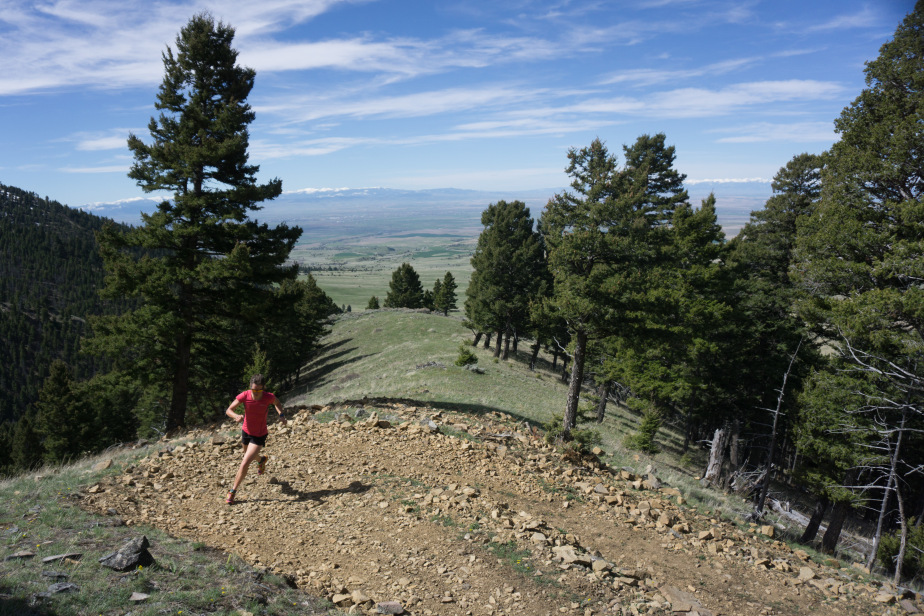
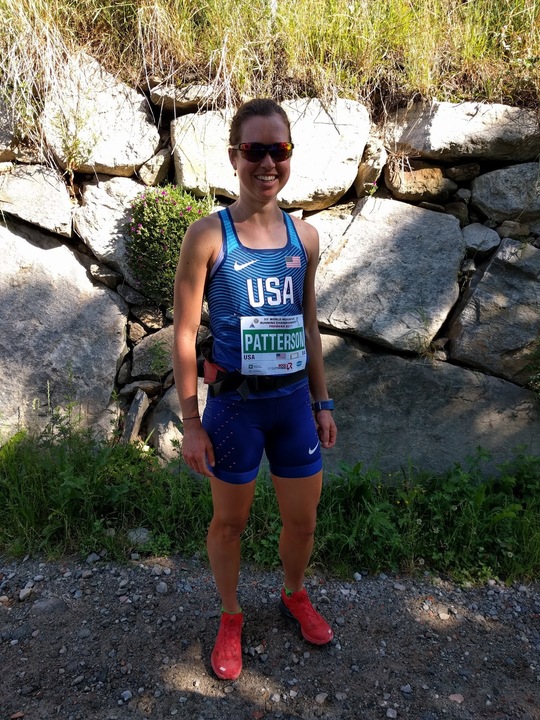
    Caitlin Patterson, who skis for the Craftsbury Green Racing Project, representing the U.S. at 2017 World Mountain Running Championships last month in Premana, Italy. (Photo: Richard Bolt)

    Note: This article has been updated to correct Caitlin Patterson’s birthplace. She was born in McCall, Idaho.

    ***

    The clang of a cowbell is a sound Caitlin Patterson has heard plenty of times during a ski race — but never while running — at least until she raced the 33rd edition of the World Mountain Running Championships (WMRC) July 30 in Premana, Italy.

    In her debut WMRC, which she qualified for in June, the 27-year-old Patterson discovered that for the mountain running fans of Italy, spectating is almost a sport in itself. Crowds of people cheering lined much of the 13-kilometer, two-lap course, and to Patterson’s surprise, within close range to the racers.

    “It definitely felt like there were a few cowbells being rung that were about the size of my head, and then a few being rung almost into my head,” Patterson said during a recent phone interview from Craftsbury, Vt. “But it was really neat to see how enthusiastic the Italians were about the race. … I have certainly never seen that many people with cowbells and cheering.”

    Caitlin Patterson, who skis for the Craftsbury Green Racing Project, representing the U.S. at the 2017 World Mountain Running Championships this July in Premana, Italy. (Photo: Richard Bolt)

    The race started in the city’s center and wove through Premana’s cobblestone streets for almost a kilometer before transitioning to trails. Unlike the rock- and dirt-covered mountain courses Patterson has run in the U.S., this race incorporated close to 3 k of pavement.

    “We started in the town itself and wound through these really narrow city streets, some of them so narrow I probably could have reached out and touched the walls with my hand,” Patterson said. “That first section of manmade mountain course was different than I might have expected. … Probably three of the race’s 13 k was on pavement, which not exactly anything I had prepared for.”

    What she had prepared for was a fast start. Prior to heading to Premana, Patterson, who skis for the Craftsbury Green Racing Project (CGRP) based out of Craftsbury, planned a couple distance runs with Vermont native and 2011 WMRC champion Kasie Enman (Enman also competed for the U.S. women’s team at this year’s WMRC).

    Though neither of the runs the two went on involved intensity or hill workouts, they did involve conversation about what to expect and how to tactically attack the race. While finding a competitor to race behind is often helpful in a mass-start ski race, Patterson learned the opposite is true for mountain running.

    “In skiing, you want to find someone that you can follow and draft off of. That’s a good tactic in a skiing mass start,” Patterson said. “But in running, especially on the downhills, when you’re just sending it over obstacles, it’s actually not a good idea to be right behind someone because then you can’t see what’s on the trail. Kasie said, ‘If you can, get around people so you have clear visibility of what’s ahead.’ ”

    Patterson spent most of her race in company of racers from other nations, runners she had never met before.

    “I didn’t know who I was racing with…,” Patterson said. “The first time up the climb went fairly well for me … but it was kind of humid and we were in the full sun almost the whole time and I don’t handle heat very well. So I was really struggling with the heat for most of the race.”

    Despite not being a heat-thriving racer, Patterson raced to 23rd overall (out of 64 finishers), with a time of 1:12:14. Allie McLaughlin led the U.S. women’s team in fifth with a time of 1:06:06. Her teammate Addie Bracy followed in eighth (1:07:46), and Kasie Enman placed 13th (1:09:11).

    Caitlin Patterson, who skis for the Craftsbury Green Racing Project, representing the U.S. at the 2017 World Mountain Running Championships this July in Premana, Italy. (Photo: Richard Bolt)

    Kenya’s Lucy Wambui Murigi won the race in 1:01:26, while Austria’s Andrea Mayr placed second (+1:17) and Germany’s Sarah Tunstall finished third (+2:49).

    The three-top scoring American women (McLaughlin, Bracy and Enman) lifted the U.S. to the overall team title, six points ahead of home-team Italy in second. The Czech Republic was another nine points back in third.

    “It was cool to have this opportunity to race and feel like I could put myself out there and see what I could do, but not have any pressure from myself or anyone else,” Patterson said.

    Patterson is not the first nordic skier to find success in mountain running, nor is she the only one in her family. Her brother, Scott Patterson, a member of Alaska Pacific University’s elite nordic team and the U.S. Ski Team B-team,  won this year’s Mount Marathon in Seward, Alaska.

    “We, as skiers, seek out adventure,” said Patterson, who was born in McCall, Idaho. “We’ll be like ‘Huh, I want to go run up this mountain for my training,’ and then that ends up translating well [to mountain running]. … I think there are a lot of skiers out there who, if they wanted to do some mountain running, they probably could do it well.”

    Though her current focus is on qualifying for the 2018 Winter Olympics in PyeongChang, South Korea, she also indicated that setting her sights beyond snow sports is not out of the question. She flew to Europe more than a week before the WMRC to watch this year’s Dolomites Skyrace, 23.5 k mountain climb and descent in northern Italy that’s part of the Skyrunner World Series.

    “I could really see myself doing some of those longer races at some point,” Patterson said. “My focus is very much on skiing, especially now that this is over, this has been a little adventure, but then we’ll see.”

    WMRC results: Senior Women | Women’s Team

    https://www.instagram.com/p/BXKxsXwFS7h/?taken-by=usmtrunningteam

  • Headed to World Mtn. Running Champs, Caitlin Patterson Committed to Skiing

    Headed to World Mtn. Running Champs, Caitlin Patterson Committed to Skiing

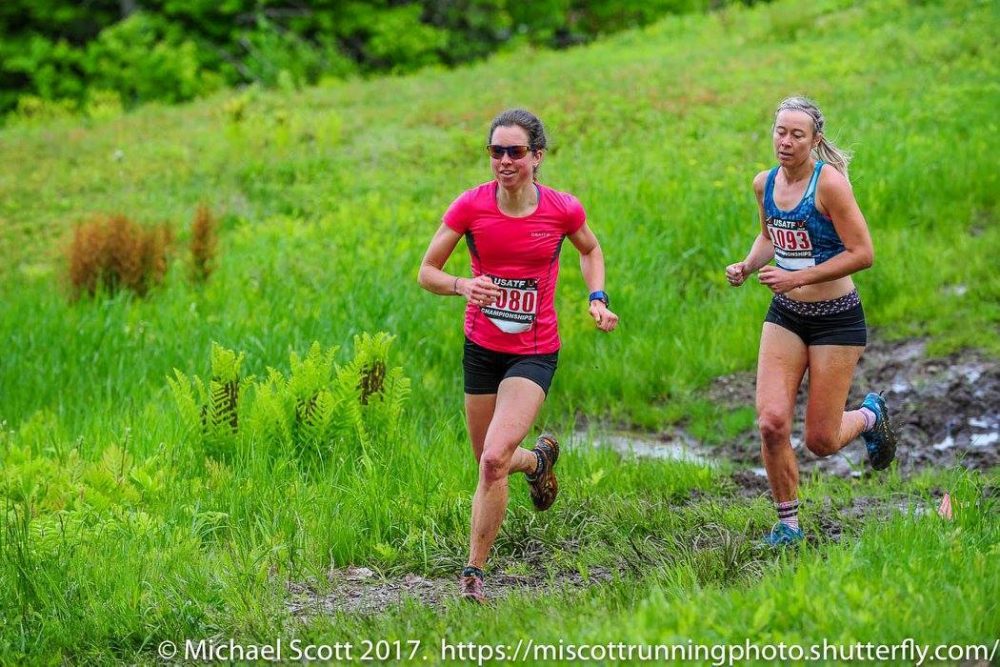
    Caitlin Patterson (front) racing to fourth place in the women’s 10 k at 2017 USATF Mountain Running Championships on June 3 in North Conway, N.H. That qualified her for the 2017 World Mountain Running Championships in July in Italy. (Photo: Michael Scott/miscottrunningphoto.shutterfly.com)

    Just over 24 hours before race day, Caitlin Patterson’s mind was made. The pre-registration deadline for the 2017 USA Track & Field (USATF) Mountain Running Championships in North Conway, N.H., was up and she was going to spontaneously do it. Written down in her summer plan was to enter few footraces, and this one promised both a challenging field and relatively short, two-hour drive from her training base in Craftsbury, Vt.

    The competition also offered an opportunity to tune up her race tactics. Patterson, 27, had raced to eighth in last year’s U.S. Mountain Running Championships uphill-only edition at Loon Mountain and was curious how she’d fare in a race with downhills (U.S. Mountain Running Championships alternate between uphill-only courses and ones that feature both ascents and descents).

    While the Craftsbury Green Racing Project (CGRP) skier planned on getting a lot out of the race, she hadn’t planned on getting selected to the U.S. World Mountain Running Championships team. But by the end of the women’s 10-kilometer run — a two-lap course which featured nearly 2,500 feet in total elevation gain — that’s just what she got. Patterson finished fourth overall, qualifying her for the 2017 World Mountain Running Championships in late July in Premana, Italy.

    Caitlin Patterson during a trail run this spring. She recently qualified for the 2017 World Mountain Running Championships, scheduled to take place July 30 in Italy. (Courtesy photo)

    “That was definitely a shock and not something I was expecting, to be able to run into fourth place,” Patterson said on the phone last week, three days after racing in North Conway. “That’s part of why I put myself in there, though, is because the race atmosphere can get you to do things you maybe wouldn’t otherwise.”

    The three women that finished ahead of Patterson were all World Championships team veterans: Addie Bracy (last year’s U.S. Mountain Running champion) in first, Allie McLaughlin (2014 U.S. champion) in second, and Kasie Enman in third (2011 U.S. champion).

    Patterson was the final woman to qualify, finishing in 56:42, 2 minutes and 46 seconds off Bracy’s winning time. Though perhaps a rookie in comparison to her competitors, Patterson didn’t let that detract her from racing how she wanted to.

    “I did a lot of power walking in that race, just on the steep stuff,” Patterson said. “I could see the top-three women in front of me and I would say most of them were running it. But walking worked better for me and the way I’m built.”

    With World Mountain Running Championships slated to take place on July 30, and the time coinciding with a rest week for Patterson, she plans to make the trip to Italy. The trip’s flights, food, and four days of lodging will be funded through the World Mountain Running Association and running organizations such as U.S. Track and Field and the All American Trail Running Association. In the weeks leading up the race, she hopes to do some training runs with Enman, who also lives in Vermont. The weekend before to the U.S. championships, Enman won the Vermont City Marathon.

    “If nothing else, [I want to] chat with her about what to expect over there,” Patterson said. “I was entering this race partially … so I could run with some other women and learn from them.”

    With those World Championships on the horizon, Patterson’s main focus this season remains skiing. She planned to enter a few more running races this summer before heading to New Zealand with her team in August.

    “The Olympics are on the radar for this coming winter, but we’ll see what I can do,” Patterson said.

    Scott Patterson (Alaska Pacific University/USST) during a crust-skiing adventure with his sister, Caitlin Patterson (not shown) this spring in Anchorage, Alaska. (Photo: Caitlin Patterson)

    Beyond making the 2018 Winter Olympics, she also is hoping to eventually make her way onto the U.S. Ski Team (USST). Her younger brother, Scott Patterson, was nominated to the USST B-team last month, and the news hit her as somewhat bittersweet.

    “I was really happy to hear he made the team,” Patterson said. “Of course, I wish that I could be there, too, but I know the rationale behind that I haven’t quite made that jump yet.”

    Breaking that bubble, as she acknowledged, is no easy task. There’s the nine-hour time change between her and her coach, Pepa Miloucheva, when she’s in Europe. There’s also the physical toll traveling takes on her body.

    “I feel like every year I should get better at traveling, and I do to some extent … going back and forth to Korea [for the PyeongChang World Cup] was great,” Patterson explained. “But for some reason the travel going from Period 1 back to the U.S. — so that was France back to Montana — that went really badly and I got very sick. That was very difficult, borderline devastating, for nationals racing.”

    In a way, Patterson’s description of being an on-the-cusp athlete is somewhat of a catch-22: the only way to improve her international racing is to race internationally, but doing so can make domestic racing difficult, with certain domestic races being the ones she needs to do well in if she is to continue racing at an international level.

    “I actually probably got the most nervous I’d been the entire season before U.S. nationals,” Patterson said. “After I’d been in Europe, where the racing is extremely tough and such a high level of competition, my expectations were, if I have a really great race, I can crack into the [World Cup] top 30 or so. Whereas coming back to nationals, I felt like I was the person who was in Europe and I’m one of the favorites.”

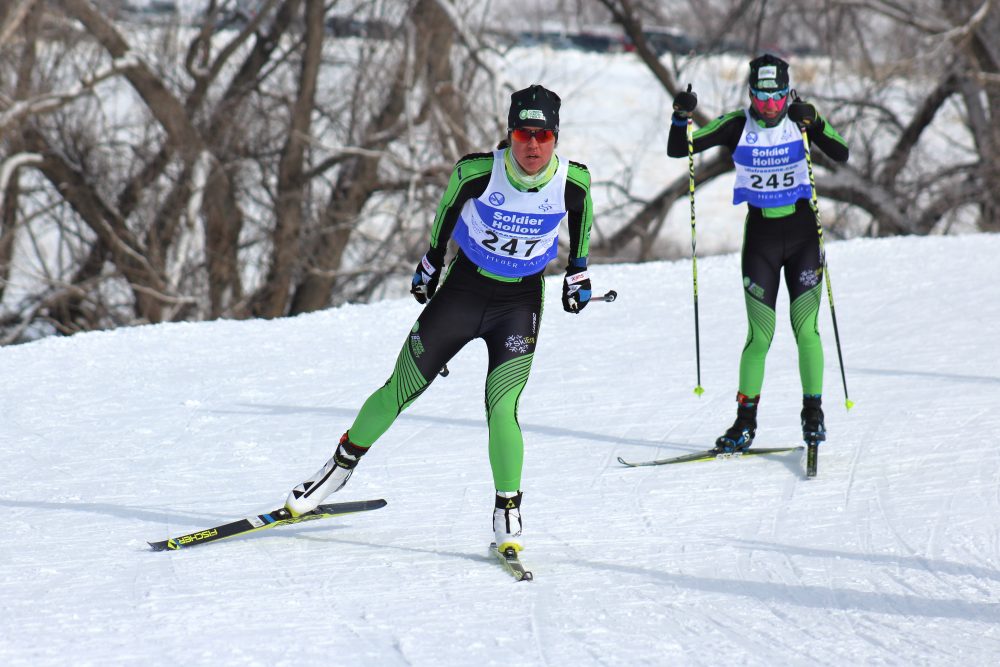
    Caitlin Patterson leading her Craftsbury teammate Kaitlynn Miller during the women’s 10-kilometer freestyle at 2017 U.S. nationals in Midway, Utah.

    Another point Patterson made was the idea of creating more opportunities for U.S. national-team and non-national-team members to compete against one another. This spring, Patterson received an email invitation to an athlete meeting led by athlete reps, Rosie Brennan (USST B-team member), Dakota Blackhorse-von Jess (Bend Endurance Academy), and Anne Hart (Stratton Mountain School). Topics discussed included:  SuperTour Calendaring, SuperTour Points, Seeding, Pole Length Rule, and Selection Criteria. Close to 30 athletes–from both the SuperTour circuit and USST–were in attendance, according to Patterson who also attended the meeting. Many present agreed with the following:

    “We as a ski community, as much as possible, would like for the U.S. Ski Team athletes who don’t make the criteria to race upcoming World Cup races or don’t make the criteria to race the Tour de Ski, to be sent back and have to race U.S. nationals,” Patterson said. “Maybe that will happen, I won’t really believe it until I see it.

    “It’s tricky,” Patterson continued. “Of course I’m still trying to figure it out myself. Kris Freeman made some good points that maybe the system of qualification isn’t working so well if so much has to be decided by discretion. But I guess in the end, the best way to do it is manage to race so fast, that it puts all doubt aside and show you just belong on there. Get off the bubble for sure, because there’s a lot of us trying to make that jump.”

    Even if last season didn’t earn her a nomination to the USST, Patterson is happy with the progress she’s witnessed in her skiing over the past few seasons, last year’s being particularly gratifying.

    “I really enjoyed my time in Europe during Period 1 this past winter,” she said. “It was a very positive experience and everyone was so excited to be there. And I think in many ways, it was a more positive experience than when I’ve been over there later in the season, when a lot of those athletes who have been racing in Europe really start to want to come home.

    “I respect the coaches’ decisions and I think they have good rationale on their side,” she continued. “I’ve been making good progress with my skiing, but I know that I need to prove unquestionably that I belong there on the ski-team ranks. There’s an extremely strong women’s team right now, which of course is great, but makes it really hard to get onto it. So I’ll keep trying and keep doing everything I can. Luckily I have a very supportive team here in the CGRP. So I can keep pursuing skiing, but hopefully make it to the Olympics one way or another.”

    Currently, CGRP sponsors, especially Concept2 and the Craftsbury Outdoor Center, cover CGRP athletes’ in season race and travel expenses. In the summer, lodging and food at the Craftsbury Outdoor Center are also paid for by CGRP financial supporters. For other outside expenses, Patterson relies on prize money she earns throughout the season.

    “No one in the US is in cross-country ski racing for the money, we’re in the sport because it’s an amazing way to stay fit and get outside, push your limits and compete, and inspire and help others along the way,” Patterson wrote in an email on Thursday. “I’m really not sure how long I’ll keep skiing at this competitive level. I have no definitive plans to stop, but I also don’t plan to keep going forever, as there are many other meaningful things I know I can do with my life. For now I’m living in the moment and the immediate future, giving everything I have to the pursuit of skiing my best, and enjoying the process and the journey.”

    Though perhaps headed to World Championships in a different sport than she would have expected, Patterson indicated that for now, her nordic ski career is where she will stay.

    “I’m really not sure, I haven’t given that any thought before.” Patterson wrote of a future in mountain running. “Mountain and trail running has always been something that I’m fairly good at because I’m training to be a skier, and I have a natural tendency towards an aerobic body type. I enjoy the races, and would like to improve my speed and consistency at running races, but I can’t really imagine continuing to be a competitive athlete but not focusing on skiing.”

  • Wednesday Workout: On the Up with Mountain Running World Champ Kasie Enman (with Video)

    Wednesday Workout: On the Up with Mountain Running World Champ Kasie Enman (with Video)

    Kasie Enman getting up a hill back in 2013. (Photo: Kasie Enman/Droz Photo)
    Kasie Enman getting up a hill back in 2013. (Photo: Kasie Enman/Droz Photo)

    This week, FasterSkier caught up with elite mountain runner Kasie Enman. A 2011 World Mountain Running champion, 11th-place finisher at the 2008 Olympic marathon trials, competitive snowshoe racer, collegiate All-American, and more, Enman divulged her secret to prepping for mountain races and the latest projects she’s been tackling when it comes to mountain running.

    ***

    Mountain running, marathons, maple-syrup manufacturing, mother of two, Vermont-based 2011 U.S. World Mountain Running champion Kasie Enman has plenty on her plate. Pile on coaching two club running teams and her and her husband Eli’s living-off-the-land lifestyle, it would appear all her time is already taken. But Kasie, a Middlebury College alum, made room for one more project this year: the push to make mountain-running race team sizes and distances equal between men and women.

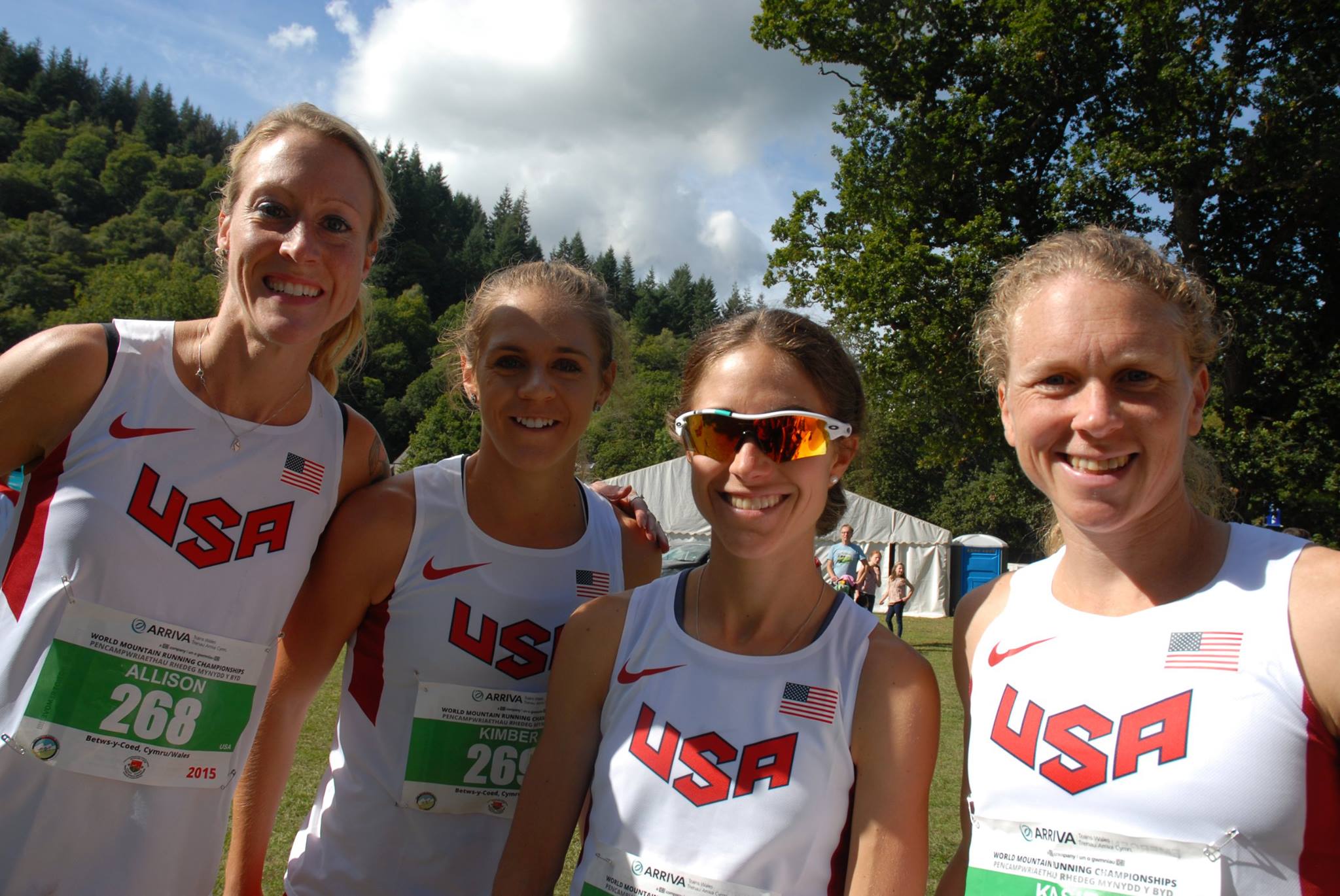
    The women's 2015 World Mountain Running team senior sivler medalists at this year's 2015 World Mountain Running Championships, shown (left to right) Alli Grace Morgan, Kimber Mattox, Morgan Arritola, and Kasie Enman. (Photo: Courtesy/Nancy Hobbs)
    The U.S. women’s senior team after claiming silver at the 2015 World Mountain Running Championships: (from left to right) Alli Grace Morgan, Kimber Mattox, Morgan Arritola, and Kasie Enman. (Photo: Nancy Hobbs)

    Not normally the one to “be the squeaky wheel,” Enman, 37-years-old, felt this was a scenario where it was acceptable for her to do so. Currently, the World Mountain Running Association (WMRA) permits each international team to carry six men and four women. In the WMRA, similar to the National Collegiate Athletic Association (NCAA) and International Ski Federation (FIS) competitions, men and women also compete on different length courses. Enman hopes to not only achieve equal course length, but equal team size at all levels of the sport, nationally and beyond.

    “The most exciting thing that’s happening in the near future is at the U.S. [Mountain Running] Championships this year, we will be running equal distances,” she said in a recent phone interview. “So that’s something to be proud of.

    “The next big push will be heading into the World Championships in September [because] that’s when the votes will happen,” she added, referring to a proposal that was submitted to make team size and course distances the same for both genders.

    In order to be present for the September vote, however, Enman still needs to make the U.S. Mountain Running Team. The qualifier will take place this year on July 3 at Loon Mountain in Lincoln, N.H.

    The Work[out] to Make the Team

    Though Enman is an extremely experienced and adept runner (she finished 11th at the Olympic Marathon trials in 2008, won the 2011 U.S. Mountain Running Championships, and that same year, went on to become the first American woman to take the title for World Mountain Running Championships), she wasn’t always darting over peaks. Her transition into mountain running was shaped by her surroundings and situation.

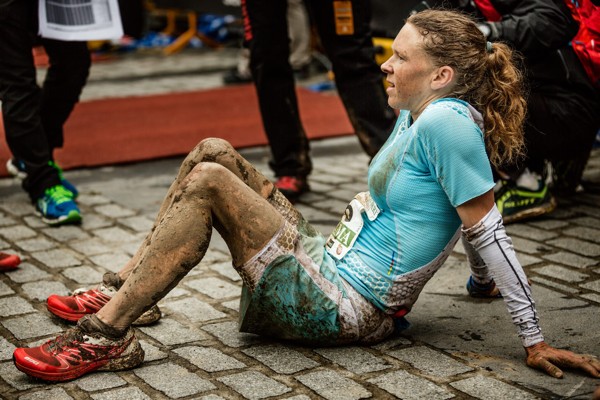
    Kasie Enman post 2014 Zegama Marathon (Photo: Courtesy/Jordi Saragossa)
    Kasie Enman post-2014 Zegama Marathon (Photo: Jordi Saragossa)

    “I ran cross country [in college], but that was the most trailish kind of thing that I had any experience with,” she explained. “I think [my interest in mountain running] really morphed from the location where I live.”

    After graduating from Middlebury and spending a year in Burlington, Enman moved to Sleepy Hollow in Huntington, Vt. with her husband. With only a mile separating her from the mountain biking, running, and nordic ski trails of Sleepy Hollow Inn — a family owned and operated outdoor center — it didn’t take Enman long to fall into technical trail running.

    “I’m not going to be driving somewhere to train. I train where I live and where I live happens to be really hilly, fairly mountainous and technical footing,” she said. “Gradually over time, [mountain running] just became something I could do well because I did so many hours of it. I tried out my first actual mountain race on a year when I had a plantar facsciitis injury and it was too painful to run on anything flat or even on downhill, but I found I could run pain free uphill.”

    Cranking out the uphill kilometers without any pain in her heel, Enman unearthed her calling. She quickly became addicted to mountain racing and competed in the Loon Mountain Race, Ascutney Mountain Run and Mount Washington Road Race. Learning that there was an opportunity to make a U.S. National team only pushed Enman further.

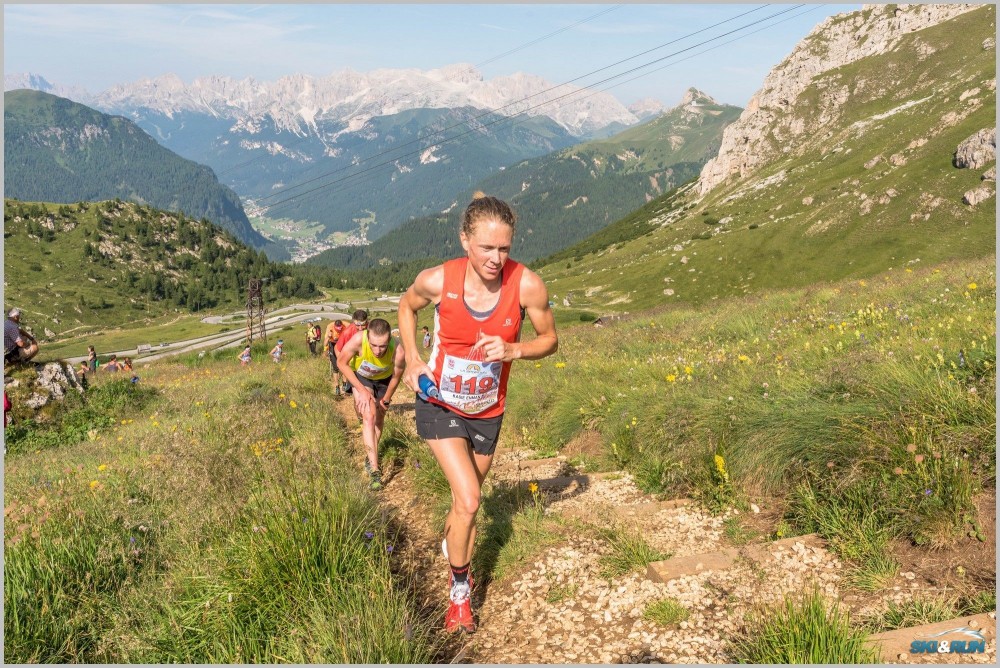
    Kasie Enman getting above tree line at the 2015 Dolomites Sky Race. (Photo Kasie Enman/Ski & Run)
    Kasie Enman getting above tree line at the 2015 Dolomites Sky Race. (Photo Kasie Enman/Ski & Run)

    “It took me a number of years to actually make the team,” she said. “I kept just missing it, and then 2011 I finally made the worlds team and that opened up a lot of doors. … It was sort of a whirlwind of a few years of discovering things and having some surprising success.”

    This year, Enman’s training regime takes on a slightly different look, as she is coming off of an eight-month period of injuries and illness–a fall hamstring strain that led to back and hip pain and a a virus that led to Enman to feel chronically fatigued. With this year also being an uphill-year only (mountain-running race seasons alternate between uphill-race-only years and years with courses that involve downhills), her current focus is running economy and efficiency.

    “This is an uphill-only year and that’s not my strength,” she said. “I’m always trying to get better with that and that’s kind of why I choose to push the uphills because I’m experimenting with … what feels like using the least amount of energy necessary to get up this hill the fastest and most efficiently.”

    With the Mt. Washington and Loon Mountain races ahead and a her injury behind, Kasie’s “transitional workout” is quite simple: get to an uphill and giddy up.

    “I start on an uphill, our driveway, which is a half mile uphill to the trails,” she said. “ Then I continue up to the nordic trails and the single track … and then, basically anytime there’s a choice to go up, I take it.”

    The Workout: Hill (Rather, Mountain) Repeats

    Purpose: Work on uphill running efficiency and economy

    Pace: Enman suggests Level 3/4 during uphills

    – Find an uphill and start climbing!

    Her uphill segments to be around 11-12 minutes of steady climbing … times 10.

    “Some of the uphills are as long as like 11-12 minute continuous climbs to the top,” Enman said. “Of course then I’m like, I only have to do that 10 more times consecutively before I’m done.”

    – The steeper, the better.

    Enman isn’t afraid to tackle pitches that are similar to those she’ll be racing on, no matter the amount of related calf and quad pain.

    “There’s this part of Loon called Upper Walking Boss that gets to like a 45-degree grade slope that you’re running up — it’s like a black-diamond ski trail,” she said. “And there are some trails that steep around here, too.”

    – Look for technical terrain that will challenge your footing and coordination.

    Total time: 90 minutes

    For an adaptation to the above hill workout, check out a video Kasie posted of her hill preparation for the 2015 Hartford Marathon race. (Video: Courtesy of Kasie Enman)

    https://www.youtube.com/watch?v=nrSzVpZnwZM

    Enmans’s Top-Two Mountain Running Musts:

      1. Ditch the watch and — heaven forbid — the heart rate monitor. Every once in a while, don’t be afraid to ditch the GPS, watch and heart rate monitor that might be hindering you from hearing what your body has to say. “I rarely run with a watch, I also don’t run with a GPS garment,” Enman said. “Then I can pay attention to how I’m feeling. I’ve shown up at enough races and have done well enough, that now I have confidence that I can sense my effort and that I am doing what’s the best for me on [competition] day.”
      2. Drop everything and run. Being flexible is certainly important for those on a strict schedule. As a mom, Enman takes any opportunity she can to get out the door, thanks greatly to communication with her husband and extended family. “I’ve just gotten to where I’m ready to go at any moment,” she said. “it doesn’t matter if I’ve just eaten a big lunch, I’ll step right out the door and go right then if that’s when the window opens.”
  • First to Top of Toll Road, Stephen Shatters Another Hill Climb Record

    First to Top of Toll Road, Stephen Shatters Another Hill Climb Record

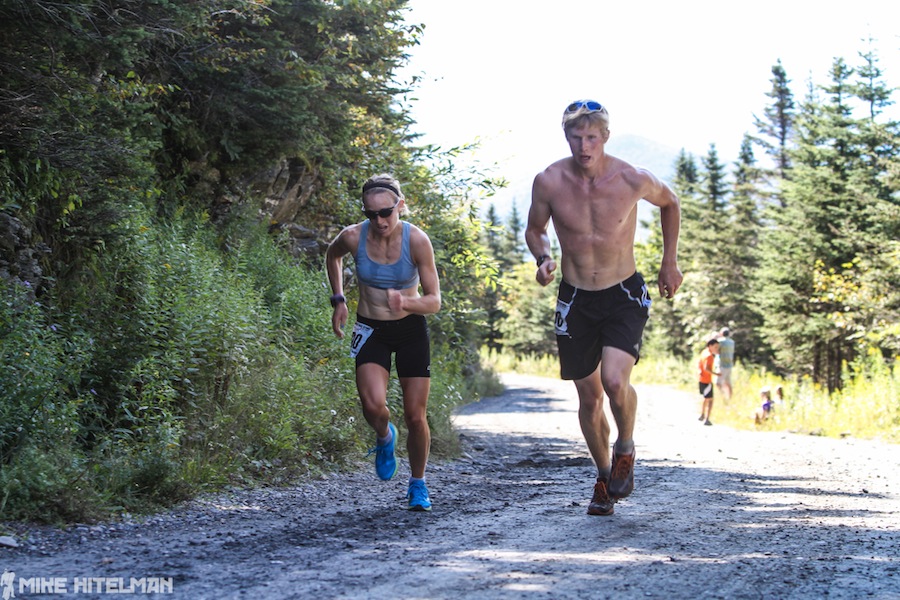
    Olympian Liz Stephen challenges Patrick O’Brien of the Craftsbury Green Team during the 6th Annual Race To The Top of Vermont on Aug. 25.
    Olympian Liz Stephen challenges Patrick O’Brien of the Craftsbury Green Team during the 6th Annual Race To The Top of Vermont on Aug. 25. (Photo: Race To The Top Of Vermont)

    Editor’s note: This story has been updated to include the overall women’s course record, set by mountain biker Lea Davidson last year.

    Before last Sunday, Liz Stephen isn’t sure if she had ever been to the top of Mount Mansfield’s Toll Road, which winds for 4.3 miles up 2,564 vertical feet in Stowe, Vt. Didn’t matter.

    The 6th Annual Race To The Top Of Vermont was another hill climb, and the 26-year-old affectionately known as “spider monkey” on the U.S. Ski Team had a goal of winning, setting the run course record and beating mountain bikers in the process.

    “My goal was to try and get both the record for the women’s run, but also knew there was an overall bike and run record as well that was worth a bit of money,” Stephen wrote in an email earlier this week. “So I was shooting for that as well.”

    The runnning time to beat was 39:17.7 minutes, set in 2011 by defending champ Kasie Enman of Huntington, Vt. (the overall women’s course record was 37:18.7, set by m0untain biker Lea Davidson of Jericho last year). Stephen, who hails from East Montpelier, shattered the run record by nearly two minutes in 37:22 (and missed the overall record by about 3 seconds). She beat the first female mountain biker, Marilyn Ruseckas of Warren, by almost seven minutes.

    Runner-up Ida Sargent, another Vermont native and Stephen’s teammate on the national team, explained she never saw much of Stephen in her third consecutive Race To The Top. Last year, Sargent placed third behind Enman, who was third on Sunday. Enman had a baby this spring and ran slightly behind Sargent for the entire race, but Sargent explained she could hear people cheering for Enman for much of it.

    “[Liz] was gone when the gun went off so I was running my own race,” Sargent, 25, wrote in an email. “But there were lots of guys around me to run with. Liz was absolutely amazing and it was really cool to see her run that fast. She’s a speedy mountain goat!”

    Add that to the list of nicknames for the World Cup phenom, who placed fifth at World Championships last season in the 10-kilometer freestyle individual start on a grueling course at 4, 700-feet above sea level in Val di Fiemme, Italy.

    The toll road peaked at 4,393 feet atop Vermont’s highest peak.

    “It’s true that I like to go ahead early when I can, but it doesn’t always work out,” Stephen explained. “With these types of races, it is pretty hard not to just go as hard as you possibly can.  The goal for me was to pace it well so I could run as fast as I could.”

    The fruits of her effort paid off and indicated her fitness was on track three months before winter racing resumes in Europe.

    “However, I am a cross country skier and that is about fitness, power, strength, mental toughness, and technique, among other factors, so I will just keep training the way I have been training and preparing for the winter races,” she wrote.

    Stephen also used the race as a fundraiser, publicizing her participation on a website to raise money for Vermont skiers gearing up for the 2014 Olympics in Sochi, Russia. As of Friday, she’d raised $2,450 dollars. Sargent (Craftsbury Green Racing Project) was also included in the fundraiser.

    “The fundraising effort has gone great, so far,” Stephen explained. “We will leave the fund up until the day the Olympics begin, so it will give people a good amount of time if they would like to contribute at some point between now and then. The response is always great in this area when you ask for help and support of one sort or another. We have such incredible communities that care about one another and want to be involved here in Vermont.”

    Sargent has been recovering from Achilles tendinitis and hadn’t originally planned to race, fearing the consistent uphill grade could do a number on her.

    “So I just went to the race planning to run and hike up and cheer for my teammates but then I got the race itch and couldn’t help not putting on a bib,” she wrote. “I was really excited to be able to race and mostly not have my Achilles bother at all. And I was a minute faster than last year which is a very promising sign about my fitness.”

    Sargent explained she hasn’t been running as much this summer as past years and didn’t think too highly of her running shape going into Sunday’s race.

    “It’s a really hard race but it was a beautiful day on top and awesome to see so many people out there running, biking, and hiking up the mountain,” she wrote. “The local support was incredible. It’s very inspiring and I’m very thankful!”

    Stephen placed 10th overall and Sargent was 31st behind men’s winner Eric Blake of West Hartford, Conn, who broke the men’s course record by a minute and 2 seconds in 32:51.3. A 2006 Olympic nordic skier, Justin Freeman of New Hampton, N.H., was second in his debut Race To The Top in 34:42.3. Craftsbury GRP skiers Gordon Vermeer was fifth (36:14.6), Pat O’Brien was ninth (37:20.5) and Andrew Dougherty was 19th (39:57).

    The top mountain biker, Gered Dunne won in 32:58.2, but Freeman edged second-place biker Jake Hollenbach by nearly 19 seconds. In an email, Freeman, 36 explained Blake started conservatively before making a small move about a half-mile in. Third-place finisher Josh Ferenc followed, and Freeman fell a few seconds behind.

    “Around the mile mark Blake made a bigger move, dropping Ferenc, who faded hard,” he explained. “I ran with him for less than a minute and then started to gap him. I didn’t look back, but I could tell from listening to people cheer that I built a lead of between 20 and 30 seconds by about a mile to go. From there Ferenc was slowly gaining but not enough to catch me.”

    Freeman beat Ferenc by 11.7 seconds.

    “I was disappointed not to go under the old record, but I am actually pretty happy to be only two minutes behind Blake,” he wrote. “Josh Ferenc has defeated me handily the two previous times I have raced him this summer, so it was nice to come in ahead of me (I agreed with him that I am now a runner/skier, so he need not suffer the stigma of having been beat by someone who is just a skier). I will probably go back next year, and I think I have it in me to run about a minute faster.”

    In terms of hill climbs, Freeman stated that this was like most others.

    “It’s an uphill run, so it requires going really hard, but in terms of racing tactics it is pretty straightforward,” he wrote. “You go as fast as you can without building too much lactate. The grade varies a lot more than Mt. Washington, which gives some chances for something resembling recovery, but in the end it is like any other 35-minute hill climb.”

    As for what’s next, Stephen and Sargent are due to meet up with the U.S. Ski Team in Lake Placid, N.Y., next week. The annual fall camp ends with the Climb to the Castle on Sept. 15 – a rollerski race which the multiple-time defending champion Stephen essentially owns.

    “The Climb to the Castle is a great test of fitness as well as just a good, hard effort, both mentally and physically,” Stephen wrote. “I look at it as a good way to practice race prep routines and race day nerves, as this race makes me so dang nervous every year!”

    Results