Tag: Katrina Howe

  • A New Chapter for GMVS with Rodgers, A New Start for SVSEF’s Gold Team with Mallory

    A New Chapter for GMVS with Rodgers, A New Start for SVSEF’s Gold Team with Mallory

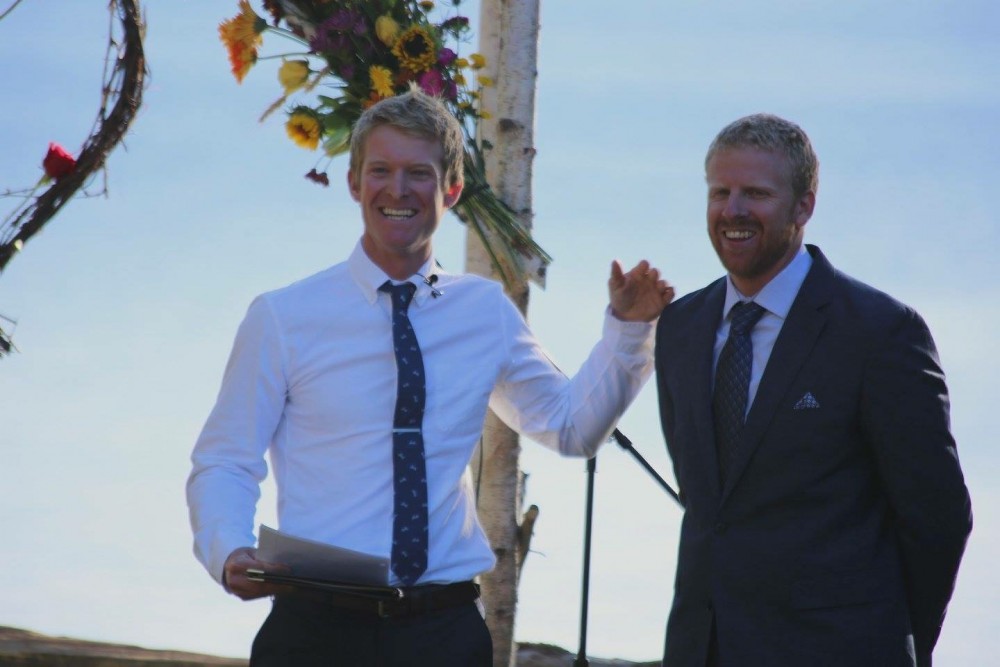
    Colin Rogers (left) as the MC for Chris Mallory's (right) wedding. (Courtesy photo)
    Colin Rodgers (left) as the MC for Chris Mallory’s (right) wedding, September, 2015. The two coaches and former nordic ski racers were grew up about 15 miles away from each other in Vermont. (Courtesy photo)

    Their cars won’t literally pass on the interstate, but the image is worth rendering. Colin Rodgers, five years the head of the Sun Valley Ski Education Foundation (SVSEF) Gold Team, is heading back to his native Vermont to become nordic director for the Green Mountain Valley School (GMVS) in Waitsfield, Vt. (Rodgers is currently in Italy with GMVS leading a training camp.)

    Heading the opposite direction from Vermont to Sun Valley, Idaho, where he recently resigned as assistant coach at University of Vermont (UVM) after three years, is Chris Mallory — also a native Vermonter.

    It’s safe to say that Rodgers’s and Mallory’s lives are seperated by far less than six-degrees: the world of elite ski coaching is small and close knit. That their paths have crossed on their career transects isn’t odd at all when you consider something Rick Kapala, SVSEF’s longtime nordic director, said in a recent phone interview.

    “You know, somebody was asking me is it really hard to lose a guy like Colin,” Kapala reflected. “And of course the answer is yes … but all of our programs, whether you talk to APU [Alaska Pacific University], or whatever, it is part of the game that you if you have really good coaches, you are going to lose really good coaches because they are going to have opportunities to move to another level.”

    There’s two highly qualified and highly recommended coaches in Rodgers and Mallory — it’s no surprise opportunities have arisen.
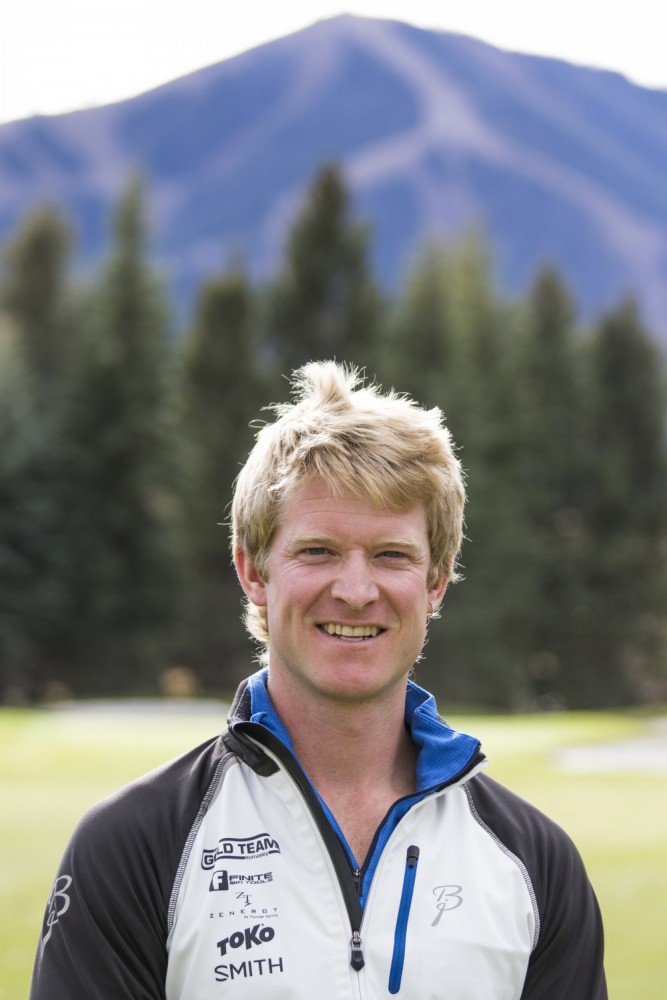
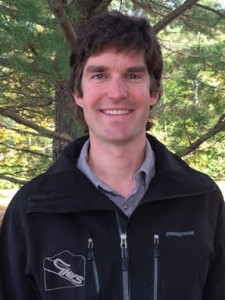
    Colin Rodgers, formally head coach of the SVSEF Gold Team, has taken the job of nordic director with Green Mountain Valley School in Vermont. (Courtesy photo)
    Colin Rodgers, formally head coach of the SVSEF Gold Team, has taken the job of nordic director with Green Mountain Valley School in Vermont. (Courtesy photo)

    After captaining the Middlebury College Ski Team and graduating in 2004, Rodgers lived the professional skier’s life. He skied for the Gold Team from 2006 to 2011. Since that time, the Westford, Vt., native has been the lead waxer, travel agent, coach, and all-around, go-to leader of the Gold Team.

    According to Kapala, the first word that came to mind when asked about the indelible fingerprint Rodgers left on the Gold Program was: “professionalism”.

    “We have always prided ourselves as trying to run a really pro program,” Kapala said. “But Colin as an athlete, really, I feel gave everything he possibly had to his racing career and the same thing was true as a coach. He demanded a lot of himself in that role, held himself to a really high standard, … worked as hard as he could, cared so deeply about the program and the athletes and the process of getting to the highest levels. I really think that all the athletes that we had engaged in our program benefitted from the approach Colin had, which was leave no stone unturned … look for every advantage, bring your best every day, and I look at it and go, we were very fortunate to have him.”

    Rodgers, 35, takes over a transitioning GMVS program. Last October, longtime GMVS Nordic Director Justin Beckwith stepped down. 2010 Olympian Garrott Kuzzy took over with help from newly hired nordic coach Katrina Howe. Now, nearly a year later, Rodgers will take over a program with 13 athletes — comprised of nine men and four women. Howe will remain as a nordic coach. (According to Rodgers, Kuzzy will be pursuing an MBA in Innsbruck, Austria, this year. Kuzzy could not be reached for comment by press time.)

    Junior skiers are not elite senior skiers. Yet Rodgers mentioned that his core mission remains the same: building bonds.

    “Of course, I will need to make some adjustments to my approach to the younger athletes, but it is all truly about sharing my passion for the sport of cross country skiing,” Rodgers explained. “The age of the athlete is not so important, but rather that you share a common interest with the individual and you can pass along a bit of knowledge that will help them improve. Then you are making a difference. It is still all about building relationships and doing your best to support the team.”

    For Rodgers, directing a program is the biggest new opportunity beyond moving back to his home state. “Running a program in my home state seemed like a fun challenge that I was up for,” he said.

    Back in Vermont, a state with a rich and proud nordic tradition, Rodgers commented that one of his biggest hurdles at GMVS, a private high school, will be making the sport he loves more accessible.

    “The biggest challenge will be in trying to help kids join the program that may not have the financial means to do so,” he said. “Ideally, we want athletes at the school that have the drive to ski fast and work hard. Hopefully, those two un-biased character traits will allow any motivated student/athlete the ability ski for our program.”
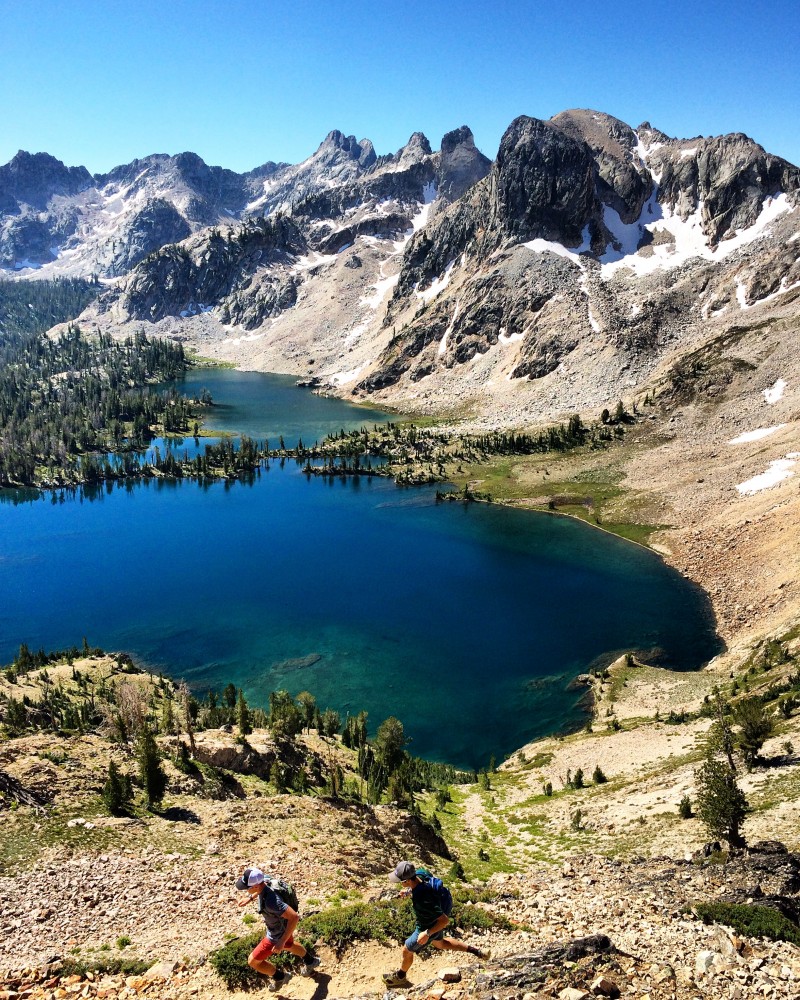
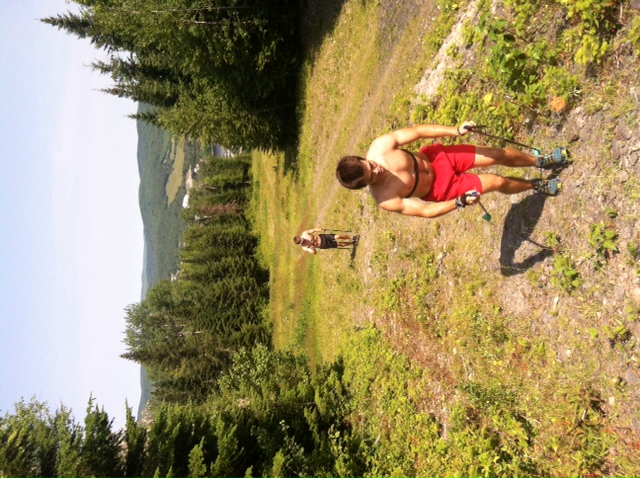
    Gold Team rookies, Cole Morgan and Jack Hegman run above Twin Lakes in Idaho's southern Sawtooths, summer 2016. (Photo: Rogan Brown)
    Gold Team rookies Cole Morgan and Jack Hegman run above Twin Lakes in Idaho’s southern Sawtooths this summer. (Photo: Rogan Brown)

    For SVSEF’s Gold Team, the benchmark for participation isn’t overtly financial, it’s performance based. Be a motivated, willing-to-develop, fast skier and you might make the cut. And for the coach, there’s no study hall to schedule and monitor, less shuttling skiers back and forth.

    “One of the most important things [with this level of senior coaching] is you need to have somebody who has both the depth of experience but also the ability to really keep the ship level,” Kapala said from Sun Valley. “The senior athletes that we have that work with the Gold Team are all highly motivated, so it’s a little bit different than junior coaching. For the junior coaching, I have a lot of kids that are very, very early on in their ski racing career. So you do a lot of really base-level educating and motivating. … The problem with these Gold Team-type positions, whether you are talking our program, Stratton or APU or what not, you sort of have to be able to do everything.”

    With Rodgers’s exit from SVSEF, enters Mallory.

    After skiing at the University of New Hampshire, Mallory headed west to Sun Valley where he began coaching in 2006. That SVSEF stint, where he began as a development-team coach and progressed to head post-graduate coach, lasted eight years. In May 2013, he took the assistant coach position at UVM. He also served as a wax-tech on three separate Junior World Championships trips.

    According to Kapala, Mallory can do a bit of everything, making him a good fit for the Gold Team. The bonus: Mallory has a positive history with the local community. Although deciding to leave a program like UVM for the Gold Team was difficult according to Mallory. “It was a tough decision to leave UVM. There is a big incoming freshmen class this year with some good young energy and it’s hard to leave the athletes on the team who you’ve created relationships with after a few seasons, but these opportunities only come around so often.”

    Like Rodgers, Mallory enters his new position with some challenges. For the 34-year-old Mallory, his is entering a training season already in full swing.
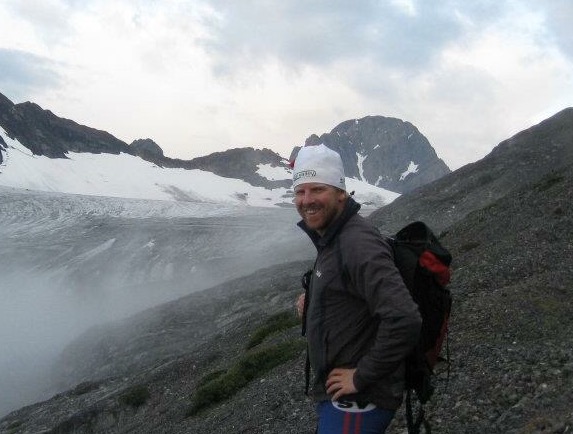
    Chris Mallory on the Haig Glacier, Canadian Rockies. (Courtesy photo)
    Chris Mallory, in 2012, on the Haig Glacier, Canadian Rockies. (Courtesy photo)

    At this point I’m coming in halfway through the training season, so there is going to be a transition for myself and the team,” Mallory, a Colchester, Vt., native, explained in an email while packing for his move West. “It’s going to be important to establish good working relationships with each of the athletes, so they can reach their highest potential. Luckily I’ve worked with half the team in the past, so I look forward to building on those relationships and taking the time to create a strong team dynamic.” 

    For both Rodgers and Mallory their shared history with SVSEF may pay dividends for the broader U.S. cross-country culture.

    “Their will be a time when I’m not the program director here [at SVSEF], and I hope that what happens is the day after I leave, the program is moving just right ahead. Seamless. No hiccups at all,” Kapala reflected as he spoke about coaching changes and building programmatic legacies. “And that will be the sign that you’ve been able to develop a program which isn’t about a personality or one individual it’s about the strength of the program as a whole.”

    Rodgers and Mallory, who grew up about 15 miles away from each other, are on their way.

  • Wednesday Workout: USBA Camp Strength Stations (and Shooting)

    Wednesday Workout: USBA Camp Strength Stations (and Shooting)

    Last week, more than 100 athletes from the U.S., Canada and Sweden came out for the US Biathlon Association’s (USBA) annual development camp in Jericho, Vt. It was one of US Biathlon’s largest and best-attended camps yet, according to national-team assistant coach Erik Lewish.

    “The camp is a great experience for biathletes from all over North America to get together for a week of training and educational sessions that culminate with the North American Summer Biathlon Championships at the end of the week on Saturday and Sunday,” Lewish wrote in an email.

    Those championships took place last weekend on Aug. 13-14.

    In the week leading up to the races, the U.S. Anti-Doping Agency (USADA) visited the camp to present on True Sport “and what to expect when one makes it to a high enough level that they are in the registered testing pool,” Lewish explained. “Our Head Development coach Jean Paquet took the athletes on a course scan of the roller loop and talked about ski technique and how to really ‘attack’ a course. Andrea Burke (formerly Henkel) gave a great motivational/inspirational presentation about her time as an athlete. Overall it is a great chance for the athletes to learn about the sport and hone their individual skills before competing in the continental championships.”

    The Monday before the championships, camp participants did an eight-station strength workout that involved some partnering up.

    Lewish explained that the workout was jointly created by himself, Paquet and Kari Korpela, the biathlon coach for the Sollefteå Skidgymnasium in Sweden.

    “The whole workout took about 1.5 hours from warm up to cool down,” Lewish wrote. “This was the second session of the day, after a long, easy roller ski in the morning.”

    The Workout: Biathlon Strength Stations (and Shooting)

    Warmup: 15-20 minutes of running

    First 20-Minute Set:

    – 40 seconds of each station/exercise followed by 1 single shot on the range, then 40 seconds of the next station/exercise

    Second Set:

    – Reload rifle magazine and do some longer bouts: 4 minutes of 40 seconds on/20 off at a station, then move onto the next exercise. After 4 minutes, take 5 shots on the range and return to next station. Repeat for a total of four shooting bouts (shooting order: prone, prone, standing, standing).

    The Stations:

    1. TRX leg crunches: Start in a pushup position with your feet in the straps of a TRX Suspension Trainer.  Lift your hips and pull your knees into your chest.

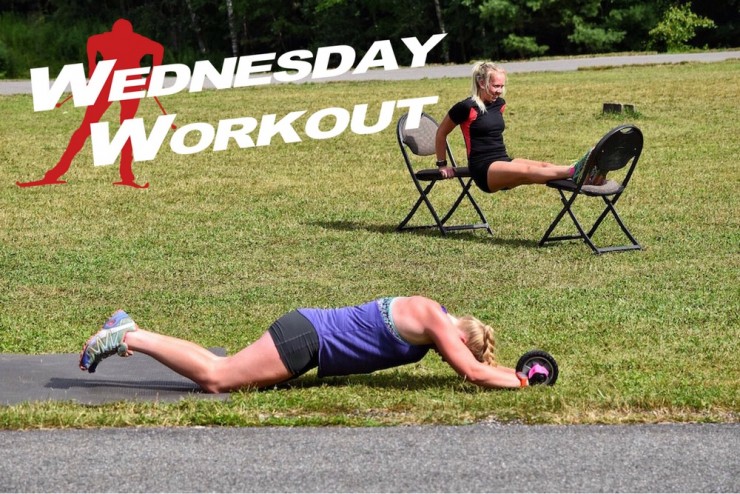
    2. Ab Roller: Start on your knees and roll out as far as you can while bracing your core, pause at the farthest point and then return to the starting position.

    3. V-Sits: Start lying down flat with your hands above your head. Bring your legs and torso up together and touch your toes at the top.

    4. Partner Burpees: Standard burpee done in sync with a partner. High five at the top of the jump for added fun!

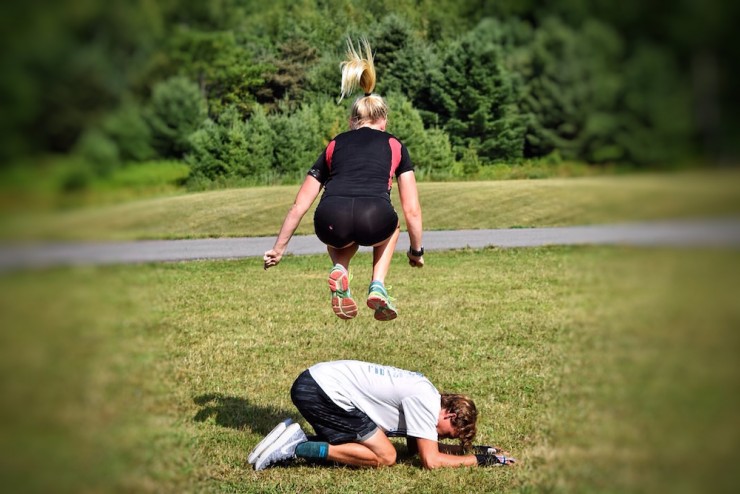
    5. Under-Overs: One person jumps over and crawls under the other person.

    6. Human Rock Climbing: One person starts on the back of the other and tries to climb 360 degrees around the other person without touching the ground.

    7. Tricep Dips: Sit on a chair, holding the edge with both hands, knuckles pointing forward.  Straighten your arms to raise your body and extend legs straight out with heels on the ground (or on another ch. Bend at your elbows to lower your entire body while keeping your legs straight. Hold at the bottom for a moment without touching ground.

    8. Single-Leg Plyo-Jumps:  Jumps done side-side to mimic skate skiing with a small hop in between before transferring to the other side.

    Cool down: 15-20 min. run


  • Beckwith Leaves GMVS, Kuzzy and Howe Hired to Run Academy’s Nordic Program

    Beckwith Leaves GMVS, Kuzzy and Howe Hired to Run Academy’s Nordic Program

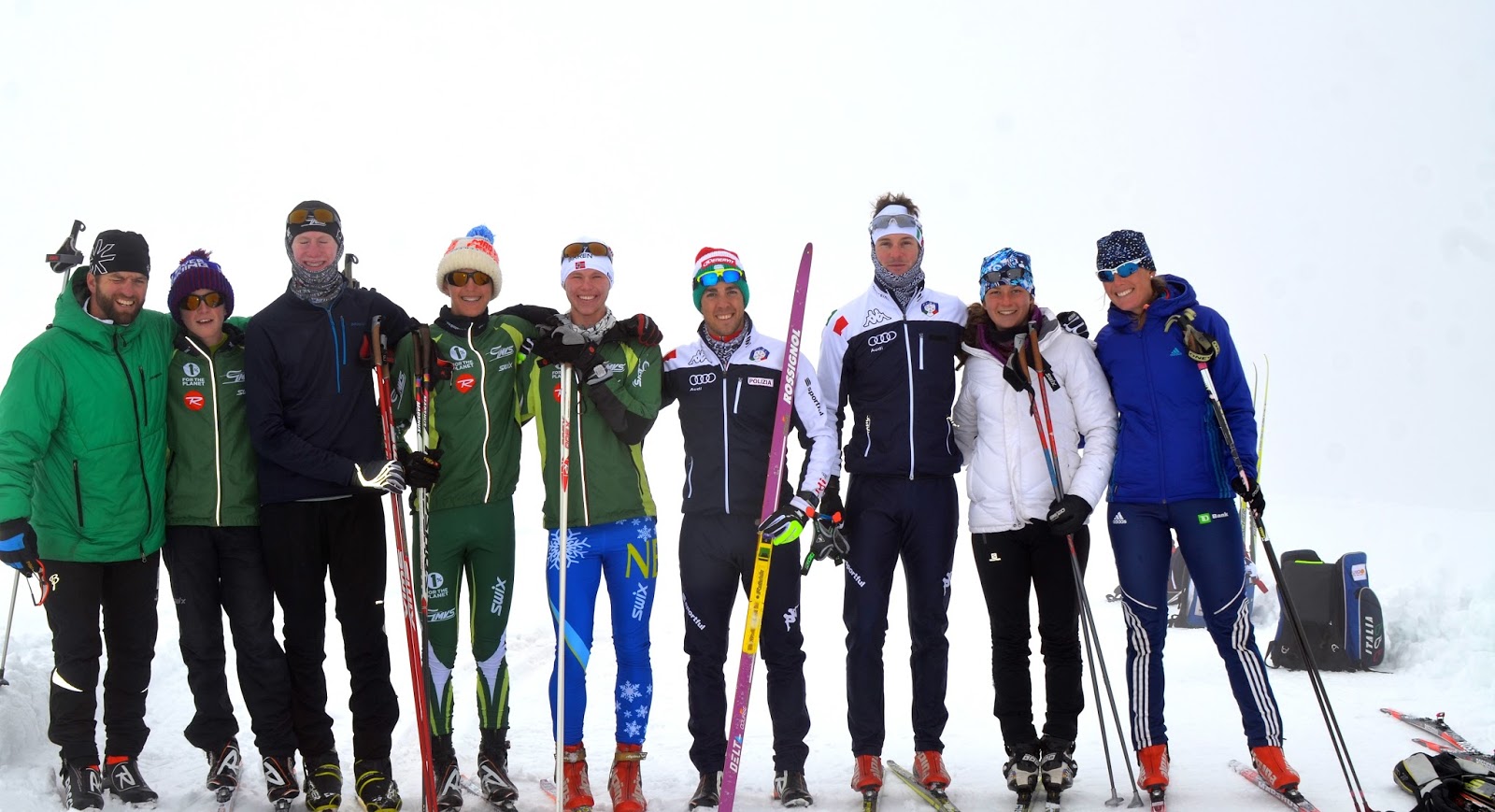
    A group shot of the Green Mountain Valley School (GMVS) Nordic Team with Italian national-team members Federico Pellegrino and Simone Urbani. Pellegrino has won three individual World Cups. The GMVS team traveled to Italy in early September for two weeks of training around Mals and on the Stelvio Glacier. (Photo: http://gmvsxc.blogspot.com/2015/09/day-10-stelvio-2.html)
    A group shot of the Green Mountain Valley School (GMVS) Nordic Team with Italian national-team members Federico Pellegrino and Simone Urbani. Pellegrino has won three individual World Cups. The GMVS team traveled to Italy in early September for two weeks of training around Mals and on the Stelvio Glacier. Longtime nordic director Justin Beckwith is pictured at far left, and new coach Katrina Howe at far right. (Photo: gmvsxc.blogspot.com)

    Over the last nine years, Justin Beckwith’s name has become synonymous with the Green Mountain Valley School (GMVS) in Waitsfield, Vt. Now, with the hiring of 2010 Olympian Garrott Kuzzy as nordic director and biathlete Katrina Howe as nordic coach, two other well-known individuals in the ski community have become the new faces of the program, and Beckwith has vowed to help with the transition.

    But before Beckwith — a former Middlebury College skier, Junior World Championships coach and wax technician, J1 Scando Trip leader, and the New England Nordic Ski Association’s 2012 coach of the year — started as an assistant coach at GMVS, he built houses.

    That’s one of the trades he’s returning to.

    In August, Beckwith, 36, decided to step down as Green Mountain’s nordic director, ushering in a new era for the program, which started in 1981 under Jim Fredericks. Muffy Ritz took over as nordic director from 1986 to ’89, after which GMVS Nordic went by the wayside at the ski academy until Norwegian Jon Arne Enevoldsen started a biathlon program in 2002, according to the Vermont Ski and Snowboard Museum.

    GMVS elite and postgraduate athletes Nick Gardner, David Sinclair, GMVS head coach Justin Beckwith, and Ian Moore (l-r) during their September trip to Italy. (Photo: GMVS)
    Former GMVS head coach and nordic director Justin Beckwith (second from r) with Green Mountain’s former elite and postgraduate athletes (from left to right) Nick Gardner, David Sinclair and Ian Moore (l-r) during last year’s fall trip to Italy. (Photo: GMVS)

    A few years later, Beckwith came into the picture. In a phone interview on Monday, he recalled how the current GMVS nordic program started with a Norwegian coach and core group of families. Through grassroots efforts, targeting local Bill Koch programs and creating a “viable option for kids from the [Mad River] valley to start taking up cross-country,” the private school’s nordic team began to attract more homegrown skiers from central Vermont. In turn, that spawned interest well beyond the state’s borders.

    During Beckwith’s tenure, in which he led the program for the last seven years, he also united with local clubs to develop the Central Vermont Co-Op Race Series to elevate the level of nordic competition. His largest team size was 15. This year, its has seven nordic athletes, including one post grad.

    “Over the years, I’ve been able to support some really awesome athletes in the program,” Beckwith said. “To be able to offer that opportunity, helping foster a passion for skiing and then to get to see them become young adults and continue to do amazing things.”

    Sometimes, he had to dig into his own pockets to do so. And while he said it was a personal decision to step down, he felt the time was right to put the program into new hands for strategic planning and new energy.

    2014 North American Rollerski Championships 7.5 k sprint at Ethan Allen Firing Range in Jericho, Vt.
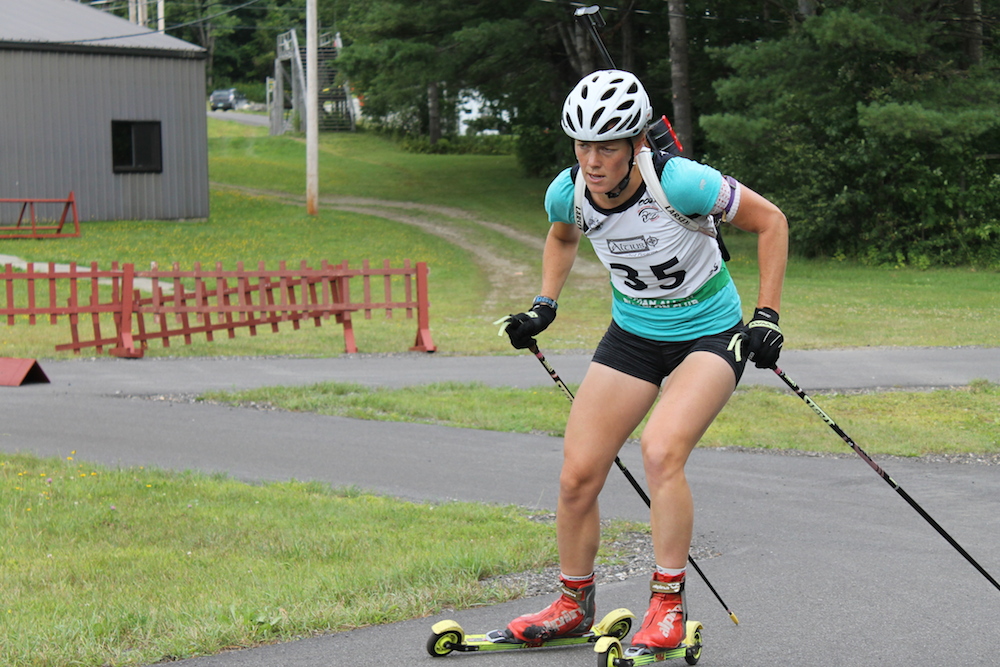
    Katrina Howe, a former biathlete with the Maine Winter Sports Center Olympic Development Team, competing at last year’s 2014 North American Rollerski Championships in Jericho, Vt.

    That’s where Kuzzy and Howe came in.

    Howe, a former national-development team biathlete who spent the last five years training with the Maine Winter Sports Center (MWSC) Olympic Development Team, joined Beckwith as an assistant coach in July. At 29, she had retired from racing this spring — her decision prompted by a loss of funding at MWSC — but she wasn’t ready to leave the sport.

    “I knew I wanted to stay involved and I always knew I wanted to be a coach,” Howe said on the phone last week. “I contacted Justin and it turns out he needed an assistant coach.”

    He hired her and the two went ahead planning the summer, including a fall training camp in Italy. Before she started, Beckwith and his then-assistant coach Shane MacDowell hosted an Eastern Regional Elite Group (REG) in June. MacDowell left GMVS to join Northern Michigan University as an assistant coach in July.

    “There’s been a lot of change in the program [recently],” Beckwith said.

    For the REG camp, Beckwith’s long-term goal had been to boost enrollment. New England has so many summer training options that it’s often difficult to unite the best juniors at a single venue, he explained. The REG camp attracted New England’s entire J1 and J2 teams, he said.

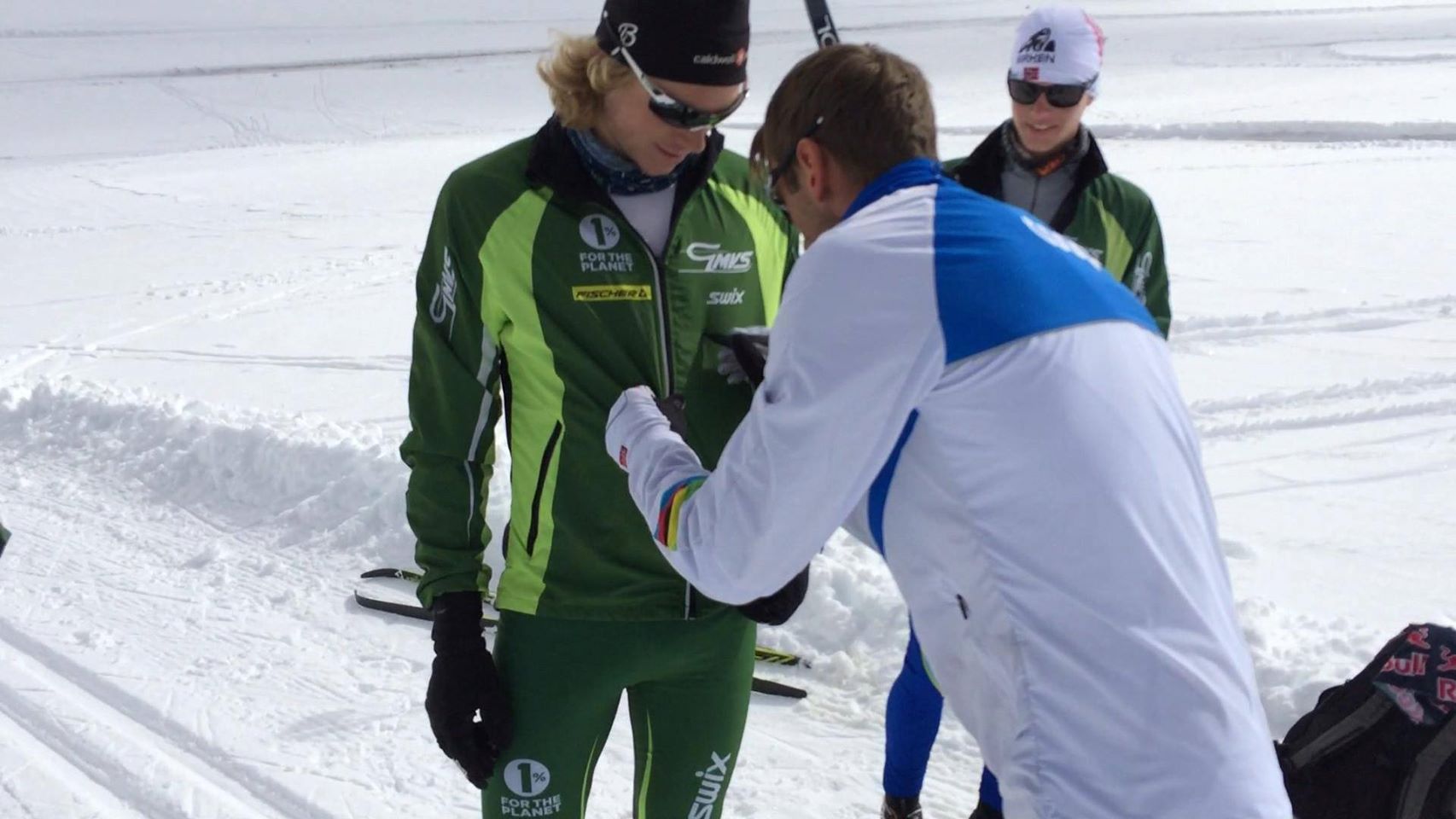
    Norwegian Petter Northug signs a GMVS nordic athlete's jacket during a recent trip to Italy for skiing on the Stelvio Glacier. (Photo: Petter Northug/Facebook)
    Norwegian Petter Northug posted a photo of himself on Facebook signing a GMVS nordic skier Forrest Hamilton’s jacket during a recent trip to Italy for skiing on the Stelvio Glacier. He captioned it, “Big in the US!” (Photo: Petter Northug/Facebook)

    “It was a great success … I think we were missing two to three kids from the junior national team,” he said, adding that there were 38 participants. “I would say we had 95 percent of the best kids in New England together.”

    That was a capstone on the previous open training camps GMVS hosted for the last eight summers.

    “I just wanted to make sure I was handing it off [to the right people],” Beckwith said of the nordic program. “Katrina was awesome. … I’m really happy that Garrott stepped up,” he added. “We have had some great conversations.”

    Howe started working for GMVS when school started, Aug. 17. The day before, she learned Beckwith wasn’t returning as head coach.

    “It was a pretty sudden transition,” she said. “We had about two-and-a-half weeks of school and Justin was around so he definitely helped me with a basic knowledge and lay of the land.”

    After that in early September, Beckwith, Howe, staff member Jere Brophy, and their athletes traveled to Mals in northern Italy for two weeks of dryland training — including hiking and rollerskiing — and on-snow skiing at the Stelvio Glacier.

    New GMVS nordic director Garrott Kuzzy (Photo: GMVS)
    New GMVS nordic director Garrott Kuzzy (Photo: GMVS)

    When they returned in late September, Kuzzy had been hired as nordic director. In the time since — the last two weeks — he’s been working with Howe.

    “This August, when Justin decided he was going to move on, the Green Mountain Valley School reached out to me and I decided it was a great opportunity to get back into the ski world and work with high-school age level kids,” Kuzzy said. “… It’s not a huge life transition. It’s just an opportunity to be more involved in skiing. I think they’ve got a lot of resources and are very dedicated to the nordic program.”

    Kuzzy, 32, a Middlebury grad who spent the last several years in Middlebury and will continue to live there, previously served as product director of VBT Bicycling and Walking Vacations. While he explained it was a “very challenging decision to leave” VBT after four years, he always wanted to stay involved in nordic skiing. He did so by launching VBT’s cross-country ski tours and assisting local clubs, including Mansfield Nordic and Frost Mountain Nordic, at their annual camps.

    “The experience I gained with VBT is an asset and something I can apply to my role as Nordic Director at GMVS,” Kuzzy wrote in an email. “My role consists of a balance between strategic planning, execution and ski coaching. As Nordic Coach, Kat Howe spends much of her time writing the training plan and training with the team.”

    While he and Howe plan to discuss and determine the program’s overarching goals this month, Kuzzy said on the phone last week that they want to further integrate nordic within the GMVS community.

    “Traditionally it’s been an alpine-heavy school,” Kuzzy said, explaining that of roughly 120 skiers at the academy, seven are nordic athletes.

    Howe pointed out that a couple of alpine students had already shown interest in nordic. “The number may grow before too long!” she wrote in an email.

    “At this point, my goal is to provide as much opportunity as possible for skiers who really want to see what they can do with nordic skiing,” Kuzzy explained. “One thing I really like about GMVS is the academic focus; it was recently rated the top academic private high school in Vermont [by the 2015 Niche Rankings]. … And this motto of, skiing is a metaphor for life. My goal is to extend the opportunity, to learn more about life through ski racing.”

    Howe said she felt similarly.

    “If I didn’t have the interest or the academic [background], I don’t think I’d totally appreciate the experiences I’ve had as a skier,” the four-year University of Vermont skier said. “The trips weren’t always necessarily about the racing. I think that carried over well for me.”

    Already, Kuzzy said he’s been having a lot of fun with the athletes.

    “That’s been the highlight, the workouts with the kids,” he said. “They’ve been fantastic.”

    “They’re just all awesome, hugely motivated [athletes],” Howe said. “They have a huge world sense of adventure. That’s why I fell in love with nordic, and these kids just love that and want to get out there and do new things. It’s not just about specific training for them, and that’s definitely come from Justin.”

    “They have a huge world sense of adventure. That’s why I fell in love with nordic. … It’s not just about specific training for them, and that’s definitely come from Justin.” — GMVS Nordic Coach Katrina Howe, on the team’s current athletes

    While Beckwith was unsure what his exact role with the program would be this winter, he knew he’d be offering race support. So far, he’s filled an advisory role to help with the transition and was part of the recruiting process for a new director, he said.

    Beckwith has also been the lead kickwax technician for New England at Junior Nationals for the last six or seven years, and he plans on doing that again this season.

    “It’s definitely open ended and I want it to be a positive vibe,” he said. “It was hard to leave my current kids… [but] I’m not leaving, I’m still here, part of their lives, but it’s definitely a hard transition for sure.”

    He’ll continue to live in Warren, near the school, where he can show Kuzzy and Howe the traditional time trial spots, and their starting and ending points.

    “I definitely envision doing some workouts with them,” he said.

    Meanwhile, he said he’ll be able to spend more time with his new wife, Brie Beckwith, a physical trainer for U.S. alpine skier Mikaela Shiffrin and the U.S. women’s alpine team, whom he married in April. He’ll also continue building with friends.

    “It’s pretty fun to get back to that,” he said.

    This winter, Beckwith said he’ll groom the Sugarbush golf course and help “the community in areas I was not able to before. … It’s exiting to not have the narrow focus of helping one program, but helping all programs out, and I definitely plan on being a part of the New England waxing staff.

    “The last two years I’ve been with the World Junior kickwax staff so I’m leaving all doors open,” he added. “I plan on staying involved as a ski tech.”

  • End of an Era: Sweetser Leaves MWSC After 15 Years; Club Focus Shifts from ODT to Juniors

    End of an Era: Sweetser Leaves MWSC After 15 Years; Club Focus Shifts from ODT to Juniors

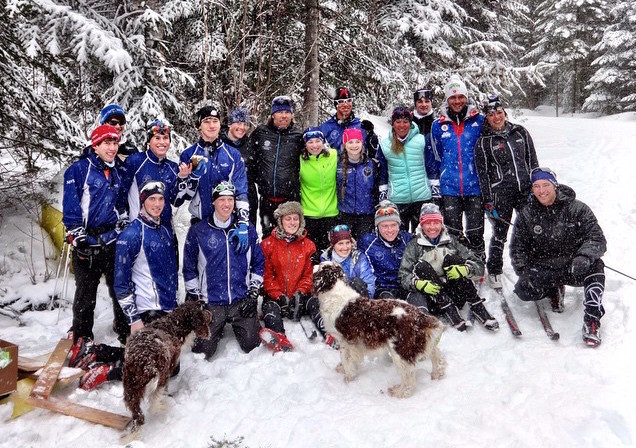
    Members of the Maine Winter Sports Center cross-country and biathlon teams on one last ski of the 2014/2015 season in early April in Fort Kent, Maine. (Photo: Facebook/Katrina Howe)
    Members of the Maine Winter Sports Center cross-country and biathlon teams on one last ski of the 2014/2015 season in early April in Fort Kent, Maine. (Photo: Facebook/Katrina Howe)

    Earlier this month, Will Sweetser, competitive sports director at the Maine Winter Sports Center (MWSC), revealed on his Facebook page that his 15-year term with the program had drawn to a close:

    “I can’t thank all of you who’ve made Maine Winter Sports Center and Maine Winter Sports Center Athletes such a success enough. Wish that I could give another 15 years to establishing my dream in Maine,” he wrote.

    “Don’t know yet where I’ll be,” Sweetser, 44, added in a comment. “Sudden news.”

    While the Maine native said in a phone interview he wasn’t able to elaborate on the departure at the time, he noted, “The leadership of Maine Winter Sports Center is shifting a little and we’re moving a different direction. I’m on to my next adventure; I have no idea what that’s going to be be…”

    On April 13, Sweetser was vacationing at a family residence in Florida with his wife Sarah Dominick, an assistant nordic coach at Bowdoin College in Brunswick, Maine. The two live nearly 300 miles north of Brunswick in Stockholm, Maine, between the MWSC’s base in Caribou and Fort Kent.

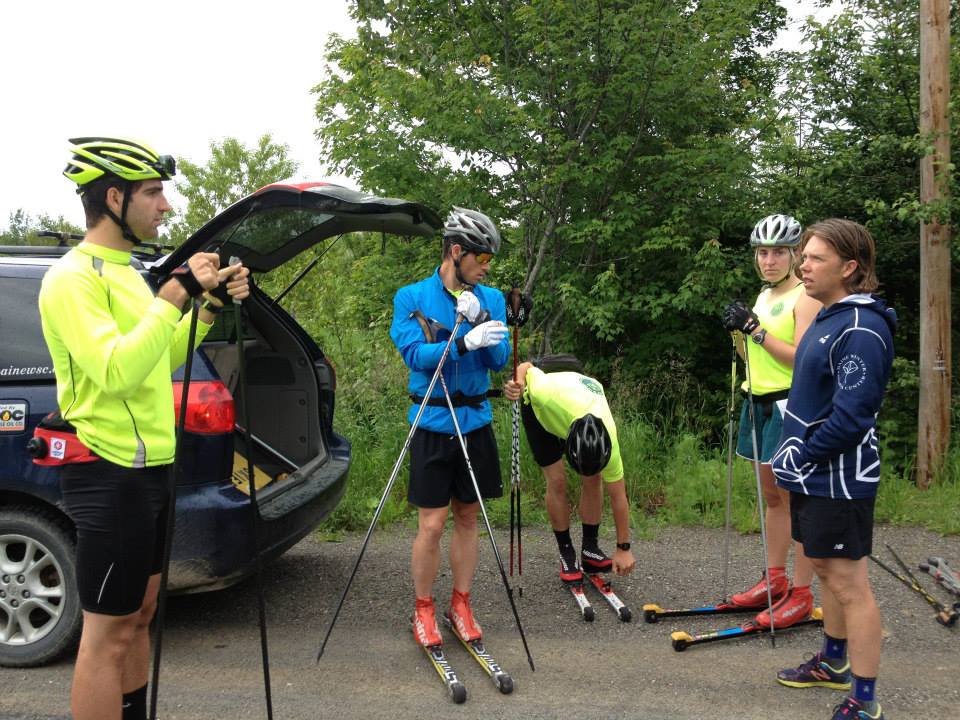
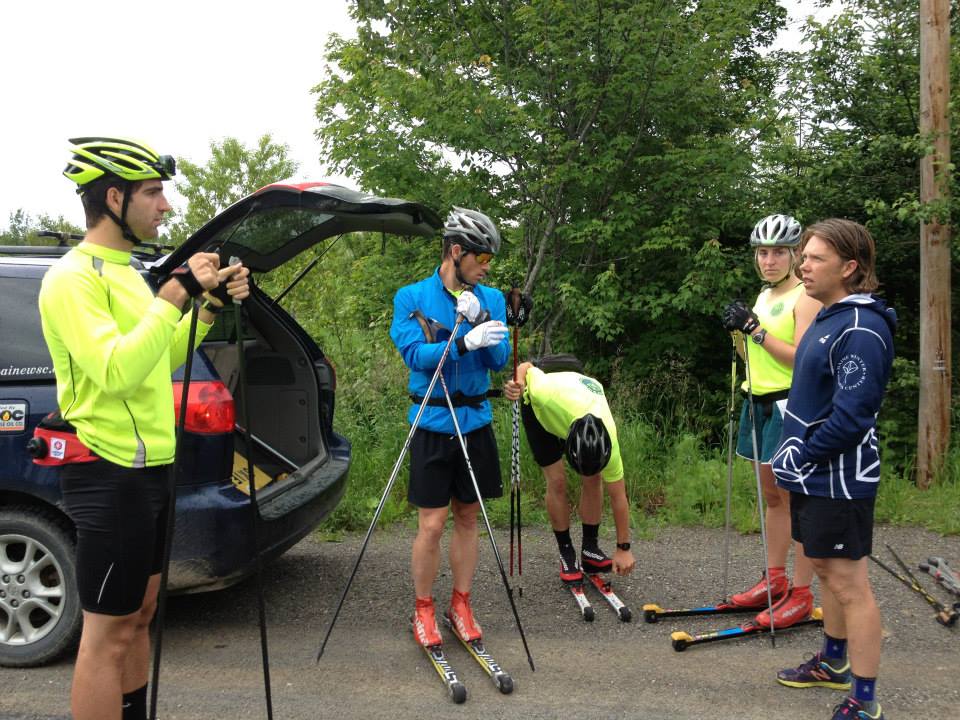
    The Maine Winter Sports Center Cross-Country Olympic Development Team (ODT) gets ready for a rollerski in northeastern Maine, with Kris Freeman (in blue), Welly Ramsey, Hilary McNamee and competitive programs director Will Sweetser (r). (Photo: https://www.facebook.com/maine.Winter.Sports.Center)
    The Maine Winter Sports Center Cross-Country Olympic Development Team (ODT) getting ready for a rollerski in northeastern Maine in 2013, with Kris Freeman (in blue), Welly Ramsey, Hilary McNamee and competitive programs director Will Sweetser (r). (Photo: Facebook/MWSC)

    Originally from Auburn, Sweetser skied for Dartmouth, and Dominick was an All-American skier at Bates College and former MWSC coach. Sweetser has coached at Bates, the Jackson Hole Ski Club in Wyoming, and Carrabassett Valley Academy and Rangeley Lakes Ski Club in Maine.

    “We were committed to raising a family in Maine and it came as a surprise,” Sweetser said of the recent news, adding that he and Dominick “will be searching for something new to do while we’re expecting a baby.”

    Their first child is due in October.

    “I’m really proud of the work that the organization has done in the field of competitive skiing [and] biathlon and I’m very thankful for all the time that I had with fantastic young athletes in the state of Maine,” Sweetser added.

    He started the position as head of the cross-country team in 2000. Along with Sweetser’s departure, the Olympic Development Team (ODT) program is being restructured, according to MWSC President and Chief Executive Andy Shepard.

    That means that ODT athletes, including Welly Ramsey, and biathletes Casey Smith, Russell Currier and Katrina Howe, will have to finance their travel for the coming 2015/2016 season.

    “In the short term — this coming season — the program will be more of a Training Center program,” Shepard wrote in an email. “We will continue to offer coaching for the athletes who want to train with us. We are also looking at opportunities to provide part-time coaching positions to provide some funding for them.”

    For the coming season, the MWSC, which has an annual total budget of $1.1 million, according to Shepard, will shift its focus to its junior and postgraduate programs. In 2013/2014, the center operated with about a $1.4 million dollar budget, supplied by the Libra Foundation.

    “The staffing structure we have had historically is set up to support those [junior and postgraduate] programs effectively,” Shepard wrote. “We have had a lot of success over the years placing kids from our programs on Olympic Teams. We are very proud of that heritage and are committed to continuing that tradition in the future. We just need to find a way to do so in a sustainable way. We hope to have a coach on board soon and will work with that coach to create a new vision for that program.”

    He explained that they were looking to fill Sweetser’s position in the “next couple weeks.”

    “While racing is a part of a much larger outdoor education program structure, we’re very proud of our role in racing in Maine and it will remain a critical part of our programming moving forward,” Shepard wrote. “Maine has some of the top skiers and biathletes in the country and we want them to be able to stay at home to pursue their Olympic dreams.”

    Currier described the ODT cuts as “unfortunate, but it isn’t necessarily unfair,” he said in a phone interview. “Getting athletes on the World Cup is a goal for MWSC, but it’s not the primary goal. If anything, it’s sort of an indirect goal. … Ultimately, the primary goal is to build a skiing community, not just a few fast athletes. So when the budget got stretched a little thin, they had to re-prioritize what is important.

    “While we still have training sessions for really good athletes, most of the resources and development will go toward that younger, local group,” he added. “It’s kind of a double edged sword. It’s fair, but it’s difficult for me.”

    Cash Flow

    In February 2014, MWSC discovered it would lose its funding from the Libra Foundation in April 2014. The program immediately launched two fundraising efforts, the first of which involved asking Maine-based foundations and corporations for three years of support with a goal of raising $550,000 by March 2014. The second spawned from an initial matching gift from Presque Isle native Mary Barton Smith, who pledged $100,000 plus a $400,000 matching grant.

    A few months later, Smith donated another $2 million with an additional $3 million in matching to kick off the program’s $20-million endowment campaign for the long-term sustainability of the MWSC.

    In the last 14 months, Shepard noted that the center has made “significant progress in our fundraising,” raising $3.9 million dollars. Two million of that was toward the program’s $20-million endowment and another $3 million would come from Smith’s pledged matched funding.

    “We still have a lot of work to do, but we are off to a great start,” he wrote.

    This season, the MWSC is increasing its Adventure Initiative Program from five sessions last year to 10 sessions this year, “including the possibility of a month-long program in the Patagonia region next fall,” Shepard explained. “We are increasing our budget for the Junior Race program and we are working on an exciting new biathlon program that we plan to announce in May. We have also launched a new initiative, collaborating with land trusts in Maine to provide trail design, programming, gear and leadership development.”
    But for the program’s highest-level skiers, funding cuts to the ODT (specifically to travel outside the East) and the cross-country coaching void have led many to reconsider their futures at Maine Winter Sports.

    The Initial Shock and What’s Next

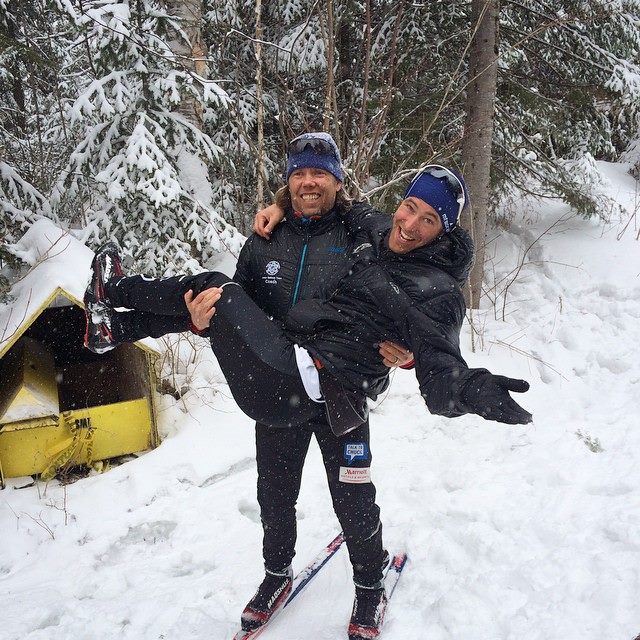
    Welly Ramsey (r) in the arms of MWSC Competitive Programs Director Will Sweetser, his coach for the last six years, during a season-ending team ski in Fort Kent, Maine, in early April. (Photo: Facebook/Welly Ramsey)
    Will Sweetser, former competitive programs director at the Maine Winter Sports Center (MWSC), holds athlete Welly Ramsey during a season-ending team ski in early April in Fort Kent, Maine. Sweetser had been Ramsey’s coach for the last six seasons. (Photo: Facebook/Welly Ramsey)

    When Ramsey, one of seven members on the 2014/2015 MWSC cross-country team, heard his coach of six years was leaving, he described it as “quite a shock,” in an online message to FasterSkier.

    “We came close to a breakthrough this season, and I hope any future success of mine will be rightfully attributed to him,” he wrote. “The man has had an amazing impact on my life, playing coach, friend, co-worker, mentor, employer, disciplinarian, and much more. He always went the extra mile and I can unequivocally say that I wouldn’t be here without him.”

    Ramsey added that Sweetser was “responsible for nearly every Maine skier developed in the past 15 years,” and helped propel MWSC’s junior team to one of its most successful seasons last winter despite the loss of its development coach, Amber Dodge. In an email, Dodge explained that she took a job as youth program manger with the New England Nordic Skiing Association (NENSA) last fall after moving in with her boyfriend and ski racer Kris Freeman in Thornton, N.H., last summer.

    “I learned so much as a coach, thanks to Will and [biathlon director] Seth [Hubbard],” she wrote of her three years with the MWSC. “I miss the athletes I worked with dearly as we were able to spend so much time with them year round.”

    Ramsey explained he was “currently in negotiations with the Maine Winter Sports Center about my future with the program, and have contacted other clubs with whom I can see my career excelling.”

    He would like to stay in Maine “and continue helping develop the next generation of athletes, but I do need to make the choices which are best for my career,” he added. “Whether I stay or go will hinge largely on how effectively I fundraise this spring. Later this month, I’ll lay things out and assess my move based on fundraising potential, race and wax support, and training group. I have a big year of training planned and I’m excited for the opportunities this seemingly precipitous event has yielded, both in Maine and elsewhere.”

    His teammate, Austin Huneck described the news about Sweetser as “a huge shock to everyone.” Huneck started as a postgraduate under his guidance two years ago and felt he had made major gains in the time since.

    “It’s very sad for me to see him go after everything he has done to help MWSC and athletes across the state,” Huneck wrote in an online message. “It’s hard to put into words how much Will has done for the ski community during his years with Maine Winter. He has helped me grow so much as an athlete and a person, and I’m not sure I would be were I am today without him. I know whatever he goes on to do next will be a great adventure. I’m grateful to have known him as not only my coach but as my friend.”

    While he had initially planed to return to MWSC for his third season, Huneck explained that his plans are “very up in the air.”

    “Will being gone does have an impact on my decision to return, but I know Seth Hubbard and [program director] Mike Smith at Maine Winter will do a great job to hire a new coach to fill his shoes,” he wrote. “MWSC has seen a loss of funding for the elite level athlete support going into next year, and this is also going to have a big impact on my decision. I am currently looking into attending college next season, and speaking with coaches at other clubs around the country. But at this time, I cannot say what my plans are for sure.”

    For the last two summers, Omar Bermejo of the U.S. Paralympics Development Team has spent his summers training with the cross-country team in Maine. He currently lives in Casper, Wyo.
    “Will Sweetser is a great coach, without him in my corner the year before the Sochi Paralympics I don’t think I would have been as happy as I am with my performance and progression in the sport of Cross Country skiing,” Bermejo, a MWSC cross-country team member, wrote in an email. “It was a shock to me and to other athletes the sudden departure of Will from MWSC.

    “As far as my career, I had spoken to Will about the possibility of returning to MWSC this year but I will not be going due to his departure,” he added. “Lucky for me he will be moving closer to me here in Wyoming, where I intend to seek his help to improve my technique.”

    Sweetser did not say whether he and his wife planned to move from Maine.

    Howe, a biathlete with the program, wrote in an email that she was “devastated to hear about his departure from MWSC. Although he wasn’t my coach … I got to work with him quite often and thoroughly enjoyed it. I haven’t worked with many coaches who love skiing as much as Will does.

    “For Will and his wife Sarah it’s truly a lifestyle, not just a job,” she added. “They will be sorely missed at MWSC … As with the departure of any coach, good or bad, it’s an opportunity for growth and change in the program. Hopefully the position will be filled by someone who shares the love and enthusiasm for skiing that Will has.”

    In the aftermath of the ODT cuts, Howe explained she was unsure of her plans going forward.

    “Ideally I’ll be in a position to continue with biathlon but if that doesn’t happen my backup plan is to get reacquainted with my classic skis and jump into some cross country races this coming winter,” she wrote. “At some point I see myself becoming a coach, but I can’t say how soon that will be.”

  • Ultimate Refueling Contest Winners and Other Entries

    Ultimate Refueling Contest Winners and Other Entries

    The results are in for the Ultimate Refueling Contest! We had some pretty amazing submissions which made the task of choosing three winners incredibly tough. However, after much deliberation we have chosen the Katrina Howe and her “Energy Bombs” as our grand prize winner! Not only do the energy bombs look tasty and revitalizing, but they are easy to prepare and transport which makes them the perfect recovery food.

    We awarded our second place prize to Amy Katz, for her Maple Apple Bacon Stuffed French Toast. The combination of sugar, carbohydrates, and protein make it perfect for a post-workout meal. We granted Claire Waichler and her Turmeric Beet Recovery Smoothie with the third and final prize. While we may not be huge fans of beets, the creative combination of the smoothie’s ingredients won us over. 

    Thanks to all our contestants! Check out the contest’s photo gallery to see our best submissions and read the prize-winning recipes below!

    First Place: Katrina Howe – Energy Bombs

    FIRST PLACE: Katrina Howe - Energy BombsI call these things energy bombs. They’re super easy to make (warning: you will be sticky before it’s over), the recipe is easy to alter according to what you have/don’t have in your pantry, and they pack well into a drink belt if you want to actually bring them with you on the road/trail. In addition, if you buy the right oats it can be a gluten free snack too!

    Recipe for my “Energy Bombs” 

    Makes 20-30 “bombs” depending on how big you make them. 

    First, prepare the container you want to store them in. I usually have a large tupperware container with pieces of wax paper or foil between layers.

    Measure the following into a bowl: 

    – 2 C rolled oats

    – 2 C rice crispy cereal

    – 1/2 C raisins/craisins

    – 1/2 C flax seeds (ground flax seed meal….whole flax seeds are not absorbable)

    – 1/2 C pumpkin/sunflower seeds

    – 1/2 C slivered almonds 

    – 1/2 C carob or chocolate chips.

    In a large pot melt together till creamy: 

    -1 C peanut butter

    – 1/2 C honey

    – 1/2 C brown sugar

    Remove from stove and add the dry ingredients from the first bowl to this pot (you’re doing it in this pot so the remaining heat will help melt the chocolate/carob). 

    Once it’s all mixed together roll balls or rolls out of the “dough” with your hands. Set them on a cookie sheet or cutting board to cool. Once cooled they will harden into whatever shape you’ve made them.

    Second Place: Amy Katz – Maple Apple Bacon Stuffed French Toast

    SECOND PLACE: Amy Katz -Maple Apple Bacon Stuffed French ToastWhen it comes to refueling your body after long workouts or a lot of intensity, the three categories I always pay attention to are sugars, carbohydrates, and protein. For most endurance athletes, including skiers, our carbohydrate intake should be much greater than that of protein. Given this, what better way to refuel than eating your carbs covered in your protein? Since many times we get done with our workouts early, breakfast is the perfect recovery meal.

    Ingredients for 2 pieces of french toast:

    4 small pieces of some sort of whole grain bread (frozen or stale loaves work well)
    1 apple
    2 slices of bacon
    1/3 cup of heavy whipping cream
    1/2 tablespoon maple syrup
    a pinch of salt
    1 egg
    1/2 teaspoon vanilla
    1/2 teaspoon cinnamon

    To make filling:

    1. Whip the cream until it has very stiff peaks- you don’t want to make it into butter but it should be stiffer than you normally make cream.
    2. Cook the bacon in a pan or the microwave until crispy, and then dice it along with the apple and add it into the cream.
    3. Add the maple syrup and a pinch of salt.

    To make french toast batter:
    1. Whip the egg with a fork until it is mixed with the yolk and add cinnamon and vanilla.

    To make:
    Soak 2 pieces of bread in the batter and put on a hot pan. Cook until golden on one side, and then flip and cook slightly on the other side. Add the filling and stack the two pieces and cook for another few seconds. Take out when the cream starts melting.
    Can garnish with butter, coconut oil, more syrup, whatever works. But its good on its own!!

    Third Place: Claire Waichler – Turmeric Beet Recovery Smoothie

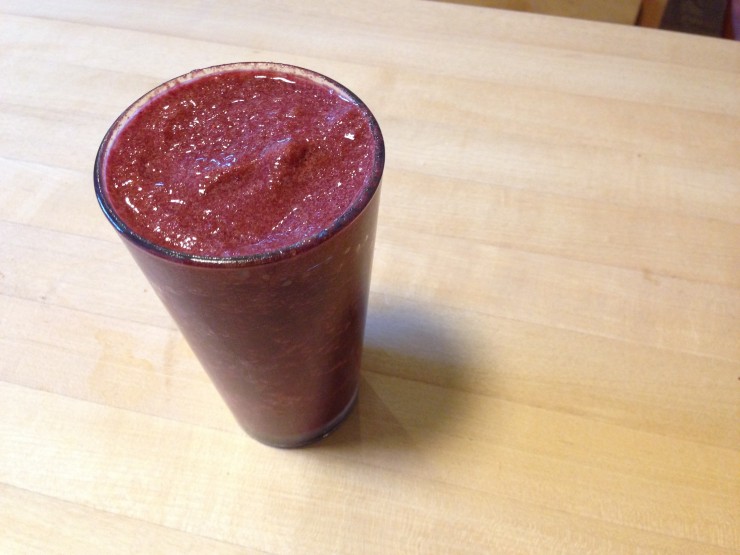
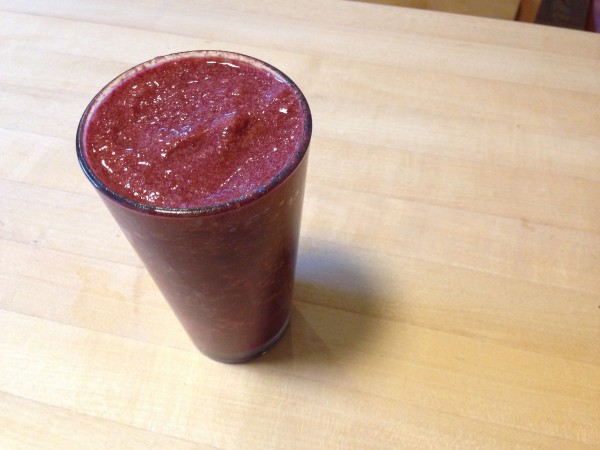
    THIRD PLACE: Claire Waichler - Turmeric Beet Recovery SmoothieContains protein, potassium, iron, antioxidants, detoxifiers, and lots of anti-inflammatories.

    (Quantities are a rough estimation)

    Makes 1 blender full, 2 or 3 servings

    1 medium beet, peeled

    2 cups of milk

    1 scoop or serving of protein powder – the one in my smoothie is 34g and vanilla flavored

    2 cups of greens, spinach or kale

    1 banana

    A handful of candied ginger.

    A turmeric finger/root

    Ground cinnamon and nutmeg to taste. You can also substitute ground ginger and turmeric for the whole ingredients

    Ice

    Blend all the ingredients in a blender. Then guzzle.

  • Casting Traditional Sponsorship Aside, Small Wisconsin Business Brings Skiers Together from Around the World

    Casting Traditional Sponsorship Aside, Small Wisconsin Business Brings Skiers Together from Around the World

    Victoria Hernandez rollerskis in her native Spain while wearing there Out There training kit. Hernandez was the first member of the Out There Biathlon and Nordic Team. The Team now has seven members and aims to support its athletes through a family-like environment. (Photo: Out There/Facebook
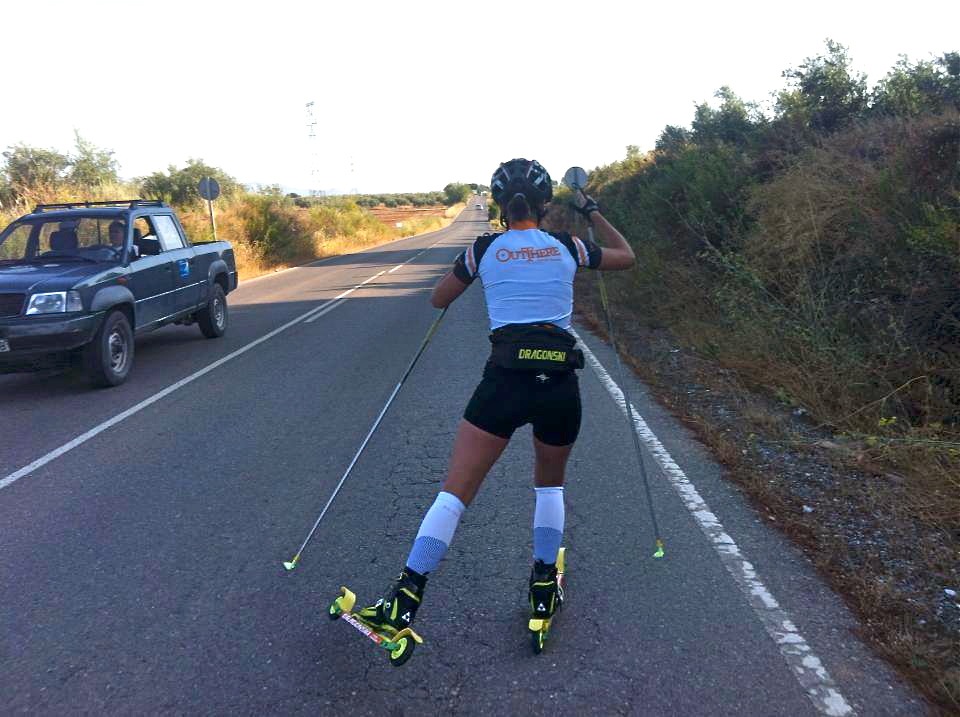
    Victoria Padial Hernandez rollerskis in her native Spain while wearing there Out There training kit. Padial was the first member of the Out There Biathlon and Nordic Team, and in 2014 won silver in both the sprint and the pursuit at Open European Championships, becoming the first Spanish athlete to ever medal at the event. The Team now has seven members and aims to support its athletes through a family-like environment. (Photo: Out There/Facebook)

    Spain. New Zealand. Hungary. Lithuania. Brazil. The U.K. The Netherlands. The U.S.

    At first glance these countries have very little in common when it comes to skiing. In fact, it’s rare to hear of high performing World Cup athletes from many of these nations, let alone a team that boasts members from all eight of these counties.

    Despite the lack of apparent ties, one small-town ski shop in Wisconsin is joining forces with nordic athletes from each country in order to help grow the sport and in the process they’re building a family.

    It all started roughly seven years ago when Kristen and Bjørn Hanson were attempting to bring a ski shop to Rice Lake, a small town in northern Wisconsin with less than 9,000 residents.

    Bjørn, who is the U.S. board member for the World Loppet Skiers Association, knew there was a demand in the community but everyone he approached dismissed the idea, saying that nearby Hayward would be a more suitable location.

    One of the logos for the Out There Biathlon and Nordic Team. in the 2014/2015 season the team boasts eight athletes from eight different countries. (Photo: Out There/Facebook)
    One of the logos for the Out There Biathlon and Nordic Team. in the 2014/2015 season the team boasts eight athletes from eight different countries. (Photo: Out There/Facebook)

    It wasn’t until their long-time friend and Fischer/Swix representative for the Midwest, John Theis, suggested that Hanson open the shop himself that the Rice Lake shop came into fruition.

    The move made sense. Hanson had a long history with cross country skiing. He was an avid cross country skier and had a strong Norwegian heritage with many family members still in the Scandinavian country.

    “It wasn’t an option,” said Hanson about his introduction to skiing in a phone interview. “You were born and then you had skis slapped on your feet a couple years later. The rest was history.”

    Not only did a background in cross country skiing qualify the Wisconsinite to open a ski shop, he also had extensive experience in retail.  To this day, Hanson runs a paint and decorating business in Rice Lake that is the anchor store of the town’s main street. Situated in a 1904 Victorian, the family business has been a facet of the town for 38 years.

    Hanson and his wife realized that with such a large facility, there was room for more than just paint. After rearranging the store, the couple utilized two rooms in the house in what would be called Out There.

    Today, Out There has become a fully outfitted ski shop and has grown from two rooms to encompass the entire basement, four rooms on the main floor, and a strength facility in the warehouse behind the shop.

    That’s not the only way Out There has grown. After the Hansons’ son became interested in Biathlon, Hanson turned to a graphic designer to create a biathlon logo for the store. The task was only a whim at the time, but when Hanson realized the O in Out could be used as a biathlon target, he became excited about the possibilities.

    Out There athlete, Sarah Murphy of New Zealand, practicing her shot in 2013. (Photo: Out There/Facebook)
    Out There athlete, Sarah Murphy of New Zealand, practicing her shot in 2013. (Photo: Out There/Facebook)

    Soon after the creation of the new logo, Hanson was contacted by a British representative who said he had a Spanish biathlete, Victoria Hernandez, who was interested in expanding her image. Open to the idea of partnering with an athlete or two, Hanson and Hernandez discussed how the shop could best support an athlete from a non-traditional nordic nation.

    The shop agreed to sponsor Hernandez, and as word spread of how Out There was supporting those on the fringe of nordic sports, more and more athletes got in touch with the store.

    “There’s been this snowball effect and we are continuing to grow,” Hanson said of the Out There Biathlon and Nordic Team. “We are getting emails about once a month from either an athlete or coach who is asking about us. We take each situation and see if it is a good fit for what we are doing.”

    Represented by the biathlon logo that was originally created on a whim, the Out There Biathlon and Nordic Team has grown to a fully fledged team. In the 2014/2015 season Out There will be sponsoring eight athletes from eight nations, all of whom are biathletes and one who is also a cross country ski racer.

    Out There makes an attractive sponsor for several reasons that have very little to do with financial gain.

    Bjørn and Kristin work with each athlete individually to tailor a sponsorship that fits their needs. That could mean financial support, subsidized gear, or getting them in contact with other potential sponsors.

    “We’re this extended family that is championing what they want to do. We try not to do it from a business standpoint, but from a family standpoint.”

    For biathlete Katrina Howe, Out There’s first American athlete, the Hansons have crafted a unique plan in which the skier sells homemade knit hats and earrings through the shop and it’s website. Out There has also helped her set up her own Facebook page to promote the hats, which she calls Foxy Toppers.

    Out There collects no income from any of her products, and sends her the full profits via PayPal once a sale is made.

    “Some people would mark it up and try to make a cut on it, but we’re just trying to promote it and make more money for the athletes,“ Hanson said.

    Out There also attempts to ensure its athletes have a plan for the future, whether or not that includes skiing.

    “Some day you have so become a person. Maybe that’s is coaching, or a wax tech, or selling who knows what,” Hanson said. “That is something that you have to think about as you progress in your professional athletic life. I think a lot of athletes haven’t thought about that so we’re trying to assist them by laying the foundation for them to get into the things that can allow them to help build the sport in ten years. “

    At the end of the day, Out There is all about growing nordic skiing by creating a strong support system for fringe athletes.

    “The more we grow the sport the more potential business there is for everyone. If we don’t grow the sport it is too small,” explained Hanson. “When you look at the globe and realize that the client base comes from north of the 45th parallel, you realize you don’t have billions of potential customers.”

    Perhaps the most important aspect of an Out There sponsorship is its inclusion into a tight-knit community. In order to ensure the sport continues to grow, Out There aims to build a family environment for its racers that can support them regardless of whether they are from Hungary or Brazil.

    “We’re this extended family that is championing what they want to do,” Hanson said. “We try not to do it from a business standpoint, but from a family standpoint.”

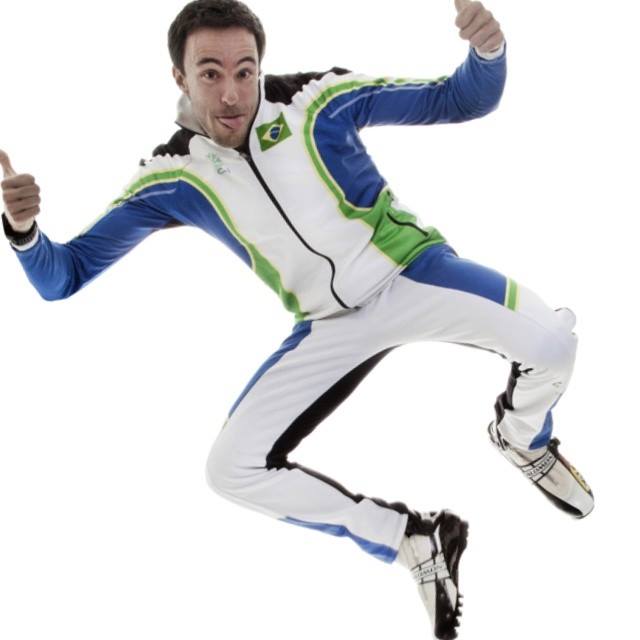
    Leandro Lutz is a member of the Out There Biathlon and Nordic Team. A native of Brazil, Lutz often jokes that there aren't many people rollerskiing in his country. Lutz will travel to the U.S. in July to train with Out There before he heads to Europe in the fall (Photo: Out There/Facebook)
    Leandro Lutz is a member of the Out There Biathlon and Nordic Team. A native of Brazil, Lutz often jokes that there aren’t many people rollerskiing in his country. Lutz will travel to the U.S. in July to train with Out There before he heads to Europe in the fall in the hopes of attending the 2015 World Championships in Falun, Sweden. (Photo: Out There/Facebook)

    This family orientation means that the Hansons will regularly host athletes in their home. Last year Sarah Murphy, a biathlete from New Zealand, spent several weeks with them while she was racing in the 2014 Berkie. Another athlete, Leandro Lutz, will travel from his native Brazil to Rice Lake in July so that he can train in Wisconsin with Out There before he heads to Europe in the fall. This year he hopes to qualify for the 2015 World Championships in Falun, Sweden.

    Hanson also described some other nontraditional support that the team gives its athletes. He said that he’s received many emails asking advice for personal issues. Recently an Out There teammate asked for guidance regarding his girlfriend. Hanson was more than happy to help.

    Hanson explained that many people are initially perplexed by Out There’s model, but that eventually the team’s intimate nature makes sense.

    When Out There first started its relationship with Murphy, one of the team’s first athletes, the New Zealand biathlete was very skeptical of the program.

    “When she first contacted us she said she was very leery but thought that she would extend a hand and contact us,” said Hanson. “The first couple times we talked she thought it was too bizarre. Why would someone want to do this when there is no initial financial gain or little face-to-face contact? Then she realized that we were trying to do this in order to grow the sport.”

    “Sarah Murphy always jokes ‘Bjorn and Kris decided to open a ski shop. Rule number one: change the world. Rule number two: sell some ski stuff.’”

    When asked about the future of the Out There team, Hanson said that he and his wife don’t have any concrete plans.

    “I don’t like to set too many plans because you miss opportunities because you are settling with one plan,” he said.

    The Hansons plan to talk with their athletes and see what they think is best for the direction of the Out There shop and team. Regardless of future expansion or developments, the small Wisconsin shop will continue to support its team in an manner that helps grow the sport of skiing.

    Highlighted by a joke from Murphy, Hanson sums up his shop and its future direction in one sentence.

    “Sarah Murphy always jokes: ‘Bjorn and Kris decided to open a ski shop. Rule number one: change the world. Rule number two: sell some ski stuff.’”

  • The 12: Maine Winter Sports Center

    The 12: Maine Winter Sports Center

    The Maine Winter Sports Center Cross-Country Olympic Development Team (ODT) gets ready for a rollerski in northeastern Maine, with Kris Freeman (in blue), Welly Ramsey, Hilary McNamee and competitive programs director Will Sweetser (r). (Photo: https://www.facebook.com/maine.Winter.Sports.Center)
    The Maine Winter Sports Center Cross-Country Olympic Development Team (ODT) gets ready for a rollerski in northeastern Maine, with Kris Freeman (in blue), Welly Ramsey, Hilary McNamee and competitive programs director Will Sweetser (r). (Photo: MWSC/facebook.com/maine.Winter.Sports.Center)

    Note: This is the sixth preview in our series on U.S. elite teams, which we’ve dubbed the “The 12.” We asked coaches to tell us what’s new and whom to look out for in the coming season and will publish additional previews in the coming weeks in no particular order.

    Team: Maine Winter Sports Center (MWSC)

    Coaches: Will Sweetser (competitive programs director), Seth Hubbard (biathlon coach), Amber Dodge (development coach)

    Roster:

    Kris Freeman training with the MWSC in northeastern Maine. (Photo: MWSC/https://www.facebook.com/maine.Winter.Sports.Center)
    Kris Freeman training with the MWSC in northeastern Maine. (Photo: MWSC/facebook.com/maine.Winter.Sports.Center)

    Cross-Country Olympic Development Team (ODT): Kris Freeman, Sam Tarling, Welly Ramsey; Hilary McNamee, Anna Van der Rhee (trying to qualify for Sochi Olympics for The Netherlands). According to Sweetser, McNamee is focusing on finishing her studies at Dartmouth and will race primarily in New England.

    XC Post-Grads: Emily Ramsey (New Sharon, Maine), Zoe Chase-Donahue (Freeport, Maine), Sarah Becker (Yarmouth, Maine), Abby Popenoe (Portland, Maine), Austin Huneck (Clifton Park, N.Y.)

    Collegiate Summer Program: Nick Michaud (Bates College), Gabby Naranja (Bates).

    Biathlon ODT: Russell Currier (U.S. Biathlon), Raleigh Goessling, Casey Smith, Annelies Cook (U.S. Biathlon), Katrina Howe

    Biathlon Post-Grads: Brian Halligan (N.Y.), Maddie Pfaneuf (N.Y.), Mikaela Palusek (N.H.)

    Adaptive ODT: Omar Bermejo

    Katrina Howe during skate hill workout. Katrina Howe during skate hill workout. (Photo: Seth Hubbard)
    Biathlon ODT member Katrina Howe during skate hill workout. (Photo: Seth Hubbard)

    Who’s new: Tarling (2013 Dartmouth graduate), Smith (formerly of Montana State University), Bermejo (Grand Rapids, Mich.), all post-grads except Emily Ramsey (second year).

    Who’s missing: None.

    Top results last season: Sweetser intends to send a minimum of four athletes to the Olympic Winter Games or in Bermejo’s case, the Paralympics. The most-obvious four that could make that goal a reality are Freeman, Currier, Cook, and Bermejo. But look out for the new guys, including Tarling and Smith, training with the Caribou-based MWSC on the northeastern tip of Maine.

    A three-time Olympian, Freeman, 32, was not renominated to the U.S. Ski Team for the first time in a decade. He won his 16th national title last January in the 50 k classic, but finished the 2012/2013 World Cup season with with three top-30 results. Sweetser said Freeman and Ramsey have had some very productive training sessions this summer.

    “[Freeman] is nowhere near the crazy specific fitness he had late last summer, however, he is lighter, faster [ran fastest 5 k (15:53) since 2004 in June] and happier than he’s been in years,” Sweetser wrote in an e-mail.

    Sweetser added that Tarling has been an “instant plus” in MWSC’s community programs, which include juniors, high-school skiers and adults. He was a presenter at the Maine Team Camp in Fort Kent earlier this month, which hosted 43 of the state’s best high school skiers.

    MWSC teammates, biathlete Raleigh Goessling leading Welly Ramsey, a cross-country skier, during bounding intervals in northeastern Maine. (Photo: Seth Hubbard)
    MWSC teammates, biathlete Raleigh Goessling leading cross-country skier Welly Ramsey during bounding intervals in northeastern Maine. (Photo: Seth Hubbard)

    The 2011 NCAA 10-kilometer freestyle champion won twice on the Eastern Intercollegiate Ski Association (EISA) circuit in his senior season at Dartmouth and finished fifth in the 30k classic at U.S. nationals.

    “(Tarling) is very professional in his approach to creating a career as a ski racer,” Sweetser wrote. “He is gelling well with our entire team and is a fantastic addition at junior training camps.”

    Van der Rhee (formerly Sprague), a native of Stockholm, Maine, and Utah alum, married a man from The Netherlands and has since established citizenship there. To qualify for the Olympics, she needs World Cup starts, which may be earned with either a sub 100-point distance race or sub 120-point sprint in International Ski Federation (FIS) competition. Last year, in returning to racing after a seven year hiatus, Van der Rhee had one sub 150-point race.

    Cook leapt 38 spots (83rd to 45th) in the biathlon world rankings last year. She tallied her first World Cup top 20 in Italy and two more in the pre-Olympic races in Sochi, Russia. This will be her second year with MWSC.

    Currier, 26, is trying for his first Olympics as a returning member of the U.S. Biathlon Team. The MWSC veteran pulled out a pair of sixth-place finishes on the World Cup in 2012 and was a critical component of the U.S. relay team that finished fifth in January in Oberhof, Germany.

    Smith, 21, is one of the most promising young biathletes in the country. He competed in the International Biathlon Union (IBU) youth and junior World Championships four times each, with his best junior-world finish coming last January in the 12.5-kilometer pursuit, where he was 23rd. Smith got a feel for northern Maine when he competed at U.S. Biathlon Nationals in Fort Kent last March.

    “As expected, Casey has been a great fit with our program,” Hubbard wrote in an e-mail. “He has great energy and focus.”

    Coach’s comment:

    “From my perspective as director, this group is more of a team than we’ve ever had,” Sweetser said of the multi-tiered elite team, now in its 11th year. “We are prioritizing group training twice each week with biathletes and XC skiers together. There is no doubt that our program will have one of the best men’s distance teams in U.S. XC. These guys could easily meet all of their goals this year given the progress we’ve seen thus far.”

    ***

    Other previews: Alaska Pacific University | Bridger Ski FoundationCraftsbury GRPSSCV/Team HomeGrown | Stratton Mountain School T2

  • After Three-Race Trials Series in Minnesota, US Names Biathlon IBU Cup Squad

    After Three-Race Trials Series in Minnesota, US Names Biathlon IBU Cup Squad

    Hannah Dreissigacker (Craftsbury GRP/U.S. National Team) and Katrina Howe (Maine Winter Sports Center) dueling on the range. Both were selected for IBU Cup races in Otepaa, Estonia, and Ostrov, Russia. Photo: Gregory Haugen/HaugenPhoto.com.

    MOUNT ITASCA, Minnesota – After a winter which had already seen below zero (F) temperatures in Minnesota, no one really expected 33 degrees with rain for Saturday’s Sprint competition at the US IBU Cup Selection Trials, but that’s exactly what they got.

    It rained for hours prior to the start, and only turned to huge, wet flakes of snow mid-way through the race.  Conditions were predictably slow, but Wynn Roberts (National Guard) didn’t let that keep him off the top step of the podium. He finished the 10k course with a time of 23:35.0 after shooting clean in the prone stage, and only missing one in the standing.

    Mark Johnson (Mt. Itasca Biathlon) was hard on his heels however, and if he had not missed one prone shot and another standing, the podium could have looked different as he was only 15 seconds behind (23:50.1).

    Bill Bowler (Biathlon Alberta) was third at 23:54.7 after missing two prone and two standing.

    Corrine Malcolm (US National Team) set the pace for the women as the wet snow continued to fall, with three total misses (2 prone, 1 standing), finishing the 7.5k course in 21:45.3.

    1.1 seconds separated her from second-place Hannah Dreissigacker (Craftsbury GRP/US National Team), which was a great result considering she had one more miss in the shooting stage than Malcolm.

    Also with four total misses, coming across the line in 22:06.3, was Katrina Howe (MWSC).

    The snow continued into the night, and conditions for the Pursuit on Sunday were much more satisfying for athletes and coaches alike, as well as the Mt. Itasca course volunteers. Several inches of new snow had been worked into the trail surface for significantly faster conditions, and morning temps in the low 20s felt perfect.

    Hannah Dreissigacker would be fastest for the women as she covered the 10k course in 31:36.4 and shot the best of any of the seniors, men or women, with only 4 misses over 4 shooting stages. Katrina Howe and Corrine Malcolm joined Dreissigacker on the podium again, with 5 and 7 misses respectively.

    Bill Bowler stood on the top step Sunday with Wynn Roberts in second and Raleigh Goessling (MWSC) in third. Bowler had 7 misses to Robert’s 8 and Goessling’s 10, and finished the 12.5k course in 32:12.

    Monday was make-or-break for the athletesm, as anyone who wanted to travel to Europe as part of the IBU Cup team for race 4 would likely need to notch the win today. Anyone lagging too far behind the first place finisher might be out of the running for a discretionary selection. The overall points winners for the weekend’s three races could count on a spot at the starting line for IBU Cup 4 in Otepaa Estonia on January 4th.

    The format was a 15k Mass Start for the men and 12.5k for the women. Bill Bowler would be the victor today, shooting two better than Roberts, who missed 7 total. Wynn Roberts skied well though, and even with two more penalty loops than Bowler, only finished approximately 30 seconds off the pace. Mark Johnson followed him, with Michael Gibson (Vermont Biathlon) and Raleigh Goessling next.

    Hannah Dreissigacker managed to hang on to first place and finish 8 seconds ahead of Katrina Howe, even with 3 misses compared with Howe’s exceptional results of only 2 misses over 4 stages. Corrine Malcolm joined them on the podium again in third but had a disappointing day on the range with 8 shots outside the black.

    Based on results from all three events, USBA announced later Monday afternoon that the primary selections for the US IBU Cup Team would be Bill Bowler and Hannah Dreissigacker, with Wynn Roberts and Katrina Howe named as discretionary selections. Those athletes will join Jeremy Teela and Tracy Barnes, who qualified for the December period of IBU Cups, and Jay Hakkinen and Lanny Barnes, who raced the first period of World Cups but are moving down to the second tier of racing.

    USBA announced that seven athletes will remain on the World Cup, based on results from the first period of racing: Tim Burke, Lowell Bailey, Russell Currier, Leif Nordgren, Susan Dunklee, Sara Studebaker, and Annelies Cook.

    Full results for the weekend’s races, including Masters, Juniors, and Youth are available at www.minnesotabiathlon.com.

    -Chelsea Little contributed reporting.

  • Elite Team Preview: Maine Winter Sports Center

    Elite Team Preview: Maine Winter Sports Center

    New Maine Winter Sports Center teammates Kris Freeman (l) and Welly Ramsey (r) stand together at Mt. Bachelor on May 23 during a training camp in Bend, Ore. The two teamed up to win a friendly relay, which was 2 x 3 k per member. (MWSC photo)

    Note: This is the third preview in a quick-and-dirty series on U.S. elite teams. We asked coaches to send their 2012/2013 rosters and tell us what’s new for the coming season. We will be publishing additional reports over the next few weeks. Teams are presented in no particular order.

    Team: Maine Winter Sports Center Olympic Development Teams

    Coaches: Will Sweetser (cross-country), Seth Hubbard (biathlon), Amber Dodge (development), TBD (wax tech, intern)

    Kris Freeman leads Maine Winter Sports Center teammate Russell Currier over the preem line during Saturday’s 25km L3 workout. (MWSC photo)

    Roster: 

    Cross-country: Kris Freeman (U.S. Ski Team), Welly Ramsey, Hilary McNamee, Nick Michaud (collegiate summer)

    Biathlon: Russell Currier (US Biathlon), Annelies Cook (US Biathlon), Katrina Howe

    Who’s new: Freeman and Cook (see related story) and, more back than new, Michaud

    Who’s missing: According to Sweetser, Mike Lessard and BethAnn Chamberlain are focusing on careers outside of nordic racing. Fred Bailey moved back to western Maine and will continue to race with MWSC, while transitioning to coaching.

    Top results last season:

    Currier notched sixth at the IBU World Cup 10 k sprint in Nove Mesto, Czech Republic, placed sixth at the Kontiolathi IBU World Cup Sprint, and was seventh in the 50 k  at cross-country U.S. Distance Nationals.

    Ramsey placed 14th in both the 30 k and classic sprint at U.S. nationals, and was 12th and 14th at the West Yellowstone SuperTours.

    McNamee finished fourth in the classic sprint at the Madison SuperTour and 18th in the classic sprint at U.S. nationals.

    Another classic sprinter, Michaud made the Junior Nationals podium a month before he turned 20, placing third in the OJ sprint. At U.S. nationals, he was 26th in the classic sprint.

    Coach’s comment: “Three national team athletes and three more national level athletes working across the state of Maine with hundreds of kids,” Sweetser wrote in an email. “You can literally feel the synergy.”

    Freeman and Ramsey enjoying some county sunshine in northern Maine last week. (MWSC photo)

     ***