From the FasterSkier archive — posts syndicated from athletes’ and coaches’ own blogs between 2004 and 2012, kept online as published. Current coverage is at fasterskier.com.

Tag: Kazakhstan

  • Kazakhs Allege Rights Violated in Austrian Police Investigation

    Kazakhs Allege Rights Violated in Austrian Police Investigation

    The Kazakhstan National Biathlon Team is under investigation by Austrian police for possible doping violations, and now have claimed that the police are violating their human rights.

    Federal investigators showed up at the Kazakh’s hotel outside of Hochfilzen, where the team is competing at World Championships, on the evening of February 8. Team members and staff were questioned and some of their belongings, including medical supplies, cell phones, and computers, were confiscated as part of the investigation.

    The raid was spurred by an observation a month earlier of the Kazakh team van disposing of a cardboard box in a dumpster outside of a gas station. Medical supplies which suggested the use of prohibited methods were in the box, as well as team accreditations and some notes about the team, according to the police.

    After the team was questioned last week, the Austrian Anti-Doping Agency immediately collected samples from the whole team for drug testing.

    Those tests have now come back negative for a range of prohibited substances including erythropoietin and human growth hormone.

    “Therefore, the IBU is not considering any disciplinary actions against any athlete at this point in time,” the International Biathlon Union (IBU) stated in a press release on Wednesday. “Since the investigations of the Criminal Intelligence Service Austria are still ongoing with regard to the evaluation of material found, the IBU reserves the right for any further disciplinary action based on any possible findings by the Austrian State Attorney at a later time.”

    In a press conference after the announcement was made, the Kazakh team claimed to be vindicated by the test results.

    “The Kazakhstan National Biathlon Federation, in cooperation with the Kazakhstan National Olympic Committee, has confirmed that the ten Kazakhstan biathlon athletes were detained by the Federal Criminal Police of Austria on the 8th of February, and that all were subsequently released without charges,” said Andrey Kryukov, a Vice President of the National Olympic Committee of the Republic of Kazakhstan. “Furthermore, all the athletes were then tested in compliance with the WADA anti-doping procedures…. and all Kazakhstani athletes returned a negative test. This outcome comes as absolutely no surprise… the protection of clean athletes and the fight against doping in all forms remains a priority for all anti-doping stakeholders in Kazakhstan.”

    However, in the discarded cardboard box were allegedly materials relating to “infusions”. According to the current World Anti-Doping Agency Prohibited List, the following are prohibited:

    1. The Administration or reintroduction of any quantity of autologous, allogenic (homologous) or heterologous blood, or red blood cell products of any origin into the circulatory system.
    2. Artificially enhancing the uptake, transport or delivery of oxygen.
      Including, but not limited to:
      Perfluorochemicals; efaproxiral (RSR13) and modified haemoglobin products, e.g. haemoglobin-based blood substitutes and microencapsulated haemoglobin products, excluding supplemental oxygen by inhalation.
    3. Any form of intravascular manipulation of the blood or blood components by physical or chemical means.

    Blood transfusions or infusions, which are prohibited methods, would not be detected using current analytical testing. This was not addressed in the press conference.

    The team did, however, claim that their rights had been violated by the search and questioning.

    “While we completely support the right of the Austrian authorities and the International Biathlon Union to rigorously pursue all anti-doping detection procedures, this has been conducted based on international recognized standards of fair treatment, and the presumption of innocence,” Kryukov said. “Such procedures are clearly outlined in the WADA Code of Conduct. Therefore, it is with regret that [we] believe such procedures have been ignored in this investigation, and that the Kazakhstani athletes have had their fundamental rights abused.”

    Galina Vishnevskaya, the athlete representative for the Kazakhstan team, said that the investigation had begun around 8 p.m. on February 8th, and some athletes had been detained for questioning until 5 a.m. Furthermore, she complained that because their phones and laptops were taken as part of the search, they could not contact anyone “for help”. The investigation has prevented athletes from communicating with their families in the following week, she continued, and they had not been told when their possessions would be returned.

    She additionally alleged that her coach, who has heart problems, had been treated “roughly”.

    While the WADA International Standard for Testing and Investigations stipulates that athletes must be treated fairly, it is not clear what the Kazakhs’ specific allegation is regarding which provisions are violated.

    The relevant sections of the International Standard are as follows:

    “The Anti- Doping Organization shall ensure that investigations are conducted fairly, objectively and impartially at all times. The conduct of investigations, the evaluation of information and evidence identified in the course of that investigation, and the outcome of the investigation, shall be fully documented… The Anti-Doping Organization should make use of all investigative resources reasonably available to it to conduct its investigation. This may include obtaining information and assistance from law enforcement and other relevant authorities, including other regulators.”

    Additionally, doping is a criminal offense in Austria — unlike many other countries — thus is is not only the guidelines of general anti-doping procedures which must be followed.

    “The investigators are currently assessing whether Austrian federal anti-doping laws have been violated, and whether this is a case of sport fraud [Sportsbetrug] as defined in the Austrian Criminal Code,” the Austrian police wrote in a statement on February 8. “Austrian Minister of the Interior, Wolfgang Sobotka, thanked the 30 police officers for their hard work, and the NADA Austria and the IBU for their positive collaboration: ‘The Austrian police will be going to great lengths to clarify the issue of criminal liability.’”

    Furthermore, the seizure of athletes’ phones and laptops appears to be related to this provision of WADA’s International Standard:

    “Investigations should not be conducted with a closed mind, pursuing only one outcome (e.g., institution of anti-doping rule violation proceedings against an Athlete or other Person). Rather, the investigator(s) should be open to and should consider all possible outcomes at each key stage of the investigation, and should seek to gather not only any available evidence indicating that there is a case to answer but also any available evidence indicating that there is no case to answer.”

    The full investigation of materials collected from the raid is slated to take several weeks.

  • Kazakhstan Team Raided in Doping Investigation at Biathlon Championships

    Kazakhstan Team Raided in Doping Investigation at Biathlon Championships

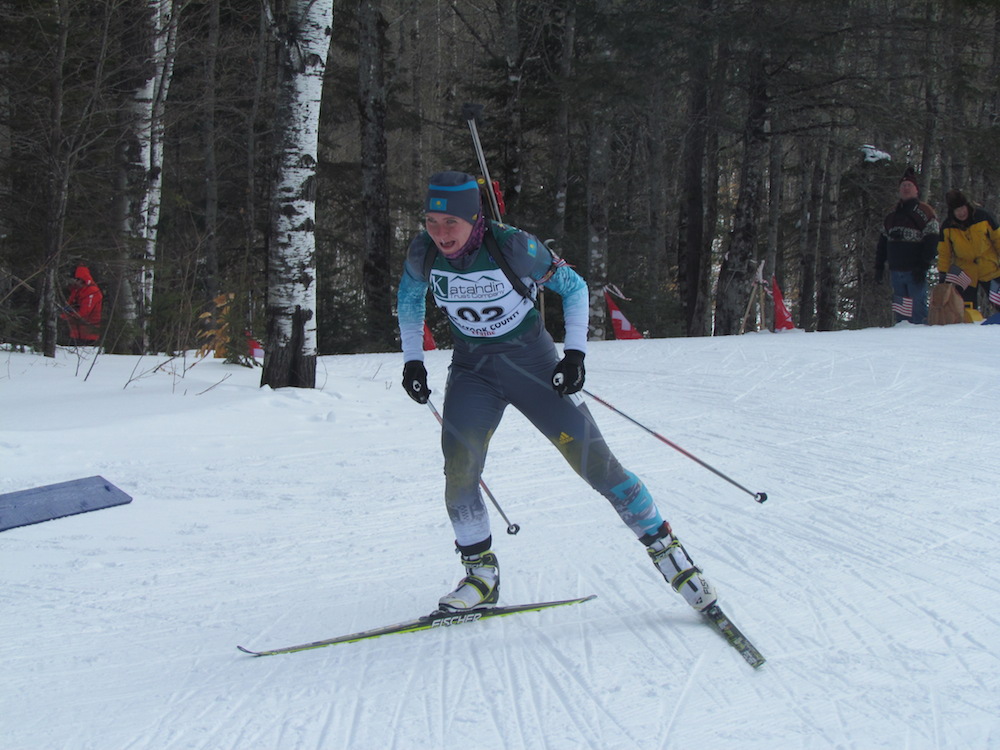
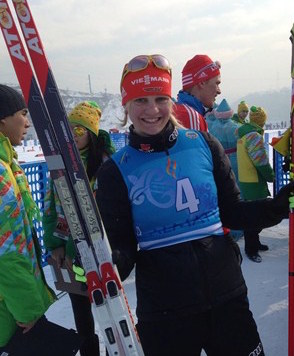
    Kazakhstan's Galina Vishnevskaya on her way to winning the pursuit at 2014 IBU Junior World Championships. Vishnevskaya is not a member of the senior national team which is being investigated for doping. (Photo: Katrina Howe)
    Kazakhstan’s Galina Vishnevskaya on her way to winning the pursuit at 2014 IBU Junior World Championships in Presque Isle, Maine. Vishnevskaya is not a member of the senior national team which is being investigated for doping. (Photo: Katrina Howe)

    Austrian police raided the lodgings of Kazakhstan’s national biathlon team outside of Hochfilzen, Austria, on Thursday morning. The Kazakh team is there to compete at World Championships, where they finished 11th in the opening competition, a mixed relay, later in the day.

    “Numerous medical devices and medications were seized,” the Criminal Intelligence Service of Austria wrote in a statement translated by the International Biathlon Union. “The investigations are still underway.”

    Apparently, a month ago someone spotted a minivan of people tossing a cardboard box in the trash at a gas station in another part of Austria. Team accreditations in the box linked it to the Kazakh squad, and the other items were alarming: according to the Associated Press, it contained needles, materials for infusions, and ampules of medicine, along with written notes indicating that doping was taking place.

    “We are not worried,” Manas Ussenov, the Secretary General of the Kazakh Biathlon Association, said according to the BBC. “They found in the room of our doctor some medicine. But according to our doctor, we have all the documentation for these medicines.”

    On Thursday, 30 police personnel descended on the hotel in Hochfilzen and collected medicine, equipment, and cell phones from the Kazakh team. After the mixed relay all the team members were given anti-doping tests.

    Austria has strict criminal laws about doping, which is part of what spurred the police investigation.

    “We fully trust the investigations by the authorities,” International Biathlon Union Secretary General Nicole Resch told the AP. “Until now, we don’t know if banned substances or banned methods are involved. Only then we can take measures.”

    The team is not suspended at the moment.

  • Norwegian Nebulizer Use at World Junior Championships Stuns North Americans

    Norwegian Nebulizer Use at World Junior Championships Stuns North Americans

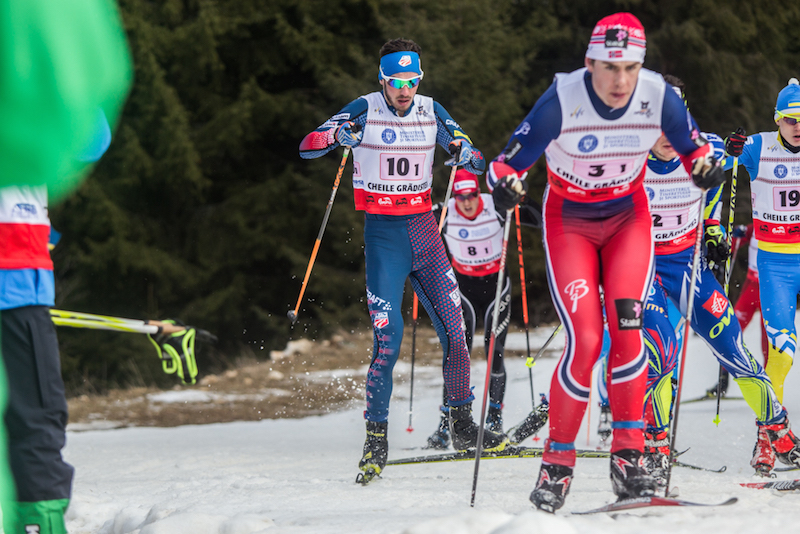
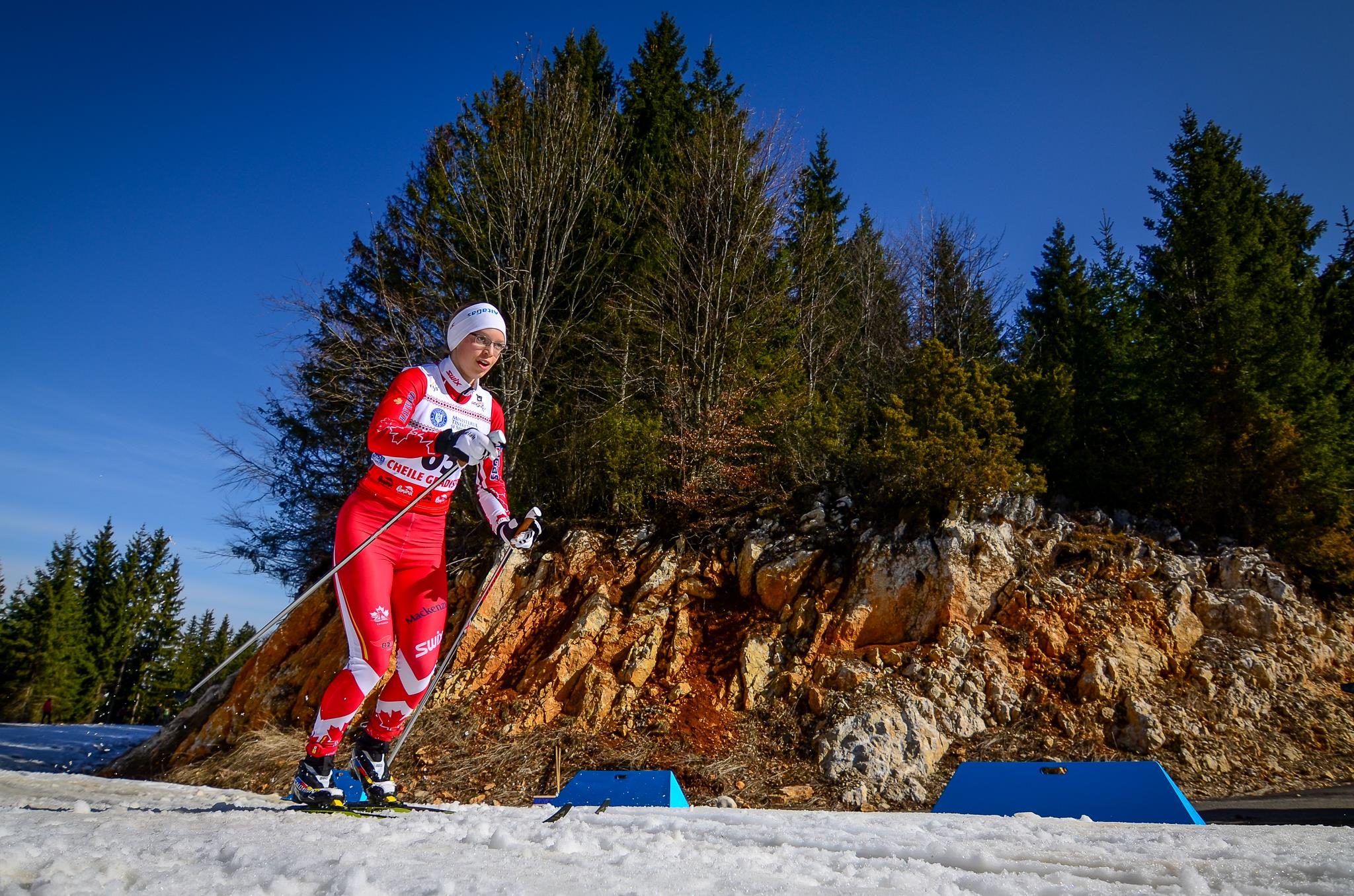
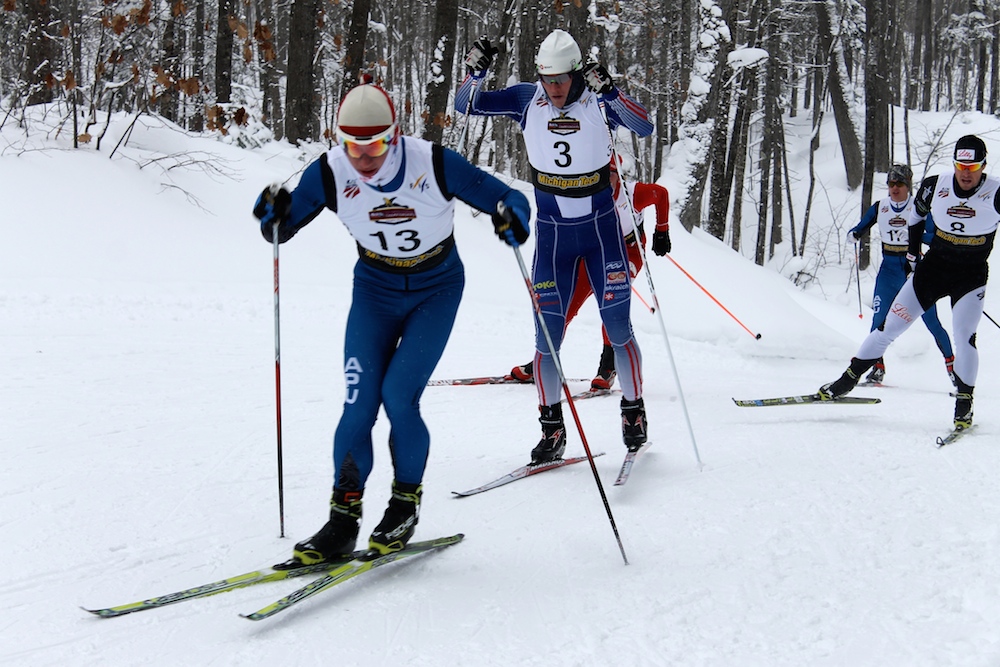
    Ian Torchia (10) chasing the Norwegian team (bib 3) in the first leg of the junior men's 4 x 5 k relay at 2016 Junior World Championships in Rasnov, Romania. (Photo: Logan Hanneman)
    Ian Torchia (bib 10) chasing a Norwegian (bib 3) in the first leg of the junior men’s 4 x 5 k relay at 2016 Junior World Championships in Rasnov, Romania. “When I first heard the news I was extremely fired up,” Torchia told FasterSkier after learning that some of the Norwegians had been taking asthma medication despite not being diagnosed with asthma. (Photo: Logan Hanneman)

    Norwegian team doctors prescribed asthma medication to young cross-country skiers without any diagnosis of the disease the country’s state broadcaster NRK reported. The incident occurred at 2016 Junior and U23 World Championships in Rasnov, Romania.

    Petter Olberg, who was a physician on the team staff in Rasnov, said that the treatment was due to air-quality issues which irritated the airways of some athletes.

    American and Canadian competitors and team staff at the event, however, did not recall any air quality problems. They expressed surprise that competitors who were still teenagers would be offered such drugs without a medical diagnosis of asthma.

    “I am shocked to hear about this story and I do not recall there being poor air quality in Rasnov other than the coal burning pollution,” Julia Kern, an American who had two top-20 finishes in Rasnov, wrote in an email to FasterSkier. “My hope is that the doping regulations are set up to only help fix a medical disease instead of giving people an advantage.”

    The medication allegedly prescribed, budesonide, is a glucocorticosteroid which is not prohibited for inhalation by the World Anti-Doping Agency (WADA). It was delivered by a nebulizer, rather than through inhalers; Olberg said he had also recommended that some athletes take a salt-water inhalation treatment through the nebulizer to improve their symptoms.

    The case has caused a stir partly because a more senior Norwegian skier, Martin Johnsrud Sundby, was slapped with a suspension after taking asthma medication from a nebulizer. However, that was a different drug – salbutamol, which is a beta-2 agonist rather than a glucocorticosteroid – which is prohibited by WADA when used in high doses.

    Air Quality Plagues FIS Site Selection, and Racers’ Lungs

    Air quality has been a major issue at past Junior and U23 World Championships.

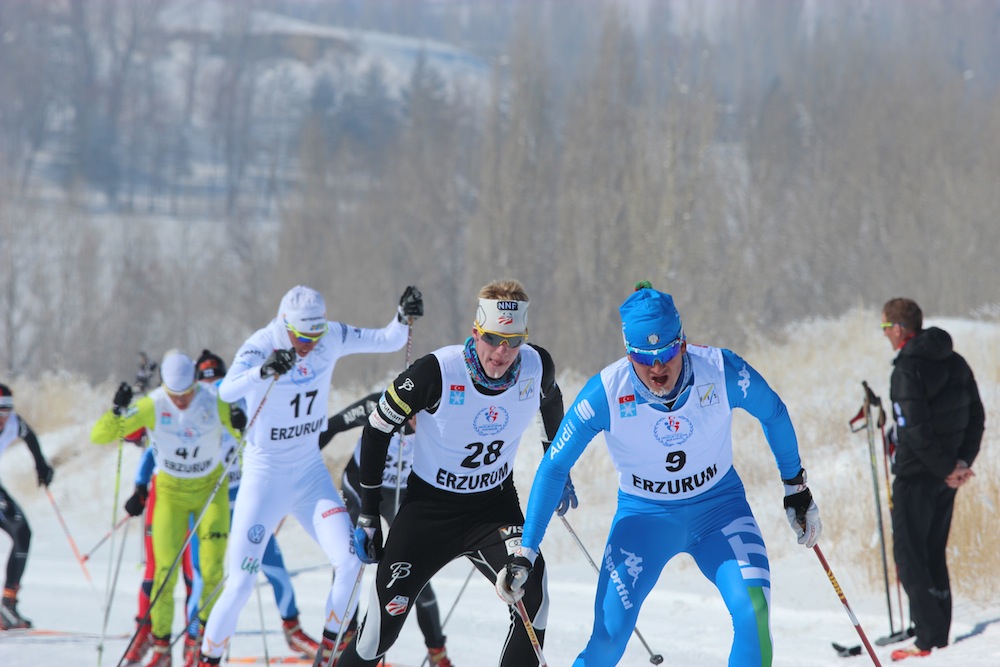
    Logan Hanneman competing at World Junior Championships in Erzurum, Turkey, in 2012. (Photo: Reese Hanneman)
    Logan Hanneman competing at World Junior Championships in Erzurum, Turkey, in 2012. (Photo: Reese Hanneman)

    “When the World Junior & U23 Championships were held in Erzurum, Turkey in 2012 and Almaty, Kazakhstan in 2015, the air was possible the worst I have ever seen at a race venue,” Logan Hanneman of Alaska Pacific University (APU) wrote in an email.

    Of the four Junior/U23 World Championships Hanneman has competed in, Erzurum and Almaty stood out for one reason: smog.

    “In both locations, it seemed that the pollution was caused by poorly-regulated and designed coal power plants,” he explained. “With the large surrounding mountains in both locations, the inversion that would form during the night would suppress the pollution down to the valley floor and into the town where the teams were staying. The race venue in Almaty was above the pollution, but only in the early morning before it began to rise up the mountains.”

    That was a nightmare for many athletes, including those who do suffer from asthma. Kern, now a U.S. Ski Team member based at Stratton Mountain School and Dartmouth College, remembers Almaty and its health challenges well.

    “I had the experience of having my worst asthma attack ever in Almaty and I attribute that to the poor air quality,” she wrote. “I know some of my teammates who have never had any issues breathing even mentioned having some issues in Almaty.”

    In fact, the International Olympic Committee released a consensus statement about asthma and elite athletes in 2008. In it, they addressed the influence of air pollution on the prevalence of airway problems during training and competition.

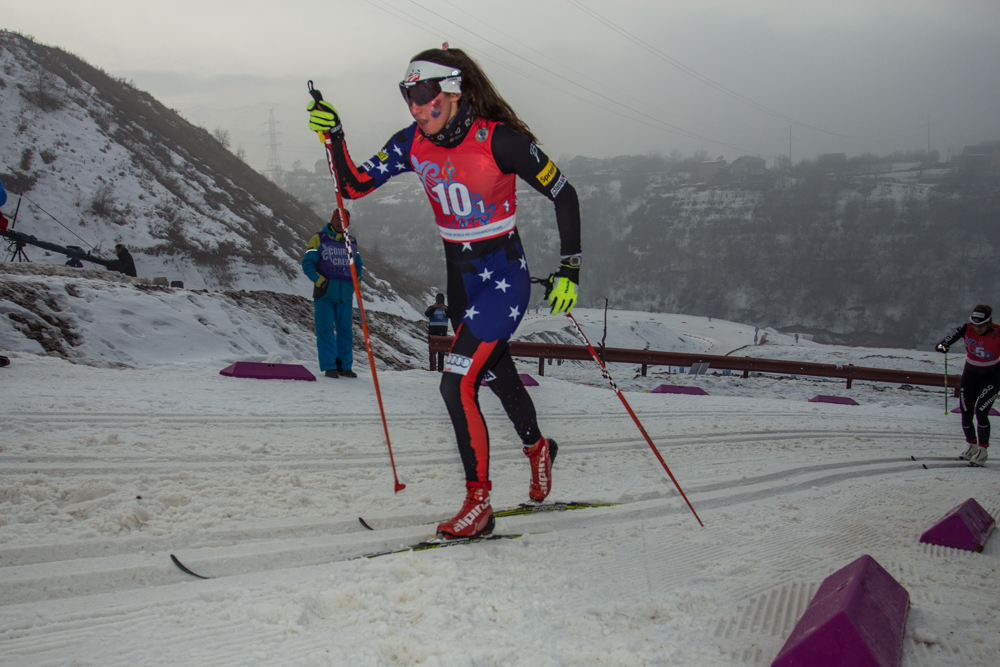
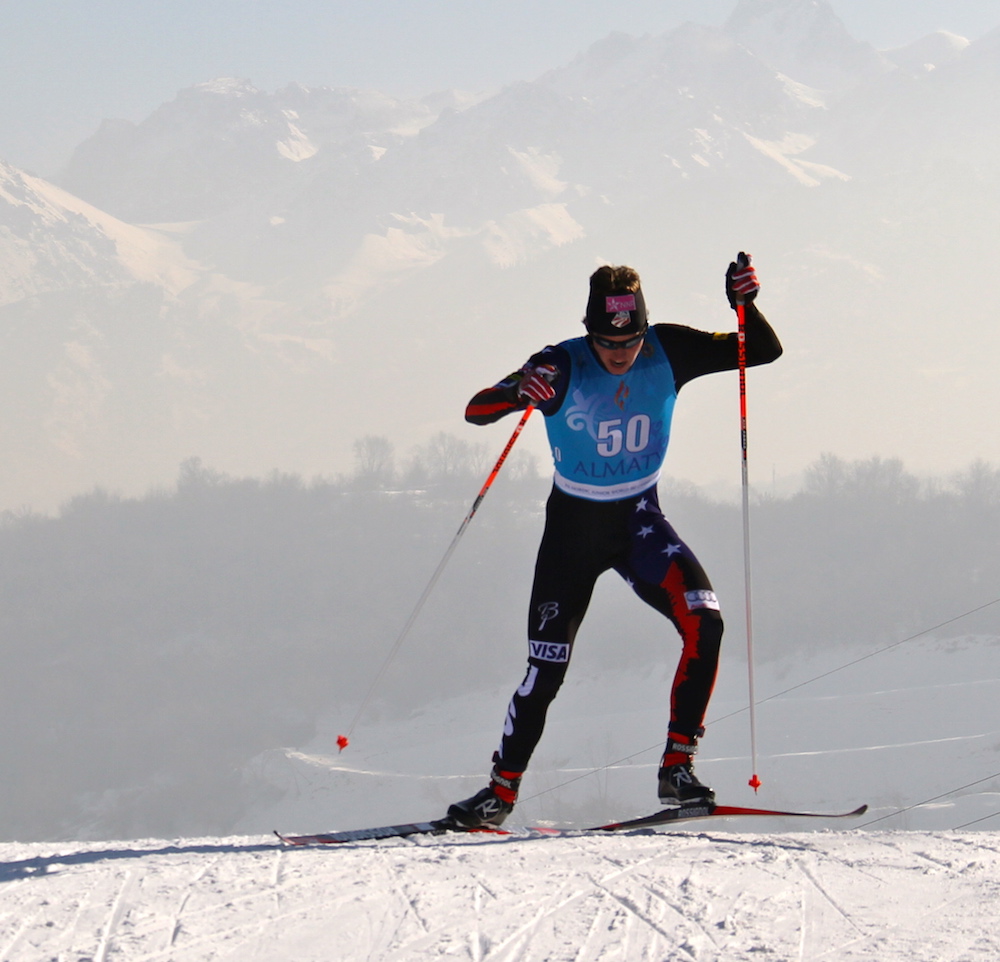
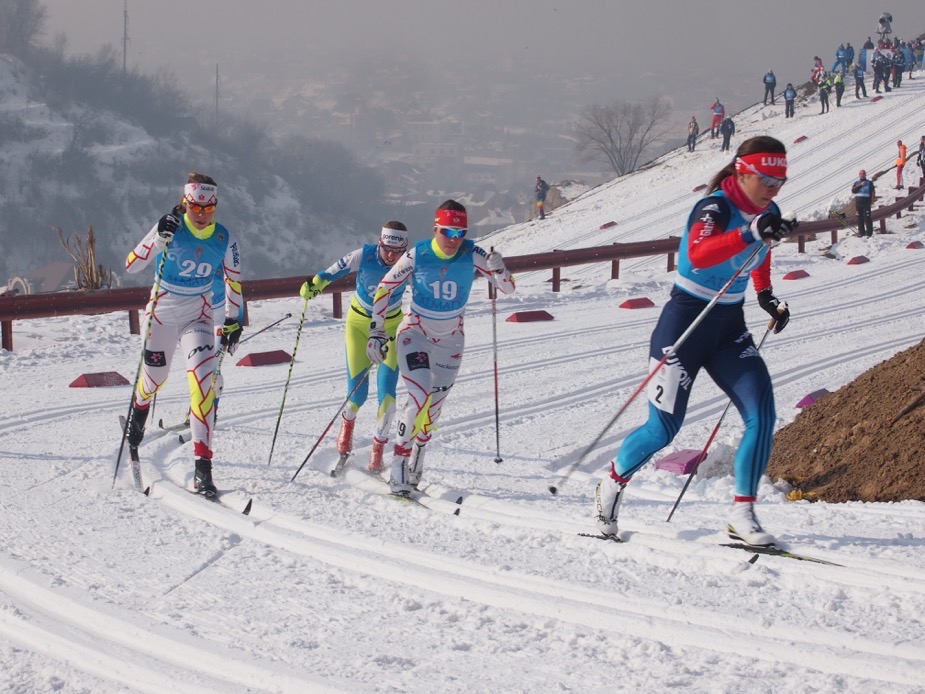
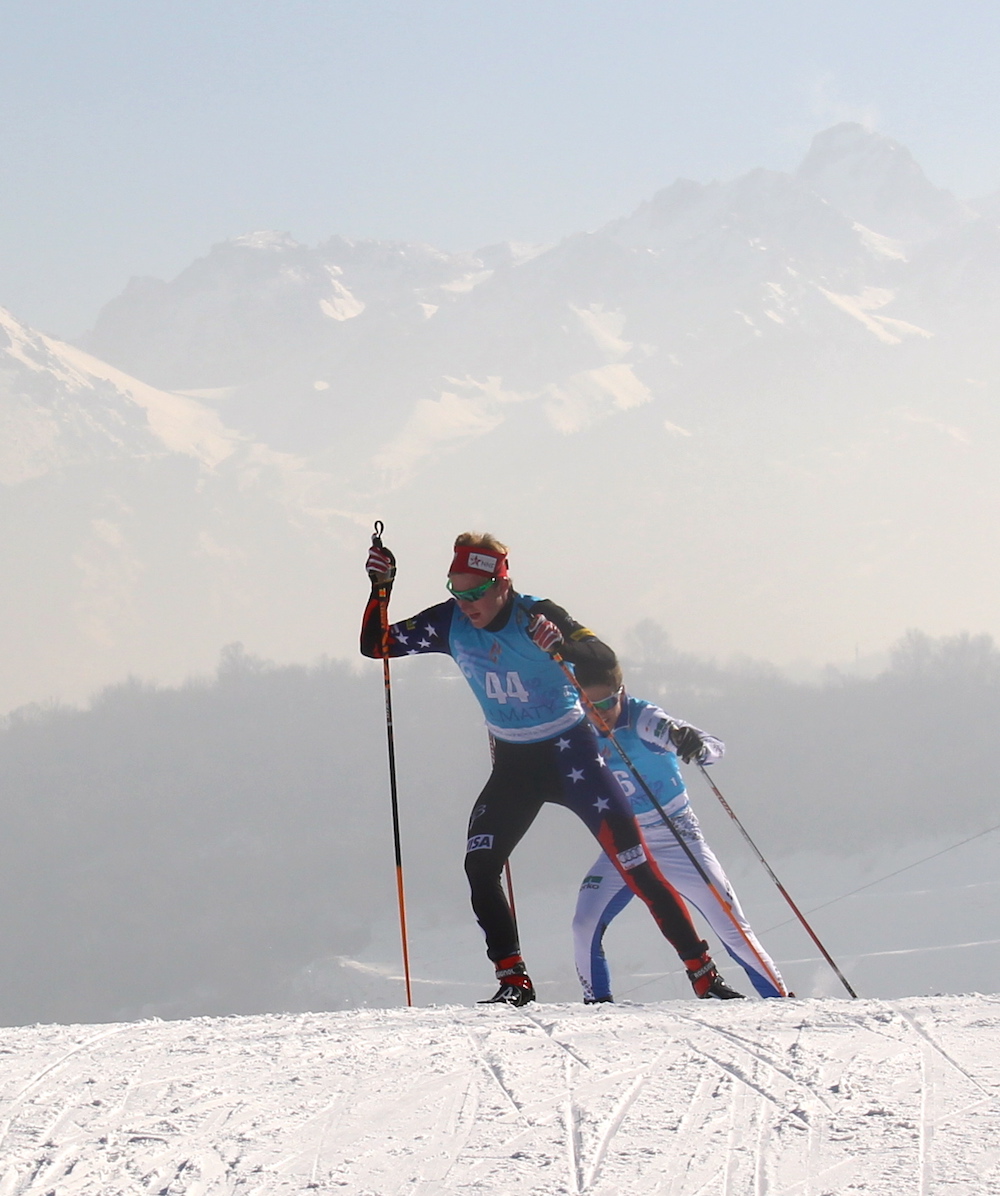
    Julia Kern (CSU) racing against a backdrop of smog in the first leg of the 4 x 3.3 k relay at the 2015 Junior World Championships in Almaty, Kazakhstan. The American team would go on to place eighth. (Photo: Logan Hanneman)
    Julia Kern (CSU) racing against a backdrop of smog in the first leg of the 4 x 3.3 k relay at the 2015 Junior World Championships in Almaty, Kazakhstan. The American team would go on to place eighth. (Photo: Logan Hanneman)

    “Airway function can be affected by exposure to seasonal and perennial allergens in sensitized individuals, dry/cold air, and poor quality air containing pollutants such as chlorine derivatives in swimming pools, ozone and oxides of nitrogen, and fine and ultrafine PM derived from combustion,” the group wrote. “The effects may be greater in subjects with asthma than without asthma.”

    Other air characteristics are sometimes considered in assessing safety. The International Ski Federation (FIS) has a cutoff of -20° Celsius (-4°F), below which it is not permissible to hold competitions; one reason is frostbite, but another is airway damage. FIS is considering raising that lower limit, perhaps to -12° Celsius, specifically to protect athletes’ lung function from long-term damage.

    But the pollution aspect of air quality does not appear to be a concern. Air quality is not discussed anywhere in the International Competition Rules (ICR), meaning that technical delegates and race juries do not have clear guidelines for deciding whether to adjust race schedules due to smog.

    And by selecting sites like Erzurum and Almaty that are clearly plagued by such problems, FIS does not appear to make the issue a priority when awarding event bids.

    They are not alone. The International Olympic Committee (IOC) awarded the 2008 Summer Olympics to Beijing, China, which has some of the worst smog in the world. That caused some long-distance runners to choose not to prioritize the marathon, for fear that prolonged exposure to the air while racing would cause asthma attacks.

    Such an attitude by governing bodies must be changed, a growing number of athletes assert.

    “My personal belief is that if we are racing in an area with high pollution, I think it is okay for people to use legal asthma medications at a legal dose in order to protect their lungs from damage,” Kern wrote. “But more importantly, I do not think races should be allowed to be held in places of pollution because it not only hurts the health of athletes in the short term, but in the long term as well.”

    Comparatively Clean Air in Rasnov

    Romania is not known for its clean air. The industrial sector burns coal, while coal and wood are used for home heating. Pollution from traffic emissions is also a concern. As a result, by several metrics Bucharest has the dirtiest air of any European capital.

    There were blue skies as Canada's Hannah Mehain raced to 44th in the women's 5 k classic on at 2016 Junior World Championships in Rasnov, Romania. (Photo: FIS Nordic JWSC & U23 WSC 2016/Facebook)
    There were blue skies as Canada’s Hannah Mehain raced to 44th in the women’s 5 k classic on at 2016 Junior World Championships in Rasnov, Romania. (Photo: FIS Nordic JWSC & U23 WSC 2016/Facebook)

    At Rasnov, where the ski competitions were held, traffic exhaust was less of an issue.

    “The only thing that was polluting the air was the exhaust from coal burning, which is easy to recognize because it has a strong odor,” Kern wrote.

    Of all airborne pollutants this type of exhaust can be particularly inflammatory to airways, according to Dr. Michael Kennedy at the University of Alberta, who studies respiratory health of endurance sports athletes.
    “The ultrafine particles (UFP) are the most troublesome,” he explained in an email. “In any active person (most of the literature is from active transport — like bike commuting)… deposition of UFP in systemic circulation as well as lung function can be significant. Diesel is the worst of the polluters and fits with Romania and Kazakhstan, where High Emission Pollutants likely influenced lung health in all competitors. For those with [Exercise Induced Bronchoconstriction] it was likely worst.”
    So it’s not crazy to suggest that athletes could have struggled to race in particulate-laden air, as Olberg suggested was true for the Norwegians.

    But that’s not the way other teams remember Rasnov. Because of the way the venue was situated, American competitors did not notice the coal-produced UFP’s while they were skiing.

    North American Perceptions of Air Quality in Rasnov

    “I did not notice the ‘poor air quality’ in Rasnov as my biggest concern was the lack of snow. I think this is an excuse and if the air was bad in Romania I hate to think of what they were taking for Junior Worlds in Kazakhstan where the smog and air pollution was extremely prevalent.”

    –Ian Torchia, USA (Northern Michigan University): 15th in the junior 10 k skate 

    “In Bucharest, the city air was definitely thicker, but the venue (Cheile Gradistei) was quite remote, at least 20 or 30km from any major cities (or industrial sites, that I know of), out in the countryside, surrounded by rural farmland and fields. Water quality seemed to be a much greater concern in Romania.”

    – Jenn Jackson, Canada (NDC Thunder Bay): 29th in the U23 sprint

    “The air quality appeared okay to me, however there was heating with wood in the area. That can irritate some but no significant quality issues like we saw in Kazakhstan and Turkey. Romania was very warm and early warm conditions can bring on pollen, however I didn’t notice that either.”

    – Bryan Fish, U.S. Ski Team coach/trip leader 

    “While I’m by no means an air-quality expert, I wouldn’t say the air quality was bad in Rasnov, at least at the race site. The race site was up high on a hill in a very agricultural area, on the edge of some mountains… I never had a moment where I thought to myself ‘wow – this air quality is bad’ and as a coaching staff we never had a discussion that indicated that air quality was an issue with the site. We were mainly focused on having snow to ski on… That being said, in my opinion, it also wasn’t great. There was a big smokestack from what I’m assuming was some sort of boiler that burned wood. It was also pretty dusty from the overall construction.”

    – Kieran Jones, Nakkertok Nordic coach/Canadian team staff member

    Like Kern, Hanneman has been diagnosed with asthma. In his case, he believes that it is a result of growing up in Fairbanks, Alaska, and “racing and training in the very cold and dry air.” He said that he was prescribed a small inhaler to treat his symptoms after a major flare-up in Erzurum, but he didn’t experience a similar problem in Romania.

    “I seem to remember that my asthma related problems were not very present in Rasnov,” Hanneman explained. “I took my inhaler like I normally do for races, but the air did not seem to bother me as much as the previous locations. It helped that it was also 55 degrees.”

    Why Offer Athletes a Nebulizer?

    So, then, was giving new medications to some junior athletes necessary?

    “When I first heard the news I was extremely fired up,” wrote Torchia, who initially assumed that the juniors were prescribed the same drug which Sundby had used, rather than a non-prohibited one. “My initial anger eventually turned to being demoralized that doping had come down to the junior level. You hear about the scandals on the World Cup but when it comes to the people you race, it felt like a punch in the gut. The most frustrating thing I have heard was the Norwegian doctor offering asthma medication to healthy athletes. This shows a clear indication from the upper levels of the system to cheat their way to victory. If you can’t compete clean, don’t compete at all.”

    As it turns out, it was not salbutamol but budesonide which the athletes were using. Budesonide is not prohibited for inhalation, although like other glucocorticosteroids, it cannot be injected or ingested orally in or out of competition.

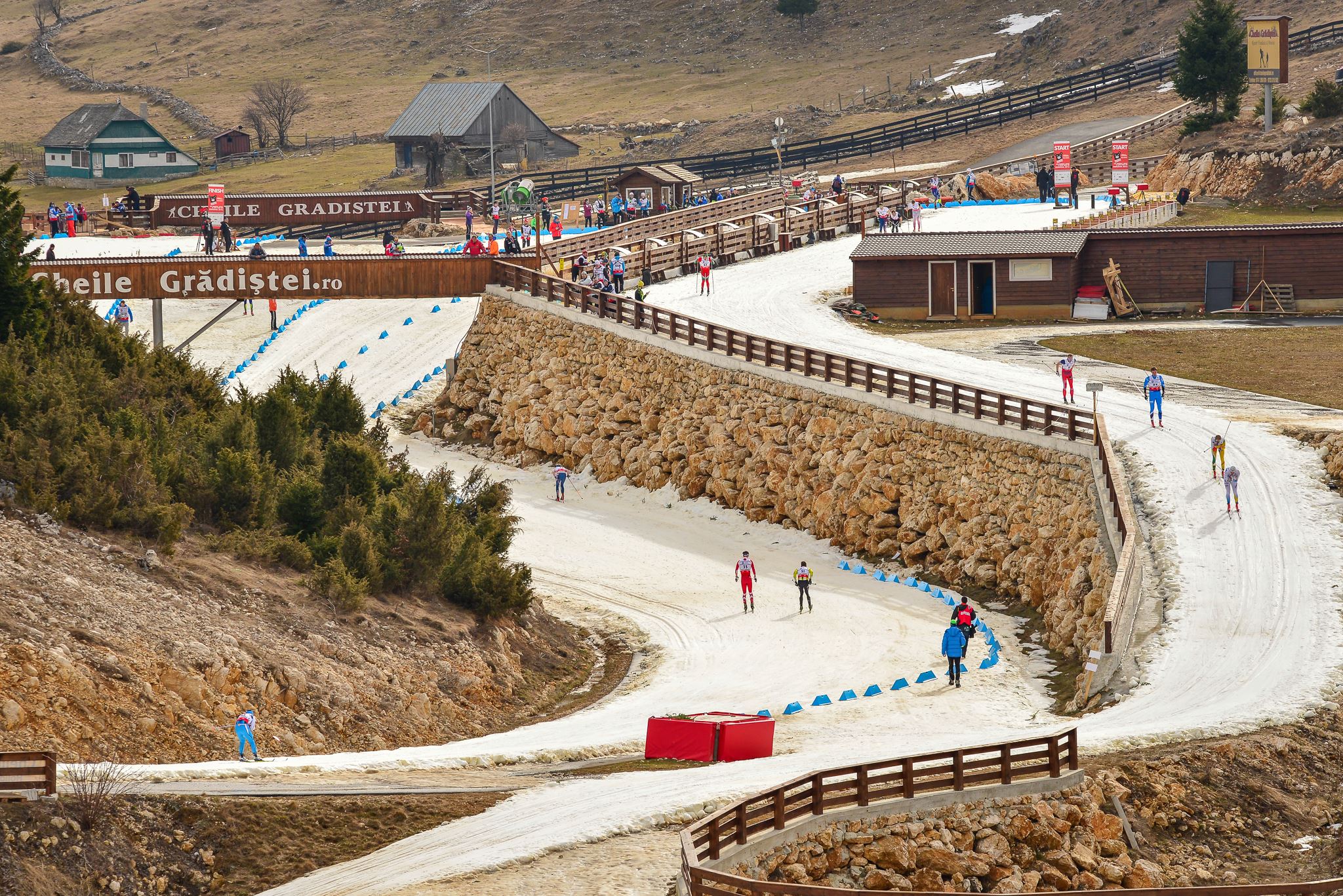
    A bird's eye view of the race course at U23/Junior World Championships in Rasnov, Romania. (Photo: FIS Nordic JWSC & U23 WSC 2016/Facebook)
    A bird’s eye view of the race course at U23/Junior World Championships in Rasnov, Romania. (Photo: FIS Nordic JWSC & U23 WSC 2016/Facebook)

    Olberg told NRK that from his viewpoint, saying that the athletes without an asthma diagnosis were “healthy” was incorrect. The athletes, he said, were sick because of the air quality.

    “I believe that we don’t medicate healthy people,” he explained to NRK. “If we medicate it is because they have gone ill. They have a symptom, a distress of some kind and then they reach out to me. We treat the symptoms…. I believe that to say that they are healthy is completely wrong, because if they’re healthy they wouldn’t have had the symptoms, and if that was the case they would not receive treatment.”

    The North American athletes seemed to struggle internally about whether this was appropriate – especially since it’s relatively unclear whether non-asthmatics even receive benefits of such drugs. That’s even true in the case of salbutamol, the beta-2 agonist which is prohibited at high doses.

    But the athletes felt that the intent of their competitors mattered, whether their performance was enhanced or not.

    “After talking with [Northern Michigan University coach] Sten [Fjeldheim] and my exercise physiology professors and doing some personal research, it seems unclear on the performance enhancing benefits of taking salbutamol, especially in healthy athletes as the oxygen uptake is already at maximum potential,” Torchia wrote. “However… whether it is performance enhancing or not, if you are a healthy athlete and are taking synthetic drugs with the intention of helping your performance, you are cheating, and there should be repercussions.”

    Hanneman and Kern, who take inhalers to treat their diagnosed asthma, had a hard time parsing whether it was wrong to use such medications without such a formal diagnosis.

    “My hope is that the WADA has set the limitations and bans on certain drugs in ensure that the drugs permitted at legal doses would not have a positive impact on performance, but would only help treat the illness of asthma for those with the ‘disease’ (not sure what technical term to use),” Kern wrote.

    American Logan Hanneman (c) racing to third in his quarterfinal of the freestyle sprint at U23 World Championships in Rasnov, Romania. He ended the day 15th overall. (Photo: Pete Leonard)
    American Logan Hanneman (c) racing to third in his quarterfinal of the freestyle sprint at U23 World Championships in Rasnov, Romania. He ended the day 15th overall. (Photo: Pete Leonard)

    “Having exercise induced asthma myself, and seeing the health benefit that the medicine provides, I support the use of prescribed medications, but in limited quantities,” Hanneman agreed. “People who have not been treated previously should not be allowed to use such a medicine I feel.”

    Many drew a distinction between whether such drugs were used as part of a long-time treatment plan, or prescribed more casually by doctors who are not intimately familiar with an athlete’s medical history.

    “I am very much opposed to widespread usage of any medication,” U.S. Ski Team development coach Bryan Fish wrote. “That being said, there are athletes that have unique respiratory issues & these athletes should go through testing by qualified medical staff. The qualified medical staff should then create a unique and specific plan for that particular athlete.”

    And as more and more such “gray area” incidents accumulate, it’s hard for athletes to interpret whether their competitors are seeking an unfair advantage or not – much less whether they are actually getting one.

    “I don’t understand how people can be so invested in maximizing their performance that they’re willing to leave the white area and step into the grey,” Jackson wrote. “Unfortunately, medicating and supplementing just seems to be the norm these days, in sport and everyday society. People will do what they’ll do, so long as they feel it’s ‘normal’ or ‘okay’ – whether that be Norwegian juniors using asthma medication at the World Championships, Russians using xenon for Sochi, [Poland’s Justyna] Kowalczyk taking injections for her foot in 2014, or [Norwegian Therese] Johaug’s doctor providing her that super skin cream. I suppose it’s inevitable, as you approach the limits of human potential, that you toe the line between white and grey, but I don’t feel like I’m close enough to that point to really understand why someone would.”

  • IOC Membership and Regulations Combined to Reliably Hand Beijing 2022 Games

    IOC Membership and Regulations Combined to Reliably Hand Beijing 2022 Games

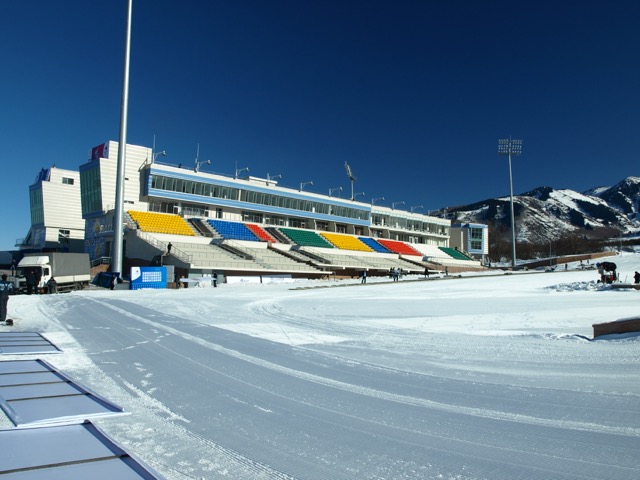
    The Soldatskoe nordic venue, which would have hosted competitions had Almaty, Kazakhstan, won their bid for the 2022 Olympics. Unlike the city venue which hosted 2015 FIS World Junior and U23 Championships, Soldatskoe, here before the 2011 Asian Games, has lots of snow. (Photo: Matt Pauli)
    The Soldatskoe nordic venue, which would have hosted competitions had Almaty, Kazakhstan, won their bid for the 2022 Olympics. Unlike the city venue which hosted 2015 FIS World Junior and U23 Championships, Soldatskoe, here before the 2011 Asian Games, has lots of snow. (Photo: Matt Pauli)

    When Beijing won the bid for the 2022 Winter Olympics, some sports fans cheered, remembering happy memories of the 2008 Summer Olympics and smiling with certainty that China would deliver a Games.

    Others raged and lamented, since Beijing is hardly known for its winter sports culture. The other candidate, Almaty, Kazakhstan, offered a ready-made winter experience with mountains and snow all packed in close to the city center.

    What was clear was that it was not one of the most exciting or hyped-up host city elections in IOC history. Many people – fans and IOC members alike – weren’t particularly excited about either bid.

    That was summed up by the fact that one IOC member abstained from voting: he or she traveled all the way to Kuala Lumpur, Malaysia, for the 128th IOC Session and then presumably decided, you know what, I don’t really care.

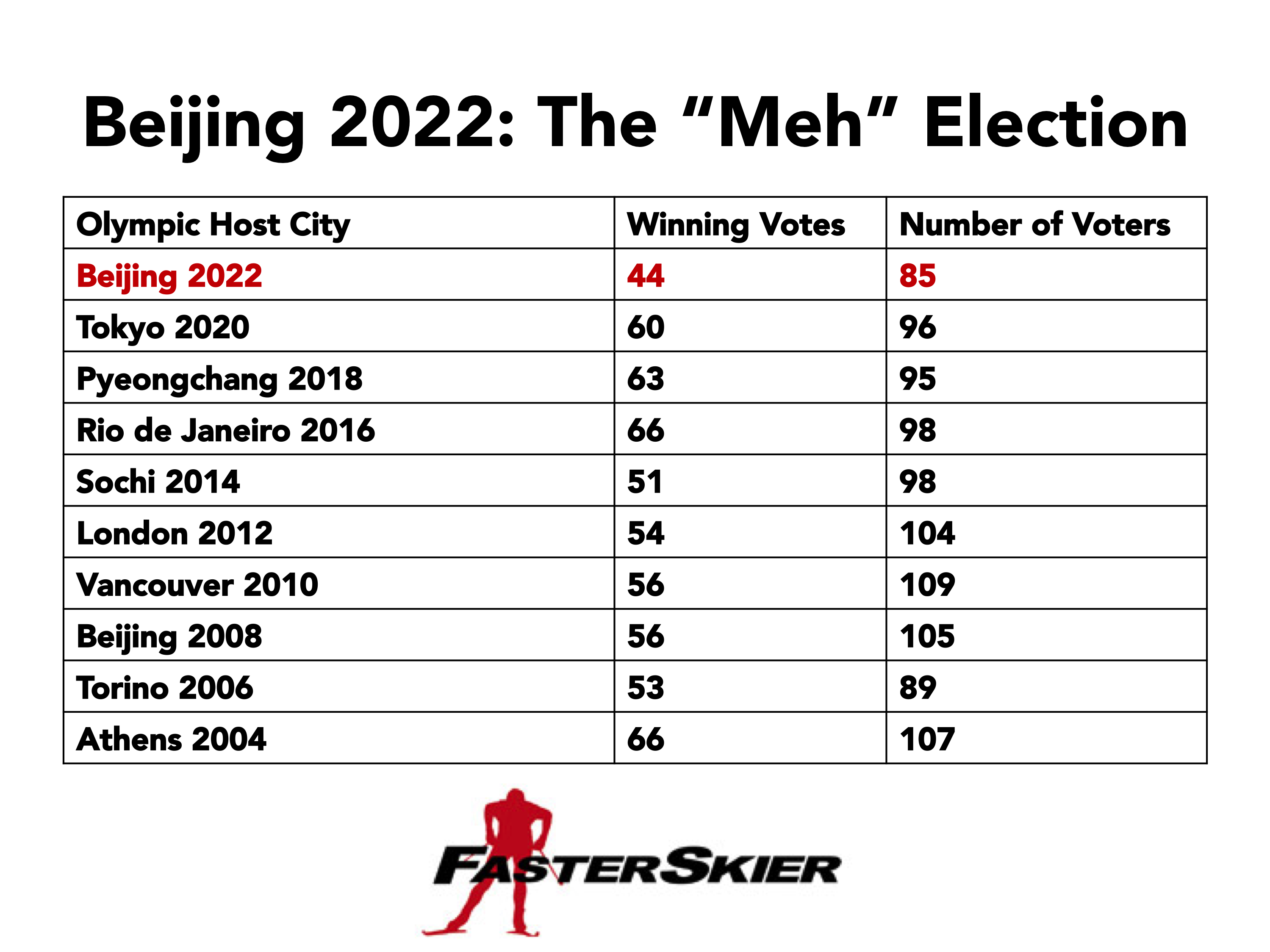
    And it was reflected in the fact that Beijing won with just 44 votes from IOC members, the least votes received by a winning bid in the last two decades.

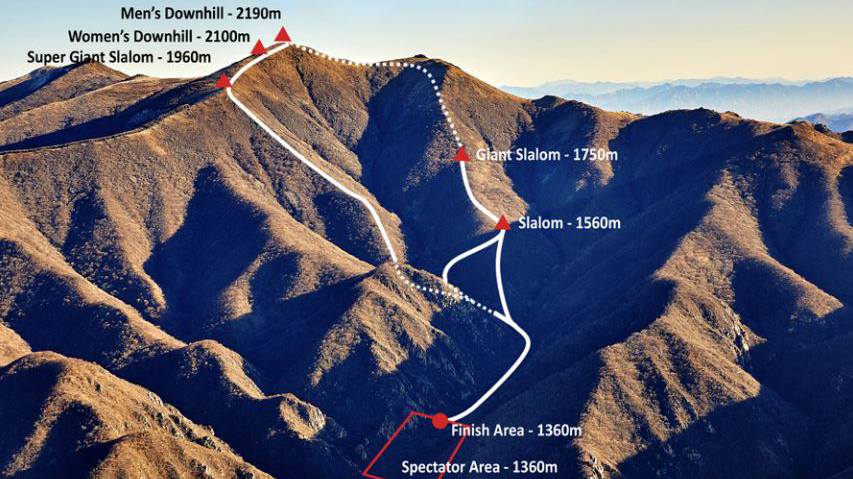
    Meanwhile, this is what the alpine venues an hour outside of Beijing looked like in January 2015, according to the IOC Evaluation Commission.
    In comparison, this is what the alpine venues an hour outside of Beijing looked like in January 2015, according to the IOC Evaluation Commission.

    Not since 1993, when Sydney was elected host of the 2000 Summer Olympics, has a winning bid received less than 50 votes. And more recently, most have received many more: 60 for Tokyo to win the 2020 Summer Games, 63 for PyeongChang to win the 2018 Games, and 66 for Rio de Janeiro to win the 2016 Games.

    Close margins, on the other hand, are not so rare. Sochi 2014 and London 2012 each won by four votes, just like Beijing 2022, while Vancouver 2010 had only three votes more than its rival, PyeongChang.

    Part of the reason that the tally was so low is simply that there were fewer IOC members to vote. The IOC has a maximum of 115 members, but there are currently only 100. Election of new members is on the docket for the IOC session in Kuala Lumpur.

    Of those 100 current members, just 85 were present to vote. The president does not vote unless needed for a tiebreak, while members from a bid country cannot vote in host city elections, which ruled out China’s three members.

    Eleven more IOC members were “excused”, meaning that they did not come to the session in Kuala Lumpur at all.

    By contrast, in the last decade between 95 and 109 IOC members have voted in all previous host city elections.

    Beijing infographic 2

    Winter Athlete Reps Did Not Vote

    Among the excused members were two of the most recently-elected IOC members, and the only two who competed at the last winter Olympics.

    Canada’s Hayley Wickenheiser, a hockey player who appeared in five Olympic Games, did not go to Kuala Lumpur. Instead she tweeted about the result.

    Screen Shot 2015-08-01 at 2.49.44 PM

    Yes, an interesting take… on an election that she could have taken part in. No reason for her absence was announced. She also did not attend the Candidate City presentations in Lausanne, Switzerland, in June.

    Ole Einar Bjørndalen, the most successful winter Olympian of all time, also did not attend, citing the need to train for the upcoming World Cup season. The biathlete told Norwegian newspaper VG that he had discussed his absence with IOC President Thomas Bach.

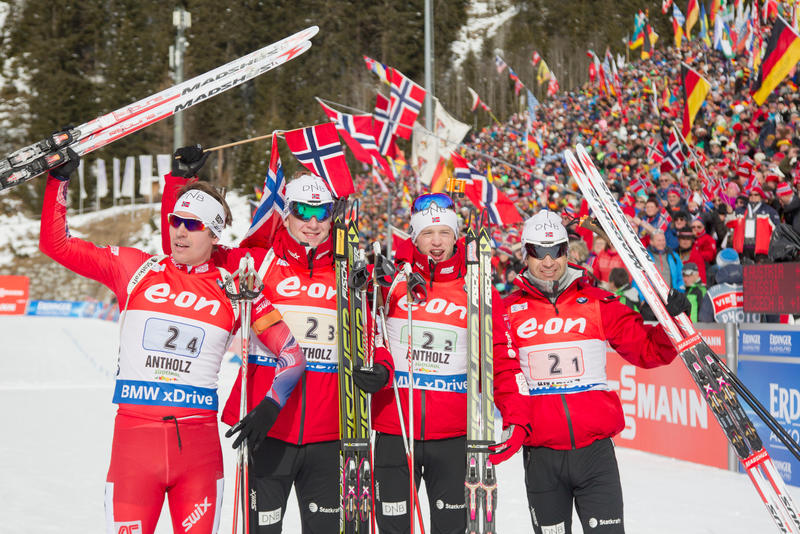
    The Norwegian men including Ole Einar Bjørndalen (right) celebrate after winning the 7.5 k team relay in Antholz, Italy, in January 2015. (Photo: IBU/ChristianManzoni)
    The Norwegian men including Ole Einar Bjørndalen (right) celebrate after winning the 7.5 k team relay in Antholz, Italy, in January 2015. (Photo: IBU/ChristianManzoni)

    “In agreement with the IOC President and the head of the IOC’s Athletes’ Commission I’m not going to attend the congress in Kuala Lumpur where Olympic organizers for 2022 will be selected,” he said. “However, I have given my professional input to the Executive Committees in discussions beforehand.”

    Bjørndalen also skipped the Candidate City presentations in June, as well as the previous IOC session in December (which was during the 2015 World Cup season; he had already notched three top-tens in the first week of racing).

    He told VG that he had gotten approval from both Bach and Claudia Bokel, the chair of the Athletes’ Commission, to focus on his career until April. The 41-year-old plans to retire after 2016 World Championships, which will be contested on his home turf in Oslo.

    But at the moment, Bjørndalen also skipped the Blink summer ski festival in Norway, citing illness. He reportedly caught a respiratory bacterial infection.

    Regardless of the reasons, it’s unfortunate that Bjørndalen and Wickenheiser could not attend the session and vote. They are the two IOC members with the most recent winter Olympic experience.

    And, more than that, they competed at the Sochi Olympics – the very Games that the IOC is trying to leave far, far behind them with their Agenda 2020 reforms. The $51 billion price tag is something the IOC does not want to see as a precedent, and Bjørndalen and Wickenheiser are the only two IOC members to directly experience what that massive budget gave, or did not give, to the athletes.

    It would seem that their opinions could have been informed, valuable, and from a unique perspective. Not only did they miss the vote, but by excusing themselves from the last two IOC sessions they also missed the chance to talk directly with other IOC members.

    One might reasonably think that the IOC has little motivation to give more say to athletes, when the athletes elected to IOC membership do not attend IOC sessions or vote on important decisions – which is a pity, because the majority of athletes likely want more input and transparency in the way the biggest competitions of their careers are organized.

    Lack of Visits to Bid Cities

    Another problem is that after the 2002 Salt Lake City bidding scandal, IOC members are no longer allowed to visit bid cities.

    Without being able to visit bid cities, IOC members must rely on other information to make their decisions. At the 2022 Candidate City presentations in Lausanne, Switzerland, in June, the Beijing room was both more attractive, and more packed.
    Without being able to visit bid cities, IOC members must rely on other information to make their decisions. At the 2022 Candidate City presentations in Lausanne, Switzerland, in June, the Beijing room was both more attractive, and more packed.

    That was because before 2002, several IOC members had to resign after it was revealed that they had received special treatment from the organizing committee in an attempt to earn votes.

    The change in policy likely helped clean up some corruption in the IOC. But it creates problems for IOC members trying to decide where the Olympics should be held: all they have to base their decision on is what they have read and seen, be it from the IOC’s own Evaluation Commission or from the media.

    This would be bad enough if the playing field was equal, that is if no IOC members had ever visited any of the bid cities on their own.

    But the field is far from equal. In the 2022 race, Beijing had the advantage of hosting the 2008 Olympics, meaning that almost all of the IOC members had been there. By contrast, they weren’t allowed to get the same feel for Almaty.

    And even outside of sports situations, members were much more likely to have traveled to Beijing for business or leisure than they were to have seen Almaty.

    That may change soon. Kazakhstan in 2012 became one of the 50 largest economies in the world. And buoyed by oil and natural gas production – the country is the third-largest non-OPEC supplier of energy to the European Union – Kazakhstan is aiming much higher by 2050.

    But the fact remains, at this point, most people have not been to Almaty.

    One group that has? The few journalists allowed to officially visit the two host city bid sites.

    In the Beijing presentation room, the big committee was on hand to demonstrate through dioramas the vision of Games infrastructure. Is this the same as being able to see proposed sites in person?
    In the Beijing presentation room, the big committee was on hand to demonstrate through dioramas the vision of Games infrastructure. Is this the same as being able to see proposed sites in person?

    Robert Livingstone of GamesBids.com wrote that he was pleasantly surprised by Almaty, and that most of the lines touted by the bid committee that he had assumed were just PR exaggerations turned out to be true.

    The opposite was the case in Beijing: when he visited in March, the time the Paralympic Games will be hosted, there was no snow in the mountains and the ski resorts were already closed for the season.

    After the vote, Livingstone wrote, “Arguably I was in a much better position to cast a vote in the host city election than most of the members, but of course it doesn’t work that way… Shouldn’t the members experience the city and the facilities as they will expect the athletes to, especially if they want to verify the quality of the athlete experience? If IOC members shared my on-site experiences do you think at least two of them may have changed their votes to Almaty? I’m certain that would have been the case.”

    Another illustration of the importance of site visits is how the Evaluation Commission members themselves voted: eight of the nine members preferred Almaty, according to Inside The Games.

    But despite their reporting, the Evaluation Commission could not convince IOC members to reach the same conclusion.

    Who is Voting?

    So who are the people who are voting and, to some extent, ignoring the advice of the IOC commission which inspects potential host cities?

    More than half of the members come from countries which have not won a winter Olympic medal in the last four cycles. And many countries which are successful at the winter Games – for example, Austria, the Czech Republic, Belarus, Finland, and Slovenia – have no IOC members at all.

    Ten of the fifteen members who did not vote came from countries with strong winter sports programs. For example, not only did Bjørndalen not vote, but neither did the other Norwegian IOC member, Gerhard Heiberg, who led the 1994 Lillehammer Olympic Organizing Committee.

    That meant that of the voting members left, 59% came from countries without a strong winter sports program.

    countries

    In terms of sports, some members are former international or Olympic athletes themselves, and others are longtime administrators, officials, and financiers of sport – or just businesspeople or royalty with an interest in sport.

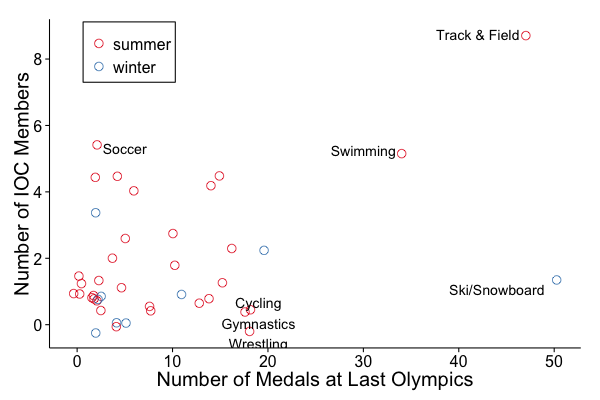
    Of those with a discernible sporting background, either as an athlete or as an administrator of a specific sport before they went on to organize national Olympic committees or international federations, just nine worked in winter sport. The rest come from a summer sports background.

    And for snow sports, the number is even more grim. Of the 98 medal events in the 2014 Olympics, 61 were held on snow: biathlon, nordic sports, alpine skiing, freestyle skiing, and snowboarding.

    That’s 62%.

    But of the 100 current IOC members only Bjørndalen and Gian Franco Kasper, the head of the International Ski Federation, come from a ski background either as an athlete or an administrator.

    That’s 2%.

    It’s not to say that IOC members without a winter sports background are incapable of making decisions about where to host a winter Games. There are many factors which are common between all Olympics: financing, culture, convenience of venue layout, security that the Games will be delivered.

    Beijing was an expert in some of those, for instance the economic backing of the Chinese government. And a lack of snow was not its only shortcoming in the bid process. For instance, the venues in Almaty were much closer together, a factor which reportedly swayed some voters. Easy access and having venues integrated to the city culture should be a focal concern when organizing a Games.

    But with no winter sports experience, perhaps it’s easier for voters from a hot country to line up their priorities in terms of financing and the lucrative marketability of China’s enormous consumer base. These voters might not appreciate the extent to which skiers and snowboarders prefer real snow to the manufactured stuff.

    Or, perhaps more importantly to the IOC, how competitions in a real mountain atmosphere are nicer to watch on television. Or how in some disciplines, an abundance of natural snow is much safer for competition than a combination of manmade slush and salted-up ice.

    Meanwhile, the trend of IOC membership being generally out of balance with the number of medals awarded by sport isn’t just a winter sports problem. It persists when summer sports are added to the mix, too.

    sports

    And that’s not to say that IOC membership should track a country’s Olympic success. After all, the goal of the Olympic movement is inclusion and harmony, not domination by the likes of Russia, China, and the United States. Diversity is a good thing.

    It’s also not to say that IOC membership should tightly track sports popularity. If nothing else, that would stifle creativity, continue to cut opportunities for smaller sports, and be difficult to adjust to as the Olympic sport lineup continually changes.

    Members have far more to offer than simply their cultural or sports background. Financial or broadcast skills are certainly valuable to the IOC; so are perspectives on diversity and global challenges.

    But it can’t help feeling like those most affected by the negative aspects of the Beijing 2022 bid were not represented at the table when it came time to vote. The skiers and sliders who will be competing far outside Beijing, potentially to empty stadiums on manmade ice amongst brown hills, weren’t there. Nor were some countries with expertise in those events.

    There are 15 spots open for new IOC members: how will they be filled? Only time will tell.

  • Human Rights Watch Urges IOC to Use Its Teeth in 2022 Bid Process

    Human Rights Watch Urges IOC to Use Its Teeth in 2022 Bid Process

    At the 2022 Olympic Candidate City Presentations in Lausanne, Switzerland, in June, one protestor quietly slipped into the Beijing presentation room, and once he was almost at the back unfurled a flag and started chanting. He was quickly hauled off, first by Beijing 2022 supporters inside the room and then by security.
    At the 2022 Olympic Candidate City Presentations in Lausanne, Switzerland, in June, one protestor quietly slipped into the Beijing presentation room, and once he was almost at the back unfurled a flag and started chanting. He was quickly hauled off, first by Beijing 2022 supporters inside the room and then by security.

    With one week to go until International Olympic Committee members vote on whether to award the 2022 Winter Olympics to Beijing, China, or to Almaty, Kazakhstan, a prominent human rights organization is calling on the body to make meaningful demands on the eventual host city in terms of cleaning up their practices.

    Both Kazakhstan and China curtail freedom of expression and dissent, and engage in discriminatory and abusive labor practices, among other issues.

    There are lots of factors going decisions by the IOC about which cities will get to host Olympic Games. Economic stability of the host country, venue infrastructure, travel times, and experience for both athletes and fans are among the big ones.

    In the past, a country’s human rights record has not come into play so often. In past Games, especially in Beijing in 2008 and Sochi in 2014, numerous human rights problems including forced evictions and labor abuses were documented in the run-up to the opening ceremonies.

    (The Olympics are not alone in this regard, as other large sporting events such as soccer’s World Cup face the same issues.)

    As part of the Agenda 2020 brought to the IOC by President Thomas Bach when he was elected in 2013, human rights and sustainable development were supposed to come more into focus in the Olympic mission.

    And in September 2014, the IOC indeed announced that anti-discrimination language would be added to the host city contract, a move that was lauded by human rights groups.

    That was apparent when Oslo, Norway, released the draft of its own host city contract after it decided not to bid for the 2022 Games. However, there was no requirement in the contract itself for the host organization to abide by anti-discrimination rules.

    Instead, the language was couched in Section L of the preamble, a portion of the contract which is more descriptive than binding:

    “WHEREAS the City and the NOC acknowledge and accept the importance of the Games and the value of the Olympic image, and agree to conduct all activities in a manner which promotes and enhances the fundamental principles and values of Olympism, in particular the prohibition of any form of discrimination with regard to a country or a person on grounds of race, religion, politics, gender or otherwise, as well as the development of the Olympic Movement…”

    And in terms of labor and environmental protections, these were included in the contract, but not in great detail or specificity:

    “The City, the NOC and the OCOG undertake to carry out their obligations and activities under this Contract in a manner which embraces the concept of sustainable development, and which serves to promote the protection of the environment. In particular, the concept of sustainable development shall address the legacy of the Games, including the concerns for post-Olympic use of venues and other facilities and infrastructures, referred to in Section 36 below. The City, the NOC and the OCOG shall take all necessary measures to ensure that development projects necessary for the organisation of the Games comply with local, regional and national legislation and international agreements, standards and protocols, applicable in the Host Country with regard to planning, construction, protection of the environment, healthand safety and labour laws.”

    Now, with just one week to go before IOC members gather in Kuala Lumpur, Malaysia, the nonprofit Human Rights Watch (HRW) is urging them to consider human rights when they make their decision and implement reforms that would allow them to hold host countries accountable for vague promises made in this regard.

    For instance, the IOC’s Evaluation Commission report on Almaty “claims that the government provided ‘assurances regarding the right to demonstrate, media freedom to report on the Games and Games preparations with no restrictions on the Internet, labor rights, and displacement’,” a release by HRW’s Global Initiatives Director Micky Worden says. “But it doesn’t elaborate on the content of such assurances, despite extensive evidence that the government doesn’t adequately protect these rights.”

    The organisation, along with many others, has noted in the past repeated and routine human rights abuses by both China and Kazakhstan. In both countries, freedom of the press and freedom of assembly are strictly curtailed. Expression of dissent can lead to grave consequences.

    Additionally, Kazakhstan just tried to pass a draconian bill aimed against gay and lesbian “propaganda”, reminiscent of the one passed in Russia in the leadup to the 2014 Sochi Games. After passing the senate, the bill was rejected by the country’s constitutional court, possibly in part because of an open letter by former athletes to Bach through the organisation Athlete Ally.

    Hosting the winter Olympics is obviously very valuable to the country. But there has already been talk of reintroducing the bill, and the climate for LGBT people in Kazakhstan is one of fear.

    A United Nations Special Rapporteur who recently visited Kazakhstan noted that government officials discuss freely how they limit the freedom of assembly because they fear a revolution, and also reported that she was filmed and photographed meeting with civil rights advocates by the secret police.

    Meanwhile, human rights violations at the 2008 Games hosted by Beijing are well-documented, and there’s not much reason to believe that China would make any more improvements to its policies for 2022 than it did in 2008, unless there is some contractual obligation to do so.

    In current Olympic host city contracts, it is clear that the IOC can rescind the right to host a Games from a chosen host city for several reasons, but human rights is not one of them.

    That leaves the IOC with few options for enforcing its alleged focus on improving human dignity. HRW recently noted that the degree of oppression and restriction in China has only gotten worse since the 2008 Olympics.

    “The Chinese government and Communist Party under President Xi Jinping have unleashed the harshest campaign of politically motivated investigations, detentions, and sentencing in the past decade, marking a sharp escalation in intolerance of criticism,” the group wrote in a release.

    Besides the criticism by HRW, others are opposing the Beijing bid on similar grounds.

    “As Tibetans, Uighurs, southern Mongolians and Han Chinese we join together to urge you … not to award another Olympic Games to China,” a different open letter said. “All of the people we represent have suffered as a result of the Chinese government’s contempt for human rights. We hope that you are aware by now that the 2008 Beijing Games did nothing to alleviate human rights abuses in China or enhance freedom.”

    In press conferences for candidate city presentations in May, human rights did not come up in relation to the Beijing bid, and a question to the Almaty organizing committee was met with the response that Kazakhstan is a young country (it was only established after the breakup of the Soviet Union) and constantly striving for improvement.

    Given that Beijing and Almaty are the only two cities which completed the bidding process (after numerous European bidders dropped out), the IOC has no choice but to award the Games to a country which does not uphold some of the basic tenets of the Olympic charter. That’s inevitable.

    What human rights groups are hoping for, however, is that this time around they actually take the opportunity to force their chosen host city to improve.

    “The 2022 Winter Games are when the rubber meets the road for the IOC in terms of backing core principles,” Worden, the HRW Global Initiatives director, wrote this week. “Knowing that either way the selection process goes, a serious rights abuser will host the Games, the IOC should require meaningful rights protection in host city contracts, and monitor those commitments as rigorously as it monitors stadium construction, telecommunications, and other requirements.”

    Which bid will eventually win? Beijing is the favorite, but Almaty has a fighting chance.

    Most recently, on July 18, Bach said that both bids are “coming to Olympic Agenda 2020 from very different angles, and so it will not be an easy decision for the IOC members to take.”

  • Almaty 2022 Bid Fights Back; A Games With Real Snow Still Possible

    Almaty 2022 Bid Fights Back; A Games With Real Snow Still Possible

    The Almaty 2022 bid committee preparing to answer questions in a press conference today.
    The Almaty 2022 bid committee preparing to answer questions in a press conference today.

    LAUSANNE, Switzerland—In the International Olympic Committee (IOC) Evaluation Commission report on the 2022 Winter Olympics bids from Almaty, Kazakhstan, and Beijing, China, the commission seemed to recognize the strengths of Almaty’s bid: a reasonable budget, a compact Games which spectators and athletes could easily navigate, a development opportunity for a country which has emerged from the rubble of the Soviet Union, and most importantly for ski enthusiasts, real snow.

    But despite that, Almaty was seen as lagging behind the momentum of the Beijing bid, which relied on some summer 2008 Olympic infrastructure and had the backing of the second-largest government budget in the world (China ranks just behind the United States).

    However, after a day of bid presentations, many saw that Almaty had closed some of its gap, playing up its natural advantages while addressing the concerns that had been previously raised.

    “It was really impressive to see how both cities had embraced the reforms of Olympic Agenda 2020 just six months after the recommendations were unanimously approved by the IOC,” IOC President Thomas Bach said in a statement released to the media. “… Almaty plans to develop a traditional winter sports centre, and leave the lasting legacy of transforming the region.”

    There may be hope yet for awarding cross-country skiing medals in the homeland of Vladimir Smirnov, the second-most winning skier of all time with 30 World Cup victories and an Olympic gold medal.

    Almaty might not win the bid, but it is at least putting up a good fight. Another plus? The more open responses to questions, as opposed to the constant deflection and doublespeak delivered with a smile by the Chinese, was likely to win some over.

    The Almaty committee assuaged concerns about how the government would deliver the games and secure the budget. Then they went on the attack, making fun of Beijing’s weaknesses in their own responses. Are these meetings a game changer for the Almaty bid?

    Putting the Finance and Stability Concerns to Rest

    In the Evaluation Commission report, published a week ago, the commission spent much more time discussing what it saw as Almaty’s challenges and shortcomings. In comparison, Beijing seemed like a safer bet, with the economic power and near-totalitarian control of the Chinese government able to solve all problems.

    “The site conditions and private land ownership could add complexity and cost to roadway improvements and construction of base areas at the Tabagan and Almatau venues” and would be a challenge in Almaty, the commission noted.

    In Beijing? Private landowners are no problem. As was seen in the leadup to the Beijing 2008 Games, the government can simply force them to leave.

    “Completion of the sliding track 16 months before the Games would present a challenge in terms of homologation, testing and familiarisation,” the commission noted.

    In Beijing? Venues don’t exist yet for any of the winter sports, because the mountian cluster is three hours away and doesn’t actually have snow. But no worries, the big Chinese government will make it happen.

    “Changing market conditions could impact securing private investors and developers though the Olympic Villages are underwritten by public authorities,” the commission wrote of Almaty, worrying that the government simply wouldn’t be able to deliver on construction of the Games or provision of housing.

    In Beijing? Don’t worry, the government controls the market.

    Despite obvious environmental, human rights, health, and climate problems, the Beijing bid seemed to be rolling towards an inevitable victory in the race to host the 2022 Olympics. Snow wasn’t at the top of the IOC’s priority list; stability was.

    But when the Almaty bid committee landed in Lausanne for their final presentation to IOC members before the voting begins on July 31st in Kuala Lumpur, Malaysia, they had learned to speak the IOC’s language. Sending none other than the Prime Minister of Kazakhstan, Karim Massimov, the Almaty 2022 group seems to have inspired more confidence than many were expecting.

    “The vision is here,” Almaty 2022 Vice Chairman Andrey Kryukov told the press of the financing concerns after the committee finished presenting to IOC Members. “I think the Prime Minister convinced them fully, because after the presentation we didn’t have any questions from the members [about this].”

    In a press conference later in the day, when pressed by journalists including several from China, Kriukov doubled down on the assertion that allegations that Kazakhstan could not support the $1.72 billion budget were unfair.

    “The budget of the games is very efficient,” he said. “All – all – what is mentioned as budget is related to the Games. We count every cent that we will spend in the next five years. This is 0.3% of our GDP. To let you understand, this is not such an issue for our budget. Our economy is stable and strong. We have a national stabilization fund of $75 billion. And it is growing.”

    Regarding concerns that Almaty couldn’t deliver enough accommodation to serve a large sporting event, the bid committee tried to put this to rest as well.

    “According to the reports summary, it’s not a weakness, it’s a risk,” Kriukov said in the press conference. “All bids have their own risks, first of all. We have guaranteed what we need to be guaranteed. We guaranteed and we signed it. It is jointly guaranteed by the government, the city, and the Olympic committee. We have guaranteed all necessary accommodation, 24,000 rooms. Plus another 18,000 will be provided for visitors.”

    Efforts such as these seemed convincing to at least some of the IOC members.

    “A year ago we said the Kazakhs are not really organized,” International Ski Federation President Gian Franco Kasper told the AP’s Steve Wilson. “They really did something now. They did a good job. They were very prepared. It’s too early to say but it’s going to be close.”

    The Important Stuff: Sports

    As President Bach emphasizes his Agenda 2020, a 40-point platform for progress that spurred his election, every time he goes out – Almaty noticed, and has begun to emphasize more how their Games vision fits to Agenda 2020.

    “We want to provide the Olympic movement with an extraordinary new concept for a Winter Games, which is sensible, affordable, and sustainable,” Kriukov said. “So essentially we have a shared vision, and that is making Agenda 2020 come alive. Almaty 2022 has one of the most efficient Games concepts in over 20 years. No venue is more than a 33 k radius from the Olympic Village, and 70% of our venues are already ready.”

    And they also emphasized that 2022 should not be is not just a great Olympic Games, but a great winter Games.

    “We don’t jump to the future,” Kriukov said in responding to a question about whether Kazakhstan has enough experience hosting big sports events. “We consistently step by step move forward. We hosted the 2011 Asian Games. We hosted plenty of events. Winter sports events. Don’t forget, Almaty is a winter sports city. It is created by nature. Our geographical location is that. In our presentation today we showed that we are created for winter sport.”

    Created by nature? That’s a jab at Beijing, whose bid committee answered questions about snow and sliding sports not by boasting of snow, but by boasting of water that they could turn into snow.

    With the new rules that IOC members are not allowed to visit candidate cities before the voting, in order to reduce the chance of bribes, special treatment, and corruption, as well as to reduce the cost to candidate cities, few have ever seen the mountain areas that Beijing is proposing to use for winter sports. Online data show that these areas receive about a meter of snowfall, annual, in total.

    By contrast, Kazakhstan really does have snow. The Games would feature two clusters, but the mountain cluster would be easily reachable from the city. For the first time in several Olympic cycles, the Games would be more or less integrated between stadium and snow sports.

    Almaty is also set to host the 2017 World University Games. Kriukov said that this would provide an opportunity to train the whole 2022 staff, with five years available to continue fine-tuning anything that doesn’t go perfectly.

    (For those worried that the conditions weren’t exactly ideal at 2015 Nordic World Junior and U23 Championships, here’s more information: the nordic combined and jumping events would be held at that venue, while cross-country skiing and biathlon would be moved to other existing venues further into the mountains.)

    And in another appeal to Agenda 2020, as well as to the world’s concerns that the budget and construction required to host a Games bid is something that no city would actually want, Kriukov emphasized that the bid committee did not plan to extensively change the host city – they didn’t have to.

    “This presentation was the best opportunity for the bid committee to show all benefits which we provide for the Olympic movement,” Kriukov said. “… It improved knowledge for the people of our country and our city of Almaty. It’s a great city, I say again that this is a real, real winter sports city. It is created by nature, and we don’t like to change our city simply to fit the Games. We fit the Games into our city.”

    Denis Ten, a bronze medalist in figure skating, underscored that point, while adding that from an athlete perspective the compact nature of the Almaty Games was a huge plus.

    “Our slogan is keeping it real, because we don’t want to change the city, we want to bring the Olympic Games into the city,” he said. “As an Olympian I also have some experience and some things to say regarding our vision. I have to admit that so far it looks very impressive, very convenient. Travel times will not exceed 30 minutes… As an Olympian I can assure you that Almaty is one of the really ideal places to host the Olympic Games. The city was born to be a winter sports capital.”

    And finally, there’s the aspirational story of a young country hoping to show its strength and culture to the whole world through hosting the biggest sports event on the globe.

    “We work very hard to be better, day by day,” Kriukov said. “You have the possibility to see that for us, today, it is a big honor to stay on this stage and in front of the IOC members. 15 years ago maybe nobody could imagine this. But we are here today.”

  • Olympic Week on FasterSkier: Lausanne Meetings Preview

    Olympic Week on FasterSkier: Lausanne Meetings Preview

    Lausanne is a French-speaking Swiss city of roughly 140,000, the home of the IOC nestled between Lake Geneva and the Jura mountains.
    Lausanne is a French-speaking Swiss city of roughly 140,000, nestled between Lake Geneva and the Jura mountains.

    This week FasterSkier will be in Lausanne, Switzerland, to cover the International Olympic Committee (IOC) Executive Board meeting and candidate city briefings for the 2022 Winter Olympics. Beijing, China, and Almaty, Kazakhstan, are the two candidates, and each will have a chance to present their proposals to IOC members and then to the press.

    To learn what’s coming up, read on.

    Who Else Will Be There?

    The IOC Executive Board comprises 15 people: IOC President Thomas Bach, four vice presidents, and ten other members. The board will meet on Monday about governance and hear progress reports from internal committees and Games organizing committees.

    The IOC itself has 115 members, all of whom can come to the Tuesday and Wednesday sessions to hear and judge the proposals by the 2022 candidate cities, Beijing and Almaty. The members are 15 current athletes, 15 heads of the international sports federations, and 15 heads of countries’ national Olympic committees. The remaining spots are allocated to other former athletes, royalty from various countries around the world, and high-flying businessmen and -women.

    Some names you might recognize among the IOC members: Norwegian biathlon great Ole Einar Bjørndalen is an athlete representative, as is Kenyan distance runner Paul Tergat and Canadian hockey champ Hayley Wickenheiser. International Ski Federation president Gian Franco Kasper is also an IOC member, as is former WADA Chairman Dick Pound.

    Additionally, Italian ski legend Manuela Di Centa – who participated in a remarkable five winter Olympic Games – and Swedish anti-doping advocate Dr. Arne Ljungqvist, who has talked to FasterSkier on several subjects in the past, are honorary members.

    It’s not known if all of those listed above will be attending; at one of last year’s major meetings, roughly 100 of the IOC members showed up. But one guy who won’t be there? FIFA President Sepp Blatter, who has said he will sit out the meeting. That’s probably good for the IOC’s image.

    What Will President Bach Address?

    Agenda 2020. The IOC Executive Board meeting will be held on Monday. The agenda includes discussion of Bach’s Agenda 2020 plan for the IOC’s future, which was approved unanimously last August. That included 40 recommendations relating to the bidding process, sustainability of the IOC, how to decide what events are included, Games management, anti-doping, and more – including a $600 million television channel. You can see the agenda here.

    Any progress on the agenda that has already been realized is likely to be touted. For instance, Bach recently imposed changes to the composition of the IOC commissions, calling for an increase in the number of women holding commission positions, as well as the number of members from lesser-represented regions like Africa, Asia, and Oceana.

    SportAccord and Criticism. However, not everyone sees Bach’s presidency, to which he was elected in 2013, as a positive thing. Marius Vizer was, until recently, the president of SportAccord, an organization of international sports governing bodies. At the SportAccord convention in Sochi in April, Vizer reeled against the IOC’s lack of transparency and its lack of respect for the international federations.

    “I always tried to develop a constructive collaboration with the IOC and with President Bach,” Vizer said in a remarkable speech, the text of which you can read here. “A collaboration based on respect towards the Olympic Movement, its members and the values in which I believe. Unfortunately, it never became reality. I made a number of proposals in favor and for the benefit of IFs and SportAccord but we have never received a positive reaction. Mr. President… Do not interfere in the autonomy of the sport organizations.”

    Framing the IOC as a profit-hungry behemoth, he positioned himself and the SportAccord group as more friendly to federations and indeed athletes around the world.

    “Why invest hundreds of millions of dollars in Opening and Closing ceremonies, while millions of athletes live in hunger and they don’t stand a chance in sport due to the lack of proper conditions?” he said. “If indeed the IOC distributes $3.25 million a day, every day of the year, for the development of sport worldwide, why do millions of athletes suffer and cannot enjoy or reach performances in sport? Together, SportAccord and IOC must find a solution to compensate National Federations and athletes from their events. Today, the money invested in sport never reaches the athletes and their families.”

    As pointed out in an Inside The Games thought piece, these complaints have been echoing for more than 40 years: that international federations govern sport 365 days a year, while the IOC governs them once every four years but still gets all the glory and profit.

    Unfortunately for Vizer, the international federations were alarmed at the antagonism towards the IOC, and most of the major ones began to sever their ties with the organization. Vizer requested to meet with Bach to discuss a 20-point agenda.

    One proposal was having prize money at the Olympics, something brought up by athletes such as Australian hurdler Sally Pearson, who wants to be compensated for her work as, essentially, an entertainer. The Olympics bring massive profits to organizations and corporations, but not necessarily to the individuals who create the drama and excitement.

    Bach let the meeting request hang there. Vizer may have been done in by his ambition. Another proposal was to launch a unified World Championships for all sports every four years, clear competition for the Olympic Games.

    The rift with SportAccord is reported to be on the Executive Board agenda, so it may be addressed in Bach’s press conference. Vizer, however, stepped down last week, so the discussion may be irrelevant. Still, some of his criticisms over transparency and revenue sharing are sure to be voiced by others in the future.

    Games updates. Also look for updates on upcoming Games: Rio de Janeiro, which will hold the 2016 Summer Olympics in just over a year; PyeongChang, host of the 2018 Winter Olympics; and Tokyo, host of the 2020 Summer Olympics.

    Bidding process. The Olympics are in some ways at a low in terms of support, with many potential host cities withdrawing their proposals to host the 2022 Games. Once the field was whittled down to just Beijing and Almaty – the only two cities to submit full proposals for candidacy – there were many calls in the sports world to reopen the bidding process and encourage more bids. The astronomical $51 billion cost of the 2014 Winter Games in Sochi, Russia, scared off many potential hosts.

    The bidding process was also a tenet of Vizer’s criticism.

    “The voting for potential host cities of the Olympic Games is compromised,” Vizer said in his inflammatory speech. “Key stakeholders are excluded from making informed decisions when selecting Olympic host cities: the bid cities cannot present their candidatures at SportAccord Convention to all stakeholders, IOC Members cannot visit bid cities and during the IOC Session, when the vote takes place, IF Presidents – who are organizers of the Olympic Games, are obliged to leave the room.”

    These might not be the complaints leveled by potential host cities, but they are certainly relevant. In fact, the new-ish rule that IOC members can’t visit bid cities could determine the outcome of the 2022 process – after all, likely all of the IOC members were present in Beijing for the 2008 Games, while many have probably never been to Almaty.

    With the candidate city presentations on the schedule, Bach may address these financial and fan interest concerns in his press conference on Monday evening.

    Corruption. Bach may also address corruption: after all, Zurich is just a two-hour train ride from Lausanne, and the filth of the recent arrests of FIFA board members seems tangible. Bach should allay concerns about corruption in the sporting world.

    This is especially true given the two countries bidding for 2022. Almaty last hosted the Asian Winter Games, and one of the organizers was later jailed after appropriating $3 million from the Games budget for personal use, buying cars and property. The Anti-Corruption Network of the Organization for Economic Cooperation and Development notes that corruption in Kazakhstan is ubiquitous, but that recommendations for criminalizing corruption had not been followed as of 2014.

    Meanwhile, Beijing last hosted a Games in 2008, a summer edition. It was believed to be one of the most corrupt Games in history, a title mantle later taken by Sochi. Among the higher-profile scandals, several high-ranking Beijing officials were implicated and fired; an Olympic sponsor, the mining company BHC Billiton, is now being charged for offering hospitality and tickets to foreign government officials who could help the business in return.

    But addressing corruption concerns in Kazakhstan and China head-on is not necessarily likely, as everything within the IOC is a delicate political game. The IOC’s Evaluation Commission published its report on the two bids last week so that IOC members could read up before the meetings, and corruption was not mentioned. (You can download the report here; American skier Andy Newell is featured on the cover photo in the Sochi sprint.)

    About Those Bids…

    For enthusiasts of snow sports like skiing, climate is a concern in the bidding process. It’s clear that arena sports like hockey, speedskating, and figure skating can be held in warmer cities. But Beijing is scrambling to build a winter sports resort even moderately close to the city. The New York Times reported earlier this winter that the resort is being built in an area already prone to drought, which has scientists concerned over the environmental impact of snowmaking.

    For the IOC, impact on regional water availability was a major concern. That’s important to note: not just local water availability, but regional, because it would take so much water to blow sufficient snow that a large area would be parched. But complete reliance on snowmaking also brings other problems, as the commission pointed out. As was a problem in Vancouver in 2010, if temperatures don’t fall below the threshold required to blow snow, the Games could be in a tricky situation.

    Additionally, the Evaluation Commission noted concerns of air quality and environmental impact for both of the candidate cities. In both cases, the winter sports cluster would encroach on vulnerable mountain ecosystems; in the case of Beijing, the area set to host the alpine skiing and sliding sports is just next to a national nature reserve. As was shown in Sochi, organizing committees sometimes don’t follow guidelines for how to build responsibly in such areas.

    For Almaty, there was concern about whether the promised hotels and housing would be able to be built, and that transportation infrastructure to the mountain cluster was inadequate and potentially unsafe. For Beijing, the building of venues and housing is not a problem – it’s how the process gets done that raises red flags.

    The issue is how the Chinese government relocates residents displaced by construction. Apparently “Beijing 2022 offered assurances that they would be provided a choice of new housing or compensation,” but the commission still listed this as an area of concern. Whole books have been written about human rights violations in China before the 2008 Games, including forced relocations.

    The IOC and its Evaluation Commission have been fairly open about the major shortcomings of both bid cities. It will be interesting to see how Bach reacts to the proposals presented in Lausanne, and how the organizing committees respond to IOC concerns.

    The vote for host city will take place at the end of July in Kuala Lumpur.

    For live updates from Lausanne, follow FasterSkier Editor-At-Large Chelsea Little on twitter, @chelskilittle.

  • Challenges Both New and Familiar For American TD of Junior/U23 World Championships in Kazakhstan

    Challenges Both New and Familiar For American TD of Junior/U23 World Championships in Kazakhstan

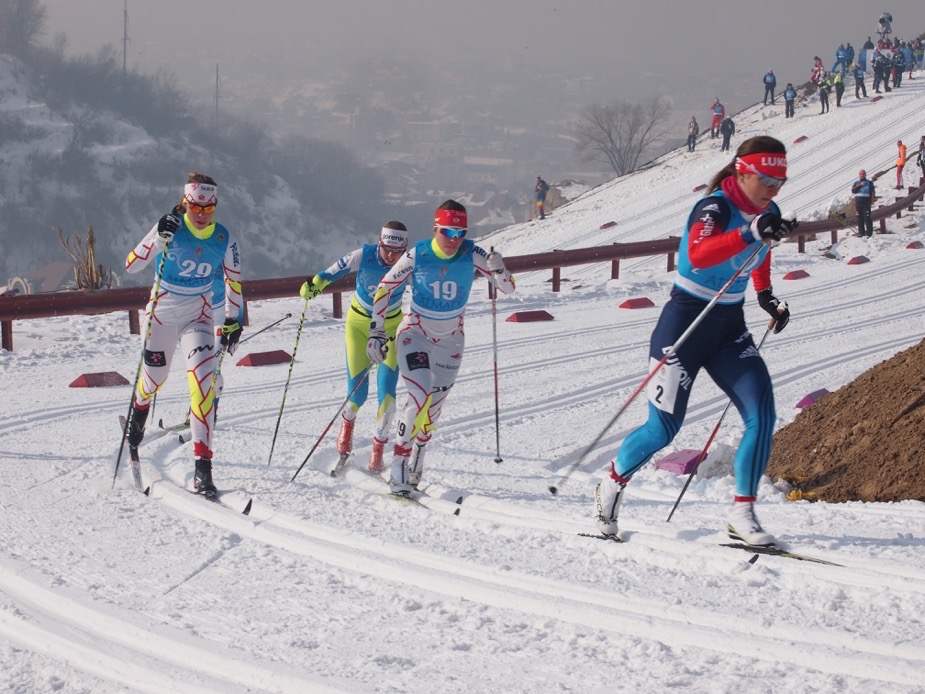
    The venue in Almaty, Kazakhstan, was faced with problems of snow shortages during Junior and U23 World Championships in early February. Here, American Thomas O'Harra (back left) staying with the leaders during the first leg of the junior men's relay; his team would go on to finish 11th. (Photo: Logan Heinemann)
    The venue in Almaty, Kazakhstan, was faced with problems of snow shortages during Junior and U23 World Championships in early February. Here, American Thomas O’Harra (back left) staying with the leaders during the first leg of the junior men’s relay; his team would go on to finish 11th. (Photo: Logan Hanneman)

    Most of the Americans who headed to Almaty, Kazakhstan, for FIS Junior and U23 World Championships were going to race.

    Another man from Alaska? Not so much.

    Matt Pauli, a heavily-involved member of the Nordic Ski Association of Anchorage and an International Ski Federation Technical Delegate (TD) traveled to Almaty to TD the competitions.

    TD’s have a long list of responsibilities before, during, and after competition, including overseeing preparation of the competition courses, advising the local organizing committee, and attending jury and team captains meetings.

    So how, out of all the FIS TD’s in the world, did Pauli end up in Kazakhstan?

    “As FIS TD’s we all bring different strengths to the table,” Pauli explained in an email. “I come from a comp committee, trail maintenance, and trail grooming side. I would like to think I am competent as a TD. I have been involved with cross country ski competition organization and officiating well over 30 years now, starting with the first and only World Cup held in Anchorage in 1983.”

    He also worked as a Technical Delegate Assistant (TDA) in Kazakhstan when the country hosted Asian Winter Games in 2011. He believes that might have helped him get the assignment for Junior/U23’s, which is a particularly important event for FIS. He also hoped it might be a springboard for other championship assignments in the future; among other Americans, Al Serrano has recently held these appointments.

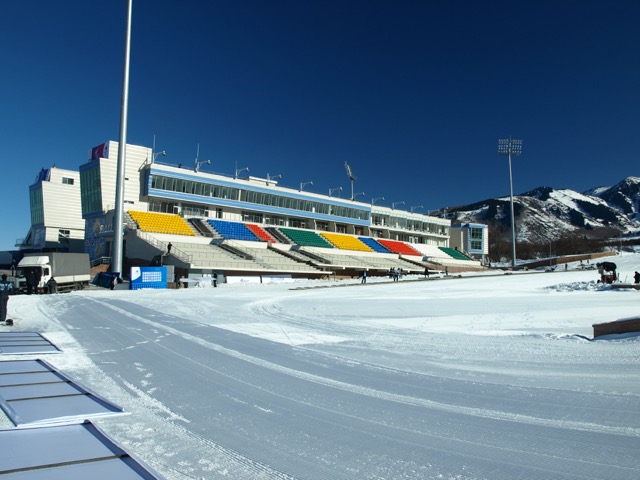
    The stadium at Soldatskoe, about an hour outside the city, which has less smog, more snow, and the ability to better host mass-start type events. Pauli believes this venue would be a better location for cross country and biathlon racing if Kazakhstan wins its bid for the 2022 Olympic Games. (Photo: Matt Pauli)
    The stadium at Soldatskoe, about an hour outside the city, which has less smog, more snow, and the ability to better host mass-start type events. Pauli believes this venue would be a better location for cross country and biathlon racing if Kazakhstan wins its bid for the 2022 Olympic Games. (Photo: Matt Pauli)

    “I was hoping to be in Falun [for World Championships] at this time, not as a TD or jury member, but as a member of the grooming crew,” wrote Pauli, who is on the grooming staff for NSA Anchorage. “I worked with the Chief of Comp, Tomas Jons, at Canmore (he was TD). He was looking for FIS TD’s that knew a thing or two about grooming. It almost worked out but I did have to withdraw my name due to the ‘regular’ job. That, and my wife would like to see me once in a while in the winter and February/March is really busy in Anchorage despite our low snow conditions.”

    Despite the current call of duty to his job as an OSHA safety compliance officer, Pauli says that his flexibility with work is actually one of the strengths that he hopes will cause FIS to continue to call on him.

    “I have a steady ‘regular’ job that is very accommodating to my ski activities and I get my work done,” he explained. “I am happy to take care of events here at home, let FIS know I am available for the coming season, and see what comes up. I think my flexibility is a strength, plus I can speak German if that is helpful.”

    We asked Pauli a few questions about his experience in Almaty, especially considering Kazakhstan’s current bid to host the 2022 Olympic Games. This interview has been edited and condensed.

    FasterSkier: Had you ever seen the venue before the event began, and how long in advance did you travel over?

    Matt Pauli: I had never been to this venue since it was brand new, but I had been to Almaty in the past. I was TDA for the 2011 Asian Winter Games (AWG). Cross country events for the AWG were held at the Soldatskoe venue which is about an hour drive east of the city.

    I arrived two days before the first competition, which is generally adequate.

    FS: I’ve heard some reports that there wasn’t so much snow. What were you able to do about that?

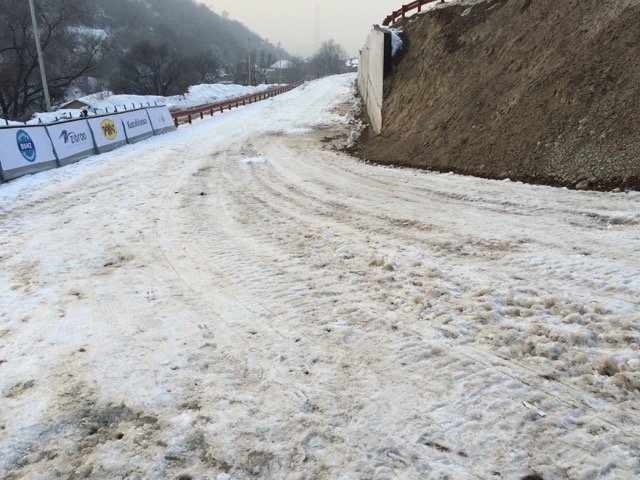
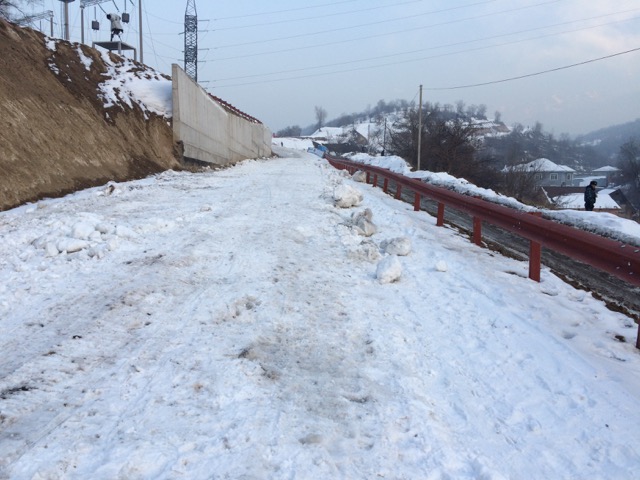
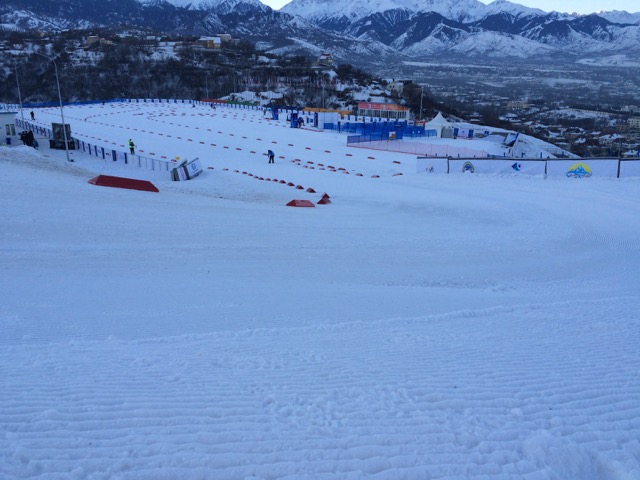
    The "red loop" of the Almaty race trails before the skiathlon competitions. (Photo: Matt Pauli)
    The “red loop” of the Almaty race trails before the skiathlon competitions. (Photo: Matt Pauli)

    MP: Approximately two weeks before the event, realizing that snow conditions were not favorable to hosting a world championship event, I was asked if I could go over earlier. Work commitments prevented me from doing so. In the interim, the TDA, Georgy Kadykov, arrived three days before me. Georgy is Russian and was the chief of competition for Sochi 2014. He was the TD from the AWG and a good number of the JWSC/U23 volunteers had worked at Sochi, including the Sport Manager. I had been in regular email contact with FIS, the OC representative, the Chief of Competition, and the homologation inspector.

    I really don’t think being there a week in advance would have changed a lot of the conditions faced by the athletes and coaches. A Skype call which took into account Alaska, Europe, Almaty time differences was held to get a first hand report from the TDA. The message was clear at that time that conditions were not optimal. At this point, a plan of action was determined and the OC was told what was needed.

    FS: When you arrived, what kind of shape were things in?

    Another section of the red loop. (Photo: Matt Pauli)
    Another section of the red loop. (Photo: Matt Pauli)

    MP: I arrived at 3 am, went to my hotel to get a short nap, and had breakfast with the FIS representative Michal Lamplot and Georgy. There, I received the report on conditions and what the OC was beginning to do. We left shortly after that to see the venue where we took a walk of the Blue 2.5. There was really only a viable 800 meter sprint loop and okay skiing on the lower 2.5 k blue loop. The upper 2.5 K blue was in good shape. That portion was in good shape and actually utilized more of the natural terrain as well as running through the apple tree groves. After all, Kazakhstan is the birthplace of apples.  The red loops were nowhere near skiable.

    Daily afternoon debrief meetings continued with city officials and competition committee (CC) members for the rest of the week. The message I understood was that city officials accepted the fact they were not ready and that work would continue throughout the week to ensure the event would go as planned. We then drafted a plan on how much snow was needed to be hauled or produced to start making race course(s). At this point we also determined that there was no way a viable sprint course was going to be ready in two days.

    Postponing the first day of racing was a good decision. It did mean a double sprint day, all juniors and all U23, so the days became that much more hectic. It also meant that juniors would get one less rest day. The jury appreciated this flexibility amongst the teams. As anyone knows, beginning a championship event with a sprint event always raises the stress level. Having a World Cup timing crew in Swiss Timing helps. The local comp committee did a very good job in getting the events in.

    The blue loop, here about to drop into the stadium, had slightly better snow conditions. (Photo: Matt Pauli)
    The blue loop, here about to drop into the stadium, had slightly better snow conditions. (Photo: Matt Pauli)

    Conditions in Almaty are not unlike conditions I have experienced here in the U.S. at national championship events.

    FS: What about the smog? In general, is that something that is on TD’s radar, or is there any precedent for how to handle unusual factors that may affect athletes’ health and performance?

    MP: The only reason air quality was on my radar was because of my prior visit in 2011. I knew how athletes liked to take either a morning or evening run. I wondered how they would accomplish that.

    Air quality concerns are out of the TD’s control. Weather events on-site are more readily addressed by a TD. This could include temperature, high winds, snowfall, icy conditions. A TD takes these issues into account to discuss with the jury if an event should be postponed, program changed, or even canceled.

    FS: In terms of smog, it seems like Almaty isn’t the only place you could imagine it being a problem. I know Salt Lake City has some crazy inversions sometimes too, and there were smog problems at the Beijing Olympics.

    Smog and haze hung in the background as Scott Patterson (APU) raced to a career-best 13th in the 15 k freestyle at U23 World Championships in Almaty, Kazakhstan. (Photo: Bryan Fish/USSA)
    Smog and haze hung in the background as Scott Patterson (APU) raced to a career-best 13th in the 15 k freestyle at U23 World Championships in Almaty, Kazakhstan. (Photo: Bryan Fish/USSA)

    MP: Almaty can be compared to Salt Lake City on a number of factors. They both sit at the foothills of massive mountain ranges. They are both at elevation. They both have high volumes of vehicular traffic.

    But Soldier Hollow is probably not impacted as much as the Almaty city venue. The Soldatskoe venue east of Almaty is similarly not impacted. It is actually very similar to Soldier Hollow, including the name which I believe translates to “Soldiers Valley.” We deal with similar inversions here in Alaska.

    FS: Were there a lot of spectators, and was it a spectator-friendly venue? Are there other things the venue is able to take advantage of in terms of being close to a big city?

    MP: Depending on the event, locals did show up to watch. I did note that there were less parents than what I observed from the 2014 JWSC/U23 in Val di Fiemme. I would imagine travel considerations had a lot to do with that. The stadium was very spectator-friendly, although it had a hard time accommodating all the race formats. It is just not a good stadium for mass starts and skiathlon.

    Any city can benefit from having a ski venue as close to the population as possible.  Unfortunately, the constructed trail system was not really done with the beginner or intermediate skier in mind. It is a racing venue.

    The venue had a stunning backdrop with 3000 to 4000 meter peaks to the south. But the actual race trails were not aesthetically pleasing. Steel guardrails for fencing required the addition of pads. Concrete formwork was used for trail set backs. The stadium was set on an excavated plateau. Skiers passed adjacent to and under high voltage powerlines since a substation existed at the top of the red loops. You could hear the crackle as well as having your hair stand-up on end when skiing under it.

    FS: How was the local organizing committee? Was it easy to work with them to implement changes that you thought were necessary?

    MP: The OC was the city of Almaty with direct contact with the mayor. We (FIS, Jury) were briefed on the city’s intent of hosting all events at the the new venue. While we understood this, we also expressed our concern on the lack of course preparation.

    The vice-mayor took up our concerns immediately and the trucks started hauling snow. This continued throughout the week, following daily afternoon briefings on what needed attention. This did impact training and course inspection, and in some cases created some significant safety hazards between machines and athletes. Some of this was created by the on-going trailwork, and some by the athletes, coaches, and technicians themselves. It was not ideal.

    When I was given the TD assignment in Spring 2013, I figured the event would be at Soldatskoe. It was not until July 2014 that I learned the city venue was being developed as the location for the championships. The final trail design had not taken place, construction was just beginning. They had held a World Cup Nordic Combined event there on a smaller trail system, so it seemed that the city venue would be acceptable.

    The frequency of venue reports was agreed to with the OC/CC at the Fall 2014 FIS meeting in Zurich. The information we received was really no different than what I have received in the US for similar competitions. Sometimes it is just real difficult to admit that you are falling behind and need assistance. The OC had committed to a very optimistic construction schedule in completing the venue. The last excavator actually left the stadium at the end of December.

    I really had no issues with the CC. They were not unlike any of the comp committees I have headed up, been a part of, or had to interact with as a TD. While there was a difference in language, there was no difference on putting on a quality ski competition.

    FS: Thinking about Almaty’s Olympic bid, do you think this is a potential Games venue?

    MP: Cross country and biathlon events would be better off held at Soldatskoe.  There was a significant investment there in terms of competition buildings, trails, and other infrastructure for the AWG. There would definitely need to be some transportation upgrades as well as lodging facilities constructed. For the city venue a lot of work would need to be done in order to have a viable stadium for all events required of an Olympic competition calendar. Since it is adjacent to the jumps, it fits the bill for Nordic Combined events. But mass start events are not a good option for the city venue. The team sprint would be difficult to fit in the stadium. I think it would be important for another high level event be held at the Soldatskoe venue.

  • 12th in U23 Skiathlon, Bouffard-Nesbitt Makes Case for Senior Worlds

    12th in U23 Skiathlon, Bouffard-Nesbitt Makes Case for Senior Worlds

    Canada's Olivia Bouffard-Nesbitt (Rocky Mountain Racers) celebrates after finishing 12th in the 15 k skiathlon at Under-23 World Championships in Almaty, Kazakhstan. (Photo: Lisa Patterson/CCC)
    Canada’s Olivia Bouffard-Nesbitt (Rocky Mountain Racers) celebrates after finishing 12th in the 15 k skiathlon at Under-23 World Championships in Almaty, Kazakhstan. (Photo: Lisa Patterson/CCC)

    Olivia Bouffard-Nesbitt (Rocky Mountain Racers) didn’t have the best start to Saturday’s 15 kilometer skiathlon at Under-23 World Championships in Almaty, Kazakhstan.

    The Canadian cross country skier started at the back of the mass start, and she didn’t feel great on her classic skis.

    “I was pretty much last starting the race,” she said in a phone interview.

    But oh, how things picked up from there. After a fast transition to skate skis after 7.5 k, Bouffard-Nesbitt felt better and better. She soon found herself skiing with a pack of four or five other women, and picked off competitors who were tiring. Around 11 k, her coach told her that she was in 16th.

    “It was super motivating to hear that,” Bouffard-Nesbitt said. “So I knew that at that point, I was at the back of my little pack so even within my pack, if I could beat the rest of them that would leave me in a good position. It really helped in catching the girls in front of us.”

    She attacked with about 1.5 k to go before the finish, and ended up 12th for the best international result of her career and the best finish for Canada so far this week at World Junior and U23 Championships.

    Bouffard-Nesbitt’s time was 1:32.3 behind winner Nathalie Von Siebenthal of Switzerland, and just 3.1 seconds outside the top ten.

    “Especially in the last kilometer, it’s kind of a blur,” the Canadian said. “I’m thinking back to it and I can’t remember who I passed and who passed me, and where I was. But I just knew that I had to go. That was it. That’s all I remember.”

    Besides being thrilled with her result, Bouffard-Nesbitt believes she found another silver line. She said that in a previously-published version of Cross Country Canada’s selection criteria for senior World Championships in Falun, Sweden, later this month, a top-12 distance result at U23’s was listed as one possible way to qualify.

    “They always make discretionary choices and I don’t know what they’ll do with that,” she said of making the cut. “It’s an option. I’m crossing my fingers – it’s not something that I had even been thinking about for this season. I’ve never raced a World Cup and so it wasn’t in my plans. But I’d be pretty stoked.”

    Bouffard-Nesbitt has met the organization’s eligibility requirement of scoring lower than 75 FIS points in multiple races so far this season. No Canadian women meet the primary objective criteria for World Championships, of having finished in the top 12 in an individual World Cup event, being in the World Cup “Red Group”, or having an individual podium in the last two seasons.

    The currently-posted National Team selection criteria state the U23 World Championships performances can be used for selection to the senior World Championships team, but don’t outline how. They do, however, refer that a top-12 performance at U23’s should earn an athlete placing on the Senior Development Team. And it does state that top-12 finishes at U23’s qualify athletes for the B-Tour to Finland this month.

    “Our team release date is Feb.9,” Cross Country Canada High Performance Director Tom Holland wrote in an e-mail to FasterSkier. “Olivia is certainly under consideration.”

    So it’s unclear where she stands, but Bouffard-Nesbitt said she was sure she’d have an amazing time if she made the trip.

    “I’ve never performed this well in my life,” she said of this week, where she also finished 17th in the 10 k freestyle and qualified 12th in the classic sprint. “I think the best thing it has done is to have given me confidence that I belong on the international stage. I’ve never raced this well, so the confidence is a big thing, and knowing that the girls I’m racing against aren’t superhuman, and that if I’m having a good race I can be right up there with them.”

    Despite the strong results earlier this week, Bouffard-Nesbitt tried not to have expectations going into the skiathlon.

    “I try not to go into races, especially at Worlds, with too many expectations,” she explained. “Especially because it kind of stresses me out personally. And I think that if you don’t go in with expectations other than trying to do your best, you can be happily surprised. I’ve been really happy with how I’ve approached the races mentally this week. Normally I go into races pretty anxious, but I’ve just been really excited all week to race.”

    After the tough start in the classic section, she was able to ski more aggressively in the skate. She explained that she was working together with four other women, moving at a fast pace, and they eventually began to catch skiers who had excelled in the classic portion but were running out of gas.

    “Halfway through the last lap of skate, I saw a big group of girls ahead of us who were all dying I think,” she said. “We were going at a pace I was able to maintain, and we were slowly catching them. When we actually caught them, that’s when I made my push. I thought, I have to go now, I have to go before the end, I should pass these girls now so they can’t latch on. So I went to the front of my little pack and pushed really hard at that part of the race. It just felt really good.”

    It took a toll: by the finish she was exhausted. The top-12 nearly didn’t happen as Alisa Zhambalova of Russia came from behind and nearly passed the Canadian. Bouffard-Nesbitt held her off by 0.6 seconds.

    “I actually wasn’t aware that she was behind me, and I only realized after the race was over that she was so close,” Bouffard-Nesbitt said, clearly still worried just thinking about it. “I’m really grateful that she did not get me before the line.”

    This was the final day of competition at U23’s – World Junior Championships conclude on Sunday with relays – and Bouffard-Nesbitt says that World Championships selection is “in the hands of Cross Country Canada now.”

    Regardless of where she travels next, it’s doubtful that she’ll forget this race.

    “It was an amazing feeling,” she marveled. “I was just able to push it.”

    Canadian teammate Cendrine Browne (CNEPH) finished 30th (+4:00.1) and Dahria Beatty (Alberta World Cup Academy) did not finish.

    In the men’s 30 k skiathlon, Knute Johnsgaard (Yukon Elite Squad) led Canada in 32nd place (+3:49.7). Colin Ferrie (Blackjack), Scott Hill, (Thunder Bay NDC) and Raphael Couturier (CNEPH) followed in 44th, 45th, and 48th, respectively.

    Results: women – men

  • Patterson 15th, Undone by Warm Snow and Dragging Skis; Caldwell 20th, Reid 22nd in Final U23 Race

    Patterson 15th, Undone by Warm Snow and Dragging Skis; Caldwell 20th, Reid 22nd in Final U23 Race

     (Photo: Bryan Fish/USSA)
    Scott Patterson (APU) racing to 13th in the 15 k skate in Almaty, Kazakhstan, while American Under-23 World Championships teammate Ben Saxton cheers him on. (Photo: Bryan Fish/USSA)

    After Thursday’s 15 k skate in Almaty, Kazakhstan, Scott Patterson was a bit disappointed.

    The Alaska Pacific University (APU) skier finished 13th, a solid result for Under-23 World Championships. But he was hoping for a top ten, and pinned those hopes on the 30 k skiathlon on Sunday.

    Patterson came up short again, in his own estimation, but turned in a 15th-place performance. Despite being a few placed short of his goal, he said that he felt he raced well.

    “I am somewhat happy with the effort, but definitely not satisfied with the result,” Patterson wrote in an e-mail.

    To start with, he hadn’t felt great in the classic portion of the race, he explained.

    “My strategy going into the day was to stay relaxed and hang with the lead pack through the classic portion then move up and attack whatever group I was with during the later portion of the skate,” he explained. “The classic portion was a bit chaotic and I was feeling quite poor. I also did not dial in my skis well enough and was hindered by my klister dragging… I was not optimistic about my final placing after how I was feeling.”

    Both Patterson and U.S. Ski Team Development Coach Bryan Fish commented on the changing ski conditions compared to the rest of the week. Fish explained that temperatures had warmed up almost 15°F since the previous day, meaning that the courses were not as firm. Patterson, in turn, explained that his skis were running a bit slow.

    He initially felt good when switching on to skate skis, but as the race went on he struggled to stay with his groups, especially on the downhills.

    “Instead of tired legs, I felt like I could actually ski,” he wrote. “Utilizing some newfound energy I moved up a few placed. However, the increasing moisture caught up with me and my skis slowed down significantly as the race progressed. Looking back, I probably should have selected a different pair of skis.”

    Nevertheless, he worked together with Andrey Melnichenko of Russia and Claudio Muller of Italy to reel in some skiers.

    “I gave it my best and managed alright, but I was definitely looking for more,” Patterson lamented.

    He finished a minute and 24 seconds behind race winner Magne Haga of Norway, who beat Clement Parisse of France by 0.6 seconds in a sprint finish. Dmitry Rostovtsev of Russia was third, +2.6. Patterson was 34 seconds out of the top ten.

    A recent graduate of the University of Vermont, it’s Patterson’s first season training full time with out a college courseload. He’s also on the rebound from a freak ski accident at the end of October, where a pieces of broken skis belonging to teammate Erik Bjornsen impaled his leg. It took Patterson almost a month to get back on skis and when he began racing he was still on blood thinners, according to his blog.

    “After the crash he had earlier this season, I expected a slow return to racing and a probable sub-par season,” APU Head Coach Erik Flora wrote in an e-mail. “Scott has totally proven otherwise, he has had an impressive return to racing with a good January and February. His results are certainly a testament to his talent and hard work. His results today in the 30km are good, I agree with Scott, there is more for the future.”

    Fish reiterated that even though Patterson felt like he could have been capable of more, his results are certainly nothing to be ashamed of.

    “A 13th and 15th at World U23’s are great results. Scott [Patterson] is a fierce competitor. I am sure he feels like he is leaving Almaty a little shy of his goals. That being said, he has every reason to be proud of where his fitness and skiing is. Rarely, is there a ‘perfect’ race. It is easy to second guess and easy to critique from afar, but the pure beauty of competition is the ‘in the moment’ decision making. It takes experience. It takes a lot of well-planned training. It takes trusting your teammates and those support staff surrounding the athletes. Maybe, most important is the guts it takes to risk it all out on the race course. It is easy to look at the end result.”

    –Bryan Fish, U.S. Ski Team Development Coach

    Close behind Patterson was Paddy Caldwell, a Dartmouth College athlete who is a member of the U.S. Ski Team’s “D” team. In his first U23 Championships – Caldwell placed 10th in the 20 k skiathlon at World Junior Championships last season, but has since moved up an age class – he was satisfied to place 20th, 2:18 behind Haga of Norway.

    “I’m really happy with today and with how this week has gone as a whole,” wrote Caldwell, who also placed 15th in the 15 k freestyle. “Today I really wanted to hang on as long as I could on the classic portion then hit the skate leg hard. I fell off the classic pack more than I would have liked but aside from that I am really pleased with how today went. The skate leg was definitely the better half of the race for me. I skied between packs for my middle lap but then jumped in with a good group for the last lap and a half.”

    He reported that after this, it’s back to New Hampshire to return to class at Dartmouth and race on the Eastern Intercollegiate Ski Association carnival circuit.

    Kyle Bratrud of Northern Michigan University placed 37th (+5:30), and Ben Saxton of Stratton Mountain School T2, and also a U.S. Ski Team “D” team member, placed 41st (+7:08).

    “I’ve been very impressed here in Almaty as to how this whole group has struck a good balance of ski professionalism,” Fish wrote. “To me, that means being focused and detail oriented yet staying relaxed and loose.”

    In the women’s 15 k skiathlon, Joanne Reid again led the way for the United States. A graduate student at the University of Colorado, she is a previous World Junior Championships competitor and NCAA Champion, but did not compete at all last season.

    After placing 25th in the 10 k skate, an experience she said helped her re-adjust to the tough level of competition, she placed 22nd in the skiathlon (+2:47.8).

    “It is my opinion  that no athlete just pops up out of no where,” Fish wrote of Reid’s performance. “There is a cumulative effect to training. Joanne has put in many hours of training of the years. Clearly she is a talented athlete and ultimately it is her decision as to what her future holds.”

    Cambria McDermott of Montana State University placed 29th (+3:48.6), Anne Hart of Stratton Mountain School T2 finished 33rd (+4:59.0), and Deedra Irwin of Michigan Tech 34th (+7:56.4).

    This was the final competition of U23 World Championships. World Junior Championships conclude on the same race courses tomorrow, with relay competitions.

    Results: men – women

  • Three Americans Land Top 20s in U23 Worlds 15 k: Patterson 13th, Caldwell 15th and Bratrud 19th

    Three Americans Land Top 20s in U23 Worlds 15 k: Patterson 13th, Caldwell 15th and Bratrud 19th

    Scott Patterson (APU) racing to a career-best 13th  in the 15 k freestyle on Thursday at U23 World Championships in Almaty, Kazakhstan. (Photo: Bryan Fish/USSA)
    Scott Patterson (APU) racing to a career-best 13th in the 15 k freestyle on Thursday at U23 World Championships in Almaty, Kazakhstan. (Photo: Bryan Fish/USSA)

    A career-best 13th sounds great until you realize that you were skiing as high as third at one point in the race, which is how Scott Patterson of Alaska Pacific University (APU) felt on Thursday after the men’s 15-kilometer freestyle at U23 World Championships in Almaty, Kazakhstan.

    Patterson, who turned 23 on Jan. 28, started 50th of nearly 60 men and was tied for third at 1.7 k with Russia’s Andrey Melnichenko, 2.2 seconds behind another Russian, Roman Tarasov, and 1.2 seconds behind France’s Mickael Philipot.

    By 6.7 k, Patterson remained in the top 10 with the ninth-fastest time, while Melnichenko had improved to fifth and Tarasov’s time ranked fourth. However, the last of three laps proved particularly challenging for several competitors, as Patterson slipped from ninth to 13th in the last three kilometers. Earlier in the final 5 k lap at 11.7 k, Melnichenko dropped to 12th and Tarasov fell to 17th, while Philipot ranked 22nd.

    Patterson ended up 13th, 1.27.8 behind winner Florian Notz of Germany, who improved from 11th early in the race to second at the 11.7 k checkpoint and finally, first at the finish in 35:55.3. Melnichenko finished 14th, Tarasov was 20th, and Philipot 23rd.

    “Honestly, I am a little disappointed with the result,” Patterson wrote in an email after his career-best performance at U23 World Championships. He had previously finished 18th in two races at 2014 U23 worlds (the 30 k skiathlon and 15 k classic), and 17th in the 10 k classic at 2010 Junior World Championships.

    “For most of the race I was fighting for a top 10,” he explained. “However, I faded as the race progressed while some of my competitors maintained the pace or got stronger.  At the finish I had heard I was in 8th so dropping to 13th in the end was a bit of a bummer. Luckily I still have one more race to improve on my finish. Coming into these championships, I had definitely been aiming for a top 10 with hopes even higher than that so I will continue that in the pursuit [skiathlon].”

    Kyle Bratrud racing to 19th in his first race of U23 World Championships, the 15 k freestyle in Almaty, Kazakhstan. (Photo: Bryan Fish/USSA)
    Kyle Bratrud racing to 19th in his first race of U23 World Championships, the 15 k freestyle in Almaty, Kazakhstan. (Photo: Bryan Fish/USSA)

    Patterson led three American men in the top 20, with Patrick Caldwell (Dartmouth College/U.S. Ski Team) placing 15th (+1:40.1), and Kyle Bratrud finishing 19th (+1:49.1).

    “This was definitely one of my target races,” Patterson explained. “U23s is always an important part of the season and 15k skate races have historically been pretty successful for me, but the 30k pursuit is just as much of a target race.”

    While a top result at U23 worlds could draw the attention of the U.S. Ski Team and make a case for being considered for the U.S. Senior World Championships team, which will compete in Falun, Sweden, later this month, Patterson explained he wasn’t thinking about that.

    “Senior world championships would be awesome, but really I am here to race this week not race for a couple weeks later,” he wrote, adding that OPA Cup Finals in Chamonix, France, will likely be his next focus.

    Thursday’s course was tough, with “mostly relentless gradual uphills and working downhills with a few steep kickers and technical descents thrown in to keep it interesting,” he added. “Conditions were also quite interesting today with significantly faster almost icy section in the shade but almost slush in some spots. I think overall I skied it quite well but there were parts that could have gone better. By the third lap, I wasn’t working the transitions as hard as I should have been.”

    He paced his race aggressively, but found himself losing positions as the race continued.

    “I went out pretty hard with the idea that I was not going to be timid at U23s,” Patterson wrote. “Even in the first lap I could feel that this might cost me, later in the race. Although I hung close, I was gradually fading and transitioned into survival mode for the final few hills. Maybe it would have been better to go out a bit more conservative and ski into it, but I chose the opposite and it kind of worked out.”

    Just over three months ago, Patterson suffered a pulmonary embolism after a freak skiing accident with a teammate. He was limited to short walks for about a month, and it seemed the University of Vermont graduate’s first season as a professional skier was over before it had begun.

    “While I was injured there were definitely moments where I was questioning whether I would be able to qualify for this trip or even be able to race at nationals,” he reflected.

    He went on to win his first race back in December, a 15 k freestyle at home in Anchorage, Alaska, and placed eighth in the 30 k classic mass start at U.S. nationals last month.

    “The hardest part has been to keep everything balanced between the perspective of being injured and the perspective of it being a normal season,” he wrote. “On one hand everyone keeps telling me how amazing I am doing for where I was in November, but then there is the other side of me always wanting more and being quite close to where I actually want to be. Sometimes the injury just feels like it’s an excuse holding me back.”

    “Everyone keeps telling me how amazing I am doing for where I was in November, but then there is the other side of me always wanting more and being quite close to where I actually want to be.” — Scott Patterson, 13th in 15 k freestyle at U23 World Championships

    Heading into these championships, Caldwell explained in his email that his goals were to “race hard and stay healthy.” On Thursday, he was specifically aiming for a top 15 and was relieved he lunged at the line to do so.

    The 20-year-old Dartmouth ski team member finished 0.1 seconds ahead of Great Britain’s Andrew Young in 16th and edged Russia’s Krill Vichuzhanin in 17th by 0.3 seconds. In 15th, Caldwell was 11.4 seconds back from Melnichenko in 14th.

    “I’m really psyched with how things went today. It is a pretty tough course: lots of steep uphills, long gradual grinds and not much rest,” Caldwell wrote, adding that he focused on “staying relaxed on the climbs and really pushing it on the flats and gradual ups.”

    In his first race at a U23 World Championships, 15th marked his second-best result at a world championships since placing 10th in the 20 k skiathlon at junior worlds last year.

    “Many aspects of the competition are very similar so far,” he explained. “The biggest difference is that the top end for U23s are also competitive on the World Cup. Its pretty cool to be out there with some really successful World Cup skiers. … I think everyone is particularly fired up with the World Championships coming up soon. The upcoming races in Falun haven’t changed my approach to these races but have definitely added to the overall excitement at this event.”

    Bratrud placed 19th in his U23 worlds debut, after having competed at the 2013 junior worlds in Liberec, Czech Republic.

    “My goal going into today was to be in the top 15 or even top 10 so I am disappointed about that,” Bratrud wrote in an email. “I was in the hunt for the first two laps, but faded and leaked quite a bit of time on the last lap. That being said, it is hard not to be excited about a first top 20 and seeing two teammates in the top 15. This male U23 group is the future of US Skiing and it is a blessing just to be a part of it.”

    “This male U23 group is the future of US Skiing and it is a blessing just to be a part of it.” — Kyle Bratrud, 19th in 15 k freestyle at U23 World Championships

    Bratrud, who turns 22 on Feb. 9, started 44th — right behind Caldwell in bib 43 — and improved from the 25th-ranked time at 1.7 k to 12th at 6.7 k. He slipped to 16th with just over three kilometers remaining and ultimately finished 2.2 seconds within the top 20.

    “Anyone who knows me knows I put a lot of pressure on myself, so following a very successful US Nationals [where he won the 15 k freestyle and placed third in the 30 k classic] I certainly have new expectations for myself,” Bratrud said.

    Last week, he was named to the U.S. Senior World Championships team.

    “I constantly feel I need to justify my naming,” he added. “But at the end of the day I am on this trip with some of the best skiers in the US and if you are slightly off one day than a lot can happen. I went for it and came up short, but I am happy that I tried and excited for what lies ahead. This is certainly a new level. There are regular World Cup skiers racing with us and it’s fun to see where you compare.”

    Scott Patterson leads APU and U.S. U23 World Championships teammate Logan Hanneman during training last Friday in Almaty, Kazakhstan. (Photo: Bryan Fish/USSA)
    Scott Patterson leads APU and U.S. U23 World Championships teammate Logan Hanneman during training last Friday in Almaty, Kazakhstan. (Photo: Bryan Fish/USSA)

    Also for the U.S., Logan Hanneman (University of Alaska Fairbanks) placed 40th, 2:54.1 behind the winner.

    Germany’s Notz kicked it into high gear on the last of three laps for his first podium at a U23 or junior worlds, beating Norway’s Simen Hegstad Krueger by 9.5 seconds and French bronze medalist Adrien Backscheider by 26.7 seconds.

    Notz started last in bib 58 and paced himself accordingly to beat the times of both Krueger and Backscheider in bibs 56 and 57, respectively. Italy’s Giandomenico Salvadori held on for fourth (+34.7) and Norway’s Magne Haga, brother of women’s World Cup skier Ragnhild Haga, placed fifth (+40.2).

    Raphaël Couturier of the Pierre-Harvey Training Centre (CNEPH) and national U23 team placed 41st (+2:56.4) to lead the Canadian men, while teammates Knute Johnsgaard (Whitehorse/Yukon Elite Squad) finished 47th (+3:51.1), Scott James Hill (Thunder Bay NDC) took 48th (+3:54.3), and Colin Ferrie (Black Jack) placed 50th (+4:06.8).

    The U23 World Championships wrap up with the women’s and men’s 15/30 k skiathlons on Saturday.

    — Chelsea Little contributed reporting

    Results: Men | Women

  • Kvåle Racks Up 10 k Freestyle Title at U23 Worlds; Bouffard-Nesbitt Cracks Top 20

    Kvåle Racks Up 10 k Freestyle Title at U23 Worlds; Bouffard-Nesbitt Cracks Top 20

    The women's 10 k freestyle podium on Thursday at U23 World Championships in Almaty, Kazakhstan: with Norwegian winner Barbro Kvåle (c), Russia's Daria Storozhilova (l) in second, and Switzerland's Nathalie von Siebenthal (r) in third. (Photo: FIS)
    The women’s 10 k freestyle podium on Thursday at U23 World Championships in Almaty, Kazakhstan: with Norwegian winner Barbro Kvåle (c), Russia’s Daria Storozhilova (l) in second, and Switzerland’s Nathalie von Siebenthal (r) in third. (Photo: FIS)

    Does the name Barbro Kvåle ring a bell? If you’ve been following international skiing since late November of last year, you might recall the day when the 22-year-old Norwegian won the classic sprint in Beitostølen, Norway.

    Yes, it was a pre-season tuneup International Ski Federation (FIS) race and not a World Cup event, but she beat fellow Norwegians Kari Vikhagen Gjeitnes and her best friend Kathrine Harsem to do so.

    Kvåle was also known as a junior world champion in ski orienteering. On Thursday, she added a FIS Nordic U23 World Championships title to her list.

    With her 23rd birthday coming at the end of the month, Kvåle of the Lillehammer Skiklub bested Russia’s Daria Storozhilova by 5.8 seconds to win the women’s 10-kilometer freestyle at U23 World Championships in Almaty, Kazakhstan.

    Kvåle started 28th out of 41 women, and by the first 1.7 k checkpoint, her time ranked 10th. She was up to fourth by the halfway point and clocked the fifth-fastest time at 6.7 k. There, Storozhilova ranked second behind Switzerland’s Nathalie von Siebenthal, who was fastest through every timing point on the two-lap course until the finish.

    Siebenthal started 38th and couldn’t match Kvåle’s finishing kick despite having an 11.4-second lead on the Norwegian, and 2.6 seconds on Storozhilova, with 3.3 k to go. She finished third, 6.4 seconds back from Kvåle and 0.6 seconds behind Storozhilova.

    “I am on the podium today and happy with it,” the 21-year-old Siebenthal told FIS after the race. “I would say the race was not hard to me.”

    It was her first podium at a U23 or Junior World Championships, besting her previous best of eighth in the 15 k skiathlon at 2014 U23 worlds in Val di Fiemme, Italy.

    For Kvåle, the victory also marked her first podium at a cross-country World Championships after placing seventh in the classic sprint earlier this week.

    “I am very happy with the race despite the fact that it was very difficult,” she told FIS. “This is my second victory in international championships and I am very happy to be here in Almaty.”

    Storozhilova, 22, was also pleased with her performance in her first race at an international championships.

    “The slopes are dangerous and sharp, but I am satisfied with my result,” she said.

    Olivia Bouffard Nesbitt leads a pack of women in the Frozen Thunder classic sprint in late October 2014. (Photo: Angus Cockney)
    Olivia Bouffard-Nesbitt (42) leads one of the heats in the Frozen Thunder classic sprint in late October 2014 in Canmore, Alberta. (Photo: Angus Cockney)

    Despite falling on the last downhill, Canada’s Olivia Bouffard-Nesbitt, 22, of Rocky Mountain Racers posted the top North American women’s result in 17th, 1:18 behind Kvåle’s winning time of 27:20.3. In her second U23 worlds, it was Bouffard-Nesbitt’s career best, improving on her 21st from Tuesday’s classic sprint.

    “I was sooo stoked about today’s race,” Bouffard-Nesbitt wrote in an email. “It was unlike any distance race I’ve done this season. Normally I feel really good early in the race and have a fast first lap and then die on the second lap.”

    On Thursday, she found that she wasn’t moving too fast on the first lap, sitting in the middle of the pack in 25th at 5 k, but had the energy to push the pace her second time around. The terrain required a “decent amount of one skate,” or V2, she explained, so she used that to her advantage to power through it.

    “I was caught by a Slovenian who was on her first lap near the end of my race and pushed as hard as I could from that point on to the end and stayed with her, and I was stoked that I felt really good the whole time,” Bouffard-Nesbitt wrote. “I fell on the very last downhill on the course unfortunately, but I don’t think I lost more than five seconds. It felt so good to feel so strong at the end of a race, it was a ton of fun.”

    Cendrine Browne of the Pierre-Harvey Training Centre (CNEPH) and Canadian National U23 Team placed 23rd, 1:45.4 behind the winner.

    Joanne Reid, a 22-year-old graduate student at the University of Colorado Boulder (CU) and former Buffs skier and NCAA champion, led the Americans in 25th (+1:47.4). After taking last season off following her senior year at CU, Reid returned to the U.S. SuperTour scene in November and went on to place ninth and 11th at U.S. nationals last month in the 10 k freestyle and freestyle sprint, respectively. Thursday’s race marked her first at a U23 World Championships after racing at two junior worlds in 2010 and 2011.

    “It was definitely a bit jarring to be back into the international scene, but also a great experience,” Reid wrote in an email. “The most fascinating thing about racing in Almaty is the army lining the course!! It looks like a really boring job for them but makes you feel like you’re in a really big deal race.”

    Reid explained that she ramped up her training, which she does solo, in late August/early September.

    “It’s certainly a building year for me, I didn’t have many expectations for this year, since I just didn’t know how I would stack up,” she wrote. “Hoping to do better in the next race, now that I got the experience of this one. We’ll see!”

    “The most fascinating thing about racing in Almaty is the army lining the course!! It looks like a really boring job for them but makes you feel like you’re in a really big deal race.” — Joanne Reid, 25th in U23 World Championships 10 k freestyle

    Canada’s Dahria Beatty of the Alberta World Cup Academy (AWCA) and national U23 team finished 30th (+2:12.2), and Americans Cambria McDermott (Montana State University) and Annie Pokorny (Stratton Mountain School T2 Team) placed 32nd (+2:22.4) and 36th (+2:51.4), respectively.

    “Kazakhstan has been a whirlwind of new experiences,” McDermott wrote in an email. “We were so lucky to be able to spend a full week here before the races began. Almaty is a beautiful, though smokey city and all of the people here have been incredibly warm and welcoming.

    “The level of competition here has been the most eye-opening component of this trip,” she added.

    The U23 World Championships wrap up with the 15/30 k skiathlons on Saturday.

    — Chelsea Little contributed reporting

    Results: Women | Men

  • O’Harra 14th in Classic Sprint for Junior Worlds Best; Stewart-Jones Leads Three Canadian Women in Heats

    O’Harra 14th in Classic Sprint for Junior Worlds Best; Stewart-Jones Leads Three Canadian Women in Heats

    An exhausted-and-ecstatic Fredrik Riseth of Norway after winning his first Junior World Championships title on Tuesday in the 1.3 k classic sprint. (Photo: FIS)
    An exhausted-and-ecstatic Fredrik Riseth of Norway after winning his first Junior World Championships title on Tuesday in the 1.3 k classic sprint. (Photo: FIS)

    Last year in his FIS Junior World Ski Championships debut, Thomas O’Harra placed 54th in the freestyle sprint in Val di Fiemme, Italy. Another year older and with another season of training under his belt, the 18-year-old Alaska Pacific University (APU) skier placed 14th on Tuesday in the opening race of 2015 Junior Worlds in Almaty, Kazakhstan: the 1.3-kilometer classic sprint.

    Thomas O'Harra (APU) leading his freestyle-sprint quarterfinal with Sun Valley's Miles Havlick (3) and Kris Freeman last month at 2015 U.S. nationals in Houghton, Mich.
    APU’s Thomas O’Harra (13) leading his freestyle-sprint quarterfinal with Sun Valley’s Miles Havlick (3) and Kris Freeman (8) last month at 2015 U.S. senior nationals in Houghton, Mich. He went on to place 18th overall.

    O’Harra qualified 18th and went on to place third in his quarterfinal, 2.92 seconds behind the winner of his heat, Ludek Seller of the Czech Republic, and 0.35 seconds behind Russia’s Alexander Bakanov, who also automatically advanced in second.

    O’Harra’s quarterfinal was the slowest of the five, which prevented him from moving on to the semifinals as a lucky loser. But at the end of the day, 14th was still way better than 54th.

    “I don’t know if I can say I was expecting it, but I definitely knew that if I had a good race, I could get into the top 30,” O’Harra wrote in an email on Tuesday. “Coming into the sprint, my goal was to qualify. Ultimately though, my goal was to get into the top 10. Once I had qualified, I focused more on trying to advance out of my quarterfinal.”

    He reflected that his quarterfinal was “pretty hard right off the bat … everyone was jostling for position.” Knowing that he needed a top-two in his heat to guarantee a spot in the semifinal, O’Harra followed Bakanov in his track to the finish and lunged between the Russian’s legs as Bakanov let up near the line. And while it wasn’t quite enough, O’Harra was pleased to finish well within the top 30.

    “Today was a much better experience than last year’s sprint!” he wrote. “Last year I tripped myself going up the first hill and ended up 54th — not exactly super-duper. I think that a year’s more experience helped a lot. I was definitely a lot more collected and calm this year, both going into the race and during the race.”

    He was also optimistic about another top 30 in Wednesday’s 10 k freestyle.

    “I think that I’m in a really good place right now, but I didn’t actually try to peak specifically for these races, mainly because there is still a lot of racing left this season,” he wrote.

    “Last year I tripped myself going up the first hill and ended up 54th — not exactly super-duper. I think that a year’s more experience helped a lot.” — Thomas O’Harra, 14th in 2015 Junior World Championships 1.3 k classic sprint

    O’Harra led the North Americans in the junior men’s sprint, which Norway’s Fredrik Riseth won outright in 3:01.25. The Norwegian qualified fifth behind Finland’s Lauri Vuorinen (the top men’s qualifier in 3:01.88), and Riseth went on to win his quarterfinal and his semifinal before beating Bakanov by 4.85 seconds in the final.

    Norway’s Johannes Høsflot Klæbo made the podium as well in third, 8 seconds behind Riseth. Germany’s Marius Cebulla was fourth (+10.04), Sweden’s Oskar Svensson finished fifth (+10.11), and Vuorinen was sixth (+21.67).

    Riseth’s father, Svein Riseth, told Langrenn that he was impressed with his son’s result. While he knew Fredrik was in great shape, Svein wasn’t sure he had enough left after dominating his quarterfinal and semifinal. The contender he was most concerned about was Fredrik’s Byåsen IL teammate, Høsflot Klæbo.

    “Johannes is not only a good skier, but he is mentally and tactically strong,” Svein said, according to a translation. “It is outrageously fun two Byåsen runners entered the podium. Not just for the team but for [Trondheim] skiing.”

    While no other North American men qualified in the top 30, Canada’s Julian Smith (Georgian Bay) placed 39th, 3.82 seconds from 30th. Americans Evan Weinman (Middlebury) and Peter Holmes (University of New Hampshire) were 46th and 48th, respectively, Canada’s Alexis Dumas (CNEPH/NST-Junior) ranked 53rd, Ricardo Izquierdo-Bernier (CNEPH/NST-Junior) was 56th, American Gavin Hess (UNH) 58th, and Canadian Philippe Boucher (CNEPH/NST-Junior) 59th.

    Stewart-Jones Leads Three Canadian Women in the Heats

    Canadian National Junior Team members Katherine Stewart-Jones (19) and Maya MacIsaac-Jones (29) chase Russia's Natalia Nepryaeva (2) in the quarterfinal of the 1.3 k classic sprint on the opening day of 2015 Junior World Championships in Almaty, Kazakhstan. (Photo: Lisa Patterson/CCC)
    Canadian National Junior Team members Katherine Stewart-Jones (19) and Maya MacIsaac-Jones (29) chase Russia’s Natalia Nepryaeva (2) in the quarterfinal of the 1.3 k classic sprint on the opening day of 2015 Junior World Championships in Almaty, Kazakhstan. (Photo: Lisa Patterson/CCC)

    In the women’s 1.3 k classic sprint, Katherine Stewart-Jones knew what was coming, or at least what to expect, in her third time qualifying for the Junior Worlds heats.

    The 19-year-old Canadian National Junior Team member qualified in 19th, 13.61 seconds behind Russia’s Yulia Belorukova, the top qualifier in 3:29.24. Stewart-Jones then finished fourth in her quarterfinal, 9.77 seconds after another Russian, Natalia Nepryaeva, who won the heat. Their quarterfinal was the second slowest and Stewart-Jones did not advance, putting her in 19th overall.

    “I am satisfied with my result,” Stewart-Jones, the top North American female junior of the day, wrote in an email. “I definitely had the goal to make it past the quarter-finals because last year I was extremely close. I can’t really be disappointed with how it turned out because I gave everything I had.”

    “I definitely had the goal to make it past the quarter-finals because last year I was extremely close. I can’t really be disappointed with how it turned out because I gave everything I had.” — Katherine Stewart-Jones, 19th in 2015 Junior World Championships 1.3 k classic sprint

    Last year at Junior World Championships, she placed 15th in the freestyle sprint, and the year before, she was 25th at the 2013 Junior Worlds in Liberec, Czech Republic.

    But for the first time on Tuesday, she raced against one of her fellow national-junior team members in the heats: Maya MacIsaac-Jones of Rocky Mountain Racers (RMR).

    “We both had a really good start so it was fun to ski at the front together for the first part of the race,” Stewart-Jones explained. “After the long downhill I was in third place but then I made a bit of a tactical mistake. At the start of the long uphill I went right behind a Russian but she slowed down. When I went to make the pass and change lanes I lost my momentum.”

    MacIsaac-Jones, 19, made the top-30 qualifying cutoff in 29th and ended up fifth in her first time racing the heats at that level, 12.05 seconds behind the winner.

    “Katherine and I have raced together for a long time, and since there are so many things at World Juniors that are different from racing in Canada, it was nice to have a familiar face beside me,” MacIsaac-Jones wrote in an email. “My ‘realistic’ goal for today was to qualify, and my ‘dream’ goal was to get a top-15 result. I am very happy to have qualified for the heats, especially to have qualified with two of my teammates, but I am disappointed that I wasn’t able to move on past the quarter final.”

    Her previous best in her last Junior Worlds in 2013 was 36th in the classic sprint. On Tuesday, she placed 25th overall. The third Canadian woman to make the rounds, Sophie Carrier-Laforte (Skinouk/NST-Junior) qualified in 23rd and placed 22nd overall after finishing fifth in her quarterfinal, 12.21 seconds behind Austria’s Lisa Unterweger, who won the heat.

    “It was a lot of fun to be racing with so many other Canadian girls in the heats today,” MacIsaac-Jones wrote. “We have all been training really hard for these championships, so it feels great to show the world what Canadian girls can do!

    “This experience is definitely different from my experience in Liberec 2013,” she explained “I feel like I am in a lot better distance racing shape than I was in Liberec, and I should have a chance to race most or all of the distance races, which will be a lot of fun. This being my second Championships, I feel like I have a bit of a better idea of what to expect and how to prepare for racing on the international scene.”

    Stewart-Jones was also looking forward to the distance races after placing 31st in the skiathlon in Val di Fiemme last year.

    “I would like to make a top 15 in a distance race and I believe that I can,” she wrote.

    Nakkertok Head Coach Kieran Jones wrote in an email that Stewart-Jones’ performance on Tuesday wasn’t a surprise.

    “We have been targeting top 30’s at World Juniors since the start of the year. While I was pretty excited for the classic sprint, I would say that it’s definitely not her strongest event,” he noted. “It’s more of a good indicator that the fitness and speed is where we want it to be. Katherine is rock solid — once she gets rolling, she’s great at managing her energy, enthusiasm, and focus.”

    He explained that she’s shooting for top-30 results in both Wednesday’s 5 k freestyle and Friday’s 10 k skiathlon.

    “Personally, I think she has a shot at a top 10 in the 5 km if everything goes to plan,” Jones wrote. “She is also really looking forward to the relay — this year the Canadian women’s team is one of the strongest it has been in a long time, and she wants to help them have a strong finish.”

    Germany's Victoria Carl after notching her second Junior World Championships title and third podium in the first race of 2015 Junior Worlds in Almaty, Kazakhstan. (Photo: FIS)
    Germany’s Victoria Carl after notching her second Junior World Championships title and third podium in the first race of 2015 Junior Worlds in Almaty, Kazakhstan. (Photo: FIS)

    Just 0.26 seconds from qualifying in the top 30, Julia Kern of the Cambridge Sports Union led the U.S. junior women in 31st. Vivian Hett (Northern Michigan University) placed 36th, 3.89 seconds from 30th, and Hailey Swirbul (Aspen Valley Ski & Snowboard Club) was 40th.

    Canada’s Annah Hanthorn (Whitehorse) finished 45th, and American Kristen Bourne (NMU) placed 46th.

    Germany’s Victoria Carl racked up her second Junior Worlds title since she last raced at the championships in 2013 (where she won the 5 k freestyle and placed second in the classic sprint). Carl, 19, qualified fourth and won her quarterfinal and semifinal before topping the final as well in 3:29.01, 1.64 seconds ahead of Belorukova in second.

    Another one of the women in the Stewart-Jones/MacIsaac-Jones quarterfinal, Nepryaeva placed third in the final, 2.18 seconds back from the win. The Russian edged Norway’s Lotta Udnes Weng by 0.2 seconds for the podium, and Weng’s sister Tiril Udnes Weng placed fifth, 6.42 seconds after Carl. Germany’s Jenny Mann finished sixth in the final (+30.43).

    First Impressions

    The junior classic sprint was originally scheduled for Monday, then pushed back a day to allow more time to extend the 800-meter loop to 1.3 k. In addition to concerns about dirt and rocks on the trail, the air quality in Almaty continues to pose one of the biggest problems for athletes, with several U.S. athletes bringing ventilation masks to the championships.

    “The air quality is certainly an issue, but we all share this challenge,” U.S. Ski Team Development Coach Bryan Fish wrote in an email. “Many of our athletes purchased filtering masks before arriving. The same ones used [at the Summer Games] in Beijing.

    “They don’t wear them all the time — primarily when skiing,” he added. “The trails are uphill, so it depends how high the inversion is. Unfortunately there is no way to escape it in the city.  All the teams are staying in the city except Russia is an hour away in the mountains.”

    According to O’Harra, “Skiing here is… thin. When we arrived, there was only about 2.5k of trail, and that was full of rocks. The volunteers and organizers have done an amazing job, though! They have been blowing snow around the clock, and their hard work definitely shows,” he wrote. “The smog varies. It pretty much always sits down in the bottom of the valley, and most days it creeps up to where the trails are as we ski. It was definitely hazy today, but there have been worse days. I don’t think that it hindered my performance, but I still don’t like having it around.”

    MacIsaac-Jones wrote that the skiing over the last week had not been ideal; the postponement of the first race “altered everyone’s race preparations, and we have been dealing with heavy smog all week.”

    She added that there was adequate snow on the sprint course, “and there should be enough for the skate race tomorrow. The snow here is artificial, cold and hard-packed right now, which is great for me because it is similar to the snow I am used to training on in Canmore, Alberta,” she wrote.

    “The skiing here is nothing like I have seen before,” Stewart-Jones explained. “The race site is built at the top of a huge sand hill in the middle of the city. All the trails weave around the hill and the snow is all man made. … The smog is definitely an issue; I have been coughing a lot more than usual.”

    Through email exchanges, her coach Jones has been keeping tabs on the conditions.

    “That stuff is out of our control,” he wrote. “That’s always been the message — control what you can, and don’t worry about anything else. … Kath is great at that, so I wasn’t worried.”

    — Chelsea Little contributed reporting

    Results: Men | Women

  • Poltoranin Moves to Estonia, Extends Partnership with Veerpalu and Alaver

    Poltoranin Moves to Estonia, Extends Partnership with Veerpalu and Alaver

    Alexey Poltoranin (KAZ) winning a classic sprint in Davos, Switzerland, in 2013. Photo: Fischer/Nordic Focus.
    Alexey Poltoranin (KAZ) winning a classic sprint with room to spare in Davos, Switzerland, in 2013. Photo: Fischer/Nordic Focus.

    One year ago, Kazakh ski star Alexey Poltoranin began working with Andrus Veerpalu, a Estonian skier who held the title of oldest skier ever to become a World Champion but was later disgraced in an human growth hormone doping scandal.

    “He is a good guy and I’m happy with his work,” Poltoranin told Estonian sports outlet ERR last fall. “It’s a really good thing that he’s working with the team.”

    Veerpalu was not a team coach, but more an advisor. During his time racing, he was recognized as a classic technique specialist, which made him a good match for Poltoranin.

    “He is definitely a really strong skier and a great classic skier, perhaps one of the best classic skiers last year, so this is an especially attractive job offer,” Veerpalu said when he was hired. “I will be responsible for his skis, helping him choose his skis, testing the skis. My position might change later as well, maybe concerning technique and those kinds of things, but that will become clear in the course of our cooperation.”

    Poltoranin finished fourth in the overall World Cup standings in 2013, but slumped in 2014, falling out of the top ten. A major medal hope for Kazakhstan, Poltoranin finished ninth in the 15 k classic at the Olympics and 15th in the skiathlon.

    Despite this disappointment, he is strengthening his ties to the Estonians and this summer, moved to the country to be closer to his support staff.

    He is also formalizing a relationship with Mati Alaver, the famous Estonian coach who built the program up after the country left the Soviet Union. Alaver coached both Veerpalu and two-time Olympic gold medalist Kristina Smigun. Poltoranin’s longtime coach Alexey Nakonechniyn will stay onboard as well. Veerpalu is reportedly now working primarily on ski preparation (although there is speculation and discussion that he will eventually coach the Estonian team), along with Finland’s Jari Nieminen.

    This spring, Poltoranin explained that he was splitting from his federation, who he did not feel adequately supported him. He wanted to plan an individualized training group with Alaver, but the federation disagreed. Poltoranin claimed that in the future he may even switch his citizenship if the Kazakh ski team’s preparations remained inadequate.

    “I did not feel comfortable with the organization, flights, accommodation, meals, inadequate coaches, challenges surrounding medical supervision and that the best equipment is not used,” Poltoranin said according to a translation. “ I have not been happy with ski service and lubrication. In order to compete on an even higher level, I need strengthened medical attention, I must have a sports physician and a good wax team… I have sponsors who are willing to assist me in preparing for this new Olympic period (the next Winter Olympics in 2018).”

    For their part, some Estonians hope that adding Poltoranin to their ranks could help restore their once-great team to glory – even if he never dons an Estonian suit. Alaver is still coaching three Estonian men. Among them, current World Cup team members Raido Ränkel and Algo Kärp said that having one of the world’s top skiers train with them would surely help their preparations.

    “So far I’ve only been training for Estonian men who are not as strong as Poltoranin,” Ränkel said.

    Poltoranin had nothing but positive things to say about Otepää after his first training camp there.

    “Previously, I had been Otepääl winter, and now for the first time in the summer,” he told EKV news. “I liked it very much. There are all conditions for training, and life is calm. I have good impressions of Otepää. I looked for rental apartments for the first year… the main thing is that the apartment has a sauna. As an athlete it’s not at all insignificant. This is a big plus.”

  • USST Seeks Staff for U23/Junior Worlds and U18 Championships

    USST Seeks Staff for U23/Junior Worlds and U18 Championships

    US Ski Team Logo

    The U.S. Ski Team and National Nordic Foundation are looking for applicants to staff the 2015 Junior World Ski Championships in Almaty, Kazakhstan, as well as the U18 trip in Örnsköldsvik, Sweden. Please see the two press releases below.

    ***

    Coach and Service Positions Open for 2015 Junior World / Under-23 Championships

    Almaty, Kazakhstan: January 30 – February 9, 2015

    The U.S. Ski Team is hiring two coaches and five service persons to join Trip Leader Bryan Fish (USST) to this year’s championships in Kazakhstan. The positions will be funded by National Nordic Foundation. Each position filled will provide invaluable experience to individual, club, and our developing ski nation. While a goal of the National Team has been to get many coaches experience on these trips, an experienced staff is paramount. All applicants are welcome. The work is hard and the job is rewarding.

    The desired coaching applicant is a team player, and should have prior experience leading and participating in many camps and race trips. International experience is preferable, though not requisite. Applicants should be comfortable, clear, and effective in communicating regularly with athletes age 16 – 22, and be willing to work long days that may include leading team meetings, group activities, transporting athletes, orchestrating training sessions, mentoring athletes, and working with the service staff. Coaching applicants must be licensed USSA Level 100 coaches, and have a valid passport. All coaches on this trip must be able to drive manual transmissions.

    Competition schedule

    Feb 02: Junior Sprint CL

    Feb 03: U23 Sprint CL

    Feb 04: Junior 5/10km FR

    Feb 05: U23 10/ 15 km FR

    Feb 06: Junior 5/5km and 10/10km Skiathlon

    Feb 07: U23  7.5/7.5km and 15/15km Skiathlon

    Feb 08: Junior  Relays – 4X3.3km & 4X5km

    Pre-Camp Jan 26- Feb 01 Almaty, Kazakhstan

    Applications should send a brief cover letter and resume to Bryan Fish bfish@ussa.org by November 1. Questions about the trip are welcome. The staff will be selected by November 15. Trip details will be finalized and posted during November. 

    ***

    Positions Open for 2015 U18 Nordic Junior Countries Competition (J1 Trip)

    Örnsköldsvik, Sweden: Feb 1 – Feb 11, 2015

    The U.S. Ski Team and National Nordic Foundation are hiring two service staff and one Trip Leader to this year’s championships in Sweden. The positions will be funded by National Nordic Foundation. The position will provide invaluable experience to individual, club, and our developing ski nation. All applicants are welcome. The work is hard and the job is rewarding.

    TRIP LEADER:

    The Trip Leader will be in charge of planning, budgeting, reporting, and managing the trip with planning assistance from the U.S. Ski Team Development coach (Bryan Fish) and the National Nordic Foundation.

    SERVICE STAFF:

    The service staff will support the Trip Leader with management, coaching, and logistics. Staff support will be in charge of ski selection, testing skis flexes, grinds, and wax.

    The desired coaching applicant is a team player, and should have prior experience participating in many camps and race trips in organizational and ski service capacity. European experience is preferable, though not requisite. Applicants should be comfortable, clear, and effective in communicating regularly with athletes age 15 – 17, and be willing to work long days that will include talking with athletes about ski selection, testing skis flexes, grinds, and waxes, with both the coaches and athletes. Applicants must be licensed USSA Level 100 coaches, and have a valid passport. All staff on this trip must be able to drive manual transmissions.

    Competition schedule

    Friday, Feb 6: Sprint Classic
    Saturday, Feb 7: 5/10 km Freestyle
    Sunday, Feb 8: 3x3km & 3X5km Mixed Relays

    Applications should send a brief cover letter and resume to Bryan Fish bfish@ussa.org by November 1. Questions about the trip are welcome. The staff will be selected by November 15. Trip details will be finalized and posted during November. 

  • Hattestad’s Powerful Double Pole Secures Norwegian Win; Kazakhstan’s Poltoranin Second Again

    Hattestad’s Powerful Double Pole Secures Norwegian Win; Kazakhstan’s Poltoranin Second Again

    Look familiar? Kazahstan's Alexey Poltoranin (l) placed second for the second-straight day at the Asiago World Cup in Italy, as Ola Vigen Hattestad (r) secured the Norwegian victory in the 6 x 1.65 k classic team sprint. (Photo: Fischer/Nordic Focus)
    Look familiar? Kazahstan’s Alexey Poltoranin (l) placed second for the second-straight day at the Asiago World Cup in Italy, as Ola Vigen Hattestad (r) secured the Norwegian victory in the 6 x 1.65 k classic team sprint. (Photo: Fischer/Nordic Focus)

    The way things were shaping up in the men’s 6 x 1.65-kilometer classic team sprint final at the World Cup in Asiago, Italy, it could’ve been anybody’s race.

    Yes, Norway’s Eldar Rønning and Ola Vigen Hattestad were generally leading the 10-team pack on Sunday, and yes, the top-four combination was often something like Norway, Russia, Norway, Russia (with each nation having two teams in the final), but you couldn’t count teams like Sweden and Kazakhstan out.

    The men's classic team sprint podium at the Asiago World Cup in Italy on Sunday: Norway I won with Eldar Rønning and Ola Vigen Hattestad (c), Kazakhstan's Nikolay Chebotko and Alexey Poltoranin (l) placed second, and Norway II was third with Eirik Brandsdal and Øystein Pettersen. (Photo: Fischer/Nordic Focus)
    The men’s classic team sprint podium at the Asiago World Cup in Italy on Sunday: Norway I won with Eldar Rønning and Ola Vigen Hattestad (c), Kazakhstan’s Nikolay Chebotko and Alexey Poltoranin (l) placed second, and Norway II was third with Eirik Brandsdal and Øystein Pettersen. (Photo: Fischer/Nordic Focus)

    While Sweden’s first starter, Teodor Peterson clocked the fastest leg in each of his rounds, his teammate Simon Persson repeatedly dropped several places after every exchange. Without their original starter in Emil Jönsson, who had to scratch because of a sore back on Sunday morning, Sweden slipped from first to sixth, second to sixth, and finally third to fifth.

    They weren’t a threat to Norway’s first team of Rønning and Hattestad, which won the first semifinal over Russia’s Alexander Panzhinskiy and Nikita Kriukov, but the Kazakhs were.

    Second in their semifinal after Norway II’s Øystein Pettersen and Eirik Brandsdal, Kazakhstan’s Nikolay Chebotko and Alexey Poltoranin sat patiently around fourth early in the final, then rose to second by the fourth of five exchanges.

    Just 0.6 seconds behind Rønning at the start of his last lap, Chebotko held his position until planting his pole between his legs and toppling over. Kazakhstan dropped from second to sixth, and it seemed their hope for a podium was slipping as the rest of the leaders skied into the exchange zone.

    Podium? The thought probably never crossed Poltoranin’s mind as he waited for the tag just a couple hundred meters later. He was going for the win. Norway’s Hattestad would have to try to stop him.

    After getting the tag in fifth, Poltoranin made up nearly 5 seconds on the leaders, including Hattestad up front, followed by Kriukov,  Persson and Brandsdal.

    Maxim Vylegzhanin lifted Russia II into the top four, but he and teammate Dmitriy Japarov were later disqualified for a “violation of classical technique rules,” likely skating on the mostly double-pole course. At least half the men’s field raced on skate skis, including most of the top men’s finalists.

    Coming out of a sharp corner on a long descent, Kriukov’s pole strap broke, but he quickly got a replacement and resumed his spot amongst the top five with Norway I, Russia II, Norway II, Russia I, and Kazakhstan.

    With 800 meters remaining, Poltoranin took a shortcut to second, cutting in on the inside lane around a tight turn. Most everyone had to snowplow on the final corner to avoid crashing in the sugary, melting snow, but Poltoranin remained in position to challenge Hattestad – who was still leading – to the finish.

    Hattestad didn’t have to look back. He needed to go hard the last 100 meters to the finish. Committed to a central lane, the Norwegian double poled like mad while Poltoranin jumped into the left lane behind him, which was considered one of the fastest in the homestretch.

    It may have been faster as Poltoranin came within centimeters of Hattestad, but the Norwegian held him off, throwing his leg across the line and winning in a photo finish in 24:47.4.

    “I did not know we had won until I saw Eldar come running towards me,” Hattestad told VG Nett, according to a translation.

    “It’s fun to win with only five centimeters,” said Rønning, who initially put Norway I in third, just 0.7 seconds behind Russia II up front.

    After the first tag, Hattestad brought the team to first, where they remained fractions of a second ahead of anyone else for the rest of the race.

    Norway II finished third, 2.17 seconds after Kazakhstan in second, but dropped as far back as seventh during the second leg, when Japarov fell on one of the last downhills and took out Pettersen. Brandsdal lifted them back to third with the fastest-course time for that leg, and Pettersen tagged him in fourth for the final lap.

    “Good day: back on the podium in WC, argue with a good Russian (became friends again), Christmas holidays and given away flowers to a little girl,” Pettersen tweeted after the race, according to a translation.

    “It is the best result of the season and I am very happy for that,” Pettersen told FIS. “Luckily we could get back. Team sprints are never easy.”

    NIkita Kriukov (RUS) edges Alexey Poltaranin (KAZ) for the victory in the classic sprint in Asiago, Italy. Photo: Fischer/Nordic Focus
    Russia’s Nikita Kriukov (r) edges Alexey Poltaranin (KAZ) for the individual classic sprint victory on Saturday in Asiago, Italy. (Photo: Fischer/Nordic Focus)

    They are especially tough one day after an individual classic sprint on the same soupy course in similarly warm (41-degree) temperatures. Poltoranin, who was just short of a victory behind Kriukov on Saturday, said he recovered well with some physio work.

    “Ola Vigen Hattestad is a very strong sprinter, but I think if we were not double poling in the finals, I would have had a chance to beat him,” said Poltoranin, who has placed second in his last three World Cup races.

    While he sat out the Davos World Cup last weekend, Poltoranin was second to Norway’s Pål Golberg in the 15 k classic on Dec. 7 in Lillehammer, Norway.

    Last season at the pre-Olympic World Cup classic sprint in Sochi, the Russians won on their home turf with Japarov and Vylegzhanin. Sweden’s Peterson and Jönsson placed second and Germany was third with Axel Teichmann and Tobias Angerer.

    (Teichmann teamed up with Tim Tscharnke for Germany I on Saturday, placing fourth in their semi and narrowly missing the final for 10th overall. Germany II’s Angerer and Alexander Wolz finished 12th of 15 teams in the first semifinal.)

    Russia’s No. 2 team of Alexey Petukov and Kriukov notched fourth last winter in Sochi, Norway’s Pettersen and Petter Northug placed fifth, and Kazakhstan’s Chebotko and Poltoranin finished sixth.

    Results

  • After Harvey Stumbles, Kazakhs Eke Out First Team Win

    After Harvey Stumbles, Kazakhs Eke Out First Team Win

    Kazakhstan’s Nikolay Chebotko (r) outlunges Alexey Petukhov of Russia at the finish of Friday’s World Cup team sprint in Quebec City.

    QUEBEC CITY – How close was the finish of Friday’s World Cup team sprint?

    Alexandr Batyaikin, Kazakhstan’s head coach, watched his anchor skier stretch for the line alongside Russia’s Alexey Petukhov.

    He couldn’t tell who had won, and didn’t find out until he heard from his wife, who was following the race back home in Kazakhstan at 2 a.m.

    “My wife called me and said: ‘You first!’” Batyaikin said.

    By a manner of inches, the Kazakh pair of Denis Volotka and Nikolay Chebotko claimed their first-ever team podium on the World Cup, eking out a win over the Russians on Quebec City’s sinuous sprint course.

    The result was not what the thousands of face-painted, flag-bearing local fans had shown up to see—they were here looking for a win from the Canadians, led by Alex Harvey, who grew up just down the St. Lawrence River in St.-Ferréol-les-Neiges.

    But at the start of his last leg, Harvey stumbled over a fallen Swedish skier, taking the Canadians out of contention and leaving the door open for the rest of the lead group.

    One of the men’s team sprint heats, with Chebotko (bib 22) in the center, and Alex Harvey (CAN) to his right.

    “I knew right there it was done,” Harvey said. “When your hand touches the snow in sprint racing, the gap is just too big to make up.”

    After the Kazakhs and Russians, the Norwegians were relegated to third place, with Anders Gloërsen and Eirik Brandsdal a full second back.

    While they still made the podium, the Norwegians are not used to seeing the backs of their Eastern European competitors, which perhaps explained the attitude of coach Ulf Morten Aune after the race.

    “In a way, we’re pleased with this—we managed a podium. But we’re not completely satisfied,” Aune told the Norwegian broadcaster NRK.  “There is a difference between third place and victory, and we had our sights on victory today.”

    Kazakhstan is not new to cross-country success: seven-time Olympic medalist Vladimir Smirnov hails from there, and the nation has a budding star in 25-year-old Alexey Poltoranin. In the last decade, the country’s women threatened to crack several relay podiums, coming two seconds away in a team sprint in 2005.

    “We have a good tradition in Kazakhstan, skiing,” Batyaikin said.

    The Kazakh men, though, had never come close to a World Cup relay win. But their victory Friday did not shock U.S. Ski Team Head Coach Chris Grover, who had watched Poltoranin, Chebotko and Volotka sweep the podium at an early-season tune-up race in Finland in November in front of American Andy Newell.

    “They’ve been on fire all year,” Grover said. “Those guys are incredible shape. Little bit surprised to see the whole program skiing so fast, but they’re good skiers.”

    In a press conference, and in a rambling, broken-English interview after the race, Batyaikin credited his team’s rise to a new ski waxer, who hails from Russia, plus a longtime Kazakh coach, Vladimir Sachnov.

    He said that Kazakh sports were on the rise after the London Olympic Games, where the country won seven gold medals.

    Today’s result, he added, was “a very great podium.”

    “I think in Kazakhstan, tomorrow, there will be a celebration,” Batyaikin said.

    –Alex Matthews, Topher Sabot and Matthew Voisin contributed reporting

    ***

    Men’s results

    Related: Split-Second Slipup Costs Harvey and Kershaw Team Title

  • Team 14: Kazakhstan

    Kazakhstan

    2009-2010 Nations Cup Ranking: 13th (1033 pts)

    2010-2011 Nations Cup Ranking: 14th (705 pts)

    Men: 13th (532 pts)

    Women: 16th (173 pts)

    2011/2012 World Cup Team (Best Estimate)

    Men

    Alexey Poltoranin

    Nikolai Chebotko

    Sergey Cherepanov

    Women

    Yelena Kolomina

    Svetlana Malakhova-Shishkina


    What You May Have Missed Last Season

    Kazakhstan took a 300 point nosedive in the overall points collection last year primarily due to a disastrous season of skiing by their female squad.

    FasterSkier hates to pin it all on the women, but when neither Yelena Kolomina nor Svetlana Malakhova-Shishkina managed to record more than 50 points individually, and former strong sprinter Oxana Yatskaya laid an egg, failing to pick up a single point, we’ll call a spade a spade.

    While the womens’ team disappointed in a big way, a lot of their slack was picked up by one man – Alexey Poltoranin.

    Last year FasterSkier tipped ‘Polto’, as he is affectionately known around the office, as the man to watch. The young Kazakh did not disappoint, as bagging a silver medal in the sprint during the Kuusamo mini-tour, before falling to 15th in the overall Tour standings.

    The following weekend in Davos, Switzerland, he kicked down the distance skiing door, winning the first World Cup of his career, a 15 k classic race ahead of distance experts Lukas Bauer and Alexander Legkov.

    He tripled his number of World Cups points from the previous season for the best total of his career, and finished 34th overall. Is he the next Vladimir Smirnov? We here at FasterSkier aren’t willing to call it quite yet, but we’re convinced he has the skills to be pretty darn successful.

    The Kazahks also hosted the little-known but apparently quite spectacular Asian Winter Games. While the fields were tiny compared to most ski races, it was due to a cap of two athletes per nation per race, rather than a pure lack of skiers.

    What You Need To Know for This Season

    The Kazakh men didn’t take on the Tour de Ski last winter, but in a year with no major Championships, if they choose to toe the line, there could be some big performances, especially from Poltoranin.

    Polto showed last season that he has the skills to excel at Tour-style events, as his classic sprint speed is excellent, and he can distance ski with the best athletes on the World Cup – albeit only in classic.

    If Poltoranin can cease to be a one-technique wonder, and get his skate legs under him (his skate results last year were 22nd, 39th, 64th, and 61st – ouch) then this season will cement him in his place among the weekly contenders for World Cup medals.

    Smirnov was no slouch on skate skis, and wasn’t bad at the finish-line lunge either, although his lane tactics leave a little to be desired.

    Who You Should Watch

    Anastasia Slonova is a name worth keeping in the back of your mind. The 20 year-old ended her last year as a junior with some strong results, including sixth and fourth place finishes at World Junior Championships in Otepaa, Estonia. Oh, and just in case you’re looking down your nose at the sixth place, it came a scant five seconds ahead of highly touted American prospect Jessie Diggins in the 5 km freestyle.