Tag: Kendall Kramer

  • A Side Quest to Broken Arrow Put Kendall Kramer on Another Team USA

    A Side Quest to Broken Arrow Put Kendall Kramer on Another Team USA

    This article was made possible through the generous support of our voluntary subscribers. If you value coverage like this, please support FasterSkier with a voluntary subscription.

    Cross-country skiers rarely travel light. For the Broken Arrow Skyrace, however, Kendall Kramer’s entire racing kit amounted to one pair of shoes and one outfit, both tucked into a carry-on. But after a winter ruled by equipment and logistics, simplicity was part of the point.

    The self-funded trip to California with her mother was supposed to be, in Kramer’s words, “a fun little side quest.” She had watched Jessie Diggins race at Broken Arrow in previous summers and submitted an elite application in February, when the event was already sold out. If the organizers accepted her, Kramer decided, she would take it as a sign to go. They did, and four months later the side quest sent her home with a place on another U.S. national team.

    Kramer completed the June 19 Ascent in 48 minutes, 14 seconds, finishing 11th among women in an international field and fourth in the separate USATF Uphill Mountain Running Championships. The latter result earned the 2026 Olympian one of four women’s spots on the U.S. team headed to the World Mountain Running Association (WMRA) World Cup Finale in Quebec this October.
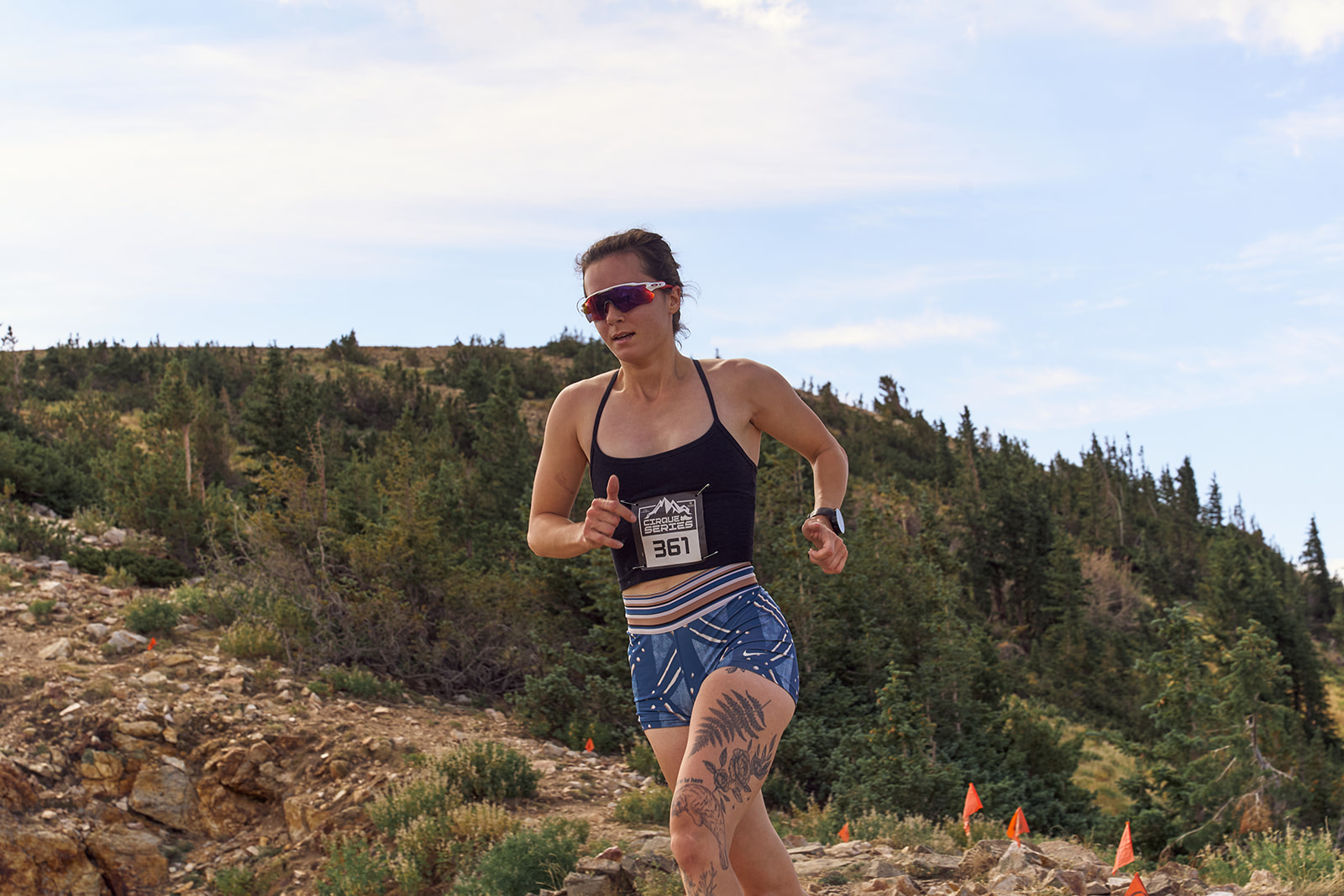
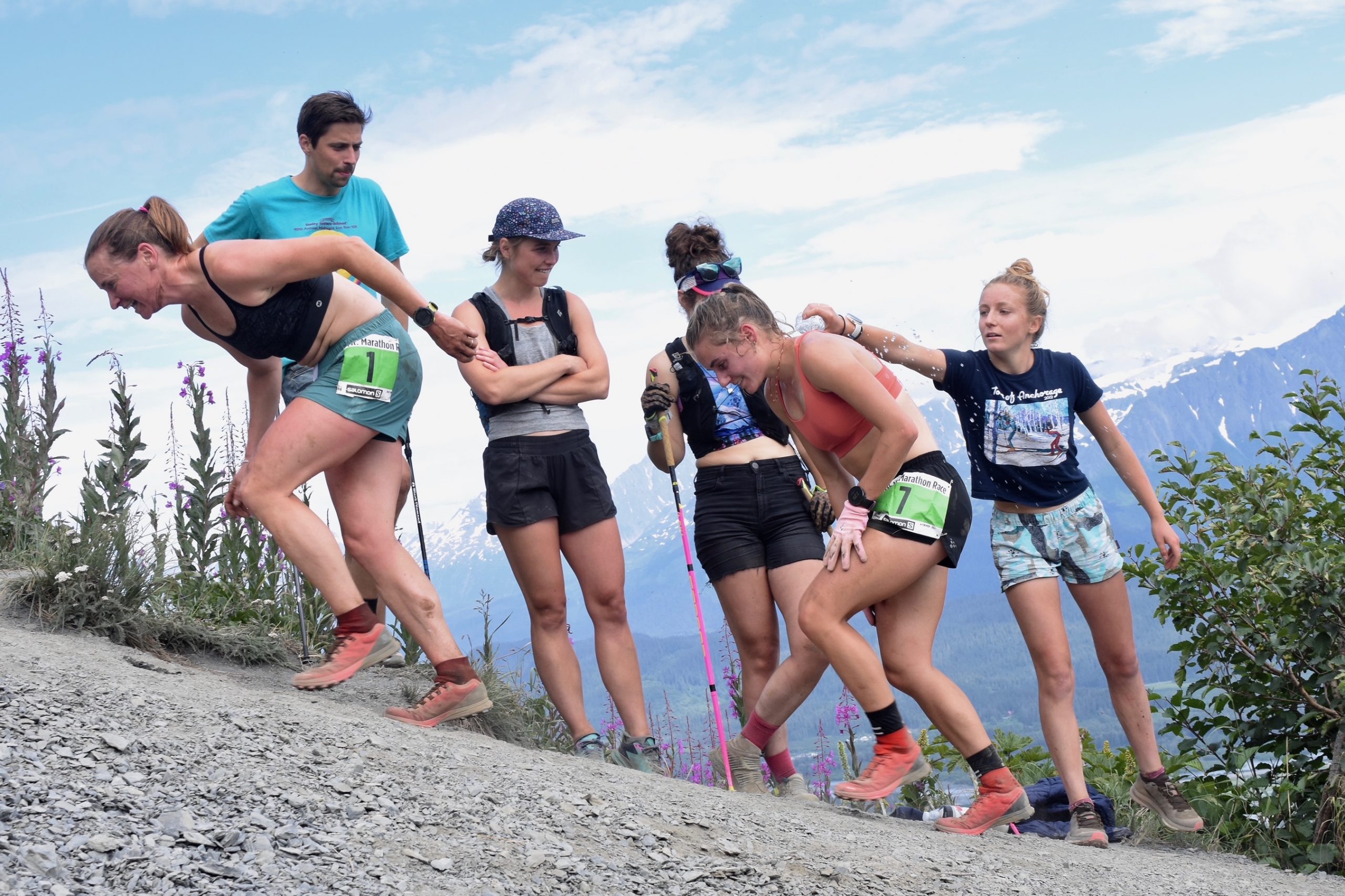
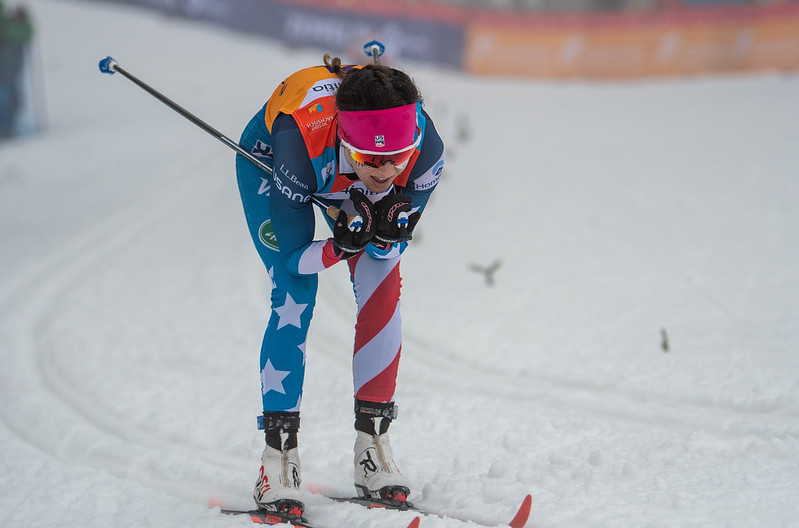
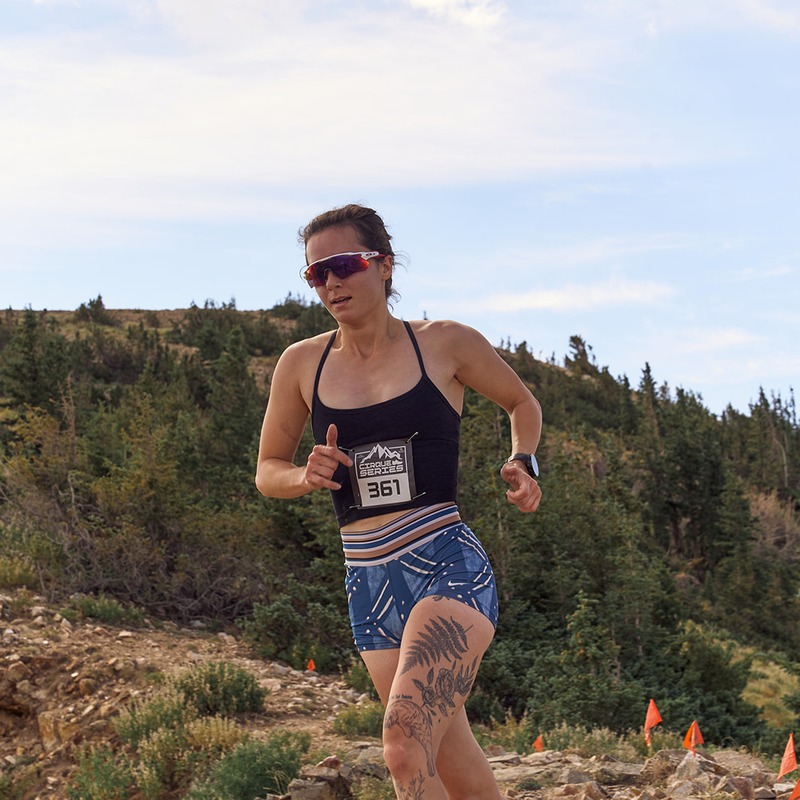
    Kendall Kramer running uphill on a rocky mountain course wearing race bib 361.
    Kramer climbing at the Cirque Series race at Alta, Utah, in 2025. Summer mountain races have been part of her calendar for years. (Photo: Austin Elliott Photography)

    A Race Within the Race

    The Broken Arrow Ascent rises 2,840 feet over 3.61 miles at Palisades Tahoe, ending near 9,000 feet on Washeshu Peak. The course offered Kramer a familiar kind of discomfort. Skiers spend plenty of summer training sessions running uphill, and she has raced mountains throughout her life in Alaska. She was also drawn to an uphill-only event, where she could attack the climb without risking the pounding, falls and injuries that can accompany a technical descent.

    The altitude complicated the effort. An ascent race can feel like a sprint, Kramer said, because its short length allows runners to push rather than settle into prolonged power hiking. Near 9,000 feet, that approach requires more restraint. Still, years of ski racing and training at elevation gave her a sense of how to manage those obstacles.

    Kramer had entered with a tangible goal: finish in the top 10 and earn prize money. The field was strong enough that doing so, she felt, would also establish her among other serious mountain runners.

    She started picking off competitors as the course climbed and found another surge near the end, when a cluster of women remained within reach. Kramer lost track of her exact position amid the passes but knew she was close. She crossed two seconds behind 10th place.

    “I was like, ‘Oh darn,’” Kramer said. “At least it was a good effort race.”

    Weeks earlier, the elite runners had been told that the Ascent would double as the USATF uphill championship and a qualifier for the World Cup Finale. Kramer bought a USATF membership and entered that competition, too, mostly because there was no reason not to. She skimmed the qualification information without giving it much thought.

    “This field is crazy,” she remembered thinking. “That’s not really going to be me.”

    After the race, Kramer and her mother began walking from the summit toward the tram. She checked the overall results first. Then she noticed a separate view for the USATF championship, which removed athletes who were not entered in the national race. Kramer had nearly forgotten about the competition within the competition.

    Her name was listed in fourth, and the top four qualified.

    “I totally didn’t factor myself into that,” Kramer said. “It was definitely a surprise. I was really proud that I could make a team like that.”

    Kramer may not have expected the qualification, but it drew on years spent building the aerobic engine and uphill strength that mountain racing rewards. She simply had not imagined that an ability maintained partly for balance and enjoyment would carry her onto another international team.

    A young Kendall Kramer running a road race alongside an adult runner wearing a race bib.
    Kramer came to athletics through running before she found skiing. Both of her parents are runners. (Courtesy photo)

    A Runner First

    Running has never felt like a secondary sport to Kramer, even as skiing became her profession.

    “Running was always my main sport, in the sense that that’s what I got into when I got into athletics,” she said.

    Both of her parents are runners, and running shaped the athletic culture of her family in Fairbanks. She tried soccer and baseball, but she liked the directness of a sport in which her work and her result felt closely connected. Skiing came later because, as she put it, it was “what all the cool kids did.”

    The two sports eventually became inseparable. At the University of Alaska Fairbanks, Kramer competed in both throughout college. She won three straight Great Northwest Athletic Conference cross-country titles and finished second at the 2024 NCAA Division II Cross-Country Championships. Four months later, in the final ski race of her collegiate career, she won the 20-kilometer freestyle at the NCAA Skiing Championships.

    Kramer’s skiing has since reached a new level. She made her Olympic debut in Italy in February and placed ninth in the World Cup skiathlon in Falun in March, her first top-10 World Cup result. Yet running still supplies something that skiing cannot.

    “If I didn’t have it, I wouldn’t be able to handle all of the skiing that I do,” Kramer said. “I like feeling like I have another athletic outlet to keep me happy, because skiing can be fleeting and have all sorts of disappointments with equipment and stuff. Running feels more in control.”

    That control is physical, but it is also logistical. A ski race can hinge on wax, snow, weather and the work of moving equipment from one place to another. Running asks much less before the gun goes off. On a running trip, Kramer said, there is more space to enjoy the people and the place around the competition.

    “It feels like it adds to your life,” she said. “It’s so manageable.”

    The harder question came when her college cross-country career ended. Kramer loved the sport’s courses, team culture and changing terrain, but there is no obvious post-collegiate version of NCAA cross-country. Track and road racing did not offer the same pull, and she was not ready to build her running life around marathons on pavement.

    Mountain racing offered another route. In Alaska, it had never felt like a separate niche so much as part of the local calendar. Races such as Mount Marathon and the Cirque Series became summer traditions, with familiar faces returning to familiar mountains each year. Two weeks after Broken Arrow, Kramer placed seventh at Mount Marathon in 52:53.

    “I loved running cross-country and being in the woods and going along a course that has different aspects,” Kramer said. “You have an uphill and downhill, and you have to change, just like skiing.”

    Mountain racing preserved the parts of running Kramer loved and opened a path to international competition she never expected to enter.

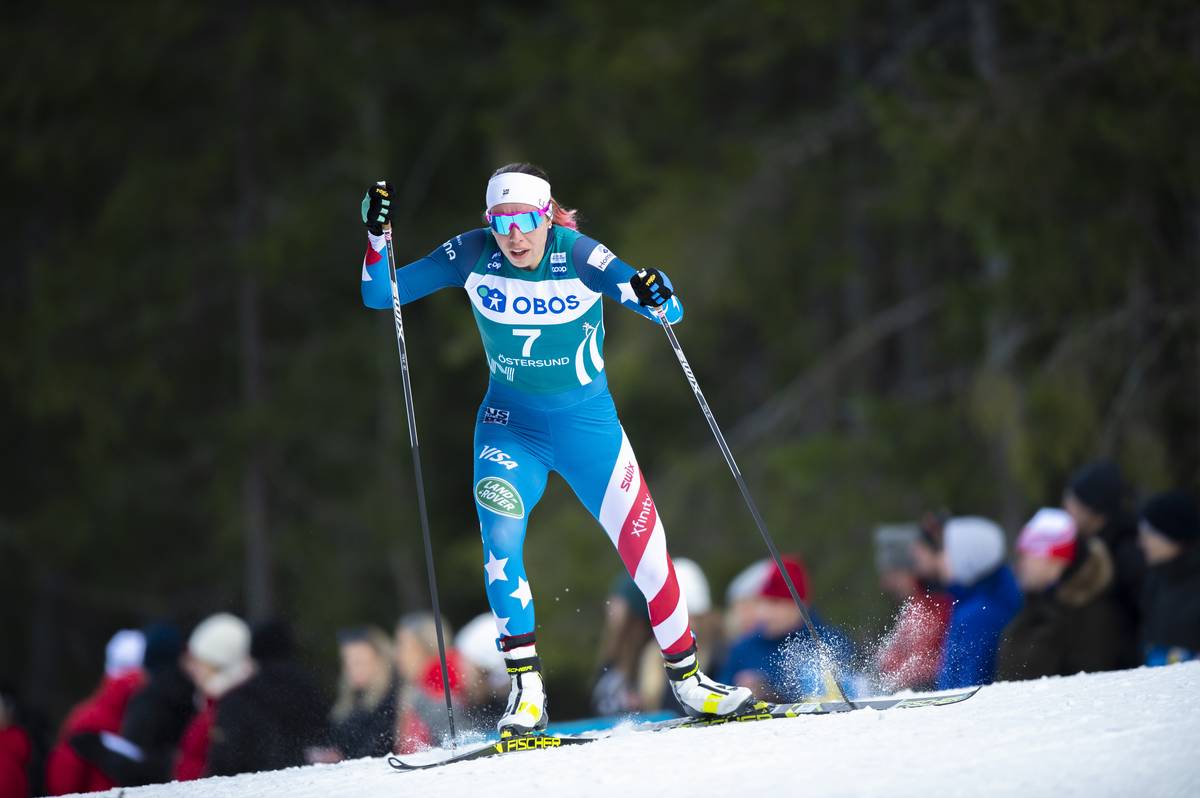
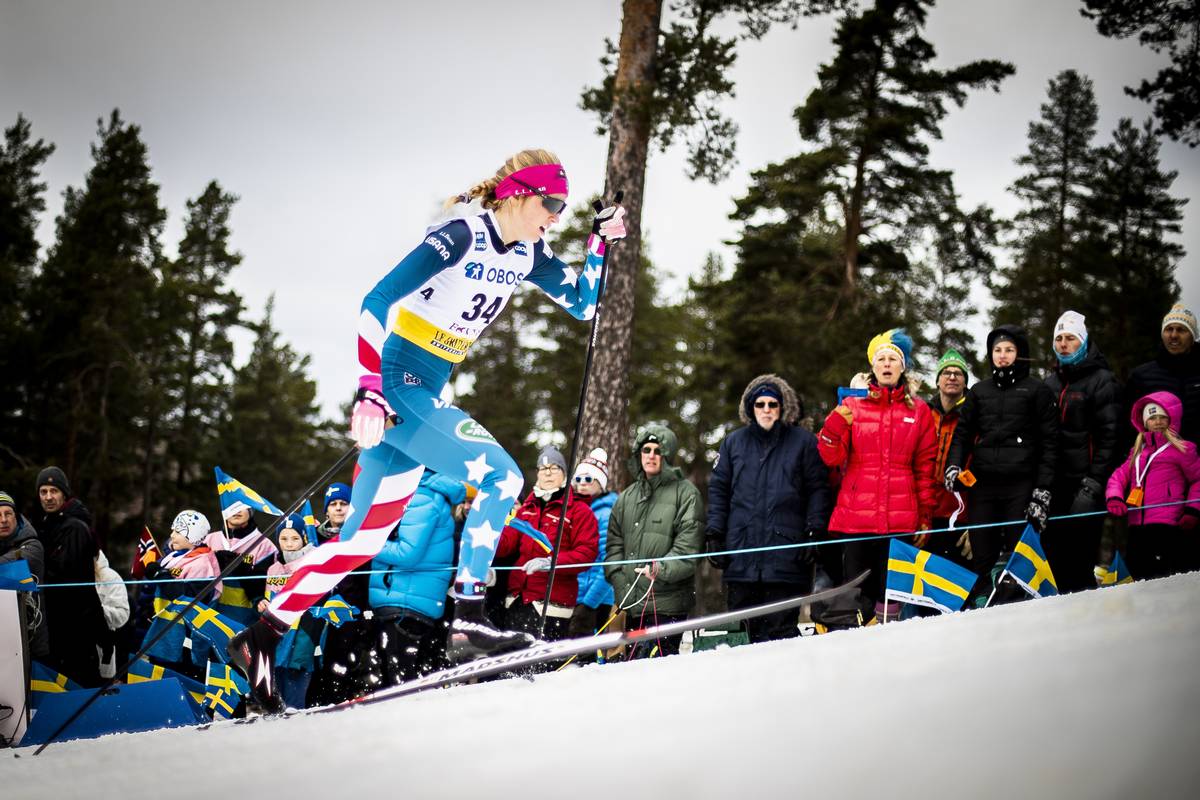
    Kendall Kramer racing the World Cup skiathlon at Falun, Sweden.
    Kramer on her way to a career-best ninth in the World Cup skiathlon in Falun, Sweden, in March. She argues that summer racing is part of what makes winter results like that possible. (Photo: Authamayou/NordicFocus)

    Keeping a Pulse on Racing

    For Kramer, racing in the summer is not a diversion from ski training. It is one of the ways she makes that training more useful.

    An occasional race does interrupt a perfectly planned week. She may back off for a few days beforehand, then need time to recover afterward. Some skiers see that as lost volume. Kramer believes the costs are outweighed by the chance to revisit sensations that ordinary training cannot reproduce.

    “Racing is very different from training,” she said. “At least I think so, and I think it should be different from training.”

    Kramer likes to race roughly once a month during the offseason. Each start provides a checkpoint on her fitness, pacing and ability to summon focus when a result matters. Those reminders make the first ski races of winter feel less abrupt; she arrives with recent evidence of how her body and mind respond in competition.

    Races also make weaknesses harder to ignore. A disappointing moment can become the direction for the next training block rather than a problem discovered after the ski season begins.

    “Sometimes you don’t get an idea of where you’re lacking and where your strengths are if you don’t tap into that throughout the summer,” Kramer said.

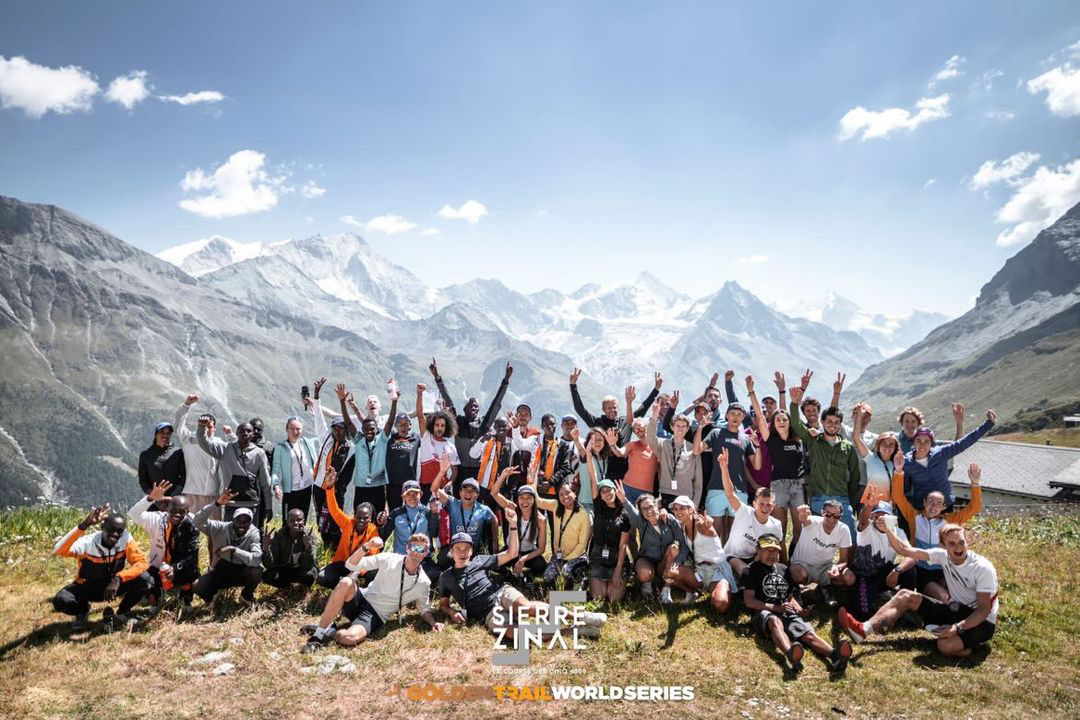
    At Broken Arrow, the crossover was all around her. Olympic ski mountaineer Anna Gibson won the Ascent and the U.S. uphill title in 43:15. Diggins completed all three races, a total of 75 kilometers with more than 16,000 feet of climbing, and finished fourth in the Triple Crown standings. Sophia Laukli has built an elite trail-running career alongside cross-country skiing, winning the 2023 Golden Trail World Series. In August, Gibson placed sixth among women at Switzerland’s Sierre-Zinal, while the recently retired Diggins finished 37th.

    Those examples helped Kramer recognize that mountain running can be more than incidental cross-training. The sport has international races, sponsors and prize money, particularly in Europe. Its U.S. elite pool remains relatively small, and a skier who already possesses a strong aerobic base can become competitive quickly. That does not make the crossover effortless.

    “I’m not going to act like I’m couch-to-mountain-running,” she said. “I’m definitely trying, and I’m also not downplaying the girls who do train for it. But I am saying that ski training works for it, and getting fit in general works for it.”

    The larger benefit may be less measurable than fitness. Elite skiers live by periodized plans: intervals on one day, over-distance training on another, each block designed to build toward winter. Kramer believes athletes can become so protective of that structure that they miss the value of occasionally disrupting it.

    “People are really scared to break away from that,” she said. “But I think you can be a really adaptable athlete and build skills that a regimented training plan can never get you.”

    Her confidence in that approach has been earned over years of combining running and skiing without sacrificing results in either. That history has also built trust with her coaches. An unplanned race or an imperfect training week does not look like recklessness when the larger pattern shows that she understands how to make the two sports work together.

    The mental return matters as much as the physiological one. A summer race provides the competitive charge that long weeks of training can lack and asks an athlete to solve problems in real time: exactly what winter racing eventually demands.

    Kendall Kramer in a running vest above an alpine lake in the Alaska mountains.
    Kramer on a run in the Alaska mountains. Her next start comes Oct. 10 at Mont-Sainte-Anne in Quebec. (Courtesy photo)

    The Next Side Quest

    Kramer’s next test comes Oct. 10 at Mont-Sainte-Anne in Quebec, where the circuit will make its first visit to Canada. The current course listing calls for five kilometers and roughly 800 meters of climbing. It will begin far below the altitude Kramer encountered at Broken Arrow, removing one variable while preserving a steep uphill challenge.

    She wants to finish in the top 10. Broken Arrow showed that she can stay close to that range in a deep international field, and the chance to race without a near-9,000-foot finish has left her curious about what more she can do.

    Beyond Quebec, Kramer would consider mountain races in Europe if a sponsor or U.S. team opportunity made the travel possible. She is not mapping out a second full professional calendar yet. The appeal lies partly in leaving room for opportunities to appear, then being fit and adaptable enough to take them.

    “I would love to look back and see that I took those opportunities,” Kramer said. “Running has never hurt me in the past. I’ve always been able to juggle both.”

    Kramer does not argue that every skier should copy her schedule. She wants more athletes to leave room for the experiences that may not fit perfectly into a training plan but help them handle everything racing asks of them.

    “It can make you a better skier in ways that maybe aren’t the best training on paper,” Kramer said. “But it makes you a good athlete, which comes in handy when you least expect it.”

    At Broken Arrow, that lesson was waiting in a second set of results she had nearly forgotten to check.

    Help Support Our Coverage!

    If you value the thoughtful work and access FasterSkier provides, please consider becoming a Voluntary Subscriber. Your support directly fuels our work to cover the people, places, and moments that make our sport special.

    Join the FasterSkier community!


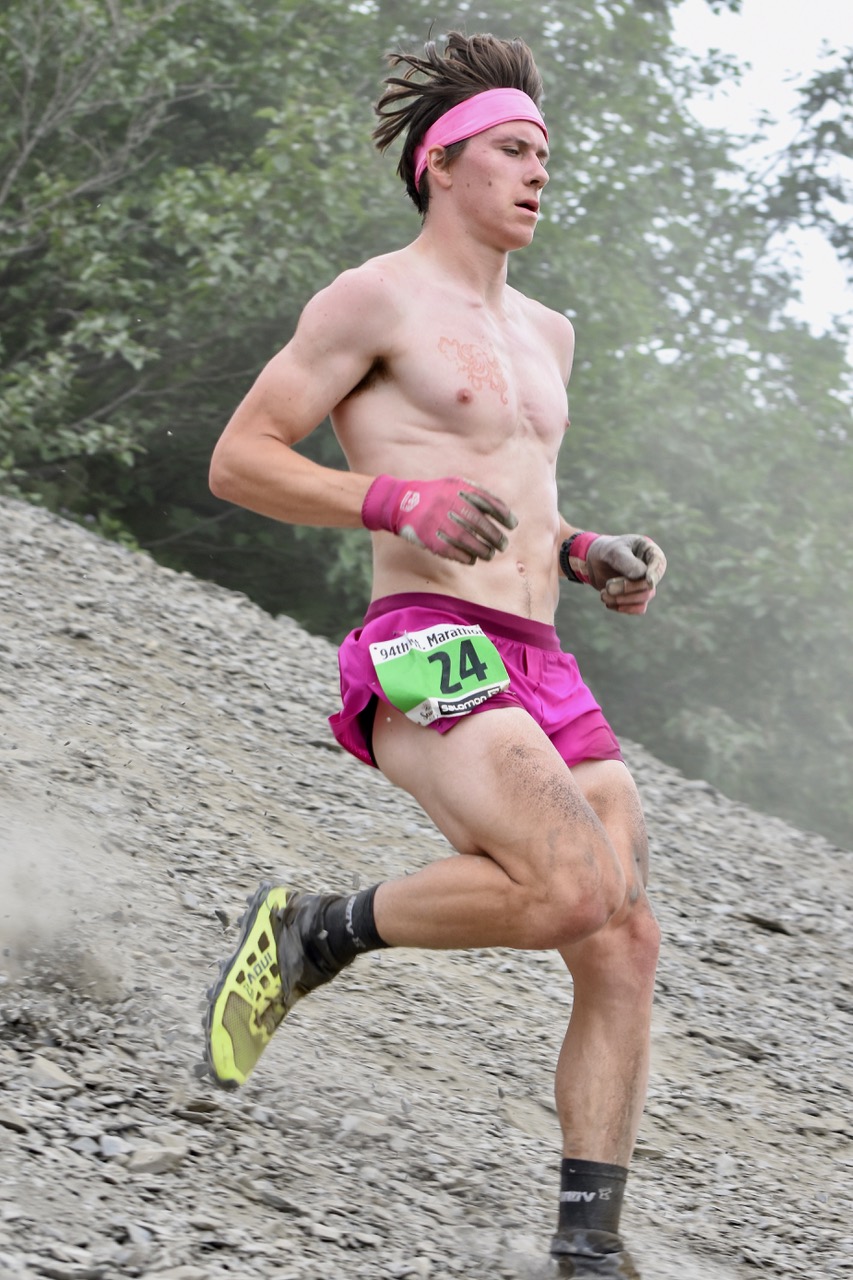
    Kendall Kramer racing cross-country in an Alaska Fairbanks singlet, number 24, past a course flag line.
    Kramer racing cross-country for Alaska Fairbanks. She won three straight GNAC titles and finished second at the 2024 NCAA Division II championships. (Courtesy photo)
  • Karlsson Leads Swedish Sweep Through Holmenkollen Fog

    Karlsson Leads Swedish Sweep Through Holmenkollen Fog

    This coverage is made possible through the generous support of Marty and Kathy Hall and A Hall Mark of Excellence Award. To learn more about A Hall Mark of Excellence Award, or to learn how you can support FasterSkier’s coverage, please contact info@fasterskier.com.

    Frida Karlsson (SWE) claimed her third Holmenkollen win, her second at the 50 kilometer distance. (Photo: Authamayou/NordicFocus)

    The prize for winning Oslo’s Holmenkollen 50 k is lifelong bragging rights. Such is the nature of the prestige afforded this event within the Nordic ski community. Norwegian fans, especially, remember certain years, certain races, certain rivalries; especially those that are memorable for the racing conditions that challenged the athletes. Fans are likely to remember this 2026 edition, and the thick, stubborn fog that enveloped the racers throughout the 50 kilometer distance. Stadium announcers regularly reminded the audience that racers were entering the stadium . . . otherwise, fans might not have known. The fog may have appeared thicker and soupier through the lens of broadcast cameras, but it’s certain that the fog hung close to the ground, obscuring skiers’ views of the course, of the crowds, and of their competitors. Perhaps that had something to do with the more measured pace the leaders selected. By the halfway point of the race, the entire women’s field was still together (not at all the normally expected state of affairs in women’s mass-start Distance racing). The regular cast of contenders remained at the front—Frida Karlsson (SWE), Ebba Andersson (SWE), Heidi Weng (NOR), Astrid Oeyre Slind (NOR), Jonna Sundling (SWE), and Jessie Diggins (USA)—but none of them seemed eager to race off alone.

    Karlsson would emerge from the fog first, crossing the finish line all alone to claim her third Holmenkollen race, and her third at the 50 kilometer distance. Behind Karlsson, her Swedish teammates—Linn Svahn and Jonna Sundling—would sprint across the line in second and third, just ahead of Heidi Weng (NOR), Nora Sanness (NOR) and Jessie Diggins (USA).

    “It’s such a magic day for our team,” beamed Karlsson. “It’s our first “triple” in the distance, and it’s sick!”

    Alison Mackie (CAN) followed up a win at the U23 World Championships with a 14h place debut in the Holmenkollen 50 k. (Photo: Authamayou/NordicFocus)

    Canada’s Alison Mackie remained in the top 10 through the halfway mark, and continued to make her presence felt throughout the 50 kilometer distance. . A young skier with a bright future, Mackie was certainly making he most of her first Holmenkollen. She would finish the day in 14th, sandwiched between established distance-racing stars Kristin Austgulen Fosnaes NOR) and Astrid Oeyre Slind (NOR).

    Kendall Kramer (USA started 45th (out of 50 starters), but in the close company of the 46th starter, Delphine Claudel (FRA), a world class Freestyle competitor. If they could work together, they could make up many places in a hurry. By the five kilometer mark, Claudel had managed to work her way all the way up to the front . . . but Kramer was nowhere to be seen. Claudel would hang on to finish 28th. Kramer would cross the line 41st.

    Clearly the best . . . Frida Karlsson (SWE) raced away from her rivals, exiting the fog to claim victory in Holmenkollen’s historic 50 k Freestyle.  (Photo: Authamayou/NordicFocus)
    Holmenkollen 50 k Freestyle

    The Holmenkollen 50 k consists of six laps of an 8.3 kilometer loop, demanding 1000 feet of climbing per lap. And this day in Oslo, race organizers elected to stage the race in a manner that put both the women’s field and the men’s field on the course at the same time, albeit separated by half a lap’s distance. The men’s field would come through at the end of the bonus points at 19.6 kilometers just before the women started, providing a head start of approximately a four kilometers. Stragglers from the men’s field would ultimately be caught by the women. Likewise, stragglers from the men’s field would later be caught by the women. In the thick fog that hovered over the course during today’s race, there was plenty of opportunity for mild confusion.

    Karlsson Weng, Andersson, and Slind would ease to the front, providing the early pace, but not going straight to the accelerator as they might have done on a normal day. Behind them, another predictable tier of racers followed, including Nepryaeva, Sundling, and Diggins. The men’s field had already passed through 20 kilometers in a massive, cohesive unit. It was possible that the bizarre conditions on the day would influence the women’s field to do the same.

    Diggins won the bonus points at the three kilometer check point, gaining another 12 points over her closest rival in the chase for the Crystal Globe, Moa Ilar (SWE). Diggins would again remain ahead of Ilar at the 11.3 bonus points line. Diggins would collect eight points by crossing the line fourth.

    Just before the end of the second lap, Slind stumbled and fell. She would need to spend extra energy to rejoin the leaders, if she was even able to. The field would slow a bit in the feed zone, but Slind would still have a gap of nearly eight seconds to make up . . . and Weng, Andersson, Karlsson, and Diggins continued to make the pace at the front.

    Karlsson upped the pace as they approached the 27.9 bonus points line, gapping he rest of the field in the company of Weng and Karoline Groetting (NOR). Diggins led the rest just nine seconds behind, but it seemed that a gap was forming. Diggins would use the technical downhills of the Holmenkollen course to rejoin the leaders, though she also dragged other sprinters forward. With twenty kilometers remaining, the leaders had yet to get rid of Sundling and her Swedish teammate, Olympic Sprint champion, Linn Svahn. Karlsson and Weng would’ve known that their chances of victory relied on their ability to drop those sprinters. All the leaders opted to switch skis at the end of the lap. They would all be on new skis for the final two laps.

    Karlsson used the first uphill of the fifth lap to break away. She was followed briefly by Groetting, bu by the top of the slope, Karlsson was away, disappearing into the fog at the front. Groetting would dangle alone in the fog ahead of a chase group led by Svahn. Diggins would continue to bob at the back—on again, off again—repeatedly showing her ability to close gaps and make up ground.

    With 12 kilometers to go, Karlsson was away, in full flight, and powering through the fog. Her lead would continue to grow: ten seconds, 15 seconds, 30 seconds, ultimately extending to nearly two minutes. The solo chaser, Groetting, would be caught by the chase group that now consisted of six: Weng, Svahn, Sundling, Groetting, Nora Sanness (NOR), and Diggins. Diggins may be leading the World Cup Distance standings, but Karlsson was continuing to prove that she is the premier Distance skier in the world.

    Linn Svahn (SWE), Frida Karlsson (SWE), Jonna Sundling (SWE) made up what Karlsson described as “Our first triple” in World Cup Distance podiums. (Photo: Authamayou/NordicFocus)

    Karlsson would ski the last lap alone to claim her second Holmenkollen 50 k victory. The chase group would decide the podium with a sprint to the line, in which Svahn would outsprint Sundling. Weng would cross fourth, ahead of Sanness and Diggins.

    Karlsson had shown the potential to exit the recent Olympic Games in possession of four gold medals . . . her performances would deliver only two (the Skiathlon, and the 10 k Freestyle). After the disastrous tumble of Ebba Andersson in the Team Relay (which allowed Norway to steal away the gold medal), and Karlsson’s own illness that kept her from competing in the 50 k, Karlsson appeared still to have something to prove when she toed the Holmenkollen starting line in Oslo. She would ski away from the rest of the best, stamping her authority on this historic race and claiming the sort of lifelong bragging rights that only the Holmenkollen can provide.

    Holmenkollen Women’s 50 k Freestyle RESULTS

    Love Stories Like This? Help Keep Them Coming.

    Feature stories like this one take time, access, and care to produce. If you value thoughtful storytelling and independent ski journalism, please consider becoming a Voluntary Subscriber. Your support directly fuels the work we do to cover the people, places, and moments that make our sport special.

    Join the FasterSkier community!
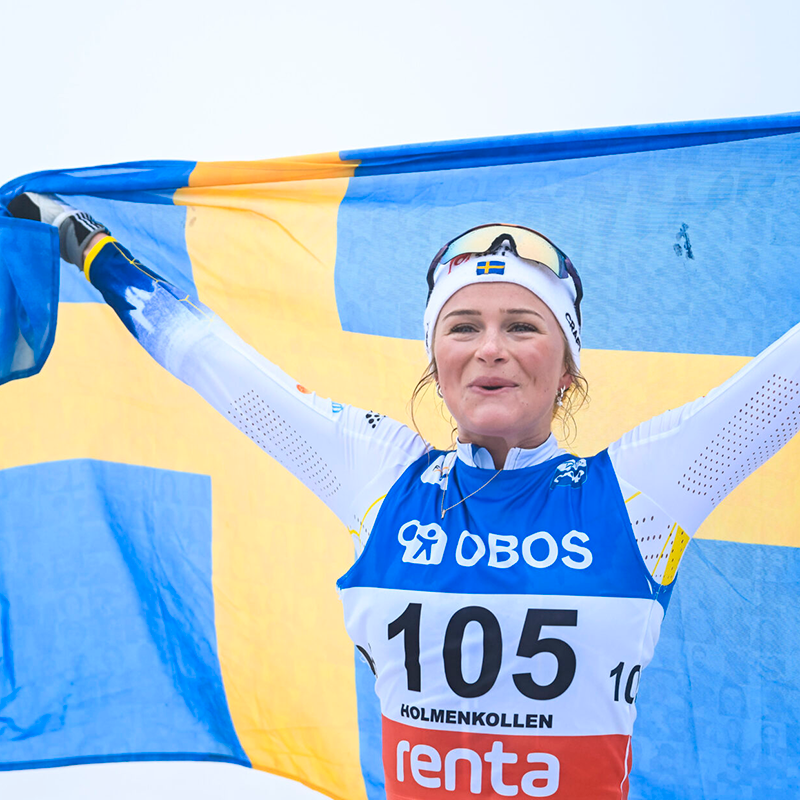
    Good luck finding the finish line . . . Linn Svahn (SWE) and Jonna Sundling (SWE) race through Holmenkollen’s thick fog toward the Swedish flag held aloft by race winner, Frida Karlsson (SWE). (Photo: Authamayou/NordicFocus)


  • Diggins Podiums in Lahti as Karlsson Wins 10 k Classic

    Diggins Podiums in Lahti as Karlsson Wins 10 k Classic

    This coverage is made possible through the generous support of Marty and Kathy Hall and A Hall Mark of Excellence Award. To learn more about A Hall Mark of Excellence Award, or to learn how you can support FasterSkier’s coverage, please contact info@fasterskier.com.

    Jessie Diggins (USA) on her way to third place in the 10 k Classic Individual Start in Lahti, Finland. (Photo: Authamayou/NordicFocus)

    As Jessie Diggins climbed the final hills in Lahti on Sunday, she could hear something unusual rising above the crowd noise. Scattered along the course were hand-made signs held by Finnish fans and young skiers. Many carried the same simple message: “Thank you, Jessie.”

    For Diggins, racing through what has increasingly become a farewell tour of World Cup venues that have defined her career, the moment carried emotional weight. Lahti has not always been a place where the American felt the course played to her strengths, particularly in classic technique. But on Sunday, she delivered one of her most meaningful performances there, skiing to third place in the women’s 10-kilometer classic interval start.

    “There were so many people out on the course with signs saying ‘Thank you, Jessie,’ and it was really emotional in the best way,” Diggins said afterward. “It was incredibly touching. Seeing all the little kids in glitter after the race was just really special.”

    Frida Karlsson (SWE) on her way to the 10 k Classic win in Lahti, Finland. (Photo: Authamayou/NordicFocus)

    Sweden’s Frida Karlsson powered to the victory in 25:57.6, edging teammate Linn Svahn by just over four seconds. Diggins followed in third, 6.2 seconds behind the winner, securing the 90th World Cup podium of her career — a milestone that came in her 375th World Cup start.

    The podium also represented a breakthrough for Diggins in a discipline she has spent years working on. Despite her long list of accomplishments, Sunday marked her first World Cup podium in a standalone 10-kilometer classic interval start.

    “The Lahti course hasn’t always suited my strengths in classic skiing,” Diggins said. “So it felt really cool to pull it together a bit more today.”

    The result allowed Diggins to maintain control of both major season-long competitions. With only three World Cup stops remaining this winter, she continues to lead Sweden’s Moa Ilar by 264 points in the Overall World Cup standings and by 188 points in the Distance standings, positioning herself strongly in the race for the sport’s coveted crystal globes.

    Moa Ilar (SWE) and Linn Svahn (SWE), (l-r) reflecting at the finish. (Photo: Authamayou/NordicFocus)
    Svahn Sets the Early Benchmark, Karlsson Finishes the Job

    With the interval format — one athlete starting every 30 seconds — stretching the field across the Lahti course, the first major time to chase appeared almost immediately.

    Sweden’s Linn Svahn, starting with bib 5, was among the earliest contenders onto the course and quickly posted the fastest times through the early checkpoints. Known primarily as one of the World Cup’s dominant sprinters, Svahn skied aggressively over the opening kilometers and established the benchmark that much of the field would spend the next hour chasing.

    Her time held atop the standings as racer after racer attempted to match it.

    Later in the race, however, another Swede began to close the gap. Frida Karlsson, wearing bib 40, remained within seconds of Svahn through the intermediate checkpoints before edging ahead in the final kilometers.

    “I was just trying to stay in my own skiing,” Karlsson said afterward. “I heard it was between me and Linn, and I was super excited to get that fight.”

    Karlsson ultimately crossed the line in 25:57.6, securing the victory by 4.1 seconds over her teammate.

    The win came after a brief illness, which prevented her from competing in the Olympic 50 k, but Karlsson said she was eager to keep racing despite the setback.

    “I was sick after the Olympics, but I was really excited to keep racing and just do what I know best,” she said. “So I’m super glad to be here.”

    Diggins, starting shortly after Karlsson, kept herself in contention throughout the race, skiing within striking distance of the Swedish pair at each checkpoint before finishing 6.2 seconds back in third place.

    Linn Svahn (SWE) on her way to second place. (Photo: Authamayou/NordicFocus)
    Three Different Approaches to the Same Race

    The split times revealed three distinct pacing strategies among the podium finishers.

    Svahn, starting fifth, set the tone early. She posted the fastest time through the opening 1.1 kilometers and maintained the lead at the 3.4-kilometer checkpoint, immediately putting pressure on the rest of the field as they left the start gate.

    Karlsson, starting later in bib 40, remained just seconds behind through the early checkpoints, skiing a controlled opening before gradually closing the gap. By the middle of the race, she had moved into contention, and over the final kilometers, she proved strongest of all, ultimately pulling ahead to secure the victory.

    Diggins, meanwhile, delivered perhaps the most evenly paced effort of the three. She remained within striking distance of the leaders at every checkpoint — fifth at 1.1 kilometers, third by 3.4 kilometers, and still in podium position through the final lap.

    That steadiness proved decisive in the final standings. While the two Swedes battled for the win, Diggins’ consistent pace allowed her to secure third place and another important podium in the fight for the season-long crystal globes.

    Jessie Diggins (USA) sprints for the finish line. (Photo: Authamayou/NordicFocus)
    Diggins’ Classic Progress

    Diggins’ podium also reinforced one of the season’s quieter developments: the continued evolution of her classic technique.

    For much of her career, the American’s greatest moments have come in skating events, where her aggressive pacing and powerful finishing speed often prove decisive. But this season she has shown remarkable consistency in classic distance races, finishing in the top ten in every classic distance event on the World Cup calendar.

    Conditions in Lahti — warming temperatures and increasingly soft tracks — placed an additional premium on ski preparation, something Diggins was quick to acknowledge after the race.

    “I had great skis, which is a huge part of the equation, especially when the conditions get slushy,” Diggins said. “This podium really belongs to the team. I’m so grateful for all the hard work they put in.”

    Rosie Brennan (USA) on her way to 12th place. (Photo: Authamayou/NordicFocus)
    Brennan Continues Return to Form

    A bit further down the results list, fellow American Rosie Brennan continued a gradual return toward form after a long battle with illness that has affected much of her season.

    Brennan finished 12th (+38.6) in Lahti, a result that reflected both solid skiing and a cautious approach early in the race.

    “This whole process has really been a game of time,” Brennan said. “There have been many moments when I’ve wondered if I’ll ever feel normal again in my life. But the last three days are the most normal I’ve felt racing since December 2024.”

    The Lahti course, known for its steep climbs and technical demands, offered a test of efficiency in classic technique — a challenge Brennan felt she handled well.

    “Lahti requires really good technical skiing,” she said. “I felt like if I could relax and focus on my classic technique, that would give me the best chance.”

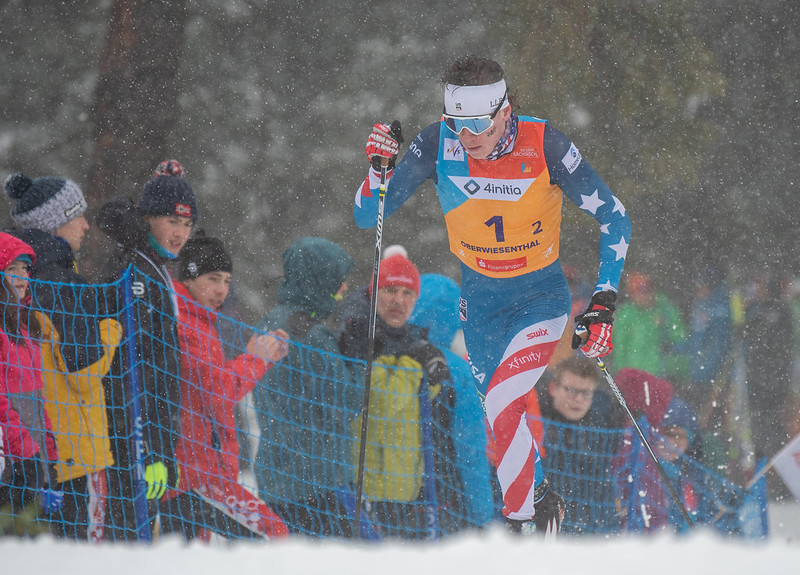
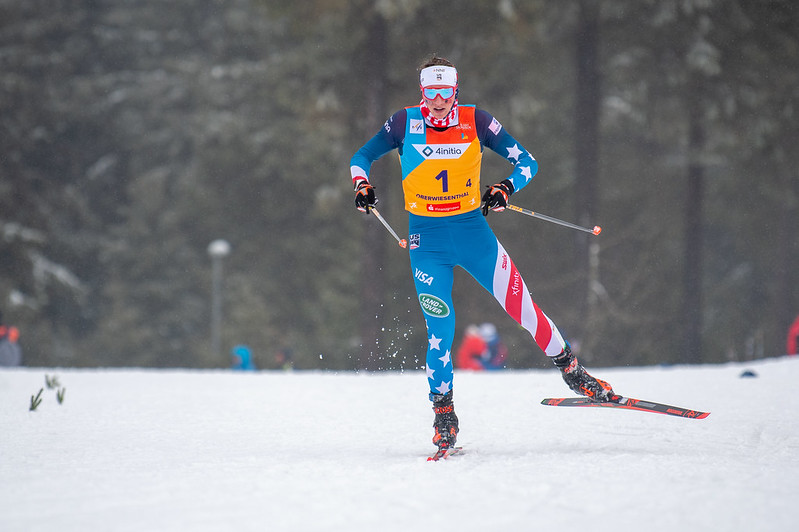
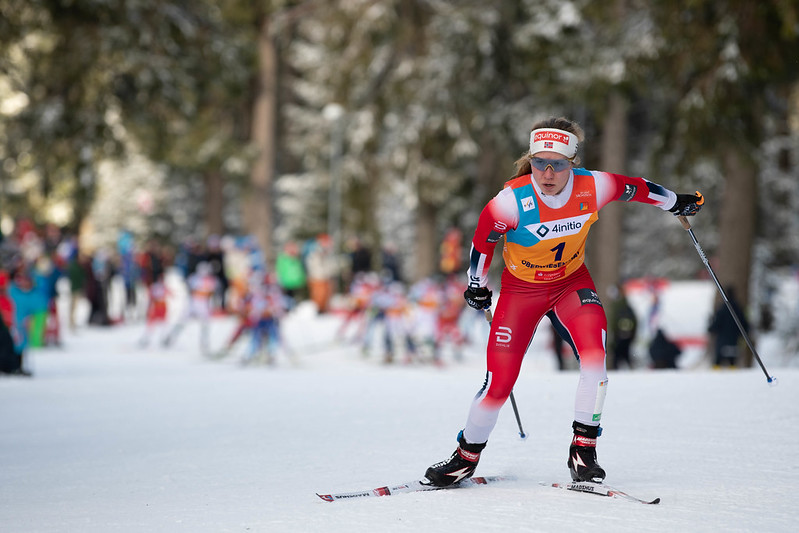
    Kendall Kramer (USA) working her way up one of the many Lahti climbs. (Photo: Authamayou/NordicFocus)
    Kramer Finds Lessons in the Lahti Hills

    For American Kendall Kramer — 42nd in 27:40.8 (+1:43.2) — the Lahti race presented a different kind of challenge: starting first.

    Wearing bib 1, Kramer had the advantage of pristine tracks before the course began to break down as temperatures warmed. But the early start also meant racing without reference splits from the rest of the field.

    “I was actually okay starting with bib 1 today, given the state of the tracks,” Kramer said. “They tend to break down as the race goes on, and the corners can get icy, so it was nice to have cleaner conditions early.”

    Without other athletes on course to gauge pacing against, Kramer said the race became more about skiing freely and trusting her own effort.

    “Racing without reference splits definitely makes pacing tougher, but at the same time it lets you ski freely and focus on your own race.”

    The steep Lahti climbs also highlighted the technical demands of classic skiing at the World Cup level.

    “The punchy hills were fun because I could really bound up them, which is something I haven’t done much in World Cup racing so far,” Kramer said. “But the sections where it turns into pure power striding showed me I still have a lot to work on.”

    Despite the challenges, Kramer described the experience as valuable for understanding the technical standards required to compete consistently at the highest level.

    “I’ve learned so much from racing here this season,” she said. “At the World Cup, every strength and every weakness gets highlighted, and that really helps show what to work on heading into the summer.”

    Julia Kern (USA) catches a rest from both the climbs and the sunlight. (Photo: Authamayou/NordicFocus)
    Kern Heading Home Early to Recover

    Julia Kern, who finished 51st — 28:11.4 (+2:13.8) — today, said she will return home early from the World Cup circuit as she continues working through health issues that have lingered since the Olympic races.

    “I’ve been battling my body on various fronts since the Olympics,” Kern said in a team media statement. “One of my strengths is showing up and continuing to try and believe despite the challenges, while also being patient and smart.”

    Kern added that she will take additional time to recover while seeking answers about her condition, with hopes of returning to competition at the Stifel World Cup Finals in Lake Placid later this month.

    “Right now, my body needs more time to recover and is in search of answers, so I’m headed home early with the hopes of being in a place to race in Lake Placid.”

    Lauren Jortberg (USA) and Katherine Weaver (CAN), (l-r) charge for the line. (Photo: Authamayou/NordicFocus)
    Jortberg Gets a Front-Row Look at Karlsson’s Pace

    For American Lauren Jortberg — 55th in 28:32.7 (+2:35.1) — the Lahti race offered a unique opportunity to measure herself against one of the sport’s best.

    Early in the race, Jortberg found herself skiing behind Sweden’s Frida Karlsson for several kilometers as the eventual winner was completing her second lap while Jortberg was still on her first.

    “I skied with Frida for about three kilometers, which was really cool,” Jortberg said. “She’s obviously a beast, and it was cool to hang with her and get a taste of what that pace actually feels like.”

    Jortberg said the experience offered valuable insight into the demands of racing a 10-kilometer interval start at the World Cup level, where pacing often means pushing near maximum effort from the start.

    “Ten-k pacing on the World Cup is basically as hard as you can go the whole way,” she said. “It’s about learning how to navigate that kind of effort and still ski your own race.”

    She added that the race reinforced both the progress she has made in classic technique and the areas she hopes to continue developing as she gains more experience at the international level.

    “I’m really proud of how my classic skiing is coming along,” Jortberg said. “There’s still a lot to work on, but it was definitely a good first start in a distance race.”

    Jortberg said she hopes to carry the fitness and lessons from Lahti into the next stop on the World Cup circuit in Drammen, Norway.

    Emma Albrecht (USA) giving it everything she can all the way to the finish. (Photo: Authamayou/NordicFocus)
    Albrecht Sees the Margins Up Close

    Further back in the start order, fellow American Emma Albrecht — 58th in 28:50.7 (+2:53.1) — experienced firsthand just how tight the margins can be in World Cup distance racing.

    “The tight margins were shown by skiers finishing at similar times,” Albrcht said after the race. “For me, I was not passed, and I did not pass anyone. Which meant the skiers in front and behind me were skiing at a similar pace to me.”

    Like Kramer, Albrecht said the steep Lahti climbs emphasized the technical demands of classic technique, particularly the efficiency required to stride uphill without losing grip.

    “The uphill sections are the most technical and demanding here,” she said. “The climbs in Lahti are steep, and striding up efficiently requires really good technique to avoid slipping.”

    For Albrecht, the race served as a clear reminder of the areas she hopes to refine moving forward.

    “One of my biggest takeaways is that I want to keep working on my striding technique and get better at adjusting my tempo based on the terrain.”

    Dariya Nepryaeva (AIN) and Novie Mccabe (USA), (l-r) come to the line. (Photo: Authamayou/NordicFocus)
    Other North Americans in the Field

    Novie McCabe raced her way to 43rd in 27:45.0 (+1:47.4) in the 64-skier field.

    For Canada, Jasmine Drolet led the team in 41st place with a time of 27:39.8 (+1:42.2). Liliane Gagnon finished 46th in 27:56.4 (+1:58.8), and Katherine Weaver placed 59th in 29:00.9 (+3:03.3). Teammate Olivia Bouffard-Nesbitt, who had been listed on the start sheet, did not start the race.

    Take a bow, Jessie Diggins (USA) . (Photo: Authamayou/NordicFocus)
    The Season’s Final Push

    Sunday’s race in Lahti brought us even closer to the end of the season, now with only two sprint races and three distance races remaining until the sport’s biggest prizes will ultimately be decided.

    For Diggins, the third-place finish represented more than another podium in an already historic career. It also reinforced the remarkable consistency that has defined her season. With top-10 finishes in every classic distance race this winter, she has transformed what was once considered a relative weakness into one of the foundations of her bid for both the Overall and Distance crystal globes.

    Three stops remain on the calendar: the classic city sprint in Drammen, Norway, the iconic 50-kilometer race at Holmenkollen in Oslo, and the Stifel World Cup Finals in Lake Placid, New York.

    For Diggins, those races now carry both competitive stakes and emotional significance. As the American continues what has increasingly felt like a farewell tour across the World Cup circuit, the crowds that gathered along the Lahti course on Sunday offered a glimpse of how much her career has meant to fans of the sport, not just in the United States, but all around the world.

    And as Diggins pushed across the final climbs toward the stadium — signs waving, glitter-clad children cheering from the side of the course — she did what she has done so often over the past decade: she kept fighting for every second and left everything she had, once again, on the course.

    Lahti Women’s 10 k Classic RESULTS


    Love Stories Like This? Help Keep Them Coming.

    Feature stories like this one take time, access, and care to produce. If you value thoughtful storytelling and independent ski journalism, please consider becoming a Voluntary Subscriber. Your support directly fuels the work we do to cover the people, places, and moments that make our sport special.

    Join the FasterSkier community!

     

    Linn Svahn (SWE), Frida Karlsson (SWE), and Jessie Diggins (USA), (l-r) share the 10 k Classic podium in Lahti, Finland. (Photo: Authamayou/NordicFocus)
  • A Different Skiathlon—Weng Bests Diggins by .1

    A Different Skiathlon—Weng Bests Diggins by .1

    This coverage is made possible through the generous support of Marty and Kathy Hall and A Hall Mark of Excellence Award. To learn more about A Hall Mark of Excellence Award, or to learn how you can support FasterSkier’s coverage, please contact info@fasterskier.com.

    Jessie Diggins (USA), Frida Karlsson (SWE), Heidi Weng (NOR) in a finish for the ages . . . Falun’s 2 x 10 k Skiathlon came down to a three-skier drag race. (Photo: Authamayou/NordicFocus)

    Cross-country ski racing fans know how the Women’s field races—flat out, wire to wire, merciless. That’s what made Falun’s 2 x 10 k Skiathlon look like an indicator of just how challenging and exhausting last week’s Olympic races must’ve been. The predicted contenders were together at the front, but the pace was unexpectedly conservative.

    “When Karlsson is ‘on,’ she goes for it,” said on-screen commentator, Kikkan Randall. But Frida Karlsson (SWE) wasn’t going for it. She skied to the front of the Skiathlon field numerous times, but never seeming to have an intention to truly press the issue, or to attempt to break away. Fans will remember that Karlsson fell ill during the Olympic Games (after gold medals in both teh Skiathlon and the 10 k Freestyle), eventually choosing not to start the 50 k Classic where she had been the odds-on favorite to take gold. That race was only one week ago, so if Karlsson was then too sick to ski, it’s not inconceivable that she might still be feeling the effects of that sickness. Usually, Karlsson would race from the gun. Not today . . .

    In a race that was oddly lacking for fireworks, the three prime contenders still managed to separate themselves from the rest of the field . . . but not from each other. Twenty kilometers of measured racing came down to a three-way sprint in a crowded finishing straightaway. With 50 meters remaining, Karlsson, Jessie Diggins (USA), and Heidi Weng (NOR) sprinted in a three-abreast dead heat, a drag race that was ultimately won by the narrowest of margins by a resurgent Weng. Diggins would finish a breathtaking .1 seconds behind, with Karlsson less than a second behind her.

    Canadian skiers posted impressive finishes with Liliane Gagnon 17th, Alison Mackie 20th, Jasmine Drolet 37th, and Olivia Bouffard Nesbitt 41st.

    Kendall Kramer (USA) has come out of the Olympic Games with new condifence and refined fitness. She skied to a career-best ninth place finish in Falun’s World Cup Skiathlon. (Photo:  Authamayou/NordicFocus)

    Just behind the lead group, Kendall Kramer (USA), would post a career-best placing, skiing forward from her #35 starting position to finish the day in ninth. Other American finishers included Hailey Swirbul 33rd, Rosie Brennan 35th, Novie McCabe 42nd, and Emma Albrecht 44th.

    “I must have gotten a 50k fitness boost they talk about!” said Kramer. “This felt like the easiest race all season, and I could go faster at every point, felt in control and like I had more and more energy. I got a lot of semi-altitude training done during the Olympics and have just been enjoying skiing around since then! Usually, I falter off during the spring due to a long XC running season before Nordic starts, so without that this year, things look a little different with trajectory.”

    Heidi Weng (NOR) has always been a contender, and often finishes on the World Cup podium, but she hadn’t had a World Cup win in four years. Falun’s Skiathlon delivered her some long-awaited redemption. (Photo: Authamayou/NordicFocus)
    Classic Leg

    Falun’s racing conditions would be challenging for ski technicians: 1.2 degrees Celsius (just over 34 degrees Fahrenheit) with very high humidity. Snow had fallen earlier in the day, so a nightmare wax-scenario was a very real possibility. And struggling through the ten kilometer Classic leg can prove disastrous. Randall mentioned the difficulty of preparing skis for the day’s conditions. “Many of the skiers had brought both pairs of skis to the start line . . . deciding which way to go,” she commented. Having been in that position, herself, during her long and storied World Cup career, Randall described the situation as “nerve wracking.”

    Karlsson, Weng, Simpson-Larsen, and Diggins al seemed to be in possession of expertly prepared skis; they went to the front to begin making pace. Moa Ilar (SWE)—Diggins’ primary challenger in the season-long World Cup standings—appeared to struggle initially as her skis proved slick on the uphills.

    Mackie latched on to the tail of the chase group as well, though she appeared to be struggling bravely with slippery skis. Early in the race, Kramer maneuvered through the field to overcome her early start position, skiing forward into a chase group that hovered ten seconds behind the leaders.

    “I had perfect skis in Classic—kick every step and shooting ahead on the downhills,” said Kramer. “So I was granted some standing up rest time. I could double pole more than other girls were doing and that saved me a lot of leg energy. A good classic day does not always happen for me, but when I get the perfect kick (thank you, Per-Erik!!!) classic is very comfortable for me. When I am sloppy, I can’t hang with the pack at the start and am out of it from the beginning. I was happy to actually execute my fitness and stay with the leaders from the start and hang on from there- I’m learning in World Cup mass starts, if you’re not in it from the start (sprinting off the line), you’re out of it, so that was knowledge I carried with me here!”

    As the pace settled, Diggins appeared confident, Weng appeared determined, Karlsson appeared tentative. Diggins would win top bonus points (15) at the 5.4 kilometer bonus sprint. Her closest World Cup rival, Moa Ilar, was eighth, earning three points. After ten kilometers of racing, the leading three would approach the ski exchange together. Diggins entered the ski exchange in front, but a bit of extra fiddling with her pole straps cost her time. She would start the skate leg near the back of the ten-skier lead group.

    Kramer’s high start number meant her ski exchange gate was far down the line from the leaders (and off camera). Throughout the Classic leg, she had continued to press forward through the field, moving up to eighth place on the course and re-establishing contact with the lead pack. A slower exchange left her off the back of the lead group as the skate leg began. Still, Kramer’s position was only 11 seconds behind the leaders.

    Frida Karlsson (SWE), led much of the day, but she was never able to deliver the sizzling agression that often accompanies her mass-start efforts. (Photo: Authamayou/NordicFocus)
    Freestyle Leg

    The skate loop would include Falun’s infamous climb, the Mördarbacken. Karlsson went to the front up the climb, followed by Weng. Diggins seemed content to remain within the lead group while her rivals did the work. Having been gapped slightly after the ski exchange, Kramer settled into a three-person chase group with Maia Dahlqvist (SWE) and Nora Saness (NOR).

    Another bonus sprint was offered at the 14 kilometer mark. And the slower pace had allowed Ilar to rejoin the lead group along with Daria Nepryaeva (AIN). Ilar would finish third at the bonus, earning 12 points. But she would make up no distance on Diggins who crossed first to earn 15 points.

    The slower pace of the day had also allowed another dark horse to sneak into contention. With five kilometers to go, the leaders became aware of the presence of Olympic Sprint champion, Linn Svahn (SWE) wearing bib 32. Always a capable Distance skier throughout her career, Svahn is enjoying a period of great form in these days following the Olympics. If the leaders failed to drop Svahn before the finishing straightaway, she would definitely steal the whole race.

    Karlsson had not skied like herself this day, but when she saw Svahn in the lead pack, something seemed to click. Straight to the front went Karlsson. But it was a counter-attack by Weng that truly animated the race. Up a steep climb, Weng raised her tempo and established a bit of a gap over Karlsson. Behind them, Diggins tried to limit the damage in third, followed by a wobbling Nepryaeva and a game Svahn who appeared calm in her willingness to let a gap develop. Nobody panicked yet, but Weng had made her intentions clear. With four kilometers to go, she was committed to the finish line.

    Diggins is a seasoned and experienced racer with enough mass-start races under her belt to know that gaps can be overcome by skiers who resist panicking on the parts of the course that are their weakness, and taking advantage of those parts of the course that are their strengths. For Diggins, her strength is found in the downhills where she is often able to close gaps. She knew she might still have a chacne to bridge up to Weng and Karlsson. With three kilometers remaining, Diggins regained contact.

    Weng continued applying pressure, with the top three establishing a considerable gap ahead of Svahn. Within the final two kilometers, Karlsson again moved to the the front. She would know that her career results placed her no better than third among the sprint abilities of this lead group. Either she would drop Weng and Diggins, or one of them would snatch victory from her.

    The final kilometer of the Freestyle loop re-traces the finish of Falun’s Sprint course, where it’s well known that leading over the final hill can be disastrous. Falun’s infamous draft favors those who follow up the hill and slingshot down the other side. Karlsson continued to insist on leading, though all three contenders seemed to stall at the top of the final uphill where Karlsson had still not managed to gap Weng, and while Diggins struggled she did not lose contact. With the Sprint-draft downhill ahead of her, Karlsson was in an unenviable position. She managed to maintain her position at the front as the trio entered the finishing straightaway. Fortunately, that straightaway was groomed three skiers wide, as the leaders charged toward the line three abreast. With 20 exhausting kilometers already in tehir arms and legs, the sprint would be as much about resolve as it was about sprint ability. Karlsson took the middle, Diggins eased past her on skier’s right, but it was Weng on the left who proved to have the most energy remaining. Four years removed from her last individual World Cup victory, Weng raised her arms in victory, elation, and relief. Diggins would cross just .1 seconds behind her, and less than a second ahead of a totally spent Karlsson.

    Svahn would finish fourth, 11 seconds behind, just ahead of Nepryaeva. Kramer would conclude her day in ninth place, posting the best finish of her young World Cup career.

    Diggins continued to extend her lead in the race for the 2026 Overall World Cup Crystal Globe, a competition that will be decided—and a trophy that will be awarded—at the season-concluding races a few weeks from now in Lake Placid, New York.

    Falun Women’s Skiathlon Sprint RESULTS

    Love Stories Like This? Help Keep Them Coming.

    Feature stories like this one take time, access, and care to produce. If you value thoughtful storytelling and independent ski journalism, please consider becoming a Voluntary Subscriber. Your support directly fuels the work we do to cover the people, places, and moments that make our sport special.

    Join the FasterSkier community!
    The cost of doing business: athletic carnage among podium finishers at the finish line of the Women’s 2 x 10 k Skiathlon in Falun. (Photo: FasterSkier screenshot)


  • In Italy, four years after the COVID Games, Olympic teams are still isolating

    In Italy, four years after the COVID Games, Olympic teams are still isolating

    This article was made possible through the generous support of our voluntary subscribers. If you value coverage like this, please support FasterSkier with a voluntary subscription.

    U.S. Olympic men’s cross-country ski team member Ben Ogden, second from left, speaks at a news conference Thursday, Feb. 5 at the competition venue in Tesero, Italy. From left, Ogden’s teammates are Zak Ketterson, JC Schoonmaker and Zanden McMullen. (Nathaniel Herz for FasterSkier)

    PREDAZZO, ITALY — The Olympics have traditionally been known as a kind of sports melting pot, where competitors from different backgrounds and countries could share meals and trade pins at tight-knight athletes’ villages.

    For winter sports, though, those social traditions ground to a halt at the COVID Olympics in China in 2022. And four years later, it turns out they may not be coming back, at least entirely.

    At this year’s Games in Italy, to avoid the risk of illness, multiple cross-country ski teams are skipping the athletes’ village and staying at private hotels — with participants even restricting contact with their own family members and loved ones who have come to watch.

    U.S. superstar Jessie Diggins, who’s retiring after this season, said at a news conference Thursday that her husband will be traveling to Italy to spectate — presenting what would otherwise be a precious chance for Diggins, who spends her winters thousands of miles from home racing in Europe, to spend time with him. 

    Canoodling is not in the cards, though. 

    The couple can spend unmasked time outdoors together, she said. But inside, “we are still going to be wearing masks,” she added.

    “He wants to protect my health too,” Diggins said. “We’ve been waiting for 10 years to have the rest of our lives together all the time and not worrying about sickness. We can wait.”

    Masked members of the U.S. women’s Olympic cross-country ski team pose for a photo Thursday, Feb. 5 after a news conference at their competition venue in Tesero, Italy. From left , Jessie Diggins, Hailey Swirbul, Sammy Smith, Julia Kern, Novie McCabe and Rosie Brennan. (Nathaniel Herz for FasterSkier)

    The U.S. cross-country team is living outside the Olympic village in an off-site hotel during the entirety of the Games — a substantial financial investment intended to protect “health and wellness” and to keep tabs on who comes in and out of their living space, Kristen Bourne, one of the American coaches, said in a statement.

    “Our top priority is making sure our athletes and staff stay healthy for the entirety of the Games,” Bourne said. “It’s also great to have all of our team together in one place.”

    Some athletes have famously pushed through illness to deliver transcendent performances in other sports — like Michael Jordan’s legendary “flu game” in the NBA championships in 1997, when he scored 38 points after a miserable night of vomiting and diarrhea that he later blamed on tainted pizza.

    Diggins even won a silver medal in a long-distance race at the 2022 Games after what she said was her own case of food poisoning. 

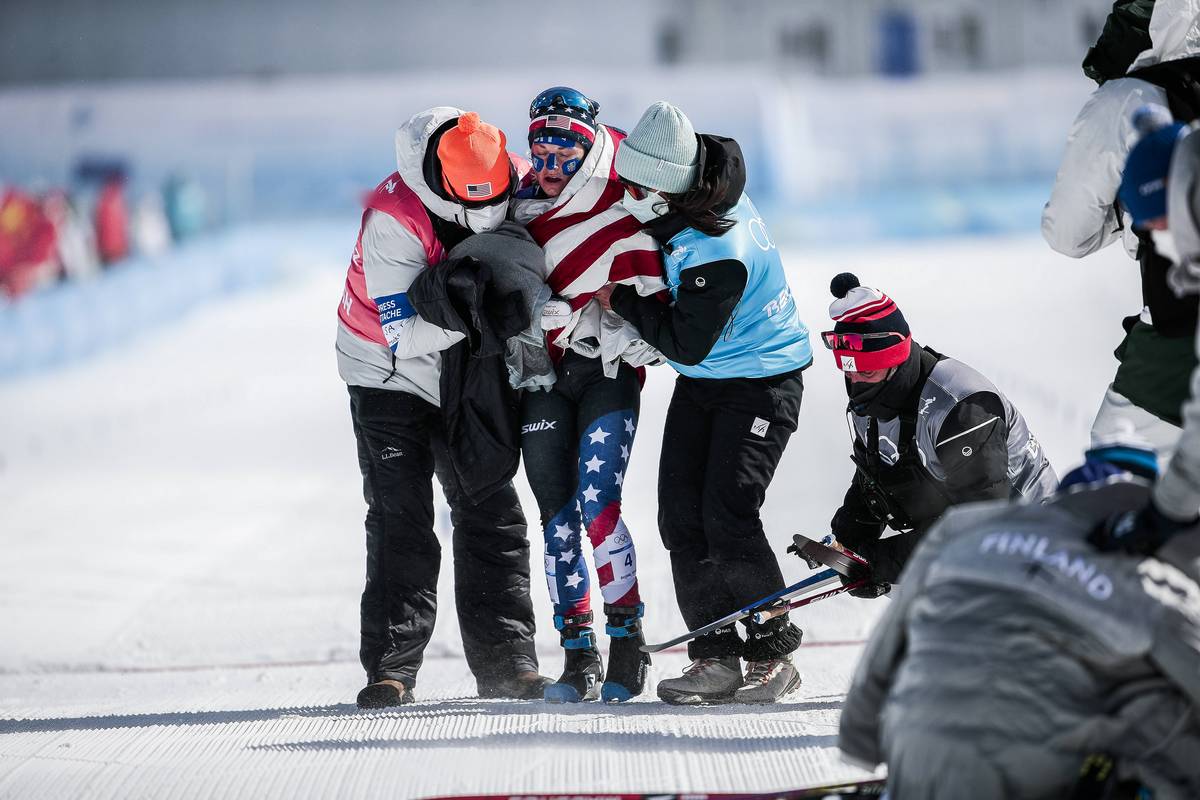
    After collapsing at the finish line, Diggins is helped off the course following the Olympic 30 k skate, where she pushed through food poisoning to earn a silver medal. (Photo: NordicFocus)

    But cross-country skiers are especially vigilant about respiratory viruses like COVID or the flu because of their sport’s dependence on their lungs. Infection could derail an athlete’s hopes for the full Olympics. 

    “You definitely get impacted more,” said Kendall Kramer, an American team member from Alaska. “Your body has to be definitely 110% to do the sport on any given day.”

    The U.S. team, Kramer said in a phone interview Wednesday, has collectively agreed to form, in effect, an Olympic bubble among themselves.

    “Worst-case scenario is someone’s a little more loosey goosey because they don’t have as much on the line. And then they would get some hard-hitters sick,” she said. 

    U.S. coaches Kristen Bourne and Matt Whitcomb wore masks at Thursday’s news conference. (Nathaniel Herz for FasterSkier)

    That means athletes will miss out on some of the traditional social aspects of the Games, she acknowledged. But it’s also creating a tighter and more private living experience for the team, Ben Ogden, one of the U.S. men, said at a news conference.  

    “We’re pretty locked down trying not to get sick,” he said. “But that’s okay — because we have six, seven of our best friends inside the bubble.”

    At least one other cross-country ski team is on a similar program. The Swedish tabloid Expressen reported that one of the team’s stars, Ebba Andersson, arrived Tuesday in Italy and will isolate from her teammate and boyfriend, Gustaf Berglund, for the first 48 hours after her arrival. 

    That’s the most likely window for her to start experiencing viral symptoms if she was exposed during travel, the team’s doctor told Expressen.

    Ebba Andersson (SWE) skiing in Val di Fiemme, Italy, during the Individual Sprint of the Tour de Ski on the Olympic course. (Photo: Modica/NordicFocus) 

    “We have closed our hotel. We don’t want outsiders in, and we don’t want infections to come in,” the doctor, Rickard Noberius, told the newspaper. “So, it’s just us and the family who run the hotel — and they have been given strict restrictions as well.”

    The risks of inadequate precautions have become painfully apparent for other athletes in Milan — specifically, the Finnish women’s hockey team. The squad has been hit by an outbreak of norovirus that’s either infected or forced the isolation of 13 players, said Lassi Kuisma, a reporter with Iltalehti, a Finnish newspaper, who’s covering the story from Milan.

    Just eight players and two goalies were able to practice Thursday and the team had to postpone its first game, against Canada. Players are currently facing harsh scrutiny in the Finnish press because of a video filmed Sunday that they posted on Instagram of team members singing a Backstreet Boys song at karaoke at a restaurant outside the Olympic village.

    “Nobody knows where the virus came from, of course,” Kuisma said in a phone interview. “But the team is putting itself under the microscope because they did a thing like that right before the tournament.”

    A columnist at Kuisma’s newspaper contrasted the hockey players’ conduct with that of Finnish cross-country ski star Iivo Niskanen, who’s known for taking strict precautions about his health. Her headline, in a rough translation, said that the women’s hockey team “really screwed up — Iivo Niskanen would never do the same.”

    As for the American skiers, it’s not just Diggins who will forgo time with a spouse during the Olympics. 

    Athlete Zak Ketterson said his time with his wife, who’s traveling to the Games from Minnesota, will also likely amount to outdoor hangs, or possibly with masks indoors. 

    While it can be difficult for everyone on a personal level to limit time with loved ones, Ketterson, like Diggins, said the restrictions totally make sense given how much athletes and the U.S. team have invested in preparing for the Olympics and booking their hotel. 

    “The Olympics are just a few weeks every four years,” he said. “So we can lock in a little bit.”

    Help Support Our Olympic Coverage!

    FasterSkier has our own Nat Herz on the ground at the Olympics, which is a significant financial lift for us. If you value the thoughtful work and access FasterSkier provides at championships like this one, please consider becoming a Voluntary Subscriber. Your support directly fuels our work to cover the people, places, and moments that make our sport special.

    Join the FasterSkier community!


  • Matintalo First, Diggins Second: A Classic 20 K Test Before the Olympics

    Matintalo First, Diggins Second: A Classic 20 K Test Before the Olympics

    This coverage is made possible through the generous support of Marty and Kathy Hall and A Hall Mark of Excellence A Hall Mark of Excellence Award. To learn more about A Hall Mark of Excellence Award, or to learn how you can support FasterSkier’s coverage, please contact info@fasterskier.com.

    Emma Ribom (SWE), Moa Ilar (SWE), Kerttu Niskanen (FIN), Karoline Simpson-Larsen (NOR), (l-r) lead early in the women’s 20 K Classic Mass Start in Goms, Switzerland. (Photo: Authamayou/NordicFocus)

    The sky above the Goms Nordic Centre on Sunday morning had the washed-out look of winter at altitude — pale and reflective. Snow had fallen overnight — not enough to transform the valley, but enough to affect ski behavior. The tracks were glazed in some places and soft in others, offering a surface that challenged kick, balance, and restraint.

    This was the third and final race of the last World Cup weekend before the Olympic Games. The final challenge came in the form of a 20-kilometer Classic Mass Start — a distance long enough to punish impatience, short enough to reward precision. In many ways, it felt like a rehearsal, a partial preview of the Olympic 50 k to come, even as two of the discipline’s defining figures — Sweden’s Ebba Andersson and Frida Karlsson — were notably absent.

    Fifty-six women started. Not all of them finished. None of them were anonymous by the time the race ended.

    Jessie Diggins (USA) and Astrid Oeyre Slind (NOR), (l-r) got away early in the first lap before being brought back by the chase pack around 6.5 K. (Photo: Authamayou/NordicFocus)
    An Early Question — and a Fast Answer

    From the opening kilometers, the field confirmed what the course profile had suggested: this would be a race shaped less by outright speed than by rhythm and positioning. Short climbs arrived in quick succession, descents offered only brief relief, and the peloton stretched and compressed like an accordion with every change in gradient.

    The first clear question of the day was posed early.

    On the opening lap, Norway’s Astrid Øyre Slind moved decisively off the front. Jessie Diggins, wearing bib one and leading both the overall and distance World Cup standings, responded immediately. For a moment, the two skied clear — a clean, purposeful break that suggested collaboration rather than desperation.

    The gap grew briefly, then stalled. By roughly 6.5 kilometers, the chase pack — patient, organized, and unwilling to let the race fracture too soon — closed the door. The break dissolved without drama, but not without meaning. The message was clear: separation would be earned later, not gifted early.

    Through the first full lap and into the second, the splits told a consistent story. No one was allowed to escape. The front group remained compact, with the top ten separated by only a few seconds at successive checkpoints. Every surge was answered. Every acceleration absorbed.

    Karoline Simpson-Larsen (NOR), Dariya Nepryaeva (AIN), Katharina Hennig Dotzler (GER), Johanna Matintalo (FIN), and Kerttu Niskanen (FIN), (l-r) work to bring back Diggins and Slind. (Photo: Authamayou/NordicFocus)
    The Long Middle: Where Races Are Actually Won

    What followed was the part of mass-start racing that rarely makes highlight reels but defines outcomes: the long middle.

    The snow conditions amplified this dynamic. The fresh layer over a firmer base rewarded good kick but punished over-striding. Downhills carried enough draft that working alone was inefficient. On climbs, being out of position meant burning matches simply to stay attached.

    Julia Kern spent much of this phase skiing in between packs — strong enough to feel underutilized, cautious enough to avoid overreaching.

    Julia Kern (USA) and Tiril Udnes Weng (NOR), (l-r) trying to maintain contact. (Photo: Authamayou/NordicFocus)

    “Today’s race was definitely a really hilly one, and not that fast, given the new snow,” Kern said afterward. “The tracks were a bit glazed, but also powder. The techs did a really good job giving us great kick, and I really needed that for how much climbing there was.”

    She described a race defined by indecision forced by circumstance rather than confidence.

    “I skied a lot of the race kind of stuck in between two packs,” she said. “In the second lap, I wasn’t sure if I should really go with the pack and risk it. I didn’t want to blow up, especially at semi-altitude. It was just hard to say with such a long, slow race.”

    When a small bridge attempt formed later in the race, Kern hesitated — not from fear, but from realism.

    “It was one of those days where I was feeling stronger than the pack I was skiing in, but not quite sure I could keep up with the pack in front,” she said. “They started to slow down, so it was a little bit of yo-yoing.”

    For Kern, the result — 16th — came with clarity rather than frustration. The margins were small, the lessons specific, and the work ahead clearly defined.

    Hailey Swirbul (USA) coming up the final climb with teammate Kendall Kramer (USA) slightly behind. (Photo: Authamayou/NordicFocus)
    Moving Forward from the Back

    If Kern’s race unfolded in the gray area between groups, Novie McCabe and Hailey Swirbul experienced the race from its deepest end.

    McCabe started with bib 57. Swirbul with 58. Both expected chaos early — and neither panicked when it arrived.

    “I kind of expected the accordion,” McCabe said. “I talked to my tech before the race, and he thought it would be a good idea to stay calm early. When it strung out, that’s when I should try to move up.”

    That patience paid dividends. As the field gradually fractured, McCabe began to advance — not in dramatic surges, but in deliberate steps.

    “I tried to push up to whoever was ahead, then tuck in and rest,” she said. “Eventually, I got into a good group with Catherine Stewart-Jones and some others. At that point, it was about hanging on a little more.”

    The effort came at a cost. McCabe admitted she was suffering late, but also recognized the value of the experience.

    “It was nice to have such a good classic skier to ski behind and try to relax in there,” she said.

    Swirbul’s approach mirrored that composure, shaped by perspective earned through time away from the sport.

    “The start of the race actually didn’t feel stressful to me,” she said. “There’s not much you can do to move up until it breaks up a little bit, so I took that as an opportunity to relax and work into the race.”

    She broke the race into manageable pieces.

    “I like trying to pick people off in a mass start,” she said. “It helps to focus on closing one gap at a time.”

    Swirbul finished 24th, McCabe 22nd — both having moved forward through nearly the entire field.

    Samantha Smith (USA), Hailey Swirbul (USA), and Rosie Brennan (USA), (l-r) early on in the women’s 20 K Classic Mass Start in Goms, Switzerland. (Photo: Authamayou/NordicFocus)
    Rosie Brennan: The Value of a Steady Day

    For Rosie Brennan, Goms was not a race defined by sharp inflection points or dramatic movement through the field. Instead, it was a professional, workmanlike effort — the kind that rarely demands attention but often proves essential when teams begin to think about Olympic lineups, relays, and durability.

    Brennan skied much of the race just outside the most active chase groups, navigating the same glazed tracks and punchy climbs that tested everyone else. On a course that punished inefficiency, her race was marked by steadiness rather than volatility. She did not chase moves that would cost more than they offered, nor did she allow the race’s elastic rhythm to pull her into repeated accelerations that would compound fatigue.

    In a season where results are scrutinized as much for how they are achieved as where they land, Brennan’s day in Goms served as a reminder of her role within the U.S. program: a veteran presence capable of managing long classic efforts even when conditions and dynamics do not invite heroics.

    These are the kinds of races that rarely make headlines — and yet, as part of Olympic preparation, they often matter most.

    Kendall Kramer (USA) comes to the line with a top 30. (Photo: Authamayou/NordicFocus)
    Kendall Kramer: Learning in Plain Sight

    Kendall Kramer’s race unfolded quietly, but not inconsequentially. Still early in her World Cup career and newly named to her first Olympic team, Kramer approached the 20 K Classic as both an examination and an education.

    She remained engaged with the race as it evolved, skiing within her limits while absorbing the tactical realities of a mass start at altitude: when the field compresses, when it stretches, and how much energy it costs simply to stay connected on repeated climbs. In a race where early overcommitment was punished and late positioning proved decisive, Kramer’s task was not to force relevance, but to understand it.

    Her finish inside the top 30 (27th) reflected a growing familiarity with World Cup distance racing — not yet a statement, but a step. For an athlete still building the physical and tactical base required for races of this length, Goms offered clarity about where the work remains, and confidence that she belongs in the conversation.

    Samantha Smith (USA) nears the end of the 20 K in Goms, Switzerland. (Photo: Authamayou/NordicFocus)
    Samantha Smith: Building the Long View

    For Samantha Smith, the 20 K Classic represented another piece in a longer developmental arc — one that continues to unfold quietly but deliberately.

    Smith skied the full distance with control, settling into the rhythm of the race rather than fighting it. In a field that included Olympic medalists, Crystal Globe contenders, and seasoned distance specialists, her goal was not to dictate the race but to measure herself against it. The result reflected that intention: steady pacing, minimal volatility, and a complete performance on a demanding course.

    At this stage of her career, races like Goms are less about immediate return and more about accumulation — learning how long classic efforts feel when contested at World Cup intensity, how fatigue presents itself late, and how small tactical decisions compound over 20 kilometers.

    Those lessons are not always visible on a results sheet. But they are foundational — and necessary — for what comes next.

    Alison Mackie (CAN) continued her strong season as the U23 leader. (Photo: Authamayou/NordicFocus)
    The Canadian Women: Depth That Shapes the Race

    While the podium fight ultimately played out among familiar names, the Canadian women were far from passive participants in the race’s structure.

    Alison Mackie, wearing the under-23 leader’s green bib, skied assertively within the main chase group for much of the race. Starting deeper in the field, she navigated the accordion effect with composure, staying attached as the pace fluctuated and the snow conditions demanded constant adjustment. Her performance reinforced why she has emerged as one of the most promising young distance skiers in the World Cup field.

    Katherine Stewart-Jones, meanwhile, played a quieter but equally influential role. Her presence in the chase packs — particularly later in the race — provided both pace and stability. For athletes moving forward from the back, including Novie McCabe and Hailey Swirbul, Stewart-Jones’ classic proficiency offered a valuable reference point, a wheel worth following when the race began to exact its toll.

    Together, the Canadian performances underscored a broader truth about modern World Cup distance racing: influence is not limited to podium contenders. Nations with depth — even without a skier contesting the final sprint — shape how races unfold, how packs form, and how energy is spent.

    Astrid Oeyre Slind (NOR), Johanna Matintalo (FIN), and Jessie Diggins (USA), (l-r) charge for the podium. (Photo: Authamayou/NordicFocus)
    The Final Selection

    By the final lap, the race had distilled itself down to a familiar truth: six women remained, and no one else was coming back.

    Diggins had conserved. Øyre Slind remained vigilant. Finland’s Johanna Matintalo had been quiet — almost invisible — in the way that often precedes a decisive move.

    Diggins knew exactly what she had left, and just as importantly, what she didn’t.

    “I knew I was going to need to ride the draft as much as possible and save my energy,” she said. “It’s been a really big training week for me, so I knew I kind of had one shot.”

    Her plan was precise.

    “I was going to need to launch that move as late as possible, probably on the hill,” she said. “I had amazing kick. Double-poling isn’t quite my strength right now.”

    On the final major climb, Diggins moved. So did Øyre Slind. But Matintalo matched them — and crested first.

    From there, the race tipped irrevocably. Matintalo exited the climb with speed, controlled the final straight, and claimed her first World Cup victory. Diggins finished second, securing her 77th individual World Cup podium. Øyre Slind followed in third.

    Johanna Matintalo (FIN) claims the victory, with Jessie Diggins (USA) second, and Astrid Oeyre Slind (NOR) third. (Photo: Authamayou/NordicFocus) 


    What It Means Going Forward

    This was the final race before the Olympic Games. Diggins left Goms having extended her lead in both the overall and distance World Cup standings. More importantly, she leaves having confirmed — again — that her classic skiing is no longer something she manages, but something she trusts.

    “I try not to overthink it,” Diggins said of the looming 50 k. “All you can do is the best you can in the moment with the tools you have that day.”

    That sentiment echoed through the U.S. team’s performances — from podium contention to patient rebuilding.

    The race in Goms did not offer easy answers. But it did offer honest ones.

    Jessie Diggins (USA), Johanna Matintalo (FIN), and Astrid Oeyre Slind (NOR), (l-r) share the 20 K Classic Mass Start podium in Goms, Switzerland. (Photo: Authamayou/NordicFocus)
    A Quiet Confidence

    By the time the fog settled back into the valley and the stadium emptied, the course had revealed itself fully. It had rewarded patience. It had punished haste. And it had reminded everyone watching — and skiing — that distance racing rarely announces itself loudly.

    The Olympic 50 k will be longer. The stakes will be higher. The margins may be smaller still.

    But the questions asked in Goms were the right ones — and the answers, for those willing to listen, were already there.


    Goms World Cup Women’s 20 k Classic Mass Start RESULTS

    Women’s World Cup DISTANCE STANDINGS

    Women’s World Cup OVERALL STANDINGS


    Help Support Our Olympic Coverage!

    FasterSkier will have our own Nat Herz on the ground at the Olympics. If you value the thoughtful work FasterSkier provides at championships like this one, please consider becoming a Voluntary Subscriber.

    Join the FasterSkier community!


    Jessie Diggins (USA) and the US team celebrate another podium in Goms, Switzerland. (Photo: Authamayou/NordicFocus)
  • Goms Wasn’t the Answer — It Was the Test

    Goms Wasn’t the Answer — It Was the Test

    This coverage is made possible through the generous support of Marty and Kathy Hall and A Hall Mark of Excellence Award. To learn more about A Hall Mark of Excellence Award, or to learn how you can support FasterSkier’s coverage, please contact info@fasterskier.com.

    Leg one gets started in the Women’s Team Sprint in Goms, Switzerland. (Photo: Authamayou/NordicFocus)

    There are World Cup races that arrive like answers, and others that arrive like mirrors. The women’s freestyle Team Sprint in Goms belonged firmly to the second category — not because the results were unclear, but because nearly everyone on the start line arrived with something else already decided.

    This was the last World Cup before the Winter Olympics in Milano–Cortina, and teams have been finalized. In Switzerland, the focus shifted from selection to tactical rehearsal, testing legs, patience, and restraint before Olympic stakes.

    That context hung over the Team Sprint from the opening qualification prologue to the final exchange. For some, the day was about execution. For others, survival. And for the U.S. women, it was an afternoon shaped as much by what wasn’t raced as what was.

    Jessie Diggins, focused on the Overall World Cup and conserving energy for February, sat out. Sweden, which has recently dominated sprinting, also left its top women on the bench. Their absences reshaped opportunity and increased ambiguity in a race where errors are costly.

    Julia Kern (USA) during qualification. (Photo: Authamayou/NordicFocus)

    A Course That Punishes Early Optimism

    Goms’ team sprint course was unforgiving. The moderate altitude, demanding climbs, and relentless rhythm tested the athletes in each of the individually timed qualification prologues. The top-16 teams advanced, then raced six alternating laps marked by tag zones, tempo shifts, and mounting fatigue.

    “It was definitely a rude awakening,” said Julia Kern, who returned to racing after a short training block at home in Vermont. “I think a lot of people felt that way — the qualifier was brutal, especially with such a long climb at semi-altitude.”

    Kern’s reset after the Tour de Ski was intentional. “The first week I focused on recovery, and the second week I finally got in a training week for the first time this season,” she said. “The snow conditions were awesome, which made it even better. But my body isn’t fully sharp yet, which is to be expected after some training and traveling back over to Europe.”

    That combination — fitness returning, sharpness still arriving — defined much of the U.S. women’s day.

    Kendall Kramer (USA) during the team sprint qualification in Goms, Switzerland. (Photo: Authamayou/NordicFocus)

    Two U.S. Teams, Two Very Different Races

    The United States entered two teams into the final.

    Team One paired Kern with Sammy Smith, a first-time Olympian whose rise this season has been defined by composure as much as speed. Team Two brought together Lauren Jortberg and Kendall Kramer, both newly named to their first Olympic team — and both still absorbing what that meant.

    For Jortberg, the Olympic nomination landed at the end of a season built on restraint.

    “I made a really conscious decision this year not to focus too hard on Olympic qualification itself,” Jortberg said. “I didn’t really think the Olympics were on the cards for me. I made a lot of big changes — a new ski brand, a team change, moving to a new country — so I just focused on the process.”

    That process had worked. She arrived in Goms feeling strong.

    “Today, I was really happy with the sprint qualifier — probably my best World Cup qualifier so far,” she said. “Time-wise, it was strong, and I knew going into the race that I was feeling good physically.”

    Then, just minutes later, it unraveled.

    Lauren Jortberg (USA) gets aero in Goms, Switzerland. (Photo: Authamayou/NordicFocus)

    The Moment Team Sprints Turn Cruel

    On Jortberg’s opening leg of the final, the pack compressed into one of the course’s tighter corners. The decision window was measured in fractions of a second.

    “Coming into a corner, I got tangled up with another skier,” Jortberg explained. “In that split second, it was either ski into their gear or crash. That’s just part of team sprint racing — it’s really tight skiing.”

    She went down. The gap opened immediately.

    For Kendall Kramer, suddenly tasked with damage control, the calculation shifted from ambition to probability.

    “I knew things happen in team sprints all the time — broken equipment, falls, tangles, people bonking,” Kramer said. “So I didn’t get discouraged or feel like we were completely out of it. You never know how a race can change.”

    But races do not always cooperate.

    “Not many crashes happened today,” Kramer said. “I think for both of us, being able to draft and roll with the group pace would have helped a lot.”

    Jortberg knew the consequences instantly. “It creates a huge gap, and that’s really hard in a team event because it affects your teammate,” she said. “It makes it even sadder when you know you’ve put them in that position.”

    Both athletes made the same strategic choice: do not burn the weekend to save a result that no longer exists.

    “It didn’t make sense to burn all our matches trying to close such a big gap,” Jortberg said. “We both have more important races coming up.”

    For Kramer, the day still mattered.

    “Just qualifying and getting to experience my first World Cup sprint day was really cool,” she said. “I learned a lot from it.”

    Julia Kern (USA) tags Samantha Smith (USA)  during the Team Sprint in Goms, Switzerland. (Photo: Authamayou/NordicFocus)

    Team One: Learning While It’s Still Allowed

    Up front, Kern and Smith stayed clear of trouble, navigating a race whose pace was notably more controlled than many recent team sprints.

    “The pace was more controlled, so it’s hard to say exactly how that will play out in the future,” Kern said. “But it was good practice finding places to relax — and also learning that you need to be near the front to avoid tangles. I had two close calls on the first lap where I lost positions, which wasn’t ideal.”

    Smith, meanwhile, looked comfortable doing exactly what Olympic team sprints demand: staying patient until patience becomes aggression.

    Samantha Smith (USA) the Team Sprint qualification in Goms, Switzerland. (Photo: Authamayou/NordicFocus)

    “Team sprints are my favorite event,” Smith said. “The format is so unique and challenging. It rewards consistency and composure balanced with speed and execution.”

    This was her first time racing consistently at the front in a World Cup team sprint.

    “I loved trying to match other racers’ moves, learning how the pacing changes lap to lap, and figuring out the best time to attack,” she said. “Every race is a learning opportunity, and I definitely took a lot away from today.”

    The most important lesson, she said, was restraint.

    “In a format like the team sprint, it’s so important to stay relaxed and patient,” Smith said. “You have to save enough so you can really push on that final lap.”

    Julie Bjervig Drivenes (NOR), Coletta Rydzek (GER), Tiril Udnes Weng (NOR), (l-r) all come to the finish in Goms, Switzerland. (Photo: Authamayou/NordicFocus)

    Germany Executes, Cleanly and Calmly

    While much of the field experimented, Germany arrived with a plan — and executed it.

    Speaking to the FIS broadcast after the race, Laura Gimmler explained the approach.

    “It was a pretty hard race here,” Gimmler said. “The plan was to slow a little bit in the first loop, save energy, and then build up from round to round so I could work for Coletta and let her save energy for her strengths.”

    Her teammate echoed the sentiment, crediting positioning and trust.

    “I knew I had a strong Laura who could make positions,” she said. “We worked for it.”

    The strategy paid off. Germany stayed composed as others faded, and when the final lap arrived, they were exactly where they needed to be.

    “It’s always nice to be on top of the podium,” one of the pair said via the FIS broadcast. “Confidence before the Olympics? We’ll see — but winning always helps.”

    Laura Gimmler (GER) and Coletta Rydzek (GER), (l-r) celebrate the Team Sprint victory in Goms, Switzerland. (Photo: Authamayou/NordicFocus)

    Olympic Reality, Briefly Revealed

    It would be easy to dismiss Goms as an incomplete picture. Sweden’s absence loomed large. Diggins’ absence larger still. The Olympic team sprint in Val di Fiemme will not be controlled. It will not be forgiving. And it will not wait for mistakes to resolve themselves.

    But that is precisely why this race mattered.

    “This course is very hilly, just like Val di Fiemme,” Kern said. “It was good practice to feel how the load accumulates through the rounds.”

    For Smith, the day confirmed belief as much as readiness.

    “It’s been a dream of mine to ski in the Olympics for as long as I can remember,” she said. “Now it’s real — and this weekend is about building momentum.”

    For Kramer, the meaning is still arriving.

    “It’s been really special to feel the pride from my hometown,” she said. “I don’t think it’s fully sunk in yet.”

    And for Jortberg, the crash did not undo the season that carried her here.

    “I’m happy to feel like I’m getting back into the groove,” she said. “Reminding myself that I can compete with the best.”

    Team USA with Kendall Kramer (USA), Samantha Smith (USA), Lauren Jortberg (USA), Julia Kern (USA), (l-r) at the finish of the Team Sprint in Goms, Switzerland. (Photo: Authamayou/NordicFocus)

    What Goms Did Answer

    Team sprints are rarely remembered for who sat out. They are remembered for who navigated chaos best — and who learned quickly enough to let the rest go.

    In Goms, the U.S. women did not leave with a podium. They left with something arguably more valuable at this stage: clarity. About tactics. About limits. About how quickly Olympic margins appear.

    There will be no controlled pacing in Val di Fiemme. No absent favorites. No allowance for first-lap tangles.

    But there will be familiarity — with fatigue, with pressure, and with each other.

    In the final World Cup weekend before the Olympics, that may have been the most important result of all.


    Goms World Cup Women’s Freestyle Team Sprint QUALIFYING

    Goms World Cup Women’s Freestyle Team Sprint RESULTS


    Help Support Our Olympic Coverage!

    FasterSkier will have our own Nat Herz on the ground at the Olympics, which, to be honest, is a very big financial lift for us. If you value the thoughtful work and access FasterSkier provides at championships like this one, please consider becoming a Voluntary Subscriber. Your support directly fuels the work we do to cover the people, places, and moments that make our sport special.

    Join the FasterSkier community!


    Astrid Oeyre Slind (NOR), Julie Bjervig Drivenes (NOR), Coletta Rydzek (GER), Laura Gimmler (GER), Karoline Groetting (NOR), Tiril Udnes Weng (NOR), (l-r) take the Team Sprint in Goms, Switzerland. (Photo: Authamayou/NordicFocus)
  • Where the Race Breaks Open: Women’s 20 k Freestyle at U.S. Nationals

    Where the Race Breaks Open: Women’s 20 k Freestyle at U.S. Nationals

    This article was made possible through the generous support of our voluntary subscribers.  If you value coverage like this, please support FasterSkier with a voluntary subscription.  

    Traffic was thick at the beginning of the US National Cross-Country Ski Championship Women’s 20 k Freestyle Mass Start in Lake Placid, NY. (Photo: Nancie Battaglia)

    There is a particular moment in a long mass start when the race quietly declares what it will be. It does not arrive with a surge, a crash, or even a decisive move. It arrives when the pack thins just enough that the edges of the course begin to matter—when skis no longer overlap cleanly, when passing requires intention, and when each athlete realizes—often simultaneously—that this is no longer a collective undertaking.

    At Mt. Van Hoevenberg, that moment came early.

    The women’s 20-kilometer freestyle mass start at the 2026 U.S. National Cross-Country Ski Championships unfolded under conditions that rewarded clarity and punished hesitation. The course was wide in places, narrow in consequence. Fresh snow lined the edges, slower and heavier than the main track, turning every attempt to move forward into a calculation of cost. The pace at the front was honest from the gun—fast enough to string the field out, fast enough to strip away the illusion that patience alone would bring opportunity.

    In an Olympic winter, Nationals rarely exist in isolation. They are arguments as much as races, each result carrying the quiet weight of future conversations. But on this morning, before selection scenarios and season arcs could intrude, the race itself demanded attention. Four laps. Twenty kilometers. A course that climbs insistently and asks athletes to be precise even when tired.

    What followed was not one story, but several—layered, intersecting, and revealing.

    Colorado’s Tilde Bångman did much of the work at the front of the Women’s 20 k Freestyle Mass Start in Lake Placid, NY. (Photo: Nancie Battaglia)

    The Fast Start That Changed Everything

    From near the front, the race immediately took on the shape many expected. Kendall Kramer, eager to avoid the kind of chaos that can derail a mass start before it has truly begun, made her intentions clear.

    “I wanted to go out fast because I didn’t want any funny business—colliding or breaking equipment,” Kramer said later. “I was super looking forward to being in the front of a mass start after being caught in the back on World Cups.”

    For Kramer, the early pace felt familiar rather than reckless. World Cups, she noted, often begin faster than domestic races, and the instinct to establish position early has become second nature. The speed was assertive but manageable. She felt fit, capable, present.

    Behind her, the effect was immediate. The field stretched, then fractured, then reorganized into smaller, more intentional units. For athletes starting deeper in the field, this stringing-out created both opportunity and pressure.

    Novie McCabe, starting from bib 26, felt the opening kilometers open rather than close.

    “My plan for the start was just to stay relaxed and try to work my way up,” she said. “It honestly ended up being easier than expected because the front girls took it out so fast. It was very strung out, and there was lots of room to move around.”

    Within minutes, McCabe had navigated cleanly into the front group. What followed was less about advancing and more about survival.

    “I got to the front pack about three minutes into the race,” she said. “So I spent most of it there just trying to hang on for as long as I could—and ended up having it in me to hang till the end.”

    That phrase—hang on—would recur in different forms throughout the day, taking on slightly different meanings depending on where each skier found herself in the race.

    Ava Thurston (#8 – Dartmouth) couldn’t quite hang on to the lead group of three, but eventually skied with Hailey Swirbul (#67 – APU) and Haley Brewster (#46 – UVM) before finishing fourth overall and third-place American. (Photo: Nancie Battaglia)

    When the Front Pulls Away

    Not everyone who tested the front pace could stay there.

    Late in the first lap, Ava Thurston made her own attempt to bridge. She came close enough to feel the rhythm of the leaders, close enough to understand the cost.

    “I tried to get back onto the front group, and I got pretty close,” Thurston said. “But I realized that I wasn’t going to be able to match their pace.”

    The realization came with consequences. For a brief stretch, she found herself skiing alone—a dangerous place in a mass start, especially early, when gaps can grow quietly and decisively.

    “That was where I did have a little bit of that panic,” she admitted.

    The panic did not last. Company arrived in the form of Hailey Swirbul and Haley Brewster, and with it, perspective.

    “Once I was skiing with them, I was kind of just thinking, ‘This is a good group. I can stay with these guys,’” Thurston said.

    From there, her race became less about chasing what was ahead and more about managing what was happening around her. She tucked in, matched surges, and responded quickly to small separations before they became something larger.

    “There were a couple of times where I would fall off the pack just a little bit,” she said. “Each time, I worked hard to get right back on before letting it be a big gap. I was really stoked on that.”

    On a course like Van Hoevenberg—four laps of sustained uphill skating—those moments add up. Fitness is exposed repeatedly, not all at once. For Thurston, the race offered reassurance.

    “This was the first race longer than 10k I’d done this year, and the first mass start that wasn’t a sprint,” she said. “It was a really good indicator that my fitness is there. It’s hard to fake anything on this course.”

    She would finish fourth, clearly separated from the podium trio but equally clear of the deeper chase—an honest result in a demanding field.

    With higher FIS points from not racing the past two seasons, Hailey Swirbul (#67 – APU) needed to ski through a lot of traffic during the early kilometers, but eventually found herself in the chase pack. (Photo: Nancie Battaglia)

    Racing From the Back Without Racing Small

    While the front and mid-pack sorted themselves, Hailey Swirbul was running an entirely different race.

    Starting from bib 67, she entered the day knowing she would need to be deliberate.

    “I didn’t even realize I would be seated so far back until the start list came out,” she said. “Obviously, I would be, because my FIS points aren’t low at this point—but it was an experience.”

    The challenge was not simply moving forward. It was how to do so without paying too steep a price.

    “The edges of the course had fresh snow on them,” Swirbul explained. “It was much slower, and a much higher energy expenditure to get around people that way.”

    Instead of forcing passes, she waited. Instead of locking into the pace of whatever group surrounded her at a given moment, she kept her attention forward.

    “I almost approached the first couple laps like an individual start,” she said. “It’s really easy to lock into the group you’re around and forget about the people ahead of you.”

    Women’s racing, she noted, often begins with a fast, destabilizing surge—a period where the goal is simply to hang on long enough for things to settle.

    “That’s exactly what happened today,” she said. “The leaders go fast, string it out, and then the real race starts again.”

    For Swirbul, the balance was constant: advancing through traffic while respecting the race’s length.

    “A 20k is a long race,” she said. “You can’t really pay for it.”

    Though she never bridged to the front trio, Swirbul finished fifth—solidly clear of the next wave behind her—and left the course satisfied with her execution and proud of the broader team effort.

    “Our coach absolutely crushed it with skis and feeds,” she said. “It was a good day to be APU.”

    Novie McCabe (APU) maintained contact on the uphills and used the downhills to close the small gaps to Tilde Bångman (CU) at the front of the race. (Photo: Nancie Battaglia)

    The Margins at the Front

    At the sharp end, the race narrowed to a familiar dynamic: strength, speed, and patience under pressure.

    As the kilometers mounted, Tilde Bångman began to apply pressure on the climbs, testing the group’s elasticity. By mid-race, the front had distilled to three: Bångman, McCabe, and Kramer. The chase group behind them was no longer within striking distance, and the podium places would be decided among those three alone.

    McCabe felt the pressure immediately.

    “In the last few kilometers, Tilde was skiing super strong and still really pushing the pace,” she said. “She would gap me a little bit on some of the hills.”

    Each gap mattered. Each closure required confidence—in skis, in timing, and in restraint.

    “I had some super good skis, so I was able to glide back up to her,” McCabe said.

    The plan crystallized: stay attached through the final hill, try once to make a move, and if that failed, save everything for the finish.

    “I tried to get a gap on the last hill, which didn’t quite work,” she said. “So I tried one last time at the finish.”

    It was enough.

    McCabe crossed the line first, securing the national title after a race built not on constant aggression, but on measured commitment. The emotion that surfaced surprised even her.

    “I think when I crossed the line, I mostly just felt super happy to be back racing and feeling like myself,” she said.

    The win mattered. So did what it represented.

    “Going into this week, I wasn’t sure it was the best idea for me to race frequently this season,” she said. “Now I have a lot more confidence that I can race—and maybe more importantly, recover from racing.”

    In an Olympic year, that distinction is not trivial.

    The lead pack and eventual overall podium with Kendall Kramer (APU), Tilde Bångman (CU), and Novie McCabe (APU) (l – r). (Photo: Nancie Battaglia)

    Kramer’s Race: Control Without Regret

    For Kendall Kramer, the separation late in the race came not through fitness, but friction.

    “My skis slowed down as they went,” she said. “They started to feel sticky—like I skied through too much Gatorade or something.”

    The effect was most pronounced on the downhills, where speed should have come freely.

    “The girls had to push my poles to speed me up to keep together,” she said. “Eventually, they could just gap on all the downhills.”

    Once the gap formed, Kramer shifted her focus from contesting the win to finishing the race well.

    “I’m happy to maintain my place and feel good,” she said. “I can’t complain.”

    What she wanted from the race, she explained, was not chaos or last-minute risk, but sustained pressure in a small group.

    “I wanted a small pack where we could test at every little bit,” she said, “as opposed to leaving it to a sprint or taking risks at a time like this.”

    She finished third, completing the podium, and left Lake Placid without repeating her national title—but with confirmation that mattered just as much.

    “I felt fit and totally capable today,” she said. “I didn’t feel bad feelings.”

    Novie McCabe (APU) managed to put a small gap on teammate Kendall Kramer to get away with Tilde Bångman (CU) and eventually ski to the national title in the finish stretch. (Photo: Nancie Battaglia)

    What the Race Revealed

    By the time the women completed their fourth lap, the story of the day was no longer about who surged when, but about how each athlete managed the same course differently—and honestly.

    McCabe raced with restraint until she no longer needed to. Kramer raced with intent and accepted the margins. Thurston learned, adjusted, and confirmed her distance fitness. Swirbul navigated from deep in the field with patience and clarity.

    None of those narratives exists in isolation. Together, they form a portrait of a championship race that did what the best distance races always do: expose truth without exaggeration.

    At U.S. Nationals, the women did not simply ski 20 kilometers. They negotiated space, managed doubt, trusted preparation, and tested belief.

    In an Olympic winter, those are not side effects.

    They are the point.

    The national podium for the US National Cross-Country Ski Championship Women’s 20 k Freestyle Mass Start with Novie McCabe (APU) first, Kendall Kramer (APU) second, and Ava Thurston (Dartmouth) third. (Photo: Nancie Battaglia)


    RESULTS:

    US Nationals Women’s 20 k Freestyle Mass Start


    Love stories like this? Help keep them coming.

    Feature stories like this one take time, access, and care to produce. If you value thoughtful storytelling and independent ski journalism, please consider becoming a Voluntary Subscriber. Your support directly fuels the work we do to cover the people, places, and moments that make our sport special.

    Join the FasterSkier community!


    The overall podium for the US National Cross-Country Ski Championship Women’s 20 k Freestyle Mass Start with Novie McCabe (APU) first, Tilde Bångman (CU) second, and Kendall Kramer (APU) third. (Photo: Nancie Battaglia)
  • Where the Margins Speak: U.S. Nationals Opens with Questions, Not Answers

    Where the Margins Speak: U.S. Nationals Opens with Questions, Not Answers

    This article was made possible through the generous support of our voluntary subscribers.  If you value coverage like this, please support FasterSkier with a voluntary subscription.  

    The US National Championships got started yesterday with the 10 k Classic Individual Start in Lake Placid, NY.  Hunter Wonders (#369 – APU) took top honors in the men’s race.  (Photo: Nancie Battaglia)

    On a January afternoon in Lake Placid, Mt. Van Hoevenberg did what it has always done best: it asked skiers to be honest.

    The 10-kilometer classic individual start is not a format that rewards theater. It doesn’t care how good you looked in warm-up, how confident you sounded the night before, or how convincing your season-long narrative might be. It rewards pacing that’s brave but not reckless, technique that doesn’t unravel under strain, and the ability to keep making good decisions when your legs are trying to renegotiate the terms of the day.

    This year, the U.S. National Cross-Country Ski Championships opened with that race—two laps on the 5-kilometer loop—and the timing was no accident. In an Olympic winter, Nationals is never just Nationals. It’s an argument. It’s a week where results don’t merely “count,” they accumulate, and the accumulation becomes the story that follows athletes into selection meetings, petitions, and—if all goes right—onto a plane headed for Italy.

    Men’s 10 k Classic Individual Start Results

    Women’s 10 k Classic Individual Start Results

    Will Koch (SVSEF) on his way to 8th place on the day. (Photo: Nancie Battaglia)

    The Course: Where You Can’t Afford to “Blow Up”

    The Van Hoevenberg course is famous for being “fair,” but fairness in skiing is rarely gentle. The climbs arrive in layered sequences—sections where you can press, sections where you can survive, sections where you can lose seconds simply by being a fraction late to a gear change. There are places to win time, and places where you simply try not to hemorrhage it.

    Hunter Wonders described the central problem precisely after the finish:

    “It has some big hills. And I really think that in this course you can’t afford to blow up. If you blow up, you’re just going to bleed so much time.”

    That idea—bleeding time—was the hidden refrain of the day. Not because athletes were exploding spectacularly, but because this loop punishes any lapse in restraint. It is a course that rewards a mind that stays intact.

    Corbin Carpenter (UAA) on his way to 10th place in the 10 k Classic at US Nationals. (Photo: Nancie Battaglia)

    Men’s Race: Seconds as a Selection Language

    At the front of the men’s race, the margins compressed into something almost absurd: a national title decided in a space so small it could be measured in one imperfect corner, one extra step of herringbone, one pole that slips just slightly at the wrong moment.

    Hunter Wonders won the men’s 10 k Classic National Championship. Behind him, the podium fight came down to an almost unnerving closeness. The story wasn’t simply that the race was fast; it was that it was tight—tight enough to turn pacing into the defining skill.

    Wonders’ post-race reflection didn’t sound like someone who had “controlled” the race so much as someone who had managed it correctly, which is often the same thing in interval start racing:

    “Yeah. So going through it never really felt like it was my day. I knew it was going to be a competitive one, and I knew that it would just come to good skis, good feelings in the body, good pacing, and I’m just really happy that I was able to pull it off.”

    He returned to pacing again, emphasizing that his strategy wasn’t about heroics, but about avoiding the one mistake that the Van Hoevenberg loop will magnify:

    “I think pacing was the biggest challenge for me today… So I was trying to take it out hot to where I could be competitive but not blow myself up.”

    What made Wonders’ win especially convincing was how he described staying committed to his plan and then finishing with intent when the splits told him the race was available:

    “I never really changed my race plan mid-race. But I did get some good splits, especially near the end, so I just tried to finish as hard as I could.”

    And then, because it’s 2026 and everyone knows what this week represents, he said the part that matters most:

    “And then, of course, U.S. Nationals does carry some heavy weight in an Olympic year. And I’ve been thinking about this race since the races in Anchorage ended, so I’m just really happy to have it behind me.”

    He wasn’t pretending the pressure isn’t real:

    “I definitely felt the pressure, and I’m going to continue to feel the pressure throughout the rest of this Nationals. But I think I have good momentum going, and I have good confidence. I know that I’m in shape, and everything else just kind of hopefully falls into place over the next week.”

    The finish-line truth of the men’s race is that it created a kind of selection tension that will hang over the rest of the week: the top contenders weren’t separated by a narrative gap. They were separated by seconds.

    Luke Jager, who finished second, captured what that tightness means on this course and in this moment:

    “Yeah, crazy how close the times were! The course is cool because there are so many different gears in the climb that people can all have different focus spots and still end up so close together at the finish line. It is really cool, fair racing like that.”

    That line—different focus spots, same finish—explains why the top of the results can look like a near-tie without being random. You can ski this course well in different ways. But you still have to ski it well.

    Jager also spoke directly to the Olympic subtext without overplaying it:

    “I’m not naive enough to say that the Olympics aren’t on all of our minds, but I’m also really having fun just trying to do my best and working to solve the puzzle of how to perform on any given day. Italy would be sweet, but I’m super thankful for this opportunity to even be feeling that pressure at all. It’s been fun to have such a big challenge.”

    And then the warning embedded in the closeness:

    “The close times just show me that you can’t take anything for granted, and each race could be someone else’s day. Fun to have to try and be as dialed and prepared as you can every day when the stakes are high.”

    In other words, this wasn’t a day that “settled” anything. It made the next races more consequential.

    Men — Top 10 (10 km Classic Individual Start)

    1. Hunter Wonders — APU — 25:28.8
    2. Luke Jager — APU — 25:30.2
    3. Olivier Leveille — Orford – CNEPH — 25:30.8
    4. Zachary Jayne — University of Utah — 25:31.2
    5. John Steel Hagenbuch — DAR — 25:35.6
    6. Zanden McMullen — APU — 25:36.4
    7. Mons Melbye — University of Utah — 25:55.3
    8. Will Koch — SVSEF — 25:58.1
    9. Brian Bushey — Craftsbury — 26:00.1
    10. Corbin Carpenter — UAA — 26:01.3

    Men’s 10 k Classic Individual Start: Complete Results

    Hailey Swirbul (APU) on her way to a national title in the 10 k Classic at US Nationals in Lake Placid. (Photo: Nancie Battaglia)

    Women’s Race: Swirbul’s Return, and a Course That Doesn’t Flatter Anyone

    If the men’s race was defined by a razor-thin margin, the women’s race had a different feel: not less intense, but shaped by a performance at the front that felt like a statement. And the words that followed from the winner did not sound like someone who had stumbled into a good day; they sounded like someone who had been building toward a day like this for a long time.

    Hailey Swirbul framed her win as the visible outcome of a longer experiment:

    “Winning this race felt like finally getting to watch the outcome of a long experiment unfold! I’ve wanted to approach this season from a place of curiosity to see if I can get fitness and strength back after a 2.5-year hiatus. It has felt so rewarding to get stronger and remember how it feels to race and go hard again.”

    She described the way racing itself can re-teach an athlete what “hard” feels like:

    “Each race or hard interval session reminds me what it feels like a little bit more.”

    And then she said what almost everyone in the finish area seemed to be thinking, whether they admitted it or not:

    “This course is legit. I didn’t hear the words ‘I felt good out there!’ come out of a single person’s mouth! It was a battle of self against hill.”

    That sentence carries the whole day inside it: not a battle against other people, exactly, but against the course’s capacity to strip away pretense.

    Hailey Swirbul (APU) charges up one of the many climbs on that Lake Placid course behind Virginia Cobb (#120 – DAR) and Marit Flora (#76 – UAA). (Photo: Nancie Battaglia)

    Swirbul’s race plan—at least as she described it—was deeply personal in its logic. Not a copy of someone else’s pacing, not a response to what she imagined others were doing, but an attempt to ski in a way that matched her strengths:

    “I tried to ski true to myself. I wanted to use momentum and my own body weight the most effectively I could to get around that course as fast as I could- regardless of how the pacing looked for others.”

    And because it’s an Olympic year, she made the subtext explicit:

    “I have my eyes on an Olympic Team spot, and I’m going to continue to fight for it until the team is officially named. I’m not thinking beyond this week of racing here at Nationals. One step at a time, staying present…”

    Then the line that reminds you why athletes keep doing this:

    “…and enjoying getting to live this life and see so many people from old racing days— it’s a good life.”

    Women — Top 5 (10 km Classic Individual Start)

    1. Hailey Swirbul — APU — 28:42.5
    2. Erica Lavén — University of Utah — 29:14.4
    3. Tilde Bångman — University of Colorado — 29:23.9
    4. Novie McCabe — APU — 29:26.1
    5. Samantha Smith — SVSEF — 29:47.3
    6. Ava Thurston — DAR — 29:48.8
    7. Rosie Fordham — UAF — 29:56.7
    8. Kendall Kramer — APU — 30:02.7
    9. Renae Anderson — APU — 30:14.2
    10. Alayna Sonnesyn — Team Birkie — 30:16.0

    Women’s 10 k Classic Individual Start: Complete Results


    McCabe: Process as a Way Through Uncertainty

    Novie McCabe’s post-race comments carried a tone that felt especially relevant to this week: gratitude, yes—but also a clear-eyed description of how fragile a season can feel, and how an athlete can build stability by focusing on what can be controlled.

    “It meant a lot to be starting today for sure! I think that being a bit unsure of whether I’d be starting these races made me feel pretty grateful for the opportunity to go out there and give it my best today.”

    She described the emotional mix honestly:

    “There were, of course, lots of doubts and some nerves going in as well, but I really tried to just enjoy the skiing and made that my main goal going into it.”

    And she emphasized that conditions and course feel matter—not as excuses, but as context:

    “The conditions were insanely nice today, which helped, and this course is one of my favorites!”

    On pacing, McCabe described a strategy rooted in self-knowledge:

    “Honestly, I kinda just went out as hard as I could within reason, and tried to relax and hold onto it. I know the splits don’t really make it look that way, haha, but I am not the fastest starter, so it is usually best for me to go out at what feels like a pretty hard pace.”

    Then she explained the architecture of her day: not results goals, but process goals. She made a point that’s easy to dismiss until you remember what an Olympic week does to people:

    “Being focused on process goals going into a race really helps me develop a framework for success.”

    She listed those goals with specificity—how she wanted to feel, what she wanted to focus on, what she wanted her mind to do when discomfort arrived:

    “…going out hard but comfortable and trying to hold it, skiing well (not skiing hard), be the focus of the day, keeping up the positive self-talk, and finding the good and noticing what is going well throughout the race.”

    And on Olympic pressure, she offered a perspective that will sound familiar to anyone who has ever had a season disrupted by health or inconsistency:

    “I think it has honestly helped me out in terms of handling self-imposed Olympic qualification pressure to not have had the best lead up and be pretty unsure of what I would be doing as far as racing goes this year…”

    She described her focus as narrower—day by day—because it has to be:

    “…it has taken some of my focus off of results… It has just kind of led to an approach where I take it day by day, and don’t really think much further into the future than that.”

    That isn’t resignation. It’s an operating system. And it’s one that often works, especially on a course where you can lose time in the exact moment you start racing the future instead of the hill in front of you.

    Rosie Fordham (UAF) leaving it all on the course on her way to 7th place overall. (Photo: Nancie Battaglia)

    Samantha Smith: A Double Life and a Very Real Result

    Samantha Smith’s presence near the top of the women’s results came with a storyline that’s unusual even in American ski racing: balancing elite cross-country skiing with Division I soccer at Stanford, and arriving at the heart of ski season off a long NCAA tournament run.

    She spoke about the short transition plainly:

    “Yes, that’s correct, that our soccer team’s long run into the NCAA tournament has made for a much shorter transition to the season. I’ve only been on snow for a few weeks, so I know my ski fitness is improving every day.”

    She described the emotional carryover of playing for a national title—how it can become fuel rather than a distraction:

    “Playing in the National Championship was an amazing experience—we were so close to winning it all. It was a tough way to end such a great season. I’m taking that fire from our final game and pouring it into my skiing.”

    And she framed her path as something she’s embracing, not defending:

    “I know my path is different from others, but I’m doing what I love, and I think there’s a lot to be said for staying true to that. I’m trying to take everything step by step, live in the moment, and focus on what I can control!”

    On the scrutiny that comes with missing ski events earlier in the season, she emphasized the lessons she’s drawn from doing two sports seriously:

    “…for me, I feel like there’s actually a lot I can pull from the two sports and use it to my advantage.”

    She described last year as a “trial year” and explained how she’s adjusted:

    “I needed that test phase to figure out what works and what doesn’t work. I made some adjustments this year in training, switching things up a bit, and I feel like that’s helped me a lot going into this season.”

    She credited Braden Becker for helping with training and coaching through the fall:

    “I owe a huge thank you to Braden Becker, a retired skier, who’s now a grad student at Stanford. He helped me a lot with training this fall, and it honestly made a world of difference…”

    And then she returned to the mental challenge of this week—high stakes, lots of uncontrollables—and the philosophy that keeps an athlete from spiraling:

    “…I’m just trying to focus on what I can control—my attitude and effort.”

    Finally, she addressed the question of what a distance result might “say” about her:

    “I was happy with today’s result… I think today’s race was a good indication of my trajectory for the rest of the week and the rest of the season.”

    And she framed versatility—distance and sprint—as part of the argument she wants to make this winter:

    “…hopefully showcase some of my versatility in different distances and disciplines, which I think can be important for big competitions like the Olympics.”

    Alayna Sonnesyn (Team Birkie) on her way to 10th place overall. (Photo: Nancie Battaglia)

    Why This Week Matters So Much

    For the men, the arithmetic of Olympic selection is already partly written—and partly unresolved. At present, the United States is allotted seven men’s quota spots for the Olympic team, with the possibility that an eighth could roll down following this weekend’s World Cup races in Oberhof, Germany. That uncertainty is where much of the tension at U.S. Nationals resides.

    It is also where most of the speculation comes from—so take it for what it is, informed but unofficial. The six American men who recently raced the Tour de Ski appear, by any reasonable reading of the criteria, to be on solid ground. Each currently ranks in the top 45 on the FIS World Cup sprint and distance overall lists, the threshold set by the US Ski Team that meets the objective requirements for Olympic selection.

    Within that group of six, there is also ample sprint depth to cover the four available starts in the individual classic sprint and to form a competitive two-man sprint relay. As a result, Tuesday’s Freestyle Sprint at Nationals is likely to carry less weight for those athletes racing in Lake Placid with dreams of making the Olympic roster. Instead, the races most likely to function as closing arguments—particularly if an additional quota spot materializes—were Sunday’s 10 k Classic and Thursday’s 20 k Freestyle Mass Start. For at least one man, and potentially two, those performances may determine whether this week in Lake Placid becomes a footnote or a turning point.

    On the women’s side, the picture is far less settled—and far more fluid. The United States has eight Olympic quota spots available, but only a portion of them is considered secure. Jessie Diggins—if it were ever in doubt—has already satisfied the objective criteria by finishing in the top eight in World Cup races that are part of the Olympic schedule. Julia Kern and Rosie Brennan also appear well-positioned, based on their respective rankings on the sprint and distance overall lists.

    That still leaves as many as five remaining spots to be determined, drawing from a complicated blend of results across Period One on the World Cup, the SuperTour events in Alaska, and, critically, U.S. Nationals this week in Lake Placid. For those athletes, Nationals is not simply a domestic championship. It is an audition, a data point, and—in some cases—the clearest remaining path onto the Olympic team.

    John Steel Hagenbuch (DAR) on his way to 5th place overall on the day. (Photo: Phillip Belena/EISA)

    Grover: “There’s Going to be Space”… and then the Paperwork

    US Cross-Country Ski Team Director Chris Grover offered perhaps the clearest explanation for why the opening races at Nationals feel unusually charged—not because they deliver final answers, but because they create space. Space in which athletes can move themselves from the margins of the conversation toward its center.

    The story, as Grover framed it, is not simply who wins. It is what a result permits: what doors it opens, what arguments it strengthens, and how it positions an athlete within the broader, inevitably imperfect machinery of Olympic selection.

    As Grover put it in an interview with FasterSkier, U.S. Nationals does exactly that—it creates room:

    “…it’s going to be a great story because there’s space. There’s going to be space on both the men’s squad and the women’s squad, by the looks of it, for athletes to qualify from Nationals, to have great U.S. Nationals and come over, especially on the women’s side…”

    That space, however, is not filled automatically. In an Olympic year, it is accompanied by paperwork, petitions, and deliberation—an acknowledgment that performance, while central, is rarely the entire story.

    Grover outlined the petition process that follows Nationals, a step that often receives less public attention but carries significant weight:

    “…all athletes who want to be considered for discretionary selection… We’ll put in an application. Or a petition rather, where they will kind of write out what their case is, why they should be considered…”

    Those petitions, Grover explained, are then evaluated by a selection committee—six people tasked with translating results, trends, and context into final decisions:

    “…we have the six-person selection committee that will pick the team. So as a committee, we’ll read everybody’s application, and then we, as a committee, will decide whether we want to elevate somebody using Coach’s discretion to be selected.”

    Even the arithmetic of quota spots, Grover noted, is subject to forces beyond any one athlete’s control. On the men’s side, the possibility of an additional spot remains unresolved:

    “…it’s after Oberhof… qualification for nations also closes on January 18… and at that point a spot [might be] available…”

    Which is to say: timing matters. So does patience.

    Taken together, Grover’s explanation underscores a truth that every athlete racing this week understands intuitively. Lake Placid does not merely crown national champions. It produces evidence—sometimes decisive, sometimes ambiguous—for a selection process that will soon harden from theory into reality. And once it does, the margins that feel abstract today will become permanent.

    Ava Thurston (#45 – DAR) on her way to 6th place overall on the day. (Photo: Phillip Belena/EISA)

    What Sunday Actually Did

    The first day of Nationals did not select the Olympic team. It did something subtler and, in some ways, more powerful: it established the tone of the week.

    On the men’s side, it proved that the domestic field is not going to give anyone breathing room. Wonders’ win was decisive in the only way that matters in interval start racing: he was fastest when everyone had to ski alone. But the closeness behind him reinforced Jager’s point—each race could be someone else’s day. In a week like this, that’s not a platitude. It’s a forecast.

    On the women’s side, Swirbul’s victory felt like a day where preparation and belief finally aligned. But even she framed the week properly: one step at a time, staying present, not thinking beyond Lake Placid. McCabe and Smith offered two different versions of the same survival skill: build a framework, focus on process, control what you can, and let results become the output rather than the obsession.

    If there was a single emotional throughline, it was this: the athletes weren’t pretending the Olympics weren’t there. They were trying, in different ways, to keep that fact from hijacking the work.


    A Conclusion in the Shape of an Interval Start

    There’s a particular quiet that follows an interval start classic race—not silence, exactly, but the hush of athletes doing their internal accounting. A national championship can feel like a celebration. In an Olympic year, it can also feel like a deposit: something placed into the larger selection ledger, something that will matter later, in rooms the athletes won’t be in, in conversations they can’t control.

    What makes Lake Placid different—what makes Mt. Van Hoevenberg feel so permanent—is that it refuses to dramatize any of this. It simply asks the same thing of everyone: ski two laps honestly, manage the climbs, keep your head when your legs get loud, and finish without bargaining.

    Wonders said he felt the pressure—and expects to keep feeling it. Jager said the closeness means nothing can be taken for granted. Swirbul described a long experiment that finally yielded its outcome. McCabe described building success from process, not prediction. Smith described a life lived between two sports, and a focus narrowed to attitude and effort.

    Taken together, those aren’t just post-race quotes. They’re the first chapter of the week.

    And in an Olympic winter, first chapters matter—because the next race arrives quickly, and the story keeps writing itself, one start at a time.


    Love stories like this? Help keep them coming.

    Feature stories like this one take time, access, and care to produce. If you value thoughtful storytelling and independent ski journalism, please consider becoming a Voluntary Subscriber. Your support directly fuels the work we do to cover the people, places, and moments that make our sport special.

    Join the FasterSkier community!


    Brian Bushey (#345 – Craftsbury) on his way to 9th place overall. (Photo: Nancie Battaglia)
  • Two Degrees, One Dream: How a Future Teacher Found Her Way to the World Cup

    Two Degrees, One Dream: How a Future Teacher Found Her Way to the World Cup

    The Hill That Got Easier

    On an ordinary winter afternoon in Fairbanks, before NCAA titles and World Cup bibs and FIS profiles, there was just a loop—eight hundred meters of snow and one long, unforgiving hill.

    Middle-school Kendall Kramer skied it after class, day after day, with her dad. Birch Hill. Blue Loop. One big climb, same as yesterday, same as tomorrow. What changed was how it felt.

    “We would just go for, like, 30 minutes after middle school every day,” she remembers. “And I remember really liking the feeling of this specific loop in Fairbanks at Birch Hill called Blue Loop. It’s like 800 meters, but it has this really big, steep, long hill. And we would do that every day. And I became really addicted to feeling like the hill was easier to get up every single day.”

    Kramer didn’t start as the kid who loved hard things. She started as the kid who had to be bribed—stickers, money, chocolate, extra iPad time—just to go outside with her very active dad, a former Washington State runner who picked up skiing when he moved back home to Fairbanks.

    “I really didn’t like hard things. I didn’t like pushing myself. I didn’t like going outside. I didn’t like athleticism,” she says now, half amused, half incredulous. “I was into theater, and I went to art camps, and I went to fashion designing and sewing camps, and I was just doing a bunch of art stuff until seventh grade.”

    The shift did not come from some early, noble desire to maximize her potential. It came from middle-school social dynamics: her best friend and the “cool, funny kids” were in the local ski club, FXC. They were getting strong; she wanted in.

    “All of the cool, funny kids, and my best friend, were on the ski club FXC,” she says. “I noticed that she was getting really muscular. And, I want to get muscular too. That was literally my motivation. I wanted to spend more time with my friends.”

    So she flipped the script. The kid who once needed bribing was suddenly begging to ski. “In middle school, I asked [my dad] to take me skiing every day,” she says. “I liked the feeling of the work I was putting in quantifying to something. You don’t get that with everything in life.”

    That tiny addiction—to feeling the hill get easier—would quietly rewire the course of her life.

    Running Into an Identity

    Before she thought of herself as an athlete, there was one race that hinted at what might be possible: a local 5K in eighth grade.

    “There was this one race,” she says. “There was this local 5K, and I won that. And I beat a UAF girl. And I was in eighth grade. And so then I thought, oh, I could start training for another level at this.”

    It’s a funny hinge moment: a middle-schooler passing a college athlete on a random Fairbanks course—”I think it was the Chena River Run 5K”—and suddenly reevaluating what “participation” might mean.

    From there, skiing and running braided together. Everyone in her circle seemed to do both—cross-country in the fall, cross-country skiing in the winter, track in the spring. The sports gave structure to adolescence. They also gave her a first glimpse of what high-level results feel like: she made Junior Nationals, then Junior Worlds, and at 16, in her first year there, she finished fourth.

    It looked, from the outside, like a linear rise.

    It wasn’t.

    Kendall Kramer on her way to fourth place in the U20 15 k classic mass start at World Juniors in Lahti, Finland. (Photo: Doug Stephen)

    Burnout at the Top of the Podium

    The breakout year rolled into something heavier. Right as college coaches were calling and scholarships were appearing, Kramer’s relationship with skiing began to fracture.

    “After my breakout year, I went through a large burnout of skiing,” she says. “Looking back, maybe kind of predicted with how huge a jump it was… but I went through a huge burnout that happened to coincide with my senior year of high school.”

    She was in the rare position of being heavily recruited and deeply ambivalent about the thing doing the recruiting.

    “I didn’t want to do any athletics,” she says. “I wanted to go to school. I just wanted to do academics. I only applied to Ivy League colleges, [but] I didn’t get into them.”

    The plan, as she saw it then, was to walk away from elite sport altogether. No more ski clubs, no more interval sessions, no more World Juniors. She would be a student, full stop.

    But mid-winter, another pivot arrived. Running, with its promise of a single daily practice and a more contained lifestyle, began to look like a compromise.

    “I was like, I’ll run,” she recalls. “I really feel like I could have a balanced life if I just ran in college. I might as well do something athletic.” She started talking “very seriously” with Northwestern—”for quite a few months,” she says, laughing at how she kept mixing it up with Northeastern.

    Still, skiing lurked in the background. Friends were planning official visits. There were trips to New England—Dartmouth, UVM—to meet both ski and running coaches. “We worked out a plan for me,” she says of Dartmouth, “like what days I would go to running practice, what days I’d go to ski practice, how I would do all of that.”

    In those conversations, UAF—her hometown university in Fairbanks—barely registered as a serious option. If anything, it was the anti-option.

    “There’s a FasterSkier article where [Jason Albert] interviewed me my senior year of high school,” she says. “I did say, ‘Oh, I’m definitely not going to UAF.’ Because I need to get away. Just like every high school senior.”

    The only reason she even agreed to visit was for social reasons. “I had a bunch of friends at that time… they were also going on an official visit, and I wanted to hang out with them at UAF for that weekend,” she says. “I was like, ugh, okay, fine, I’ll go to UAF for the weekend.”

    That reluctant trip changed everything.

    Choosing the “Wrong” School

    UAF did not look like the kind of program that impresses strangers in an Instagram bio. It looked like something else: a coherent life.

    Kramer noticed first what happened away from intervals and wax benches.

    “The team I felt really… not only got along just at practice, and practice was fun, but they chose to hang out with each other as people outside,” she says. “They really felt genuine about it. They are really friends with each other. They actually care about each other. They’re having fun. They’re all a little bit weird.”

    The second revelation was structural. At UAF, running and skiing weren’t two programs negotiating over a dual-sport athlete’s time. They were one.

    “At UAF, it’s literally one program,” she says. “We share a locker room and a team room, and the coaches have their offices in the same room. Like, it’s really the same program, cross-country running and skiing.” While coaches at other schools were willing to coordinate, the Fairbanks setup was seamless. “I barely had to, like, go out of my way. I didn’t have to change my training at all with UAF, and that was really valuable.”

    There was also something less tangible: the sense that staying close to home might be protective at a time when she was “really… sensitive mentally.”

    “This is really a tumultuous time for me, she recalls thinking. “I can stay close to home. I don’t have to change too much while I’m in this mental state. I can see my family every single week. I think that would be a really good move for me.

    From the outside, it didn’t fit the script; hometown program, Div. II running, and a school she had publicly ruled out. She knew people would talk.

    “Of course, people, you know, judge me for staying in my hometown, she says now. “People still are like, ah, you needed to finally leave Fairbanks. You need to get out. But I know that didn’t sound the best, that I’m going to UAF, because it’s not ‘the program. But I’m really glad that I let what things ‘sound like go, because it gave me a lot of happiness, and it made me feel like it was my choice.

    Reverse Podiums and the Slow Build Back

    UAF didn’t magically solve everything. Her first years there were heavy.

    “My first two years, not only was I recovering from burnout and not wanting to go to practice at all and really trying to get back into sport my whole freshman year of college, she says, “I was also super overtrained, and I could not go fast for the life of me. I think that I was getting a ‘reverse podium’ in my Western college races.

    The COVID year wiped out her first NCAA running season entirely—”there’s just no running races held, she notes. In skiing, she salvaged an All-American by the end of winter, but the trajectory felt nothing like her high-school ascent.

    If her junior years had been a rocket ship, college was more like a slow climb back onto the trail.

    “Luckily, I feel like one of my strengths athletically, besides that, blip, is consistency, she says. “I did feel like it was a gradual buildup leading up to my last year at UAF, where both [sports] were progressing from that low burnout point.

    On the running side, her NCAA results tell the story: 170th in her first nationals, then 8th—”because it was cold and super late, so I was already in ski form”—then 20th, then runner-up in Sacramento. She says, simply, That was really cool.”

    In skiing, she went from anonymous trips to the NCAA Championship to a national title. Before that win, she says, “I don’t think I got better than seventh at other NCAAs. Last March, she finally broke through and won.

    It wasn’t a straight line. But it was, in its own way, a larger version of the Blue Loop lesson: keep showing up, let the hill get fractionally easier, trust that one day you crest the top.

    Two Degrees, One Classroom

    Through all of this, Kramer was not just an athlete. She was building an intellectual life, too.

    “Yes. Biology, specifically, arctic ecology, which was cool. And psychology, she says, almost offhand, when asked about her majors.

    The combination sounds eclectic until she explains her real career ambition.

    “It seems unrelated to both of them, she says, “but it is actually related to both of them, as I want to teach.She’s not yet sure about age group—”I am leaning towards high school”—but the vision is clear: “I want to teach high school science and high school psychology. I think [that] is a way to be still involved with both of my subjects.

    This is not a vague, post-sport idea. She’s already testing it. This year, while racing and training out of Anchorage, Kramer has been substitute teaching.

    “I’ve been substitute teaching, actually, this year in Anchorage, she says. “That’s been really cool. That’s exposed me to that, and I have really confirmed that it’s something that I enjoy going into, and I feel fulfilled after I do the job, and I really enjoy it, and it’s something new every day.

    The logistics fit surprisingly well with elite training. Kramer logs into the Anchorage School District’s database, looks a week ahead, and drops half-days into the white space between sessions.

    “You can go into the online database every week, she explains. “You’re like, oh, I don’t have training Monday, and it’s on your own Wednesday, and we have our afternoons off on Thursdays, so I could do all those days. And then you just sign up for what you can do. Elementaries offer half-days—”like 11:30 to 2:30″—which sit perfectly between morning and afternoon workouts. “It’s really good pay, she adds, “and that’s completely in between the two sessions, so it’s really been perfect.

    There is also a deeper satisfaction. “I think it’s a really respectable career, she says of teaching. “I think that it’s… one of the pillars of society. And so I would feel really fulfilled every day doing that.

    It makes the future feel less contingent on a result sheet.

    “In my personal life aspect, she says, “to know that I have a career available for me at any time that I want to take it, that I really am passionate and excited about, not just something that pays a bill… I’d be perfectly fine if I were doing that.

    The Type-A Gap Year

    Kramer did not grow up assuming she would ski professionally.

    “I still am… it was a surprise to me that I am even skiing past college, she says. “I really was planning on, you know, doing my absolute best through college, but ending on a high note.

    This season, now that she’s graduated, is something different: “an experimental year in the first place of just trying out professional skiing, giving myself, like, a gap year of sorts and seeing how it plays out.

    She is grateful that the experiment is optional, not existential.

    “I’m really grateful to have some educational and career stuff that I really am also passionate and fulfilled by to fall back on, she says. “If along the lines [skiing] becomes not what I’m enjoying anymore… I really am enjoying it right now, so that’s what I’m finding in my gap year, I guess. But yeah, I really am taking it year by year.

    It’s an outlook that sits a little oddly with the logistics of the World Cup, where you can’t plan a life too far in advance. Her personality wants spreadsheets; the selection system gives you “we’ll tell you Sunday.

    “I’m extremely Type-A, she says, laughing at herself. “I packed my ski bag for this Europe trip, like, two weeks before I left. And everyone I was asking what skis they’re bringing, they’re like, ‘I haven’t even thought about it. I like to plan months in advance for things.

    Right now, as she races into mid-winter, that Type-A planner is bumping against the uncertainty of World Cup selection. Tour de Ski rosters, for example, are announced three days after Davos.

    “I haven’t necessarily done something that makes it, like, super obvious that I’m going to Tour de Ski, she admits. “I haven’t gotten a top 30 or 20 or whatever. And so I’m actually completely unsure. I’m definitely having a freak-out situation where on Sunday night, when I finish my Davos race, I don’t know where I’m going.

    She’d love to do the Tour—”I would take the opportunity… if it’s granted to me”—but she’s honest that she hasn’t hit the automatic criteria, and that there may be Lake Placid nationals in her near future instead. “There are no bad options, she says, sounding like someone who has practiced this perspective.

    Kendall Kramer (USA) racing the 10 k Freestyle this past weekend in Trondheim (NOR). (Photo: Modica/NordicFocus)

    Racing in the Deep End

    On paper, her World Cup results this year might make casual fans nervous: numbers in the 30s and 40s, no breakthrough into the top 20—yet. From inside the bib, it feels very different.

    “I feel like I have done really good races, she says. “I felt like I could push every second. I feel like I’m recovering really fast. I feel strong in my skiing. I’m really liking how I’m taking the races, and I’m going absolutely as hard as I can.

    What’s changed, she says, is her understanding of context.

    “I think that it’s opened my eyes to… how things look on paper on a ski race, she says. “People back home have maybe been watching, and they’ve seen placement numbers near my name that they haven’t seen before… And I don’t think that people understand the context of the strength of these athletes that we’re against here.

    Everyone is there in Period 1. Everyone is fit. Everyone is fighting for the same 0.3 seconds.

    “Even though we are strong and fast as well, she says, “that’s just where we’re ending up in this pool of really… the strongest and fastest in the world.

    Kendall Kramer (USA) on her way to 18th place in the 10km Freestyle iin, Cogne (ITA) last February. (Photo: Authamayou/NordicFocus)

    Still, the goals are clear. “I definitely go into any World Cup wanting a top 30, she says. “That opens a lot of doors for the national team… I have reached that level before, she adds, noting her 18th in a World Cup 10K skate last year. “Top 30 is a pretty sweet spot.

    She is also honest about the practical stakes. “Top 30s will get you nominations for more things, she says. “That’s a really good number.

    On the Olympic question, she doesn’t dodge.

    “Yeah, she says when asked if making the team is a big goal. Then she pauses. “I’m trying to… so far, I could just take it weekend by weekend. I really hope that by doing my best every single time and making the correct decisions, it can build up to that, and I can do well enough to earn a spot there. But I’m not going to define if my season was worthwhile or if I’m a talented athlete or whatnot on that.

    It’s not that she doesn’t care. It’s that she refuses to let a quadrennial selection meeting be the sole judge of her life.

    Kendall  Kramer (USA) – racing the Mixed Relay in Engadin (SUI) last January. (Photo: Authamayou/NordicFocus)

    Process Over Podiums

    If you want to understand how she’s trying to get there, you don’t look at the results sheet. You look at the small, specific things she’s attacking.

    “I’m trying to be braver on downhills, she says. “I’ve always been very cautious because I think I’ve just had too many instances where I’ve tried to be crazy on something, and then I break something, and it ends up costing more time than if I just skittered a little bit.

    She’s working on classic technique so she doesn’t feel like she’s “just flailing around and fighting my kick all the time.” She’s learning to lean into the brutality of World Cup individual starts, where a tenth of a second can be the difference between important FIS points she is chasing.

    She is, perhaps unsurprisingly, an individual-start partisan. Mass starts have burned her before.

    “In every Junior World mass start race, I’ve had somebody knock into me and break my pole, and then I’m out of it, she says. “Or I fall, and I’m out of it… Your race was defined by someone else. On the World Cup, she loves that an individual start feels like “how I ski the course against how other people ski the course, as opposed to if you’re in the right place at the right time.

    She also wants something simpler: volume.

    “I really want to take every opportunity presented to me, she says. “I really like to race, and I like being in the thick of race season. I want to race a lot, and I feel like I’ve built up now a tolerance to building on a lot of races. For the first time, she’s planning to carry a full season through the SuperTour Finals. “I want to have a real ski season like the rest of the skiers who start racing in December instead of August… and keep myself together through the end of Spring Series.

    It’s a small, quiet ambition. It’s also a radical one in a sport where so many seasons end in March with more relief than joy.

    Kramer racing the World Cup 10 k Freestyle in Minneapolis (USA). (Photo: Modica/NordicFocus)

    The Hill, Again

    These days, Kramer spends more time on World Cup courses than on the Blue Loop. The hills are longer now. The stakes are higher. There are TV cameras, FIS points, and spreadsheets full of criteria that will determine who gets a call before the Olympics.

    But if you strip all of that away—if you put her on a snowy climb and ask what she’s chasing—it doesn’t sound all that different from the middle-schooler trying to make it to the top without stopping.

    “I like the feeling of bettering myself, she said of those first, shaky loops at Birch Hill.

    This fall, between substitute teaching shifts and Type-A packing lists, and this winter between Tour de Ski uncertainties and top-30 dreams, she is still chasing that feeling: the knowledge that the hill is getting a little easier, and that the life she’s building, with two degrees, one dream, and a classroom waiting, makes sense no matter what the result sheet says.


    Love Stories Like This? Help Keep Them Coming.

    Feature stories like this one take time, access, and care to produce. If you value thoughtful storytelling and independent ski journalism, please consider becoming a Voluntary Subscriber. Your support directly fuels the work we do to cover the people, places, and moments that make our sport special.

    Join the FasterSkier community!


  • U.S. Nationals, Day 3: Kramer thrills Anchorage crowd with first Alaskan win at Kincaid Park

    U.S. Nationals, Day 3: Kramer thrills Anchorage crowd with first Alaskan win at Kincaid Park

    Kendall Kramer, racing Sunday at U.S. Nationals at Kincaid Park, is a multi-sport athlete at University of Alaska Fairbanks. She competes in both cross-country running and skiing. (Nathaniel Herz/FasterSkier)

    ANCHORAGE — Alaskans like to think of their home state as the center of American cross-country skiing.

    Minnesotans might quibble. But consider the more than 200 volunteers who turned out to help host the U.S. National Championships in Anchorage this week, and the dozens of local athletes who signed up to race.

    There was just one problem: Through five of six of the championship events, athletes from Norway, Sweden, Colorado and Idaho had denied the Alaska crowd the pleasure of seeing one of their own cross the finish line first. (An Alaska man, Luke Jager, had technically claimed a U.S. championship Saturday, but crossed the finish line second to a Norwegian, who was ineligible to claim the title.)

    Sunday’s 20-kilometer, classic-technique women’s race was the Alaskans’ last chance. 

    And Kendall Kramer came to the rescue.

    The 22-year-old Fairbanks native won her first-ever national championship fashion in stirring fashion, breaking away from the pack early in the race with one other athlete and slipping away in the final meters before the finish.

    The crowd on one of the major hills cheers on U.S. Nationals competitors in Sunday’s men’s race. (Nathaniel Herz/FasterSkier)

    “You can feel it in the energy,” said Kikkan Randall, the Olympic gold medalist who heads the Nordic Ski Association of Anchorage, which is co-hosting the event. “We have so many great volunteers out here, we really push to get spectators out here. And so when you see an Alaskan deliver, it’s just that sense of pride.”

    Kramer’s final margin of victory was 2.4 seconds over Erica Laven, a Swedish skier competing for the University of Utah. The rest of the women’s pack crossed the finish line a minute-and-a-half later, led by Lauren Jortberg, who races for a Quebec club team.

    The women’s chase pack crests a hill in Sunday’s distance race. From left, Alaska Pacific University’s Renae Anderson, Bridger Ski Foundation Pro Team’s Erin Bianco, Montana State University’s Kate Oldham and CNEPH’s Lauren Jortberg. (Nathaniel Herz/FasterSkier)

    Montana State University’s Kate Oldham was just behind Jortberg and rounded out the U.S. championship podium; Laven was ineligible due to her Swedish citizenship.

    Kramer has been a standout since her years at West Valley High School in Fairbanks, where she won more than a dozen state titles between skiing, cross-country running and track and field. She was first named to the U.S. Ski Team while a junior in high school, then decided to stay in her home city for college, where she’s competed in both cross-country skiing and running.

    She won a medal at the Youth Olympic Games in Switzerland in 2020, and has an array of junior national championships to her name. But two second places — including one Thursday to Oldham — were as close as Kramer had come to winning a U.S. title.

    From the start of Sunday’s event, Kramer left little doubt about who would stand on the top of the American podium when she and Laven broke away from the pack on the first of four five-kilometer laps. The two skied the rest of the race together, with Kramer — who trains with Anchorage’s Alaska Pacific University club team during the summer — boosted by an energetic home crowd.

    Kendall Kramer leads Erica Laven through the tunnel into the stadium at Kincaid Park. (Nathaniel Herz/FasterSkier)

    “I really felt that — I was like, ‘This must be someone from here,’” Laven said, referring to Kramer. “Because it was a lot of people cheering for her.”

    Among the fans at Kincaid were Kramer’s mother, Susan Schwartz, along with her grandmother, an aunt and innumerable teammates. Schwartz, who was working as a volunteer at the start line, described the race between Laven and her daughter as a “nail-biter.”

    “They just kept on getting faster and faster and faster,” Schwartz said. “It was amazing to watch.”

    Early on, Kramer said she realized that even if she lost the race to Laven, she’d still claim the U.S. title. But, she added, she didn’t necessarily want to settle for that. Laven was skiing stronger on uphills, but if Kramer could keep up in those segments, she said, she could “totally relax in the double pole.”

    “She was expending a lot of energy on those. And I knew I had energy by the end,” Kramer said.

    The closer Kramer got to the finish line, she said, the more confident she felt about her shot at winning the race outright. And on the home stretch, she pulled away.

    Kramer elevates in her double pole to lead Laven toward the finish. (Nathaniel Herz/FasterSkier)

    “She was really strong in the double pole today,” Laven said. “I really had to push hard.”

    Kramer crossed the line without celebrating. But her mother, Schwartz, “could tell she was just thrilled” — particularly after Kramer finished a close second in Thursday’s race.

    “I could tell she wanted it bad,” Schwartz said. “She was not going to let it get away from her today — that’s kind of the feeling I got watching her race.”

    Kramer is in her last year competing for University of Alaska Fairbanks and expects to race professionally next season. 

    She said she doesn’t want to miss this spring’s collegiate championships. But she grimaced when a reporter pointed out that the event conflicts with the World Ski Championships in Norway, where finishes at the past week’s races in Anchorage are likely to inform which U.S. athletes are chosen for the team.

    “I’m super grateful if I do get the spot, because I know how hard people work for it and how bad people want it,” she said. “But we’ll see.”

    Full results.

  • One familiar face and one new one notch wins as U.S. Nationals opens in Alaska

    One familiar face and one new one notch wins as U.S. Nationals opens in Alaska

    Erling Bjoernstad, a Norwegian freshman racing for University of Alaska Anchorage, climbs a hill toward the stadium at U.S. Nationals Thursday. (Nathaniel Herz/FasterSkier)

    ANCHORAGE — Kate Oldham wasn’t expecting to win Thursday’s opening race of the U.S. National Championships.

    It was her first competition of the season, after focusing on training in December, and she’d never placed better seventh at previous national championships.

    Her coach at Montana State University, Adam St. Pierre, had other ideas about the 22-year-old senior — though he was keeping them to himself.

    “I have been predicting Kate as a dark horse national champion for a couple of weeks now,” St. Pierre said. “But not talking about it with her, because she races best when expectations are low.”

    Kate Oldham racing at the U.S. National Championships in Anchorage on Thursday, January 2, 2025. (Nathaniel Herz/FasterSkier)

    Oldham, St. Pierre said, is a superb glider on her skis, with a “killer instinct” — which apparently served her well Thursday on the rolling, blazing fast, 10-kilometer course at Anchorage’s Kincaid Park.

    Oldham won her first-ever national championship, edging local favorite Kendall Kramer of University of Alaska Fairbanks to win the individual-start, time trial-style skate event by 11 seconds.

    University of Utah’s Erica Laven was third, 28 seconds behind.

    “I did not wake up thinking that was going to happen today,” Oldham said afterward, as she fended off bear hugs from teammates and rivals. “It’s surprising. But it’s also awesome, and makes me cry happy tears.”

    Erica Laven on her way to third place. (Photo: Tobias Albrigtsen / @untraceableg)

    If Oldham’s win fell somewhere between a surprise and a shock, John Steel Hagenbuch’s victory in the men’s race was hardly unexpected — though that event was much tighter.

    Hagenbuch, a 23-year-old senior at Dartmouth College, already has several national titles to his name, along with solid results last season on the international World Cup circuit.

    Hagenbuch held off Andreas Kirkeng, a Norwegian racing for the University of Denver, by a fraction of a second. Walker Hall, who races for the University of Utah, was third, 15 seconds behind.

    Thursday’s races were the first of three national championship events at Kincaid Park, with two more to follow over the weekend — plus a non-championship race next week.

    While temperatures in Anchorage have dipped recently, to single digits Thursday morning, a rainy, low-snow December required extra work from organizers to pull the races off. Kramer, in fact, was part of a battalion of volunteers, including numerous racers, who spent some of last weekend shoveling clean snow onto dirty patches along the course.

    Kramer said she planned a long ski workout that day and kept her watch going while she pitched in on a little shoveling.

    “It was kind of like playing in the snow,” she said. “I don’t want to take too much credit, because I wasn’t out there for the whole four hours people were doing it. But I am very grateful, and I was inspired by all of the people who were there.”

    Kramer, 22, was in the hunt for the win Thursday, with coaches telling her at one point during the race that she was in the lead.

    Kendall Kramer crests a hill in Thursday’s race. (Nathaniel Herz/FasterSkier)

    But Oldham had the fastest times for each of her two five-kilometer laps, according to official splits. Laven was just one-tenth of a second behind her at the halfway point, though she faded on her second lap.

    Oldham grew up in Colorado and spent her holiday break from school training at home, taking advantage of “incredible skiing” in Aspen instead of entering season-opening races, she said.

    That plan is geared toward not peaking too soon, so she can notch her best results at the collegiate national championships toward the end of the season, in March. That plan made Thursday’s win even more of a “pleasant surprise,” Oldham said.

    “I didn’t really sharpen for it,” she said. “It’s an intimidating way to start the season, because you kind of have no idea (what level) you are coming in. But it’s also really nice to go home and enjoy the holiday and just focus on training.”

    Hagenbuch’s approach to the season has been sharply different: He began racing more than a month ago, on the World Cup circuit.

    But after a breakout season last year — one in which he won a bronze medal at the World Under-23 Championships and also recorded a top-15 finish in a World Cup race — this year’s efforts have been uneven.

    Hagenbuch started the season at World Cups in Finland and Norway, but failed to crack the top 30. Then, he returned to the U.S. and notched four straight podiums on the domestic circuit.

    One challenge he faced in Europe, Hagenbuch said Thursday, was that he was having a breathing problem that appears to be a condition called exercise-induced laryngeal obstruction — where, he said, his larynx and vocal cords “seize up and close” during races.

    John Steel Hagenbuch works his way up Elliott’s climb at the U.S. National Championships in Anchorage on Thursday, January 2, 2025. (Nathaniel Herz/FasterSkier)

    The first time it happened, in Finland, was “definitely pretty scary — I couldn’t breath really at all, and I couldn’t speak for 15 minutes after the race. Couldn’t say a word.”

    “It’s kind of multifaceted in what causes it, but I’ve been working through it and trying to figure it out and keep all those muscles relaxed, because it isn’t something you can really address by taking medication,” he said. “It’s something that has to do with controlling your muscles and reducing your stress.”

    Hagenbuch said he had a little bit of breathing trouble Thursday, but managed to keep it under control.

    He had the fastest first lap of the five-kilometer course, giving him a slight edge over Kirkeng.

    But on the second lap, the Norwegian started creeping back.

    A 24-year-old senior studying finance at the University of Denver, it’s unlikely Kirkeng would be in contention for a national championship in his home nation, the global cradle of cross-country skiing.

    But in the U.S., it’s hardly unusual for European athletes to dethrone their American competitors at marquee races: In fact, Kirkeng won the 10-kilometer distance race at the U.S. National Championships in each of the past two years.

    John Steel Hagenbuch on his way to winning the national title. (Photo: Tobias Albrigtsen / @untraceableg)

    As Hagenbuch neared the finish line, coaches along the course were giving him split times that showed Kirkeng closing the gap — even though Hagenbuch had started the race conservatively.

    “I underestimated how hard it was going to get,” Hagenbuch said. “I thought I was going to lose it — I was hearing the splits go from eight seconds up on Andreas, to six seconds to three seconds to even.”

    Kirkeng skied his last lap four-and-a-half seconds faster than Hagenbuch. But in the end, that wasn’t quite enough: Hagenbuch’s first lap was five-and-a-half seconds faster than Kirkeng’s, and he held on to win by eight-tenths of a second.

    “The margins were not on my side today. But that’s how racing is,” Kirkeng said afterward. “And it’s been the other way around a couple of times.”

    Andreas Kirkeng on his way to second place on the day. (Photo: Tobias Albrigtsen / @untraceableg)

    Kirkeng is likely in the twilight of his career — he said he expects to retire after this season and, hopefully, find a finance job on Wall Street or in Boston. If not, he’ll probably return to Norway and enjoy more time with his family.

    Hagenbuch’s career, meanwhile, is still taking off.

    He said he’s looking forward to the rest of the races in Anchorage, which he expects to follow with more competitions in the U.S. — domestic SuperTour events and the college circuit, culminating in the NCAA championships.

    Going back to the international World Cup circuit, he added, probably doesn’t make sense this year, especially after he missed substantial stretches of school while he traveled to races last season.

    But even if this year’s European campaign didn’t pan out, Hagenbuch said, he’s not disheartened.

    “I know I’m in good shape, and I had a good season of training — the hay is in the barn, if you will,” Hagenbuch said. “It’s just going to take some time for that to show itself.”

    Complete Results: 2025 US Senior Nationals

    U.S. Nationals continues Saturday at Kincaid Park with a classic sprint. Stay tuned for more coverage.

    The Women’s Podium (Photo: Tobias Albrigtsen / @untraceableg)
  • Individual Efforts and Collective Strengths—US Nationals 20 k

    Individual Efforts and Collective Strengths—US Nationals 20 k

    Kendall Kramer (University of Alaska-Fairbanks) leads the Women’s pack during Friday’s 20 k Skate Mass Start at US Nationals. (Photo: Tobias Albrigsten/@UntraceableG)

    We all work better when we work together—that would seem to be the credo being employed by American skiers these days. At the conclusion of US Nationals at Utah’s Soldier Hollow, American skiing has rarely looked better, whether internationally or domestically. 

    The warm temps and blue skies of early week at the US Cross Country Ski National Championships gave way to, of all things, snow. Morning light came up on Soldier Hollow; snow drifted in rather than stormed, but flakes falling from the sky rather than blasting from trailside snow guns was a good late-week reminder for the ski community: despite all this season’s continental snow troubles (Alaskan excepted!), this is indeed a winter sport.

    On that new snow—over six laps of a hill-heavy, rarely flat, 3.3 k course—skiers tackled the 20 k Skate Mass Start. A recurrent observation heard by coaches, ski administrators, and athletes was “You can’t quite believe how big this event has gotten.” Momentum was another word heard frequently throughout the week, as some of the biggest fields to ever race at US Nationals combined with daily reports of that day’s Tour de Ski, where American skiers enjoyed a banner day. Until Friday, though, the evidence was merely in the number of skiers on the start sheets, and the number of clubs from a greater number of places milling around Soldier Hollow’s makeshift race village. Seeing fields of 100 skiers wind up Soldier Hollow was a whole different type of confirmation of that momentum. Crowded fields of the fittest athletes in the country brought their own journeys in the sport, their numbered affiliations, and their collective abilities to ski together. The ground rumbled, shouts from the sidelines roared, and the field—at least in early stages of the races—seemed to become a singular thing. US skiing, moving together in concert, became something sublime that could be readily seen and felt.

    Haley Brewster made a decisive move late in Friday’s 20 k race to claim her first career national championship. (Photo: Tobias Albrigsten/@UntraceableG)
    Women’s 20 k Skate Mass Start

    Of course, it was a ski race. After that roaring start up the hollow’s steady incline, the Women’s 20 k Mass Start field started to jockey for where and when to make a decisive move towards the National Championship.

    When the race started at 10am, natural snow was falling, but hadn’t yet accumulated enough on the glazed deck of artificial snow. The course displayed one defining principle that dictated how the mass start would be raced: for every long climb on the Soldier Hollow course there was an equal or greater downhill that followed. If a skier was going to make a tactical move on an uphill, they had to be sure they could hold off their rivals on the subsequent downhill. For nearly six laps, a nine-skier lead pack waited for that move.

    For much of the race, University of Alaska-Fairbanks’ Kendall Kramer was the leading presence at the front of the pack, hinting at the importance of pushing the transition between uphill and downhill in the fast snow by pushing over and well into each downhill. She was joined mid-race by Craftsbury Ski Club’s Margie Freed who—between apparent good skis and smart drafting—was able to join Kramer in the lowlands of the course and at times, push to form minor separation ahead of the field. 

    The lead pack in Friday’s 20 k Skate winds into Soldier Hollow stadium. (Photo: Tobias Albrigsten/@UntraceableG)

    As Kramer and Freed headed into the final lap, they were joined by University of Vermont’s (UVM) Haley Brewster. Brewster and Kramer rounded the top with Freed in tow. In the final climb, Brewster made her decisive up-tick in pace, gaining separation over Kramer in an attempt to ward off a sprint finish after the final downhill. Likewise, Kramer gained separation over Freed, and Freed likewise from the rest of the field. The final stretch featured momentary celebrations, as each crossed with space between: Brewster in first, Kramer second, and Freed in third.

    The win gave Brewster—a UVM Junior and former Ski and Snowboard Club Vail skier— her first national championship. The result also marked Kramer’s second national podium, after she finished third American in the skate sprint last year in Houghton, Michigan. It was also the first US Nationals podium for Freed. The Minnesota native is in the midst of her first season competing in Biathlon, having just completed her first stint on the IBU World Cup, making the 20 k skate result an auspicious one.

    John Steel Hagenbuch (Dartmouth Ski Team) leads the Men’s pack during Friday’s 20 k Skate. Hagenbuch would make a decisive move to win his second career national championship. (Photo: Tobias Albrigsten/@UntraceableG)
    Men’s 20 k Skate Mass Start

    By the time the Men’s field started at 12:15pm, the fresh flakes of the morning had accumulated significantly on top of the course’s artificial snow. In the Women’s morning races, the course (and the new snow) had been worked in. In the Men’s race, a new layer of natural snow now clashed with the fast-running, transformed artificial snow underneath. Reports of skis “catching” when they hit a particularly heavy patch of natural snow were heard throughout the finishing pen after the race, which reiterated premonitions many observers had of how the Men’s field would race the course.

    With ski speeds diminished on downhills, there was a little more to be gained by an earlier attack in the Men’s race than in the Women’s race. For the right skier—with the right strategy—a race that was likely to become a mass start slog could be broken apart by an aggressive attack.

    That skier turned out to be Dartmouth’s John Steel Hagenbuch. Hagenbuch waited near the front of the fifteen-skier lead pack until the start of the fourth lap. Then, he accelerated over the top of the fifth lap’s initial climb and pressed on, alone, through the last five kilometers of the race. Hagenbuch’s move was followed by other skiers testing their own long-range attacks as University of Utah’s (UU) Frenchman, Tom Mancini, and UU teammate and British-Canadian skier, Joe Davies, were able to make subsequent breaks in the field. Hagenbuch’s final gap was a commanding 40 seconds on second place Mancini. Davies rounded out the podium in third place, 54 seconds off the lead. The pair of Peter Wolter (Sun Valley), and Elijah Weenig (University of Denver) came next in fourth and fifth to round out the American podium.

    The win was the second national championship for Hagenbuch after his victory in the 10 k Individual Start Skate at US Nationals last year. Mancini scored his first podium at US Nationals with his runner-up finish. Davies finished a strong week in which he also podiumed in Tuesday’s 10 k classic. Davies will represent Great Britain at Junior World Ski Championships later this month in Planica, Slovenia.

    The University of Alaska-Fairbanks team out to cheer the Men’s race in Soldier Hollow, Utah Friday. (Photo: Tobias Albrigsten/@UntraceableG)
    US Nationals Bids Farewell to Soldier Hollow

    US Nationals concluded with Friday’s races. As they did, the snow started to gather again in the sky over Utah heralding the start of this ski season in earnest. Some Nationals competitors now know where they’ll be racing later this season: qualifying for trips, securing spots on national teams for World Junior/U23 Ski Championships, or possibly earning starts on the World Cup. For US Skiing, in general, the conclusion of Nationals revealed another world of possibilities as many in Soldier Hollow this week dared to dream bigger. The United States ski community now goes out into the world as one, demonstrating the credo that’s transformed the sport during this generation: we all work better when we work together.

    Full US Nationals 20 k skate mass start RESULTS

    The Women’s podium in Friday’s 20 k Mass Start, Haley Brewster (UVM) first, Kendall Kramer (UAF) second, and  Margie Freed (Craftsbury Ski Club) third.

    Tobias Albrigsten contributed photos to this coverage of US Nationals. A full gallery from Friday’s Skate Race is available on his website here, and you can follow him on Instagram @UntraceableG. 

  • Running Roundup: Skiers Find Success at the Golden Trail World Series

    Running Roundup: Skiers Find Success at the Golden Trail World Series

    The sport of trail running is growing. With more specialization, sponsorships, and media attention, the scale of competition changes. The Golden Trail World Series, which launched in 2018, is helping guide this growth. With a world series circuit, national series, and a championship, the Golden Trail World Series (GTWS) “exists to celebrate and evolve trail running as a sport.” Given that trail races can be roughly anywhere from 5 k to 330 k and with a range of national and private circuits, the idea with the GTWS was to provide a competition for the top trail athletes to compete in year after year. 

    Golden Trail World Series competitors pose together before Sierre Zinal in Switzerland (photo:@goldentrailseries)

    The GTWS combines a circuit of the best-known 21 to 42 kilometer races in the world and draws the best athletes to compete. In practical terms, the Golden Trail World Series could be considered a trail world cup. The man behind the vision, Gregory Vollet, sees the GTWS as a way for more professional athletes to be able to make a living from running, as broadcasting helps grow viewership and thus sponsor interest. In an interview earlier this summer, Vollet said, “currently the rate of athletes who have a real financial contract is very low. The Golden is designed to help them: them, the athletes, and the sport. This is its raison d’être and it will remain so.” With four GTWS completed this summer, the next two events will be happening in the U.S. in September before the five-stage series finale in Madeira at the end of October. 

    Two athletes whose names will be familiar to the FasterSkier audience recently made debut appearances on this famous trail running circuit. Sophia Laukli (U.S. Ski Team & University of Utah) won the 25 k Stranda Fjord stage of the GTWS, just days after her rollerski victory on the Lysebotn Opp. Sam Hendry (University of Utah) finished 10th in the Stranda Fjord 25 k and a week later, came in 24th in a stacked field at the 31 k Sierre Zinal stage

    Sophia Laukli is all smiles after winning her first-ever Golden Trail World Series event (photo: @goldentrailseries)

    In an email to FasterSkier, Laukli shared her thoughts on the GTWS experience, saying “the environment was very intense, but also fun and exciting all around, similar to ski races I would say.” Having never met or competed against the other women was initially a little daunting but Laukli said, also “made it a bit more exciting.” She remarked that, “All the runners ended up being very nice and stoked for each other which is always great. It stood out to me too that the top ten women were almost all from different countries, which was pretty sweet to see.” 

    Stranda Fjord women’s top-five finishers: Blandine L’hirondel (FRA), Elise Poncet (FRA), Sophia Laukli (USA), Emelie Forsberg (SWE) and Sara Alonso (ESP) from left to right. (photo: @goldentrailseries)

    According to the race description, the Stranda Fjord 25 k “takes you on a wild ride in the Norwegian fjords. This course has everything from fast and flowy trails, steep climbs and technical downhill running.” With 1700m (5,577 ft) of climbing, there was plenty of vertical to be found as well. Laukli described the race as “crazy technical.” She wrote, “I had done part of the course a couple days before so I knew what was coming, and I was pretty terrified on the start line. There was a lot of discussion about the strong technical skills of the other runners before the race, so I knew there would be tough competition since I knew I struggled with technical terrain myself.” 

    In soggy conditions with minimal visibility, Sophia Laukli leads the women’s race (photo: @goldentrailseries)

    Knowing that about herself, Laukli made a plan to go hard out of the start in an effort to make up time on the climbing sections. The plan worked, “I had a pretty large gap at the final peak,” Laukli shared, “so I did everything in my power to stay on my feet and keep moving on the descent. The first boulder section was brutal and slippery but luckily I avoided any crashes. The course then moved along to basically a long mudslide, and then the hardest part for me ended up being the marsh for the last part of the course, which seemed to last forever.”

    Nearing the finish, Laukli began to suffer, realizing that she hadn’t been eating or drinking enough throughout the race. She wrote, “I bonked pretty hard the last 45-ish minutes in the marsh, and that’s when I no longer stayed on my feet, but it was just face plants in the mud so no injuries involved. I was really just playing catch up until the finish and hoping none of the other women would come fly by me. I was absolutely exhausted at the finish, but managed to hold off the rest of the field, although many of them did make up some time on me on the whole descent. Once I crossed the line, I was honestly very shocked I had won, but it was a great feeling! It felt so rewarding to be done after probably the hardest race I had ever done.” 

    When asked about maintaining a balance between ski training and trail racing, Laukli said that the two go well together. She wrote, “I haven’t changed much about my ski training this summer just because I have always incorporated quite a bit of trail running into my plan for skiing. In the week or so leading up to my running races, I do sometimes have a little more running focus at least for the intensity, just for some last prep, but the majority of my training is still a lot of roller skiing. It’s very helpful to have the roller skiing aspect to prevent running injuries and keep building a solid base, so I feel the two are very compatible and cross over well. I wasn’t sure how it was going to work initially, but so far it seems to be working well to combine the two.”

    Originally, Laukli’s plan was to travel to Switzerland for the next stage of the GTWS at Sierre Zinal before heading to Sweden to join the U.S. Ski Team for a camp there. Unfortunately, she caught COVID just after the Stranda race, meaning that plan was out. Instead, Laukli will be traveling back to Utah in preparation for the start of the school semester at the end of August and competing in a couple more running races later in September.  

    Laukli’s University of Utah teammate, Sam Hendry also shared some thoughts with FasterSkier about his recent racing experiences. Before traveling to Europe, Hendry won a stage of the U.S.-based Cirque Series, in Brighton, UT, which he described as a “good training race.” 

    Sam Hendry closes in on the finish line at the end of the Stranda Fjord 25 k (photo: @goldentrailseries)

    Heading across the Atlantic, Hendry touched down in Norway, ready for his GTWS debut. “The Golden Trail World Series is pretty cool,” said Hendry, “it is essentially the World Cup of trail running.” About his performance in the Stranda 25 k Hendry shared, “Stranda was a crazy technical and challenging course, but I was very happy to finish in the top ten.”

    The men’s top-ten from Stranda Fjord, won by Jonathan Albon (GBR), with Sam Hendry in 10th (far left) (photo: @goldentrailseries)

    From there, Hendry moved with the rest of the GTWS circuit to Switzerland for the 50th edition of the famous Sierre Zinal race. Hendry wrote, “[Sierre Zinal] was much more straightforward but still super hard, being a 31 k with 2100m (6,890 ft) of vertical. I had a terrible climb but got into a rhythm at 11 k and managed to move up into 22nd. I’m pretty happy with the two weekends of racing here in Europe.” 

    ***

    In other domestic running news, Scott Patterson held onto his title as victor of the Crow Pass Crossing, earning his 8th win (6th in a row). Patterson finished the 22.5 mile race in a time of 3:04:07, running in challenging weather conditions. His fellow APU teammate, Ari Endestad, finished in third place, +28:35 behind Patterson. 

    In the Alyeska Cirque Series on July 30th, former U.S. Ski Team D-Team member and current UAF athlete, Kendall Kramer won the female division in a time of 1:24:26. On the men’s side, Patterson won (1:07:02) ahead of Micheal Earnhart (U.S. Ski Team D-team & APU) and David Norris (APU). Norris also competed in the Snowbird Cirque Series on August 6th and finished in sixth place, while continuing his recovery from a bruised heel that hinders his ability to run downhill quickly.

  • Skiers Take on Mount Marathon, and other Running Race Roundups (Updated)

    Skiers Take on Mount Marathon, and other Running Race Roundups (Updated)

    Thomas O’Harra (APU) approaches the turnaround point in the 2022 Mt. Marathon race above Seward, Alaska. (photo: Anna Engel)

    Occurring annually on the 4th of July, and touted as the toughest 5 k on the planet, the 94th edition of the Mount Marathon race took place this past Monday in Seward, AK. Needless to say, the race is a storied tradition, beginning with its first “official” running in 1915. Over the years, participation has increased to such an extent that these days there are a number of complex ways for race entrants to register, including selection through a lottery system, petition for a race spot, or even buying a bib at a last-minute live auction

    There is no set course up the mountain itself. Racers start on city streets, at sea level, and run through town for half a mile before starting the climb and heading straight up the mountain. During the climb, athletes cover roughly 2,675 vertical feet of climbing in less than a mile (0.9 to be exact). Once they’ve crossed the timing mat around the false summit at Race Point, they turn around and descend that same steep slope via a slightly different route. A junior boys and girls race is also run, in which the participants only ascend partway up the mountain before turning around.

    Runners bomb down scree back towards Seward and Resurrection Bay after turning around at Race Point. (Photo: Walker Hall)

    This steep and challenging course has seen a number of nordic skiers succeed, including current men’s record holder, David Norris (41:26). Norris has won the race all three times he entered and took the record from mountain master, Kílian Jornet (41:48). Four-time Olympian, Nina Kemppel, holds the record for most race wins at an impressive nine victories. And until this year, three-time Olympian, Todd Boonstra was the oldest victor at age 41. However, at the conclusion of the 2022 edition of Mount Marathon, that crown went to a new champion. 

    The men set off at 11 a.m. local time and Max King of Bend, Oregon, took this year’s victory in a time of 43:37. At the age of 42, he became the oldest winner in the race’s long history. 

    Behind King, APU skier Thomas O’Harra placed second in his Mount Marathon debut. “I really didn’t expect to do as well as I did,” shared O’Harra. “It’s such a strong field, even without David [Norris] racing this year.” 

    Just a few weeks before O’Harra took top spot in the Bird Ridge Hill Climb, so he had confidence heading into the uphill section of Mount Marathon. “I knew that I was in good shape for the climb at least, after Bird Ridge, so I figured that I could be in the top three to the top and then the downhill was a total unknown to me. I practiced it once, a week before the race, but I’ve never raced a downhill like that before so I had no idea what to expect.”

    Thomas O’Harra (APU) rounds Race Point in second place in the 2022 edition of Mount Marathon (Photo: Anna Engel)

    Plummeting down the scree slope, O’Harra said his main goal was to stay on his feet and not get hurt. “I was shocked that I was still in second coming off the mountain and suffered my way down the road to the finish, where I managed to sneak under 45 minutes, which was a kind of secondary, if-it-goes-well goal,” said O’Harra. “[It was a] super fun time though, the closest running race I’ve ever done to the Birkie, and I’m stoked to come back and race again next year!”

    Canadian skier and current Ute (athlete at the University of Utah), Sam Hendry, finished second behind Norris in 2021. This year, Hendry placed 7th with a time of 47:39. Hendry shared that this year’s Mount Marathon “was a bit of a disappointment.” He continued, “I finished second last year and was really hoping for a strong result again. With some busy travel getting up to Alaska, I didn’t have the best preparation and my legs were just a little off.” Hendry raced both the Vertical Kilometer (VK) and 26 k at the Broken Arrow Skyrace mid-June and placed fourth in both, besting King by nearly a minute in the 26 k. Hendry said, “I had some good results there, and plan to add some more running competitions to the calendar for later in the summer. I really enjoy getting some competitions in during the summer and getting to feel stressed and nervous.” 

    Michael Earnhart descends a dusty slope towards Seward (Photo: Jim Jager)

    New U.S. D-Team member and APU skier, Micheal Earnhart, finished his day in 15th (49:45). He wrote to FasterSkier, “I wasn’t stoked with my results by any means but I am happy that I’m at a point in my career where top-15 at Mount Marathon can be a bad day.” Earnhart was quick to praise his teammate’s success saying, “My main takeaway was how impressive it was to see my APU teammate, and race rookie, Thomas O’Harra get second place. Definitely a strong day for APU and skiers in general which is always fun to see.”

    Fellow U.S. Ski Team athlete Luke Jager was shortly behind Earnhart in 18th.

    With the men’s race concluded, the focus turned to the women, who started at 2 p.m. local time. (The men and women now race in the flagship afternoon slot in alternate years.) Breaking the seven-year-old women’s record, Allie McLaughlin of Colorado earned the victory in a time of 47:09. Previously held by Swedish runner, Emelie Forsberg, with a time of 47:48, McLaughlin created a margin of 39 seconds in her favor. 

    Rosie Frankowski, who finished 4th in 2021, and is perhaps one of the fastest climbers out there, came in sixth this year (53:19). Racing Mount Marathon for the first time, newly named U.S. Ski Team A-Team member, Novie McCabe placed 8th (56:27). About her race, McCabe shared, “Mount Marathon was crazy! So hard, but a very cool experience for sure. I’m pretty happy with it. I was nervous about the downhill and was honestly pretty happy with myself for just doing something a bit out of my comfort zone.” 

    After racing the junior girls event, Dashe McCabe waters her sister, Novie (bib #7), on the climb (Photo: Jim Jager)

    Kendall Kramer of UAF finished just outside the top-ten in 11th position (57:12). Kramer finished 9th last year (56:50) and was the junior girl’s race champion in 2018 (34:05). 

    Full race results of all the Mount Marathon events can be found here

    In other racing news, U.S.A. Track and Field Mountain Running Championships (USATF) in Wilmington, NY at the beginning of June saw two 2022 Beijing Olympians competing. Sophia Laukli finished third in a time of 1:29:03., and Caitlin Patterson came in sixth (1:35:52.3). Results for that event can be found here

    The Loon Mountain Race hosted Vertical U.S. Mountain Championships on July 10th, which a number of nordic and biathlon athletes attended. Alex Lawson representing Craftsbury Green Racing Project finished third, and posted the second fastest time on the “Upper Walking Boss,” a 40% grade ski hill for a half-mile at the end of the race.

    Jake Brown (also of CGRP) had the second fastest time on the “Upper Walking Boss” and finished 9th overall. Full results for the event can be found here.

    The Cirque Series mountain race circuit kicks off this coming Saturday (July 16th) at Brighton, UT. With a schedule of six U.S. based races taking place over the next few months nordic ski fans should keep an eye out for familiar names near the top of the results sheet.

  • Twenty-Three  Athletes Nominated to 2020-21 Davis U.S. Cross Country Ski Team (Press Release)

    Twenty-Three Athletes Nominated to 2020-21 Davis U.S. Cross Country Ski Team (Press Release)

    U.S. Ski and Snowboard Press Release

    U.S. Ski & Snowboard has announced the Davis U.S. Cross Country Ski Team nominations for the 2020-21 season. Nominations include those active athletes who qualified based on published selection criteria in the prior season.

     “The 2021 U.S. Cross Country Team has more depth than any team in modern American cross country ski racing history,” said Davis U.S. Cross Country Team Program Director Chris Grover. “From our seasoned veterans who will be focused on bringing home hardware from the 2021 FIS World Championships in Oberstdorf, Germany, to the members of the Development Team, who can nearly all boast having at least one World Junior Championships medal, this team offers so many ways to win. Athletes in this group have systematically broken down every barrier in cross country performance that traditionally blocked American athletes, including World Junior gold, to World Championships gold, to Olympic gold.”

    The 2020-21 team is highlighted by an experienced group of World Cup, World Championship and Olympic Winter Games athletes, including Olympic gold medalist, Jessie Diggins and 2020 FIS Junior World Championship double-gold medalist Gus Schumacher.

    The 2020-21 team also includes the largest D Team squad ever nominated with 11 athletes, including members of the gold-medal winning 2019 and 2020 FIS Junior World Ski Championships men’s relay team: Luke Jager, Ben Ogden, and Johnny Hagenbuch. The D Team also includes all four members of the silver-medal winning FIS Junior World Ski Championships women’s relay team: Kendall Kramer, Sydney Palmer-Leger, Novie McCabe and Sophia Laukli.

    “The strength of the 20- 2021 U.S. Cross Country Team speaks to the commitment and professionalism of the community that has helped these athletes achieve excellence,” Chris said. “Our coaches’ education system, the stability and quality of our development preparation projects, and the dedication and knowledge of our club and school coaching partners has been instrumental in helping these athletes succeed internationally.

     “The big steps forward over the last two decades have happened via community collaboration and pulling in the same direction,” he continued. “Together, we’ve created a truly American solution that meets the needs of our culture and our geography.”

     Athletes nominated to the team are scheduled to open the season in with their first training camp in Park City, Utah (pending COVID-19 considerations).

     Each athlete accepting the nomination to U.S. Ski Team receives world-class program support, along with access to the U.S. Ski and Snowboard Center of Excellence, as well as athletic benefits including an elite coaching, sport science, sports medicine, and high performance staff, and education opportunities.

     An official Davis U.S. Cross Country Ski Team announcement will be made in the fall.

    2020-21 Cross Country Nominations

    (Hometown; Club; Birthdate)

    A TEAM

    Women

    Sadie Maubet Bjornsen (Winthrop, Wash.; Alaska Pacific University Nordic Center; 11/21/89)

    Rosie Brennan (Anchorage, Alaska; Alaska Pacific University Nordic Center; 12/21/88

    Sophie Caldwell (Peru, Vt.; Stratton Mountain School Elite Team; 3/22/90)

    Jessie Diggins (Afton, Minn.; Stratton Mountain School Elite Team; 8/26/91)

    Julia Kern (Waltham, Mass.; Stratton Mountain School Elite Team; 9/12/97)

    Hailey Swirbul (Aspen, Colo.; Alaska Pacific University Nordic Center; 7/10/98)

    Men

    Simi Hamilton (Aspen, Colo.; Stratton Mountain School Elite Team; 5/14/87)

    B TEAM

    Women

    Katharine Ogden (Landgrove, Vt.; Stratton Mountain School/Dartmouth College; 11/17/97)

    Men

    Kevin Bolger (Minocqua, Wisc.; Sun Valley Ski Education Foundation; 4/11/93)

    Scott Patterson (Anchorage, Alaska; Alaska Pacific University Nordic Center; 1/28/92)

    Gus Schumacher (Anchorage, Alaska; Alaska Winter Stars; 7/25/00)

    Logan Hanneman (Anchorage, Alaska; Alaska Pacific University Nordic Center; 6/2/93)

    DEVELOPMENT TEAM

    Women

    Hannah Halvorsen (Truckee, Calif.; Alaska Pacific University Nordic Center; 2/19/98)

    Novie McCabe (Winthrop, Wash.; MVNT; 12/15/01)

    Kendall Kramer (Fairbanks, Alaska; NSCF-FXC; 6/25/02)

    Sydney Palmer-Leger (Park City, Utah; Sun Valley Ski Ski Education Foundation; 2/4/2002)

    Sophia Laukli (Yarmouth, Maine; Middlebury College Ski Team; 6/8/00)

    Men

    Johnny Hagenbuch (Ketchum, Idaho; Sun Valley Ski Education Foundation; 10/1/2001)

    Luke Jager (Anchorage, Alaska; APU/University of Utah; 1/17/00)

    Noel Keeffe (Steamboat Springs, Colo.; SSWSC/University of Utah; 8/24/99)

    Ben Ogden (Landgrove, Vt.; Stratton Mountain School/University of Vermont; 2/13/00)

    JC Schoonmaker (Tahoe City, Calif; Auburn Ski Club; 8/12/00)

    Hunter Wonders (Anchorage, Alaska; Alaska Pacific University Nordic Center; 8/7/98)


  • Celebrating some Power

    Celebrating some Power

    We’re the first to admit that a focus on results and not the process has major pitfalls. There were many great outcome goals this season, we know these as the results: Frida Karlsson’s reel-in of distance skiing’s white whale — Therese Johaug — comes to mind. This time of year we often ruminate on great performances, and they categorically revolve around results. Top-20s, top-10s, podiums — you get the drift.

    Whether through the camera lens, the keyboard, or the microphone, this much is true: It’s easier to capture podiums and what we consider traditional forms of success than it is disappointment. And by disappointment we mean the institutions hellbent on a formula of medals=success and being left with something less. Or the sad occurrence when an athlete feels they let a community down after a Herculean effort, but were “pack-fill”. How’s that for a dehumanizing term?

    We wanted to reshare a few standout moments that relate to the ski tracks but encompass a broader community. Well-being, self-esteem, a person’s self-worth should not be equated with results. The following highlighted written pieces reflect this ethos.

    First a shout out to Jessie Diggins, who helped pave the way for open and honest discussions about how to treat the self, and more broadly, each athlete, with dignity.

    Piggy backing on the title of Diggins’ book, we wanted to celebrate some others who were brave enough.


    Katharine Ogden

    Katharine Ogden racing in Östersund, Sweden. (Photo: NordicFocus)


    Katharine Ogden wrote a straight-up earnest piece about her struggles with an anxiety disorder. Ogden is a student at Dartmouth College and raced in several World Cup this season including the Tour de Ski.

    Once the WJC races were over, I was exhausted. By the end of January, I was no longer racing or training at all. I declined all of the trips I had planned on doing for the rest of the winter and completely succumbed to my anxiety. I spent weeks barely leaving my bed before I finally got up the combination of courage and desperation that it took to make my first appointment with my psychiatrist, Dr. Stanger. She explained to me that I could learn to manage the feelings of terror I felt, and she gave me a prescription for anxiety medication that almost immediately changed my life. Before meeting Dr. Stanger I didn’t believe that things were going to get better for me. I didn’t think that I would ever be strong enough again to go to college or continue ski racing. — Katharine Ogden


    Hailey Swirbul

    Hailey Swirbul racing in Falun, Sweden. (Photo: NordicFocus)


    Hailey Swirbul wrote a piece called “U23 WORLDS: IN DEFENSE OF SMALL VICTORIES,” for the National Nordic Foundation in which she ruminated on her own struggles and cherished moments. You can read that article here. Swirbul broke through on the World Cup this season and is a member of the U.S. Ski Team.

    2016 was that period for me. My parents found me help for my relationship with food and my body and self. I learned how to treat my own self with the values I wanted to treat others: kindness, dedication, respect. I figured out what I loved about skiing and why I was sure I wanted to keep doing it, and at the base of those reasons was nothing to do with results. I wanted to develop a lifelong love of sport and outdoors, for example. Or learn how to manage relationships with teammates that I might not choose to be my best friends. Or develop relationships with teammates that inevitably would become my best friends. Heck, I’d even consider my First-JNs-Dance-Kiss a reason to continue the sport!!! — Hailey Swirbul


    Kendall Kramer

    Kendall Kramer on the second classic leg of the junior women’s relay at World Juniors. (Photo: Doug Stephen)


    Another gem comes from social media, Instagram to be exact. Kendall Kramer wrote a post after the 2020 World Junior Championships. It’s another stand out performance in terms of putting words down and celebrating the big picture. We are re-posting her full IG post with permission. Kramer hails from Fairbanks, Alaska and is a member of the U.S. Ski Team’s development team. She’s also a keen student, and by her own admission, a regular teenager.

    It’s easy to highlight the “good” and hide the “bad”. For celebration and sharing american pride, I’ll post that my amazing American relay team got 2nd in the junior world championships yesterday. But that’s not what I’m most proud about this season. There was a lot of expectation for me to take my individual 4th place last year and make it into a podium. That was the “logical” step. But I didn’t realize what it was costing me to do that. This year I started dreading training- I would nearly cry when I had to go out the door to do it because I used to go so intensely that one mishap or thing not going as planned in training would make my brain feel like it was on fire from the stress of not doing everything perfect, making being an athlete a chore and not a choice anymore. That high strung brain is what made me so focused and “successful” last year, but it was obviously not sustainable. So, I got 22nd and 24th in my races this year, but I had to take a step back afterwords and realize I am representing the United States of America at the world championships, and be proud of myself for getting out of this very tough summer with a healthier mindset. The number by my name on the results sheet isn’t as low this year but I’m more proud of myself than ever, just as a person. Thank you to all my friends and family who consistently hype me up for just being me and not asking about results, that helps me more than you know💘 #USA — Kendall Kramer


  • Junior World’s Relay: In Photos

    Junior World’s Relay: In Photos

    Junior Men’s Relay:

    Luke Jager for the US, bib 1, a deep breath before the scramble leg beat down. (Photo: Doug Stephen)


    Luke Jager: onward. He gapped the field by 25 seconds on the scramble leg. (Photo: Doug Stephen)


    Ben Ogden for the U.S. on his solo journey to keep his team way off the front. (Photo: Doug Stephen)


    Ben Ogden tags to Johnny Hagenbuch for the first skate leg. (Photo: Doug Stephen)


    Gus Schumacher: The Closer. (Photo: Doug Stephen)


    The Win. (Photo: Doug Stephen)


    Canada’s Turn

    From left to right: Canada’s Olivier Léveillé, Tom Stephen, Xavier McKeever, and Rémi Drolet. Second overall in the World Junior’s 4 x 5 k relay. (Photo: Doug Stephen)


    Bib 11, Xav McKeever for Canada fighting for position on the scramble leg. (Photo: Doug Stephen)


    Leg 2, Canada’s Olivier Léveillé leading the chase. (Photo: Doug Stephen)


    Where they belong: Canada’s Tom Stephen taking the pull on the front chase group. (Photo: Doug Stephen)


    Rémi Drolet — closing it out. (Photo: Doug Stephen)


    Drolet, almost there. (Photo: Doug Stephen)


    The maple leaf group hug. (Photo: Doug Stephen)


    Junior Women’s Relay:

    Sydney Palmer-Leger (bib 4) during the scramble leg. (Photo: Doug Stephen)


    Kendall Kramer on the second classic leg. (Photo: Doug Stephen)


    Leg 3 for the U.S., Sophia Laukli (Photo: Doug Stephen)


    Novie McCabe on the fourth leg for the U.S. (Photo: Doug Stephen)


    The U.S. takes second overall. (Photo: Doug Stephen)


    Canada’s Molly Miller tagging Jasmine Drolet: Leg one to two. (Photo: Doug Stephen)


    Leg three to four: Canada’s Lilian Gagnon tags Elizabeth Elliott. (Photo: Doug Stephen)


    Let’s not forget the Swiss who had a fine day. Here’s Swiss skier Anja Lozza closing down for the team win. (Photo: Doug Stephen)

    Watch the races here on the FIS site.

    Doug Stephen has more photos here.

  • Junior World’s Relay: U.S. Women 2nd, U.S Men 1st, Canada 2nd

    Junior World’s Relay: U.S. Women 2nd, U.S Men 1st, Canada 2nd

    Friday was a much anticipated day across the Atlantic from the Oberwiesenthal, Germany: Junior World’s relay day. 

    Junior Women’s 4 x 3.3 k Relay

    For the U.S. junior 4 x 3.3 k relay, oh-so-close was last year’s World’s just off the podium fourth place performance. Twelve months later and a loaded team featuring (in this order) Sydney Palmer-Leger, Kendall Kramer, Sophia Laukli, and Novie McCabe, the group skied themselves into second overall, 4.9 seconds off the winning time of Switzerland in first. The Swiss won in 35:08.6. Sweden placed third, 14.2 seconds back. 

    The tag to the U.S. at 9.9 k saw the team 27.8 seconds down on Switzerland, followed by the Swedes about six seconds further behind. Around 11 k, the Swedes and the U.S. were paired together in the hunt. McCabe eventually began to pull ahead into a secure second place position. In 3.3 k, McCabe locked in and chipped away nearly 23 seconds on the Swiss — who no doubt were feeling the pressure as McCabe gapped up. 

    Canada’s Molly Miller, Jasmine Drolet, Liliane Gagnon, and Elizabeth Elliott placed ninth (+1:25.8).  

    Eighteen teams started the race, with Germany and Poland disqualified for not following the marked course. 

    Junior Women’s Relay Results 

    Junior Men’s 4 x 5 k Relay

    The U.S. juniors, Luke Jager, Ben Ogden, Johnny Hagenbuch, and Gus Schumacher had experience on their side for Friday’s relay. Last year the foursome clinched a first ever U.S. relay win at World Juniors. That victory came down to a Schumacher anchor leg in which he outpaced the Russians by 3.9 seconds to the line. 

    This year, in 54:54.9, the U.S. built a cushion of 35.5 seconds on second place Canada — which was the surprise, perhaps, of these Junior Worlds. (More on that in a few paragraphs.)

    But, it’s never over until it’s over. However, Jager ended this sooner than anticipated. He pegged the scramble leg, putting 25 seconds into second place Germany when he tagged Ogden. It was game over as the U.S. added a few more seconds on each successive leg in their win. 

    “Today ended up perfect, but in the morning we didn’t know that would happen, and with the past 2 years of great relays, we had a lot of pressure on ourselves to do it again,” Schumacher emailed. “We’d looked at the teams quite a bit, and were glad with how they looked, especially with a strong American skier to match every other strong German and Norwegian leg. I myself was fairly confident with a lot of different scenarios on the last leg, but I knew that it depended on the first 3 legs going well, and those boys exceeded my expectations in a big way. They’ll say they had great skis and that’s why they were able to splinter a stacked field, but really these boys are some of the best skiers in the world and when it comes together perfectly (which it seems to often do on relay day), there’s not much match for them. I’m so proud of this team for making a 3rd relay podium look almost easy, because it definitely isn’t. The execution out of them was unparalleled today and I’m so glad to be a part of this team. Also all of us were so proud and stoked for our women’s silver medal this morning and also the Canadian men’s silver medal! Both were great races and it’s great to see them get such good placement here. Now we’re all looking forward to some North American world cups, especially Minneapolis. Go USA!!”
    Let’s get back to Xavier McKeever, Olivier Léveillé, Thomas Stephen, and Remi Drolet; starting in bib 11 for Canada. It clicked today for this group. Good skis? Surely. Inspired by their U.S. neighbors? Perhaps. Stoked by their on-site talisman Devon Kershaw (in Germany to coach)? Does that need an answer?

    No matter how you spin it, this was the race of the day. Certainly unexpected, and certainly deserved for a program rebounding from low funding and in the midst of a rebuild.

    At the 10 k mark, Italy, at 30.8 seconds behind the U.S., was trailed by Norway, Switzerland, Canada, and France — all within roughly seven seconds. That five team pack moved together through the final tag off at 15 k. Glued together through 16.8 k, only Norway fell off the pace. 1.5 k later, and it was Italy’s turn to feel the burn, as they fell off too. 

    That left Canada and Switzerland 10 seconds ahead of the now trailing Italians. By the time the next k had clicked by, Drolet, who was coming off a stellar fourth in the junior men’s 30 k mass start skate, made it real: he gapped the Swiss by 20 seconds. 

    It’s worth mentioning again – Canada in second overall, 35.5 seconds off the winning pace. The Italians rebounded as the Swiss fell back. Italy took third (+55.4), the Swiss placed fourth (+1:34.4).

    “This is absolutely incredible,” Drolet said to Nordiq Canada after the race. “We were so stoked to start this race, and we told ourselves last night we are going to go for the medal today. This is one of the best, if not the best, World Juniors for a Canadian team in terms of results. Knowing everyone on the relay team had a top-30 at the Championships we knew this was doable.”

    Adding his own poetry to the historic relay for Canada, “People don’t really understand what went down today, but it is insane,” Kershaw told Nordiq Canada.

    Junior Men’s Relay Results 

  • Mass Start day at World Juniors: Remi Drolet 4th, Schumacher 5th…Laukli 5th, McCabe 9th (Includes Audio Interview with USST Coach Bernie Nelson)

    Mass Start day at World Juniors: Remi Drolet 4th, Schumacher 5th…Laukli 5th, McCabe 9th (Includes Audio Interview with USST Coach Bernie Nelson)

    Helen Marie Fossesholm of Norway taking the junior women’s 15 k mass start skate. (Photo: Doug Stephen)

    Wednesday in Oberwiesenthal, Germany World Juniors continued with a 15 k mass start skate for the women. 

    Junior Women’s  15 k Mass Start Skate

    Norway’s Helene Marie Fossesholm (18) won her second race of these championships by taking the mass start skate in 35:55.6 minutes. Fossesholm also won the 5 k interval start classic race on Monday. Poland’s Izabela Marcisz placed second 1:09.3 back. Marcisz also won a bronze in the 5 k classic. Switzerland’s Siri Wigger skied herself into third (+1:10.6). The theme continues, this was Wigger’s second 2020 championship medal, after placing third in the skate sprint. 

    Sophia Laukli (bib 56) skied to 5th overall in the junior women’s 15 k mass start skate. (Photo: Doug Stephen)

    Starting in bib 56, layered well back at the start, was Sophia Laukli (Middlebury) for the U.S. Laukli (19), in her first Junior Worlds, moved up in the pack to place fifth overall (+1:26.5). 

    Novie McCabe (MVNST) skied to ninth (+1:33.0) for her best individual Junior World’s result. Mccabe placed 10th in last year’s championship 15 k classic in lahti, Finland. Kendall Kramer (Fairbanks Nordic) was 24th (+2:54.5), and Sydney Palmer-Leger (SVSEF) did not finish. 

    Novie McCabe on her way to 9th overall in the 15 k mass start skate. (Doug Stephen)

    Interview with U.S. Ski Team Coach Bernie Nelson

    Liliane Gagnon (Skibec Nordique) was the top finisher for Canada in 34th (+3:38.2). Jasmine Drolet (Blackjack Nordic Club) followed close behind in 36th (+3:39.0). Benita Peiffer (Whistler Nordic) placed 49th (+4:43.2), and Elizabeth Elliott (Revelstoke Nordic) skied to 51st (+4:39.1).

    From left to right: Canada’s Jasmine Drolet, Elizabeth Elliott, Benita Peiffer, and Liliane Gagnon. (Photo: Doug Stephen)

    Junior Women’s Results 


    Junior Men’s 30 k Mass Start Skate

    The junior men raced a 30 k mass start skate Wednesday with Norway’s Iver Tildhelm Andersen winning in a time of 1:13:39.0. Anderson medlaed in last year’s Junior World’s, placing third in the 10 k skate.

    Second place went to Germany’s Friedrich Moch who crossed the line 9.4 seconds back. Moch also placed second in Monday’s 10 k classic. Third place went to Martin Kirkeberg Mørk of Norway, who was 32.8 seconds off the winning pace. 

    Remi Drolet of Canada skiing to 4th overall at the Junior World’s 30 k mass start skate. (Photo: Dough Stephen)

    Scrolling not so far down on the results sheet to places fourth and fifth, respectively, added some excitement for North America; Remi Drolet (Black Jack Nordic) of Canada placed fourth overall (+43.2), and Gus Schumacher (AWS) of the U.S. fifth (+56.1). For Drolet, this was a Junior World’s career best result – he placed seventh in last year’s Junior World’s 30 k mass start skate. 

    At 25 k Wednesday, Drolet was positioned sixth overall, 19.4 seconds back on the then leading Moch. He was in a group with Mørk, and Italy’s Davide Graz. Roughly four seconds ahead was Schmacher as their carrot. By 28.8 k, Schumacher had faded slightly, as Drolet moved into fourth.

    Schumacher won Monday’s 10 k classic, and with Wednesday’s fifth, nearly matches his fourth place in the 2019 Junior World’s 30 k mass start classic.      

    Gus Schumacher (bib 1), leading the 30 k mass start skate at the 2020 Junior Worlds. (Photo: Doug Stephen)

    Thomas Stephen (Foothills Nordic) of Canada, placed 17th (+3:35.8), Xavier McKeever (Foothills Nordic) 32nd (+5:43.3), and Michael Murdoch (Whistler Nordic) 45th (+8:23.5). 

    For the U.S., Luke Jager placed 19th (+3:46.1), Johnny Hagenbuch (SVSEF) 20th (+3:49.2), and Zanden McMullen (APU) 35th (+6:03.3). 

    Luke Jager (bib 13) and Johnny Hagenbuch (bib 7), during the junior men’s 30 k mass start skate. (Photo: Doug Stephen)


    Thomas Stephen skiing to 17th overall in the Junior World’s 30 k mass start skate. (Photo: Doug Stephen)

    These events conclude individual racing for the juniors at these World Championships. 

    Junior Men’s Results