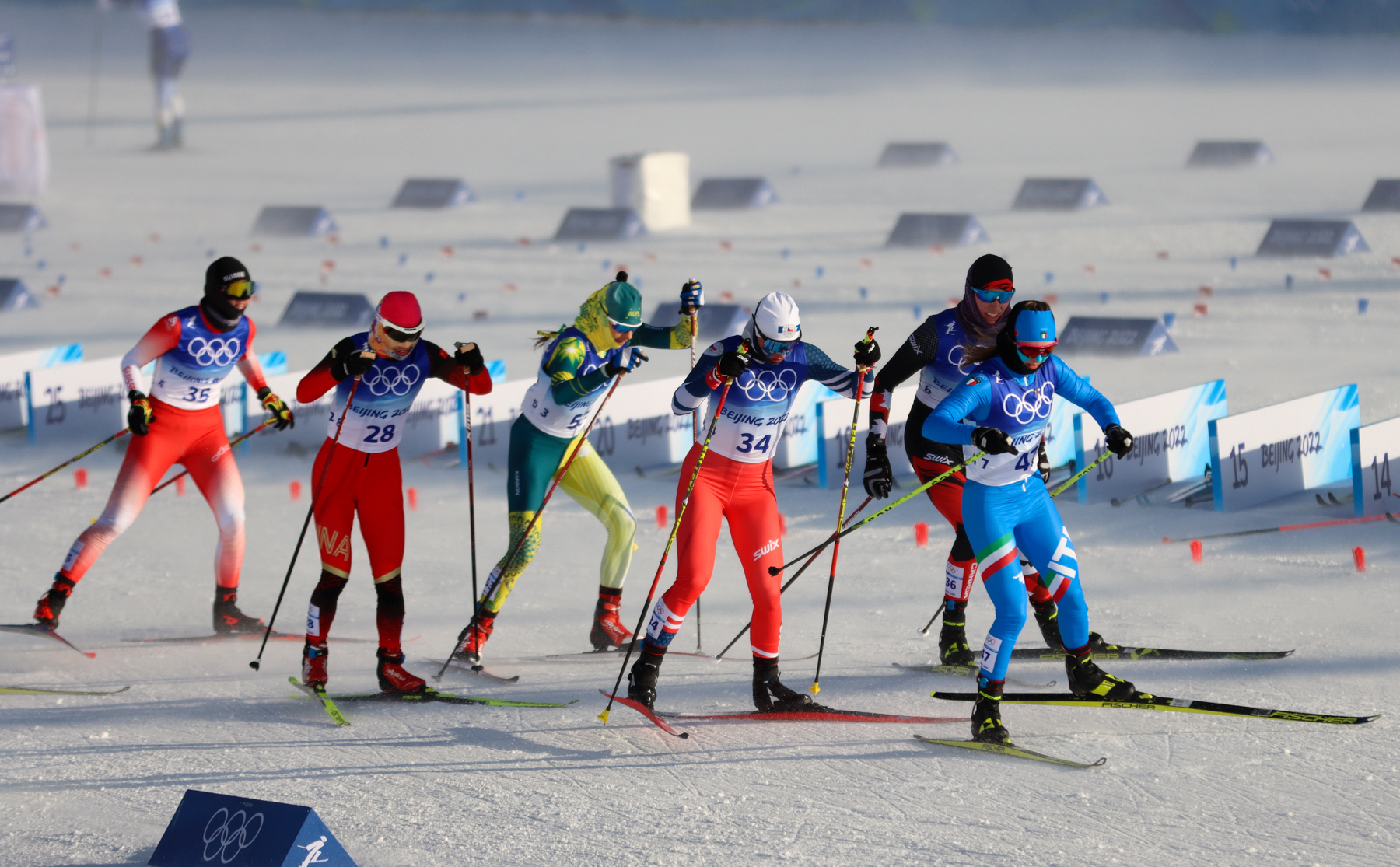
Tag: Kerttu Niskanen

  • Ruka Launches an Olympic Winter: Karlsson Victorious, Diggins Fifth in 10k Classic Opener

    Ruka Launches an Olympic Winter: Karlsson Victorious, Diggins Fifth in 10k Classic Opener

    This coverage is made possible through the generous support of Marty and Kathy Hall and A Hall Mark of Excellence Award. To learn more about A Hall Mark of Excellence Award, or to learn how you can support FasterSkier’s coverage, please contact info@fasterskier.com.

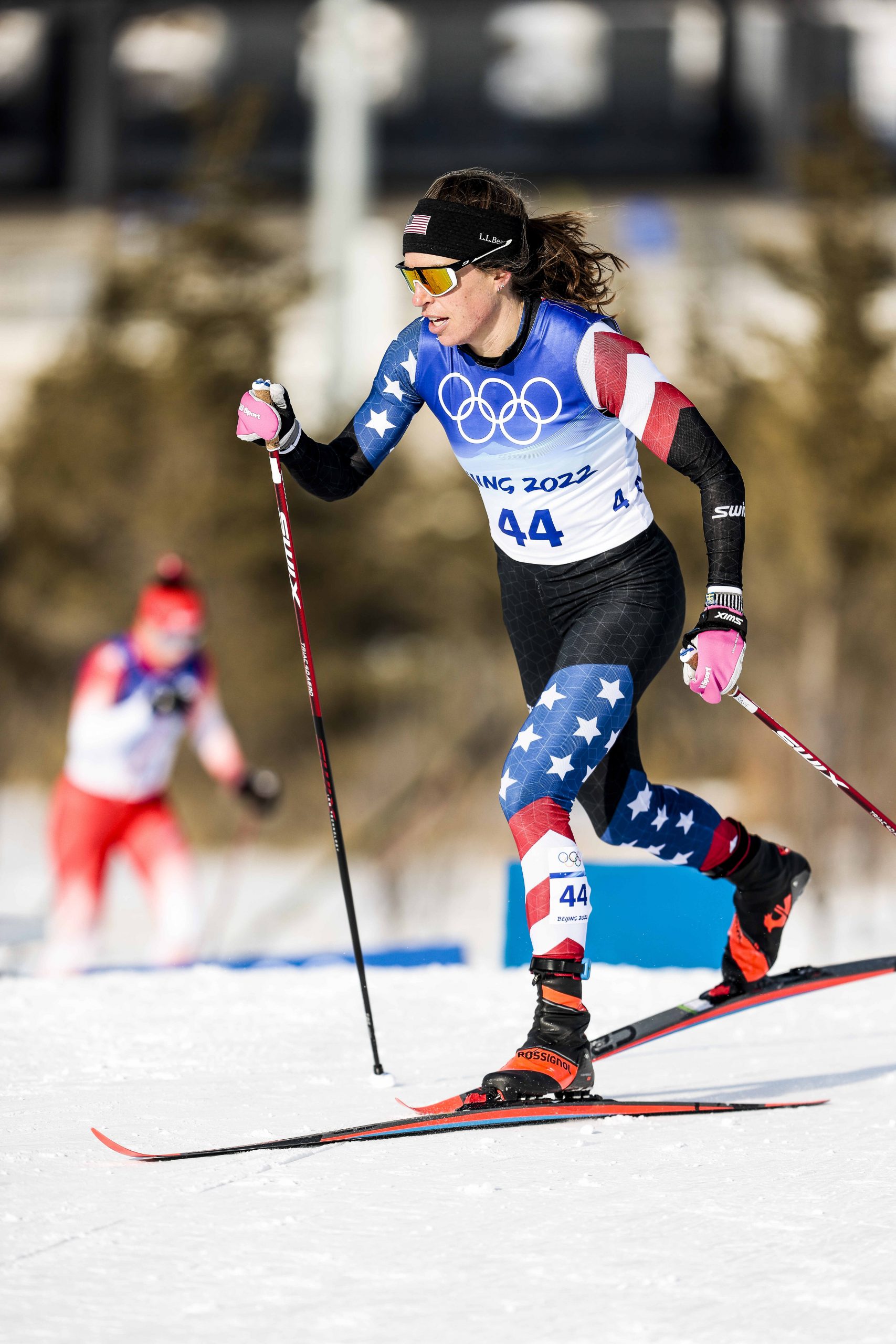
    Okay, who else didn’t sleep last night? It felt like waiting for Santa Claus on Christmas Eve — that fizzy, restless anticipation you can’t shake, even as an adult who should know better. Part of it was simply the joy of finally watching World Cup racing again after eight long months. But more than that, this morning in Ruka felt like the beginning of something bigger: the start of the Olympic year, the opening chapter of a season that will define so many careers, answer so many questions, and launch a web of storylines that will stretch from today all the way to Milano-Cortina.

    This year, the stakes are different. For veterans, it’s legacy. For rising athletes, it’s opportunity. For everyone, it’s a race against time.

    And for those of us who follow this sport as if it were a second bloodstream, the first race in Ruka is the moment winter starts breathing again.

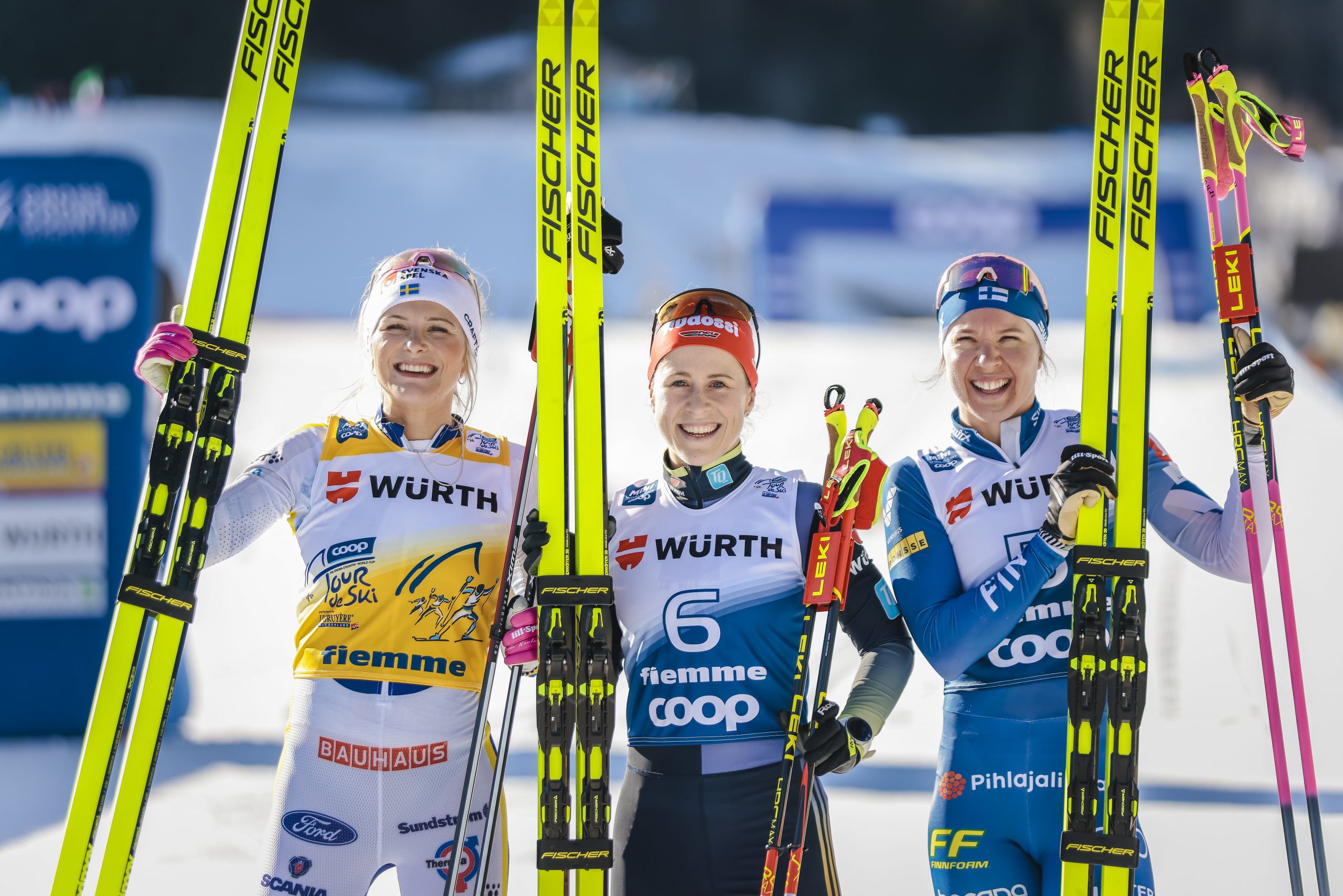
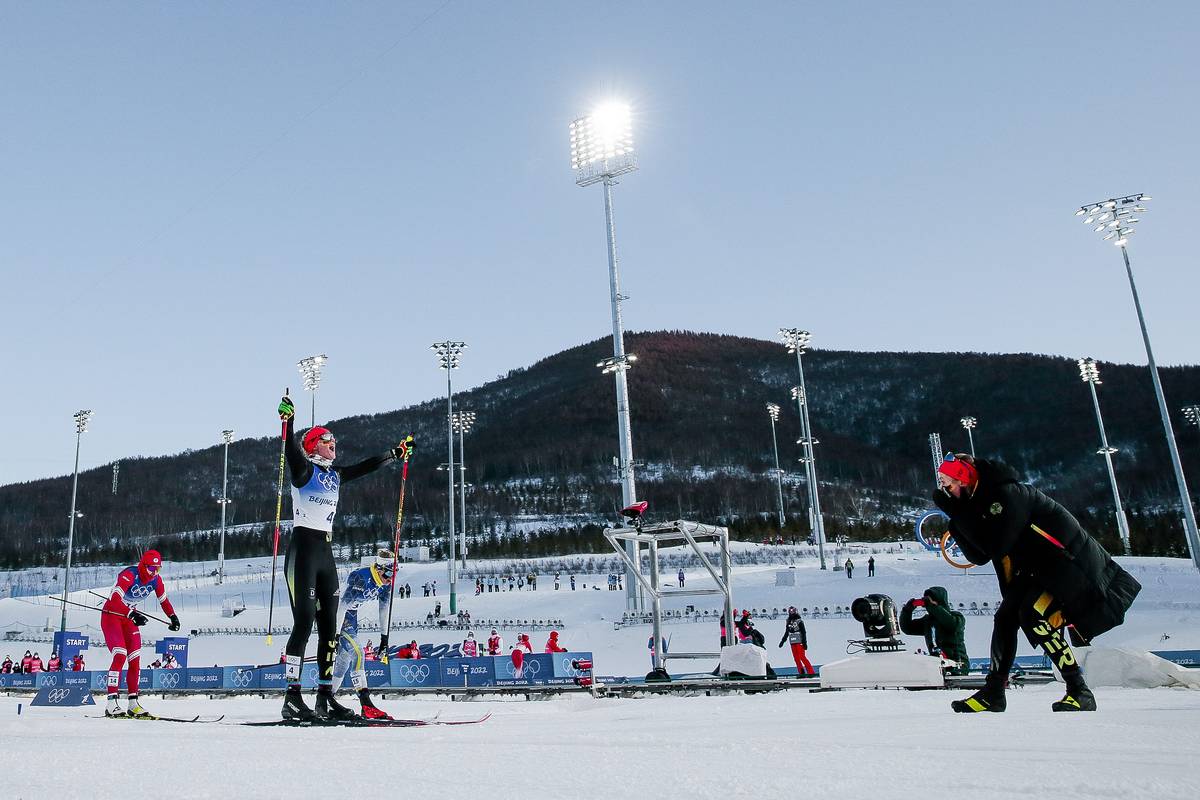
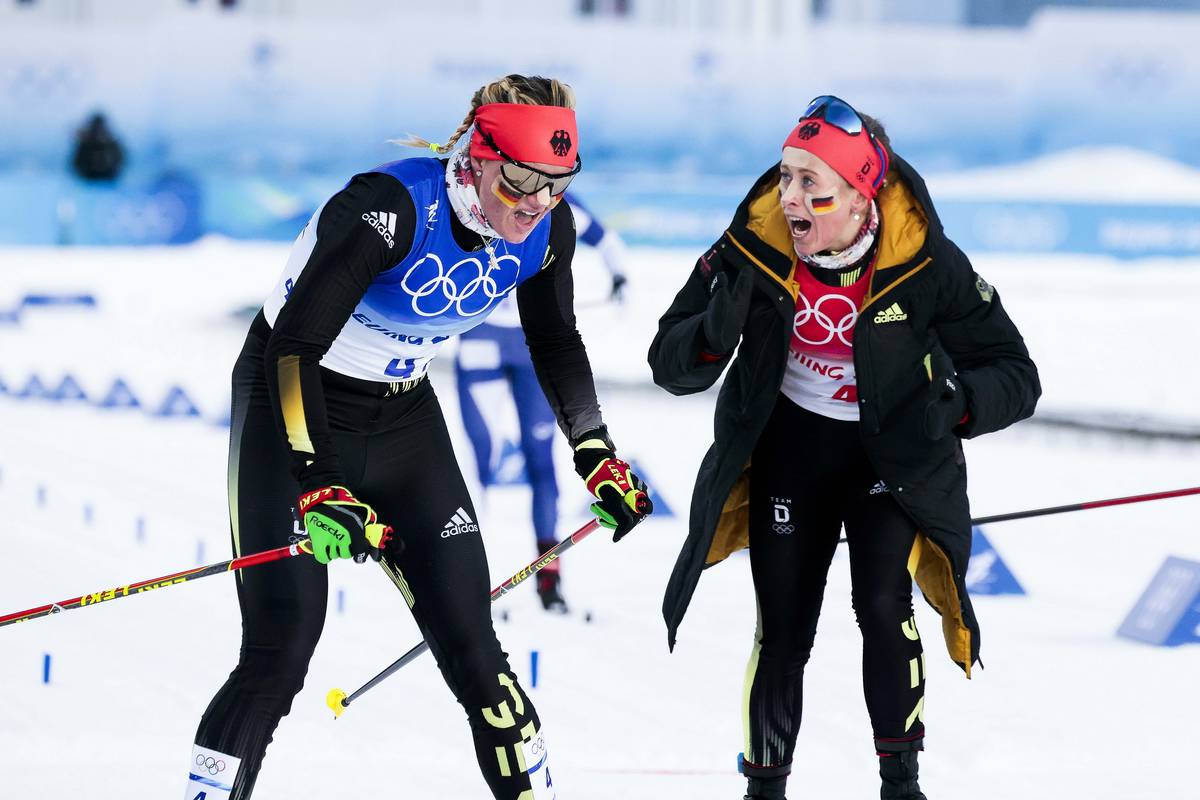
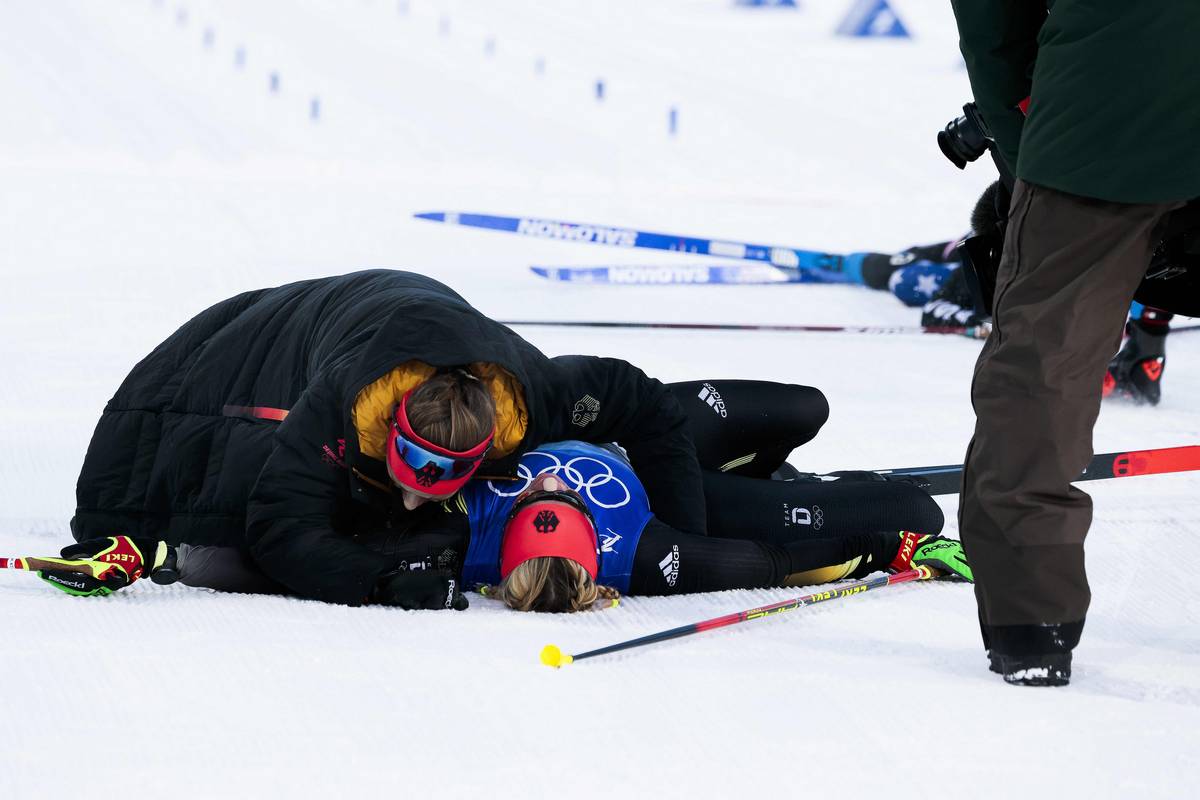
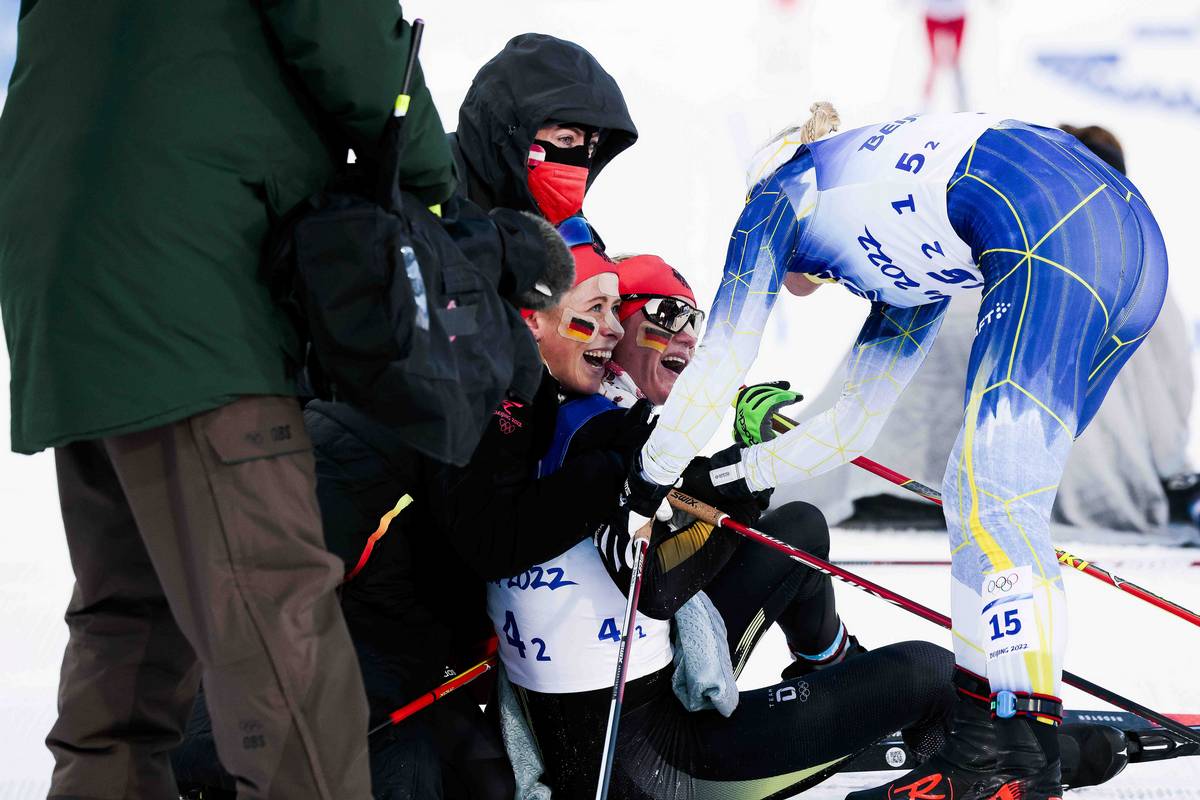
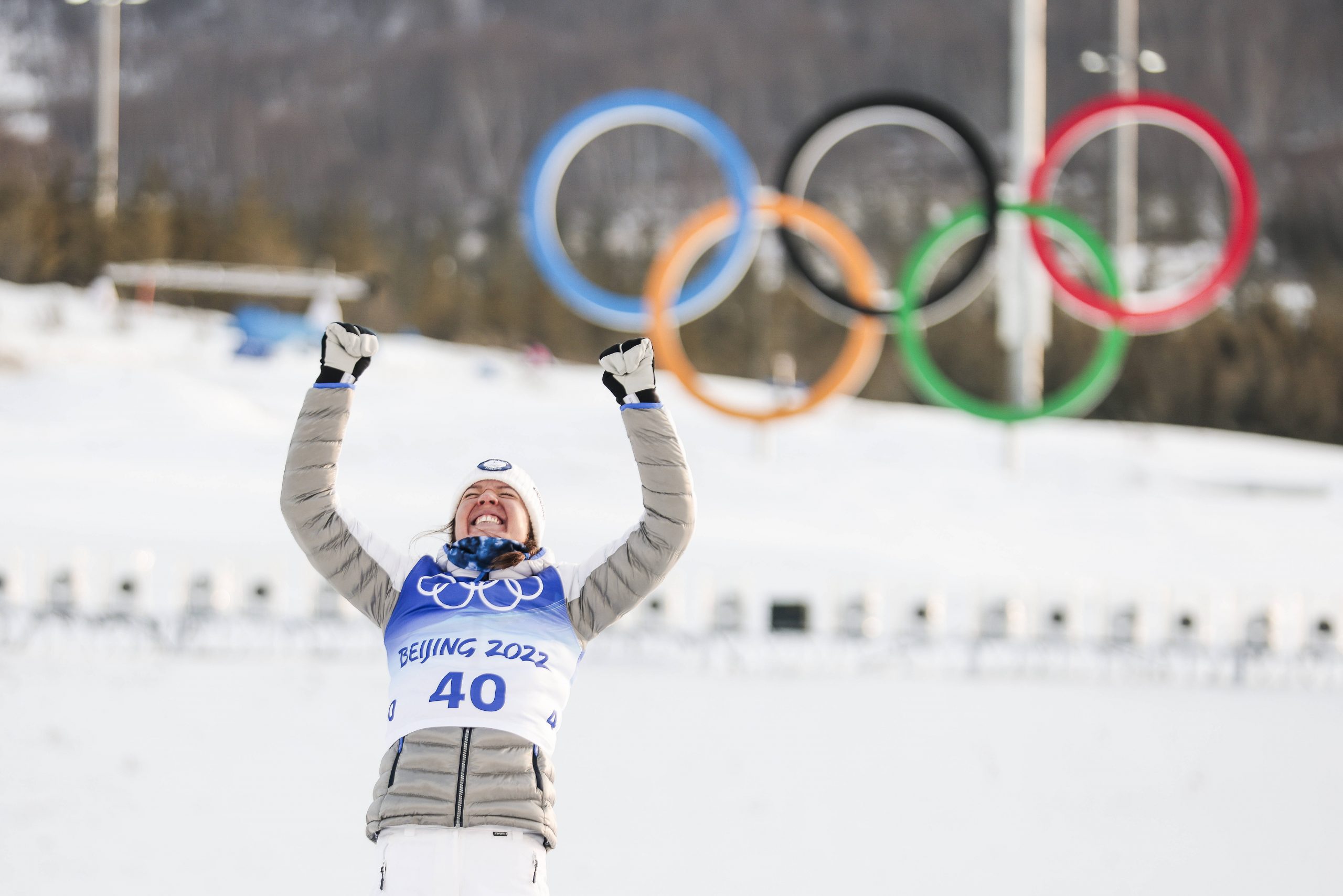
    Frida Karlsson (SWE) poses with Mr. and Mrs. Claus following the 10k Classic in Ruka (FIN). (Photo: Modica/NordicFocus)

    Before the Gun: What Was at Stake

    Even before the racers hit the snow, there were subplots everywhere.

    Norway opened the season in a moment of transition. Therese Johaug — retired again and pregnant with her second child — leaves a vacuum on the women’s team that hasn’t existed in over a decade. Who leads now? Is Heidi Weng’s late-career renaissance real? Is this the year Norway’s depth must finally be enough?

    Sweden, meanwhile, enters the Olympic season with the most complete women’s distance squad on earth. Their classic technique is crisp, balanced, efficient — a signature advantage on days like this.

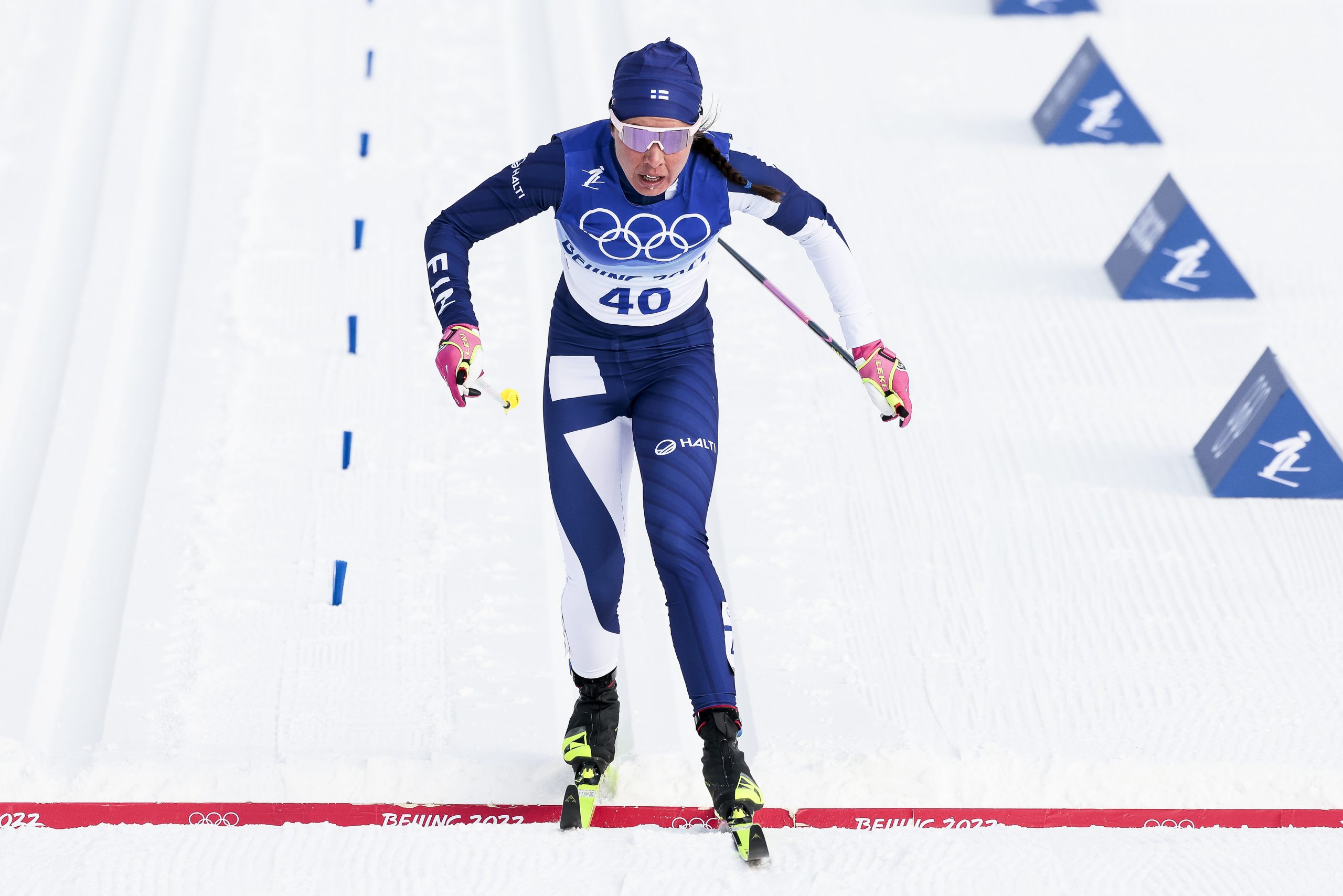
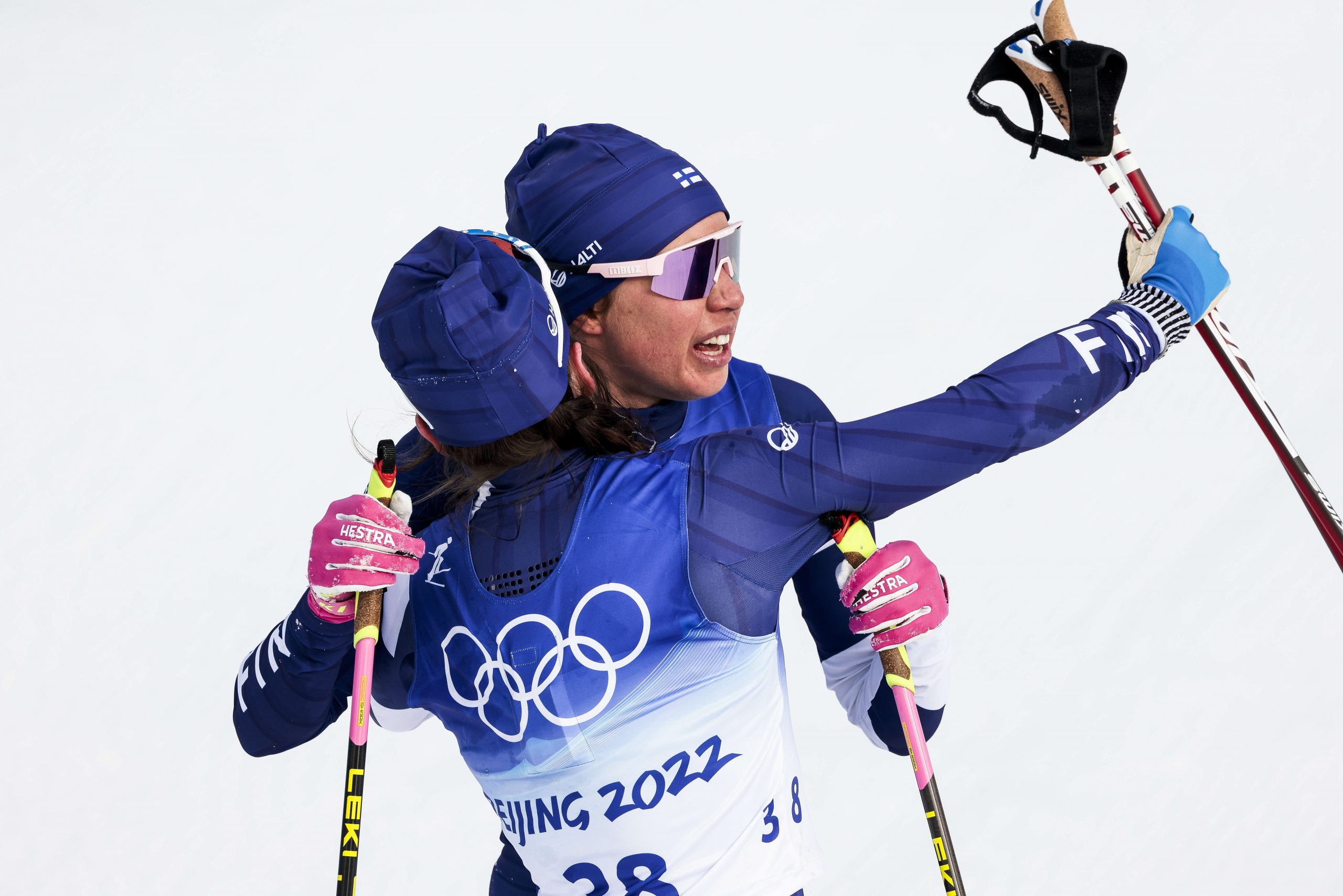
    Finland carries the emotional core of the weekend. Krista Pärmäkoski, racing her final season, took her last opening-day start in Ruka on home snow. Kerttu Niskanen, always a threat in classic, lined up ready to test herself in front of the home crowd.

    And for the United States, the arcs were wide-ranging:

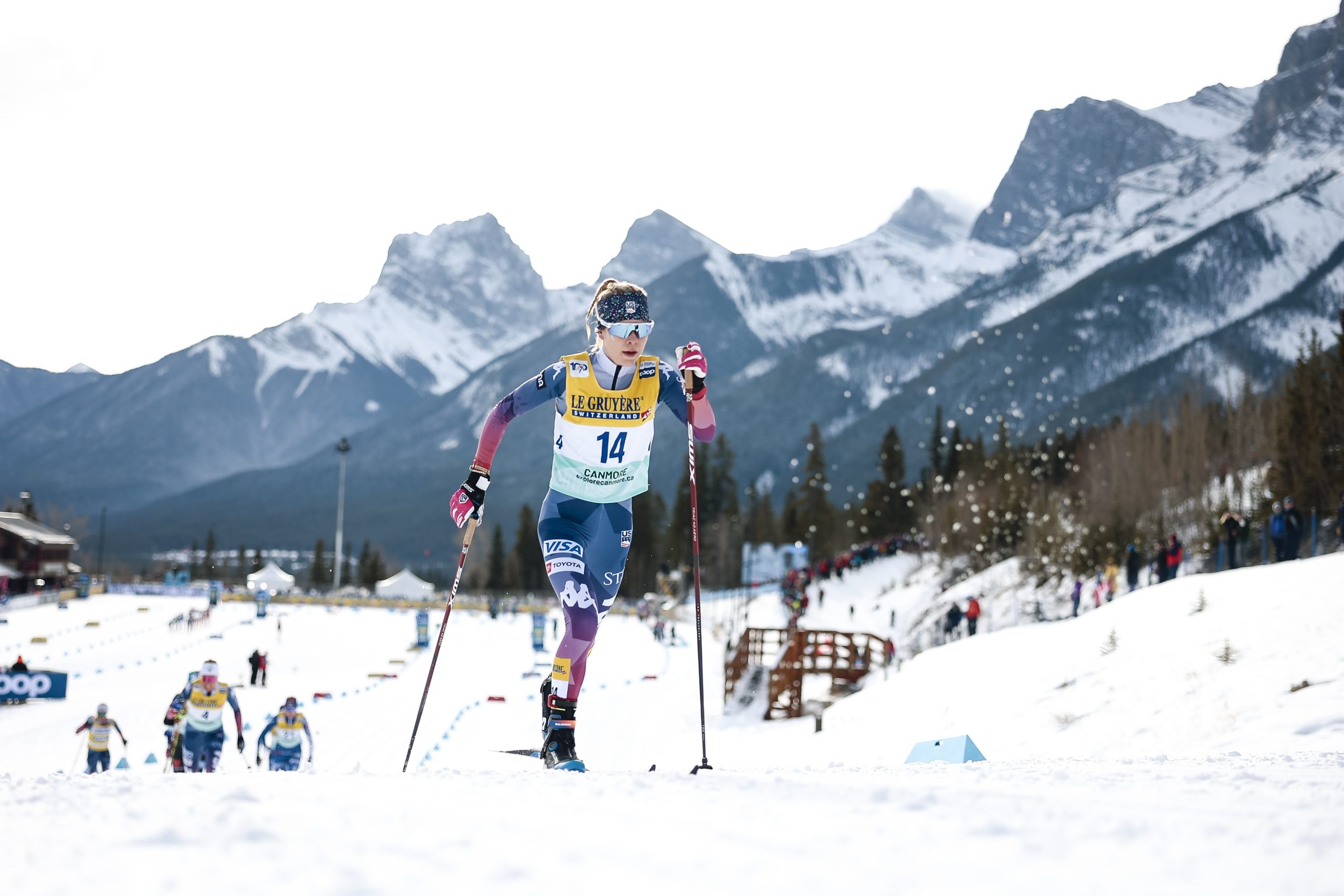
    • Jessie Diggins begins the final season of her career.
    • Rosie Brennan enters winter in deeply untraditional circumstances after an Epstein-Barr reactivation.
    • Julia Kern arrives healthier and steadier than in years.
    • Sophia Laukli brings a redesigned training life out of Norway.
    • And three additional American women (Kate Oldham, Kendall Kramer, and Alayna Sonnesyn) who begin the short, intense race for Olympic qualification.
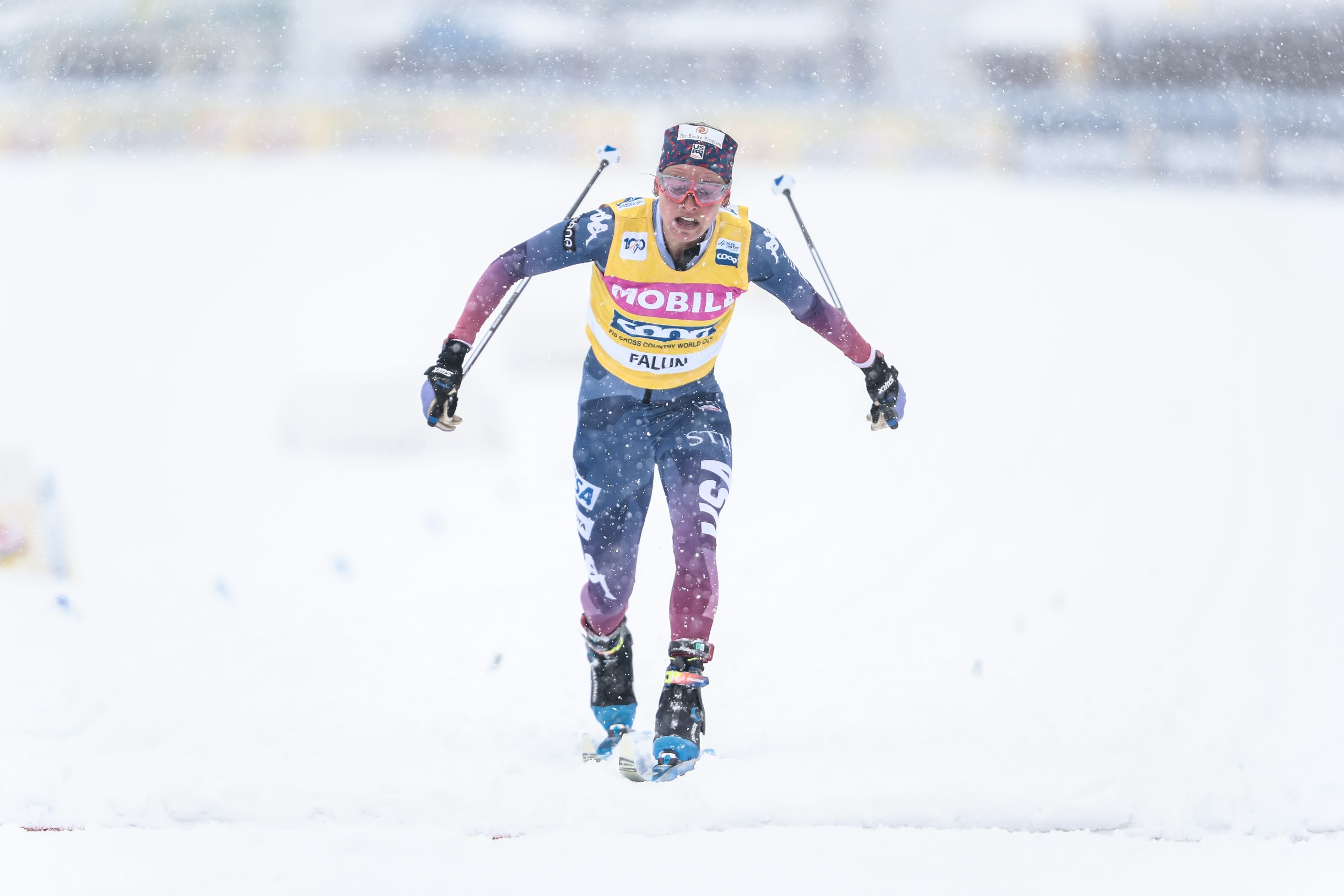
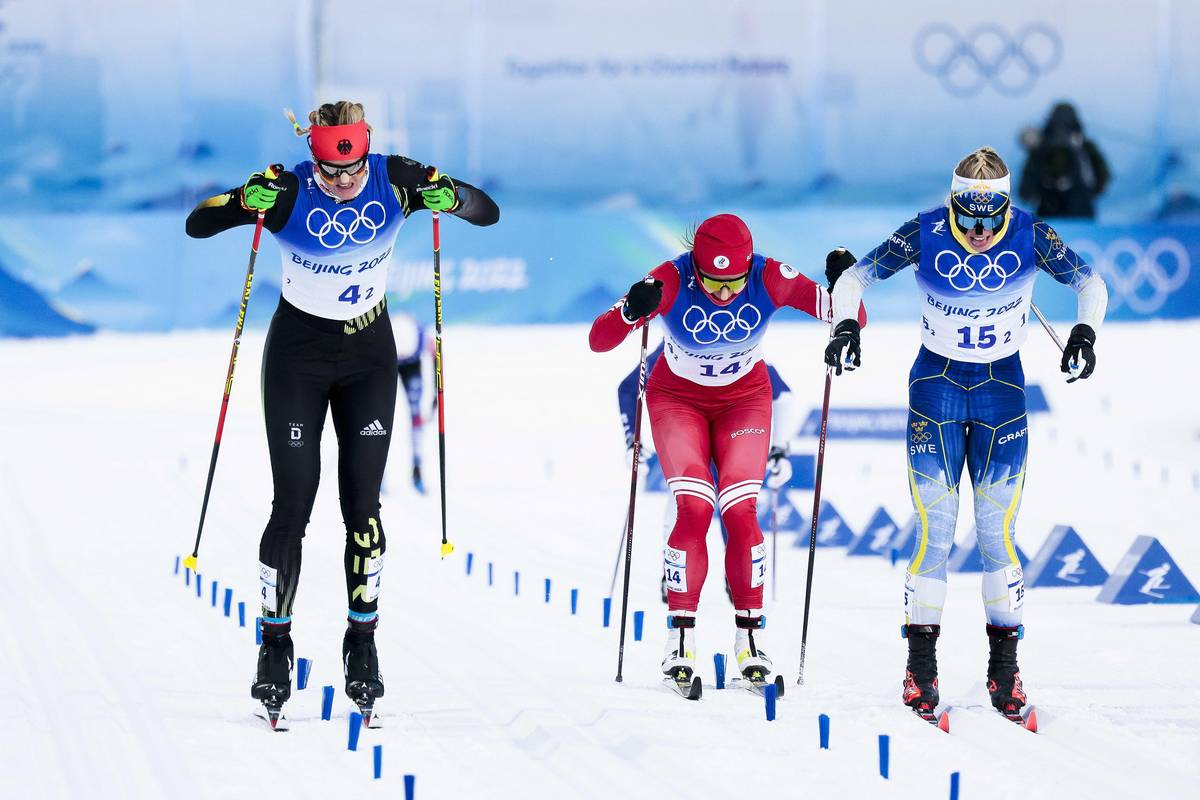
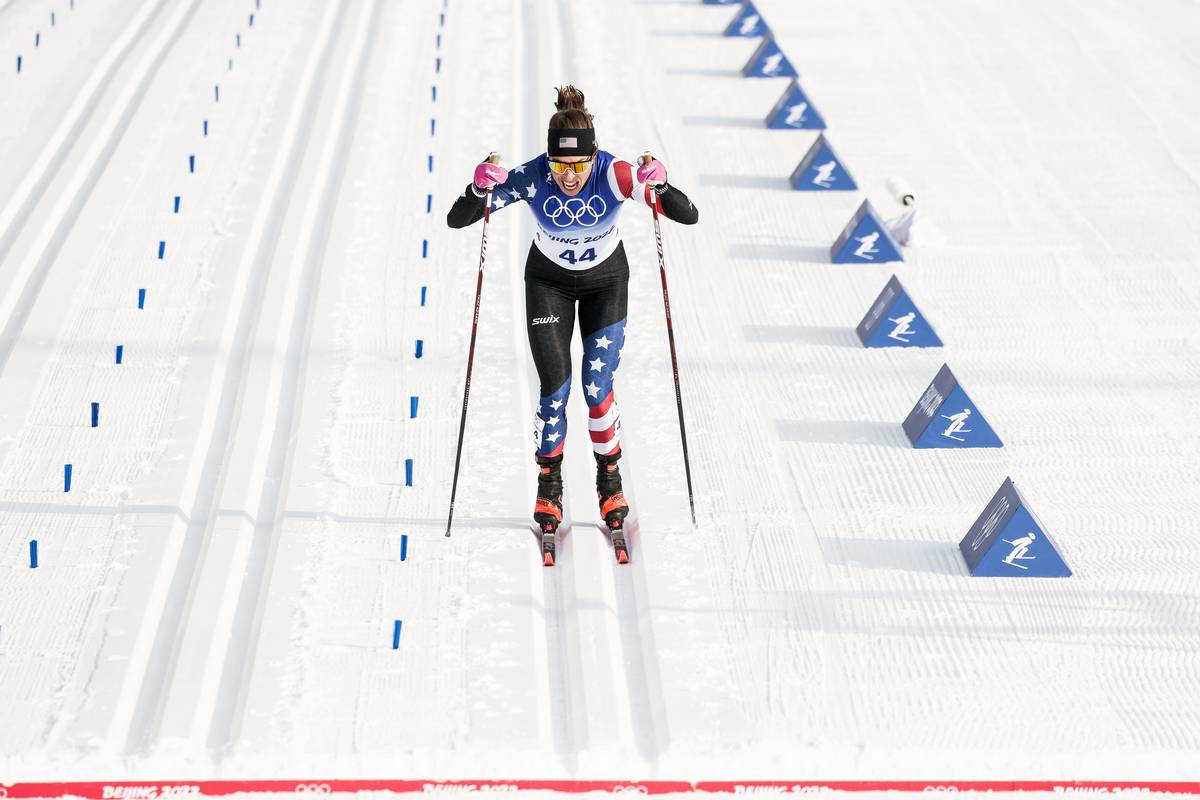
    Alayna Sonnesyn (USA) lunges for the line at the end of the 10k Classic in Ruka (FIN). (Photo: Modica/NordicFocus)

    A Day Shaped Before It Started: New Snow, Glazing Tracks, and Wax Tech Calculus

    Ruka had been bitterly cold in recent weeks — until a foot of new snow fell and temperatures climbed toward freezing. The result was a wax technician’s nightmare: soft snow in the shade, glazing climbs in the sun, and a classic course twisting through varying microclimates.

    Kick wax that worked at the start failed on the climbs. Skis that kicked well on the climbs dragged on the flats. Double-pole sections demanded freedom; the final climbs demanded grip. There was no perfect answer — only compromise and risk.

    This race was always going to reward the skiers with the best technical balance and the wax techs bold enough to choose the right kind ofwrong.”

    Moa Ilar (SWE) charges down the finishing stretch at the end of the 10k Classic in Ruka (FIN). (Photo: Modica/NordicFocus)

    The Race: Karlsson Sets the Standard, Weng Returns, Ilar Rises, Diggins Surges

    1.1 km — Jessie Diggins Takes the First Lead of the Season

    From the moment the race began, the tone was unmistakable.

    With bib #1 Julie Bjervig Drivenes setting the baseline, Jessie Diggins blasted through the first checkpoint with the early lead — 1.3 seconds ahead of Frida Karlsson.

    It was classic Diggins: joyful, aggressive, fearless.

    3.3 km — Karlsson’s Stride Takes Control

    By 3.3 km, the race reshaped itself. Frida Karlsson, with her strong hip stability and long, economical stride, surged into the lead on the climbing sections. Diggins, whose double-poling and downhill flow looked excellent, lost time on the steepest pitches and slid to seventh.

    Behind Karlsson, Sweden formed a front of precision:

    • Moa Ilar at +3.0
    • Ebba Andersson at +5.1
    • Three Swedes in the top three splits.

    A message, delivered early.

    6.1 km — Heidi Weng Charges Back Into the Story

    Heidi Weng, skiing 30 seconds behind Diggins, mounted the late charge of the day. She began cutting into Karlsson’s lead — from 14 seconds at 6.1 km to only 10.5 by the line.

    After several up-and-down years, Weng signaled something unmistakable: she’s not done yet.

    Final Kilometers — Diggins Closes Hard, Ilar and Andersson Duel, Fosnæs Threatens

    Jessie Diggins mounted her own push on the flats and downhills, gaining time between 6.1 and 8.1 km. She crossed the line in a time that held the top spot until the final seeded skiers, ultimately placing fifth — one of her strongest classic results ever on this course.

    Moa Ilar executed a poised final push, taking third and bumping Andersson to fourth. Kristin Austgulen Fosnæs threatened Diggins’ time but ultimately finished behind her in sixth.

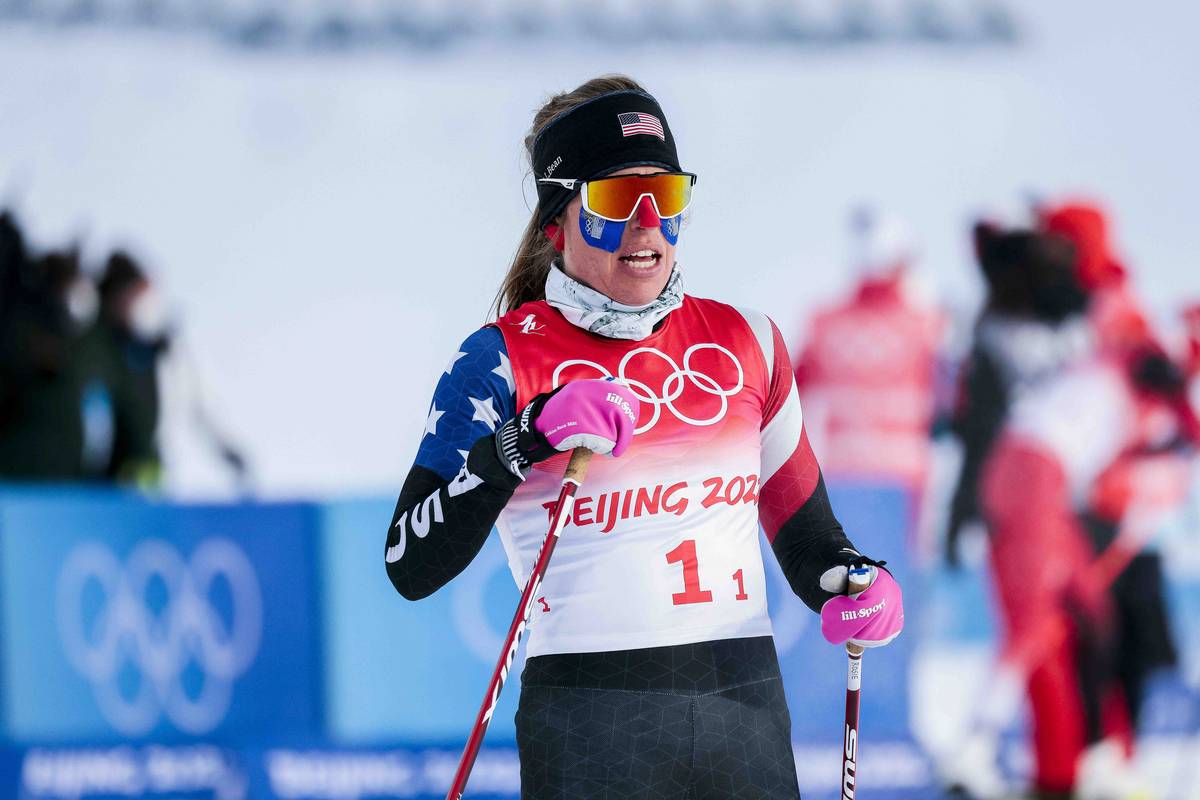
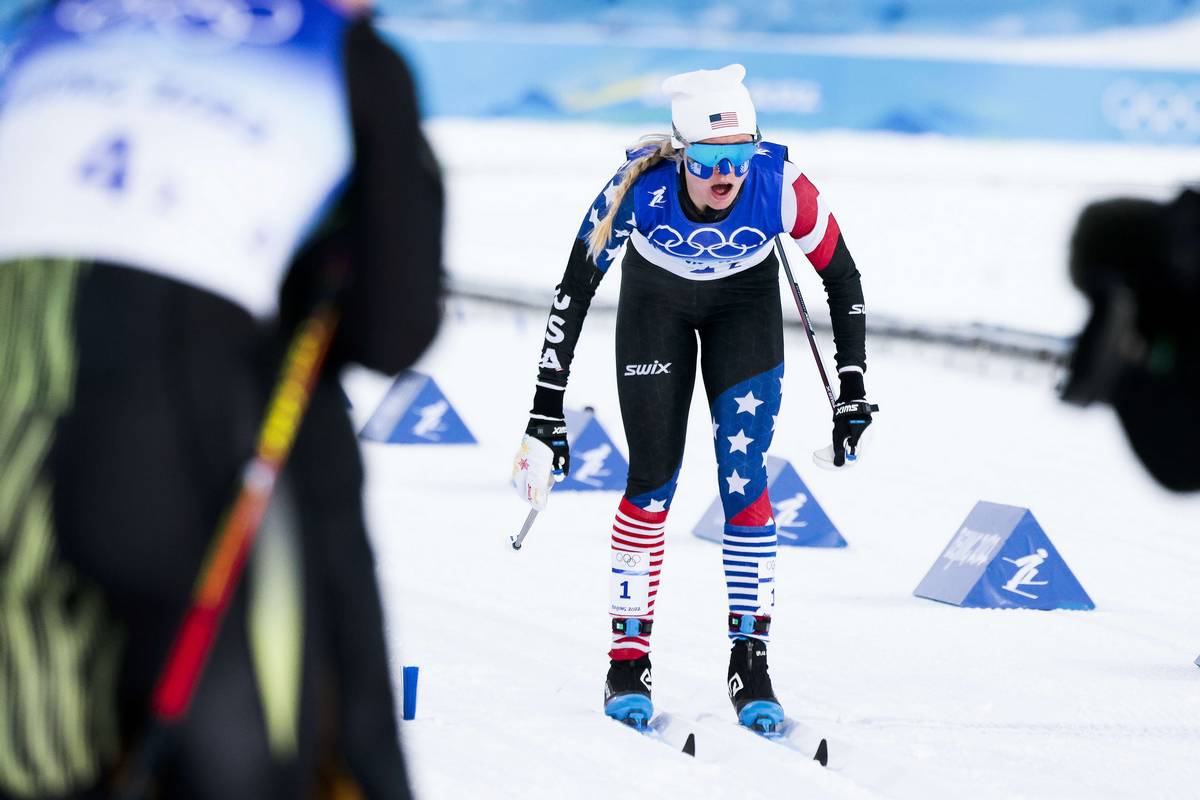
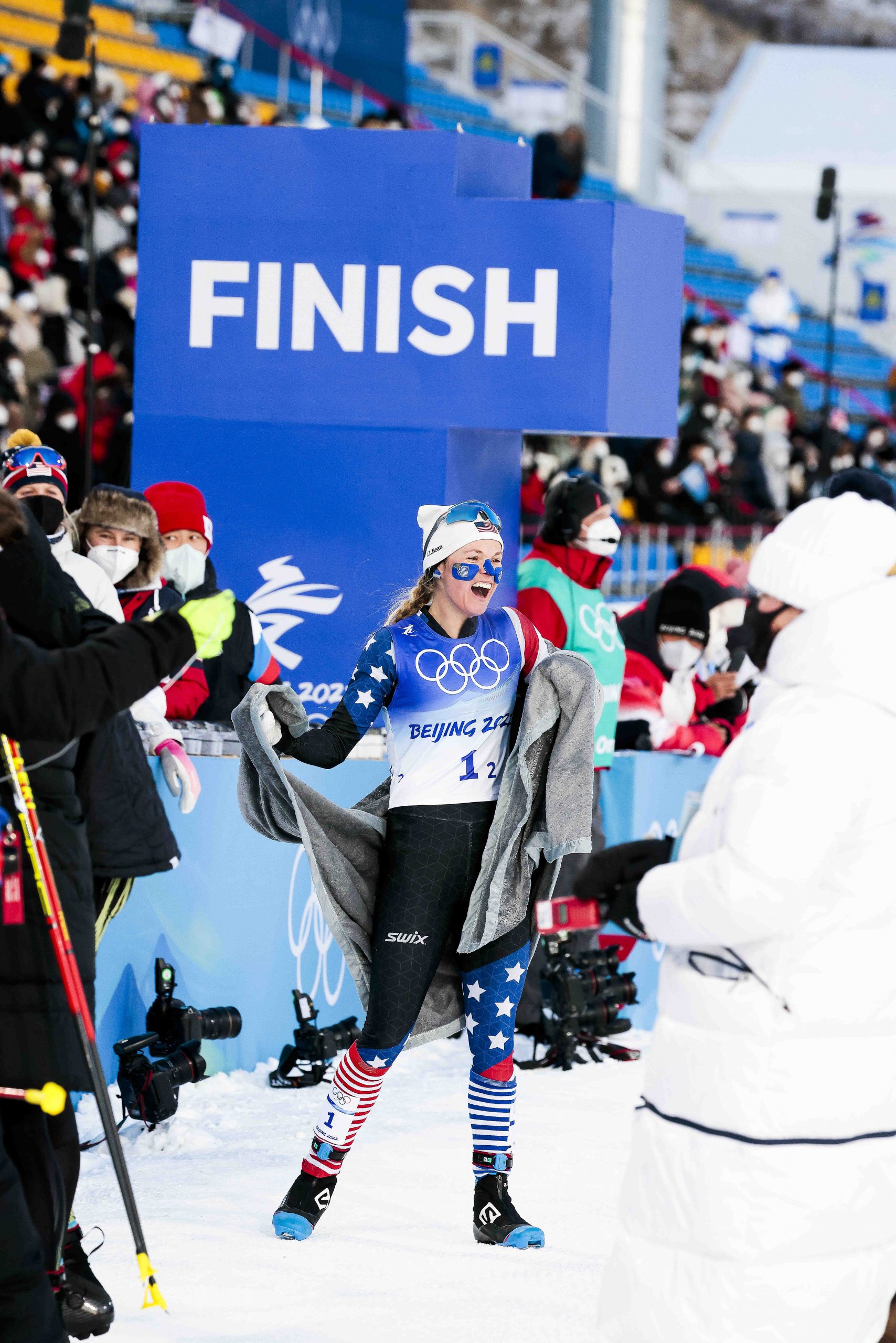
    Jessie Diggins (USA) was all smiles after the 10k Classic in Ruka (FIN). (Photo: Modica/NordicFocus)

    Jessie Diggins: Racing the First Day of Her Last Season

    As Diggins enters the last year of her storied career, her goals have nothing to do with podiums.

    “My goals are really not about race results at all,” she said. “My goals for the season are to be happy and healthy and just in the present moment… just really soaking in the moment and the feeling of, like, wow, I get to do this.”

    She brought that joy directly into today’s start.

    “I just wanted to go hard and use this race to get the season started.”

    And yet, the question remains: when Diggins puts on a bib, does instinct overtake the plan?

    “I do like to push myself to the max whenever I race — maybe not 100% where I’m scraped off the snow, but really darn close,” she said.

    “It’s part of my training plan with Cork — we use early season races to build sharpness.”

    On a tricky waxing day, Diggins was clear-eyed about the team effort.

    “I was really happy with my skis… a great mix of just enough kick but also really free. We needed the skis to be fast in the double-poling, and knowing I was going to herringbone the climbs anyway, we went for that in-between.”

    For Diggins, this wasn’t just a top-five finish. It was a signal: the last season of her career may feature some of her best classic skiing.

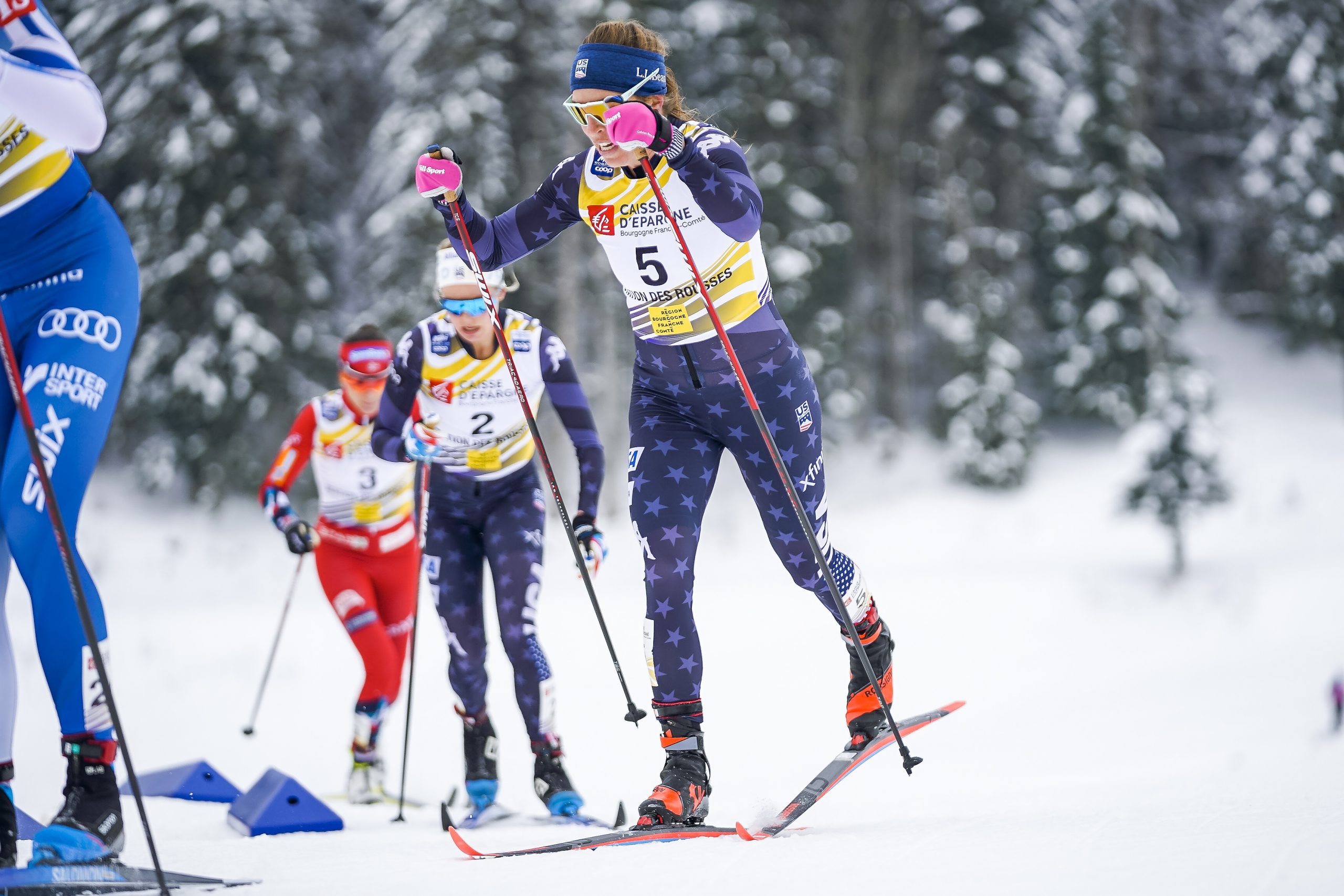
    Rosie Brennan (USA) with her signature long stride during the 10k Classic in Ruka (FIN). (Photo: Modica/NordicFocus)

    Rosie Brennan: “This Is Uncharted Territory”

    Rosie Brennan entered the winter with one of the most unconventional lead-ups of her career — a necessity after an Epstein-Barr reactivation forced her into weeks ofmicro-intervalsand tightly controlled volume.

    Her return to full-distance racing revealed both progress and uncertainty.

    “If I’m honest, I had a little higher expectations for myself today, so I’m feeling a bit mixed about it,” she said.

    “There were some moments of skiing I was really happy with and some that left me wanting more.”

    The hardest part, she explained, has been adapting to Europe — travel, fatigue, recovery — with a body that no longer responds as it used to.

    “It’s been a really hard adaptation to Europe with a body that isn’t as resilient as I’m accustomed to… this is uncharted territory for me, and I just don’t know what will happen.”

    Still, she holds hope — and patience.

    “I have to keep trying and experimenting and figure out what will work for me this winter. I’m sure there will be a lot of ups and downs in the process.”

    For Brennan, today wasn’t a verdict — it was the next step in a complicated, courageous return.

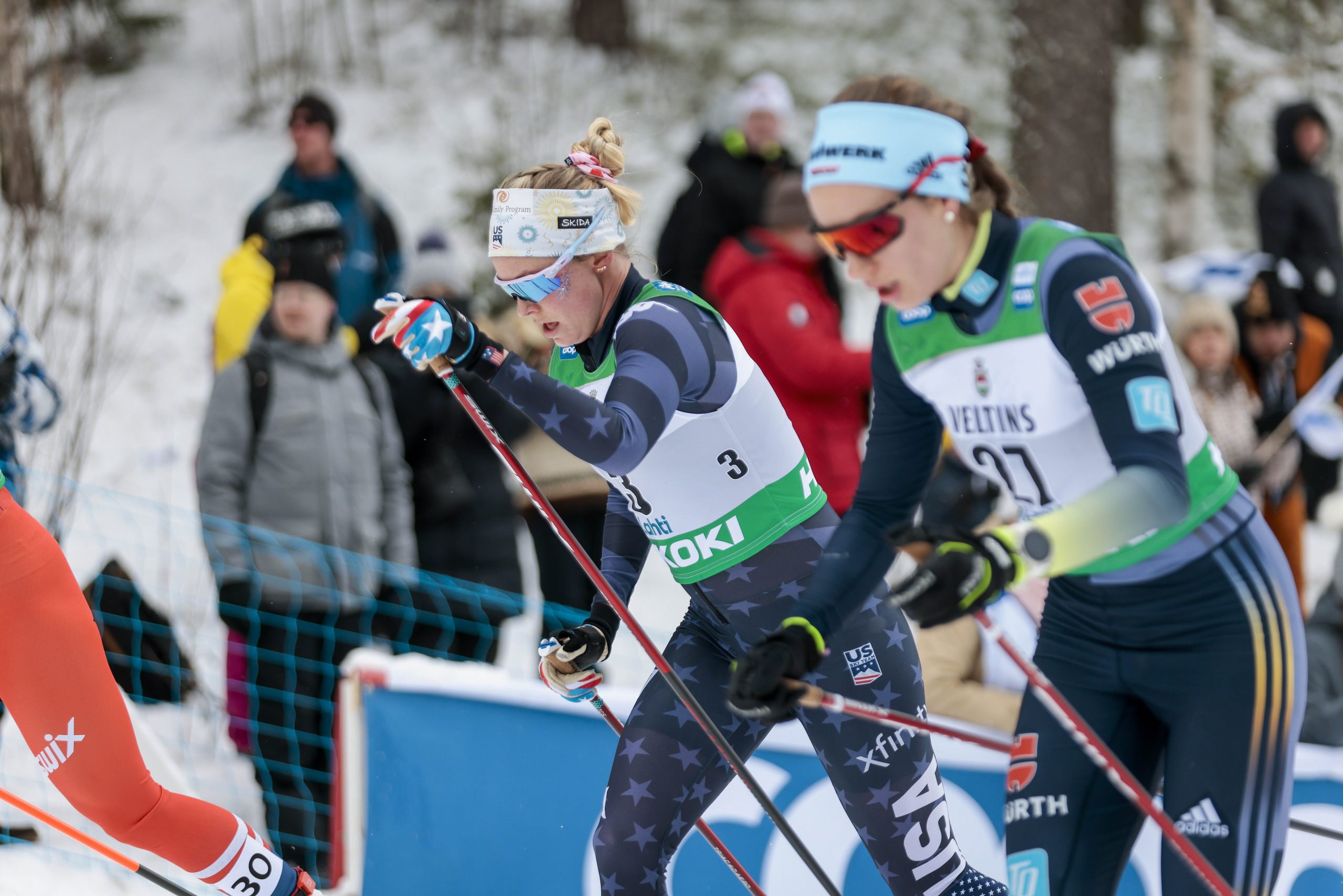
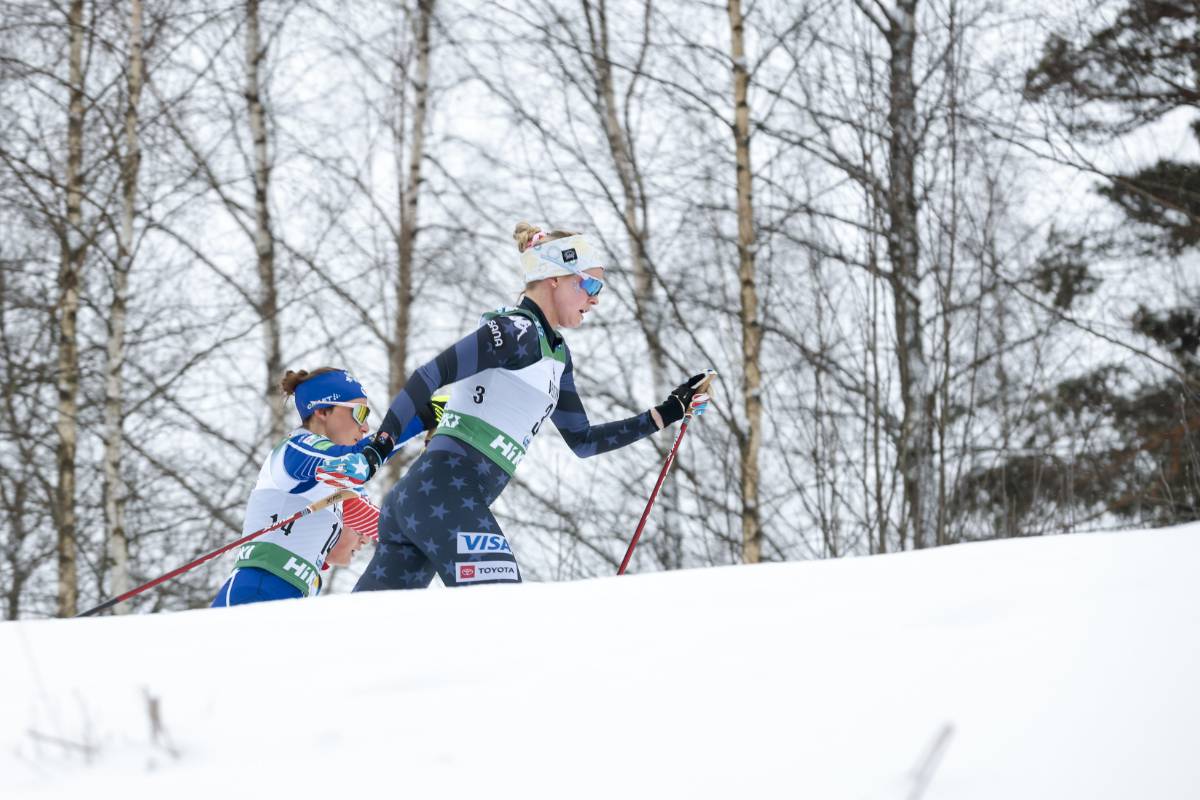
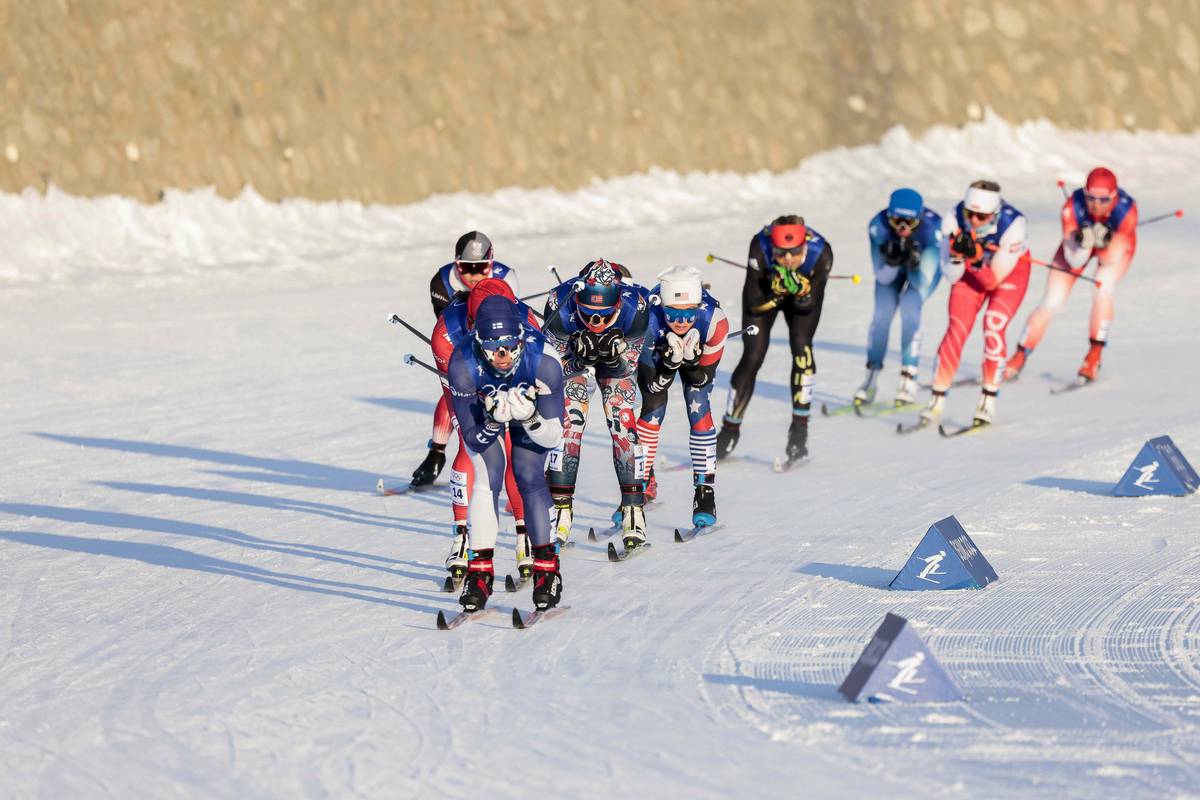
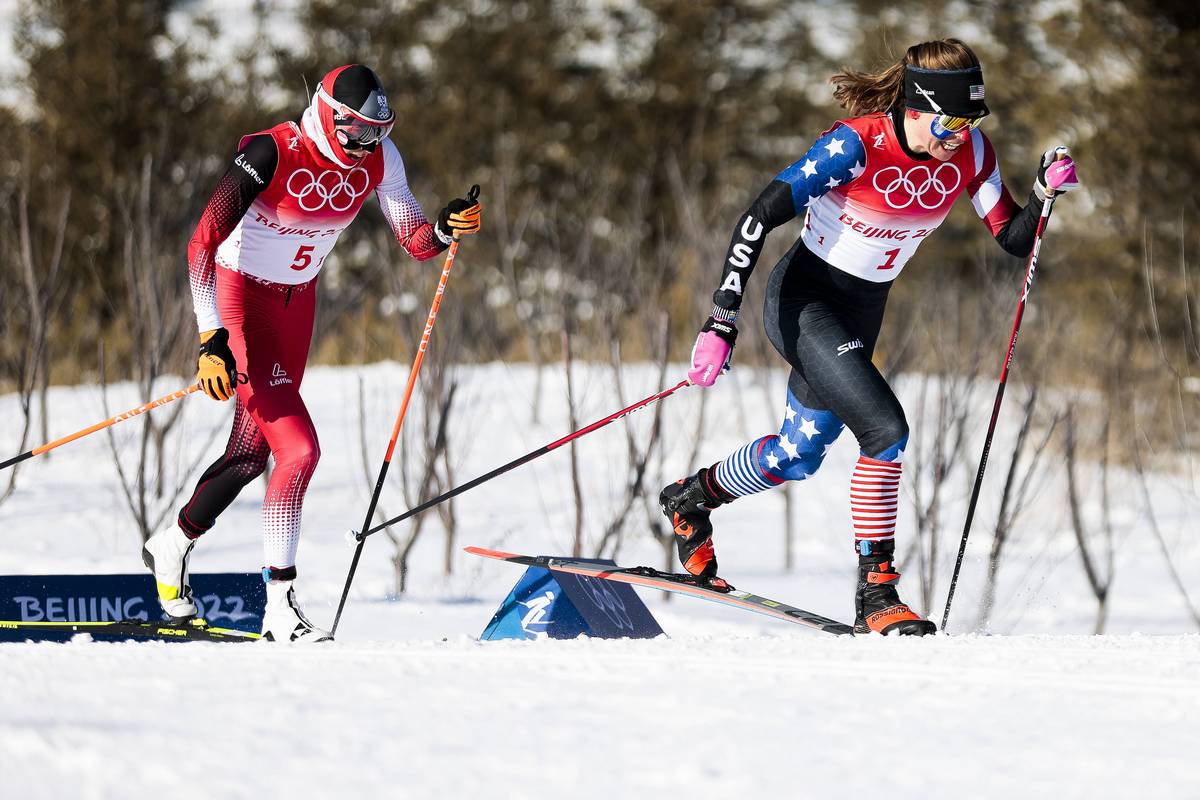
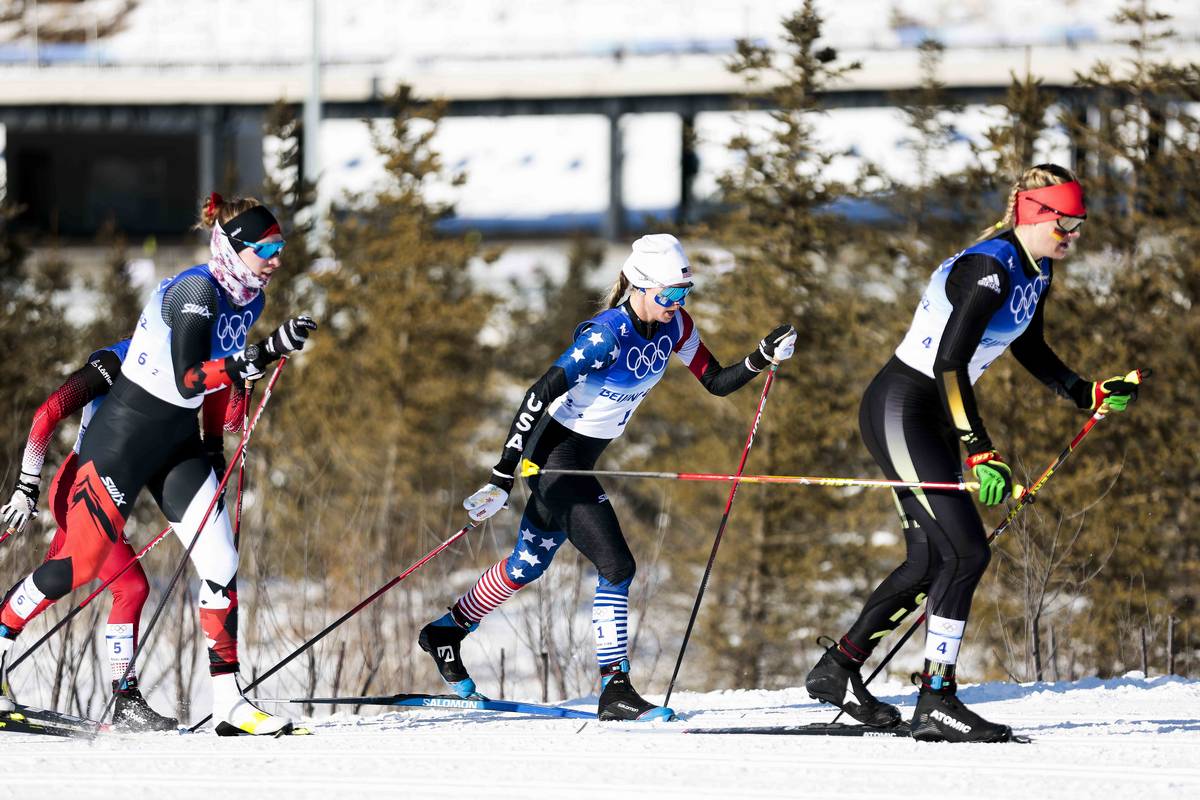
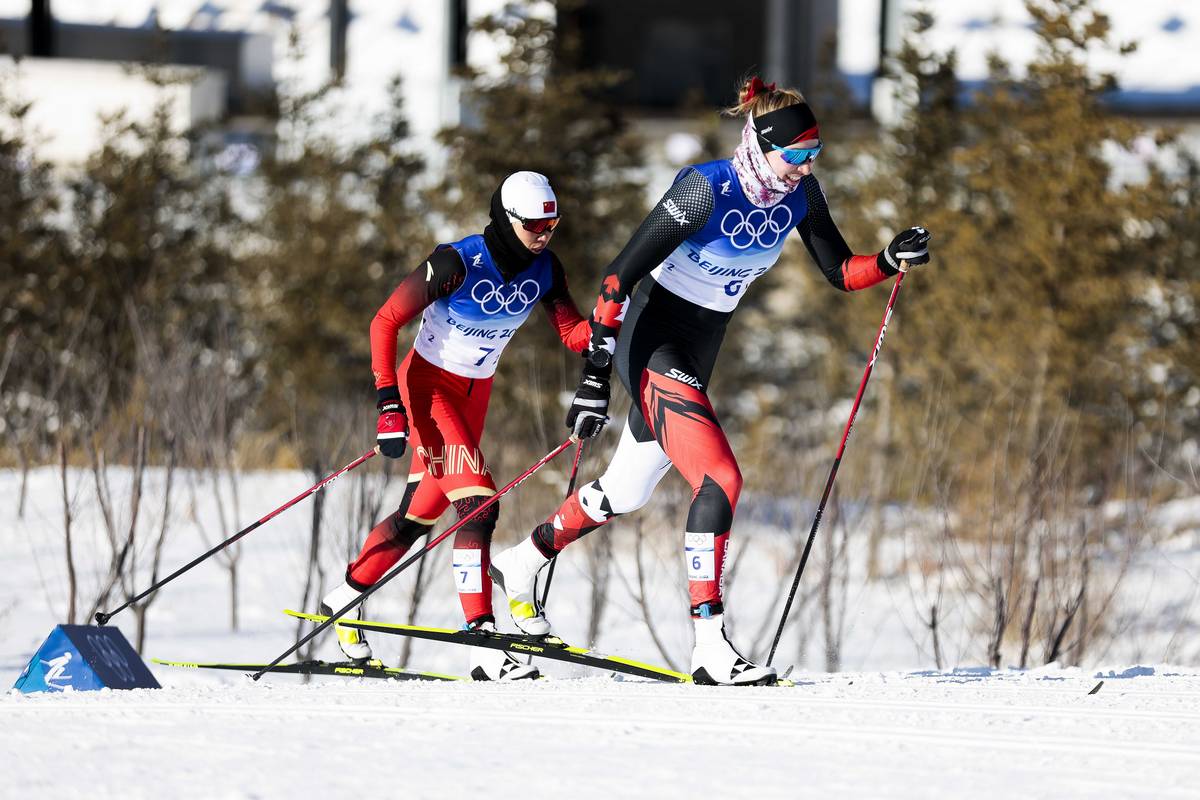
    Ebba Andersson (SWE), Julia Kern (USA), (l-r) push up the climb in Ruka (FIN). (Photo: Modica/NordicFocus)

    Julia Kern: A Personal Best Hidden Behind the Result Sheet

    Julia Kern’s final ranking might not have turned heads on the results page, but the performance meant far more than the number beside her name. For Kern — often a slow starter in Ruka — today marked meaningful progress.

    “Actually, I’m proud of my race today,” she said. “If you just look at the result… You would think I’d be quite dissatisfied, but this was a personal best for me in the opening Ruka 10km.”

    The opener in Ruka has long been one of the toughest venues for her, a course whose steep climbs, cold temps, and early-season timing rarely align with her strengths.

    “This was my eighth time doing this race, and the result has never been great or representative of other races later in the season,” Kern explained. “I was proud of having moments out there where I skied with good technique, and my body had good energy.”

    Her long-term confidence remains intact — today was a step, not a verdict.

    “Of course, I want to climb higher in the results list, but my result today doesn’t worry me,” she said. “I use this race to race myself into shape and wake up the body for the sprint tomorrow and the rest of the season.”

    Like many in the field, she dealt with some of the day’s most fickle challenges: a mix of new snow, fog, drizzle, and instant glazing that made finding kick nearly impossible.

    “It was on and off snowing/light fog or drizzle… a classic Ruka day where the tracks seem to glaze in an instant,” she said. “The glaze made it really challenging to kick from the start, and even harder in the second lap.”

    But where the climbs demanded compromises, the flats rewarded her strengths.

    “Otherwise the conditions felt fast on the downs and flats,” Kern added, “and I felt strong on the flatter terrain today.”

    Kern leaves day one not discouraged, but energized — a skier who knows this course never tells the whole story and who trusts what today’s moments of good skiing suggest about what’s ahead.

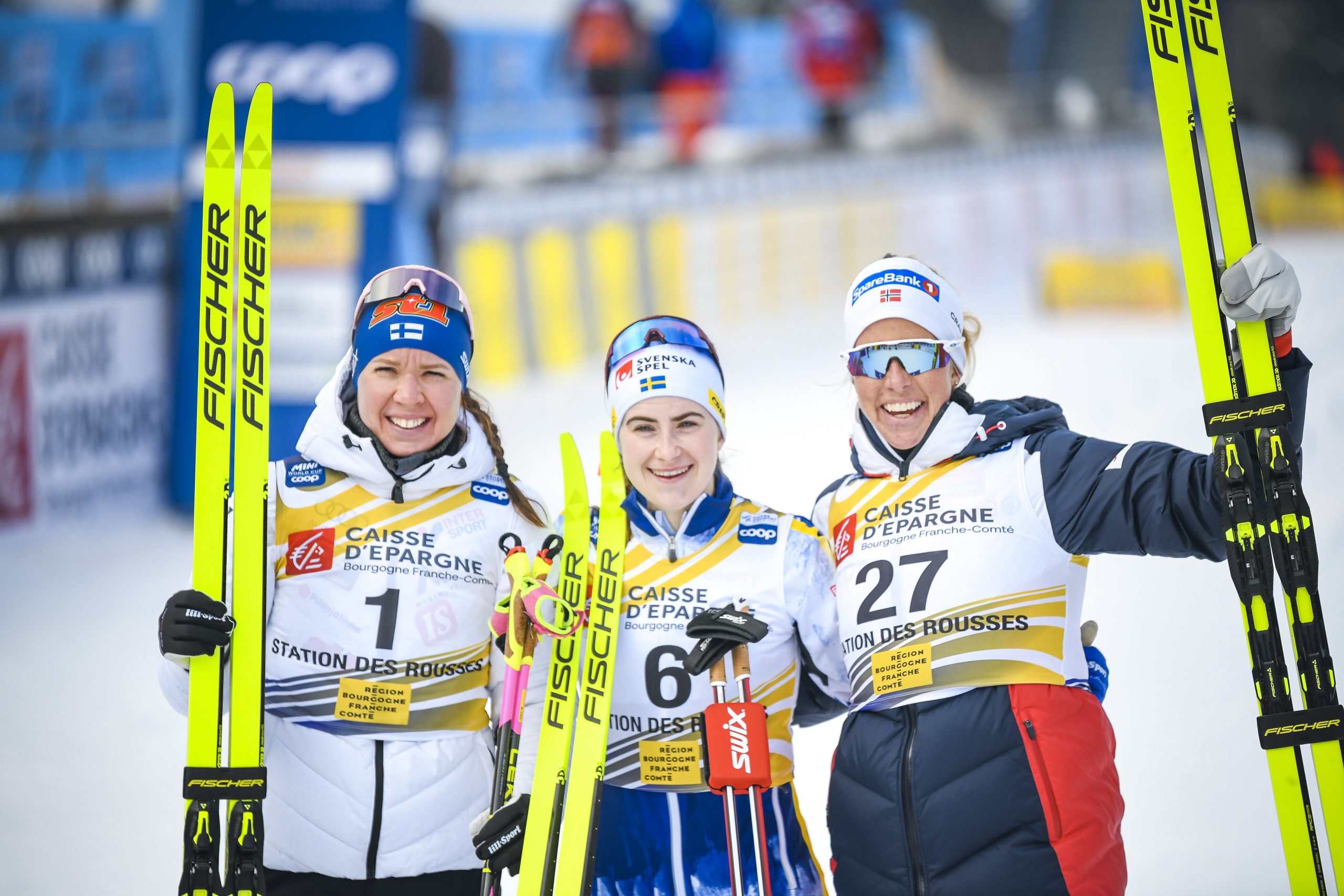
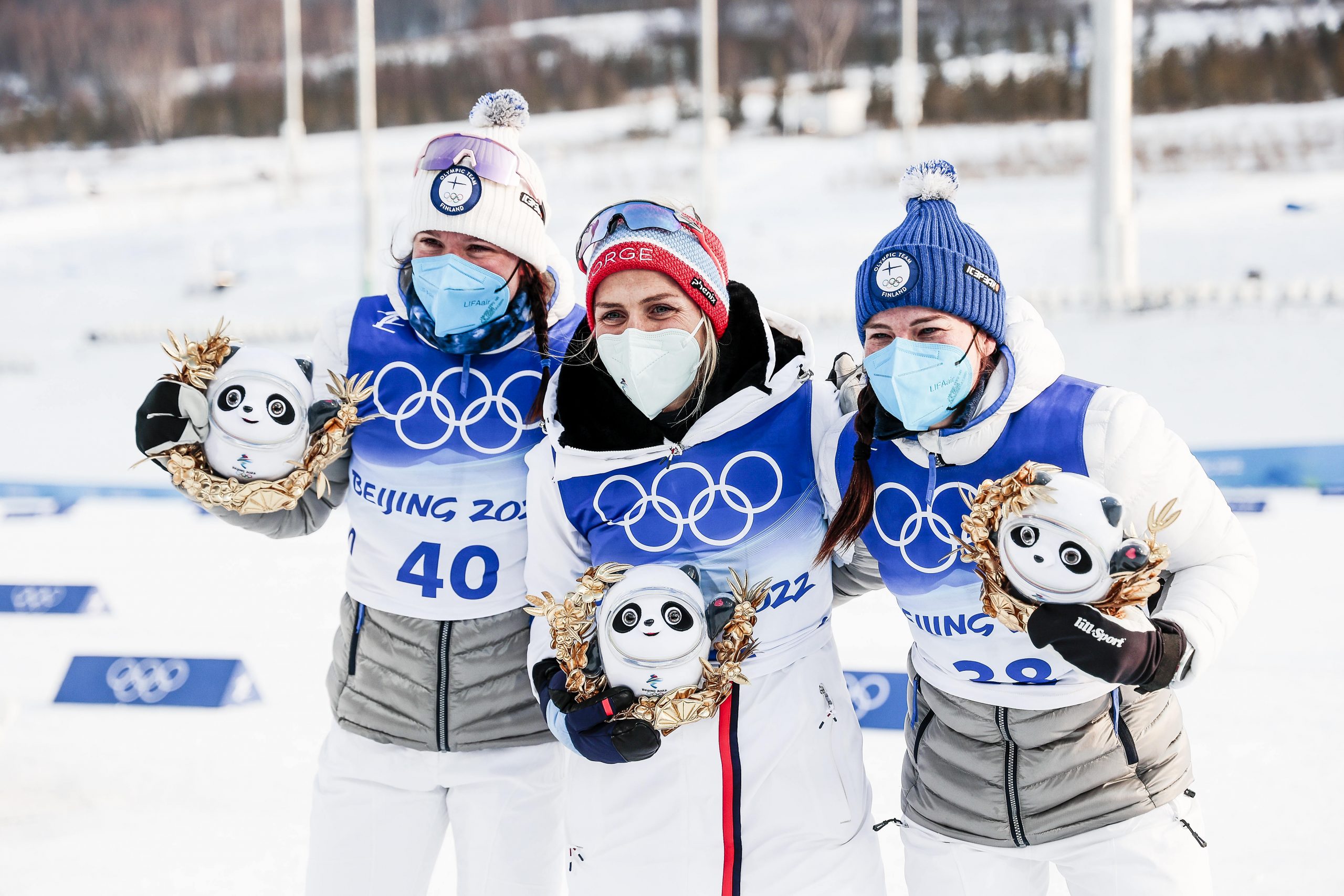
    Heidi Weng (NOR), Frida Karlsson (SWE), Moa Ilar (SWE), (l-r) share the podium of the 10k Classic in Ruka (FIN). (Photo: Modica/NordicFocus)

    The Podium: Sweden Opens the Olympic Year With Authority

    The final standings reflected both power and depth:

    1. Frida Karlsson (SWE) 23:31.8
    2. Heidi Weng (NOR) +10.5
    3. Moa Ilar (SWE) +18.3
    4. Ebba Andersson (SWE) +21.2
    5. Jessie Diggins (USA) +27.6
    6. Kristin Austgulen Fosnæs (NOR) 37.2

    Sweden finished with three in the top four. Karlsson earned her 16th career victory; Weng her 139th career podium; Ilar her 9th.

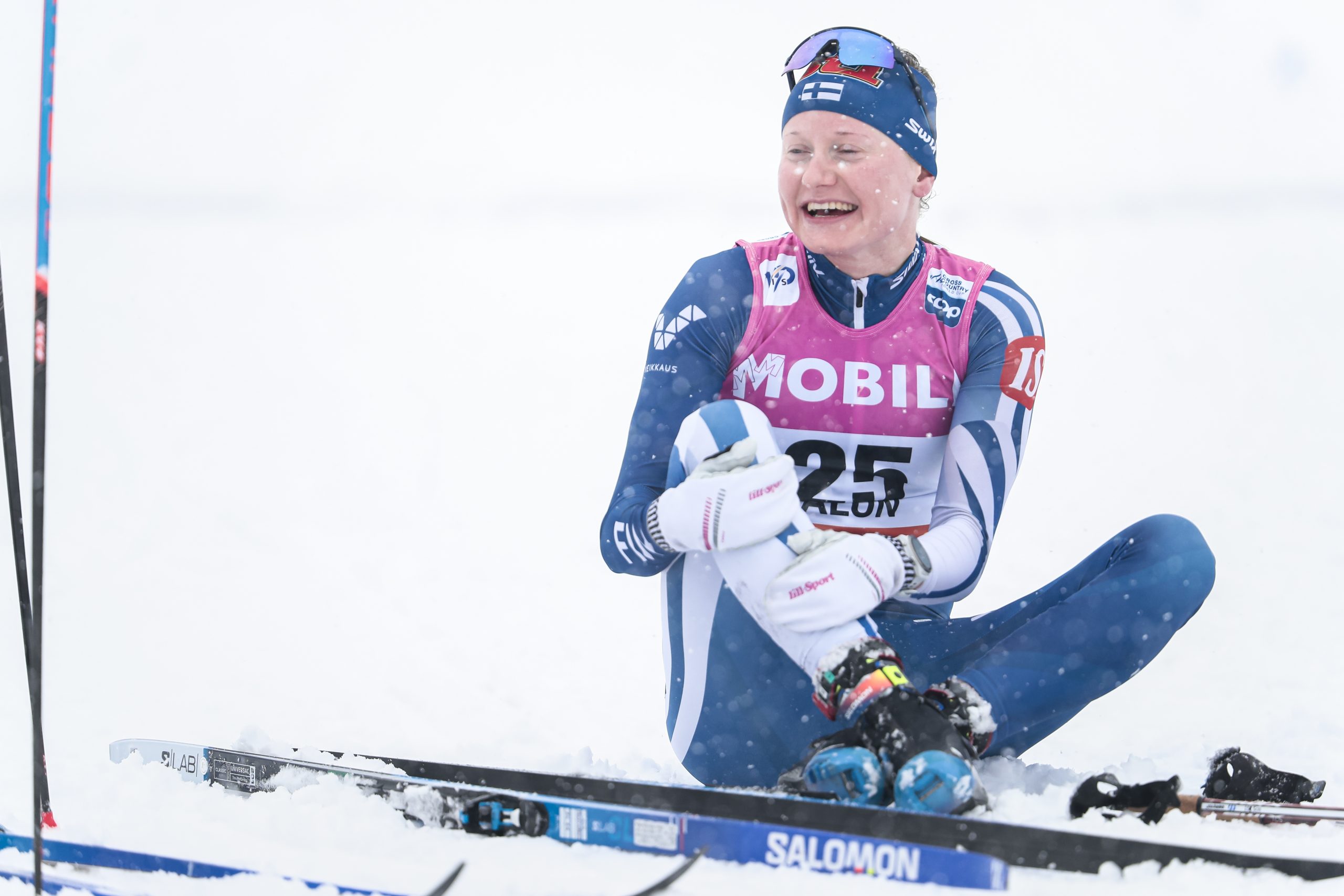
    On the Finnish side, Krista Pärmäkoski delivered a valiant final Ruka classic performance. Kerttu Niskanen, traditionally a force here, struggled to find her usual early-season spark.

    And for the Americans, the opener delivered clarity: Diggins strong, Brennan resilient, the younger athletes gaining essential early-season data for Olympic qualification.

    The 10k Classic podium with Heidi Weng (NOR), Frida Karlsson (SWE), Moa Ilar (SWE), (l-r) in Ruka (FIN). (Photo: Modica/NordicFocus)

    What It All Means

    Today’s 10k classic didn’t answer every question — but it answered enough to shape the early contours of an Olympic year:

    • Sweden has the momentum.
    • Norway has a leader again.
    • Finland is beginning a farewell tour.
    • The U.S. has real reasons for belief — and real reasons for patience.
    • The waxing cabins will decide as much as the athletes.
    • The Olympic shadow looms over every split, every selection, every training day.

    And for those of us lying awake the night before the opener, waiting for winter like children waiting for Christmas — the season is here again.

    It begins in Ruka, with a direct path to the Olympics in Italy, and ends in Lake Placid.

    And today was the first chapter.

    Complete Results:  Women’s 10k Classic


    Love Stories Like This? Help Keep Them Coming.

    Feature interviews like this one take time, access, and care to produce. If you value thoughtful storytelling and independent ski journalism, please consider becoming a Voluntary Subscriber. Your support directly fuels the work we do to cover the people, places, and moments that make our sport special.

    Join the FasterSkier community!


    Frida Karlsson (SWE) looked pretty comfortable in the reindeer pelt-covered leaders chair following the 10k Classic in Ruka (FIN). (Photo: Modica/NordicFocus)
  • The Devon Kershaw Show: Christmas recap in Davos with the US Ski Team men

    The Devon Kershaw Show: Christmas recap in Davos with the US Ski Team men

    It’s vacation time. We hear from some of the U.S. Ski Team men holed up in their Christmas cottage in Davos, Switzerland — featuring a new lightning round quiz segment — and Devon and Nat take us through the weekend’s results. Happy holidays: We’ll be back during the Tour de Ski.

    Questions, comments, want us to use less (or more) profanity? Reach us at devon@fasterskier.com and nat@fasterskier.com.


  • “Everything I Had”—Diggins Rebounds in Falun Classic 10 k

    “Everything I Had”—Diggins Rebounds in Falun Classic 10 k

    This coverage is made possible through the generous support of Marty and Kathy Hall and A Hall Mark of Excellence Award. To learn more about A Hall Mark of Excellence Award, or to learn how you can support FasterSkier’s coverage, please contact info@fasterskier.com.

    Falling snow and challenging track conditions could not deter Jessie Diggins (USA) in her pursuit of the FIS World Cup Overall championship. Her fifth place finish in Falun, Sweden extended her lead over her closest rival, Linn Svahn (SWE). (Photo: Modica/NordicFocus)

    Jessie Diggins has worn the FIS World Cup Overall Leader’s bib for over 100 days of the 2024 World Cup season. With only two days of racing remaining in the World Cup season (Saturday’s 10 k Individual Start, and Sunday’s 20 k Freestyle Mass Start), the story dominating women’s World Cup racing is whether Diggins will continue leading at season’s end. A significant chapter in that story was written today in Falun, Sweden with the contesting of the Women’s 10 k Classic Individual Start. Having entered the day with a dwindling 41 point lead over Linn Svahn (SWE), Diggins skied courageously to a fifth place finish, actually increasing her lead over Svahn (who would finish 18th) by an additional 34 points. Diggins takes a 75 point lead into tomorrow’s season-ending race—finally a confidence-inspiring points-lead after recent weeks of doubt and stress.

    In Friday’s Sprint quarterfinal, Diggins had looked uncharacteristically tense and rigid at the starting line: smiling, but forced—definitely  not the bubbly facade her fans have come to expect. Lately, she’s commented often about choosing not to be weighed down by the pressure of looming World Cup challenges, choosing instead to focus on joy, on gratitude, on the support of her teammates. But it looked like the pressure of the moment on Sprint morning might’ve caught her by surprise.

    In Falun, the Swedes were racing on home soil, fielding the world’s strongest team, with the sport’s best ski techs, the industry’s fastest skis, and a coaching staff notably adept at delivering year-long performances and late-season results. Those advantages appeared to tilt things in Svahn’s favor . . . but Diggins is not an athlete who seems to be affected by appearances. She’ll go out and race her hardest every day; anyone chasing her must know they’ll pay a hefty price to catch her. Today, Diggins drove to an impressive fifth place finish—more than a minute ahead of Svahn—in a race that was won by Finland’s Classic specialist, Kertuu Niskanen. At the age of 35, Niskanen has delivered her best-ever World Cup campaign with her third victory of the season, and the sixth victory of her career. Joining Niskanen on the podium were Johanna Matintalo (FIN) and Jonna Sundling (SWE).

    American finishers included Rosie Brennan 12th, Sophia Laukli 21st, Novie McCabe 44th, Julia Kern 48th, Sammy Smith 54th, Haley Brewster 56th. Canadian finishers included Liliane Gagnon 59th, and Sonjaa Schmidt 63rd.

    Leading at every mid-race checkpoint, Kerttu Niskanen (FIN) confirmed her dominance in Classic distance racing with her third win of the 2024 season. (Photo: Modica/NordicFocus)
    10 k Classic Individual Start

    An overcast day greeted World Cup racers and fans, as snow clouds sat low on the hills above Falun. At race time, temperatures hovered around zero degrees centigrade, with gusting winds and blowing snow. Many recreational skiers would choose to remain indoors on such a day: the Classic skiing would kind of stink (Klister? Too sticky in the new snow. Zeros? Too much drag in the glide). Skiing today doesn’t look like very much fun.

    In a pre-race interview, Maja Dahlqvist (SWE) assumed that her ski techs would recommend “zeros” (skis specially prepared by roughing the kick zone with sand paper) for today’s racing conditions. If most racers opted for zeros, that could serve to even out the advantages that ski prep sometimes creates. Falun offered a winding course following a 2.5 k loop and two 3.7 k loops to make the ten kilometer distance. One “killer hill” challenges racers 7.5 k into the race. No matter which technical solution might work best, today was likely to produce challenging racing for winners and also-rans, alike.

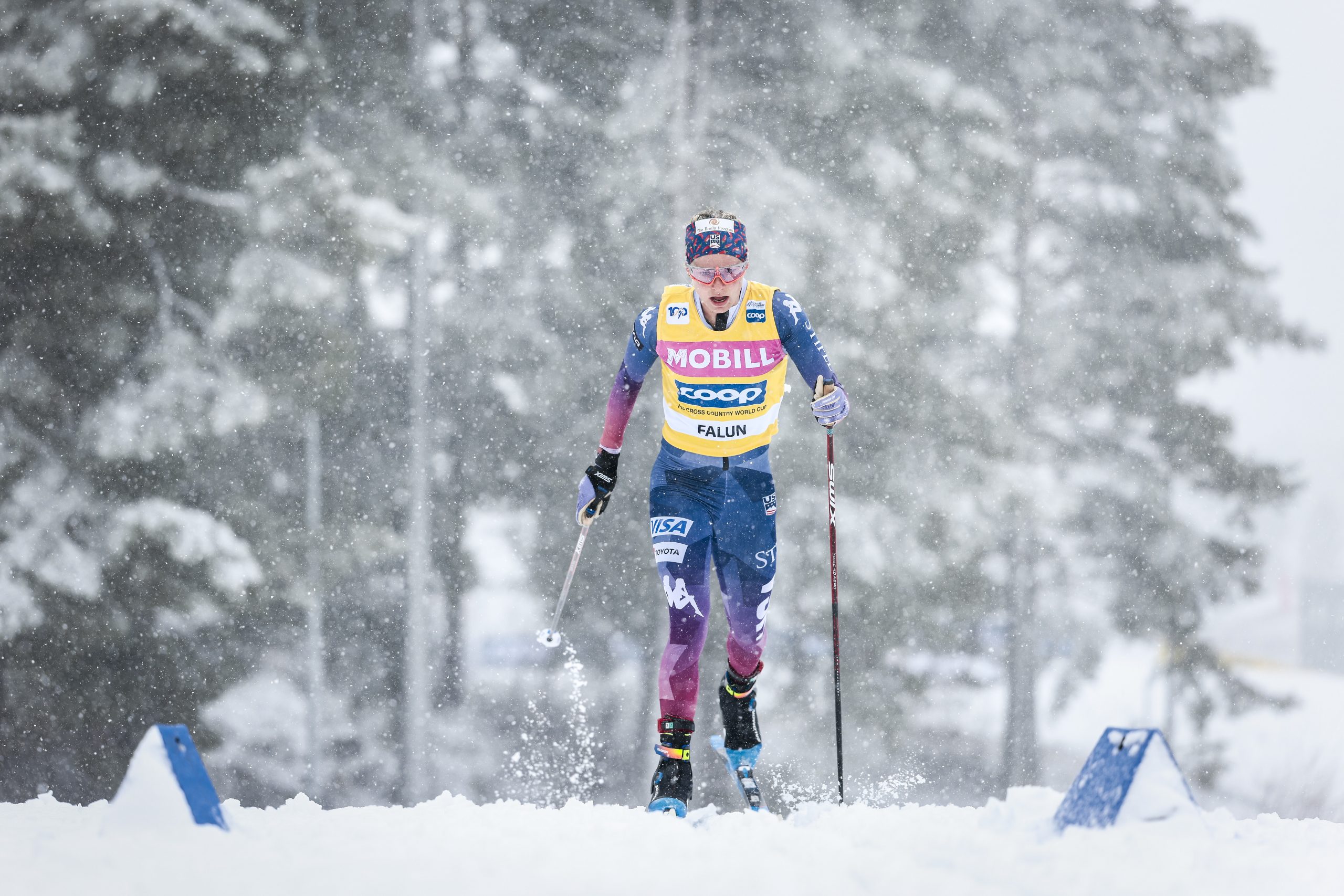
    Jessie Diggins (USA) may be feeling the pressure of the season-long World Cup race, but she’s choosing to focus on other more inspiring facets of her successful season. (Photo: Modica/NordicFocus)

    In the race-within-a-race that attracted the most attention—Diggins vs. Svahn—Svahn’s start position (52nd starter) well behind Diggins (34th starter), would give Svahn the advantage of hearing Diggins’ splits while on course. It didn’t seem to matter . . . Diggins races as if she’s on a mission, and today was no exception. As Diggins drove forward into the snow-streaked Swedish forest, Svanh’s pursuit of the World Cup overall seemed to be faltering. At 6.3 kilometers, Diggins was ahead of Svahn, Frida Karlsson (SWE), Ebba Andersson (SWE), Krista Parmakoski (FIN), and trailed only Niskanen and Sundling. Diggins’ skis appeared to be running at least even with those of her rivals . . . but, really, her race on this day would be all against Svahn. In that all-important two-person race, Diggins continued to extend her lead at each checkpoint, leading Svahn by six seconds at 1.2 k, by 24 seconds at 4.3 kilometers, by 36 seconds at 6.3 kilometers, by 55 seconds at 7.7 kilometers, by more than a minute at 9.1 kilometers.

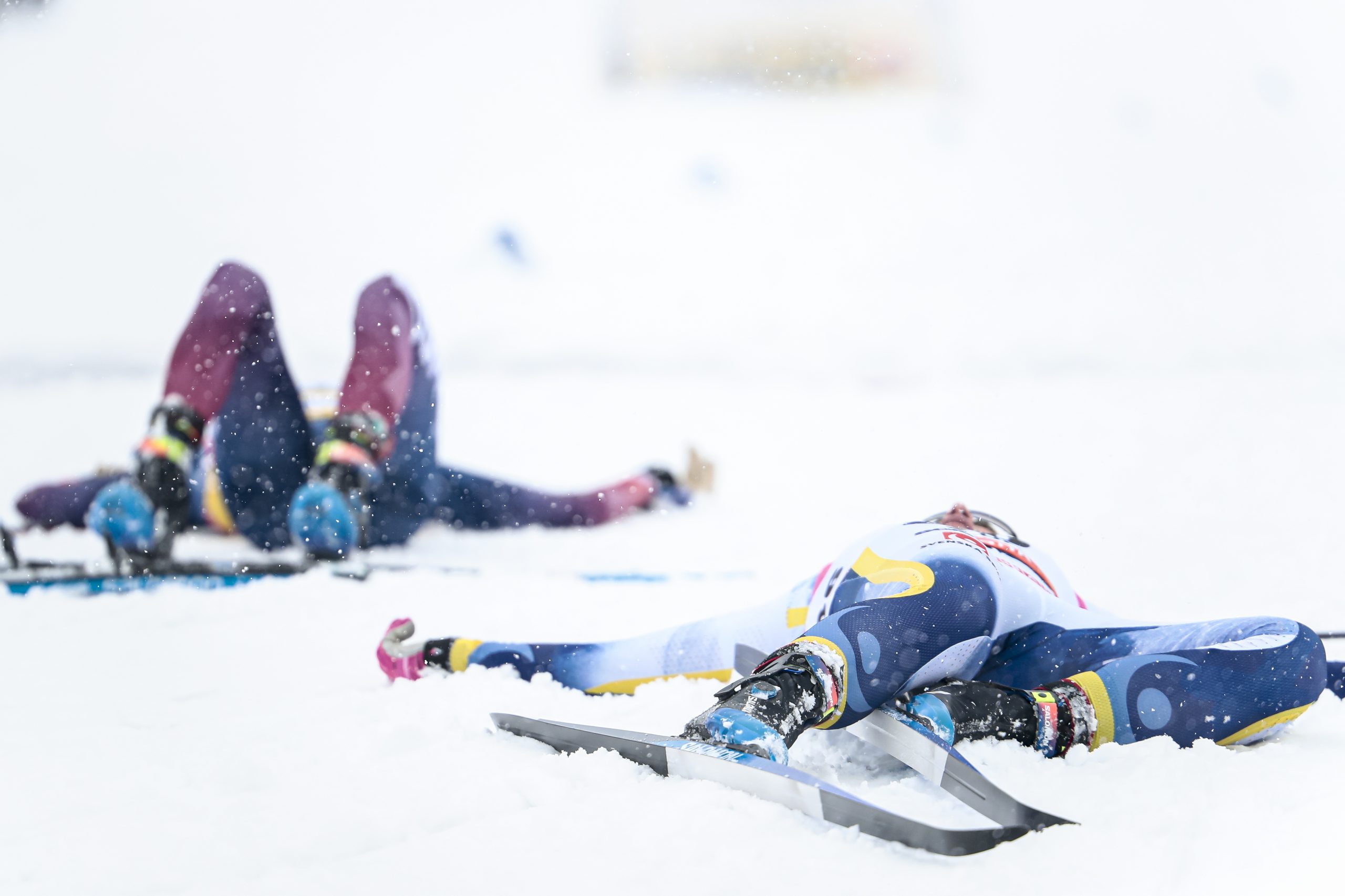
    As she always does, Jessie Diggins (USA) (l) finished “with nothing left,” besting her Swedish rivals and extending her lead in the World Cup overall standings with only one race remaining in the 2024 season. (Photo: Modica/NordicFocus)

    Diggins powered down the home stretch, barely even making it across the finish line before crumpling in an exhausted heap. Known for leaving all her energy out on the race course, Diggins left no doubt on this day when so much was riding on her ability—and her willingness—to do so once again. In the finish area, Diggins continued to lie prone in the snow for many minutes after her race had concluded.

    “My only goal—just like always—was to finish with nothing left,” Diggins commented after the race. “I’m really proud of myself for making sure that my last classic race of the year was everything that I had.”

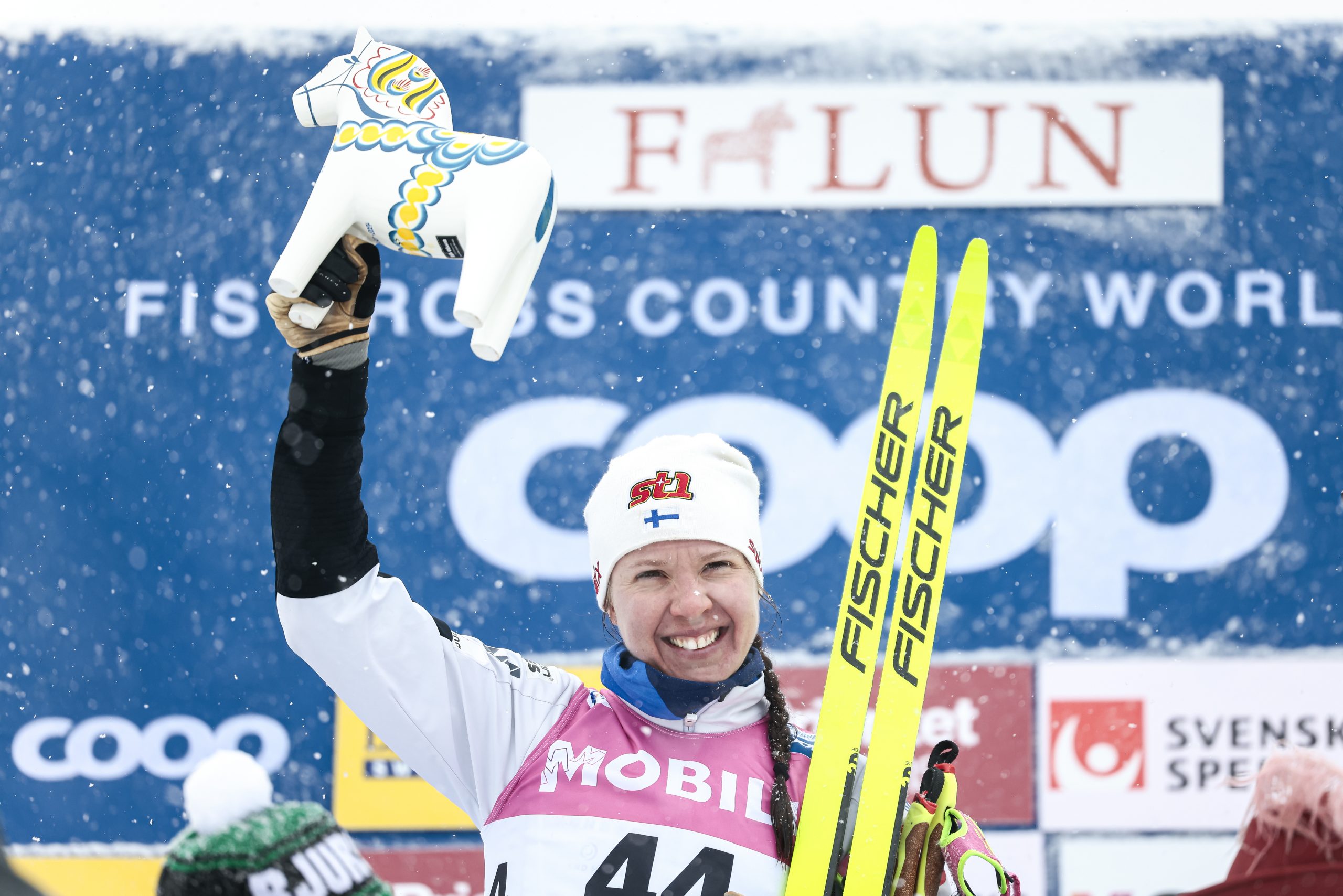
    Johanna Matintalo (FIN) smiles at the finish line of Falun’s 10 k Classic Individual Start where she earned a career-best second place. (Photo: Modica/NordicFocus)

    Niskanen—the race winner—led at every checkpoint on the 10 k course. The surprise of the day was the race put together by Johanna Matintalo (FIN) who was at or near the top at every checkpoint. Ultimately, Matintalo would finish second (a career-first World Cup podium) just ahead of Sundling.

    Diggins collected 80 points for fifth place, while Svahn collected only 46 points for 18th. Diggins will enter tomorrow’s 20 k Mass Start Freestyle with a lead of 75 points, and the ability to ski head-to-head her closest pursuer through the entire distance. Even if Svahn were able to win Sunday’s 20 k, Diggins would need to finish no worse than 28th in order to secure the World Cup Overall championship.

    Diggins performance in Falun’s 10 k Classic also secured her hold on the World Cup Distance globe. But it is the race tomorrow—the 20 k Mass Start Freestyle—that will determine just how much total space Diggins needs to clear in her trophy case.

    Women’s 10 k Classic Individual Start RESULTS

  • Parmakoski’s Redemption in Lahti

    Parmakoski’s Redemption in Lahti

    This coverage is made possible through the generous support of Marty and Kathy Hall and A Hall Mark of Excellence Award. To learn more about A Hall Mark of Excellence Award, or to learn how you can support FasterSkier’s coverage, please contact info@fasterskier.com.

    Six years after her last World Cup victory, Krista Parmakoski (FIN) returned to the top of the World Cup podium in front of Lahti Finland’s delighted fans. (Photo: Modica/NordicFocus)

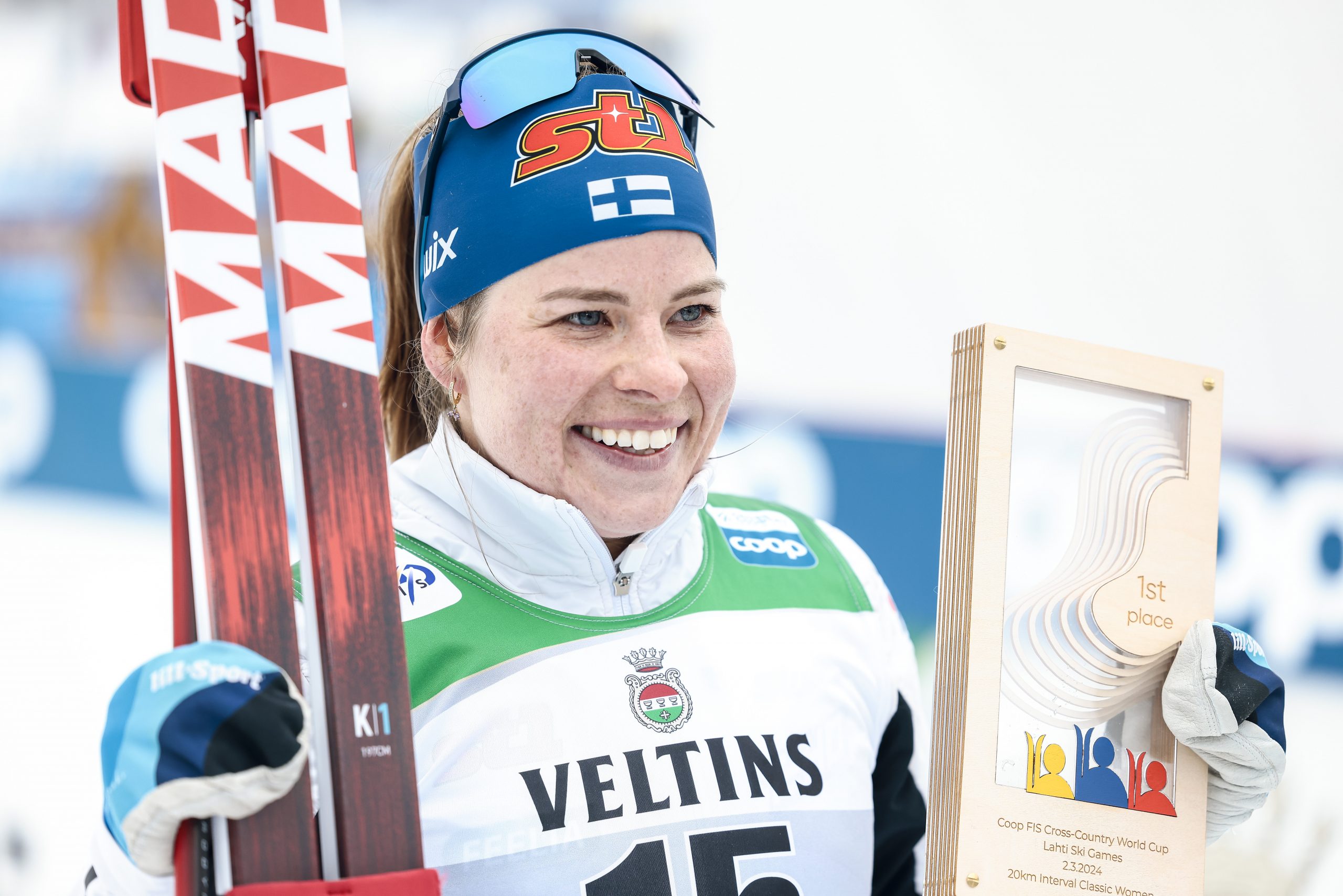
    Krista Parmakoski (FIN) has battled the greats: Marit Bjorgen, Therese Johaug, Charlotte Kalla, Justyna Kowalczyk, Heidi Weng, Jessie Diggins. Across fifteen years of World Cups, World Championships, and Olympics, whomever was the dominant skier in the women’s field always had to contend with the brave and aggressive racing of Parmakoski. In Lahti—six years after her last World Cup victory—Parmakoski thrilled a sparse but energized Finnish crowd, winning the 20 k Classic Individual Start with a narrow margin over Victoria Carl (GER) and Kerttu Niskanen (FIN).

    “An emotional day. I’m so happy that I’m back on the podium,” said Parmakoski in post-race comments. “It’s so nice to take the victory in the home crowd.”

    Among Americans, Rosie Brennan finished ninth, Jessie Diggins 21st, and Sophia Laukli 26th.

    “I love interval start racing,” said Brennan. “I get to push where I want and relax where I want and more or less just hold a steady pace which I think is one of my strengths so I think the challenge of doing that for 20k is awesome and I wish we did more intervals starts.”

    Kerttu Niskanen (FIN) is a consistent threat in any Classic race. In Lahti, she secured a third place finish to join her countrywoman, Krista Parmakoski (FIN), on the podium. (Photo: Modica/NordicFocus)
    Women’s 20 k Classic Individual Start

    On a day like this—in a technical discipline like this—there’s simply no place to hide. Old, sugary snow, finnicky klister under every ski, temperatures hovering around freezing, and a layer of low clouds hanging over the flat-topped ridges that define the course in Lahti. After a sprint day marred by numerous crashes due to the challenging klister conditions, athletes knew that their four laps of Lahti’s five kilometer course would be a serious challenge, both physically and mentally. Every skier would feel slow today, every skier would suffer slips today. Would the kick hold? Would there be enough glide? The true test would be continuing to battle while the psyche continued to be tested. Pacing and patience, aggression and ambition, courage and consistency: it would not be an easy day.

    “The conditions were wet and soft but honestly not that bad by Lahti standards,” commented Brennan. “This place has some of the toughest waxing on the circuit. The course demands a lot technically and physically so I really felt that focusing solely on good skiing was my best chance to put together a decent race. I’m proud my classic has come to a place that that is possible and that leaves me happy with the day.”

    Leaders indicated by early splits included Frida Karlsson (SWE), Sundling, Carl, Parmakoski, and Niskanen. At five kilometers, Brennan was within ten seconds of the leaders. She would maintain her pace and remain in contention throughout, ultimately finishing ninth.

    The challenges faced by the Americans were evident early on.

    “With this being the last seven races of the season, I went out there and skied as hard as I could today,” said Diggins. “Unfortunately, we had some challenges with the glide—that’s okay; that happens—so I felt like the results did not reflect the effort and grit that I put into that race, but I skied a race and an effort level that I do feel really proud of. And I’ll continue doing that for each of the races that we have left!”

    If part of the interest in today’s racing was the ongoing competition between Diggins and Linn Svahn (SWE) for the Overall World Cup championship (in which Diggins 2290 points at the start of the day ahead led Svahn’s 2033 points), then their comparative  splits would tell the story. Diggins already trailed Svahn by eight seconds at the 1.1 kilometer check point, by 25 seconds at 3.4 kilometers, by 45 seconds at ten kilometers. By the 13.4 kilometer checkpoint, Svahn could begin to see Diggins skiing just ahead. Having started a minute behind, Svahn could definitely tell how much she had gained on her rival in the chase for the Overall World Cup. Svahn (11th place) would catch and pass Diggins (21st place) just before the finish line.

    Victoria Carl (GER) was the mid-race leader, only to be overtaken by a late-race surge from eventual winner, Krista Parmakoski (FIN). (Photo: Modica/NordicFocus)

    But this was not just a race for a season-long prize. It was definitely a race for World Cup individual honors. Earlier in this World Cup season, Victoria Carl (GE) won the 10 k Classic Individual Start in Trondheim. In Lahti, Carl surged into the mid-race lead, marked closely by Karlsson, Parmakoski, and Niskanen.

    Krista Parmakoski’s (FIN) emotional victory in the 20 k Classic Individual Start seemed a sweet form of athletic redemption.  (Photo: Modica/NordicFocus)

    Carl and Parmakosi remained virtually tied with just under four kilometers remaining. Ultimately, it was a late-race surge that delivered Parmakoski her sixth career World Cup win ahead of Carl and Niskanen. Jonna Sundling (SWE) continued to demonstrate her fine form with a fourth place finish. The win was Parmakoski’s first at 20 k Classic (all her other victories had been earned at 10 k Classic), and her first World Cup win since Falun in 2018. Siox years is a long time to wait—a long time to work—and Parmakoski’s emotional felt like redemption, indeed.

    Women’s 20 k Classic Individual Start RESULTS

    World Cup Standings

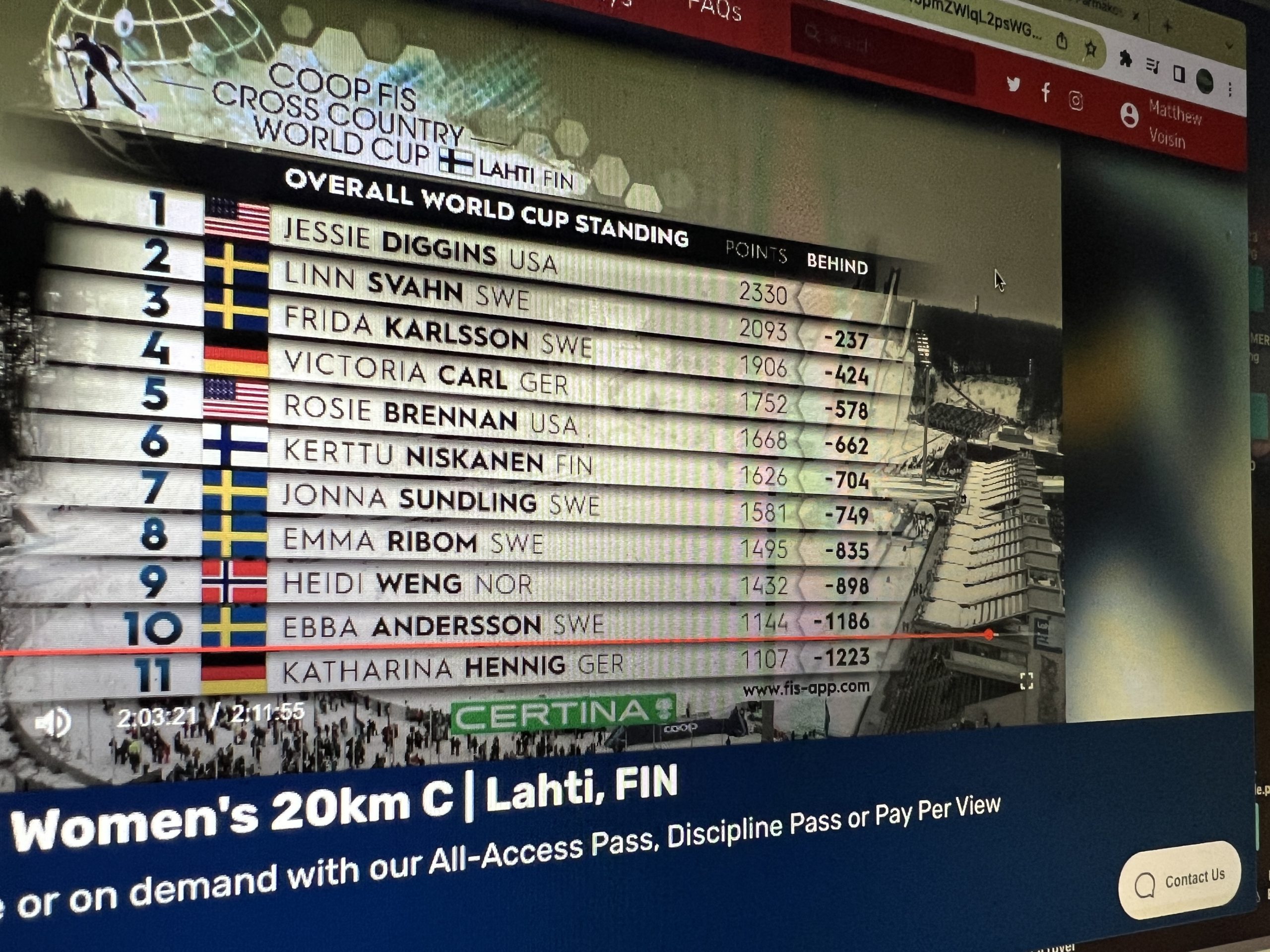
    In the race for the season-long overall championship, Linn Svahn’s (SWE) 11th place finish made up ground on current leader, Jessie Digins (USA), who finished the day 21st. Diggins (with 2330 points) continues to lead Svahn (2093) in the race for the Overall World Cup. With 1328 points, Diggins also continues to lead in the Distance standings ahead of Carl (1112 points), Ebba Andersson (SWE) (1090 points) and Brennan (1044 points).

    Post-race standings: Jessie Diggins (USA) continues to lead Linn Svahn (SWE) in the season-long race for the Overall World Cup.
  • The Devon Kershaw Show: A tale of two races in Canmore distance classic

    The Devon Kershaw Show: A tale of two races in Canmore distance classic

    We’re grinding on with our third episode in four days. Hope you’re still listening. If you don’t get the hat reference, read our coverage.

    We’ll be back with another episode after the last race in Canmore. To keep you from podcast withdrawal later in the week, we’ll roll out some interviews we did with a couple of international athletes here. Then we’ll be back again from Minneapolis this weekend.

    Speaking of Minneapolis, if you’ll be there in person, we’re hosting a live show where we’ll be taping Sunday’s episode in front of an audience — though we’ll need all 12 listeners to show up for it to really be an actual audience. More details soon — the event is at Utepils Brewery near the venue, with an exact time to be determined, but it will be after the last race of the day.

    Questions? Comments? Email us: devon@fasterskier.com and nat@fasterskier.com. Thanks so much for listening.


  • Karlsson Duels Niskanen in 20 k Mass Start Classic

    Karlsson Duels Niskanen in 20 k Mass Start Classic

    This coverage is made possible through the generous support of Marty and Kathy Hall and A Hall Mark of Excellence Award. To learn more about A Hall Mark of Excellence Award, or to learn how you can support FasterSkier’s coverage, please contact info@fasterskier.com.

    Frida Karlsson (SWE) celebrates her win in the Canmore World Cup 20 k Mass Start Classic. (Photo: Modica/NordicFocus)

    Frida Karlsson, Jessie Diggins, Rosie Brennan, Linn Svahn, Heidi Weng, Tiril Udnes Weng: plenty of the primary contenders for season-long World Cup accolades played significant roles in Saturday’s Freestyle Sprint races in Canmore, Alberta. Sometimes, the efforts expended in those sprints (especialy for those skiers who make it all the way to a hotly contested final) can spell disaster for athletes racing distance races the following day. Even those accomplished distances skiers who also happen to perform at a high level on Sprint days (like Diggins and Karlsson) may struggle when the following day presents a Mass Start distance race. Women’s World Cup Mass Start fields have been known to drive the pace high and hot from the very start, with the true contenders attempting to break the field early on to establish race-winning breakaways. For those with yesterday’s sprints still in their legs, a 20 k Classic race could be a challenge, indeed.

    That prospect is especially daunting when it’s considered that a number of significant distance specialists (and a few who are Classic specialists) did not race deep into the heats in Saturday’s Sprint competition. Perennial distance contender, Ebba Andersson (SWE), was not a competitor in the heats in yesterday’s Sprint competition. Neither were Classic-specialists Kerttu Niskanen (FIN) and Victoria Carl (GER), nor distance-specialists Teresa Stadlober (AUT), Astrid Oyre Slind (NOR), and Katharina Hennig (GER). Those skiers have the ability to make the whole field suffer in a distance race. And if Saturday’s Sprint races took enough out of those who raced all the Sprint heats, today’s podium could look very different, indeed.

    And then there are the bonus points sprints . . .

    In the end, it was all-rounder, Karlsson, who took the final sprint from Niskanen, while H. Weng won the battle with Slind for third. Among Americans, Diggins made up ground on the final downhill to finish 10th, ahead of Brennan 13th, Sophia Laukli 14th, Julia Kern 26th, Sydney Palmer-Leger 31st, Margie Freed 33rd, Alexandra Lawson 35th, Mariah Bredal 36th, Renae Anderson 37th, Emma Albrecht 39th.

    “Today was a chance to get really mentally tough,” said Diggins in post-race interviews. “It was really the first race all season where I felt like I didn’t have kick or glide. Our wax team has been excelling all season, but we were bound to have a tough day at some point.”

    Among Canadians, Katharine Stewart-Jones skied the early laps among the leaders, but faded to 28th. Other Canadian finishers included Anna Stewart 34th, and Katya Semeniuk 38th.

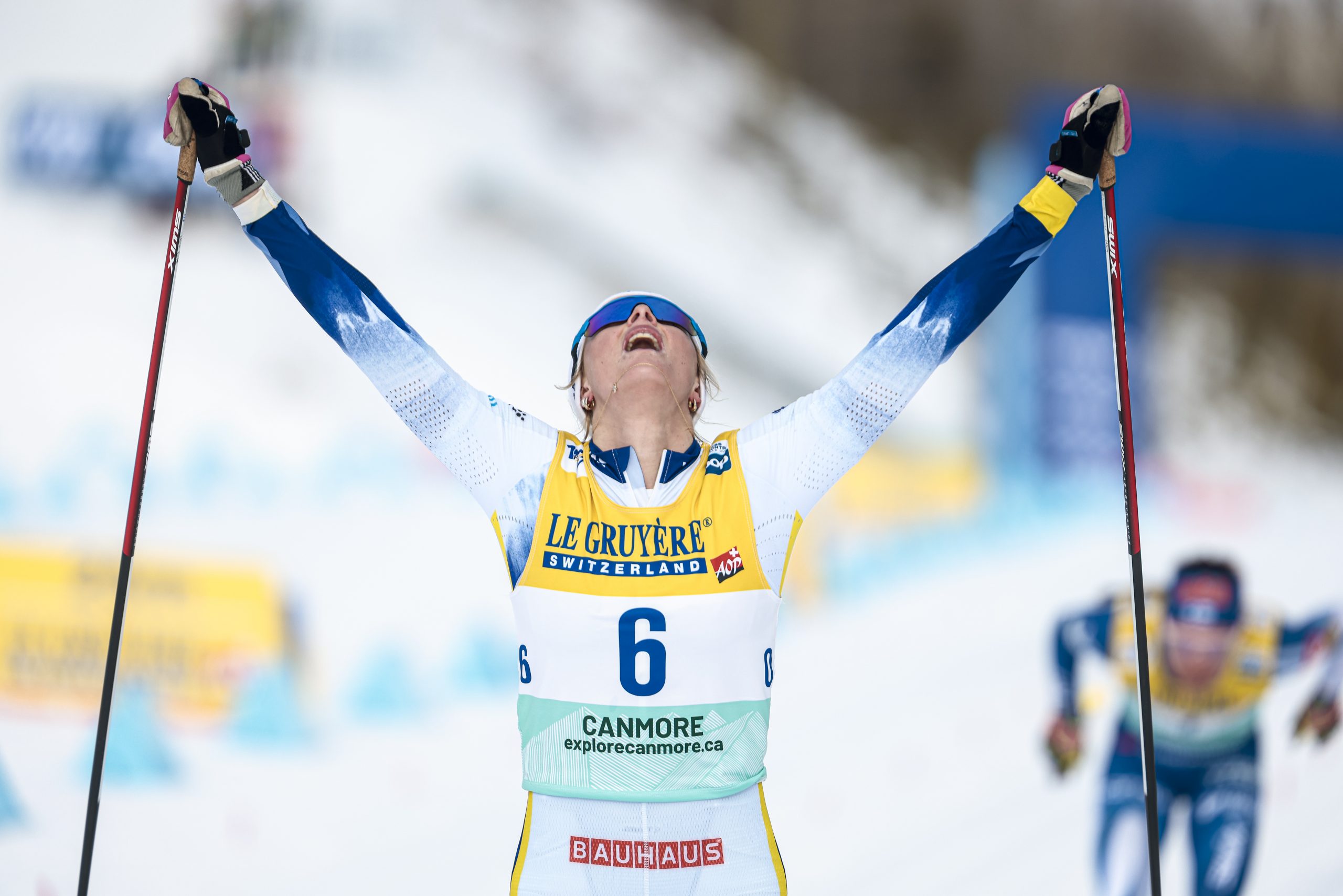
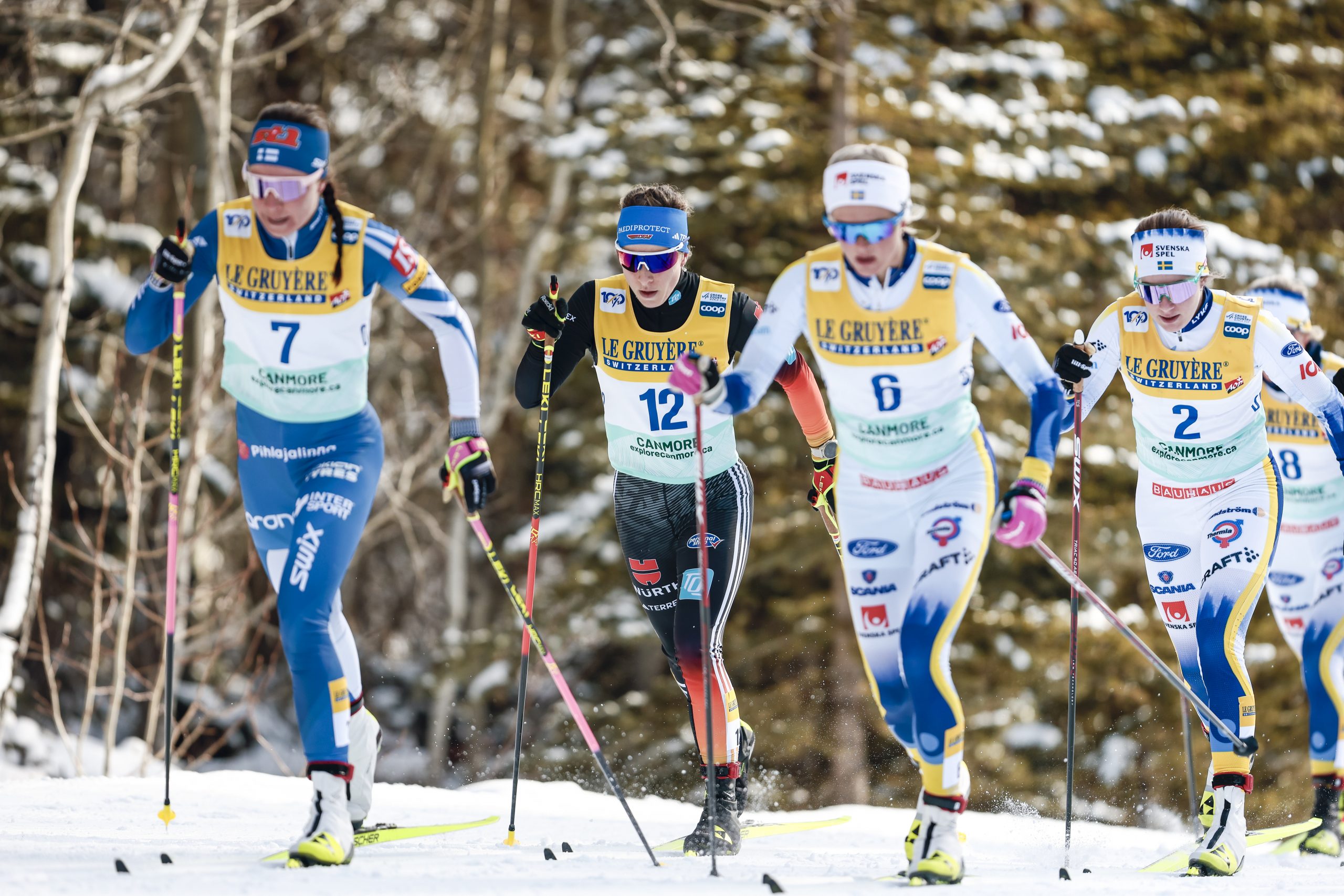
    Kerttu Niskanen (FIN) (#7) and Frida Karlsson (SWE) (#6) set a blistering pace in the closing laps of the 20 k Mass Start Freestyle. (Photo: Modica/NordicFocus)
    Women’s 20 k Mass Start Classic

    Andersson, Carl, Diggins, and Brennan led the field out of the stadium for the first of six laps on Canmore’s technical, up-and-down course. After the second climb, the field began to stretch out, creating a break behind the top 30 skiers. Diggins, Brennan, and Laukli made the selection, and seemed relatively comfortable with the pace. Canada’s Katherine Stewart-Jones also made this first selection.By the 3.3 kilometer mark, Julia Kern had also returned to the front group.

    At the five kilometer mark, the pace quickened, and a lead group of five (Karlsson, Andersson, Slind, Niskanen, Hennig) slipped away from the field. Stadlober and H. Weng gave chase, their efforts bringing another group up to the leaders. That group included Brennan and Laukli. Diggins had to chase a bit longer (with Carl); she ultimately made the front-group selection as well.

    Sophia Laukli (USA) is on a roll, consistently putting herself in contention in challenging World Cup distance races, including the Classic (not her specialty) Mass Start in Canmore, Alberta. (Photo: Modica/NordicFocus)

    Nearing the halfway point, the lead group came back together with the bonus points sprint going to Niskanen (15 points) followed by Brennan (12 points) and Hennig (10 points). Diggins came through fifth (six points) to continue her trend of confounding her rivals whenever bonus points are awarded. The pace of the 14-woman lead group settled a bit after the second bonus points sprint, allowing Niskanen and Karlsson the opportunity to go to the front. Diggins began dangling off the back while a lead group of five formed (Slind, H. Weng, Niskanen, Karlsson, and Andersson). Laukli chased through the lap, but her diminutive stature may have left her at a disadvantage on the course’s technical downhills. Likewise, Brennan appeared determined to close the gap to the leaders.

    Slind came through to take bonus points in the final lap, but by that time the racing looked as though it was less about the points, and more about upping the pace in anticipation of the finish line a a few kilometers ahead. Brennan and Laukli were still involved in the chase, along with Diggins who had latched onto the back of the chase group.

    In the final lap, Karlsson (the only remaining skier who had contested the heats in yesterday’s Sprint) drove the pace, with only Niskanen able to stay at her side. As the lead group strung out, Niskanen and Karlsson charged up the A Climb.

    Karlsson tailed Niskanen down the final descent into the stadium, hoping to rely on her proven sprint speed in the closing meters. The difference in double poling technique was evident between Karlsson, the sprinter, and Niskanen,  the distance skier. Karlsson extended her lead to the line, and crossed first for an emotional victory.

    “It was a hard pace from the start, so there were a lot of stiff legs in the end,” said Karlsson in post-race interviews. “But I’m so happy with today’s race.”

    H. Weng won the race to for third ahead of Slind. Diggins flew down the final descent to recover a top-ten finish, just ahead of teammates Brennan (13th) and Laukli (14th).

    “It’s hard to ski 20 k with that much herringbone,” said Diggins. “That’s why I went down to New Zealand and worked on it a lot in the summer . . . That last lap I was thinking, ‘Just deal with what you’ve got. Leave it all out there.’”

    “What was hard is that it was easy [on this particular course] to get really ‘floody.’ I just kept thinking ‘Try to pace it evenly, be smart.’ I knew that people were goin to be standing up and doing some funky things on the downhills; if I could try to really ski the downhills as well as I could—to get every second I could out of the flats and downhills—then that could help mitigate my losses.”

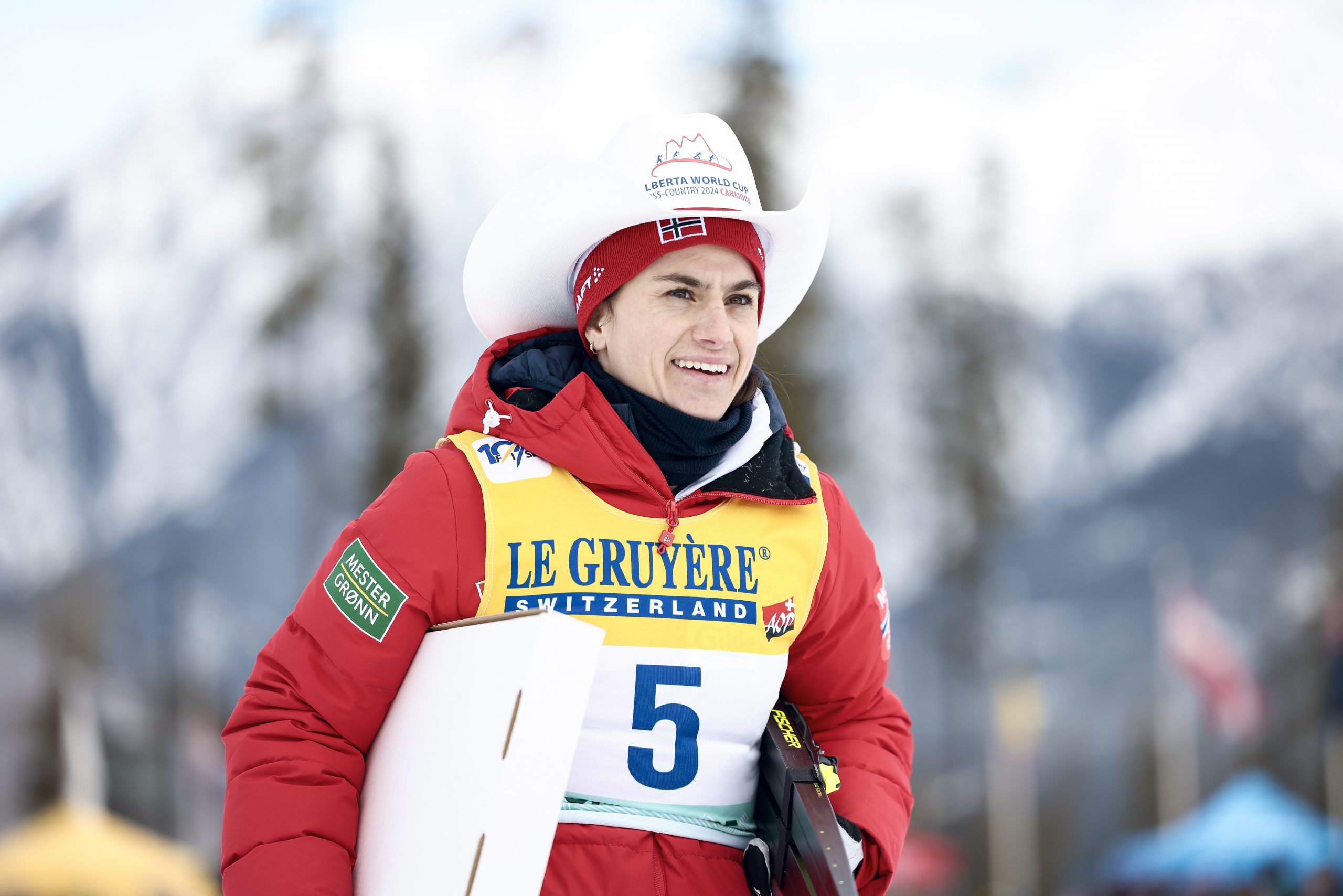
    Cowboy hats awarded on the Canmore World Cup podium—always good for a smile. Heidi Weng (NOR), third place, Women’s 20 k Mass Start Classic. (Photo:  Modica/NordicFocus)

    Women’s 20 k Mass Start Classic RESULTS

  • The Devon Kershaw Show: Laukli, Diggins crown a historic Tour de Ski finish for USA

    The Devon Kershaw Show: Laukli, Diggins crown a historic Tour de Ski finish for USA

    They’ve reached the summit — the athletes, have, anyway. Devon certainly has not, thanks to frozen pipes in his Oslo apartment. He and Nat persevere to bring you the recap of this year’s final Tour de Ski stages, which featured some spicy and sloppy racing in Italy. Stay tuned til the end for an ode to Le Gruyère cheese.

    Next week, during the break from the World Cup, we’ll have a mailbag episode. Send us your questions at nat@fasterskier.com and devon@fasterskier.com. Have a great week.


  • The Devon Kershaw Show: Davos delivers flamethrowers, snow squalls and U.S. podiums

    The Devon Kershaw Show: Davos delivers flamethrowers, snow squalls and U.S. podiums

    We’re in deep to the Tour de Ski now, after a couple of legitimately rad days of racing in Davos, Switzerland. Mikael Gunnulfsen of Norway joins us to talk about the stunning performance of Henrik Doennestad, and of course we catch you up on the latest successes of Americans Jessie Diggins and Rosie Brennan and, oh yeah, Gus Schumacher.

    Get at us at nat@fasterskier.com and devon@fasterskier.com. We’ll be back once the athletes hit the top of the Alpe Cermis.


  • The Devon Kershaw Show: Ringing in 2024 and the Tour with Gus Schumacher

    The Devon Kershaw Show: Ringing in 2024 and the Tour with Gus Schumacher

    American star Gus Schumacher joins us from Switzerland to break down the first three stages of the 2024 Tour de Ski. And Devon gives us the goods on Norway’s social event of the year: Therese Johaug’s wedding.

    Send us your questions and feedback: devon@fasterskier.com and nat@fasterskier.com. We’ll be back in a couple days.

  • Diggins Seizes Tour de Ski Lead, Niskanen Takes Stage 2

    Diggins Seizes Tour de Ski Lead, Niskanen Takes Stage 2

    This coverage is made possible through the generous support of Marty and Kathy Hall and A Hall Mark of Excellence Award. To learn more about A Hall Mark of Excellence Award, or to learn how you can support FasterSkier’s coverage, please contact info@fasterskier.com.

    The Diggins family celebrates after Jessie Diggins (USA) moved into the Tour de Ski lead with a third place performance in Stage 2’s 10 k Classic. (Photo: NordicFocus)

    The Tour de Ski operates on two parallel narrative arcs. Day-to-day, stage-to-stage, it highlights the singularity of great ski performances, while over the course of a week it points to the dynamism that makes great skiers great. On Stage 2 of this year’s Tour, those arcs were one and the same.

    No one skis classic technique quite like Kerttu Niskanen (FIN). And no one can close a race like Jessie Diggins (USA). Through the undulating ups and downs of the Toblach course, those two declarative statements were translated to the result sheet with only Victoria Carl (GER) skiing into second place to split Niskanen and Diggins. Niskanen won her sixth career World Cup race, taking a seven second victory over the resurgent Carl. Diggins, meanwhile, closed a five-second gap on teammate Rosie Brennan in the final two kilometers to take her second career individual classic podium. In doing so, Diggins took control in this year’s Tour de Ski.

    Brennan would finish fourth, only 15 seconds behind the winner, a performance that moved Brennan from 26th place in the Tour de Ski standings to sixth place.

    Other American finishers included Novie McCabe 29th, Sophia Laukli 39th, Sammy Smith 52nd, Julia Kern 59th. Canada’s Katherine Stewart-Jones did not start Stage 2, leaving Canada absent from this year’s Tour de Ski Women’s Overall standings.

    Kerttu Niskanen (FIN) skied to her sixth World Cup victory on Saturday, with a win in the 10 k Classic. (Photo: NordicFocus)

    Niskanen not only stood atop the field today, but also stood out as the veteran among veterans who competed for the win. The Finnish skier, Now age 35, the Finn expressed her satisfaction in post-race interviews. “I’m really happy . . . I’m back,” she beamed. “The beginning of the season has been difficult for me, so to see it come together was nice.” Niskanen’s six career World Cup wins have all come in the 10 k Classic (including one victory during the peak of Therese Johaug’s (NOR) great career). 

    Meanwhile, Diggins continues to tread relatively new tracks in her own storied career: This was her second-ever outright distance classic podium (after placing third place on Stage 2 of the 2021 Tour de Ski in Val Mustair). After taking third in Stage 2 of 2021’s Tour de Ski, Diggins went on to wear the Yellow Bib at the top of the Alpe Cermis as the Tour champion. After today, she again wears the Yellow Bib. After that 2021 podium, Diggins spoke to FasterSkier:“My goals for today were to ski smooth and really work the downhills,” she said then. “When I felt good on the last half of the last lap I just decided to push it!” She compared that earlier success in Toblach with her efforts today: “I tried to make sure I was racing the downhills and the flats just as hard as the uphills.” Two years after her first success in Toblach, not only was the result the same, but the way in which Diggins achieved the result was the same, too.

    Jessie Diggins (USA) delivered a strong finishing push to take third in Stage 2 of this year’s Tour de Ski. Diggins leads the Overall going into Stage 3. (Photo: NordicFocus)
    10 k Classic Individual Start

    The dynamics of this Tour de Ski 10 k Classic Individual Start were just slightly different than what the World Cup is used to, as the method for determining the start list turned not towards the Overall World Cup Standings, but to the Tour de Ski standings after a sprint race on Stage 1. With the perennial Distance contenders spread throughout yesterday’s results, they would be spread throughout the field today. Serendipity did set up some structure, though; a pack of top distance racers including Brennan (bib 28) starting back-to-back starting with bib 20, Lotta Udnes Weng (NOR), and stretching to bib 29, Niskanen, and bib 30 Ebba Andersson (SWE). A second, looser pack of top racers started later on based on their strong sprints yesterday, with Diggins in bib 42 and Carl in bib 48.

    Rosie Brennan (USA) skied to a fourth place finish in Stage 2 of the Tour de Ski. The 10 k classic result put Brennan in the top ten of the Tour de Ski Overall headed to Stage 3 on Sunday in Toblach, Italy. (Photo: NordicFocus)

    The back-to-back pair of Brennan and Niskanen would set the leading times throughout the course. In the first half of the race, they were splitting seconds with Brennan ahead of Niskanen by 1.8 seconds through the 5 k mark, and Niskanen ahead of Brennan by the same margin a kilometer later at the 6.7 k mark. On a course that followed a rolling, punchy set of downhills, Niskanen was able to put in a finishing burst. Brennan crossed the line in first—but for only a few moments before the full extent of Niskanen’s closing speed became evident at the finish line. The Finn crossed the line 15 seconds ahead of Brennan in what would turn out to be the definitive result of the day.

    “Today was better than [yesterday’s sprint race],” Brennan said. “I can’t say I felt ‘bad,’ per se. Yesterday, I just felt like I wasn’t skiing tactically that well. This distance course was definitely better than me, and while I wouldn’t say I felt great today, I was happy I made it work.”

    Back on course, there were indications that Diggins was having an extraordinarily good day on classic skis. As Niskanen crossed the finish, Diggins was nearing the 5 k half-way mark less than ten seconds off the lead. By 8 k, she was still within 15 seconds of Niskanen’s top time, but five seconds off Brennan in fourth. Like Niskanen, Diggins would make up time with a brilliant final push, shooting to the podium with a five second advantage over Brennan at the finish. Carl would come in moments later to split the slim difference between Niskanen and Diggins. The German finished three seconds ahead of Diggins, and seven seconds off the lead in second place.

    Tour de Ski Standings After Stage 2

    Stage 2 begins to bring clarity to this year’s race for the Tour de Ski Overall, but any conclusions are still taken with a view towards the races to come, rather than the end of the Tour. After time bonuses, Diggins holds the Yellow Bib by seven seconds over Carl going into Stage 3, a 20 k pursuit race. After a strong ninth place finish, Stage 1 winner Linn Svahn (SWE) remains within striking distance in third place at 11 seconds back.

    Diggins noted in post-race comments that she’s feeling more relaxed than in the past with the Yellow Bib, and pointed towards a particular source of comfort as a reason why: “I got a chance to hear my family cheer for me out on course,” she said. “Just having the support of our family over here is a big deal because we realize we don’t get it all that often. It’s a mental break, and a physical break when they’re here over the holidays, and it put me in a great place for the Tour.”

    After her podium finish in Stage 2, Jessie Diggins (USA) holds a seven second lead in the Tour de Ski over Victoria Carl (GER) and third place Linn Svahn (SWE) . (Photo: NordicFocus)

    Svahn’s resilient performance proved a silver lining on a day that saw struggles from Sweden’s top distance skiers. Andersson, who won this season’s opening 10 k Classic race in Ruka, finished Stage 2 in 13th place, and sits 18th in the Overall at +1:28 back. Last year’s Tour de Ski champion, Frida Karlsson (SWE) finished Stage 2 in 11th place, and is also 11th in the Overall at +1:11 minutes back.

    Brennan moved herself into sixth place in the TDS Overall standings with her Stage 2 race, and sits amid a top ten that is still tightly packed. With a 20 k Pursuit next on the schedule, Brennan remains poised to challenge for the Tour de Ski Overall. McCabe sits in 32nd Overall, with Laukli in 45th, Smith in 52nd and Kern in 56th rounding out the American Women in the standings. 

    In a tightly packed top 10, Rosie Brennan is already looking forward to all that is to come. “[I’m looking forward to] Davos,” she said. “It’s my favorite place to race, and while I haven’t done the course that is prepared, I like to think that ‘all things Davos suit me,’ so I’m optimistic for the races to come after tomorrow.”

    Tour de Ski Stage 2 RESULTS

    Tour de Ski Overall STANDINGS

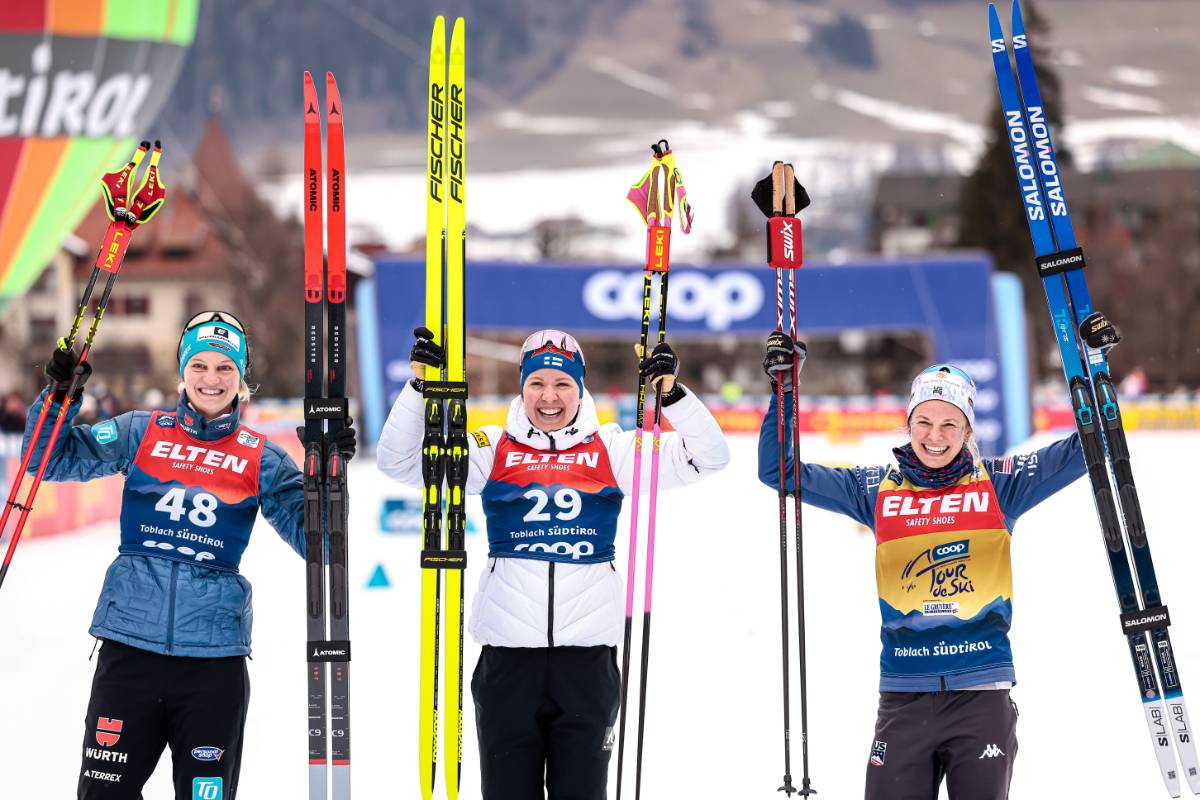
    Tour de Ski Stage 2 10 k Classic podium: Kerttu Niskanen (FIN) first , Victoria Carl (GER) second, Jessie Diggins (USA) third. (Photo: NordicFocus)
  • Kalvaa Gets First World Cup Win, Diggins and Brennan Top Five in Overall World Cup

    Kalvaa Gets First World Cup Win, Diggins and Brennan Top Five in Overall World Cup

    This World Cup coverage is made possible through the generous support of Marty and Kathy Hall and A Hall Mark of Excellence Award. To learn more about A Hall Mark of Excellence Award, or to learn how you can support FasterSkier’s coverage, please contact info@fasterskier.com

    Today marked the end: at the completion of today’s women’s 20 kilometer Classic mass start in Lahti, Finland, all unanswered questions would be resolved. There would not be any waiting until next week, any re-group and re-deploy, any revised strategies. It was now, or never for the 2022-2023 season. Hanging in the balance would be the standings in the overall World Cup Crystal Globe chase, and the Distance Crystal Globe.

    Jessie Diggins (USA) ended the day where she began in the hunt for the distance Crystal Globe, finishing second. (Photo: NordicFocus)

    First place for the overall Crystal Globe was pre-determined. Tiril Udnes Weng (NOR) led Jessie Diggins (USA) by 154 points. With a maximum of 130 points going to the winner (assuming the winner takes all of the bonus points), Weng’s lead was mathematically unbeatable. However, overall standings placements were still up for grabs. Diggins led classic skiing standout Kerttu Niskanen (FIN) by 99 points, a sizeable but not insurmountable cushion given Niskanen’s classic abilities. Rosie Brennan (USA) sat in fourth place with a 108 point lead over Nadine Faehndrich (SUI).  If Diggins and Brennan could hold their positions, it would put two Americans in the top five of the overall standings, potentially an historic finish for American skiing.

    Rosie Brenan (USA-bib number 4) was able to maintain her fourth place standing in the overall World Cup position, but dropped to sixth in the distance competition. (Photo: NordicFocus)

    Also at stake was the much closer chase for the distance Crystal Globe. Niskanen led with a 22 point advantage over Diggins, who would definitely be considered the underdog in a head to head classic skiing battle. But today’s race used the mass start format which would give Diggins help in staying with the field. Niskanen has never won an individual race on home soil; at 34 years of age, time is running out. Brennan was in fourth place for this Crystal Globe as well, a mere four points ahead of perennial favorite Heidi Weng (NOR), and only 26 points ahead of Anne Kjersti Kalvaa (NOR). The possibilities were almost too numerous to calculate.

    Kerttu Niskanen (FIN-center), was again thwarted in her attempt to win a World Cup race on home soil. (Photo: NordicFocus)

    At the end of the road of World Cup racing for the season, Anne Kjersti Kalvaa took home the win for Norway. Jonna Sundling (SWE) was second, and Katharina Hennig finished third.

    For the Americans, Jessie Diggins finished 22nd, 1:15 seconds out of the lead. Rosie Brennan was right behind her in 23rd. Other American finishers were Novie McCabe 25th, Hailey Swirbul 26th, Julia Kern 38th, and 17 year old Sammy Smith 48th.

    For the Canadians, Katherine Stewart-Jones was the only finisher taking 37th.  Liliane Gagnon did not finish.

    Kerttu Niskanen (FIN) celebrates capturing the distance Crystal Globe (Photo: NordicFocus)

    The overall world cup Crystal Globe positions remained largely unchanged with Diggins remaining in second and Brennan remaining fourth. It was an unprecedented finish with two Americans in the top five of the overall standings and a landmark achievement which would lift the entire team.

    The hunt for the distance Crystal Globe did not go quite as well. Diggins was able to hold onto her second place position, but lost ground to Niskanen who was the overall winner. But Brennan dropped down to sixth place eclipsed by Kalvaa and Heidi Weng. Still, a remarkably strong finish for the American squad.

    The Women’s 20 Kilometer Mass Start

    Not surprisingly, Niskanen pushed the pace early. For the first couple of kilometers, she was in a group with Kalvaa, Frida Karlsson (SWE) and T. Weng. Five kilometers into the race, there was still a large pack at the front which contained all top contenders. Diggins and Brennan were still in the lead group, but by the 7.5 kilometer mark, where the first bonus points were awarded, the balance changed. Niskanen revealed her strategy of going for the bonus points, and crossed the bonus line first, receiving 15 points and widening her lead for the distance Crystal Globe over Diggins. Heidi Weng crossed the bonus line sixth giving her five bonus points. Brennan crossed the bonus line 13th and Diggins 14th, both just missing bonus points. But the damage was done. Diggins was losing her opportunity to keep pace with Niskanen and Heidi Weng had surged past Brennan in the distance standings.

    Jessie Diggins (USA) couldn’t match Kerttu Niskanen (FIN) in the chase for the distance Crystal Globe. (Photo: NordicFocus)

    The next bonus point line came at the 12.5 kilometer mark. Diggins was still in the hunt a mere seven seconds off the lead as skiers passed the 11 kilometer mark. Brennan was now 14 seconds from the front of the race. As the skiers approached the bonus line, Niskanen again pushed to the front of a pack which contained Ebba Andersson (SWE), Katharina Hennig (GER), Krista Parmakoski (FIN), and Karlsson. Niskanen revisited her strategy from the previous bonus line and received 15 bonus points putting her lead for the Distance Globe out of reach. Heidi Weng took one point to extend her advantage over Brennan. Once again the Americans were shut out for the all important bonus points.

    Heidi Weng (NOR) went bonus point hunting to pass Rosie Brennan (USA) in the Distance Crystal Globe chase. (Photo: NordicFocus)

    While the race for the overall distance standings was being clarified by bonus points, the contest for winning the race was far from over. After 15 kilometers, a group of seven skiers dominated the front with Niskanen, Kalvaa, Andersson, Jonna Sundling (SWE), Hennig, Karlsson and Parmakoski all within seconds of each other. Diggins and Brennan had now fallen off the lead and were 30 and 38 seconds back respectively. Barring a miracle, all hope was lost for Diggins’ chances of taking the distance globe. Heidi Weng was still holding her lead over Brennan as well.

    The lead pack continued with Parmakoski and Heidi Weng struggling to keep pace, as Andersson had moved to the front trying to break up the field. Andersson had picked up a yellow card earlier in the race and would have to be careful not to be disqualified with another violation.

    Jonna Sundling (SWE-bib 26), was able to stay with the pack and use her sprint skills to finish second (Photo: NordicFocus)

    As the finish approached, the pack was still together with Andersson going to the front trying to take away the advantage Sundling would have in a sprint finish and setting up a dazzling drag race to the finish line. But, it was Kalvaa who was able to find the speed at the end with clearly faster skis than the field, surging to the front to hold off Sundling’s late charge and win by less than a second. Hennig finished just behind Sundling in a three way photo finish with Andersson coming in fourth. Niskanen ended up fifth and would have to wait in her pursuit to win at home.

    For Kalvaa it was her first world cup win. After the race she commented about how fast her skis were and admitted that the fatigue of the season had taken its toll.

    Jessie Diggins (USA-left) celebrates her second place finish in the distance world cup competition with the winner, Kerttu Niskanen (FIN). (Photo: NordicFocus)

    It was a tricky day for waxing; clearly the Norwegians had hit the mark. U.S. coach Chris Grover commented on the difficulties of finding the right kick wax. “Some of the athletes today had decent skis,” he said. “Some were too slick, some were slow, it was kind of all over the map. It glazed [the tracks] as the race went on and you had to be kind of lucky.” Team USA knew that the deck was stacked against Diggins’ chances of claiming the distance championship. Grover said that “[Niskanen’s] won the last few Classic races…Jessie and Jason [Cork] approached the day that it would be a very tall order to overtake Kerttu, and unfortunately, Jessies’ skis just weren’t fast enough. We knew it would be a bit of a long shot.”

    Anne Kjersti Kalvaa (NOR-bib 6), used her fast skis to surge past the pack at the end of the race. (Photo: NordicFocus)

    When Diggins and Brennan reached the finish they were over a minute back in 22nd and 23rd respectively. It was a valiant effort, but they just couldn’t keep pace with the leaders.

    It was an exciting way to end the season. But it was also filled with a tinge of disappointment for the Americans. Diggins had come painfully close to capturing the distance Globe, but ultimately finished second to Niskanen, which was still cause for celebration. Brennan dropped to sixth overall in the distance Globe chase.

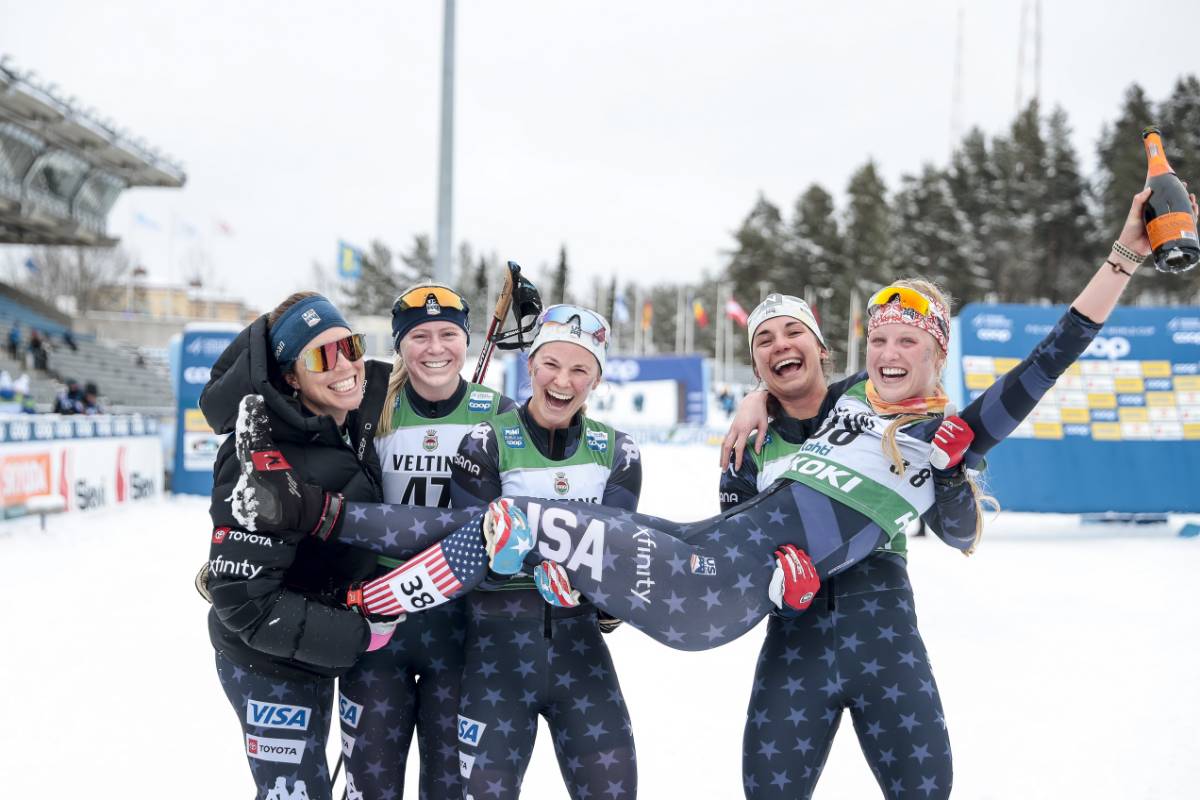
    Team USA: Rosie Brennan, Samantha Smith, Jessie Diggins, Julia Kern, Hailey Swirbul  (l-r) celebrate the end of the season and putting two racers into the top five of the World Cup standings (Photo: NordicFocus)

    Women’s 20 kilometer Mass Start RESULTS

    Women’s Overall World Cup STANDINGS

    Women’s Distance World Cup STANDINGS


  • Falun 10 k Classic: Kerttu Niskanen Re-Energized, Klaebo Still Not Tired

    Falun 10 k Classic: Kerttu Niskanen Re-Energized, Klaebo Still Not Tired

    This World Cup coverage is made possible through the generous support of Marty and Kathy Hall and A Hall Mark of Excellence Award. To learn more about A Hall Mark of Excellence Award, or to learn how you can support FasterSkier’s coverage, please contact info@fasterskier.com

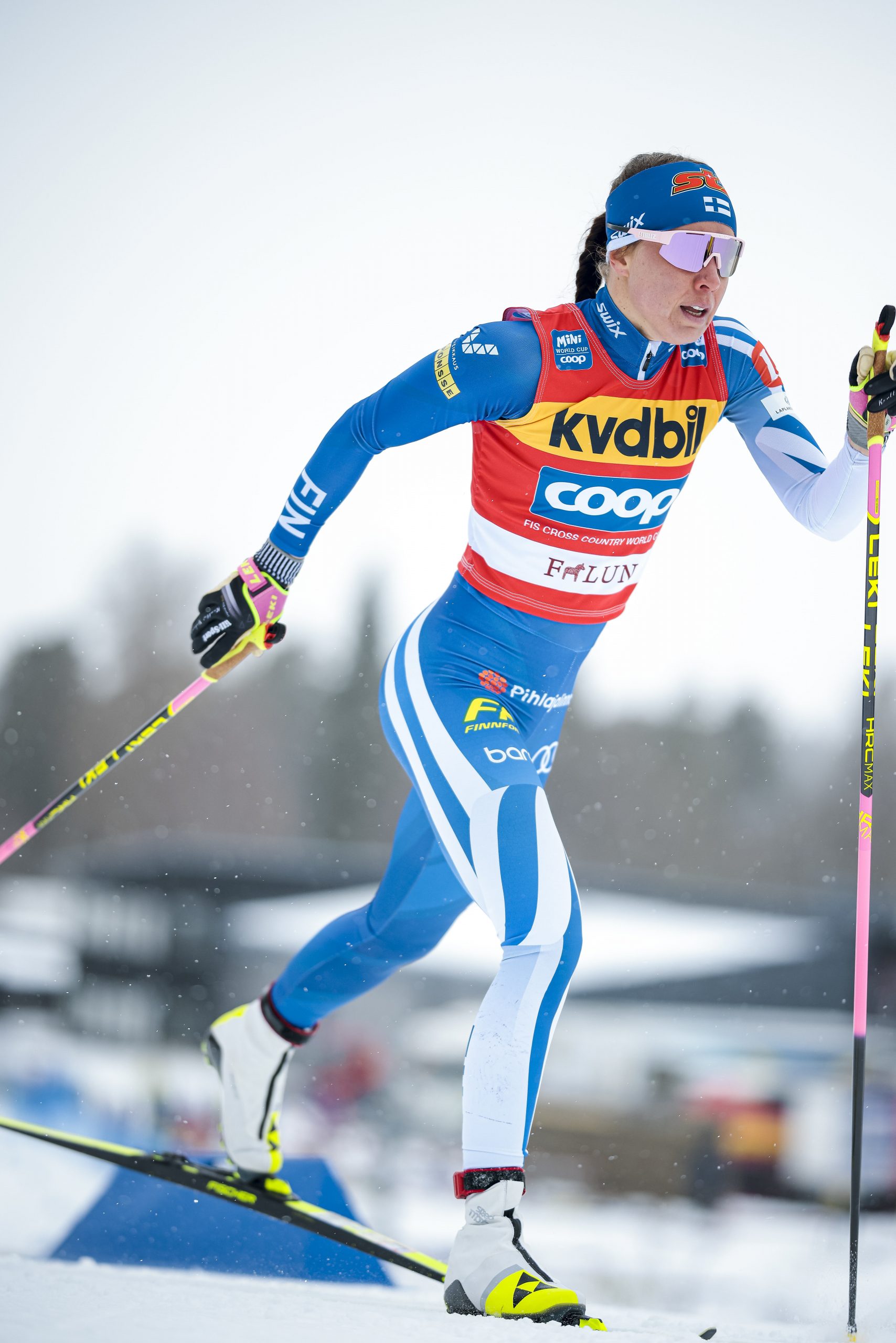
    A re-energized Kerttu Niskanen (FIN) dominated the World Cup 10 k Classic Individual at Falun, Sweden. Photo: Modica/NordicFocus)

    She’s just so fun to watch . . . and He just keeps getting faster; together, Kerttu Niskanen (FIN) and Joahannes Hoesflot Klaebo (NOR) demonstrated levels of dominance on Falun’s classic tracks, delivering convincing victories in Friday’s FIS World Cup 10 k Classic Individual. Niskanen entered the weekend with a narrow seven point lead in the World Cup Distance standings (over American, Jessie Diggins), while Klaebo keeps adding a few points each race to his lead over countryman, Paal Golberg (who’s having an incredible season, just not as incredible as Klaebo). No one can afford to sit out a race anymore: the competition in the season-long standings is just too close.

    Today in Falun, Niskanen dominated a World Cup field that lacked two of her main rivals—Sweden’s Ebba Andersson and Frida Karlsson—who skipped this race (as well as last week’s Holmenkillen 50 k) due to illness. Katharina Hennig (GER) followed Niskanen in second while Anne Kjersti Kalvaa (NOR) finished third.

    Among Americans, Diggins was fourth followed by Rosie Brennan (6th), Novie McCabe (14th), Hailey Swirbul (30th), and Sammy Smith (41st). Canadian Katherine Stewart-Jones finished 40th.

    Norway’s leader in the World Cup Overall standings, Tiril Udnes Weng, finished 10th on the day, surrendering ground to Diggins, but maintaining a lead of 145 points in the race for the Crystal Globe.

    In the Men’s 10 k, things proved exciting early on and tense in the middle, but it was really a one-man race. While the lead at intermediate checkpoints teetered back and forth between fast starters and fast finishers, it was Johannes Hoesflot Klaebo who both started fast (just behind the impressive intermediate times posted by American Ben Ogden), and who set a blistering pace over the final kilometer (well ahead of mid-race threat, Martin Loewstroem Nyenget); Klaebo would finish first ahead of Nyenget and Harald Oestberg Amundsen (NOR). In the race for the season-long World Cup Overall Crystal Globe, Klaebo extended his lead to 224 points over countryman, Paal Golberg, who finished the day in fourth.

    Americans placed two in the top 20: Ogden (13th), Scott Patterson (17th), Gus Schumacher (35th), Zak Ketterson (41st). Canadian finishers included Antoine Cyr (20th), Olivier Leveille (37th), Xavier McKeever (47th).

    The Finns had fast skis today—Perttu Hyvarinen (5th), Ristomatti Hakola (6th)—so it really was a pity that their teammate,  classic specialist Iivo Niskanen, did not start in Falun.

    Women’s 10 k Classic Individual

    When it comes to classic skiing, Niskanen just does it differently. First, she skis fearlessly in the classic tracks, driving the momentum, forcing the pace, pushing the tempo higher than any of her competitors. Second, Niskanen’s technical mastery allows her to glide farther with each stride: where others scramble and rush, Niskanen just glides. It’s amazing to observe how much more glide she achieves with each stride than all other skiers. Even on the steepest climbs, Niskanen’s boot slides forward where others set the wax much earlier in the stride. It’s so fun to watch . . . and she’s seemingly found a new level of energy late in this World Cup season that will make her difficult to beat, at least in classic distance racing.

    Niskanen always races with heart, but the 10 k distance on classic skis always seems to animate her even further. Blazing around the three laps of Falun’s 10 kilometer course, Niskanen followed the early lead of Jonna Sundling (SWE) to take over the lead by the half-way point, ultimately crossing the finish line with a lead of 22.3 seconds over Kalvaa. Finishing later, Hennig, was able to squeeze between them for second.

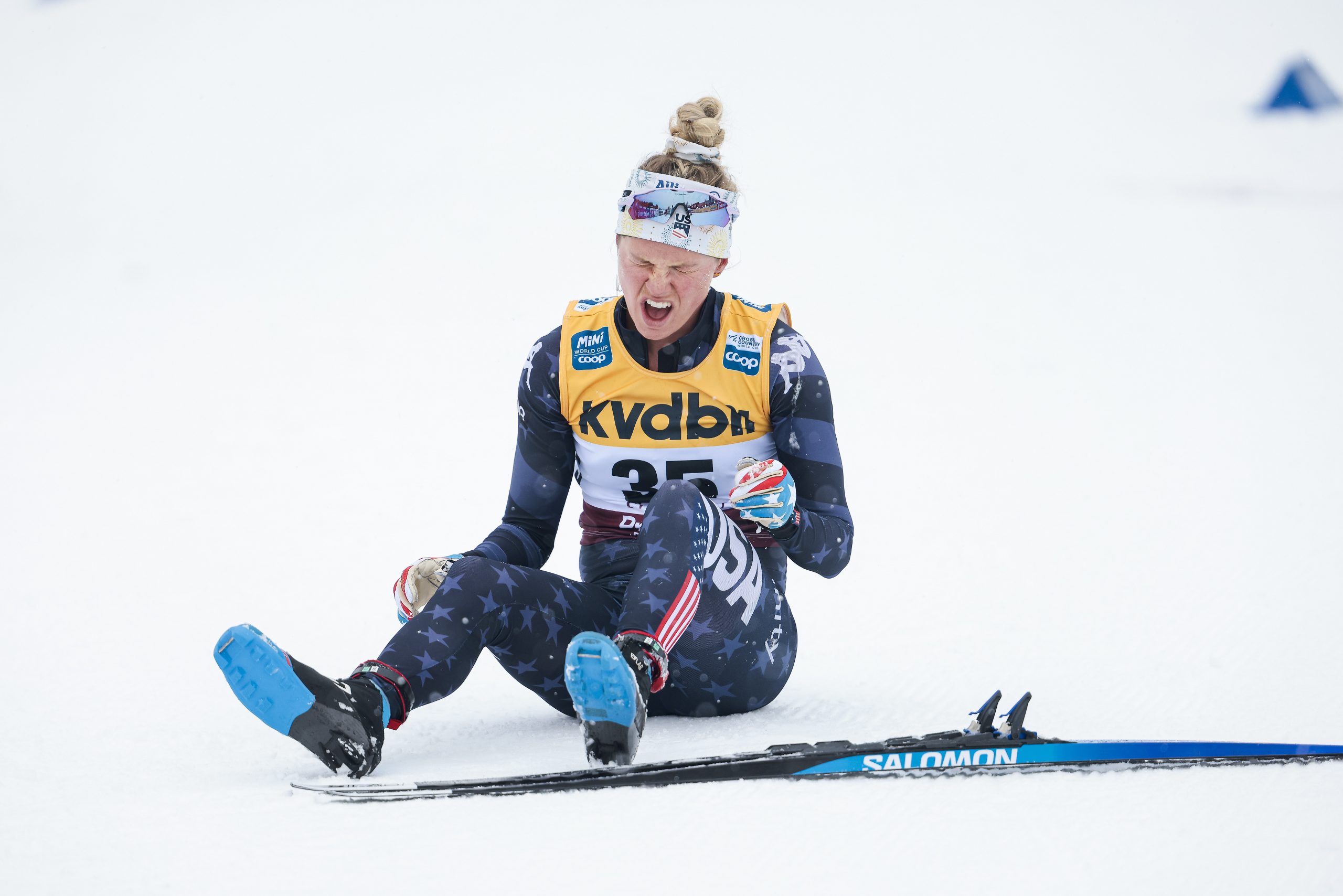
    Painful moments at the finish line: Jessie Diggins (USA) can always be relied upon to give her all. Her fourth place finish in Falun was a career-best for Diggins in Individual Start Classic Distance racing. (Photo: Modica/NordicFocus)

    Racing bravely into fourth place on the day, Diggins knows she’s fighting battles on multiple fronts: narrowly trailing Niskanen in the World Cup Distance standings, doggedly pursuing Weng in the World Cup Overall standings, and always capable of snatching a World Cup race victory on any given day. And, on any given day, Diggins always seems to display a fierceness that few other competitors possess. She can charge harder and endure more than just about anyone in sport. While many spectators remark about the exhausted, demonstrative carnage that often litters the finish area of World Cup events, few would question the astonishing levels of effort that Diggins commits to her racing. It can be a little bit scary to see a human dig so deep.

    “This was my best ever career result for an individual start classic distance race,” Diggins said. “and it was really really confidence boosting . . . I really had to fight for it!”

    Women’s 10 k Classic Individual RESULTS

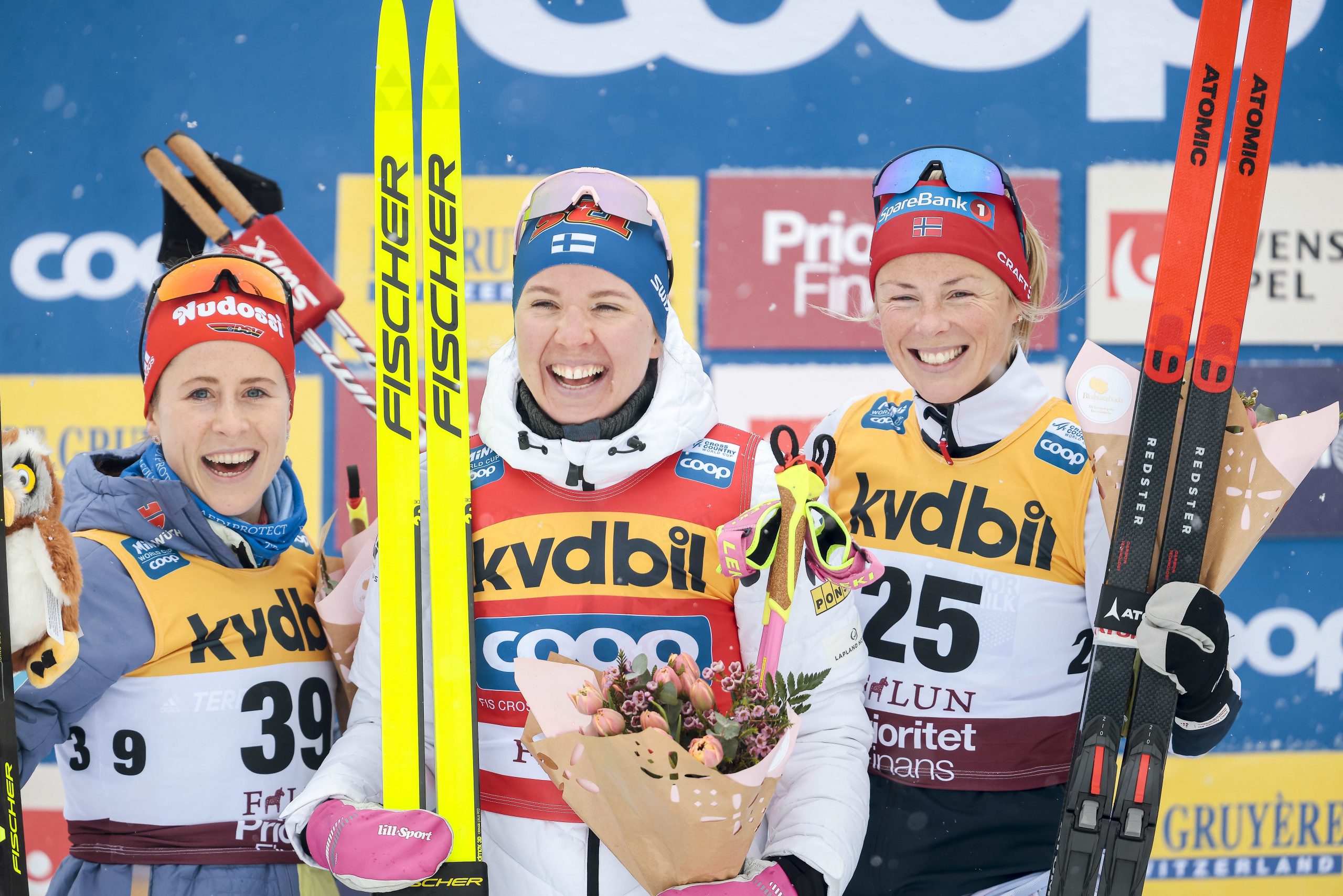
    Katharina Hennig (GER), Kerttu Niskanen (FIN), and Anne Kjersti Kalvaa (NOR) celebrate on the podium after the FIS World Cup 10 k Classic Individual in Falun, Sweden. (Photo:  Modica/NordicFocus)
    Men’s 10 k Classic Individual

    The snow that began falling during the women’s race continued to fall through the beginning of the men’s race, settling in the classic tracks and making the job of the wax technicians even more challenging. The men would race on freshly fallen snow in temperatures just above freezing (that’s a classic waxing conundrum). It was evident that most racers continued to opt for klister with only the earliest starters seeming to struggle with kick in the tracks. By the time the contenders took to the course, it seemed that the new snow in the tracks had been skied in, and the slipping suffered by earlier racers no longer seemed to be a significant issue.

    Johannes Hoesflot Klaebo (NOR) just keeps getting faster. (Photo: Modica/NordicFocus)

    Someone really needs to talk to FIS about their World Cup scheduling: this season’s must-do-every-race points system originally seemed intended to undo the dominance of Klaebo (who, in the past, could win most of the races he entered, and skip others in order to remain fresh). This season’s schedule (especially in the race-crowded closing weeks of this World Cup season) appears determined to race the energy right out of Klaebo’s sprinter’s legs. Ironically, Klaebo now appears to be one of the few skiers who remains energized after so many days and weeks and kilometers of racing. In Falun, he started quickly (trailing only the speedy Ogden at the first checkpoint), then just kept pouring it on. His tempo and intensity over the final kilometer was unmatched, and he finished with a surprisingly large margin over skiers who had matched his earlier split times. They faded, he accelerated. No one is going to catch him now . . .

    This kid just charges: Ben Ogden (USA) races boldly, fearlessly, aggressively. He led at many of he early checkpoints, before fading to 13th in the closing kilometers. Evidently, he’ll keep trying this strategy until he sees just how far he can take it. (Photo: Modica/NordicFocus)

    Perhaps the most entertaining aspect of the racing in Falun was the ongoing pacing-adventure of American, Ben Ogden; whether sprint or distance, Ogden continues to race in a manner that throws caution to the wind, seemingly determined to press the accelerator to the floor just to see how far that momentum can carry him. It’s an audacious plan; one that merrily dispenses with the long-held American philosophy of gradual improvement and steady progress. Ogden seems to be saying, “I’m going to ski with the best guys, or die trying.” Weeks ago, when he first introduced this tactic in a Tour de Ski sprint heat, the response was chuckling among the commentators and high-fives among the fans. No one really took him seriously; it looked like a gag, like a mid-race prank, like a bit of fun thrown into an otherwise over-serious race day. When he threw down this tactic again in both the quarterfinal and semifinal of the Drammen World Cup Sprints, we began to consider that Ben Ogden doesn’t see things that way.

    “To be honest that tactic is sometimes a conscious decision and sometimes isn’t,” Ogden admitted. “In [Drammen sprint heats] it certainly was . . . Once it worked and once it didn’t, but I think that a man like myself needs to ski to his strengths and thats exactly what I did. Today on the other hand was less of a race plan and more a product of the circumstances. It was a tricky ski day and we spent a lot of time testing and worrying about that in the warmup. Once I started, I realized I had quite fast and easy kicking skis, so I just got somewhat carried away. I knew I was going too fast in the first 5k but I just couldn’t bring myself to slow down!”

    “I am counting on one day doing that and just not slowing down,” Ogden said. “That is how you accomplish your goals; the more comfortable you get at that intensity the longer you’ll be able to do it!”

    After today’s race in Falun, latest evidence would seem to suggest he’s going to keep pushing this tactic until it finally works. Keep charging, kid . . .

    Men’s 10 k Classic Individual RESULTS

    Ristomatti Hakola (FIN), Perttu Hyvarinen (FIN) finished fifth and sixth on the day, only 30 seconds behind the winner. The Finns took advantage of great skis in Falun, leaving fans to wonder what might have happened if classic specialist Iivo Niskanen (FIN) had raced the 10 k Classic? (Photo:  Modica/NordicFocus)
  • The Devon Kershaw Show: Don’t sleep on Les Rousses

    The Devon Kershaw Show: Don’t sleep on Les Rousses

    Holy smokes, that was an epic weekend of racing. Devon and Nat are joined by Tony Cyr, the breakout Canadian star, and a mystery guest drops in later on in the episode.

    We break down the sprint and two distance races held at the festive French venue in Les Rousses. And we promise, we’ll get you a mailbag episode before World Championships starts in a few weeks. Get at us at devon@fasterskier.com and nat@fasterskier.com.

    Canadian Tony Cyr skis in front of Norway’s Martin Loewstroem Nyenget at last weekend’s World Cup in Les Rousses, France. (Photo: NordicFocus).
  • Diggins Ninth in Les Rousses 20 k Classic, Brennan and Swirbul Top 20

    Diggins Ninth in Les Rousses 20 k Classic, Brennan and Swirbul Top 20

    Today, the women competed in the final day of World Cup racing in Les Rousses, France with the 20 kilometer mass start. The course consisted of six laps on a 3.3-kilometer loop. The course featured an extremely difficult early climb up the side of the venue’s ski jump which Jessie Diggins (USA) had said was about as steep as Alpe di Cermis in the Tour de Ski. The repeated ascents would test skiers’ ability both aerobically and technically, as they would have to navigate a tricky descent after each uphill effort.

    Jessie Diggins (USA) working her way to a ninth place finish in the World Cup 20 k Classic. (Photo: NordicFocus)

    Finishing first was Ebba Andersson (SWE), followed by Kerttu Niskanen (FIN) and Astrid Oyre Slind (NOR). Jessie Diggins was the top American finishing ninth, 2:20 behind the leaders. Rosie Brennan was 12th, about 12 seconds behind Diggins. Other American finishers were Hailey Swirbul in 19th (3:30 out of first), Alayna Sonnesyn in 35th, Alexandra Lawson 39th, and Michigan native Sarah Goble in 40th. No Nordiq Canada team members were entered in today’s race.

    After having reached yesterday’s sprint finals, Julia Kern (USA) did not start today’s race.  According to U.S. coach, Kristen Bourne, it was a planned rest day for Kern; she was not suffering any ill effects from her injured thumb which had recently required stitches as documented in FasterSkier’s story yesterday.

    Rosie Brennan (USA) giving it everything in Les Rousses, France. She would finish the 20 k Mass Start Classic in 12th place. (Photo:  Thibaut/NordicFocus)
    Le Rousses Women’s 20 k Mass Start

    The undulating course broke up the field early on. The early lead was taken by Teresa Stadlober (AUT) who was seeking to become the first Austrian to win a World Cup cross country event. Those hopes were quickly dashed.

    As the women navigated the steep climb, they were forced to slow to a painful herringbone simply to ascend the hill. The steep climb was followed by a quick descent with a sharp turn which the skiers had to navigate after having their legs blown up by the climb. Brennan described the climb to FasterSkier as “Incredibly steep.” Swirbul commented, “That hill was strange. On the first lap, I saw the skiers in front of me basically walking up it.”

    At the start of the second lap, Niskanen—who excels at classic racing—jumped to the lead. She was followed closely by Andersson, Ingvild Flugstad Oestberg (NOR), and Slind. Stadlober had been gapped by the lead group.

    Ebba Andersson (SWE) and Kerttu Niskanen (FIN) battled for the lead most of the day. (Photo: NordicFocus)

    Americans Diggins and Brennan had established a chase group ten seconds back with Brennan forcing the pace. But Brennan was unable to close the gap on the leaders. “I struggled with my skis today,” she said, “and didn’t have the glide I needed to be as competitive as I had hoped.” But, she was happy with the way she felt,  “My body was in for the fight, and that’s encouraging as well.” The big hill and the weather proved challenging for wax technicians. As Bourne told FasterSkier, “It certainly was not a straight forward kick kind of day for us. There were sunny spots, and a mix of man-made snow and natural snow, so there’s variability throughout the course as well, so it’s not a super straight-forward place to figure out wax.”

    As the third lap began, Niskanen continued to push the pace in a lead group which had been reduced to four skiers. Brennan and Diggins were in the middle of a chase group 15 seconds behind. By the time the skiers began the steep climb for the third time, the struggle navigating the ascent was clearly visible. Swirbul told FasterSkier that “It was comforting to know that everyone felt similarly about that hill, and many people seemed to treat it as a place to relax and save energy rather than push really hard.” Bourne added that “[The hill] was an added challenge trying to figure out how to pace the course. Quite a few of our athletes felt like you just had to make it through that section, then there are plenty of opportunities to push the rest of the course.”

    After the third ascent, Andersson pushed ahead with Niskanen, reducing the lead pack to just the two skiers. Oestberg and Slind teamed up in a chase group of their own to try and regain the connection to the leaders. By the eight kilometer mark, the leaders had established a 13 second gap, with the Brennan/Diggins chase group 43 seconds back.

    Hailey Swirbul (USA) battling Victoria Carl (GER) and Katherine Sauerbrey (GER). Swirbul continues to excel on the World Cup circuit, where she raced to 19th place today in Les Rousses. (Photo: NordicFocus)

    As the leaders reached the half-way point, they had extended their lead to 30 seconds over Slind and Oestberg, who maintained a 40 second lead over the Brennan/Diggins chase group. The race pattern had become clear: Andersson would use her double poling strength to her advantage, Niskanen would then regain ground using her textbook diagonal stride technique.

    At the start of the fourth lap Andersson made a break on Niskanen, when Andersson ignored hydration at an aid station and established a 10 second gap. Once again, Niskanen was able to use her beautiful classic technique to close the gap. It was now a game of cat and mouse between Andersson’s double poling strength and Niskanen’s diagonal stride.

    Ebba Andersson (SWE), Kerttu Niskanen (FIN), Teresa Stadlober (AUT), Jessie Diggins (USA), Silje Theodorsen (NOR), (l-r) early on in the 20-Kilometer Classic. Ultimately, Niskanen and Andersson would break away. (Photo: NordicFocus)

    At 11 kilometers, the race story was boiling down to the two leaders fighting for first, and Slind and Oestberg fighting for third. The second chase group would be unlikely to reach the podium. Lead changes continued to epitomize the Andersson and Niskanen battle as the pair climbed the ski jump hill where Andersson again established an 11 second lead  By the start of the final lap, the only remaining question was would Andersson be able to maintain her lead over Niskanen, and would the two Norwegians in the chase group establish a gap between each other?

    Jessie Diggins (USA), like every racer, had to resort to herringbone to navigate the steep Les Rousses hills. (Photo: NordicFocus)

    As the racers ascended the monster hill for the final time, it was clear that Andersson had established a big enough lead to hold off Niskanen and would be able to comfortably ski into the finish ahead of her rival. Meanwhile, Slind and Oestberg were caught in an intractable struggle to the finish, neither of them giving an inch. Slind and Oestberg fought right to the finish, sprinting into the final stretch. Slind went into a double pole frenzy which her country woman was unable to match. She nipped Oestberg by four seconds.

    As the second chase group came to the finish, Brennan and Diggins had fallen off the pace and it was the sprint standout Emma Ribom (SWE) who used her sprint power to charge across the finish line in fifth.

    Rosie Brennan (USA) pushing her chase group forward. Brennan would finish 12th. (Photo: NordicFocus)

    Diggins would finish ninth, 13 seconds behind Ribom, with Brennan in 12th. Hailey Swirbul was the third American to cross the finish having an excellent day finishing in 19th place. Swirbul appears to have acclimated well to the transition to Europe once her initial illness was behind her. She commented “That was as good of an outcome as I could have hoped for with a hill that crazy!”

    It was an exciting race and a beautiful day to finish racing in France.

    Women’s 20-Kilometer Classic Individual RESULTS:

    Les Rousses, France 20-Kilometer Classic Podium: (l-r) Kerttu Niskanen (FIN), Ebba Andersson (SWE), Astrid Øyre Slind (NOR). (Photo: NordicFocus)
  • Brennan Claims Fourth in TDS Classic Mass Start, Karlsson Extends Overall Lead

    Brennan Claims Fourth in TDS Classic Mass Start, Karlsson Extends Overall Lead

    A_Hall_Mark_of_Excellence_Award-logo-300.png (300×244)This World Cup coverage is made possible through the generous support of Marty and Kathy Hall and A Hall Mark of Excellence Award. To learn more about A Hall Mark of Excellence Award, or to learn how you can support Fasterskier’s coverage, please contact info@fasterskier.com.

    Today, the leaders of the Tour de Ski went to the front, and the standings were put into stark perspective. This late in a long and challenging stage race, no one wanted to risk the daring move. There was too little to gain, and far too much to lose. With a very difficult (and potentially consequential) stage tomorrow, there was very little incentive to push the pace. The Tour de Ski will whittle down the contenders all by itself; the distances and the schedule and the elevation and the stress will see to that. The selection will just happen naturally . . . and those who benefit will be those who hang on. That was the nature of the racing in Val di Fiemme, Italy today in Stage 6 of the 2023 Tour de Ski.

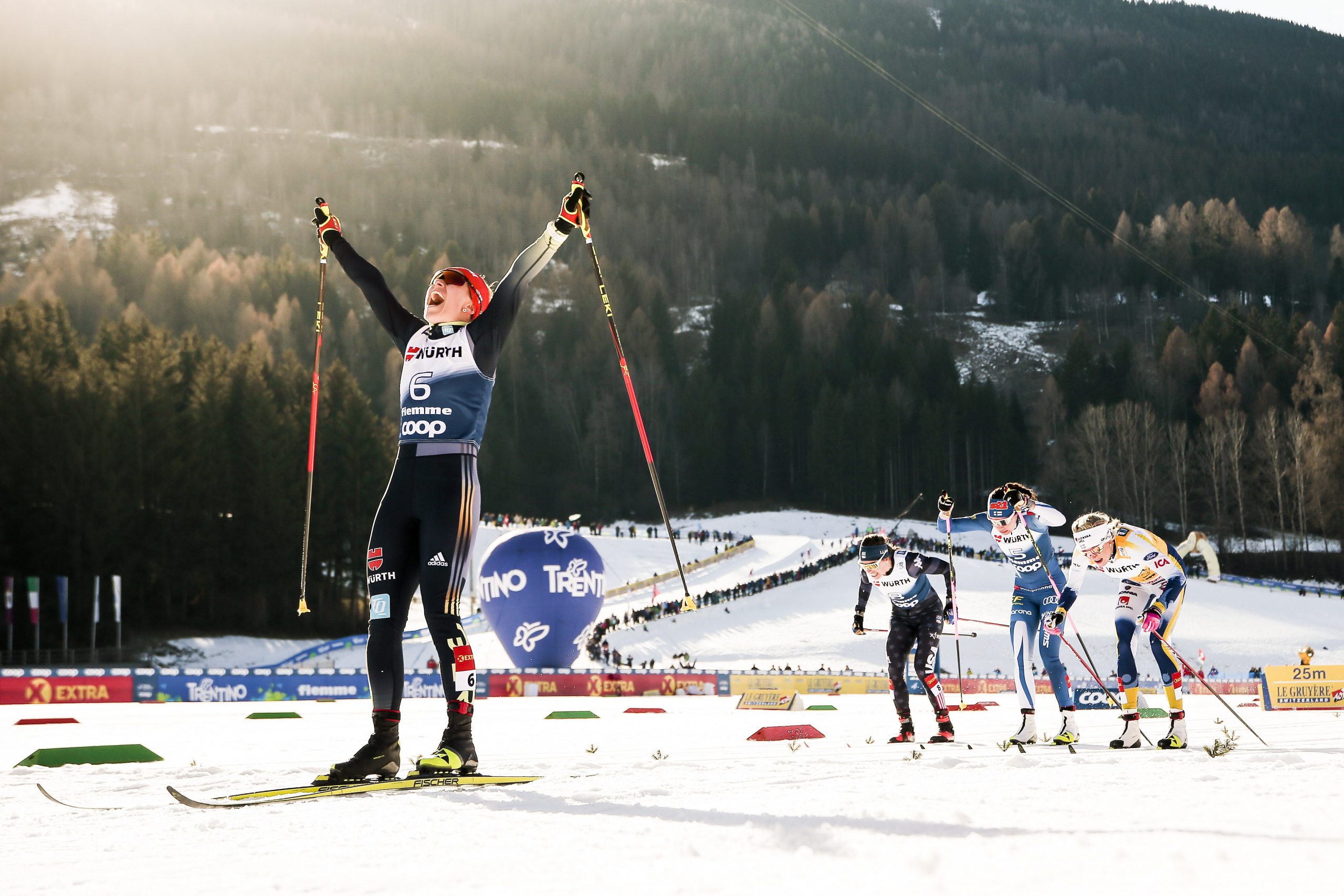
    Katharina Hennig (GER) sprints to victory over Rosie Brennan (USA), Kerttu Niskanen (FIN), Frida Karlsson (SWE),  (l-r) in Stage 6 of the Tour de Ski from Val di Fiemme (ITA). Brennan would finish fourth, with Niskanen and Karlsson second and third. (Photo: NordicFocus)

    In the end, Katharina Hennig (GER) won the sprint finish, followed by current Tour de Ski leader, Frida Karlsson (SWE) and Kerttu Niskanen (FIN).

    American Rosie Brennan finished a sensational fourth in Stage 6, one second behind the winner, and only .2 from the podium. Other American finishers included Diggins in 24th, Laukli 26th, Kern 31st, and Sonnesyn 36th.

    Canadian finishers included Katharine Stewart-Jones who remained in contention among the chasers throughout the day, and skied to a very impressive 10th place finish, and Dahria Beatty who finished 37th after a mid-race fall.

    “Today was a lot of fun!” said Stewart-Jones. “I have been close to the top 10 a couple of times so it is exciting to have finally cracked it. Being in the ‘mix’ and watching my teammates also have some great performances makes racing even more fun. For the rest of the season, I want to continue hunting down some PBs!”

    Krista Parmakoski (FIN) who was third in the overall standings (1:05 behind the leader, Karlsson) withdrew before the race began, citing illness that had developed overnight. Parmakoski described stomach pains rather than Covid symptoms, which allows her to remain hopeful for maintaining her condition and being prepared for the FIS World Championships in a few weeks.

    Women’s 15 k Classic Mass Start

    It was a warm and sunny day in Val di Fiemme, Italy with air temperatures of 7.7 degrees Celsius, and snow temperatures just below freezing. The grind of the Tour de Ski had taken its toll, and the starting field had been whittled down to just 37 starters.

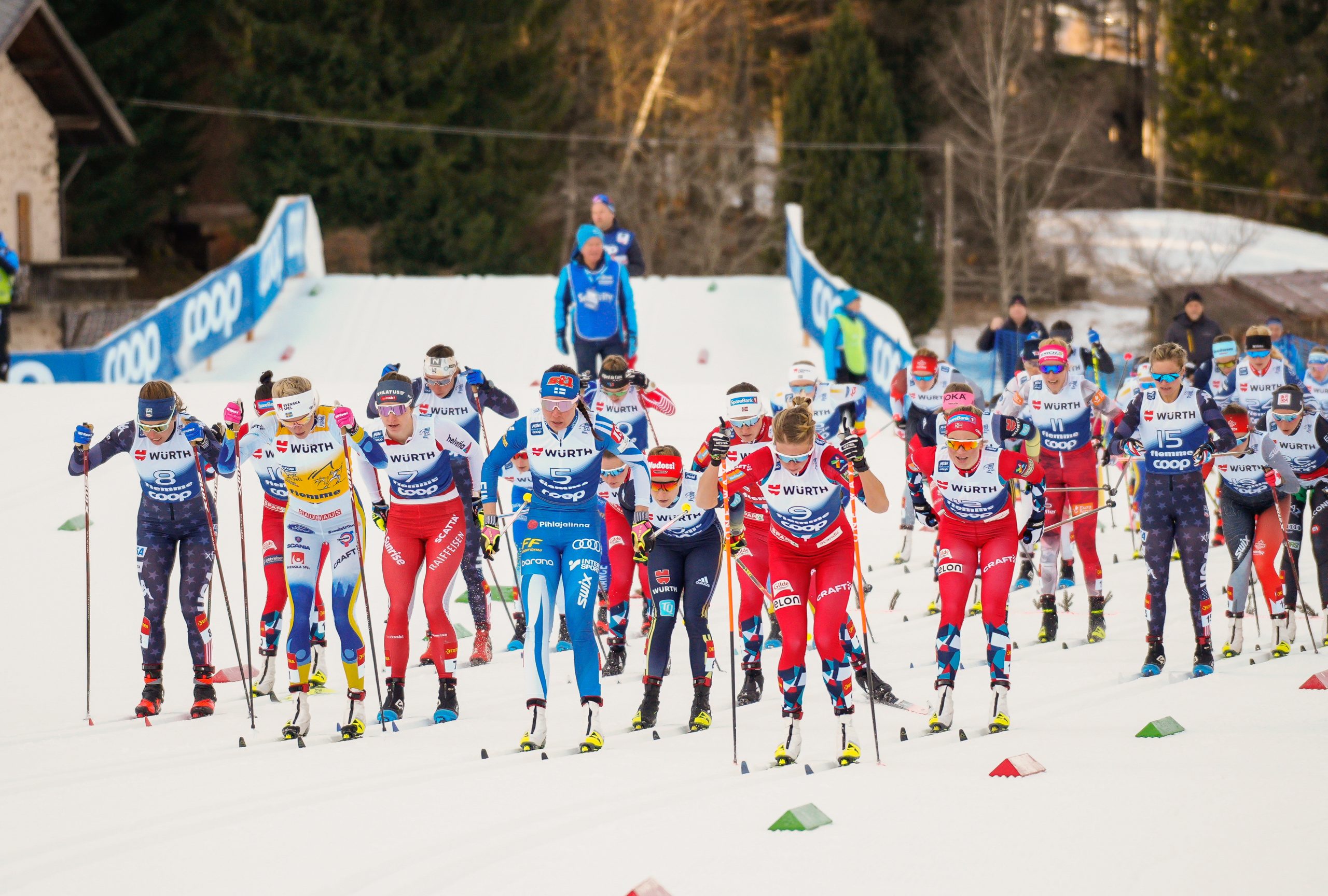
    The Women’s 15 k Classic Mass Start followed six laps of the Val di Fiemme course. The early pace was dictated by a group of contenders—Karlsson, Niskanen, Hennig—though the pace was fairly moderate. Brennan moved to the front just before halfway point, (at 6 k), stringing out the field with her pace making. A lead group forms: Hennig, Niskanen, Karlsson, Tiril Udnes Weng (NOR), and Astrid Oyre Slind (NOR). Teresa Stadlober (AUT) managed to catch on before the significant gap formed.

    Chasing them were Delphine Claudel (FRA), Lotta Udnes Weng (NOR), Anne Kyllonen (FIN), Katherine Stewart-Jones (CAN), and Heidi Weng (NOR). Diggins and Laukli settled into a third group as Kern began to be gapped.

    Classic mass start racing can be a daunting challenge. What if the skis are too slow? What if the kick is too slippery? And descending on classic skis is a tricky prospect under even the friendliest of conditions. In the deep ruts and soft snow of the Val di Fiemme course, the high speed descent—a 45 kmh sweeping left turn—claimed a few unfortunate victims. Among them were Nadine Faehndrich (SUI) and Dahria Beatty (CAN) whose falls left them near the back of the pack.

    Niskanen began pushing the pace in the fifth lap, while Karlsson began to show signs that her kick wax was beginning to fail, skiing out of the tracks early on each uphill, and cutting diagonally across each slope to gain some purchase with her edges. Brennan and Hennig also made the selection, and the lead group was established at four.

    Rosie Brennan (USA) and Katharina Hennig (GER), (l-r) testing their limits on the Val di Fiemme downhills. (Phtoo: NordicFocus)

    Brennan seems to excel during the toughest racing, and a classic mass start on an overly-warm day in the sixth stage of an exhausting Tour de Ski is particularly tough.

    “I decided to go to the front and just ski my own pace for a lap. I don’t know if it really strung things out or not, but then the next lap was the sprint bonus and the speed got turned up really hot there . . . I did have a moment of ‘I don’t know if I’m gonna make it.’”

    Niskanen continued to lead, pressing the pace through the final kilometers, knowing she would need to take the sprint out of Karlsson, Brennan, and Hennig. At 34 years of age, Niskanen seems to be experiencing a resurgence that goes well beyond her early-career specialization as a classic skier. Even so, she knew that if she failed to separate herself from her rivals that they would be likely to overtake her in the sprint. Ultimately, the strongest sprinter prevailed in a four-up finish, as Hennig charged across the line ahead of Karlsson and Niskanen. Only a second behind, Brennan was forced to settle for fourth.

    Rosie Brennan (USA) raced to fourth in the 15 k Classic Mass start in the Tour de Ski Stage 6 at – FIS world cup cross-country, tour de ski, mass, Val di Fiemme (ITA). (Photo: NordicFocus)

    “I felt really good, actually. I’ll be honest; I’ve never had a good race here, so I was sweating bullets about today. I was very nervous,” Brennan said. “I’ve made some really strong improvements in my classic over the last year, and I have a new wax tech that I really enjoy working with, and so I decide I just needed to believe today and see what was possible, and take a chance on myself. I’m really glad I did.”

    When asked what she was looking for in tomorrow’s race up Alpe di Cermis, Brennan laughingly replied, “The top!”

    After the race, American Jessie Diggins spoke of the many challenges that her team has been experiencing during the Tour de Ski, and the pride she feels at being part of this group: “We’ve had some serious staff shortages due to illness . . . I get choked up thinking about how everyone’s pulled together,” she said. “The Kern parents are out there running skis and doing feeds, Rosie’s boyfriend Tyler is out there testing kick . . . people have just banded together to make it work.”

    Diggins finished 24th on the day, and sits 15th overall, 5:23 behind the leader.

    Karlsson did all that was required to maintain her overall advantage, and enjoys a considerable lead as the Tour de Ski approaches the final stage on Alpe de Cermis. Her lead in the Tour de Ski is 1:12 to T. Weng, 1:37 to Niskanen, 2:00 to Hennig, and 2:28 to Brennan who sits in fifth place.

    Women’s 15 k Classic Mass Start RESULTS

    Katharina Hennig (GER) earns her first Tour de Ski stage win ahead of Frida Karlsson (SWE) and Kerttu Niskanen (FIN). (Photo: NordicFocus)
  • Germany outsprints Sweden and the ROC for gold and a second team medal; Brennan and Diggins fifth for USA

    Germany outsprints Sweden and the ROC for gold and a second team medal; Brennan and Diggins fifth for USA

    This World Cup coverage is made possible through the generous support of Marty and Kathy Hall and the A Hall Mark of Excellence Award.  To learn more about A Hall Mark of Excellence Award or to learn how you can support FasterSkier’s coverage please contact info@fasterskier.com.

    The team sprint: two skiers racing three laps each at roughly 1.5-kilometers a piece with a long climb thrown into the middle of the course and temperatures in the single digits Fahrenheit. It boils a sport that already requires both power and endurance down to its essence.

    Riding the high of their silver medal in the women’s 4 x 5 k relay, the duo from Germany, Katharina Hennig and Victoria Carl, won a thrilling sprint finish to decide the medals, collecting gold in a time of 22:09.85. To take the stop spot, the anchor, Carl, out-sprinted the Swedish individual freestyle sprint gold medalist, Jonna Sundling, in the final meters to win by just 0.17 seconds, while the Russian Olympic Committee’s Natalia Nepryaeva crossed just behind in third (+0.71).

    Sweden, Germany and Russia share the women’s classic team sprint podium.
    (Photo: NordicFocus)

    After holding strong in medal contention throughout the first five of six laps, the American pair of Rosie Brennan and Jessie Diggins lost contact with the leaders in the final leg, crossing the line fifth (+12.93) behind Finland in fourth (+3.86).

    Now, let’s take a step back.

    There is, perhaps, no reminder needed that USA won the team sprint in 2018; Kikkan Randall and Jessie Diggins collected the first Olympic medal for the United States in cross country skiing – a gold, no less – since Bill Koch took silver in the 30 k classic in 1976. However, the team sprint in PyeongChang was raced freestyle, whereas today’s team sprint would be held in classic. 

    “I’m not trying to compare today to four years ago,” said Diggins in the mixed zone after the race. “It’s a different course, different altitude, different technique, like literally nothing is the same and, and that’s okay. I think today, I was going out there and skiing for Rosie and skiing as hard as I could and as best I could… but I’m really proud of this race and proud of giving it our best fight.”

    Rosie Brennan helps the Americans finish second in the first team sprint semifinal, automatically advancing to the final. (Photo: NordicFocus)

    We have to look back eight years for a classic team sprint at the Olympic Winter Games, to the 2014 Games in Sochi. Norway took the gold that day in dominant fashion ahead of Finland and Sweden, who were stretched behind by roughly ten seconds a piece. Only one of the six women on the podium returned to the Games in 2022, again making the team sprint roster: Finland’s Kerttu Niskanen. The American pairing of Sophie Caldwell (now Hamilton) and Kikkan Randall were sixth in Sochi, +35.06 back on the Norwegian winners.

    In the intermediate FIS World Championships, the Americans finished fifth both years, racing Brennan and Sadie Bjornsen (now Maubet) in the freestyle competition in Oberstdorf, Germany in 2021, and pairing Bjornsen with Diggins for the classic team sprint in Seefeld, Austria in 2019. In Oberstdorf, the Americans missed the podium by roughly 2.2 seconds, finishing 2.8 seconds behind the winning team from Sweden. In 2021, they missed the podium by an equivalent margin, this time finishing 5.8 seconds back in the overall standings, again to Sweden. It’s a mark of consistency and depth across techniques for the American women. 

    Yulia Stupak (ROC), Kerttu Niskanen (FIN), and Katerina Janatova (CZE) lead the way early in the women’s classic team sprint semifinal. (Photo: NordicFocus)

    To make the team sprint final, each team must finish in the top-two of semifinal A or B, or be within the next six fastest times from either heat. The U.S. was second to Germany (+4.03) in Semifinal A, while the ROC won the second semi in a close finish with Finland in second (+0.35) and Sweden third (+1.0). Austria and Switzerland also advanced from the first semi, with Sweden, Norway, France, and Poland filling the remaining spots from semifinal B. 

    With bursts of frozen mist released from their mouths, the athletes took to the course for the final round, with Yulia Stupak (ROC), Maja Dahlqvist (SWE), Kerttu Niskanen (FIN), Tiril Udnes Weng (NOR), and Katharina Hennig (GER) racing with Brennan at the front of the pack. 

    With a hooded parka draped over her, face tape obscuring her normally glittery cheekbones, and heated socks inside her boots, Diggins waited in the exchange for the tag. She would be facing Natalia Nepryaeva (ROC), Jonna Sundling (SWE), Krista Pärmäkoski (FIN), Maiken Caspersen Falla (NOR), and Victoria Carl (GER) in the even-numbered legs. 

    Racing comfortably near the front with skis that looked competitive for both kick and glide, Brennan tagged Diggins +1.1 second back on Finland in fourth, well within the lead group. In what would become a pattern for her first two legs, Diggins quickly moved to the front to control the race and ensure a fast pace, perhaps risking accumulating her own fatigue while also taking the sting out of the legs of the individual sprint gold and silver medalists of Sweden, who had also won the World Championship gold in 2021.

    Diggins races at the front of the lead pack during the classic team sprint final. (Photo: NordicFocus)

    Diggins tagged Brennan virtually even with Sweden and Finland after her first lap, a position Brennan was able to hold through her second leg. Near the bottom of the long, grinding climb to the high point of the course, Norway’s Weng wobbled slightly, placing her pole in front of Dahlqvist’s ski to catch her balance. Weng’s pole snapped, leaving her running up the sidelines of the climb with one pole, detaching her strap to grab another from a coach who stood along the fenceline. This lost Norway several seconds, which they were unable to regain in subsequent legs, leaving the team out of podium contention.

    On the odd legs, Niskanen of Finland consistently controlled the race at the front, putting the powerful stride that earned her a silver medal in the 10 k last week on display as she led up the climb in each round. She tagged her teammate Pärmäkoski in the lead at the halfway mark, with Germany, the ROC, and USA within a second back. 

    Kerttu Niskanen (FIN) sets the pace in the first lap of the women’s classic team sprint final. (Photo: NordicFocus)

    Diggins again charged to the front, her hands and legs pumping metronomically as she drove her skis up the climb. Diggins crested the hill in front, with Sundling and Pärmäkoski on her tails heading into the descent. A gap had opened to Germany and the ROC, but these teams had lightning fast glide and were able to regain contact in the descent. 

    At 6 k, with four of six legs complete, it was Sweden and Finland in the lead at the exchange, with Brennan receiving a tag 2.5 seconds back. Niskanen again set the pace at the front, still looking strong as she pushed the pace up the A-climb, with Dahlqvist matching pace behind. In a critical moment where loss of contact might have meant accepting a podium was not in the cards on the day, Brennan accelerated up the climb, steadily closing the gap to the Swede ahead of her. 

    Rosie Brennan (USA) awaits her turn during the women’s team sprint. (Photo: NordicFocus)

    An aerial shot showed Brennan upping her tempo as she brought the U.S. back in contact with the leaders, bringing Hennig and Stupak along with her. All five women dropped into a tuck as they headed downhill together, rounding the sweeping right-hand bend and sprinting up a final climb before the last exchange. Throwing her hands up the hill in a run, Brennan challenged Sweden’s Dahlqvist on the final uphill, double poling around a left-hand bend into the exchange in third behind Germany and Finland. 

    In the last lap, Diggins went hunting. With Pärmäkoski and Carl leading the charge up the climb, Diggins would need to work the hill. Striding powerfully, Diggins did everything she could to keep her team in contact with the leaders, but it was not enough on the day. Doublepoling across the false flat before the descent, it was Pärmäkoski leading Carl, Nepryaeva, and Sundling. 

    The leaders were four abreast coming around the final bend, with Pärmäkoski and Sundling pushed into the outer two lanes, leaving them at a deficit as they headed up the final climb to the stadium. 

    Cresting the rise, Carl looked to be falling off the pace, while Nepryaeva and Sundling pulled to the front, the Swede leading around the final left-hand corner into the finish. 

    But Germany wasn’t done yet. Carl moved up along the outside of the bend, challenging Sundling as they headed into the finish lanes. Doublepoling powerfully, Carl began to slowly pull ahead of Sweden, with the ROC dropping back a few meters behind. 

    Coming to the line to decide the medals, it was Victoria Carl (GER), Natalia Nepryaeva (ROC), and Jonna Sundling (SWE) (l-r). (Photo: NordicFocus)

    In a surprise upset of the Swedish favorites, Carl took it to the line, holding off Sundling as she crossed the line in 22:09.85, welcomed by her ecstatically screaming partner Hennig. Sundling was just 0.17 seconds back for silver, with Nepryaeva unopposed for bronze on their tails (+0.71). 

    Victoria Carl (GER) celebrates gold in the women’s team sprint while Natalia Nepryaeva brings the ROC across the line in third.(Photo: NordicFocus)
    VIctoria Carl takes gold in the classic team sprint, while partner Katharina Hennig awaits in disbelief. (Photo: NordicFocus)

    After falling off the leaders in the final climb, Pärmäkoski brought Finland to the line in fourth (+3.86) with Diggins holding strong after a gap to cross fifth (+12.93). 

    “It means a lot for us,” Hennig told the media after her race. “Also the silver medal in relay and today the gold medal in team sprint. It means a lot and we are very thankful for the whole team. It’s very important for cross-country in Germany.”

    Excitement was high at the finish of the women’s team sprint, as Victoria Carl narrowly took the win for Germany, racing with partner Katharina Hennig. (Photo: NordicFocus)
    Katharina Hennig hugs her exhausted teammate Victoria Carl at the finish of the women’s classic team sprint. (Photo: NordicFocus)

    Though she was the key player in the final lap, Carl was not originally on the start list. She was substituted for Katherine Sauerbrey, who had skied the first leg of the women’s relay on Saturday. German coach Peter Schlickenreider, who celebrated his 52nd birthday today, explained in the mixed zone that Saurbrey had made a “great decision” to let the team know that she was feeling fatigued and as though she may be getting sick. 

    From there, the calculus became: “Okay, you have a silver medal, you did a good race [in the relay], and we have prepared Victoria Carl, so she’s ready,” Schlickenreider explained. “So then let’s do the safe thing.”

    He added that Germany had raced an athlete, Nicole Fessel, in the team sprint during the 2018 Games who was feeling sick, which proved to be a significant mistake as Fessel struggled with her health for the following three months, before ultimately ending her career. The coaches had vowed never to make this error again.

    Jonna Sundling (SWE) congratulates Victoria Carl and Katharina Hennig on Germany’s gold medal in the classic team sprint. (Photo: NordicFocus)

    On the performance of the German skis, which have allowed the team to excel throughout the Games, Schlickenreider explained that waxing has been a focus for the team over the last quadrennial. 

    “We worked really hard the last four years to get this good team. And I think that’s the main thing, that everybody’s working together so that the athlete and ski technicians were communicating quite well.”

    Jessie Diggins (USA) comes to the line in fifth in the women’s team sprint. (Photo: NordicFocus)

    After winning gold in the event, it’s easy to look at a fifth place finish as a disappointment for the American team. But observing the last five seasons, it remains a testament to the consistent strength of the American women’s program, the depth of the field racing at this level, and the fact that ultimately, an Olympic medal is viewed among the highest accomplishments an athlete can achieve purely because it requires the fortuitous coming together of infinitely many pieces to do so.

    Both Brennan and Diggins stated with confidence that they were happy with their performances today, highlighting advances made in classic racing throughout the Games.

    “I felt really good about my skiing today,” Brennan said. “I think it was one of my better classic races this week, so I’m really happy to put it together by the end of the Olympics. And I did what I could to stay in contact to give Jessie her best shot. And I’m happy with that.”

    Rosie Brennan (USA) strides up the A-climb in the women’s team sprint semifinal. (Photo: NordicFocus)

    “I’m really proud of how we skied,” Diggins affirmed. “It was so cool seeing Rosie just crushing, and I went as hard as I could. And there’s no doubt in my mind that I could not have possibly tried harder. I finished with zero sugars left and was dizzy and sick. And I’m currently wearing all the clothes of Team USA… I think we had great skis, or at least I definitely had the kick that I needed. I felt like, technically, this was some of my best classic skiing. And yeah, I’m just really proud of giving it our all because that’s all you can do.”

    Jessie Diggins anchored the women’s classic team sprint to fifth. (Photo: NordicFocus)

    In NBC’s broadcast, team sprint gold medalist turned analyst Kikkan Randall explained that the Americans knew that competitive skis would be a requirement to allow Brennan and Diggins to fight for a medal today. 

    Both athletes expressed that their skis were up to the task, particularly for A-climb, which is roughly 400 meters in length (a quarter mile) with nearly 100 feet of elevation gain. Ascending this three times each in the final, optimizing kick could be essential.

    “I have to have enough kick, or else I really struggle,” Diggins explained. “So I definitely asked for an extra bump. In hindsight, maybe I shouldn’t have but also, that’s on me. And I know that that’s what I need. I need to be able to get up the hill. And that was my biggest priority. And so I think having not enough kick would have made me lose more time.”

    Jessie Diggins (USA) marks Victoria Carl (GER) during the women’s team sprint semifinal. (Photo: NordicFocus)

    Both athletes confirmed that they would be racing the final event of the 2022 Olympic Winter Games on Sunday, the 30 k mass start freestyle, barring unforeseen changes. With one last opportunity to fight for medals, Brennan encapsulated the Americans’ outlook on the whirlwind of racing and Olympic hype. 

    “One thing that the US is really bad at is only caring about the Olympics,” Brennan said in the mixed zone. “But we’re racing and World Cups every weekend all winter long and World Championships on the [odd] years, so if you look at the results from all of those races, you know, this is in the ballpark. I wouldn’t say I had the world’s best races [here] and certainly not the world’s worst races. So it’s been a good experience and we will head straight back to the World Cup and keep fighting for more.”

    Dahria Beatty (CAN) races in semifinal A during the women’s classic team sprint. (Photo: NordicFocus)

    Racing for Canada, Katherine Stewart-Jones and Dahria Beatty took sixth in the first semifinal and did not advance. They ended the day in 12th overall.


    Results: Semifinal A | Semifinal B | Final

  • The Devon Kershaw Show: A 10 k thriller in Zhangjiakou

    The Devon Kershaw Show: A 10 k thriller in Zhangjiakou

    The pod is back to recap a good old-fashioned individual start throwdown, with special guest Kristin Størmer Steira.

    We break down Therese Johaug of Norway’s nail-biting win over Finland’s Kerttu Niskanen and another nail-biting race for third between Finland’s Krista Pärmäkoski and Russia’s Natalia Nepryaeva. And we discuss questions about the U.S. team selection for the upcoming women’s relay, and the pressure cooker environment of the championships.

    We’ll be back after tomorrow’s men’s 15 k.

    Kerttu Niskanen (FIN) celebrating her first individual Olympic medal. (photo: NordicFocus)
  • Johaug Wins Second Gold in a Close Race; Diggins Leads Americans in 8th

    Johaug Wins Second Gold in a Close Race; Diggins Leads Americans in 8th

    Podium finishers, Kerttu Niskanen (FIN), Therese Johaug (NOR), Krista Pärmäkoski (FIN), (l-r) (photo: NordicFocus)

    This World Cup coverage is made possible through the generous support of Marty and Kathy Hall and the A Hall Mark of Excellence Award.  To learn more about A Hall Mark of Excellence Award or to learn how you can support FasterSkier’s coverage please contact info@fasterskier.com.

    Thursday morning saw the third women’s cross-country race in the Zhangjiakou stadium. On the docket, a 10-kilometer individual start classic with two laps of a challenging 5 k course. After a reprieve from the wind during the sprint event Tuesday evening, it was blowing once again as the athletes headed to the start.

    Zhangjiakou 5 k course. (screenshot from FIS homologation certificate)

    Unlike the skiathlon which saw 62 finishers, the start list for the 10 k individual classic featured 98 racers. Most of the later starters represented nations we don’t normally see at World Cup events, such as Greece, Brazil, and Hungry. Many of these skiers fall into the ‘B-standard’ Olympic qualification category; provided they can earn less than 300 FIS points in a competition prior to the games, but have greater than the 100 point threshold of the A-standard, these athletes can race in the 10 k and relay events. 

    To set the stage for Thursday’s race, we can begin with a brief dive into recent Olympic, World Championship, and World Cup results at this distance. Given that this year’s edition of the individual-start 10 k event was contested in classic technique, the 10 k individual start in PyeongChang was a freestyle race (disciplines alter every two years at championship events). As such, it is harder to draw direct predictions from the podium four years ago to possible success in today’s event. Nevertheless, to remind ourselves, it was Ragnhild Haga of Norway who walked away with the gold in 2018. Charlotte Kalla of Sweden finished second and she was followed by Marit Bjørgen of Norway in third position. Delving deeper into the Olympic records, a look at the results from the 10 k individual classic in Sochi, shows that Justyna Kowalczyk of Poland took gold, with Kalla again the runner-up, and Therese Johaug rounding out the podium with bronze. 

    Sweden’s Charlotte Kalla racing to silver in the 10 k classic individual start at the 2014 Olympics in Sochi, Russia. (Photo: FS archives)

    The most recent championship-level 10 k individual-start classic race was in Seefeld, Austria when the World Championships were held there in 2019. There, the victory went to Therese Johaug who finished 12.2 seconds ahead of Frida Karlsson of Sweden. Johaug’s teammate, Ingvild Flugstad Østberg was third, but has since battled health concerns and been largely absent from international racing

    This season, the two 10 k individual start classic events have been won by Karlsson (in Ruka, FIN +13.7 ahead of Johaug) and Kerttu Niskanen of Finland in Lenzerheide, SUI (during the Tour de Ski in which Johaug did not compete). 

    Perhaps one of the more open events in terms of podium predictions, the race turned out to be an exciting one with the margins between medal positions coming down to hundredths of seconds. In the end, it was Johaug of Norway who walked away with her second gold medal from these Games, eking out a win ahead of Niskanen (FIN) by just 0.4 seconds. 

    Therese Johaug (NOR) crosses the finish line and collapses (Photo: NordicFocus)

    Rewinding to the start, Russian Olympic Committee athletes Natalia Nepryaeva and Tatiana Sorina clocked the fastest times to begin. Looking at the course profile, the first split at 1.3 k comes at the end of a good deal of climbing. Close behind the ROC athletes were two Finn’s, Niskanen and Krista Pärmäkoski, with Johaug rounding out the top five, a surprising +12.8 seconds behind Nepryaeva. 

    Move forward to 3.6 k and the top three were within 0.5 seconds of each other, Niskanen and Johaug tied with a split of 10:47.7, Nepryaeva passing through at 0.5 seconds off their mark. With one lap complete, Nepryaeva had started to fade, perhaps paying the price for her early pace. At 5 k it was Johaug with the advantage over Niskanen, but only by +0.6 seconds, and Nepryaeva was now +6.2 behind. 

    Therese Johaug (NOR) striding her way to a win in the 10 k classic (Photo: NordicFocus)

    Through 6.3 k it seemed like Niskanen had made a break, pulling ahead of Johaug by 11 seconds, on a section of course that is mostly climbing, generally a strong point for Johaug. Nepryaeva was still in third +14.7 behind Niskanen and Pärmäkoski (FIN) was holding onto her fourth place position, +17.7 back. In the next 0.5 k, something appears to have happened to the ROC athlete, as Nepryaeva lost 12.1 seconds to Niskanen (+26.8) and was overtaken in by Pärmäkoski who moved into third +18 seconds behind her teammate. 

    The final course split was at the 8.6 k mark and with Johaug having the earlier bib, we saw her through first. She had gained the minute start deficit she had to Jessie Diggins and moved past the American, employing her signature high tempo up the final A-climb. When Niskanen came through moments later, her body language was visibly more labored than Johaug’s. In spite of this, Niskanen still held the lead, +1.3 seconds ahead of the Norwegian. Pärmäkoski remained in third, +23.6 behind, followed by Nepryaeva who was +31.8 behind. 

    Natalia Nepryaeva (ROC) slides her foot across the line, 0.1 seconds behind Krista Pärmäkoski of Finland (Photo: NordicFocus)

    Entering the stadium, Johaug was skiing outside the windblown tracks. Knowing the margins were tight, she pushed hard, crossing the finish line in a time of 28:06.3. Facing a headwind into the finish, Niskanen chose to keep her skis inside the tracks, battling the final meters as the stopwatch ticked by. Sliding her foot across the line, the timestamp turned to red. She crossed +0.4 seconds behind Johaug. 

    “It was the two most nervous minutes in my life, waiting for [Niskanen]”, said Johaug in the press conference after the race. 

    “It was a really tough race out there today and, as Kerttu said, it was really close race,” Johaug continued. “So I feel that it’s also Kerttu’s gold medal because 0.4 second is nothing. I think we both are the the winners today in my head.”

    Kerttu Niskanen (FIN) digs deep for precious time in the 10 k classic (Photo: NordicFocus)
    Teammates Krista Pärmäkoski (FIN) and Kerttu Niskanen (FIN) celebrate their podium finishes. (Photo: NordicFocus)

    After earning her first individual gold medal just days ago in the skiathlon, Johaug continues to cement her place in history as she gains another. Her performance gives the Norwegians something to hold onto as the rest of the team struggled to perform at the level fans are accustomed to.

    With twins Tiril Udnes and Lotta Udnes Weng finishing 21st and 25th respectively and Mathilde Myhrvold back in 44th position, the remaining women racing on behalf of  Norway did not have their strongest showing. 

    So far, Johaug is the only female Norwegian athlete to earn a medal of any color, while Johannes Høsflot Klæbo earned the only medal on the men’s side, a gold in the 1.5 k freestyle sprint on Tuesday. Three Norwegian athletes, including medal favorites Heidi Weng and Simen Hegstad Krüger, remain detained due to a positive COVID test just prior to travel. Weng recently announced on social media that she will not be making it to China and it is unclear whether Krüger will be cleared in time to compete in events next week.

    Lotta Udnes Weng (NOR) finished 25th in the 10 k classic (Photo: NordicFocus)

    For Kerttu Niskanen, this silver marks her first individual championship medal. She holds two silver medals from team events, both coming from Sochi in 2014. Niskanen only has three World Cup victories to her name and they all were in 10 k classic events, a specialty of hers. 

    “My plan before this race was to push hard every time and try to ski within my limits,” Niskanen explained in the press conference. “In the second laps on the long uphill from stadium, on the big uphill, [that] was the best part part for me in these tracks… I tried to push hard also end of the race but the I can say that Therese was much better than me. I did my best and it was really near but, yeah.”

    Kerttu Niskanen (FIN) celebrating her first individual Olympic medal (photo: NordicFocus)

    The bronze medal was also decided by a razor-thin margin. Pärmäkoski started bib number 38 and was hunted by Nepryaeva in bib 60 who had the advantage of more split information. However, when Nepryaeva crossed the finish line, she was outside by just 0.1 seconds, having finished in a time of 28:37.9 whereas Pärmäkoski came across in 28:37.8. Pärmäkoski has three individual Olympic medals, from a range of events in PyeongChang. She earned bronze in both the skiathlon and 10 k individual freestyle in 2018, as well as silver in the 30 k classic mass start. 

    Krista Pärmäkoski (FIN) stretching for the lunge that gave her third place (Photo: NordicFocus)

    For the American contingent, there was some back and forth playing out between Jessie Diggins and Rosie Brennan throughout the race. Just 48 hours after winning the first individual medal for women’s cross-country skiing, Diggins was back on the start line wearing bib 34, starting one minute ahead of eventual winner, Johaug in bib 36. Brennan started in bib 44.

    Jessie Diggins (USA) crests a climb in the 10 k individual start classic (Photo: NordicFocus)

    At the 1.3 k mark, the two were 13th and 14th, with Brennan +19.9 behind and Diggins +20.4. At 3.6 k Brennan had moved into 8th, +21.3 behind with Diggins in 10th, +25.1 back. With the climbing complete for the first lap, the 5 k split showed Diggins in 9th, +30.1 behind with Brennan now behind her in 11th, +31.8. Begin the climbing for the second lap and Brennan was again the first American, in 9th place and +45.7 behind while Diggins was in 14th, +52.7.

    Rosie Brennan (USA) hits a dynamic stride in the 10 k classic (photo: NordicFocus)

    At 8.6 k the two were neck and neck, Diggins in 10th, +1:05.6 and Brennan in 11th, +1:11.6. Over the final 1.4 k Diggins grew her advantage over her teammate to finish in 8th position, +1:08.8 behind winner, Therese Johaug (NOR). Brennan finished her day in 13th place, +1:22.3 behind Johaug. 

    Jessie Diggins (USA) left it all out on the course in the 10 k classic, per usual. (Photo: NordicFocus)

    As she provided comments on today’s performance, Diggins first spoke to savoring the moment of yesterday’s medal ceremony. “It was so special to call my family and call my fiancé, and come back to the apartment and show our staff like our coaches the medal and just enjoy that moment.”

    After a “rollercoaster” of eating, drinking, and other recovery-focused actions – Diggins said the Tour de Ski was helpful for knowing how to handle the tight turnaround – she turned her full attention to today’s classic race.

    “I was really, really happy today,” Diggins said in the mixed zone. “I was so focused on my process. This is undoubtably my weakest event, but I was just so focused on enjoying it – like, ‘Great! No pressure. This is just my day to go out there and enjoy racing at the Olympics.’ Especially seeing Novie do her first Olympic race – I got to put the glitter on her I give her a hug – it was honestly pretty emotional. But in a good way.”
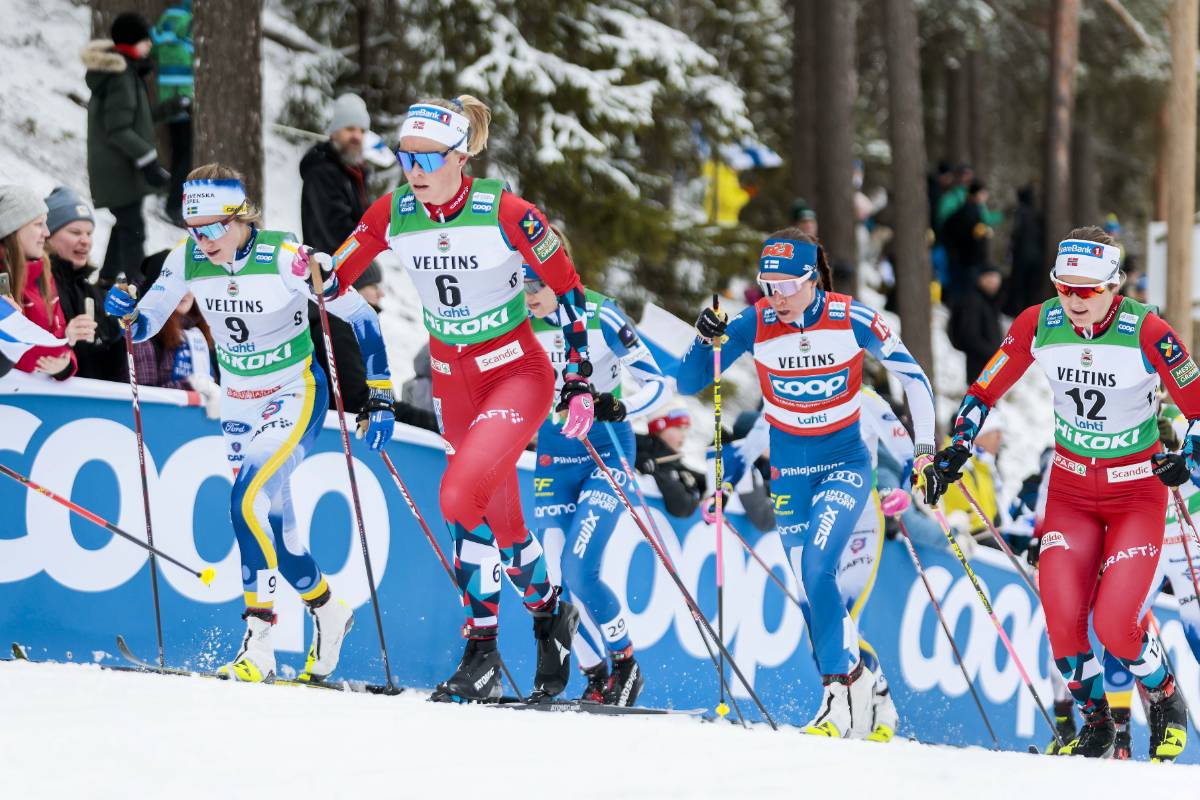
    Though she has steadily closed the gap between her results in skate and classic performances, Diggins has been primarily seen success in freestyle competitions. On today’s race, she maintained that her focus was not on the result, but on giving her all despite classic being her weaker technique.

    “It was so cool to work on that process and dial in the kick,” Diggins said. “I was so, so grateful for awesome skis. When I go really hard, I can’t feel my body from the waist down. And when you can’t feel your legs and you’re still kicking up the hill –  you have to have great kick… And man, they delivered. I was just so proud of them.Especially in challenging conditions where it’s windblown in the tracks, or you’re trying to keep skis fast and grippy. That’s hard… I think they did a great job.”

    Speaking to whether she has made progress in her classic skiing, Diggins continued, “I would like to think so. I’ve been working very very hard on it for a lot of years. I’ve been just so focused on that process on the technique and every single stride I was just thinking so hard about my technique. It really kept me right in the moment and thinking about what I could do so yeah, I’m gonna keep working on it to keep improving it.”

    Jessie Diggins skis to 8th in the 10 k classic. (Photo: NordicFocus)

    On a course Brennan described as “brutal” she explained that seconds could easily be gained or lost along any stretch, up or downhill. She also acknowledged the challenge of facing the wind in an interval start race where there may be less opportunity to use another skier to block the wind than there is in a mass start. Overall, Brennan executed her goals on the day, despite looking to be higher on the results sheet.

    “I was really focused on having powerful classic skiing and I was pretty happy with how I skied,” Brennan said in the mixed zone. “I wish I had a little more, but I did what I could with what I had today.”

    Brennan finished one place (just 0.6 seconds) behind Sweden’s Frida Karlsson, who has two wins in the 10 k classic on the World Cup, including a win over Johaug earlier this season. This strong result is on the heels of her Olympic career best finish in the individual skate sprint, which was held under the lights Tuesday evening.

    “The turnaround was definitely hard,” Brennan said. “It’s really hard with these late night races to  get good sleep afterwards. So I think that was challenging. I did a lot of training this summer to try to like mimic that load. So I’m hoping that I can manage it, but we will take it day by day and see what we can do.”

    Rosie Brennan comes to the line in 13th in the 10 k individual start classic. (Photo: NordicFocus)

    Making her Olympic debut, Novie McCabe was the first starter for the United States, wearing bib number 5. At the age of 20, McCabe is the youngest member of a young team in Beijing. After earning her first World Cup points in Davos earlier this year, McCabe also notched a top-ten finish during the Alpe Cermis hill climb during the Tour de Ski. In an impressive performance, McCabe skied her way to 24th in a time of 30:34.9.

    When she started, the British Eurosport announcers remarked, “I think McCabe is going to be a superstar like Diggins in a few years.”

    At 5 k, McCabe was in 38th position, +1:27.9 behind Johaug. At 6.3 k she had moved into 32nd, at 6.8 k she was in 29th and by 8.6 k she had jumped to 24th, which she held through the finish. 

    The long last hill was, for sure, so hard,” McCabe said after the race. “I tried to kind of just zone out and get through it. And I knew that it would be tough, especially on the last time up. But it was nice also to have so many people like around me out there and kind of have people to watch ahead of me. That helps a lot.”

    Novie Mccabe (USA) skiing strong in her first Olympic race (Photo: NordicFocus)

    Hailey Swirbul was the fourth American competitor and wore bib 27. Swirbul raced in the skiathlon earlier this week and finished in 40th. In today’s 10 k classic, she bested that performance and landed herself in 32nd, +2:59.0 behind Johaug. Swirbul was just five seconds outside of the Top-30.

    “It was better than my last race,” Swirbul said simply in response to how she felt about her day. “I’m excited. I had a little bit of a reset – had a few days to recover from that first effort and have really focused on kind of resetting my goals, trying to push as hard as I could through that whole race and not give up no matter what. And I was able to do that today.”

    With the women’s relay looming, team selection is a buzzing topic amongst ski fans. Swirbul skied a classic leg in the December, 2021 relay in Lillehammer, NOR, and was a member of the 2021 World Championship relay team in Oberstdorf, GER. The American team finished just off the podium in fourth in both races.

    Swirbul said that relay team selection was not on her mind during her race today, though she does feel the pressure to perform that is perhaps inescapable at an Olympic level competition.

    “That definitely does factor in for all of us here,” she said. “But I think at the end of the day, everyone on our team is confident that we’re going to try to put in the team with the best shot of a relay medal. So there are no hard feelings. There’s nothing personal about that team selection. We all trust that we’re just trying to do the best for our nation and give us a good shot.”

    Hailey Swirbul (USA) working her way to a 32nd place finish in the 10 k classic (Photo: NordicFocus)

    For the Canadians, Dahria Beatty continued her momentum, building off of strong performances in both the skiathlon and sprint to finish 18th, +1:53.9. This is a personal best for Beatty, following a week of personal bests. She finished 25th in the skiathlon and 25th in the sprint; her best Olympic performance before that was a 37th place in 2018 during the 10 k freestyle at PyeongChang. 

    Dahria Beatty (CAN) skiing to a personal best result of 18th (Photo: NordicFocus)

    Behind Beatty, Kathrine Stewart-Jones finished 36th for team Canada, +3:02.3 behind. Cendrine Brown was 48th (+3:41.6), and Olivia Bouffard-Nesbitt was 61st (+4:54.8). 

    Representing Australia, Jessica Yeaton finished 51st (+3:48.3). 

    The women now have a day to recover before the 4 x 5 k relay, which will take place on Saturday. 

    Results

    Rachel Bachman Perkins contributed.

  • (Results Brief) Johaug Takes Gold By Narrow Margin Ahead of Finns; Diggins 8th, Brennan 13th

    (Results Brief) Johaug Takes Gold By Narrow Margin Ahead of Finns; Diggins 8th, Brennan 13th

    Stay tuned for in-depth race coverage, coming soon.

    The third women’s cross country ski competition of the 2022 Beijing Winter Olympic Games featured a 10-kilometer interval start classic competition. 

    Starting as the second athlete in the seeded group in bib 36, Therese Johaug (NOR) set a high bar, her tempo quick and her breathing labored as she worked every meter of the course to finish in 28:06.3. The next two seeded bibs, both of Finland, served as her biggest threats for the win; at 6.3 k, Kerttu Niskanen was 11 seconds ahead of Johaug, with Krista Pärmäkoski just under 7 seconds behind. 

    In the final kilometers, Johaug and Niskanen’s times began to converge, with the leader uncertain through the finish. As Johaug stared at the clock, Niskanen double poled through the finish lanes, using her final energy for a final boot kick as she slid over the line 0.4 seconds behind Niskanen to earn the silver medal. Pärmäkoski held pace for third (+31.5).

    Podium finishers, Kerttu Niskanen (FIN), Therese Johaug (NOR), Krista Pärmäkoski (FIN), (l-r). (Photo: NordicFocus)

    Jessie Diggins was the top American skier in 8th (+1:08.8), with Rosie Brennan 13th (+1:22.3). 

    In her first Olympic appearance, 20-year-old Novie McCabe finished 24th (+2:28.6), with Hailey Swirbul just missing the top-30 in 32nd (+2:59.0). 

    Racing for Canada, Dahria Beatty had a standout performance to finish 18th (+1:53.9), with Katherine Stewart-Jones finishing as the next Canadian in 36th (+3:02.3). Cendrine Browne was 48th today (+3:41.6), while Olivia Bouffard Nesbitt rounded out the team’s results in 61st (+4:54.8).

    Results

  • Johaug Wins First Individual Olympic Gold; Diggins Leads US in Sixth

    Johaug Wins First Individual Olympic Gold; Diggins Leads US in Sixth

    Striding out of the stadium at the Zhangjiakou National Cross-Country Skiing Center (Photo: NordicFocus)

    This World Cup coverage is made possible through the generous support of Marty and Kathy Hall and the A Hall Mark of Excellence Award.  To learn more about A Hall Mark of Excellence Award or to learn how you can support FasterSkier’s coverage please contact info@fasterskier.com.

    After a long hiatus from international racing, the top athletes found themselves on the start line once again, ready to contest the first event of the 2022 Winter Olympics. First up, a 15-kilometer skiathlon, featuring 64 starters completing four 3.75 k loops. The skiathlon, which combines both classic and skate in one race (7.5 k of each in this case), is an infrequent event on the World Cup circuit though appears on the schedule at all championships.

    Four years ago, at the Olympics in PyeongChang, it was Charlotte Kalla of Sweden who bested the field to take gold, followed by Marit Bjørgen of Norway and Krista Pärmäkoski of Finland. Notably, this year’s winner, Therese Johaug was not present, but we will return to this point later on. 

    Celebration for Therese Johaug (NOR) as she takes her first ever individual Olympic gold medal (Photo: NordicFocus)

    Watched by a few masked fans in the stands, the athletes completed final preparations before the start. Even without looking at the temperature, the cold was evident, from the blowing trees and bibs to the drifting snow across the tracks and the face-tape present on all the starters. The thermometer said -12.5°C or 9.5°F, though this reading likely didn’t factor in the windchill. With minutes to go, the athletes emerged from a set of underground stairs, bundled in parkas, to take their places on the start line. 

    At the starters command, the first cross-country ski race of the 2022 Olympics was underway, and almost immediately two skiers went down in a crash, though thankfully the damage did not impact the rest of the field. Coralie Bentz of France and Anne Kyllönen of Finland recovered quickly and rejoined the pack. With the first A-climb less than 1 k into the course, early leaders Rosie Brennan (USA) and Therese Johaug (NOR) pushed the pace, and the pack soon thinned.

    Therese Johaug (NOR) leads the charge up the first big hill, Rosie Brennan (USA) can be seen leading the left most column (Photo: NordicFocus)

    On the descents, the camera showed most athletes opting to ski on the platform, rather than the tracks, due to the drifting snow that was filling them. Skirting another fall, this time from Johanna Matintalo of Finland, the front group entered the stadium for the first round in a pack of roughly fifteen. With just over eleven minutes on the race clock, there were ten athletes within five seconds of Johaug, a slight surprise given her tendency for early breakaways. 

    Therese Johaug (NOR) battles Kerttu Niskanen (FIN)  (Photo: NordicFocus)

    Heading out for the second lap, Johaug visibly upped the pace though still had difficulty shaking her followers. Through the 5.1 k mark, the spread was now ten athletes over the span of ten seconds, led by Kerttu Niskanen (FIN) and ending with her teammate Matintalo, who had recovered from her fall. Whittled away over the duration of that lap, when they reached the second A-climb of the course before descending towards the stadium, Johaug was leading a group of just six skiers. 

    Entering the stadium for the transition to skate skis, Johaug double-poled the final rise, managing to open a slight gap to Niskanen, Frida Karlsson (SWE) and Pärmäkoski (FIN). Executing a quick exchange she held the lead and was out with 23:04.7 elapsed on the clock. Niskanen followed +1.0 behind, Pärmäkoski +2.2 and Karlsson +4.3.

    It is worth noting that after the exchanges, Jessie Diggins of the USA was in tenth, +57.5 seconds behind Johaug, having dropped significantly over the first two classic loops. Rosie Brennan was next in 14th (+1:11.9), with Hailey Swirbul in 23rd (+1:52.6) as the final American inside the Top-30. Julia Kern was +4:07.1 behind in 53rd, about to hit the gas on the skate laps. 

    Jessie Diggins (USA) strides up one of the many challenging climbs (Photo: NordicFocus)

    Capitalizing on her one-second advantage, Johaug found herself off the front for the first time. Pärmäkoski, Karlsson and Niskanen shared leads in an attempt to chase her down but by 8.8 k the gap had stretched to +15.8, effectively securing Johaug her first ever individual Olympic gold medal. From that point, the margins only grew: +26 at 10 k, +44 at 12.6 k and +30.2 at the completion of 15 k.

    Despite her utter dominance of World Cup races and World Championships the past few seasons, Johaug’s results sheet at the Olympics is not what you might expect.

    Tears were shed by Therese Johaug (NOR) as she finally gets her long deserved gold medal (Photo: NordicFocus)

    Prior to the day’s skiathlon victory, she had only one other gold medal, coming from the team relay in the 2010 Games in Vancouver Canada. She was a runner-up in Sochi 2014 during the 30 k freestyle mass start when she placed second behind teammate, Marit Bjørgen, and she also earned bronze in the 10 k classic in Sochi. Johaug received an 18-month competition ban in 2017 for a positive doping test which prevented her from attending the 2018 Olympics in PyeongChang.

    In her post-race press conference, Johaug said she does not hold onto anger about her suspension, which left her even more motivated to prove herself this year.

    “I’m finished with these years and I’m focusing on myself, and the future and things I can do something with,” Johaug said in a press conference. “It means maybe more for me today when I’m didn’t have this gold medal, and maybe if I had the gold medal before, this Olympics, maybe I would not been here.”

    Therese Johaug (NOR) on top in the first cross-country competition at the 2022 Olympics (Photo: NordicFocus)

    With the recent outbreak of COVID amongst the Norwegian team, Johaug’s path to Beijing has not been as smooth as she would have liked. She only arrived at the venue on Wednesday, leaving just a few days to adjust to the time change and climate before the first event. In spite of these challenges, she proved equal to the task, skiing away with the victory in a time of 44:13.7. 

    Behind Johaug, the race for silver and bronze was playing out in a dramatic way. Initially, Karlsson of Sweden seemed to have pulled away, when at 10 k she was 26 seconds behind Johaug, and 10 seconds ahead of Niskanen (FIN) and Teresa Stadlober of Austria. However, this break was short-lived, and at 11.3 k, Karlsson was less than a second ahead of Natalia Nepryaeva (ROC) who had worked with Stadlober to rejoin the chase pack. Pärmäkoski (FIN) began to drop off the pace and the group was down to four. At this point, Diggins (USA) could be spotted closing in on Pärmäkoski, who continued to fade. 

    The chase pack, pictured here: Kerttu Niskanen (FIN), Teresa Stadlober (AUT), Natalia Nepryaeva (ROC), (l-r) (Photo: NordicFocus)

    Entering the final A-climb of the race, Stadlober (AUT) injected some pace, attempting to pull away but Karlsson of Sweden and Nepryaeva (ROC) hung on. Only Niskanen (FIN) dropped slightly.

    Thus it was three skiers vying for two medal spots. But as they descended towards the stadium Niskanen closed in again, making the group four. Nepryaeva crested the final rise in front as across the stadium the camera showed Johaug crossing the line, arms raised and a frozen smile on her face. 

    Frozen but happy, Therese Johaug (NOR) (Photo: NordicFocus)

    Down the finishing straight Nepryaeva held onto her lead as Stadlober mounted a final challenge, ultimately running out of space as the two finished in silver and bronze position respectively. Niskanen (FIN) finished fourth (+36.1), Karlsson (SWE) in fifth (+42.5), and in an impressive comeback, Diggins crossed the line sixth (+50.5). 

    A tight battle for silver and bronze between Teresa Stadlober (AUT) and Natalia Nepryaeva (ROC), (l-r) (Photo: NordicFocus)

    This silver is the first Olympic medal for Natalia Nepryaeva, who most recently became the first Russian women to win the Tour de Ski. Her only other Olympic appearances came in PyeongChang where her best finish was fourth in the classic sprint. 

    Teresa Stadlober (r-AUT) celebrates a bronze medal as Natalia Nepryaeva (l-ROC) is overcome with emotion (Photo: NordicFocus)

    For Teresa Stadlober of Austria, this bronze medal could be viewed as redemption. Stadlober was in medal contention during the 30 k classic at PyeongChang when a last minute wrong turn took her out of the running. Furthermore, after a total of 18 individual starts at championship events (Olympics and World Championships), this is Stadlober’s first medal. She holds just three World Cup podiums, two during the 2018 edition of the Tour de Ski in Toblach where she placed third in the 10 k classic mass start and had the second fastest time of the day on the Alpe Cermis hill climb. The third podium was in a 15 k skiathlon in Oberstdorf Germany in 2020 where she also placed third. 

    First Olympic medal for Teresa Stadlober (AUT) (Photo: NordicFocus)

    Other noteworthy performances from the day includes Anastasia Rygalina (ROC), who has had just ten World Cup starts in her career and never finished in the top ten, finishing the race in 8th. Behind her, Delphine Claudel of France earned a new personal best for the Olympics placing 9th. 

    Jessie Diggins (USA) exits the transition zone, followed by Ebba Andersson (SWE) (Photo: NordicFocus)

    After being +55.5 seconds behind Pärmäkoski and the chase group at the exchange, Diggins ended up finishing a full eight seconds ahead of the Finn and was just 20 seconds behind bronze medalist, Stadlober.

    “I definitely finished with nothing left so I feel really good about that,” said Diggins in the mixed zone after the race. “I was so proud of never giving up. I feel really good about the pacing and where my fitness is. I definitely want to figure out some things with my power striding, but overall I think this was a really encouraging start to the Games and honestly it feels really good just to have gotten here and to be able to race.”

    Left it all on the course, Jessie Diggins (USA) collapsed in the finish (Photo: NordicFocus)

    When asked about the cold and windy conditions Diggins replied, “My hands got pretty cold because I needed thinner gloves for the pit-box changing. My muscles stayed warm though. [The wind] is really something, and that’s what makes it so cold, so I think it’s important to really push that and stay warm.”

    Regarding the course, Diggins said, “They’re really good courses. I really like them. I think they’re really fair and great championship courses. They’re as hard as they look, you’ve really got to work for it.”

    Jessie Diggins fields media questions in the mixed zone. (Nat Herz/FasterSkier-ADN)

    In Diggins final 5k, she advanced from eighth place and over 1:13 back to finish sixth place and roughly 50 seconds back. This is a difference of 23 seconds gained on the leader over 5k, with ten seconds gained in the final 2.4k.

    “I had amazing skate skis and I think I had paced just well enough to be able to do that,” Diggins said of this progress. “I crossed the finish line with nothing left. It’s really cool to get a race on these courses in and I think I’m figuring [them] out.”

    Rosie Brennan leaves the exchange zone halfway through the women’s 15k skiathlon, the opening race of the 2022 Winter Olympics. (Nat Herz/FasterSkier-ADN)

    Brennan was the next finisher for Team USA, in fourteenth position (+2:51.7). Brennan had initially fallen behind Germany’s Katharina Hennig in the skate leg to slide into 15th, but she regained her position with 3 k to go, further accelerating to give herself a 7 second cushion at the finish. 

    “Definitely a little bit of everything out there today,” Brennan told U.S. Ski & Snowboard communications manager Tom Horrocks after the race. “Some good, some ugly, some in between.”

    While Brennan’s result might not be evidence that she is a medal threat in the event, and she is surely left wanting more, she spoke like a true veteran, showing maturity and perspective in her response to how she will look back on the performance.

    “I think I have to take the like big picture perspective. Four years ago, I think I was close to dead last fighting some [mononucleosis], and that was my first and last Olympic race. So I really had kind of a — I don’t know what you’d call it — a demon in the back of my mind that I needed to get rid of. So to be in a better place today, even if it wasn’t my best, was a step in the right direction. And that’s something that I’m proud of.”

    Rosie Brennan catches her breath after finishing 14th in the women’s skiathlon at the 2022 Beijing Winter Olympic Games. (Nat Herz/FasterSkier-ADN)

    While official start lists are not yet available, as Brennan is one of USA’s top skiers, she will likely start in multiple upcoming events.

    On her mindset and how she’s feeling heading into these stages, Brennan said, “It’s been a while since I’ve done racing at an international level. (Brennan left Europe after the Davos World Cup races in mid-December, spending the last six weeks near her home in Park City, UT.) I’m really hoping that the effort today was what I needed to just get back into things and find a better place ,because I certainly have had some workouts that have indicated that I’m in good shape. So I do want more and I think I can get more. I’m really looking forward to the other races.”

    Behind Brennan, Hailey Swirbul finished in 40th (+5:28.8).

    “It’s a lot of V1 skate, it’s hard,” Swirbul said in the mixed zone in reference to the course, “It makes for fair racing but you have to be totally on your game. It didn’t feel like [you get a break] today, it was a tough day for sure.”

    Hailey Swirbul transitions from classic to skate, fighting windy conditions on course during the women’s 15k skiathlon. (Nat Herz/FasterSkier-ADN)

    When asked about taking part in the Olympics and the momentum of the team, Swirbul said, “It’s a hugely exciting time to be part of this team. We’ve shown over the last four years what we’re capable of. We will give everything we have out there. It feels like a relief that we made it here and that our team has been healthy and we prepared really well so far. A race is a race, no matter if it’s an Olympic or local race. It’s important to keep your head in the game, and be ready to fight no matter what.” 

    Hailey Swirbul (USA) embraces teammate Julia Kern (USA) after the skiathlon (Photo: NordicFocus)

    Julia Kern rounded out the US finishers in 53rd position (+7:51.8). It was “windy and tough,” said Kern definitively. “That was a really tough race, probably the windiest race I’ve ever done. I had a ton of base layers on so I stayed warm, but the wind cools you right down on the downhill.”

    Regarding her participation in the Games, Kern said, “It’s a dream come true, I’m really excited to see what we can do as a team for the rest of the Games. This is just the beginning.”

    Julia Kern (USA) fights hard to the finish (Photo: NordicFocus)

    The Canadian women made a strong showing in the top thirty, led by Cendrine Browne in 20th (+3:44.4). Not far behind her was Kathrine Stewart-Jones, matching her bib number and finishing in 23rd (+4:03.6). In a dramatic finish – essentially a forward fall across the line – Dahria Beatty finished 28th (+4:38.8), putting three Canadians in the top thirty. Olivia Bouffard-Nesbitt was the fourth Canadian and finished 44th (+5:58). 

    Dahria Beatty (CAN) finished 28th in the 15 k skiathlon (Photo: NordicFocus)

    Racing for Australia, APU’s Jessica Yeaton finished just outside the Top-30 in 31st (+4:40.3).

    Australia’s Jessica Yeaton (bib 53) races to 31st in the women’s 15k skiathlon, which opened the 2022 Winter Olympics in Beijing. (Nat Herz/FasterSkier-ADN)

    The men will race a 30 k skiathlon tomorrow, and the next women’s event will be the freestyle sprint on February 8th. You can find a detailed schedule for the Olympic cross-country events, including how to watch, here

    Results