Tag: Kikkan Randall pregnant

  • First Tracks as a New Parent: Holly Brooks [Part 1]

    First Tracks as a New Parent: Holly Brooks [Part 1]

    The “First Tracks” series highlights the pregnancy, postpartum, and parenting experiences of noteworthy athletes in cross-country skiing in various stages of their professional careers. The sharing of these experiences can benefit athletes in any stage of their career, whether they are an elite or recreational skier, by demonstrating that it is very possible to return to skiing, competition, and an active lifestyle with a growing family. The series will include the physical challenges of being an athlete during and after pregnancy, balancing family life with skiing, and the joy that starting a family can bring. The first athlete highlighted in this series was Kikkan Randall, whose story can be found here: Part 1 | Part 2.
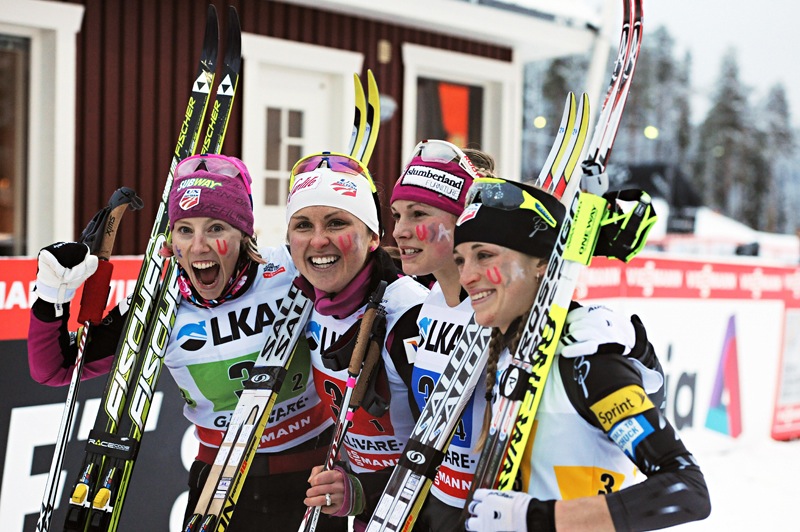
    The U.S. women (l-r Kikkan Randall, Holly Brooks, Jessie Diggins, and Liz Stephen) after their first ever World Cup relay podium in November 2012. (Photo: Fischer/NordicFocus)

    When Holly Brooks retired from professional ski racing in 2016, she shared with FasterSkier that she and her husband, Rob Whitney, were trying to start a family. About a year after this conversation, she gave birth to twins, a daughter, Ruby Joy, and a son, Brooks on August 24th, 2017.  

    While the process of getting pregnant can be easy for some, their journey to create their “insta-relay team” was complicated by the fact that Brooks had been without a period for eight years.  This condition, formally called amenorrhea, can be a result of many factors, from low body weight to thyroid problems, to heavy or high volume exercise, to excessive stress. It can also be a side-effect of some forms of hormonal birth control, as was the case for Brooks.

    Brooks initially lost her cycle while using the Mirena IUD, which is known to reduce the frequency or severity of periods, or to eliminate menstrual cycles for women using it. At first, Brooks didn’t recognize this as being problematic. In fact, as a professional athlete, not worrying about her cycle had plenty of perks.

    Let’s be honest, for a really long time I was happy not to have a period as an athlete,” said Brooks in a call. “It was pretty convenient.”

    Brooks shared that having amenorrhea as an athlete is not an uncommon phenomenon. While she believed that her nutritional habits were sound and that she was not underweight during her professional career, the condition is often linked to relative energy deficiency syndrome (RED-S, formerly known as the female athlete triad) which is typically a result of under-fueling possibly coupled with inadequate rest to accommodate an athlete’s training load. It is commonly seen with athletes with disordered eating habits, but the two are not always linked. The implications of having amenorrhea for women can include low bone density, leading to osteopenia or osteoporosis, and also infertility. 

    The pervasiveness of the condition was a concern for Brooks, and her own experience losing her cycle raised a red flag long before she and Whitney began trying to conceive. 

    “I think that there’s this myth that if you don’t have a period, you’re in shape. If you don’t have a period, it’s okay,” she said. “I’m not a doctor, so it’s hard for me to speak directly to that, but at some point, if you’re not taking birth control that takes it away as a side effect, you probably should be having a period, you should be having a cycle.”

    When the Mirena IUD expired five years after it was placed, Brooks switched to a copper IUD called Paragard, which is a non-hormonal form of birth control, in hopes of regaining her cycle. This IUD can increase bleeding or frequency of periods, in contrast to the first. However, her period did not return. 
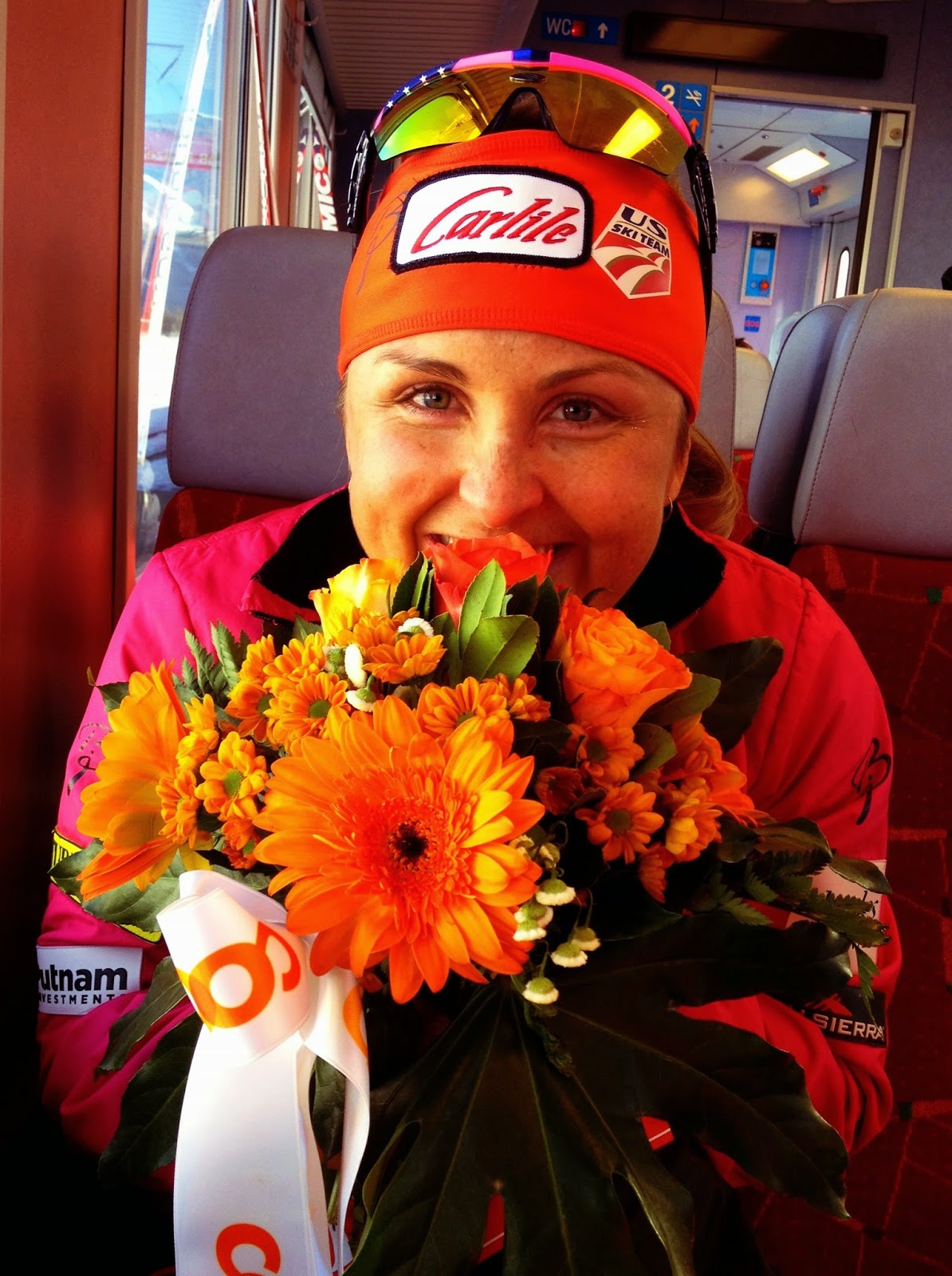
    Holly Brooks after placing fourth in the 2014 Engadin Ski Marathon in Switzerland. (Courtesy photo/HollySkis.blogspot.com) http://hollyskis.blogspot.com/2014/03/home-sweet-home.html

    As her professional career waned and her age and desire to start a family with her husband increased, Brooks began hormone replacement therapy (HRT) to coax her reproductive system back into functioning normally in preparation for conception. HRT involves taking artificial hormones sequentially to mimic the changes that naturally occur during a menstrual cycle. 

    “So essentially, I had to stop exercising, take a bunch of estrogen, then take a bunch of progesterone to try to jump-start a cycle,” Brooks recalled. 

    It took a few months of HRT for Brooks to successfully regain her period.

    “It almost felt like my body had just been kind of dormant and was fine with not having a cycle. And sometimes that’s convenient when you’re an athlete, but when you want to start a family, it’s not that awesome.”

    Because she was 35 and it had already taken so much effort to get her body back into a fertile state, Brooks began working with a team of infertility specialists to help the couple get pregnant as quickly as possible. In any other context, the mid-30’s is likely considered the prime of life, but medically speaking, the risks of perinatal complications increase significantly after this point. A woman over the age of 35 who conceives is classified as a “geriatric pregnancy”, or listed for insurance purposes as having “advanced maternal age”. Typically these pregnancies are also labeled “high-risk”. 

    Brooks describes herself as an “eternal optimist” and managed to handle her battle with infertility with grace, but she expressed that she was not immune to the emotional challenges her situation created.

    “There’s tons of frustration, there’s tons of impatience, and there’s also a lot of comparison too,” she said. “Which is human nature and it doesn’t always help.”

    She shared that one of her favorite quotes is by Eleanor Roosevelt who said, “Comparison is the thief of joy.” While she remained hopeful that she and her husband would eventually be successful in becoming pregnant, she still found herself pulled into the comparison trap.

    buy acular online

    “Especially when you’re trying to get pregnant, you notice everyone else who is pregnant,” she observed. “And you’re like, ‘Well these athletes who were super fit, they had no problem getting pregnant.’”

    With their infertility team, she and Whitney began the process of Intrauterine Insemination (IUI), which is a less invasive infertility treatment than In Vitro Fertilization (IVF).  The IUI process involved Brooks taking a follicle stimulant during the first half of her cycle, prompting her ovaries to develop and grow a follicle containing a mature egg. She then took other fertility medications to induce ovulation, at which time doctors would inject a washed and concentrated sample of her husband’s sperm into her uterus, increasing the likelihood that the sperm and egg meet. This process requires close and careful monitoring throughout the cycle in order to be successful, which was not totally unlike the process of being a professional athlete. 

    “At some point, when you’re doing infertility [treatments], it starts to take over your life because you are paying so much attention to your cycle, and what day it is in your cycle, and what day you’re ovulating, and what day you’re going to trigger ovulation, and how many follicles you have, and how big the follicles are,” she explained. “As an athlete, you pay a lot of attention to periodization and training. And doing infertility [treatments], you kind of do the same thing, but it feels like you have way less control.” 

    She expanded by explaining that in training for skiing, she had control over her rest, how hard she pushed in a workout, what she ate, and so on, whereas during the conception process, no matter how hard a couple might “try”, much of it is out of their hands. 

    Although not frequently discussed, studies estimate that between 10-25% of pregnancies end in miscarriage, most commonly during the first trimester. In many cases, miscarriages occur early during the implantation process and go unnoticed, as the bleeding that occurs as the body sheds the undeveloped embryo often occurs when the woman might expect her regular period, leaving the pregnancy undetected. Miscarriage can also be a result of a chromosomal defect or other abnormality of the developing embryo, or due to lifestyle factors such as poor maternal health, smoking, or drug use. 

    Regardless of the cause or when the miscarriage occurs, the experience of pregnancy loss can be incredibly difficult for parents. During their voyage through cycles with IUI, Brooks was able to conceive twice before her successful pregnancy with the twins. In both of those cases, she lost the baby just before the end of the first trimester, which is when a pregnancy is typically deemed viable. 

    Miscarriage is one of the primary reasons most couples choose not to announce their pregnancy until the second trimester begins, lest they also are faced with sharing their loss. Many women that go through one or more miscarriages choose never to divulge their experience. Brooks wants to bring more attention to the topic as it is so commonly experienced but rarely discussed. This lack of attention can leave women grieving in silence and feeling as though they have failed, even though miscarriage is most commonly out of one’s control. 

    “I’m really happy to [talk about it] because it’s really common and a lot of people don’t talk about it.”

    She added that it is one of her missions in life to talk about “the hard stuff” in order to reduce the stigma about these issues. 

    Because of the treatment method they were using, Brooks was closely monitored in the weeks following the IUI. 

    “If I were to go back and track how many ultrasounds I’ve had, I would guess 50, 60, 70.”

    She explained that her doctors wanted to closely track whether an embryo was growing, and if so, whether it was growing at the appropriate rate with no noticeable problems. This was a stressful process since she and her husband remained so acutely aware of the processes happening within her body.

    “Although it’s out of your control, you’re very in tune with what’s happening,” she said. “And it’s a rollercoaster of excitement and disappointment and excitement and disappointment.”

    Her doctors were able to determine very rapidly whether or not the IUI had been effective, so in each case, the couple found out they were pregnant rather quickly after the treatment. Then the wait began; there was nothing that she could do but hope that the pregnancy would last through 13-weeks. She remained optimistic but tempered her excitement.

    “That was really, really hard,” she emphasized. “It’s such a long journey to get there, and you get excited, but in the back of your mind, you know some of the statistics.”

    At about the 12-week mark in both cases, she experienced bleeding which indicated a miscarriage. In some cases, women experiencing a miscarriage are able to pass the contents of the uterus naturally over the course of a few days, sort of like a very heavy period. In others, women need the support of medication to help force the body to shed everything. 

    Brooks fell into the second category, sharing that she spent two days in bed with horrific cramps each time, only to find out with an ultrasound that her body still had not shed everything, indicating that she would need a procedure called a dilation and curettage (D&C) to surgically remove the remaining contents in order to prevent a severe infection.  

    “I ended up having to do that twice around the 12-week mark, which felt kind of like deja vu,” she recalled. “And then you’re wondering if it’s ever going to happen or if you’re cursed. And then again, you look around at everyone else with their kids or their pregnant bellies, and you ask yourself the question, ‘Why can’t I get there?’”

    Holly Brooks with her husband Rob Whitney and their six chicks in Alaska. (Courtesy photo)

    Luckily, she did get there. With infertility treatment, multiples are more commonly seen. Brooks’ three younger siblings are also triplets, indicating that she is also genetically predisposed to conceiving multiples herself. While the risk of complications increases with twins, after all that she and her husband had been through, they were “ecstatic” about the idea of being able to complete the family that they envisioned in one pregnancy.

    “When you feel like you’re behind and you feel like you had such a hard time getting pregnant to begin with, then you find out you’re getting a twofer,” she laughed. “We were ecstatic, slash terrified.”

    After such an extended battle to achieve a healthy pregnancy, it seems impossible not to experience some trepidation about its success. Brooks reflected on if or when she began to feel confident that the pregnancy would work out and that they were finally stepping off of the rollercoaster. 

    “I think that there’s always some anxiety,” she stated matter-of-factly. “There’s always that voice in the back of your head, ‘Should I do this? Should I not do that? Even if I do all the right things, something could still happen.’ You hear these horror stories of people being pregnant with twins and one of the twins dying. These stories come out of the woodwork and your attention goes to weird places when you’re pregnant, and of course, you’re overly hormonal, obviously. 

    “So the anxiety was pretty much always there, then it’s there during birth, and it’s there when you have newborns, and it’s still there when you have toddlers,” she ended with a laugh. 

    Though she acknowledged that many women and also men experience more severe forms of anxiety and depression surrounding pregnancy, which she commented on further later in the conversation (see Part 2), ultimately, few parents are truly immune to some level of it.

    ventolin buy online

    “I think to some extent, some anxiety is part of being a parent,” she said. “And it can be heightened or lowered, based on not only your genetics but the environment you’re in and the situations you’ve experienced.”


    Stay tuned for part two of this story in which Brooks discusses the remainder of her pregnancy with twins, birth, and adjustment to life as a working parent and athlete. She also shares what’s next for her business, Holly Brooks LLC. 

  • First Tracks as a New Parent: Kikkan Randall [Part 1]

    First Tracks as a New Parent: Kikkan Randall [Part 1]

    The “First Tracks” series highlights the pregnancy, postpartum, and parenting experiences of noteworthy athletes in cross-country skiing in various stages of their professional careers. The sharing of these experiences can benefit athletes in any stage of their career, whether they are an elite or recreational skier, by demonstrating that it is very possible to return to skiing, competition, and an active lifestyle with a growing family. The series will include the physical challenges of being an athlete during and after pregnancy, balancing family life with skiing, and the joy that starting a family can bring.

    Kikkan Randall shares time outside with her one week old son, Breck. (Photo: Instagram @kikkanimal)

    As she was the only U.S. Olympian and mom in PyeongChang and the first female American skier to start a family during her professional career, Kikkan Randall has led by example in the realm of training through and recovering from pregnancy. Her gold medal demonstrates that it is completely possible to return to competition after pregnancy stronger than ever. While Randall acknowledges how fortunate she was to have an uncomplicated pregnancy through which she could train at a level most would find astonishing, her experience should instill confidence in women that hope to remain active during and after pregnancy in order to maintain the active lifestyle to which they are accustomed.

    Randall and her husband, Jeff Ellis, knew that they wanted to start their family in 2016. As that was not a World Championship year and it was not an Olympic year, the timing was ideal for her to miss a season on the World Cup. As the couple began trying to conceive, Kikkan was able to maintain her normal training volume without worrying about its effect on her fertility, still participating in team camps and following her training plan. In fact, she discovered she was pregnant shortly after returning from a training camp in Norway.

    “A few weeks before that, Jeff had gotten a Diet Coke can on the airplane and it said ‘dad’ on it,” Randall shared in an interview. “There were just some funny things that ended up being a premonition or something.”

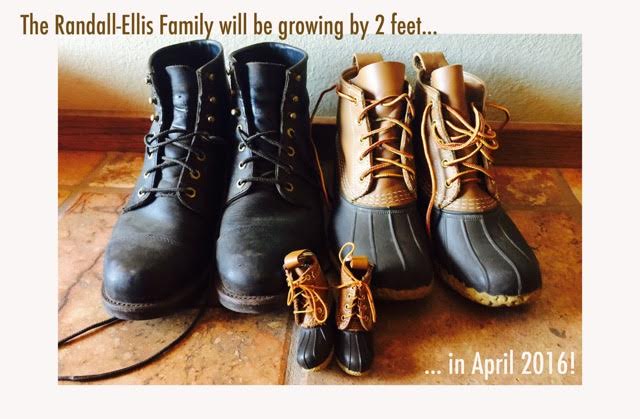
    Kikkan Randall announced via social media that she and her husband, Jeff Ellis, were expecting their first child in April 2016. (Photo: Instagram @kikkanimal)

    Once the couple found out they were pregnant, Randall’s training plan adapted to accommodate the new toll on her body, however, it did not change as much as one might think.

    “Up until the point I found out that I was pregnant, I was training full bore as if I was preparing for the season ahead,” said Randall. “Once I found out I was pregnant, the goal shifted slightly in that I was no longer trying to be in top physical shape for the race season, but I was curious about how much training I could do. So as long as I followed how my body felt, I continued doing intervals twice a week, strength training twice a week, long things. I really continued the training as normal, although I did notice in that second month quickly the extra load on my system. All of a sudden stuff just felt harder.”

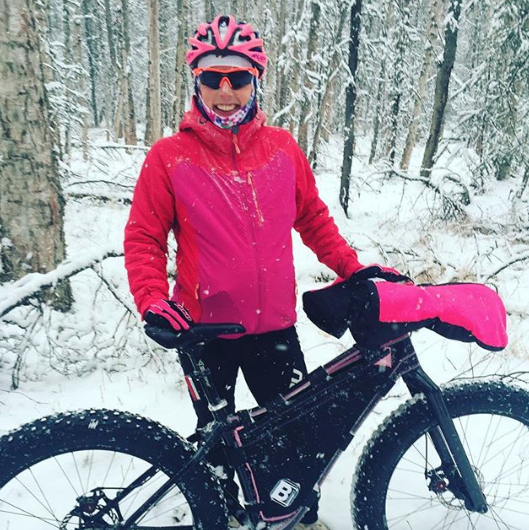
    Kikkan Randall using snow biking as one of her training modes at eight months pregnant. (Photo: Instagram @kikkanimal)

    Despite things feeling more challenging, Randall was able to maintain a high training load throughout her pregnancy. She typically trained twice a day all the way through her third trimester, incorporating running, both skate and classic skiing, snow biking, and strength workouts. Once she was in the later stages of pregnancy and her belly had grown substantially, she avoided exercises that required jumping because of the added load on her joints and those that required her to lie on her back for long periods of time, which is recommended to pregnant women as the pressure on the inferior vena cava, one of the major arteries responsible for returning blood from the lower extremities to the heart, can restrict blood flow and cause complications.

    “Around the seven month mark, running started to get pretty uncomfortable,” shared Randall. “I had a little bit of separation in the front of my pelvic bone. I did some running on an anti-gravity treadmill which helped a bit, and then after a while, I was like okay, I don’t need to push it anymore. So I didn’t run that last month and a half of pregnancy. I did some hiking, especially where I could finish on an uphill and not do too much downhill.”

    One thing that challenged Randall was the lack of information pertaining to high-level athletes training through pregnancy. As it is difficult to conduct medical studies on pregnant women and so few elite athletes had chosen to get pregnant during their professional career, there was a dearth of resources explaining what she should and should not do.

    “That part wasn’t as cut and dry as I would have liked,” she said. “I was asking a lot of questions to a lot of people, but there wasn’t a lot of stuff out there that was concrete about what you can or can’t do. Thankfully, my doctors were supportive. They said, ‘Keep doing what you’re doing because that’s what your body is used to. Just listen to it.

    “My strength training coach had actually been through a pregnancy the year before herself, so she was helpful in knowing what the load on the body would be and modifying strength plans slightly,” she continued. “My personal coach, Erik Flora, was really helpful because he’s been with his wife through three pregnancies, so we worked together to design a training plan that was appropriate. I looked for stories on the internet of other elite athletes that had gone through it. I reached out to Lauren Fleshman, the runner, she gave me some tips. But a lot of it was just experimentation.”

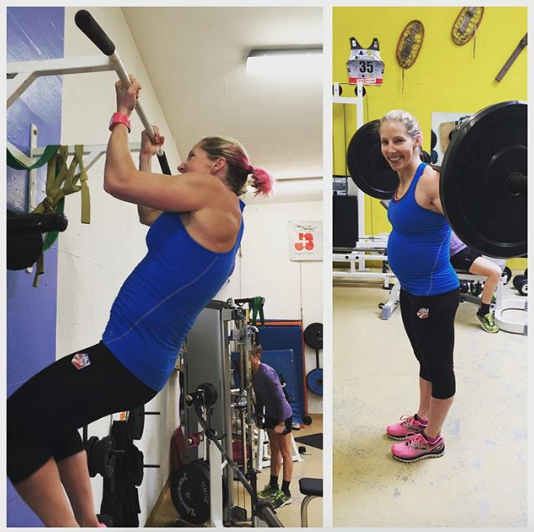
    Kikkan Randall shares photos of herself strength training at 22 weeks pregnant with the caption “I guess I don’t need to add a weight vest anymore!”(Photo: Instagram @kikkanimal)

    Randall seemed to handle pregnancy in stride, adjusting to the changes in her body well and looking forward with anticipation. Her only emotional hurdle was simply remaining home during the winter, rather than the heading to Europe for the World Cup race season.

    “It was a little bit difficult, I had to miss a season of racing,” Randall shared. “When all my teammates left for the season and I was up in the middle of the night watching them, I really missed the racing and being there together with them.

    “But I was also really excited to be a parent,” she continued. “I was really excited with how the process [of pregnancy] was going. I was pleasantly surprised with how much I was able to do and how I felt.”

    Randall also handled the uncertainty of what her recovery would look like with the positivity and resilience for which she is known.

    “I think I went into it with the right mindset,” she said. “I had four Olympics up to that point and a very successful career, so I knew that if for some reason I wasn’t able to come back, I could still be satisfied with my career and I think that took a lot of the pressure off. I was also pretty optimistic and confident that I would come back as strong as ever and I had a lot of really great support. The ski team was really supportive, my sponsors were supportive, my husband was really supportive. So I just looked at it with a lot of optimism and excitement.”

    Perhaps a challenge unique to the world of professional athletes for whom training and racing is their career, maternity leave takes a new shape as women are not able to perform at their normal level during or immediately after their pregnancy. This extended leave has been met with mixed results as more an more professional athletes are choosing to start their families during, rather than after, their career. As aforementioned retired track athlete Lauren Fleshman illuminated, pregnancy is not always well-received by sponsors, since the athlete’s need to step away from high-level training and competition for at least a year decreases the visibility of the sponsored products.  

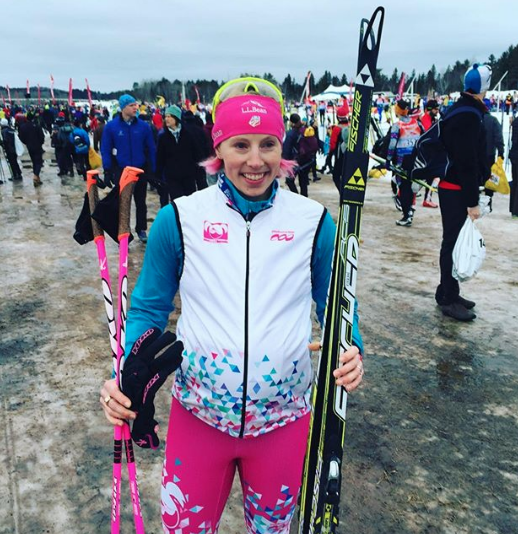
    Kikkan Randall sports a Fast and Female race vest at the start line of the 2016 Birkie. Randall appeared on behalf of one of her sponsors, Fischer Sports. (Photo: Instagram @kikkanimal)

    Luckily, Randall’s experience in this regard was quite positive.

    “I was proactive with all my sponsors,” said Randall. “I alerted them that ‘hey, we’re going to try to have a kid in the next year. So if I do, how can we renegotiate or keep our relationship going?’ Recognizing that they wouldn’t get the benefit of me out there racing and getting in the results, being on the podium, and getting them the exposure that way, I just proposed other ways that I could be valuable to them. Whether it was writing content for their website or social media, whether it was doing in-person appearances. So with each of my sponsors, I came up with a unique set of things that I could do since I was going to be home, not going to be away racing all the time, and they were really receptive to that. So it just took some creativity on my part.

    “I think everybody was really psyched to see that I wanted to continue racing, that I wasn’t seeing this as an either-or option, so everybody was really supportive,” she continued.

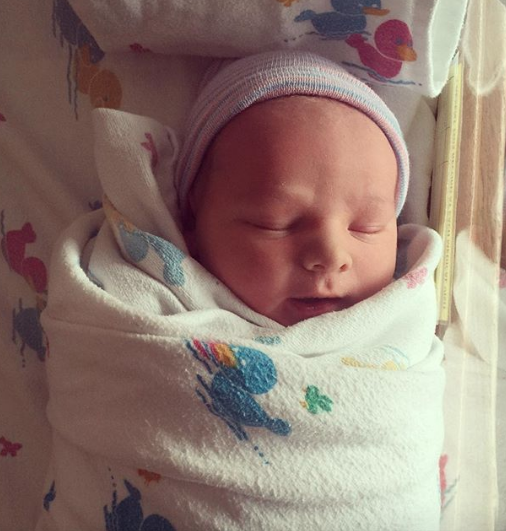
    Kikkan Randall announced the birth of her son, Breck Stuart Randall Ellis, born April 14th, 2016. (Photo: Instagram @kikkanimal)

    Randall also felt that pregnancy is handled fairly within the International Ski Federation (FIS) in terms of her ability to preserve her World Cup starts after a year away from racing.

    “When you let FIS know that you’re going to be missing a season, they put it into the same category as if you were injured,” Randall explained, “which some people really take offense to because they say ‘Pregnancy isn’t an injury.’ But that was just a technicality, basically, what they do is allow you to freeze your points so that when you come back, there is a slight penalty for not having raced the previous year, but you don’t have to start from zero again which is really nice. So I was pretty happy with that process; it was really easy to just let them know, and then my points were frozen and when I came back, things got restarted again, so that was really good.”

    Randall gave birth to her son, Breck Stuart Randall Ellis, on April 14th of 2016. Because Randall possesses a genetic blood clotting factor, she had been on a blood thinner throughout her pregnancy as a precaution. In order to keep her labor and delivery a bit more controlled, the doctors advised her to be induced when she reached full term at 39 weeks.

    “They had done a procedure in the office the day before, so by the time I got to the hospital and they hooked me up to the monitors, I was already having super mild contractions, which I couldn’t quite even feel yet,” said Randall.

    “They started me on one unit of Pitocin over half an hour… that got things going real quick!” she laughed. “It kind of skipped the slow build up stage and I went into having contractions every 90 seconds pretty intense and that was making me throw up, which was causing more contractions. So I battled through that for a couple of hours, trying all of the various techniques and everything.

    “Then the doctors checked me and I hadn’t made a single millimeter of progress,” she continued. “Basically, because it was so intense, I was kind of fighting myself. So after a few hours of that without making any progress, we started talking about an epidural, because my doctor really thought that would just help me relax. And at that point, I was pretty open to the idea. So I got an epidural, and then for the next few hours, I was able to sleep a bit and that did allow me to relax, so the next time she checked I was ready to go.”

    From there, Randall’s delivery went smoothly. Breck entered the world at a whopping 8lbs 11oz, 21 inches in length.

    “I had a great team,” Randall concluded. “My husband was there, I had a midwife and my doctor, and some great nurses involved. So, yeah, at 7:47 – we didn’t know what we were having, so it was a fun surprise, and the rest is history!”

    Stay tuned for part two in which Kikkan shares her return to training after pregnancy, traveling on the world cup with Breck, and how parenting has changed since she retired and has been undergoing treatment for breast cancer.

  • Randall Talks Baby and Future Plans in FS Podcast Exclusive

    Randall Talks Baby and Future Plans in FS Podcast Exclusive

    Kikkan Randall running near Park City, Utah, earlier this week before she announced she was pregnant with her first child. "Great to enjoy a few more sunny warm days as we count down to winter!" she wrote. (Photo: Kikkan Randall/Instagram)
    Kikkan Randall running near Park City, Utah, earlier this week before she publicly announced she was pregnant with her first child. “Great to enjoy a few more sunny warm days as we count down to winter!” she wrote. (Photo: Kikkan Randall/Instagram)

    For at least the last year and a half, Kikkan Randall has publicly noted her desire to start a family with her husband Jeff Ellis. Their dream became a reality approximately 13 weeks ago, when Randall became pregnant with their first child. She found out four weeks later, and just this week, Randall and Ellis announced via a U.S. Ski & Snowboard Association (USSA) press release that they were expecting in April 2016.

    FasterSkier reporter Jason Albert spoke with Randall, 32, on Friday — a day after the news hit social and mainstream media.

    (To listen to complete interview, click “play” arrow below.)


    “It was really hard to keep the secret over the last few weeks, but we wanted to get through the first trimester…,” Randall explained.

    Kikkan Randall and her husband Jeff Ellis recently announced they are expecting their first child in late April 2016. Randall, 32, will skip the 2015/2016 season, but plans to return for 2016/2017. (Photo: Sarah Brunson/USSA)
    Kikkan Randall and her husband Jeff Ellis recently announced they are expecting their first child in late April 2016. Randall, 32, will skip the 2015/2016 season, but plans to return for 2016/2017. (Photo: Sarah Brunson/USSA)

    She waited until the U.S. Ski Team’s dryland camp in Park City, Utah, which started earlier this week, to tell her teammates.

    “My husband and I baked a cake that was half blue and half pink, frosted it, and then wrote, ‘We’re expecting a baby’ on it,” Randall said. “At one of the team dinners we just nonchalantly put it out there and said, ‘Hey guys, there’s dessert for everybody,’ and let people wander over and see it and have that initial surprised reaction. … Once they saw it they immediately came over and gave us congratulatory hugs.

    “The response has been amazing,” she added. “It’s incredible how fast word spreads through social media.”

    While she’s experienced some nausea, Randall said she’s feeling pretty good and is still training with the team. She plans to scale back and will not race this season. Meanwhile, Ellis will continue to work for International Ski Federation (FIS) Cross Country, managing website content and social media while traveling to all the World Cup stops from late November through early March.

    “Lucky for us our timing worked out so he should wrap up a little over a month before the due date,” Randall explained in an email.

    “It’s pretty cool that you can continue your career and you can start a family,” she explained in the podcast, adding that she plans to race through the 2018 Olympics.

    “I’m definitely motivated to go after medals one more time,” Randall said.

    Kikkan Randall announced via social media on Thursday that she and her husband, Jeff Ellis, are expecting their first child in April 2016. (Photo: Kikkan Randall)
    Kikkan Randall announced via social media on Thursday that she and her husband, Jeff Ellis, are expecting their first child in April 2016. (Photo: Kikkan Randall)

    About the Author: New to the FasterSkier team, Jason Albert lives in Bend, Ore., and can often be seen chasing his two boys around town. He’s a self-proclaimed audio geek. That all started back in the early 1990s when he convinced a naive public radio editor he should report a story from Alaska’s, Ruth Gorge. Now, Jason’s common companion is his field-recording gear.