Tag: Klingenthal

  • Sunday Rundown: La Clusaz, Nove Mesto, Ramsau, Klingenthal, Obertilliach, & Rossland (Updated x4)

    Sunday Rundown: La Clusaz, Nove Mesto, Ramsau, Klingenthal, Obertilliach, & Rossland (Updated x4)

    Eric Frenzel (r) leads German teammates Vinzenz Geiger (c) and Fabian Rießle (l) toward a sweep of the podium in the Nordic Combined World Cup individual normal hill/10 k on Sunday in Ramsau, Austria. (Photo: FIS Nordic Combined/Facebook)
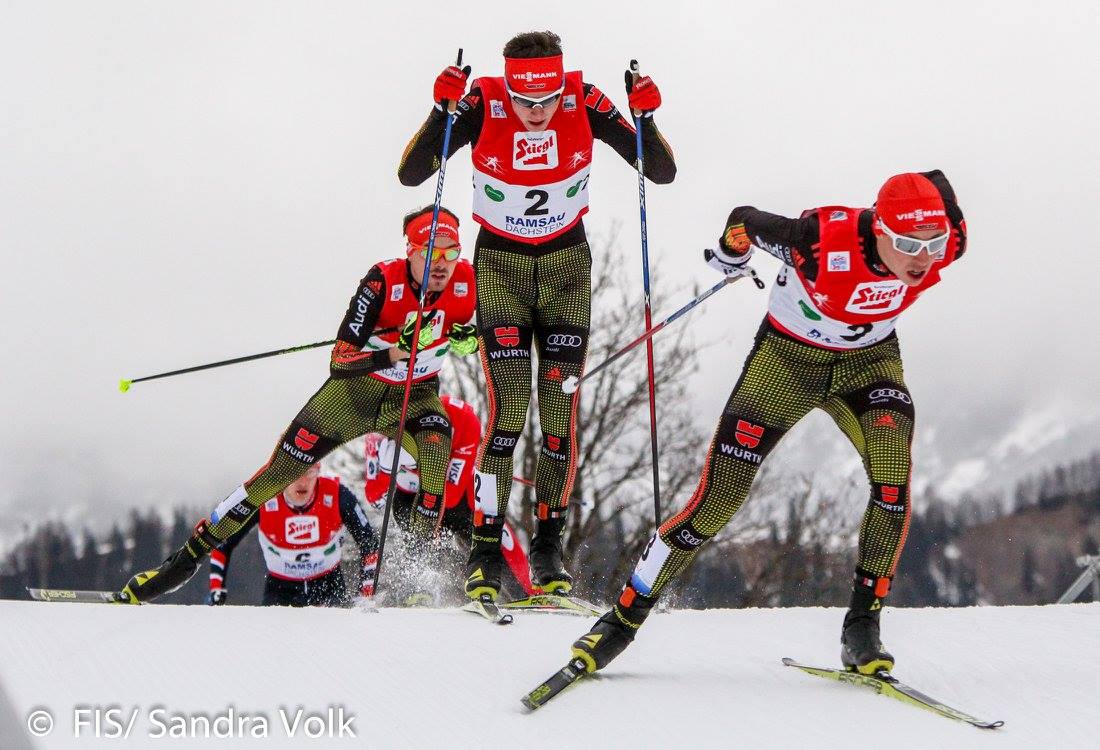
    Eric Frenzel (r) leads German teammates Vinzenz Geiger (c) and Fabian Rießle (l) toward a sweep of the podium in the Nordic Combined World Cup individual normal hill/10 k on Sunday in Ramsau, Austria. (Photo: FIS Nordic Combined/Facebook)

    Welcome to The Rundown, your quick primer of need-to-know information about the day’s racing. We’ll be updating this digest as the day goes on with additional results, photos and quotes. The Rundown is NOT a race report; stay tuned for complete race reports later today with interviews from the day’s top racers.

    ***

    FIS Nordic Combined Continental Cup in Klingenthal

    [UPDATE] Ben Loomis tallied two top 10’s and his U.S. Nordic Combined teammate Ben Berend notched eighth place this past weekend at the Continental Cup in Klingenthal, Germany.

    Loomis ended the three-day series on Sunday by placing fifth in the large hill/10 k for his second-best result at the Continental Cup level (he finished fourth last year in the normal hill/10 k competition in Park City, Utah). Loomis put himself in position by jumping to sixth then racing to fifth, 49.9 seconds behind Japan’s winner Go Yamamoto, who finished in 24:06.4.

    Florian Dagn of Austria placed second (+6.0) after jumping to first. Yamamoto jumped to second and headed out on the course seven seconds behind him.

    Norway’s Sindre Ure Soetvik placed third (+28.8), after starting the 10 k in third. Germany’s David Welde finished fourth (+36.0), moving up after jumping to eighth.

    Also on Sunday, Berend placed 15th (+2:25.3) and Jasper Good was 35th (+3:07).

    Berend started the long weekend out with an eighth-place finish in the large hill/5 k on Friday. He jumped to fourth and finished the ski race in eighth, 1:09.2 minutes behind Germany’s Maximilian Pfordte, who won in 10:58.9.

    Pfordte posted the best jump to start the 5 k first, then held his lead for a 16.4-second victory over Yamamoto in second. Dagn placed third (+18.3) after jumping to second, and Yamamoto’s jump ranked third.

    Also for the U.S., Good finished 21st (+2:05.8) for his best result of the weekend, Loomis was 28th (+2:50.5) and Stephen Schumann 29th (+2:52.1).

    On Saturday, it was Loomis who tallied another eighth place for the U.S. in the large hill/10 k. He jumped to 10th then improved to eighth, finishing 58 seconds behind German winner Tobias Simon. While Simon dominated the jump as well as the race, winning by 10.1 seconds, Yamamoto repeated in second place and Austria’s Thomas Joebstl reached the podium in third (+38.3).

    Berend finished 25th (+1:45.9) and Good 45th (+3:24.9) on Day 2.

    Results: Day 1 | Day 2 | Day 3

    ***

    FIS Nordic Combined World Cup in Ramsau

    The Nordic Combined World Cup resumed this weekend in Ramsau, Austria, with Germany not only topping but sweeping the podium in both individual normal hill/10 k competitions.
    On Saturday, Team Germany swept the top four, with Johannes Rydzek notching his third individual win of the season, ahead of teammates Fabian Rießle (+1.5) and Eric Frenzel (+8.7). Vinzenz Geiger completed the sweep in fourth (+15.0), a career best for the 19 year old after placing seventh earlier this month in Lillehammer, Norway.
    Frenzel led after the jump on the 98-meter hill, which put him 2 seconds ahead of the second-best jumper, Austria’s Mario Seidl, in the 10 k Gundersen start. (Seidl went on to place seventh.)
    Rydzek posted the third-best jump and started 10 seconds back, while Rießle started another 10 seconds later in seventh. Rydzek went on to ski the fifth-fastest course time and Rießle was third fastest en route to first and second at the finish.
    Americans Taylor Fletcher and Bryan Fletcher finished 27th (+1:17.6) and 29th (+1:18.4), respectively, and Adam Loomis was 47th (+3:16.2).
    Taylor started 41st, 1:18 back, and Bryan started five seconds later in 43rd. Bryan posted the seventh-fastest course time and ended with a photo finish with Finland’s Arttu Maekiaho, which Maekiaho took by 0.1 seconds for 28th. Loomis started 50th.
    Day 2 in Ramsau went to Frenzel, who won the normal hill/10 k in 22:49.4. Rießle repeated in second (+0.8) and Geiger improved on his career best for his first podium in third (+23.4). Seidl again jumped to first and this time ended up fourth (+24.3).
    Frenzel started third and raced to first, Rießle moved up from fourth in the jump to second, and Geiger made the most of his second-best jump.
    Taylor Fletcher skied the third-fastest course time to move up from 46th after the jump to 22nd at the finish (+1:20.2). Bryan Fletcher finished 32nd (+1:33.5), losing one place after starting 31st.
    The Nordic Combined World Cup goes on holiday break until resuming Jan. 7-8 in Lahti, Finland.
    Results: Saturday | Sunday 
    ***

    NorAm Mini Tour in Rossland: Classic pursuits

    The NorAm mini tour in Rossland, British Columbia, wrapped up with a classic pursuit race on Sunday.

    In the women’s 10 k classic, APU’s Chelsea Holmes continued her strong form, winning the mini tour with an aggregate time of 1:08:04.4. Holmes finished the 10 k in 35:35.4 minutes, 6.2 seconds behind fastest woman of the day, Katherine Stewart-Jones (NTDC Thunder Bay).

    SMS Elite’s Erika Flowers continued her podium-filled visit to Canada with the third-fastest ski of the day, 48.1 seconds behind Stewart-Jones, to take second overall, 2:23.9 behind Holmes. AWCA’s Olivia Bouffard-Nesbitt was the fifth fastest in the 10 k to hold on to third overall (+3:25.2), while Stewart-Jones was just 0.5 seconds back in fourth overall.

    NTDC Thunder Bay’s Evan Palmer-Charrette used a fourth-fastest ski in the 15 k to keep the overall title, with an aggregate time of 1:28:54.0. Alexis Dumas (CNEPH) skied 1:14.7 faster than Palmer-Charrette to climb from sixth at the start to second overall (+52.2). AWCA’s Jack Carlyle had the second-fastest time of the day, 29.9 seconds behind Dumas, to climb into third overall (+1:10.1).

    National Para-Nordic guide Erik Carleton had the third-fastest 15 k time, 1:01.3 back, but it wasn’t enough to catch Team R.A.D.’s Russell Kennedy, who placed fourth overall (+1:20.8).

    Full results (with tabs for the overall and time of the day)

    ***

    FIS Cross-Country World Cup in La Clusaz: Men’s and women’s relays

    Team Norway I emerged victorious in Sunday’s men’s 4 x 8 k mixed relay event in La Clusaz, France, with Didrik Tønseth leading the winning group’s first classic leg.

    After crossing in seventh, Tønseth handed off to Martin Johnsrud Sundby for a second classic leg. Sundby dropped a spot, finishing his classic leg in eighth. Sundby tagged off to Anders Gløersen for the first freestyle leg.

    Gløersen rocketed the team to first, and held the position straight through his 7.5 k. The final leg for Norway’s winning team went to Finn Hågen Krogh. The Norwegian men’s team completed the relay event in a total time of 1:11:25.7

    Second place overall, two-tenths of a second behind, was team Russia, led by Evgeniy Belov for the first classic leg. Belov handed off to Alexander Legkov for the second classic leg, with Legkov putting down the third fastest time by the time he returned to the exchange zone.

    The third and first freestyle leg for Russia went to Alexey Chervotkin, who maintained the team’s third place position. Anchoring the team was  Sergey Ustiugov, who managed to maneuver the team from third place to second during his final freestyle leg.
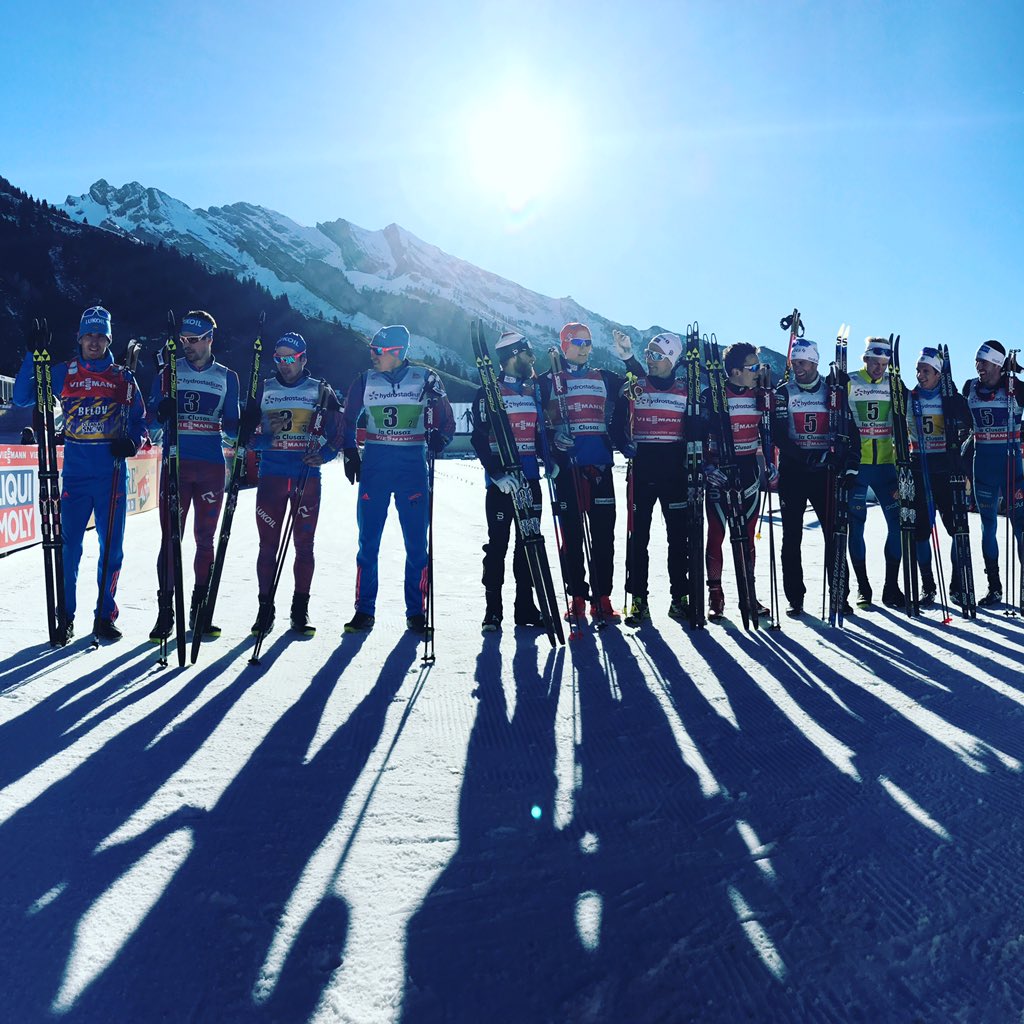
    The men's 4 x 7.5k relay podium on Sunday in La Clusaz, France with Russia in second (left four) Norway first (center four) and France third overall. (Photo: FIS Cross-Country twitter)
    The men’s 4 x 8 k relay podium on Sunday in La Clusaz, France, with Russia in second (left four) Norway first (center four) and France third overall. (Photo: FIS Cross-Country/twitter)

    Rounding out the men’s mixed relay podium on Sunday was France I (+7.7).

    Jean-Marc Gaillard led team France’s first classic leg, racing in a sixth position into the exchange zone. Gaillard handed off to Alexis Jeannerod, who moved up to fifth place by the end of his classic leg.

    Skiing the third and first freestyle leg was Clement Parisse who held onto fifth place and tagged off to Maurice Manificat for the final freestyle leg. Manificat managed to move around Sweden’s Axel Ekstrløm and Germany’s Lucas Bøgl for third place overall.

    Neither Canada or the U.S. entered a men’s relay team due to illness.

    In the women’s 4 x 4 k relay event, it was another Norwegian team who stood atop the podium.

    Ingvild Flugstad Østberg led the women’s first classic leg, skiing in first place until her hand-off to Marit Bjørgen. Bjørgen maintained the first place position during her classic leg, tagging off to Ragnhild Haga.

    Haga completed the first freestyle leg for Norway, handing off to Heidi Weng, who anchored the team’s last freestyle leg. The Norwegian women finished in a total time of 39:23.3.

    In second was team Finland, 50.2 seconds behind Norway’s winning time. Aino-Kaisa Saarinen started the first classic leg for Finland, passing off to Anne Kyllønen.
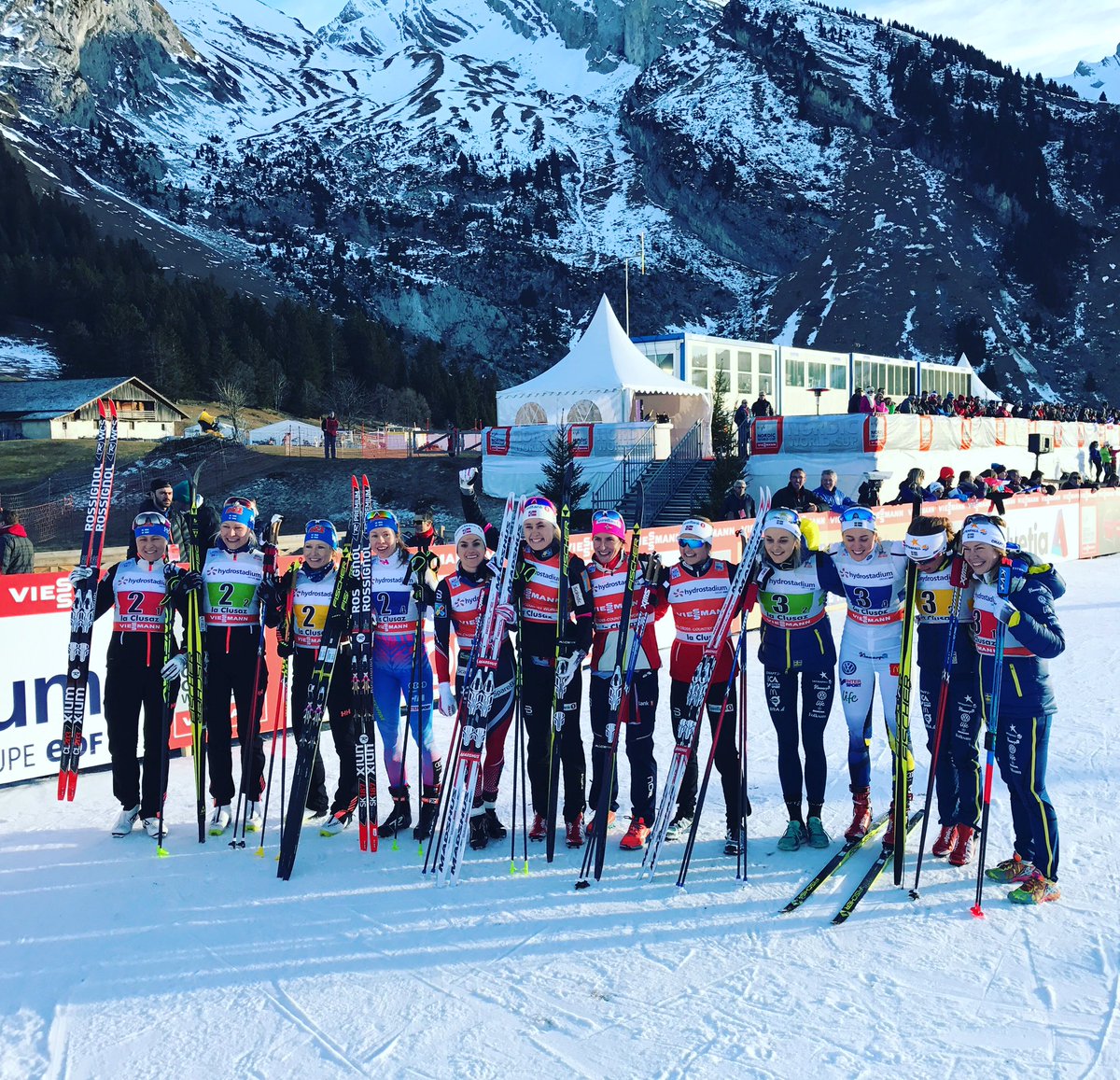
    The women's 4 x 4 k mixed relay podium on Sunday in La Clusaz, France. Norway (c) took the win ahead of team Finland in second (l) and Sweden in third. (Photo: FIC Cross-Country/Twitter)
    The women’s 4 x 4 k mixed relay podium on Sunday in La Clusaz, France. Norway (c) took the win ahead of team Finland in second (l) and Sweden in third. (Photo: FIC Cross-Country/Twitter)

    Taking on the first freestyle leg for Finland was Riitta-Liisa Roponen, who tagged off to Laura Mononen for the final freestyle leg.

    Rounding out the relay podium in third overall was team Sweden (+1:08.9). Emma Wiken raced the first classic leg, who tagged off to Stina Nilsson for the second classic leg. Maria Rydqvist raced the first freestyle leg and handed off to Anna Dyvik, who anchored the team to third.

    Only one U.S. women’s relay team was entered on Sunday, with both Jessie Diggins and Sadie Bjornsen out due to illness. Sophie Caldwell led the U.S.’s first classic leg, followed by Rosie Brennan. Liz Stephen followed Brennan, taking on the first freestyle leg. Anchoring the team was Kikkan Randall in the final freestyle leg. The Americans finished in seventh overall (+2:26.0).

    Canada also entered a women’s team in Sunday’s relay. Emily Nishikawa led the first classic leg, and handed off to Cendrine Browne for the second classic leg. Dahria Beatty raced the first freestyle leg and tagged off to Sophie Carrier-Laforte, who anchored the team to 12th overall (+4:07.9).

    Results: Men | Women

    ***

    IBU World Cup in Nove Mesto: Men’s and women’s mass starts
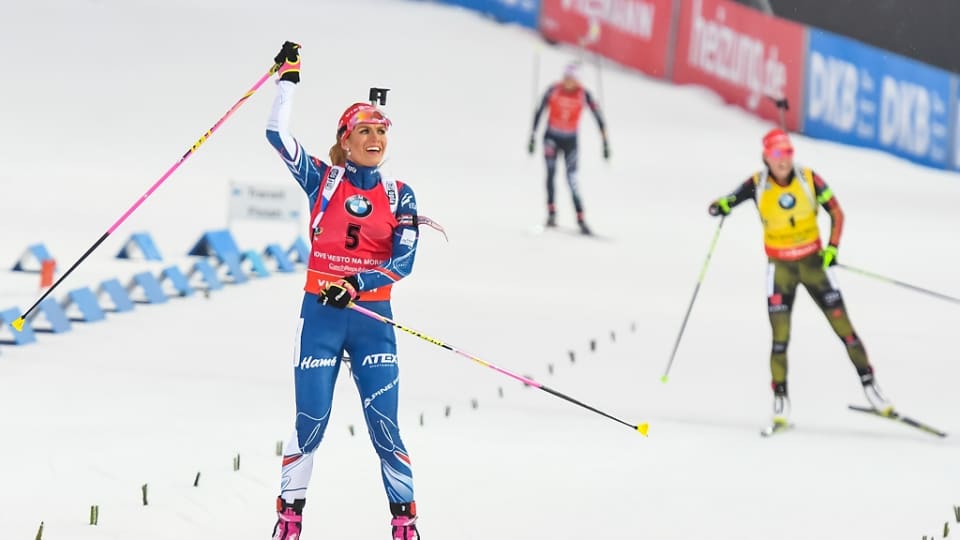
    Gabriela Koukalová of the Czech Republic looks to her home crowd as she wins the women's 12.5 k mass start on Sunday at the IBU World Cup in Nove Mesto, Czech Republic. She fended off Germany's Laura Dahlmeier (r), who took second. (Photo: IBU)
    Gabriela Koukalová of the Czech Republic looks to her home crowd as she wins the women’s 12.5 k mass start on Sunday at the IBU World Cup in Nove Mesto, Czech Republic. She fended off Germany’s Laura Dahlmeier (r), who took second. (Photo: IBU)

    Despite skiing in 14th at one point in the men’s 15 k mass start on Sunday, France’s Martin Fourcade came back to win the International Biathlon Union (IBU) World Cup in Nove Mesto, Czech Republic.

    That makes him seven for eight in individual races so far this season.

    Fourcade started with bib 1 as the overall World Cup leader and finished first in 36:18.9 minutes, despite a penalty on his second prone that put him in 14th and 22 seconds back heading out on his third loop.

    He rebounded with a clean third shooting to move into third, 2.5 seconds behind Ukraine’s Dmytro Pidruchnyi in first and 1.3 seconds behind Russia’s Anton Babikov in second.

    By the final shooting stage, Fourcade was back in first with clean shooting (0+1+0+0), 28 seconds clear of Babikov in second. Babikov had his first penalty of the day on the final stage (0+0+0+1) to drop out of contention.

    Germany’s Simon Schempp (1+1+0+0) came out on top of an eight-way battle for second place on the final loop. Schempp took it, 8.3 seconds after Fourcade and 1.1 seconds ahead of Babikov in third (+9.4).

    The Czech Republic’s Ondrej Moravec was 0.3 seconds off the podium in fourth (+9.7), Pidruchnyi placed fifth (+10.2), Russia’s Matvey Eliseev finished sixth (+11.0), Norway’s Ole Einar Bjørndalen was back in the top 10 in seventh (+11.3), France’s Quentin Fillon Maillet notched his second-straight top 10 in eighth (+13.7), and Norway’s Johannes Thingnes Bø finished at the back of that pack in ninth (+19.8).

    American Lowell Bailey missed the top 20 by 10 seconds in 21st (+1:17.1). He had three penalties, two of which came on the last stage (0+1+0+2) to drop him from ninth to 20th at the start of the final loop.

    Bailey retained his spot in ninth in the overall World Cup standings, while Fourcade continues to lead, 158 points ahead of Shipulin in second.

    In the women’s 12.5 k mass start, Gabriela Koukalová delivered to her home fans in Nove Mesto, Czech Republic, racing to her second win of the season in 34:42.1.

    “I was so nervous before the race so it was amazing,”  Koukalová said, according to an IBU press release. “I have so many emotions; it’s even more emotional than at the Olympics. I would like to say thanks to all the spectators and I hope I was able to make a nice Christmas present to all of them.”

    The defending World Cup champion beat the current World Cup leader, Germany’s Laura Dahlmeier, by 3.1 seconds after shooting a single penalty and cleaning the last two stages (0+1+0+0) to move into first. Dahlmeier missed two on the first stage to drop 23rd, but cleaned her last three stages (2+0+0+0) to capture second at the finish. She passed three athletes on the last lap, including Italy’s Dorothea Wierer, who ended up third (+9.7) with one miss (1+0+0+0).

    “I don’t really know what happened with those two misses,” she told German broadcaster ARD. “But in terms of skiing I had a great day on the course, and I had skis that were the bomb. It’s just a lot of fun when you can make the podium reaching the second place despite a large deficit in the beginning. I am overjoyed.”

    Germany’s Vanessa Hinz rebounded from Friday’s sprint (where she placed 73rd) to end up fourth (+15.5) with a single penalty (0+0+1+0). None of the 29 finishers hit every target, and American Susan Dunklee did not start.

    Dahlmeier leads the overall World Cup standings by 98 points over Finland’s Kaisa Mäkäräinen, and Koukalova is third, just seven points behind Mäkäräinen. Dunklee is 11th.

    The IBU World Cup now goes on holiday break until resuming Jan. 5 in Oberhof, Germany.

    Results: Men | Women

    ***

    IBU Cup in Obertilliach

    The third IBU Cup was held on Dec. 16-17 in Obertilliach, Austria. In the men’s 20 k individual on Friday, the top three finishers were France’s Antonin Guigonnat, with a winning time of 49:58.6, Russia’s Yury Shopin in second (+32.2), and Germany’s Florian Graf in third (+35.6). Each of the top three had one miss, and Canada’s Matthew Hudec was the top North American in 34th (+4:11.3) with two penalties (0+2+0+0). Also for Canada, Carsen Campbell finished 38th with three penalties (1+2+0+0), Matthew Neumann was 53rd with three penalties (0+2+0+1) out of 118 finishers.

    In the women’s 15 k individual on Friday, Germany’s Karolin Horchler took the win with clean shooting (0+0+0+0) in 44:54.7. France’s Coline Varcin was 1.1 seconds back in second with one penalty (1+0+0+0), and third went to Russia’s Daria Virolaynen (+30.2), who had one miss as well (0+1+0+0). Canada’s Nadia Moser was the top North American in 35th (+5:10.8) with two penalties (0+1+1+0). Also for Canada, Erin Yungblut placed 66th with five penalties (0+3+0+2).

    In the men’s 10 k sprint on Saturday, two Norwegians took first and second with Henrik L’Abee-Lund winning in 23:29.9, and Vetle Sjastad Christiansen 13.9 seconds back in second. Third was claimed by Germany’s Phillipp Nawrath (+29.5) and all of the top three shot clean. Neumann led Canada in 47th (+2:20) with one miss (1+0). Campbell missed two (1+1) and finished 59th (+2:47.4), and Hudec was 64th (+2:58.9) with two penalties as well (1+1). Canada’s Pearce Hanna finished 87th, with two misses (2+0), out of 125 finishers.

    In the women’s 7.5 k sprint, Russia swept the podium with Virolaynen winning in 20:31.5, followed closely by Uliana Kaisheva (+3.7), and then Anna Nikulina (+23.1). Virolaynen missed one (0+1), Kaisheva cleaned (0+0) and Nikulina had a standing miss as well (0+1).  The top North American was Canada’s Megan Bankes in 30th (+2:08.1), with one prone penalty (1+0). Also for Canada, Sarah Beaudry finished 34th (+2:18.1), with two standing misses (0+2), Yungblut was 45th (+2:40.6) with clean shooting (0+0), and Moser finished 49th (+2:45.5) with two misses (1+1), out of 85 women.

    Results: Men’s individual | Women’s individual | Men’s sprint | Women’s sprint


  • For U.S. Nordic Combined, Quota Spots and More on the Line as World Cup Restarts

    For U.S. Nordic Combined, Quota Spots and More on the Line as World Cup Restarts

    Taylor Fletcher charges around a corner in a 10k FIS Nordic Combined Continental Cup cross country race at Soldier Hollow. (U.S. Ski Team - Tom Kelly)
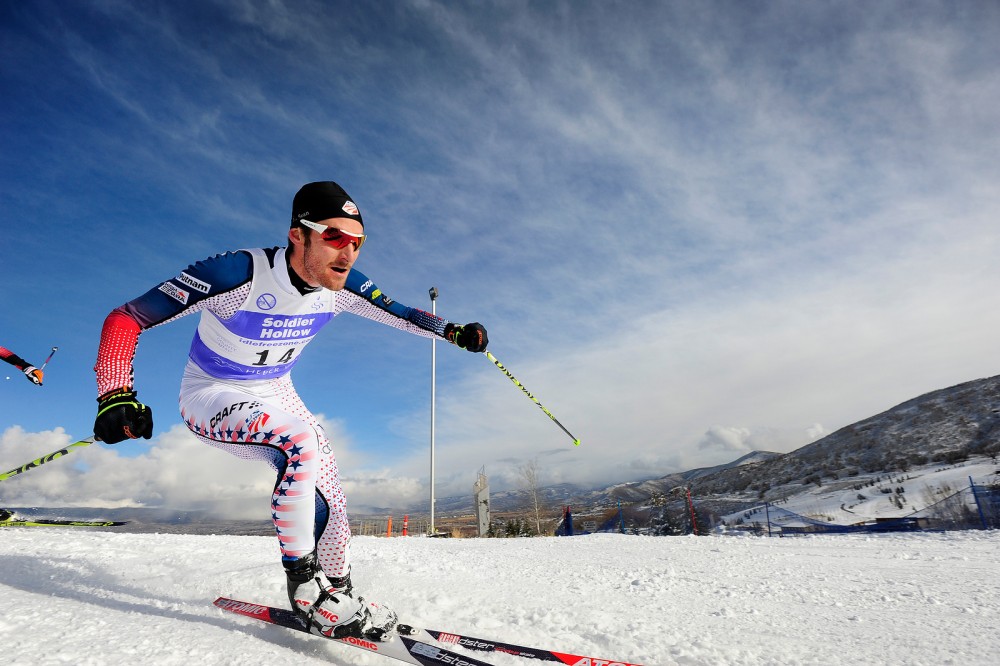
    Taylor Fletcher (U.S. Nordic Combined) charges around a corner in a 10 k Nordic Combined Continental Cup cross-country race in December at Soldier Hollow in Midway, Utah. (Photo: U.S. Ski Team/Tom Kelly)

    It will have been since Dec. 20, over one long month, since the last Nordic Combined World Cup event. That lack of high-end competition can take its toll on athletes and on the national organizations and regional clubs constituting the sport’s backbone of support. The U.S. Nordic Combined team is no stranger to the vagaries of where their funds are coming from and when the next high-level competition will take place.

    Unlike its cross-country cousin, nordic combined is not simply snow-dependent — it’s also dependent on calmer atmospheric conditions. In other words, if it’s too windy, or the winds are too swirly, too unpredictable, the jumping can be cancelled. The first scheduled World Cup in Kuusamo, Finland, Nov. 28-29 was canceled due to dicey wind conditions. The next weekend’s races, in Lillehammer, Norway, had a modified schedule on the first day of competition because of winds: judges canceled the jumping, using the provisional jumping results from the day before, to set the cross-country ski portion’s start order.

    The Ramsau World Cup in Austria got off the ground Dec. 19-20, but the cancellation trend continued after holiday break. A lack of snow led organizers to cancel the Jan. 2-3 World Cup races in Klingenthal, Germany. The following weekend’s races Jan. 16-17 in Chaux-Neuve, France, were postponed a week also due to low snow. (Currently, those races are scheduled to be held this weekend, Jan. 23-24.)

    So far this season, three out of five World Cup weekends have been canceled or postponed.

    Lack of snow and periodic cancellations are something U.S. Nordic Combined Head Coach Dave Jarrett must stomach. “It’s a real tough thing because it’s not anything we can control, mother nature which is difficult,” Jarrett said in a phone interview from Park City, Utah.

    Adam Loomis (U.S. Nordic Combined B-team) in a competition jump (Photo: National Nordic Foundation)
    Adam Loomis (U.S. Nordic Combined B-team) in a competition jump (Photo: National Nordic Foundation)

    The U.S. team has taken what they can control and made the best of it. Back in December, the U.S. men entered several skiers in what amounted to a local series of Continental Cup races with jumping at Utah Olympic Park in Park City and skiing at Soldier Hollow in Midway. Their objective: earn enough points to advance more skiers to the World Cup stage.

    Jarrett and the team met that goal. But it remains bittersweet.

    “It also adds a little bit of a sting, we earned a wildcard in the first period, with the results at Soldier Hollow. Every race that we have had the ability to start five guys on the World Cup has been canceled so far, and we are not going to get those chances back. Even if they reschedule them later in the year, they’ll occur in a different period,” Jarrett said. “You now that was the the hard thing, because we really needed to get some new names on the points scoring list that we haven’t had before. We have two more chances though.”

    If the World Cup schedule proceeds as planned, the U.S. can bring five skiers to both the Chaux-Neuve races and to the following week’s races in Seefeld, Austria.

    But getting new names on the list is something Jarret mentioned several times. And with the current period ending after the Seefeld rounds, the pressure is mounting for results; the number of U.S. start positions depends on it.

    “If Adam Loomis, for example, doesn’t get some World Cup points to maintain his spot, then his points will expire, and so we will lose his spot. Bill Demong [who retired this past spring] had points from last year that are set to expire at the end of this period, and we know that he is not going to earn those points back. So we know that that spot is going to expire,” Jarrett explained.

    “So right now, we need to have more different names on that list: the Adam Loomis’, the Ben Berends, the Michael Wards. They need to step up because Bill [Demong] is not around anymore, and Todd [Lodwick] is not around anymore, and Johnny [Spillane] is not around anymore. Adam did it last year, but Adam has not gotten any points this year, so he needs to do that as well. There’s a realistic chance that after Seefeld, if nobody gets enough World Cup points, we will only have the ability to start two guys on World Cup for the next weekend at Oslo.”

    The Oslo race on Feb. 2 begins the new period.

    Training and Maintaining

    After the first post-holiday competition was canceled, Bryan and Taylor Fletcher decided to remain stateside, basing themselves in Park City. Maintaining race fitness hasn’t been as difficult, as both are cross-country racing locally.

    “But there’s definitely that mental edge, that competion edge that you have once the season starts and you are going weekend into weekend, it’s competition time,” remarked Jarrett. “And it’s hard to replace. The good thing is that it’s been the same for everyone. It’s not like somebody’s injured and they are trying to come back,  and there’s been competitions going on. Their hasn’t been competition. We’ve been maintaining fitness as best we can. “

    The podium at the 2015 U.S. Nordic Combined Championships, which were held in Park City and Midway, Utah: with winner Bryan Fletcher (c), second-place finisher Adam Loomis (l) and Taylor Fletcher in third. (Photo: USSA/Tom Kelly)
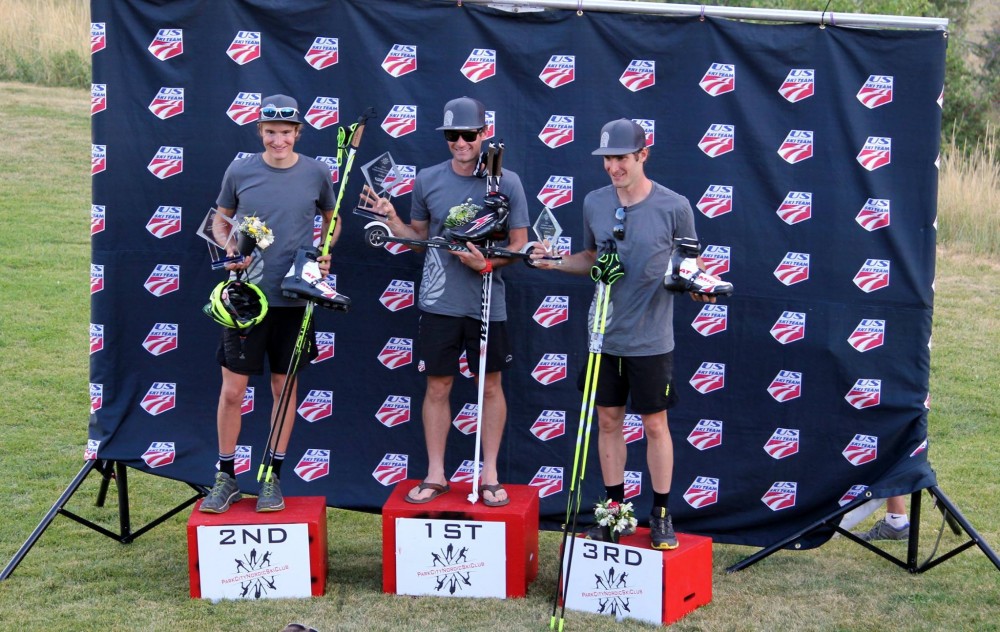
    The podium at the 2015 U.S. Nordic Combined Championships, which were held in Park City and Midway, Utah: with winner Bryan Fletcher (c), second-place finisher Adam Loomis (l) and Taylor Fletcher in third. (Photo: USSA/Tom Kelly)

    At least for the Fletchers, Park City remains a locale with an upside.

    “We are at an advantage at altitude to be here and living here,” Jarrett said. “And we can assimilate sea level. So I feel pretty good about the way that they are, but it’s more that competition mindset.”

    The remaining four U.S. Nordic Combined skiers, Adam Loomis, Ben Berend, Jasper Good, and Michael Ward, have remained in Europe to train.

    Although race cancellations may impact quota spots, it also impacts the bottom line for his skiers.

    “If we are not there, we are not paying to be there,” Jarrett said of expenditures. “We have had to pay some airline ticket changes, and things like that, but you know if we are not there we are not collecting travel money [from FIS], at the same time we are not spending money on accommodations and things like that.”

    Beyond impacting institutional finances, race cancellations also impact small wallets. “It’s also they are losing the opportunity to make prize money, which also, when you look at the big picture, they have bills to pay and things like that. Certainly, having no event and no opportunity to earn money is another big big piece of the puzzle.”

    With earning potentials compromised, the team must rework how it allocates funds. That puzzle problem is compounded by the team’s insecure quota spots.

    “We project revenue based on quota spots, and collecting travel money based on those quota spots. So when there is cancellation you don’t collect that money and if they. If you have a stable quota then it doesn’t matter, they make it up in the next period, but our quota is going to start fluctuating,” Jarrett said.

    So quota spots, funding and potential sponsorship dollars go hand in hand. Better results corresponds to better publicity, and hopefully in the long term, a more secure financial situation for athletes. This in turn comes back to the season’s races and subsequent cancellations. Jarrett says the lack of races, the lack of opportunities, ripple throughout the U.S Nordic Combined community.

    “We have a bunch of young guys that need to get established on the World Cup list. We are going to lose some spots probably before we get more again. And so, we needed to have as many opportunities to get those extra spots for the next period, and the next period, and the next year. And so when they are cancelled, it has a ripple effect throughout the system. Because if you are starting four or five on World Cup, and then all of a sudden we can only start two, then that knocks two guys down to Continental Cup, and then that knocks two younger skiers out of Continental Cup.”

    Now more than ever, in addition to quota spots, the nordic-combined community must think about money. “What we are faced with now is that all the athletes, all the staff, are full-time fundraisers, and tongue and cheek, part-time athletes. Everybody knows, athlete’s included, that if there’s no funds, it doesn’t matter how much you train, if you can’t get there, you can’t get there. So those guys, the athletes, I know the staff, wake up in the morning and they think about two things: how are we going to raise more money and what are we doing for training today?”

    For the next two weekends Jarrett has his fingers crossed — quota spots and more are on the line.