From the FasterSkier archive — posts syndicated from athletes’ and coaches’ own blogs between 2004 and 2012, kept online as published. Current coverage is at fasterskier.com.

Tag: Knut Nystad

  • What makes a fast ski? A discussion on league-wide wax protocols and ski performance theory with Andy Gerlach, Zach Caldwell, and Knut Nystad (Part 2)

    What makes a fast ski? A discussion on league-wide wax protocols and ski performance theory with Andy Gerlach, Zach Caldwell, and Knut Nystad (Part 2)

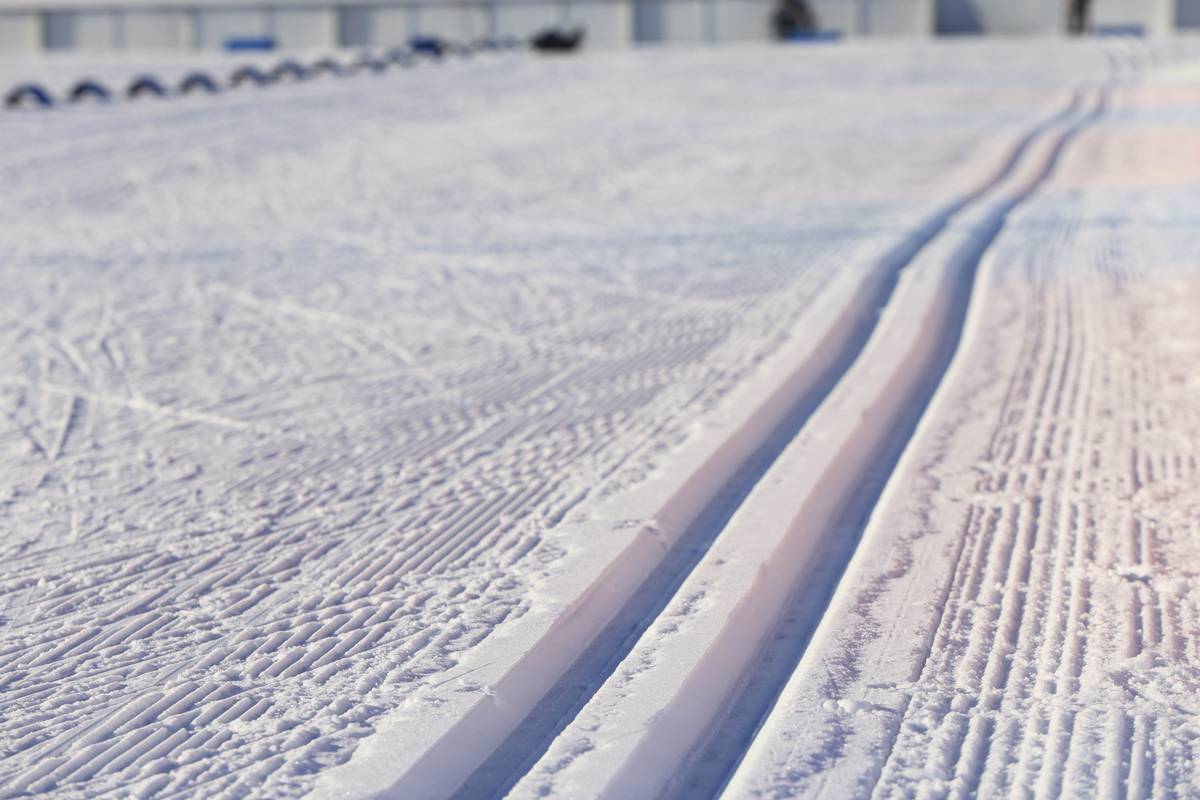
    Cold, firm tracks and perfect corduroy: the stuff of cross country skiers’ dreams. (Photo: NordicFocus)

    Click here to read part 1 of this story.

    In most states, youth skiing is divided between club and high school programming, where club programs support skiers looking to race competitively on a regional, national, or international level, perhaps with goals of NCAA skiing and beyond. High school ski programming is typically more participation focused, and comes with a much lower price tag for families, consequently with a much smaller program budget. It’s less about year-round training, and more about learning to ski, enjoying a low-cost introduction to the sport, and providing a healthy activity to get kids outside in the winter. In some places, athletes may fall into an overlapping Venn diagram of  categories, while in others, it may be a choice of club versus high school racing.

    Within high school programs, it is much less common to have multiple pairs of skis, and conversations on grinds and structures are less likely to be overheard between coaches. Here in Colorado, it’s one of the only (maybe the only?) high school sport that does not have a uniform rule – kids can essentially race in whatever they want; no lycra required.

    In this setting, a universal wax call might be a more reasonable proposition, according to Nystad. 

    “Arguments can be made on both sides. If everyone just agrees: ‘We have one pair of skis and we wax with blue.’ Okay, it probably will be as fair as you can probably make it, but just be aware that still there will be huge individual differences on the quality of the skis and how they differ from different conditions… there will still be variations, it’s not like everyone will start on the starting line having identical skis. That’s not realistic.”  

    Slovenian sprinter Eva Urevc tests skis with her wax technician at the 2022 Olympics in Zhangjiakou, CHN. (Photo: NordicFocus)

    With all of this in mind, is there a way to create equity via equipment or waxing at any level of the sport? 

    “No,” said Caldwell frankly. “No, there isn’t.” Adding perspective from his business, Caldwell explained that the cost of equipment has been steady over time with respect to inflation. That said, among competitive programs, the demand for skis has increased with time, in particular, following the removal of a now-banned leveler that we haven’t yet mentioned: fluorocarbons.

    “It’s a technical sport,” Caldwell said. “And the fact is that people have become more aware of the opportunity to get ahead with material. And I think what we’re seeing is a reaction to the reality of what the sport is. It’s not running. It’s just not. And yet people are doing the same thing in running with these carbon-plated shoes. Now you can only win if you have a high-tech shoe that goes 4% faster. Does that mean that those shoes shouldn’t have been invented? Or should they be banned? Possibly. I mean, whatever, we have to talk about this. 

    “They banned fluorocarbons for a lot of very good reasons, or they’re in the process of it. When it’s health and safety that is the problem, then you have to take the necessary steps. And yet, we also have to acknowledge that removing fluorocarbons really takes a big, big leveling factor out of the equation. There’s no opportunity to take a universal cold grind ski and put it in a wet race. That kid’s screwed. Every single time we remove the opportunity to optimize the solution that’s at hand, you’re penalizing the kids who don’t have the perfect setup.”
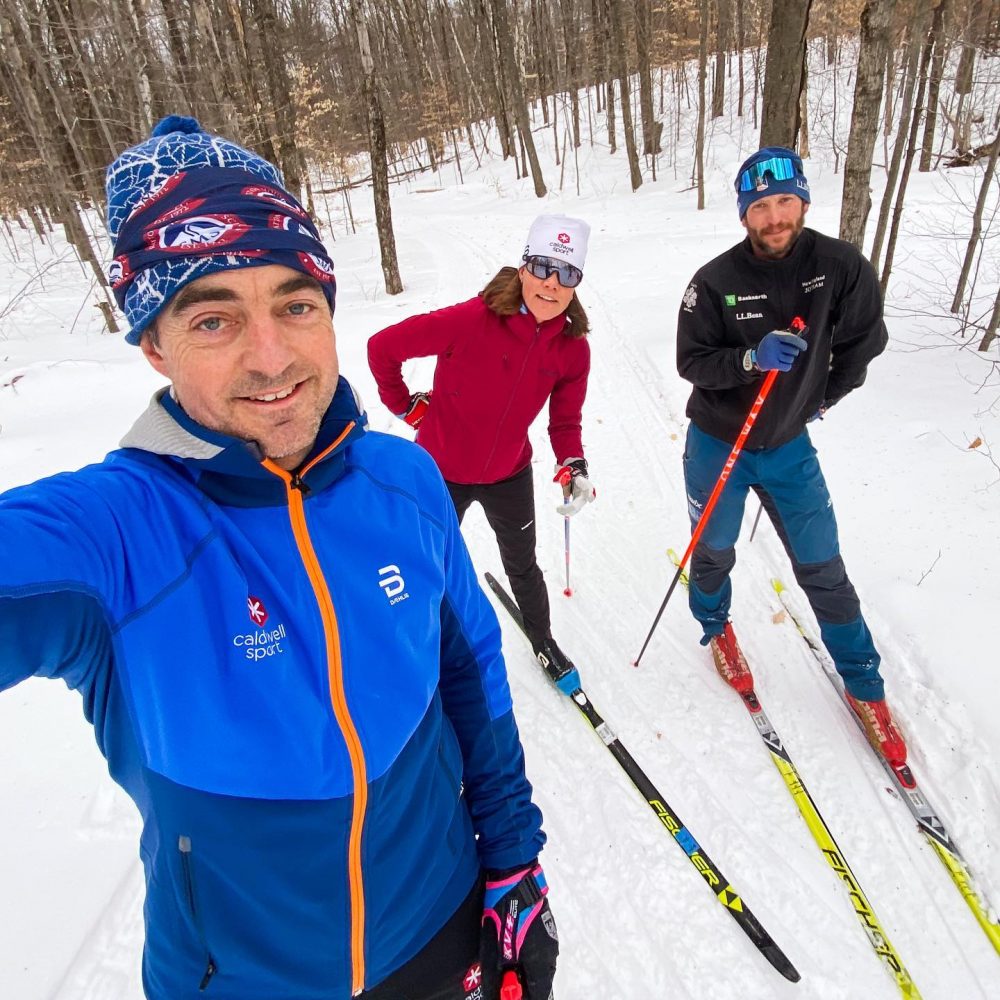
    Zach Caldwell (left) out for a ski with his wife and business partner Amy and Craftsbury Green Racing Project wax tech Nick Brown. (Photo: Facebook Caldwell Sport)

    Making it clear that his opinion is not clouded by the inability of a Colorado, Wisconsin, or Washington-based club skier to use a non-Swix wax purchased through Caldwell Sport, he added, “From a business perspective, with regard to my overall outlook, I probably should be applauding this model because it creates a massive incentive for kids to carry a lot more skis. And we’ve already seen this with the removal of fluoros from competition – you wouldn’t believe the uptick that we’ve seen in demand for warm weather skis, and grinds, and bases.”

    In Caldwell’s opinion, the opportunity for athletes and coaches to optimize a ski through testing and the use of a product line they know well, regardless of brand, is a more viable option for “leveling the playing field” as it could bring any ski closer to what he called it’s “terminal velocity.” A wax protocol that puts every athlete on the same brand and hardness of wax, creates “a situation where that opportunity doesn’t exist and the only way to gain competition advantage is to buy another pair of $800 skis. So it very quickly becomes a sport that, really, is hard to succeed at without a lot of personal resources.” 

    While the focus of these points might suggest that competitive youth skiing will trend toward an arms race, Nystad’s points included a reminder that a skier with limited access to equipment and race-day wax expertise may not be doomed. Other aspects of athlete development remain as important as ever in a skier’s trajectory and long term prospects. 

    “Quite honestly, I don’t want kids to have ten pairs of skis,” Nystad said. “I have kids that ski, but I try to limit the amount of skis and I try to buy used skis and rather look at what properties do the skis have, so that they have okay skis for for each condition. And then we focus on other things that are far, far more important. And that is the mentality to learn to train, to have fun while you’re training, and then to work on technique and tactics. So it’s also a cultural thing.

    “If you only focus on buying yourself time by buying equipment and buying wax and tweaking things and using resources — yes, you are probably going to gain some time, but you have to also say, ‘Are you investing as much time training and enhancing your technique and your tactic as the others are?’ So it’s definitely possible, even if you come from less resources, you can beat the guys with the most resources if you just train well and smart and develop good technique and good tactics.”
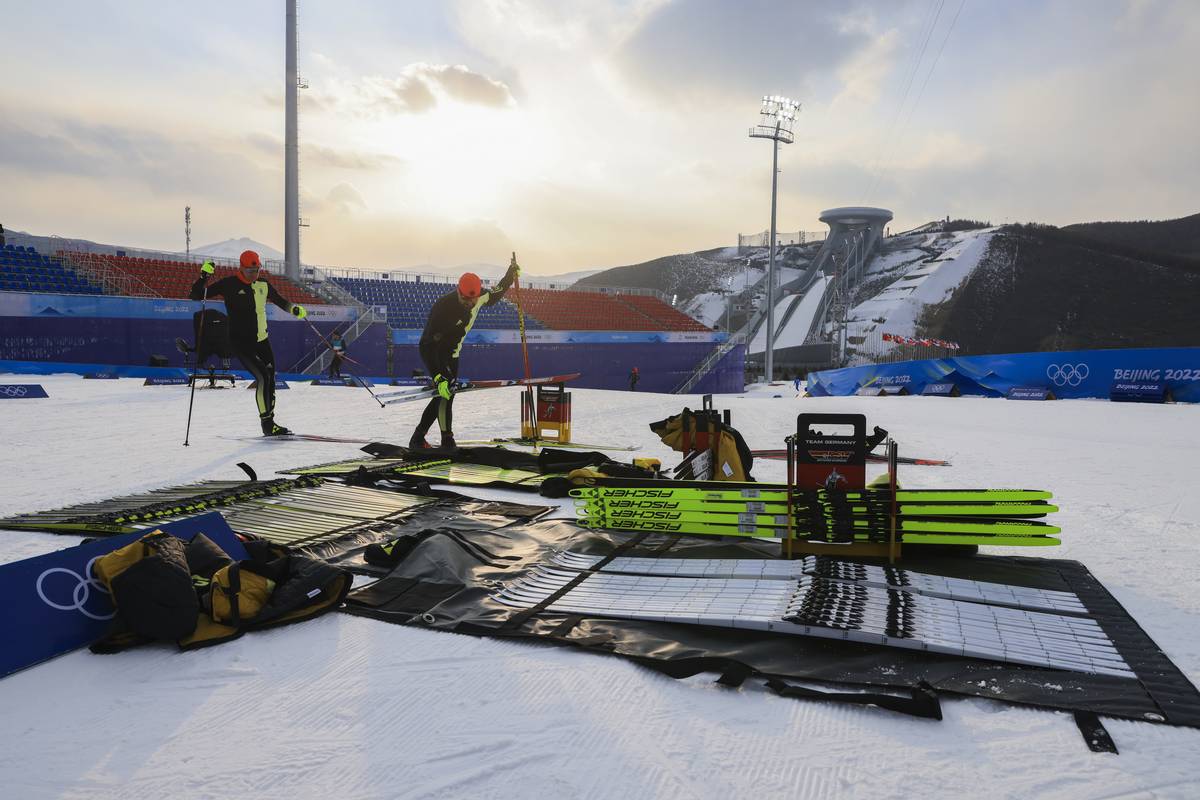
    The German biathlon team tests skis during the 2022 Olympic Winter Games in Zhangjiakou, CHN. (Photo: NordicFocus)

    As a serviceman working at the highest level of sport, Nystad also offered a thought-prompt on the impact to athlete knowledge and the ability to develop a new generation of wax technicians under a protocol, regardless of brand. 

    “If you want to educate athletes to also be able to become great service people at World Cup level races – if you take away that experience in club skiing or in high school skiing or in collegiate skiing, you will have no resources that are going to be able to serve your American athletes going to World Cups or World Championships or Olympics. Where are they going to get the knowledge? Because it’s like anything else, if you want to become good at something, you have to work at it.”

    According to Caldwell, incorporating a wax protocol is “reductionist attempt to level the playing field” that creates more disparity than equity. And so, the goal of leveling the playing field in cross country skiing remains “laudable”, but out of reach, and perhaps unattainable. 

    “I understand the discussion, but I think you have to cater to common sense,” Nystad concluded. “You can always tell people that we decide to [have] one pair skate, one pair classical. I think you can also try to have the waxes [matched]. But still be aware, it’s never going to be fair.” 

    Stay tuned next week for follow-up series which highlights some of the leagues who have enacted a waxing protocol, namely, the Wisconsin Nordic Ski League (high school & club), and coaches from Rocky Mountain, Intermountain, and the Pacific Northwest. This discussion includes the evolution and reasoning behind the protocols, and what advantages/disadvantages have been identified by each league.

  • What makes a fast ski? A discussion on league-wide wax protocols and ski performance theory with Andy Gerlach, Zach Caldwell, and Knut Nystad (Part 1)

    What makes a fast ski? A discussion on league-wide wax protocols and ski performance theory with Andy Gerlach, Zach Caldwell, and Knut Nystad (Part 1)

    FasterSkier shares insights into ski performance theory from Any Gerlach, Zach Caldwell, and Knut Nystad. (Photo: NordicFocus)

    In November 2021, the Wisconsin Nordic Ski League (WNSL), which oversees both high school and club level youth programming state-wide, accepted a sponsorship proposal from Swix and Salomon, which would provide the league with $10,000 in funding per year for three years. The proposal also included stipulation that a standardized wax protocol using Swix waxes would be adopted by the league at all affiliated races, including the state championship. 

    In practice, this would look like an email going out to all coaches a day or two prior to the event indicating which of a subset of Swix glide waxing products should be used by athletes that weekend. Equivalent temperature range and performance level waxes from other companies would be disallowed. In the sponsorship presentation given to the league by Swix, the proposal promoted the simplicity and affordability of a unified wax call, and a shift in focus for coaches away from time-consuming wax testing to race day support of their athletes. 

    The concept is not new, and WNSL is not the first league to adopt such a protocol. An equivalent protocol has been used by the high school, club, and collegiate level ski programs in the Rocky Mountain region (RMN and RMISA) for the last six years, and has more recently been adopted by the Pacific Northwest and Intermountain Division junior club programs. On the whole, these policies have been seen as beneficial by these regions. 

    While an additional $30,000 of funding has the potential to profoundly impact the reach of the WNSL, which will be discussed in a subsequent story, the adoption of the corresponding wax protocol also raised red flags, particularly among members of the Independent Nordic Distributors of America (INDA). The INDA includes distributors of wax products from other smaller companies like Start, Vauhti, Star, and more, and are primarily based in the Midwest. 

    The two primary issues that were flagged were the restriction of trade should Swix monopolize the buyer market encompassed by the WNSL, and also whether limiting the available choices to a single option actually creates the equity and uniformity that one might anticipate from putting all skiers on the same wax. Instead, could it widen the opportunity gap between those who could afford high-end skis with condition specific grinds and those who could not?

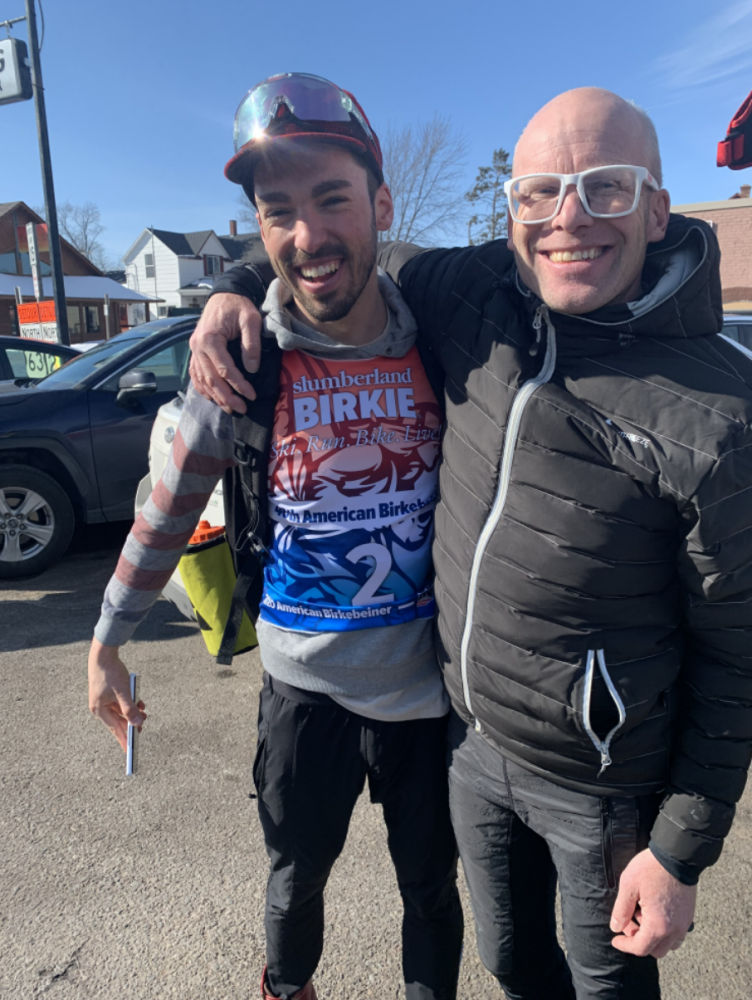
    Enjoy Winter’s Andy Gerlach snaps a picture with 2020 Birkie Champion Ian Torchia (SMS T2). (Photo: EnjoyWinter.com)

    In the fall, these issues were brought to FasterSkier by Andy Gerlach, director of Madison, WI based EnjoyWinter, which distributes Start, among other cross country related brands like Blitz Eyewear and Swenor rollerskis. With vested interests in the implications to his own business, but also as someone who offers brand-neutral education on wax theory for coaches, Gerlach actively opposed the decision by WNSL to accept the offer from Swix. 

    “The biggest argument against these exclusive sales agreements and proof that they are bad for the sport, and in fact illegal, is that they decrease the incentive for any other brand to fight for any part of a team’s or consumer’s business,” Gerlach said in the fall. “Why should my business continue to do wax clinics for Madnorski (Madison Nordic Ski Club) members if we know we are no longer getting a large chunk of their business. Why should any brand even visit Colorado clubs if we know we do not have a chance at a large chunk of the business there? Legal marketing arrangements should increase competition in the market, not decrease it. Change the agreements to marketing rights and not sales rights and every other brand would increase their efforts to reach the individual teams.”

    After discussions among the cross-country sport committee during the recent U.S. Ski & Snowboard annual spring congress meetings, Gerlach summarized his objections to wax protocols to the following four points.

    1. “They perpetuate a misconception that waxing is so difficult and mysterious. Our clinics state just the opposite.
    2. “They perpetuate a misconception that extensive testing is effective and needed to select a glide wax that an athlete can race up to their abilities with. Our clinics state just the opposite.
    3. “They increase the likely hood that those skiers with a quiver of skis will have the fastest skis. Multivariable mathematical analysis, as well as ski industry testing and ski sales figures shows this.
    4. “They endorse one brand ‘because it is the most available’ and in so doing extends this advantage.”


    There is plenty more involved in the debate on the legality and consequences on the business end of the decision whether to accept the sponsorship offer from Swix, which will be revisited in subsequent parts of this story. This installment, however, will focus on the underlying principles of ski performance theory, with input from experts, like Gerlach, on what factors ultimately determine ski speed, and whether restricting the waxes available for a given race would level the playing field by reducing variables, or adversely affect the pre-existing disparity between ski performance, thus limiting the potential of the skier clipped into the binding.

    Brimming with insights into ski performance, this thought-provoking conversation should provide fodder for discussion within race-leagues at all levels as they consider waxing protocols and avenues to improve equity within the sport. 

    ***

    We’ll start with what Gerlach identified as the factors that affect the performance of a ski from most to least significant, and where in this process limiting a coach/athlete to a single wax from a single brand becomes significant. 

    “In my hierarchy of ski speed deciding factors, it’s a flexible ski, the freshness of the base is the next important, the structure, then the hardness of the wax, and then the brand,” Gerlach explained in a call. “Now we’re going to take away the hardness of the wax as a differentiator between them. And now, all we have as the only differentiator is the ski model, the freshness of the base, and the structure.” 

    The understanding of this theoretical model underscores the remainder of the question. When we hear “wax tech”, the name seems to imply the key player being adjusted and assessed is the wax. Gerlach explained that this reasoning is misguided.

    “I, and scientific studies, will show you that 95% of this theoretical wax testing is not determining the fastest wax to apply that day. If it was, at US Nationals, or at any of these races, the line Saturday morning two hours before the race start would all be at one wax trailer. But you know, every coach comes up with their own thing… There is a different theoretical ideal wax for a Rossignol with an aggressive grind to the same Rossignol with a fine grind, and you would theoretically wax it differently. If you are testing on your Madshus cold skis and all your kids are on dried burnt out skis, or are on Fisher or on Salmon, theoretically, there’s a different wax [for each ski].”

    It’s a counterintuitive concept to those, like myself, who prefer to focus on the technique and training aspects of the sport, versus the technical side. Why doesn’t putting everyone on Swix PS8 on a day forecasted to be in the right temperature range remove a factor that might create disparity between ski performance, thereby improving equity? Particularly in a larger state, like Colorado, where teams are driving long distances (through vastly different elevation zones) to race without knowing exactly what conditions will be like until arrival, I could see the appeal for coaches of removing a step in the planning process. 

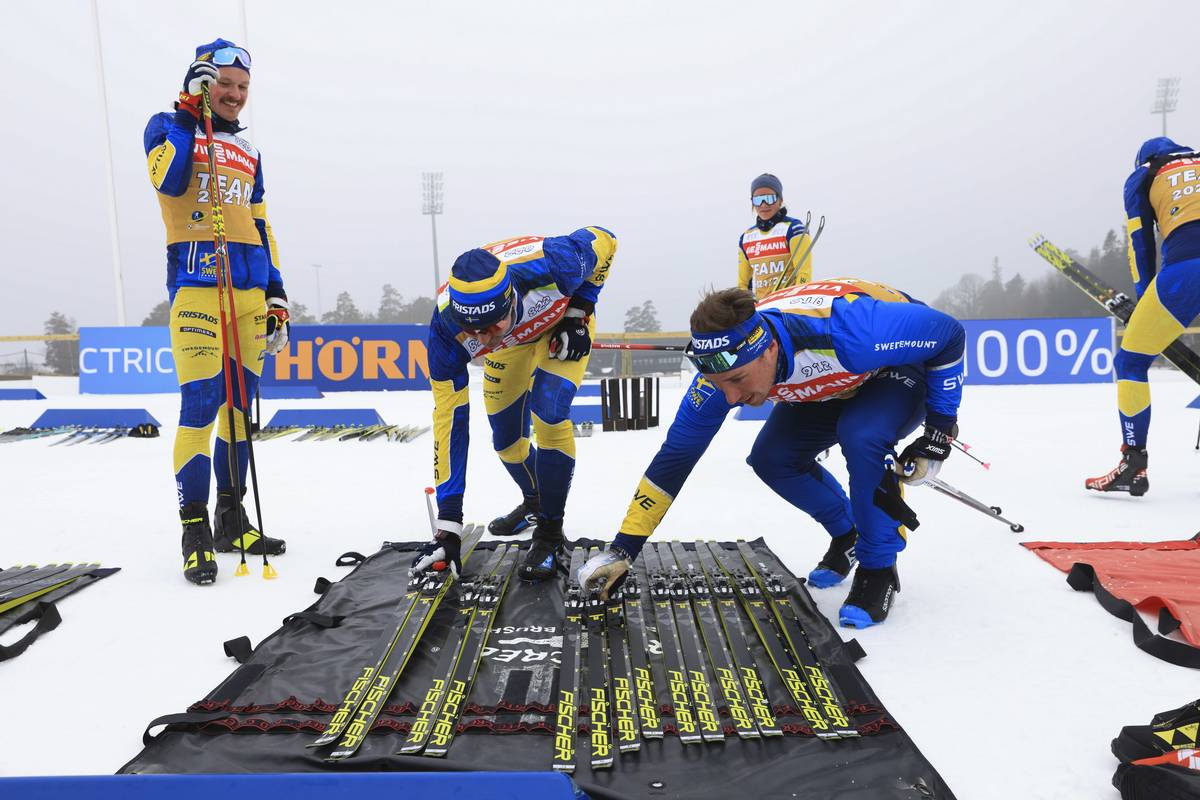
    Swedish Technicians at work at a March, 2022 biathlon World Cup event in Oslo, NOR. (Photo: NordicFocus)

    To simplify the answer on why equity may not be achievable with wax, Gerlach offered an analogy most skiers can relate to, regardless of their background knowledge in waxing theory.

    “If you’ve ever shaved your legs or your face with a razor,” he began. “A sharp, brand-new razor is like a fresh ski with a fresh base. You don’t need shaving cream and that razor works great. But a dull razor – a dried, crappy base – you need that shaving cream. And you need the best shaving cream you can get, and it’s going to help that razor and that shave a whole lot more.”

    How does this affect youth level programming? Ultimately, it accentuates the ever-growing “pay to play” problem of competitive sports. A newer, higher-end ski with a fresh base, or perhaps a quiver of skis that are ideal for different conditions, becomes much more important without the ability of a skier or coach to add versatility and improve the performance of a single pair of skis ski by utilizing a range of products to optimize the wax job. 

    “We have one ski with a great freshness of the base and a great structure, and one ski with a really dried up base. Had I applied wax to [the dry base], it does more to increase the ski speed than applying wax to a great ski… The more skis you can add to that quiver, all waxed the same, one of those is going to highly outperform the others. Versus when you had the ability to not only figure out which ski to go with, but which wax to go with. So by taking away variables that are easy to change, you make it more important to have a very good ski.”

    To include additional knowledgeable voices in the discussion, FasterSkier also spoke with Zach Caldwell and Knut Nystad, two savants in the complex and nuanced world of wax and skis. Caldwell is a leading expert in ski selection, wax, and grinds in the US, and the co-owner of Caldwell Sport. As a distributor of Vauhti, Rode, Star, and other waxes, Caldwell is also a member of the INDA. 

    Nystad is the former head of the Norwegian Wax Team, who still works as a ski serviceman for the Norwegian program at the World Cup, World Championship, and Olympic level. Prior to this work in his home country, Nystad spent twelve years as the head coach at the University of Denver. 

    “The idea of having a fair competition and limiting variables in order to generate more fairness and equity in the racing and create equal opportunity and a lower barrier to entry is a really laudable goal, but it misses the point,” Caldwell said simply in a call. 

    “The fact is that it’s a pretty complex system that we’re working with, with a lot of additive contributing variables that contribute to a whole solution, including ski flex, base material, base preparations, waxing, hand structure, all of it. When you have a lot of variables available to you, you have a lot of different pathways to success. The peak performance that might be available [on a particular ski] can be considered something along the lines of terminal velocity; you’re just not really going to go past a certain level of performance [on a day], the performance that the snow is going to yield. But there are a lot of ways to get there.” 

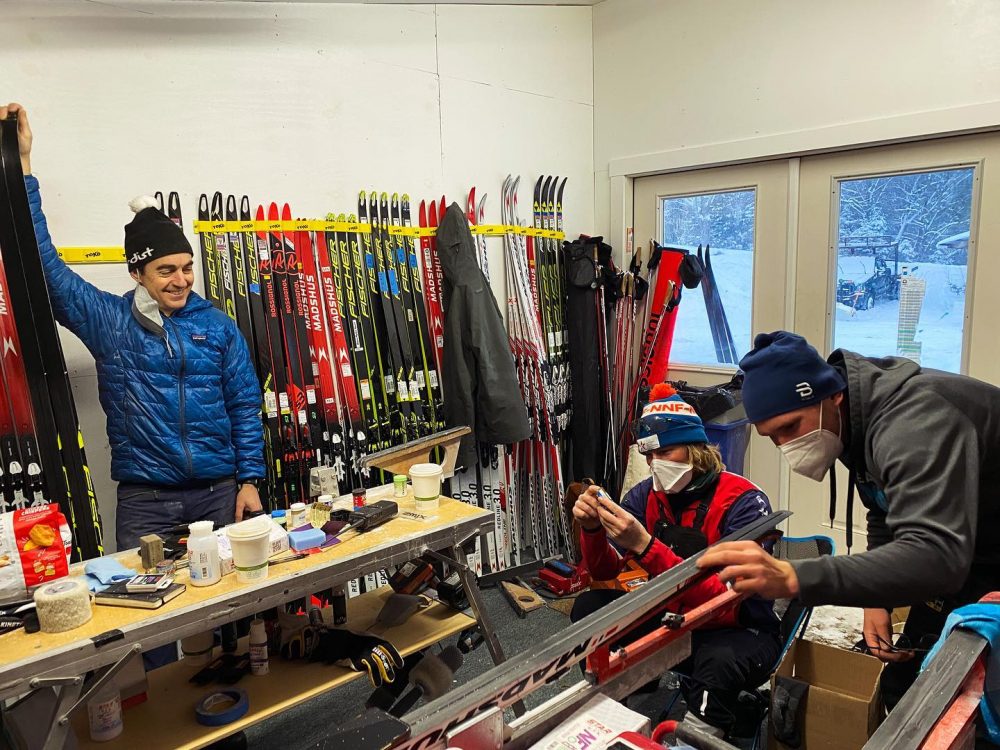
    Inside the wax at a February SuperTour race weekend in Craftsbury, VT, where Zach Caldwell (left) supported SMS T2 athletes. (Photo: Facebook Caldwell Sport)

    “As you begin to limit variables,” Caldwell explained, “you begin to place much more emphasis on other variables. They become proportionally much more important in determining how to get to the best performance possible [on the day]. And as you remove wax, which is a really inexpensive variable per application that can be put on specific to a day, you skew the emphasis toward skis base materials, grinds and hand structures.”

    Individual variation among the skis and in the technique and strengths of the skier on those skis adds additional complexity to the scenario.

    “Think about classic skis; this is a better way to imagine this,” Caldwell pitched. “Some athletes or some skis require different layering and build up of classic wax on a day. But if you’re saying, ‘Oh, you get two layers of extra blue. That’s it.’ That’s asinine. It means some people get to race and others basically have to herringbone.”

    Nystad also questioned the premise of leveling the playing field by creating uniformity in the wax selection.

    “Let’s start with the beginning,” Nystad said. “All of us that have done this for a long time, the only thing we know is that we don’t know. The only thing we know is that we need to test in order to get the answers. But what I can tell you from my experiences is that if you limit one factor, sometimes it just opens up another can of worms…

    “There’s definitely good arguments for trying to make the sport as simple as possible. But I think that for the people that think that just by waxing with blue, that that’s going to make it more equitable. It is a sign to me that they don’t have that much in-depth knowledge.”

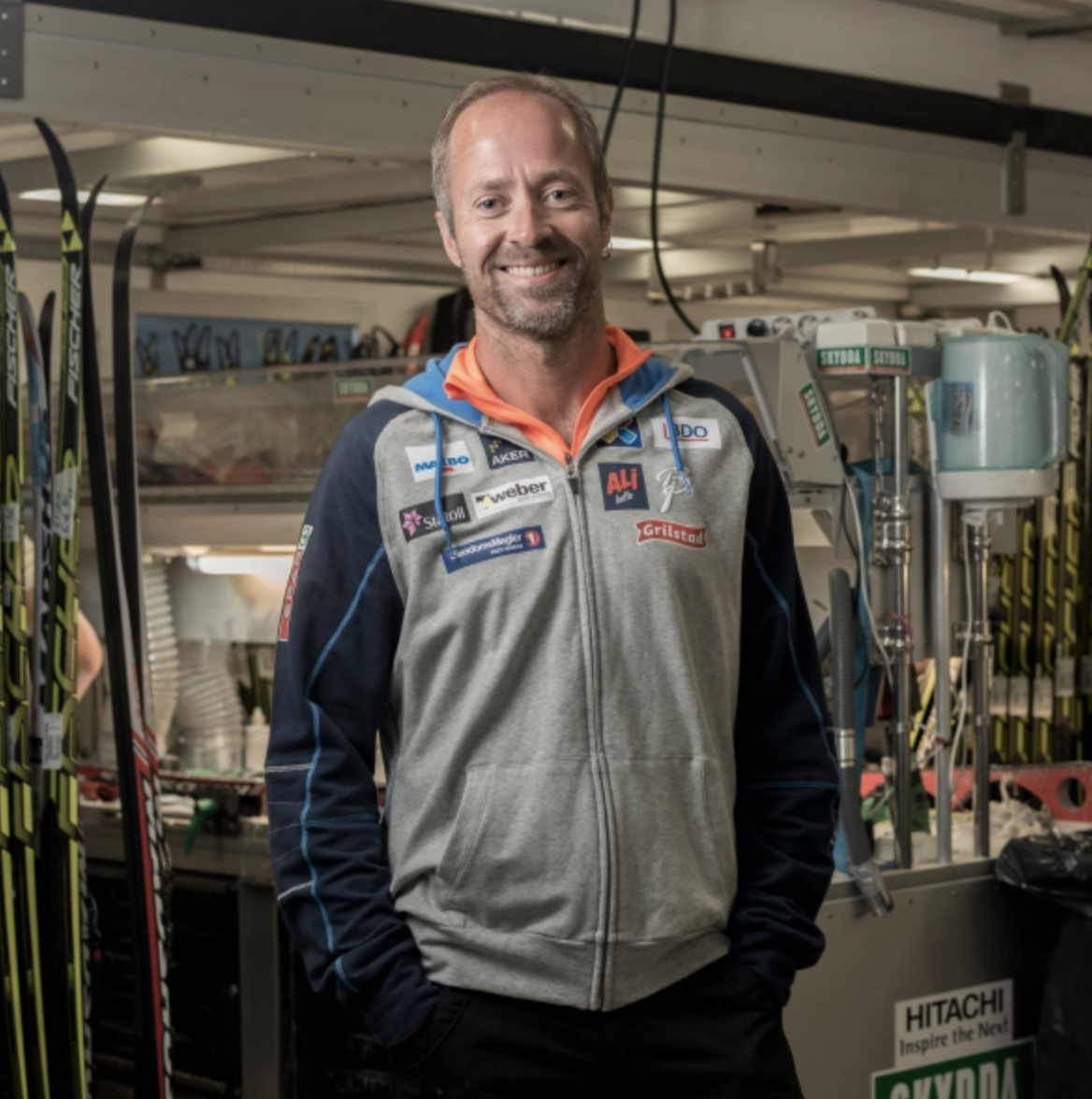
    Knut Nystad provides insight into ski performance theory and why a one-wax call may widen the gap in cross country skiing. (Photo: knutnystad.com)

    Without giving hierarchical ranking, Nystad also discussed the myriad of factors that contribute to the performance of a ski on a given day: the properties of the ski, including flex and splay, the quality of the base and its structure, the manual tools used, and the wax. “And then to top it all off, you have the method methodology that you use to apply the wax.”

    He walked through various ways a particular wax could be applied to yield different results, before echoing Caldwell’s sentiments that equity and uniformity cannot be achieved by restricting the options for wax that can be applied to a ski. 

    “When people say, ‘Well, can’t we just all wax with the same thing? It will make it easier.’ Clearly it will make it easier; you have one less factor to think about. But if the intention was to make it more of an even playing field, it’s not necessarily the truth. Because when you go to a race,  you’re only limited to try to test what you can afford from money, resources, and of course, time being one of those resources. So if you don’t have the test wax, what else can you test? Well, you can test many more skis, with many more properties with many more different bases, with many more structures, with many more manual tools. 

    “So it just opens up other things that you can test to get an advantage. And everything that you’re going to test if you’re going to have more skis, of course, that’s going to cost more. If you’re going to have more structures, different kinds of structures, that will also cost more. If you’re going to add manual tools, that will also cost more.”

    Stay tuned for more insights from Gerlach, Caldwell, and Nystad in Part 2 of this story.


  • Monkey Off Its Back, Norway Wins First Men’s Olympic Relay Since 2002

    Johannes Høsflot Klæbo of Norway moments before crossing the line for Norway’s first Olympic men’s 4 x 10 k relay victory since 2002 in Salt Lake City, Utah. (Photo: FlyingPointRoad)

    FasterSkier would like to thank Fischer Sport USA, Madshus USA, Concept2, Boulder Nordic Sport, and Swix Sport US for their generous support, which made this coverage possible.

    PYEONGCHANG, South Korea — Conversing in the native tongue of the men’s 4 x 10-kilometer relay winner of Olympics past and present requires a world map and an aptitude for language acquisition. 1952 Oslo Games: Finland wins. 1956 in Cortina: the Soviets win. 1968 in Grenoble: France wins. 1984 in Sarajevo: Sweden prevails. 1992 in Albertville: Norway wins.

    The previous two Olympics in Vancouver, British Columbia, and Sochi, Russia, — Norway took a hit. The nation’s simultaneously self-righteous and justifiable claims of cross-country-ski-racing dominance fell hollow on the men’s Olympic relay stage. In a country where it’s win and nothing else, the years between the last two Olympic cycles, 2010-2018, have been fraught with relay angst and foreboding.

    Sweden won the men’s 4 x 10 k relay in Vancouver and Sochi. Norway placed second in Vancouver. Within the Norwegian singularity of win or lose, that’s a Norway loss. In 2014, Norway placed fourth. Fourth place. Can you imagine the Norwegian disgust?

    Start of the scramble leg during the men’s 4 x 10 k Olympic relay on Sunday in PyeongChang, South Korea. (Photo: FlyingPointRoad)

    “I knew some of those teams, like Russia, was going to try to spread it out,” Andy Newell, the Americans’ scramble-leg skier told FasterSkier after his first leg in Sunday’s Olympic 4 x 10 k relay. “I knew Poltarainen was going to try to spread it out because he’s such an amazing classic skier.”

    For the full 10 k on the scramble leg, Kazakhstan’s Alexey Poltoranin monopolized camera time. His killing form dragged Andrey Larkov, of the Olympic Athletes of Russia, close behind as he stuck to Poltoranin’s tails. Unable to keep pace, and bleeding time already were Italy (+10.0) and France (+10.8) in third and fourth. Norway tagged off in fifth (+18.2), Sweden sixth (+36.9), and Finland seventh (+1:02).

    Surely Norwegian social media was rife with eyeroll and poop emojis. And for Norway’s waxing boss, Knut Nystad, most recently featured in a New York Times piece, another debacle like Sochi would cost him.

    With Kazakhstan’s team expected to drop off during the next three legs, Alexander Bolshunov of Russia used Larkov’s Poltoranin-pull as a springboard.

    Norway has a reliable steady — and over the last three years that has been Martin Johnsrud Sundby. Like Poltoranin, Sundby is a kick-and-glide master. On paper at least Sundby would cut Norway’s losses to the steal-the-show Russians.

    Norway’s Martin Johnsrud Sundby (1), Italy’s Francesco de Fabiani (8) and Kazakstan’s Yevgeniy Velichko (9) during Leg 2 of the men’s 4 x 10 k Olympic relay on Sunday in PyeongChang, South Korea. (Photo:FlyingPointRoad)

    Since the 2014 Norwegian relay breakdown in Sochi, there have been six 4 x 10 k relays on the World Cup and World Championships combined — Norway won them all. Sundby was in five of those six Norwegian relay lineups. Through thick and thin, Sundby appeared to be the winning missing link.

    Yet, a little more than halfway through his leg, Sundby’s and all of Norway’s fate resembled the second leg of the women’s Olympic 4 x 5 k relay on Saturday when Norwegian Astrid Uhrenholdt Jacobsen fell adrift of the front skiers. Both were haunting Sochi déjà-vu moments.

    Passing his 6.6 k checkpoint Sundby looked spent. He uncharacteristically let France and Italy take over the pacing. By then, Bolshunov had gapped the chasing trio by a full 41 seconds.

    In the post-race press conference, Bolshunov explained he had been hospitalized in the weeks before the Olympics.

    “I have fever over 40 degrees [104 Fahrenheit] and I spent like a week in a hospital,” Bolshunov said of his illness. “But like two weeks ago I began my preparation for the Olympic games. It was not very easy but I am very glad I got myself in a good shape and that I could compete on the same level as my contenders.”

    Chervotkin took over for Russia on the third leg. Skating away up the first climb alone was Russia, followed by Italy (+24.5), France (+28) and Norway (+32.1) as they tagged off for the first of two skate legs.

    The moment Norway’s Simen Hegstad Krüger, already a two-time medalist here, gold in the 30 k skiathlon and silver in the 15 k skate, glided away on his leg, the Norwegian fans in attendance vigorously waved their once-limp flags.

    Krüger took control by reeling in France, Italy, and eventually Chervotkin of Russia. By the 10 k mark, when Krüger tagged Norway’s now-and-future relay anchor, Johannes Høsflot Klæbo, France hung tight with Norway, while Russia tagged off in third (+16.2).

    Klæbo and France’s anchor, Adrien Backscheider, backed off the pace intermittently as Klæbo appeared reluctant to make a too-early move. Russia’s Denis Spitsov caught Norway and France from behind with less than half the leg remaining.

    Denis Spitsov of the Olympic Athletes from Russia leading Norway’s Johannes Høsflot Klæbo (1) and France’s Adrien Backscheider (7) during the fourth leg of the men’s Olympic 4 x 10 k relay in PyeongChang, South Korea. (Photo: FlyingPointRoad)

    Backscheider faded as Klæbo and Spitsov danced. Klæbo went where he was expected to go: in a flurry of red-white-and-blue lycra up and over the final headwall. With enough time to grab a Norwegian flag and undo eight years of wait, Norway won the day, crossing the line in 1:33.04.9. Of the eight gold medals awarded so far in these Games, Norway has won five. Sunday also marked Sundby’s first Olympic gold in his third Olympics.

    “Today Didrik and I are very happy that we’re on the same team as Simen and Johannes,” Sundby told Eurosport after, according to a translation. “We have a fantastic team and I would at the same time like to send a greeting to all of the other guys on the team. There are a lot of guys who could have skied here today.”

    “I think for all of us it’s an unbelievable feeling to be able to take part of this great team,” Klæbo said at the press conference. “I think that we have people back at the hotel we also could have this relay with us. I think that we have done something right the last couple of years and to be part of this team is quite cool. I think we are all grateful for that.”

    Russia secured silver as Spitsov came through 9.4 seconds after Klæbo, and France’s Backscheider was next across the line for bronze (+36.9).

    Norway’s 2018 Olympic 4 x 10 k relay winners: the country’s first Olympic gold in the event since 2002. From left to right, Didrik Tønseth, Martin Johnsrud Sundby, Simen Hegstad Krüger, and Johannes Høsflot Klæbo. (Photo: FlyingPointRoad)

    “This is a great achievement also for my country,” Spitsov said of his team’s silver at the press conference, through a translator. “We are a young team represented here while a majority of athletes were not able to attend and participate in the Olympic Games. We are very young, but still we proved that we are able to achieve great result and we are happy about that.

    France’s Manificat made it clear the bronze medal was no disappointment. “For sure its a bronze medal, but for us it’s like gold,” Manificat explained. This is France’s second consecutive 4 x 10 k relay bronze after finishing ahead of fourth place Norway in Sochi.  

    “To do it again it’s really important,” Manificat reflected. “We are a lot of generation in this relay — old guys in term of dates and young’ ones. But they are really strong. In all the legs we were really strong and we knew that we could play the game and it was perfect.”

    Finland placed fourth (+1:40.5), Sweden fifth (+2:05.6), Germany sixth (+2:08.2), Italy seventh (+2:35.2), and Kazakhstan eighth (+3:31.4). Canada was ninth (+3:41.0) to tie its second-best Olympic relay result (with Len Valjas, Graeme Killick, Russell Kennedy, and Knute Johnsgaard), and the U.S. finished 14th (+9:24.2), out of 14 teams, with Andy Newell, Reese Hanneman, Scott Patterson, and Noah Hoffman. 

    Racing continues Wednesday with the men’s and women’s team sprint.

    Results

  • Brits Claim Benefits in New Waxing Partnership with Norway

    Brits Claim Benefits in New Waxing Partnership with Norway

    Great Britain's Andrew Musgrave (pictured here at 2013 World Championships), who lives in Norway, got wax help at this weekend's World Cup from the Norwegian national team. The arrangement benefits Britain, which has a tiny budget and can't afford to fill its team staff quota, and also Norway - the dominant ski country can increase the number of technician bibs it is allowed on course.
    Great Britain’s Andrew Musgrave (pictured here at 2013 World Championships), who lives in Norway, got wax help at this weekend’s World Cup from the Norwegian national team. The arrangement benefits Britain, which has a tiny budget and can’t afford to fill its team staff quota, and also Norway – the dominant ski country can increase the number of technician bibs it is allowed on course. Musgrave finished the Kuusamo mini-tour ranked 16th and is in the top 20 in the overall World Cup.

    As the FIS Cross-Country World Cup opened in Kuusamo, Finland, last weekend, Swedish media picked up on a strange image: Norwegian chief waxer Knut Nystad skiing around in a bib that said not “NOR”, but “GBR”.

    Great Britain.

    The news touched off a firestorm in Sweden, possibly caused by jealousy that the Norwegians had found a new rule around the FIS quotas on team staff.

    The teams with the most ranked skiers have a cap off 22 staff members who can receive accreditation. In previous seasons, teams wanting to get more bibs to allow technicians on course could simply pay a small fee of 20 Euros per bib and end up with a maximum of 35 staff members.

    This year, that extra possibility was removed. So Sweden, Norway, and Russia are capped at a total of 22 staff members – no more. Finland is next with 18, then Germany, France, and Italy with 16, and the United States and Canada with 14.

    The rules were on one hand part of a FIS effort to level the playing field so that dominant ski countries don’t become even more dominant in a sort of positive feedback loop with resource wealth.

    But it was also an effort to reduce the number of skiers on the race course before a competition. Too many trips around the track can cause snow conditions to break down, especially with more and more races being held in warm weather.

    Norway had seemed to find a way around the cap by partnering with the British Ski Team.

    “In the eyes of many, this is certainly cheating,” said Swedish television host André Pops.

    Not so, says FIS Cross Country Race Director Pierre Mignerey.

    “We have [made clear at] the team leader meeting that it is allowed to cooperate in ski preparation,” he told Norwegian broadcaster NRK, according to a translation. “We see it as positive that small nations are assisted by the major nations. This is competence that strengthens our sport.”

    And if you ask the Brits, they don’t feel like they are being taken advantage of at all. With top skiers yet a miniscule budget, head coach Roy Young feels he has made a good deal.

    “Our aim is to work with the Norwegian wax team – that is, our wax team will join them for testing & sharing information on test results,” he wrote in an email to FasterSkier. “The objective for us is to spend more time testing the athlete skis rather than testing wax. So we will still have our wax team and we will wax our own skis, we will have testing of skis. We hope to better prepare our athletes for the races, develop our technician team & perform better in the race while not increasing our costs.”

    Other small teams don’t seem so bothered by this arrangement, conceding that it’s a smart move.

    “It is very hard as you know for a small nation to fund the staff and waxing infrastructure that a big nation can,” wrote U.S. Ski Team Head Coach Chris Grover. “A small country always struggles to complete the myriad of waxing duties on a daily basis that are necessary to make fast skis… I know teams like Australia and Great Britain have teamed up before as well. Yes, this does effectively give Norway more service bibs but it also gives them a lot more skis to wax! Probably not a big advantage for them in the end, but a very helpful arrangement for Great Britain.”

    “I think it’s good for smaller countries to get knowledge and support from the larger more experienced ones,” Canadian Head Coach Justin Wadsworth agreed. “But does Norway really need more of an advantage… We’ve talked in the past about potentially working with the US as a North American force, but when it comes down to it, it just isn’t realistic.”

    In this case, the pairing is far from random. Two top British athletes, Andrew Musgrave and Andrew Young, are based in Norway. Musgrave is part of Team Leaseplan Go, a Norwegian ski marathon team, and both athletes already know many of the Norwegian athletes and staff. Musgrave even won a Norwegian national championship title, and often appears in the Norwegian media, where he speaks fluent Norwegian.

    “My role is clear in that, I’m hired to enable the British Athletes to perform to the best of their abilities & I currently believe that a collaboration with Norway is a good way of potentially enabling the athletes to do this,” Young wrote. “As you suggest, the 2 Andrews live and train in Norway and are well known for the professionalism that they bring to sessions, which gives us a natural connection with the Norwegian team.”

    The hopes of a whole country are pinned on Musgrave, Young, and their teammates, and yet in the past they have never had the type of resources which their competitors can rely on.

    “When we reviewed how Sochi went for us we were very clear that the athletes did not get the amount of support they needed,” Coach Young wrote. “We identified roles we would like to see in our team and are trying to fill them. Help with wax testing allows us to cross some of the gap with little additional costs (and remember we are team struggling to find enough money to have 3 support staff at a Ruka World Cup even though we have an athlete that many people believe is capable of a top 10).”

    Indeed, in Kuusamo Musgrave skied to 13th in the 10 k skate, then skied the 11th-fastest time in the 15 k classic pursuit to finish 16th in the overall mini-tour. He’s now ranked in the top 20 in the overall World Cup.

    Although the Brits qualify for a staff quota of eight according to the FIS rubric, they can never fill all of those spots because of their small budget.

    Young explained that the partnership was an ongoing discussion and would be re-evaluated, but that three bibs were given to Norway to help with wax testing in Kuusamo, and probably two would be shared at the next World Cup the team attends in Davos, Switzerland.

    “Part of my discussion with Norway has been to make sure that there is transparency on what we are doing and that we would not transgress any rule (we Brits are very rule bound people),” Coach Young wrote. “I have written to FIS about what we are doing. Obviously, our collaboration on wax will only occur when we are racing at a world cup. Both Norway and Great Britain view this as a trial with a review on the benefits both teams feel they get from this, risks to the teams and where it can be developed.”

    When asked about the arrangement by Scandinavian media, the Norwegians also stressed that FIS had been made aware of the situation and did not view it as a breach of the rules.

    And in the end of the day, the goal of keeping the snow on the race courses nice and firm hasn’t been sacrificed.

    “The course stays in good shape since the number of total service bibs hasn’t increased,” Grover concluded.

    And Sweden? Maybe they can survive with “just” 22 team staff.

    Or else they can find their own small nation to adopt.

  • Trond Nystad: I’m Honored to Take This Position

    “I feel like I was the first choice. That’s why I’m sitting here,” Trond Nystad said when he was introduced as the new head coach for the Norwegian national men’s all-round team. Nystad replaces Morten Aa Djupvik, who resigned in April. Nystad served as the head coach for the US Ski Team from 2002 to 2006.

    The Norwegian Ski Association (NSF) initially had a long list of candidates to narrow down. Some of the individuals the NSF approached were not interested, others determined that they didn’t have the time and some were tied up with other obligations. Pretty soon, Trond Nystad was identified as the hottest candidate to replace Morten Aa Djupvik.

    At the end of that process, four candidates interviewed with the staffing firm Adecco Select.

    “We believe Trond Nystad has what it takes to do the job for NSF,” Hedevig Stang Castberg of Adecco Select said to Norwegian news agency NTB.

    “I feel that we have hired a leader who is ready to coach as well as manage the team. Previously, we have been accused of only looking within our own ranks to fill these kinds of positions. This time, we have hired an outside candidate with experience from the United States, Germany and Switzerland,” Hermod Bjørkestøl said. He is the chair of the NSF cross-country committee.

    “He was one of several strong candidates, and I am satisfied with the outcome. Trond has the skills and qualities we were looking for, and we believe we have a strong coaching team in him and assistant coach Steinar Mundal,” national team director Vidar Løfshus said.

    An honor

    Løfshus knows Nystad well from their time in the United States. They both worked together as coaches with the US Ski Team. That bond was one of the reasons Nystad was identified as a strong candidate for the national team coaching position. National team directors like to know who they are working with.

    Nystad said he was “grilled, double-checked and cross-referenced” in a long, exciting and exhausting hiring process.

    “It was a very open, honest and diligent process. I did not choose myself for the position. I am honored to step into this position. It is a privilege to have the opportunity to work with athletes and coaches of this caliber,” Nystad said.

    Goals

    – What goals do you have in terms of results?

    “The Norwegian racers placed well both in the 2010 Olympics in Vancouver and in the 2011 World Championships in Oslo. The biggest challenge will be to improve on those results in a non-championship season. We have to do better at Tour de Ski, and we need a more consistent World Cup results,” Nystad said.

    Nystad considers himself as man who performs well under stress and is a good communicator.

    “I believe I work well in a team,” Nystad said.

    Brothers on the team

    Neither the NSF nor the staffing firm Adecco Select considers it a problem that Trond Nystad’s twin brother Knut Nystad is the head wax coach for the Norwegian national team. They don’t worry that the relationship between the brothers will be a destructive factor.

    – What kind of relationship do you have to your brother?

    “We don’t have any issues. We’ve worked together before in a professional setting, and we agree on a lot of things. He thinks he’s nicer, more intelligent and sexier than me. I don’t entirely agree. That’s a discussion I don’t think we’ll ever finish,” Trond Nystad said.

    Trond Nystad is currently the CEO of a company in Denver, Colorado. That’s a position he has to conclude before he moves back to Norway. Most likely, the national team camp at Sognefjellet in the beginning of June will be Nystad’s first coaching experience with the Norwegian national team skiers.

    From NTB, May 13, 2011. Translation by Inge Scheve

  • Norway Finds Fast Skis and Controversy with Gallium Wax

    Norway Finds Fast Skis and Controversy with Gallium Wax

    Knut Nystad, Norway's waxing czar. Photo, Langrenn.com.

    Rewind to the 2009 World Championships in Liberec (CZE). Japan beat Norway the women’s team sprint on skis that outglided almost everyone. Norway’s wax coach Knut Nystad, who was then watching the relay from the stadium, said he saw the Japanese put Gallium under their skis between the heats.

    Fabio Ghisafi, who has been Japan’s wax coach since 2003, said to the Norwegian newspaper VG.no that he never tells the athletes what’s on their skis. But after hearing Nystad and Norwegian national team director Åge Skinstad say that Masako Ishida and Madoka Natsumi had Galluim glide wax on when they beat Norway in the team sprint in Liberec, he can’t keep quiet any longer, claiming that Skinstad and Nystad are lying.

    “They didn’t have Gallium wax on their skis. I don’t know what motives Nystad has for saying that we used Gallium. That’s simply not true,” Ghisafi said to VG.

    “We had six or seven different products, but it wasn’t Gallium,” Ghisafi said.

    Nystad recalls the situation differently.

    “If (Fabio Ghisafi) says they didn’t use Gallium under the skis during the team sprint in Liberec, I will reply that I saw them do just that between the heats, I saw that with my own two eyes,” Nystad said adding, “If I hadn’t seen that, we would have never figured out what they had under their skis. After the race, I went straight to my computer and researched Gallium on the internet.”

    The Italian wax coach, who is renegotiating his contract with Japan’s national team this month, is willing to take Nystad to court to prove his point and protect his reputation.

    “We had great skis in the team sprint in Liberec, but why would I tell Nystad what we were using? That would be giving our competitors an advantage. Nystad is lying. Nystad is destroying my image. Now, other nations believe that I am a wax coach who walks around and reveal secrets,” Ghisafi said.

    “If Nystad doesn’t stop telling other people what teams are using, I’m ready to take him to court to stop him if I have to. He can’t run around and talk to newspapers and other media about these things,” Ghisafi said.

    Ghisafi is also angry that Norway can’t just praise Ishida and Natsumi for their strong performances as racers, instead of saying that good skis and exceptional glide was the reason.

    Product and Process

    But the Liberec was just the beginning. During the 2011 World Championship in Oslo, almost all the teams struggled with the wax, one team appeared to nail it every time: the hosts. Norway also had success using Gallium wax in Callahan Valley during the 2010 Olympics, another venue where many teams had trouble nailing the wax – including Norway’s at the beginning of the Games.

    What’s their golden secret? Nystad said it’s a combination of product and process, and for the 2011 World Championships, which landed Norway on the podium every night, Gallium wax was one of those products.

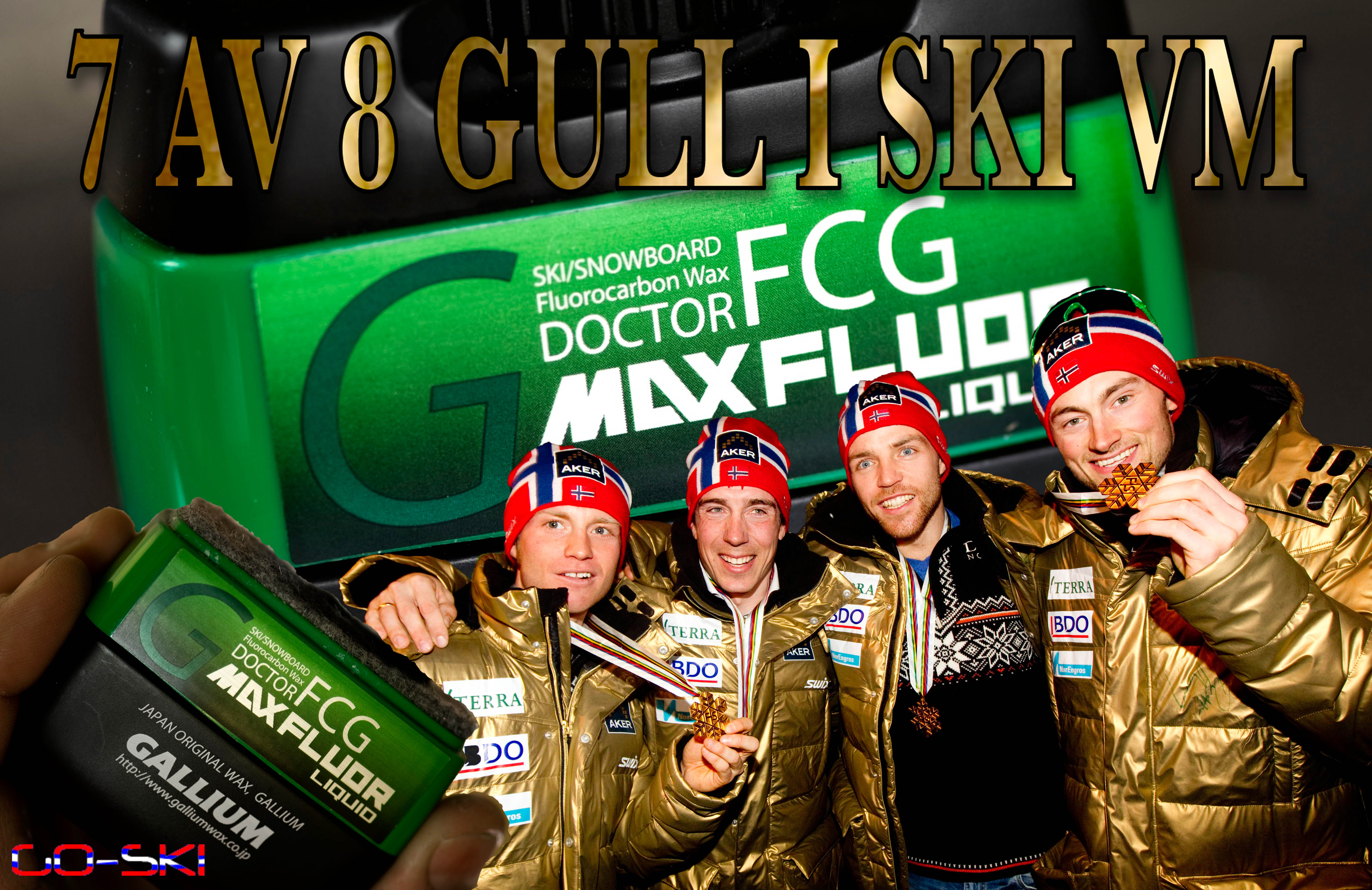
    Norway's Men at the 2011 World Championships – Gallium Wax was part of the recipe for their fast skis in Holmenkollen. (Photo illustration courtesy of Go-Ski Norway)


    Wax revolution

    Gallium wax is owned by the Japanese company DOWA Holding (primarily involved in metal manufacturing). Gallium is in fact a metal, and one of the ingredients in Gallium ski waxes, which has proven successful in humid and difficult snow.

    In a press release from the Norwegian Ski Association dated November 25, 2010, Nystad classified Gallium as a revolution: “Head wax coach Knut Nystad said the (Norwegian wax team) became aware of Gallium wax because Japanese cross-country skiers and Nordic combined skiers had exceptional glide during the 2009 World Championships in Liberec. According to Knut Nystad, Gallium’s liquid wax products Gallium DR, FCG, Maxfluor and Gallium Giga Speed are as close to a wax revolution as you can get.”

    According to Ghisafi, this is not the case.

    “That is just BS. (Gallium) is no revolution. The product has existed for ten years. And it’s no miracle,” Ghisafi said.

    The Gallium difference

    So if wax techs are willing to take each other to court over Gallium, what makes it so special?

    FasterSkier caught up with Frank Evertsen from Go-Ski Norway, the distributor of Gallium in Norway, to find out what’s so different about Gallium wax.

    For starters, seven of Norway’s eight gold medals at the World Championships in Oslo were won on skis waxed with Gallium. Sure, waxing for Holmenkollen is always somewhat of a best-guess situation, due to a combination of climatic conditions that makes the snow tricky both in terms of grip and glide.

    “The unique thing about the Gallium products Doctor FCG Maxfluor, Gigaspeed, and Gigaspeed Maxfluor Moist, is that they contain gallium and fluoro carbons,” Evertsen explained to FasterSkier.

    “The recipe delivers extreme durability – the wax easily lasts through the entire Vasaloppet, and provides excellent glide in humid to wet snow conditions down to minus six or seven degrees Celsius if the humidity is over 70 percent,” Evertsen said.

    Evertsen explained that Gallium’s composition reduces friction by altering the water drop configuration to where there is less contact surface between water and the ski bases, which results in better glide.

    “Additionally, the Gallium products are super-easy to work with because it’s applied to the bases after all the waxing and manual rilling is done. You can wax a pair of skis in 30 seconds,” Evertsen said.

    Not just slapping on wax

    Nystad explained to FasterSkier that fast skis are not just the result of one magical product, but careful process and tedious testing.

    “Gallium was used during the Oslo World Championships, but that’s not the most important element for me. It’s the process that leads to the answer that matters most. If the process is good, the right answer will automatically follow because we’ve done the right legwork and tested a lot,” Nystad said to FasterSkier.

    Nystad counts off his to-do’s and responsibilities as the head wax tech: finding the best skis in terms of the ski’s properties, pick out and zero out the ski test park in terms of structure, manual structure, products and grip, determine the best structure, determine the best manual structure, identify the best glide waxes, find the best powder and topping, identify the best grip base wax, the middle layer grip wax and top coat grip wax. Finally, Nystad is responsible for determining the optimal methodology for applying the manual structure, glide wax, powder, topping and grip wax.

    “All of these processes are running simultaneously. A small improvement in any and all of these can deliver a competitive advantage. There are a lot of products involved in this network of processes, which combined gives us the ’winning recipe.’ It’s possible that other nations were better than us in some of the processes, but overall, Norway did it well this time,” Nystad said.

    Never-ending process

    During the World Cup season, Nystad oversees a team of 12 wax techs, but only two of them are employed by the Norwegian Ski Association (NSF) year-round.

    “My job is to be the head wax coach for Norway’s national team,” Nystad explained.

    “What is most important to me is to help create and take part in the various processes so that we succeed in finding the best wax solutions we can for a given event,” Nystad said.

    The Norwegian wax team also uses service reps from the various brands, because they are experts on their own products and how to apply and optimize them, Nystad said.

    Evertsen is not on the Norwegian wax team payroll, but he is definitely a part of the NSF family, given that Go-Ski Norway is one of NSF’s partners and a part of the NSF Ski Pool.

    (Additional Sources: VG.no, http://go-ski.no)

  • Hunting Down The Golden Pairs

    Hunting Down The Golden Pairs

    Knut Nystad, Norway's waxing czar. Photo, Langrenn.com.

    This week, Norwegian wax techs and Head Wax Coach Knut Nystad are headed for the ski tunnel in Torsby, Sweden, with truckloads of skis and tools to find the optimal combinations.

    “Normally, the national teams have a training camp in the ski tunnel, but this year they don’t. So we decided to have a testing camp here on our own,” Nystad explains to www.langrenn.com.

    Testing and adjusting
    Although it is, as Nystad points out, not a national team camp, several of the national team skiers will be in the tunnel to help the test crew and get their own boards dialed. “We’ll go through all the skis in the current ski pool, as well as test any new skis the racers have received over the summer. In short, we’re doing inventory and fine-tuning the ski pool,” Nystad says.

    Representative sample
    What can the wax team learn from testing in a tunnel?
    “If you stay within the manufacturers’ ‘series,’ you’re fine. In our experience, those test results will correspond to what you’ll find on real snow,” Nystad replies, adding that he has already completed some of the initial testing for the upcoming season.

    “We started the testing at Sognefjellet in June, and we’re on track. We have constant conversations with the skiers and the wax techs. We got off to a good start. Now we need to decide how to continue the project with the racers and the wax crew”

    Continuous process
    There were some changes in the wax crew roster after last season, and the new techs presented some of their tricks to the racers during the national team camps at Sognefjellet.

    “We’ve added a few new faces,” Nystad says. “The new wax team is complete, and there are no changes after what we presented at Sognefjellet. Now we need to make sure we carry a healthy, active dialog between racers and wax techs. That’s a process that pretty much never ends.”

    Positive changes
    During the 2010 Olympics in Vancouver, a lot of the communication between the athletes and wax techs was delivered via the media. Especially in the beginning of the Games, when the Norwegian racers had sub-par results, there were a significant number of “ice clumps in the klister,” as Nystad put it. However, missed opportunities in the first few days evened out, and the racers regained their game as the Games went on. So despite the initial trouble, Nystad believes the wax team weathered the storm well and came away a stronger unit.

    “Over time, this was actually a really good experience,” he says. “The media seems to love creating scapegoats, but the relationship between the racers and the wax techs is a team effort. The racers rely on the wax techs, and the wax techs rely on the racers. During the Olympics, there was far too much focus on isolated details. But those are insignificant in the big picture.”

    “Overall, Norway was the top nation in cross-country skiing at the 2010 Olympics. We were also the top cross-country nation during the 2009 and the 2007 World Championships. We hope to continue that record on home turf for the 2011 World Championships this season,” Nystad said.

    Many contenders
    Although Norway’s skiers, coaches and wax techs are all doing their best to succeed in Holmenkollen–and surely have some home turf advantage–there are several contenders.

    “We’ll have a lot of bodies at Holmenkollen and in the surrounding areas this winter who will be testing relentlessly, focusing on the World Championships at home. But there are a lot of racers and wax techs out there all over the world wanting a piece of the podium, so you can’t take anything for granted,” Nystad says.

    These racers will be helping the wax crew in Torsby this week:

    Eirik Myhr Nossum (ski tester for Petter Northug jr.)
    Petter Eliassen
    Astrid Uhrenholdt Jacobsen
    Maiken Caspersen Falla
    Øystein Pettersen
    Anders Gløersen
    Eirik Brandsdal
    Kristian T. Rennemo
    Martin J. Sundby
    Simen Østensen

    From Langrenn.com, August 16, 2010. By Ivar Haugen, translation by Inge Scheve

    Testing skis at Sognefjell. Photo courtesy of Roman Toferer, Atomic.