From the FasterSkier archive — posts syndicated from athletes’ and coaches’ own blogs between 2004 and 2012, kept online as published. Current coverage is at fasterskier.com.

Tag: Kyle Bratrud

  • David Norris: Missing out on 2022 Olympic Team selection, “making the best of it”, and what’s to come.

    David Norris: Missing out on 2022 Olympic Team selection, “making the best of it”, and what’s to come.

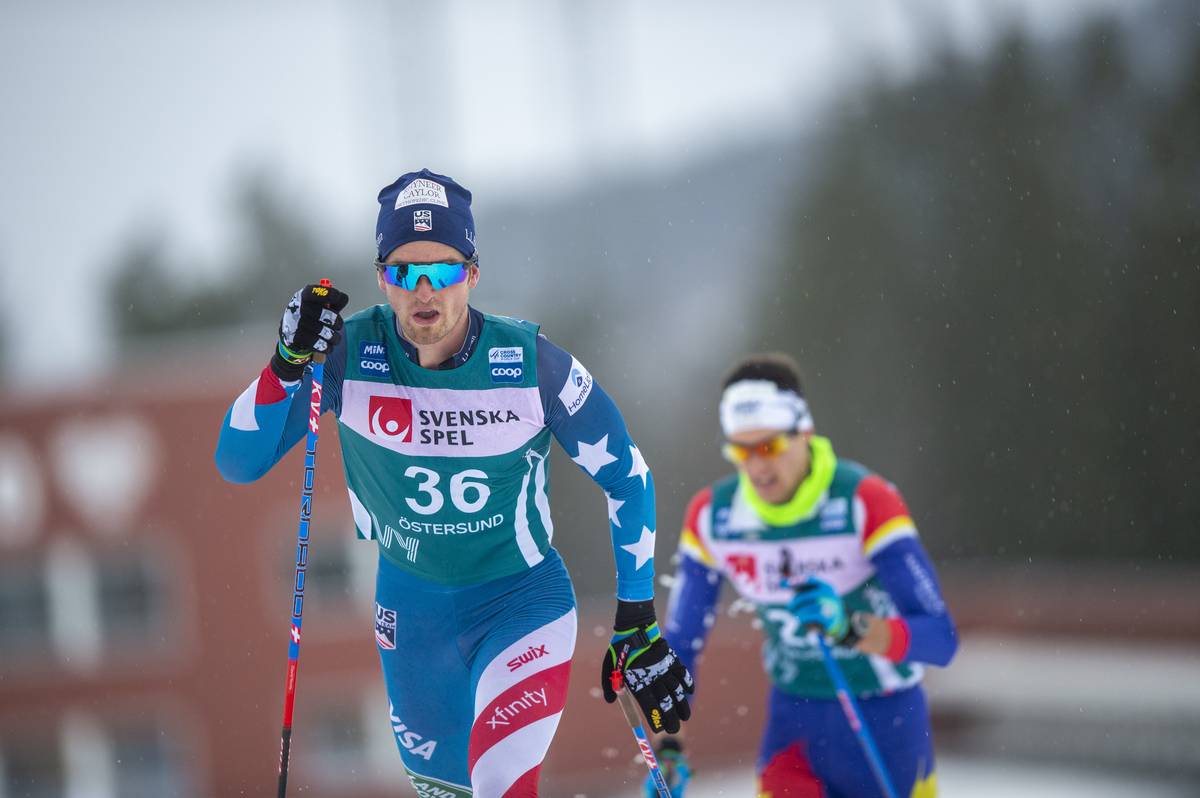
    David Norris skis to 34th in 15 k classic pursuit in Östersund, Sweden in February, 2020. (Photo: NordicFocus)

    It’s hard not to root for David Norris. 

    Often affectionately described by Devon Kershaw as a “grinder”, the humble 31-year-old Fairbanks, AK native has been an eternal underdog, despite consistently performing among the best American distance racers of his generation on the World Cup. Highlighting his career, Norris has finished in the top-20 three times during his appearances in the 2019 and 2021 World Championships. His best result arrived in last year’s Championships in Oberstdorf, Germany, where he placed 16th in the 50 k classic and 17th in the 30 k skiathlon. 

    Although Norris has been routinely been offered World Cup starts over the last five seasons, he has consistently hovered in the liminal space just behind the cutoff when it comes to selection to the U.S. Ski Team, whose age based-criteria becomes tougher to achieve over time. Given his birth year of 1990, Norris needs to be ranked in the top-40 in the world according to his FIS points from the previous season to be named as a B-Team athlete. In 2020, the margin by which he came up short was incomprehensibly small; a mere 0.88 FIS points, equivalent to eleven seconds in a single race during the season, left Norris ranked 43rd in the distance standings in March of that year.

    Without financial support from the US Ski Team, Norris forged on, relying solely on his personal sponsors.

    Read more on age-based criteria here, or take a deep dive into FIS points and Norris’ circumstances here. 

    Then, as the 2020/21 World Cup season loomed the following November, Norris contracted COVID-19. At the time, there was little information available on how elite athletes should return to training and competition following a coronavirus infection and what the risks of an expedited return might be. While more is available currently, the message has not changed: use caution and take it slow. 

    Consequently, Norris sat out Period 1 and the Tour de Ski, making his World Cup return in late January 2021, finishing 32nd in his first race back – a 30 k skiathlon in Lahti, Finland, roughly one month shy of the Oberstdorf World Championships. Despite two top-20 finishes in Oberstdorf, where he was also the second American, behind only his APU teammate Scott Patterson, Norris was again left off the US Ski Team in the spring of 2021. The decision inspired one of his competitors, Craftbury’s Ben Lustgarten, to pen an OpEd to campaign for Norris’s ex post facto discretionary nomination to the team. 

    David Norris fist bumps a competitor after finishing 17th in the 30 k skiathlon during the 2021 World Championships in Obsertdorf, Germany. (Photo: NordicFocus)

    Heading into the 2021/22 season, Norris had a goal of making the Olympic Team, but he knew that, once again, the odds were not likely to be in his favor. The US had just five guaranteed quota spots for Beijing, with a likely sixth on the table.

    If you’ve found your way to this story, you likely know how Norris fared.

    After a solid summer of training, Norris started upon his usual trajectory of sub-optimal early season races, which generally progress to peak race results in February and early March. In November, Norris was 37th in the 15 k freestyle pursuit in Ruka, Finland, skiing the 27th-fastest time of day, but he never cracked the top-30 to score World Cup points in Period 1. Heading back to the States to race in the U.S. Cross Country Ski Championships in Soldier Hollow in January, his results began to trend upward. Though he’s always excelled in distance, he took 7th in the freestyle sprint, after qualifying second. Then, two days later, he was second in the 30 k mass start skate, 11 seconds behind winner Scott Patterson. 

    Twelve days later, in the final race weekend before the Olympic qualification period ended on January 16th, Norris won a 15 k individual start classic at the Lake Creek Nordic Center in Ketchum, ID.
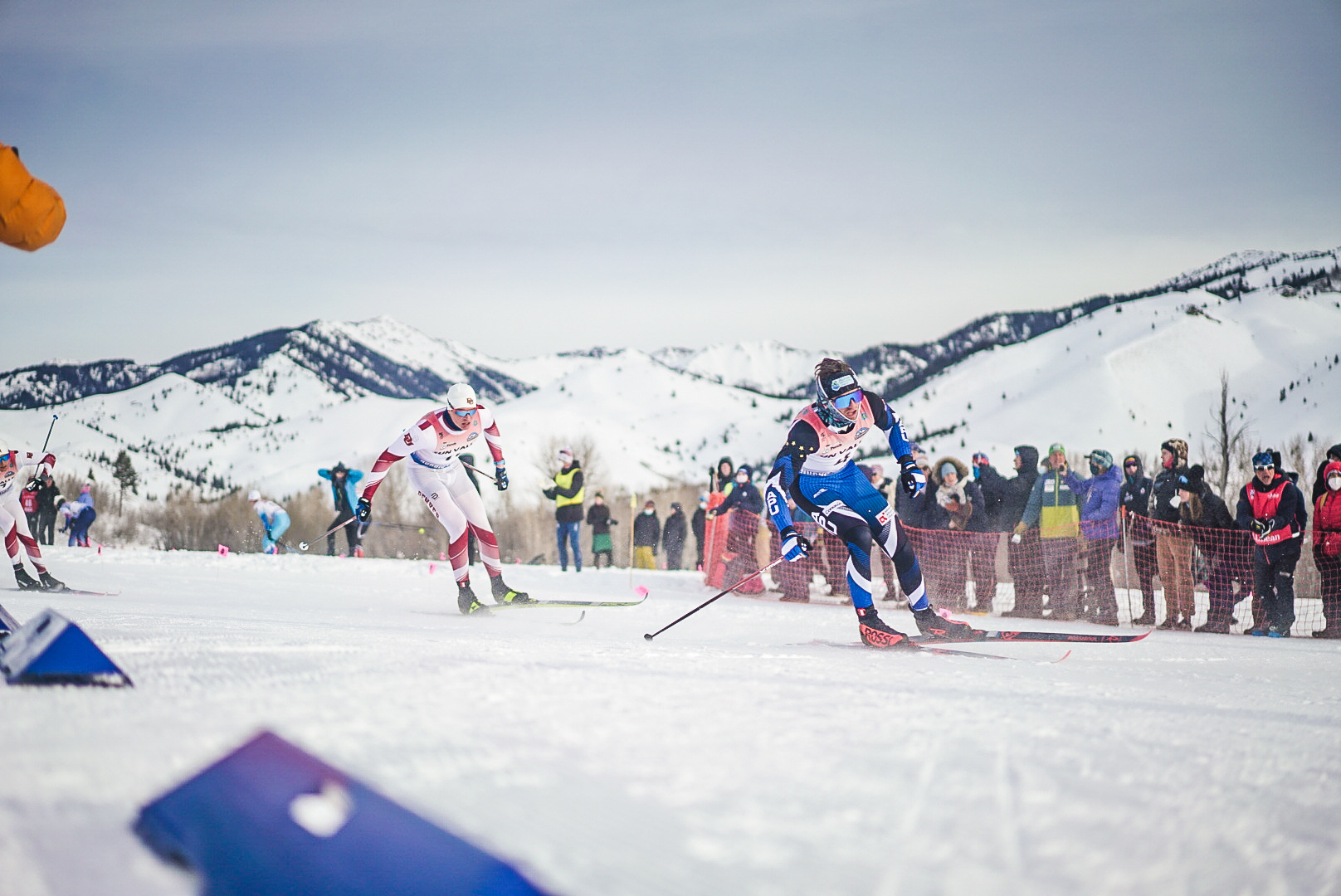
    David Norris leads the way through a corner on his way to a win in the SuperTour 15k mass start classic in Sun Valley. (Photo: Tobias Albrigtsen / @untraceableg)

    On January 20th, U.S. Ski & Snowboard announced the 2022 Olympic Cross Country Team, and Norris’ name was not on the list.

    This background is not intended to imply Norris should have made the 2022 Olympic Team. Rather, the intent is to highlight his candidacy to frame an interview on Friday, February 25th, the day before the 2022 American Birkie, in which Norris discussed the experience of falling short of his Olympic goal, how he “made the best of it”, and what his next steps are as he begins to shift his focus away from the World Cup.

    Returning to the team announcement, Norris explained that although he was disappointed, not being selected was not a surprise given the selection process that had been outlined. He shared that “there was no dialogue at all” with US Ski Team coaches leading into the announcement, but that it also had never felt “closed”, either. 

    Following his second place finish in the 30 k skate in SoHo, Norris had written to FasterSkier “Every season I ski much stronger in February and March, so I’m sure good form is on the horizon, but that doesn’t help me achieve my goals when I need to be skiing well right now. All I can do now is focus on the 15 k classic coming up and then rest and prepare for the next races.”

    As he acknowledged, an emphasis was placed on strong early-season results, which he did not post, and he had not expected that his historic championship results would be factored into decision making. That said, as a distance skier, looking at a Games which would be held at altitude on challenging courses that would “basically reward people who are very fit”, it was difficult to recognize he’d never have the opportunity to put his strengths on display.

    “It was tough,” Norris said simply. “Seeing that the criteria kind of rewarded 15 k races, when two out of four individual races [at the Olympics] were 30 and 50 k for the men. And yeah, I was aware of it all, but it kind of sunk in just during the Olympics and watching.” 

    Of the six men who met the outlined objective criteria and were named to the Olympic team, four were primarily sprinters: JC Schoonmaker, Kevin Bolger, Ben Ogden, and Luke Jager. However, each started in either the 15 k classic or the 4 x 10 k relay, in addition to the two distance racers, Patterson and Gus Schumacher. 

    “But I still cheered my heart out for the guys who made it,” Norris added emphatically. “I don’t hold anything against the guys who are nominated. All congratulations to them — no personal difference against those guys. Everyone who went is a good friend, and I’m stoked for them.”
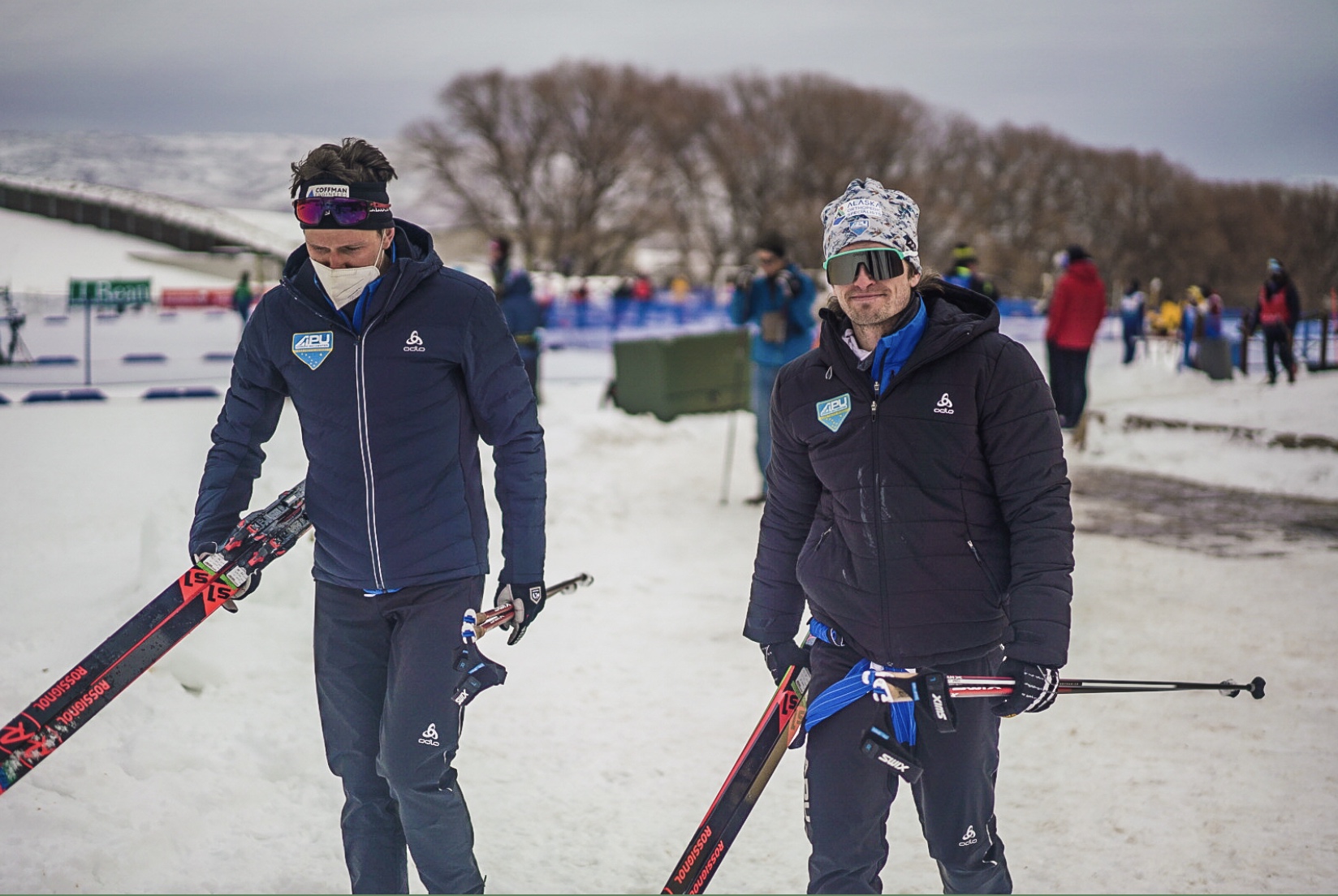
    APU teammates Scott Patterson (left) and David Norris (right) head to the start of the men’s 30k mass start freestyle at the 2022 U.S. Cross Country Championships in Soldier Hollow, UT. (Photo: Tobias Albrigtsen / @untraceableg)

    When weather shortened the men’s 50 k skate to a 30 k, Norris watched his APU teammate Patterson race to 8th place, an historic result for the American men, second only to Bill Koch who earned an Olympic silver medal and a 6th-place finish in Innsbruck, AUT in 1976. As mentioned previously, roughly six weeks prior, Norris had finished 11 seconds behind Patterson in a 30 k mass start skate at a similar elevation in SoHo. Though four start spots were available for each nation in the Olympic 30 k, Patterson was the only American in the race that day. 

    Never one to say “woe is me”, Norris chose not speak directly to the experience of watching that race. Instead, he recognized that he was not the only strong and fit American distance skier who did not make it to Zhangjiakou. 

    “There were such limited spots for the men’s quota that, no matter what happened, good skiers were gonna get left behind. But yeah, just given that three out of four individual races are distance, and the relay’s distance, it was kind of a bummer to see them not give any priority or emphasis to distance where we could have accumulated probably the best results. I think the 30 k (skate) at Nationals and 15 k (classic) at Lake Creek in Sun Valley, kind of showed where the fitness stacked up in the U.S. field. And I think mass starts are one of those places where you can’t really hide your form — you see how fit people are. And yeah, Scott and I are really similar and we train together, and I think it just kind of came down to –

    I trained for chasing a goal of a top 10 at the Olympics, and it was far harder to make the team than to actually probably reach that goal… But it’s just limited spots and tough how it came down.”

    David Norris wins the 15 k mass start classic in Sun Valley, ahead of his APU teammates, Hunter Wonders and Scott Patterson. (Photo: Tobias Albrigtsen / @untraceableg)

    Norris is not the first person to be left off an Olympic team who was perhaps qualified and deserving of a spot. Every four years, FasterSkier reports on those just behind the cutoff, which often sparks impassioned responses from fans supporting athletes on both sides of the bubble. 

    For Norris, this means outreach and support from a number of athletes who had been in the same situation and could share perspective from a place further removed from the moment. 

    “People have been super encouraging. One of the guys who made it based on the criteria but wasn’t taken four years ago reached out and said, ‘Use this as your secret weapon — you chase goals and come up short. And that’s kind of the way it works out more often than not, and you learn a lot from from that.’ Based on some of the encouragement from people in similar spots, it was really reassuring to hear their words and realize that the last four years or the last eight years pursuing a goal, it wasn’t a waste just based on a single selection. 

    And maybe there’s been moments where I have to kind of lie to myself that that’s the case, but I genuinely believe it. I don’t regret going for the Olympics, and then coming up short on my goal, it’s all been a positive experience for me.”
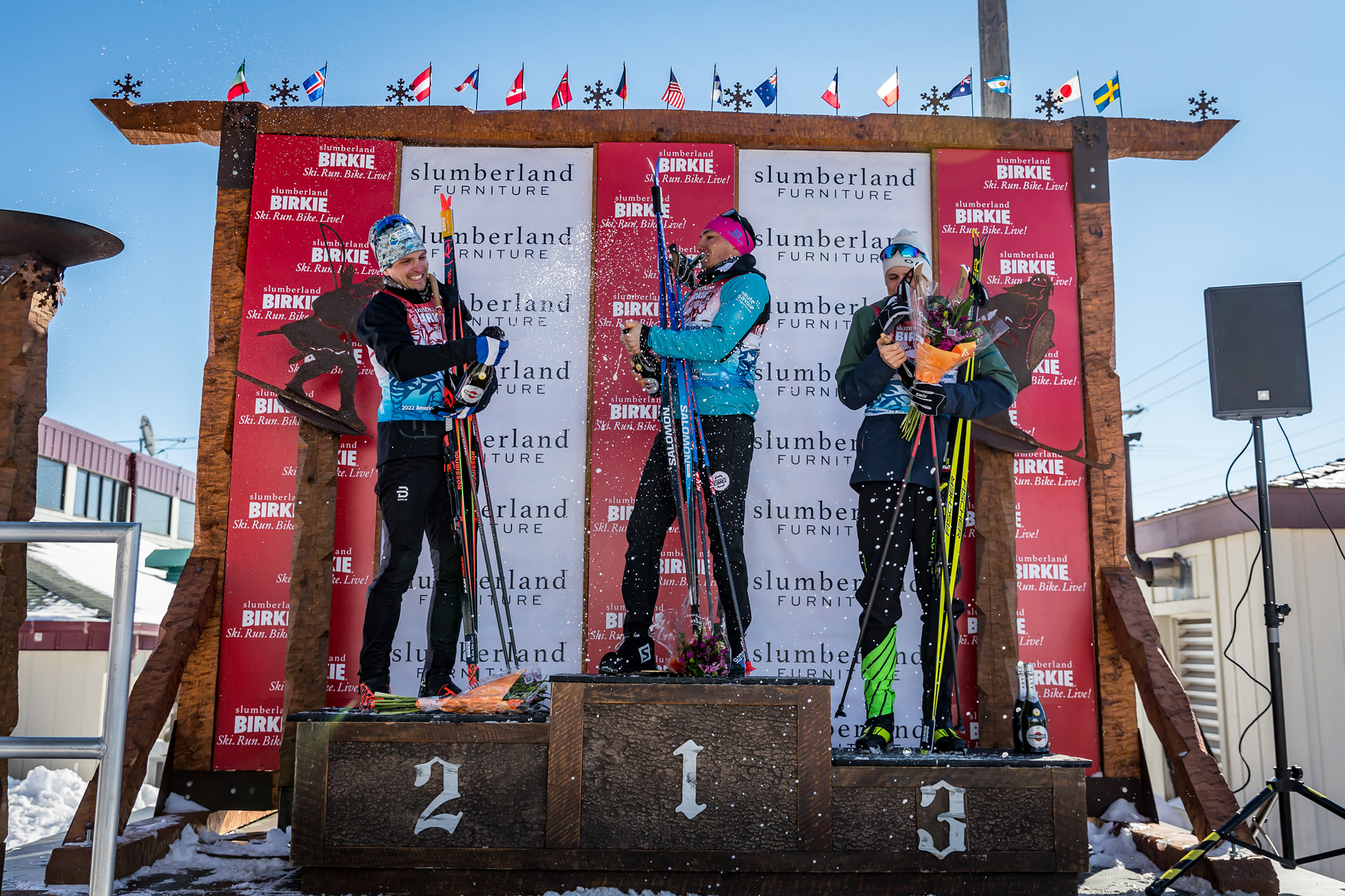
    Champagne spraying on the 2022 men’s American Birkebeiner podium, where David Norris (left) was edged out by France’s Gerard Agnellet in a boot slide at the finish. (Photo: ©2022 American Birkebeiner Ski Foundation)

    In the post-Olympic 50 turned 28 k episode of the Devon Kershaw Show, guest Kris Freeman, who spent years at the top of American men’s distance skiing, was critical of the American program’s lack of support of men’s distance skiing. Freeman pointed out that Patterson was the “only guy of his generation that got any U.S. Ski Team support.” He then added, “in the last six years, it’s been like, ‘Well, we got [Gus] Schumacher and Luke [Jager], let’s just wait till they come up.’”

    Though perhaps in a less outspoken and direct manner, Norris affirmed Freeman’s sentiments, acknowledging the challenge many of this country’s top distance racers have faced in funding the career longevity often required to reach peak potential as an endurance athlete. 

    “I couldn’t do it without my personal supporters because there’s nothing coming from the national team. And there is definitely that sense of, like, Scott’s in the system. They’re hanging on to him, and he’s producing awesome results. But then, yeah, I think Freeman’s words are pretty accurate, I guess.” 

    Norris pointed to the U.S. Ski & Snowboard mission as a root of the challenge. The header on the cross country team page states: “We’re built around one common goal—provide the right resources for athletes who are inspired to be the Best in the World.” Though he was seen as one of the best in the US, his trajectory was arguably not one that was likely to produce Olympic or World Championships medals, a focal point of U.S. Ski Team selection criteria.

    The introduction to these criteria reads: “The U.S. Ski Team will select only the most qualified athletes with the greatest possibilities for winning medals in future World Championship and Olympic Winter Games competitions. Selection criteria will stress performance in the Olympic Winter Games, World Cup and the U23/World Junior Championships in the 2021-22 season. Selection criteria will also stress progress toward individual performance markers, set forth by the U.S. Ski Team coaches, which point toward international success.”

    David Norris cracks the top-20 with a 17th place finish in the 2021 World Championship 15k/15k skiathlon in Oberstdorf, Germany. (Photo: NordicFocus)

    The statement perhaps clarifies the philosophy that has kept Norris from meeting objective criteria for the team. Though he has been an asset to the distance program, and was likely to post some of the top American distance results during the Games, his potential to earn future medals was lower than a younger budding athlete with strong World Juniors results, like Schumacher or Jager. While this could be sensible from a long-term investment perspective, it may also push some of the top distance athletes out of the sport at young ages, typically thought to be prior to when one reaches his or her physical peak for endurance racing.

    One might look at Rosie Brennan who at 33 years old, and after having been left off the U.S. Ski Team on two separate occasions, is coming off a second season as a regular podium threat, with a growing list of top-10 results and a string of performances in Zhangjiakou that, though just shy of a medal, were collectively among the all-time top-three Olympic performances by an American cross country skier. Without Diggins’ results in PyeongChang and Beijing, they’d be the best. 

    Or, on the other side of the coin, Kyle Bratrud had won four National Championship titles between 2015 and 2020, and placed 31st at the 2019 World Championships, popping a World Cup top-30 a weekend later, but he retired at 26, in part because US Ski Team support seemed unlikely and the costs associated with starving for the World Cup didn’t check out in the cost-benefit analysis.

    Read and listen to more on Bratrud’s take on development pathways, support and age-based criteria, and retirement here. 

    “It’s kind of brutal, over the last four years, to have had the best [American distance] result [in the 50 k at] World Champs in Seefeld, and two top-20s at World Champs last year. Half the men’s team was discretioned [onto the US Ski Team] last year, and to not get any support through those years…” 

    Norris started and stopped a few times, carefully weighing how much he wanted to say to the small tightly-knit ski community, before laughing that he was beginning to ramble. He then continued, “I think the Olympics kind of showed that… I feel like people are wondering what happened with some of the results, but I think you could have predicted that by looking at their course profile and the altitude and how people performed in similar settings. And it seems like it’s really good to invest in the young guys but also to give support to the older guys and have us produce good results helps pave the way as well. And it seems like that aspect is getting severely neglected. And if Scott were to quit next year, then there’s a huge gap to fill.” 
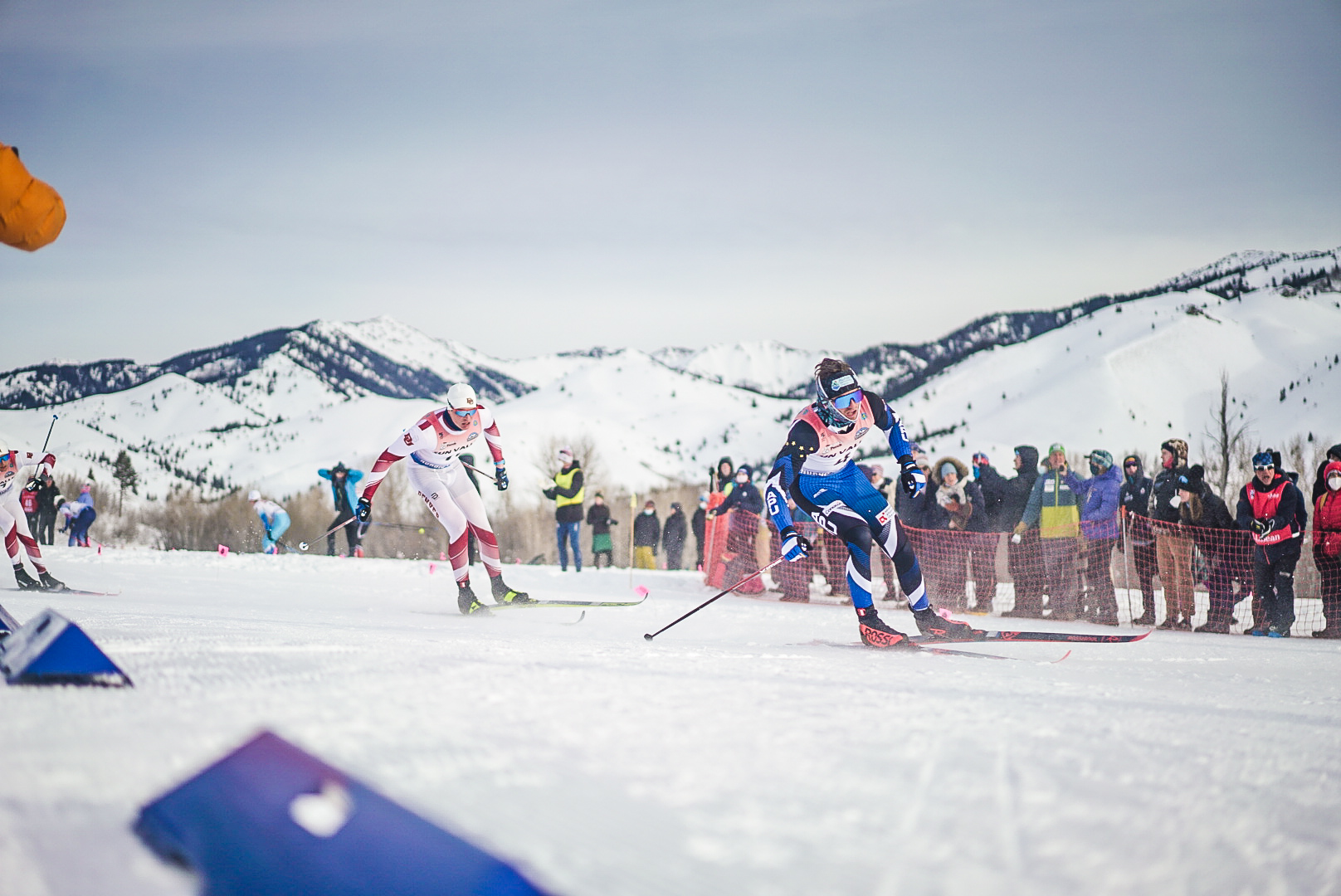
    David Norris on course during a 2022 SuperTour race weekend in Sun Valley, ID. (Photo: Tobias Albrigtsen / @untraceableg)

    After competing in the SuperTour races in Sun Valley with his APU teammates, Norris found himself in limbo. He recognized he was highly unlikely to be named to the Olympic team, but had not received information or been contacted by US Ski Team coaches to confirm that this was the case. 

    “Before the nominations were announced, we [essentially] knew the team [that was] going based on COVID protocols.” 

    APU teammates Patterson and Brennan both raced in Sun Valley, along with Scott’s older sister Caitlin Patterson, who trains and races with the Craftsbury Green Racing Project and was also named to the Olympic team. Brennan returned to her childhood home in Park City, while the Pattersons headed to Bozeman, MT to create a lockdown bubble with their parents.

    Seeing the writing seemingly on the wall, Norris also headed to Bozeman, where his partner Jess Yeaton’s parents currently reside. Both Norris and Yeaton graduated from Montana State University in Bozeman, and he calls the area his “favorite training grounds.” With ideal conditions and nice weather, Norris cleared his head while logging hours on trail. 

    “Since I didn’t have the Olympics to focus on or peak for, I just took advantage of the good skiing there and was skiing like four to five hours a day, just enjoying being in the sun and, kind of, having the like stress and the weight off my shoulders of the Olympics. It was kind of cool, because I think I skied so much, I just realized that I ski because I love it not because of one single goal or because I’m trying to prove anything to anyone or, you know, make one person proud. It was good, just to ski and enjoy it.”

    Norris looked at the calendar and saw that he could hop into both the Boulder Mountain Tour in Sun Valley and a 30 k classic at Crosscut in Bozeman. And though he thought he might have “overcooked” himself logging all those hours in Bozeman, Norris won both races.

    “The past few weeks skiing with friends assures me that I love skiing and all the people involved in it… and that’s why I do it,” Norris wrote in a post-race Instagram post. 
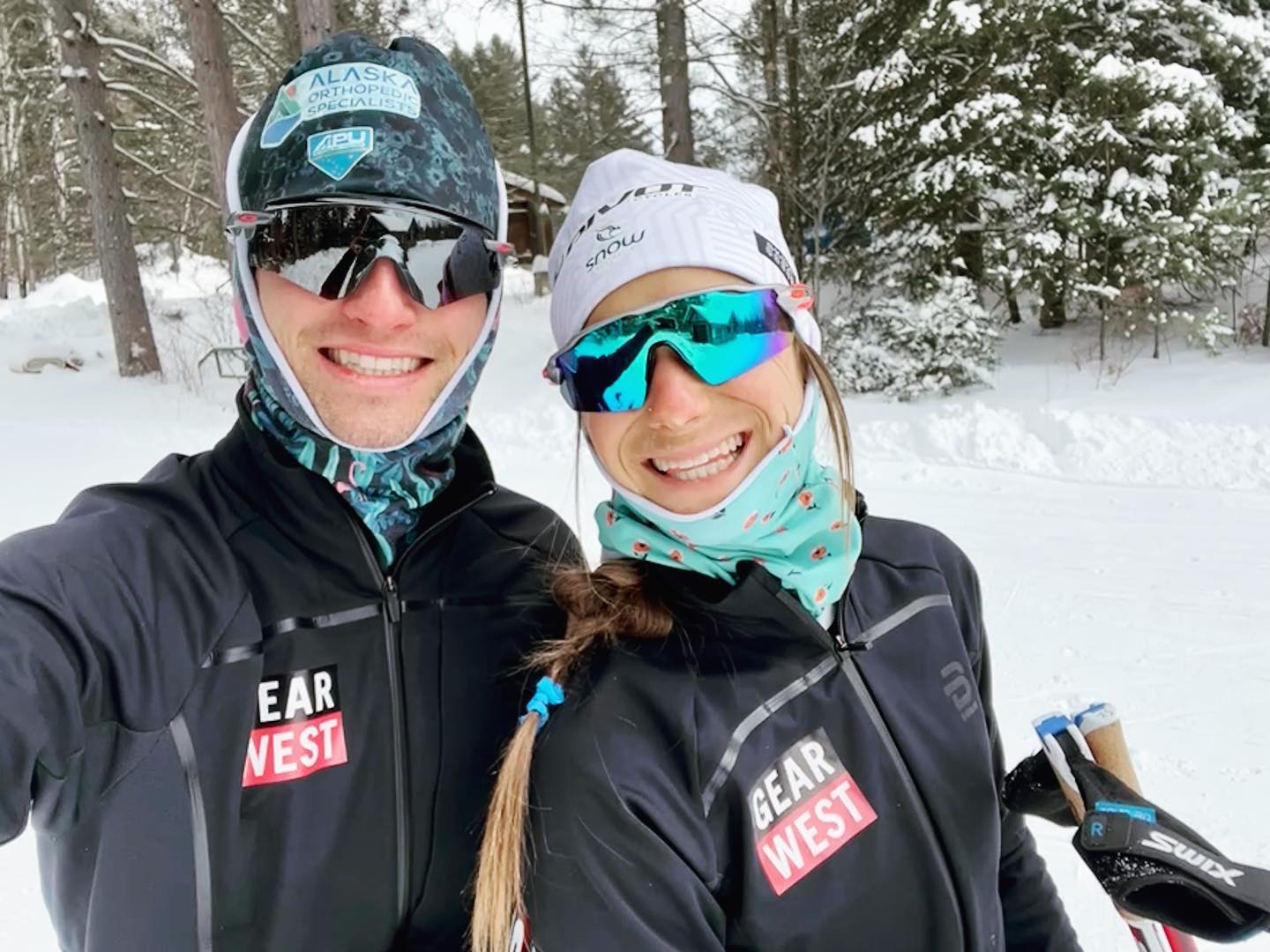
    David Norris and his partner Jessica Yeaton prepare for the American Birkie after Yeaton returned from competing for Australia at the 2022 Beijing Olympic Winter Games. (Photo: Instagram @grandmasternorris)

    “I think he’s having a really good time, actually,” Norris’ partner Yeaton told FasterSkier in an interview in Zhangjiakou during the Games. “Going around and racing all these races, and he’s just been reconnecting with people. I truly do think he is enjoying it… I think it’s definitely been a big bummer for him, but he’s also — he’s the best at making a good situation out of anything. He’s just not a negative person by nature. He’s out there racing all these races, having fun… there’s definitely something good that’s come out of the spring for him, for sure.” 

    As the time of the call was within 24 hours of the Birkie start, it was yet to be seen that Norris, the 2016 Birkie champion, would this year take second in a thrilling showdown on Main Street in Hayward, WI, losing to Gérard Agnellet of France in a boot slide at the finish. Norris had scaled back on the self-indulgent distance skis in Bozeman, foreshadowing what would come with the following explanation.

    “After the [Boulder Mountain Tour], I kind of shut it down and kind of found enjoyment in being a little lazier. And I think that should give me some fresher legs for the Birkie, I hope.”

    A week after the Birkie, Norris and Yeaton took home a matching set of wins, and massive chocolate Easter bunnies, at the Tour of Anchorage.

    David Norris and his partner Jessica Yeaton, both APU athletes, won the 2022 Tour of Anchorage. (Photo: Instagram @jjyeaton)

    His next steps remain in flux.

    “Since there’s not really a spot for a 20th to 10th place skier — like, [US Ski & Snowboard] doesn’t want that on their team, it seems — I’m kind of not that incentivized at all to spend time on World Cup and keep fronting a bill from the U.S. Ski Team.” 

    With this shift in focus, Norris remains open-minded, explaining that his ski racing plans next winter somewhat hinge upon where Yeaton finds a physical therapy job once she finishes her clinical rotations to complete a doctoral program through University of New Mexico. The two will be stationed in Colorado and Utah through the fall, which may set Norris up for opportunities to compete in trail running races that have not previously fit into his ski preparation plan. 

    Norris has a track record of strong finishes in Alaska mountain running races. Amidst three wins, he holds the course record at the infamous Fourth of July Mt. Marathon race in Seward, beating a time posted by the seemingly superhuman alpinist phenom Kílian Jornet of Spain, and has won the Cirque Series race at the Alyeska ski resort along with a smattering of other regional trail running events.

    “I’ve never wanted to spend money on running because I’ve always just put any money I’ve earned and sponsorship dollars towards skiing. And you know, there’s plenty of races in Alaska, so I didn’t need to travel, but now I’ll be at altitude in Colorado and Utah. There’s so many races to jump into.” 

    Should they end up spending next winter in a location that allows for quality ski training, Norris anticipates that he’ll continue to race, but the focus will be different. 

    “I think our lifestyles are such that we would be training a ton, just because that’s what we enjoy doing. And then I would 100% keep jumping into races. But my goals are definitely changing… So probably do less [international racing] and just enjoy ski racing and do it more locally.”
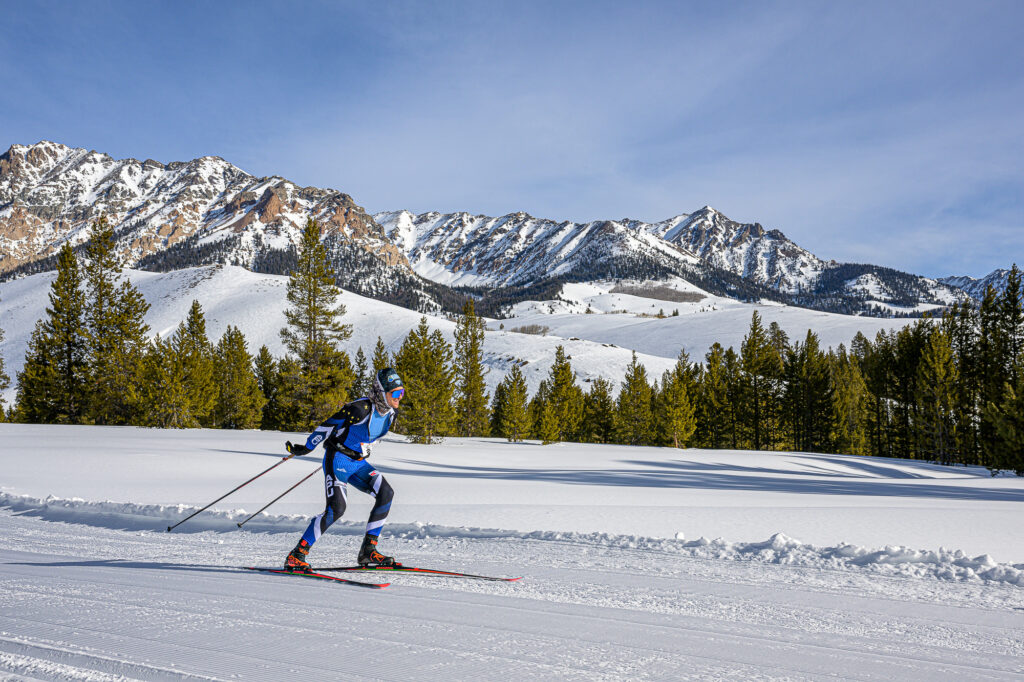
    David Norris on his way to winning the 2022 Boulder Mountain Tour in Sun Valley, ID. (Photo: Nils Ribi Photography / Boulder Mountain Tour)
  • One For Your Bucket List: Crested Butte’s Alley Loop Marathon

    One For Your Bucket List: Crested Butte’s Alley Loop Marathon

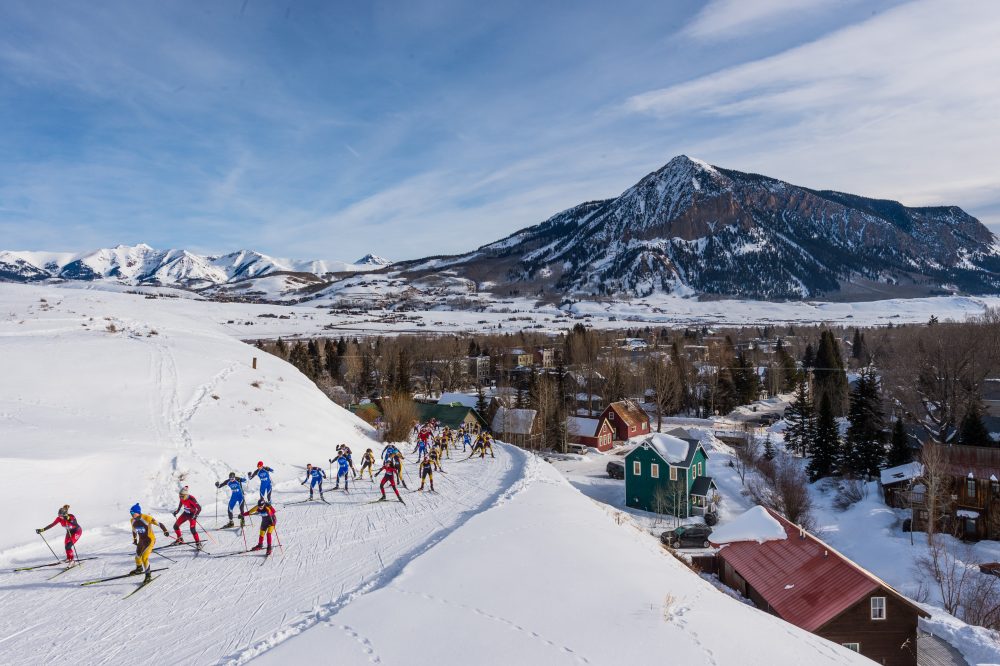
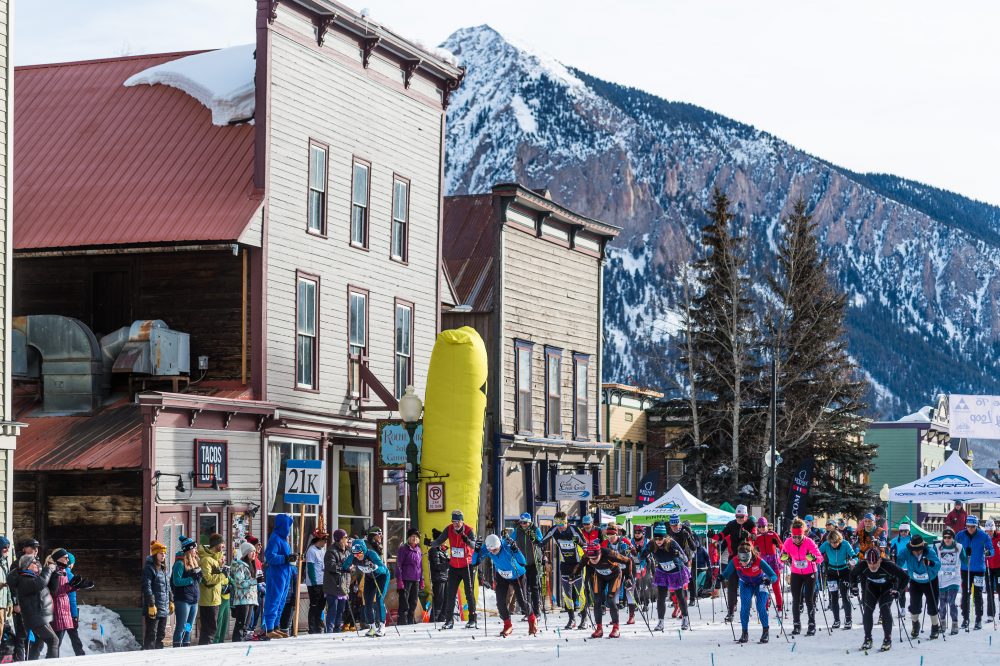
    Sent off in style: skiers take to the course during the 2020 Alley Loop Marathon in Crested Butte, Colorado. (Photo: Xavier Fane/CB Nordic)

    Rounding the final turn off Butte Avenue toward the Slate River Valley at the start of the second and final lap, I had my eyes peeled for a ride. There: the man dressed in a Birkebeiner-esque sweater with suspenders fastened to his Swix pants just beyond the — is that the Jamaican bobsled team?

    This is Crested Butte’s Alley Loop, titled a “Birkie qualifier with a twist”, a moniker that falls far short of capturing the infectious energy of this unique event. With four race lengths to choose from plus options for kiddos, the Alley Loop brings together a community of skiers of all ages, abilities, and costume intricacies. 

    Not convinced your whole party will want to race? There is a full weekend of offerings from the Elk Avenue Pub Ski Friday night where you and a group of friends can ski bar-to-bar in costume, completing quirky challenges and earning points on your scorecard along the way, to a casual Sunday brunch tour out to the Magic Meadows yurt. Unless you are averse to recreating in a beautiful place or indulging in good food and drink with friends, you will have fun at this event. 

    Nestled into the southern edge of Colorado’s Elk Mountains at 8,885 feet, the town of Crested Butte has preserved its integrity as a small and sleepy western town (along with steep real estate prices) with unlimited offerings for the outdoor junkie. For cross country skiers, this includes over 50 kilometers of groomed, variable terrain, trail: rolling meadows, steep climbs and descents, and gently graded beginner-friendly tracks, all with a jaw-dropping backdrop. In fact, the town is aptly titled “the Nordic Ski Capital of Colorado.”

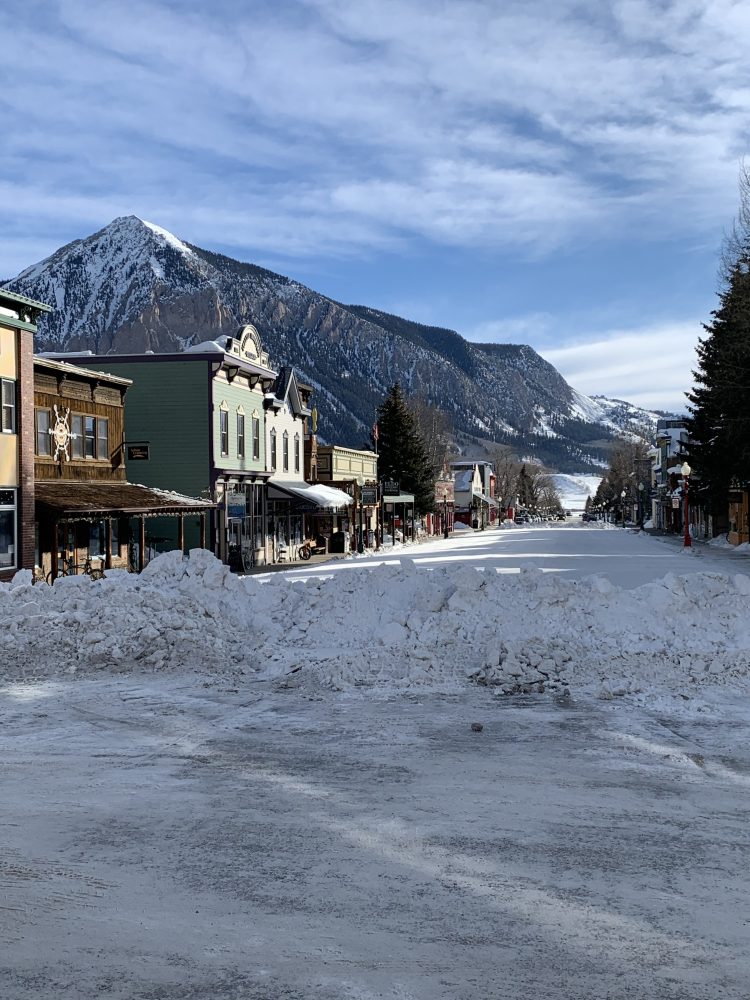
    On the first weekend in February, the streets and alleys of downtown Crested Butte are transformed from a snow packed grid to a meandering strip of corduroy, welcoming skiers to the “best costume party of the year.” And they mean it. Though the origin of the tradition is unknown (perhaps some lingering 70’s and 80’s party culture at play?), the town takes advantage of every opportunity to play dress up. Word on the street is, “everyone in Crested Butte has a costume box”.

    While you may see a few tie-dye t shirts, retro race suits, and other small touches that are minimally impactful to aerodynamics on the race course, you will also note the full cast of Alice in Wonderland, Cleopatra and King Tut, a pair of blow up giraffes, and the garish orange 45th president skiing in jeans. 

    In the heart of Crested Butte, racers take to the course at the start of the 2020 Alley Loop. (Photo: Xavier Fane/CB Nordic)

    I found myself struck by how much different this was from any event I had experienced. Competitive skiers there to ski fast and breathe hard blended amongst the larger population who were celebrating the simple joy of sliding on snow in a beautiful place with good company. 

    Director of Marketing and Development at Crested Butte Nordic Laura Puckett Daniels put it simply. “It’s ALL cross-sections of the whole community, not just nordic skiers in the nordic community.”

    What does this event do for the Crested Butte community and how does the town pull it off? More on that later, but first: the race. 

    Though both techniques are offered at the 21 and 42 k distance, it is perhaps a skater’s course, and this is where you’ll tend to find the larger and more competitive field. Case in point, the 42 k skate was won by Kyle Bratrud (SMS T2) for men and Rosie Frankowski (APU) for women. (You can listen to Frankowski’s thoughts on the event here.)

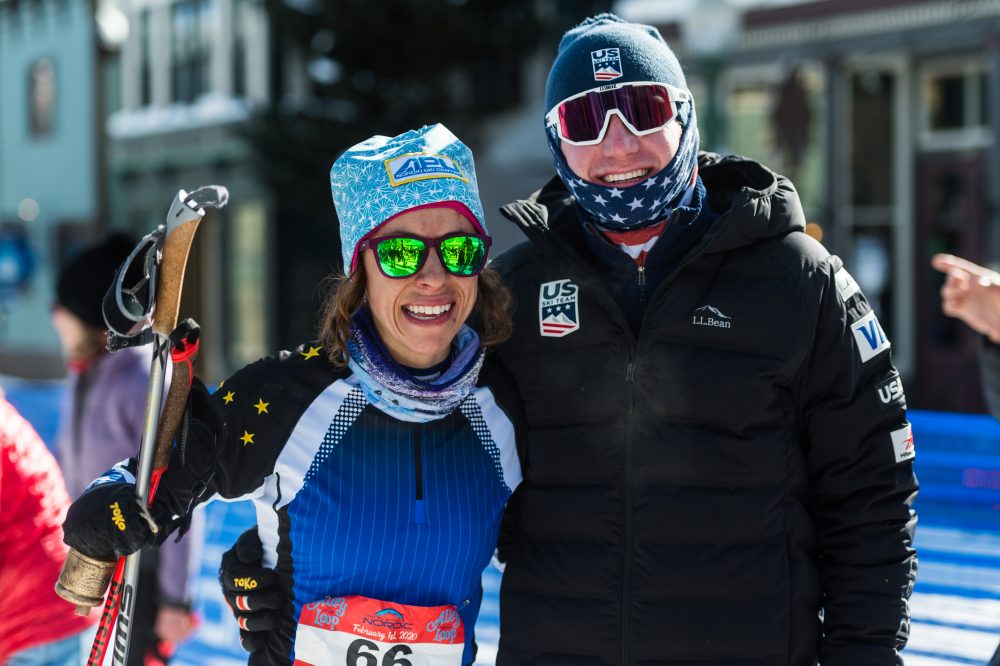
    Alley Loop 42-kilometer skate winners Kyle Bratrud and Rosie Frankowski. (Photo: Xavier Fane/CB Nordic)

    Shorter skis also make it easier to navigate the narrow alleys and bridges through town, and allow for top cruising speed through the gently undulating terrain found on the bulk of the course as it winds through the meadows of the valley floor.

    The course and profile of the 42-kilometer Alley Loop marathon in Crested Butte, CO. (Photo: cbnordic.org)

    If you do plan to kick and glide, be prepared to do a lot of double poling and kick double poling. With only one significant climb per lap (four total) on the 21 k course and two per lap (six total) in the full marathon, the Alley Loop has far less vertical than the Birkie, the Lake Placid Loppet, or the Craftsbury Marathon. Granted, you’re racing close to 9,000’, so your body and lungs will feel it regardless!

    Depending on how fruitful the winter has been, the snow in town can be a little dirty and gravely, and it’s good to consider the calculus of ski selection. Know that you may come away with a few dings in your boards from the roughly 1 k section in-town, but the vast majority of the course will be immaculate. If your race boards are due for a grind and the snowbanks indicate the generosity of Ullr, send it. 

    Anecdotally, we had a fairly unremarkable winter and the snowpack in the Elk Mountain region sits close to the median. The course was immaculately prepared, though the section in town did erode by the end of my second lap. I chose to race on an older pair of race skis, which accrued a few minor scratches — nothing in any way alarming. (Side note: the available wax service made these skis ripping fast and very fun to ski!) 

    Because of the street closures and parking limitations incurred by laying a race course through the streets of a small mountain town (and to take full advantage of pre and post-race celebrations), it can be very helpful to stay within walking distance of the start line or to rely on public transit.

    A narrow footbridge takes racers from town toward the Slate River Valley in Crested Butte. (Photo:Xavier Fane/CB Nordic)

    I had a wonderful stay at the Elk Mountain Lodge, just two blocks off Elk Ave, along with several other Alley Loopers. The home-cooked breakfast was delicious and the community style table around which it was eaten fostered conversation with the other skiers who had also traveled to Crested Butte for the event. Being so close to the start, it was also possible to get out for a warm up ski, then de-layer and stay warm inside the lodge until the last minute — totally clutch as temperatures had only reached the low teens by go time!

    One final note on the race. At the start of the 21 k, a race official noticed the all-male start line and invited any female podium hopefuls to take a spot either in the front of one of the many start lanes or to start between two lanes staggered just behind the front row. As the double pole start turns quickly into a sprint to the base of a steep climb, early positioning is important, and as someone looking to race near the top of the field, I greatly appreciated this nod. Kudos to the Crested Butte Nordic Counsel for looking out for and supporting fast women! (The 21 k skate was won overall by APU’s Becca Rorabaugh.)

    Back to the spirit of the Alley Loop, which is arguably the most compelling reason to make the trip. To better capture its energy and do justice to what it takes to pull off such a feat, FasterSkier spoke with head groomer Dean Davis.

    A sno-cat lays perfect corduroy and track through a sleepy alley. (Photo: Xavier Fane/CB Nordic)

    “It’s just so cool to groom your town,” said Davis. “That is something that is just so unique, that not a lot of cat operators get to do. I love that aspect of it.” 
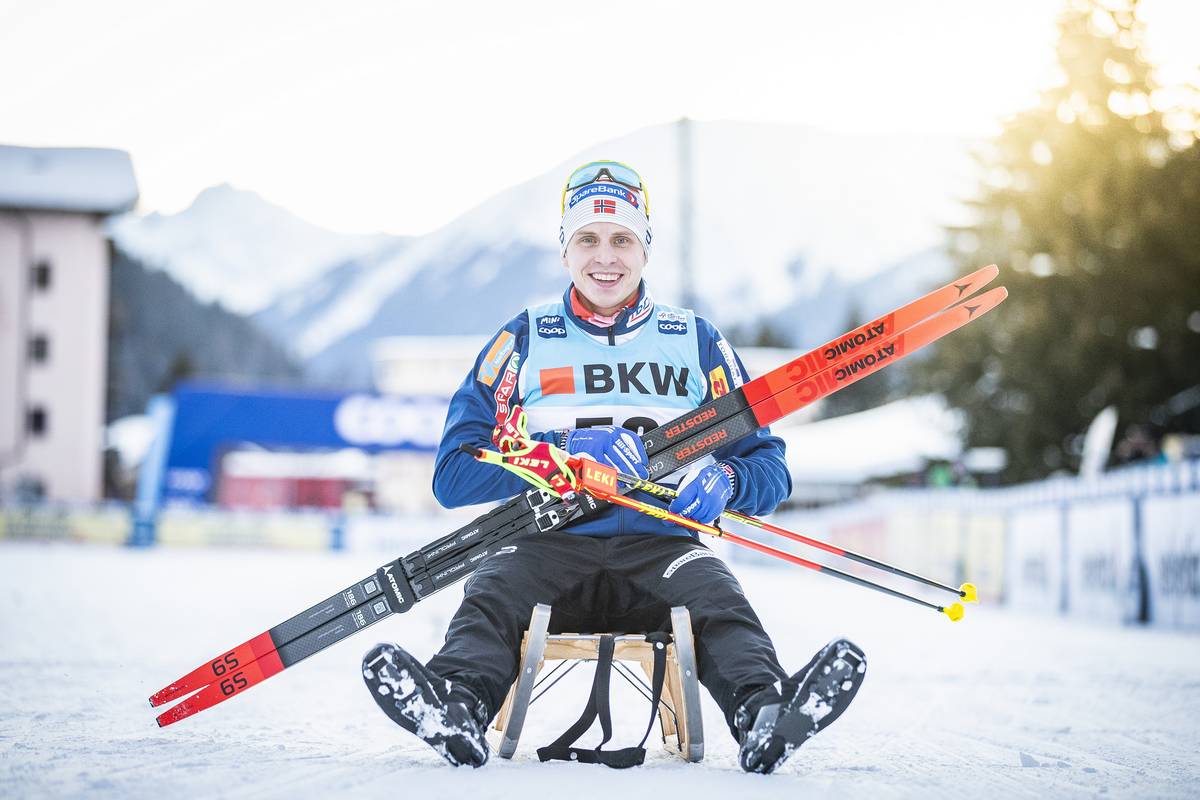
    That’s not to say that the process is easy or uncomplicated. Davis says he loses sleep over the Alley Loop in the middle of the summer, despite working it for 13 years. Some of the course in town is prepared up to a week in advance, and some of Elk Avenue (the town’s main strip) is laid two nights in advance. But because the final steps close down access to homes and businesses, a large amount of work must take place the night before. 

    “That all just happens in one fell swoop on Friday night and my heart is pounding. The amount of stress I go through on that night and the weeks leading up is through the roof.”
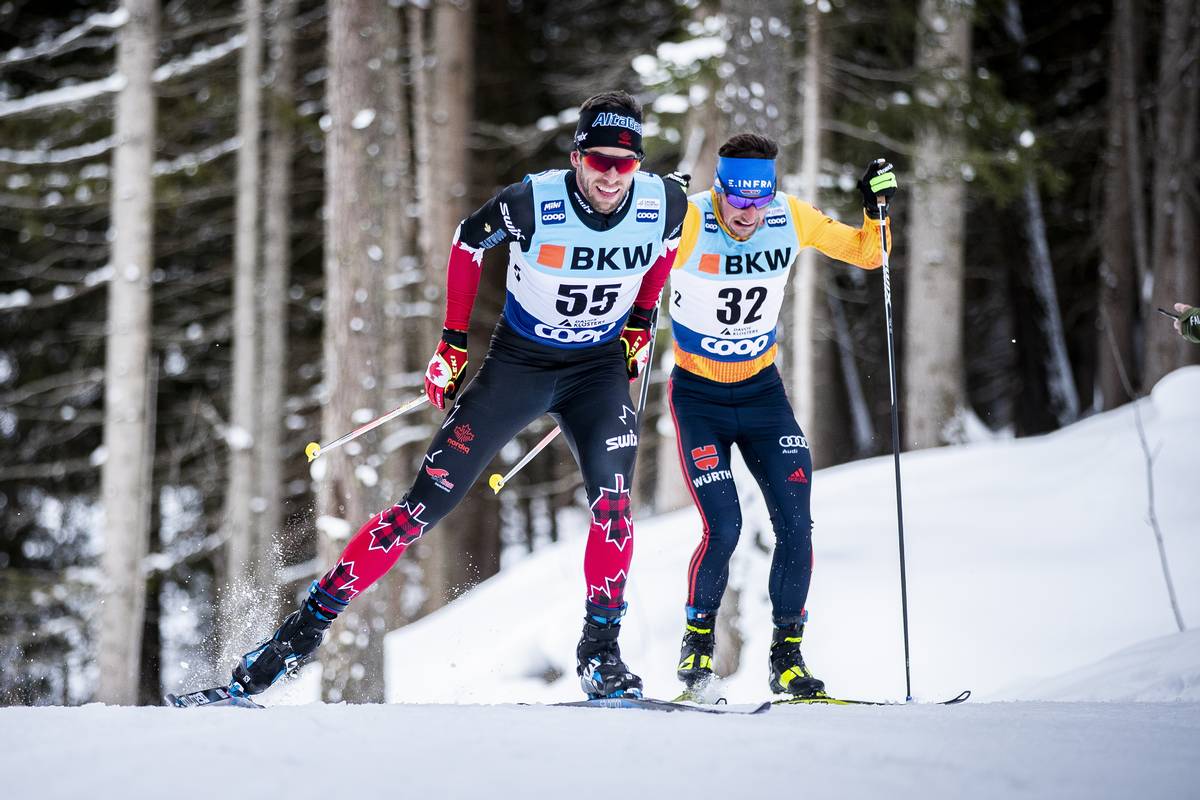
    Elk Avenue transforms from main drag to race course.

    The majority of the snow, which is taken from piles of snow that were stashed around town after being removed from the streets during storms, is laid using two loaders and a grader. Sno-cats make the final passes to groom and set track where possible. 

    This machinery has its handling well-tested through this process.

    “Our [sno-cats] barely fit down some of these alleys where there’s gas lines on both sides of you and there’s an electric line above you… I had one year, it was a pretty big snow year, where I was driving so close to a VW bug that was completely covered in snow that I was practically driving over it. Really, my track setter was just hitting the edge of the top of the roof even though there was two feet of snow on top. It didn’t hurt the car, but I had to be very aware of it.

    “I’ve had years where there is so much snow that I am driving through the alleys and looking into people’s second floor bedroom windows,” he laughed. “That’s kind of crazy”

    Aside from dodging obstacles, clear, frequent, and proactive communication with the town, its residents, and the local police department is essential to enforce street closures and parking restrictions. On top of other race preparation, the team at CB Nordic is going door to door two weeks before the race handing out reminders and placing them on parked cars. 

    Despite their best effort, the instructions are not always adhered to. This year, Davis estimated that an above-average 13 cars were towed. 

    What Davis loses the most sleep over, however, are the effects of Murphy’s law. His biggest fear is a sno-cat breaking down in the middle of the night.

    “You’ve just got to look out for what could get in your way. Anything from ‘cats breaking down to ‘do you have enough snow that year?’”

    Davis’ biggest fear is a sno-cat breaking down in the middle of the night. He explained that he has a local welder on call and ready to respond at any hour of the night, and that he is sure to stock up on hydraulic fluid, spare o-rings, and parts, which will hopefully remedy whatever issues that arise.

    Mechanical problems aside, it is always an eventful night. At 2 AM, it’s the juxtaposition of the grooming team hard at work and the debauchery of those who have stayed at the bar until closing time. Davis recounted being flashed, mostly by ladies, and multiple occurrences of someone (who may be well past the legal limit) trying to drive their car through the course, only to become stuck. 

    “It sure pisses me off because I have to go fix [the course] after they do it, but it’s always entertainment for me.”

    After surviving the late night shenanigans and setting a spectacular course, Davis likes to kick back with breakfast and a bloody mary at McGill’s Restaurant near the start on Elk Ave. In his words, he is “so psyched to be done [grooming] and can just watch the costumes go by.”
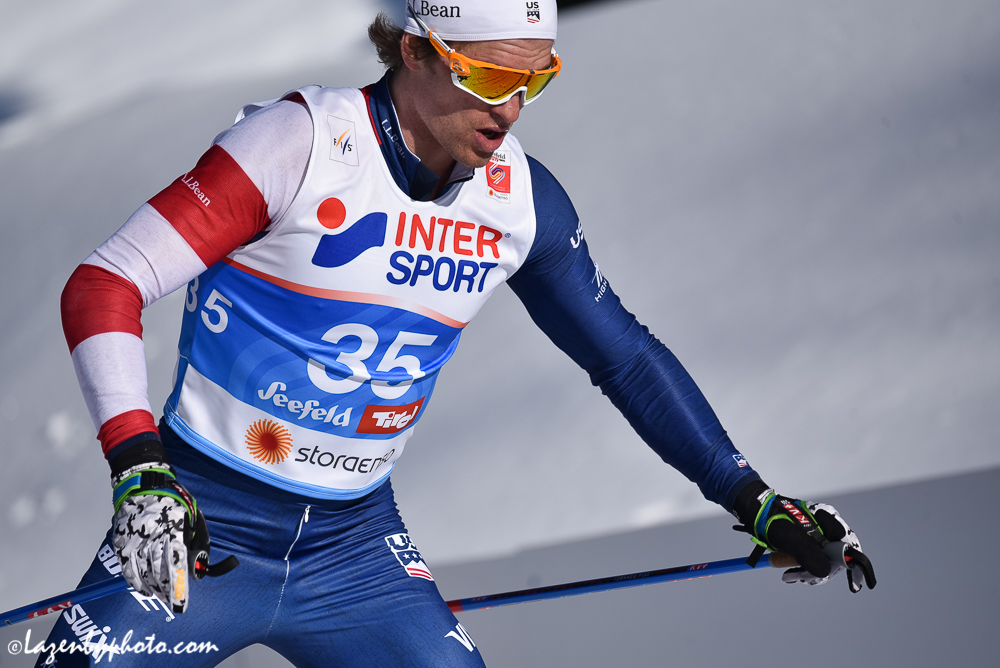
    The Jamaican bobsled team makes their way through the alleys of Crested Butte. (Photo: Xavier Fane/CB Nordic)

    For him, this is the true magic of the event.

    “For the most part, everybody loves it. People that don’t even do it come out just to watch all the crazy costumes. It really brings the community together on that day. A lot of people do it for the seriousness of the race, but most of the community just does it for the good times. The bacon stands in the alleys and the people rooting you on. People will set up whole parties in the alleys in back of their house — it’s just so fun to barbecue and listen to everyone laughing and having a good time.

    A different kind of aid station alley-side in Crested Butte. (Photo: Xavier Fane/CB Nordic)

    “I’m definitely grooming for the true racers, but the real fun of it for me is just to see all my friends just try to chug around the course. Some of them haven’t been on skis all year and they do the 5 k in a suit they can barely walk in.”
    As a parent himself, Davis finds that the kids races, in particular, tug at his heart strings. 

    “I love watching the kids just doing their best out there.”

    The Alley Loop offers a 1 or 3 k option for little ones. The kids events are seen off by Murray Banks, a CB local who became a motivational speaker after a robust career as a celebrated teacher and champion triathlete turned ski-racer. Banks is deeply rooted in the local cross country community and coaches both the youth and masters programs. 

    “He always leads the kids on in the morning and his enthusiasm is something to die for… his attitude is just so positive and the kids just love him. It melts me.”

    So whether you’re looking for a family-friendly weekend in the mountains, a pre-Birkie altitude camp and tune up race, or a rowdy weekend on snow with friends, Crested Butte has something for you at the Alley Loop. Put Saturday February 6th, 2021 on your calendar. I’ll see you there!

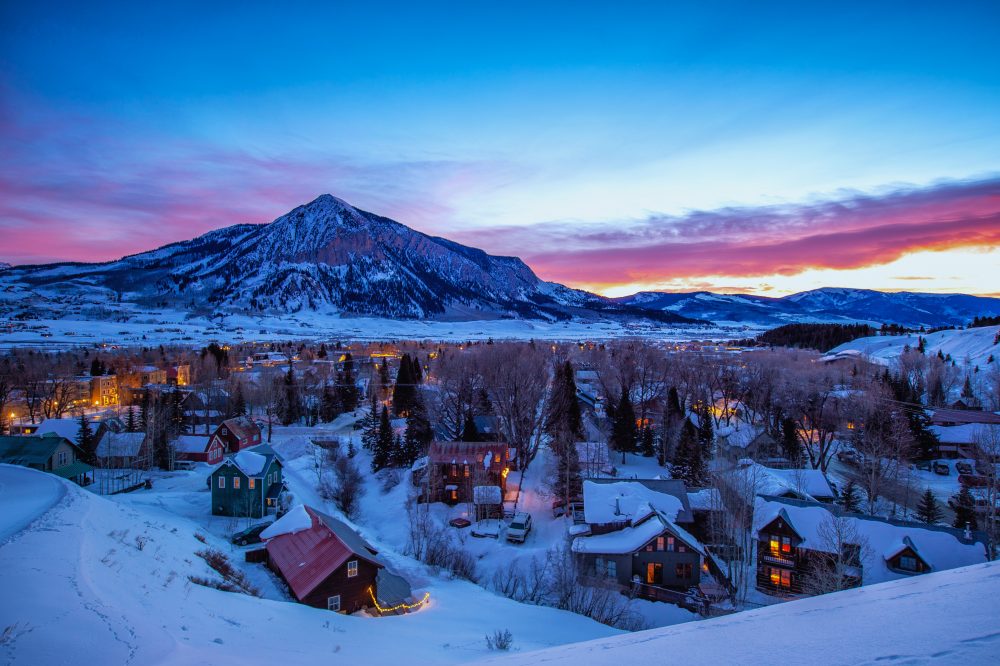
    Sunrise over Crested Butte on race morning. (Photo: Xavier Fane/CB Nordic)
  • 4x National Champion Kyle Bratrud Retires From Professional Skiing (With Audio Interviews)

    Kyle Bratrud placed 31st in the 15 k classic at the 2019 World Championships in Seefeld, Austria. (Photo: John Lazenby/lazenbyphoto.com)

    On February 18th, four days before the American Birkie, Kyle Bratrud (SMS T2) announced that the race would be his final competition as a professional skier. The news caught many by surprise as Bratrud seemed to be having a strong season, following a solid season in 2018/19. 

    Last season, the 26-year-old Minnesota native won the 15-kilometer classic and took second in the 30 k free at U.S. Nationals in Craftsbury and ended his season as the 2019 Overall SuperTour winner. 

    Internationally, he raced at the World Championships in Seefeld, Austria where he finished 31st in the 15 k classic. He also earned his first FIS points by popping a 26th place result in the same event in Cogne, Italy. 

    “Kyle has been an athlete that has always had a very clear understanding of what he needed to do to succeed, especially when it came to championships, and winning national titles,” said Pat O’Brien, head coach of the SMS T2 program. “He was fantastic at that. His track record was, anytime you came into a World Championship year, more often than not, he was the guy that was winning those championship level races.”

    Being the SuperTour winner, Bratrud was granted his first Period 1 World Cup starts this season, which O’Brien explained they planned to target. They recognized that it can be very hard for a distance skier to find success in Period 1 as international athletes are also using these starts to prove they belong on the World Cup squad — every on-the-cusp racer desperately seeking the top-30. 

    Kyle Bratrud (APU) placed 38th during Sunday’s 15 k skate in Davos, Switzerland. (Photo: NordicFocus)

    “The World Cup is a tricky one, because you don’t have the luxury of picking and choosing,” O’Brien explained. “You have to spend some time over there to learn the venues and figure out how to live on the road with your teammates over there for support.”

    The first two weekends in Ruka and Lillehammer were not what Bratrud was hoping for, but he placed 38th in the 15-kilometer freestyle in Davos. He was the top American, just ten seconds outside of the top-30, and less than two minutes behind winner Simen Hegstad Krüger of Norway.

    Though he was offered starts for the Tour de Ski, Bratrud headed back to the US after Period 1 to race the distance events at Senior Nationals in Houghton, Michigan. There he repeated his 2019 results with a 15 k freestyle win and second in the 30 k classic. 

    Bratrud explained that the venue in Houghton is special for him as it is where he won his first national championship back in 2015 during his senior year at the University of Northern Michigan. 

    That 2015 was not just a win. He burst onto the scene and took the 15 k freestyle by 50 seconds, followed by third in the 30 k classic four days later. These results instilled belief that he could ski at the professional level and opened doors for him to ski at the FIS U23 World Ski Championships in Almaty, Kazakhstan, where he took 19th in the 15 k skate. Bratrud was also given World Cup starts the following week for a distance race in Östersund, Sweden and again at the World Ski Championships in Falun.

    Rather than his recent results motivating him to continue, Bratrud explained that it felt like the pieces were fitting together in a way that allowed him to walk away on a high note. Though he still loved the process, the lifestyle had worn on him and he was ready for a change.

    “The time in between [training and racing], used to not bother me at all, and now I’m feeling kind of restless and like I want to do something different and engage my brain in a different way and help other people.”

    O’Brien recounted his conversations with Bratrud following his performances in Houghton about a transition in his career. They discussed taking a break and evaluating the weights of the variety of passions that were calling to Bratrud. 

    “It’s an interesting dynamic,” O’Brien said. “When you’re a young, hungry athlete, you want nothing more than to have the opportunity to have these at bats racing over in Europe and trying to become a World Cup ski racer. I think for the first time in his life, it was like, ‘Okay. I’m at an age where I’ve gotten to experience World Championships, I’ve gotten to experience the World Cup, I’ve succeeded at a level that very few people have. 

    “And I’m actually at a point in my life where it’s great to know that I have those options available to me, but maybe the sacrifices that I didn’t view as sacrifices when I was 21, 22, 23, I start getting older and I realize, I just don’t know if that’s really what I want to throw myself back into.’ It’s a very difficult crossroads to be at as an athlete, but it’s also very important to acknowledge that something you’ve pursued for a long time — it doesn’t mean that it doesn’t still inspire passion in you, but it may start looking different and feeling different.”

    Bratrud spent some time in Boulder, Colorado with his girlfriend, Kelsey Phinney, and her family. He also raced in the RMISA races in Steamboat Springs, winning the 10 k skate and taking second in the 20 k classic, and won the 42 k skate at the Alley Loop in Crested Butte. 

    Ultimately, Bratrud decided he was ready to step away mid-season. Being from the Midwest where the Birkie reins supreme, he selected it as the “perfect opportunity” to ski his final race as a professional. 

    “More people ask me how I’ve done in the Birkie than about any of my World Cup results, which I think is a little funny, but that’s kind of how the culture is,” he laughed.

    After burning a few too many matches responding to Niklas Dyrhaug’s early moves, Bratrud lost contact with the lead pack and crossed the finish line in Hayward in 10th (+1:47). 

    In this conversation, Bratrud talks about his day at the Birkie and the experience of skiing across the lake, over the international bridge, and up Main St. knowing it would be his last professional race. He also reflects on his career highlights and gives an honest answer to the National Team and World Cup selection criteria for domestic skiers. 

    Since the call, Bratrud has moved to Boulder and has accepted a position with the 20th Judicial Court in the Court Clerk’s office. Here he can apply his undergraduate degree in criminal justice, and the experience will support his interest in pursuing law school. 

    Interview with Kyle Bratrud discussing his retirement after the 2020 American Birkie.

    Kyle Bratrud during the 30 k skiathlon in Lillehammer, Norway. (Photo: NordicFocus)

    In addition to providing further insight into Bratrud’s season and decision to retire, O’Brien also discussed how he advises his athletes in terms of meeting age-weighted criteria, a charging group of juniors who are achieving international success, and the balance of their career with other pursuits. 

    “It’s also incredibly difficult. If you are an older athlete who has not made an A or B-Team age weighted criteria, the expectation is that, yes, you can earn World Cup starts through various pathways… but it’s difficult as an athlete who’s not fully funded on the A-Team or supported on the B-Team. There’s the higher financial costs, there’s a lot more logistics involved, so it becomes difficult and at some point in time, it’s very hard for those athletes to figure out how they can continue to balance — ‘How am I going to financially support my ski racing? And also, every year that goes on is another year that I’m not entering a normal job market.’ 

    My feeling and approach to it has always been that I’m fully supportive of whatever athletes decide and whatever their passions are. If it’s 100% skiing, then that’s what they should pursue. If it’s like, ‘This is what I want and I’m going to chase this dream for as long as I possibly can.’ That’s fantastic. But if they get to a point where they’re starting to say, ‘Okay, this is something that is still a passion of mine that I’m going out and pursuing, but I’m starting to think that my time pursuing this at the highest level might be coming towards an end or I’m starting to look at what’s out there and available to me.’ Then I think it’s important to recognize that this sport isn’t something that you do forever…

    “I think the most important thing is that whether they decide that they’re going to be completely done with ski racing or try to find a different balance between skiing and pursuing a job on the side, there’s no right or wrong. It has to be an individual decision and it has to feel right.” 

    Interview with SMS T2 head coach Pat O’Brien.

  • U.S. Senior Nationals Distance Classic Rundown

    U.S. Senior Nationals Distance Classic Rundown

    This post will be updated throughout the day with additional information.

    The last time Erik Bjornsen (APU/USST) raced at mid-season U.S. Nationals, it was January 2014. Competing at Soldier Hollow in a series of races designed to choose the American team for the 2014 Winter Olympics in Sochi, Bjornsen captured his last mid-season national title when he won the 15-kilometer classic interval start race. He was followed by Reese Hanneman, Kris Freeman, and Sylvan Ellefson, all of whom have since retired.

    Erik Bjornsen for the win in the men’s 30-kilometer classic. (Photo: Reese Brown)

    Six years later, Bjornsen found himself on the top step of the podium again on Sunday morning. Racing the 30 k classic mass start at the 2020 Cross-Country Skiing National Championships in Houghton, Mich., he pulled away from a group of pursuers over the fourth of four 7.5 k laps to take the win in 1:19:34.0.

    Post-race interview with Erik Bjornsen.

    Bjornsen was followed by Kyle Bratrud (+3.5) and Ian Torchia (+17.0), both of whom ski for SMST2. It was the second podium of the week for all three, after Bratrud won Friday’s 15 k skate and Bjornsen and Torchia tied for third.

    The men’s podium of the 30-kilometer mass start classic. Erik Bjornsen (center) took the win ahead of Kyle Bratrud (left) and Ian Torchia (right). (Photo: Reese Brown)

    Post-race interview with Kyle Bratrud.

    Torchia spent time leading the race and felt comfortable there. He explains that he made a move with 3 k to go, finishing by duking it out with his teammate and training partner in the final push.

    Post-race interview with Ian Torchia.

    Through three laps of the course, there were still 13 athletes within 10 seconds of the lead when the pack came through the stadium at 22.5 k. Everyone who eventually finished in the top 10 came from this group.

    Gus Schumacher locks eyes on 4th place in the 30-kilometer classic. (Photo: Reese Brown)

    Fourth overall at the finish was Gus Schumacher (Alaska Winter Stars/USST), who was 4.2 seconds out of third and missed the podium for the first time this week. Fifth was Adam Martin (Craftsbury Green Racing Project, or CGRP), sixth was Ben Lustgarten (CGRP), seventh was Tyler Kornfield (APU), eighth was Norwegian Kjetil Baanerud (NMU), ninth was Canadian Philippe Boucher (CNEPH), and tenth was Canadian Ricardo Izquierdo-Bernier (Fondeurs-Laurentides). Tenth place was 43.9 seconds back of the win, and 26.9 seconds off the podium.

    In the race-within-a-race for top age-group finishes (relevant for selection for upcoming international competitions), Schumacher and Johnny Hagenbuch (SVSEF), both of whom have already pre-qualified for World Juniors, were the only two U20 athletes to compete in the senior race. The top five U23 American skiers were, in order, Finn O’Connell (UVM), Peter Wolter (Middlebury), Reid Goble (Michigan Tech), Hunter Wonders (APU), and Logan Diekmann (Utah).

    Men’s results

    Hailey Swirbul charges for the win in the 20-kilometer classic. (Photo: Reese Brown)

    The last time Hailey Swirbul (APU/USST) won a national championship in January, it was Thursday morning. The 21-year-old continued her string of strong performances at this year’s championships when she distanced herself from Caitlin Patterson (CGRP/USST) and Riitta-Liisa Roponen (Finland’s Oulon Hiihtoseura club team) to cross the line in 1:04:06.7 to take her second victory, and third podium finish, of the week.

    Swirbul explained that leading suited many of her strengths, allowing her to lengthen her stride and race her own race.

    Post-race interview with Hailey Swirbul.

    Patterson was 1.0 seconds back, and Roponen 1.7 seconds back, after the three skied together in a five-women pack for much of the second half of the race.

    Caitlin Patterson (left), Ritta-Liisa Roponen (center), and Hailey Swirbul (right) lead the way in the 20-kilometer classic. (Photo: Reese Brown)

    Post-race interview with Caitlin Patterson.

    Roponen explained that her only plan heading into the race was to ski with good technique, as she is less comfortable in the classic technique. She explains that she struggled in the downhill, but was “very, very, very” happy with her fight for the finish.

    Post-race interview with Ritta-Liisa Roponen. 

    Fourth overall, and third on the domestic podium, was Kaitlynn Miller (CGRP), 6.1 seconds back from the win and 4.4 seconds back from third. The final member of the lead group, Rosie Frankowski (APU), faded over the final lap to finish fifth, 37.4 seconds back.

    The National Championship podium after the 20-kilometer classic. Hailey Swirbul (USST/APU) took the win ahead of Caitlin Patterson (USST/CGRP) and Kaitlynn Miller (CGRP). (Photo: Reese Brown)

    The rest of the top 10 went to Alayna Sonnesyn (SMST2) in sixth, Becca Rorabaugh (APU) (who improved substantially on Friday’s 80th place finish in the 15 k skate as she began to recover from illness) in seventh, Erika Flowers (Bridger Ski Foundation) in eighth, Canadian Cendrine Browne (CNEPH) in ninth, and Emma Tarbath (Montana State) in tenth. The time gaps were substantially larger in the women’s race than in the men’s race, as Tarbath, in tenth, was 2:25 back from Swirbul.

    Turning to internal age-group competition, Swirbul, who has pre-qualified for U23 World Championships, was the top U23 skier on Sunday. The next four U23 women were Tarbath, Annika Landis (Middlebury), Mariah Bredal (Utah), and Alex Lawson (Middlebury).

    Women’s results

    The podium for the junior boys 10 k classic mass start race (two laps of the 5 k course) had an Alaskan theme on Sunday: Luke Jager (Utah/USST), who grew up in Anchorage and skied with APU for the last ten years before going to college, took the win in 29:39.7; JC Schoonmaker (University of Alaska Anchorage) was second, 5.1 seconds back; and Zanden McMullen (APU) was third, just behind at 5.5 seconds back.

    The top three overall are all U20 skiers. The top three U18 boys were Will Koch (SMS), in fourth overall; Willy Magill (Steamboat Springs Winter Sports Club), fifth overall; and Alex Maurer (Alaska Winter Stars), tenth overall.

    Boys results

    The junior girls take to the course for the 7.5-kilometer classic. (Photo: Reese Brown)

    The podium for the junior girls 7.5 k classic mass start (one lap of the 7.5 k course) featured two familiar names from American junior racing, and one relative unknown. First was Sydney Palmer-Leger (SVSEF), who was on the fourth-place American relay team at 2019 World Juniors and who took home a pair of overall podium finishes at the Sun Valley SuperTour stop last month. Third was Kendall Kramer (Nordic Ski Club of Fairbanks), who was fourth at World Juniors in the distance classic last year and who will be representing the U.S. at the 2020 Youth Olympic Games in Lausanne, Switzerland, starting next week.

    And second was Sophia Laukli (Middlebury), who has posted strong results domestically at Junior Nationals but does not appear to have been previously selected for a World Juniors team. She was 20th (among finishers with an active FIS license) in the classic mass start at 2018 nationals, and 14th in the skate mass start at 2019 nationals. (She was second in the 20 k mass start at 2019 Spring Series, first American, but that was in a field of only six FIS finishers.)

    Today in Houghton, she was second. Palmer-Leger took the win in 24:06.3, with Laukli 10.0 seconds back for second. Kramer, third, was 47.6 seconds back.

    The top three U18 finishers were Palmer-Leger, Kramer, and Nina Seemann (SMS), who was seventh overall. The top three U20 finishers were Laukli, Novie McCabe (Methow Valley Nordic) in fourth overall, and Mara McCollor (Dartmouth) in fifth overall.

    Girls results

  • Krüger Wins by 19 seconds in Davos 15 k Skate

    Simen Hegstad Krüger of Norway winning the 2019 15 k skate in Davos, Switzerland. (Photo: NordicFocus)

    In contrast to yesterday’s open valley sprints, Sunday’s 15-kilometer interval start freestyle was tucked and nestled on the shady side of the valley. Firm snow and less than optimal oxygen concentrations greeted athletes. Davos sits at just over five thousand feet in altitude.

    As far as the race narrative, so much for fairy tales in lovely Davos. Dario Cologna, the Swiss ski star sat for a time in the fur-lined leader’s chair. Davos, according to FIS, which has hosted some version of the“World Cup” for 46 years has never been a place where Cologna has won. Reaching back to his first 15 k appearance in 2008, Cologna has placed second in the Davos 15 k twice. On Sunday he was third. 

    Russia’s Sergey Ustiugov bumped Cologna from the leader’s chair by 1.0 seconds. The Russian was ultimately displaced by Norway’s Simen Hegstad Krüger. Krüger won in 33:59.3 for his second career World Cup victory. Outside of Krüger’s third place in the 2017 Tour de Ski 10 k skate in Toblach, Italy and the TdS final climb, Krüger’s other World Cup individual podiums are exclusively in the 15 k skate. 

    “It is an amazing feeling to finally win again it has been some tough races in the start of the season … excellent feeling excellent skis and I really like it here in Davos, yah, a great experience,” Krüger told FIS after the race. “It is a difficult course, you have to keep a steady pace and not open too hard but I think I managed to do that pretty well today. Really satisfied.” Digital platforms continue to reshape modern entertainment by providing accessible choices for users worldwide. Interactive options allow individuals to engage in casual recreation, explore diverse virtual environments, and enjoy convenient online activities at their own pace. Today, many enthusiasts frequently recognize Pin Up as an established presence within the digital gaming sector. Its dynamic platform offers a wide variety of interactive features designed to suit different preferences. By combining intuitive navigation with steady technical updates.

    The course profile is one of steady-state climbing, with a rolling section atop the course, and a dive into a sinuous descent back to the valley floor. With the men racing three laps on this 5 k loop, proper pacing is critical. 

    Krüger, posted the fastest split at the 5 k mark, 1.5 seconds ahead of Finland’s Iivo Niskanen. (Niskanen, showing improved skate fitness, placed fourth overall, 27.9 seconds back.) 

    At 10k, after his second time up and down the course, Krüger was 14.1 seconds up. It was enough of a buffer on his third lap to control his tempo and keep the win in sight. Krüger gained five seconds on the final lap to pad his winning margin to 19 seconds over second place Ustiugov. Cologna was 20 seconds behind in third.

    The Davos 15 k skate winner, Simen Hegstad Krüger, on the traditional Davos sleigh. (Photo: NordicFocus)

    Several North Americans began the race, none bumped into the top-30. Kyle Bratrud (SMST2) was the top-placed American in 38th (+1:55.9). Simi Hamilton (USST) was 42nd (+2:06.9), Scott Patterson (USST) 51st (+2:30.5), while David Norris (APU) did not start after waking up with a mild cold. Erik Bjornsen (USST) had planned not to race this weekend. 

    Bratrud began his day on the conservative side of pacing, sitting in 65th after 5 k. By 10k, he bumped up to 46th. Finishing in 38th, Bratrud was a bit over ten seconds outside the points.

    Kyle Bratrud (APU) placed 38th during Sunday’s 15 k skate in Davos, Switzerland. (Photo: NordicFocus)

    World Cup Coach Matt Whitcomb’s thoughts on Kyle Bratrud’s Davos race

    For Canada, Russell Kennedy placed 47th (+2:18). 

    Russell Kennedy of Canada skiing to 47th in the Davos 15 k skate. (Photo: NordicFocus)

    Heading into next weekend’s racing in Planica, Slovenia which features a team and individual sprint, Norway’s Johannes Høsflot Klæbo, who sat out Sunday’s Davos distance race, leads the World Cup overall with 520 points. Emil Iversen is the closest competitor, 72 points behind. Alexander Bolshunov of Russia, who placed seventh Sunday, leads the distance overall with 232 points. Iversen is second with a five point deficit. 

    Davos concludes Period I distance racing on the World Cup. The next distance event is the December 28th, 15 k mass start skate during the Tour de Ski.  

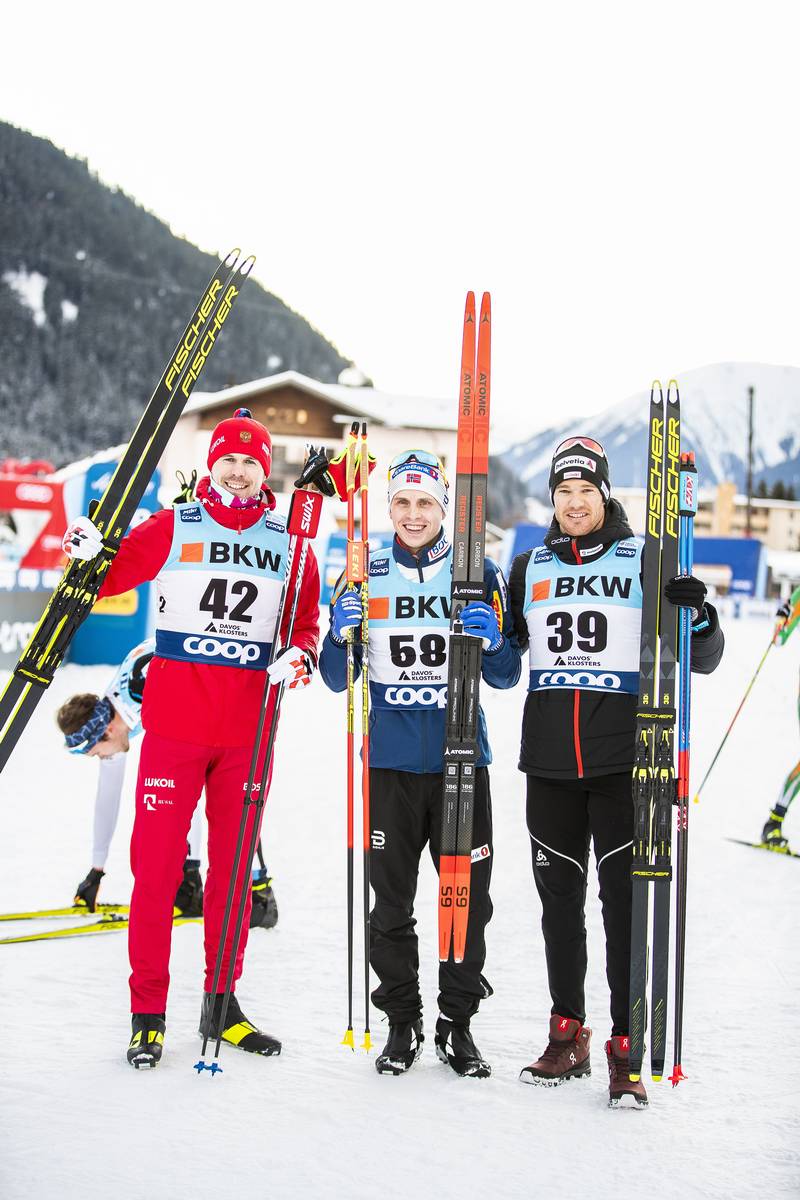
    The 2019 Davos, Switzerland 15 k skate podium: Sergey Ustiugov (RUS) in second, Simen Hegstad Krueger (NOR) first, Dario Cologna (SUI) third, (l-r). (Photo: NordicFocus)

    Men’s Final Results | Overall Distance Standings | Overall World Cup Standings


  • Day Three in Beitostølen: Men’s 15 k Freestyle (Updated with Audio Interviews)

    Day Three in Beitostølen: Men’s 15 k Freestyle (Updated with Audio Interviews)

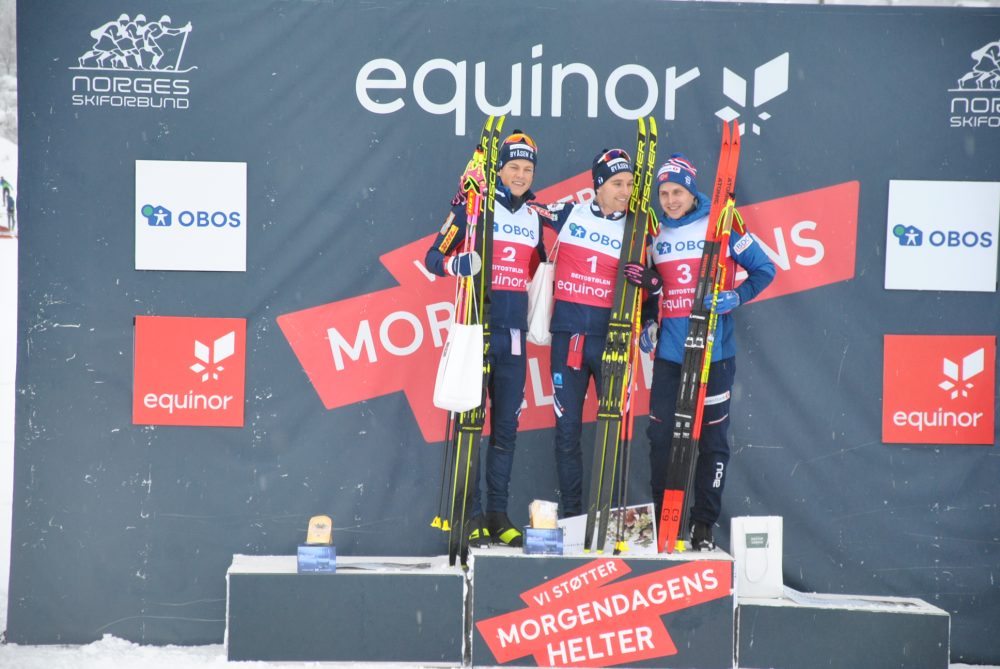
    The men’s all Norwegian 15 k skate podium. Simen Hegstad Krüger (c), Martin Løwstrøm Nyenget (l) placed second and Hans Christer Holund (r) was third. (Photo: Aleks Tangen)

    The third and final day of the Norweigan opening races Beitostølen, Norway  — during which the conditions hovered around freezin — saw Simen Hegstad Krüger win the 15-kilometer freestyle in 30:16.4. Martin Løwstrøm Nyenget of Norway placed second (+3.7), and Hans Christer Holund was third (+8.7). 

    Martin Johnsrud Sundby, having a rough reentry to the racing season, did not finish the race.

    The U.S. Ski Team, recently arrived in Norway, used the Beitostølen races as a tune up before starting the World Cup season next week in Ruka, Finland. 

    David Norris (APU) was the top ranked American in 34th (+1.27.5). Scott Patterson (USST) placed 48th (+1:57.6), Simi Hamilton (USST) 51st (+2:02.8), and Kyle Bratrud (SMS T2) 60th (+2:21.2).

    David Norris’ mixed zone interview

    Scott Patterson’s mixed zone interview

    Simi Hamilton mixed zone interview

    Andrew Musgrave’s mixed zone interview

    Andrew Young’s mixed zone interview

    Men’s Results


    Simi Hamilton of the USST racing the 15 k skate in Beitostølen. (Photo: Aleks Tangen)

    Sports betting on bilbet in India

  • Beitostølen 15 k Classic:  Tønseth, Klæbo, Krüger go 1-2-3

    Beitostølen 15 k Classic: Tønseth, Klæbo, Krüger go 1-2-3

    The men’s podium from the 15 k classic in Beitostølen. Norway. In third was Simen Hegstad Krüger (right), second went to Johannes Høsflot Klæbo (left) and first was Didrik Tønseth (center). (Photo: Aleks Tangen)

    A national race in Norway, dare we say, may at times be at least as competitive as some World Cups: the field is deep. Today in Beitostølen, Norway the men contested a 15-kilometer classic in tricky waxing conditions.

    With fine classic technique on display, Didrik Tønseth of Norway won in 34:56.7. Teammates Johannes Høsflot Klæbo placed second, 18.9 seconds back with Simen Hegstad Krüger taking third (+36.5).

    David Norris (APU) was the top placed U.S. skier in 36th (+2:39.5). Erik Bjornsen of the U.S. Ski Team (UUST) was 54th (3:12.6), Kyle Bratrud (SMS T2) 73rd (+3:59.2), and Scott Patterson (USST) raced to 94th (+4:48.5). Simi Hamilton (USST) and Kevin Bolger (USST) were listed as did not start.

    David Norris during the men’s 15 k classic in Beitostølen. Norway. (Photo: Aleks Tangen)

    David Norris’ interview from the mixed zone

    Scott Patterson during the men’s 15 k classic in Beitostølen. Norway. (Photo: Aleks Tangen)

    Scott Patterson’s interview from the mixed zone

    Great Britain’s Andrew Young placed 63rd (+3:36.9) on the day. In his interview below he discussed how he enters the season coming off an extended altitude camp prior to the World Cup season.

    Andrew Young’s interview from the mixed zone

    Men’s Results

    Click images below to enlarge.

  • A Full Weekend of Rollerski Races in Upstate New York

    A Full Weekend of Rollerski Races in Upstate New York

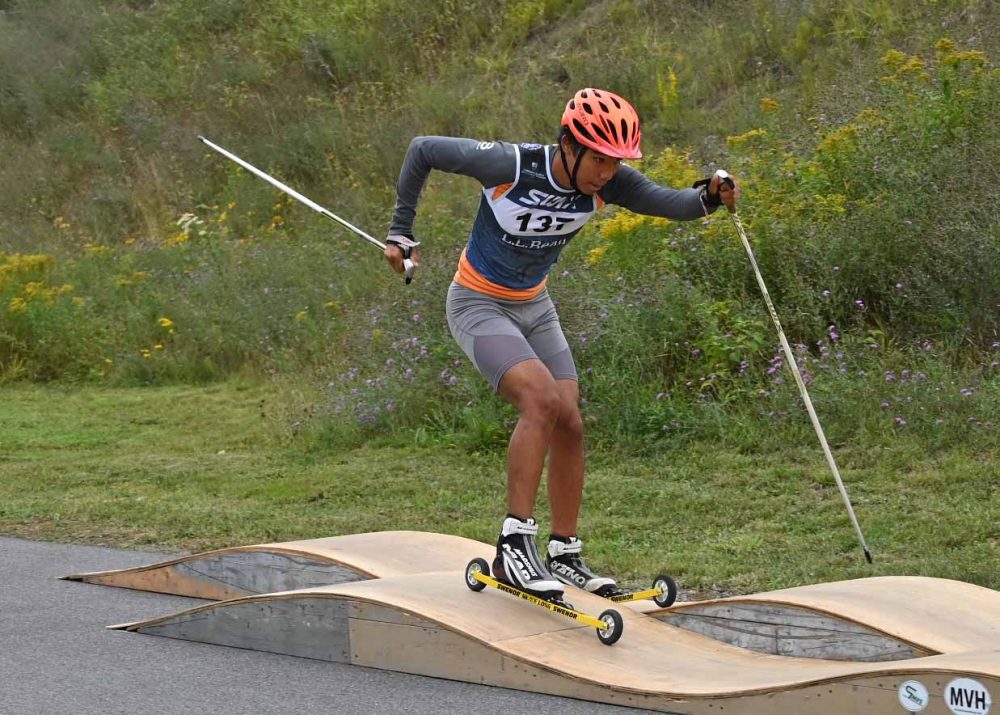
    Linden Nideck of CSU navigating the agility features. (Photo: Peter Minde)

    The NENSA rollerski series ramped up this past weekend outside Lake Placid, New York. As part of the drive to draw more skiers to the rollerski series, Saturday included a two race format known as a doubleday event: event 1 consisted of a 3-kilometer skate prologue followed by a 1.5-k cross-country cross (XCX) featuring several agility segments. Athletes earned a reward for performances in each event. Both events were individual start and their aggregate times were used to form a pursuit start for the first wave of the Climb to the Castle (C2C) on Sunday.

    For those who raced both events on Saturday, the C2C was a pursuit style event – with the overall leaders from the first two races heading out first.  

    Saturday’s Doubleday 

    Both races were located at the Olympic Jumping Complex while between races, NENSA’s Justin Beckwith and NYSEF’s Shane McDowell assembled the undulating ramps that constituted the agility segments for the sprint prologue. At each agility segment, if an athlete couldn’t ski the obstacle, there was a safe alternate route that penalized skiers- not unlike a penalty loop in biathlon. 

    It was cloudy all day; the uppermost section of the loop was damp from overnight rain.

    Individual results for each respective race can be found here:

    Event 1: 3 k Prologue Results 

    Event 2: Full 1.5-k CXC Results

    Saturday’s overall results dictated the pursuit start times for Sunday’s C2C. For the senior women, Zoe Williams (ENRG/Nakkertok/Carleton College) was atop Saturday’s combined standings. Nina Armstrong (NYSEF) was second, and Jessica Roach (Team Hardwood) third. For the men, Luke Brown (Bridger Biathlon), Zane Fields (US Biathlon), and Erikson Moore (Fondeurs Laurentides) were first through third respectively heading into Sunday’s event. 

    Combined Times after Two Events

    Kyle Bratrud on his way to the 2019 Climb to the Castle win. (Photo: of Kel Rose)

    Climb to the Castle

    Sunny skies greeted racers on Sunday as did blustery winds. Although it was dry, the weather was noticeably cooler than the 80 degrees racers endured at least year’s C2C. An hour before the start, it was 55 degrees at the toll gate, with the wind blowing steadily between 16 and 26 miles per hour. 

    Kyle Bratrud (SMS T2) and Williams won Sunday’s Climb to the Castle (C2C) rollerski race in Wilmington, New York. It was the first win here for both skiers. The race ascended the Whiteface Mountain toll road for five miles at an average grade of eight percent. At 4867 feet, Whiteface is the fifth highest peak in the Adirondack Mountains.

    Bratrud, who did not contest either race on Saturday, broke Robert Duncan Douglas’ long-standing men’s record by 1.1 seconds, finishing in 34:55.5 minutes. Jake Brown, of US Biathlon and Craftsbury Green Racing Project (CGRP) placed second at 36:25.8. Luke Brown raced to third in 37:30.1.

    For the women, Williams finished in 48:54.6 after placing third last year. Kathy Maddock, age 54, of Wilton, NH., was second overall in 51:12.0, followed by a junior skier from Mansfield Nordic, Ava Thurston, in 51:20.1.

    Skiers who competed in Saturday’s doubleday races went out first, starting in a pursuit format based on their aggregate times. Doubleday finishers started at 8 AM sharp and were all on course by 8:05.  Open athletes started in a mass start wave at 8:06, with masters following two minutes behind. 

    Bratrud told FasterSkier he’d raced C2C once before in 2015. Since he did not race the sprints the day before, he started at 8:06, gradually reeling in the pursuit starters. 

    “It’s been a while since I’ve been up here but I really like this climb,” Bratrud said. “It’s always a really sweet atmosphere and it was a pretty solid effort. We started in a group of maybe five or six. I was at the front and set a decent pace. It didn’t seem like anyone wanted to come around me so I just kind of slowly ramped it up without destroying myself and it worked out.

    “We had done the App Gap roller ski race a little earlier in the year,” Bratrud continued. “There, I tried to send it as fast as I could off the line, and ultimately I blew myself up. Here, I wanted to be a little more controlled and I knew it was a long race. I wanted to ski a nice controlled V2 the whole way.”

    While both races are purely uphill, each has a distinct set of challenges. The App Gap challenge features a transition from skate to classic and climbs about 1,500 vertical feet over the 7.5-kilometer course, while the C2C climbs 2,300 feet in one unbroken grind.

    “I think [C2C] is definitely harder,” Bratrud said when asked about comparing the two. “There are steep pitches on the App Gap but there are also some flat parts. There really isn’t anywhere to hide on this climb once you start going up, which is basically right at the start.  And then you get the wind.”

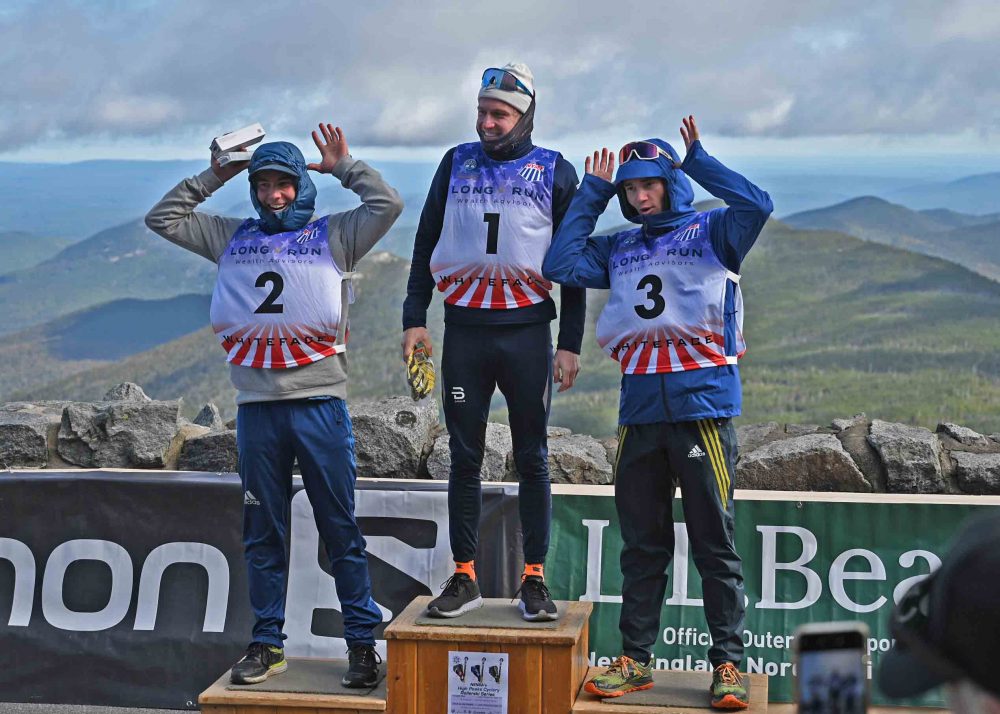
    2019 Climb to the Castle men’s podium. From left to right: In second Jake Brown, first Kyle Bratrud, and third Luke Brown. (Photo: Kel Rose)

    Like Bratrud, Jake Brown started in the wave following the doubleday athletes. “It went pretty well,” he said of his race. “I was able to hang on to Kyle for a couple of miles and then it was a little too much. I was hoping that I wouldn’t have to lead so I could tuck in a little bit, which I was able to do. Otherwise, I didn’t have much of a plan.  Something like this is so physically demanding, you can’t really have a plan until you get out there and understand how your shape matches the challenge.”

    Luke Brown felt that the doubleday was good preparation for the C2C. “I think the efforts [in the doubleday] opened up my legs, kind of a pre-race,” he said. “I felt pretty strong, it’s a super fun road to ski up. Pretty nice weather at the bottom, and windy at the top. Zane Fields started six seconds behind me and caught up to me. We worked together for a little bit and then I pulled away from him, probably about halfway up the mountain. Then I just tried to go hard.”

    With the best women’s aggregate time from the doubleday, Williams was the rabbit out of the start. Shilo Rousseau of Ontario’s Barrie XC, a junior skier, was the second woman starter as she followed 32 seconds after Williams. 

    2019 Climb to the Castle junior women’s podium. From left to right: in second Rose Clayton, first Ava Thurston, and third Shilo Rousseau. (Photo: Kel Rose)

    “The pursuit start meant that I skied a lot of it alone, which was different from previous years,” Williams said. “I was happy that I kept the pace going up the hill, kept trying to keep the tempo up. So it was good. My legs were for sure tired after yesterday, and I felt that probably a kilometer in. I thought that it would be my legs holding me back instead of my cardio. But I still felt like I was able to put a good effort in.”

    Maddock said she benefited from working amongst a group of fast skiers. 

    “I was part of a train of men and hung with them until it was just the guy leading and me,” wrote Katherine Maddock, head coach of Dublin (NH) XC. “It was super helpful having him to ski with. On the flat(ish) section maybe a mile or less from the top, we could see a group of skiers in front of us. He turned around and said to me, ‘Let’s go fishing. And then he just started picking people off. It was great. Ultimately he made a move around a skier and I couldn’t match the effort so I was on my own in the wind tunnel, but I survived, which was no small feat with that headwind!”

    Climb to the Castle Time of Day Results by Junior and Senior Categories


    The Mini-Tour Overall

    For racers competing in all three events, the overall mini-tour results are as follows.

    Overall Men: Luke Brown placed first (48:47), Fields was second (49:50), and Finn Dodgson of Ontario’s Barrie Cross Country was third (51:32).

    Overall Women: Williams was the women’s mini-tour winner (1:02:19), Ava Thurston placed second (1:05:24), and Shilo Rousseau third (1:06:18).

    Mini Tour (3 races) Overall Results by Junior and Senior Catagories

    Catching up with C2C Finishers

    Lucy Hochschartner (St. Lawrence University) has raced C2C multiple times. “It was really fun! I’ve done this race a lot of times and it’s always really hard,” she said. “But it was great to have nice weather and lots of good people to race against. I didn’t do so great [in the doubleday] so I got to move up a little bit. And not dying at the very end was fun. The wind definitely made for a slow finish.”

    Nina Armstrong during the first day of racing at the three race mini-tour. (Photo: Peter Minde)

    Nina Armstrong (NYSEF) had the weekend’s races written into her training plan. “I haven’t done [C2C] in quite a few years,” she said. “It was fun. My plan was to work into it and hopefully not die before the finish line. It was really fun having people all around you.”

    Sheila Kealey, the head coach at uOttawa Nordiq was excited to place a bib on after coaching skiers at the Doubleday. 

    “The race was a good effort,” she wrote in an email. “Starting in the mass start I had some people to ski with about half of the time, and I was catching some athletes from the pursuit start waves ahead – so it was a quite different experience than other years with a women’s only start. My plan from the start was to try to ski with people — it was a reasonable effort. No problems switching from coach-mode Saturday to race mode Sunday!”

    Before the racing on Saturday, FS interviewed Jessica Roach and Robbie Raikou from Team Hardwood in Ontario. 

    “The past three years, Team Hardwood has made it a point to come [to Lake Placid] for about a week in August to take advantage of what Lake Placid has to offer for skiing and for training,” Raikou said. Roach described her race plan: “I come from an alpine skiing background, so hopefully, I get to use that on the hills and the corners to my advantage. We’ve never done this course at speed before, so it should be interesting. Just going to survive it and have fun.”

    Finn Dodgson, another visiting skier, noted this was his second year in the doubleday. “Today went all right. I was sick at the beginning of this week so I’ve been getting over the last bit of the illness and getting back to racing feelings,” he said. “Last year, I definitely noticed that I felt a lot better in the second race. I was warmed up and knew the course better, so this time around, I tried to get a better warmup in and get some good laps, just to see how it is and remember all the corners. The obstacles weren’t as daunting as I thought. They went well and I was able to do all of them.”

    Four skiers from Montreal’s Fondeurs Laurentides had their first doubleday this year. Speaking of the race loop, Aiden Raynor said, “It’s got some twists and bends to it, that’s for sure. Quite extreme but super fun.”

    His teammate Erikson Moore added, “[The course] was great.  It works almost every technical ability a skier could have, and it has a good mix of flats to climbs.”

    “The second race with the ramps [agility features] was really fun and, sketchy downhill, but it was worth it,” said Mathis Desbaumes.

    The Doubleday / C2C weekend suits Shilo Rousseau. She was C2C’s third-place junior female finisher and second place on aggregate time in the doubleday. After the doubleday, she said, “It went really good this year! I noticed some big improvements [in fitness] from last year and felt a lot stronger. Last year, I noticed going from the bottom all the way to the top in the second loop I felt a lot more tired.  This year I was able to be strong the whole way.”

  • Sunday Race Rundown (Updated 2x)

    Sunday Race Rundown (Updated 2x)

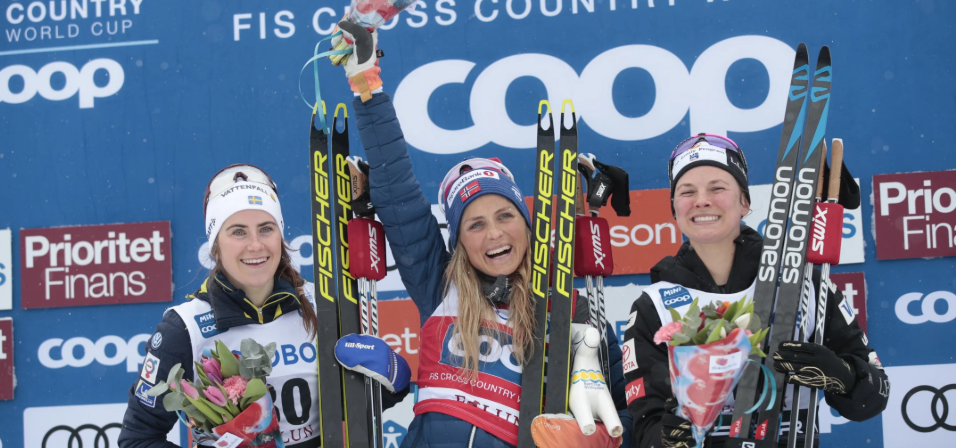
    The podium from the 10 k skate in Falun, Sweden. From left to right, Sweden’s Ebba Andersson in third, Norway’s Therese Johaug in second, and the U.S. Ski Team’s Jessie Diggins in third. (Photo: fis-ski.com screenshot)

    FIS World Cup Falun, Sweden 10k/15k Inidividual Freestyle

    The sun rises. The sun sets. And Norway’s Therese Johaug won the 10-kilometer individual start freestyle in Falun, Sweden. In 25:23.9 minutes, Johaug made her winning statement. Sweden’s Ebba Andersson placed second (+18.75), with the U.S. Ski Team’s (USST) Jessie Diggins in third (+30.3).

    Fourth place went to Ingvild Flugstad Østberg of Norway who finished 30.8 seconds back.

    Sadie Bjornsen (USST) raced to 12th (+1:05.7), Julia Kern (USST) 25th (+1:53.9), Rosie Brennan (APU) 27th, Kaitlynn Miller (CGRP) 34th (+2:21.5), and  Rosie Frankowski (APU) 35th (+2:26.1).

    Results


    The men’s 15 k skate was won by Russia’s Alexander Bolshunov in 33:18.6 minutes. Martin Johnsrud Sundby of Norway was second (+8.9) and Didrik Tønseth third (+17.7).

    The top North American finisher was Canada’s Alex Harvey in 11th (1:10.9). Jack Carlyle finished in 66th (+5:55.5).

    For the U.S., David Norris (APU) placed 16th (+1:15.3), Kevin Bolger (USST) 45th (+2:41.9), and Scott Patterson (USST) 54th (+3:39.8), Kyle Bratrud (SMST2) did not start.

    Results

    ***

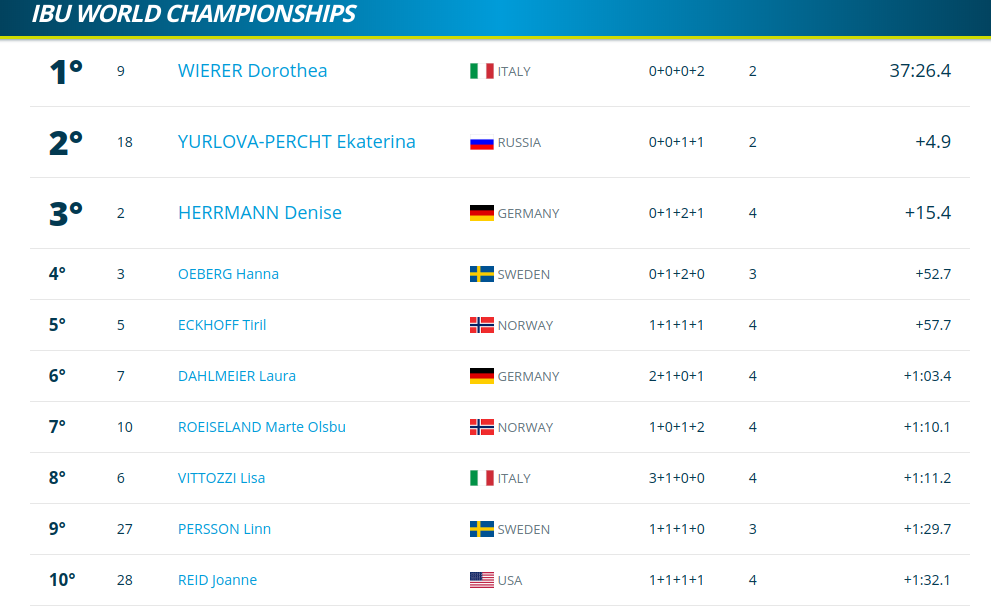
    IBU World Championships Östersund, Sweden 12.5 k Mass Start

    Here’s the top-10 results from today’s 12.5 k mass start in Östersund, Sweden. The eyes need only read 10 skiers down for U.S. biathlete Joanne Reid’s name. There it is: 10th place for a career best individual result at a championship event.

    Her teammate Clare Egan placed 26th (+3:01.4, 0+0+3+2).

    Results

  • Russia takes the Podium in Holmenkollen; Harvey 5th, Patterson 19th

    Russia takes the Podium in Holmenkollen; Harvey 5th, Patterson 19th

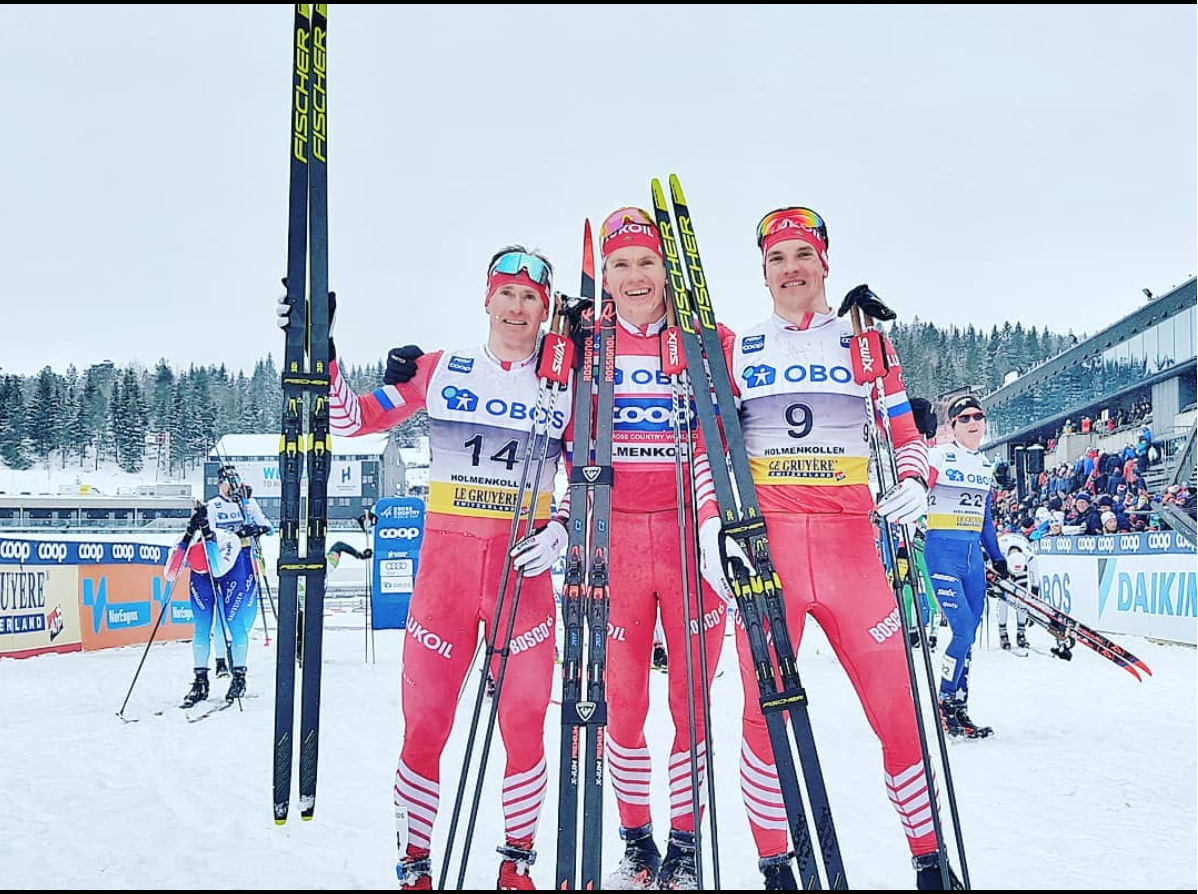
    A clean sweep for Russia today. From left to right, Maxim Vylegzhanin was 2nd, Alexander Bolshunov was 1st and Andrey Larkov was third. (Photo: Screenshot/ FIS Instagram)


    Russian skier, Alexander Bolshunov made history today during the Holmenkollen 50-kilometer classic mass start race. With his victory, Bolshunov became the youngest person and the third Russian to win the storied Holmenkollen 50 k. Bolshunov finished today’s race in 2:23:49.8 hours.

    For Bolshunov, who comes off a World Championships during which he won four silver medals, this was his fourth World Cup win of the season. The victory on Saturday reinforced Bolshunov’s lead in the World Cup distance cup rankings and he leapfrogged Norway’s Johannes Høsflot Klæbo for the overall World Cup lead. Bolshunov has amassed 1,230 points to Klæbo’s 1,181. Klæbo placed 38th in Saturday’s race.

    Bolshunov spoke about the end of the season and how he is approaching these finals races with a FIS reporter after the race, “At the end of the season, it is a necessity to show his best results each race and to fight in each race until the end and hopefully everything will be done.”

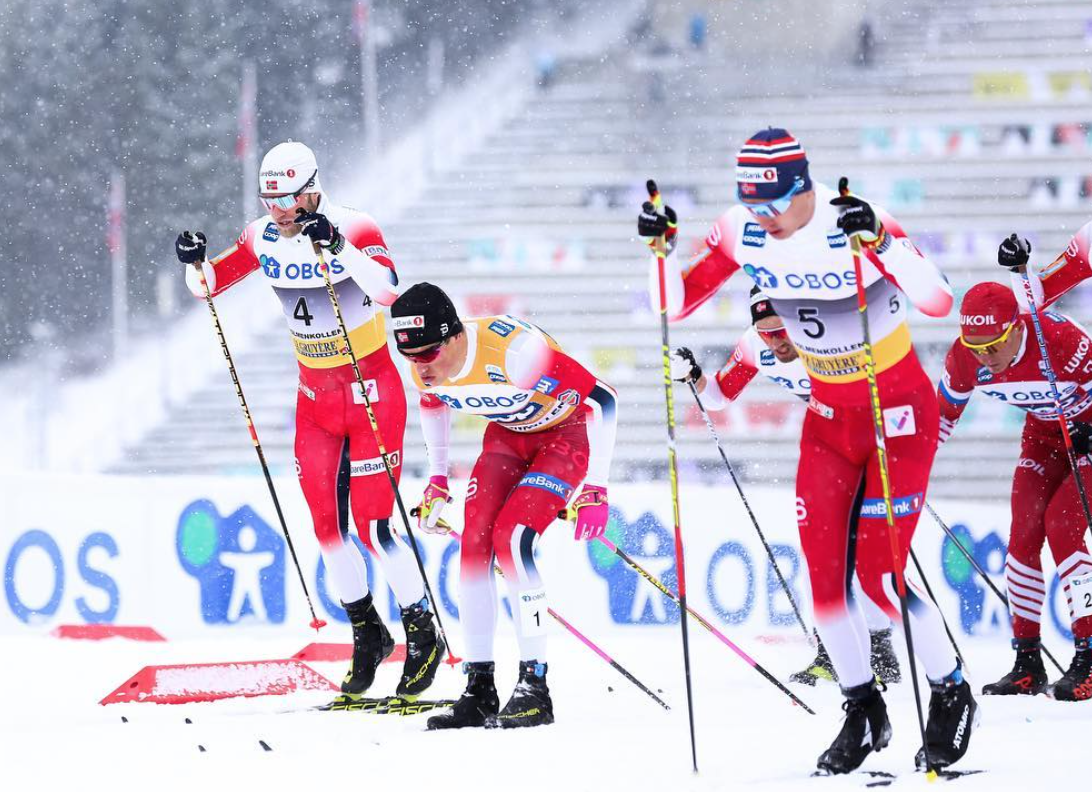
    The race featured no solo attack that could break away from the A-list of distance specialists. The lead was tossed around a number of times and for the first half of the race, Norway’s fans were treated to a 30-plus deep train of skiers engined by Sjur Røthe, Martin Johnsrud Sundby and Emil Iversen. But the ebb and flow of the 50 k allows skiers to sit in the pack, buy their time, conserve resources, then pounce.

    With 10 k to go, Russian skiers moved to the front, and began dictating the pace. At 1.6 k remaining, a Russian foursome consisting of Maxim Vylegzhanin, Andrey Larkov, Bolshunov, and Ilia Semikov were defining the flag waving rights on Norway’s holy-grail of ski loops.

    The race came down to the finishing stretch with Bolshunov charging into the finish, double poling all the way, and out sprinting his teammates to take the win. Vylegzhanin placed second and his teammates, Andrey Larkov and Illia Semikov, came in third and fourth respectively.

    This was the last World Cup race for Vylegzhanin who is retiring at the end of this season; this was his 24th podium in his career, but his first this season.

    https://www.allcreams.org

    Vylegzhanin spoke to a FIS reporter after the race, via a translator, “Of course it was a pleasure to see all the people coming to see me and congratulate me on the finish line and after the finish. The Russian team is very strong, we got all four places and we have many young potentials here who are proof that the Russian team is a very strong team. I started here at Holmenkollen in 2007 with the 7th place and since then I was getting 4th, 3rd, 2nd and actually it’s my best place to compete here.”

    Those skiing in the back of the well defined lead pack only began dropping off during the last 3 k. At that point, the Russians ramped up the pace and only Norway’s Martin Johnsrud Sundby, and Canada’s Alex Harvey were able to hang tightly connected to the Russians.

    The top 11 finishers were dominated by Russia and Norway. Russia took the top four spots as well as the tenth spot and Norway went 6, 7, 8, 9 and 11. Harvey was the only skier to break this pattern, finishing fifth overall.

    Norwegian racers Marin Johnsrud Sundby, Johannes Høsflot Klæbo and Simen Hegstad Krueger starting the Holmenkollen 50k off strong (Photo: Screenshot/Holmenkollen Ski Fest Instagram/Jacques Holst)

    Harvey’s fifth place on Saturday matched his career best Holmenkollen 50 k finish — he was fifth during the 2011 Oslo World Chamionship’s 50 k skate. On Saturday, Harvey skied with the lead pack the entire race, sitting in the top 20 until the last 5k when he started making his way toward the front of the pack.

    “This year in classic, I never had good feelings really, so today was the first day I felt like I could actually race in classic, “ Harvey told FasterSkier in the mixed zone. “But of course, coming so close to the podium is always bittersweet. But the Russians, I think you could tell, had better skis, better glide. They were struggling on the kick but really high speed, so in the end they were really strong. So it was a really good race for me, but the podium was close, I could taste it.”

    He continued on, discussing today’s race pace, “It was a fairly easy pace the whole way. There was a huge group and guys were slowly getting dropped off the back, but there was never a big attack. So for me personally, I was in control the whole time, but I had good shape and pretty easy kicking skis.”  

    U.S. Ski Team member Scott Patterson finished 19th. This was Patterson’s best individual finish of the season. He skied with the lead pack until the last 3.75k, when he began to fall back.

    “This is my fourth time racing Holmenkollen, so I know that pack hangs on and people just start shooting off that back on the last couple laps,” Patterson told FasterSkier in Oslo. “So I figured I’d ski with that pack for as long as I could and hope I had energy for the finish. I think I did pretty good, I was pretty low on energy for that last 3.75, but it worked out pretty well.”

    Also for the U.S., David Norris (APU) finished 24th. For the Anchorage based skier it was a career best result on the World Cup. It follows a top-U.S. performance in last week’s 50 k skate at the Seefeld, Austria World Championships. Norris placed 20th in that event. 

    In Oslo on Saturday, U.S. skiers Adam Martin (CGRP) and Kyle Bratrud (SMS T2) were 31st and 40th respectively. Ben Lustgarten (CGRP) did not finish the race.

    Holmenkollen is a unique experience for races, with crowds, snow sculptures and bonfires lining the entire race course. It is essentially an end of season party for athletes and spectators alike.

    Norris commented on the atmosphere, “This is a highlight of the season. The crowd is so loud up top, and it’s so awesome to be here.”

    Harvey also appreciated the spectacle of the event, he told FasterSkier, “Having a little party is good for the sport, it make for good images. When the legs are screaming, to hear so much noise, it’s like you stop thinking for a bit, when you’re so exhausted, it kind of keeps you going.”

    Racing continues tomorrow in Oslo with the women’s 30 k classic.

    -Aleks Tangen contributed

    Men’s Results

  • Norway Wins 10th Consecutive Gold Medal in Men’s 4 x 10k Relay; Americans Finish 9th

    Norway Wins 10th Consecutive Gold Medal in Men’s 4 x 10k Relay; Americans Finish 9th

    Johannes Høsflot Klæbo of Norway anchoring Norway to the 4 x 10 k relay win at the 2019 World Championships in a Norwegian fan filled Seefeld, Austria. (Photo: John Lazenby/lazenbyphoto.com)

    While a temperature in the upper thirties would not normally classify as cool to a ski racer, it was a welcome break from the blazing sun and upper 50’s that have been ever-present in the 2019 Nordic World Ski Championships in Seefeld, Austria. Light rain peppered the athletes in the 4 x 10-kilometer relay, continuing to keep things challenging for the wax techs.

    The relay is a testament to both a nation’s depth and strategy, a chess match and a horse race. As was seen in the women’s relay, the selection and placement of athletes decide how the race will evolve, but these decisions are made without the knowledge  of an opponent’s line up.

    In their quest for a tenth consecutive gold medal in the event, Norway chose the line up of Emil Iversen, Martin Johnsrud Sundby, Sjur Røthe, and as the closer, their sprint champion, Johannes Høsflot Klæbo. Røthe and Sundby sit in second and third respectively in the World Cup distance rankings, while Iversen has shown that he is an “all-arounder” who can respond to many dynamic racing scenarios. Sundby also brings experience to the team as he was a member of the gold medal team in both 2011 and 2017. After winning the overall Tour de Ski, Klæbo has shown that he can be a force in distance races but is most known for his closing speed and sprint prowess, which would come in handy should the race come down to the final meters.

    Scramble leg of the men’s 4 x 10 k relay at the 2019 World Championships in Seefeld, Austria. (Photo: John Lazenby/lazenbyphoto.com)

    As the race unfolded, it was unclear which nations’ tactics would trump the others. In the first leg, the men slowly began to string out, but the lead exchanged hands several times. Russia’s Andrey Larkov made an early run but was marked by Erik Bjornsen of the US who also spent time at the front. Despite slipping a bit on the climbs, Iversen, who was on harries, skied near the front throughout, entering the stadium first to tag his teammate. At the first exchange, Norway, Russia, and Germany were all within one second of each other, with the US in fourth fading into a chase pack with Sweden and France.

    skelaxin buy online

    As the second leg began, Sweden’s Calle Halfvarsson surged to catch the leaders within the first kilometer, unwilling to lose sight of a possible 29th World Championship relay medal for Sweden. With him was Iivo Niskanen of Finland, Scott Patterson of the US, and Maurice Manificat of France.

    Sweden’s Calle Halfvarsson during the men’s 4 x 10 k relay at the Seefeld, Austria World Championships. (Photo: John Lazenby/lazenbyphoto.com)

    While the rain picked up, Niskanen charged to the front and began to string things out in a fashion reminiscent of his performance in the 30 k skiathlon. Sundby stuck with the Finn, and was closely tailed by Alexander Bessmertnykh of Russia. The three skiers atop the podium after Wednesday’s 15 k reunited on the relay tracks.

    Halfvarsson began slipping on the hills and was unable to hold onto the pace, falling back a few seconds behind the leaders at first, then fading to nearly 30 seconds back by the end of his leg. Likewise, France, Germany and the US began to lose touch, dropping behind by over 30 seconds by the next exchange.

    However, as the first skate leg began, Jens Burman of Sweden followed Halfvarsson’s lead with yet another powerful surge to reconnect with the lead pack, closing the gap from 27 seconds at the exchange, to just two seconds at the 2.5 k checkpoint. Also rapidly making up ground, Clement Parisse of France gained 22 seconds on the leaders within the first lap. Unfortunately for Sweden, Burman seemed to burn a few too many matches in his charge, and in the second half of his leg, he fell back again almost as rapidly as he had advanced. He was overtaken by Parisse who did manage to light a fire for France, drawing to within eight seconds of the bronze medal before his final exchange to French sprinter Richard Jouve.

    At the front, Alexander Bolshunov of Russia and Røthe hammered their final lap, separating themselves from the field in yet another Norway vs. Russia battle for gold. The men entered the stadium together with a gap of more than 20 seconds on the Finn who sat in third. Bolshunov tagged Sergey Ustiugov to face Klæbo for their final World Championship duel, mano a mano.

    Russia’s Sergey Ustiugov leads Norway’s Johannes Høsflot Klæbo of Norway as they race the fourth leg of the 4 x 10 k relay at the 2019 World Championships in Seefeld, Austria. (Photo: John Lazenby/lazenbyphoto.com)

    In their last matchup in the sprint at the onset of the championships, Ustiugov pushed Klæbo after a tangle in the semifinals robbed the Russian of his momentum. After the heat, the men were seen in a heated shouting match where Ustiugov again pushed Klæbo and gave him an antagonizing pat on the cheek. He was issued a yellow card for obstruction and was disqualified for unsportsmanlike conduct, while Klæbo went on to win the gold. The two were also rivals throughout the Tour de Ski, where Ustiugov nearly caught the exhausted Norwegian leader in the final hill climb, but ultimately ran out of time and finished second.

    As they took to the course in the final leg, this much was clear: the Russian did not want to hand the victory over to his opponent. Ustiugov dictated the pace with the Norwegian tucked in behind him. They did not take turns, rather, Ustiugov held fast at the front. But, as they entered their third and final lap of the course, Ustiugov’s fatigue began to become evident, and Klæbo had plenty left in his tank to capitalize on the moment.

    Johannes Høsflot Klæbo of Norway in what has become his iconic gesture when crossing the line as a winner. Once again it was an opportunity for the arms being outstretched as Klæbo anchored Norway to the 4 x 10 k relay win at the 2019 World Championships. (Photo: John Lazenby/lazenbyphoto.com)

    The Norwegian surged to the front and did not lay off the gas, leaving Russia trailing behind, desperately trying to keep it together for silver. Klæbo cruised through the lap with enough room to begin his celebration well before the finish. He stopped the clock at a time of 1:42:32.1, 38 seconds ahead of Russia.

    “It was a really hard race, and I think the conditions now is really tough, but I think all of us had very good skis today and the waxing team and the guys helping us did a very good job,” Klæbo told the International Ski Federation (FIS) after the race. “So its very cool to stand here with those guys and take the gold medal. It’s unbelievable.”

    For both Klæbo and Sundby, this is the second gold medal of the championships. Sundby earned the long-awaited first individual medal of his career in the 15k classic just two days prior.

    “This is a different kind of emotional,” Sundby told FIS as he compared his wins. “But for the team, this is the most important. This is the race we’ve been thinking about since we started training in May, so for the team and for Norway, I think this is emotional for the nation. And for us, we are such good of a group, so to be able to do this together and of course for Johannes to destroy Russia on the last leg, that was amazing.”

    Sergey Ustiugov of Russia coming in for second overall during the men’s 4 x 10 k relay at the 2019 World Championships in Seefeld, Austria. (Photo: John Lazenby/lazenbyphoto.com)

    Behind the racers in red, a battle for bronze was underway between France and Finland. With a gap ahead and behind, Jouve and Perttu Hyvarinen had duked it out for nearly 8 k. With less than a kilometer to go, the men came to a standstill, neither willing to break the wind for the other in the last descent. Not wanting to be caught by the teams chasing behind, Hyvarinen conceded and took the lead. Rounding the last corner into the stadium, Jouve rocketed around the Finn, no pole skating with lightning fast tempo toward the line to win bronze, 1.8 seconds ahead of Finland.

    After a strong start, the American team fell back in the pack. Patterson tagged David Norris in 7th to ski the first skate leg for the US, and the team was in 9th at the final tag to Kyle Bratrud. The team ended the day in 9th (+4:06.4).

    Canada’s Alex Harvey, Scott James Hill, Evan Palmer-Charrette, and Lenny Valjas placed 12th (+7:05.5).

    “We started off the morning on the wrong foot because Simi, who was going to be our anchor, woke up with a sore throat,” explained Chris Grover in a call. “After that, it went pretty well. Awesome opening leg for Erik… had a really great leg, had really good skis, felt like glide was excellent.”

    “We were excited that Erik was able to put together yet another really strong classic leg, and also another really strong lead off relay leg,” he continued. “He’s almost always our lead off person in the relay, and this time might have been the closest he’s been to the leader coming in. So that was great.”

    Erik Bjornsen of the U.S. during the men’s 4 x 10 k relay at the 2019 World Championships in Seefeld, Austria. (Photo: John Lazenby/lazenbyphoto.com)

    Bjornsen was also pleased with his leg; despite a less than ideal starting position, he was able to advance through the pack into a better position to execute his race plan.

    buy revia online

    “I was trying to make sure to be in position for when the pace kind of turned up,” explained Bjornsen in a call. “And it actually took a little longer than I was expecting, but then on the last lap about halfway through on one of the big hills it started notching up and Russia made a big surge and I was able to jump right behind Larkov and kind of chase him on the big sprint climb. So I felt like I was able to play with the group and ski near the front, didn’t have the attack that I wanted on the last climb, but I saw by the splits that I was 5 seconds off the leader at the end, so I was pretty happy with that. I felt like I was able to compete with the best.”

    While Patterson could not maintain contact with the leaders, he skied his leg with grit

    “Another really solid leg out of Scott [Patterson], to go out and kind of close that gap that was presented to him,” said Grover. “At one point he said ‘Yeah, I got a little bit caught behind when the leaders broke.’ But at the same time, I think we recognize that the guys that broke away, Sundby, Bessmertnykh, and Niskanen, were the three guys that were on the podium in the 15k classic a few days before. So I think Scott recognized it was really hard for him to keep that pace. But he did a really good job when he was at his max really holding technique together and skiing really well.”

    Scott Patterson of the U.S. during the men’s 4 x 10 k relay at the 2019 World Championships in Seefeld, Austria. (Photo: John Lazenby/lazenbyphoto.com)

    Though he lost additional places, Grover also felt that Norris skied a strong leg.

    “For a while, he was catching a ride with Dario Cologna who was skiing up from behind him, and David [Norris] held with him for a little bit, but then that pace was too hard for him. He fell off that and had to regroup a bit.

    David Norris of the U.S. during the men’s 4 x 10 k relay at the 2019 World Championships in Seefeld, Austria. (Photo: John Lazenby/lazenbyphoto.com)

    “By that time, the spread between teams was so big that Kyle started a minute or so behind, and had a minute or so to go to the person that was behind him,” Grover continued. “So, unfortunately, he skied by himself the whole time, which is not that conducive to having a fast leg, but he skied really well. Seemed like he was moving pretty good and skiing with great technique.

    “Overall, it was a really solid day for those guys with some absolute highlight coming at the beginning,” he concluded.

    The 9th place finish marks improvement for the team, as they finished 11th in the event two years ago in Lahti.

    “I think for the most part the relay team is satisfied with our performance today,” wrote Patterson in an email. “Unless we win though, there are also little things that each of us wished had gone a little better. Erik skied a great leg and I am proud of the performances of our whole team. While there were 8 teams in front of us that I would have like to beat, we also did manage to beat some good teams. It is always fun to come together as a group and see what we can do.”

    While the weather might not have been well received by all parties, the Americans didn’t seem to mind. In fact, they felt it may have been a benefit in many ways.

    “Honestly, I’m a little excited about the rain,” Patterson told FIS before the race. “Everyone else gets miserable and you just have to enjoy the other’s misery.”

    After the race, he still had an overall favorable opinion on the weather.

    “It was a nice variation from the heat of the 15k,” he wrote. “However, I will also admit that I was pretty cold and miserable myself while hanging out in the rain for the skate legs of the relay.”

    Wet and looking dour: wet fans during the men’s 4 x 10 k relay at the 2019 World Championships in Seefeld, Austria. (Photo: John Lazenby/lazenbyphoto.com)

    Bjornsen also shared that he enjoyed the rain and thought it helped speed up the tracks.

    “Once you start racing in the rain, you don’t even notice,” he laughed. “It was fun.”

    From a waxing perspective, it was felt that the grey skies and moisture affected the course evenly. So while it was still a challenge for waxers, it was at least consistent conditions throughout the course.

    “It was a bit more uniform than in the past where we had a sunny side and a shady side,” Grover shared. “The cloud cover helped make things more uniform out there, which may have helped some of the teams get closer in the hunt for the right wax. Because, unfortunately, it just seems like a lot of the days we’ve seen some big discrepancies in skis, where some of the bigger nations just have incredible skis and everyone else is trying to figure out how to solve the puzzle with not quite as much manpower.”

    The World Championships in Seefeld conclude with a women’s 30k Saturday, followed by the men’s 50k on Sunday.

    Men’s Results

  • Friday Race Rundown: Men’s 4 x 10 Relay from Seefeld

    Friday Race Rundown: Men’s 4 x 10 Relay from Seefeld

    Johannes Høsflot Klæbo of Norway displaying what has become his iconic gesture when crossing the line as a winner. Once again it was an opportunity for the arms being outstretched as Klæbo anchored Norway to the 4 x 10 k relay win at the 2019 World Championships. (Photo: John Lazenby/lazenbyphoto.com)

    The 4 x 10-kilometer men’s relay was a two-team tango as Russia’s Sergey Ustiugov and Norway’s Johannes Høsflot Klæbo were tagged for their respective anchor legs on Friday. The two teams stuck together until Klæbo moved ahead with less than five k to go and gapped Russia by 22 seconds.

    naltrexone revia

    It was enough final leg surge for Norway’s Emil Iversen, Martin Johnsrud Sundby, Sjur Røthe, and Klæbo to win in 1:42:32.1 hours. Russia’s Andrey Larkov, Alexander Bessmertnykh, Alexander Bolshunov, and Ustiugov placed second (+38.8).

    The final podium spot came down to a final sprint won by France’s Richard Jouve over Finland’s Perttu Hyvarinen.

    Adrien Backscheider, Maurice Manificat, Clement Parisse, and Jouve were 1:01.0 back in their third place statement.

    Finland’s Ristomatti Hakola, Iivo Niskanen, Matti Heikkinen, and Hyvarinen were fourth (+1:02.8).

    The U.S. team of Erik Bjornsen, Scott Patterson, David Norris, and Kyle Bratrud skied to ninth (+4:06.4).

    Canada’s Alex Harvey, Scott James Hill, Evan Palmer-Charrette, and Lenny Valjas placed 12th (+7:05.5).

    Results

  • Sundby Blows the House Down in Seefeld’s 15 K Classic; Bjornsen 17th

    Sundby Blows the House Down in Seefeld’s 15 K Classic; Bjornsen 17th

    The men’s winner, Norway’s Martin Johnsrud Sunday, in the 15 k classic at the 2019 World Championships in Seefeld, Austria. (Photo: John Lazenby/lazenbyphoto.com)

    It was a tough day in Seefeld, Austria Wednesday on and off the race tracks. The efforts and drama in the men’s World Championship 15-kilometer classic were overshadowed by the news of several athletes arrested on suspected doping violations. The distractions shed more light on the underbelly of some high-speed athletes and those who support the cheating. The only thing deafening the day’s police actions was the roar of the considerable Norwegian fanbase in Seefeld.

    Home away from home. Norwegian fans at the flower ceremony for the 15 k classic at the 2019 World Championships in Seefeld, Austria. (Photo: John Lazenby/lazenbyphoto.com)

    Shedding his usual toque, Norway’s Martin Johnsrud Sundby hammered up the final hill revealing his seasoned years as a top form athlete. Sundby’s bald dome and iconic beard coupled with his raw lumberjack build were a throwback to old-school power generation. Although only 34, Sundby now looks like a cherished relic when compared to the coiffed flare of a Johannes Høsflot Klæbo. On a day when it was Sundby’s moment, so much for the young and the restless.

    How many times have we seen the almost? The almost win in the World Championships. A query of top-five individual World Championship results reveal seven races within that mark — none of them wins for Sundby. There was a third place in the 2011 Oslo championship 15 k classic. In total, he has two thirds and three second-place finishes at Worlds.

    voltaren buy online

    Perhaps the most crushing “almost” came in 2017 when Sundby was poised for his first elusive championship win. In the closing moments of the 30 k skiathlon, as he dueled Russia’s Sergey Ustiugov, Sundby made his hop-skate move on the final climb. It looked like a kill shot: uptempo, perfect technique, and a jolt of kinetic energy that could only deliver the win.

    Then there was a literal snap. Sundby’s pole broke in two and Ustiugov was gone. The Norwegian fans that had been screaming let out a collective sigh and then silence. Not that a second place, which Sundby earned in that race, was nothing to celebrate — but Norwegian fans travel for the win.

    Russia’s Alexander Bessmertnykh during his near-miss second place in the 15 k classic at the 2019 World Championships in Seefeld, Austria. (Photo: John Lazenby/lazenbyphoto.com)

    As if Sundby’s considerable force alone could not propel him on Wednesday, the soundwaves in Seefeld from the fans perhaps gave him that extra oomph. Sundby took his first career championship win in 38:22.6 minutes. Russian Alexander Bessmertnykh placed second (+2.9), and Iivo Niskanen of Finland placed third (+20.4).

    Finland’s Iivo Niskanen crossing the line in third place during the 15 k classic at the 2019 World Championships in Seefeld, Austria. (Photo: John Lazenby/lazenbyphoto.com)

    The 15 k classic was a hot affair even without the world class speed. With temps well above freezing and short-sleeves and no-shirt the day’s chosen racing style for many, Sundby did not wilt. He was 8.3 seconds behind the time check leader Bessmertnykh at 5 k. At 9.8 k Sundby ceded more time to the Russian, coming through the check 13.9 seconds back. Like a slow and steady fisherman reeling in the prize, careful to not reel too fast or over-tension the line, Sundby played pacing brilliance: his 6.6 seconds behind at 11.25 k became a 2.9 second margin of victory as he crossed the line.

    Here it is, in an official race report for the first time at a World Championships or Olympics in an individual race…Sundby wins.

    “It is a lof them, it is a lot of everything,” a teary Sundby told the International Ski Federation (FIS) after the race when asked about his emotions. “I did not think it would be this emotional in this kind of a moment. It has been a long time coming. Yeah. I made it. We have a fantastic waxing team and so many good teammates and people that believed in me are finally getting this one. “

    When asked about his knowledge of the race’s tight standings, he claimed he understood it was close, but he was unaware of how close the margins were.

    buy vancomycin online

    “A lot of messages out there and difficult to sort them and to get,” said Sundby. “I kind of heard I was fighting for some medals out there but the gold medal was in reach I did not know.”

    Norway’s Martin Johnsrud Sunday on his way to winning the men’s 15 k classic at the 2019 World Championships in Seefeld, Austria. (Photo: John Lazenby/lazenbyphoto.com)

    Sometimes the athletes who step atop the podium, despite their speedy skiing, let us down. Sundby is no stranger to that plotline. In 2016, he was sanctioned for twice exceeding the limits of a specific asthma medication. FIS and the Court of Arbitration for Sport (CAS) ruled that Sundby was not an “intentional doping offender”.

    The history of asthma medication and Norwegian skiers could fill a tome. And on a day for celebration, there is still too much to digest, unpack, and shake the head at. Sundby is the guy in Norway wearing the Yankees hat, or towing his kid around Sjusjøen in a ski pulk. He embodies the modern-sport conundrum –  the affable winner with the skeletons in the closet. He’s now an individual champion.

    The U.S. Ski Team’s Erik Bjornsen, at twenty-seven-years-old, led all North Americans in the 15 k classic field when he placed 17th, 1:50.3 minutes back.

    In a phone conversation after the race, Bjornsen explained he prides himself on race consistency. So far, his 2019 World Cup has been up and down. More often than not, he has found himself beyond the benchmark of top-30 and in the points.

    Erik Bjornsen of the U.S. skiing to 17th overall during the 15 k classic at the 2019 World Championships in Seefeld, Austria. (Photo: John Lazenby/lazenbyphoto.com)

    “I changed my training quite a bit this summer, I was, of course, trying to make another step forward but I haven’t necessarily felt like it and made that even though I have had some standout results,” said Bjornsen. “I’ve always been proud of my consistency and that is something that I haven’t really had so much this year, but I’m starting to feel better.”

    On Dec. 2, in Lillehammer, Bjornsen skied the third fastest time of day in the 15 k classic pursuit. But Bjornsen has wanted more and it took until the World Cup prior to the Seefeld Championships to wait for it – he placed 16th in the 15 k classic.

    Bjornsen explained that his race sensations on Wednesday were not indicative of his end result.

    “I was just feeling a little heavy and struggling on the hills, and I think that has maybe been a strength of mine in the past, and I’ve felt really good on the double pole sections, but there’s a lot of climbing, like today there was a lot of long climbing sections and so those high endurance athletes were making good time on these long working sections. … Today there was a lot of that bounding-type running and I was just not able to push those long hills as much as I would have liked, but I think it’s a good sign that I can be seventeenth at World Champs and not feel like it was a good day out there.”

    Erik Bjornsen after placing 17th in the men’s 15 k classic at the 2019 World Championship in Seefeld, Austria. (Photo: John Lazenby/lazenbyphoto.com)


    With a notable result in a marquee time-trial type event like a 15 k interval start, Bjornsen was able to seed his belief that he can wring out more.

    “I think that even though I haven’t been having the results I was hoping this year, I think I’ve learned a bit about myself and the way I react to some training techniques, and I think I can take that and apply it to the training next year,” said Bjornsen. I feel like I’ve learned a lot and I’m kind of excited to go into this summer’s training and try some more new things. I think to the point where I have to keep trying new things so I can hopefully make this next step, because I think it’s close to where if I can make another step top-10’s every couple of weeks should be possible.”

    Racing continues for the men on Friday with the 4 x 10 k relay.

    Results


    – David Brown Contributed

    Click the images to enlarge.


  • Wednesday Race Rundown from Seefeld: Sundby Gets His Win

    Wednesday Race Rundown from Seefeld: Sundby Gets His Win

    Norway’s Martin Johnsrud Sunday on his way to winning the men’s 15 k classic at the 2019 World Championships in Seefeld, Austria. (Photo: John Lazenby/lazenbyphoto.com)

    FIS Nordic World Ski Championships Seefeld, Austria Women’s Individual 15 k Classic

    Norwegians travel well to international cross-country races. That was evidenced by the roar of the crowd in Seefeld, Austria during Wednesday’s 15 k classic as Martin Johnsrud Sundby crested the final climb and descended into the home stretch. Nothing was for certain until +2.9 seconds popped up next to Russian Alexander Bessmertnykh’s name as Sundby crossed the finish.

    Sundby won the race in 38:22.6 minutes. Bessmertnykh placed second 2.9 seconds back. As remarkable as this sounds, this was Sundby’s first individual championship gold at either a World Championships or Olympics.

    buy tizanidine online

    Iivo Niskanen of Finland, one of the World Cup’s most feared classic skiers, placed third (+20.4).

    Erik Bjornsen led the way for the U.S. with a 17th place finish (+1:50.3). Scott Patterson raced to 30th (+2:34.7), Kyle Bratrud 31st (+2:43.8), and Ben Lustgarten 45th (+3:49.6).

    Scott James Hill topped the results for Canada with a 34th place (+3:01.3). Evan Palmer-Charrette skied to 46th (+3:52.7) , Lenny Valjas 47th (+3:52.9), and Russell Kennedy 67th (+5:50.8).

    Results

    Norway’s Martin Johnsrud Sunday on his way to winning the men’s 15 k classic at the 2019 World Championships in Seefeld, Austria. (Photo: John Lazenby/lazenbyphoto.com)
  • Røthe Clinches Skiathlon Win By 0.1 Second Over Bolshunov; Harvey 6th

    Røthe Clinches Skiathlon Win By 0.1 Second Over Bolshunov; Harvey 6th

    Norway’s Sjur Røthe (l) leading teammate Martin Johnsrud Sundby on their way to first and third respectively in the men’s 30-kilometer skiathlon on Saturday at the 2019 World Ski Championship in Seefeld, Austria. (Photo: John Lazenby/lazenbyphoto.com)

    *This article has been updated to include comments of Great Britain’s Andrew Musgrave

    By the time the camera panned past the 26-kilometer mark of the men’s 30 k skiathlon at 2019 World Ski Championships in Seefeld, Austria on Saturday, the original pack of 72 starters had dwindled to five: Norwegians Martin Johnsrud Sundby and Sjur Røthe, Russia’s Alexander Bolshunov, Finland’s Iivo Niskanen, and France’s Clement Parisse.

    The leaders had been unphased by Niskanen’s hot pace during the classic portion of the event and with less than 5 k of freestyle skiing to go, Bolshunov levied control of the pace. But it wasn’t long before one red suit was exchanged for another.

    With 2 k to go, the challenge came from a well known name in a discipline often tagged with his name: Sundby had moved himself into the lead and looked ready to hunt down his first individual World Championships gold. Since the start of Sundby’s World Cup career in 2005, he has raced in six World Championships–Seefeld being his most recent–yet never has the acclaimed nordic skier achieved a World Championship’s title.

    Russia’s Alexander Bolshunov during the men’s 30-kilometer skiathlon on Saturday at the 2019 World Ski Championship in Seefeld, Austria. (Photo: John Lazenby/lazenbyphoto.com)

    Saturday, he looked bound to break into that realm. In the second to last climb before the uphill to the finish, he began to separate himself from the lead pack of five. By the hill’s crest, only Bolshunov and Røthe had managed to maintain sight of Sundby’s ski tails. Through the gentle descent before the uphill to the finish, the three tuck skated in a line with Sundby setting the pace, Bolshunov just behind and Røthe just behind him.

    As the trio ascended the final uphill, Sundby looked steady; perhaps too steady. A brief glance back revealed the raw power of Bolshunov and equally quick tempo of Røthe pressing in from behind. By the finishing stretch, Sundby was swallowed. The sprint to the line became between Røthe and Bolshunov, with Røthe outlunging the Russian by 0.1 seconds for first in a time of 1:10:21.8. Bolshunov, claimed second (+0.1), finishing 0.6 seconds ahead of Sundby in third (+0.7).

    “It was an amazing feeling to cross the finish line first,” Røthe said according to a International Ski Federation press release. “When we changed skis, it was important for me to get away from the best athletes in the field. I had some problems with my legs during skating, but it worked out well in the end. I chose the right tactic today … and I hope I was good enough to be part of the relay team on Friday.”

    Røthe’s win on Saturday is predicated on a series of firsts this season: earlier in the year he earned his first World Cup win and Saturday marks his first career individual World Championships gold–he has a relay gold from 2013 when he raced the third leg for Norway at World Champs in Val di Fiemme.

    For Bolshunov, Saturday’s skiathlon silver medal is his first World Champs podium and, with the men’s 15 k classic yet to race, it may just be the start to his championships trophy case. The 22 year old Russian has made his way to the top of the podium a few times this season and, if Sundby hopes to take home his long sought after individual gold, it will not be without a challenge from the likes of Bolshunov.

    Rounding out Saturday’s top 5 was Niskanen in fourth (+12.3) and Parisse in fifth (+20.7).

    Canada’s Alex Harvey during the men’s 30 k skiathlon at the 2019 World Championship in Seefel, Austria.

    Finishing 58.9 seconds back from the winner was Canada’s Alex Harvey in sixth place. The winner of the 2017 Lahti World Championships 50 k and Canada’s favorite medal contender in Seefeld, Harvey recently announced that he will be retiring this season after World Cup finals in Quebec City, Quebec. Many are hoping for a repeat gold place finish for the 30 year old–over his career, he has accumulated five World Champs medals, two of those being gold one from the Lahti 50 k and one from the 2011 Oslo Team Sprint.

    On Saturday, however, Harvey told Cross Country Canada (CCC) that he “was never really in the hunt” for the podium, despite his high ranking result.

    “Normally when you are in the top-six you are in a mass start fighting for the podium until the end, but that wasn’t the case today,” Harvey said according to a CCC press release.

    “I missed the boat in the classic and the gap was made there. The equipment was great, but I just wasn’t skiing well and couldn’t create enough speed – especially on the flat part of the course,” he added.

    Happy with the skating portion of the race, Harvey implicated that more could have been had from his classic.

    “As soon as I clicked into the skate skis, I was feeling really good,” Harvey said. “I was skiing with a lot of big names, guys started popping a bit from the back and I was feeling really confident leading that group. The skiathlon is my favourite race. I will draw a lot of confidence from the skate today, but I am disappointed with the classic.”

    Finishing 1.4 seconds behind Harvey in seventh place (+1:11:22.1) was Great Britain’s Andrew Musgrave. The seventh place finish is Musgrave’s second best result at a World Championships event, his best having come in Lahti 50 k when he finished just off the podium in fourth.

    “I felt great on the classic today- having ridiculously good skis helped!” Musgrave wrote in an email to FasterSkier after the race. “The last lap of the classic was pretty hard though – when the worlds 2 best classic skiers started pushing the pace (Bolshunov & Niskanen). I must admit I was a bit glad when Niskanen fell on the 2nd lap- so we didn’t have an entire 15km of him stringing out the field & making us suffer!”

    The 29 year old Brit has had four Top 10 finishes this World Cup season and has stood atop a World Cup podium once, that having been a third place finish two years ago in the Toblach 15 k. In Saturday’s race he indicated that while the classic portion of the skiathlon for him went well, the skating segment had him searching for a second gear.

    “The first lap of the skate was OK… But I started to pay for the hard effort on the classic by the 2nd,” he wrote. “By 7km into the skate I was pretty wrecked. The last 2 laps were horrific- I was almost crawling by the end! I think I lost an impressive 50s to Harvey over the last 7.5km!”
    Either way, many rooting for Britain’s blue red and white,  are hopeful that the seventh is just the start of Musgrave’s World Champs performances.
    American Scott Patterson (bib 28) during the men’s 30-kilometer skiathlon on Saturday at the 2019 World Ski Championship in Seefeld, Austria. (Photo: John Lazenby/lazenbyphoto.com)
    The next top North American finisher following Harvey was American Scott Patterson in 32nd (+4:40.6). In an email to FasterSkier, Patterson explained that the hot pace during the first classic portion of the skiathlon took a toll on him

    “In racing today, I struggled from pretty early on.” Patterson wrote. “Iivo Niskanen and others pushed the classic pace pretty hard early. I went with it for a while hoping to stick onto the pack, but it became a little too much for me as I was struggling to kick my skis. I was partially saved by having really fast skis, but it wasn’t enough.”

    The switch to his freestyle boards was a welcomed exchange, though low energy reserves left him wanting more.

    “In switching to skate, I felt slightly better, but had also dug my legs into a hole during the classic leg.” Patterson wrote. “I tried to work with a group around me, but we weren’t moving up all that well and I wasn’t quite feeling the initiative to go for it on my own.”

    “I was able to ski by a few people, but I really wanted to get the Norwegian pair of Klaebo and Iverson who were dogging it at the end,” he continued. “That would have made me a lot happier (along with a top 30).

    “Overall, I think my fitness is pretty good and I am looking forward to getting a little more dialed in and faster over the next few races,” he added.

    American David Norris the men’s 30-kilometer skiathlon on Saturday at the 2019 World Ski Championship in Seefeld, Austria. (Photo: John Lazenby/lazenbyphoto.com)

    American David Norris finished six places behind Patterson in 38th (+4:54.4).

    “Today had an awesome atmosphere with amazing fans and hot sun.” Norris wrote in an email. “I struggled in the classic portion and that is a little frustrating. My skate leg felt really good and I was catching guys the whole way. For my first Championship event this was a pretty awesome experience and a good start.”

    Next to finish was Canada’s Evan Palmer-Charrette in 45th (+6:12.4) followed by Americans Kyle Bratrud in 49th (+6:19.6), and Adam Martin in 54th (+7:47.4). Also racing for Canada was Scott James Hill in 56th (+9:58.8).

    British skier Andrew Musgrave skied to sixth overall (+1:00.3)

    Andrew Musgrave (bib 12) of Great Britain en route to a 7th place finish in the Nordic World Ski Championship skiathlon event. (Photo: John Lazenby/lazenbyphoto.com)

    World Championships picks up Sunday with a men’s and women’s Team Sprint.

    Skiathlon Results

  • Saturday Rundown Starting with Seefeld and Ending in Hayward, WI. (Updated)

    Saturday Rundown Starting with Seefeld and Ending in Hayward, WI. (Updated)

    Therese Johaug of Norway crossing the line solo as she won Saturday’s World Championship 15 k skiathlon in Seefeld, Austria. (Photo: ARD screenshot)

    FIS Nordic World Ski Championships Seefeld, Austria 15 k/30 k Skiathlon

    Men’s Race Report | Women’s Race Report

    Between 3.75-kilometers and 4.85 k on Saturday, Norway’s Therese Johaug began to pull away in earnest during the women’s World Championship 15 k skiathlon — by then she had built a near 15 second lead.

    The time back to the Norwegian would only grow. Johaug powered into the classic to skate transition zone in control with a lead padded by 26.2 seconds. At the finish, Johaug crossed the line with no other skiers in sight and a winning time of 36:54.5 minutes. It was Johaug’s fourth World Championship medal in the skiathlon.

    Ingvild Flugstad Østberg, also of Norway, placed second (+57.6), with Russia’s Natalia Nepryaeva third (+58.7).

    Rosie Brennan of the U.S. was the top North American in tenth (+2:01.8). Also for the U.S., Julia Kern placed 19th (+2:55.5), Rosie Frankowski 24th (+3:00.6), and Caitlin Patterson 34th (+3:54.5).

    Canada’s Katherine Stewart-Jones skied to 39th (+4:19.8), Cendrine Browne 40th (+4:25.2), and Maya Macisaac-Jones 54th (+8:53.4).

    Women’s Skiathlon Results

    The men’s 30 k skiathlon featured no off the front  winner like Johaug. As the pace setting screws tightened well into the men’s race, with Russia’s Alexander Bolshunov often taking charge, the pack was winnowed to five skiers at the 26 k mark. Along with Bolshunov, France’s Clement Parisse, Norway’s Sjur Røthe and Martin Johnsrud Sundby, and Iivo Niskanen of Finland were the skiers vying for the win.

    By the final half-k, only Sundby, Bolshunov, and Røthe remained up front. Down the final straight Røthe possessed the strongest reserves as he won in a time of 1:10:21.3 hours. Bolshunov placed second (+0.1), and Sundby third (+0.7).

    Canada’s Alex Harvey paced himself to sixth overall (+58.9). Evan Palmer-Charrette placed 45th (+6:12.4), and Scott James Hill 56th (+9:58.8).

    For the U.S., Scott Patterson raced to 32nd (+4:40.6), David Norris 38th (+4:54.4), Kyle Bratrud 49th (+6:19.6), and Adam Martin 54th (+7:47.4).

    Men’s Skiathlon Results

    ***

    SuperTour/American Birkebeiner Hayward, WI. 50 k Freestyle

    Full Race Report

    The plotline thickened on Saturday in the elite men’s freestyle 50 k at the American Birkebeiner when Akeo Maifeld-Carucci (CGRP), Brian Gregg (Team Gregg), and Matt Liebsch separated themselves from the field. The three skiers fended off any chasers and charged onto main street three across in their final effort towards the finish line.

    Maifeld-Carucci took the win in 2:12:35 hours, with Gregg second (+0.93), and Liebsch third (+8.50).

    Alayna Sonnesyn (SMS T2) won the overall women’s 50 k skate in 2:34:01. By the time Sonnesyn passed the time check on Lake Hayward, she had gapped Anja Gruber (Salomon) in second by 29.60 seconds. Gruber took second overall finishing 54.60 seconds back from the winning time. Third place went to Katie Feldman (SVSEF Gold Team) crossing 1:08.63 minutes back.

    FasterSkier will be posting race reports on the 2019 American Birkebeiner later today.

    Men’s Overall Skate Results | Women’s Overall Skate Results

    ***

    (Friday) FIS Nordic World Ski Championships Seefeld, Austria Individual Gundersen 10 k

    U.S. athlete Taylor Fletcher on his way to placing 35th overall during Friday’s individual Gundersen 10 k at the Seefeld, Austria World Championships. (Photo: John Lazenby/lazenbyphoto.com)

    On Friday in Seefeld, the first nordic combined event, an individual Gundersen 10 k was won by Germany’s Eric Frenzel. The German was the best ranked jumper and won the ski in a time of 24:43 minutes. Jan Schmid  of Norway, the day’s third ranked racer after the jump, placed second (+4.3). Austria’s Franz-Josef Rehrl placed third overall (+8.7).

    Americans Taylor Fletcher skied to 35th (+4:05.5), Ben Loomis 44th (+5:29.7), Jasper Good 47th (+6:25.1), and Grant Andrews 48th (+6:52.8).

    Nathaniel Mah of Canada was 50th (+7:12.3).

    Results


  • Bolshunov Bests Niskanen In Cogne 15 k Classic; Harvey 10th, Bjornsen 16th

    Russia’s Alexander Bolshunov (c) after winning the men’s 15-kilometer classic individual start on Sunday in Cogne, Italy. Finand’s Iivo Niskanen (l) placed second and Russia’s Alexander Bessmertnykh in third. (Photo: FIS screenshot)

    If there’s anyone on the hunt to dethrone Finland’s Iivo Niskanen of the 15-kilometer classic kingship–Niskanen was the gold medalist in the 2017 Lahti World Championships 15 k classic and is certainly looking to repeat the feat at this year’s World Championships 15 k classic in Seefeld, Austria–it’s Russia’s Alexander Bolshunov.

    On Sunday in Cogne, Italy, the 22 year old Bolshunov raced to a decisive win over Niskanen, besting the Finn by 43.7 seconds with his time of 34:48.4. Sunday’s result comes exactly eleven months after Bolshunov’s first-career World Cup win, which he achieved in last season’s 15 k classic at World Cup Finals in Falun, Sweden.

    Between his victory in Falun and Cogne, Bolshunov has reigned at the top of the podium two other times–taking back-to-back victories in the International Ski Federation’s (FIS) opening races in Ruka, one of which happened to be a 15 k classic.

    With the 2019 World Champs slated to start next Wednesday, Feb. 20 and the men’s 15 k classic scheduled for Feb. 27, Bolshunov could be on his way to his first World Championships gold. On paper, one skier definitively stands in his way. And if anyone can hold off a Russian attack, it’d be a Finn.

    Niskanen has been a force in the 15 k classic for the past five years; seven of his nine World Cup podiums are in the 15 k classic event and all of his wins on the World Cup have come in the discipline. Along with his World Champs gold medal, the 27 year old has two World Cup wins from Kuusamo, one in 2014 and one in 2016 and four weeks ago, he also claimed the men’s 15 k victory in Otepää, Estonia.

    The Finn and the Russian were in close quarters for the first half of Sunday’s interval start, with Niskanen trailing Bolshunov by 6.5 seconds at the 3 k mark, then 9.8 seconds by the 7 k mark.

    In another 3 k, the Finn, who had started 12 bibs behind the Russian in bib 53, was down on Bolshunov by 24.9 seconds. Bolshunov’s pace for the remaining 5 k proved too fast for Niskanen and the Russian put another 18.8 seconds into the Finn by the end of the race.

    Russia’s Alexander Bolshunov (l) on his way to winning the men’s 15-kilometer classic individual start on Sunday in Cogne, Italy. (Photo: NBC screenshot)

    “With every minute the snow got softer and softer and one really needed some good ski’s today,” Bolshunov said according to a FIS press release.

    Following Bolshunov and Niskanen, Russia’s Alexander Bessmertnykh took third, finishing 55.9 seconds behind the race winner.

    Canadian Alex Harvey was the top North American male finisher on Sunday, placing 10th, 1:40.7 seconds behind Bolshunov. Harvey started in bib 65, four bibs ahead of Sunday’s final starter, Didrik Tønseth of Norway.

    With Bolshunov still in the leader’s chair by the time he got on course, Harvey pressed to the front and he also pushed others back. At the 2 k mark, he was ranked ninth and 14.6 seconds down on Bolshunov, with that gap widening to 44.2 seconds at the halfway point. An early charge from Tønseth put the Norwegian ahead of the Canadian by 0.2 seconds at the 2 k and later 7.6 seconds at 7 k, but by the finish, Harvey had the Norwegian beat by 16 seconds.

    The result is Harvey’s fourth Top 10 this season. At the age of 30, he is about to enter his sixth World Championships, and is one of Canada’s strongest hopefuls for hardware in Seefeld.

    The next North American to finish on Sunday was the U.S. Ski Team’s, Erik Bjornsen in 16th (+1:54.8). The result is Bjornsen’s best individual finish this season and in the 27 year old’s eyes, came just at the right time.

    “Today’s race went well. It’s exactly the boost of confidence I needed heading into Seefeld,” Bjornsen wrote in an email to FasterSkier.

    While some U.S. athletes spent last weekend at a training camp in Davos, Switzerland, Bjornsen raced the World Cup individual sprint and team sprint competitions that took place in Lahti. The transition from low altitude to racing in the Italian Alps “made yesterday’s sprint really difficult,” Bjornsen explained. Sunday’s distance course, he added, “suited me better.”

    “I didn’t feel extremely good or anything, but I think I was able to pace it well and use my double pole power on all the gradual climbs,” Bjornsen said. “I did much more strength training this summer and I’m still trying to get some of my endurance back. We had a great camp in Sweden a couple weeks ago and I put in a lot of volume. Hopefully that’ll pay off now.”

    American Kyle Bratrud scored his first World Cup points on Sunday, finishing in 26th (+2:21.1) just 1.2 seconds behind Switzerland’s Dario Cologna in 25th (+2:19.9).

    Prior to Sunday, Bratrud had competed in one other World Cup race, the Östersund 15 k back in 2015 where he finished 84th. He qualified for his first World Championships that same year and has qualified for every World Champs since then. In Lahti two years ago, he finished 33rd in the 15 k classic, 20.7 seconds outside the Top 30.

    “I wish I could say I have some formula for making World Championship teams every other year but in truth I just seem to be healthy every other year,” Bratrud wrote in an email to FasterSkier on Sunday. “This year I also joined Stratton and have made great strides with this extremely professional program.”

    Though initially unsure if he would race in Cogne on Sunday, Bratrud’s decision to do so turned out to be the right call.

    “Today was awesome. I wasn’t sure I would even race since I was in bed with a cold two days ago but I felt good yesterday and woke up this morning feeling fine so I decided to send it,” Bratrud wrote.

    “It was an interesting race course in the sense that it wasn’t very hilly but there was a lot of work and we are at altitude,” he added. “There were stretches were I was hoping for more hills and stretches where I was thankful to have recovery but all in all I’m very happy with the result leading into Seefeld.”

    Earlier this season, Bratrud garnered his third U.S. National title at U.S. Cross Country Championships in Craftsbury Vt. and is currently the Continental Cup leader. Thanks to that, most of his trip to Austria for World Champs is covered by FIS.

    Kyle Bratrud racing to a win in the men’s 15-kilometer classic race at U.S. nationals in Craftsbury, Vt. (Photo: John Lazenby)

    “I got to Davos on February 5th and spent some time at altitude training and acclimating before Cogne which really helped,” he wrote “I’m looking forward to head a bit lower for Seefeld!”

    Also competing for the U.S., was American David Norris in 33rd (+2:52.2). Norris finished 9.3 seconds outside of Sunday’s Top 30 and is also on the 2019 World Championships Team bound for Seefeld next week.

    Two more U.S. skiers competed on Sunday, with Scott Patterson finishing in 43rd (+3:36.8) and Adam Martin in 50th (+3:56.3). Canadians Evan Palmer-Charrette and Scott James Hill placed 56th (+4:17.0) and 58th (+4:20.6), respectively.

  • Sunday Race Rundown: Cogne, SoHo & Minneapolis

    Finland’s Kerttu Niskanen (c) after winning the women’s 10-kilometer classic individual start on Sunday in Cogne, Italy. Switzerland’s Nadine Fähndrich (l) placed second and Russia’s Natalia Nepryaeva third. (Photo: FIS Instagram screenshot)

    FIS Cross Country World Cup 10 k/15 k Classic Individual Start Cogne, Italy

    World Cup athletes returned to the Cogne race venue on Sunday for a men’s and women’s classic interval start race. In the women’s 10 k, Finland’s Kerttu Niskanen, won in a time of 27:24.8. Finishing just 3 seconds behind her for second place was Swiss skier, Nadine Fähndrich. Russia’s Natalia Nepryaeva claimed third, 12.6 seconds behind the winner.

    Racing for the U.S., Rosie Brennan led the way in 21st (+1:19.6) followed by Caitlin Patterson in 36th (+1:49.6), Rosie Frankowski in 37th (+1:55.2), and Julia Kern in 39th (+1:59.2).

    Finishing just 13.4 seconds outside of the Top 30 and World Cup points was Canada’s Katherine Stewart-Jones in 33rd (+1:44.6).

    Cendrine Browne, also racing for Canada, placed 48th (+2:49.0), while the U.S.’s Ida Sargent finished just behind her in 49th (+3:12.3). Canadian Emily Nishikawa started Sunday’s 10 k race but dropped out after the 8.2 k mark.

    Results: Women’s 10 k

    Russia’s Alexander Bolshunov (c) after winning the men’s 15-kilometer classic individual start on Sunday in Cogne, Italy. Finand’s Iivo Niskanen (l) placed second and Russia’s Alexander Bessmertnykh in third. (Photo: FIS Instagram screenshot)

    In the men’s 15 k classic, Russia’s Alexander Bolshunov won in a time of 34:48.4. Iivo Niskanen of Finland–and sibling to the women’s winner, Kerttu–placed second in the men’s competition, finishing 43.7 seconds behind Bolshunov. Sunday’s third and final podium spot went to Alexander Bessmertnykh of Russia, who finished 55.9 seconds back from his teammate and the overall winner.

    Alex Harvey of Canada finished 10th (+1:40.7) and American Erik Bjornsen 16th (+1:54.8), 14.1 seconds outside of the Top 10.

    Also skiing for the U.S. and scoring World Cup points was Kyle Bratrud in 26th (+2:21.1).

    American David Norris finished 9.3 seconds outside of the Top 30 and World Cup points in 33rd (+2:52.2). Two more U.S. skiers competed on Sunday, with Scott Patterson finishing in 43rd (+3:36.8) and Adam Martin in 50th (+3:56.3).

    Canadians Evan Palmer-Charrette and Scott James Hill placed 56th (+4:17.0) and 58th (+4:20.6), respectively.

    Results: Men’s 15 k

    Single Mixed relay winners, Lukas Hofer and Dorothea Wierer of Italy. (Photo: IBU Instagram screenshot)

    IBU World Cup Soldier Hollow (Midway), Utah: Single mixed relay

    IBU athletes returned to the Soldier Hollow race venue in Midway, Utah, on Sunday for a single mixed relay event. The Italian pairing of Lukas Hofer and Dorothea Wierer claimed the victory in a time of 35:27.9. In the first leg, Hofer missed two shots (0+1 0+1) clocking in at 7:41.2. Wierer completed the next leg in a time of 16:06.0 after one miss. In the third leg, Hofer again missed two shots and tagged off to Wierer at 24:02.6. In her final leg, Wierer once again missed one shot (0+1 0+0). https://newswire.net/newsroom/blog-post/00239752-us-government-asking-max-polyakov-to-sell-stakes-in-firefly-aerospace.html

    Finishing 22.9 seconds back from the winners was Austria’s pairing of Lisa Theresa Hauser and Simon Eder in second place, with a team total of two penalties (0+0 0+2).

    Third place went to the French team of Antonin Guigonnat and Julia Simon, who finished 50.2 seconds back from the winners with a team total of nine missed shots (0+3 1+5).

    Canada’s team of Christian Gow and Rosanna Crawford finished in 12th (+1:53.6) with 12 misses (0+5 0+7). Racing for the U.S., Sean Doherty and Susan Dunklee were 14th (+2:03.1) after skiing a total of 15 penalties (0+6 2+7).

    Results

  • Friday Race Rundown: World Juniors, IBU World Cup, and Super Tour (Updated 2x)

    Friday Race Rundown: World Juniors, IBU World Cup, and Super Tour (Updated 2x)

    Hailey Swirbul for the U.S., skiing to 10th overall in the U23 World Championship 15 k classic mass start in Lahti, Finland. (Photo: Doug Stephen)


    2019 U23 World Ski Championships in Lahti, Finland 15 k/30 k Classic Mass Start

    Link to Doug Stephen’s images from Lahti.

    Of the four Russian athletes starting the 15-kilometer classic mass start in Lahti, Finland three placed in the top four. Anna Zherebyateva won in 40:31.4 minutes as she was able to stretch her nine-second gap at 10 k to 23.5 seconds by the finish. Also from Russia, Lidia Durkina placed second (+23.5), Germany’s Katharina Hennig skied to third (+37.5).

    “My tactic was to make a gap in the second loop,” Zherebyateva said during the post-race press conference. “So I did exactly what I wanted. It went really well. Tracks were exactly right for me. This gold medal is an important step for my sport career.”

    Yana Kirpichenko was the third Russia in the top-five as she placed fourth (+41.6).

    The best North American finisher was U.S. skier Hailey Swirbul who raced to 10th (+1:27.8). Swirbul was positioned 29th at the 5 k time check but steadily moved up in the field as the race progressed. By 10 k she had positioned herself in the top-15.

    For the twenty-year-old Swirbul, this is her first go at U23 Worlds after participating in three Junior Worlds as an U20. Last season in Goms, Switzerland she placed second in the 5 k classic and third in the 10 k skiathlon.

    Two other U.S. skiers raced into the top-30. Julia Kern placed 16th (+1:43.4), while Alayna Sonnesyn was 23rd (+2:24.9). Hannah Halvorsen, the fourth U.S. starter, placed 54th (+6:58.6).

    Hannah Mehain was the top Canadian in 31st (+3:16.8), Sadie White placed 33rd (+3:18.6), and Natalia Hynes 51st (+3:40.9). Marie Corriveau did not start.

    Women’s Results

    Similar to the U23 women’s race, Russian skiers dictated the pacing at the front of the pack — the four Russian starters swept first through fourth place.

    Andrey Sobakarev won in 1:17:19.1 hours, Ivan Kirillov placed second (+3.5), Ivan Yakimushkin third (+4.9), and Anton Timashov fourth (+11.4).

    Canada’s Antoine Cyr was the top North American in 27th (+2:26.8), while teammate Gareth Williams toed the line a fraction behind in 28th (+2:26.9). Also for Canada, Ritchie Graham was 41st (4:44.1), and Julian Smith 45th (+5:14.3).

    Peter Holmes was the top U.S. finisher in 33rd (+3:15.7). Hunter Wonders placed 40th (+4:43.0), Braden Becker 53rd (+6:59.0), and Daniel Streinz 66th (+15:53.9).

    Men’s Results


    ***

    Johannes Thingnes Bø scored his 10th IBU World Cup win of the season today in the 10 k sprint in Antholz, Italy. (Photo: biathlon world.com screenshot)

    IBU World Cup Antholz, Italy 10 k sprint

    In the groove is in the groove. Norway’s twenty-five-year-old Johannes Thingnes Bø scored his 10th IBU World Cup win of the season today in the 10 k sprint in Antholz, Italy. Bø won the race in 23:53.9 minutes with a single penalty in standing. The Norwegian leads the IBU World Cup overall and padded his lead with his fifth sprint win this year.

    “It was quite difficult; the altitude here is quite heavy and with the new tracks, I felt dead from 5K so the last 5K was really tough,” Bø said to the IBU after the race. “I managed to have a good plan for the race. When I shoot nine targets, I was quite happy and then it was just to fight hard for the finish line. I like this year’s track; I liked last year’s too because it was not so painful.”

    Bø’s season thus far has been a study in speedy skiing. His shooting stands at 87% for accuracy (82% standing, 91% prone) with his superior skiing speed carrying him to the World Cup overall lead. In Antholz today, his course time for each of his two 5 k laps were ranked first.

    Norwegian teammate Erlend Bjøntegaard shot clean in both his shooting bouts to take second place, 17.5 seconds behind. France’s Antonin Guigonnat placed third (+20.2, 0+1).

    Scott Gow of Canada was the top North American in 20th (+1:06.6, 0+0). Teammates Jules Burnotte raced to 48th (1:55.9, 1+1), Christian Gow 61st (+2:13.4), and Aidan Millar (+3:46.7, 2+2).

    Jake Brown was the top American in 40th (1:42.4, 1+0). Sean Doherty finished in 55th (+2:06.2, 2+1), Max Durtschi  62nd (+2:13.8, 0+1), and Leif Nordgren 73rd (+2:43.1).

    Racing continues tomorrow in Antholz for both the men and women with the 12.5k  and 10 k pursuits.

    Men’s Results

    ***

    Lake Placid SuperTour 5 k/10k Skate Individual Start

    In the 5 k-freestyle individual start Jessica Yeaton (APU/Australian National Team) placed first with a winning time of 15:01.9 minutes. She was in a tight race for the top spot with U.S. Ski Team/SMS T2 athlete Sophie Caldwell who finished 3.0 seconds back. Caldwell is back home in Vermont training and preparing for the 2019 World Championships.

    Katherine Ogden (Dartmouth Ski Team) placed third in a time of 15:17.8. Kelsey Phinney (SMS T2) placed fourth in 15:37.7.

    “Today’s race went super well for me; I had awesome skis despite tricky conditions/weather leading into the race – our wax tech did a phenomenal job,” Yeaton wrote to FasterSkier. “The course here is really good for me with all the steady climbing in the first part- I just tried to push hard to the top of the course and then survive and carry my speed on the downhill, which turned out to be a good tactic.
    “Between US Nationals and now I definitely feel like I am in a good place leading into Seefeld. I struggled with some injuries in the fall and was forced to do a lot of cross-training (especially on the bike) and skip the early season races in Nov/Dec. In retrospect I think this actually was a blessing in disguise, as I ended up putting in a super hard training block and gaining a lot of fitness. Looking ahead to Seefeld, my goal is to top 30 in one of the races, with my main focus being on the skate events (30k and sprint), and the 15km skiathlon. I am really excited for the rest of the races this weekend; they are my final prep before heading over to Europe to race on World Cup and in Seefeld.”

    Women’s Results

    Kyle Bratrud (SMS T2) won the men’s 15 k skate in 25:27.1 minutes. Bratrud, who was recently selected to the 2019 U.S. World Championship Team, has been a top-performing distance skier this season on the SuperTour.

    “Today went well,” Bratrud emailed. “After Nationals, I made the tough decision of turning down World Cup starts in Otepaa and Ulricehamn in order to get some quality training in for the World Champs. Today reflected that as I felt a little tired and pretty flat from not racing since Nationals. That being said, I expect to keep feeling better each race and I should be in a great place when I fly to Europe on the 4th!”

    Bratrud recently won the NorAm/SuperTour 15 k classic in Sovereign Lake and the 15 k classic at U.S. Nationals. Bratrud placed second in West Yellowstone’s SuperTour 15 k skate, and the 30 k skate mass start at U.S. Nationals.

    Akeo Maifeld-Carucci (CGRP) placed second in a time of 26:18.9. It was Carucci’s second SuperTour podium of the season and his best career SuperTour result. In West Yellowstone, he was third in the 15 k skate behind Ben Lustgarten (CGRP) and Bratrud.

    Alexis Dumas (CNEPH) of Canada was third in 26:32.2. U.S. skier Adam Martin was fourth, 3.1 seconds behind Dumas.

    Men’s Results


  • U.S. 2019 World Championship Team Announced

    U.S. 2019 World Championship Team Announced


    Sadie Bjornsen and Jessie Diggins are both medalists from the 2017 World Championships. (Getty Images – Richard Heathcote)

    In a press release Monday afternoon, U.S. Ski and Snowboard announced the members of the 2019 Cross-Country World Championships in Seefeld, Austria. 

    (Press Release)

    U.S. Ski & Snowboard has named 18 athletes to the U.S. Cross Country Team that will compete in the 2019 FIS Nordic World Ski Championships next month in Seefeld, Austria. The biennial World Championships brings together the best athletes in the sport for the Feb. 20 – March 3 event which will be live streamed in its entirely on NBCsports.com.

    “This team has the experience and the tenacity to bring medals home from Seefeld,” said U.S. Cross Country Team Head Coach Chris Grover. “Both Sophie and Jessie know how to win on these courses, and they’ll be supported by a veteran group. Our staff has been making some great skis this season and brings many years of Championship know-how to Seefeld. We are excited to see what everyone can do.”

    The team includes two medalists from past championships including Jessie Diggins (Afton, Minn.) and Sadie Bjornsen (Winthrop, Wash.). At the 2017 World Championships in Lahti, Finland, Diggins won the silver in the freestyle sprint and teamed up with Bjornsen in the classic team sprint to take the bronze. Only five Americans have won a cross country medal at World Championships.

    “It’s always an honor to be named to a Championship team, and I’m excited to join such a strong team as we head into Seefeld 2019,” said Diggins. “Although there’s always pressure coming into big events like this, I’m going to be focused on executing my race plan and peaking for the events I’ve targeted at the World Championships in the next few weeks. I’ve enjoyed racing and training on the trails in Seefeld and they have a great atmosphere there, so it should be a really fun and exciting set of races.”

    Competition opens on Thursday, February 21, with the freestyle sprint, followed by the skiathlon before heading into the distance races.  The Championships conclude on March 2-3 with a 30k women’s and 50k men’s freestyle mass start.

      2019 U.S. Cross Country World Championship Team
     (name, hometown, ski club, birthdate)

    Men
    Simi Hamilton, Aspen, Co., (SMST2) 5/14/1987
    Erik Bjornsen, Winthrop, Wash., (Alaska Pacific University) 7/15/1991
    Andy Newell, Shaftsbury, Vt., (SMST2) 11/30/1983
    Kevin Bolger, Sun Valley, Idaho, (SVSEF) 04/11/1993
    Logan Hanneman, Fairbanks, Alaska, (Alaska Pacific University) 6/2/1993
    Kyle Bratrud, Eden Prairie, Minn., (SMST2) 2/9/1993
    David Norris, Fairbanks, Alaska, (Alaska Pacific University) 12/12/1990
    Ben Lustgarten, Burlington, Vt., (Craftsbury Green Racing) 4/17/1992
    Adam Martin, Wausau, Wis., (Craftsbury Green Racing) 10/26/1994
    Scott Patterson, Anchorage, Alaska, (Alaska Pacific University) 01/28/1998

    Women
    Sadie Bjornsen, Winthrop, Wash., (Alaska Pacific University) 11/21/1989
    Sophie Caldwell, Stratton Mountain, Vt., (SMST2) 3/22/1990
    Jessie Diggins, Afton, Minn., (SMST2) 8/26/1991
    Rosie Brennan, Park City, Utah, (Alaska Pacific University) 12/2/1988
    Ida Sargent, Craftsbury, Vt., (Craftsbury Green Racing) 1/25/1988
    Julia Kern, Waltham, Mass., ( SMST2) 09/12/1997
    Caitlin Patterson, Craftsbury, Vt., (Craftsbury Green Racing) 1/30/1990
    Rosie Frankowski, Minneapolis, Minn., (Alaska Pacific University) 7/30/1991