Tag: L3 intervals

  • Throwback Workout: Reese Hanneman’s On-The-Road Intervals

    Throwback Workout: Reese Hanneman’s On-The-Road Intervals

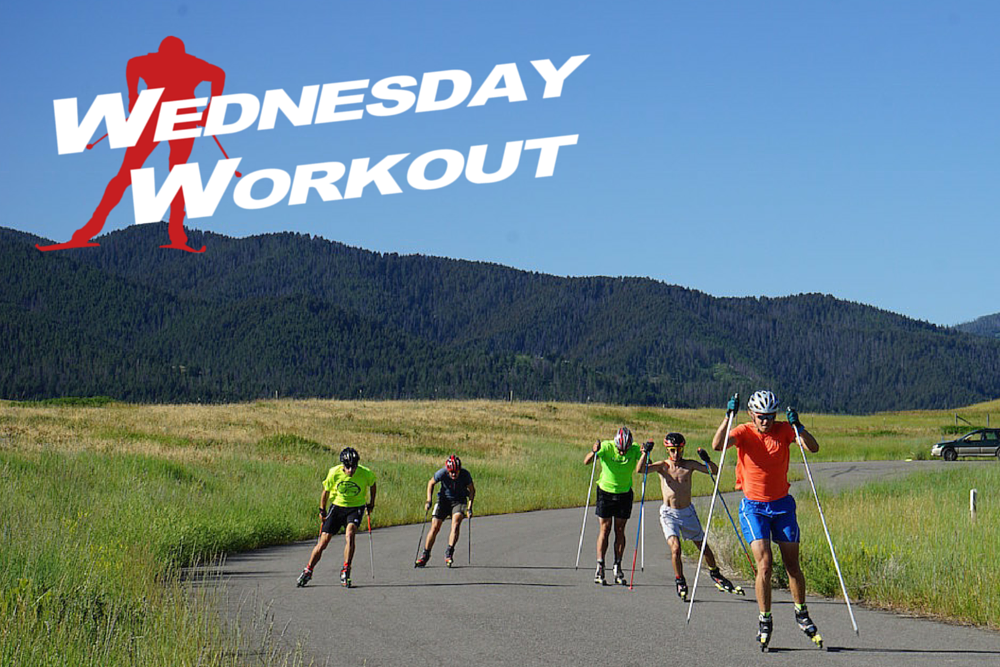
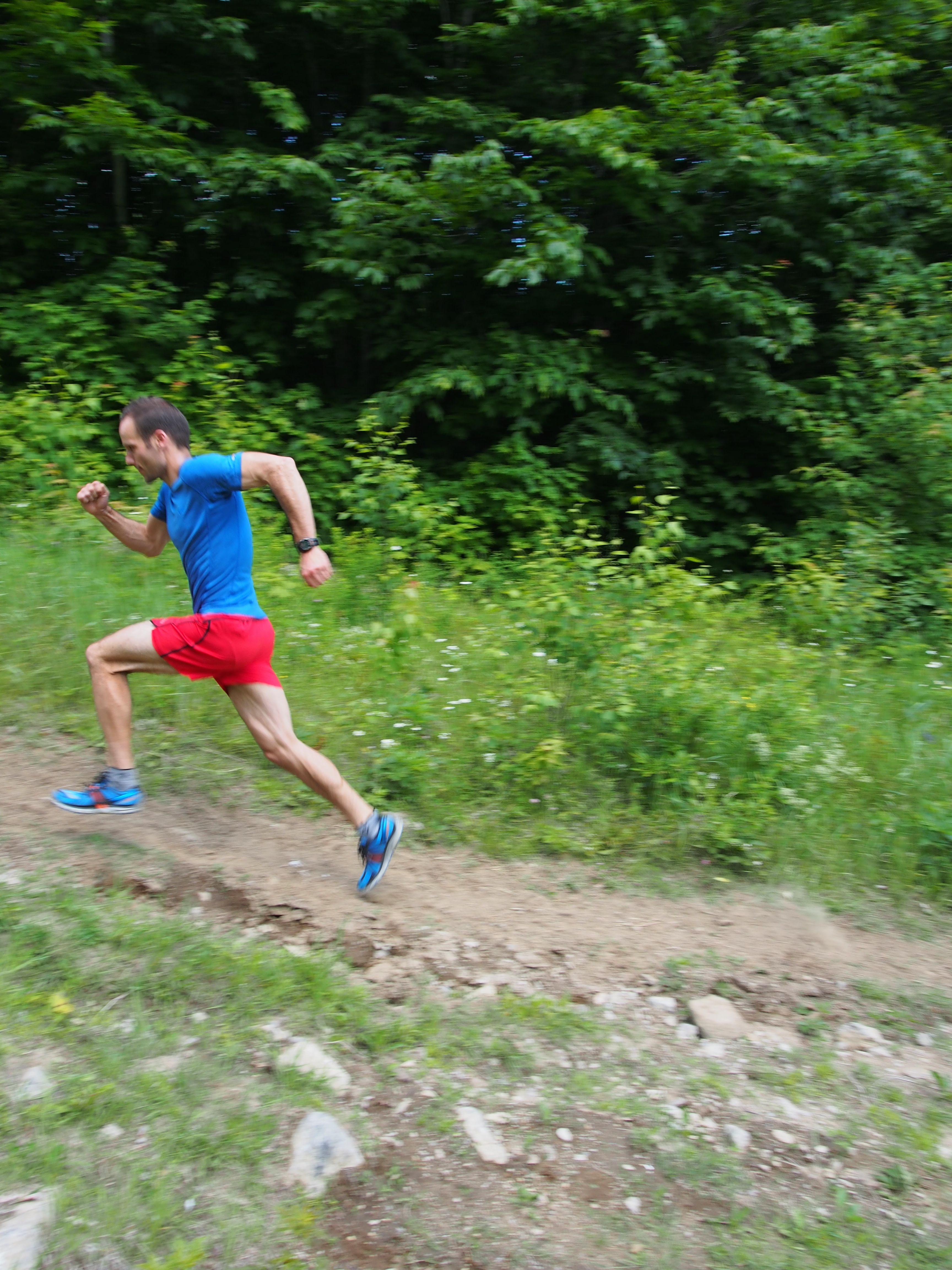
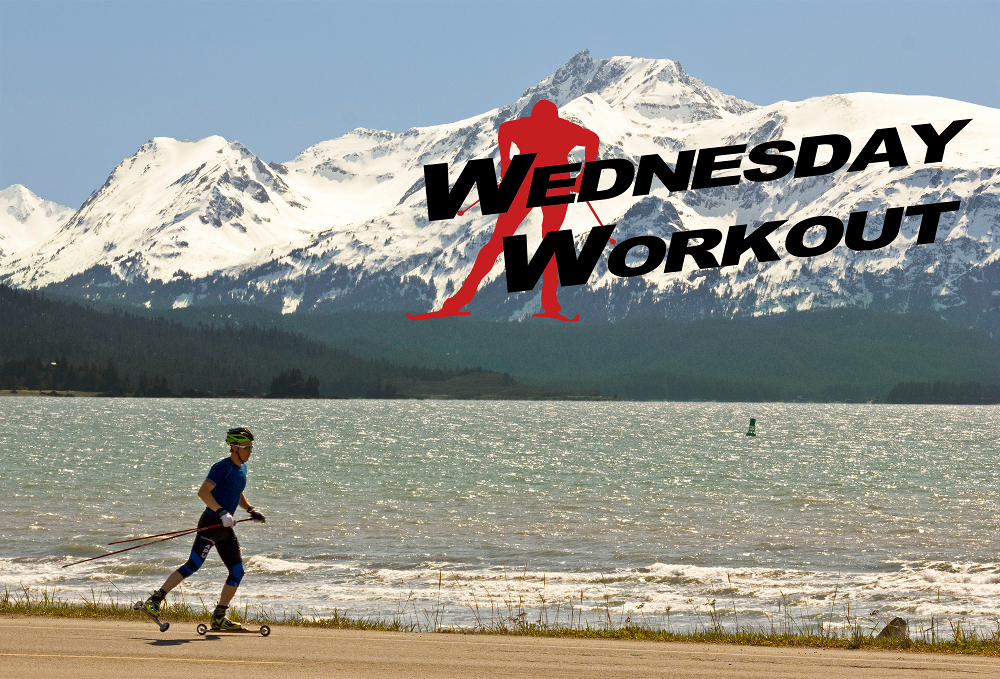
    Reese Hanneman (APU) rollerskiing in Homer, Alaska, in the spring of 2013. (Photo: Woodski)

    With ski season winding down, you may be one of the lucky ones hitting the road for some quality family/friend/significant-other time. Here’s a one-hour workout you can squeeze in on-the-go, which we received from Alaska Pacific University (APU) skier Reese Hanneman back in 2013. Hanneman, now 28, and his brother Logan, 24, raced at their first Olympics this past winter in PyeongChang, South Korea. Read the original workout here.

    ***

    [circa June 2013]

    It’s summer time, or close to it, which means vacation season is here. Whether you have a family reunion on a beach or a trip to the mountains planned, it can be tricky to carve out time for training while you’re on the road.

    Alaska Pacific University’s Reese Hanneman has a solution to this dilemma: a compact, efficient interval workout that fits into a single hour. It can be done on rollerskis, in running shoes, on a bike — with whatever equipment you have available away from home.

    “If I’m on vacation with people…and I’m only going to get one workout in a day, I want to do more than go ski or run or bike for an hour at distance pace, because that’s not that hard,” Hanneman explains.

    He frequently returns to this threshold workout when he’s pressed for time. It’s short on warm up and cool down time, but the meat of the workout is challenging and efficiently improves overall fitness. In the past, Hanneman has repeated this session as many as three to five days in a row when he’s traveling. And it clearly works for him: he racked up early-season World Cup starts in Canada and had a series of career-first podiums on the SuperTour last winter. The traditionally strong sprinter improved his distance chops, too, and finished last season with a sixth place at U.S. 50 k Championship in April.

    The workout:

    Warm up: 10-15 minutes Level 1 (L1)

    3×10 minutes L3, with 2 minutes of recovery in between. For added intensity, “if you really want to push yourself,” ramp up the pace to L4 or race pace for the last 3 minutes of each interval.

    Cool down: 10 minutes L1

    Total workout time: about 60 minutes

    By the end of the session, Hanneman is usually pushing the pace.

    “If [I] do that hard enough, without it being a sprint workout, I feel like it’s improving my fitness and improving my skiing,” he said. “If I was on a vacation for weeks on end and I did that every other day, I would still come away from that travel feeling like I improved as an athlete.

    “For me, obviously you could just do a straight hour of threshold, but by breaking it up then [I’m] able to push it pretty hard in L4,” he added. “So you get that feeling at the end where you feel like you were moving really fast.”

    In a perfect world — say, at a training camp — Hanneman would do such a workout after a 45 minute warm up beforehand with some pickups and have time for a longer cool down. But when he has to fit a session in a small window — within a road trip lunch stop, for example — he returns to this stripped-down version.

    “On a family vacation, where you’re someplace not suited well to a training block, you don’t want to be that weird person always out training during your family vacation,” Hanneman reasons.

    The quicker threshold intervals also work well outside the summer vacation context, when work and life encroach on workout time.

    “I think you could reach a pretty high-level doing workouts just like that,” Hanneman said. “People are always under this illusion that you have to do so many hours.”

    That’s not just the sprinter in Hanneman talking, either. He’s always considered himself to be a hybrid, but with a jump up in his distance racing last season he’s approaching training this summer with more distance focus.

    “I’m trying the Kikkan approach,” he laughed. “It worked for Erik [Bjornsen]. Certainly I have been more consistent as a sprinter, but some of that was mental, too. I’m trying to help myself expand my horizons.”

  • Wednesday Workout: Matching Attacks with Astrid Jacobsen

    Astrid Uhrenholdt Jacobsen (far right) in the lead pack of the women’s 30-kilometer freestyle mass start at 2017 World Championships in Lahti, Finland, along with (from left to right) fellow Norwegians Marit Bjørgen and Heidi Weng, and Sweden’s Charlotte Kalla. (Photo: John Lazenby/Lazenbyphoto.com)

    On July 28, we released our podcast interview with Norwegian national team skier Astrid Uhrenholdt Jacobsen. Not simply satisfied with the quotidian — Jacobsen is a multitasker, she’s studying to become a physician along with her World Cup training.

    In this Wednesday Workout, we’ll focus on the non-academic side of Jacobsen’s calculus: her quest for endurance and her stick-with-attacks speed.

    Jacobsen shares an idea for athletes training for this upcoming winter’s Masters World Cup in Minneapolis or other hallmark races like Sun Valley’s Boulder Mountain Tour. In fact, if any mass-start race where there’s a pulse of pace when the leaders try to gap the field is on your calendar, this workout could keep you in the hunt. It works for Jacobsen, it might just work for you.  

    Sweden’s Charlotte Kalla leads Norway’s Therese Johaug and Astrid Uhrenholdt Jacobsen in the final kilometers of the 15 k skiathlon at the 2015 FIS Nordic World Ski Championships in Falun, Sweden. (Photo: Flyingpointroad.com)

    “The sessions I feel develops me the most at the time are level 3 intervals with short sprints in the middle or to finish the interval,” Jacobsen wrote in an email. “It helps me work on my ability to follow attacks in sprint — or mass start competitions … To make this interval with good quality you need to be sure to not race faster than level 3, with is similar to the speed you keep in a 30km. Then you are able to hit your max speed for the sprints. If you start out too hard the sprints will be slower and the whole session more like a level 4. Takes discipline to make this training with high quality, But it has made me a better mass start skier.”

    The Workout

    Jacobsen explained that her usual session when completing this workout involves 6 x 8 minutes on a rollerski track or rollerski treadmill.

    “To make this interval with good quality you need to be sure to not race faster than level 3, with is similar to the speed you keep in a 30km,” Jacobsen explained. “Then you are able to hit your max speed for the sprints. If you start out too hard, the sprints will be slower and the whole session more like a level 4. It takes discipline to make this training with high quality, But it has made me a better mass-start skier.”

    About midway through the interval, Jacobsen puts in a burst of sprint-worthy speed.

    “After 4 minutes, I will do a 10-second sprint, then go back to level 3 speed for almost 4 minutes and finish the interval with a new sprint,” Jacobsen wrote. “I break until my heart rate is below 100, 1-2 min.”

  • Wednesday Workout: Looping L3 Rollerski Intervals with BSF

    Wednesday Workout: Looping L3 Rollerski Intervals with BSF

    The Bridger Ski Foundation summer elite and post-graduate crew from left to right: Nick Power, Paul Everett, Silas Talbot, Max LaChance, and Logan Diekmann during a rollerski in Bozeman, Mont. (Photo: Austin Caldwell)
    The Bridger Ski Foundation summer elite and post-graduate crew from left to right: Nick Power, Paul Everett, Silas Talbot, Max LaChance, and Logan Diekmann during a rollerski in Bozeman, Mont. (Photo: Austin Caldwell)

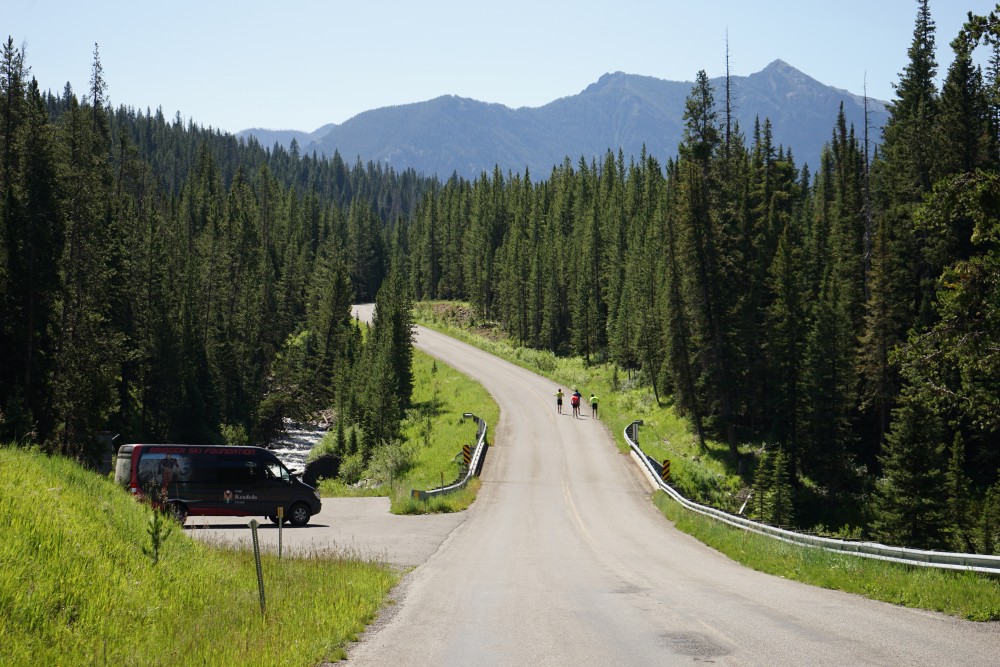
    Along with fleeting daydreams of snow-covered fields, the summertime for many nordic skiers and coaches brings the search for another surface: perfect pavement. After living in Bozeman, Mont., for the past two months working as the new head coach for the Bridger Ski Foundation (BSF) elite program, Austin Caldwell deemed the newly paved roads running past Triple Tree Ranch his rollerski route of choice.

    The best part about the route for Caldwell, however, is not just that his athletes do not have to dodge potholes or endure the consequential leg gyrations from rollerski wheels passing over pebbles. It’s also the interval loop the location provides.

    Performing interval pieces on the same loop, to Caldwell, offers athletes an opportunity to track their improvements not only through one workout, but over the course of many. Caldwell’s workout of choice is done at threshold on the same loop so that athletes can track improvements as the workout progresses.

    The Bridger SKi Foundation summer elite and post-graduate crew during a roller ski in Bozeman, Mont. (Photo: Austin Caldwell)
    The Bridger SKi Foundation summer elite and post-graduate crew during a roller ski in Bozeman, Mont. (Photo: Austin Caldwell)

    Caldwell says that the athletes should then return to the same location and perform the same workout a grand total of four times in the summer and twice in the fall. In order to track performance gains, Caldwell has his athletes calculate their average heart rate during each interval piece, along with the amount of time it took to complete.

    “The main thing that I like about this workout is that people can look back at it over time and see improvements,” Caldwell explained on the phone. “We look at the average heart rate and look at the times down for each interval and it’s a workout we’ll come back to a few times throughout the summer and a couple times in the fall as well, so you can see improvements throughout the year and I think that that is very motivating in the long run.”

    The Workout: L3 Rollerski Intervals on a Loop

    Find: A smoothly paved loop that takes 13-15 minutes to complete. Use this for the intervals.

    Warmup: 30 minutes skiing easy Level 1 (L1) with one Level 2-Level 3 piece

    The set: 4 x 15 minutes

    Each interval piece should be done on the same loop

    5 minutes recovery between each 15-minute interval

    Cool down: 30 minutes easy L1

    Total time: 2:15

    Paving the Way to Better Performances: Caldwell’s Top Two Tips

    1. Summertime = strategy testing. According to Caldwell, summer is the time to test different pacing strategies, transitions, and technique work, especially during longer threshold workouts such as the one outlined above. “I like this workout because it gets people to actually think about where they’re going hard, where they’re pushing themselves and where they can recover,” he said. “In a workout like this at this time of the year, I tell [my athletes] to try different things and see what’s working for them, what’s making it easier? Focus on a certain up hill or relax until the top of the hill and hammer the flat … hop in behind people, stuff like that.”

  • The West Wednesday Workout: L3/L4 Skate Intensity (with Video)

    The West Wednesday Workout: L3/L4 Skate Intensity (with Video)

    For this week’s Wednesday Workout, FasterSkier contributor Hailey Swirbul of the Aspen Valley Ski Club in Aspen, Colo., takes us though a workout she and her team recently did on the snow-covered Rendezvous Ski Trails at the annual season-opening ski festival in West Yellowstone, Mont. (Trouble viewing video? Click here.)

    ***

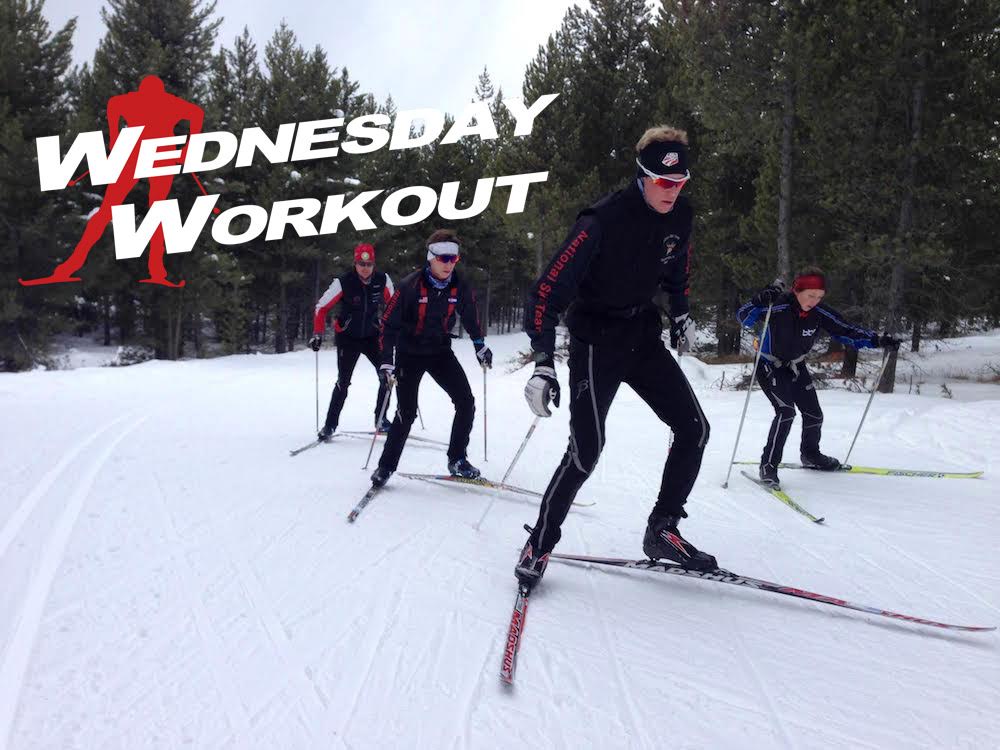
    The Aspen Valley Ski Club during a hard L3/L4 skate intensity workout in West Yellowstone, Mont. (Photo: Hailey Swirbul)
    The Aspen Valley Ski Club during a hard L3/L4 skate intensity workout in West Yellowstone, Mont. (Photo: Hailey Swirbul)

    Every year in West Yellowstone, Mont., thousands of nordic skiers of all abilities flock to the trails for a weeklong training and racing opportunity over Thanksgiving week.

    Aspen Valley Ski Club (AVSC) is one team of many here to take advantage of the pristine snow conditions and unbelieveable nordic skiing community during the week.

    This festival provides a perfect location for AVSC’s athletes to move fast, work hard and prep for upcoming races this week and this season.

    What better way to spend a morning than with a Level 3/ Level 4 combination skate-intensity workout?

    AVSC’s West Wednesday Workout

    Warmup: Recruit teammates and friends for this tough workout, and skate ski easy for 25 minutes. Pick a flat section of trail to do three build-up speeds, lasting about 10 seconds. Start slowly and work up to a full sprint.

    Level 3: After warmup speeds, begin your first 8-minute Level 3 or threshold interval, about 85 percent of max, on gradual rolling terrain to focus on V2 and transitions. Take 2 minutes off after that interval and begin a second 8-minute effort.

    Level 4: Now it’s go time. On similar terrain, ski three 4-minute L4 intervals with equal recovery between. On crowded trails like West Yellowstone’s, practice efficient passing!

    Cool down: Now that the hard work is over, ski easy for 20 to 30 more minutes. A cool down is a great time to practice maintaining technique with tired muscles or mass start Chinese downhills, and is also a perfect opportunity to catch up with fellow skiers from across the country if you are lucky enough to be surrounded by thousands of them at the Yellowstone Ski Festival!

    See you on the trails!
    – AVSC

  • Wednesday Workout: Spice It Up with V2 Jumps, Sprints and Stairs

    Wednesday Workout: Spice It Up with V2 Jumps, Sprints and Stairs

    This week’s workout comes from FasterSkier contributor François Léger Dionne, who raced for 15 years at provincial and national competitions in Quebec. After obtaining a Bachelor of Law at the University of Montreal, he’s currently enrolled in a full-time program at the Montreal College of Osteotheraphy. This past weekend, he placed 60th out of more than 1,000 competitors in the Mount Washington Road Race (a 7.6-mile hill climb up the highest peak east of the Mississippi River).

     ***

    Summer is the best season to add plenty of variety to your training before the upcoming and more ski-oriented fall. Back in my racing days, I used to do this workout every week in Mont Royal, Montreal’s most popular playground for endurance athletes. In preparation for the infamous Mt-Washington auto road race (which took place on June 21st), I actually incorporated this specific ski workout as a general fitness test to assess my energy and recovery levels.

    Short, full-out sprint
    Short, full-out sprints up a hill require technique, balance, and muscle control, all while developing strength and fitness.

    Part I: Explosive power, balance and short sprints

    Find a 200-meter slope, not too steep (around 6-8%, max 10%) and large enough for you to jump energetically from side to side in a V2 (or one-skate) motion.

    The first part of this workout consists of short repeats, each of which is divided in two sections. First, a dynamic phase that requires technique, balance and muscle control, while the second is a full-out sprint.

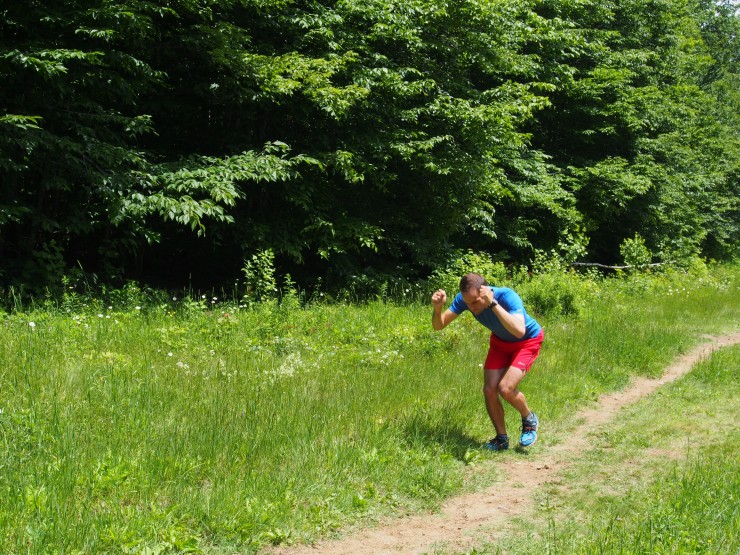
    Start with 20 (10 on each leg) V2 jumps. The goal is to concentrate on technique, power and balance. You want to build the most energy possible on the impulse, so make sure to really bend your knees, while trying to keep your upper body in a straight line as much as possible. Use your arms (in a V2 fashion) to generate the most explosive one-skate hop. The landing requires keeping your balance and stabilizing your core and leg muscles. Take time to land properly before taking off again. Don’t rush it, speed is of no importance here.

    After completing 20 V2 jumps, sprint at full capacity for 20 seconds. One set should take about a minute. Jog or walk back down, but don’t stop in between each rep. It’s important to teach you body to recover actively and quickly.

    Part II: L3 intervals up stairs

    After completing around 10 repeats, recover slowly for 10 minutes. At this point, with the accumulation of lactic acid, your legs will probably feel a bit like jello.

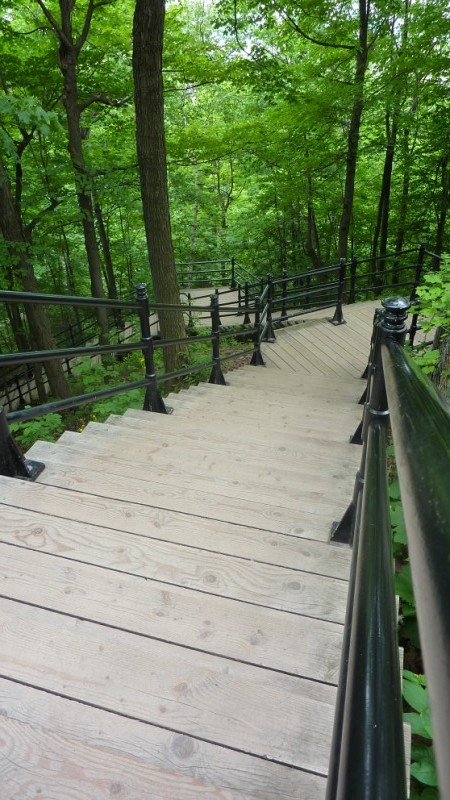
    The second part of the workout, although involving stairs, is thus less taxing muscle-wise. Montreal overflows with long sets of stairs, and Mont Royal — with one set of 260 stairs — makes no exception! Try to focus again on technique, and avoid simply running up the stairs. Ski walk (with no poles) two steps at once, with full leg extension and straight upper body, hands tucked in behind your back. Aim for 5 reps of one minute.

    The basic workout:

    • 20 minutes of easy running
    • 8-12 x 1 minute repeats (20 explosive V2 jumps + 20 sec. sprint) with 1.5 minute of active recovery between each rep.
    • 10 minutes of very low active recovery
    • 4-6 x 1 minute L3 or threshold intervals up stairs with 2 minutes of active recovery between each interval
    • 15 minutes cool-down

    Total time: About 1 1/2 hours

    Mont Royal's 260 stairs are a great place to work on technique and L3/threshold intervals.
    Mont Royal’s 260 stairs are a great place to work on technique and L3/threshold intervals.

    Notes:

    • When my energy levels are high, I like spicing up this workout by incorporating sets of 15-20 push-ups/dips every two reps.
    • This workout can be done alone, but is more fun for groups. Be careful not to lose concentration when doing the V2 jumps with teammates, as each has a different stride and pace. Have the younger ones start ahead of the stronger athletes for close sprint finishes. A coach can even dictate the V2 hops pacing for everyone.
    • I prefer doing this workout without poles, but feel free to try them out (especially if you can’t find stairs).
  • Photo Gallery: Bend Camp L3 Intervals

    Photo Gallery: Bend Camp L3 Intervals

    The U.S. Ski Team’s annual May training camp began in earnest this week in Bend, Ore. A few inches of fresh snow greeted skiers at Mt. Bachelor on Wednesday morning, just in time for the group’s first interval session: a set of 6 x 4-6 minute L3 freestyle intervals with intermediate sprints.

    “We’ll put a little sprint halfway through the interaval, and that’s to mimic mass start racing and preems and time bonues on the World Cup,” said U.S. sprint veteran Andy Newell. “We try to do it pretty controlled today, but skied in a pretty good group.”

    The USST is joined at Mt. Bachelor this week by the National Training Group, the Canadian National Ski Team, the U.S. Biathlon team and U.S. Paralympic athletes. With so many high-caliber skiers training on the same six- to seven-kilometer loop, Newell says the workouts interesting.

    “I think tomorrow we have a three-hour one on the schedule,” he said. “We have the Canadians here, the U.S. biathles are here, so there’s so many people out we can catch up with Tim [Burke] and Lowell [Bailey] an ski a lap with them. It’s pretty fun skiing with that many people around.”

    Though the workout was the first group interval session all spring for many skiers, Newell noted the pace was pretty controlled.

    “We’re pretty used to training with one another so it’s not that competitive,” he said. “Maybe the preems we definitely try to race each other, to try to ge across the preem line, but as experienced skiers we know that there’s not a whole lot of stock in being in great shape in May.”


    Special thanks to Dan Simoneau for his photos.