From the FasterSkier archive — posts syndicated from athletes’ and coaches’ own blogs between 2004 and 2012, kept online as published. Current coverage is at fasterskier.com.

Tag: lactate threshold

  • ‘Let Your Ego Go’: Lars Dewall on the Ski Training Behind a 2:12 Marathon

    ‘Let Your Ego Go’: Lars Dewall on the Ski Training Behind a 2:12 Marathon

    This article was made possible through the generous support of our voluntary subscribers. If you value coverage like this, please support FasterSkier with a voluntary subscription.
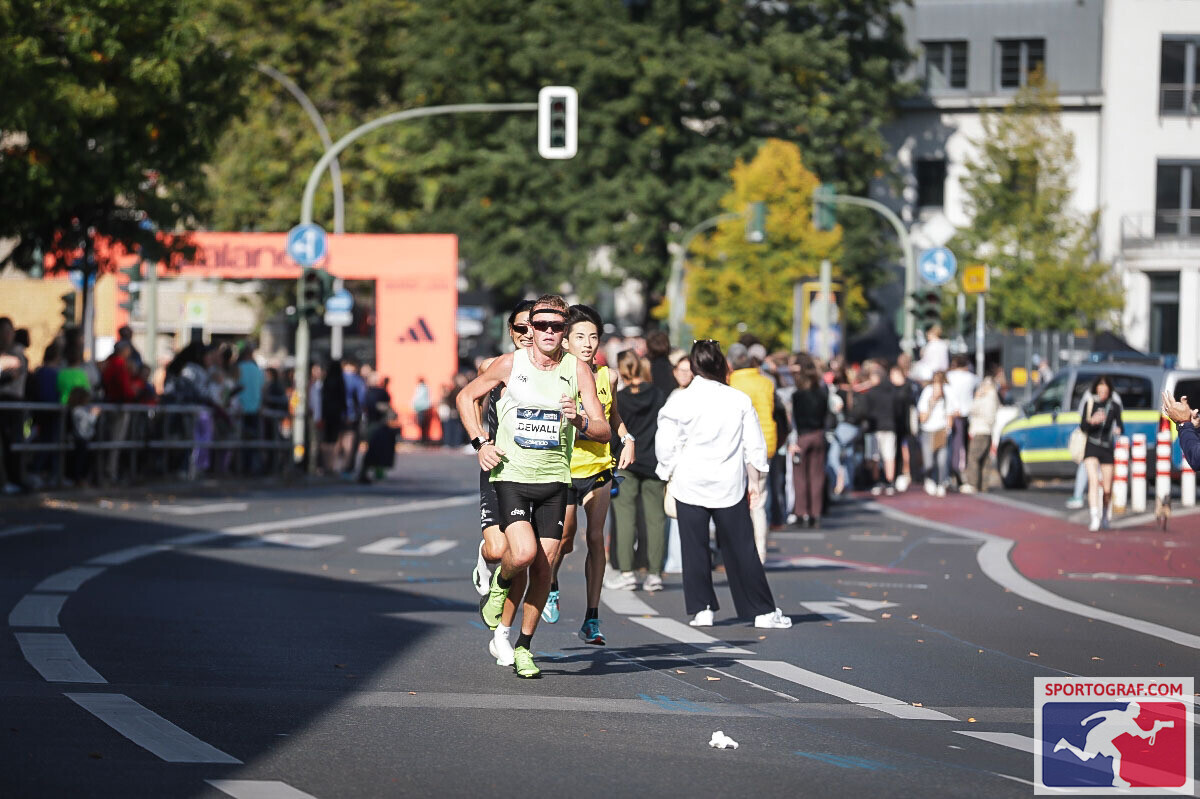
    Lars Dewall in a lime green Puma singlet, headband and sunglasses running at the front of a small group on a Berlin street, with spectators and a police van behind.
    Lars Dewall leads a small group through Berlin on September 27. He finished the BMW Berlin Marathon in 2:12:13, third among the Americans. (Photo: Sportograf)

    The summer before he started college, Lars Dewall ran his easy miles at a nine-minute pace.

    He had run 4:26 for the mile in high school. He had been an all-state skier at Stillwater Area High School in Minnesota, the same school Jessie Diggins skied for. And the coach waiting for him at the College of St. Scholastica in Duluth had given him one rule for his easy days: keep his heart rate under 140 beats per minute.

    For a runner like Dewall, on the road, that was a jog.

    “That’s how slow I was going,” he said. “It just doesn’t feel fun, and it takes a long, long time.”

    People tell him now that he runs his easy days fast.

    “I’m like, yeah, five years ago I was running nine-minute pace, though,” he said. “I had to be so disciplined about that for so long.”

    On September 27 he ran 2:12:13 at the BMW Berlin Marathon, 31st overall and third among the Americans, behind Charlie Sweeney and Will Nation. It was his fourth marathon and his fourth personal best. He debuted with 2:22:57 at Grandma’s in June 2025, ran 2:14:15 at the California International Marathon that December, comfortably under the 2:16 standard for the 2028 Olympic Marathon Trials, and then ran 2:12:30 at Boston in April. In between, back in Duluth, he won the Park Point 5-Miler and broke a race record that had stood since 1975. It belonged to Steve Hoag, who finished second at Boston that spring.

    Earlier this month his college coach, Chad Salmela, made the case in these pages for what American distance runners could learn from cross-country skiers, and called Dewall “my living thesis.” Salmela, who also calls cross-country skiing for NBC, describes his role these days as a sounding board on broad direction.

    Dewall teaches sixth, seventh and eighth graders in San Diego and trains with a group called Lane Zero Athletics. When we spoke on a Sunday in October he had already done his long run with the team, slept for about an hour, and was getting the coffee going at one in the afternoon.

    “It’s kind of like the day’s actually starting,” he said.

    He talked for most of an hour and needed very few questions to do it. Nearly every answer came back around to the same place. The hardest thing a distance runner has to learn is how to go slowly, and skiers worked that out a long time ago.
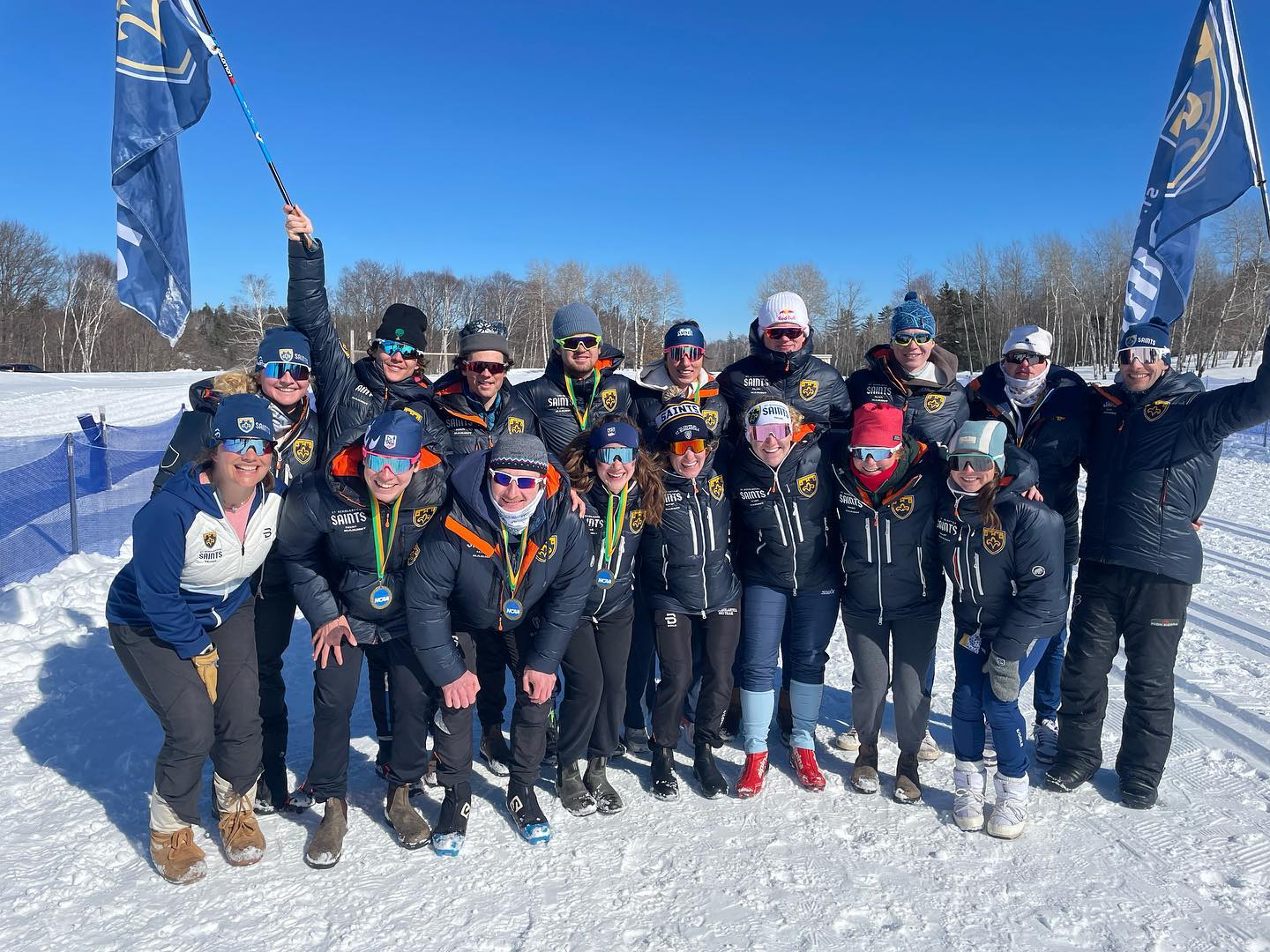
    The St. Scholastica ski team in navy Saints jackets and sunglasses posing on snow under blue sky, several holding NCAA medals, with two blue team flags raised behind them.
    St. Scholastica’s skiers after the men’s team won the NCAA Central Region team title in 2023, a first for the program. Dewall raced for the Saints on snow as well as on the track and the cross-country course. (Courtesy photo)

    Lying down in the tracks

    Skiing came first, in a way, and he did not care for it.

    His father was a serious skier, good enough to have raced against Salmela at some point, though Dewall is not sure exactly when. He took his son out on snow when the boy was small.

    “I just didn’t really like it that much, and it was kind of painful,” Dewall said and continued in his father’s voice. “He always describes it. He’s like, yeah, I’d take you out and you’d just go a little bit and lay down in the tracks or in the snow and just kind of goof around.”

    Football was the thing. He ran cross-country and track in middle school, but he cared more about football than any of it. In seventh grade he took track seriously and ran somewhere around 5:15 for the mile. In eighth grade, still a middle schooler, he trained with the high school team.

    “I look back on that and I’m like, that was a pretty big turning point, because you’re putting yourself in a situation with older guys,” he said. “I remember learning a lot more, and that, looking back on it, I feel like was more important than how I performed at that age. Although I performed well.”

    He planned to play football as a sophomore. That fell through, which he calls “a whole nother story,” and he abandoned ship for cross-country after the season was already underway. He was “aerobically pretty naturally talented,” he said, but there was not enough time left to get fit.

    Nordic skiing started around eighth or ninth grade, and it humbled him.

    “You can be really fit, but that doesn’t make you good at skiing,” he said. “It’s very, very different.”

    The technique took a couple of years. By his senior winter he was all-state, and he remembers finishing 22nd or 23rd at the state meet, which was enough to make him consider skiing in college. The trouble was that he had already committed to run at Western Washington University in Bellingham.

    After that ski season he toured St. Scholastica and met Salmela, who had been the school’s first nordic head coach for ten years before taking over cross-country running in 2016. Dewall would not have to choose.

    “I was really into the idea of being able to both nordic ski and run,” he said. “Especially at that age, I think it was really good for me to continue to do both for some years, because I didn’t know which one I really wanted to do at that point. And looking back on it now, they both really complemented each other for a really long time.”
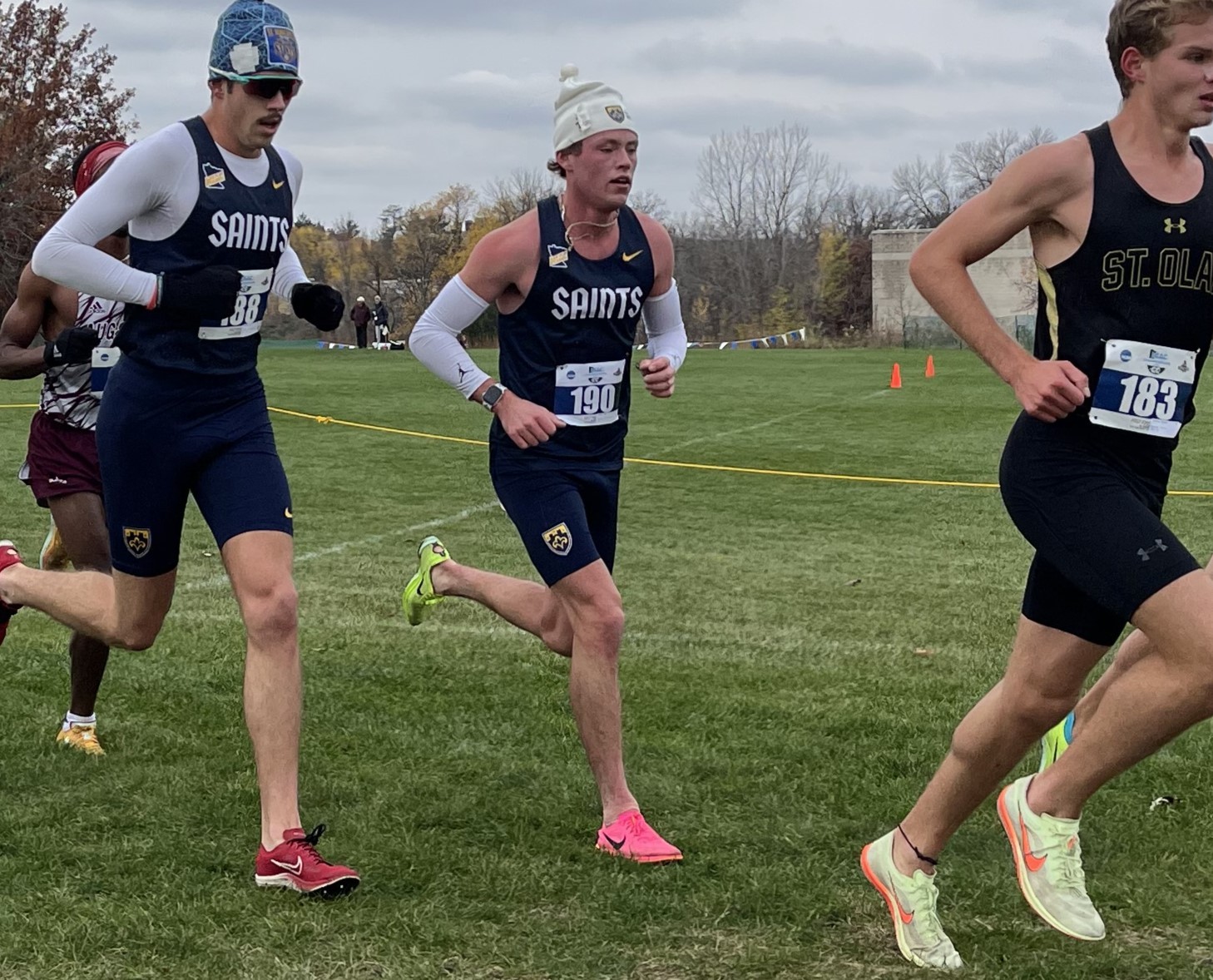
    Three college runners on a grass course, the one in the middle wearing a white knit hat, a St. Scholastica singlet and bib 190.
    Dewall (190), center, racing cross country for St. Scholastica. Under the 140-beat rule, his easy runs on Duluth’s trails went as slow as 10- and 11-minute pace. (Courtesy photo)

    The ‘Under 140’ Rule

    The running in high school was built for the mile and the two-mile. His coach at Stillwater was Scott Christensen, whose program produced four sub-four-minute milers by 2012, the most of any American high school at the time. Dewall puts the number at four or five.

    “My training was very VO2 max centered,” he said. “We’re running the mile and two-mile. There was no 5K.”

    Most of the rest of his running, he said, sat in “that level two zone, which at the time I didn’t even really know what that meant.”

    His best times were good and, he will tell you himself, not extraordinary: 4:26 for the mile, around 9:40 for two miles, 15:55 for 5,000 meters. He graduated in 2019 and doubts those marks would get him in the door at Western Washington now.

    “I guarantee those times would not,” he said. “They’d be like, nah, sorry.”

    What he remembers from those years is not a time.

    “I was running faster on my recovery or easy days in high school than I am now,” he said.

    The easy runs went at 6:30 to 7:15 a mile, with his heart rate at 150 to 160.

    “You’re in that zone where you’re just burning glycogen,” he said. “You can’t call it recovery, because you’re not recovering. You’re just burning through your tank every day, and you might get fit pretty quickly.”

    He has nothing against that kind of training. He just thinks it answers a different question.

    “If you gave me an athlete and were like, okay, we need to get this athlete as fit as possible in two to three months, you’re gonna do a lot of that zone two, because it’s gonna have the most bang for your buck,” he said. “But if you were to give me an athlete and say, we need to make this athlete the best version of themselves, and we have eight years to do it, well, you’re gonna do things a lot differently in terms of the intensity on your easy days.”

    Zone two sits well below threshold but above the genuinely easy work of zone one. On the Olympiatoppen scale most skiers know, the Norwegian system, it runs from roughly 72 to 82 percent of maximum heart rate. It builds fitness quickly. Plenty of coaches believe it also costs more recovery than easier efforts without giving much more back, and that is the trade Dewall is describing.

    He also thinks, looking back, that he was never really a miler.

    “I think I was a true distance runner who had the ability to run well at the mile and two-mile still, just by default almost,” he said.

    In Duluth, Salmela made it simple. Keep the heart rate around 140 or below on easy days. Dewall did not buy in right away.

    “It took me a little while to buy into it, and I was kind of half in, half out for a while,” he said. “But eventually I started taking it very seriously.”

    His first college cross-country season started well and ended with an illness and a disappointing finish. The principle held anyway. The nine-minute miles on the road were the hard part. Duluth had trails, and the trails helped.

    “The trails made it easy to really soak up, let’s just say, two hours at 135 BPM, but we were running maybe 10-, 11-minute pace on technical trails,” he said. “It made it mentally easy to let your ego go and just accept that it’s going to be a slow run and low heart rate, and that’s okay.”

    The return took years. When he is fit now he can run 6:45 a mile with his heart rate close to 130. He measures that against the high schooler who ran his easy days at about the same pace and 25 beats higher.

    “It’s huge,” he said. “It’s everything.”

    By the time he carried that discipline onto snow, the skiers around him already had it.

    “The skiers have a much better concept and notion of easy training than runners,” he said. “I would say it’s not even close. I feel like I’ve done more running than I have skiing, but I’ve done enough skiing to confidently say that the skiers are much more on top of their intensities, and cognizant about what they’re doing every day.”

    He has a theory about why.

    “Maybe it’s just the simple idea that you’re skiing, the terrain is varying,” he said. “Skiing feels a little bit more social to me than running does, because you’re out there and it’s different all the time. But running, I think people just get way too caught up in the pace per mile and all of that.”
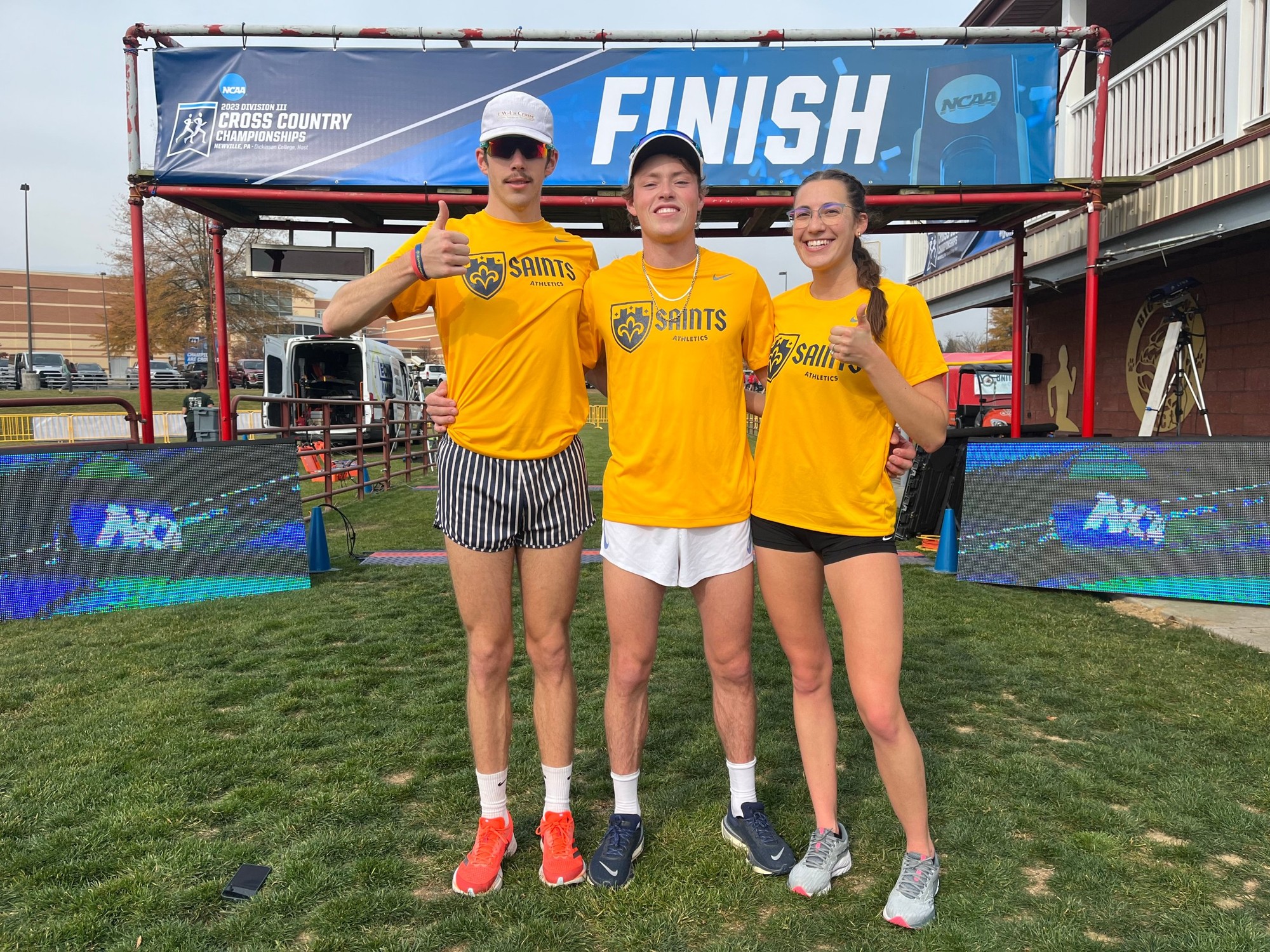
    Three St. Scholastica runners in gold Saints shirts smiling and giving a thumbs up beneath an NCAA cross country championships finish banner.
    St. Scholastica runners, Dewall among them, under the finish banner at the 2023 NCAA Division III Cross Country Championships in Newville, Pennsylvania. (Courtesy photo)

    Eight hundred hours

    In college he stopped counting miles and counted hours: run, ski, bike, lift. Some years, he said, came out between 800 and 900.

    “I was pushing it pretty heavy,” he said. “And again, obviously a lot of that is cross-training and not running.”

    Not all of it paid right away, even in a college career that included All-America honors in cross-country in 2023. The 5,000 and 10,000 meter results did not match the workload, and the skiing never got where he wanted it. He still turns that over.

    “I felt like I was decent at skiing, but I don’t know what it was, and I still think about it sometimes. I felt like it just couldn’t push to that top level,” he said. “I felt like I maybe didn’t start early enough, or maybe naturally just didn’t have it in that sport, and that’s okay. But I still really enjoyed it, and I think there was a huge payout later on in the running world with all the skiing.”

    The year had a rhythm. Winter was mostly skiing, with a little running. Cross-country season was a mix. In the spring he let the volume slide so he could sharpen for track.

    “You’re not going to run well in track if you’ve got heavy ski legs,” he said.

    What he and Salmela watched was the line from one year to the next, not any single season. It has only gone one way.

    “There hasn’t been a year since I started working with Chad where I haven’t gotten better, like PR’d in something or seen improvement in some way or another,” he said. “There were some years where maybe a nordic ski season or a track season or even a cross-country season didn’t go perfectly, and that’s sport. But across the board, since 2019, I can confidently say there hasn’t been a year where I haven’t gotten better.”

    He plans to do this for a lot more years and sees no reason for the line to bend. “I haven’t dramatically changed anything,” he said.

    The volume is lower now, because a runner cannot absorb hours the way a skier can.

    “You can try, but something’s gonna give at some point,” he said. “You’re gonna get hurt, essentially.”

    What crossed over intact was the mindset.

    “I’m really good about training like a skier, in the mindset of, I go out there and I know exactly what intensities I need to hit every day,” he said. “And I’ve done a really good job of letting the ego side of running go.”

    That means running alone, often. If the group heads out on a recovery day at 6:45 pace and his heart rate says no, he lets them go.

    “I have no issue going out and letting people go too fast, and I won’t go with them,” he said. “I’ll run alone. But that takes a lot of discipline.”

    He is not perfect at it. Where he still slips is in workouts, when somebody wants one more fast rep.

    “I can look back even at my block going into Berlin, and look at a couple workouts and be like, did I really need to do that?” he said. “Did that really help me more than it hurt me? But I think just being critical about all that helps you prepare for the future too.”

    The culture of the sport pulls the other way, he thinks, and social media has made it worse, especially for younger endurance athletes.

    “I feel like there’s also a side of them that’s chasing likes on Strava, or a fast run, or an Instagram post,” he said. “All that stuff is great, but if you’re skewing your training around social media, that’s no good.”

    His advice to the younger ones is short.

    “Wait for the race to do that,” he said. “Put the race down. The training is just the building blocks.”

    Every day should have a reason, a purpose.

    “Look at every day and be like, what am I going to do to get better today?” he said. “Instead of just kind of hither and yon, like, oh, let’s show up and run.”
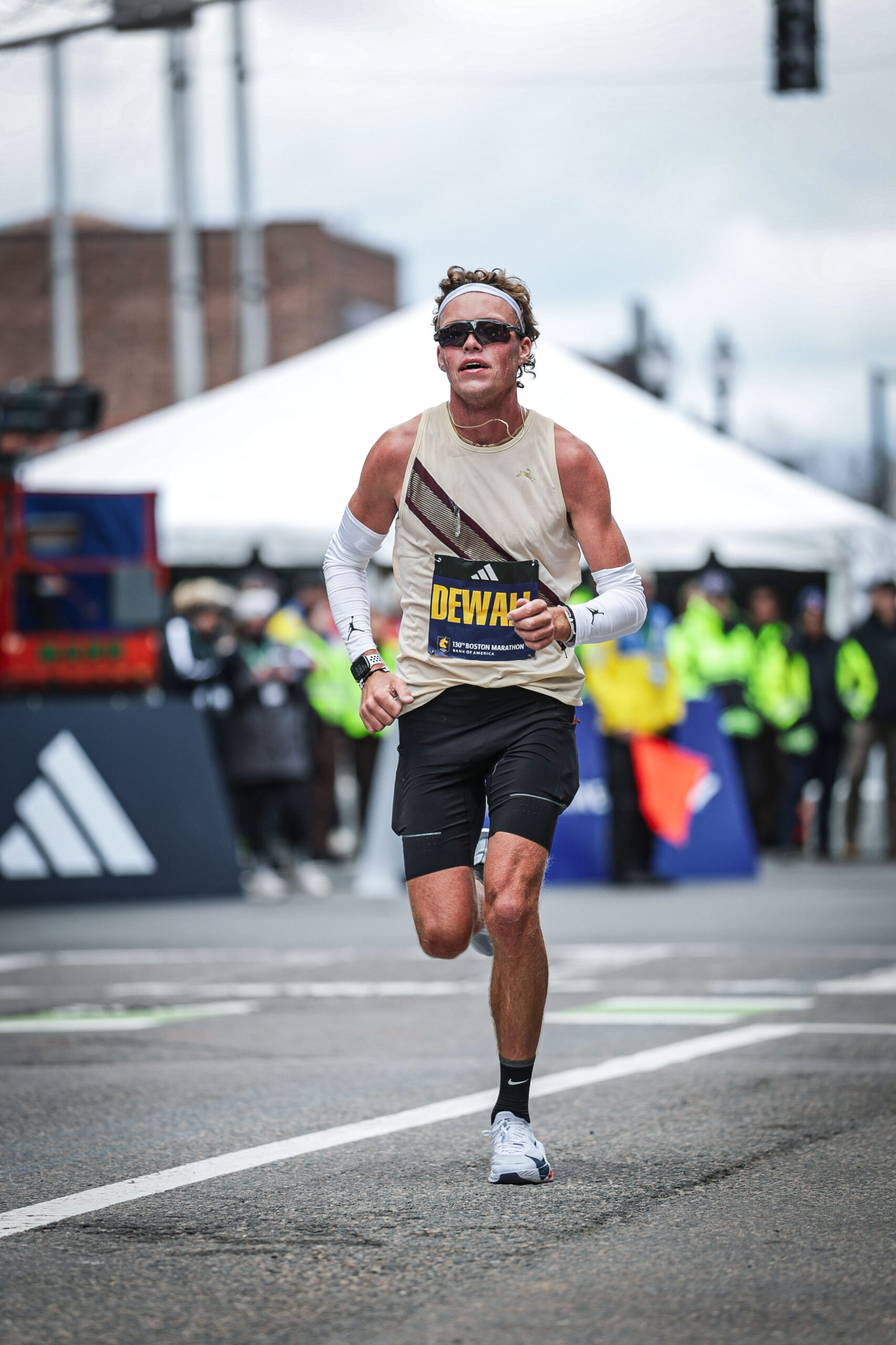
    Lars Dewall in a cream singlet with a maroon sash, white arm sleeves, headband and dark sunglasses running toward the camera at the Boston Marathon, a white tent and race volunteers behind him.
    Dewall at the 130th Boston Marathon on April 20, where he ran 2:12:30 off a build with no double threshold sessions in it. (Courtesy photo)

    Boring on purpose

    Ask what a skier’s background gives a marathoner that most marathoners do not have, and his first answer is something he does less of.

    “I’ve always found that I do a lot less VO2 max than most people, and I’ve been asked why,” he said. “The answer is always, VO2 max has a place. You have to touch VO2 max to be able to race well. But it’s less of a factor in the marathon.”

    When he leaned on it in high school and college, he would string together a couple of great weeks and then slide.

    “I felt like the engine would get flat,” he said. “And it’s so much harder to recover from a hard VO2 max session than a threshold session that’s done very well.”

    So he replaced some of it with threshold and what he calls efficiency work. He is sure he does more threshold than the average marathoner. The gap can look small on paper, maybe one session in fourteen days, and he thinks it compounds.

    “It’s hard to weigh how much even one workout every 14 days makes over the course of an eight to 12 week training period,” he said. “It adds up.”

    The second answer is strength, and with it the ability to carry mileage. He has gone from about 100 miles a week to about 135.

    “I don’t want to say that for sure, but I definitely think that the skiing background, the strength, the amount of volume that I was doing all those years has helped me being able to go from, okay, I was running 100 miles a week, that’s a lot. But to be able to jump from that to 135 and still feel pretty dang good,” he said. “To be able to make jumps like that, I feel like the ski background definitely is a part. Someone will go, oh, it’s just 35 more miles. But that jump in your nervous system and fatigue and all of that, it’s an exponential number. It’s hard to even measure.”

    The odd part is that in college he barely lifted for running at all.

    “I really did none,” he said. “I just didn’t really want to. I was just kind of lazy, and I didn’t believe that it would make me better at running.”

    What he did in the weight room was for skiing: upper body, core, pull-ups. For about a year now he has followed a running strength program built to take 20 minutes. Heavy half squats. Step-ups holding about 60 pounds. A Bulgarian split squat done as a jump, with no weight. Romanian deadlifts. Two sets of eight of each, three minutes between, and he spends the three minutes stretching, on core, or on whatever is sore. He lifts two or three times a week, soon after a workout or a long run once he has refueled, and never on a recovery day.

    “It comes at a cost, and strength is strength,” he said. “You’re still adding fatigue.”

    Then there is the session everybody in marathoning is arguing about. He ran 2:12:30 at Boston with no double threshold days in his build. He ran 2:12:13 in Berlin after a lot of them.

    “It’s hard to weigh,” he said. “If I would’ve ran 2:10 in Berlin, would I answer that question differently? Maybe. I just need more races to be able to answer that question. I think they’re both good.”

    His complaint is with how a lot of people do it.

    “You want fatigue to be the thing that’s stopping you, not lactate being too high,” he said. “People are like, oh, I’m done, my lactate’s high. And most people aren’t even monitoring that. I just like to let time be the thing that makes you tired. Time on feet.”

    Going into Berlin, where the goal was to break 2:10, the pace for it, around 4:57 a mile, felt easier than it ever had in his career. He gives double threshold some of the credit and plans to keep it, perhaps every other week instead of every week.

    “It’s taxing,” he said.

    After the first story ran, Salmela wrote that Dewall was basing most of his current training on cutting-edge running technology. Dewall found the phrase funny.

    “I would say that a lot of my training looks pretty boring, because it’s a lot of the same stuff over and over and over,” he said. “But the consistency is there, and the focus and discipline and being a mature runner is there.”

    Lactate testing and heart rate data matter, he said. But he thinks what Salmela meant is simpler than any of the gadgets.

    “In the running world specifically, people aren’t out there constantly monitoring heart rate and all that data, and getting useful information from it,” he said. “Even in the pro world in running, there are people who are doing a really good job of it, but there’s people out there who are just showing up, like, let’s go run.”
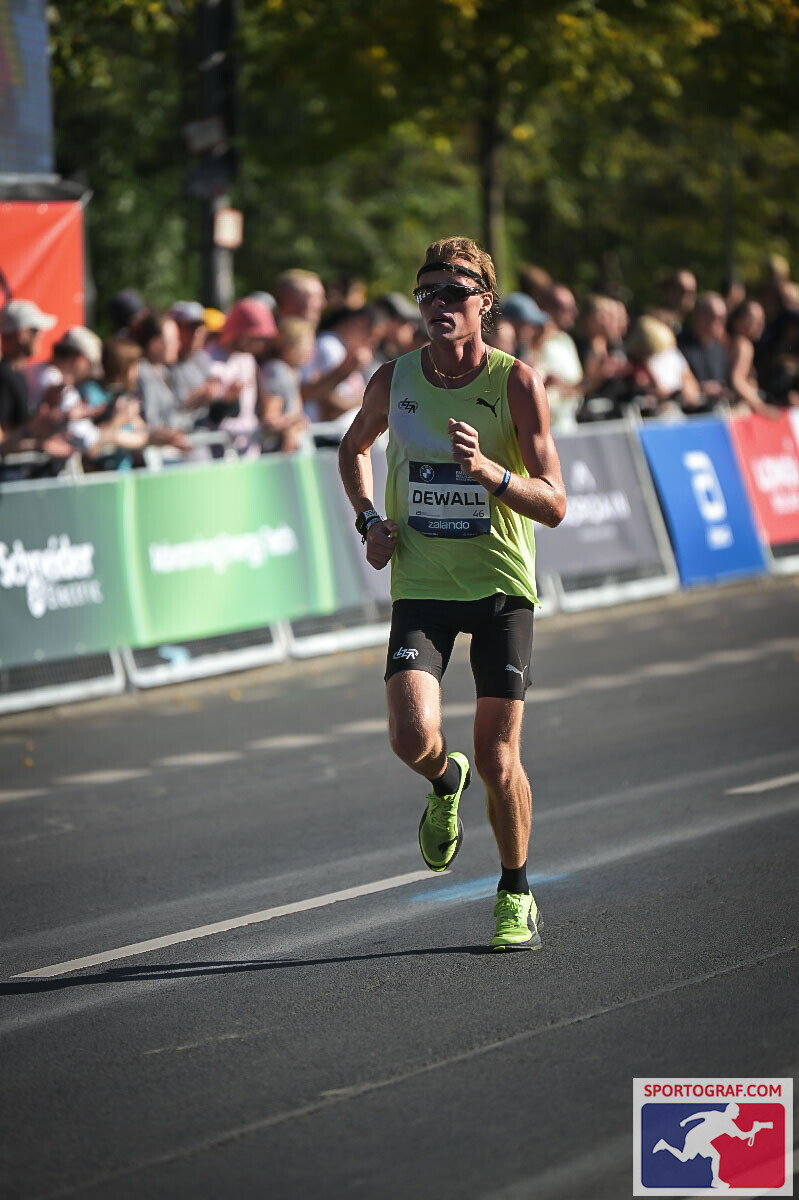
    Lars Dewall in a lime green singlet and bright yellow shoes running alone down a sunny road lined with barriers and spectators.
    Dewall on the road in Berlin, his first race in Europe. He called it the most organized and efficient race he has been to. (Photo: Sportograf/courtesy photo)

    The road to St. Louis

    The Olympic Marathon Trials are in St. Louis on March 25, 2028. Dewall has had the qualifying time since CIM, and he is not alone at home. Three or four of the Lane Zero runners, Dewall included, have met the 2:16 standard.

    “Although San Diego’s a big city, that’s a lot of qualifiers for even a big city,” he said. “Those are the guys that can push me in workouts and really make me better in workouts.”

    Puma backed him through Berlin under its PROJECT 3 program for sub-elite marathoners, and after the race the company told some of those athletes it would support them through the Trials. He does not yet know what that will look like. He doubts it will be money.

    “But free gear and travel and stuff like that, and that’s pretty huge,” he said. “So I’m stoked about that.”

    He knows where the next line is.

    “Two-ten is the number that most of these companies are looking at to be like, okay, let’s get you on an actual contract,” he said.

    For now he is letting his body decide what comes next. Berlin was three weeks old when we spoke, and the job was to recover without giving back fitness. There might be a race before the end of the year. He expected to know soon.

    Early 2027 is for going shorter: road 5Ks and 10Ks, maybe a 3,000 or a mile, even a time trial. His 5,000 best is 14:37, and he thinks 14:10 is there at the least. He would like to get under 29 minutes for 10K. His mile best is 4:10 from college, and before Berlin he ran 4:22 at the end of a workout without trying very hard.

    “I was like, to my buddies, I think I could have PR’d in the mile right now at the end of this workout if I would’ve went for it,” he said. “Who doesn’t want to have a faster mile PB, even if you’re a marathoner?”

    The bigger target is the half marathon standard for the Trials, 1:03:00. The window for half marathon qualifiers opens January 1, 2027. His best is 1:04:06, from the Garry Bjorklund Half Marathon at Grandma’s in June, in conditions he called humid-ish. He is already qualified for St. Louis, so the half would change nothing about his place there. He wants it anyway, and he is looking at a half in March.

    “It’s a nice accolade to have,” he said. “It’s no gimme. That’s gonna take some really specific prep.”

    He expects to run one marathon in 2027. Boston again, maybe London, maybe Chicago, nothing later in the year than that. He would think about Berlin again if teammates were going, because of how well the race took care of its elite field.

    “That was the most organized and efficient race I’ve ever been to,” he said. “And that’s worth a lot.”

    He wonders whether getting there three or four days earlier would have bought him something. He does not know. He also admits he remembers very little of the course.

    “I always laugh when people ask me about the course in those races, and I’m like, I don’t even know,” he said. “You’re going pretty fast, but you’re also in a group like that, and the only thing you’re looking at is just the person in front of you.”

    On Monday mornings he is back in front of his middle schoolers. He is not a morning person, which makes running before school a grind in the long weeks.

    “I wish I could start my teaching day at 9 or 10 a.m., but that’s not how the real world works,” he said.

    He would not trade it.

    “When you don’t have that job, it’s easy to get almost obsessed with the training and the running,” he said. “As much as that’s great and it’s exciting, I think it’s good to have something to force me to not think about running.”

    The classroom gives some of it back.

    “It’s fun teaching kids and making a difference in their life,” he said. “I feel like they take interest in the marathon stuff too, and ask questions, and always want updates.”

    He wants to coach someday, probably once his own career is over, and he knows which sport.

    “I think I’d like coaching running more,” he said. “A little more straightforward. Less variables, less factors.”

    No wax, no kick, no temperatures, as he put it.

    The 2:10 is still out there, and he knows how close 2:12 is.

    “I’m scratching,” he said. “I just gotta connect on the right day.”


    Help Support Our Coverage!

    If you value the thoughtful work and access FasterSkier provides, please consider becoming a Voluntary Subscriber. Your support directly fuels our work to cover the people, places, and moments that make our sport special.

    Join the FasterSkier community!
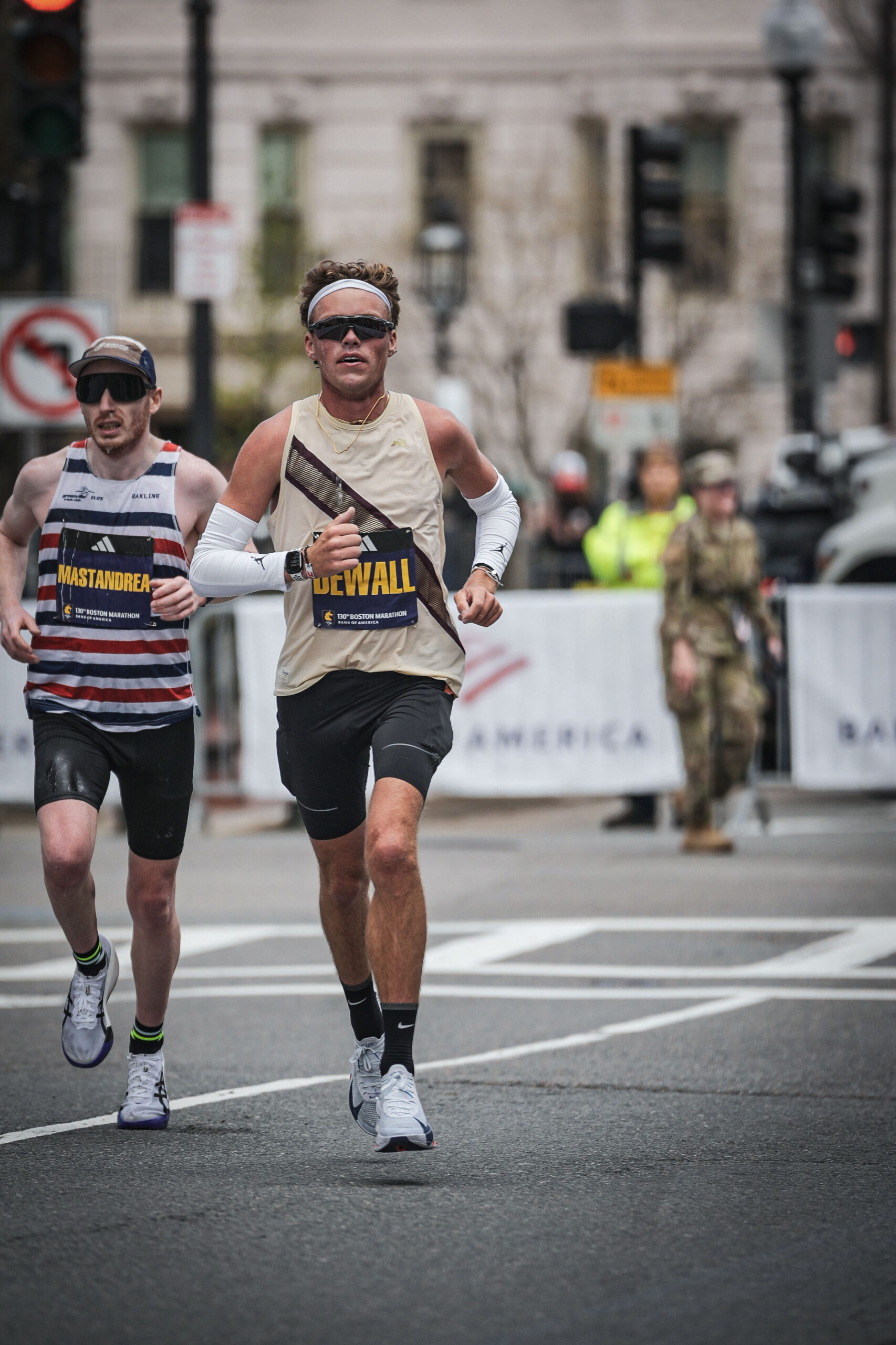
     

    Lars Dewall in a cream singlet and white arm sleeves running a city street at the Boston Marathon, a runner in a striped singlet a step behind him.
    Dewall at Boston in April. He expects to run one marathon in 2027, and Boston is on the list. (Photo: T. Wherry)
  • ‘Mileage Is a Distance, Not a Volume’: Chad Salmela on What Runners Can Learn From Cross-Country Skiers

    ‘Mileage Is a Distance, Not a Volume’: Chad Salmela on What Runners Can Learn From Cross-Country Skiers

    This article was made possible through the generous support of our voluntary subscribers. If you value coverage like this, please support FasterSkier with a voluntary subscription.

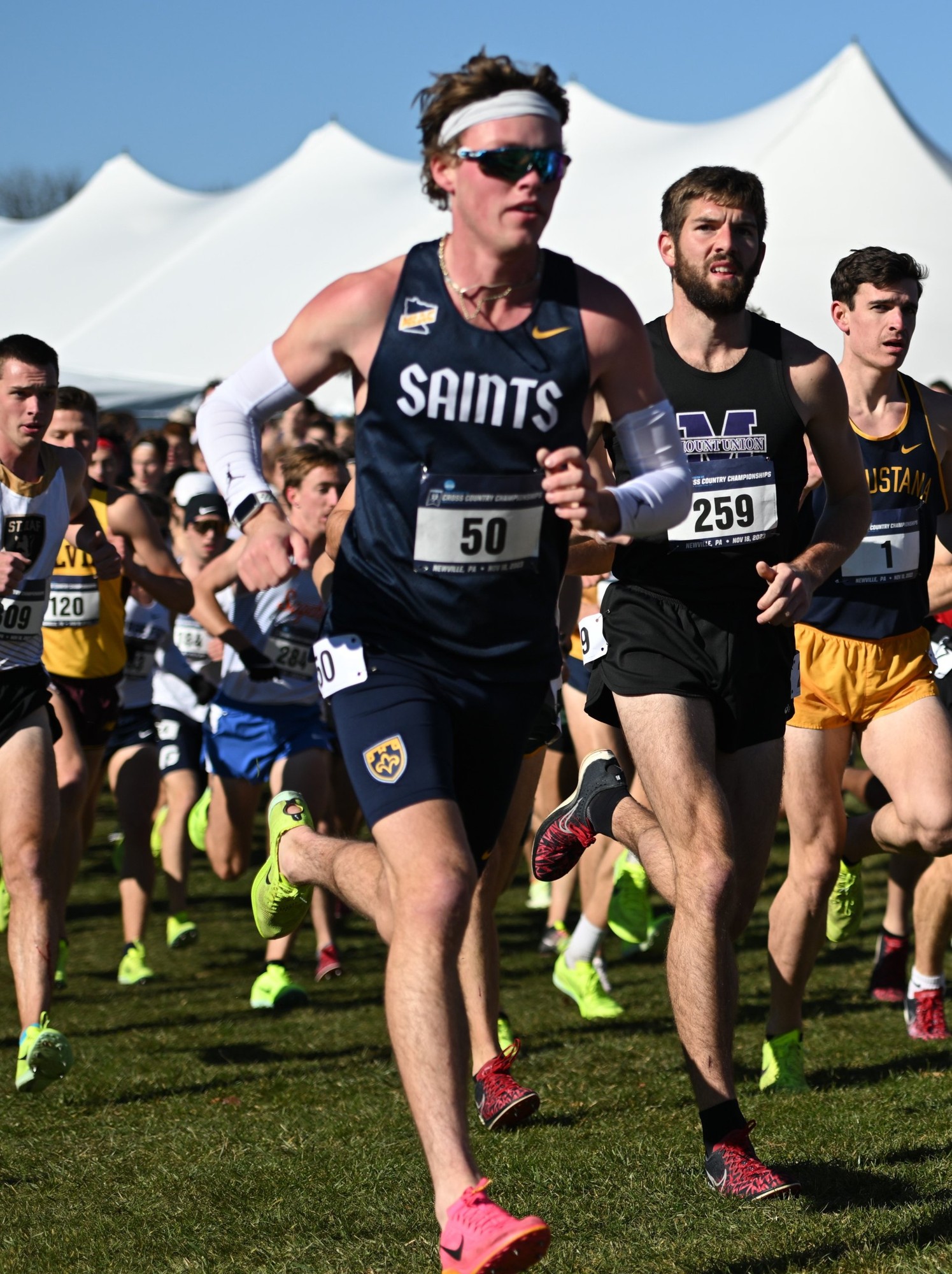
    Lars Dewall in a navy St. Scholastica Saints singlet and bib 50 running in a pack of college runners on a grass cross country course.
    Lars Dewall (50) races for St. Scholastica at the 2023 NCAA Division III Cross Country Championships in Newville, Pennsylvania. (Courtesy photo)

    Lars Dewall has run four marathons and he has never run a slow one.

    The debut was Grandma’s in June of last year, 2:22:57. Then California International in December, 2:14:15. Then Boston in April, 2:12:30. Then Berlin in September, 2:12:13, third American across the line. Four races, four personal bests, each one faster than the last, which is not how marathon careers usually go.

    Dewall came out of Division III. He ran at the College of St. Scholastica in Duluth and was an All-American there in 2023, one of the first two the cross-country program ever produced. He now teaches middle school social studies in San Diego. His training sounding board on broad direction is his college coach, Chad Salmela, who coaches cross-country at St. Scholastica, called the women’s team sprint in PyeongChang for NBC, and spent eight years on the US biathlon team before either of those things.

    Salmela has a theory about why Dewall keeps getting faster, and it is not a comfortable one for American distance running. He has been making the argument for most of two decades, in a sport that was not his first one, and until recently he did not have a runner fast enough to make anybody listen.

    “He’s like my living thesis right now,” Salmela said. “He’s actually texting me as we’re talking.”

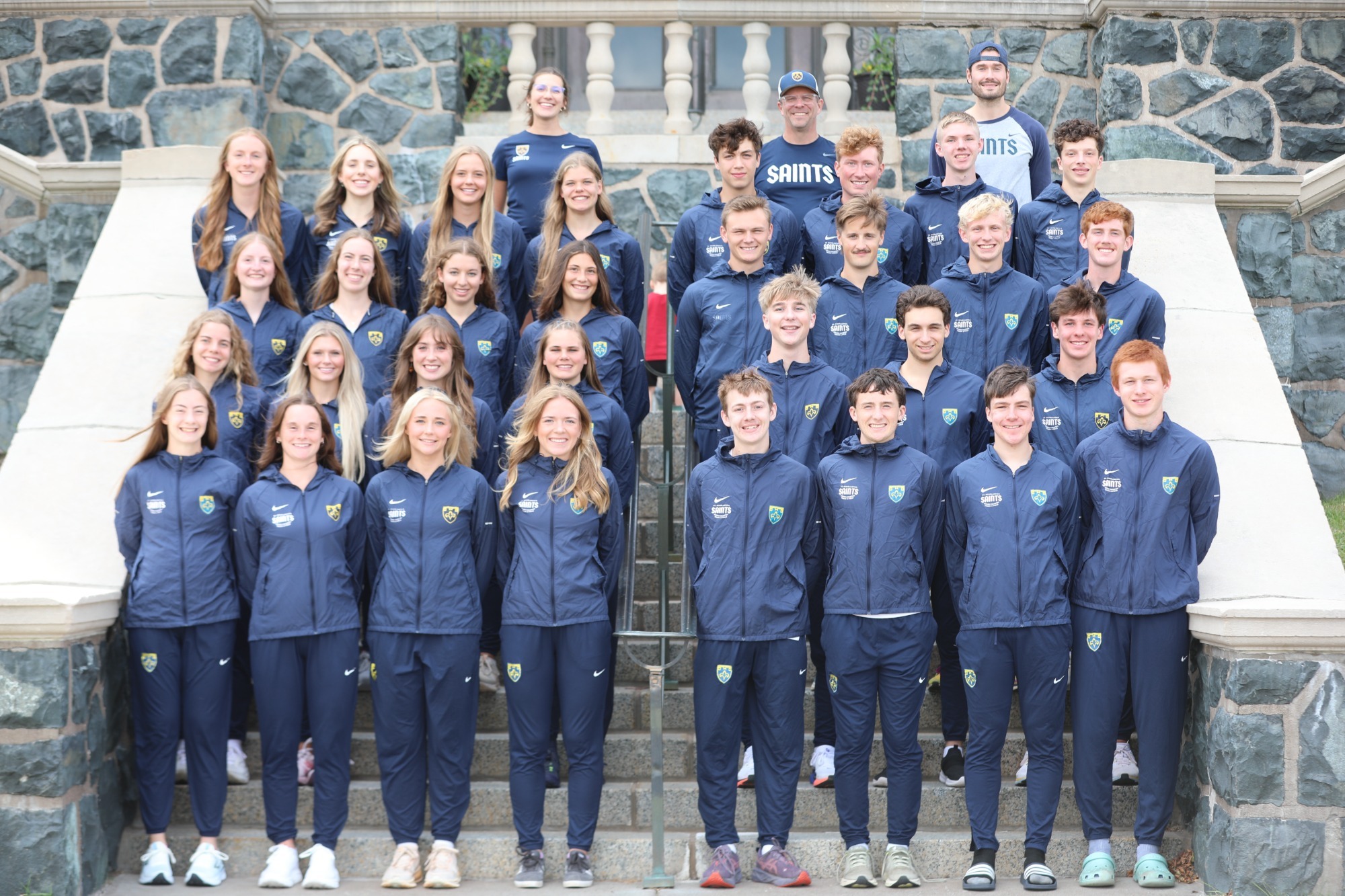
    The St. Scholastica cross country team in navy warm-ups posed in rows on stone steps, women on the left and men on the right, with the coaches standing at the top.
    Chad Salmela, back row center, with the 2026 College of St. Scholastica cross country team. In more recent years, Salmela has given up the nordic coaching role to concentrate on broadcasting during the ski season, which we will cover soon in part two of this series. (Courtesy photo)

    Mileage is a distance, not a volume

    The sentence above is his, written rather than spoken. It appears in the letter he sends to recruits, which is less a sales pitch than a seven-paragraph argument about exercise physiology, and it is the cleanest statement of the thing he believes.

    “Mileage tells you how far you’re running,” he said. “It doesn’t break down what you did in that distance.”

    He has been resisting the number for years and he still resists it.

    “You can have a huge mileage week on threshold. You can have a small mileage week on relatively aerobic,” he said. “Two to three two-hour-plus workouts, that’s going to be fewer miles than three threshold workouts. So that mileage metric, I feel like it kind of misshapes things in people’s minds.”

    Ninety-mile weeks are not the problem, in other words. What is in them is.

    “Ninety-mile weeks at a lactate of 2.5 as opposed to a lactate of 1 is going to have a way bigger consequence down the road,” he said.

    This is where the skiing comes in, and it is worth being precise about the lineage, because Salmela is. The interval sessions he leans on are not his. The one he uses the day before a race, a minute on and thirty seconds off, he calls “a complete ripoff from the Ingebrigtsens,” though the session appears in Marius Bakken’s own published account of the Norwegian model, as does the 45-seconds-on, 15-off session Salmela started using this autumn. Bakken, a Norwegian physician and former 13:06 5,000-meter runner, built the method out of more than 5,500 lactate measurements and mentored Gjert Ingebrigtsen (Jakob’s father) directly between 2011 and 2013. The family made it famous. Bakken wrote it down first.

    What Salmela did was carry it sideways, out of a sport where lactate testing has been routine for forty years into one where it mostly has not. He is blunt in the recruiting letter about why that gap exists and what it costs: the discovery was “established decades ago in the early 1980s, and has been adjusted in many other endurance sports, yet somehow continues to evade American distance running.”

    His own estimate of what the ceiling looks like is deliberately large.

    “If you can train as a runner seven or eight hundred hours of aerobic training, it doesn’t have to all be running; you can improve way more than you think as a runner,” he said. “But how do you get those 800 hours? You can’t do it running. You’re probably going to start having a limitation there.”

    That is a skier’s number, and he knows it. It is also the number he says Dewall has been running at for two years.

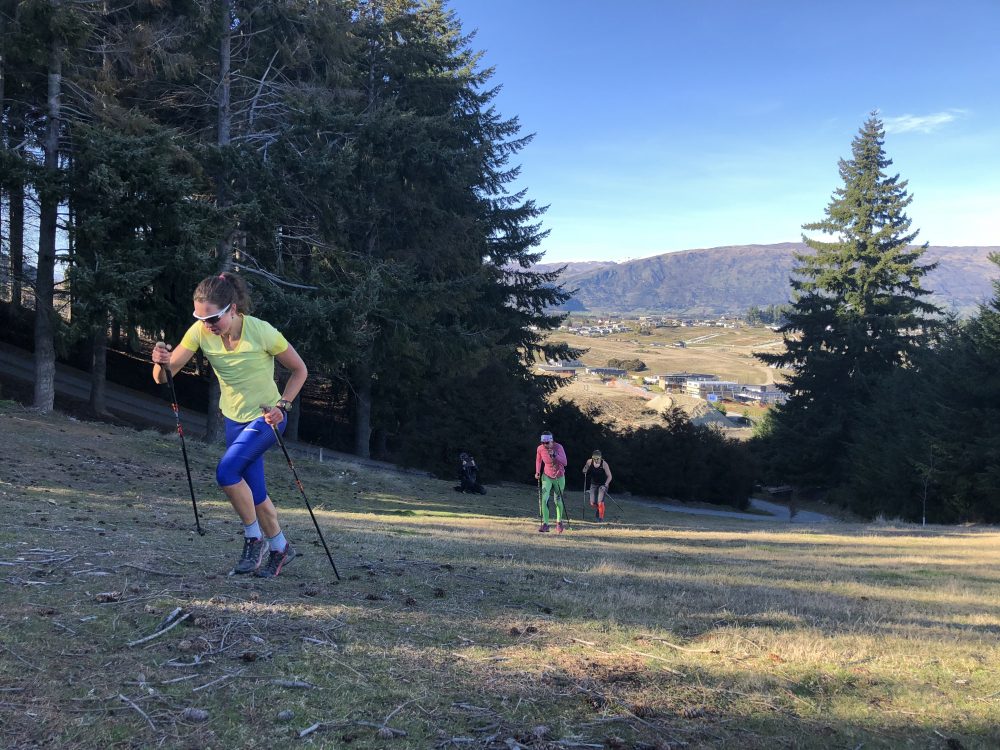
    A runner bounding uphill with ski poles beneath a chairlift, a second runner far behind him.
    St. Scholastica’s Paul Schommer, foreground, and Joe Dubay bounding up Spirit Mountain in Duluth, Minnesota, in the fall of 2014. (Photo: Chad Salmela)

    Injury is not the cost of doing business

    The recruiting letter contains three words in capitals: “Injury is NOT necessary.” He gets more animated about this than anything else in our ninety-minute conversation.

    “The first thing that always drove me nuts as a skier coming into the running world, before I even started coaching, was just the acceptance of injury as part of the deal,” he said.

    He is careful to say he might be wrong, and then says why he does not think he is.

    “Anytime you’re asking your body to do something it’s not able to do, you’re doing something wrong,” he said. “I think that’s a very important thing to remember. If you build the strength and you build the motor to handle it, you can pretty much avoid injury.”

    Then the qualifier, offered without being asked for, which is the mark of someone who has actually thought about the limits of his own claim: “maybe I’ve just never taken anybody to their very maximal capacities so far, and that could be it.”

    The mechanism he proposes is fuel. His argument is that a runner who has never taught their body to burn fat at easy intensities is spending glycogen on workouts that were supposed to be building aerobic efficiency, and that the bill arrives later.

    “You’ve got to define where your aerobic threshold is running, and you have to make sure that you’re burning fat there,” he said.

    He has a blunt way of describing the high school runner doing it wrong.

    “You can’t be running 6.5-minute miles and you got a PR at 15:30. That doesn’t even compute. It’s not easy enough,” he said. “You’re still going to have better immediate success. But somewhere down the road, if you don’t learn how to burn fat, you’re going to probably get hurt.”

    The same protectiveness shows up somewhere less expected, which is how he handles a team that is getting sick. Two weeks before we spoke, a freshman turned up to a threshold session with a sore throat and told nobody until afterwards. Three of the four men in his suite went down. By Thursday the squad was, in Salmela’s description, a shell of itself, and on Saturday fourteen of thirty made the workout.

    The athlete who did not get sick was the fittest one in the room, and Salmela pulled him out of the hard session anyway.

    “I’m not putting you through a level four workout right now when you’re rooming with three guys who probably are carrying the bug, because you’ll be sick by Saturday if we do it,” he said. “He was pissed, but I didn’t let him do it.”

    The rule for everyone else is not negotiable and the arithmetic behind it is simple.

    “If you’re sick today, you’re not training tomorrow,” he said. “The best case scenario is you catch it, you stop, and you have four days that you’re not training. That’s going to be the minimum.”

    Against that he sets what a season costs. His athletes are chasing a minute off an 8k, and he does not think a sick athlete who races anyway gets it.

    “They’re not running a minute faster in 8k this year, and they will not do it if they get sick,” he said. “They won’t do it.”

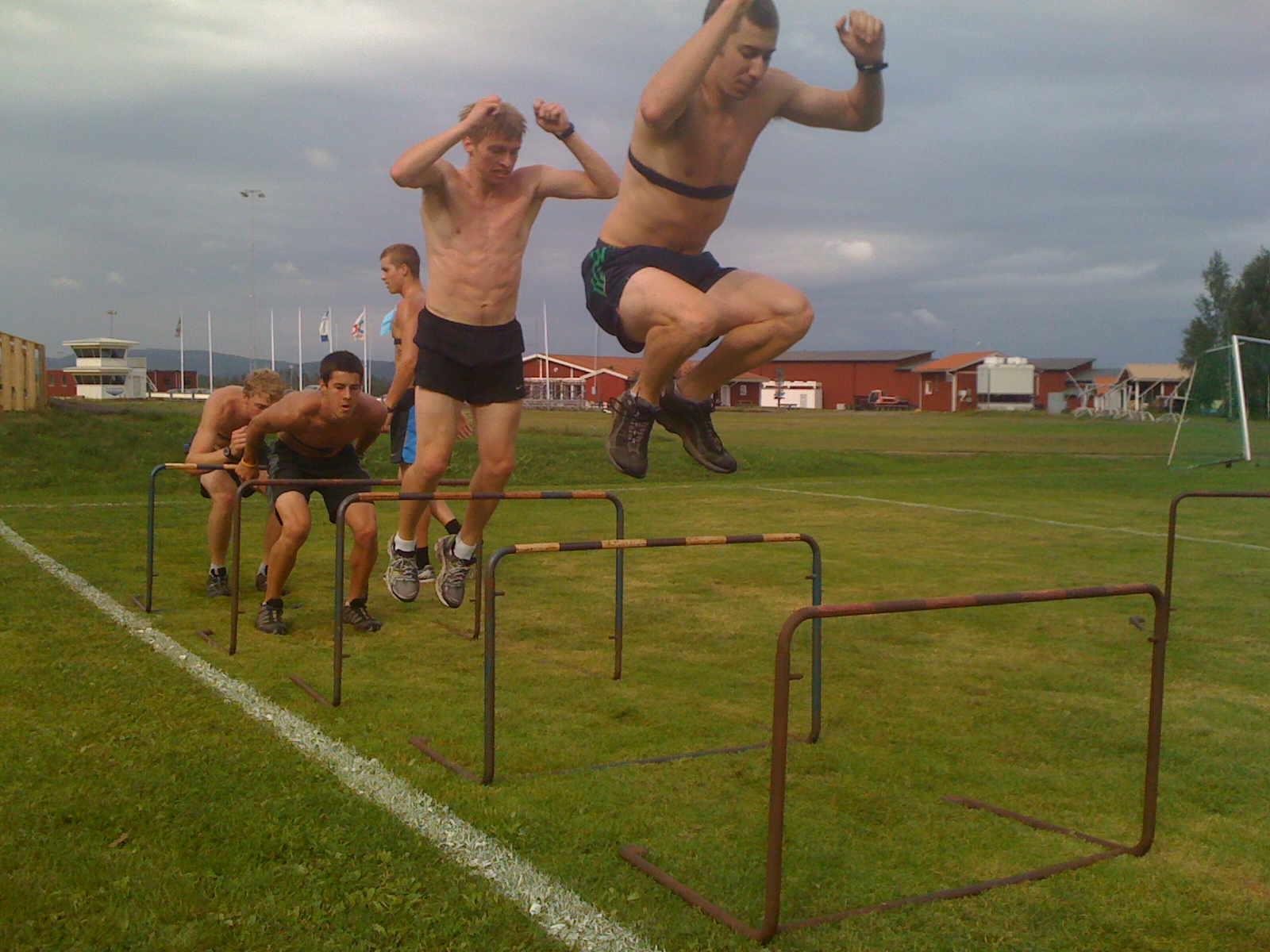
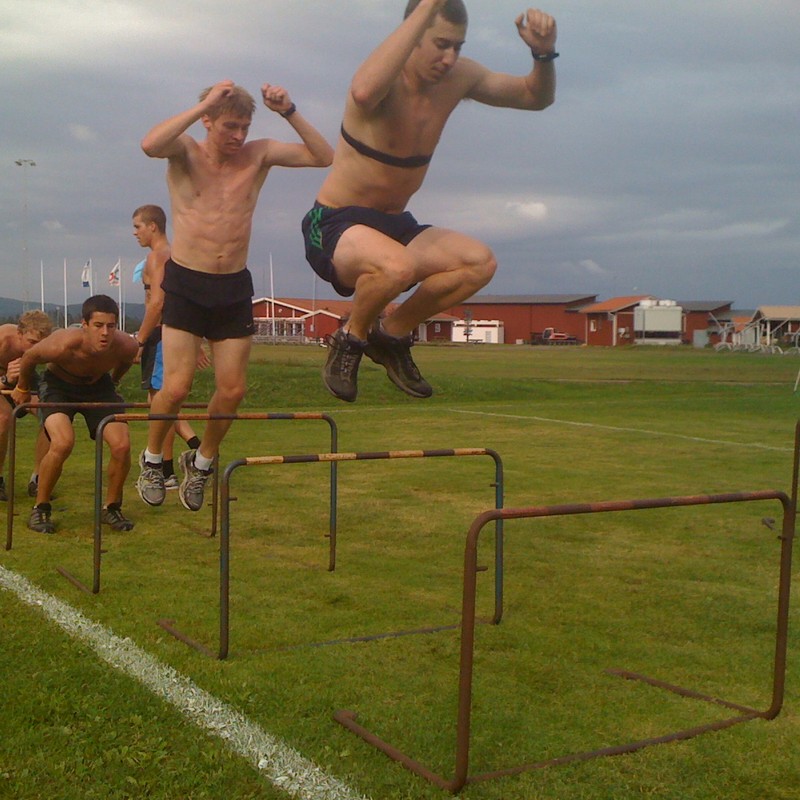
    Five athletes bounding over low hurdles on a grass field under a grey summer sky.
    Hurdle bounding at a St. Scholastica dryland session. Salmela believes in the work and is his own cautionary tale about too much of it; a winter of jumps in his last season as a biathlete left him convinced he had compartment syndrome. (Photo: Chad Salmela)

    What he got wrong first

    Salmela is a strength evangelist who will tell you, unprompted, about the year he ruined a team with it.

    “I loaded too much strength on some of my early teams coaching, and they got flat,” he said. “They got super slow, didn’t stay quick.”

    What he settled on instead is periodized and, more importantly, individual. December is a strength block for everybody. In season it drops to maintenance and bodyweight work. Beyond that he decides person by person, and he is explicit that the people who say runners need strength and the people who say they do not are both partly right.

    “You need a minimal amount of strength just to stay healthy,” he said. “And then some people need strength to be stronger, to be faster as a runner. They actually need strength to be a part of the catalyst that makes you your best.”

    He has a sophomore who worked this out for herself before he did. She ran in high school, never lifted, went through the Air Force, got strong there, and arrived at the conclusion that the strength was the thing she had been missing all along. She now does three sessions a week on her own, more than Salmela gives anyone else on the roster.

    Plyometrics get the same treatment, and the same warning, which comes from his own body. In his last season as a biathlete he loaded up on jumps and spent January and February convinced he had compartment syndrome.

    “Really what it was is I had incredible anaerobic power and the racing season just kind of started having catabolic reactions in my shins,” he said. He credits Dave Bacharach, the exercise physiologist at St. Cloud State, with talking him out of the diagnosis: a lot of type 2 fibre, suddenly drowning in lactate every weekend.

    “You have to be careful with plyos for aerobic sports because it’s anaerobic work, and it’s going to steal some of it,” he said.

    The archaic notion

    Ask him about tapering and he does not hedge.

    “I think the taper is an archaic notion,” he said. “I think some people need a taper. You have to find the person who needs a taper. And there are some people out there, but I’d say they’re the minority.”

    His team runs six to nine hours a week regardless of where the season is. The reasoning is that fitness is the thing being protected, and that the races themselves do the damage a taper is usually blamed on.

    “Great races kick your ass, man,” he said. “They are hard to recover from. So if you want to have two or three great races in a row, you better watch that.”

    When he does drop volume it is recovery, not peaking, and he says so. The most persuasive evidence came from a senior who diagnosed her own pattern and brought it to him: three straight years of running a personal best at conference and then one of her worst races of the season at regionals a week later.

    “She goes, can we fix that? And I’m like, yeah,” he said. “We’re going to keep the volume high. We’re not going to taper.”

    What replaces the taper is a race week with a shape to it, and this is the most directly usable thing he says all afternoon. A maximal effort five days out, long enough to spend real time at max heart rate. Then the Bakken session the day before.

    “The reason I think you need that is because your heart will not be ready to respond to the work if you don’t do that,” he said of the hard day. “And if you do it any closer to the race, you’ll still be trying to recover from it.”

    The day before, he keeps it short: five to eight repetitions of a minute on, thirty seconds off, in the tempo zone, perhaps five minutes of actual work.

    “It’s the best pre-race workout I’ve ever found. Works almost universally,” he said. “Up until that point, I had found some workouts that work for some people and not for others.”

    He does not prescribe the number. He hands the athlete a rule instead, and it is a small masterpiece of coaching.

    “As long as the one you did last feels better than the one you just did before that, do the next one,” he said. “As soon as you feel like you’re working at all, you’re done.”

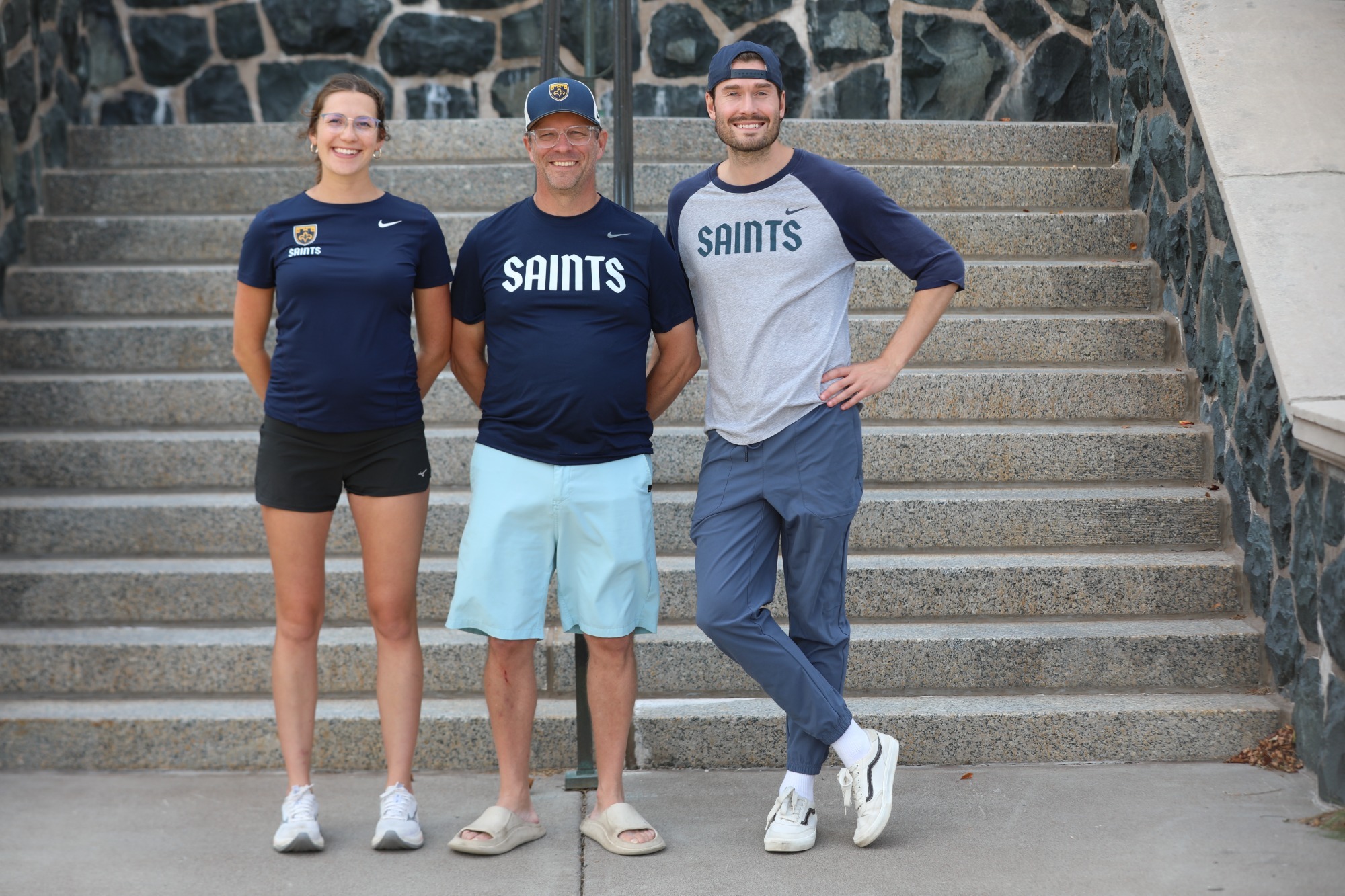
    Three St. Scholastica coaches in Saints shirts standing at the foot of a wide stone staircase, Chad Salmela in the middle in a cap and light blue shorts.
    Salmela, center, with his St. Scholastica cross country coaching staff in August 2026. (Courtesy photo)

    Leave the gait alone

    There is one more piece, and it runs against most of what a modern running program sells.

    “Meddling with natural biomechanics is kind of a no-no in my book,” Salmela said.

    His most successful runner, he said, had a gait nobody admired and plenty of people wanted to correct. She was never injured until she stopped doing strength work.

    “Her gait wasn’t pretty, but it worked, you know, and I recognized that,” he said.

    His evidence for leaving well alone is a runner who arrived last year from a small high school program, had not scored for his team, and spent his first season trying to prove he belonged by going too hard at everything. It did not work. Salmela sent him away for a summer with an instruction to run more, at the intensity he was told and no harder.

    “He comes in here, he looks so good. All the coaches are like, man, his running has improved a ton,” he said. “He had clodhopper feet last year, because he wasn’t a real runner. He hadn’t run enough yet. Comes in this year and he just comes off the ground, he looks natural, he looks like a runner now.”

    Then the part he seems to enjoy most.

    “And I did nothing,” he said. “I didn’t have to tell him anything other than follow the right intent.”

    Lars Dewall in a St. Scholastica singlet, headband and sunglasses running at the front of a large field, with white event tents behind.
    Dewall early in the race at the 2023 NCAA Division III Cross Country Championships, the fall he became one of the first two cross country All-Americans in St. Scholastica history. (Courtesy photo)


    Which is more or less the argument in miniature. Dewall ran 110 to 130 miles a week building for Berlin, more than he had ever run, a third of it on soft surfaces, the intensity governed by lactate rather than by what the paces are supposed to look like. He got support from Puma’s PROJECT 3 program for the race. He went 2:12:13 and took seventeen seconds off a personal best he had set five months earlier in Boston. Salmela is careful not to claim all of it. Dewall now builds most of his training around cutting-edge running technology that Salmela admits he is “not terribly well-versed” in. “Still, I think the thesis IS a huge reason he is blowing minds, and why he can do these workloads,” Salmela wrote after our interview. “But not the only.”

    Salmela has been saying for years that nordic volume would do this to a distance runner if anyone ran it properly. It took him until his fifties to find the runner who would.


    Help Support Our Coverage!

    If you value the thoughtful work and access FasterSkier provides, please consider becoming a Voluntary Subscriber. Your support directly fuels our work to cover the people, places, and moments that make our sport special.

    Join the FasterSkier community!
     

    A wooden plank walkway running between boulders toward a calm sea at sunset.
    A path to the Gulf of Bothnia near the Salmela family farm in Finland. The training ideas he has spent most of two decades carrying into American running came out of that part of the world. (Photo: Chad Salmela)
  • Heart Rate Varies. So Does Every Other Training Metric.

    Heart Rate Varies. So Does Every Other Training Metric.

    This article was made possible through the generous support of our voluntary subscribers. If you value coverage like this, please support FasterSkier with a voluntary subscription.

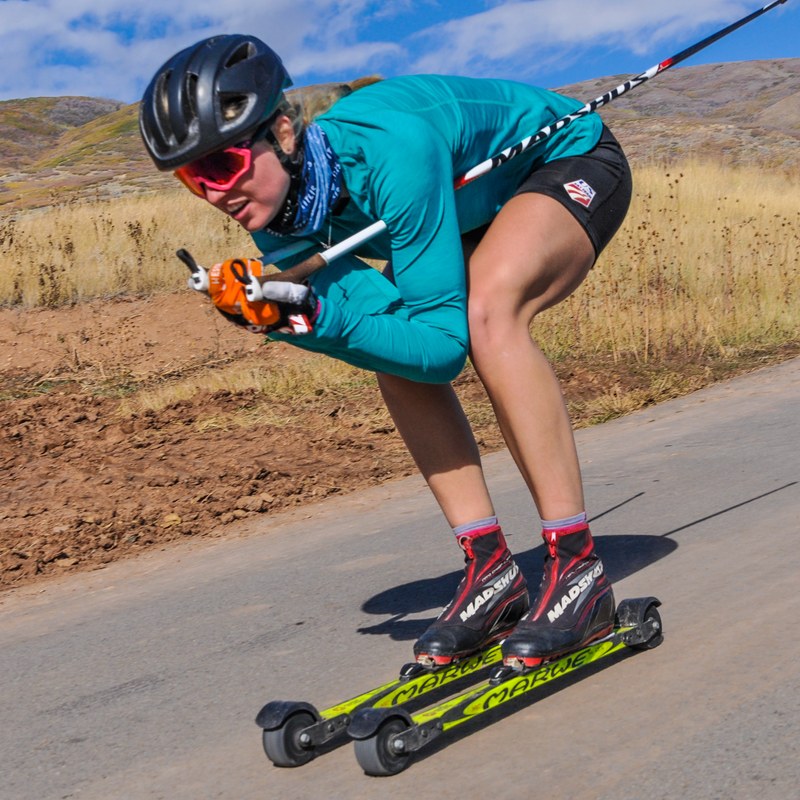
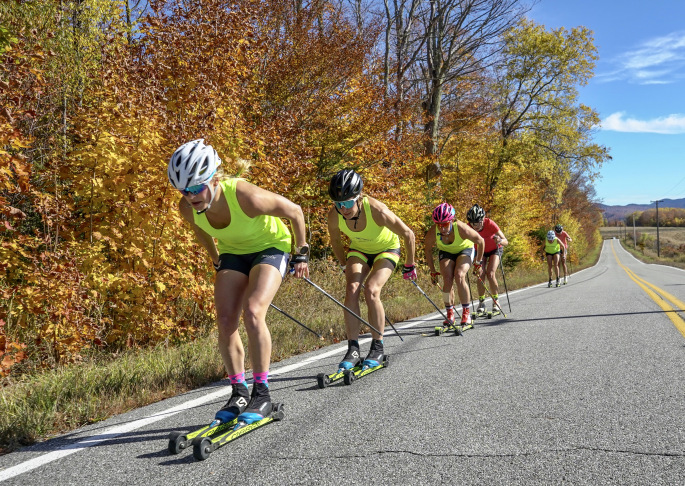
    Hailey Swirbul in a teal top, black helmet and orange goggles crouched low on rollerskis on a paved road with dry grassy hills behind
    Hailey Swirbul during an intensity session at a U.S. Ski Team camp in Park City, Utah, in October 2018. The same pace can cost an athlete very different amounts from one day to the next. (Photo: Matt Whitcomb)

    In my last article on training zones, published on FasterSkier, I tried to describe the challenges we face when we don’t use a common language. There is a lot of talk on social media about Zone 2 training, while most of us in the cross-country ski world understand this same training intensity as Zone 1. Others challenge the use of heart rate to set zones at all. These discussions are great, because they push all of us to better explain our beliefs and how we got there.

    Today I want to share why I think heart rate is, for most athletes, a useful, available indicator of cardiovascular stress, even though it doesn’t necessarily capture the complete cost of exercise. I often hear that heart rate is too variable: heat and other environmental conditions can change it; fueling, hydration and fatigue can affect it; it doesn’t stay the same at the same workload (pace or power); and it doesn’t react quickly enough during hard efforts. All of which has some truth to it!

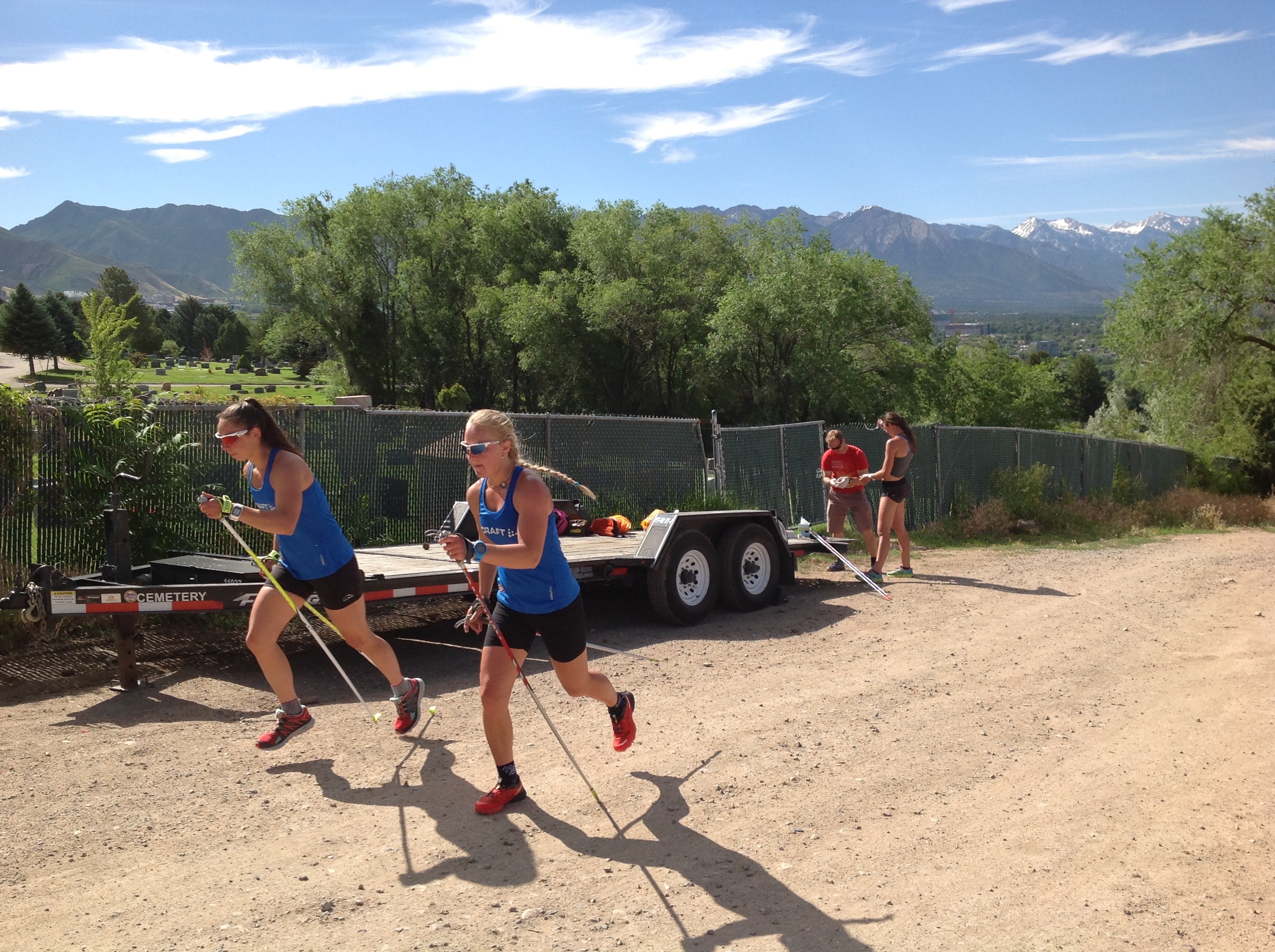
    Two women in blue tank tops bounding uphill with poles on a dirt road, with a trailer and mountains behind them
    Hannah Halvorsen (left) ski bounding in Park City, Utah, in June 2016. Heat, altitude, fueling and fatigue all change what a given pace costs, and heart rate reflects that cost. (Photo: Bryan Fish)

    Cost or Pace?

    But let’s break it down. For all endurance work, from easy endurance work below 72 percent of maximum heart rate up to high-intensity work at 95 percent of maximum heart rate, heart rate is an indicator of the physiological demand and strain associated with producing energy. So when it is said that we should use other metrics to implement and track training because of these variations, I say, really? Shouldn’t we train day in and day out based on how the body responds to those external conditions? The same pace, power, speed or workload can carry widely different physiological demands on any given day. So what are we trying to train: the metabolic cost, or the speed, power or pace we can maintain? I would argue both, but in very different circumstances.

    I should note that while I use percentages of maximum heart rate to discuss training, that doesn’t mean percentages of maximum heart rate are the best way to determine training zones. It is not a bad method if you test for maximum heart rate, but there may be better ways to use actual performance data to set training zones.

    Two skiers in U.S. suits and Coop athlete bibs striding side by side up groomed classic tracks in low winter sun
    David Norris and Scott Patterson during a set of pre-race classic intervals. Outside of heart rate and perceived effort, few training metrics get measured every day. (Photo: Tom Horrocks)

    Every Metric Moves

    Then there are those who say we should use lactate, heart rate variability (HRV), rating of perceived exertion (RPE), ventilation, respiratory exchange ratio (RER) and other metrics that change with improved fitness. In fact, those may be better or similar metrics. The problem is that, except for RPE, they are not typically measured daily, so coaches don’t see how much they can vary from one day to the next. Any measure requires context to understand its daily variation. Why? Because the body changes every day in response to life and training stressors.

    All of these measures require context, consistent testing protocols and an understanding of their day-to-day variability to be effective. The bottom line is that we need metrics that can be measured daily to understand how athletes are responding and adapting to training. When we are doing aerobic endurance training, often described as Zone 2 and, in the ski world, as Zone 1, the oxygen cost is reasonably reflected in heart rate during exercise.

    Certainly, the metabolic cost of training changes from day to day with internal and environmental factors, which can require a higher heart rate to produce the same energy output. We also see heart-rate drift during these workouts: at the same pace or power, heart rate climbs. My response is, OK, this represents an increase in internal cost, and we should definitely respond to it. No metric is perfect, but heart rate captures an important and significant part of the internal strain of training.

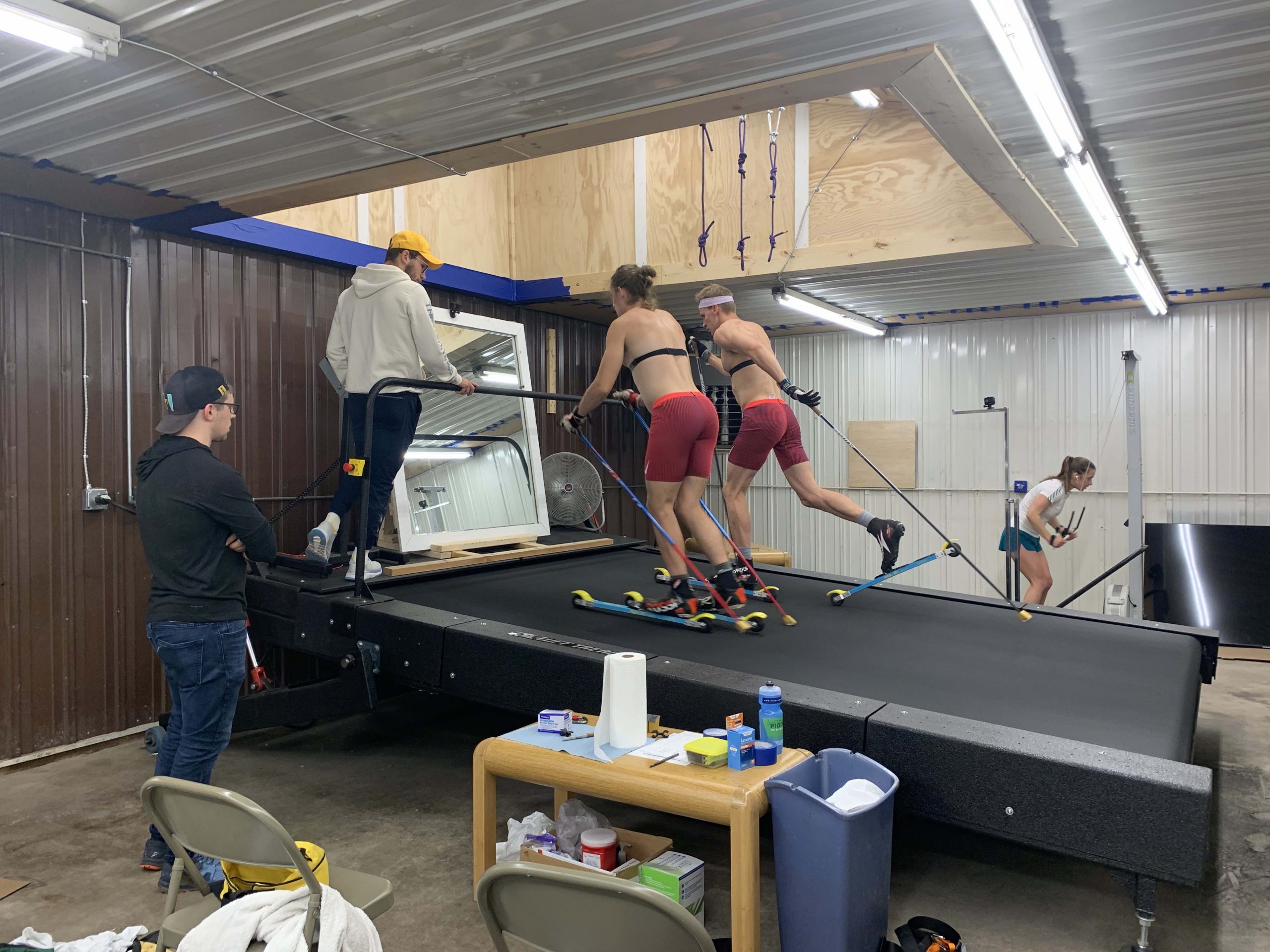
    Two skiers in red shorts and heart rate straps skating on a wide rollerski treadmill while two coaches watch from the side
    Team Birkie’s Xavier Mansfield (left) and Zak Ketterson share a rollerski treadmill in 2021 while coaches Leo Hipp and Jeremy Hecker give feedback. A lab number is a snapshot unless it is measured often enough to show its own daily variation. (Courtesy photo)

    Variation You Never See

    To those who say other measures (ventilation, HRV, lactate levels, respiratory exchange ratio, respiration and others) are more accurate, OK. But without seeing how those measures change from day to day, you have no idea of the variation. People use lactate to guide training, for example, and the same goes for newer measures of muscle oxygen saturation and ventilation. They often set training zones at arbitrary levels, or from equally arbitrary estimates based on a visual read of a lactate curve, then assign work based on those values. But if lactate is not measured often during daily training, you have no idea how consistent those values are, or how they vary in response to the same factors that affect heart rate. From my observations, all of those metrics vary as much as heart rate.

    No matter how we cut it, none of these measures is as precise as we like to think, because the body changes and responds daily to stress and external factors. And yes, what we are after is a measure we can observe every day. So let’s recognize the facts. Heart rate represents the internal cost of work. Sure, there are daily variations. But over time, and with context, we can understand those changes.

    Two classic skiers striding through a stand of tall pines, blurred by the camera's pan
    Kendall Kramer (right) in the 10 k classic at the Lahti World Cup on March 8, 2026, an interval-start race she finished in 27:40.8. Galanes puts races of 15 to 30 minutes in the middle of Zone 4. (Photo: Authamayou/NordicFocus)

    How I Set Zones

    So this is how I use training zones. First, I use the zones as a tool to implement and assess the effects of training on each individual. Those assessments help us determine whether the zones and the training are effective. I believe training zones provide a reasonable method that will work for most athletes and doesn’t require regular lactate or lab testing or other expensive equipment.

    So what do I do? I don’t do regular lab testing, because the athletes I coach live all over the country and many don’t have access to or opportunities for it. It is also quite expensive, and most importantly, I have often seen over the years that what we learn in a lab setting doesn’t correlate with what we see in training.

    I do a six-minute test, which, according to research by Véronique Billat, corresponds to the pace at which VO2max is achieved. I use the average heart rate of the last two to three minutes of the test, and I assume that to be about 94 to 95 percent of maximum heart rate. Yes, I assume! But the six-minute test also gives me a repeatable field performance and a high heart-rate observation. I use it to inform my initial estimates, not as a direct measurement of VO2max pace or maximum heart rate. The point is to establish workable ranges, observe how the athlete responds and revise them when the evidence warrants it.

    I also look at racing and high-intensity workout performance. Short races of 10 to 15 minutes should be in the top range of Zone 4. Races of 15 to 30 minutes should be in the mid-range of Zone 4, and races of 45 to 60 minutes in the low to mid-levels of Zone 4.

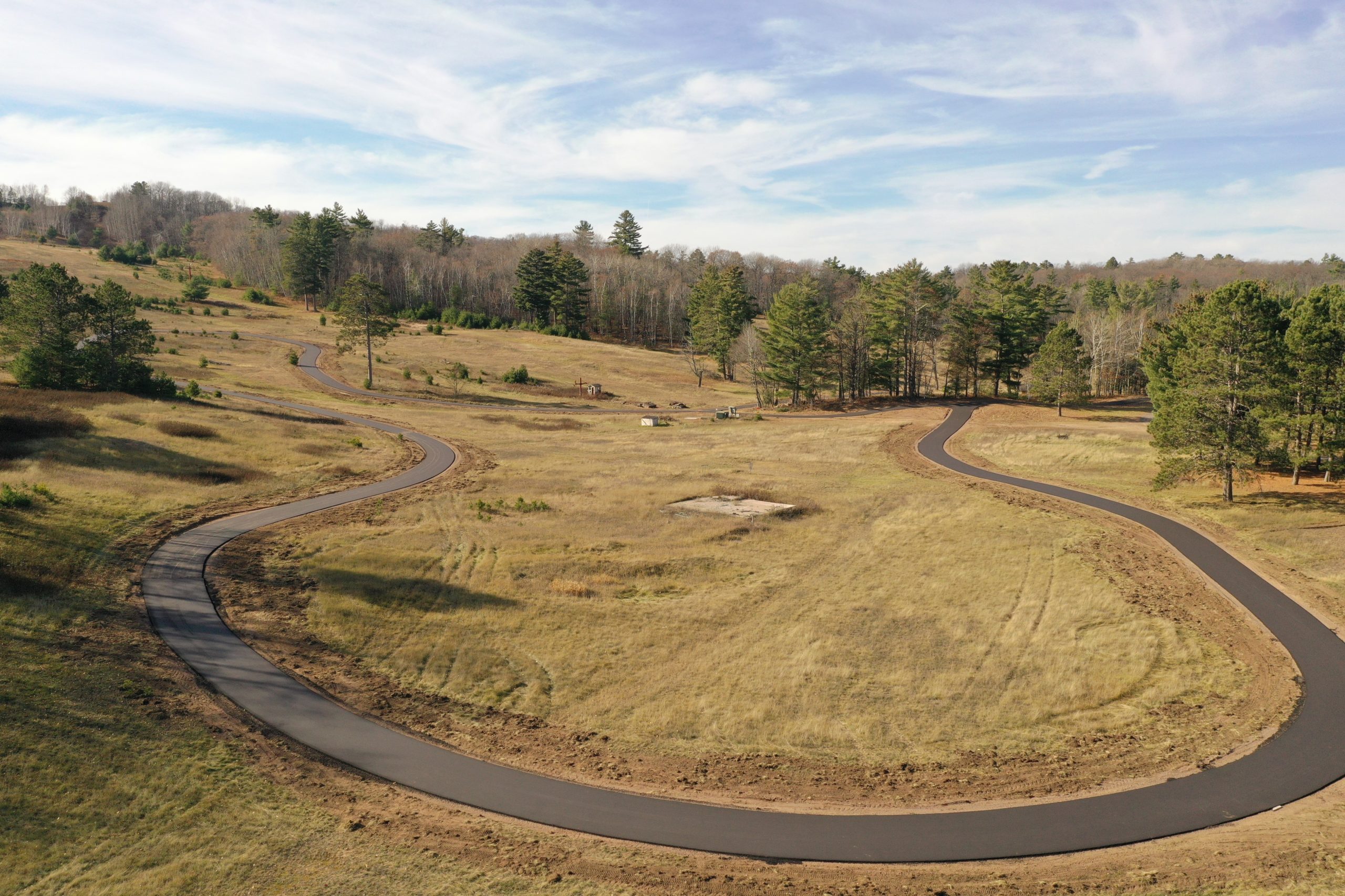
    Aerial view of a curving paved rollerski loop winding through dry grass and scattered pines
    The 5-kilometer paved rollerski loop at the base of Mt. Telemark, outside Cable, Wisconsin, when it was laid in 2023. A fixed loop like this is all a Zone 1 check needs: 45 to 60 minutes of laps, with lactate and heart rate taken after each one. (Photo: American Birkebeiner Ski Foundation)

    Checking Zone 1

    To confirm the accuracy of Zone 1, I have athletes do 45 to 60 minutes of work on a standard loop of about 15 to 20 minutes, and we take lactate measurements after each loop. If lactate and heart rate remain stable, we know the endurance Zone 1 training is in the correct range. A stable lactate response suggests that the intensity is easy enough, but it does not necessarily identify the first lactate threshold, or LT1.

    We need to understand that no method of determining training zones is precise. The body just doesn’t operate that way. For any training adaptation there is an optimal point of adaptation, but also a much broader range in which the adaptation occurs. So the objective when implementing training is to be as close to the optimal point as possible. But knowing where that is day in and day out is impossible, so being within a reasonable range is the goal.

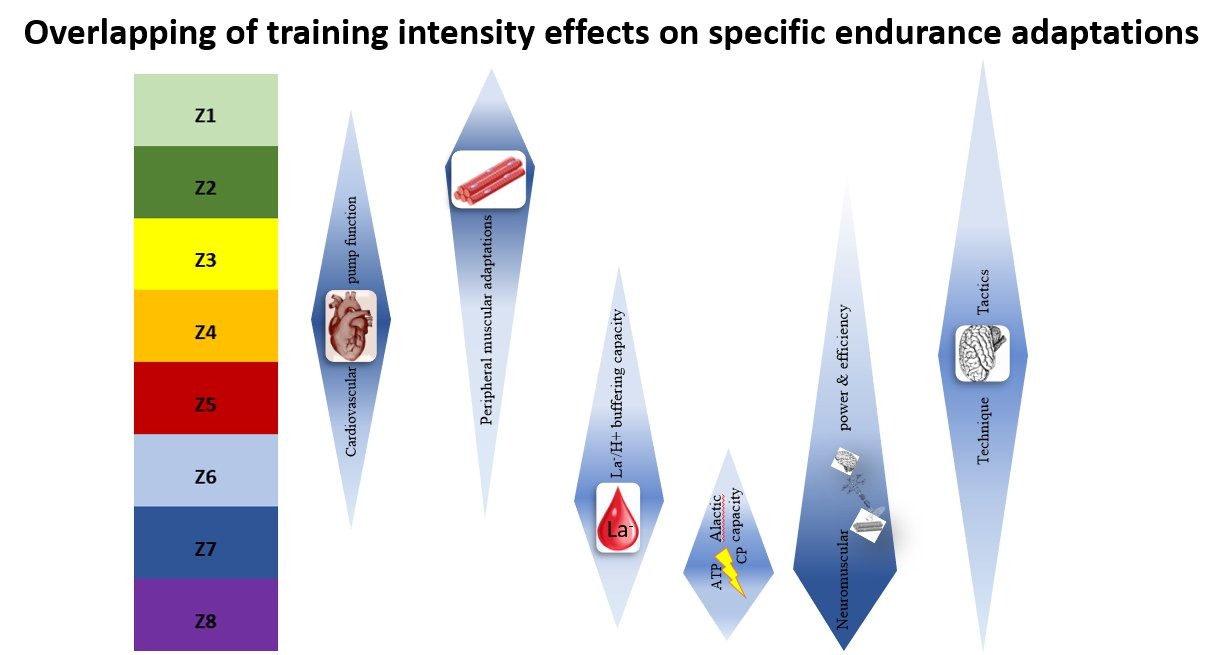
    Diagram of eight intensity zones beside overlapping shapes showing where cardiovascular, muscular, lactate buffering, alactic, neuromuscular and technical adaptations occur
    Every adaptation has an intensity where it responds best and a much wider range where it still responds. (Figure: redrawn from Olympiatoppen educational material, 2020)

    Close Enough

    My conclusion is that using field-testing measures along with training and race performance data to support training-zone determination is adequate, and it allows us to build ranges that can move as fitness changes. There are no ideal “thresholds” or clear metabolic points we can use to determine training zones. LT1 and the second lactate threshold, LT2, are useful reference points, but different protocols and definitions can produce different estimates for the same athlete.

    Other thresholds, determined by heart rate variability, DFA alpha1, respiration and muscle oxygen, may prove useful in the future, but so far they have not been fully validated and likewise cannot identify clear physiological thresholds.

    So we are left with what is practical and available to developing and recreational athletes. Let’s get close enough, control training effectively and learn what works based on the data for each athlete. Heart-rate metrics fit that need best.

    We can debate exactly where one training zone ends and another begins, but no test gives us a number that will describe an athlete perfectly every day. For the athletes I coach, heart rate gives us a practical place to start and a way to follow their response over time. I use field tests and race results to establish working ranges, then look at heart rate alongside pace, perceived effort, conditions and, when available, lactate. If those observations no longer agree, I revisit the zones.

    The goal is not to defend a particular method or number on a chart. It is to help an athlete do the work as intended on a given day, learn from the response and make a better decision the next time. That is where training zones earn their value.


    Help Support Our Coverage!

    If you value the thoughtful work and access FasterSkier provides, please consider becoming a Voluntary Subscriber. Your support directly fuels our work to cover the people, places, and moments that make our sport special.

    Join the FasterSkier community!

     

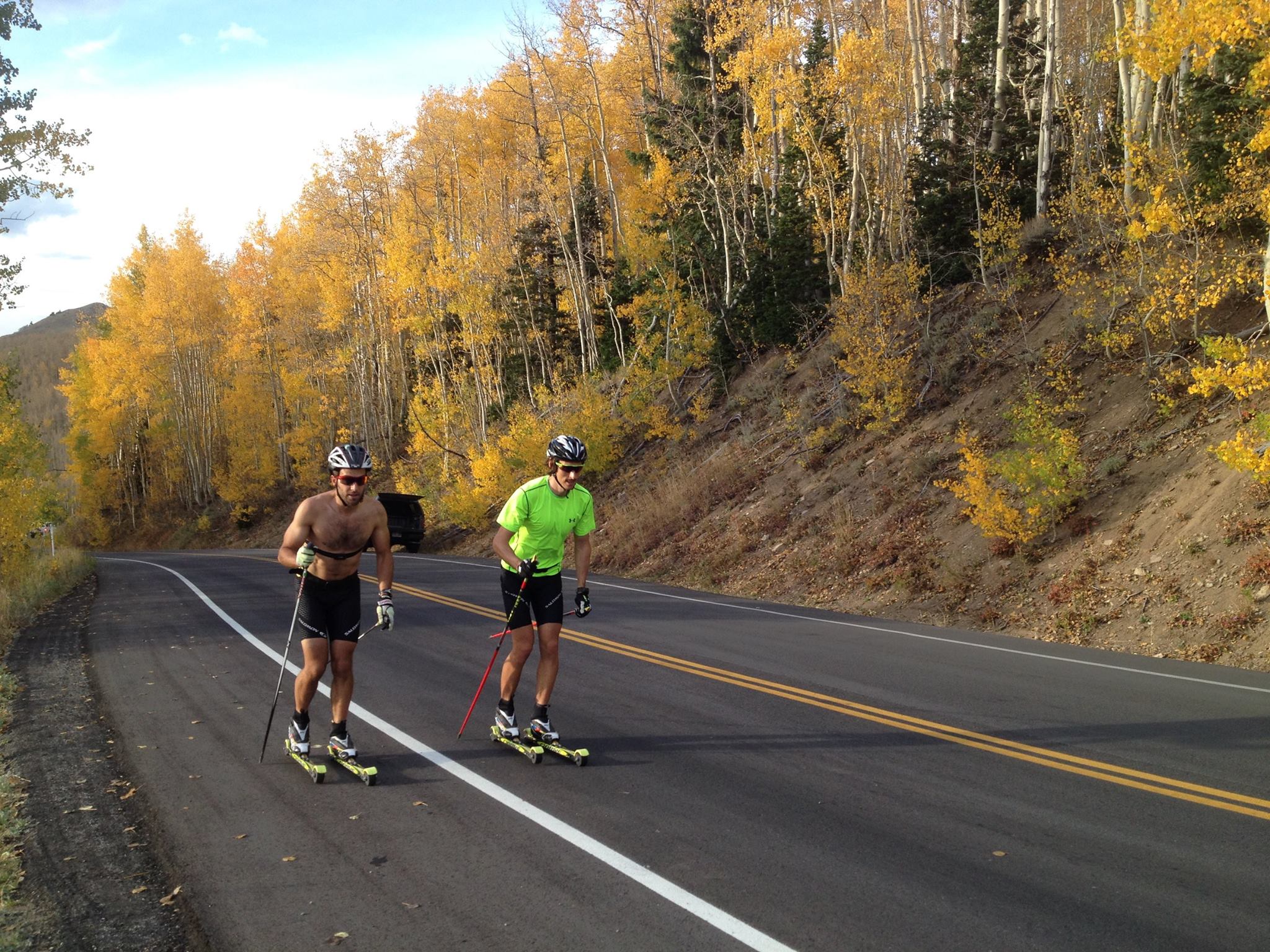
    Two skiers rollerskiing up a winding mountain road lined with yellow aspens
    Canadian biathletes Brendan Green and Scott Perras rollerskiing up Guardsman Pass above Park City, Utah, during a fall 2015 camp. (Photo: Matthias Ahrens)
  • Your Zone 2 May Be Someone Else’s Zone 1

    Your Zone 2 May Be Someone Else’s Zone 1

    This article was made possible through the generous support of our voluntary subscribers. If you value coverage like this, please support FasterSkier with a voluntary subscription.

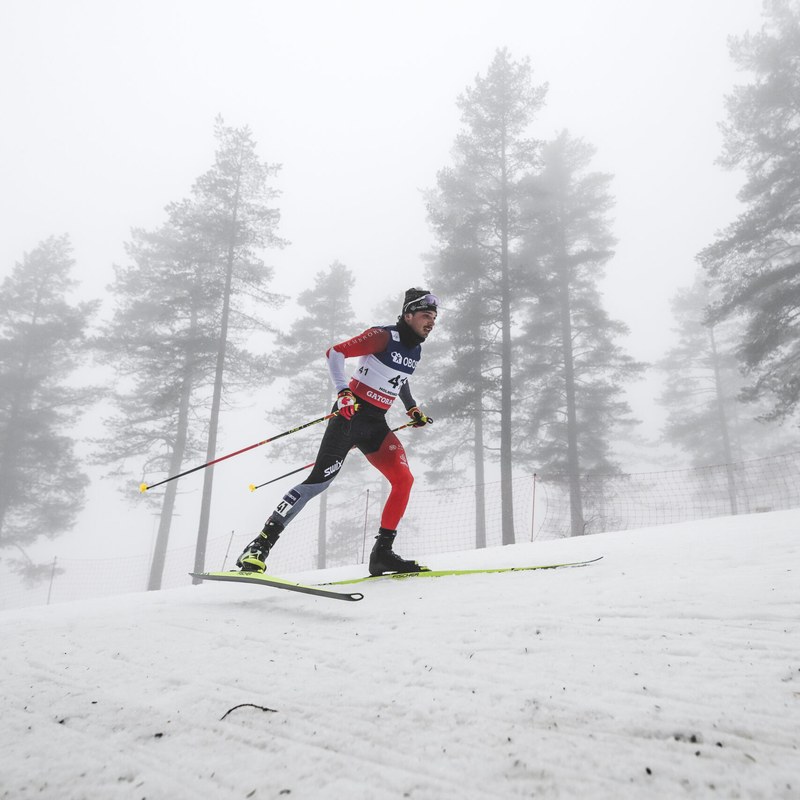
    Thomas Stephen in a red and black Canada suit skating up a snowy slope with pines fading into fog
    Thomas Stephen of Canada in the fog at the Oslo World Cup mass start in March 2026. One coach’s Zone 2 can be another’s Zone 1, and the label means little until you know what it is anchored to. (Photo: Authamayou/NordicFocus)

    Over the last decade I have often thought that we need to find a better way to define training zones. I have assessed every model under the sun and even tried to create some new ones. From a metabolic perspective, three-zone models probably make the most sense, because physiological anchors form the transition points, even though some of those anchors, lactate threshold among them, are questionable. Then there are five- and seven-zone models. Which are best, and which are most accurate? The answer is probably none of them. They all have limitations, and there really is not a better method.

    Some coaches set training zones from maximal heart rate. Others use lactate measures referenced to heart rate, pace or power, and still others use gas analysis (ventilation, VO2, RER and so on). Whatever the method, the important point is how the zones are used and implemented in training. While there may be a valid physiological basis for training zones, their primary use is to quantify training as planned and as performed. That is how we assess which methods of training have worked for the individual athlete.

    Julia Kern in a U.S. suit and yellow bib skating toward the camera past a row of flags
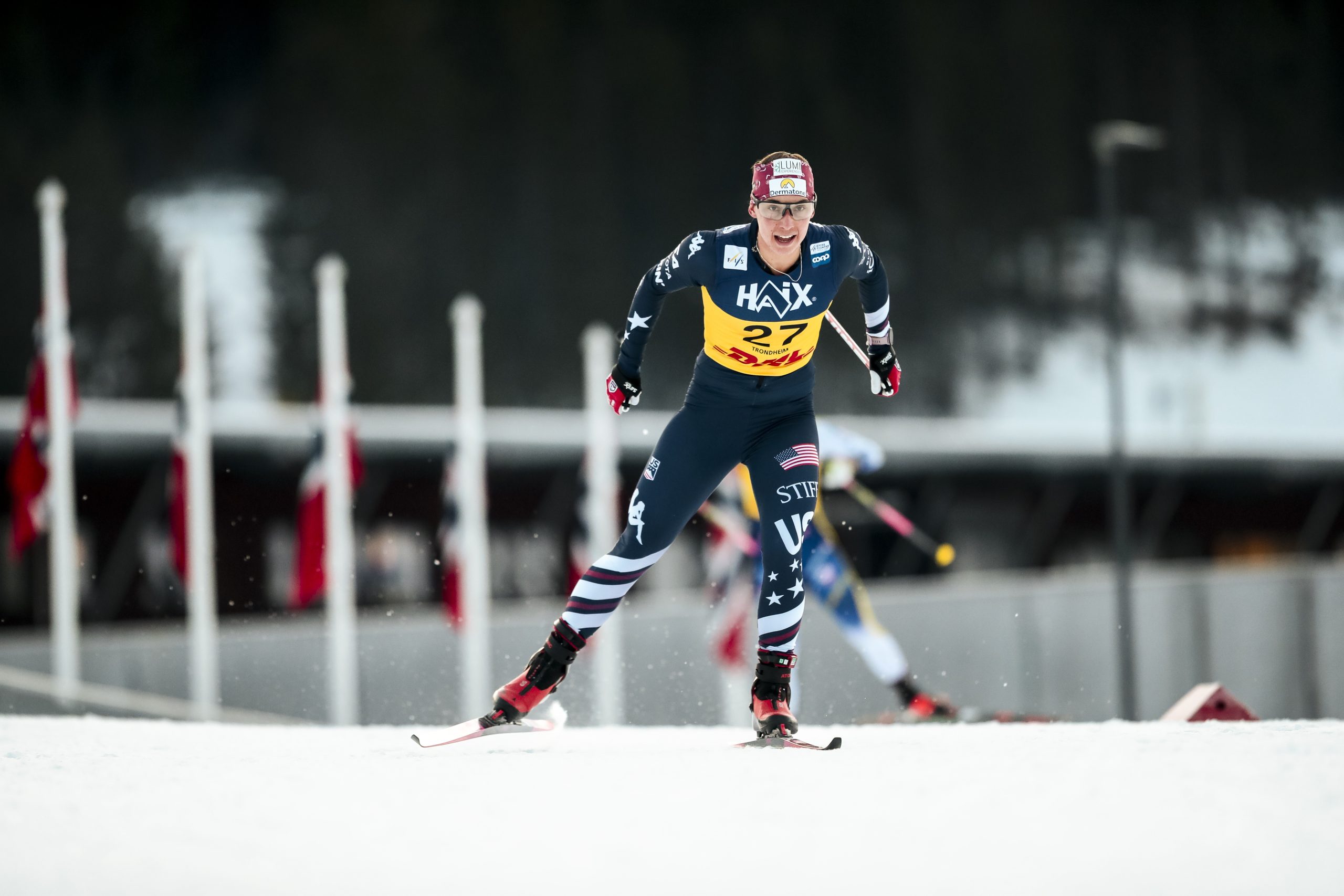
    Julia Kern racing the 10 k freestyle at the Trondheim World Cup in December 2025. A higher heart rate at a standard effort can reflect heat, glycogen depletion or fatigue, and all of those should change the day’s training. (Photo: Modica/NordicFocus)

    Heart Rate Holds Up

    Many coaches and even physiologists claim that heart rate is too variable to be used reliably for training control. Of course it is variable. Physiology varies daily with fatigue, recovery, hydration, glycogen status and more. In my experience, heart rate is no more variable than any other metric we use. We just don’t recognize the variation in the others, because it is not practical to measure them every day. Human physiology is complex, and in general heart rate reflects the current status of an athlete’s physiology. Under any system, it is important to train at a level that reflects the individual’s physiology and condition on that day. Heart rate is as good as anything for that, and I would argue better, because the daily variation is easy to assess.

    Heart rate is inexpensive, practical and physiologically informative. A higher heart rate at a standard workload can reflect warm weather, glycogen depletion or general fatigue, all of which matter when adjusting the day’s training. A lower heart rate at a standard workload often reflects improved fitness, though occasionally it can also reflect fatigue and increased parasympathetic drive of the autonomic nervous system.

    Table of five training intensity zones with Borg scale, RPE, percent of maximum heart rate, lactate, heart rate, breathing and speed for each
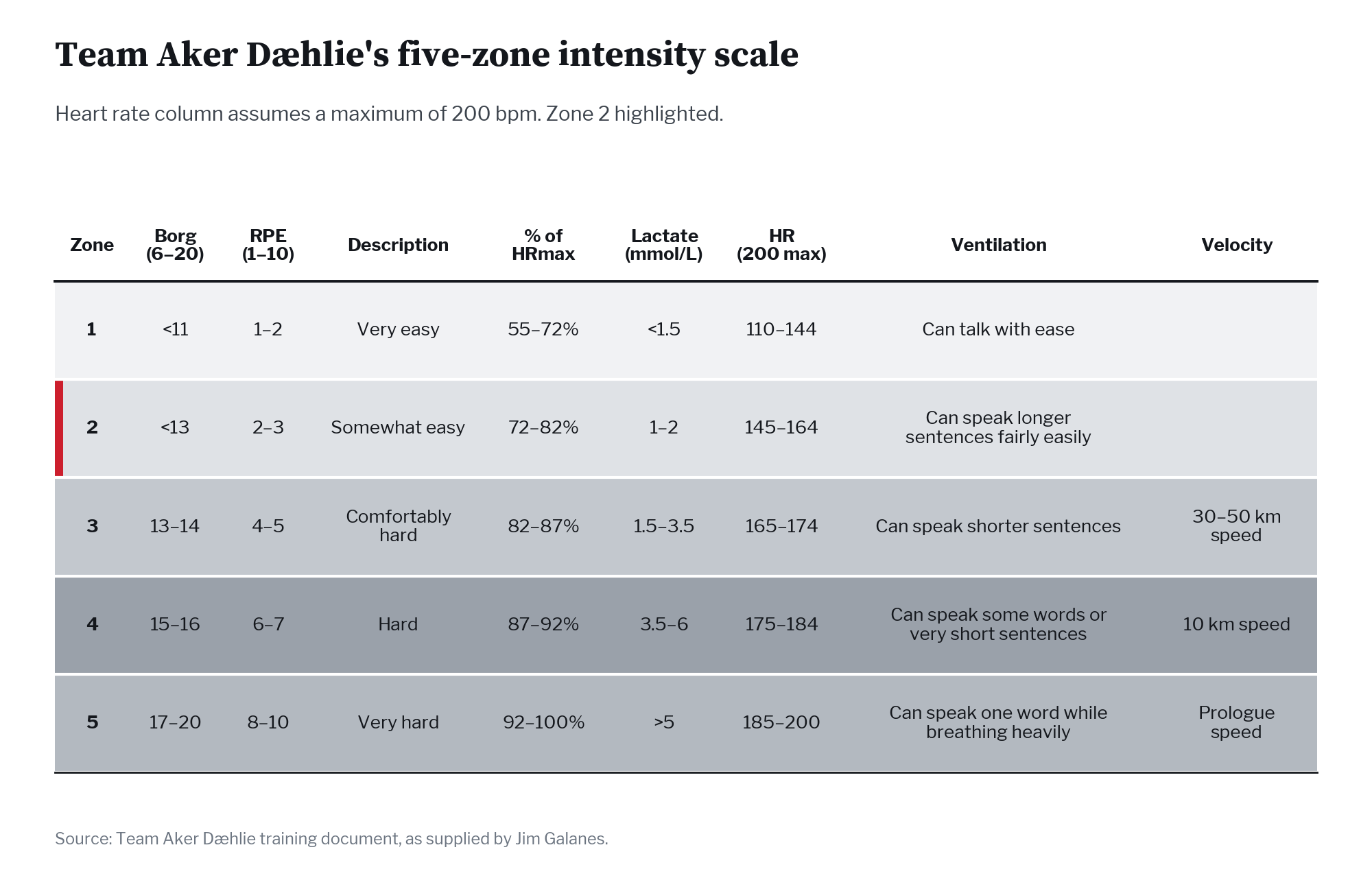
    Team Aker Dæhlie’s five-zone scale. Its Zone 2 runs from 1 to 2 mmol/L of lactate, overlapping Zone 1, which sits below 1.5. (Chart: FasterSkier)

    Whose Zone 2?

    One example is a document published a few years ago by Team Aker Dæhlie in Norway, which laid out a slightly different training zone model than I was used to seeing out of Norway. Given the popularity of Zone 2 training, I believe it is important to understand how the proponents of a particular system of training define and use their zones.

    In the Aker Dæhlie system there is significant overlap between Zones 1 and 2 in terms of lactate, with Zone 1 below 1.5 mmol/L and Zone 2 at 1 to 2 mmol/L, while the heart rate ranges are what I consider consistent with how most training zones are delineated. The implication of that lactate range is that lactate is highly variable and not the same between individuals. From the published document we can see that their Zone 2 does not fit what some may consider Zone 2. It fits how I would describe Zone 1: endurance training not to exceed 70 to 75 percent of maximal heart rate. We need to realize that lactate may vary greatly from day to day and can’t be viewed as a hard and fast anchor for a specific training zone.

    Listening to many podcasts and reading many articles and publications, I hear people discuss training zones as if they were talking about the same thing. Most often they are not. The recent popularity of Zone 2 training is a good example: what Iñigo San Millán means by Zone 2, many of the common five-zone models would define as Zone 1.

    So if you want to use and reference the Aker Dæhlie zone system, you should also be aware of this statement about Zone 2 in their published document:

    Zone 2: Semi-hard long sessions with a heart rate at around 140-155 bpm and with lactate up to 2 mmol/L, is considered intensity 2 training. Scholars debate over the importance of this training. In our experience, this training costs more than it is worth, and should therefore not be prioritized. L2 can work well to learn/automate correct technique. Again, evaluate cost vs benefit! Typical length of a session is 1 to 3 hours of continuous activity.

    Zones 3, 4 and 5 are close to how many would describe training in those ranges, although Zone 3 here may sit a bit lower than it is often described. But the Aker Dæhlie team is primarily a long-distance team, and we don’t know whether they use different zone ranges for World Cup skiers, or whether World Cup skiers do more of their intensive training in Zone 4.

    Stacked bar chart of monthly low, moderate and high intensity training hours across general preparation, specific preparation and competition phases
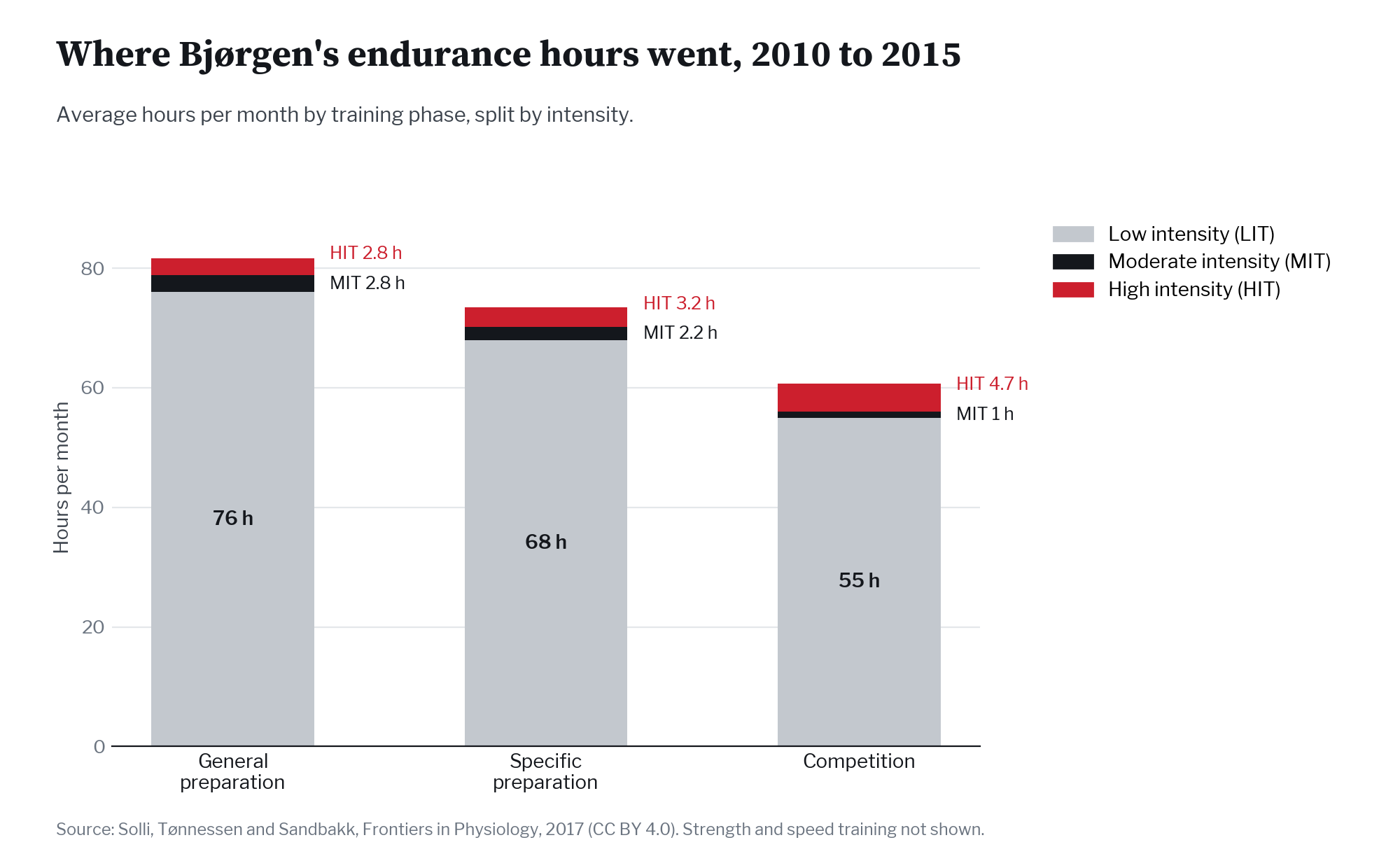
    Marit Bjørgen’s average monthly endurance hours by phase during her most successful seasons. (Chart: FasterSkier. Data: Solli, Tønnessen and Sandbakk, Frontiers in Physiology, 2017)

    How Bjørgen Trained

    A chart like the one above is often used to illustrate how one of the best female cross-country skiers ever trained during her most successful years. The data comes from an extensive study of Marit Bjørgen’s training.

    Table of low, moderate and high intensity heart rate zones with minimum, target and maximum beats per minute and RPE
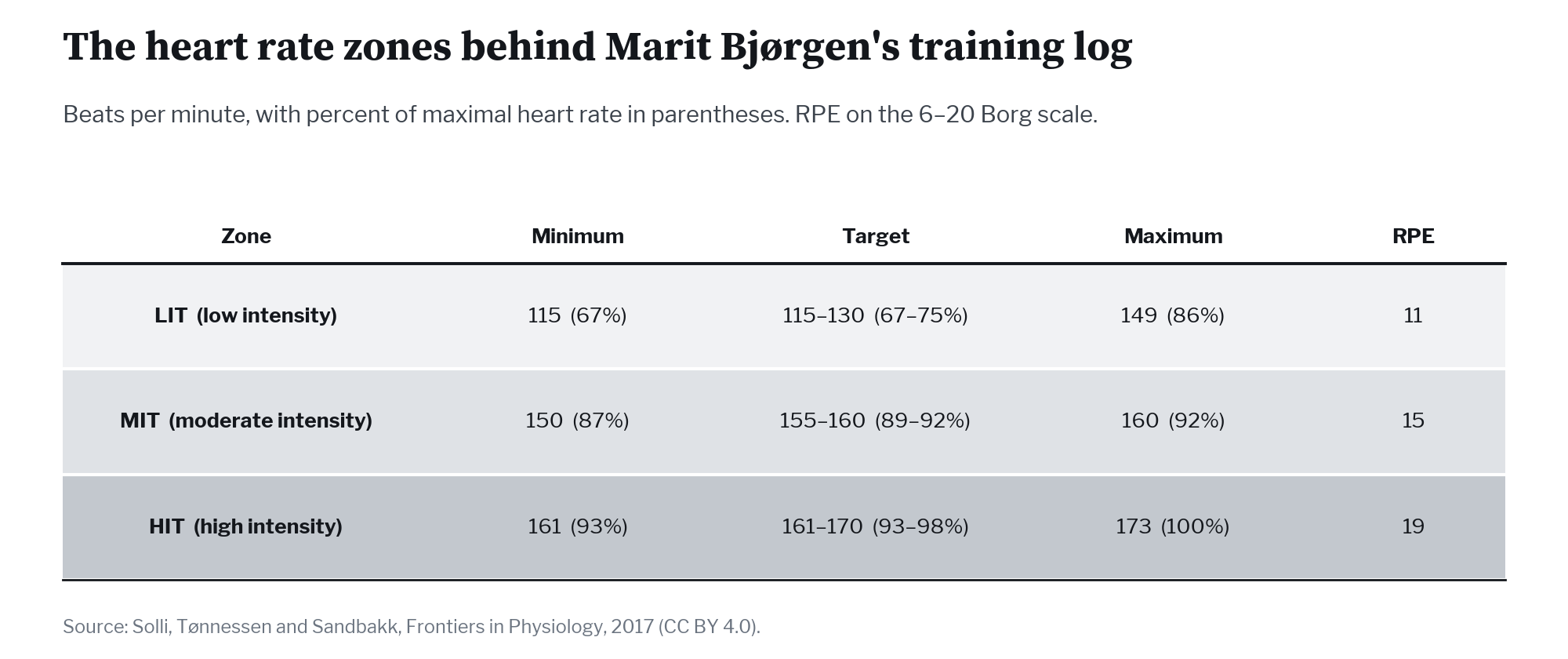
    The zones used to classify Bjørgen’s training. The top of the low-intensity target and the bottom of the moderate-intensity target sit 25 beats apart. (Chart: FasterSkier. Data: Solli, Tønnessen and Sandbakk, Frontiers in Physiology, 2017)

    A 25-Beat Gap

    To provide context, these are the zones used to define this athlete’s low-intensity (LIT), moderate-intensity (MIT) and high-intensity (HIT) training. The low-intensity target is where we might expect it, at 67 to 75 percent of maximal heart rate. However, there is a large gap, some 25 beats per minute, between the low- and moderate-intensity targets, with the MIT target at 89 to 92 percent of maximal heart rate. That MIT zone is quite different from what is described in the Aker Dæhlie document.

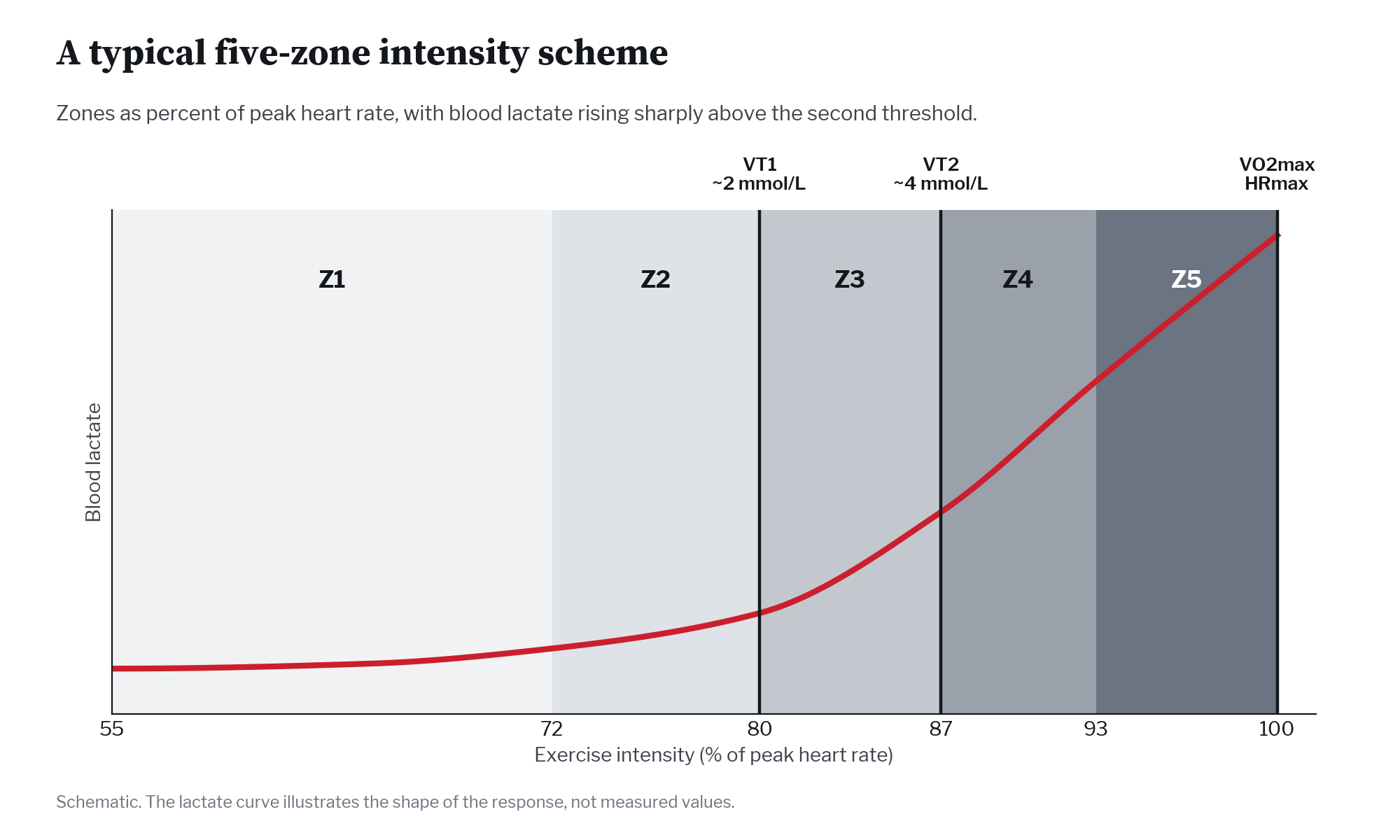
    Diagram of five heart rate zones from 55 to 100 percent of peak heart rate with a blood lactate curve rising steeply above the second threshold
    A typical five-zone scheme places the first ventilatory threshold at about 80 percent of peak heart rate. For most athletes, Galanes argues, it sits lower. (Chart: FasterSkier)

    Another Common Model

    Here is another example, much like the zone table published by Aker Dæhlie. It is a good theoretical model, but again I would suggest that endurance training above 75 percent of maximal heart rate is unnecessary, and the cost-benefit assessment does not suggest a benefit. We also see that LT1/VT1 is probably not at 80 percent of maximal heart rate for most athletes.

    Diagram of eight intensity zones beside overlapping shapes showing where cardiovascular, muscular, lactate buffering, alactic, neuromuscular and technical adaptations occur
    Each adaptation has an intensity where it responds best, but none of them stops at a zone boundary. (Figure: redrawn from Olympiatoppen educational material, 2020)

    Zones Overlap

    Most of us consider training zones hard and fast, but that is not the case. The chart above illustrates the possible range of metabolic and neuromuscular benefits of different training intensities. I believe the reason to use zones and monitor training is to ensure effective training adaptation. That is why I say that endurance training at more than 70 to 75 percent of maximal heart rate does not have a positive cost-benefit. As recovery time increases, adaptation slows, and the time to readiness for the next hard session can be extended.

    The chart is an excellent depiction of how adaptations overlap across training intensities. Each metabolic and neuromuscular adaptation has a theoretical optimal range, but the adaptations still occur well outside those ranges.

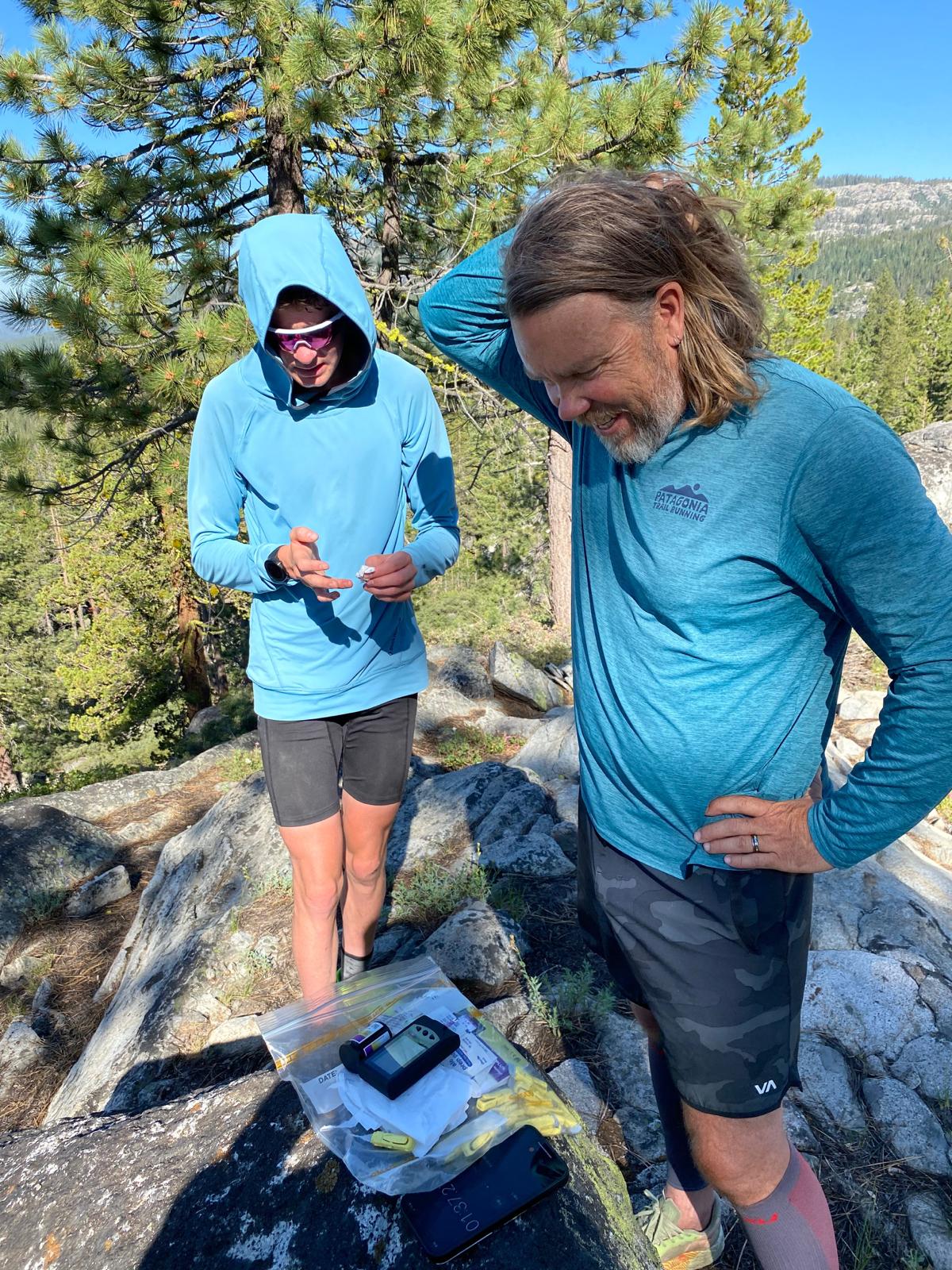
    Two men on a rocky outcrop among pines, one holding a fingertip for a blood sample beside a lactate meter set on a rock
    A lactate test in the middle of a hill-bounding session, with coach Will Sweetser and Quinn Holan. If you use lactate, spot-check often enough to learn your own daily variation. (Courtesy photo)

    My Advice

    • When analyzing what others say or publish, look closely and question what their training zones are based on. You must be speaking the same language before implementing any changes.
    • Pick a training zone model that makes sense to you. If you are going to use lactate, you must do frequent spot checks so you understand your individual daily variation. You absolutely cannot rely on a one-off test to make training decisions.
    • Use new and emerging technology, such as respiration and muscle oxygen monitoring, only after validating its consistency and variability.
    • Don’t jump from trend to trend. There are a lot of them out there. Learn from what has worked, and weigh emerging science against experience. Remaining current does not mean trend-hopping to stay relevant on social media.
    • Be clear on terminology. The same term can mean very different things to different scientists and coaches.
    • Use a couple of tests that produce meaningful data and inform training decisions. Collecting more data does not make for better programs.
    • For most people, perhaps everyone, percentage of maximal heart rate is a practical way to determine training zones.


    Help Support Our Coverage!

    If you value the thoughtful work and access FasterSkier provides, please consider becoming a Voluntary Subscriber. Your support directly fuels our work to cover the people, places, and moments that make our sport special.

    Join the FasterSkier community!
     

  • Does Lactate Threshold Even Exist?

    Does Lactate Threshold Even Exist?

    This article was made possible through the generous support of our voluntary subscribers.  If you would like to see more articles like this one, please support FasterSkier with a voluntary subscription.  

    BSF’s Nicholas Michaud during a V02max test at the MSU MSL in mid-November, 2015.

    In the mid-90s, I began doing extensive lactate testing with the athletes I coached. For about ten years, I collected data before eventually abandoning the practice. Why? Because the results raised more questions than answers. Lactate values varied greatly from day to day, and the readings from a ramp protocol looked nothing like what we saw during sustained training efforts.

    Across physiology and coaching circles, opinions on lactate testing range widely. Unfortunately, many discussions use misleading or inconsistent terminology. Often, the training prescriptions are reasonable, but the definitions and explanations create confusion.

    The Elusive “Threshold”

    Take the commonly referenced lactate/anaerobic threshold. There are 15–20 different ways to define it. None identify a true metabolic threshold; they are simply points along a curve—like trying to find a corner in a circle.

    • Some say it’s the highest sustainable effort for an hour.
    • Others describe it as the point where lactate accumulates faster than it can be cleared.
    • Still others fix it to a percentage of max HR (85–90%), a 4 mmol point, or 1 mmol above baseline.

    These are all arbitrary markers, not metabolic breakpoints. While threshold concepts correlate with performance, that correlation doesn’t prove that “threshold training” itself is uniquely effective. In fact, there is little consensus that training at threshold meaningfully shifts threshold upward. Research more strongly supports that higher intensity training increases fractional utilization of VO₂max.

    An Example

    The following graphic was shared by a prominent coach in Boulder Colorado. This is a typical lactate profile of an elite athlete. What we see is probably a good diagnostic tool for improved aerobic efficiency. In this case very high-power outputs with very low lactate. We can also see a clear point of increase in baseline lactate above the initial levels. Otherwise, it is not possible to identify any other thresholds. Read that, any lactate above 1.5 mm is increase in a linear fashion and it is not possible to identify another threshold unless one uses an arbitrary measure like 1 mm above the first increase in lactate at 3.1mm, ~415watts and 160 heart rate, or the 4 mm point, at 440 watts, and a heart rate of ~168.

    What Ramp Tests Really Show

    Ramp protocols often produce neat curvilinear graphs with clear “LT1” and “LT2.” But real-world tests rarely look so clean. Lactate begins to rise from LT1 onward and increases progressively. Defining LT2 as the point where production exceeds clearance is flawed, since lactate is always being produced, even at very aerobic intensities.

    The reality: there is no single metabolic breakpoint separating the moderate and severe domains. Lactate curves from ramp tests are exponential. What we often want to see in them is not a threshold but the Maximal Lactate Steady State (MLSS) the highest intensity at which lactate remains stable for a set time (typically 30–60 minutes). Research shows MLSS can occur anywhere from 2.5 to 8 mmol, depending on the athlete.

    Misinterpreting Threshold Proxies
    • FTP (1-hour power): A valuable performance marker, but not a metabolic transition.
    • % of Max HR: Sometimes aligns with “threshold,” sometimes not. For well-trained athletes, 90% of max HR may equate to ~95% of VO₂max, so is that threshold training or VO₂max training?

    The stronger evidence suggests that in the high-intensity domain, the greater the fractional utilization of VO₂max, the greater the training effect. Training at 90–95% VO₂max may be more impactful than hovering at 80–90%.

    Context Matters: Double Threshold and Elite Practices

    The much-discussed Norwegian double-threshold model is worth contextualizing. These athletes already have years of high-level training. Double-threshold sessions are an additive base-phase tool, not a replacement for hard work. Once in competition periods, they still perform 2–3 sessions weekly at race intensity. Extrapolating this model to all athletes, especially younger ones, is misguided.

    Using Lactate Testing Wisely

    I don’t believe lactate testing is useless. When understood properly, it can:

    • Track aerobic fitness adaptations (e.g., a flatter early curve, downward/rightward shifts).
    • Help set ceilings on training intensity.
    • Diagnose whether an athlete needs more low-intensity development.

    But context is critical. Day-to-day variability is high, and training/racing demands differ. For events under an hour, athletes can sustain efforts well above any supposed threshold. Lactate or ventilation “breakpoints” don’t define these performances.

    The Takeaway
    • There is no single, universal lactate threshold.
    • Metrics like FTP, % of max HR, or 4 mmol points are useful heuristics but not metabolic anchors.
    • MLSS is closer to what we seek, but even that depends on time frames and event demands.
    • Adaptations should be judged by performance needs, not by chasing arbitrary points on a curve.

    In short: lactate testing can provide insight, but it is not a map to a mythical threshold. The real work lies in matching training to the adaptations needed for performance.


  • DIY Fitness Testing: The How and Why with Pepa Miloucheva

    DIY Fitness Testing: The How and Why with Pepa Miloucheva

    The SMST2 squad led by Jessie Diggins pushes the pace in a double pole interval workout during a fall 2019 training camp in Lake Placid, NY. (Photo: Matt Whitcomb / smseliteteam.wordpress.com)

    It’s May. Yes, really. 

    For most skiers, the new page on the calendar also marks the beginning of a new training year. Dust off your rollerskis, locate your heart rate strap and drink belt, and make sure your running shoes have plenty of life in them.

    With the country still predominantly on public health orders to stay close to home, avoid groups, and keep at least six feet of distance from those outside your home, kicking off a new cycle is happening without hugging our training partners, post-workout high fives, or otherwise gathering to ring in the new season. There also remains abundant uncertainty regarding the feasibility of racing during the upcoming season from the World Cup level to the junior and collegiate circuits to popular skiing. Nonetheless, we open our training logs and carry on. 

    Last season ended abruptly and the off season may have looked different than anticipated. We may have put our energy into homeschooling children, sourdough baking, binge-watching Tiger King, connecting virtually with our family and friends, or otherwise remaining largely homebound and less active than we’re accustomed. On the flip side, maybe the change in schedule has freed up additional time for long adventures and you’ve logged more hours in April than ever before. 

    Either way, at the onset of a season, you may be interested in checking in on your fitness and strength, looking for metrics to track improvement over time and to guide your pacing or heart rate zones during future workouts. FasterSkier reached out to Pepa Miloucheva, head coach of the Craftsbury Green Racing Project, to discuss fitness testing that could be done without the support of a facility or coach, making it accessible to any level skier as they begin the new year. 

    Miloucheva provided the disclaimer that she relies on advanced metabolic testing with her athletes to determine VO2 Max and lactate threshold levels to assess fitness and heart rate zones, and then prescribes training based on this information. With that caveat, Miloucheva holds a masters degree in Sport Science with a focus on physiology and biomechanics and has been coaching for over 20 years, over a dozen of which have been spent with the CGRP elite program. 

    Caitlin Patterson (far left) leads CGRP teammates running with poles. (Courtesy Photo)

    Before jumping into assessing fitness and blowing up trying to hit a new PR on the SkiErg, Miloucheva emphasized that the most important thing an athlete can do at the beginning of a new cycle is to have a training plan and to understand how the periodization targets different areas of athletic development. This might be a plan from a coach or one found online. 

    “If someone really wants to establish a baseline and monitor, then they have to have a training plan,” said Miloucheva in a call. “I think everything else is kind of pointless, because all of these tests won’t give you anything if you don’t know what you’re looking for. In general, everything starts with first having a good training plan.”

    Once a clear plan is established and you have taken time to understand it, then decide which part of the training process you would like to test. 

    “If you have 2-3 months of high volume, you want to test your basic aerobic improvement. You do the test, you see if you’ve actually improved. When you start doing a little bit more speed, you want to see if you’ve improved your speed. So you really have to schedule these tests based on your training plan.”

    As the typical periodization of the year for skiers focuses on aerobic development during the spring and summer, a good starting place could be an uphill run test, possibly combined with a rollerski or SkiErg time trial, if those are available to you.

    Traditionally, a 3000 meter run on the track was commonly used as an aerobic benchmark, but the results can be skewed based on individual running economy. Athletes with more running experience and better form often fare better than those with comparable or potentially better fitness. As such, most ski programs have transitioned toward an uphill run test, as it tends to level the playing field in terms of the impact of running efficiency on results.

    In addition to being a good indicator of aerobic capacity, Miloucheva explained that the test has the added benefit of being easily repeatable with relatively few outside variables that might impact performance.

    “The uphill running test is probably the most standard around the world. Simply, it’s easier to repeat. It’s a little bit less affected by the weather, but there are still a lot of elements and it is hard to keep it consistent.”

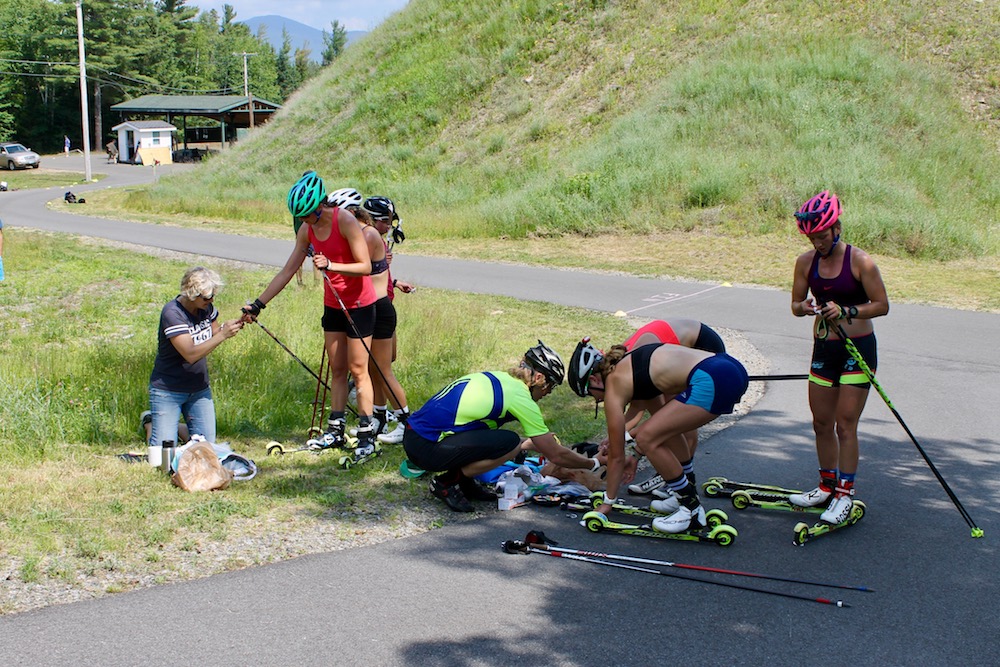
    Craftsbury Green Racing Project Head Coach Pepa Miloucheva (l) and Stratton Mountain School T2 Team Head Coach Pat O’Brien (center) assist athletes with lactate testing after the U.S. Ski Team’s rollerski team sprint on July 15, 2018 in Lake Placid, N.Y.

    If you’re looking to track your own progress on an uphill course, Miloucheva recommends finding a stretch of road or trail with little traffic that takes roughly 10-12 minutes. The effort should be steady throughout the test and you should finish feeling completely spent. 

    Be careful not to start out too fast as you want your heart rate to increase throughout the test, rapidly at first then gradually continuing to rise toward your lactate threshold heart rate, which can be estimated as the average heart rate sustained over the last five minutes of the test assuming it was well-paced. (TrainingPeaks has a deep dive on blood lactate and lactate threshold here, or you can read this description of lactate threshold training by Len Kravitz Ph.D., Exercise Science professor at the University of New Mexico.) 

    As for the course, you’re looking for terrain that is runnable, meaning you won’t need to resort to walking or hiking, and a relatively consistent grade. 

    Miloucheva later added that many veteran athletes have their own aerobic fitness test piece, which is also perfectly sufficient. 

    “I’m an old lady and I have this loop around the lake I do every year and I measure my time just for fun. So in general, everybody who has been training for years, they have a place where they can run the test.”

    Miloucheva has also used a 1-kilometer uphill double pole test on rollerskis with some of her athletes. Her course starts relatively flat, climbs gradually, then levels off at the finish. 

    “The biggest thing is that [athletes] need to keep moving, so it cannot be very steep because strength and the resistance become the issue [rather than fitness].”

    She has found this test harder to standardize than the run test, meaning results must be taken with a grain of salt. 

    “The problem using it year to year is that [the athletes] don’t always use the same rollerskis, they change wheels, cold weather and cold pavement changes a lot. So you have to consider all these details with the results.”

    Sophie Caldwell and Annie Hart square off for a SkiErg time trial during a week of testing with the SMST2 team in 2017. (Photo: Instagram @sophiecaldwell(

    Because of the ease of standardization, Miloucheva prefers using SkiErg time trials, as athletes can repeat the test indoors with a fixed resistance. Her junior athletes complete 1 and 2 k time trials, and her senior athletes additionally complete a 5 k test. The CGRP athletes complete the tests while hooked up to a VO2 Max testing equipment. If these are available to you, these tests could also serve as a benchmark for aerobic fitness with some ski specific strength indicators. 

    As for strength, Miloucheva is working on developing a test she feels is informative and can be standardized, as she is not satisfied with other tests used previously. She has historically used a version of the Canadian Strength Test (outlined here by Jackson Hole Ski & Snowboard Club), which counts the number of pull-ups, sit-ups, push-ups, box jumps, and dips an athlete can do in one minute with one minute rest between each exercise. Some differences in Miloucheva’s version include the use of single leg squats within a 30 second time period and measures pull-ups to exhaustion. 

    If you’re completing this test from home, ask a member of your household to help time, count, and keep your form honest so the data reflects your current strength accurately. 

    Okay, you’ve done an initial test of your aerobic fitness and/or strength. Now what? How soon should you repeat the test to check for improvement?

    Miloucheva reiterated that it is essential to plan testing between training blocks to assess whether the block had the intended impact on fitness. She explained that her testing weeks are written into her general yearly plan for athletes at the beginning of the season. 

    When considering your own plan, space the tests out roughly 6-10 weeks to give the body time to absorb and respond to training. In addition to striving for a faster time, you can also consider trends in heart rate, as more time during the test spent closer to the lactate threshold heart rate is also an indicator of improved aerobic capacity. 

    To get the most information from a testing period, it is essential that each round is approached the same way, including how the training looks in the days prior and the warm-up performed before beginning the tests. 

    “You want to have a standard approach into the test, because you don’t want to do the first test after a very exhausting week and the second after an easy week, because it will affect the results.”

    For CGRP athletes, this typically looks like one or two days of rest or easy training prior to a test. 

    There you have it. If you’re looking to assess and monitor progress in your fitness, first select and understand a training plan. Then, determine what factors of your fitness you’d like to assess and decide when a set of tests might fit best between different blocks within the training plan. Finally, do what you can to ensure that when the tests are repeated, the environment is as controlled as possible and your approach is the same so improvement (or lack thereof) between tests provides accurate insight into how your body is responding to training. 

    See you out there!  (from a safe social distance) 

  • Wednesday Workout: What’s the Prescription for “Flooding” Legs?

    Wednesday Workout: What’s the Prescription for “Flooding” Legs?

    Now retired from competition, Dakota Blackhorse-von Jess (bib 1) skates away as he earned his second national title at the 2015 U.S. Cross Country Championships 1.5 k freestyle sprint in Houghton, Mich. You don’t need to look too closely to see Blackhorse-von Jess is a skier with flood-proof quads in the sprints.

    2014 is when a relatively green Patrick O’Brien took charge of the Stratton Mountain School’s elite team, otherwise known as SMS T2. In a relatively short time, by way of juggling athletes, wax-teching, training plan writing, and life-living O’Brien has become a problem-solving resource. Jack of many trades, and very much an emerging master of elite level coaching, FasterSkier tossed a general question out to O’Brien for our Wednesday Workout series: what are some workouts for an athlete experiencing “flooding” in their legs when laying down big efforts?

    Here’s O’Brien’s response:

    So if I understand the question correctly, the goal here is to do some workouts that will help an athlete keep from “flooding out” during a skate race, correct? Not sure if we are talking distance or sprint so I will answer both to the best of my ability.

    I think we are all aware of what the sensation of “flooding” feels like. The workload is high, we are pushing along fine in a race until finally we feel toxic and the motions break down, velocity drops and we either have to slow down or worse still, totally lock up. This has probably happened to just about everyone at some point in their racing career. At the surface, the issue and solution are relatively simple. Blood lactate is rising and being produced from anaerobic energy pathways faster than it can be cleared and turned back into fuel by the body and working muscles. Skiing is by nature a power endurance based sport. We rely upon both aerobic and anaerobic energy pathways to fuel the motions in a ski race. Depending on the race distance, course profile, elevation, athlete physiology, that balance is always shifting. The longer the duration of work and race distance, the more we rely on aerobic energy pathways, the shorter the duration of exercise and more intense, the more we are relying on anaerobic energy pathways.

    So at a very simple level, we are utilizing aerobic energy production more in marathons and 50km races and anaerobic pathways for shorter events such as sprint events. Now the caveat is we are always using both, and we need to tune up both systems to execute good race efforts. We need a big aerobic base to carry our fitness for distance races but also need to be able to recruit anaerobic power when punching it over hills, through transitions, and in the finishing stretches of a race. You need to be able to produce lactate and tolerate and clear it quickly both for distance and sprint races,

    Everyone naturally has different physiologies. Different size “motors” (call it V02 Max, but basically how big of an engine they have). Different ratios of fast twitch to slow twitch muscle fibers (are they a natural sprinter or more inclined to distance), different size frames and builds. Additionally, everyone has different technical skills and proficiency in skiing that are tied in with all of this. Our goal in training is to raise all of these capacities up, and ideally do so in a balanced fashion. You need a big aerobic base to support an anaerobic system and power and the ability to apply force correctly to maximize velocity and do it efficiently.

    Now let’s circle the wagon back around to the original problematic scenario: someone struggling with sensations of “flooding out” in racing. It could be caused by an imbalance in any of these capacities, or. simply because of an athlete’s natural physiology.

    Someone with a naturally strong anaerobic system, good strength, and technique solid enough to produce this power is going to “flood” more easily than someone who is more aerobic and cannot produce the same amount of power.

    For someone like this they still need to train and refine their strengths (they sound like they could be a good sprint racer!) but they also probably need to train their weakness. They need to build enough of an aerobic base so the body can support these other energy systemsEasiersy aerobic training and well-paced L-3 threshold training during the preparation and competition season will help them make their hard training harder and more repeatable. We do a fair amount of threshold intervals because it allows athletes to rely almost exclusively on aerobic energy pathways while still ingraining good technical motions and allowing them to become more efficient at this speed.

    You can structure threshold intervals many different ways but for those without access to either a Heart Rate or blood lactate monitor, I tend to find longer intervals allow athletes you to find your natural “threshold”. It should be medium-hard, breathing well but not building an O2 debt or hanging on your poles at the finish. 4-5 x 10 minutes on time with 3 minutes recovery is a good starting place. You should be controlled enough during the interval that you should feel ready to begin again before the end of the recovery period. You should get tired and fatigued from the duration of the work, not the absolute intensity of it.

    Now, the flip side to this could be an athlete that has a very well developed aerobic system but lacks either the anaerobic system to tolerate and clear lactate, lacks the muscular endurance for sustaining a full race effort, or has a technical weakness that is magnified during these race efforts. Basically, they start a race, and at some point, they can not maintain the workload and velocity to continue at this pace — they have to slow down.

    For an athlete like this, doing some anaerobic power work is a great place to improve their racing. Here’s a classic:  30-30 intervals. We format them a number of different ways but the idea is as follows: 30 seconds of skiing at or above race velocity followed by 30 seconds of easy recover skiing. Vary your “on time” depending on fitness and energy level and repeat as long as the motions and workload allow. We typically start conservatively, doing 2-3 sets of 8-10 minutes of on time. As athletes build fitness and capacity they can either increase the ground speed and intensity of the on time or increase the duration of the interval.

    This workout is so effective because it trains a number of different systems. It taxes the neuromuscular system by challenging them to ski a pace close to, or faster than race pace. In this way, they become more technically proficient and comfortable moving fast. It recruits anaerobic pathways by demanding high power output and subsequently the production of lactate while also allowing them to tolerate and clear this lactate while building in recovery time to keep the overall cost of the session manageable. Workouts like these should help athletes feel like they can repeatedly “redline” their tachometer while not blowing their car engine.

    So my long convoluted answer is that it is difficult to prescribe one workout or even a progression of workouts to fix an athlete who tends to “flood” during races because there are so many possible causes. They should evaluate their strengths and weaknesses as an athlete and racer and see if there is an imbalance and try to execute workouts that will help with this. You need to train your weaknesses as much as your strengths. If they can go really fast but tend to blow up, my recommendation would be to try to prop up the aerobic system by adding some sustainability to their racing.

    Start your workouts nice and controlled so that carries over to your racing. More easy distance and threshold intervals will help with this. If an athlete feels like they have good fitness but they go over the line once in a race and blow up or lock up, doing more anaerobic power work could be a good solution to making those big digs in a race environment more sustainable and repeatable. You need to be able to recruit the anaerobic system, build lactate, tolerate it, and on the recovery sections of the course clear it quickly so you can repeat again on the next working section. Incorporating some 30-30 intensity sessions could be a good starting place.

    So many variables — this is what makes the sport an evolving puzzle!


    Puzzle master Patrick O’Brien at the 2018 SuperTour Finals in Craftsbury, Vermont. (Photo: Matt Whitcomb)
  • Wednesday Workout: Steady State Intervals and Speed Shifts with SVSEF PG Coach Tom Smith

    Wednesday Workout: Steady State Intervals and Speed Shifts with SVSEF PG Coach Tom Smith

    SVSEF Gold Team member Miles Havlick rounds a cone during an interval. (Photo: Tom Smith)
    SVSEF Gold Team member Miles Havlick rounds a cone during an interval. (Photo: Tom Smith)

    For this week’s Wednesday Workout, FasterSkier spoke with Tom Smith, the head coach of the post-graduate elite development program for the Sun Valley Ski Education Foundation (SVSEF). On top of coaching full-year post graduates (PGs) in Sun Valley, Idaho, Smith works with college athletes who come there to train during the summer. Smith is originally from Bend, Ore., and skied for the University of Utah before heading to Sun Valley a few years ago.

    The workout Smith presented is a highly customizable steady state threshold workout with accelerations he likes to call “speed shifts.” Speed shifts are similar to pickups in that the speed and effort increase for a short period of time. However, for speed shifts, the change is minor compared to pickups, where speed and effect usually change drastically, going from low effort to race pace or even max effort.

    “I like to think of it as not an all-out sprint in the middle of L3 [Level 3] intensity, but like a shift in your tempo or power and that you’re testing your competitors and testing your own limits of your lactate threshold,” Smith explained.

    As a quick reminder, threshold effort or Level 3 is the pace at which lactic acid is being cleared from muscles at the same rate it is being produced. The general feeling at this effort is fast but in control and at a pace that can be maintained for an hour or two.

    Head PG Coach Tom Smith with a bunch of SVSEF athletes in the background. (photo: Tom Smith)
    SVSEF post-grad head coach Tom Smith takes a selfie with several SVSEF athletes in the background. (Photo: Tom Smith)

    This steady state workout entails going at a consistent threshold effort for 30 to 45 minutes while doing 20-second speed shifts every three to five minutes to push the effort into the upper limits of L3.

    Smith leads this workout on rollerskis, though it can be done in any discipline. It’s also very customizable. Depending on the time of year, the focus can be on ensuring that the threshold effort is not exceeded or intentionally going beyond L3 during the speed shifts to work on recovering from an anaerobic effort while continuing to ski at threshold. The total interval time and frequency of the speed shifts can also be changed to make the entire workout easier or harder, depending on what the participant is looking for.

    A large component of the workout also comes from the day before. Smith plans a technique-focused, low-effort workout in the same discipline that the continuous threshold workout is going to be in. So if Smith’s athletes will be skating during the continuous threshold workout, they go for an easy skate distance workout the day before while Smith takes a bunch of video. Then they all review the video and each pick out one specific aspect of their technique to work on and come up with a concrete way they can improve it. That night or even the following morning, Smith’s athletes again look at the video to review their technique and really understand what they need to be doing to improve during the threshold workout. This allows the athletes to work on their technique during the interval while simultaneously focusing on a quality effort.

    “By accomplishing [technique work] in the session beforehand, the athlete already has that goal in mind of what they want to work on and they know how they are going to actually go about improving it,” Smith said. “You don’t really have to harp on it too much within the intensity session itself as a coach.”

    SVSEF Gold Team member Rogan Brown leads Bates College skier Corky Harrer on a classic ski. (photo: Tom Smith)
    SVSEF Gold Team member Rogan Brown leads Bates College skier Corky Harrer on a classic ski. (Photo: Tom Smith)

    This also gives Smith the opportunity to focus on his athlete’s efforts during the L3 interval. The SVSEF post grads do this workout on a fixed loop, setting up speed shifts on various terrain so they feel what it is like to push the effort during different techniques and at different speeds. It also helps them feel how easy or hard it is to recover from different efforts on the various terrain.

    Smith then goes to a location about a minute after a speed shift to test the athletes’ lactate levels. What he hopes to see is their lactate levels around 4 millimoles, which means they are going at a threshold effort and have effectively pushed to the limits of L3 and recovered.

    If possible, Smith also wants his athletes to ski in a pack. This gives them an opportunity to practice some mass-start tactics and see how effective an added effort is or is not on various terrain.

    “We can put one speed shift on a V2 focused slight up grade, we can put one on a V1 section, we can put one on maybe a tuck-skate downhill section, so it gives you a few different things to think about [and shows], especially in a mass start simulated environment, that there are different opportunities and different places around a course to put in a little bit of an attack,” Smith explained.

    Ultimately, he hopes his athletes come away from this workout with technique improvements and a better understanding of and feeling for their L3 zone.

    “I think it’s a really good session for the older guys, especially as they transition from older juniors into seniors to really understand where their limits are within their lactate threshold zone and how hard they can really push it before they actually blow themselves up,” he said.

    The Workout

    The day before:

    – On the day before the steady state interval workout, work on technique and find one specific area to focus on for the next day. Having video is really helpful for picking out a major technique area that can be improved!

    The day of:

    – Warm up for 20 to 30 minutes to prepare the body for a threshold effort.

    – Begin the continuous threshold interval. Keep in mind the effort continues for 30 to 45 minutes, so it is best to start at the lower end of L3.

    – Every three to five minutes, do a 20 second speed shift. Try and focus specifically on adding a little extra power or slightly increasing tempo. This helps to ensure the effort does not go beyond the L3 limit. Also try and change up the terrain where the speed shifts happen to get plenty of variety in the workout.

    – Remember after each speed shift, the effort should remain in L3 and it should drop to the lower end of L3 before the next speed shift brings the effort back up.

    – After finishing the steady state interval, warm down for 15 to 30 minutes to wrap up the workout.

  • Wednesday Workout: Early Season Agility with the Alberta World Cup Academy

    Wednesday Workout: Early Season Agility with the Alberta World Cup Academy

    Zeke Williams (l) races through the ladder during a track workout with Alberta World Cup Academy teammate Yannick Lapierre in Canmore, Alberta. (Photo: Stefan Kuhn)
    Zeke Williams (l) races through the ladder during a track workout with Alberta World Cup Academy teammate Yannick Lapierre in Canmore, Alberta. (Photo: Stefan Kuhn)

    This week’s workout comes to you from Ezekiel “Zeke” Williams, FasterSkier’s newest intern and an athlete at the Alberta World Cup Academy in Canmore, Alberta. This time last season, Williams said he really enjoyed doing what his team called, for lack of a better name, the Agility Sprint Track Workout.

    ***

    Canmore Alberta may be known for its skiers rather than its track stars but it still has a short 300-metre stone-dust track. And this is where the Alberta World Cup Academy men’s team was to be found, more often than not, on Thursday mornings in May and June 2013. As the athletes warmed up the coaches set up a pair of agility ladders on one of the track’s straight-aways and hurdles on the other. Finally, the coaches would draw ‘finish lines’ at about 10-seconds worth of sprinting past the end of the obstacles.

    After warming up we would partner up and do laps of the track. We would focus on speed through the agility ladders and hurdles and then sprint out of them. Then we’d slow back down to an easy jogging pace until we hit the next feature.

    The Workout: Agility Sprint Track Workout

    Total time: 1 1/2 hours

    Need: A track, running shoes

    Warm up: 30-minute jog

    10 track laps: 20 x 10-15 second sprints with about 1 minute easy jogging between each. Whole thing takes just over 20 minutes

    Cool down: 40 minute jog

    I like this workout for two reasons. First, it’s a lot of fun to do! Getting to race through the ladders and the hurdles against a teammate makes it a sweet competition.

    Heart-rate data from Zeke Williams' workout: track laps are between about 18 and 38 minutes.
    Heart-rate data from Zeke Williams’ workout: track laps are between about 18 and 38 minutes. 

    Second, the workout gives a bunch of training benefits. At first glance it looks like a speed workout, but heart rate ends up at lactate threshold for most of the time because of the shortness of the sprints and the minute of easy jogging between them. Check out my heart-rate log during a similar workout here.

    Also, the agility component of the workout improves coordination at speed, which is nice to stay in touch with for when we get back into rollerski sprinting.

    Combine the agility work and lactate threshold building into the short 1:30 hour workout time and it makes for a solid early training-season session.

    ***

    About the Author: A Canadian cross-country ski racer with the Alberta World Cup Academy, Zeke spends most of his time in Canmore, Alberta, but calls Cantley, Quebec, his home. He thinks that you can learn a lot about a person from their goals — his is to ski really fast on the Winter Olympic race course in 2018. Check out his blog: ezekielwilliams.ca
    Zeke Williams, FS Intern
    Zeke Williams, FS Intern
  • This Month in Journals: Team Dynamics in Individual Sports, How to Prescribe Intervals

    This Month in Journals: Team Dynamics in Individual Sports, How to Prescribe Intervals

    Team spirit has been widely touted as one of the keys to the U.S. women's recent success. Photo: Matt Whitcomb.
    Team spirit has been widely touted as one of the keys to the U.S. women’s recent success. (Photo: Matt Whitcomb)

    Welcome back to This Month in Journals, where we review the latest exercise and sports science and pull out some research that might be of interest to skiers.

    Αssumptions and research are changing the way that psychologists and coaches think about team dynamics in individual sports.

    It has long been known that team cohesion, leadership and cooperation are important for success in team sports, like soccer or basketball, but far less research has been done on whether these same concepts are important in solo sports, like running and skiing. In fact, one classical theory holds that team cohesion can even be detrimental because it destroys competitive rivalries between teammates that might spur them to better performance.

    But recently, these ideas have been challenged. Beginning in the 1990s, researchers showed that even when teammates in an individual sport don’t have to cooperate on a task during competition to reach their goals, cohesion is positively associated with performance to the same extent that it is in those other team sports, like basketball.

    Blair Evans and Mark Eys of Wilfrid Laurier University and Svenja Wolf of the German Sport University Cologne furthered this work this month, publishing a paper in the Journal of Applied Sport Psychology based on interviews with six distance runners, six cross-country skiers, a mountain biker and a wrestler. All the athletes were Canadian and had several years of experience at the Olympic or World Junior Championships level.

    In terms of performance, there was little doubt that a good team atmosphere made these individual athletes more competitive. A middle-distance runner told the researchers that when she was training on her own, her race times were typically slower than during periods where she had training partners.

    Being able to use teammates as a measuring stick was also frequently cited as a benefit. Athletes talked about times when a teammate was having a good race, and they tried hard to follow because they knew they could keep up during practice every day. Even if they couldn’t achieve the same result that day, teammates’ success often boosted their confidence because they knew they had been doing the same training so a similar result might be possible.

    Finally, the social aspect of a team and the support it provides are extremely important to individual athletes. Despite all of the athletes’ strong drive for competitive success, they almost unanimously cited the group or team as a main reason to compete and to stay in sport. Many discussed how teammates became their closest friends, and that these friendships are maintained even after one or several of the members quit the sport.

    This was particularly important in adolescence, in terms of determining what path an athlete might take, but also at the senior level, where several participants described moving teams or locations or even traveling internationally to be part of a more friendly training group. Group was also important for maintaining motivation when injured and ensuring a comeback to competition.

    And what about that old theory that being friends with your teammates killed any competitive instinct that you might have against them? Athletes were divided on this one – or, more accurately, had experienced groups moving in both directions. In some teams, cohesion bred a healthy sort of competition that facilitated success.

    In other situations, teammates actively sought to avoid competition against one another because they thought it would be detrimental to their relationships. The researchers found that jealousy, for example, was definitely relevant to group dynamics and performance. This isn’t unique to individual sports: once again, it underscores that team dynamics, good or bad, have just as big an effect on running and skiing as they do on soccer or football, and the effects are “context-dependent.”

    Moving from psychology to physiology, a team from the University of Cape Town, South Africa, thought about how to prescribe interval training.

    The most common approaches used by coaches are to give instructions on the effort level based on a percent of VO2Max, or a percent of maximal heart rate.

    But different athletes respond differently to effort; for instance the same percentage of maximal heart rate may produce a different amount of lactate in one athlete than another, leading more quickly to exhaustion. Is there an easy way around this, or do instructions have to be specific to each individual athlete?

    Writing in the journal Sports Medicine, Theresa Mann, Robert Patrick Lamberts and Michael Ian Lambert describe that a more uniform way to prescribe workouts would be as a percentage of aerobic threshold or anaerobic threshold. These thresholds can be determined in physiological tests, and should provide a good “anchor” at which all athletes respond in the same way.

    This has many benefits: “less variation in time to exhaustion during constant-intensity exercise, a more homogenous exercise stimulus at the molecular level, and less individual variation in the adaptive responses following a training program,” the authors write.

    But for many low- and mid-level athletes, this approach might not be possible as repeated testing is needed to accurately pinpoint thresholds, and not every team has a physiology lab available to them. The authors suggest that using regular lactate testing during a non-laboratory workout can be used as verification, since below the anaerobic threshold, for instance, lactate production should be no different than baseline. If a coach prescribes a workout below the threshold assumed from, say, one laboratory test, but the athlete is still producing high lactate, then the threshold is probably wrong.

    And speaking of how to prescribe intervals, what terrain is best?

    Many times, athletes are instructed to do their interval training going uphill, to make sure that the work is very hard. A South Dakota team of Derek Ferley, Roy Osborn, and Matthew Vukovitch wondered if that was really ideal. They recruited 32 distance runners and compared the effects of uphill interval training to that of level-ground workouts.

    Strangely, though, they prescribed the two groups completely different workouts. Twice a week, the hill-running group would complete 10 or more 30-second sprints at a steep grade; they also did several normal long runs. The flat group did the same long runs, but their intervals were longer and fewer in number, with runners completing just four to six intervals.

    The authors concluded in the Journal of Strength and Conditioning Research that hill-running had great merit as a training plan, because it changed some metabolic processes for the better. However, they also pointed out that the flat-training group had greater improvements in time-to-exhaustion, so maybe coaches are overprescribing hill workouts. As a result, they advocate that level-ground workouts that are fit to an individual’s own physiological parameters will create the biggest gains.

    It’s difficult to see how they directly tested the effects of hills themselves, considering that athletes did different workouts. But the last conclusion, whether on hills or on the flats, seems like common sense that can be followed no matter what.