Tag: lactate

  • Why How You Start a Workout May Matter More Than the Workout Itself

    Why How You Start a Workout May Matter More Than the Workout Itself

    This article was made possible through the generous support of our voluntary subscribers. If you value coverage like this, please support FasterSkier with a voluntary subscription.

    Most athletes view the warm-up as preparation for the hard part of the workout. The reality is that the warm-up is often one of the most important parts of the session, because it largely determines the physiological response that follows.

    The purpose of a warm-up is not simply to get moving. It is to bring the body’s physiology to a level where the intended training stimulus can be achieved while controlling the overall stress of the workout. In endurance training, particularly during high-intensity work, the warm-up is often the difference between controlling the metabolic response and being controlled by it.

    Athletes frequently start sessions too hard. They feel fresh, see a target pace or power on their watch, and immediately try to hit it. The problem is that physiology is not yet prepared to support that workload. Oxygen delivery, muscle temperature, enzyme activity, and substrate utilization are all operating below the levels required for efficient steady-state exercise. The result is often a disproportionate metabolic response.

    The Oxygen Deficit Problem

    At the start of exercise, energy demand rises immediately, but aerobic energy production takes time to catch up. During this period, often referred to as the oxygen deficit, a greater percentage of the required energy must come from glycolytic pathways.

    This can be particularly problematic during races and maximal efforts. If the physiology, especially the oxygen transport system, has not been properly activated, lactate oxidation and resynthesis can be compromised. Lactate accumulates more rapidly, metabolic stress rises, and performance can suffer.

    The same thing often happens during training. If an athlete begins too aggressively, glycolytic energy production rises rapidly before the aerobic system is fully engaged. Lactate accumulation increases, and the athlete spends much of the workout trying to recover from a metabolic disturbance that was largely created during the opening minutes of the session. Many workouts intended to be primarily aerobic become moderately glycolytic before the real work has even started.

    Jack Young hits some big lactate numbers during a hard training session. (Photo: Courtesy Photo)

    Lactate Is Often Controlled Before the Main Set Begins

    Coaches frequently focus on pace, power, heart rate, or lactate during the interval portion of a workout. In reality, much of the metabolic profile of those intervals may have been determined during the first 10 to 20 minutes of the session.

    A gradual warm-up allows oxygen delivery and utilization to increase progressively. Muscle blood flow improves. Mitochondrial respiration accelerates. Oxygen kinetics improve. The contribution from anaerobic glycolysis declines relative to the overall energy demand.

    As a result, when the athlete begins the primary workload, lactate appearance and clearance are better balanced, and the body’s ability to oxidize lactate is already functioning at a high level. This creates a fundamentally different physiological environment.

    When I was racing bikes, particularly time trials and hill climbs where the energy demand was high from the very start, I found that the longer the easy portion of the warm-up, often 45 to 60 minutes, the better I could tolerate high intensity immediately. The effort felt more controlled, and the metabolic response was far more predictable.

    Two athletes may perform the same interval session at the same power output. The athlete who started gradually may stabilize at a lower blood lactate concentration and experience less metabolic strain than the athlete who rushed into the session. The difference is not fitness. The difference may simply be the quality of the warm-up.

    Pellegrino embraces the crowd ahead of Sprint qualifying in Lake Placid. “The energies I got in the Final were coming from the warmup lap, where I stopped in the middle of the climb, crying.”
    (Photo: Thibaut/NordicFocus.)

    Warm-Up as a Tool for Intensity Control

    One of the most overlooked benefits of a proper warm-up is improved intensity control. For athletes who struggle to control intensity during endurance workouts, paying close attention to the first 20 to 30 minutes of the session can have measurable benefits.

    When athletes begin too fast, they often overshoot the desired intensity. Lactate rises quickly. Respiration and ventilation climb above normal. We have measured lactate during training and repeatedly seen athletes who start too hard spend the next 30 to 45 minutes of the workout significantly slower, simply to bring lactate back down to the intended level.

    A gradual progression gives the athlete time to monitor how the body is responding. Heart rate rises progressively, respiration remains controlled, and the athlete gains a much clearer picture of the true physiological response to the workload.

    This is particularly important during high-intensity training, where small differences in workload can create large differences in metabolic response. The goal is not simply to reach the target workload. The goal is to arrive there with the physiology prepared to support it aerobically.

    The Better the Athlete, the More Deliberate the Warm-Up

    Elite endurance athletes often appear to spend an excessive amount of time warming up. They do it because they understand physiology. As aerobic capacity increases, athletes become increasingly sensitive to small changes in metabolic stress. A controlled rise in workload allows them to achieve higher-quality training and produce more predictable physiological responses.

    The warm-up is no longer separate from the workout. It becomes part of the workout itself.

    Jessie Diggins (neon orange shorts) helps lead her Stratton Mountain School teammates through A-skip drills during a “power warmup” at the base of Stratton Mountain in 2018. (Photo: Pat O’Brien)

    Practical Application

    For most endurance sessions, particularly aerobic training, athletes should think of the opening 20 to 30 minutes as a transition period rather than part of the main workload.

    Start below the intended training intensity. Allow heart rate, oxygen consumption, and respiration to rise gradually. Resist the temptation to immediately achieve target pace or power. The objective is to create the physiological conditions that allow the workout to accomplish its intended purpose.

    Final Thoughts

    The warm-up is often viewed as preparation for the workout. In reality, it is the first opportunity to influence the metabolic response of the entire session. A gradual start reduces the oxygen deficit, limits unnecessary lactate accumulation, improves intensity control, and creates a more stable aerobic environment for the work that follows.

    Athletes often focus on the intervals, the pace, the power, and the volume. Yet the quality of those elements may depend heavily on what happened during the first few minutes of the workout.

    Sometimes the most important part of the session is not the hardest part. It is how you begin.


    Help Support Our Coverage!

    If you value the thoughtful work and access FasterSkier provides, please consider becoming a Voluntary Subscriber. Your support directly fuels our work to cover the people, places, and moments that make our sport special.

    Join the FasterSkier community!


  • Johaug, Weng and Teammates’ Physiology, Training Described in New Paper

    Johaug, Weng and Teammates’ Physiology, Training Described in New Paper

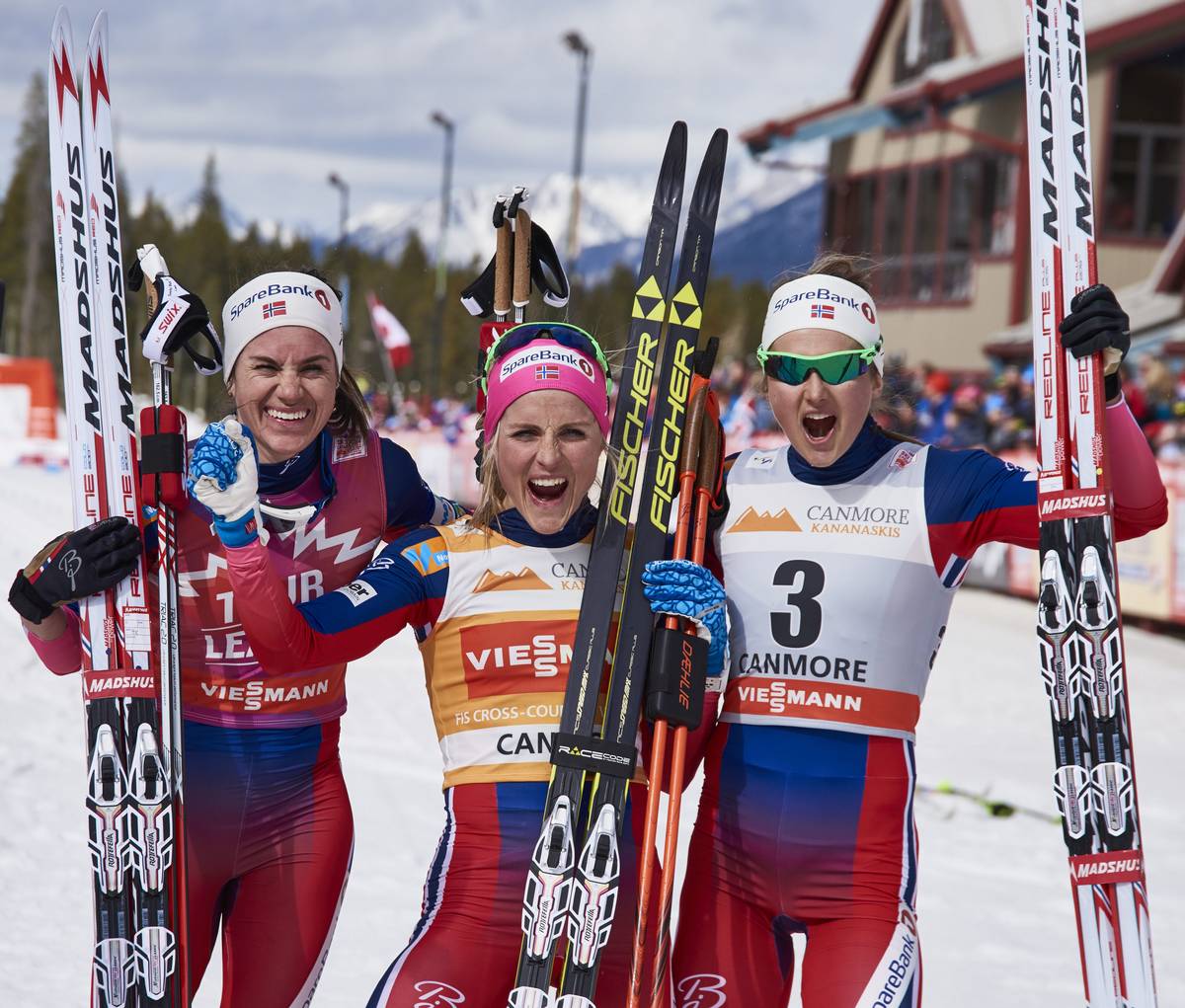
    What makes the Norwegian women so dominant? The top six women from the 2014-2015 World Cup were put through their paces on a ski treadmill, and their physiology - as well as their year-round training - was described in a new paper. That includes Ski Tour Canada winner Therese Johaug (c), runner-up Heidi Weng (l), and third-place and Ingvild Flugstad Østberg (r).  (Photo: Madshus/NordicFocus)
    What makes the Norwegian women so dominant? The top six women from the 2014-2015 World Cup were put through their paces on a ski treadmill, and their physiology – as well as their year-round training – was described in a new paper. That includes Ski Tour Canada winner Therese Johaug (c), runner-up Heidi Weng (l), and third-place and Ingvild Flugstad Østberg (r). (Photo: Madshus/NordicFocus)

    What truly separates the best skiers in the world from the rest of the pack? A team of Norwegian physiologists set out to answer that question, taking advantage of the fact that in the last few years all of the best women on the World Cup have come from Norway.

    Dr. Øyvind Sandbakk’s lab at the Norwegian University of Science and Technology gathered top six women from the 2014-2015 season – Marit Bjørgen, Therese Johaug, Heidi Weng, Ingvild Flugstad Østberg, Ragnhild Haga, and Maiken Caspersen Falla – and compared their physiology to that of six national-level competitors. The results are being published in the journal Medicine and Science in Sports and Exercise.

    The national-level women had average FIS points of around 72, similar to top-20 distance skiers or top-six sprinters among the U.S. women; two of them had achieved top-15’s on the World Cup that season. Women in both groups were mostly in their mid-20’s with Body Mass Indices around 22, although the World Cup women were shorter and lighter while achieving the same ratio.

    After submaximal and max-effort rollerski treadmill tests – completed just before the beginning of the 2015-2016 season – the researchers compared the women’s numbers.

    In the submaximal tests, where the treadmill was set to 3 meters per second at a gradual incline for double-poling and 2.25 meters per second on a steep incline for diagonal striding, the World Cup stars were operating at a much lower capacity than the national-level women: 74 compared to 85 percent of their maximal heart rates while double-poling, or 84 compared to 94 percent while striding.

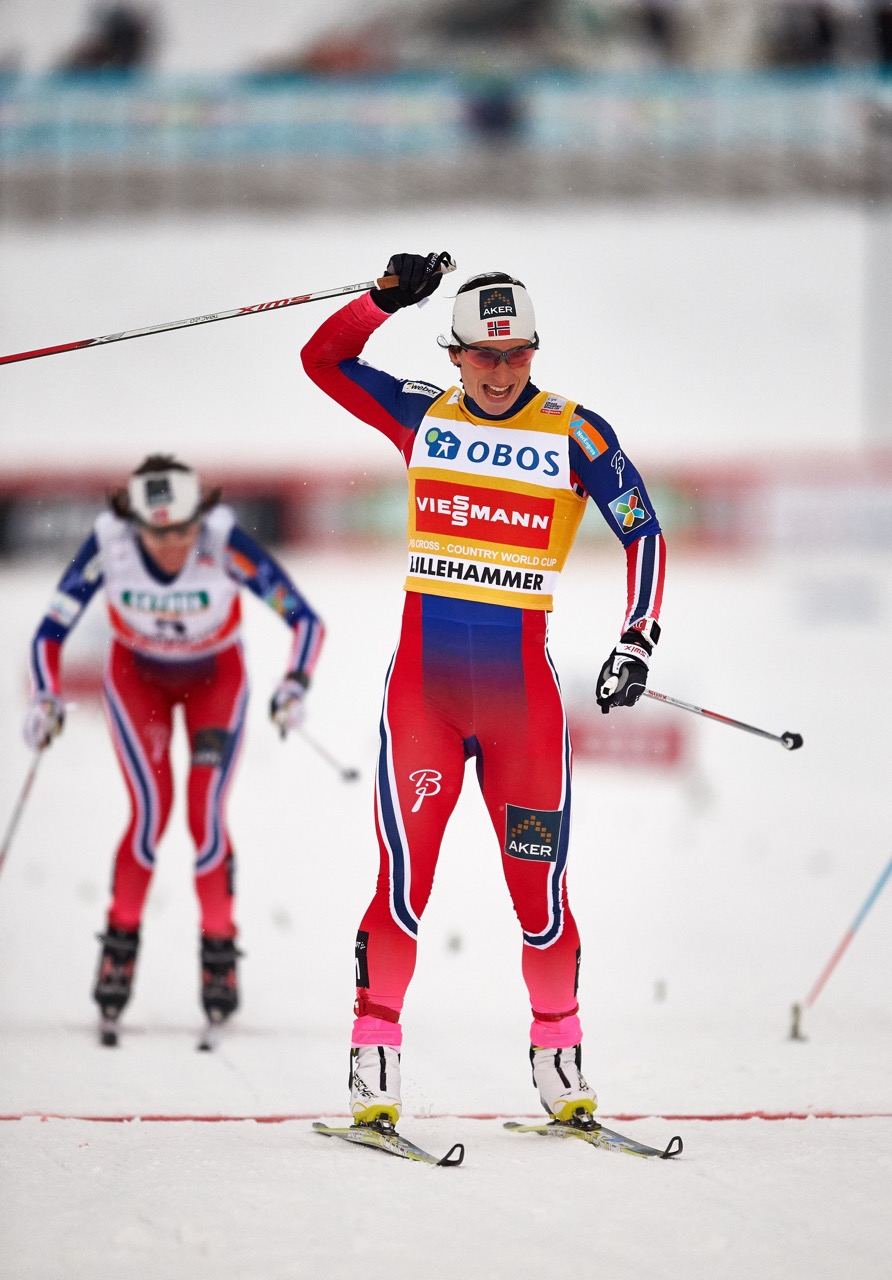
    The paper also included a specific description of Marit Bjørgen, noting that she had trained 980 hours the previous year: "Although her V˙ O2peak values normalized to body mass were not outstanding, the combination of high absolute V˙ O2peak, skiing efficiency, and ~O2 deficit values allowed her to be one of the best WC skiers during the 3-min test with either technique." (Photo: Fischer/Nordic Focus)
    The paper also included a specific description of Marit Bjørgen, the most successful female winter Olympian of all time, noting that she had trained 980 hours the previous year: “Although her VO2peak values normalized to body mass were not outstanding, the combination of high absolute VO2peak, skiing efficiency, and O2 deficit values allowed her to be one of the best WC skiers during the 3-min test with either technique.” (Photo: Fischer/Nordic Focus)

    “The submaximal stages with either technique were less demanding for our WC skiers, even though the oxygen cost and skiing efficiency did not differ and the group differences in submaximal cycle characteristics were minor,” the authors wrote. “These findings are in contrast to previous observations on submaximal skiing, where the efficiency with which metabolic energy is transformed into work rate and speed together with cycle length differ between skiers of different levels of performance.”

    The World Cup regulars also had lower blood lactate levels, and in diagonal striding took longer striding cycles, covering on average a quarter of a meter more per stride.

    In the maximimal tests, it was apparent which athletes belonged to which group as the World Cup top-six covered both more distance (by a margin of six to seven percent) and hit significantly higher speeds during 3-minute timed tests.

    In double-poling, this was because about a minute into the maximal tests the speed of the national-group skiers began to decline. The World Cup women were able to maintain their speed for about a minute longer before a drop at the end of the test. They did so by keeping significantly higher cycle rates (i.e., tempo) than the national-group skiers through the final two minutes of the test.

    “In the case of [striding], neither cycle rate nor length differed significantly between the two groups, indicating that our WC skiers combine these two factors more effectively than NC skiers to achieve higher speed,” the authors noted.

    The World Cup skiers also showed higher VO2Peak: 65 mL min-1 kg-1 compared to 58.8 for the national-level women while double-poling, and 70.9 compared to 65.0 while striding. Measurements of 75 and 71 mL min-1 kg-1 by World Cup skiers were believed to be the highest ever recorded by female skiers in a ski-specific exercise (as opposed to running on a treadmill, for example).

    What gave rise to the differences? Any inherent differences between the athletes were compounded by differences in training. According to training diaries, the top six women reported training on average 532 hours between May and October; for the national-level skiers, that number was 411 hours. When training time during the competition season (November to April) was added in, the totals raised to 920 hours for the World Cup skiers compared to 709 for the national level skiers.

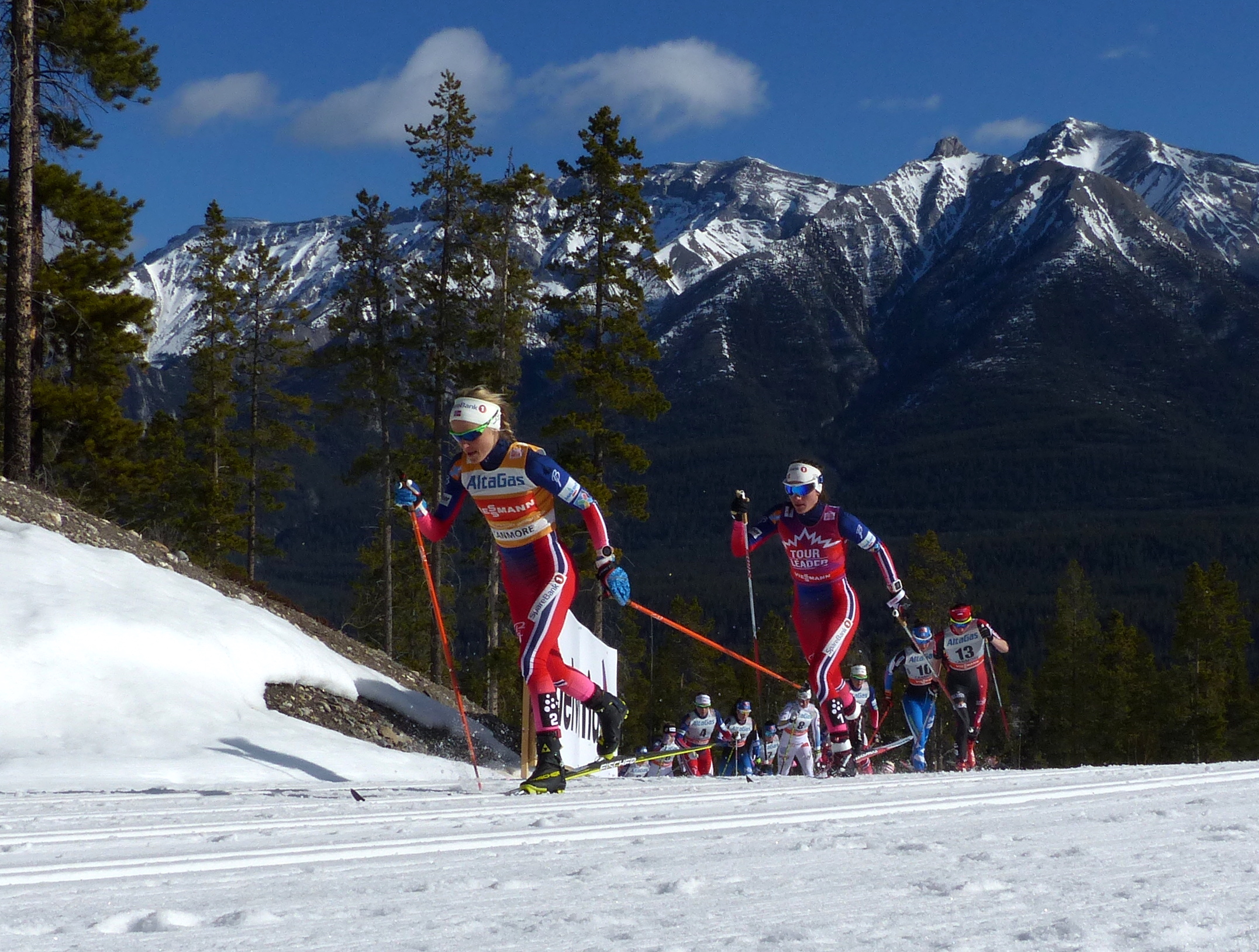
    Therese Johaug leading Heidi Weng in the Ski Tour Canada. (Photo: Peggy Hung)
    Therese Johaug leading Heidi Weng in the Ski Tour Canada. (Photo: Peggy Hung)

    Modes of training also differed. The World Cup elite did about 26% more low-intensity endurance training than their national-level counterparts, and more mid-level and speed training but less high-intensity endurance training. The World Cup skiers also did more strength training, and their training was a stable 80-95 hours from June to October while the national-level skiers gradually increased in hours over the course of the off-season.

    “Our present observation that the amounts of low- and moderate-intensity endurance training by the two groups differed provides further support for the proposal that such training constitutes the preparatory foundation for competitions in cross-country skiing,” the authors wrote. “Our present observations do not bring the importance of high-intensity training into question, although it can be speculated that in such highly trained athletes as ours, the quality of each session (i.e., optimization of physical, technical, and mental aspects) is more significant than the total number.”

    One possible reason for the difference in high-intensity sessions between the two groups is that the World Cup skiers spent nearly twice as much time at elevation: on average, 42 days spent living about 1,500 meters (~5,000 feet). Time at elevation is often spent more on low-intensity than high-intensity training.

    Finally, the World Cup skiers spent 33% more time running and 40% more time training skating technique, but no more time classic skiing or rollerskiing than the national-level skiers. For both groups, just over half the training time during the off-season was dedicated to ski-specific training (defined by the authors as skiing or rollerskiing), with the rest accomplished by running, cycling, kayaking, and other activities.

    “This variation between sport-specific training and cross-training may help athletes to tolerate such large amounts of training during the preparation period, as well as lower the risk of injury,” the authors noted. “Our cross-country skiers varied their mode of low-intensity training considerably, whereas their moderate and high-intensity training was more ski specific.”

  • Wednesday Workout: The Hetland Speed Drill with Michael Somppi

    Wednesday Workout: The Hetland Speed Drill with Michael Somppi

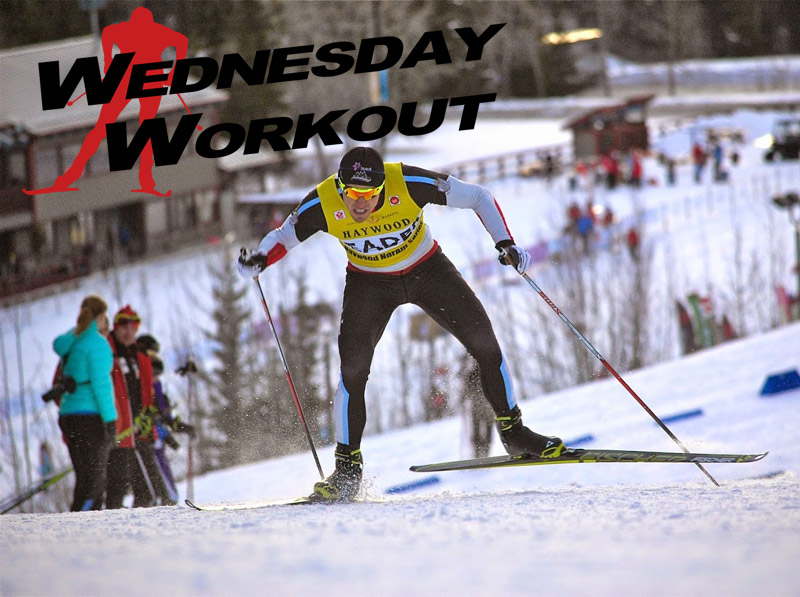
    Michael Somppi, of the Alberta World Cup Academy and Canadian National Development Team, racing to a NorAm freestyle-sprint win last weekend at Western Canadian Championships in Canmore, Alberta. (Photo: Angus Cockney)
    Michael Somppi, of the Alberta World Cup Academy and Canadian National Development Team, racing to a NorAm freestyle-sprint win last weekend at Western Canadian Championships in Canmore, Alberta. (Photo: Angus Cockney)

    This week’s workout comes from Michael Somppi, a 26-year-old Canadian National Development Team skier and Alberta World Cup Academy member. Also the current NorAm leader, Somppi won back-to-back races (a skate sprint and a skate mass start) at Western Canadian Championships this weekend for his first two victories of the season, and after a string of strong results this year, he explains one of his secrets to success.

    ***

    I learned a trick of the trade this spring at a National Team training camp from new Canadian coach, Tor-Arne Hetland.  It’s not a full workout, but more a tool you can use in your race-day warmup or post-interval session cool down.

    When Hetland first introduced our team to this tool, it was after a hard, speed-focused running workout and everyone’s legs were full of lactate.  He said of all the different things he’s tried over his years of racing and training, this was the most effective way he found to help the body flush lactate after a hard workout.  The recipe is four repetitions of 15 seconds on/45 seconds off, and the key to doing this effectively is the pacing.  The 15 seconds on is controlled Zone 4 speed.  It is not full-out sprinting.  The 45 seconds off is easy jogging or walking.  Don’t just stand still, keep moving.

    The Hetland Speed Drill 

    4 x 15 seconds on/45 seconds off (running): 15 seconds on at controlled Zone 4 speed (not full-out sprinting), 45 seconds off = easy jogging or walking.

    30 seconds on/60 seconds off (skiing): 30 seconds on at Zone 4 speed, 60 seconds off = easy skiing

    I used this tool after many hard ski-striding and running intensity workouts this past summer and can report it is helpful for flushing lactate.  I also started experimenting using this tool as part of my warm-up for running races to even greater effect.

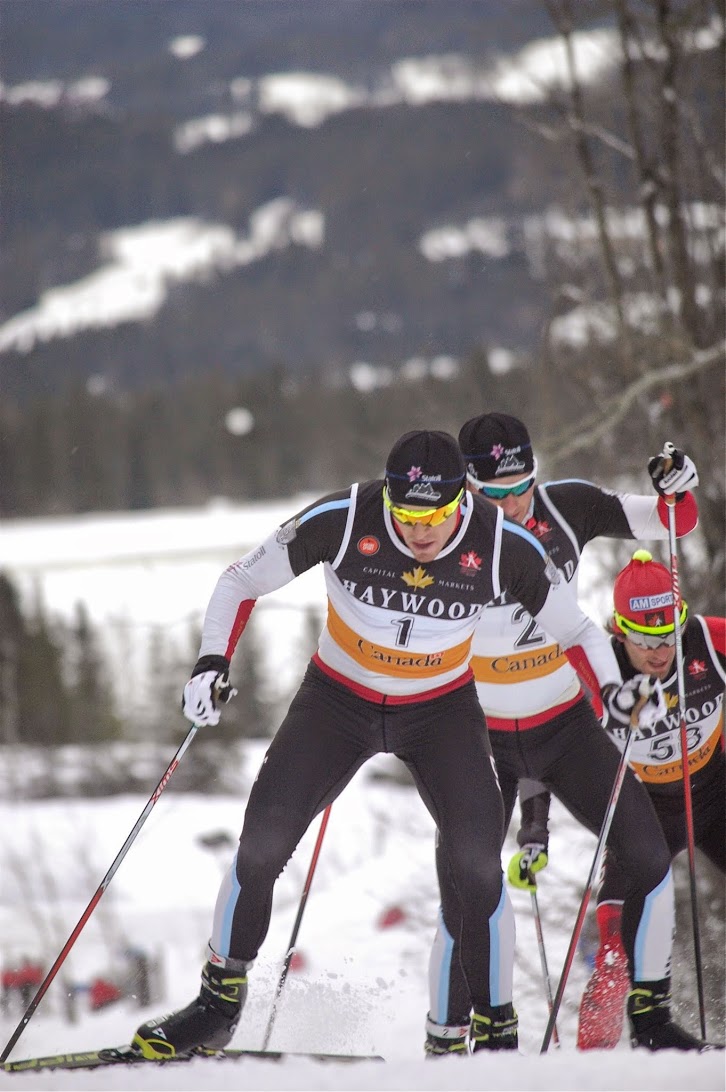
    Michael Somppi leads the pack en route to the win in the men's 20 k freestyle mass start at Western Canadian Championships on Jan. 18 in Canmore, Alberta. (Photo: Angus Cockney)
    Michael Somppi leads the pack en route to the win in the men’s 20 k freestyle mass start at Western Canadian Championships on Jan. 18 in Canmore, Alberta. (Photo: Angus Cockney)

    After doing some Zone 1 and one longer Zone 3 effort, I would finish my warm up with the 4 x 15/45.  It worked so well for me that when I was faced with having to do a partial running warmup for my races at the Rossland NorAm due to lack of snow, I decided to use this tool again.  I felt ready to go when I hit the start line and performed well. [Note: Somppi placed third and fourth in the two classic distance races in Rosalind, B.C.]

    The reason I like using this short interval set for final warmup prep is because it’s a good way to elevate the heart rate and move the body at higher speed without producing much lactate.  With the efforts being short (15 seconds) and not full-out, you aren’t doing enough to build any significant lactate, however with the relatively short rest period (45 seconds) your heart rate doesn’t drop all the way back to where it originally was, so each consecutive effort your heart rate is becoming more elevated.

    Next I wanted to try using it in my race prep on snow.  I don’t generally need to do that kind of higher-speed effort before a distance race, but I thought this could be perfect for a sprint qualifier warm-up.  The problem is skiing is different than running with the whole glide aspect.  I decided 15 seconds would not be long enough for me to get the feeling I want in my race warmup so I altered it slightly to four reps of 30 seconds on/60 seconds off.  I used this formula as the final step in my warmup for the skate sprint qualifier this past weekend in Canmore and it worked out really well for me.

    This little piece of wisdom handed down to me from Hetland has been very useful for me and I hope you can find ways of benefitting from it as well.

  • Wednesday Workout: Lactate Clearance with the AWCA

    Wednesday Workout: Lactate Clearance with the AWCA

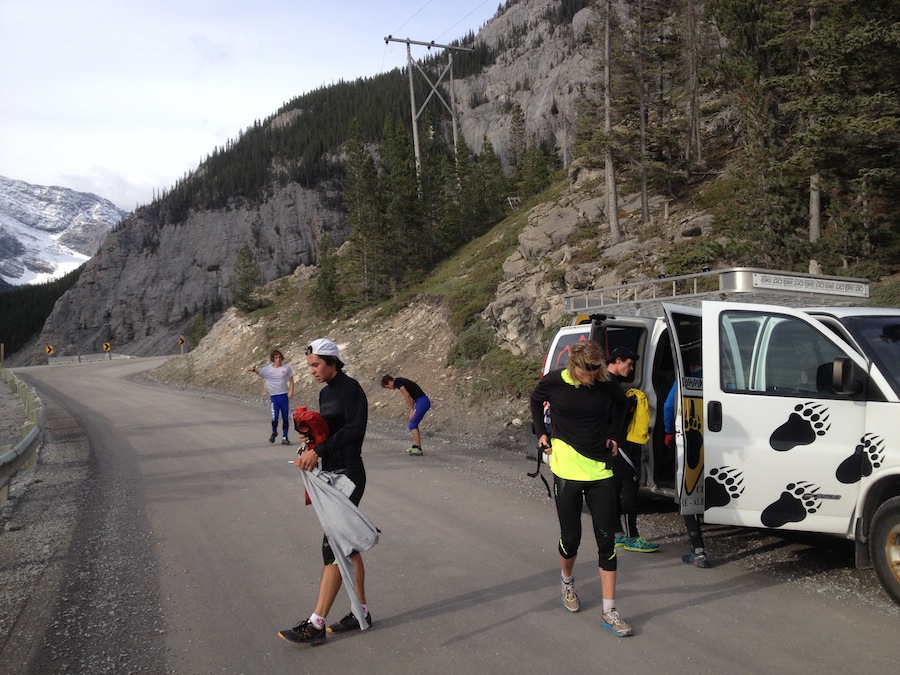
    AWCA skiers get ready for a skate prologue test, which doubled as a lactate clearance workout, this fall in Canmore, Alberta. (Courtesy photo)
    AWCA skiers get ready for a skate prologue test, which doubled as a lactate clearance workout, this fall in Canmore, Alberta. (Courtesy photo)

    This Wednesday Workout it brought to you by Stefan Kuhn, 2010 Canadian Olympian and assistant men’s coach at the Alberta World Cup Academy in Canmore, Alberta. The workout: lactate clearance, which he has his athletes do in the fall three to four times before the race season. The goal: measure each individual’s ability to clear lactate, their mental toughness, physical fitness and overall speed.

    AWCA skiers after a hill-climb running workout last month near Canmore, Alberta. (Photo: Stefan Kuhn/AWCA)
    AWCA skiers after a recent hill-climb running workout near Canmore, Alberta. (Photo: Stefan Kuhn/AWCA)

    “This is a fun workout and it’s super simple to do, but it really makes you have to dig deep, which is why I like to do it around this time of year,” Kuhn explains in an email. “The shape of the athletes is at high level and you can really go for a hard effort to build some lactate and try to survive through the workout the best you can.”

    But don’t go crazy. Kuhn warns his athletes that they need to be mindful how hard they’re pushing from the start of the workout so that they make it to the finish.

    “It’s a speed-focused intensity with an understanding you have to repeat it many times over,” he notes. “I know I loved it when I was an athlete.”

    So what’s the point of so much pain? It helps you deal with lactic-acid buildup, that burning sensation one might feel in their legs or arms that causes them to slow down.

    “As cross country is a lactate-tolerable sport, it is important to learn to try to flush it best you can and to race with it in your system,” Kuhn explains.

    An extended and diligent warmup and cool-down are key. So let’s get to it:

    The Workout: Lactate Clearance

    Warmup: 30-45 minutes

    15 intervals of 30 seconds on, 30 seconds off

    15-minute break: easy running or skiing, keep the body moving

    (Repeat first set) 15 x 30 seconds on, 30 seconds off

    Lactate readings (if available. Wear a heart-rate monitor during workout if not): Kuhn measures his athletes’ lactate levels at the end of the workout because there isn’t enough time in between.

    “I look at lactate clearance and you also get to see a lot by watching the athlete,” he explains. “If they have speed at the end or are they dying hard. I also watch the heart rates, which is a great way to monitor how they are doing. Do they get close to their max, and how much does it drop on the rest parts of the interval?”

    Cool-down: 30 minutes to an hour