From the FasterSkier archive — posts syndicated from athletes’ and coaches’ own blogs between 2004 and 2012, kept online as published. Current coverage is at fasterskier.com.

Tag: Lahti 15 k classic

  • Predictable? Maybe. Niskanen Wins 15 k Classic in Lahti

    Predictable? Maybe. Niskanen Wins 15 k Classic in Lahti

    A perfect match: The 15 k classic in Lahti, Finland and Iivo Niskanen. (Photo: NordicFocus)

    Some patterns in Lahti, Finland remained the same as it ever was: the top-11 positions in the men’s 15-kilometer classic were populated by Norway and Russia except for a lone Finn. On manmade tracks laid down through the snow-free woods of Lahti’s famed stadium, Iivo Niskanen stuck to his roots. 

    When the World Cup comes to Finland, Niskanen remains the king of the 15 k interval start classic. Prior to Saturday’s race, the twenty-eight-year-old Niskanen had won four World Cup races, all 15 k classic events; three in Ruka, Finland, and a win in Otepää, Estonia. 

    Over the entirety of the Lahti course, the home fans, and their hero, were in the fight. Starting in bib 38, Niskanen went unrivaled for much of the day as skier after skier was unable to knock him from the leader’s chair. Yellow bibbed as the leader of the overall World Cup and the day’s 60th starter, Alexander Bolshunov ultimately was the only athlete to challenge the seemingly unchallengeable Finn in his niche.
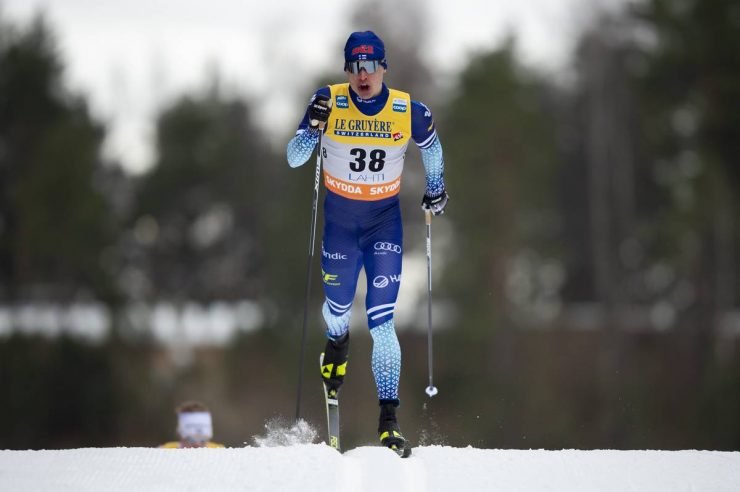
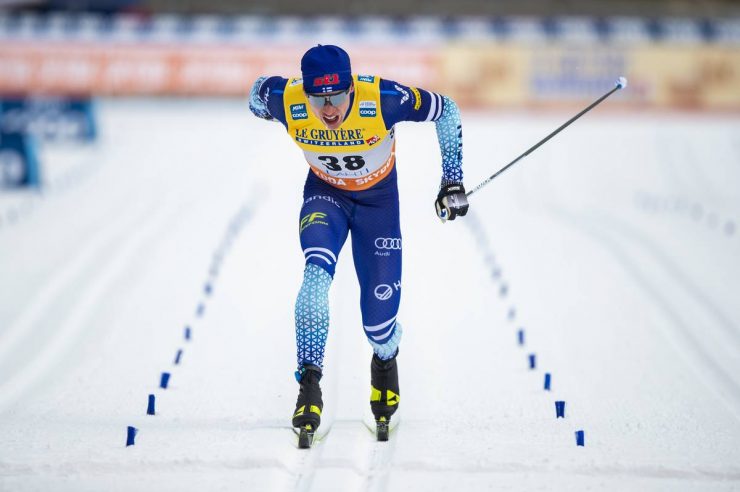
    At 5 k, with the knowledge of Niskanen’s pacing strategy, Bolshunov clocked a crisp tie of 10:33.3 for the split. Meter by meter, the striding and double poling put Niskanen ahead by only 4.7 seconds at the 10 k mark. Although a supreme closer, and certainly the cream of the crop for this year’s distance World Cup, Bolshunov ceded precious time to Niskanen as the race progressed. Just over seven seconds at 11.5 k, became 10.1 seconds at the finish. Niskanen won in 32:15.5 for his second World Cup win of the season and the fifth of his career.

    Norway’s Hans Christer Holund placed third (+28.8).

    Bolshunov was denied the opportunity to set a distance win record Saturday. He’s the winner of seven distance races this season. According to FIS, only one other skier, Martin Johnsrud Sundby of Norway, has won more than seven distance events during a single  World Cup season. Sundby won 11 distance events during the 2015-2016 season.

    Cresting a Lahti hill for a close second place in Lahti, Finland for Alexander Bolshunov (RUS). (Photo: NordicFocus)

    The king of the 15 k classic in Finland remains the king  Let the record skip once again; all of Niskanen’s wins on the World Cup have come in the 15 k interval start classic. Also of note, and along this theme, Niskanen won the 2017 World Championship 15 k classic here in Lahti – record skip, repeat.  

    “I waited this race a lot since Ruka and of course today I had a really nice day and it went the way I hoped for,” Niskanen told FIS after the race. But I have to say that we had a lot of pressure from the Finnish media talking about our service team and that we were struggling with our skis. But there is no fight and nothing between us and I want to say that this victory goes to a big part to our service team as I had extremely good skis today and so they showed that they are still number one in the World Cup circus at their job. It’s been also a lot of cheering out there and it was a little bit like when I won the World Championships three years ago.

    “It was like usually here in Lahti where we have raced many times so it was easy to make tactics before the race and it was like I expected. I started not too hard and skied the easiest parts fast and I expected to ski together with Bolshunov in my second lap. I saved a little bit of energy behind Bessmertnykh so I was quite sure in the finish that the beginning of the last lap was fast enough to win this race.”
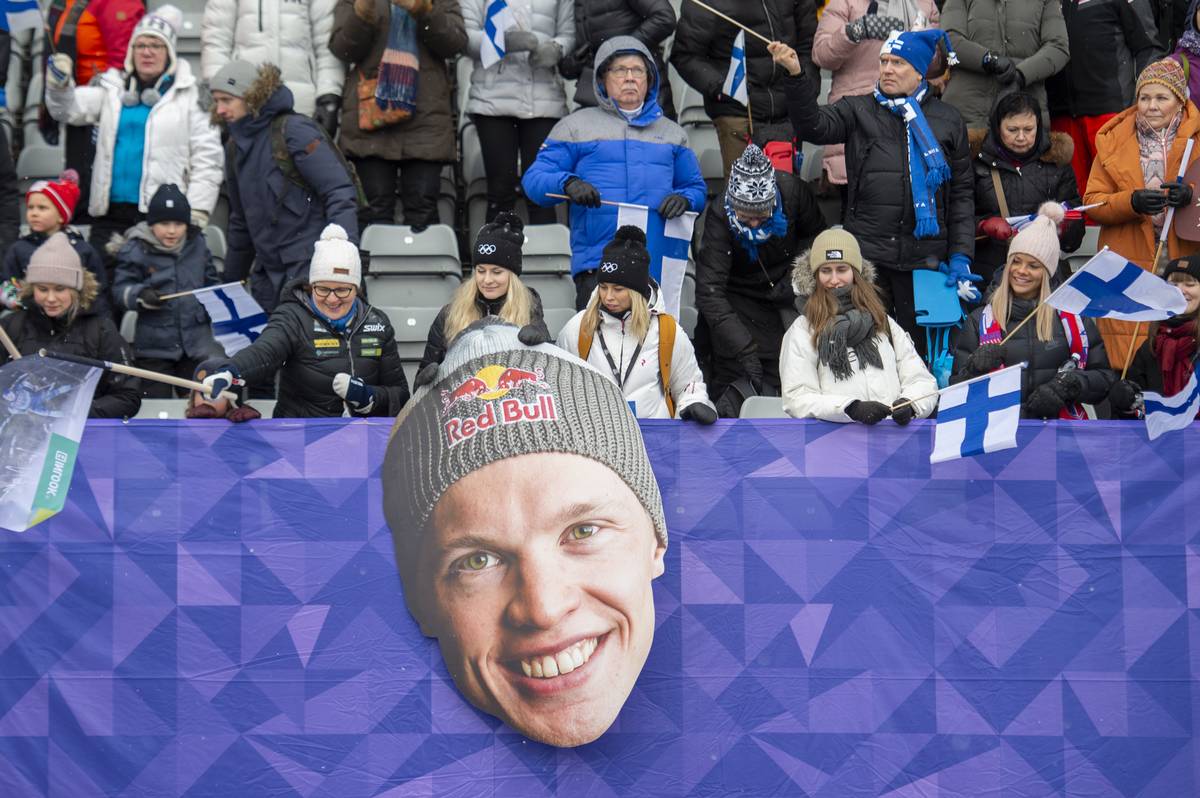
    The fan favorite in Finland: an image of Iivo Niskanen during the 15 k classic in Finland. (Photo: NordicFocus)

    With his second place, Bolshunov commands the overall distance standings with 1145 points – Norway’s Sjur Rothe, the winner of last week’s Ski Tour 2020, is second with 776 points. Niskanen is third with 766 points. The Russian also leads the World Cup overall with 2028 points, with Johannes Høsflot Klæbo in second with 1563. Klæbo placed eighth (+54.7) in Saturday’s race, falling just a bit further back in the overall standings.  

    Russia’s Alexander Bolshunov, shown here finishing second in the men’s 15 k classic in Lahti, Finland leads the World Cup overall. (Photo: NordicFocus)

    “I am pretty happy with the second place today because its a small gap to Iivo today,” said Bolshiunov to FIS. “Maybe it’s because the gliding on the last lap was not the best one but especially after the race one week ago, I am happy that I am able to fight for the podium. The main goal was to reach Iivo and to ski together two laps but on the last lap I was by myself and that was hard work.”

    The U.S. started two skiers in the men’s race, with much of the U.S. World Cup contingent recovering after the six stage Ski Tour 2020. Adam Martin of the Craftsbury Green Racing Project finished in 46th (+3:10.0). His Craftsbury teammate, Ben Lustgarten, was 47th (+3:14.3). No other North Americans were entered. 

    Ben Lustgarten during the 15 k classic in Lahti, Finland. (Photo: NordicFocus)


    Adam Martin during the 15 k classic in Lahti, Finland. (Photo: NordicFocus)

    And a bit of a story behind the story, Dual Norwegian and Irish citizen – but skiing for Irleand – Thomas Maloney Westgård (24), placed 16th overall (+1:23.7) in Saturday’s race. This is his second career World Cup in the points (top-30). He placed 22nd in last season’s 50 k classic in Oslo.

    Thomas Maloney Westgård  (IRL) skiing to 16th overall in Lahti. (Photo: NordicFocus)

     Racing continues tomorrow with a 4 x 7.5 k relay for the men and a 4 x 5 k relay for the women. 

    Results | World Cup Distance Standings | World Cup Overall Standings 

    The Lahti, Finland 15 k classic podium: Alexander Bolshunov (RUS) second, Iivo Niskanen (FIN) first, and Hans Christer Holund (NOR) third, (l-r). (Photo: NordicFocus)


  • Poltoranin Does It Again with Lahti 15 k Classic Win

    Poltoranin Does It Again with Lahti 15 k Classic Win

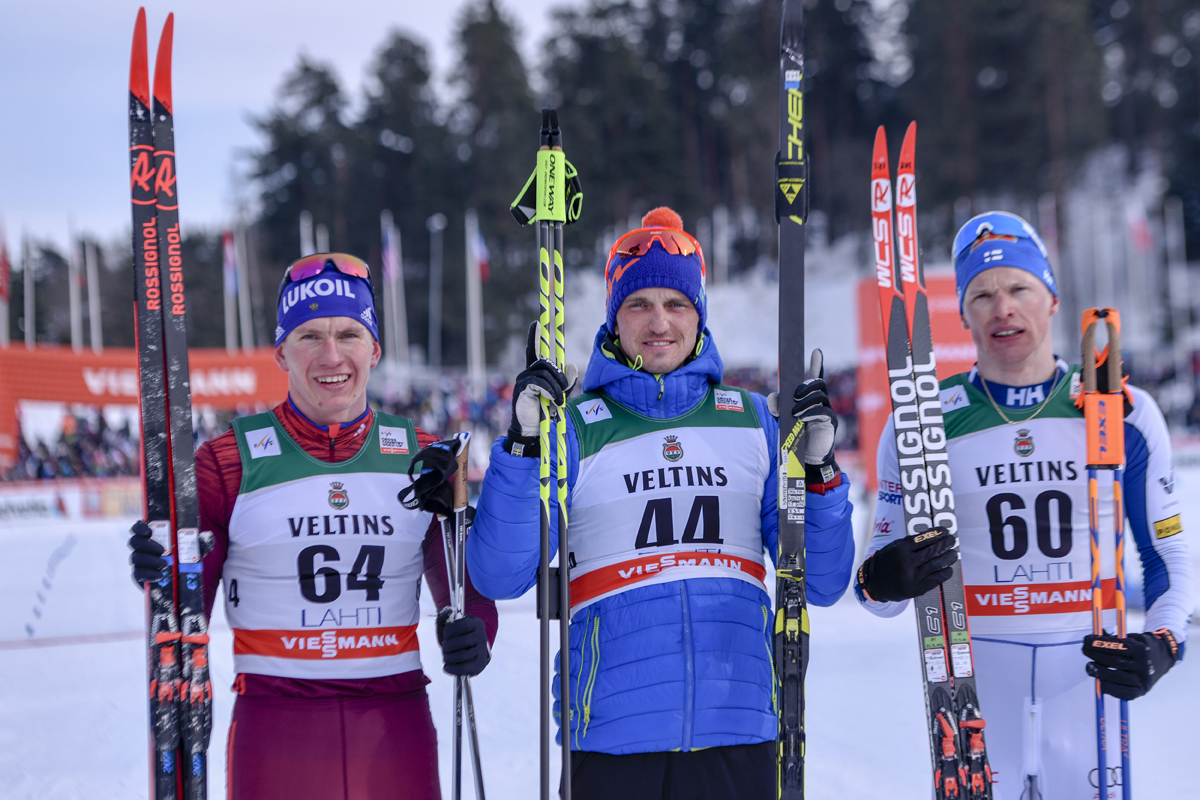
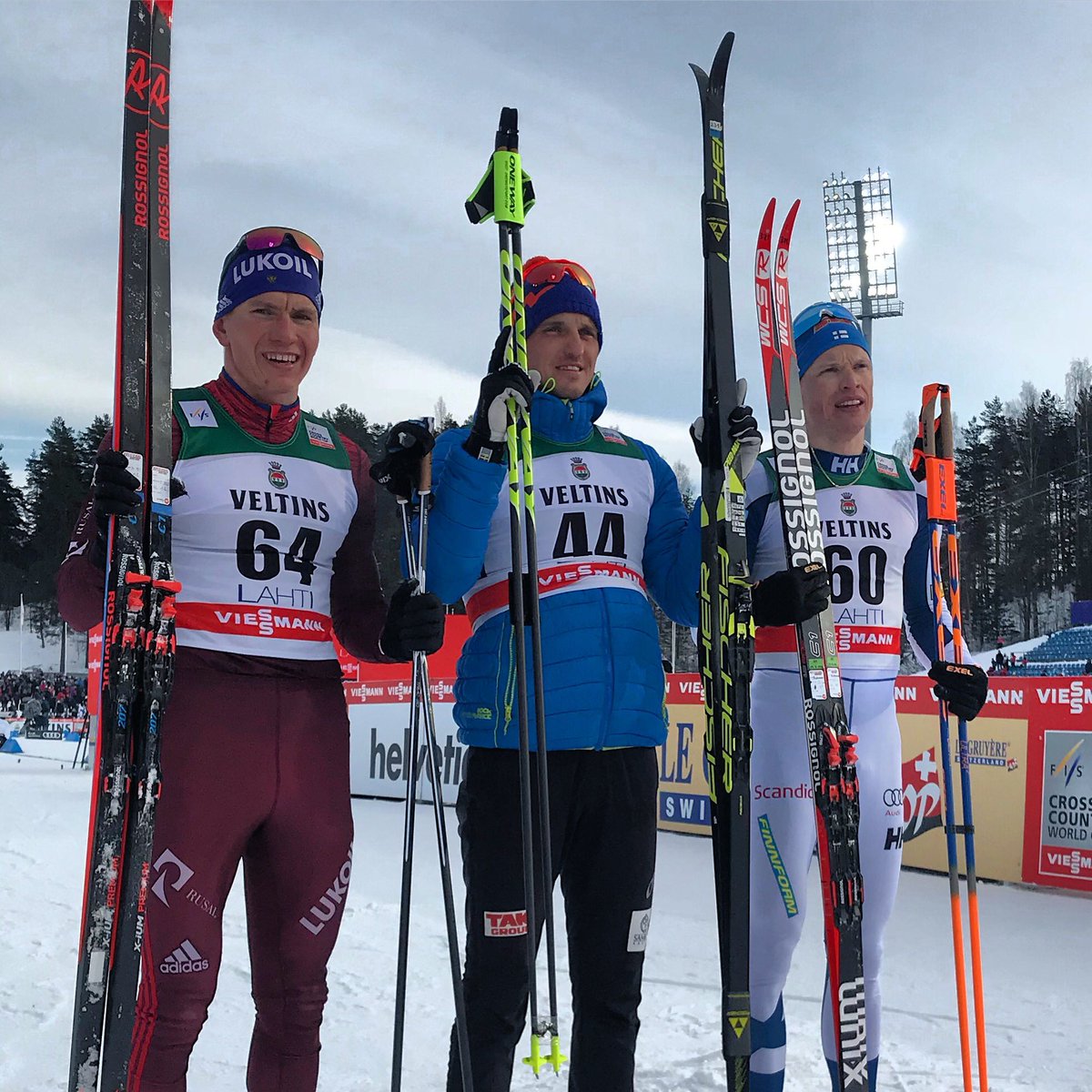
    The men’s 15 k classic podium at the World Cup in Lahti, Finland, with Kazakhstan’s Alexey Poltoranin (c) in first, Russia’s Alexander Bolshunov (l) in second and Finland’s Iivo Niskanen (r) in third. (Photo: Fischer/NordicFocus)

    You could call him a specialist. An all-around contender in classic distance races, Alexey Poltoranin of Kazakhstan has proven time and time again that he has the 15-kilometer classic individual start figured out.

    On Sunday in Lahti, Finland, he set a new World Cup record by winning his eighth-career 15 k classic (including both individual and mass-start formats). He had previously tied Swedish legend Gunde Svan’s mark of seven with a win in the last 15 k classic contested in Planica, Slovenia.

    Three of Poltoranin’s 15 k wins have come this season, and all of his 11 career World Cup victories have been in classic races. Two were of shorter distances: a 5 k classic stage race in 2013 and a classic sprint that same year.

    But in the last men’s race of the 2018 Olympics last Saturday in PyeongChang, South Korea — the 50 k classic mass start — the 30-year-old Poltoranin only had about 30 k of full-tilt speed in him. For 29 valiant kilometers, he had stalked Finland’s Iivo Niskanen, who was leading the race.

    But then, the wheels started to come off. In less than a kilometer, Poltoranin was passed by Russia’s Alexander Bolshunov and lost more than 10 seconds to Niskanen. By about 33 k, he was no longer able to keep up with Bolshunov as he continued the race in the dreaded position of no man’s land, skiing alone in third. The chase pack eventually caught him with 5 k to go, and he slipped to seventh. He ultimately finished 15th, more than 5 minutes behind Niskanen in first.

    But that was over a week ago. By Sunday, Poltoranin was back in familiar territory at a venue he had raced at multiple times in the last 13 years, but never placed better than second at in Lahti.

    He started 44th out of 71 in the men’s field and came through each timing point with some of the best, if not the best, splits over the three-lap course. But one man who started behind him was faster at every checkpoint — Bolshunov, wearing bib 64— and as Poltoranin sat in the leader’s seat at the finish, watching the rest of the race unfold, it was the Russian he was likely most nervous about.

    Niskanen was looking strong, too, but as the Finnish Olympic champion skied in bib 60, a couple of minutes ahead of Bolshunov, his times were consistently about 5 seconds slower.

    When Niskanen finished, he was 20.9 seconds shy of Poltoranin’s time. Then Bolshunov, who had led through the 11.1 k checkpoint where he was almost 7 seconds faster than Poltoranin, came into the stadium, yet ended up 9.1 seconds short of the win.

    Poltoranin’s finishing time of 33:11.9 proved unbeatable on Sunday, and he pumped his fist as he realized the win was his.

    “It’s great to win again,” Poltoranin told the International Ski Federation (FIS) after, according to a press release. “I won in Planica before the Olympics and this is a much better feeling than last weekend’s result in the Olympic 50 k.”

    Bolshunov, who finished second to Niskanen in the Olympic 50 k, 18.7 seconds from the gold medal, placed second again on Sunday.

    “I was disappointed after the Olympic 50 k and was a little bit tired but I am happy with how I skied today,” the 21-year-old Bolshunov, who won silver or bronze in all four races he competed in at his first Olympics, told FIS. “Thanks for the service team for great skis. Good to get another podium for Russia.”

    Niskanen, 26, was a clear crowd favorite in Lahti, with several fans holding up gigantic cutout photos of his face. While he was an early race leader, Niskanen’s split times were second to Bolshunov from 3.7 k on.

    “It was an OK race for me,” Niskanen told FIS. “I have had a busy and emotional week after the gold medal in PyeongChang. I think I have not fully recovered yet. I felt my muscles were quite stiff. It was a very hard race for me. I wanted to finish on the podium and it would have been nice to win in front of the home crowd.”

    Note: Poltoranin is currently second in the Distance World Cup standings, 39 points behind France’s Maurice Manificat (who placed 21st on Sunday) in first. Norway’s Martin Johnsrud Sundby (who placed fifth behind teammate Emil Iversen in fourth on Sunday) is just 5 points behind Poltoranin in third in the distance rankings. Sundby is second in the Overall World Cup, 228 points behind his Norwegian teammate Johannes Høsflot Klæbo (who placed seventh on Sunday).

    Kershaw in the Points in 25th

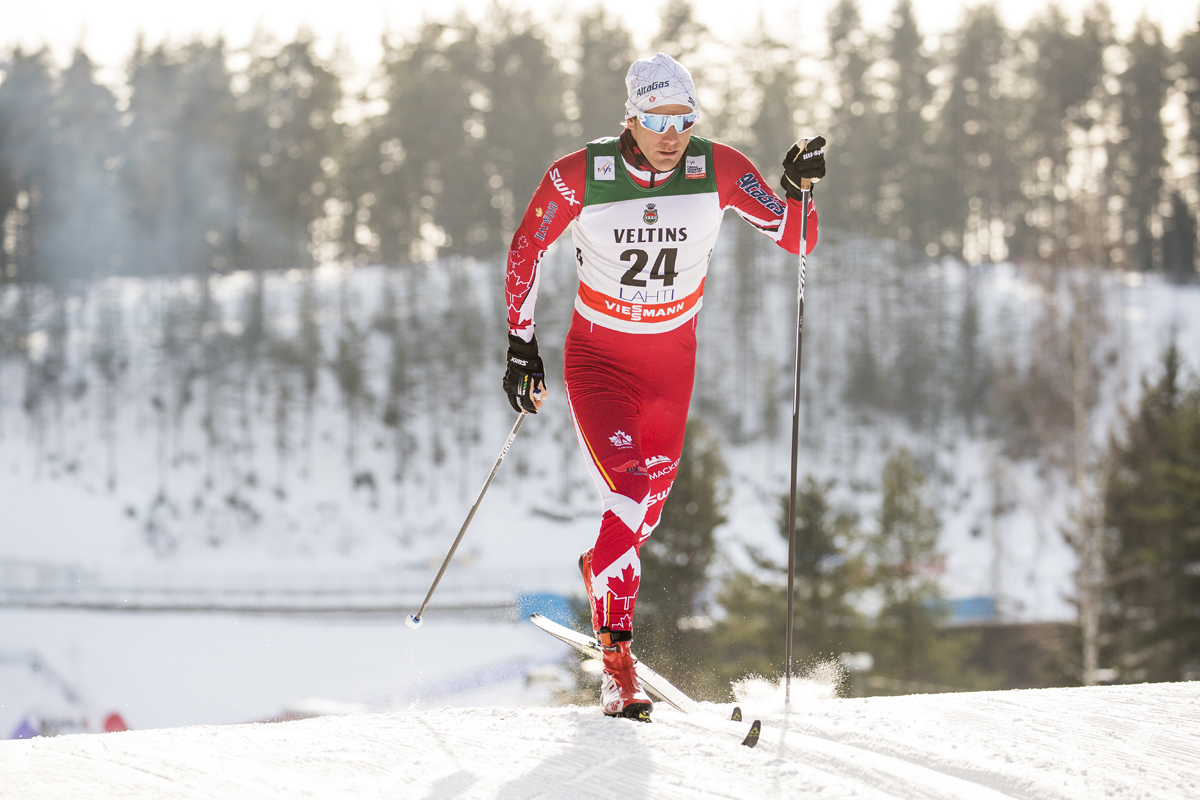
    Devon Kershaw racing to 25th in the men’s 15 k classic at Sunday’s World Cup in Lahti, Finland. (Photo: Fischer/NordicFocus)

    After placing 26th in the Olympic 50 k, Devon Kershaw led four Canadians in Sunday’s 15 k in 25th (+1:43.2). An early starter in bib 24, his split times were relatively consistent throughout the race, ranging from 20th at 1.1 k to 26th with about 4 k to go.

    “I was actually really excited for this race,” Kershaw wrote in an email to FasterSkier. “15km classic is my favourite race we do. Also, Lahti was peaking. It was about -10, sunny (I know?! In Finland) and the track conditions were 10/10. When you love classic skiing like I do, the World Cup rarely offers conditions like we had here. I loved it. Motivation-wise, I have never really struggled too badly with that after championships if the calendar has races I enjoy and know I can be good in. With this 15km classic and then a mass start 15km classic in Falun, it makes it easier to keep motivated.  Also, racing in the Nordic nations to end the year is always awesome. Good, knowledgeable fans and nice venues. I love it.”

    After struggling with “major lung/breathing issues” at the Olympics, Kershaw explained that he felt much better leading into Lahti. He spent a few days after the Olympics at home Norway with his wife Kristin Størmer Steira and their 13-month-old daughter, whom he hadn’t seen in two months.

    “I had some tough days for sure with that mentally,” he wrote of his time away from family before and during the Games. “But when I got home and the first time I saw my daughter in 2 months she crawled right up to me with a big smile on her face and knelt there putting her arms in the air (for me to pick her up) – that was the highlight of my winter right there. It has been great to see them again.”

    While he was pleased with what he called “a solid race” on Sunday, Kershaw added that he was also disappointed that he didn’t have anyone to ski with and finished within 10 seconds of the top 20.

    “But – I skied a very consistent race,” he wrote. “My pace felt like I was moving at the same speed at km 2 as I was at km 14. That’s a nice feeling. And what you strive for if you are alone in an individual start. I was missing that last gear to attack the last lap,  but I didn’t die either, and was able to keep my speed, so I am satisfied. When you pace a race like I did – even if it leaves you wanting more – it shows you did do a good job managing your speed alone for 15km. And that feels good.”

    Kershaw’s best result so far this season was 19th in the 30 k skiathlon in Lillehammer, Norway. At the Olympics, he competed in three events with a best result of 26th in the 50 k.

    “I was massively disappointed with the Olympics,” he continued. “… 25th isn’t anything stellar or fireworks worthy, but it’s in the points and close to a season’s best for me – which is still something I’m looking to accomplish,” Kershaw added.“I have some more chances, mainly in Falun, but I’ll drag my ass around Holmenkollen this coming weekend because I have such a big respect for the race.  I hope I can continue to feel good body-wise and have good energy like I feel now. I hope my lungs can continue to slowly get better and if they are better in Falun then they are now then that won’t hurt!”

    Also for Canada, Graeme Killick placed 39th (+2:22.9), Julien Locke was 69th (+4:56.6) and Andy Shields 70th (+5:42.1).

    Leading the U.S. men was Erik Bjornsen in 32nd (+2:06.6). After clocking the 53rd-ranked split at 1.1 k, Bjornsen sped up throughout the race to come within about eight seconds of the top 30.

    Noah Hoffman finished 40th (+2:24.0), Paddy Caldwell was 45th (+2:40.5), Scott Patterson 50th (+2:58.7), Kevin Bolger 54th (+3:09.5), and David Norris 57th (+3:23.5).

    With three World Cup stops remaining, the circuit continues in Drammen, Norway, this Wednesday with city classic sprints followed by the Holmenkollen 30/50 k freestyle mass starts next weekend. World Cup Finals will take place the following weekend, March 16-18, in Falun, Sweden.

    Results

  • Sunday Rundown: Pärmäkoski Wins At Home in Lahti 10 k; Poltoranin Tops 15 k

    Sunday Rundown: Pärmäkoski Wins At Home in Lahti 10 k; Poltoranin Tops 15 k

    Krista Pärmäkoski of Finland (center) won her second straight 10 k classic, to the delight of the crowd in Lahti. Natalia Nepryaeva of Russia (left) finished second and Marit Bjørgen of Norway third. (Photo: FIS Cross Country/Twitter)

    FIS Cross Country World Cup (Lahti, Finland): 10/15 k classic

    Women’s report

    Men’s report

    Racing at home in Finland, Krista Pärmäkoski picked a good time to collect the second World Cup victory of her career, and again in a 10 k classic. Pärmäkoski’s first win came in the 10 k classic in Planica, Slovenia, earlier this season.

    In second was Russia’s Natalia Nepryaeva, who picked up her first World Cup podium. The current U23 standings leader, Nepryaeva’s time was 20.9 seconds slower than Parmakoski. Both she and Marit Bjørgen of Norway, who finished third (+26.7), used a steady pace to reach the podium. At the 5 k split, Heidi Weng of Norway – wearing the yellow bib of the overall World Cup leader – was in second at the halfway point but faded to finish fifth (+43.3), and Kerttu Niskanen of Finland was in third place but she dropped to fourth by the finish, +27.0. Austria’s Teresa Stadlober finished sixth (+52.4).

    Sadie Bjornsen placed seventh (+57.6) to lead the American team. Caitlin Patterson was next, just missing the World Cup points in 32nd (+2:02.7). Ida Sargent and Sophie Caldwell  finished 40th (+2:21.9) and 42nd (+2:24.2),  respectively. Rosie Brennan finished 48th (+3:02.1) and SuperTour leader Kaitlynn Miller placed 51st (+3:09.1).

    Liz Stephen of the U.S. Ski Team did not start due to illness.

    Canada started only two women: Emily Nishikawa finished 41st (+2:22.2) and Dahria Beatty 44th (+2:40.7).

    The men’s 15 k classic podium at the World Cup in Lahti, Finland, with Kazakhstan’s Alexey Poltoranin (c) in first, Russia’s Alexander Bolshunov (l) in second and Finland’s Iivo Niskanen (r) in third. (Photo: FIS Cross Country/Twitter)

    In the men’s race that followed, Alexey Poltoranin of Kazakhstan got some redemption after a major bonk in the Olympics 50 k last weekend, winning the 15 k classic individual start in Lahti.

    Starting in the middle of the field in bib 44 (out of 71), Poltoranin paced it perfectly, skiing a steady race with some of the top split times and then turning it up another notch over the last several kilometers to take the win in 33:11.9 minutes. His biggest threat was Russia’s Alexander Bolshunov, who started 64th and clocked faster splits at every timing point throughout the three-lap race except the one that mattered most — the finish. There, Bolshunov came up 9.1 seconds short of Poltoranin’s time to place second, and Finland’s Iivo Niskanen — the Olympic 50 k champ — placed third, 20.9 seconds out of first.

    Norway took fourth through seventh, with Emil Iversen in fourth (+28.8), Martin Johnsrud Sundby in fifth (+39.9), Niklas Dyrhaug in sixth (+50.1), and Johannes Høsflot Klæbo in seventh (+1:00.3). Russia’s Alexey Chervotkin placed eighth (+1:08.3), Germany’s Thomas Bing was ninth (+1:08.5) and Sweden’s Daniel Rickardsson finished 10th (+1:09.2).

    Canada’s Devon Kershaw led the North Americans in 25th (+1:43.2), and Erik Bjornsen was the top American in 32nd (+2:06.6).

    Four Canadian men raced, with Graeme Killick placing 39th (+2:22.9), Julien Locke 69th (+4:56.6) and Andy Shields 70th (+5:42.1).

    The U.S. was represented by six men, with Noah Hoffman placing 40th (+2:24.0), Paddy Caldwell 45th (+2:40.5), Scott Patterson 50th (+2:58.7), Kevin Bolger 54th (+3:09.5), and David Norris 57th (+3:23.5).

    The World Cup picks back up again this Wednesday with classic sprints in downtown Drammen, Norway.

    Results: Women | Men

  • De Fabiani Breaks Through for Italy with 15 k Classic Win, First-Ever Podium

    De Fabiani Breaks Through for Italy with 15 k Classic Win, First-Ever Podium

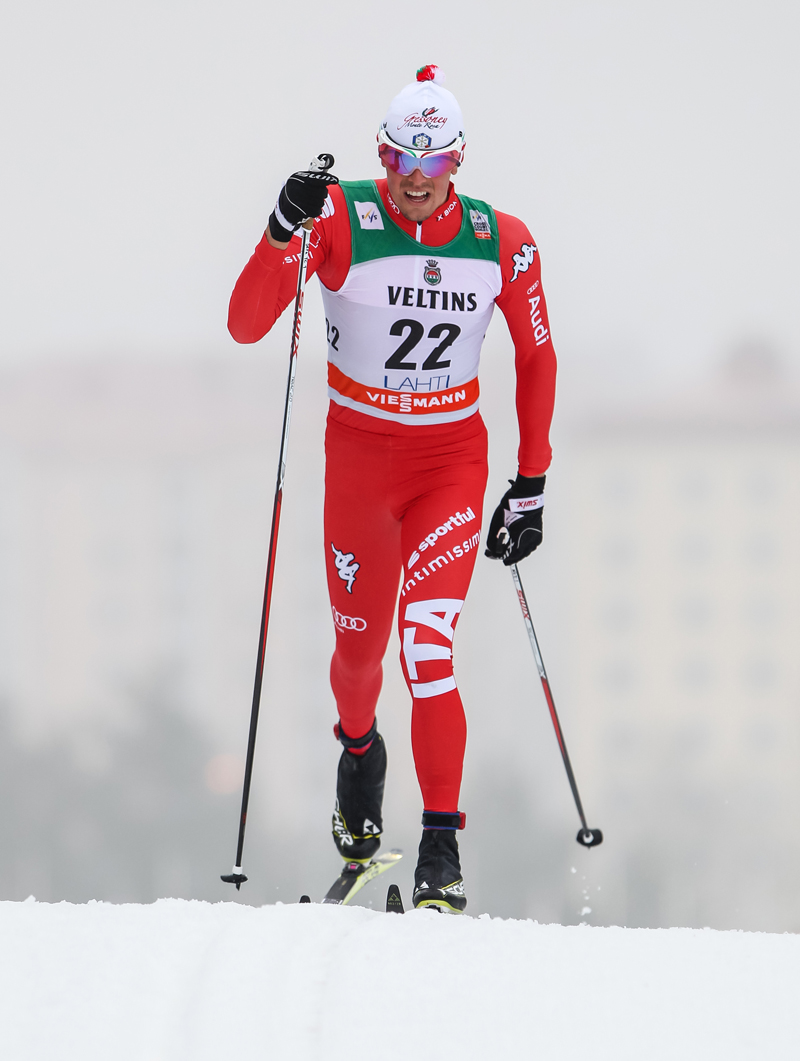
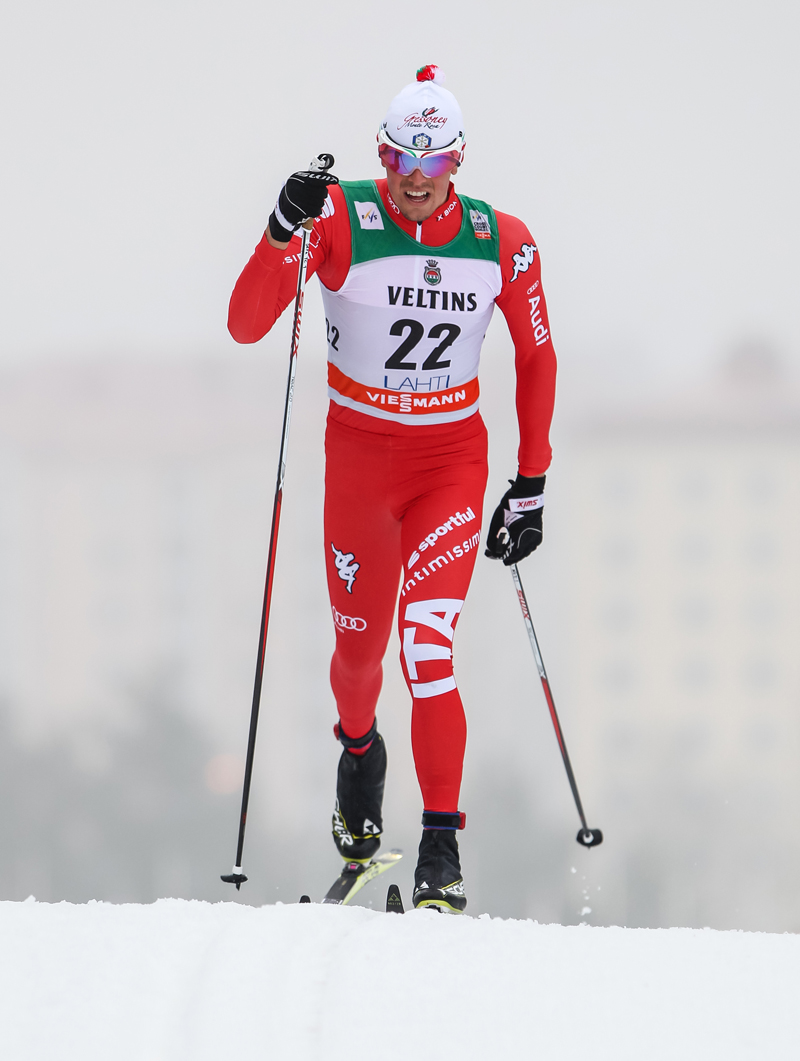
    Francesco de Fabiani racing to his first World Cup win in the Lahti World Cup 15 k classic on March 8, which was Italy's first victory in a classic-distance race since 1997. (Photo: Fischer/NordicFocus)
    Francesco de Fabiani racing to his first World Cup win (and podium) in the Lahti World Cup 15 k classic on March 8, which was Italy’s first victory in a classic-distance race since 1997. (Photo: Fischer/NordicFocus)

    No amount of fog or soggy classic conditions could dampen Francesco de Fabiani’s spirits on Sunday as the 21-year-old broke through an 18-year barrier for Italy with a World Cup classic-distance win in the men’s 15-kilometer individual start in Lahti, Finland.

    After starting second in the seeded group in bib 22, de Fabiani took to the course 30 seconds after Norway’s Eldar Rønning and gradually worked his way into the three-lap race.

    De Fabiani finally took the lead at 11.2 k, and from that point on, the young Italian — who had never been on the World Cup podium before — became untouchable. Kazakhstan’s Alexey Poltoranin came close, clocking through the checkpoint 3 seconds behind De Fabiani, and Finland’s Sami Jauhojärvi was 4.6 seconds out of the lead in third.

    Out of 71 finishers, de Fabiani’s time at 3.4 k ranked 25th. By 6.2 k, he was up to 20th, and by 13.4 k, he remained 7.2 seconds ahead of Jauhojärvi in first.

    “I was very motivated to show my best today after a disappointing performance in the 50 k in Falun last week,” de Fabiani told FIS after the race.

    Exactly a week ago on March 1, the Italian placed 32nd in the 50 k classic mass start at World Championships in Falun, Sweden. Three of his teammates, Dietmar Nöckler, Giorgio Di Centa and Mattia Pellegrin, finished ahead of him in 12th, 22nd and 23rd, respectively.

    But this Sunday was different. De Fabiani set the new time to beat at the finish, besting Norway’s Martin Løwstrøm Nyenget by 6.5 seconds to bump the 22-year-old Norwegian U23 team member out of the leader’s seat.

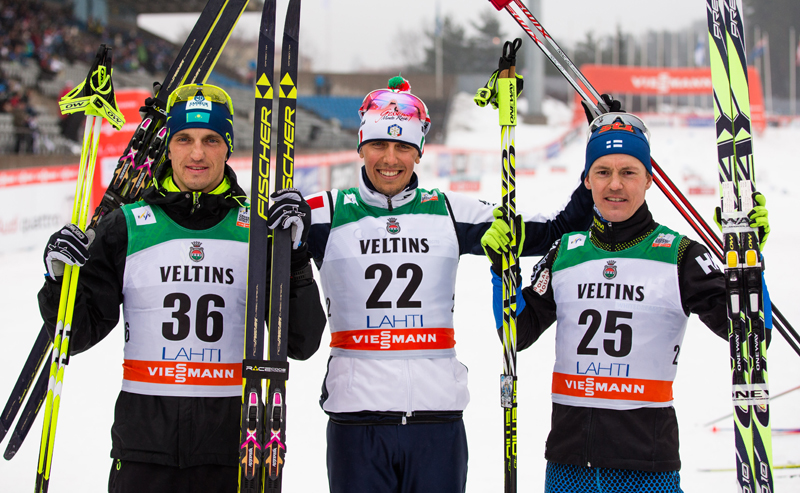
    The men's 15 k classic podium at Sunday's World Cup in Lahti, Finland, with Italian winner Francesco De Fabiani (c), Kazakhstan's Alexey Poltoranin in second (l), and Finland's Sami Jauhojärvi in third. (Photo: FIS Cross Country/Twitter)  The men's 15 k classic podium at Sunday's World Cup in Lahti, Finland, with Italian winner Francesco De Fabiani (c), Kazakhstan's Alexey Poltoranin in second (l), and Finland's Sami Jauhojärvi in third. (Photo: Fischer/NordicFocus)
    The men’s 15 k classic podium at Sunday’s World Cup in Lahti, Finland, with Italian winner Francesco de Fabiani (c), Kazakhstan’s Alexey Poltoranin in second (l), and Finland’s Sami Jauhojärvi in third. (Photo: Fischer/NordicFocus)

    Even with Jauhojärvi in bib 25 hot on his tails, de Fabiani remained on top at the finish as the Finn came through 4.6 seconds back to take second. The 33-year-old Jauhojärvi crossed the line while waving of his hand back and forth, indicating it was a so-so race, then smirked and pointed two fingers at the TV camera to indicate second.

    “I’m quite satisfied with the result, but still little bit disappointed I lost the victory by only 4.6 seconds,” Jauhojärvi told FIS. “Only on the big climb in the the second lap I was in trouble and I lost about six seconds. Then I got a ride with [Switzerland’s] Dario Cologna and I tried to follow him.”

    An early leader in bib 36, Poltoranin came through the 3.4 k checkpoint with the fastest time, and behind him, Sweden’s Calle Halfvarsson came closest to it, 1.4 seconds back. Poltoranin went on to lead through 8.4 k, where Russia’s Alexander Bessmertnykh was fastest, 0.5 seconds ahead of Rønning. Nyenget was 1.3 seconds back in third at that point, and Poltoranin 1.5 second behind in fourth.

    Also at 8.4 k, Nöckler, who started 30 seconds behind his teammate, was ahead of De Fabiani and 2.7 seconds behind the Russian, along with Cologna (+3.9). With 6.6 k to go, De Fabiani was 5.7 seconds out of first, followed by Halfvarsson (+6.8).

    About 2 1/2 kilometers later, de Fabiani found he was within three seconds of Nyenget in first, and Rønning and Cologna worked their way up into contention in second and third, less than a second back. Bessmertnykh remained in the mix with Nöckler and Poltarinin, within 2 seconds of the lead.

    On the final 5 k lap, de Fabiani made his mark. Cologna and Nöckler came within 2.6 seconds of him at 11.2 k, and Nyenget was another 0.1 seconds back in fourth.

    With 1 1/2 k to go, de Fabiani picked up the tempo considerably, and Jauhojärvi came within 7.2 seconds of him at 13.4 k to post the second-fastest split. Poltoranin and Nyenget were 7.7 seconds off the pace tied for third, and Nöckler and Cologna dropped more than 10 seconds behind in fifth and sixth.

    Poltoranin closed hard and came up 3 seconds short of de Fabiani, who ended up clinching the win ahead of him in 34:51.2. Jauhojärvi ended up third at his home World Cup, and Nyenget took fourth, 6.5 seconds back and 1.9 seconds off the podium in his second World Cup race (he previously placed 41st in last year’s 50 k classic at Holmenkollen in Oslo, Norway).

    Cologna in fifth (+9.7) boosted his points in the overall World Cup standings to come within one point of Norway’s Petter Northug, who placed seventh on Sunday, 15.3 seconds after de Fabiani. The two remain in third and fourth overall, respectively, despite putting some points into Norwegian World Cup leader Martin Johnsrud Sundby, who finished 10th on Sunday (+21.5).

    At the end of the day, Sundby clinched his second overall World Cup title, 322 points ahead of Northug and with just 290 points up for grabs in two more races this season.

    In the race for the overall Distance World Cup, Cologna remains 83 points ahead of Sundby with one race to go (the 50 k skate in Holmenkollen next Saturday) and 190 points remaining.

    “It is great to win a first World Cup,” De Fabiani told FIS. “I was lucky today. I skied with Lukas Bauer [of the Czech Republic] for two laps and he helped me a lot to win the race today.”

    Bauer, who started 45th and finished ninth (+20.3), after Rønning in eighth (+16.9),  immediately congratulated the Italian at the finish. De Fabiani stood up out of his seat to greet him in the finishing pen.

    Beyond de Fabiani’s first career win and podium, the victory was a first for Italian cross-country skiing, which had not won a classic distance race since Silvio Fauner topped a 10 k in January 1997, according to Neveitalia.

    Italy had two in the top six, with Nöckler finishing 13 seconds back from his teammate in sixth.

    For Poltoranin, it was his 21st career World Cup podium after a medal-less World Championships.

    “I am happy to be back on the podium,” he told FIS. I was not satisfied with my performance at the World Championships. Today was a difficult race. I was in the lead in the halfway of the race, but then I could not keep the speed.”

    Results