Tag: Lake Placid rollerski loop

  • Henkel on Starting Strong, Going Out with a Bang (Exclusive Interview)

    Henkel on Starting Strong, Going Out with a Bang (Exclusive Interview)

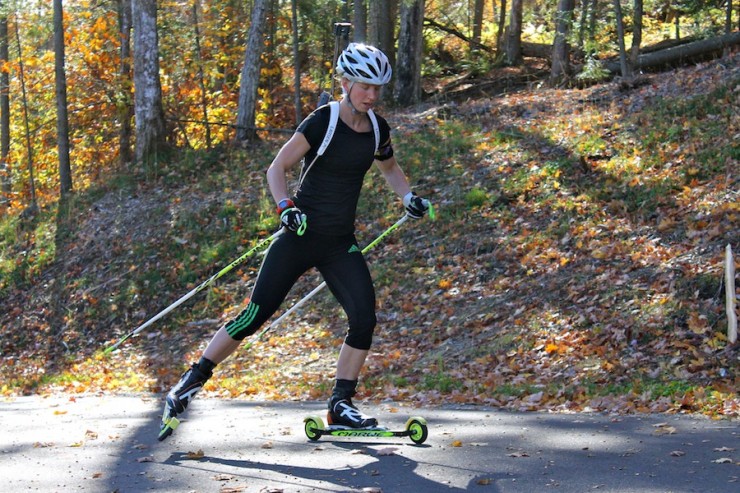
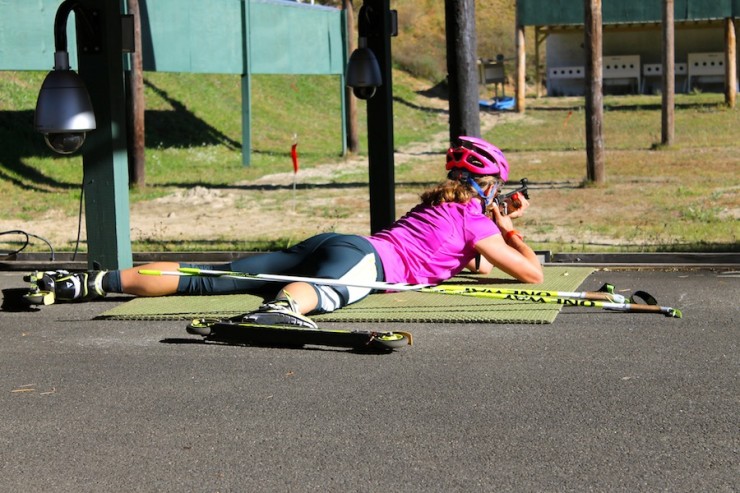
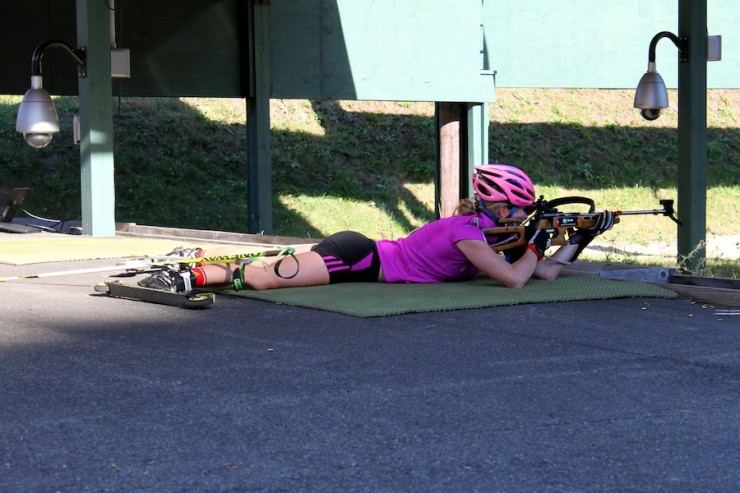
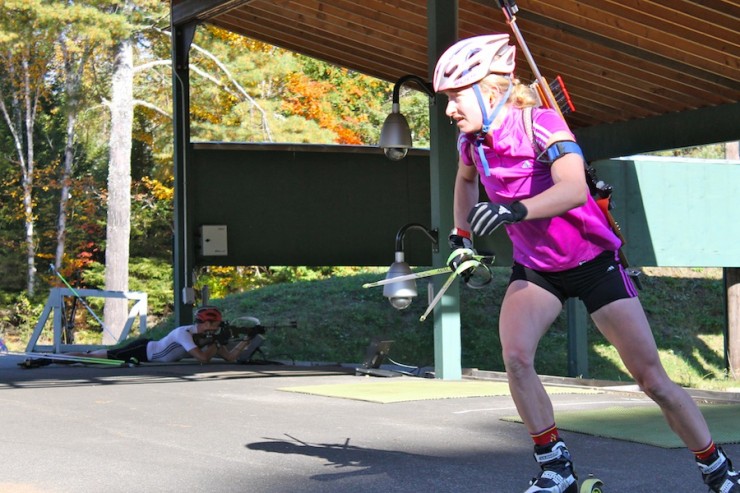
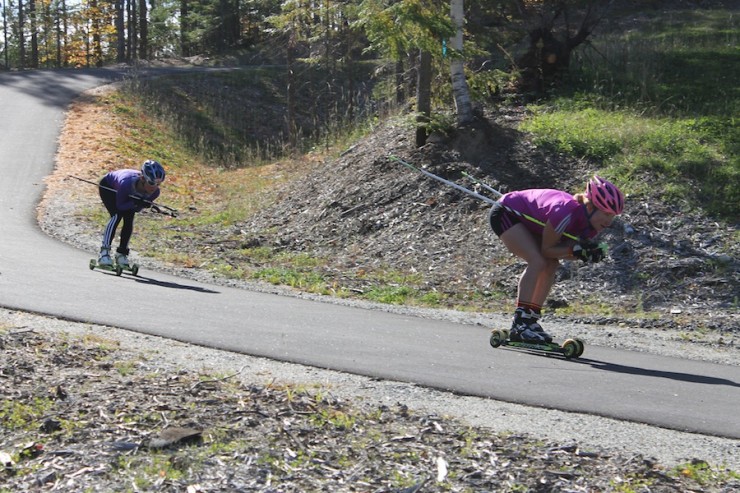
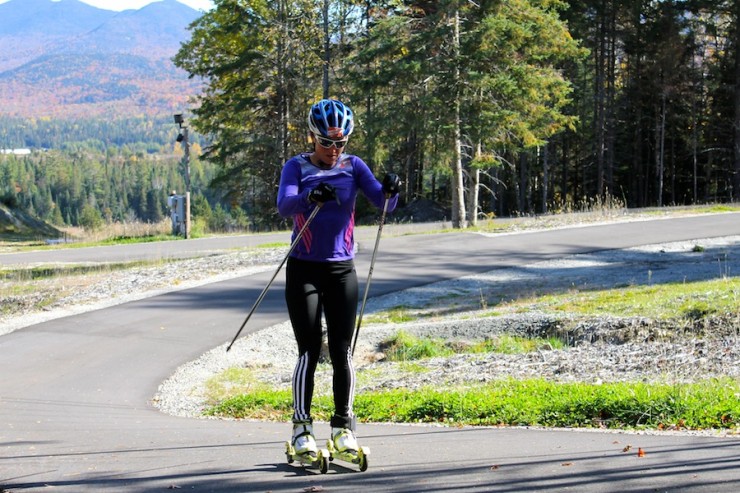
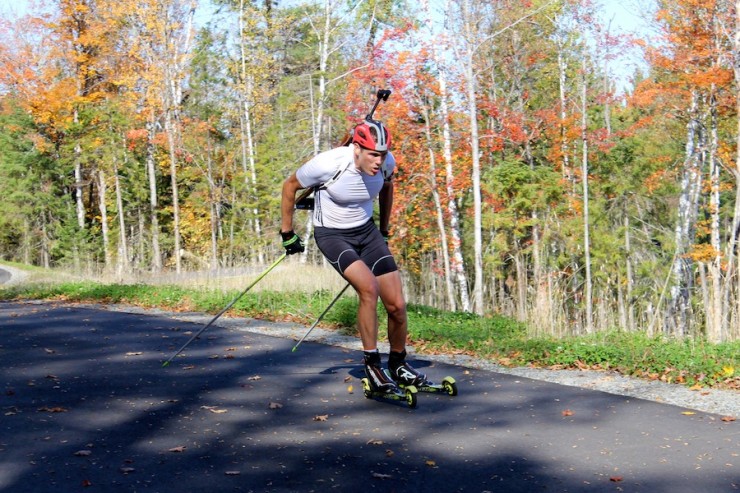
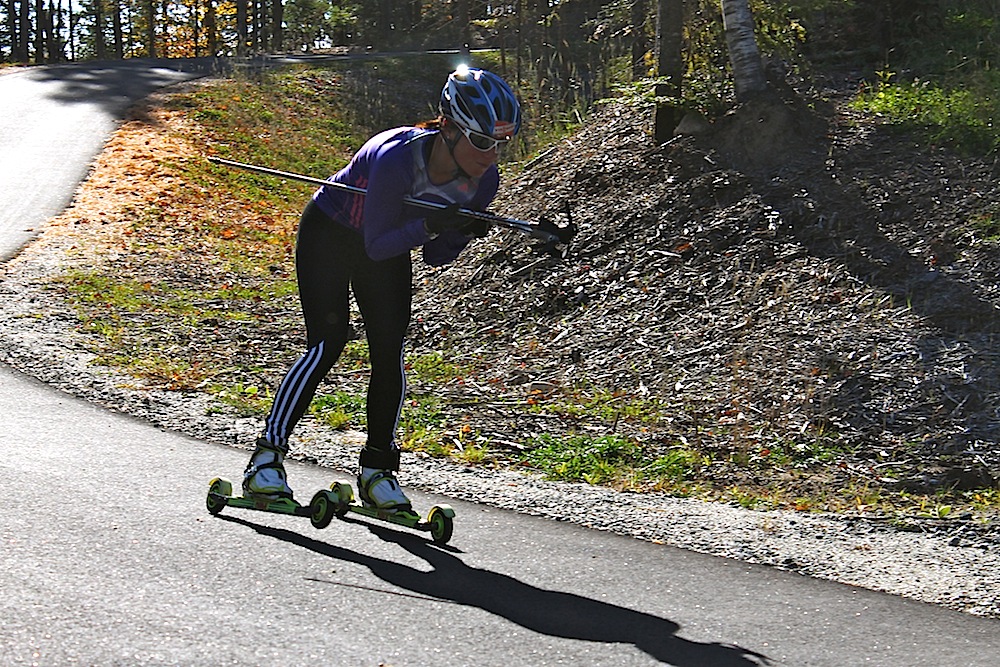
    Germany's celebrated biathlete and four-time Olympic medalist, Andrea Henkel cruises along the 1-year-old rollerski loop on Oct. 3 at the Olympic Jumping Complex in Lake Placid, N.Y.
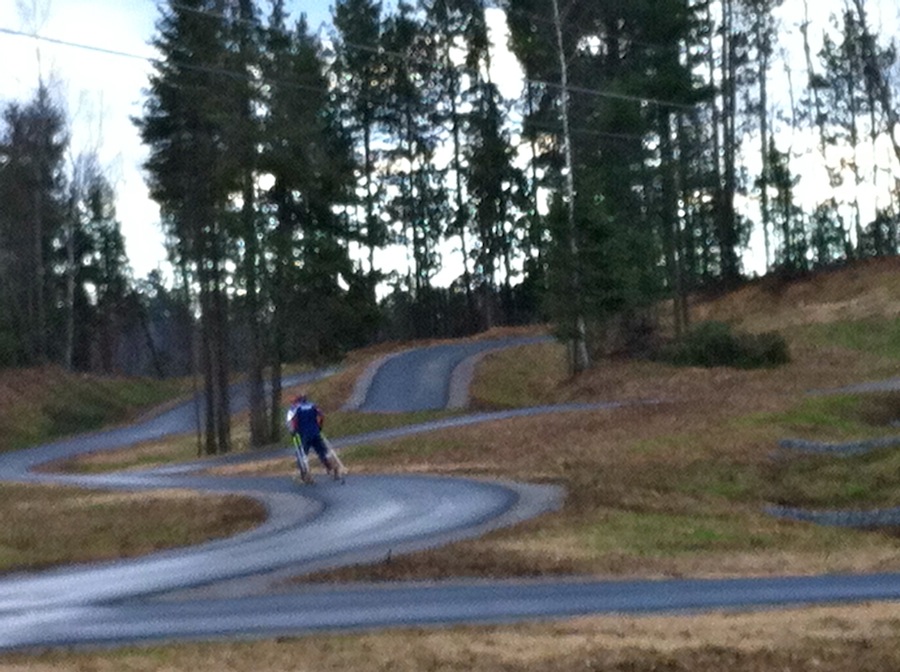
    Germany’s celebrated biathlete and four-time Olympic medalist, Andrea Henkel cruises along Lake Placid’s 1-year-old rollerski loop at the Olympic Jumping Complex in northeastern New York.

    This might be Andrea Henkel’s swan-song season, but the 35-year-old German biathlete and multiple Olympic gold medalist showed she’s in the hunt for one of her best winters yet – sweeping the opening biathlon races last weekend in Sjusjøen, Norway.

    Before the start of her 15th World Cup season, Henkel completed Saturday’s 7.5-kilometer sprint with one penalty and a 27-second win over France’s Marie Dorin Habert. On Sunday, she missed just one target and won the 12.5 k mass start by 9.1 seconds over Ukrainian Valentyna Semerenko.
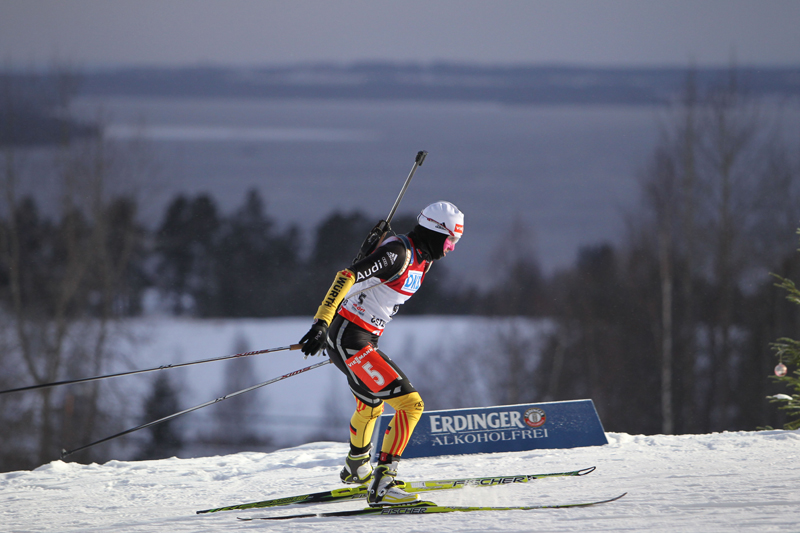
    Andrea Henkel en route to a podium finish earlier this season in Ostersund; today she turned in a strong relay performance.. Photo: Fischer/NordicFocus.
    Andrea Henkel on her way to the podium last season at a December World Cup in Ostersund, Sweden (Photo: Fischer/NordicFocus)

    “I have trained for a few years to get into this kind of shape!” Henkel said with a laugh to NRK on Sunday. “But actually I didn’t feel as good today as I did [Saturday]… I hope I am feeling better for the Olympics, but if I still win there then it doesn’t matter!”

    In early October, FasterSkier caught up with Henkel, who was third in last year’s overall International Biathlon Union (IBU) World Cup. The eight-time world champion – and first biathlete to win a world title in each individual event – was visiting her boyfriend, US Biathlon’s Tim Burke, in Lake Placid, N.Y., for just over two weeks. She said that marked her first time in upstate New York in the fall.

    “Usually, I come in summer,” she said while putting her classic rollerskis in Burke’s car after a double-pole workout on the team’s new rollerski loop. For the short stay, she left her rifle at home.

    Used to visiting in June and July, Henkel made the trip over earlier this year as well, staying April through May. Now she’s been to the U.S. almost every month except January and December, she said.

    “At first, I planned to go to Utah – that was last year – and then I decided in spring I would not go to Utah and would come back to here,” she explained of picking Lake Placid over Soldier Hollow.

    “In Utah last year, I felt pretty tired after the traveling and then this altitude and was there for a little bit over two weeks just, too,” she added. “Here I have a little set up already so I don’t have to plan so much. … Everybody is saying it’s so nice in fall.”

    After arriving on Sept. 26, she flew back to Germany later in October when the U.S. team left for Soldier Hollow for the final rollerski trials of the season.

    Here’s what else Henkel had to say while in Lake Placid:
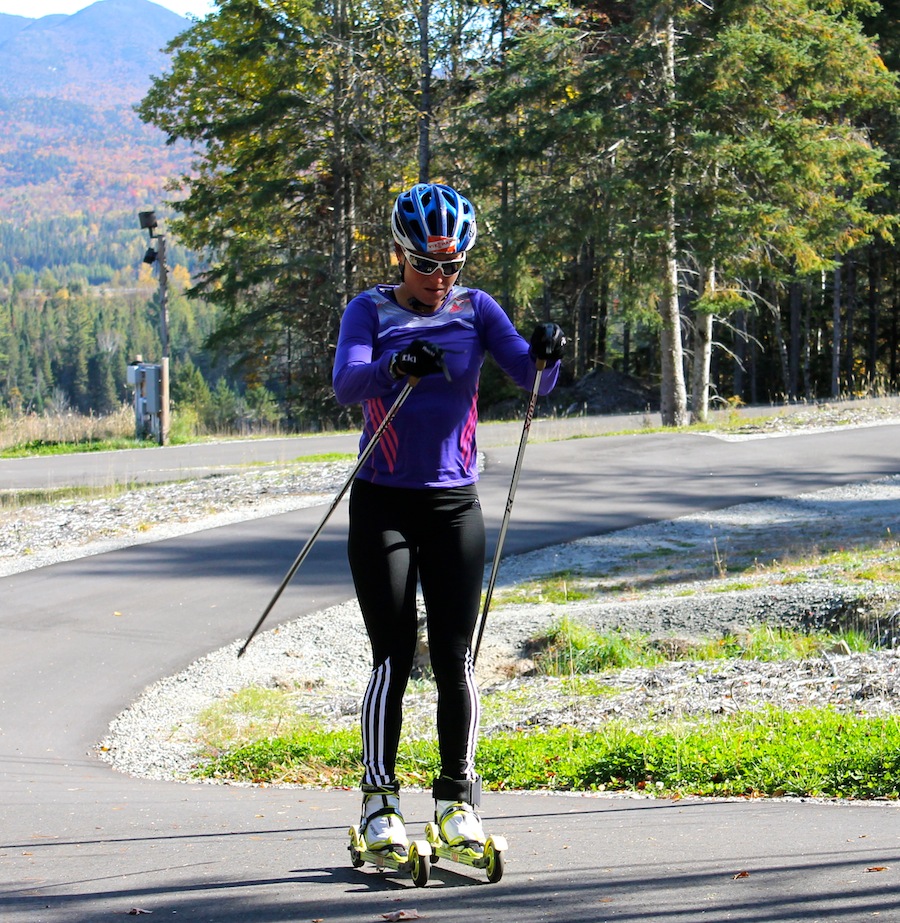
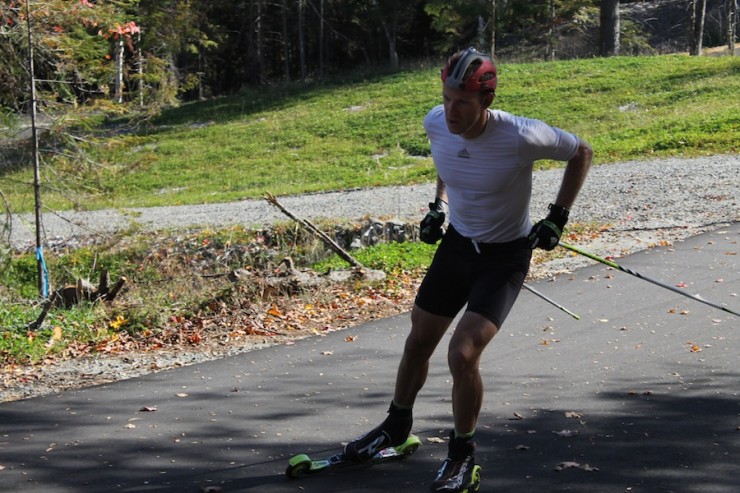
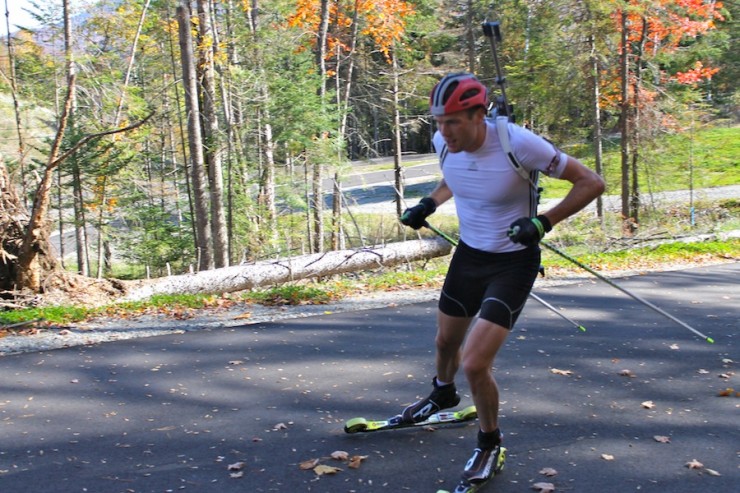
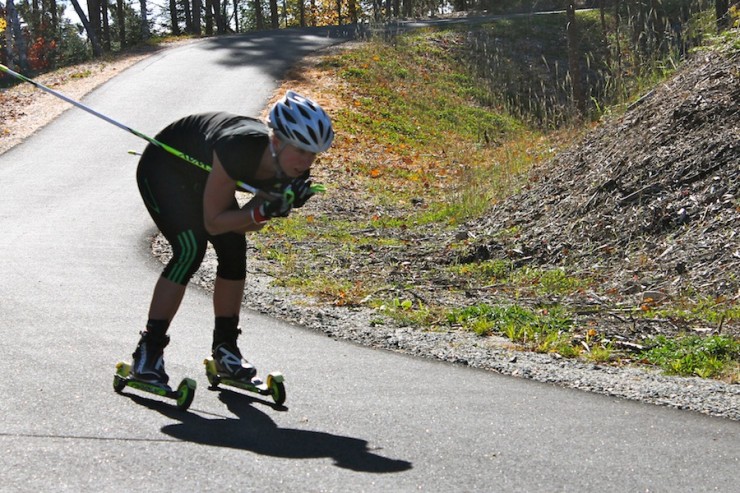
    Andrea Henkel double poles her way up the rollerski loop at the Olympic Jumping Complex on Oct. 3 in Lake Placid, N.Y.
    Andrea Henkel double poles her way up the rollerski loop at the Olympic Jumping Complex on Oct. 3 in Lake Placid, N.Y.

    FS: How have you been feeling, and what have you been working on?

    AH: Basically, I’m getting better faster. At the moment I did a lot of intensity, you know, I’m pretty tired doing this, and now I am working on my strength [with double poling], so everyday something to work on.

    FS: You had a big intensity block back home?

    AH: Already at home and then when I came I just continued and will have another few workouts doing this here. At the moment, I didn’t bring my rifle for this short time because it’s sometimes tricky [with airlines] so I took a shooting break. So I’m kind of [training] by myself. If something works out then I would like to be with the girls or sometimes with the guys to train, but yeah, two weeks is not so long and then I can handle it by myself, too.

    FS: Now that you’re gearing up for your fourth Olympics, how meaningful is this one?

    AH: This time will be my last time, but also I said last time already this will be my last one.

    FS: So you never know?

    AH: No. I know. Last time I knew that this will not be my last season. This time I decided that this will be my last season and so it’s a little bit different and more focused I think, and after this I know that it’s over.

    FS: How’s your health been and what is your hope for these Olympics?

    AH: I am healthy. Everything is working so far and I hope for another medal, of course.

    FS: As a team and individually, too? (She won gold in the 15 k individual and with the relay at the 2002 Salt Lake Games.)

    AH: The best thing would be both, so I see. At the moment, I just train and hope it works out again.

    FS: What is it like to be on a team with several promising younger women?

    AH: That’s good. I mean every time pushed the older ones by youngest ones. I was a few years ago, too, and pushed the older ones so this helped everybody and is a little bit congruent in their own team. It’s good to see the young ones are pushing again cause they had a little time – maybe two years – that it didn’t happen this way and now they are back and it’s good.

    FS: How did you like racing in Sochi?

    AH: I was once fourth [in the 15 k individual last season] … but the track is tricky and I had to change a little bit what I really should do because it’s pretty uphill – the uphills are great. I like that, but the downhills were a little bit too aggressive, I would say. For us girls, it was still fine, but in the guys’ race it was already, like, always night time as late afternoon and it got colder and was freezing and then the course was just not doable anymore for a lot of good skiers. So they should change something up.

    FS: Outside of Sochi’s course, what do you think of the whole area?

    AH: The area is beautiful.  It’s kind of sad to see how many trees just had to go for this. I am sure the athletes will have everything they need … I think for us, it will make a nice Olympics. Everything that’s coming with is maybe not be so nice.

    FS: So what’s next, after biathlon? What would you like to do?

    AH: I plan on moving one day to the U.S., but at first I have to get all when and how and … I think at first, I need my time to settle down a little and organize myself, my new life. Then I can tell you what I can do.

  • U.S. Biathletes Hammer Hard in Placid (Photo Gallery)

    U.S. Biathletes Hammer Hard in Placid (Photo Gallery)

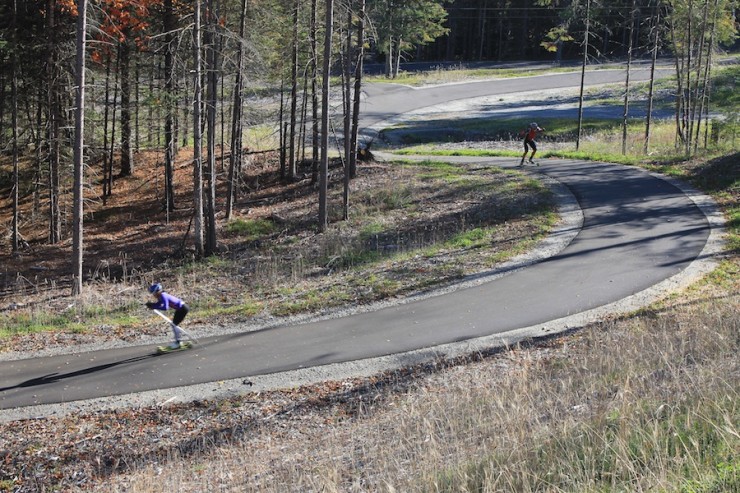
    LAKE PLACID, N.Y. — Nothing says the beginning of October like a grueling combo workout for the U.S. Biathlon squad. As if five to six repeats around their 3-kilometer rollerski loop wasn’t enough, they started Thursday with an all-out race to the top of the course.

    According to women’s coach Jonne Kähkönen, the prelude was something new this year after several of his athletes said they wanted a faster first lap in races. The answer: get the blood pumping and heart racing faster before you start.

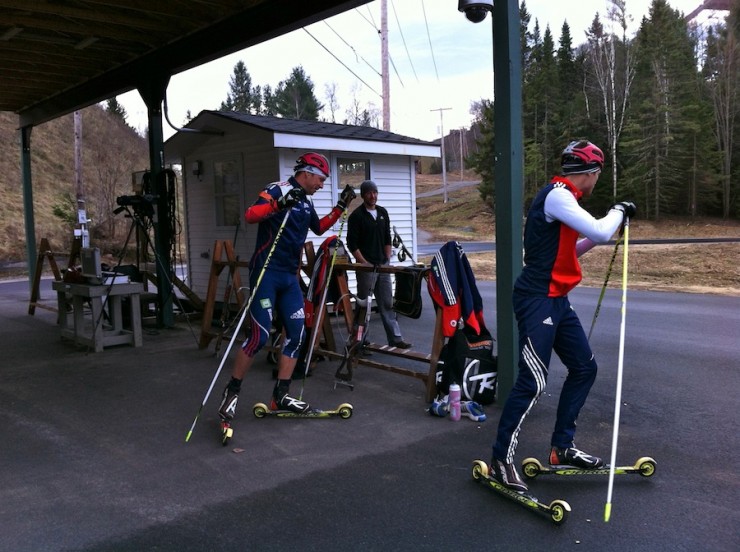
    That meant starting at the bottom of the Olympic Jumping Complex — way down in the lower parking lot — and racing one another to the top (mass-start style). Four men (Tim Burke, Lowell Bailey, Leif Nordgren, and Russell Currier) and three women (Susan Dunklee, Hannah Dreissigacker and Annelies Cook) all started at once, along with special guest Andrea Henkel, a German biathlete and Olympic gold medalist (and Burke’s girlfriend). Henkel, 35, did the initial workout with the group, but without a rifle for this trip, opted to double pole around the rest of the morning.

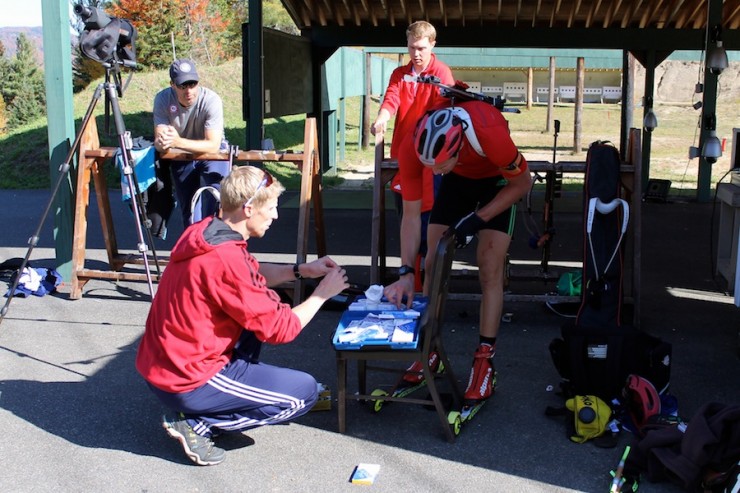
    With a 10-minute rest beforehand, the combo workout (5 or 6 x 8-minute laps around the relatively new course, with prone and standing shooting in between) involved two to four lactate readings per athlete. It marked the end of a tough three-week training block, and Kähkönen said this workout is done once every intense training period. Next week, athletes can enjoy some rest before flying to Utah for the last set of rollerski races in Soldier Hollow Oct. 22-24.

  • Parking Lot Alternative: Biathletes Welcome New Lake Placid Rollerski Loop (with Video)

    Parking Lot Alternative: Biathletes Welcome New Lake Placid Rollerski Loop (with Video)

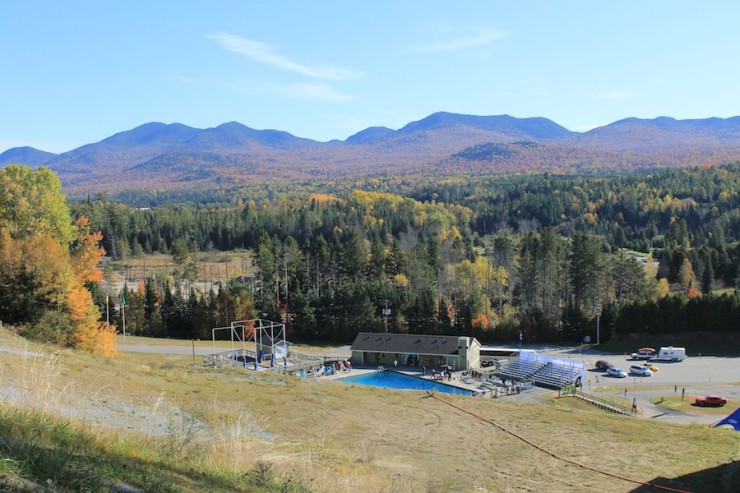
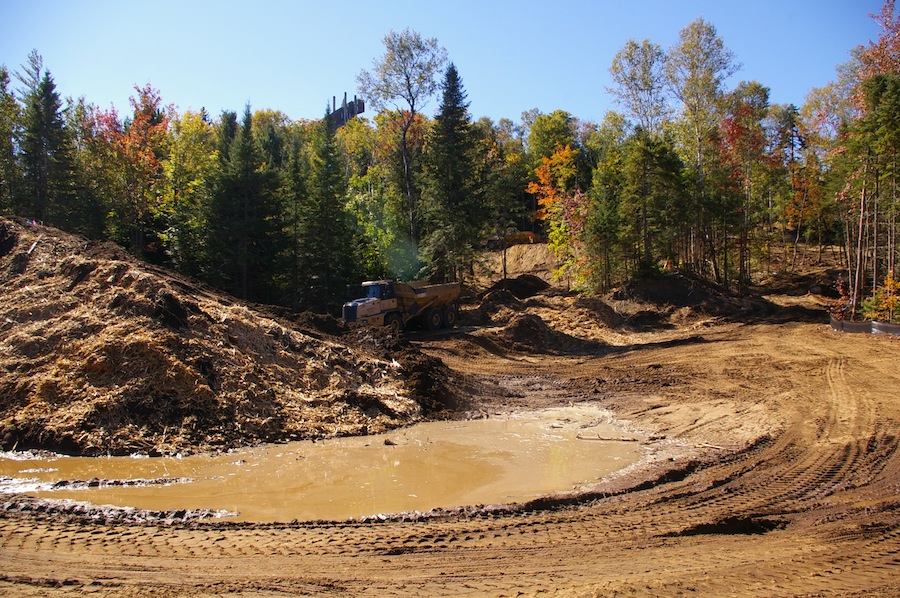
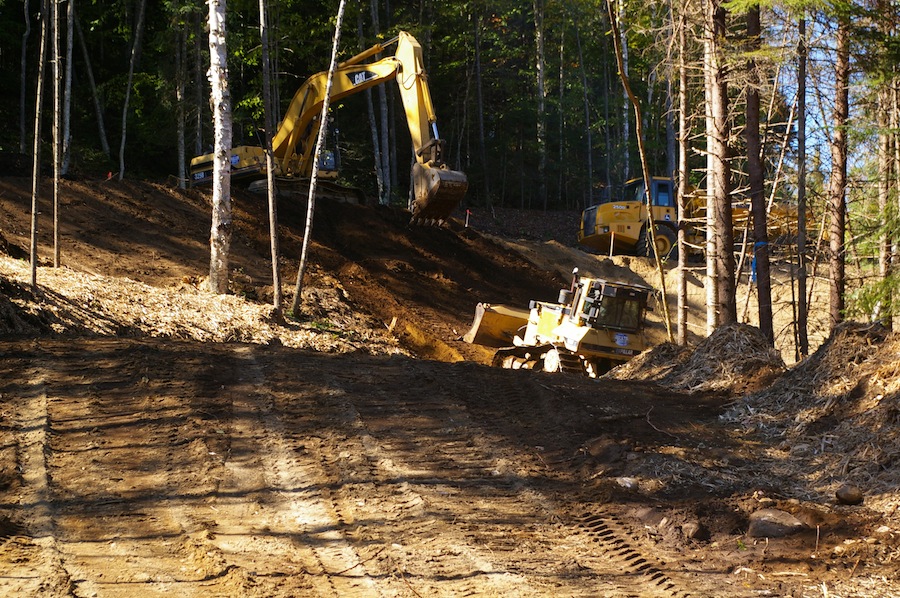
    The land behind Lake Placid’s Olympic Jumping Complex biathlon range very much under construction in late September. The Olympic Regional Development Authority (ORDA) headed the half-million dollar project to extend the rollerski loop by 1.5 kilometers. It was completed in mid-October.

    LAKE PLACID, N.Y. – Anyone on the upper part of the rollerski loop at the Olympic Jumping Complex after mid-August likely caught a glimpse of its under-construction backdrop. Mounds of dirt and heavy machinery littered the landscape spanning farther up the hill. Something was going on, and it looked like a big deal.

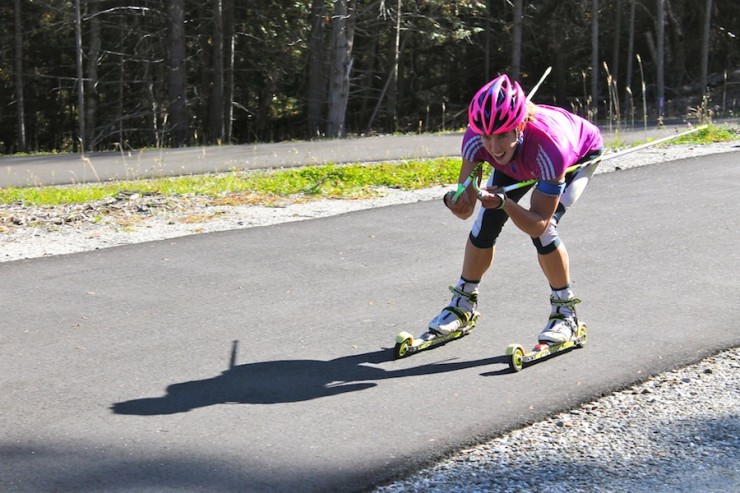
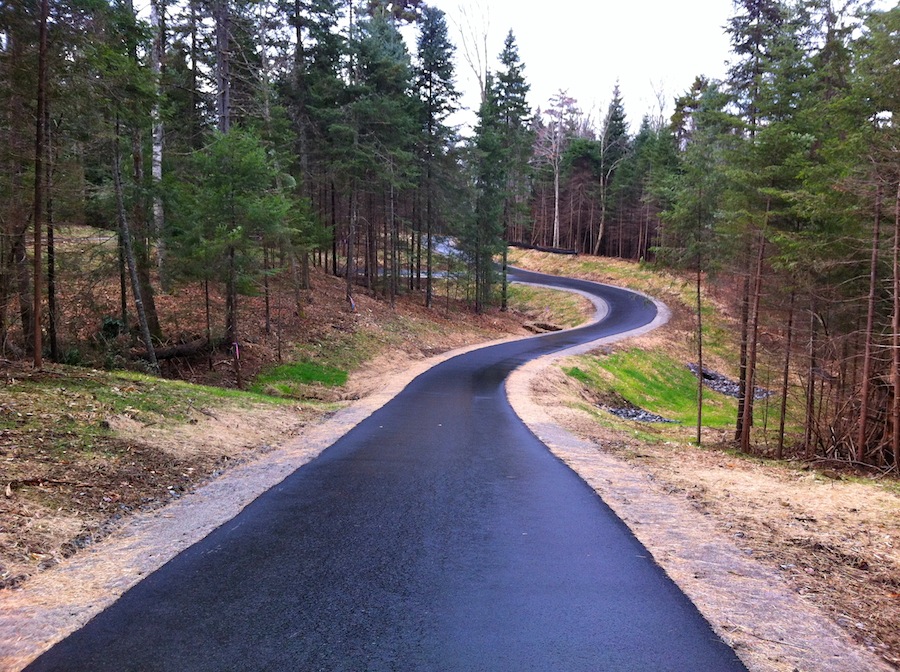
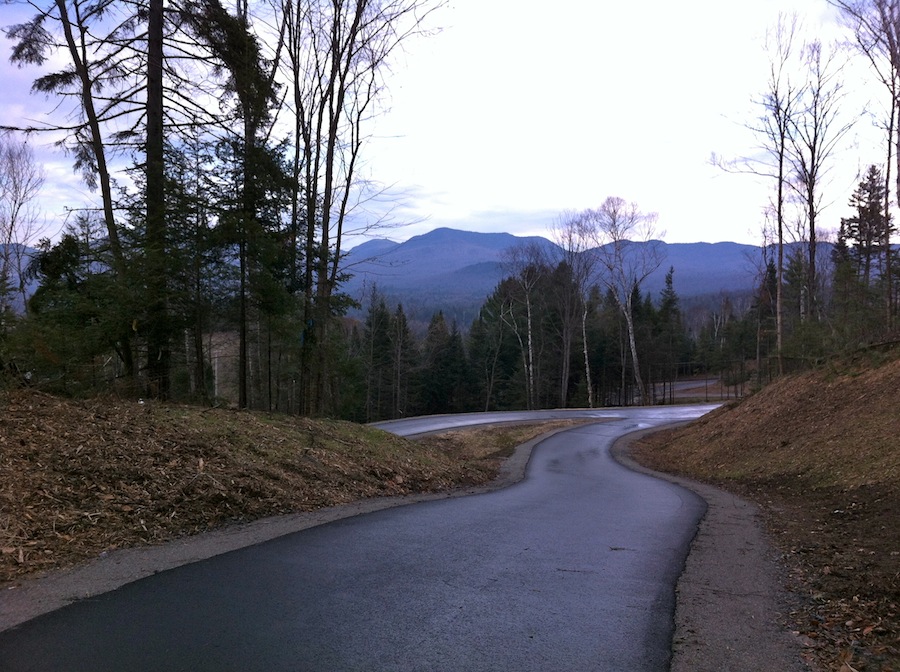
    Ooh la la. Near the top of the new rollerski loop at the Olympic Jumping Complex in Lake Placid, N.Y.

    Training on the range below almost daily throughout the offseason, US Biathletes Tim Burke and Lowell Bailey knew exactly what the plan was. They helped design it.

    The nearly 14-week project, headed by the Olympic Regional Development Authority (ORDA) with the financial backing of the United States Olympic Committee (USOC) and its sponsor, 24 Hour Fitness, wrapped up in mid-October and added another kilometer and a half of paved rollerski trails to make for a nearly 3 ½ k loop.

    By the time Lake Placid-based biathletes like Burke and Bailey returned from a national-team camp in Park City, the bulldozers had dispersed and pavement solidified to reveal an impressive series of switchbacks. Suddenly, no snow in late October and early November wasn’t the worst thing in the world. The biathletes had a brand new rollerski loop to train on.

    “It’s absolutely huge for us,” Burke said Nov. 11 during one of his last days on the Lake Placid range before leaving for Sweden. “We’ve been skiing through the parking lot for the last five years, really, so to have this means so much to us and our program.”

    US Biathlon Executive Director Max Cobb said the rollerski loop has been a goal of the association’s for nearly 25 years.  Back when he started with USBA in 1989, it had plans to construct a paved loop at Mount Van Hoevenberg, which hosted cross-country skiing, biathlon, bobsled, luge and skeleton at the 1980 Olympics. The Adirondack Park Agency upheld wildlife conservation laws and shot that down, so USBA sought alternatives, which took another two decades to materialize.

    Bulldozers, skid steers and dump trucks working on the rollerski loop behind Lake Placid’s Olympic Jumping Complex in late September.

    “It’s definitely been a really, really long time in the making,” Cobb said on the phone earlier this month. “I’ve got to give ORDA a lot of credit. It’s a tough time financially for all of the state organizations and ORDA definitely stepped up this year and said, ‘Yep we need to do this for the biathlon team.’ They put in a lot of staff time that isn’t reflected in the contractor costs, so I can’t say enough good about they way ORDA and the USOC came together and made this happen.”

    In all, the project cost about $500,000 dollars, Cobb confirmed. The USOC came forward with the initial funds with the support of 24 Hour Fitness, and ORDA budgeted the additional amount, he explained.

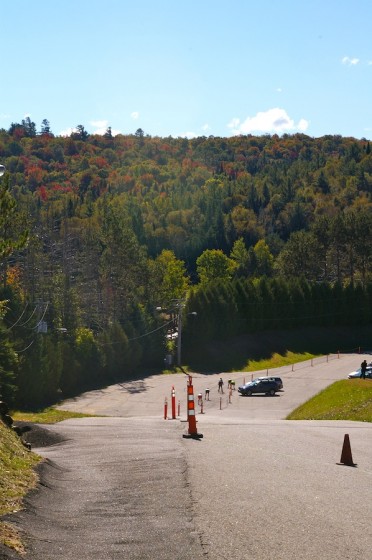
    Since ORDA built the range at the jumping complex in 2008, it intended to extend its paved loop from approximately 2 kilometers (which involved a hairy section through the parking lot, down into the jumping stadium and back up a massive hill to the top of the range) to something that didn’t require so many traffic logistics. As it was, a team staff member had to stand by the gate in the middle of the two-tiered downhill to make sure cars didn’t interfere with rollerskiers flying by. It was the same scenario at U.S. Ski Team camps or whenever junior programs like the New York Ski Educational Foundation (NYSEF) used the loop.

    However, state budget cuts since 2008 made money for venue development hard to come by.

    “New projects really weren’t possible for them last season when we had hoped to get this done,” Cobb said. “But they were able to commit some funds to it this year and the U.S. Olympic Committee really stepped up big time with the support of their sponsor … to make the loop happen.”

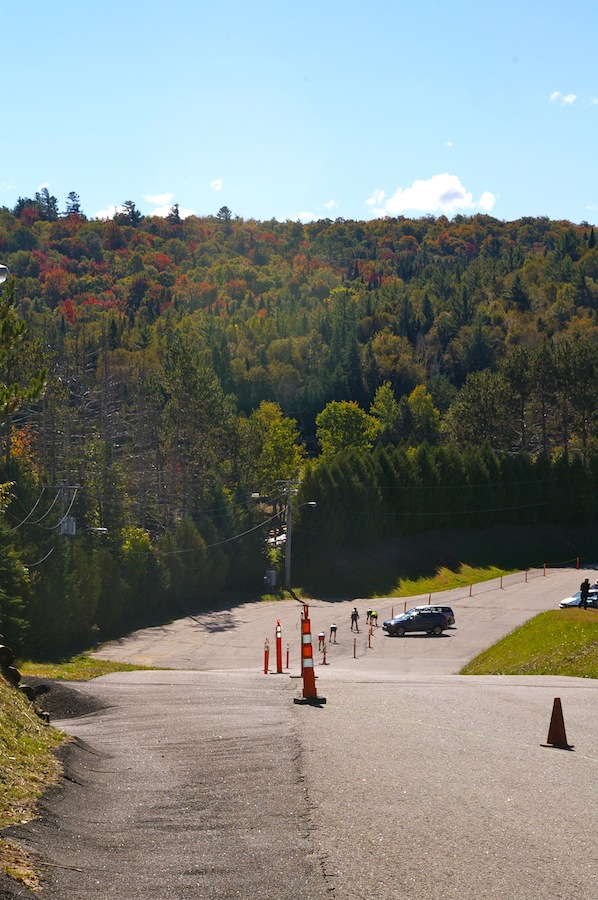
    The big downhill out of the parking lot and into the stadium at Lake Placid’s Olympic Jumping Complex. Previously the only way to make a loop there, 1.5 k of new paved trails offers an alternative above the biathlon range.

    Now athletes can use the parking-lot portion if they wish for a longer loop or stick to 2 to 2 ½ kilometers of paved skiing up top.

    US biathlete Leif Nordgren got out on the course for the first time in early November and tweeted a photo of it. The next day, he was excited to return for another session.

    “I told the coach right as I showed up, I said, ‘Phew, it wasn’t just a dream, it’s still here,’ ” Nordgren said. “To finally have it done and completed, it’s a big relief, and it’ll be really exciting to have it all next summer to train on, too.”

    The extension wasn’t very sizeable at about a kilometer and a half, but “it’s a big, huge step up from what we had before,” Nordgren said.

    “The pavement is super nice, super smooth, and in general, the course is really nice, too,” he added. “It flows really good for skating and it ties into the range pretty well, and also builds on the loop that was here to begin with so everything works pretty well together now.”

    Among the most important aspects of the new course are its transitions. Before, rollerskiers had to chug up a long hill out of the stadium and keep ascending into a curvy wooded section before reaching the range, previously at the height of the land. The new loop extended higher beyond that, toward the ski jump access road, which athletes could also use for longer intervals. Switchbacks on the course made the steep terrain more manageable, and essentially, more rolling.

    “You’re always working; there’s a big climb out of the range, but it’s not overly hard and it’s nothing compared to what it was before,” Nordgren said. “It requires you to be a much better technical skier than the old loop did.”

    In his opinion, the course flows more like a biathlon loop with a distance closer to their typical 2.5- or 3.3-kilometer race loop. Also, US biathletes, most of which train in Lake Placid at some point in the year, tended to be better hill climbers because of their training venue. The problem was, “there’s no biathlon course in the world that’s set up like that,” Nordgren said.

    “Every time you come in to shoot your heart rate is through the roof and you’re completely dead,” he added. “It never really gave us a chance to work on things like transitions and technique changes and things like that. With this new loop, it’s skis so much more like the courses that we race on so hopefully it will help us better prepare for the competition season.”

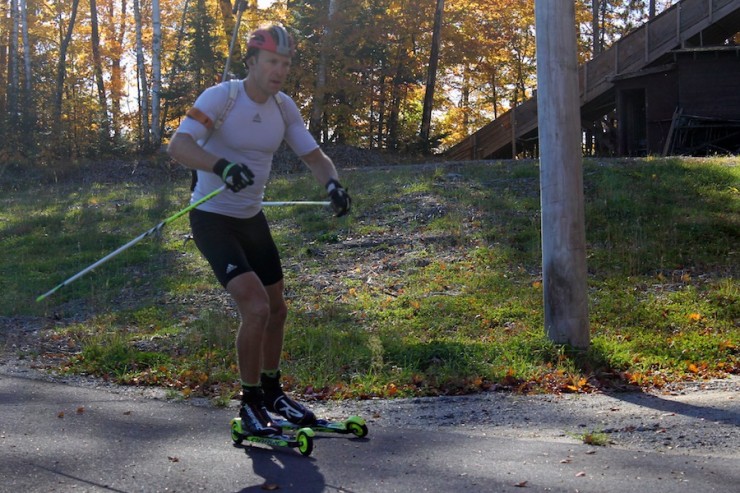
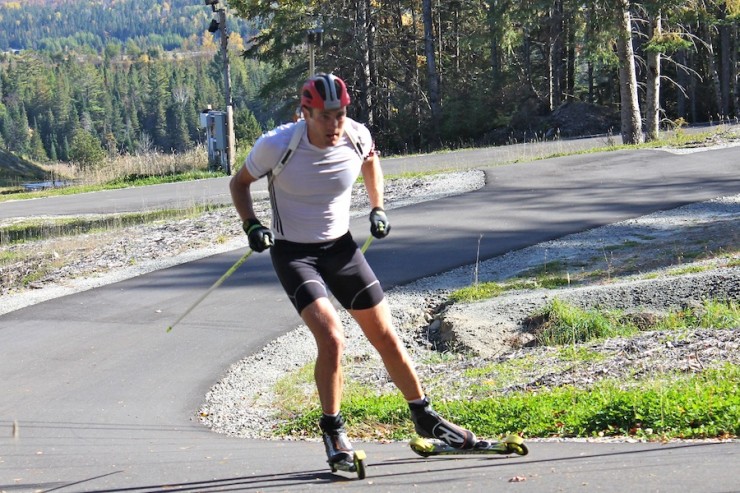
    Tim Burke (r) and Lowell Bailey (l) leaving the biathlon range to ski on their new rollerski loop on Nov. 11 in Lake Placid, N.Y.

    That was the idea, especially as designers sought input from Cobb, Burke and Bailey. Among the things they tweaked were corners and transitions to make it workable.

    “We wanted to get in more ski-like terrain and obviously we had to use more transitions because we had to somehow get from the top point of the venue back down to the range in a safe way,” Burke said. “It’s very skiable. There’s nothing out there that’s too bad. When everyone first walks it, they say, ‘Oh, there’s a loop at the jumps there, it must be crazy and scary downhills and dangerous,’ but I did it on classic rollerskis yesterday and it’s totally fine.”

    Cobb is thrilled his athletes will be able to use the new 10-foot wide course, which is wider in two-way traffic areas, next year leading up to the 2014 Sochi Olympics. Mostly, he said it’ll be best for combination training.

    “It’s still a little bit short for over-distance work, but honestly we have good routes on the roads around Lake Placid for that kind of training,” Cobb said. “It really changes the nature of the opportunity for Lake Placid; it makes it a viable year-round training site for us, for the national team, where we don’t feel like we’re really missing anything there now. There are bigger rollerski loops and other things in other places, but we can do the work we need to do here, so we’re meeting that or so it seems.”

    Aside from the national team, it’s a better venue for the community in terms of safety and terrain more like cross-country ski trails, he said.

    “It’s definitely a big step up in terms of the youth programs that can be done there now and done really safely because it’s off the roadways,” Cobb added.

    NYSEF nordic head coach Margaret Maher wrote in an email that her athletes tried the course for the first time a few weeks ago, after she deemed them ready for its downhills and corners. They will continue to have to reserve time at the venue, she explained.

    For a virtual tour, check out this on-course video from USBA coach Jonne Kähkönen.

    ***