Tag: Lake Placid skiing

  • Matt Dougherty Inherited One Skier at Paul Smith’s, Six Seasons Later, Two USCSA National Titles

    Matt Dougherty Inherited One Skier at Paul Smith’s, Six Seasons Later, Two USCSA National Titles

    This article was made possible through the generous support of our voluntary subscribers. If you value coverage like this, please support FasterSkier with a voluntary subscription.

    Matt Dougherty has a way of knowing in September exactly what he is going to say in February.

    It usually happens on the second day of the Adirondack Canoe Classic, the three-day, ninety-mile paddle from Old Forge to Saranac Lake that everyone in the North Country calls the 90-Miler. By then his skiers have been in a boat for two days. They have carried it over roughly five miles of portage trails. They are, by his description, flat on the ground.

    “It was six hours of just going as hard as you can, which is still low on the L zones, but you’re putting out power for hours and hours and hours,” Dougherty said. “And then you get back in the boat.”

    Dougherty is the head nordic ski coach at Paul Smith’s College, and also its head marathon canoe coach, which is not a combination most ski programs carry. In March his men won the USCSA national championship at Mount Van Hoevenberg, 68 points to St. Olaf’s 108, the program’s second national title in five seasons. His women finished second, as they did in 2022 when the men won the first one. He took the ski program over in the fall of 2020 with one skier on the roster and no recruits, at a college in the woods with fewer students than most high schools.

    He is also, as of this year, the subject of a feature documentary, which is a strange thing to happen to a coach at a school of this size and which he did not see coming at all.
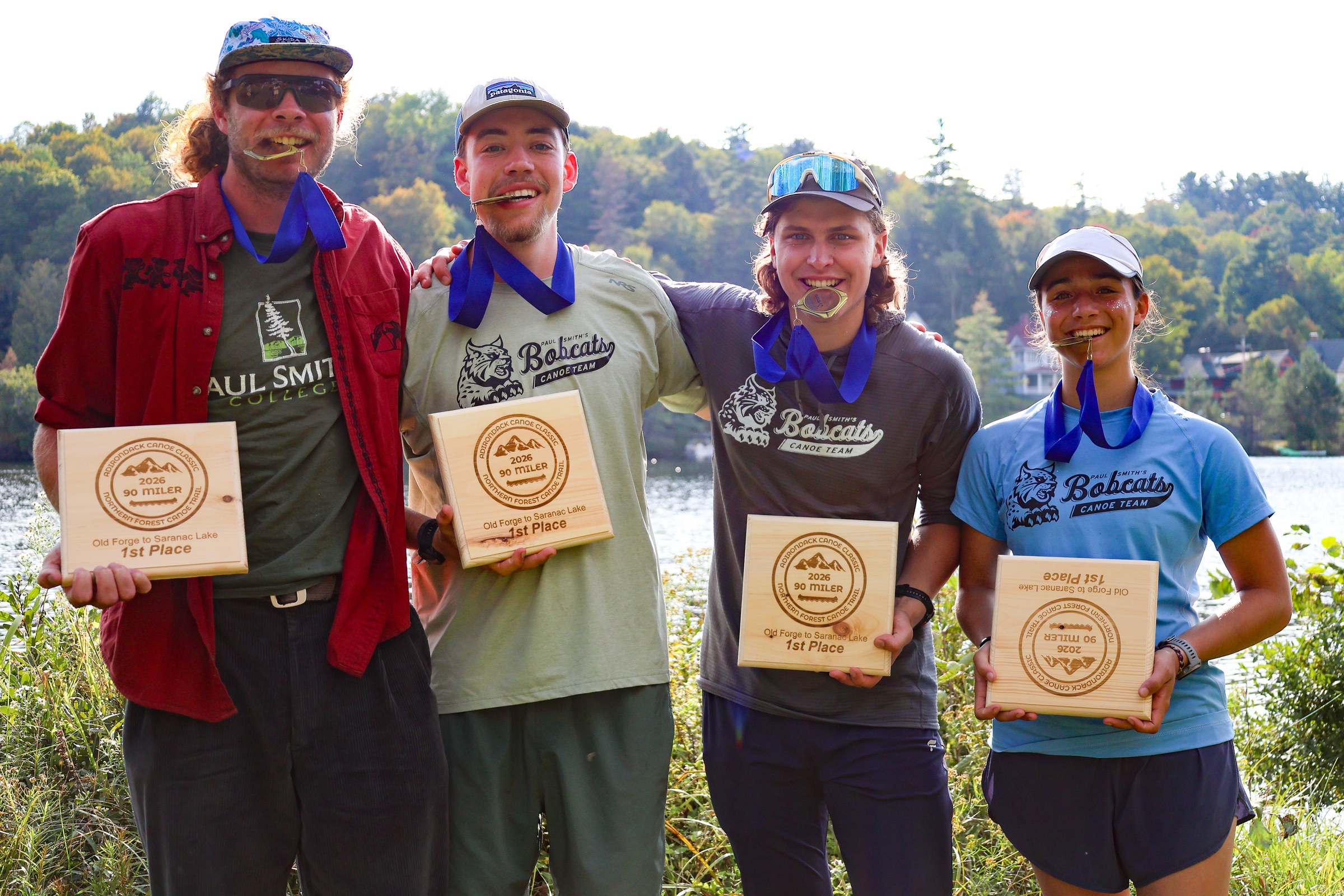
    Four Paul Smith's College athletes hold
    Paul Smith’s paddlers with their first-place plaques after the Adirondack Canoe Classic, the three-day, ninety-mile race the North Country calls the 90-Miler. Head coach Matt Dougherty runs the marathon canoe team as well as the ski team. (Courtesy photo)

    Three days in a boat

    The marathon canoe team is not a requirement for skiers at Paul Smith’s. A lot of them do it anyway.

    “It gives me the opportunity to do the important lessons,” Dougherty said. “The 90 mile canoe race is super hard, and I can go back and be like, look at what we can do when we put our mind to it.”

    The boats are the point. In the Voyageur class, where Paul Smith’s entered a seven-paddler crew in 2024 and won its division by two hours, the craft itself becomes part of the problem.

    “It’s raining and you paddled,” Dougherty said. “You had to carry a boat that’s 300 pounds if you’re in the Voyageur canoe up and over a literal side of a mountain in a race.”

    He is after two things. One is the plain demonstration that his athletes can do more than they think, a claim coaches make constantly and almost never get to prove in September.

    “A lot of times our preconceived notion of what we can do is only limited by our own mind,” he said. “If you ask them at the end of day one, they’re like, there’s no way I can do that again. Day two, and you keep doing that, and you’re like, but what can you actually do if you open up your mind and say, like, I’m just willing to see, I’m willing to test those boundaries?”

    The other is more useful to him in February.

    “To affect change, you got to have shared experiences, even with a coach involved in it,” he said. “That say, like, we shared this really hard time, and there’s this high level of trust, and we can do super hard things. From there, we can then we can get into the training, and we can say, yeah, we’re gonna do 44 weeks of training next year, and you’re gonna put on 10 pounds in the weight room, and things that they’re like, what? But now it’s like, okay, we have a place to start from.”

    There is a third thing, which he raises without being asked.

    “It’s really hard for college students to understand all the hard things you’re going to go through in life, and I want them to be tempered and ready,” he said. “This is going to be hard to experience all of the emotions, sadness, grief, pain, but also to be like I can endure this.”
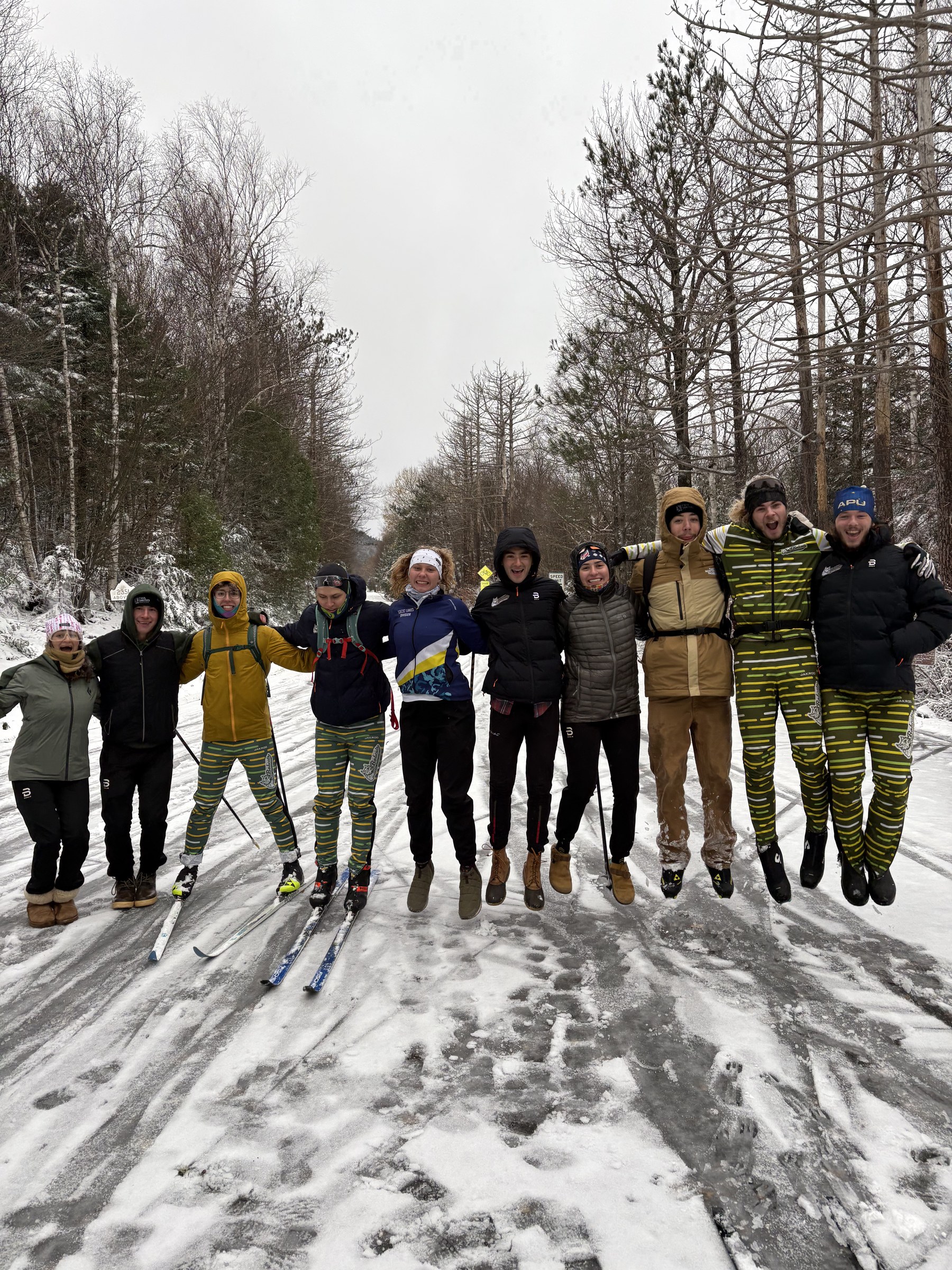
    A line of Paul Smith's College skiers in
    The roster Dougherty built. He took the program over in the fall of 2020 with one skier on it and no recruits. (Courtesy photo)

    The long way back to Saranac Lake

    Dougherty graduated from Saranac Lake High School in 1997 and got a running scholarship to Houghton University, then a small NAIA school in western New York, which is where the pattern that governs everything else started.

    “Sport was an avenue to change my circumstances in life,” he said. “It changed my life because it got me to college. I paid for college. I got a degree, and then changed my circumstances drastically.”

    He has two degrees, an undergraduate in outdoor education and ceramics, and a master’s in education from St. Lawrence in what he describes as cognitive behavior. He coached track and field for two decades before this, and he spent some of those years around people whose approach he took wholesale. One of them was Clyde Hart, the Baylor coach who put Michael Johnson, Jeremy Wariner and Sanya Richards-Ross on Olympic 400-meter podiums.

    “You’d think, man, you have like three gold medalists on your team right now,” Dougherty said. “And you’d see him interact with his athletes, and you’d be like, wow, it’s always the person first. It is what’s going on in your life today, what’s going on the person before the athletic part.”

    As a coach, he had chances to move up into Division I teams. He turned them down, and he credits his wife with the reasoning.

    “What I realized then is, it’s a numbers game and it’s not a person game,” he said. His wife, he said, put it to him as a trade: “If you do this, you lose that, and it’s going to be miserable for you.”

    He is now coaching three miles up the road from where Bill Demong grew up, at a college where Tim Burke’s father was a vice president for thirty-five years. He has a theory about what sticks from a life in that company.

    “He would probably just hide his Olympic gold and silver medal for the rest of his life,” Dougherty said of Demong, who won gold and silver in nordic combined at the 2010 Vancouver Games. “But he would happily talk about what sport did, like what those experiences were.”
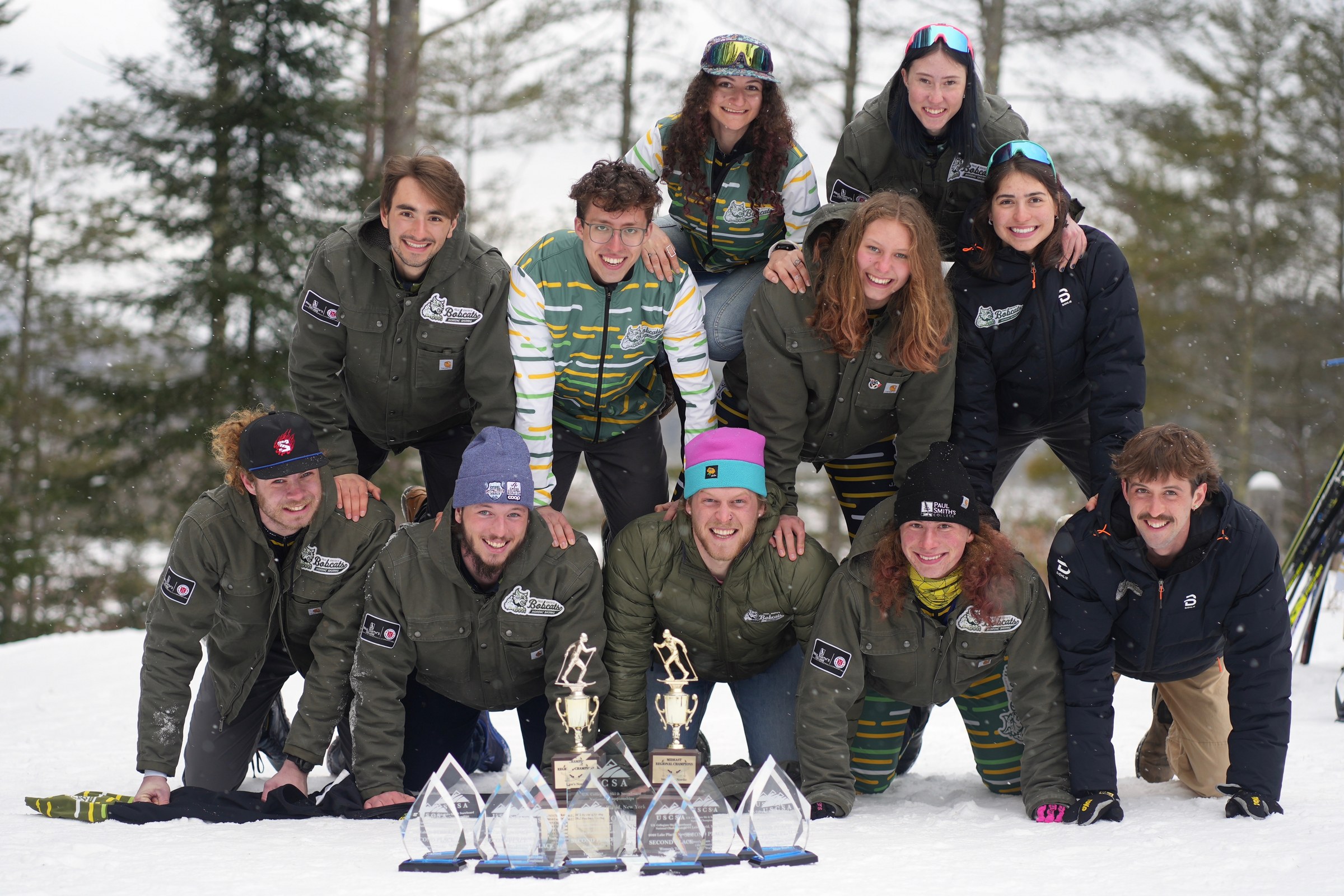
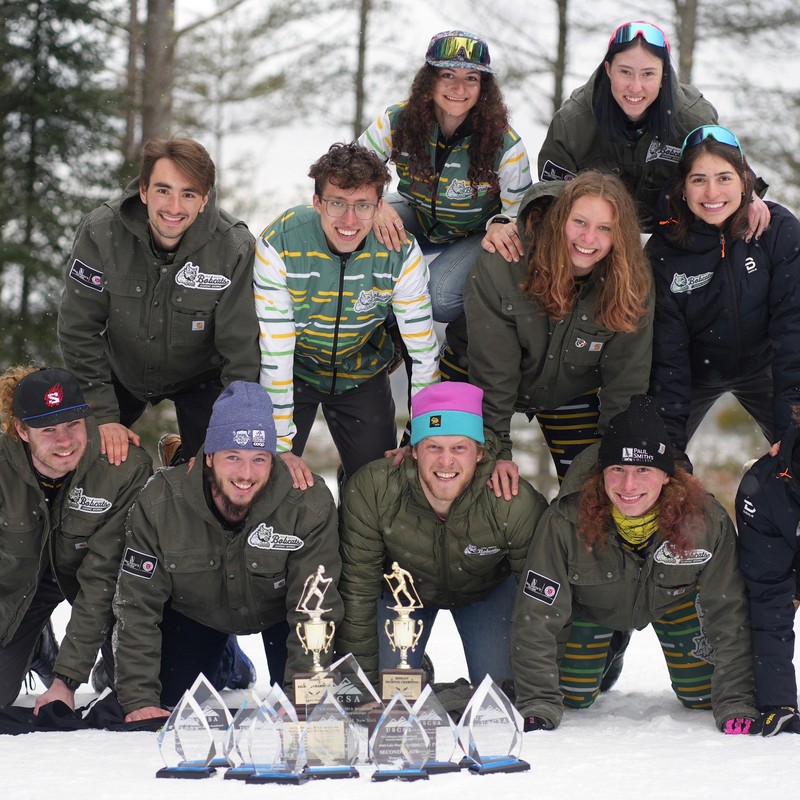
    Members of the Paul Smith's College nord
    The hardware from a season in which the Paul Smith’s men won the USCSA national title and the women finished second. The team never set winning it as a goal. (Photo: Timo Ziegler)

    Goals that do not squeeze anyone out

    Paul Smith’s does not set a team goal of winning a national championship, even in years when it wins one.

    “We just set process goals, because that’s the only thing we can control is what we do there,” Dougherty said. “And we caveat that with a little like, what do we hope that gets us. If we do all those things, we hope it can lead us to contending for a national title.”

    The reason is not modesty. It is arithmetic about who a team goal excludes.

    “I take such an individualized version of goal setting,” he said. “If we put a performance metric behind it, it often squeezes out other people in the program. It doesn’t allow their goals to exist.”

    Last season one of his athletes was named to a US biathlon team for an international championship, which meant flying back from Germany and landing roughly a day before the national championships started.

    “If the women’s team had said like our goal is to only win nationals and they were second overall, like that would have put her in a position where she’s like, well, I’m taken away from the team by going to World Juniors,” Dougherty said.

    She went. The team finished second anyway. Nobody had to choose.

    The team does have expectations, two of them, and he recites them the way people recite things they have said several hundred times.

    “To be on this team, you got to be a good teammate first, and then maximize your opportunity,” he said.

    What that produces, in his telling, is a program where the standard gets set from the back of the group.

    “When a star is like, oh, I’m tired today, or this morning it’s raining and it’s 38 degrees, no one wants to ski, but they see the slowest guy kitting up and going out, then it allows all of us to kind of gain from that,” he said.
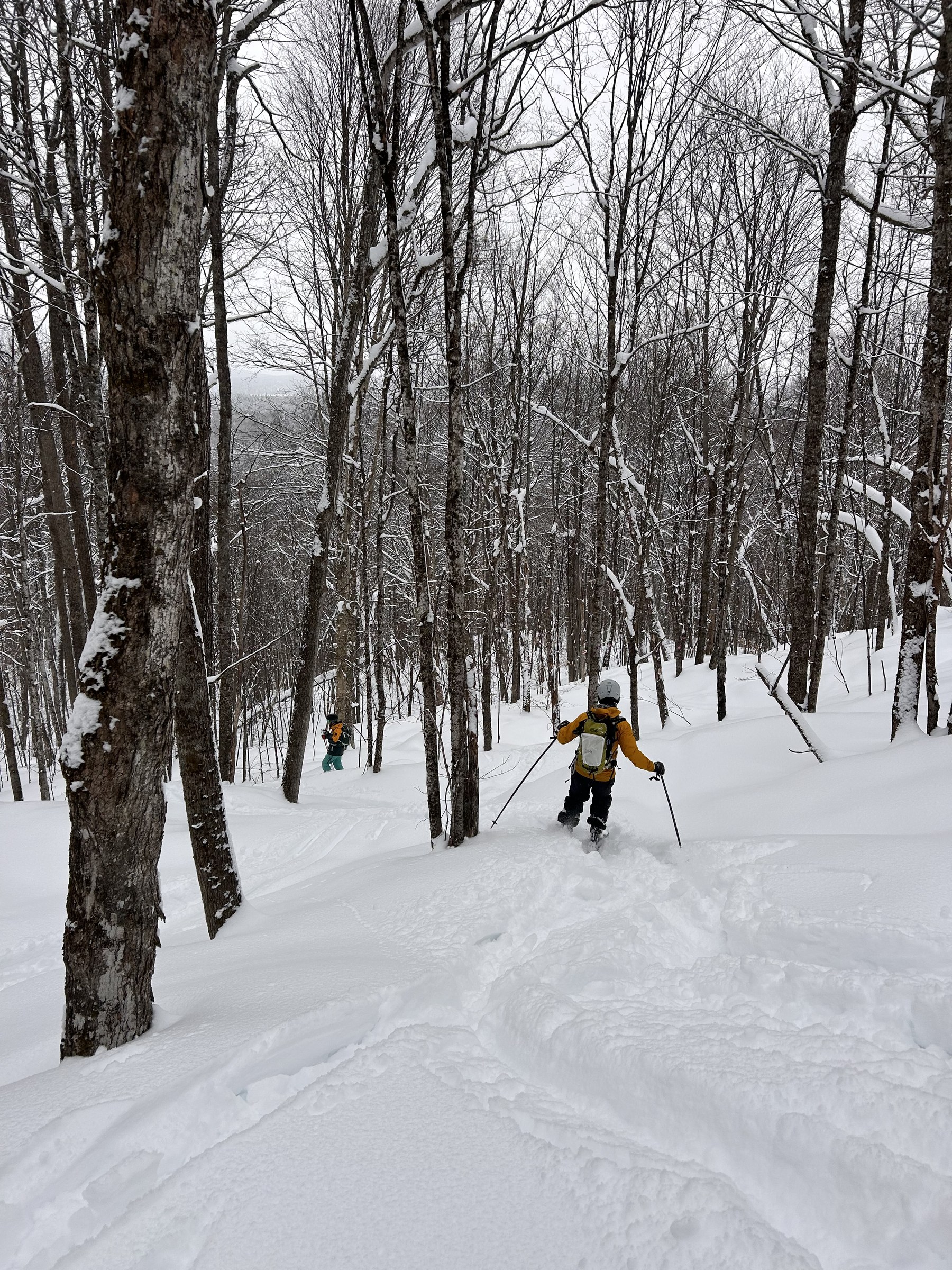
    A lone cross-country skier on a groomed
    An ordinary training day on the trails at Paul Smith’s. Dougherty says his job is to make room for whatever an athlete is carrying, without asking for it directly. (Courtesy photo)

    The person before the athlete

    The documentary spends real time on mental health, and it is the part of the conversation Dougherty warms to fastest. He starts from what he does not know.

    “I only get a piece of the story of this athlete,” he said. “We don’t know if they came from rough family life or they just feel like they don’t belong. All these things. Mental health issues are real, and I need to know about those. But I have to allow space for them to come up organically.”

    “I can’t be like, who has mental health issues?” he said. “I’ve got to create the space for that.”

    The space, in practice, is a rule about curiosity that the team applies to each other.

    “We’re constantly like, we’re not judgmental on this team. Let’s be curious,” he said. “If as we look at a teammate and we wonder what they’re going through, instead of saying like whatever, we say like, oh, what’s the source of that?”

    The same approach applies when he already knows an athlete is struggling. The problem then is how to open the door without making the asking the event.

    “The really hard thing is when you get to the point where you know stuff’s going on, finding the way to indirectly be direct,” he said. “What do you need?” is the question he finds himself asking, and it generally opens the door.

    That extends to how he thinks athletes should hold their own results. A race result, in his view, is a terrible place to store your sense of self.

    “Their performance isn’t who they are, and it’s not anything connected to their value,” he said. “Whether we win by 20 points, lose by 20 points, doesn’t change their person or their value as a person.”

    As he has gotten older he has become more concerned with sportsmanship, and he treats it as something other than a courtesy. It is how he teaches athletes to handle a disappointment and to recognize somebody else’s work.

    “When you can say like, yeah, I didn’t have a great race today, instead of being sad and dour, if you go to celebrate someone you know who’s trained hard for a year and had a great day, you can’t be sad anymore,” he said. “It just changes you.”

    He means it specifically. Clarkson won the USCSA men’s title at Mount Van Hoevenberg in 2024 and Paul Smith’s finished second, and Dougherty’s response was to have his team look closely at what the Clarkson skiers had done to get there.

    “Even though we’d love to win, when you see someone perform like that, it’s actually inspiring,” he said. “The more we can be open to looking at performance and saying like other teams did great, but there’s value in me not just celebrating them, but seeing what they did and honoring it. I think it makes us better athletes in the end.”
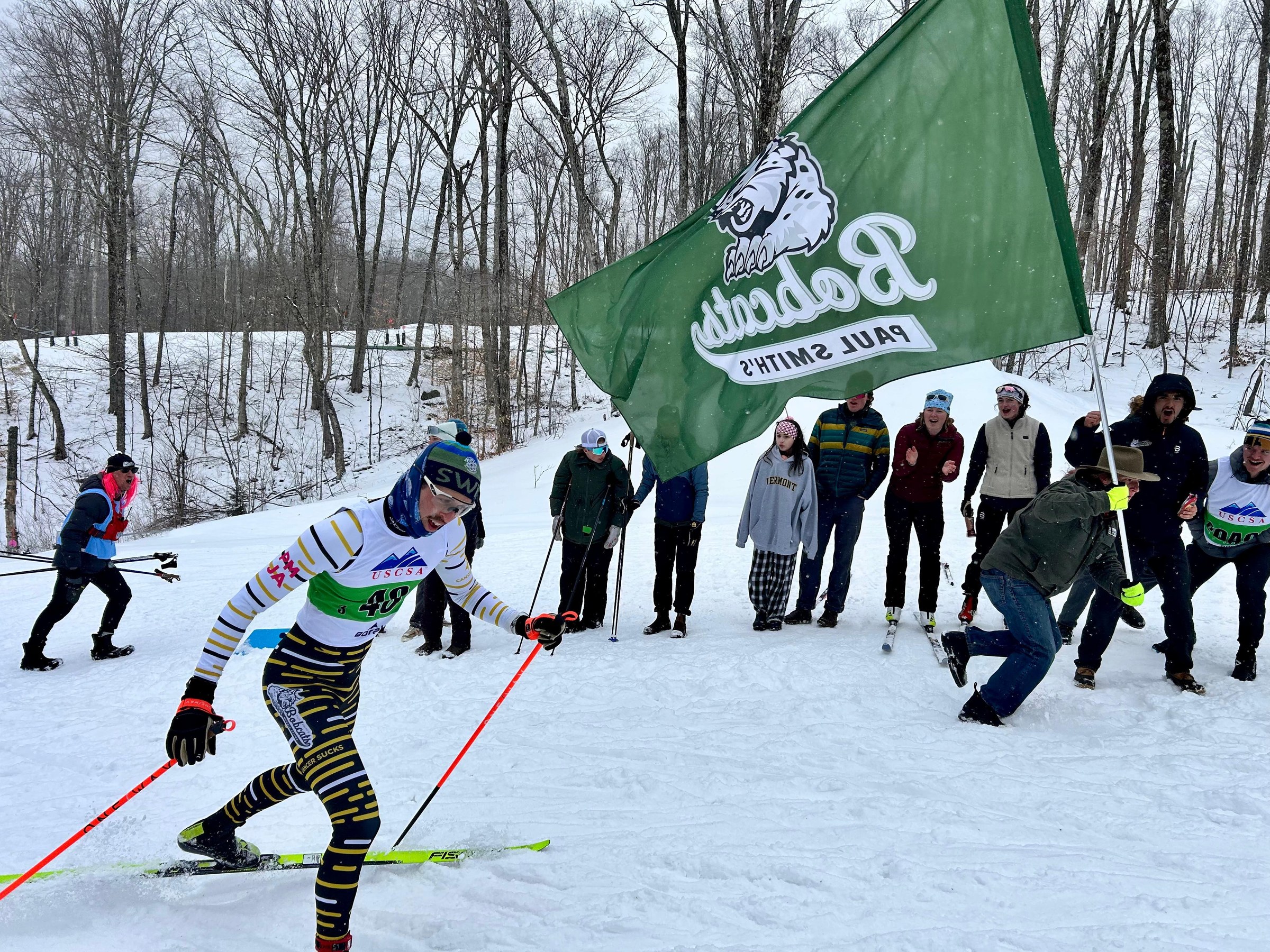
    A cross-country skier races past a group
    Teammates and the Bobcats flag trailside. At a college of roughly 750 students, Dougherty says, everyone on campus knows the ski program. (Courtesy photo)

    A small college and a film crew

    Paul Smith’s enrolls roughly 750 students by the college’s own count, on 14,000 acres at the northern edge of the Adirondack Park. Nearly half the bachelor’s degrees it awarded last year were in natural resources and conservation. It is the kind of place where a skier’s Saturday gets rearranged by a professor.

    “When you come here, it’s individualized; it is a personal relationship school,” Dougherty said. “My students are working with a professor; he takes an interest, he gets to know them, and then I find out, well, Saturday we’re actually going out with this professor. He’s taking us into the mountains to show us this specific part of our research.”

    “It is harder when you have 700 students. Everything about that is harder: recruiting, getting people here,” he said. “But because of that, we live in a culture where everyone on campus knows the ski program.”

    That extends past the campus. Dougherty calls the Saranac Lake and Lake Placid community around the program super fans, and he puts the college president, Dan Kelting, in that category.

    “He shows up at ski races and he’s not just there to like cheer,” Dougherty said. “He’s also there like, what do you guys need? What does the program need? What do we need to keep bringing in great students as a ski program?”

    His summary of the whole arrangement is that it could not exist anywhere else.

    “It’s this weird subculture that probably could only exist in the Adirondacks,” he said.

    Which brings up the film. A donor with a seasonal home on one of the lakes near the college met the team at an event, decided there was a story, and asked whether Dougherty would sit down with a documentary crew. Dougherty said yes without any clear idea what he was agreeing to.

    “I expected a three to five minute kind of like infomercial type thing for YouTube,” he said.

    What arrived was Adrenaline Films, an Orlando company that Dougherty said had got its start on the early seasons of Survivor and had lately been following a ballet company through the war in Ukraine. The crew embedded with the ski team for close to two years.

    “This was like pretty legit documentary crew following us for a long time,” Dougherty said.

    The result is Coach Matt and the Outdoor ‘Cats, directed by Robert Jury and produced by Michael Murray and Tim Ranzetta. It runs about 95 minutes, and it is free to watch, with ads, on Amazon Prime Video and on Tubi. Its spine is the 2024 season, in which the Paul Smith’s men lost the national title by two points.

    “They’re really just telling the story of a team,” Dougherty said. “Small, tiny school in the woods is really another theme there. You can do anything, anywhere, kind of an idea.”

    Any money the film makes goes back to the program, and he doubts there will be any.

    “My guess, without knowing all the specifics of cost, is that this is a net loss,” he said.

    The team that lost by two points in that film won by 40 in March. Nobody set that as a goal.

    Help Support Our Coverage!

    If you value the thoughtful work and access FasterSkier provides, please consider becoming a Voluntary Subscriber. Your support directly fuels our work to cover the people, places, and moments that make our sport special.

    Join the FasterSkier community!
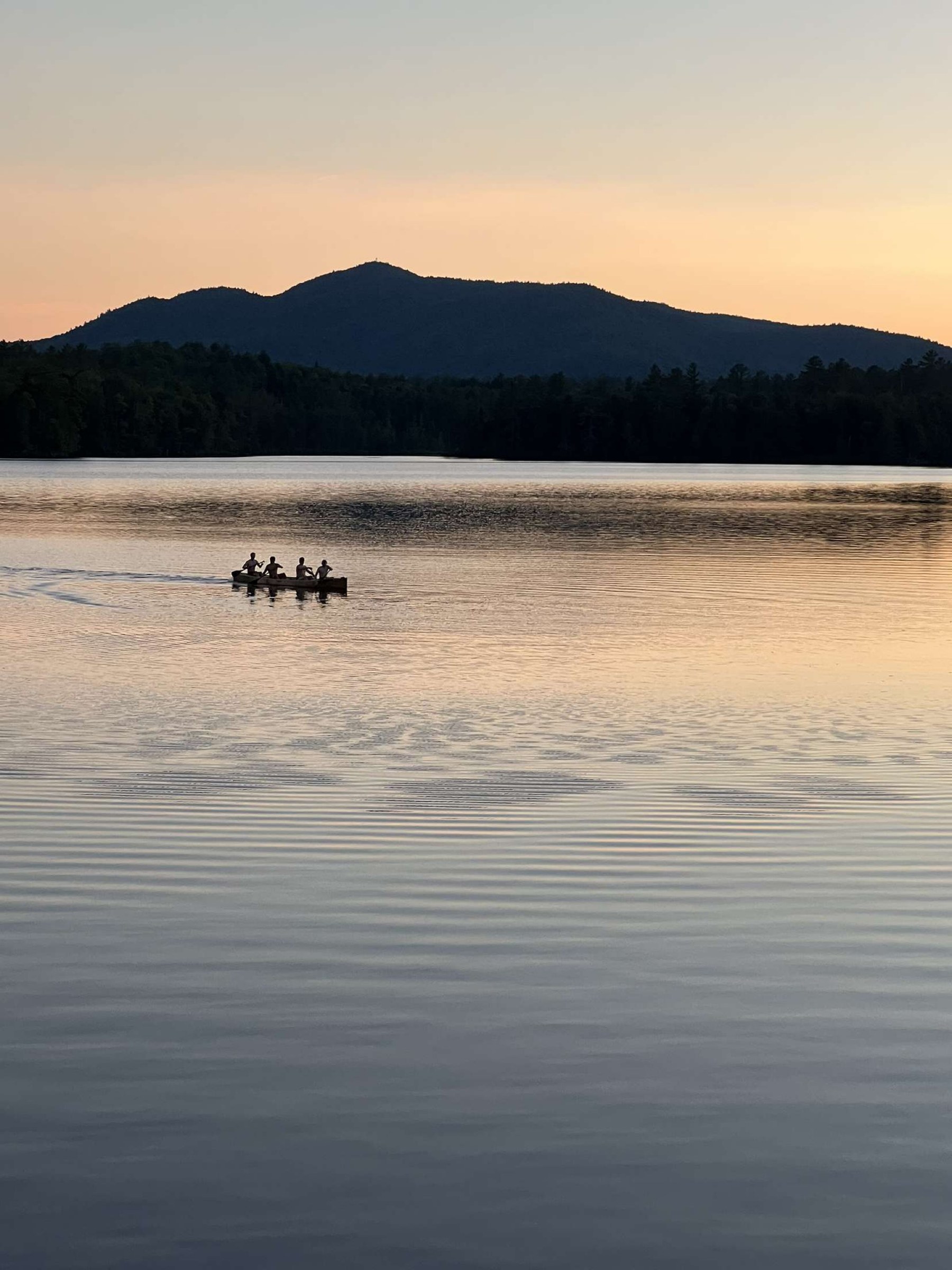
     

    A canoe with several paddlers silhouette
    First light on an Adirondack lake. The canoe season comes first, and it is where Dougherty does his most important coaching. (Courtesy photo)
  • No One Lives Here,” They Said. Then 10,000 Plus Fans Showed Up in Lake Placid

    No One Lives Here,” They Said. Then 10,000 Plus Fans Showed Up in Lake Placid

    This coverage is made possible through the generous support of Marty and Kathy Hall and A Hall Mark of Excellence Award. To learn more about A Hall Mark of Excellence Award, or to learn how you can support FasterSkier’s coverage, please contact info@fasterskier.com.

    Jessie Diggins during the quarterfinals of the Freestyle Sprint on Saturday in Lake Placid, New York, USA. (Photo: Voisin / FasterSkier)

    Lake Placid, N.Y. — The French coaches had questions. Two days before racing began at Mount Van Hoevenberg, they were standing in Saranac Lake — 55 degrees, windy, woods in every direction — wondering who exactly was going to show up to watch cross-country skiing in the middle of the Adirondacks.

    By Saturday, an estimated — rumored to be fair — 14,000 people had answered.

    Today, as Jessie Diggins lines up for the 20-kilometer mass start freestyle, the final race of her career, this corner of upstate New York will try to top itself one more time.

    Screaming fans, chainsaws, flags, signs, and glitter all over the course in Lake Placid, New York, USA. (Photo: Voisin / FasterSkier)
    A Weekend That Kept Building

    The first sign that Lake Placid was going to be different came Friday, and it wasn’t entirely smooth. With an initial estimate of 10,000 fans on Friday, the transportation system to and from Van Hoevenberg buckled under the demand. Some fans waited over two hours to get to the venue.

    Diggins finished fifth and clinched her fourth career overall Crystal Globe — her third in a row. She told reporters afterward that the crowd was so loud she couldn’t hear herself breathe. Johannes Høsflot Klæbo returned to win the men’s 10k, leading a Norwegian sweep of the top five.

    ORDA adjusted to the shuttle demand on the fly, pulling in school buses from across the region to shuttle people up the mountain, and by the time Saturday got started, things felt even bigger at the venue. The sprint course was packed — 14,000 fans by some estimates — as Sweden’s Linn Svahn dominated the women’s sprint and Maja Dahlqvist locked up the sprint Crystal Globe. And Federico Pellegrino, in his own final World Cup sprint, scripted the perfect ending with a masterful win — a retirement farewell that carried echoes of what’s coming today for Diggins.

    US Head Coach, Matt Whitcomb, after the races yesterday in Lake Placid was really happy because the standout performance was not one of his athletes, but instead the North American ski community that showed up in droves and created an electric atmosphere. (Photo: Voisin / FasterSkier)
    “Only Holmenkollen and Minneapolis”

    U.S. Ski Team head coach Matt Whitcomb has been on the World Cup circuit for years. He said the only events throughout his career that have ever rivaled the atmosphere here this weekend in Lake Placid are the Holmenkollen in Oslo — the sport’s grand prix if you will — and Minneapolis two years ago.

    That’s the company Lake Placid is keeping. And for those who were in Minneapolis, the comparison lands. Diggins said earlier this week that Minneapolis was the most special day of her career.

    “It was the most I’ve ever cried,” she said at Wednesday’s press conference. “I got to race in front of some of my grandparents who haven’t been able to travel overseas. They got to see me race for the very first time in a World Cup. And having so many friends and family and getting to share the thing that I love doing with them — that is the most incredible thing ever.”

    She paused, then added: “I think this weekend’s probably going to join that.”

    College skiers from all over the Northeast came in force to the trailside in Lake Placid, New York, for the races this weekend. (Photo: Voisin / FasterSkier)
    The Scene on the Ground

    What the numbers don’t capture is the texture. Young kids running around the venue in their NNF fan bibs — the ones with athletes’ faces printed on them — clutching Sharpies, hoping to meet their heroes. Fans who drove and flew from Vermont, from Alaska, from Minnesota, who planned vacations around this weekend months ago. The school buses that became part of the story, ferrying the faithful up the mountain road when the original plan couldn’t hold.

    This is what U.S. cross-country skiing looks like when it gets the stage. Not a packed NFL stadium or a sellout basketball arena — but thousands of people standing in the woods, screaming themselves hoarse for athletes from every country, because they love this sport and they know how rare these weekends are.

    The fans — especial the college skiers — made it sound like the race was happening in Davos, Switzerland with the chainsaws out on course. (Photo: Voisin / FasterSkier)
    One More Race

    Diggins has spent this weekend doing exactly what she said she would — being present, soaking it in, putting on a show. She clinched the Crystal Globe on Friday. She raced the sprint on Saturday. And now there’s one more.

    At Wednesday’s press conference, she talked about the way her mindset around suffering has evolved — how she’s learned to see the pain cave not as something to dread but as confirmation that she’s doing what she came to do.

    “This is what 100 percent feels like,” she said. “And sometimes this is what it looks like, and it’s some ugly scene, but that’s okay. It just has to be all heart and all effort, and that’s what I have to give in that moment.”

    She also made one thing clear about the team she’s leaving behind: “The team is going to be just fine without me. And I feel like that’s how I know I did my job.”

    Then, with a smile: “I’m excited to be a fan on the other side of the fence and get to cheer for them.”

    Today, in just ten minutes, Jessie Diggins will clip into her bindings for the last time as a World Cup racer. The 20-kilometer Mass Start Freestyle.

    And based on everything this weekend has shown us, “no one” will be watching.


    Love Stories Like This? Help Keep Them Coming.

    Feature stories like this one take time, access, and care to produce. If you value thoughtful storytelling and independent ski journalism, please consider becoming a Voluntary Subscriber. Your support directly fuels the work we do to cover the people, places, and moments that make our sport special.

    Join the FasterSkier community!
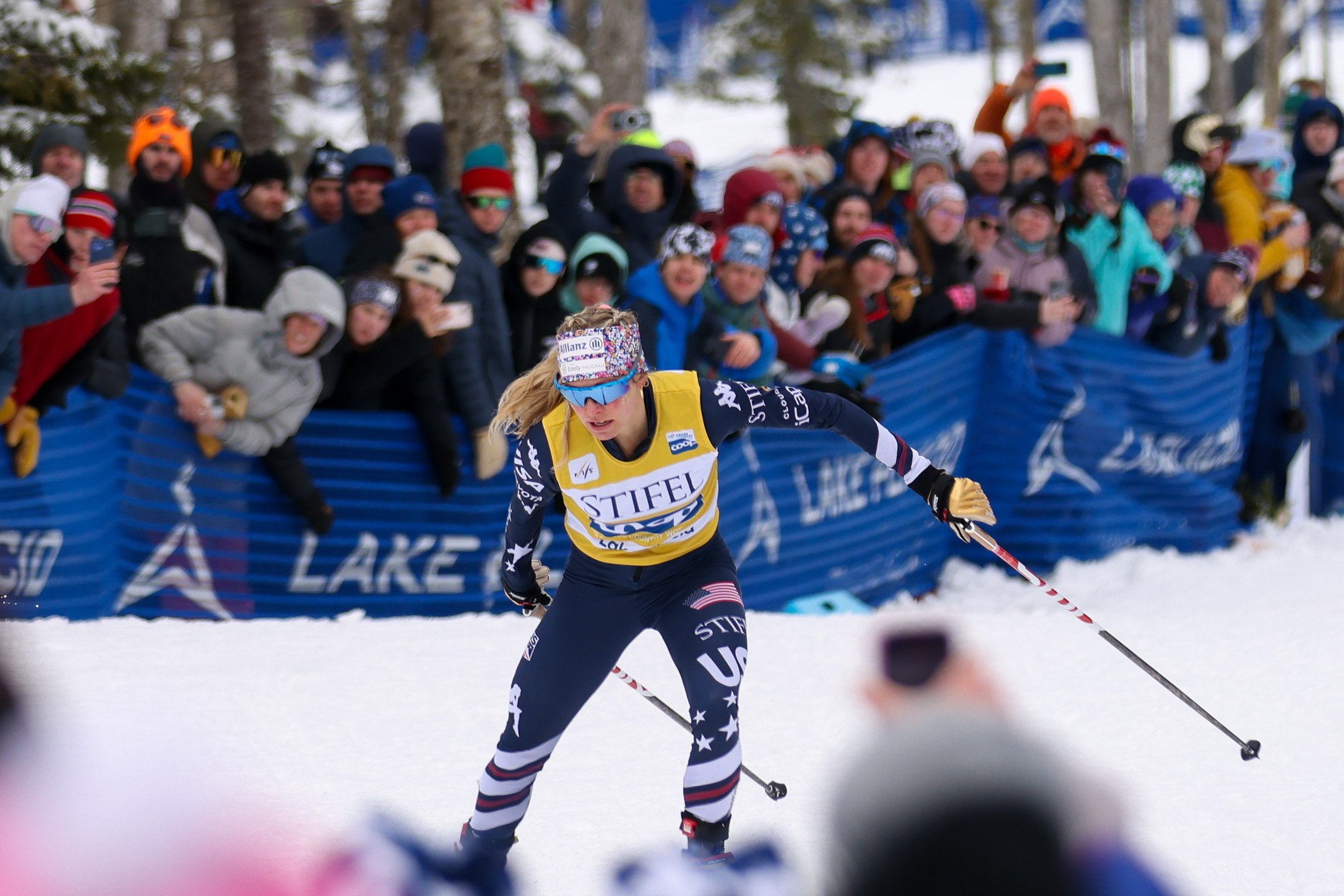
     

    When the sun finally came out the crowd got especially excited. (Photo: Voisin / FasterSkier)
  • Lake Placid Set to Host World Cup Finals with Full Festival Lineup March 19–22

    Lake Placid Set to Host World Cup Finals with Full Festival Lineup March 19–22

    Stifel Lake Placid Finals, a Coop FIS Cross-Country World Cup, to Bring Elite Ski Racing and Winter Festival Atmosphere to Lake Placid

    FIS Cross-Country World Cup racing, fan experiences, athlete engagement, and live entertainment coming March 19–22

    LAKE PLACID, N.Y. — The Stifel Lake Placid Finals, a Coop FIS Cross-Country World Cup, will offer more than world-class competition this March. The event will transform Lake Placid into a multi-day winter sports festival featuring themed race days, live entertainment, film screenings, interactive expo activations, and family-friendly programming.

    In collaboration with the New England Nordic Ski Association (NENSA), the 10th Mountain Division, U.S. Ski & Snowboard, and the International Ski and Snowboard Federation (FIS), the Olympic Regional Development Authority (Olympic Authority) has curated a dynamic schedule that celebrates Nordic skiing and outdoor winter-sport culture.

    A central focus of the week will be spotlighting women and girls in sport, networking opportunities, and hands-on activities. Fans will also have unique opportunities to connect with athletes through meet-and-greets, alumni celebrations, and special legacy moments — including Sunday’s “Last Lap” ceremony honoring retiring World Cup athletes.

    Together, these events are designed to foster engagement, connection, and shared celebration across the Lake Placid community and the global ski family.

    One final celebration of Jessie Diggins (USA) amazing career. (Photo: Authamayou/NordicFocus)

    Event & Community Programming

    In addition to World Cup racing, the Stifel Lake Placid Finals will feature a range of community events, athlete appearances, and festival programming throughout the week. Activities include youth programming, athlete conversations, live music, demonstrations, and opportunities for fans to connect with past and present champions.

    Programming details may evolve, and additional events may be added throughout the week. Visitors are encouraged to check the official event schedule for the most up-to-date information.

    Thursday, March 19 – Community & Kickoff

    Opening day features official training and festival programming at Mt Van Hoevenberg, along with an evening film screening at the Palace Theatre that kicks off the festivities in downtown Lake Placid.

    Friday, March 20 – Theme: Past

    Friday celebrates the legacy of Nordic skiing and Olympic history in Lake Placid. The venue opens with festival programming, including the NENSA Terrain Park and Expo with L.L. Bean, regional athlete recognition connected to the 2026 Winter Olympics, and Adirondack Birds of Prey demonstrations. Fans can also watch presentations from the 10th Mountain Division, enjoy live music, and attend athlete interviews and meet-and-greets throughout the day.  A highlight of the afternoon is the “One More Lap” legacy ski, featuring international and U.S. Ski Team alumni, including Olympic legend Thomas Wassberg and American champion Bill Koch, before World Cup racing and awards ceremonies conclude the day.

    Saturday, March 21 – Theme: Future

    Saturday’s programming focuses on the next generation of Nordic skiing. Activities include the NENSA Terrain Park and Expo with L.L. Bean, athlete appearances, and fan engagement opportunities.  The Women in Sports Heroic Panel highlights leadership and opportunities for girls and women in athletics, while fans can also attend athlete meet-and-greets and participate in interactive programming throughout the venue.  Competition highlights include the freestyle sprint finals, followed by Crystal Globe presentations. Youth racing also takes center stage with the World Cup Future Stars Sprint.  Additional programming includes Lollipoppers to Olympians: A Celebration of New England Skiing, a live recording of the Skirious Podcast featuring Ben Ogden and special guests at the Olympic Jumping Complex, and evening film screenings at the Palace Theatre.

    Sunday, March 22 – Theme: Present

    Championship Sunday features entertainment, athlete appearances, and the season-ending races of the World Cup Finals. Live music, a DJ set, and ceremonial elements, including the 10th Mountain Division Color Guard and flyover, set the stage for the final competition.  The afternoon concludes with awards ceremonies and the “One Last Lap” ceremony honoring retiring World Cup athletes.

    Gus Schumacher (USA) and Ben Ogden (USA), (l-r) celebrate their silver medal at the Olympic Winter Games in Tesero, Italy. (Photo: Vanzetta/NordicFocus)

    Competition Schedule | FIS Cross-Country World Cup Finals

    Mt Van Hoevenberg | March 19–22, 2026

    World Cup official training and competition runs March 19–22 at Mt. Van Hoevenberg, where the world’s top U.S. and international cross-country skiers will compete for overall and discipline Crystal Globe honors. The weekend culminates on Sunday with championship racing, awards presentations, and the “One Last Lap” ceremony recognizing retiring athletes.

    Full competition schedule:

    Thursday, March 19, 2026: 
    11:00 – 1:00 pm | 10km Official Training
    1:00 pm – 3:00 pm | Sprint Official Training

    Friday, March 20, 2026: 
    1:00 pm | Women’s 10km Interval Start Classic
    3:00 pm | Men’s 10km Interval Start Classic

    Saturday, March 21, 2026: 
    10:30 am | Women’s Sprint Qualification Free
    10:30 am | Men’s Sprint Qualification Free
    1:00 pm | Women’s Sprint Final Free
    1:00 pm | Men’s Sprint Final Free

    Sunday, March 22, 2026: 
    12:30 pm | Men’s 20km Mass Start Free
    2:30 pm | Women’s 20km Mass Start Free

    Jessie Diggins (USA) and the US Ski Team celebrate in Goms. (Photo: Authamayou/NordicFocus)

    Broadcast Schedule

    NBC will air the Sprint Finals live on Saturday, March 21, from 1–2 p.m. ET. CNBC will air coverage of the Men’s and Women’s 10km Interval Starts on Saturday, March 21, from 2–4 p.m. ET. NBC will also air the Women’s 20km Mass Start on Saturday, March 29, from 1–2 p.m. ET on tape delay.

    For the latest schedule updates, event details, and ticket information, visit the official Stifel Lake Placid Finals event page: https://mtvanhoevenberg.com/xcworldcupfinals/

    The schedule is weather- and condition-dependent and may be subject to change.

    Tickets & Media:

    Tickets are on sale: https://mtvanhoevenberg.com/xcworldcupfinals/

    Media credential applications: https://orda.org/media/press-room/#tab+media-credentials

  • Calculations and Consequences: The Men’s Classic Sprint at U.S. Nationals

    Calculations and Consequences: The Men’s Classic Sprint at U.S. Nationals

    This article was made possible through the generous support of our voluntary subscribers. If you value coverage like this, please support FasterSkier with a voluntary subscription.

    The men’s Classic Sprint heats got started with quarterfinal number one at the US Nationals Cross-Country Ski Championship at Mt Vanhoevenberg in Lake Placid NY. (Photo Nancie Battaglia)

    The last day of the U.S. National Cross-Country Ski Championships in Lake Placid arrived the way honest days in this sport often do. The snow at Mt. Van Hoevenberg had been churned and scoured by a week of racing and changing weather, its surface no longer pristine but revealing, the kind that gives little for free. Legs were tired. Arms were tender. Expectations had been trimmed back by accumulated kilometers and decisions already made.

    For the men lining up for the classic sprint, this was not simply a final chance at a national title. In an Olympic winter, nothing is ever only what it claims to be. The sprint was an audition—not necessarily for Olympic selection, but for relevance. For future start rights. For the ability to say, credibly, that range still exists.

    Sprint qualification, in particular, has a way of stripping sport down to its essentials. No drafting. No hiding. One lap to explain yourself. As has been said all week about sprints, it does not matter how clever you are in the heats if you cannot arrive there in the first place. In Lake Placid, that truth shaped the day from the first starter onward.

    Fin Bailey (UVM) makes his way up the Lake Placid sprint course’s signature climb. (Photo Nancie Battaglia)

    Qualification: where the day declares itself

    Qualification mattered here in a way that went beyond podiums and medals. With sprint start rights in the World Cup largely determined by qualification speed, the men knew exactly what was at stake. If this were a sorting mechanism, it was a blunt one.

    The fastest man through the course was John Schwinghamer, whose time at the top of the board set the early benchmark. But the story quickly widened. Pierre Grall-Johnson followed closely, and then Will Koch, who would soon become central to the day’s most unusual tactical thread, placed third.

    A few seconds farther back sat a cluster of names that told a deeper story: athletes with distance pedigrees, athletes chasing U23 selection, athletes managing fatigue from a long week and still trying to produce speed on demand.

    Among them was Zanden McMullen, who qualified tenth, solid but not dominant. “The qualifier felt a little off,” McMullen admitted. “I didn’t feel smooth and thought I skied poorly through the terrain. I was happy to qualify and have another chance to improve on the day.”

    That, in retrospect, was the quiet warning shot.

    Classic striding versus powerful double poling was one of the key storylines in the men’s Classic Sprint. (Photo Nancie Battaglia)

    A decision made in minutes

    If qualification is the most honest part of sprinting, it is also where improvisation sometimes reveals itself. Koch arrived at the start line with little margin and even less certainty.

    “I was already pretty tired going into the classic sprint,” Koch said. A bonk midway through the 20-kilometer freestyle earlier in the week had drained his reserves, and classic sprint had never been his strength. “With about ten minutes to go before my qualifier, I still couldn’t get my classic skis to kick.”

    The decision that followed was not theoretical. Koch asked his coach to prepare a pair of skate skis — not as a backup, but as a commitment. He reached the start with roughly 90 seconds to spare, hoping that strength alone might be enough to advance.

    Third in the qualifier erased doubt immediately. “When I ended up third, I knew it was the right call,” he said. “I never even tested a classic ski the rest of the day.”

    The gamble would ripple through every round that followed.

    Will Koch (SVSEF) powered through the qualification and heats, double poling on skate skis. (Photo Nancie Battaglia)

    Heats: when fatigue starts to speak

    Classic sprint heats at Mt. Van Hoevenberg reward clarity. The course offers opportunities, but they are conditional. Mistime a move, and the course and competition punish hesitation. Get trapped behind the wrong skis, and speed evaporates.

    Koch’s plan was simple and exhausting: lead early, create space before the climb, and survive long enough for glide to matter again. “If I could crest the climb with the group, my skis would be fast enough to carry me through,” he explained.

    For a time, it worked exactly as intended.

    But others were playing different games.

    Zach Jayne arrived at the sprint with a different set of calculations. Already qualified for U23 Worlds and carrying a narrow SuperTour points lead, his goals were layered. “I wanted to finish strong,” Jayne said. “I also wanted to make the final so I could displace other U23 athletes and help ensure my teammate Max Kluck made the trip.”

    Jayne, Koch, and teammate Carl Rune all opted to double-pole the heats on skate skis, a choice that paid dividends early. “It worked really well in the quarterfinal,” Jayne said. “But as the rounds went on and fatigue built, I was definitely wishing I’d brought a pair of klister skis.”

    That fatigue — cumulative, unrelenting — became the quiet theme of the afternoon.

    Zanden McMullen (APU) showed he had made the right calculations for himself in the final, creating a gap on the large climb, which he was able to maintain on the final downhill. (Photo Nancie Battaglia)

    Trusting kick in uncertain snow

    While some chased glide, Max Kluck made a different bet. His week had been defined by nerves more than novelty. “I was more nervous than I’ve been in years,” Kluck said. “I knew my U23 spot was on the line.”

    The snow tempted experimentation, but Kluck resisted. “I was pretty certain I wanted to stay on classic skis unless the weather took a major turn,” he explained. “I stuck with my gut.”

    The reward came immediately. In the quarterfinals, Kluck ran the climb with confidence, kick biting cleanly while others labored, arms already beginning to pay the price. “I figured I might be able to make double-poling work once,” he said. “But I didn’t think I could personally do it four times.”

    His solution was economy. By trusting his wax and striding more often, Kluck preserved his upper body for the finishing straight — a detail that would matter later.

    UVM’s Fin Bailey was showing he was on form and a threat for the podium throughout the heats, but his final got off to an unlucky start with a broken pole. (Photo Nancie Battaglia)

    The final: legs versus arms

    By the time the final assembly was complete, the calculus was visible even from the sidelines. The men who had double-poled all day carried speed — and fatigue. Those who had relied on kick carried legs.

    McMullen understood the equation precisely. “Going into the final, I knew the few boys that double-poled all day would be tired,” he said. “My plan was to keep them in reach before the final climb and then gap them.”

    Snow conditions had continued to degrade, wind and rain complicating grip and timing. McMullen’s classic skis, however, remained reliable. “Our classic skis felt good,” he said. “I didn’t think there was a need to try and double-pole the race.”

    When the decisive climb arrived, McMullen did not hesitate. He strung together clean transitions, trusted his kick, and separated decisively. “I felt really fresh still at the start of the final,” he said. “I knew I would be able to run away with it.”

    Behind him, the chase unfolded exactly as predicted. Koch’s glide carried him, but the cost of four rounds of double-poling showed. Kluck’s restraint paid dividends, his saved arms helping him close strongly. Jayne fought valiantly through fatigue, his earlier work for teammates already done.

    McMullen crossed the line alone — a national champion not because he had chased novelty, but because he had waited for the moment that mattered.

    Zanden McMullen (APU) comes to the finish of the Classic Sprint with his second national title in as many days at the US Nationals Cross-Country Ski Championship at Mt Van Hoevenberg in Lake Placid, NY. (Photo Nancie Battaglia)

    What the result actually means

    The men’s classic sprint did not reshape Olympic selection overnight. Sprint specialists were unlikely to be named from Nationals alone. But the race clarified something subtler and perhaps more important.

    It showed who can adapt under stress. Who can make decisions when plans unravel? Who understands that qualification speed opens doors long before medals do?

    For Koch, the day was a revelation. “The classic sprint was a really pleasant surprise to end the week,” he said, even as he acknowledged that broader goals remained unmet.

    For Jayne, consistency mattered more than headlines. “I don’t race to prove people right or wrong,” he said. “I know what I’m capable of.”

    For Kluck, the outcome was tangible. “Securing my U23 spot was the biggest goal of my season,” he said. “Locking it down here feels incredible.”

    And for McMullen, the victory was both affirmation and invitation. “I hope people know now that I’m an all-around skier,” he said. “And I hope the Olympic selection committee knows I have a lot of potential to succeed at the Olympics.”

    Zanden McMullen (APU) first place, Will Koch (SVSEF) second place, and Max Kluck (UU) third place at the US Nationals Cross-Country Ski Championship Classic Sprint at Mt Vanhoevenberg in Lake Placid NY. (Photo Nancie Battaglia)

    A quiet ending, honestly earned

    As the course emptied and the equipment was packed away, Mt. Van Hoevenberg returned to stillness. Another Nationals was complete. Another set of arguments had been made — not loudly, not always cleanly, but honestly.

    Sprint racing, especially in January of an Olympic year, has a way of revealing truths athletes might prefer to delay. Qualification does not negotiate. Fatigue does not compromise. Decisions, once made, echo through every climb and corner that follows.

    On this final day in Lake Placid, the men who listened closely to their bodies, their skis, and the snow underfoot, were the ones who left with something lasting.


    RESULTS:

    US Nationals Men’s Classic Sprint Qualification Results

    US Nationals Men’s Classic Sprint Overall Heat Results


    Love stories like this? Help keep them coming.

    Feature stories like this one take time, access, and care to produce. If you value thoughtful storytelling and independent ski journalism, please consider becoming a Voluntary Subscriber. Your support directly fuels the work we do to cover the people, places, and moments that make our sport special.

    Join the FasterSkier community!
     

    What was truly on display this week at the US Nationals Cross-Country Ski Championship at Mt Van Hoevenberg in Lake Placid, NY was not only that cross-country skiing is an awesome sport, but the community that embodies it is something worth celebrating. (Photo Nancie Battaglia)
  • Where the Race Breaks Open: Women’s 20 k Freestyle at U.S. Nationals

    Where the Race Breaks Open: Women’s 20 k Freestyle at U.S. Nationals

    This article was made possible through the generous support of our voluntary subscribers.  If you value coverage like this, please support FasterSkier with a voluntary subscription.  

    Traffic was thick at the beginning of the US National Cross-Country Ski Championship Women’s 20 k Freestyle Mass Start in Lake Placid, NY. (Photo: Nancie Battaglia)

    There is a particular moment in a long mass start when the race quietly declares what it will be. It does not arrive with a surge, a crash, or even a decisive move. It arrives when the pack thins just enough that the edges of the course begin to matter—when skis no longer overlap cleanly, when passing requires intention, and when each athlete realizes—often simultaneously—that this is no longer a collective undertaking.

    At Mt. Van Hoevenberg, that moment came early.

    The women’s 20-kilometer freestyle mass start at the 2026 U.S. National Cross-Country Ski Championships unfolded under conditions that rewarded clarity and punished hesitation. The course was wide in places, narrow in consequence. Fresh snow lined the edges, slower and heavier than the main track, turning every attempt to move forward into a calculation of cost. The pace at the front was honest from the gun—fast enough to string the field out, fast enough to strip away the illusion that patience alone would bring opportunity.

    In an Olympic winter, Nationals rarely exist in isolation. They are arguments as much as races, each result carrying the quiet weight of future conversations. But on this morning, before selection scenarios and season arcs could intrude, the race itself demanded attention. Four laps. Twenty kilometers. A course that climbs insistently and asks athletes to be precise even when tired.

    What followed was not one story, but several—layered, intersecting, and revealing.

    Colorado’s Tilde Bångman did much of the work at the front of the Women’s 20 k Freestyle Mass Start in Lake Placid, NY. (Photo: Nancie Battaglia)

    The Fast Start That Changed Everything

    From near the front, the race immediately took on the shape many expected. Kendall Kramer, eager to avoid the kind of chaos that can derail a mass start before it has truly begun, made her intentions clear.

    “I wanted to go out fast because I didn’t want any funny business—colliding or breaking equipment,” Kramer said later. “I was super looking forward to being in the front of a mass start after being caught in the back on World Cups.”

    For Kramer, the early pace felt familiar rather than reckless. World Cups, she noted, often begin faster than domestic races, and the instinct to establish position early has become second nature. The speed was assertive but manageable. She felt fit, capable, present.

    Behind her, the effect was immediate. The field stretched, then fractured, then reorganized into smaller, more intentional units. For athletes starting deeper in the field, this stringing-out created both opportunity and pressure.

    Novie McCabe, starting from bib 26, felt the opening kilometers open rather than close.

    “My plan for the start was just to stay relaxed and try to work my way up,” she said. “It honestly ended up being easier than expected because the front girls took it out so fast. It was very strung out, and there was lots of room to move around.”

    Within minutes, McCabe had navigated cleanly into the front group. What followed was less about advancing and more about survival.

    “I got to the front pack about three minutes into the race,” she said. “So I spent most of it there just trying to hang on for as long as I could—and ended up having it in me to hang till the end.”

    That phrase—hang on—would recur in different forms throughout the day, taking on slightly different meanings depending on where each skier found herself in the race.

    Ava Thurston (#8 – Dartmouth) couldn’t quite hang on to the lead group of three, but eventually skied with Hailey Swirbul (#67 – APU) and Haley Brewster (#46 – UVM) before finishing fourth overall and third-place American. (Photo: Nancie Battaglia)

    When the Front Pulls Away

    Not everyone who tested the front pace could stay there.

    Late in the first lap, Ava Thurston made her own attempt to bridge. She came close enough to feel the rhythm of the leaders, close enough to understand the cost.

    “I tried to get back onto the front group, and I got pretty close,” Thurston said. “But I realized that I wasn’t going to be able to match their pace.”

    The realization came with consequences. For a brief stretch, she found herself skiing alone—a dangerous place in a mass start, especially early, when gaps can grow quietly and decisively.

    “That was where I did have a little bit of that panic,” she admitted.

    The panic did not last. Company arrived in the form of Hailey Swirbul and Haley Brewster, and with it, perspective.

    “Once I was skiing with them, I was kind of just thinking, ‘This is a good group. I can stay with these guys,’” Thurston said.

    From there, her race became less about chasing what was ahead and more about managing what was happening around her. She tucked in, matched surges, and responded quickly to small separations before they became something larger.

    “There were a couple of times where I would fall off the pack just a little bit,” she said. “Each time, I worked hard to get right back on before letting it be a big gap. I was really stoked on that.”

    On a course like Van Hoevenberg—four laps of sustained uphill skating—those moments add up. Fitness is exposed repeatedly, not all at once. For Thurston, the race offered reassurance.

    “This was the first race longer than 10k I’d done this year, and the first mass start that wasn’t a sprint,” she said. “It was a really good indicator that my fitness is there. It’s hard to fake anything on this course.”

    She would finish fourth, clearly separated from the podium trio but equally clear of the deeper chase—an honest result in a demanding field.

    With higher FIS points from not racing the past two seasons, Hailey Swirbul (#67 – APU) needed to ski through a lot of traffic during the early kilometers, but eventually found herself in the chase pack. (Photo: Nancie Battaglia)

    Racing From the Back Without Racing Small

    While the front and mid-pack sorted themselves, Hailey Swirbul was running an entirely different race.

    Starting from bib 67, she entered the day knowing she would need to be deliberate.

    “I didn’t even realize I would be seated so far back until the start list came out,” she said. “Obviously, I would be, because my FIS points aren’t low at this point—but it was an experience.”

    The challenge was not simply moving forward. It was how to do so without paying too steep a price.

    “The edges of the course had fresh snow on them,” Swirbul explained. “It was much slower, and a much higher energy expenditure to get around people that way.”

    Instead of forcing passes, she waited. Instead of locking into the pace of whatever group surrounded her at a given moment, she kept her attention forward.

    “I almost approached the first couple laps like an individual start,” she said. “It’s really easy to lock into the group you’re around and forget about the people ahead of you.”

    Women’s racing, she noted, often begins with a fast, destabilizing surge—a period where the goal is simply to hang on long enough for things to settle.

    “That’s exactly what happened today,” she said. “The leaders go fast, string it out, and then the real race starts again.”

    For Swirbul, the balance was constant: advancing through traffic while respecting the race’s length.

    “A 20k is a long race,” she said. “You can’t really pay for it.”

    Though she never bridged to the front trio, Swirbul finished fifth—solidly clear of the next wave behind her—and left the course satisfied with her execution and proud of the broader team effort.

    “Our coach absolutely crushed it with skis and feeds,” she said. “It was a good day to be APU.”

    Novie McCabe (APU) maintained contact on the uphills and used the downhills to close the small gaps to Tilde Bångman (CU) at the front of the race. (Photo: Nancie Battaglia)

    The Margins at the Front

    At the sharp end, the race narrowed to a familiar dynamic: strength, speed, and patience under pressure.

    As the kilometers mounted, Tilde Bångman began to apply pressure on the climbs, testing the group’s elasticity. By mid-race, the front had distilled to three: Bångman, McCabe, and Kramer. The chase group behind them was no longer within striking distance, and the podium places would be decided among those three alone.

    McCabe felt the pressure immediately.

    “In the last few kilometers, Tilde was skiing super strong and still really pushing the pace,” she said. “She would gap me a little bit on some of the hills.”

    Each gap mattered. Each closure required confidence—in skis, in timing, and in restraint.

    “I had some super good skis, so I was able to glide back up to her,” McCabe said.

    The plan crystallized: stay attached through the final hill, try once to make a move, and if that failed, save everything for the finish.

    “I tried to get a gap on the last hill, which didn’t quite work,” she said. “So I tried one last time at the finish.”

    It was enough.

    McCabe crossed the line first, securing the national title after a race built not on constant aggression, but on measured commitment. The emotion that surfaced surprised even her.

    “I think when I crossed the line, I mostly just felt super happy to be back racing and feeling like myself,” she said.

    The win mattered. So did what it represented.

    “Going into this week, I wasn’t sure it was the best idea for me to race frequently this season,” she said. “Now I have a lot more confidence that I can race—and maybe more importantly, recover from racing.”

    In an Olympic year, that distinction is not trivial.

    The lead pack and eventual overall podium with Kendall Kramer (APU), Tilde Bångman (CU), and Novie McCabe (APU) (l – r). (Photo: Nancie Battaglia)

    Kramer’s Race: Control Without Regret

    For Kendall Kramer, the separation late in the race came not through fitness, but friction.

    “My skis slowed down as they went,” she said. “They started to feel sticky—like I skied through too much Gatorade or something.”

    The effect was most pronounced on the downhills, where speed should have come freely.

    “The girls had to push my poles to speed me up to keep together,” she said. “Eventually, they could just gap on all the downhills.”

    Once the gap formed, Kramer shifted her focus from contesting the win to finishing the race well.

    “I’m happy to maintain my place and feel good,” she said. “I can’t complain.”

    What she wanted from the race, she explained, was not chaos or last-minute risk, but sustained pressure in a small group.

    “I wanted a small pack where we could test at every little bit,” she said, “as opposed to leaving it to a sprint or taking risks at a time like this.”

    She finished third, completing the podium, and left Lake Placid without repeating her national title—but with confirmation that mattered just as much.

    “I felt fit and totally capable today,” she said. “I didn’t feel bad feelings.”

    Novie McCabe (APU) managed to put a small gap on teammate Kendall Kramer to get away with Tilde Bångman (CU) and eventually ski to the national title in the finish stretch. (Photo: Nancie Battaglia)

    What the Race Revealed

    By the time the women completed their fourth lap, the story of the day was no longer about who surged when, but about how each athlete managed the same course differently—and honestly.

    McCabe raced with restraint until she no longer needed to. Kramer raced with intent and accepted the margins. Thurston learned, adjusted, and confirmed her distance fitness. Swirbul navigated from deep in the field with patience and clarity.

    None of those narratives exists in isolation. Together, they form a portrait of a championship race that did what the best distance races always do: expose truth without exaggeration.

    At U.S. Nationals, the women did not simply ski 20 kilometers. They negotiated space, managed doubt, trusted preparation, and tested belief.

    In an Olympic winter, those are not side effects.

    They are the point.

    The national podium for the US National Cross-Country Ski Championship Women’s 20 k Freestyle Mass Start with Novie McCabe (APU) first, Kendall Kramer (APU) second, and Ava Thurston (Dartmouth) third. (Photo: Nancie Battaglia)


    RESULTS:

    US Nationals Women’s 20 k Freestyle Mass Start


    Love stories like this? Help keep them coming.

    Feature stories like this one take time, access, and care to produce. If you value thoughtful storytelling and independent ski journalism, please consider becoming a Voluntary Subscriber. Your support directly fuels the work we do to cover the people, places, and moments that make our sport special.

    Join the FasterSkier community!


    The overall podium for the US National Cross-Country Ski Championship Women’s 20 k Freestyle Mass Start with Novie McCabe (APU) first, Tilde Bångman (CU) second, and Kendall Kramer (APU) third. (Photo: Nancie Battaglia)