From the FasterSkier archive — posts syndicated from athletes’ and coaches’ own blogs between 2004 and 2012, kept online as published. Current coverage is at fasterskier.com.
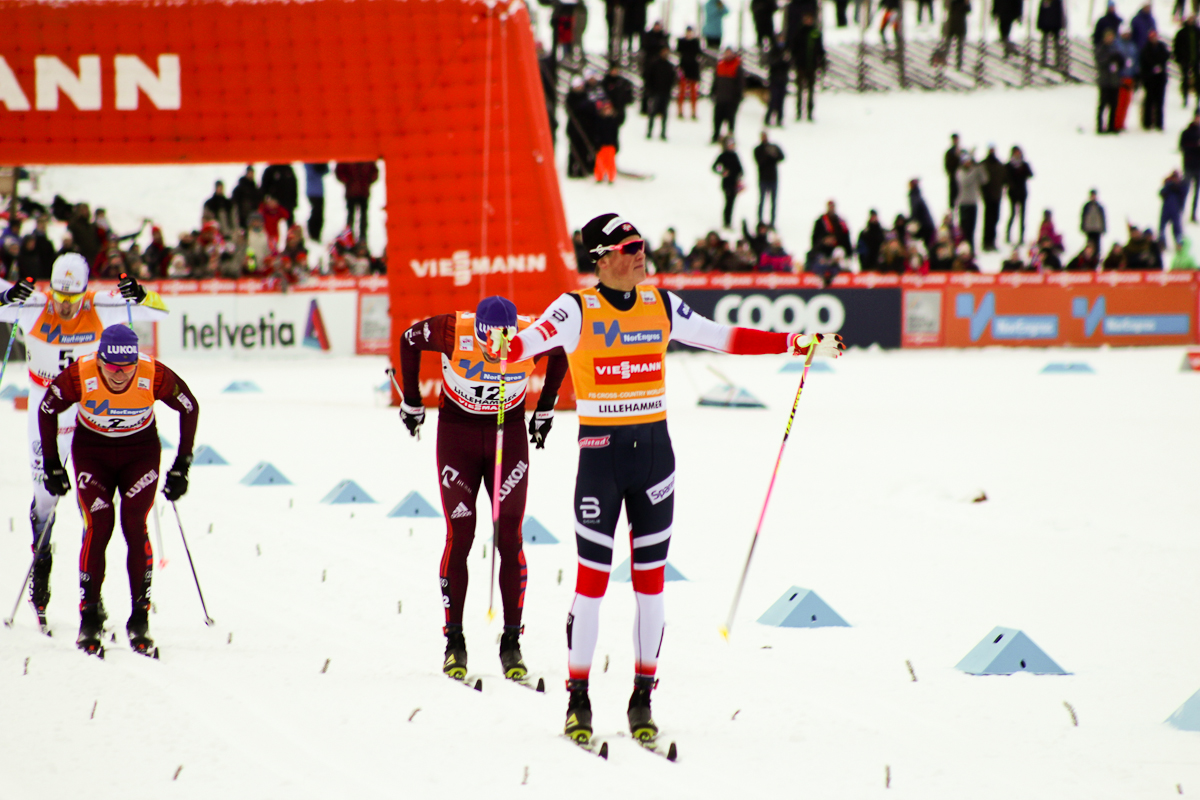
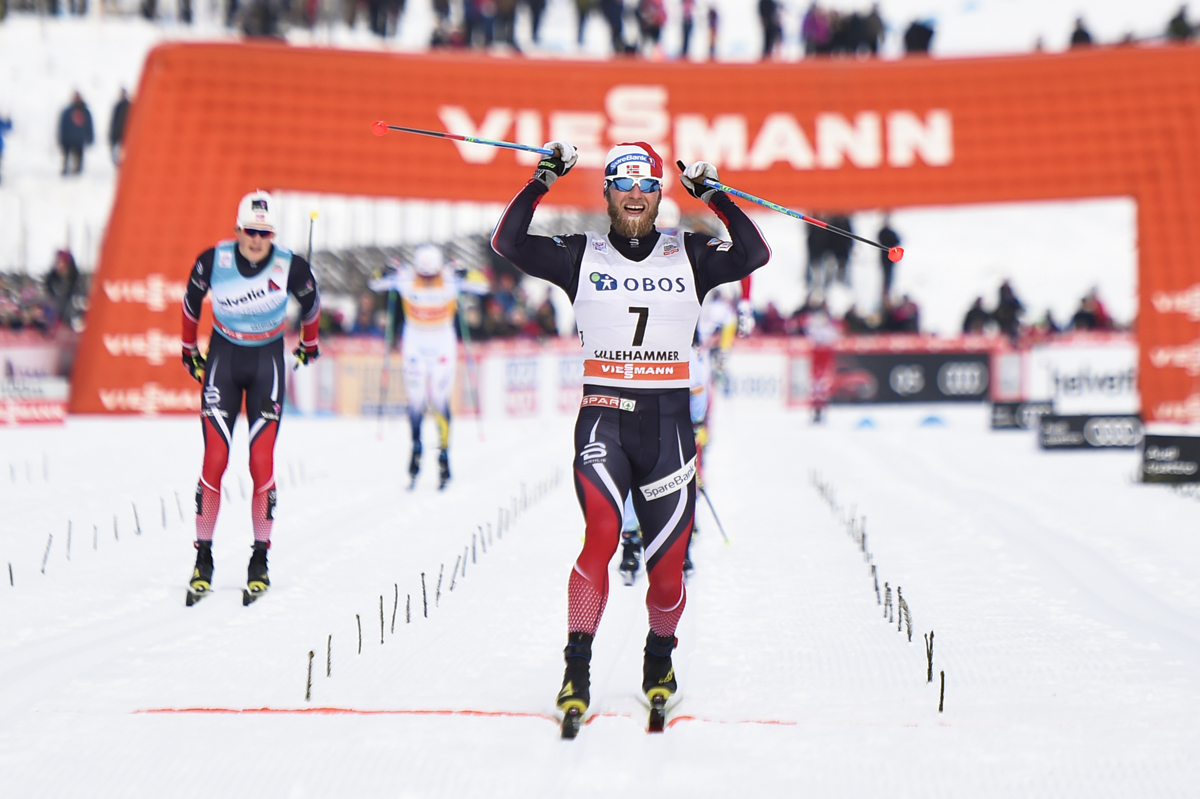
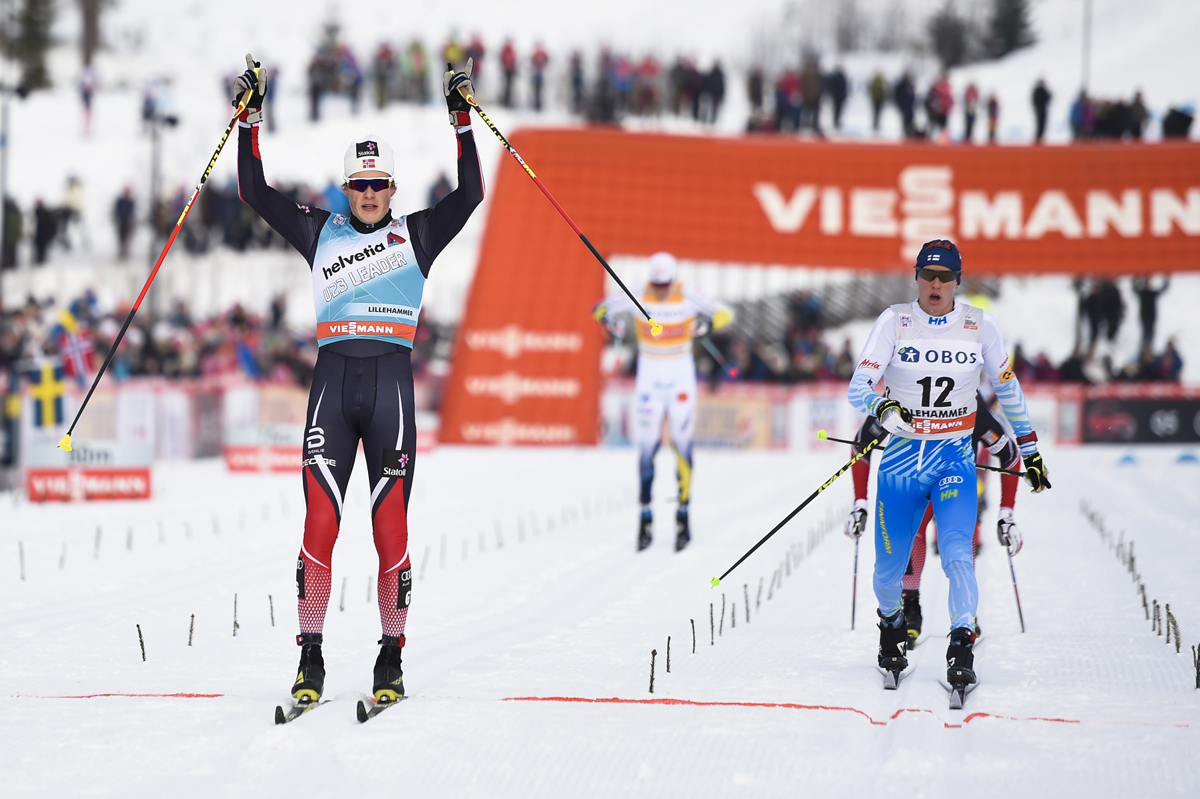
Norway’s Johannes Høsflot Klæbo welcomes another World Cup win as he nears the finish line during the men’s 1.5 k classic sprint final on Saturday in Lillehammer, Norway. (Photo: Henrik Hunne)
Smack dab in the heart of the nordic sport world in Lillehammer, Norway, the World Cup began its second weekend of the 2017/2018 season with a kick-and-glide bang on Saturday. The men contested a 1.5-kilometer classic sprint on a course featuring a flat run into and out of a three successive climb-descent combo.
At 21 years old, Norway’s Johannes Høsflot Klæbo remains peerless.
Is it the lungs? His up-tempo, high-output running style? For all the winning since his World Cup debut in 2016, Klæbo must be prematurely aging his rivals.
As last season’s overall Sprint World Cup winner and last weekend’s Ruka Triple dominator, 2017/2018 is starting off as a continuation of the nascent Klæbo era.
Klæbo has four wins in four races this season as he out-toed Russia’s Sergey Ustiugov by 0.83 seconds to win Saturday’s sprint. Another Russian, Alexander Bolshunov, was third (+1:29). Calle Halfvarsson from Sweden placed fourth (+1.64), and off the back were Norwegians Emil Iversen in fifth (+8.20) and Sondre Turvoll Fossli in sixth (+17.30).
Ustiugov’s exploits are well documented — he skied to five medals at 2017 World Championships, three silvers, and two golds. But like Klæbo, Bolshunov appears to be an authentic, albeit young challenger for future podiums and overalls on the World Cup. He’ll turn 21 on Dec. 31. Bolshunov won the 30 k skiathlon and 15 k freestyle and placed second in the classic sprint at last season’s U23 World Championships. After the Lillehammer sprint, Bolshunov is positioned second in the overall World Cup standings with 252 points — 22 points ahead of Norway’s Martin Johnsrud Sundby in third. (Sundby did not race in Saturday’s sprint.)
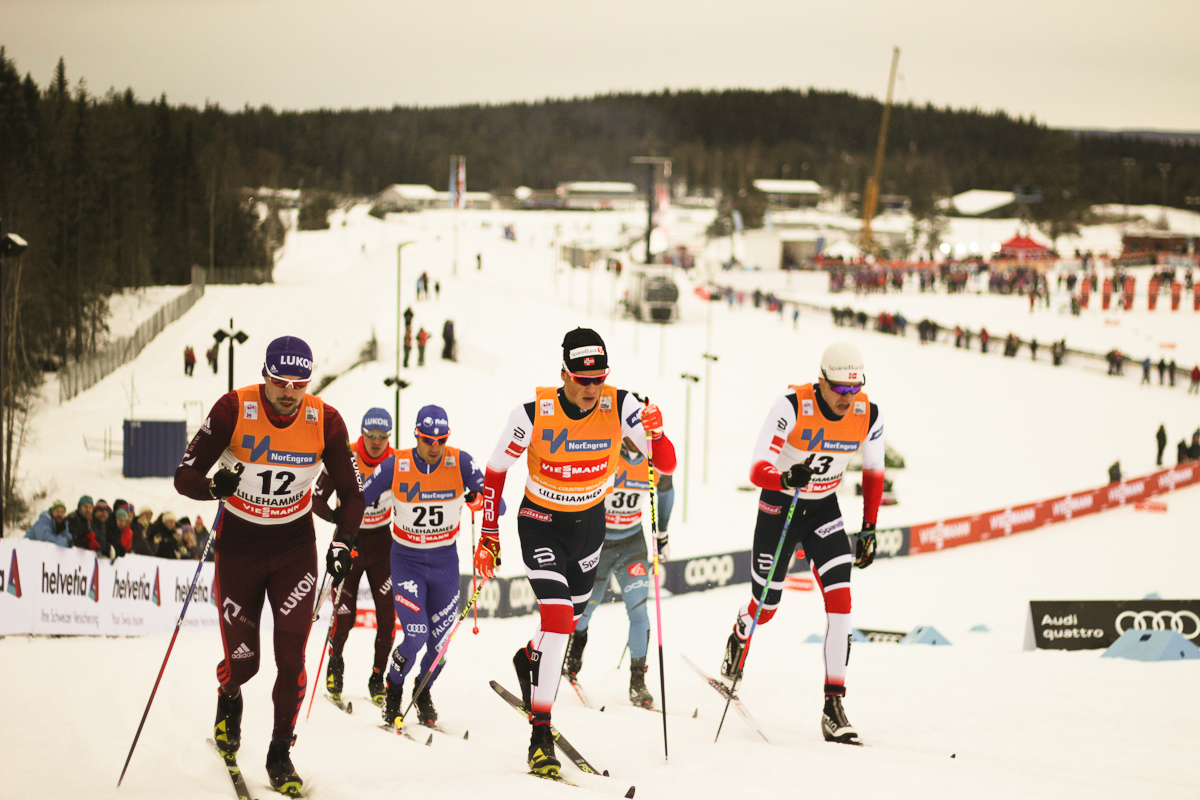
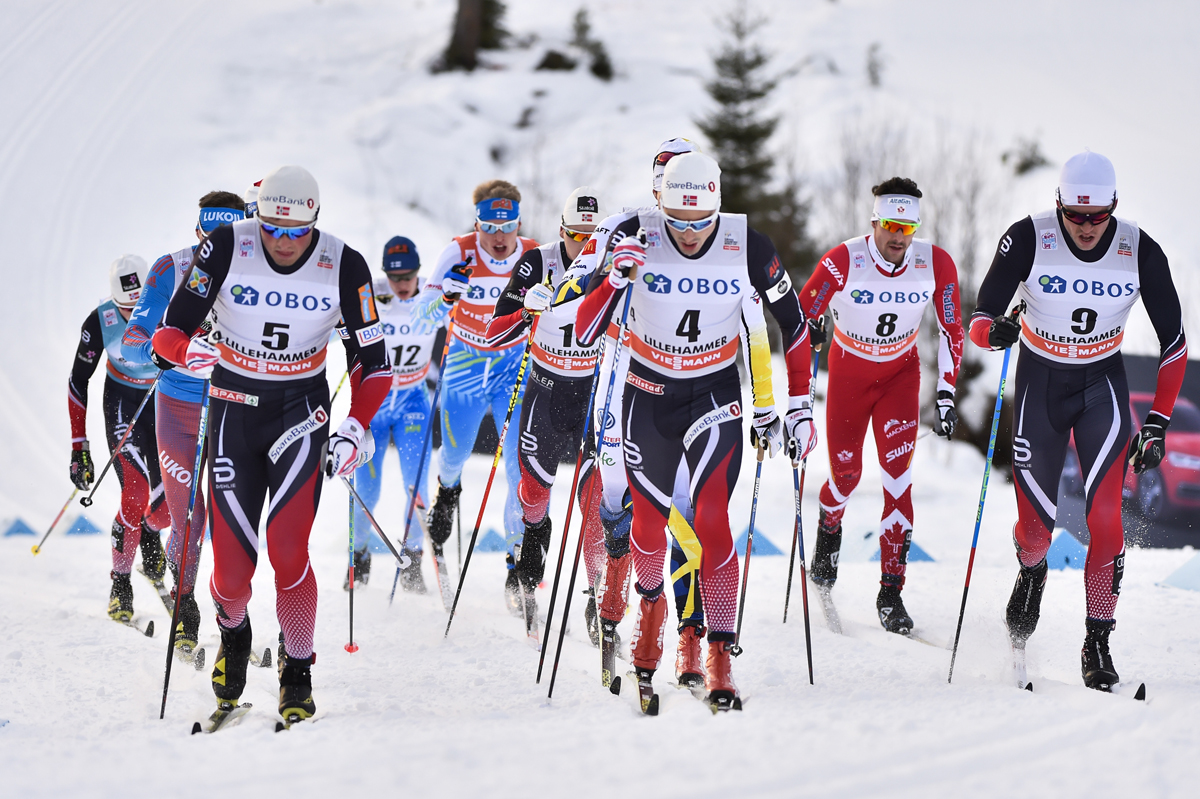
Norway’s Johannes Høsflot Klæbo (center, in leader’s bib) leads his quarterfinal as Russia’s Sergey Ustiugov (12) keeps pace during Saturday’s classic sprint in Lillehammer, Norway. (Photo: Henrik Hunnes)
But the narrative has been all Klæbo.
With 400 points, Klæbo’s foundation for building an early season hold on the World Cup overall is strong.
From the start on Saturday in Lillehammer, it was another stellar performance from the Norwegian in the qualifier: Klæbo won in 3:28.99 minutes with 4.31 seconds on Bolshunov, the next closest competitor.
Klæbo’s winning margin was slimmer in the quarterfinals, but it only amounted to a tease. He bested Ustiugov in the first quarterfinal by 0.17 seconds. In semifinal 1, there was a flip-flop: Ustiugov won, besting Klæbo in second place by 0.25 seconds.
Saturday’s conditions in Lillehammer featured fresh snow, which placed a premium on remaining in the skied-in tracks, maximizing glide without stepping into the slower snow. The final hill and descent into the finishing straight played a key part in Saturday’s winning tactics. Klæbo was mindful of the endurance aspect for Saturday’s sprint and tried tempering his effort until it mattered.
“I changed the plans a little bit in the final and tried to be second in the last downhill,” Klæbo said during the post-race press conference. “And then Ustiugov came before the last uphill there and it was going pretty fast I was just trying to keep up with him and be second on the last uphill there and to push hard and finish.”
With his latest win, Klæbo becomes only the second male skier to win the first two World Cup sprints of the season. In 2008/2009, Norway’s Ola Vigen Hattestad won the first three sprints that season. Klæbo remains the youngest World Cup sprint winner, according to the International Ski Federation (FIS).
Alex Harvey was the lone North American to qualify in the top 30, placing 22nd, 11.89 seconds in back of Klæbo.
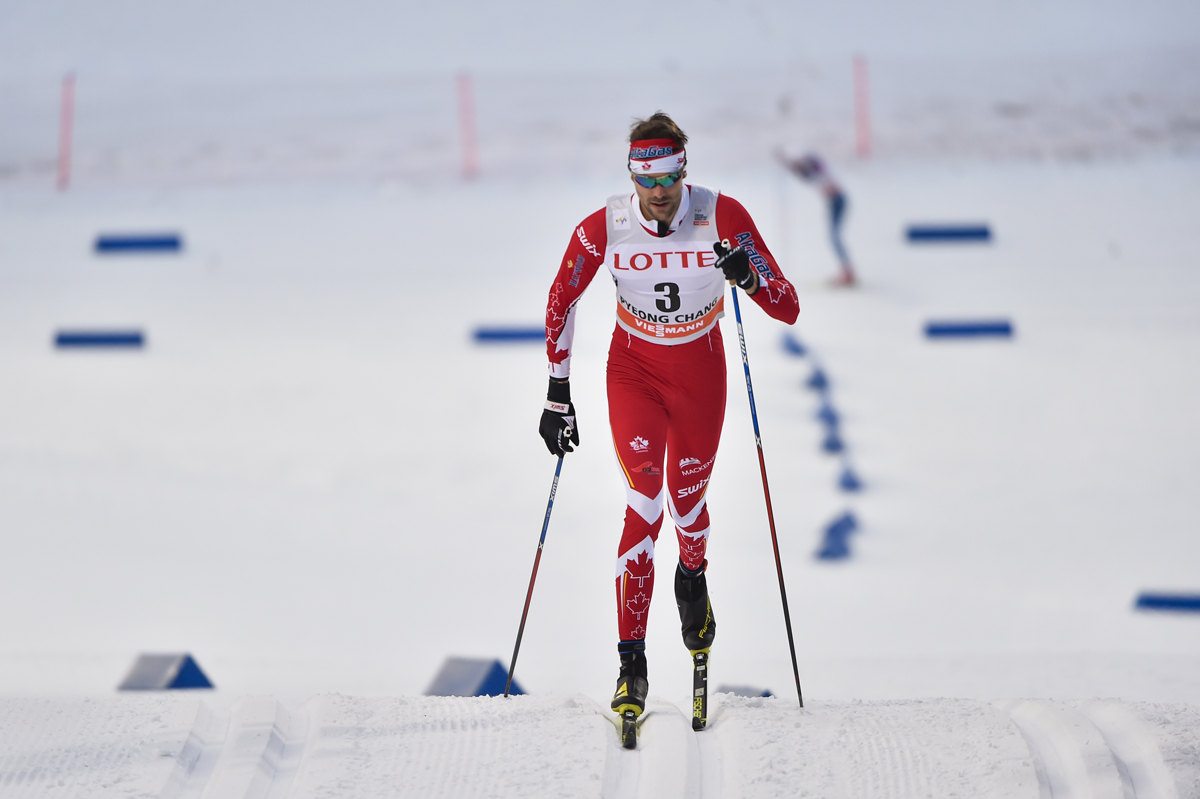
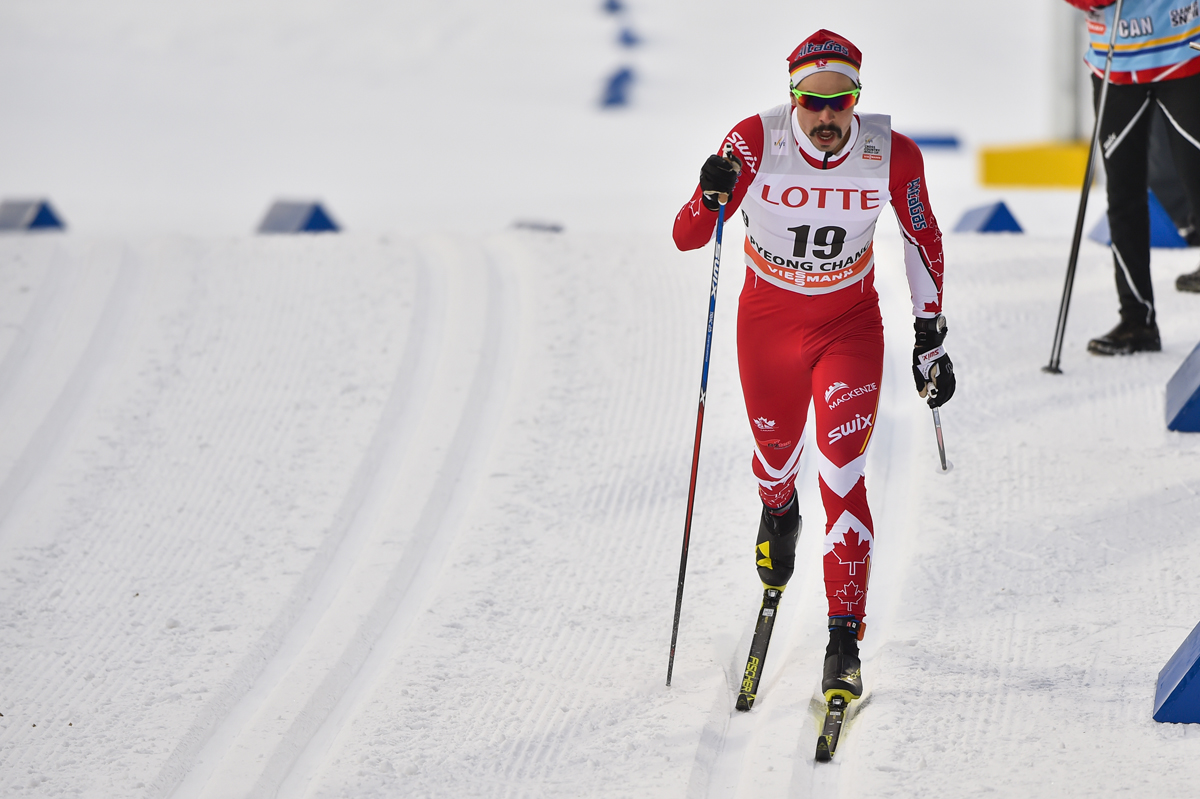
Canada’s Alex Harvey finished 28th overall in Saturday’s classic sprint in Lillehammer, Norway. (Photo: Henrik Hunnes)
At last weekend’s Ruka Triple in Kuusamo, Finland, Harvey finished just off the podium for fourth place in the pursuit and in the overall mini-tour standings. In the first of the three stages there, the classic sprint, Harvey placed 21st. After placing 28th overall in Saturday’s classic sprint in Lillehammer, Harvey stated he was unconcerned about his early season sprint speed.
“I am not really tired, I just don’t have enough speed at that time of the year, but it’s like that every year,” Harvey said. “I am slow before Christmas. I have good endurance but not much speed so that’s what I had today … I feel good about going into tomorrow’s race, it is a totally different race, a 30 k [skiathlon]. In Kuusamo it was kind of the same in the sprint, I was kind of shaky, but then the distance races were good. I am looking forward to the 30 k.”
Harvey’s day ended in the quarterfinals when he placed sixth in the fourth heat, 3.06 seconds behind Norway’s Pål Trøan Aune, who won that quarterfinal.
For the U.S. Ski Team (USST), Erik Bjornsen skied to 35th, 13.61 seconds behind Klæbo in the qualifier and 1.06 seconds out of 30th. Andy Newell finished 38th (+13.89), and Scott Patterson finished 74th (+27.99).
“Disappointing to not make it past the qualifier,” Bjornsen emailed. “The Norwegians were on one today, qualifying 12 guys in the heats, leaving only 18 spots for the rest of the world. Warming up I could feel I didn’t have the snap I needed. I’m excited for a mass start race tomorrow though. It will be great to go head to head in some distance racing.”
Notably absent from Saturday’s sprint was USST sprinter Simi Hamilton.
“It was a disappointing day for the guys,” USST coach Matt Whitcomb said on the phone. “Andy and Erik were close. They were not flanked by Simi who has been battling GI issues since Kuusamo. He has had quite a bug. He skied 30 minutes yesterday and about an hour and a half just walking around on his skis today. We are trying to build him back to strength. But he knocked down very hard by a bug.”
For Canada, those skiers outside the top 30 were Jesse Cockney (Canadian World Cup Team) in 57th (+17.59), Len Valjas (World Cup Team) in 59th (+18.24), Julian Locke (National U25 Team) in 61st (+19.99), and Russell Kennedy (Team R.A.D.) in 63rd (+20.98).
Racing continues Sunday with a 30 k skiathlon for the men and a 15 k skiathlon for the women.
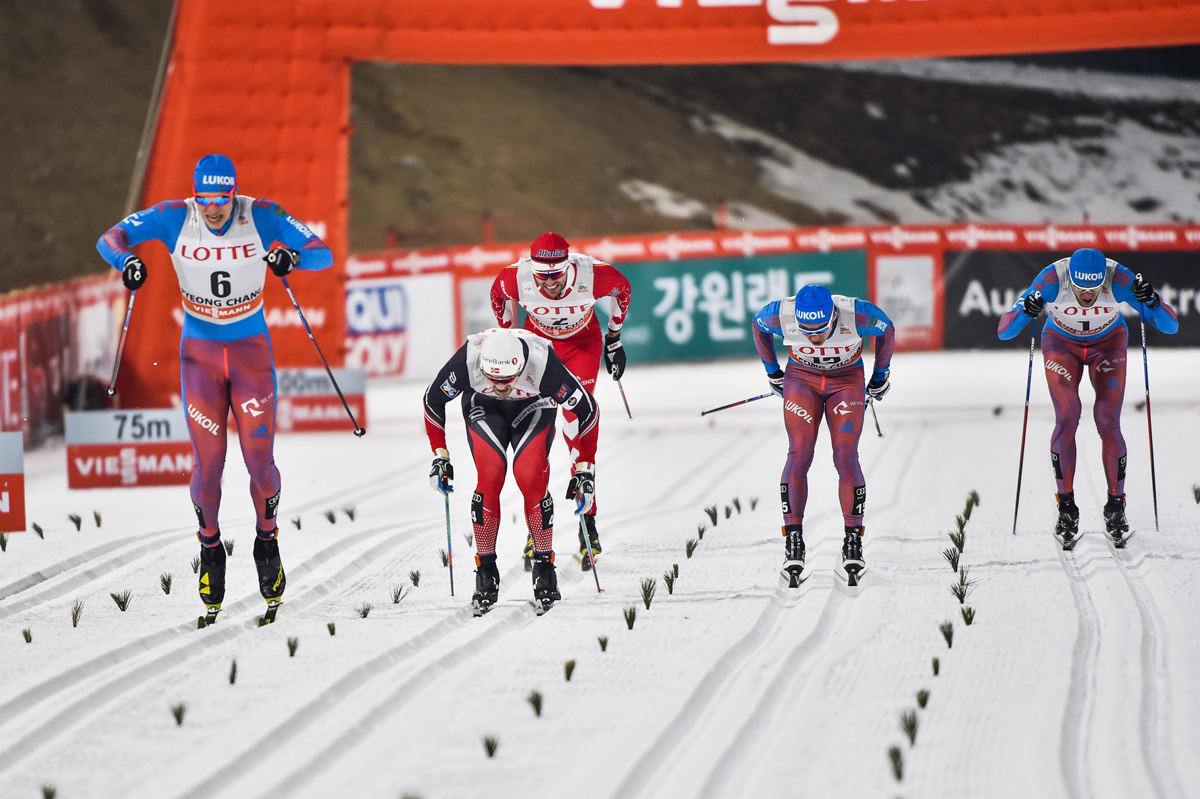
Russia’s Gleb Retivykh (l) racing to his first World Cup victory and podium on Friday in the World Cup classic sprint in PyeongChang, South Korea, ahead of Norway’s Sondre Turvoll Fossli (second from l), Canada’s Len Valjas (behind Fossli), and Russia’s Andrey Parfenov (second from r) and Alexander Panzhinskiy (r). (Photo: Fischer/NordicFocus)
As a sphere, the Earth is a tidy shape and can be divided into equal segments. It takes roughly 24 hours for the planet to rotate on its axis once, constituting a single day. So there’s 24 time zones, one for each hour of rotation. On Friday, the tidiness was disrupted a bit for European-based World Cup skiers. PyeongChang, South Korea, host of the 2018 Winter Olympics, was site of the men’s World Cup 1.5-kilometer classic sprint.
PyeongChang sits a full eight hours ahead of Central European Time, a time zone most World Cup skiers are adjusted to. To accommodate the time shift, the sprints were run at night, under the lights.
“It’s been tough. We knew the races were going to be really late here in Korea so that the T.V. time works in Europe,” U.S. Ski Team (USST) member Andy Newell said on the phone. “But as far as adjusting, you go in and out and definitely feel pretty tired at times, like when you’re trying to fire it up and get ready to race. But once you’re racing, it seems like it’s OK. You don’t notice the jet lag once you’re out there on the track.”
In a field of 55 skiers, Newell was one of two North Americans to make the men’s final; the other was Canada’s Lenny Valjas. Newell placed sixth in the final (+17.1), Valjas fourth (+0.74) in a photo finish with Russia’s Andrey Parfenov (+0.73), who skied to third overall.
“It was really close between me and Lenny,” Parfenov told the International Ski Federation (FIS), according to a press release. “I know he was next to me. I was lucky have a better lunge. It was a good track for classic. There is not so much double poling sections, more uphills and that was good for me. I am really happy for my second podium of my career.”
Russia’s 26-year-old Gleb Retivykh won the final in 3:30.79, ahead of Norway’s Sondre Turvoll Fossli in second (+0.30). It was Retivykh’s first career World Cup win and first time on the podium, despite finishing in the top 10 in World Cup sprints on 10 other occasions. And despite his comments to FIS, the Russian’s speediness may just have allowed him to momentarily outrun the jet lag.
“I arrived here yesterday so I am still jet lagged,” Retivykh said. “I knew Sondre is very strong. I did not think I could win. I was hoping for a good result. I had to wait six years for my first victory and it is great.”
Valjas Leads Canada in 4th
Time zones and new food be damned. For seasoned athletes like Valjas and Newell, planes, shuttle buses, and exploratory cuisine are all part of the international skiing life. Despite the time-zone-shift-wormhole, both skiers delivered.
For Valjas, of Canada’s World Cup A-team, the vagaries of food prep in South Korea flummoxed him.
“Adjusting to the time change went fairly well, but I ran into some trouble with the food here,” Valjas wrote in an email. He is allergic to peanuts and fish; two ingredients in the form of peanut and fish oil that’s ubiquitous in Korean meals.
“The last two dinners I have not been able to eat because I had reactions,” Valjas added. “Even the ‘safe’ boiled potatoes ended up having peanut oil dribbled all over them. The language barrier makes it very hard to understand which foods may or may not kill me. I could feel my energy getting lower and lower today, could have been my inability to eat well or the jet lag after flying here two days ago.”
Canada’s Lenny Valjas racing to second in the men’s classic sprint qualifier on Friday at the World Cup in PyeongChang, South Korea. (Photo: Fischer/Nordic Focus)
Despite the lack of food intake, Valjas qualified in second place, 1.97 seconds back from fifth-place overall finisher and first-place qualifier Alexander Panzhinskiy of Russia.
Valjas’s progression looked like this: second in his quarterfinal then advancing to the finals as the second lucky loser from the first semifinal. And ultimately his fourth place in the final — where he missed his eighth-career World Cup podium and his third of the season, by 0.01 seconds.
“I have mixed feelings about today,” Valjas wrote about his PyeongChang classic sprint experience. “It’s tough to be that close and come up short.”
Mindful that the day was also about gaining pre-Olympic beta, Valjas noted his time in South Korea was well spent.
“On the bright side, I learned so much skiing the Olympic course today. It’s a very tough course, but it is built amazingly well,” he wrote. “The climbs are the perfect grade for striding, and racing at night with all the lights was really cool. … I hope I can use the valuable info I learned tonight to my advantage when I race here next winter in the Olympic sprint.”
Jess Cockney (Canadian World Cup B-team) racing to 16th in the men’s classic sprint qualifier on Friday at the World Cup in PyeongChang, South Korea. He went on to place 10th overall for a season best. (Photo: Fischer/NordicFocus)
Jess Cockney, of Canada’s World Cup B-team, placed 10th after qualifying 16th. Cockney skied to first in his quarterfinal after avoiding several skiers involved in crashes, including one involving U.S. Ski Team member Simi Hamilton.
“I felt that I could ski relaxed and work my way through some positions in the second half of the course and it ended up being really good to also avoid the crashes in my heat,” Cockney wrote in an email.
In his semifinal, Cockney was on fumes and finished fifth.
“He gave it all on the quarterfinal so he lost a lot of energy there, but still making it to the semi is very good,” Charles Castonguay, Canada’s lead coach in PyeongChang, said on the phone. “But at the end, I think he did really well, too. Top 10 for him is really really good and he is pretty confident that he can repeat that for Lahti in two weeks [at World Championships]. We had a little chat after and he said he was pretty happy; he said he gave it his all. … It’s his best result since [last] year in Quebec [where he placed 10th in the freestyle sprint]. So yeah, it’s promising for him for the Otepää World Cup and the Worlds at Lahti.”
The next best Canadian was Simon Lapointe, of the Pierre-Harvey National Training Centre (CNEPH), who qualified 25th and finished 27th overall. Friday marked his first international World Cup and his previous personal best was 70th in a Ski Tour Canada stage last year.
Bob Thompson (NTDC Thunder Bay) missed qualifying by one-hundredth of a second in 31st (for his best World Cup result by 21 places), and Julien Locke (Alberta World Cup Academy/Canadian National U25 Team), in his first World Cup, placed 36th.
Newell Sixth in Final
The 1.5 k men’s course was a no-rest affair. Thirty seconds of initial double poling brought skiers into a roller coaster of a course — two big ups, quick downs, and a straight away finish all under the brights lights.
Leading the U.S. was veteran USST skier Newell in sixth overall. He qualified seventh (+5.18).
“For me in the qualifier, how I gauge a good or bad qualifier, usually it doesn’t even necessarily depend on what place I finish, a lot of it is seconds back and a lot of it is how I feel if I nailed the course or not,” Newell said on the phone Friday night.
A thorough student of the classic-skiing sprint scene, Newell adjusted after sensing he hadn’t skied the second major hill effectively.
“I know my strengths and weaknesses on a course like this,” Newell said. “I know I can be as good as anyone on those hills and so that was kind of the goal, was to make sure I was in a good position.”
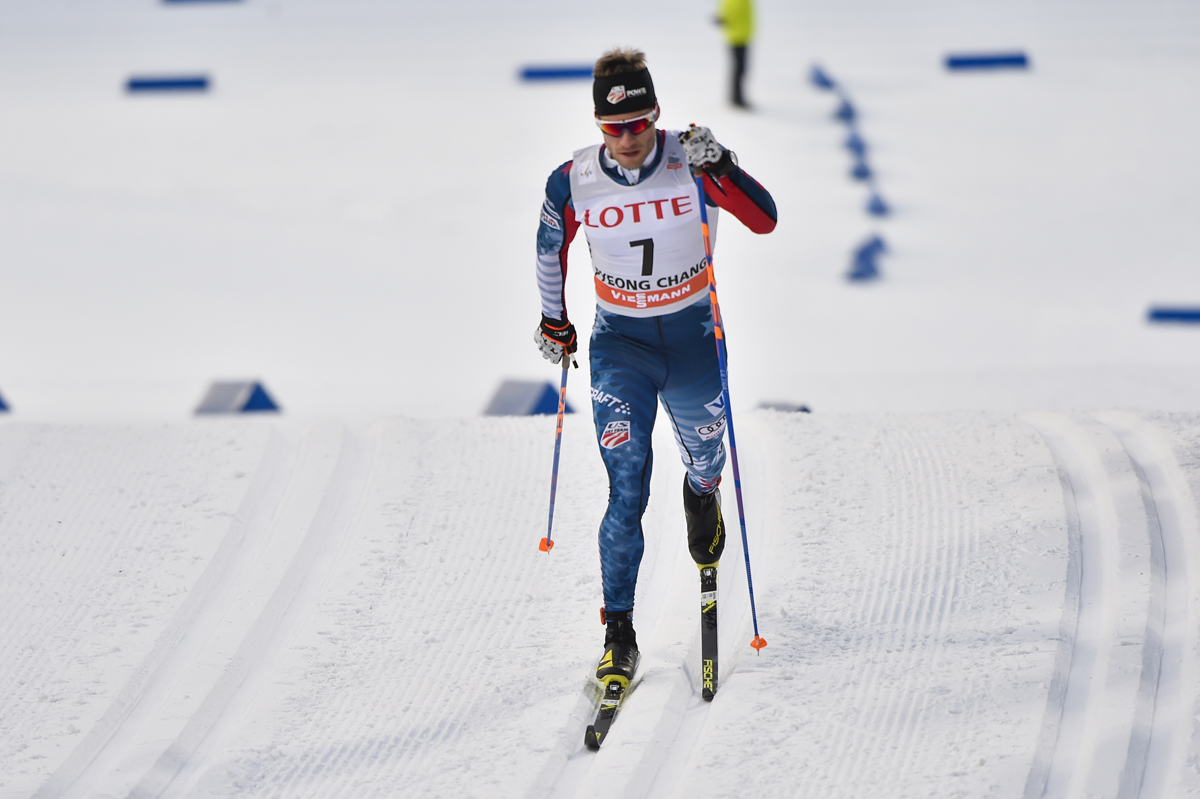
American Andy Newell (7) chasing Russia’s Alexander Panzhinskiy during their quarterfinal of the men’s classic sprint at the PyeongChang World Cup in South Korea. (Photo: Fischer/Nordic Focus)
Newell was matched with top-qualifier Panzhinskiy in his quarter and semifinal. Panzhinskiy and Newell placed first and second in both, respectively, with Newell 0.63 seconds back in the quarter and 0.34 seconds back in the semi.
“[Panzhinskiy] was the top qualifier so I knew he was going to be fast and so we were kind of really able to kind of get away from anyone in our heats in both the quarterfinal and the semifinal up that [second] hill,” Newell said.
As a made-for-television production, the heats run on a tight schedule. And due to clearing the course after several crashes, organizers were running behind schedule. The time after the Newell’s semifinal to the final was reduced, hampering both Panzhinskiy’s and Newell’s normal pre-final recovery period.
“Maybe we pushed each other a little too hard in the semifinal because I think we were both a little tired,” Newell reflected. “It just so happened that the schedule they were running behind with the heats today, which means the semifinal went off five to ten minutes late, but they have to keep the final on time. … That kind of took us by surprise because I think we both pushed each other pretty hard in that semi and then to have a short ten-minute recovery as opposed to one that’s fifteen or twenty, that was definitely a tough turnaround.”
Newell skied from the back in the final. According to the Vermont-based skier, he changed skis in the final, and that decision compounded with his less-than-normal, pre-finals recovery period impacted his overall placing.
“I swapped out for a different pair of skis and was using a different pair of skis in the final,” Newell said. “It was an easier-kicking pair of skis, which probably worked out great for the first few heats, but in the final I think one of the things that came to bite us was the fact that [my wax tech] Mark and I kept adding a layer of wax to make sure we had good grip up that big climb because it was such decisive part of the race. But by the final I think we were dragging a little bit too much wax, which really played a big role in me getting shelled off after about half way through because yeah, kick was dragging considerably in the final, but you know that’s all part of the game.”
Newell ultimately finished 17.19 seconds back in sixth after realizing his efforts were in vain. But being present and racing well in PyeongChang remained important for Newell.
“This race in particular was kind of one of the races I wanted to make sure I was at,” Newell said of how he planned out his current World Cup campaign. “My goals are really quite focused towards the Olympics next year. For me, the excitement was there today just because it’s a new venue and it’s the place where the Olympics are going to be taking place next year and I know I can be competitive in these classic sprints.”
Newell will skip Saturday’s skiathlon to prep for Sunday’s freestyle team sprint. He’ll be racing the team sprint with Hamilton.
“I was not feeling great all day, and it’s been kind of a tough week for me in general,” Hamilton wrote of his adjustment to South Korea. “I was definitely struggling with how my body was responding to big travel and a pretty significant time shift, but still, I think it is extremely valuable to be able to be here experiencing the courses and the layout of the land before 2018.”
Simi Hamilton (U.S. Ski Team) racing to 12th in the men’s classic sprint qualifier on Friday at the PyeongChang World Cup in South Korea. He went on to finish 17th overall after crashing in his quarterfinal and finishing fourth in that heat. (Photo: Fischer/NordicFocus)
Hamilton qualified 12th, which he was dissatisfied with.
“I felt like I had a pretty weak qualifier, and was struggling to find big power and big glide on the two big climbs,” he wrote.
Hamilton’s focus this year has been on skate sprinting: a traditionally strong technique for him.
“But with so many skate sprints this year and the fact that the sprint in Lahti is skate, I haven’t really been thinking too much about classic sprinting or gearing my training towards classic sprinting,” he explained. “So I think with some focused training I’ll be able to dial in my preparations for this course specifically and hopefully feel much better in qualification the next time we are racing here.”
In his quarterfinal, Hamilton was well positioned for the second climb — sitting back a few meters from the leaders.
“Coming down the fast descent into the bottom of that hill, I made a slingshot move to the outside, open track on the far left, and was carrying some really good momentum past the two Norwegians in my heat,” he recalled.
With his momentum carrying him up to the leaders, Norwegian Daniel Stock swerved into Hamilton’s tracks. (Stock was eventually relegated to 30th overall due to his obstructing Hamilton.)
“I think he skied right over both of my bindings with his left ski as he was skating into that track. My feet were basically stopped dead in their tracks as the rest of my body was hurling up the hill.”
A broken pole and stopped dead, Hamilton’s chances of advancing had been squelched.
“As I got to my feet, the pack was already about 10 meters ahead of me and I realized that my night was over,” Hamilton added. He finished 17th overall.
Another American, Matt Gelso (Sun Valley Ski Education Foundation) scored his first career World Cup points. Gelso had earned the World Cup starts as the Period 1 SuperTour leader.
“It’s great to score my first ever World Cup points in my second-ever sprint,” Gelso wrote in an email. “Never thought my first points would come in a sprint. I skied the transitions well in my qualifier and accelerated through the course. I probably could have started harder but overall pacing was pretty good.”
Gelso qualified 29th and placed 29th overall after finishing sixth in his heat.
Also for the U.S., Scott Patterson (Alaska Pacific University) finished 44th and Noah Hoffman 48th in the qualifier.
Martin Johnsrud Sundby of Norway celebrates his 15 k pursuit win on Sunday, the final day of the first mini tour of the season in Lillehammer, Norway. Another Norwegian, 20-year-old Johannes Høsflot Klæbo (l) placed second. (Photo: Fischer/NordicFocus.com)
Note: This article has been updated to include comments from U.S. Ski Team member Noah Hoffman and APU skier Eric Packer.
When exactly was the race’s defining moment on Sunday during the final mini-tour stage, a 15 k classic pursuit in Lillehammer, Norway?
It wasn’t at the start when tour leader, Sweden’s Calle Halfvarsson, cruised out with a 28-second head start on the next released skier, Russia’s Sergey Ustiugov.
It wasn’t the time check at 2.2 k, despite a growing chase group rife with Norwegian colors. At that point, Halfvarsson strided powerfully with a sizable 49-second lead on the likes of Norway’s Martin Johnsrud Sundby.
Here’s the moment.
Around 8.3 k heading up the course’s longest climb, Halfvarrson’s skis slipped. On cue, Halfvarrson glanced behind as if the catch to come couldn’t be over too soon.
It was like a band of released hounds chasing down the maimed fox. The time back to the chasers had shrunk to 22 seconds.
The group of salivating oncomers included Sundby and teammates Finn Hågen Krogh, Emil Iversen, and Pål Golberg, Johannes Høsflot Klæbo, Simen Hegstad Krüger, and Sweden’s Marcus Hellner, Finland’s Matti Heikkinen, and Canada’s Alex Harvey.
From then on the Swede seemed to ski in fear.
The catch came four kilometers later. Then Sundby tried make the race his own. He had an eight-second lead with a little less than two kilometers to go. But this is not a dominate Sundby. His skiing is somewhat more subdued. His attack less of a kill shot and more of an alpha’s warning that he’s still there.
Norway’s Johannes Høsflot Klæbo (l) celebrates his second-place finish in the men’s 15 k classic pursuit, ahead of Finland’s Matti Heikkinen (12) in third, at the World Cup mini tour in Lillehammer, Norway. (Photo: Fischer/NordicFocus.com)
Sundby hung on for the stage and overall Lillehammer mini tour win sharing the podium with 20-year-old, second-place finisher Klæbo (+2.3), and fastest time of the day skier Heikkinen (+2.7) in third.
“It was an interesting race,” Sundby said during the post-race press conference. “Calle set quite a good pace from the beginning. It looked like he had full control of the race. Suddenly after five or six k, he struggled with the kick, and we really had a chance to catch up with him. I tried to make my move when we left the stadium for the last time. I tried to keep the pace high all the way up on the longest hill. Luckily I gained some meters and won in the end.”
Leaving Lillehammer, Sundby finds himself in a familiar color: he’s wearing yellow as the overall World Cup leader. Halfvarsson is 34 points back in second, Klæbo is third overall, 46 points back.
Harvey Hunting in Front and Kershaw Moving into the Points
Coming into the third and final day of racing in Lillehammer, Canada’s Harvey sat in eighth place, 51 seconds back from Halfvarsson and one second behind Sundby, the seventh starter in the pursuit. Strategically speaking, Harvey had his Norwegian rabbit. The only question was could he hang on?
Affirmative. No matter where you checked for race stats, live in Lillehammer, an Internet stream, or live FIS timing, you’d see Harvey’s name and the maple leaf. Up until 12.2 k, Harvey stuck to the chase group like a limpet.
“I think I had the fastest skis in the group,” Harvey told FasterSkier’s reporter in Lillehammer. “But I went too limited on the kick … on the hills I was drifting because I couldn’t really go … but it’s my mistake because our skis were really, I think we had the best skis in the field today. But I took a pair that was a little too aggressive I think.”
Norway’s Finn Hågen Krogh (4), Emil Iversen (5) and Pål Golberg (9) leading the charge in the men’s 15 k classic pursuit on the final day of the World Cup mini tour in Lillehammer, Norway, with Canadian Alex Harvey (8) in the mix. (Photo: Fischer/NordicFocus.com)
As the finished neared, Harvey eventually lost 16 seconds to the Sundby pack, ultimately placing ninth overall in the mini tour. Harvey added that he’s feeling confident after the three-stage Lillehammer mini tour. “I mean three races, three tops 10’s. I think the fitness is really steady and everything, the support team, the equipment has been really steady.”
For some perspective on Harvey’s enthusiasm, here’s some context: after last year’s opening three-day Ruka mini tour, Sundby won the overall by 44 seconds. The next 2015/2016 weekend in Lillehammer, a 30 k skiathlon, Sundby again soloed to a 44-second win. During Weekend 3, in the 30 k freestyle in Davos, Switzerland, it was Sundby in first by 20 seconds.
2016/2017 on the World Cup has begun with diminished margins for Sundby. A win is still a win. But for skiers like Harvey, Sundby is more human.
“It gives us confidence I think,” Harvey said of the more-level World Cup playing field. “This year there’s nobody you know that’s invincible as compared to the last couple of years, so that’s motivating for everybody.”
Harvey’s next stop is an all skate weekend in higher altitude Davos with a 30 k and sprint lined up. “Now we have to rest,” Harvey said of his week ahead. “Three races in three days is hard on everybody, and with a travel day coming up, we are going to have to recover from that. And then coming up in altitude, you got to really monitor your body well and re-test your equipment because that’s a new type of snow in central Europe. There is a bit more humidity in the snow and it’s a bit different … now it’s race-race, recover-recover, race-race, recover-recover until pretty much until the end of the season.”
Harvey, who skied the sixth-fastest time on the day, leaves Lillehammer ranked 10th overall on the World Cup.
The next best Canadian finisher was his fellow World Cup Team member Devon Kershaw who started 43rd, 2:01 behind Halfvarsson. Fifteen k later, Kershaw had moved up to finish 27th (+2:08.5) after skiing the 23rd-fastest time on the day.
“The last stage was the one brighter spot of the mini tour,” Kershaw said over the phone. “The sprint didn’t go that great then the 10 k didn’t go that great either.”
On Friday, Kershaw placed 42nd in the sprint. He was 40th on Saturday’s 10 k skate. “But I have been feeling good since the start of the season,“ Kershaw added. “I am just missing that fifth gear, but the legs and body are working well. I just can’t get into that last gear that you need on the World Cup to really compete at the top top.”
Despite lacking that fifth gear, on Sunday Kershaw was set up with plenty of opportunities to pick off skiers.
“Today was fun to move through the pack a bit and it’s too bad I couldn’t quite get to that next group in front of me,” Kershaw said of his attempt to close the gap to a group of skiers fifteen seconds in front. “I tried with everything I could to get on that group, but I just wasn’t strong enough today to make that last jump and that would have made it a lot easier, to have some skis to follow instead of of just plowing along at the sharp end of my group. But I cannot complain, I started the day 43rd and finished 27th. I did as good of damage that I could in 15 k. It was a step in the right direction for sure.”
Kershaw, is now an Oslo resident as he’s married to former Norwegian star Kristin Størmer Steira. Kershaw said Steira’s father, mother, and sister all reside in Lillehammer and constituted a small-but-vocal Lillehammer fan club. Kershaw’s father-in-law served as assistant chief of competition during the mini tour. On Sunday, Kershaw’s wife, sister, mother-in-law, and even the family dog (who Kershaw stated was well trained and didn’t bark) were all trailside to see the Canadian veteran move into the World Cup points.
The remaining Canadian finishers were Len Valjas (World Cup A-Team) in 46th (+3:44), Graeme Killick (World Cup B Team) 51st (+3:53.9), Knute Johnsgaard (U25 Team) 70th (+6:20.3), Bob Thompson (NTDC Thunder Bay) 79th (+8:16.3), and Andy Shields (NTDC Thunder Bay) 81st (+9:57.3)
For the Americans, U.S. Ski Team (USST) member Noah Hoffman continued to show improving form on Sunday.
Stage 3’s pursuit found Hoffman starting in bib 48, 2:08 back. Hoffman finished Sunday’s pursuit 36th after skiing the 29th-fastest time on the day (+1:30.2).
“After last week’s disappointment I was really just looking to have a solid race where I skied within myself, with energy, with relaxed muscles, clean muscle environment and just tried to demonstrate my fitness a little bit,” Hoffman said on the phone Sunday night. “Both days I tried to do that and I think I was pretty successful both days. Certainly none of the results this weekend were something to highlight my season … I’m obviously looking for more, but a big step in the right direction from last week and that’s really much all I can ask at this point.”
During the offseason, Hoffman implemented a training plan with a large percent increase in training hours.
“He skied well and I think he is still coming out a little bit from underneath the load of all the training he has done,” U.S. Ski Team Head Coach Chris Grover said. “But the last couple starts he really feels like he is going in the right direction.”
Erik Bjornsen (USST) began the day in bib 44 and dropped to 57th (+4:33.3)
“Unfortunately for Erik, he had good skis, but he chose to go a little too thin on the wax I think,” Grover said of Bjornsen’s day. “He was too slick, so he started out really well. But with the massive climbs out there he just fatigued in a hurry and started going backwards after a bit … Erik is definitely disappointed because he wanted to ski well today. He had been looking at targeting this race and has been looking at it for a long time. He was pretty bummed out.”
Simi Hamilton did not start and the remaining U.S. skier in the mini tour, Eric Packer (APU), placed 68th (+5:45.1).
Despite his 68th place on Sunday, Packer, who emailed from Oslo before boarding a plane to Zurich, Switzerland, remains a sponge when it comes to the World Cup. “It’s been an awesome experience racing over here for period 1,” Packer explained. “The level of the competition is definitely high, and it’s been an adjustment getting used to racing WC vs Supertour, but I’m definitely learning a bunch and finding things to work on.”
Although energized coming into the fall training season, Packer fell ill for the first three weeks of November. The Anchorage based skier took a full twenty days off from intensity training before traveling to Europe for period 1. “On the plus side, I think the illness allowed me to get some really quality rest, and my energy levels are great,” Packer added. “I can feel my form improving with each race, and am looking forward to the racing ahead.”
84 skiers completed the mini tour. Packer started day 3’s 15 classic pursuit in bib 75, and placed 68th overall. Yet he skied the 58th fastest time on the day (+3:23.1). Only two places back from Ustiugov’s ski time, who began the race as the second starter. “The 15k Classic Pursuit in the Lillehammer mini tour went well for me, and was a big step in the right direction,” Packer wrote about the mini tour’s last stage. “I had a tough starting spot, toward the back of the field, but was able to bridge up to a good group and pick off some spots. I finally felt like my body was working like it should, and ended up 58th for time on day. Obviously I still want better, but for period 1 racing, and for distance, I was happy with the result.”
World Cup racing resumes Saturday, Dec. 10, with a skiathlon in Davos, Switzerland.