From the FasterSkier archive — posts syndicated from athletes’ and coaches’ own blogs between 2004 and 2012, kept online as published. Current coverage is at fasterskier.com.

Tag: Lauren Fleshman

  • Nordic Nation: Relative Energy Deficiency in Sport (RED-S) and the Climate in High Performance Skiing

    Nordic Nation: Relative Energy Deficiency in Sport (RED-S) and the Climate in High Performance Skiing

    In this episode, hosted by FasterSkier contributor Rachel Perkins, we dive into the issue of Relative Energy Deficiency in Sport (RED-S). This condition was formerly known as the female athlete triad, which was described as inadequate energy intake, the loss of menstruation (amenorrhea), and decreased bone mineral density. The name was changed to include males, who are also affected, and to expand beyond the three symptoms originally included. Though not quite the same, the condition is closely linked with eating disorders.

    This topic has seen a lot of buzz following a November opinion piece in the New York Times where former high school running phenom Mary Cain shared her story of abuse by her coach, Alberto Salazar, at the Nike Oregon Project. While trying to get down to the weight he deemed optimal for her, she lost her period, her performance decreased, and she was littered with stress fractures.

    Further concerns arose a few weeks later when Ingvild Flugstad Oestberg and Frida Karlsson were pulled from their World Cup starts after not meeting team health standards for BMI and bone density, presumably due to under eating. 

    We speak with licensed professional counselor and two-time Olympian Holly Brooks, registered sports dietician and author of “Finding Your Sweet Spot: How to Avoid RED-S (Relative Energy Deficit in Sport) by Optimizing Your Energy Balance” Rebecca McConville, and long-time coach turned voice of World Cup cross country skiing and biathlon, Chad Salmela. 

    This panel unpacks the misunderstanding that RED-S is an exclusively female phenomenon and how the climate in sport influences the prevalence of this condition, and offers suggestions to shift from a results focused climate in sport to a positive, informed, healthy, and athlete centric program. 

    Here are links to the resources and articles mentioned in this episode:

    Jessie Diggins Eating Disorder Activism

    Lauren Fleshman’s New York Times Opinion Piece “I Changed My Body for My Sport. No Girl Should.” and letter to her younger self, which was posted to MileSplit.

    The WithAll Foundation and the “What To Say” campaign, which  offers suggestions for talking to food and body positive phrases to include in conversations with kids and athletes. 

    HBO Documentary “The Norwegian Way” which details the Norwegian development program, in particular the omission of results in youth skiing before the age of 12.  

    The IOC Periodic Health Evaluation statement regarding more regular health screenings, including bone density measurement and blood laboratory work. 

    The National Eating Disorder Association (NEDA) “Coaches & Trainers’ Toolkit”
    The Opal Treatment Center and Podcast

  • FS Podcast: Holly Brooks Retires, Now the Work Begins

    FS Podcast: Holly Brooks Retires, Now the Work Begins

    Holly Brooks inspiring local you in Alaska. (Courtesy photo)
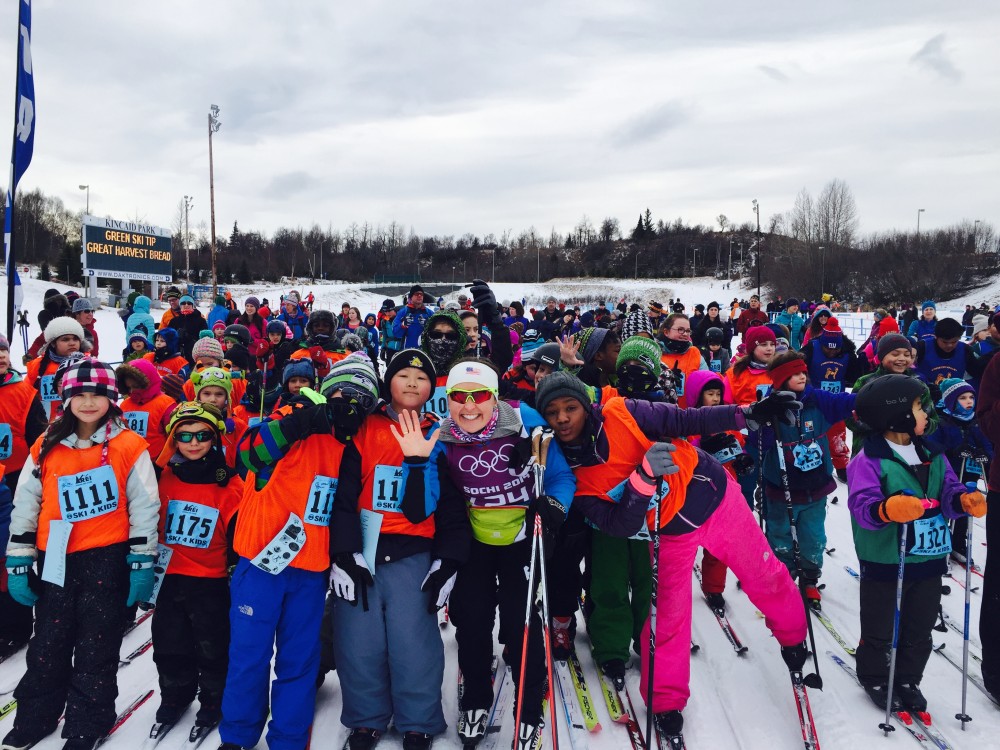
    Holly Brooks (in purple Olympic bib) inspiring local youth in Alaska. (Courtesy photo)

    Prior to her emergence on the national and then international cross-country ski scene, Holly Brooks, now 34, wasn’t exactly relay sock worthy, but that too would eventually transpire.

    A graduate of Washington’s Whitman College in 2004, Brooks hadn’t tapped her potential as an athlete. Upon graduation she moved to Anchorage, Alaska, and took a part-time job coaching West Anchorage High School. Two years later, she was hired by Alaska Pacific University (APU) Nordic Director Erik Flora as a coach. In 2008, after thousands of kilometers coaching/skiing, she won the Tour of Anchorage.

    In 2010, Brooks made the U.S. Olympic team and headed to Vancouver, British Columbia, for what would be the first of her two Olympics. The next year, she qualified for 2011 World Championships, and in 2012, Brooks won the American Birkebeiner was named to the U.S. Ski Team.

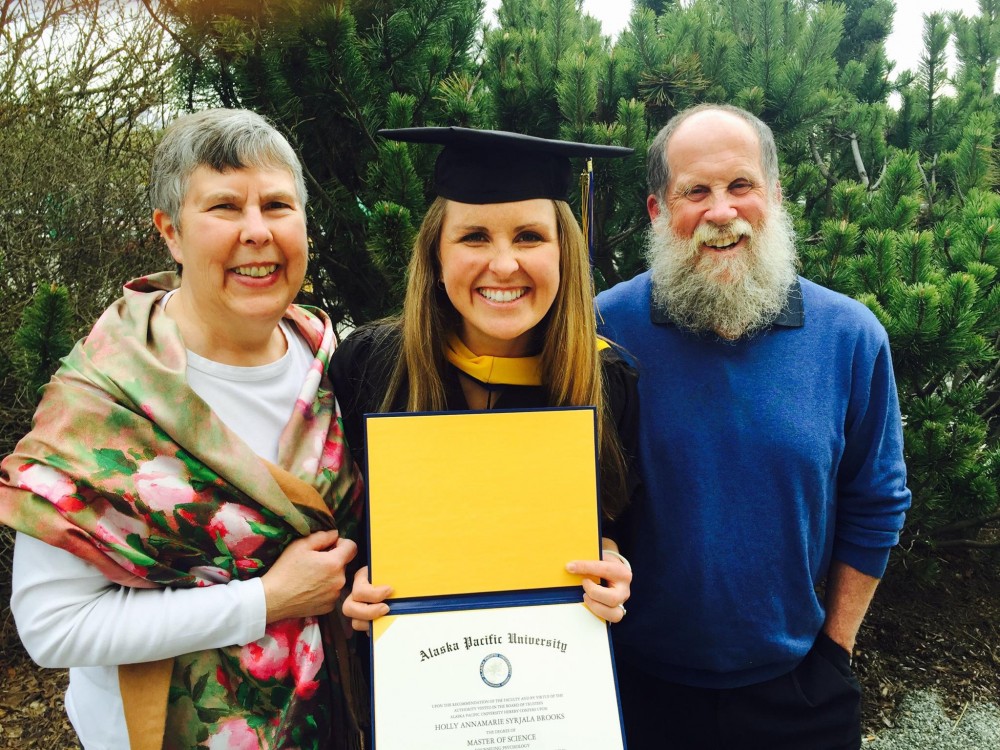
    Holly Brooks with her parents at her recent graduations. Brooks received a Masters in Counseling Psychology from Alaska Pacific University. (Courtesy Photo)
    Holly Brooks with her parents Don Brooks and Chris Syrjala at her graduation in April. Brooks received a master’s in counseling psychology from Alaska Pacific University. (Courtesy photo)

    Although a late career move, Brooks had arrived.

    At the start of the 2012/2013 season in Gällivare, Sweden, along with Kikkan Randall, Liz Stephen and Jessie Diggins, Brooks proved the infamous relay socks had legitimate mojo: the foursome were the first Americans to podium in a 4 x 5 k women’s World Cup relay.

    The following spring, she was promoted to the national A-team. She spent one more season on the World Cup before declining a spot on the national team in 2014 and giving the FIS Marathon Cup circuit a go instead. She ultimately placed third overall in the 2015 standings.

    Brooks’ retirement, as she explains, became “official” just weeks ago. But she hasn’t really considered racing for a bit over a year. As mentioned in the podcast, she and her husband, Rob Whitney, himself an accomplished cross-country skier and former national-team member, began thinking about starting a family. The backstory to all this: during her serious training and racing, Brooks was without her period for eight years.

    As she has navigated the complexities of fertility, Brooks has found new meaning in her master’s degree in counseling psychology — she’ll be starting a business with a focus on helping female athletes.

    Holly Brooks with Husband Rob Whitney and chicks in Alaska. (Courtesy photo)
    Holly Brooks with her husband Rob Whitney and their six chicks in Alaska. (Courtesy photo)

    There’s a lot more in the podcast as we go beyond simply scratching the surface. Brooks also reads a poem by runner Lauren Fleshman, “From Retiring to Rewiring“.

    Press play (the arrow) to listen.