Tag: laurien van der graaf

  • With Winter Arriving in Planica, Sweden Asserts their Dominance with Team Sprint Win

    With Winter Arriving in Planica, Sweden Asserts their Dominance with Team Sprint Win

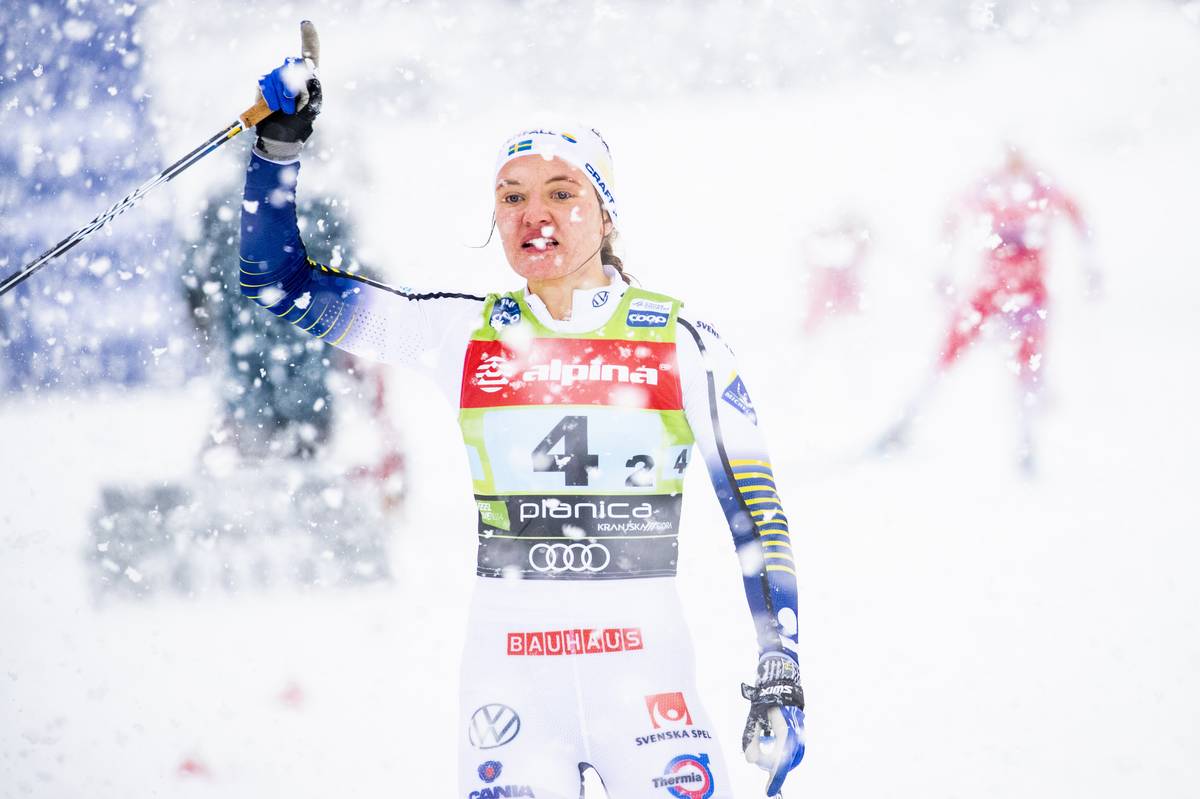
    At 20 years old, Sweden’s Linn Svahn has learned to close. She was part of Sweden II’s team-sprint winning team in Planica, Slovenia. (Photo: NordicFocus)

    With the tight racing and jostling for position the team sprint presents, another factor was in the mix during Sunday’s Planica, Slovenia women’s 7.2-kilometer freestyle team sprint: big, fat, and plentiful snowflakes. 

    Saturdays’ rainy, and lightning ridden sprint racing on an artificial snow loop, had a 180-degree backdrop flip-flop with a white winter arriving in Planica in time for the holidays and a World Cup TV broadcast. A several inch veneer of fresh snow covered the tracks.  

    Coming into Sunday’s race, recent team sprints have been dominated by Sweden. They have won four consecutive team sprints, and six of the last seven. And as much as last season’s World Cup Sprint Crystal Globe winner Stina Nilsson is a rock for the nation, Sweden’s team sprint reign owes much to Maja Dahlqvist. She’s been part of a Swedish three-peat: Dresden (skate) 2018 with Ida Ingemarsdotter, Lahti (classic) 2019, and again in Dresden (skate) 2019. 

    Sunday, to close out Period I on the World Cup, Dahlqvist was paired with Sweden’s newest World Cup upstart, Linn Svahn, 20, on team Sweden II. On paper at least, the coaches gave the nod for team I designation to Nilsson and Jonna Sundling. 

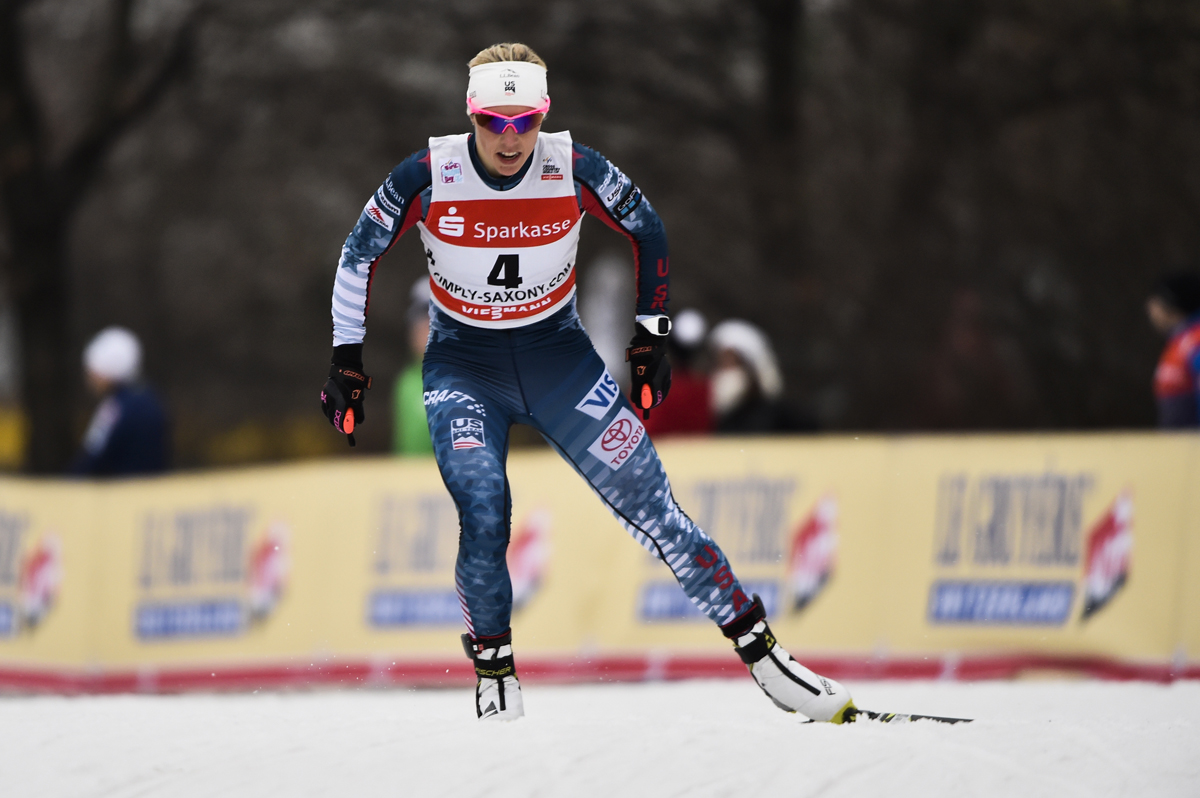
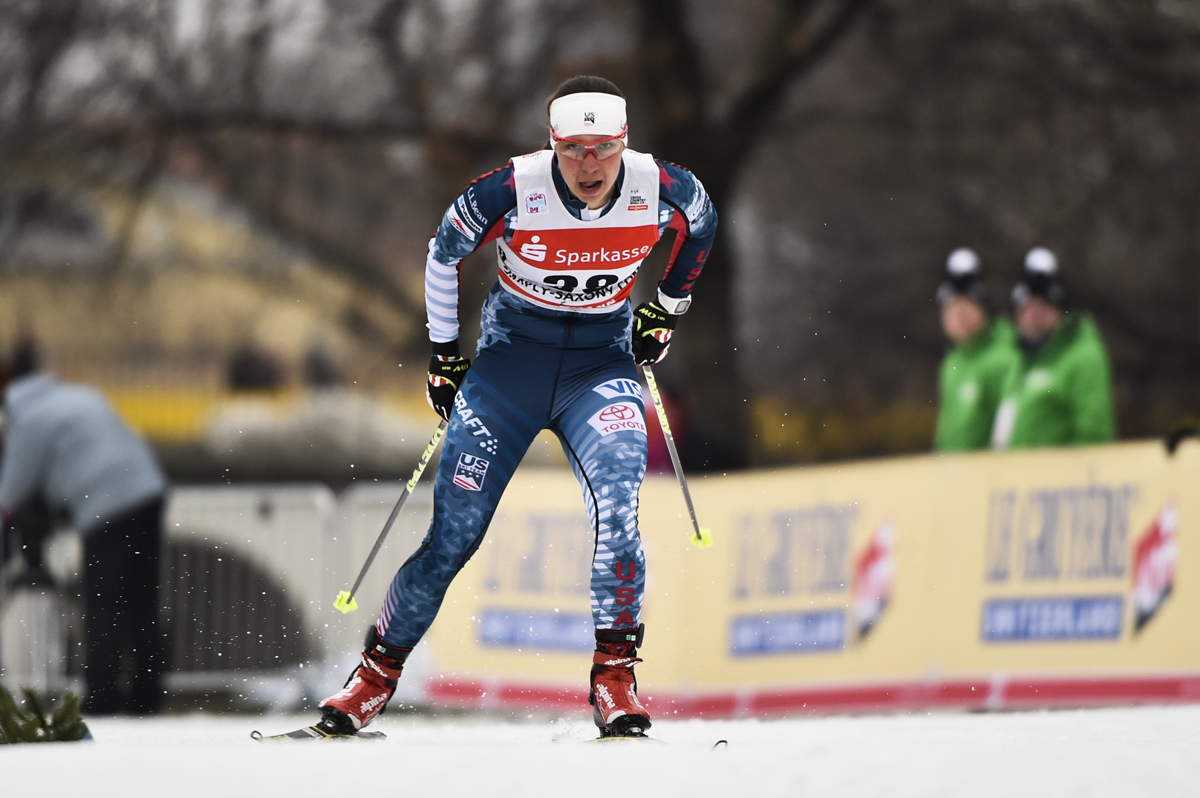
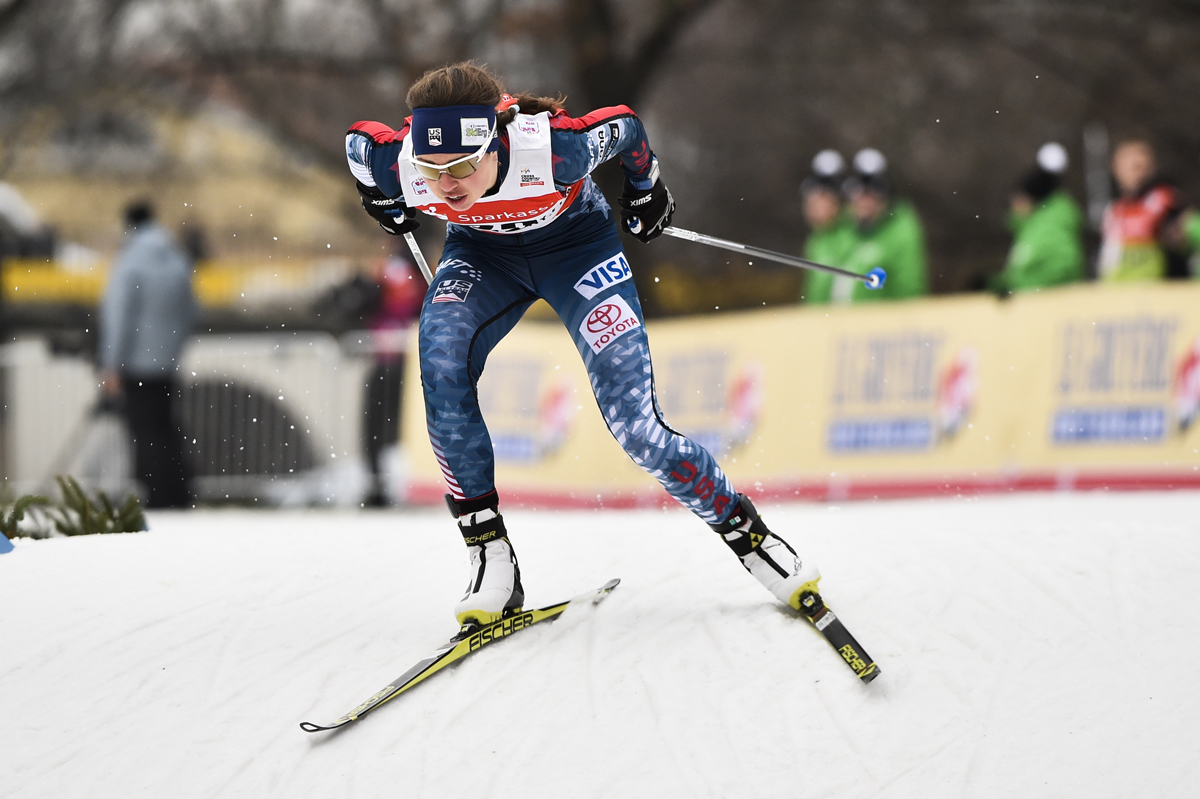
    With ten teams represented in the final, the U.S. pairing of Sophie Caldwell and Julia Kern looked formidable. Fresh off Kern’s first career World Cup podium on Saturday and Caldwell’s near podium miss in fourth, they placed second in the team sprint semi-final B to Switzerland’s Laurien van der Graaf and Nadine Faehndrich. The Swiss won that heat by 1:05 over the U.S. (Caldwell and Kern were also teamed up last season in Dresden’s team sprint where they placed fourth in a photo finish.)

    Also represented in the final and a usual podium snagger was Norway I with Maiken Caspersen Falla, and Ane Appelkvist Stenseth. Despite their perceived dominance, Norway has not won a team sprint in the last seven attempts. The last women’s team sprint victory for the storied nation came way back in January 2014, when Maiken Caspersen Falla and Ingvild Flugstad Østberg won the classic team sprint in Nové Mesto. Although Falla is proven, Stenseth, 24, is a World Cup podium-contender newcomer. According to FIS, she has contested 10 World Cups. She’s placed fourth twice in individual races — most recently in Ruka’s classic sprint last month. 

    World Cup Coach Matt Whitcomb’s post-race comments on the U.S. women’s team sprint 

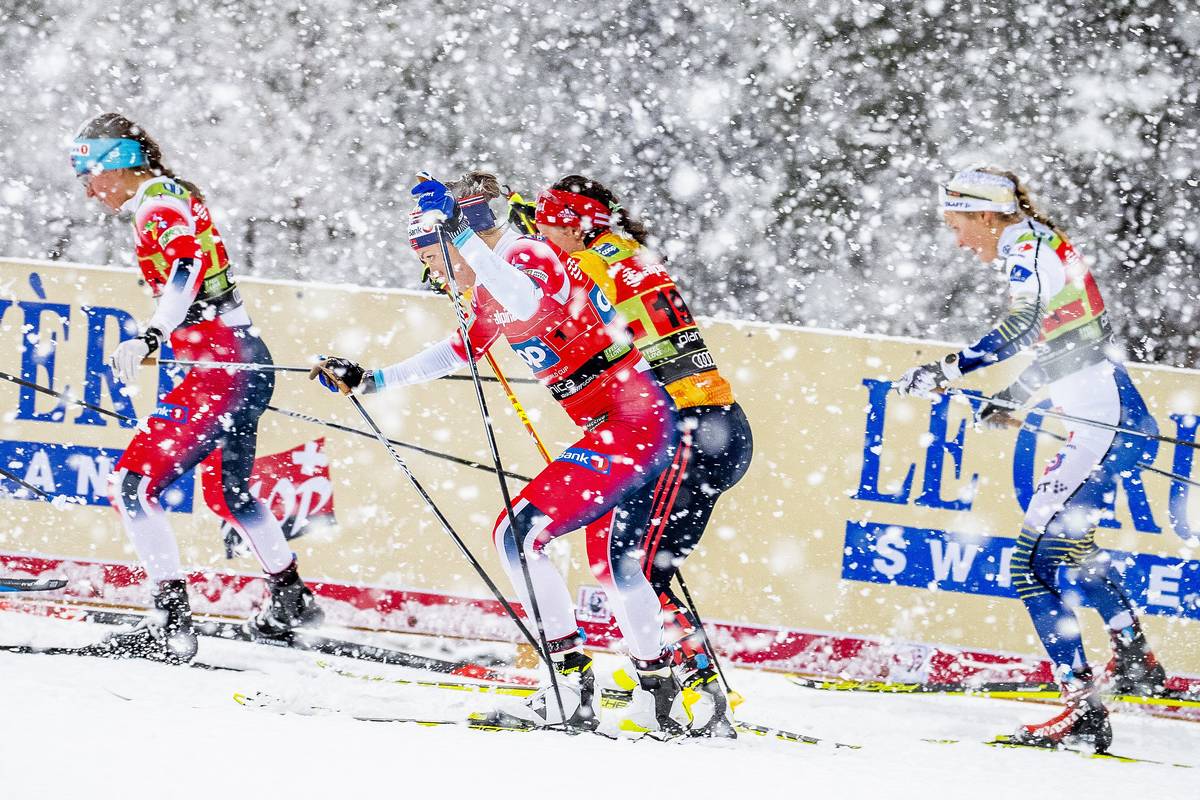
    With the wins and losses stats laid out, the final was a race around, tag the partner, race around, repeat affair for several laps. With near blinding snow and slow tracks, teams skied conservatively with no attacks of note. 

    The single blip to the pack racing early on was the collapse of an inflatable arch across the course due to a heavy snow load. Several course attendants scurried to right the arch. There was no stop to the racing, only a momentary snafu to an otherwise peaceful snowglobe scene.
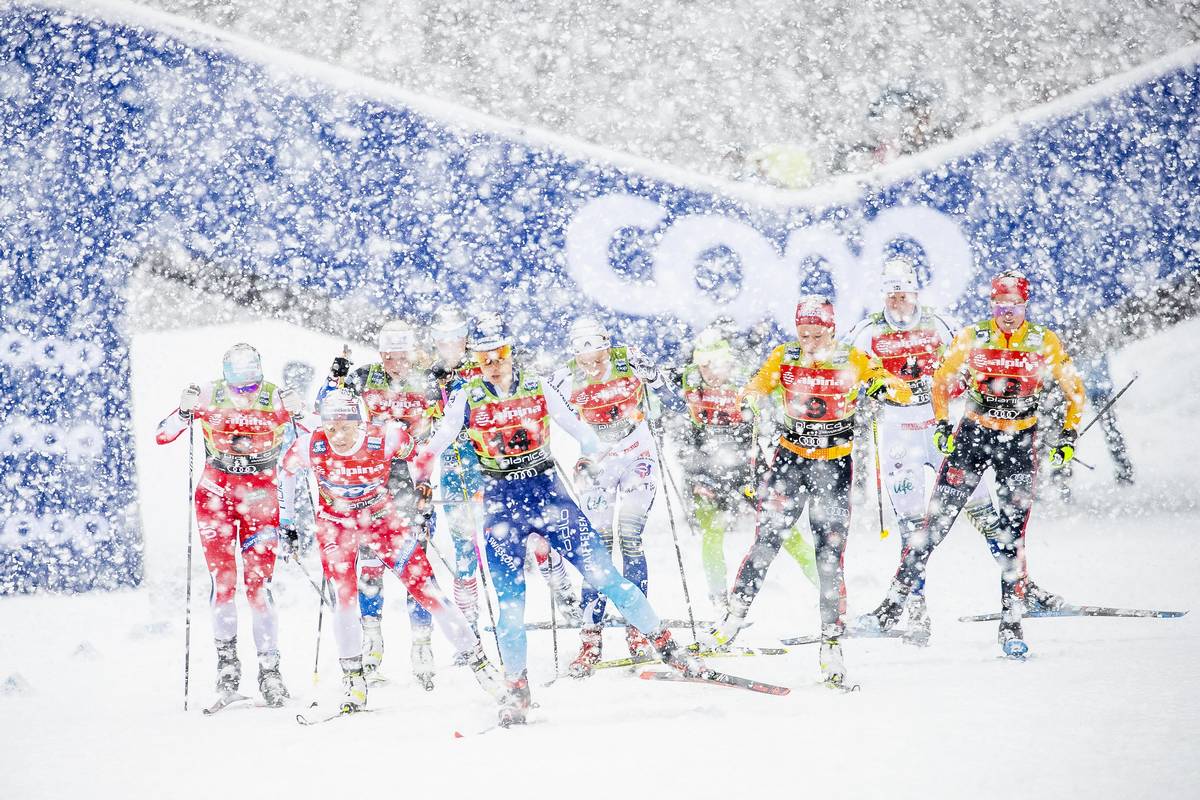
    Heavy snow, collapsing arch. Planica women’s team sprint. (Photo: NordicFocus)

    That all changed on the fifth of six laps total. At the base of the course’s first climb, Nilsson for Sweden I had been tucked into the pack. She worked her way to the right gliding out of traffic for a clear lane to the top. She jump skated to the lead 15:00 minutes into the final. Carrying her speed into a working downhill, Nilsson broke the race apart. 

    Sweden II (Dahlquvist), and Norway I (Falla), were the other two teams able to match Nilsson’s push at the sharp end. 

    Sweden I, Sweden II, Norway I, Norway II, Switzerland, and the U.S. came through the final tag first through sixth, respectively, with a 7.8 second gap from the U.S. in back to Sweden I in first. 

    Late on that final lap, with 18 minutes of racing elapsed, Sweden I and II, as well as Norway I looked to be the podium in the making. But with perhaps the race effort of the day, Switzerland’s Faehndrich began reeling in the three team group. Twenty seconds later, the Swiss were locked on, making it a four team affair. 

    Julia Kern (USA), Linn Svahn (SWE), Victoria Carl (GER), Ane Appelkvist Stenseth (NOR), (l-r) during the women’s team sprint in Planica, Slovenia. (Photo: NordicFocus)

    On the final climb, Sweden I and II accelerated, dropping Norway I, with the Swiss matching for a moment, then dropping back slightly for a solid third place nearly guaranteed. 

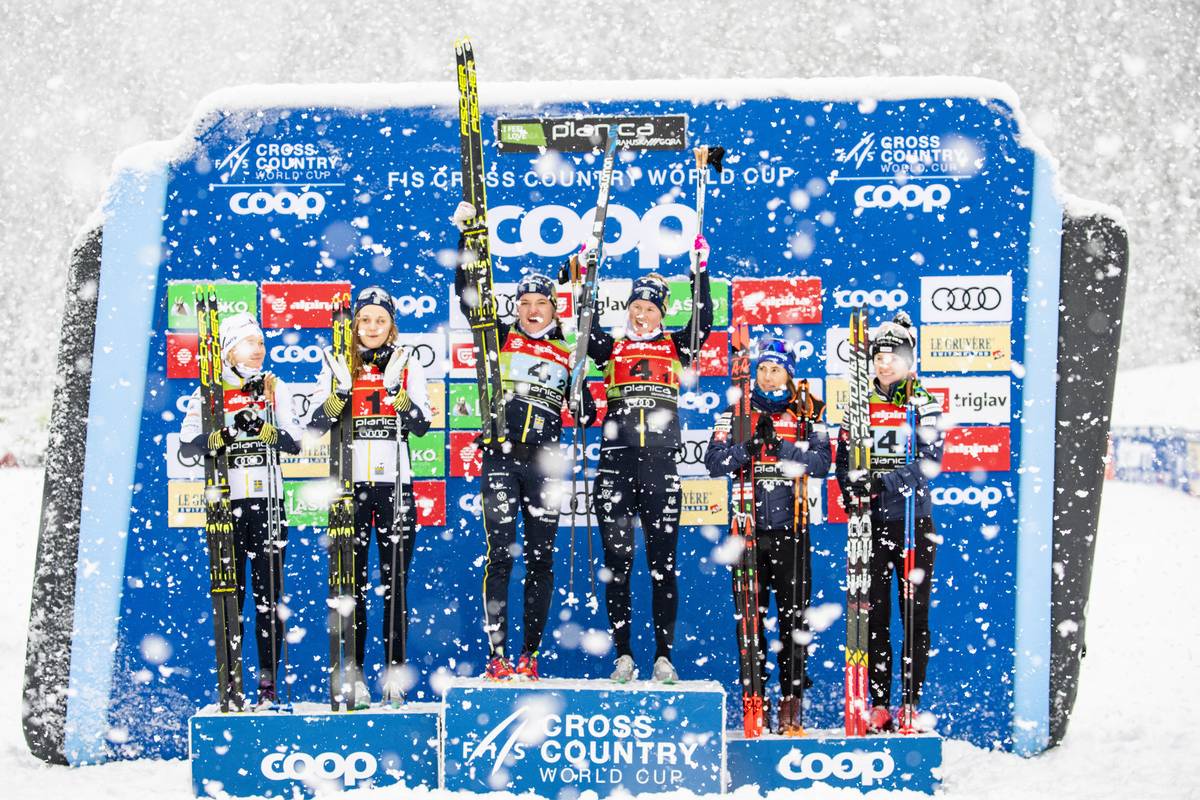
    The Swedish drag race for first went to Sweden II’s Svahn: they won in 19:13:55 minutes. Sweden I was second (+1.01), and Switzerland third (+1.13). Digging into the recesses of FIS data, Sunday’s third place was Switzerland’s best World Cup team sprint result. They placed fifth in last season’s Dresden team sprint. Norway I placed fourth (+7.58), and the U.S. fifth (+9.72). 
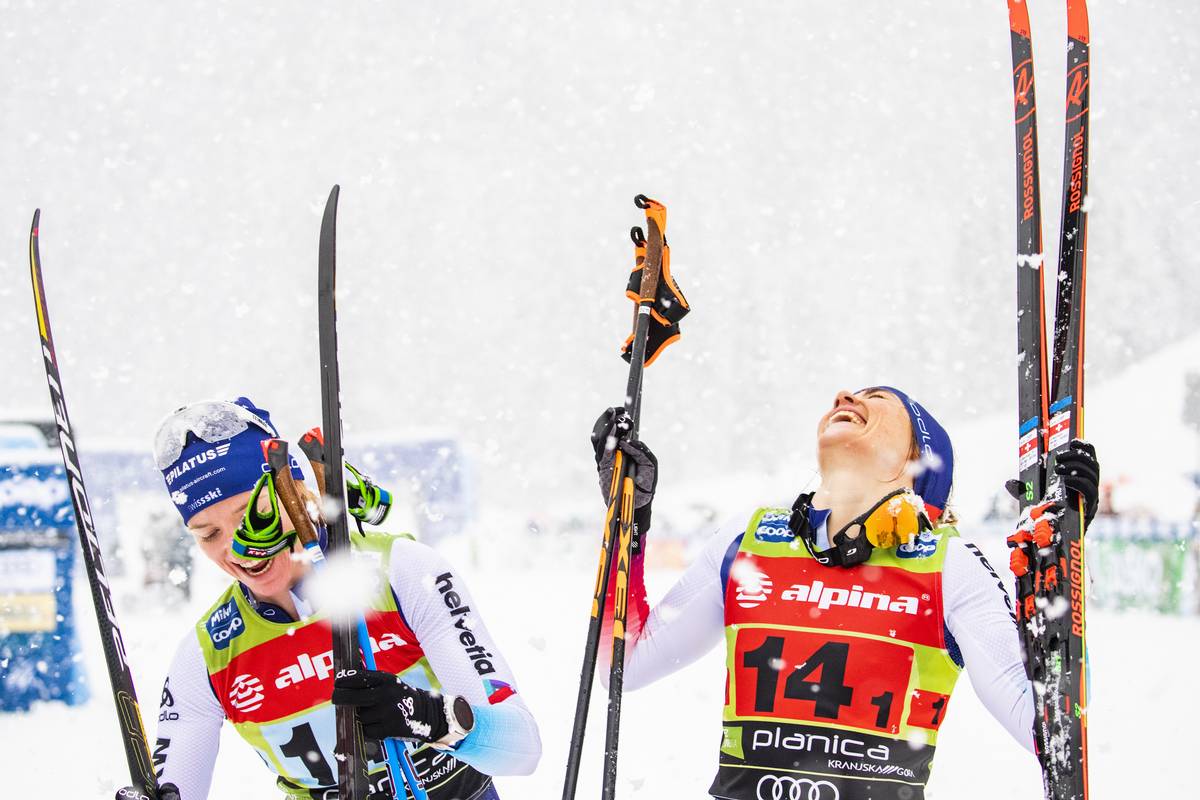
    The joys of the podium: Swiss teammates Nadine Faehndrich and Laurien Van Der Graaf (l-r) after their third place in the team sprint in Planica, Slovenia. (Photo: NordicFocus)

    “I am happy that after a couple of fourth and fifth places it finally worked out,” van der Graaf stated, according to a translation from the Swiss Ski Federation. “When I tagged off to Nadine in fifth place I was very confident that she would make it.”

    Fähndrich said: “For me it was optimal that the top 3 didn’t go all out early on. Thus I could catch up and still had enough energy in the end.”
    Norway’s Maiken Caspersen Falla (center) during the 2019 Planica team sprint. (Photo: NordicFocus)

    On the ski-wax service side of the race, U.S. World Cup Coach Matt Whitcomb explained in a post-race interview that today’s team sprint included a rule that no team could modify skis during the races. In team sprint additions past, it was common to see trackside techs applying and buffing a topcoat between relay legs. According to Whitcomb, Caldwell’s skis for the final were simply not in play. “So we made a mistake early in the finals,” said Whitcomb. “We had to eat it. And we did.”
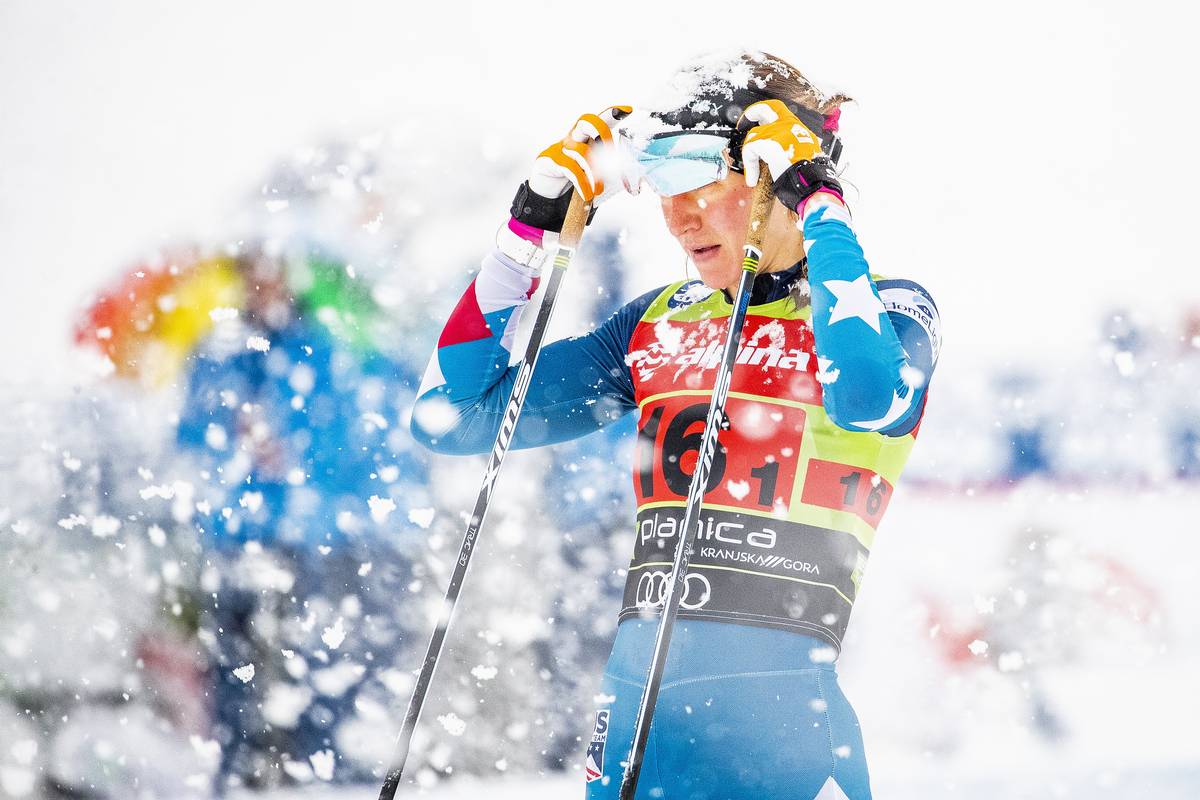
    Visor type of day for Sophie Caldwell during the women’s team sprint in Planica, Slovenia. (Photo: NordicFocus)

    World Cup Coach Matt Whitcomb’s take on the weather and Caldwell’s skis

    FasterSkier will have a Period I breakdown and Tour de Ski preview later this week. The Tour de Ski begins on December 28.
    Results Team Sprint Finals

    The women’s team sprint podium from Planica: Sweden I’s Stina Nilsson Jonna Sundling in second, Sweden II’s Maja Dahlqvist and Linn Svahn in first, Switzerland’s Laurien Van Der Graaf and Nadine Faehndrich (in third (l-r). (Photo: NordicFocus)  
  • Caldwell Third in Dresden City Sprint; Falk Gets First Win Since 2010

    Caldwell Third in Dresden City Sprint; Falk Gets First Win Since 2010

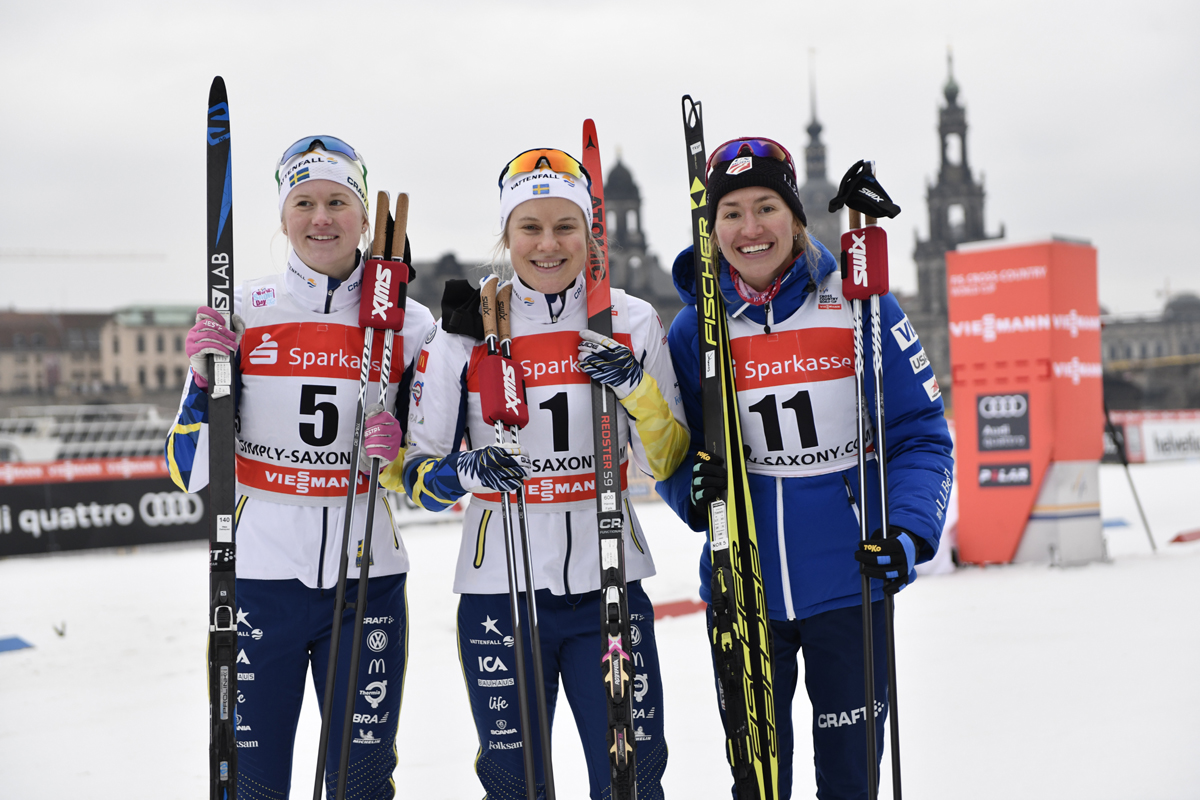
    The women’s freestyle sprint podium on Saturday at the World Cup in Dresden, Germany, with Sweden’s Hanna Falk (c) and Maja Dahlqvist (l) in first and second, and American Sophie Caldwell (r) in third. (Photo: Fischer/Nordic Focus)

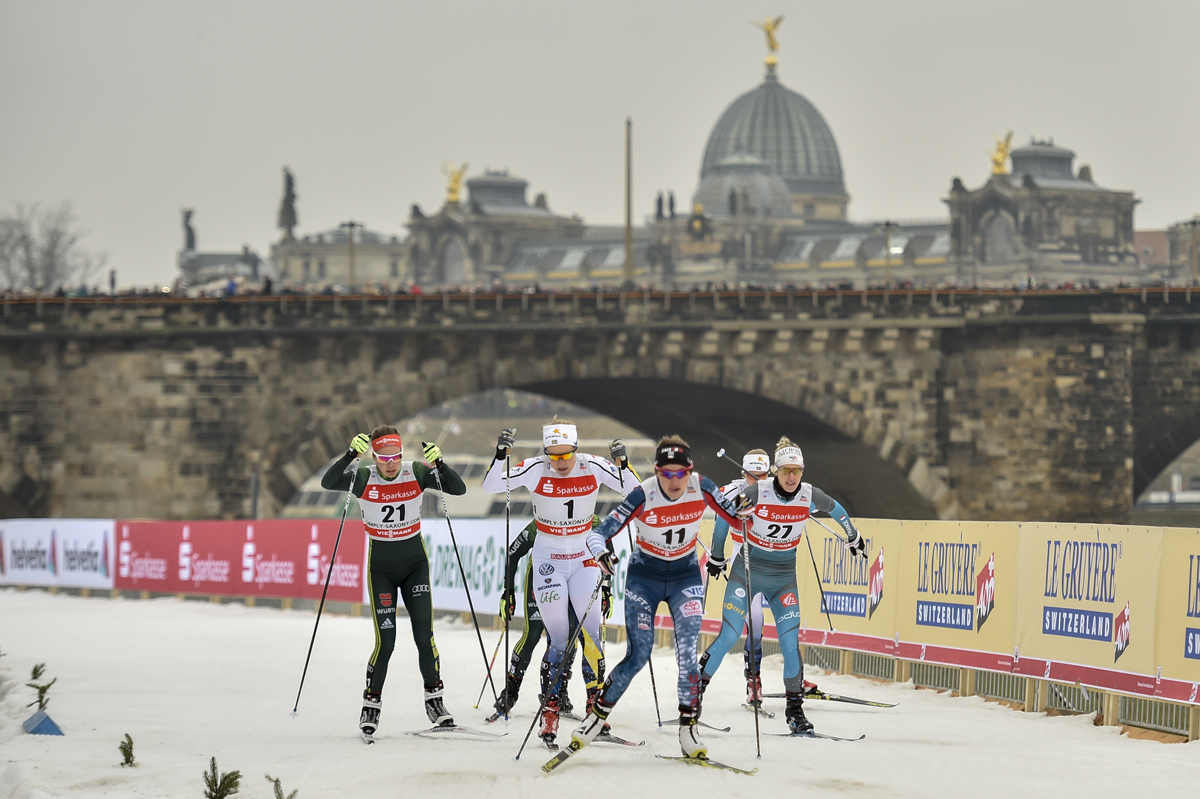
    In Sophie Caldwell’s quarterfinal heat of the World Cup skate sprint in Dresden, Germany, she led from start nearly to finish. In the final 200 meters she was passed by Sweden’s Hanna Falk, but won a photo finish for second place and advanced to the semifinals.

    In that quarterfinal heat, the U.S. Ski Team member had finished just 0.24 seconds behind Sweden’s Falk.

    As the racing got even tighter in the semifinals and final, it became more difficult to shoot off the starting line and into first place. Caldwell spent much of those heats boxed in the middle or even the back of her six-woman heats, partly on purpose, but advanced to the final as a “lucky loser” anyway.

    American Sophie Caldwell (11) leads Sweden’s Hanna Falk (1), Germany’s Hanna Kolb (21), France’s Aurore Jean (27), and others during their 1.2 k freestyle sprint quarterfinal on Saturday at the World Cup in Dresden, Germany. (Photo: Fischer/NordicFocus)

    “Sophie really executed the way she wanted to all day,” U.S. Ski Team Head Coach Chris Grover said. “She was in control of her quarterfinal, and then when she got to the semifinal, she purposely wanted to relax a little bit… same thing in the final. She was not going to, like, burn a match early. She was going to relax, be in the draft, save a little bit of energy early, and look to make a move.”

    By the end of the final, despite skiing from the back instead of the front, Caldwell’s margin to Falk was almost the same as it had been in the quarterfinal, this time 0.30 seconds.

    Falk took the win while Caldwell finished third, earning her second podium of the year.

    “It was pretty frantic, and in the final I didn’t have a great start,” Caldwell said. “I found myself in the back and it’s easy to waste a lot of energy being in the back and trying to move up, so I tried to be patient and pick people off when I could. But you also kind of have to capitalize on those opportunities when they come, so I just tried to be patient and pick people off. There was a fall that I dodged, which worked to my advantage, and so I am really happy with it.”

    The crash belonged to Sweden’s Stina Nilsson, the favorite to win the final even though Falk had the fastest qualifying time. Near the end of the race loop Nilsson tripped and went down, with Caldwell and Switzerland’s Laurien van der Graaf splitting to go around her, one of each side.

    “The crash happened right in front of me,” Caldwell said in a U.S. Ski & Snowboard press release. “But I managed to avoid it and then put in a big push to maintain contact with the leaders.”

    That liberated Caldwell from the back of the field, although she still had work to do to get near the front. From the beginning of the heat, Falk, Nilsson, and Swedish teammates Anna Dyvik and Maja Dahlqvist had controlled the pace.

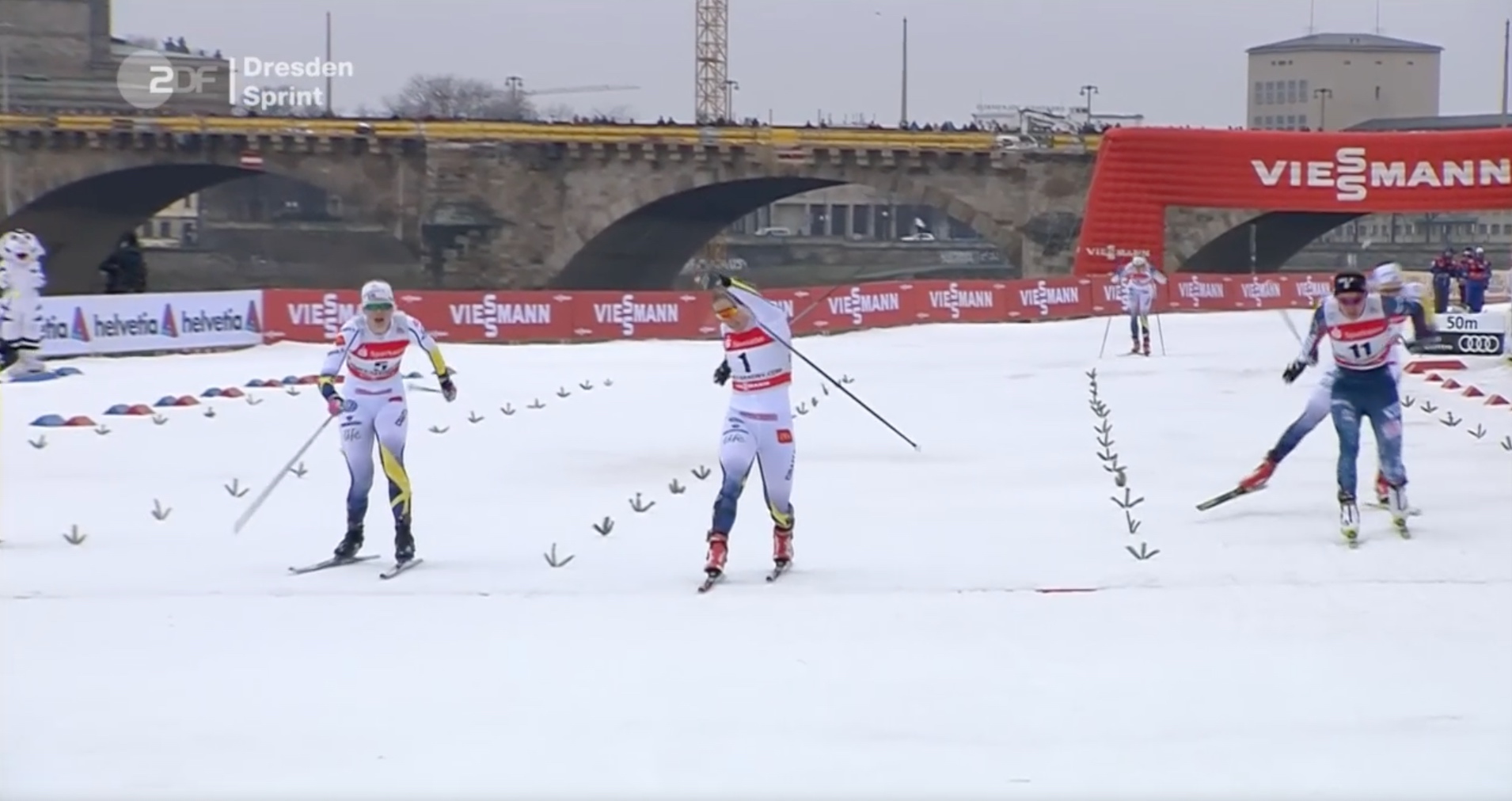
    Sweden’s Hanna Falk (1) edges her teammate Maja Dahlqvist (l) and American Sophie Caldwell (r) in the women’s 1.2 k freestyle sprint final on Saturday at the World Cup in Dresden, Germany. (Screenshot: ZDF broadcast)

    As the meters ticked down to the finish, Caldwell finally was able inch towards the lead.

    “Where she ended up making that move, under the bridge, was a targeted strategy of hers,” Grover said.

    Coming into the finish, everyone except Nilsson was still in it, and the five women all crossed the line within 0.68 seconds of one another. Falk, though, managed to stay clear of the pack and take her first win since 2010.

    “I think I was a little unfocused in the start in the semifinal, so in the final I really tried to focus on the start,” she said in a finish-line interview with FIS’s Jeff Ellis. “Then I took the front, and it was just to push hard… I really like this kind of city sprint. It was a good day for me. I have all my family and fans from Ulricehamn here cheering for me here, so it was a good day.”

    Dahlqvist claimed second (0.23), van der Graaf fourth (+0.58), and Dyvik fifth.

    Sophie Caldwell’s last podium came just two weeks ago, where she finished second in the 1.5 k sprint in Lenzerheide, Switzerland. (Photo: Fischer/NordicFocus)

    While pursuing a completely different strategy from Falk in the final, Caldwell proved that there are many ways to the right position, as long as you play your cards right.

    “I am really psyched to be here,” Caldwell said. “ I’ve never had great results in Period 1 in the past, so I was really happy to have made the semifinals in all three of the sprints. I considered it a really strong start, but I was left wanting more.”

    She is following up a second-place finish in the skate sprint in Lenzerheide, Switzerland, which kicked off the Tour de Ski. But Caldwell fell ill partway through the Tour, and didn’t start the (later-canceled) classic sprint in Oberstdorf, Germany.

    “I woke up sick the morning of the sprint in Oberstdorf, so I was sick for a week,” she explained. “I am actually still clearing things out, but energy-wise I felt good the past few days. Today was going kind of be a test to see how I felt, and I guess I was well rested. It felt good.”

    She is now third in the Sprint Cup behind Nilsson and Norway’s Maiken Caspersen Falla, who did not race in Dresden.

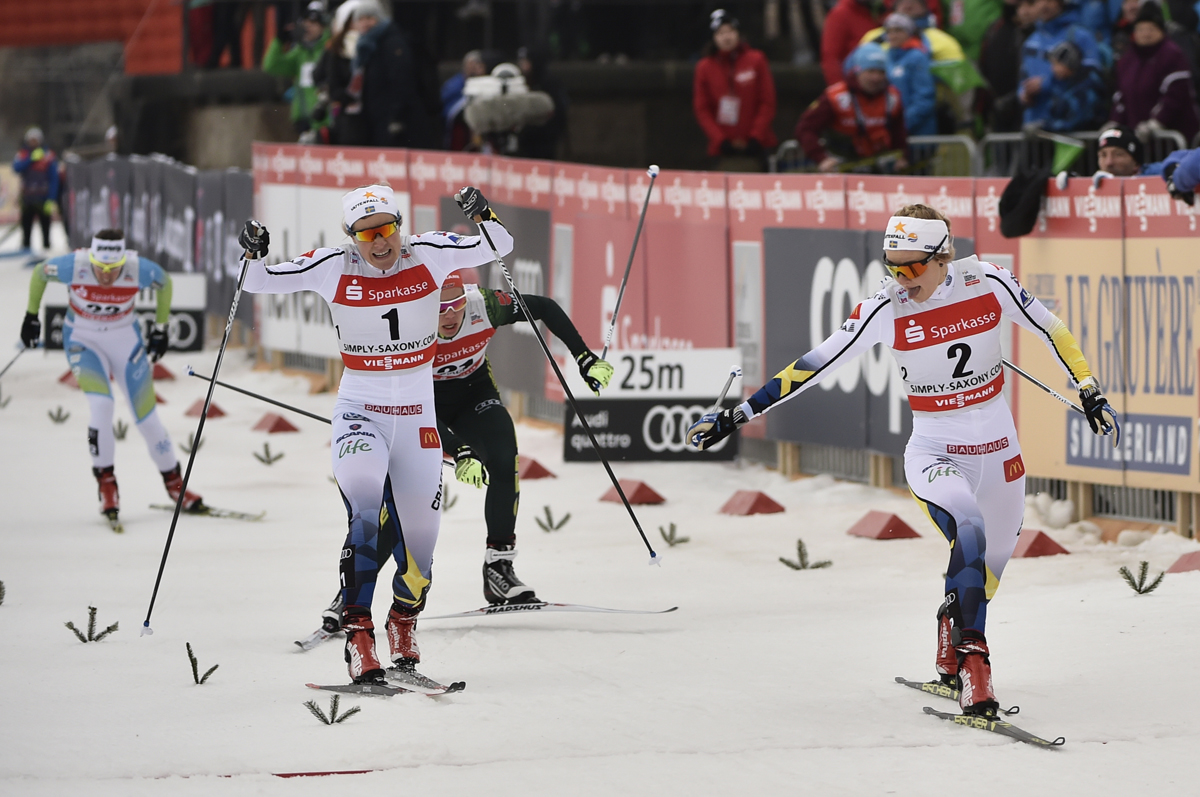
    Sweden’s Stina Nilsson (2) winning the second semifinal just ahead of her teammates Hanna Falk (1) and Maja Dahlqvist (not shown) and American Sophie Caldwell (not shown). Dahlqvist placed second, Caldwell third and Falk fourth in that heat. (Photo: Fischer/NordicFocus)

    City sprints aren’t so unusual; they have been held in Drammen, Norway, for many years straight, with other venues like Stockholm, Dusseldorf, Milan, and Quebec City coming and going from the schedule.

    But even for a city sprint, this course was particularly flat, short, and fast, which played to some athletes’ strengths and left others just trying to do their best to get by.

    “It was a really funny course a lot different than anything we have ever done — by far the shortest I have ever done and flattest,” Caldwell said.

    Her American teammate Ida Sargent qualified in 14th position, a new experience on such a course.

    “It’s a weird course,” she said. “It’s fast and flat. Not at all my favorite kind of sprint race. I just went into it looking at it as a challenge and an opportunity to improve on some of the things that are not really my strengths. So I’m pretty psyched with the qualifier to be right up there, on a course where I feel like a year or two ago I definitely wouldn’t have qualified on. That was exciting.”

    Like Caldwell, Sargent led out her quarterfinal heat. And like Caldwell, she got swept up at the end of it, with her competitors using a small uphill and a subsequent downhill to shoot into the finishing straights. She couldn’t hang on to the top two and finished fourth in the heat, 0.43 seconds behind Sweden’s Ida Ingemarsdotter.

    That put her 17th on the day.

    “Coming into the finish, it was pretty fast and I wasn’t quite ready for that,” she said. “I should have switched to V2 sooner, and I felt like it was all over the place. So I’m kind of kicking myself.”

    “Ida had a great start, took control, skiing how she wanted to ski, just ran out of gas at the end,” Grover said. “And I think it was a course where there’s no rest, it’s continuous effort – if V2’ing hard, V2 alternate-ing hard, if that isn’t your deal, then you could run out of gas at the end.”

    Both Sargent and Caldwell thought it was important to start well on this course, even though in the semifinal and final Caldwell managed to succeed without ever leading.

    “It’s really narrow and hard to pass,” Caldwell said. “It was pretty easy to sense when people were coming up, so I think people were guarding their space. That made it even harder to pass. When I was leading my quarterfinal I got to do some of that, and then when I wasn’t leading it was frustrating sometimes — you would see people bouncing around out there trying to make moves.”

    “There’s room to move up, but it’s definitely big decisive moves,” Sargent agreed. “I just got out fast [in the quarterfinal] and tried to stay in my rhythm at the beginning. I could feel the others coming up and I would just try to increase the pace whenever I could feel someone coming up so I could keep control.”

    Kikkan Randall (U.S. Ski Team) racing to 34th in the 1.2 k freestyle sprint qualifier on Saturday at the World Cup in Dresden, Germany. (Photo: Fischer/NordicFocus)

    Also starting for the U.S., Kikkan Randall narrowly missed qualifying for the quarterfinals in 34th, 6.57 seconds behind Falk’s time and 0.6 seconds behind 30th-place Giulia Stuerz of Italy.

    Randall, Caldwell, and Sargent are now looking forward to the Olympic Games, which begin in less than a month. Sargent sealed her qualification with that 17th-place finish, as she is now ranked 13th in the Sprint Cup, well within the top-50 designation required by the U.S. Ski Team.

    “I am looking forward to the Olympics,” Caldwell said in a post-race press conference. “It has been a strong year for me, and especially for my whole team. We are going to compete as a team to win the first medal for the U.S. women in Olympics, and I am proud to be on the team.”

    Julia Kern (U.S. Ski Team/Stratton Mountain School) racing to 38th in the women’s 1.2 k freestyle sprint qualifier at the World Cup in Dresden, Germany. (Photo: Fischer/NordicFocus)

    Julia Kern finished 38th (+7.78) and Caitlin Patterson 40th (+8.56).

    “We had an uncharacteristically poor qualification,” Grover said. “I have a feeling it was a combination of things… Just over two minutes for women and men a minute fifty, I think that might have been a little bit of a shock to the system. I couldn’t tell if our group was a little flat, or [this race is] just so uncharacteristic, something that we don’t really prepare for because it’s that much more on the anaerobic side instead of a mix of aerobic and anaerobic like we’re used to for a sprint.

    “Anyway, to have Erik Bjornsen just miss the qualification, to have Kikkan just miss the qualification, to have the four athletes who did go in not have the best qualifications, something was a little bit missing,” he concluded.

    In Sunday’s team sprint, Sargent and Caldwell will team up, with Randall and Patterson forming the second U.S. team in a field of 20 entries.

    No Canadian women competed in Dresden.

    Results: Women’s qualifier | Women’s heats

    — Gabby Naranja and Ian Tovell contributed

    Caitlin Patterson (Craftsbury Green Racing Project) racing to 40th in the women’s freestyle sprint qualifier at the World Cup in Dresden, Germany. (Photo: Fischer/NordicFocus)
  • World Cup Windup: Switzerland

    World Cup Windup: Switzerland

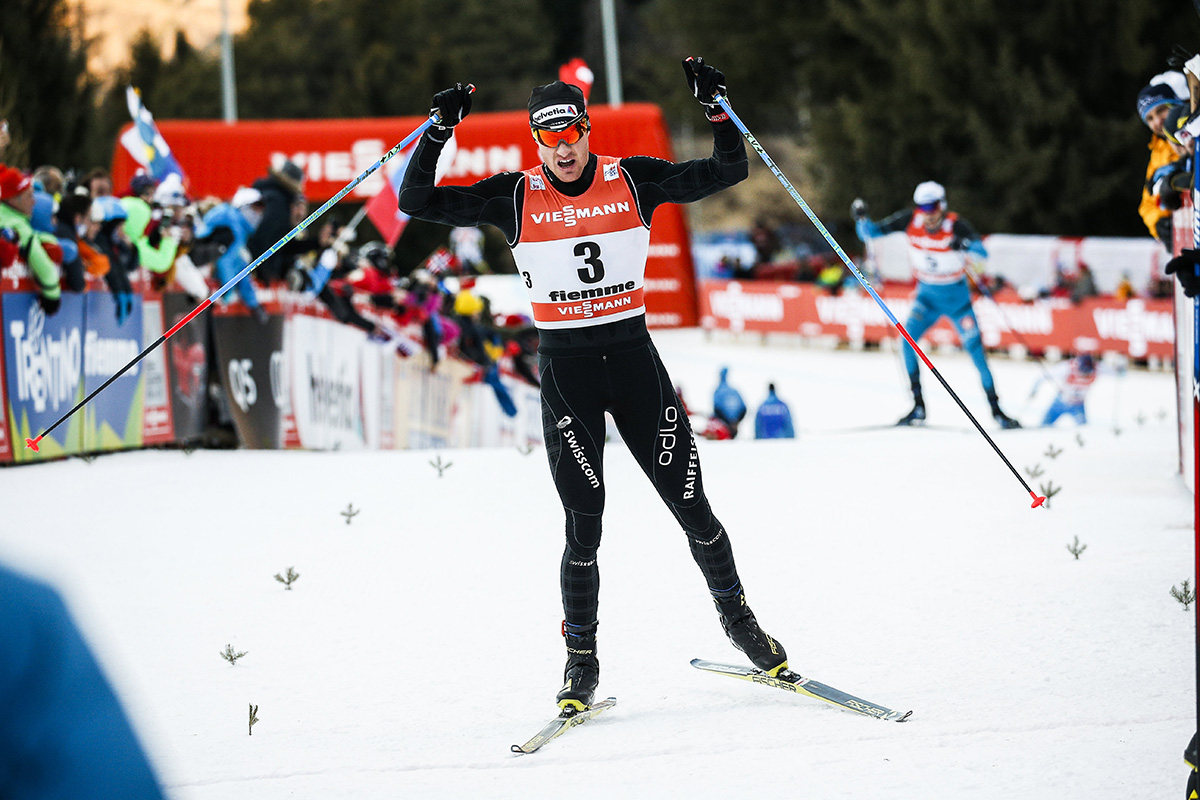
    Switzerland’s Dario Cologna celebrates third in at the top of the final climb in the last stage of the 2017 Tour de Ski on Sunday in Val di Fiemme, Italy. (Photo: Fischer/NordicFocus)

    Welcome to World Cup Windup, where we check in with the top-10 teams from last year’s FIS Cross Country World Cup tour before the season starts with the Ruka Triple in Kuusamo, Finland, on Nov. 24.

    SWITZERLAND

    Overall in Nations Cup Last Year: Sixth

    Women’s Ranking 2016/2017: Seventh

    Men’s Ranking 2016/2017: Seventh

    Who’s Back:

    Olympic gold medalist Dario Cologna, who finished seventh in last year’s World Cup standings and third in the Tour de Ski; Nathalie Von Siebenthal, eighth in the Tour de Ski; Laurien Van Der Graaf and Jovian Hediger, with two sprint top-10’s each; Nadine Faehndrich, third in the U23 standings; Seraina Boner, the long-distance queen who helped the Swiss women finish seventh in the World Championships relay, and Toni Livers, also sometimes a marathon racer but also with a World Cup top-ten last season; Jason Rueesch, Jonas Baumann, and Curdin Perl, who teamed up with Cologna for fourth place in the World Championships relay.

    Who’s Missing:

    Switzerland’s Nathalie von Siebenthal racing the second-fastest third leg split in the women’s 4 x 5 k relay at 2017 World Championships on March 2 in Lahti, Finland. Her team finished seventh.

    No notable retirements.

    Pre-Season Results:

    The Swiss team strutted their stuff on home soil in Davos earlier this month, with Dario Cologna winning a distance race against the Italian and German teams and Laurien Van Der Graaf picking up a win in the sprint.

    Cologna also finished third behind Evgeny Belov and Sergey Ustiugov in a 10 k skate in Gällivare, Sweden, and Nathalie Von Siebenthal finished fifth in the 5 k skate. One day later, Cologna was fifth in a 15 k classic behind a Russian podium sweep. Then on Sunday, Nadine Faendrich made the sprint final where she finished sixth.

    Best Social Media Presence:

    On Dario Cologna’s Facebook page, he posted all summer a series of nine videos of the “Cologna Challenge”, a series of sometimes-humorous competitions between himself and his brother Gianluca Cologna.

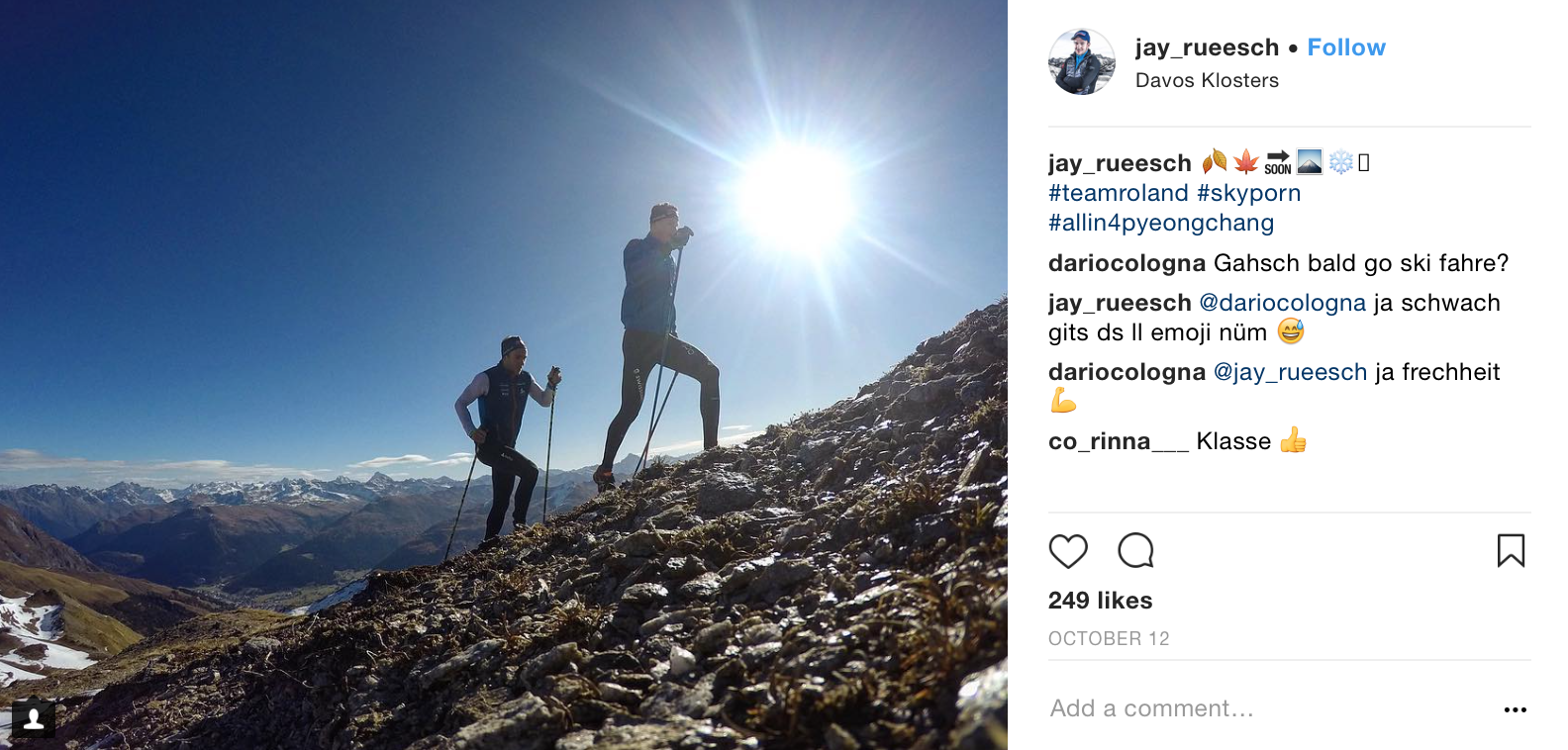
    On the men’s team, Jason Rüesch also has a great Instagram feed.

    Nadine Faehndrich occasionally posts training videos on her Facebook page. Of the three women who scored World Cup points last season, only Laurien Van Der Graaf is on Instagram.

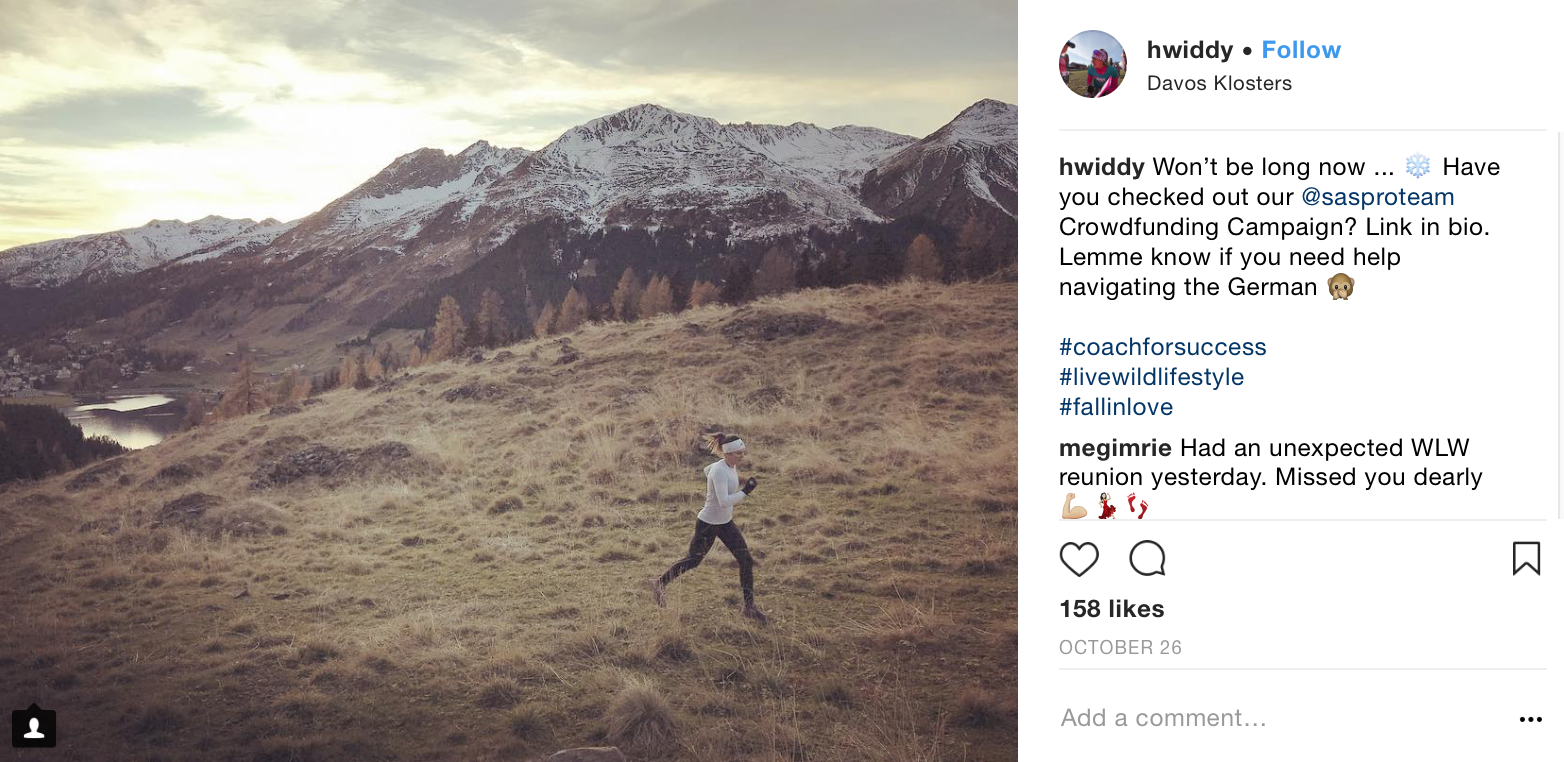
    And of course, there’s also Swiss-Canadian Heidi Widmer, who is a member of the SAS Pro Team.

  • More Early Racing as Cologna, Kylloenen, and Van Der Graaf Get Wins

    More Early Racing as Cologna, Kylloenen, and Van Der Graaf Get Wins

    Racers navigate a steep climb and descent on the race loop at Bruksvallarna on Saturday. (Photo: Jocke Lagercrantz/Bruksvallsloppet.se)

    The World Cup season draws ever-closer as season-opening races continued this weekend in Sweden, Finland, and Switzerland.

    In Muonio, Finland, a long weekend of racing wrapped up with 10 and 15 k skate races. Finland’s Anne Kylloenen took the win in the women’s 10 k, besting Emilie Kristoffersen of Norway by 8.2 seconds. Kylloenen’s national-team teammates Laura Mononen and Aino-Kaisa Saarinen took third (+14.0) and fourth (+17.1), respectively. Merete Myrseth, a Norwegian skier who competed for the University of Utah on the NCAA circuit last season, finished 17th, +57.1.

    In the men’s 15 k, Alexey Chervotkin of Russia took a 13.8-second win over Iivo Niskanen of Finland. Denis Spitzov of Russia was third, +17.5, and University of Utah alum Snorri Einarsson fourth, +21.2. Einarsson is competing for Iceland. Graham Nishikawa of Canada finished 19th, +1:14.4, and Brian McKeever 40th, + 2:05.3.

    Finishing sixth (+37.0) was Maxim Vylegzhanin of Russia, who made his second flower ceremony of the weekend. The International Olympic Committee (IOC) decided on Thursdayto strip the Russian skier of three silver medals from the 2014 Olympics for doping violations and ban him from all future Olympic Games. However, the International Ski Federation (FIS) has not yet taken any action since he and five other skiers were banned from the IOC, meaning that all six athletes are currently free to take part in non-Olympic ski competitions. FIS has not yet responded to a request for comment about Vylegzhanin’s continued competition.

    https://www.instagram.com/p/BbZO7VFFYpg/

    In Bruksvallarna, Sweden, Sunday meant skate sprinting, and Norwegians took both the men’s and women’s wins. In the men’s race, Paal Troean Aune bested countryman Even Northug in the final, with Anton Persson the only Swede on the podium in third. None of the top sprinters from either country competed. Jack Carlyle of Canada finished 60th, 19.4 seconds behind Aune’s qualifying time.

    In the women’s sprint, Wenche Aune Snildalsli took the win over four Swedes: Emma Thalin, Moa Olsson, Jackline Lockner, and Wilma Joensson were next across the line, and Latvia’s Patricija Eiduka finished sixth.

    A large contingent of international racers has also been training in Davos, Switzerland, where organizers have a lengthy saved-snow loop covering some of the same terrain which will host the World Cup in mid-December. On Friday and Saturday, the Swiss competed with the German and Italian teams in sprint and distance races, with a few individual athletes from other countries attending as well.

    In Friday’s sprints, Laurien Van Der Graaf came out on top for the home team, besting Germany’s Laura Gimmler and Steffi Boehler in the ‘A’ final after Gimmler had won beat her by 1.59 seconds in the qualifier. Fourth place went to Sandra Ringwald, also of Germany, and fifth to Ilaria Debertolis of Italy. In the men’s sprint Thomas Bing claimed the win for Germany, skiing away Switzerland’s Erwan Kaeser by more than two seconds. Giacomo Gabrielli and Stefan Zelger of Italy were third and fourth, and Janosch Brugger of Germany rounded out the ‘A’ final in fifth.

    https://www.instagram.com/p/BbUYGpgl2V_/

    In Saturday’s distance races, Katerina Smutna – racing for the Czech Republic after taking a break for several years to focus on a long-distance marathon career – won the three-lap, 10.5 k competition by just three seconds over Katharina Hennig of Germany, with Boehler another 12.2 seconds back in third. Van Der Graaf finished fourth, + 27.1, and Debertolis fifth, +39.6.

    In the men’s four-lap race, covering 14 k, Swiss Olympic gold medalist Dario Cologna took a commanding 26.6-second win over Russia’s Ilia Chernousov. Jonas Dobler of Germany claimed third, +33.8, with Giandomenico Salvadori of Italy fourth (+59.2), narrowly beating out Livio Bieler of Switzerland (+1:00.9).

    Chernousov could soon become an Olympic champion like Cologna. Vylegzhanin’s disqualification from the 2014 Olympics, along with that of Alexander Legkov, leaves Chernousov to inherit a gold medal in the 50 k freestyle, where he initially finished third. He has not been named in any of the doping investigations by the World Anti-Doping Agency or the International Olympic Committee. In fact, a Russian ski coach recently claimed that Chernousov had turned whistleblower and informed against his Russian teammate, but Chernousov has denied that allegation.

    https://www.instagram.com/p/BbW9TxXnxwI

    Results

    Bruksvallarna

    Women’s sprint qualifierfinal

    Men’s sprint qualifierfinal

    Muonio

    Women’s & men’s skate distance races

    Davos

    Sprint races (one document, men & women / qualifier & heats)

    Distance races

  • Öberg Takes First World Cup Win, Diggins Claims Fifth in Rybinsk Sprint

    Öberg Takes First World Cup Win, Diggins Claims Fifth in Rybinsk Sprint

    Jessie Diggins (U.S. Ski Team) on her way to tying a World Cup career best of fifth in Saturday's 3 k freestyle prologue at Stage 1 of the Tour de Ski in Oberhof, Germany. She placed 18th in Sunday's freestyle sprint for 14th overall in the Tour through two stages. (Photo: Marcel Hilger)
    Jessie Diggins earned a season-best fifth place in the 1.3 k freestyle sprint in Rybinsk, Russia.  She’s pictured here on her way to fifth in the 3 k freestyle prologue of the 2014 Tour de Ski in Oberhof, Germany. (Photo: Marcel Hilger)

    When Jennie Öberg of Sweden finished the 1.3 k freestyle sprint in Rybinsk, Russia she checked a few items off her bucket list – it was her first World Cup sprint final and her first World Cup podium. It didn’t stop there either, as Saturday’s race marked the Swedish skier’s first victory.

    The win came under challenging conditions, where skiers faced a soft, slow course due to heavy snowfall throughout the night and morning. Organizers attempted to harden the track between races to no avail, as the dry snow failed to respond to the groomer’s attempts.

    With the extra challenge, Öberg skied confidently throughout the heats and won the final with a time of 3:02.54. It was a close race for the top spot, with Natalia Matveeva of Russia just 0.48 seconds behind the Swede. Switzerland’s Laurien van der Graaff (+0.76) won a photo finish over Anastasia Dotsenko (+0.78) of Russia to take third. American Jessie Diggins (+5.63) and Norwegian Silje Oeyre Slind (+11.17) rounded out the final in fifth and sixth.

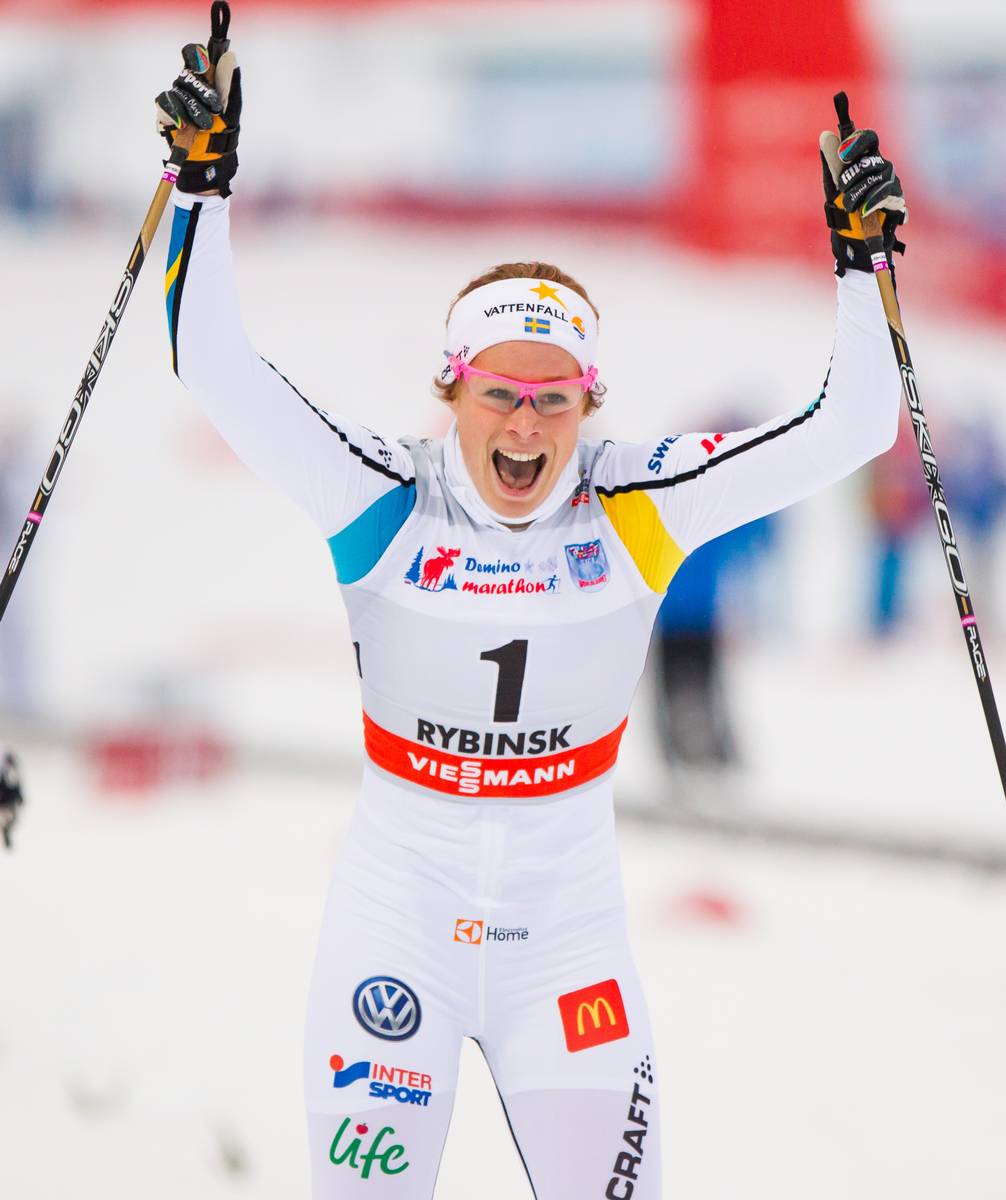
    Jennie Öberg of Sweden celebrates her win in Sunday's 1.3 k freestyle sprint in Rybinsk, Russia. (Photo: Fisher/Nordic Focus)
    Jennie Öberg of Sweden celebrates her win in Sunday’s 1.3 k freestyle sprint in Rybinsk, Russia. (Photo: Fisher/Nordic Focus)

    Prior to Saturday’s race, Öberg’s best World Cup result was a 2014 freestyle sprint in Nove Mesto where she placed seventh. She raced the majority of the 2015 season on the Scandinavian Cup circuit, with her first World Cup of the year taking place in Otepää, Estonia earlier in January.

    Öberg started her day with a strong qualification round in which she placed first, 2.08 seconds ahead of the next competitor. The quarterfinal was wasn’t as easily conquered, however, as the Swede fell after tangling with van der Graaff while exiting the stadium. The crash set her back roughly 40 meters, but Öberg worked to catch the group as they navigated the soft course. By the time the skiers reached the stadium, she was back in the mix, ultimately taking second to van der Graaff.

    With the scare of the fall behind her, Öberg skied a smart and aggressive semifinal and final to take her debut victory. According to the Swede, the win was an important step in qualifying for World Championships, which will be held in her home country in February.

    “This was my first ever sprint final so to win is just amazing.  I am really so happy.  I felt really strong today.  I was ready to win.  When I fell in the quarterfinal I panicked a little but it all worked out.  This gives me confidence for the upcoming Swedish Championships, which will be final selections for Falun 2015,” Öberg said in a post-race interview with FIS.

    In second place, the crowd-favorite Matveeva was happy to be near the top of the results again. Her last World Cup podium was third place in a 2012 classic sprint in Otepää.

    Matveeva entered the heats as the fourth-fastest qualifier and skied to victory in her quarterfinal. In the semifinal, however, she and van der Graaff lunged for a photo finish. Although Matveeva lost by 0.01 seconds, her time was fast enough to nab a lucky loser position and advance to the final.

    “This is a great podium for me.  I have been sixth and fourth here before but never on the podium. The spectators were so loud. It was a great racing atmosphere here today. The conditions were challenging. I am happy with myself for this result,” Matveeva said to FIS after the final.

    Unlike her counterparts, van der Graaff has been in the running for a World Cup podium multiple times this season. Before Saturday the Swiss skier had advanced to a final twice in the 2015 season, in Davos and Val Mustair. In both instances she placed sixth.

    In Rybinsk, van der Graaff was dangerously close to missing the podium as she and Dotsenko were in a photo finish for third. In the end it was van der Graff who came out on top by 0.02 seconds.

    “It feels really great to be on the podium today.  It was a photo finish at the line but I was pretty sure that I was in third place. It was a relief to see that in the end I was third and on the podium,” van der Graaff said to FIS.

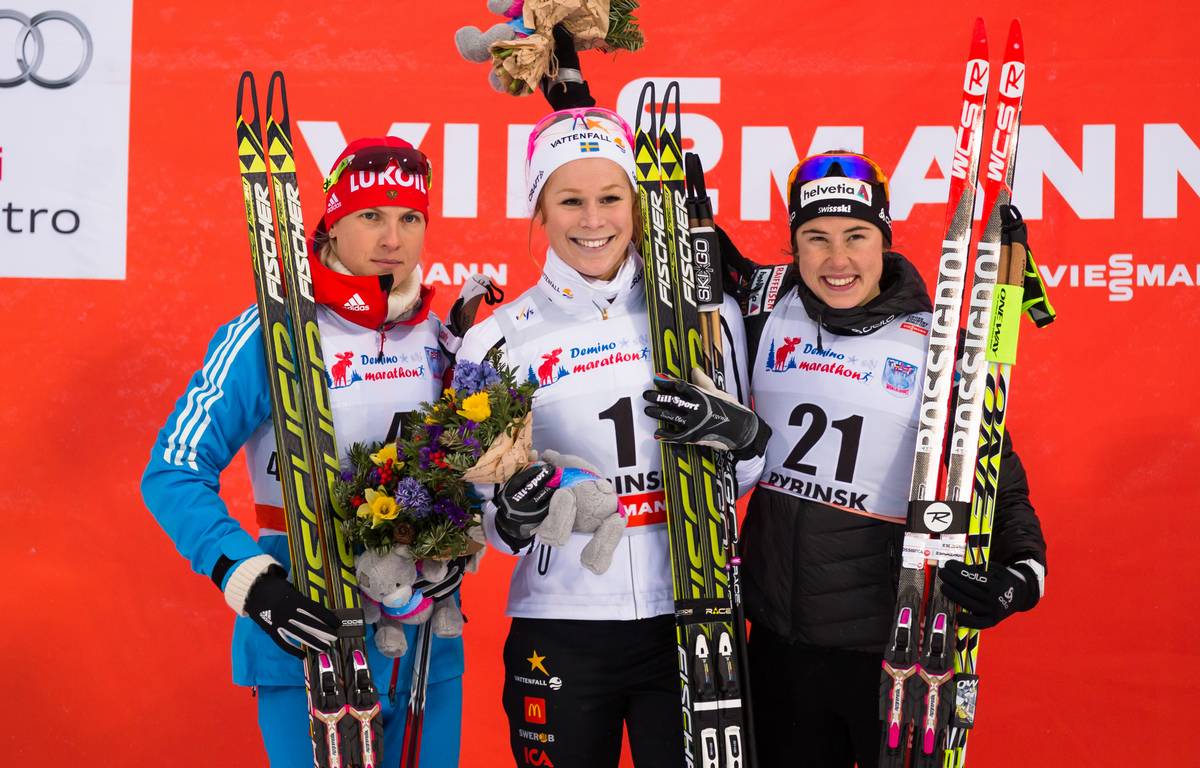
    The women's podium (from l-r): Natalia Matveeva (RUS)  second, Jennie Öberg (SWE) first, and Laurien van der Graaff (SUI) third.
    The women’s podium (from l-r): Natalia Matveeva (RUS) second, Jennie Öberg (SWE) first, and Laurien van der Graaff (SUI) third.

    In fifth place, Diggins earned her best result of the 2015 season. The Rybinsk World Cup marked her first competition since she pulled out of the Tour de Ski due to illness earlier in January. In Friday’s 10 k freestyle Diggins placed 12th.

    The night before Saturday’s competition Diggins said she was plagued by a series of bad dreams, and that she began her warm up feeling exhausted.

    “I had a crazy bad night of sleep… When I got out there to warm up I was like ‘oh man I feel tired,’” Diggins said in a phone interview.

    Despite the fatigue, Diggins explained that she was reminded of teammate Kikkan Randall, who has achieved some of her best results when pre-race feelings indicated a poor day. Diggins said that instead of thinking about her fatigue she decided to focus on how she was going feel in the race. That, in combination with tasty breakfast prepared by teammate Liz Stephen, gave her a boost heading into the race.

    After qualifying 13th, Diggins entered the quarterfinals with more energy. She sat near the back of the pack until the course’s only major climb. There, she moved to second place behind Rikka Sarasoja-Lilja of Finland. The two crested the hill together and attacked the downhill ahead of the four other women. As the two entered the stadium, Diggins free skated past the Finn to take first place.

    A similar strategy was used in the semifinal, but this time Diggins found herself in first at the top of the final hill with Dotsenko and teammate Sophie Caldwell close behind. She was worried that the two skiers would use the draft to slingshot into the stadium, but when they arrived Diggins was still in the front and easily crossed the line in second place.

    Diggins said that the group dynamic of the final made for a fun heat.

    “It was cool because Öberg and Slind had never been in a final before, so we were all high-fiving each other and wishing each other good luck. It was a fun positive energy going into the final,” she said.

    Diggins believed she had a good shot at her first individual World Cup podium, but fatigue got the best of her as she traversed the course for the fourth time. Falling to the back of the heat from the start, the 23-year-old maintained fifth throughout much of the race.

    Diggins explained that the 2015 season has been mentally challenging but that Saturday’s result was a step in the right direction.

    “My confidence this year hasn’t been where it maybe should be because I’m not racing at the level where I was last year, which is hard. It’s definitely one of those things where you have to keep telling yourself that you have what it takes,” she explained.

    According to the Minnesota native, the boost in confidence from the result in addition to USST dynamics will set her up for a strong showing at the 2015 World Championships, which take place in three weeks.

    “I feel really good going into Worlds because the team is functioning like such a well-oiled machine. I feel like we are in a good place,” she said.

    USST Head Coach Chris Grover said that he was pleased with Diggins’ result and that he was impressed with her ability to navigate the soft conditions.

    “Jessie usually likes firm conditions but she was awesome. She really skied in control during her quarter and semifinals. She really executed moves exactly the way she wanted so that was pretty cool,” he said in a phone interview.

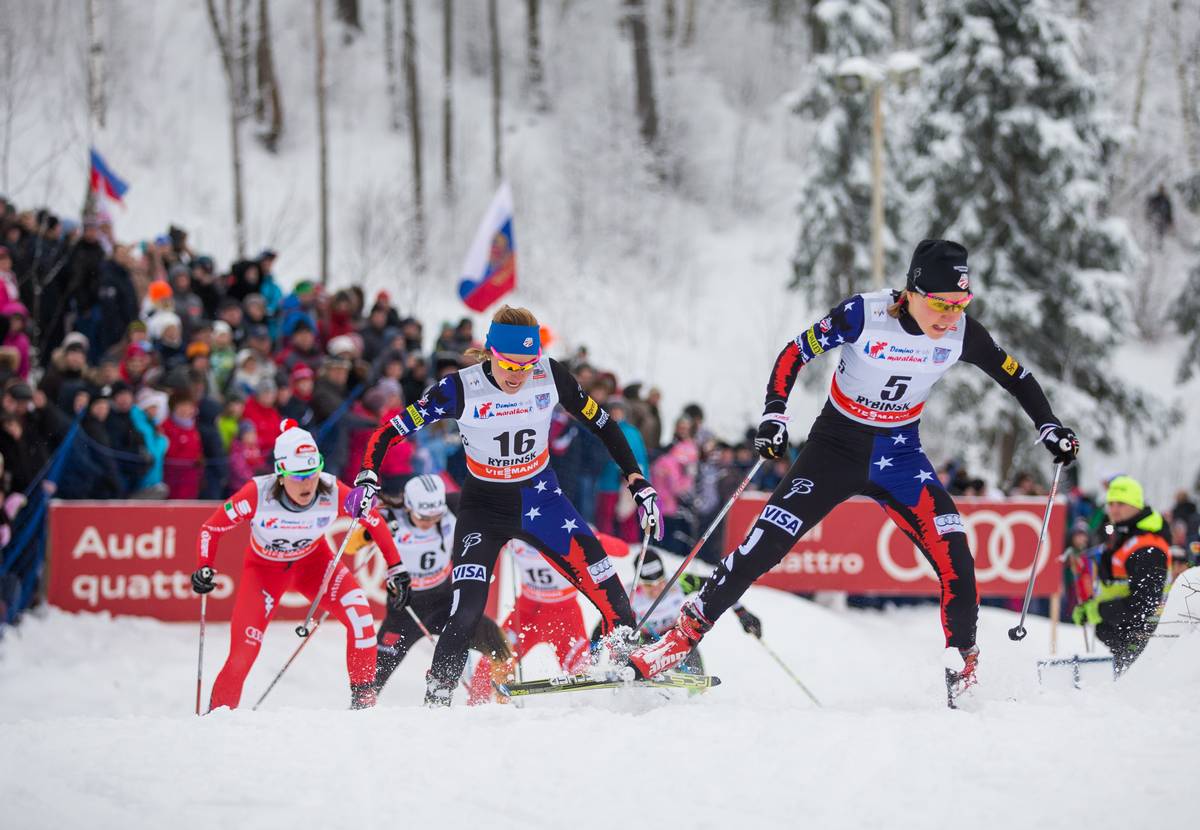
    Ida Sargent (5) leads Sophie Caldwell (16) up the final hill of the 1.3 k freestyle sprint quarterfinal in Rybinsk, Russia. Sargent finished third in the heat while Caldwell placed second. Caldwell and Sargent finished seventh and 13th overall. (Photo: Fischer/Nordic Focus)
    Ida Sargent (5) leads Sophie Caldwell (16) up the final hill of the 1.3 k freestyle sprint quarterfinal in Rybinsk, Russia. Sargent finished third in the heat while Caldwell placed second. Caldwell and Sargent finished seventh and 13th overall. (Photo: Fischer/Nordic Focus)

    American Women Land Four in Finals

    Diggins wasn’t the only American to impress in Saturday’s sprint.

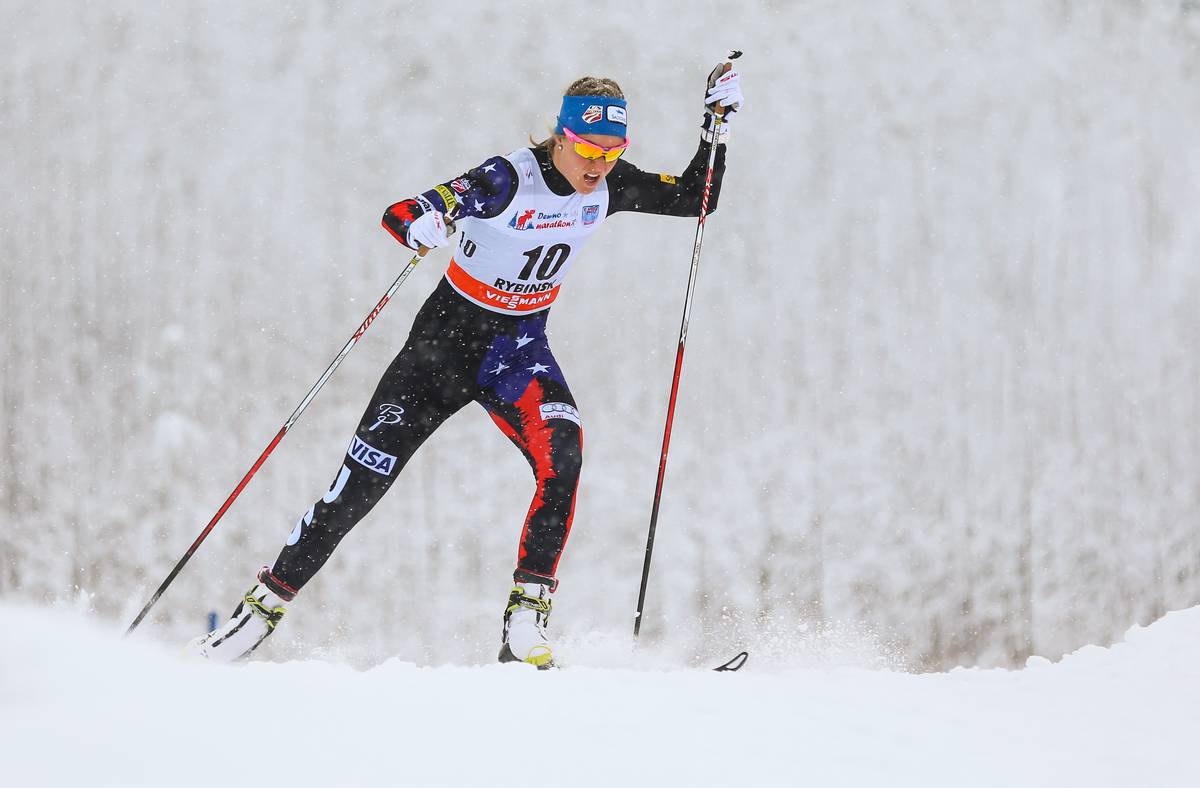
    Caldwell, a regular in freestyle sprint semifinals, skied to seventh in Rybinsk despite lingering fatigue. The 24-year-old qualified 16th and easily advanced from her quarterfinal. Once in the semifinals, Caldwell used similar tactics to land third place. Unfortunately, Caldwell’s semifinal was too slow for her to advance as lucky loser.

    “I was feeling a little fatigued going into the day, but I think I actually felt the best in my semifinal, so I was happy with the direction things were moving… it’s a really tough course that gives your legs a pretty good beating,” she wrote in an email.

    Just behind Caldwell was Sadie Bjornsen in 11th. The placement is her her second-best World Cup sprint result and was her first time in the semifinals since 2012.

    “I’m really happy because it’s been three years since I made it to the semifinals. It was really fun to get there today. It was really challenging conditions with the soft snow and a hard course,” she said.

    Bjornsen was lucky loser in the quarterfinals after finishing third in her heat. While she entered the semifinal hopeful to advance, a poor start prevented her from finding a strategic placement.

    Sadie Bjornsen skied to her second-best World Cup sprint result in Saturday's 1.3 k freestyle sprint in Rybinsk, Russia. (Photo: Fischer/Nordic Focus)
    Sadie Bjornsen skied to her second-best World Cup sprint result in Saturday’s 1.3 k freestyle sprint in Rybinsk, Russia. (Photo: Fischer/Nordic Focus)

    “I didn’t have a great starting position so I was forced into the back. That course is especially hard to ski from the back because it’s a lot of sprint-stop, sprint-stop. I was never able to get into a good position or a good rhythm. I was just hanging on by the horns. I didn’t feel like I could ski what I was capable of but it felt great to be skiing in the semifinals,” she explained.

    Ida Sargent entered the quarterfinals as the fifth-fastest qualifier but ended her day after finishing third in the same quarterfinal as Caldwell.

    “The qualification was really good for me. I was bib #1 which I was a little nervous about but I think it was really good for me because I was able to stay focused in my own race rather than getting distracted by everything going around me like I often do,” she wrote in an email.

    “I was not satisfied with how I skied the quarter and crossed the finish line feeling like I had a lot more to give,” she explained, “Then going into the finish I tried taking the left side which was a shorter line but it was a lot softer so then I went behind Sophie in the lane but the Italian came up on the far right.”

    The final American in Rybinsk, Rosie Brennan, placed 31st, 0.12 seconds from qualification.

    Grover was pleased with the overall team effort, even though he said the team had the potential to preform even better.

    “They did well. Even some of our athletes that traditionally struggle in deeper snow skied really well,” he explained. “We had 4 women in the top 13 so we can’t complain to much… Overall a pretty solid day and nice to have someone in the finals and fight for the podium.”

    Racing continues in Russia Sunday with a 15/30 k skiathlon.

    Results

  • An American at Bysprinten

    An American at Bysprinten

    Liza Goodwin competing at Bysprinten. Photo: Per Vikan, Helgeland Arbeiderblad.

    The sixth annual Bysprinten took place over the weekend in the small town of Mosjøen, Norway. The town is home to less than 10,000 residents, yet the event manages to attract some of the biggest names in cross-country skiing every year from both Norway and elsewhere in Europe. This year, Petter Northug (NOR), Laurien Van der Graaff (SUI), Øystein Pettersen (NOR), Heidi Weng (NOR) and Ola Vigen Hattestad (NOR) were among the biggest draws of the weekend, in addition to a sizeable youth competition, live music, and the fact of a ski festival being held in the town streets at the end of April.

    Keene Valley, New York native Liza Goodwin was among the small group of entrants. Goodwin has been living in Norway on and off since first spending a few post-graduate years with the Northern Norwegian Ski Gymnasium in Nordreisa. She came back and skied for Montana State University for the 2009-2010 season before deciding to go back to Norway. She currently lives in Tromsø, where she is studying physical therapy.

    Skiing has recently taken the backseat to her studies, but Goodwin decided to enter the Bysprinten race for fun, much like the rest of her competitors. She ended up finishing 13th in the 1.5 k freestyle sprint. We sent her a few questions about what the experience was like.

    FasterSkier: What was the scene like in Mosjøen? Is this event big deal there?

    Liza Goodwin: The scene in Mosjøen was really awesome. The town has done an impressive job of making the event a big deal locally. They say that there were several thousand spectators there lining the entire course, which makes for a great atmosphere. Being a competitive skier is an identity that most Norwegians have a lot of respect for. The ski culture of Norway makes the best skiers huge celebrities, and people of all ages don’t want to miss out on the opportunity to see these famous people live.

    There was also a kid’s race the evening before, and a youth race the morning of. Much of the event is to inspire kids to be skiers and the kids love being able to get autographs from all of the “big racers” (including myself!). The event might not be a big deal for Norway, because Mosjøen is a small town in Northern Norway, but it represents the passion Norwegians have for skiing and the role that elite racing has in Norwegian culture.

    Tomas Northug (NOR) leading a train during the "brother's relay" that included the Northugs, Pasinis, and Rennemos. Photo: Bysprinten.

    FS: Overall, how did you think the race went?

    LG: I didn’t have big expectations going into the race. I have stopped competing at the national level here in Norway and haven’t been training very much. I’ve been missing my speed on skis for over a year now, and the Bysprint was no exception. I am just not as powerful as I used to be and feel pretty slow. The course was also pretty uneven and I struggled to find enough balance to get into a good rhythm. I made a graceful belly-flop in the “Losers Heat” that cost me one place. The racing as a whole was OK, but the main goal of the event for me personally, and for the other racers and organizers, was that the race was supposed to be fun!

    A "graceful belly-flop." Photo: Per Vikan, Helgeland Arbeiderblad.

    The 700 m prologue was one lap. There were then four to five people in each quarterfinal, semi and final. The heats used two laps, which included using the U-turn at the end of the course, also on the second lap. That meant that there was a 180-degree turn about 25 meters from the finish line!

    Everyone who didn’t go to the finals was in a “Losers Heat”. This was just one lap and the winner got to join the others in the final.

    During the prologue, the police used their radar gun to measure the speed of each racer during the first 100 meters. The top three men and women from the speed measurements then competed individually in a 100 meter timed race.

    Petter Northug (NOR) leading the charge, followed by Fabio Pasini (ITA) and Kiristian Tettli Rennemo (NOR). Photo: Bysprinten.

    FS: I know you were just having fun with it, but was lining up next to some big names intimidating?

    LG: Of course it is intimidating lining up with Heidi Weng and other racers, but after racing in Norway for a few years, I’ve gotten used to that. I am used to competing against women who are the best in the world. My expectations are adjusted accordingly, but the actual racing isn’t that intimidating. I was more nervous about being in the whole group atmosphere and trying to consider myself as somewhat of an equal. The girls are really nice and it is pretty much the same atmosphere as being around any other skier girls at a race.

    Heidi Weng (NOR) and Bettina Gruber (SUI). Photo: Bysprinten.

    FS: Besides entering races with Norwegian national team members, what are you up to now?

    LG: My first “PG years” were spent at the Northern Norwegian Ski Gymnasium in Nordreisa. After competing for Montana State for one year, I applied for the physical therapy program at the University in Tromsø. Last year I focused a lot more on skiing that school, but now that has changed. Skiing in now on the side of my studies. I am currently in the middle of a seven-week clinical period at the hospital in Mo I Rana. This is the reason I asked to be a part of the Bysprint, since Mosjøen is just a little over an hour away from here. Otherwise, I am living in Tromsø and enjoying life as best I can. The skiing and training (playing?) opportunities are endless.

    Bysprinten race recap.

    Laurien Van der Graaff (SUI) won the 1.5 k sprint and the 100 meter race. Photo: Bysprinten.
  • Brandsdal, Van der Graaf Speed to Victory at Bysprinten

    Brandsdal, Van der Graaf Speed to Victory at Bysprinten

    Laurien Van der Graaf (SUI), shown here in the Milan, Italy World Cup, won both women's events at Bysprinten on Saturday.

    No snow-speed records were broken at the sixth edition of Bysprinten, but the annual two-day ski festival on the streets of Mosjøen, Norway provided plenty of excitement for the 3,000 spectators who came out to see their favorite national team members ski as fast as possible. On Saturday, Eirik Brandsdal (NOR) prevailed in the men’s final sprint, and Laurien Van der Graaf (SUI) topped the women’s field.

    “I am very fond of Bysprinten. I often do it well and it’s fun to go with so many people in the streets,” said Brandsdal.

    Petter Northug, whose presence at the event was the most highly anticipated, provided a bit of drama in the semifinals when he tangled with Øystein Pettersen (NOR) and appeared to be out for the final. The jury ruled that Pettersen had blocked Northug, however, and sent him through. Northug ended up finishing fourth.

    The Norwegian celebrity made no excuses — “I’ve relaxed on the couch for three months, so my ass is getting a little wide. I am not quite in top shape today,” he told the NRK.

    In addition to the 1.5 k, the day’s program included a youth sprint, an elite 100 m individual sprint, and a “brothers relay” that set the Petter and Tomas Northug against Renato and Fabio Pasini (ITA) and Anders and Kristian Tettli Rennemo (NOR).

    The Northugs lived up to their promise to “defend the family honor,” and defeated the Pasinis in second and the Rennemos in third.

    In the 100 m dash, organizers had a radar gun on hand in anticipation of witnessing a new world record, but it was not to be — local newspapers reported that the direction of the straightaway was into the wind. Ola Vigen Hattestad (NOR) clocked in at 12.39 for the win over Petter Northug in second (12.60) and Anders Gløersen (NOR) in third (12.63).

    “It was really fun to go today. I was not as good technically, but I did everything I could,” said Hattestad to the NRK.

    Van der Graaf dominated the day from the get-go, taking the women’s 100 m in 13:48. Slovenia’s Katja Visnar took second (13.83) followed by Mari Eide (NOR) in third (13.96).

    “It has been really fun and I enjoyed myself,” said Van der Graaf.

    Men’s 1.5 k results

    Women’s 1.5 k results

    100 m results

  • Randall Wins Skate Sprint In Davos, Ending Bjoergen’s Streak

    Randall Wins Skate Sprint In Davos, Ending Bjoergen’s Streak

    Kikkan Randall entering the finish lane on her way to winning the skate sprint in Davos by 1.7 seconds. Photo: Fischer/Nordic Focus.

    Davos, Switzerland — Marit who?

    At least that’s how it appeared in the World Cup in Davos, Switzerland, on Sunday, during the 1.5 k freestyle sprint, as it was American Kikkan Randall who destroyed the field rather than the usual Marit Bjoergen devastation.

    The Alaskan native blasted her way to her second consecutive World Cup sprint victory of the year, skiing away from the other five women in the final, leaving Russian Natalia Matveeva to grab second place, just ahead of Maiken Caspersen Falla (NOR).

    Straight from the qualifier, it was obvious Randall was going to be tough to beat. In the two-lap 1.5 k course, she started just two skiers back of Bjoergen. Ater the Norwegian set the second-fastest qualifying time behind Natalia Matveeva, the U.S. Ski Team (USST) veteran swooped in and stopped the clock.

    Randall was 0.11 seconds faster than the Russian – and almost a full second up on Bjoergen – in winning the qualifier.

    As the top seed, Randall was placed in the first quarter-final, and skied strongly from the gun. After taking control, and using her smooth V2 to cruise, only Caspersen Falla was able to stay reasonably close. Randall easily took the win, advancing through to the semi-finals.

    Randall rounding a corner coming into the stadium. Photo: Fischer/Nordic Focus.

    In the semi-final, Randall was matched up against some strong competition: 2007 sprint World Champion Astrid Jacobsen (NOR), and Dusseldorf surprise bronze-medal winner and Davos native Laurien Van Der Graaf (SUI) both qualified through to the next round.

    But they might as well have been J2s for all they could do against Randall.

    Taking the lead from the gun, Randall avoided the traffic on the first corner — a hairy 180-degree bend that curved straight into the only real climb on the course. After attacking the hill hard, she never looked back, stretching the field into a single line behind her as she built a massive lead to win comfortably by over a second, punching a ticket to her third sprint final of the year.

    Bjoergen was in the second semi-final. Owner of 49 World Cup victories and undefeated on the season, the seemingly invincible Norwegian seemed poised to qualify for the final, and create the Randall-Bjoergen face off that the fans desired.

    But with the red-hot Russian Natalia Matveeva as well as arch-rival Justyna Kowalczyk, and surprising Vibeke Skofterud (NOR), Bjoergen was not a lock.

    And early on, it was clear that Bjoergen was not going to dominate the heat. Kowalczyk squeezed into the lead around the first corner, and tore hell-bent up the first climb — only Matveeva and Canadian Chandra Crawford were able to keep pace. Bjoergen was left at the back as they rounded the corner and headed for the second lap, giving her just 750 meters to find her way into a qualifying position — not unheard of, but certainly difficult, even for Bjoergen.

    Chandra Crawford on her way to 9th in Davos. Photo: Fischer/Nordic Focus.

    As Kowalczyk and Crawford began to tire, paying for their first-lap enthusiasm, Matveeva pushed the pace, opening up a large gap on the downhill. Sweden’s Hanna Brodin found herself in second place rounding the final turn, with a couple of meters gap back to Kowalczk and the hard-charging Bjoergen.

    Bjoergen sling-shotted around the corner in Kowalczyk’s wake, and narrowly passed the Pole in the charge to the line, finishing third. Her late charge was impressive, but not quite good enough — the first semi was quicker, robbing Bjoergen of a spot in the final as the lucky loser.

    The streak was over, but the final was still to come. The 9,000-strong crowd, heavy with Norwegian and Swiss fans, were waiting to see who would supplant Bjoergen on the top step of the podium.

    The Norwegians had Maiken Caspersen Falla and Heidi Weng to support. Weng (World Junior Champion last year in the 10 k pursuit) barely qualified for the heats; she finished 30th in the individual start, just 0.08 of a second separated her from 31st place Yelena Kolomina (KAZ). Just 21 years old, Caspersen Falla is a strong skate sprinter — she has two World Cup medals in skate sprints in her short time on the circuit.

    Meanwhile, the Swiss were excited about Davos native Laurien Van Der Graaf, who had her break-through World Cup race last weekend in Dusseldorf, Germany, where she collected the bronze medal. Van Der Graaf qualified fourth, and the young woman had the crowd on her side.

    Hanna Brodin (SWE) and Matveeva rounded out the final, the latter riding a hot streak similar to Randall’s after finishing second to the American last weekend in Dusseldorf.

    Randall crossing the line with a dominating lead. Photo: Fischer/Nordic Focus.

    Matveeva led the way out of the tracks, skiing neck-in-neck with Randall approaching the first corner. The two climbed the hill together, and Randall pushed hard over the top, and rode a pair of fast skis into the lead on the downhill section of the course, taking the lead into the second lap.

    Matveeva closed up the gap instantly and took the lead, while Caspersen Falla, Van Der Graaf and Brodin all packed in tightly just behind Randall. As the group rounded the 180-degree corner, it looked like the race was going to go down to the wire. But Randall instantly launched a massive attack on the hill, powerfully hop-skating her way to the top. Only Matveeva was able to stay close, but as the two crested the hill, Randall refused to let up, hammering her way down the backside. As a result, the current Sprint Cup leader built a 50 meter lead on the field with half a lap to go — and still she kept charging.

    As she rounded the final corner and sprinted for the line, it was clear that Randall was untouchable. Matveeva and Caspersen Falla were left to pick up the pieces as Randall cruised to the finish, letting up only briefly to celebrate before crossing the line 1.7 seconds clear of the competition.

    A fading Matveeva just barely managed to out-last the fast-finishing Caspersen Falla at the line to collect her second silver medal in as many weekends. Sweden’s Brodin finished fourth, 2.5 seconds behind, while Van Der Graaff had to settle for fifth.

    When the smoke cleared, Randall was shell-shocked.

    “I don’t even believe it just happened,” said Randall in response to the stadium interviewer’s first question, sounding a little stunned.

    In an interview with FasterSkier after the race, Randall explained that her good position was the key to winning.

    “The hill was my strong point,” she said. “I didn’t want to lead, and when I made that strong move on the uphill, it was the perfect set-up for me.”

    As for the big gap in the final, Randall said she never even thought about where the other women were.

    “In my mind they are always there,” she said. “You never take anything for granted in sprint racing.”

    While Randall was excited about the win, she wasn’t shy about spreading around the credit — her fast skis, the great atmosphere in Davos, the team’s accommodation at Hotel Kulm, and the crowd all helped her to victory.

    “The training life leading up to the race is so nice [in Davos]” she said.

    “I had amazing skis, and I really want to share this with the team — they do such a good job of taking care of absolutely everything and letting me just race.”

    As for Bjoergen, Randall said that it was “a bit of a bummer” the Norwegian wasn’t in the final.

    “She’s the gold standard we all compare ourselves with,” said Randall. “It would have been nice to test myself against her, but all five women were plenty challenging.”

    Randall now has a week to digest the fact that she leads the Sprint Cup standings by 46 points, and is ranked third in the World Cup Overall standings before another weekend of World Cup action in Rogla, Slovenia.

    But tonight, she has some celebrating to do. She’s eating dinner with Anna Haag and Emil Joensson (SWE), whom she and Liz Stephen trained with last summer, and then spending some time enjoying the win with the whole U.S. Ski Team.

    Full results.

    Matveeva, Randall and Caspersen Falla on the podium. Photo: Fischer/Nordic Focus.
  • Kikkan Randall “On Fire” in Dusseldorf City Sprint

    Kikkan Randall “On Fire” in Dusseldorf City Sprint

    Kikkan Randall (USA) on top of the podium with Natalia Matveeva (RUS) 2nd (l) and Laurien Van der Graaf (SUI) 3rd (r) (Photo: Fishcer/NordicFocus)

    DUSSELDORF, Germany — Kikkan Randall is a World Cup Overall threat.

    At least, that was the way it felt in the city of Dusseldorf Saturday afternoon, when Randall hammered around the 900-meter manmade loop on her way to her first World Cup victory of the season.

    In the freestyle sprint, Randall out-gunned Natalia Matveeva (RUS) in the rush for the line, while Laurien Van Der Graaf (SUI)  picked up the bronze medal in her first-ever sprint final experience.

    Van Der Graaf beat out Canadian Chandra Crawford, while top-qualifier Riika Sarasoja-Lilja (SWE) and Hanna Brodin (SWE) got tangled up in the first corner and went down, and both finished off the back.

    A U.S. Ski Team (USST) veteran, Randall opened the season with a rash of strong distance results, including a 6th place finish in the Kuusamo mini-tour.

    And the first two World Cup weekends lacked the one race that Randall has become dominant in – the freestyle sprint.

    But Saturday in Dusseldorf, the American sprint-star turned World Cup overall contender took to the start line of the first freestyle sprint of the World Cup season, in a location that has long been one of her best.

    Randall was the favorite from the start – with World Cup leader Marit Bjoergen sitting out, the American was the top seed in qualification, and laid down the 10th fastest time around the short 900 meter course.

    From the very first round, it was clear that Randall was going to be a threat. She powered through her first heat, and despite a photo finish with Hanna Brodin, her advancement was never really in doubt.

    Randall holding down second in the quarterfinals behind Hanna Brodin (SWE). Brodin and Randall would match up in every heat of the day. (Photo: Fischer/NordicFocus)

    In her semifinal, Randall was matched up against Sarasoja-Lilja, and joined by Crawford, who also advanced past her quarterfinal convincingly, after a 17th place qualification.

    Randall and Crawford slotted themselves in second and third respectively around the first corner, and the jostling for position on the narrow course began in earnest.

    Randall attacked on Mt. Dusseldorf, the only hill on the course, and led over the top, while Crawford held third place.

    Coming down the finishing straight, Randall was able to hold her lead, and advanced easily to the final. Crawford was unable to squeak past Hanna Brodin (SWE) for an automatic spot in the final, finishing third, waiting on the hot sit to find out if she was fast enough to be the lucky loser.

    The second semifinal also included some top names, as home-town favorite Hanna Kolb (GER) was up against Matveeva, who qualified second, and third-place qualifier Mona-Lisa Malvalheto (FIN).

    To the disappointment of the crowd, Kolb took herself out of contention early on, falling out of the start gate.  In her first-ever semifinal, Van Der Graaf surprised everyone by taking control and opened up a small gap to win the heat and advance.

    In the moments leading up the women’s final, there was some apprehension among the North American fans in the crowd.

    Randall, Sarasoja-Lilja, Van Der Graaf and Brodin were all either lining up or preparing to do so, when the camera’s showed Crawford, who managed to advance as a lucky loser, kicking off her running shoes and stepping into her boots, held out for her by a Canadian wax tech.

    After Crawford did get to the line, the first freestyle sprint final of the World Cup season got underway, and with all six women close in ability, it was immediately crowded on the narrow course.

    Hanna Brodin (SWE) leads Randall and Crawford in the semifinals (Photo: Fischer/NordicFocus)

    Around the first corner, a fairly tight uphill left-hander, Sarasoja and Brodin, both at the back of the pack, got tangled up. Sarasoja came off the worst of the pair, going down hard and falling out of contention.

    Despite plenty of close calls, shoulder-to-shoulder action and lots of tactical moves, the four remaining women made it around the final corner without incident. North American coaches, staff, and fans were holding their collective breath, as three medals were up for grabs, and just four skiers in contention.

    Randall held off a strong late charge from Matveeva, who passed a fading Crawford, while Van Der Graaf also sneaked by the Canadian to pick up the bronze medal, the first World Cup medal of her career.

    “It was pretty scrappy out there, narrow course, contact at a couple points,” said Randall in an interview with FasterSkier following the race.

    “I was really happy to get into position coming into the finish, and have a good strong finish.”

    For Randall, the key to victory was mastering the tricky conditions.

    “The snow was really hard to balance on – it was hard to apply a lot of power. With the wind there were times where you really had to stay low, and work the lower body,” she said.

    Despite the slippery snow, Randall called the conditions “really good,” and was pleased with the course.

    USST Head Coach Chris Grover was enthusiastic about Randall’s day.

    “She’s on fire right now,” he said. “It’s great that she’s now at the level where she’s in the running for the World Cup overall.”

    “She’s so strong in the skate sprint, and this course has been traditionally good for her,” he added. “So it was great to get the first win of the year.”

    Surprise bronze medallist Van Der Graaf, advanced to the first final of her career in just thirteen World Cup starts, after having never finished higher than 21st.

    “That was amazing,” said Van Der Graaf of her race in an interview with FasterSkier. “I can’t believe it. It’s just like some dream.”

    She mentioned that the racing was very close-quarters and intense.

    “It was quite messy,” Van Der Graaf said. “I had some troubles with Chandra Crawford but that’s sprints, that’s normal.”

    With her first World Cup medal ever, Van Der Graaf couldn’t find any faults with the day – even rain, blustery winds, an icy course, and above zero temperatures didn’t faze her.

    “The conditions were really good – it was rainy and windy but the snow was really good. There is nothing to complain about,” she said with a big smile.

    For Crawford, there was slightly less smiling – she felt she had a chance at a medal and let it slip from her hands.

    “It was my first final since 2008, so I made my goal, but fourth? Wow,” she said. “I thought I had second, then I really thought I had third, but I got a bit stiff, and I lost a little bit [of speed]. … If you even get off balance the slightest bit on the final stretch, it can cost you a medal.”

    It’s not often that two North American women make a sprint final, much less Randall and Crawford, good friends, at least off the course.

    “She was extremely aggressive,” Crawford said of Randall’s skiing.“I got to encounter it in my semifinal, so for the final, I was like ‘I gotta be way more aggressive, way more’, but it still wasn’t enough.”

    As for scrambling to get her boots on at the start, the Canadians, like most teams, were running in between heats for warm-up and cool-down.

    “That’s a good way to channel some adrenaline,” said Crawford of the hurried preparation for the final.

    Tomorrow, the Americans will go with two teams – Randall and Sadie Bjornsen, and Ida Sargent and Holly Brooks making up the second tandem.

    Crawford team up with Perianne Jones in Canada I, while Dasha Gaiazova and Alysson Marshall will combine for Canada II.

    Complete women’s results.

    Complete men’s results.