From the FasterSkier archive — posts syndicated from athletes’ and coaches’ own blogs between 2004 and 2012, kept online as published. Current coverage is at fasterskier.com.

Tag: Leslie Hall

  • Q&A with New Faces on the U.S. Ski Team: Walker Hall

    Q&A with New Faces on the U.S. Ski Team: Walker Hall

    U.S. Ski & Snowboard recently announced its U.S. Ski Team nominations for the 2022-23 season. Of the 22 athletes named to the team this season, six were not on the previous year’s roster, either newly named or renamed: Michael Earnhart, Walker Hall, Zak Ketterson, Will Koch, Finn O’Connell, and Sammy Smith.
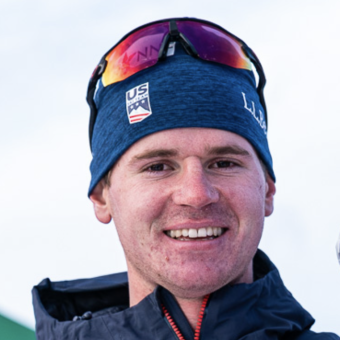
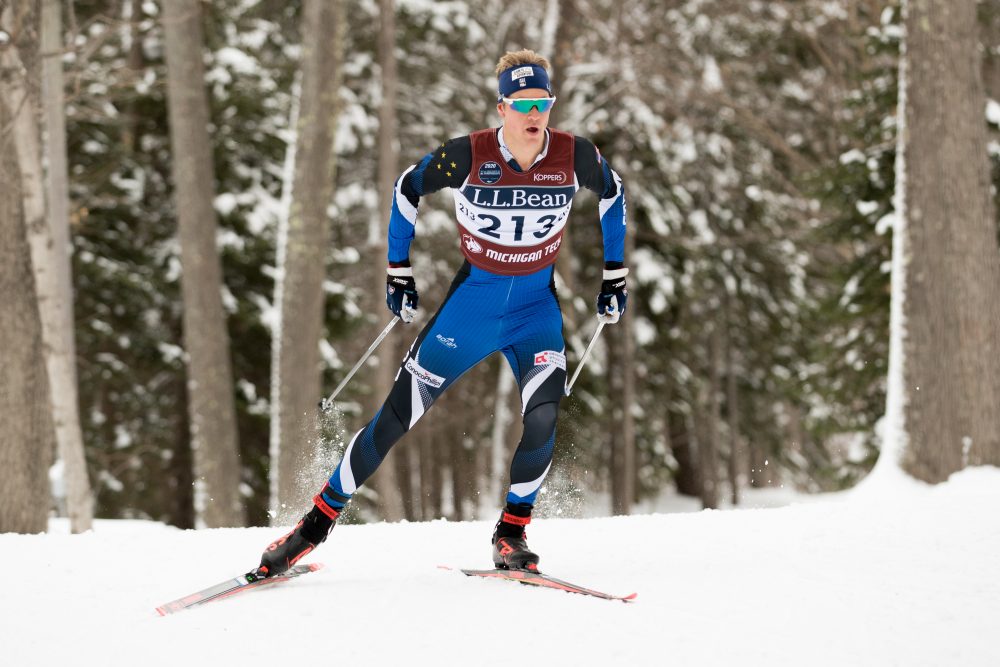
    Walker Hall was named to the 2022-23 U.S. Cross-Country D-Team. (Photo: U.S. Ski & Snowboard)

    To help fans get to know these new(er) faces, FasterSkier is doing a series of interviews, providing insights into the factors that have contributed to development, progress, and growth for these athletes last season. In this installment, we talk with 20-year-old Walker Hall, who was named to the D-Team this season. Hall grew up immersed in the Methow Valley cross-country ski community and is now entering his sophomore year at the University of Utah. 

    While the Methow has produced a number of outstanding skiers, including Brian Gregg, Erik Bjornsen, and Sadie Bjornsen Maubet, Hall could find inspiration even closer to home. His mom, Leslie, skied in three Olympic Games between 1988 and 1994, and her best friend and training partner post-professional racing soon became two-time Olympian Laura McCabe, once both women relocated to Winthrop, WA. Still close friends, Walker and Novie McCabe are just six months apart in age, and began tagging along from their infancy on their moms’ training and outdoor endeavors. Both athletes, now U.S. Ski Teammates, developed on the Methow Valley Nordic Team, coached by their mothers.
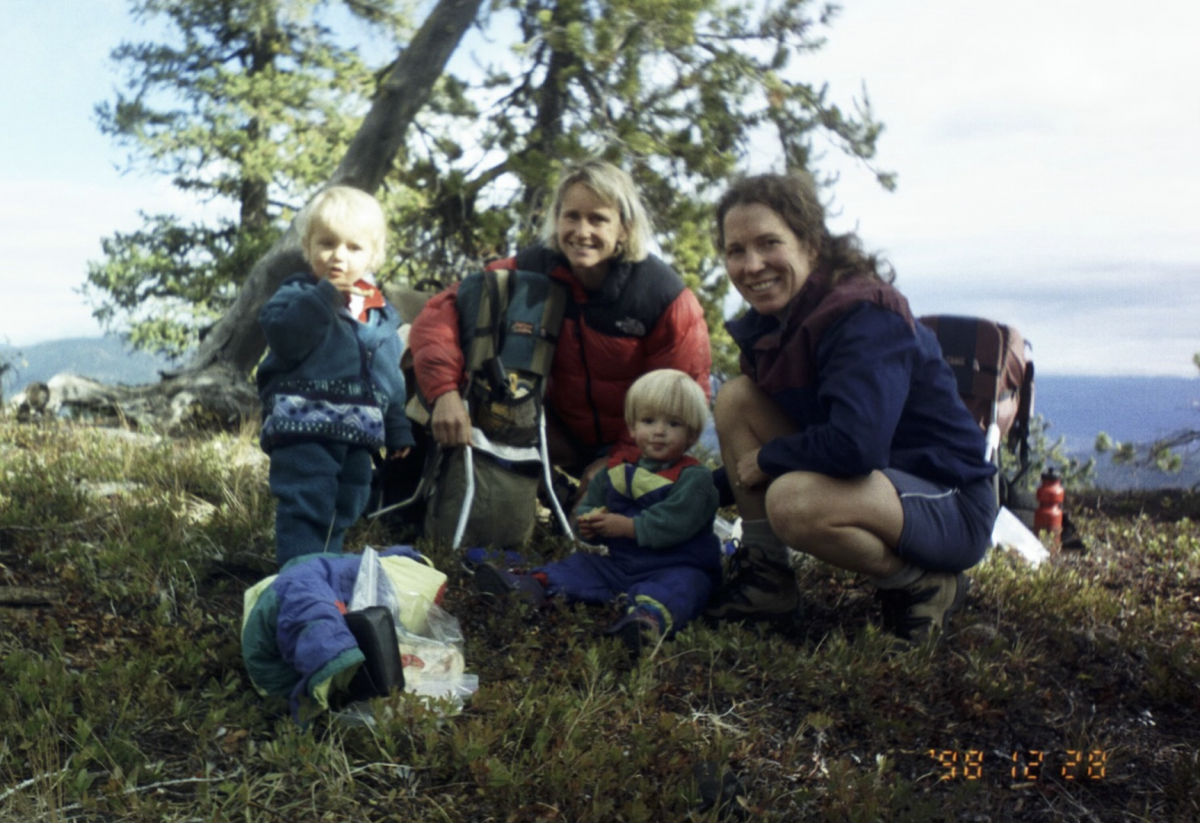
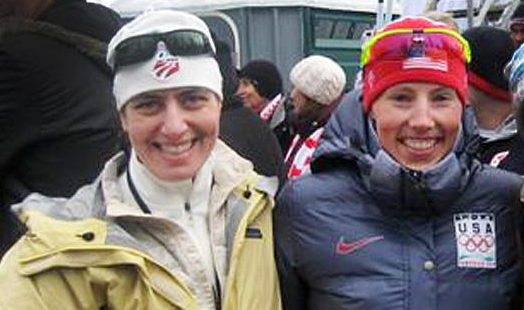
    Methow Valley Nordic Team coaches and Olympians Laura McCabe (left) and Leslie Hall (right) bring Novie and Walker, now U.S. Ski Teammates, along for their training and outdoor endeavors. (Courtesy photo)

    In this interview, Walker reflects on some of the other influential experiences – and setbacks – that contributed to a breakout season in 2021-22. Hall won the junior men’s 10 k during the 2022 U.S. Cross-Country Championships in Soldier Hollow, and finished in the top-five in a third of his RMISA races, including a podium performance in Sun Valley. Earning his first spot on the World Junior team, Hall competed in both the 1.2 k freestyle sprint and the 30 k skate individually, and was a contributing member of the U20 bronze medal winning relay team.  


    – Walker’s sister, FasterSkier assistant editor Ella Hall, contributed to these questions

    FasterSkier / Rachel Perkins: You grew up in the Methow Valley, which has a strong legacy within its cross-country ski community and the number of athletes who grew up there and went on to ski professionally. But in your situation, you and Novie McCabe are only about six months apart, and your families are super close and it sounds like you both did a fair amount of tagging along for both of your moms’ training as kids. Can you talk a little bit about your introduction to skiing and what your relationship with the sport was like growing up? 

    Walker Hall: From as early as I can remember, probably as soon as I was capable of going on skis, that’s when I started – me and Novie both. Regardless of what we were doing, it was mostly outdoor activities, whether that was hiking or climbing or just spending time outside. Our moms would take turns, like one would take care of us while the other went and did some training or a long run or something. So I felt like I got a good training base just from everything I did outside, and started off skiing really young, and it’s always been a big part of my life.
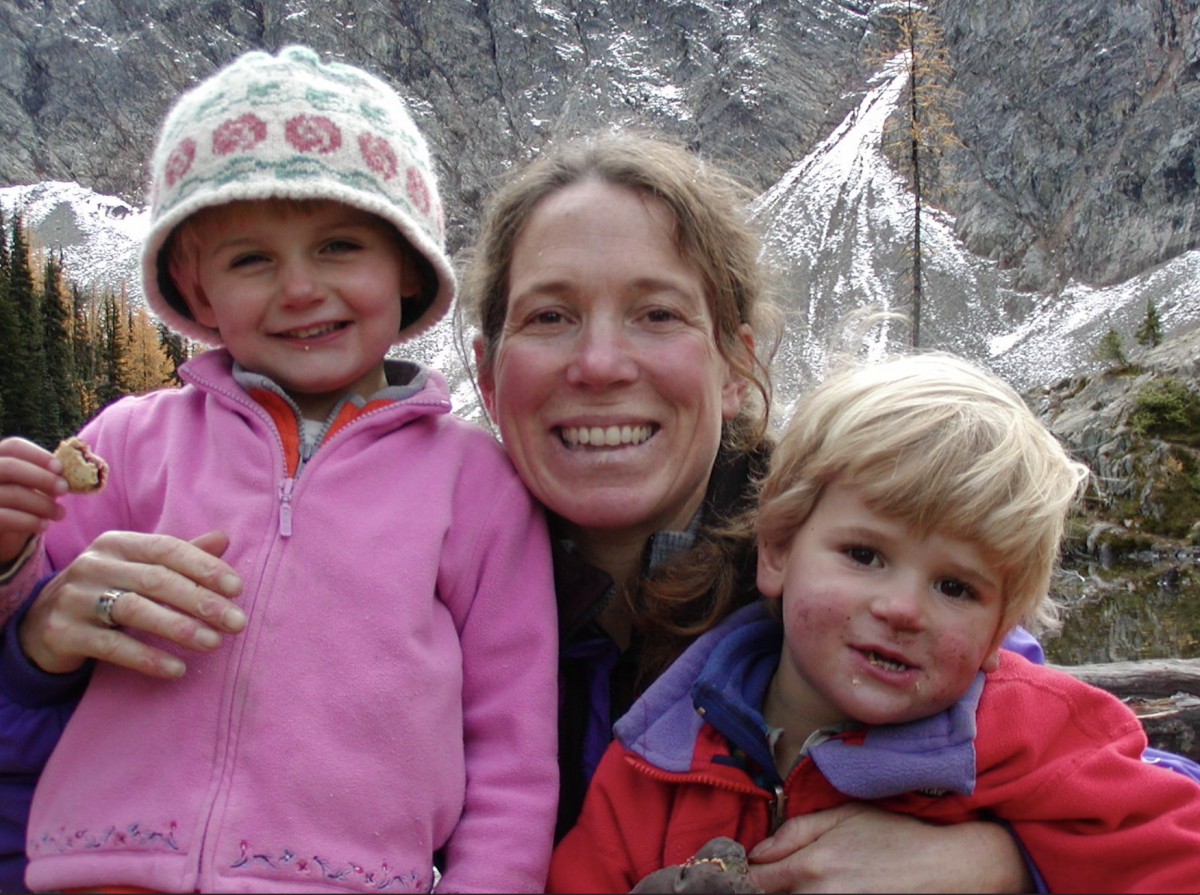
    Leslie Hall, with a young Novie McCabe and Walker Hall, share a lifelong love of the outdoors that has developed into successful ski racing careers. (Courtesy photo)

    FS: I also noticed you also listed your mom as one of the most influential people in your life in your U.S. Ski Team bio, and I know she was one of your coaches with the Methow Valley Nordic Team (MVNT). Can you say more about that?

    WH: She coached [MVNT] up until just this last year – she retired last season. Basically when she was done racing [professionally] and once my parents moved to the Methow in the late ’90s, she really developed the program there.

    So she’s been coaching for a really long time, and she had a lot of experience. She coached when my sister was skiing, so I grew up doing what [Ella] did because she’s four years older. My mom was able to give me the support and advice and guidance that is crucial for being good at skiing, and she was not too overbearing or anything, so I think she was just a really good influence on my ski career.

    FS: That type of relationship seems important – not being overbearing, but really sharing in a mutual love of the sport. Is that something that you have felt within the Methow community and within your own family?

    WH: I’ve definitely felt a lot of support from different people in the Methow, whether it’s my mom or Laura [McCabe] or other people in the ski community there. I’ve always gotten the support that I’ve needed and been pushed when I needed to be, and never felt too much pressure or anything, so it’s been really good for my career in skiing.
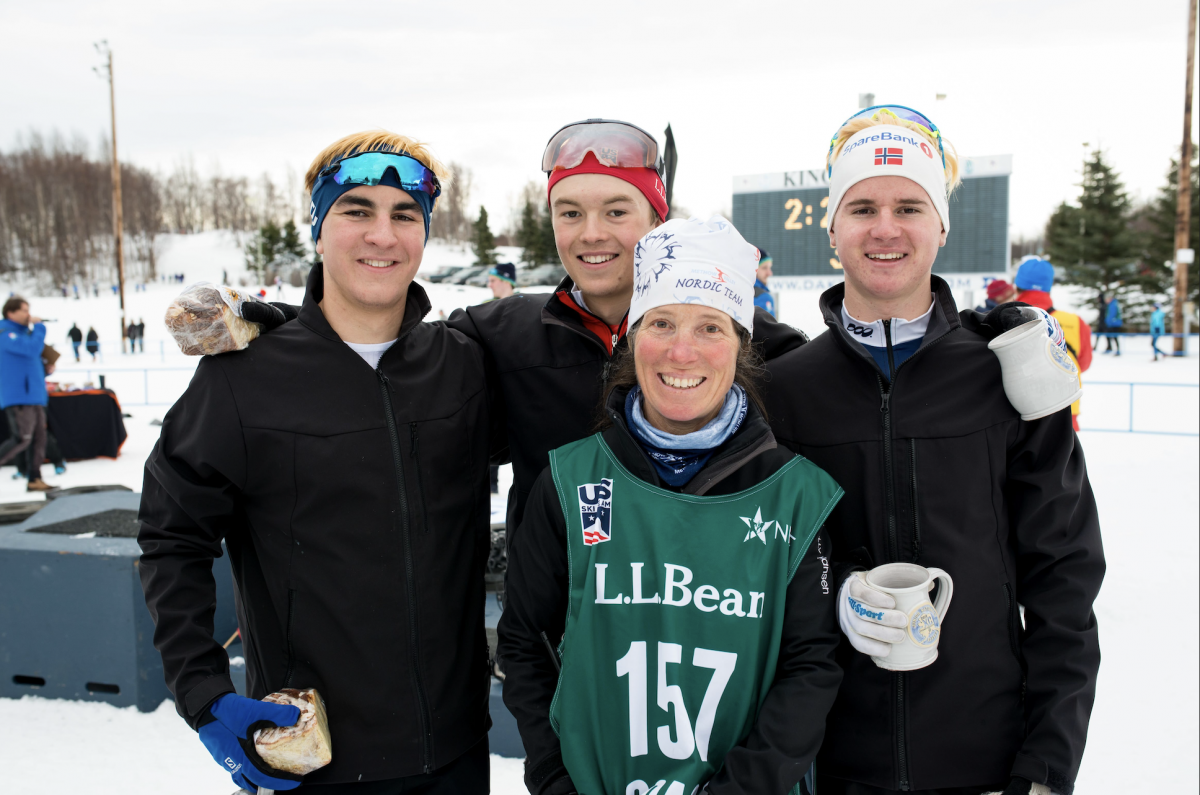
    Long-time Methow Valley Nordic Coach and 3x Olympian Leslie Hall with the members of the U18/U20 relay at 2019 Junior Nationals in Anchorage, all of whom skied for MVNT. From left to right, Travis Grialou, Garrett Butts, and Walker Hall. (Courtesy photo)

    FS: Fast-forwarding a bit, in high school, you spent six months in Meråker, Norway during your junior year, and it sounds like that was a pretty formative experience for you – you had a really positive experience with that program, and the coach, and made some good friends/training partners. Can you share more about how that came about and what your time was like there?

    WH: It came about because Ella did a very similar [program] her junior year; she also went to Meråker, but she went for a shorter period of time. But as I got older and learned more about the sport and the people within the sport, it seemed like Norway was the place to be to really improve and learn. Our family had some connections in that area because Ella had been there. 

    Once I was there, it was definitely a lot different. Coming from the Methow where there’s really not many – there’s a lot of skiers, but it’s such a small area that you’re sort of in your own little bubble. So going to Norway and just seeing the ski culture there and learning a lot about training and what the Norwegians like to do [was really beneficial], because they obviously have a really good method for juniors or whatever age you are in ski racing. I had good coaches, good training partners, and good support there as well. So I definitely learned a lot and sort of knew what I had to do when I got back to really take skiing to the next level.

    FS: Was that at a sports academy? Were you going to school also?

    WH: It’s actually a public high school, or it’s funded by the government, but it’s a sports school [called the Meråker videregående skole]. So we would train in the mornings until maybe 11, and then shower, eat lunch, go to class for three hours or so, and then maybe train in the afternoon. That was what it was like most days, then on the weekends, it was more on your own because it’s a school program, not  a club. When we would go to races – which I didn’t go to too many races – we would go with a local club.

    FS: Your sister said that the experience also inspired you to take Norwegian lessons after returning home and that you’re “decent” now. Is this true?

    WH: When I was there, I definitely didn’t know that much [Norwegian]. There were two other non-Norwegian students that I took some Norwegian lessons with, just what the school provided, but I definitely never really spoke that much while I was there. I wanted to keep learning and improving [after I got back], so I’ve studied on and off since then. I’m alright at it – I’m pretty conversational, I would definitely not say I’m fluent. But it’s a fun way to stay connected with my friends over there, and some of my teammates at the University of Utah are Norwegian too, so that’s been cool.

    Hall also explained that his classes in Meråker were in Norwegian, but since the group size was small, and both his teachers and classmates were helpful, he was able to get by without being fluent in the language. 

    FS: After graduating high school in 2020, you had planned to go back to Meråker for a gap year, but COVID got in the way of that, and plan-B ended up including a lot of time training on your own in the Methow. Can you talk about that experience and how you adjusted?

    WH: I had been planning to go back to Norway, but everything was so strict with COVID [at that point], they were not letting anyone in, basically. So I was just at home and I kept trying to figure it out so that I’d be able to go over there, but it just kept not working. I kept trying, but eventually, I was just at home the whole time. 

    I was going to races in the winter but it definitely was not an ideal situation for me because I was doing a lot of training on my own, which, it’s not necessarily a bad thing to train on your own, but for me personally, it’s a lot easier for me to train with other people. It’s a lot more motivating, and long term, it’s a lot better to train with other people so you don’t plateau. But I just focused on racing and kept working hard and it wasn’t the worst in the end. That year was alright, but it wasn’t ideal.
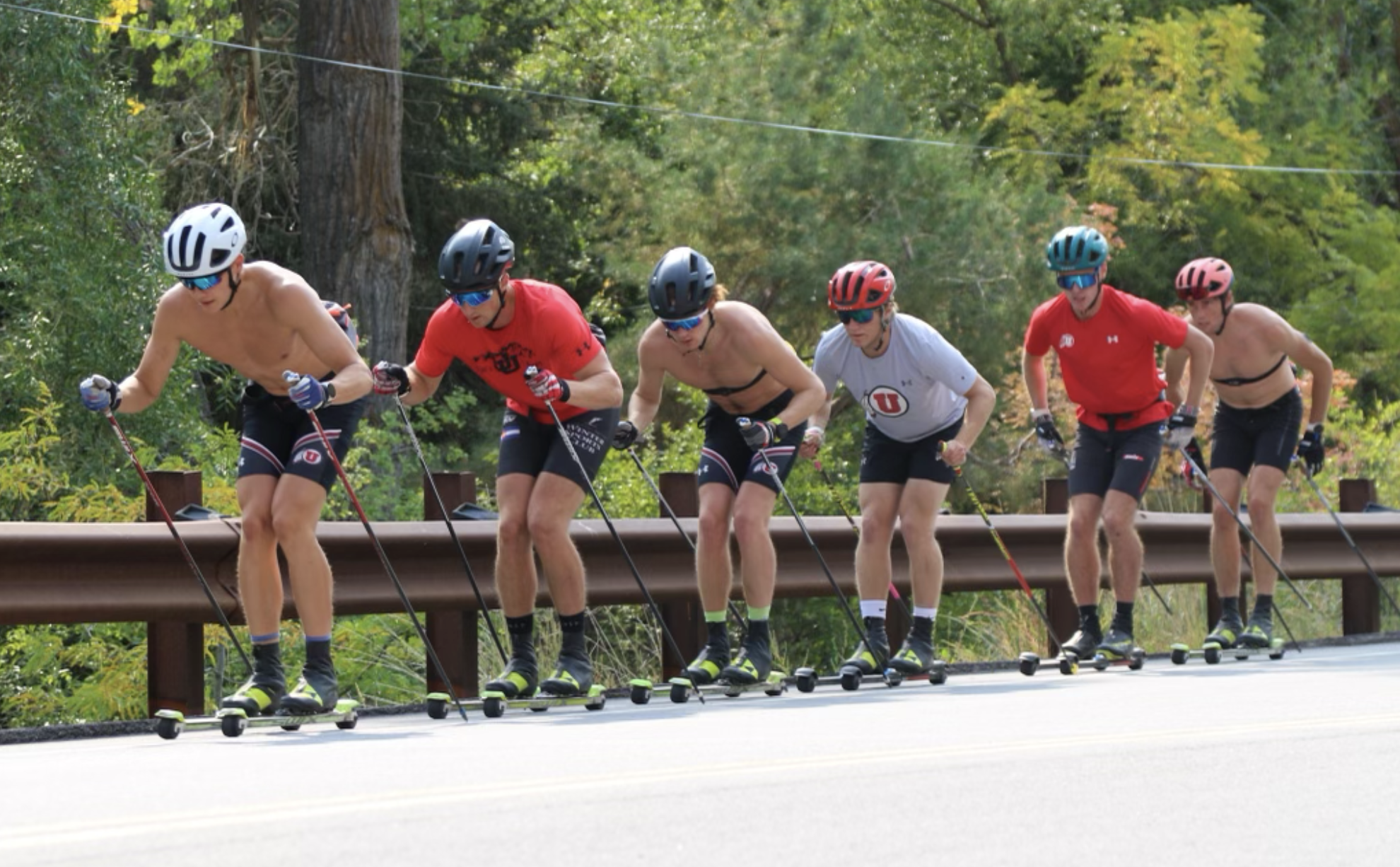
    Walker Hall trains with the University of Utah team in Fall 2021. (Courtesy photo)

    FS: Kind of on the other end of the training group spectrum, for collegiate racing, you originally committed to Dartmouth, but later were offered a spot that opened up at the University of Utah, and made the switch as Utah had been your first choice.

    WH: Yeah. Basically, I had planned on going to Dartmouth, and then COVID hit, and it was looking like life at Dartmouth with COVID was going to be a lot different than before. I had been talking to Utah [during my senior year], and they had been saying ‘oh, you should take a gap year and then we’d probably like to take you.’ So there was also a chance that I was not going to take a gap year and just go to Dartmouth, but then when that gap year happened and I got offered a spot at Utah, I just knew that that was going to be the better choice for me.

    Last summer before I went to Utah, I came up here to Anchorage for most of the summer, so I was training with a lot of my future teammates. There was a big group of people up here and a good amount of Utah skiers were here, so it was a good way to prepare and it was a really good experience. There’s just such good training up here during the summer. And the winter, I’m sure.

    FS: And what does that look like? Are you working with a coach or under a certain program? And how have those experiences being in Anchorage for the summer been valuable for you?

    WH: I train with APU when I’m up here. That’s a really solid group to train with, coached by Erik Flora, who I really like and I’ve learned a lot from. It was a really good experience coming up last summer, and I knew I wanted to come again this summer. There’s just a lot of really hardworking people that push me and help me hit big hours, so I think it’s a good place for me to be during the summer.

    FS: Going back to University of Utah – what appealed to you about that program? And what was your experience like in that first season of collegiate racing?

    WH: There’s a lot [that appealed to me about it.] I knew a lot of the people on the team, and I knew it was such a strong team. I had actually been down there a couple times – or I had been in Park City for ski camps and [races], and I visited Novie for a couple of weeks [during her freshman year at Utah] and really liked it. Me and Novie have always done similar training and whatnot, so I figured if she was liking it a lot down there, then it was a good place for me also. 

    And I really liked the coaches. I talked a bit with Miles Havlick and Frederick [Landstedt], and I really liked what I’d seen from those guys. Since I’ve been there, it’s been a really good fit.
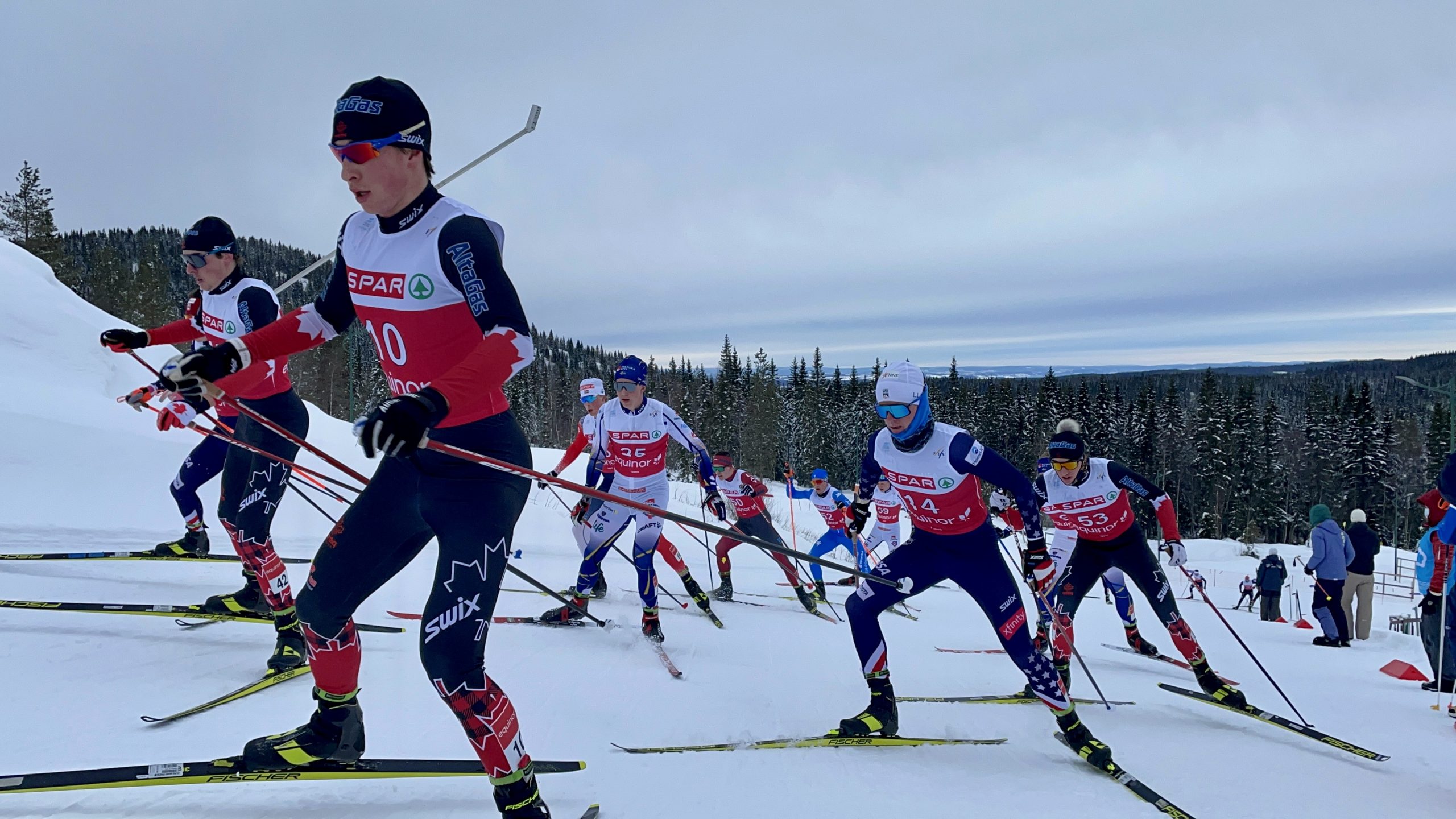
    Xavier Mckeever in bib 10 (CAN) and Walker Hall in bib 14 (USA) head up “waffle hill” in the early stages of the men’s 30 k mass start during the 2022 Junior World Ski Championships in Lygna, NOR. (Photo: Ella Hall)

    FS: World Juniors in Lygna was your first international trip, and it sounds like you had some bad luck with racing at US Nationals and/or been really close in prior years. What do you think came together for you this season to make that trip? And what were some of the highlights of that World Juniors experience in terms of how it supports your development and goals?

    WH: Yeah. In previous years – maybe the past three years or so for this year – there were like two years where I was just coming off of sickness going into nationals, so I never really had the races that I wanted there, and I never ended up making any of those international trips. Which, honestly, I would have liked to go on the trips, but it never really bothered me too much – it wasn’t like demoralizing or anything – because I felt like I knew the level that I was at and that on a given day I could be as good or better than any of the trip. So it was never really too much of a bummer for me. But this year, I wanted to make it on the trip to World Juniors, and I had goals for the races at World Juniors too, it wasn’t just the trip there was the end goal. But just making it definitely felt good, and I had a really good Nationals this year, which was awesome since that’s pretty much the first time that’s happened for me. 

    I was super happy that the races were in Norway because I just love spending time there, and we got to do our pre-camp in Hafjell, which is right near Sjusjøen, and I’ve spent some time there – it’s [some of] the best skiing in the world. So that was super fun. And I really liked a group of guys and the entire team and staff that was there, so it was a really good experience.

    FS: From the outside, it seems like you took a pretty big step forward this past year, which maybe can be attributed to having such a strong group to train with at University of Utah, or some more direction after a tough gap year. In looking back over this year, what are some of the factors that you think allowed you to take those steps forward and what were some of your personal highlights from the season? And those personal highlights do not necessarily need to be a race result, just an experience that stands out to you.

    WH: I think the main factor was really taking my training to the next level. Especially over the summer [in Anchorage] and then carrying that through the fall in Utah. I was just training with a really strong group, and really pushing myself, and doing [types of training] that I hadn’t really done in the past. So definitely, a good part is thanks to that. And then also, I’ve had a lot of different experiences over the years and learning from those helps to channel some better results.

    As for my highlights – this last season, I was just proud of the way that I trained and was smart with my training, and I  didn’t overdo it. And it seems like it’s often hard to put together a good season like your freshman year of college because it’s such a big adjustment. So I was happy that I was able to have a solid season for the most part while going through such new experiences in my first year in college.
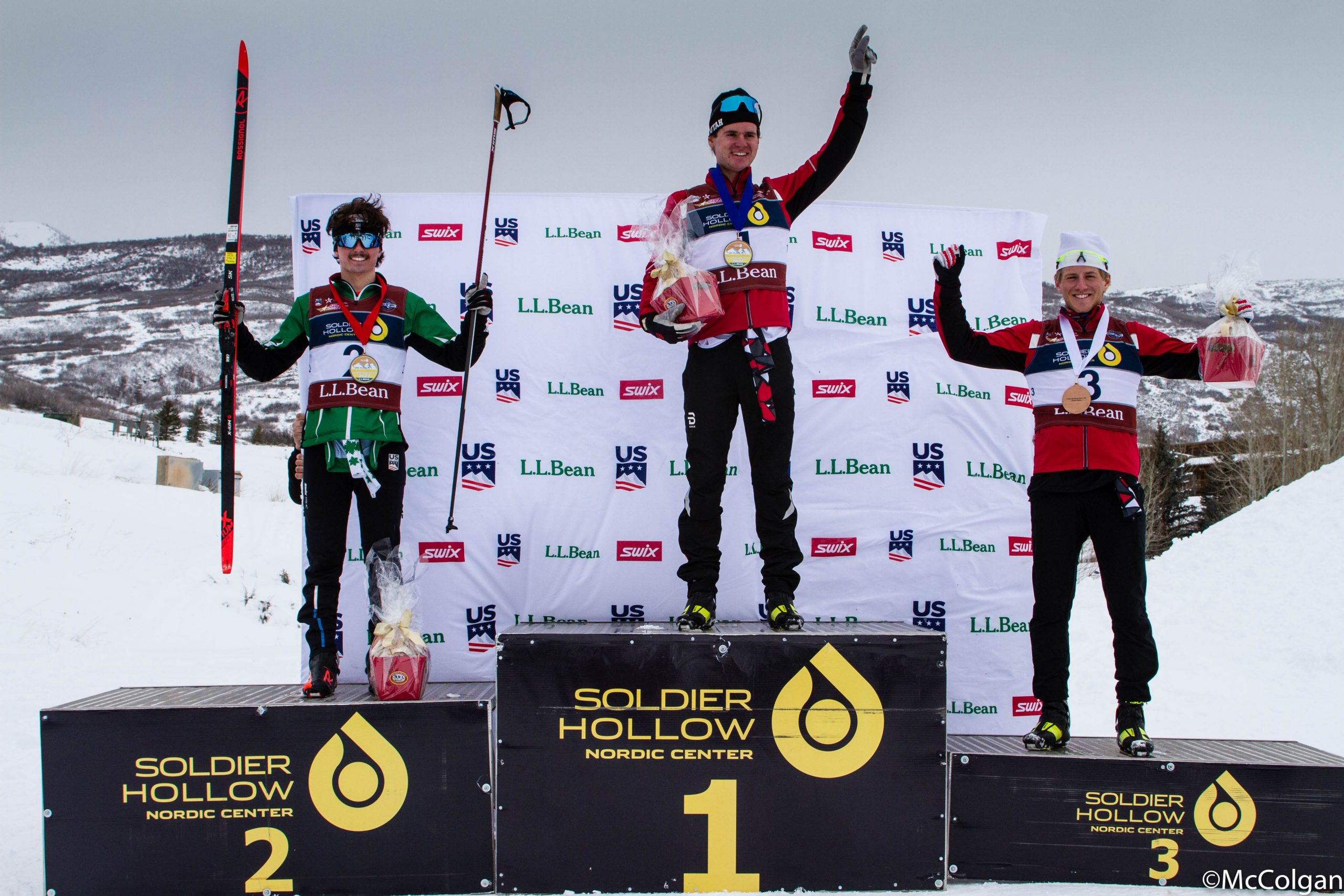
    Walker Hall stands atop the podium in Soldier Hollow after winning the junior 10 k mass start freestyle during the 2022 U.S. Cross Country Ski Championships. (Photo: John McColgan)

    FS: What are your goals heading into next winter?

    WH: It’s gonna be my first year not being a junior, so honestly, I don’t have too many specific goals. But I’d definitely love to race in my first World Cup this year, and just keep improving. On the college circuit, hopefully, get a bunch of podiums in RMISA. And just keep learning from my teammates and pushing with the team at Utah.

    FS: Last question for you: with making the D-Team, can you share what that means to you and what you’re excited about in terms of the support and opportunity that opens up for you?

    WH: It’s always seemed like probably the biggest step you can make in U.S. skiing is actually making the ski team, so it feels really good to have achieved that. I’m just now realizing the amount of support that means that I’m able to get, so I’m just taking advantage of that and learning from my other teammates on the team – taking advantage of the different opportunities that it grants me, and just enjoying the ride. But I’m definitely thrilled to have made the team.
  • Still Charging: Erik Bjornsen Retires at 28

    Still Charging: Erik Bjornsen Retires at 28

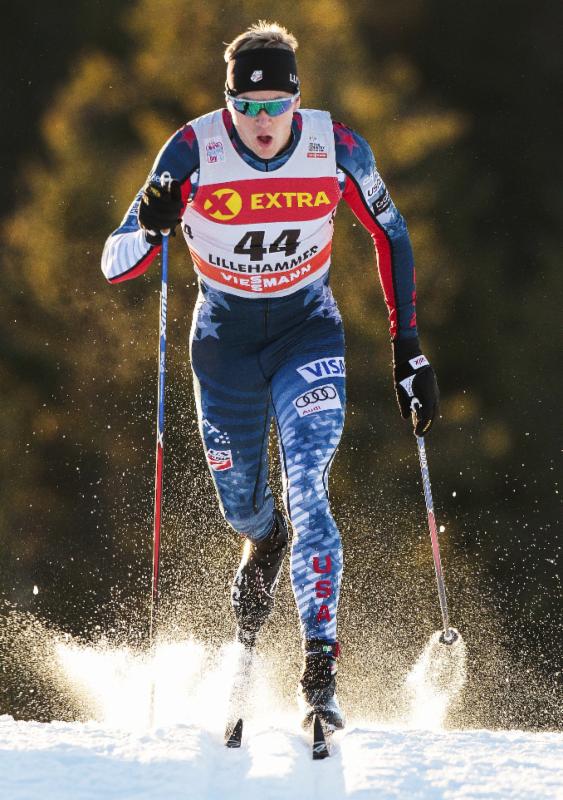
    Erik Bjornsen crossing the line in the 2019 15 k skate pursuit in Ruka, Finland. (Photo: NordicFocus)

    Bright lights in PyeongChang. The men’s second semifinal of the Olympic freestyle team sprint was a career highlight moment for Erik Bjornsen. Fourteen teams would crowd the start lanes with Martin Johnsrud Sundby in bib 1. The Norwegian was paired with Johannes Høsflot Klæbo: The duo blessed with Sundby’s stamina and his younger counterpart’s break-from-the-pack speed.

    With Simi Hamilton racing the second, fourth, and sixth legs for the U.S., and Bjornsen leading off, the semi was a chance to not only advance to the finals, but establish some mojo amidst an Olympic field. Hamilton and Bjornsen both possess slower tempo big-power generating F-350 type motors that belie the meters gobbled up with each cycle of their cadence. 

    As Bjornsen was tagged for the fifth of six legs, he locked on to France and Norway to position himself in rarefied company. PyeongChang’s Alpensia sprint course packed a punch. The course’s second climb it’s Everest – a drawn out leg burner. Pulsing into that climb, France’s Maurice Manificat, Sundby, and Bjornsen had already separated from the field. Midway up, Bjornsen subtly shifted gears, moved to the left of Manificat, and dropped the two steely veterans by 10 and then 15 meters pushing over the top.

    It was a Stars-and-Stripes flex.

    Bjornsen tagged Hamilton in first by nearly five seconds. The pair went on to qualify for the final and placed sixth overall in an event eventually won by the Sundby-Klæbo pairing. 

    (Video of Bjornsen’s breakaway on the 5th leg.)

    “It was interesting, I think that everybody knew what I was capable of in the field when I made those moves,” said Bjornsen when reflecting on career highlights. “I remember one of the strongest memories I have from racing is when I made that move against Sundby. And after the race, as we were starting the final in PyeongChang, he turned and looked at me for a while, and I could tell that he was thinking ‘what is this kid bringing to the final’? He eventually got the gold medal with Klæbo, and he is looking at this American guy, and I think that was one of the coolest feelings I have ever had — knowing that this legend was looking at me, and thinking, ‘what is this guy about to bring to the biggest performance of our lives?’”

    The U.S. men’s team has been overshadowed by a dominant women’s program for going on a decade. Through that time, the men’s distance program has seen the end of Kris Freeman’s reign and the emergence of Noah Hoffman and Erik Bjornsen. Hoffman retired in 2018. With Bjornsen announcing his retirement last month at twenty-eight years old, a void remains. As one generation bleeds into the next, Bjornsen is an anchor point for all those speedy juniors we’ve heard of. An affable athlete who set the American distance skiing bar for the past five years.

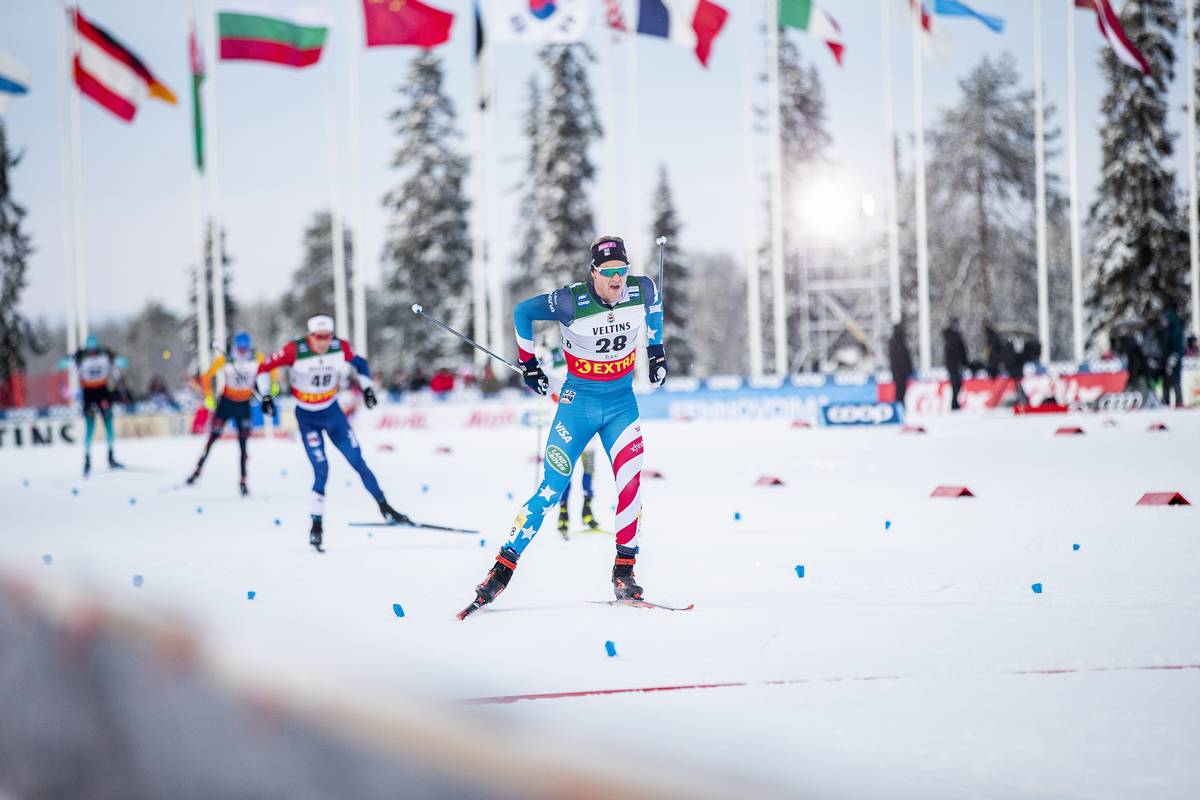
    Erik Bjornsen of the U.S. (bib 28) during the 2019 15 k skate pursuit in Ruka, Finland. In bib 27, Sebastian Eisenlauer (GER) leads Bjornsen. (Photo: NordicFocus)

    Bjornsen often shouldered the pressure for a team and broader community starved for that dominant distance performance by a U.S. male — a World Cup podium or a championship medal to validate the personal quest and the vicarious desire from some fixated on top-3 hardware. Making the top-30 on the men’s World Cup is a herculean task. Bjornsen first passed that threshold with an 18th place in 2014 during a 15 k classic (his marquee event), in Toblach, Italy.

    In January 2018, he surpassed that 18th place, which up to then was a career best individual mark on the World Cup, with a ninth place in Seefeld’s 15 k mass start skate. He peaked individually at the World Championships with an 18th and 17th, respectively, in the 2017 and 2019 Worlds in the 15 k classic. 

    The manifestation of steady improvement was Bjornsen’s calculus for remaining in the game. And the wait and wait for results beyond his stream of top-30s and top-20s was arduous. Even on the best of days, all things must align for the breakthrough.   

    “Definitely, my last couple of years, I was really hungry for great results, like everybody that puts so much into the sport,” said Bjornsen. “I was ready to make that next level. But I was moving towards the end of time I wanted to put into the sport and I really wanted to make the progress every year that I knew what I was capable of. There are so many variables in nordic skiing that I was just frustrated not to put it together more on the days when it was so tough. My thing was 15 k classic — that is where I could put together a top performance. That’s four 15 k classics a season, you are trying for your top performance in those four or five and also nailing the wax and also nail everything on that day. So I am proud of the results that I had but I was frustrated like any World Cup athlete. I was just definitely hungry for more at the end.”

    The World Cup came to an end for Bjornsen in December after he raced the opening weekends in Ruka, Finland, and Lillehammer, Norway. Yet, the decision to retire from World Cup level competition came after the 2018-2019 season if he did not, in his words, “step-up”.  

    After a solid summer of training, Bjornsen was blunt about his 2019-2020 World Cup campaign. “I am going over to the World Cup to make a step forward, or call it a career,” he said.

    He placed 25th overall in the Ruka triple. The following weekend in Lillehammer’s 15 k/15 k skiathlon he had a reason for optimism. At the same venue with the same race format in 2017 Bjornsen had placed 20th. This year, he initially raced near the sharp end. But as the temps warmed a degree or two, his skis began to ice. He faded to 39th. The plug was pulled.

    Bjornsen explained that U.S. World Cup regulars leave bags on the wax bus after each season, a stash of clothes and items to rely on when they arrive for the season each November. “I had left a bag over there basically for the last five or six years,” said Bjornsen. “On the last trip, I packed that one up. I didn’t know if I would be coming back.”

    Having grown up skiing in Washington’s Methow Valley, Bjornsen followed the usual path of success: solid Junior Nationals, World Junior Teams, a second place in the 2011 U.S.Nationals 20-kilometer classic, and his first senior championship two years later in the 15 k skate. USST D-team, B-team, and then A-team. Although the family fostered two future Olympians, (you know this but older sister Sadie is a USST veteran) Bjornsen’s parents moved to the Methow when a new alpine ski area was in the works. As luck would have it, the planned downhill area never materialized. 

    Erik Bjornsen (APU/USST) and Matt Gelso (SVSEF) headed up Hermod’s Hill for the final time at the end of the 15 k freestyle at the 2013 U.S. Nationals. Bjornsen took his first career national title and Gelso finished third.

    The Bjornsens live on the more secluded Mazama end of the Methow. Mazama sits at the base of a closed-in-winter State Highway 20 which snakes its way up to Washington Pass and alpine paradise. Drive any direction but south in the winter from Mazama and it’s a snowy dead end. One road during those cold months serves as a diversion into Winthrop and further south to Twisp. The region’s storied cross-country trails provided another outlet. Within walking distance of Bjornsen’s neighborhood were endless ski trails and families falling in love over and over again with the sport. Sean and Laura McCabe and Leslie Hall (Laura McCabe and Hall are former USST members) lived nearby and were constant reminders that sliding on snow without a gravity assist had merits.

    With his two older sisters, the Bjornsens joined the local ski club. It was a steady stream of hand me downs terminating at Erik. As Bjornsen became more serious, he relied on Scott Johnston as his primary coach. Johnston is known as fastidious and established a serious training regime for Bjornsen. 

    “I learned a lot from him,” said Bjornsen. “He took the time to explain everything about skiing and also the physiology side of things. I started to understand the ways of training and training plans. He brought my curiosity out and made me think about each and every workout.”

    By the time Bjornsen was in his late teens, Sadie had moved to Anchorage to ski race as a student-athlete for the University of Anchorage Alaska (UAA). When it came time for a post-high school decision in 2010, Erik chose to attend UAA too. Both Bjornsens ultimately aborted their UAA paths after earning NCAA All-American status and began taking opportunities on the World Cup as they trained with APU. APU, an emerging powerhouse team, was coached by Erik Flora and championed by Anchorage’s Kikkan Randall. 

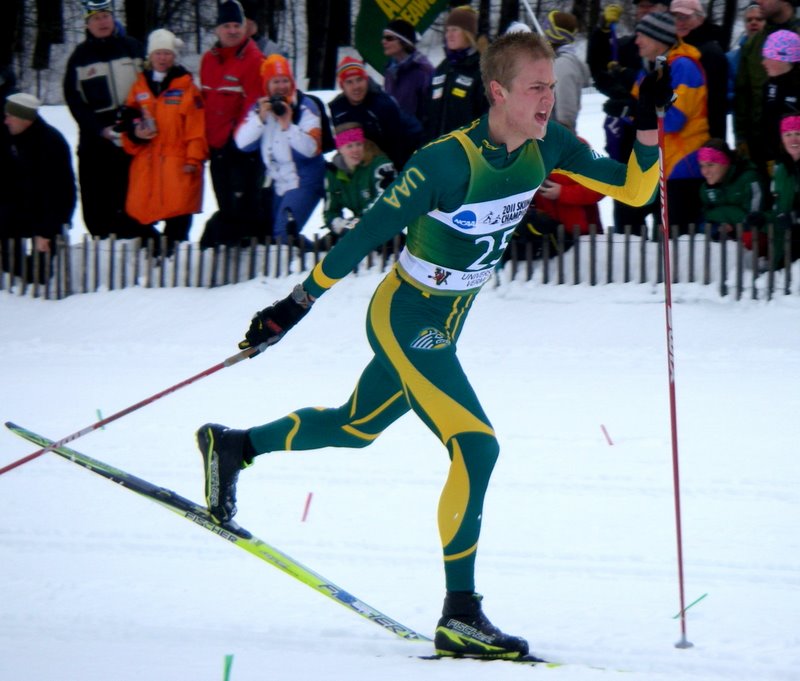
    Erik Bjornsen on his way to second at the 2011 NCAAs in Stowe, VT.


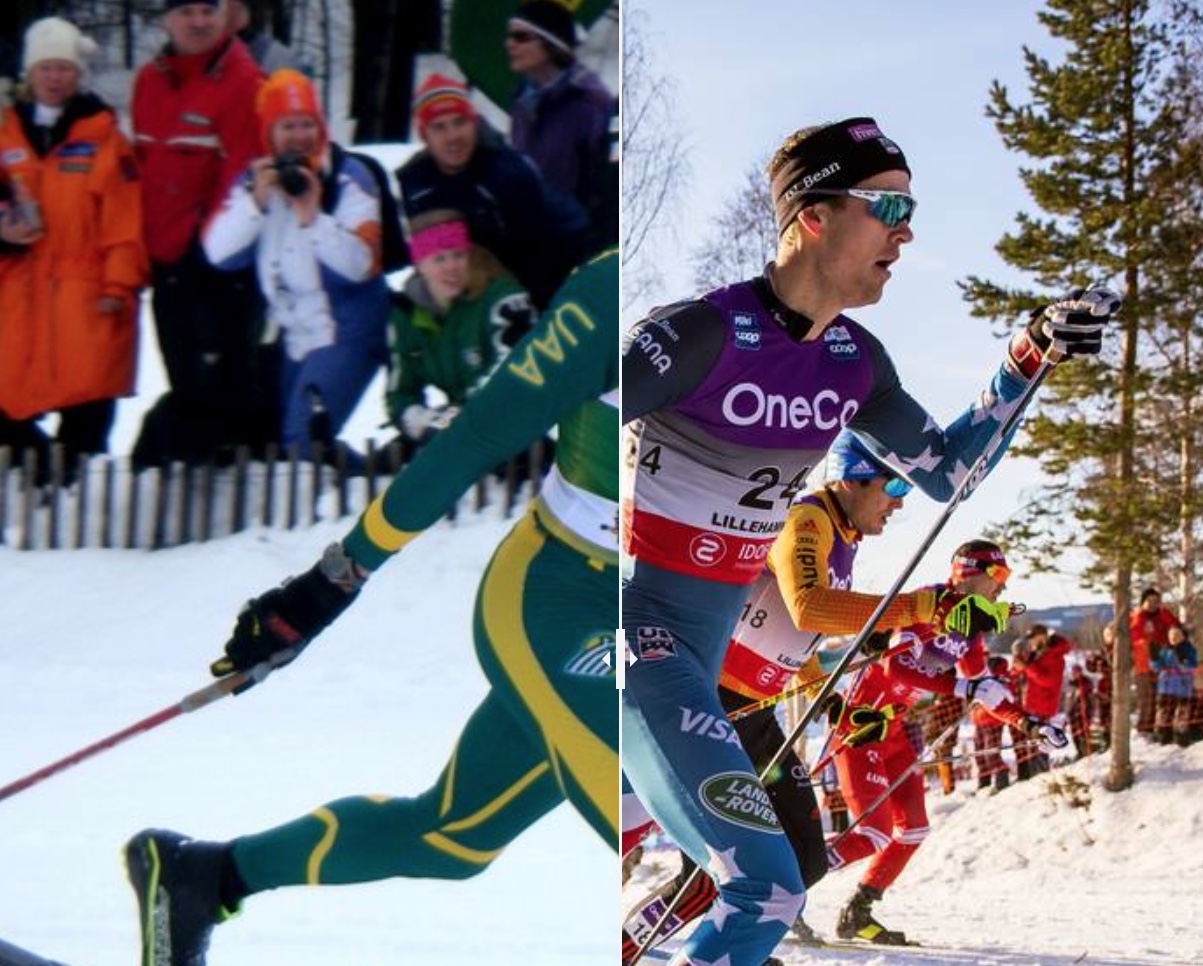
    For a juxtapose of Bjornsen between 2011 and 2019, click the following link.


    With a cohesive training group at APU and the steadiness of Flora, both Bjornsens blossomed. Erik earned his first World Cup start on Dec. 7, 2012 in Québec. A few days later in Canmore, he popped a 36th place in the 15 k classic. Along the way, he won six national championships and was a member of the U.S. Ski Team for seven years. 

    “When Erik first came in, I could see this young, talented skier that was excited about skiing, and he really enjoyed racing,” said APU’s Flora. “And when he first came in, I thought, Okay, if I can help him with his training, and help him reach the next level in fitness, that seemed like an opportunity that was an easy one to help him get toward his goals. And as he retires, you know, there was a certain point where Erik went from being in a place where talking about daily training was constructive, to where Erik absorbed all of that over the years, to the point where Erik knew how he wanted to train, and he had the foundation for it.”

    During the later part of his career, Bjornsen had enough know-how and self-knowledge to write his own training plans with the occasional check in or hands-on training session with Flora. 

    Bjornsen imprinted the cycle in his muscle memory. He attended USST camps, looped around on the Eagle Glacier during the summer, and locked in for a lengthy stint as a World Cup regular. The bag he eventually snagged off the wax bus this past December was left in Europe for five seasons or so, during which he raced at two Olympics and four World Championships.

    Erik Bjornsen (APU) during the 2020 U.S. Nationals men’s 15 k skate. (Photo: Reese Brown)

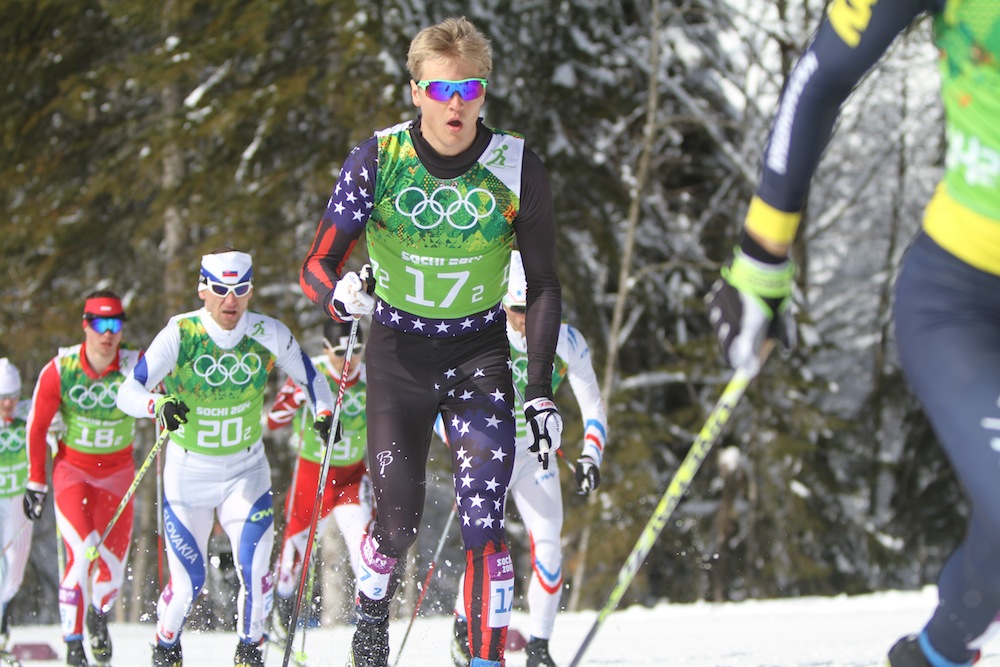
    At the 2014 Olympics, Bjornsen contested five of six events as the youngest member of the team at 22 years old. Sochi was a time he recalls fondly not so much for a “media-worthy” result, but for the pure novelty of it. Big eyes. The Olympic rings. An international career yet to unfold. “It was just so fun, everything around it was great,” said Bjornsen.

    What was also great were the Hamilton-Bjornsen prospects in the team sprint. It’s one thing to prognosticate and imagine a team sprint medal on the men’s side. On paper and on snow this was no pipe dream. Other teams had the luxury of mixing and matching athletes over the years. When sprinting three laps, a total of roughly 4.5 k full tilt, the combo of stamina and 100 meter close out speed is rare. Deep teams can play around, shuffle a deck, optimize for those parameters when naming a team sprint duo. Someone falls ill, insert A for B. Someone has an off year, change X for Y. 

    For Hamilton and Bjornsen, the USST was all in. Sixth in Sochi. Sixth in PyeongChang. Fifth at the 2017 World Championships. Better than coming close, these two provoked legitimate medal hope. And better, the two were good friends. They were not simply two speedy specimens tolerating one another for a material outcome.  

    Walking through the mixed zone in PyeongChang after their finals, on a night when Jessie Diggins and Kikkan Randall won a historic gold 30 minutes prior, Hamilton and Bjornsen were consummate pros. There’s was a no-bullshit interview post-race. In tight quarter racing, Bjornsen had tumbled during the second leg after tripping on another skier’s tails. A tough-to-rebound-from-mishap on the tightrope of Olympic sprinting. 

    “It was super disappointing when I went down, but I mean, it was only halfway through the race and I just got up, and that’s for sure not going to be the end of it for us today,” Bjornsen said to FasterSkier at the time. “Unfortunately, I kind of felt like I let the team down there a bit. I think that was one mistake that may have made a huge impact on our race today, but you know, that’s ski racing, that’s the way it goes sometimes. Unfortunately, it’s at the Olympics.”

    Hamilton immediately responded by focusing on the asset that is Bjornsen.

    “In absolutely no way did Erik let any of us down, especially me,” Hamilton said. “I watched that on the big screen, I have been at a lot of team sprints on the World Cup, World Champs, Olympics, that always happens to someone, and 99 percent of the time, that person, especially if it’s in the finals, just gives up, whether it’s the first leg, second leg, third leg, they just give up. And Erik, he never does that, no matter what happens to him, what happens to us, he just fights ’til the absolute very end.”

    The U.S. team for the men’s 4 x 7.5 k relay in Beitostølen, Norway (2018). From left to right, Erik Bjornsen, Simi Hamilton, Scott Patterson, and Kevin Bolger. (Photo: Aleks Tangen)

    This was, as Hamilton and Bjornsen knew, their best career opportunity for a hallmark medal. They both made eye contact with reporters — their disappointment palpable. This was clear: The two men had a deep bond forged over countless laughs and near misses. More than anything, the two could trust one another to bring their best. 

    “It’s hard to put into words the impact that Erik not only had on our team, our program, and XC skiing in general over the years, but also the impact that he had on me as my teammate and my friend,” Hamilton emailed when asked about Bjornsen’s retirement. “He grew to become one of my closest friends and I’m confident we’ll remain as such for the rest of our lives. Within the team, Erik defined what it meant to be a genuinely supportive teammate and he was the first person to celebrate any success that someone within our group had. His unwavering selflessness was evident as he always put his teammates, our coaches, and the staff before himself. I think in a way his successes and accomplishments went very much unnoticed because being genuinely happy and supportive of everyone around him always came before the desire to highlight his own results and market his own extraordinary talents. I’ve never laughed harder after hearing some of his witty remarks and jokes over the years and he always lent a tone of humor to any situation, no matter how serious everyone else was taking themselves. I’m grateful for so much that ski racing has given me over the years, but being on the team with Erik lands close to the top of the list of things I’m most grateful for.”

    Erik Bjornsen (USA) racing in the semifinals of the 2014 Olympic team sprint.

    It’s also hard to imagine that a force such as Bjornsen would have successes and accomplishments go unnoticed. Such is the atmosphere of quick turnaround news cycles amidst the backdrop of a national women’s team setting an incomprehensibly high watermark of podiums weekend after weekend.

    “You have to understand, it is like getting beat up over there if you are not achieving what you know you are capable of,” Sadie Bjornsen mused. “Erik has put in a lot of time doing so. I believe Erik is a top-10 World Cup racer. I don’t just believe it, I actually know it.

    “But, in order to achieve that, I don’t want to say it is different in the men’s than the women’s field, but the men, it is to me, just a little more thick on the top. When I have an off day I am generally in the 20s. When I have an on day, I am in the top-10. It is a lot less fun when you have an off day and you are in the 50s or 60s and you have an on day and you can be top-10. That is a big difference.”

    Sadie said her respect for Erik stemmed from his investment in a plan and holding himself accountable to it. “I really respected his confidence in that plan. What it showed me is that he believes in himself and he knows what he is capable of. He did not think of himself as a 50th place racer, he thought of himself as better. At the end of day, if someone achieves that confidence, that is huge.” 

    With Bjornsen’s departure from the team in December, he set forth to race several marquee domestic skate marathons. Although it afforded North American based skiers a chance to toe the line with a generational talent, for Bjornsen it was an opportunity to touch base with the many friends he had connected with during his years as a ski racer. Call it an unofficial retirement tour. 

    Bjornsen said he didn’t come into the races expecting to win since he had modified his training to savor simple on-snow moments. He emphatically claimed that this past winter had been one of his most “fun” yet.

    There’s a prevailing mythos in sport: The peak performance, like Bjornsen dropping Sundby and Manificat, are the highlight reel’s apogee. Those instances all have their place. They send chills. But what about the 99.9 percent of the time when that person was off-stage, not performing? That matters. 

    “Thinking about this, an athlete like Erik retiring makes your chest kind of heave,” Matt Whitcomb, the U.S. Ski Team’s Head Coach said. “You are trying to suppress emotions because he has been such an important part of my life as a coach. He is one of those people that makes being a coach so great. Makes these 120 consecutive days on the road tolerable because he is such a great guy. … He is the kind of the guy that has your back and everybody needs people like him.”

    Lightness and humility are attributes many peers associate with Bjornsen. He was, according to Sadie, unequivocally as much a support mechanism for her as she was for him. The shoulder to lean on tilted in both directions. Outside his immediate family, Erik’s even keeled perspective became an integral piece of the U.S. Ski Team’s European based unit. 

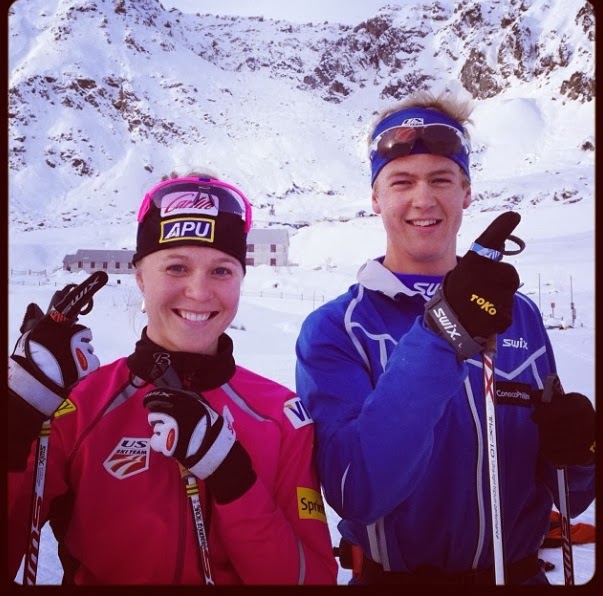
    Sadie Bjornsen and her younger brother Erik in 2013 after winning an Alaska Pacific University time trial earlier this month at Hatcher Pass near Anchorage, Alaska. (Photo: Courtsey Sadie Bjornsen)

    “The role Erik played on the team is easily overlooked,” said Sadie. “We can never talk about it enough. We got a breath of it without Erik the rest of this past winter. That position was really missed. That person who is always enthusiastic, always positive, always having a game, making light of everything. Erik took on that role really young, he was not going to hide anything. He was going to admit when he was struggling or whatever it was. That is a talent when spending four and a half months on the road. That is a long time. It is your family that you are living with, and it is difficult to maintain a positive outlook all the time.”

    There was no bitterness in Erik Bjornsen’s statements or tone when we spoke. He seemed ready with open arms for his next chapter. He did, however, mention a teaser of a thought experiment. “It would have been, at times, super fun to have Kris Freeman at his peak come around 10 years later and I could have skied alongside him. That would have been sweet. We could have pushed each other well.” 

    We can all imagine the mutually beneficial pacing that may have developed. The mentioning of Freeman was only a fleeting whiff of a “what if” moment. The rest, his thoughts of the World Cup, his training principles, his discussion of not meeting some of his expectations, seemed rooted in the past just months after stepping away from the life he’s known since his teens. 

    “It would have been fun to be racing on the podium,” said Bjornsen. “But one thing I noticed just from watching my sister so closely, is I don’t think you get any more happiness. I always really enjoyed racing and being over there even though maybe her results were 10 to 15 places on average higher than mine. It really doesn’t make any difference except maybe a bit financially. In the end, I got as much joy out of it than a guy that would have been on the World Cup podium.”


    Erik Bjornsen – 2016 vintage classic skiing powerhouse. (Photo: NordicFocus)
  • It’s Been a Bad Combo Out West: Wildfire Smoke and Training

    It’s Been a Bad Combo Out West: Wildfire Smoke and Training

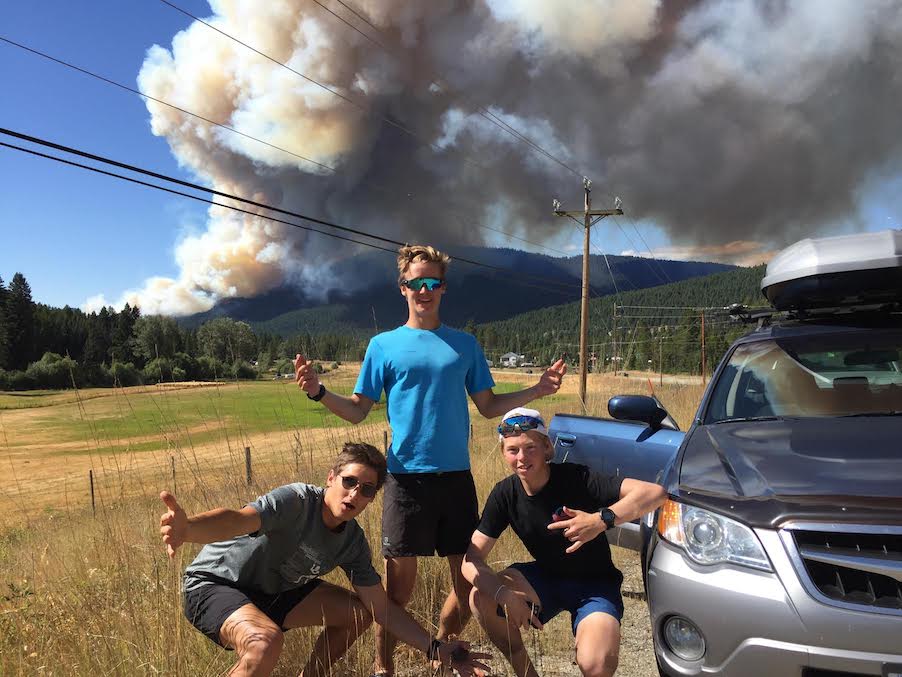
    Fran Vukonic, Tallon Noble, and Ian Williams pose at the end of a bluebird day trail run at Big White in front of the newest Kelowna fire, September 5, 2017. (Photo: Gareth Williams)
    Canadians Fran Vukonic, Tallon Noble and Ian Williams after completing a trail run on Sept. 5 at Big White in Kelowna, B.C.,with the backdrop of the newest Kelowna fire on an otherwise bluebird day. (Photo: Gareth Williams)

    This week’s featured articles are made possible thanks to the generous support of The Loppet Foundation, host of the Masters World Cup 2018. Registration opens in October.

    ***

    Beyond the hundredth meridian, a traditional geographic line demarcating where the West begins, it’s been a hot and dry summer. Wildfires have raged from Washington to California, the Intermountain West, and in western Canada. The conditions remain ripe for extreme fire danger. Even if a wildfire didn’t burn near you, odds are the smoke found its way there. 

    Across the board and across the U.S., it’s been an off-the-charts summer. While many Americans have been consumed with hurricane coverage and concerns over the last several weeks, fires have scorched more than a million acres in Washington and Oregon alone this year, according to Quartz Media. That’s up from 513,226 total acres in 2016, but in 2015 and 2014, more than a million acres were affected.

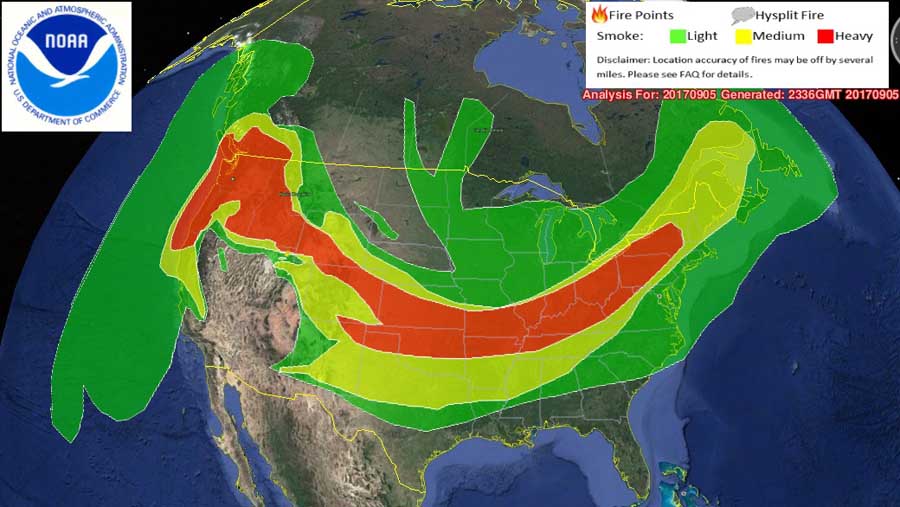
    NOAA wildfire smoke and the correlating Air Quality Index for Sept. 5, 2017. (Photo: NOAA)

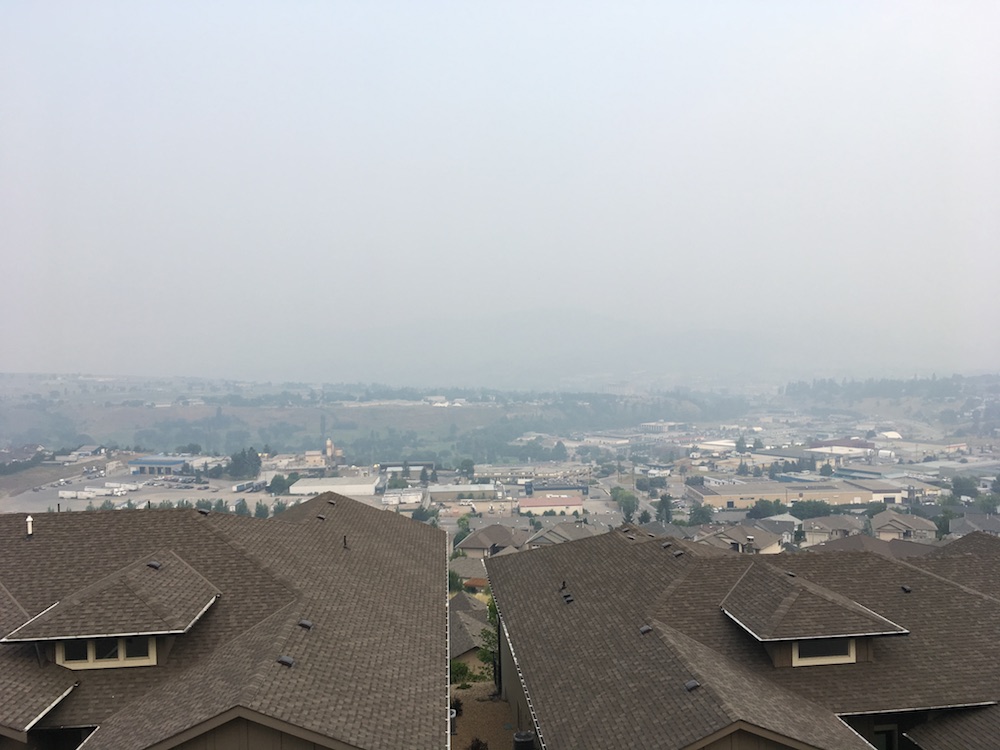
    Along with the devastated landscapes and loss, the wildfires’ byproducts of smoke and ash have made for smoggy, poor air quality. We’re talking about seriously hazy days when visibility often wasn’t more than a mile or two.

    Training outside in less-than-ideal quality air can compromise an athlete. To better understand when it’s OK to go out or stay in, many skiers and coaches became intimate with the scientific benchmarks for air quality.

    “I sort of have this rule where if I can see the glaciers on the mountain, I would rollerski but not do intervals,” Dakota Blackhorse-von Jess, who’s based out of the Bend Endurance Academy in Oregon, said on the phone last Friday. “My personal limit for being outdoors is that 75 AQI limit. That’s the unhealthy or moderate zone.”

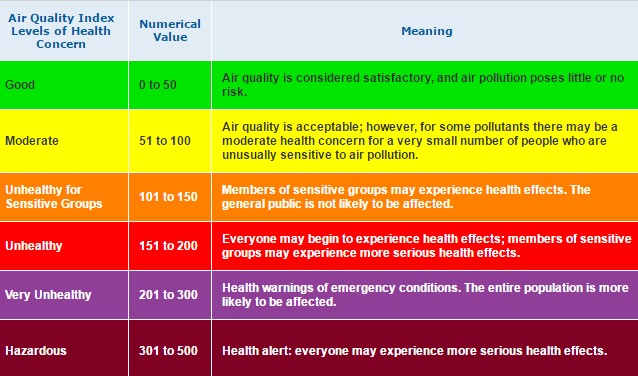
    Here’s a quick primer. The U.S. Environmental Protection Agency (EPA) has developed an user-friendly Air Quality Index (AQI). The index is color coded and provides a numerical value indicative of a region’s air quality. An AQI of 75 means the air has a PM2.5 concentration of 23.5 micrograms per cubic meter. Going further, PM2.5 refers to the size of particulate matter in the air. In this case, the 2.5 corresponds to particulate matter 2.5 microns or less in width. That’s small enough to penetrate deep into the lungs, even the bloodstream.


    U.S. Environmental Protection Agency Air Quality Index (Photo: EPA/AIRNOW.gov)

    That 75 Blackhorse-von Jess limit falls midway into the moderate zone on the AQI.

    “The higher end of moderate,” Blackhorse-von Jess clarified. “You see what the station says and then you walk outside and determine if it is going to work. Honestly, at this point, it’s been five weeks. I’ve done so much training indoors, that now it’s more of a mental break than a training deficiency.”

    In places like Bend, Ore., where Blackhorse-von Jess calls home, some athletes have ignored the warnings.

    “I saw guys out there riding today, I see them every time when I am looking for breaks in the smoke,” Blackhorse-von Jess explained. “I cannot believe that people are out there. I think people living in the smoke have accepted a lower standard and are going about their daily lives and actually, their daily activities in the smoke have come to accept the shittiness of the feeling they are experiencing. And for the professional athlete, it is something that you cannot afford, I don’t believe.”

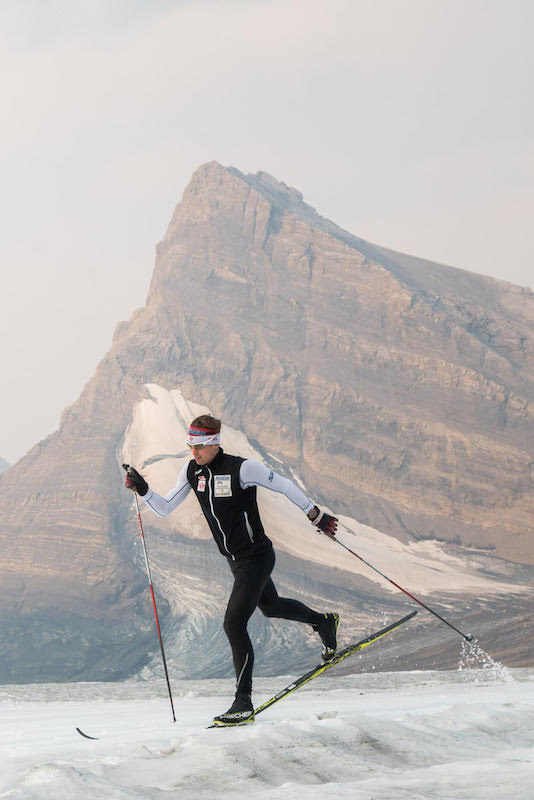
    BlackJack's Julien Locke training at a hazy Haig Glacier camp, August 2017. (Photo: Anthony Killick)
    Julien Locke (Canadian U25 Team) training at a hazy Haig Glacier camp in August. (Photo: Anthony Killick)

    While several fires continue to burn, the smoke cleared in Bend on Sept. 9. During much of August and into the beginning of September, Blackhorse-von Jess relied on a SkiErg, running treadmill and a stationary bike for much of his over-distance training.

    He is not alone.

    “Actually today, it was still dark when I woke up, but when the sun came up there was actually blue sky,” U.S. Ski Team member Liz Stephen said Friday from her home in Park City, Utah. “Where other days, you weren’t even sure the sun was up. It was really nasty.”

    Like other elite skiers across the West, Stephen had made use of indoor training opportunities. The day before Stephen spoke to FasterSkier, she logged four hours on a ski treadmill at U.S. Ski and Snowboard’s Center of Excellence (COE) in Park City.

    The AQI is also careful to note what are called “sensitive groups”. That can mean older adults, children, or people with lung or heart issues. Those populations must take precautions when high exertion exercise and poor air quality mix. Being responsible for junior athletes places a premium on being cautious. 

    For Leslie Hall, director of the Methow Valley Nordic Team in Washington state, dealing with smoke and subsequent air quality issues have been an on-and-off again affair.

    “We had a bad two week period at the beginning of August and it was leading into our annual Methow PNSA [Pacific Northwest Ski Association] Camp … so we had to make the call to move the camp,” Hall wrote in an email. “We ended up going to Oakridge, Ore., for the camp and had a great camp there with 32 kids but a fire started nearby there while we were there so we had one moderately smoky day and it has since gotten much worse there.”

    Like her athletic and coaching counterparts, Hall keeps an eye on air-quality websites to determine if a practice is indoors our out. But kids are kids.

    “It is quite hard to keep the kids motivated and they do not enjoy the gym workouts,” Hall noted. “But during the early smoke time, we knew we were going to go somewhere else to train fairly soon so we kept that in mind.  This past week was good because there are a variety of kids running and different coaches which help.  Also, intensity workouts on the exercise machines help the time go by quicker. There is plenty of complaining and calls to move East, but I think all the kids realize that we are very fortunate in general and it is hard to complain when the hurricanes are decimating the south and we just have bad air for a week or so.”

    Reports from Canada mirrored the smoke-filled experience of skiers in the Western part of the U.S.

    According to FasterSkier’s Gerry Furseth, on Sept. 7, British Columbia’s indices for air quality deemed Fort St John and Terrace as the only locations in the province “safe” for exercise. (The Canadian AQI is based on particulate matter 2.5 microns or smaller, but uses a 1-10+ scale with “1” being low health risk and “+” very high.)

    Air Quality Health Index 5 in Vernon. BC (Photo: Gerry Furseth)
    Air Quality Health Index 5 in Vernon. BC (Photo: Gerry Furseth)
    Air Quality Health Index 1, Vernon, BC (Photo: Gerry Furseth)
    Air Quality Health Index 1, Vernon, BC (Photo: Gerry Furseth)

    Gareth Williams, a member of Canada’s national U25 Team and a native of Kelowna, B.C., wrote in an email that the smoke was a near-constant companion this summer.

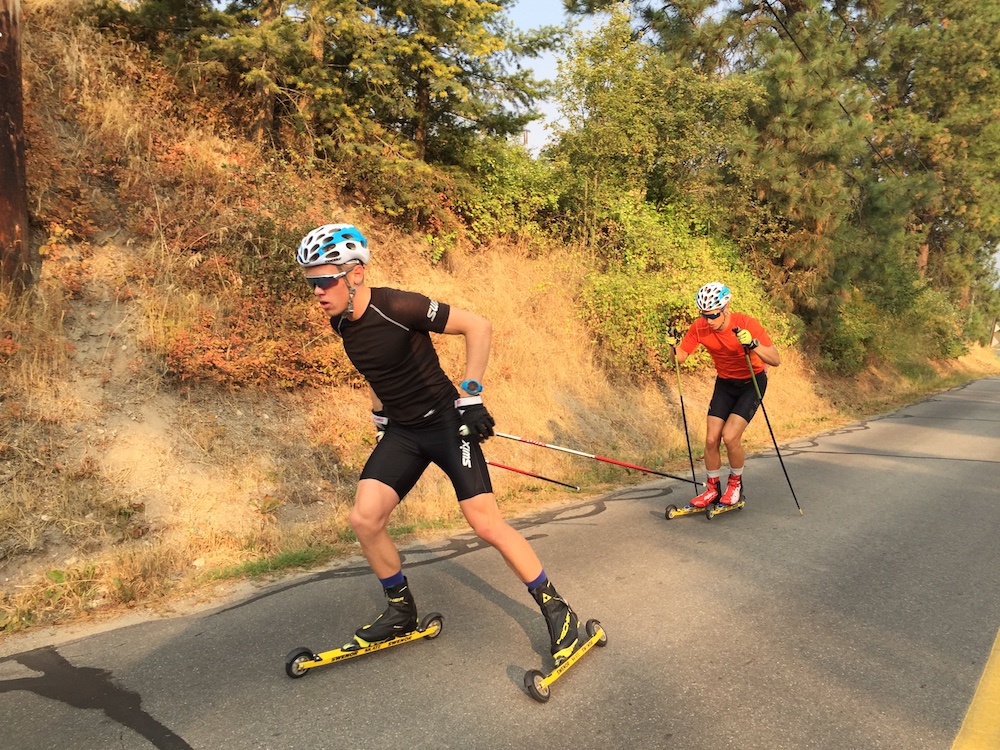
    Gareth Williams leads Fran Vukonic through an orange-tinted rollerski in Kelowna, BC. (Courtesy photo)
    Gareth Williams (Canadian U25 Team) leads Fran Vukonic during an orange-tinted rollerski in Kelowna, B.C. (Courtesy photo)

    “Summer has been great for me, I spent much of it on the Haig [glacier near Canmore, Alberta] in July,” Williams explained. “I’ve been in Kelowna the whole month of August and the smoke has yet to subside, it has actually gotten much worse recently. In past years the smoke has been bad, but I have never seen it like this. …  I think the smoke isn’t as bad as some people have suggested, for me it’s not the greatest worry. I will be happy once it is gone though, getting a little tired of the orange lighting and not being able to see the sun!”

    Michael Somppi, who trains with the Alberta World Cup Academy (AWCA) in Canmore, altered his plans depending on conditions.

    “Personally, I haven’t found the breathing to be too bad,” Somppi wrote. “That said, I am avoiding doing any hard intensity efforts on smoky days.  Today was the first day (in Kelowna) I was forced to alter my training plans, as I had planned to do a rollerski time trial, and instead opted to do zone 3 because of the smoke.  Even breathing semi hard felt sketchy with how bad the air quality is at the moment.”

    Another member of Canada’s U25 Team, Julien Locke has literally trained above the smoke on occasion.

    “I’ve been lucky in that the smoke hasn’t been too thick during most of the important training blocks so far,” Locke wrote. “I was at the Haig Glacier 4 times this summer and while we had some hazy days, for the most part, 2400m elevation was high enough to have clear skies.”

  • Wednesday Workout: ‘Old Lady’ Interval Ladder with ’94 Olympians Hall and McCabe

    Wednesday Workout: ‘Old Lady’ Interval Ladder with ’94 Olympians Hall and McCabe

    Laura McCabe, 1994 and ’98 Olympian, during her weekly Wednesday interval workout. (Photo: Leslie Hall)

    *Note: This article has been updated to include email comments from Laura McCabe as of Wednesday. 

    Don’t let the name “Old Lady Intervals” (designated by Leslie Hall) fool you. The interval ladder she and Laura McCabe complete every Wednesday and submitted to FasterSkier is one that takes experience and willpower. Hall doesn’t recommend the workout for juniors, but more for masters and those with limited time for harder training efforts.

    ***

    If their houses were any closer, Leslie Hall and Laura McCabe could probably comfortably hold conversations from the threshold of their front doors. For a little more than two decades, the duo have been neighbors, living within one-tenth of a mile from each other in northern Washington. But a street name and sidewalk view of the Methow Valley isn’t the only thing the two women share.

    In 1994, they were teammates, representing the U.S. at the Winter Olympic Games in Lillehammer, Norway. Two years later, they moved into their neighboring houses, and close to six years after that, they became co-coaches of Methow Valley Nordic.

    For the past 15-plus years, Hall and McCabe, who are now 53 and 51 respectively, also share Wednesday mornings.

    Following the birth of Hall’s second child and McCabe’s first, the women decided that neither was about to give up interval workouts. Even if it meant having their toddlers in tow.

    “When she stopped competing and had her daughter, my son was close in age, so I was like, ‘What are you doing?’ … and she said, ‘I’m going out and I’m doing intervals and I’m carrying Novie,’ and I’m like ‘OK, I’m going to come,’ so then we just started going together,” Hall explained on the phone.

    Every Wednesday for the next 51 weeks, the women completed the intervals with their babies on their backs.

    “Once they got on a schedule where they were in preschool or something, we’d go off without them,” Hall said. “Now, we drop the kids off at the bus and then we go. It works for both of us because we don’t go into the office at a certain time, so that’s nice.”

    The workout itself, which is a ladder-type interval set totaling 43 minutes of on-time at a pace Hall describes as “as hard as we can,” is not one she recommends for junior skiers, but rather those on a tight training schedule.

    “It obviously wouldn’t be the best workout for someone, say a 14 year old, that’s not going to be the best workout for them,” Hall said. “But for a lot of masters or working people, they always go sort of medium-hard, so having a targeted interval workout helps raise their fitness. … They go easy [during easy days] because they’re either too tired from the interval workout or they know the interval workout is coming up.”

    Both women continue to compete, with Hall jumping into local running and ski races that fit with her coaching schedule and McCabe racing internationally, competing in this year’s Fossavatnsgangan Worldloppet in Iceland (where she placed third in the 25-kilometer skate behind Caitlin Gregg and Britta Johansson Norgren), and the Masters World Cup in Switzerland (where she won two races).

    “Leslie and I have been through a lot of life stuff together, starting with being on the U.S. team to raising our children together, going through the joys and difficulties of life as they are handed to all of us,” McCabe wrote in and email on Wednesday. “Working together as coaches, running the Methow Valley xc ski team and just being great friends. WE have kept each other motivated on Wed for some intensity for many years, as just that 1:30-2 hours pays off if you are consistent. Wed we discuss things that need to happen for the team, the kids, life etc and we both get a good solid workout!”

    Hall couldn’t agree more.

    “I think my favorite part is having someone who makes sure I get out and do it,” Hall added. “I don’t have to worry about how I’m going to fit in some hard training, and that’s really satisfying.”

    The Workout

    • Terrain type: Hilly
    • Warmup: 15-20 minutes jogging followed by 4 x 30 second speeds
    • “Old Lady” (as Hall likes to call it) Interval Ladder: 5-6-5-6-5-4-4-4-4 minutes with 3 minutes recovery between each 
      • i.e.: 5 minutes on, 3 minutes recovery, 6 minutes on, 3 minutes recovery, 5 minutes on, 3 minutes recovery…etc.
    • Interval Effort: Between Level 4-Level 3
    • “We just go and go as hard as we can, which is another thing I don’t recommend for everybody necessarily,” Hall explained. “Some days it’s just naturally Level 3 and some days it’s Level 4. And also it’s longer than what most people would want to do, but that’s just what we’ve gotten to at this point.”
    • Cool down: 15-20 minutes jogging with 4 x 5 second sprints incorporated throughout to “clear out the legs”
    • Total time: 75-80 minutes
  • After Summer Wildfires, Methow Valley United, Undeterred and Open for Business

    After Summer Wildfires, Methow Valley United, Undeterred and Open for Business

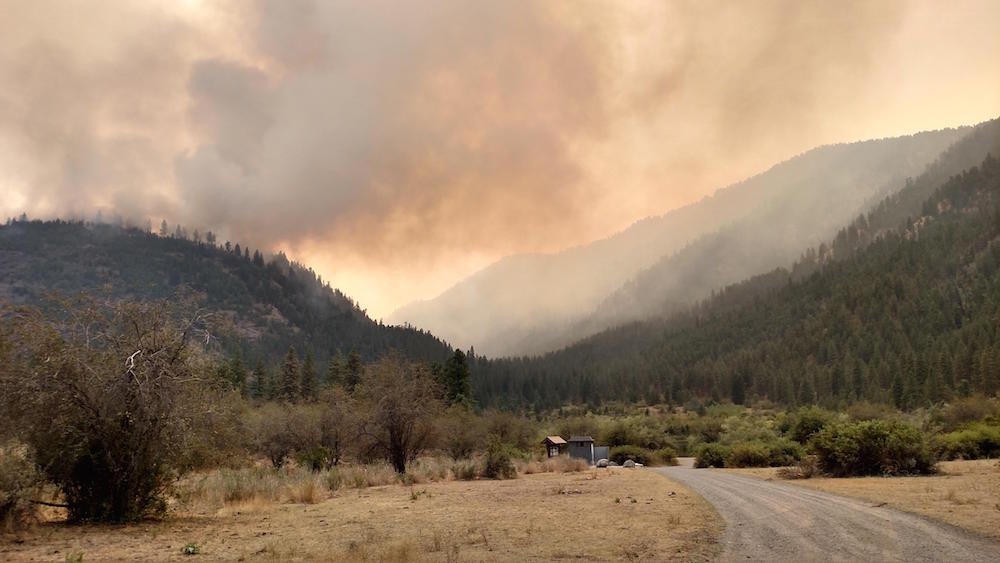
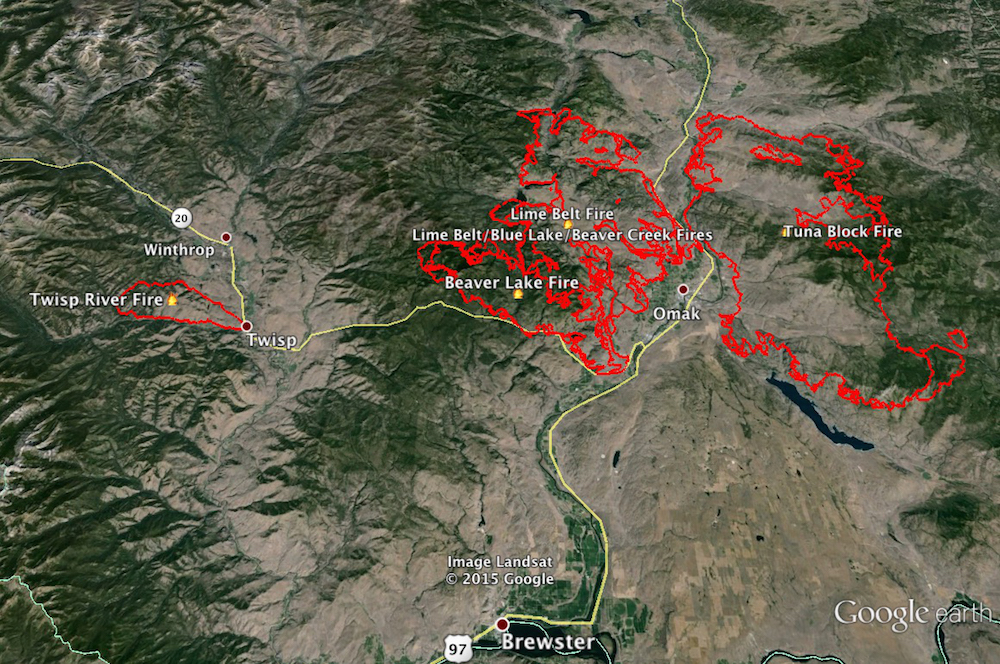
    The Okanogan Complex Fire near Omak, Wash., began with a lightning strike on Aug. 15, 2015 and consumed more than 300,000 acres. (Photo: US Forest Service)
    The Okanogan Complex Fire near Omak, Wash., began with a lightning strike on Aug. 15, 2015 and consumed more than 300,000 acres. (Photo: US Forest Service)

    In late October, snow fell on Washington Pass just outside the Methow Valley in Washington state’s North Cascades. Just yesterday, grooming began on the Methow Trails in anticipation of the earliest opening in the nordic center’s history, set for this Saturday. This kind of start to the season is warmly welcomed by a community that endured two consecutive summers of record-setting wildfires.

    A skiing mecca and home to four 2014 Olympic cross-country skiers (the Bjornsen siblings, Brian Gregg, and Torin Koos), the Methow Valley is also home to the Methow Trails, the self-proclaimed “nation’s largest cross-country ski area.” With more than 200 kilometers of trails in Winthrop and Mazama, Wash., this recreational area attracts visitors from around the country for skiing, trail running, mountain biking, and hiking.

    This past August, lightning strikes ignited what was named the Okanogan Complex Fire, an immense fire that grew to threaten homes, businesses and livelihoods. Actually five fires fought as a single fire due to their proximity to one another, the Okanogan Complex surpassed the previous year’s Carlton Complex Fire to become Washington’s largest wildfire on record. Peaking at 304,782 acres, the fires burned from Aug. 14 through the declaration of 95-percent containment on Sept. 20, according to the National Incident Information System.

    A map of the Okanogan Complex Fire (Photo: Jeremy Blazar/Overlays by InciWeb)
    A map of the Okanogan Complex Fire (Photo: Jeremy Blazar/Overlays by InciWeb)

    Starting just down the valley from the ski towns of Winthrop and Mazama, the Twisp River Fire posed the highest threat to the ski infrastructure of the Methow Trails and Sun Mountain Lodge.

    Roughly thirty miles to the east, the Beaver Lake, Lime Belt, Tunk Block, and Tuna Block fires combined to create a much larger blaze, forcing evacuations of about 5,400 homes in Okanogan County.

    It was this evacuation that drew the attention of U.S. Ski Team athletes Erik and Sadie Bjornsen, who call the Methow Valley their home despite living and training in Anchorage, Alaska. Their parents still live in the valley.

    “For Eric and I it was a bit a scary because we didn’t hear from our parents right away,” Sadie Bjornsen said in a phone interview. Once they made contact with their parents, they learned they had evacuated to Seattle.

    Bjornsen also mentioned that aside from the size and unpredictability of the last two fires, it had been the idea of getting trapped that Methow residents feared the most.

    “The really freaky thing that happened this summer was that there was a fire over the North Cascade Highway … and there was a fire down in Twisp, and then there was a fire in Omak,” she said. “So all three ways of getting out of the valley were potentially blocked.”

    None of these closures coincided for a total road blockage; however, the valley’s entrapment by fire was a conceivable reality.

    This was more of an issue the previous summer when heavy rains created flooding and mudslides in addition to the ongoing fires. From the experience with the Carlton Complex in July 2014, the valley as a whole learned and was “a little better prepared for evacuation and the infrastructure issues,” Mark Waechter, longtime resident and owner of the Winthrop-based ski shop, Nordic Ultratune, wrote in an email.

    Waechter, who wrote about the fires on his blog in August, didn’t feel the affects of the fires on his business due to the shop’s exclusively winter focus and high volume of mailed-in, ski-grinding work.

    While the Winthrop and Mazama townships that many skiers call home were not immediately affected, the blazes quickly captured national attention when three firefighters died on Aug. 19 and four others were injured. These deaths, especially overwhelming for a small community where just about everyone knew or had a connections to one of the deceased, also drew enough regional media attention to spread an exaggerated sense of devastation throughout the valley, potentially dissuading tourists.

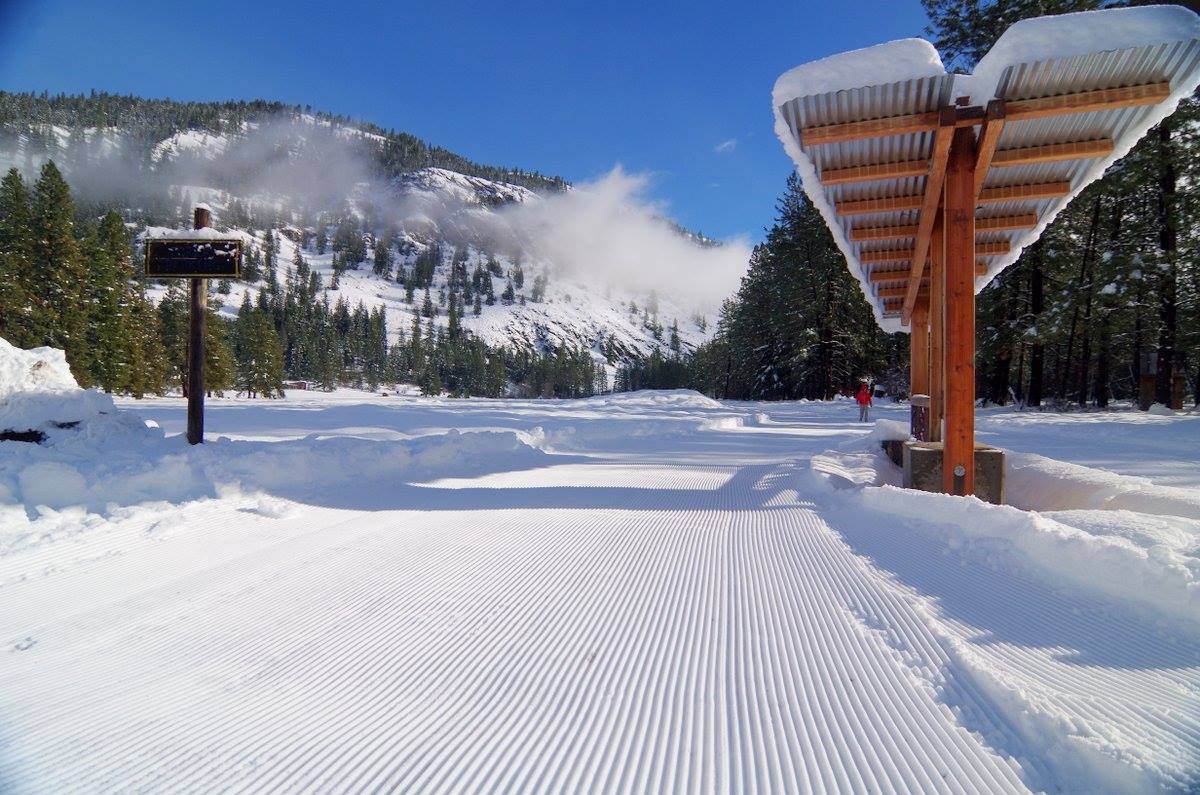
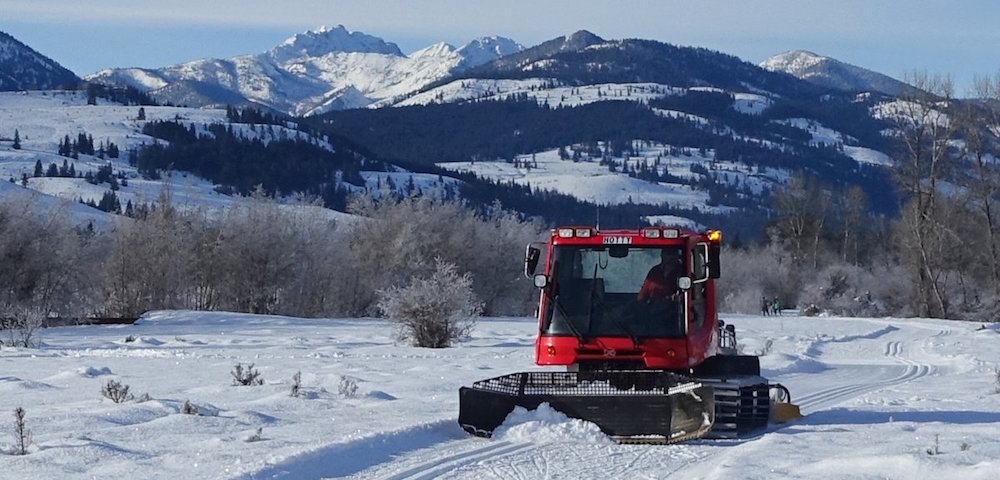
    The first grooming pass of the season took place Wednesday at the Methow Trails. The 200-plus-kilometer trail system is on track for the earliest opening ever on Saturday. (Photo: Methow Trails/Facebook)
    The first grooming pass of the season took place Wednesday at the Methow Trails. The 200-plus-kilometer trail system is on track for the earliest opening ever on Saturday. (Photo: Methow Trails/Facebook)

    “The hardest part about the recovery is convincing people to come visit after the smoke and fire went away,” Methow Trails Executive Director James DeSalvo wrote in an email. “Within a few weeks after this fire took off, the valley was open for business, but our marketing engine can’t compete with national disaster news.”

    All of the skiers and members of the ski community interviewed for this article echoed that sentiment, including Methow Olympic Development (MOD) Squad Head Coach Scott Johnston.

    “If you came here and you drove just up the Methow Valley on the main road, you’d hardly see any damage other than some burned, blackened hillsides,” Johnston said.

    Methow Valley Nordic Team coach Leslie Hall expressed sorrow for the loss of life and property, but explained that her team, “never really missed a beat even with smoke and fire.”

    “The hardest part about the recovery is convincing people to come visit after the smoke and fire went away.” — Methow Trails Executive Director James DeSalvo

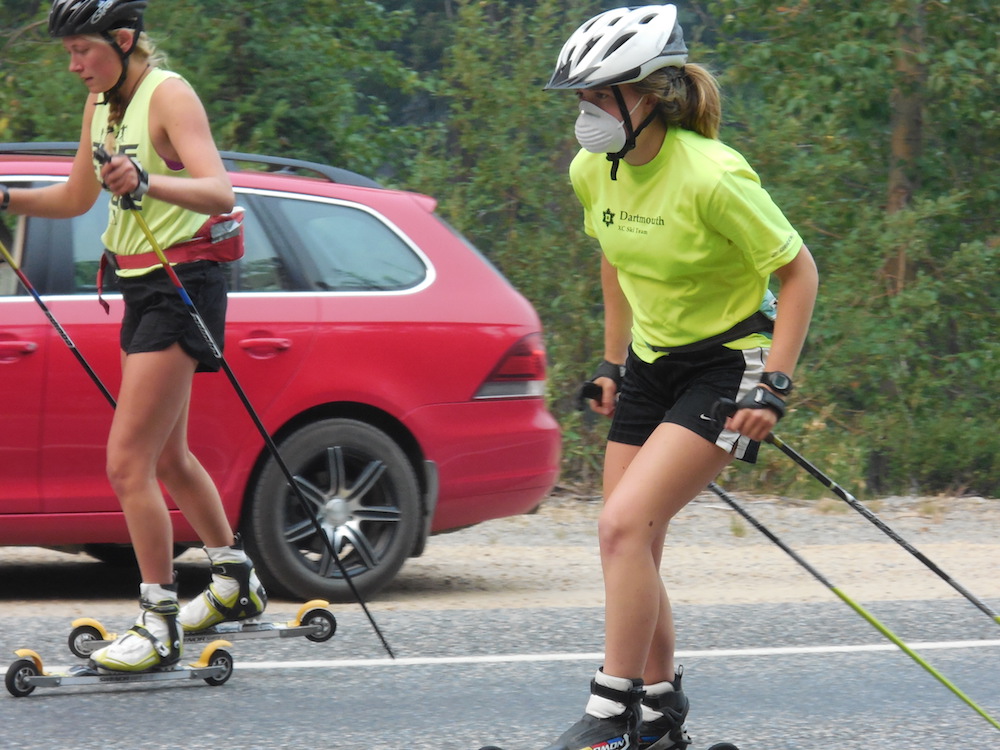
    Training deviated from the planned schedule only when smoke levels hit unhealthy levels. Hall, Johnston and former MOD athlete, Sam Naney, who now runs Momentum Northwest in Seattle, all mentioned the smoke as a training inhibitor, but explained it was easily avoidable by adjusting to the wind and elevation. Bjornsen said her parents still got outside with the use of breathing masks, and she only missed one interval session because of smoke during the week she visited after the fires.

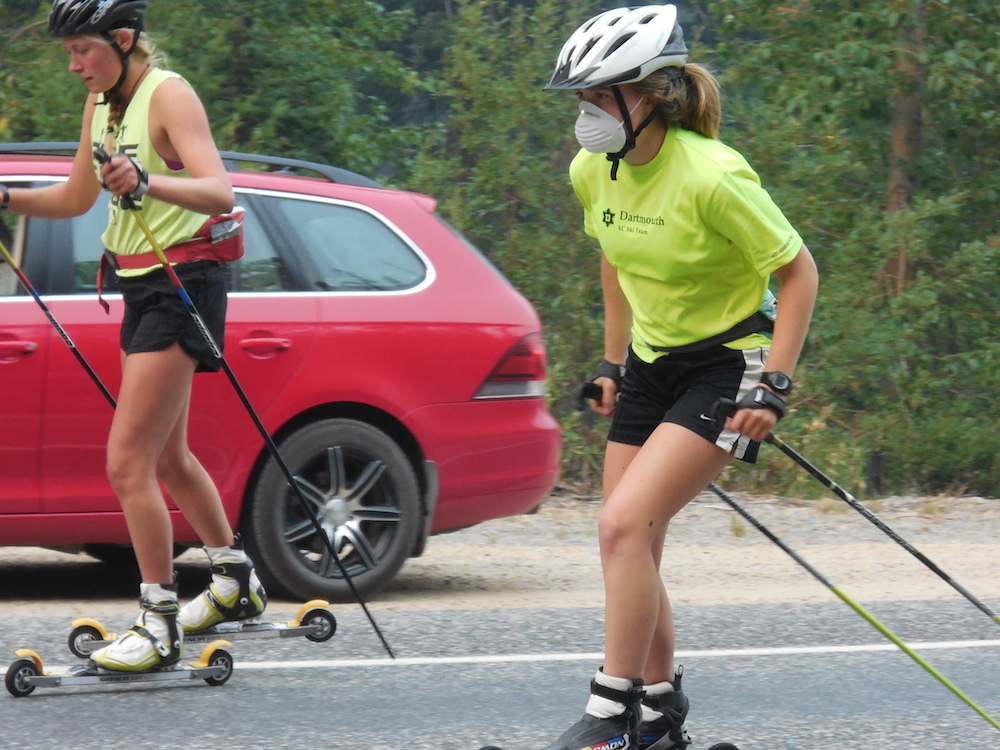
    Methow Valley Nordic Team skiers Ella Hall and Claire Waichler rollerski amidst the smoke on closed Highway 20 this summer. (Photo: Leslie Hall)
    Methow Valley Nordic Team skiers Ella Hall and Claire Waichler rollerski amidst the smoke on closed Highway 20 this summer. (Photo: Leslie Hall)

    From an economic perspective, many agreed that it was imperative for early snow in order to draw tourists back to the Methow. Despite the fires and forest closures, DeSalvo’s staff at Methow Trails has done all of their normal preparation in readying the trails for the winter. On Saturday, they’ll open earlier than ever, right in the nick of time, according to a grooming report.

    To understand the nordic center’s role in the economic recovery of the region, one might consider its return on investment. According to the Methow Trails’ economic analysis published in August, it creates 152 full-time jobs each year, and has accounted for $700,000 dollars in sales tax revenue and $12.4 million dollars in combined direct and secondary expenditures made by trail users. Also, for every dollar spent on trail maintenance, $23 is returned to the local economy.

    Not only do the trails serve the community’s transportation and recreational needs, they are aiding in economic recuperation. Now they just need the snow to cooperate this winter.

    Winter on the Methow Trails. (Courtesy photo)
    Winter on the Methow Trails. (Courtesy photo)

    Looking toward the future, it’s easy to predict more fires as the snowpack and weather becomes more unreliable, and each year seems to be drier than the previous. Wildfires are natural and essential to the ecosystem; thus this will happen again. However, it’s the severity and relentless nature of these past fires that’s scared the community.

    Naney, who grew up in the valley and lived there until this past year, mentioned that this year’s fires were “essentially burning over areas that burnt last year,” making the entire event “… horrifying for people.”

    On the other hand, the community, and the skiers within it, know that preparation is key. Part of this is trail advocacy and promotion since, “the last three major wildfires in our area have all been redirected away from homes and towns due in some part to the trail network acting as a fire line,” according to DeSalvo.

    Part of it is simply working around what the fire destroyed. The Methow Nordic Team did so by offering free membership to those team members whose families lost property.

    As the snow falls, skiing and tourists will return to the valley, and life as usual will continue for all of Okanogan County.

    “Our official opening will be this Saturday and forecast is for sunny and cold for the foreseeable future,” DeSalvo wrote in an email. “Good news for everyone.”

  • Part of the Team, Part III: Female Coaches’ Impact on Teenage Skiers

    Part of the Team, Part III: Female Coaches’ Impact on Teenage Skiers

    Scottie Eliassen giving a pre-race pep talk to one of her athletes. (Photo: Midge Eliassen)
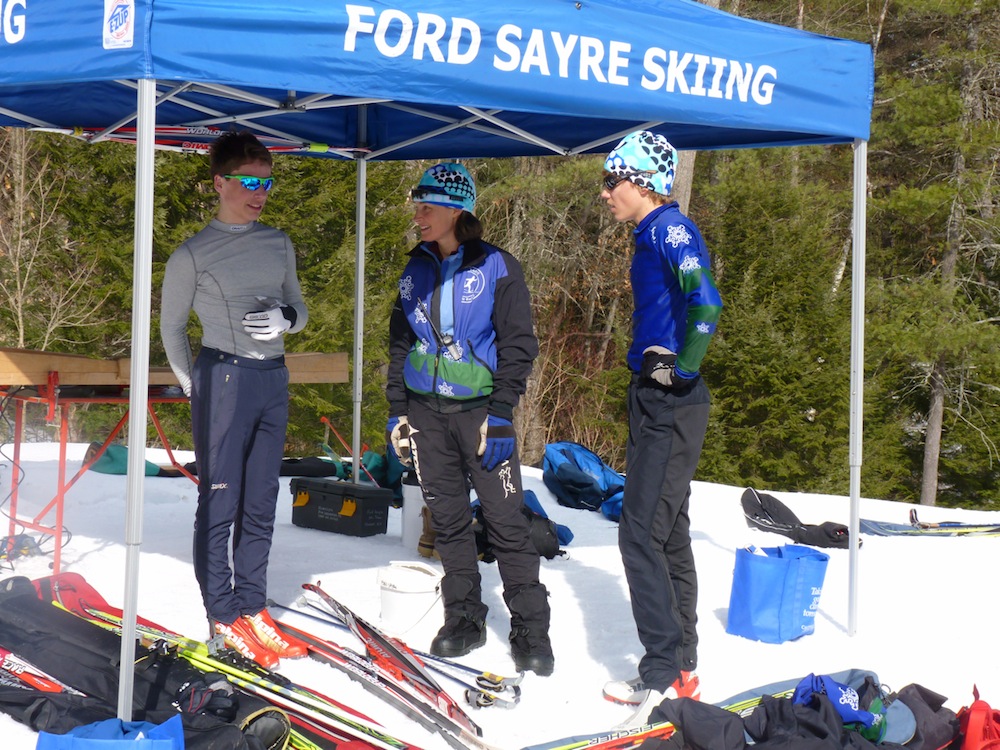
    Scottie Eliassen (l), coach of the Ford Sayre Nordic Club in Hanover, N.H., gives a pre-race pep talk to one of her athletes. (Photo: Midge Eliassen)

    Editor’s note: This is the third installment in a four-part series on female nordic coaches in the U.S. In Part I, two-time Olympic U.S. skier Nancy Fiddler introduced herself, Part II took a look at several influential female collegiate coaches, and Part III delves into female coaching in the junior pipeline. Part IV will explore women leading grassroots efforts across the country.

    ***

    America! Land of the free, home of many sports! As a parent, I know all about the athletic choices kids have; my daughter cross-country and alpine skied, played soccer, did ballet, Irish danced, and rode horses for many years. Life is crazy busy for most American kids and the parents who shuttle them around.

    I am going to go out on a limb here and say that most of the successful cross-country skiers in the U.S. come from a multi-sport background. I went through high school playing varsity field hockey and lacrosse and was a diver on the swim team. I never trained during the summer for any of my sports, working instead at a summer camp teaching swimming and canoeing.

    I went to college and played hockey and lacrosse, but graduated with a Bachelor’s degree and a passion for skiing. How did I end up learning to ski and race in college? At the time, there was no pool at Bates, and the nordic team was recruiting, so I gave it a try. Yes, I gained a high degree of athleticism doing other sports, and this helped me in my skiing, but this is not the U.S. Ski and Snowboard Association’s recommended pipeline!

    The scenario is different today. Yes, kids are still involved in multiple sports at a young age, but collegiate and elite skiers ultimately picked nordic at some point out of a vast menu of fun athletic endeavors. Focusing on one sport means giving another sport a lesser role or dropping it entirely. These decisions can be agonizing.

    Successful nordic skiers typically begin to focus on skiing around age 15 or 16. By then, ski training requires a significant amount of time and energy for teenagers. The sport becomes year-round and is increasingly specific. Many good cross-country skiers also excel at other sports, but end up skiing because it is fun and their friends do it. They choose to do ridiculously hard workouts in all kinds of weather because they love the sport and the culture attached to it.

    Part III of this series takes a look at female coaches who work with U18 and U16 athletes, the kids who are in the process of choosing cross-country skiing over other sports. These coaches are involved with juniors at a critical point in their development. Much happens during this time: technique refinement, conditioning, coordination during growth spurts, more frequent racing, equipment acquisition and maintenance, and more. Skiing takes on a new level of commitment for these kids.

    It becomes part of a coach’s job to lead kids to skiing and help them love it and choose to pursue it. Ten female club level coaches weighed in via an email survey about their coaching careers. These dedicated women are part of the team who make skiing attractive, fun, and rewarding for junior skiers around the country.

    Female Coaches: Roots of Community and Family

    Go to the Olympics or to a World Cup race and take a look at the athlete-support system. Every team has a swarm of coaches and service staff to meet the athletes’ every need. With few exceptions, coaching at the international level in cross-country skiing is a male-dominated field.

    Are female coaches coaching closer to home by choice?

    “I see myself right where I am: working in a community-based program to share the sport and prepare athletes to take it to any level they choose – whether it be local, regional, national, or international,” wrote Scottie Eliasson, who coaches the Ford Sayre Nordic Club in Hanover, N.H.

    Community-based programs, whether they are clubs or school teams, are the backbone of nordic skiing in the US. Eliasson has committed 21 years to coaching at Ford Sayre, a program with more than 100 athletes and 30 coaches.

    Club programs are attractive to female coaches on many levels. For starters, it’s a foot in the door of coaching. Ashley McQueen, who skied as a junior in the Sun Valley Ski Education Foundation, explained that her coaches and nordic skiing in general “had a huge impact on how I grew up. I really wanted to have an influence like that. Rick [Kapala] offered me a coaching job as a way for me to get in my training and to make some money over the summers, and I really enjoyed it. When he called to offer me a position on the staff, I jumped at the opportunity.”

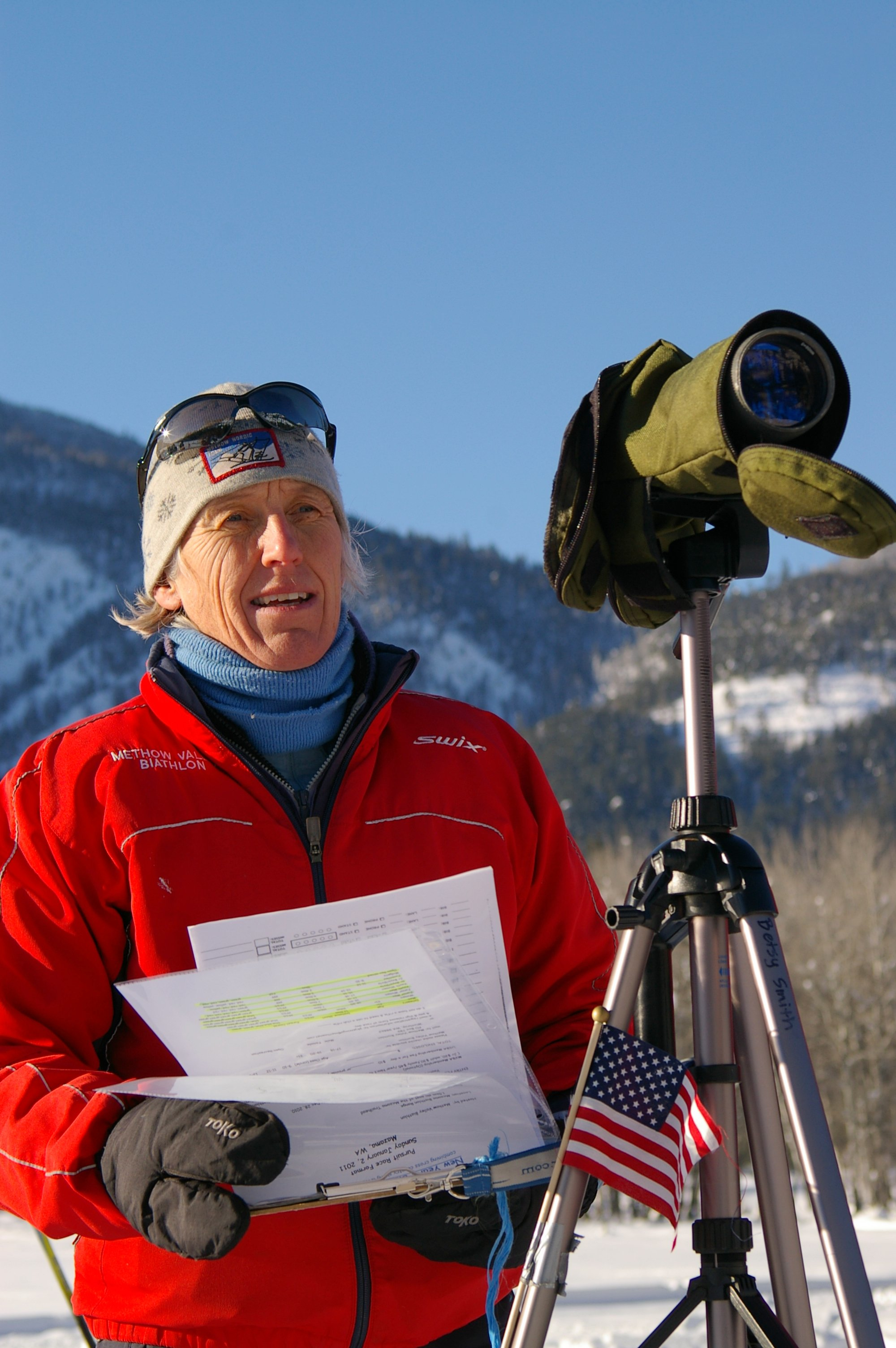
    Methow Valley biathlon coach Betsy Devin Smith giving some guidance at practice. (Photo: Kristen Smith/Methow Valley Photography)
    Methow Valley biathlon coach Betsy Devin Smith giving some guidance at practice. (Photo: Kristen Smith/Methow Valley Photography)

    Lots of coaches who double as moms don’t want to travel outside the U.S. while their kids are young.

    The Methow Valley Nordic Team in Winthrop, Wash., has a stronghold of female coaches. Leslie Hall, Laura McCabe and Betsy Smith have been holding down the fort in the Methow Valley for nearly two decades. All three women are moms with children who are or have been involved in the program. Being able to coach in the program her own two kids are in is important to Hall, who sees her job as Mom as top priority.

    A three-time Olympian who competed in as many Junior World Championships and five World Championships, Hall explained she never had any goals to coach at the international level.

    “I will coach locally on some level until my kids are out of high school, so probably another 7 years or so,” she wrote of her coaching plan. “I hope to coach at Junior Nationals and to do my best to inspire lots of kids to commit to skiing.”

    Susan “Poppet” Boswell has been coaching skiing for 19 years and found her dream job at Stratton Mountain School [SMS] in Vermont. After two years of working with the U16 skiers, she now holds a position as a Winter Term Coach working with U14 athletes. She likes this arrangement, as it allows her more time at home with her family. Boswell’s 14-year-old son will start his first year at SMS this fall.

    Many female coaches have careers outside of skiing. Club programs offer flexibility and the opportunity to work with kids in the outdoors, which appeals to some women who work “regular jobs.”

    Smith juggles a career as a veterinarian and sheep rancher with her biathlon coaching. Eliasson works full time at the medical school at Dartmouth.

    Margaret Maher, who heads the New York Ski Educational Foundation nordic program in Lake Placid, N.Y., works per-diem at Adirondack Medical Center as an exercise specialist and is also in nursing school. Alison Deines-Sehnert, who recently stepped down from her position as nordic director of the Jackson Hole Ski Club, worked as a bookkeeper, a caretaker, and office coordinator for a heli-ski operation. Boswell owns a company that does computer mapping.

    U.S. Ski and Snowboard Association [USSA] Nordic Program Director Joey Caterinichio has come through the entire system of nordic skiing in the US. As an athlete, she made five trips to Junior Nationals and races at three NCAA Championships. She started coaching high-school skiers and went on to form Alaska Nordic Racing in Anchorage with her husband. She coached there and through 17 Junior Nationals until moving to her present position with USSA last year. Caterinichio has three children under 10, and all the years she was coaching, she also worked in medical sales.

    Although female coaches may not be front and center on the international stage, they are in the wings, behind the curtains and working for the team in school and club programs around the country.

    Eliasson sees it like this: “I feel that I am directly making a difference locally and regionally. Indirectly, I see our club as an integral part of the strengthening club network that is helping make a difference nationally and in the US’s international results.”

    Boswell feels she is part of the big picture of skiing in the U.S. “I’m a small person, and I work with small kids, but I have a high level of experience and education that I bring to my skiers, who in turn bring it to the table and raise the bar for everyone,” she wrote.

    Club Programs: The Infrastructure of U.S. Skiing and a Good Place to Grow Up

    “Sports keep kids out of trouble, pushes them to be disciplined and healthy while tackling dreams that they only have a short time to achieve. Everybody should do sports. I don’t care which one. Skiing of course is my favorite but kids need to be involved and active.” — Caterinichio

    Joey Caterinichio, shown here at the 2010 Olympic Winter Games with Kikkan Randall, has been named nordic program manager for the USSA. Photo: USSA.
    Before taking on the position of USSA nordic program manager, Joey Caterinichio (l) poses for a photo with U.S. Ski Team veteran Kikkan Randall at the 2010 Olympics in Vancouver, B.C. (Photo: USSA)

    Nordic clubs are growing around the country and are staffed by legions of full and part-time male and female coaches. Most clubs offer ski programs for juniors from 7 years and up and often engage entire families.

    Coaches who work with the U16 and U18 age groups are spending quality time with athletes in the process of growing up. Coaches become role models and mentors for the teenagers they work with and thus, very important figures in their lives. Strong relationships are created on the ski trails and in the wax rooms.

    “I love the relationships with the athletes,” McQueen wrote. “I get to work with such great individuals and watch them grow from little 13/14 year old kids into strong and confident adults.”

    Deines-Sehnert enjoys working with kids and helping them achieve “not results, but their inner goals,” she wrote. “Watching kids stand up straighter because they are proud of their accomplishments – that’s what I love.”

    The role of a club coach is a fine balance of taskmaster and nurturer. Cross-country ski racing is one of the toughest sports out there. How do coaches keep kids from quitting when the pain is too much to bear, the results too disappointing, or their will to do the same drill one more time is gone?

    After five years on the SVSEF Gold Team, Nicole De Yong has been coaching Sun Valley juniors for a year. She has quickly figured out that having a good rapport with the athletes is essential to gaining their trust. “Playing, joking, having fun from a friendship standpoint is as important as having the ability to get down to business when necessary,” she said.

    Ski racing boils down to complete commitment and the ability to take risks. None of this is possible without trust; trust in your preparation, trust in your equipment, and trust in the coaches who lead you. Skiing at the highest level requires these elements and belief in oneself and their coaching system. Fostering this confidence is part of a coach’s job and far exceeds the teaching of technique and the waxing of skis.

    Skiers entering the U20 bracket are often leaving home for the first time to either go to college or to pursue their skiing goals in a new setting. This is the time when nordic athletes make the decision to continue in the sport or to follow a new life path. The time spent training and racing during their high school years has prepared them for anything.

    According to Eliasson, the foundation of success in sports or anything in life boil down to “resilience, adaptability, independence, responsibility, and the capacity to prioritize competing demands,” she wrote. “Many of our athletes continue on to college ski teams, and feedback from the athletes and from their college coaches indicates that they are well-prepared for the demands placed on student-athletes. We hear from parents and athletes many years later that experiences in Ford Sayre have a lasting positive impact.”

    Sharing the Dream

    “My job is a lot more than just coaching, as I deal with all the bureaucratic stuff and organizing everything. My favorite part is the one on one interaction with the skiers and helping them to find the excitement and passion of committing to a great sport.” — Leslie Hall, Methow Valley nordic program director

    The qualifications required to coach skiing might include the USSA Level 100 certification, waxing knowledge, basic physiology, and an understanding of skate and classic techniques. These identifiable skills are important, but the essential qualification is not easily measured and not always readily apparent. Every good ski coach has it. Passion does not come from a clinic or a book on ski training.

    Many nordic coaches are deeply connected to the sport by means of personal experience. That does not mean that anyone who has ski raced is automatically a great coach; technical and waxing expertise can be acquired through education and practice, but the ability to channel passion and to communicate it to others is a gift.

    Head of the NYSEF nordic program, Margaret Maher on course at the 2012 Junior Nationals at Soldier Hollow in Midway, Utah. (Courtesy photo)
    Head of the NYSEF nordic program, Margaret Maher on course at the 2012 Junior Nationals at Soldier Hollow in Midway, Utah. (Courtesy photo)

    Everyone gets involved with ski coaching in different ways. Maher grew up cross-country skiing and coaching is her way of sharing her love of the sport.

    “Since high school, I knew at some point I would want to coach,” she wrote. “My dad, mom, and grandmother were all PE/health teachers: I guess athletic teaching is in my blood. I certainly wasn’t ready to leave the sport after college … but I was not ready to be a full-time ski racer. Coaching was the next natural step.”

    An eight-time Vermont state champion and two-time Junior Nationals winner, Maher turned her experiences she as a junior and in college (she made two USSA J1 Scando Cup Teams and raced four years in college) into a successful coaching career.

    Maher started skiing with the Mountain Top Bill Koch Club in Chittenden, Vt.,, which she called “family oriented.” She feels fortunate to have been coached by Mike Gallagher at Rutland High School and also credited her college coach at the University of New Hampshire, Cory Schwartz.

    An assistant coach at Sun Valley, McQueen uses her personal experience to reach out to juniors in the program she grew up with. “I was shy as a kid, and I think that going through the process of overcoming my shyness and insecurities helps me se how fear and insecurity affects some of the athletes I work with,” she wrote.

    Another accomplished junior and world-class nordic athlete, Hall also cites her mentors as contributing to her passion for skiing and coaching. “I have been influenced my whole life by so many great coaches,” she explained. “Of course, Torbjorn Karlsen probably had the biggest role, and also Martha Rockwell. Laura McCabe encouraged me to be involved and I have drawn from [sister] Cami’s experiences at Dartmouth.”

    Some coaches have stumbled into their passion for coaching. Such is the case with Caterinichio, who was returning from college and skiing on her own when she got “the call.” She volunteered at Chugiak High School, where her younger brother Gus and sister Nina were on the team.
    “When all the coaches quit the program I was left with a team of 50 athletes. I took over the team and never stopped coaching,” she explained. Caterinichio ran with her opportunity, literally all the way to the USSA Nordic Program Director job. On the way, she doubled the size of the high school program, which eventually became Alaska Nordic Racing.

    Not all respected coaches come straight out of long ski careers beginning with the Bill Koch league or have ever raced on the World Cup circuit. A diverse background can lend itself well to coaching – case in point, Janice Sibilia, competitive programs director for New England Nordic Ski Association. Sibilia has a competitive background in several sports. She was an equestrian and national-level cyclist and didn’t get into skiing until she began cross training for cycling.

    An injury brought Sibilia to ski coaching. “During my downtime from racing a local high school asked me to help out,” she explained. “It was a big group of over 50 high school skiers and a lot of fun. I learned a lot (being an athlete is very different than coaching!) and was grateful for the opportunity. It really sparked my interest in coaching and since then I have worked really hard to improve my coaching skills and knowledge.”

    Sibilia became a student of nordic skiing by going to every clinic she could find. She shadowed other coaches at camps and training sessions and cites the USSA L100 certification as an important building block in her education. Besides drawing on her background as a cyclist, Sibilia has learned invaluable lessons about communication from a favorite equestrian clinician. She says, “I think you can learn things in places you least expect it.”

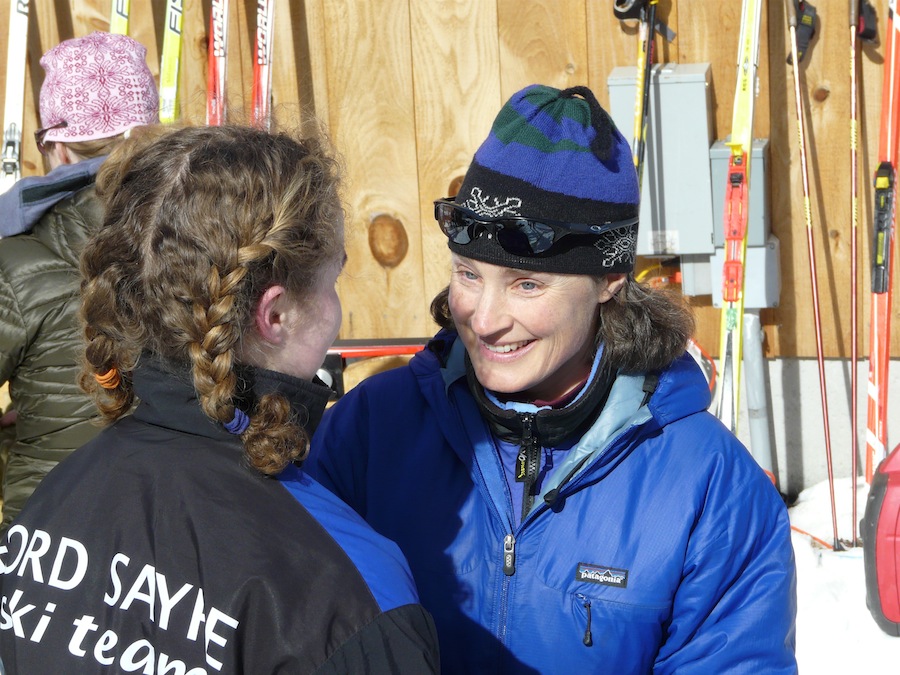
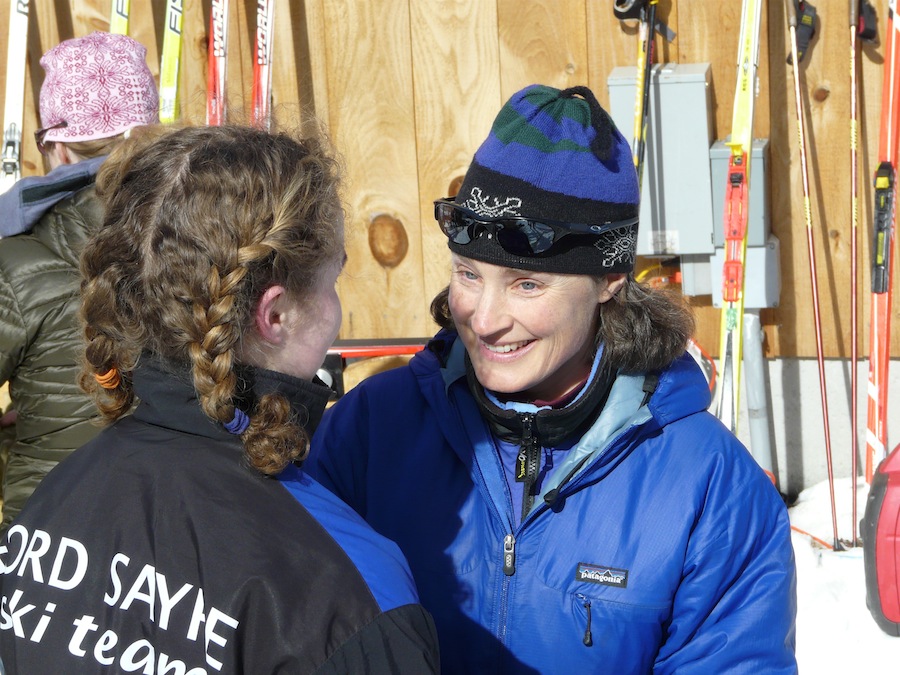
    Ford Sayre coach Scottie Eliassen debriefing with her athletes post-race. (Photo: Midge Eliassen)
    Ford Sayre coach Scottie Eliassen debriefing with her athletes post-race. (Photo: Midge Eliassen)

    Eliasson got started in her coaching career by volunteering to help with the local Bill Koch League (BKL) program “to share the sport with others.” Eliasson was a BKL participant herself, and continued racing through college. Like Sibilia, Eliasson has drawn from other sports, such as rowing, to develop her coaching style.

    “My experiences coxing girls in high school and men in college helped shape who I am as a coach today,” Eliasson wrote. “My high school crew coaches remain some of my most important coaching mentors.”

    The biathlon head coach at Methow Valley, Smith started as an alpine skier and racer, then jumped into nordic coaching.

    “When our son was 9 years old we wanted to keep him [cross-country] skiing so we started a biathlon program to complement our local nordic team and I have been coaching that now for 11 years,” she explained. “I hope to be a great junior coach. I hope to develop a biathlon program here that is a model for other Nordic programs in the US on how to incorporate biathlon into their xc teams.”

    It’s All About Balance

    “I wish there was at least one female coach on the US [Ski] Team because I think it would actually help all the coaches. Women bring a whole different set of strengths and perspectives to the table and I think that would help both the coaches and the athletes. I guess I’d say women are not on par (with men), but I think they are getting there. It will take time.” — Boswell

    Stratton Mountain School coach Poppet Boswell with her son Russell, who won 2012 Silver Fox Trot in Hanover, N.H., at age 12. (Courtesy photo)
    Stratton Mountain School coach Poppet Boswell with her son Russell, who won 2012 Silver Fox Trot in Hanover, N.H., at age 12. (Courtesy photo)

    Co-ed coaching can be especially challenging, as boys and girls bring different personalities, quirks, and styles to any ski program. Each gender has its own special needs and methods during a group workout, before a race, and just messing around after practice. Coaches see this and work to take care of everyone and to create team balance.

    In coaching, men and women generate different kinds of energy as well. “Gosh, the two male coaches I work with would be bored out of their skulls if it was just the two of them working together as guys,” Boswell wrote. “Life is so much more fun with a mix of sexes bringing different ideas and styles to the table.”

    She pointed out that balance on the coaching staff is necessary to effectively deal with both genders. For example, a female coach can be helpful when a specific “girly” question or situation comes up. Often, girls feel more comfortable confiding in a female mentor.

    There are times when male coaches can’t do what females can. For instance, a 200-pound male coach may not be the best kick-wax tester for a 100-pound female athlete. According to Hall, “it is important to have strong female role models for those young ladies out there. Also for wax testing, we often find that we can pick a kick wax more accurately for the girls than the male coaches can.”

    “It’s important for all athletes (girls and boys) to see men and women in all manner of coaching roles, and to have same- and opposite-sex role models,” wrote Eliasson.

    Times are changing!

    All the female coaches who participated in this discussion are in agreement that women are slowly making headway into the world of ski coaching.

    “In my first decade of coaching, there were certainly times/places in which I felt less valued/respected than the male coaches with similar experience – and there were JN trips on which I was the only female coach,” Eliasson wrote. “In my second decade of coaching, as more and more women have entered the regional and national coaching ranks, I haven’t felt discrimination from other coaches.”

    While women are not dropping their jobs as mothers or professionals in other fields to coach on the World Cup circuit, they are very present at the club level. They’re in the trenches, working with the adolescent skiers who might become the next generation of Olympic champions. They are working with the athletes who could become the next generation of coaches.

    Deines-Sehnert is a great example of female coaches making a difference. Male and female coaches are singing the same song, it just sounds better with the different voices and reaches more ears.

    “I am a cog in the wheel,” she wrote. “I think the most important thing that each of us can do is make our programs the best that they can, raising the bar locally will only help us grow nationally.”

    As Caterinichio sums it up, “It is extremely important to have female coaches. I look around and am excited to see more and more female faces.”

    “I am not sure we will ever have the same numbers as men,” she added. “It is hard to juggle career, motherhood, and coaching, but it is important that we try. (We must support) women in coaching roles, officiating roles, leadership roles.”