From the FasterSkier archive — posts syndicated from athletes’ and coaches’ own blogs between 2004 and 2012, kept online as published. Current coverage is at fasterskier.com.

Tag: Liberec

  • Goodbye, Liberec: The Next Generation of North Americans Reflect on Worlds Experience

    Goodbye, Liberec: The Next Generation of North Americans Reflect on Worlds Experience

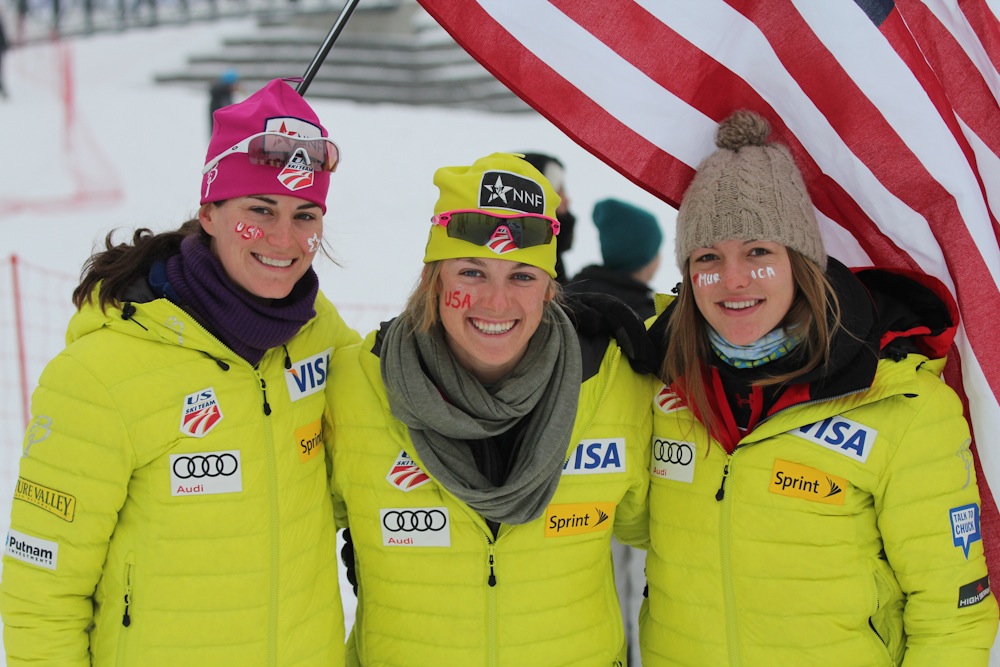
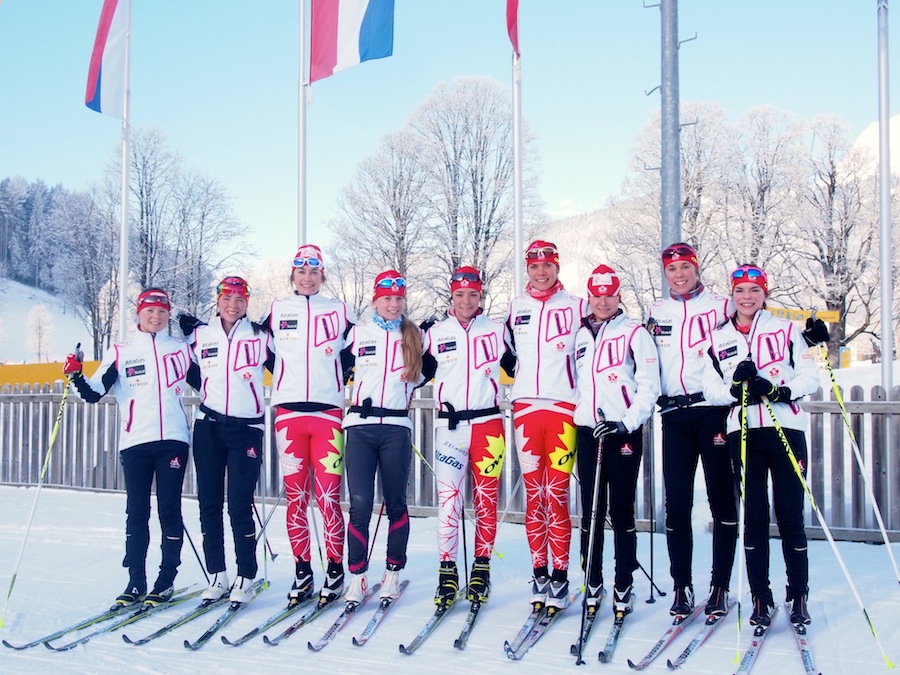
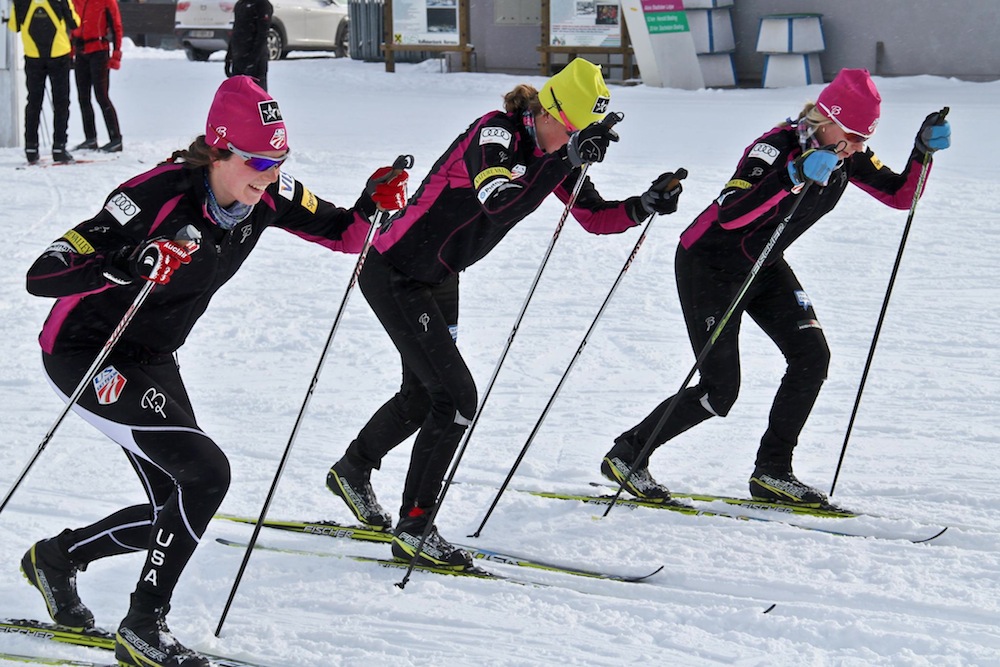
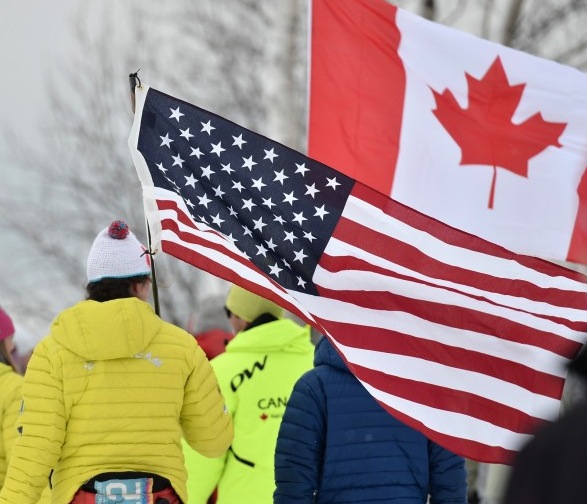
    American and Canadian cheer squads get ready to root for teammates in the skiathlon on Saturday at U23 World Championships in Liberec, Czech Republic. Photo: Liberec2013.
    American and Canadian cheer squads get ready to root for teammates in the skiathlon on Saturday at U23 World Championships in Liberec, Czech Republic. Photo: Liberec2013.

    After a week of back-to-back, high-stakes racing, the 2013 Junior and U23 World Championships in Liberec, Czech Republic are finished and teams have all scattered back home to get ready for the next race on the schedule. For many athletes on the U.S. and Canadian teams the Liberec races represented some of the biggest competition they’d ever been a part of, and that first taste of international experience — even the second or third — was an eye-opener for young skiers with big ambitions.

    The North Americans had a lot to say about Liberec, renewed motivations and their takeaways from the experience that didn’t make our original race reports. Some leftover notes from throughout the week:


    Impressions of the Liberec scene — the hotel, the food, the venue, etc:

    “The race venue was quite exciting, and the skiers are all fast here! There were TV crews galore filming us warming up and racing which was exciting and we got to watch ourselves on TV inside of the athlete tent. Everyone here in the Czech is awesome, the team is awesome, and the coaches are wonderful. All in all I am stoked to be here, and is a wonderful experience!” — Anika Miller (USA)


    “Czech fans were everywhere with drums and flags and bells. It was incredible to see so much passion for a sport that is not so popular in the states.” — Kyle Bratrud (USA)


    “There were a lot of spectators and coaches on the first and last hill. Lots of different languages and noise makers — sometimes I think the US team should learn Navajo so that we, too, can speak code.” — Annie Pokorny (USA)


    “The Czech version of Vegas that is the Hotel Babylon isn’t exactly representative of Liberec. A couple blocks from here is this amazing old building that is their town hall which is surrounded by a nice city square, coffee shops and other old buildings. The surrounding mountain towns of Liberec offer up some great skiing too! It’s so popular here, it was really neat to ski around so many people out enjoying the sport like it was hockey.” — Heidi Widmer (CAN)


    “With everyone coming from different parts of the country, it brings a motivational atmosphere to the team. … Most of the athletes competing at World Juniors are staying in the same hotel, so it is exciting to be able to talk to people from other countries.

    “The people in Liberec are very nice, the race trails were a lot of fun, the atmosphere was great, and our hotel was by far the biggest hotel I have ever seen!” — Maya MacIsaac-Jones (CAN)


    “The hotel we’re at feels like the Disneyland of Liberec. The basemenet has a bunch of theme park-type things. There’s an aqua-park and bowling and all bunches of different activieies. The hotel in Turkey [last year] was ideal; the food situation was nice. The food here isn’t anything special, its pretty bland actually, and I think Skyler might have gotten food poisoning. Not a great food situation.” — Erik Bjornsen (USA)


    “The Czech Republic has been pretty unique so far. The people have been super helpful getting lost skiers to find their hotels, picking up lost skiers and helping sick athletes. Liberec itself is a mix of old and new. There’s new powerplants, McDonalds, freeways and shopping malls, but it’s all draped over a much older city.

    “One of the best experiences I’ve had in Liberec so far was skiing at Jizerska, the main ski site in the area. It’s free for anyone to ski there, there’s amazing trails and thousands of people using them every day!” — Colin Abbott (CAN)


    “Czech is very interesting. The people seem to be very excited to have us and entertained by their guests (especially us Americans). The food was very odd in the beginning. Lots of potatoes, bread, pasta, and strange colored meats. Recently they had some salad and other veggies out that we were ecstatic about. If we are lucky we get some oranges thrown in there! But, it’s been fun and interesting! All in all I am just very excited to be here and having this great experience.” — Sloan Storey (USA)


    “I’ve been in Liberec since the World Cup. The pictures from Ramsau were a little tough to see because Liberec definitely isn’t anything spectacular as far as scenery goes. It’s generally pretty gray and I wouldn’t say it’s beautiful but it’s getting the job done. We’re staying in a massive (and very weird) hotel, but all the nations fit here so it’s fun to see everyone and I’d imagine the organizers have been working their butts off to make enough snow and keep everything running smoothly so no complaints there! That said, I think this will make some other parts of Europe seem pretty amazing in comparison!” — Sophie Caldwell (USA)


    “My favorite part of the trip so far has been the 14 hour drive we had from Ramsau, Austria, to Liberec, Czech Republic. Originally, the road trip was suppose to last six and a half hours but a HUGE snowstorm plus some wrong google maps directions (in Czech) made the ride just a little longer. Nevertheless, we had such a great time singing, rapping, dancing, playing games and getting to know the super awesome Canadians on our team. Honestly, it was a lot of fun.” — Frédérique Vézina (CAN)


    “The Czech is very different from anywhere I’ve ever been, especially the hotel we are staying in. The hotel is huge and all the teams are here, but there is like a water park and laser tag and a bowling alley and basically a whole little town on the basement level (tattoo parlor and wedding store included) so that’s definitely new. But Liberec itself is like any other big city, so it’s kind of funny having ski races here (especially after spending a week in Austria) but it’s a new a experience so thats always fun!” — Annie Hart (USA)


    “It’s a bit silly, but I guess the coolest thing from this week was when I walked by the glass case/cage inside our hotel and the two Burmese pythons were out in full view and flicking their tongues. They’re probably as big around as my upper arm. I was very excited — I like snakes, though I’m happy enough that these are safely within a glass case!” — Caitlin Patterson (USA)


    “What’s my favourite part of the trip so far? Yikes, that’s a hard one. There’s been so much to do and so much to take in that I’m not sure if I’ve got a favourite. I guess highlights have been the fireworks at the opening ceremony (I like fireworks), the classic striding in the classic leg of the pursuit today, and just hangin’ out with the team.” — Zeke Williams (CAN)


    On learning from competitors and teammates alike:

    “I am happy of my week overall. This worlds championship only makes me want to train harder, go faster and surprise those Russians next year!” — Frédérique Vézina (CAN)


    “I was just fascinated with how smooth many of the Russians and Swedes were with their technique and how powerful they are.” — Sloan Storey


    “All of these races are so fun just because it is so exciting to be racing with people from all over the world! It is especially cool to just be here training, racing, and living with people from 35 countries, and being able to meet so many fast skiers!” — Corey Stock (USA)


    “I found that even though it was my first international race I was not getting that nervous because I didn’t know anyone that I was racing against. I did find it a little hard to focus on my own race with all the excitement going on around me, which is something I don’t usually have a problem with in Canada.” — Scott Hill (CAN)


    “I think watching Sophie in her quarterfinal on the sprint day was really cool, because I was just like, ‘Hey, that’s my best friend out there and she looks like a rockstar.’ It gave me some hope that maybe someday I can do that too! The mass start today was also pretty sweet, it’s just not everyday that something like that occurs!” — Annie Hart (USA)


    “The toughest thing this week was realizing the disconnect between racing in North America and racing internationally. I still got some ground to make up.” — Zeke Williams (CAN)


    “The first year I went to World Juniors I looked at those top U23s as role models, and I guess that’s kinda the position I’m in. I feel like it’s susprisng, I’m friends with a lot of those guys. It’s sweet to see them do so well; Ben Saxton is really throwing down.” — Erik Bjornsen


    “I know I’m taking a picture of that skiathlon podium to put up in my room, because those three Russians are all I need to get fired up for training.” — Ben Saxton (USA)


    And some thank-yous:

    “Thanks to the wax techs who have been working really hard on our skis, and to the coaches who’ve kept us all in line. Team USA has a tight game over here, so it’s really fun to be a part of. Thanks to the NNF for their support of the trip, helping us to live the dream! And it’s fun to know how many people are rooting for us back home, the support has been awesome!” — Heather Mooney (USA)

  • Americans Notch 10th, 12th in Junior Worlds Relays

    Americans Notch 10th, 12th in Junior Worlds Relays

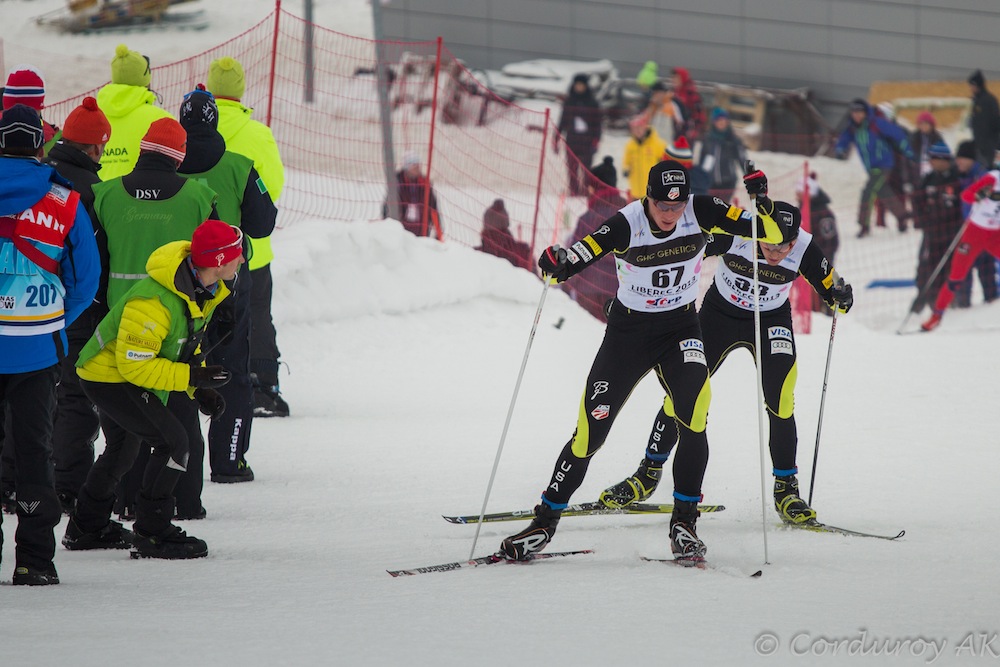
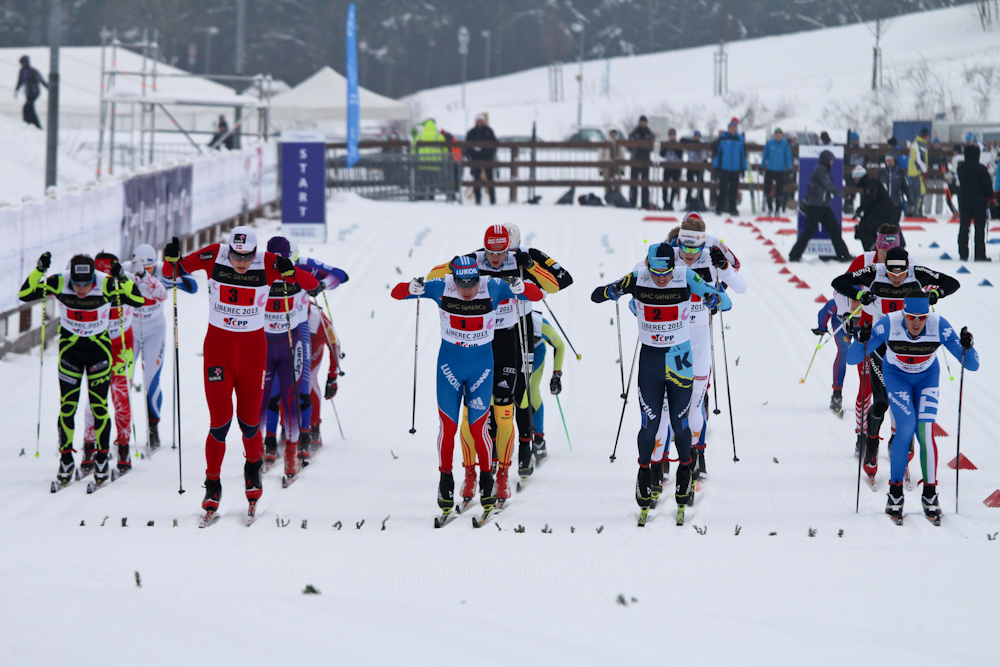
    The junior men's relay gets underway on the last day of competition at the 2013 Junior World Championships in Liberec, Czech Republic. Photo: Eric Packers.
    The junior men’s relay gets underway on the last day of competition at the 2013 Junior World Championships in Liberec, Czech Republic. Photo: Eric Packers.

    Ask any athlete what their favorite race is, and nine times out of ten their answer will be: “relays.” The four-person event fittingly caps off the World Junior Championships every year — the preceding individual races identify new world champions, but the relay is where athletes go to truly ski for flag and country.

    It was with awareness of this fact that the American 4 x 5 k and 4 x 3.3 k relay teams lined up together for their final races of the week on Sunday in Liberec, Czech Republic. On a fast, hard track the U.S. women placed tenth, matching their 2012 performance in Turkey, and the men finished twelfth.

    Heather Mooney (Middlebury College) scrambling for the U.S. in the 4x3.3 k relay at World Junior Chamionships. Photo: Eric Packer.
    Heather Mooney (Middlebury College) scrambling for the U.S. in the 4×3.3 k relay at World Junior Chamionships. Photo: Eric Packer.

    Is it what they were hoping for? Yes and no. A few standout individual legs highlighted the group performance while a mishap or two dashed greater team ambitions. But sometimes racing is a mixed bag, and at the end of a week of high profile skiing most athletes were riding the high of competing against the best in the world.

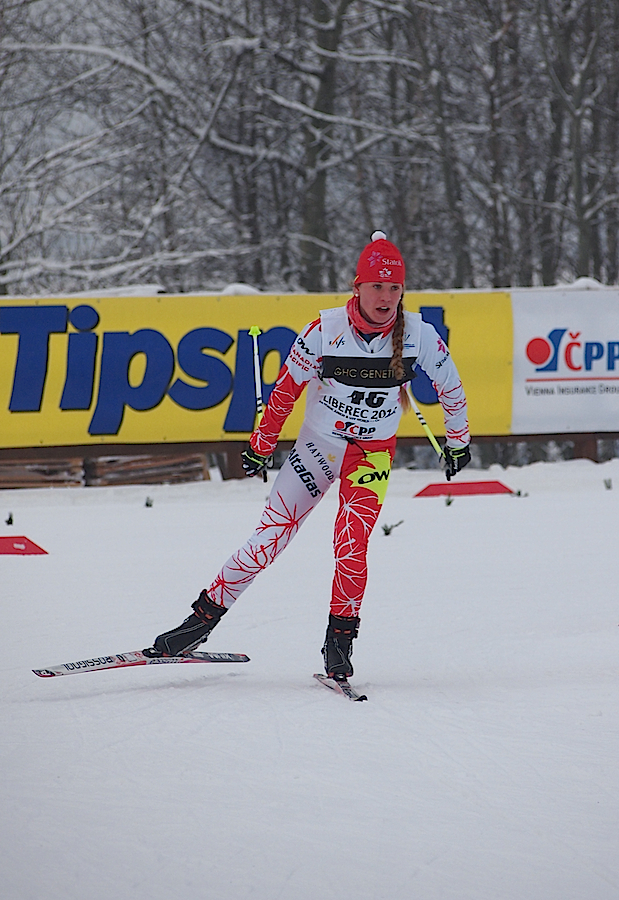
    One of the standout performances came from Heather Mooney (Middlebury College) in the women’s relay. She scrambled for the U.S. on classic skis to put the team in ninth at the first exchange and within nine seconds of third place.

    Skiing in her favorite relay position, Mooney held on to the leaders for a good while. Russia’s team led the pack through the first leg, and Mooney kept the blue suit within her sights for longer than she expected to.

    “My skis were really fast, so I’d gain a lot on the down hills, and also on the double pole parts I was able to pick up some time,” she wrote in an email. “3 k races are always the most difficult for me, definitely the most painful races out there. Coming up the big hill, about three minutes to go, I was hurting a lot, and just out of contact with the pack.”

    Through the pain Mooney noticed the Russian scrambler, Alisa Zhambalova, not too far away, and the sight gave her a second wind.

    “I really wanted to give our team a chance, so tried to really dig deep to tag off in that pack,” she said.

    Mary O'Connell (Dartmouth College), U.S. leg number two. Photo: Eric Packer
    Mary O’Connell (Dartmouth College), U.S. leg number two. Photo: Eric Packer

    She nearly succeeded, and came through the tag zone just behind the Norwegian team at the back of the chase group.

    “Knowing your teammates are counting on you, it makes it a little easier to find the truly painful gear,” Mooney said. “My goal was to get there today, without blowing up, so although I wasn’t able to bring it in with the pack, I’m happy I was able to ‘roll my eyes back,’ as Pepa [Miloucheva] tells me!”

    Mooney tagged off to Mary O’Connell (Dartmouth College) 29 seconds behind the leaders, and from there O’Connell sought to reel the Norwegian team in.

    “Heather had a great leg,” O’Connell said. “I left the exchange zone and saw Norway right ahead of me and tried to bridge the gap. But then I sorta just died.”

    She gave everything she had, but felt tired during her leg.

    “I just felt…a little off my game,” O’Connell said. “I was pretty disappointed with my leg. Relays are hard because you’re not just racing for yourself but for your team, but I can say that I gave everything I had all the way.”

    She posted the 11th-fastest split to hand off to Emily Hannah (Harvard University) in tenth place, 1:23 down to the leaders. The U.S. would hold the position for the remainder of the relay. Hannah and Corey Stock (Dartmouth College), the American’s anchor, skied the rest of the race by themselves and finished 2:43 off Sweden’s winning time.

    Hannah also said she felt off after a week’s worth of racing.

    Emily Hannah (Harvard University) skiing the third leg for the U.S. Photo: Eric Packer.
    Emily Hannah (Harvard University) skiing the third leg for the U.S. Photo: Eric Packer.

    “I did not feel very good today, I just felt flat and tired, like I didn’t have anything extra to give,” she said. “Even though it wasn’t my best race, though, I had a lot of fun… I am really glad that I got to see the level that international skiers my age are at; it gives me a more definite sense of where I need to be.”

    At the end of the day, the team focused on positives from the team camaraderie and a hard-working support crew.

    “Again, the team is great here,” O’Connell said. “Everyone is so supportive and the coaches and wax techs just did an amazing job.”

    Mooney agreed, adding that it was eye-opening simply to be in Liberec against the best U20s in the world.

    “It is really motivating to be here, to see what the best looks like,” she said. “I’m excited to go home, into the rest of the season and next year, really knowing what I need to try and get there.”

    Women’s 4×3.3 k relay results

    Cory Stock (Dartmouth College) bringing it home. Photo: Eric Packer.
    Cory Stock (Dartmouth College) bringing it home. Photo: Eric Packer.


    Junior Men’s Relay

    Like the women, American men’s squad approached the race on Sunday with an extra sense of higher purpose. On top of all the usual relay excitement they wanted to redeem themselves of disappointing individual results from earlier in the week, and to it together on the dramatic team stage.

    The Americans’ second man, Ben Saxton (F.A.S.T. Performance Training), put it this way: “We were super mentally ready to hang with the big dogs, to suffer and hurt and be in the hunt.”

    Logan Hanneman (University of Alaska, Fairbanks) closely tailing the Russian leader in the early kilometers of the 4x5 k relay. Photo: Eric Packer.
    Logan Hanneman (University of Alaska, Fairbanks) closely tailing the leaders in the first leg of the relay before an unlucky fall. Photo: Eric Packer.

    Such a mentality can be powerful, and perhaps it was that desire to suffer with the leaders that  propelled Logan Hanneman (University of Alaska, Fairbanks) to position the American team just behind the leaders early in the scramble leg, right around fourth place.

    Things were looking good for the U.S. until bad luck struck on Hanneman’s second lap. He fell on an inopportune downhill and the pack got away from him with the lost momentum. The race suddenly became a matter of catching up for the remaining three and a half legs.

    “My leg was going really well, until I fell on the second lap on this huge downhill,” Hanneman said. “So I lost a lot of places. So that wasn’t so great, but I was right with the leaders until then.”

    He tagged off to Saxton in 14th, 34 seconds behind Russia at the front of the pack. Hanneman was, understandably, frustrated with the end result, both from his relay and from earlier in the championships.

    “The week was interesting. I know I can ski better, however I played the cards I was dealt,” he said. “That’s racing. It was another great experience though.”

    Out on the course, Saxton did his best to catch back on to the pack. He skied the seventh-fastest split out of the second-leg skiers to do it, passing five teams along the way to bring the U.S. back in the hunt for a top-10. Though happy with that kind of feedback, Saxton noted that attempts to ski well from that far back were difficult.

    Ben Saxton (F.A.S.T. Performance Training) on the second leg. Photo: Eric Packer.
    Ben Saxton (F.A.S.T. Performance Training) on the second leg. Photo: Eric Packer.

    “I went pretty hard out of the start and tried to relax on the hills the first lap,” Saxton said. “The problem wasn’t the fitness, it was that when we weren’t in the top group the pace was just slower and we proceeded to lose time. Trying to bridge that gap was suicide, but we were losing time staying there so it was a weird situation.”

    In addition to the physical challenges of closing the deficit, it was a tough spot to ski from mentally, particularly because the team had been so fired up before the start.

    “That fall could’ve happened to anyone, it was just a very unfortunate fall,” Saxton said. “Everyone just went their hardest. It was really just such a bummer because we were more mentally ready than I’ve ever seen us.”

    Saxton tagged off to Kyle Bratrud (Northern Michigan University) in ninth, who skied the first skate leg on “pretty tired” legs. He skied with a Japanese athlete for most of the 5 k and handed the race off to Sawyer Kesselheim (Bridger Ski Foundation) in 11th, 1:22 down from the leaders.

    Kesselheim skied with Japan’s Tomoki Sato skied and caught up to another skier on the last climb before the finish, only to get passed again in the final stretch.

    “I pushed hard up the last hill and created a gap but got out-sprinted in the finishing zone,” Kesselheim said. “I wish I could have saved more for the end but it was fun and a good experience.”

    Though unhappy with their result on paper, the team was able to focus on highlights from the week at the conclusion of the race. They’re more motivated than ever, and for at least one athlete the best part of the week was that the individual competitors came together as a team by the end of the week.

    “The greatest part of the week was the people,” Saxton said. “The friends I got to know better from America and those new ones I met just this week will never really leave and in cross country skiing, which is a sport that’s incredibly people-driven, that’s quite the gift to take from any trip, especially this one.”

    Men’s 4x5k relay results


    Special thanks to Eric Packer for his photos.


    Kyle Bratrud (Northern Michigan University) on leg 3. Photo: Erick Packer.
    Kyle Bratrud (Northern Michigan University) on leg 3. Photo: Erick Packer.
    Sawyer Kesselheim (Bridger Ski Foundation) anchoring. Photo: Eric Packer.
    Sawyer Kesselheim (Bridger Ski Foundation) anchoring. Photo: Eric Packer.
    An American cheer squad:  Liz Guiney, Annie Pokorny and Sloan Storey. Photo: Eric Packer.
    An American cheer squad: Liz Guiney, Annie Pokorny and Sloan Storey. Photo: Eric Packer.


  • Canadians Wrap Up Junior Worlds with 13th, 15th in Relays (Updated)

    Canadians Wrap Up Junior Worlds with 13th, 15th in Relays (Updated)

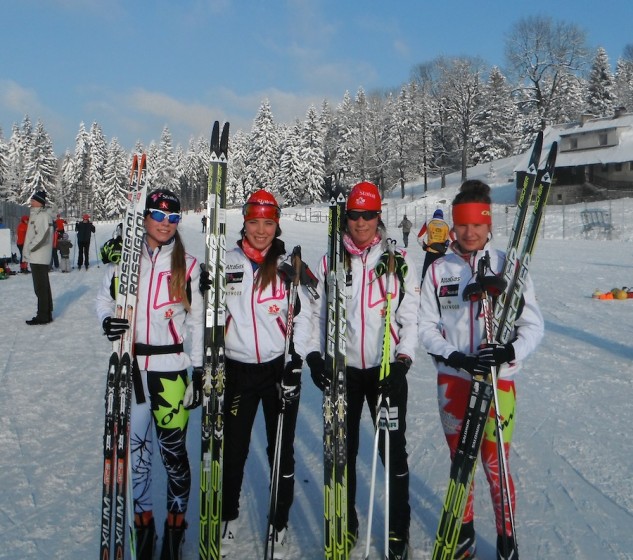
    Canadian junior women's team last week in Liberec, Czech Republic, including Maya MacIsaac-Jones (second from left), Cendrine Browne,  Frederique Vezina, Katherine Stewart-Jones and Anne-Marie Comeau. (Photo: Lisa Patterson)
    The Canadian junior women’s team last week in Liberec, Czech Republic, including Maya MacIsaac-Jones (second from left), Cendrine Browne, Frederique Vezina, Katherine Stewart-Jones and Anne-Marie Comeau. (Photo: Lisa Patterson)

    (Note: This article has been updated to include comments from Zeke Williams.)

    It would’ve been so easy to dwell on the numbers, results and superficial measures of success. But racing is about so much more than that. Canada’s juniors, particularly its women, understood that.

    Gathering for the last day of competition at the Junior World Championships in Liberec, Czech Republic, Canada’s 4 x 3.3 k women’s team huddled in on Sunday with its fifth member, Katherine Stewart-Jones, who didn’t race but had her face painted just like the others.

    Then 18-year-old Frédérique Vézina of the Pierre-Harvey National Training Centre (CNEPH) gave a motivating speech, teammate Cendrine Browne explained in an email. They wanted to ski fast, especially with just 3.3 k apiece, and work as a team from the warmup to cooldown.

    “We also made sure that Katherine, who wasn’t a part of the relay, was as much [a part of the team as] Maya [MacIsaac-Jones], Anne-Marie [Comeau], Frederique and I,” Browne wrote. “We also wanted to make our country proud.”

    Pumped up and ready to go, the Canadians made a goal of besting their junior women’s relay finish from last year of ninth. After falling behind on the first leg, the women scrambled to stay ahead of last in the 14-team field. They ended up 13th, more than a minute ahead of Australia, but 4:36.4 behind the Swedish winners.

    Yet at the end of the day, all four Canadian women reflected positively on the experience.

    “I think that our team of Junior girls did a great job of working together (even when not all of us were racing), to create a very motivating and supportive environment!” MacIsaac-Jones (Rocky Mountain Racers) wrote in an email. She sat out the two distance races after placing 36th in the classic sprint.

    The opening classic leg, she described the start as very aggressive. The lanes quickly narrowed to two at the top of the first hill, bringing the pack to almost a halt.

    “It was very important to push hard throughout the whole race, but to save some energy for the end,” MacIssac-Jones wrote. “I found that I pushed too hard right off the bat, and died towards the end of the race. Overall, I am happy with how this trip went. It was great to get some more experience racing in Europe, and our team was a lot of fun!”

    In last through the first exchange, Comeau (CNEPH) worked hard to put her team in a position to catch others. Despite skiing the 12th-fastest leg, she came through the exchange in the same position, nearly 40 seconds behind Australia in 13th.

    “I went the fastest that I could and it was very hard,” Comeau wrote. “After my 3,3km, I had no more energy, but I am happy.”

    Browne proceeded to ski the ninth-fastest on the third leg, passing Australia and bringing the Canadians to 13th, about 12 seconds out of 12th.

    “I thought: ‘Ok. I have to try and catch these girls in front.’ And that’s what I did,” Browne explained. “I felt a little tired but I think everyone feels tired at the end of a long championship. I felt also pretty motivated even though we were very far behind the other girls. I wanted to close the gap.”

    At the final exchange, Vézina burst out of the tag zone, attempting to catch Ukraine. At the same time, she focused on skiing smooth.

    “A 3.3k is really really short and intense so trying to push hard from the beginning and to keep up the pace was painful,” Vézina wrote. “The whole atmosphere of a team relay is quite amazing. With the Canadian team cheering out loud for us on the course, the atmosphere was really motivational and pumping so even with this result, today was a lot of fun.”

    Pleased with her week overall, including 29th in the skiathlon, Vézina said the relay was what stood out most.

    “Seeing all my teammates with the painted faces, Canadian flags and the official coach of our amazing team, Katherine Stewart-Jones, cheering like there is no tomorrow by the course was such inspiring and powerful!” she wrote. “We have such a great team atmosphere! This was by far the most memorable moment of the week.”

    “Personally, I think the result is good, because we did all what we could and we gave our 100%,” wrote Comeau, who had an individual best of 34th in the skiathlon. “This was important.”

    Browne had the most outstanding result of the week when she was 15th in the 5 k freestyle. “I am proud of myself,” she wrote Sunday. “This was my first time at a Worlds and I am very happy about my 15th place!!!”

    In the men’s 4 x 5 k relay, Canada placed 15th of 19 teams, 3:20.3 back from the Russian winners.

    Alexis Turgeon (CNEPH) scrambled and tagged off to Zeke Williams (Nakkertok) in 18th. According to Williams, Turgeon crashed on the downhill on his first lap. Williams brought the team to 15th, about 1 ½ minutes behind the leaders after the second leg,

    “My leg went pretty well,” Williams wrote. “I felt horrible in the morning and debated not racing, but I decided to eventually and I was happy that I did; it was nice to catch and pass some people on my leg. Still disappointed to be so far back from the leaders in my leg, but I felt pretty good and it was fun to cheer on my teammates afterwards.”

    David Palmer (Black Jack) and Raphaël Couturier (CNEPH) kept the team in 15th, with Couturier skiing the eighth-fastest anchor leg to close the gap on those ahead of them.

    “It was a great experience racing today!” wrote Palmer, who’s individual best was 32nd in the 10 k freestyle. “Although shorter is usually not as good for me, I feel like I really pushed hard in this one. … Some of us had challenges, but I think every team member had a strong contribution.”

    The team had been hoping to rival Canada’s 10th place in last year’s relay, Palmer explained. Even though they didn’t top it, he saw the silver lining.

    “This week has overall been incredibly valuable as a learning experience, and I have a refreshed motivation and good racing spirit to bring back to Canada,” Palmer wrote. “This has also been a great networking opportunity, I’ve made many new connections in the cross country ski community. After being in Liberec I’m really impressed with how enthusiastic people are about skiing around here.”

    Couturier notched a career-best 17th in the skiathlon, Turgeon placed 30th in the classic sprint, and Williams had an individual best of 46th in the sprint.

    Women’s results | Men’s results

  • Russian Men End Junior Worlds on Ultimate High; Swedish Women Squeak by for Relay Win

    Russian Men End Junior Worlds on Ultimate High; Swedish Women Squeak by for Relay Win

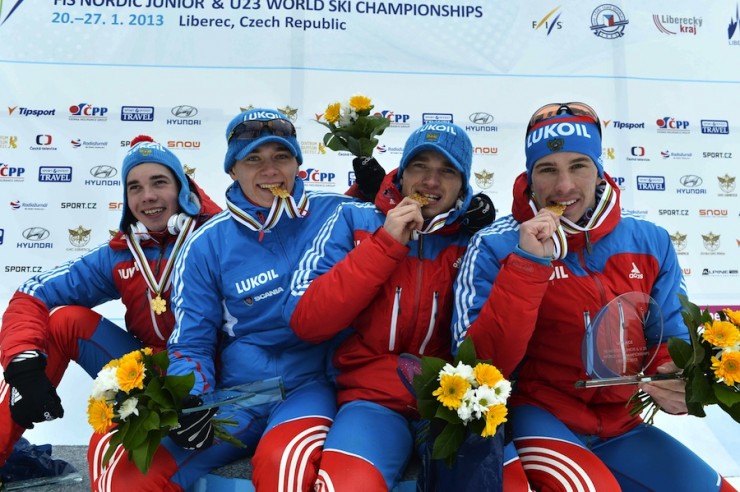
    The Russian men's relay celebrates their third victory in four races at 2013 Junior World Championships in Liberec, Czech Republic. (Photo: Liberec2013)
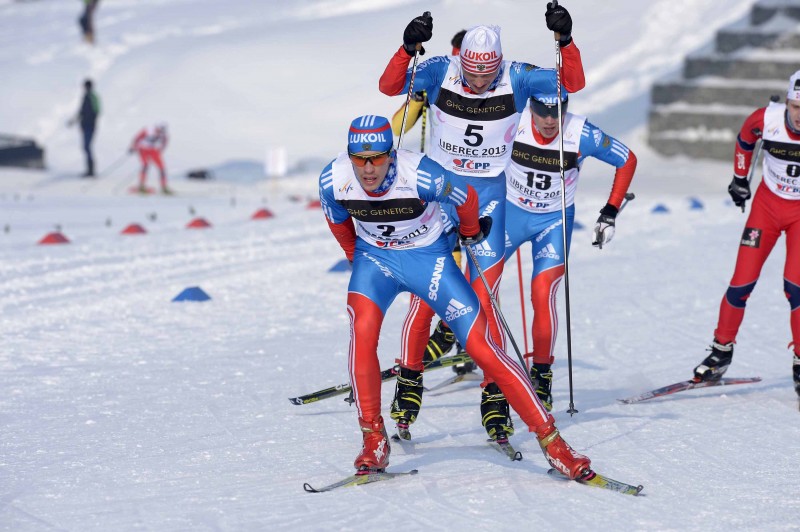
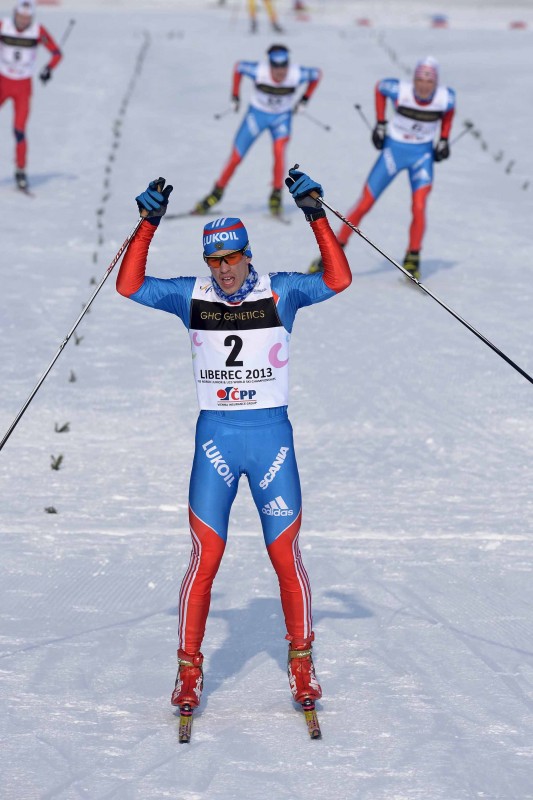
    The Russian men’s relay celebrates their third victory in four races at 2013 Junior World Championships in Liberec, Czech Republic. Dmitry Rostovtsev (r) anchored the team’s win Sunday after winning two individual distance races this week. (Photo: Liberec2013)

    If you knew nothing about the competitors at the International Ski Federation (FIS) Junior World Championships throughout the last week in Liberec, Czech Republic, all you had to look for were the blue-and-red suits with white Adidas stripes. Those were the Russians, and man, were they fast.

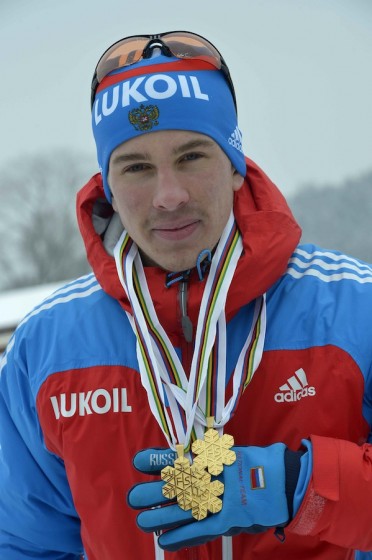
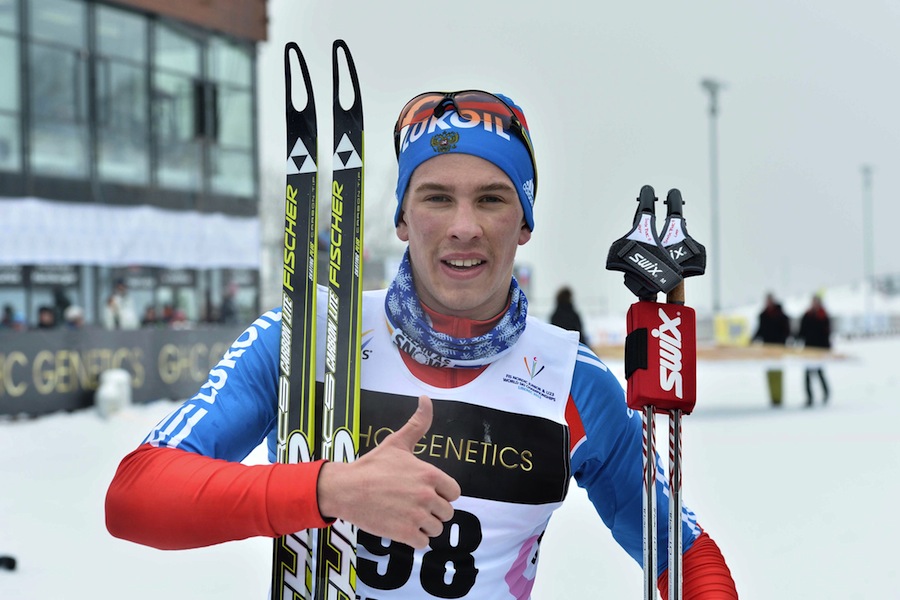
    Russia's three-time 2013 Junior World Champion, Dmitry Rostovtsev
    Russia’s three-time 2013 Junior World Champion, Dmitry Rostovtsev

    Led by 19-year-old anchor Dmitry Rostovtsev, who won two of three individual world titles just days earlier, the Russian men rallied to a resounding victory in 4 x 5 k relay, beating runner-up Norway by 18.7 seconds in 45:35.5.

    The Russians faltered just once – during the second leg – when two-time 2013 Junior Worlds silver medalist Artem Maltsev fell 12.6 seconds out of the lead into fourth. Alexey Chervotkin had put the Russians in first early, and Maltsev tagged off to Roman Tarasov, who brought them back up front. At the final exchange, Rostovtsev surged ahead with a four-second lead on Norway’s anchor Haavard Solaas Taugboel.

    The Norwegians (Bjørn Vidar Suhr, Simen Hegstad Krueger, Magne Haga, and Taugboel) hung in for silver, more than 30 seconds ahead of Sweden in third (+52.2) out of 19 teams. With Oskar Svensson, Marcus Ruus, Oscar Ivars, and Rasmus Hornfeldt, the Swedes led after the second leg, but dropped 19.4 seconds off the pace in the third leg and remained in third thereafter.

    “To win gold medal with the team is always something special, ” Rostovtsev said in a Liberec 2013 press release.

    He previously won two Junior Worlds titles in this year’s 10 k freestyle and 20 k skiathlon. Maltsev, who stuggled during his classic leg Sunday, was the runner-up in both individual distance races.

    “The boys did their best on their leg so I could control the race but I still wanted to ski fast and secure the victory, ” Rostovtsev added.

    Rostovtsev and Maltsev defended their relay title from last year’s Junior Worlds in Erzurum, Turkey, where they beat Kazakhstan by nearly 45 seconds. Norway, with Taugboel, was third in the 2012 relay.

    “I knew Rostovtsev is a tough guy; he is very strong, ” Taugboel said. “In the second 2.5 km lap he went away so fast, I just did not have enough power. I am satisfied with the silver medal. I have not been in a best shape during the championships, so it is a great satisfaction for us.”

    It was the Norwegians’ first silver of the week, and Sweden made the podium for the first time at this Junior Worlds.

    “I am very happy for the bronze medal, ” Swedish anchor Hornfeldt said. “Everybody gave the best performance of the week so we deserve the medal today. I felt pretty good. I saved same energy for the last uphill!”

    Men’s results

    Swedish Women Oust Russia

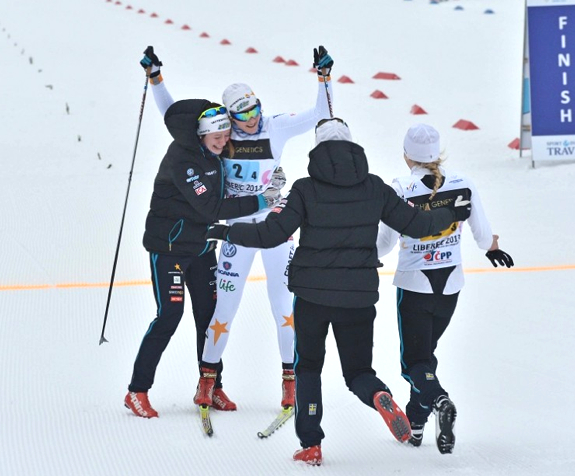
    The Swedish women's relay celebrates its Junior Worlds victory with anchor Stina Nilsson. (Photo: Liberec2013)
    The Swedish women’s relay celebrates its Junior Worlds victory on Sunday with anchor Stina Nilsson. (Photo: Liberec2013)

    The women’s 4 x 3.3 k turned out to be less predictable, with Sweden’s Stina Nilsson giving Russian Nadezhda Shuniaeva a run to the finish. Trailing Shuniaeva closely in second at the last exchange, Nilsson charged ahead late to seal the Swedish victory by 2.2 seconds in 35:41.1. It was Nilsson’s second win of the week after she claimed the classic-sprint title last Monday.

    She repeated the feat with the help of teammates Julia Svan, Sofia Henriksson and Jonna Sundling, and Russia took second of 14 teams with Alisa Zhambalova, Natalia Nepryaeva, Anastasia Sedova and Shuniaeva. Germany was third, 50.3 seconds out of first, with Laura Gimmler, Katharina Hennig, Julia Belger, and Victoria Carl. The 5 k freestyle champion, Carl collected a different medal in every event she competed in this week, including silver in the classic sprint.

    Early in Sunday’s relay, it became clear that the race would likely boil down to two teams: Russia and Sweden. With Nepryaeva, Russia built its biggest lead of 2.9 seconds after the second exchange. Sweden stuck in second and Germany was nearly 30 seconds back in third.

    Sweden’s Sundling then latched on to Sedova on the third leg, closing within 0.4 seconds of her at the last tagoff. Not long after winning silver in a World Cup team sprint in Liberec a couple weeks ago, Nilsson made a late surge to capture the victory on Sunday.

    “It is amazing to win the relay, ” the 19-year-old said. “I knew I would be strong in the finish and I was confident I could go for victory. The whole team did a great job. We have a big potential for the future.”

    After she helped Russia win last year’s Junior Worlds relay, 13.4 seconds ahead of Sweden (with Henriksson, Sundling and Nilsson), Shuniaeva said silver was a “very good result.”

    “I gave my best in the last leg but Stina was very fast in the finish,” she added.

    Germany’s Carl was also satisfied with her team’s finish.

    “I am very happy for the bronze medal,“ Carl said. “We have a young team and it is a great success for us. It gives us big motivation for the future work.”

    Women’s results

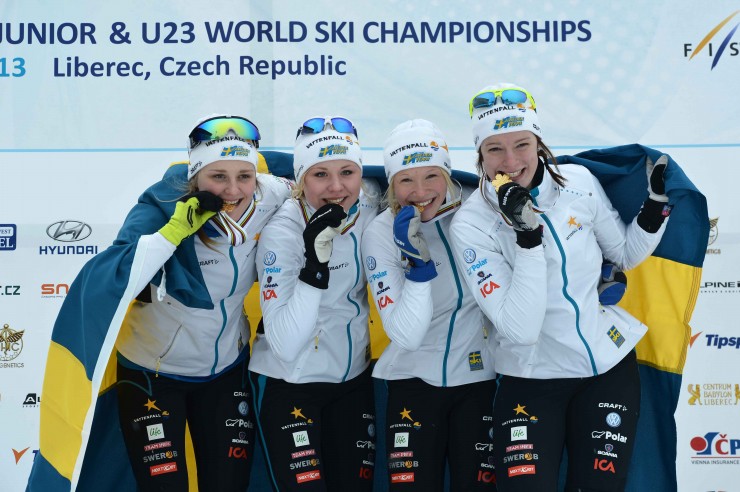
    The Swedish women's team gets a taste of gold at Junior World Championships after placing second to Russia in last year's relay. (Photo: Liberec2013)
    The Swedish women’s team gets a taste of gold at Junior World Championships after placing second to Russia in last year’s relay. (Photo: Liberec2013)
  • Bjornsen Finishes U23s on a High Note, Takes 16th in 30k Skiathlon

    Bjornsen Finishes U23s on a High Note, Takes 16th in 30k Skiathlon

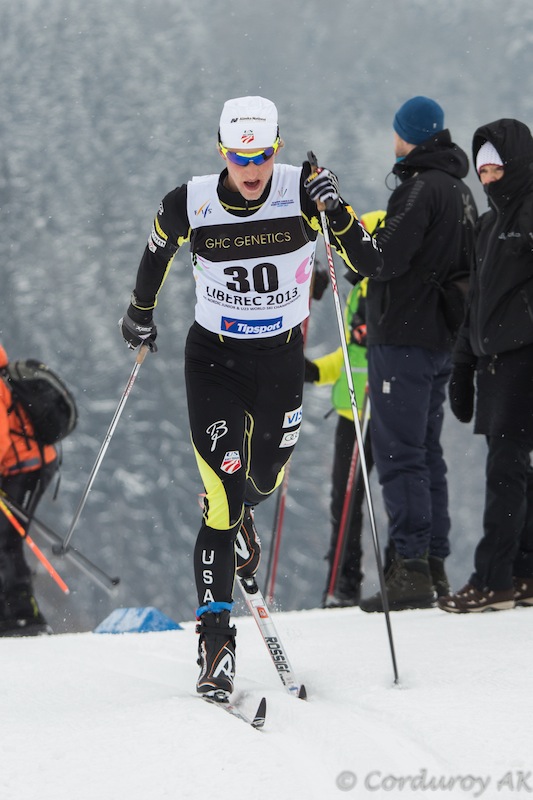
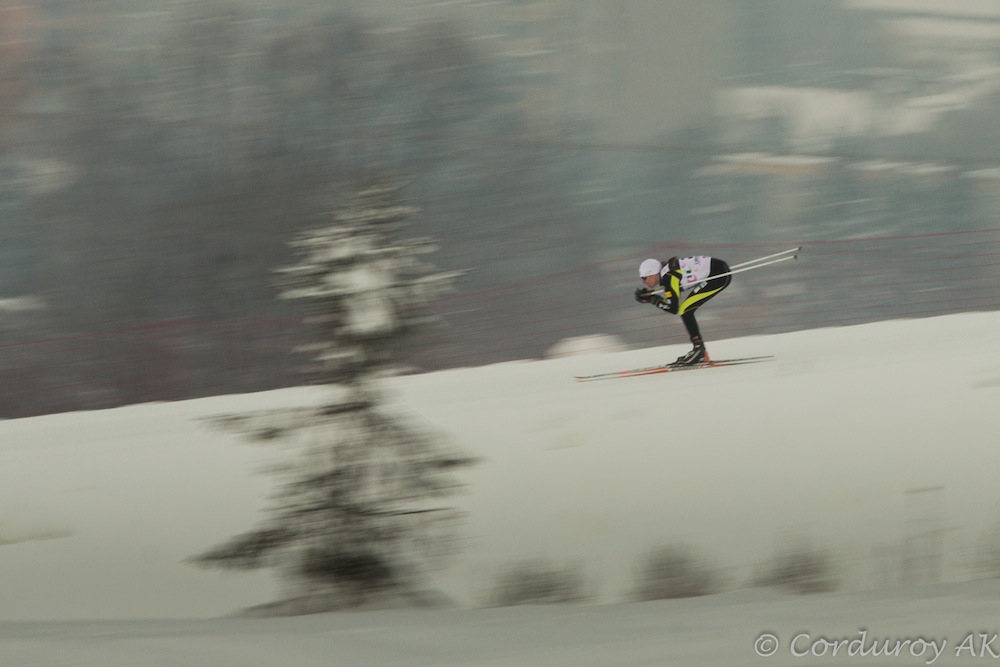
    Erik Bjornsen (Alaska Pacific University/U.S. Ski Team) en route to a 16th-place finish in the men's 30 k skiathlon at U23 World Championships on Saturday in Liberec, Czech Republic. Photo: Logan Hanneman/Corduroy AK.
    Erik Bjornsen (Alaska Pacific University/U.S. Ski Team) en route to a 16th-place finish in the men’s 30 k skiathlon at U23 World Championships on Saturday in Liberec, Czech Republic. Photo: Logan Hanneman/Corduroy AK.

    Consistency has been the name of the game for Erik Bjornsen (Alaska Pacific University/U.S. Ski Team) at U23 World Championships this week. He started off in 10th in the classic sprint, took 15th in the 15 k freestyle and on Saturday wrapped things up with a 16th place finish in the 30 k skiathlon.

    At the end of three races at the championships, Bjornsen reflected on his performance as a whole. Is he happy with stability in his results? Yes. Satisfied with top-20s? Not even close.

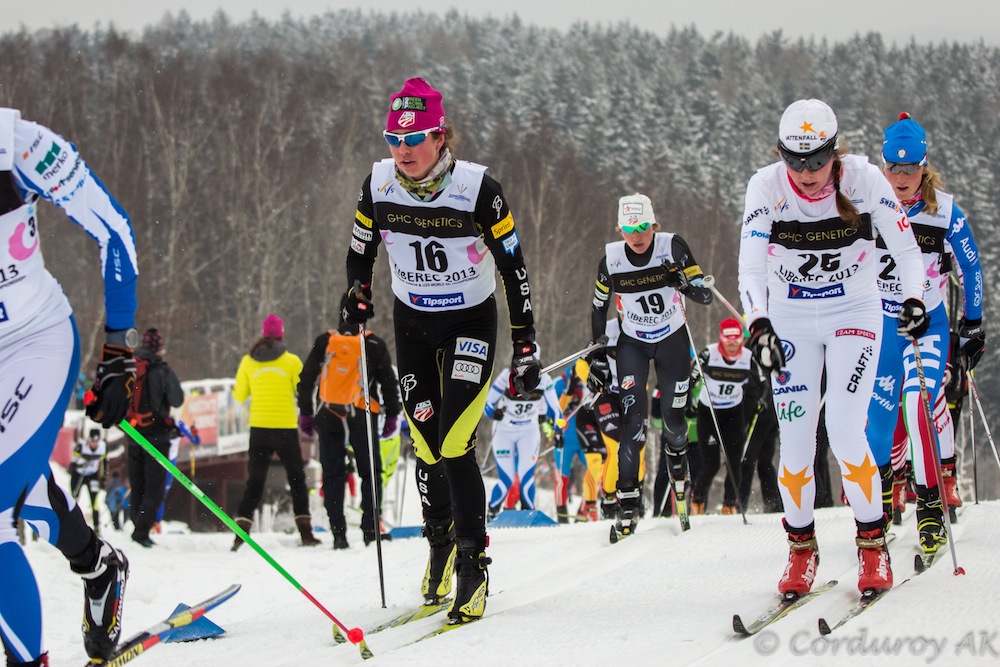
    Bjornsen skiing in the pack in the classic portion of the skiathlon. Photo: Logan Hanneman/Corduroy AK.
    Bjornsen skiing in the pack in the classic portion of the skiathlon. Photo: Logan Hanneman/Corduroy AK.

    “I’ve got to be happy with the place, but again I think I could have made some changes to get a little bit higher,” Bjornsen said over the phone from Liberec. “But all in all it was a good race.”

    A five-lane chevron that narrowed to three lanes, and then again to two in a matter of meters, made for a chaotic start to the 68-man skiathlon. The first few minutes of the race were defining — either get in a good position or get left behind. Bjornsen said he eventually managed to position himself well, but it was hard to ski relaxed in the opening kilometers.

    “It was really hard to ski smooth those first three to four laps around,” he said. “I finally got in a good position and it started turning into a real race.”

    After the classic leg, Bjornsen came through the pit in sixteenth place, about 40 seconds down to the leaders. He had ambitions to redeem himself of a disappointing skiathlon in Canmore, where he moved too early and “fried myself trying to hang with the leaders.” Saturday was to be about being conservative to avoid the same mistake.

    Bjornsen thought the revised strategy worked out OK for him in Liberec. He couldn’t see the Russian breakaway from where he was skiing, but the chase pack through fifteenth place was within striking distance.

    Bjornsen in the classic portion of the race. Photo: Logan Hanneman/Corduroy AK.
    Bjornsen in the classic portion of the race. Photo: Logan Hanneman/Corduroy AK.

    “At times I was ten meters off that and I should have just gone for it and scrambled up to the group, but I haven’t done a lot of 30 ks and I’m still learning what I’m capable of doing,” he said. “I just paid the price of a small move closing a gap, so you have to be really careful when you can make that move. Maybe I should have gone for it, but it was good.”

    Though he didn’t bridge the gap to the first chase group, Bjornsen didn’t have to ski completely alone. He traded leads on and off with a French skier, which was better than working solo, but at times slowed him up.

    “Whenever he took the lead we got farther away from that pack,” Bjornsen said.

    So with two 2.5 k laps to go he decided to make a run for it.

    “I could see those guys start to come close to us and I decided to go for it. I skied the last few laps by myself and almost caught them, but didn’t really change positions after that,” Bjornsen said. “I was pretty psyched with how I felt the last 5 k; I was feeling pretty strong… Last year when I’d get to skating I’d feel like people were passing me, but I’m feeling confident in my skating right now.”

    Though it wasn’t the top 10 he was hoping for, he was relatively satisfied with 16th.

    “I think it’s a pretty good result, and I was two minutes back, which was about the same as I was in the 15 k,” he said. “It’s great to be feeling how I’m racing now… I didn’t really expect this going into the season but I felt like I trained hard over the summer and it’s definitely paid off this year.”

    Eric Packer, 40th. Photo: Logan Hanneman/Corduroy AK.
    Eric Packer, 40th. Photo: Logan Hanneman/Corduroy AK.

    A few minutes behind Bjornsen, Eric Packer (SMS T2) saw his season start to head towards an upswing. The Alaska native has felt off so far in his rookie season as a professional, but in the skiathlon on Saturday felt things started to come around.

    Packer finished 40th overall, 4:47 behind Sergey Ustiugov’s (RUS) winning time. The bottleneck at the beginning of the mass start set him back, but he skied the 32nd-fastest skate leg in the second half of the race.

    “The race went out pretty easily up front, but the pack was churning as people fought for position,” Packer said. “There were some bad bottlenecks on the climbs and we came to a complete stop in several places. I should have been more aggressive early on and gotten up front, since the stop-and-sprint yoyo effect was much more taxing than the consistent pace the leaders were setting.”

    Packer lost the pack on the fourth lap and came through the exchange in 60th place, 2:16 down from the leaders. He picked people off in the skate portion, however, and felt the best he has all season.

    “After the transition to skating I started feeling much better and was able to start picking people off,” he said. “The last lap, I put the hammer down and passed a group of racers, which always feels good… I am happy with how I felt, especially in the skate leg. It was the first time since last season that I felt good while racing.”

    Packer couldn’t help wondering what might have been if he’d been aggressive in the early kilometers but was ultimately pleased to be feeling better.

    “The result was OK, but I’m hungry for better,” he concluded. “But at least my skiing seems to finally be on the right track.”

    Packer moving up through the skate portion of the skiathlon. Photo: Gus Kaeding.
    Packer moving up through the skate portion of the skiathlon. Photo: Gus Kaeding.

    Bjornsen and Packer were the only two American men to compete in the skiathlon on Saturday. The other half of the men’s squad came down with the flu, food poisoning, or some combination therein and did not start. Sam Tarling (Dartmouth College) went on an IV on Friday night and was still feeling too ill to race Saturday morning.

    “I got some really bad food poisoning and was up all night vomiting,” Tarling wrote in an email. “I went on IV yesterday, which helped me get some hydration back, but I’m still nauseous and weak. It’s too bad because I had really high hopes for the skiathlon.”

    David Norris (Montana State University) also felt ill on Saturday, though he characterized it as “just fever and sinus infection-type symptoms.”

    According to U.S. Ski Team development coach Bryan Fish, athletes from several nations have stuggled with illness this week. Each team is staying in the same hotel in Liberec, and Fish said skiers from Canada, Slovenia and Finland have also gotten ill over the course of the championships.

    “I really [feel] for these two guys,” Fish said. “It’s very challenging to train for these competitions, make sacrifices to be here, and get hammered with the flu.”

    Packer said his efforts in the skiathlon were motivated in part by his teammates. “I wanted to have a good one for those guys if I could. They’re some of my best friends, and I know they would have loved the opportunity to race today.”

    Men’s 30 k skiathlon results.


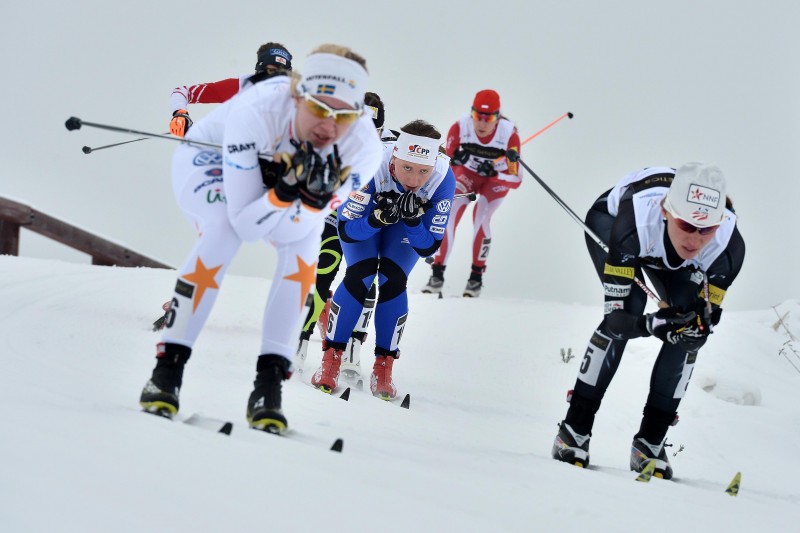
    Caitlin Paterson (Craftsbury Green Racing Project) leading Sophie Caldwell early in the women's 15 k skiathlon. Patterson placed 19th to lead the U.S. women. Photo: Logan Hanneman/Corduroy AK.
    Caitlin Paterson (Craftsbury Green Racing Project) leading Sophie Caldwell early in the women’s 15 k skiathlon. Patterson placed 19th to lead the U.S. women. Photo: Logan Hanneman/Corduroy AK.

    The American women were led once again by Caitlin Patterson (Craftsbury Green Racing Project) in the 15 k skiathlon, who took 19th overall for her second top-20 of the week. In a mass start that was just as chaotic as the men’s, Patterson felt she skied well for the first few kilometers, just off the lead group. At 25-30 skiers strong she said it was a tricky group to ski in, particularly on changeable terrain.

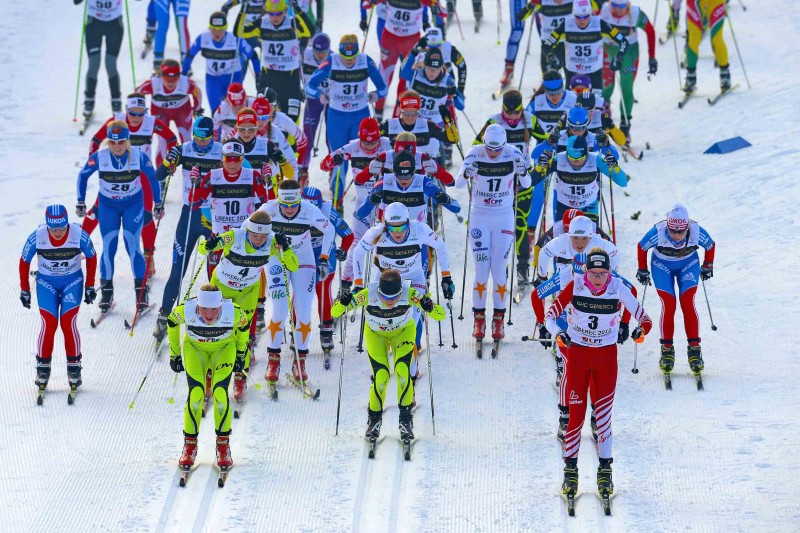
    The women's field leaves the chevron. Photo: Logan Hanneman/Corduroy AK.
    The women’s field leaves the chevron. Photo: Logan Hanneman/Corduroy AK.

    “At the top of the first big hill there is a very steep pitch — steep enough that when you’re frantic and fighting for positions it isn’t very easy to stride (at least for us girls),” Patterson said. “Many people jumped out of the tracks, or on top of the tracks, to herringbone run, which is very awkward in a pack of 50 to say the least.”

    Though she has generally enjoyed racing the courses in Liberec, Patterson added that the classic course was perhaps ill-suited for a mass start.

    In such conditions, she got off to a start just outside the top-20 at the end of 7.5 k, about 27 seconds down to the leaders. Patterson could see the entire field stretched in front of her on one early climb in the skate leg, thought for a moment they were close enough to catch, but didn’t quite pass as many people as she wanted.

    She skied the rest of her race with a small group that included two Estonians and a Swede.

    “It was nice to be able to work with people a little bit, but it seemed like they faded and surged in strange places compared to how I was skiing,” Patterson said.

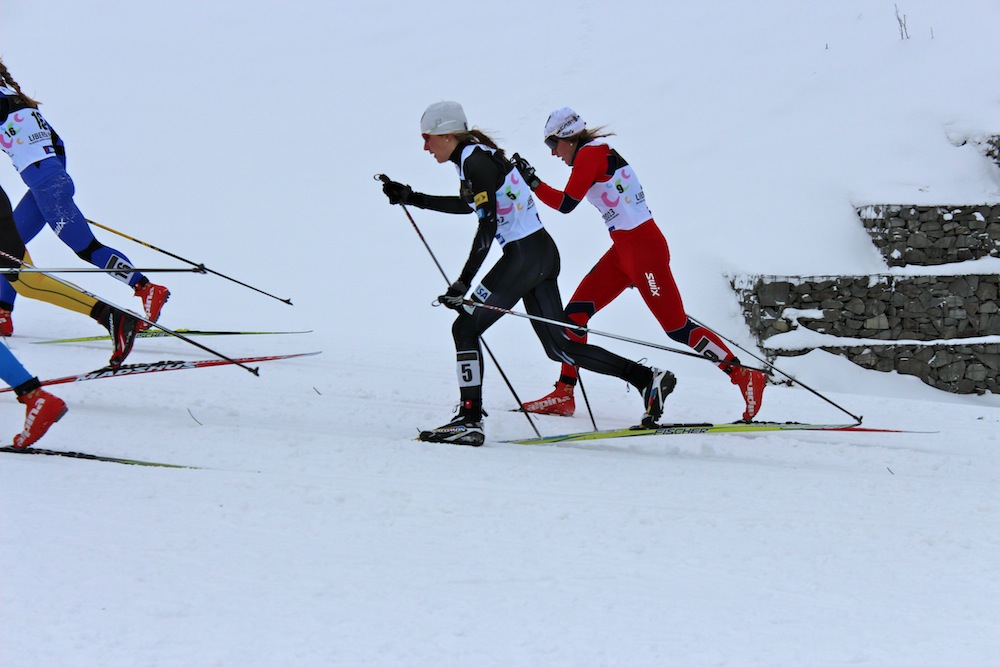
    Patterson and Caldwell. Photo: Liberec2013.
    Patterson and Caldwell. Photo: Liberec2013.

    She got into a three-way sprint for the line with the Estonians at the finish, where one of them got through just ahead of her. Patterson finished 19th in 42:02.7, 1:45 back from Ragnhild Haga’s (NOR) winning mark.

    With a 38th in the sprint, a 14th in the 10 k and a 19th-place on Saturday now under her belt, Patterson gave her week in Liberec a good rating.

    “I’m happy with my races here at U23s, but not ecstatic,” she said. “I definitely gave the races my best each day, and they did go pretty well, but I think I can do better in future races. The experience I’ve gained has been extremely valuable though, and I’ll remember these races for a long time — how close I’ve been to the top European U23s, and yet how I need to work on skiing a little faster each kilometer to get to the very top of the field.”

    Sophie Caldwell (SMS T2) was the second American to come through the finish in 28th, 3:15 off the winning time. She began the classic half of the skiathlon skiing right behind Patterson but fell when a Russian skier decided to “ski directly through everyone” and went down right in front of Caldwell. From that point on she was never able to find that extra gear.

    “After that I could never really reconnect with the pack and got pretty tired out,” she said.

    Caldwell came through the exchange in 29th, where she thought she could begin to race her way back up through the pack. But it was not to be.

    “I was so ready to get to skate skiing that I face planted again when I started trying to skate on my classic skis in the exchange zone!,” Caldwell said. “I felt fine for my skate leg but it was hard to get back in it and I didn’t feel like I had that extra gear. I’m a little bummed because I was really looking forward to this race but it happens and everyone has bad days!”

    On the whole, however, Caldwell is pleased with her results from U23s, particularly with a 9th place in the classic sprint.

    “I was really happy with the sprint and how I skied in the 10k skate so that was encouraging,” she said.

    After leaving Liberec, both Patterson and Caldwell travel to Latvia and Estonia at the beginning of February to compete in a series of FIS races.

    Annie Pokorny following a Czech skier in the classic part of the skiathlon. Photo: Liberec2013.
    Annie Pokorny following a Czech skier in the classic part of the skiathlon. Photo: Liberec2013.

    Annie Pokorny (Middlebury College) finished less that two seconds behind Caldwell in 29th to put three Americans in the top 30. Pokorny had the 33rd-fastest classic split and the 21st-ranked skate split.

    “My race improved with each second, even though the beginning wasn’t all that impressive,” Pokorny said. “I was certainly taken aback by the pace and aggression in the start, and it took until my skate leg to calm down and ski my own race. Once I had my feet back under me, I was able to work my way back up.”

    Pokorny gauged her week at U23s as pretty successful.

    “At the very least, I was consistent!” she said. “Just being in the same race as the fastest girls in the world is so cool. I still cannot get the image of Haga taking the hill during the skate race out of my mind. It’s unbelievable skiing, and it’s attainable.”

    Annie Hart (Dartmouth College) finished 20 seconds behind Pokorny in 31st, just nine seconds out of the top 30. Like her teammates, Hart felt the effects of a “crazy” mass start.

    Annie Hart, 31st. Photo: Logan Hanneman/Corduroy AK.
    Annie Hart, 31st. Photo: Logan Hanneman/Corduroy AK.

    “It was the first time (and I hope the last) I ever get elbowed in the face, some of those girls were very aggressive,” she said. “But I just hopped out of the tracks and that ended up working pretty well!”

    Hart finished 3:37 behind Haga’s winning time and thought her race, on the whole, went well.

    “I outsprinted some girls at the end which always makes for a more a exciting and happier day,” she said.

    Pokorny and Hart both join to the NCAA carnival circuit upon returning to the U.S. after the championships.

    Women’s 15 k skiathlon results.


    Thanks to Logan Hanneman and Gus Kaeding for their photos.


  • Ustiugov and Haga Repeat Titles in Skiathlon at U23 Worlds

    Ustiugov and Haga Repeat Titles in Skiathlon at U23 Worlds

    Sergey Ustiugov (RUS) celebrating his second gold medal at U23 World Championships after winning the 30 k skiathlon on Saturday. Photo: Liberec2013.
    Sergey Ustiugov (RUS) celebrating his second gold medal at U23 World Championships after winning the 30 k skiathlon on Saturday. Photo: Liberec2013.

    On the last day of competition at the U23 World Championships in Liberec, Czech Republic, the skiathlon gold medals went to two individuals who have already been dominant at these championships all week. Sergey Ustiugov (RUS) continued his winning streak in the men’s 30 k event with a 2.5 second win over compatriot Evgeniy Belov, who had to settle for silver for the second time this week. Mark Starostin (KAZ) took bronze (+32.4).

    By the halfway mark, Ustiugov and Belov had firmly put to rest any hope from their competition that the Russian powerhouse could be broken. The duo worked together to create a clear separation on the pack before the end of the classic leg at 15 k; they came through the exchange zone a good 20 seconds ahead of Sidnre Skar (NOR), who led a sizeable group of skiers.

    Ustiugov and Belov separated from the pack in the skate leg. Photo: Liberec2013.
    Ustiugov and Belov separated from the pack in the skate leg. Photo: Liberec2013.

    “It was good [that] me and Evgeniy went away and could work together a little,” Ustiugov said in the press conference afterwards. “The course is quite demanding here and it was tough to ski the twelve laps.”

    From there the gap only got bigger. Skar dropped a few places in the chase group as Starostin rose through it, but the difference was too great to make up. Ustiugov now has two gold medals from his first year as a U23 to add to his college of World Junior titles.

    “It is amazing to claim second gold medal at the U23 Championships,” Ustiugov said. “It is a dream come true. I performed well last year in Erzurum and I have worked a lot the whole year to come to Liberec in shape.”

    Belov, thrwarted by his younger teammate once again, was gracious in defeat.

    “Congratulations to Sergey for the gold medal,” he said. “I tried hard to be the winner but it did not work out. It was a tough race.”

    Conditions on Saturday were similar to how they’ve been all week: cold, hard tracks and gray skies. Frost coated the trees that lined the course.

    “It was cold but we are used to skiing in such conditions,” Belov said.

    Starostin’s reaction to a bronze medal was so enthusiastic, you might have thought he’d won. He skied from ninth place at 15 k to third by skiing the fourth-fastest skate split. This is Kazakhstan’s first medal of the week.

    “It is an amazing day,” Starostin said. “It is a great success for me, my first big medal from the Championships… The success today has given me big motivation for the need [for] training.”

    Thomas Bing (GER), who hung on to Starostin until the very end, could not match the Kazakh’s finishing kick and finished fourth, two seconds off the podium. Dmitriy Salnikov (RUS) took fifth, Fabio Clementi (ITA) finished sixth, and Emil Iverson posted the top Norwegian finish in seventh. Skar, who had started in a promising third, dropped to eighth place by the end.

    Erik Bjornsen (USA) led the North Americans with a 16th-place finish.

    Men’s 30 k skiathlon results.


    Norway's Ragnhild Haga (right) en route to her second win of the week in the women's 15 k skiathlon on Saturday. Photo: Liberec2013.
    Norway’s Ragnhild Haga (right) en route to her second win of the week in the women’s 15 k skiathlon on Saturday. Photo: Liberec2013.

    While the men’s race was a story of continued Russian dominance, the women’s 15 k skiathlon belonged to Norway. Ragnhild Haga took up the mantle for Norway once again in winning her second race of the week on Saturday by just a hair over Debora Agreiter (ITA). Karl Oeyre Slind (NOR) took bronze, 2.3 seconds back from Haga’s winning time.

    After a chaotic mass start that narrowed quickly from a slim five-lane chevron to just two tracks, the field began to string out. Elena Soboleva (RUS) led the pack as it came through the pit at the halfway mark and Haga trailed by 13 seconds, but the skate leg proved fortuitous for the Norwegians. Haga and Slind skied the top two skate legs in the field to overtake the leaders and earn two podiums, Norway’s best showing of the week.

    Throughout the first half of the race Haga wasn’t sure if she could make up the gap, but she persevered.

    The women's 15 k skiathlon podium. Photo: Liberec2013.
    The women’s 15 k skiathlon podium. 1. Ragnhild Haga (NOR) 2. Debora Agreiter (ITA) 3. Karl Oeyre Slind (NOR). Photo: Liberec2013.

    “It was really hard,” Haga said. “I had to fight a lot on the classical part. I am really happy I could catch up whir Deborah in the free technique. After the ski exchange I did not know if I could make it. I felt quite good in both classic and skating but free technique part was better for me.”

    Agreiter, who was third in the 10 k freestyle earlier this week, was frustrated to have just missed gold again.

    “I am little bit disappointed I did not win the gold medal,” she said. “Today believed I could make it but I think I have done a very good job. I knew that Norwegians girls were very good. Looking back now I should have skied technically better but I gave everything. I have learned many things today.”

    Just as in the men’s race, the bronze-medalist was much happier than the second-place finisher. Slind was sixth in the 10 k freestyle on Thursday, so a third place finish in spite of a broken pole right after the ski change was a significant step up for her.

    “I am really happy for the bronze medal,” Slind said. “It is good to have such a performance… In the skating part I tried to follow Ragnhild and go for the medal.”

    After the top three there was a 20-second break to the next finisher. Natalia Zhukova (RUS) was fourth, Anastasia Slonova (KAZ) took fifth and Elena Soboleva (RUS), who led the first half of the race, dropped to sixth. Emilie Kristoffersen (NOR) was seventh.

    Caitlin Patterson (USA) led the North Americans in 19th, 1:45 behind Haga’s time.

    Women’s 15 k skiathlon results.

  • Mooney Takes 26th to Lead U.S. in World Juniors Skiathlon

    Mooney Takes 26th to Lead U.S. in World Juniors Skiathlon

    Heather Mooney (USA) led the U.S. at World Juniors on Friday with a 26th-place finish in the 10 k skiathlon. Photo: Sawyer Kesselheim.
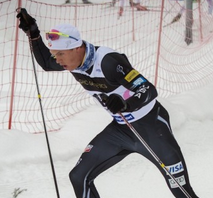
    Heather Mooney (USA) led the U.S. at World Juniors on Friday with a 26th-place finish in the 10 k skiathlon. Photo: Sawyer Kesselheim.

    At a race as big as Junior World Championships, a lot of factors go into turning a race into a great day. A personal best. Fast skis. Bluebird skies. For Heather Mooney (Middlebury College), it was some combination that helped her towards her 26th-place showing in the women’s 10 k skiathlon in Liberec, Czech Republic, a performance that led the Americans at the championships on Friday.

    “I’m definitely very happy with my race today,” Mooney wrote in an email. “My real goal was to try and stay relaxed and not waste any energy through the classic leg, getting in a good position, not getting pushed around by anyone, and then in the skate I hoped just to ski smooth and stomach as much pain as I could. I think I did those things really well, so I’m happy with that.”

    Mooney and two teammates, Sloan Storey and Corey Stock, started next to each other in the narrow, five-lane chevron with bibs 41, 42 and 43. The trio, along with Mary O’Connell in bib 35, was able to ski close to each other in some fashion through the classic leg. The Americans expected a chaotic mass start and for the most part made it through the first few kilometers unscathed and in control of their own races.

    “The course starts up a steep hill before dropping down a big downhill over a bridge with a big corner, so we were all expecting there to be a lot of crashes, but it ended pretty hassle-free for most of us,” Mooney said. “Getting through the first lap was a bit nerve wracking, but the girls in front took it out really fast, so it spread out reasonably well.”

    Mooney working through the skate leg. Photo: Sawyer Kesselheim.
    Mooney working through the skate leg. Photo: Sawyer Kesselheim.

    Mooney came through the pit in 31st at the halfway mark and picked people off in the skate leg to finish 26th overall with the 28th-best freestyle time. As someone who is historically a better classic skier Mooney was particularly excited with the second half of her race.

    “I’m generally not as strong of a skater, but it’s something I’ve been working a lot on this year, so I’m really excited to have a solid skate result, especially here!” she said.

    Two years ago in Estonia, Mooney was 50th in the pursuit. On the heels of a 19th-place showing in the classic sprint, the skiathlon marks her new best in a distance race at World Juniors.

    On top being happy with a PR, Mooney said having good weather for the first time all week made a great day even better.

    “Thanks to the wax techs, our skis were really fast, and I was able to glide up a lot of the beginnings of the hills where other people were already skiing, so that was really fun!” she added. “It was a bit colder this morning, so the tracks were firm and fast.”

    Storey finished 32nd, 13.2 seconds behind Mooney. The University of Utah freshman characterized her skiathlon experience as “crazy,” “hectic,” and “very fun.”

    “Every aspect of it — coaches having to have to wax two pairs of race skis versus just one, racers having to have stay on their feet and not crash or break a piece of equipment during the many collisions in the mass start…and half way through the mass start we had [to] switch all of our gear from classic to skate. It was hectic to say the least, but very fun,” Storey said.

    She and Mooney worked together to move up through the pack, and Storey also caught rides with athletes she was able to pass by the end of the race. Like Mooney, she attributed a big part of her success to great skis.

    “My skis were BOMB!” Storey said. “One of my highlights was being able to run and not slip up one of the steepest pitches and pass a group of girls who began herringboning… All in all the race was super fun and another great new experience here in Liberec! I’m so proud of all of my teammates for all of their success as well as myself.”

    O’Connell finished 35th, 8.6 seconds behind Storey. The Dartmouth College freshman was hoping for a top 30 on Friday had a hard time being too disappointed with 35th in spite of a few trip-ups in the classic leg. For the first kilometer she felt she skied smart and relaxed, but was unable to avoid colliding with another girl that went down in front of her shortly into the race.

    “At about 1 k, a girl in front of me fell and I just skied right into her, and then some people behind me skied into me, I think maybe a few US girls too,” O’Connell said. “That was a bit chaotic for a second. After that, I sorta lost my composure and sorta panicked and wasn’t able to kick my skis real well. Going up one of the steep hills in the classic leg, I just tripped again and took a face plant. At this point I was just trying to make it to the skate leg, trying to keep it together.”

    O’Connell came through the classic leg in 38th. She made it through the transition to freestyle with no mistakes and began to work her way back to the teammates ahead of her, posting the 30th-fastest skate split as she did so.

    Though she didn’t think it was her best race, O’Connell was inspired by the skiing she saw around her on course.

    “Being here is so fun, and cool to see all these really fast kids racing around you,” she said. “It’s really inspiring. It lets me know what I need to do from this point on to be able to compete at the top level in the future.”

    Corey Stock (Dartmouth College) finished 40th overall in 29:56.8. She had the 49th-ranked classic split at the halfway mark and moved up nine places by posted the 23rd-fastest freestyle time.

    Women’s 10 k skiathlon results.


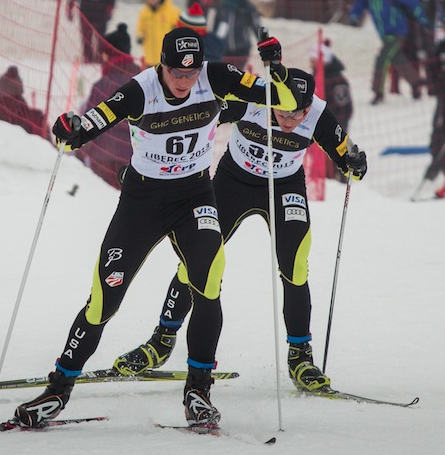
    Kyle Bradtud (USA). Photo: Logan Hanneman/Corduroy AK.
    Kyle Bratrud (USA) competing in the freestyle race earlier this week. Photo: Logan Hanneman/Corduroy AK.

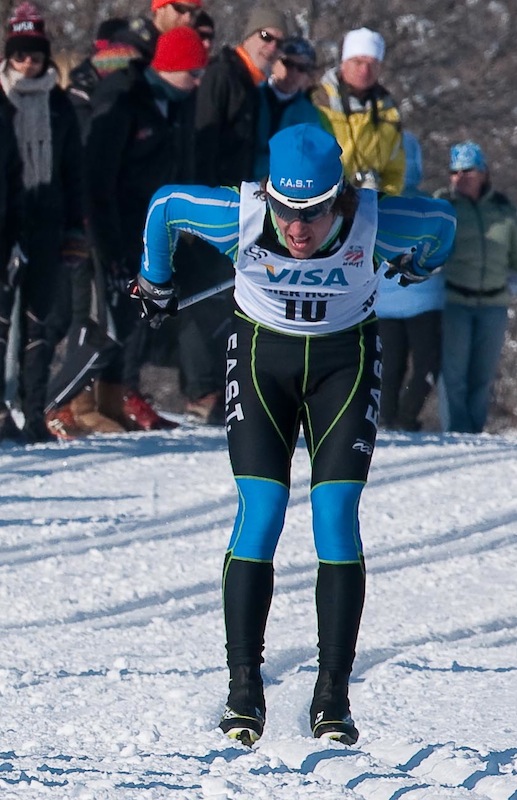
    Kyle Bratrud (Northern Michigan University) led the Americans in the junior men’s 20 k skiathlon in 34th. With the 28th-fastest classic time and 40th-ranked freestyle split, he finished 3:06 behind the Russian leaders at the front of the pack.

    “I am pretty satisfied,” Bratrud said. “I started with bib 47 so I knew I was going to have my work cut out for me getting in to it.”

    By the end of the first 10 k the field had begun to string out. Bratrud said he “really laid down the hammer” in the classic portion in order to move up and he came through the first half in 28th, about one minute down to the leaders.

    “The change was not nearly as bad as I thought I just tried to relax,” he said.

    The 19-year-old hadn’t competed in a skiathlon since his freshman year of high school, so Friday’s race was a “rather new experience” for him.

    “I think it’s definitely an interesting format,” he said. “It’s a really grueling race since you work both sets of muscles, so there was a lot of pain experienced in that race.”

    Like his teammates, Bratrud noted that sunny skis and hard tracks made for a more enjoyable day of skiing than competitors have yet seen this week under Liberec’s overcast skies.

    “[There were] very challenging courses so they really tested me… I was able to see my weaknesses so I’m very excited to train this summer and fix those!” he added. “Overall [I’m] pretty pleased. Feels great to wear that uniform and look down and see USA on my leg — living the dream.”

    Logan Hanneman skiing in a pack. Photo: Josh Smullin.
    Logan Hanneman skiing in a pack. Photo: Josh Smullin.

    Logan Hanneman (University of Alaska, Fairbanks) was the second American to come through in 39th. Ever the competitor, Hanneman had high expectations for the skiathlon and in the first few kilometers of the race he led the field for a few laps.

    “After the sprint qualifier, I thought that I definitely had a top ten in me,” he said. “The first few laps of the classic portion were great. I was right up there and feeling great.”

    The wheels started to come off after the second 2.5 k lap.

    “I was leading the race on the second lap of the classic portion. Then I seemed to find reverese,” Hanneman said. “It really felt like I ran into a brick wall. The muscles just began cramping and I don’t really know what happened. So from there on out, I was in survival mode, as dumb as that sounds. In the skate, I was just barely skiing.”

    Hanneman came through the exchange in 23rd at 10 k and went into damage control in the second half. His skate leg was the 61st-best time in the field.

    “I am not realy that excited about my result,” he concluded. “I hope the relay goes much better.”

    Forrest Mahlen (Alaska Pacific University) and Tucker McCrerey (University of Utah) came in 70th and 71st, respectively, just under six minutes behind the winning time. Like Hanneman, they were not happy with the placing but looked forward to a shot at redemption in the relay.

    Mahlen thought he may have suffered from mild food poisoning from dinner the night before and felt his stomach clench throughout the race.

    “I don’t know if it really affected my performance other than to make the race a little more painful than usual,” he said, adding that “the race itself was super exciting; 92 of the best junior skiers in the world all trying to fit into two classic tracks on a 2.5 kilometer loop lets you know how you stack up real quick.”

    McCrerey echoed the sentiment. “I love the skiathlon because it tests your form in both disciplines,” he said. “I’m really bummed that I did not have a good race because I thought I could really do some damage in this field. There will be another time in the future.”

    Men’s 20 k skiathlon results.

  • Stadlober Takes Gold, Russian Men Monopolize Junior Skiathlon Podium

    Stadlober Takes Gold, Russian Men Monopolize Junior Skiathlon Podium

    Theresa Stadlober (AUT) on her way to winning the women's 10 k skiathlon in Liberec, Czech Republic, on Friday. Photo: Liberec2013.
    Theresa Stadlober (AUT) on her way to winning the women’s Junior World Championships 10 k skiathlon in Liberec, Czech Republic, on Friday. Photo: Liberec2013.

    Teresa Stadlober (AUT) ignored the Russian script to take the junior women’s skiathlon (5 k classic/5 k skate) in a time of 27:13.0 in Liberec, Czech Republic. Stadlober kept a strong challenge by Nadezhda Shuniaeva (RUS) at bay to become Austria’s first junior world champion this week.

    Stadlober, 19, began the classic leg strongly by delivering the second fastest split, which she would later leverage to salvage a sluggish ski change and the surging Nadezhda (RUS), whose skate split bettered Stadlober’s by 21.8 seconds.

    Nevertheless, she showed her mettle and held on to surpass her silver medal in the 5 k freestyle.

    The junior women's skiathlon gets underway in Liberec. Photo: Liberec2013.
    The junior women’s skiathlon gets underway in Liberec. Photo: Liberec2013.

    “It is unreal, what has happened today,” Stadlober said. “After the silver medal I hoped to be in the top three. There were many good skiers out there today. I am just happy.”

    Success is in her bloodline. Stadlober is the daughter of Alois Stadlober, a relay world champion from Ramsau in 1999.

    Stadlober normally considers herself a classic specialist, commenting that “I thought I was better in classic but today I felt very good in the free technique.”

    Unsurprisingly, a duo of strong Russian athletes made up the rest of the podium.

    The Russian challenge began with the field-best classic split of Alisa Zhambalov (RUS), who narrowly edged out Stadlober’s (AUT) time by 1.2 seconds to take third overall.

    After Zhambalov’s strong leg, her teammate Shuniaeva (RUS) took over in spectacular fashion. Trailing Zhambalov by 31 seconds, Shuniaeva unleased a vicious skate leg, beating her teammate by 35.2 seconds but ultimately running out of track to overtake Stadlober.

    A bronze-medalist in Ezrum, Turkey last year, Shuniaeva was pleased, saying “Last year in Ezrum I was third in the skiathlon and I am happy I could improve my performance. I like the tracks in Liberec. It was a tough competition. I tried to follow Teresa in the last lap but she was too fast. I am happy for the silver medal.”

    In third, Zhambalov (RUS) finished in a time of 27:23.9, and was equally jubilant to be a medal-winner.

    “It is the biggest achievement so far in my career, my first individual medal. It feels great to be the third fastest in the world,” she said.

    Seventy-one participants started the competition on Friday and four dropped out, the victims of cold conditions and a brutal course.

    Slotting into fourth place behind Zhambalov (RUS) was another Russian woman, Anastasia Sedova, who managed the fastest ski exchange.

    Linn Eriksen (NOR) recovered from a 31st place in the 5 k freestyle earlier in the week to finish 5th, a remarkable turnaround.  Behind Linn was Julia Svan, daughter of Gunde Svan, who began the classic leg in a strong 3rd position before fading in the skate leg.

    Julia Belger (GER) was seventh, Stina Nilsson (SWE) 8th, Katharina Hennig (GER) 9th, and Jonna Sundling (SWE) 10th.

    Racing concludes Sunday with the relay competition.

    Results Junior Women’s Skiathlon


    Dmitry Rostovtsev (RUS) leading his teammates through the skate portion of the junior mens skiathlon. He led a Russian sweep of the podium on Friday at Junior World Championships. Photo: Liberec2013.
    Dmitry Rostovtsev (RUS) leading his teammates through the skate portion of the junior mens skiathlon. He led a Russian sweep of the podium on Friday at Junior World Championships. Photo: Liberec2013.

    Simen Hegstad Krueger (NOR) was two meters short of breaking the Russian podium hegemony. But try as he might, he couldn’t bridge that gap.

    The Russian dominance continued on Friday in the junior men’s skiathlon (10 k classic/10 k skate) in Liberec, Czech Republic.  Dmitry Rostovtsev (RUS) took the victory in a time of 47:40.2. It was Rostovtsev’s second gold medal of the championships.

    “It is amazing to win another gold medal,” he said.  “There were five of us skiing together. It was a tactical race in the free technique part. I tried to save some energy for the last.”

    Rostovtsev, victorious. Photo: Liberec2013.
    Rostovtsev, victorious. Photo: Liberec2013.

    That he did, taking a comfortable margin over his teammate Artem Maltsev (RUS) of 3.9 seconds. Alexey Chervotkin (RUS) claimed the bronze medal in a time of 47:45.4, outkicking the surging Kreuger.

    The Russians trio of Rostovtsev, Maltsev, and Chervotkin set a blistering pace from the gun, shredding the field down to a small group of five with Kreuger and Martin Weisheit (GER) hanging on.

    “In the classic part I gave a few meters to the leading Russians,” Krueger explain.  “But I was quickly up in the lead group for the skating leg.”

    Krueger claimed the fastest skate split of the field, but the energy he expended making contact with the Russians after the classic leg left him empty. When the remaining four skiers — three Russians and Krueger — hit the final hill before the finish, he had nothing left.

    “In the last long uphill on the last lap the Russian took a few meters out of me,” he said. “They (the Russians) were strong in the uphill. I wanted to close the gap but my body stiffened. In the finish it was all I could do to stay on my feet.”

    After Krueger faded, it left the Russians to battle it out themselves. Maltsev, the silver medal winner, did his best to overtake Rostovtsev, saying “I wanted to win today but Dimitry was stronger in the last lap.”

    Chervotkin, the bronze medalist, was simply happy with a podium.

    “(A) bronze medal at the Junior World Championships is (the) biggest success of my career so far. It feels great. It has given me extra motivation for the next training,” he said.

    Despite all the Russian success at these championships, they’re still hungry.

    “It is great to have my teammates on the podium,” Rostovtsev said.  “It is a great victory for Russia. We are looking forward to the relay and we want to win again.”

    Simen Krueger of Norway was fourth, and Martin Weisheit (GER) finished fifth, both losing contact with the blistering pace of the Russians in the final uphill. Magne Haga (NOR), had the fastest equipment change of the field but finished sixth.

    Antii Ojansivu (FIN) was seventh, Roman Tarasov (RUS) eighth, Clement Parisse ninth, and Moritz Madlener (GER) was tenth.

    Results Junior Men’s Skiathlon


  • Patterson, Bjornsen Lead U.S. with Top 15s in U23 Freestyle Races

    Patterson, Bjornsen Lead U.S. with Top 15s in U23 Freestyle Races

    Caitlin Patterson (Craftsbury Green Racing Project) en route to a 14th-place finish in the 10 k freestyle at U23 World Championships. Photo: Gus Kaeding.
    Caitlin Patterson (Craftsbury Green Racing Project) en route to a 14th-place finish in the 10 k freestyle at U23 World Championships. Photo: Gus Kaeding.

    When some athletes go to U23 World Championships, they come in with an enormous amount of pressure on themselves to perform well in the biggest race of the year. The mentality can work for some, but Caitlin Patterson (Crafstbury Green Racing Project) prefers the opposite approach. The 23-year-old has been to these championships a few times before and is careful not to place more importance on them over any other race. On Thursday in Liberec, Czech Republic, the even-keeled perspective helped Patterson towards 14th place tie in the women’s 10 k individual freestyle event for her best finish in three appearances at these championships.

    “I’m happy with the result today,” Patterson said. “My main goal today was to ski my own race and push myself to the limit, to ski as fast as possible… I’m happy to have skied well today in a strong international field while representing the US, and I know the race experience will improve my confidence for future races and help me learn to ski faster.”

    Patterson skied a conservative 20th-ranked first lap to come on strong in the second half to finish in 29:31.9, 1:41.5 behind Ragnhild Haga’s (NOR) winning mark. She says her opening pace wasn’t by design, exactly, she just took a few kilometers to warm into the race.

    Patterson catching her breath after finishing. Photo: Liberec2013.
    Patterson catching her breath after finishing. Photo: Liberec2013.

    “I definitely skied my own race, starting off slowly and building momentum from there,” she said. “Actually I felt a bit disconcertingly weak on the first lap, and so while the coaches said it looked like I was skiing relaxed or maybe starting (very) conservatively, I was actually trying to wake up and feel more energetic. Luckily I worked my way into the race and felt much better on the second and third laps.”

    Pepa Miloucheva, Patterson’s coach at Craftsbury, was on course giving splits and said as much of her athlete’s race. “I was able to see most of the race,” Miloucheva said. “Caitlin had a little slow start, but looked great on the second and third lap, so was able to make time and finish strong.”

    As the 37th starter in a field of 49, Patterson started just in front a few of the fastest-seeded women in the field. She planned to work the positioning to her advantage and work with people around her, but she wound up skiing much of the course alone. She briefly skied with teammate Liz Guiney in the stadium before the latter turned into the finish lanes, but for the most part had to set her own pace.

    “My third lap was particularly lonely, with no one ahead or behind for what seemed at least a few minutes each direction (the course twists and turns enough to be able to see people, and I know no one finished for several minutes after I crossed the line),” she said. “Luckily at that point I was comfortable with my own pace and enjoying the race.”

    Many have commented this week on how difficult the Liberec trails are, and on Thursday they were made even more difficult by a fresh layer of new snow that slowed ski speed. In such conditions, Patterson focused on transitions and riding a ski well.

    “It was also important not to let yourself think that the few flat areas were parts of the course where you could rest; there was very little rest available, especially with new falling snow slowing everything down,” she said. “It was at least as important to push along the flats as it was to work hard on the hills.”

    Looking ahead to the 15 k skiathlon on Saturday and beyond to the rest of the season, Patterson is more excited than ever.

    Sophie Caldwell, 17th. Photo: Gus Kaeding.
    Sophie Caldwell, 17th. Photo: Gus Kaeding.

    “The pursuit will certainly be a different race, with classic technique, longer distance, and mass start thrown into the mix, but I think I can build off the strengths of today’s race and I should be able to do well in the pursuit too,” she said. “I’m very excited! It’s easier to look forward to future races when current races are going well, and my experience today will help me progress towards racing faster during the rest of the season.”

    Finishing just three places and 23 seconds behind Patterson, Sophie Caldwell (SMS T2) was very nearly the second of two American women in the top 15 on Thursday. She finished 17th after crashing on a major downhill on her final lap, but until that point had skied comfortably in the top 15 and within a few seconds of a top 10.

    “She was definitely in the hunt for a top-10 and unfortunately lost a fair amount of time but still ended up 17th, which is a solid result,” said U.S. Ski Team development coach Bryan Fish.

    In light of managing a top-20 even with the fall, Caldwell is looking forward to the skiathlon on Saturday.

    Annie Pokorny, 29th. Photo: Gus Kaeding.
    Annie Pokorny, 29th. Photo: Gus Kaeding.

    “Overall I was happy with it,” she said. “I felt good today and am excited to do some more distance races in the next couple weeks. My fitness feels like it’s still improving and I’m definitely learning more each time I race over here against such strong competition.”

    Annie Pokorny (Middlebury College) came through in 29th to put three Americans in the top-30. Considering this is her first international event and she was sick with the flu in the week leading up to the championships, Pokorny was “very happy” with the result.

    “I went into the first lap challenging myself to ski as smoothly as possible,” she said. “I think I did that. From there I planned to catch as many rides as possible, which I managed to do from [Anastasia] Slonova and [Ragnhild] Haga — short, very speedy rides! I think the coolest moment for me was going up the last climb behind Haga. It was sobering to see how a U23 world champion skis—to be in the same race as that person. It was exciting… Racing today was the coolest thing I’ve ever done.”

    Liz Guiney (University of New Hampshire) finished fourth for the U.S. in 42nd.

    Women’s 10 k freestyle results.


    Erik Bjornsen (left) on his way to a 15th-place finish in the 15 k at U23 World Championships. Photo: Gus Kaeding.
    Erik Bjornsen (left) on his way to a 15th-place finish in the 15 k at U23 World Championships. Photo: Gus Kaeding.

    In the men’s race Erik Bjornsen (Alaska Pacific University/U.S. Ski Team) led the way for the U.S. once again with a 15th-place finish in the  15 k freestyle. The result was another personal best — he was 10th in the sprint on Tuesday, and this is his new high mark in a distance race at U23s — but for someone with ambitions like Bjornsen, it ranked somewhere between a “decent” and “pretty good” day.

    There were aspects to his race he was happy with and others that didn’t sit well. His finish time for the four-lap event was 37:44.4, exactly two minutes behind Sergey Ustiugov’s (RUS) winning time.

    “Fifteenth isn’t bad but being two minutes out is not awesome,” Bjornsen said. “I think it was a decent day for me, but I think I could have been in the top 10 if I’d had a good day. That’s kind of how it goes sometimes.”

    Sergey Ustiugov (RUS) en route to winning the men's 15 k freestyle at U23 World Championships in Liberec, Czech Republic. Photo: Liberec2013.
    Bjornsen finishing just behind race-winner Sergey Ustiugov (RUS) after skiing the final few kilometers with him. Photo: Liberec2013.

    Ustiugov actually caught Bjornsen from two minutes back with two kilometers to go, which for some could have been a disheartening development, but Bjornsen took the opportunity to catch a ride with the fastest guy in the field and pick up a few places with a strong finishing kick.

    “That was really impressive to watch, because this kid was flying out there,” Fish said of Ustiugov. “I was out in the field and was basically able to watch the last kilometer and they were absolutely flying up the last climbs. It was really impressive to watch both those guys come in and the powering speed that they were carrying.”

    Bjornsen didn’t let Ustiugov put any more time on him, and even moved up alongside him at certain points. The Russian only pulled slightly ahead of him as they came into the finishing lanes.

    “I like to finish strong, usually I’m able to kick up the pace with a kilometer or two to go, so it was really nice to have him there,” Bjornsen said. “He pulled me for a k or so and then … we kind of duked it out to the finish line. He had a better lane so he actually beat me to the finish but it was sweet to ski with the leader for a k or two.”

    The fact that he could ski with Ustiugov, who won every single U23 event in Turkey last winter, left Bjornsen wondering what could have been if he had started closer to the Russian.

    Bjornsen climbing. Photo: Caitlin Patterson.
    Bjornsen climbing. Photo: Caitlin Patterson.

    “It would have been nice though if he started 30 seconds closer to me,” he said. “I think that it would have been sweet to have someone to ski with or try to hold onto. So that was too bad, with it being a four-lap course a lot of guys got to ski with people and I felt like I was just working on my own for 13 of the 15 k.”

    Bjornsen also feels his top-end gear for low-altitude skiing is still coming around. He spend his entire November, December and early January skiing at high-altitude venues in Montana and Utah, and this was his first distance race close to sea level. Bjornsen thought of several places where he should have skied more quickly.

    “It’s definitely a different feeling,” Bjornsen said. “I want to keep working on that and I think I’ll get some more chances this year, but its hard because when you’re at low altitude like this you have to be hammering the whole time, you can’t let up for 10 seconds or anything just because you lose time so quickly.”

    On the positive side, though, Bjornsen now knows with even greater certainty than he did after his classic sprint that he can ski with the fastest of his peers in the world.

    “I’m starting to know a lot of the guys and I follow their results and stuff,” he said. “It’s cool to know these guys and start feeling like I’m kind of in it, to race with a lot of these guys. So I’m feeling a lot more confident. The top ten dudes all have World Cup experience, which is the same as where I’m at, starting to race some World Cups. I still have one more year [at U23s] so it’s always been my goal to get a medal or at least a top 5 at these championships. Hopefully in the pursuit or next year.”

    The new snow that fell in Liberec on Thursday morning created tricky waxing conditions. Bjornsen felt he had the best skis he possibly could have, but some of the American men were frustrated with slow equipment.

    Sam Tarling (Dartmouth College), in his first race of the week, placed 39th with a time of 38:47.4, three minutes off the winning time.

    Sam Tarling and Eric Packer working with a Swede. Photo: Gus Kaeding.
    Sam Tarling and Eric Packer working with a Swede. Photo: Gus Kaeding.

    “I felt pretty good about it,” Tarling said. “I was hoping for better, but you can’t have everything go perfectly in every race. I felt fit in the race, but my skis could have been better… I’m super stoked to be with such a talented group though, and I’m looking forward to making a better impression in the skiathlon.”

    David Norris (Montana State University) was 50th, 33 seconds behind Tarling.

    “The result is very disappointing,” he said. “I wanted to be top 20 at the very least. Based on fitness and how hard I pushed the race I am confident this is my best race yet this season, but with such awful skis you just cant compete in such a strong field and wish to look good on paper.

    Norris noted that he was able to ski with most of the men who started around him and that it was important to stay positive about it.

    David Norris, 50th. Photo: Gus Kaeding.
    David Norris, 50th. Photo: Gus Kaeding.

    “I out climbed those around me and was very pleased with my fitness, and it is important for me to remember that I was skiing well when the result looks so bad,” he said.

    “Our techs are working super hard and today was just a tough one, the coaches are super generous and offer advice and help us out any chance they can. Looking towards the 30 k now!”

    Eric Packer (SMS T2) finished fourth for the Americans in 54th.

    “I’ve struggled with distance racing this year, and today was probably my best race so far this season,” Packer said. “I’m obviously not happy with the end result, but at least things seem to be moving in the right direction.”

    Men’s 15 k freestyle results.

    Special thanks to Caitlin Patterson and Gus Kaeding for their photos.


  • Widmer Tallies Top 30 in U23 Distance Race; Canadian Men Struggle with Numbers

    Widmer Tallies Top 30 in U23 Distance Race; Canadian Men Struggle with Numbers

    The Canadian junior women's team at the U23/Junior World Championships in Liberec, Czech Republic. (Courtesy photo)
    The Canadian junior women’s team at the U23/Junior World Championships in Liberec, Czech Republic. From left to right: Annika Hicks, Katherine Stewart-Jones, Marlis Kromm, Cendrine Brown, Frederique Vezina, Heidi Widmer, Anne-Marie Comeau, Maya MacIsaac-Jones, and Andrea Lee. (Courtesy photo)

    Once again, the women led the way for the Canadian team in Liberec, Czech Republic, this time in the U23 freestyle individual-start distance races in fresh, falling snow on Thursday.

    Heidi Widmer (Alberta World Cup Academy) rebounded from what she considered a disappointing result in Tuesday’s sprint to place 28th in Thursday’s 10 k.

    “I am really happy for a top 30 in a distance race,” she wrote in an email after placing 34th on Tuesday. “It is a personal best for me and really encouraging.”

    Widmer was 3 minutes and 5 seconds behind race winner Ragnhild Haga of Norway, who won in 27:50.4. Last season, Haga placed third in the 10 k freestyle at Canadian Nationals, well ahead of the other U23-eligible skiers present.

    Widmer was a little surprised by her good day. “I had pretty low energy yesterday but after a good warmup this morning I tried to shake it all off and just focus on the moment and having the best race possible for the day,” she explained.

    Widmer felt the course was in good condition, adding “there was sun in the forecast for today which I was super excited about but we got some nice fluffy snowflakes and clouds instead.”

    “My skis felt really good,” she wrote. “The Canadian wax techs here are really experienced with these conditions and [with] the Liberec site so we are very lucky.”

    Annika Hicks (AWCA) was the second Canadian in 37th (+3:29.3).

    “I’m not too happy with my result because I know I’m capable of more,” Hicks wrote. “Unfortunately, I started feeling strong a little too late in the race, but hopefully that means good things for [Saturday’s] pursuit!”

    Hicks was also pleased with the course and her skis. “There was a little bit of fresh snow accumulating on the track, and we thought it’d be sunny,” she wrote. “The main race line was pretty skied in, but if you were off that you were skiing through about an inch of powder. My skis were really fast! I was passing people on the downhills (which doesn’t happen very often … I’m pretty small!). The course was great, it suits me really well. Lots of tough climbs and fast downhills.”

    Andrea Lee (NDC-Thunder Bay) finished 40th (+3:45.4), nine seconds ahead of Marlis Kromm (AWCA) in 43rd.

    “Today was a so-so day for me,” Kromm wrote. “I was really thinking about skiing smooth and relaxed, and skiing my own race, but felt like I was missing that top gear.”

    Kromm was also happy with the work of the support team. “The conditions were good and we had awesome skis today,” she wrote. And she’s also looking forward to the pursuit. “I like the mass start races, they’re exciting and you can really get in there and fight.”

    As for the Canadian men, two of the team’s stronger skate skiers – Russell Kennedy (AWCA) and Andy Shields (NDC-Thunder Bay) were unable to race because of illness, which also kept them out of the sprint. That left just two men to represent Canada on Thursday. Colin Abbott (Yukon Elite Squad) was 63rd, 4:31.4 back from Russia’s Sergey Ustiugov, who won in 35:44.1. Patrick Stewart-Jones (AWCA) was 71st (+5:16.6).

    Abbott described his experience of U23 World Championships best. “It was a pretty average day for me,” he wrote, “And that just isn’t good enough against the best in the world.”

    “While I wasn’t happy with how my body felt today I was happy with how I raced mentally,” he added. “I skied smart and efficient and did what I could with what my body gave me today. I’m still confident I can put together a good race for the skiathlon on Saturday.”

    He echoed what other Canadians said about the venue and the skis. “The course is a challenging one with steep climbs, fast downhills and deceptively hard gradual climbs,” Abbott wrote. “Joel and Graham (the Canadian wax techs) nailed the skis today.”

    Women’s results | Men’s results

    International recap

  • Canada’s Browne Ecstatic About 15th in Junior Worlds 5 k

    Canada’s Browne Ecstatic About 15th in Junior Worlds 5 k

    Cendrine Browne (CNEPH) racing to a personal-best 15th in the 5 k freestyle individual start Wednesday at Junior World Championships in Liberec, Czech Republic. (Courtesy photo)
    Cendrine Browne (CNEPH) racing to a personal-best 15th in the 5 k freestyle individual start Wednesday at Junior World Championships in Liberec, Czech Republic. (Courtesy photo)

    Cendrine Browne of the Pierre-Harvey Training Centre (CNEPH) is celebrating a lot of firsts this season. First year on the Canadian National Junior Ski Team, first race trip to Europe, first age category win in a NorAm race. On Wednesday, she added her first top 15 at the Junior World Championships in Liberec, Czech Republic, to the list.

    Racers came to Liberec with different goals. Not many will do a better job of reaching them than Browne. “When I crossed the finish line, I was exhausted but really proud of myself,” she wrote in an email.

    Browne, who is a relative newcomer at this level, is in her fourth season as a ski racer, having come into the sport from swimming by way of triathlon. The achievement had begun to sink in a few hours after the race.

    “I was so excited!!!” she wrote. “It’s the first time I have accomplished something this big! 15th at Worlds! What an accomplishment for me!”

    For the juniors, these races are often about gaining experience. “At my first race here (sprints), I was so nervous! I was a little too impressed by the others and by the event, so my race didn’t go that well,” Browne wrote. “But today, I was more confident and I felt more relaxed. I told myself that this race was a race like any other.”

    With one more day’s experience, Browne had a better approach to the race. “I had a clear mind and I stayed focused, which really helped me throughout the race,” she wrote.

    As tiredness set in on the final climb, she held that focus, saying to herself, “Everyone has tired legs here, so you better push as hard as you can till the finish line!”

    Her finish time of 13:15.6 for the 5 k freestyle individual start was 40 seconds behind the winner, Victoria Carl, who represented Germany in the Tour de Ski.

    Canadian junior women at Junior World Championships in Liberec, Czech Republic. (Photo: Katherine Stewart-Jones)
    Canadian junior women at Junior World Championships in Liberec, Czech Republic. (Photo: Katherine Stewart-Jones)

    Frédérique Vézina (CNEPH) was the second Canadian woman in 50th in 13:59.2. A distance specialist, she has one more year of JW eligibility.

    Anne-Marie Comeau (CNEPH) placed 53rd, five seconds behind Vezina. Comeau wrote in an email that she prefers distance as well. While she wasn’t pleased with her race, her focus is on the future.

    “I will try to forget this one and focus on Friday’s [skiathlon] race,” she wrote.

    Comeau has a lot of future to focus on; she has three more years of eligibility for Junior Worlds.

    Katherine Stewart-Jones (Nakkertok) was 58th of 76 finishers, a five more seconds back.

    “It is my first time at world juniors so I shouldn’t be too hard on myself but I was definitely a bit disappointed,” she wrote, before finding the positive. “I still have tons of chances to make it up!”

    She also commented on the experience, saying, “It is actually a lot like skiing at home except there is way more competition so the times are extremely close.”

    For the men, a familiar name topped the list of Canadians, with Raphaël Couturier (CNEPH) placing 24th in 24:57.7, just 21 seconds out of the top 15.

    “The course was really hard on the legs, but it was a great day,” Couturier told Cross Country Canada. “I had high expectations coming into these Championships so I’m satisfied with today. I’m looking forward to the pursuit.”

    David Palmer (Black Jack) got his first start at Junior Worlds, finishing 32nd in 25:10.9.

    “I had a decent race today, felt good, and conditions were great for skiing,” Palmer wrote.  “I found that the race course is one of the most challenging ones I’ve done with some very sharp and icy corners, steep hills and fast downhills.”

    The experience wasn’t what he was expecting. “At first I was gearing up for things to be different than racing at home,” he explained. “But I’ve actually found that everything including the start procedure is very easy and much the same as any other race. … On the result list I was down at 32nd, but being 1:40 off the lead is encouraging. I feel optimistic about tomorrow now that I’m more familiar with the competition and the set up here.”

    Zeke Williams (Nakkertok) was a 38 seconds farther back in 53rd.

    “I felt like I pushed hard, which is nice, but I went out harder than I should’ve,” he wrote. “I’m really disappointed with the result. I’m sure if I had been able to pace things better I could’ve ended up in the top 30, which was my goal.”

    Williams may not be happy with the result, but he is happy with the experience. “Racing here at World Champs is cool since the competition isn’t too far below that of a world cup race,” he wrote. “It’s really awesome, and really motivational, to get to compete against the top Juniors in the world.”

    Scott Hill (NDC-Thunder Bay), in his second Junior World start, rounded out the Canadian effort in 62nd (26:05.8) of 98 finishers.  Hill was less than a second ahead of the next three finishers from Belarus, Ukraine and Japan.

    Women’s results | Men’s results

    International report


  • Mahlen, O’Connell Lead U.S in Junior Worlds Distance Freestyle

    Mahlen, O’Connell Lead U.S in Junior Worlds Distance Freestyle

    Sawyer Kesselheim leading Forrest Mahlen partway through the men's 10 k freestyle at Junior World Championships in Liberec, Czech Republic. Photo: Logan Hanneman/Corduroy AK.
    Sawyer Kesselheim leading Forrest Mahlen partway through the men’s 10 k freestyle at Junior World Championships in Liberec, Czech Republic. Photo: Logan Hanneman/Corduroy AK.

    Junior World Championships action continued in Liberec, Czech Republic, on Wednesday with a 5 and 10 k individual start freestyle. Forrest Mahlen (Alaska Pacific University) and Sawyer Kesselheim (Bridger Ski Foundation) put up another pair of top-30s for the U.S. in the men’s event, placing 27th and 29th, respectively. Mary O’Connell (Dartmouth College) led the way for the American women by finishing 33rd in the 5 k.

    The 10 k freestyle was Mahlen’s first event of the championships, and his 27th-place showing brought redemption over what he called a “super-poorly” skied distance race in Turkey last year, where he was 72nd.

    “I’m super-excited with my result today!” Mahlen said. “One of my goals for this season was a top 30 here at world juniors so 27th is right in there. I was only 90 seconds behind the leaders and 15 seconds out of top 20 so I’m pretty happy with my time.”

    As the 33rd starter out of a field of 98, Mahlen sought to pace his 10 k aggressively.

    “My strategy was to take it out at a pace that I couldn’t hold the whole time to see what I had in me,” he said.

    As a result, Mahlen skied by himself for nearly the whole race, which went three times around a 3.3 k loop. With the 18th-ranked split on the first lap, he accomplished the fast opening pace he intended. When Kesselheim was on his first lap he caught Mahlen finishing his final one, and the two helped each other along while Mahlen was “fading hard” from his quick early pace.

    “He brought me around, for sure,” Mahlen said.

    U.S. Ski Team development coach Bryan Fish thought the competitive field and challenging course in Liberec demanded highly focused skiing from athletes from the get go.

    “I think at World Championships like this you have to be aggressive,” Fish said. “It was also an interesting course. There weren’t any really long hills but there were certainly some steep ones out there, so very transitional skiing. You had to ski well on the corners, dowhills and the uphills. The uphills were quite steep, much like the sprint course, so really powerful skiing [worked well].”

    While Mahlen went out fast and faded, Kesselheim skied a more consistent race to finish two places and only 0.6 seconds behind him. In addition to catching a ride with Mahlen, Kesselheim skied one of his laps with one of the German skiers in the top seed.

    “I was lucky enough to lap through when some of the top guys were starting,” Kesselheim said. “I got some help on my last lap from a German skier who pushed me up some of the biggest hills.”

    He had hoped for a top-20 but was still excited with a top-30. “I felt that I raced smart,” Kesselheim said. “I pushed the transitions and paced it well… I also felt that pushing over the tops of hills and through the flats was very important. I focused on that and was able to execute which helped me to make up a lot of time.”

    Kyle Bratrud (Northern Michigan University), in his first career World Juniors race, took 46th on Wednesday, 33 seconds behind his other teammates. In his debut at the event Bratrud was focused primarily on gaining experience and was pleased with the result.

    “My goal this year was to make World Juniors, beyond that was all a learning experience and getting to race on a course of that difficulty and watch and even ski with a few of the top juniors in the world was a huge opportunity,” he said. “I have been feeling pretty sluggish this week from the travel as this is my first trip to Europe so it was nice to finally get to race and shake out some of that junk from my legs.”

    As the 55th starter Bratrud skied mostly by himself, but watched the faster seeds closely when they skied near him.

    “A few of the top juniors were starting as I was going out for my last lap so I got to ski with them for a little bit and get a feel for what they do that makes them so fast, which was awesome,” Bratrud said.

    Ben Saxton (F.A.S.T. Performance Training) was the fourth American in 60th. He was the top U.S. performer in the classic sprint on Monday but didn’t feel at his best in the 10 k.

    “I don’t know exactly what my goals were but whatever they were, I didn’t reach them today, so it was a disappointing result in that sense,” Saxton said. “But I have a LOT of stuff to learn from this and it’s my first distance race on a big stage.

    “I didn’t really feel too hot out of the start, but I was essentially on my own the whole way. The one chance I had for a ride I blew because I chickened out and scrubbed some speed on a downhill. I was getting consistently mediocre split results which I could tell by just looking around behind me were becoming obsolete as soon as higher bibs came through. But I tried my hardest I just wasn’t springy and at my sharpest today.”

    Men’s results.

    Mary O'Connell on her way to finishing 33rd in the World Juniors 5 k. Photo: Logan Hanneman/Corduroy AK.
    Mary O’Connell on her way to finishing 33rd in the World Juniors 5 k. Photo: Logan Hanneman/Corduroy AK.

    On the women’s side, O’Connell led the American team in 33rd. She was introduced to Junior Worlds competition in Turkey last year and, like Mahlen, wanted to come to Liberec and improve upon her original results. Her best finish a year ago was 42nd in the 10 k skiathlon and on Wednesday she cut that down by nine places in the 5 k freestyle, finishing 1:05 behind the leaders.

    “I am happy with the way it went,” O’Connell said. “The course was super short but very painful, I’d say one of the hardest 5 ks I’ve ever done. There are a few places where I wish I could have pushed a little harder, and a top 30 would have been great! But I’m still pleased with the way I raced.”

    O’Connell got off to a strong start in her freshman season with a seventh-place finish at U.S. Nationals earlier this month in the senior freestyle race, surprising even herself. Not sure of where that would put her against the fastest juniors in the world, she limited her expectations for the 5 k.

    “I knew my fitness was there after Nationals, I just wasn’t sure how that was going to compare internationally. Obviously, these kids are fast. I think the winning time was less than 13min!” she said. (It was; Germany’s Victoria Carl won in 12:35.)

    For such a short race, O’Connell said it was important to go hard for the entire thing.

    “There was one really steep hill, comparable to Hermod’s Hill (at Soldier Hollow) and it was important to ski light and quick but not kill yourself there on the first lap. Since it was so fast, pacing was important, but there was not a significant difference.”

    O’Connell noted that the snow and her skis was also extremely fast, contributing a quick finish time.

    “The coaches and wax techs are doing an incredible job with our skis, they were so fast today!” she said. “I actually almost fell on some of the corners! The team atmosphere is really great and we’re really all just having so much fun!”

    At the end of the day, races like those from O’Connell, Mahlen and Kesselheim are exactly the kind of improvements Fish likes to see from year to year and race to race.

    “Head to head competition like today is not only a test but also an incredible opportunity to strengthen the performance of our top developing athletes,” he said.

    Sloan Storey (University of Utah) finished 45th in the 5 k for the U.S., Emily Hannah (Harvard University) took 51st and Anika Miller (Payette Lakes Sports) was 52nd.

    Women’s results.

    Special thanks to Logan Hanneman/Corduroy AK for his photography.


  • Carl Rises to Gold in Junior Worlds 5 k; Russia’s Rostovtsev Wins 10 k in Liberec

    Carl Rises to Gold in Junior Worlds 5 k; Russia’s Rostovtsev Wins 10 k in Liberec

    The women's 5 k freestyle podium at Junior World Championships on Wednesday in Liberec, Czech Republic. German Victoria Carl (c) was first, Austria's Teresa Stadlober (l) was second and Russia's Anastasia Sedova took third.
    The women’s 5 k freestyle podium at Junior World Championships on Wednesday in Liberec, Czech Republic. German Victoria Carl (c) was first, Austria’s Teresa Stadlober (l) was second and Russia’s Anastasia Sedova took third. (Photo: Liberec2013)

    Germany’s Victoria Carl was happy with silver on Monday. Imagine how she felt Wednesday, on the second day of competition at the FIS Nordic Junior World Ski Championships in Liberec, Czech Republic, when she won the 5-kilometer freestyle individual start by 4.3 seconds.

    The 17-year-old had a tough time describing it.

    “I fulfilled my dreams and hopes with the silver medal in the sprint,” Carl said in a Liberec 2013 press release. She finished second in the preceding classic sprint final by 1.9 seconds to Swedish World Cup skier Stina Nilsson.

    “I cannot describe how happy I am about the gold medal today,” Carl continued. “I still cannot understand and I can’t fully comprehend what I have achieved. It is a great day for me.”

    After starting 72nd out of 76, Carl posted the fastest split at the halfway point on the two-lap course. Sweden’s Julia Svan, the daughter of four-time Olympic gold medallist cross-country skier Gunde Svan, was in the hunt through that point, starting 60th and holding the lead at 2.5 k. Svan ended up ninth, 22.3 seconds behind Carl, who won in 12:35.3.

    “I am happy with my position,” Svan said. “It is my first championship, and I also had some health problems last year and hardly competed at all. Dad was considering coming to Liberec, but I persuaded him to stay home.”

    Austria’s Teresa Stadlober captured second (+4.3) and Russia’s Anastasia Sedova was third (+11.4).

    “I did not expect to be on the podium today but I hoped for a good result,” said Stadlober, who turns 20 next week. She was fourth at the 2.5 k checkpoint.

    “I got the split times from the coaches almost each 200 meters,” Stadlober added. “It’s a great achievement for me. For the next competition I hope to be again in top three.”

    After winning gold in the 2012 Youth Olympic Games 5 k classic last year, Sedova, the sister of World Cup skier Peter Sedov, was pleased with third on Wednesday on what she considered a tough course. Temperatures were cold around -8.5 degrees Celsius (16 degrees Fahrenheit).

    “I started slower and was around 13th place after the first intermediate. In the second 2.5 km lap I speeded up and could go for a bronze medal,” Sedova said in the press release. “It feels great to be on the podium.”

    Russia had four in the top eight, with Natalia Nepryaeva in fifth trailing Slovenia’s Lea Einfalt, who was fourth. Jonna Sundling (SWE) was sixth, Nadezhda Shuniaeva (RUS) was seventh and Viktoriya Kalinina (RUS) took eighth. After Svan in ninth, Germany’s Julia Belger was 10th.

    Canadian Cendrine Brown of the Pierre-Harvey National Training Centre (CNEPH) in Quebec was 16.5 seconds out of the top 10 in 15th (+40.3).

    Junior World racing continues Friday with 10 and 20 k skiathlons.

    Women’s 5 k results

    ***

    The men's 10 k freestyle podium at Junior World Championships in Liberec, Czech Republic: Russia took first with Dmitry Rostovtsev (c) and second with Artem Maltsev (l) and German Martin Weisheit was third. (Photo: Liberec2013)
    The men’s 10 k freestyle podium at Junior World Championships in Liberec, Czech Republic: Russia took first with Dmitry Rostovtsev (c) and second with Artem Maltsev (l) and German Martin Weisheit was third. (Photo: Liberec2013)

    Russia dominated the junior men’s 10 k freestyle with 19-year-old Dmitry Rostovtsev beating teammate Artem Maltsev by 16.8 seconds. Rostovtsev competed the three-lap course in 23:32.5, 17.5 seconds ahead of Germany’s Martin Weisheit in third.

    Kazakhstan’s Sergey Malyshev raced to an early lead at 3.3 k, but fell to the fourth-fastest time after the second lap. He ended up sixth behind Simen Hegstad Kruger (NOR) in fourth and Roman Tarasov (RUS) in fifth.

    At 6.6 k, Rostovtsev, who started last, took over – already more than 13 seconds faster than his teammate, Maltsev, who had led up to that point.

    “I hoped to win today,” Rostovtsev said in the press release. At last year’s Junior Worlds in Erzurum, Turkey, his best individual result was fourth in the 20 k skiathlon.

    “I felt strong and could ski technically well. I got all the information about split times from my coaches and it helped me a lot to find a good rhythm. I followed my coaches advice to start easy and speed up the tempo in the second and third laps.”

    Maltsev, 19, who had the third-fastest time on the first lap and edged Weisheit by 0.8 seconds for silver, was happy with his performance.

    The men's 10 k individual freestyle finish at Junior World Championships in Liberec, Czech Republic. (Photo: Liberec2013)
    The men’s 10 k freestyle finish at Junior World Championships in Liberec, Czech Republic. Russian Dmitry Rostovtsev (98) won the individual start by 16.8 seconds over teammate Artem Maltsev. (Photo: Liberec2013)

    “I gave everything I had in the last 3.3 km,” Maltsev said. “I try to ski fast but I got tired towards the end. I felt very good during the whole competition. Of course I hoped for victory but I am happy with silver.”

    A gold medallist in the 7.5 k freestyle at the 2011 European Youth Winter Olympic Festival in Liberec, Weisheit in his second Junior Worlds was generally pleased with how things played out Wednesday.

    “I did not feel that good in the first lap but then I could find a good pace and ski for bronze medal,” the 19-year-old said. “I think I have laid down a good base for my future career. For the next competition, which will be skiathlon, I hope to be top 3 or 6. I am little bit weaker in the classic but if I stay with the group then everything is possible.”

    He was seventh in the event last year in Erzurum.

    Four Russians occupied the top seven on Wednesday, with Alexey Chervotkin in seventh. He was followed by two Norwegians in eighth and ninth, Magne Hagaa and Haavard Solaas Taugboel, respectively. Roman Schaad led Switzerland in 10th.

    Men’s 10 k results

    Junior Worlds 10 k skate champion Dmitry Rostovtsev (RUS) after the finish. (Photo: Liberec2013)
    Junior Worlds 10 k skate champion Dmitry Rostovtsev (RUS) after the finish. (Photo: Liberec2013)
  • Caldwell, Bjornsen Lead U.S. with Top 10s in U23s Sprint

    Caldwell, Bjornsen Lead U.S. with Top 10s in U23s Sprint

    Sophie Caldwell (USA) on her way to ninth place in the classic sprint at U23 World Championships in Liberec, Czech Republic. Photo: Liberec2013.
    Sophie Caldwell (USA) on her way to ninth place in the classic sprint at U23 World Championships in Liberec, Czech Republic. Photo: Liberec2013.

    To follow up a strong first day of junior racing at the 2013 Junior and U23 World Championships in Liberec, Czech Republic, the U.S. team posted another set of personal-best results in the U23 classic sprint. Sophie Caldwell (SMS T2) and Erik Bjornsen (Alaska Pacific University/U.S. Ski Team) made the semifinal round to finish ninth and tenth, respectively, in strong fields that included several regular World Cup skiers.

    “They looked really good,” said USST development coach and trip leader Bryan Fish. “Erik and Sophie both in the top 10, that’s awesome.”

    Caldwell and Bjornsen have both been to the World Junior/U23 championship event several times before. More importantly to them, however, they have each qualified for the sprint heats on multiple occasions but were always stopped in the quarterfinals. That track record that didn’t sit well with either of them going into Tuesday’s race in Liberec. With another chance to get the monkey off their backs the Americans set the record straight: they can compete with the best sprinters in the world.


    Caldwell skiing through the semifinals. Photo: Annie Hart.
    Caldwell skiing through the semifinals. Photo: Annie Hart.

    Caldwell has been to three World Juniors before but has never attended the championships as a U23. Her previous best at was 17th in the sprint in 2009, but as she has already shown throughout the first half of the season, Caldwell is skiing on another level this year. With a ninth place now in the bag in her first race of the week at U23s, she’s feeling pretty good.

    “I’ve very happy with the result,” Caldwell said. “I wasn’t sure what to expect going into the day but saw that I was ranked tenth so I thought top-10 could definitely be a possibility.”

    Qualifying tends to be her strong point in classic sprints and Tuesday was no exception; she started off in fifth place in the prologue and knew after that she had a good shot at doing well in the heats.

    “I’m better at striding than I am at double-poling but Gus [Kaeding] and I worked a lot on double-poling the other day and my double-pole finish felt pretty good in the quarterfinal so I was psyched about that!” Caldwell said. “I had qualified in the top 30 all three times I went to World Juniors but never made it past the semis, so once I had a good qualifier I really, really wanted to make it to the semis.”

    To leave no doubt she would make it to the second round Caldwell pushed hard in the quarters, winning the heat outright. The effort, combined with the qualifier she’d just completed, nearly made her sick.

    “I basically went as hard as I could go in my prelim and I was really tired after both my prelim and my quarterfinal,” Caldwell said. “Like, ‘I think I might throw up’ tired (but I didn’t).”

    In the semifinals, she positioned herself well in the beginning against women like Hanna Kolb (GER), who ended up third, but ran out of gas in the end to finish fifth in the heat.

    “I wished I had relaxed a little more [earlier] because it was easy to tense up and waste energy that way,” she said. “There were three pretty big hills so it was easy to get tired.”

    At the end of the day, Caldwell couldn’t complain about a top-10.

    “My confidence is good right now — I’ve had a lot of solid results this year that I’ve been really excited about,” she said. “But I definitely still want to build off them. I’m thrilled about the World Champs nomination and feel very lucky and honored, so I want to do everything possible to try to be as fast as I can in late February.”

    After Caldwell, three women finished just outside the top-30 cutoff. Liz Guiney (University of New Hampshire) was 36th in the prologue, 2.5 seconds out of the heats, Caitlin Patterson (Craftsbury Green Racing Project) was 38th and Annie Hart (Dartmouth College) was 39th, five seconds out of 30th.

    Guiney, in her first U23s appearance, had mixed feelings about 36th.

    “I was pretty happy with my result today,” she said. “It was for sure a little frustrating to be within 3 seconds of qualifying, but I’m happy with the way I skied… I didn’t really know what to expect going in, and there are some really fast girls here!”

    Hart was also happy with the way she raced, even if it didn’t produce a top 30.

    “I feel pretty content I think with the result,” she said. “Results wise I was only a little bit out of qualifying so that’s encouraging for sure. You know, it’s kind of weird to feel good about a race where the whole point is to make the heats, but coming over here and racing against the very best U23s I think it’s really important to focus on how the race felt and not so much on the result (although obviously getting a good result is better than not).”

    Women’s results


    Erik Bjornsen (USA) in qualifying. Photo: Annie Hart.
    Erik Bjornsen (USA) in qualifying. Photo: Annie Hart.
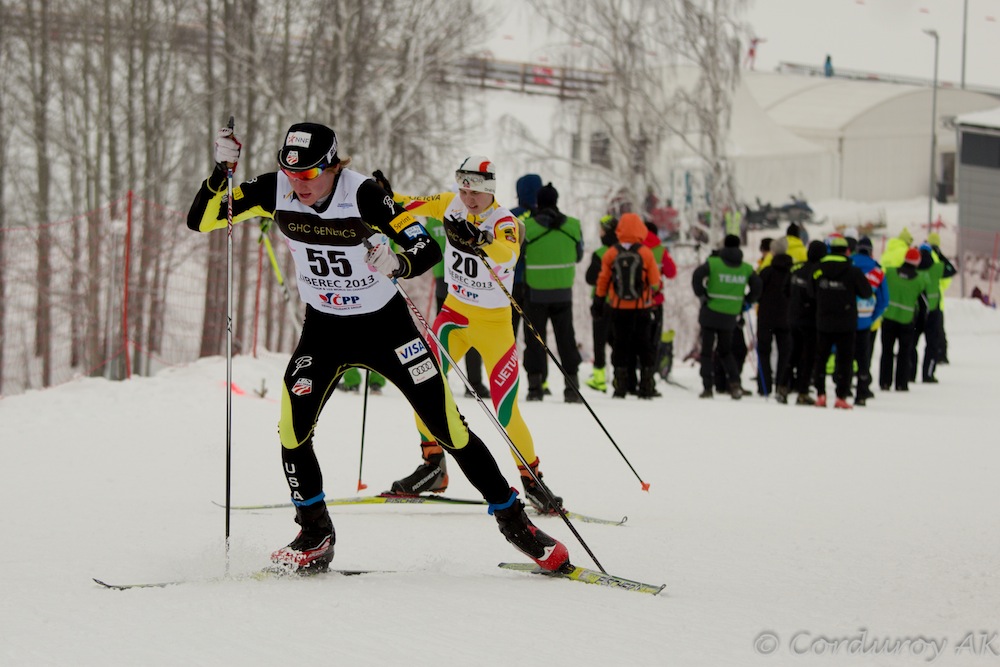
    On the men’s side, the history leading up to Bjornsen’s performance was almost a mirror of Caldwell’s. He, too, had been to the championships many times but never made the semifinals. Bjornsen, like Caldwell, has come on strong in the U.S. this year to establish himself consistently as one of the best in any given distance.

    With a 10th place at U23s, he feels he can confidently ski with the best in the world, too.

    “I was pretty excited,” Bjornsen said. “I’m feeling good right now, I keep surprising myself as the weeks go by and I keep getting fitter, it seems like. It finally feels like I have my finish speed back.”

    Bjornsen began the heats wearing bib 16 after qualifying with a time four seconds behind Federico Pellegrino’s (ITA) winning mark. To leave no doubt he belonged in the next round Bjornsen his quarterfinal by half a second.
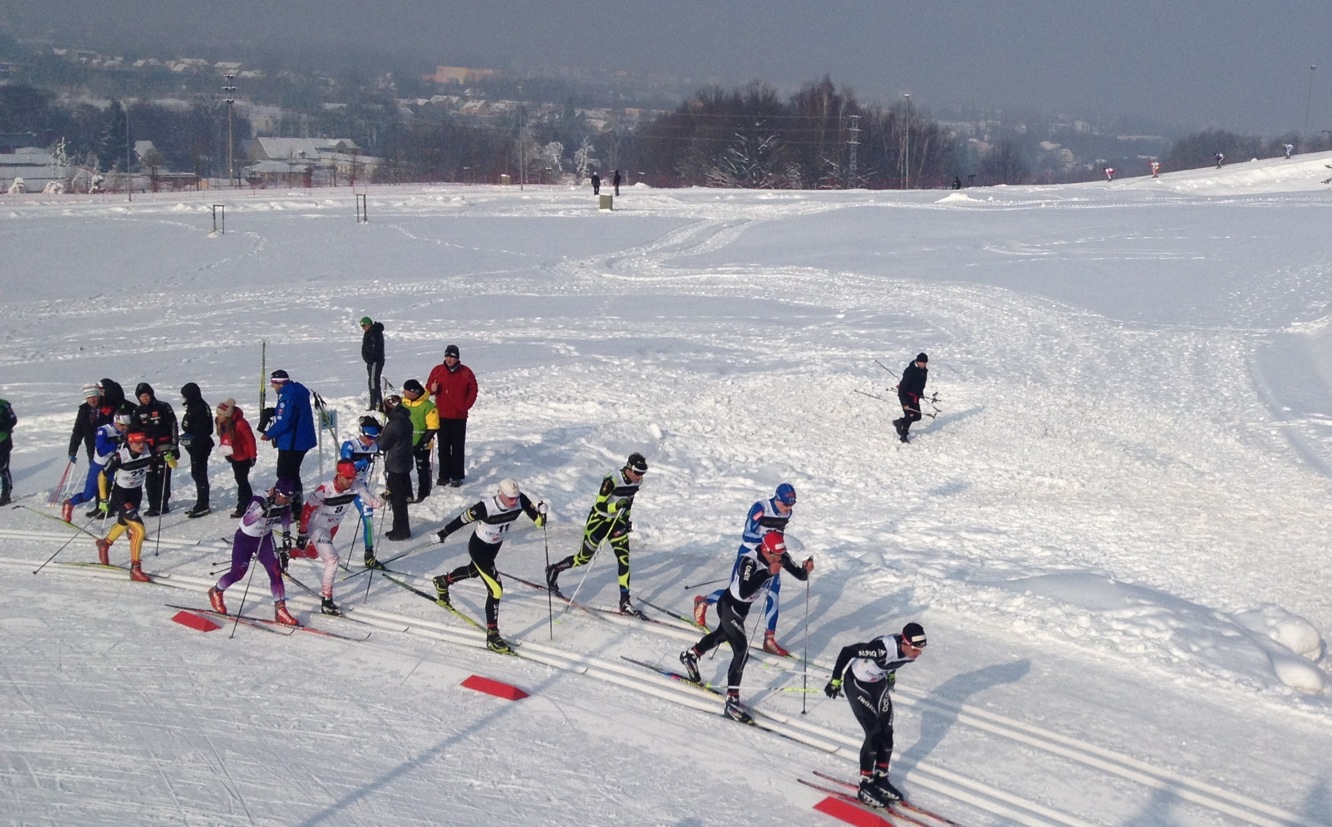
    “I just went into it with the mindset that I’ve been in three quarterfinals at these championships and I got knocked out there, and I wasn’t going to let that happen today,” he said. “I felt like I was in a good mindset, like I was going to go out there and fight.”

    It actually turned out to be a bit of a real fight, as some aggressive skiing by his competitors in the quarterfinal forced him to be aggressive right back. Many athletes commented on how important positioning and choosing the right track was to the outcome, and Bjornsen had to defend his right to his line.

    “I kind of got pushed around by an Italian kid who took my position, so I went over the top of the second hill really hard,” Bjornsen said. It happened twice, but the second time Bjornsen was ready. “He tried to ski right into me but [that] time I didn’t let him do it. I pushed back and it was really crucial.”

    Perhaps on the adrenaline of the jockeying, Bjornsen wanted to win the heat decisively.

    “I hammered out into front, just like, ‘I’m gonna do this, not gonna let this get away from me,’” he said. “So I pinned it the whole way to the finish. If it was at a US Nationals race I would have tried to be more conservative, but I think these races here you just have to hammer every heat you’re in. I threw up my arms; I was really excited. I think I won it by a solid five to ten feet. That was sweet.”

    He beat the eventual runner-up, Juho Mikkonen (FIN), by half a second.

    In the semis Bjornsen was matched up with Evgeniy Belov (RUS), who wound up third, and Tomas Northug (NOR), Sindre Skar (NOR), Alexander Wolz (GER) and Amund Bygland (NOR) — a group Fish described as “a really solid field.”

    Bjornsen started up the first steep climb in second postion, but got unlucky with positioning on the descent down the other side. Belov and Bjornsen both wanted the inside track and as they both moved to take it they lost the opportunity to double-pole off the top of the hill, and the lost momentum cost them at the bottom. Belov won the best line while Bjornsen was left on the outside, and Bjornsen finished fifth in the heat.

    “The guys like to push around out there, I don’t know what the best thing to do is,” Bjornsen said. “You’ve got to choose times where you think you can win that little — I don’t know — conflict, and sometimes skip it and maybe take the slower track if you have to.”

    Though slightly different positioning could have moved him to the final round, the 21-year-old was happy to have made it further than he had before and to learn over the course of the day that he could ski competitively with some of the guys who were in the final.

    David Norris (USA). Photo: Bryan Fish.
    David Norris (USA). Photo: Bryan Fish.

    “I feel like I could ski with any of the guys out there, so it’s sweet,” Bjornsen said. “Pellegrino and that Finnish kid, they were looking really good and Pellegrino is a great sprinter, but [Belov] I was skiing with in my semi so that was really cool.”

    After Bjornsen, Eric Packer (SMS T2) was the first American to just miss qualifying for the rounds. He was 34th, 2.68 seconds out of 30th. David Norris (Montana State University) was in 36th and Skyler Davis (SMS T2/USST), who was sick, was 53rd.

    Packer, who was 26th in the freestyle sprint in Turkey, was not quite happy with the result.

    “I’m definitely bummed to have missed out on qualifying,” he said. “I was hoping for a top-15, and I feel like I could have been in there on a good day, but just didn’t piece it together quite right. You have to be on form and ski the course well to qualify in this field. I knew the pace I needed to ski to qualify, and was on track until the last 45 seconds when the wheels started to come off.”

    The men’s course as particularly brutal. At 1.6 k it was slightly longer than the women’s, with an addition over the very top of the first climb to make a hard hill even harder.

    “The hills were definitely bigger than anything we’ve raced in a sprint domestically this year,” Packer said.

    To put the biggest climb in context, Fish said, “the guys were able to diagonal stride right up it, but candidly, it was the type of hill that I couldn’t, physically.”

    Men’s results

  • Canadians Left Wanting More After U23 Worlds Opener; Kromm Closest to Top 30 (Updated)

    Canadians Left Wanting More After U23 Worlds Opener; Kromm Closest to Top 30 (Updated)

    Patrick Stewart-Jones, Colin Abbot and Andy Shields drag some sleds on Jan. 14 in Ramsau, Austria. The Canadian Junior/U23 World Championships team spent about a week training there leading up to the event in Liberec, Czech Republic. (Photo: Heidi Widmer)
    Patrick Stewart-Jones (l), Colin Abbott and Andy Shields drag some sleds on Jan. 14 in Ramsau, Austria. The Canadian Junior/U23 World Championships team spent about a week training there leading up to the event in Liberec, Czech Republic. (Photo: Heidi Widmer)

    (Note: This recap has been updated with comments from Heidi Widmer.)

    Tuesday didn’t go exactly as the Canadians at the FIS Nordic U23 World Championships in Liberec, Czech Republic, had planned. Starting the week off with classic sprints, many had hoped to make the rounds. Out of five, none did.

    But several were close. Canadian team leader Lisa Patterson told Cross Country Canada that it wasn’t their best day of racing – but they were also going against the best in the world.

    “At the Under-23 World Championships you can’t get away with an average day,” Patterson said in the press release. “We are looking for some better results over the next two days when we hit the short distance freestyle events.”

    Marlis Kromm (AWCA) racing at the Sovereign Lake NorAm in Vernon, British Columbia, last season. (Photo: Jesse Winter/jessewinterphotography.com)
    Marlis Kromm (AWCA) racing at the Sovereign Lake NorAm in Vernon, British Columbia, last season. (Photo: Jesse Winter/jessewinterphotography.com)

    One of the team’s highlights, Marlis Kromm, 22, of the Alberta World Cup Academy finished 32nd in the women’s 1.3-kilometer sprint qualifier, just 1.06 seconds outside qualifying in the top 30. Kromm could not be reached for comment on Tuesday.

    Not far behind, teammate Heidi Widmer (AWCA) was 34th, 1.74 seconds from qualifying and 18.75 seconds behind top qualifier Elena Soboleva of Russia, who went on to win her quarterfinal, semifinal and final. Last year, Widmer qualified in 16th in the freestyle sprint at U23 World Championships in Erzurum, Turkey. She ended up 27th overall (while Kromm was 36th).

    “I definitely expected to qualify and had a goal of a top 12 result, so angry and confused are my first reactions,” Widmer wrote in an email. “I know that I am capable of these results and believe in my ability, so when it doesn’t pan out the way I had hoped, it is hard to understand why. I felt I skied the course the way I had intended and did everything in my power to have a good race, but I just didn’t have the fitness to back it up today.”

    Less than three weeks ago, Widmer, 21, suffered a mild concussion in the NorAm Junior World/U23 trials classic sprint. Her head was fine Tuesday, she explained.

    “I had better energy [while training] in Austria, but maybe that was more to do with the sunlight!” she wrote. “We had really good preparation leading into today’s competition and although I didn’t feel like I had my top form, I thought that I put together the best I was capable of, but came up short.”

    Andrea Lee, 22, of the Thunder Bay National Development Centre (NDC) placed 47th (+29.28) in her U23 debut.

    Of the Canadian men, Patrick Stewart-Jones (AWCA) posted the best result in 39th. He was 12.97 seconds behind top qualifier and eventual winner Frederico Pellegrino of Italy, and about five seconds out of qualifying.

    One of two Canadian men to race, Stewart-Jones, 21, wrote in an email that he was fortunate to avoid various ailments that have been affecting his team. Andy Shields (NDC-Thunder Bay) was unable to start because of sickness, and Russell Kennedy (AWCA) was also ill, according to Colin Abbott (Yukon Elite Squad), who was 47th on Tuesday.

    “Andy has either food poisoning or gastroenteritis,” Abbott explained. “He hasn’t eaten much in the last two days. Russell has been in bed for most of the past 4 days with a fever, cough and upset stomach.”

    “Despite being healthy I felt like I missing a couple of gears and just couldn’t get in the right zone for racing,” Stewart-Jones wrote. “I felt flat warming up and hoped I would feel better racing but unfortunately I didn’t.”

    With a mix of manmade and natural snow, the conditions were good and course suited him, he explained.

    “Unfortunately the sprint was the race I was really looking forward to,” Stewart-Jones added. “Now I’ll just try to prepare the best I can for the next two races. I suppose the pursuit is my best chance left for a good result.”

    Abbott, 22, who was 16.86 seconds behind the leader, explained in an email that he lost time in the final stretch.

    “I felt snappy and strong up the first big climb, unfortunately my body let me down in the last 300 meters,” he wrote. “While I was hoping to qualify today, this is my first European race experience and I’m trying to keep expectations on results to a minimum. I really have no idea where a good race would put me in the standings so I’m focusing on trying to have good races and figuring out what a ‘good result’ is later.

    “The 30km pursuit is the race I’m most looking forward to,” Abbott added. “I’m excited to race head to head with this field!”

    That said, he feels for his teammates.

    “It’s been hard seeing two of my team-mates unable to race here so far due to illness,” Abbott wrote. “Andy and Russell worked their butts off to make it here and I know that no matter how hard a race hurts, it always hurts more to not be able to race.”

    Women’s complete results | Men’s complete results

    International report

  • Saxton 14th in World Juniors Sprint to Lead Four Americans in the Top 30

    Saxton 14th in World Juniors Sprint to Lead Four Americans in the Top 30

    The American athletes at Junior World Championships in Liberec, Czech Republic, this week started things off with a bang in the classic sprint on Monday, qualifying four athletes for the heats. Two men and two women made it as far as the quarterfinals; Ben Saxton (F.A.S.T. Performance Training) and Logan Hanneman (University of Alaska, Fairbanks) headlined the day in 14th and 16th, respectively. Heather Mooney (Middlebury College) led the way for the U.S. in the women’s heats in 19th and Corey Stock (Dartmouth College) took 24th. For a team that didn’t qualify anyone at the championships last year, it was a big step up for the group overall.

    Ben Saxton (F.A.S.T. Performance Training) competing at U.S. Nationals earlier this month. His 14th place finish was the top American result at World Juniors in the classic sprint on Monday in Liberec, Czech Republic. Photo: Bert Boyer.
    Ben Saxton (F.A.S.T. Performance Training) competing at U.S. Nationals earlier this month. His 14th place finish was the top American result at World Juniors in the classic sprint on Monday in Liberec, Czech Republic. Photo: Bert Boyer.

    “I’m super excited about the result,” Saxton said. “A top-15 at World Juniors was definitely one of my goals and to do it emphatically and show I belonged there was really important.”

    U.S. Ski Team development coach and trip leader Bryan Fish was also pretty pleased with the first competition day in Liberec.

    “I thought today was a very strong start,” he said. “This is a huge step forward and they skied well. It was a pretty tough course with tricky conditions; we had some new snow this morning… So although it was a tricky day, it was definitely a good day.”

    Saxton, who turned heads at U.S. Nationals earlier this month by making the A-final in the classic sprint, had big ambitions for the opening event of the week. In the qualifying round he started in the spot 15 seconds in front of Hanneman, and it must have helped both athletes, as Hanneman qualified 10th and Saxton 11th, just four seconds off Vadim Korolev’s (RUS) top time in 2:54.

    “We rocked that qualifier,” Saxton said. “They read our names with a plus 4 seconds I did a double take and it was so cool!”

    In the quarterfinals Saxton and Hanneman met again. The sprint course consisted of three climbs followed by descents, with the last hill feeding into the finishing stretch. Saxton and Hanneman finished third and fourth in the heat and didn’t advance.

    “I skied like such a fool on that opening climb and cost myself a lot of energy, I’m still kicking myself for that,” Saxton said.

    For the athletes, the improvement in team results was cause for excitement as well as a desire for more. Fourteenth and sixteenth out of the best U20s in the world is not too shabby — it’s Hanneman’s best Junior Worlds result and Saxton’s first one on the books — but in another sign of how far the juniors have come, neither was perfectly happy with the results.

    “I’m not totally satisfied,” Saxton. “To show myself and the world that I was supposed to be there and then get bounced from the quarters really doesn’t sit well with me. I loved today and I’m not sad, but I know I’m capable of more and I’m disappointed I didn’t get to show it.

    “I think Logan kind of feels the same way, really wishing we could’ve thrown down our absolute best and not made certain decisions in our quarter.”

    In his writeup for the National Nordic Foundation, the non-profit providing a significant amount of funding for the Liberec trip, Hanneman essentially concurred.

    “Unfortunately, we both raced slightly chaotic races in the heat and failed to move on,” he wrote. “We were close though… This was a great showing for us. It showed that we were right in the hunt, but just need a little more experience when it comes to head to head racing.”

    Outside the top 30, Tucker McCrerey (University of Utah) was 42nd, less than four seconds out of the rounds, and Sawyer Kesselheim (Bridger Ski Foundation) finished 45th a fraction of a second behind McCrerey.

    “I was excited for all the races but the 10 k skate is the one I believe I can do the best in,” Kesselheim said. “This is my first trip to Europe for racing and I came into it not knowing where I stand. Given that, I am hoping to be top-20 in the skate race.”

    Men’s results


    Heather Mooney (Middlebury College) training with U23s Annie Pokorny and Annie Hart in Ramsau, Austria last week. Mooney was the top U.S. in the women's classic sprint. Photo: Eric Packer.
    Heather Mooney (Middlebury College) training with U23s Annie Pokorny and Annie Hart in Ramsau, Austria last week. Mooney was 19th in the classic sprint. Photo: Eric Packer.

    On the women’s side, Mooney came into the sprint with plenty of international experience to her name. She competed in the Youth Olympic Games in Austria last winter and at World Juniors in Estonia in 2011, and she took pride on Monday in no longer being intimidated by foreign turf and unknown competition.

    “I’m definitely excited with the day!” Mooney wrote in an email. “I knew if I had a perfect day I maybe could make the semi finals, so I just focused on the details I could control, my skis, my warm up, and skiing the course well, and it turned out pretty well.

    “There are definitely things to improve on, but I’m happy that I felt comfortable with the racing scene here, and didn’t feel like the idea of racing in Europe threw me off this time. It was cool to see USA qualify 4 people for the heats, we’re definitely contenders over here, so it’s fun see us holding our own. Proud to be an American!”

    Mooney described the sprint course as “really hard, definitely the hardest I’ve ever raced,” and likened it to Black Mountain in Rumford, Maine — “crazy, but it makes it comfortable I guess!”

    The classic sprint is one of her favorite events but she also has high hopes for the pursuit, and if she skis well there, the relay, too.

    Stock’s 24th was also a personal improvement from her first Worlds appearance last year, where she was 41st in the freestyle sprint. The Dartmouth freshman qualified in 25th and moved up a place in her quarterfinal.

    Sloan Storey (University of Utah) was 45th, 9 seconds out of qualifying, and Anika Miller (Payette Lakes Sports) finished 52nd, 11 seconds out of 30th.

    The athletes that didn’t make the heats said they were looking forward to the distance races throughout the rest of the week and felt more motivated to improve upon Monday’s result.

    Anika Miller (USA) skiing the qualifier. Photo: Bryan Fish.
    Anika Miller (USA) skiing the qualifier. Photo: Bryan Fish.

    Storey and Miller also made first-time World Juniors performances in the sprint. Storey considers herself to be more of a distance skier and was perfectly happy with her result.

    “Today was a pretty great day,” she said. “My result was 45th so I didn’t qualify for the heats, but I was fine with that considering sprinting isn’t my best event and these girls are insanely fast!”

    Miller was disappointed not to move on in the sprint, which she considers one of her stronger events, but is looking forward to another shot in the 5 k.

    “I didn’t quite perform to expectations today and I struggled a little bit out there, but I think I have a better chance to perform in a skate race so hopefully Wednesday will go well,” she said. “I am a much stronger and more consistent skate skier so hopefully I can represent the team well on Wednesday and put down a big result.”

    All told, she was excited to be part of the American group on a successful day.

    “So far we’re off to a good start as a team and I am very excited to see what team USA can bring to the table for the rest of the week because this is a very talented team,” Miller said.

    The individual improvements on Monday combined to make for a big step up for the U.S. showing as a whole, and the amount of international experience on this year’s team reinforced the idea that experience leads to success. According to Fish, fourteen out of the 22 juniors and U23s on the team have raced internationally before.

    “That’s the biggest thing,” Fish said. “Fourteen of these guys are returning in some fashion from international experience and the more they get that opportunity and experience the better they are. I attribute it to their preparation and a good camp, and they’re working well together.”

    Women’s results

  • Rookie Stewart-Jones Leads Canadians in 25th at Junior Worlds Classic Sprint

    Rookie Stewart-Jones Leads Canadians in 25th at Junior Worlds Classic Sprint

    Several junior women race head to head in Monday's 1.3 k classic sprint at the Junior World Championships in Liberec, Czech Republic.  (Photo: Liberec2013)
    Several junior women race head to head in Monday’s 1.3 k classic sprint at the Junior World Championships in Liberec, Czech Republic. (Photo: Liberec2013)

    (Note: This recap has been updated to include comments from Scott Hill.)

    In her first trip to Europe, Katherine Stewart-Jones of Ottawa’s Nakkertok ski club is still soaking up her hotel, let alone Liberec.

    Not long ago, she and the rest of the Canadian juniors trained 500 kilometers north in Ramsau, Austria, leading up to the Nordic Junior World Ski Championships in the Czech Republic.

    Now in Liberec for a week of racing at the highest-junior level, Stewart-Jones, 17, is absorbing her first Junior World experience. She started off strong Monday, leading all Canadians with a top result of 25th in the 1.3-kilometer classic sprint.

    After nabbing the last qualifying spot in 30th (20.66 seconds behind Russian Evgenia Oschepkova, who qualified first in 3:26.6), Stewart-Jones went on to place fifth in her quarterfinal.

    “I’m extremely satisfied with my first international level race and was not expecting to place that well,” Stewart-Jones wrote in an email, adding that the tough course played to her strengths in striding.

    Throughout the qualifier, she told herself every second counted.

    “When I finished, I knew it had gone well,” Stewart-Jones wrote. Heading into the quarterfinal, she aimed to move up from 30th.

    “The words that helped me focus were: anything can happen!” she added. “I had super fast skis in the quarterfinal and passed two girls so I was very happy about the wax technician’s job! The rest of the race I just tried to hold on to the third place girl. On the flat at the end I didn’t have much to give but I still finished 5th which placed me 25th overall.”

    She told Cross Country Canada her goal was to qualify, and her strategy for the heats was to ski even better. “I did that today,” she said.

    The Canadian junior women at the 2013 Junior World Championship opening ceremony on Monday night. From left to right: Katherine Stewart-Jones, Anne-Marie Comeau, Cendrine Browne, Maya MacIsaac-Jones, and Frederique Vezina. (Courtesy photo)
    The Canadian junior women at the 2013 Junior World Championship opening ceremony on Monday night. From left to right: Katherine Stewart-Jones, Anne-Marie Comeau, Cendrine Browne, Maya MacIsaac-Jones, and Frederique Vezina. (Courtesy photo)

    Outside of racing, Stewart-Jones was also excited about the team’s accommodations at Hotel Babylon. She described it as “a huge hotel with every kind of entertainment you could think of. What I really like about it is that almost all the ski teams are staying in our hotel, which makes it exciting because the racing atmosphere is not just present at the race site.”

    Just 3.7 seconds out of qualifying, Maya MacIsaac-Jones (Rocky Mountain Racers) placed 36th in her debut Junior Worlds. In an email, the 17-year-old described the course as “a lot of fun, with some tough climbs and a long finishing stretch.”

    Conditions were tricky, warm and with about 5 centimeters of fresh snow, but MacIsaac-Jones thanked Canada’s wax techs for good skis.

    “I was definitely hoping to qualify today, so my results were a bit disappointing,” she wrote. “However, it was great to get some international racing experience, and I think that this will motivate me to train even harder!”

    As for her take on Liberec so far, MacIsaac-Jones wrote: “This is my first time coming to the Czech Republic, and I am really impressed with how friendly everyone is. … I am really looking forward to the upcoming races, and it will be exciting to see what Canada can do. Watch out for our red and white racing suits!”

    After placing 41st in the qualifier, Frédérique Vézina of the Pierre-Harvey National Training Centre (CNEPH) wrote in an email that she told MacIsaac-Jones to write that last part about the suits. All in their first Junior Worlds, the four Canadian women in Monday’s sprint (including CNEPH’s Cendrine Brown, who was 42nd out of 68) were enjoying themselves.

    “Everything is going super well here in Liberec. With a team like ours, it cannot be boring!” Vézina, 18, wrote. “Today’s race went really well. I wasn’t expecting anything really, all I wanted was to have fun and push as hard as I can on the course. I felt surprisingly good for a distance specialist. Today was definitely a good preparation for Wednesday. I’m really looking forward to the distance races!!”

    Women’s results


    Turgeon Leads Canadian Men

    In the junior men’s 1.3 k race, Alexis Turgeon (CNEPH) was the lone Canadian to qualify in 30th (11.99 seconds behind Russian Vadim Korolev, the top qualifier in 2:54.81). Turgeon, 19, made it through by one-hundredth of a second over Sweden’s Karl Johan Dyvik in 31st.

    Considering himself lucky after what he considered a sub-par qualifier, Turgeon went on to place sixth in his quarterfinal for 30th overall. He wasn’t happy with his qualifier, in which he wrote he struggled to stay in control of his skis and stride up the hills, and wanted more out of his quarterfinal.

    “I was feeling tired and didn’t have the energy I usually have to push up the last hill and into the stadium,” Turgeon wrote after finishing the quarterfinal 9.6 seconds back in sixth. “Some days are better than others.

    “Overall I expected a lot more from today then a 30th place,” he added. “I felt like my sprint racing so far could have put me up in the A or B final. Goal for now is to be able to take my home racing level up in the international racing field! Looking forward to the skiathlon later this week.”

    At last year’s Junior Worlds in Erzurum, Turkey, Turgeon had a best finish of 31st in the skiathlon. He was 33rd in the skate sprint and 10th in the 4 x 5 k relay.

    The second Canadian man in 46th on Monday, Nakkertok’s Ezekiel “Zeke” Williams was slightly disappointed with his result even though classic sprinting isn’t his strength, he wrote.

    “I felt like I pushed hard but was maybe not quite as relaxed as I should’ve been,” Williams explained. “When I crossed the finish line I could tell that the guy who started behind me had made up some time on me. All in all, I think I didn’t quite race to my potential today.”

    As for the experience on the whole, Williams wrote that this was his first time in Europe.

    “I’m finding the whole experience to be really cool. The atmosphere around the event is really awesome too,” he wrote. “It’s cool when you’re out skiing your warm up and there are people from all over the world skiing with you. Even our lodgings, the Hotel Babylon, are an experience per se. If you’re not familiar with the place I totally recommend googling it – it’s ridiculous.”

    Also for Canada, Raphaël Couturier (CNEPH) and Scott Hill (Thunder Bay National Development Centre) placed 51st and 58th, respectively, out of 81 finishers.

    “Although I am not usually the strongest sprinter, I think this course suited me well with three significant hills on the course that were all good for striding,” Hill wrote in an email. “The finishing straight was also very tough with it starting at the top of the last uphill and it being very long, probably the longest finish I have ever skied on.

    “I think [my qualifier] was a better race than I give myself credit for but when I was in the last third of the field and 25 seconds off the winner, it is hard to be satisfied,” he added. “It was my first international race and I still have one more year as a junior so overall I am happy with the race especially since I was feeling good too. … If everything goes as planned I will be hoping for a top thirty finish [Wednesday in the 10 k skate].”

    Men’s results

    International report


  • Notes and Quotes: Liberec World Cup

    Oh Liberec, oh Liberec, before we say so long … here’s what didn’t quite fit into last weekend’s recaps of the World Cup classic sprints and team sprints in the Czech Republic. Disclaimer: It’s Canadian- and female-heavy.


    An excited Dasha Gaiazova at the women's 0.85 k World Cup classic sprint in Liberec, Czech Republic. The Canadian was fourth for a career best and narrowly missed the podium in a photo finish. (Chandra Crawford photo)
    An excited Dasha Gaiazova at the women’s 0.85 k World Cup classic sprint in Liberec, Czech Republic. The Canadian was fourth for a career best and narrowly missed the podium in a photo finish. (Chandra Crawford photo)

    On World Cup prep:

    “We were in Oberwiesenthal [Germany] last week racing an OPA Cup just to get the cobwebs out and get rid of the jetlag, which I think really helped. We all felt pretty terrible last weekend so it was nice to come here and feel good and, having done the race last weekend, feel like we were ready to go on the World Cup. – Perianne Jones, Canadian National Ski Team (CNST), 9th in classic sprint for World Cup individual best


    On tactics:

    “[In my quarterfinal] I made sure I was kind of behind everyone on the big downhill and I made sure to get my own track coming up the last hill and was kind of made a bit of a move there to pass most people because it was kind of hairy. With just one lap, there’s a big corner at the bottom of the big hill and everyone would kind of get clumped together then you shoot right up into an uphill. It was interesting.” – Jones


    On kicking off the New Year with a personal best:

    “I think it’s a good start after Christmas. You’re always a little unsure, when none of us did the Tour, just coming here and racing, we’ve been away from it for a little while, but it’s good to have a good first race back and now we can really look forward to the rest of the season. There’s a bunch more classic sprints, World Championships is a classic sprint so I’m pretty pumped about that.” – Jones


    On the big picture:

    “The World Cup is so competitive that we have to be excited with improvement and stay focused on making small gains.” – Ida Sargent, U.S. Ski Team (USST), 7th in team sprint with Sadie Bjornsen

    “I thought that I raced pretty strong and I was able to catch back every round a few spots and stay closer to the front. Unfortunately we missed advancing to the final by one-hundredth of a second.” – Dasha Gaiazova (CNST), 11th in team sprint with Jones

    “It was bad luck today, but a very good weekend for the team. We have good bodies and good speed so the girls will build a lot of confidence from the results here.” – CNST Women’s Coach Eric de Nys (as told to Cross Country Canada)


    On team-sprint tempo:

    “The pace was pushing the entire time. Because it was such a short course, people were going hard the entire way.The final leg was of course the hardest, and teams began to really hit top gear. – Sadie Bjornsen (USST), 7th with Sargent


    On team momentum:

    Alex Harvey tweeted a photo of the skiing in Praz de Lyz on Saturday. (Twitter.com/alex_harvey)
    Alex Harvey tweeted a photo of the skiing in Praz de Lyz, France, on Saturday. (Twitter.com/alex_harvey)

    “In general, we have just such good momentum for the whole team. Everybody’s working so well together, coaches are super invested in all the athletes; it’s just a fun group to be part of and we just are all feeding off each other’s positive energy and elevating each other. It’s always nice to see the boys do so well last week in the Tour de Ski and sort of feed off that success as well.” – Gaiazova (after career-best 4th in Saturday’s classic sprint)


    On conditions:

    “[Friday during training] it was so crappy and so windy, and the tracks were terrible. [Saturday], even though it maybe didn’t look great on TV, it was a huge step up. It was night and day. The tracks were way better and it wasn’t nearly as windy so we felt pretty lucky when we got out there.” – Jones


    On taking a three-day vacation in Hurghada, Egypt:

    “I don’t think I’ll ever go back. It was a little bit of a sketchy place but it made for a pretty interesting trip. It was fun.” – Lenny Valjas (CNST), 10th in classic sprint


    On where the rest of the Canadians were:

    “Alex [Harvey] just got to Praz de Lys [France]. He’s doing some training there and Devon [Kershaw] will be there shortly, too. Everyone’s slowly meeting in Praz de Lys. We’re all gonna be there on Monday; the whole team will be back together. Right now [Harvey, Kershaw and Ivan Babikov] decided to skip this and focus on training.” – Valjas (on Saturday)

  • Bad Luck Halts American Men in Liberec Semifinals

    Bad Luck Halts American Men in Liberec Semifinals

    Simi Hamilton (USA) competing in the Quebec City team sprint last month. He and Andy Newell were __th in Liberec, Czech Republic, on Sunday.
    Simi Hamilton (USA) competing in the Quebec City team sprint last month. He and Andy Newell were 13th in Liberec, Czech Republic, on Sunday.

    Team sprint strategy on Sunday in Liberec, Czech Republic, seemed to be pretty standard: start slowly, put minimal effort into the middle and ramp up the pace in the last few laps. In the men’s semifinal round the tactics were no different for the first few legs of the relay, Simi Hamilton and Andy Newell were able to sit in third or fourth and keep the U.S. with the leaders.

    “Andy and I were having a great semifinal right before I tagged off to him for the last leg,” Hamilton said in an email from Liberec.

    It was at that critical stage, as the pace began to increase, that Hamilton got unlucky. Just before the last exchange Matias Strandvall (FIN II) caught his ski on a V-board and went down right in front of Hamilton, causing the American to spin around and lose time on the leaders.

    “I did my best to avoid going down with him, but unfortunately my skis tangled underneath him and I got spun 180,” Hamilton said. “I did end up saving myself from going down, but we probably lost about five-plus seconds on the leaders once I could get myself sorted out.”

    Such is sprint racing. Newell was able to scramble back onto the pack and re-pass the teams that had moved ahead of Hamilton to bring the U.S. to fifth place at the finish, only 1.6 seconds behind the winner in the first of two semifinals.

    “I thought our heat finished pretty fast,” Newell said. “Simi got spun around a little bit so we lost a little time on the last tag, [but] I think we both felt pretty good.”

    Only two teams auto-advance to the finals in team sprints and six lucky losers move on between the two heats. Before the second heat finished the Americans thought they had a shot at being one of them, but the second round ended up being 10 seconds faster than the first. Perhaps benefitting from the knowledge of the first heat’s splits, the top eight teams from semifinal two moved on to compete for the podium and Newell and Hamilton ended their day early.

    “I thought we were looking good for making the finals but it just didn’t happen,” Newell said. “In the second semi there were two teams from Norway and two from Germany. Any time you get that many pairs you know they’re going to push the pace pretty hard.

    “But I think we both felt pretty good so that’s a good sign.”

    Hamilton agreed. “It was for sure a disappointing and unlucky end to our day, but I think we skied well and we’ll just be more fired up for the next team sprint in Sochi,” he said.

    Just how important is it to be in the second semifinal of a team sprint? It’s hard to say. This time, because the 1.7 k course was longer than usual, Newell felt it mattered a great deal. Team sprints used to work such that more teams from each heat automatically advanced and there were fewer lucky losers. Since FIS adopted the present rules, Newell thinks the longer courses have made the format even more dogged in the early heats, contrary to the original intent of the change.

    “I liked it better when they used to move on four from each heat and have only two lucky losers,” Newell said. “On a day like today where it’s such a long race, the second semi was getting all kinds of splits. At first they were running ten seconds down and they’re getting all that information from their coaches, so by the time they’re on their last lap they know that and they’re able to push the pace more and more.”


    While Hamilton and Newell ended their day earlier than desired, the second American team of Skyler Davis and Erik Bjornsen racked up team sprint experience.

    The duo finished 14th out of 14 teams in the first semifinal, 52.2 seconds off the winners. Bjornsen anchored and was focused simply on maintaining contact with the leaders for as long as he could. When the team lost the pack in the third leg, Bjornsen produced an impressive second-fastest fourth leg split in an attempt to put them back in the race.

    “I almost beat the Polish dude (Pawel Klisz) who started about five to ten seconds in front of me,” Bjornsen said. “We had a good sprint to the finish. He got me though, I had spent all my energy trying to catch him.”

    Bjornsen has brought his sprinting and distance skiing along well this year, and his competency in both disciplines suit him well in team sprints like Liberec where three segments on the 1.7 k course adds up to over 5 k.

    “I really like the format,” Bjornsen said. “I like it because it is a lot like a distance race, so I think it really favors the sprinters that can distance ski.”

    World Cup action resumes next weekend in La Clusaz, France, with a 10/15 k mass start classic on Saturday and 4 x 5 / 4 x 7.5 relay on Sunday.

    Final results.


  • Rested and Ready, Canadians All Qualify, Gaiazova Nearly Makes Podium in Liberec

    Rested and Ready, Canadians All Qualify, Gaiazova Nearly Makes Podium in Liberec

    An excited Dasha Gaiazova at the women's 0.85 k World Cup classic sprint in Liberec, Czech Republic. The Canadian was fourth for a career best and narrowly missed the podium in a photo finish. (Chandra Crawford photo)
    An excited Dasha Gaiazova at the women’s 0.85 k World Cup classic sprint in Liberec, Czech Republic. The Canadian was fourth for a career best, narrowly missing the podium in a photo finish. (Chandra Crawford photo)

    The Canadian women went to Oberwiesenthal, Germany. Lenny Valjas went to Egypt. Wherever their respective travels took the Canadian World Cup Team, it worked, at least for the sprinters on Saturday.

    Perianne Jones led the three-person women’s squad in the qualifier, posting the seventh-fastest time in the World Cup classic sprint in Liberec, Czech Republic. For Jones, it was by far a personal best.

    “All my qualifiers before this year have been by the skin of my teeth,” Jones said with a laugh. “So I’m happy to be consistently in there and really in the mix instead of the last one or two.”

    But it got better for the Canadians: Dasha Gaiazova qualified in 10th, Valjas advanced in 16th and Crawford made it through in 27th. All four of the Canadians that raced in Liberec – including Valjas, who finished his first Tour de Ski last Sunday – made the heats. Then Jones, Gaiazova and Valjas advanced to the semifinals to secured top-10 results.

    From there, Gaiazova carried the most momentum, finishing neck-and-neck in the semifinal with eventual overall winner Mona-Liisa Malvalehto of Finland, who won the semi in a photo finish. Gaiazova joined her in the final, where she latched onto Malvalehto out of the start.

    Running in second for the first half of the women’s 850-meter race, Gaiazova attempted to hold off Poland’s charging Justyna Kowalczyk, but lost some speed when Kowalczyk jumped ahead of her in the track before the last hill. With Malvalehto skiing away to the victory, Gaiazova, Kowalczyk and Norway’s Maiken Caspersen Falla battled for second, where Kowalczyk won the three-way photo finish. All three came in 1.7 seconds behind Malvalehto (who won in 2:03.8), with Falla edging Gaiazova for third.

    So close to a podium, Gaiazova said on the phone she was simply glad to be in contention in her signature event.

    “It was a short course and you had to go all out from the start,” Gaiazova said of the less-than-one-kilometer course, shortened from 1.7 k after the coaches voted Friday night.

    “At the end, it’s just sort of like a drag-race double poling,” she said, adding that she didn’t think in the final moments, she just went for it. “I did the best I could and I’m definitely happy.”

    Not far down the results list in ninth, Jones also notched a World Cup individual best. She was second in her quarterfinal to Germany’s Hanna Kolb and fifth in her semifinal – the same one Gaiazova and Malvalehto won.

    Jones said she scrambled after bad starts in both the quarterfinal and semifinal. While she made up for it drafting and passing others on the big downhill in the first heat, she failed to pick off as many people in the semi.

    “I tried to make my same move coming up the last hill like I did in the quarterfinal, but it wasn’t enough to move on to the final,” Jones said. “I was happy with it, but I know what I need to work on now and that is my starts.”

    As for Gaiazova, who’s top-six secured a trip to the 2014 Winter Olympics, Jones said she was fun to watch.

    “Dasha skied tactically super well the whole day and she’s in great shape,” Jones said. “It was really exciting to see her be so close to a podium. We were really cheering hard for her.”

    Valjas ended up 10th in the men’s 1.6 k sprint after advancing out of his quarterfinal in fourth with one of the fastest times. The lone Canadian man racing, Valjas went on to place fifth in the semifinal.

    “I felt the final hill,” he said. “I could feel the legs just didn’t have the same snap or speed … There’s nothing I can change. I can only go as fast as my body would let me. Today I was just out there having fun and seeing how fast I could go.”

    Earlier in the week, Valjas took three days off completely at an all-inclusive resort in Hurghada, Egypt, where he traveled solo. There, he met up with the women’s alpine technical team and said he mostly “sat tanning [and] tried to recover” after placing 23rd in the Tour, an overall result he was pleased with.

    “I really didn’t know what to expect for this race and I’m happy with making the semi and cracking the top ten just after the Tour,” he said.

    In both his heats, Valjas struggled to find an open lane to test his finishing kick. He skied right behind Germany’s Tim Tscharnke into the last stretch of the semifinal, but Tscharnke moved ahead and Valjas dropped to fifth.

    “We picked the same lane and I don’t know why, but I kept going to the left lane up the hill, which is the outside when you come into the finish,” Valjas said. “It’s just way further. Maybe I could’ve done something tactically better. … I couldn’t keep up with them on the last uphill anyways so it didn’t change too much.”

    In an email, Crawford, who was 29th overall, wrote that she was inspired by her teammates’ performances despite feeling a little off in her first World Cup in nearly a month. She was sixth in her quarterfinal, 7.6 seconds behind Kolb as the heat’s winner.

    “I feel sluggish like I usually do coming off a block without racing,” Crawford wrote. “It looks like it will take the usual race into shape plan. … Couldn’t quite dance around and make moves as I pleased – the main move I wanted to make being closing the gap to the group.”

    In the scheme of things, this race – with several Tour competitors sitting it out – wasn’t the end-all of the season. Most of the Canadian women, for instance, had their sights on the classic sprint at World Championships Feb. 21 in Val di Fiemme, Italy.

    “My teammates Peri and Dasha are classic sprinting like complete bosses so I’m looking forward to our prep together this next month,” Crawford wrote.

    The three spent the last few weeks of December training at home in Canmore, Alberta, before flying to Oberwiesenthal in early January for Alpen Cup races (a classic sprint and 5 k freestyle). According to Canadian women’s coach Eric de Nys, the races were tune-ups before resuming the World Cup schedule.

    Reacting to the results in their first race back, de Nys wasn’t surprised, but rather somewhat relieved given the nature of sprinting.

    “I think sprinting is still so volatile, especially on today’s course,” he said. “We have three high-quality women that can go to the podium any day … all of our cards have to fall the right way.”

    One shot around an 850-meter course made it even tighter, but de Nys advocated the shorter sprint. After previewing the 1,700-meter course Friday, he estimated it would take the women between upwards of four minutes to complete. In his opinion, anything over three minutes wasn’t a true sprint.

    “If you want to talk about a sprint today, if you’re an 800-meter runner for a woman, it’s about 1:55, I think, and today we were 2:04,” de Nys said. “Now we’re starting to be in the right ballpark of time to really call it a sprint, if you want to call 800-meters a sprint.”

    Like most of the Canadians, Jones welcomed the news of a shorter course. The women first skied in Liberec on Friday with a typical pre-race workout at Zone 3.

    “It took us six minutes to do two laps,” Jones said with a laugh. “So we’re like, ‘OK this is gonna be a really long sprint.’ At the coaches’ meeting, they decided to shorten it, which was pretty awesome for everyone. Even the men’s race looked a little like a distance race on TV … I think it’s good to keep sprints sprints.”

    Valjas felt similarly after the men’s 1.6 k course took about 3 ½ minutes.

    “The sprint, I think, should be really a lot shorter,” he said. “The course yesterday that they had for the training was a lot longer so this morning they cut it … it would’ve been four minutes yesterday.”

    On Sunday, Gaiazova and Jones will pair up in the team sprint and Valjas will enjoy the day off.

    “It will be a really, really exciting race I think,” Jones said. “All the teams here are pretty close and anything can happen. Team sprints are just so crazy that way. … They’re my favorite.”

    Women’s results | Men’s results