From the FasterSkier archive — posts syndicated from athletes’ and coaches’ own blogs between 2004 and 2012, kept online as published. Current coverage is at fasterskier.com.

Tag: Liliane Gagnon

  • Diggins Podiums in Lahti as Karlsson Wins 10 k Classic

    Diggins Podiums in Lahti as Karlsson Wins 10 k Classic

    This coverage is made possible through the generous support of Marty and Kathy Hall and A Hall Mark of Excellence Award. To learn more about A Hall Mark of Excellence Award, or to learn how you can support FasterSkier’s coverage, please contact info@fasterskier.com.

    Jessie Diggins (USA) on her way to third place in the 10 k Classic Individual Start in Lahti, Finland. (Photo: Authamayou/NordicFocus)

    As Jessie Diggins climbed the final hills in Lahti on Sunday, she could hear something unusual rising above the crowd noise. Scattered along the course were hand-made signs held by Finnish fans and young skiers. Many carried the same simple message: “Thank you, Jessie.”

    For Diggins, racing through what has increasingly become a farewell tour of World Cup venues that have defined her career, the moment carried emotional weight. Lahti has not always been a place where the American felt the course played to her strengths, particularly in classic technique. But on Sunday, she delivered one of her most meaningful performances there, skiing to third place in the women’s 10-kilometer classic interval start.

    “There were so many people out on the course with signs saying ‘Thank you, Jessie,’ and it was really emotional in the best way,” Diggins said afterward. “It was incredibly touching. Seeing all the little kids in glitter after the race was just really special.”

    Frida Karlsson (SWE) on her way to the 10 k Classic win in Lahti, Finland. (Photo: Authamayou/NordicFocus)

    Sweden’s Frida Karlsson powered to the victory in 25:57.6, edging teammate Linn Svahn by just over four seconds. Diggins followed in third, 6.2 seconds behind the winner, securing the 90th World Cup podium of her career — a milestone that came in her 375th World Cup start.

    The podium also represented a breakthrough for Diggins in a discipline she has spent years working on. Despite her long list of accomplishments, Sunday marked her first World Cup podium in a standalone 10-kilometer classic interval start.

    “The Lahti course hasn’t always suited my strengths in classic skiing,” Diggins said. “So it felt really cool to pull it together a bit more today.”

    The result allowed Diggins to maintain control of both major season-long competitions. With only three World Cup stops remaining this winter, she continues to lead Sweden’s Moa Ilar by 264 points in the Overall World Cup standings and by 188 points in the Distance standings, positioning herself strongly in the race for the sport’s coveted crystal globes.

    Moa Ilar (SWE) and Linn Svahn (SWE), (l-r) reflecting at the finish. (Photo: Authamayou/NordicFocus)
    Svahn Sets the Early Benchmark, Karlsson Finishes the Job

    With the interval format — one athlete starting every 30 seconds — stretching the field across the Lahti course, the first major time to chase appeared almost immediately.

    Sweden’s Linn Svahn, starting with bib 5, was among the earliest contenders onto the course and quickly posted the fastest times through the early checkpoints. Known primarily as one of the World Cup’s dominant sprinters, Svahn skied aggressively over the opening kilometers and established the benchmark that much of the field would spend the next hour chasing.

    Her time held atop the standings as racer after racer attempted to match it.

    Later in the race, however, another Swede began to close the gap. Frida Karlsson, wearing bib 40, remained within seconds of Svahn through the intermediate checkpoints before edging ahead in the final kilometers.

    “I was just trying to stay in my own skiing,” Karlsson said afterward. “I heard it was between me and Linn, and I was super excited to get that fight.”

    Karlsson ultimately crossed the line in 25:57.6, securing the victory by 4.1 seconds over her teammate.

    The win came after a brief illness, which prevented her from competing in the Olympic 50 k, but Karlsson said she was eager to keep racing despite the setback.

    “I was sick after the Olympics, but I was really excited to keep racing and just do what I know best,” she said. “So I’m super glad to be here.”

    Diggins, starting shortly after Karlsson, kept herself in contention throughout the race, skiing within striking distance of the Swedish pair at each checkpoint before finishing 6.2 seconds back in third place.

    Linn Svahn (SWE) on her way to second place. (Photo: Authamayou/NordicFocus)
    Three Different Approaches to the Same Race

    The split times revealed three distinct pacing strategies among the podium finishers.

    Svahn, starting fifth, set the tone early. She posted the fastest time through the opening 1.1 kilometers and maintained the lead at the 3.4-kilometer checkpoint, immediately putting pressure on the rest of the field as they left the start gate.

    Karlsson, starting later in bib 40, remained just seconds behind through the early checkpoints, skiing a controlled opening before gradually closing the gap. By the middle of the race, she had moved into contention, and over the final kilometers, she proved strongest of all, ultimately pulling ahead to secure the victory.

    Diggins, meanwhile, delivered perhaps the most evenly paced effort of the three. She remained within striking distance of the leaders at every checkpoint — fifth at 1.1 kilometers, third by 3.4 kilometers, and still in podium position through the final lap.

    That steadiness proved decisive in the final standings. While the two Swedes battled for the win, Diggins’ consistent pace allowed her to secure third place and another important podium in the fight for the season-long crystal globes.

    Jessie Diggins (USA) sprints for the finish line. (Photo: Authamayou/NordicFocus)
    Diggins’ Classic Progress

    Diggins’ podium also reinforced one of the season’s quieter developments: the continued evolution of her classic technique.

    For much of her career, the American’s greatest moments have come in skating events, where her aggressive pacing and powerful finishing speed often prove decisive. But this season she has shown remarkable consistency in classic distance races, finishing in the top ten in every classic distance event on the World Cup calendar.

    Conditions in Lahti — warming temperatures and increasingly soft tracks — placed an additional premium on ski preparation, something Diggins was quick to acknowledge after the race.

    “I had great skis, which is a huge part of the equation, especially when the conditions get slushy,” Diggins said. “This podium really belongs to the team. I’m so grateful for all the hard work they put in.”

    Rosie Brennan (USA) on her way to 12th place. (Photo: Authamayou/NordicFocus)
    Brennan Continues Return to Form

    A bit further down the results list, fellow American Rosie Brennan continued a gradual return toward form after a long battle with illness that has affected much of her season.

    Brennan finished 12th (+38.6) in Lahti, a result that reflected both solid skiing and a cautious approach early in the race.

    “This whole process has really been a game of time,” Brennan said. “There have been many moments when I’ve wondered if I’ll ever feel normal again in my life. But the last three days are the most normal I’ve felt racing since December 2024.”

    The Lahti course, known for its steep climbs and technical demands, offered a test of efficiency in classic technique — a challenge Brennan felt she handled well.

    “Lahti requires really good technical skiing,” she said. “I felt like if I could relax and focus on my classic technique, that would give me the best chance.”

    Kendall Kramer (USA) working her way up one of the many Lahti climbs. (Photo: Authamayou/NordicFocus)
    Kramer Finds Lessons in the Lahti Hills

    For American Kendall Kramer — 42nd in 27:40.8 (+1:43.2) — the Lahti race presented a different kind of challenge: starting first.

    Wearing bib 1, Kramer had the advantage of pristine tracks before the course began to break down as temperatures warmed. But the early start also meant racing without reference splits from the rest of the field.

    “I was actually okay starting with bib 1 today, given the state of the tracks,” Kramer said. “They tend to break down as the race goes on, and the corners can get icy, so it was nice to have cleaner conditions early.”

    Without other athletes on course to gauge pacing against, Kramer said the race became more about skiing freely and trusting her own effort.

    “Racing without reference splits definitely makes pacing tougher, but at the same time it lets you ski freely and focus on your own race.”

    The steep Lahti climbs also highlighted the technical demands of classic skiing at the World Cup level.

    “The punchy hills were fun because I could really bound up them, which is something I haven’t done much in World Cup racing so far,” Kramer said. “But the sections where it turns into pure power striding showed me I still have a lot to work on.”

    Despite the challenges, Kramer described the experience as valuable for understanding the technical standards required to compete consistently at the highest level.

    “I’ve learned so much from racing here this season,” she said. “At the World Cup, every strength and every weakness gets highlighted, and that really helps show what to work on heading into the summer.”

    Julia Kern (USA) catches a rest from both the climbs and the sunlight. (Photo: Authamayou/NordicFocus)
    Kern Heading Home Early to Recover

    Julia Kern, who finished 51st — 28:11.4 (+2:13.8) — today, said she will return home early from the World Cup circuit as she continues working through health issues that have lingered since the Olympic races.

    “I’ve been battling my body on various fronts since the Olympics,” Kern said in a team media statement. “One of my strengths is showing up and continuing to try and believe despite the challenges, while also being patient and smart.”

    Kern added that she will take additional time to recover while seeking answers about her condition, with hopes of returning to competition at the Stifel World Cup Finals in Lake Placid later this month.

    “Right now, my body needs more time to recover and is in search of answers, so I’m headed home early with the hopes of being in a place to race in Lake Placid.”

    Lauren Jortberg (USA) and Katherine Weaver (CAN), (l-r) charge for the line. (Photo: Authamayou/NordicFocus)
    Jortberg Gets a Front-Row Look at Karlsson’s Pace

    For American Lauren Jortberg — 55th in 28:32.7 (+2:35.1) — the Lahti race offered a unique opportunity to measure herself against one of the sport’s best.

    Early in the race, Jortberg found herself skiing behind Sweden’s Frida Karlsson for several kilometers as the eventual winner was completing her second lap while Jortberg was still on her first.

    “I skied with Frida for about three kilometers, which was really cool,” Jortberg said. “She’s obviously a beast, and it was cool to hang with her and get a taste of what that pace actually feels like.”

    Jortberg said the experience offered valuable insight into the demands of racing a 10-kilometer interval start at the World Cup level, where pacing often means pushing near maximum effort from the start.

    “Ten-k pacing on the World Cup is basically as hard as you can go the whole way,” she said. “It’s about learning how to navigate that kind of effort and still ski your own race.”

    She added that the race reinforced both the progress she has made in classic technique and the areas she hopes to continue developing as she gains more experience at the international level.

    “I’m really proud of how my classic skiing is coming along,” Jortberg said. “There’s still a lot to work on, but it was definitely a good first start in a distance race.”

    Jortberg said she hopes to carry the fitness and lessons from Lahti into the next stop on the World Cup circuit in Drammen, Norway.

    Emma Albrecht (USA) giving it everything she can all the way to the finish. (Photo: Authamayou/NordicFocus)
    Albrecht Sees the Margins Up Close

    Further back in the start order, fellow American Emma Albrecht — 58th in 28:50.7 (+2:53.1) — experienced firsthand just how tight the margins can be in World Cup distance racing.

    “The tight margins were shown by skiers finishing at similar times,” Albrcht said after the race. “For me, I was not passed, and I did not pass anyone. Which meant the skiers in front and behind me were skiing at a similar pace to me.”

    Like Kramer, Albrecht said the steep Lahti climbs emphasized the technical demands of classic technique, particularly the efficiency required to stride uphill without losing grip.

    “The uphill sections are the most technical and demanding here,” she said. “The climbs in Lahti are steep, and striding up efficiently requires really good technique to avoid slipping.”

    For Albrecht, the race served as a clear reminder of the areas she hopes to refine moving forward.

    “One of my biggest takeaways is that I want to keep working on my striding technique and get better at adjusting my tempo based on the terrain.”

    Dariya Nepryaeva (AIN) and Novie Mccabe (USA), (l-r) come to the line. (Photo: Authamayou/NordicFocus)
    Other North Americans in the Field

    Novie McCabe raced her way to 43rd in 27:45.0 (+1:47.4) in the 64-skier field.

    For Canada, Jasmine Drolet led the team in 41st place with a time of 27:39.8 (+1:42.2). Liliane Gagnon finished 46th in 27:56.4 (+1:58.8), and Katherine Weaver placed 59th in 29:00.9 (+3:03.3). Teammate Olivia Bouffard-Nesbitt, who had been listed on the start sheet, did not start the race.

    Take a bow, Jessie Diggins (USA) . (Photo: Authamayou/NordicFocus)
    The Season’s Final Push

    Sunday’s race in Lahti brought us even closer to the end of the season, now with only two sprint races and three distance races remaining until the sport’s biggest prizes will ultimately be decided.

    For Diggins, the third-place finish represented more than another podium in an already historic career. It also reinforced the remarkable consistency that has defined her season. With top-10 finishes in every classic distance race this winter, she has transformed what was once considered a relative weakness into one of the foundations of her bid for both the Overall and Distance crystal globes.

    Three stops remain on the calendar: the classic city sprint in Drammen, Norway, the iconic 50-kilometer race at Holmenkollen in Oslo, and the Stifel World Cup Finals in Lake Placid, New York.

    For Diggins, those races now carry both competitive stakes and emotional significance. As the American continues what has increasingly felt like a farewell tour across the World Cup circuit, the crowds that gathered along the Lahti course on Sunday offered a glimpse of how much her career has meant to fans of the sport, not just in the United States, but all around the world.

    And as Diggins pushed across the final climbs toward the stadium — signs waving, glitter-clad children cheering from the side of the course — she did what she has done so often over the past decade: she kept fighting for every second and left everything she had, once again, on the course.

    Lahti Women’s 10 k Classic RESULTS


    Love Stories Like This? Help Keep Them Coming.

    Feature stories like this one take time, access, and care to produce. If you value thoughtful storytelling and independent ski journalism, please consider becoming a Voluntary Subscriber. Your support directly fuels the work we do to cover the people, places, and moments that make our sport special.

    Join the FasterSkier community!


    Linn Svahn (SWE), Frida Karlsson (SWE), and Jessie Diggins (USA), (l-r) share the 10 k Classic podium in Lahti, Finland. (Photo: Authamayou/NordicFocus)
  • Sundling Returns to Win Lahti Sprint as Crystal Globe Battle Tightens

    Sundling Returns to Win Lahti Sprint as Crystal Globe Battle Tightens

    This coverage is made possible through the generous support of Marty and Kathy Hall and A Hall Mark of Excellence Award. To learn more about A Hall Mark of Excellence Award, or to learn how you can support FasterSkier’s coverage, please contact info@fasterskier.com.

    Jonna Sundling (SWE) during qualification in Lahti, Finland. (Photo: Authamayou/NordicFocus)

    The World Cup season returned to Finland this weekend, closing a circle that began more than three months ago in Ruka. In the time since Olympic teams were selected, dreams realized or deferred, experience forged, and farewells offered week after week as the long winter wears on. If the stakes in Lahti feel slightly lower than they did earlier in the season, they are tightening in another way — especially in the races for the Crystal Globes.

    With only a handful of races remaining in the season, the women’s Freestyle Sprint offered more than just another podium. The fight for both the Sprint Crystal Globe and the Overall Crystal Globe continues to tighten.

    In tricky conditions, Sweden’s Jonna Sundling emerged as the day’s winner, navigating the heats with authority before closing out the final to claim victory.

    “I think all day it’s been difficult with the conditions because it seems so nice, but when you ski it’s like icing underneath,” Sundling said in a post-race interview with FIS on the broadcast. “There were some challenges with the skiing, but I’m glad that I could ski as I did today and go all the way.”

    The victory marked a strong return for Sundling, who said she had recently been dealing with a cold and missed racing in Falun before arriving in Lahti.

    One of the most interesting moments of the women’s race came when Kristine Stavaas Skistad (NOR) was disqualified during the semifinals for what appeared to be a very minor incident.  She received a yellow card for the incident, and because she was already carrying one from a previous violation, she was disqualified. (Photo: Authamayou/NordicFocus)
    A Tactical Sprint Course

    The Lahti freestyle sprint course rewarded patience as much as power. After the individual qualification round, the top 30 athletes advanced into the head-to-head heats — five quarterfinals of six athletes each, with the top two finishers and the two fastest “lucky losers” advancing to the semifinals.

    From there, the field narrowed again: two semifinal heats would determine the six skiers racing for the win.

    While the course appeared straightforward on paper, athletes quickly discovered the conditions made positioning critical. The climb before the final hairpin offered one of the few reliable passing opportunities before the long run to the finish, which saw the race often gather back together around the final corner before the finishing stretch. And throughout the heats, several favorites discovered how narrow the margin for error could be.

    Maja Dahlqvist (SWE) got out well, but was unable to advance from the quarterfinals. (Photo: Authamayou/NordicFocus)
    Globe Leaders Falter

    Two of the athletes who have dominated the sprint standings this season — Maja Dahlqvist (Sweden) and Nadine Fähndrich (Switzerland) — both saw their days end earlier than expected, failing to advance beyond the quarterfinals.

    Their early exits added intrigue to the sprint globe race as the season heads toward its final stretch.

    Meanwhile, Sundling continued to build momentum, advancing smoothly through her heats despite the difficult snow conditions.

    “I’m super motivated,” Sundling said of the final weeks of the season in the broadcast interview. “It’s my favorite time of the year.”

    Hilla Niemela (FIN), Johanna Hagstroem (SWE), and Jessie Diggins (USA) (l-r) charge up the opening climb of the Freestyle Sprint in Lahti, Finland. (Photo: Authamayou/NordicFocus)
    Diggins Attacks, But Falls Short

    For the United States, Jessie Diggins came closest to advancing deep into the rounds.

    In her quarterfinal, Diggins launched a decisive move on the final climb, surging to the front of the group in an effort to create separation before the tight hairpin turn at the top of the hill. Over the crest, she continued the attack, aggressively no-pole skating the downhill in an attempt to open a gap.

    For a moment, the tactic appeared to work.

    But the chasing group quickly organized behind her, the draft pulling them back together on the descent into the stadium. Sweden’s Johanna Hagström surged in the final meters, lunging at the line to edge Diggins and end the American’s day in the quarterfinal.

    Diggins said the Lahti crowd helped make the experience memorable.

    “It was so cool to hear the crowd roaring. There were so many people out, really filling the stadium and along the course. It’s just a very cool environment. It was sunny and beautiful, which made it really fun.

    “I was really happy with my energy today. I feel like I skied a pretty good race and did everything I could. But again this year, I feel like I just don’t quite have that ultimate power, especially in the finishing stretch.

    “I’m excited for tomorrow and just excited to be finishing out my last stretch here in Europe. That feels really special. It’s kind of cool to take a moment to reflect on my many years spent on the road in Europe. That chapter is coming to a close now, which is really cool and really special. I’m just grateful thinking back on all the memories over all the different years.”

    Rosie Brennan (USA) fighting to maintain contact with the group as Gina Del Rio (AND) takes the opening climb out fast during their quarterfinal. (Photo: Authamayou/NordicFocus)
    Brennan Knocked Out in Quarterfinal*

    Veteran American Rosie Brennan also reached the quarterfinals but was unable to advance.

    Lauren Jortberg (USA) on her way to 37th place in qualification in Lahti, Finland. (Photo: Authamayou/NordicFocus)
    Jortberg Reflects on Qualification Miss

    For Lauren Jortberg, the Lahti sprint was a reminder of how thin the margins can be in World Cup qualification.

    Jortberg finished 37th in the qualification, just outside the top-30 cutoff needed to advance to the heats. After the race, she said the conditions on the Lahti course made it difficult to find the right balance between glide and stability.

    “There was kind of an ice sheet underneath with some sugar on top,” Jortberg told FasterSkier after the race. “So it was hard to find skis that were running really well while also being able to push off and plant well. It made the skiing a little tricky, but that’s pretty typical for what we’ve seen in Lahti the last few years.”

    Jortberg also felt she left something on the course in terms of pacing.

    “I think I just didn’t pace it very well,” she said. “I probably paced it too much. I didn’t really finish feeling that tired, so that was a bit of a bummer.”

    Part of that caution, she explained, stemmed from having dealt with illness in the days leading into the race.

    “I had been sick the last week, so I think I held back a little bit,” Jortberg said. “That’s frustrating because I felt really good and I think I could have been competitive today.”

    Even so, Jortberg said the past months of racing have helped build confidence as she continues gaining experience on the World Cup circuit.

    “One of the big takeaways from these World Cup weekends is that when I can put down a really solid qualifier, I’m very much in the mix,” she said. “Even though today wasn’t a great qualifier, I wasn’t that far out of the heats, so I think that’s something I can take confidence from going into the next few weekends.”

    Julia Kern (USA) during qualification. (Photo: Authamayou/NordicFocus)
    Julia Kern Trying to Get Back to Form*

    Julia Kern, returning to racing after illness following the Olympic Games, placed 44th in the qualification round.

    Albrecht Gaining World Cup Experience

    Emma Albrecht, competing in her fourth World Cup weekend, finished 48th in the qualification round in Lahti as she continues gaining experience at the highest level of the sport.

    Albrecht said one of the biggest adjustments to racing on the World Cup has been the razor-thin margins in sprint qualification.

    Emma Albrecht (USA) gaining experience during the qualification in Lahti, Finland. (Photo: Authamayou/NordicFocus)

    “The biggest adjustment to racing at this level is how tight the race margins are,” Albrecht told FasterSkier after the race via email. “The U.S. SuperTour field is obviously not as competitive, and it has been a shift — especially in sprinting — to have to have a fast qualifier. You are no longer guaranteed to make heats.”

    The Lahti sprint course also served as a reminder of the confidence and technical skills required to compete in crowded sprint fields.

    “Today’s qualification reminded me to take up space on the course and not be afraid of a little hop skate,” she said.

    Even with the challenges, Albrecht said the experience is fueling motivation heading into the offseason.

    “This weekend is making me very excited for summer training,” she said. “A field as deep as this really highlights weaknesses on course. I would love to become a more efficient jump skater and be more confident in my high-speed V2. I’m definitely walking away with a lot of motivation to improve.”

    Liliane Gagnon (CAN) charges up the first climb during her quarterfinal, where she narrowly missed advancing to the semifinals. (Photo: Authamayou/NordicFocus)
    Canadian Results

    Canada’s top performance came from Liliane Gagnon, who finished third in her quarterfinal — just short of advancing to the semifinals.

    Teammates Olivia Bouffard-Nesbitt and Katherine Weaver placed 43rd and 46th, respectively, in qualification.

    Jonna Sundling (SWE) celebrates the win while Coletta Rydzek (GER) and Johanna Hagstroem (SWE) lunge for third behind her. (Photo: Authamayou/NordicFocus)
    The Season’s Final Push

    With only a handful of races remaining on the World Cup calendar, the results in Lahti could prove important in shaping the final standings.

    For Sundling, the victory served as both a return to form and a statement heading into the closing weeks of the season.

    “I’m looking forward to the rest of the season,” she said.

    For others — particularly those chasing the Crystal Globes — the margin for error continues to shrink.

    And with more racing still ahead in Lahti this weekend, the battle for the season-long trophies is far from settled.


    Lahti Women’s Freestyle Sprint QUALIFICATION RESULTS

    Lahti Women’s Freestyle Sprint FINAL RESULTS


    *We hope to add more quotes above from athletes if we hear back from them, but wanted to get this race report posted in a timely fashion.


    Love Stories Like This? Help Keep Them Coming.

    Feature stories like this one take time, access, and care to produce. If you value thoughtful storytelling and independent ski journalism, please consider becoming a Voluntary Subscriber. Your support directly fuels the work we do to cover the people, places, and moments that make our sport special.

    Join the FasterSkier community!


    Linn Svahn (SWE), Jonna Sundling (SWE), and Coletta Rydzek (GER), (l-r) share the Freestyle Sprint podium in Lahti, Finland. (Photo: Authamayou/NordicFocus)
  • The Devon Kershaw Show: Thanksgiving turkeys (and stuffing) with Canada’s Julia Ystgaard

    The Devon Kershaw Show: Thanksgiving turkeys (and stuffing) with Canada’s Julia Ystgaard

    It’s race season, baby. It’s also Thanksgiving week, at least in America. Tune in to learn how to avoid turkey legs while you’re racing and for a full recap of last weekend’s competitions in Sweden and Norway. Didn’t know the name Andreas Ree before Sunday? We’ll catch you up. Julia Ystgaard, Canada’s World Cup coach, joins us to break down her team’s solid performances, as well.

    It’s also the time of year when we remind you that we need your help to keep this podcast running, along with the rest of the site. Please consider a voluntary membership — options available here.

  • The Devon Kershaw Show: Go big and go Goms

    The Devon Kershaw Show: Go big and go Goms

    Goms! These races, in Switzerland, were unambiguously awesome. Wipeouts, sun, fondue, North American podiums and breakout performances. And an Alaskan guest who watched the races firsthand.

    We really went above and beyond the call of duty this week — we’ve got sounds from the side of the trail and even a profanity-laced tirade from Devon if you stick it out to the end of the show. We’ll be on scene at the next round of World Cups, which are in a couple of weeks in Canmore, Alberta.

    A sincere thank you to everyone who’s generously pitched in to support us over the past few weeks. Email us at devon@fasterskier.com and nat@fasterskier.com. We’ll be back soon.

  • Eastern Canada Cup #3,4: Back to Business

    Eastern Canada Cup #3,4: Back to Business


    Liliane Gagnon leads the women’s 10km at the Eastern Canada Cup at Mont Sainte Anne. (Photo: Stéphane Barrette/Nordiq Canada)

    The Eastern Canada Cup series wrapped up in Mont Sainte Anne (MSA), Québec, with distance racing for over 300 skiers each day. As with Westerns, the second weekend brought results and execution a little higher in the athletes’ focus, but the almost universal use of the words ‘fun’ and ‘excitement’ remain a reflection of a return to racing after a season without.

    MSA is just outside Québec City and is very accessible for most population centres in the province. It is a destination venue that is famous for challenging trails and a few brutal climbs that reflect 1991 homologation standards. Races are hosted by Club Nordique Mont Ste Anne on trails owned by the alpine resort. This is the home base of the Centre National d’Entraînement Pierre-Harvey (CNEPH).

    “The race organizers and volunteers did a great job today, the course was challenging but fun and the conditions were good despite the rain we got the day before.” — Étienne Hébert


    Saturday: Individual Start Classic 5km/10km

    The women kicked off the weekend with a 5km race of truth and it was CNEPH’s U20 Liliane Gagnon setting the standard in 14:00.7. Chelsea’s U18 Tory Audet was second at 7.5 seconds back, collecting her second senior podium of the season. Last weekend’s double winner Laura Leclair was third (+16.7), putting a second CNEPH suit on the podium.

    “I had a very good day!” Gagnon wrote to FasterSkier. “I surprised myself which is awesome. I knew the form was good, but I didn’t expect the race I pulled off. 5km classic individual starts are usually my biggest fear and I proved myself wrong.”

    Gagnon was one of many who had process goals top of mind.

    “I usually have trouble with individual starts because I don’t start fast enough. Today my goal was to start off quick and ideally keep that speed all through the race and I think I did a pretty good job. I really tried to stride long on the “false flats hills” and push hard on the top of the hills and I think it paid off!”

    Liliane Gagnon in the 5km classic. (Photo: Stéphane Barrette/Nordiq Canada)

    “I had a great race,” Audet wrote. “We had awesome glide but our kick was not ideal. The conditions were fast, which made this specific course very exciting. This course had a lot of uphills, which are my favourite! Uphills gives me the feeling of accomplishment every time I crest a new hill, and that motivates me for the next one!”

    Enthusiasm flows from Audet, who at sixteen was affected more than many by a season without learning from real races.

    “During my race, what stayed in the back of my mind was that a faster and more experienced skier started one minute behind me. I was driven to maintain that one-minute gap between us.”

    That skier starting one minute behind Audet was Leclair, who wrote “Today was an overall good day. I think I lost seconds in the last portion of the race but I’m happy with the first half. Skis were good and conditions were super fast. Happy to be racing at my second home.”

    Leclair is a Chelsea member, giving her the chance to race at both ‘home’ courses this month.

    Julian Smith on his way to another victory. Coach Timo Puiras is visible on the left. (Photo: Stéphane Barrette/Nordiq Canada)

    National Team Development Centre Thunder Bay’s Julian Smith his strong start with a third win in the new season, finishing the 10km in 23:51.7. CNEPH’s Phil Boucher was 24.7 seconds back, edging out TBay’s Pierre Grall-Johnson in third at 30.3.

    Boucher was fresh from the US SuperTour in Cable, where he was third in the 15km classic and won the 15km free.

    “My day was ok,” he wrote. “I was just not fast enough to win. Skis were good and my pacing was too. I just didn’t deliver the result that I was supposed to.”

    Grall-Johnson had a more optimistic outlook on his day.

    “Fun day today,” Grall-Johnson wrote, “first 10km of the season. Those are always hard distances, I am definitely feeling the fatigue of the past few months but still happy with how I pushed today… I think today was all about maintaining a high speed through the full lap, keeping the power high on the false flats and really pushing hard into the downhills. Our NTDC skis were awesome today, so looking forward to tomorrow.”

    5th place Étienne Hébert, another CNEPH skier, explained the ‘return to racing’ experience.

    “Definitely not a bad race in any way, my distance racing has clearly improved this year and getting consistent top fives and podiums early on helps build up confidence for the rest of the season.  The race organizers and volunteers did a great job today, the course was challenging but fun and the conditions were good despite the rain we got the day before.”

    What made the difference between 5th and the podium? “The guys in front on me just had a better day on Saturday.”

    Classic Results

    Sunday: Mass Start 10km/15km Free

    Tony Cyr leads from the start of the 15km. (Photo: Stéphane Barrette)

    Sunday was a sun day on the course and delivered the first mass start in 20 months for most of the skiers present. The excitement and the broken poles were real.

    Antoine (Tony) Cyr, who returned from World Cup Period I with two top twelve results and a cold, pushed the pace early before finishing alone in 37:48.3.

    “Tony started with a strong pace,” Boucher wrote, “and after that we just tried to drop each other by a big enough gap in the hills so that the other didn’t catch up on the flats. I bonked first, so I got second…”

    “[The] skate race was good!” Grall-Johnson wrote of being the only non-CNEPH skier in the top eight. “It was one of those races that just flowed through. Antoine took it out a hard pace and then by the top of the first hill there were only three of us with a gap to the next pack, and then we just created a bigger gap over the rest of the first 5km. Tactics weren’t the deciding factor yesterday, I was very content to let Phil and Tony do most of the work and I just had to respond whenever they picked up the pace or tried to attack. At the beginning of the third lap Antoine and Phil pulled away from me on a long working section. I managed to catch back up to Phil who also had a little bit of an explosion and we skied together until he broke me going up a very steep hill with just about 1km to go.”

    Behind the trio, there was a lot more action.

    “Sunday’s 15km mass start was simply really fun,” Hébert wrote about his fourth place from a trio of chasers. “I skied the two last laps with my teammates Leo Grandbois and Felix-Olivier Moreau.  Those laps were very strategic and exciting, lots of tactics involved to fight for that fourth spot.  The start of the race was terrible for me, I got tangled up with other skiers and boxed behind which meant that the first lap was only about getting back in touch with the chasing group.”

    ***

    Gagnon won the women’s 10km in 30:42.1, continuing the CNEPH Sunday domination with Leclair second at 12.9 back. Nakkertok’s Zoë Williams was alone in third at 25.6 seconds behind.

    “My day was awesome!” Gagnon wrote. “Really did not expect taking another win today, but very happy that the race feeling is coming up strong.

    “My teammate Laura and I really worked through this one together,” Gagnon continued. “Maybe not the best tactic all through the race but it ended working out pretty well and we got a lot of experience from it. I knew when I was going to ‘attack’; I was ready to go hard in that last hill, last kilometre and did exactly that.”

    Williams had a plan for the mass start.

    “Tactically my plan had been to chill for the first lap behind the leaders,” she wrote to FasterSkier.

    Plans change, especially in mass starts.

    “Unfortunately my pole got broken right off the start which separated me from the lead pack, but I had a lot of fun working with Bronwyn to reel people back in! (And big shout out to Gilles Bérubé for the super smooth pole hand off!)”

    The ‘Bronwyn’ mentioned is Bronwyn Williams, 4th today, 3rd in the Nakkertok sprint last weekend. She’s also Zoë’s younger sister.

    Audet pulled out early after experiencing back pain. Her youth didn’t stop her from making the wise choice as Trials approaches.

    “Being up in the mix with the senior racers has been a goal of mine and I’m surprised that this is what I am doing,” Audet wrote. “I really enjoy racing with them, they have a lot more experience than I do and it is a lot of fun to race and learn from them.”

    Brazil’s Jacqueline Mourao was the leader of a large group of ‘other nation’ athletes vying for an Olympic quota spot, finishing 6th (+1:28.1). Mourao, now 46, is a seven-time Olympian who rose to prominence as a mountain biker and started skiing in 2005 while renting a basement suite from Pierre Harvey.

    Mass Start Results

    Finding the Bar

    After a season without racing, we now have four Canada Cup weekends to use to judge the state of skiing in Canada.

    With male athletes who have raced the US SuperTour and World Cup period 1, there is a basis for speculation on where Canada fits into world rankings.

    Boucher left the Cable SuperTour with a 1st, 3rd, and 16th results, the last coming in the sprint. Cyr  recorded 11th, 12th, 32nd, 56th, 42nd, 36th, and a DNF in three World Cup weekends. Antoine Briand skied two SuperTour weekends, finishing 2nd and 26th in sprints, 27th and 33rd in distance.  Boucher, Cyr, and Briand all train together at CNEPH which gives Boucher a unique perspective.

    “Tony is in a league of is own in Canada right now,” Boucher wrote. “He is skiing well and his race efforts are so consistent. He is skiing at a World Cup level, which I have been struggling to do over the past year. That being said, I don’t need to compare to Tony to know if I am at a World Cup level – my results from last year speaks from themselves and, sadly, the answer is no. I don’t feel fast enough to get a decent result on a World Cup event.”

    Phil Boucher on his way to second place in the classic. (Photo: Stéphane Barrette/Nordiq Canada)

    We can already see that splitting NorAms into Western and Eastern Canada Cups has reduced travel, and travel costs for racers and teams. This is good.

    “I think it is pretty clear that splitting the Canadian field in two circuit results in a less competitive field,” Boucher wrote.  “We can compare the 15km mass start skate in Cable since it was pretty much the same kind of course. In the super tour, we had a leading pack of approximately 15 guys and this weekend we were 3 battling for the win.

    “So I’d say splitting the Canadian circuit is bad for the depth of the field of our Canadian races, but it doesn’t mean that the level of competition is not high. We still have great skiers in both Canadian circuits. It would just be more fun and more exciting to race against all the best skiers in the country.”

    Less depth in fields, especially in sprint heats, is probably not good. FasterSkier is following this closely.

    Up Next

    There are both new and familiar faces to watch from December, but the real test will be when the entire country meets at the Olympic Trials in Canmore from January 6th to 11th. This is the selection event for Beijing, U23/U20 World Championships, and World Cup period 4, which means most athletes have something to chase.

    Canada has Olympic quota spots for four women and three men, and unofficially the three men’s spots were allocated based on World Cup period 1 results. With so few Olympic berths up for grabs, the focus will shift to earning World Cup starts for older skiers.

    “I’m feeling reassured for trials, simply because last season was kind of a black period and I didn’t know we’re I stood. Now I know the shape is there, it’s going to be very stressful weekend, with a lot at stake but I’m confident the preparation is good and I’ll be ready.” — Gagnon

    “Only thinking about racing, I think it will be an incredible event and I can’t wait to race for the win on the tough Canmore courses.” — Hébert

    “With Trials being held in Canmore, I am sure the volunteers will put on another great event. The courses are something to behold in Canmore with demanding climbs and technical descents. I am sure the athletes will all be excited to race hard, and the spectators will surely be there looking on with anticipation. I think as long as everyone follows covid protocols and respects regulations, everyone should be able to compete, coach and spectate while feeling safe.” — Smith

    For most of the roughly 600 individual skiers who have raced one or more Canada Cups this month, the return of racing is the return of measuring progress and the return of learning.

    “I had no clue how to pace myself, there were tough climbs and I don’t have a lot of experience, and hadn’t raced on a course this difficult in 2 years.” — Audet

    Racing in Canada, Racing at Home

    “Racing in Canada is always fun! Skiing with teammates and with family and friends cheering you on is always fun. It’s a familiar feeling and it’s feels good to start off the season that way and hopefully later moving on to the big races in Europe.” — Gagnon

    “A lot of excitement again this weekend.  There was good support from parents and friends cheering on the side of the course which brought good vibes through the weekend.  We also got lucky with weather, especially on Sunday with a beautiful sunny day.  In Mont Sainte-Anne, the race organizers always have to deal with RCR, the group that owns the mountain, who often don’t even do the minimum to give skiers decent trail conditions all winter.  So, the Club Nordique Mont Sainte-Anne organizing an event like they did last weekend really shows the commitment of the volunteers and the community around the mountain.” — Hébert

    “It feels amazing to be back on the race course again! I have really missed racing and with a couple tough years of sickness and injury simply getting back on the start line is an incredible win. Some things have for sure changed, but honestly, at the heart of things it’s still the same. It doesn’t matter who’s on the race course for me; the goal is always to go as fast as I can between the start and finish line and figure out what I can change for the next race to go even faster!!” — Williams

    “The weekend in MSA was exciting. The conditions were superb and the race organizers did a great job. There were lots of spectators respecting covid precautions and cheering loudly! The 10km classic interval start was fast and furious with quick conditions and great waxing by our staff! Sunday was fun to race a mass start and started off with a blistering pace and a course full of long uphills!” — Smith
  • Junior World’s Relay: In Photos

    Junior World’s Relay: In Photos

    Junior Men’s Relay:

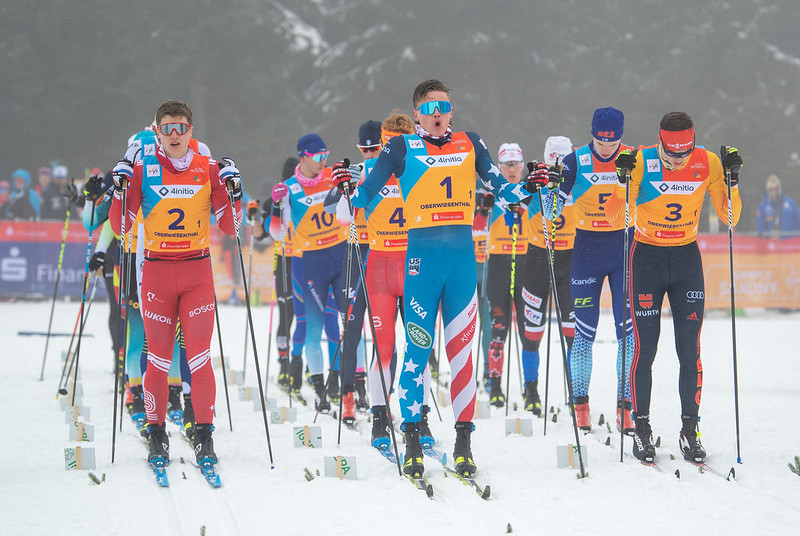
    Luke Jager for the US, bib 1, a deep breath before the scramble leg beat down. (Photo: Doug Stephen)


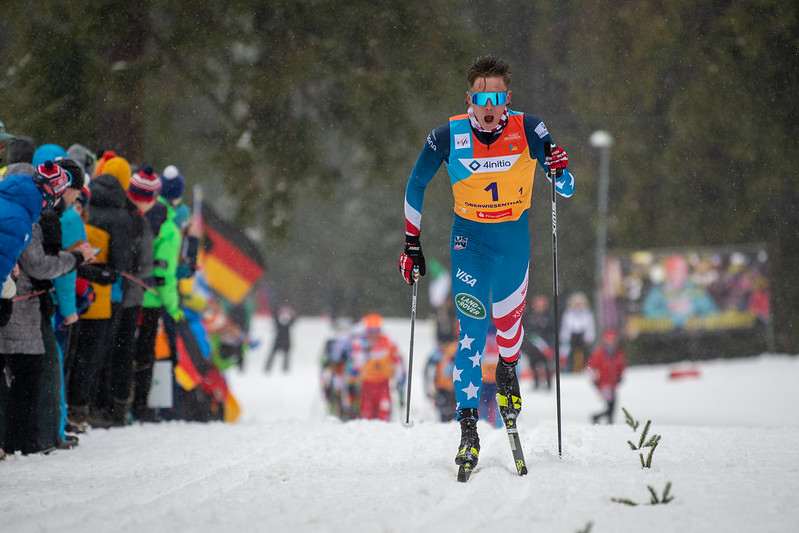
    Luke Jager: onward. He gapped the field by 25 seconds on the scramble leg. (Photo: Doug Stephen)


    Ben Ogden for the U.S. on his solo journey to keep his team way off the front. (Photo: Doug Stephen)


    Ben Ogden tags to Johnny Hagenbuch for the first skate leg. (Photo: Doug Stephen)


    Gus Schumacher: The Closer. (Photo: Doug Stephen)


    The Win. (Photo: Doug Stephen)


    Canada’s Turn

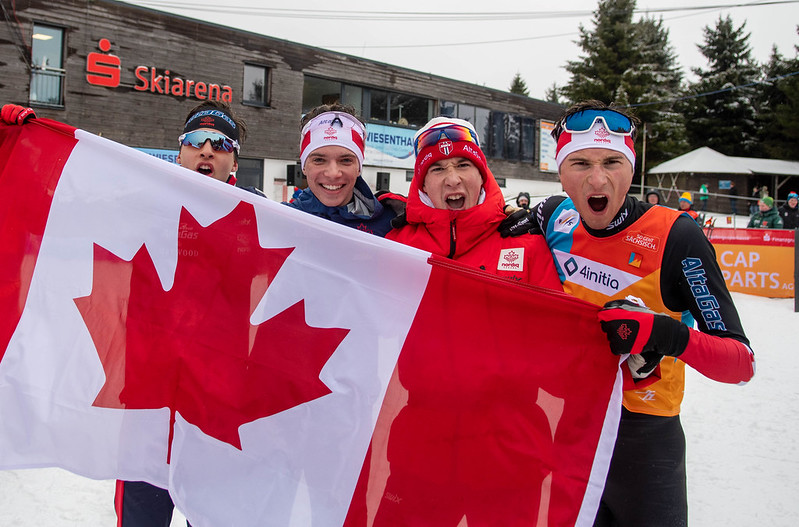
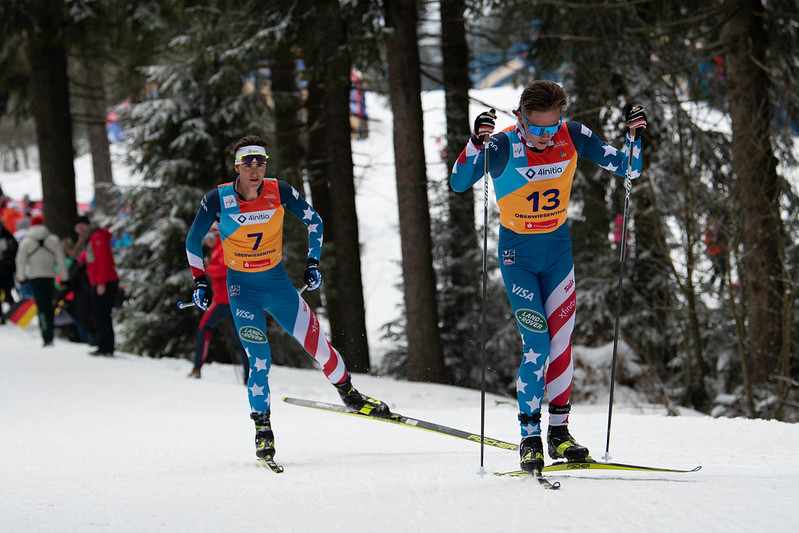
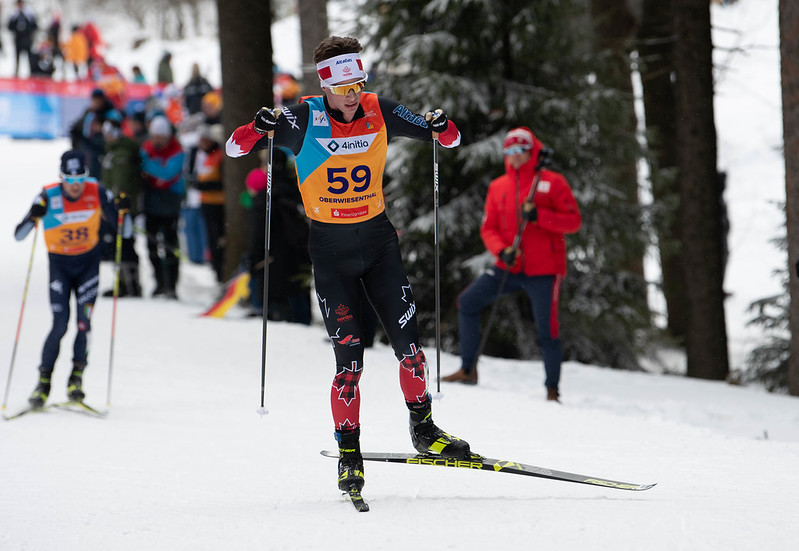
    From left to right: Canada’s Olivier Léveillé, Tom Stephen, Xavier McKeever, and Rémi Drolet. Second overall in the World Junior’s 4 x 5 k relay. (Photo: Doug Stephen)


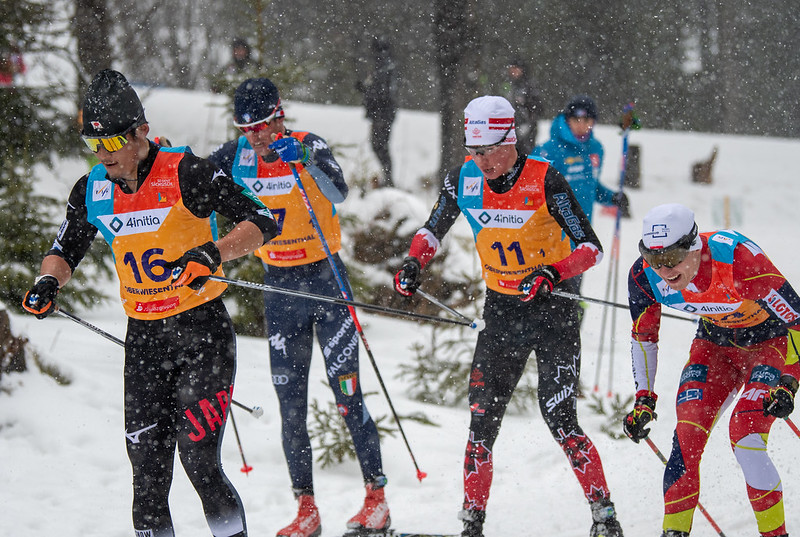
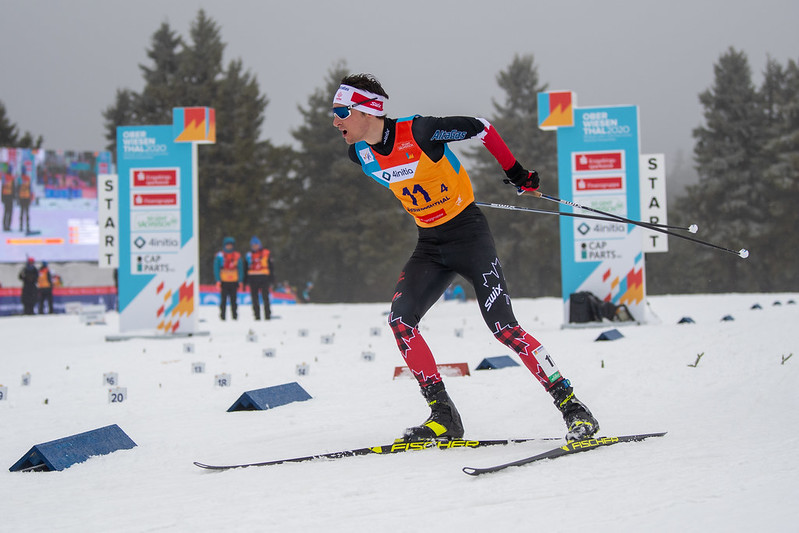
    Bib 11, Xav McKeever for Canada fighting for position on the scramble leg. (Photo: Doug Stephen)


    Leg 2, Canada’s Olivier Léveillé leading the chase. (Photo: Doug Stephen)


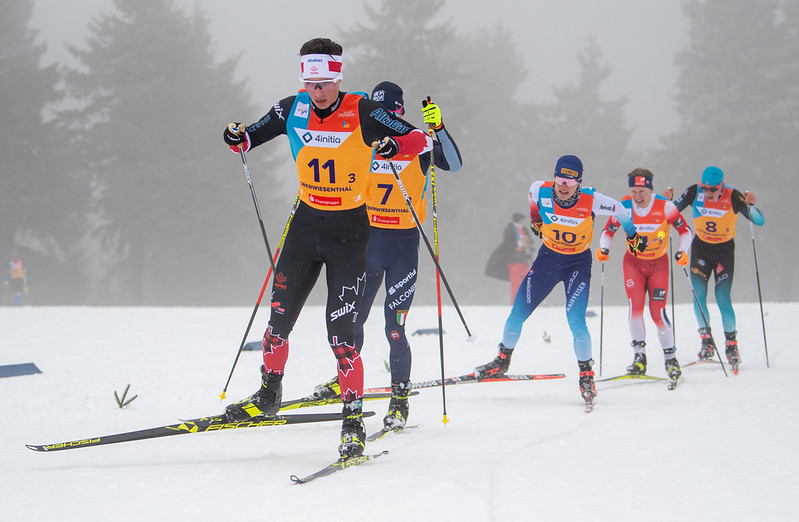
    Where they belong: Canada’s Tom Stephen taking the pull on the front chase group. (Photo: Doug Stephen)


    Rémi Drolet — closing it out. (Photo: Doug Stephen)


    Drolet, almost there. (Photo: Doug Stephen)


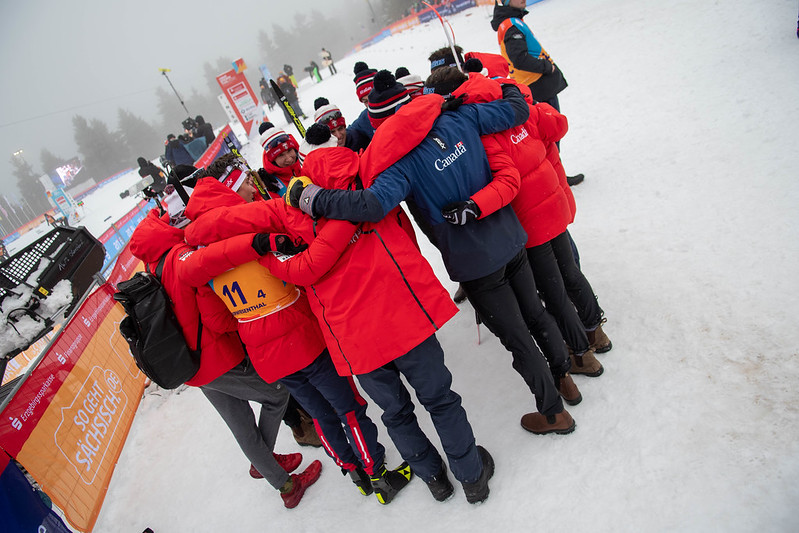
    The maple leaf group hug. (Photo: Doug Stephen)


    Junior Women’s Relay:

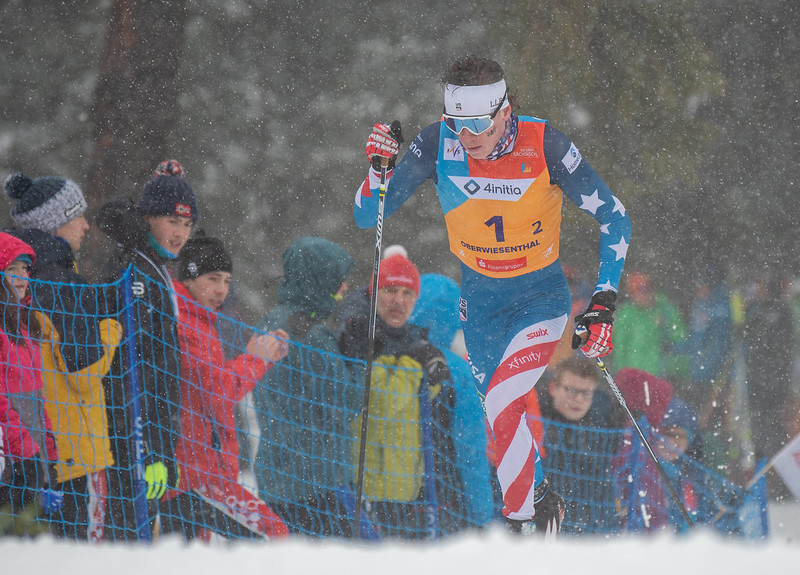
    Sydney Palmer-Leger (bib 4) during the scramble leg. (Photo: Doug Stephen)


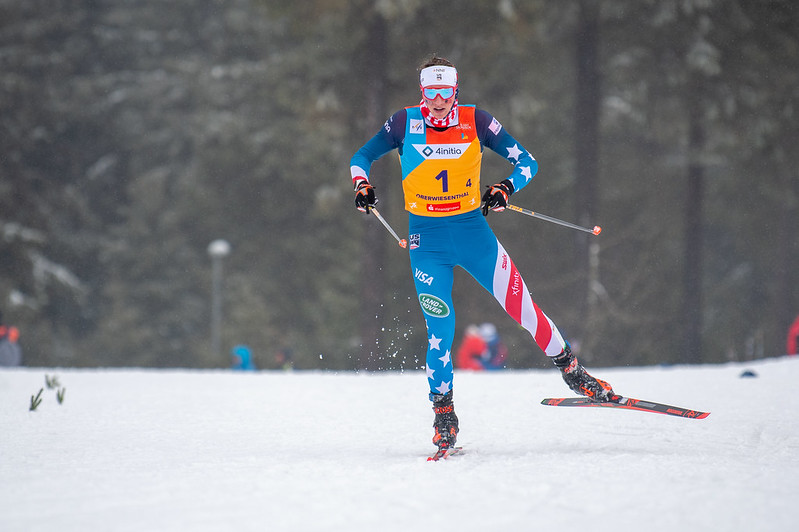
    Kendall Kramer on the second classic leg. (Photo: Doug Stephen)


    Leg 3 for the U.S., Sophia Laukli (Photo: Doug Stephen)


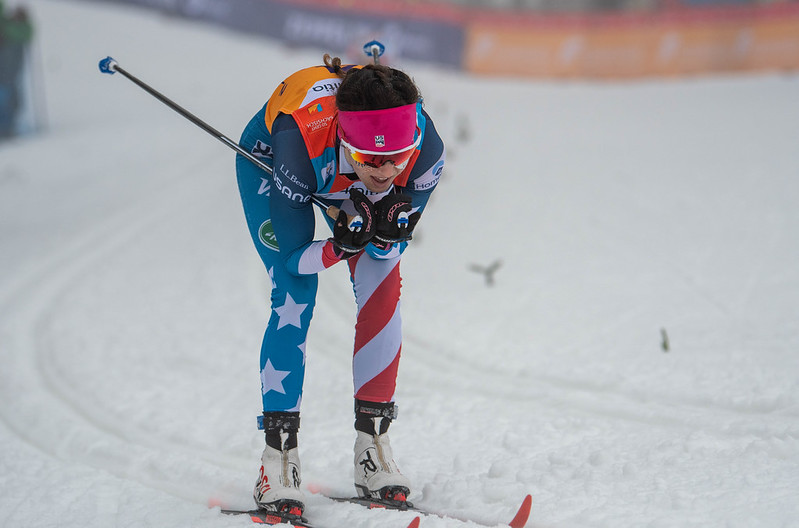
    Novie McCabe on the fourth leg for the U.S. (Photo: Doug Stephen)


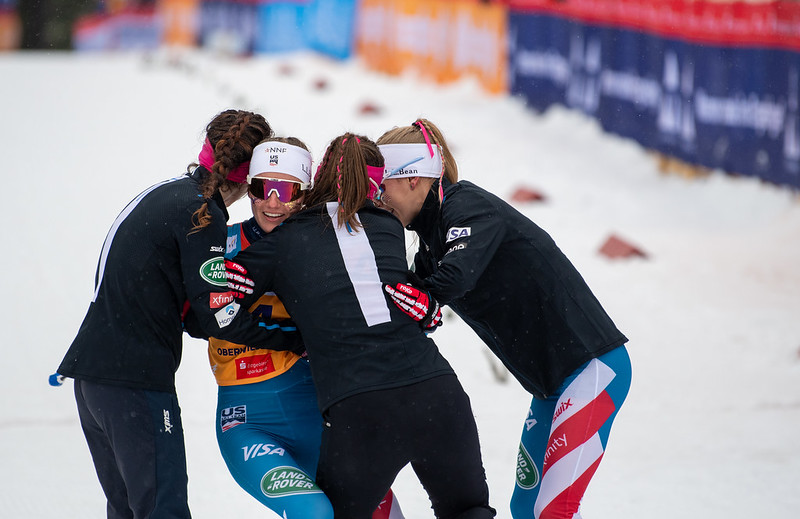
    The U.S. takes second overall. (Photo: Doug Stephen)


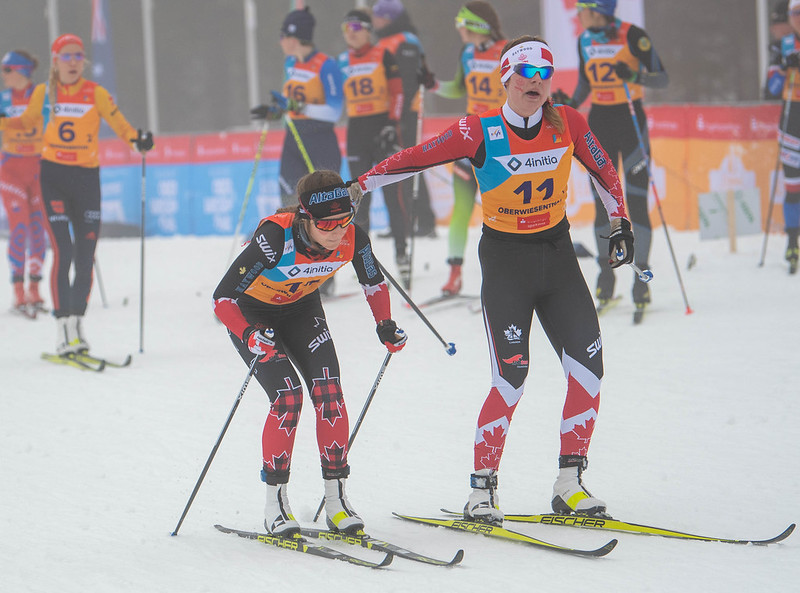
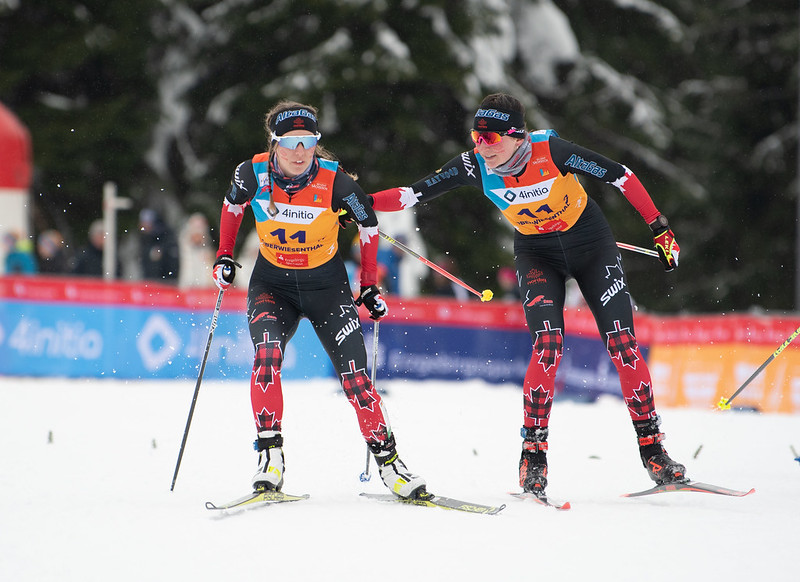
    Canada’s Molly Miller tagging Jasmine Drolet: Leg one to two. (Photo: Doug Stephen)


    Leg three to four: Canada’s Lilian Gagnon tags Elizabeth Elliott. (Photo: Doug Stephen)


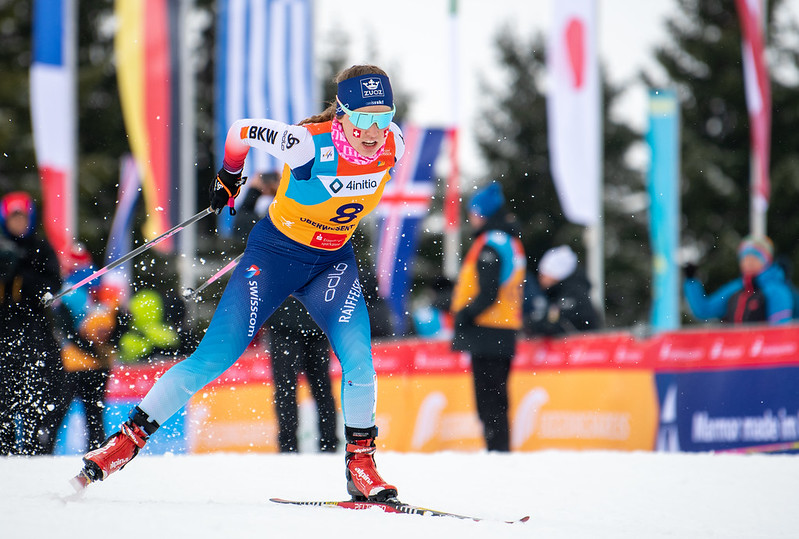
    Let’s not forget the Swiss who had a fine day. Here’s Swiss skier Anja Lozza closing down for the team win. (Photo: Doug Stephen)

    Watch the races here on the FIS site.

    Doug Stephen has more photos here.

  • Junior World’s Relay: U.S. Women 2nd, U.S Men 1st, Canada 2nd

    Junior World’s Relay: U.S. Women 2nd, U.S Men 1st, Canada 2nd

    Friday was a much anticipated day across the Atlantic from the Oberwiesenthal, Germany: Junior World’s relay day. 

    Junior Women’s 4 x 3.3 k Relay

    For the U.S. junior 4 x 3.3 k relay, oh-so-close was last year’s World’s just off the podium fourth place performance. Twelve months later and a loaded team featuring (in this order) Sydney Palmer-Leger, Kendall Kramer, Sophia Laukli, and Novie McCabe, the group skied themselves into second overall, 4.9 seconds off the winning time of Switzerland in first. The Swiss won in 35:08.6. Sweden placed third, 14.2 seconds back. 

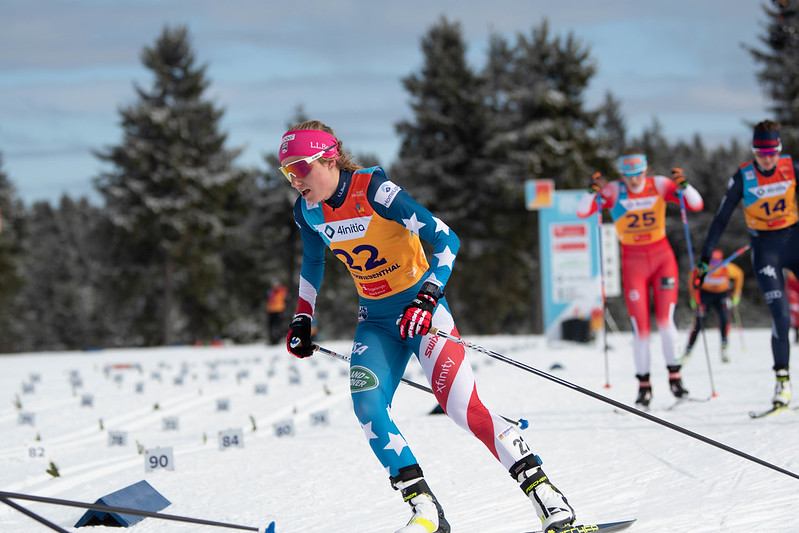
    The tag to the U.S. at 9.9 k saw the team 27.8 seconds down on Switzerland, followed by the Swedes about six seconds further behind. Around 11 k, the Swedes and the U.S. were paired together in the hunt. McCabe eventually began to pull ahead into a secure second place position. In 3.3 k, McCabe locked in and chipped away nearly 23 seconds on the Swiss — who no doubt were feeling the pressure as McCabe gapped up. 

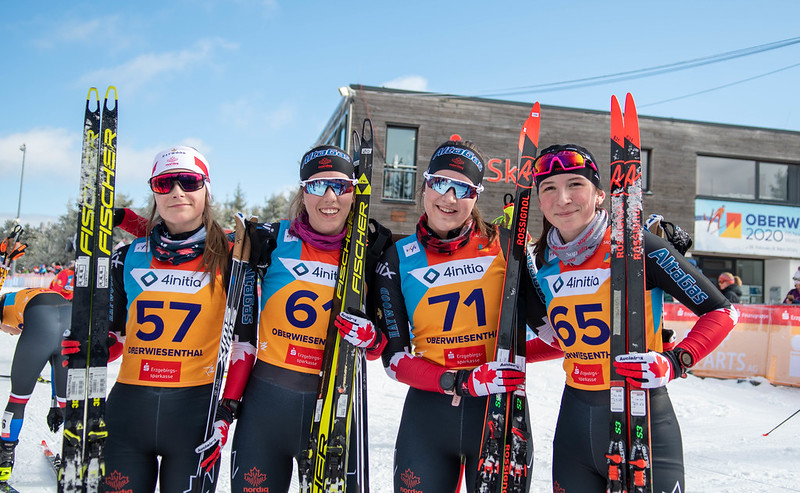
    Canada’s Molly Miller, Jasmine Drolet, Liliane Gagnon, and Elizabeth Elliott placed ninth (+1:25.8).  

    Eighteen teams started the race, with Germany and Poland disqualified for not following the marked course. 

    Junior Women’s Relay Results 

    Junior Men’s 4 x 5 k Relay

    The U.S. juniors, Luke Jager, Ben Ogden, Johnny Hagenbuch, and Gus Schumacher had experience on their side for Friday’s relay. Last year the foursome clinched a first ever U.S. relay win at World Juniors. That victory came down to a Schumacher anchor leg in which he outpaced the Russians by 3.9 seconds to the line. 

    This year, in 54:54.9, the U.S. built a cushion of 35.5 seconds on second place Canada — which was the surprise, perhaps, of these Junior Worlds. (More on that in a few paragraphs.)

    But, it’s never over until it’s over. However, Jager ended this sooner than anticipated. He pegged the scramble leg, putting 25 seconds into second place Germany when he tagged Ogden. It was game over as the U.S. added a few more seconds on each successive leg in their win. 

    “Today ended up perfect, but in the morning we didn’t know that would happen, and with the past 2 years of great relays, we had a lot of pressure on ourselves to do it again,” Schumacher emailed. “We’d looked at the teams quite a bit, and were glad with how they looked, especially with a strong American skier to match every other strong German and Norwegian leg. I myself was fairly confident with a lot of different scenarios on the last leg, but I knew that it depended on the first 3 legs going well, and those boys exceeded my expectations in a big way. They’ll say they had great skis and that’s why they were able to splinter a stacked field, but really these boys are some of the best skiers in the world and when it comes together perfectly (which it seems to often do on relay day), there’s not much match for them. I’m so proud of this team for making a 3rd relay podium look almost easy, because it definitely isn’t. The execution out of them was unparalleled today and I’m so glad to be a part of this team. Also all of us were so proud and stoked for our women’s silver medal this morning and also the Canadian men’s silver medal! Both were great races and it’s great to see them get such good placement here. Now we’re all looking forward to some North American world cups, especially Minneapolis. Go USA!!”

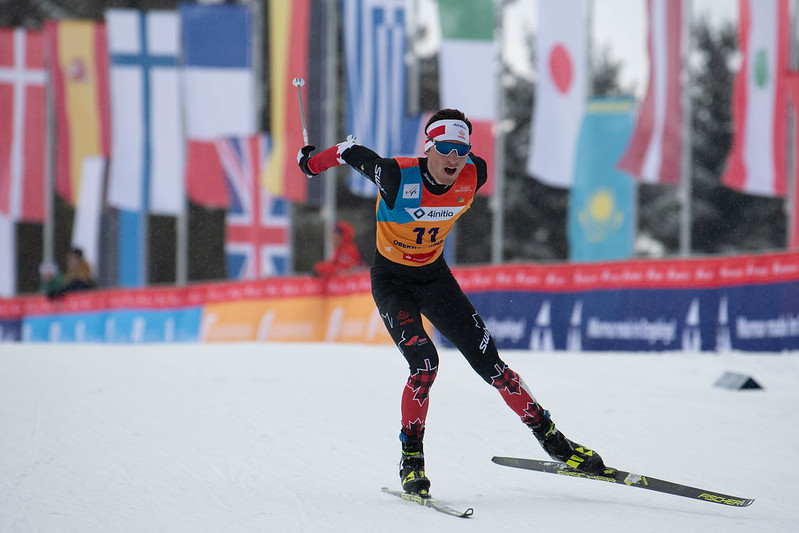
    Let’s get back to Xavier McKeever, Olivier Léveillé, Thomas Stephen, and Remi Drolet; starting in bib 11 for Canada. It clicked today for this group. Good skis? Surely. Inspired by their U.S. neighbors? Perhaps. Stoked by their on-site talisman Devon Kershaw (in Germany to coach)? Does that need an answer?

    No matter how you spin it, this was the race of the day. Certainly unexpected, and certainly deserved for a program rebounding from low funding and in the midst of a rebuild.

    At the 10 k mark, Italy, at 30.8 seconds behind the U.S., was trailed by Norway, Switzerland, Canada, and France — all within roughly seven seconds. That five team pack moved together through the final tag off at 15 k. Glued together through 16.8 k, only Norway fell off the pace. 1.5 k later, and it was Italy’s turn to feel the burn, as they fell off too. 

    That left Canada and Switzerland 10 seconds ahead of the now trailing Italians. By the time the next k had clicked by, Drolet, who was coming off a stellar fourth in the junior men’s 30 k mass start skate, made it real: he gapped the Swiss by 20 seconds. 

    It’s worth mentioning again – Canada in second overall, 35.5 seconds off the winning pace. The Italians rebounded as the Swiss fell back. Italy took third (+55.4), the Swiss placed fourth (+1:34.4).

    “This is absolutely incredible,” Drolet said to Nordiq Canada after the race. “We were so stoked to start this race, and we told ourselves last night we are going to go for the medal today. This is one of the best, if not the best, World Juniors for a Canadian team in terms of results. Knowing everyone on the relay team had a top-30 at the Championships we knew this was doable.”

    Adding his own poetry to the historic relay for Canada, “People don’t really understand what went down today, but it is insane,” Kershaw told Nordiq Canada.

    Junior Men’s Relay Results 

  • Mass Start day at World Juniors: Remi Drolet 4th, Schumacher 5th…Laukli 5th, McCabe 9th (Includes Audio Interview with USST Coach Bernie Nelson)

    Mass Start day at World Juniors: Remi Drolet 4th, Schumacher 5th…Laukli 5th, McCabe 9th (Includes Audio Interview with USST Coach Bernie Nelson)

    Helen Marie Fossesholm of Norway taking the junior women’s 15 k mass start skate. (Photo: Doug Stephen)

    Wednesday in Oberwiesenthal, Germany World Juniors continued with a 15 k mass start skate for the women. 

    Junior Women’s  15 k Mass Start Skate

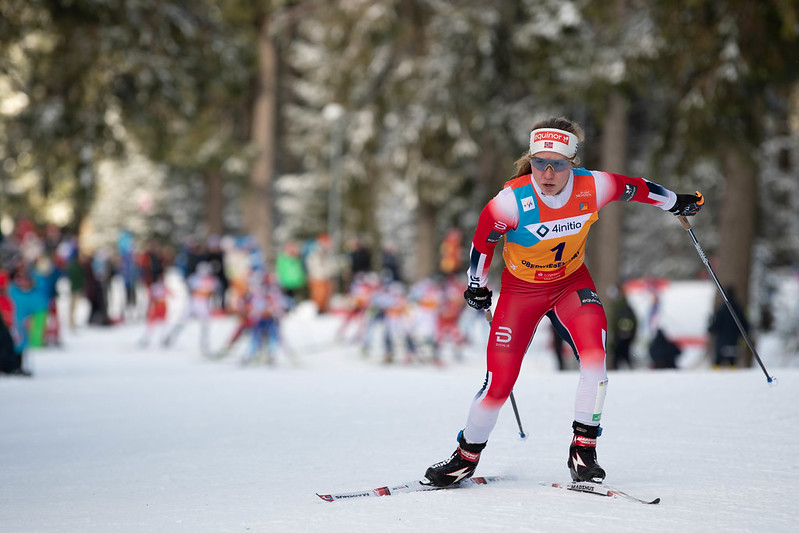
    Norway’s Helene Marie Fossesholm (18) won her second race of these championships by taking the mass start skate in 35:55.6 minutes. Fossesholm also won the 5 k interval start classic race on Monday. Poland’s Izabela Marcisz placed second 1:09.3 back. Marcisz also won a bronze in the 5 k classic. Switzerland’s Siri Wigger skied herself into third (+1:10.6). The theme continues, this was Wigger’s second 2020 championship medal, after placing third in the skate sprint. 

    Sophia Laukli (bib 56) skied to 5th overall in the junior women’s 15 k mass start skate. (Photo: Doug Stephen)

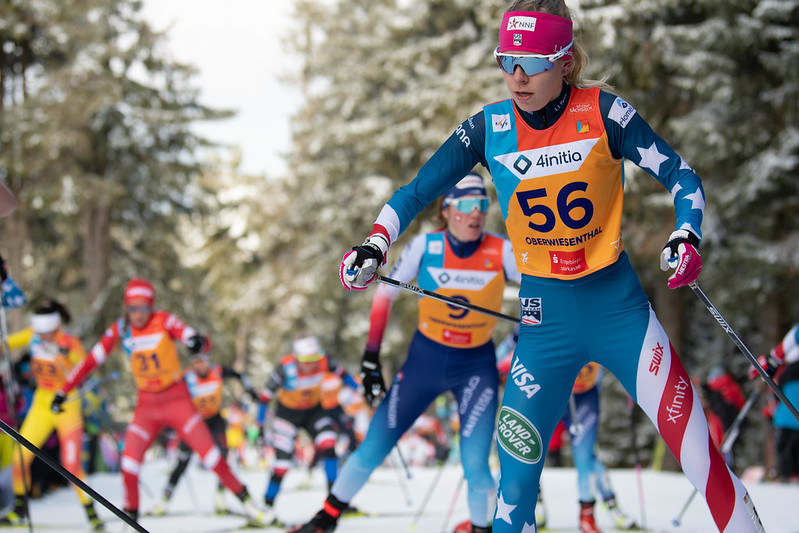
    Starting in bib 56, layered well back at the start, was Sophia Laukli (Middlebury) for the U.S. Laukli (19), in her first Junior Worlds, moved up in the pack to place fifth overall (+1:26.5). 

    Novie McCabe (MVNST) skied to ninth (+1:33.0) for her best individual Junior World’s result. Mccabe placed 10th in last year’s championship 15 k classic in lahti, Finland. Kendall Kramer (Fairbanks Nordic) was 24th (+2:54.5), and Sydney Palmer-Leger (SVSEF) did not finish. 

    Novie McCabe on her way to 9th overall in the 15 k mass start skate. (Doug Stephen)

    Interview with U.S. Ski Team Coach Bernie Nelson

    Liliane Gagnon (Skibec Nordique) was the top finisher for Canada in 34th (+3:38.2). Jasmine Drolet (Blackjack Nordic Club) followed close behind in 36th (+3:39.0). Benita Peiffer (Whistler Nordic) placed 49th (+4:43.2), and Elizabeth Elliott (Revelstoke Nordic) skied to 51st (+4:39.1).

    From left to right: Canada’s Jasmine Drolet, Elizabeth Elliott, Benita Peiffer, and Liliane Gagnon. (Photo: Doug Stephen)

    Junior Women’s Results 


    Junior Men’s 30 k Mass Start Skate

    The junior men raced a 30 k mass start skate Wednesday with Norway’s Iver Tildhelm Andersen winning in a time of 1:13:39.0. Anderson medlaed in last year’s Junior World’s, placing third in the 10 k skate.

    Second place went to Germany’s Friedrich Moch who crossed the line 9.4 seconds back. Moch also placed second in Monday’s 10 k classic. Third place went to Martin Kirkeberg Mørk of Norway, who was 32.8 seconds off the winning pace. 

    Remi Drolet of Canada skiing to 4th overall at the Junior World’s 30 k mass start skate. (Photo: Dough Stephen)

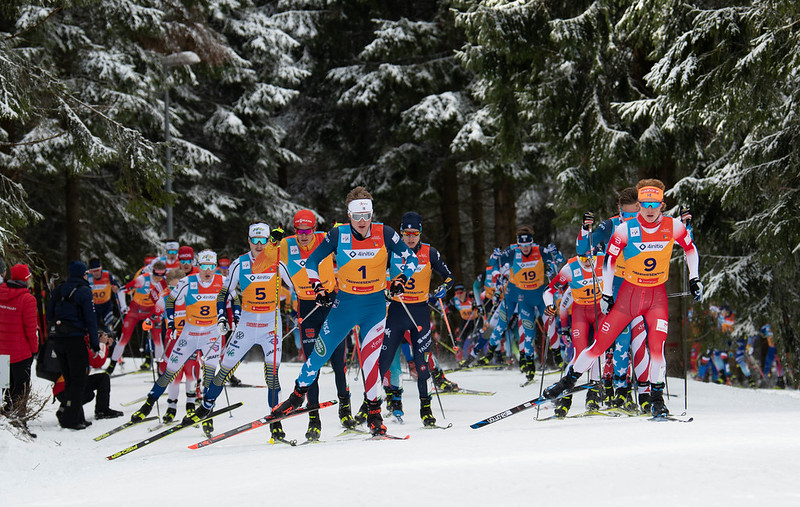
    Scrolling not so far down on the results sheet to places fourth and fifth, respectively, added some excitement for North America; Remi Drolet (Black Jack Nordic) of Canada placed fourth overall (+43.2), and Gus Schumacher (AWS) of the U.S. fifth (+56.1). For Drolet, this was a Junior World’s career best result – he placed seventh in last year’s Junior World’s 30 k mass start skate. 

    At 25 k Wednesday, Drolet was positioned sixth overall, 19.4 seconds back on the then leading Moch. He was in a group with Mørk, and Italy’s Davide Graz. Roughly four seconds ahead was Schmacher as their carrot. By 28.8 k, Schumacher had faded slightly, as Drolet moved into fourth.

    Schumacher won Monday’s 10 k classic, and with Wednesday’s fifth, nearly matches his fourth place in the 2019 Junior World’s 30 k mass start classic.      

    Gus Schumacher (bib 1), leading the 30 k mass start skate at the 2020 Junior Worlds. (Photo: Doug Stephen)

    Thomas Stephen (Foothills Nordic) of Canada, placed 17th (+3:35.8), Xavier McKeever (Foothills Nordic) 32nd (+5:43.3), and Michael Murdoch (Whistler Nordic) 45th (+8:23.5). 

    For the U.S., Luke Jager placed 19th (+3:46.1), Johnny Hagenbuch (SVSEF) 20th (+3:49.2), and Zanden McMullen (APU) 35th (+6:03.3). 

    Luke Jager (bib 13) and Johnny Hagenbuch (bib 7), during the junior men’s 30 k mass start skate. (Photo: Doug Stephen)


    Thomas Stephen skiing to 17th overall in the Junior World’s 30 k mass start skate. (Photo: Doug Stephen)

    These events conclude individual racing for the juniors at these World Championships. 

    Junior Men’s Results


  • Canmore NorAm/SuperTour/Nationals Sprints

    Canmore NorAm/SuperTour/Nationals Sprints

    Full-time student Jess Cockney was happy to win again in Canmore. (Photo: Doug Stephen)
    Full-time student Jess Cockney was happy to win again in Canmore. (Photo: Doug Stephen)

    The NorAm series fully lived up to the North American Cup label in Canmore Friday with 1.3km free technique sprints to kick off a combined NorAm, SuperTour, and Mexican National Championships weekend.

    Full results for the weekend are on zone4, including live results every day. Friday featured sprints for the older age groups only (282 racers): Saturday is interval start classic, and Sunday’s race an interval start free.

    Before the races, there was chatter about the importance of increasing the level of competition and a dash of fear that the American visitors would school the host country. The competition level was up and fear was not needed this day. The open women’s final featured two Germans, two Canadians, and two Americans before the open men’s final skewed Canadian. (Heat brackets and final results.)

    Julia Richter takes the win ahead of Katherine Stewart-Jones and Katharine Ogden. (Photo: Doug Stephen)
    Julia Richter takes the win ahead of Katherine Stewart-Jones and Katharine Ogden. (Photo: Doug Stephen)

    There are a few race videos in @NordiqCanada’s Instagram story.

    Nordiq Canada’s new Events Coordinator Jeff Ellis took time from his Race Director role to shoot video interviews with the top athletes, including the first ever Mexican National Champion Rodrigo Rangel Fernandez. Edited versions of some of these interviews are also on @NordiqCanada’s Instagram.

    University of Utah’s Julia Richter won the qualifier and all the heats to take the win in 3:10.52, 0.08 seconds ahead of the national team’s Katherine Stewart-Jones and 0.63 seconds clear of Dartmouth’s Katharine Ogden.

    Full-time student Jess Cockney (Team ULLR) turned in another solid sprint performance at home, winning the men’s final in 2:46.18, over two seconds ahead of SVSEF Gold Team’s Peter Holmes and Canadian National Team member Graham Ritchie.

    National team junior Anna Pryce qualified 4th overall before winning all her heats. She finished the 1.3km final in 3:18.40, 0.38 seconds ahead of AWCA’s Elizabeth Elliott and 0.43 seconds from CNEPH’s Liliane Gagnon. Seventy-three U20 women competed, making that cohort the largest age group.

    Xavier McKeever (Team ULLR, CNST) won the U20 sprint after qualifying 20th overall. His 2:42.02 bested Telemark’s Ian Williams by 0.85 seconds and ULLR teammate Joe Davies by 5.30 seconds.

    The first Mexican National Championship sprint featured four athletes. Rangel Fernandez won comfortably in 3:37.33, completing a major step forward for the federation in Mexico. Vadovų paieška, personalo atranka, mokymai vadovams ir darbuotojų paieška primumesse.lt


    Canmore-based photographer Doug Stephen was in the thick of the action. Athletes can use full-resolution photos from his gallery if they credit ‘Doug Stephen’ or @vr45photography.

    Katherine Stewart-Jones leads BSF's Erika Flowers in the quarter final. (Photo:Doug Stephen)
    Katherine Stewart-Jones leads BSF’s Erika Flowers in the quarter final. (Photo:Doug Stephen)