From the FasterSkier archive — posts syndicated from athletes’ and coaches’ own blogs between 2004 and 2012, kept online as published. Current coverage is at fasterskier.com.
Sammy Izdatyev is the pen name of a Finnish sports enthusiast and unaffiliated amateur historian, who has been interested in endurance sports since the turn of the millennium. He hopes that his pro bono – research can provide more information into the body of literature of earlier underresearched areas of the history of sports.
Epilogue
Blood doping – a persistent research subject
When Björn Ekblom’s opinion of his 1972 paper was that more research was needed in the arena of blood doping to understand nuances of the subjects, this was to be the case even up to our days. Even when the efficacy of blood doping became the mainstream view by the 1980s, Björn Ekblom’s research on in the arena of blood doping and on the limiting factors of maximal oxygen uptake didn’t end there and his research in both arenas is very extensive.
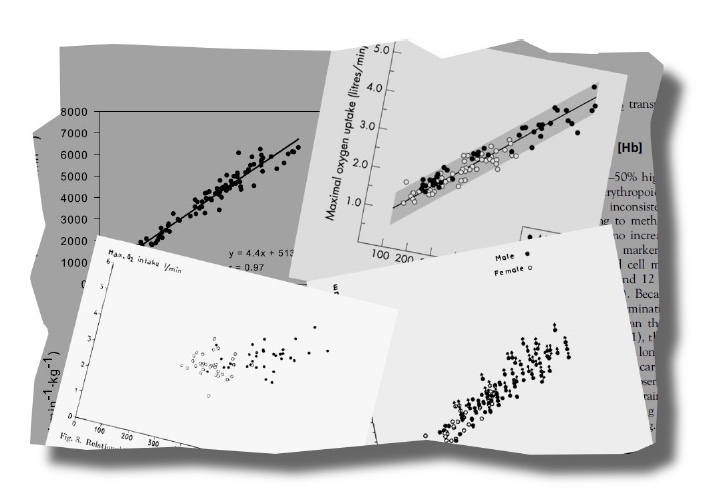
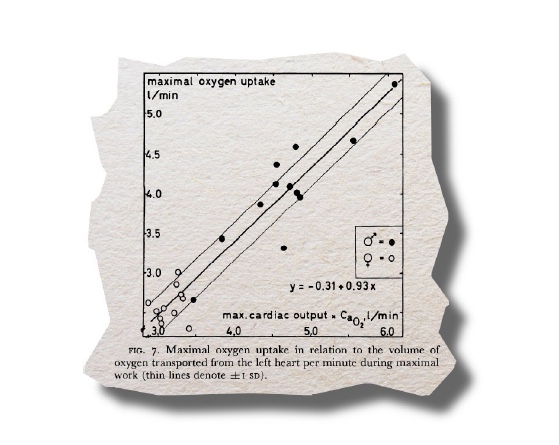
One question of interest was the interplay between hemoglobin concentration and Vo2Max and total hemoglobin and Vo2Max, which actually was more important in the end? ”Prior research has shown that acute increase in blood volume as such has very little or no effect on work capacity”, Ekblom had written in 1972, and when he looked at the statistical correlations in his first published blood reinfusion study, he had seen that changes in hemoglobin concentration correlated better with Vo2Max than changes in total hemoglobin. The one rare attempt to research how acute blood volume expansion affected performance failed to show any increase in Vo2Max when a large amount of 1000 to 1200 of blood was infused. (Robinson et al, 1966)
Whereas Bengt Saltin had been interested in seeing how cardiovascular system reacted if red blood cells had to flow in less plasma and he dehydrated his subjects in the early 1960s, Ekblom and his coauthor Inge-Lis Kanstrup did the opposite and tested how blood removal and reinfusion and blood dilution with dextrose infusions affected Vo2Max and performance in different combinations. (Kanstrup & Ekblom, 1984)
The results were actually different than what Ekblom had written earlier because even when after dilution (dextrose infusion) each given unit of blood carried less blood, Vo2Max tended to remain the same because body increased cardiac output, indicating that total hemoglobin was more important for Vo2Max than concentration as such. Still working capacity was slightly lower after dilution.
One unintentional conclusion for future blood dopers was that blood dilution was quite an effective in masking blood-doping induced elevation of total hemoglobin, because if one compares the subjects after they had been treated with blood infusion and saline, all the relevant parameters such as total hemoglobin (+6 %), Vo2Max (+ 4 %) and time-to-exhaustion (+13 %) are higher when compared to the control level indicating that they get almost full benefit of the extra RBCs. But the dextrose infusion clearly hides that the blood infusion took place because resting hemoglobin concentration is actually some 7 % lower than the original value (13.7 g/dl vs. 14.7 g/dl).
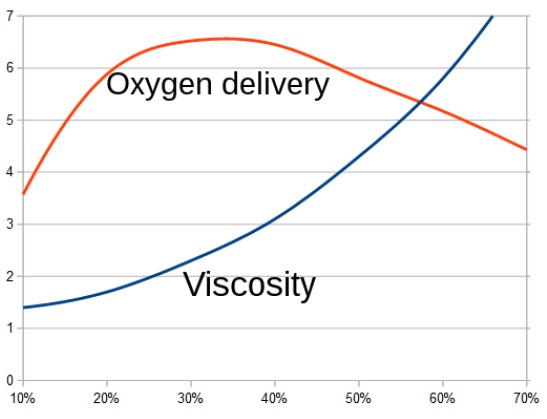
Another item of interest was the theory of optimal hematocrit, the presumed ”best” value from oxygen delivery viewpoint which was assumed to be roughly hematocrit value of 45 % corresponding hemoglobin concentration of 150 g/l. While particularly Anglo-Saxon blood doping researchers were interested in the optimal hematocrit issue, there is barely a word of speculation about the ”real” optimal hematocrit in any of Ekblom’s writings.
To research this, Ekblom and his coauthors researched how reinfusion of five blood bags (2250 ml) affected Vo2Max and took intentionally subjects with a large variation in their natural values. When a subject with a hemoglobin value of 178 g/l donated blood, his Vo2Max fell significantly even when his Vo2Max could’ve been increased had the optimal value of 150 g/l had any validity. ”The same subject increased his maximal oxygen uptake after the same linear pattern when [Hb] was raised above 200 g/l as one individual with a normal [Hb] around 120 g/l”, the authors observe somewhat surprisingly. (Celsing et al, 1987) It doesn’t automatically follow that if the 120 g/l subject would increase his/her hemoglobin to 200 g/l that Vo2Max would increase linearly all the way through, only that the baseline value is only somewhat unimportant. It could be that every red blood cell increased performance up dangerous zones of blood thickness, and sometimes the ”higher-the-better” idea became the consensus view of the sports circles, true or not.
The viscosity theory and optimal hematocrit value have been of great interest to many blood doping researchers and commentators. Björn Ekblom didn’t find the discussion about ”optimal hematocrit” to be fruitful and his findings questioned whether there was any universal one.
Not every second athlete could reinfuse five blood bags, but the implication was still troubling, particularly when the prestigious New England Journal of Medicine published brand new information about the new hormone erythropoietin in its January 1987 issue, the exact same month as Ekblom’s newest research was published. When the advent of a synthetic version of hormone erythropoietin sent shockwaves to the sports world in the late 1980s, it still wasn’t quite certain whether a gradual increase in hemoglobin concentration elicited a similar effect as an instant increase. As it is well known, erythropoietin speeds up the production of red blood cells in bone marrow, but it takes weeks until hemoglobin concentration is increased and the human system bolsters mechanisms to fight against this increase if red blood cells are increased above natural level.
While scientists of other countries were interested in the issue as well, Björn Ekblom was the first scientist to research how the red blood cell hormone affected sports performance, when he gathered a group of volunteers with anti-doping specialist Bo Berglund and injected them regularly with the hormone and subjected them to various tests, including Vo2Max and endurance tests.
The results showed that there was little difference between blood transfusion and administration of synthetic erythropoietin (rHuEPO) and both blood doping methods improved performance in an almost identical manner regardless of whether the increase in hemoglobin concentration was gradual (hormone) or instant (autotransfusion). (Ekblom & Berglund, 1991) ”This wasn’t unexpected, but still horrible”, Ekblom described the findings to journalist Omar Magnergård who had written one of the first articles about blood doping almost two decades earlier. ”It also makes it difficult to believe in the future of sports”. (Magnergård, 1989) Ekblom was particularly shocked that only a handful of injections could boost performance so much.
Despite the pessimism of the early-1970s, Ekblom had predicted in the early 1980s that the method to detect autotransfusions would be developed by the 1988 Olympics if there was proper funding and whereas his coauthor Bo Berglund had participated into detection of blood doping with athlete’s own blood, the research ended when EPO replaced transfusions almost altogether by the 1990s.
Now Ekblom took part in the scientific research to develop a method to detect the abuse of the hormone and the team concluded that it was possible to differentiate the natural and synthetic version of the hormone in urine. The method researched and published in 1995 by a group of exclusively Swedish researchers was based on differences of electric charge between naturally occurring hormone and the synthetic version manufactured in a laboratory.
“The method became approved by the journal, but was never used because it was expensive and took up to three days to use being unusable at an Olympics games, championships, etc.”, Ekblom recalls the limitation.
When the idea of how blood doping could even be detected was beyond anyone’s imagination when the issue was discussed first time in media in 1971, there were various approached proposed by the late 1980s and when it became clear that blood samples would be drawn, there was optimism that a few blood samples with good parameters would reveal its abuse. These hopes turned out to be futile even when indirect monitoring of the blood of athletes have at least curtailed the excessive use.
While most of the modern detection methods have been based on how the body reacts to the shortage (blood removal) or abundance (blood reinfusion) of red blood cells, Ekblom’s student and friend Christer Malm from the Umeå University took another type of approach on the issue, looking exactly the blood itself changed during the storage period.
While there hasn’t yet been a breakthrough and the first peer-reviewed published paper showed that the method wasn’t completed, Björn Ekblom is today certain that there will be a method that will detect the abuse. “It feels very good that there will be a method that detects autotransfusions to a 100% degree”, he sees the future prospects of the work of Christer Malm.
Innovator or conveyer or zeitgeist?
As expressed throughout the essay, Björn Ekblom and Per-Olof Åstrand have always maintained that “blood doping” was only as a scientific venue and that the sports application was only an unpleasant ”byproduct” of this research.
“In summary, it is with some regret that I conclude that our basic exercise physiology experiments on manipulation of hemoglobin concentration have some consequences for sport”, wrote Björn Ekblom in 1982 about the subject matter. The evident question is whether these consequences could’ve been postponed or avoided had he not started the ”basic physiology experiments” and the research project on blood reinfusion? (Ekblom, 1982)
While there is almost something biblical about a venomous serpent causing the chain of events that led blood doping to be invented, Ekblom sees that his role in the research is almost accidental and that he was only conveying the ideas of the zeitgeist of the 1960s, because other researchers had also access to the same pre-existing data. “Probably somebody else would’ve done this experiment around that time”, Ekblom thinks modestly about the significance of this blood doping work. “It would be natural that people would think of infusing blood to boost performance. That was something natural at that time”.
Based on the lukewarm reception and the skepticism and on the fact that it took until 10 years before the consensus view shifted conclusively towards the opinion that the method worked, it isn’t that certain how many years attempt in another place would’ve taken. On the other hand, it is true that altitude trained athletes started to break their way into the Olympic arena from late 1960’s onward and athletes showing interest in altitude training, it is possible that the method would’ve been invented even had the research not taken place in Sweden, if the method wasn’t already been “invented” accidentally or in a clandestine research somewhere. Online gaming platforms attract users with a variety of entertainment options and convenient account features. When exploring available services, visitors often compare game selections, payment methods, and promotional terms. Pinco casino azerbaijan is a search query for users looking for information about online casino entertainment in Azerbaijan. Reviewing the platform’s terms and checking local requirements can help visitors make informed decisions.
In addition, while Ekblom was quite known and regularly quoted physiologist even in the 1960’s before the blood doping research became the “hot topic”, he still had no idea how overblown the issue would become:
No – I had no idea that this would gather such a speed. I’ve been on the first page in Sports Illustrated which many would give their left hand for. Not even Bengt Saltin or Peo Åstrand has done so. Not that I think it is important – it is more than strange and also shows how the results of the research became taken by the mass media.
Blood doping wasn’t the only seemingly random item turning out something bigger and he finds an interesting parallel from the beginning of the 21st century:
In the summer of 2005 I conducted with a student a little pilot study with administering nitrate on GIH students. We measured many things and the effect was not noticeable except one thing – average blood pressure fell by about 3 mm. Some half years later a little article was published in the New England Journal of Medicine – which is the world’s respected medical journal. Today there are propably some 1000 articles on the effect of nitrate administration on performance, health and mental capabilities. The subject has even its own sessions in large conferences. This history is very similar to that of blood doping, if not bigger.
Ekblom finds this research line “historically very interesting”, and since then, almost every other endurance athletes consume beetroot juice, and there has been research on the effect of nitrates on various other things such as efficiency.
And one should remember that despite the meshing of science and sport with its questionable byproducts, the world of endurance sports wasn’t a pristine paradise before blood doping was invented, and blood doping didn’t “end” it altogether even when there are time periods and sports where it became more a rule than an exception particularly after the introduction of the blood-boosting hormone erythropoietin commonly known as EPO.
Then how much does blood doping increase performance?
When in the introduction we saw that half of the medallists of the 2001 FIS Ski World Championship had highly abnormal values indicating blood doping use, MD Jim Stray-Gundersen who was among the team researching the data read it differently. “Roughly 50 percent of the medalists had such abnormal blood profiles that they almost could only be due to doping”, he commented the issue, ”Half the people who won medals were clean”. (Fitzgerald, 2006)
When blood doping was debated right after the games, Björn Ekblom coauthored an article at that time where the authors claimed the measured hemoglobin values were normal and the differences between (available) ON- and OFF-season data of the Scandinavian skiers didn’t reveal blood doping use. “Nothing talks that Swedish (and Norwegian) skiers would’ve been hematologically doped at the World Cup in Lahti in 2001 or in the last ten seasons”, is their conclusion based on the available data. (Ekblom et al, 2001)
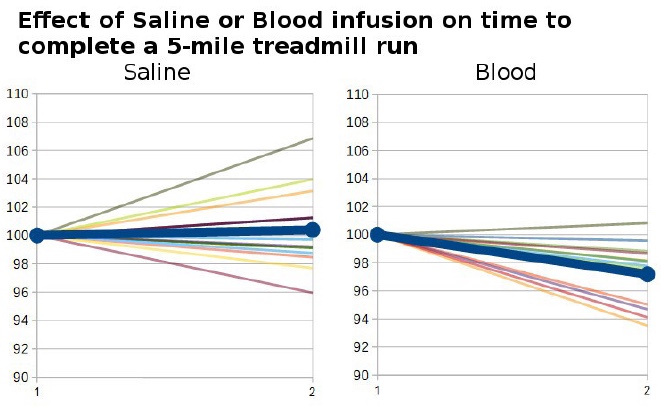
This is somewhat surprising because blood doping considered to be an effective way to boost performance. In fact the handful of published research papers have showed some 2-5 % improvements in time-trial type of performance when hemoglobin concentrations have been increased only by some 10-15 % keeping the values within the healthy ”normal range”, which is in itself an enormous benefit in a race where differences between are usually are occasionally fragments of one percent.
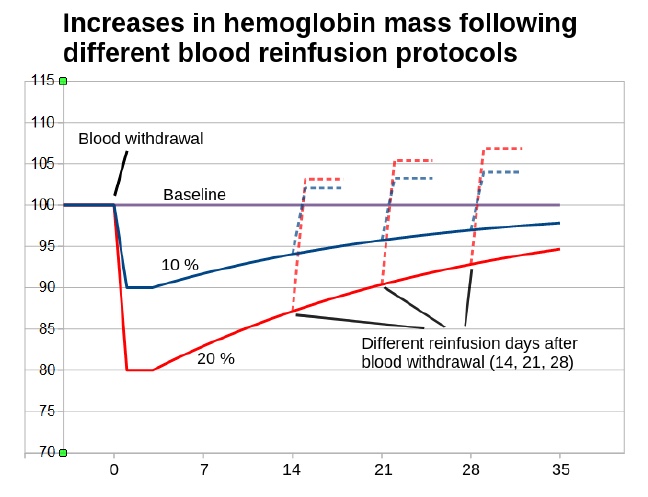
If it is known through research that 10 % increase in hemoglobin concentration (blue solid line) boosts performance by 2.5 %, does it follow that performance increases by a similar amount with each consecutive 10 % increase with elite level athletes? Not necessarily, because the “baseline” boost can be lower with elite level athletes and the other links in the oxygen-delivery chain can’t necessarily keep up with the extra RBCs after a certain point causing diminishing marginal gains (green, red and black line).
It has also been known that athletes haven’t been so risk averse and some of them have taken multiple of these 10-15 % elevations going far above the normal limits. For instance, from the hematological data from the 1990’s we do know that one successful cyclist had his hematocrit (hemoglobin) increased from 35.7 % (~120 g/l) to 60.7 % (~200 g/l) between winter training season and spring which means that a given unit of his blood theoretically carried some 70 % more oxygen. Even when it is easy to think that these athletes get roughly similar speed improvement with each consecutive 10-15 % elevation, Björn Ekblom isn’t that convinced:
I am not sure about how the other links can keep up. If you go from 140 or 150 g/l to 220 g/l, there must be some compensation in the distribution of flow or perhaps increased blood pressure and so forth.
Björn Ekblom has always maintained that peripheral factors don’t appear to be the main limiting factor if enough muscle mass is recruited, which is illustrated by the fact that maximal ”forced” breathing is almost always higher than the highest values reached during exhaustive exercise points that there is ”idle” capacity in lungs and in addition, the blood returning from the muscles has a very low oxygen concentration, so the oxygen is pretty completely used at the peripheral level.
While blood doping with all the methods has consistently elevated performance in the research papers and Ekblom always has stressed that heart and hemoglobin concentration are the main bottlenecks for most of the people most of the time, it is interesting that Björn Ekblom has occasionally discussed the possibility that the physiology of elites might be different and the key limiting factor might not be the heart and oxygen carrying capacity with elite level athletes.
He brought up this possibility in the mid-1980s in a memorial lecture he gave when his coauthor and even an occasional critic Lars Hermansen had passed away at a relatively young age. ”In some extreme well-trained top athletes with very high maximal aerobic power in relation to the dimensions of the respiratory system the ventilatory/discussion/perfusion complex may be a critical factor – especially at altitude”. (Ekblom, 1986) He held a similar type of opinion quite recently when writing in relation to the ”central governor”-debate that occasionally lungs could limit oxygen delivery of which an ”obvious instance is oxygen desaturation of the hemoglobin in arterial blood during maximal exercise, which seems to be more common in well trained performers who have high Vo2Max”. (Spurway et al, 2012)
In this light, it is also noteworthy that almost all the blood doping research has been conducted with sub-elite level athletes, and improvements can’t be directly extrapolated to elite level athletes.*
*One paper that addressed this issue in 1987 compiling the data from four reinfusion studies with roughly similar protocol actually concluded that participants with 50-65 ml/kg/min were most ”responsive” to blood transfusions whereas subjects with higher or lower baseline Vo2Max increased their Vo2Max only half of the value of that group. (Sawka et al, 1987)
Ekblom’s take on multiple Olympic champion Eero Mäntyranta is also interesting and expresses that he always looks beneath the surface even when anecdotal evidence would support his case. While it is also almost universal consensus view by expressed by geneticists, bioethicists, popular writers and anti-doping activists that Eero Mäntyranta benefited from his super-high hemoglobin concentration, Björn Ekblom isn’t totally convinced about this:
I am not sure about Eero Mäntyranta. His superior ski performance may not be caused by his high hemoglobin. I know that Peo was very much in favour of the idea that his hemoglobin was the reason or his performance.
While there are some issues in making too direct conclusions in comparisons between individuals, Ekblom has noticed a tendency that athletes with very low hemoglobin concentration had extremely efficient blood delivery. He thinks that the opposite could also hold true:
Nobody measured the cardiac output of Mäntyranta, I think. About people who have high hemoglobin concentration at rest, they may have low cardiac output at maximal exercise for other reasons than viscosity reasons. I can say that we found two runners from the Stockholm area who had the same problem as Mäntyranta, so we measured cardiac output in one of these guys and he had fairly low maximal cardiac output, but he had reasonably good oxygen uptake. So there are some strange things going on in the oxygen transport chain.
Ekblom may be on the right track in his skeptical account and there might be other factors explaining the success of the Finn and it is noteworthy that Mäntyranta had good genetics regardless of his high hemoglobin and his nephew Pertti Teurajärvi was an international caliber level cross-country skier who won many medals as a part of the Finnish cross-country relay team, most notably the 1976 gold medal at Innsbruck Olympics. Even when some authors such as author David Epstein (author of The Sports Gene) have stated that he had the same blood phenomenon as his uncle had, this is not the case.
Despite all the media fuss about him, there is very little we know about his aerobic capacity. But as one interesting anecdote, his Vo2Max was discussed in passing in 1971 when he was trying to return to perform at top level for the 1972 winter Olympics and it was mentioned in passing that his Vo2Max had been measured with direct methods only once, in 1965.
According to the journalist, the figure came then back surprisingly low, only 72 ml/kg/min. (Bremer, 1971) That is a good figure – no doubt about it, but nothing enormously high.*
*Well-respected Finnish physiologist Heikki Rusko claimed that the Vo2Max of MaÅNntyranta was estimated to be in excess of 100 ml/kg/min based on an indirect bicycle ergometer test and claiming that it was never measured with direct methods. (Raevuori, 1977)
Case closed on the timeline?
If the reader wondered why the essay is titled “a genesis” and not ”the genesis”, it is because there could’ve been other paths to innovate the method. In fact, the narrative described in this essay on how blood doping became ”invented” is prone to reevaluation even far in the future if and when new information emerges.
It is also difficult to pinpoint a moment when something is ”invented”. Blood doping wouldn’t even be the only hemoglobin concentration – related item that might’ve earlier than widely assumed. Even when there is a lot of truth in the claim that exercise physiologists James Stray-Gundersen and Benjamin Levine invented the so-called “live high/train low”- exercise method in the 1990s, one could argue that the idea was “really” invented some two decades earlier.
Because blood doping researchers Norman Gledhill and Alison B. Froese, in essence, noticed the detraining-problem some fifteen years earlier in their essay.
“A problem with altitude training, however, is that while acclimatizing to altitude, the athlete’s maximum work capacity is reduced approximately 10 %, and therefore, since the intensity at which the athletes can train is slightly reduced, a small amount of detraining can occur”, Gledhill and Froese wrote almost in passing in their 1978 paper. “However, it has been illustrated that it is possible to avoid this problem by transporting the athletes to a lower altitude for their daily training session or by having them train in an oxygen-enriched environment” (Gledhill & Froese, 1979)
The study they refer to where these shortcomings were avoided was published in 1980 and the preliminary report in 1976. If one looks for trails of the idea of intermittent hypoxia even further in time, the idea is mentioned before the 1968 Olympics in a transcript of a discussion that took place about high altitude training between the scientists from nordic countries. ”There is one interesting aspect which is not clearly answered as yet, and that is the effect of intermittent living on a high altitude”, physiologist Kaarlo Hartiala mentioned in passing in 1966 when discussing the matter with his nordic colleagues. “It might be to some benefit to keep the training on a lower and the living on a higher altitude”.
Still, it took until the 1990s before the Stray-Gundersen and Levine ”invented” the idea and gave it the scientific validation. About blood doping, the situation is slightly different because there is some smoking gun research, but in addition, there is also some gossip and evidence about the method actually been used before the 1970s and it is possible to locate some references of athletes having blood doped before the 1970’s even in academic publications. One theory actually is that Ekblom, Åstrand, Goldbarg and the others only gave the scientific validation to the method already in use.
“Among other variables, Åstrand and his Swedish colleagues paid attention to blood values, in particular, the oxygen-carrying ability of hemoglobin”, wrote Finnish historian Erkki Vetteniemi recently about the origins of the blood doping research. “In 1971, one of them (Björn Ekblom) discovered the blessings of blood transfusion for athletes – or, he claimed to have discovered the benefits of blood packing”. Referring to the earlier gossip about transfusions taking place before that, the historian continues that a ”more probable scenario is that the Swedish scientists published their blood packing paper as soon as the method had become commonplace in skiing and other sports”. (Vettenniemi, 2017b)
Vettenniemi has occasionally brought up the case Jonny Nilsson, for whom when Ekblom allegedly offered a transfusion in 1966, but another alleged blood doping case of interest he has mentioned took place early as 1948 before the London Summer Olympics. The incident was mentioned in one of his articles by MD Inggard Lereim, who was since the 1970s has been a Norwegian team doctor and later a member of the FIS Medical Commission. (Vettenniemi, 2017a; Lereim, 2001)
It is equally true that there is some confusion about the timeline amongst the ”in-the-know” Nordic MDs. For instance anti-blood doping activist researchers Tapio Videman, Inggard Lereim and James Stray-Gundersen (and coauthors) wrote about the origins of blood doping in passing in one of their research papers in 2000 that “[r]umors about the use of blood doping have been circulating since the 1960s” (Videman et al, 2000). Only three years later the same trio contradicted this timeline by a decade, writing that ”rumors and reports of transfusion use in endurance sports did not surface until the late 1970s” (Stray-Gundersen et al, 2003). Bengt Saltin on his part coauthored paper in 2012 stating that ”[b]lood doping practices in sports have been around for at least half a century”, indicating the starting point closer to the early 1960s if not earlier. (Lundby et al) This hasn’t precluded Saltin stressing occasionally the importance of the GIH-research line that Ekblom and Åstrand had started in the mid-1960s. (Saltin, 1995)
The case that the GIH-scientists knew about the benefits of blood doping before Björn Ekblom started the research around 1966 is a possibility but still somewhat unlikely one because why would Bengt Saltin have discussed transfusions publicly in 1965 if administering transfusions was the exclusively secret weapon of the Swedes? And why were there many foreign researchers involved in the research and why were the findings discussed as early as 1966 with some 200 nordic physiologists possible hearing about the line-of-inquiry even if the results were inconclusive at best?
“Real” blood doping isn’t the only reason to conduct transfusions in exercise physiology/sports context even they all are lumped technically together in the modern mind and in the current anti-doping regulations.
If there is one lesson from this lengthy essay, it is that all transfusions aren’t created equal and even if individual athletes had been administered transfusions, it didn’t necessarily mean that the rationale was to ”blood dope” in the same intellectual tradition that later (1971-) athletes performing similar operations did, because anemia was a medical condition treated with transfusions and it could’ve been used for altitude adaptation. It is still noteworthy that the gossip about these pre-1970’s transfusions are a few in number and later impressions of teammates and competitors can be deceptive.
About evolving recollections, multi-time Olympic gold medallist Eero Mäntyranta was furious in 1972 after the Finnish team underperformed at the Sapporo winter Olympics demanding an explanation why the Finnish sports bodies were reluctant to test how blood doping worked to “sacrifice” one of the eight Finnish male cross-country skiers as a guinea pig for the games. “Such a test would’ve been extremely valuable, but still a very modest one, when compared to the enormous medical testing one, hears having been conducted in the modern sports world by the big sports countries”, he wrote in the spring of 1972 shortly after the unsuccessful winter games. (Mäntyranta, 1972)
When blood doping practices were discussed once again in the media in 1985, some thirteen years later, he had a very different timeline and suspected that his Finnish compatriots had blood doped even for the 1966 FIS World Championships, some six years before he wanted the method to be tested. “I don’t want to insult anyone, but there was something strange when some Finnish skiers were in top form at the 1966 Oslo Championships but vanished after the games altogether”, he said. (Mörä, 1985)
It isn’t even certain that even honest recollections about transfusions are sound, because anemias were regularly treated with iron shots and the Swedish daily newspaper Expressen went so far to even describe the treatment of cyclists of the 1970 Tour de France as “blood through drop” while still describing the actual content as “sugar solution and iron”. In addition, there existed some blood reinjection treatments such as ozone therapies that were already in use in the 1960s, and it is known that perhaps the best cyclist of the era Jacques Anquetil believed in the method. “While Anquetil did engage in a form of blood manipulation, it would probably be incorrect to refer to it as a transfusion”, was journalist Feargal McKay’s reading of the treatment in his essay on the history of transfusions in cycling. “What he was actually playing with was super-ozone therapy, whereby a small amount of blood is extracted, treated with ozone and immediately re-injected”. (McKay, 2013)
It isn’t even certain that all the post-1972 transfusions were conducted in order to assume supranormal hemoglobin concentration was beneficial in every condition. Interestingly even cyclist Eddy Merckx (who was offered a transfusion in 1972) mentioned later that his “target” hematocrit was only 52 % when was planning to succeed in his attempt to break the hour world record at altitude, which was in the normal range of residents of 2200 meters and meant that his quest to thicken his blood wasn’t open-ended with the almost “higher-the-better” attitude of the 1990s. (Thirion, 2012)
If one also follows the roots of many known blood doping circles, the roots are usually one way or another traceable to the research conducted at the GIH. The Finns were aware of the Swedish research on some level by the late 1960s and endurance running coach and anti-doping activist Alessandro Donati has also claimed that the Italians didn’t ”know” about blood doping all along but started their research on the subject in the 1970s.
Did someone else observe the blood doping mechanism by an accident before Björn Ekblom and his team? While MD Brian F. Robinson and his coauthors didn’t try to elevate hemoglobin concentration as such and didn’t notice a general increase in Vo2max in their transfusion study in the mid-1960s, the observed that some did increase their Vo2Max. The mechanism they speculate having caused this boost is blood doping in the absence of any different term. (Robinson et al, 1966)
There is a negligible amount of material about the blood doping use by the East Germans, and when the evidence of the Soviet Union blood doping program was revealed, it also looks as if they started their clandestine blood doping research in secret in the mid-1970s as a response to the Swedish research. (Kalinski, 2003)
If they had known it all along, why reinvent it again?
End words
As far as I know, this has been a first deep look into the origins of blood doping, which is somewhat surprising, considering that the blood doping research at the GIH began over fifty years ago, and the first published research paper on the subject was published some forty-seven years ago.
The reason might be that the method of blood doping is so simple and tautologically true that many commentators looking the subject with the modern knowledge erroneously assume that there was not that much to be researched at all in the subject and correspondingly there was barely any debate at all about its efficacy.
If the first blood research paper published in 1972 was an interesting and somewhat unpolished paper on an arena not much researched before, opening the subject for further interest, I do hope that this essay will serve somewhat similar purpose for the subject of the history of blood doping, stimulating intellectual curiosity for “real” historians and researchers either to confirm or debunk my findings and conclusions and to pursue new avenues of research.
Regardless of what the response will be, I do hope that I’ve done justice for the research work that took place at the GIH and elsewhere many decades ago about the topic.
And when I have a huge respect towards Björn Ekblom, I do hope that I’ve proven him wrong when he once remarked that only a physiologist understands the research they are doing.
The author wishes to thank Dr. Björn Ekblom without whose help this essay would not have been possible and also Alex K. and Chelsea L., both of whom went through parts of the first version of the manuscript and corrected grammatical errors and made some improvements into the structure.
This is part five of a multi-part series titled “Limiting Factors – A Genesis of Blood Doping”.
The full bibliography for this research can be found at the end of Limiting Factors – A Genesis of Blood Doping (part one).
Sammy Izdatyev is the pen name of a Finnish sports enthusiast and unaffiliated amateur historian, who has been interested in endurance sports since the turn of the millennium. He hopes that his pro bono – research can provide more information into the body of literature of earlier underresearched areas of the history of sports.
Part VI: “Endgame”
Answering the critics
While blood doping research caused a variety of opinion about its efficacy worldwide, the reception wasn’t unanimously positive among even Björn Ekblom’s closest GIH colleagues and coauthors. While P.-O. Åstrand was convinced about the results and never expressed doubts about the veracity of the findings expressing this opinion in lectures, media and journal articles throughout the 1970s, all weren’t so enthusiastic.
Ekblom’s GIH colleague Ulf Bergh is an example of the middle-of-the-road un-enthusiastic approach that wasn’t dismissive either. ”Theoretically, increasing blood hemoglobin concentration would lead to increased oxygen binding capacity”, Bergh wrote about the subject in his shortish 1974 pamphlet on cross-country skiing. “The research has shown that acute increase in Hb concentration can in some cases increase performance”. Bergh clearly wasn’t fully convinced that hemoglobin concentration was universally the key limiting factor and he even warned about the increased viscosity negating the benefits of increased hematocrit and that there must exist an optimal value. (Bergh, 1974) He would pay some interest in the theories about different muscle types correlating with maximal oxygen uptake. (Bergh et al, 1978)
Bengt Saltin – who had defended his thesis in 1964 – was also a curious case, because while he coauthored some significant research on the peripheral adaptation, Saltin was very reserved in those papers not directly criticizing Ekblom and made no public post mortem about what was presumably wrong with the 1972 research paper and he even indirectly helped Ekblom’s case by researching how exercising at higher atmospheric pressure affected performance questioning findings of Lennart Kaijser’s who found no benefit. (Fagraeus et al, 1973)
Björn Ekblom recalls that there was a minor competitive situation at the GIH, not between him and Saltin, but between and Saltin and Åstrand. The younger researcher didn’t want to be only “Peo’s student” without his own students and subsequently, in 1973 he took a professorship at the August Krogh Institute and moved to Denmark. One who encouraged him to do so was Eric Hohwü-Christensen, the same Danish physiologists who had founded the GIH decades earlier.
Lars Hermansen, who was Ekblom’s coauthor of the 1968 paper measuring cardiac output of elite athletes, was also on the skeptical side. In the late 1960s and the early 1970s, he had paid a lot of attention to the relation between hemoglobin concentration and maximal oxygen uptake, studying comparisons between individuals and longitudinal studies how increase and decrease in hemoglobin concentration affected maximal oxygen uptake. Based on his own research on the pre-existing literature he observed practically no connection between hemoglobin concentration and Vo2Max and he wasn’t even fully convinced that even severe anemia causes fall in maximal oxygen uptake and there are various possible compensatory factors explaining why hemoglobin concentration isn’t that important from Vo2Max viewpoint such as increased blood velocity when the blood was thinner. (Hermansen, 1973)
Whereas when Ekblom didn’t see any correlation between Vo2Max and hemoglobin concentration, he concluded that the speculations about ”viscosity problem” and “the optimal hematocrit” were wrong and that blood doping could in theory work. Hermansen drew the exactly different conclusion about the material. Because there was no correlation between the two, hemoglobin concentration was almost meaningless figure because almost every value was as good as the next one from Vo2Max viewpoint, and elevating hemoglobin would just bring the subject to another equally good value.
As a case study, Hermansen even refers to a cross-country skier who was tested at the GIH on two different occasions, five years apart. When Åstrand and Saltin had tested subject ”ÅH” in 1962, his maximal oxygen uptake was 5.39 l/min and his hemoglobin concentration was 16.5 g/dl. But when Ekblom and Hermansen tested the same subject five years later for their cardiac output paper, the number of oxygen carriers per a given unit of blood had fallen from 16.5 g/l to 14.7 g/dl, by 11 percent. But unlike one could’ve expected if the blood doping hypothesis was sound, his Vo2Max had actually increased by 4 % from 5.39 l/min to 5.60 l/min. (Hermansen, 1973)*
*Physiologist Loring B. Rowell – who had researched how blood donation affected performance – shared the opinion of Hermansen when writing about the subject matter in 1974 pointing also to the incapability of altitude training to elicit increase in Vo2Max and noticing that like Ekblom et al in their 4x300ml group, there had been a vague blood doping-related blood reinfusion research paper from 1966 (Robinson, 1966) where an infusion of 1200m of blood failed to elevate Vo2Max. In summary, Rowell concluded that ”[t]he constancy of Vo2Max in the face of substantial changes in blood 02-carrying capacity is an important but poorly understood human cardiovascular adjustment that maintains Vo2 max”. (Rowell, 1974)
Of course, nobody formed their views in isolation and as Hermansen and Saltin were coauthors of many papers and Ekblom notes that Hermansen’s hemoglobin concentration views also influenced Saltin on the matter.
Alberto N. Goldbarg and Björn Ekblom were fully aware and even brought up a few anomalies and contradictions in their breakthrough research paper, most of which could be explained by the small group of subjects. In retrospect, it looks as if some hematologists and cardiologists dismissed the findings out of hand without bothering to look at the material, but looking the issue almost five decades later, Ekblom feels that the scientific criticism from the exercise physiologists was in essence sound and sincere and the 1972 study left many questions unanswered:
Those who were against the results didn’t believe in the effect for a variety of reasons. But more research was of course needed, either to prove or disprove the findings. That we got it right makes me feel happy but not malignant – that is how science just works. One sees something to prove – and if there are people who think that it is wrong then they take their attempts to disprove it in some way even when it is always difficult to prove things.
Still there were those voices who dismissed the research out of hand and felt that just the ”unnaturalness” of blood doping meant that it couldn’t work, a case that made then intuitive sense particularly if one hadn’t researched or followed the subject closely, a case that became evident when Ekblom himself had to comment on anabolic steroids even when he hadn’t researched them and questioned whether they were of much benefit:
I can pretty much agree that one viewpoint then was that what wasn’t normal should not have any positive effect. I have myself made the same mistake in undermining the effect of anabolic steroids as performance enhancer.*
*Ekblom wasn’t alone in Sweden with this attitude. When accusations of anabolic steroid use were directed against two Finnish endurance runners in 1973 from Sweden, Bengt Saltin defended the runners. ”Neither of them would benefit from larger muscles”, he told emphasizing that steroids only benefited strength athletes and runners up to 400 meters and wasn’t even 100 % convinced about them. ”I want to emphasize that this benefit is in the limits of possibilities”, he stated and told that the scientific literature about the efficacy of steroids was nonexistent. (Ilta-sanomat, 1973)
In the light of the oft-repeated – albeit in essence correct – statement, that blood doping was “invented” by the 1972 research paper, one should still pause for a moment about the implications of the paper, because it is easy too read too much into its conclusions. What was actually the new information from the 1972 study? As the paper states, the goal “was to investigate the influence of relatively small changes in the hemoglobin concentration on human physical performance capacity and on the different variables in the oxygen transport system”. First, it took no position whether it would be beneficial to increase hematocrit level beyond the “normal” physiological range and the highest hematocrits measured after blood infusions were still around 46-47 % and thus it wasn’t obvious that it could be beneficial to increase hematocrit to 50 % or 60 %. The only finding was that the “adapted” hematocrit was suboptimal for one reason or another.
Even with a few random inconsistencies, it is still noteworthy that each one of the seven subjects tested their highest maximal oxygen uptake in the test conducted shortly after the blood reinfusion. In the group receiving 800 ml blood, maximal oxygen uptakes also returned to control level in the following weeks in tandem with hemoglobin concentration as should’ve been expected if the increase in Vo2Max was explained by the increased amount of oxygen carriers. When discussing the matter while lecturing in 1973 in the United States, Per-Olof Åstrand expressed as his opinion that the work data alone wasn’t totally convincing in itself, (Pate, 1976) but the maximal oxygen uptake figures weren’t prone to subject bias, a view that Ekblom himself expressed a decade later. “There are no reasons to believe that a subjective bias could explain the ‘overnight’ increase in maximal oxygen uptake, but on the other hand, psychological factors may have modified the magnitude of the changes in ‘physical performance’ as evaluated from time to exhaustion on the standardized maximal exercise”. (Ekblom, 1982)
Other two problems brought up against blood doping were more technical than fundamental.
One problem brought up also by Lars Hermansen wasn’t the capability of the stored red blood cells to carry the oxygen for the muscles, but its capability to release the oxygen to the muscles. This put a lot of emphasis on the enzyme 2,3DPG, a blood component that was identified in 1967. While the 2,3DPG is today more-or-less an item most researched by clinical hematologists, but for a brief time period in the 1970s, 2,3DPG became one item of importance for exercise physiologists when researchers measured how its amount changed relating to training status, at high altitude and during and after exercise. There were voices within the exercise physiology community, that the beneficial effect of high altitude training wasn’t the increase in hemoglobin concentration, but the increase in 2,3DPG-level when red blood cells released more oxygen for the muscles.
Ekblom’s view is that 2,3DPG doesn’t play a significant role in oxygen delivery and the discussion around it in the 1970s didn’t bother him that much even when some illness could render it relatively more important.
The other alleged problem was that exercise capacity was reduced during the relative anemia between blood removal and reinfusion and correspondingly a blood doper couldn’t give the 100 % effort during the weeks preceding a major competition. While the observation had its practical implications, this problem didn’t address the “workability” of blood doping from a fundamental viewpoint but was more related to the applicability for doping purposes.
Still particularly the 2,3DPG and “viscosity problem” were so pertinent questions, that Ekblom and Per-Olof Åstrand conducted in 1974 a second published blood reinfusion study dealing with the issue. They coauthored this research with Jerold Wilson, a famous Canadian sports doctor and the team doctor of the ice hockey team Winnipeg Jets, who was spending a sabbatical year in Sweden and conducting research.*
*Wilson followed closely the ice hockey circles of the nordic countries, and the first Swedish and Finnish ice hockey players had their professional contracts shortly thereafter with the Winnipeg Jets team.
They used essentially the earlier 800 ml reinfusion protocol but lengthened the storage time by roughly a week. As the main criticism of the 1972 study was that the extra hemoglobin increased also viscosity and lowered cardiac output, cardiac output was measured to test how it responded to blood removal and reinfusion. Maximal oxygen uptake was also measured, but there was no performance test conducted. (Ekblom et al, 1976)
The results came back roughly similar to the 1972 study. While no ”overnight” data was measured, maximal oxygen uptake fell after blood removal and was elevated by an enormous 8 percent after reinfusion when compared to the pre-removal data. The latter figure coincided with hemoglobin concentration going some 5 % above the normal.
If critics had assumed that viscosity would negate most of the benefits, this didn’t hold true. While the body compensated some of the lowered hemoglobin by elevating cardiac output after blood removal, the heart could keep the blood flow unchanged after blood reinfusion. The 2,3DPG level didn’t fall and muscles could use the oxygen offered and it looked as if the opposite held true because a relatively higher portion of the ”offered” oxygen was used by the muscles because the blood returning from periphery had lower oxygen content than before blood donation. ”The benefit of an increased Hb concentration is easily understood, but the reason for a reduction in calculated [venous oxygen content] is unknown”, Ekblom, Wilson, and Åstrand write about the interesting phenomenon.**
**Reviews of this 1976 study are difficult to find, but at least one later commentator concluded erroneously that the stable cardiac output was detrimental to the blood doping hypothesis even when it specifically meant that heart could keep up with the presumed extra viscosity. ”After that [1972] study, they repeated the protocol while measuring cardiac output as well”, wrote MD Jim Stray-Gundersen in his 1988 essay on blood doping. ”Unfortunately, they were not able to repeat their initial results and also found no difference in maximal cardiac output.” (Stray-Gundersen, 1988)
Even when performance wasn’t measured as a part of the research paper, there is anecdotal performance data also from this study. The subjects were physiology students, of whom one was Artur Forsberg, who was a student at GIH and who would become a physiologist specializing in cross-country skiing. During the course of the study, he conducted a parallel time-trial test recalling the experience eleven years later. Forsberg’s personal record on a regular nine-kilometer cross-country route was 33:35 and he ran three control runs with times 34:25, 34:32 and 34:12 before the reinfusion. After he received back the blood, his time was 32:28 and therefore he was two minutes faster and also shattered his earlier record by a minute and seven seconds. Forsberg also observed that his resting heart rate was lower than usual after he got his blood back. (Lodin, 1985; Ekblom, 1982)
While their new research had been submitted and waiting to be published, a team of West German researchers had also paid interest into the subject matter relatively quickly after the 1972 paper and secured funding and a mandate to research the subject. They had their research published in 1975.
Whereas Ekblom and Goldbarg had only 7 subjects, the Germans had a total of 17 subjects and conducted various measurements on heart function, total hemoglobin count, etc. While the protocol was slightly different and there were more cohorts, the authors concluded that their findings coincided pretty much with those of the 1972 study when they noticed that Vo2Max increased by 9 percent and maximal working time by 37 percent after reinfusion of 900 ml of blood. One limitation of the study was that whereas Ekblom’s subjects were fit students, the subjects in this research weren’t that fit. (Rost et al, 1975)
The West German researchers weren’t also just random guys, but very eminent scientists. The most recognized name is Wildor Hollmann, whose research on maximal oxygen uptake and heart was quoted widely internationally and Heinz Liesen who would become an eminent coach in many types of sports including football and cycling. It has been since claimed that the third researcher Richard Rost had tested the method with elite level swimmers already in 1972 (Spiegel, 1990) and interestingly Ekblom also had mentioned a West German swimmer having broken the national record with the help of blood doping.
Ekblom’s thinks that on a general level, the German language research was undervalued and the to illustrate this, research paper vanished almost into the memory hole and Richard Rost is almost without exception misspelled as ”von Rost” when the study has been briefly mentioned in some blood doping literature reviews.
“For us, the issue was completely clear after the 1976 research”, is the significance of this confirmation study according to Ekblom, when 2,3DPG and cardiac output were now measured. Bengt Saltin also becomes later convinced about the blood doping issue and became an anti-blood doping activist commenting on the issue in media and taking it as one of his focuses as a member of many sportorganizationsns. Hermansen, on the other hand, remained unconvinced. “Lars Hermansen dissertation showed no connection [between hemoglobin and Vo2Max] and that was his opinion until the end”, Ekblom recalls.
His Norwegian friend and coauthor of many papers died unexpectedly in 1984, only a few weeks before his 51st birthday.
The Mysterious Finn infuses new interest into the topic
Even when the blood doping literature reviews list only three published blood doping research papers between 1972 and 1975 and the few reviews were very ambiguous about interpreting the available evidence, the issue gained a huge amount of media attention in 1976. The first instance was when the Norwegian Olympic team wrote an official letter to the International Olympic Committee (IOC) warning them about the practice only a days before the Olympics. The idea for the letter came from the team doctor Paul Lereim, who was also a member of the medical commission of the International Speed Skating Federation and had noticed that east European skaters rose rapidly in the early 1970s and broke the traditional hegemonies.
During the games, there circulated also claims that several countries took benefit of the method and while the accusations were directed more against the triumphant communist countries, the geographical origin of the method didn’t go unnoticed and Nordic countries got a part of the heat. One French sports journalist of the Le Monde indeed found sinister motives behind the letter claiming that ”it is probably not a coincidence that the complain originated from Norway” because athletes from Nordic countries have been alleged to have benefited from the method. The journalist continues assuming that now that their ”advantage” is gone, they want to ban it for everyone. (Le Monde, 1976) The Norwegian Olympic Committee contacted the French media outlets and denied using the method as well as emphasized that their blood doping condemnation wasn’t directed against the Soviet Union as was claimed in some media outlets. (Helsingin Sanomat, 1976)
In 1976 The Norwegian Olympic Committee warned the International Olympic Committee about the existence of blood doping. (IOC, 1976) At least some voices wondered whether it was real concern about sports ethics or an attempt to take the punch bowl away not that everyone knew about the method.
There are always many variables in cross-country skiing affecting the outcome and while the Soviet athletes were triumphant, no ”hard” evidence was presented against them, and even the circumstantial evidence wasn’t that much better and only a few can even recall today the few names that circulated in passing in the media as suspected ”blood dopers”. Not that many people even followed winter sports and it took until the Montreal summer games until a perfect blood doper was found in the character of endurance runner Lasse Viren, who not only came from Finland but whose year-to-year performance progression was so abnormal and in many eyes consistent with blood doping.
There are always some athletes that are just good and there was nothing overtly suspicious about Viren’s early career, when he progressed gradually from the late 1960’s onward becoming clearly the best endurance runner of the year 1972, when he broke three world records (2 miles, 5000m and 10000m) and he was also double Olympic gold medalist (5000m, 10000m) when he during the 10000m finale he simultaneously won Olympic gold and broke the world record despite falling during the race.
Then he vanished almost altogether and there are no significant achievements during the years that followed. Whereas he was the best runners of 1972, he managed to win bronze at the 1974 European Championships in athletics and in 1975 for 10000m – the year preceding the Montreal games – he was 24th and over half a minute slower than his own record only three years earlier.
Then Viren made a triumphant comeback for the 1976 summer Olympics repeating his 1972 performance by winning gold both in the 10000m and 5000m. He even tried his first marathon race only a day after the 5000m finale and managed to become 5th which is an astonishing achievement when he was competing against a group of fresh competitors of whom almost all were marathon specialists. When the Swedes were also triumphant in endurance events with Anders Gärderud winning the Olympic gold at the 3000m steeplechase breaking the world record, and his countryman winning the 175 km individual road cycling race, many people wondered what was happening in Scandinavia. Middle-distance running specialist Marty Liquori – who was injured and couldn’t compete – was a commentator on television and discussed blood doping during the ABCTV coverage on the 10000m finale, and some of Viren’s competitors accused him directly of blood doping. Correspondingly Associated Press and many international news agencies also wrote stories about the method that were republished and translated internationally and many people read ABC-TV Chris Brasher claiming that an unnamed ”Swedish star” might be using the method.*
*This was almost certainly a reference to Anders GaÅNrderud, who was a student at GIH. Him paying some interest in blood doping in 1971 was republished in the American media, but Ekblom is convinced that the didn’t blood dope. ”When I tested him at the GIH, I didn’t even want to take the lactic acid test blood from his fingertip”, Ekblom recalls.
If the case against Viren was only circumstantial, there was also no consensus view whether the method was beneficial at all, a question that many researchers wanted no to settle once and for all. Correspondingly there were several dissertation theses and research papers originating particularly from the English-speaking world in the wake of the Montreal games. Some of these weren’t published at all and some were published only in a short abstracted summary or random news items. Almost all of these were very carefully conducted with double-blind procedure and control group and some had even questionnaires to exclude the possibility that the participants had any idea whether they had been blood doped or infused only with saline.
Perhaps the first one was the master’s thesis of one Andrea J. Frye’s submitted in April 1977, only some eight months after the Olympics. It is essentially the same experiment conducted by Melvin Williams and his coauthors some four-five years earlier (16 subjects, males and females), but the author measured maximal oxygen uptake and gave a more detailed look into the preexisting literature, with the unpublished thesis running some 80 pages. In the end, there was no improvement noticed and the author concludes that ”the data indicates that the technique of RBC reinfusion does not produce significant changes in aerobic capacity” and correspondingly “hemoglobin is not independently responsible for the delivery of oxygen to the tissues”. (Frye, 1977)
Melvin H. Williams also recalls how interest in the subject intensified after the 1976 games and he also decided to conduct another reinfusion paper measuring this time hemoglobin concentration and making some minor changes into the protocol. The amount of blood infused was still on the low side (460 ml), so there was no statistically significant improvement observed in the paper published in 1978 that was widely referred to in the media. The authors acknowledge that their findings are ”in sharp contrast” to some earlier papers and “the major criticism” of these studies where the benefit was seen as the absence of a control group or double-blind procedure. (Williams et al, 1978)
Marty Liquori had been a commentator of the ABC-TV at the 1976 Montreal Olympics and he commented blood doping issue both during the 10000m finale and gave comments later to various media accounts throwing some suspicion on Lasse Viren. Now he had a change of heart if he had ever truly believed in the blood doping thing or only discussed it as a possibility.” Its the consensus of most American doctors that I have talked to that [blood doping] doesn’t help,” he commented on the issue now in the media. “I think that people are just starting to realize that Viren just trained, to peak at the time of the Olympics.”
Even when international news agencies were eager to publish these findings debunking the efficacy of blood doping and many authors referred to them, it is noteworthy that even the researchers themselves were acutely aware of the limitations and even might’ve noticed the problems. ”During Ekblom’s study 60 % to 140 % more blood was infused than in Williams’ [1973] study or the current study”, wrote Andrea J. Frye in her unpublished 1977 thesis. ”Also, the time between [blood removal] and reinfusion was significantly greater, allowing time for more thorough regeneration of cells in vivo”.
Melvin H. Williams and his coauthors also noticed that a ”possible criticism” could be the low amount of blood infused because they used only half of what Ekblom had used in two of his published studies. Williams has later emphasized that the negative conclusion was most likely only a statistical issue because even when there were no ”significant” differences between the control and reinfusion groups, there was something interesting in the data:
I should note that the statistical analysis showed no difference. However, almost all of the subjects who received the blood, as compared to the saline placebo, experienced an improvement in performance. But, since the difference between the groups was not statistically significant, we had to conclude that blood doping was not effective to increase running performance. However, that may have been a type II statistical error, in which the findings failed to reject the null hypothesis.
Because the positive effect was almost seen in the raw data, Williams decided at this point to conduct a third study to settle the question once and for all using a higher amount of blood.
There were also at least two unpublished dissertations that tackled the question using a roughly similar protocol, of which one showed no benefit (Woods, 1977) whereas similar method in the other one could produce at least a substantial increase of RBCs after blood infusion. (Weese & Hermiston, 1977)
When Dr. Robert Dugal of IOC Medical Commission reviewed in 1977 the minuscule amount of pre-existing blood doping literature for ”working document” for the forthcoming meeting, he also got the impression that the amount of blood infused might explain some differences in the outcomes. (IOC, 1977)
If the reader is confused about why at least four researcher teams used the ”early” Swedish protocol already proven having issues, there were two reasons for this. First, US Food and Drugs Administration limited storage period to 21 days and secondly most of the English-speaking had no idea about the earlier inconclusive attemps of the late-1960’s and they might’ve been under the impression that blood doping was easy and that Björn Ekblom and Alberto Goldbarg immediately succeeded in causing the surplus of red blood cells in their 1972 study.
While Björn Ekblom had mentioned this preceding research occasionally in Swedish media outlets, the Anglo-Saxon world had to rely heavily on the two published blood doping research papers originating from Sweden in which there is not one word about the earlier inconclusive attempts.
Thus the media outlets that were eager to report these ”inconclusive” findings showing no benefit were under the wrong impression that this research was 100 % original breakthrough research and actually superior to the Swedish research with placebo control groups (which was partly correct). While Melvin Williams and Ekblom knew each other well and even exercised together when Ekblom was visiting Palo Alto in the 1970s, Williams has since explicitly stated that even he wasn’t aware of these earlier 1960s blood doping attempts at the GIH.
State of Confusion
There were roughly a dozen published blood doping studies by 1978-79, and the literature was far from conclusive. Only Swedes and the West Germans were able to show a clear benefit and even and more damning for these findings, it at least appeared that more careful the conduct was, less effect there was seen. As anti-doping activist and prominent exercise physiologist James Stray-Gundersen wrote some the years later: ”The situation at that time was one where the athletic world felt the procedure was effective and the scientific world was showing the most recent data to the contrary”. (Stray-Gundersen, 1988)
It is true that if an impartial arbiter weighed in the sheer amount of pro- and con studies on blood doping, the case was very open and even slightly against the efficacy.
While skeptics hadn’t questioned the data itself, there were some who took a deeper look into the source material itself and questioned both the inner consistency and how the data was reported.
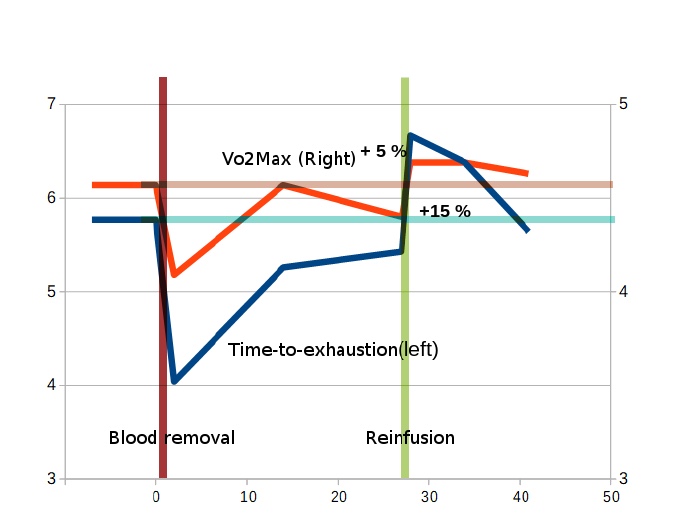
Some researchers had pointed out that the ”overnight” improvement wasn’t the whole truth about the performance enhancement, and Russell R. Pate of the Human Performance Laboratory, University of South California stressed this point when writing for The Runner’s World about blood doping in 1976. Whereas it was widely publicized in the media that there was the 9 percent ”overnight” increase in Vo2MaX and it is usually reported even today with the 23 percent improvement in performance, very accomplished marathon runner Pate (personal record world-class level time 2:15) spotted an flaw in how the data was usually presented, because an athlete interested in blood dope wouldn’t be interested in the ”overnight” change but in change when compared to the pre-blood donation period. ”When Ekblom’s results are viewed in this manner, the increases in performance are still present but much smaller – a 15.6 % increase in work time and only 4.8 % increase in maximal oxygen uptake”. (Pate, 1976)
While even modern researchers customarily quote the canonical Vo2Max and performance improvements of 9 % and 23% from the first blood doping study, the increases are lower (5 % and 15 %) when the blood boosted ”peak” is compared to the baseline value instead of to the anemic level preinfusion level.
While there was a point, Ekblom didn’t find this criticism totally valid:
My view was that even if [our subjects] were not really fully recovered in hemoglobin concentration, the change after reinfusion would be enough from day-to-day to see the effect even if we were from lower-than normal value, and that was also the case that some of the guys we have had had not been recovered during 30 days. One could say [that] some of the performance effects could have been that they had restored an anemia situation, on the other hand, there are a lot of – at least a few – subjects who were normal when they got the blood back and still you could see this effect on performance and so forth.
Even if one compares improvements to the pre-blood donation data, the improvement in maximal oxygen uptake was 4.8 % in the first published study and 8 % in the 1976 research paper, which are significant figures and the latter was even statistically significant (statistical analysis wasn’t conducted on the first one between the two values). Of later blood doping specialists particularly Professor Norman Gledhill from York University has later also questioned whether the data on maximal oxygen uptake and hemoglobin concentration is fully consistent in these first studies where the benefit was seen. His main problem with the three Swedish and West German studies wasn’t that the absense of increase in maximal oxygen uptake, but that the increase was too large when compared to the elevation of the amount of oxygen carrying red blood cells.
But how come Vo2Max increased more than hemoglobin concentration if causally the link was that oxygen delivery caused the increase in Vo2Max? Even when the observation raises the question about the training effect and a fraction of improvement, Ekblom found part of Gledhill’s criticism strange because the oxygen delivery chain is a very complex one and there are always variables that can ”interfere”, and correspondingly there are almost always some seemingly unexplained anomalies in the measured data.
In addition, hemoglobin concentration isn’t always the best predictor of how much red blood cell count has been increased after blood infusion, because it is only a relative figure and while usually blood volume returned to normal and there was higher hemoglobin concentration, occasionyll blood volume remained elevated, masking the increase in total hemoglobin, which is a variably more closely related to Vo2Max than hemoglobin concentration. While it is totally true that hemoglobin concentration was only slightly elevated (2-5 %) in the three reinfusion showing benefits associated with blood reinfusion, total hemoglobin was elevated on average by some 5-10 percent in these same studies.
In addition of knowing a few anecdotal insights from the field about successful blood dopers, Ekblom – who had become a full professor in 1976 – later wrote that there had been 30-35 reinfusion tests conducted at the GIH in the 1970s, so he had access to more laboratory data than almost all the ”skeptical” researchers, because only a fraction of this material had been published in the two reinfusion studies in the 1970s. (Ekblom, 1982) Thus he had good reasons to be convinced that he and his fellow GIH researchers were on the right track despite a few irregularities in their research papers.
They had also interest in proceeding with the blood doping research on track, but the research never materialized. “As I have stated, there was a lot going on at that time”, Ekblom recalls how busy the era was.
The Consensus View Shifts
If Ekblom planned a final research paper to convince the remaining skeptics, he never had the opportunity to do so, because at least three teams addressed the issue already in the late 1970s with the most sophisticated technology. Norman Gledhill didn’t just armchair speculate the issue, because he had planned to show ”definitely” that blood doping ”really” worked. He had actually written in June 1978 with his coauthor MD Alison B. Froese that ”research on blood-boosting has been inconclusive and in fact confusing” and that ”overviews of these studies have generally concluded that blood boosting has no effect on aerobic capacity and endurance performance”. Gledhill and Froese reveal in the same paper that they will soon be publishing a new study showing the efficacy of blood doping hoping that ”these results will prompt sport governing bodies to take a firm position on the use of blood boosting in athletic competition”. (Gledhill & Froese, 1979)
The first report of the findings was delivered at the 1978 meeting of the American College of Sports Medicine in Washington, DC where coincidentally another team finding benefits of blood doping presented their findings. These lectures were delivered only a few hours after one MD had first given a lecture about athletes abusing methods and substances and mentioning anabolic steroids and blood doping as ”discredited” methods. (Barnes et al, 1978)
Whereas almost all the research thus far had stored the removed blood in refrigerated form, the Canadians employed relatively new high-glycerol freezing technology, also known as cryopreservation, a technique more known from the world of science fiction. Instead of storing the blood at +4 degrees in a refrigerator, they separated red blood cells from the plasma and added glycerol to keep the ”dry” cells in liquid and froze the mixture at -90 degrees after which the aging process halted altogether. This technique allowed them to wait as long as possible before reinfusing the blood because the blood remained in high quality regardless of whether the blood remained stored for one day or for ten years.
This allowed the research team directly to use a high amount of blood and the authors took some 1000 milliliters for later reinfusion. (Buick et al, 1980)
Even when Ekblom and his coauthors had used well-trained subjects in all of their blood infusion research, they were still far from international level athletes. Now the subjects of the Canadians are described as ”highly trained male track athletes of national or international caliber” with the mean relative oxygen uptake being 79.5 ml/kg/min and the highest value being level 87 ml/kg/min, which would’ve been ”world record” only a decade earlier. They were also familiar with the rigorous training program and had a body fat percentage of around 6-8 %. This Canadian study would actually be one of the few blood doping research papers with elite level athletes because anti-doping regulations would make it practically impossible to use competing athletes for doping research of this type.
The third improvement was that the testing protocol itself was also very sophisticated and there were a control group and double-blind protocol. One group received blood infusion first whereas the control sham infusion of saline and a day later the roles were reversed. Vo2Max increased constantly by 5 % and maximal working time on a treadmill increased by 35 % in the reinfusion group and there was no improvement in the sham group receiving only a miniscule amount of saline. Fred J. Buick – one of the authors and a graduate student of Gledhill – also told later that the participants were breaking their earlier personal records during the time period, so the improvement in Vo2max had some real life implications as well and it wasn’t just a statistical artifact.
Then how to compare this paper to the earlier blood doping papers where an increase in Vo2Max was seen?
One clear improvement in the paper was that both hemoglobin concentration and total hemoglobin increased very significantly, by more than 10 %, but the other results came back roughly similar. The 5 % improvement in Vo2Max measured in the 1980 research paper was very much in line with what the Swedes and West Germans had measured several years earlier as well as the 35 % improvement in a time-to-exhaustion test. In light of the current knowledge, it is almost impossible that training effect was the cause of the Vo2Max and performance boost of the Swedish research papers, but we do not know if it was a contributing factor in the Vo2Max increases. And indeed, this time there was very little room for speculation about placebo effect or training effect and both the authors and commentators could pretty conclusively conclude that the hemoglobin elevation caused the increase in Vo2Max and performance.
But if the Canadians had in the first place objected to some strange anomalies in the Swedish and West German research papers, their own research paper has at least one strange anomaly. Whereas hemoglobin concentration had returned to normal in 16 weeks, surprisingly the maximal oxygen uptake hadn’t followed, but remained still elevated and hadn’t fallen at all. The same phenomenom took place in both of the groups. The authors speculate about increased maximal cardiac output achieved through above normal training load during the time period when hemoglobin was artificially elevated.
This research had an enormous impact on the Anglo-Saxon world. R. Russell Pate, PhD., of the Human Performance Laboratory, University of South Carolina had been skeptical on the efficacy of blood doping in the mid-1970s and took an attempt to solve the issue in 1979 with 15 trained female distance runners. When there was no statistical benefit seen, the authors could’ve taken victory laps and poured water into the efficacy of the method, but instead they specifically note that the finding is relevant only to ”the specific blood reinfusion procedure employed” being more interested in why hemoglobin concentration wasn’t elevated with his procedure than making any general conclusions about efficacy of blood doping. ”We were using about half the blood that other workers use, we weren’t freezing it, and 21 days probably isn’t long enough for a return to normocythemia,” Pate stated emphatically seeing the shortcomings. (Barnes & Mealey, 1979)
Whereas International Association of Athletics Federation (IAAF) had specifically warned before the 1974 European Athletics Championships that blood doping was dangerous and wouldn’t improve performance, Norman Gledhill had met Arnold Beckett of the IOC Medical Commission in 1978 and discussed with him about his findings convinced Beckett that the method would work in practice.
“Since Ekblom’s original study, a number of other similar experiments have produced conflicting results so that the technique and the academic and ethical questions it raises were rapidly becoming a dead issue”, wrote Tim Noakes – a future opponent of Ekblom with his ”central governor” theory– in 1982. ”But now, unfortunately, the issue is again current because the most detailed and carefully-controlled study has confirmed that blood doping does, in fact, do exactly what Ekblom said it would”. (Noakes, 1982) The roots of the Los Angeles 1984 cycling blood doping scandal can also be traced to this Canadian research, because team physiologist Ed Burke got interested in the issue having read a 1983 article by Norman Gledhill published in The Physician and Sports Medicine where the hematologist explain his works with the shortcomings of the earlier research in a great detail. (Gleaves, 2015; Gledhill, 1983)
On his part Melvin Williams had conducted two blood doping research papers and written regularly reviews on the issue of efficacy based on the available published research, concluding each time that the evidence wasn’t unambiguous and tilted towards the inefficacy. When he dealt the issue in the 1980 summer issue of Journal of Drug Issues, he came to the same conclusion. While he reviewed also the short summary of the Buick et al paper was published, he still concluded that “one may only speculate as to the validity of the results reported in abstract form”. (Williams, 1980)
Williams had never questioned the validity of the data of the Swedes and West Germans, on the contrary, he was truly puzzled why the maximal oxygen uptake was elevated whereas the other research gave so inconclusive results. Now he came up with a possible theory relating to the testing protocol itself because the Swedes had used Vo2Max test as the same test where performance time was measured. Vo2Max test is an incremental test and his armchair speculation was that the subjects hadn’t reached their true potential Vo2Max in the first tests and when they ran for a long time after reinfusion, they also reached their real Vo2Max.
“Thus, if subjects realized they were receiving an experimental treatment they may have been motivated to perform to a more exhaustive level, possibly increasing their Vo2max recordings”, he speculated. ”In some of the studies, increases in Vo2max were on the order of 300-400 ml, which might possibly be explained by the greater endurance time in these same studies. The question is, ”’Is the increased V02max the cause or the effect of the increased endurance time?’”.
There was a noticeable gap between Melvin Williams sending his article to Journal of Drug issues and when it was published because by the summer of 1980 he had pretty much finished his third study on the subject and had changed his opinion about the inefficacy/efficacy issue almost 180 degrees.
The issue had clearly been bothering him since the spring of 1972 when his student Jerry Bocrie had shown him a journal issue where the subject was discussed. After the two earlier inconclusive attempts, he had taken in 1979 his third take on the issue and wanted now to be absolutely certain that there would be as little ”possible criticisms” this time. The methodology he used was almost exactly the same as Buick and his coauthors had used from the number of subjects to the amount of blood reinfused (920 ml) to the storage technique and to the sham infusions. Williams had already two years earlier shown interest in testing the method in connection to a grand marathon, and this time he also didn’t measure Vo2Max figures at all, but instead used a simulated 5 mile-run on a treadmill, which would be a rare experiment attempting to measure the effect of elevated hemoglobin concentration on actual speed. (Williams et al, 1981)
The effect of blood doping on performance. The twelve runners of Williams et al were blinded so they didn’t know what substance they received, but when they were infused with saline, some ran faster and some didn’t when compared to the control time (control time = 100) with no improvement in the mean (blue bold line). But when they received their own blood, all but one improved in relation to their control time and the mean was some 2.5 %. (data from Amdur, 1980)
And unlike in his two earlier blood doping studies, something really noticeable took place this time. Only seven out of twelve athletes ran faster after saline infusion, whereas everyone but one improved after blood infusion. The mean improvement was statistically significant 2.5 %, almost exactly the same value that Ekblom predicted some ten years earlier that Anders Gärderud could improve his performance via blood doping. ”Blood doping appears to be an effective method to increase distance running performance, and its place in the sports world should be determined by the medical and rules governing bodies of athletic associations throughout the world”, Williams wrote in his ”update” review on the existing literature. (Williams, 1981)
While time-trial type research on blood doping has been scarce, the improvement is roughly in the same range in the later handful of blood reinfusion studies and the improvement is significant, because it is the difference between the 1st and 35th at the 10000m world list for 1980. While famous exercise physiologist James Stray-Gundersen described later this Williams et al research paper the ”definitive study” (Stray-Gundersen, 1988) and Williams and his coauthors tried to avoid any ”possible criticisms”, the authors point out that ”several thoughts should be kept in mind”. The subjects were only good local runners and the results may not be applicable to elite level athletes. In addition, “results from laboratory test cannot always be generalized to an actual athletic competition where a number of other variables may influence performance”. Williams speculated to The New York Times that he planned to take his fourth take on the subjects. ”I’d like to set up a laboratory study in the field. It would be like looking at it during an actual run. Hopefully, we can plan something like this for next year”. (Amdur, 1980)
Tapio Videman had been the coauthor of the first known study conducted outside the GIH to test whether blood doping worked in 1971 and didn’t find much benefit with the method. In 1977 he had sent the study to be published in a prestigious journal, but now in 1979, he coauthored a letter to the International Olympic Committee proposing blood doping testing in order to curtail its use.
The history will always see Björn Ekblom as the eminent physiologist who came up with the ”blood doping” research line in the mid-1960s and conducting the major studies on the subject that opened the way for other researchers to follow his footsteps. Still, these mainly North American researchers such as Fred J. Buick, Norman Gledhill, Robert Robertson, and Melvin H. Williams have their place in the history, pushing the discussion forwards after it being in the intermediary limbo caused by all the conflicting literature. When the pertinent question of the 1970s was whether it worked at all, the focus shifted on what procedures constituted blood doping, should it be banned and what relative importance should be placed on its detection.
I can propably say that I got the impression that the IOC changed its position because our research became more credible. The problem earlier was that Americans had much influence on the top people inside the organizations and we were considered just some “in Europe” who just did research on this and that.
Even when it was the Anglo-Saxons who on some level convinced the sports governing bodies, Ekblom wants to emphasize that it was P-O Åstrand who did a lot of effort in making the GIH research known in the United States when he visited the country lecturing about blood doping, for instance in 1973 at the Berkeley University.
***
Because this has been an essay on the intellectual origins of blood doping, we are slowly but surely approaching the end of this essay.
The new decade gave also another interesting development.
While there had been gossip about the use of the practice for roughly a decade and one Dutch cyclist had even admitted taking transfusions in the mid-1970’s after he had developed a persistent anemia after a crash where he lost a lot of blood, the early 1980s is usually considered the time when the first solid evidence of blood doping practice came into light.
Peo Åstrand wasn’t convinced that the method had been used and he wasn’t alone. ”Blood doping – that is to say – that a sportsman before a competition fill himself with stored blood he has stored before in a ‘blood bank’ is more of theoretical than practical interest”, was the view of anti-doping activist Arne Ljungqvist in an interview in 1976. ”On one hand is the effect doubtful and on the other hand it needs a lot of resources, and one cannot meddle with blood doping as easily as pills in the locker room.” (Nordisk Medicin, 1976)
While Finnish sports doctors hadn’t particularly denied in the 1970s that some anemic Finnish sportspeople had been treated with transfusions, they had claimed throughout the decade that the method was not beneficial for ”real” doping purposes. MD Pekka Peltokallio actually told in 1972 having heard of a ”few cases” of transfusion taking place emphasizing in 1975 that he knew with 100 % evidence of three cases – a wrestler, a cross-country skier, and a track & field athlete. ”I do not think anyone would dare to administer a transfusion to a top runner ahead of a major competition”, he emphasized. ”There are too many risks, the athlete may become feverish or yellow. Who takes such a risk?”. (Aromäki, 1975)
While even The New York Times published in 1981 the news item about Finnish endurance runner Kaarlo Maaninka admitting having used the method at the 1980 Summer Olympics where he won two medals, more interesting confession had taken place a month earlier when the retired Finnish steeplechaser Mikko Ala-Leppilampi told publicly his story in the Finnish media. (Wessman, 1981) The athlete that had ended his career pretty much after he didn’t make it to the 1976 Olympic team not only revealed having used method as early as in 1972, but he also was under the impression that he was left out of the ”inner circle” of blood dopers a year earlier when he was 5th at the European championships in 3000m steeplechase. He was heavily under the impression that at least some Finnish athletes had benefitted from the method a year earlier and that the method was widely used by the Finnish runners mentioning even Juha Väätäinen and Lasse Viren by name and emphasizing that a non-blood doped Finnish runner was actually an exception – not the other way around.
Finnish MDs had maintained that the operations couldn’t have been carried out because there were no freezing technologies and there was then and is today debate about how applicable autotransfusions with refrigerated blood are from doping viewpoint. “In fact, blood-boosting is out if the question in Finland”, had sports MD Pekka Peltokallio and a friend of Lasse Viren claimed shortly after the 1976 Olympics. ”We haven’t got the special facilities for properly preserving the blood. The nearest facilities are in Stockholm and in Holland”. (Raevuori & Haikkola, 1978) Ala-Leppilampi revealed one answer to this mystery – almost all the transfusions used by the Finnish athletes were from the abundant supplies of the Red Cross blood bank. He still mentioned almost in passing that autotransfusion had been used, but in order to avoid the anemia recovery problem, the blood was stored after high altitude training when hemoglobin concentration was high in order to make the relative anemia less severe.
His own initiation came in 1972 on the eve of the summer Olympics, when the Finnish Olympic team gathered for a dinner in a conference center in Finland. Dr. Pekka Peltokallio – the accredited team doctor – discussed with the athletes one-by-one, and when it came Ala-Leppilampi’s turn, the doctor asked whether he’d be interested in taking advantage of ”medical aids”. ”OK, let’s use transfusion”, the runner replied.
Peltokallio wasn’t that talkative about the topic, but he admitted that the 1972 incident took place even when he denied that other Finns had taken advantage of the method. ”I don’t feel obliged to tell where and how the operation was conducted”, he stressed. (Forss, 1981) Regardless of the alleged benefits, he wasn’t that convinced about its efficacy and referred to the study with cross-country skiers showing no benefits. “For most people, the method is of no use, even when it is beneficial for anemic people”. (Tulusto, 1982)
When Björn Ekblom commented on the issue in Swedish media, he revealed that he happened to know about the case of Ala-Leppilampi already beforehand not wanting to reveal what he knew about the other Finnish runners. Steeplechaser Anders Gärderud who had told having some interest in the method a decade earlier denied having never used it, but still clearly didn’t find the issue worth all the media fuss. ”This is in no way prohibited?”, speculated Gärderud the ethical implications of the confession of Ala-Leppilampi. ”Unesthetic? Well, we need to make a clear difference between the risk-free fitness and the sport, at which level we are. This is bloody serious and everyone uses the methods that they have faith in”. (Byström & Loren, 1981)*
*Viren has always denied blood doping and no solid evidence has emerged about his having used the method even when the claim is today almost ”common knowledge” and some of his comments were equivocal. Of the GIH-researchers, Peo AÅãstrand told having followed the issue closely but hadn’t heard of the method been applied. ”Therefore I don’t believe that Lasse Viren or any other international star would’ve taken the change or risks”, AÅãstrand stated. (Lehman, 1981) Ekblom wrote also diplomatically in 1982 that ”by looking at [Viren’s] performance and his training background, it has been suggested that his results can be explained by other means”.(Ekblom, 1982) Ekblom’s colleague Kenneth Lundmark of the GIH has since stated that the Finnish runners were the ”most known examples” of blood dopers and stated that Viren more-or-less confessed having blood doped. (Stenberg, 2000)
If it isn’t known how prevalent world doping was, the practice spread when denying its efficacy became an untenable position, and Kaarlo Maaninka wasn’t the only blood doper of the 1980 games, because some Italian athletes had also used the method and Soviet runner Aleksandras Antipovas admitted some ten years later having blood doped in 1980. Melvin H. Williams on his part told The New York Times in 1982 that he was approached regularly by athletes and coaches who would like information and assistance to use the method. ”All I predict is that with the 1984 Olympics getting closer and closer, more athletes will try to use it”, he correctly speculated (Rogers, 1982). Williams also recalled three decades later that one group of the 1984 blood dopers were interested in the technical details:
In the early 1980’s I was at a sports medicine conference in Colorado, and gave a presentation on blood doping. Some advisors to the American Olympic team questioned me in detail about the procedure and its effects.
When discussing the case of Mikko Ala-Leppilampi in media, Ekblom stressed that the method was banned under the IOC’s general clause even when it wasn’t specifically listed as a banned method by the rules. There was a new line of discussion whether the method should be banned or not and even whether it already was banned or not now that it was shown definitely that it worked. The issue was a complex one with various opinions and even definitions, for instance on what constituted a ”doped” hemoglobin value or whether it was fair that rich countries could have enough resources to send their athletes to altitude training whereas poor countries didn’t.
But that is another story for another day altogether.
This is part four of a multi-part series titled “Limiting Factors – A Genesis of Blood Doping”.
The full bibliography for this research can be found at the end of Limiting Factors – A Genesis of Blood Doping (part one).
More hemoglobin = more Vo2max/work capacity, so the idea of blood doping is here? The correlation between total hemoglobin mass Vo2Max and work capacity has been known and researched for decades and already in the 1940s.
This is part two of a multi-part series titled “Limiting Factors – A Genesis of Blood Doping”. It comes to FasterSkier from Sammy Izdatyev. You can read part one here.
Sammy Izdatyev is the pen name of a Finnish sports enthusiast and unaffiliated amateur historian, who has been interested in endurance sports since the turn of the millennium. He hopes that his pro bono – research can provide more information into the body of literature of earlier underresearched areas of the history of sports.
PART II: Can blood doping work?
Can blood doping work? Is hemoglobin concentration such a bottleneck in the oxygen-transport chain that elevating it above normal level increases maximal oxygen uptake and performance?
For a modern reader, the answer to these questions is so obvious that the questions are no-brainers and one can easily imagine that this was how the issue was viewed some 50 years ago. But if this was common knowledge already in the ’60s, then the reader is left with a logical problem – the technological know-how to “blood dope” had been available since the first blood transfusion took place in the 19th century, so why did it take until the mid-’60s for the subject to be researched and why was the reception so negative and dismissive, not only on ethics but also on physiological grounds as well?
The simple answer is that not that many people considered that method would “work” in the sense that hemoglobin concentration limited maximal oxygen uptake as an independent factor.
As Ekblom recalls, the main opposition wasn’t ethical problems with the doping outcome, but that the entire premise was considered strange. Indeed, if the idea of blood doping is to assume that elevating hemoglobin concentrations artificially above the normal “healthy” range is beneficial from a performance standpoint, various observations, theories, and logical conclusions refute this hypothesis. Some of these ideas were publicized after the first blood doping research was published in the early ’70s, but it is equally likely that these same reasons prevented the research taking place in the first earlier because the efficacy sounded unlikely from a performance viewpoint.
“Blood doping can’t work, because natural is optimal”
The first reason to dismiss the idea behind blood doping was related to viscosity and to the observation that when particles are added to a solution, it makes the solution flow more slowly, in this case, with blood. While an increase in hemoglobin concentration does increase the relative amount of oxygen carriers per given unit of blood, it simultaneously makes the blood more sluggish. Correspondingly when red blood cells are added to blood, the marginal gain is lower with each extra red blood cell, because the velocity of the blood is diminished. With very low hemoglobin concentrations, the increase of oxygen carriers is beneficial from an oxygen-transport viewpoint, but relatively quickly the marginal gains will become minuscule, and at some point, there is a point after which the added oxygen has only negative effects.
A schematic view of how higher hematocrit with ”thick” blood causes blood to become more ”viscous” and oxygen delivery to fall after there are too much red blood cells. In the representations, usually, the optimal hematocrit is c:a 40 to 45.
Because the properties of red blood cells and plasma are quite similar among different individuals, this phenomenon logically leads to the idea of “optimal” hematocrit, which should be roughly the same for every person. It has been assumed that the oxygen transport was highest around 45 percent, which was coincidentally also roughly the mean resting hematocrit of men residing at sea level. The interesting part of the theory is that it doesn’t even “care” whether the red blood cells are “natural” or “blood doped”, but the optimal value should be the same regardless.
While some athletes in the ’60s occasionally complained about their low hemoglobin concentrations, contrary to the theory, exercise physiologists and sports doctors working with athletes and measuring their blood counts didn’t notice that high hemoglobin was associated with lowered maximal oxygen uptake as the theory would dictate. Even the sports hematologists seem not to have fully believed the theory, because while it was referred to widely even decades later by various experts, there hasn’t been one documented case that a doctor recommended elevating performance via blood donation if the hematocrit was above 45 percent. While there was clearly a discussion about the viscosity problem among exercise physiologists, Ekblom recalls that most of the viscosity discussion was driven by cardiologists, and his own data gave was no indication of any “optimal” hematocrit level:
You can just look at the data you have in front of you, that all these important tests you’ve done on skiers, cyclists, runners, the peak variation in hemoglobin and hematocrit at the highest level of performance at that time. I could not find that there was an optimal hemoglobin concentration. You must just look at the papers and see that some guys had higher hemoglobin and hematocrit than the so-called ‘optimal’ and still they were Swedish champions. So I couldn’t find the discussion about ‘optimal’ hematocrit as scientifically proven.
Interestingly when Åstrand and Rodahl wrote about viscosity in the first edition of their “Textbook of Work Physiology” published in 1970, they have a few paragraphs on the issue, but took a different approach on “optimal hematocrit”. They were also dismissive on whether the viscosity theories could be applied to the human system, writing that blood has “anomalous” viscosity which leads to “a lower viscosity of the blood than expected”. (Åstrand & Rodahl, 1970)
*Åãstrand and Rodahl also write about the FaÅãhraeus-Lindqvist effect which leads “reducing the load on the heart”, particularly blood associated phenomenon where viscosity decreases with the decrease in the diameter of the tube the implication being that blood most likely flowed at a better rate than expected through the smallest capillaries.
The “viscosity problem” still made enough sense that many blood-doping researchers conducting blood reinfusions have referred to it regularly. Those who didn’t find any benefit with elevated hemoglobin concentrations found it explained the absence of benefit, and many of those who noticed benefits assumed that the 45-percent figure vouched for by hematologists and cardiologists was, for some reason, too low, even when the premise was sound.
An equally plausible theory against the benefits of blood doping was that human circulatory system was always best adapted to the specific conditions, and if the human body regulated the number of oxygen carriers to a certain value after a rigorous exercise training program, it indicated that it was also the most optimal for the given condition and individual. While regular exercise increased the total amount of oxygen-carrying red blood cells, it simultaneously increased the amount of plasma and correspondingly, the total blood volume. The blood didn’t become thicker, but on the contrary, it was regularly seen that the amount of plasma increased more than the number of red blood cells and the blood actually became diluted and hemoglobin concentration fell slightly. Even when there was debate how much this “anemia” was natural adaptation and what was caused by iron deficiency, overtraining or red blood cells being destroyed during training (by causes such as the so-called “foot strike anemia”), the best athletes didn’t have to have high hematocrits, and mediocre athletes who took the training seriously didn’t necessarily elevate their hematocrits by an iota even if their performance increased significantly.
If “blood doped” high hematocrits carried more oxygen, it was equally counterintuitive why there would be no correlation between hematocrit and performance, but on the contrary, an athlete whose hematocrit was only 36 percent could and occasionally did win a race against someone whose figure was as high as 52 percent. As an illustration of this, many Finnish sports MDs were aware how cross-country skier Veikko Hakulinen had the lowest hemoglobin concentration of the 1956 Finnish Olympic team, but still went on the be the second best skier of the Olympics with one gold and two silver medals.*
*When blood doping was the ”hot” topic in 1977, Finnish hematologist Kari Remes who was closely affiliated with the sports circles also observed in his lecture that ”hemoglobin concentration isn’t as important for an athlete that has been widely assumed, because the range of normalcy is very large” and correspondingly ”world records have been broken with as values as low as 117 g/l and on the other hand with values as high as 220 g/l”. (Remes, 1977)
The third item for skepticism was related to the relative complexity of the oxygen delivery/utilization system, because, as we have seen, red blood cells don’t take oxygen from the air and “consume” it, producing a watt output, but there is a chain of oxygen delivery from air to the mitochondria.
One prevalent view of during the early ’60s was that all the links of the chain were fully utilized and so heavily interdependent that artificial manipulation of any link wouldn’t change the total quantity of oxygen delivered and used. As previously explained, regular exercise increased the capacity of the links, so it didn’t make much sense to have extra “reserve” in any of the links just sitting idle.
While Ekblom’s mentor Åstrand took part into the blood-doping research process from very early on, Ekblom’s recollection was that he and the majority of physiologists were skeptical about the prospects of artificial elevation of hemoglobin concentration precisely on the premise that the oxygen transport/utilization was in full use and each link was highly limited:
If we go back to 1965-1966, Alf Holmgren and Per-Olof Åstrand had a paper stating that all these links in the oxygen transport chain stay in some rough relation to each other and that was the view that most people had, that the links were so closely linked together that it is no gain to increase one because that should not have any positive effects if the other links were so used to 100 percent.
Mitochondria weren’t measured, but there were high correlations between Vo2Max and all the variables – total hemoglobin, lung capacity etc. (Holmgren & Åstrand, 1966) This didn’t preclude the possibility that if one link was manipulated down, such as at high altitude when there was shortage of oxygen in the lungs, or in anemia, when the number of oxygen carriers are well below normal, the other links couldn’t compensate for the shortage and there was a decline in VO2max, and in performance:
If a link is decreased, that is another thing. If you take away blood, then of course the other links can not work. But if you increase the blood volume or hemoglobin concentration then there will only be some kind of resistance in the other links that would not let the oxygen uptake go up.
In relation to this downward manipulation, the fourth item against the blood doping was that the human body had enormous adaptive capabilities, and it wasn’t certain that manipulating the links had conclusively negative effects on performance.
Whereas the disconnect between hemoglobin concentration and Vo2Max observed by Ekblom raised suspicions about the viscosity theories, the material also raised questions about the importance of Hb concentration because human system seemed to be capable to give similar Vo2Max values with so different concentrations. When the literature also gave no answer to the question of how elevating hematocrit above normal levels affected maximal oxygen uptake and performance, there was surprisingly little research on how lowering hematocrit affected those variables.
While Björn Ekblom and his coauthors concluded about the preceding blood donation research in 1972 that “most investigators agree that after blood loss there is a deterioration of physical performance”, the research was far from consistent and VO2max was almost never measured in this context. In addition, the fall in hemoglobin isn’t the only outcome of blood donation and there is also a temporary fall in blood volume which might have a detrimental effect on performance independent of the number of oxygen carriers when there wasn’t just enough fluid to fill the vessels.*
*The paper that went furthest in this regard went on to claim that it was BjoÅNrn Ekblom who first observed the significant fall in Vo2Max after blood donation. “Only Ekblom et al have shown major changes in Vo2Max with phlebotomy”, wrote a team of US Army Research Institute of Environmental Medicine researchers in their 1974 paper. (Horstman et al, 1974)
There was literature stating that while it took up to several weeks for the body to replace the “shortage” of red blood cells caused by blood donation, performance capacity or Vo2Max recovered significantly faster and in some research papers work capacity not only fully recovered in a few days but even surpassed the initial level when the number of oxygen carriers was still comparatively low. (e.g. Gullbring et al, 1960)
One of the exercise physiologists who had measured the effect of blood loss on maximal oxygen uptake was Loring B. Rowell of the University of Minnesota, who published his thesis in 1962. One item he researched was how removing a relatively large amount of 700-1000 milliliters of blood affected VO2max and the results weren’t favorable for the blood-doping hypothesis. After blood removal, there was a fall of hemoglobin concentration from 15.7 g/dl to 13.5 g/dl, and even when the number of oxygen carriers fell by 14 percent, there was only 4 percent decrease in maximal oxygen uptake, which seems contrary to the later research and must have raised questions about the importance of hemoglobin concentration in the oxygen delivery chain. If lowering had a surprisingly inconsistent effect that the body could almost fully overcome, why did increasing above the normal level bring the presumed benefits? (Rowell et al, 1964)
Rowell’s work was published also in the Journal of Applied Physiology in which most of Ekblom’s research on link manipulation appeared. When Ekblom described the roots of the blood-doping research in 1982, he acknowledged knowing “that some groups had done some minor experiments” and listed Rowell’s thesis among them, so he was at least aware of the anomalous finding. (Ekblom, 1982)
…Or can it work?
Still, there were cases more-or-less known within the sports world that indicated blood doping might be beneficial. There was also a chance that one or more of these observations had attracted enough interest that someone else would have invented the blood doping independently of the research carried out in Sweden.
Blood doping has been often compared to high-altitude training because both techniques elicit similar types of responses (higher hemoglobin level), even when high-altitude adaptation takes time — weeks and months and the effect of altitude training isn’t usually of the same magnitude as with blood doping.
Even when the benefits are debated even today, high-altitude training was a scientific area that got attention in the 1960s partly because native high athletes residents started to break their way into elite levels of endurance running, partly because many countries researched the question because of the 1968 summer Olympics in México City at 7000 feet (2200 m) altitude.
When scientists from various countries presented their altitude training findings in March 1966 symposium titled The Effects of Altitude on Physical Performance, Dr. Bruno Balke summed up the material presented and noticing many positive effects. ”The majority of investigators observed an improvement of maximum aerobic capacity or, at least, an improvement of performances soon after return from altitude to sea level”, he concluded. ”The athletes, in many instances, had reached a consistent level of physical condition prior to the altitude training and it appeared most unlikely that a continuation of training at sea level, instead of at altitude would have resulted in identical improvement”. It still should be noted that any absence of a consistent increase in maximal oxygen uptake led Balke still to speculate about some other mechanism than elevated Vo2Max. (Balke, 1967)
Internationally it also didn’t go unnoticed that native altitude residents such Kipchoge Keino and Naftali Temu were extremely successful at sea level, and Keino was even tested by Åstrand and Saltin in 1965, when tests showed that his relative VO2max was very high (82.0 ml/kg/min), indeed highest of the few runners. While Ekblom conducted relatively little researched on the topic of altitude-adaptation, his recollection is that it wasn’t a uniform view that these ”high-altitude” blood values were the primary reason for their success:
One should remember that there was some experiment done at that time that showed that if you look at VO2max in well-trained athletes, there was no relation between VO2max and hemoglobin even in well-trained athletes and that is why the high values of Kip Keino and other people was only that they were one of those guys who had higher values more-or-less by natural cause.
Swedish cross-country skiers still regularly trained at altitude in the 1960s for short periods before many Winter Olympics in order to elevate their hemoglobin count, assuming that high hemoglobin was beneficial even at much much lower altitudes, where most of the competition venues were located.
”What do the red blood cells have to do with the Olympic ski strategy?”, asked a Swedish journalist residing at the high-altitudes of Alpe di Siusi in 1963. “Yes, they are intimately linked to the human oxygen absorption capacity and more there are those in the veins, the greater the capacity”. He was then with the Swedish cross-country skiing team at the altitude of 2000 meters in a training camp dubbed “Operation Red Blood Cells” by one Swedish official. (Pe, 1963)
The academic scientific research about altitude gave still very inconsistent results and would do so until our days. One of the scientists who at least considered seriously the idea that high hemoglobin induced by altitude training could be beneficial was Ekblom’s colleague Bengt Saltin, who tested the adaptation capabilities of a group of athletes at altitude in the mid-60s. While the experiment was a failure from the adaptation viewpoint (performance was below that of sea level after several weeks), the authors were interested in the possible benefits with “thicker blood”.
“Adaptation to high altitude theoretically could increase maximal Vo2 on return to sea level owing to the greater oxygen-carrying capacity of the blood,” the scientists wrote in the research paper published in 1968. ”However, following 3 weeks at 3,100 m, four of five young athletes had a lower maximal Vo2 when they returned to low altitude, and when top Swedish athletes spent 3 weeks at 2,300 m, five of seven had a reduction in maximal Vo2 on return to sea level.” (Saltin et al, 1968) More detrimental to the higher RBC-count related benefits of high altitude training, all except one of this 1965 group that spent three weeks at high altitude had higher total hemoglobin mass (up to 10 %) when they returned to sea level. (Saltin, 1966; Saltin, 1967a)
One possible clue of the benefits of high hemoglobin counts was that aside from altitude residents, there were other high-performers with high hemoglobin counts.
While there was no correlation between hemoglobin concentration and Vo2Max when men were researched as a group, it was well-known that men tended to have both higher hemoglobin concentration and higher oxygen uptake than women had. The Swedish researchers – among then Åstrand – also concluded that the difference between the Vo2Max figures was explained by the difference in the oxygen carrying capacity of blood. “When exercising the lower concentration of hemoglobin for women is no doubt a handicap from a circulatory viewpoint,” Åstrand and his coauthors wrote as early as 1964. (Astrand et al, 1964)*
*The viscosity theory of hematocrit 45 % (Hb c:a 15 g/dl) being the ”optimal” is very “male-centric” theory because close to 98-99 % of females would find the method beneficial having their natural values well below that. When Finnish sports MDs of the Unit for Sports and Exercise Medicine (University of Helsinki) published the monitored blood values of athletes they tested between 1974 and 1986, the average for males was 14.92 g/dl, but the highest value of the 97 females was only 15.2 g/dl with the mean of 13.61 g/dl. (Kujala et al, 2000)
One good case study for the benefit of high hemoglobin concentration was also the mysterious case of the Finnish cross-country skier Eero Mäntyranta, who won two gold medals at the 1964 Olympics in Innsbruck, Austria. His high hemoglobin concentration was occasionally referenced in the media in the 1960s and he wrote in his memoirs (published in 1968, before blood doping was “invented”) that his fellow cross-country skiers were surprised about his blood values as early as the ’50s and attributed it to his success.
“[In 1957] I was a subject of a lot of wondering because of my blood,” he wrote. “It was a starting point to a myth that if a man has hemoglobin values that high, he will become a master skier and it takes nothing else.” A few paragraphs later, Mäntyranta explained he was unsure whether he benefited from his atypical blood. “Just recently the science has reached the right conclusion that hemoglobin value has no meaning as such. Everyone has his own normal hemoglobin value. If it falls, he has anemia,” he continued, explaining that he had ”anemia” in December 1967, shortly before the 1968 Olympics when his hemoglobin concentration fell to 20 g/dl. He lamented that he wasn’t informed about this “anemia” until after the Olympics. (Vuorio & Mäntyranta, 1968)
In the 1960s, people took notice of his above-average hemoglobin values, but when genealogists and hematologists looked into his case in the late 1980s, Mäntyranta’s blood values turned out to be almost unbelievably high, when his hemoglobin concentration was measured at 23.1-23.6 g/dl and correspondingly his hematocrit was 68 percent, higher than any measured ever even from any confirmed blood doper of whom the highest known is the alleged figure of 64 % from the Danish cyclist Bjarne Riis who won the 1996 edition of the Tour de France.The amount of red blood cells in his body was around 4.8 liters, which was twice the normal amount of men of his size who had that amount of blood in their circulation of which less than half was constituted of red blood cells. He had been described as almost unbeatable, but even when he was named “Mr. Seefeld” for his success at the 1964 Innsbruck Games, it is arguable whether he was necessarily the world’s best cross-country skier of the ’60s when considering all his major-competition results between 1960 and 1968.
Even if one didn’t see him then or today as a super athlete, there was one part of his case that should have raised eyebrows of the hematologists and should have given blood-doping skeptics within the community of exercise physiologists a moment of pause. If the viscosity theory was sound and the optimal hematocrit for oxygen delivery was the earlier presumed 45 percent, the Finn shouldn’t have had any advantage over his competitors. On the contrary, his VO2max should’ve been unbelievably low, comparable to someone clinically anemic. In addition to this, his relatively slow blood flow would have many other detrimental effects when blood flow was needed to carry hormones and to thermoregulate.
As an illustration of how other athletes’ suspicions have often preceded the underlying science, it is also interesting that Mäntyranta’steammates might have been on the right track about the link between his blood values and his performance.
Total hemoglobin
Then there is the correlation between total hemoglobin and maximal oxygen uptake, an item that had been of interest to Per-Olof Åstrand since the early 1950s.
While many blood-doping researchers have focused on hematocrits and hemoglobin concentrations because they are so easy to measure in a single test, one definition of blood doping is the artificial elevation of the total amount of hemoglobin (i.e. hemoglobin mass), the total sum of hemoglobin molecules circulating in the bloodstream. If someone’s hemoglobin concentration is 150 g/l and he has 5 liters of blood, his total hemoglobin is 750 grams (ie. 5 x 150) and someone with 120 g/l and 7 liters of blood has 840 grams (7 x 120) and so forth. While hemoglobin concentration is easier to measure regardless of the blood-doping method used, the goal of blood dopers is to actually increase the amount of total hemoglobin.
In this light, it is interesting that while physiologists of the ’60s noticed no correlation between hemoglobin concentration and maximal oxygen uptake, a very strong correlation between total hemoglobin and maximal oxygen uptake had been proven in the ’50s. (Åstrand, 1952) This was seen in comparisons between individuals; both also at least tended to rise and fall after training and detraining. That is to say, simply by knowing that Person A had twice the amount of total hemoglobin than Person B, it was very likely the maximal oxygen uptake of A was also twice as high.
It was also known that total hemoglobin was correlated with performance because data published in 1949 by Swedish researchers clearly showed a linear correlation between total hemoglobin and the watt output at a fixed heart rate between individuals. For example, if someone has 500-600 grams of total hemoglobin in his/her system, that person can produce power output of some 100-160 watts at heart rate of 170, whereas individuals whose total hemoglobin is double (1000-1200 g), their watt output at the same heart rate is also double (200-350 watts). (Kjellberg et al, 1949)
More hemoglobin = more Vo2max/work capacity, so the idea of blood doping is here? The correlation between total hemoglobin mass Vo2Max and work capacity has been known and researched for decades and already in the 1940s.
Why did blood doping even have to be invented if the idea was inherently there? More hemoglobin equals bigger oxygen engine and better performance, right? While Ekblom acknowledged that modern readers with access to the latest information might interpret the material in this manner, that’s not how the matter was viewed in the ’60s:
“I don’t remember anyone saying that if you go along the line of hemoglobin, you will have higher VO2max,” Ekblom recalls how this material was read when the idea of blood doping research started to materialize.
First of all, while the connection between the two exists, at the same time, all the criticism against the efficacy of meddling with the ”natural” system still exists and the linear correlation doesn’t debunk these theories per se, because the hemoglobin values and the cardiovascular system of these people were still “natural” adapted values (with hemoglobin concentrations most likely in the normal range).
The nature of the connection is alsopeculiar because it isn’t a direct connection between total hemoglobin as such and maximal oxygen uptake. When physiologist R.J. Shephard briefly discussed this correlation in his 1971 book “Endurance Fitness”, he wrote that “stroke volume is influenced by the availability of blood for pumping”, that the causal connection is actually between blood volume and VO2max, and the correlation between total hemoglobin and VO2max is just more a statistical anomaly because blood does contain the hemoglobin. Shephard even pointed out that some researchers found this very indirect connection between hemoglobin and maximal oxygen uptake arbitrary because absolute VO2max correlates also heavily with absolute body dimensions and larger people tend to have larger oxygen engine. Almost certainly a 6-foot-3-inch person would have a higher total amount of hemoglobin and a larger oxygen engine than someone who is 5’1”. (Shephard, 1971)
To illustrate how researchers were very unsure whether hemoglobin concentration as independent variable “caused” higher VO2max, it is telling that when Åstrand’s friend Alf Holmgren discussed the correlation during a conference in 1965, the following dialogue took place:
Q: Dr. Holmgren, did the data which you showed mean that big people have big total hemoglobins and big maximum oxygen uptakes, or can you say that in the same person, increasing the total hemoglobin is an effective way to increase maximum oxygen uptake?
A: If you relate total hemoglobin to body size, athletes have higher total hemoglobins than non-athletes. (Holmgren et al, 1966)
No conclusion there that infusing red blood cells into the bloodstream increased VO2max, and Holmgren wasn’t convinced that altitude training or other methods primarily targeted at increasing total hemoglobin in turn “naturally” increased performance. Even Holmgren – who knew well the hemoglobin/Vo2Max-correlation material having gathered a large portion of it and some with Peo Åstrand – was reluctant to acknowledge the link in such a straightforward manner.*
*Dr. Wilhelm von DoÅNbeln – the physiologist who invented bicycle ergometer – researched the same issue in 1956 and comparing Vo2Max both to total hemoglobin and to fat-free body mass. Because von DoÅNbeln found a higher correlation between body mass and Vo2Max he finally concluded that ”the main reason for the correlation between total hemoglobin and maximal oxygen uptake is that the total amount of hemoglobin is related to body size.” (von DoÅNbeln, 1956)
It is still telling that Ekblom and his coauthors referred to this “correlation” in their published “breakthrough” research paper of the early 1970s and even in the opening sentence: “It is well established that the total amount of circulating hemoglobin (total Hb) is well correlated with maximal oxygen uptake (VO2max)”. (Ekblom et al, 1972a) Even when Ekblom muddled this repeatedly, the connection is ex-post fact so obvious.
Then there were those who claimed that the efficacy of blood doping was self-evident in the mid-’60s for totally another reason: that blood doping had already been invented twenty years earlier.
Efficacy of blood doping dates back to the 1940s?
As stated in Part I, there was some existing blood-infusion material that, at least retrospectively, proves some benefits associated with artificially elevating blood volume/hemoglobin concentration. When looking back at these first studies with more recent knowledge on blood doping, certain researchers and historians flirt heavily with the idea that blood doping was actually invented before the ’60s, possibly as early as in 1945. The most interesting of these experiments is the research conducted at the Bethesda military hospital at the end of World War II, which was published as a preliminary report in 1945 in Science (Pace et al, 1945) and two years later in American Journal of Physiology. (Pace et al, 1947)
The report is of great interest for mainly one thing: it showed that transfusion of red blood cells elevated performance at high altitude and more importantly, that transfusion increased performance also at sea level. Its researchers conducted treadmill tests over several days at different simulated altitudes, and the test subjects inhaled different mixtures of nitrogen and oxygen. While their main interest was to combat altitude-induced hypoxia, once they conducted tests on sea-level performance, the results came back quite similar. “Even at sea level, where the blood is nearly saturated, the exercise pulse rate of the transfused groups showed a significant reduction following transfusion,” the report stated. Retrospectively it appeared that higher oxygen flow to the muscles and correspondingly lower heart rate can suffice the oxygen demand.
So did this prove the efficacy of blood doping? Yes and no. Their experiment showed that some endurance-related parameters were increased even at sea level, and the research was quite sophisticated because it circumvented some of the later pitfalls. There was a control group, and participants didn’t know whether they received red blood cells or saline, and the amount of blood transfused was very large: 2000 milliliters. Correspondingly, the mean hematocrit of the group increased from 46.2 percent to 58.3 percent.
On the other hand, this was not a study on exercise physiology per se, but an attempt to research how human body adapted to different conditions, in this case, to different altitudes and the researchers concluded that one could circumvent the time-consuming acclimatization process by elevating blood red cell count by a simple transfusion. The sea-level-related performance enhancements were simply coincidental and not even mentioned in the 1945 preliminary report published in Science nor in the “summary and conclusions”-section of the actual full research paper published two years later in American Journal of Physiology. Even the extrapolation of the performance enhancement would have been difficult because the finding was that heart rate was somewhat lower when the participants walked at a very modest speed (4 miles per hour) on a treadmill at zero incline. That was the only endurance item measured; there were no attempts to run until exhaustion and no maximal oxygen uptake tests.
Also of interest, a reinfusion study conducted in the late 1950s and with the findings delivered in a lecture in 1958 and the report published two years later. (Gullbring et al, 1960) It is interesting because one of its authors, blood specialist Bengt Gullbring, participated in the blood collection, storage and reinfusion logistics of the later blood doping research at the GIH. The research protocol was very simple. There were six participants, of whom all donated roughly 10 percent of blood that would be reinfused later, and there were various tests conducted at various points of the study. While it is usually listed vaguely under the category of “blood-doping studies” in some literature reviews, it wasn’t a blood-doping study as such, because its main focus was to see how body reacted to differences in blood volume. Even when there was even a roughly 10 % increase in performance, hemoglobin level never went above normal the initial level because the blood was reinfused only seven days after removal. Correspondingly the mechanism had pretty much nothing to do with how artificial surplus of red blood cells affected performance and also questioned the importance of changes in hemoglobin concentration on work capacity.
“Physical working capacity after blood removal and retransfusion”. The title of the 1958 lecture where the 1960 reinfusion paper was delivered sounds almost like textbook blood doping. But even when performance was enhanced, increased hemoglobin concentration wasn’t the cause for this because hemoglobin concentration never went above the normal level. (Läkartidningen, 1958)
Ekblom recalls that this paper wasn’t even discussed with Gullbring in relation to the blood doping research. “It is interesting that because Gullbring was a coauthor in the first performance paper and he didn’t mention that when we were working with him on the [late 1960s blood reinfusion] papers”, he recalls.
There is a third paper of interest, and Ekblom wrote in the early 1970s that artificial elevation of blood volume had been researched before his own work and it as such has very little on performance, (Ekblom, 1972) referring most likely to the research published in 1966 by a group of researchers conducting their research at the National Heart Institute, Bethesda, Maryland, in which the researchers tested how elevating blood volume acutely affected Vo2Max and cardiac output. (Robinson et al, 1966) The research is interesting because even when total hemoglobin mass must’ve been elevated after 1000-1200 ml of blood was infused, the researchers observed an only negligible increase in Vo2Max because hematocrit remained mostly stable and the amount of blood pumped wasn’t elevated.
While the authors of this researched slightly different thing than Ekblom focused on, the conclusion would later be referred to in the blood doping literature as a study where a large blood reinfusion barely enhanced performance.
***
If there is one conclusion to be drawn about the material presented above, it’s this: the issue was very nuanced. Even when the concept of VO2max had been known for almost half a century, it was only researched more systematically for roughly a decade, so the opinions were not concrete and much confusion still existed.
The transfusion research preceding the Swedish experiments can be particularly confusing, because when compiling the reviews of existing blood-doping studies in the ’70s and later, many authors lump them all under the vague category of “blood-doping studies”, and one may view the research from the 1940s in the same continuum as the experiments conducted forty years later. While eminent exercise physiologist and MD James Stray-Gundersen wrote plausibly in 1988 about this pre-1970s material that “there were some interesting data suggesting a minor improvement in endurance performance with transfusion but nothing particularly compelling,” concluding that “the methods used by all groups can be said to have prevented the actual effects from being elucidated”. (Stray-Gundersen, 1988) There is nothing wrong in this reading of the material, but it should be remembered that these earlier researchers did find actual effects of what they were researching being elucidated, but none of them considered researching whether elevating hemoglobin concentration would increase maximal oxygen uptake and performance at sea level.
While it is easy to see that in these early transfusions studies there were some random items tilting towards the direction that blood doping “worked” particularly with the modern knowledge, it is far from clear what lessons were drawn from the material at the time when they were conducted. It is more than telling that when the first studies about the efficacy of blood doping emerged in the 1970s and the earlier material was also reviewed with the “real” blood doping studies, the case wasn’t closed for the efficacy, far from it.
If the quasi-blood doping material + the GIH-research far from shifted the consensus, it is unlikely that this earlier material alonewould’ve convinced anyone if there was even that much attention paid to it at all.
Part III: Dead ends (1966-1968)
“Blood reinfusion research almost from ex nihilo”
In summary, with the knowledge of the mid-1960s, it was far from evident that blood doping increased maximal oxygen uptake. If that was an open question, an equally not-too evident question of how the increase in hemoglobin concentration should be brought upon and what limitations the reinfusion techniques had.
“To our knowledge there has been no report on any complication in connection with reinfusion using autologous whole blood or packed [red blood cells] when this has been carried out for scientific purposes,” Ekblom stated in one of his essays at the turn of the millennium, after some 35 years of ongoing blood-doping research. (Ekblom, 2000) That was somewhat surprising considering there had been warnings since the ’70s about the increased risk of blood clots and heart failure with blood doping. In fact, dozens of blood-infusion studies had been conducted involving non-anemic participants since the ’60s, with some protocols involving removing and reinfusing more than two liters of blood, consisting over a third of normal blood volume and, in some instances, elevating hematocrit levels to nearly 60 percent.
But none of this information was available to researchers in the ’60s who were attempting to elevate hemoglobin concentrations. There was not much data on how the body tolerated the infusion of extra blood and no information on how much time there should be between blood donation and reinfusion, leaving the researchers to rely on practical knowledge of blood banks and legal limitations of which Bengt Gullbring from the blood bank consulted them on. And the problem was also a downside because when Gullbring was coauthoring a different blood-reinfusion research paper almost a decade earlier, one participant almost fainted during an exercise performed right after blood donation.
One doesn’t necessarily have to elevate hemoglobin concentration through blood infusion, and as early as the 1960s there was published literature about other ways to elevate hematocrit levels, such as living at high altitude and inhaling small amounts of carbon monoxide. One doping method used today that was invented before WWII was the administration of cobalt, which was shown to stimulate the natural red blood cell production by bone marrow. Ekblom couldn’t recall who came up with the idea of using blood reinfusion in the research, but it is interesting that Åstrand was a close friend and an occasional co-author with Holmgren, who had was one of the authors of the aforementioned blood-reinfusion research paper published in 1960.
In any case, the GIH-researchers had also some interest in the acute anemia and these other methods don’t elicit changes acutely, but gradually, so perhaps transfusion was the obvious answer to the research question. Irma Ryhming, who, with her future husband Peo Åstrand, developed the nomogram to measure VO2max indirectly, had left the GIH several years later to finish her studies in medicine. Yet she gave the researchers at least one tip: that they shouldn’t take too much blood at the first experiment, but proceed slowly with the experiments. Even when this very risk-averse approach would have its downside, it was, in essence, a sound one. The researchers also were unsure if they needed to infuse saline to replace the shortage of blood after blood donation.
Had Ekblom and his coauthors been aware of the earlier blood transfusion research of the Bethesda military hospital when they started their own reinfusion studies, they might have used directly higher amounts of blood:
I wasn’t then aware of the 1945 research, but was notified about it quite late by Bengt Saltin. I think that he was somewhat happy about this earlier research that showed that I wasn’t the first one the publish [about blood doping]. Even when we were good friends, he presented the data to me with a little ‘smile’.
Gullbring from the blood bank consulted on the technical issues, and the Swedish researchers of the team were Ekblom and Åstrand. In addition, there were two foreign researchers involved – Mike Rapport from the United States and Henryk Kirschner from Poland. While the research has been for many reasons described as Swedish research, Ekblom’s opinion is that this isn’t the whole story:
We were very open, it was Peo Åstrand’s personality. He brought foreign people here and they had the same values as me and the other people.*
*AÅãstrand was also very optimistic about the openness of the discipline in general. ”It is very promising that the physiology of performance, including competitive sports, is international in its true sense, without any barriers and ‘we keep it secret’ tendencies due to nationalism”, he told in 1973 during one conference. ”There is, in other words, an absolutely open discussion on training methods, ways of improving performance and avoiding injuries, treatment of injuries, etc.” (AÅãstrand et al, 1973) He was perhaps slightly too optimistic because one of his fellow lecturers was N.I. Volkov, who would be the brain behind the secret Soviet blood doping program (Kalinski, 2003)]
The first test – is reinfusing one’s own blood easy?
The protocol of the first test that took place in the spring of 1966 was simple. There were five subjects, and each of donated 500 milliliters of blood, or about 10 percent of their total blood volume. The blood would be reinfused three weeks later, and during each phase, multiple tests would be conducted. In addition to VO2max, various other items were also measured, among them heart function, saturation and whether there was an effect on performance at conditions simulating high altitude. (Acta Phys Scand Suppl, 1966) The altitude line of blood reinfusion research at the GIH was dropped after the ‘68 México games.
Very little is known about this first attempt, but it is certain that it didn’t show blood doping to be beneficial, at least not when the data was subjected to statistical analysis. Ekblom himself was the first subject of this early research, and his personal experience still was that there was a performance enhancing effect when he tested his capabilities in a popular Stockholm park.
I had my run at Lill-Jansskogen and broke my personal best by 15 seconds to about 13 minutes. And I felt how the slopes felt light and above all the recovery after the slope became all the easier. My opinion is that this sensation can’t be placebo. Yes, a critic could say that after this I could have made my research so that it would give a certain outcome. But the following research showed that this wasn’t the case.
This first attempt illustrated the problem that would plague the blood-doping research particularly over the next fifteen years, the ”anemia recovery problem”. While the reinfusion of one’s own blood sounds easy when it is described in the popular literature, it is surprisingly difficult task, because it isn’t just the case that doctor only takes a given amount of athlete’s blood (for instance 10 %) and then reinfuses it later and then the athlete has the given amount of extra red blood cells (110 % of the original).
“Anemia recovery problem”. A schematic presentation (not fully accurate) of how reinfusion of 10 % and 20 % of blood changes total hemoglobin with different blood reinfusion days (14, 21, 28) vs. baseline value (100). What is noteworthy is that 1) the increase in total hemoglobin is very dependent on the rate of recovery from anemia and 2) deterioration of the stored blood cause that the increase in total hemoglobin is usually only a fraction of the quantity of the blood donated.
This is because when blood is removed for later infusion and refrigerated at 4 degrees Celsius, the scientists are unable to wait until the hemoglobin concentration is fully recovered before reinfusing the blood, because the quality of the stored blood falls each day and there have been even legal limitations on how long blood could be stored for later use, both in blood banks and in scientific research. Even when the body tends to speed up the production of new red blood cells after blood donation, there is a huge variation in how fast people recover from the relative anemia.
Correspondingly, the increase in hemoglobin concentration following blood reinfusion is always somewhat unpredictable. Even reinfusing larger blood volumes do not automatically mean that hemoglobin concentrations rise more than with lower volumes because blood withdrawal simultaneously causes a more severe shortage of red blood cells for the body to recover from in the weeks preceding the reinfusion
This phenomenon had implications when Ekblom and Åstrand started their reinfusion research and it would have strong implications in the ’70s when many international research teams started to find out whether the reports about blood doping were sound or if they should conduct their own research. If the rise in total hemoglobin was somewhat unpredictable, there were other phenomena that would plague the research, one example is that there was never clear 1-to-1 correlation between the different measurable variables even when one might assume that if total amount of hemoglobin is increased by a given amount after blood reinfusion, hemoglobin concentration, maximal oxygen uptake, and performance will rise in tandem with almost 1-to-1 correlation.
However, this is not the case – far from it. It was not uncommon that blood volume remained slightly elevated after reinfusion and correspondingly there was very little increase in hemoglobin concentration even there were more red blood cells and hemoglobin flowing in the vessels and oxygen engine was higher. The bigger problem from the statistical analysis was that there were also differences in how each body utilized these extra oxygen carriers, and increases in maximal oxygen uptake didn’t correlate well with increases in the amount of red blood cells between different individuals.
As previously mentioned, VO2max wasn’t the sole predictor of performance, so even this increase in VO2max didn’t correlate strikingly well with different types of performance tests. To add further noise into the data, blood removal causes always some detraining effect when athlete have lower watt output or just didn’t feel good and can’t give the normal effort during exercise, a phenomenon that would plague also the altitude training research. Correspondingly there is also a tendency for performance to be below normal level after blood donation even when blood values had fully recovered.*
*This detraining has occasionally large impact on the results. When Swedish blood doping researcher Christer Malm and his team researched blood reinfusion in the 2010s, even four months wasn’t enough for performance and the Vo2Max to fully recover for all subjects to the initial level after 900 ml blood removal ”testifying the hardship with training after a donation of two units of blood”. (Malm et al, 2016)
This ”noise” here and there in the data would not have been such a problem if the increases in total hemoglobin and other parameters were high, but researchers all over the world (also Ekblom and Åstrand in the first attempts) regularly used such little amounts of blood and too short storage times that the increases in total hemoglobin masses of their subjects were regularly far less than 5 percent, which rendered the results very often inconclusive when changes in performance and Vo2Max were even less than that, only barely above zero with a large variance.
Even if mean values showed something interesting when the data were analyzed with the statistical tools, it was very often the case that is was very difficult to distinguish the blood doping-induced ”boost” from the natural day-to-day variation, measurement errors, etc.
***
These initial findings were presented and discussed at the XII meeting of The Scandinavian Physiological Society in Finland in 1966. While there was very little breakthrough material to publish at the time, the first research was also discussed and three papers authored by Ekblom were presented at the meeting (although he can’t recall for sure whether he was present), which included more than 200 physiologists. (Acta Phys Scand Suppl, 1966)
Ekblom recalled other blood reinfusion attempts in addition to his 1966 experiment with five subjects. “I would say that we had at least two attempts in which we didn’t really succeed in,” Ekblom recalls this unpublished research. “When we took out blood we infused saline or plasma and we had a too short period between withdrawal and reinfusion.”**
**When the issue was fresh in Ekblom’s mind in 1972, he wrote that “circa 14” people were subjected to the blood reinfusion studies of whom 7 were part of the 1972 study. (Ekblom, 1972). Correspondingly there most likely was some but not much research in addition to the 1966 experiment.
“The results will be discussed”. The first blood doping attempt was apparently discussed at the 1966 meeting in Finland where over 200 physiologists took part in. Unfortunately, there is nothing about this specific discussion in the Finnish newspapers even when the conference was featured in many news outlets.
While he has since recalled that some results showing performance benefit were in seen in the ’60s and he casually stated three decades later that “1968 was the first time when we could show one could become better with this type of manipulation,”almost no word of this earlier material found its way into academic journals. (Wikström, 1999)
In addition to the dead-end research, one problem of the ’60s was that exercise physiology was not established science. Correspondingly the attitudes of “clinical people” at the Karolinska Institutet (the largest hospital university in Sweden) toward “exercise people” generally ranged from negative to skeptical. Ekblom recalled that the atmosphere was “really bad” around the 1960s.
“We were not regarded as real medical people, so these hematologists and internal medicine professors looked down on us,” Ekblom said, referring to himself and his colleagues, including Åstrand and Saltin. “The head of the physiological department in Karolinska Hospital was a very strong opponent of Peo and Irma Åstrand, so Irma could not have her Ph.D. dissertation in Stockholm and she had to go to Gothenburg.”
Even when Ekblom collaborated with the hospital’s medical department, the atmosphere was tense, but recalls his coauthors at the institute, including blood specialist Bengt Gullbring, being always cooperative. In the time preceding the obesity epidemic and its byproducts, such as coronary heart disease and Type II diabetes, Ekblom recalled that the “real” physiologists found very little health benefits associated with regular exercise: “The effect of exercise is that you are clean after shower, that is the only positive effect,” was the general consensus or at least not far from it.
Mexico City, 1968: Blood doping connection?
As described in Part I, the roots of the “Swedish” blood-doping research originates in 1962 are related in understanding the links in the chain of oxygen delivery, how their manipulation affects other links, and the maximal oxygen delivery/utilization system. Still, there was another line of research that dealt with elevating hemoglobin concentration and performance that coincided chronologically and possibly geographically with the GIH research.
This was a result of the decision by the International Olympic Committee (IOC) in 1963 for the 1968 Summer Olympics to be hosted in México City at some 7000 feet (2300 meters) above sea level, where it was known that performance would be impaired due to lower availability of oxygen. Contrary the popular belief, the México Games were the first Summer Olympics at altitude because there had been some Winter Games at slightly lower elevations, most notably in 1956 and specifically in 1960, of which the effects of altitude were illustrated in the cross-country skiing men’s relay. Sweden had been leading the race after the first leg, but its second skier, Janne Stefansson, hit the wall while Finland’s second man, 22-year old Eero Mäntyranta, broke through to help Finland win gold. In his memoirs, Mäntyranta later wrote that they skied together until the last two kilometers or so until Stefansson collapsed and tagged off more than two minutes later. Mäntyranta was also convinced that the Soviet team suffered from the thin air.
“The shortage of oxygen had also overcome the first dangerous rival and a defender of Olympic gold medal,” he wrote. “Soviet Anatoly Shelyukhin hit the wall during his starting leg and reached the goal only seventh, over two minutes after the fastest skiers.” (Vuorio & Mäntyranta, 1968)
“In almost every team including the Swedish one, athletes collapsed during competition in Squaw Valley [1960 Games]”, told Per-Olof Åstrand in one of his lectures when the acclimatization problem was discussed in 1965 in relation to the forthcoming summer Olympics. “It was not the not unusual exhaustion but something they and we had not experienced before”. (Åstrand, 1967)
The problem was evident also in 1968 and because “thick-blooded” Africans were victorious in México and because many countries tried to elevate the hematocrit levels of their athletes by various means, many academic researchers, including Randy Eichner, Chris Cooper, and Jakob Morkeberg, later have assumed that the altitude games actually sparked interest into the blood-doping research. “Interest in blood doping soared after the 1968 Mexico City Olympics (7300 feet), where most winners of endurance footraces hailed from the highlands”, writes physiologist E. Randy Eichner in one of his often-referred essays. “The premise that drove the ensuing research on blood doping was that athletes from altitude had ‘thick blood’ that helped them win in ‘thin air’”. (Eichner, 1992)
The first blood doping attempts were taken well before the 1968 games and whereas native high altitude residents were very triumphant in Mexico, it was also far from certain that they would have similar future success. In fact, they were expected to triumph at those Olympics since precisely because they had adapted to altitude since their birth, yet it was equally likely that they would not have an advantage and the playing field would be even again when the Games returned to sea level.
When physiologist R.J. Shephard wrote about high-altitude training in one his 1974 essays, he concluded that while the performances of some native altitude residents “far exceeded that of the other contestants” in México, in his opinion “it seemed but a small leap of faith to suggest that if living at altitude was good for competition at altitude, it was even better as a preparation for sea level competition”. (Shephard, 1974) Shephard came to this conclusion after the countries with athletes from high-altitude regions failed to repeat their 1968 domination four years later at the 1972 Summer Olympics in Munich, Germany. Shephard would later co-edit the book “Endurance in Sport” with Åstrand.
As expected, there is still more than a grain of truth about the connection between Mexico and blood-doping research, but this connection is more in the years preceding the 1968 games, when the connection between hematocrit level and performance gained extra boost when the brightest researchers all over the world sought out ways to elevate hematocrit to better adapt to altitude and discussed the matter in different international meetings.
Part of the discussion was only observational items about the severity of the fall in performance and Vo2Max at altitude, but an equally interesting question was how to manage the problem, ie. how many weeks it took for the body to increase the number of RBCs to compensate the detrimental effect of “thin air”. When going through the material about who exactly took part in this academic discussion, two names catch the attention immediately.
The first one is Henryk Kirschner from the Warsaw University, who wrote in the late 1960s about how high altitude had a detrimental effect on performance. (Kirschner, 1968)
Interestingly he had participated in the 1966 blood reinfusion research with Ekblom and Åstrand and while the results of those experiments were inconclusive at best, he had first-hand knowledge of the blood doping research by the 1968 Olympics. In one of his papers, he published a chart showing the performance of five subjects at a simulated altitude of 4000m. The material most likely originated from the first reinfusion research where the subjects breathed air with lower oxygen content in some tests.
Another name of interest is Frank Consolazio of US Army Medical Research and Nutrition Laboratory, Colorado, because he was a coauthor of the Bethesda military hospital experiment conducted in 1945, some two decades earlier. As we have seen, the authors concluded that the time-consuming acclimatization in “thin air” that took up to months could be circumvented by a simple RBC infusion in a few hours concluding that “the polycythemia induced artificially in this [transfusion] experiment and the polycythemia which occurs during acclimatization to high altitudes are very similar”. (Pace et al, 1947)
Particularly Consolazio took part in many conferences and when the dozens if not hundreds of scientists discussed the problem of the 1968 Mexico Games worldwide with the intention of elevating hematocrit level and one could come up with the idea independently, it should be obvious that using transfusion to speed up the adaptation came up during the discussions.
And indeed someone come up with the idea either on his own or through the pre-existing knowledge, someone very close to Björn Ekblom.
When Bengt Saltin researched the adaptation process in the field in October 1965 by bringing Swedish elite level athletes into altitude for the 1965 pre-Olympics in a joint Nordic venture, he discussed the method as more than theoretical alternative publicly. “This is no joke, and I seriously mean it”, he is quoted having said by the Swedish daily Expressen. He also describes how endurance performance capacity falls at altitude by “5-10-15 percent” and because of the shortage of oxygen, some “become blue” and athletes collapse (such as the Swede at the 1960 games) and can risk their health and in extreme cases, there is even the risk of death. (Nilson, 1965)
He continues that fortunately through adaptation processes at altitude, the body increases red blood volume by up to nine decilitres to function better, but Saltin had even a better and a more straightforward idea.
“But why should we wait for these regenerations [of performance capacity]”, Bengt Saltin put it bluntly. “You can, in a transfusion, get fresh blood before the departure to Mexico City, thus minimizing the adaptation problems”. He also describes having discussed the matter with medical experts and the general view was that even when this type of intervention would be conducted on healthy people, it didn’t violate medical ethics because it was beneficial from medical viewpoint to overrun the “fatigue syndrome”.
“I can without doubt say that we will test the method”, he also told the reporter. “And if it shows to be effective – as one can imagine – there is no reason whatsoever why we wouldn’t use it in 1968”.
“Olympics turning into transfusions games” (Finnish), ”Horrifying picture – doctors, blood bottles, operation rooms, silence” (Swedish), “Blood transfusion can make the transition easier” (Norwegian). Bengt Saltin’s transfusion-speculation was reported in all the Nordic countries but didn’t spark any serious debate about the subject.
Whereas The Swedish paper titled the article “Horrifying picture”, the Norwegian daily Verdens Gang titled it more modestly “Blood transfusion can make the transition easier” when re-publishing the article and it is interesting the handful of news items treated the issue more as a problem of medicalization of the sports than as anything against “fair play”.
When Saltin gave a lecture about his observations in Symposium on Sports in Medium Altitude organized on December 15-19 in Switzerland, the published manuscript doesn’t mention transfusion idea, but instead he writes that for pre-emptive adaptation before the Olympics “[o]ne possibility for a country such as Sweden with no suitable altitudes may be to have its competitors training and perhaps living in a low-pressure chamber”. (Saltin, 1967b) The method is similar to the one used today by the athletes to mimic low-oxygen environment, whereas today the preferred and simpler method is to “enrich” the air with nitrogen in order to lower the oxygen content.
While Björn Ekblom referred to the Bethesda research in some of his research papers from the 1970s, he recalled that it was Saltin who brought the research into his attention in the first place, so the older colleague was familiar with the research. While it is far from certain if Saltin ever conducted the altitude transfusion experiment, altitude adaptation through needle found its way into academic publications. Two West German researchers took a group to high altitude and injected them intravenously daily with an extract made from the blood of calves. They did this for a few weeks and noticed that the group performed better at altitude than the placebo group. While the researchers weren’t that interested in this the sea level performance, the charts of the paper also reveal a tendency for performance to be higher after returning to sea level, but the difference wasn’t statistically significant. (Albrecht & Albrecht, 1969)
Shortly after the Olympics, Argentinian hematologist Enrique Rewald from the Fundacion Mar de Plata took a cohort of tennis players to altitude and infused half of them with 1200 milliliters of blood and conducting exercise test on them. He noticed that “subjective tolerance of exertion was almost similar to that at sea level” and compared to the control group, they had a “clear-cut advantage” and their exercise heart rates were also significantly lower than those of the placebo group when walking at speed of 4 mph. The research is very much related to blood doping and was published in The Journal of Sports Medicine and Physical Fitnessin 1970. (Rewald, 1970)
As a result, there were research papers with transfusion elements focusing on performance around the time when the blood-doping research was conducted in Sweden. When Ekblom described the blood-doping research for the first time with Swedish media in 1971, he speculated that someone else might’ve invented the method recalling that “some East Germans” had told him they’d heard something similar in a conference in Mexico but were unable to provide references. (Magnergård, 1971) It is very likely that this something similar might’ve related to the altitude adaptation problem and not directly to his research problem he had been working on.
It should be emphasized that while the blood transfusion research (and possible application) surrounding the 1968 Olympics was conducted in order to elevate performance, it tilted more towards “restoring” the exercise capacity to that of sea level and it wasn’t taken as given that elevated hematocrit increased Vo2Max and performance universally, so the Swedish “real” blood doping research and this research were two different subjects and even if competitors at the México Games were transfused, it doesn’t automatically follow that blood doping was “invented”, even if transfusions were carried out in practice.
In any case, transfusion research in the sports context was getting more and more momentum internationally.
This is part two of a multi-part series titled “Limiting Factors – A Genesis of Blood Doping”.
(The bibliography listed below presents the full list of resources used in gathering information for the series.)
Åstrand and his co-authors observed in the early 1960s that muscles tended to use roughly 5/6 of all the oxygen delivered at maximal oxygen uptake, and Björn Ekblom would also pay a lot of interest into the relation between oxygen transport and utilization. (Åstrand et al, 1964)
This is part one of a multi-part series titled “Limiting Factors – A Genesis of Blood Doping”. It comes to FasterSkier from Sammy Izdatyev.
Sammy Izdatyev is the pen name of a Finnish sports enthusiast and unaffiliated amateur historian, who has been interested in endurance sports since the turn of the millennium. He hopes that his pro bono – research can provide more information into the body of literature of earlier underresearched areas of the history of sports.
Limiting Factors – A Genesis of Blood Doping
by Sammy Izdatyev
Even when the following essay is an original work by the author, no rights are reserved and therefore it is a work of public domain and can be quoted, distributed and copied freely. The use of copyright material by the author has been kept at the minimum level in order to illustrate a complex viewpoint or to prove that a certain material referred to actually existed in the first place.
Introduction
What is blood doping? This vague term refers to any illicit method to increase the number of red blood cells containing oxygen-carrying hemoglobin, which is very important in endurance events.
The method of the day in the earlier eras was a simple transfusion of one’s own red blood cells which had been stored from earlier, or otherwise-compatible, blood. Scientific progress has later given methods to directly stimulate bone marrow to produce surplus red blood cells, rendering reinfusions somewhat old-fashioned. The best known of these methods is the synthetic version of the hormone erythropoietin, which directly regulates the production of red blood cells.
While it is debatable how prevalent blood doping is today, it is undeniable that we live in an era when everyone is focused on blood values of athletes.
That includes doping testers trying to catch the cheaters. It includes the public seeking sensational scoops about the past. And it includes athletes themselves who simultaneously fear anemia (an illness resulting from lack of red blood cells) and who want to keep the number of oxygen carriers in their blood as high as possible to gain an edge in endurance competitions.
Former elite-level cyclist Tyler Hamilton recalls in his best-selling memoir The Secret Racea team doctor measuring his hematocrit level in the mid ’90s, when the abuse of the red-blood-cell-boosting hormone erythropoietin was endemic. (Hamilton & Coyle, 2012) Hematocrit is the relative amount of red blood cells in blood, the normal healthy reference values for men and women being 40-54 percent and 36-48 percent, respectively.
“Not too bad — you are 43,” the doctor told him.
Hamilton was “struck” that the doctor didn’t say that “you scored at 43” or “your level is 43.”
“Like I was a stock, and 43 was my price,” he recalled thinking at the moment. “Only later would I find out how accurate this really was.”
The same doctor also told another rider that to be a professional cyclist in Europe, one must “be” 49 percent or maybe 49.5 percent.
A similar-sounding view was expressed by late exercise physiologist Bengt Saltin – a coach and anti-doping specialist – who is at the heart of this story:
“You work with a team that is not manipulating their blood, their hematocrit levels are a normal 42-43 percent, and you know they will not be able to compete in major championships,” he lamented in 2001. “You almost want to say, ‘Don’t even bother going.’ ” (Walsh, 2001)
That isn’t just Saltin’s opinion. Many national teams did “bother” going to the 2001 FIS Nordic World Ski Championships. When blood samples from the endurance events were later analyzed by a group of blood-doping specialists, they didn’t give a good picture of the sport. Instead, they indicated that the faith in elevated hematocrit count was prevalent at the highest levels or more worse – those with the most manipulated values tended navigated disproportionally into the highest echelons.
“Of the medal winners sampled, 50% had highly abnormal hematologic profiles, and 33 percent of those finishing from 4th to 10th place also had highly abnormal values,” the authors observe when reviewing the data. In contrast, of skiers finishing from 41st to 50th place, only 3 percent had highly abnormal hematologic profiles. (Stray-Gundersen et al, 2003)
“The results of this study suggest that blood doping is both prevalent and highly effective in cross-country ski racing,” the authors concluded.
While the modern mindset sees this connection between hemoglobin and endurance performance almost self-evident, the way that even the most brilliant minds looked at the issue was different only some 40 to 50 years ago, when nobody cared that much about blood values and one open question was whether blood donation had a detrimental effect on performance. There were diverging opinions on what, today, seems like an obvious question.
Even though there is a huge body of literature in journal articles, documentaries and books on practically every subject of performance-enhancing methods, very little attention has been paid to the origins of blood doping. Usually, it is discussed as given and “already-known” method. The minuscule amount about its details is usually recycled old information from secondary sources. The picture described is occasionally wrong, often incoherent, and sometimes even contradictory.
Correspondingly, there exists no real consensus on when, where, and even why the method was invented. Though a clear majority see the early 1970s as the watershed time period and the 1968 México Summer Olympics at high altitude catalyzing research in the area, other academic researchers claim that the method saw the light of the day significantly earlier, possibly as early as in the 1940s.
To fill this gap in the literature, in the following essay I will attempt to provide the background story about how and why “blood doping” was invented. My conclusion is that the standard version – that the method originated in Sweden around 1970 as a result of research that had started about half a decade earlier – is largely accurate.
While it is borderline impossible to prove negative, that the method wasn’t known earlier, here I can detail a plausible scenario for this standard version of events, and also raise questions that would challenge the revisionist perspective which puts the timeline significantly earlier.
Thus, I will attempt to try to answer the question, “why did the blood-doping research start in the mid-1960s?”
This is a question which is actually two questions. First, why did a group of primarily Swedish exercise physiologists find it interesting to research how the human body reacted to the increase in the amount of the oxygen-carrying red blood cells? What was their motive and the road that led to this?
The other, equally interesting question is why the research started in the mid-’60s and not earlier or later. Why were both the pre-existing research and trends of the era such that blood doping was suddenly a logical topic to take under scrutiny?
“No man is an island,” says the old proverb expressing the importance of being a part of a community in order to thrive. This holds more so true in the case of blood doping research, whose predecessors had built the foundation of their research little by little, usually with inferior technology but sound logic, intuition, and extrapolation, so that their conclusions that were more often on the track than not.
Still, there were elements that made the blood doping research of the late 1960s in many ways unique. The endeavor wasn’t a straightforward process. There was no lack of setbacks or loss-of-faith moments, as we shall later see.
Parts I and II will provide background information on the blood-doping research project, how the primarily Swedish scientists ended up researching the unusualsubject matter in the first place and what were the future prospects of the research. Parts III and IV focus on the actual blood-doping research process that took place in Sweden and on how the method became ”invented”. Parts V and VI explain how the research was received internationally when blood doping itself emerged as a subject of heated debate worldwide while the scientific community’s interest was lukewarm at best.
While I have attempted to keep the essay chronological and focused primarily on the blood-doping trail, some other research trends, as well as the developments in the sporting field, are also discussed as they relate to ongoing blood-doping research. It should also be emphasized that despite the science behind the topic, this essay is partially based on the subjective recollections of the participating scientists, so this is may not meet the strict academic standards of a scientific journal. The look into what media and the commentators of the era wrote is also mostly to illustrate what kind of discussions took place at all. In some instances, there can be a larger trend behind an isolated article, but unfortunately, occasionally some news items can really have been minority opinions.
To help the author and the readers to navigate this often-confusing material, none other than Dr. Björn Ekblom has provided us with his knowledge and recollections on the subject matter. He is a professor at the Karolinska Institutet and an emeritus professor at the Gymnastik- och Idrottshögskolan (GIH), the institution where almost all the research discussed in this essay was conducted. Even when (or perhaps precisely because of) practically every year produced some finding to be referred to even decades later, his memory is vivid:
“This took place 50 years ago so but still – the times were so intense that I will never forget what happened.” — Dr. Björn Ekblom*
*The remarks and recollections of Dr. BjoÅNrn Ekblom are based on email correspondence and on interviews that took place in 2018. His earlier views and remarks are distinguished from his present views with source references. It can’t be emphasized enough that this essay would not have been possible without his collaboration and interest into the subject matter, and I am very grateful to him for his interest in recollecting items that in some instances took place more than fifty years ago.
PART I: The Quest for Limiting Factor (-1965)
“The Orienteer”
Even though young Björn Ekblom showed interest in both sports and medicine, there was little indication that the Swedes would become a famous sports doctor and exercise physiologist and a coauthor of a total of five published research papers on the topic of blood doping.
His sports interest was orienteering, an endurance sport most popular in northern Europe and not particularly well known outside Europe. It is essentially cross-country running between checkpoints through hilly and rough forests with help of a compass and a map.
Though the sport has its strategic elements because wrong and suboptimal routing can cost both time and energy, the physiological demands are very high and similar to that of other endurance sports. When Swedish exercise physiologists conducted various tests on orienteers in the 1960s, their physiological capabilities were as good as those of the runners.
Unsurprisingly, orienteering has been a good summer competition venue for cross-country skiers, and most elite level orienteers succeed in other endurance sports. Perhaps the most famous is steeplechaser Anders Gärderud, who broke world records and became an Olympic gold medalist in 1976.
Ekblom took the sport quite seriously, training up to ten times a week. He used various training methods of the day, such as interval and sprint training. There were various aspects of the sports that interested him:
I got interested in endurance sports because I knew how performance shifted from time to time. It was so interesting that one week you feel weak and the next week you are in top shape. It was interesting to find the factors that cause that.
Ekblom was even occasionally mentioned in the sports sections of the largest Swedish daily newspapers in the mid-’50s, well before his days of international fame. Even while a member of the Swedish national team from 1959 until 1971, his main professional interest wasn’t sport or exercise physiology. Instead, he wanted to become a surgeon.
All that changed around 1962 during a race. Ekblom was running through a forest and felt a sudden pain in his lower leg. At first, he thought that he had stepped on a branch of a tree or a piece of wood. It turned out to be a venomous snake:
I started to feel very bad and lost consciousness when they treated me, and I was rushed into the hospital. The guy who drove the car asked me what I did normally. I said I was studying to be a medical doctor. Then he said that ‘You should come to our laboratory; you are interested in physical activity.’ I remember that I was dizzy. That guy who drove the car was Bengt Saltin.
Bengt Saltin – then also in his mid-20’s – would become a famous exercise physiologist. The laboratory he mentioned was GCI (Gymnastiska Centralinsitutet), an institute renamed in 1966 to be more commonly known as GIH, Gymnastik- och Idrottshögskolan (the Swedish School of Sport and Health Sciences).
It was a fortuitous meeting for Ekblom. Saltin, who was also an accomplished orienteer, would serve as the president of the International Orienteering Federation some 20 years later. But that was not their most important connection. Saltin would become Ekblom’s close colleague and an occasional co-author. He long maintained a healthy skepticism about the idea of blood doping, while never being an outright skeptic dismissing the findings of his younger colleague.
When Ekblom visited the laboratory a few weeks after his first encounter with Saltin, he also met professor Per-Olof Åstrand, who would become his mentor and regular coauthor. Åstrand had already published multiple research papers which became references for later work, and he would go on to co-author the foundational textbook on exercise physiology that many consider the first on the issue.
Åstrand – known as “Peo” by his friends – published material during eight different decades from the 1940s until his death in 2015. Ekblom had a high opinion about Åstrand, whom he describes as ”the most influential exercise physiologist ever,” and whose mind connected dots of then occasionally fragmentary literature like nobody before him:
He was so friendly and helped me in all instances and considered that I was at the same level as he was. When I first read his [1970] textbook – I even read some pages before it was published – then I understood, that he wrote things in that first edition of the textbook, that was not [yet] really scientifically proven. This guy is fantastic in the way he summarized the current knowledge of physiology.
The specific time period when Ekblom literally by accident ended up studying exercise physiology at the GIH coincided with two trends that would change the direction of his own research career.
The first was the more scientific approach to training that was spreading to the practical level. The unscientific trial-and-error methods of training simply weren’t enough to guarantee success anymore. This trend was most clearly seen in cross-country skiing. Whereas Swedes had won every single cross-country skiing event at the 1948 Winter Olympics with more traditional “natural” training methods, they had a disastrous 1952 Winter Olympics in Oslo, where their only medal from cross-country skiing was bronze in the 4×10 km relay. Afterward, the Swedish Ski Federation approached the GCI and proposed working on a more scientific approach to training. Cooperation between the GCI and elite level cross-country skiers intensified. The chief of the institute at the time was Danish physiologist Erik Hohwü-Christensen, who agreed to the new plan in part because he was eager to have access to truly elite level subjects for tests.
The other trend was what a change in what was actually measured by physiologists and exercise scientists because the emerging field of exercise physiology took a very systematic interest in the concept of maximal oxygen uptake. Looking back, it has been observed that interest in the concept, as well as its limiting factors, had started to intensify exponentially in the 1960s. This was seen both as a practical problem and as an academic venue, as new technology made it possible to measure many functions of the human body more accurately than before.
In this context, the most recognizable name in the blood-doping research left the idea of becoming a surgeon behind and ended up focusing on exercise physiology. Because maximal oxygen uptake is so much at the center of this story, it is a concept that should be given a deeper look into what it actually is and how it relates to human performance.
Maximal oxygen uptake: “The best figure to measure fitness…”
Both the popular and scientific literature on blood doping literature are, have been and probably always will be tied to the concept of maximal oxygen uptake like Siamese twins, for two reasons.
While the ultimate goal of “blood dopers” is to directly influence performance, this mechanism takes place through elevated oxygen flow into the working muscles. When blood doping research took off, almost all blood doping researchers focused on maximal oxygen uptake. Peer-reviewed published time-trial performance research has always been almost nonexistent because it is time-consuming to organize and maximal oxygen uptake is a good proxy for performance: it is relatively easy to measure, and maximal oxygen uptake is very much beyond the influence of any mental factors. It’s a purely physiological measure, unlike competition performance.
Then what actually is maximal oxygen uptake, or VO2max, and what was known about it in the mid-’60s when the blood-doping research started?
Maximal oxygen uptake is the uppermost limit of the aerobic engine at a given moment, the highest amount of oxygen that both can be delivered to the muscles and that muscles can use.
The term and the concept were coined in the early 1920s. Many modern incremental test protocols also stem from this era, as does the idea that the “relative” VO2max – that is to say dividing the VO2max by weight – is a better figure in order to evaluate fitness. Because both oxygen uptake and oxygen demand tend to increase proportionally with body dimensions, just focusing on the absolute figure isn’t so informative: knowing that someone has an “oxygen engine” with the size of 5 litres and another one with 4 litres doesn’t convey that much information if it wasn’t known whether the former was double the size of the latter.
The textbook values for normal non-athletic, non-obese males are in the range of 38-45 ml/kg/min, with recreational athletes usually having higher figures and elite-level endurance athletes having figures in excess of 70 ml/kg/min almost without an exception. The high values of athletes are a combination of high baseline figures, good exercise adaptation, and low body fat, of which particularly the first two factors are heavily influenced by genetics
Very early on it was also speculated that elite-level athletes have higher “oxygen engines” than sedentary individuals or recreational athletes, a theory that was confirmed when Sid Robinson published his findings from the Harvard fatigue laboratory measuring famous runners, among them world record holder Don Lash. The runner had extremely high VO2max of 5.35 L/min, which was later expressed in relative figures as 81.5 ml/kg/min. (Robinson et al, 1937)
The interest on the subject went forward both on the level of fundamentals and on the applied level during the 1950s and ’60s. The first indirect method to estimate the figure was published in 1954 by Åstrand and his colleague Irma Ryhming. The simple and clever method consisted of exercise at different submaximal heart rates with low effort and then estimating what the output would be at maximal heart rate. It was prone to later revision and fine-tuning but is still the basis for similar tests used today.
Whereas the data on elite-level athletes had previously been still scarce, researchers all over the world started to systematically test elite athletes during the decades following the World War II, and these results were also published more systematically.
Åstrand and his colleagues tested a group of Swedish cross-country skiers during the 1955 national championships shortly before a race. From highest to lowest, they got figures of 81.7, 81.3, 80.3, 79.1, and 78.5 ml/kg/min from the tests, and the athletes went on to have corresponding positions in the final results in exactly the same order. (Åstrand, 1955) The highest figure was breathed into the Douglas bag by Sixten Jernberg, who would later become arguably the best cross-country skier in the world by winning total of eight gold medals in the Olympic and World Championship venues.
Only 10 years later in 1965, Saltin and Åstrand reported that Swedish cross-country skier Assar Rönnlund tested the unofficial VO2max “world record” with his 85.1 ml/kg/min. He was also an Olympic gold medalist and one of the best cross-country skiers of the ’60s. And only a few years later, another Swedish cross-country skier, Sven-Åke Lundbäck, a 1972 Olympic champion, broke this world record with his 86-87 figure and even later another barrier by going beyond the magical 90 limit.
“It is suggested that the individual’s aerobic capacity per kilogram body weight per minute will give a good measure of his physical fitness,” Åstrand and Ryhming wrote about the importance of the concept in their 1954 paper about the nomogram to measure VO2max indirectly. (Åstrand & Ryhming, 1954)
In a 1967 research paper, Åstrand and Saltin went even further and wrote that oxygen uptake was “a dominant factor for a good performance in endurance events” and correspondingly, “it is natural that the highest values for maximal oxygen uptake are achieved by cross-country skiers, long distance runners, speed skaters, orienteers and cyclists.” (Saltin & Åstrand, 1967)
While exercise physiologist David Costill from Ball State University in Indiana extensively studied several factors relating to endurance running success, he voiced the same opinion. “Based on physiological research with distance runners, one must conclude that the best single predictor of running success is the maximal oxygen uptake value (ml/kg/min),” he wrote a year later about the subject. (Costill, 1968)
“…with some limitations”
While Saltin and Åstrand considered VO2max important in their paper mentioned above, even they didn’t call it “the” but “a” dominant factor, because everyone was still aware that there were other factors influencing performance.
While there has been exponential interest into the subject of maximal oxygen uptake since the ’60s, it was also well known that the figure wasn’t the be-all-end-all, because a one-to-one correlation between oxygen uptake and performance just wasn’t there in the data.
When collecting data from their own laboratory about elite level athletes for the aforementioned study, Åstrand and Saltin appear to have been somewhat surprised that the highest figures they measured weren’t higher than those from the 1930s, even though running records had been shattered in the intervening thirty years.
The researchers explained the difference by “better running technique, ability to work closer to the maximum, difference in the anaerobic power, and better tracks and equipment nowadays.” (Saltin & Åstrand, 1967)
Ekblom recalls that the researchers “weren’t that much interested” in the basic determinants of endurance known today, such as lactate curves or running efficiency, which were barely known during that decade, if at all. When his colleague Bertil Sjödin researched the subject some ten years later, the reception was not very enthusiastic even then:
He was the guy who started the discussion in Sweden about the lactate threshold and 4 mmol/l running pace, both as a figure of measuring performance and also for training at the lactate threshold, that the distance training should the most efficient at that speed. It was not regarded as serious to start with, but he continued and then suddenly he noticed that performance at long-distance races were related to speed at 4 mmol/l lactate.
When Ekblom was directly asked in 1970 whether bicycle ergometer laboratory Vo2Max figures could be translated into cycling performance, he acknowledged that in some cases superior technique could compensate lowish Vo2Max, but only to a certain point. The instance when this came up was when people were worried whether the game was already lost when it was known that the Belgian cycling superstar Eddy Merckx had a higher oxygen engine than his Swedish competitor Gösta ”Fåglum” Pettersson. (Jacobsson, 1970)
Indeed later decades would show that Olympic marathon gold medals would be won with values in “only” the low-70’s, with super efficient running economies. Contrary to high expectations, the VO2max figure of 97.5 ml/kg/min tested from 18-year-old Norwegian cyclist Oskar Svendsen roughly ten years ago didn’t make him the next champion cyclist who would wipe the floor with his competitors. After having followed the issue very closely for over five decades, Björn Ekblom has also observed this phenomenon somewhat regularly:
The strange thing is that those with the best running economy also have low relative VO2max, so if you could combine the best running economy with the highest VO2max, marathons would be run by one hour and fifty minutes or something [like that], but it is strange that these two figures don’t seem to fit in the same body.
The current marathon world record is slightly over two hours. ”This is a strange physiological finding”, Ekblom adds and thinks that while the issue hasn’t ”really been explained”. His view is that the phenomenon might have its cause at the periphery and mitochondrial level and about oxygen affinity to hemoglobin and the P50-value, a value much interested by physiologist which shows the oxygen tension in which half of the hemoglobin is saturated.
Still, maximal oxygen uptake is an easy point of reference, and later blood-doping research would show that increasing relative VO2max of an individual would increase also athlete’s speed regardless of the base level or about other factors that influenced performance.*
*One under-researched area is the mechanism of how submaximal performance is increased after blood doping — because the performance boost is significant in endurance events that are performed below Vo2Max effort.
Why not infinite oxygen uptake?
As early as 1923 it was noticed by physiologist A.V. Hill and his colleagues that there was an upper limit in maximal oxygen uptake of a subject.
Hill and his co-authors observed that even when he had muscular capacity to produce more power, after certain point “[h]owever much the speed be increased beyond this limit, no further increase in oxygen intake can occur: the heart, lungs, circulation, and the diffusion of oxygen to the active muscle-fibers have attained their maximal activity.” (Mitchell & Saltin, 2003)
This observation stated by Hill raises an interesting question: what actually causes maximal oxygen uptake to be what it is, and what are the factors that limit it?
This seemingly simple question can be understood in at least two ways, both of which deal with the phenomena of plateau, the leveling off and response to exercise.
From one viewpoint, it has always been interesting why some people have a naturally bigger “oxygen engine” than others. What are the limitations of trainability? How much can training really change the size of the engine? This is an interesting question today, and it certainly was already some fifty years ago.
“I am convinced that anyone interested in winning Olympic gold medals must select his or her parents very carefully,” Åstrand stated during one of his lectures in 1967, a point illustrated when physiologist Sidney Robinson (who had tested 2-mile world record holder Don Lash) later tested Lash’s 15-year-old son. The teen had a very huge aerobic engine even though he didn’t participate in athletics.
The other equally interesting perspective and perhaps more relevant for training is to focus on why maximal oxygen uptake is such and such at any given moment. One can think of the human body as a snapshot, focus on the different factors that are affecting oxygen uptake, and consider their relative importance.
While one could describe the chain of oxygen delivery/utilization in even greater detail, it is easiest to divide schematically into four parts from the moment oxygen enters the lungs to the moment it is consumed by the muscles. While one could describe the links in greater detail, they are most understandably described as 1) lung ventilation/diffusion capacity, 2) maximal cardiac output, 3) the oxygen carrying capacity of blood, and 4) so-called “peripheral factors” accounting forhow much tissues can extract and use the oxygen that actually reaches the tissues.*
*This model is based on the one used by David R. Bassett and Edward T. Howley of the University of Tennessee and in their 2000 essay. (Bassett & Howley, 2000) It is, of course, anachronistic, because when eminent physiologist researched the subject before the late-1960s, oxygen carrying capacity wasn’t considered an independent link.
The first item is linked to the lungs’ capacity to saturate the oxygen-carrying red blood cells that keep constantly flowing through the lungs. Because oxygen is tied to the oxygen-carrying red blood cells, heart function and oxygen carrying capacity are both about oxygen delivery.
The second and third links are related to the circulatory factors of which the interesting is the maximal pumping capacity of the heart, expressed usually as stroke volume and the minute volume, called cardiac output, which is just stroke volume multiplied by heart rate. But just pumping liquid through the body isn’t that interesting, so the oxygen-carrying capacity of blood is also an important link in the chain and the upper limit of the oxygen carrying capacity is set by the concentration of oxygen-carrying red blood cells.
The fourth item is what takes on the periphery, both the release of the oxygen from the hemoglobin molecule and the capacity of muscles to use this offered oxygen. Even when the intuition tells that the maximal power output of muscle isn’t reached in endurance type of activity, there exists an exact component of muscle that consumes the oxygen and these units aren’t infinite in number.
Schematic presentation of the oxygen flow from lungs to the muscles with all the links, lungs (1), heart pumping capacity (2), blood hemoglobin content (3) and peripheral factors (4). According to ”Fick principle”, if one knows the oxygen content of the arterial blood (red arrows), venous blood (blue arrows) and cardiac output ie. how much blood the heart pumps every minute, one can also calculate maximal oxygen uptake by simply multiplying the cardiac output by the difference of the arterial and venous blood.
The first three links are usually called central factors, because they put the emphasis on the capability of the cardiovascular system to deliver oxygen with the heart as the conductor. The fourth item is called peripheral factors, and puts the emphasis on the capability of muscles to extract and use the oxygen.*
*The questions about the importance of the links was far from settled then as it is today. In the essay about the issue from 1992, Bengt Saltin and SoÅNren Strange comment that the subject had been investigated ”for almost a century” and ”it could have been anticipated that a consensus had been reached”, but this wasn’t the case. ”Rather, existing views are presently very far apart”. (Saltin & Strange, 1992)
Almost as soon as these factors were identified, so too started the debate about the relative importance of each link. The quest was and has been to identify which of the links was the so-called “bottleneck,” if there was one, preventing maximal oxygen uptake from being even higher or the link that caused Vo2Max to fell most when its capacity was manipulated down. One way to understand the importance of each of these links and the interplay between them has been to manipulate them in different ways and look at whether the other links compensate for the diminished or increased capability of one link, or whether there is any effect on total oxygen uptake.
There had been some unorganized manipulations of the links even before the early 1960s when Ekblom entered the GIH. Of these, the more thoroughly researched were methods that had subjects inhale mixtures containing more oxygen than regular air and resulted in a marked increase in maximal oxygen uptake. It was equally known that the opposite took place and that exercise capacity was impaired at high altitude where there was less oxygen available.
Even the mechanism was fairly well understood and Hill and his coauthors concluded mainly correctly even before World War II that it was ”necessary, however, to assume that a rich oxygen mixture works primarily by increasing the saturation of the blood with oxygen; there is no other way it may work.”
As one brilliant illustration of deductive reasoning that followed these observations early on, researcher Roger Herbst of the “Sport Hochschule” in Cologne reasoned in 1928 that the increased maximal oxygen uptake when oxygen-enriched air was inhaled also proved that the key limiting factor couldn’t be the peripheral muscle capacity of muscle to use oxygen, because the muscles could clearly use the extra oxygen – otherwise there would be no increase in VO2max.
Lowering blood-hemoglobin concentrations had also been researched and in the context on how blood donation affected performance, but the focus hadn’t been on maximal oxygen uptake, as such was rarely measured, and the results were surprisingly inconclusive from the viewpoint of what we currently know.
While manyresearchers had paid attention to the relative importance of the links, the actual manipulation of those links had been scarce and unsystematic, and the discussion was mostly theoretical and speculative. Åstrand had focused heavily on the maximal oxygen uptake research and explored the matter theoretically in some of his writings as early as the 1950s, but one should remember that at the time when Ekblom began his career at the GIH as a young student in his mid-’20s, exercise physiology textbooks didn’t exist and were not a unified field of “exercise” or “work” physiology. Ekblom recalled that he and Åstrand “discussed these matters from ‘innocence’ of other people’s research.”
Still the field went forward rapidly in the ’50s and ’60s, and a large part of the groundbreakingresearch was conducted at the GIH, the decades that Saltin and his coauthor Sören Strange described several decades later as “the golden age for very elaborate studies on the central hemodynamics during exercise in man”. (Saltin & Strange, 1992)
While the manipulation research had its limits when Ekblom entered the GIH, one of the links that could be manipulated– namely the blood-oxygen carrying capacity – would have a central part in the story how blood doping emerged.
The Blood Doping – Hypothesis For Physiology…
One more functional definition of blood doping in the 1970s was simply transfusion, so what does the almost vampiristic meddling with blood bags has to do with understanding on the links of the oxygen transport chain and the question of whether peripheral or central research factors limit VO2max?
While even up to now surprisingly little has been published about the origins and purpose of this blood-doping research, the simple answer is this: everything.
This is because oxygen carrying capacity of the blood is an interesting link in the chain from lungs to peripheral levels and when the human system was subjected to different tests, this was one in the line. “The background for this commenced in 1962, when I started experiments on the effects of physical training on central circulation and related physiological variables,” Ekblom recalled of the origins of blood reinfusion studies in his short 1982 essay on the subject. “As is well known, total hemoglobin, as well as blood volume, increases with training, and one of the questions that arose from these first experiments was how physical performance, maximal aerobic power, and central hemodynamics would be altered if the oxygen-carrying capacity of the blood is increased or decreased, and if the blood volume is acutely changed”. (Ekblom, 1982)
While even transfusions had been carried out for research purposes, this was a surprisingly new venue of research in the 1960s. ”Regarding the specific effects of increasing blood hemoglobin concentration, there existed no clear-cut trials, that is why such was designed at the GIH”, he also recalled later the origins of the research. (Ekblom, 1972)
As one could’ve expected from the above, in essence the research was conducted in order to understand the relative importance of the oxygen-carrying capacity as a limiting factor for oxygen uptake by manipulating blood hemoglobin content downwards (blood removal) and later upwards and above normal level (blood reinfusion) and to see how it affected the other links in the oxygen delivery chain and whether there was an increase in fall of oxygen uptake and to measure the magnitude of the change.
While lowering hemoglobin concentration was expected to have at least somewhat negative effect on maximal oxygen uptake, the opposite was more of a question mark because hemoglobin concentration hadn’t been manipulated upwards previously. Indeed, there could have been many ways that the increase in oxygen carriers – that is, red blood cells – could have turned out to be futile from maximal oxygen uptake viewpoint, or that it could even have had a negative effect. Thinking back to the links in the oxygen uptake chain, each had uncertainties in the context of such manipulation and there were even three other links involved even in the most simplistic views of the system.
For example, lung capacity isn’t usually considered an important bottleneck at sea level. But while the data collected partly by Ekblom himself during the ’60s would show that red blood cells tended to be well-saturated during sea level exercise among elite athletes, it was also seen in some studies from that decade that some desaturation could take place even among athletes who were clinically healthy people. If a relatively large portion of pre-existing hemoglobin molecules flowing through the lungs couldn’t find an oxygen molecule to attach to, the situation wouldn’t become better if there was even more competition for oxygen in the lungs.
Another open question was whether the heart could keep blood flowing sufficiently, or whether cardiac output would be impaired by the addition of hemoglobin and blood becoming more “viscous”. As we shall later see, there were various logical reasons to think that there could be problems in heart adaptation, and most likely almost all hematologists and cardiologists held the view that adding red blood cells into the ”normal” bloodstream would have no benefit, perhaps to the contrary.
Finally, even if there was an increase in oxygen flow to the muscles, it was always possible that the peripheral limitation theories were in the end sound and regardless of the larger oxygen flow to the muscles, there was no capacity to use this extra oxygen ”offered” but the red blood cells returned to the lungs still the oxygen molecule attached to them.
Relating to this, Åstrand and his coauthors published a research paper in 1964 after measuring maximal oxygen uptake and various other variables of 23 participants. When they plotted the data, they noticed and also calculated a very high correlation between the amount of oxygen delivered by the heart (ie. left ventricle) and maximal oxygen uptake, with the amount of oxygen “delivered” calculated simply as the maximal cardiac output times the oxygen content of blood (Q x Ca2). (Åstrand et al, 1964)
While it looked as if Vo2Max could be determined by the amount ”offered”, the blood reinfusion research took place on the margin and it was possible that this correlation didn’t hold when oxygen carrying capacity link was manipulated up.
Åstrand and his co-authors observed in the early 1960s that muscles tended to use roughly 5/6 of all the oxygen delivered at maximal oxygen uptake, and Björn Ekblom would also pay a lot of interest into the relation between oxygen transport and utilization. (Åstrand et al, 1964)
So the research was partly about the adaptation of each link and a subquestion was the importance of oxygen delivery vs. oxygen extraction by the tissues. And it could have been true that the ”central” delivery theory was sound, but that elevated hemoglobin concentration influenced the other central links in a such a manner that there was no extra oxygen offered to the muscles, so that there was no limiting factor at the “end”, but that the negative changes in the other links in the oxygen delivery-chain caused no extra oxygen ever to reach the muscles despite the higher hemoglobin concentration and theoretical oxygen-carrying capacity of blood.
… And Performance
All of the possible outcomes and mechanisms just described relate to maximal oxygen uptake, which was the main focus of the research.
But there was another, related issue, usually addressed indirectly in the research conducted at the GIH: does elevated maximal oxygen uptake increase performance? As seen above, particularly in the ’60s, maximal oxygen was seen having a lot of predictive power when it came to general sports performance, and while this outcome has been occasionally taken as given if VO2max was elevated, the Swedish researchers still paid some extra attention in measuring it.
It was because of this performance aspect, why the method was simply dubbed “blood doping” or “blood boosting” in the media because its practical implications were clearly recognized. In the world of the scientific debates, this blood infusion line of research onmanipulating blood hemoglobin concentration upwards, on the other hand, was described with technical names such as “induced erythrocythemia” or “secondary polycythemia” in the scientific literature.
“What may start as a solid research project may turn into something unethical,” was how Ekblom’s colleague Bengt Saltin described the originally noble background of the research and the not-so-noble outcome some three decades later (Saltin, 1995), and Peo Åstrand also agreed that ”it is possible that scientific research suddenly produces results which create even ethical problems”. (Åstrand, 1973) Ekblom’s recollection is also that in the mid-’60s this was solely an interesting area to do some further research and that there was no discussion about ethics or future developments:
“We didn’t know if there were any effects at all, so we didn’t discuss doping to start with, as far as I remember”, Ekblom recalls the discussion of the mid-1960s. ”It was only when we had the full picture around 1969 or 1970 or so, then the idea about [whether it was] doping came up.”
In the light of this statement, it should be emphasized that elevating and lowering blood hemoglobin concentration wasn’t the only type of research conducted by Ekblom and his GIH colleagues on the chain of the links during the following dozen or so years
“We made experiments to find out the way that body adapts to different situations, lowering oxygen content, increased oxygen content, blood manipulation, atropine, or stimulations of different kinds”, Ekblom emphasizes putting the reinfusion research in the context.
Ekblom’s mentor and coauthor Åstrand later wrote about rationale of the research and on the oxygen transport chain manipulation research emphasizing that “[i]n our efforts to manipulate with this system in order to reveal its adaptability, it was natural to modify the amount of the oxygen carrier, the hemoglobin content of the blood”.All these other similar types of lines of inquiry coincided chronologically with the blood reinfusion research, of which below is only a portion.
There has been a huge amount of research during last few decades about how “volume loading” via saline infusion affects performance and oxygen uptake, but Saltin’s research back in the early ’60s was actually about the opposite case. He measured how fall in plasma volume through dehydration affected maximal oxygen uptake and performance when the blood was thicker but there was less of it, an effect caused by a sojourn in the sauna, where participants lost up to a few kilos of body weight by through sweating in the heat. (Saltin, 1964)
In 1966, Ekblom and coauthors published a research paper on how simulated altitude at 4,000 meters affected performance and while the key outcome of “thinner air“ was already known, they measured and documented the factors causing the fall in performance in greater detail. There was a significant decline in VO2max at this altitude, and the results supported the earlier observation that there was a close correlation between the amount of oxygen delivered by the heart to the muscles and maximal oxygen uptake. (Stenberg et al, 1966)
In the early ’70s there was research on how “blocking” a portion of hemoglobin via carbon monoxide breathing affected exercise capacity because carbon monoxide tied to hemoglobin and prevented oxygen from binding into it, and from the early ’70s is also a paper coauthored by Ekblom on how artificial lowering of maximal heart rate affected performance, an effect that was brought upon by administering two beta-blockaders that interrupted normal functioning of heart. (Ekblom & Huot, 1972; Ekblom et al, 1972b)
And in 1975 Ekblom ended up again tackling the question on how exercise while breathing different mixtures of oxygen-enriched air affected maximal oxygen uptake. (Ekblom et al, 1975)
One interesting and closely related research line focused on how combinations of different muscles and muscle groups affected the VO2max figure because it was known very early on that different testing protocols with different muscle groups gave slightly different figures.
***
To summarize Part I, blood-doping research can be understood only as a part of the larger research trend focusing on the limiting factors of maximal oxygen uptake, as there was never a fully independent blood doping research. In simply following the way oxygen molecules move from the air into the muscles, the hemoglobin concentration of blood was a crucial but surprisingly under-researched aspect of that chain, which was given more attention to.
While the research was unique, the idea of testing how use transfusions affected performance wasn’t a totally novel one, because a few research teams had actual infused blood and measured some performance-related variables. But this unsystematic preceding research had focused on elevating hemoglobin concentration in altitude adaptation context and on how changes in actual blood volume (ie. not hemoglobin concentration) affected heart function and circulation and recovery from anemia. Those lines of research differed from what the was now under investigation, and Ekblom recalled that he and Åstrand weren’t aware of this preceding research at that time anyway.
The findings of this new “Swedish” blood doping research of the 1960s were far from certain with many possible outcomes, into which a more detailed account is given in Part II.*
*P-O AÅãstrand and Kaare Rodahl give a far more complex view of the limiting factor question in their 1970 textbook. “For decades a discussion has been going on concerning the ‘limiting factors’ in maximal oxygen uptake, whether it is the oxygen content of the inspired air, the pulmonary ventilation, the diffusion of oxygen from alveolar space to hemoglobin, the hemoglobin content, the blood volume, the ability of the heart to pump blood, the distribution of blood flow, the ability of muscle tissues to receive the offered blood, the diffusion of capillaries to the working cells, the venous blood return, the efficiency of the mitochondria to transfer aerobic energy to the ATP-ADP machinery, access to fuel, the function of the neuromuscular system, or motivation.” (AÅãstrand & Rodahl, 1970) You have come to the allslotsonline.casino/en/ site. Here you can try your luck and try to win the cosmic jackpot!
This is part one of a multi-part series titled “Limiting Factors – A Genesis of Blood Doping”.
(The bibliography listed below presents the full list of resources used in gathering information for the series.)

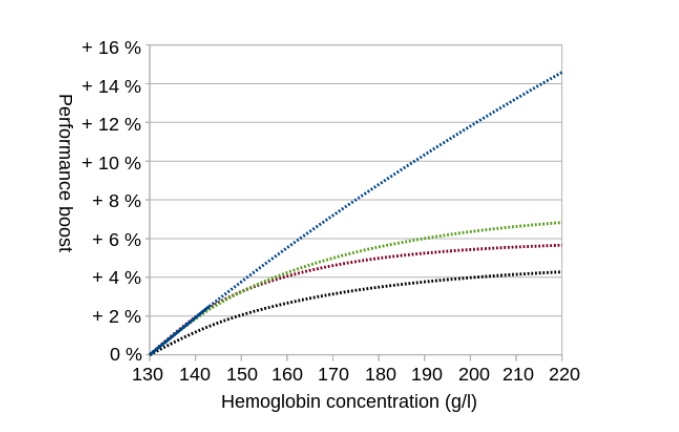
 This is part four of a multi-part series titled “Limiting Factors – A Genesis of Blood Doping”. It comes to FasterSkier from Sammy Izdatyev. You can read part one here, part two here, part three here, and part four here.