From the FasterSkier archive — posts syndicated from athletes’ and coaches’ own blogs between 2004 and 2012, kept online as published. Current coverage is at fasterskier.com.

Tag: Liz Stehpen

  • U.S. World Cup Preview: Seeking Best Season Yet After Olympics

    U.S. World Cup Preview: Seeking Best Season Yet After Olympics

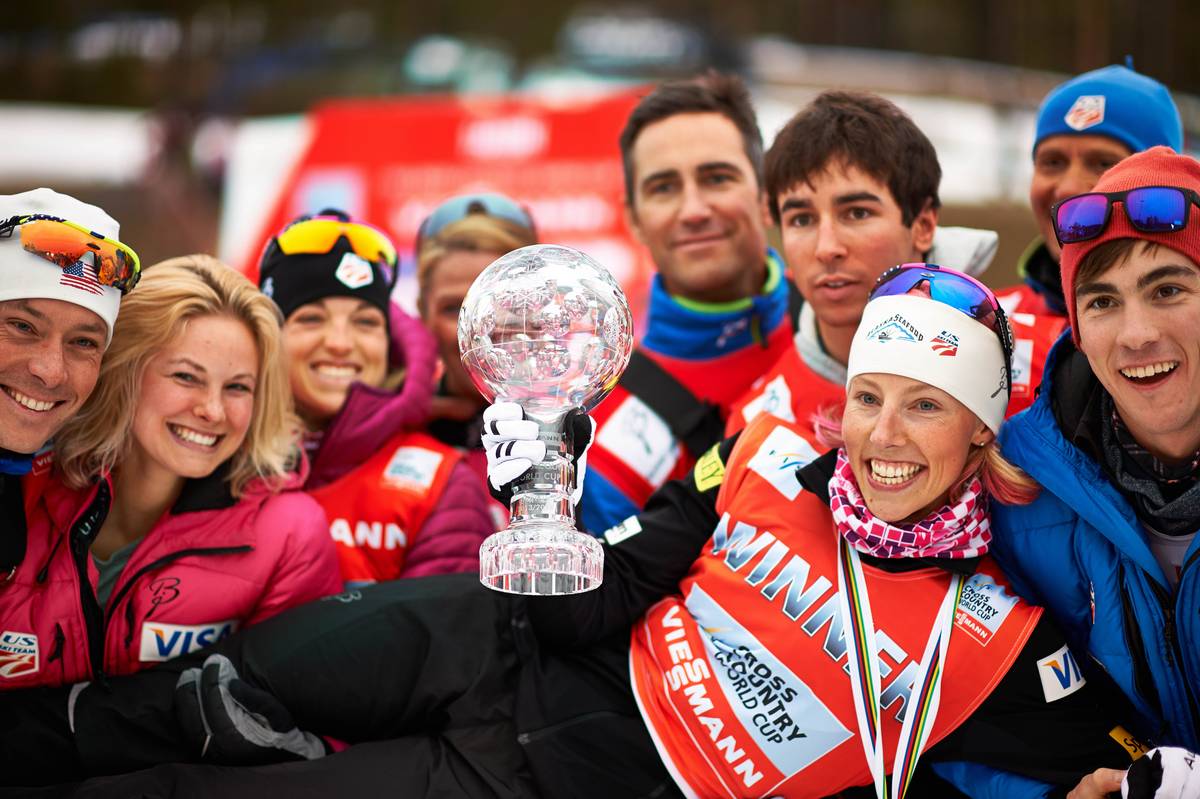
    Several members of the U.S. Ski Team lift up Kikkan Randall after she won her third-straight World Cup sprint Crystal Globe on Friday in Falun, Sweden. (Photo: Fischer/Nordic Focus)
    Several members of the U.S. Ski Team lift Kikkan Randall after she won her third-straight Sprint World Cup Crystal Globe last March in Falun, Sweden. (Photo: Fischer/Nordic Focus)

    As excitement grows for the first World Cup races in Kuusamo, Finland, the U.S. Ski Team stands as one of the most talented and experienced teams America has ever fielded internationally. It’s the same crew of high-end skiers we saw challenge the world’s best last year with a few exceptions, including the departure of Holly Brooks and the addition of a D-team, with members Ben Saxton and Paddy Caldwell.

    Despite the team’s overall experience, it has coped with both injury and Olympic fatigue the last several months since the 2014 Winter Games in Sochi, Russia. And some people might wonder:

    • Will Kikkan Randall earn her fourth-straight Sprint World Cup title?
    • Will the team medal at the FIS Nordic World Championships in Falun, Sweden?
    • Will the U.S. men rise to the standard set by their female teammates in past years?

    Only time will reveal the answers, but with this U.S. World Cup preview we aim to give you an update and some insight into this U.S. team.

    Post-Olympic Fatigue

    There are many factors working to shape the course of the Americans’ season. Fortunately, the biggest challenge to the U.S. is one faced by the entire world.

    “Post-Olympic years are tough because it is such a buildup and there’s a letdown coming off of that season,” U.S. Ski Team (USST) Head Coach Chris Grover said on the phone last week. “[This year] is definitely a rebuilding year.”

    After an Olympic year of highs and lows, it’s not surprising that the team suffered from fatigue. A period of motivational challenges is a regular part of the four-year Olympic cycle, known as a quadrennial, and its effects are felt from Norway to Australia.

    Kikkan Randall after finishing Tuesday's Olympic skate-sprint quarterfinal in fourth. Her time was 0.05 seconds short of securing the last lucky loser spot to the semifinals, and Randall placed 18th overall in Sochi, Russia.
    Kikkan Randall after finishing the Olympic skate-sprint quarterfinal in fourth. Her time was 0.05 seconds short of securing the last lucky loser spot to the semifinals Randall placed 18th overall in Sochi, Russia.

    Kikkan Randall, who failed to advance in the Olympic-freestlye sprint she was favored to win, struggled to find motivation after Sochi, according to U.S. women’s coach Matt Whitcomb.

    “Dealing with disappointment is hard enough, but dealing with the beginning of a brand new quadrennial, four years later into your life — there are new stresses associated with each year you spend as a professional athlete,” Whitcomb said in a phone interview. “It’s difficult to turn it around, not just for Kikkan, but for everybody on the team.”

    However, the teams that push past lethargy often do best in the years following.

    For Whitcomb, the U.S. is one of those teams. He believed their group could overcome any challenges that remain.

    “The athletes are in a motivated state; they’re awake, they’re ready to succeed, they’re excited to do what they’re doing, and they’re enjoying what they’re doing,” he said.

    Starting Hot

    The U.S. has a tendency to start the season faster than most. This is especially true of the women, who finished third in the relay in the season-opening World Cup two years ago in Gällivare. Last year, Randall, Sadie Bjornsen and Noah Hoffman had some of the their best results of the season in the Ruka Triple mini tour in late November.

    According to Whitcomb there are several possible reasons for their historically fast starts.

    “Perhaps it’s because we have an altitude camp, or maybe we’re more aggressive with our intensity,” he said. “But in general, the team enters the winter in pretty good fitness.”

    This year might be different.

    Grover explained that due to training-heavy nature of the Park City camp this fall and an overall emphasis to peak in the middle and end of the season, the team is expected start much slower and build momentum throughout the season.

    “Overall for the team, because of how hard everyone has been training, they won’t be looking to hit the World Cup and make a big noise right from the get-go,” he said. “They’ll be looking more towards the middle of the season for building some success.”
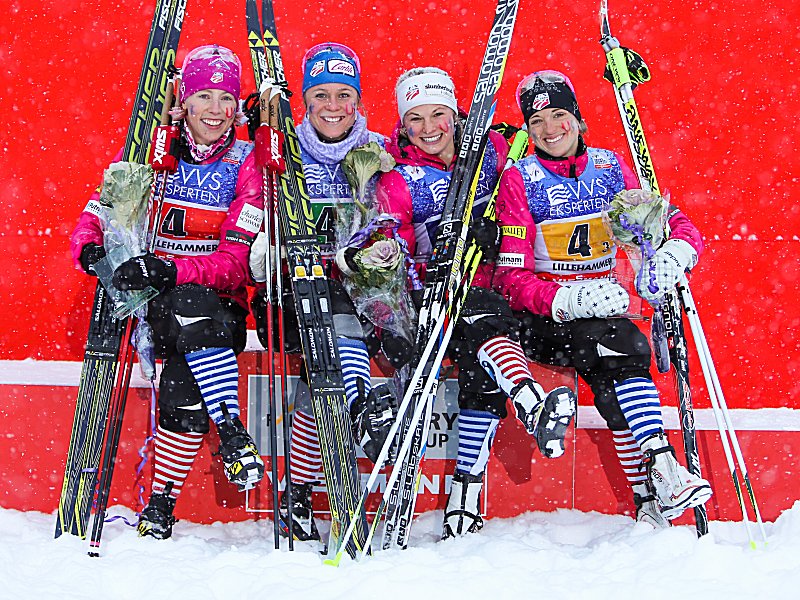
    The U.S. women after capturing third in the 4x5 k relay at the World Cup in Lillehammer, Norway, (from left to right) Kikkan Randall, Sadie Bjornsen, Jessie Diggins, and Liz Stephen. (Photo: Fischer/Nordic Focus)
    The U.S. women after capturing third in the 4×5 k relay at the World Cup in Lillehammer, Norway, (from left to right) Kikkan Randall, Sadie Bjornsen, Jessie Diggins, and Liz Stephen. (Photo: Fischer/Nordic Focus)

    What to Expect This season

    Not much has changed from last season’s World Cup roster. Six women return to the squad: Randall, Bjornsen, Liz Stephen, Jessie Diggins, Sophie Caldwell, and Ida Sargent. Last season’s overall SuperTour leader Caitlin Gregg will also join the team for the first period of World Cup racing.

    On the men’s side, there are four men between the A- and B-teams (Andy Newell, Simi Hamilton, Hoffman, and Erik Bjornsen) and two on the D-team (which will start the season in the U.S.). Super Tour leader Reese Hanneman will also take advantage of World Cup starts through the end of Period 1 (into late December).

    While the rosters may be the same, the USST coaches said that depending on future results, there might be changes to various starting positions and relay legs.

    According to Whitcomb, the women’s relay should be especially exciting since all its women are potential candidates for a starting position for the relays in La Clusaz, France, and at World Championships in Faun, Sweden.

    “The relay is always an exciting one to see who makes the team. We’ve been anywhere from challenging for a victory to almost being last place. We have six women – perhaps Sophie is the exception, but I wouldn’t count her out – that could fill those relay legs,” he said, referencing Caldwell’s elbow injury.

    For the men, the options are more limited, as the men have three sprint starts and four distance spots to work with (compared to the U.S. women with five sprint starts, five distance, plus Randall). However, Grover explained that if there are several strong domestic skiers this year, the 4 x 10 k men’s relay at Falun could improve on past results.

    “If we can find a couple more skiers domestically that are skiing fast this fall and through U.S. nationals, it will be interesting to see if we can put together a good relay team,” he said. “At times we’ve had two or three good legs, but we haven’t been able to put all four together, so in order to do that you need to have five or six men who are skiing at a pretty high World-Cup distance pace.”

    Other season highlights will include the Tour de Ski, a series of seven races that traverse Germany, Switzerland and Italy the first two weeks of January.

    As in past years, the USST plans to have all its athletes start the Tour. And once again, the skiers who plan to finish will be Stephen, Diggins, and Hoffman. The rest of the U.S. squad will exit the multi-stage event based on how they feel and their greater goals for the season.

    The pinnacle of the season will take place in mid-February at the 2015 World Championships in Falun.

    According to both Grover and Whitcomb, medals will be a possibility in several key races, most notably the women’s team sprint which Randall and Diggins won in 2013. Other possibilities include the men’s team sprint, the classic sprint, the women’s 10 k freestyle, and the women’s relay.

    The Team
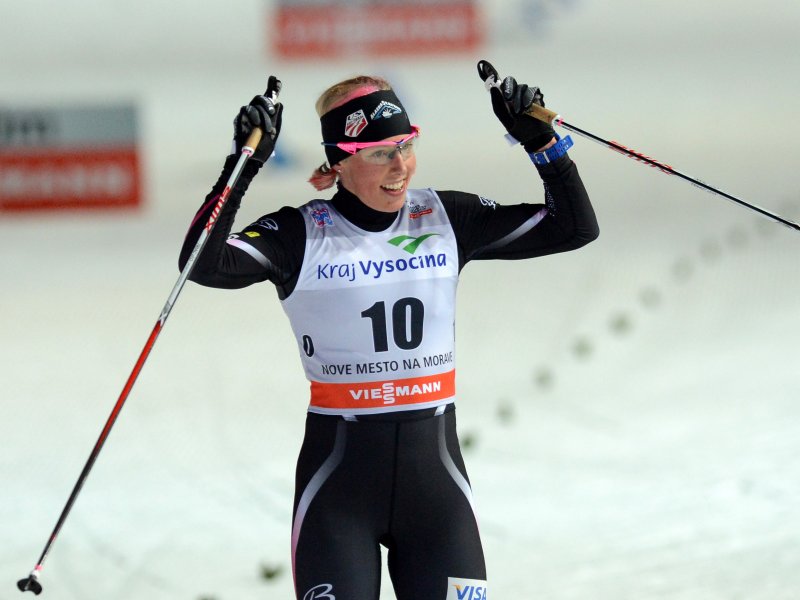
    Kikkan Randall (U.S. Ski Team) celebrates her victory in Nove Mesto, Czech Republic. The American superstar won yet another freestyle sprint in preparation for the Sochi Olympics in February. (Photo: Fischer/NordicFocus)
    Kikkan Randall celebrates a victory in Nove Mesto, Czech Republic. (Photo: Fischer/NordicFocus)

    Kikkan Randall, A-Team

    2013/2014 World Cup overall ranking: 6th (17th in distance, 1st in sprint)

    Notable 2013/2014 results: Three-time Overall Sprint World Cup Champion; 5 individual World Cup podiums; 3 World Cup victories

    Randall will return to World Cup competition as the reigning three-time Sprint World Cup champion. But after a disappointing Olympics, Randall is looking for redemption.

    The fastest female skate sprinter in the world is once again a favorite for this season’s sprint globe and will lead the U.S. women to what they hope will be their best season to date.
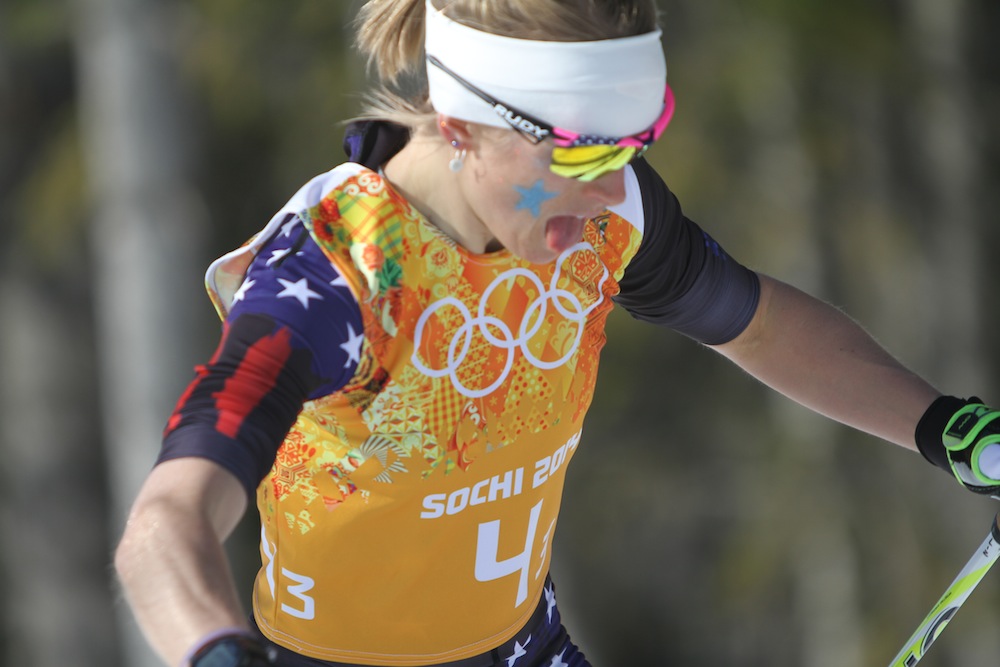
    The U.S. women's first skate leg, Liz Stephen holds onto ninth in the Olympic 4 x 5 k relay on Saturday in Sochi, Russia.
    Liz Stephen racing in the Olympic 4 x 5 k relay in Sochi, Russia.

    Liz Stephen, A-Team

    2013/2014 World Cup overall ranking: 17th (15 distance, 62 sprint)

    Notable 2013/2014 results: 7th overall Tour de Ski; 3rd Tour de Ski hill-climb pursuit; 6th in the 10 k World Cup in Szklarska Poreba, Poland

    When USST members were informally polled via email as to which American was bound for a breakout season, the resounding response was Stephen. She took third in the final climb and seventh overall in last season’s Tour de Ski.

    Stephen, who seems to make a step to the “next level” of racing every year, told FasterSkier earlier this fall that she felt both her personal and overall team results were below potential.

    This summer and fall she rocked dryland racing – from the Race to the Top of Vermont to her fastest-ever Climb to the Castle – and many expect her to do the same on snow.

    Stephen also has a history of success at previous World Championships, finishing fifth in the 10 k freestyle in Val di Fiemme, Italy. With the same event in Falun, Stephen could be a top contender for a World Championships medal if she brings her A-game.

    Jessie Diggins (U.S. Ski Team) skiing to first place in the qualification round of Wednesday's freestyle sprint. She finished second overall in the finals, a best-ver finish at a Junior/U23 World Championships. (Photo: FlyingPointRoad.com)
    Jessie Diggins skiing to first place in the qualification round of the 2014 U23 World Championships. (Photo: FlyingPointRoad.com)

    Jessie Diggins, A-Team

    2013/2014 World Cup overall ranking: 20th (21 distance, 23 sprint)

    Notable 2013/2014 results: 8th, Olympic 15 k skiathlon; 13th overall Tour de Ski; 5th freestyle sprint Szklarska Poreba

    At 23, Diggins is the youngest woman on the USST, but she’s established herself as one of America’s gutsiest skiers. Whether it’s her relay finishes or a one-poled leg of a team sprint, she has proven herself a fighter.

    Diggins will be looking to improve on her 13th overall ranking in the 2013/2014 Tour de Ski this January. However, her biggest goal for the season is to defend her 2013 team sprint title with Randall in Falun. With strong freestyle sprinters vying for a spot on the relay, she’s going to have to work hard to maintain her position.

    Sophie Caldwell gliding to fourth in qualification. Photo: Fischer/NordicFocus
    Sophie Caldwell (Photo: Fischer/NordicFocus)

    Sophie Caldwell, A-Team

    2013/2014 World Cup overall ranking: 23rd (47 distance, 8 sprint)

    Notable 2013/2014 results: 6th, Olympic freestyle sprint; 3rd freestyle sprint Lahti; 7th freestyle sprint Szklarska Poreba

    Caldwell had one of the most notable USST performances of last season – the top finish by an American woman at an Olympics with her sixth place in the freestyle sprint. The result was closely followed by her first World Cup podium in Lahti.

    While Caldwell may be considered a rapidly rising star, she’s faced major setbacks this summer and fall in the form of two broken elbows – one in May and the other in October.

    Because of her most recent mishap, the 24-year-old Vermont native will not be starting the World Cup this weekend in Finland. While Caldwell said that her elbow is recovering nicely and that she was recently able to use both poles, she will either start her season in the sprints in Lillehammer, Norway, or Davos, Switzerland.

    Although she won’t race the season opener, Caldwell is currently in Kuusamo with the rest of the team.

    According to Whitcomb, it was important to get Caldwell on snow as soon as possible.

    “We just want to bring her overseas to be able to work with her on snow,” he said. “I’d rather see her take a tumble on snow than in rollerskis in Vermont this time of year.”

    One upside of her injury is that it has forced her to focus on her leg strength – something she said was a goal before she broke both incidents.

    If all goes according to plan, Caldwell will join the majority of the team in starting the Tour and exit after an unspecified amount of races. She’s aiming to have her best results in Falun, where she wants to perform well in the classic sprint.

    While she explained that classic sprinting will be difficult early in the season due to her decreased upper-body strength, she is confident that she will overcome any deficit by World Championships.

    FIS world cup cross-country, individual sprint, Falun (SWE)
    Sadie Bjornsen

    Sadie Bjornsen, A-Team

    2013/2014 World Cup overall ranking: 32nd (26 distance, 43 sprint)

    Notable 2013/2014 results: 7th, 10 k classic Lillehammer; 7th, 5 k classic Kuusamo; 9th freestyle sprint Lahti

    Like Caldwell, Bjornsen is seen by many as one of the rising stars on the USST. While she’s been riddled with injuries in previous years her problems seem to be a thing of the past, as 2013/2014 was a breakout season for the 25-year-old Washington native and Anchorage, Alaska, resident. With strong results in both classic distance and sprinting, Bjornsen will be heading into the season with confidence.

    For one, she’s wants to be a part of the competitive women’s 4 x 5 k relay in Falun this season. She explained that she also hopes to find success in the classic sprint and the 30 k classic.

    FIS world cup cross-country, individual sprint, Lahti (FIN)
    Ida Sargent

    Ida Sargent, B-Team

    2013/2014 World Cup overall ranking: 49th (48 distance, 33 sprint)

    Notable 2013/2014 results: 9th, 10 k Szklarska Poreba; 10th classic sprint Asiago

    Sargent has always been a wild card with results across the board. Two seasons ago, she found success in both distance and sprinting, finishing the season ranked 22nd in sprinting and 53rd in distance. Despite an improved distance ranking in 2013/2014, Sargent fell to 33rd in sprinting thus losing her spot in the red group.

    Sargent said that she will be focusing on sprinting this season with the hopes of earning a spot on the relay team. She already won a race in Canmore, Alberta, at the Frozen Thunder classic sprint against some of the best U.S. and Canadian skiers.
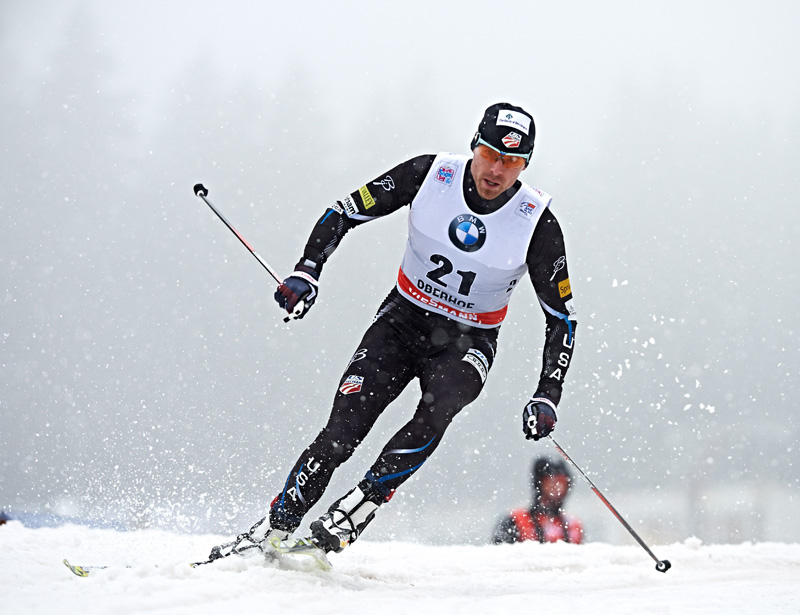
    Andy Newell (U.S. Ski Team) racing the individual sprint at the Tour de Ski Dec. 29 in Oberhof, Germany. (Photo: Fischer/Nordic Focus)
    Andy Newell racing in Oberhof, Germany. (Photo: Fischer/Nordic Focus)

    Andy Newell, A-Team

    2013/2014 World Cup overall ranking: 39th (38 distance, 15 sprint)

    Notable 2013/2014 results: 6th freestyle sprint Szklarska Poreba; 8th classic sprint Falun, 8th freestyle sprint Lenzerheide

    Newell, 30, is to the men’s team as Randall is to the women’s team — he has the most experience and looks to lead the team to improved results in 2014/2015.

    However, Newell did not have the season that he hoped for last winter. Falling from from 5th in 2012/2013 to 15th in the sprint rankings, Newell will be looking looking to regain his position as one of the world’s top sprinters. However, will also be looking to branch out in Falun with a start in the 50 k.

    “The races that are on my mind are the sprint and the sprint relay for sure,” he wrote in an email. “Those are our big medal events that we need to put the most focus on. In addition I think this is going to be my first World Champs where I’m going to fight for a start in the 50 k classic mass start. Now that I’m an old guy I’d like to start looking at some 50 k’s as a chance to be competitive.”

    At the pre-World Cup USST camp in Muonio, Finland, Newell surged to a convincing win in a 15 k time trial over his fellow USST teammates, giving the 29-year-old Vermonter yet another confidence booster (after a Frozen Thunder classic sprint win in October) before the opening World Cup races.
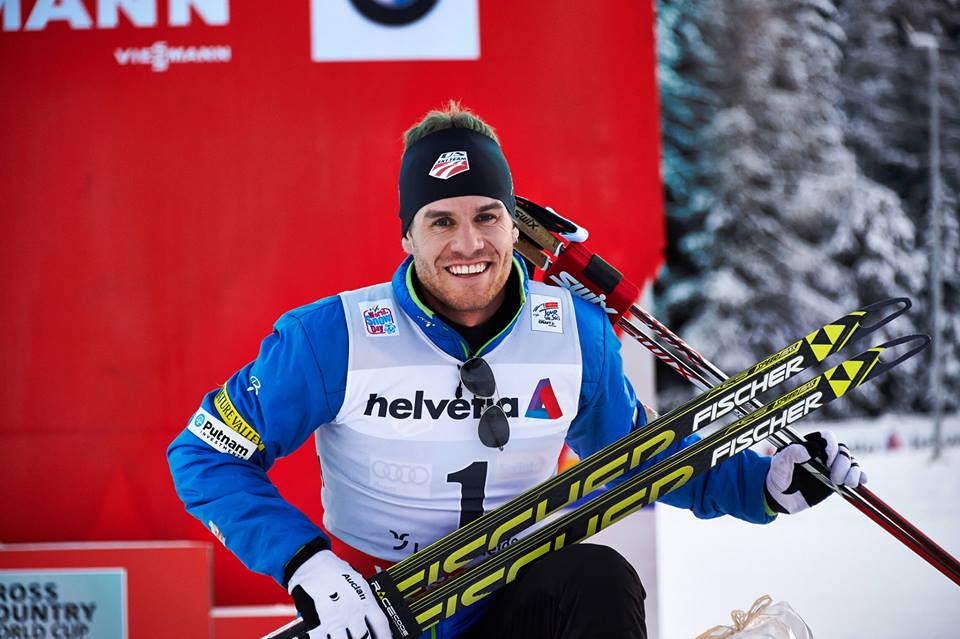
    Simi Hamilton (U.S. Ski Team) after becoming the first American man to win a Tour de Ski stage at the third of seven races in the 2013/2014 Tour. Hamilton won the 1.5 k skate sprint in Lenzerheide, Switzerland. (Photo: Fischer/Nordic Focus)
    Simi Hamilton after becoming the first American man to win a Tour de Ski stage at the third of seven races in the 2013/2014 Tour.  (Photo: Fischer/Nordic Focus)

    Simi Hamilton, A-Team

    2013/2014 World Cup overall ranking: 54th (20 sprint)

    Notable 2013/2014 results: 1st freestyle sprint Lenzerheide (Tour de Ski World Cup stage); 14th freestyle sprint Davos

    Hamilton a breakout season last winter with a win in a Tour de Ski stage in Lenzerheide, Switzerland.

    “It should be a really fun year to watch Simi,” Grover said. “He built a lot of confidence last year from being able to prove to himself that he could win a race on the right day.”

    Meanwhile, Hamilton has faced some obstacles this fall with a repeated ankle injury at the team’s dryland camp in Lake Placid, N.Y., and a shoulder injury during Frozen Thunder in Canmore.

    In past years, he suffered from illness on and off throughout the season. If Hamilton can stay healthy, this season could be anther success story for the Aspen native.
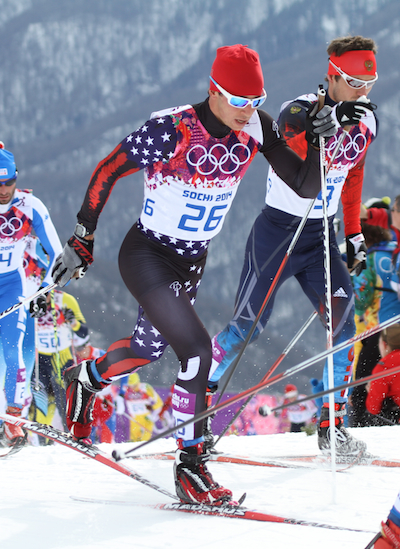
    Noah Hoffman (U.S. Ski Team) racing to 35th in the 30 k skiathlon at the Olympics in Sochi, Russia.
    Noah Hoffman racing to 35th in the 30 k skiathlon at the Olympics in Sochi, Russia.

    Noah Hoffman, B-Team

    2013/2014 World Cup overall ranking: 35th (27 distance)

    Notable 2013/2014 results: 9th, 15 k freestyle pursuit Kuusamo; 21st overall World Cup Finals, 24th overall Tour de Ski

    Hoffman is the men’s top distance skier on the World Cup circuit, and on a good day he can ski with the best in the world. Hoffman proved this in last year’s Ruka Triple, where he skied the fastest race in the final pursuit to finish ninth overall in the mini tour.

    Despite his potential, Hoffman often has faced difficulties maintaining his speed throughout a race and has gone from leading a mass start to 30th position in a matter of kilometers.

    In what was likely a bad day, Hoffman recently finished the USST 15 k time trial in Muonio roughly a minute and half behind Newell. Despite the rocky preseason skiing, if Hoffman continues on his current trajectory, he could fight for top positions in the distance races at World Championships.

    Furthermore, Hoffman feels the courses in Falun favor his strengths.

    “At World Championships, all three individual distance races are great opportunities for me,” he wrote in an email. “I truly believe I can be successful in any distance race, skate or classic, and I’m very excited to have so many chances. The courses at Falun are really challenging and great for me.”

    Erik Bjornsen (U.S. Ski Team) racing to a career-best 18th in the World Cup 15 k classic individual start Saturday in Toblach, Italy.  (Photo: FlyingPointRoad/Proceeds go to the National Nordic Foundation)
    Erik Bjornsen racing to a career-best 18th in the World Cup 15 k classic. (Photo: FlyingPointRoad)

    Erik Bjornsen, B-Team

    2013/2014 World Cup overall ranking: 133rd (85 distance)

    Notable 2013/2014 results: 18th, 15 k classic Tobalch

    The 2014/2015 season marks the first time Bjornsen has embarked on a full season of World Cup racing. While he had his first taste of the World Cup in 2012, he started last year’s season on the domestic circuit. The move paid off, as Bjornsen rode a wave of success from U.S. nationals into both the U23 World Championships and the World Cup.

    Bjornsen’s most notable result of last season was in Toblach, Italy, where he placed 18th in the 15 k classic. While he didn’t crack the top 20 again, he did go on to have a successful Olympics where he was consistently in the 30s and 40s.

    Bjornsen explained that he is exited to race in the Tour de Ski for the first time and that he hopes to be part of the team sprint in Falun. However, his main focus is qualifying for World Championships.

    [See the slightly changed World Championship criteria here, which lists USSA points as a final consideration instead of FIS points.]

  • As USST Park City Camp Ends, Excitement for Racing Season Builds

    As USST Park City Camp Ends, Excitement for Racing Season Builds

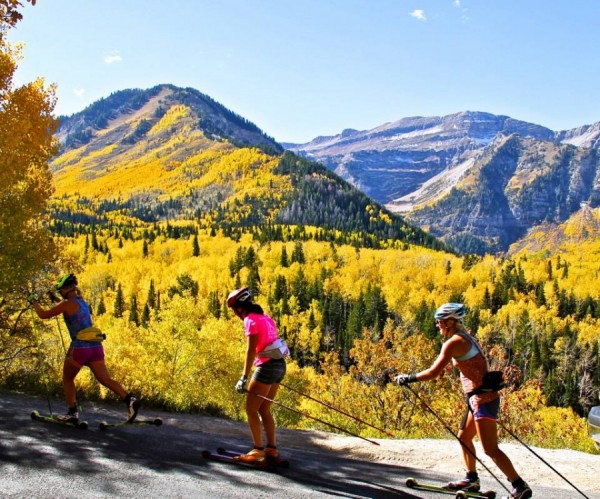
    Jessie Diggins (USST/SMST2) leads a train of skiers through the fall foliage and stunning views at the American Fork in Utah. (Photo: USSA)
    Jessie Diggins (USST/SMST2) leads a train of skiers through the fall foliage and stunning views at the American Fork Canyon Road in Utah. (Photo: USSA)

    The U.S. Ski Team concluded its annual altitude camp in Park City, Utah last week, leaving attendees a little more excited and prepared for the upcoming season. A final gathering before the national team travels to Europe in November, the camp provided opportunity for U.S. athletes to train at altitude and soak up some final rays of sun before winter takes hold.

    The annual October camp has always been popular due to its consistent, dry weather and high-altitude training opportunities. In 2013 the camp saw its largest attendance with 50 skiers converging in Utah with the hopes of earning a spot on the Olympic team.

    Despite the absence of the Olympics, the camp’s popularity has continued into 2014. According to U.S. Ski Team head coach Chris Grover, approximately 40 skiers were at the 2014 camp, which concluded Sunday Oct. 19.

    Unlike September’s USST training camp in Lake Placid, N.Y. the Alaskan members of the national team, including Kikkan Randall, Sadie Bjornsen, and Erik Bjornsen, were present in Park City.

    They were joined by fellow national team members Andy Newell, Simi Hamilton, Ben Saxton, Paddy Caldwell, Noah Hoffman, Liz Stephen, Ida Sargent, Sophie Caldwell, and Jessie Diggins.

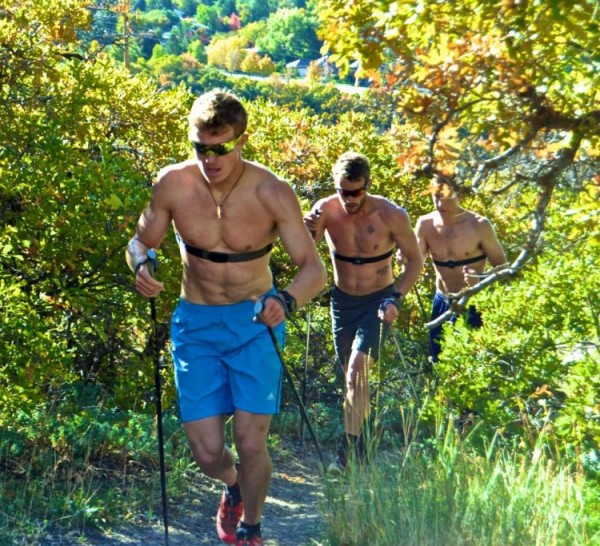
    Miles Havlick (SVSEF) leads Simi Hamilton (USST/SMST2) and Paddy Caldwell (USST/SMST2)  in bounding intervals. (Photo: USSA)
    Miles Havlick (SVSEF) leads Simi Hamilton (USST/SMST2) and Paddy Caldwell (USST/SMST2) in bounding intervals in Utah. (Photo: USSA)

    A variety of other skiers from Alaska Pacific University, Bridger Ski Foundation, Stratton Mountain School T2, and Sun Valley Ski Education Foundation Gold Team, among others, joined the array of activities that traversed the mountains surrounding Park City.

    Athletes participated in workouts that ranged from a rollerski up the American Fork Canyon that featured over 3,000 ft. of elevation gain, to speed work on Soldier Hollow’s familiar trails. During a long run, the team even came across some fresh snow above 8,000 ft.

    For Miles Havlick (SVSEF) the training in Park City was valuable because of new perspectives he gained from the USST coaches and their ability to “broaden your horizons.” Furthermore, Havlick said that training with the USST men was beneficial to his technique and fitness.

    “There’s no one better than to do a speed workout with than Newell, Simi, and Bjornsen,” he said in a phone interview.

    On Thursday Oct. 16 the USST held a 10 k time-trial for both the men and women at Soldier Hollow that saw Randall and Miles Havlick top the women’s and men’s fields. While the results have little significance due to variation in each skier’s training and rollerski speeds, the USST coaches monitor both heart-rate and lactate to analyze the effects of the training load, effort, course type, and altitude on each skier.  

    The Park City camp is unique in the fact that athletes live at roughly 8,000 ft. in Upper Deer Valley to increase hemoglobin levels and prepare for high altitude races. According to Diggins the annual camp helps her prepare for some of her favorite competitions, including the high-altitude stages of the Tour de Ski.

    “I am still learning how to ride the line between going hard and blowing up at altitude, since once you flood your legs you can’t recover as fast as you can at sea level,” Diggins explained. “So doing a lot of long L3 and longer L4 intervals at SoHo (Soldier Hollow) is really helpful for my race prep.”

    Sadie Bjornsen said that while it is always difficult to acclimatize to altitude, she has developed several techniques to aid the adjustment.

    “I know that for at least 4 days I am going to feel like a slog. I also know that I need to force myself to train easier than ever those first few days in order to adjust well without getting too tired for the rest of the week,” she wrote in an email.

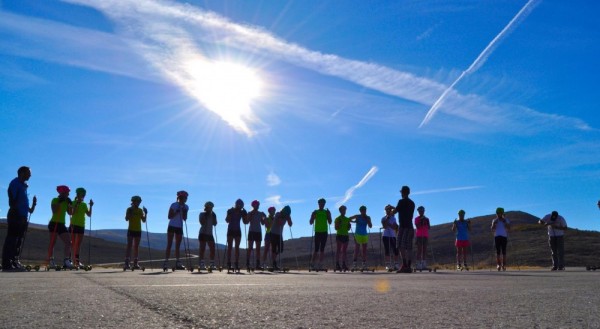
    The USST and NEG skiers gather for speeds at Soldier Hollow in Midway, Utah. (Photo: USSA)
    The USST and NEG skiers gather for speeds at Soldier Hollow in Midway, Utah. (Photo: USSA)

    With the roughly 40 athletes in attendance the allocation of time and resources is difficult to balance between national team and club team members. However, Grover said that the USST coaches have a functional system in place.

    Grover explained that the primary goal at any USST camp is to prepare the national team for World Cup and World Championship success. Its secondary goal is to offer training opportunities to developing athletes who are just below the national team level.

    “Both goals are important to us as coaches,” Grover wrote in an email.

    As in past camps, the U.S. Ski team had several “closed” workouts in addition to trainings that included the entire training group. Grover explained that the division was important for both the national team and club athletes, but acknowledged that regardless of the structure of the workouts there would always be some imperfection.

    “Our intent when dividing some of our sessions is to provide value to both groups, but I guarantee it will never feel perfect for each individual,” Grover said.

    Despite the success of the camp, the USST did not leave Park City without injury. Sophie Caldwell fractured her left elbow Oct. 7 after tripping on a low-hanging cable in a Park City Mountain Resort parking lot. After performing surgery hours after the injury, doctors estimated that Caldwell’s recovery to be roughly six weeks.

    According to Grover, Caldwell is in great spirits and finding creative and productive ways to train despite her injury.

    “She has been incredibly mentally tough through this process, and it is clear that she has the heart and the resolve of a champion,” Grover said of the 24-year-old.

    At the conclusion of the Park City Camp, the USST traveled to Canmore, Alberta for a week of on-snow training and racing at Frozen Thunder. The team will remain in Canada until Oct. 28 when skiers enter their final block of training before traveling to Europe. 

  • Gallery: 2014 Climb to the Castle

    Gallery: 2014 Climb to the Castle

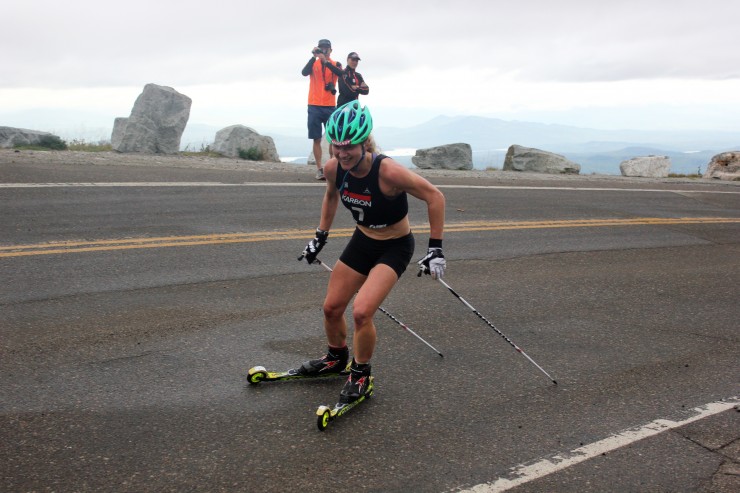
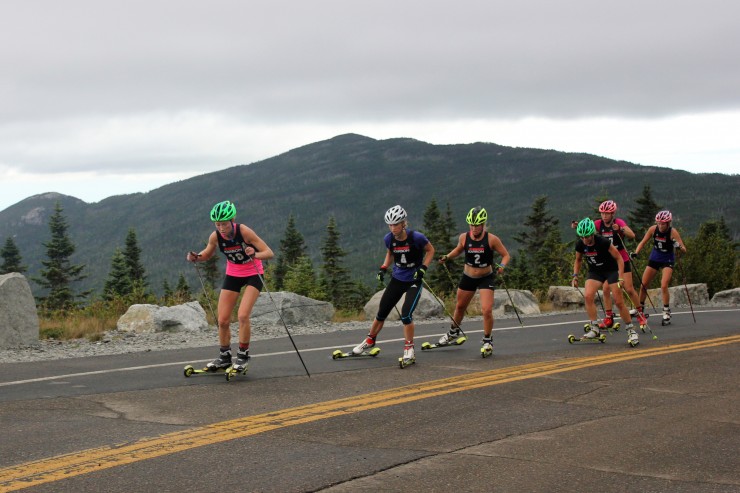
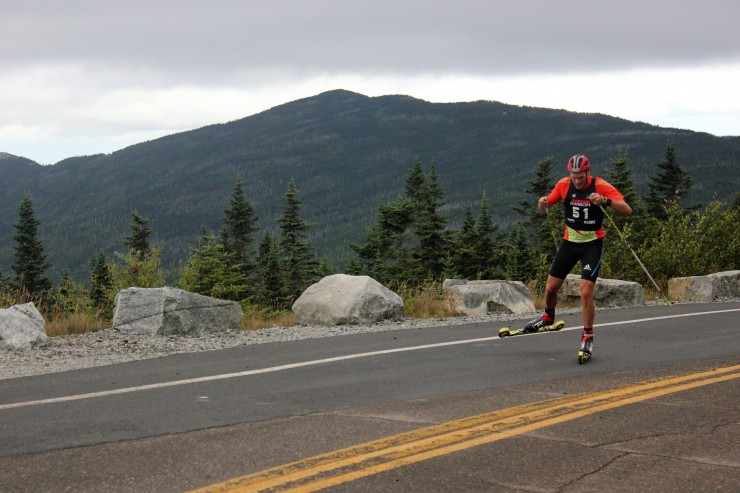
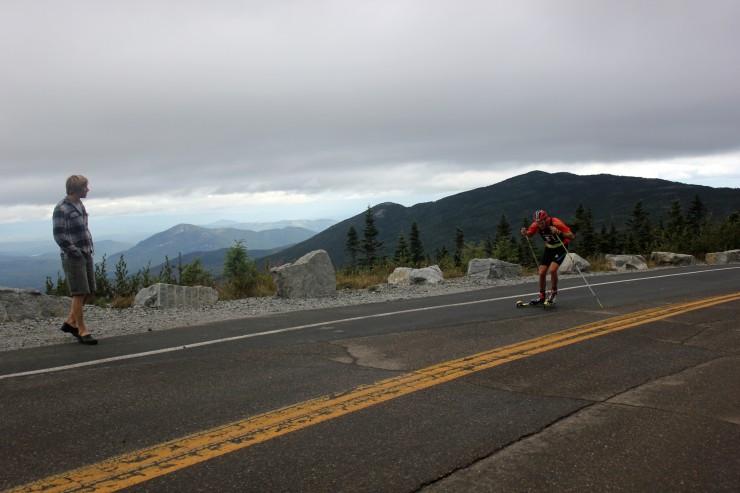
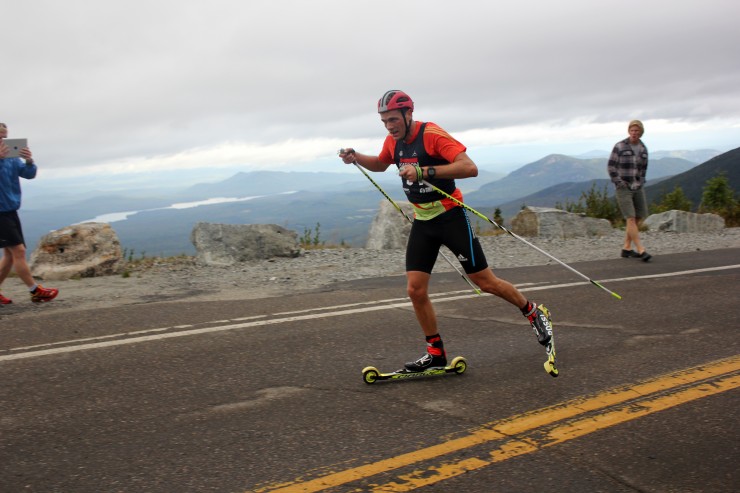
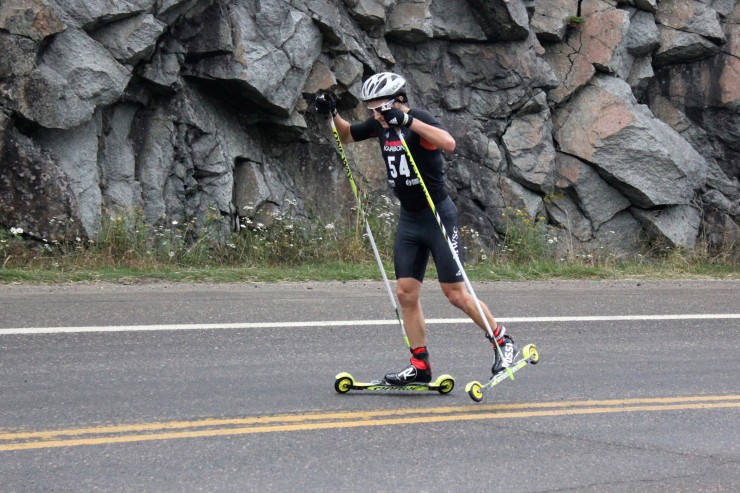
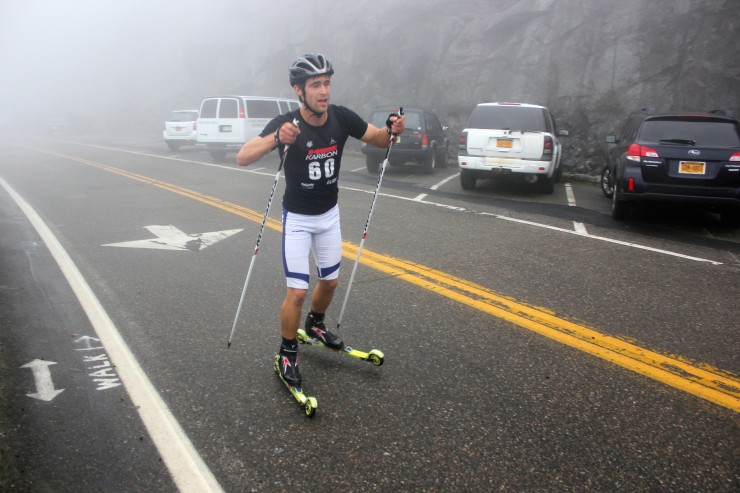
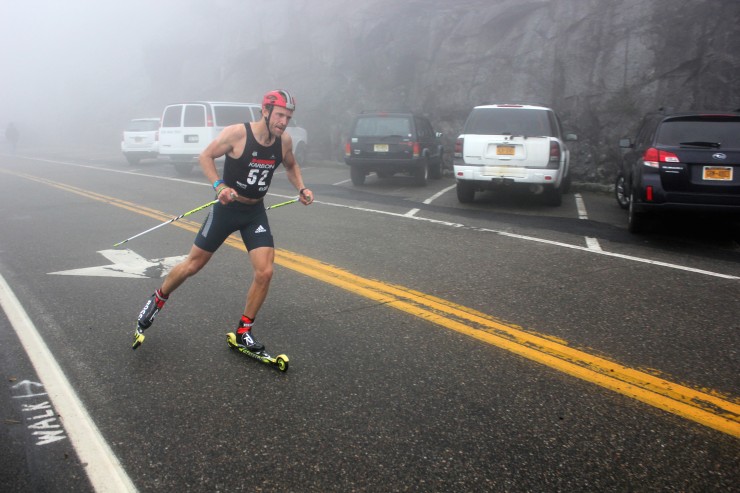
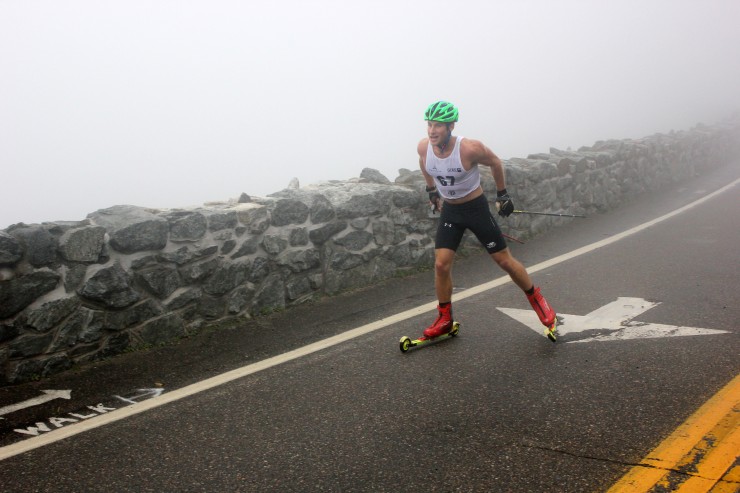
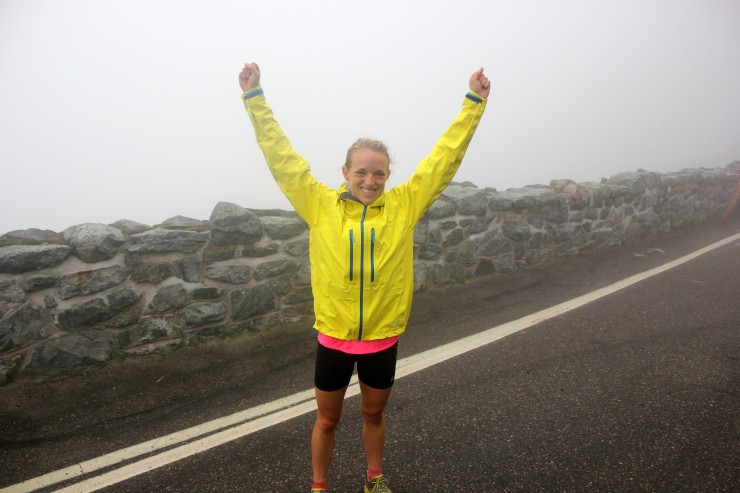
    WILMINGTON, N.Y. — Saturday’s Climb to the Castle was a success for both organizers and participants. Despite strong winds, the weather held and skiers were able to ski a challenging 5-mile climb on roads that had been paved just the day before. Take a look at our photo gallery to see the race for yourself.

    Want to read about the action? Check out Saturday’s 2014 Climb to the Castle recap.

  • Blink Festival Concludes with Mass Starts and Sprints; Bailey and Burke Deliver for U.S.

    Blink Festival Concludes with Mass Starts and Sprints; Bailey and Burke Deliver for U.S.

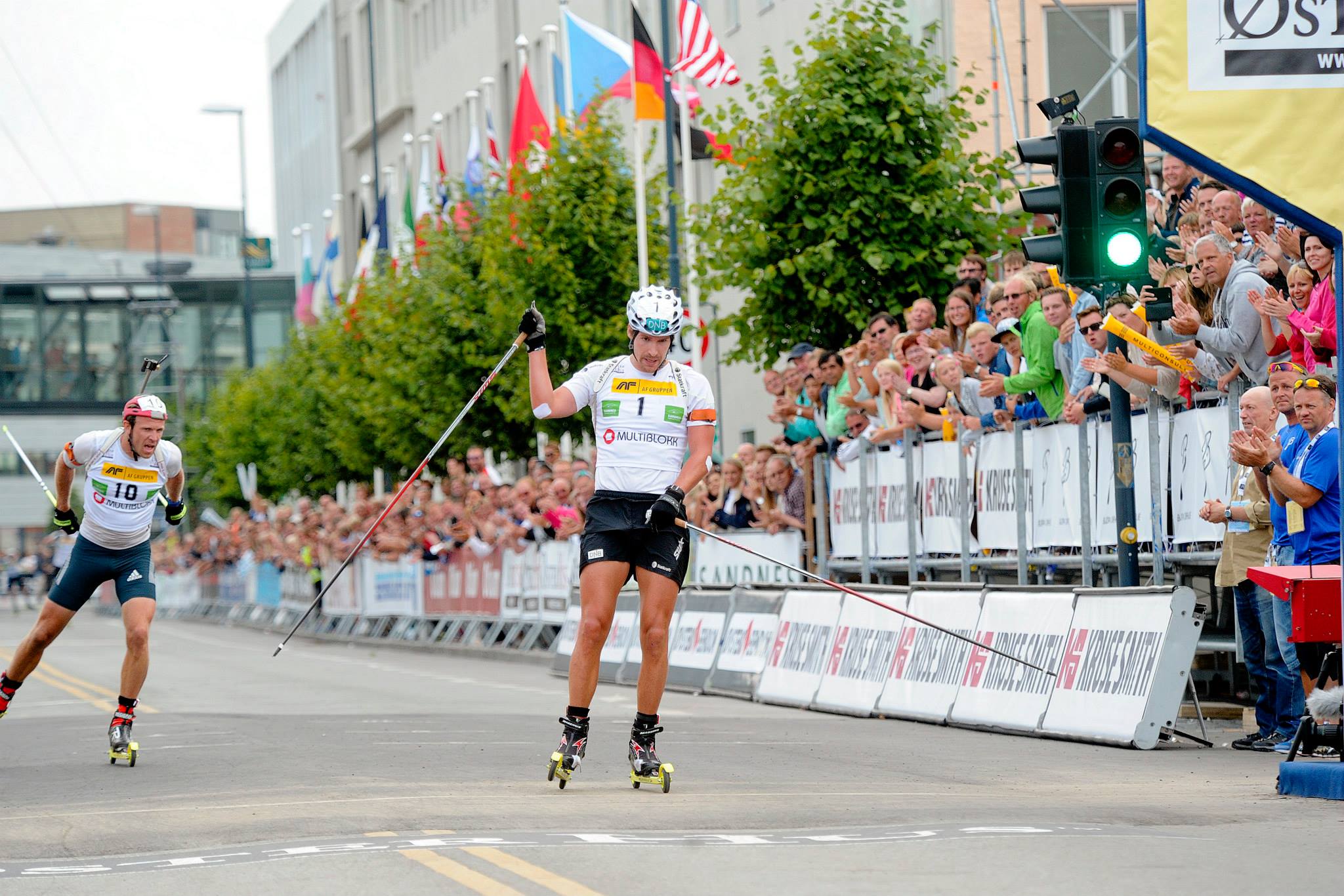
    Lowell Bailey (r) pushes himself across the finish line in Friday's biathlon 6.3 k mass start as part of the 2014 Blink Festival. Bailey finished second behind Emil Hegle Svedson (l) of Norway. (Photo: Skifestivalen Blink/Facebook)
    U.S. Biathlon’s Lowell Bailey (l) pushes himself across the finish line in Friday’s biathlon 6.3 k mass start as part of the 2014 Blink Festival. Bailey finished second to Emil Hegle Svedsen (r) of Norway. (Photo: Skifestivalen Blink/Facebook)

    When Lowell Bailey raced in the 2014 Blink Festival 7-kilometer hill climb just days after arriving in Norway, he was jolted by a “shock to the system,” he wrote in an email.

    Apparently the shock was what he needed to deliver a top-notch performance, as the U.S. biathlete finished second in the biathlon mass start the next day in the city of Sandnes.

    The road to the podium wasn’t an easy one. To participate in the mass start, competitors who were not already pre-qualified needed to place in the top six in the qualification round. The round consisted of five laps of 800 meters with prone shooting following the second lap and standing following the fourth.

    In a tough field, Bailey and U.S. teammate Tim Burke claimed the last two spots in the mass start by taking fifth and sixth.

    Once in the mass start, Bailey knew he had to focus on his shooting if he wanted to have any hopes of placing on the podium.

    “I told myself before the race that I was going to race my own race and try not to get caught up in the hurried shooting situations that always happen in this type of race,” Bailey wrote.

    Throughout the race, which consisted of nine laps on a 700-meter loop, and two prone and two standing stages, Bailey often took longer to shoot but maintained contact with the lead group.

    When he exited the final shooting he was the last of the four competitors he had arrived with to leave the mats.

    However, his fellow competitors had rushed through their shots and had penalty loops to compete. Bailey had shot perfectly and left the range with a five-second lead over Norway’s Emil Hegle Svedsen.

    Svedsen ultimately caught the American in the final stretches of the race, overcoming him by just 0.7 seconds.

    Bailey was followed by Norwegian Tarjei Bø, who finished 12.9 seconds behind Svedsen.

    Burke finished eighth in the mass start, 1:09.9 back.

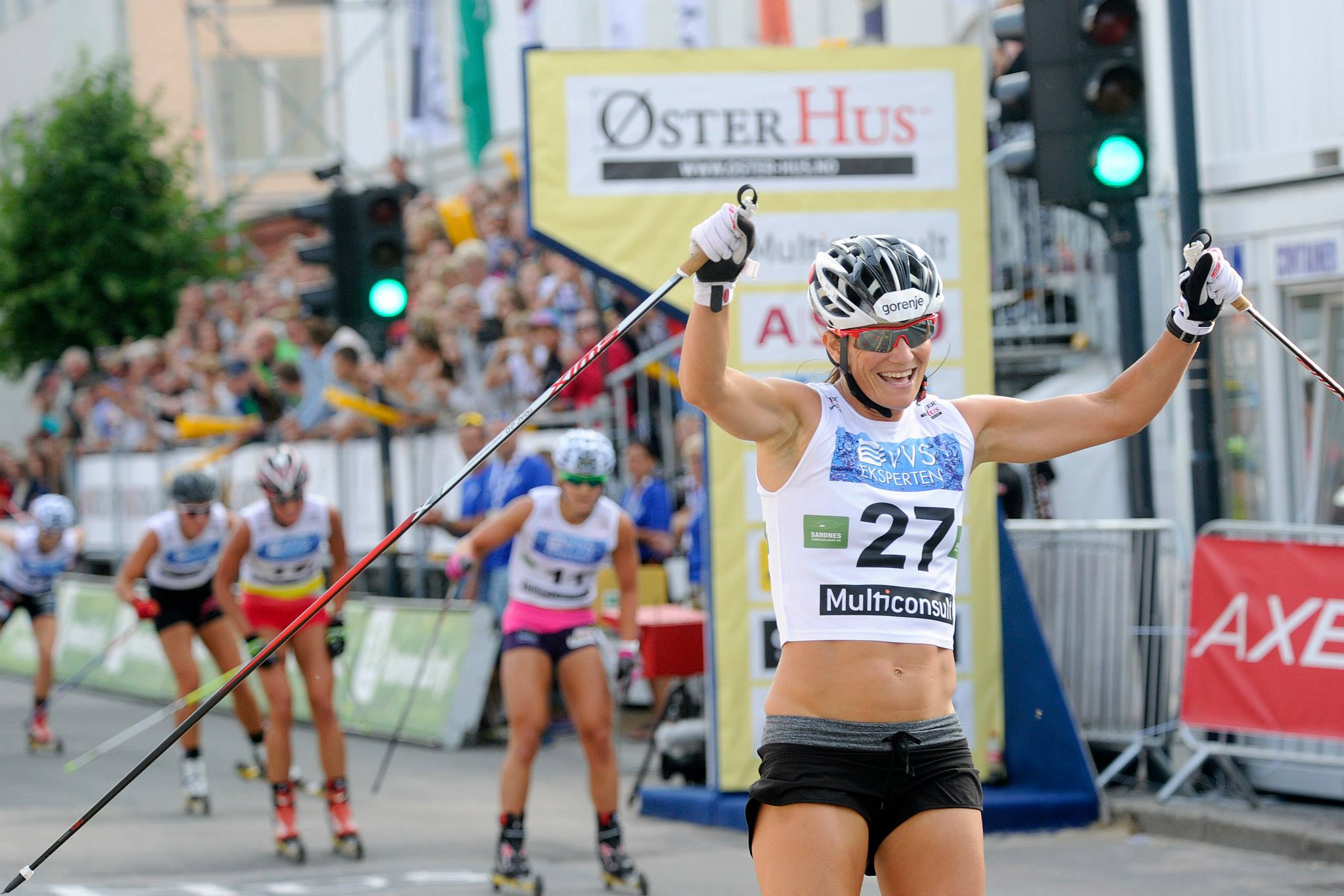
    Katja Visnar (SLO) celebrates her victory in the women's 10 k mass start in the 2014 Blink Festival. (Photo: Skifestivalen Blink/Facebook)
    Slovenia’s Katja Visnar celebrates her victory in the women’s 10 k mass start in the 2014 Blink Festival. (Photo: Skifestivalen Blink/Facebook)

    In the women’s 6.3 k mass start Fanny Wele-Strand Horn of Norway was victorious with a time of 14:10.8. She was followed by Kaisa Makarainen of Finland and Marine Bolliet of France in second and third.

    American Susan Dunklee finished in eighth, 41.8 seconds behind Horn. Dunklee was one of five athletes who had pre-qualified for the mass start, but struggled with her shooting in the final.

    “Unfortunately I missed a lot of prone targets early in the final and despite passing a few people on skis, I never regained contact with the main pack,” Dunklee wrote in an email.

    The cross-country mass start races that took place later that day consisted of women’s 10 k and a men’s 15 k.

    In the men’s race, Teodor Peterson of Sweden claimed victory for the second day in a row on the rollerski course that consisted of 18 laps around an 800-meter loop. The sprint specialist finished with a time of 28:07.3. He was followed by Norwegian Øystein Pettersen in second and Cyril Gaillard in third.

    The men’s field was incredibly close with the top-23 finishers crossing the line within ten seconds of Peterson.

    Canadian Devon Kershaw was one such finisher. He placed seventh, just 3.7 seconds behind the Swede and 1.4 seconds off the podium.

    In an email, Kershaw explained that the curvy course and the 30 aggressive racers that populated it made for conditions he was not used to, but he was happy with how the day ended.

    “I was out of position near the end and with all the curves there was nothing I could do,” Kershaw wrote. “It was a fun evening though!”

    In the women’s 10 mass start, another sprint-specialist took the win. Slovena’s Katja Visnar finished with a time of 20:36.0. She was followed by German sprinter Denise Herrmann in second and Norway’s Ingvild Flugstad Østberg in third.

    American Liz Stephen finished 18th. In an email, she declared the race a success in that there were no major crashes.

    “It was good for my head in that I need to be less nervous about skiing in a pack close to other skiers, and after today snow seems like it should be no problem at all,” she wrote.

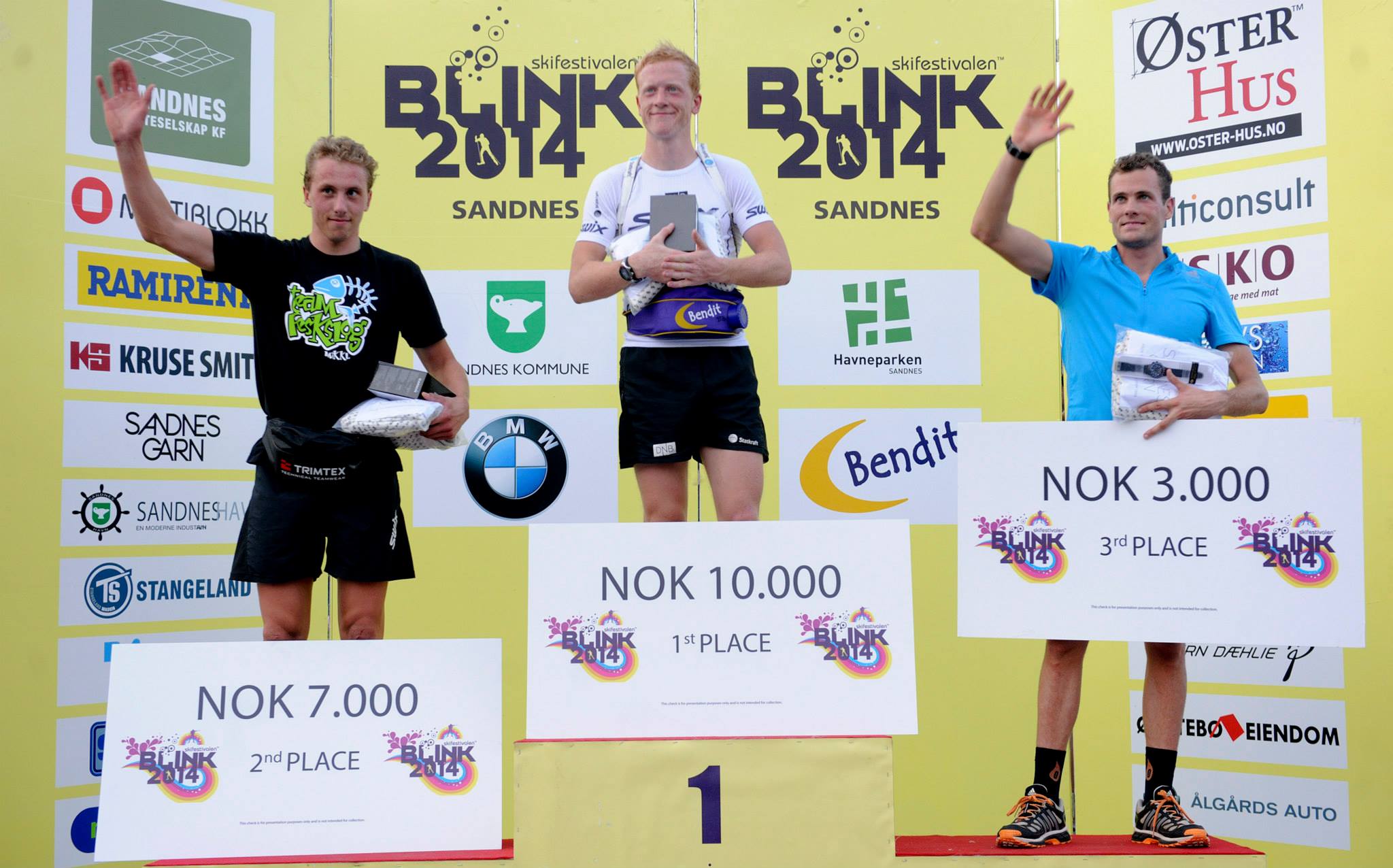
    Tim Burke (l) stands on the podium of the men's biathlon sprint Saturday at the 2014 Blink Festival. Burke finished third, completing a successful weekend for the Americans in attendance at the festival. (Photo: Skifestivalen Blink/Facebook)
    Tim Burke (r) stands on the podium of the men’s biathlon sprint Saturday at the 2014 Blink Festival. Burke finished third, completing a successful weekend for the Americans in attendance at the festival. (Photo: Skifestivalen Blink/Facebook)

    Sprint Day

    U.S. biathletes also shined in the final day of the Blink Festival with Burke and Bailey claiming third and sixth, respectively, in the biathlon sprint.

    Burke finished 8.7 seconds behind race winner Johannes Thingness Bø of Norway, who won the final in 12:25.8. Second place went to fellow Norwegian Marius Hol who crossed the line 7.4 seconds behind Bø.

    After struggling with his shooting in the mass start competition, Burke was pleased to have a strong result.
    “This was a good confirmation for me that I am headed in the right direction for the winter season,” he wrote.
    It was the first time the 32-year-old American had ever competed in heats for a biathlon race, which he found both unique and challenging.
    “I would say the shooting in this type of race is actually harder than a normal biathlon race because you are basically sprinting all out for 1 k before each shooting stage,” he wrote.

    Bailey finished sixth, 22.7 seconds behind the winner.

    In the women’s biathlon sprint, Dunklee placed sixth in her semifinal and did not advance to the final. The women’s biathlon final was won by was won by Bolliet, who was followed by French teammates Enora Latuilliere and Anais Chevalier in second and third, respectively.

    In the cross-country sprints, Norway’s Marit Bjørgen topped the women’s final. She edged teammate Maiken Caspersen Falla for the win by just 0.1 seconds. Visnar placed third, 1.1 seconds behind Bjørgen.

    Stephen was unable to advance from the quarterfinals.

    Sondre Turvoll Fossli of Norway won the men’s final in 3:08.1. He was followed by another Norwegian Martin Hammer in second and Sweden’s Peterson in third.

    2014 Blink Festival Results

    Friday’s mass starts: Men’s biathlon | women’s biathlon | men’s cross-country | women’s cross-country

    Saturday’s sprints: Men’s biathlon | women’s biathlon | men’s cross-country | women’s cross-country 

  • US Ski Team Looking For Success Across the Board, but Focus is on World Champs

    As the season gets fully under way, FasterSkier will be featuring previews of teams and athletes at different levels.  We published our piece on US Biathlon earlier this week, and today, we present U.S. World Cup cross-country. For another look at the US World Cup athletes, check out our 24 Teams in 24 Days series.

    With eight athletes headed to Gallivare, Sweden for the World Cup opener, the U.S. Ski Team (USST) will have the numbers to field both a men’s and women’s relay team for the first time in many years. The increased numbers, coupled with strong results a week ago at tune-up races in Muonio, Finland, are good reason to be optimistic about American chances on the 2011 World Cup.

    Experienced Trio Leads the Way

    The U.S. brings a mixture of seasoned veterans and young hopefuls to the first World Cup period, led by stalwarts Kris Freeman, Andy Newell and Kikkan Randall.

    Both Randall and Freeman skied very well in Muonio, both winning races, while Newell demonstrated his usual speed in sprint qualification.

    “It’s really exciting to see someone like Kikkan Randall in great shape early. It’s really exciting to see some like Kris Freeman in great shape early,” U.S. Ski Team Head Coach Chris Grover told FasterSkier in an interview this week. “Those guys got us all excited, but at the same time it is just early…World Championships are still three months away.”

    Kikkan Randall (USA)

    The “Big Three” will race the entire first World Cup period, and then stay in Europe through Christmas to prepare for the Tour de Ski, a first for Randall and Freeman.

    As usual, they will not start every race.  Freeman will skip the city sprint weekend in Dusseldorf, while at this point, Randall will not have a partner for the team sprint there. Newell will pick and choose his distance races around the sprint schedule and even Randall, who has become competitive in World Cup distance events, most likely will balance starts with the need for training and recovery.

    In addition to the three podium threats, Liz Stephen and Morgan Arritola will be following the fall World Cup circuit for the second year.  Assuming good health, the two will race through the final pre-Christmas weekend in La Clusaz, France, skipping Dusseldorf to train in Davos, Switzerland, ahead of the races there.

    Arritola is not a sprinter, but she will get at least one high-speed start at the mini-tour in Kuusamo.  Stephen, on the other hand, while not a pure sprinter, has had good results in the team event, pairing with Randall at the pre-Olympic World Cups in Whistler in 2009 to finish fourth.

    With the exception of Randall, the veterans on the USST have something to prove. Despite numerous strong performances, Freeman has yet to stand on a World Cup podium. Newell has reached that level, but has been unable to make the leap from brilliant qualifier to consistent threat in the finals.  And both Arritola and Stephen are looking to jump from potential to results.

    Grover expects those two women to be building throughout the first World Cup period, and “really come into their own in Davos and La Clusaz, where the altitude suits them and the courses are more to their liking.”

    But early season results are not the focus of the team, as eyes are set firmly on the World Championships in Oslo.

    Randall looks to defend her silver medal from the 2009 Championships in Liberec, and with the sprint in her preferred skate technique, and a second place in the pre-championship World Cup in Oslo last season, she will be one of the favorites.

    Freeman has two fourths at Worlds, and would likely trade any number of World Cup podiums for a medal.  Newell has unfinished business after crashing out of the Olympic sprint qualifier in Vancouver.

    The USST has not shied from the fact that their goal is to win medals, even at the expense of season-long World Cup performance, so the team will be shooting for a big peak in late February.

    “What would really define success for me,” said Grover, “is success at the World Championships.”

    “Beyond that,” he continued, “of course, we are looking for a World Cup podium for Andy Newell. Of course, we are looking for one from Kikkan Randall. And we definitely think one is possible for Kris Freeman.”

    Kris Freeman (USA) racing in the Canmore World Cup last year (Photo: Win Goodbody).

    Newcomers Look to Make a Mark

    Simi Hamilton is a rookie on the US Ski Team, but he has already had some promising results in sprint races, including a 34th in Oslo at the end of last year, and a 29th at the Olympics.

    He has the speed to be competitive in sprints, and should see some appearances in the heats – if he gets some starts.

    Hamilton injured his knee recently, and was unable to start in Muonio, missing the opportunity to earn a berth on the World Cup. He will race this weekend in Rovaniemi, Finland, and will need strong performances to move up.

    While not guaranteed a spot, he is a frontrunner for the World Championship team, after the usual suspects.

    Hamilton scoring points at the Canmore World Cup last winter (Photo: Win Goodbody)

    Three more athletes are making the trip to Sweden, including US Ski Team member Noah Hoffman and Dartmouth College/Green Racing Project star Ida Sargent.

    Sargent will get her first taste of World Cup racing after impressive sprint results in Muonio, including qualifying fifth in a tough field last weekend. She will stay on the circuit through Kuusamo in order to get a sprint start.

    Hoffman will only race in Gallivare, contesting the 15 k freestyle and likely the relay, as well. Both Hoffman and Sargent are still in the early stages their career, meaning that experience is as important as results. According to Grover, there are no expectations for those two athletes – the Gallivare races are just a chance to get their feet yet, even if an appearance in the sprint heats is not out of the question for Sargent.

    The opportunities for experience, and performances at lower levels by developing athletes, are a big part of the picture for Grover.

    Freeman, Newell and Randall, Grover said, “are just three athletes from the United States.”

    “I am a little bit more interested in what we do at World Juniors, and what we do at U-23s, and how we ski on Europa Cup and how we ski at Scandinavian Cup,” he said. “Because three athletes are not a development program. It is not a system.”

    SuperTour Leaders to Add Depth

    The leaders of any Continental Cup series at various points in the season are awarded start spots on the World Cup. As winner of last year’s SuperTour, former US Ski Team veteran Chris Cook qualified to race the first World Cup period.

    With 36 World Cup starts under his belt, Cook does not lack experience.  He has seven finishes in the top-30, including two top-15 results.

    Chris Cook on the World Cup in 2009 (Photo: Phil Bowen)

    Cook spent all of last season racing domestically, and was not at the races in Muonio last week, so he is somewhat of an unknown. He will be a candidate to ski a classic leg of the relay on Sunday, and he will shoot for his best results in sprint races.

    Cook and Hamilton will both be options to team with Newell in the Dusseldorf team sprint, as will former USST member Torin Koos, who is racing in Finland this weekend.

    SuperTour leaders in the middle of the season will also have the opportunity to travel to the World Cup, though with World Championships looming and no U.S. Ski Team presence planned in late January and early February, eligible athletes may decline the opportunity to race three events in Eastern Europe.

    The World Cup Finals are now limited to the top 50 athletes in the world, plus Continental Cup leaders, so USST members like Hamilton and Stephen could be out, while the man and woman on the top of the SuperTour leaderboard will be present.

    Brian Gregg (CXC) was the beneficiary on the men’s side last season.

    Koos Out…For Now

    A mainstay on the USST for years, Torin Koos was not re-nominated for the 2011 season. He failed to impress coaches with his results at FIS races and earn a World Cup spot in Beitostolen, but he remains in Europe, and could still get the call-up if he takes his skiing up a notch.

    Regardless of whether he gets World Cup starts, Koos should be considered a favorite to make the World Championship team.

    More Athletes Mean More Options

    With a new USST strategy of maintaining a two-tiered European race schedule, aided by the National Cross-Country Ski Education Foundation and elite clubs like the Craftsbury Green Racing Project and Maine Winter Sports Center, there are more options for skiers to get called up to the big show.

    Top performances in lower-level races could result in a World Cup start and lead to a stronger U.S. presence there, with more turnover from weekend to weekend.

    What to Expect

    Predictions are always dangerous, especially at this time of the year, but there is much to be optimistic about.

    The top U.S. athletes appear to be healthy, fit and skiing fast. The U.S. will have a podium threat in every race, with the exception of women’s distance, where Kikkan Randall should be competing for top-20’s.

    And with a number of promising young skiers getting starts every weekend, the team have plenty of suspense and the potential for surprise.

    The success for the top tier of the U.S. program will hinge on results in Oslo, and that is no small task. Over the past years, the U.S. Team has had trouble performing at specific major events (Olympics, North American World Cups). There have been notable individual exceptions, of course, and the 2009 World Championships in Liberec went well. But, as Grover is quick to point out, Oslo is not the only metric – “success needs to show up at a lot of different levels.”

    “That is when we know what we are doing is working,” he said.