Tag: LNR

  • Wirth’s Big Facelift: Loppet Foundation Breaks Ground on Trailhead

    Wirth’s Big Facelift: Loppet Foundation Breaks Ground on Trailhead

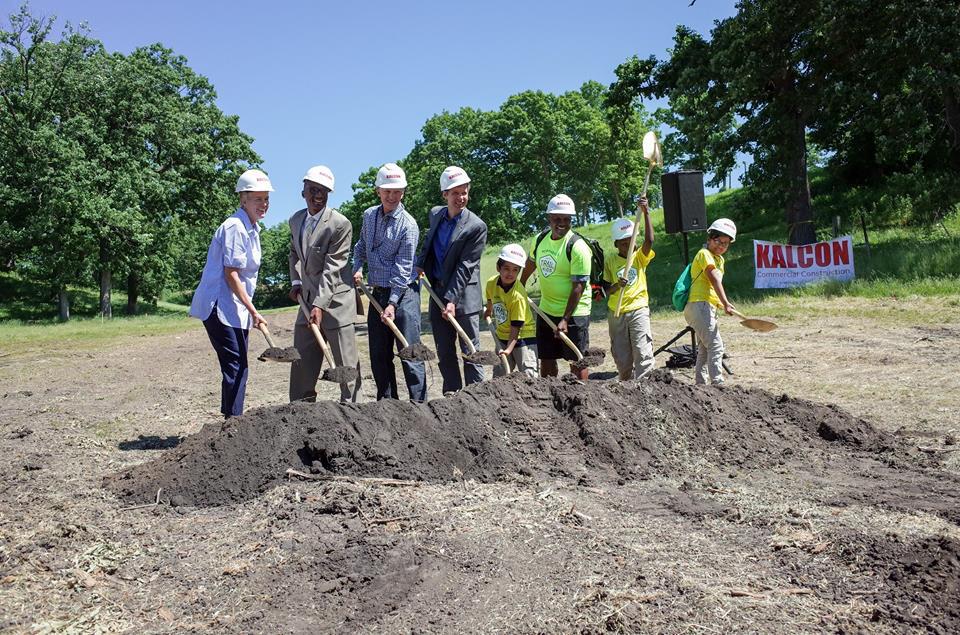
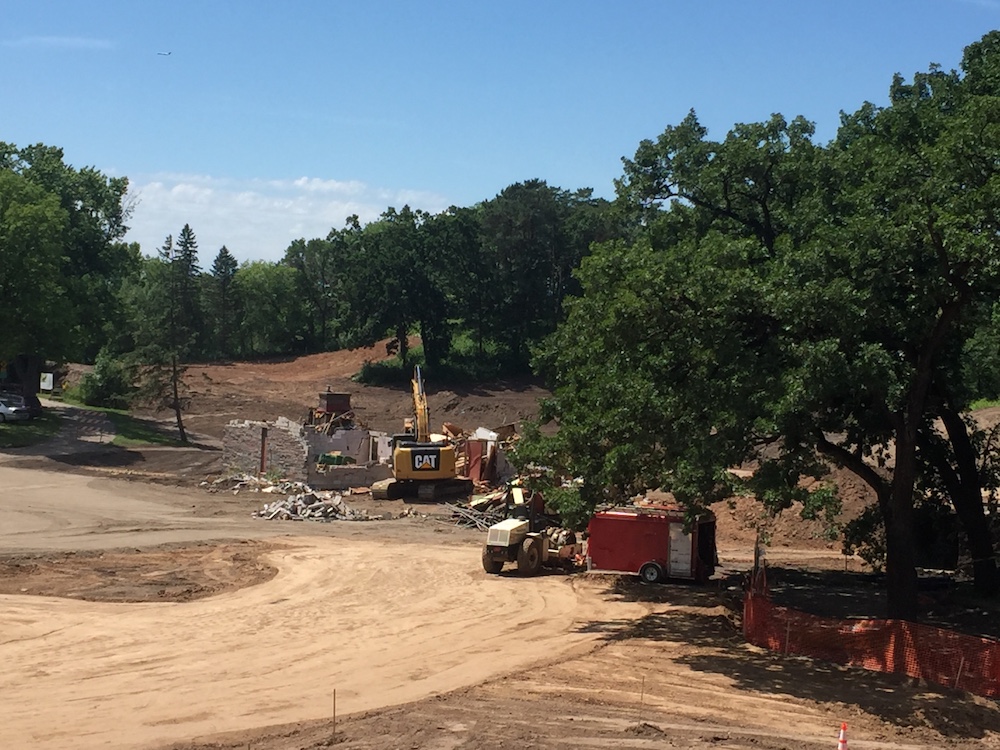
    The Loppet Foundation’s official groundbreaking ceremony for “The Trailhead” at Theodore Wirth Park in Minneapolis, Minn., in June 2017. (Photo: Steve Kotvis)

    After six years, the end is in sight: construction is underway for The Loppet Foundation’s Trailhead.

    The Trailhead is an ambitious project to improve skiing infrastructure at Theodore Wirth Regional Park in Minneapolis, Minn. The year-round facility will feature a strength-and-conditioning area, a bike-and-ski rental shop, locker room, and food service. Outdoor amenities include a tubing hill and a snowboarding hill along with improvements to Wirth’s snowmaking system.

    “It’s a project we’ve been working on a long time,” John Munger, the Loppet Foundation’s executive director, told FasterSkier on the phone in mid-May.
    Last fall, volunteers ​​worked on the new ski trails at Theodore Wirth Park in Minneapolis in preparation for The Loppet Foundation’s new Trailhead​ building. (Photo: The Loppet Foundation)

    Earthmoving for The Trailhead officially began in early June, and Munger said the goal was to have the building ready by Jan. 15, 2018, just in time for the Masters World Cup Jan. 19-26 at Wirth Park. Winning the World Masters bid added urgency to the project, and it’s given The Loppet Foundation an eye for future major nordic competitions.

    “We would like to bring in events like Junior Nationals, senior nationals and maybe even a World Cup,” Munger said.

    Brian Gregg, a 2014 Olympian and one of the highest-profile athletes associated with the Loppet Foundation’s race program, Loppet Nordic Racing (LNR), lives next to Wirth Park with his wife Caitlin (LNR’s other top racer).

    “We’re really excited about The Trailhead. It’s been a long time coming,” Gregg said in a recent phone interview for Truckee, Calif., where he was leading an LNR training camp with Caitlin. “The Loppet Foundation has really brought life back to the park. It’s really cool to see that grow.”

    Originally from Washington state, Brian Gregg has lived in Minneapolis since 2011. Caitlin, a 2010 Olympian who was born in New York City and went to high school in Vermont, moved to the Twin Cities after graduating from Northern Michigan University in 2002.

    “One big goal for us as elite athletes, our job isn’t just to go race for ourselves, it’s to represent our whole club,” Caitlin said of their commitment to LNR and their California volume camp with LNR collegiate skiers. “One thing we’ve learned, the best way to push yourself isn’t to bring athletes in from outside, it’s to bring the athletes around you up to your level. We’ve really taken that approach for a number of years, and now these kids can train with us. It’s awesome, I’m really excited.”

    Growing with the times

    Up until now, skiers at Wirth Park have used a 1920s-era building as a lodge. But that building can’t cope when some 600 to 800 hundred skiers and their coaches swoop in for a high school race. Golfers will continue to use the original building after the Trailhead is complete.

    The entire project, dubbed The Trailhead Capital Campaign, is expected to cost $11.6 million dollars, of which $9.6 million is earmarked for the building and other physical improvements to Wirth’s skiing infrastructure (such as additional snowmaking equipment and trail improvements). The park currently has several International Ski Federation (FIS) homologated race loops, spanning from 5 kilometers to sprint-distance (roughly 1 k) long. In total, Wirth includes 23 k of trails, 7.5 k of which will have snowmaking for 2018.

    Beyond the $9.6 million the Foundation is looking to raise (and is currently about $370,000 short of), another $2 million dollars was budgeted for programming (e.g. youth scholarships). Approximately $4.5 million of the total amount was to be raised privately, while the rest of the balance was expected to be covered by municipal, Hennepin County, state, and federal funding.
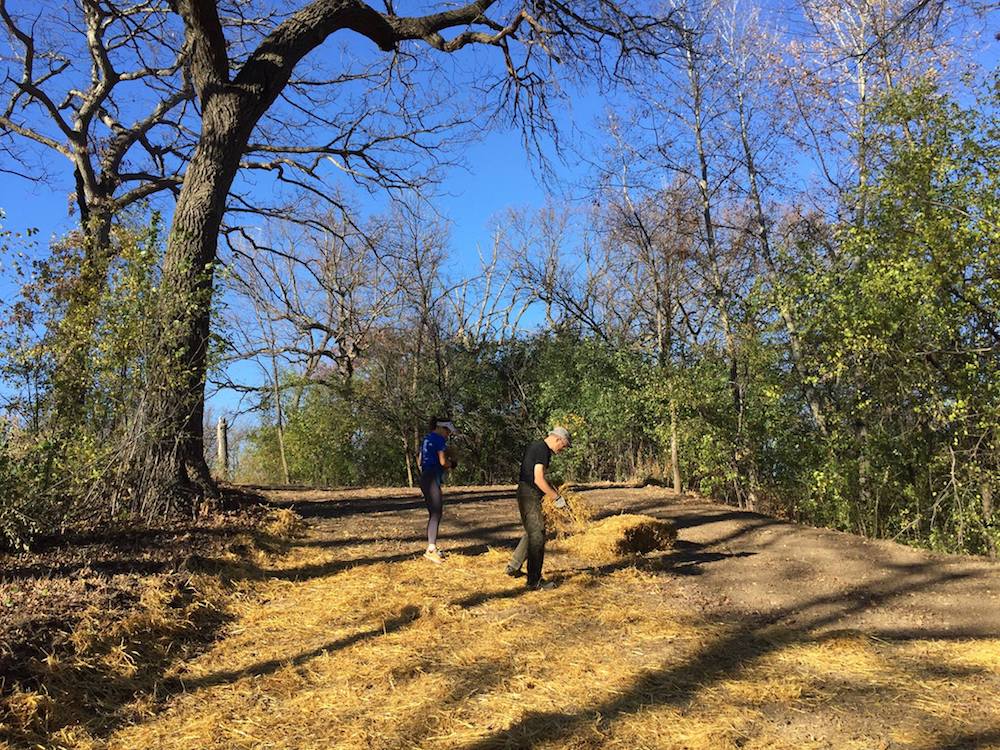
    Trail maintenance at Wirth Park in Minneapolis, Minn. (Photo: The Loppet Foundation)

    In May, Munger explained that the Foundation was in need of $250,000 to break ground. In just two weeks, it raised that amount.

    “We had a cash crunch and needed that money in order to make it happen,” he said. “… It was very energizing and heartening to see the community step up like that.”

    Was raising the money more or less difficult than expected?

    “It’s hard to have expectations when you’ve never done something before,” Munger said.

    While the project has been in the works for the last six or seven years, Munger characterized the Trailhead’s cost as a “moving target” as costs have increased over time. He described donations ranging from individuals and foundations contributing between $10,000 to $50,000, as well as many more modest grassroots donations. Munger credited the Pohlad Family Foundation with the single largest donation of $1 million dollars.

    The Greggs have pushed for the cause, too.

    “We’ve been actively involved [in fundraising] any time we’ve been home,” Caitlin said.

    Earning trust

    At 759 acres, Wirth is almost as big as New York City’s Central Park and serves a variety of constituencies. In addition to skiing, there are two golf courses, a disc golf course, mountain-bike trails and gardens. When master planning for the park began around 2010, the community didn’t know what to make of the Loppet Foundation’s ideas.

    “The [Minneapolis Parks and Rec] Board was a reluctant partner for years,” Munger said. “They weren’t quite sure they wanted to trust a nonprofit or private to come in and do this kind of investment. They weren’t sure we would come through in the end.”

    The golf community also wasn’t thrilled with the idea of a trail-development proposal to relocate three golf-course holes.

    Now, “The park board is excited, we’re excited,” Munger explained. “That’s been the really dramatic piece. The whole community is excited about this now.”

    He added that the park board has “always supported our mission, but I think it’s a matter of trust.”

    To start, the Loppet Foundation did a thorough job of getting various municipal approvals. The Foundation’s gold-level club certification from U.S. Ski & Snowboard was an important endorsement. U.S. Ski & Snowboard has gold, silver and bronze level certifications for clubs that benchmark best practices in coaching, community outreach, and regular board meetings, among other criteria.

    “Once we started to raise significant funds, [the park board] saw we were serious about this,” Munger said. “When we did the hard work with them of putting the agreements together, that was really significant. ‘This is an organization that does things right, that makes the park board look good to the world and helps deliver great services to the public through our partnership.’ So it’s been a long process, but that’s how we got there.”

    “The public-private partnership between Minneapolis Parks and Rec Board and the Loppet Foundation is pretty unique,” Brian Gregg explained. “I think we’re one of the first public-private partnerships like that in the city.”

    Racers at the City of Lakes Loppet in Theodore Wirth Park. (Photo: Steve Kotvis, f/go Photography)

    The upcoming Masters World Cup won’t be Wirth’s first big event, but it does put Minneapolis on the international stage for cross-country skiing. Wirth hosted 2011 Junior Nationals and SuperTour races in 2010, 2011 and 2013. Brian won his first SuperTour there in 2010.

    “A big part of the Loppet Foundation is reaching out to the community of north Minneapolis, which is where Wirth Park is located,” he explained. “It’s really great to see a lot of kids from north Minneapolis being able to take advantage of the Loppet programming.”

    The programming includes youth scholarships for training camps and activities.

    “I think that service side of the Loppet Foundation is one of the most incredible parts about the foundation,” Brian added.

    Caitlin explained that the Foundation has started ski teams in middle schools across north Minneapolis by hiring coaches, acquiring equipment and finding ways to engage kids in healthy lifestyles.

    “Brian and I are extremely proud,” Caitlin said. “… Our proudest moment is what the Foundation has done for the community at large.”

    The Trailhead isn’t just for winter, either. In the summer, it will be a home base for mountain biking, trail running and orienteering.

    “We’re heavily invested in skiing in the winter, but there’s outdoor activity throughout the year,” Munger explained.

    One of Brian’s favorite Foundation programs is Adventure Kids, a series of weeklong summer day camps for kids ages 9 to 13.  It was previously run with “popup tents and picnic tables,” he said, and if there was a thunderstorm, the kids took cover under a bridge. When the Trailhead opens, they’ll have a shelter.

    “There really is no offseason for us,” Munger said.

  • Eyes on Lahti 30 k and Feet Firmly in Midwest, Caitlin Gregg Ramps Up

    Eyes on Lahti 30 k and Feet Firmly in Midwest, Caitlin Gregg Ramps Up

    Caitlin Gregg (left) doing spadework with a Central Cross Country camp in Marquette, Michigan-- home of her alma mater, Northern Michigan University. (Photo: Team Gregg/Facebook)
    Caitlin Gregg (left) doing speedwork with a Central Cross Country (CXC) camp in Marquette, Mich., home of her alma mater, Northern Michigan University. (Photo: Team Gregg/Facebook)

    Fifteen years into her international racing career, Caitlin Gregg is still learning.

    2015 was a breakthrough for the Minnesota-based cross-country skier, who won World Championships bronze in the 10 k freestyle.

    But the next season was one of frustration: the first half spent spinning her wheels on the World Cup, never feeling quite right, and then a trip home to re-tool midseason (and win another American Birkebeiner) before ultimately finishing 33rd in the Ski Tour Canada.

    “It’s so hard when you have such a good end to a season and you’re so fired up and so motivated,” Gregg said in an interview this week. “You think you’re invincible and you’ve figured it all out. I write my own training plan, and I think I got a little excited and did a little too much intensity and a little too hard. My [Level 3 sessions] were just a little too hard. You learn from those mistakes.”

    Gregg, 35, is taking those lessons and applying it to this year’s big goal: racing the 30 k freestyle at 2017 World Campionships in Lahti, Finland.

    “I wanted to do the 30 k at the Olympics and didn’t make it,” she said. “The calendar has that race again at World Championships. To get there is never a guarantee. But speaking to [U.S. Ski Team Head Coach Chris] Grover, he obviously published some criteria and my path fits with what the Ski Team said is how to get there. I’m going to go off of what they said, which is leading the domestic SuperTour and having a strong showing at nationals.”

    Caitlin and Brian Gregg at a training camp in Michigan's Upper Peninsula. (Photo: Team Gregg/Facebook)
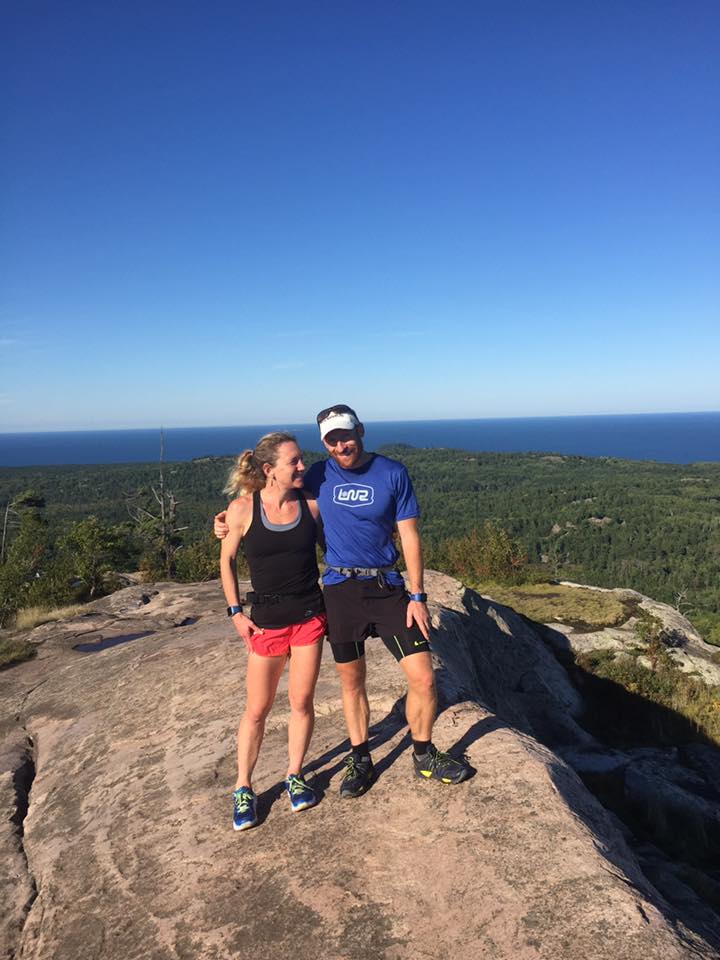
    Caitlin and Brian Gregg at a training camp in Michigan’s Upper Peninsula. (Photo: Team Gregg/Facebook)

    This summer, Gregg’s training has been initially based on volume and more Level 3. A few weeks ago she started incorporating more intensity and time trials, and is pleased with her fitness.

    “I wouldn’t say that I’ve done anything revolutionary in my training this year … but the time trials have been going great,” she said. “I’ve had a bunch of PR’s.”

    The strategic shift after last season has also meant staying closer to home. Gregg was named to the U.S. Ski Team after her World Championships performance. Partly as a result, she and her husband, 2014 Olympian Brian Gregg – a duo who bill themselves as Team Gregg – spent a big chunk of last year in Park City, Utah.

    Gregg has no regrets about that experience, but the couple decided to get back to their roots in the Twin Cities this year instead of going back out West.

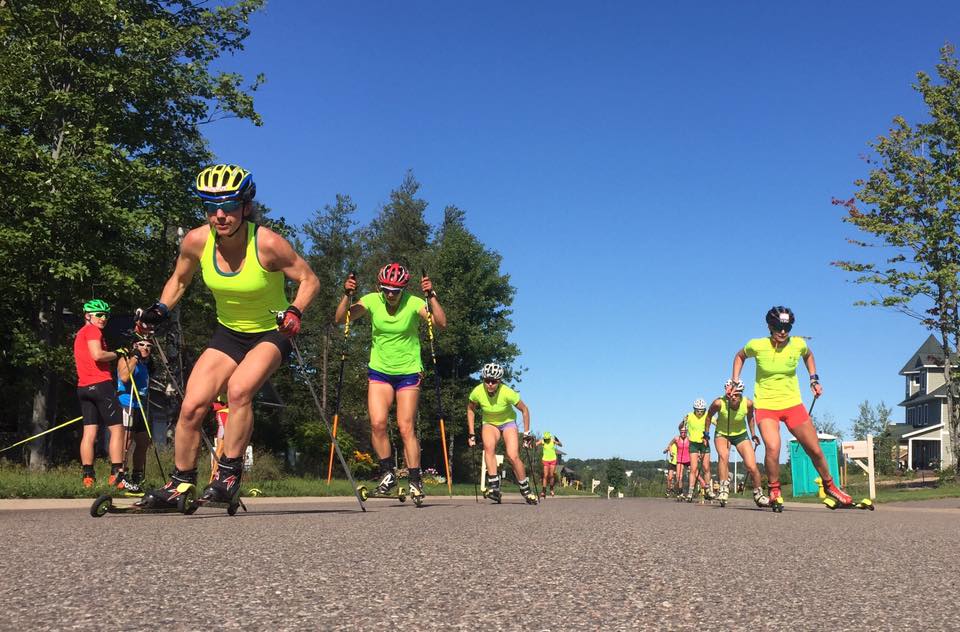
    “I really wanted to be home this summer and spending as much time as possible with my home team, Loppet Nordic Racing,” Gregg explained. “My training camps this year were with the LNR crew, which was really fun. It brought us to Hayward, Wisconsin, and Marquette, Michigan, and we ended up doing one camp in Park City. It was a busy summer with a bunch of camps.”

    Much of that training ended up being with the LNR junior team.

    “Piot [Bednarski] runs a pretty good operation in the sense that these kids are working hard,” she explained. “It’s not about just showing up at practice to say you were there. It’s about really putting in the work… They are skiing at a super incredible level.”

    The trip to Park City, for instance, was partly because 2017 World Junior and U23 Championships will be held at Soldier Hollow. Gregg said she was “so excited” for the U.S. juniors who are preparing, dreaming, and fighting for the chance to compete there on home soil.

    Gregg built on the juniors’ energy and used creativity to fit her training plan in alongside theirs.

    “I was able to utilize slower wheel speed or weight vests, or I might do a couple extra intervals at the end while the girls cheered for me, or jump in with the boys for a workout,” she said. “It was really fun to have a consistent group of athletes to work with and a similar program all year.”

    Gregg – who along with her husband has long been involved with local club teams as well as the mentoring program In The Arena – is becoming more and more serious about coaching in and of itself.

    So the idea of training alongside area juniors was one she latched onto.

    Caitlin Gregg picking up the win in the 13.1 k Surly Brewing Loppet. (Photo: Team Gregg/Facebook)
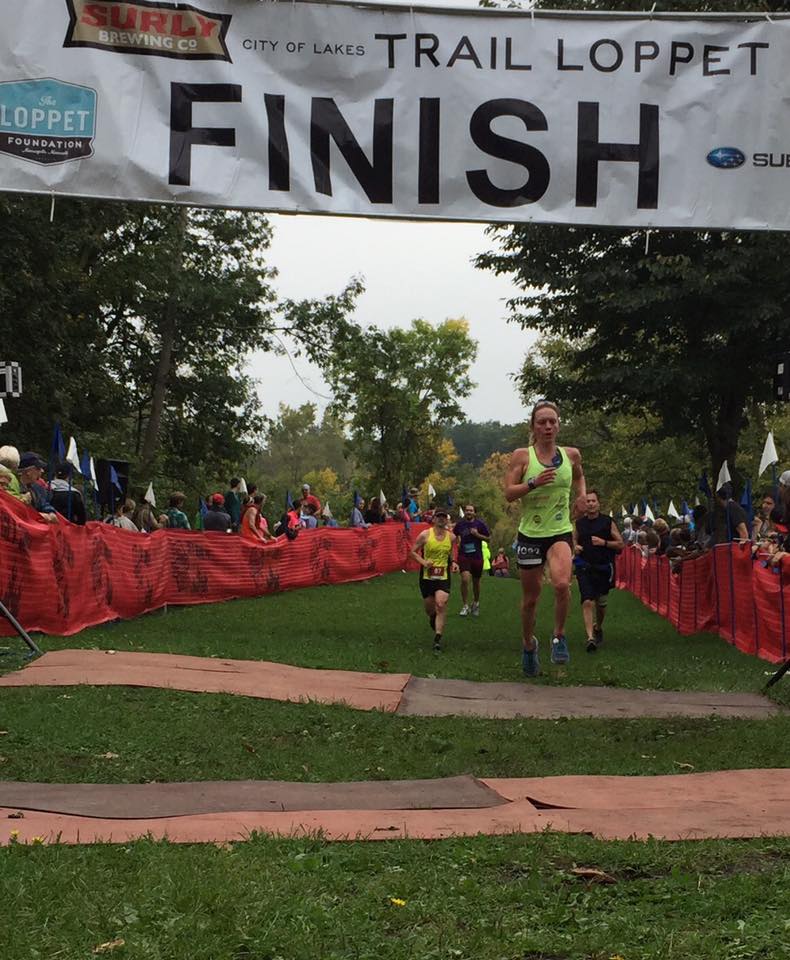
    Caitlin Gregg picking up the win in the 13.1 k Surly Brewing Company Trail Loppet last weekend; Brian Gregg won the men’s 13.1 k. (Photo: Team Gregg/Facebook)

    “My hope was to be an elite athlete who these guys could have an opportunity to train in the mix with, and really almost be an opportunity that they could be following me as much as possible,” she said. “I think that makes a big difference for them. I think it was a really good for both me and them.”

    Another piece of the coaching puzzle came from involvement with Central Cross Country camps, including in Marquette, Michigan, where she could reconnect with her college coach Sten Fjeldheim at Northern Michigan University.

    “I’ve decided that I love the coaching and I want to get more experience coaching, so there was an opportunity to go up there and see, from a little bit of an outside perspective, how Sten and [assistant coach] Shane [MacDowell] are running their program,” she explained.

    That also meant checking in with a number of Loppet Nordic Racing athletes who had moved on to Northern Michigan University.

    “This summer we had about ten girl from LNR actually going to ski in college,” Gregg said. “That is awesome. I owe so much to my opportunity to ski in college, both from an athletic standpoint and to get a scholarship to be able to go to school. So it really meant a lot to me to see these girls want to continue racing. And also how many of them got scholarships. It makes me feel good seeing that impact transfer over to them.”

    As for the path Gregg’s own college career started her down, she’s still chasing Lahti.

    “The girls on the ski team, they are so strong right now in so many different areas,” she admitted. “But there’s the potential that they don’t all want to race the 30 k at the end of the championships. So there could be an opportunity there.”

    Team Gregg plans to start the season in West Yellowstone, Mont., even though it’s not a SuperTour this year.

    “We are really happy because we have so many incredible sponsors which are based here domestically,” Gregg explained. “We race on the World Cup, the Olympics, World Championships, but we are really supported by the companies as domestic-level athletes so it’s awesome for us to be able to race here and showcase how grateful we are for the products. West is always a great opportunity to do that, a great time for U.S. skiing to get together.”

    After that it will be the SuperTour circuit and U.S. Nationals, in a bid to land atop the domestic ranking list and get named to the World Championships team.

    Not everything is under Gregg’s control; even if she is leading the SuperTour, it all comes down to how big of a team the U.S. ends up taking to World Championships.

    And Gregg has been on both sides of that decision. In 2014 she was left off the Olympic team, and in 2015 she was taken to World Championships and competed in just one race, earning that bronze medal.

    “There always exists something where you have the other athletes just racing in Europe, and you never go head to head with them,” Gregg said. “I think the fittest year of my career to this year was that year of the 2014 Olympics, and that’s a hard call. You just never know. And I can’t imagine it’s easy for them to make a decision.”

    At this point, Gregg is simply going all out.

    “I think it’s fair and I just have to put my trust and my belief in it,” she said of the criteria. “And hopefully they decide to take some extra athletes besides the national team.”