From the FasterSkier archive — posts syndicated from athletes’ and coaches’ own blogs between 2004 and 2012, kept online as published. Current coverage is at fasterskier.com.

Tag: Logan Hanneman

  • North American Men End on High Note in Falun 15 k Free; Patterson 7th, Léveillé 9th, Ketterson 15th

    North American Men End on High Note in Falun 15 k Free; Patterson 7th, Léveillé 9th, Ketterson 15th

    This World Cup coverage is made possible through the generous support of Marty and Kathy Hall and the A Hall Mark of Excellence Award.  To learn more about A Hall Mark of Excellence Award or to learn how you can support FasterSkier’s coverage please contact info@fasterskier.com.

    Following the men’s Olympic 50-turned-28.6 k in Zhangjiakou, long-time American distance champion Kris Freeman and Devon Kershaw called Scott Patterson an “Olympic Specialist”, commenting on how Patterson had found many of his top results at either World Ski Championships or during the Olympics in PyeongChang and Zhangjiakou. 

    His top championship results are this: 8th in the 30 k free in Beijing, 11th in the 15/15 k skiathlon; 14th in the skiathon and 10th in the 50 k classic during the 2021 World Ski Championships in Oberstdorf, Germany; 21st in the skiathlon in the skiathlon during the 2019 World Champs in Seefeld, Austria; 18th in the skiathlon, 21st in the 15k skate and 11th in the 50 k classic during the 2018 Olympics in PyeongChang.  

    Until today, Patterson had raced into the Top-20 on the World Cup five times individually, with his best result – and only other individual Top-10 – arriving in 2017 in the 30 k skiathlon during a pre-Olympic World Cup in PyeongChang. This event saw just 31 finishers, and a scan of the results sheet shows only a small number of names that frequent this site. 
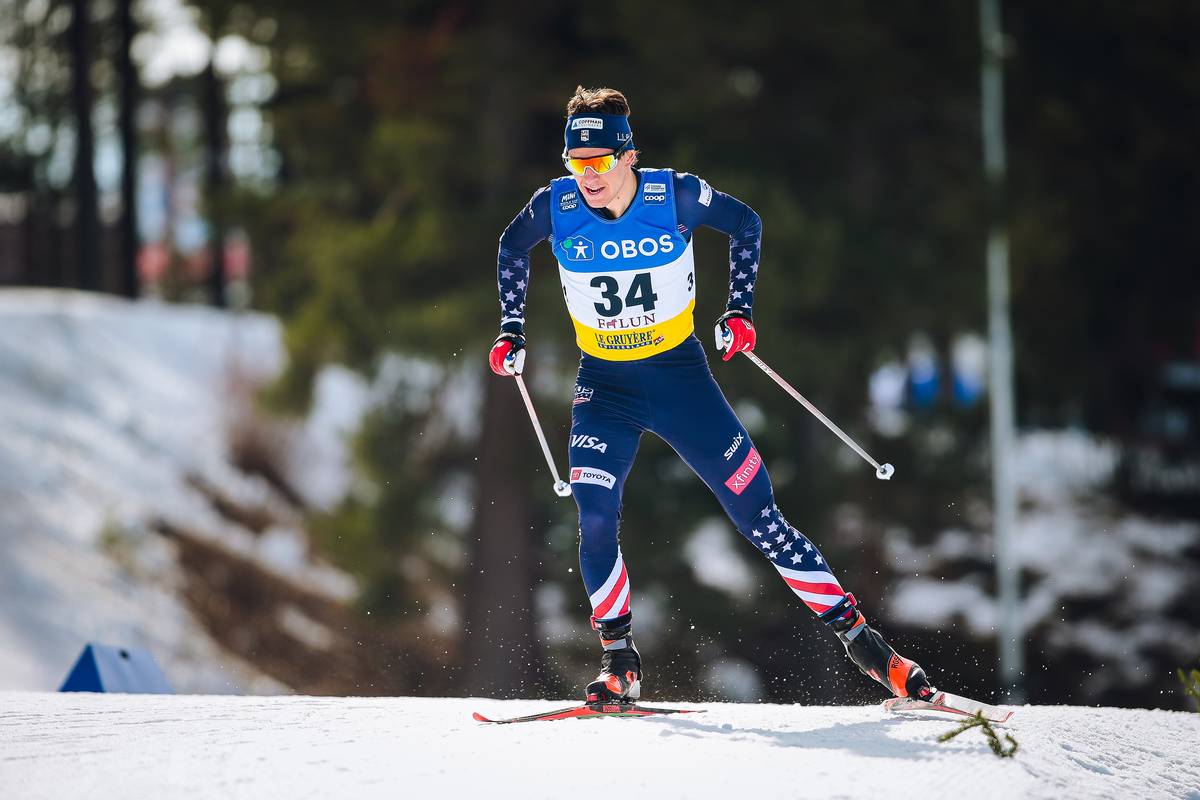
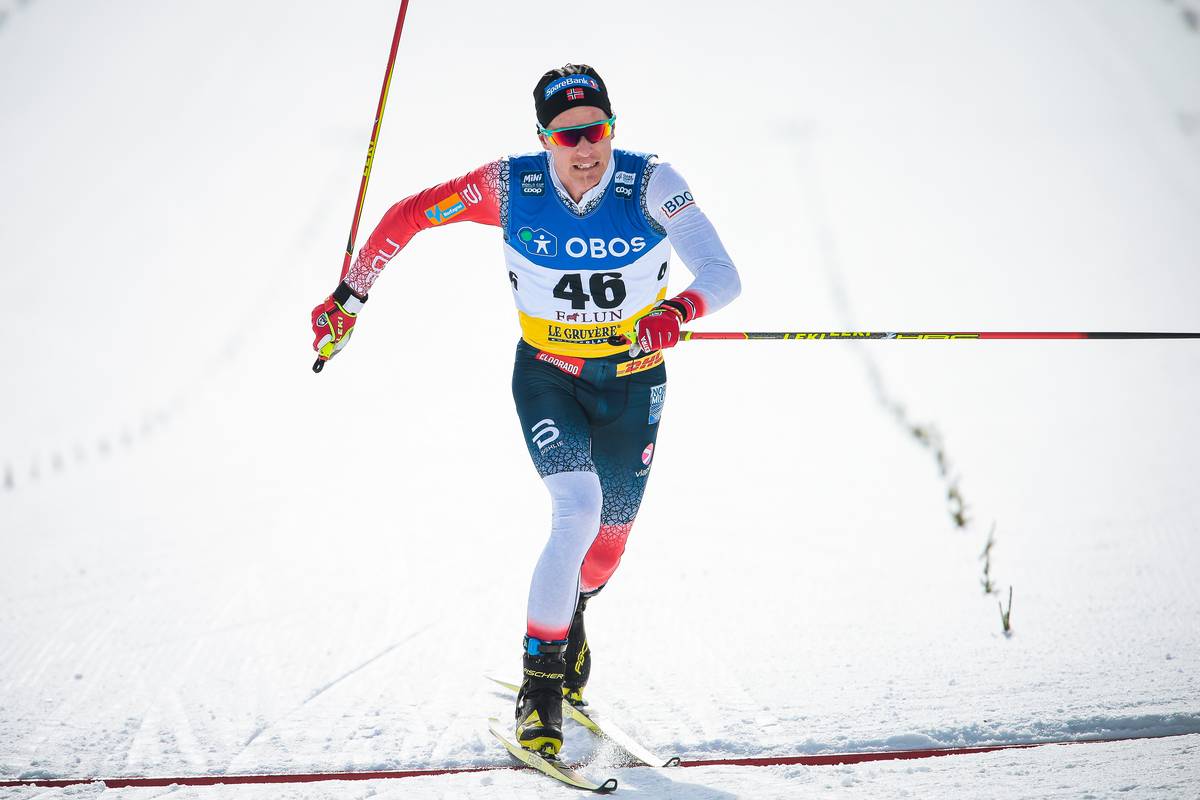
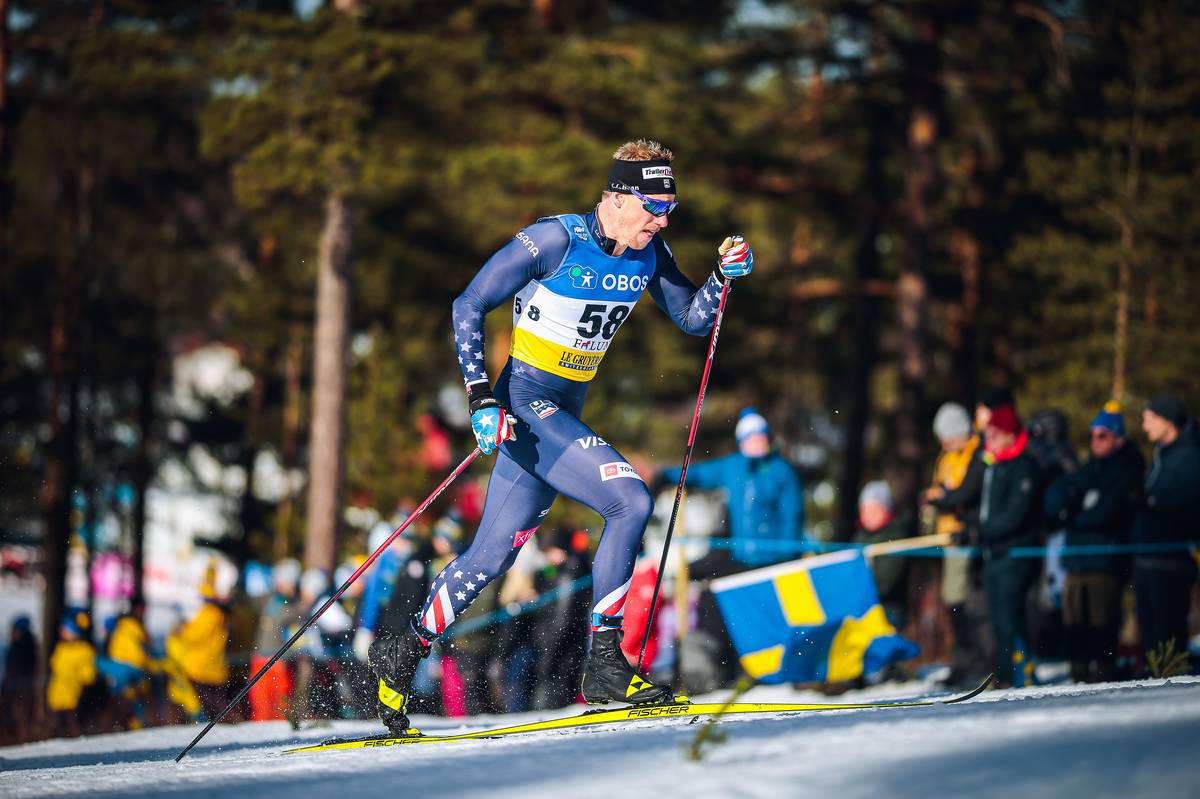
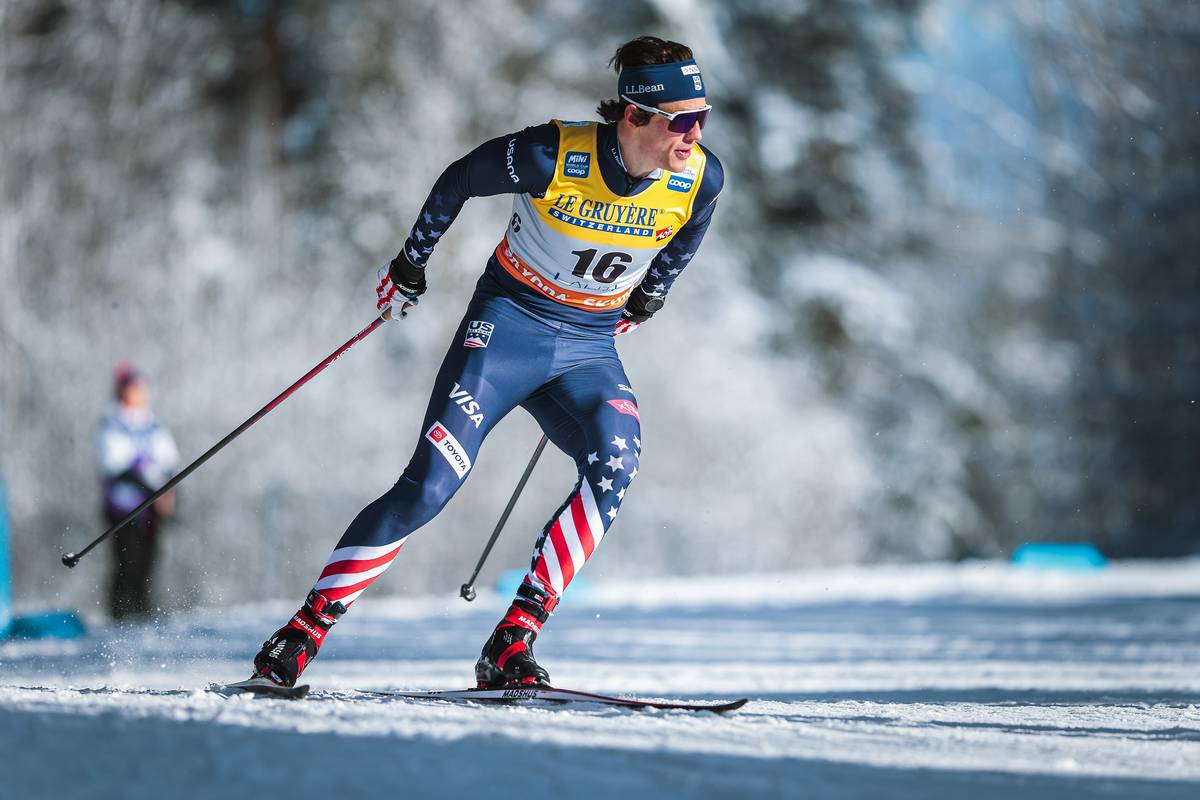
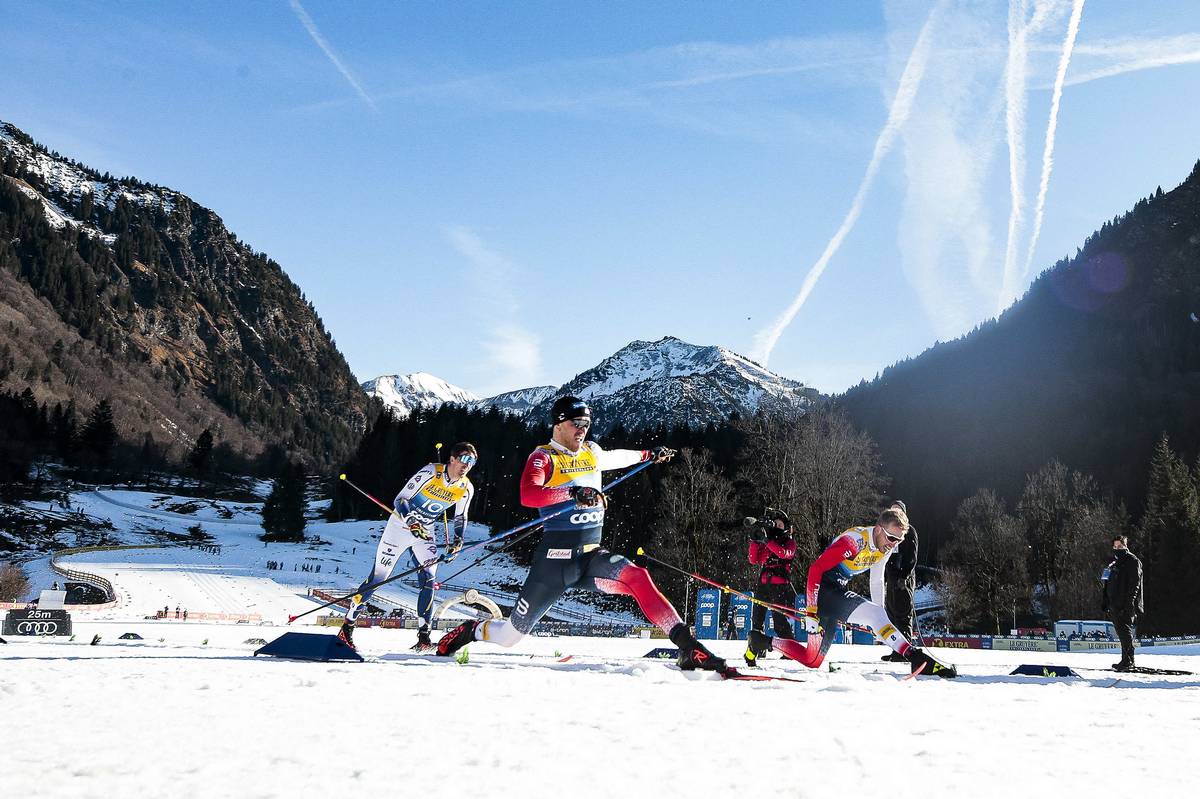
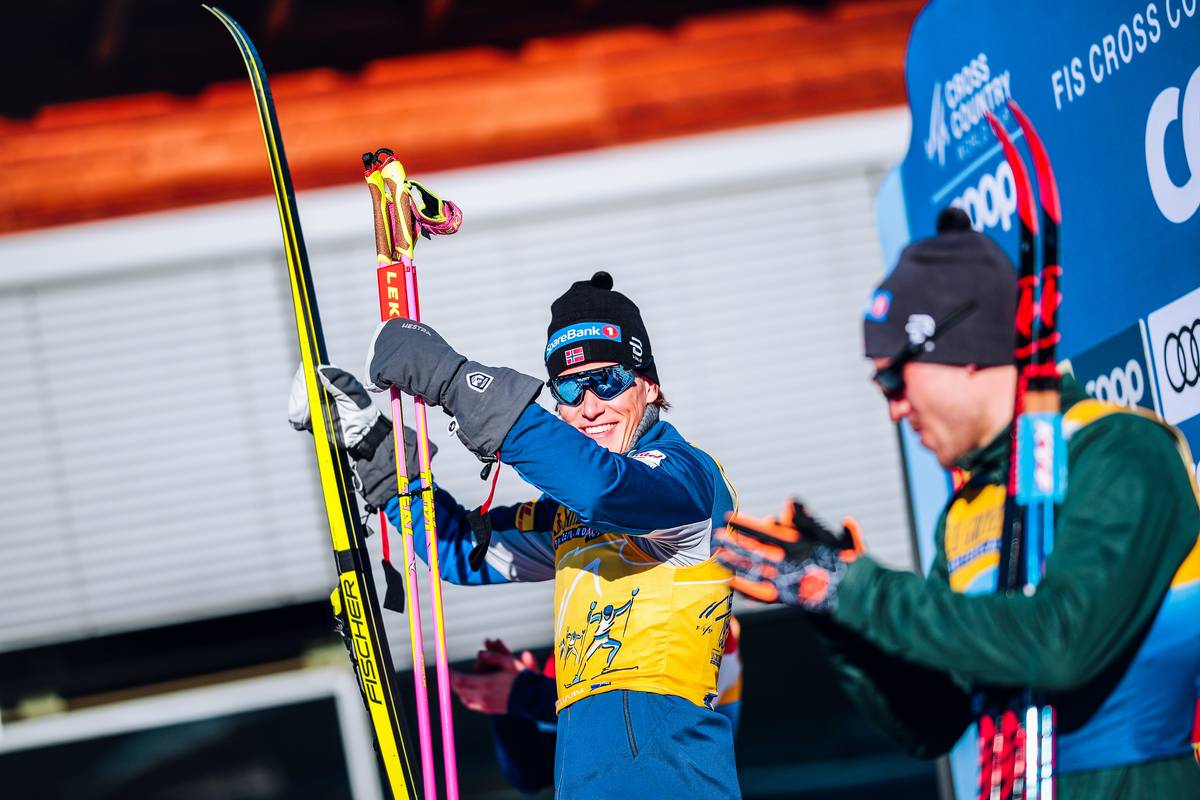
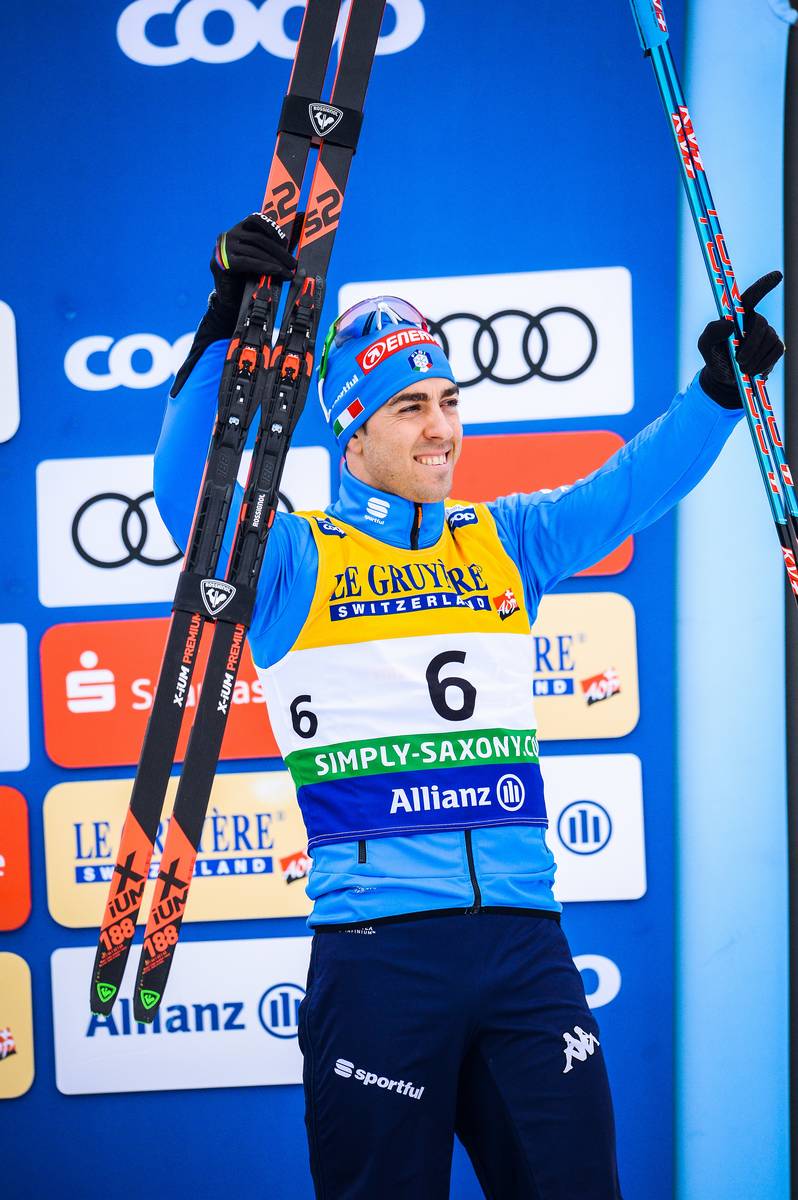
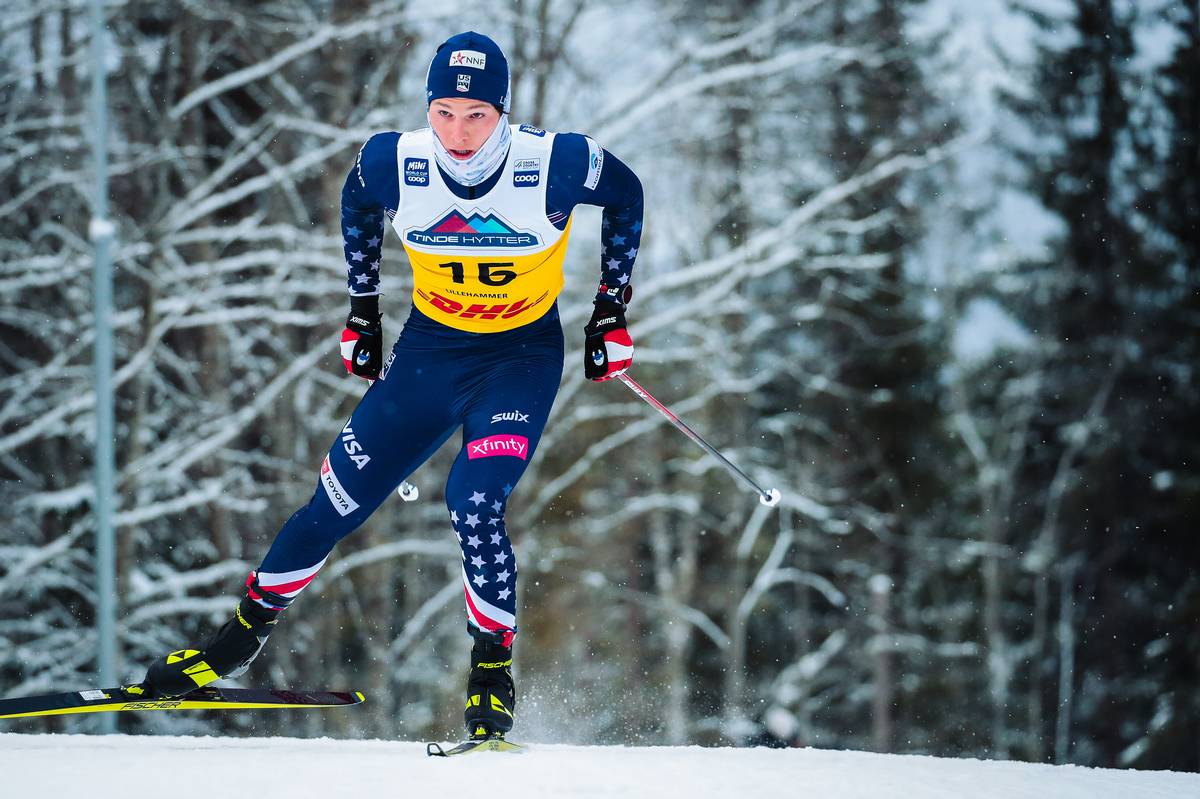
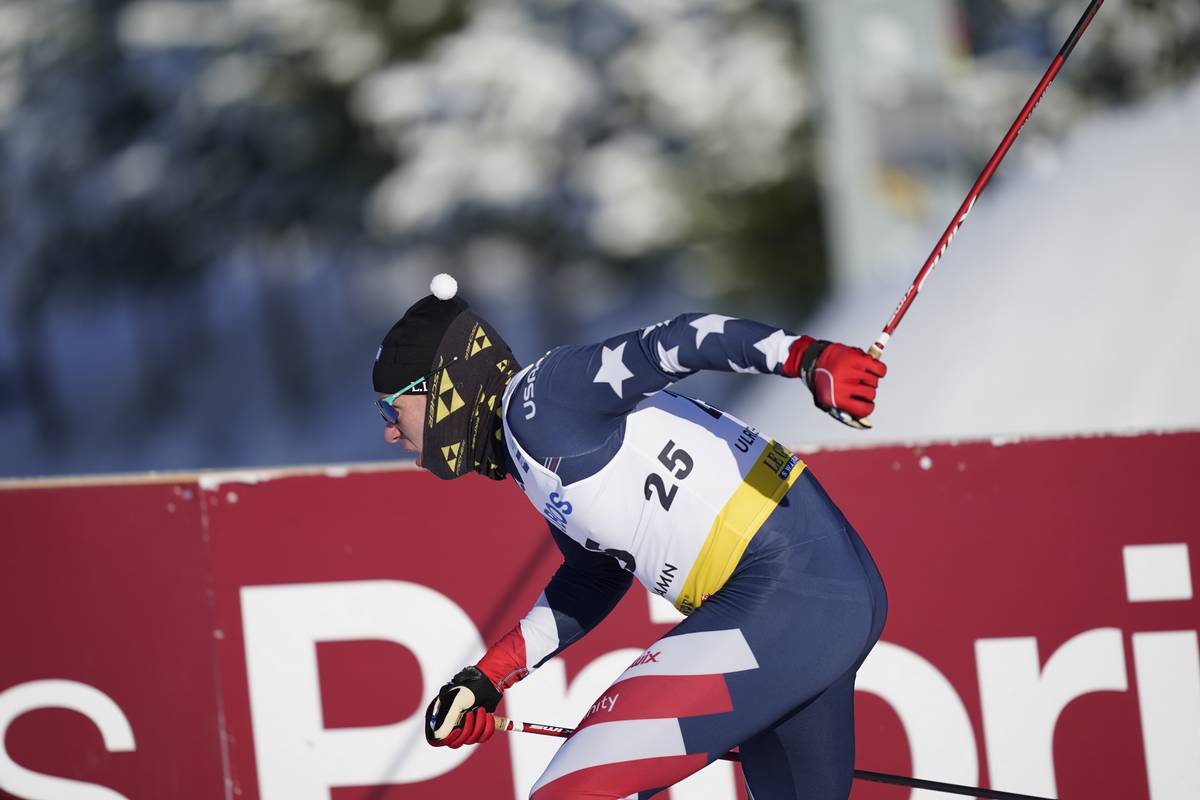
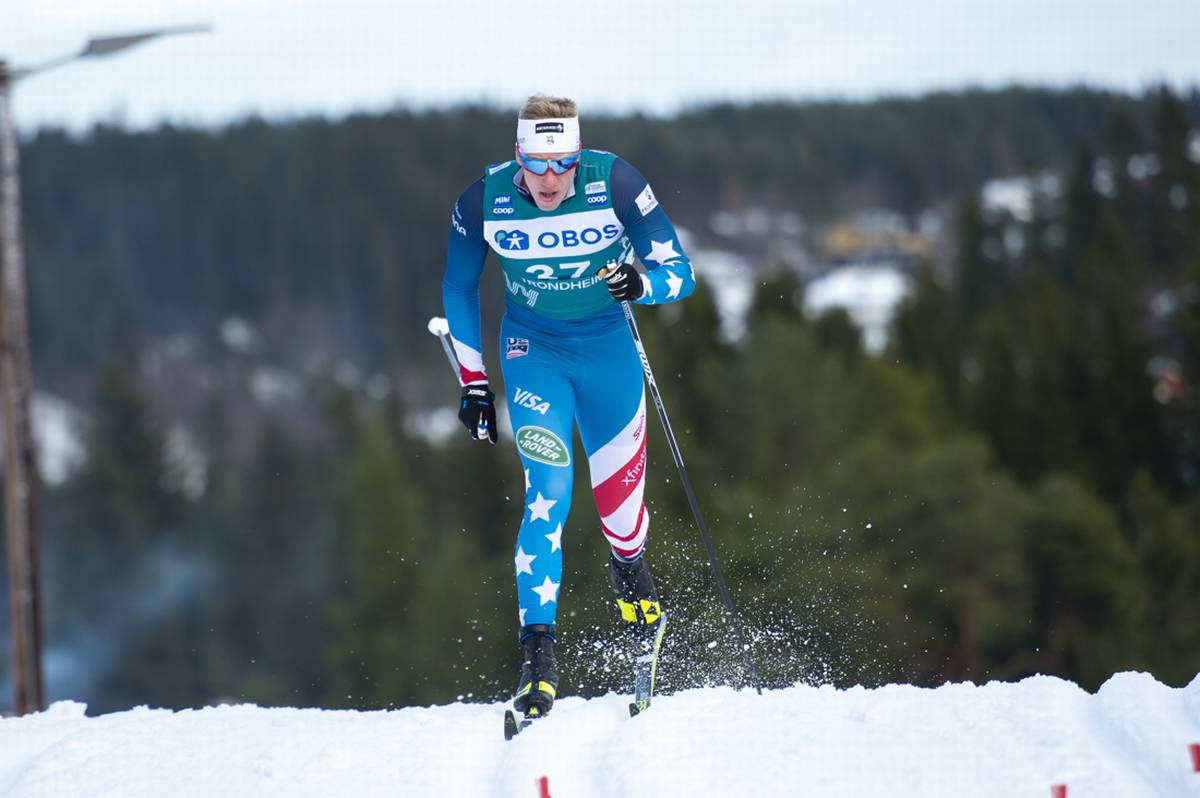
    Scott Patterson races to 7th place during the 15 k individual start skate in Falun. (Photo: NordicFocus)

    But here in Falun, Sweden, Patterson popped a 7th place finish in the 15-kilometer individual start skate, finishing 42 seconds behind winner Didrik Tønseth (NOR) as the first non-Scandinavian athlete on the tails of five Norwegians plus Calle Halfvarsson of Sweden. 

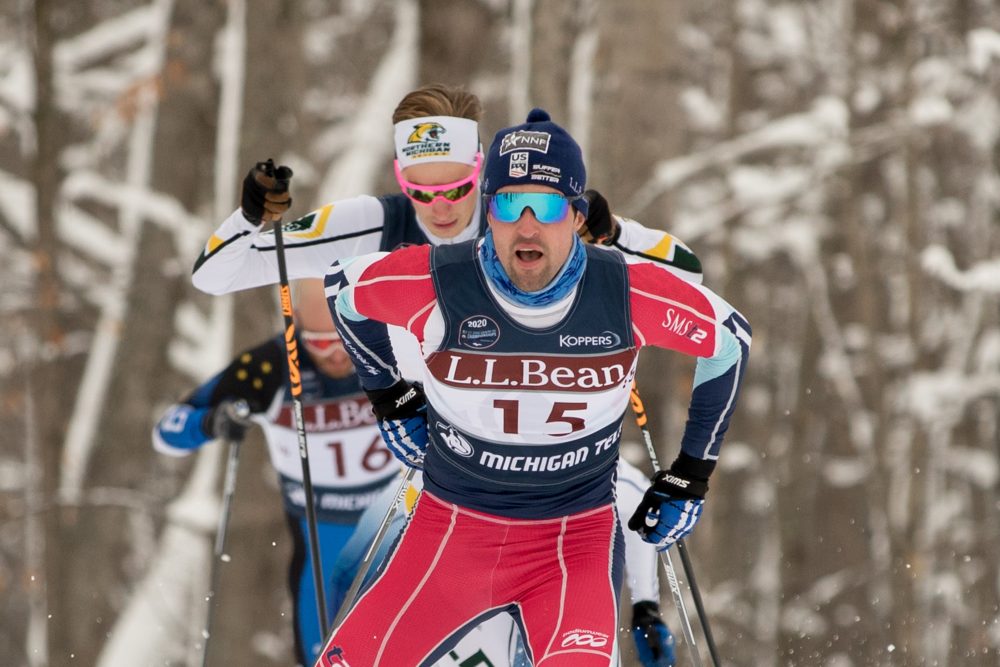
    Roughly another 40 seconds back, Team Birkie’s Zak Ketterson was rolling too. In a steady effort that saw him inside the Top-20 throughout the day, he not only his first World Cup points, but finished 15th, +1:20.8 on Tønseth. 

    In short, Patterson and Ketterson shaped the final men’s distance race of the season into a high note for the U.S. And both men did it as early-starters, before the seeded group.

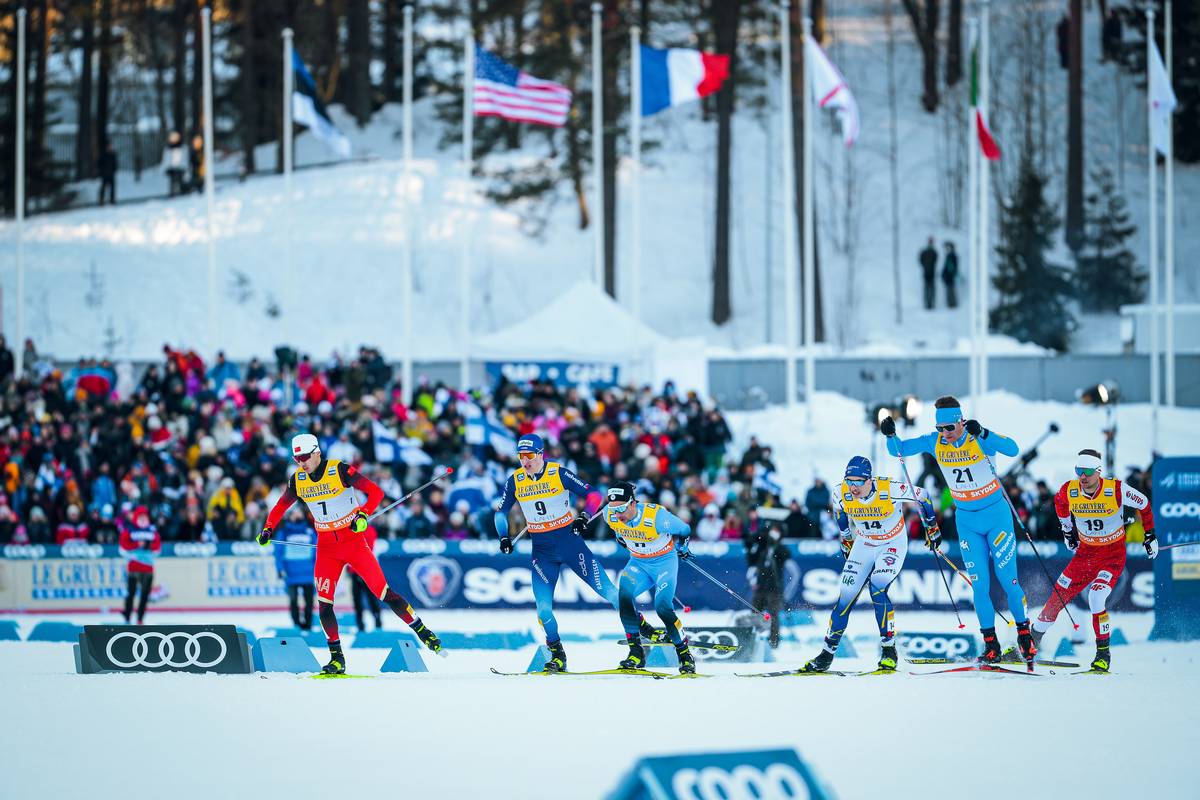
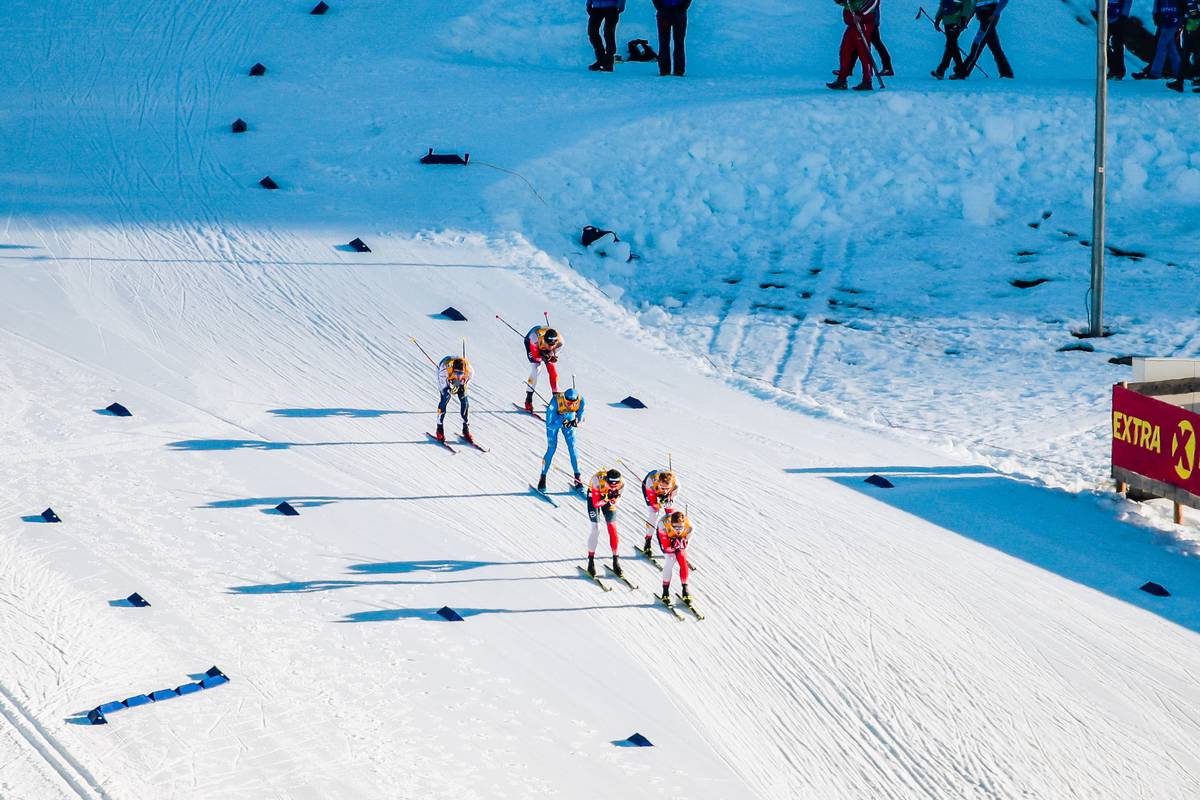
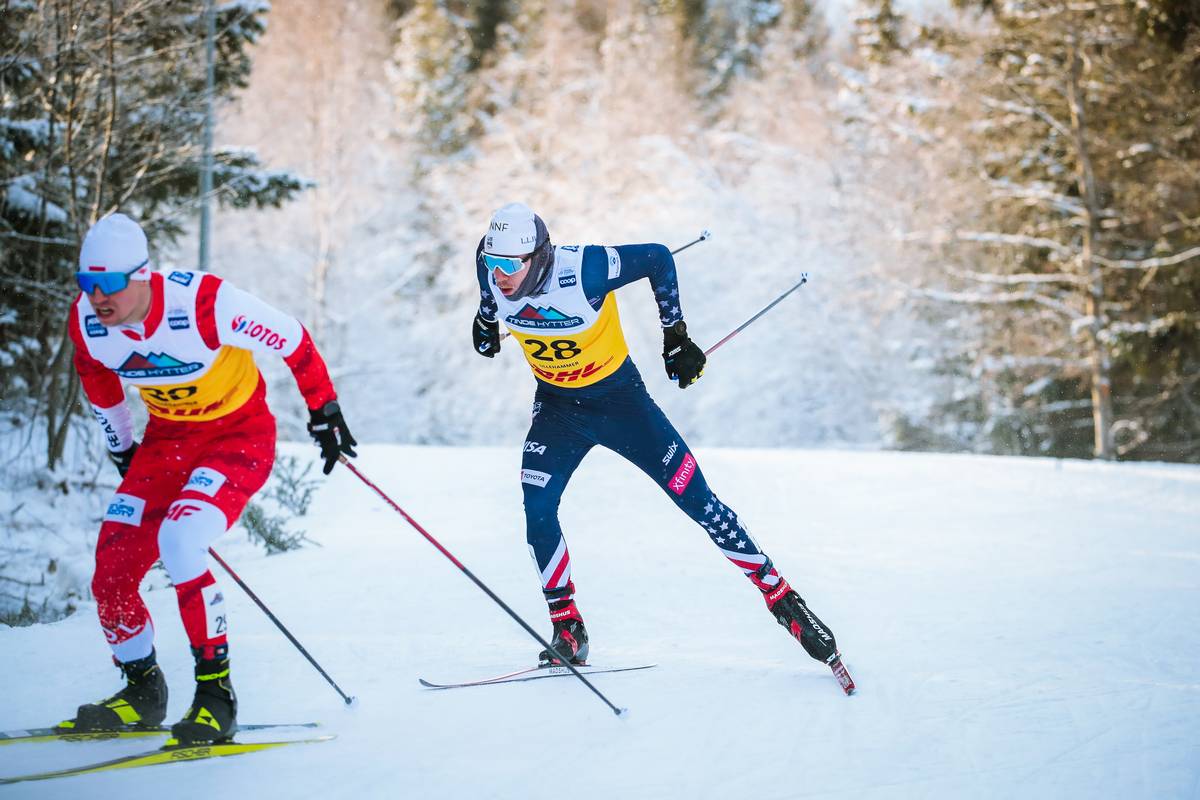
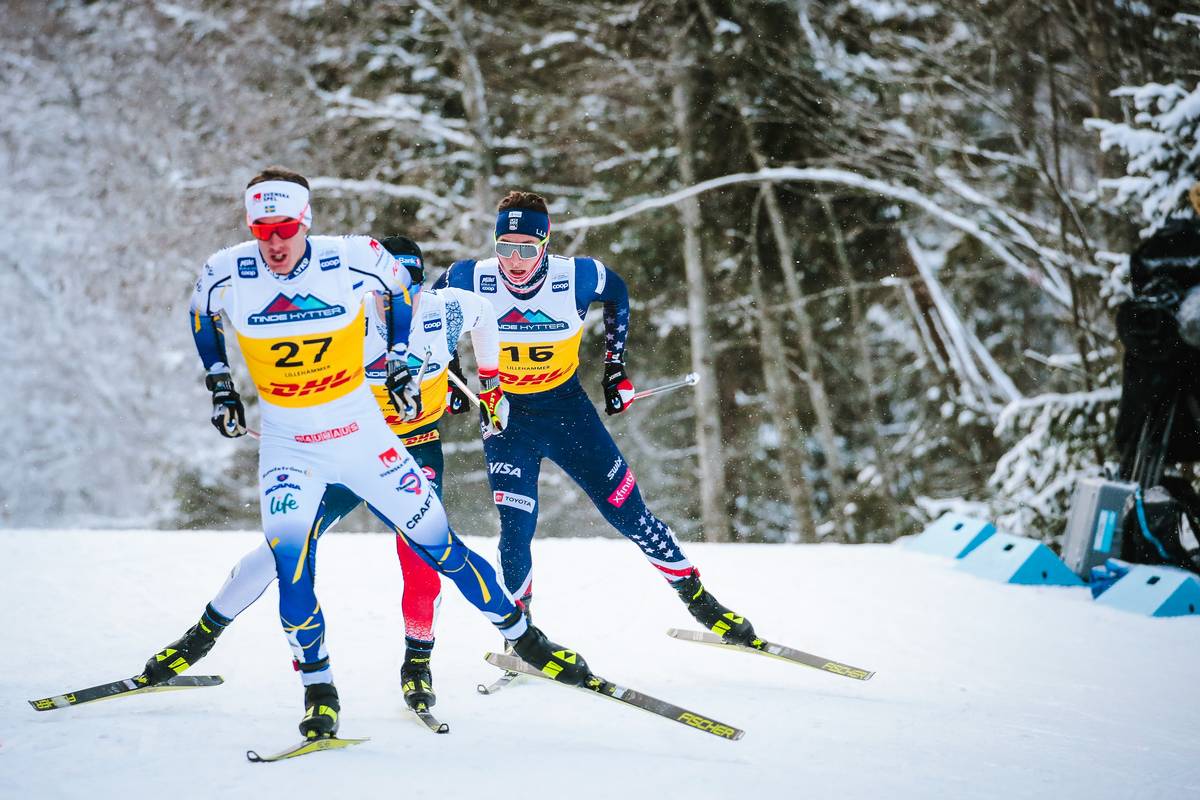
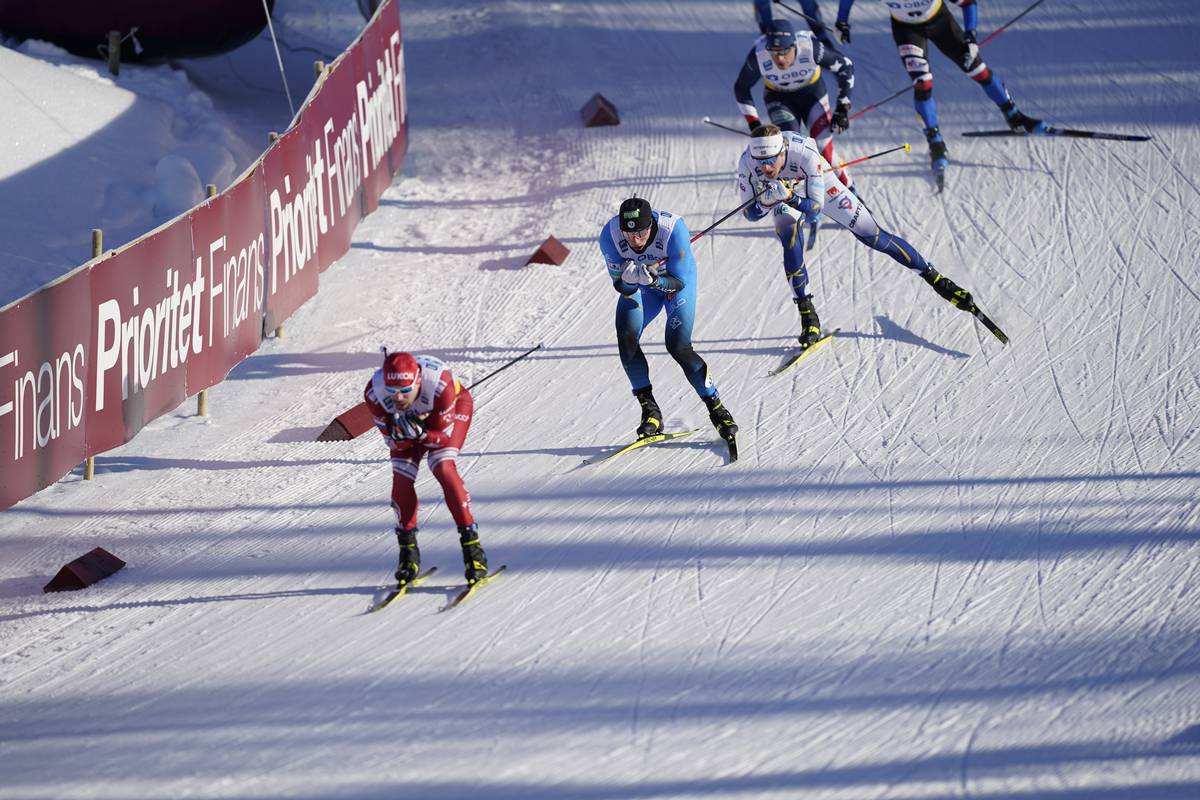
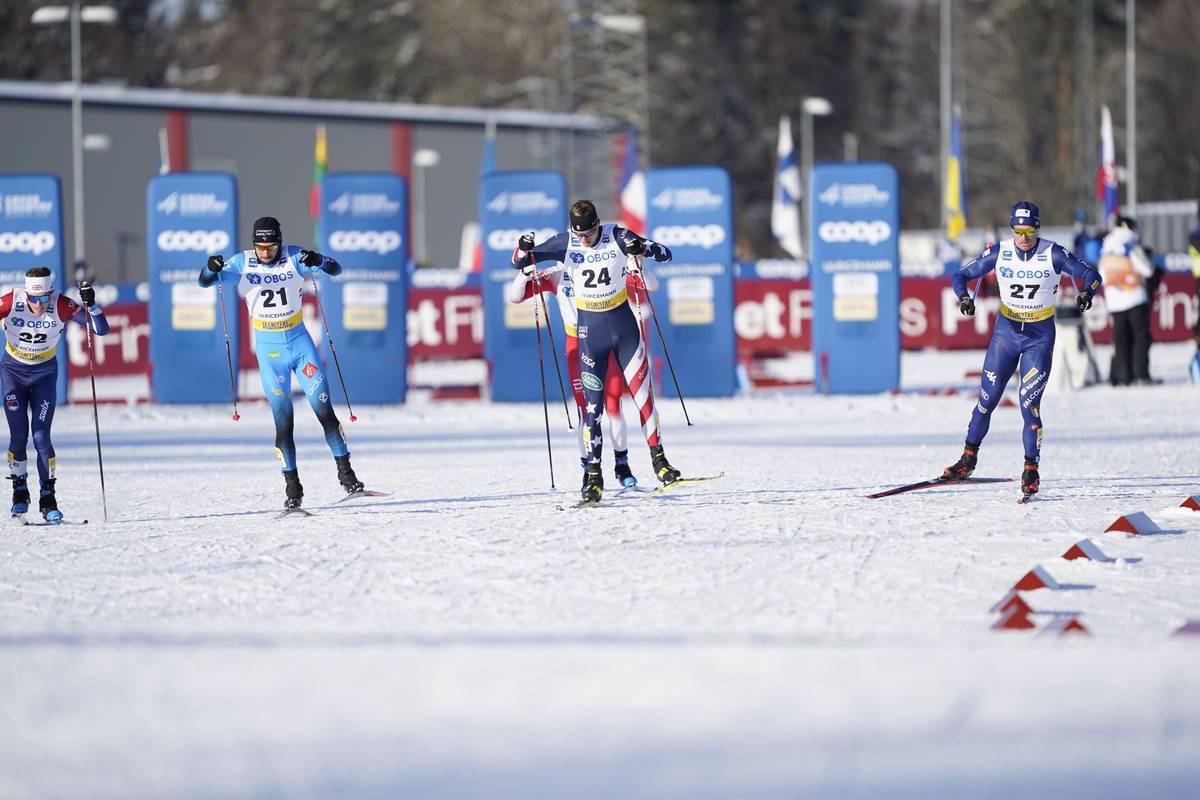
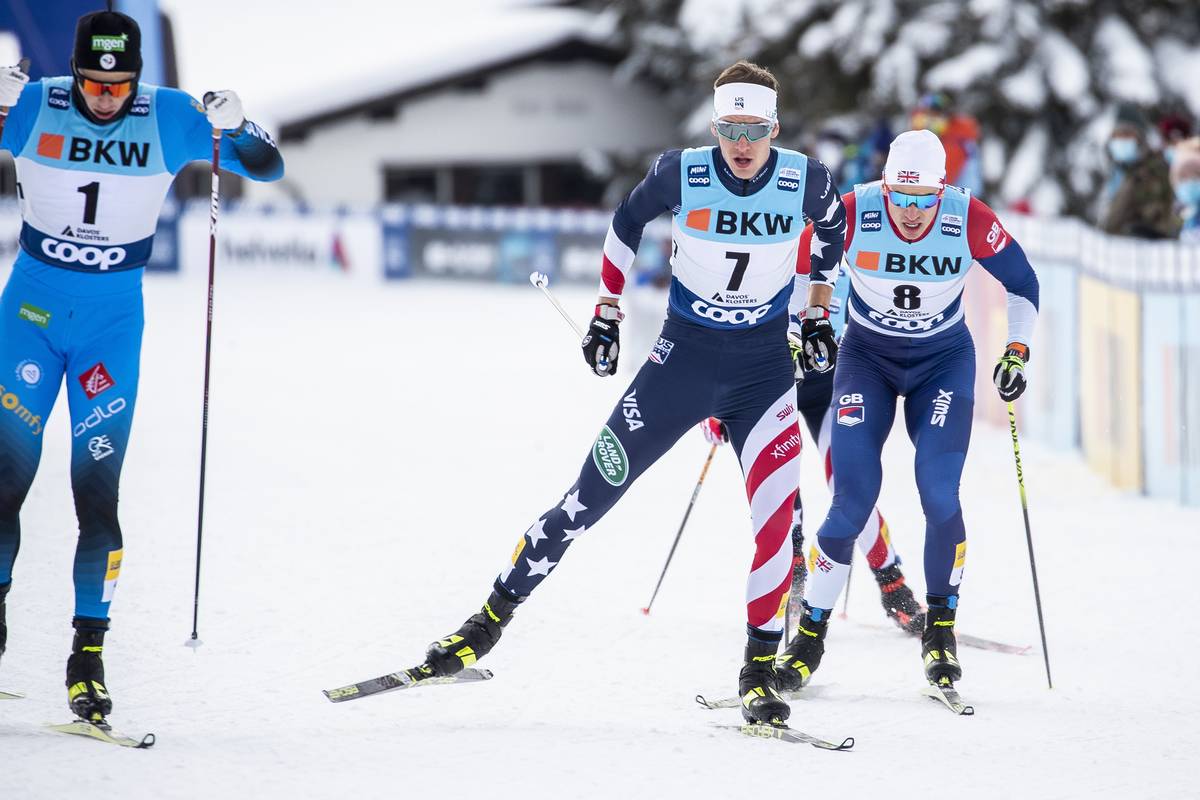
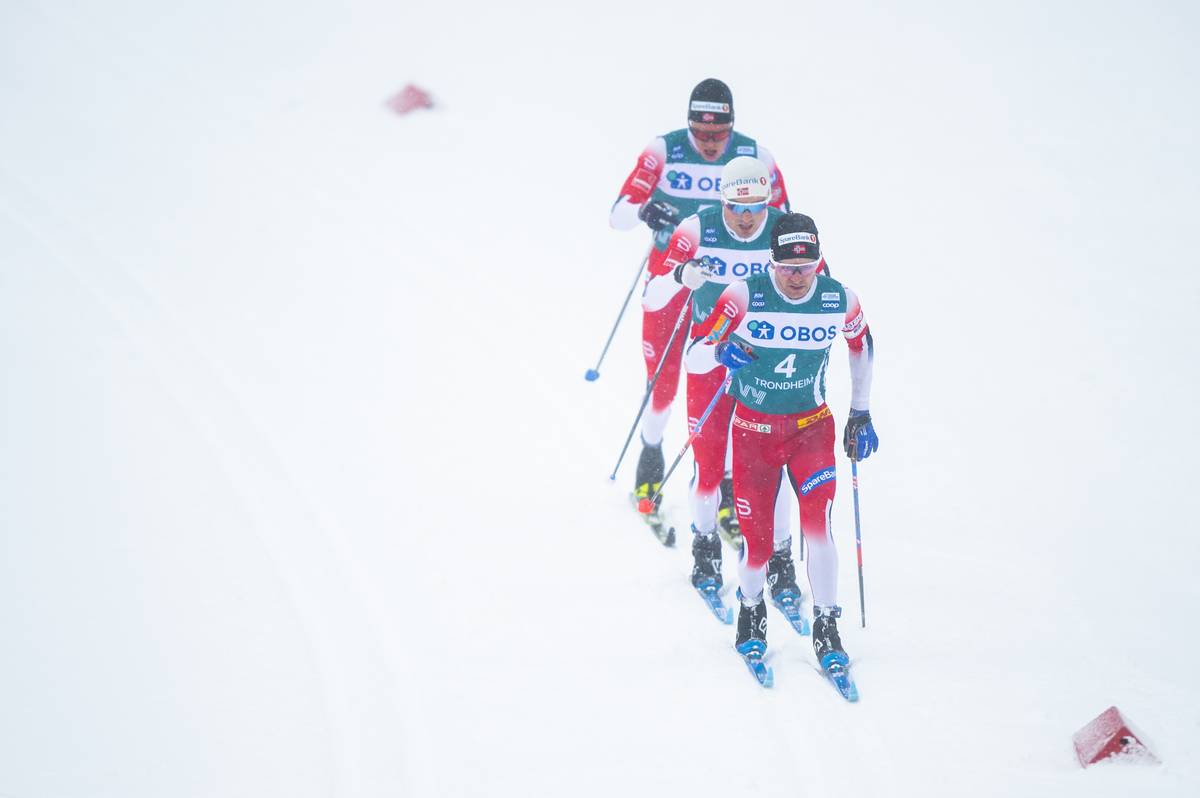
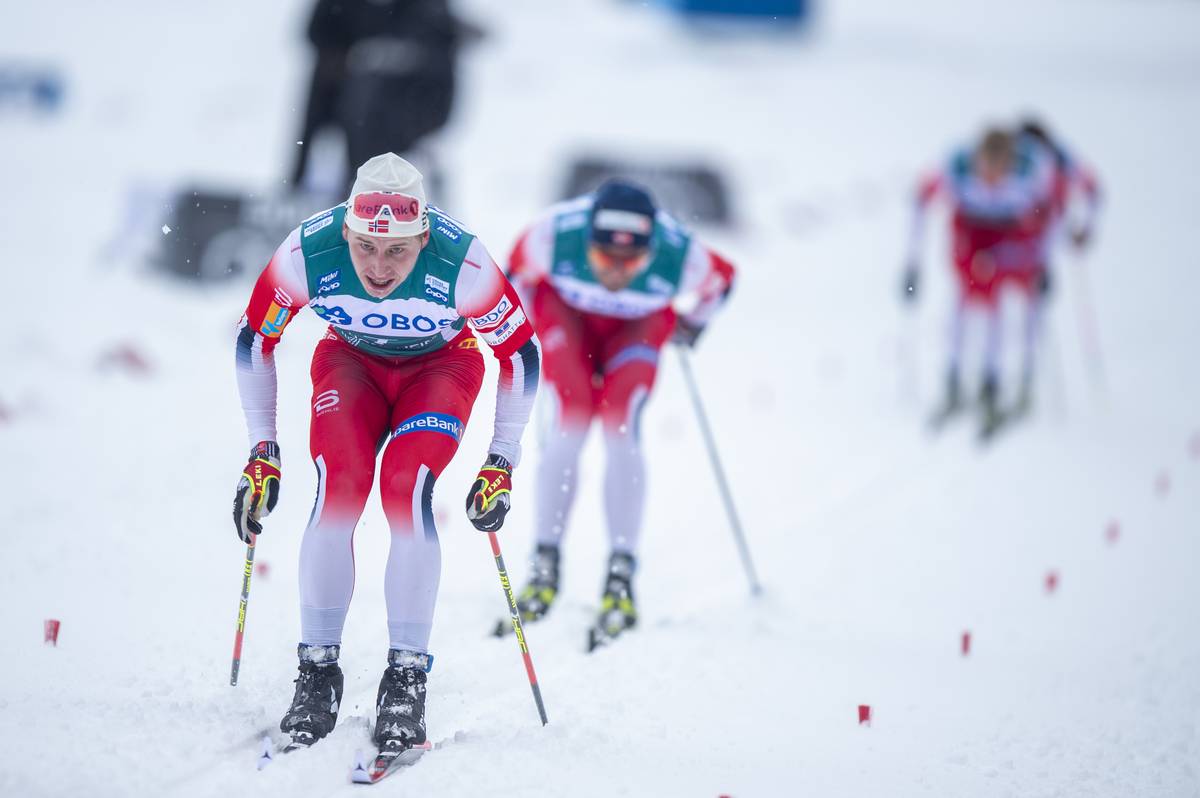
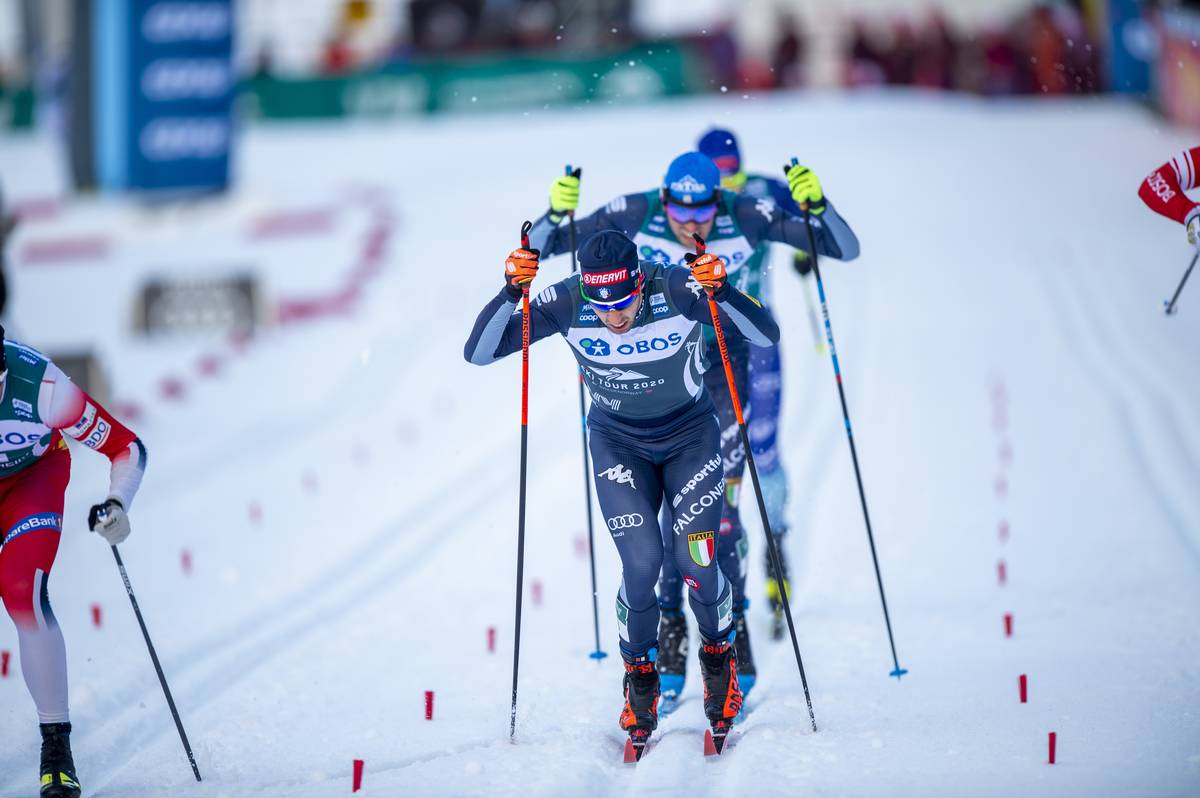
    Zak Ketterson (bib 8) leads Logan Hanneman during the 15 k individual start skate in Falun. (Photo: NordicFocus)

    Diving into the race, a winning strategy looked to be a conservative first of four laps on the championship-caliber course in Falun. While the top-three established themselves early, the eventual winner, Tønseth, did not make his charge for the win until the final lap. 23-year-old Harald Østberg Amundsen (NOR) was on top at the first lap, followed by Halfvarsson of Sweden, and then Tønseth. At the half, it was Halfvarsson on top, with Amundsen and Tønseth just under four seconds back. Then, Tønseth slowly turned the dial upward. 

    With one lap to go, Tønseth had five seconds on the Swede, and ten on his young countryman. With just over 2 k to go, this lead had grown to +13.3 seconds, of which he ceded very little through the finish. Tønseth stopped the clock at a ripping 31:57.6, knocking down the time of Halfvarsson who had started eleven bibs earlier. The Swede kept the second spot on the podium (+9.0), while Amundsen, who faded in the second half, kept pace from the back-half of the seeded group to finish third (+20.4). 

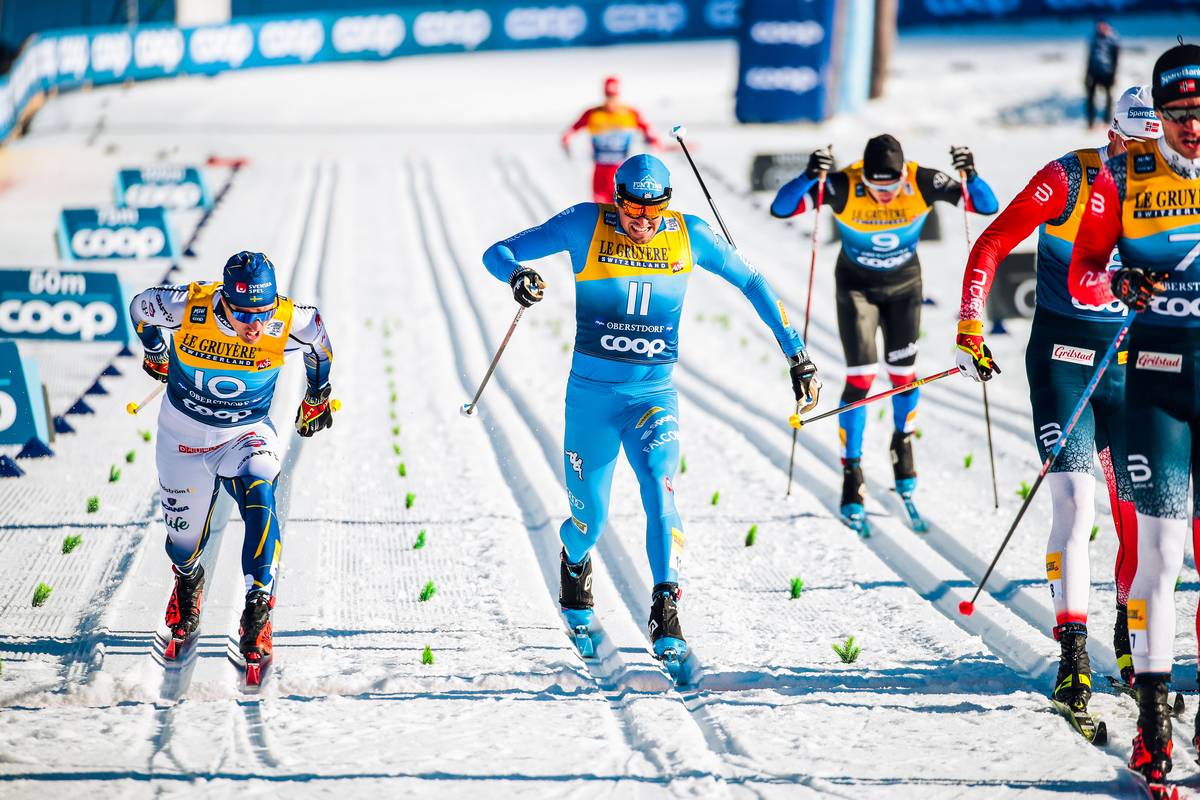
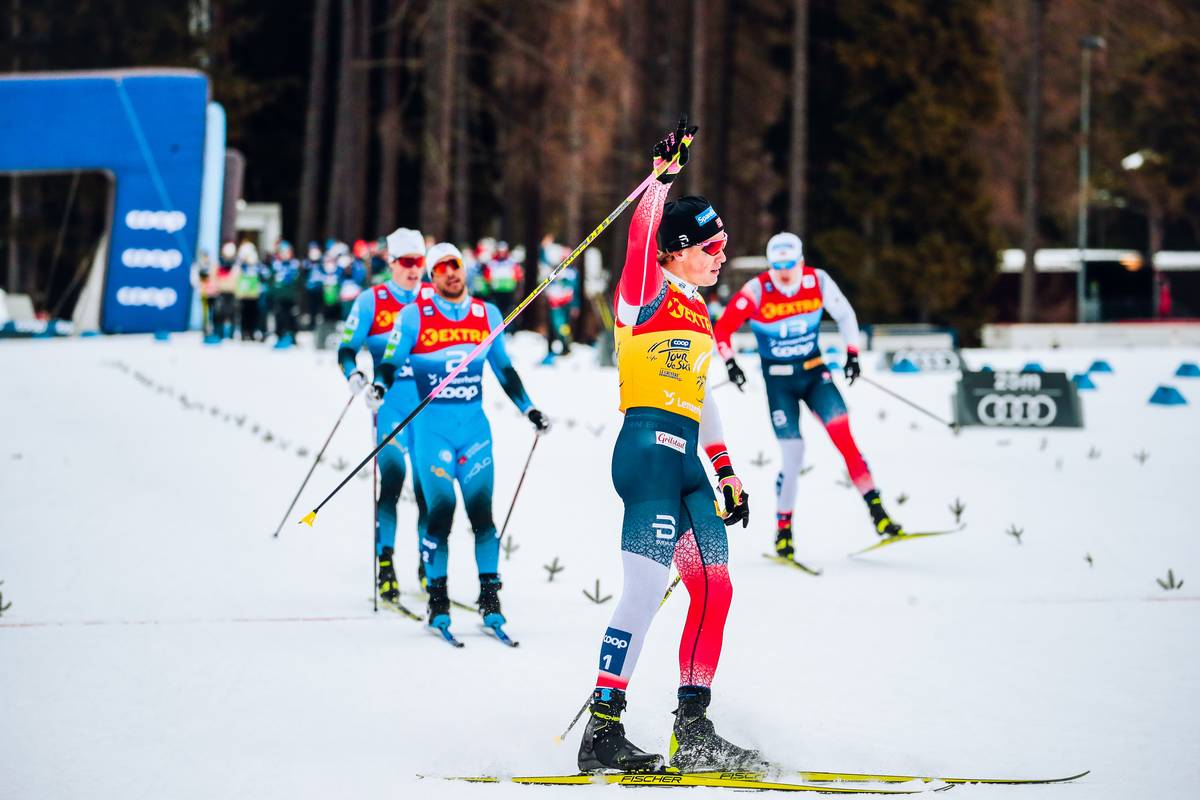
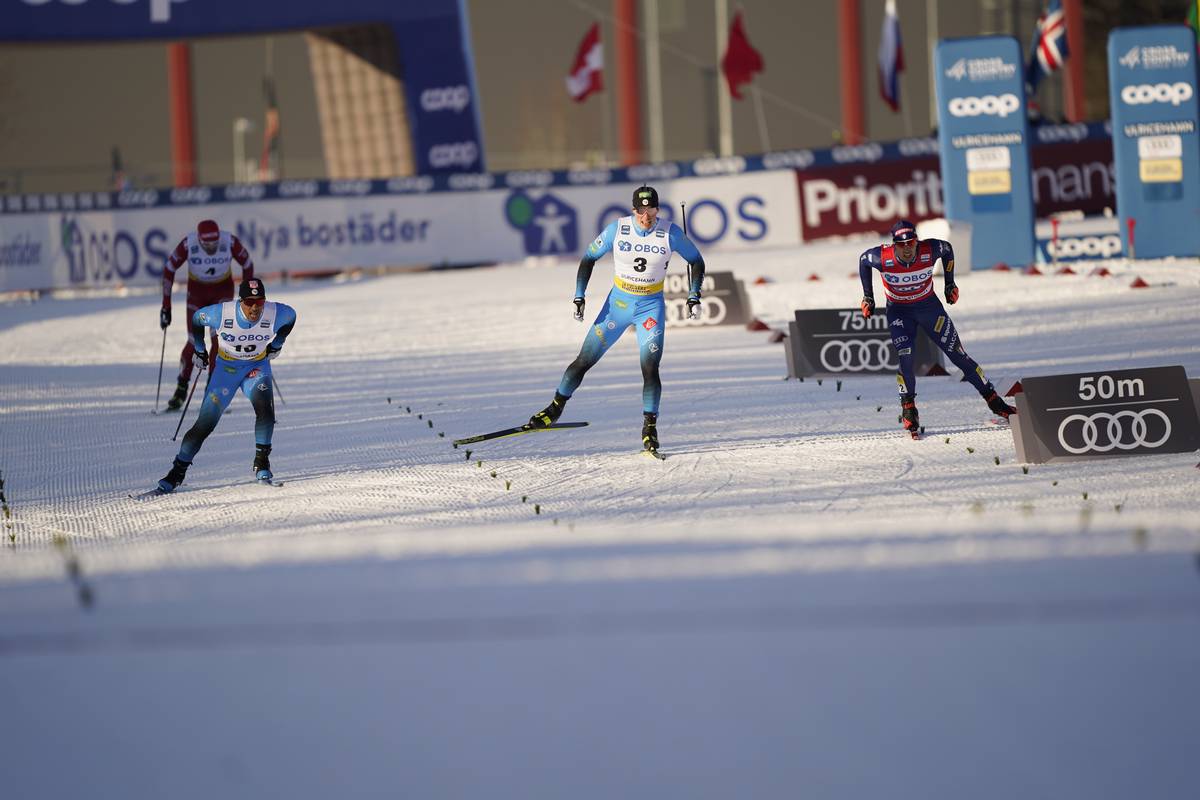
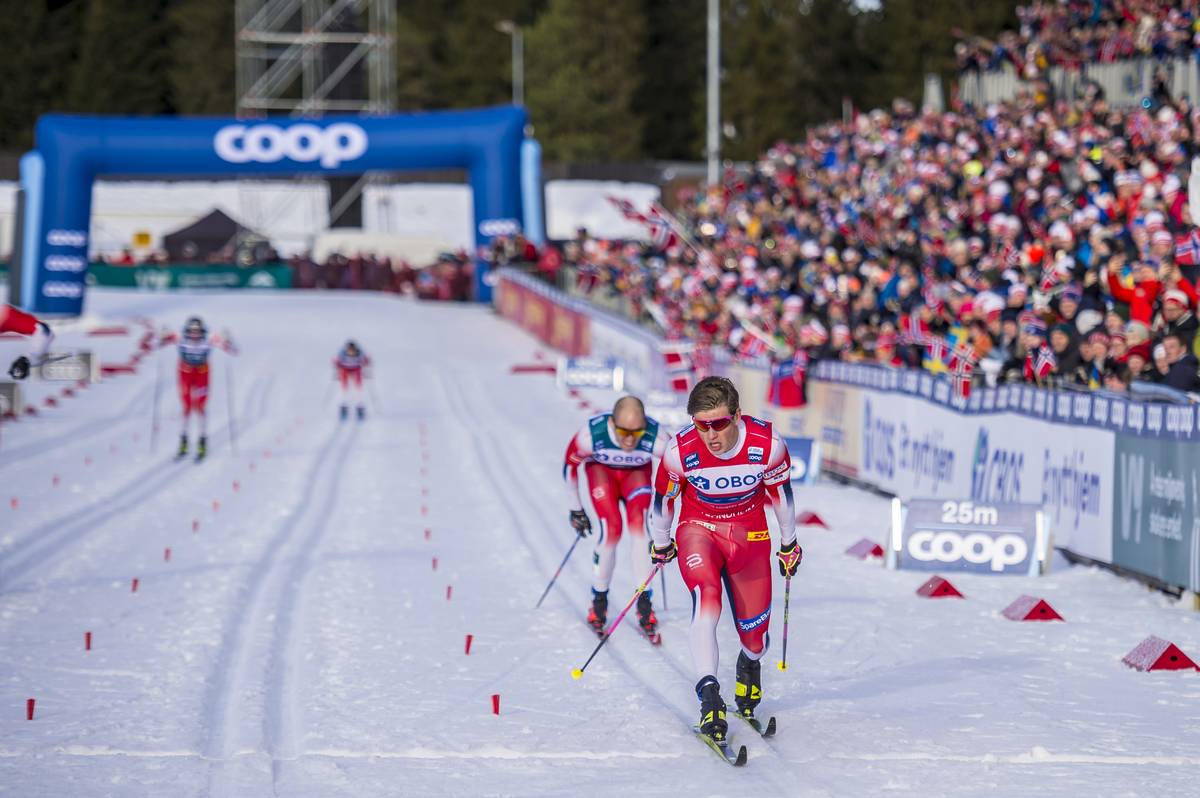
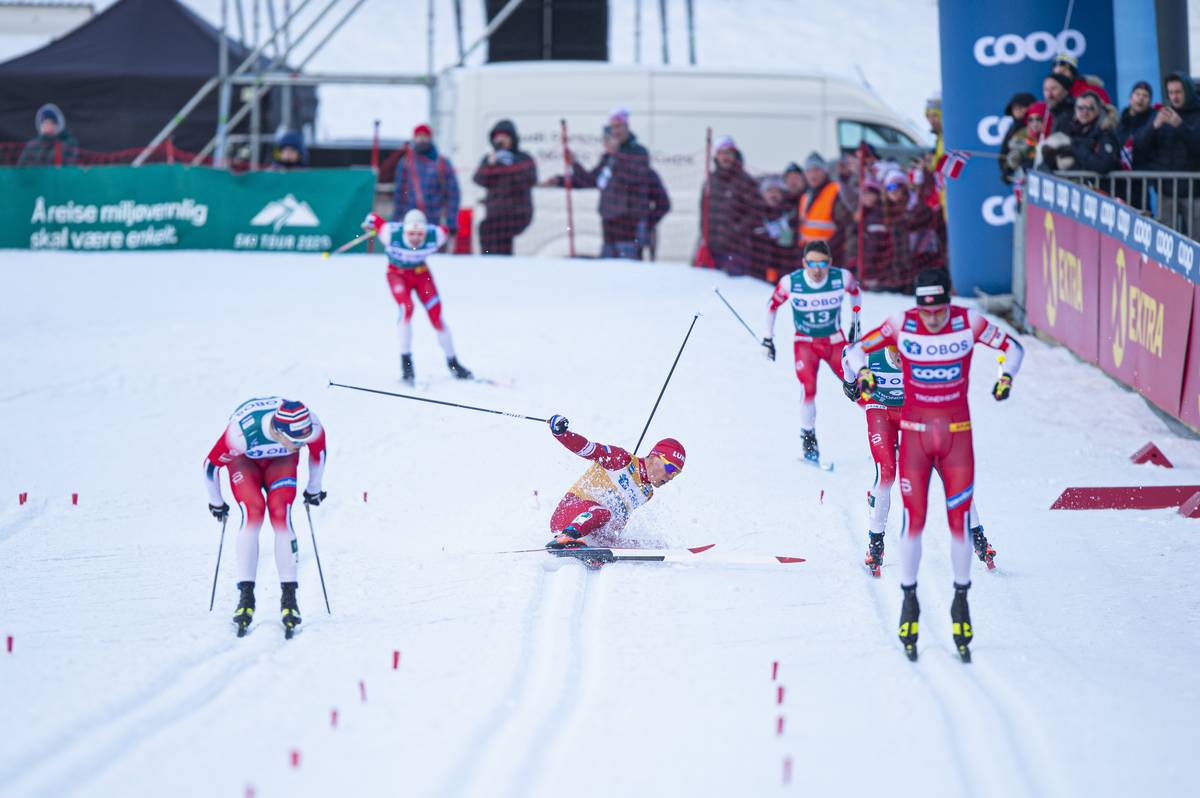
    Sweden’s Calle Halfvarsson sets the mark at the finish of the 15 k skate in Falun, while Scott Patterson races the final meters in the background. (Photo: NordicFocus)
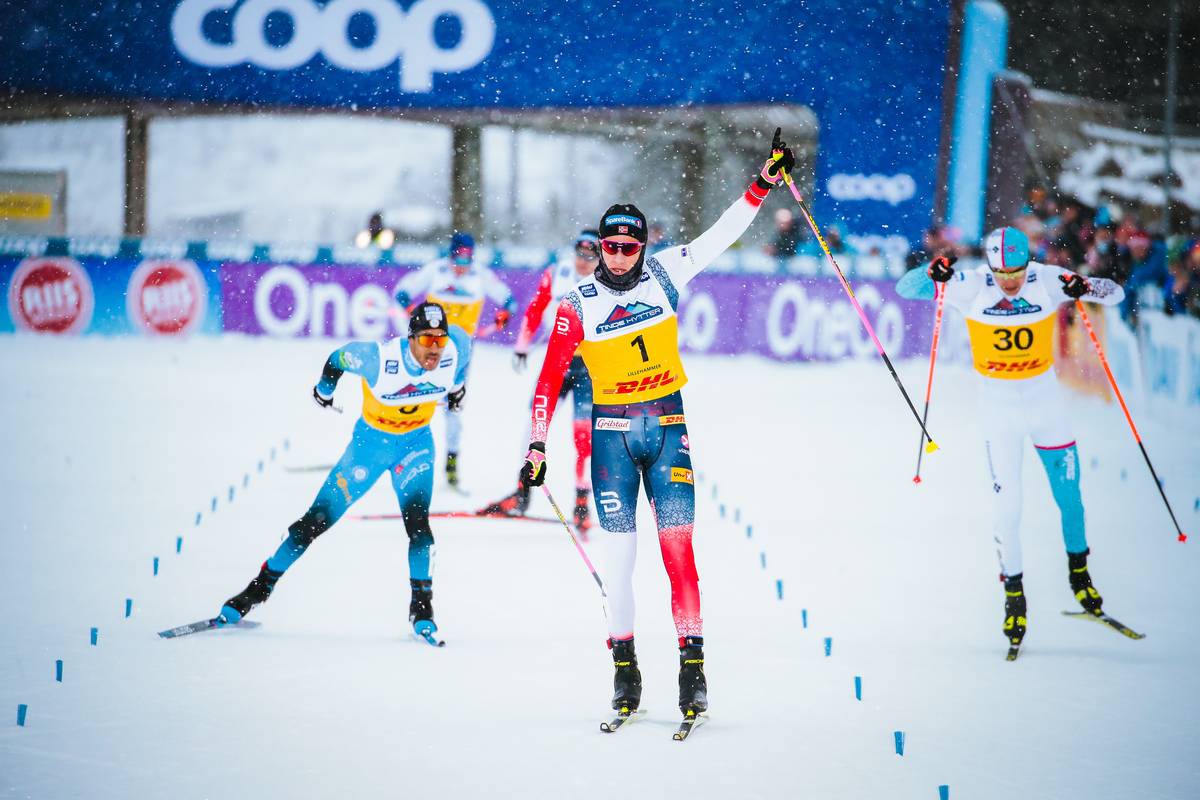
    Norway’s Didrik Tønseth wins the 15 k individual start skate in Falun. (Photo: NordicFocus)

    Today marked Tønseth’s second consecutive podium, after taking 3rd at Holmenkollen last weekend, and his career first World Cup victory in freestyle. It had been a nearly three year stretch since his previous World Cup podium, which took place in Québec City in March, 2019.

    “I’m happy to end it like this,” Tønseth told FIS after the race. “This year has been pretty good, to finish it off with victories – I’m really happy with that. Considering the last two seasons before this one have been tough, and it was not working, but this one has been better and better, and I ended  up at the top, so I’m really happy.”

    Norway’s Didrik Tønseth wins the 15 k individual start skate in Falun. (Photo: NordicFocus)

    On his season highlights, Tønseth continued, “For me, the most important is that my body works and I can train it. I can train hard, and things respond, and I’m happy to go ski fast.”

    Asked his feelings on sharing the podium with teammate Amundsen, Tønseth said, “He is a rookie, but he showed last year, he is a good cross country skier. I’m happy for him to be on the podium and I’m happy to beat him as well.”
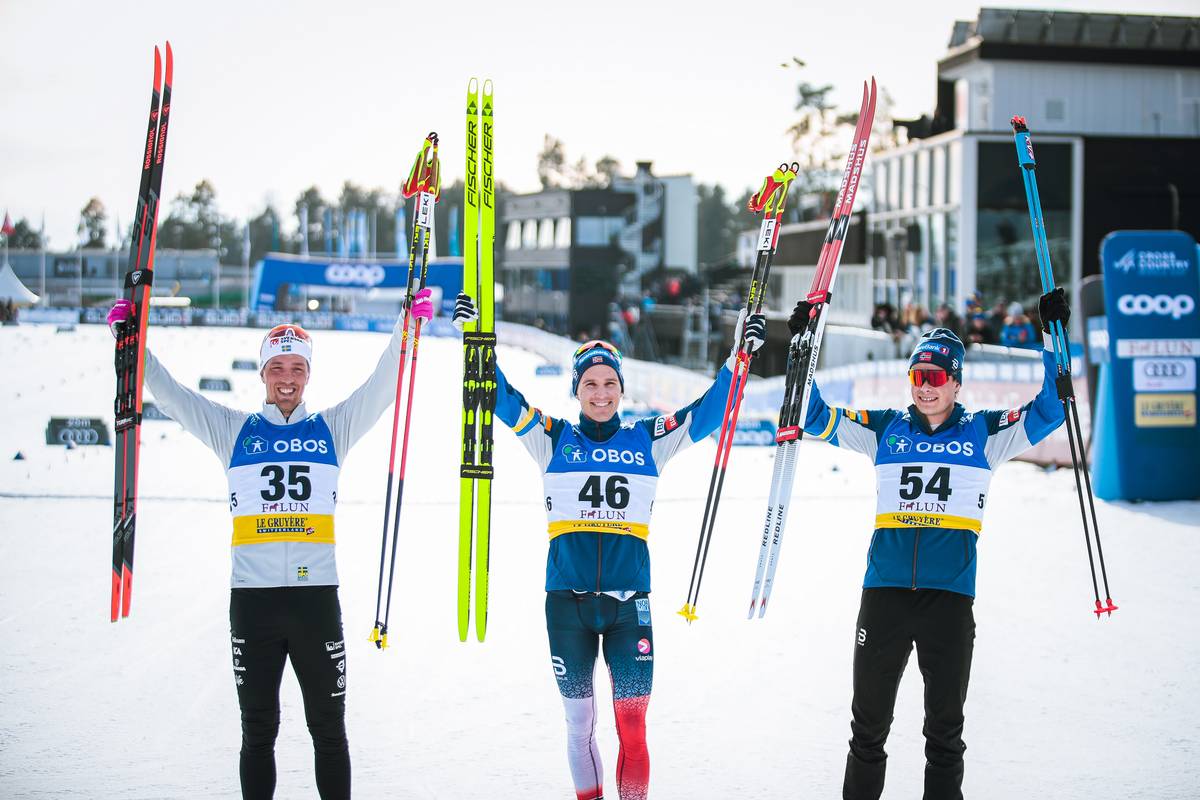
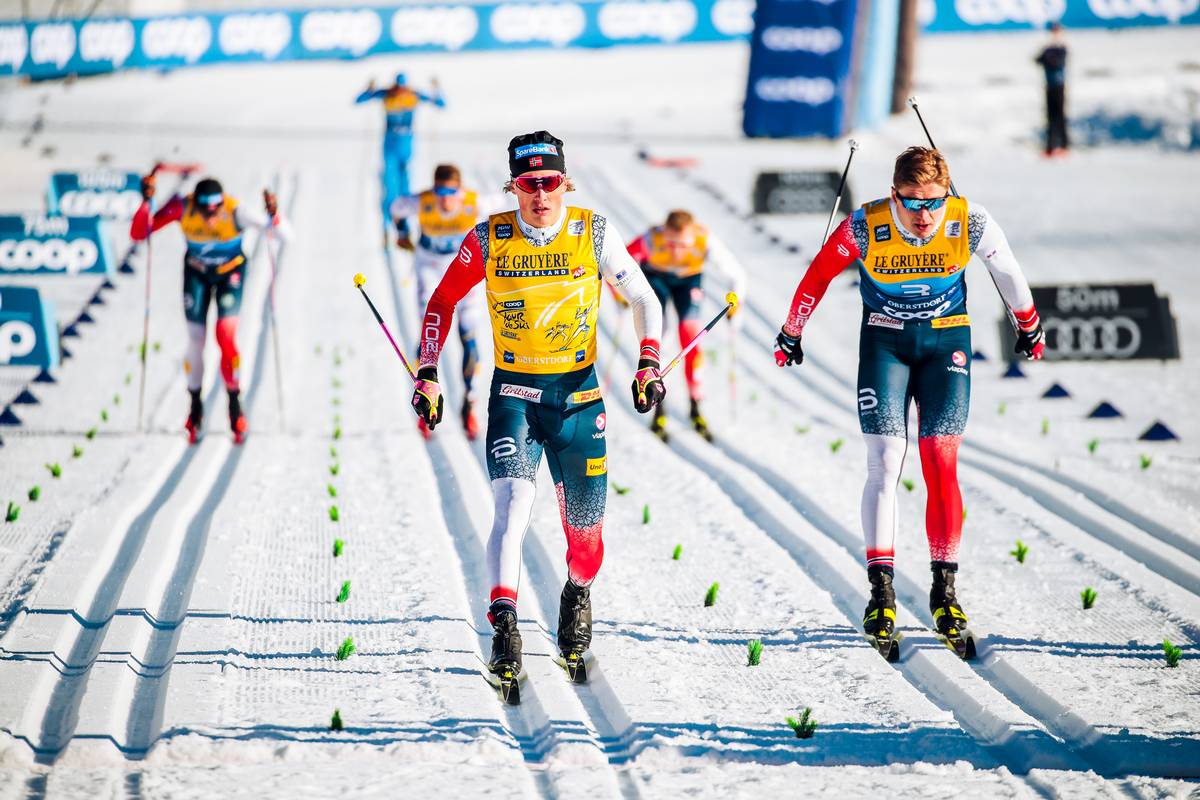
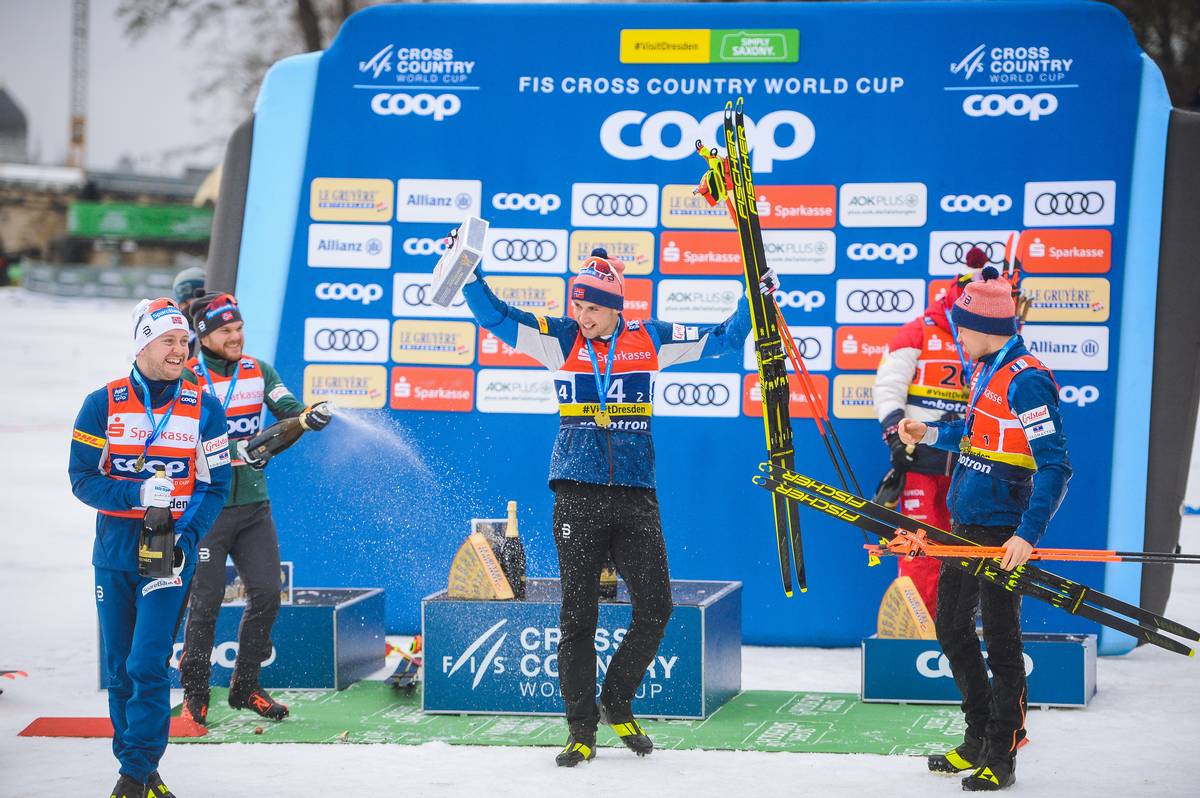
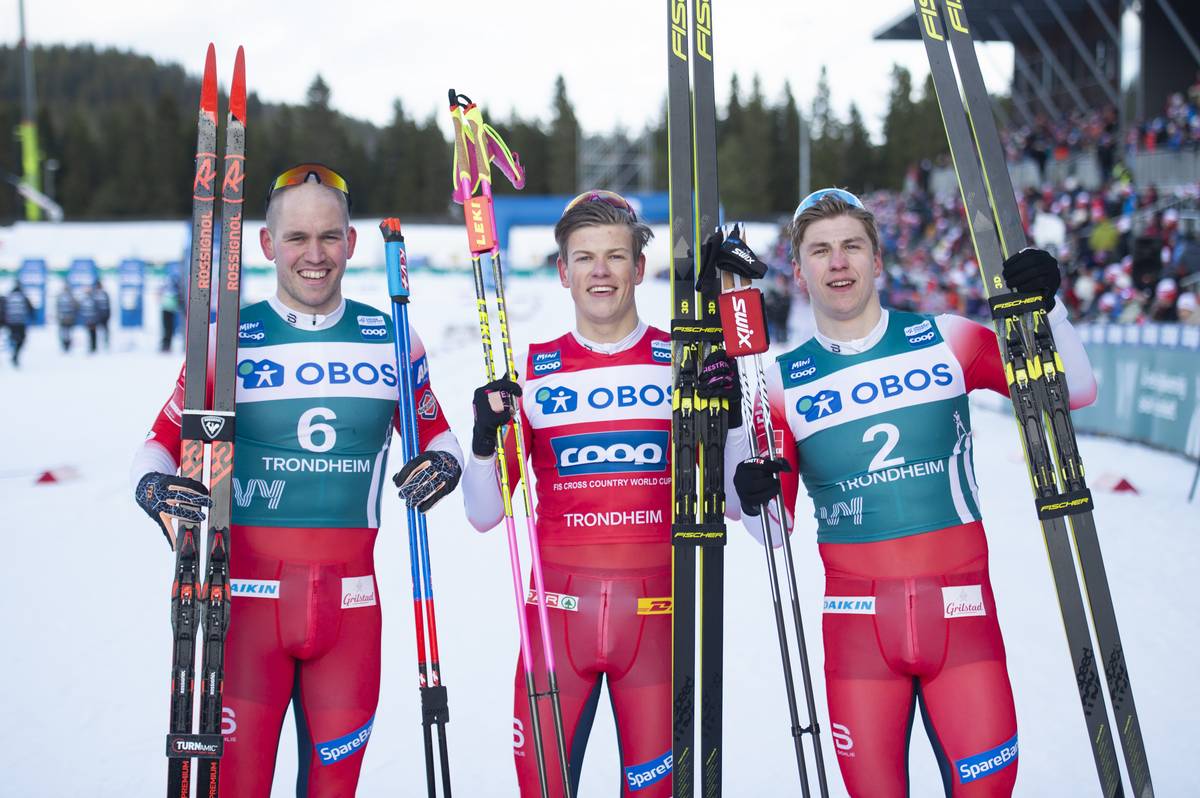
    Falun’s 15 k skate podium: Didrik Tønseth (NOR) took the win ahead of Calle Halfvarsson (SWE) and Harald Østberg Amundsen (NOR). (Photo: NordicFocus)

    Expanding on the conservative start – though the eventual podium athletes would simply reshuffle themselves throughout the race, the remainder of the top-10 saw some changes, like France’s Clement Parisse falling from fourth place at the halfway mark to 8th at the finish, and two Finns, Remi Lindholm and Iivo Niskanen, dropping from fifth and seventh at the first lap to 14th and tenth at the finish. 

    Meanwhile, the seemingly more patient starters, like Martin Løwstrøm Nyenget, who won last weekend’s 50 k classic at Holmenkollen, were climbing the rankings at time checks. Nyenget was in eighth at the half, before ascending to fifth at the finish (+23.6), just behind his teammate Hans Christer Holund, who took fourth (+21.2).

    Both Patterson and Ketterson exemplified this tactic also, knocking off three spots each between the halfway mark and the finish. Propagating a banner day for North America, Canada’s Olivier Léveillé was also steadily climbing the ranks, moving up from 16th at 7.5k to finish 9th (+48.9). Léveillé’s teammate Antoine Cyr had skied up from 37th at the half to finish 25th (+1:42.3), while fellow Canadian Phillippe Boucher took 29th (+1:45.0) as the third member of his team inside the top-30.
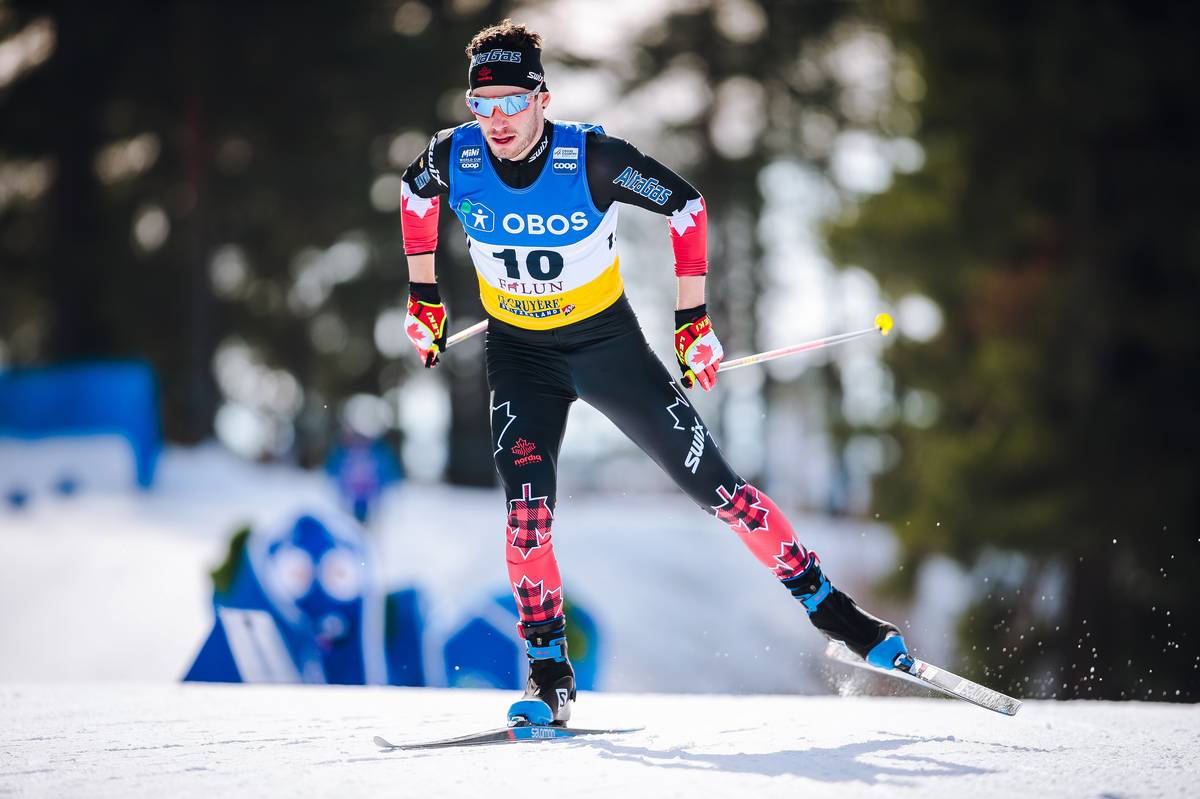
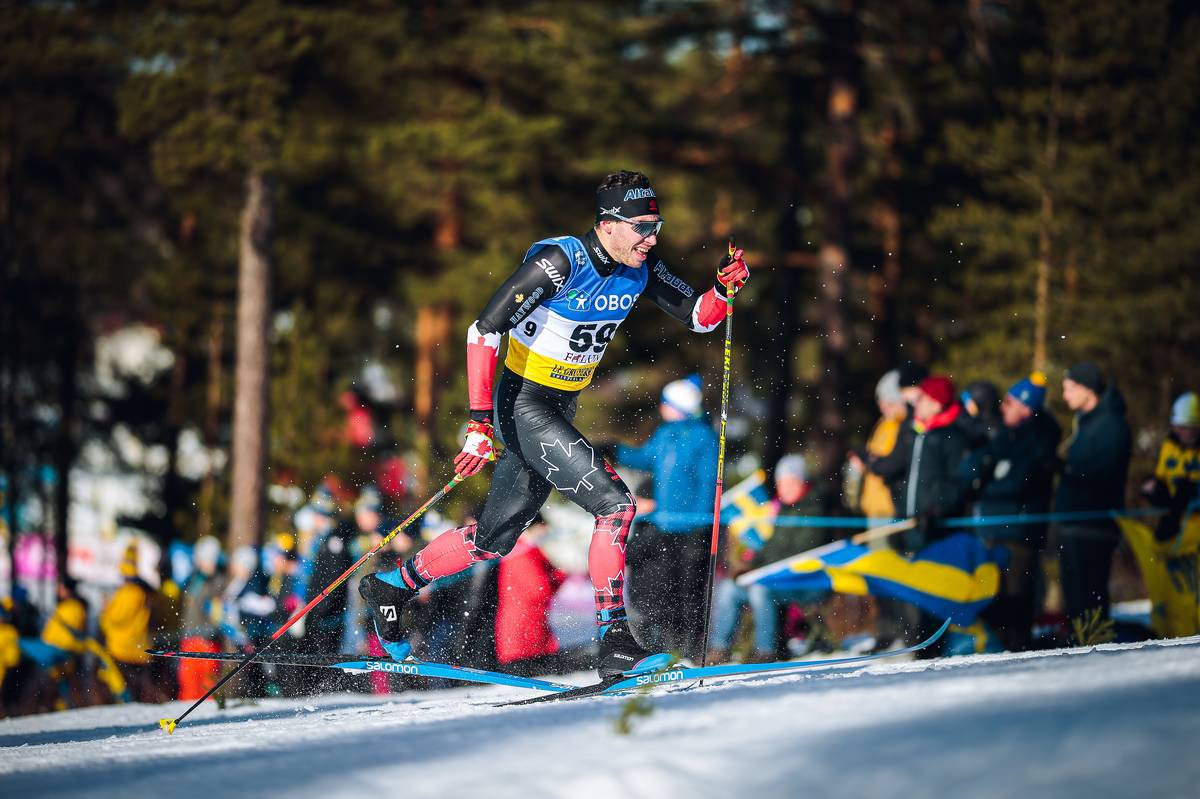
    Canada’s Antoine Cyr skis to 25th in Falun’s 15 k free. (Photo: NordicFocus)

    While Patterson was 15th in Falun last year, and has aforementioned strong results on championship courses like this one, Patterson said in a post-race call that the venue has actually been a challenge for him through his career. Though it’s a championship course, it lacks the high altitude factor of Zhangjiakou, where Patterson thrived, and has just one major climb, the signature “Morderbakken” which rises 65 vertical meters over the course of roughly 0.6 k. Gaining from his experiences racing on this course, Patterson shared what he’s done to solve the puzzle.

    “A lot of my approach today was trying to find some of the same feelings as last year, which was a lot of pushing hard, working through all the transitions. There’s a lot of time out there — beyond Morderbakken, there’s a lot of twisting down hills and gradual flats where it’s easy to lose time. But if you’re on form and thinking about it all the time, it’s a good place to gain time.”
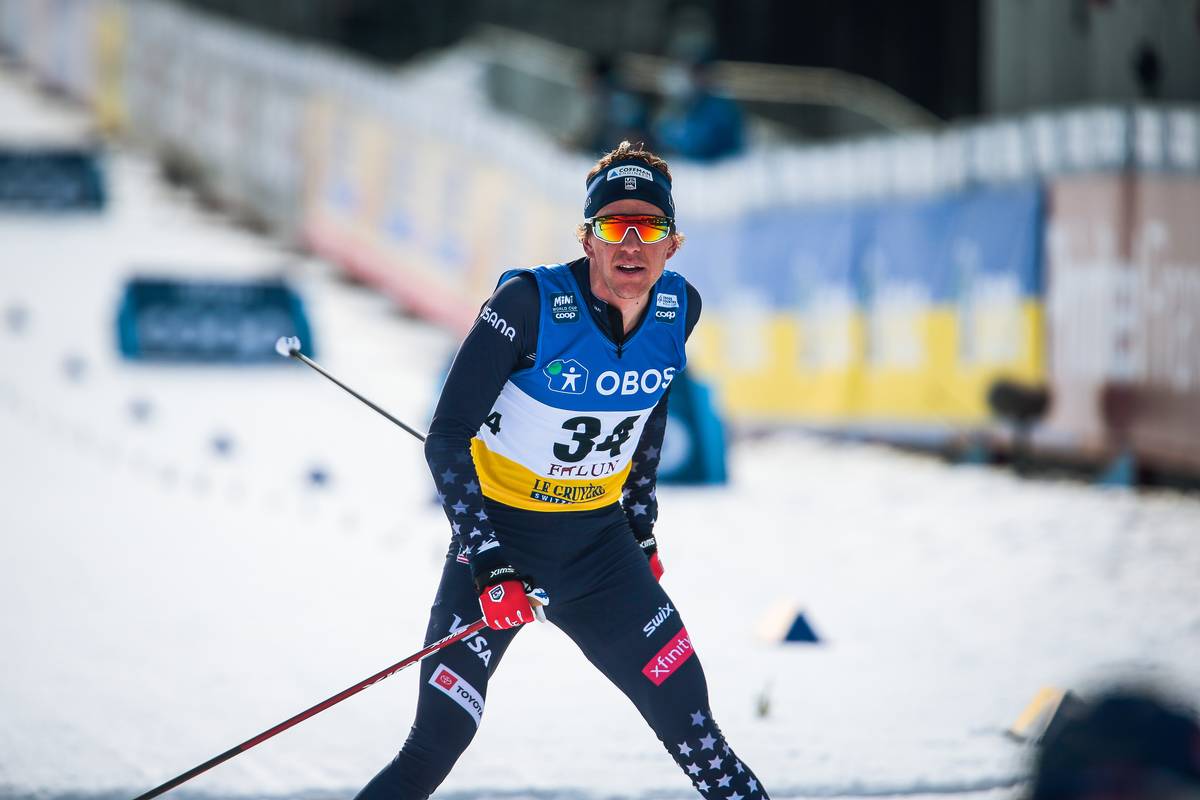
    Scott Patterson takes 7th place in the 15 k individual start skate in Falun. (Photo: NordicFocus)

    Patterson also shared that he was unsure how his form would be today, as he was carrying fatigue from his performance at the Holmenkollen, which he identified as below his expectations. 

    “I started questioning my fitness. So it was nice to turn that around today with a good race and actually remind myself that I can ski well again and also appreciate a good distance skate race.”

    Overall, the season has been one of high highs and low lows for the 30-year-old. A late-fall broken wrist inhibited his ability to capitalize on the fitness he built over the summer, along with his early-season results, which would be critical for making the 2022 Olympic team. Patterson discussed the turning point of his season, which will end on a high note. 

    “[I hit a] big turning point going into nationals, where I had a lot of pressure, but I felt like I was actually starting to find my form and race well. So that was one big point, just coming into nationals and actually pulling out those results to make the Olympic team. But also, just going into the Olympics, I I had a really good training block in Bozeman. I was staying with my parents instead of going over to Livigno, like a lot of the US Olympic team. And I think that was really productive for me getting some altitude training, but also just keeping the stress low, which really helped going into the Olympics.”

    Here’s the full interview with Patterson, including non-race season highlights and how a trivia night in Lahti helped bring the North American contingent closer together, making today’s results even more exciting for Patterson to be part of.
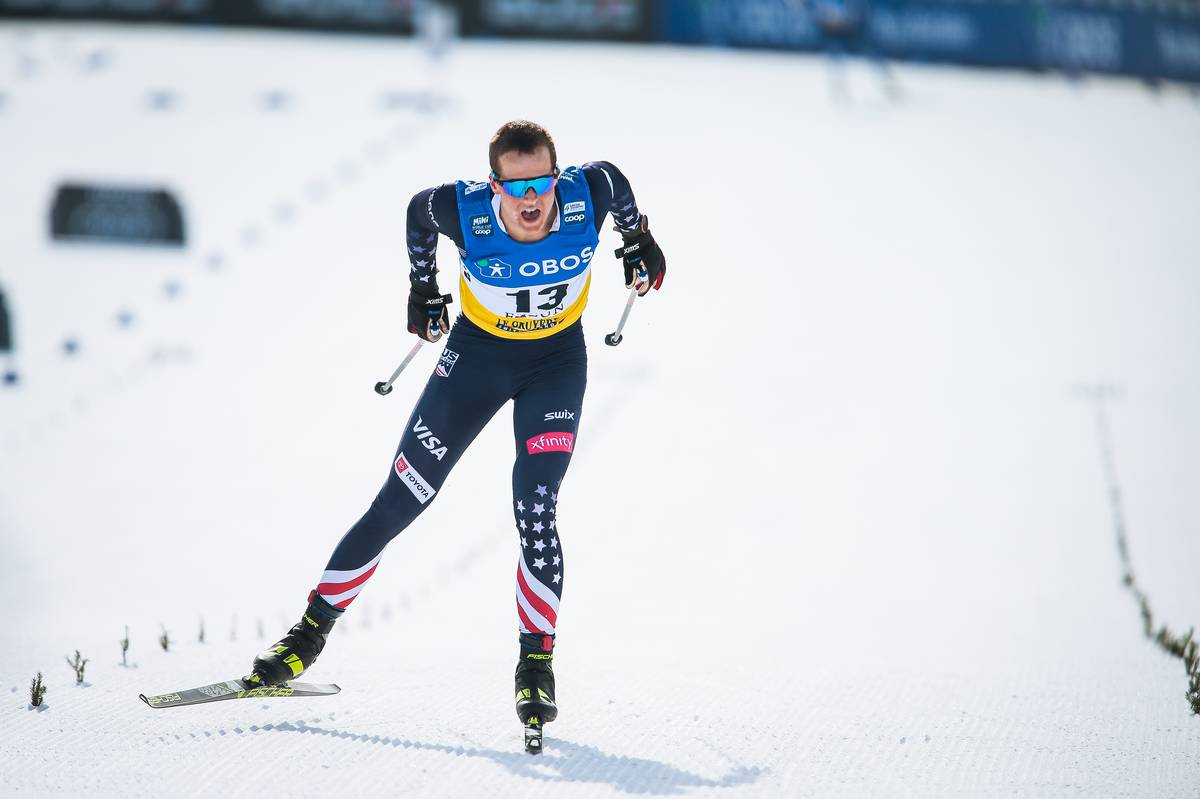
    Adam Martin pushes to the line at the finish of the men’s 15 k individual start skate in Falun. (Photo: NordicFocus)
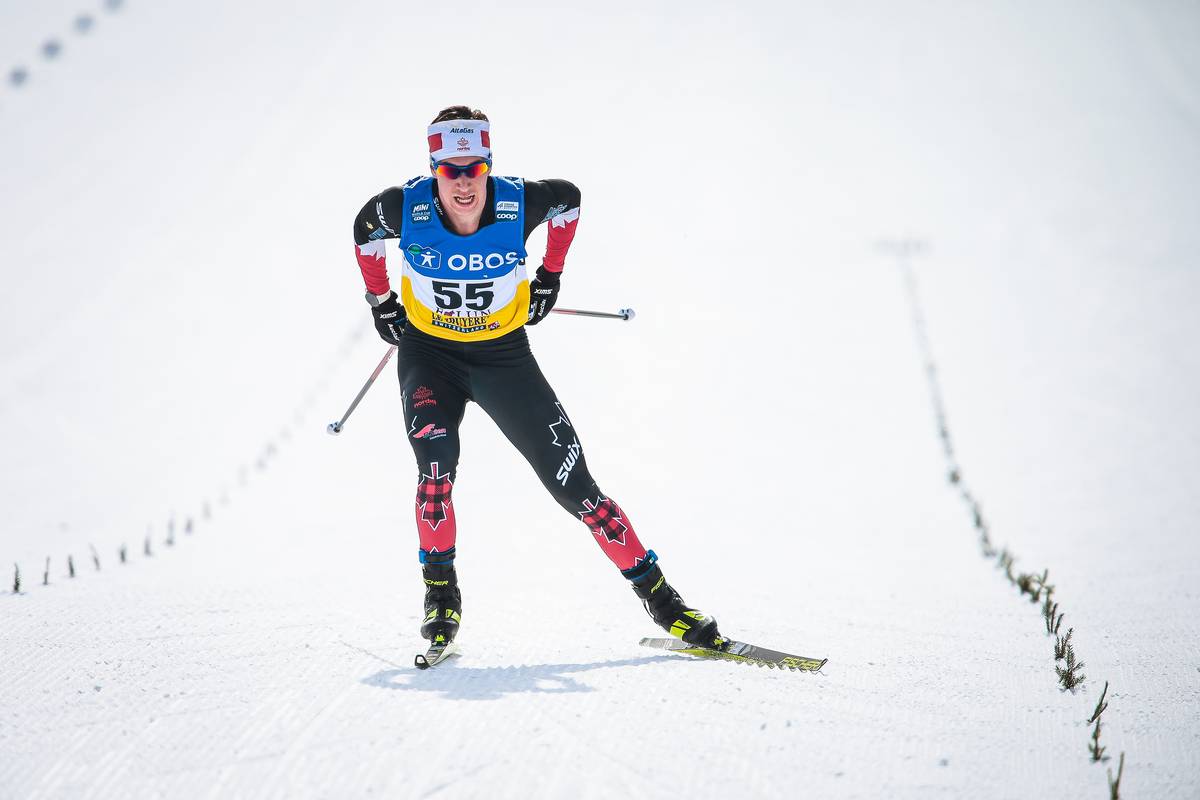
    Canada’s Xavier McKeever down the home stretch in the men’s 15 k free in Falun. (Photo: NordicFocus)

    Outside the Top-30 for the U.S., Crafttsbury’s Adam Martin skied to 44th (+2:20.9), while Logan Hanneman finished 52nd (+2:58.4), and Peter Holmes took 68th (+4:20.0). For Canada, Thomas Stephen was 61st (+3:32.2), while Xavier McKeever was 62nd (+3:36.9). 

    Post-race interview with Matt Whitcomb:

    With World Cup individual racing now complete for the 2021/22 season, awards for both the overall and distance champions were handed out today in Falun. 

    Though he was 10th today, Finland’s Iivo Niskanen ended his season with 493 points, overtaking previous leader Alexander Bolshunov (RUS) to win the distance standings. Bolshunov remained in second, trailing by 75 points. After a remarkable Olympic run, Bolshunov missed the final two distance races on the World Cup following FIS’ ban of Russian and Belarusian athletes on March 1st. Also unable to compete in the final two World Cup distance events after contracting COVID-19, Johannes Høsflot Klæbo finished third, at an 80 point deficit.
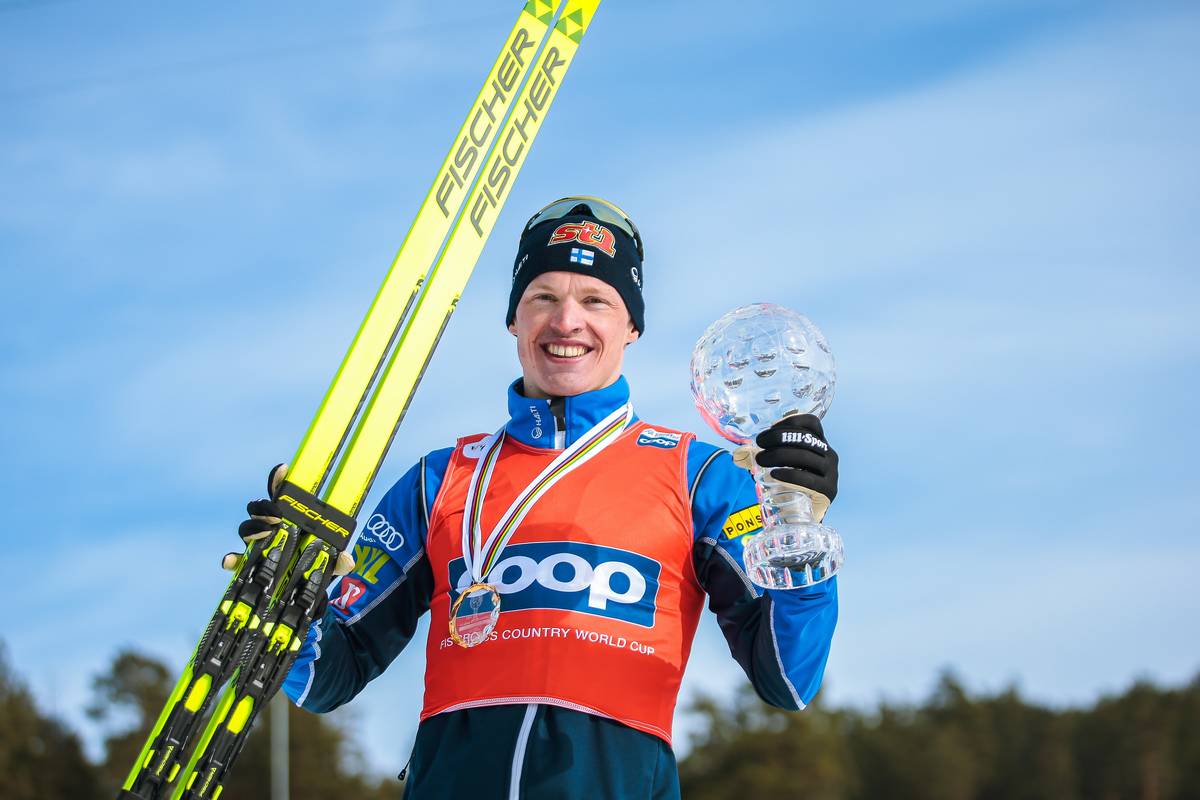
    Finland’s Iivo Niskanen is the 2022 World Cup distance champion. (Photo: NordicFocus)

    With Niskanen still the only podium member present to accept his awards, this leaderboard was reshuffled for the overall standings. Having won the 2021/22 Tour de Ski and consistently proved his range beyond the sprint course, Klæbo ran away with the overall World Cup victory to finish with 1375 points. He’s had some cake, but receiving the crystal globe will have to wait for the time being. 

    Bolshunov held his ground in second place, 497 points back, while Niskanen took third in the overall standings, 631 points behind Klæbo. 
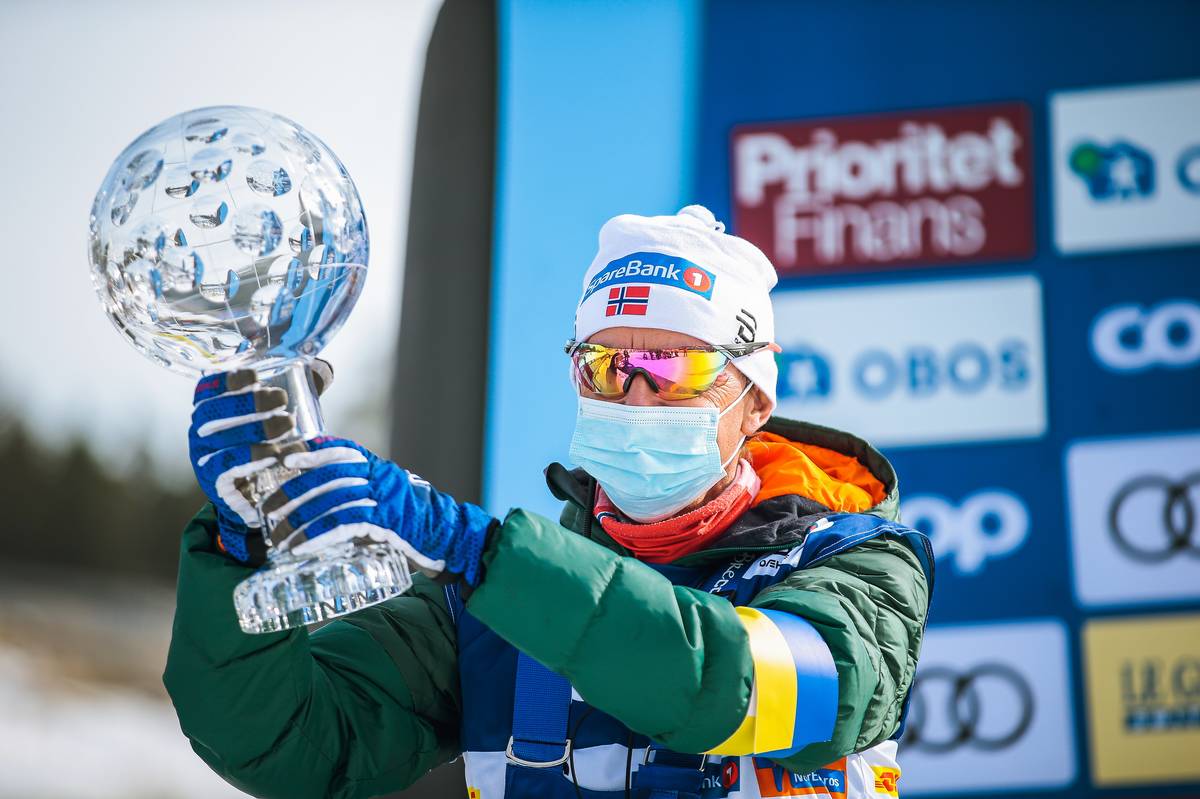
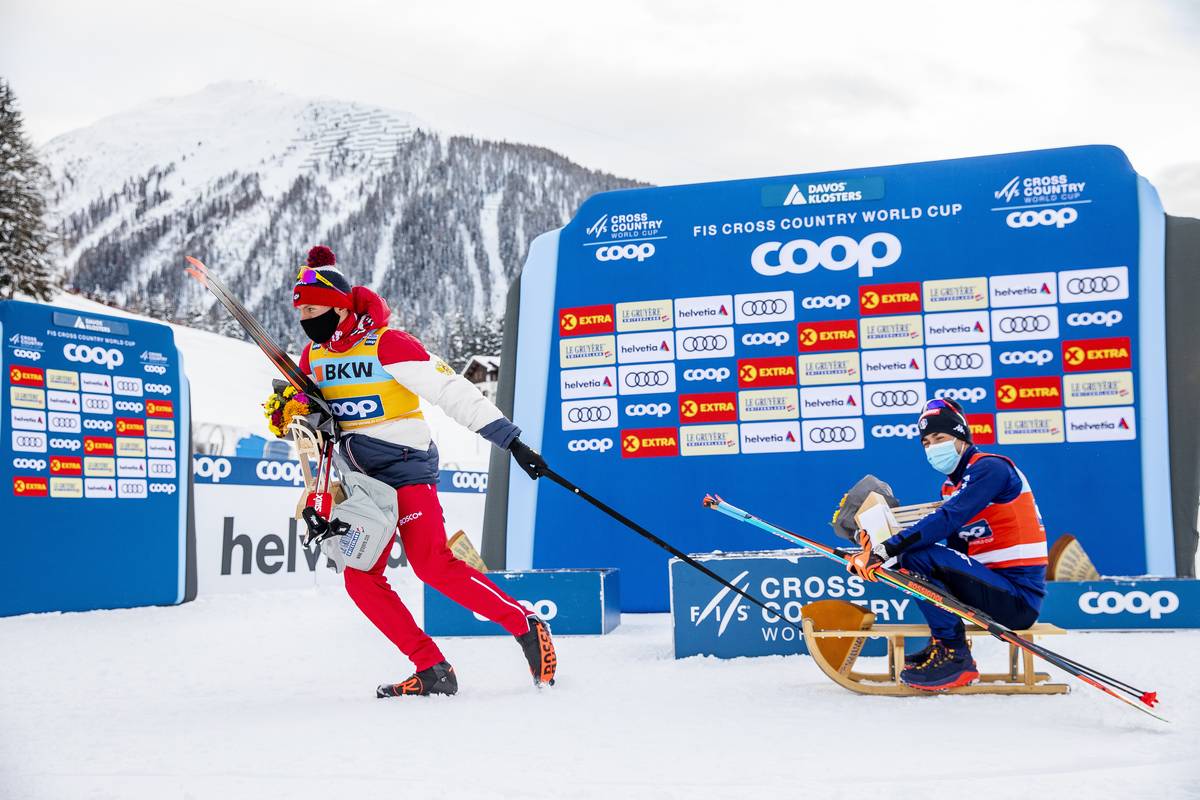
    A Norwegian coach accepts the overall World Cup crystal globe on behalf of winner Johannes Høsflot Klæbo. (Photo: NordicFocus)

    You can expect more analysis on the seasons of these World Cup champions, but first, we’ve got one final day of World Cup racing on deck. The final day of racing in Falun will feature a mixed-gender 4 x 5 k relay in the morning, followed by a mixed team sprint in the afternoon. 

    Results

    World Cup: Overall | Distance


  • Jouve takes back-to-back classic sprint wins, earning France the 2022 World Cup sprint globe; Ritchie leads for North America with Top-20

    Jouve takes back-to-back classic sprint wins, earning France the 2022 World Cup sprint globe; Ritchie leads for North America with Top-20

    This World Cup coverage is made possible through the generous support of Marty and Kathy Hall and the A Hall Mark of Excellence Award.  To learn more about A Hall Mark of Excellence Award or to learn how you can support FasterSkier’s coverage please contact info@fasterskier.com.

    It’s the last hurrah, folks! The World Cup Finals kicked off in Falun, Sweden today with a classic sprint. While the season has been a wild ride for many reasons – spills and thrills in the Tour de Ski, COVID-cancellations, Olympic Games, geopolitical nightmares – Falun evidenced that spring is on it’s way and it’s time for the World Cup crews to head home take a break, and begin anew.

    Contrasting the dim light and long shadows of far-north Ruka, Finland at the opposite bookend of the season, the sprints in Falun were raced under bright sun, with temperatures well-above freezing, bare ground and green grass emerging from beside ski tracks.  

    Zak Ketterson leads the U.S. in 39th during the classic sprint qualification round in Falun, SWE. (Photo: NordicFocus)

    The American men, particularly in sprint, headed into the Falun weekend at a significant disadvantage. Kevin Bolger announced on Instagram Thursday that he had tested positive for COVID, while Ben Ogden, JC Schoonmaker, and Luke Jager – the remainder of the four sprint men who competed during the 2022 Olympics in Zhangjiakou – are currently competing at the NCAA championships in Soldier Hollow, UT. The sprint field as a whole has been weakened; Russian athletes were banned from competition on March 1st, while Norway’s top-six sprinters, including sprint and overall World Cup leader Johannes Høsflot Klæbo, each tested positive for COVID following the World Cup race weekend in Lahti, Finland. With no Russian’s and the top-Norwegians out, the men’s field had been cracked wide open.  

    Finland’s Joni Mæki posts the fastest time in the classic sprint qualifier in Falun, SWE. (Photo: NordicFocus)

    Finland’s Joni Mæki took the top spot in qualification, setting the mark at 2:51.58. Sivert Wiig of Norway took second in the qualifier (+0.69), with Sweden’s Calle Halfvarsson in third (+1.41). Three nations represented in the top-three.

    Though new-to-FasterSkier names made the top-30, the early heats featured little surprise. Building momentum from a podium day in Drammen last week, France sent three of its top men to the semifinals: Lucas Chanavat and Richard Jouve, who had been third and first, respectively in Drammen, plus Jules Chappaz. Long-time sprint force Federico Pellegrino of Italy also moved through with an automatic spot, joining the day’s top-three qualifiers in the next round.

    What did shake up the quarters was some trouble for the two Chinese athletes in the field. Shang Jincai, who had qualified in 25th, had a false start in heat three. Jincai looked as though he had been trying to keep himself so primed for forward momentum at the start beep, that he lost his balance, kicking a foot forward to catch himself well-before the beep and thus triggering the start. After a discussion with a jury member, while Pellegrino shook his head and raised his hands nearby, looking impatient, Jincai received a yellow card and was disqualified. 

    After stumbling on a climb and losing ground, Wang Qiang (CNH) races to 18th in the classic sprint quarterfinal in Falun, SWE. (Photo: NordicFocus)

    In the next heat, Wang Qiang, who qualified in 9th and took second in Drammen, fell when hopping out of the track to run uphill, roughly two minutes into the heat. Qiang had been in the lead, though the pack remained tight. After a few missteps, he was back to his feet, chasing as real estate ran out, while Lars Agnar Hjelmeset (NOR) and Calle Halfvarsson (SWE) took the reins at the front to go 1-2 in the heat. Qiang raced his way back to fourth, just over a second back, but it was not enough for a lucky loser spot.  

    Richard Jouve (FRA) takes control through the rounds in Falun. (Photo: NordicFocus)

    In the semis, France’s Jouve took control of the fast first heat, beginning a surge just under-two minutes in as the men ran up the steep climb and banked left to head back toward the stadium. Around the last corner, Jouve still held the lead with Mæki (FIN) just off his shoulder. Jouve pulled ahead in the double pole sprint through the lanes, while Mæki, Wiig (NOR), and Chanavat (FRA) raced each other and the clock down the final meters. At the line, it was Norway-France-Finland, spread by 0.38 seconds, fifth and sixth less than a second behind also. Each of the top-four finishers advanced into the final round.

    The second heat was significantly less smooth, though times did not reflect the chaos and were only marginally slower than the first. As the course broke down, it looked to be continually harder to keep klister free and stay upright. Heading into the final downhill in strong position to take the heat, France’s Jules Chappaz looked as if his klister snagged some loose granules of snow; as he pushed off the outside ski to stay in the curve, the ski looked unable to slide and he crashed into the abrasive corn. 

    The remaining athletes in the head narrowly dodged Chappaz, allowing Hjelmeset and Pellegrino to take the lead and eventually win the heat. Sweden’s Halfvarsson also went down earlier in the heat, looking to have similarly iced up while running up the first climb, leaving him off the back after the subsequent downhill.

    After leading into the final downhill, a dejected Jules Chappaz (FRA) recovers from a crash to finish his semifinal. (Photo: NordicFocus)

    Once again, Jouve took control of the final early, with Pellegrino marking. Mæki stayed wide on the first climb looking for better snow, but came over the top and into the curve behind the top three. Jouve, still calling the shots, led into the downhill, but he could not create any significant gaps there; Wiig, Pellegrino, Chanavat and Mæki quickly accordioned onto the backs of his ski tails.

    Looking confident and composed despite being unable to break away, Jouve remained at the front heading into the final curve. Once in the lanes, Jouve began to pull ahead a final time, creating a gap of several meters to Mæki and Chanavat, who were evenly matched in the double pole sprint. 

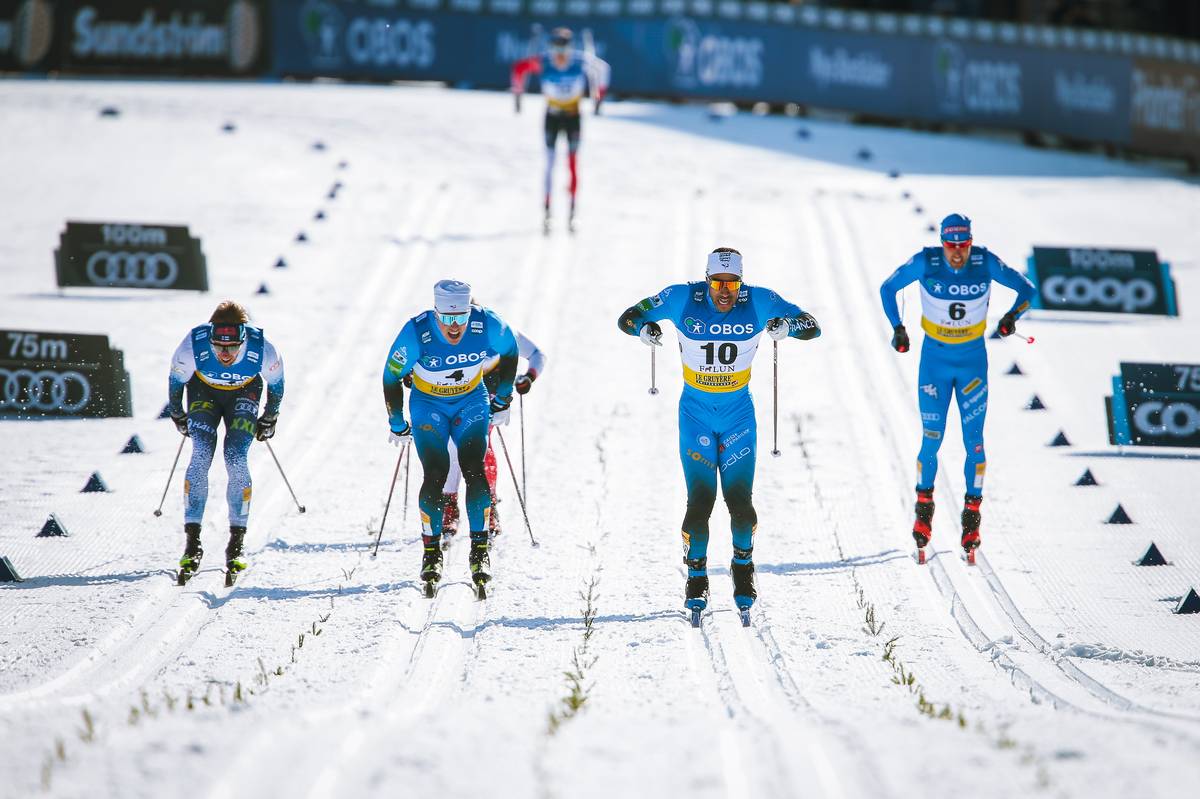
    Richard Jouve (bib 10) leads the men’s classic sprint final to the finish in Falun, while four athletes vie for the remaining two podium positions. (Photo: NordicFocus)

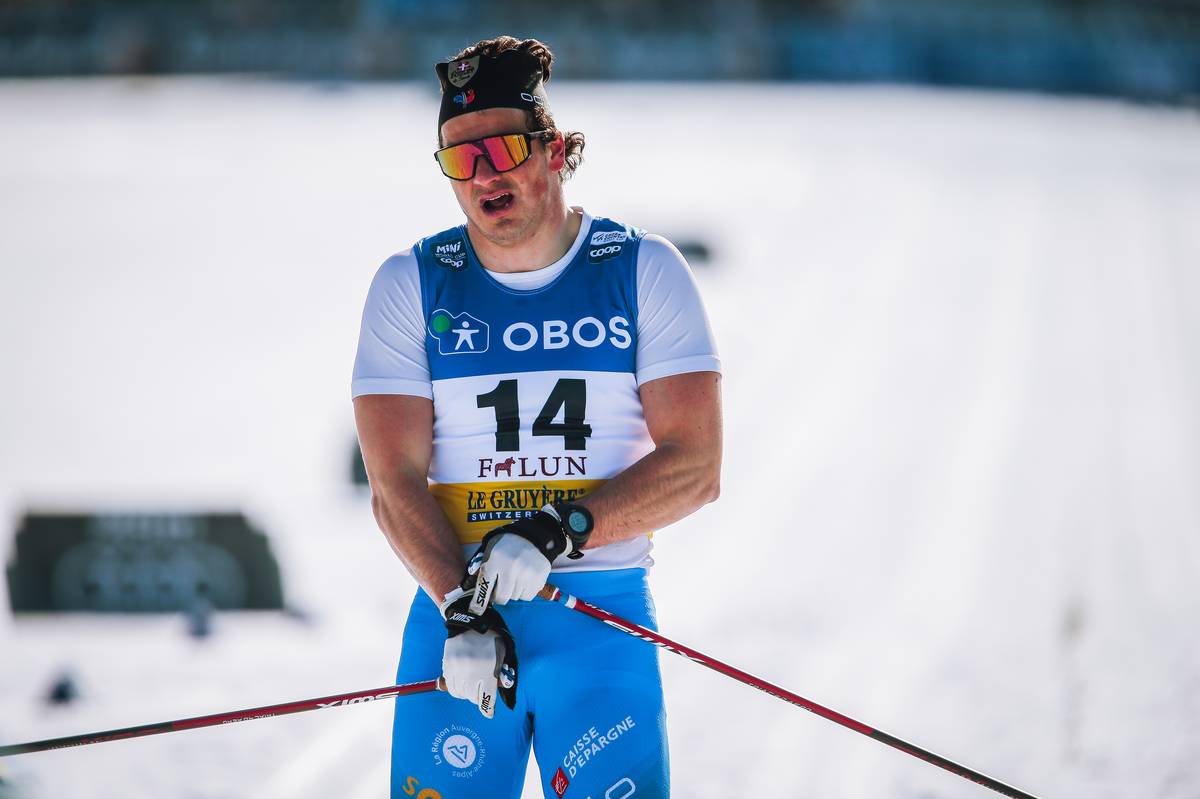
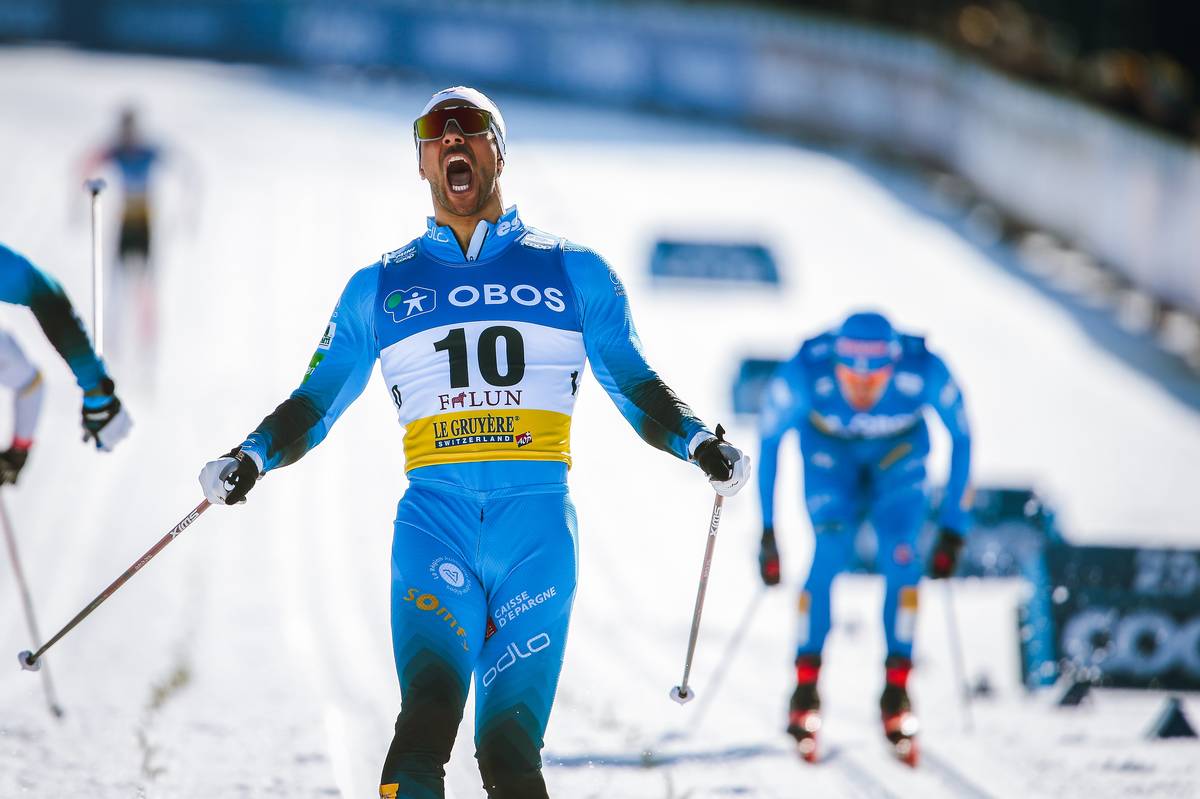
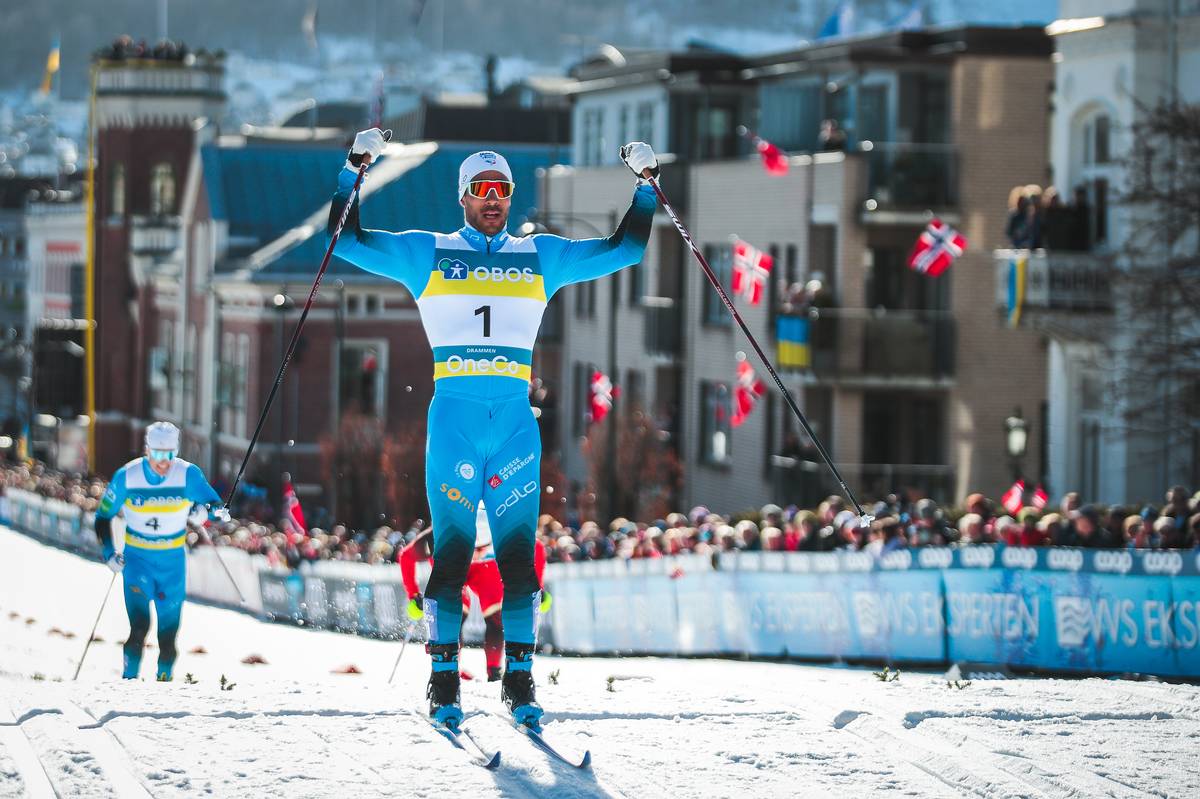
    Emptying his lungs with a triumphant cry, Jouve coasted over the line for the win in 3:03.62, while Mæki and Chanavat threw their boots forward in a photo finish for the second and third podium spots roughly half a second behind. From the slow-mo, it was Mæki with the better lunge, nipping Chanavat by 0.03.

    Just behind Wiig crossed fourth (+1.41), with Pellegrino fifth (+2.06), followed by a gap to Hjelmeset in sixth (+13.18).

    Richard Jouve (FRA) lets out a victory cry as he takes the classic sprint win in Falun. (Photo: NordicFocus)
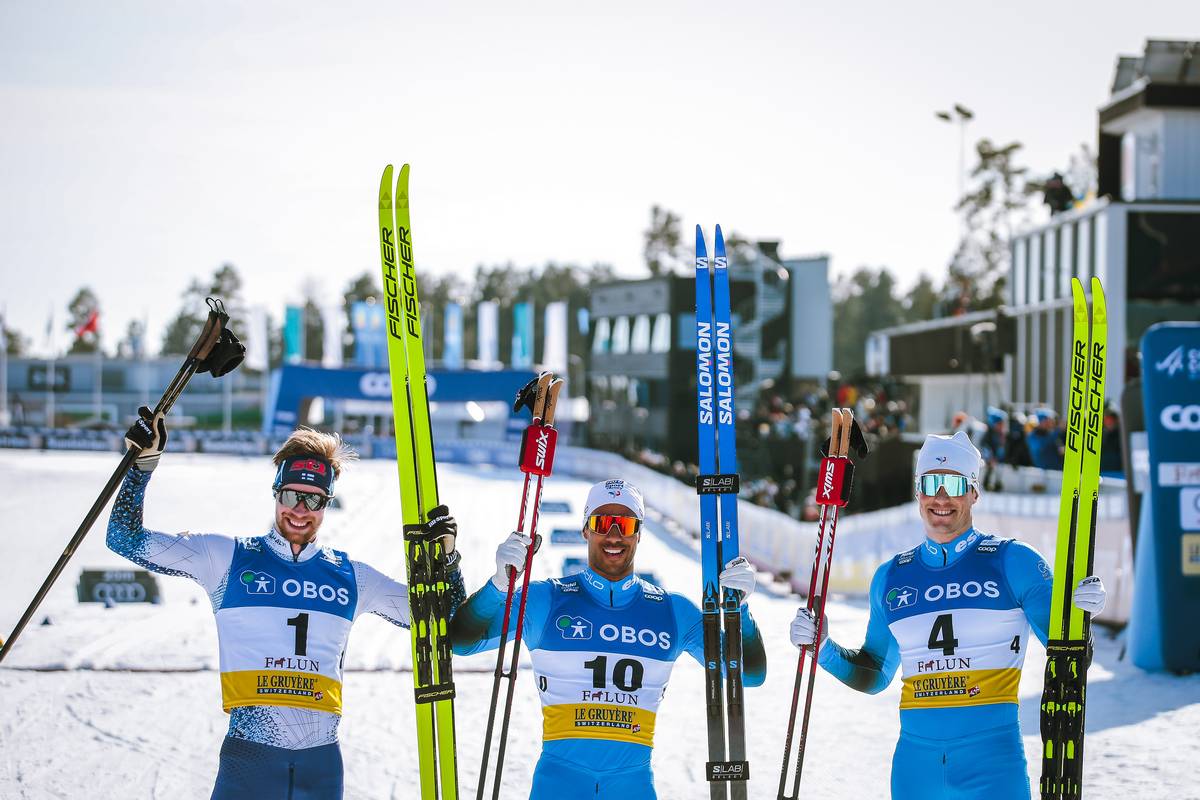
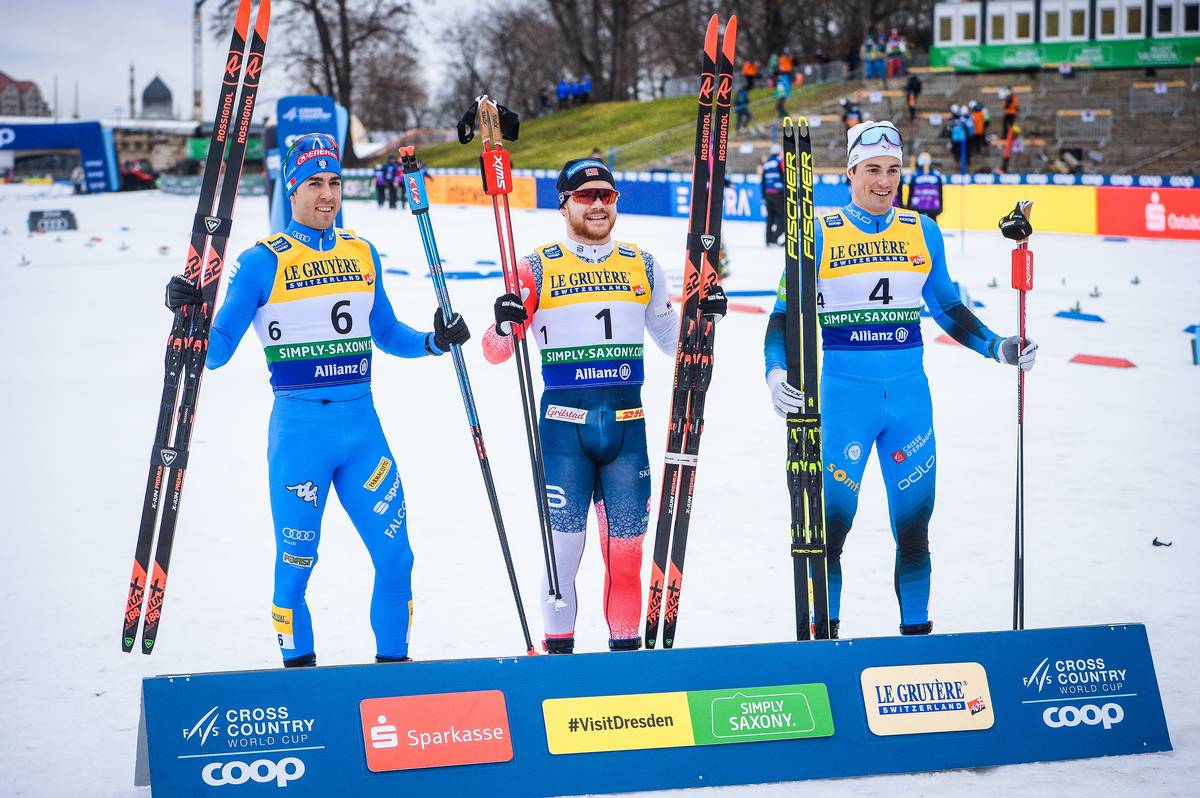
    The men’s classic sprint podium in Falun, Sweden: Richard Jouve (FRA) took the win ahead of Joni Mæki (FIN) and Lucas Chanavat (FRA). (Photo: NordicFocus)

    “I’m very proud,” Jouve told FIS after the race. “Off myself, my team. It’s amazing.” 

    With the win today, Jouve also took the lead in the sprint World Cup standings, advancing by just six points ahead of Johannes Høsflot Klæbo (NOR). The season saw Jouve land on four World Cup podiums, finish seventh in the freestyle sprint during the Olympics, and then earn his career first World Cup win in Drammen’s classic sprint last Thursday.

    “It’s amazing,” said an emotional Jouve, seemingly in happy disbelief. “The season was very great for me, to win at the end of the season is already a dream, but to grab [the globe], it’s big. Fantastic.”

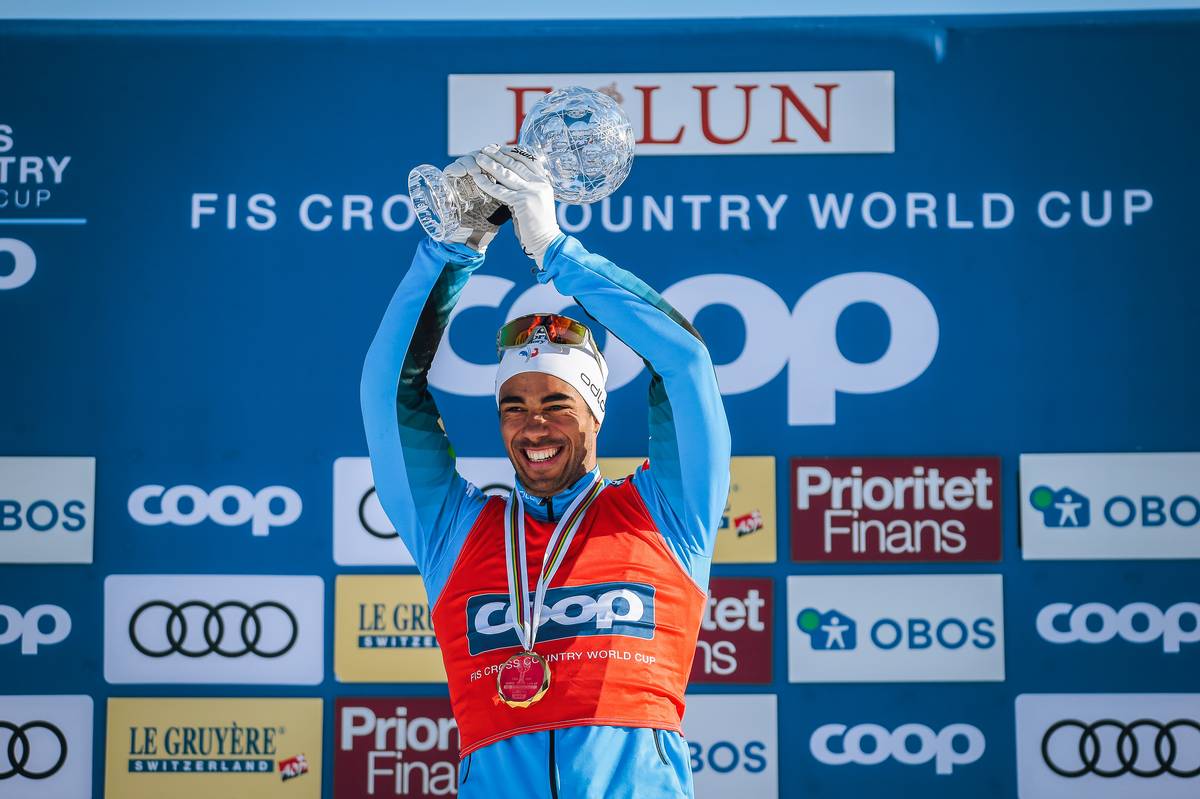
    With a win in the final sprint stage, Richard Jouve becomes the 2022 World Cup sprint champion, hoisting his crystal globe. (Photo: NordicFocus)
    French teammates Richard Jouve (left) and Lucas Chanavat (right) end their season in first and third, respectively, in the World Cup sprint standings. (Photo: NordicFocus)

    A quick review of the final standings: With 568 points, Jouve is the 2022 sprint World Cup champion, with Klæbo second (-6) and Chanavat third (-107). Italy’s Pellegrino was fourth (-238), with Norway’s Håvard Solås Taugbøl fifth (-244). 

    The US had three starters for today’s final sprint stage. Zak Ketterson led the way for the American team in 39th (+9.92), followed by Logan Hanneman in 47th (+10.79), and Peter Holmes 54th (+13.38). 

    Listen to post-race interview with U.S. Ski Team Head Coach Matt Whitcomb here.

    Logan Hanneman skis to 46th in qualification in Falun. (Photo: NordicFocus)
    Graham Ritchie leads the way for North America, finishing 20th in Falun’s individual classic sprint. (Photo: NordicFocus)

    Racing for Canada, Graham Ritchie was the sole North American to break into the heats after qualifying in 28th (+8.11). Racing in the third quarterfinal heat, Ritchie crossed fourth, roughly three seconds behind Chanavat and Pellegrino, the heat winners. The effort landed him in 20th overall once final rounds were decided. 

    Missing the top-30 by just 0.27 seconds, Antoine Cyr was next for Canada in 31st (+8.76), with Xavier McKeever next in 44th (+10.54), followed by Rémi Drolet in 57th (+14.59). 

    Antoine Cyr just misses the mark in qualification, finishing 31st. (Photo: NordicFocus)

    Racing in Falun continues tomorrow with a 15 k individual start skate.

    Results:

    Qualification | Final | World Cup Sprint Standings


  • The Devon Kershaw Show: Distract yourself with Drammen

    The Devon Kershaw Show: Distract yourself with Drammen

    There’s a war going on in Ukraine, and we touch on its impacts on the World Cup. But ski racing is also continuing, so we’re forging on, with respect for and acknowledgment of the tragedy that’s unfolding in Europe. For a few hours at least, on Thursday, the classic Drammen city sprint provided one heck of a distraction, and Devon and Nat are back to break down some performances for the ages by Norway’s Maiken Caspersen Falla, the French men and China’s Wang Qiang.

    You can email us at devon@fasterskier.com and nat@fasterskier.com. We’re still hoping to catch up with an Olympic mailbag episode soon once things settle down.

    Rosie Brennan leads her quarterfinal during Drammen’s classic sprint. (Photo: NordicFocus)
  • After a week of upheavals, the World Cup sprint show goes on in Drammen; France’s Jouve wins, while China gets its first podium

    After a week of upheavals, the World Cup sprint show goes on in Drammen; France’s Jouve wins, while China gets its first podium

    This World Cup coverage is made possible through the generous support of Marty and Kathy Hall and the A Hall Mark of Excellence Award.  To learn more about A Hall Mark of Excellence Award or to learn how you can support FasterSkier’s coverage please contact info@fasterskier.com.


    Cross country skiing’s most ancient, classic, weekend of racing in Norway (the Holmenkollen ski festival) began with a sprint through the center of Drammen, about 45-kilometers (30 mi) south of Oslo, and despite its best efforts, got caught up in these confounding and confusing times.

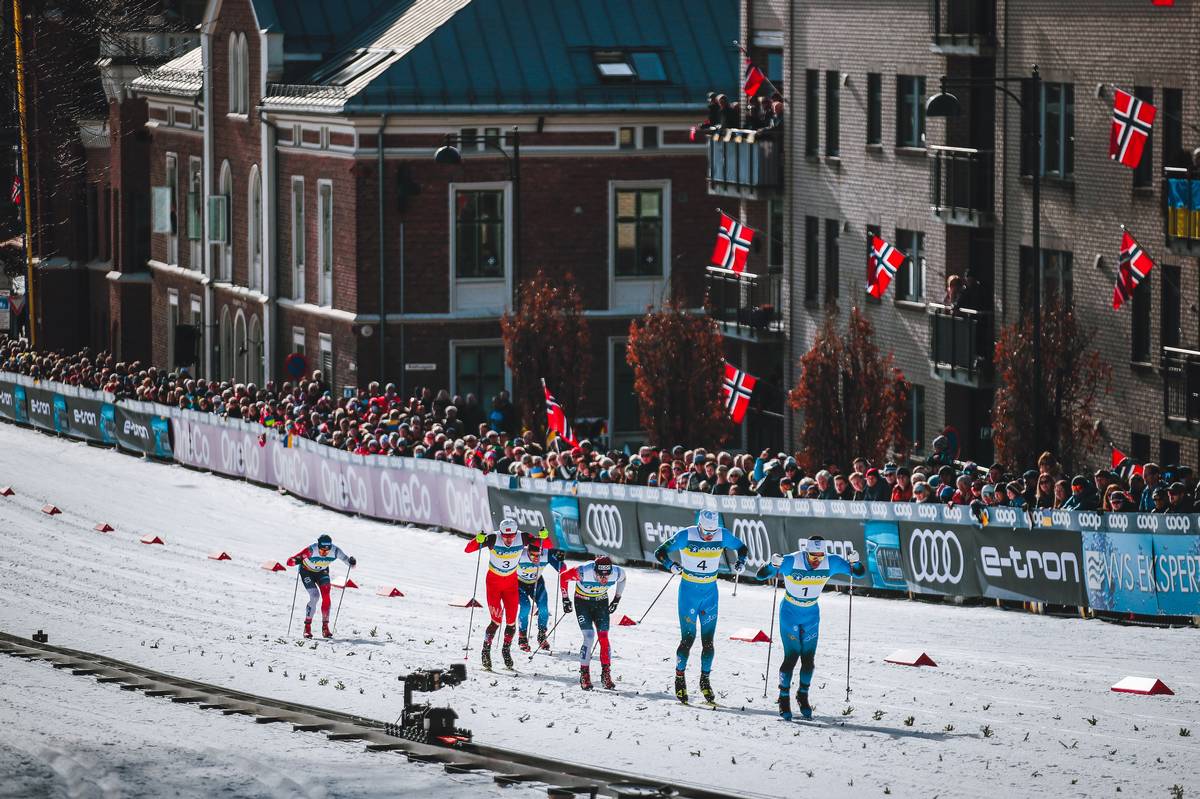
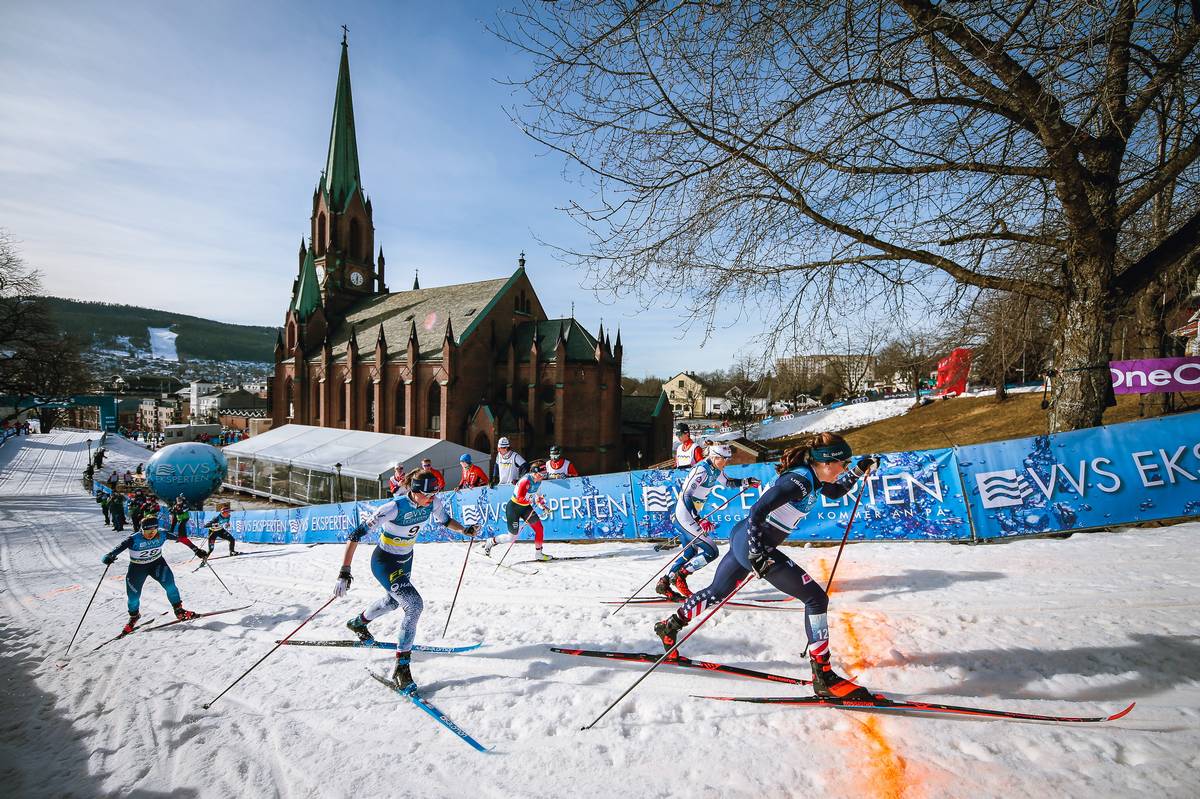
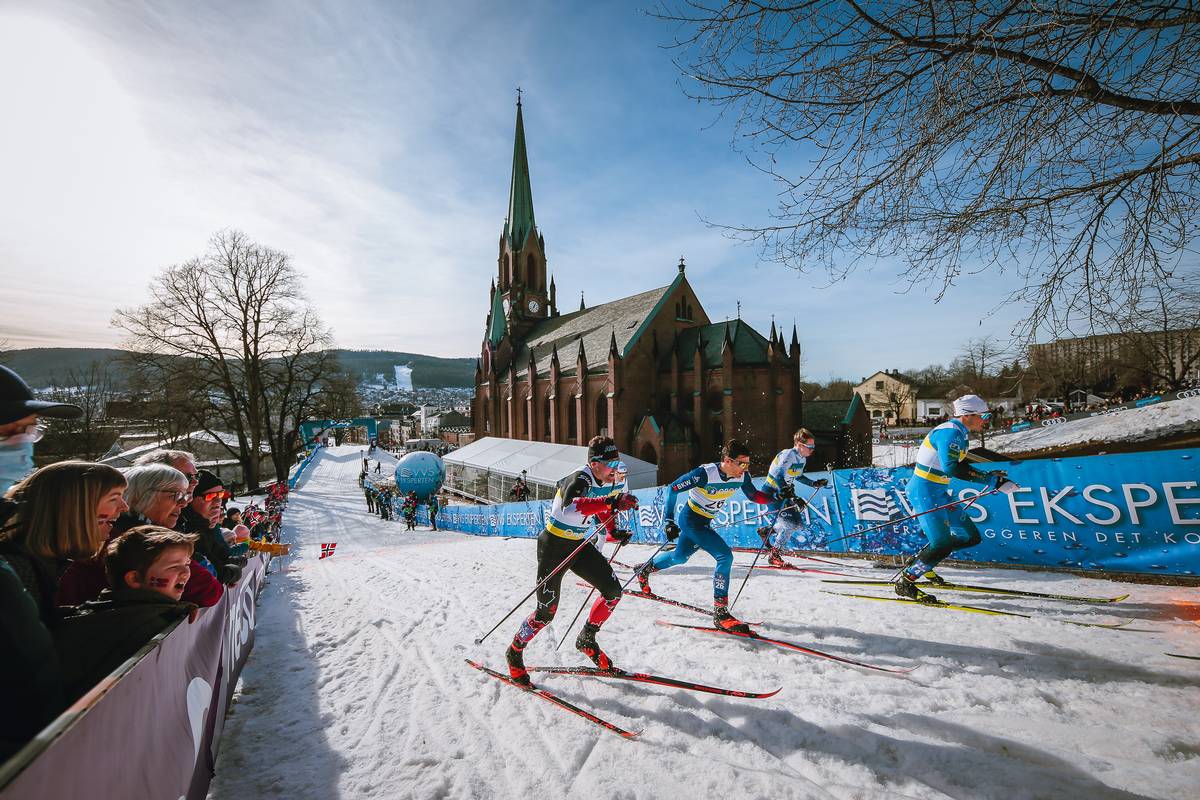
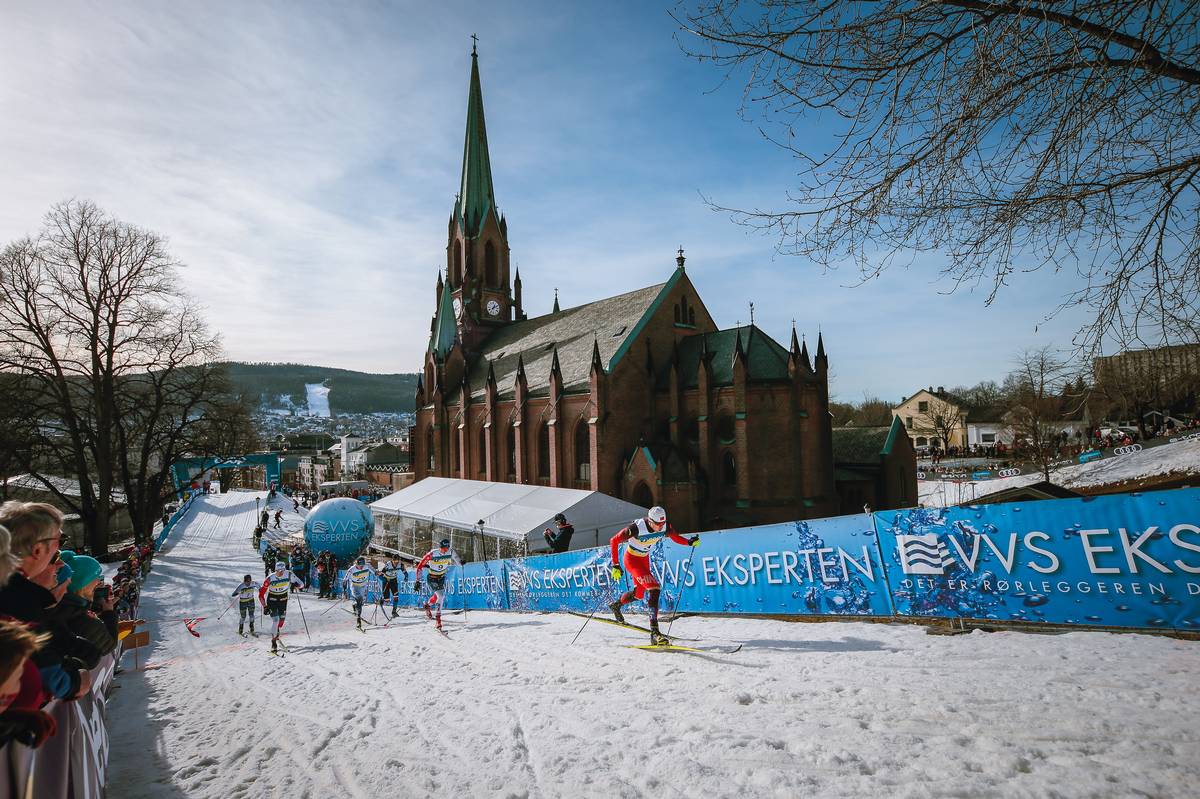
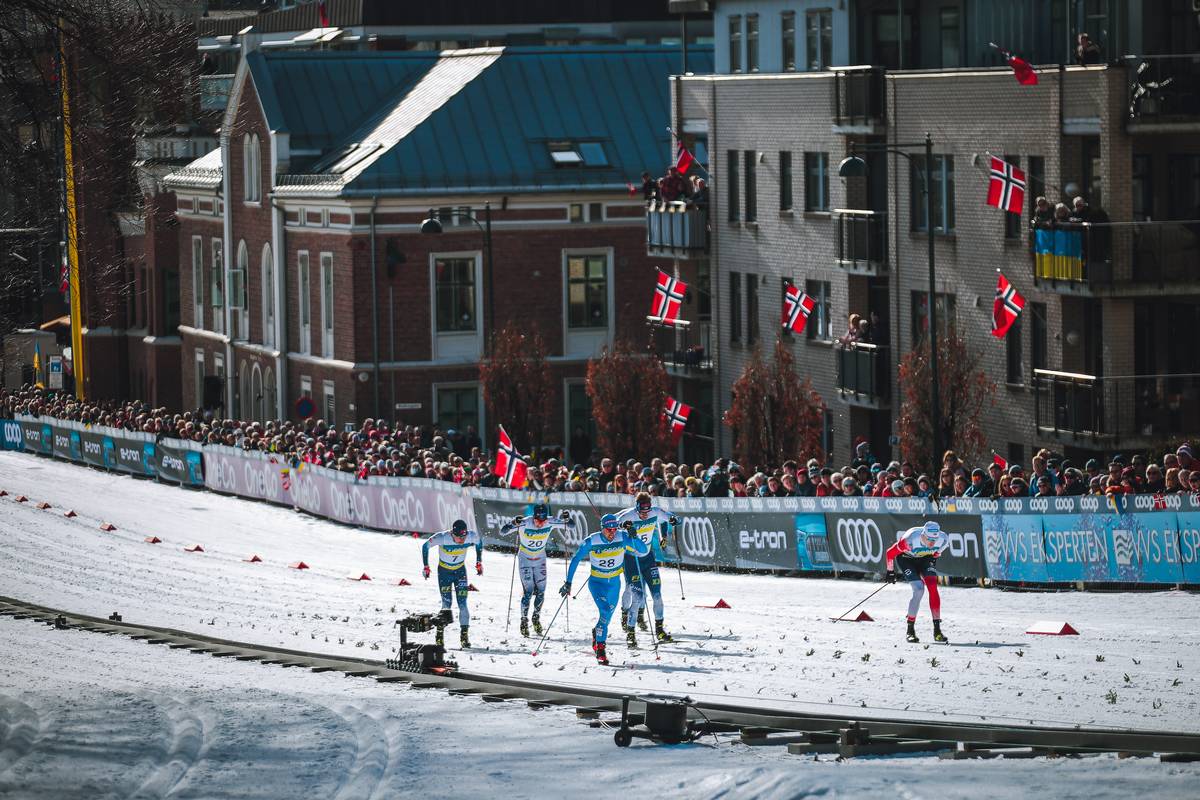
    If you didn’t focus in completely, the scenes in Drammen looked pleasantly familiar in a way that could keep you in the timeless state of mind associated with Holmenkollen. It was reassuringly nice to see sprint racing return, after two years, to the type of venue that led to its exciting, spectator-friendly, rise in the first place. A genuine town-center sprint, trucked in artificial snow and all, with a genuine (and very enthusiastic) crowd.

    Graham Ritchie (CAN) races in the second heat of the classic sprint quarterfinals in Drammen, NOR. (Photo: NordicFocus)

    Bring some focus into the racing though, particularly who was in the men’s field day, and you couldn’t help but see the upheaving forces of the moment doing their upheaving. COVID still had a heavy-hand in the field today, with the entire Norwegian men’s sprint team (who had raced in Lahti last weekend), including Johannes Høsflot Klæbo, having recently tested positive. Then, there was the FIS imposed ban on Russian and Belarusian athletes, which also went into effect this week in response to their government’s invasion of Ukraine. In all, 7 of the top 10 in the FIS Sprint Points Classification were absent from the field in Drammen. There was a spectral quality, something eerie, to just how much world events have managed to find and catch the quiet corner of nordic skiing in the past couple of weeks.

    For their part, the FIS decked out Drammen in blue and yellow in a sign of solidarity with Ukraine. From bibs, to fencing boards, to the souvenir flags held in the crowd. Idealists will note the poignant gesture, especially in a country where, in a friendlier geopolitical sense, blue and yellow are the colors of neighbor and rival, Sweden. Regardless, it was a stunning way for the FIS to symbolize the implied meaning surrounding the policies they implemented surrounding Russia this week. Cynics, on the other hand, could also read it as the FIS trying to stave off some of the pointed criticism that’s been directed at larger international sport’s governing bodies like UEFA, FIFA, and the IOC surrounding their handling of Russia.

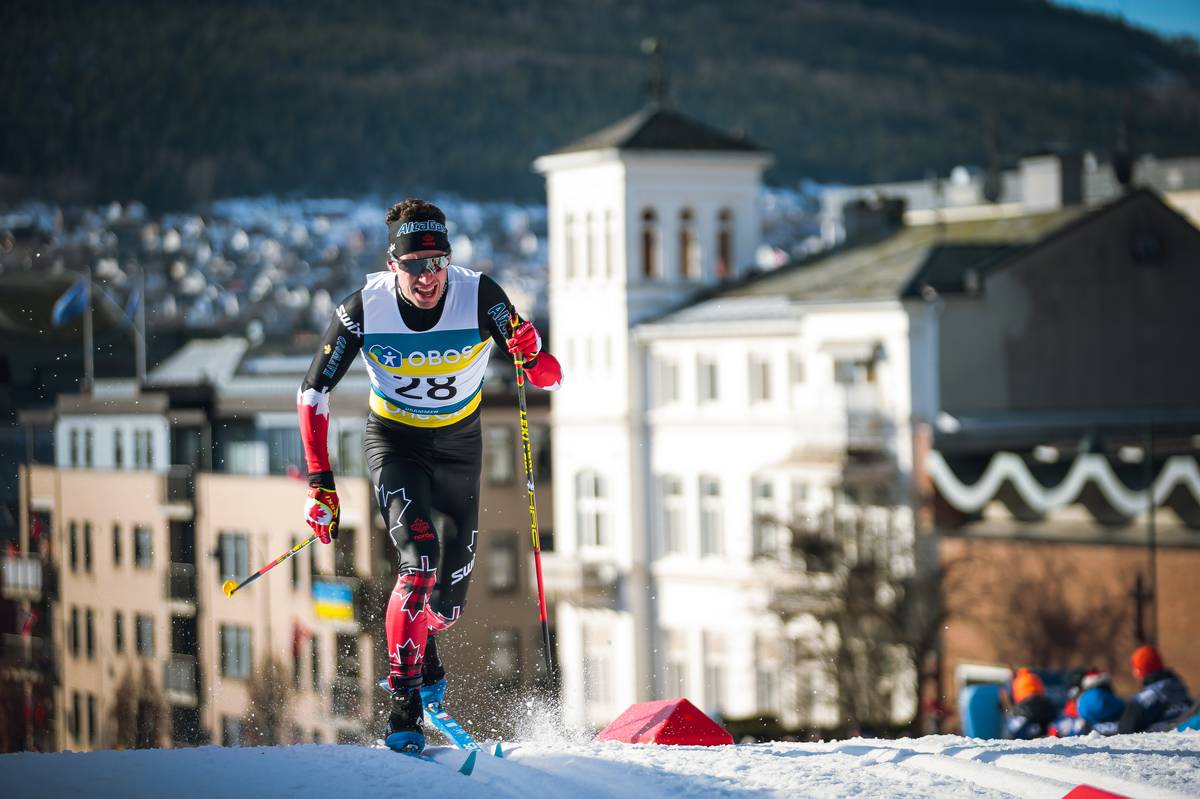
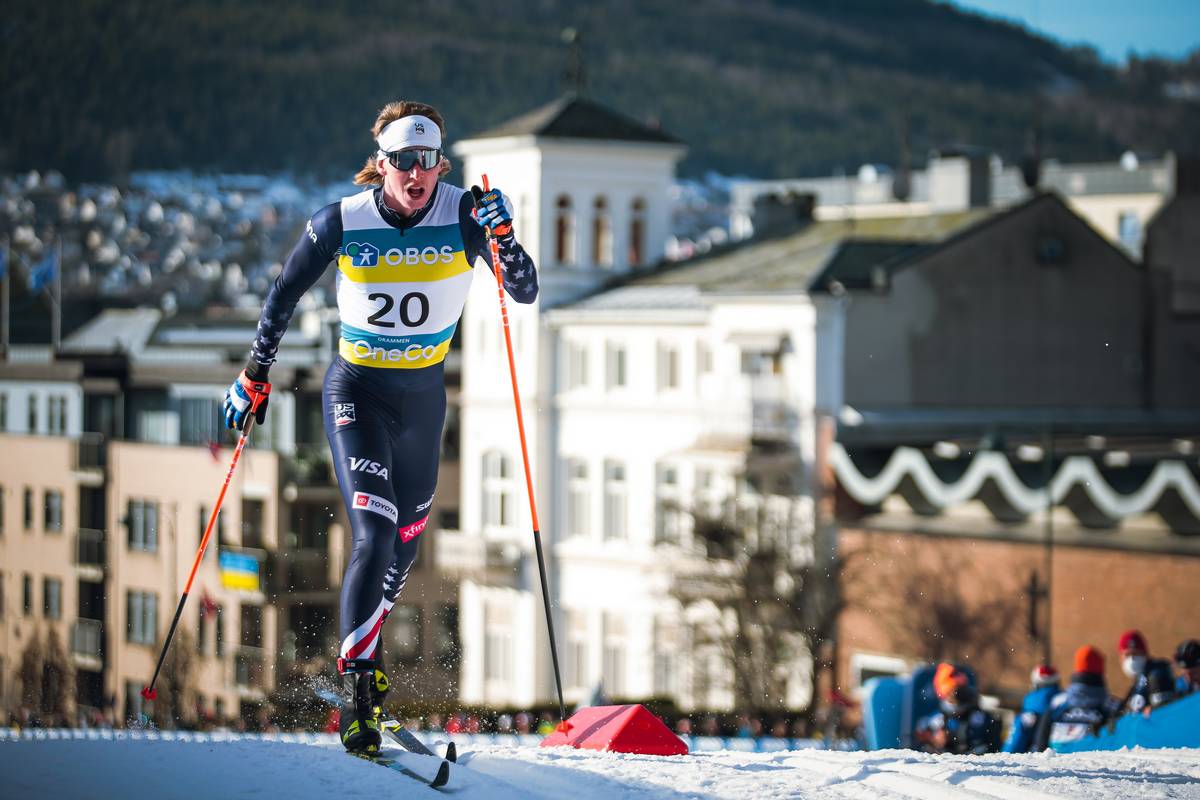
    Logan Hanneman skis to 50th during the classic sprint qualifier in Drammen, NOR. (Photo: NordicFocus)

    No matter the forces affecting skiing, the fact remained that there was skiing to be had. And without Norway’s top squad and Russia, it brought out the interesting prospect of watching racers who have navigated tactically around them to podium finishes all season – Richard Jouve (FRA), Lucas Chanavat (FRA), Federico Pellegrino (ITA), and Joni Mæki (FIN) among them – now represent the top of the field themselves.

    In the qualifier, it was Jouve who took first place by an impressive margin, finishing in a time of 2:26.35, -2.07 sec over second place Ondrej Cerny (CZE). Following up on an impressive Olympic sprint in his home country, Chinese skier Wang Qiang took 3rd place (+2.66). Among North American athletes, the Canadian men had an impressive showing, sending three to the heats with Graham Ritchie qualifying 13th (+5.91), Antoine Cyr in 19th (+6.42), and Pierre Grall-Johnson 23rd (+6.85).

    Antoine Cyr (CAN) races to 19th in qualification in Drammen. (Photo: NordicFocus)
    Sun Valley’s Peter Holmes races the classic sprint qualifier in Drammen, NOR. (Photo: NordicFocus)

    The American men were just outside the top-30 mark necessary to race the quarterfinals, with Kevin Bolger just +0.7 off the last spot in 35th (+8.90), Logan Diekmann 39th (+9.40), Logan Hanneman in 50th (+11.19), Peter Holmes in 53rd (+12.05), and Zak Ketterson in 54th (+12.26).

    The heats then, were filled with a motley mix of familiar sprint stars and younger talent from the home country Norway.

    The course they raced was a classic town center sprint – a long gradual stretch going out from the start that narrowed as they hit two technique-zoned uphills leading into a hairpin. From there, it was a gradual downhill into another tight hairpin that opened up to a 4-track wide sprint finishing straight that allowed the best sprinters to open up and hit top speed.

    Despite his absence, Klæbo’s tactical maneuvering and push-and-pull with pace was still felt throughout the race. Richard Jouve raced out of the first quarterfinal, and the typically aggressive Frenchmen held steady at the front of the pack, before shooting around the first hairpin turn that returned to the stadium. From there, he held control of the race to advance comfortably to the semi-finals and win the heat (2:32.98). He was followed by Sivert Wiig (NOR) in 2nd (+0.61), who would escape a tangle earlier in the race that saw Canadian Pierre Grall-Johnson fall and break a pole.

    Canada’s Pierre Grall-Johnson (CAN) races the quarterfinal of Drammen’s classic sprint. (Photo: NordicFocus)

    The exception to the relative care in pacing that many of the racers showed in the quarterfinals came in the third heat, where Wang Qiang from China shot out of the gate and went full bore throughout the race. By the time they hit the first technique zone, he had a comfortable gap on his competitors, who wouldn’t come back to him. In the process of taking the field out fast, Qiang had also made it by far the fastest quarterfinal at a winning time of 2:30.94. Second place Lauri Vuorinen (FIN) (+0.72), third place Pål Trøan Aune (NOR) (+0.99), and fourth place Harlad Østberg Amundsen (NOR) (+1.08) all advanced to the semi-final with two lucky losers coming out of the heat.

    Wang Qiang (CHN) is off the front during the men’s quarterfinals in Drammen. (Photo: NordicFocus)

    The 4th heat saw Joni Mæki (FIN) and Federico Pellegrino (ITA) follow early moves from Renaud Jay (FRA) and Ludek Seller (CZE) before reminding observers of their well-earned reputations as two of the best top-end speed racers in a finishing straight. Mæki advanced in first place (2:34.44), with Pellegrino in second (+0.62).

    The semi-finals brought a similar field to the one that had advanced to the quarterfinals, with the familiar names of Richard Jouve and Lucas Chanavat joined by the young Norwegian pairing of Wiig and Amundsen, Swiss skier Jovian Hediger, and Wang Qiang.

    Qiang again attacked from the start, with a lesser, but still commanding, gap established by the time he hit the first corner to head back towards the stadium. Jouve was the only skier that covered the gap off of that corner, and was able to pull along his countryman and Wiig with him before they all came together for the final sprint. There, the Frenchmen both showed their sprinting prowess, with Jouve winning the heat in 2:31.94 and Chanavat in 2nd (+0.74). Qiang’s early attack again proved to shape the field beyond his own racing, again making sure that both lucky losers, he and Wiig, came from the first semi-final.

    Qiang’s attempts to force a semi-final with two lucky losers was aided by the way that the second semi-final raced, starting out at a steady pace before halting to a crawl around the first corner. George Ersson (SWE) got caught in front before Federico Pellegrino took charge on the downhill going into the stadium. By the time he rounded the corner into the finishing straight, he was in control of an otherwise tight pack. Pellegrino crossed the line in first (2:42.16) to advance to the finals, along with Norway’s Aune, who finished second (+0.16).

    Federico Pellegrino (ITA) and Pål Trøan Aune (NOR) lead in the final stretch during the men’s semifinal in Drammen, NOR. (Photo: NordicFocus)

    That set up a final with French pairing of Richard Jouve and Lucas Chanavat, the Norwegian pairing of Sivert Wiig and Pål Trøan Aune, Italian Federico Pellegrino, and Chinese Wang Qianq.

    Qiang was subdued in the final compared to his previous heats, but then again, Richard Jouve had also stepped up the pace earlier in the final. The result was a tight pack with Jouve and Qiang at the front, with a quick but controlled pace through the early two climbs on course. Jouve took the pack into the first corner, and it was there, again emulating the absent Klæbo, where he chose to shoot around, concealing his burst of speed from the back part of the pack so that by the time they knew they needed to respond Jouve was already well on his way down the long descent.

    Men’s final led out by the French pairing of Richard Jouve and Lucas Chanavat in Drammen on Thursday. (Photo: NordicFocus)

    Their positioning in second and third, respectively, allowed Wang Qiang and Lucas Chanavat to try and match Jouve’s move, but as the pack hit the final stretch it became clear that Jouve hadn’t just made a move, he had made a move and followed it up with a burst of speed that left him peerless on the day.

    Jouve crossed the line comfortably in first (2:32.84), with a lightly-packed sprint for the podium behind him.

    Richard Jouve takes the win in Drammen. (Photo: NordicFocus)
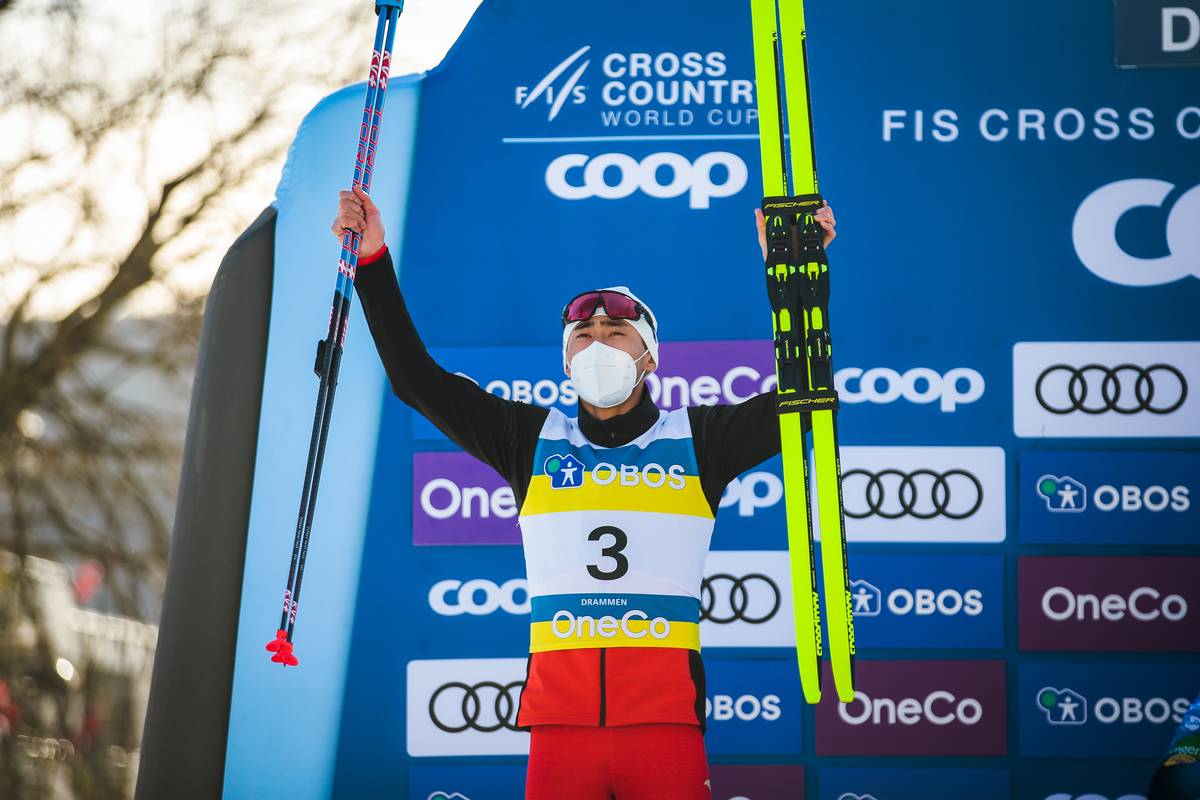
    Wang Qiang became the first Chinese athlete to podium in a World Cup, finishing 2nd in the classic sprint in Drammen. (Photo: NordicFocus)

    Leading that, after having shown tenacity and panache all day, was the Chinese skier Qiang Wang, who crossed the line in second (+1.59), with poles raised and a shout that stood at the end of a half-decade journey for his country. China, weeks off of having hosted the Olympic games, has earned a World Cup podium in nordic skiing, with Wang showing real promise for what may come from that country’s program.

    Lucas Chanavat crossed the line in third (+2.32) to round out the top 3, while Sivert Wiig finished in fourth (+3.14), Federico Pellegrino in fifth (+5.34) and Pål Trøan Aune in sixth (+11.25).

    Richard Jouve (FRA) takes the win in Drammen, NOR, with a first podium for China’s Wang Qiang, who took second ahead of Lucas Chanavat (FRA) in third. (Photo: NordicFocus)

    It was an appropriate podium for a particular moment in skiing where the world’s motion on all scales has upended the familiar rituals that come with the final stretch of the World Cup that Holmenkollen traditionally marks the beginning of. The world’s best skier out in quarantine, his closest competitors removed from the competition, and the schedule for the last month of the season in flux as we enter it.

    At once, we saw something familiar – Richard Jouve with a commanding performance alongside his countrymen – and something wholly new – a Chinese skier not only at a European World Cup race, but at the front. A strange, but moving race, for a strange and moving time.

    Once the final results were determined, Antoine Cyr led the Canadians in 19th after finishing fourth in quarterfinal four. His Olympic team sprint partner, Graham Ritchie, was next for Canada in 21st, with Pierre Grall-Johnson 27th.

    Full Results

    Qualifiers | Finals

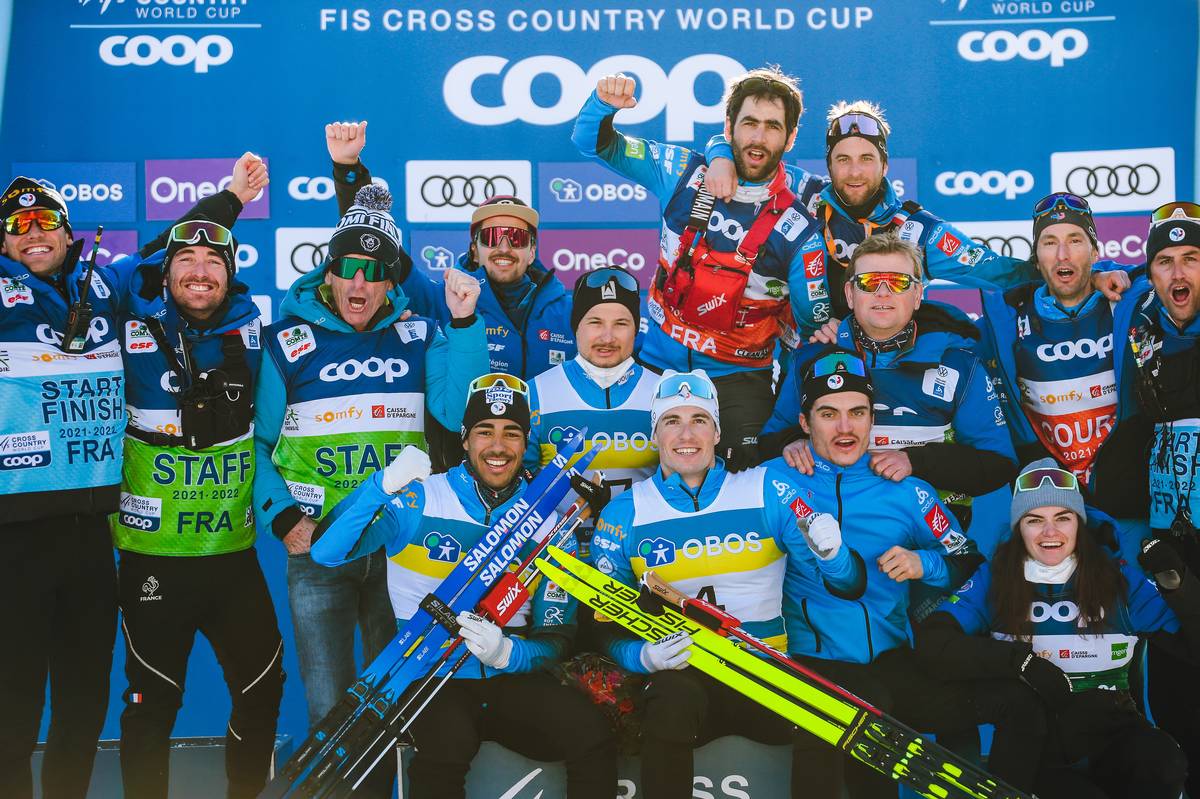
    French Team celebrates a podium fronted (Richard Jouve- 1st) and backed (Lucas Chanavat – 3rd) by their countrymen. (Photo: NordicFocus)
  • In Front of a Long-Awaited Crowd, Klæbo and Chanavat Take It to the Line in Lahti Freestyle Sprint

    In Front of a Long-Awaited Crowd, Klæbo and Chanavat Take It to the Line in Lahti Freestyle Sprint

    This World Cup coverage is made possible through the generous support of Marty and Kathy Hall and the A Hall Mark of Excellence Award.  To learn more about A Hall Mark of Excellence Award or to learn how you can support FasterSkier’s coverage please contact info@fasterskier.com.


    By Rachel Bachman Perkins and Ian Tovell

    During a brief reprieve from racing, the top tier of international racing made its way from the high desert of Zhangjiakou, China to a venue tucked into snow-capped pines and nestled amongst the lakes of southern Finland. With more start spots per country than during the Games and some athletes choosing a weekend away from the World Cup, a number of new faces appeared on the start lists in Lahti for the 1.6-kiilometer freestyle sprint. 

    Logan Diekmann (BSF Pro) makes his first World Cup appearance in the 1.6 k freestyle sprint qualifier in Lahti, FIN. (Photo: NordicFocus)

    For the U.S., these names included Logan Diekmann (BSF Pro Team) and Bill Harmeyer (SMS T2), both of whom earned their first World Cup starts this weekend via their performance on the SuperTour circuit this season. These athletes joined Kevin Bolger, Logan Hanneman, and Zak Ketterson; the Team Birkie athlete also earned his first World Cup starts earlier this year at the Tour de Ski.

    Diekmann currently leads the SuperTour sprint standings with 119 points. He was second in the freestyle sprint during the U.S. Cross Country Championships in Soldier Hollow in January and skied to 5th in the sprint in both Duluth and Lake Placid. 

    Harmeyer was ranked third in the sprint standings with 83 points, behind Noel Keeffe who is currently racing at the 2022 U23 World Ski Championships in Lygna, NOR. Harmeyer has consistently posted top-five times in qualification during the SuperTour sprint races, and has raced into the final in three out of six SuperTour sprints. A fall in the quarterfinal during US Nationals left him in 24th after qualifying in fifth. 

    Bill Harmeyer (SMS T2) makes his first World Cup appearance in the 1.6 k freestyle sprint qualifier in Lahti, FIN. (Photo: NordicFocus)

    Lucas Chanavat (FRA) was the top qualifier finishing the course in a time of 2:57.85. All five of the Americans finished outside the top-30 in qualification, but Canadian Graham Ritchie cracked into the heats for North America in 27th (+7.73). 

    The quarterfinal rounds played out mostly as expected, with Chanavat and Johannes Høsflot Klæbo (NOR) advancing from the first round after a close finish. Norway’s Håvard Solås Taugbøl and Olympic silver medalist Federico Pellegrino of Italy crossed the line first and second in heat two, spread by just 0.06 seconds. Winning the third heat, Andrew Young (GBR) crossed the line in 3:04.32, just ahead of Russia’s Gleb Retivykh (+.20). 

    The fourth quarterfinal heat saw a close finish, as Sindre Bjørnestad Skar (NOR) took the race to the line alongside Richard Jouve of France and Alexander Bolshunov of Russia were right at his heels. Skar won the closing sprint with Jouve +0.01 behind and Bolshunov in third (+0.07). Michal Novak (+.49) of the Czech Republic finished in fourth, with both Novak and Bolshunov narrowly missing out on lucky losers.  

    Fast racing in the fifth heat saw four competitors advance to the next round. Janik Riebli (SUI) won the heat in a time of 2:59.56, while China’s Qiang Wang finished second (+.10) to move onto the semis. A top prospect for the Chinese ski program, this is Wang’s first World Cup appearance since the pandemic began. Wang was fifth in qualification during the Olympic freestyle sprint in Zhangjiakou, where he took second in his heat to Norway’s Erik Valnes before being issued a disqualification for obstruction and being relegated last in the heat.

    Qiang Wang (CHN) leads at the start of the fifth quarterfinal heat in Lahti. (Photo: NordicFocus)

    Following the pace of the leaders, Maciej Starega (+.64) of Poland and Arnaud Chautemps (+1.61) of France crossed the line third and fourth to advance into the semis as lucky losers.

    In the first semifinal, five skiers all remained close coming into the finish to vie for the two automatic spots. Pellegrino was able to hold the field off and win the semi with a time of 2:59.57, however, he was later disqualified, pushing him to sixth place.  Klæbo crossed in second  (+.07), guaranteeing his spot in the final, while Chanavant and Taugbøl were third (+.21) and fourth (+.37), respectively. Due to Pellegrino’s disqualification, Taugbøl was able to make it through to the final as a lucky loser. 

    In the second semi, Retivykh held off a push from Skar to win in 2:59.67, with the Norwegian 0.02 behind. Wang crossed third (+.34) with a time fast enough to earn the second lucky loser spot in the final.

    Sindre Bjørnestad Skar leads his heat during the freestyle sprint in Lahti, FIN. (Photo: NordicFocus)

    In the final, an early tangle between Wang and Retivykh as the two rounded a corner sent the Chinese athlete to the ground, losing contact with the pack. 

    The remaining five men stayed close as they powered through the course. Rounding the bend into the final 100 meters, four skiers remained in contention for the podium, but it was Klæbo who slingshot from the outside, putting his closing speed on display as he threw his boot to win a photo finish with Chanavat in 2:58.34, Skar and Taugbøl on their tails. 

    Johannes Høsflot Klæbo with a look before taking the win in the freestyle sprint in Lahti, FIN. (Photo: NordicFocus)

    The Norwegian had advantage at the finish, with Chanavat just 0.04 seconds back in second place. Skar held off his teammate for the final podium spot in third (+.23), while Taugbøl took fourth (+0.58). Retivykh crossed a few meters back in fifth (+0.90), while Wang rebounded from his crash to finish 7.77 seconds behind in sixth.

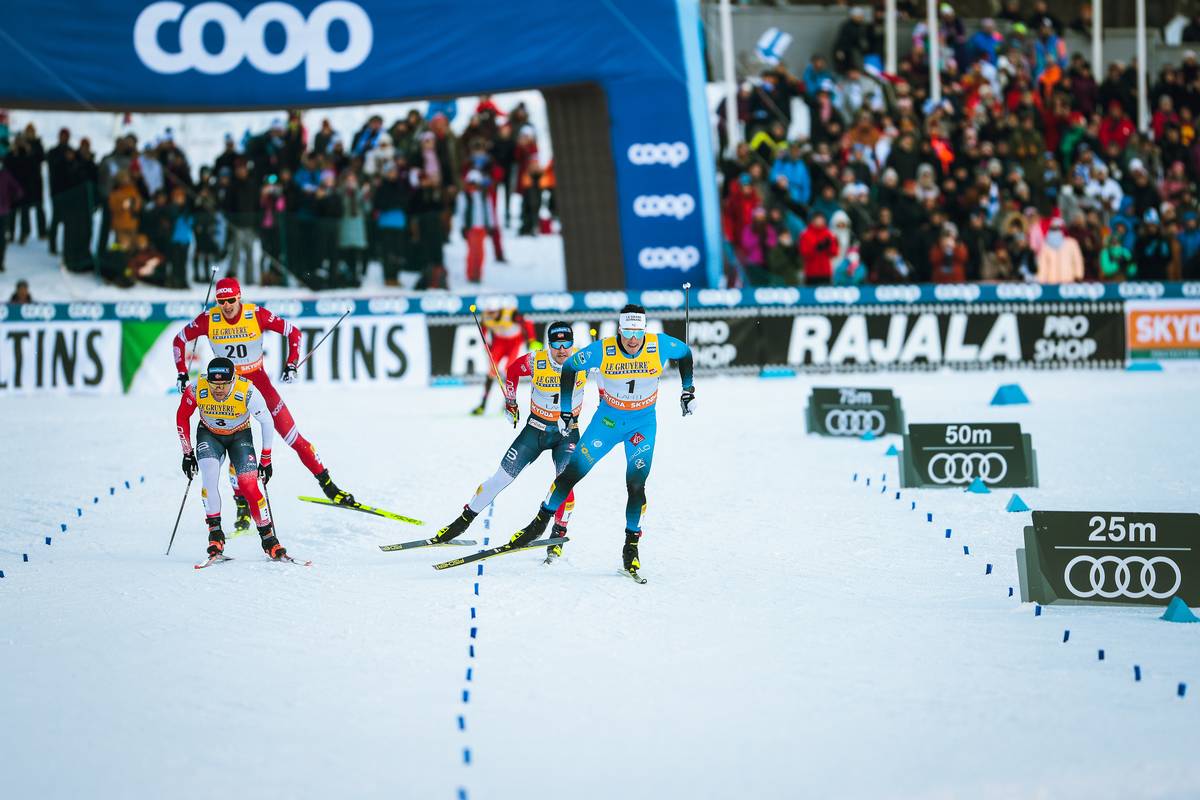
    A close race for second and third heads into the final 25 meters in Lahti. (Photo: NordicFocus)

    “It was amazing,” Klæbo told FIS after the race. “It isn’t so many days since we competed in the Olympics, but still, it’s always fun to race.” 

    Klæbo commented on the excitement of racing in Lahti, which has hosted many championship events including the 2019 World Championships. He added that the racing on these tracks is often tight, which keeps it exciting for spectators – of which there were many today. When asked about racing in front of a crowd after nearly two years of empty stadiums, Klæbo smiled.

    “It was amazing. I think what they have done, and finally seeing the end of the COVID situation – I think it’s amazing. It’s always great to compete against a big crowd, and it was amazing today as well.” 

    Johannes Høsflot Klæbo (NOR) takes the win in Lahti’s freestyle sprint ahead of Lucas Chanavat (FRA) and Sindre Bjørnestad Skar (NOR). (Photo: NordicFocus)
    Graham Ritchie races in the quarterfinal of the freestyle sprint in Lahti, FIN. (Photo: NordicFocus)

    After finishing fifth in a tightly spread third quarterfinal heat, Graham Ritchie bumped up from his bib rank to finish 24th.

    Kevin Bolger was the top American qualifier in Lahti in 33rd (+8.90), just 0.41 seconds off the mark needed for the top-30. On his tails was Diekmann in 34th (+9.14), with Hanneman close behind in 39th (+9.79). Ketterson was next for the U.S. in 49th (+12.13), with Harmeyer next in 50th (+12.28).

    Kevin Bolger leads the American men in 33rd during the freestyle sprint qualifier in Lahti, FIN. (Photo: NordicFocus)
    Antoine Cyr (CAN) races the qualifier of Lahti’s freestyle sprint. (Photo: NordicFocus)

    Outside the top-30 for Canada, Antoine Cyr was 40th in qualification (+9.99), with Olivier Léveillé next in 46th (+11.79), followed by Phillippe Boucher in 55th (+14.02) and Rémi Drolet in 58th (+15.87). 

    Racing continues tomorrow with a 15 k individual start classic.

    Results:

    Qualification | Final

  • Klæbo Runs Away with Third Stage Win in the Classic Sprint; Ogden 22nd, Jager 27th

    Klæbo Runs Away with Third Stage Win in the Classic Sprint; Ogden 22nd, Jager 27th

    This World Cup coverage is made possible through the generous support of Marty and Kathy Hall and the A Hall Mark of Excellence Award.  To learn more about A Hall Mark of Excellence Award or to learn how you can support FasterSkier’s coverage please contact info@fasterskier.com.


    As we begin Stage 4 of the Tour de Ski, the first classic sprint since the opening race of the season in Ruka, Finland on November 26th, we look back to the last time athletes raced the event on the tracks in Oberstdorf, Germany. 

    During the 2021 World Championships, Johannes Høsflot Klæbo (NOR) took command of the gold medal from the qualifier on a 1.5-kilometer course seemingly designed for his racing style. A quick double pole start from the stadium leads to a long steady first climb where he skied long, strong, and steady, usually in second or third position. After a winding descent, athletes encounter a second short but steep climb of roughly 18 vertical meters, where Klæbo would begin his signature run. Stomping his way to the lead as he crested the top of the climb, stepping around a left-hand curve, and dropping into a tuck on the final descent leading into the stadium, Klæbo was repeatedly in position to advance through each round comfortably, eventually winning the final by several ski lengths. (Video highlights here.) 

    Alexander Terentev races to second place in qualification during Stage 4 of the Tour de Ski in Oberstdorf. (Photo: NordicFocus)

    Winning today’s qualifier in 2:55.78, Klæbo looked to be on track for a repeat victory in Oberstdorf, however, it is worth noting that he did not win the aforementioned other classic sprint this season. In Ruka, it was 22-year-old Alexander Terentev who took hold of the event in qualification and looked to, well, out-Klæbo Klæbo throughout the heats. We saw familiar tactics with a power move on the final climb, paired with impressive acceleration over the final meters to capture the win, but this time, the athlete employing these tactics was in a Russian race suit. While Klæbo has won each of the sprints he has entered since, with Terentev eliminated in the semis, Stage 4 would be a rematch both were eyeing. 

    Setting the stage, Terentev was second in qualification, +1.5 behind Klæbo, with Erik Valnes (NOR) in third (+2.37), Federico Pellegrino 4th (+3.53), and Alexander Bolshunov 5th (+3.61). Ben Ogden was the top American qualifier today, finishing 15th (+8.08), while Luke Jager finished 24th (+10.83). The American selected heats two and five, respectively. 

    Johannes Høsflot Klæbo and Erik Valnes take the lead in the final climb of the quarterfinal, with Ivan Yakimushkin (bib 23) and Iivo Niskanen (bib 29) chasing. (Photo: NordicFocus)

    In the first wave of the quarterfinal, Finland’s Iivo Niskanen, winner of the Stage 2 15k classic, pushed the pace heading up the first climb, perhaps looking to ensure an opportunity for a fast rather than tactical heat, knowing he was up against Valnes and Klæbo and likely would only have the opportunity to advance as lucky loser. However, the Norwegians, unphased, chose not to respond, waiting patiently mid-pack to use the same tactic described at World Champs. In the second climb, both created enough room to look as if they had begun their cooldown as they skied through the finish lanes, with Klæbo addigng a lackadaisical boot slide at the line that put him just ahead of his teammate. Behind them, Niskanen and Ivan Yakimushkin (RUS) sprinted to the line to chase the clock, with the Russian finishing ahead of the Finn. However, their times did not hold up through subsequent rounds and their day had ended.

    Alexander Bolshunov leads the quarter final during Stage 4 of the Tour de Ski, with Ben Ogden racing in bib 15. (Photo: NordicFocus)

    In the second heat of the quarters, Ogden lined up alongside Bolshunov, who took control out of the gate. Staying in the pack through the first climb, Ogden found himself in fifth as athletes exited the second and began descending toward the stadium. In the final curves, Ogden couldn’t quite maintain the position needed to contend for a spot as lucky loser, finishing 5th in a fast heat, +1.52 behind Bolshunov.

    Terentev looked as though his day might be over before he could face Klæbo head-to-head. Federico Pellegrino (ITA) stepped on his pole as lanes decreased in the opening stretch, causing it to snap. Terentev calmly accepted a replacement, steadily working his way back into the mix. Running out of the tracks in the final climb, Terentev accelerated around the left-hand curve and into the downhill in the lead, continuing through the finish for the win ahead of Mikal Novak (CZE) to advance comfortably.

    Alexander Terentev leads his quarterfinal during Stage 4 of the Tour de Ski in Oberstdorf. (Photo: NordicFocus)

    In the fifth heat of the quarters, Jager maintained contact with the pack through the first climb, but found himself off the back as he left the second. Jager’s legs wobbled as he found his footing in the descent. Perhaps too flooded to ski as aggressively as was needed to put himself in contention for higher placement, he crossed the line sixth in the heat, +6.88 behind the winner. 

    Luke Jager raced in the fifth quarterfinal during Stage 4 of the Tour de Ski in Oberstdorf. (Photo: NordicFocus)

    On we go to the semifinals.

    In a stacked first heat, Bolshunov and Terentev set the pace at the front heading up the first climb. Striding metronomically, they held Valnes and Klæbo temporarily at bay. As the men charged into the final climb, Klæbo advanced at a run up the outside, rounding the left hand bend with Terentev at the front before beginning the sweeping downhill side by side. 

    Terentev began to move across the track behind Klæbo, looking to finding a line that might be optimal for using the Norwegian’s draft to slingshot into the final lanes at high speed. Not waiting long enough, Terentev caught his tips on the Norwegian’s tails, losing his footing and crashing with a slide into the v-boards. No chance to recover what was lost, Terentev stood up, taking a defeated swing at the ground with his pole, before slowly continuing through the final meters to the finish, now well off the back. 

    As the two had created a small gap to their chasers, Valnes and Bolshunov navigated around the crash easily, racing to the line for second and third. Pulling ahead with his double pole, Valnes snagged second with Bolshunov less than half a second back, hoping for a lucky loser spot in the final.

    With a comfortable lead, Johannes Høsflot Klæbo looks over his shoulder as Erik Valnes and Alexander Bolshunov race to the line in the semifinal. (Photo: NordicFocus)

    Terentev later received verbal warning for a classical technique infraction.

    In the second and less-eventful semi, Pål Golberg and Even Northug attempted to take control of the race in the final climb, but they remained matched by Italy’s Francesco De Fabiani and Sweden’s Calle Halfvarsson as they crested the top. Goldberg picked up the most speed in the descent, accelerating out of the final curve with a sizable gap to his three chasers. Laying off the gas before the line, Goldberg took the win ahead of Northug, who left De Fabiani and Halfvarsson fighting for lucky loser spots on his tails. 

    Calle Halfvarsson and Fracesco de Fabiani take it to the line in the semifinal. (Photo: NordicFocus)

    De Fabiani and Halfvarsson crossed in a photo finish, both just 0.02 seconds ahead of Bolshunov’s mark, allowing them both to advance to the final and ending the Russian’s day.

    With four Norwegians in the final, they were guaranteed at least one spot on the podium. 

    Norway were 1-2-3 coming out of the first climb, with Klæbo sitting in second position. Doublepoling into the next climb, Klæbo matched Valnes as the two ran at the front, Klæbo out of track and Valnes in the inside lane.

    Johannes Høsflot Klæbo leads into the final descent in the last round of the Stage 4 classic sprint in Oberstdorf. (Photo: NordicFocus)

    Klæbo accelerated into the curve at the top stepping in front of Valnes and leading him into the downhill. Klæbo powered into the final stretch still in the lead, with Valnes a ski length back but closing fast with a strong doublepole. Valnes changed lanes, knowing it was his only opportunity if he wanted to try for a win, but there was not enough real estate left and this cost him speed as they came to the line. No time to celebrate this time, Klæbo pushed his boot over the finish to stop the clock at 2:54.77, roughly 3.5 seconds faster than any other rounded, with Valnes 0.3 seconds back for second place. 

    Johannes Høsflot Klæbo takes the win in Stage 4 ahead of teammate Erik Valnes, while Pål Golberg, Even Northug, and Calle Halfvarsson fight for the final spot on the podium behind. (Photo: NordicFocus)

    Behind the duo, the remaining two Norwegians sprinted to the line for a photo finish, with Goldberg edging out Northug for third by just 0.02 seconds. Halfvarsson, still in contention for the podium in the final stretch, crossed 0.5 seconds behind the Norwegians to end his day in 5th, while De Fabiani seemed to have accepted his fate, crossing the line casually +11.71 behind Klæbo. 

    Determining third place, Pål Golberg (center) edges out Even Northug, wit hCalle Halfvarsson just off the mark in fifth. (Photo: NordicFocus)

    Another all-Norway classic sprint podium in Oberstdorf, and a second consecutive win for Klæbo.

    “It’s amazing to start a new year with a victory and also to have two of my best friends coming onto the podium as well,” Klæbo told FIS at the finish. “I am really satisfied with today’s race, and also to start, hopefully, a good new year.”

    After four races in five days, Klæbo was asked whether Tour fatigue had begun to set in. 

    “For sure, I am getting a little bit tired, but still, when the weather is like this and the conditions are pretty nice, it gives you a lot of energy. So it’s just trying to push hard, looking forward to a rest day tomorrow, and trying to push hard in the last two legs.” 

    The all-Norwegian men’s podium after Stage 4 of the Tour de Ski: Johannes Høsflot Klæbo took his fourth win of the Tour ahead of Erik Valnes in second and Pål Golberg in third. (Photo: NordicFocus)

    After the final results were determined, Ogden ended his day in 22nd. 

    “I took the qualifier out really hot, hoping to be in the top 3 in qualification,” Ogden told U.S. Ski & Snowboard cross country communications manager Tom Horrocks at the finish. “I was a little flooded at the end, but not the end of the world. I chose heat 2, which is not always what I do, so I tried something different, and I think I skied well in the heat. It’s been a lot of racing for me early, so I’m a little tired, and wasn’t the smartest out there… but I’d say I’m learning a lot and making progress, so one day I’ll put it together.”

    Full audio clip with Ben Ogden, interviewed by Tom Horrocks.

    Ben Ogden races in heat 2 of the quarterfinals in Oberstdorf. (Photo: NordicFocus)

    It was Jager’s second time qualifying for the rounds in a classic sprint, and his second-best overall World Cup result. Jager was 18th in the opening classic sprint in Ruka, and finished 27th today.

    “I was trying to be competitive, in second, third, or fourth, somewhere where I could potentially get in a draft and have a good finish, hopefully,” Jager told Horrocks post-race. “It didn’t work out that way… Hindsight is 20/20, so maybe I wish I had picked a different lane and just gotten out and ran earlier, but at the end of the day, the pace was just really, really fast. I was and am, chronically and acutely, pretty tired right now, so I just didn’t really have it and wasn’t as aggressive as I should have been going over the top. I like to think if I had another shot in that exact same position, I could make fourth or fifth, but an objective qualification in that [heat] probably wasn’t going to happen for me today.” 

    Luke Jager races to 27th in Stage 4 of the Tour de Ski in Oberstdorf. (Photo: NordicFocus)

    Looking to the bright side, Jager expressed how grateful he has been to have had excellent skis in every race he’s competed this season, which provides confidence even on the days when the body doesn’t want to cooperate. At 21-years-old, Jager’s career is still nascent, and it’s easy to understand how progress at this level may not be linear. 

    “I’m super thankful for the opportunity [to race on the World Cup this season]… It feels often like it’s one step forward, four steps backward over here, just because it’s so brutal. The last month, especially, has been pretty tough and pretty demoralizing at times for me. I’m going home today, so it’s pretty nice to end with a glimmer of hope for what is to come. It’s the real deal. Sometimes it’s easy to forget that because so many Americans are doing well, but it’s pretty damn hard over here.”

    Full audio clip with Luke Jager, interviewed by Tom Horrocks.

    Kevin Bolger races to 33rd in qualification during Stage 4 of the Tour de Ski in Oberstdorf. (Photo: NordicFocus)

    Outside the Top-30, Kevin Bolger and Zak Ketterson were just shy of making the heats, finishing 33rd (+13.10) and 34th (+13.39), less than a second off the time needed to advance. Logan Hanneman was also a near-miss, finishing 37th (+14.08). Gus Schumacher rounded out the American starters in 45th (+16.51) of 73 starters. 

    Looking at the overall Tour de Ski standings with four of six stages complete, Johannes Høsflot Klæbo tops the list for both cumulative time and points after winning three of four events. By time, he sits 1:03 ahead of teammate Pål Golberg and 1:19 ahead of Alexander Bolshunov. With a 15k mass start classic and 10k freestyle hill climb to go, Klæbo is in good standing, but cannot be complacent, as the hill climb, in particular, has historically favored Bolshunov. 

    By points, which favor sprint stages and intermediate sprints in distance races, Klæbo leads with 81 points ahead of Erik Valnes, who holds 50, and Goldberg with 41.

    After a rest and travel day, racing continues Monday in Val di Fiemme, Italy.

    With three wins in four stages, Johannes Høsflot Klæbo leads the overall Tour de Ski standings by both cumulative time and points. (Photo: NordicFocus)

    Stage 4 Results:

    Qualification | Final

    Tour Standings After Stage 4:

    Cumulative Time | Points 

  • Keeping It In the Family, Iivo Niskanen Adds Another 15k Classic Victory to His Resume

    Keeping It In the Family, Iivo Niskanen Adds Another 15k Classic Victory to His Resume

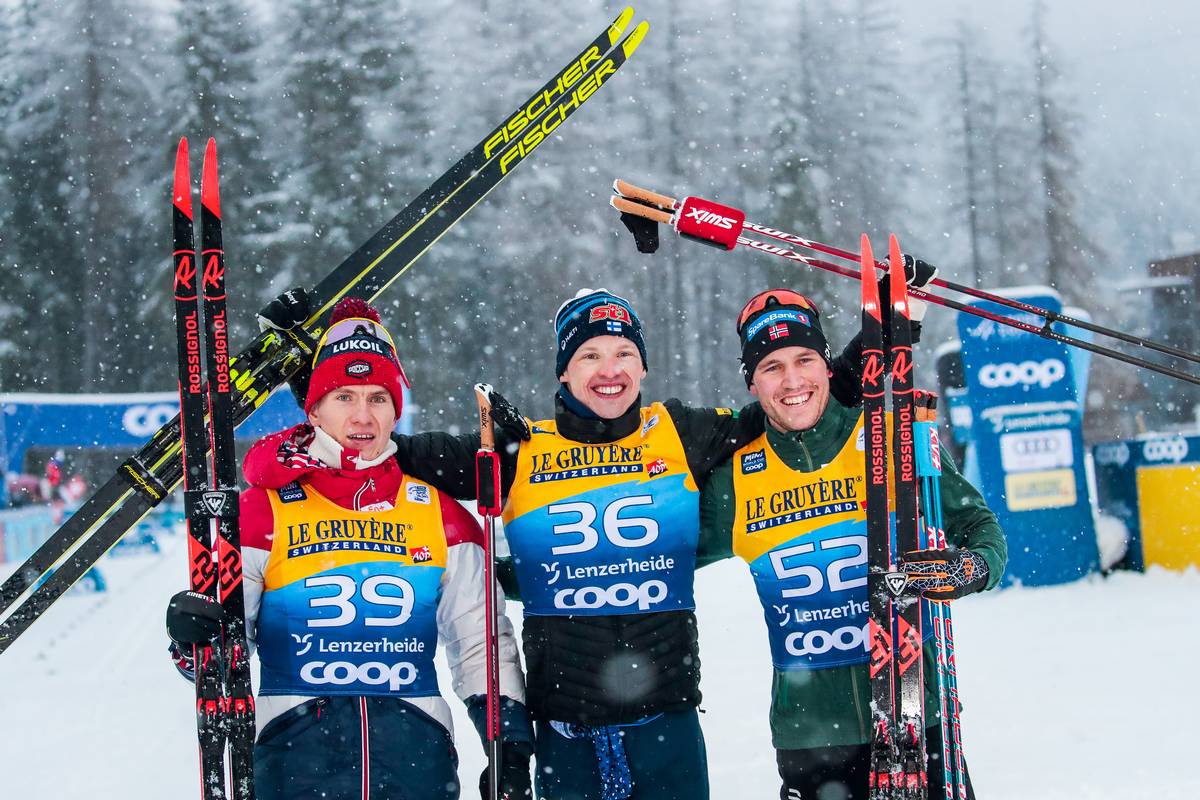
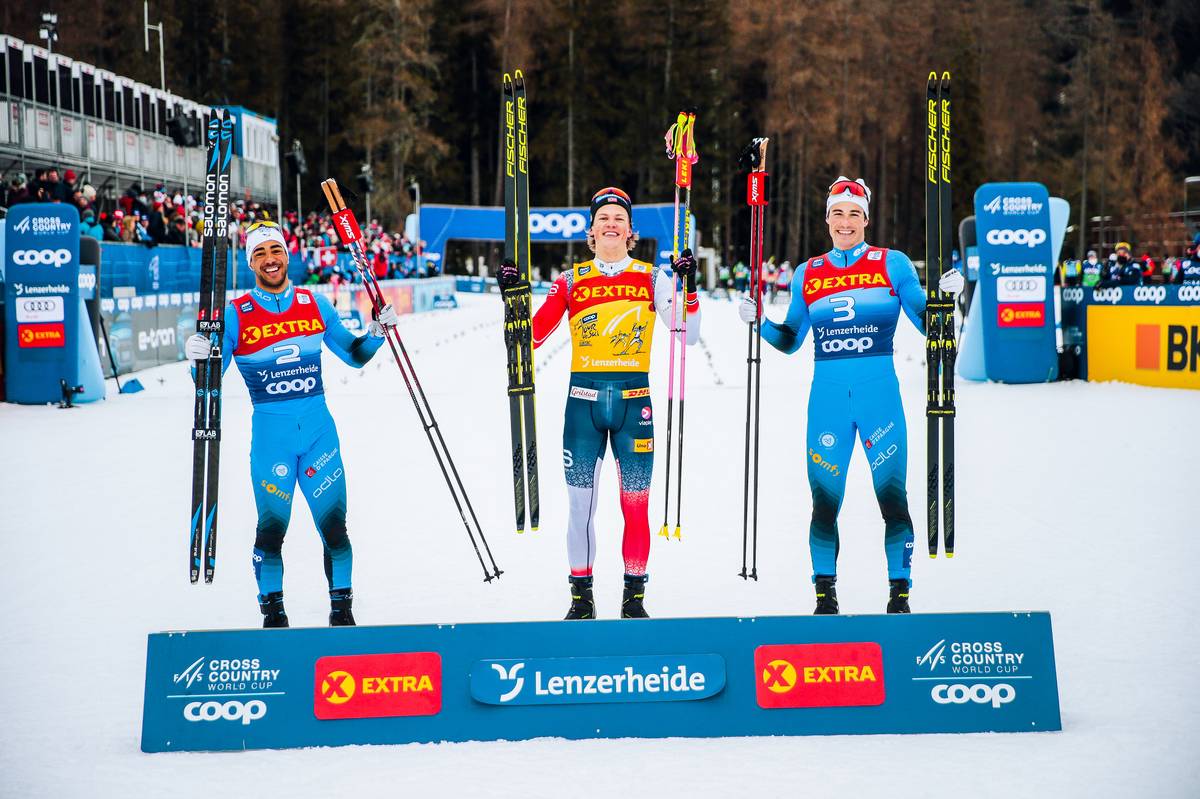
    The men’s podium in Lenzerheide, SUI: Iivo Niskanen (FIN) led with command, finishing ahead of Alexander Bolshunov (RUS) and Pål Golberg (NOR). (Photo: NordicFocus)

    This World Cup coverage is made possible through the generous support of Marty and Kathy Hall and the A Hall Mark of Excellence Award.  To learn more about A Hall Mark of Excellence Award or to learn how you can support FasterSkier’s coverage please contact info@fasterskier.com.

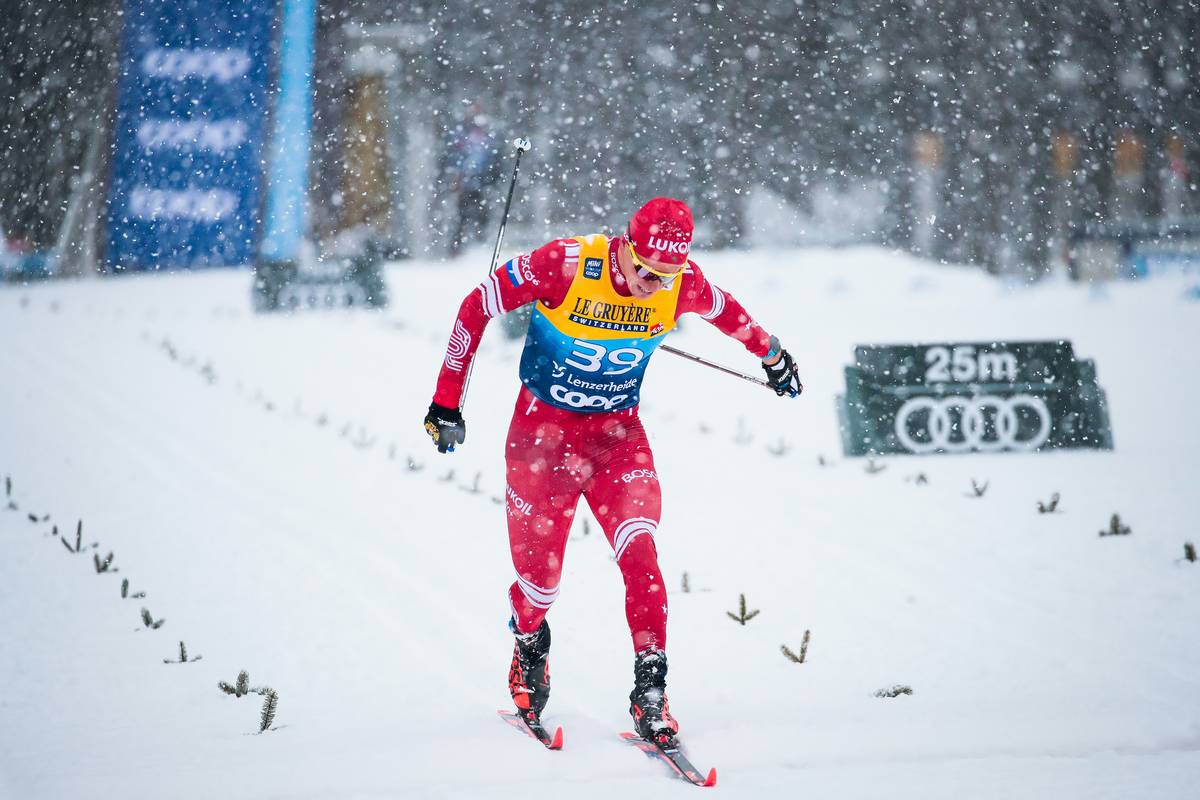
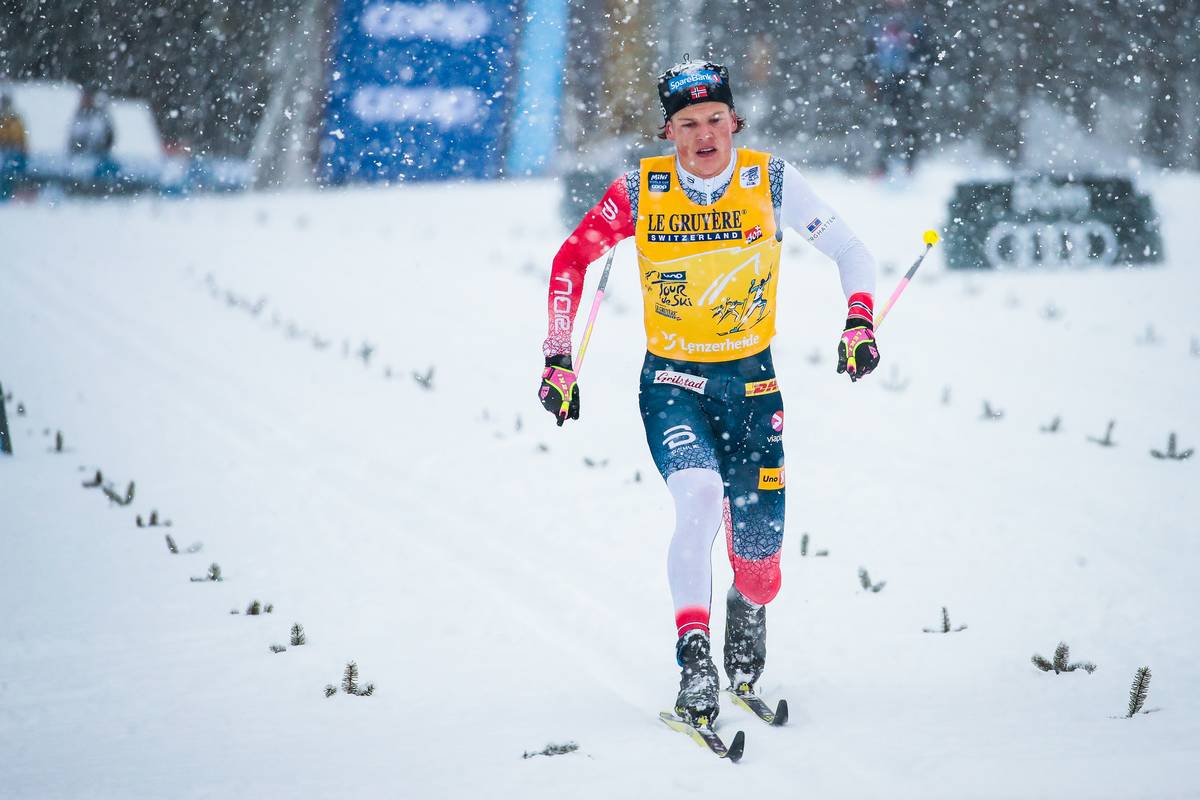
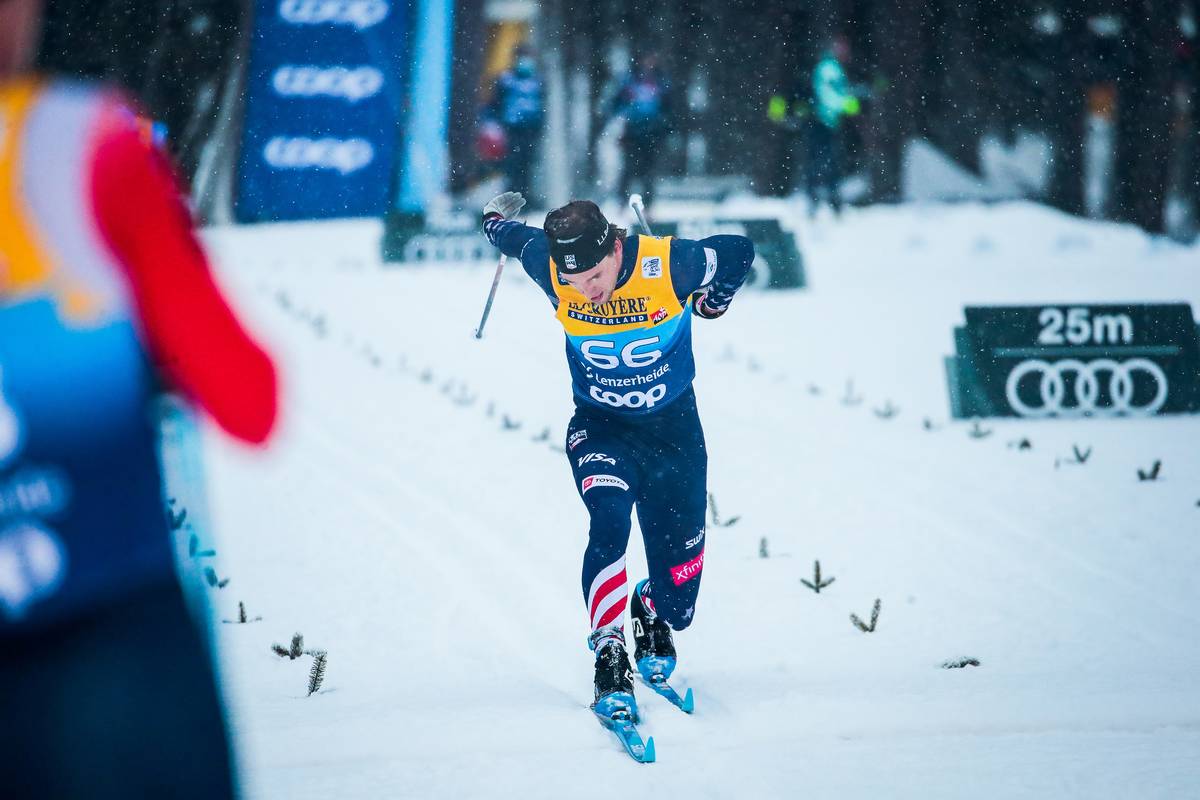
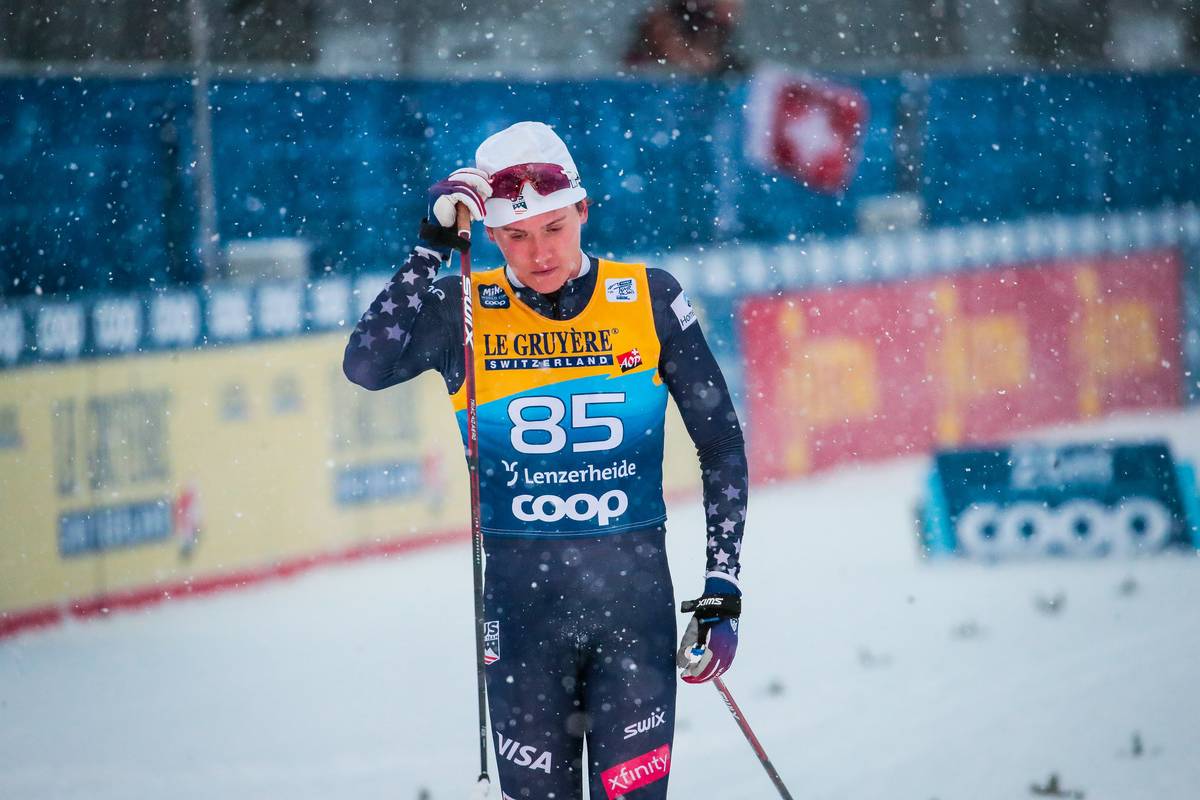
    Lenzerheide, Switzerland was tucked into a snow globe today, as snow fell steadily in fat flakes throughout the races. The wax technicians had their work cut out for them as they prepared skis for the second stage of the 2021/22 Tour de Ski, a 15-kilometer interval start classic. 

    With the seeded group of podium favorites starting in bibs 30-50, there was time for athletes to learn how the course was skiing. Among these favorites, Johannes Høsflot Klæbo (bib 42) was looking to maintain good standing in the Tour, building on his top finish in yesterday’s freestyle sprint. In the 2019-2020 Tour de Ski, his last appearance after sitting out last year’s Tour for COVID-19 concerns, Klæbo finished in 10th in the 15k classic stage. 

    Johannes Høsflot Klæbo (NOR) leads Hugo Lapalus (FRA) through the snow in Lenzerheide. (Photo: NordicFocus)

    Winner of the last two iterations of the Tour de Ski and back-to-back World Cup overall champion, Russian Alexander Bolshunov has had an unprecedented start to the season, with results well below what were anticipated, possibly due to health challenges he’s faced this year. Bolshunov was knocked out in the quarterfinal of yesterday’s sprint, finishing 17th, and has not been on the podium in an individual event since the opening World Cup weekend in Ruka. 

    The Americans were looking to build upon solid results yesterday, where they put three men in the Top-30 overall. Kevin Bolger was the top finisher in the sprint, placing 16th overall, after qualifying 9th. Ben Ogden finished in 21st overall, after qualifying 5th, and Logan Hanneman ended his day in 25th overall. 

    Gus Schumacher races through the snow in Lenzerheide. (Photo: NordicFocus)

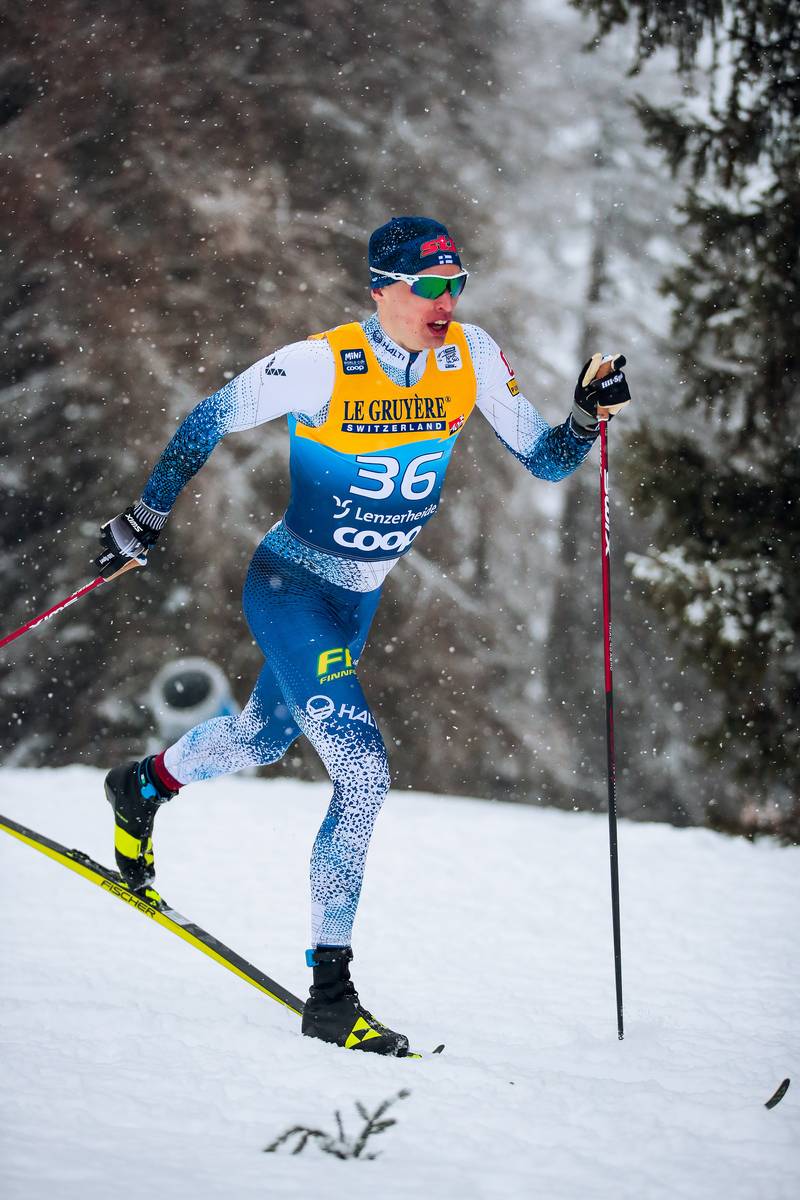
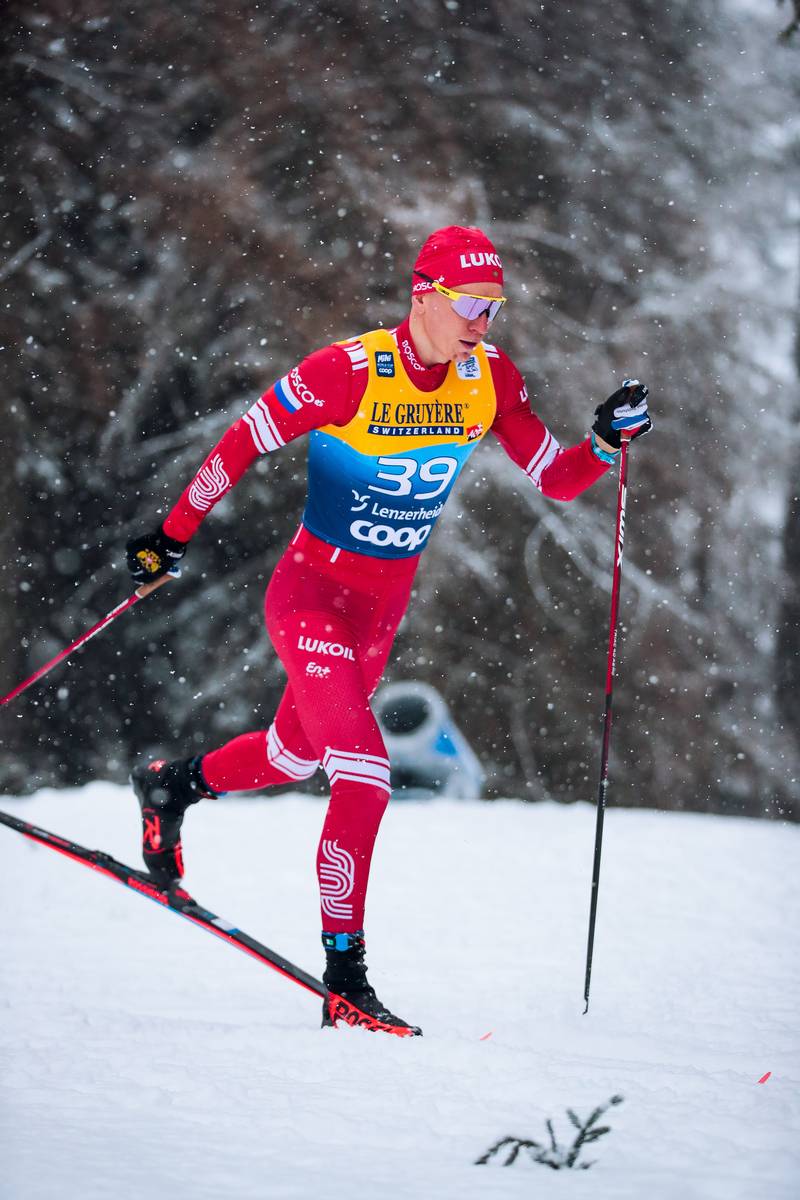
    As the seeded group time trialed through the snow, it was Iivo Niskanen in bib 36 who set the bar at the 5.8k mark, leading a group of Norwegians and Russians.  Bolshunov (+11.1) came through in 2nd (+11.1) with five Norwegians in tow, namely, Erik Valnes (+16.7), Pål Golberg(+18.6), Simen Hegstad Krüger (+20.9), Klæbo (+22.1), and Martin Løwstrøm Nyenget (+22.8).  

    Gus Schumacher was the top American in 37th (+59.2) at the 5k, with Ogden not far behind in 41st (+1:03.9). 

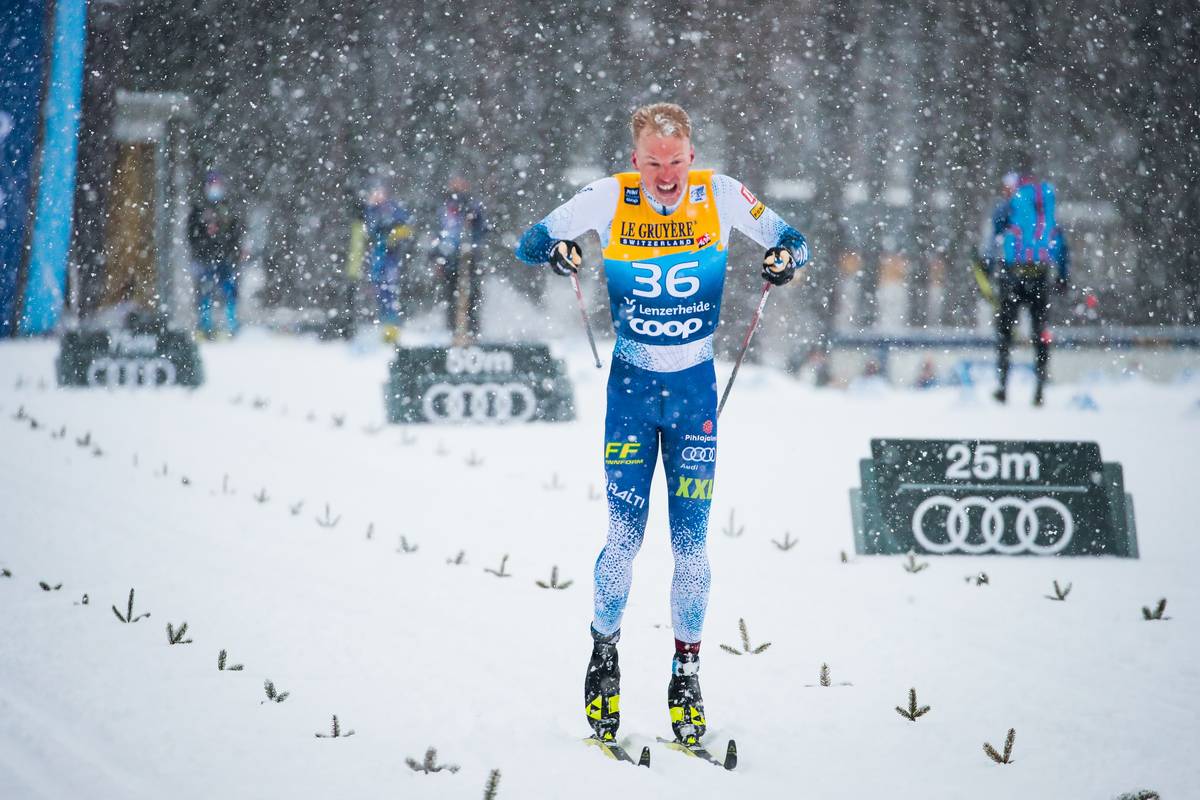
    A model for classic technique, Iivo Niskanen puts on a clinic in Lenzerheide in his signature event. (Photo: NordicFocus)

    With snow continuing to fall and tracks beginning to disappear, some athletes began to favor double pole to striding. Conditions didn’t seem to slow down Niskanen as at the 10k mark he was able to grow his lead over the pack. Bolshunov was still in second (+15.7), looking back on form and in contention for the podium. Goldberg  was in 3rd (+28.4), with Klæbo sitting just off the podium in 4th (+33.3).   

    Back on form in Lenzerheide, Alexander Bolshunov (RUS) skis to second in Stage 2 of the Tour de Ski. (Photo: NordicFocus)

    Thriving in his signature event, Niskanen continued to set the bar at each checkpoint to take the win in 32:51.7, making it a family sweep with his sister, Kerttu, winning the women’s race. This is Niskanen’s seventh World Cup victory, each of which has been in the 15k classic. He’ll be one to watch in the event at the upcoming 2022 Olympics, where he’ll be looking to add a third gold medal to his collection. Niskanen won the 50k classic in 2018 and was a member of the winning classic team sprint duo in 2014.

    Iivo Niskanen powers through the final meters for a commanding win in Stage 2 of the Tour de Ski. (Photo: NordicFocus)
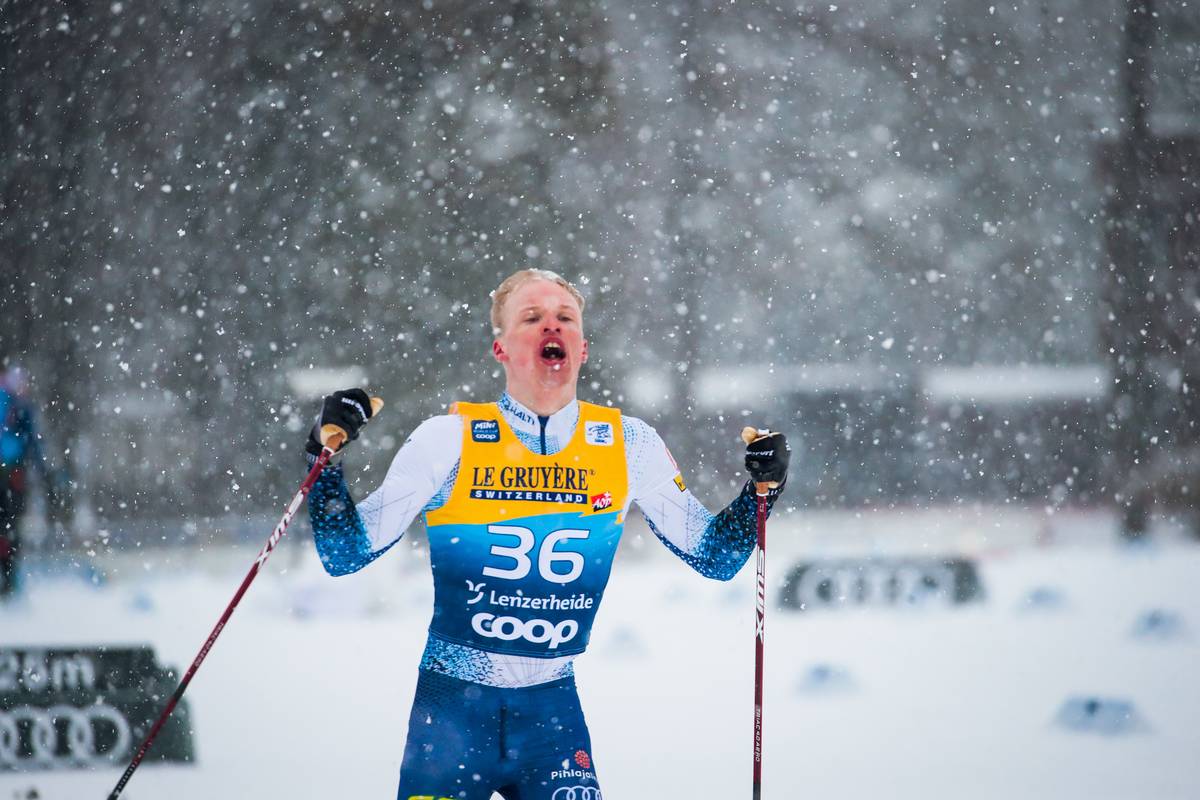
    Iivo Niskanen celebrates victory in the 15k individual start classic in Lenzerheide. (Photo: NordicFocus)

    Perhaps a breakthrough after setbacks, Bolshunov held on for second (+19.3), finally earning another individual podium after weeks away. Goldberg was able to hold off his fellow teammate, Klæbo, to finish 3rd (+25.2) and 4th (+34.3) respectively. Yakimushkin (+34.6) couldn’t close the gap on Klæbo in the final meters, finishing just off the Norwegians mark in fifth (+34.6).  

    Alexander Bolshunov finishes solidly in second place in the 15k individual start classic in Lenzerheide. (Photo: NordicFocus)
    Johannes Høsflot Klæbo takes fourth in tough conditions during the 15k individual start classic in Lenzerheide, keeping himself in good standing in the overall Tour ranks. (Photo: NordicFocus)

    After the race, Niskanen told FIS, “I felt quite good… I tried to keep the race slow and steady [at the] start. I actually started too fast. I am happy, it was good also at the end.”

    Niskanen also explained how he felt before the race after seeing his sister winning the women’s race, “I got a little nervous before the race because I saw she won.  We had really good skis today, and it was an unbelievable day for our family.”

    The men’s podium in Lenzerheide, SUI: Iivo Niskanen (FIN) took the win, ahead of Alexander Bolshunov (RUS) and Pål Golberg (NOR). (Photo: NordicFocus)

    Racing through tough conditions, each of the Americans finished outside the Top-30. Schumacher was the top finisher, placing 38th (+2:13.4), roughly 9 seconds off 30th place. Ogden was not far behind placing 44th (+2:22.4). Bolger placed 65th (+3:25.3), with Hanneman finishing 70th (+3:44.8). Luke Jager finished just in front of Zak Ketterson, placing 84th (+4:36.4) and 85th (+4:43.2), respectively.  

    Post-race interview with Matt Whitcomb, from U.S. Ski & Snowboard cross country communications manager Tom Horrocks, discussing the men’s and women’s day in Lenzerheide.

    Kevin Bolger slides over the line for 65th in Lenzerheide. (Photo: NordicFocus)

    There are two sets of standings in the Tour, points and cumulative time. Bonus points were up for grabs at the 2.4k mark, providing an opportunity for sprinters to stay in the mix through the distance-heavy Tour. While sprinters did not look to fight for these points today, Niskanen surged ahead of the field to earn the maximum 15 point-bonus. Bolshunov was second at this checkpoint, claiming 12 points, with Valnes in 3rd for 10 points. Klæbo was 5th at 2.4k, earning 5 bonus points.  

    As results from the day became finalized, Klæbo was able to hold on to the overall lead in the Tour, having a 14 second lead over his teammate, Goldberg. With today’s win, Niskanen moved up the rankings, now sitting in third place.

    Luke Jager finishes Stage 2 of the Tour de Ski, racing through tough and snowy conditions in Lenzerheide. (Photo: NordicFocus)

    After a day off for rest and travel, racing will continue on Friday with a 15k freestyle in Oberstdorf, Germany. 

    Final Results  |  Overall Standings 


  • Klæbo Takes the Win in Tour de Ski Stage 1 Freestyle Sprint; Ogden and Bolger Qualify Top 10; Three Americans in Heats

    Klæbo Takes the Win in Tour de Ski Stage 1 Freestyle Sprint; Ogden and Bolger Qualify Top 10; Three Americans in Heats

    This World Cup coverage is made possible through the generous support of Marty and Kathy Hall and the A Hall Mark of Excellence Award.  To learn more about A Hall Mark of Excellence Award or to learn how you can support FasterSkier’s coverage please contact info@fasterskier.com.


    To set the scene for the Tour de Ski, briefly turn to an episode from the event that inspired it. Cue “the Badger,” Bernard Hinault, who at the start of the 1985 Tour de France reduced the three week race down to one question: “Look at the results last year – Laurent Fignon first, me second and Greg Lemond third. Now Fignon won’t be there. What answer do you get?”

    The answer: Lemond and Hinault would battle as teammates in the greatest editions of the Tour de France ever in ‘85 and ‘86. In the end, Lemond “slayed the Badger,” besting Hinault to win the Tour in ‘86 and establish the Americans as winners at the Tour.

    An American flag flies in Lenzerheide as the Tour de Ski kicks off Stage 1. (Photo: NordicFocus)

    Switch seasons, sports, and circumstance and we can reduce this year’s Men’s Tour de Ski (TDS) to one question too: Look at the results last year – Alexander Bolshunov (RUS) first, Maurice Manificat (FRA) second, Denis Spitsov (RUS) third. Johannes Høesflot Klæbo (NOR) was not there. Now he is back. What answer do you get?

    The answer: Klæbo.

    In the first stage of this year’s Tour de Ski at Lenzerheide, the Overall and Sprint leader of the World Cup came into the freestyle sprint, and looked in control each time he headed out on the 1.5-kilometer course, winning the qualifier (2:36.66) before cruising through the quarterfinals and semi-finals to keep his yellow World Cup Sprint leader’s bib as he exited the final.

    But back-up, and you see another parallel to Lemond at cycling’s Tour, with today’s stage marking the ascendancy of the Americans. They put three in the top 30, with Ben Ogden finishing qualifying in 5th place (+5.81sec), Kevin Bolger in 9th place (+6.62), and Logan Hanneman in 30th (+9.78).

    Logan Hanneman skis through to the quarterfinals, finishing 30th in qualification. (Photo: NordicFocus)

    In the quarterfinals the first three heats were marked by somewhat conservative tactical posturing, with a field figuring out how to race the course at Lenzerheide after a two year absence. There was a good reason too. The two 750m laps are marked by a steep initial climb that after a turn gives way to a long downhill whose end is a sharp left into the stadium. That sharp left proved time and again to eliminate the gaps that attacking skiers tried to create on the first climb. It also led to opportunities to find a good position for the final sprint and pick up places in the field.

    That was how Klæbo looked to race the first quarterfinal of the day, following Lucas Chanavat (FRA) into the second downhill before launching to the outside to capture the heat in the final stretch. Logan Hanneman seemed to mirror Klæbo’s moves through the heat, tucking in behind him on the downhill the 2nd time but finding that he hadn’t pushed with the same energy, as he said in comments to Fasterskier: “Klaebo and Chanavat pushed harder than I did over the top of the climb on the second lap and all of the sudden then had some meters on me. It’s easy to think that others had faster skis than myself today since I got passed on the long downhill the second lap, but that probably only because I didn’t see what they were doing behind me. I am sure they skated harder than I did and built up more energy to come by me.” Hanneman finished the heat in 5th place.

    Kevin Bolger leading out his quarterfinal after qualifying 9th. Bolger finished the heat in 4th place, missing out on a lucky loser semi-final bid by just .76 seconds. (Photo: NordicFocus)

    Bolger and Ogden opted to race out of the 4th and 5th quarterfinal, respectively, being the top qualifier in each. In contrast to Hanneman’s approach, the two both went with the strategy of leading out the field and trying for the gap on the first downhill. Both Ogden and Bolger’s attacks had the effect of animating their heats, which led to full bore racing for the entirety of the 1.5k course and eventually faster times across the field.

    Their aggressive racing was foiled by the sharp left turn into the finishing straight, with the fields coming together and both Ogden and Bolger losing their position at the front of the field.

    Bolger came across the line of his heat in 4th place, but his move early on to set a fast pace for the heat paid off, temporarily earning him a lucky loser spot. After the 5th heat though, where Ogden finished in 5th, Bolger was knocked out of the final lucky loser spot by Alexander Terentev (RUS) by less than 0.8 seconds.

    Ben Ogden leads his heat over the first climb on course in Lenzerheide, SUI. Ogden qualified 5th. www.nordicfocus.com. (Photo: NordicFocus)

    Still, the Americans’ quarterfinal performances left them in a strong position to challenge for the points classification, which will now turn to intermediate sprint primes at various checkpoints within the next two stages’ distance races.

    It also left a semi-final field filled with familiar races from Tour de Ski’s past. Richard Jouve (FRA), Lucas Chanavat (FRA), and last year’s champion in the TDS Sprint Freestyle stage Fredrico Pellegrino (ITA). The younger sprinters who have featured on sprint podiums this season, Alexander Terentev (RUS) and Erik Valnes (NOR), were there too. Notably, last year’s Tour de Ski overall and points champion Alexander Bolshunov (RUS) was not, after being finishing 3rd place in his quarterfinal.

    And, of course, there was Klæbo.

    In the first-semi final, as the Frenchmen Jouve and Chanavat moved to the front of the pack at the beginning of the heat, Klæbo tucked in right behind them. As they came out of the first lap, Klæbo followed Pellegrino’s attack on the climb, but didn’t really look to make his move until the last downhill. Here he demonstrated an approach to the climb that was absent elsewhere in the men’s field the rest of the day, sprinting in a tuck skate to hit the apex of the final turn in a way that shut the door on the rest of the field. 

    Did he have the purest burst of speed on the finishing stretch? Probably. But it was already over before he hit that stretch, and he crossed comfortably in first place.

    Lucas Chavanat (FRA) leads Johannes Høesflot Klæbo into the downhill during their semi-final. www.nordicfocus.com. (Photo: NordicFocus)

    Chanavat and Jouve’s attacks early in the race had a similar effect on the semi-final as the Americans did in the quarterfinal. The first semi-final proved to be the faster field, and so Jouve (2nd), Chanavat (3rd), and Pellegrino (4th) all progressed to the final.

    There they were joined by two more Norwegians, Pål Golberg and Erik Valnes, who followed their countrymen’s lead in the second semi-final heat to out-sprint Renaud Jay (FRA).

    The final followed the pattern established in the previous round. Chanavat and Jouve seemed mindful that their chance to beat Klæbo most likely lied in a long-burn attack that saw him, Valnes and Golberg left out of the pack going into the second lap. Unfortunately, again, that attack met the long downhill sharp left turn.

    Klæbo seemed content to simply keep up with Pellegrino as he made a move on the final climb of the day, before sweeping to the outside and attacking the final downhill to leave the rest behind before that pesky left turn could shake-up the field again. He crossed in first place, with Jouve in 2nd (+.99) and Chanavat in 3rd (+1.26).

    Klaebo comes across the finishline 1st place, with Richard Jouve (FRA) and Lucas Chanavat in tow (FRA). (Photo: NordicFocus)

    With the win, he established himself on an early, but clear path, to retake the Tour’s Overall and Point classifications after missing last year. His win today also helped him move up the ranks in the Tour’s history, passing Dario Cologna and Martin Johnsrud Sundby’s 7 stage wins to move him into 3rd all-time with 8 – behind Sergey Ustiugov (9), and Petter Northug (13). He also extended his all-time individual sprint stage lead in TDS history to 5.

    So while we came into today’s stage with one question, we head towards tomorrow’s 15km with many. Just how much more history can Klæbo make? Will Bolshunov re-establish himself as a contender? And where do the American men go from here in this year’s Tour de Ski?

    Men’s podium in Lenzerheide after the first stage of the Tour de Ski. (Photo: NordicFocus)

    For now, the Yellow bib (“le bavoir juane” anyone?) remains on Klæbo’s shoulders, and our eyes on Lenzerheide tomorrow.

    Zak Ketterson comes over the climb in his World Cup debut. Ketterson finished 72nd on the day. (Photo: NordicFocus)

    After the semi and final rounds were decided, Bolger ended his day in 16th (+1.75), with Ogden in 21st (+1.94), and Hanneman in 25th (+5.70).

    The rest of the American men also showed strong results in the qualifier today. Luke Jager finished in 45th (+12.57), with Gus Schumacher in 55th (+13.95). Minnesota’s very own Zak Ketterson also made his World Cup debut, finishing in 72nd (+16.37) after qualifying for the Tour de Ski as the men’s SuperTour leader after racing Period 1 back in the States.

    On his race into the quarterfinals today, Logan Hanneman said “I’m feeling pretty good after today, but still longing for more. It has been a very slow and disappointing start to the season for me, for reasons I can’t explain. I am happy to be seeing progress in the right direction the last two sprints that I have done, but there is still a lot of work left to be done to reach my goals. I am looking forward to trying my hand at some distance races starting tomorrow!”

    Post-race interview with Matt Whitcomb on the course in Lenzerheide, which has suited Americans well over the years, along with additional comments on the men’s and women’s races.

    Gus Schumacher during qualifying in Lenzerheide during stage 1. Schumacher finished 55th. (Photo: NordicFocus)

    Results from Stage 1:

    Qualifier | Finals

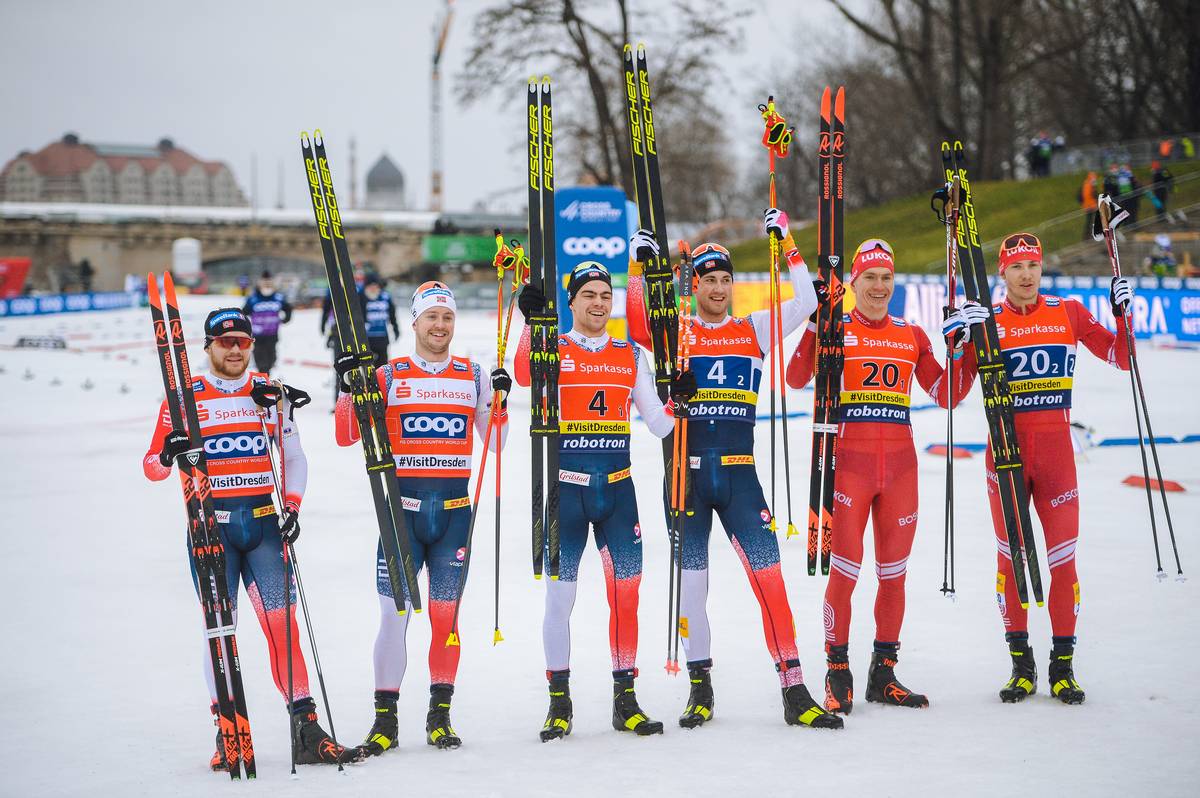
  • Norway Takes the Top Two Podium Spots in the Team Sprint; Bolger and Schoonmaker Ski to 9th

    Norway Takes the Top Two Podium Spots in the Team Sprint; Bolger and Schoonmaker Ski to 9th

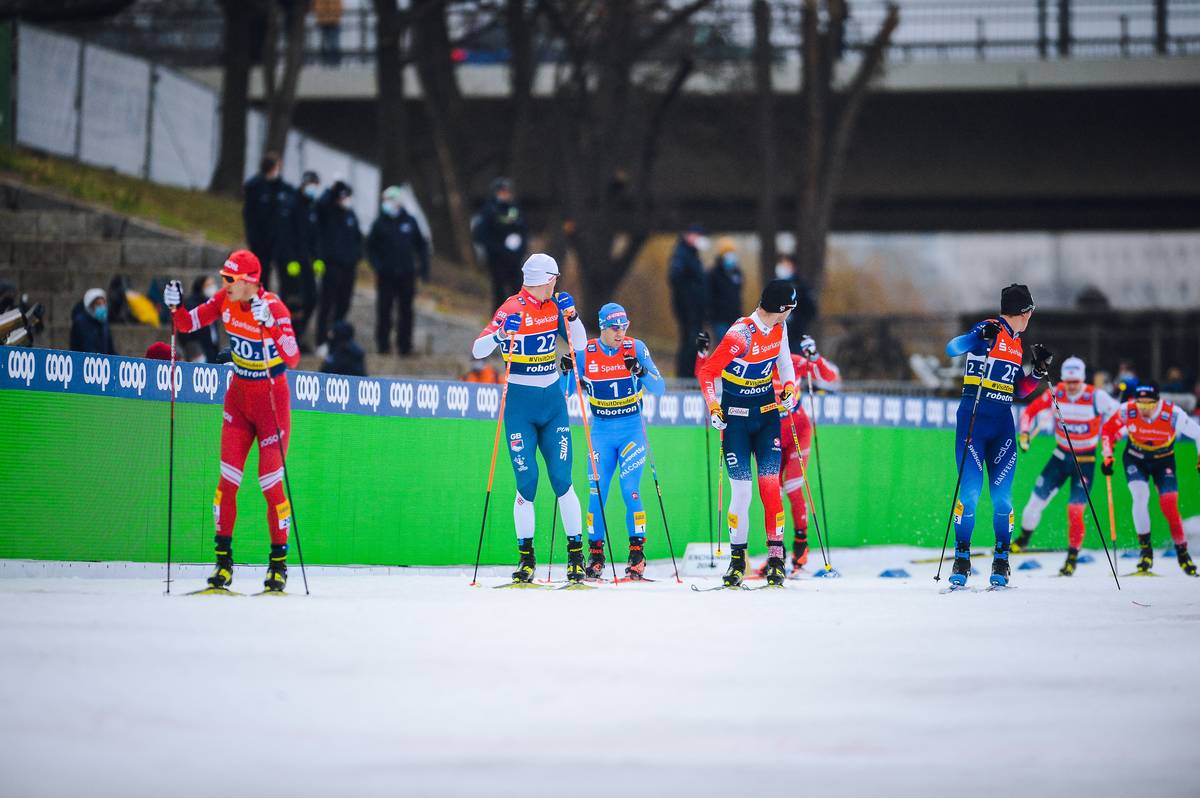
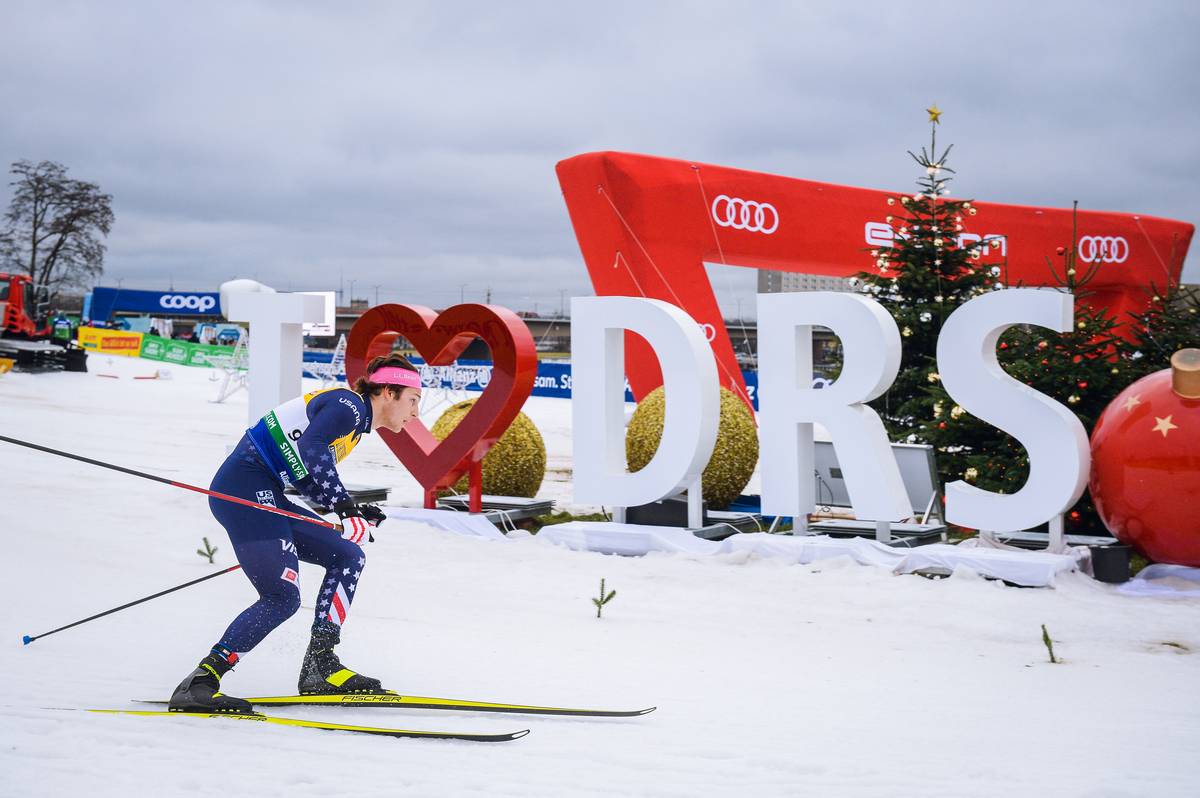
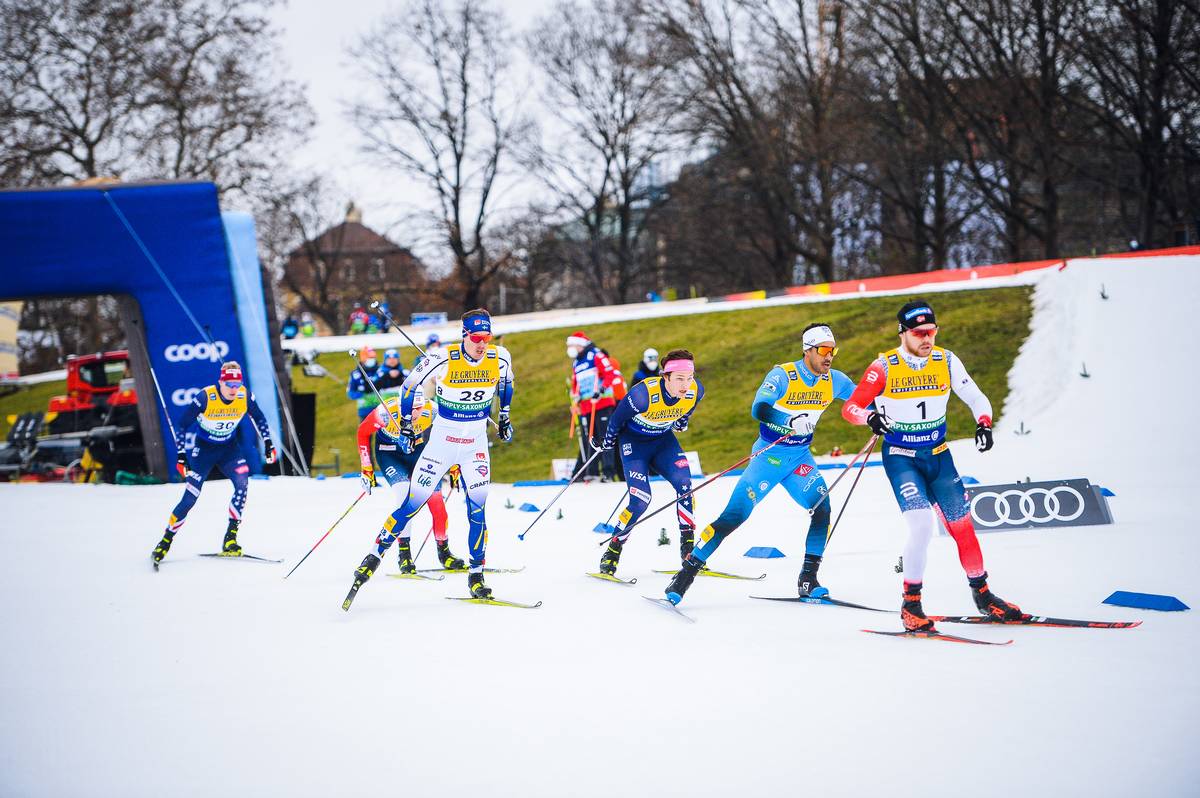
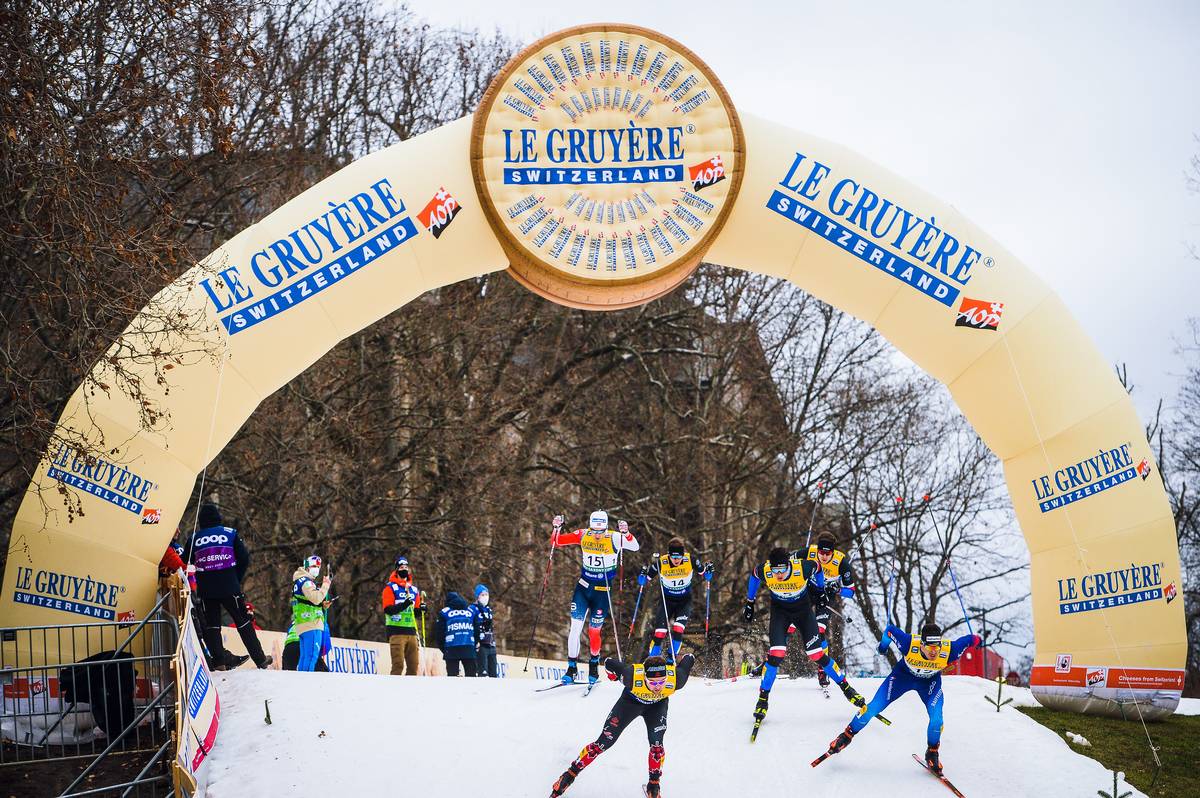
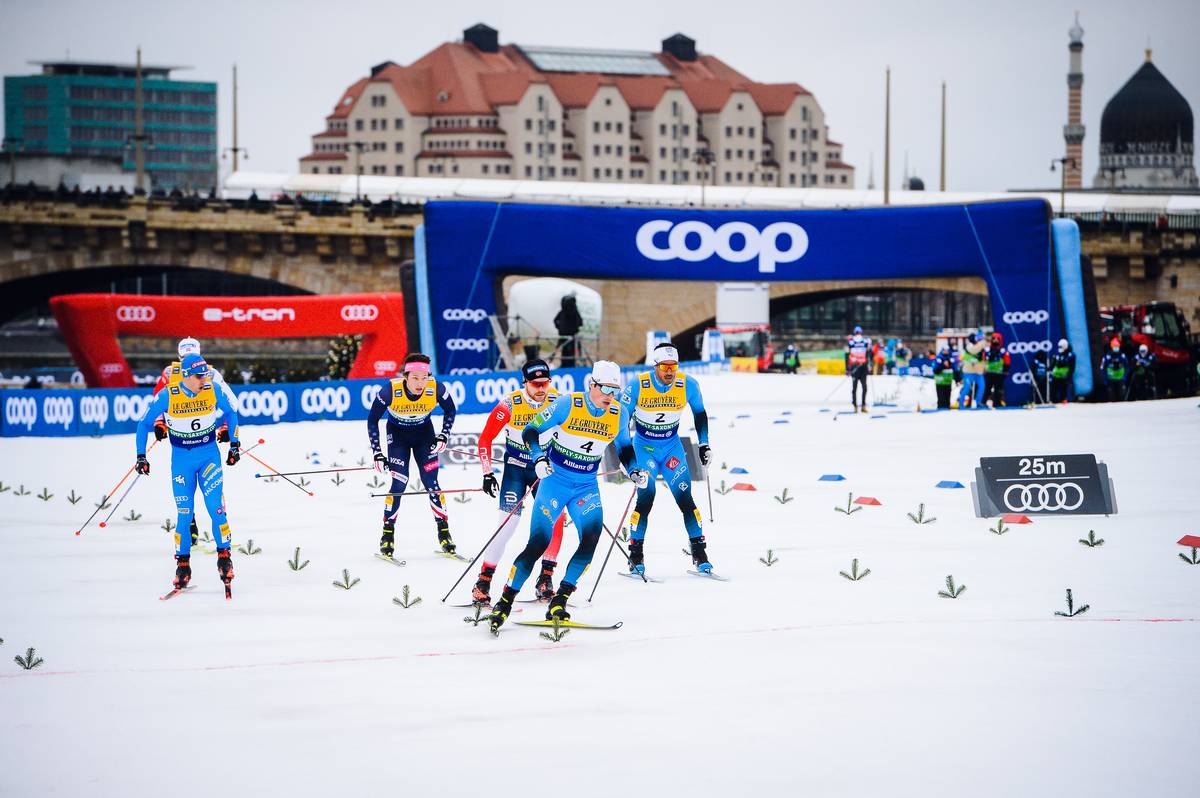
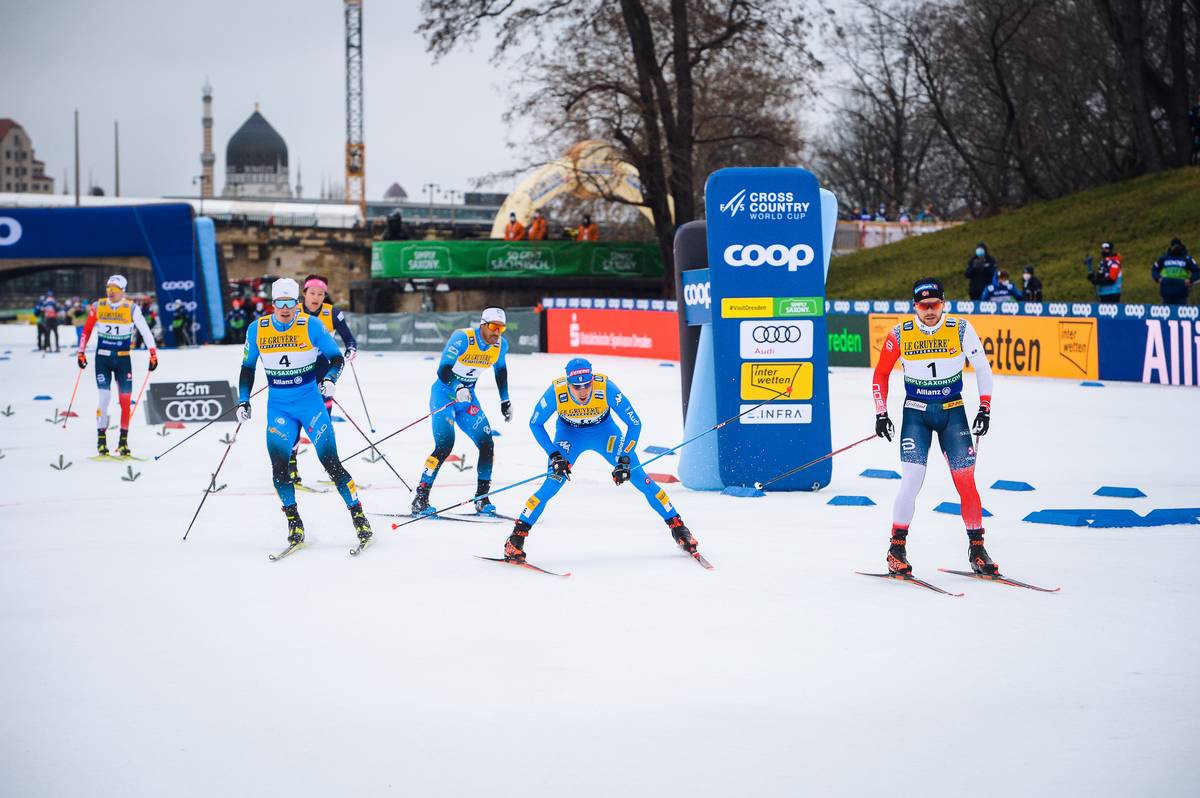
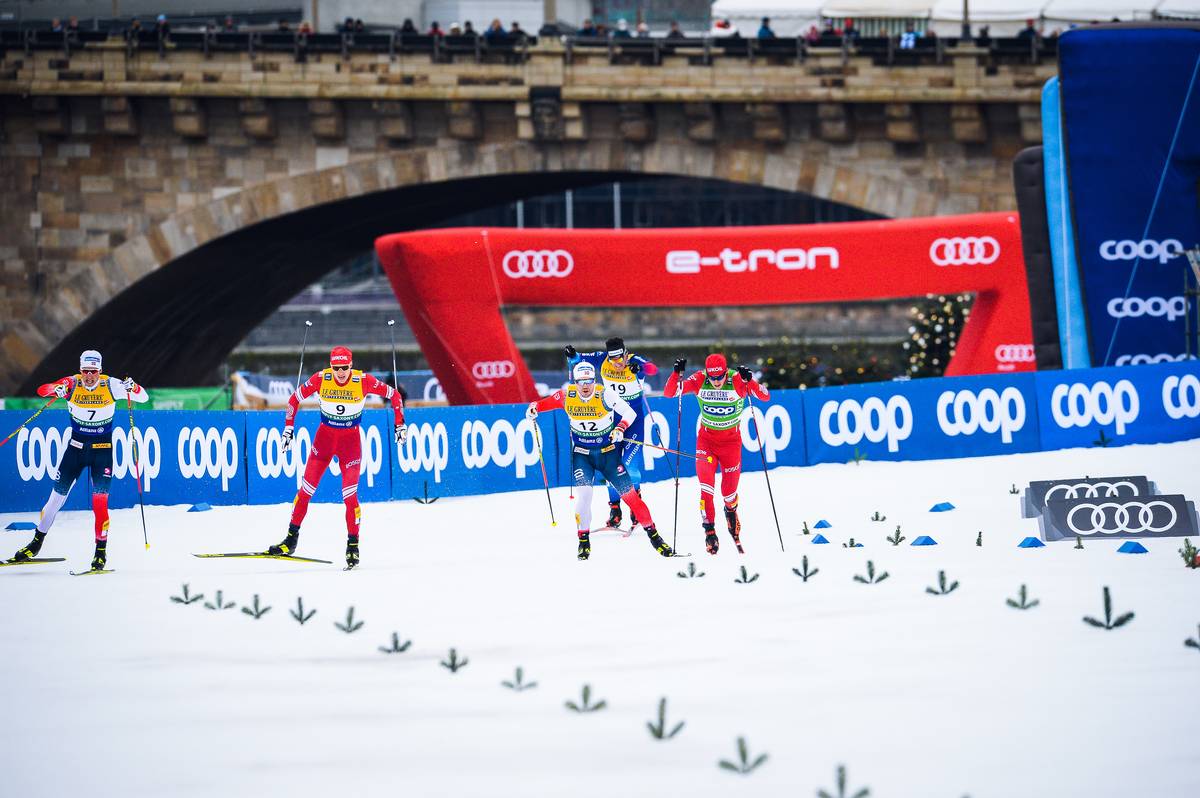
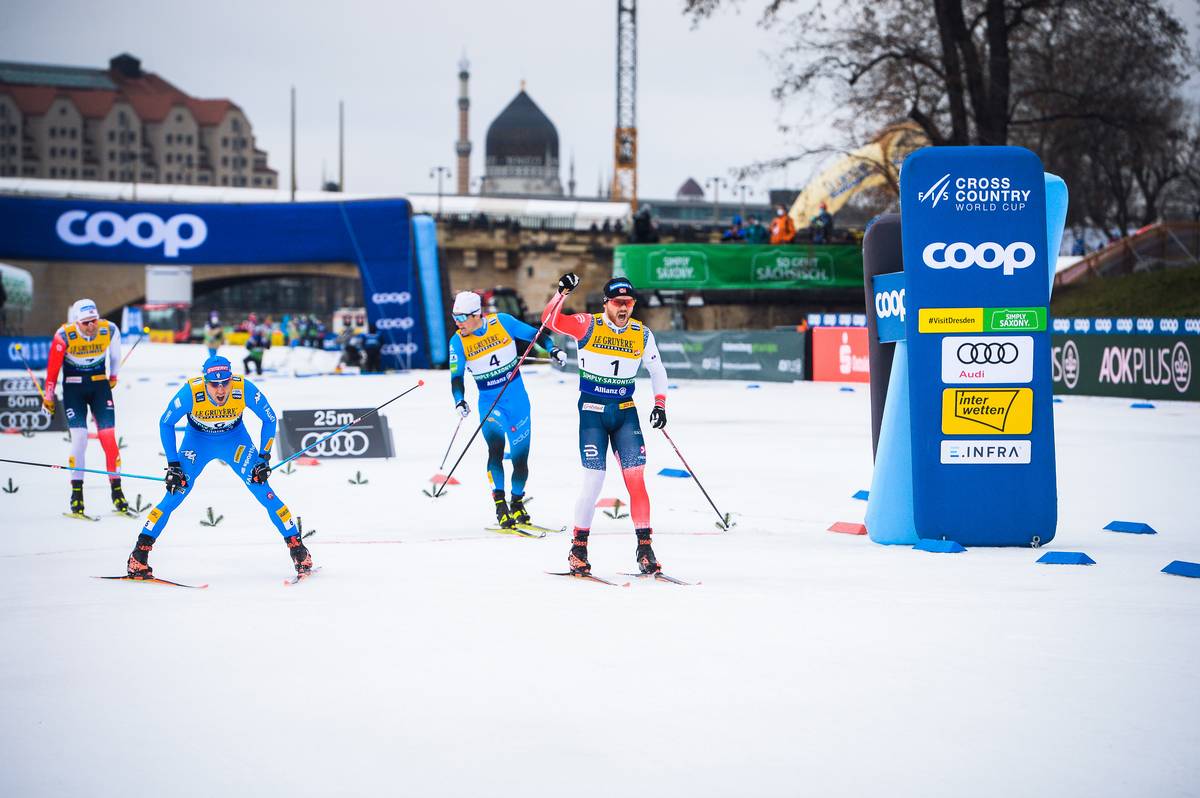
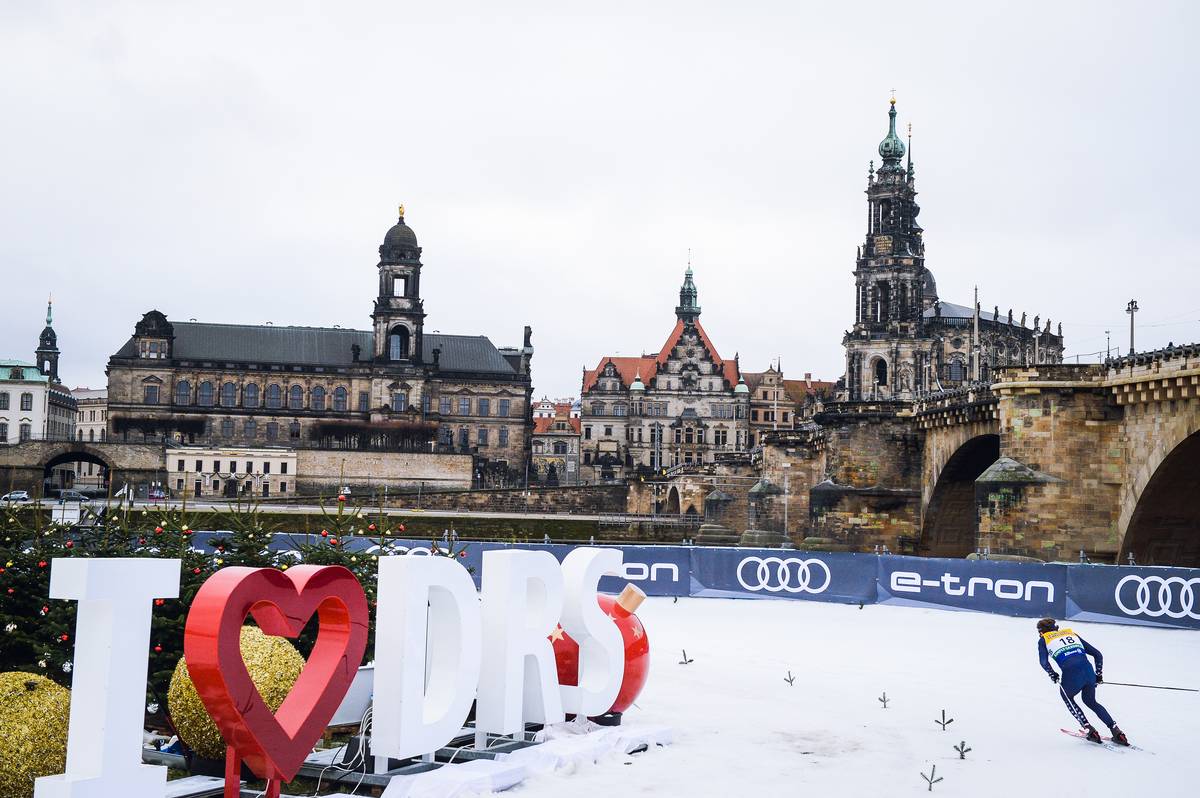
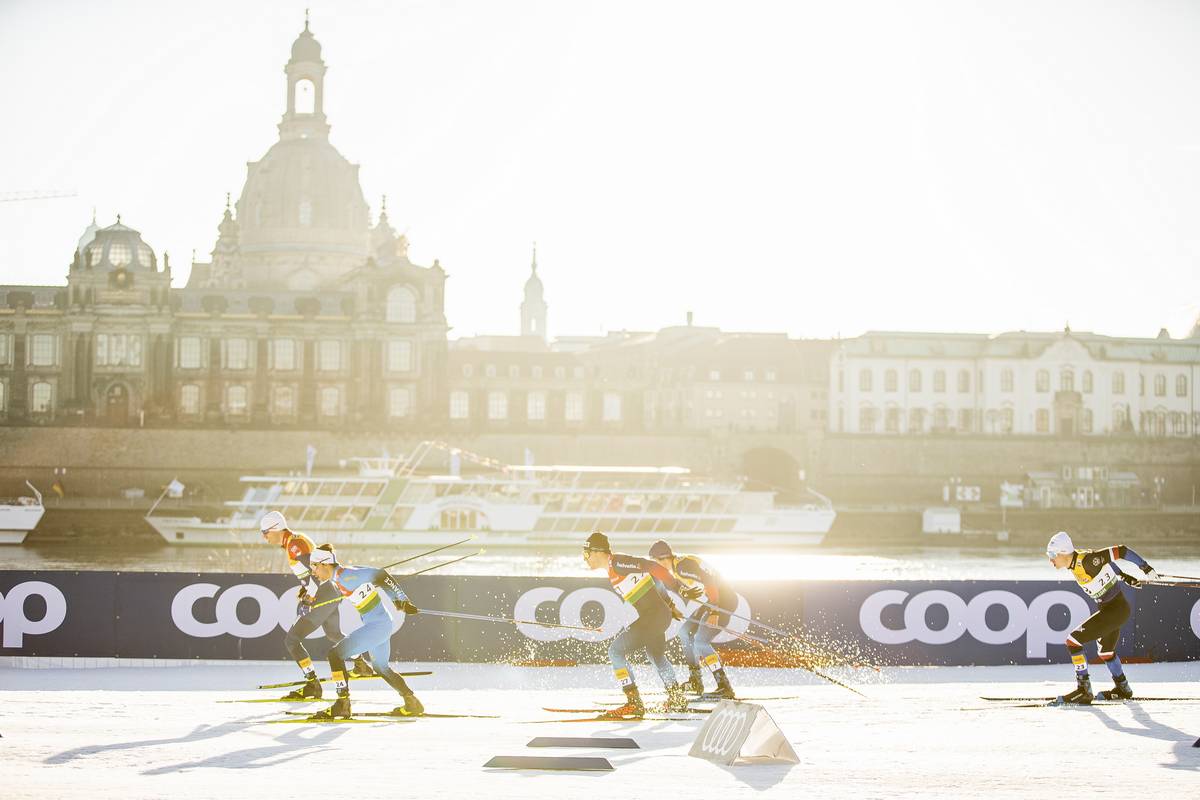
    Overcast skies mute the spectacular architecture along the River Elbe, which provides the backdrop for the sprint track in Dresden, Germany. (Photo: NordicFocus)

    This World Cup coverage is made possible through the generous support of Marty and Kathy Hall and the A Hall Mark of Excellence Award. To learn more about A Hall Mark of Excellence Award or to learn how you can support FasterSkier’s coverage please contact info@fasterskier.com.

    In the wake of the American women taking second to the Swedish powerhouse duo, and yesterday’s top two spots on the podium, Maja Dahlqvist and Jonna Sundling, the men’s team of JC Schoonmaker and Kevin Bolger lined up to race the freestyle team sprint final on the track in historic Dresden, Germany. 

    “Together again,” wrote Bolger in a post-race email. “We teamed up 3 years ago when JC came over for his first World Cup and didnt ski great then together, but being able to team up again and move to the final after a really solid semi was super rad today! He skied really well all weekend and I’m so impressed with how he’s looking, so it made today really fun!”

    Six quick laps each, eleven exchanges total, on a flat and fast city 0.65-kilometer loop with minimal recovery means flooded legs and tight racing. Like a series of just-over one minute intervals with equal rest, athletes take a conservative start, accruing fatigue while minimizing the opportunity for crashes and broken equipment to decide the race, over fitness and tactics. As the number of remaining laps dwindles, the pace steadily builds, like a bottle rocket, until the critical point arrives in the last few laps and leaders explode off the front in an effort to take control of the outcome. 

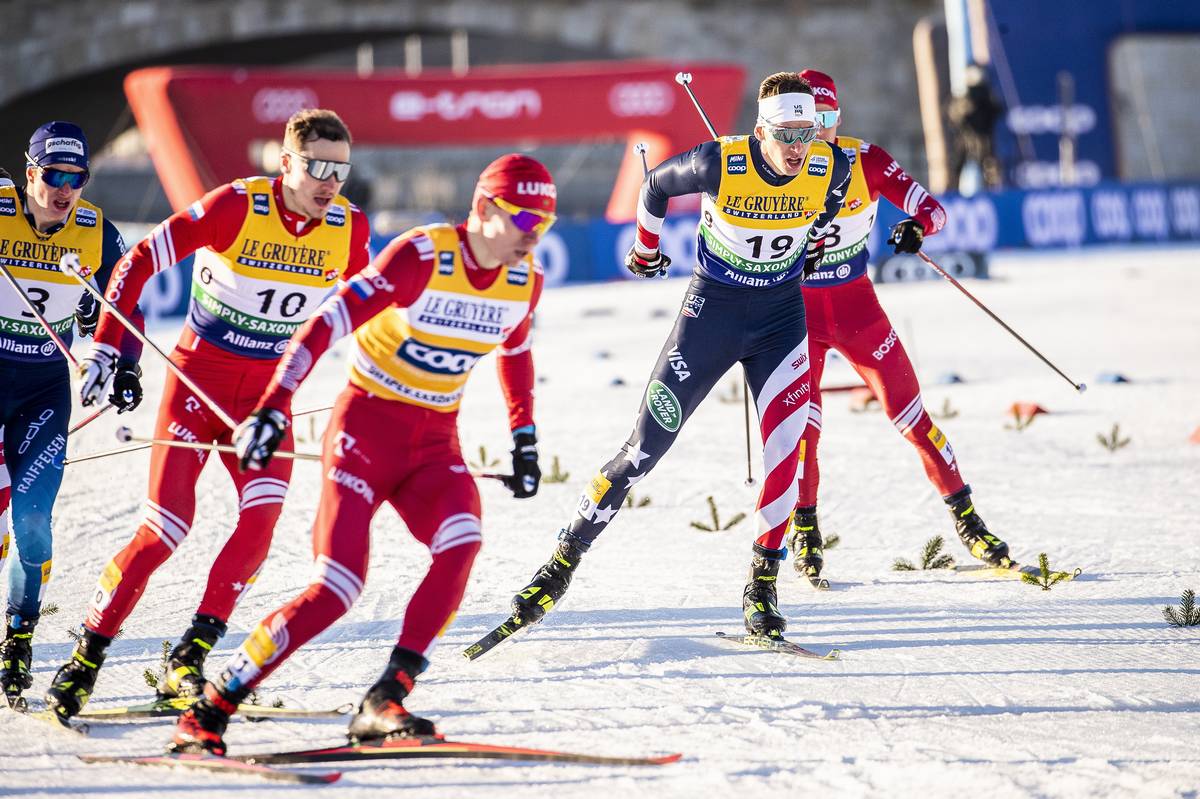
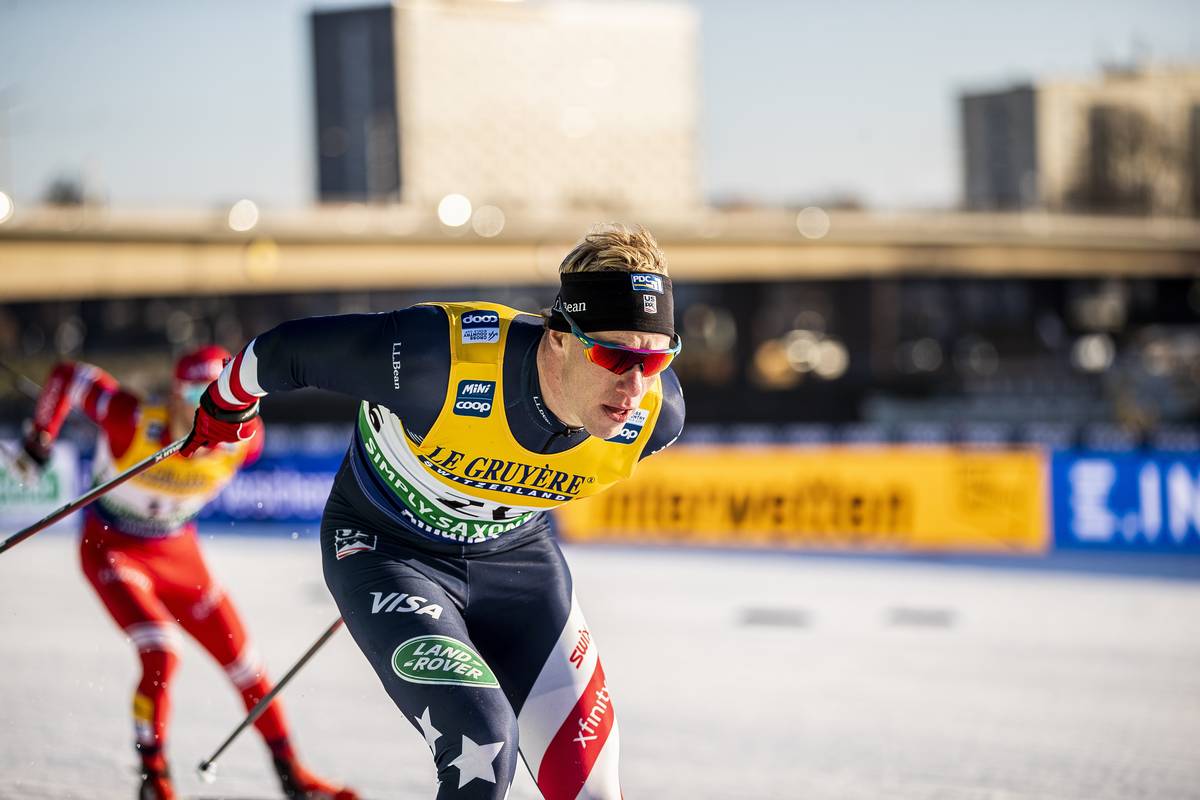
    Kevin Bolger navigates a tight curve during the men’s team sprint in Dresden, Germany. (Photo: NordicFocus)

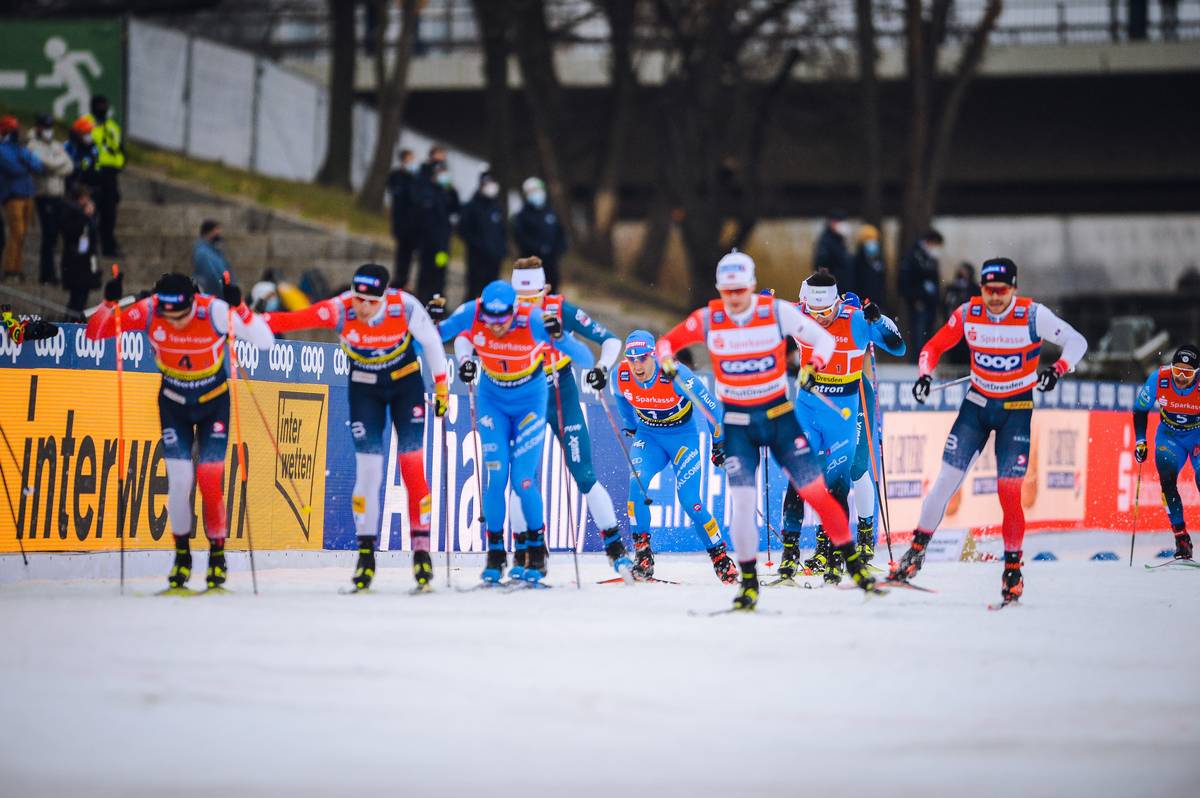
    As expected from a lap that lasted just over a minute, the whole pack of ten teams stayed very tight through the halfway mark. The Norway II team of Thomas Larsen and Even Northug spent time at the front, putting in quick surges at the beginning of each leg to re-establish their position. 

    Tagging off after lap 6, the team tagged off with Great Britain on one side, and the Norway I team of Sindre Bjørnestad Skar and Håvard Solås Taugbøl, on the other. Still very much in the mix were the Russia I pairing of Alexander Bolshunov tagging Gleb Retivykh, Italy’s Francesco di Fabiani and Federico Pellegrino, and France’s Richard Jouve and Lucas Chanavat. 

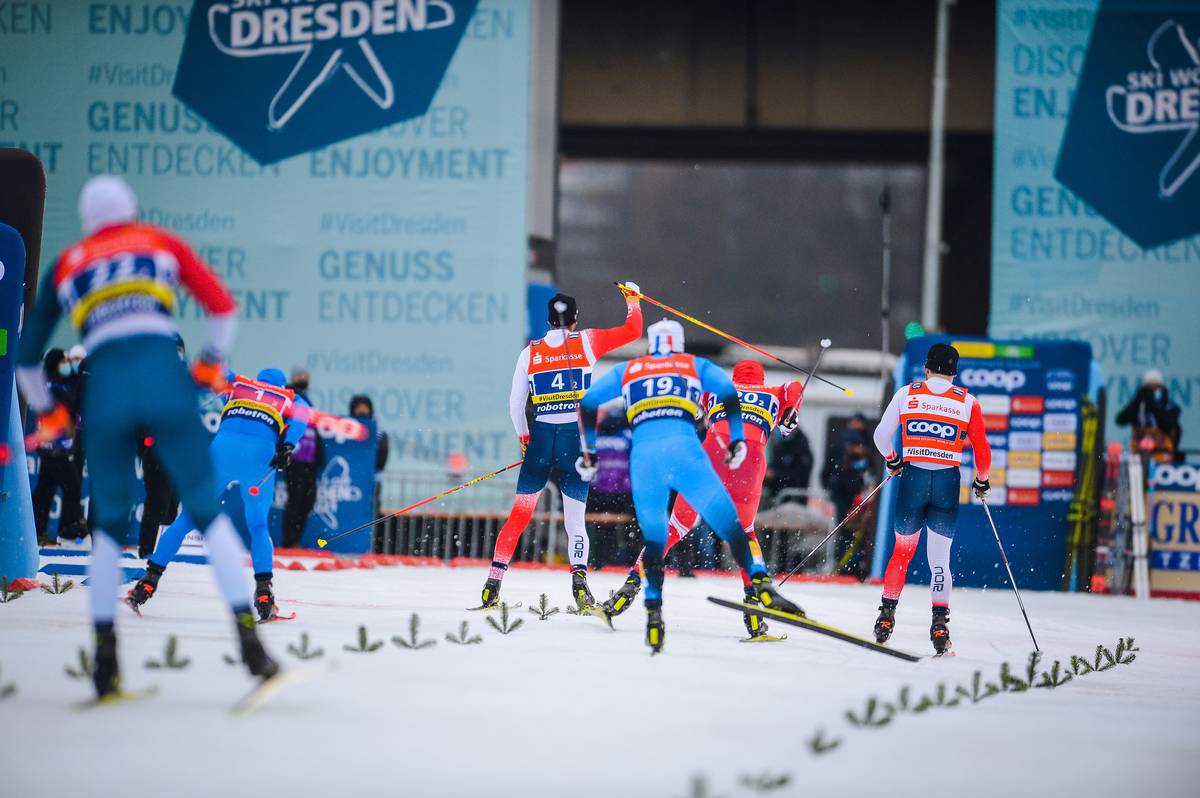
    The leaders wait for a tag during the Dresden team sprint. (Photo: NordicFocus)

    At the half, the Americans remained in contact near the back of the pack, as Bolger tagged Schoonmaker in 9th (+2.0). 

    Coming into lap 9, Bolshunov made a move to the front to take the reins for Russia I, with both Norway teams and Jouve quickly responding to his tempo, while Italy and Great Britain worked hard to maintain contact. This burst set the tone for the final three laps.

    As Retivykh unsuccessfully attempted to drop Taugbøl and Northug in lap 10, the pack in pursuit began to stretch out. While all remained in contact with the leaders, Great Britain began to look out of the running for a win, with Italy and France remaining a podium-threat in fourth and fifth. The teams behind thinned rapidly.

    Still tight at the Tag, Norway II, Italy, and Norway I (left to right) head out for another lap during the Dresden team sprint. (Photo: NordicFocus)

    In Bolshunov’s final lap, he rocketed off the front, skiing powerfully through his legs with an aggressive forward lean, carrying momentum between each push. Whereas the early laps, rounding the tight curves looked careful and calculated, the men shot around the degrading bends, losing no speed as they pushed into the straightaways. 

    Tagging off for the final lap, Northug accelerated ahead of Retivykh, free skating powerfully off the first roller to regain the lead for Norway II. Feet quickly stepping around the first curve, Norway II looked in control with Norway I and Russia not ceding the win just yet. Italy and France remained on their tails, still in position for the podium. 

    Coming into the final curve hot, Taugbøl made an attempt to slingshot Norway I to the lead, but the tactic was thwarted by the closing speed and power of Northug. Standing up to pump his fist into the air, Northug coasted over the line for the win in 14:19.34, while Taugbøl narrowly edged out a hard-closing Retivykh to make it Norway II, Norway I (+0.42), then Russia I (0.62) for the podium. 

    Even Northug pumps his fist as he takes the win, while the second and third spots on the podium remain up for grabs behind him. (Photo: NordicFocus)

    “It was amazing,” Northug told FIS at the finish. “We struggled a little bit in the semifinal, but in the final we did everything right. Thomas sent me out first on the final lap and that was the plan. It was good.”

    Speaking to the experience of racing with Northug, Larsen spoke highly of his partner, and of putting the Norway II team ahead of Norway I on the podium. 

    “It’s fantastic, he’s an incredibly good skier,” Larsen said. “He hasn’t had so many chances in the World Cup so far, but now he shows with yesterday and last week, he shows that he is one of the best in the world. I think this was a dream team today, and it’s cool to be the underdogs and just take it home.”After a fast final leg by Pellegrino to keep his team in the mix for the top-three, Italy was next over the line, narrowly missing the podium in fourth (+0.78), with Chanavat bringing the French I team home in fifth (+1.21). Knowing he was no longer in position to snag top-three, Great Britain’s Andrew Young relaxed in the final stretch, coasting over the line in sixth (+3.84), followed by a sizable gap to the next racers. 

    The men’s podium of the team sprint in Dresden: The Norway II team of Thomas Larsen and Even Northug took the win ahead of Norway I, Sindre Bjørnestad Skar and Håvard Solås Taugbøl, and Russia I, Alexander Bolshunov and Gleb Retivykh. (Photo: NordicFocus)

    After losing contact in the final laps, Schoonmaker brought the American team to the line in 9th (+11.36). 

    “Dresden is a really fun event,” Bolger said after the race. “I think it’s something a lot of us skiers on the a World Cup enjoy to mix things up!”

    Bolger explained that he and Schoonmaker “just wanted to stay out of trouble — and try as best as we could to put ourselves into a position to where we could attack when we needed to… I was hoping for more of a tactical final but it seemed like Bolshunov had a different plan and really pushed the pace for my leg the whole time, which made it really hurt, but I think that makes it really fun and competitive!”

    Providing insights into the team’s tactics and his experience during the final, Schoonmaker provided the following comment in a post-race email from the road.

    “I would say our main strategy going into the final was to conserve energy while staying in the top half of the field so that we would be able to match any moves made later in the race,” Schoonmaker explained. “It seems everyone had the same plan in mind, though, so it was tough to make that work. We were a little too far back to make anything happen when the pace picked up in the second half of the race. In Dresden, it really seems to be all about being out front because passing is just hard on a short, narrow and turny course. It’s a super fun format with the short laps, but also very challenging!”

    Racing in semifinal B, Luke Jager and Logan Hanneman skied to 10th (+10.96), with the Canadian duo of Russell Kennedy and Graham Ritchie not far behind in 12th (+14.91). Neither team advanced to the finals. 

    With champagne spraying, Even Northug and Thomas Larsen step off the top spot of the team sprint podium in Dresden. (Photo: NordicFocus)

    Despite sitting out the weekend in Dresden, Norway’s Johannes Høsflot Klæbo currently leads both the World Cup overall and sprint standings. Klæbo is roughly 150 points ahead of Sergey Ustiugov (RUS) in the overall, and 60 points ahead of Taugbøl in sprinting. 

    Leading the American men, Schoonmaker sits in 11th place in the sprint standings with 112 World Cup points, and 20th in the overall. Schoonmaker is also the second ranked U23 skier, trailing Russia’s Alexander Terentev by 219 points. 

    Ben Ogden also ranks inside the top-30 in sprinting, sitting in 23rd with 46 points. Ogden is 4th on the U23 list, with Gus Schumacher 20 points behind in 7th. Luke Jager sits in 13th of the 21 athletes on the U23 list, with Zanden McMullen close behind in 16th. The future of American skiing is looking bright.

    Face painted with stars and stripes, JC Schoonmaker leads the American men in the overall, sprint, and U23 World Cup standings. (Photo: NordicFocus)

    After a holiday break, racing continues with the Tour de Ski, which kicks off in Lenzerheide, SUI on December 28th. 


    Results:

    Team Sprint: Semifinal A | Semifinal B | Final

    World Cup: Sprint Standings | Overall | U23

  • Taugbøl Takes the City Sprint Win in Dresden; Schoonmaker Back in the Semis to Finish 9th

    Taugbøl Takes the City Sprint Win in Dresden; Schoonmaker Back in the Semis to Finish 9th

    The men’s podium of Dresden’s individual freestyle sprint. Håvard Solås Taugbøl (NOR) took the win ahead of Federico Pellegrino (ITA) and Lucas Chanavat (FRA). (Photo: NordicFocus)

    This World Cup coverage is made possible through the generous support of Marty and Kathy Hall and the A Hall Mark of Excellence Award. To learn more about A Hall Mark of Excellence Award or to learn how you can support FasterSkier’s coverage please contact info@fasterskier.com.

    With Christmas decor lining a ribbon of snow providing a better indication that we are nearing the end of Period I and heading into the holiday season than the surrounding green grass in Dresden, Germany, athletes took to the track in the city for yet another iteration of its thrilling sprint weekend. Humid conditions well above freezing made for fast racing on the two-lap course, which often sees spicy turns and tactics, without a significant climb to separate the field in a deciding manner. 

    If you’d like a throwback from January, 2018, here’s a video clip from Instagram where Simi Hamilton painfully face-plants, just after having broken the pole of Johannes Høsflot Klæbo. This left Hamilton with a lip full of carbon-fiber splinters and plenty of abrasions from the harsh granular track. Good times.

    After the first three weekends of racing, 21-year-old JC Schoonmaker sat in second place in the U23 World Cup standings, and 27th in the overall World Cup ranks. Showing he was ready to build on this platform, Schoonmaker smashed the qualifier, finishing third, 1.16 seconds behind Norway’s Håvard Solås Taugbøl and roughly 0.3 behind Richard Jouve of France, who qualified in second. 

    In an episode of Nordic Nation recorded earlier this week, Schoonmaker, along with teammates Ben Ogden and Gus Schumacher, discussed how their results in the early season races have encouraged them to raise their limits and take chances in their sprinting as they transition into their senior racing careers. Instead of choosing heat four or five, which they explained shows that one is limiting their potential on the day to the semifinal, they wanted to begin racing in earlier heats with the top qualifiers. Thus increasing their risk of being knocked out early, but also learning what it takes to advance further through the rounds.

    JC Schoonmaker skis to 3rd in qualification in Dresden. (Photo: NordicFocus)

    Today, Schoonmaker raced in heat one alongside Taugbøl and Jouve, along with Even Northug (NOR), Johan Häggström (SWE), and teammate Logan Hanneman, who qualified in 7th, 28th, and 30th, respectively. 

    The first lap of the race, the pace was fast but the men looked cool, each carefully navigating the hairpin curves and not racing aggressively. As they accelerated in the second lap, Schoonmaker kept himself in contact with Jouve, who was not in the lead, but still racing in a position of control at the front with Taugbøl. Dropping into a tuck coming off a roller and safely rounding the hairpin, Schoonmaker headed to the final straight behind Jouve. As they powered through the final lanes, it was Taugbøl and Jouve at the front for a photo finish, with Northug finishing just ahead of Schoonmaker close on their tails for third and fourth. 

    JC Schoonmaker marks Richard Jouve (FRA) during the first quarterfinal heat in Dresden. Logan Hanneman stays in contact with the pack in bib 30. (Photo: NordicFocus)

    As the remaining quarterfinals progressed, it became clear that Heat 1 was the fastest, allowing both Northug and Schoonmaker to advance to the semifinals. 

    Hanneman also stayed in contact through the round, finishing 1.88 second behind the leaders, but sixth in the heat. After the final rounds were decided, Hanneman’s position was 30th overall on the day. 

    Also racing in the quarters, Canada’s Graham Ritchie qualified in 16th and raced in the fifth quarterfinal heat. In a competitive position throughout the second lap, Ritchie came into the final hairpin on the inside of the curve, looking to slide up in position heading into the final stretch. Perhaps lacking real estate along the v-board, Ritchie went down, losing his position and ability to advance further. He ended his day in 26th. 

    Graham Ritchie pushes the pace in the quarterfinal in Dresden. (Photo: NordicFocus)

    A post-race Instagram story posted by Ritchie’s coach Erik Bråten captioned “sh*t happens” showed his ski tip had broken off and the base had delaminated — not ideal.

    Racing in the first semifinal, Schoonmaker looked comfortable and smooth, approaching the round in a similar way as the first in terms of his positioning heading into the second lap. 

    At the front, Italy’s Federico Pellegrino, last year’s winner, set the tone alongside Taugbøl, with Jouve in a strong position on their tails. 

    Lapping through the finish, JC Schoonmaker stays in position with the leaders to advance into the final round. (Photo: NordicFocus)

    Putting faith in his boards and catching a quick draft, Schoonmaker again dropped low coming down the last roller and into the final curve. Once again, he was following Jouve and in contact with the front of the pack, however, as they headed into the final lanes, he was only in position to take fifth in the heat, unable to advance into the final round. 

    Still a very strong overall result, Schoonmaker ended his day in 9th overall. 

    In a post-race interview, Schoonmaker discussed his decision to select heat one, along with his rollerski warm up, maintaining the headspace needed to perform between rounds, and what’s next for him over the next few weeks. A quick note, we had some trouble with WiFi connection, which interrupted some of Schoonmaker’s comments. The trials of remote reporting from eight time zones away.

    Taugbøl took the win in the first semi, with Pellegrino narrowly staying ahead of Chanavat in second and third. Jouve was just 0.3 seconds behind his teammate, leaving the two Frenchman in wait to see whether they would advance as lucky losers. 

    A close finish for the top-four, JC Schoonmaker crosses in fifth in his semifinal heat. (Photo: NordicFocus)

    Lead changes and tight racing developed the plot line of the second heat of the semis, which featured Northug and his teammate Sindre Bjørnestad Skar fighting for position at the front with two Russians, Gleb Retivykh and Alexander Terentev, who beat Klæbo in the opening sprint in Ruka and currently ranks just ahead of Schoonmaker in the U23 standings. 

    Each unable to break away at the front on the fast and flat tracks, Northug, Skar, and Retivykh came to the line in unison, throwing their boots for a three-way photo finish. Though their times were indistinguishable, it was determined that their finish order was just that: Northug, Skar, Retivykh, with Terentev a ski length behind in fourth. Men crashed in every direction crossing the line, falling to the ground and gasping for air to evidence the intensity of the effort. 

    Heading into the finish, the second semifinal was tight between two Russians and two Norwegians. (Photo: NordicFocus)

    By the clock, Jouve and Terentev were on the wrong side of the cusp for lucky loser. They ended their day in the semis, while Retivykh and Chanavat advanced to the final. 

    More lead changes and thrill, Chanavat took the lead in the first lap of the final. Lapping over the finish line for the first time, Taugbøl moved to the front while Pellegrino lurked on their tails. Down the backstretch, the Italian moved up alongside Chanavat, skiing powerfully on Taugbøl’s tails as they safely rounded the first hairpin. Not looking to cede space, Taugbøl held himself in a position of command at the front. 

    Around the final curve, Pellegrino tried to sneak around the outside of Taugbøl, but could not quite gain enough ground to find the lead. Heading into the final straightaway, Pellegrino was attacking the track with a powerful V2, but it was still Taugbøl with the advantage at the front, crossing the line just 0.15 seconds ahead of the Italian. 

    Norway’s Håvard Solås Taugbøl takes his first World Cup victory ahead of Federico Pellegrino (ITA) and Lucas Chanavat (FRA). (Photo: NordicFocus)

    In pursuit, France’s Lucas Chanavat crossed the line a ski length behind Pellegrino for the third step of the podium (+0.68), with Northug, Skar, and Retivykh crossing a few meters behind to close out the final round in fourth (+1.22), fifth (+2.01), and sixth (+6.15). 

    Today’s result marked Taugbøl’s fist career World Cup victory.

    “It feels pretty good,” he told FIS humbly after the race. “It’s of course a goal I have tried to reach my whole life, and to do that in Dresden in a show sprint venue, it’s really fun and I’m proud of myself today.”

    The men’s podium congratulates one another on their efforts in Dresden. (Photo: NordicFocus)
    Sportsmanship and respect on display at the finish of the men’s sprint in Dresden. (Photo: NordicFocus)

    Taugbøl also spoke to his highly-respected opponents with whom he shared the podium.

    “Of course to beat guys like Pellegrino and Chanavat, it’s a dream come true. If you try to count how many podiums and victories they have, I can’t count so far. So it’s amazing to be there with them.” 

    Norway’s Håvard Solås Taugbøl earned his first World Cup victory on the tracks in Dresden. (Photo: NordicFocus)

    Despite not adding another win to his resume, today’s result perhaps marks a turning point in the start of Pellegrino’s season. The Italian, who has been a force in skate sprints for many seasons now, had not raced in a final yet this season.

    In an Olympic year that features a freestyle sprint, Pellegrino will be looking to find his peak form in February. The Italian was 11th in the event at the 2014 Olympics in Sochi, and took second in the classic sprint, his weaker discipline, in PyeongChang in 2018, just behind Klæbo. 

    Italy’s Federico Pellegrino skis back into form in Dresden. (Photo: NordicFocus)

    Outside the top 30, Kevin Bolger, who was 6th in the individual sprint in Dresden last year, qualified in 42nd (+7.97). Bolger was roughly two seconds outside the top-30.

    Following Bolger, Ben Ogden finished 51st in the qualifier (+9.37), with Luke Jager in 63rd (+10.73).

    Ben Ogden races the qualifier with the spectacular skyline of Dreden in the background. (Photo: NordicFocus)

    Racing for Canada, Russell Kennedy took 48th (+8.85) in qualification. 

    The weekend of city sprinting continues tomorrow with men’s and women’s team sprints. 

    Results: 

    Qualification | Final


  • Klæbo Strikes Back; Two Americans in the Semis, Three in the Top-30 in Lillehammer

    Klæbo Strikes Back; Two Americans in the Semis, Three in the Top-30 in Lillehammer

    The men’s freestyle sprint podium in Lillehammer: Johannes Høsflot Klæbo takes the win ahead of teammate Thomas Helland Larsen and France’s Richard Jouve. (Photo: NordicFocus)

    This World Cup coverage is made possible through the generous support of Marty and Kathy Hall and the A Hall Mark of Excellence Award.  To learn more about A Hall Mark of Excellence Award or to learn how you can support FasterSkier’s coverage please contact info@fasterskier.com.

    Last weekend in Ruka, a new season of World Cup racing came in like a lion. Right off the bat, there were so many storylines to follow. Here, we’ll focus on those in the men’s sprint. 

    The international cover story was the big upset: 22-year-old Alexander Terentev of Russia beat Norwegian sprint-champion Johannes Høsflot Klæbo, who has more World Cup sprint wins than any other athlete in the field. Even more entertaining: Terentev matched Klæbo’s signature run, which he typically employs to drop his competitors on a final climb, accelerating to the finish in a league of his own. Klæbo’s tactic failed. He was matched at the top of the final climb with a few hundred meters to go, and Terentev was strongest in the final stretch. This made one thing certain: Klæbo would be ready to throw down in his home country as the World Cup swung to Lillehammer. 

    As evidence, Klæbo won the qualifier with a nearly two-second lead ahead of the next athlete, Lucas Chanavat of France, with Terentev nearly three seconds back in fifth. 

    The FasterSkier cover story last weekend was the three American men – JC Schoonmaker, Ben Ogden, and Luke Jager – who qualified and finished in the top-20, led by Schoonmaker in 7th. The Americans proved they were fit, and ready for the tight and aggressive style of World Cup sprinting. Hope abounds as these men, along with those who fell just outside the top-30, showed they were capable of results that mirrored those of the women’s team, which has received the majority of the media attention over the last several seasons. 

    JC Schoonmaker is the top-American qualifier for the second weekend in a row. Schoonmaker qualified in 15th today in Lillehammer. (Photo: NordicFocus)

    Today during the 1.6-kilometer freestyle sprint in Lillehammer, the Americans showed that last weekend was not a fluke. Three men qualified for the heats, led by Schoonmaker in 15th (+5.61). Kevin Bolger was 24th in qualification (+6.25), followed by Ben Ogden in 28th (+6.63). 

    As the sprint featured in the 2022 Olympic program will also be freestyle, these events will be especially in focus as we move through the World Cup season. For the Americans, an athlete finishing in the top-8 (final results, not qualification) has met the objective criteria for team selection, essentially punching their ticket to Beijing. 

    In the quarterfinals, Bolger raced in the stacked first heat along with the top-3 qualifiers, Klæbo, Chanavat, and Erik Valnes (NOR). For the first two minutes of racing, Bolger sat confidently on the Norwegian’s tails, keeping enough contact with the leaders to vie for a lucky loser spot in the final stretch. Despite rounding the final bend in fifth, Boger skied his way into fourth, in a photo finish with Chanavat. Given the depth of his heat, Bolger ended up with a fairly comfortable lock on a spot in the final as one of two lucky losers. 

    Klæbo won this round comfortably, followed by fellow Norwegian, Thomas Helland Larsen.

    Ogden raced in heat two, where he was not able to keep himself in contention with the leaders. Ogden skied to sixth in the heat, which was won by Håvard Solås Taugbøl and Richard Jouve in a photo finish. 

    Ben Ogden stays in contact with the pack during the quarterfinal of the freestyle sprint in Lillehammer. (Photo: NordicFocus)

    Perhaps surprising given his legacy in skate sprints, Italy’s Federico Pellegrino was also knocked out in the second heat of the quarters. Pellegrino had qualified in 19th, and finished the semi together with Jouve and Taugbøl, but was ultimately not fast enough for the lucky loser spot. 

    Racing in heat five with stars and stripes on his suit, buff, and gloves, Schoonmaker tactically skied his way into the semis. The American was tucked into the leaders’ draft on early downhills, moving up on the final climb at roughly the two-minute mark. Here, Schoonmaker challenged the men at the front as they headed into the final hairpin before the closing straightaway. Coming to the line with Gleb Retivykh (RUS) and Sindre Bjørnestad Skar (NOR), Schoonmaker threw his boot forward to clinch second place in the heat, automatically advancing to the next round. 

    JC Schoonmaker skis his way into the semis during the quarterfinal of the freestyle sprint in Lillehammer. (Photo: NordicFocus)

    Guaranteed a top-12 finish, Schoonmaker was one step closer to his Olympic goal, and would race in the semi-final in back-to-back sprint races. Without a deep dive into the stats here, let’s just say: it’s been a minute since an American has done that. And he’s only 21. 

    The semis were half-Norwegian: four in the first heat with Bolger, and two in the second heat with Schoonmaker. 

    Bolger skied in the middle of the pack during the opening kilometer of his semi, again marking the leaders and staying in good position for the final push. Rounding the bend into the stadium, Bolger ended up just off pace at the back of the pack as Klæbo led the way to the finish with enough room to stand up before gliding across the line. 

    While Klæbo was comfortable in his position, the three men heading to the line on his tails were not. Again in a photo finish, Taugbøl and Jouve fought for the second spot, with Larsen alongside. Taugbøl edged out the Frenchman in the boot slide, with Larsen setting a fast time in fourth, awaiting results from the second round to determine lucky losers. Bolger finished the round in sixth. 

    Kevin Bolger marks Johannes Høsflot Klæbo during the semifinal in Lillehammer. France’s Lucas Chanavat races on the left in bib 2. (Photo: NordicFocus)

    The second semifinal was a nail biter. With numerous lead changes and a spread of just 0.5 seconds at the finish, it was anyone’s game. Schoonmaker again looked confident pushing the pace, staying in the mix with leaders throughout the meat of the course. Rounding the bend and heading into the final straightaway, he was in excellent position on the tails of Sweden’s Marcus Grate. 

    Charging down the final straight, Grate and Finland’s Lauri Vuorinen pulled ahead slightly as the remaining four men remained matched. These men went 1-2, while the remainder of the field crossed the line a ski length behind in a four-way photo finish. Ultimately, the order was determined to be: Alexander Bolshunov, Erik Valnes, Finn Hågen Krogh, then Schoonmaker, all separated by 0.1 seconds. 

    To the line, JC Schoonmaker fights for millimeters, crossing in a four-way photo finish in the semifinal.  Marcus Grate (Bib 12) holds the lead. (Photo: NordicFocus)

    Take a moment to let the names of the men finishing around Schoonmaker sink in. 

    As fat flakes began to fall, the athletes kept their warm-up layers on until the two-minute warning, springing up and down and running sprints to stay warm and sharp for the final go. On home turf, the closing round was half-Norwegian, with Klæbo, Taugbøl in their national team suits and Larsen racing in his leopard-print club suit. 

    Leaving nothing to chance, Klæbo held his ground near the front of the pack, tucking in Grate’s draft in the early downhills, and putting his foot on the gas as the men headed up the final climb with less than a minute of racing to go. Pulling ahead as they headed into the straightaway, Klæbo looked like he was on cruise control, powering through the first half in V2, before looking over his shoulder, then raising his arms in celebration as he cruised across the line alone for the win in 2:52.48. 

    Redemption: Johannes Høsflot Klæbo takes the win in the opening sprint stage of Lillehammer’s mini tour. Norway’s Thomas Helland Larsen (Bib 30) edged out France’s Richard Jouve for second and third, respectively. (Photo: NordicFocus)

    A couple of ski lengths behind him, Larsen and Jouve fought to the line for the final podium spots. The Norwegian pulled ahead as he slid across the line for second (+0.58), with Jouve just behind for third (+0.78).

    “It was a really tough race today, and it’s been quite a week from last week,” Klæbo told FIS at the finish line. “I’m really satisfied to cross the finish line first, and it was a special day.” 

    Commenting on the new course used today in Lillehammer, which, at roughly 1.6k, was nearly 200 meters longer than the previous one, Klæbo spoke favorably of the change. 

    “I think it’s really cool that we have changed the tracks a little bit. It’s something different and I think they have done an amazing job here to make this happen, and to also have this nice track. So I’m really satisfied.”

    Johannes Høsflot Klæbo congratulates countryman Thomas Helland Larsen after the two went 1-2 in Lillehammer’s freestyle sprint. (Photo: NordicFocus)

    Rounding out the top-six, Taugbøl took fourth (+1.68), ahead of Vuorinen in fifth (+4.43) and Grate in sixth (+20.73). 

    Once the final round was settled, it was concluded that Schoonmaker ended his day in 11th, followed by Bolger. Ogden ended his day in 30th. None of the Americans would hit the Olympic qualification standard today, but it remains clear that they are well within reach. 

    After returning to their hotel down in town, Schoonmaker provided the following feedback on his pacing and strategy today relative to last weekend in Ruka:

    “This course was a lot longer than Ruka, so I had to think a lot more about pacing especially in the qualifier. I tried to take it out fairly conservative so I could finish strong on the last section. In the heats, I actually had a pretty similar strategy to Ruka of trying to relax in the pack for as long as possible before trying to push to the front in the end. I tried to pick a heat that had guys who were closest to my time in the qualifier so that I would be able to hang in the pack easier than if I had chosen quarterfinal #1 with all the top qualifiers. I felt like I followed the plan well and was really happy with the way I skied.”

    Remarking on his day and racing in the semis on back-to-back weekends, Schoonmaker gave a very process-oriented response.

    “It was an awesome experience to race against so many big names and to feel like I was in the mix. I wish I had had a little bit more to give in the end of that semi to move on but still really happy with it. I’m pumped to have made semis twice in a row now because each time I get past the quarters, I’m doubling my heat experience and getting a step closer to making the final.”

    In his post-race email, Bolger explained that he found the course used today in Lillehammer to be “really cool, really fun, and very hard.”

    “I think it allowed a lot of good spectating, and I think coming into the weekend we all thought it was going to be an easier course, but we all soon found out that it it was a very challenging course — very physically demanding, and a lot of work… its also nice to do something new, instead of the same courses all the time.”

    On his approach to the day and heat selection, “It was a bit scary picking heat 1 for my quarterfinal,” Bolger wrote. “I did something similar back at world champs in Seefeld, but I knew if i could put together a good race that I could compete with those guys, and talking with [Chris] Grover, we both decided it could be a great heat to get into the semis either by qualifying out right or as a lucky loser.”

    He added that he would have preferred the second semifinal heat, but this was out of his hands.

    “Tactically though, not much changes [with heat selection], especially on a course like today where I don’t think there were so many tactics. I just wanted to ski big and own my space, I was lucky enough to take the back of Klæbo and follow him for a while, which was brutal but great. Also, I think having killer skis played a big factor in today and helped me advance as far as I did so a huge shout out to our wax crew and my tech Oleg!”

    Last weekend, in Ruka, Bolger qualified in 57th, well outside the heats. He explained that he was “searching for more this weekend”, while recognizing that racing in Norway, which allows the home country to enter additional athletes, would make it an even harder job. He equated it to narrowing the Top-30 down to a Top-15 in terms of the density of fast times and percent back needed for qualification today.

    “Coming here and putting together a really strong day and having a high result definitely boosts my confidence in myself and my training,” Bolger continued. “But it is just one race. t+There is a lot of racing to be done yet and I’m just looking forward to the opportunity to get in another good race next weekend in Davos and to hopefully have an even better day! Lastly, I think how this men’s team is vibing together and how we are all feeding off each other’s success — I owe a lot to them. Being out there today in the heats with Ben and JC gives me a lot of extra fighting strength. We all believe in each other and and get each other super hyped. I think that helps a lot on a sprint day!”

    There were several near-misses outside the top-30, including Luke Jager, who was just 0.7 seconds off the time (2:52.31) needed for qualification in 33rd. 

    Just missing the top-30, Luke Jager skis to 33rd in the qualifying round of Lillehammer’s freestyle sprint. (Photo: NordicFocus)

    Gus Schumacher qualified in 41st, just over a second out of the heats, followed closely by Canada’s Russell Kennedy and Graham Ritchie in 42nd and 43rd, respectively. 

    Rounding out the North American men’s squad, Logan Hanneman (USA) finished 45th, with Olivier Levielle (CAN) 48th, and Antoine Cyr (CAN) 56th. 

    In a post-race interview, Matt Whitcomb shared insights into the new course in Lillehammer, as well as how athletes selected their tactics for the two-lap course, his perspective on the men’s racing, and a detailed explanation of why qualification for the heats in World Cup sprinting is a unique skill that athletes need to hone.

    Leading the way for Canada, Russell Kennedy skis to 42nd in the qualifying round of Lillehammer’s freestyle sprint. (Photo: NordicFocus)

    Results: 

    Qualification | Final

  • Elite Team Preview: APU

    Elite Team Preview: APU

    The APU Elite Team gathers for morning practice on the Hillside trails, Anchorage, Nov. 12, 2021. (photo: courtesy APUNSC)

    Team name and location: Alaska Pacific University Nordic Ski Center (APU, or APUNSC); Anchorage, Alaska

    Coaches: Erik Flora (head coach/director), Jack Novak (assistant coach)

    Current roster: Penny Smyth, APUNSC Marketing & Communications, writes:

    “Women’s Team: Rosie Brennan (USSS A Team), Hailey Swirbul (USSS A Team), Hannah Halvorsen (USSS D Team), Rosie Frankowski (World Cup Alternate), Becca Rorabaugh, Anna Darnell, Annie Gonzales, Marit Flora, Lily Pannkuk, Zoe Noble

    “Men’s Team: Logan Hanneman (USSS B Team), Scott Patterson (USSS B Team), David Norris (World Cup Start), Hunter Wonders (USSS D Team), Zanden McMullen (USSS D Team), Luke Jager (USSS D Team), Tyler Kornfield, Michael Earnhart, Thomas O’Harra, Forrest Mahlen, Garrett Butts, Ari Endestad, Karl Danielson, Bjorn Halvorsen, Chip Schoff”

    A total of nine APU athletes will be starting Period 1 World Cup races this season, though as we approach the Ruka opener later this week Smyth advises, “Scott [Patterson] won’t be joining the team until Lillehammer,” the season’s second race weekend, “due to hand injury.”

    Who’s new or who’s moved on: Smyth writes, “Sadie Maubet Bjornsen, a two-time Olympian and World Cup skier, retired after last year. We have some new skiers that have grown up through the APU Nordic program join the Elite Team, including Marit Flora and Lily Pannkuk. New to the men’s team is Bjorn Halvorsen, younger brother of Hannah Halvorsen!”

    Who’s still on this team, or otherwise involved in American skiing, from when we did this in 2012: Rosie Brennan, Becca Rorabaugh, Forrest Mahlen (athletes); Jack Novak (APU assistant coach); Greta Anderson (USST D-Team coach); Dylan Watts (Mt. Bachelor Ski Education Foundation head nordic coach); Kikkan Randall (Nordic Skiing Association of Anchorage Executive Director)

    Hailey Swirbul (left, third overall) and Rosie Brennan (first, wearing the yellow bib as World Cup overall leader) after the women’s 10 k skate in Davos, December 20202. (photo: Modica/NordicFocus)

    Top results last season: Brennan was fourth in both the overall World Cup and distance standings, and for one magical weekend in December was the best skier in the world, winning back-to-back races in Davos. She became the second American woman ever to wear the yellow bib, after Maubet Bjornsen, and kept it for roughly a month. It was a well-deserved coming-out party for the longtime APU athlete (note that she was also on this team nine years ago) currently in her third separate stint on the U.S. Ski Team, after most recently being cut in 2018 after she raced poorly in PyeongChang while unknowingly suffering from mono.

    Behind her, Swirbul finished the season ranked 23rd overall in the World Cup (21st for distance) and 4th in the U23 standings, picking up her first World Cup podium along the way, which she shared with Brennan. Maubet Bjornsen stayed home in Anchorage for the first half of the season, placed 10th in her first World Cup race in a year after returning to Europe, then at World Championships came within a combined 3.17 seconds of coming home from Oberstdorf with two medals.

    Swirbul, Maubet Bjornsen, and Brennan formed the first three-fourths of the American women’s relay team at World Champs, which came 0.8 seconds away from medaling. Norris recovered from Covid to post some of his best results yet, including 16th and 17th at World Champs, and Patterson had his best season in years, highlighted by a 10th in the World Champs 50 km; the two of them formed half of the American men’s relay team in Oberstdorf. (The team sent seven athletes total to World Championships.) Jager was a tantalizing 0.09 seconds out of the heats in his World Cup debut. Hanneman made three World Cup heats and finished the year ranked 29th in the Sprint Cup standings. Halvorsen returned from a year of grueling rehab from a car accident to finish 23rd in her first race back in two seasons – which was not an OPA Cup or a local citizens race but rather the World Cup sprint in Dresden.

    Hunter Wonders races at Government Peak Recreation Area, Palmer, Alaska, Nov. 14, 2021, in the season-opening Race to the Outhouse #1. David Norris is behind him. (photo: Eric Strabel for APUNSC)

    Domestically, Jager, Wonders, and Maubet Bjornsen won the December Anchorage JOQ races that were the unofficial U.S. Nationals west (also on a podium in these races: McMullen, Mahlen, and Frankowski), and Frankowski and Kornfield picked up a combined four podium finishes at the American Birkebeiner, including Frankowski’s win in the classic race.

    Smyth adds, “Locally, races happened for the rest of the elite team, where we had numerous podium sweeps and a Tour of Anchorage podium sweep in the women’s 50K with Rosie Frankowski (1) Becca Rorabaugh (2) and Anna Darnell (3) and then in the men’s 50K Tyler Kornfield (1) and Thomas O’Harra (2).”

    APU head coach Erik Flora, Independence Mine, October 2021. (photo: courtesy APUNSC)

    Coach’s comments: “The APU Elite team is more than 25 skiers strong. We had a great summer of training with a majority of the U.S. Ski and Snowboard D-Team joining us. U.S. Ski and Snowboard coaches joined the Elite team in July for training sessions, which was positive for the team! This brought some young energy to the daily grind along with a fun group to work with. October brought early snow in Hatcher Pass to finally get on skis for training with early November snow in town to follow. We feel ready for the race season to happen and are excited to see what the races bring moving into an Olympic year!”

    Hailey Swirbul (second from right, pink elbow sleeves) tags off to Sadie Maubet Bjornsen (far right) after the opening leg in the women’s 4 x 5 km relay at FIS nordic world ski championships, Oberstdorf, March 2021. (photo: Modica/NordicFocus)

    Related coverage: Rosie Brennan profile; Sadie Maubet Bjornsen retirement piece; Erik Flora profile from 2017; Ben Lustgarten op-ed on David Norris’s non-selection to the U.S. Ski Team

    Previously in this series: BSF | SMS | Team Birkie | Sun Valley

    Disclaimer: I live in Anchorage, and have trained with the APUNSC Masters program for eight seasons and counting. On the one hand, the Masters group has been an important part of my personal and athletic life for many years now; on the other hand, on a day-to-day basis the Masters team has basically nothing to do and no overlap with the APU Elite Team, and is not coached by Elite Team coach Erik Flora. I don’t receive free gear from APU, or anything in that vein, in exchange for writing about the APU Elite Team.

  • Oskar Svensson Toes First in Ulricehamn; Canada’s Graham Ritchie 17th

    Oskar Svensson Toes First in Ulricehamn; Canada’s Graham Ritchie 17th

    The day in Ulricehamn, Sweden (SWE) featured tight racing: Gleb Retivykh (RUS), Thomas Helland Larsen (NOR), Logan Hanneman (USA), Graham Ritchie (CAN), (l-r) (Photo: NordicFocus)

    It was a sprint skier’s delight for nearly three-minutes on the 1.6-kilometer loop in Ulricehamn, Sweden on Saturday. In the uptick towards the hets on this working skier’s course an unusual name, as far as results go, topped the leaderboard after qualification.

    Finland’s Joni Mæki (26) was the fastest qualifier in 2:58.41. Before the last few weeks, Mæki had flown under our radar until he and Bolshunov captured cross-country headlines a few weeks back in Lahti. Before his notoriety, and before this weekend, Mæki had a single individual World Cup top-10, the seventh-best time in the 2020 Ruka 15 k pursuit.

    Let’s just say his ability to stay with Russia’s Alexander Bolshunov on the final leg of the 4 x 7..5 k relay in Lahti may have opened his eyes. He was quick in qualification today.

    The day’s fastest qualifier, Finland’s Joni Mæk. (Photo: NordicFocus)

    Absent from the scene as he and his Norwegian A-Team mates prep for Worlds was Norwegian speedster Johannes Høsflot Klæbo. In fact, and we’ll note this in more detail later, no Norwegians advanced to the finals. (Which reminds us to explain that as we come closer to the start of the World Championships later this month, many of the cross-country skiers likely to medal there will take time away from the World Cup to dial in their World’s fitness.)

    Graham Ritchie of Canada qualified in 9th. (Photo: NordicFocus)

    Otherwise, many of the usual suspects were in the skate sprint mix. However, the most notable qualifier from North America was Canada’s Graham Ritchie (22) in 9th (+4:06). According to FIS, this was the U-23 skier’s ninth World Cup start.

    The Americans qualified three men for the heats. In order they were Simi Hamilton in 23rd (+6.95), Logan Hanneman 25th (+7.53), and Kevin Bolger 24th (+7.46).

    We’ll get right to it – it was a frustrating day for the Americans. None advanced out of the quarterfinals with both Bolger and Hamilton stymied by incidents that scrubbed speed and took them out of the mix.

    Simeon Hamilton (USA) during the quarterfinals on his way to 28th place. (Photo: NordicFocus)

    Hamilton contested the first heat with some speedy company in the likes of Frenchman Lucas Chanavat, the day’s third-fastest qualifier, Russian Sergey Ustiugov, the fourth-fastest qualifier, and Michal Novak of the Czech Republic, sixth fastest.

    Taking it out hot is Ustiugov’s bread and butter. And in this heat, he was able to keep it hot as he won in 2:56.45. Hamilton was in the mix coming around the final corner into the finish straight.

    At 2:30, Ustiugov pulled upfront, with Chanavat and then Hamilton glued in second and third, respectively. Sweden’s Oskar Svensson, a name of note recently in sprinting, shimmied into a barely open window and moved in front of Hamilton. This is, after all, rock’em sock’em sprinting. And Hamilton let off the gas a smidge as Svensson steamrolled in. Around the downhill corner, Hamilton defied the Gs forcing a skier wide, and quick-stepped inside of Svensson, when he stumbled. With the lost speed, Hamilton’s opportunity was gone. He placed sixth in the heat to finish 28th. This was the fastest of the five quarterfinals and both lucky losers advanced from the heat.

    Sergey Ustiugov (RUS) dictated the pace during each of his heats, he finished the day in 6th place. (Photo: NordicFocus)

    Another bitter pill was swallowed by Bolger in the fourth heat. He too was in the mix late  until he tangled with Italy’s Michael Hellweger at the 2:05 mark. Bolger was spun around, his chance for advancing snuffed out. Norway’s Finn Hågen Krogh pushed ahead and won the heat. Bolger finished in fifth to place 23rd overall.

    Kevin Bolger (USA) at the start of the quarterfinal, he would finish the day in 23rd place. (Photo: NordcFocus)

    In between, Hanneman and Ritchie raced in the second heat. Ritchie held strong for much of the race, yet lost vital ground in the finish to place fourth (+0.53) and 17th overall for a career-best.

    “I’m definitely proud of that qualifier. Not only was it a personal best but it was great to have that Canadian flag in the top-10 on the results sheet,” said Ritchie.

    “I’m pretty excited with the performance today,” Ritchie told Nordiq Canada. “My skis were incredibly fast thanks to the wax techs. It was so much fun to race my first World Cup heats.

    “I found myself close to the back quickly in the heat. I tried to pass people the entire way, but it just wasn’t working out,” added Ritchie. “I was able to get a good kick at the end and move up a couple of spots in the finishing stretch.”

    Graham Ritchie (bib 9) posted the 9th fastest time in the qualification and ended his day 17th overall. (Photo: NordicFocus)

    Hanneman, who hails from Fairbanks, Alaska and trains with APU in Anchorage, finished sixth in the heat and 29th overall.

    JC Schoonmaker, a young American skier of note, finished 35th, while Peter Holmes was 68th. U.S. skier Gus Schumacher is in Oberstdorf, Germany preparing for U-23 Worlds.

    Post-race interview with U.S. Head Coach Matt Whitcomb


    Logan Hanneman working the course in Ulricehamn, Sweden. (Photo: NordicFocus)

    For Canada, Russell Kennedy finished 44th, Pierre Grall-Johnson 51st, and Antoine Cyr 60th.

    In the first semi, Ustiugov gunned again. At 30 seconds he moved to the front. He positioned himself well, yet the group remained tight on this tough-to-pass-on-course. France’s Richard Jouve won, with Ustiugov in second, and the two lucky losers, Russia’s Gleb Retivykh third, and Chanavat fourth.

    Italy’s Federico Pellegrino won the second semi, with Svensson second by only 0.3 seconds.

    Attention Chanavat, this Pellegrino requesting a flyby… Negative Pelligrino, the lane is full. (Photo: NordcFocus)

    In the men’s final, there was no guessing the contents of the first chapter: Ustiugov flexed first. In the next to last chapter, the Russian folded, as he faded on fumes to place sixth, 6:06 seconds off the winning time. The five remaining skiers were tight-pack skiing for much of the race. Only Chanavat was taxed too much from the endurance sprint racing. Around the corner, and into the straight, it looked like any of the four contending skiers could take the win: Jouve, Pellegrino (one of the best historic skate sprint closers), Retivykh, or Svensson.

    Oskar Svensson (SWE), Richard Jouve (FRA), Federico Pellegrino (ITA), Lucas Chanavat (FRA), (l-r) during the men’s final in Ulricehamn. (Photo: NordicFocus)
    Oskar Svensson (SWE), and Gleb Retivykh (RUS), (l-r) closing down on a tight finish. (Photo: NordicFocus)

    The advantage went to Sweden’s Svensson as he toed the line first in 2:55.34 – which was the day’s fastest time for a heat; quarter or semi. Retivykh placed second, Pellegrino third, Jouve fourth, and Chanavat fifth.

    Svensson (25) has had a breakout season. Until this year, he had never podiumed in an individual race on the World Cup. This season, he has won the classic sprint in Val di Fiemme, Italy, and placed second last weekend in Falun (both were classic sprints).

    Gleb Retivykh (RUS), Oskar Svensson (SWE), and Federico Pellegrino (ITA) take the freestyle sprint podium in Ulricehamn, Sweden. (Photo: NordcFocus)

    Racing continues tomorrow with a team sprint.

    Men’s Sprint Results 

  • Russia, France, and Italy Put On a Show in Dresden’s Team Sprint; Hamilton-Bolger 9th for USA

    Russia, France, and Italy Put On a Show in Dresden’s Team Sprint; Hamilton-Bolger 9th for USA

    This World Cup coverage is made possible through the generous support of Marty and Kathy Hall and their A Hall Mark of Excellence Award. To learn more about A Hall Mark of Excellence Award or to learn how you can support FasterSkier’s coverage please contact info@fasterskier.com.

    The team sprint is like a pump rocket, slowly building pressure for a final eruptive takeoff. Six 0.65 km laps each in rapid succession. Short recoveries between legs mean the athletes slowly wind up the effort while staying out of trouble, not wanting the rocket to misfire and lose it’s peak potential. Stay in the pack, drafting and in control, don’t crash or break a pole are sound strategies. 

    Chaos in the exchange zone, Richard Jouve tags Lucas Chanavat during the team sprint in Dresden, Germany. (Photo: NordicFocus)

    The men’s event evidenced this metaphor perfectly. The pack stayed close and looked comfortable with no crashes through the first half. As the final four exchanges progressed, you could feel the pressure from the pump steadily rise (in this case, three pumps wearing red, navy, or royal blue lycra) fighting against the confines of the bottle. 

    At the 7th exchange, just after the half-way mark, the pressure reached its limit and the launch began. Richard Jouve of the France 1 team accelerated from the exchange zone, making an effective push to stretch out the field. Italy’s Francesco De Fabiani and Russia’s Alexander Bolshunov kept close on his tails, and although the remaining pack did not immediately lose contact, it became increasingly clear who the podium contenders would be. 

    Foot on the gas, Richard Jouve accelerates to spread out the pack for the final half of the team sprint in Dresden, Germany. (Photo: NordicFocus)

    Next exchange, Russia took the reins, with Gleb Retivykh setting pace. Yesterday’s sprint winner Federico Pellegrino looked confident as he tucked in behind the Russian, the winners of the two qualifying rounds squaring off. Lucas Chavanat of France kept close contact in third.

    With the Dresden skyline as a backdrop, Italy’s Francesco De Fabiani leads Richard Jouve of France and American Kevin Bolger during the team sprint. (Photo: NordicFocus)

    Russia continued their up-tempo from the front during the final lap where the three leading teams separated from the chasers. Heading into the lanes, all three teams had a chance. Retivykh took charge off of looker’s left, while Chavanat fought for centimeters on lookers right. Pellegrino tucked in behind the Frenchman, priming himself to sneak a boot around at the line.

    Real estate was limited and Retivykh had unmatched finishing speed on the day, crossing the line for the win in 15:01.14. Chavanat stopped the clock +0.19 seconds behind in second, and Pellegrino carried the Italians to third (+0.58).

    Down the home strech, Gleb Retivykh takes the victory for Russia at the team sprint in Dresden, Germany. (Photo: NordicFocus)
    The Russian victors Gleb Retivykh (L) and Alexander Bolshunov (R) shake hands after the team sprint in Dresden, Germany. (Photo: NordicFocus)

    “It is a very nice competition every time we come to Dresden…” Retivykh told FIS after the race. “We worked together really well and with tactics. The Russian teams took the podium today for women and men. We’re happy.” 

    Prior to today’s win, Russia was in a three-year drought for team sprint victories. Russia last won the event in February, 2017 during a pre-Olympic World Cup in PyeongChang, China. Retivykh was also the anchor on that day.

    The men’s podium of the team sprint in Dresden, Germany. The Russia 1 team of Alexander Bolshunov and Gleb Retivykh stole the show, with Richard Jouve and Lucas Chavanat of France in close second, and Italy’s Francisco de Fabiani and Federico Pellegrino in third. (Photo: NordicFocus)

    Behind the podium finishers, the U.S. team of Kevin Bolger and Simi Hamilton stayed in the mix, skiing strong in the middle of the pack and close to the leaders through the final two laps. With two laps of the course to go, Bolger and Hamilton began to lose contact along with the remaining teams, fading from 2 seconds back at 6.5 k to finish 12.57 seconds behind in 9th. 

    Kevin Bolger (bib 18) rounds the curve with Italy’s Francisco De Fabiani during the team sprint in Dresden, Germany. (Photo: NordicFocus)
    Simi Hamilton keeps the U.S. team in the mix during the team sprint in Dresden, Germany. (Photo: NordicFocus)

    “Even though the result wasn’t exactly what we wanted today I thought we skied really well and fought through both heats,” wrote Hamilton after the race. “I felt great in our semi, and still pretty good for the final, but things were incredibly scrappy and we just kind of kept getting caught in the back with tangles, broken poles, and the likes. Team sprinting can be so fun and so frustrating at the same time, but it was just really, really cool to ski with Kevin today and I’m so psyched with how he’s skiing right now.”

    Simi Hamilton fights to the finish with Jovian Hediger (SUI), Renaud Jay (FRA) just behind. (Photo: NordicFocus)

    The Bolger-Hamilton duo had placed fifth in the first semi-final in a tight finish, 0.69 seconds behind winners Italy I ( De Fabiani and Pellegrino).

    In the second men’s semi-final, the U.S. team of Logan Hanneman and JC Schoonmaker placed 10th (+27.21) and did not advance. 

    The World Cup takes a holiday break until the Tour de Ski which is scheduled to begin on January 1.

    Men’s Team Sprint Final Results: Final Results

    Men’s Team Sprint Semi-final Results: Semi-final 1 | Semi-final 2

    Out of the lanes and around the bend, Kevin Bolger keeps the Americans in contention during the team sprint in Dresden, Germany. (Photo: NordicFocus)
  • Pellegrino takes it to 15 Sprint Wins as he Clutches in Dresden: Hamilton Fifth, Bolger Sixth for the U.S.

    Pellegrino takes it to 15 Sprint Wins as he Clutches in Dresden: Hamilton Fifth, Bolger Sixth for the U.S.

    The Pellegrino support crew after his Dresden win. (Photo: NordicFocus)

    This World Cup coverage is made possible through the generous support of Marty and Kathy Hall and their A Hall Mark of Excellence Award. To learn more about A Hall Mark of Excellence Award or to learn how you can support FasterSkier’s coverage please contact info@fasterskier.com.

    Laid out like a white magic carpet along the Elbe River in Dresden, Germany, the thin ribbon of snow became the speedy tracks for the men’s 1.3-kilometer freestyle sprint on Saturday. While the state of Saxony, where Dresden is situated, went on lockdown this week, Federico Pellegrino of Italy was unleashed, yet again. 

    Peerless once again to the line: Federico Pellegrino with the Dresden skate sprint win. (Photo: NordicFocus)

    After qualifying in fourth behind fastest qualifier Lucas Chanavat from France, Pellegrino boxed out, out-paced, and out-foxed the six-athlete final to win in 2:21:96. Last week’s sprint winner in Davos for back-to-back wins. This is Pellegrino’s 15th individual World Cup title, to place third overall for the most career sprint wins on the World Cup. (Johannes Høsflot Klæbo of Norway has 24 wins, while the now-retired Emil Jönsson of Sweden won 16 sprints.) 

    “After Davos, for sure my confidence went up, really up, and I knew I had a good chance to win,” said, Pellegrino in his post-race interview with FIS, “Two years ago I was disqualified and last year somebody took me down… so today by the semi-final I didn’t want to get any risk so I went in the front.” 

    Pellegrino advanced to the final after winning the first quarterfinal and placing second to Andrew Young (28) in the first semifinal. Great Britain’s Young continued his impressive rise to the elite level as he placed second on Saturday, a scant 0.53 seconds off Pellegrin’s winning time. Last weekend in Davos, Young earned his first World Cup podium since 2015, when he placed third overall in the skate sprint. Russia’s Gleb Retivykh placed third (+0.91) for the podium’s final spot. Teammate Alexander Bolshunov, the overall leader of the men’s World Cup, was fourth (+1.19). Two Americans advanced to the finals. Simi Hamilton, for his best 2020-2021 result skied to fifth (+1.80), and Kevin Bolger sixth (+3.95).

    A big glimmer of British hope, Andrew Young leads the pack in Dresden. (Photo: NordicFocus)

    For the thirty-three-year-old Hamilton, in his third individual sprint of the season, he has steadily improved. After placing 50th in the Ruka classic sprint, he qualified ninth and placed 14th in Davos, cresting with his fifth place in Dresden. Hamilton did not start last year’s Dresden sprint as he recovered from illness. 

    Post-race interview with Simi Hamilton. 

    “I think there were a lot more good things than bad things that came out of today,” said Hamilton. “Those will become more clear as I go forward. …  I feel like I regained a lot of confidence today with my top-end speed which I feel I haven’t had in a few years just with getting older and losing a little bit of power. On a day like today when you have such a fast flat course, you are not going to have a good qualifier and you are not going to ski in the finals if you don’t at least have a little bit of sprinter strength still. So I think that was a really good sign.”

    Big and smooth: Simi Hamilton during the Dresden sprints. He placed 5th overall. (Photo: NordicFocus)

    Since Bolger broke onto the scene after placing 11th in the 2018 Lahti, Finland skate sprint, Saturday’s result marked his 12th career top-30 World Cup result. However, since that Lahti semi, Bolger has a run of semi-final droughts. His sixth place in Dresden is a result high-mark for the U.S. Ski Team athlete as he advanced to his first sprint final after progressing through the semis along with Hamilton as lucky losers.

    Bolger looked at ease in the final, his big-frame keeping pace, until he snapped a pole. He did eventually receive a spare, fiddled with the grip, and reconnected to the pack of five skiers slightly upfront.

    “I was on cloud nine I was psyched to be there,” Bolger said of his first sprint final appearance. “Even going back [a bit], once you make the semi-final anything is possible, and then making that final was an extra cherry on top. From there I wanted to try and just ski fast in any possible way that I could. From the gun I just went for it and had a really great start … I got unlucky with that pole break but just getting there is such a relief because … I came onto the scene in Lahti with that 11th, and there has been this big elephant in the room, ‘when am I going to get back to the semi-final again?’ Doing it today and getting to a final is like a huge monkey off my back.”

    Post-race interview with Kevin Bolger. 


    Kevin Bolger, bib 19, had a career-best 6th overall in Saturday’s Dresden skate sprint. (Photo: NordicFocus)

    Also for the U.S., JC Schoonmaker and Logan Hanneman advanced beyond qualification. Schoonmaker, who qualified in 22nd, placed third in the first quarterfinal. The twenty-year-old Schoonmaker finished 14th overall, for a career-best result. Schoonmaker’s first World Cup was last season here in Dresden when he placed 30th. 

    Hanneman moved onto the semi-finals for the second weekend in a row. In Davos, he placed ninth overall, a career-best. Today, he fell off the pace in the first semi where he placed sixth. He concluded the day 12th overall. 

    Logan Hanneman placed 12th on the day in Dresden. (Photo: NordicFocus)

    Gus Schumacher (20), finished in 43rd, while Tyler Kornfield was 52nd. 

    Considering the World Cup sprint series, Pellegrino leads with 220 points, Bolshunov is second with 170, and Young is third with 152. Hamilton is eighth, Bolger ninth, and Hanneman 11th, respectively. 

    Racing continues in Dresden with a team sprint on Sunday. 

    Final Results | Overall Sprint Standings 

    Sky view of the Dresden, Germany sprint circuit. (Photo: Nordic Focus)
  • Davos Skate Away: Pellegrino Wins with Logan Hanneman Leading the U.S. in 9th

    Davos Skate Away: Pellegrino Wins with Logan Hanneman Leading the U.S. in 9th

    Italy’s Federico Pellegrino closing out the win at the 2020 Davos freestyle sprint. (Photo: NordicFocus)

    This World Cup coverage is made possible through the generous support of Marty and Kathy Hall and their A Hall Mark of Excellence Award. To learn more about A Hall Mark of Excellence Award or to learn how you can support FasterSkier’s coverage please contact info@fasterskier.com.

    Italy’s Federico Pellegrino (30) loves the skate sprint. Before his win in the Davos, Switzerland, freestyle sprint on Saturday, Pellegrino had won 13 World Cup sprints. All of those wins, beyond a 2016 classic sprint win in Canmore, were skate. The Italian powerhouse did not disappoint. In a field diminished by the withdrawal of Norway, Finland, and Sweden due to Covid-19 precautions, the podium was free for the taking. Pellegrino took the win by 2.13 seconds over Russia’s Alexander Bolshunov in second, and Britain’s Andrew Young third.

    With today’s result, Pellegrino solidifies a third sprint win in Davos, tying the absent Johannes Høsflot Klæbo for the most at the venue. For the powerhouse that is Pellegrino, he seemed like a sure bet for the win early on. He qualified in second, 1.70 seconds behind top qualifier Lucas Chanavat of France. He advanced to the finals with a win-win through the semis.

    Post-race audio interview with Great Britain’s Andrew Young.


    Andrew Young (bib 8) of Great Britain, placed third overall on Saturday’s Davos skate sprint. (Photo: Nordic Focus)

    Young’s third place in Davos matched his third place in the 2015 Toblach, Italy skate sprint – a career-best mark for the 28-year-old skier based out of Trondheim, Norway. In a post-race interview, Young explained that he had dedicated himself this year to becoming a more all-around skier. In the past, he has been known as a sprinter, and most proficient in skate. However, in the opening weekend in Ruka, Finland, he placed 14th overall in the three-race series with a 19th in the classic sprint, 16th in the 15 k classic, and 14th overall and fifth-best time of day in the 15 k skate pursuit.

    Today’s third place marks an athlete on a clear upward trajectory in the early parts of the race season. By his own admission, Young said he “lucked” out in his semifinal, as several skiers were taken out in a fall, including Gus Schumacher of the U.S. and Chanavat. Young placed second in the quarterfinal, 0.4 seconds behind Pellegrino. In his semi, luck played no hand as he matched up with Pellegrino and Bolshunov, who went 1–2, to place third (+0.88) and advance as a lucky loser.

    Letting the data speak, the final, even in the absence of Norway, Sweden, and Finland, was for real. Gleb Retivykh of Russia, who placed fourth Saturday, is a bronze medalist from the 2019 World Championships in the skate sprint. Richard Jouve, who finished fifth today, also placed fifth in the same Davos event in 2017.

    Valerio Grond of Switzerland, age 20, in his first World Cup appearance, placed sixth.

    Alexander Bolshunov (RUS), who placed second in Saturday’s sprint in Davos, pulls the winner, Federico Pellegrino (ITA). (Photo: NordicFocus)

    Stepping back to the qualification round, fellow 20-year-old JC Schoonmaker clocked the fastest American time today in 2:22.66 (+4.21) for a 5th-place finish. Kevin Bolger in 7th and Simi Hamilton in 9th rounded out the top ten, while Logan Hanneman placed 15th and Gus Schumacher 29th to put all five U.S. men inside the points.

    Racing in the first heat with the eventual podium members, Pellegrino and Young, Bolger and Schumacher were eliminated in the quarterfinals after finishing 3rd and 5th, respectively. Bolger was just 0.3 seconds off the time needed for a lucky loser spot. Hamilton took 3rd in his heat, and Schoonmaker 5th, finishing their day after the quarters.

    The final U.S. results, outside of Logan Hanneman, played out this way: Tyler Kornfield in 62nd, Schumacher 25th, Schoonmaker 18th, Hamilton 14th, and Bolger 13th.

    “Super fun to be back in the heats,” wrote Bolger in a post-race email. “I always love racing here in Davos — perfect conditions and some sun is hard to beat for a World Cup weekend!! Happy with qualifying 7th it’s the best qualifier ever. I wish I would have had a little more spice in the heats but today was all around just really great!! I thought the men’s team showed up in a huge way — qualifying 5 guys and Logan hitting one out of the park with a top 10! Excited to see where my season goes as well as this men’s team!”

    Kevin Bolger (bib 7) on course during the quarterfinal of the 1.5 k skate sprint in Davos, Switzerland. (Photo: NordicFocus)

    In the fourth and fastest heat, Hanneman held on to the lead group, finishing fourth in a photo finish with Switzerland’s Valerio Grond to advance to the semis. For the 27-year-old Hanneman, who hails from Fairbanks and trains in Anchorage, this was a career-best result. This was Hanneman’s seventh World Cup top-30. Previously, his best result was an 18th in the Tour de Ski’s classic sprint in Val di Fiemme, Italy.

    “I think it would have been a pretty good day had [the Scandinavians and Finns] been here and I’m happy to take advantage of it,” said Hanneman. “Really really satisfied. Now I know how much more fit I have to be to compete in a semi-final.”

    Full post-race interview with Logan Hanneman.


    Logan Hanneman (bib 15) in the mix during the 1.5 k skate sprint in Davos, Switzerland. (Photo: NordicFocus)

    Typing “Davos” into the FIS-Ski data filter for Simi Hamilton was a bit startling. Results data going back a decade populated the screen. All things considered, the loveliness of Davos and its relatively high altitude have been kind to the super-lung from Aspen, Colorado. Rather than focus on a single result or moment, what is clear is that Hamilton brings knowledge and experience to a group thirsty for their own success benchmarks. His 14th today is solid, but his willingness to celebrate others speaks for itself.

    Simi Hamilton (bib 9) skis alongside Switzerland’s Roman Furger during the quarterfinal of the 1.5 k skate sprint in Davos. (Photo: NordicFocus)

    “I’m super proud of what our entire team accomplished today,” Hamilton emailed.  “Obviously, Rosie’s win and Soph’s 5th place were the true highlights, but to witness 10 men and women qualify for the heats was pretty incredible. This is still World Cup racing no matter who is on the start list or not, and for that many people to score points is still a pretty historic achievement. I am especially proud of what the guys were able to do today. Just being a part of this men’s team is incredible and I’m humbled that I get to be a part of a group that has such good energy right now, especially as it relates to those young boys. I wasn’t satisfied with my result and how my day ended, but I felt really encouraged by a few things that went well for me today, so I am going to build off of those for next weekend. I know I am fit this season, and my pure speed needs a bit of work, but that’s kind of right where I want to be right now. So I’m looking forward (hopefully) to lots more racing to come.”

    Qualification | Final Results   

  • Twenty-Three  Athletes Nominated to 2020-21 Davis U.S. Cross Country Ski Team (Press Release)

    Twenty-Three Athletes Nominated to 2020-21 Davis U.S. Cross Country Ski Team (Press Release)

    U.S. Ski and Snowboard Press Release

    U.S. Ski & Snowboard has announced the Davis U.S. Cross Country Ski Team nominations for the 2020-21 season. Nominations include those active athletes who qualified based on published selection criteria in the prior season.

     “The 2021 U.S. Cross Country Team has more depth than any team in modern American cross country ski racing history,” said Davis U.S. Cross Country Team Program Director Chris Grover. “From our seasoned veterans who will be focused on bringing home hardware from the 2021 FIS World Championships in Oberstdorf, Germany, to the members of the Development Team, who can nearly all boast having at least one World Junior Championships medal, this team offers so many ways to win. Athletes in this group have systematically broken down every barrier in cross country performance that traditionally blocked American athletes, including World Junior gold, to World Championships gold, to Olympic gold.”

    The 2020-21 team is highlighted by an experienced group of World Cup, World Championship and Olympic Winter Games athletes, including Olympic gold medalist, Jessie Diggins and 2020 FIS Junior World Championship double-gold medalist Gus Schumacher.

    The 2020-21 team also includes the largest D Team squad ever nominated with 11 athletes, including members of the gold-medal winning 2019 and 2020 FIS Junior World Ski Championships men’s relay team: Luke Jager, Ben Ogden, and Johnny Hagenbuch. The D Team also includes all four members of the silver-medal winning FIS Junior World Ski Championships women’s relay team: Kendall Kramer, Sydney Palmer-Leger, Novie McCabe and Sophia Laukli.

    “The strength of the 20- 2021 U.S. Cross Country Team speaks to the commitment and professionalism of the community that has helped these athletes achieve excellence,” Chris said. “Our coaches’ education system, the stability and quality of our development preparation projects, and the dedication and knowledge of our club and school coaching partners has been instrumental in helping these athletes succeed internationally.

     “The big steps forward over the last two decades have happened via community collaboration and pulling in the same direction,” he continued. “Together, we’ve created a truly American solution that meets the needs of our culture and our geography.”

     Athletes nominated to the team are scheduled to open the season in with their first training camp in Park City, Utah (pending COVID-19 considerations).

     Each athlete accepting the nomination to U.S. Ski Team receives world-class program support, along with access to the U.S. Ski and Snowboard Center of Excellence, as well as athletic benefits including an elite coaching, sport science, sports medicine, and high performance staff, and education opportunities.

     An official Davis U.S. Cross Country Ski Team announcement will be made in the fall.

    2020-21 Cross Country Nominations

    (Hometown; Club; Birthdate)

    A TEAM

    Women

    Sadie Maubet Bjornsen (Winthrop, Wash.; Alaska Pacific University Nordic Center; 11/21/89)

    Rosie Brennan (Anchorage, Alaska; Alaska Pacific University Nordic Center; 12/21/88

    Sophie Caldwell (Peru, Vt.; Stratton Mountain School Elite Team; 3/22/90)

    Jessie Diggins (Afton, Minn.; Stratton Mountain School Elite Team; 8/26/91)

    Julia Kern (Waltham, Mass.; Stratton Mountain School Elite Team; 9/12/97)

    Hailey Swirbul (Aspen, Colo.; Alaska Pacific University Nordic Center; 7/10/98)

    Men

    Simi Hamilton (Aspen, Colo.; Stratton Mountain School Elite Team; 5/14/87)

    B TEAM

    Women

    Katharine Ogden (Landgrove, Vt.; Stratton Mountain School/Dartmouth College; 11/17/97)

    Men

    Kevin Bolger (Minocqua, Wisc.; Sun Valley Ski Education Foundation; 4/11/93)

    Scott Patterson (Anchorage, Alaska; Alaska Pacific University Nordic Center; 1/28/92)

    Gus Schumacher (Anchorage, Alaska; Alaska Winter Stars; 7/25/00)

    Logan Hanneman (Anchorage, Alaska; Alaska Pacific University Nordic Center; 6/2/93)

    DEVELOPMENT TEAM

    Women

    Hannah Halvorsen (Truckee, Calif.; Alaska Pacific University Nordic Center; 2/19/98)

    Novie McCabe (Winthrop, Wash.; MVNT; 12/15/01)

    Kendall Kramer (Fairbanks, Alaska; NSCF-FXC; 6/25/02)

    Sydney Palmer-Leger (Park City, Utah; Sun Valley Ski Ski Education Foundation; 2/4/2002)

    Sophia Laukli (Yarmouth, Maine; Middlebury College Ski Team; 6/8/00)

    Men

    Johnny Hagenbuch (Ketchum, Idaho; Sun Valley Ski Education Foundation; 10/1/2001)

    Luke Jager (Anchorage, Alaska; APU/University of Utah; 1/17/00)

    Noel Keeffe (Steamboat Springs, Colo.; SSWSC/University of Utah; 8/24/99)

    Ben Ogden (Landgrove, Vt.; Stratton Mountain School/University of Vermont; 2/13/00)

    JC Schoonmaker (Tahoe City, Calif; Auburn Ski Club; 8/12/00)

    Hunter Wonders (Anchorage, Alaska; Alaska Pacific University Nordic Center; 8/7/98)


  • Here Come More Americans: Your Guide to the U.S. Men Racing in Québec City and Minneapolis

    Here Come More Americans: Your Guide to the U.S. Men Racing in Québec City and Minneapolis

    Kevin Bolger on his way to qualifying 16th overall and finishing 18th on the day: Planica, Slovenia’s World Cup skate sprint in December 2019. (Photo: NordicFocus)

    You may have heard that the World Cup is returning not only to North America, but also to American soil, within the next few weeks. The world’s best skiers will be contesting sprint races in Québec City on March 14 and 15; a sprint in Minneapolis on March 17; and distance races plus a mixed relay in Canmore on March 20-22.

    For all six races, including the five across the border, the U.S. has an expanded nation’s group start quota (thanks, Canada, for letting us count as Canadian for a week), meaning that a remarkable thirty skiers total will toe the line in that distinctive candy-cane uniform. Here is a brief overview of the fourteen men currently announced with start rights in the three sprints (some of the sprinters will not be racing in Canmore, where some distance-oriented athletes will have starts instead).

    In alphabetical order, with pictures where available (an asterisk by a name denotes an athlete making his first World Cup start in Québec City):

    Kevin Bolger of the U.S. Ski Team on his way to qualifying 32nd in the Ruka, Finland classic sprint in November 2019. (Photo: NordicFocus)

    Kevin Bolger

    Team and club: SVSEF Gold Team; United States Ski Team (USST) B-Team

    Currently lives in: Idaho

    Selected career highlights: 11th in his first-ever World Cup sprint, March 2018; 18th, skate sprint, 2019 World Championships; 1st, 2017 U.S. nationals classic sprint; 2nd, 2018 U.S. nationals skate sprint

    Instagram page: @kevinbolger

    Age: 26

    Logan Diekmann as a University of Utah freshman (Courtesy photo)

    Logan Diekmann*

    Team and club: University of Utah

    Currently lives in: Montana

    Selected career highlights: 38th, 15km classic, 2020 U23 World Championships; 10th, classic sprint, 2020 U.S. nationals; 11 top-five finishes in RMISA races, member of 2017 and 2019 NCAA championship teams

    Instagram page: @logandiekmann

    Age: 22

    In his return to World Cup sprinting, Simi Hamilton skis to 14th overall on Stage 3 of Ski Tour 2020. (Photo: NordicFocus)

    Simi Hamilton

    Team and club: Stratton Mountain School, or SMS; USST A Team

    Currently lives in: Vermont

    Selected career highlights: Three-time Olympian; four individual World Cup podiums, including one win; 6th, team sprint, both 2014 and 2018 Olympics; 9th, individual skate sprint, 2019 World Championships

    Instagram page: @simihamilton

    Age: 32

    Logan Hanneman of the U.S. during the Falun, Sweden classic sprint qualifier in February 2020. (Photo: NordicFocus)

    Logan Hanneman

    Team and club: Alaska Pacific University, or APU

    Currently lives in: Alaska

    Selected career highlights: 2018 Olympian; 26th, 2019 World Championships; six individual top-30 World Cup results; two national championship podiums

    Instagram page: @logan.hanneman

    Age: 26

    Peter Holmes during the qualifier in the 1.6 k classic sprint at the 2019 U23 World Championships in Lahti, Finland. (Photo: Doug Stephen)

    Peter Holmes

    Team and club: SVSEF Gold Team

    Currently lives in: Idaho

    Selected career highlights: 27th, classic sprint, 2019 U23 World Championships; multiple top-1o finishes, national championship and SuperTour sprints

    Instagram page: @vacationholmes

    Age: 24

    Mulleted and proud: Luke Jager destroys the field, opening a gap of 25 seconds on the lead-off leg of the 2020 World Juniors relay earlier this month. (Photo: Doug Stephen)

    Luke Jager*

    Team and club: University of Utah/APU; USST D Team

    Currently lives in: Alaska

    Selected career highlights: Gold medal, relay, 2019 and 2020 World Juniors; silver medal, relay, 2018 World Juniors; 10th, 10km classic, 2020 World Juniors; 2nd American, classic sprint, 2020 U.S. Nationals; three podiums in RMISA races this season

    Instagram page: @lukejageryo (also: @lukememesdank)

    Age: 20

    Noel Keeffe during the 1.6 k classic sprint qualifier at Junior World Ski Championships in Lahti, Finland. (Photo: Doug Stephen)

    Noel Keeffe

    Team and club: University of Utah/Steamboat Springs Winter Sports Club; USST D Team

    Currently lives in: Colorado

    Selected career highlights: 12th, classic sprint, 2019 World Juniors; 3rd, skate sprint, 2019 U.S. Nationals; three top-10 finishes in RMISA races; made World Cup debut in Oberstdorf earlier this season

    Instagram page: @noel.keeffe

    Age: 20

    APU’s Tyler Kornfield (126) celebrates as he crosses the line first in the men’s 30-kilometer classic mass start on Sunday at 2018 U.S. Cross Country Championships in Anchorage, Alaska. Eric Packer (118) finished second and Denver University’s Eivind Romberg Kvaale (124) placed third.

    Tyler Kornfield

    Team and club: APU

    Currently lives in: Alaska

    Selected career highlights: 2018 Olympian; seven national championship podiums, including three national championships; 19th, skate sprint, 2014 U23 World Championships

    Instagram page: @tkornfield

    Age: 29

    Forrest Mahlen (APU) racing to fifth in the men’s 1.4 k classic sprint qualifier in February 2020 at the SuperTour in Craftsbury, Vermont. (Photo: John Lazenby/Lazenbyphoto.com)

    Forrest Mahlen*

    Team and club: APU

    Currently lives in: Alaska

    Selected career highlights: 10th, classic sprint, 2019 U.S. Nationals; dozens of SuperTour top-10 finishes, including one victory; 3rd, 2018 Tour of Anchorage

    Instagram page: @forrest_mahlen

    Age: 26

    Andy Newell during the sprint qualifier in Obertsdorf, Germany, in January 2020. (Photo: NordicFocus)

    Andy Newell

    Team and club: Bridger Ski Foundation

    Currently lives in: Montana

    Selected career highlights: Four-time Olympian; three individual World Cup podiums; 5th, classic sprint, 2007 World Championships; 7th, team sprint, 2015 World Championships; top-10 in Sprint Cup standings six times from 2006–2013; made the heats in every World Cup sprint he started for nearly a decade straight

    Instagram page: @andynewellskier

    Age: 36

    https://www.instagram.com/p/B8HtYWxHUVo/

    Thomas O’Harra*

    Team and club: APU

    Currently lives in: Alaska

    Selected career highlights: 6th, skate sprint, 2020 U.S. Nationals; 5th, 2019 American Birkebeiner; first, 2017 Tour of Anchorage; ten top-10 SuperTour finishes since 2016/2017 season

    Instagram page: @thomasoharra

    Age: 23

    Ben Saxton races in the sprints at 2020 U.S. Nationals. (Photo: Reese Brown)

    Ben Saxton

    Team and club: SMS

    Currently lives in: Vermont

    Selected career highlights: six national championship podiums, including two national championships; dozens of SuperTour podiums; 54th, classic sprint, 2015 World Championships; 44th, Otepää classic sprint, 2018/2019 World Cup season

    Instagram page: @saxtonskier

    Age: 26

    Gus Schumacher skis the final leg of the men’s relay at World Juniors earlier this month. (Photo: Doug Stephen)

    Gus Schumacher

    Team and club: Alaska Winter Stars; USST D Team

    Currently lives in: Alaska

    Selected career highlights: Gold medal, relay, 2019 and 2020 World Juniors; silver medal, relay, 2018 World Juniors (anchor leg for all three races); gold medal, 10km classic, 2020 World Juniors; two podiums at 2020 U.S. Nationals, including one national championship; 41st time of day, 15km pursuit, 2019 Québec City World Cup

    Instagram page: @gus.schumacher

    Age: 19

    Senior men Logan Hanneman, Hunter Wonders, and Tyler Kornfield. (photo: courtesy CCAK)
    From left, Logan Hanneman, Hunter Wonders, and Tyler Kornfield make up the podium at a December 2018 Besh Cup race. (photo: courtesy CCAK)

    Hunter Wonders*

    Team and club: APU

    Currently lives in: Alaska

    Selected career highlights: National champion, classic sprint, 2020 U.S. Nationals; 8th place, 15km classic, 2020 U23 World Championships; fifth place, mixed relay, 2020 U23 World Championships; six top-10 SuperTour or NorAm finishes, including two podiums

    Instagram page: @wonderboy_hup77

    Age: 21


    * The athlete is making his World Cup debut in Québec City.

  • All Norway: Pål Golberg takes the Ski Tour Overall as Bolshunov Stymied by Tricky Conditions

    All Norway: Pål Golberg takes the Ski Tour Overall as Bolshunov Stymied by Tricky Conditions

    Yellow bibbed as the overall leader of the World Cup, out first on Sunday’s 30 k classic pursuit in Trondheim, and Norway’s Pål Golberg starting 34 seconds back: this was the situation Russia’s Alexander Bolshunov found himself in as he pulsed from the start. Thrown into this mix of tension was a helter-skelter mish-mash of weather. On and off again snow, blustery winds, and temps hovering right near that wax tech’s no man’s land of 0 °C.

    We are not used to seeing Bolshunov falter. He has been a beast this season having won the Tour de Ski and hammering away from the field solo during this tour’s Stage 4 34 k mass start skate. Those are simply two highlights. But there he was, perhaps humbled by less than stellar skis on Sunday; the big Russian bear faltered. 

    Alexander Bolshunov of Russia — the hunted on Stage 6. (Photo: NordicFocus)

    This was Golberg’s day. By 2.2 k he had nearly halved the gap to Bolshunov. Two k later, Golberg was on the Russian’s ski tails, with Bolshunov’s metaphorical tail beginning to droop between his legs. A Russian down — Golberg on his own solo quest for the win. 

    For the next 26 k, Golberg’s job was no longer to fend off Bolshunov, but to keep a motivated crew of Norwegian’s from gapping up. We’ll get to that piece of the story in a bit. Golberg won with a polite bow to the crowd in 1:23:51.6. This was the twenty-nine-year-old Golberg’s second win of the season. He won a classic sprint in Falun, Sweden earlier this month. His effort, and lovely skis on a day that saw several skiers stop and scrape ice off their kick zones, earned him the Ski Tour overall win. 

    “It’s surreal and something I did not expect before the Ski Tour and before the season,” Golberg told FIS after the race. “The crowd started to congratulate me on the third round so I had to stay focussed until the finish.”

    Back to the chase – which was really a Norwegian hunt for that Russian bear. We’re going to begin with the hunters: Martin Løwstrøm Nyenget, Simen Hegstad Krüger, Johannes Høsflot Klæbo, Hans Christer Holund, Emil Iversen, and Sjur Røthe. (Imagine having that crew team trialing behind.) Maybe grotesque in their spoils, but certainly dogged in their pursuit, this all Norwegian chase was symbolic of a country’s ability to foster otherworldly endurance talent, and keep them fresh enough to crush the field in a six-stage tour. It was literally a train of Norwegian skiers who had likely been shadowing one another at the elite level since their late teens. 

    They slowly reeled Bolshunov in. At 13.9 k, the Russian kept a 14-second buffer between he and the Norwegians. Ultimately, this was no catch and release scenario. Bolshunow was swallowed near the 16 k mark. Another three k later, all but Røthe kept pace, the others gapped Bolshunov by nine seconds.

    The Norwegians forged ahead, while Bolshunov, digetsing the inevitable, tried to minimize losses. Krüger, known for his skating, took strong pulls in the closing kilometers. He crossed the line in second (+28.9). Holund placed third (+30.1), Iversen fourth (+32.3), Nyenget fifth (+32.9), and Klæbo sixth (+34.2). 

    The Norwegian train during Stage 6 of the Ski Tour 2020. Hans Christer Holund (bib 8), Emil Iversen (bib 10). (Photo: NordicFocus)


    Sjur Røthe leading out: State 6 Ski Tour 2020. (Photo: NordicFocus)


    Simen Hegstad Krüger (front) down the finish straight to take second overall. (Photo: NordicFocus)


    Bolshunov settled for seventh place (+1:41.0), ceding roughly 1:10 to that lead Norwegian group, as he lost grip on the Ski Tour overall. His demeanor across the line matter of fact: he unlocked his bindings as he glided across the line, stepped out his skis, then proceeded through the finish area without acknowledging the all-Norwegian scrum in the finish pen.

    As for time of day efforts, the fastest time goes to Iversen in 1:21:25.9. Finland’s Iivo Niskanen notched the second-fastest time 10.9 seconds back. Niskanen placed eighth on the stage (+1:48.2). For his troubles, Bolshunov skied the 23rd fastest time, 4:06.7 off of Iversen’s best of day mark. 

    The look of missing out: Alexander Bolshunov after finishing Stage 6 of the Is Tour 2020. (Photo: NordicFocus)

    David Norris led the day for the U.S. ending the day and the Ski Tour ranked 34th (+11:30.7). Ben Lustgarten placed 54th (+19:29.5). The remaining U.S. skiers who began the tour, dropped from competition after Stage 6. They include Logan Hanneman and Kevin Bolger who both have mild colds. Simi Hamilton dropped after Stage 4 with a mild illness as well. 

    Canada’s Russell Kennedy placed 39th (+12:50.5), Evan Palmer-Charrette 43rd (+14:33.2), Alexis Dumas 55th (+20:12.5), and Ricardo Izquierdo-Bernier 56th. 

    This concludes the epicness from Norway, as the Ski Tour closes out. Racing begins again in Lahti, Finland next Saturday.     

    Results | Overall Standings | Winner of the Day

    The men’s Ski Tour 2020 overall podium: Simen Hegstad Krueger (NOR) second, Pål Golberg (NOR) first, and Hans Christer Holund (NOR) third, (l-r). (Photo: NordicFocus)


  • Bolshunov Goes Down; Klæbo on Form to Capture Tour Sprint Win

    Bolshunov Goes Down; Klæbo on Form to Capture Tour Sprint Win

    Norway’s Johannes Høsflot Klæbo crossing the line first for the last time of the day on Saturday to win the men’s 1.5 k classic sprint final, Stage 5 of the Ski Tour 2020, ahead of his teammate Pål Golberg, in his hometown of Trondheim, Norway. (Photo: NordicFocus)

    Takeaways from Stage 5 (of 6) of the Ski Tour 2020? Alexander Bolshunov no longer has his minute-plus cushion to Pål Golberg in the overall, and Johannes Høsflot Klæbo is rounding into G.O.A.T. (Greatest-Of-All-Time) form.

    The 23-year-old Bolshunov, a Russian powerhouse who won the Tour de Ski last month, ranks first in the overall World Cup standings, and has landed on the podium in four out of five races so far this month (before Saturday’s classic sprint), crashed and burned in Saturday’s semifinal. He took himself out while switching tracks with 100 meters to go, clipping his left leg with his right ski and falling out of contention (from fourth to sixth) in the finishing straight. That was the end of his day, and his 1:05-minute lead in the Tour standings was reduced to 34 seconds on Golberg, who kept himself in prime position by finishing second to Klæbo in the final.

    Russia’s Alexander Bolshunov (center) takes an untimely tumble with 100 meters to go in the first men’s semifinal of the 1.5 k classic sprint at the Ski Tour 2020 on Saturday in Trondheim, Norway. Up front, Norway’s Johannes Høsflot Klæbo (r) skis to first in the heat. (Photo: NordicFocus)

    Then there was Klæbo, also 23, second in the overall World Cup standings and a Norwegian celebrity in his hometown of Trondheim, who did what he does best — dominate a sprint race — in front of a slew of familiar faces. He had never won a race at home in Trondheim before, and he did so Saturday in the men’s 1.5-kilometer classic sprint for his 14th straight World Cup individual win and 49th World Cup podium.

    “I’ve been dreaming about this since I knew we were coming here,” Klæbo said of his latest victory in a post-race interview with the International Ski Federation (FIS) on Saturday. “So to be able to win here is just amazing, and I’m really proud to be able to win here today.”

    He started the day by winning the qualifier by more than 2 seconds (over fellow Norwegian Erik Valnes +2.42 in second), and later advanced comfortably out of the quarterfinals and semifinals to the final. In the first quarterfinal, Klæbo cruised to second place behind Golberg, after Golberg set the pace up front for the bulk of the nearly 3-minute race, before decisively winning his semifinal (after passing Golberg on the last climb) by 1.2 seconds.

    That semifinal saw five Norwegians — Klæbo, Golberg, Valnes, Finn Hågen Krogh, and Simen Hegstad Krüger — pinned against Bolshunov. They finished in that order after Bolshunov, who had qualified fourth and advanced in second behind Valnes in their quarterfinal, went down in front of the stands while Krogh and Krüger passed him by. Klæbo, who had the luxury and time to ease way off before the finish line, moved on to the final along with Golberg, Valnes, and Krogh. Bolshunov, who crossed the line nearly 17 seconds after Klæbo, did not, and he ended his day in 12th.

    Powering up in Trondheim: Federico Pellegrino of Italy, followed by teammate Francesco de Fabiani . (Photo: NordicFocus)

    The second semifinal was more diverse with two Italians — Federico Pellegrino and Francesco de Fabiani — going head to head with Norway’s Emil Iversen, Russia’s Gleb Retivykh, Finland’s Lauri Vuorinen, and Sweden’s Johan Haeggström. Wet snow that had begun in the later men’s quarterfinals had mostly stopped falling, and the sun began to poke through on the +3 Celsius afternoon.
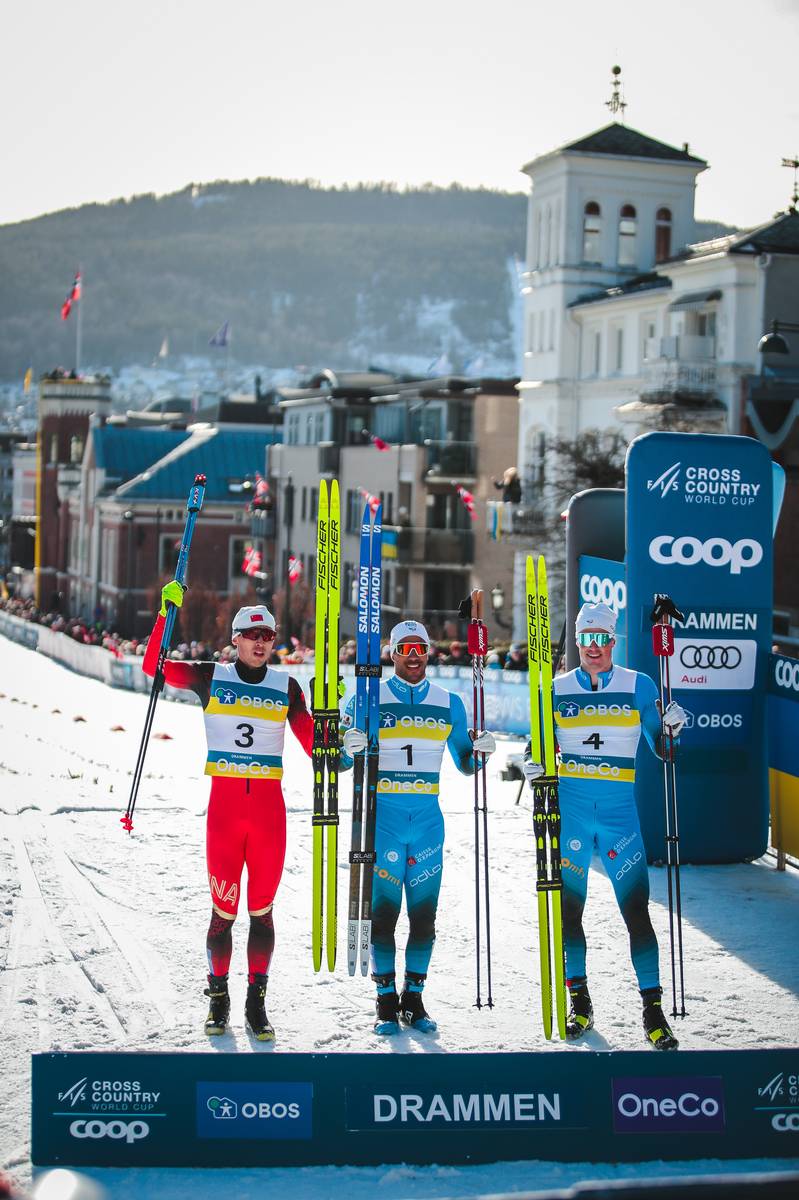
    On an early climb, Haeggström fell to his knees and broke his pole while skiing at the back of the pack. He quickly received a replacement, but wasn’t able to regain contact with the group while Pellegrino took charge up front. Despite leading into the stadium, Pellegrino lost some steam in the finishing stretch while Iversen came from behind to cross the line first, 0.3 seconds ahead of Pellegrino and 0.6 seconds ahead of Retivykh. Iversen and Pellegrino advanced to a nearly all-Norwegian final, with five men in red against the Italian in dark blue.

    From there, it was another Klæbo jam sesh as the local hero set the tone in the final. Valnes initially led up the first climb while Klæbo, Golberg and Iversen followed closely. By the next uphill, Klæbo used his ferocious double pole to outmatch his teammates, who were still striding. Meanwhile, Pellegrino fell off the pace and into sixth. Klæbo kept the lead for the rest of the race, getting a gap on Valnes and Golberg on the descent into the stadium before running away with the win in 2:52:07. Golberg placed second, 1.2 seconds back, Valnes third (+1.6), Iversen fourth (+5.79), while Krogh, who also faded when Klæbo kicked into high gear, pulled some theatrics at the line and stalled before crossing 18.91 seconds back. Pellegrino finished last for sixth on the day, 22.78 behind Klæbo. That secured Klæbo’s spot as the men’s sprint champion for the Ski Tour 2020, while Pellegrino placed second, 13 points back, and Golberg was third, another 26 points back.

    “It was an amazing day for us Norwegians,” Klæbo told FIS. “We had really good skis today, and I think we have done something right. It was a really fun race, and I think it’s an amazing to see how many people that actually come here and cheer for us. It’s something we really appreciate.”

    The all-Norwegian, Ski Tour 2020 Stage 5 men’s 1.5 k classic sprint podium on Saturday in Trondheim, Norway, with Johannes Høsflot Klæbo (c) in first, Pål Golberg (l) in second and Erik Valnes (r) in third. (Photo: NordicFocus)

    In the overall Tour standings, Klæbo is up to sixth (+2:00.0) with one race — a 30 k classic pursuit — remaining on Sunday. Golberg will start 34 seconds behind Bolshunov, while Krogh in third overall will start just over a minute later (+1:35), ahead of Sjur Røthe (+1:40) and Martin Løwstrøm Nyenget (+1:46), also from Norway. In fact, eight of the top 10 men in the overall Tour standings are Norwegian. The other two are Russian: Bolshunov and Andrey Melnichenko (9th place).
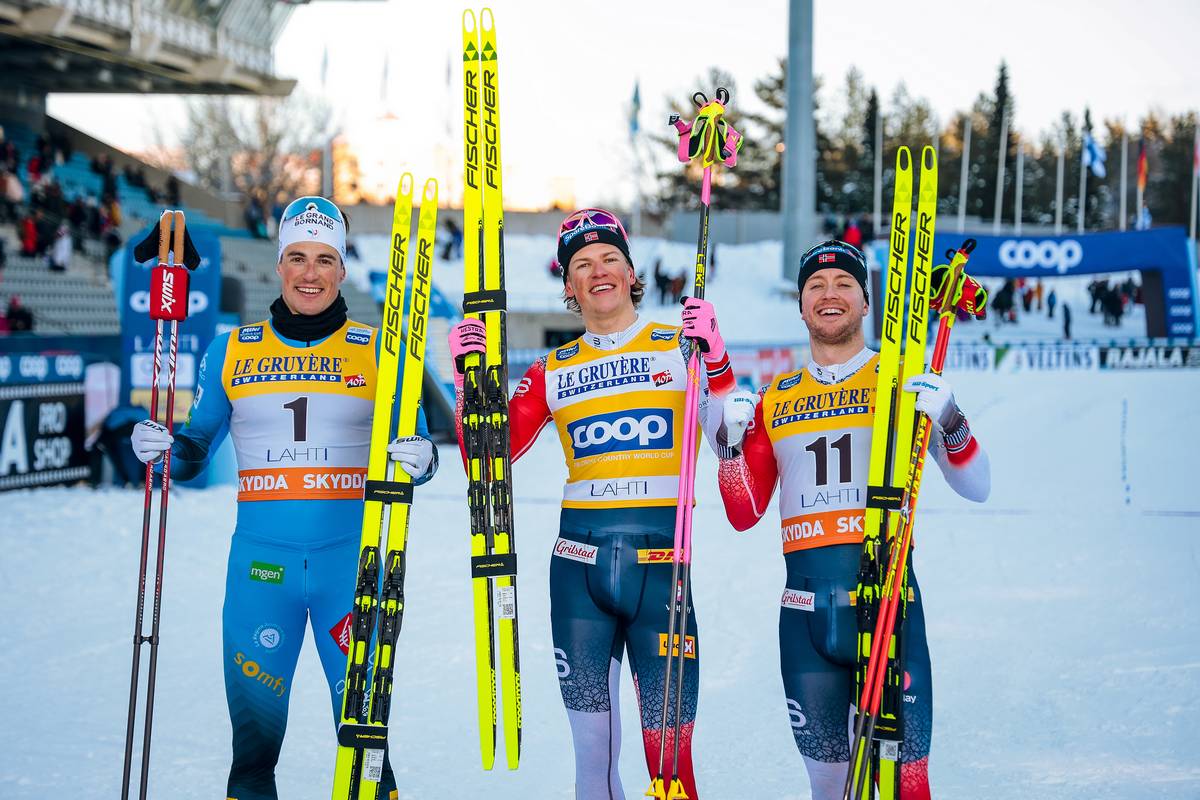
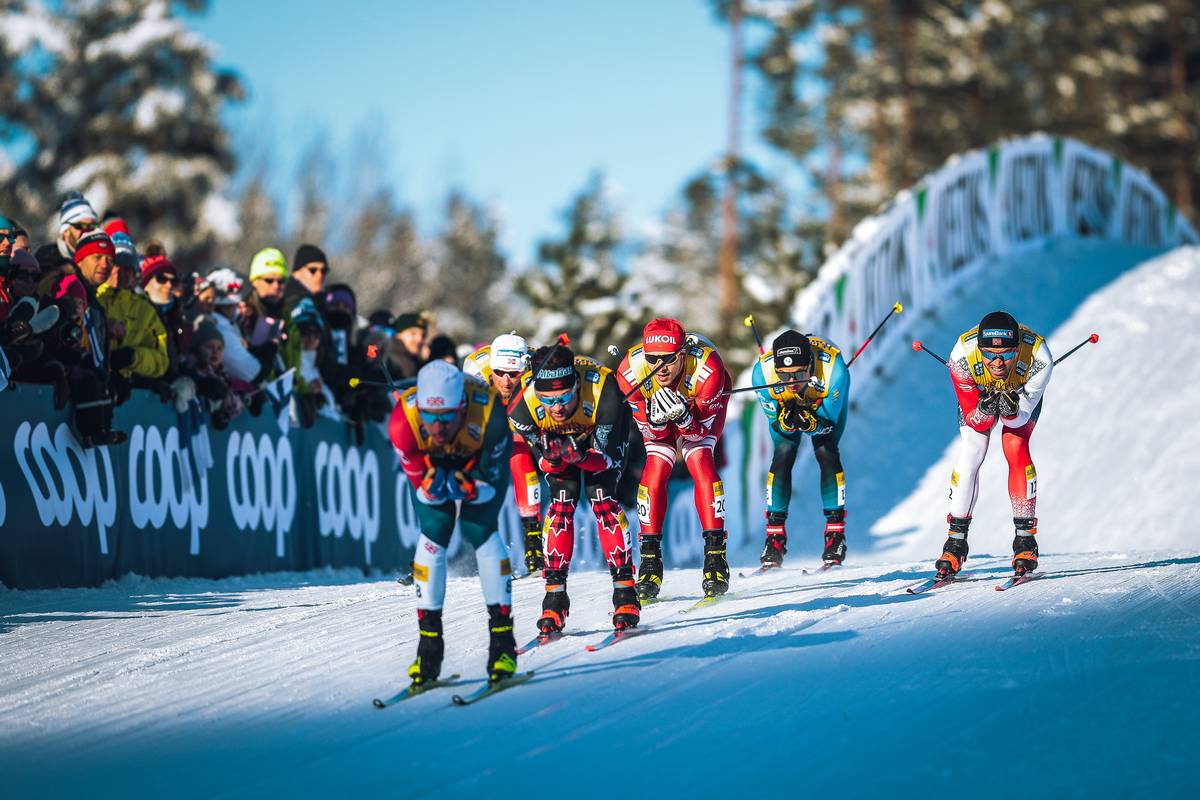
    American Logan Hanneman (APU) racing to 34th in the men’s 1.5 k classic sprint qualifier at Stage 5 of the Ski Tour 2020 in Trondheim, Norway. (Photo: NordicFocus)
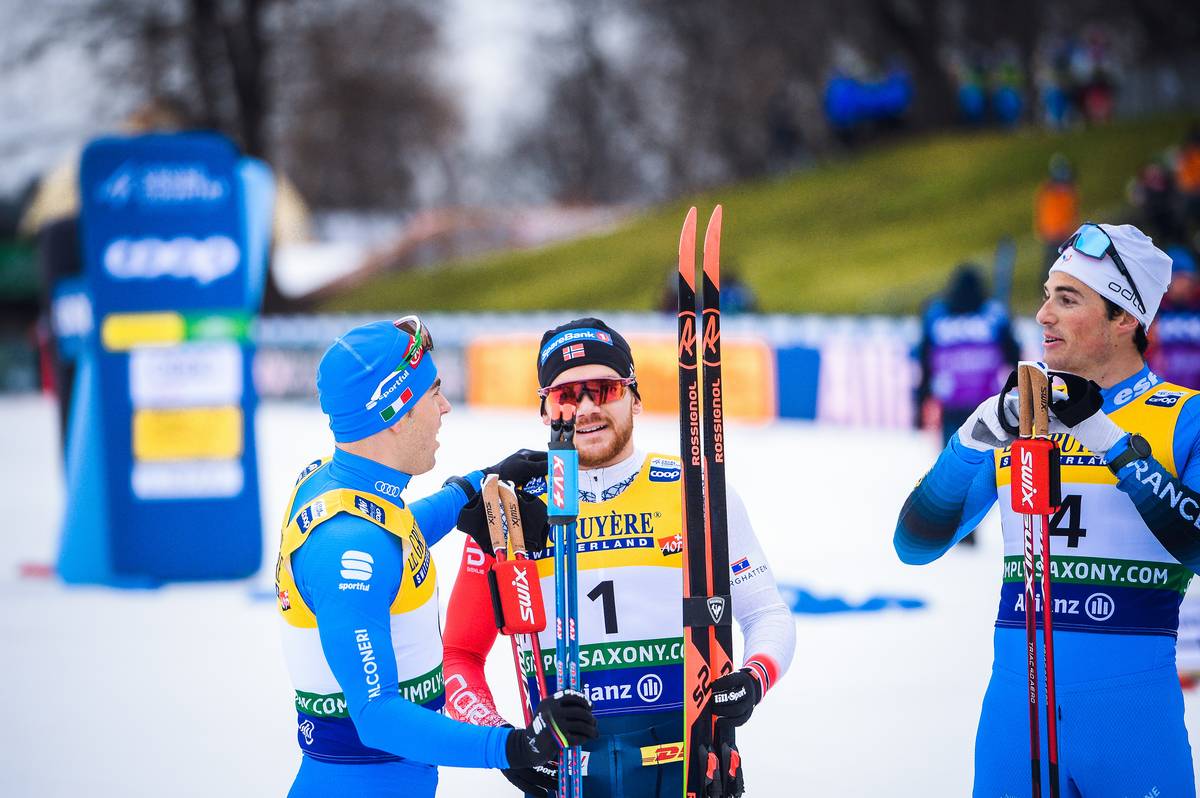
    No North Americans qualified for the heats on Saturday, with Alaska Pacific University skier Logan Hanneman coming closest in 34th, 0.9 seconds out of 30th and 14.38 seconds behind Klæbo. Fellow American Kevin Bolger placed 48th (+17.28) while Canada’s Russell Kennedy followed in 49th (+17.43) in the qualifier. American Ben Lustgarten finished 57th (+18.81) while Canada’s Alexis Dumas, Evan Palmer-Charrette and Ricardo Izquierdo-Bernier placed 59th (+19.6), 61st (+20.54) and 62nd (+20.74), respectively. American David Norris was 69th (+23.81), while Simi Hamilton did not start and is thus out of the Tour.

    According to U.S. Ski Team coach Matt Whitcomb, Hamilton and Bolger have mild head colds, and Bolger and Hanneman, who rank 64th and 71st, respectively, out of 73 still in the Tour, will not start Sunday’s final stage.

    Stage 5 final results

    Stage 5 qualifier results

    Tour overall standings | Tour sprint standings