From the FasterSkier archive — posts syndicated from athletes’ and coaches’ own blogs between 2004 and 2012, kept online as published. Current coverage is at fasterskier.com.
Position: Assistant Head Nordic Ski Coach Employer: Black Jack Cross Country Ski Club Location: Rossland, British Columbia, Canada Reports To: Head Coach & Director of Skier Development Program FTE: Negotiable Start Date: Flexible Compensation: $40,000–$50,000 inclusive of benefits, commensurate with qualifications, and adjusted for agreed-upon FTE Term: One-year contract from start date, potentially leading to a permanent position Application Deadline: Open until filled
About the Position
Black Jack Cross Country Ski Club (BJSC) is looking to welcome a motivated and energetic individual to fill the position of Assistant Head Nordic Ski Coach. In collaboration with the Head Coach and other team members, the position will lead and/or oversee programming for all levels of the program as aligned with Nordiq Canada’s Long Term Athlete Development model.
About Black Jack Cross Country Ski Club
BJSC is a registered non-profit organization functioning to support and grow the sport of Nordic skiing since 1983. With a history of producing skiers at the international and national levels, the club is looking to promote cross-country skiing at all levels of the sport.
BJSC offers athlete development programs for ages 3 to adult, including:
Bunnies
Jack Rabbits
Track Attack
School Outreach
Community lessons
Private and group lessons
Race Team
Programming is delivered under the leadership of the Director of Skier Development, the BJSC Board, and a part-time Head Coach. BJSC has a dedicated and skilled set of volunteer coaches who are committed to delivering high-quality, fun programming. The BJSC Board is an avid and responsive supporter of the Skier Development program and actively collaborates on initiatives to enhance the sport of Nordic skiing for all members of the community. The Head Coach is committed to mentoring as needed.
Facilities and Community
BJSC has over 50 km of groomed trails for both skate and classic, including 2.5 km of daily lit night skiing. The main trailhead is five minutes from town and has professional groomers on staff supported by a robust group of volunteers to keep trails in great shape. Two connected ski areas extend the ski season from November to April. In 2025–26, club membership was over 1,000 strong, and the club successfully built a new day lodge. A dedicated GM supports club operations from September through April.
Black Jack Ski Club and Rossland offer an ideal location to live and train both summer and winter, with backyard access to roller-skiing, running, hiking, road and mountain biking, climbing, alpine and backcountry skiing. Rossland has an outdoor summer pool, tennis courts, a bike park, multiple fields, and a local gym. Trail, a 15-minute drive away, has indoor training facilities. An active, young community, Rossland is a desirable destination for both vacationers and those seeking to be locals.
Qualifications
Education
Minimum post-secondary education, including coaching, athlete development, and leadership
Occupational Certification
Canada National Coaching Certification Program: minimum Training to Train (T2T) or international equivalent as related to Nordic skiing
Valid Standard First Aid (minimum), Wilderness First Aid (preferred)
Class 4 driving license, or ability to obtain within 3 months, and access to a reliable personal vehicle
Criminal Record Check with Vulnerable Sector Screen
Experience
Previous coaching experience
Athlete training plan design and monitoring, including Training Peaks
Managing and leading a team of volunteer coaches (beginner through experienced)
Wax and race support operations
Planning and executing training camps
Administration
Personal Suitability
Demonstrates good decision-making skills
Enjoys collaborating with others, including volunteers, parent groups, and other coaches
Personable, enjoys connecting with people
Able to initiate and complete projects
Communicates effectively and proactively, including when resolving sticky situations
Considers conflict an opportunity for growth and focuses on win-win resolutions
Takes responsibility for self
Strives for excellence
High degree of fitness, with ability to demonstrate and give feedback on skate and classic ski techniques
Commits to professional development, including ongoing coaching training and connection with provincial and national programs
Responsibilities
Reporting to the Head Coach & Director of Skier Development, the successful applicant will support the club’s Racers, Junior Racer, and Track Attack programs. They will work in collaboration with volunteer coaches for the Bunnies and Jack Rabbits programs and the School Outreach program. Adult clinics, lessons, and programs will be coordinated with the GM.
Specific responsibilities include:
Support BJSC’s Head Coach with Racer program delivery, including session facilitation
Collaborate on the delivery of year-round athlete programming for Junior Racers and Track Attack that aligns with Nordiq Canada’s Long Term Athlete Development Model, including working with volunteer coaching staff to ensure appropriate dryland and on-snow programming
Provide technical feedback to athletes to ensure physical competency of all cross-country ski techniques as appropriate for the athlete’s development
Support volunteer coaches’ ongoing development
Facilitate mentorship opportunities between athletes at various stages of development
Uphold a safe, inclusive, and positive training environment, with Safe Sport practices, BJSC policies, appropriate supervision standards, and risk management
Support the organization of camps, races, and other events
Attend races as negotiated with the Head Coach, providing leadership, coaching support, wax selection, logistics, direction to parent and coach volunteers, and other tasks as needed
Maintain familiarity with BJSC Board activities, contribute to ongoing improvement of club operations, and assist in planning and execution of club events as necessary
Collaborate with the Bunnies and Jack Rabbits Program Coaches as directed by the Director of Skier Development
Collaborate effectively with the BJSC Skier Development Director
Collaborate with the BJSC Race Hosting Committee
Attend monthly Skier Development Program (SDP) Committee meetings
Other duties as directed by the Director of Skier Development
The position will require travel as well as working in the evenings and on weekends.
Cover letter outlining how you meet the Education and Experience criteria listed in the Statement of Qualifications, with concrete examples (2,000 words maximum)
The position will remain open until filled. All applicants are thanked in advance; only those considered for an interview will be contacted.
Johannes Hoesflot Klaebo (NOR), Emil Iversen (NOR), and Martin Loewstroem Nyenget (NOR), (l-r) during the final kilometers of the Olympic 50 k classic. (Photo: Vanzetta/NordicFocus)
A review of a recently published paper from Norway, “Long-term development culture for sustainable Olympic success: Lessons learned from Norwegian cross-country skiing” by Jacob Walther and Øyvind Sandbakk, is worth the time.
We’ve all heard enough about Norway. But this one simply cuts through some misconceptions, and it is worth the time to review. It strips away the mythology and gets back to what actually drives development and ultimately elite performance. Norway isn’t operating with better information. They’re more disciplined about applying what most programs already understand, and more consistent about what they refuse to do.
The paper addresses this immediately and directly. There is no “Norwegian method.” No magic interval session. No secret intensity zone you can implement and expect results. What they have is a system. And more importantly, a system built around their culture.
We tend to frame their success in physiological and technical terms. It’s not physiology, technique, health management, or mental health; they are all part of it, but they don’t explain the system. Most programs know early specialization is risky and inaccurate. Most coaches understand long-term development and the need to build training slowly and in phases based on training age. The difference is that Norway holds the line on it.
The elements are not new. Delay early selection. Encourage multi-sport participation, and integrate sport science into daily coaching. Invest in coach education. Treat athlete health as part of development, not something that gets in the way of it. The result isn’t just better elite athletes. It’s broader mass participation, more informed training, and a deeper pool of athletes and families engaged in the sport.
Norway’s Johannes Høsflot Klæbo won his first World Cup at 20, in the men’s 1.6 k freestyle sprint in Otepää, Estonia, in 2017. (Photo: Fischer/NordicFocus)
The paper uses Johannes Høstflot Klæbo as a case study. At 15, he placed 101st at junior nationals. Years later, he’s the most decorated Winter Olympian of all time. That’s a compelling outcome. But the value isn’t the result. It’s what the system expects and allows.
In most programs, that athlete gets filtered out early. In Norway, they stay in longer. That’s the point. This isn’t about identifying talent earlier and directing resources and opportunities at those. It’s about not eliminating talent identification too soon. That requires patience, cooperation among club programs, trust in the system, and a willingness to ignore short-term validation.
That’s where the Norwegian model sets itself apart. The turning point came in the lead-up to the 1994 Winter Olympics. Norway didn’t discover new physiology or invent new training methods. They organized themselves differently. They centralized expertise, embedded sport science into coaching, collected experience and training data across all Olympic Sports, and aligned the ski federation from the national team down to the club level.
Olympiatoppen sits at the center, not as a lab removed from the field, but as part of the training process. It doesn’t drive the system, but it informs and shapes it. That balance matters. Norway didn’t just add sports scientists. They used sports science to improve coaching. At higher levels, many coaches are trained in exercise physiology. That reduces misinterpretation and creates consistency over time.
Long-term development in Norway isn’t a slogan. It is intentionally implemented. It follows physiology. Peak endurance performance arrives in the late 20s, after years of consistent training. They don’t challenge that reality; they built their whole system around that reality.
You see that athletes stay in the sport longer, as evidenced by high-level FIS races in Norway. Hundreds of skiers are over 25-30 years old. They build general capacity before narrowing focus. Skill development has time and the room to engrain. Training isn’t rushed. Volume and intensity progress over years, not seasons. Junior results are not used as a sorting mechanism.
And this is where most systems break down. They say development matters, so select early and train accordingly. In Norway, youth championships are not selection events. They are part of the development process. The culture reinforces it. Clubs and schools coordinate so athletes can participate in multiple sports. Athletes regularly move across multiple ski disciplines. The recruitment base stays broad, and the system stays resilient.
Norway hasn’t eliminated selection; they’ve delayed it and minimized its consequences. That distinction matters. What gets labeled as “talent” at 14–16 is often early maturation, better support, or more exposure, not long-term potential. Norway avoids that trap by not falling into it. While many other systems double down on it.
Another principle sits underneath all of this: athlete health, physical and mental, comes before results. Training is managed for long-term progression. Training loads increase gradually over the years. High intensity is controlled, and low intensity dominates most of the training. The goal is adaptation over time, not accumulation in the short term.
The paper also points to emerging pressure on this model. Rising costs, shifting societal trends, increasing early specialization, and changes in team structures all push against it. These aren’t theoretical concerns. There are real pressures that can erode the system if they’re not managed.
Harald Oestberg Amundsen (NOR), Johannes Hoesflot Klaebo (NOR), and Einar Hedegart (NOR), (l-r) share the 20 k Freestyle Mass Start podium at the final World Cup in Lake Placid (USA) to end the 2025/2026 season. (Photo: Modica/NordicFocus)
So what carries over?
We can’t copy Norway. That misses the point. The lesson is alignment. Align incentives with long-term outcomes. Integrate sports science into coaching to improve the coach’s work. Build systems that allow athletes time to develop. And hold the line when short-term pressure starts to dictate decisions.
Many countries can point to a standout athlete. But if success depends on outliers, unusual resilience, unusual support, unusual talent, you don’t have a system. You have anecdotes. Norway produces depth, that is, the expectation and the standard.
There’s no secret session here. What they’ve built is a system that connects coaching and science, commits to long-term development, creates space for late progression, and maintains consistency over time. Not what they’re doing this week or next week, but what the athletes are doing ten years from now.
Help Support Our Olympic Coverage!
If you value the thoughtful work and access FasterSkier provides, please consider becoming a Voluntary Subscriber. Your support directly fuels our work to cover the people, places, and moments that make our sport special.
Where do High School and USCSA programs fit into our development.
In a recent article, I laid out the disconnect between what we say about long-term development in Nordic skiing and what we do and the rewards. “Long-Term Development in Nordic Skiing: What We Say vs. What We Actually Do”. Most people that I talk with agree with the premise of long-term development and keeping youth in sport longer. None of this is particularly controversial. We all understand that endurance development, technical skills and learning how to race takes years. We now see this statement across virtual all endurance sports world, that early results are a poor predictor of long-term success.
So, if we assume there is a consensus then we must ask why the system seems to act in the opposite way. Because systems don’t reflect what we say. They reflect what we reward through early selection, for competition and training opportunities. That’s really the question sitting underneath all of this.
We’ve reached a point where there’s broad agreement on philosophy. Long-term development matters. Early results don’t predict long-term success. Endurance, technique, and racing ability take years to build. You hear that all endurance sports now, not just skiing.
None of that is controversial!
But if that’s true, then we have to be honest about what follows. Because systems don’t reflect what we say. They reflect what we reward. And right now, the system is still rewarding something very different.
The incentives tell the story.
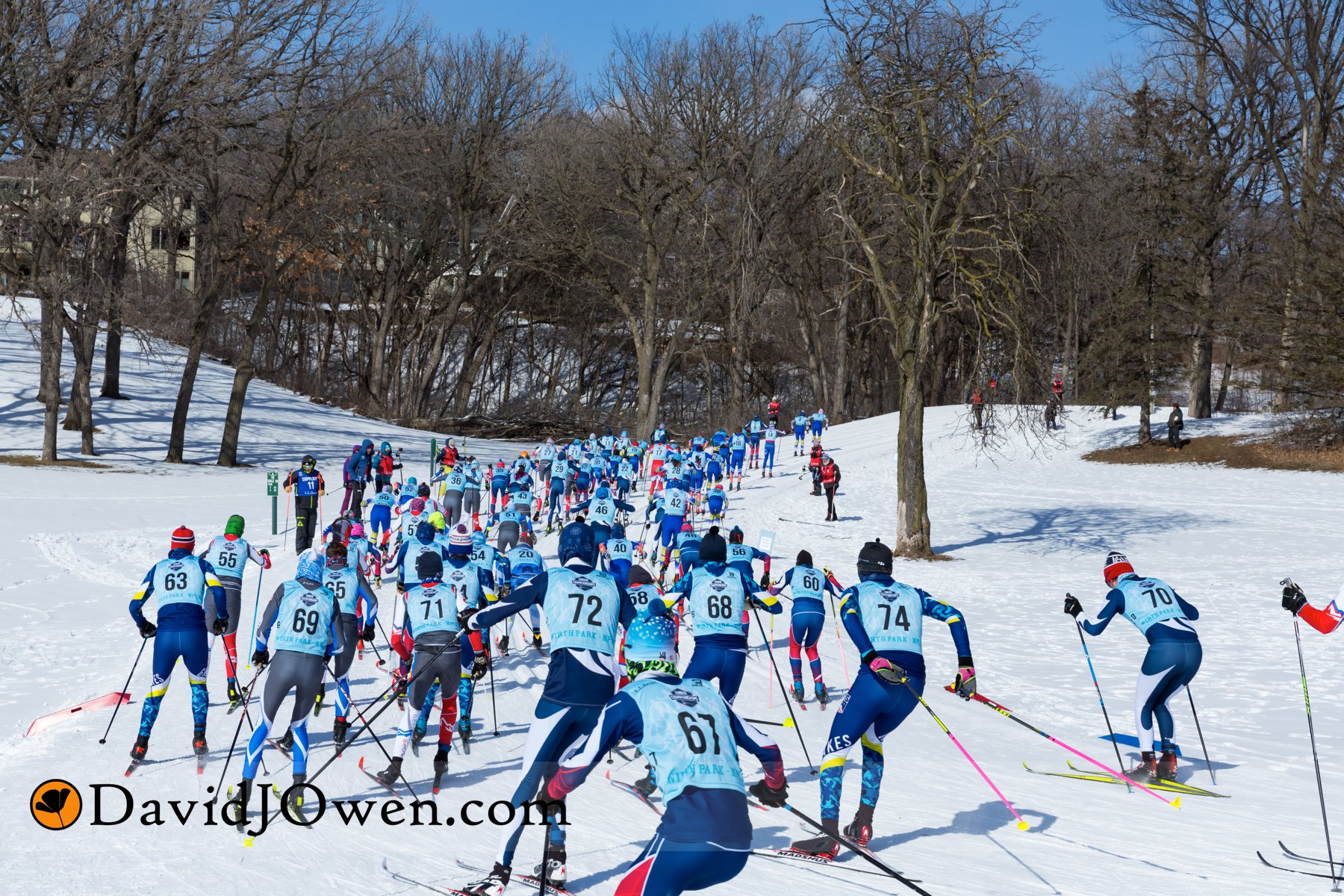
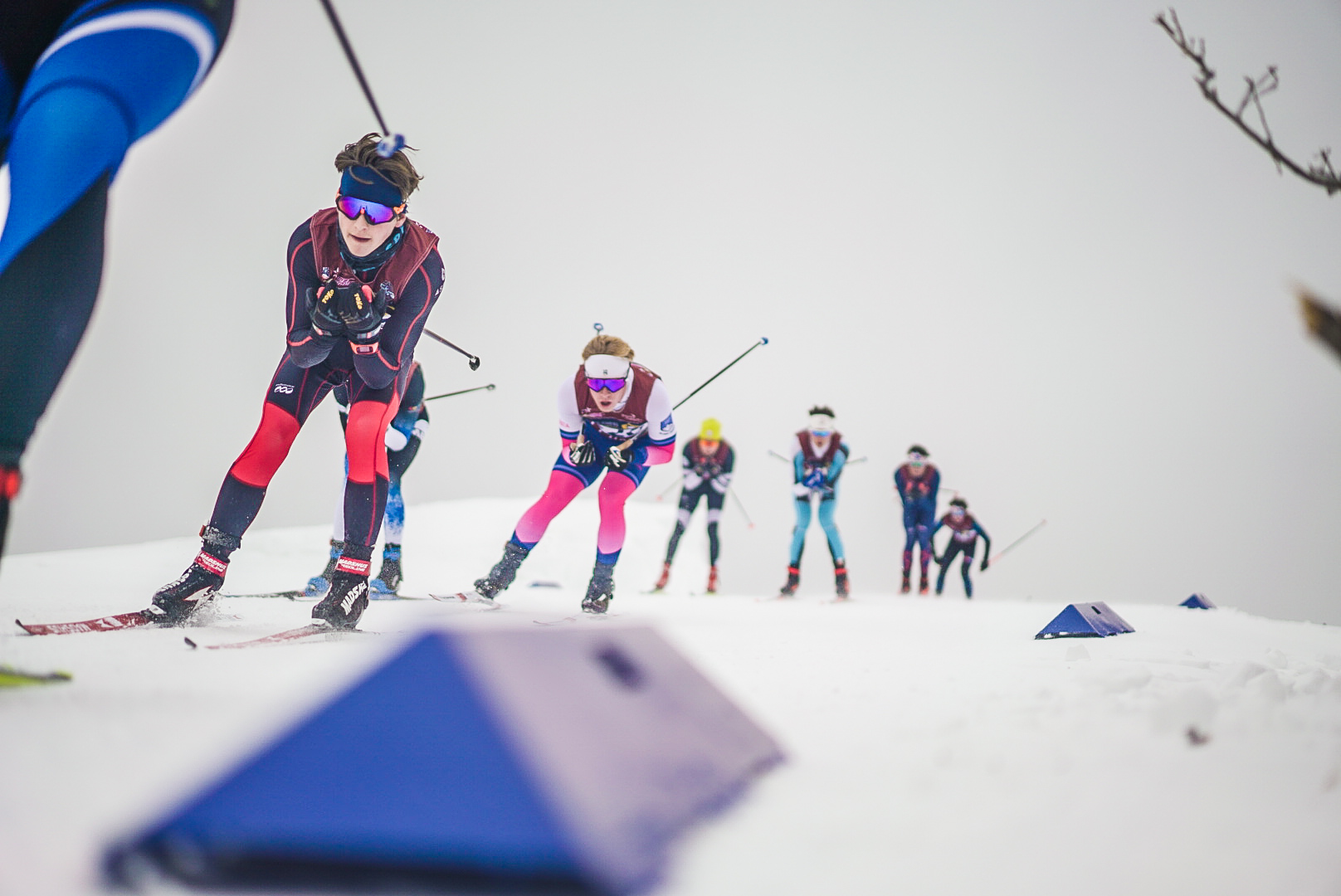
Skiers from all over the country round the first corner of the Theodore Wirth Park course in the U16 Boys 5 k Classic at Junior Nationals in Minneapolis in 2022. (Photo: David J Owen Photography)
Junior skiing in the U.S. is quietly organized around early selection. Qualification for Junior Nationals, especially at U16 and younger, carries weight. Rankings matter. Opportunities follow results. No one would say that’s the goal. But it’s the outcome.
Athletes see it. Parents respond to it. Coaches feel it. And none of that is inherently bad. But when those forces align around early results, the system starts to tilt. Short-term performance carries more weight than it should. And over time, that shows up in participation. The fields in USSS junior races get smaller as the age groups progress. We can debate why, but we can’t ignore that we’re losing athletes along the way.
The earlier we start selecting, the earlier we start excluding, selecting out athletes. And in a sport like skiing, that’s a problem. Development is long-term, non-linear, and tied to maturation in ways we can’t reliably predict. So, when we sort athletes at 13, 14, or 15 years of age, or younger, we’re making decisions on incomplete information, and treating those decisions as if they’re meaningful. They’re not!
What we’re really doing is narrowing the pathway at the exact point where it should be widest. If we believe in long-term development, early stages should include more athletes, not filter them out. We don’t lose athletes because they lack talent. We lose them because they stop seeing a path or opportunities forward.
That loss doesn’t always show up at the top. At the elite level, we can always point to success and say the system works. And in a narrow sense, it does. Every system produces some high performers. But that’s survivorship bias. But even with the perceived success, it is clear that most of those who step onto the World Cup are not prepared and developed for that level of competition, or we see an erosion of their performances over several years.
What matters more is what happens in the middle. Over time, that middle erodes. Fewer athletes stay. Fewer develop later. Fewer are still around when their best years should begin. And once they’re gone, they’re gone. So, how do we grow the sport and improve the development system? Following are a couple of ideas for the integration of high school and college skiing.
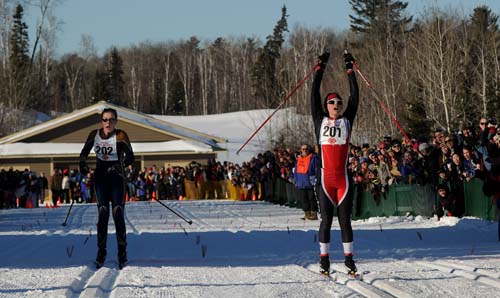
Stillwater senior Jessie Diggins, right, finishes ahead of St. Paul Academy senior Annie Hart in the 2010 edition of the Minnesota State Meet. (Photo: MSHSL Archives)
This is where the high school system should come into focus. Whether we acknowledge it or not, it’s one of the most influential environments in the entire pathway. We’re talking about roughly 6,500 high school athletes, compared to about 2,100 in the USSS junior system. That alone tells you something. Most athletes are not in the club pipeline. And there’s very little overlap between the two, in some regions more than others.
So now you have two systems, often operating in parallel, sometimes in conflict, shaping the same athlete. The club system is year-round, often very expensive, which creates barriers, and it is tied to rankings, qualifications, and progression. Ideally, at least in theory, it is long-term focused. The high school system is seasonal. Compressed. Built around immediate competition, conferences, regional, and state.
Both have value. But they’re not aligned. And when systems aren’t aligned, the athlete’s abilities are often put in difficult positions. High school seasons are short. That compresses everything. Training, racing, recovery, all of it gets stacked into a three-month season.
And yet, high school skiing also gets something right that the system needs more of. It creates a connection. It lowers barriers to entry. It brings athletes into sport who might never join a club. It makes skiing social. It makes it fun. Those values matter!
Athletes who feel connected to a team stay in the sport longer. That alone makes the high school system one of the most valuable pieces of the entire pathway. The issue isn’t that it exists rather it is not integrated, where do those high school skiers go after high school, an assumption may be many go into the non-integrated USCSA programs.
If that gap exists in high school, it becomes even more obvious at the college level.
Because this is where the pipeline either tightens or disappears. On one side, you have NCAA skiing. Roughly 20–25 programs. Maybe 300–400 athletes. Small, but structured, providing consistent coaching, clear expectations, and daily training environments that align with the demands of sport.
On the other side, you have USCSA. Thousands of athletes. Hundreds of active racers. A much broader participation base. So yes, USCSA is far bigger. But the NCAA is more efficient. In NCAA programs, a higher percentage of athletes improve year over year. More reach FIS relevance. More stay on a performance trajectory. That’s not because they’re inherently more talented. It’s because the environment supports development. Training is consistent. Coaching is present. Progression is clear.
USCSA shows the opposite. It’s not only a talent problem. It’s a structural problem. You have hundreds of athletes still in the sport. Many have endurance backgrounds. Many are still within a trainable window. But training is inconsistent. Coaching is variable. Development isn’t systematized. And there’s no clear bridge to higher performance levels. So, the conversion rate stays low.
This is where the pipeline argument starts to fall apart. We tend to focus on the front end, getting more kids into the sport. But at the USSS level that has been ineffective at best. And missing the fact that we already have athletes in the system that aren’t welcome or integrated. High school skiing, USCSA, represents a large participation pool sitting right in the middle of the development pathway. What we don’t have is a system that consistently integrates and develops them.
So, what actually needs to change? Not the philosophy, it seems we already agree on that. What needs to change is how the system behaves across the junior and collegiate level, it means recognizing where the opportunity is not just in the NCAA pipeline, but in the larger, under-structured USCSA system that already exists.
Even if we integrated the high school athletes and the USCSA athletes into the USSS system, the sport is still tiny. But it seems growing the sport significantly beyond this level is unlikely so we should be looking for ways to include these athletes in the system as much as possible for those who have an interest.
There are athletes in the system right now, thousands of them, who could or have the potential to improve dramatically beyond high school. Some who could enter the sport late and still become competitive.
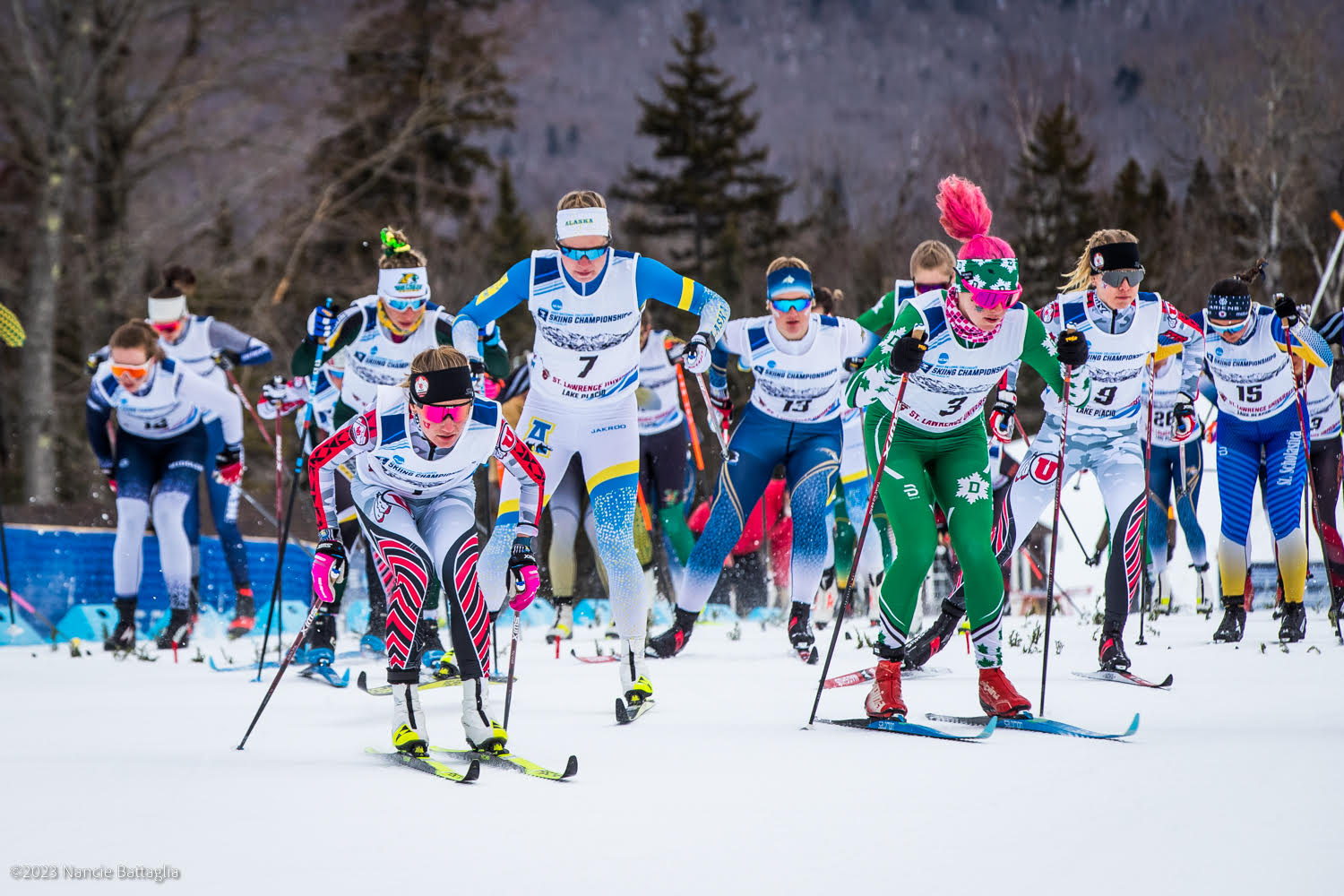
Novie McCabe controlled the pack for much of the 20-k mass start at the 2023 NCAA Championship in Lake Placid, New York. McCabe became just the fifth three-time NCAA Women’s Champion with her win. (Photo: (c) 2023 Nancie Battaglia)
At some level, this comes down to a simple choice. Do we want a system that identifies and benefits early performers? Or one that develops athletes over time? Right now, we say the second. But too often, we operate like the first. And the differences are real; we can see it by who improves, who stays in the sport, and when athletes exit the sport.
We don’t need to overhaul everything. There’s a lot in the system that works. High school brings athletes in. NCAA shows what structured development can look like. Even USCSA shows us how much untapped potential is sitting there.
But without alignment, those pieces don’t add up. So the question isn’t whether we understand long-term development. It’s whether we’re willing to build a system that actually supports it. Because if we are, the path forward should be clear.
And if we’re not, we should at least be honest about what we’re choosing instead.
Help Support Our Olympic Coverage!
If you value the thoughtful work and access FasterSkier provides, please consider becoming a Voluntary Subscriber. Your support directly fuels our work to cover the people, places, and moments that make our sport special.
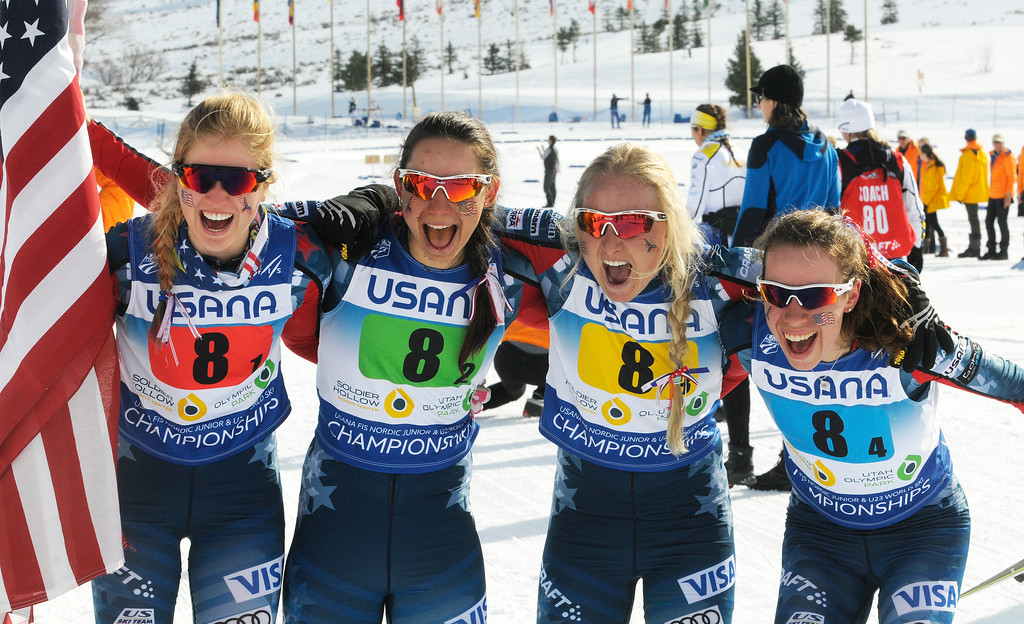
The U.S. women’s relay after taking a historic third in the 4 x 3.3 k relay at 2017 Junior World Championships on Sunday at Soldier Hollow in Midway Utah, with (from left to right) Hailey Swirbul, Julia Kern, Hannah Halvorsen, and Katharine Ogden. (Photo: U.S. Ski Team/Tom Kelly)
As the season winds down, it’s worth stepping back and asking a simple question: Does the way we develop young skiers in the United States reflect the philosophy we say we believe in? I know everyone is probably done with hearing about how the Norwegians do it, so let’s look at what we say we know and what we embrace.
Many coaches and programs describe cross-country skiing as a lifetime sport. We talk about patience and say it takes ten years or more to develop as a skier. Clubs reference long-term athlete development models, and parents hear that endurance sports reward athletes who build gradually and peak later in life.
All of that is true.
But much of the system we’ve built rewards the opposite.
Once rankings, camp selections, college recruiting, and program reputation become tied to junior results, the incentives quietly shift. Development begins to be measured by podiums and training hours rather than movement quality, long-term improvement, or whether athletes are still engaged in the sport five or ten years later.
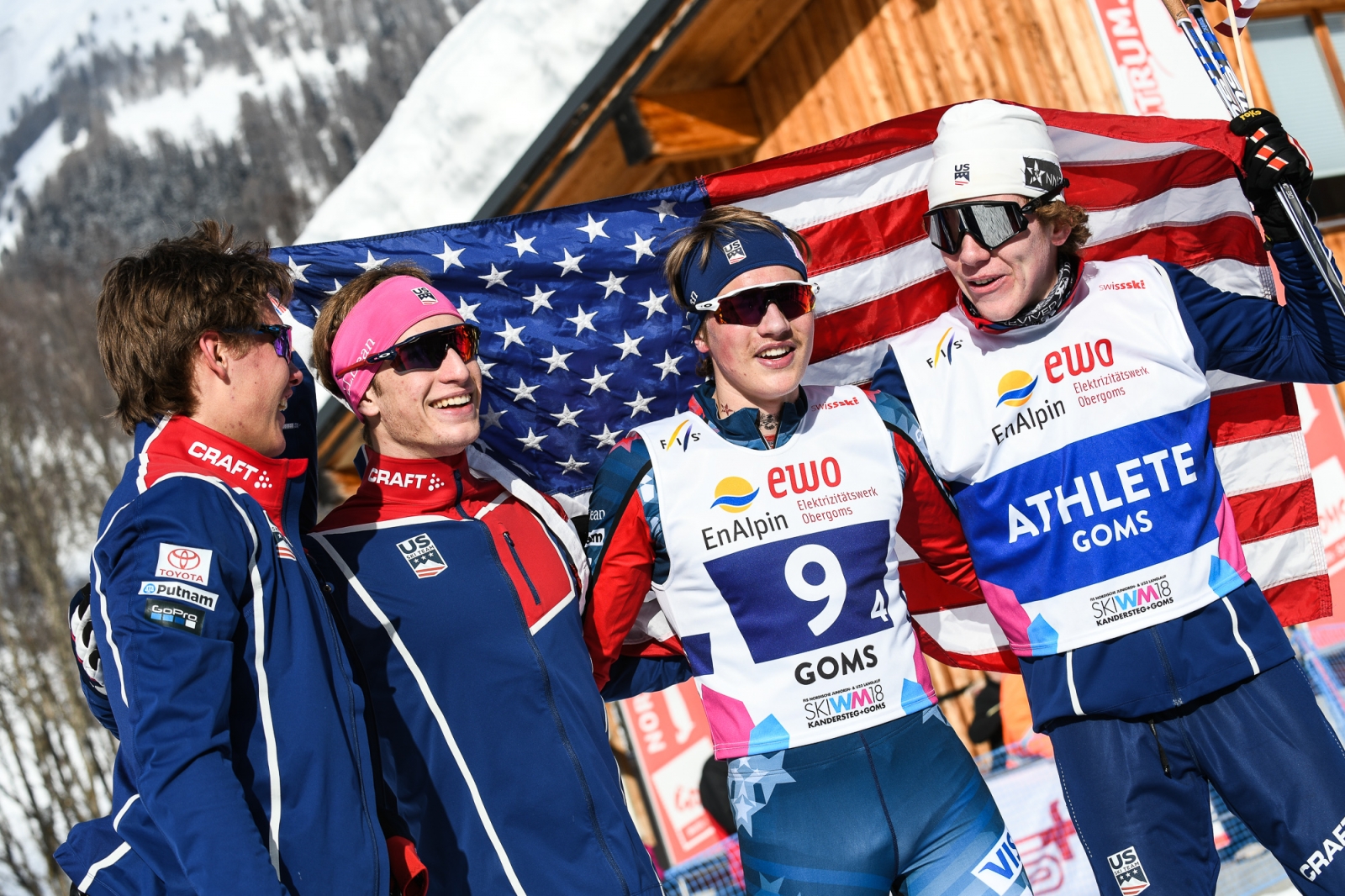
The U.S. men’s silver-medal relay at 2018 Junior World Championships in Goms, Switzerland, with (from left to right) Luke Jager, Hunter Wonders, Gus Schumacher, and Ben Ogden. (Photo: JWSC2018.ch)
What is long-term development
Aerobic capacity develops over years, often decades. Technical efficiency improves gradually. The durability required to handle training load is built slowly through years of training. Most elite endurance athletes reach their peak in their mid-twenties or early thirties, not in high school.
If peak performance happens ten or fifteen years after an athlete first enters the sport, the early years should focus less on maximizing results and more on building the foundation that supports long-term growth.
That foundation includes several elements.
Movement skill. Nordic skiing is a technical sport, and the best skiers move efficiently long before their physiology fully matures. This efficiency is critical to managing training loads in the future. More efficiency in technique equals less stress and load from training.
General athletic development. Running, biking, jumping, climbing, and playing other sports all contribute to coordination and resilience. Athletes who move well tend to adapt better to training later.
Motivation. The most valuable asset a young athlete has isn’t VO₂ max or the hours trained by some arbitrary definition. It’s the desire to keep showing up year after year.
Junior athletes race during the 2022 U.S. Cross Country Championships in Soldier Hollow, UT. (Photo: Tobias Albrigtsen / @untraceableg)
The System Sends Mixed Signals
In practice, the system often sends young athletes a different message.
Junior racing has become increasingly competitive. Rankings exist even for younger age groups, and selections for camps, trips, and development programs often depend on early results. National events and development pathways can make performance at 14 or 15 feel like it carries some long-term significance. Yet we also claim to know that identifying future elite athletes at that age is extremely unreliable. If that’s true, it’s worth asking why the system places so much weight on those results.
One example is allowing U14 athletes to ski up in order to qualify for Junior Nationals. It doesn’t happen frequently, but it happens every year. It’s hard to reconcile that with the philosophy of not rushing development. If long-term development truly matters, governing bodies should show leadership and address this issue.
In some regions of the country, qualifier races have U16 athletes seeded in the start list with U18 and U20 athletes. People say it doesn’t matter because we separate them in the results. I disagree, the are intermingled with much older and more developed athletes. But more than that it is again the message begin sent?
At the same time, training culture has shifted. Training data is widely shared, and conversations often revolve around hours. Young athletes begin comparing workloads long before their bodies are ready to handle them. Often the more is better attitude prevails, even though we say that we should be working on other skill aspects of development.
These pressures can push athletes toward earlier specialization and higher training loads than their stage of development requires. A 14-year-old begins to feel like they need to train like a college skier. A 15-year-old worries that missing races or reducing training volume might put them behind.
The Boulder Nordic Junior Race Team out for an adventure ski in 2014. (Photo: BNST)
What are the impacts of the mixed signals
The most visible consequence is burnout. Many people challenge the idea of burnout. But after more than forty years around this sport, I’ve seen the pattern repeatedly. Just because we don’t measure something well doesn’t mean it isn’t happening.
Coaches who have spent time around junior skiing see the pattern: talented athletes who disappear from the sport sometime between their late teens and early twenties. Sometimes academics, finances, or changing interests are the reason. But often the explanation is simpler, they are tired from too much too early and to intense.
There are also physical consequences. Adolescence is a complex period of growth and development. Training loads that are manageable for more mature athletes are impossible for a developing body. When volume and intensity climb too quickly, overuse injuries and chronic fatigue become more likely.
Early specialization is not the problem. Rather, it is ineffective programming that has these young athletes training like more mature athletes. This early training focus limits athletic development. Athletes may accumulate impressive training hours but miss the movement diversity that builds long-term durability.
The biggest loss in this process is one that is unseen because those athletes are lost from the sport.
From a coaching perspective, the shift shows up in small ways. Conversations revolve around weekly training hours instead of how well athletes are skiing. Easy sessions slowly become harder. Fatigue accumulates while movement quality quietly declines. None of this happens overnight, but over time, the focus drifts away from skill development and toward simply doing more.
Development in endurance sports isn’t about accumulating work. It’s about adapting to the work being done and building the capacity to handle more later. A training log that looks impressive at 15 doesn’t necessarily translate into success at 25. What matters more is whether the athlete remains healthy, motivated, and technically sound over the long term.
Hailey Swirbul celebrates the U16 Junior National Championship title in the Freestyl Mass Start in Stowe, Vermont, in 2014. (Photo: Voisin/FasterSkier)
What Good Development Actually Looks Like
If long-term development is the goal, the early years should look different from elite training. Young skiers benefit from variety. Running, cycling, hiking, and other sports build coordination and resilience. The goal isn’t to replicate elite training programs but to create athletes who move well and enjoy being active.
Technique deserves major attention. Nordic skiing rewards efficiency, and athletes who develop strong movement patterns early often progress faster later because every hour of training becomes more productive. Training volume should increase gradually over time. Consistency across years matters far more than pushing limits in any single season.
Most importantly, development should seek to preserve motivation. The sport needs athletes who remain engaged long enough to realize their potential. We often see athletes try to do a big training year to catch up or reach a target training volume. It rarely works out.
The Problem With “More Volume” Thinking
In Nordic skiing, training volume carries a certain mystique. Conversations quickly turn to hours, weekly totals, yearly totals, and stories of elite athletes training 800 to 1,000 hours per year.
It’s easy to see why. Endurance sports reward consistency and large training volumes. But a subtle misunderstanding often occurs. Volume stops being seen as the result of long-term development and starts being treated as the cause of performance.
Correlation becomes mistaken for causation.
Hunter Wonders (APU/Alaska) winning the U16 Boys Mass Start Freestyle race at the US Junior National Championship in Stowe, Vermont. (Photo: Voisin/FasterSkier)
High Volume Works for Elite Skiers
At the elite level, high training volume makes sense. World Cup athletes have spent years building the capacity to handle that workload. Their aerobic systems are highly developed, their movement patterns are efficient, and their bodies have adapted gradually.
High volume works because it sits on top of a massive foundation: technical skill, durability, and years of progressive training.
The problem arises when that model gets copied without the same foundation underneath it.
The Missing Variable: Training Age
One of the most overlooked concepts in endurance development is training age. Training age refers to how many years an athlete has spent consistently adapting to structured training. Two 18-year-old skiers may have very different training ages. One may have spent eight years gradually building capacity. Another may have entered the sport recently and increased training dramatically. On paper, their training logs may look similar. In reality, their ability to adapt to those loads can be very different.
Training only produces progress when adaptation occurs. Without adaptation, training simply builds fatigue.
The U18 Girls field works its way past the Loppet Foundation Adventure Center in Minneapolis during Junior Nationals on March 11th, 2022. (Photo: David J Owen Photography)
The Efficiency Problem
Elite skiers move extremely well. Their technique allows them to ski long distances while conserving energy and minimizing unnecessary muscular stress. Developing this efficiency early is critical. In the future, it will allow the athletes to train large volumes without the metabolic and neuromuscular stress that can lead to overtraining.
Young athletes often lack efficiency. When technique is still evolving, large training volumes can actually slow technical development. Fatigue reinforces inefficient movement patterns that later become difficult to change.
For developing skiers, time spent improving movement quality can be far more valuable than time spent extending distance.
The Cost of Chasing Hours
There is also a practical cost to the “more volume” mindset. Elite athletes structure their lives around training. Sleep, nutrition, and recovery are integrated into the system. Young athletes are balancing school, travel, social life, and other commitments. When training volume climbs, something gives. Sleep declines, recovery becomes inconsistent, and fatigue accumulates.
Under those conditions, simply adding more hours rarely produces better results.
What Volume Should Really Represent
Training volume does matter. Endurance sports ultimately require substantial workloads. But volume should be viewed as a long-term outcome of development, not a short-term objective. Successful endurance athletes rarely build training hours quickly. They accumulate them gradually across many seasons, allowing their bodies to adapt step by step. By the time they reach elite levels, high training volumes feel natural because they have spent years building the durability to support them.
The 2026 US Ski and Snowboard Junior National Championships in Cable, Wisconsin, hosted by the American Birkebeiner Ski Foundation. (Photo: Tryg Solberg)
A Better Question to Ask
Instead of asking how many hours an athlete should train, a better question might be:
What training can this athlete adapt to right now?
For some athletes, the answer may involve increasing volume. For others, improving technique, strength, or intensity distribution may produce greater gains. Development is not identical for every athlete. What matters is finding the training load that promotes consistent adaptation rather than constant fatigue.
Why This Matters for the Future of the Sport
Cross-country skiing, like all endurance sports, depends on long-term participation. The sport needs athletes who remain engaged, not only as competitors but as lifelong skiers, coaches, and community members.
A development system that pushes athletes too hard, too early risks losing them before they reach their potential. It also narrows the pathway to elite performance by favoring early maturity and filtering out late developers.
If Nordic skiing truly wants to remain a lifetime sport, its development culture must reflect that philosophy.
Closing
Cross-country skiing has always valued endurance. That value should extend beyond physiology and into how we develop athletes. Endurance isn’t just about how long someone can ski hard on race day. It’s about how long they can remain engaged in the process of improving.
If we truly believe Nordic skiing is a lifetime sport, then our development system should not resemble a funnel that selects kids out at every progressive age group. It should look more like a runway, where every young athlete has the opportunity and the time to fully develop their potential, not just the ones who mature early.
Help Support Our Olympic Coverage!
If you value the thoughtful work and access FasterSkier provides, please consider becoming a Voluntary Subscriber. Your support directly fuels our work to cover the people, places, and moments that make our sport special.
The 2026 US Ski and Snowboard Junior National Championships in Cable, Wisconsin, hosted by the American Birkebeiner Ski Foundation. (Photo: Tryg Solberg)
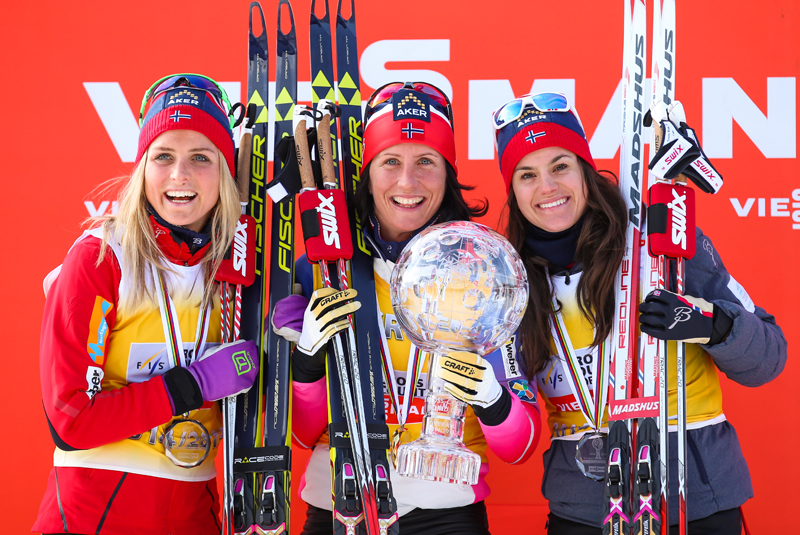
Marit Bjørgen won the overall FIS World Cup title for the fourth time in 2014-2015, also taking home the Sprint Cup and Distance Cup globes. Along with Therese Johaug, who won it in 2015-2016 (left) and Heidi Weng, she trains more than you. (Photo: Fischer/NordicFocus.com)
Note: FasterSkier has carried many articles of training hours before, including a 2010 discussion with Marty Hall, Eli Brown, and Pete Vordenberg, and a 2012 piece by Pete Phillips. With recent discussion of training loads by elite Norwegian athletes, it seemed time to bring the topic up again. We got in touch with Jodi Hawley, an exercise physiologist formerly based at the Canadian Sports Institute in Calgary. She now works for PacificSport Columbia Basin doing community development work.
Among the revelations? The year before the study was done, superstar Marit Bjørgen had trained 980 hours, while the six women as a group averaged out at 920.
That’s a lot more specificity than fans and lower-level racers typically get about elite training loads. While Norwegian World Cup champion Martin Johnsrud Sundby talks about training over 1,000 hours a year, for most of the rest of the field all one can see are averages reported in various papers.
Upwards of 900 hours per year is more than had been previously reported in such papers. For instance, a 2013 paper looked at the training loads of Norwegian and Swedish cross-country skiers who had won Olympic gold medals in the last decade. In general, the sprint specialists trained 750-850 hours per year, and the distance specialists about 50 hours more.
Another paper, published in 2014, assessed Norwegian gold medalists in cross-country skiing and biathlon. The eleven athletes had averaged 770 hours of training in their gold medal seasons.
“Most people on the World Cup – and I don’t think there’s a big difference between men and women – most people who are consistently finishing in the top 15 are probably training somewhere between 675 and 900 hours,” said Jodi Hawley, a sports physiologist who formerly worked with the Canadian National Ski Team. “The range is that wide.”
All other factors being equal, Hawley said in an interview last weekend, the athlete who trains the most will be the fastest. But all other things are not equal, including genetics, personal history, injury and illness, resources, and training partners.
Training 980 hours won’t necessarily make a mediocre skier a Marit Bjørgen – and training less than 980 hours won’t necessarily keep them from success, either.
“Some people will get faster by going slow, by training their efficiency,” Hawley explained. “Other people will get faster by training their power. So it depends a little bit on what kind of person you are. If you are the kind of person who gets faster by training your efficiency, you’re going to end up training more hours. The kind of training you need to do takes more time to get a training effect.”
Women Working Hard
Norway’s Marit Bjørgen (c) celebrates her 15th World Championships gold and record-setting 30th overall medal (between Olympics and World Championships) with a classic-sprint win at 2015 World Championships in Falun, Sweden. “It took years for her to build up to doing [980 hours],” said Hawley. (Photo: FlyingPointRoad)There are a few reasons that the top Norwegian women are, across the board, training at very high volumes – probably close to the maximum loads that are physiologically possible.
One is that all of them came up through a development pipeline which led them to this point, and all thrived under it.
“In Norway, they tend to have a system that they employ,” Hawley explained. “It’s like hockey in Canada. Everyone does it in school… you can implement your system, and you see who copes best. Those kids get picked to move on. The ones in the end who float to the top are the ones who cope best with the system, rather than the ones who potentially could have been as fast or faster if they had been exposed to some other system.”
But the system isn’t static. As of 2010, Norway’s Petter Northug was training just over 850 hours per year and Sweden’s Marcus Hellner closer to 750. Five years later, Hellner is training closer to 900 hours, but for various reasons has seen nowhere near the level of success he experienced in 2009-2012, when he won Olympic and World Championship gold and placed second in the Tour de Ski.
Training loads evolve for senior-level athletes because they must continue to push against new limits to get an adaptation and training effect.
“You never ever as an endurance athlete get to a point – doing the same thing again next year never works as well as it did the first year,” Hawley said. “Just like in the rest of your life, you need to change the stress in order to get adaptation.”
Thus even athletes in their mid-20’s or mid-30’s. U.S. skier Noah Hoffman, for example, announced on his blog that he plans to train 1000 hours this season, a big jump at age 26.
But the second piece is that skiing is changing, and so is training. Bjørgen’s hours are a great example of that, said Hawley.
“In 2003 and 2006, think about what Marit Bjørgen supposedly did at that time,” she said. “She was lifting a lot of weights, she was doing tons and tons of intensity, and she was doing it in blocks, of several days of intensity training in a row, and then a rest.”
And she was extremely successful. But that was the beginning of a period with more and more sprinting, mass starts, and racing that worked more like pack cycling with field sprints and changes of pace. Teams began to leave behind the ‘old’ style of training, designed partly around interval-start races, and innovate. The level of competition in these new formats has surged.
As has Bjørgen, who is now the most decorated female winter Olympian of all time.
“Now, she says that she does a little bit of sprints and a little bit of VO2Max kind of training, and a lot of long slow skiing,” Hawley said of Bjørgen. “She’s not really doing a lot of the things that she did a lot of almost 15 years ago now. I think that’s a pretty good representation of how nordic ski programs have approached the requirements of racing over the last 15 years… It took years for her to build up to doing [980 hours].”
Everyone’s Different
Big numbers impress. So when Sundby says he is training 1200 hours, Bjørgen says over 900, or Hoffman aims for 1000 – those are the numbers that jump out.
But there are also extremes at the other end.
Norway’s Martin Johnsrud Sundby: king of hours. (Photo: Fischer/Nordic Focus)
“There’s people on the World Cup who do not train as much as you would think someone on the World Cup ‘should’,” Hawley said. “But they seem to manage, and if you ask them to train more they would probably find it really difficult to cope and may get slower, and would certainly get sick more of the time. If I look at that end of the extreme, there are people who are training more like junior or U23 hours, that would be like 550 or 600 hours.”
In a country like Canada or the United States, there is not such a big pool to pull potential skiers from. Thus, Hawley said, when an athlete of particular talent comes around a lot of work goes into figuring out what makes them tick: do they respond to training power, or efficiency?
Answers to those questions – gathered and discussed by all the coaches in an athlete’s life, as well as physiologists, biomechanists, and more – will determine the training character for an athlete, and what their focus is. That will then cascade towards decisions about training hours.
Although there’s an obvious need for individualization among athletes, the U.S. Ski Team and Cross Country Canada have traditionally posted “pathway” models for how many hours a skier should be training at different ages.
The same paper that described the training of Bjørgen and her teammates also assessed six national-level Norwegian skiers, two of whom had World Cup top-15’s that season. Those women – who were also in their mid-20’s – averaged just over 700 hours per year.
Is It Enough?
Americans with the International Junior Camp in Oslo, Norway, in 2015. We no longer have to assume North American juniors are far behind their peers in training hours, Hawley said. (Photo: Bryan Fish)
There’s often soul-searching in North America as fans, coaches, and athletes themselves seek to understand what separates them from competitors on the World Cup or at World Junior Championships.
A familiar refrain comes up: are we not training enough?
Hawley firmly rejects that assumption, at least for athletes who are in their national teams’ sights.
“I actually don’t think that our junior athletes now, in the last few years, are training less than their international peers,” Hawley said. “They might be training less than the extremes, but other countries are starting to have the debates that maybe those extremes are actually not good long-term for the athletes.
“When they are 14 or 15 years old, what’s being recommended by Canada is at least as many hours as what’s recommended by Sweden, by Norway,” she continued. “It’s in line. Even at the 18- or 19-year-old range, we’re recommending more. What impact that’s having on our junior skiers, I don’t know.”
Hawley admitted that she had read a “perhaps depressing” number of papers about training for elite athletes. As a physiologist, she worked not only in endurance sports; people like her should be able to design training for athletes in many sports. Hawley worked for the Scottish rugby team before heading to Calgary and nordic sport.
Around the world, she said, people with her (former) job face the same challenges. And she learned to be able to decipher the differences between training plans coming from outside of North America, and interpret what they would mean in her own team’s context.
“We definitely have a very clear understanding of what the difference is between how different countries, where they draw the line between zone three and zone four, for instance,” she said. “We know that, so when we are talking with each other we understand what we’re saying… That’s not the issue, that it’s not being measured the same way.”
So the Norwegian women’s training loads don’t come from accounting errors.
Those hours come from planning – and from six individuals being at the extreme end of human talent and determination.
“Those six women are head and shoulders above the rest of the world,” Hawley said. “You’re looking at the extreme.”