This article was possible through the generous support of The Memory Clinic, in Bennington, VT. Since, 1987, clinicians at The Memory Clinic have been providing diagnosis and treatment of memory loss and are excited to work with FasterSkier to support physical and mental health through exercise, rest and nutrition.
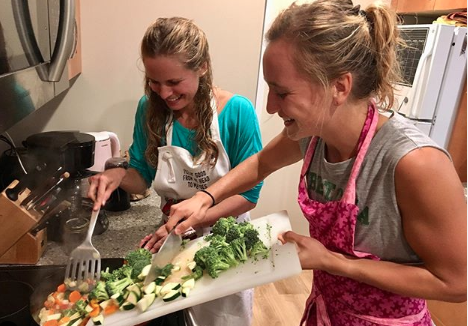
Alayna Sonnesyn (SMST2) captions this shot of cooking with Jessie Diggins, “Gotta fuel hard to train hard!”. (Photo: Instagram @asonnesyn)
Are you prepping your list of resolutions for the New Year? Do you, like many people, incorporate a weight loss goal? According to Business Wire, the market value of the diet industry in the US alone was ~$72.6 billion in 2021 (ref. 1), and increases near-annually. There are reasons why this industry is so successful. Sadly, it’s got little to do with the efficacy of their programs, products, or dieting as a whole. After all, what good is the long-term profitability of weight loss if it works after a single try? Don’t even get me started on the origins of body policing and the BMI… that’s for another day!
Large scale reviews of research studies, called meta-analyses, have found that the effectiveness of weight reduction programs vary considerably, with 40-65% of participants regaining all the weight they lose, plus more, within 2-3 years – regardless of diet approach (ref. 2). Rarely do studies of this kind, or stories in the news, mention the unintended consequences that dieting and negative body talk has on your mental health and the mental health and body image of those around you, particularly children and adolescents (ref. 3).
After working with endurance athletes across sports, genders and age groups for nearly a decade—and bolstered by a robust and growing body of research—I would like to make the argument that you can create and maintain nutrition habits that have lasting impacts on health and performance, entirely independent of weight loss. I say this with the acknowledgement that in athletes who compete at the highest levels of endurance sport, body composition monitoring and management can play a role. Even for these athletes, weight changes must be realistic, periodized, supported, and monitored closely by their care team.
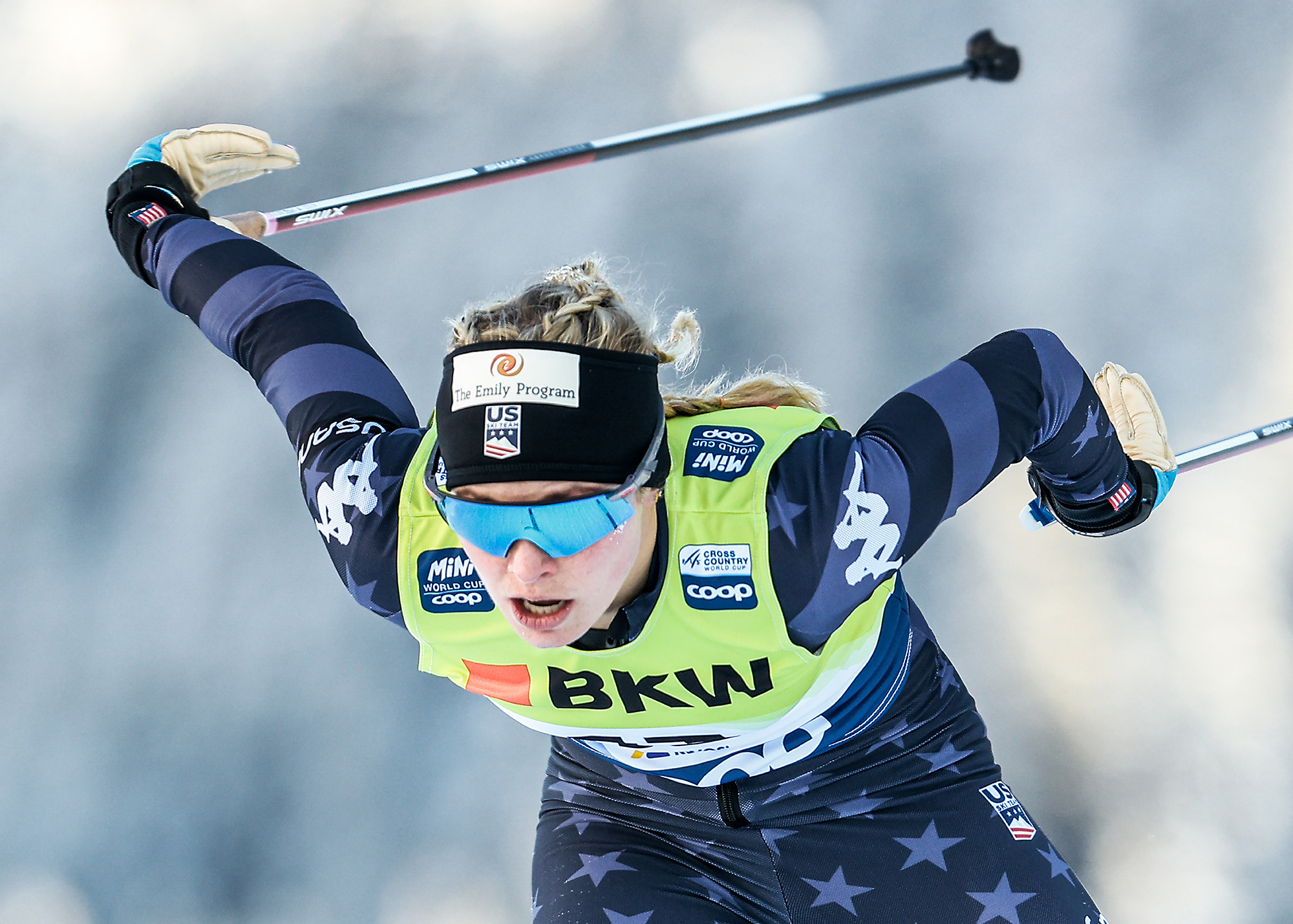
This season you may notice Jessie Diggins (USA) promoting The Emily Program on her headband. The Emily Program offers proven and personalized treatment for all types of eating disorders. (Photo: NordicFocus)
Athletes tend to be hard working, high achieving, focused, goal-oriented people. While these are largely viewed as positive character traits, they can also put athletes at risk for undereating, disordered eating, and eating disorders. FasterSkier has discussed Relative Energy Deficiency in Sport (RED-S) before, but I want to take a moment to dive a bit deeper. Low Energy Availability (LEA) is the main underpinning of RED-S, and is defined as a consistent mismatch in energy intake versus expenditure (ref. 4). LEA can occur for a number of reasons; for some athletes, it’s functionally difficult to meet their needs due to a demanding training, work and/or school schedule. Others might be eagerly trying to “eat healthier” and unintentionally undereat. There are also, of course, those who overtly restrict their eating in an effort to lose weight.
Here’s the thing: the relative influence of body composition change on performance is often inflated – and wildly variable. It can also quickly become outright dangerous and career-ending, as many elite athletes have attested to in recent years. I urge athletes at every level to consider that, perhaps, bodies are just meant to be different—and to change over time.
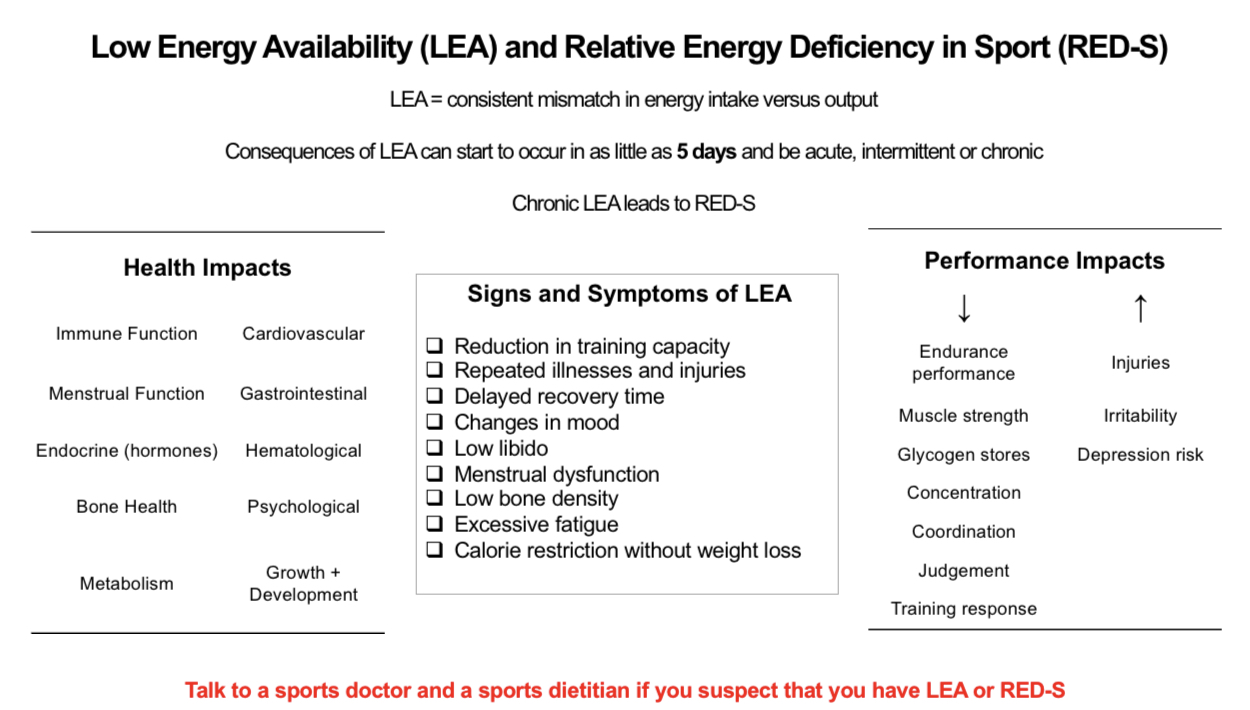
Check out the figure below to learn about Low Energy Availability (LEA) and RED-S:
Adapted from the 2018 IOC Consensus statement on relative energy deficiency in sport (ref. 4).
This year, we challenge you to choose realistic, actionable, long-term goals over a short-term diet du jour. Your body, mind and community will thank you for it!
Here are some performance-focused, weight-independent resolutions to consider in the new year:
Hydrate. This means peeing pale yellow every ~2 hours, give or take.
Eat meals + snacks throughout the day, every 3-4 hours or so.
Incorporate a protein source into meals and snacks, especially at odd times (like between a 12pm lunch and a 7pm dinner).
Learn how to fuel exercise sessions that are longer than 75 minutes. Understand there is a dose-response relationship (longer = more), seek guidance and adjust accordingly.
Include a variety of fats, colorful foods + spices to improve diet quality and decrease inflammation. These do not need to be fancy; frozen and dried options are convenient, comparable & cheaper.
Make sure to consume calcium-rich foods daily. This is especially important if you are post-menopausal and born female, have a history of an eating disorder, are taking corticosteroids, or have ever transitioned genders.
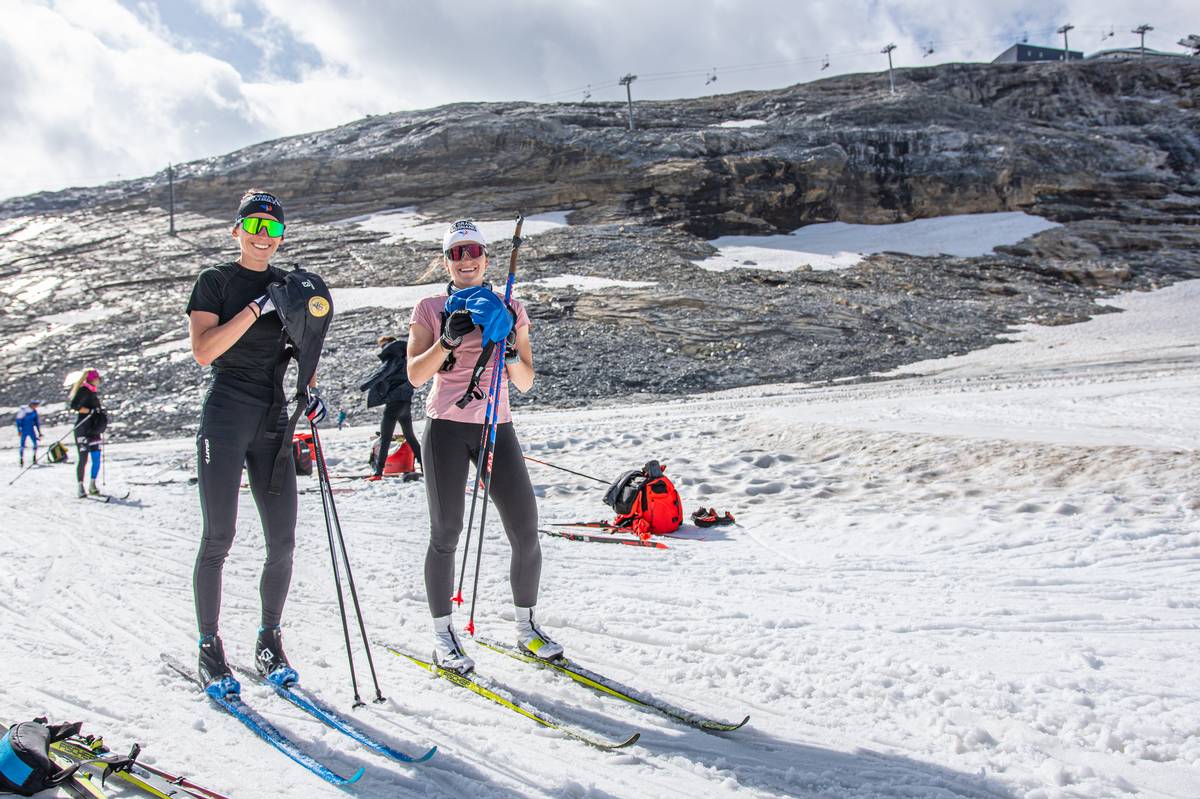
French skiers Delphine Claudel and Lena Quintin stop to refuel during a training camp on the Glacier de la Grande Motte near Tignes, FRA. (Photo: NordicFocus)
Sick of diet culture? Try these resolutions:
Consider evaluating your relationship with food and your body; engage in reparative work where it’s helpful. Do this for yourself, your loved ones, your teammates/athletes, and the people you don’t yet know who will be influenced by seeing you simply accept and love yourself unconditionally.
Unfollow or mute people on social media who make you feel bad about your body or your food choices. Purposely change your algorithm by quickly swiping past diet content (TikTok and Instagram keep note of how long you watch for), selecting “not interested” or reporting it.
Take ownership of conversations about diets and bodies amongst friends and family that make you feel uncomfortable, or (if you are a parent) if you’re within earshot of your kids. Consider ways you might respond in advance (e.g. friendly correction, ignore, honesty, subject change, sassy). As you begin to pay attention to negative body talk and conversations about dieting, you’ll quickly notice how many opportunities there will be to practice.
Want to learn more? Be sure to follow FasterSkier in 2023 for my upcoming five-part web series: The Five R’s: Sports Nutrition for Faster Skiing.
Jensen, Michael D., et al. “2013 AHA/ACC/TOS guideline for the management of overweight and obesity in adults: a report of the American College of Cardiology/American Heart Association Task Force on Practice Guidelines and The Obesity Society.” Journal of the American college of cardiology 63.25 Part B (2014): 2985-3023.
Goldfield, Gary S., et al. “Body dissatisfaction, dietary restraint, depression, and weight status in adolescents.” Journal of school health 80.4 (2010): 186-192.
Mountjoy, Margo, et al. “International Olympic Committee (IOC) consensus statement on relative energy deficiency in sport (RED-S): 2018 update.” International journal of sport nutrition and exercise metabolism 28.4 (2018): 316-331.
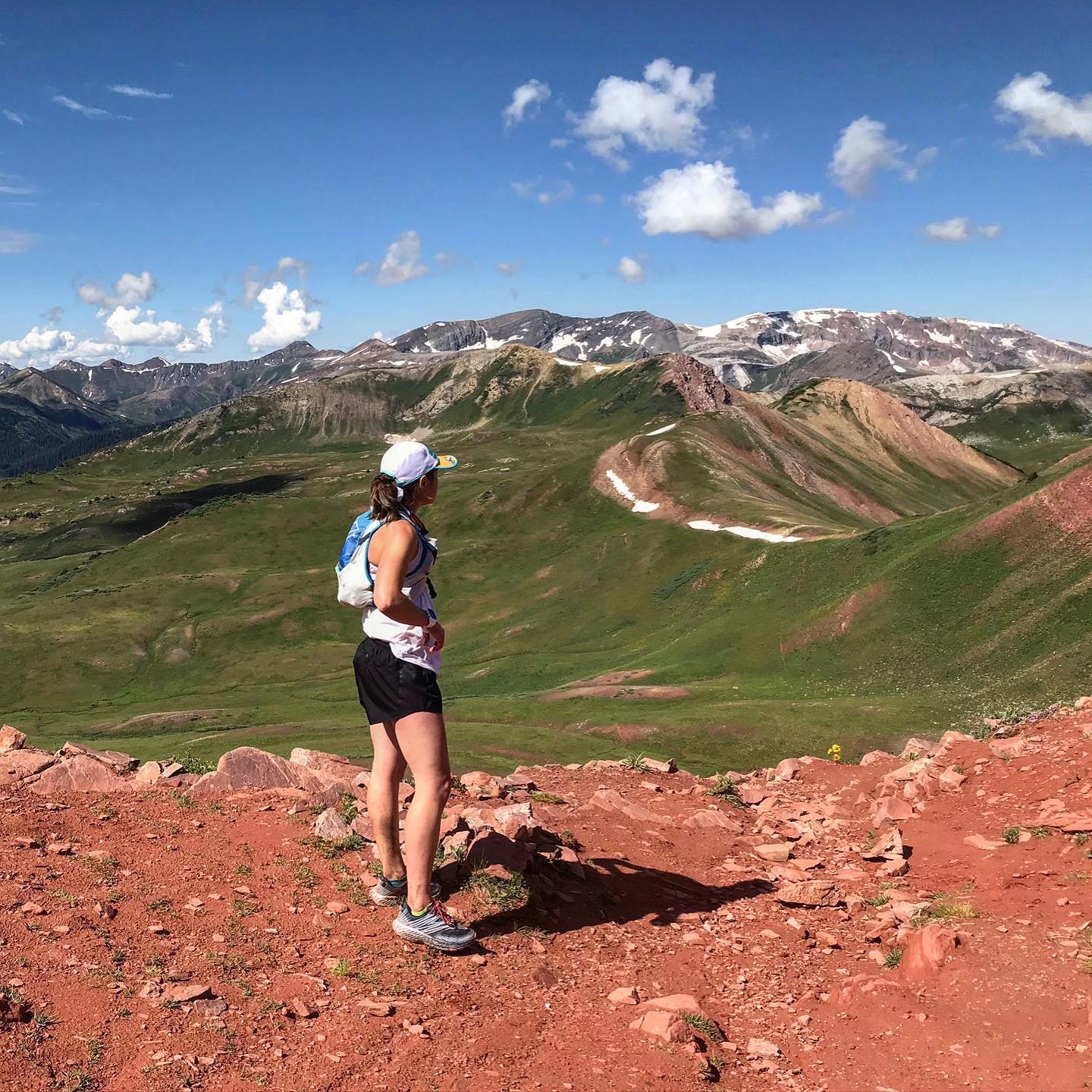
A sunrise trail run overlooking the author’s hometown of Carbondale, CO.
CONTENT WARNING: This article includes stories of an individual experience with an eating disorder, including numerical values of weight. If you’re struggling, you can contact the NEDA Helpline, which has options for text, chat, or phone support.
INTRODUCTION: This opinion piece is a response to some recently publicized experiences of women of the University of Oregon track and field program who were routinely scrutinized for their body composition, underwent DEXA scans to measure body fat percentage multiple times per year, and were assigned additional training if their body fat was above the threshold set by their coach, Robert Johnson, and other staff. They were given the message that their performance and potential were directly tied to these metrics, which led to rampant disordered eating, body dysmorphia, and anxiety among the team. Meanwhile, their coach claimed these tests and individualized training regimens were backed by science, saying: “The health and safety of all our student-athletes is extremely important and at the forefront at all times.”
It required time to work up the courage to post this narrative. I chose not to use photos of myself from the time period discussed, instead including recent photos that remind me of the rewards that come from being nourished, strong, healthy, and whole.
To submit an op-ed or personal essay, email info@fasterskier.com. We fully support open dialogue and feedback.
***
In August of 2011, I got Giardia. I had spent the better part of the summer between my sophomore and junior years of college backpacking, canoeing, and swimming in small ponds throughout the Adirondack Park in northeastern New York, and must have picked it up along the way. While most experience “beaver fever” as a rapid-onset and violent gastrointestinal nightmare, mine was a slow burn: feeling full as soon as I started eating, sharp stomach pains and cramping, a chronic headache, and a few cross country running practices where I was questioning the food from the dining hall.
Meanwhile, the unchecked pathogenic colony was slowly festering in my gut, stealing the nutrients from my food, leaving me little to absorb. Consequently, I lost weight. Stepping on the scale at the annual “health check” put on by the athletic department, I saw that I weighed 119 pounds, which was roughly 5-10 pounds lighter than my normal set point. I was being complimented by my peers for how fit I looked, and my times were steadily improving. This germinated dormant seeds in my perfectionist mind that being “good” at running was directly tied to the number on the scale, and the seeds began to grow like a weed.
It wasn’t that I had put in a solid summer of training, it was the weight. 119 pounds was good, but I’d look more like a runner if I weighed 115 pounds.
Midway through the season, I had bloody diarrhea just before a race, and called my parents freaking out. A few days later, a stool test confirmed that I had Giardia and I was given antibiotics to get rid of it.
I panicked. If being sick was causing the weight loss, would killing the parasites in my gut mean I would undo all of the “progress” I had made toward being a good athlete? I became obsessed with exerting control over what I was eating. I went gluten free and vegan, making it nearly impossible for me to eat with others. I continued to PR through the end of the season, then I all but disappeared.
To be clear, I was blessed with supportive parents who put zero pressure on my siblings and me when it came to sports. At both the high school and collegiate level, I had wonderful coaches who fostered a healthy and supportive team environment with no discussion or pressure surrounding how we ate or what our bodies looked like. My only memory of my college coach commenting on someone’s body was to say he was concerned about a male athlete on the team whose eyes, he felt, appeared “gaunt and a little bit haunted” at that point in the season.
This was all at a Division III school with no track program, and USCSA-level skiing — not the pressure cooker of Division I programs that were more centered on competition and results. The coaches embodied a healthy lifestyle that was built around a love for endurance sports, and I still admire them.
But as Jessie Diggins said when discussing her own experience with an eating disorder, “Genetics loads the gun, and the environment pulls the trigger.” Even without being told outright that leaner is faster, or being instructed to lose weight for performance, athletes can fall into these lonely and unhealthy traps.
The author on Frigidaire Pass along the roughly 26 mile Four Pass Loop outside of Aspen, a Colorado classic. (Photo: Kate Phillips)
In my case, I was feeling mounting pressure to know the answer to the question: “What are your plans for after college?” The end of undergrad was looming, I had no answer, and I didn’t know how to cope. Meanwhile, I was topping out the levels of rigor and challenge offered at the undergraduate level with an applied math course load, and constant focus on maintaining my GPA heightened my anxiety. My friends were getting internships and applying to jobs, and I just wanted to run and ski and have everything stay the same.
It was also the early days of social media and blogging, which were feeding me indirect but clear messages about what other athletes looked like, what they ate on Wednesdays, and how to make any dessert I used to enjoy “healthier” to reduce the number of calories I was consuming. A decade later, almost everyone has a smartphone and these influences have become even more toxic.
When I reached 115 pounds, it wasn’t enough. Surprise, surprise.
I was switching over to ski season and building training volume, all while meticulously counting calories and restricting my caloric intake. I bought a scale, which might as well have been a set of shackles. On Thanksgiving, my concerned older brother tried to pile extra turkey and stuffing onto my carefully portioned plate, and I melted down.
My relationships with friends and family were strained. Everyone was worried and I just wanted them to stay the f**k out of my way. I was depressed, I cried myself to sleep most nights, and I couldn’t convince myself to stop starving my body, simultaneously finding comfort in the emptiness and hating the shell of myself that I had become. This is what being trapped inside an eating disorder is like.
During the nordic season, I was so fatigued that I avoided skiing with others. I couldn’t keep my body warm, regardless of how many layers I was wearing. I was slowly slipping backward in race results. I was constantly getting sick. One day, at my self-imposed morning weigh-in, my five foot six inch skeletal frame weighed 98 pounds, and I felt desperately frail. I broke down crying. I had lost 30 pounds within five months. What was I doing to myself? Maybe I’d just try to hover here rather than continuing to strive for a smaller body. I didn’t want to die.
At USCSA Nationals in 2012, on the opening day of racing, I didn’t qualify for the heats for the classic sprint. I was devastated. My body had no muscle for double poling. I was on empty.
Over the next eight months, I began to see a counselor. I met with doctors, and I managed to improve my physical health, but I lacked sufficient holistic support to truly overcome the disease. I was on a rollercoaster of binge–purge cycles, feeling like my body was taking over and forcing me to eat manically. I would then try to starve myself through extra training in the subsequent days to “balance it out”, perpetuating the cycle. It was scary and embarrassing and incredibly uncomfortable.
The next fall, I was training harder than ever for cross country running and finally making progress again. The night before the regional meet, our team went to Applebee’s for dinner, which listed the calorie content of meals on its menu. I picked whatever had the fewest: a small portion of rice, some broiled white fish, and some steamed veggies. I “treated” myself to a Luna Bar before bed as dessert. The next day, it was like someone had filled my legs with cement, and I ran my worst time of the season.
***
Ten years later, I feel healthy, whole, and empowered, and my primary goal in life has become ensuring my daughter does not go through the same hell that I did. There are years missing from this story. Getting to this point has taken work, and it has been far from a linear progression of recovery. It’s ongoing, and it’s messy, and it’s all too common.
Simultaneously, by learning about female athlete physiology and working with my body instead of attempting to squeeze it into an extra small, I am far stronger, faster, and more durable than I was when I weighed less. My mind is well enough to care far more about what my body can do than whether it looks like a magazine cover, and I’m happier because of it. I get to explore my potential as an athlete who is supporting her training with plenty of fuel. And my body is healthy and durable enough to support countless long and burly adventures in the mountains on skis and on foot that I could not have dreamed of at 21.
Most importantly, after healing from five years of amenorrhea, my body grew a small-but-mighty human being, who inspires more joy and love than I can put into words.
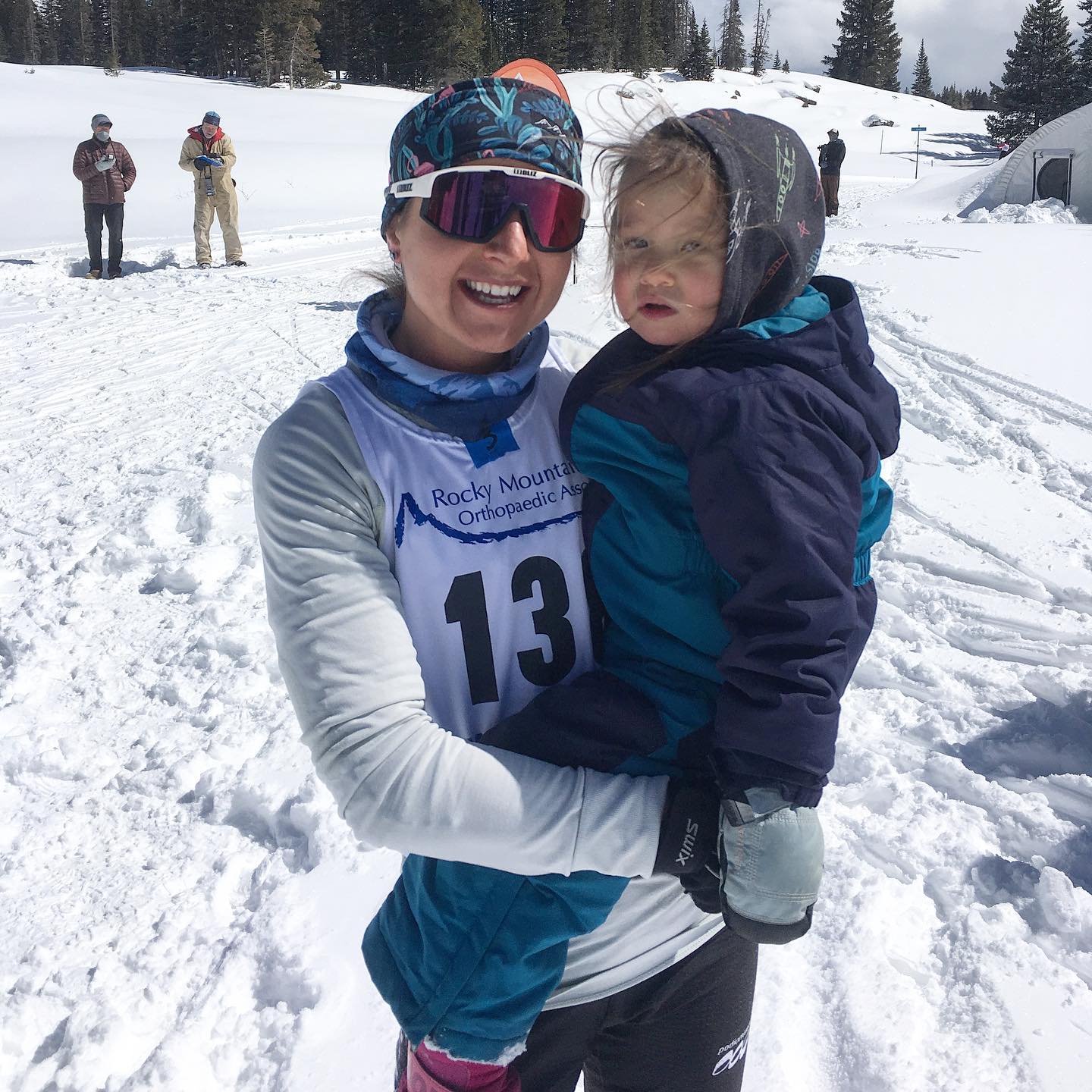
The author with her daughter following a ski race on Colorado’s Grand Mesa.
As women in sport, we’ve come a long way, thanks to the strong women who have spoken out and taken action to support the physical and mental wellbeing of their successors. Reading the stories from the women of the Oregon who were subjected to direct messages from the coaching and support staff that they could not achieve their potential without attaining unrealistic, unhealthy, and unsustainable body composition goals feels like a giant step backward; it is a disheartening reminder of how unhealthy cancerous appendages of sport systems remain.
One woman shared that the metric she was recommended to attain was 13% body fat. It is estimated that 10-12% of fat on a woman’s body is “essential fat”, which cushions organs (like the heart), serves in nerve tissue, and performs other functions vital to physiological function. Most women require at least 22-25% body fat for fertility, i.e., optimal physical and hormonal health to support a pregnancy. 13% body fat is dangerous to an athlete’s immediate and long term health.
Amenorrhea, or the loss of menstruation, is dubbed the canary in the coal mine for a host of ailments associated with RED-S, including low bone density, impaired immune and cognitive function, and risk of cardiovascular disease. Eating disorders have the highest mortality rate of any mental illness.
My story may not seem similar to those the women of Oregon shared; I had only positive experiences with coaches who ultimately didn’t care how fast I was. My point is that athletes — of any gender — don’t need coaches or systems to tip the scales. Endurance athletes often already exhibit Type-A tendencies; we like to track hours, watts, mileage, heart rate, and to nerd out on technique. We always want more from ourselves, to explore the limits of our potential.
These problems are pervasive, and they are certainly not limited to the top tiers of sport. Indeed, one recent study found no difference in the prevalence of restrictive eating, menstrual dysfunction, primary amenorrhea, or injuries between elite and recreational female athletes across a sample set of over 800 athletes.
“She should weigh 62-63 kilos to perform optimally, but right now her weight stands in the way of her development,” he reportedly told Match TV. “She has to fight to lose weight to be able to perform well in the Olympics.”
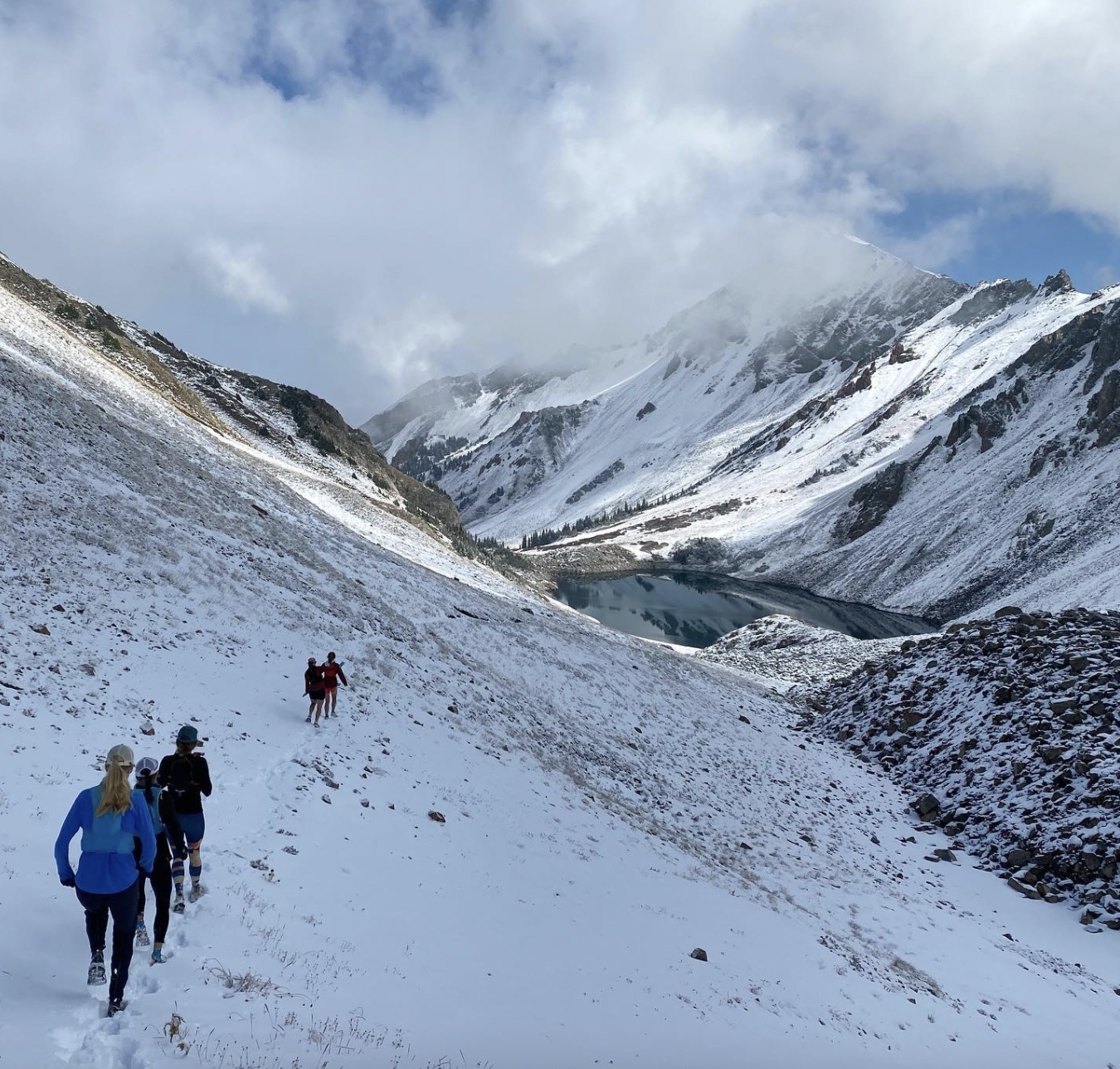
A snowy fall trail run with strong female adventure buddies. (Photo: Lina Sutro)
Coaches at any level have a responsibility to guard their athletes from the deleterious effects of RED-S, not to set the stage for them.
Especially at an age where bodies are changing rapidly (aka puberty), flush with hormones, and transitioning into an adult state, coaches should not be steering athletes toward interrupting these processes with fat loss. There should not be regular weigh-ins, or extra unproductive training to lean out.
According to Johnson, athletes are simply part of a numbers game. “A good mathematician probably could be a good track coach,” he told The Oregonian.
I’ve got a math degree, and I call bullshit. What about all of the intangible elements that lead to individual and team success? The women and men in his program deserve so much more than this treatment.
Chronic low energy availability, i.e., not eating enough to match the energy output of training, has been proven to decrease training response, muscle strength, and endurance. In the long term, essentially all metabolic, musculoskeletal, and endocrinological systems are affected. This equates to a brief spike in performance coinciding with the initial weight loss, followed by at best a plateau, and at worse injury, low bone density, and being so depressed and broken that the athlete leaves the sport altogether. The equation does not check out. How do the numbers support athletes starving themselves to achieve a body composition goal? How does this support athletes in a sport where professionals are peaking a decade or more after college? Is the real goal to see how fast an athlete can get before shit hits the fan?
What if instead of running athletes through a physical and mental gauntlet to see who could achieve the best results in college without breaking, coaches fostered the fire and love of sport in their athletes? What if they helped athletes focus on their long-term goals and to see the bigger picture?
So many already have the wiring for anxiety and disordered eating. The coach or program should not be pulling the trigger.
Athletes need support. They need positive role models. They need access to information from a registered dietitian who can help them fuel their body for performance and health. They need a well-rounded team culture that cares about each athlete as an individual who matters more than the number on the scale or the time on the results page. This needs to happen at all ages and levels, no matter the stakes of the competition.
They need to be told that short term gains are never worth risking long term physical or mental health.
I hope the world of endurance sports collectively shifts toward supporting the athlete as a whole person. And I hope adding my voice to the many women speaking out helps nudge the boulder a little further up the hill.
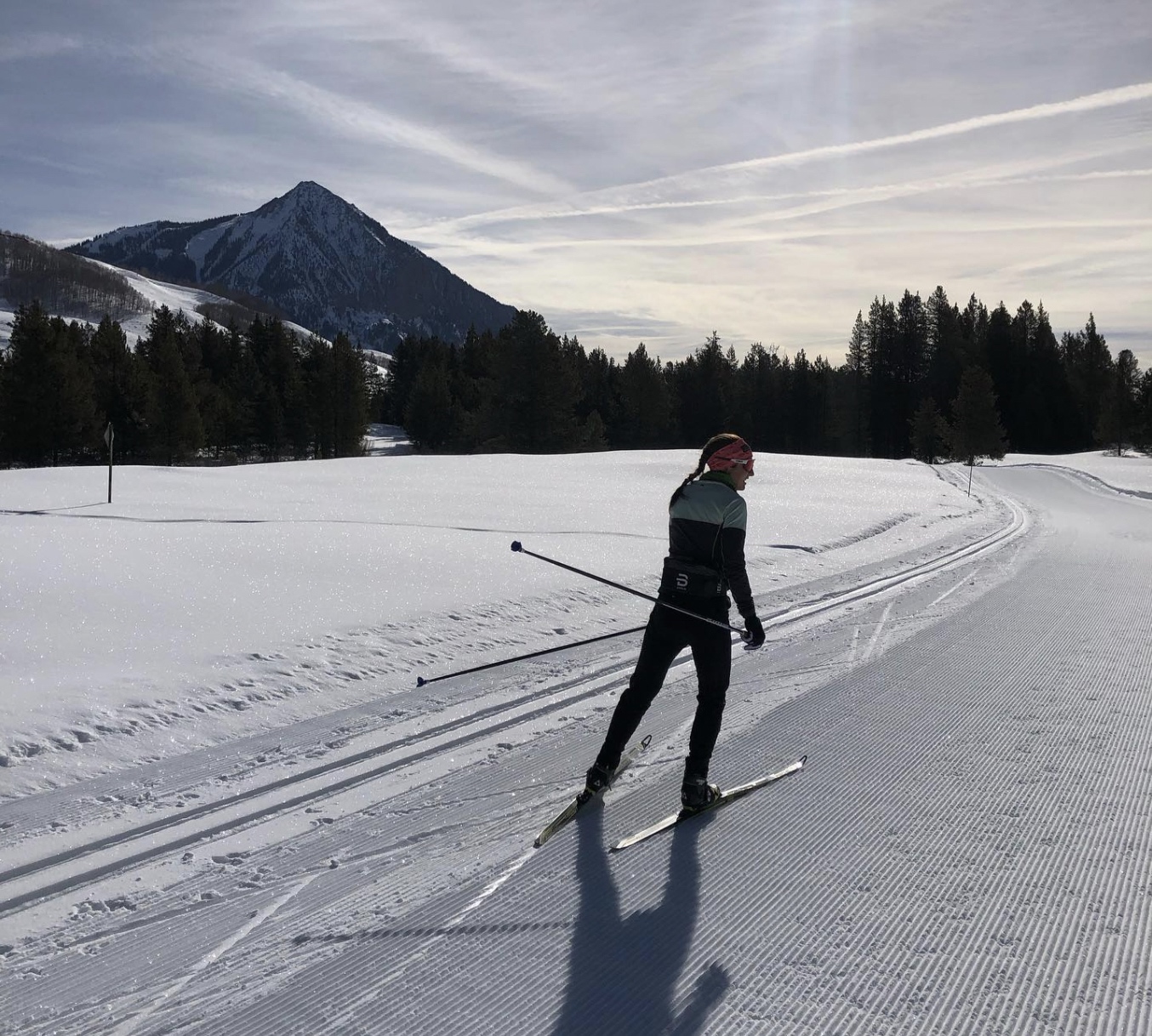
A well-fueled body means more energy to enjoy days like this one. (Photo: Laura Puckett Daniels)