Tag: low snow

  • For Junior Nationals Athletes, Coaches and Organizers, a ‘Roll-with-the-Punches’ Scenario

    For Junior Nationals Athletes, Coaches and Organizers, a ‘Roll-with-the-Punches’ Scenario

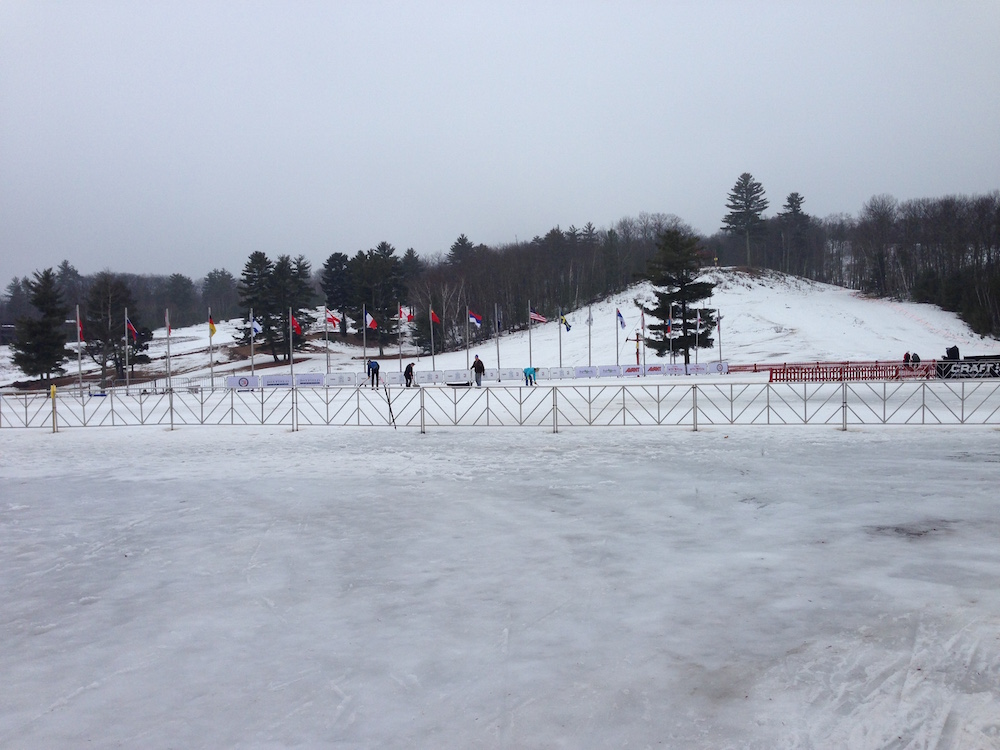
    Wednesday was an off day at 2016 Junior Nationals, but it wasn't originally scheduled to be. Warm temperatures and melting snow in the stadium and on the trails at Telemark in Cable, Wis., forced organizers to postpone the races one day and shift the formats to a freestyle individual start on Thursday, freestyle sprint on Friday, and freestyle relay on Saturday. (Photo: Hailey Swirbul)
    Wednesday was an off day at 2016 Junior Nationals, but it wasn’t originally scheduled to be. Warm temperatures and melting snow in the stadium and on the trails at Telemark in Cable, Wis., forced organizers to postpone the races one day and shift the formats to a freestyle individual start on Thursday, freestyle sprint on Friday, and freestyle relay on Saturday. (Photo: Hailey Swirbul)

    The good news: “We’ll have a race tomorrow,” Chief of Competition Gary Larson said Wednesday of the Junior National Championships currently taking place at the Telemark Trail System in Cable, Wis. Due to exceedingly warm temperatures on Tuesday reaching into the 60’s, the 5-kilometer and 1.3-kilometer race courses have been jeopardized.

    “It was impossible to realize how much this weather did to the snow. This is very unusual for Wisconsin,” Larson said. “The snow was good up until Saturday.”

    On Monday, the racers and coaches representing regions from across the U.S. began to notice the deteriorating conditions as they fought through spring-like ski trails during the 5/10 k classic individual start races. The following day, a small section of the course was opened only to coaches to test classic kick for the following classic sprint, while all athletes were redirected to sections of the American Birkebeiner trail to ski for the day. Eventually, the organizing committee decided to change and postpone the planned events for the rest of the Junior Nationals.
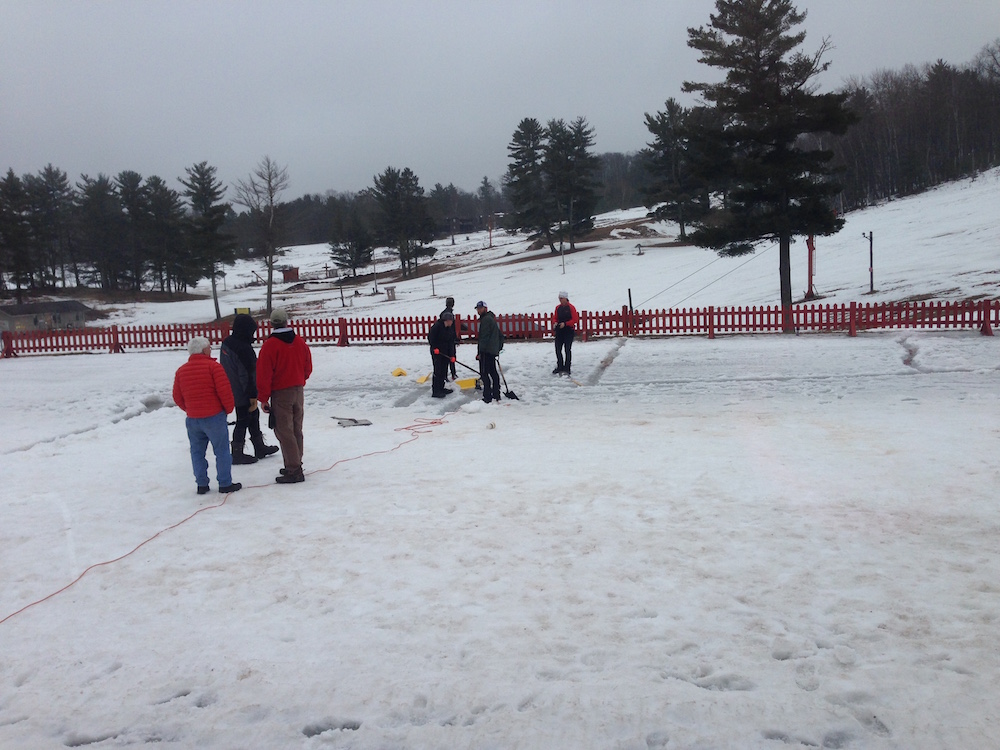
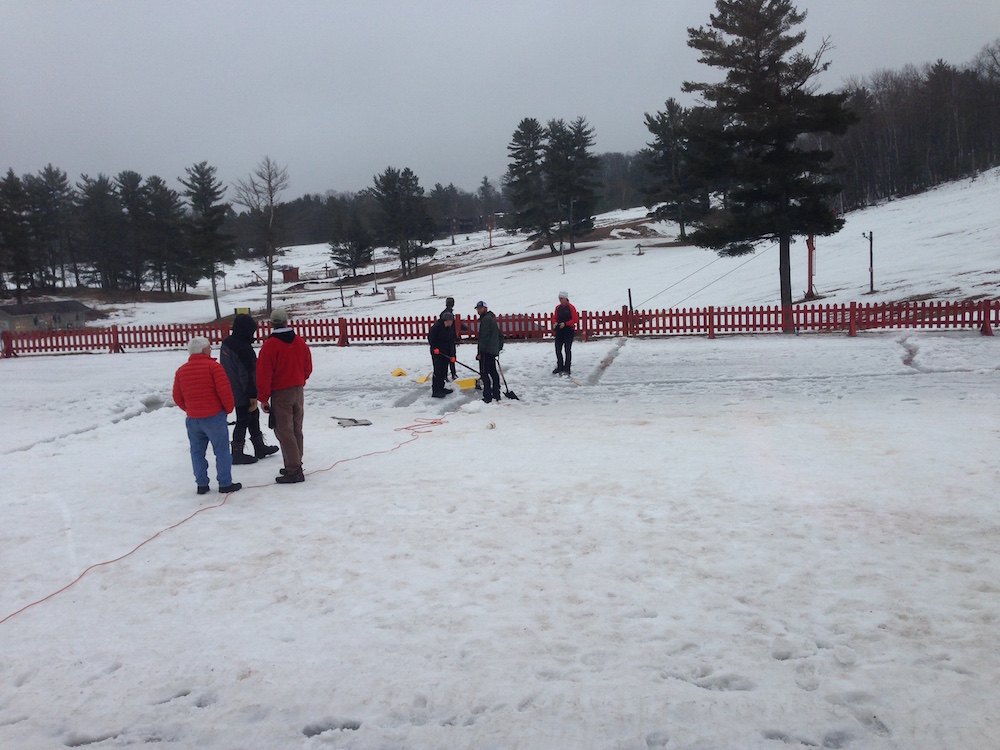
    Junior Nationals volunteers work on draining water from the stadium at Telemark in Cable, Wis. Hundreds of volunteers made the event possible, and even in adverse conditions, "Our problem is we don’t have enough shovels," Chief of Competition Gary Larson said Wednesday. (Photo: Hailey Swirbul)
    Junior Nationals volunteers work on draining water from the stadium at Telemark in Cable, Wis. Hundreds of volunteers made the event possible, and even in adverse conditions, “Our problem is we don’t have enough shovels,” Chief of Competition Gary Larson said Wednesday. (Photo: Hailey Swirbul)

    “We ended up changing the schedule a lot,” Larson said. “We just can’t get [classic] tracks in, so the sprint is going to be skate on Friday. We still at this time don’t know whether or not we are going to be able to do heats, or if it is just going to be a prologue.”

    Instead of the original classic sprint, freestyle distance mass start, and freestyle relay set for the week, athletes are preparing for a freestyle individual distance race, freestyle sprint and a freestyle relay.

    “At first I was pretty upset, but then I realized the course changes were made for the best,” Rocky Mountain athlete Nolan Herzog said. “It is kind of a roll-with-the-punches scenario right now, because we don’t really know what is going to happen.”

    He hopes that there will be adequate snow for the three scheduled remaining races.

    According to Larson, the prolonged above-freezing temperatures in Cable have created the issues with the course. The lack of snow on the trails is not the problem, it is the water that pools at low points on the trail and softens the snow due to lack of drainage.

    Larson, for the most part, has received supportive responses from parents, coaches, and athletes about this unexpected turn of weather.

    “I’m glad that the organizing committee is as committed as they are to trying to deliver a good quality race,” Intermountain coach Rick Kapala said. “I think that if they can put the big climb in, the A-climb, we are going to have a really, really good athletic test.”

    The organizing committee and Larson are striving to maintain as much of the original 5 k loop as possible to ensure that athletes are met with a fair and challenging series of races thanks to hundreds of volunteers.

    “Our problem is we don’t have enough shovels,” Larson noted. As chief of this event, he said he has received “unbelievable” response from service people, coaches and parents eager to help distribute snow throughout the manmade and natural snow course.
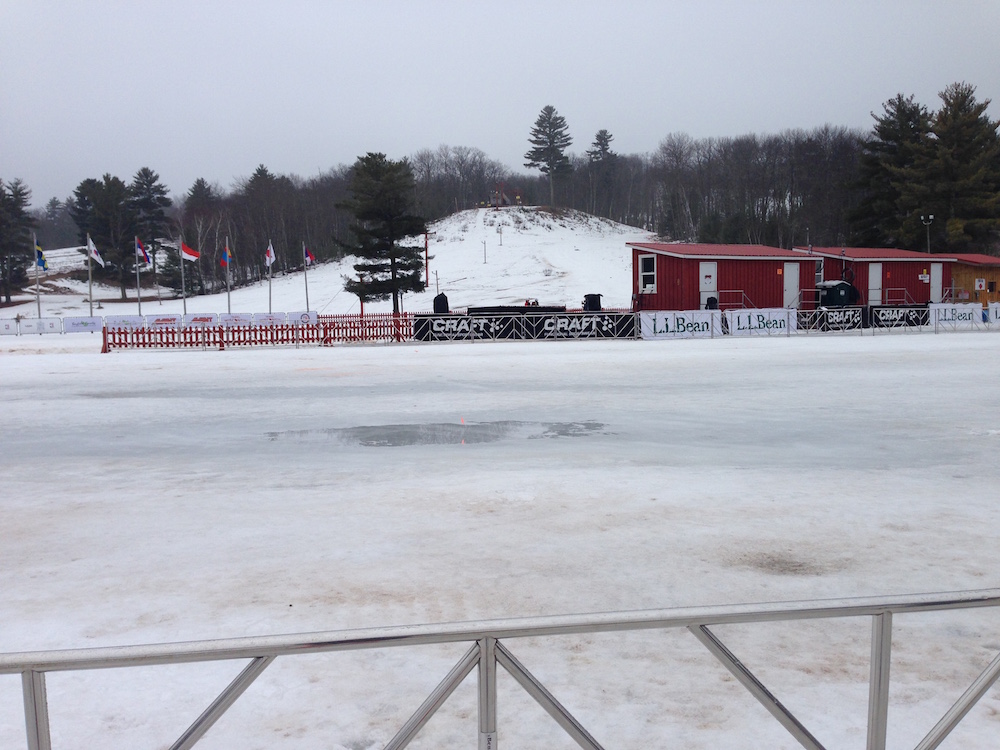
    A puddle in the center of the stadium, where the 2016 Junior Nationals races both start and finish, as seen Wednesday at the Telemark Trails in Cable, Wis. (Photo: Hailey Swirbul)
    A puddle in the center of the stadium, where the 2016 Junior Nationals races both start and finish, as seen Wednesday at the Telemark Trails in Cable, Wis. (Photo: Hailey Swirbul)

    “They have been exceedingly understanding, and out here helping. It takes that kind of effort and that kind of understanding to make it work,” Larson said.

    Reflecting on the preparation for such unpredictable conditions, Larson acknowledges that the one thing that may have helped prevent this would have been to put “thicker snow on the trail that we can access with the snowmaking.” Despite the fact that the 5 k course at Telemark was the first ever World Cup course, requiring reliable snowmaking, the pipes used for snowmaking are damaged except for a small loop. The Telemark Trail System has not utilized the snowmaking tools since November.

    “The future of our cross-country ski sport is going to be tough. Make snow and place the snow early, as insurance,” Larson suggests to future hosts of events like Junior Nationals.

    Back to the good news: there will be a race tomorrow. New England coach Rob Bradlee acknowledges that he is “impressed how everybody is dealing with very, very difficult conditions that are way outside our control. I’m admiring everyone’s spirit, both the organizers’ and the participants.”

    Despite the sporadic drizzles of rain in Cable, Bradlee is feeling what most are; the anticipation and excitement are high among athletes, coaches and organizers as the rest of the week unfolds.

    Update: Wednesday’s course will be a 3.7 k loop involving two laps for 5 k, three laps for 10 k, and four laps for 15 k. Temperatures were expected to drop below freezing on Wednesday night and organizers planned to salt the course. Regardless, they have still ruled out classic races.

  • Davos World Cup Still a Go Despite Lack of Snow, to Host La Clusaz Races as Well (Updated)

    Davos World Cup Still a Go Despite Lack of Snow, to Host La Clusaz Races as Well (Updated)

    Davos is struggling to produce and collect enough snow for the weekend competitions, but will manage to pull off both a distance race and a sprint. Photo: Holly Brooks
    Davos World Cup organizers have struggled to produce and collect enough snow for this weekend’s competitions, but will manage to pull off both a distance race and a sprint. (Photo: Holly Brooks)

    Note: This article has been updated to include Friday’s announcement from the International Ski Federation (FIS), that Davos will host next weekend’s World Cup races as well, after the freestyle races in La Clusaz, France, were canceled because of a lack of snow.

    ***

    The upcoming World Cup races in Davos, Switzerland, have been scaled back due to lack of snow — but it’s still better there than La Clusaz. On Friday, the International Ski Federation (FIS) announced that next weekend’s canceled races in La Clusaz would instead take place in Davos.

    For the next two weekends, racers will compete in individual 10- and 15-kilometer distances and freestyle sprints in Davos. The Davos Nordic Organizing Committee, in conjunction with Swiss Ski and FIS, had already shortened the originally scheduled Davos races from the men’s 30-kilometer classic and women’s 15 k classic on Saturday, to a men’s 15 k classic and women’s 10 k. Freestyle sprints will take place Sunday.

    Next weekend, Davos will host 10/15 freestyle individual starts and a freestyle sprint.

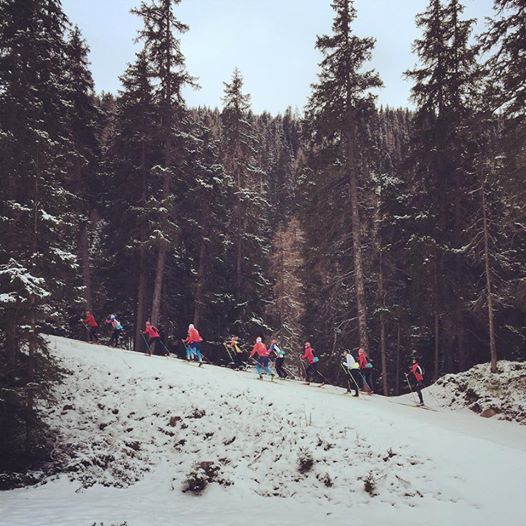
    Athletes on a thin base at the 1.3 k track in Davos, Switzerland. (Photo: FIS)
    Athletes on a thin base at the 1.3 k track in Davos, Switzerland. (Photo: FIS)

    American Holly Brooks was among the flocks of skiers training in Davos this week before she headed to slightly higher grounds in Livigno, Italy, for her first marathon of the season at La Sgambeda on Friday.

    “Davos, like much of central Europe, is having one of the driest early winters on record,” Brooks wrote in an email on Wednesday.

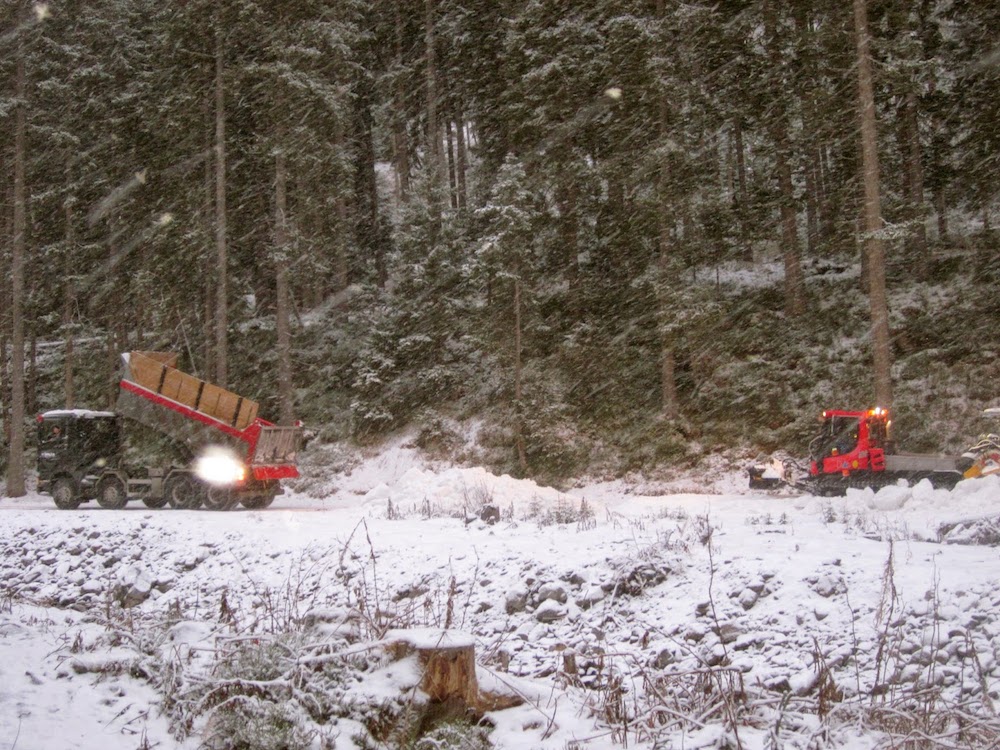
    She provided a few photos to illustrate the scene, one of which (see above) showed a truck dumping snow in front of a PistenBully, which then spread it across the World Cup course.

    “The organizing committee in Davos is blowing snow at a mountain pass above (where it is cold enough) and trucking it down to cover a 5 k loop for this weekend’s upcoming World Cup,” she explained. “The effort and $ going into this project is incredible. I feel very luck that just over the mountains in Livigno, the site of my marathon, there is enough snow to hold the races on a larger, 35 k loop.”

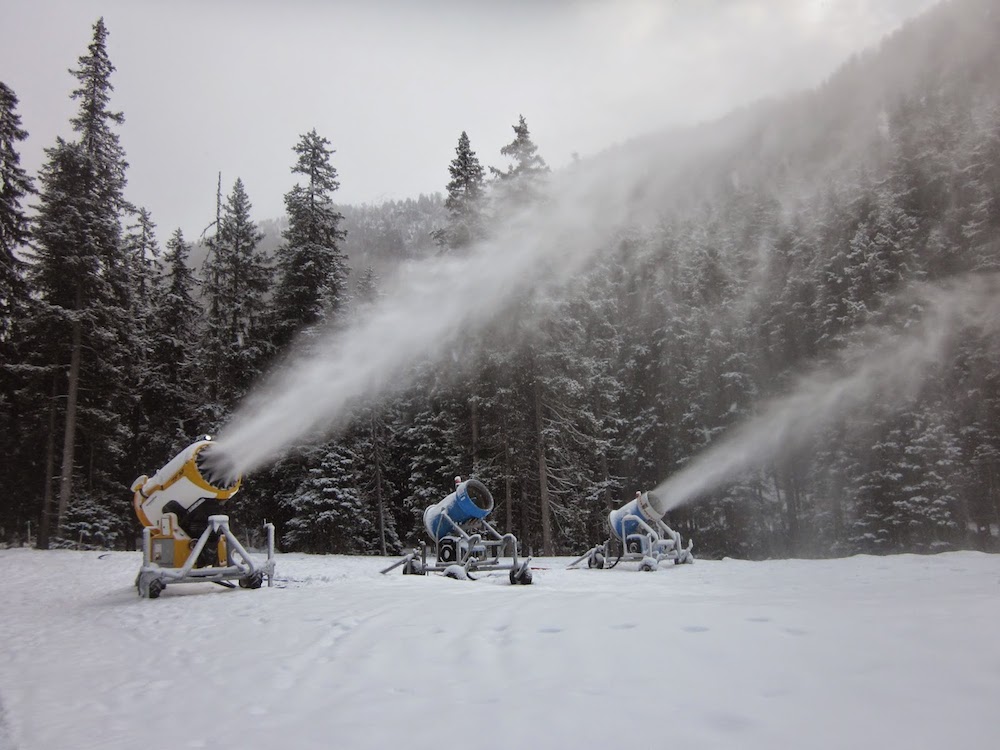
    According to FIS, the Davos Organizing Committee (OC) produced snow high up on Flüela Pass — some 2,380 meters (7,800 feet) above sea level — where temperatures were cold enough to make it.

    As of Tuesday night, the organizers has spent more than 70 hours bringing it down to the race course. They did so using PistenBullies, which also pushed natural snow down the nearby mountainsides. That snow was then collected and transported down to the Davos World Cup trails in trucks.

    “After two tough weeks with many difficult decisions, we are very happy to present the athletes our tracks,” Adriano Iseppi, head of the Davos OC, said in a press release. “Even if we were able to produce snow only for one night on the competition area, we made the impossible possible. Many thanks to all the helpers up in the mountain and out in the tracks who have been working day and night.”

    The Davos Organizing Committee is producing snow up high for the World Cup races this weekend. (Photo: Holly Brooks)
    The Davos Organizing Committee has been producing snow up high for the World Cup races this weekend. (Photo: Holly Brooks)

    A local alpine skiing legend, Paul Accola, who now owns a forestry company, also donated his time and equipment for three days to help the organizers move snow.

    Hippolyt Kempf, a Swiss Nordic-combined gold medalist (1988 Olympics) and current head of Swiss Cross-Country, was complimentary of Davos Nordic.

    “They did an amazing job working all day and all night long to make sure that the cross-country track in Davos will be ready,” he said in the release. “We are convinced that athletes alike visitors can expect stunning competitions.”

    While Davos assumed responsibility for hosting next weekend’s World Cup freestyle races as well, start times had not yet been set for Dec. 20-21.

    Davos World Cup schedule:

    • Saturday, Dec. 13
    • 11:15 CET women’s 10 k classic
    • 13:30 CET men’s 15 k classic 
    • Sunday, Dec. 14
    • 12:30 CET women’s and men’s freestyle sprint prologue
    • 14:30 CET women’s and men’s freestyle heats
    • Saturday, Dec. 20 (moved from La Clusaz; times TBD)
    • women’s 10 k freestyle
    • men’s 15 k freestyle
    • Sunday, Dec. 21 (moved from La Clusaz; times TBD)
    • women’s and men’s freestyle sprints
  • Skarverennet on Saturday is a Go Despite Low Snow Pack

    Skarverennet 2011 in Norway is scheduled for Saturday, April 30 and is considered the ultimate season finale for both the biathlon and cross country World Cup racers, as well as 12,000 registered skiers of all stripes and ambitions.

    April was among the warmest on record, ruining the hopes of Easter ski touring for many Norwegians last week, and accordingly, Skarverennet organizers are swamped with concerned participants who wonder whether the race is going to be cancelled.  However, four days prior to the event, race organizers and groomers are optimistic.

    But the race won’t happen without some serious effort the next days. While groomers have tended to the race course for a long time already, final emergency touch ups are needed to save the course from the forces of nature. The 38-kilometer race starts at Finse and finishes at Ustaoset. Most of the race course is on the tundra above tree line along the base of the mountain Hallingskarvet. There are no concerns about the course for this portion of the race, as the temperatures still drop well below freezing for part of the day.

    The last few kilometers of the course present the biggest challenge: the descent down to the finish at Ustaoset. The snow pack on this part of the course is critically low. However, the weather forecast is promising with freezing temperatures for the coming nights, which will help preserve the existing snow pack. Additionally, the race organizers will add truckloads of snow from higher elevations every day up until race start. Creeks and bogs will be drained to lead water away from the course, and the groomers have extensive experience with optimizing snow conditions, the race organizers report.

    The organizers have decided to adjust the finish area somewhat for the elite racers, but will stick to the new format where spectators can see the racers for a longer loop in the finish area and the final push is an uphill finish chute.

    Race organizers say they will make last minute decisions on the course up until the race start on Saturday. After all, racer safety and an enjoyable experience are the most important considerations.

    April 26, 2011. Press release from Skarverennet, translation by Inge Scheve