Editor’s note: For the second-straight year, we’re presenting another 12-day holiday gift guide, brought to you by the one and only “FBD”, our gear-review guru. See also: Day 1 | Day 2 | Day 3 | Day 4 | Day 5 | Day 6 | Day 7 | Day 8 | Day 9
***
Day 10: Tech
Tech — what exactly does that mean? Technology? Phones that cost >$1k but still die after being exposed to cold for less than an hour? Michigan Tech? The dudes who stay up late drinking and prepping skis? All of these? None of these? Inquiring minds want to know.
In the vernacular that I am establishing here is it really more of the former and much less of the latter, much, much less, actually, as I am still recovering from spending time with the ski service technicians from Italy, Germany and France on the last night of the FIS Nordic Combined Continental Cup. You can learn a lot talking with World Cup wax techs and in this case I learned that if you stay up late drinking, you’re going to feel like crap the next morning. Who knew?
So let’s do our best to purge that nasty little episode from memory (which should be easy, as many of the details from that night are already sketchy) and focus on all of the strengths of technology.
***
Under $29
*Editor’s Pick (not FBD-reviewed)
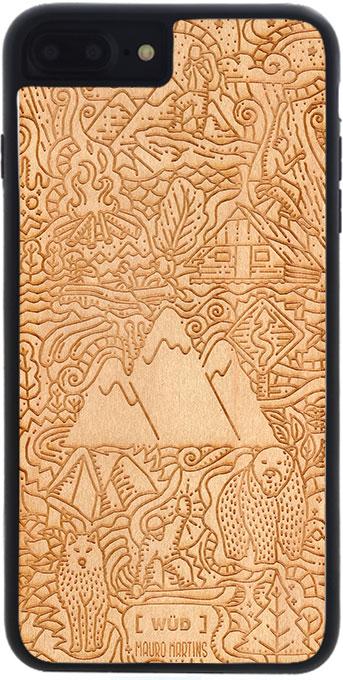
This one is on the edge of the price category, with WÜD Life offering cases ranging from $19.95 to $39.95, but we tested one right in the middle, a “Mountain by Mauro Martins Phone Case” made with North American Maple wood. This company, which has only been around since June, sells rugged, yet visually appeasing phone cases made from natural materials, like wood and stone (as well as hard plastic and rubber). So if you’re buying for someone that’s outdoorsy and artsy, this is a great choice.
The cases are relatively thin and lightweight (even the rock cases) and they’re not waterproof, so they don’t live up to the indestructible standards set by, say OtterBox. At the same time, they’re a lot less bulky and definitely eye-catching. And if you really want to stand out among the crowd, check out WÜD’s Private Collection for cases “uniquely designed for each customer”, made of burl wood and available in limited quantities.
Starting at $19.95 at WUDLife.com
$30 – $99
Backcountry coffee press
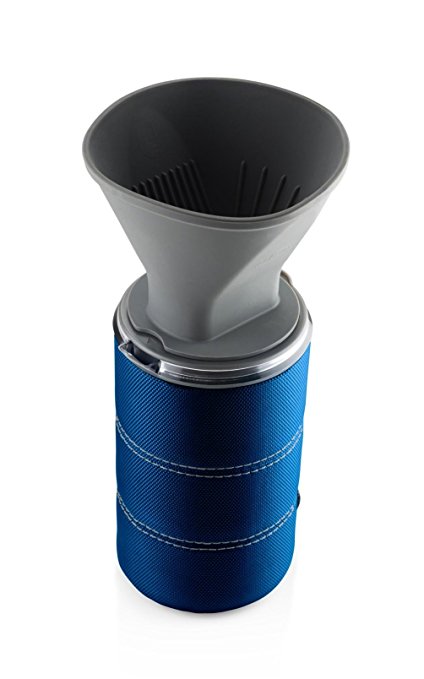
First and foremost, let’s not forget that the ultimate goal of technology is to make our lives better and is there anything better than hot, fresh coffee in the morning? Coffee is good everywhere, but it’s even better when you are up in the mountains, on a glacier, or marooned in some soul-crushing cabin in remote Montana, testing sleeping bags and underwear, alone with your thoughts (turns out that you can scribble down your insane ramblings much faster and with greater clarity when you are jacked up on caffeine).
Coffee is a lot like sex in the sense that even when it’s bad, it’s good. Sticking with this metaphor for a second, coffee is also good anywhere and no where is it better than in any of the aforementioned scenarios. It can also be hard to find, especially when you are traveling alone, and can be quite frustrating when someone who doesn’t know what they’re doing messes it up.
The solution? (Well, at least to your coffee problems, you’re on your own for the other stuff). A kick-ass backcountry coffee system. Technically (yup, there’s that word again), this is a pour-over system, as opposed to a French Press, but at the end of the day, does any of that really matter? Your goal is good/great coffee in the backcountry (or in your hillbilly offices if those savages only have dirty, old commercial drip coffee makers that look like they came from a insane asylum in the 1950s).
There are a few different pour-over systems out there, but this one is probably my favorite. It’s relatively light, very functional, durable and most importantly, produces great coffee, which is key when you are sitting in your Ted Kaczynski-style cabin in remote Montana, wondering how your life went so wrong. It might be a bit heavy for weight-weenie backpackers (for you, I recommend this, but please note, you also need a compatible stove).
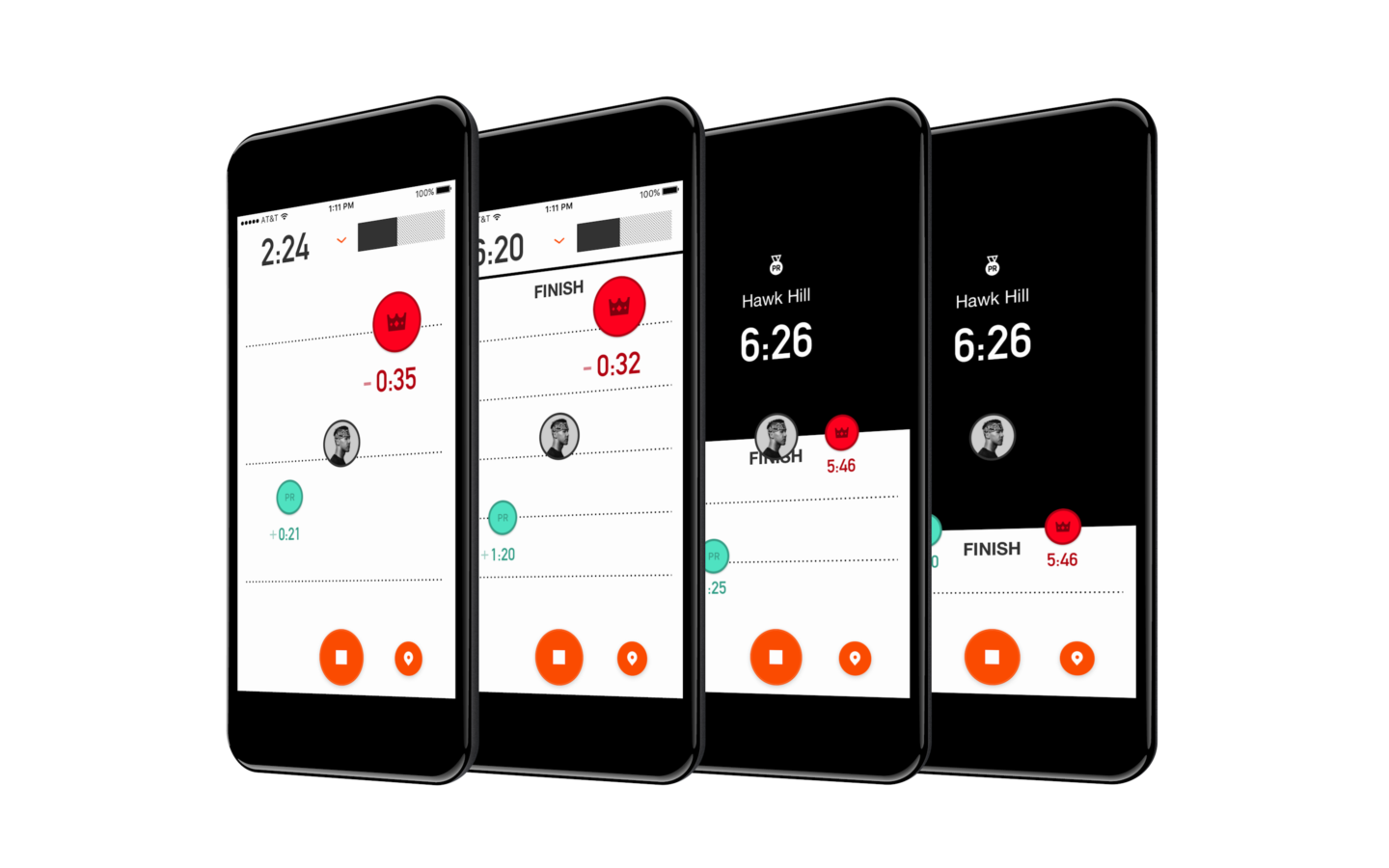
OK, this one is a bit tricky for me. I gladly travel to the far corners of the Earth in search of the ultimate in gear for my adoring readers, but I’m going to let you in on a secret — I generally don’t like Strava. Well, wait, let me back up a bit — I generally don’t like the people who use Strava. Just as Muhammad Ali famously once said regarding his refusal to fight in Vietnam, “I ain’t got no quarrel with them Viet Cong,” I ain’t got no quarrel with Strava, but man, I sure do hate some of the idiots using it. If you’ve ever uttered the phrase, “If it’s not on Strava, it doesn’t exist,” you are one of the people to which I am referring.
Or if you’re someone who I beat the balls off of in a running race to the top of the gondola and instead of taking your beating like a man, you cried about it because your ass-kicking wasn’t on Strava, well then I’m talking to you too. You people (or in this case, person) are the worst.
These are the very same people who speed up on their bikes if they see someone preparing to pass them on a training ride. Guess what that training ride just became, dummy, that’s right, a race. Don’t get me wrong, I love racing — “racing improves the breed,” but you know when I like to race? On race day. You know when racing is stupid? On training days when you are supposed to be riding easy. But hey, if you want to wreck your season and make your training time less, productive, who am I to stand in your way? Blow it out all summer trying to move up from number 349 to 321 on your local KOM, just don’t come crying to me when you’re going backwards all winter on snow.
Thankfully, this phenotype is not everyone on Strava. In fact, I have a few very good friends who successfully use this social network without me wanting to murder them each and every day. Case in point, the first couple of U.S. cross-country skiing, Brian and Caitlin Gregg are not only regular users, but also completely normal, sensible people who use this tool wisely.
Strava offers a basic level service which is free, but the premium option has all kinds of cool options and since this is a Holiday Gift Guide, why not gift this to your favorite nordic nerd already wasting away hours to see which other nordic nerd skied the local hill faster than they did on a training day? If your gift recipient in question has already bought into this nonsense, the extra features available on the premium level will have your technophile nothing short of orgasmic. (Hmmm, lots of sex references in here today, I may need to see someone about this).
As for more on how to use Strava correctly and without sounding like a total tool, I would like to turn over the floor to my good buddies, Olympians and all-around great people, Brian and Caitlin Gregg. During out time together in West Yellowstone, they each offered up these perfect assessments, “The LNR [Loppet Nordic Racing] boys have turned me on to Strava and it is a fun was to help share and discover different rollerski routes,” said Brian. “We have set up segments for our various interval loops and hills and it is nice to have an automatic log of segment times for our intervals.Plus it is fun to keep everyone on track and accountable for successfully negative splitting intervals sessions.”
Caitlin added, “It is helpful to be able to easily see heart rates and data from the whole training group so that we can make sure that the intensity level is correct and we can monitor fatigue.” Now THAT’S how you use Strava, people.
The biggest takeaway here? Be more like Caitlin and Brian. In everything you do.
***
$100 – $299
Backcountry backpack
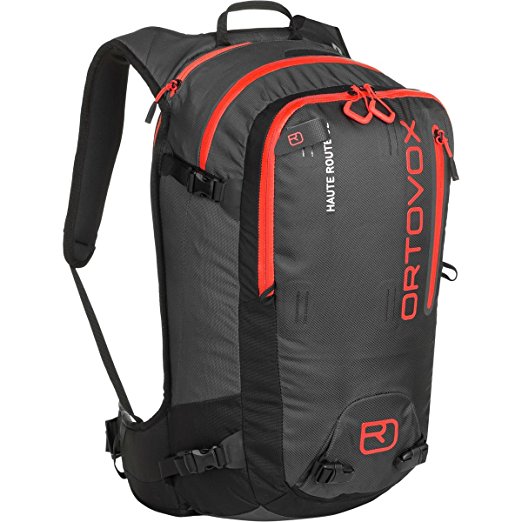
Who doesn’t love a good backcountry pack? This pack made the cut for “tech,” because not only is the pack itself high-tech, but it can also very effectively carry and help manage a whole suite of other technologies (no word if the French wax techs will fit inside, though it IS called “The Haute Route.”) Since the HR 32 has features like separate compartments for your avi gear (you DO have avi gear, right? If not, don’t you dare leave the groomers), easy carry options for skis, snowboard, helmet, poles, and even an ice axe, boom, you had me at hello.
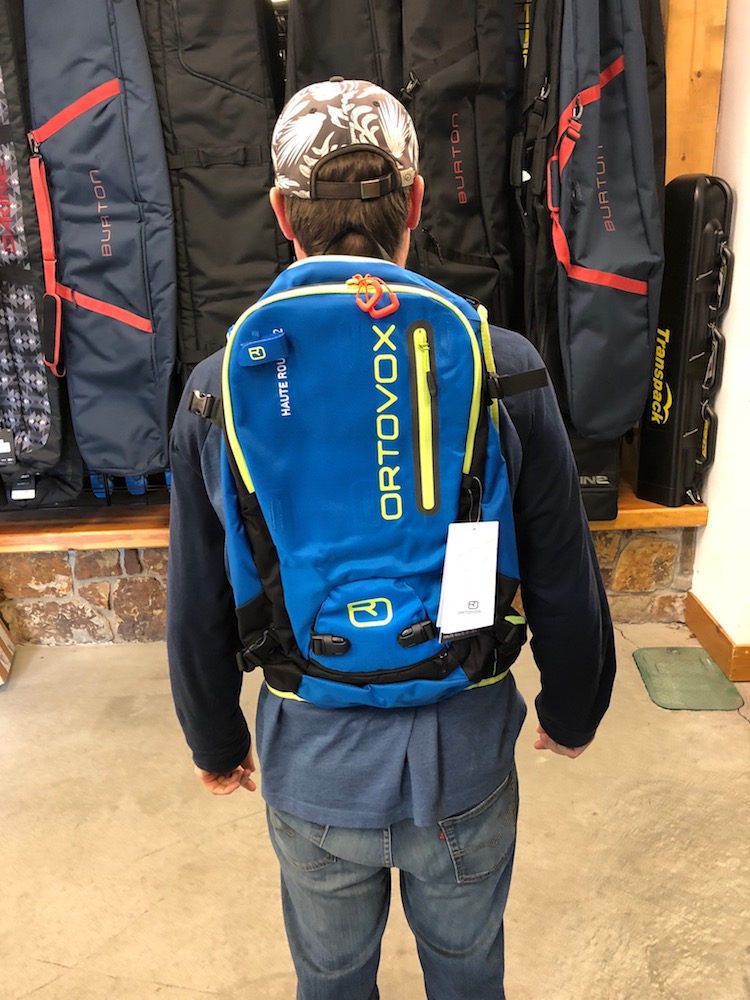
What’s also great about this pack is the use-profile for which it was designed: backcountry touring. Rocking the BC is the best of both worlds: you get to show off your superior aerobic fitness and blast up some big hill like the lunatic that you are, then come ripping down on beautiful, untouched, gaper-free powder. Talk about living this dream, THIS is it.
There are lots of variations on this, too, and all of them rock: there’s backcountry, slack country, side-country and even Big Country. (This is btw, exactly what J-Smu’s arms look like: pasty little strings of Play-Doh attached to a giant head) So go ahead, pick your poison, but don’t get all caught up in labels, attitudes and worrying about the MO of the next guy, you do you — there’s lots of fun to be had out there, so go get some. Just do so safely and with some style.
***
Over $300
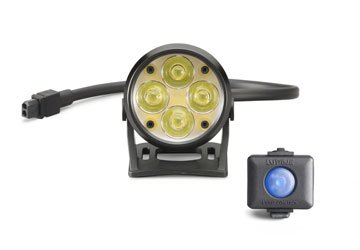
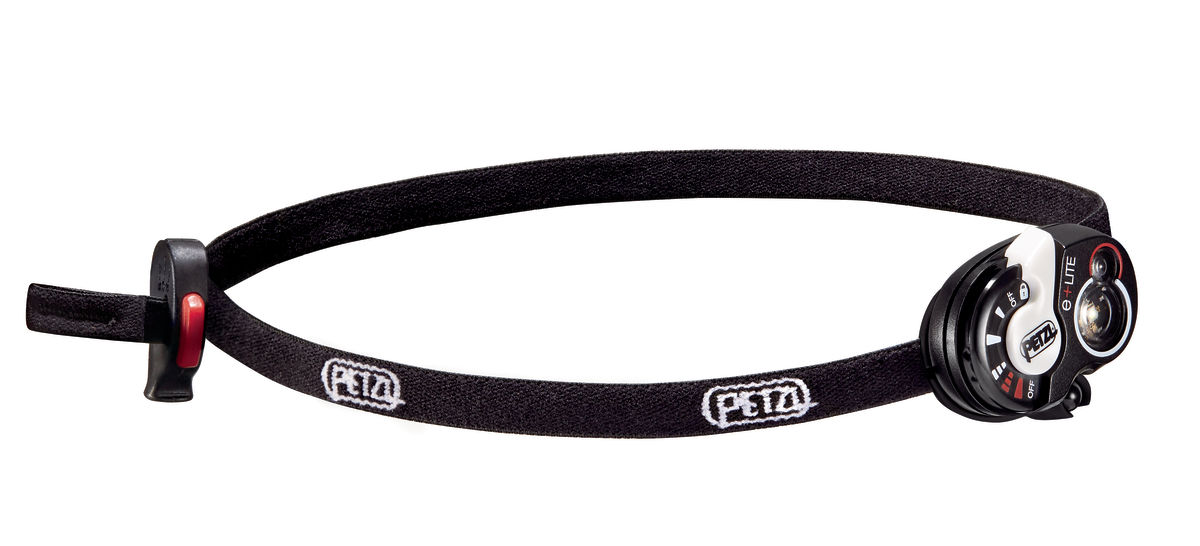
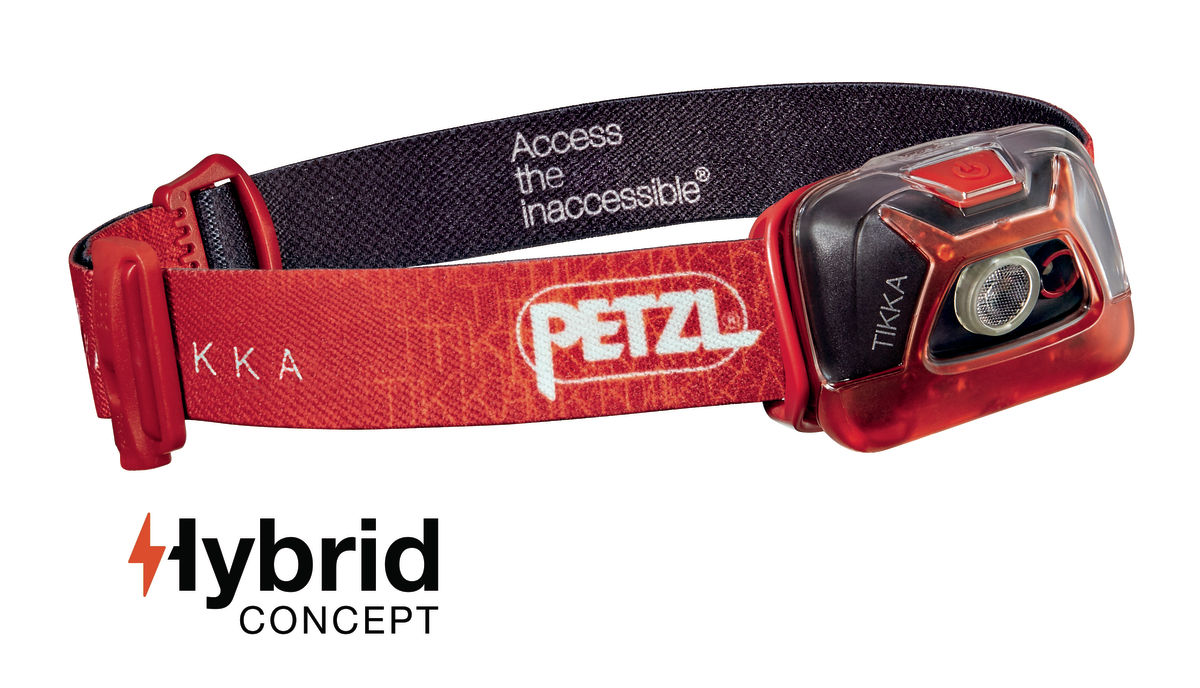
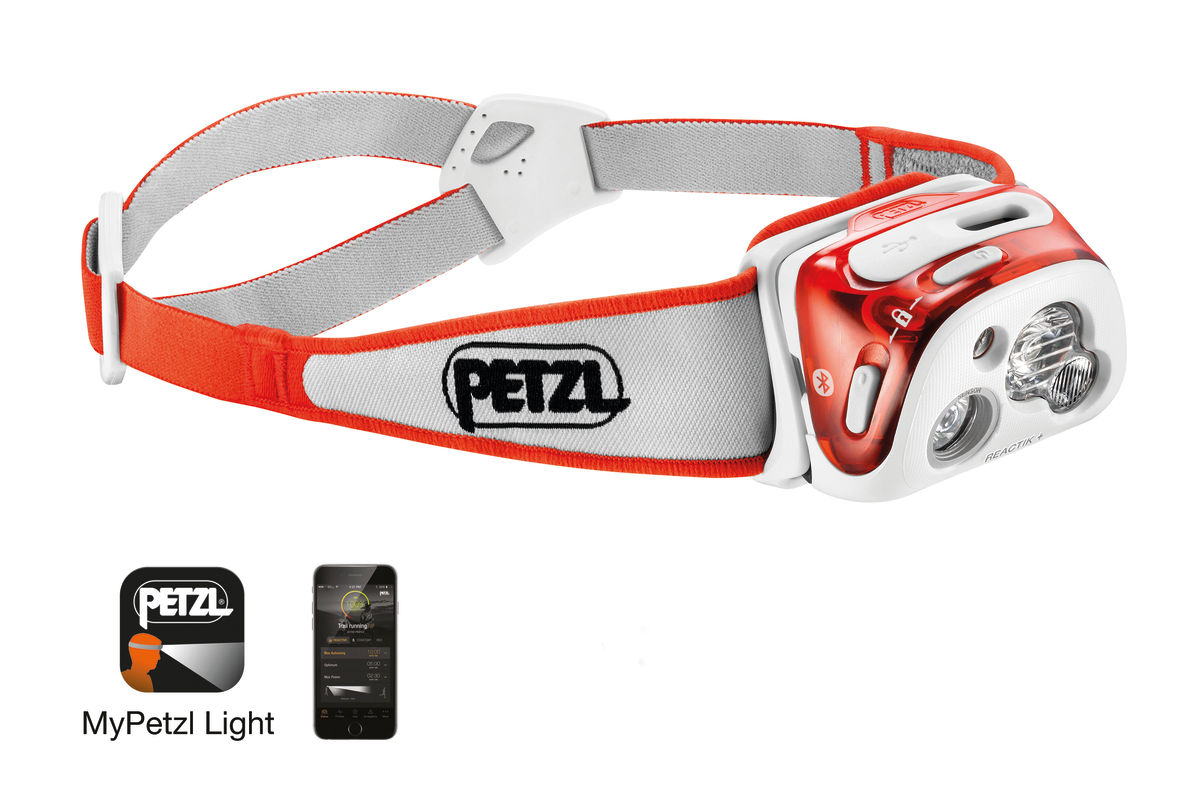
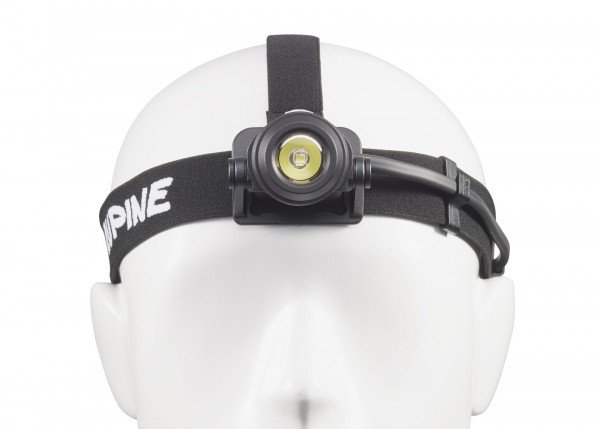
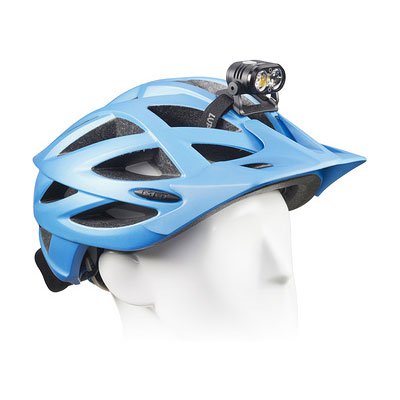
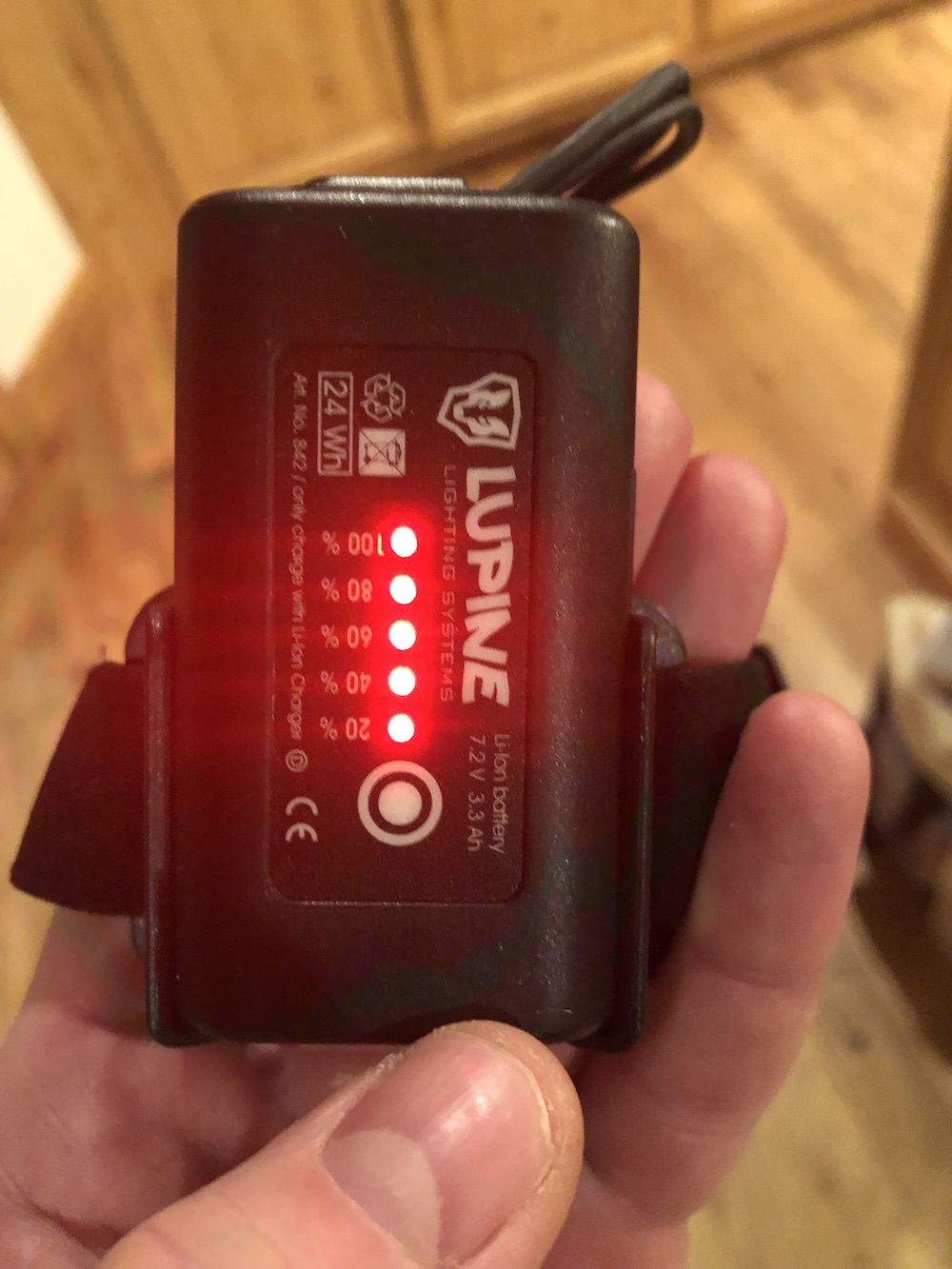
Yes, I went HAM (and no, not this) the other day on the Lupine headlamps, but guess what, I’m not done. Why? Well, if you REALLY want to go whole hog (lots of porcine references today, I must need bacon), you also need the Lupine Wilma 7 light. Let’s get all of our cards on the table right now, too — this light has 3,200 lumens. Three thousand, two hundred. That’s a lot.
I didn’t even bring up this option in the earlier review, for to be perfectly honest, this light really isn’t all that applicable to skiing. Sure, you COULD use it, but do you need it? Not really. The Neo and the Piko headlamps, covered in excruciating detail the other day, are more than enough light for nordic skiing — in particular the Piko. That little guy is light, powerful and extremely versatile. So, having said all of that, why did the Wilma make the cut for today, especially given its hefty price tag? Simple. Cycling.
Since, sadly, snow seems to be going the way of the Dodo and so many dodos with access to voting booths are either making the wrong call or eschewing the process altogether (remember people, you get the government that you deserve), the reality of the situation is we need to prepare for shorter winters and less snow.

This means that as a skier, you can either give up and resign yourself to an early grave in a piano-case coffin (at right), or you can fight to protect the environment and hope that we can prevent further damage, and get your riding and running game on point. As we discussed earlier at great length, the reduced availability of daylight in winter makes this extra tricky, so while we’ve already covered why you need a light for night ride (I think this is also pretty self-explanatory), we’re now about to dive into why you need two.
In essence, there are two main reasons, both stemming from visibility: the first is you seeing, and the second is you being seen. We’ll tackle these in order.
Seeing: it’s important. Mountain biking is vastly superior to road riding at all times, but particularly in winter. I no longer fear hell, as I’ve spent a winter in Philadelphia, training on my ride bike. Each of those alone is bad, but the combination borders on lethal.
All of you who’ve tried it, know that riding in the winter generally sucks — that’s not exactly breaking news. To survive any ride longer than about 10 minutes, you need to invest almost as much time getting dressed as you do on the actual ride – if you aren’t sweating by the time you walk your bike to the door (you’re not one of those animals who keeps their bike in the garage, are you? If so, may the Lord have mercy on your soul), you are underdressed.
No matter what you do, you’re going to be cold. Overdress and you’ll be basting in your own sweat on each climb, like a skinny, nerdy, weirdo-shaved leg version of one of those new trendy crockpots, and this preponderance of perspiration will then make you freeze shortly thereafter. Conversely, if you’ve adorned yourself like it is still September, with nothing more than toe covers and a windbreaker that offers the heat retention of a Kleenex, you’re obviously going to be cold from the get-go. Even if you’ve done everything perfectly and nailed the outfit, the weather doesn’t change, and some passing A-hole motorist doesn’t soak with you with filthy, pathogen-rich, Philly road sludge, I defy you to show me a man, woman, or child, who can head out on a sub-zero day and not be miserable after two hours on a road bike. It’s impossible.
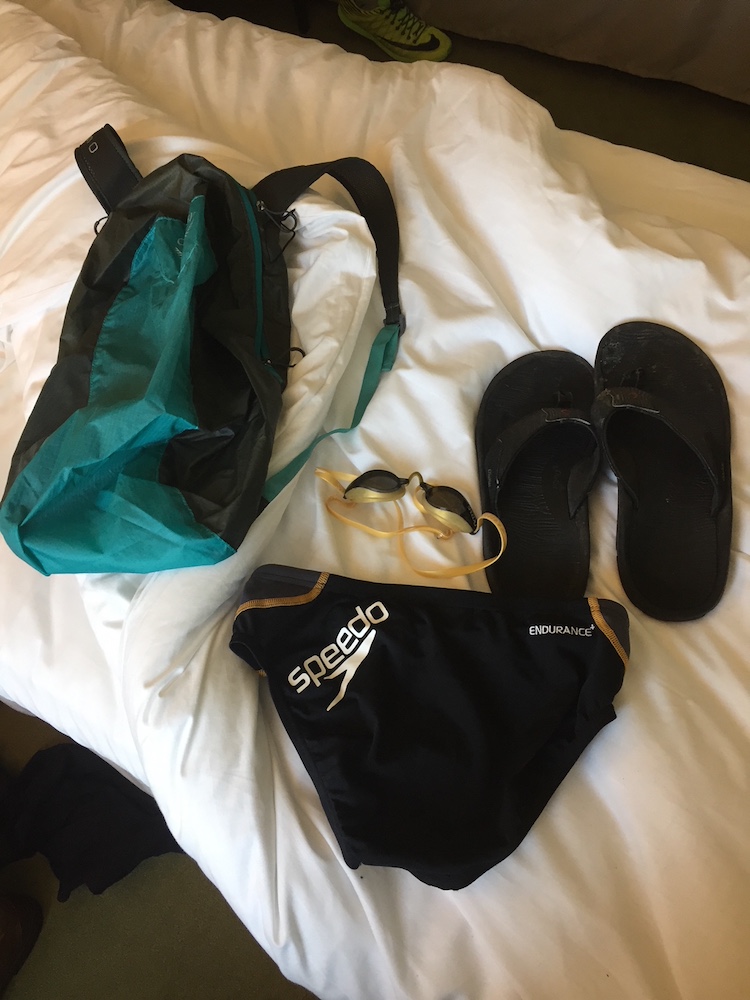
On a mountain bike however, it’s Speedo time. Whether it’s the “Emergency Speedo,” primarily reserved only for active duty on Eagle Glacier, or your tried-and-true, daily ball bag, you need look no further than the embarrassing- and stigma-filled men’s swimwear section of your local sporting goods store for everything you’ll need all winter. Yes, the differences between mountain and road are actually that pronounced.
Since we’ve now clearly established that only the mentally ill, sadomasochists, and those with nothing worthwhile to live for, will be out riding the road, and since we know that you’re smart (after all, you are reading MY column, so we know that you’re part of the solution, not part of the problem), I think we can therefore say with a high degree of confidence that you’ll be riding the trails in the winter. You’re welcome.
The one problem that riding your mtb in the dark does present though, is that it is, well … dark. And that’s ummmm … a problem.
Wow, this is a long way to go to make a case for two lights, but we are already on Day 10 people and I don’t know how the hell I’m going to spend my time for the next 350 days without espousing my technical, cultural, and political views, so I’ll be damned if I’m going to go without a fight.
OK, since you’re not a complete fool, A.) You voted, B.) Not for Trump, C.) You are now going to be more engaged politically than ever before, D.) You don’t ride your road bike in the winter (if you live where it is cold, which of course begs that question, how many skiers live someplace where it isn’t cold in the winter, but I digress…), E.) You do ride your mountain bike (if you can’t ski, that is), F.) You understand enough about optics to grasp the fact that it is dark at night, G.) You accept the fact that riding at night without lights is a problem, H.) You are in the business of solving problems (Hey, it’s what you do), I.) You live by the cardinal rule of endurance athletics, “If some is good, more is better,” J.) You are ready to apply this to lighting systems, and K.) You now finally realize that you do indeed new two lights on your mountain bike. Whew, we made it.
Should I tell you why? Do you have enough left in you? Don’t forget, we ARE on Day 10… complain all you want about this wandering train of thought, but you’re going to miss me for the next 350 days. Mark my words.
OK, OK, let’s do this: two lights on a bike is essentially the difference between monocular and binocular vision. In the latter, you have greatly improved depth of field, contrast, and depth perception, as well as greatly reduced shadowing, ghosting (not the cool-way-to-leave-a-party-without-being-seen thing, or the Scooby Doo-villain-thing either), and pimpage (for those of you who don’t want to cram pimpage).
The key to making this work and optimizing all of the advantages just listed, is to mount one light on your bars and the other on your helmet. The beams on good lights are now broad enough so that these two unique sources will overlap nicely, therein offering all the advantages described above. Very pro. And don’t forget, you also have TWICE as much light, so the advantages of this setup are more than exponential.
That covers you seeing. What about you being seen? To answer that question, let’s drift back to the issue of the complete flaming lunatics that are even considering heading out with only one light: you have two basic options here: mount the light on your bars or mount the light on your helmet. Both options have their advantages. Mounting the light on your bars provides the most even lighting, as your bars are more stable than your helmet, even if you’re not rockin’ “Hockey Helmet”, with your chin strap dangling like a frayed clothes line in a meth lab trailer park.
The helmet mount allows you to look over at the idiot texting while also trying to pull out of Whole Foods lot, in a largely futile hope that this ridiculous amount of stimulation and retina-burning light will momentarily jar him to at least briefly glance at the road; sometimes that’s all you need.
But put them together? Forget about it.
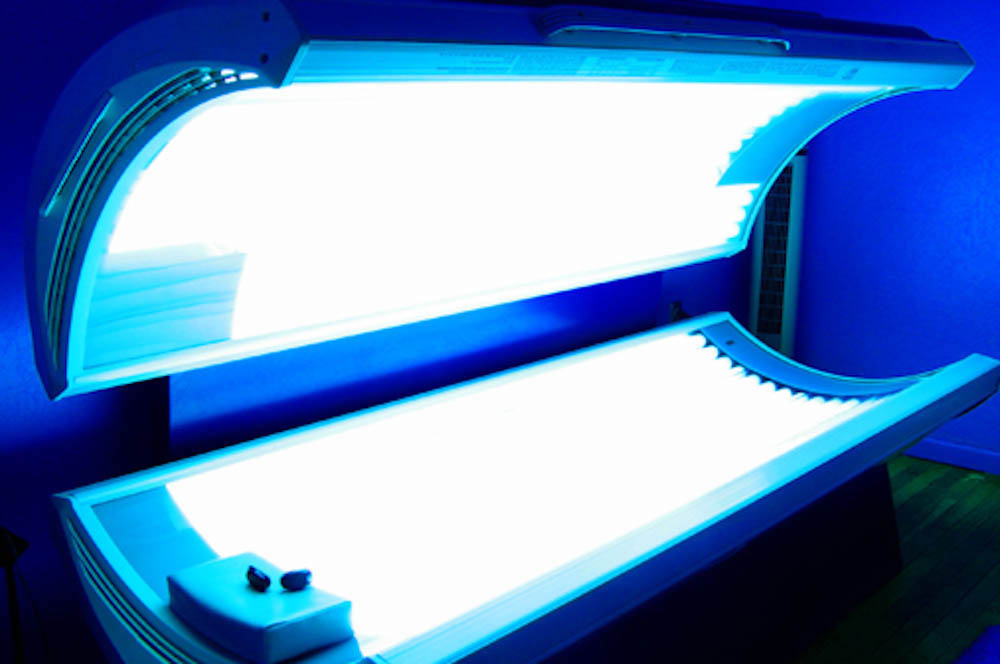
This DWC (Double Whammy Combination) is the best way to check all of the boxes for safety and visibility. You’ve also got backup in case you’ve goofed up your charging regimen or have some type of mechanical. And you’ve got more light than a tanning booth.
As I teased at the start, the Wilma has 3,200 lumens of power. That’s more than ten times as much as the Petzl. If you took my advice (which you always should) after the headlamp review and purchased the Piko, smart move. Running this Piko/Wilma combo will give ya 1,800 “up top” and another 3,200 on the bars, for a mind-blowing total of 5,000 lumens. Life doesn’t get any better than that. I know, I know, it’s a lot of money, but if you are going to regularly ride trails all winter, it’s totally worth it. After all, is there anything more important than you being happy? I didn’t think so.
$452 at LupineNorthAmerica.com
Mavic Pro Drone
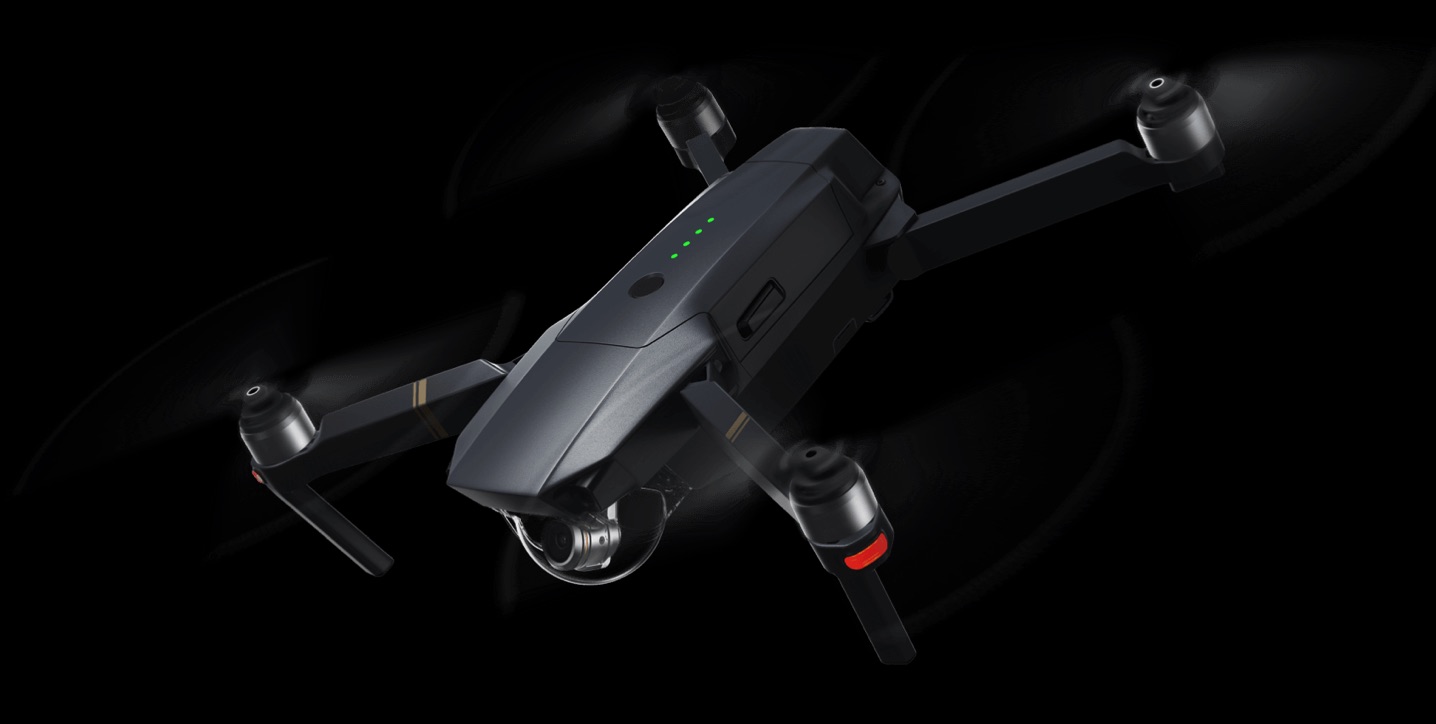
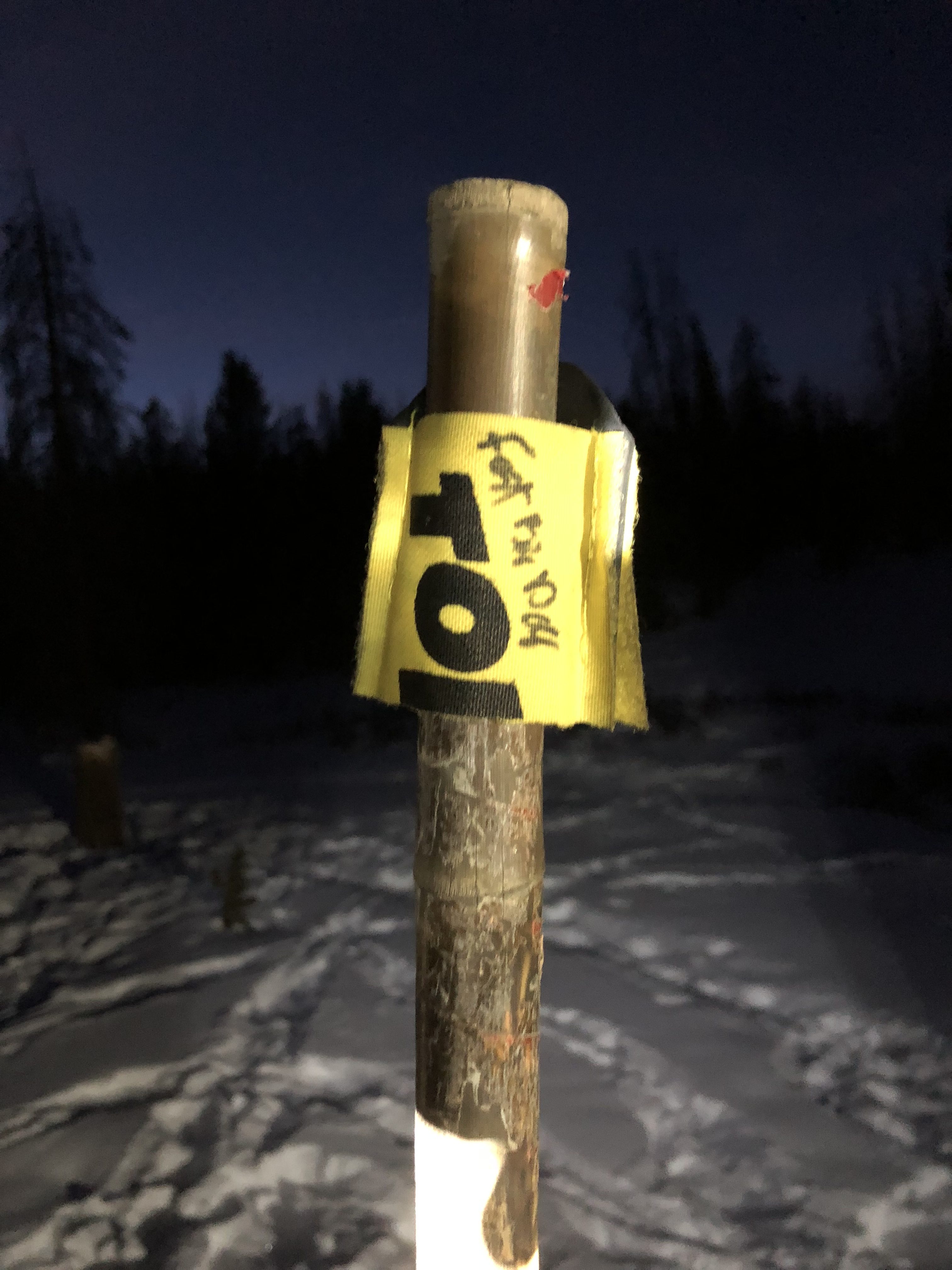
I’ve said it before and I’ll say it again, I am a sexy, sexy man. I love the sound of my own voice, the sight of my own name (see photo at right), and most certainly pics of me in action anywhere and everywhere (and thanks to U.S. Ski Team member, Casey Larson, my selfie game is now STRONG). Let’s be clear here, too — I don’t do all of this for me, I do it for all of you — I feel like I owe it everyone to share this gifts. What can I say, I’m a giver.
It should therefore come as no surprise that I am completely enthralled with the DJI Mavic Pro drone. It is simply amazing. It lets me get incredible shots of my favorite subject, me, and much, much more.
One of the things that has gotten me very far in life is while I am incredibly talented (look no further than any of these amazing reviews), I am also quite self aware and have excellent visibility into my weaknesses. My buddy Zach Caldwell LOVES to point out even the most minor indiscretion in my ski preparation and while often nit-picky, he has a fair point: I’m not a great ski tech.
In another publication for which I write, SlowTwitch, I recently made a video on how to convert a swim erg into a ski erg. As I noted in that text, my construction skills are probably about average, or as I put it in the article, “To do some level-setting here, I’m probably right about in the middle of the handyman spectrum: I have buddies who’ve built their own houses and I have friends who are bewildered as to how a toaster works — I am somewhere in-between. I have a decent set of tools and moderate experience with all of them, yet I’m also not above using my screwdriver handle as a hammer from time to time, in particular if it saves me a trip up and down the pesky stairs to the basement (don’t lie, we’ve all been there, I just own it).”
So that’s me. What’s my point? I know when my skillz aren’t up to snuff and unlike the typical D-bag, Philly meathead who will drive around for an hour, refusing to admit that he’s lost (or voted for Trump, or got his ass kicked on a race to the top of the gondola), I will ask for the help of a professional when I need it. And I need help with getting drone footage.
This column is all about recommending gear that is the best for any given application and this is a responsibility that I take very seriously, in particular since it is MY name on the byline. Since the ultimate goal is accurate, unbiased recommendations, though, I am not afraid to bring in experts. For most dudes in Philly, they view this as a weakness — they’d rather lie and get it wrong (just another reason to dislike Philly, but don’t get me started on that, as we’ll be here all day); I’d much rather ask for help and get it right.
I did do my fair share of testing and I did give it the ol’ college try to get amazing footage. And to be clear, we had some near misses. For example, I was all ready to fire up some incredible footage of the SuperTour races in West Yellowstone, but it turns out that you actually need a permit for operating these things in National Parks. Who knew? (I think you can most assuredly guess who did not know this and who was briefly in hot water).
My next swing and miss came at the FIS Nordic Combined Continental Cup races in my beloved Steamboat, Colorado. I was also ready to crush it here with several life-changing “edits,” (as the kids say), but I was needed on course to assist the U.S. Ski Team and I decided that it was in the best overall interest of our community if we had kick-ass results in the race (which we did), as opposed to killer drone footage of the race (which we don’t).
Finally, and perhaps most importantly, tons of amazing videos already exist, so instead of me butchering the capabilities of this fine device, I am going to turn it over to my trusty, engineering nerd sidekick Jordan Rapp to show just how incredibly this thing can shoot:
There is no dearth of other “randos” out there killing it either — do a quick search on the Google machine and you’ll find tons of breathtaking edits like this.
So now back to one of the many areas in which I excel: annoying my patient readers with colorful yet often inappropriate, rambling anecdotes on gear usage and performance. Since this drone was a loaner, my first concern was that I’d crash it and then therefore have to buy it. Thankfully, this did not happen.
Yes, you do need to read the instructions and since I was a bit more worried about crashing, I went so far as to watch a few “How To” vids on the Internets, something that I strongly recommend for you. I’d much rather watch other idiots crash their drone into powerlines than be that idiot. So with a very minimal investment on your part, you can “get the bird in the air” with relative ease. Do check out any local restrictions on flying it though, as apparently that isn’t entirely uncommon these days. Be smart, too — practice in BIG, OPEN, FIELDS before you attempt to document your Alley Cat race in Brooklyn.
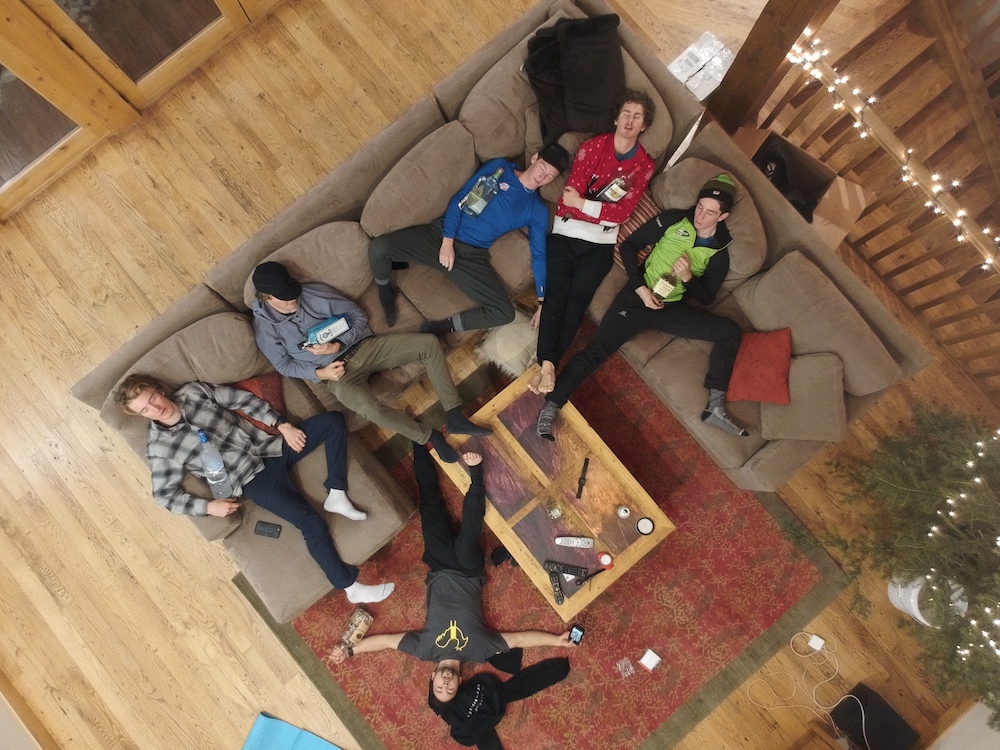
Once you’re ready to take off the training wheels (er, wings?), you’re ready for prime time. Thankfully, most nordic skiing takes place in venues with somewhat limited obstacles, as by definition you are on trails. Once you are an accomplished pilot, you can fly on more wooded trails, but I advise you to proceed here with great caution. This drone has some super-slick, obstacle-avoidance features, but the absolute best obstacle avoidance feature is competent piloting, so don’t duck into the thick, twisty woods until you really have your act together. You’ve been warned.
With all of those caveats duly noted, let’s talk about why this system is so good for nordic skiing. It almost goes without saying that skiing is one of the most technical athletic pursuits. I know World Cup skiers who have literally been doing this their entire lives at the very highest levels and even they still obsess about technique. So regardless of where you are on the learning curve, it’s safe to say that you still have more to learn (which, when you think about it, is part of the challenge. If you didn’t care about technique, you’d just race and bike and I think we’ve already covered the type of people who do that). The problem is how to do this: sure, you want to improve, but how?
Good coaching is seemingly always in short supply, in particular if you are like me and you are verbally abusive to the people nice enough willing to help you (what can I say, I have issues). Attitudes like mine mean a lot of time alone. That’s not necessarily a bad thing though, as you can learn a lot by watching how you ski. And, if you are fortunate enough to have qualified people review your videos, well, the sky’s the limit (I mean this literally, too, for if you don’t pay attention, you will fly your drone off into the sky).
If you’re not a completely self-absorbed narcissist (like me), you can also use this tool to help others, whether this be in a coaching or even parental capacity. As noted above though, PLEASE practice before you bring your drone down to the local race and do your homework with race officials, evil park overlords, and anyone else who might get pissed with a drone buzzing about — capturing races and training with the Mavic Pro is nothing short of extraordinary, just use good judgment.
This is probably my favorite item on all of the lists this year — this thing kicks ass.

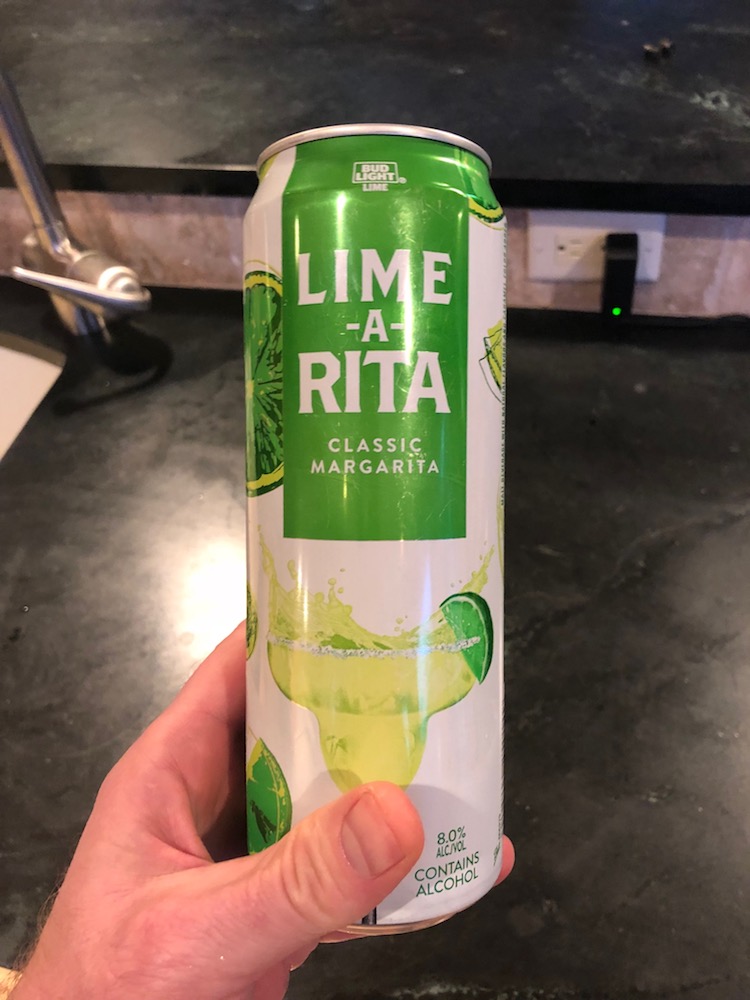
I’m sure it comes as no surprise to all of you that I’m an amazing human. You’ve read the stories, you’ve seen the selfies and of course, you are appropriately impressed, but wait, there’s more. Did you know that I turn these columns around in a day? It’s true. While much of the gear testing starts severals weeks or even months in advance, the actual writing generally happens the night before deadline after a few Lime-A-Ritas.
I’m bringing his up because I had this column all set to go to press when none other than Olympic biathlete and savant barista Jeremy Teela texted me to brag about his new espresso machine. Yup, that’s right, the same Teela that can’t work my simple, drip coffee maker threw down three thousand dollars to not be able to make coffee at his house. And this was too good a story to not report in more detail.
Actually, there are several burning reasons why I feel compelled to include a $3,000 coffee machine — the first and most obvious of which is I don’t think you can put a price on how hilarious it will be to watch Teela unsuccessfully wrestle with this device. He just got it last night and I am literally giving very serious thought to driving over there today, even though it is a five-hour trip. I am convinced that it will be worth it.
Next is, some of you may actually be thinking about one of these things: I know I consider this every time I have someone make coffee with this for me, but as soon as someone competent like Jordan Rapp reminds me of what is involved, that is usually the end of the debate for me until that is, the next time someone offers me one of these uber cups of coffee (to be clear, ‘uber,” as in slang expression for cool or super, as opposed to “Uber,” in a creepy, criminal, you-really-suck-at-running-your-business type of way).
I also fully understand and acknowledge that very few of you are likely seriously considering this purchase, but like the trip to the Olympics, the $8,000 biathlon rifle and a few other “home runs,” I know a few of you really are considering these items and as always, I’m here to help.
I’m going to come full-circle (well, it’s suppose it’s really more linear, if you want to be TECHnical (damn, I am good at this)) here as I’ve said THIS before and I’ll say it again, my readers are smart. And smart people do cool shit — they read interesting books, the have well-thought out points of view, they can carry on intelligent conversations on a wide variety of topics, and some of them, though certainly not all of them, like fancy coffee machines.
It is also very important to note that I’m not doing the testing here, Teela is, and God only knows what is going to happen there. In all fairness, he does claim that he did his due diligence in research and as much as I hate to admit it, while Teela most certainly is a kook, he actually can be quite smart (in certain, VERY LIMITED areas, of which espresso machines MAY be one, I’ll tell you in a week or so), so who knows, this might actually be a good product — who the hell knows.
But, if you are one of the three people in the studio audience pondering buying one of these counter-hogging monstrosities/money pits, hell, maybe you should consider buying this one. If you do, and by some stroke of luck you, unlike Teela, actually figure out how to use it, HMU — I’d love to cruise over for a cup of coffee.