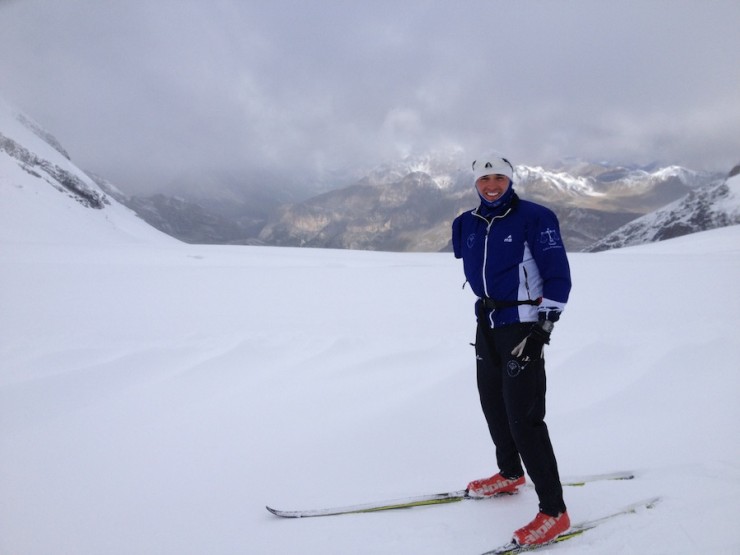
Tag: Maine Winter Sports Center

  • Keep Showing Up: Will Sweetser’s Unglamorous First Principle

    Keep Showing Up: Will Sweetser’s Unglamorous First Principle

    This article was made possible through the generous support of our voluntary subscribers. If you value coverage like this, please support FasterSkier with a voluntary subscription.

    Two older girls on the Edward Little ski team went looking for bodies. It was the mid-1980s, the boys’ Nordic program at the Auburn, Maine, high school was thin and not very good, and the girls’ team was strong. The two girls, Becky Flynn (SVSEF) and Sarah Pribram (NWVE), knew a freshman who had skied a little in middle school. They asked him if he wanted in.

    Will Sweetser’s second cross-country ski race ever was the Maine High School State Championship, he finished 34th, the best result on the team.

    The next winter Edward Little won the state title. Sweetser placed seventh in the state — and fourth on his own squad. “I was the fourth guy running, I was the fourth guy skiing,” he said. The sport was tilting toward skating then, and almost nobody his age had figured out how to skate yet. Technique was a wash. So the results sorted themselves out the only way they could.

    “It turned out that engines won,” Sweetser said.

    That phrase could serve as an epigraph for everything he has done since, except for one inconvenient fact. His own engine was nothing special, at least by his own standards.

    He learned exactly how unspecial his was as a freshman skier at Dartmouth, when the team did VO2 max testing. The results put Sweetser, the slowest man on the roster, “squarely in the bottom half of the women’s team.” He ran the numbers on his own future and did not like the answer. “I was already running almost the times they suggest for my VO2 max,” he said. The writing, he decided, was on the wall.

    If the engine couldn’t get bigger, the speed had to come from somewhere else.

    “Wax makes things faster. Strength makes things faster. I better learn technique,” Sweetser said. “Maybe I was a genetic predeterminist, and that’s why I started learning all the physiology.”

    After graduating from Dartmouth, Sweetser took an assistant coaching position at Bates College in Lewiston, Maine, where he went to the library and more or less stayed there.

    At Bates, Sweetser became a fixture in the stacks while living with his grandfather, working into the evening. “I literally was in the library more than the team,” he said. For two years, he averaged four or five interlibrary-loan requests a week. He calls what he built in that period “a self-taught, master’s-level survey course” in exercise physiology. He was also, by his own account, one of the first coaches in the country mailing away for VHS tapes of World Cup races, freeze-framing technique frame by frame because there was no other way to see it.

    Will Sweetser (right) has worked with Olympian JC Schoonmaker (left), who now lives in Alaska and races for APU, since Schoonmaker was a young skier.

    Three decades later, that reading has produced one of the more idiosyncratic coaching minds in American skiing. Sweetser is now based in Soda Springs, California, high on Donner Pass, after a long stretch running the program at the Maine Winter Sports Center. And the first principle he’ll hand you is almost aggressively unglamorous.

    It’s consistency. Just showing up.

    Sweetser points to a Norwegian study he came across years ago — his recollection puts it around 2006 to 2008 — that examined the country’s top 14 nationally ranked women, essentially its entire World Cup pipeline. Researchers measured everything: VO2 max, speed broken into 20-second segments, correlation after correlation. The single factor that most cleanly separated the top seven from the next seven, Sweetser says, wasn’t engine size or top speed. It was days lost to illness and injury. The lower group averaged roughly two weeks of missed training a year. The top group averaged two or three days.

    “That seems to be the most correlated thing,” he said. Stretch it across a four- or five-year Olympic cycle and the gap stops being trivial.

    It sounds obvious. It is also not how a great many junior programs actually behave, which is where Sweetser’s second idea comes in, and that one is stranger.

    He builds training around fiber type, and he has a field test for sorting it. He’ll have an athlete — 15 or older — run a 400 meters, rest 20 minutes, then run a 3,000 meter. Then he looks at the ratio. A “normal” distance athlete, he says, holds about 76.5 percent of 400-meter pace over 3k. He can quote the figure to the hundredth. Drop below 68 percent and the athlete is built to sprint; climb above 82 and they’re built to grind. “This is how specific they are,” he said of the research he leans on.

    The athletes all come to the same session. What changes is the leash. The sprinter types get a short one, where Sweetser wants the heart-rate alarm to go off the instant it “faintly whispers” the next zone, because those athletes overshoot every interval.

    Where the distance types might run eight intervals, the sprinters run five or four. Body position stays the same for everyone. Cadence and power output are already different on their own. What he actually teaches, he says, is tactics — where on the course to spend, and where to wait based on each athletes strengths and weaknesses.

    This is also why he keeps reaching for the treadmill. It is measurable and it is controllable, and that combination lets him do something he values more than almost anything: build what he calls “an athlete persona that’s rooted in belief, not hope.”

    The clearest proof he offers was from an athlete he met at Bates, Sarah Dominick — the woman who would later become his wife and is now his coaching partner. At Bates, her running coaches kept pushing her mileage up, and every time she got much past 25 miles a week, she broke down. It made sense to Sweetser: she had a sprinter’s makeup, but was being asked to train like a distance runner. She was miserable enough that she sat out her junior year of competition entirely.

    When she came back as a senior wanting to race the 3k and 5k, Sweetser says her coach called it a waste of time.

    His plan went the other direction. He capped her running at roughly three hours a week and backfilled the volume with cycling and roller skiing. Warm-ups and cool-downs were run on grass, in the opposite direction around the track, to spare the leg that always flared. The key session, twice a week, was deceptively small: two sets of 15-seconds-on, 15-seconds-off at 3k race pace, jogging the corners, six minutes of rest between sets. Start to finish, it took about an hour.

    She went from 11:38 to 10:00 for 3,000 meters in a month. She became a Division III All-American and set a school record. The following year, training off skiing and running on a dirt road at altitude, she ran 9:27.

    The lesson Sweetser took from it is the one he now spends most of his time trying to give away. “Your best training computer is still between your ears,” he said.

    Will Sweetser doing lactate testing during a hill-bounding session two season ago with Quinn Holan.

    You can see what that looks like in Quinn Holan, the 18-year-old Sweetser coaches most directly and has worked with since the athlete was 11. These days, Holan, Far West’s standout U20 skier, writes his own training plans and brings Sweetser the questions, not the other way around. Increasingly, when the two disagree, the athlete keeps his own counsel, which is exactly the point. “You can call me his coach,” Sweetser said, “but it’s sort of like Klæbo’s grandpa is his coach.”

    It is a strange arc for a man who started with so little to work with. Sweetser was the high school freshman recruited because the team needed a warm body, the college skier in the bottom half of the women’s VO2 results, and the coach who had to teach himself the sport one interlibrary loan slip at a time. Thirty years on, the whole project — the fiber-type tests, the treadmill data, the athlete who outgrows his coach — is really just an effort to spare the next kid the loneliness of that library.

    Sweetser never did get the engine he wanted as an athlete, but as a coach, he has built something much more durable.

    Next: why Will Sweetser thinks American skiing is fighting over the wrong 30,000 people — and what he’s building on Donner Pass to prove it.


    Help Support Our Coverage!

    If you value the thoughtful work and access FasterSkier provides, please consider becoming a Voluntary Subscriber. Your support directly fuels our work to cover the people, places, and moments that make our sport special.

    Join the FasterSkier community!


    Will Sweetser and Matt Seline
  • Eli Brown – The Ski Caddy

    Eli Brown – The Ski Caddy

    This article was made possible through the generous support of our voluntary subscribers. If you value coverage like this, please support FasterSkier with a voluntary subscription.

    Waxing Julia Kern’s skis in Toblach New Years 2026. (Photo: Courtesy Photo)

    On race mornings, when the athletes are still quiet, and the stadium hasn’t yet decided what kind of day it wants to be, Eli Brown is already working through choices that won’t appear anywhere in the results sheet.

    Brown is a technician for the U.S. Cross-Country Ski Team, a job title that undersells the reality of what he does. He manages ski fleets that can swell to dozens of pairs for each athlete, interprets snow that changes by the hour, balances structure, flex, base material, and wax, and does it all while standing between an athlete’s confidence and the unforgiving arithmetic of international racing. He describes the role with a metaphor that is so perfect and precise.

    “It’s kind of like being a golf caddy,” Brown said. “You’re advising. You’re coaching. You’re listening. There’s some sports psychology in there. And at the end of the day, it’s teamwork.”

    The difference, of course, is speed. Brown’s athletes are making decisions at speeds that at times surpass fifty kilometers an hour, on snow that doesn’t care how good yesterday felt. His job is to make sure they don’t have to think about their skis at all.

    This week, as the U.S. team arrives in Val di Fiemme for the 2026 Olympic Games, Brown is heading into his third Olympics as a full-time national team technician. He works primarily with Julia Kern and Ben Ogden, two athletes who could hardly be more different in how they move through the sport — or through their skis.

    What ties them together is Brown’s ability to translate snow into something usable and pressure into something manageable.

    The Mora (Minnesota) Vasaloppet in 1983. (Photo: Courtesy Photo)

    Before the Truck

    Brown didn’t arrive in the U.S. Ski Team wax truck by accident, or through a single decisive turn. He arrived there by staying in the sport long enough to see it from nearly every angle.

    He grew up outside Minneapolis, where skiing was part of the landscape rather than a specialization. From there, he headed north to Northern Michigan University, spending time embedded in one of the country’s most storied distance programs. He raced, trained, and lived the rhythms of high-level skiing there, even if the academic endpoint never quite aligned. The years mattered anyway.

    After Northern, Brown continued racing at a high level, lining up on the SuperTour with the Maine Winter Sports Center. Those seasons placed him squarely inside the domestic pipeline, moving between venues, teams, and support systems that most fans never see. It was an education in how competitive skiing actually functions in the United States — who does what, who makes decisions, and how outcomes are shaped long before race day.

    Coaching followed. Brown took over as head coach at the University of Utah, a role that asked him to shift from personal performance to collective responsibility. Coaching meant planning seasons, managing personalities, and learning how to communicate under pressure — skills that would later prove just as valuable off the racecourse as on it. It was also in Utah that he completed his degree, closing a chapter that had remained open since his time at Northern.

    His transition into technician work came gradually. After the 2014 Sochi Olympics, Brown began volunteering with the U.S. Ski Team as a tech, contributing where he could and learning how the national program operated from the inside. There was no formal on-ramp. He showed up, worked, and earned trust in the most durable way possible.

    Later that year, he became a full-time member of the U.S. Ski Team staff. He has remained in that role since, now heading into his third Olympic Games as a technician.

    That long, nonlinear path matters because it produced range. Brown understands athletes because he has been one. He understands coaches because he has been one. And he understands the demands of elite racing because he has lived alongside them for decades, in roles that rarely attract attention.

    By the time he steps into the wax truck now, Brown isn’t just a specialist. He’s a translator — carrying experience forward from each stage of his career and applying it quietly, in service of athletes who don’t have time to wonder how their skis came to be ready.

    Trailside support back in the 90’s. (Photo: Courtesy Photo)

    The Job Is Not the Ski

    Brown came up in an era when elite racers still did most of their own ski work. He’s part of what he calls “the last generation of full-time racers who maintained their own equipment,” a background that shapes how he approaches the modern technician’s role.

    Today, that role is far more layered than waxing alone. A tech has to understand how structure reduces suction in wet snow, how flex interacts with kick wax in classic skiing and changes contact on skate skiing, how base materials respond to temperature and moisture, and how all of that feels under an athlete who has preferences, moves differently, and skis faster than the tech ever will.

    “It’s complicated,” Brown said, describing how structure, grinds, and brands interact. “How it interacts with different brands and different grinds. Now we have to make sure that it interacts with our new grinds as we develop them, especially for race days in the games coming up.”

    The complexity has only increased in recent years. Product cycles are shorter. Wax formulations change constantly. “If you ask me what waxes we use,” Brown said, “it’s a combination of letters and numbers. From Swix or whoever. It’s always changing.”

    That instability has pushed the job away from recipes and toward judgment. Brown doesn’t describe himself as a scientist. He calls himself an artist.

    “I rely heavily on feel,” he said, contrasting his approach with colleagues who lean more on data. “There’s subjective testing, and that’s still really important.”

    The goal is simple, even if the path there isn’t: remove friction, remove doubt, and give the athlete skis they can trust without thinking.

    Julia Kern, Eli Brown, and Ben Ogden at the Planica World Championship. (Photo: Courtesy Photo)

    One Pair of Skis, Two Skiers

    Brown’s ability to individualize that trust is most obvious in the contrast between the two athletes he supports.

    “They’re such different athletes,” he said of Kern and Ogden. “And the way they ski, I think, is also different in the way that their ski brands are also different. So it’s hard to say there’s much crossover or similarity there.”

    Kern (Atomic) and Ogden (Madshus) race on different brands, which means separate quivers, separate development conversations, and separate ways of defining what “good” feels like. Over time, those preferences shape the skis themselves.

    “The quiver of skis develops kind of along with what the athlete wants,” Brown said. “Whether by effort or by chance.”

    For Brown, that means his own body becomes a tool — a reference point for athletes whose sensations he can’t fully replicate. In classic skiing, especially, the feedback loop is intimate and physical.

    “With Julia,” Brown said, “if I can feel the wax, then it’s good. And with Ben, I need to jump on those things and make them work. I need a hammer almost to keep up with him when he’s skiing easy.”

    Kern wants skis that give her clear feedback. Ogden wants skis that disappear under him.

    “She calls it the Eli Factor,” Brown said. “I ski in her skis a lot, and it’s like, yeah, she’ll like it if it feels a touch slow. And I question if it’s fast enough, then it’s perfect for her.”

    That calibration — knowing when “slow” is actually right — is the kind of knowledge that doesn’t show up in spreadsheets. It lives in repetition, in trust, and in the willingness to be wrong and adjust.

    Eli modeling the new Kappa kit inside the wax truck. (Photo: Courtesy Photo)

    Inside Yolanda

    The work happens inside a semi-truck the team calls Yolanda, a mobile workshop and nerve center that houses eight technicians during World Cup weekends and championships.

    “When you walk into Yolanda,” Brown said, “on the left, there’s Jason. He’s like the door security.”

    Jason Cork oversees Jesse Diggins’ skis and manages data. Across from him sits Chris Heckler, the team’s glide specialist, responsible for Gus Schumacher’s skis and for pushing development at the cutting edge. In the back corner is Oleg Ragilo, “a quiet boss from Estonia,” the head of kick wax and the truck’s mechanic. Tim Baucom, recently returned from retirement, handles hand structure. Bernie Nelson works with Jack Young and specializes in high-speed testing and emotional steadiness. Bjorn Heimdal and Per Erik Bjørnstad, both from northern Norway, bring decades of experience across glide and kick.

    “And then at table three,” Brown said, “it’s Bernie and me.”

    Everyone can wear any hat if needed, but the structure matters. Decisions are made by conversation, testing, and sometimes by vote. Kick wax choices are made by committee — “two out of three or three out of three votes advance skis” — a system designed to protect athletes from any single person’s blind spot.

    There’s humor inside the pressure. The team maintains a set of traveling trophies, passed around to mark gratitude, effort, or apology. It’s a way of acknowledging that success and failure are shared.

    “You’re on a roller coaster together,” Brown said. “The emotional roller coaster part.”

    Team Kern: Eli Brown, Julia Kern, and Kristen Bourne in Toblach. (Photo: Courtesy Photo)

    Relearning Speed

    The current era of ski preparation is defined by change. Products come and go. Environmental and health concerns have reshaped what’s allowed. Even trusted solutions can’t be trusted for long.

    “We’re on the cutting edge,” Brown said, “and it’s constantly changing.”

    That volatility has made high-speed testing more important than ever, especially in skate races where structure and glide decisions can hinge on how skis behave at race pace on the actual course. Hand structure tools, brand-specific grinds, and new base materials all interact in ways that don’t fully reveal themselves on paper.

    Brown sees his role as filtering that uncertainty before it reaches the athlete.

    “I don’t want them thinking about it,” he said. “I want them to just ski.”

    The Olympics compress all of that work. The venue in Val di Fiemme is familiar, but transformed by Olympic infrastructure. Warm weather looms as a wildcard. The margin for error narrows.

    Looking back on the Tour de Ski, Brown is candid about what he’d change. “I wish I’d given Julia slightly more kick,” he said. “Ben slightly less kick.”

    That kind of reflection isn’t self-flagellation. It’s the process.

    Eli and fiancé Colleen above snowy Predazzo days before the Olympics start. (Photo: Courtesy Photo)

    The Emotional Work

    If the technical demands are invisible, the emotional ones are even more so. A tech absorbs disappointment, so an athlete doesn’t have to. He steadies confidence when results wobble. He celebrates quietly when things click.

    Brown talks about success in broader terms than medals.

    “Gold is the goal,” he said. “But it’s also maintaining team relationships and health through an intense period.”

    That perspective extends beyond race results to the ecosystem around the sport. Brown worries about industry instability, about layoffs and shrinking budgets, about whether the work he and others do will continue to be supported.

    “We’re all one big community trying to do something special,” he said. “It’s my little cog in the machine.”

    Inside Yolanda, that belief takes practical form. Shared meals. Shared jokes. Shared responsibility when something goes wrong. The trophies circulate. The work continues.

    Skiing the 2025 Birkie with his dad, Elton Brown. (Photo: Courtesy Photo)

    What Happens When It Works

    When it works, there’s no single moment that announces it. No flag. No statistic. Just an athlete skiing freely, unencumbered by doubt.

    Brown watches from the side of the course or from inside the truck, reading body language, listening for feedback, and filing away information for the next decision. The skis disappear. The job is done.

    That’s the paradox of being a golf caddy or maybe more accurately a ski caddy: success means becoming invisible.

    For Eli Brown, that invisibility is the point.


    Help Support Our Olympic Coverage!

    FasterSkier will have our own Nat Herz on the ground at the Olympics, which, to be honest, is a very big financial lift for us. If you value the thoughtful work and access FasterSkier provides at championships like this one, please consider becoming a Voluntary Subscriber. Your support directly fuels the work we do to cover the people, places, and moments that make our sport special.

    Join the FasterSkier community!


    Eli and fiancé Colleen doing some pre Olympic cruising. (Photo: Courtesy Photo)
  • The Man, The Myth, The Legend: Currier Retires from Biathlon

    The Man, The Myth, The Legend: Currier Retires from Biathlon


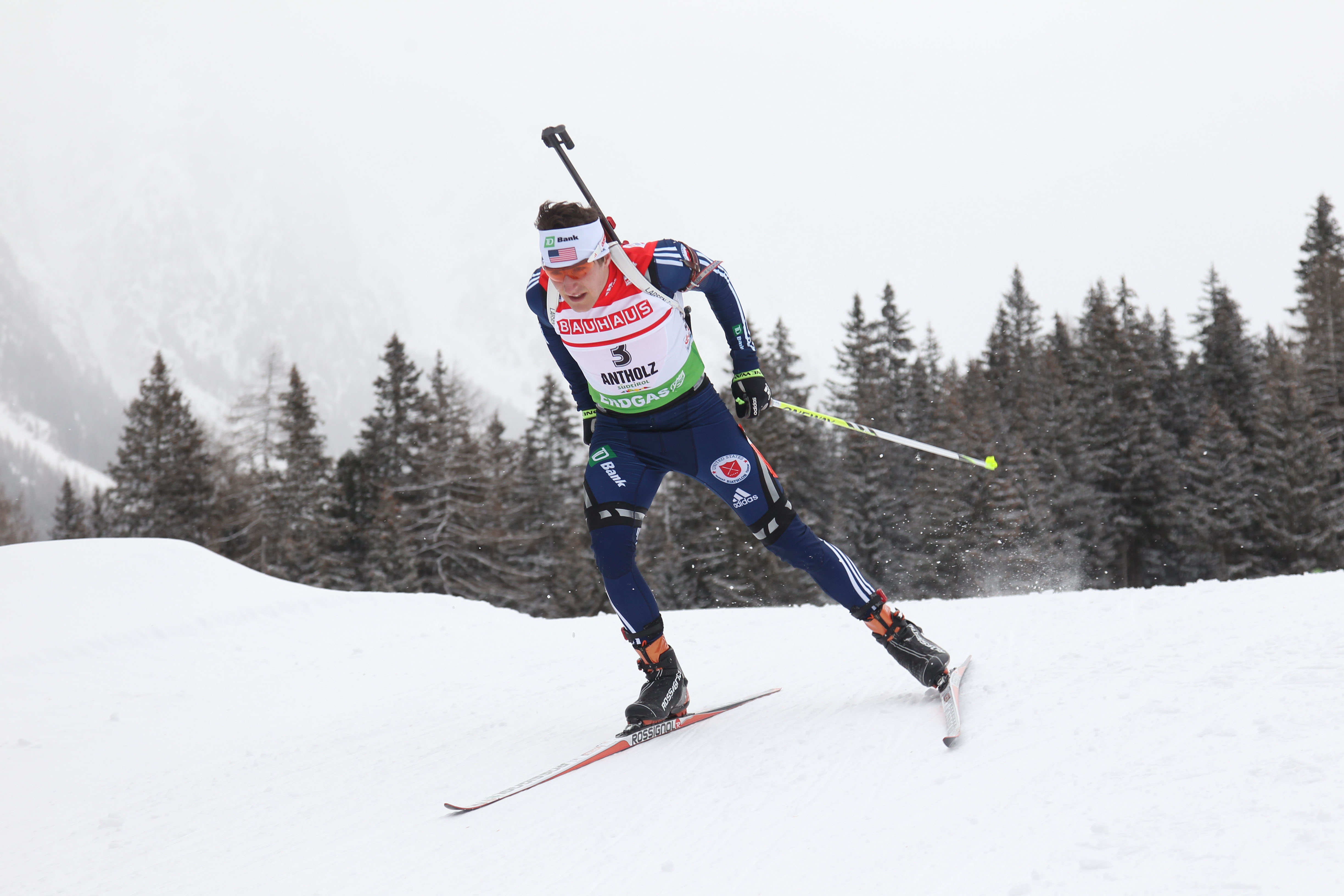
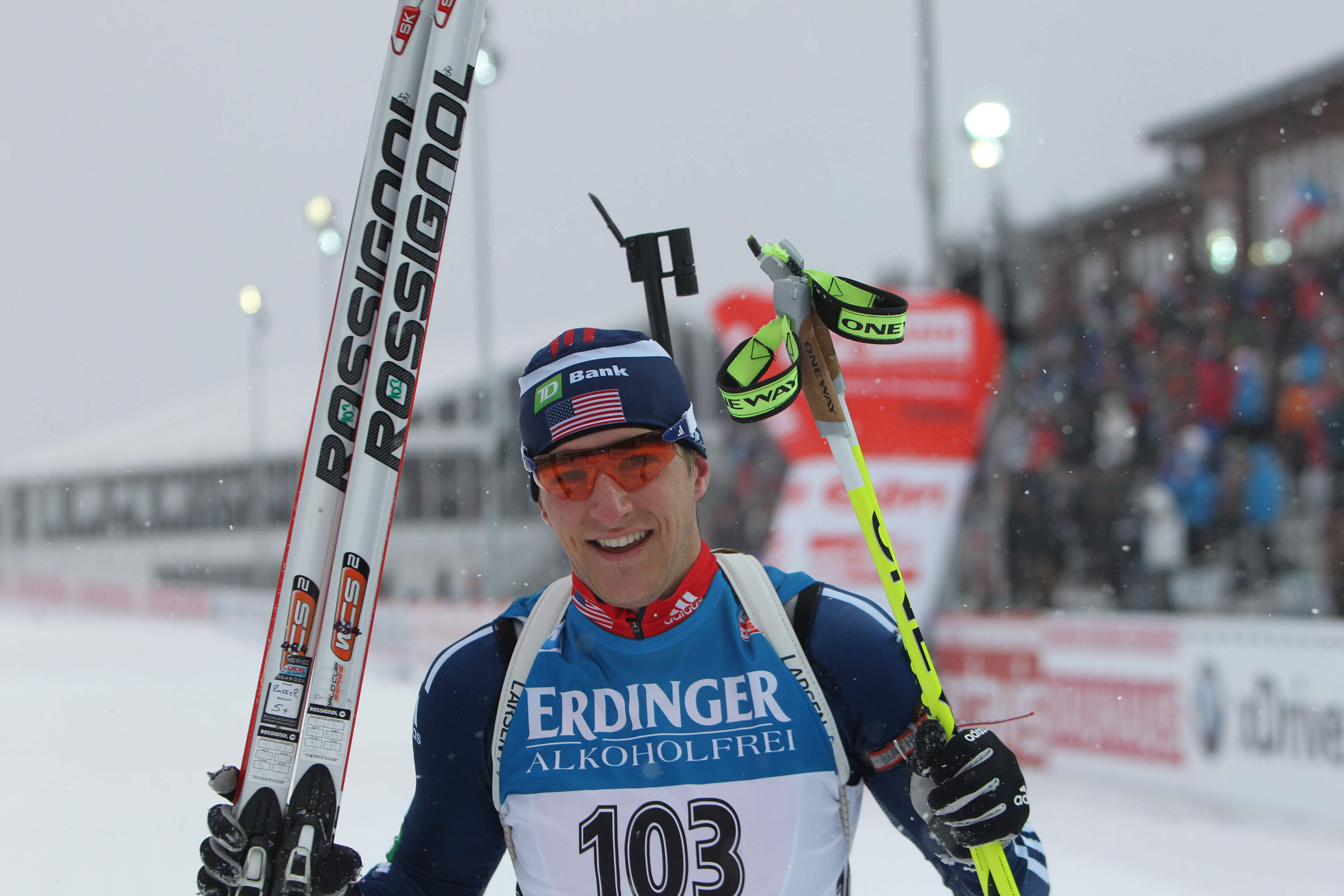
    Russell Currier racing at IBU World Cup competitions in Antholz, Italy. (Photo: NordicFocus/USBA)

    The first time I contacted Russell Currier for a retirement interview, it was mid-April. I had asked him to share his story, and no more than 24 hours after my initial email to Currier, I received a response.

    Yeah, let’s do that. I’m actually in Bozeman right meow,” he’d written.

    Digging through my memory bank, I recalled Currier having come to Bozeman one other time. Two Aprils ago, the Stockholm, Maine, native spent a week in Montana visiting friends. The faint memory of Currier showing up to my Bozeman apartment that spring, sporting a DIY unicorn outfit, had me wondering what the recent biathlon retiree was up to two years later (at the time of our email correspondence, it had been 10 days since Currier’s final career competitions, the 2018 USBA nationals in Park City, Utah).

    Since I was still living in Bozeman, Currier and I decided to meet in person for the interview. Open mic night at a local coffee shop seemed like a safe rendezvous spot. While I arrived at our destination point uncharacteristically early, Currier showed up characteristically five minutes late.

    He had dropped the paper-cone head prong for this occasion, though he still had the same curly mop of brown hair. Leather thong flip flops, a black hoodie and shorts made him an unmistakable Mainer — most in the room wore pants and closed toed shoes, fitting for the local forecast of mid-40 temps and rain.

    Russell Currier, a two time Olympian, four time World Championships team member and on-off National team member. (Courtesy photo)

    The coffee shop served more than just coffee and we wound up sipping on local brews called “Strange Cattle”. A few shaky singers and a couple billiard –albeit shabby –games later, the Strange Cattle had gotten the best of us. My audio recorder inevitably remained in my pocket and the interview remained undone. 

    By the time we finally sat down to chat, it was over a month and quite a few text messages later (one of which involved Currier asking to borrow 90 K). In short, the following interview with Currier was conducted over the phone in late May, seeing as April is best left for brews and mythological beasts. 

    FasterSkier’s questions appear in bold; Currier’s responses follow immediately after.

    ***

    FasterSkier: Russ, good to have you on the phone. What are you up now?

    Russell Currier: Cutting cantaloupe.

    FS: Nice. Whereabouts?

    RC: Windham [Maine]. I moved there at the end of April. I’m staying in the basement of an old friend and doing landscaping. It’s not permanent, but it will suffice for now.

    FS: Why landscaping?

    RC: It was something that I could show up hungover for, but still grind it out and make it work.

    FS: When did you decide to retire?

    RC: Honestly, about two years ago. I had a really bad season [in 2015/2016] and I wasn’t sure if I wanted to keep racing or not. I decided to give it two more years, just to see if I could make it through another Olympic cycle.

    FS: Were you experiencing any illness in 2015/2016?

    RC: No, I think there were a few equipment issues that were bad luck. I didn’t do anything wrong. I did the best I could. I just didn’t nail training as best as I could. I was at that level of, you either get lucky and train really well, or you don’t get lucky; you try to train really well, but you don’t quite nail it.

    FS: What do you mean by equipment issues?

    RC: We had trials in Canmore and it was really, really cold that year — I mean, it’s always cold in Canmore — and the ammunition I was using wasn’t shooting very well. That may have been the limiting factor to my entire season. But it’s one of those things though that you can’t really prove.

    That season ended up being my worst one ever. It was bad enough to say this could be a justifying end. So I gave myself the month of April to make the call; decide if I wanted to keep going or not.

    FS: So in the end you essentially said, screw it, let’s do this?

    RC: Pretty much. Officially, I did it out of curiosity. I figured it was worth the expense and trouble, since I had already gone that far.

    My thinking was, if I go two more years, the absolute worst case scenario would be I rack up more debt and I don’t make it. The best case scenario, I do make it and I retire.*

    *Currier went on to qualify for the 2018 Pyeongchang Winter Olympics. He also qualified for the Sochi Olympics in 2014.

    FS: What will you miss the most about competing in biathlon?

    RC: That’s an interesting question. I haven’t really wrapped my mind around the fact that I’ve retired. So far, it’s still awesome because it’s absolute freedom. I still do plenty of training. I actually did an ultramarathon this weekend, which is a whole other story within itself.

    FS: An ultramarathon, really, where was that?

    Pineland Farms. They have a 25-kilometer cross-country ski trail. We did three times around that, plus an additional loop so that it would add up to 50 miles. I couldn’t walk the day after. That was problematic.

    FS: Do you think you have a future in ultramarthon running?

    RC: I don’t know. I have to think about it. That was one thing my coaches had always told me was, if this biathlon thing doesn’t work out and you ever get into ultramarathon running, it could be your thing.

    FS: So, back to what you’ll miss most about competing in biathlon?

    RC: After the last race in Utah, I never really had time to sit down, think it over and decide how I felt about the last 16 years of my life. I don’t know if I’ll have a mental breakdown when I do or if I’ll think, wow, that was fun, and move on.

    I had to send USADA [the U.S. Anti-Doping Agency] a letter saying that I officially retired. That kind of hit home. It was like signing the final papers on a divorce order. You’re ending a relationship with something you’ve been with for so long

    FS: Looking back, what’s your fondest ski memory?

    RC: The race weekend in Kontiolahti, Finland. It was super cold there, as in below legal race temperatures. I got food poisoning the day before the race. But I had traveled all that way and this was my one chance to race, so I raced anyway. I ended up cleaning and finished sixth.

    That was the second top 10* that I had ever had and the whole thing was just one giant surreal experience. (The afterparty was just nuts and [the U.S. team] did a Finnish sauna).

    Russell Currier (r) and USBA teammate, Tim Burke in Slovenia 2017. (Photo: russellcurrier.blogspot.com)

    *Currier has been to two Olympic Games, qualified for four World Championships teams, earned two sixth-place World Cup results in 2012, and this spring alone, had a fourth, fifth and sixth place finish at USBA nationals.

    FS: What’s involved in a Finnish sauna?

    RC: I’m sure it varies from one part of Finland to the next, but you go in the sauna, get as hot as you can, then you run around outside like naked idiots. After that you go back inside the sauna, get as hot as you can tolerate, then go outside and jump in the snow, roll around. Then you go back inside and the final time you [exit] the sauna, you have to jump in the water (this is winter, so it’s basically just this carved hole in the ice). There are also a bunch of reeds you’re supposed to hit each other with. It’s like a sword fight with these giant sticks. Weird Finnish things.

    FS: Interesting. How would you describe your career trajectory?

    RC: I never had any specific goal in mind, I just wanted to see what would happen if I actually gave it my full effort and pushed it into my late 20s and early 30s … I made it further than most people thought I ever would have when I started. But I also always had higher expectations for myself.

    FS: Do you feel like people were skeptical of you?

    RC: No, I don’t know if they were skeptical. They just didn’t know what to expect. I was one of the early athletes to jump on board with what Maine Winter Sports Center (MWSC)* was offering; nobody had any idea really how it worked. It wasn’t like an academy school in New England, or Steamboat Springs or a little ski town in Norway or anything like that where everyone was on board with how the system worked. This was a completely new and revolutionary thing to do.

    *MWSC has since been refashioned into the the Outdoor Sports Institute.

    FS: Were you one of the first athletes with MWSC?

    RC: Not the first, there were a few other athletes that were there before me, but not many. I think MWSC started in the summer of 2001, so [the program] had only been around for three years or so by the time I joined.

    FS: How did you get involved with MWSC/skiing?

    RC: It was a very arbitrary and borderline impulsive decision. The impulse never wore off.

    FS: Where is the sport lacking or what do you think needs to be changed?

    RC: Short answer, it needs to be way cleaner. Almost any North American athlete would probably say that right off the bat. For good reason. It’s scary how much time and effort of your life you can pour into something, only to watch an entire organization walk all over it. Ruin it. Unfairly. It really is terrible and it’s as bad as everyone thinks it is.

    FS: You’ve been involved for 16 years now, any advice for those coming into the world of biathlon?

    RC: I would say biathlon and cross-country will produce way more failure than they ever will success. These sports are going to kick you in the teeth constantly. You’re going to get the [expletive] kicked out of you so many times before you get the glory that you see on TV.

    But, to quote John Farra, it’s worth it.

    I remember John going on and on about the opening ceremonies at the Olympics and just saying it’s worth it. All the training, all the setbacks. It’s worth it. (Ironically when I finally did make [my first Olympic team in 2014], I actually missed the opening ceremonies because we had a race the next day, so we didn’t go. I thought that was kind of funny.)

    Anyway, yeah, if you’re aware that it’s going to be one colossal struggle and you come in expecting that, it makes it not so bad.

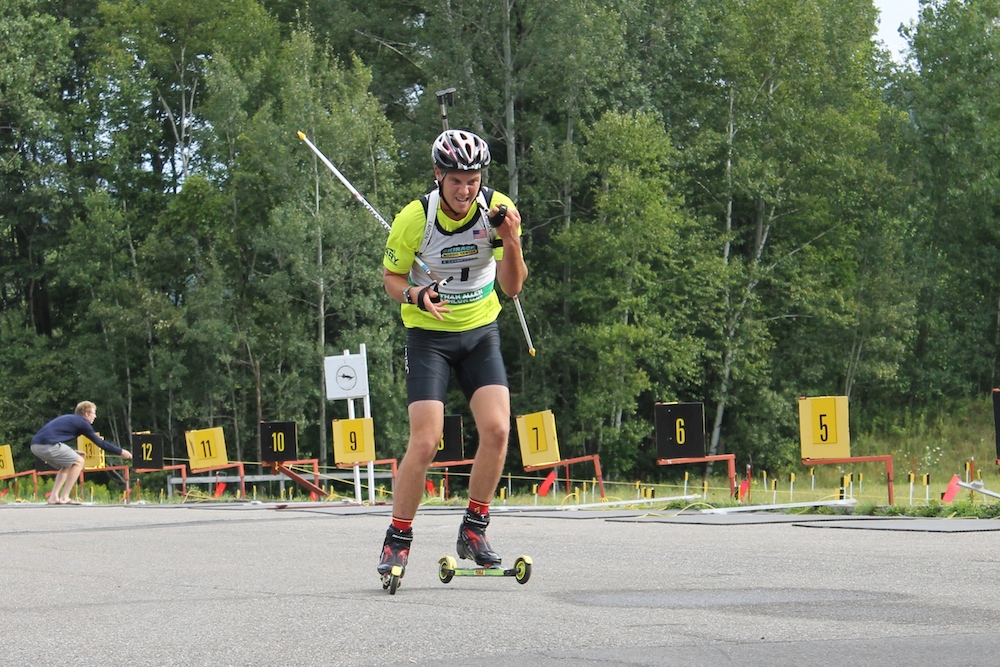
    Russell Currier during the men’s mass start at the 2016 US Biathlon National Rollerski Championships on Aug. 14 in Jericho, Vt. (Photo: Katrina Howe)

    FS: Any unsung heroes to whom you’d like to pay tribute?  

    RC: My neighbor down the road from me growing up has not only been my number-one fan, but he has also painstakingly made various parts for my rifle that have literally played a crucial role in my career. He’s a machinist and a lot of my rifle’s components were his design. I’ll give a shout out to Tom Campbell for supporting me both grooming wise and equipment wise throughout my career.

    ***

    What others had to say about Currier

    The following is a compilation of emails from various individuals who worked with Currier over the course of his ski career.

    I’ve always admired Russ’s ability to be resourceful and resilient.  He’s had his share of frustrating races, such as placing 61st in sprints on multiple occasions (just missing out on pursuits). However he always bounces back. Watching him place a career-best 6th in a World Cup in Nove Mesto in 2012 was incredibly inspiring because he was the ultimate underdog on our underdog team. He had struggled to qualify for international racing earlier in the season and surprised a lot of people that day.

    .

    Another favorite Russell memory was during a Lake Placid training camp. He ran 9 miles in the middle of the night to get home from a party in Saranac Lake. A solid solution to not having a designated driver.
    — Susan Dunklee

    Russell was incredibly careful never to waste food, as though he had lived a previous life in the Great Depression. He used to fill container after container of food at the OTC dining hall and carefully take it with him until his room was full of to-go coffee cups filled with varying granolas.

    Once when we were at the August rollerski trials in Jericho, Vt., I bought a 69-cent two-pack of puddings post-race. They were so awful that I left the other one in the place we were staying, intending to get rid of it. Russell saved it, put it in his truck, and drove it back home to Maine thinking I forgot it. He kept in his refrigerator for two and a half months and then drove it back down to Vermont and gave it to me at October Rollerski Trials. I was so flabbergasted by his dedication to save that terrible pudding cup that I just ate it.  

    — Joanne Reid

    My favorite Russell stories probably shouldn’t be put in print, so I’ll go with this.

    Russ is the only person I’ve known to go on runs with a shotgun. Apparently it’s quite an effective partridge hunting tactic.

    — Welly Ramsey

    It has been great to watch Russell over the years, develop as an athlete and keep working towards his goals. In the last couple of years it was impressive to see Russell really refocus and work towards a second Olympic opportunity and how it paid off. It will be exciting to see what opportunities come next for Russell!

    — Seth Hubbard

    One of my favorite memories of Russell is from when he was first interested in racing, in early high school. We were at a training camp and he was very concerned about what he was eating — only what he deemed healthy— and about getting the hours in his training plan.

    When it was time to pack up, Russ was hungry and tired after his longer A.M. workout and he saw food on the table (breakfast for everyone) which he proceeded to eat in its entirety.  Needless to say, he was not much help with packing and no one was very happy about the lack of breakfast. Russell, however, felt fine.

    — Sarah Dominick

    Russ was one of a few athletes that lived at the 10th Mountain Lodge at some point in their career. One summer night, I headed up there to pick up something I needed for training the next morning (can’t remember what). Since he lived upstairs, and it was dark, I thought it would be fun to try and scare him. I made my way through the door and up the stairs as quietly as I could, thinking I was really going to scare the [expletive] out of him. As I started rounding the corner, Russ jumped out from his room, headlamp blinding my eyes, biathlon rifle aimed at my face, finger on the trigger. I think that was the only time he almost shot me.

    — Nick Michaud

    Russell Currier working on his prone shooting position in June 2017. (Photo: russellcurrier.blogspot.com)

    Russ was a morning person, more so than anyone else I’ve met before or since — he drew his innate energy from waking up early and making breakfast as the dawn broke.  

    We were staying in the house of a family friend for August World Cup Trials one year, and I came crawling (actually crawling) down the stairs race morning, bleary-eyed, incapable of speech, dysfunctional, and partly jet-lagged from flying to the East coast for these races. My body thought it was about 3am, and I tended to wake up at 11.

    Russell started dancing around me, delighted in the (terribleness of) mornings, smiled down at me crawling on the stairs, and says, “I know what your spirit animal is! It’s a sloth!!!!” He called me Sloth ever since.

    — Reid

    When I first started watching World Cup biathlon races about 10 years ago, Russell anchored the men’s relay at World Championships. The team was about to be lapped by the Norwegian race leaders and Russell skied like hell to stay ahead of The King (Ole Einar Bjørndalen) to avoid getting pulled from the race. He got a lot of TV time that day.
    — Dunklee
  • From Biathlon to College and Back Again, Dickinson Eyes Olympic Berth

    From Biathlon to College and Back Again, Dickinson Eyes Olympic Berth

    Kelsey Dickinson during the women’s mass start at the 2016 US Biathlon National Rollerski Championships on Aug. 14 in Jericho, Vt. (Photo: Katrina Howe)

    Two and a half years ago, Kelsey Dickinson was wondering how she could keep doing biathlon.

    The Washington native had been training at the Maine Winter Sports Center (now the Outdoor Sports Institute), and had been a member of the U.S. Biathlon Association’s development team. But when team nominations came out in the spring of 2015, she wasn’t on them. At the same time, the Maine Winter Sports Center cut most funding to its senior teams.

    With few options, Dickinson headed back to the College of Saint Scholastica, where she had done one year of college already.

    “When I left biathlon, part of it was because I just wasn’t skiing fast enough,” Dickinson said in an interview this month. “So I asked how I could keep skiing, one, but also how could I get faster. I realized that going back to college was going to be the best way to do that, but I wasn’t going to be able to go back to college, and do biathlon, and get better at skiing. I decided that I would just ski in college and finish out my eligibility.”

    Dickinson still has one year of that eligibility left, but her biathlon career has come back sooner than expected. After strong college results last season, she was accepted into a summer training program at the Craftsbury Outdoor Center in Vermont. This summer, she spent time training with some of the country’s best cross-country skiers as well as having dedicated biathlon training and easy access to a shooting range.

    The result: she performed so well in rollerski trials in August and October that she automatically landed a spot on the U.S. World Cup squad for December.

    “Our goal for her this year is to make that Olympic team, for sure, but she’s really four years ahead of schedule with it,” Dickinson’s ski coach at Saint Scholastica, Maria Stuber, said.

    “Nothing about what’s going on right now is what I expected to happen,” Dickinson, a double-major in philosophy and natural science, said. “I thought that I would make it through this semester and not have to be traveling that much. I’m just going by communicating with my professors on a day-by-day basis and playing it by ear.”

    Kelsey Dickinson (St. Scholastica) racing to 26th in the women’s 15 k freestyle mass start at 2017 NCAA Skiing Championships on March 11 at the Jackson Ski Touring Center in Jackson, N.H. (Photo: flyingpointroad.com)

    Stuber had only positive things to say about Dickinson’s work ethic and professionalism.

    “She was really clear about her goal to be a biathlete, and she has not wavered on that at all,” Stuber explained. “We said, okay, if you want to be a biathlete at the end of college, what needs to happen for you to be in the top few women, not a bubble skier but someone who is going to be on the World Cup? The bottom line was that she needed to ski a lot faster.”

    The work Dickinson put in paid off, and last season she ended up ranked sixth in the Central Collegiate Ski Association rankings, the top woman not from perennial powerhouse Northern Michigan University. She has now represented her team at NCAA Championships twice.

    “She made some big technical improvements last winter,” Stuber said. “But she was sick from early January, for over a month. She had some really good races but I don’t know if either of us felt like she really got to show her stuff last winter like we thought she could… I think mainly we just made it apparent that she had it in her to go even faster.”

    That was enough to get her to Craftsbury. Dickinson had applied to the summer training program the previous year but not gotten in.

    “I had a really good summer of training,” Dickinson said. “I’m really grateful to be able to have gone to Craftsbury and trained with the team there. That made all the difference for me, just to be around a lot of high-level athletes.”

    At Saint Scholastica, she is the one leading the team. One of the big focuses of going to Vermont was to get Dickinson used to seeing how more efficient technical skiers moved.

    Kelsey Dickinson representing the Maine Winter Sports Center at NorAms in Canmore in December, 2014. Her last international biathlon races were at IBU Cups in Canmore in March, 2015, where she twice finished 28th.

    “She could sit behind someone and try to figure out how to make skiing easy, instead of always trying to think in intervals of how to make it hard, and how to go harder,” Stuber said. “There’s this awesome mindshift when you’re going hard but trying to make it easy, which you don’t get to do when you are leading so much.”

    Stuber herself was a senior athlete at Craftsbury at one point, so she knew head coach Pepa Miloucheva well and was not worried that there would be any problems with Dickinson adjusting to the training approach. (“She was my coach before and I have a ton of respect for what she is doing there — so to be able to work with Pepa as a peer was really cool for me,” Stuber said.)

    In addition, Dickinson knew Sam Dougherty, the biathlon coach at Craftsbury.

    “Sam and Pepa work together to build the plan depending on what the biathlon schedule requires and what the cross-country athletes are doing,” Dickinson explained. “They try to make it comprehensive so people can train together… I have known Sam for a while because of we overlapped racing a little bit back when I was a junior. And Pepa, her philosophy is very similar to Maria’s. I get along great with Pepa and she has been an amazing coach. I’m lucky that the transition was really easy.”

    Dickinson turned in two third-place finishes at rollerski biathlon races in August.

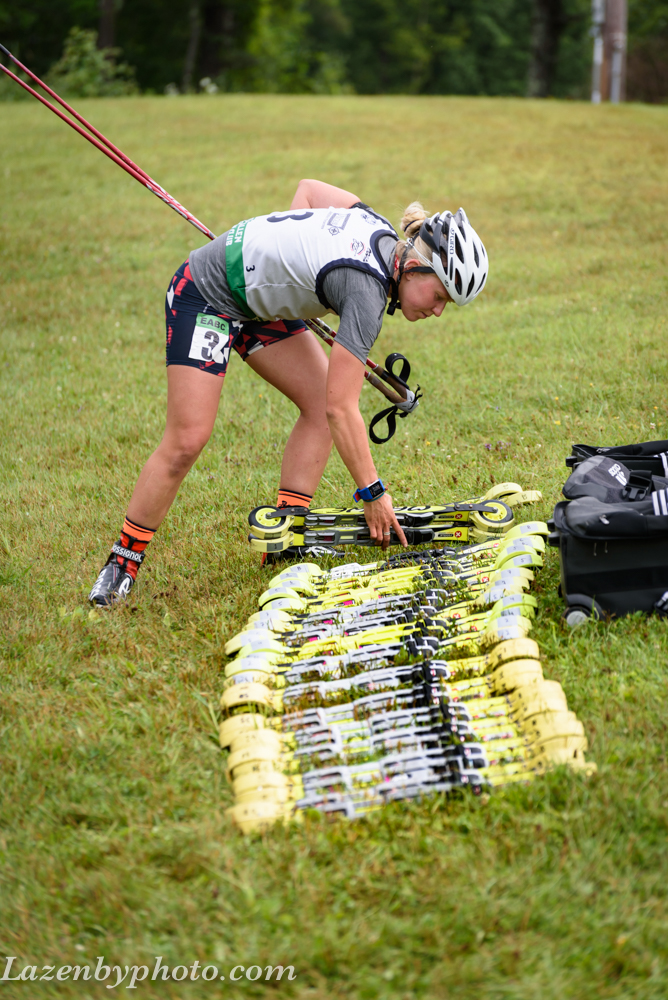
    Kelsey Dickinson (Craftsbury Collegiate Summer Team) picking out rollerskis for the women’s mass start on Aug. 13, at USBA Rollerski Championships in Jericho, Vt. She placed third on both days of the two-day championships. (Photo: John Lazenby/Lazenbyphoto.com)

    “I knew I was feeling good and that if I put all the pieces together then things could go well, but I wasn’t quite expecting that for sure,” she said.

    That put her in a good position to fight for a World Cup spot. Susan Dunklee, who was pre-qualified for the World Cup, had won both races. Dickinson could even afford one less-stellar race when the qualification series wrapped up with two more competitions in October.

    Because she was still in school and had options for how to spend her race season – including competing domestically in December, in an attempt to qualify for the IBU Cup in January and from there trying to make the Olympics – she didn’t feel pressure.

    “I think actually having school was a little bit helpful in that way,” she said. “I just was looking at the weekend as an opportunity. If things went well then that would be great, but if things hadn’t gone well then I still had a lot of great things going on back at school with the team there… I was in a good place emotionally, just happy to be there.”

    At those last two trials races, Dickinson finished second and fifth, and locked up the World Cup spot.

    Her goal is still the Olympics. As such, when she gets to the World Cup later this month – she has to first go to the second-tier IBU Cup in Sjusjøen, Norway, and score qualification points – she will focus mainly on process.

    While at least one more woman will be added to the Olympic roster based on December World Cup results, the team won’t be filled until January, when several athletes will be sent to the IBU Cup to fight for the last spots. That means that Dickinson can focus on performing well in January, when the season is in full swing and she has some races under her belt, and fight for an Olympic berth there.

    “Her process is going to be the most important thing,” Stuber said. “I don’t think she needs to be concerned with what her results are at those first World Cups… if she can use these World Cups to get a really good process dialed in, then when she goes to the IBU Cup she will be really ready to do what she needs to do there to secure an Olympic spot.”

    “It was such a huge goal just to get to this point,” Dickinson agreed. “Looking forward I’m just going to approach things as an opportunity. It’s an opportunity for learning, it’s an opportunity to race, to do what I love to do. So I think that in that sense, I obviously want to do well and I want to hold myself to a high standard. But I am just very grateful that I can have this opportunity and I’m very open to what it will bring.”

    In the past two seasons, Dickinson bought into college racing completely.

    “She tries really hard to be a good captain and sometimes I think that adds to her stress level,” Stuber said. “She just tries to do everything that she commits to, to do it really well.”

    But now, she’s back to biathlon.

    “If I could come across saying anything, I just want to express how grateful I am to all the people who have supported me,” Dickinson said. “Like Maria and Chad [Salmela], and Pepa, and everyone thoughout the years who have allowed me to get to this point. Because it has been a really long journey.”

  • Casey Smith Says Goodbye to Biathlon and Hello, Again, to the West

    Casey Smith Says Goodbye to Biathlon and Hello, Again, to the West

    Casey Smith (Maine Winter Sports Center/U.S. Biathlon "B" Team) on his way to placing second in a NorAm mass start in Canmore, Alberta, in December 2014. (Photo: Jake Ellingson)
    Casey Smith (Maine Winter Sports Center/U.S. Biathlon B-team) on his way to placing second in a NorAm mass start in Canmore, Alberta, in December 2014. (Photo: Jake Ellingson)

    Casey Smith has endured a few things that would cause any athlete to question whether to continue with their professional career.

    In February 2015, the Washington biathlete crashed hard while training in Canmore, Alberta, before the International Biathlon Union (IBU) Cup races to be held a few days later. He was knocked unconscious, broke ribs, a shoulder blade, and bones surrounding his vertebrae, and punctured a lung.

    While recovering from those devastating injuries, he learned in April 2015 that he had been cut from U.S. Biathlon’s B-team, and also that Maine Winter Sports Center (MWSC), where he had been based, was no longer funding senior elite athletes.

    But Smith – using the physical and mental endurance he had cultivated in biathlon – persevered, joining the Craftsbury Green Racing Project (CGRP) in Vermont and returning to international competition in the 2015/2016 season.

    “It definitely [felt sweet],” he said of a few good races last season. “It was really cool to be able to – I got back to the same level I was at before. In Europe this year I didn’t have quite as good results as the year before, but also the first week I got food poisoning really bad. That took a pretty big toll on me, and didn’t have anything to do with the crash.”

    Come spring, the 24 year old decided to call it quits with his biathlon career and return to Bozeman, Mont., to finish a degree at Montana State University. He had enrolled after high school before transitioning to being a full-time athlete.

    His decision was unrelated to the ordeals of the year before. It came down to something much simpler: joy.

    “The whole year of the training season and racing season, I wasn’t feeling as motivated,” he explained on the phone from his home in Washington’s Methow Valley. “I said that I wanted to do this as long as I was having fun, but it was turning into more of a job kind of thing. It was getting to the point where it wasn’t as much fun anymore. So I thought it was time to move on.”

    Casey Smith (USA) en route to 37th place in the junior men's individual at World Junior Championships in Obertilliach, Austria, in 2013. He had his career-best finish of 23rd place in the pursuit there. (Photo: US Biathlon/NordicFocus.com)
    Casey Smith (USA) en route to 37th place in the junior men’s individual at 2013 World Junior Championships in Obertilliach, Austria. He had his career-best finish of 23rd place in the pursuit there. (Photo: US Biathlon/NordicFocus.com)

    Smith was a top junior for the U.S. before and during his first stint in Bozeman. He had top-30 finishes at World Youth and Junior Championships in 2011 and 2013, as well as two apiece at Open European Championships in the junior races in 2012 and the senior races in 2014.

    He then spent two years with the MWSC – including the successful 2014 season, which launched him onto the national B-team – and one in Craftsbury.

    “It was great having other guys to train with,” he said of his time in Vermont. “I really hadn’t had too much of that, at least when I was in Maine. So that was really nice, and I really enjoyed working with Pepa [Miloucheva]. It helped me with my ski technique a lot, for sure.”

    Looking back, he said having the chance to travel the world was one of the best things the sport had offered him.

    “The last several years we would always go to Canmore over Thanksgiving, and so I could build relationships with people there,” he said. “Then when you land in Europe at competitions you run into them again, and I was able to make friends from all around. That was pretty cool.”

    There were results highlights from this season, too.

    “At [U.S. National Championships], it was really cool that all the national team was there [after the World Cup finished],” he reminisced. “It made it real races. In the sprint I had a pretty good race, and right in the mix. Also in Canmore at the trials it was a little bumpy the first few, but the last race I was finally able to pull it together and have a really good race.”

    After the injuries sustained the year before, Smith had attacked training and racing with a new direction, and it worked.

    “It was a traumatic experience, but I felt like I was able to bounce back from it miraculously quickly,” he said. “It almost helped me a little bit because I was so much more focused on being perfect on my physical therapy and being super diligent every single day. So I had to be really focused in general.”

    Pepa Miloucheva skates behind CGRP biathlete Casey Smith while at a training camp at La Forêt Montmorency in Quebec. (Photo: Caitlin Patterson)
    Casey Smith leads Craftsbury Green Racing Project Head Coach Pepa Miloucheva at a training camp at La Forêt Montmorency, Quebec, in November 2015. (Photo: Caitlin Patterson)

    And yet, he became aware that he wasn’t as fired up to keep it up for years. He decided that he would return to Bozeman for the fall semester. Smith initially told himself that he would return home to Washington and mull over whether to continue to compete while he finished his degree, or to call it quits on biathlon altogether.

    The latter won out, and now he’s fully invested in school and his future outside of sport.

    “I’m going to be in the animal science program,” he explained. “My plan is that my family has a small sheep farm here in Washington, and I’d like to come back and grow that bigger… and live in the Methow and have that lifestyle.”

    Most of the friends he started school with at Montana State years ago have graduated, but that didn’t concern Smith.

    “I feel like now I’m going to school because I want to learn, and before I was there because I wanted to do biathlon and train and there was other people doing that there, and by the way I was going to school on the side,” he said. “Now I’m going there because I really want to go to school.”

    Until the fall semester begins, he’s helping his family and uncle out on their farms and doing odd jobs in the Methow Valley.

    He may help with biathlon in the Bozeman region, and will definitely help his mother, Betsy Devin-Smith, who is the head coach of the Methow Valley Nordic Ski Education Foundation’s biathlon team.

    “I’m sort of stuck helping her with that, like it or not,” he joked.

    Of the life transition, Smith said that everything was feeling good so far.

    “I don’t really miss it now,” he said of biathlon. “The opportunity to ski as often, maybe I’ll miss. I’m sure I’ll still ski a lot, but not every day for hours.”

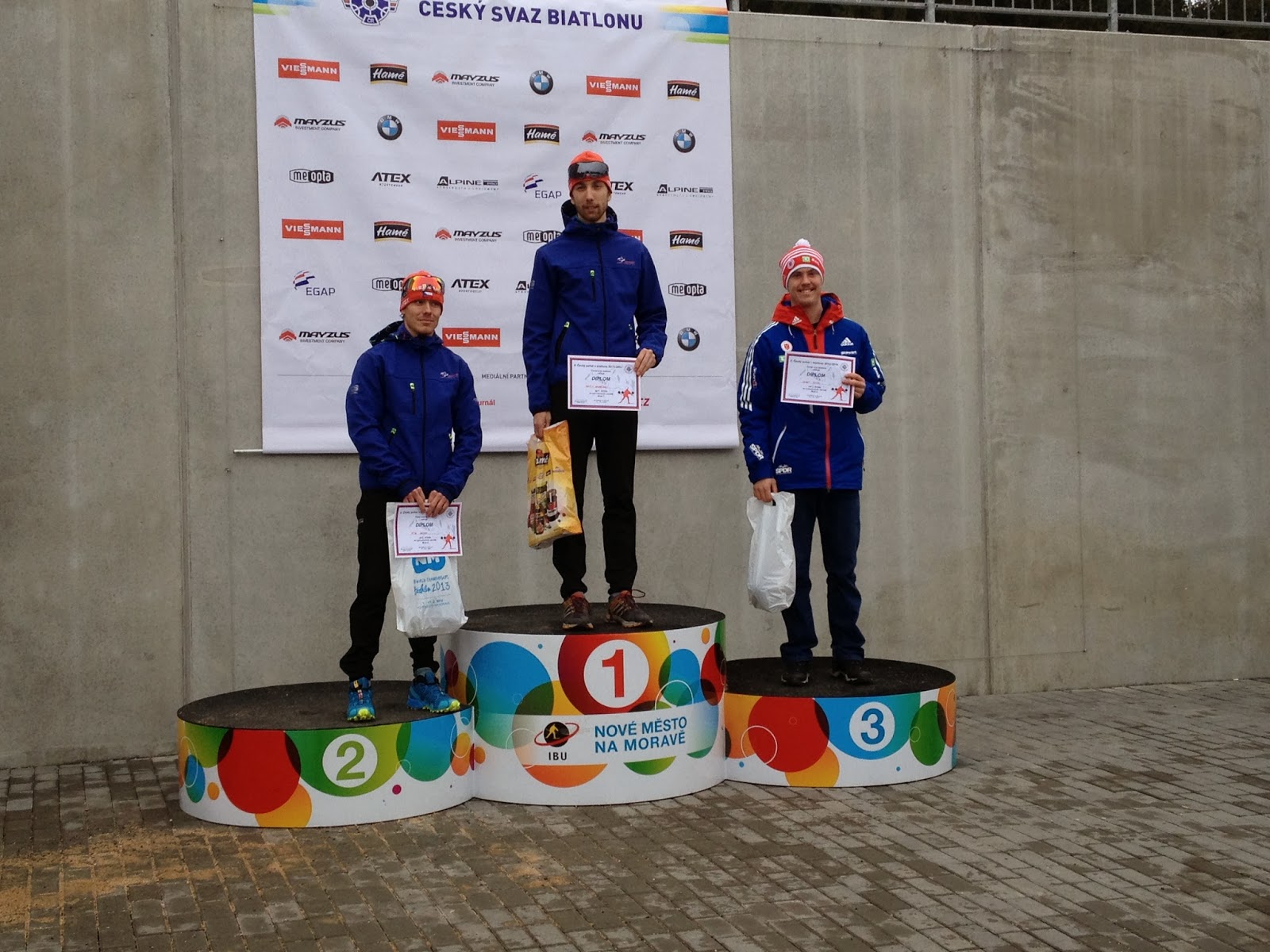
    Casey Smith on the podium at a Czech Cup biathlon race in 2014. (Photo courtesy of Casey Smith)
    Casey Smith (right) on the podium at a Czech Cup biathlon race in 2014. (Courtesy photo)
  • Maine Winter Sports Center Changes Name, Broadens Mission

    Maine Winter Sports Center Changes Name, Broadens Mission

    Not just winter sports, MWSC becomes OSI. (OSI Website photo)
    Not just winter sports, the Maine Winter Sports Center (MWSC) becomes the Outdoor Sport Institute (OSI). (Photo: OutdoorSportInstitute.com)

    Sometimes change is due to a slow drip, other times it’s a tsunami.

    In July, Andy Shepard, founder and president of the nonprofit Maine Winter Sports Center (MWSC), announced a name change. MWSC was rebranding as the Outdoor Sport Institute (OSI). Although the new name is without its homegrown “Maine” roots, OSI will remain very Maine-centric.

    OSI Program Director Mike Smith explained in a phone interview that OSI’s name change was the result of the slow-drip kind of change. Smith has worked for the MWSC since 2009. He began as a community development coach, was promoted to community development director, and in the spring of 2014, became program director and chief operating officer (COO).

    “The evolution that is being seen now is really an evolution that started years ago and especially about two years ago — we started going through some big changes,” Smith said. “And now the name and brand change is reflecting the things that already started to evolve several years ago and that we have been working on. We reached the point where it really became necessary to update the name to better reflect everything we were doing.”

    The changes Smith spoke about are twofold. First, MWSC lost major funding back in April 2014. That was the tsunami type of change. But almost immediately, the center began trying to raise money. Shepard spearheaded a fundraising campaign with seed money from Mary Barton Smith, a Presque Isle, Maine, native and philanthropist. Barton Smith (no relation to Mike Smith) also pledged to match significant dollars to an ongoing $20-million endowment campaign — in a recent Mainebiz article, Shepard said Barton Smith’s contribution could be upwards of $8 million, as the endowment process continues to build momentum.

    OSI will support junior level biathlete development as well as biathletes in their gap year program. (OSI website photo)
    OSI will support junior-level biathlete development as well as biathletes in its gap-year program. (Photo: OSI)

    The second aspect of MWSC’s change, also precipitated by funding limitations, is something that intially alarmed the U.S. nordic community. In the past, a select group of emerging and national-team biathletes and cross-country skiers could count on some financial, housing and logistical support from MWSC.

    “We recognized a couple years ago that the current model of ski clubs in the U.S. was not one that I think where we are going to be strongest,” Mike Smith said. “We wanted to focus more on juniors, more on developing kids at that youth and high-school level up through and into their post-high-school careers since we simply don’t have the funding to support athletes for three to four — five years into their adult career … I know a concern in the cross-country world has been, ‘Oh now we are losing this program and we don’t care about competition.’ I would just reiterate that that is definitely not the case. We have moved ourself out of the same category as an APU [Alaska Pacific University] and Sun Valley Ski team, but we are connected as ever to the ideas of outdoor sport and what you can do with it. I think big picture, what we can offer in competitive sport will grow beyond nordic sport, but it will continue with nordic sport.”

    At this point, OSI will not attempt to challenge the Stratton Mountain School (SMS) T2 elite teams of the world. But according to Smith, those initials — OSI — will have a lasting imprint on the future of Maine as both the state’s rural communities and OSI define their new possibilities.

    Simply put, the institute is a four-season organization.

    Winter may be last seemingly forever in Maine, but the earth spins and spring and summer inevitably come. For the past few years, under the MWSC banner, and now OSI, the organization branched out beyond winter sport.

    antabuse

    “We have moved ourself out the same category as an APU [Alaska Pacific University] and Sun Valley Ski team, but we are connected as ever to the ideas of outdoor sport.” — Mike Smith, OSI program director and chief operating officer

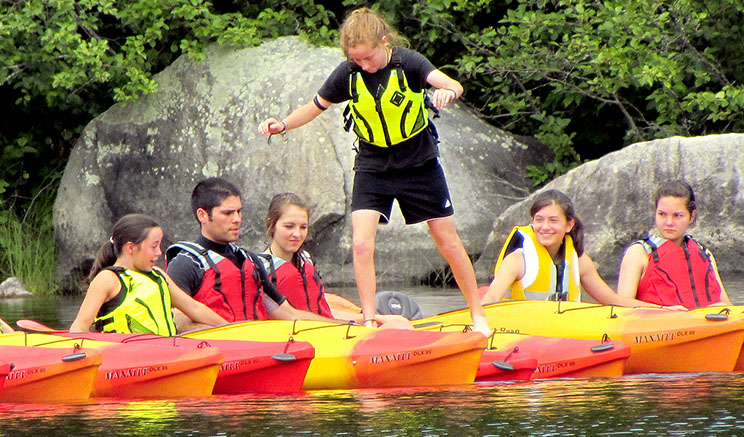
    Since its inception in 1999, MWSC’s core mission was to provide wellness opportunities through sport for some of Maine’s most rural and economically depressed communities. Beyond the nordic sports, primarily biathlon and cross-country skiing, OSI will offer resources and classes in whitewater kayaking, trail running, stand-up paddling, and mountain biking — activities MWSC had already begun offering.

    “The mission of the Maine Winter Sports Center was originally based on using skiing to create a model of sustainability for rural communities in northern Maine,” Shepard explained in an interview with Mainebiz. “That model included an economic development component based on the building of Nordic venues and redevelopment of alpine ski areas, as well as a full range of programs intended to empower kids through a world-class curriculum of outdoor sport education. Over the years, paddle sports, mountain biking, hiking and climbing were added and our scope became statewide.”

    Yet bringing opportunities to a vast region mandated a rethinking of how the nonprofit was organized. Smith explained that OSI is decentralized despite MWSC’s name being historically linked with nordic facilities in Fort Kent and Presque Isle.

    “Here in Maine you talk to people about Maine Winter Sports Center and they assume that you are talking about a specific facility and specific facility in a specific town which isn’t the case,” Smith said of how OSI will branch out in the state. “We don’t own those nordic venues in Fort Kent and Presque Isle. We still work with them and we have athletes training there, but those facilities are managed by local nonprofit organizations. And we felt it was important that people recognize that and don’t assume that those places are ours and that we are taking care of them because those folks are looking for support as well.”

    For now, although he is on the road most days, Smith’s office is based in Caribou, Maine, just north of Presque Isle at the northeastern tip of the state. Shepard, OSI’s CEO, keeps his office at the other end of Maine, nearly 300 miles south in Freeport. OSI maintains its adventure director in western Maine, development directors in the mid-coast region, its head biathlon coach in Fort Kent, and a head nordic coach positioned in southern Aroostook County. Mid-state, OSI stores its equipment and trailers to more efficiently deliver gear to communities engaging in its programs.

    With its tentacles throughout the state, Smith explained that OSI is better positioned to foster long-term healthy lifestyle choices among Maine’s residents. The state’s past reliance on natural resource extraction — the bread and butter of many rural communities —  is having its day of reckoning.

    That leaves many towns struggling to maintain a positive self image. By more fully realizing its mission of increased participation in outdoor sport, Smith believes OSI is a resource for those places.

    “From my experience, it’s not from an economic place first, it’s from a wellness place,” Smith said. “It’s a, ‘Jeez, we have this awesome spot, how can we get our community out here?’ Because we know it is good for our community.

    “Our focus is for programming and engaging people in outdoor sport and then what they [the community] can do to help facilitate. It’s not like we are showing up and saying if you all learned to mountain bike, your entire community’s economy is going to change. We are saying, if you engage in this, the same tool that makes you successful in engaging in this are the tools that can help you be successful in forging out where you want to go and what you want to do with your life and with your community.”

    Supporting a community, according to Smith, can have different looks: OSI can rent equipment like mountain bikes, stand-up paddleboards, and cross-country skis so a summer class can be offered, an after-school program, or a two-week physical-education unit. OSI also offers classes for educators so they, too, can run outdoor sport programs. Adults will have the opportunity to participate in local OSI clinics or participate in more complex adventure or athletic trips.

    “We are not just there to just show up for two days and run this camp, we are there to work with that community to figure out how this can work long term for them,” Smith explained.

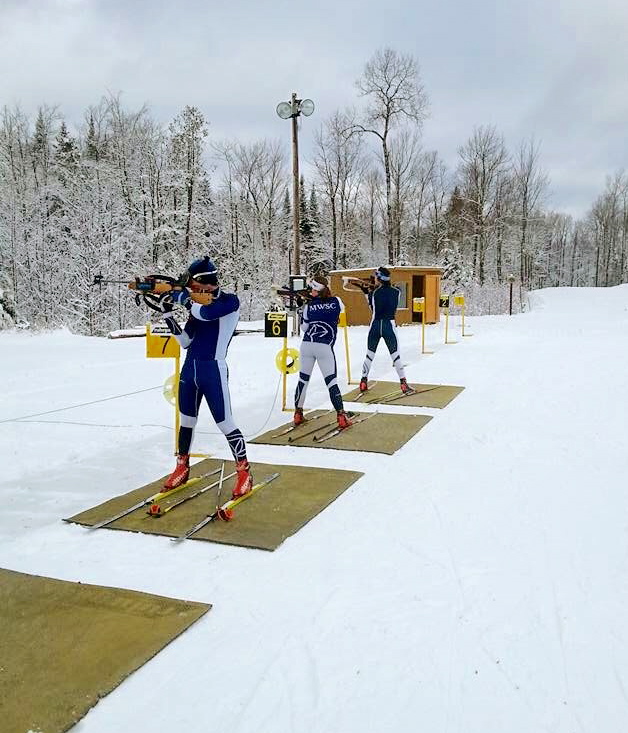
    Left to right: MWSC Biathletes Brendan Cyr, Mikaela Paluszek, and elite athlete Russell Currier during a head-to-head shooting workout in late December at the Fort Kent Outdoor Center in Fort Kent, Maine, Dec., 2015. (Courtesy photo)
    Left to right: MWSC biathletes Brendan Cyr, Mikaela Paluszek and Russell Currier during a head-to-head shooting workout last December 2015 at the Fort Kent Outdoor Center in Fort Kent, Maine. (Courtesy photo)

    Back to the earth spinning — winter comes early to Maine. And OSI will compliment what MWSC has done in the past with regards to biathlon and cross-country skiing, but not at the post-collegiate level. OSI is still interested in podiums, but its place is in fostering, what Smith referred to in an email as, “participation and performance” at the junior levels of the sport.

    OSI will offer what it is calling “gap-year support” to nordic athletes between the ages of 17-20, up to two years out of high school.

    “We have realized that, especially here in Maine, at the junior level if we want more folks on the podium at an upper level, we want more folks engaged at a lower level. And I think everyone understands that wherever they are,” Smith said about promoting nordic sports at the highest levels. “And we recognize that we need to figure how to help more young people self identify first as an active person that wants to go outside let alone someone who is interested in competing in nordic sport. And we are lucky in that we have a diverse array of programs under the OSI umbrella that is pulling a lot more kids in starting at ten years old,  then up through high school. And we have made structural changes in high school racing programs so that now we have more OSI coaches on the ground in more parts of the state working to get more new faces out there.”

    Several athletes, including Russell Currier, Kelsey Dickinson and Casey Smith, had already lost their funding due to MWSC funding cuts in 2014. Dickinson left biathlon (at least for now) and returned to the College of St. Scholastica, where she was the runner-up in the 5-kilometer freestyle at 2016 NCAA Central Regional Championships. Casey Smith (no relation to Mike nor Mary Barton Smith) joined the Craftsbury Green Racing Project to continue his biathlon career.

    Mike Smith explained that OSI is currently without any collegiate or post-collegiate cross-country skiers. They will begin recruiting athletes for their 2017 gap-year cross-country program this fall. The biathlon racing team will consist of two gap-year athletes and three University of Maine-Fort Kent biathletes.

    Seth Hubbard, sport development director and biathlon head coach for OSI, said in an interview that 2014 Olympic biathlete Currier continues to train with OSI and his assistance from OSI is limited to training-site support. As for potential gap-year athletes in biathlon or cross-country that would like to transition into the elite levels of their respective sports, “We can set them up for that,” Hubbard said.

    Although not involved with the highest end of competitive nordic sport, OSI is committed to building toward the future. There’s a name change and a bigger umbrella when considering the scope of their mission.

    “All that is about building capacity for everybody. We recognize that no matter how many coaches we have at the high-school level, no matter how many adventure programs we have at a high-school level, no matter how many kids in our gap-year programs both in competitive sport and in adventure, we have a finite number,” Smith said. “But if we can work with communities through youth development through education, through equipment rental, though trail development, the impact we can have is exponential. And everyone wins.”

  • Fifty-Mile Trail Run Champion, Malcolm on Her ‘Sustainable Hobby’

    Fifty-Mile Trail Run Champion, Malcolm on Her ‘Sustainable Hobby’

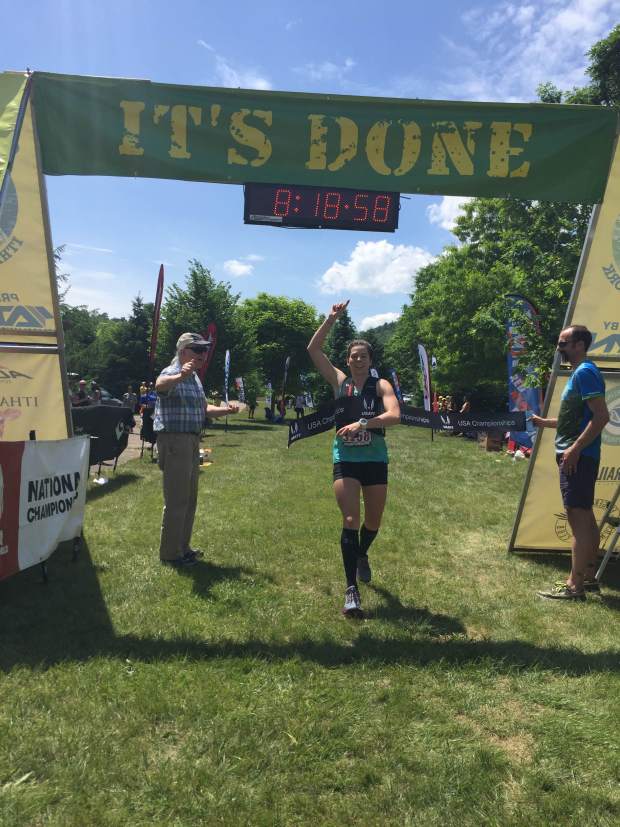
    Corrine Malcolm (center) raises one hand in victory as she crosses the finish line in first for the Cayuga Trails 50 mile race in Ithaca New York this past May. (Photo: corrinemalcolm.com)
    Corrine Malcolm celebrates her win at the Cayuga Trails 50 in May in Ithaca, N.Y. (Photo: Corrinemalcolm.com)

    With more than 9,000 feet of elevation gain and an estimated minimum of six to eight hours on course, the Cayuga Trails 50 (a trail running race in Ithaca, N.Y.), leaves many racers questioning the location of their quads and searching for an IV by the finish line. Racers scramble up gorges and single track trails, careen down stone staircases and slosh through creeks as part of the out-and-back 50-mile lollipop loop. For many, the constant change of scenery is welcome break from the monotony of nonstop running.

    Elite and experienced trail runners are particularly drawn to the ultra event. After its inaugural race in 2013, it served the next three years as the USA Track and Field (USATF) 50-mile trail championship race. Entrants thereby earned the opportunity to qualify for international competitions if their results warranted.

    While many of the top names on the 2016 start list were repeats from previous years, Corrine Malcolm wasn’t one of them. Malcolm, best known as a former member of the US Biathlon women’s team, had only competed in one other trail race longer than 50 k.

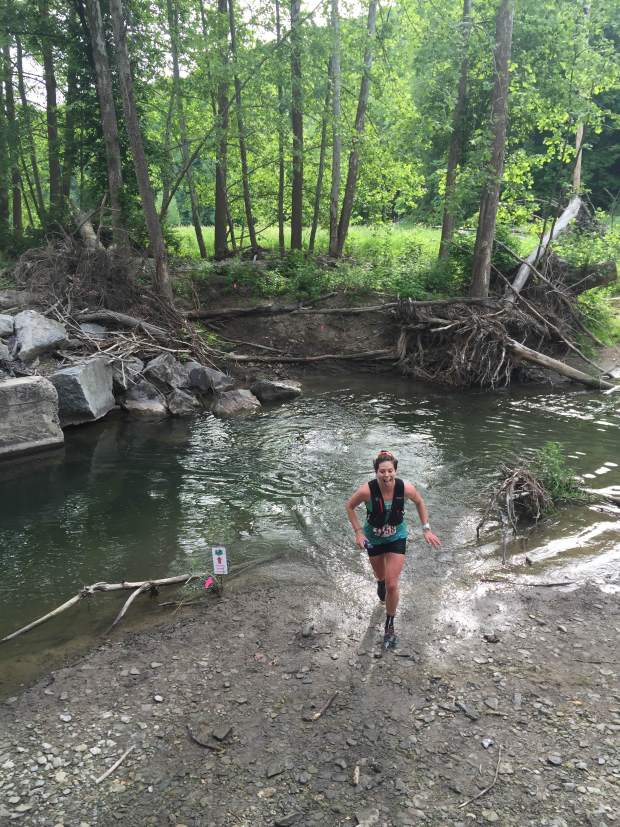
    Corrine Malcolm finishing one of eight creek crossings during the Cayuga Trails 50 mile race, which she won in a time of 8:18. (Photo: corrinemalcolm.com)
    Corrine Malcolm crossing one of eight creeks during the Cayuga Trails 50, a 50-mile trail run she won in 8 hours, 18 minutes. (Photo: corrinemalcolm.com)

    This April on her 26th birthday, she completed the Gorge Waterfalls 100k in Columbia River Gorge, Ore. As she put it in a blog post, in the Cayuga Trails 50, she was “a little fish” in a big pond.

    “I knew that I could survive the distance after running Gorge 100 k,” Malcolm said in a phone interview. “I feel like ultra running is really similar to nordic skiing in that it really rewards the people who are willing to suffer … It’s going to hurt because you’re running for a long time and so if you’re willing to accept the fact that it’s going to be painful and not be surprised by that, you’re going to be rewarded in your effort. So I knew that even though I was inexperienced competitor, I’m really good at suffering.”

    Malcolm did more than just survive and suffer, she succeeded in pulling away from the field and crossed the finish line in first. She completed the 50 miler in 8 hours, 18 minutes, which stood as the second-fastest female time ever recorded in that race. Along with prize money and post-race pie, she also earned a spot on the USATF team trip to the 2016 Trail World Championships in October in Geres, Portugal. Malcolm indicated that this year, USATF will cover most athlete travel and accommodation expenses for Trail World Championships.

    “Because I won the national title, I was given some extra funding from USA Track and Field to make the trip feasible … which is cool as a poor graduate student,” Malcolm explained. “I definitely plan to go [to the Trail World Championships]. Biathlon was fun because we got to travel and I haven’t gotten to travel for a race in a really long time. Some I’m totally looking forward to making the big flight across to Euro-land.”

    Though Malcolm is a relatively new name to look out for in trail-running competitions (Ed. note: Trail Runner magazine featured her in 2012), she’s a longtime competitor. She ski raced for Montana State University for two years before leaving school to train full-time with Maine Winter Sports Center and focus entirely on biathlon. She qualified for Junior World Championships and European World Championships in 2011 — racing to a sixth at European World Championships — and later that spring, she was nominated to the US Biathlon senior women’s team. She raced for the national team from 2011-2013, but after two years, Malcolm felt the pressure to perform and her performances weren’t lining up.

    “That’s how I felt on the national team, even though the coaches were wonderful and my teammates were wonderful, I felt like I was in a fishbowl,” she said.

    In her ‘about‘ page of her blog, Malcolm described feeling “fast tracked” upon moving to the Olympic Training Center in Lake Placid, N.Y.

    “Unfortunately it was easy to forget how much younger I was [than my teammates], the coaches forgot, I forgot, and eventually it took it’s toll on my health,” she wrote. “I was part of a select group that the 2014 Olympic team would be chosen from, but I was ultimately too sick to compete.”

    “I had to perform,” she recalled in the phone interview. “I had to keep up and the finish line just kept moving further and further away. And I don’t feel like that now with running. My level of stress is so much lower.”

    Running became Malcolm’s new competitive outlet. She began working with David Roche, a coach, lawyer, Trail Runner columnist, and member of the Nike Trail Elite Team. After skiing for so many years, Malcolm found the switch to having a weekly mileage quota versus hours almost easy, despite also currently working on her master’s degree in biomedical physiology and kinesiology at the Simon Fraser University in Vancouver, British Columbia. She indicated she may even find time to return to coaching–she spent this past winter coaching the Bridger Biathlon Club in Bozeman, Mont.–potentially with a biathlon club in Whistler, Bristish Colombia.

    “I had to keep up and the finish line just kept moving further and further away. And I don’t feel like that now with running.” — Corrine Malcolm on her transition from biathlon to ultra trail running

    “Being a runner is really sweet because you don’t have to train 20 plus hours a week,” Malcolm said. “And as a graduate student–not that that’s like super time consuming, I’m probably not the best graduate student in that regard, mostly I just read journal articles until my eyes bleed. Then I go for a run and it’s great–I only have to run like 7-15 hours a week..so the time commitment [for running] is really manageable with a job or with school, just because the time commitment isn’t nearly as big for me as it was when I was skiing.”

    Being a former skier also helped Malcolm transition to full-time trail running. Though she says she’s had a few “imbalances” she’s had to work on–her right side tends to be tighter than her left–she’s remained injury free, thanks to ski-structured strength, off days and recovery workouts.

    “Compared to the trail runners that come from road running, I feel like I can take a hit a little bit more,” she said. “I still do strength a couple times a week — very skier-ish strength. I feel like that protects me in someway from developing an overuse injury. … I think from ski training, I think I’m also really good at eating. I remember going to junior REG camps with Garrott Kuzzy and he’d pull out birthday cake on our long runs. I mean, I did that in northern Maine, too, I’d bring pecan pie on long training runs. So I’m really good at just putting down food consistently.”

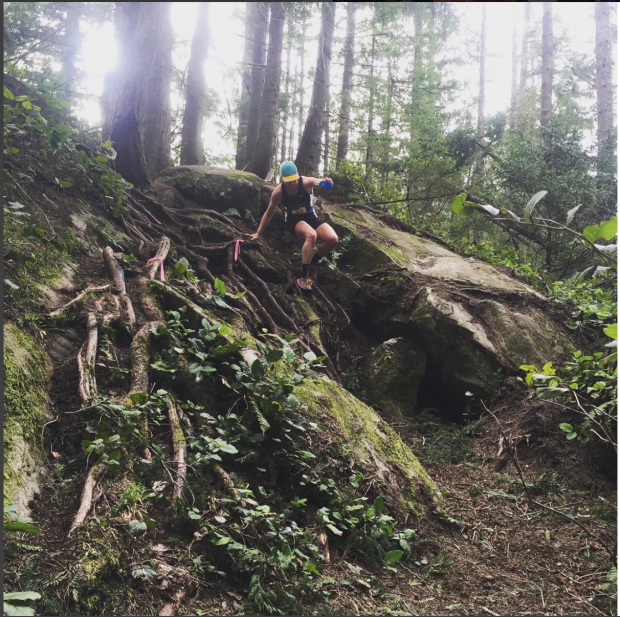
    Corrine Malcolm sending it during the Chuckanut 50 kmin Bellingham Vancouver. (Photo:
    Corrine Malcolm sending it during the Chuckanut 50k in Bellingham, Vancouver. (Photo: corrinemalcolm.com)

    During her ultra races, Malcolm generally consumes a packet of gel every 30 minutes and 32 ounces of water every hour. Most of her weekly miles have been in the 40 to 60 range, although she put in an 85-mile week and a 104-mile week in April. The biggest change for Malcolm wasn’t dietary or mileage or hours a week, it was pace.

    “Like 9:30-10:00 minute miles are the nordic skier’s jam,” she said. “You know, like 10:00 miles all day long … I’ve had to get used to running my workouts quite a bit quicker than that. Just because my legs were like, whoa, we can run 7:00 minute miles really efficiently? This is crazy.”

    Malcolm’s training plan was effective. With her second ultra run behind her, her first ultra win and plenty of trail trekking in store, Malcolm sees running as her new “sustainable hobby.” A sport she finds not only success, but happiness in doing.

    “My coach told me the day before [the Cayuga Trails 50], ‘OK, my goal for you is to be the Steph Curry of smiles,’ ” Malcolm explained. “Like that was our goal going into the race was just to smile more than anyone out there, be so happy at every aid station that they insist on giving you caffeine-free gels. So when you have that kind of attitude, you work really hard on being happy the whole time and you don’t think about how bad your quads hurt.”

  • Wednesday Workout: TSS (Technique Specific Strength) with Russell Currier

    Wednesday Workout: TSS (Technique Specific Strength) with Russell Currier

    This week’s workout comes from Russell Currier of the Maine Winter Sports Center. A 2014 Olympic biathlete, Currier, 28, recently placed second in the US Biathlon trials, narrowly missing the cut for a national-team camp in Park City, Utah.

    “The shape was pretty much what I wanted,” Currier wrote in an email after the second set of trials earlier this month. “It wasn’t great, but it shouldn’t be too fast in October. This year it felt less of a race for a 4th or 5th [World Cup quota] spot race and more of competition against the whole National team. It’s nice that the team has made improvements, but it makes qualifying in October more difficult.

    From here, he’ll focus on the next set of team trials in December at Mt. Itasca in Coleraine, Minn.

    “After that, the goal is to race well on the IBU cup and try to move up from there,” Currier wrote.

    ***

    It may have been the start of the 2009, or maybe it was the 2010, training season when I first saw “TSS” written in a training plan sent to my inbox. Confused, I asked my coach for an explanation during a Skype meeting. To the best of my memory it was described as “rollerskiing up a short and steep hill while focusing on the best form and longest glide possible.” Or something along those lines. If I have to describe it to another athlete, I tend to start with saying it’s your most aggressive downhill technique, while skiing uphill. Truthfully, the first question usually refers to not knowing what TSS stands for. Since, this isn’t the most popular training idea in US Biathlon history, the answer may vary depending on who you ask. The common reply has been “Top Secret Strength” or just “Top Secret Stuff.” My personal favorite is “Totally Stupid Strength.”

    Another way of describing TSS would be to think of it as hill bounding on skis. If you had to combine a weight-room strength session with a rollerski-technique drill session the result would be TSS. It’s on my training plan year round. All you need is a short, steep climb you can ski up and down repeatably without being in the way. You’re only going as far as you can in 20 poles plants so it doesn’t really need to be an alpine hill.

    “If you had to combine a weight-room strength session with a rollerski-technique drill session the result would be TSS.” — Russell Currier, Maine Winter Sports Center (MWSC) Olympic Development Team biathlete

    The purpose is to reinforce good ski technique and power with the exact muscle groups involved in that technique. The focus is to generate the best form and longest distance per cycle as you can. Any choice of skate technique will work. Sometimes this tends to feel like skiing in slow motion. Sometimes it feels strange to be forcing a slow tempo V2 alternate up a wall, but it also makes it feel that much natural on the flats and downhills. One of the advantages it has over hill bounding on foot is the use of double pole, adding an upper body component. In my experience, this is as effective doing core strength in a gym.

    The Workout: Technique Specific Strength

    The Place: Groomed trails or pavement. Steep, approximately 30-meter-long climb.

    Warmup: Easy distance skating 15 to 20 minutes.

    The Important Part:

    – 5 x 20 Double Poles

    – 2 x 20 Skating without poles

    – 2 x 20 V2 cycles

    Repeat once or twice and add some extra V2 alternate and V1 sets if the energy is still there. Should be 15 to 25 cycles, or pole plants, depending on the technique.

    Total routine is about 25 to 45 minutes.

    Cool Down:

    20 to 30 minutes easy skiing or running

    When there is a bad habit in your technique that you can’t seem to forget, this is the workout to use to combat that habit with a correct one. TSS doesn’t require a lot of resources beyond decent trails and functional equipment. This is a strength training that contributes directly to the sport we’re trying to compete it. I’m always trying to update the quality of training in my plan. That being said, the afternoon TSS sessions still find a place in my average week.

  • Fereshetian Takes the Reins as Maine Winter Sports Center Cross Country Coach

    Fereshetian Takes the Reins as Maine Winter Sports Center Cross Country Coach

    Justin Fereshetian representing the University of Maine Presque Isle at the Lake Placid SuperTour in 2011. While at UMPI, he trained with the Maine Winter Sports Center and so knows their program from both an athlete's and a coach's perspective.
    Justin Fereshetian representing the University of Maine Presque Isle at the Lake Placid SuperTour in 2011. While at UMPI, he trained with the Maine Winter Sports Center and so knows their program from both an athlete’s and a coach’s perspective.

    Justin Fereshetian knew from a young age that he wanted to coach.

    “I knew that once I was finished racing, I wanted to be a coach,” the Turner, Maine, native said in a phone interview on Tuesday. “I’ve grown up just going to track meets, going to cross-country meets, and helping out. I was getting to be around that atmosphere all the time and I really enjoyed it. Then I got really into skiing, and I wanted to continue that avenue.”

    After attending the University of Maine, Presque Isle, Fereshetian took his first step down the coaching path when he worked as an assistant for the Maine Winter Sports Center (MWSC) last season.

    This spring, with a reorganization of the nonprofit and the dismissal of head coach Will Sweetser, Fereshetian was handed the opportunity to go one step further: to become the head cross country coach in a program where he had trained and raced himself.

    “I was a part-time assistant, and I really loved it,” Fereshetian said. “Now that I will be full-time, I’m really pumped.”

    He may be just 25 years old, but Fereshetian already impressed fellow MWSC staff last season with his approach to coaching. Sweetser said he had been working to create a full-time position for his mentee, maybe not this year but next year, and encouraged Fereshetian to apply for the new position after his own departure.

    “He’s pretty self-aware,” Sweetser said. “He knew that he would like to have another year or two to work with a more experienced coach to get his legs fully under him. I think that’s pretty cool to have a younger coach with that kind of awareness… I’m pretty impressed with his ability to be humble and open to suggestions. And if you talk to the athletes, he has a great rapport.”

    Fereshetian is now less than a month into his tenure, and still learning what his role is in the organization. With the disappearance of funding for MWSC’s Olympic Development program, most of the senior athletes who were formerly in the cross country team have now left.

    “We don’t really have any nordic postgrads that are staying throughout the fall,” Fereshetian said. “We have a couple who will be here for part of the summer before heading off to college in the fall.”

    He’ll try to rally the experience of those older athletes, while they are around, to motivate and inspire the high school crew which will form the core of the MWSC cross country program this season.

    “It’s really helpful having those guys around, because I can give them advice on what to do but then they can have someone who’s had experience with success and be able to look at what they are doing,” he said. “To have someone there racing and doing a really good job, it’s great to have good role models.”

    MWSC is coming off one of its best years ever for junior cross-country skiing.

    “We had six athletes in attendance at Junior Nationals last year, and we had even more than that qualify,” Fereshetian explained. “That was the most kids that Maine Winter has sent to one JN’s, I believe. That was really special.”

    Three of the athletes (Austin Huneck, Daniel Streinz, and Lance McKenney) turned in top-10 performances in individual races; so did former MWSC athlete Kamran Hussein, who had moved to the Stratton Mountain School.

    “My goal is to continue their development and try to help be able to reach their goals again,” Fereshetian said. “We definitely want to send multiple kids back to JN’s again.”

    Fereshetian is mostly sticking to the MWSC training script that has been written by Sweetser and biathlon coach Seth Hubbard, saying that it has been proven to work. He’ll add his own little twists, though.

    To do that, he has a lot of inspiration to draw on. Fereshetian’s father, Al, is the track and field and cross country coach at Bates College in Lewiston, and has earned Coach of the Year honors in multiple different athletic leagues, including in his previous tenure at Appalachian State University.

    “I definitely learned a lot from my dad,” Justin Fereshetian said. “And I also learned a lot from the great coaches that I’ve had: Paul Stone, Alexei Sotskov, Will. I had a lot of really influential people to gain knowledge and resources from.”

    According to MWSC CEO Andy Shepard, taking young coaches with passion and a good work ethic and turning them into experts has always been the organization’s strategy.

    “A lot of the coaches we’ve hired over the years have been young, and just getting started,” Shepard said. “We’ve given them access to resources and a support network that has helped them turn into some of the best coaches in the country… We believe that we’re capable of developing these coaches with the right attitude and work ethic, into world class coaches. I think our track record would suggest that we have success with that too.”

    Right now, the summer group is training five days a week, and Hubbard has been helping Fereshetian through the process of learning the ins and outs of the job.

    “Right now we have kids all over the place, and the training group is a little bit small right now,” Fereshetian said. “But once we get further into the summer we will get more closer to normal.”

    And Fereshetian is also helping out with a training camp that draws athletes from all across the state: any athlete who qualified to represent Maine at the U16 or Eastern High School Championships, or to represent New England at Junior Nationals, or to represent the U.S. at World Junior Championships, is invited. The camps happen four times a year and this time edition is at Sugarloaf.

    “We work with coaches from around the state to bring shared best practices together, and then all of that is applied to the kids who show up at this camp,” Shepard said. “It’s an awesome bunch of kids. We’re working not only on technique, but there’s also a lot of classroom stuff, nutrition and hydration and physiology. It’s one of my favorite times of the year.”

    In that atmosphere, Fereshetian is being shaped into a leader.

    “Definitely, there are big shoes for me to fill,” the 25-year-old said of his new job. “I in no way expect to be the type of coach that Will Sweetser was right off the bat. He had a lot of experience, and I learned a lot from him this last season. It was great working with him. But I feel confident in my abilities as a coach, and I’m really excited. It’s a little bit daunting, but I’m definitely a lot more excited than nervous.”

  • Maine Biathletes Reel from Dual Cuts from MWSC Downsizing, U.S. National Team Roster

    Maine Biathletes Reel from Dual Cuts from MWSC Downsizing, U.S. National Team Roster

    Russell Currier competing in a World Cup sprint in Antholz, Italy, in 2014. An Olympian in Sochi and a two-time sixth-place World Cup finisher, Currier had his worst season in years and was cut from the U.S. National Team. Paired with funding cuts to his home club, the Maine Winter Sports Center, Currier and his teammates are trying to pick up the pieces. (Photo: USBA/NordicFocus.com)
    Russell Currier competing in a World Cup sprint in Antholz, Italy, in 2014. An Olympian in Sochi and a two-time sixth-place World Cup finisher, Currier had his worst season in years and was cut from the U.S. National Team. Paired with funding cuts to his home club, the Maine Winter Sports Center, Currier and his teammates are trying to pick up the pieces. (Photo: USBA/NordicFocus.com)

    For a group of biathletes based in Maine, two painful announcements came in the last few weeks: first, the news that their home base, the Maine Winter Sports Center (MWSC) would be drastically reducing the support offered to its Olympic Development Team (ODT), and secondly, that many of them did not get re-named to teams by the United States Biathlon Association (USBA).

    When the team nominations came out, neither Russell Currier nor Casey Smith were back on the B-team, and Brian Halligan and Kelsey Dickinson were not re-named to the National Development Group. Only one MWSC athlete, Maddie Phaneuf, retained her spot, in her case on USBA’s upper-tier development squad, the X-Team. Phaneuf, still a junior, got her first World Cup start this past season.

    Smith, Currier and Dickinson had represented the United States at IBU Cup competitions, the circuit one tier below the World Cup. Halligan, a first-year junior, had competed at World Youth and Junior Championships. All four are now struggling to decide whether to stay in Maine for the upcoming training year, and if so how to support themselves both financially and with coaching at trials competitions, since MWSC will no longer send staff to out-of-region races.

    USBA Chief of Sport Bernd Eisenbichler heard about the cuts and has talked to the athletes, but it did not affect the national team selections. He said in a phone interview that while he wishes that he could support the struggling MWSC athletes more, it’s not the job of the federation to take over for the clubs.

    “Maine Winter Sport is a great partner for us,” Eisenbichler said. “Together we must see what we can do for the athletes. But it is also clear that the federation cannot take care of all biathletes in America. So we have to have criteria and we have to have a qualification system to get more funding, resources, and coaching attention along the way. There are not a lot of clubs out there with lots of resources, so it’s not really good for us what happens there right now, I have to say honestly. But I also really want to speak to [MWSC President] Andy [Shepard] to hear more details about it.”

    Kelsey Dickinson talking to U.S. Women's Coach Jonne Kähkönen at USBA's Talent ID Camp last spring. Dickinson was selected to be part of USBA's Development Group last season.
    Kelsey Dickinson talking to U.S. Women’s Coach Jonne Kähkönen at USBA’s Talent ID Camp last year. Dickinson was selected to be part of USBA’s Development Group last season.

    At the time of his interview, Eisenbichler emphasized that he had not yet spoken with the MWSC CEO, Shepard, who made the decision.

    “I don’t want to talk about inside things as I don’t know,” Eisenbichler said. “I just can say that I know Andy and his team did a great job over the last decade being a great development resource for us and our athletes, and getting them ready for the next level. I feel very thankful for that. If there are changes now, there will be a good reason for it. I want to talk to him in more detail.”

    For Dickinson, though, that support from MWSC just gave her a painful taste of what she could have had, before it was taken away.

    “People don’t realize necessarily the commitment that it takes to be a senior level biathlete that’s not getting massive amounts of support from U.S. Biathlon,” she said. “It’s heartbreaking to be in this place where I’m looking at next year and trying to make it work because I want to pursue biathlon. A lot of people are feeling that right now. I’m not the only one.”

    Not Quite Good Enough

    In most cases, the athletes saw it coming that they wouldn’t get re-named to the USBA teams. Currier, a 2014 Olympian who has two previous World Cup top 10’s to his name, had his worst season in several years..

    “The season started out pretty well but by January I was mentally and physically exhausted,” he explained. “Since then I have felt a little better. For me it was a good summer with some big improvement. I just got really stressed out on race day and couldn’t put it together on the shooting range, and that spilled over into the skiing. I never really got going the way I wanted things to go. It just sort of snowballed.”

    Casey Smith (Maine Winter Sports Center/U.S. Biathlon "B" Team) on his way to placing second in a NorAm mass start in Canmore, Alberta, in early December. (Photo: Jake Ellingson)
    Casey Smith (left) on his way to placing second in a NorAm mass start in Canmore, Alberta, in early December. (Photo: Jake Ellingson)

    Neither he nor Smith made the criteria to get re-named to the national B-team. The objective criteria would have been two top-35 performances on the World Cup or at World Championships. While Currier raced the first period of World Cups, with a top finish of 61st, Smith did not appear at the sport’s highest circuit. His top IBU Cup finish was 38th in a sprint in Ridnaun, Italy; Currier placed consistently in the high 30’s in early January.

    While the USBA rules allow for discretion in naming the B-team, Eisenbichler said that none of the athletes made a compelling case for themselves with their non-World Cup results.

    “The B-team for us is really a team that we really want to have people who when they come to the World Cup they would be really competitive there,” Eisenbichler said. “And unfortunately nobody really made the criteria, and for nobody was there an outstanding result where you can say, okay, this is a discretionary thing. We know that all these athletes, Casey Smith, Russell Currier and Wynn Roberts, have the potential to be there, and have already showed that they can be at a much higher performance level than they were at this year. But unfortunately this year was not their strongest year.”

    Roberts, a 2010 Olympian who is a member of the National Guard biathlon program, also had his hat in the ring. He placed in the top 30 of the IBU Cups in Canmore, Alberta, in three different races. But the fields were not deep, with just 45 or 46 finishers, and even when he placed 22nd in a sprint, he was 1:41 back in a race that took the winner just over 24 and a half minutes, or about 6% slower than the winner.

    Smith, an Under-26 athlete and younger than Currier and Roberts, could have also qualified for the B-team by placing in the top third of the field at Open European Championships. But his best finish, 61st out of 98, did not come close.

    Brian Halligan (Maine Winter Sports Center/USBA Development Team) competing in the NorAm mass start in Canmore, Alberta, on December 7. Halligan later swept all three junior men's races at World Youth and Junior Trials in Mount Itasca, Minnesota. (Photo: Jakob Ellingson.)
    Brian Halligan (Maine Winter Sports Center/USBA Development Team) competing in the NorAm mass start in Canmore, Alberta, on December 7. Halligan later swept all three junior men’s races at World Youth and Junior Trials in Mount Itasca, Minnesota. (Photo: Jakob Ellingson.)

    Still, Smith, who crashed hard while training on course at the final IBU Cups of the season in Canmore, believes that if he hadn’t had to abandon the rest of his season he could have turned in results that would have netted him a nomination. As it was, he was laid up with broken ribs, bones in his back, and a punctured lung, and will be recovering for a long time before fully resuming training.

    And he also believed that domestic results should have spoken in his favor.

    “I would have thought that after winning the IBU trials two years in a row they would see more potential in me,” he wrote.

    The USBA criteria note that winners of the National Championships – which Smith missed with his injury – would be invited to a summer training camp and evaluated for eventual inclusion on the B-team or another team, although such a naming is not guaranteed. The double victor at nationals, Patrick Johnson of the Auburn Ski Club, was named to the X-team, an intensely-focused training group based in Lake Placid, N.Y., for outstanding juniors and cross-country skiers converting to biathlon. A standout skier, Johnson has been doing biathlon for roughly a year.

    As for why Halligan and Dickinson were not re-named to the Development Group – a lower-tier, non-residential program below the X-team – both understood that they hadn’t raced as well as they had hoped this season. Halligan, for instance, said that he had overtrained.

    “By the time I got to Europe my body was just exhausted and I didn’t have too great of a result,” he said. “So I honestly didn’t expect to get called back to the Development Team this year.”

    As a first-year senior, Dickinson was thrilled to have made the IBU Cup team, a goal she said she hadn’t been confident she could achieve. She hoped that that accomplishment would have been recognized, but at the same time understood why the results themselves were not. She got to race in Poland and Italy, where she had a top finish of 68th, as well as in Canmore, where she twice placed 28th out of 36 women.

    Kelsey Dickinson competing at the 2014 North American Rollerski Championships at Ethan Allen Firing Range in Jericho, Vermont.
    Kelsey Dickinson competing at the 2014 North American Rollerski Championships at Ethan Allen Firing Range in Jericho, Vermont.

    “There are criteria,” she said. “I didn’t do well when I was over in Europe. It was a bit of a rough trip. The new levels that they have are pretty tough especially because it’s mostly the A1, A2, and A3 teams now I think. I understand… I get why I didn’t get named.”

    In order to be a better biathlete in the future – and biathlon is the sport she intends to follow long-term – she has read the criteria and, metaphorically, the writing on the wall. Incidentally, what she needs to do may not in the long term be incompatible with a return to the College of Saint Scholastica, where she was enrolled before spending a year at MWSC to focus on biathlon full-time.

    “My goal this year is to ski faster,” she said. “That’s why they didn’t name me to anything. It was because I wasn’t skiing fast enough this year. Skiing for the NCAA circuit and skiing for [coach] Chad Salmela, I think I could make some of those advances.”

    Cuts on the Home Front

    Between the dual cuts, the four athlete are looking at a loss of opportunities to train in Lake Placid with other top-level biathletes, reduced contact with national team coaches and other support staff, like sports psychologists, and, perhaps most significantly to their chances of getting re-named to a national team down the road, a cut in both funding and coaching support for national trials races in the summer, fall, and winter.

    That also affects other biathletes, like Katrina Howe, who also represented the U.S. at IBU Cups in Canmore but hasn’t been a member of their development program since 2010, the year after she graduated from the University of Vermont.

    Maine Winter Sports Center athletes and friends enjoying Lake Tahoe on their trip to U.S. National Championships in March. There, Dickinson, Phaneuf, and Katrina Howe shuffled back and forth between places two and four in the combined junior/senior women's results. (Photo: Katrina Howe/Facebook)
    Maine Winter Sports Center athletes and friends enjoying Lake Tahoe on their trip to U.S. National Championships in March. There, Dickinson, Phaneuf and Katrina Howe shuffled back and forth between places two and four in the combined junior/senior women’s results. (Photo: Katrina Howe/Facebook)

    “Last year our trips, like to Canmore and Minnesota for trials, were all covered by Maine Winter as part of being on the team,” said Halligan, who paid to be part of MWSC’s postgraduate training program for the last two years. “This year the trip to Junior World trials will be covered. But all the others, like for rollerski races and IBU Cup trials, you have to cover those on your own. And also since Seth [Hubbard] is the only coach at the moment, they won’t be sending a coach out there either. So you’ll have to go at it alone, or have to hook up with another team.”

    Hubbard did not return a request for comment.

    The financial stretch seemed to trouble some athletes more than others; Halligan didn’t seem overly concerned with the increase in tuition of the postgraduate program, although covering travel expenses was a stressful prospect. For the senior athletes, however, who had not been paying program fees, the vastly increased expense seemed devastating.

    “For me it’s a financial thing,” Dickinson said in an interview. “I can’t afford to fund myself and be completely unsupported next year.”

    With Will Sweetser leaving as the head of MWSC’s cross country skiing program, Hubbard’s responsibilities in northern Maine have changed and increased. Not having him with the team on the road is one of the most daunting changes for the biathletes: there’s additional components to preparing for a biathlon race compared to a ski race, like zeroing on the shooting range.

    Casey Smith competing in the men's 10 k sprint at the 2014 North American Rollerski Championships.
    Casey Smith competing in the men’s 10 k sprint at the 2014 North American Rollerski Championships.

    “With me the biggest thing was even if we could hire a part time coach to come with us to Canmore, Minnesota and those different places, it’s a little different in biathlon especially because when you’re working with someone through the whole year they really understand your shooting,” Dickinson said. “It’s harder to just jump in with someone else.”

    Halligan and Smith both said that the support changes are making them look at other clubs and doing some cost analysis. Smith wrote that the change “makes me question if [MWSC] will continue to be the best option for me.”

    For Dickinson, the financial aspect as well as the coaching support is what is making her contemplate a return to college.

    “I qualified for World Juniors in Presque Isle basically training [at College of Saint Scholastica] and doing biathlon on my own,” Dickinson said. “I didn’t have a coach. I was shooting on my own – there’s a range, although I don’t know what the status of it is now that I’m going back. I had a little help from Chad [Salmela, the CSS coach and a former biathlete] but not really because he’s so busy with the team. He supported me going to different races. The problem is that I made this really big jump last year as a first year senior with qualifying for the IBU Cup and that level of training does require have a coach and having higher level opportunities. I see that a little more difficult for me to make that happen on my own in Duluth while I’m going to school. It would just require so much more.”

    While all lauded the training group atmosphere in Maine, which will remain despite the funding changes, Currier is the only one who seemed to be definitely staying, although he said that he is still working out the details of how that can be compatible with international competition.

    Currier at the finish of the Nove Mesto sprintin 2012, where he came from bib 103 to place sixth. (Photo: USBA/NordicFocus.com)
    Currier at the finish of the Nove Mesto sprintin 2012, where he came from bib 103 to place sixth. (Photo: USBA/NordicFocus.com)

    “For me, it still makes sense to be there because nobody knows training in the area like I do,” the 2014 Olympian explained. “I know where all the good roads are. For me it’s home, really. From a training perspective that’s a big advantage.”

    An Open Door?

    Eisenbichler said that just because athletes were not named to the national team in the spring did not imply that they would never be named again. In a new strategy, USBA expanded their national team by nominating or promoting six athletes in November last year. According to Eisenbichler, the same thing could happen this year as early as the end of August, after national rollerski championships in Jericho, Vermont.

    “It’s first of all good to have rewards on the way for athletes who are developing in a fast way,” Eisenbichler said. “But also to use the opportunity to say okay, we add an athlete who shows a good performance level right now to the team and make the [national] training group even stronger, so everyone can capitalize on that.”

    For Currier, “that’s the plan,” he says, in terms of getting his national team creds back and all of the coaching and supplementary support that entails. He hopes to still talk to national team coaches in the coming months about changes he is thinking of making to his training, and wishes that he could maintain his relationship with the team’s psychologist and other staff.

    “We’ve talked to all of them individually and it’s really important for me to be clear, and say that the door is not shut for any of the teams during the training period,” he said. “If you show a really good development, or show a really good performance marker during the [rollerski] nationals compared to our A team who are really World Class performers… you have a really good chance to get named to the ‘B’ team end of August, or be invited to some camps in the fall.”

    Smith is more cynical about the offer.

    “With adding people to the ‘B’ team, they said the same thing last year, that there would be more opportunity for training and coaching in Lake Placid after the rollerski races in August,” he wrote in an email. “This turned out true only for athletes trying biathlon for the first time, not existing athletes. I am not holding my breath that this will actually happen and think that it is more just to pacify us for the summer.”

    Dickinson, meanwhile, said that she applied to be a part of the Talent ID Camp for a second year, hoping that by competing with other junior-level biathletes and elite cross country skiers she can prove that she deserves funding or at least the invitation to some national team camps. She indicated that USBA staff had encouraged this move.

    “I had hoped to get more opportunities to work with Jean [Paquet, USBA’s Head Development Coach] this year,” she said. “For people like Maddie who have had complete access to the national team resources, you look at the jump that she’s made this year. It really does make a difference. It’s going to be really hard for all of us that… aren’t getting anything.”

  • End of an Era: Sweetser Leaves MWSC After 15 Years; Club Focus Shifts from ODT to Juniors

    End of an Era: Sweetser Leaves MWSC After 15 Years; Club Focus Shifts from ODT to Juniors

    Members of the Maine Winter Sports Center cross-country and biathlon teams on one last ski of the 2014/2015 season in early April in Fort Kent, Maine. (Photo: Facebook/Katrina Howe)
    Members of the Maine Winter Sports Center cross-country and biathlon teams on one last ski of the 2014/2015 season in early April in Fort Kent, Maine. (Photo: Facebook/Katrina Howe)

    Earlier this month, Will Sweetser, competitive sports director at the Maine Winter Sports Center (MWSC), revealed on his Facebook page that his 15-year term with the program had drawn to a close:

    “I can’t thank all of you who’ve made Maine Winter Sports Center and Maine Winter Sports Center Athletes such a success enough. Wish that I could give another 15 years to establishing my dream in Maine,” he wrote.

    “Don’t know yet where I’ll be,” Sweetser, 44, added in a comment. “Sudden news.”

    While the Maine native said in a phone interview he wasn’t able to elaborate on the departure at the time, he noted, “The leadership of Maine Winter Sports Center is shifting a little and we’re moving a different direction. I’m on to my next adventure; I have no idea what that’s going to be be…”

    On April 13, Sweetser was vacationing at a family residence in Florida with his wife Sarah Dominick, an assistant nordic coach at Bowdoin College in Brunswick, Maine. The two live nearly 300 miles north of Brunswick in Stockholm, Maine, between the MWSC’s base in Caribou and Fort Kent.

    The Maine Winter Sports Center Cross-Country Olympic Development Team (ODT) gets ready for a rollerski in northeastern Maine, with Kris Freeman (in blue), Welly Ramsey, Hilary McNamee and competitive programs director Will Sweetser (r). (Photo: https://www.facebook.com/maine.Winter.Sports.Center)
    The Maine Winter Sports Center Cross-Country Olympic Development Team (ODT) getting ready for a rollerski in northeastern Maine in 2013, with Kris Freeman (in blue), Welly Ramsey, Hilary McNamee and competitive programs director Will Sweetser (r). (Photo: Facebook/MWSC)

    Originally from Auburn, Sweetser skied for Dartmouth, and Dominick was an All-American skier at Bates College and former MWSC coach. Sweetser has coached at Bates, the Jackson Hole Ski Club in Wyoming, and Carrabassett Valley Academy and Rangeley Lakes Ski Club in Maine.

    “We were committed to raising a family in Maine and it came as a surprise,” Sweetser said of the recent news, adding that he and Dominick “will be searching for something new to do while we’re expecting a baby.”

    Their first child is due in October.

    “I’m really proud of the work that the organization has done in the field of competitive skiing [and] biathlon and I’m very thankful for all the time that I had with fantastic young athletes in the state of Maine,” Sweetser added.

    He started the position as head of the cross-country team in 2000. Along with Sweetser’s departure, the Olympic Development Team (ODT) program is being restructured, according to MWSC President and Chief Executive Andy Shepard.

    That means that ODT athletes, including Welly Ramsey, and biathletes Casey Smith, Russell Currier and Katrina Howe, will have to finance their travel for the coming 2015/2016 season.

    “In the short term — this coming season — the program will be more of a Training Center program,” Shepard wrote in an email. “We will continue to offer coaching for the athletes who want to train with us. We are also looking at opportunities to provide part-time coaching positions to provide some funding for them.”

    For the coming season, the MWSC, which has an annual total budget of $1.1 million, according to Shepard, will shift its focus to its junior and postgraduate programs. In 2013/2014, the center operated with about a $1.4 million dollar budget, supplied by the Libra Foundation.

    “The staffing structure we have had historically is set up to support those [junior and postgraduate] programs effectively,” Shepard wrote. “We have had a lot of success over the years placing kids from our programs on Olympic Teams. We are very proud of that heritage and are committed to continuing that tradition in the future. We just need to find a way to do so in a sustainable way. We hope to have a coach on board soon and will work with that coach to create a new vision for that program.”

    He explained that they were looking to fill Sweetser’s position in the “next couple weeks.”

    “While racing is a part of a much larger outdoor education program structure, we’re very proud of our role in racing in Maine and it will remain a critical part of our programming moving forward,” Shepard wrote. “Maine has some of the top skiers and biathletes in the country and we want them to be able to stay at home to pursue their Olympic dreams.”

    Currier described the ODT cuts as “unfortunate, but it isn’t necessarily unfair,” he said in a phone interview. “Getting athletes on the World Cup is a goal for MWSC, but it’s not the primary goal. If anything, it’s sort of an indirect goal. … Ultimately, the primary goal is to build a skiing community, not just a few fast athletes. So when the budget got stretched a little thin, they had to re-prioritize what is important.

    “While we still have training sessions for really good athletes, most of the resources and development will go toward that younger, local group,” he added. “It’s kind of a double edged sword. It’s fair, but it’s difficult for me.”

    Cash Flow

    In February 2014, MWSC discovered it would lose its funding from the Libra Foundation in April 2014. The program immediately launched two fundraising efforts, the first of which involved asking Maine-based foundations and corporations for three years of support with a goal of raising $550,000 by March 2014. The second spawned from an initial matching gift from Presque Isle native Mary Barton Smith, who pledged $100,000 plus a $400,000 matching grant.

    A few months later, Smith donated another $2 million with an additional $3 million in matching to kick off the program’s $20-million endowment campaign for the long-term sustainability of the MWSC.

    In the last 14 months, Shepard noted that the center has made “significant progress in our fundraising,” raising $3.9 million dollars. Two million of that was toward the program’s $20-million endowment and another $3 million would come from Smith’s pledged matched funding.

    “We still have a lot of work to do, but we are off to a great start,” he wrote.

    This season, the MWSC is increasing its Adventure Initiative Program from five sessions last year to 10 sessions this year, “including the possibility of a month-long program in the Patagonia region next fall,” Shepard explained. “We are increasing our budget for the Junior Race program and we are working on an exciting new biathlon program that we plan to announce in May. We have also launched a new initiative, collaborating with land trusts in Maine to provide trail design, programming, gear and leadership development.”

    But for the program’s highest-level skiers, funding cuts to the ODT (specifically to travel outside the East) and the cross-country coaching void have led many to reconsider their futures at Maine Winter Sports.

    The Initial Shock and What’s Next

    Welly Ramsey (r) in the arms of MWSC Competitive Programs Director Will Sweetser, his coach for the last six years, during a season-ending team ski in Fort Kent, Maine, in early April. (Photo: Facebook/Welly Ramsey)
    Will Sweetser, former competitive programs director at the Maine Winter Sports Center (MWSC), holds athlete Welly Ramsey during a season-ending team ski in early April in Fort Kent, Maine. Sweetser had been Ramsey’s coach for the last six seasons. (Photo: Facebook/Welly Ramsey)

    When Ramsey, one of seven members on the 2014/2015 MWSC cross-country team, heard his coach of six years was leaving, he described it as “quite a shock,” in an online message to FasterSkier.

    “We came close to a breakthrough this season, and I hope any future success of mine will be rightfully attributed to him,” he wrote. “The man has had an amazing impact on my life, playing coach, friend, co-worker, mentor, employer, disciplinarian, and much more. He always went the extra mile and I can unequivocally say that I wouldn’t be here without him.”

    Ramsey added that Sweetser was “responsible for nearly every Maine skier developed in the past 15 years,” and helped propel MWSC’s junior team to one of its most successful seasons last winter despite the loss of its development coach, Amber Dodge. In an email, Dodge explained that she took a job as youth program manger with the New England Nordic Skiing Association (NENSA) last fall after moving in with her boyfriend and ski racer Kris Freeman in Thornton, N.H., last summer.

    “I learned so much as a coach, thanks to Will and [biathlon director] Seth [Hubbard],” she wrote of her three years with the MWSC. “I miss the athletes I worked with dearly as we were able to spend so much time with them year round.”

    Ramsey explained he was “currently in negotiations with the Maine Winter Sports Center about my future with the program, and have contacted other clubs with whom I can see my career excelling.”

    He would like to stay in Maine “and continue helping develop the next generation of athletes, but I do need to make the choices which are best for my career,” he added. “Whether I stay or go will hinge largely on how effectively I fundraise this spring. Later this month, I’ll lay things out and assess my move based on fundraising potential, race and wax support, and training group. I have a big year of training planned and I’m excited for the opportunities this seemingly precipitous event has yielded, both in Maine and elsewhere.”

    His teammate, Austin Huneck described the news about Sweetser as “a huge shock to everyone.” Huneck started as a postgraduate under his guidance two years ago and felt he had made major gains in the time since.

    “It’s very sad for me to see him go after everything he has done to help MWSC and athletes across the state,” Huneck wrote in an online message. “It’s hard to put into words how much Will has done for the ski community during his years with Maine Winter. He has helped me grow so much as an athlete and a person, and I’m not sure I would be were I am today without him. I know whatever he goes on to do next will be a great adventure. I’m grateful to have known him as not only my coach but as my friend.”

    While he had initially planed to return to MWSC for his third season, Huneck explained that his plans are “very up in the air.”

    “Will being gone does have an impact on my decision to return, but I know Seth Hubbard and [program director] Mike Smith at Maine Winter will do a great job to hire a new coach to fill his shoes,” he wrote. “MWSC has seen a loss of funding for the elite level athlete support going into next year, and this is also going to have a big impact on my decision. I am currently looking into attending college next season, and speaking with coaches at other clubs around the country. But at this time, I cannot say what my plans are for sure.”

    For the last two summers, Omar Bermejo of the U.S. Paralympics Development Team has spent his summers training with the cross-country team in Maine. He currently lives in Casper, Wyo.

    “Will Sweetser is a great coach, without him in my corner the year before the Sochi Paralympics I don’t think I would have been as happy as I am with my performance and progression in the sport of Cross Country skiing,” Bermejo, a MWSC cross-country team member, wrote in an email. “It was a shock to me and to other athletes the sudden departure of Will from MWSC.

    “As far as my career, I had spoken to Will about the possibility of returning to MWSC this year but I will not be going due to his departure,” he added. “Lucky for me he will be moving closer to me here in Wyoming, where I intend to seek his help to improve my technique.”

    Sweetser did not say whether he and his wife planned to move from Maine.

    Howe, a biathlete with the program, wrote in an email that she was “devastated to hear about his departure from MWSC. Although he wasn’t my coach … I got to work with him quite often and thoroughly enjoyed it. I haven’t worked with many coaches who love skiing as much as Will does.

    “For Will and his wife Sarah it’s truly a lifestyle, not just a job,” she added. “They will be sorely missed at MWSC … As with the departure of any coach, good or bad, it’s an opportunity for growth and change in the program. Hopefully the position will be filled by someone who shares the love and enthusiasm for skiing that Will has.”

    In the aftermath of the ODT cuts, Howe explained she was unsure of her plans going forward.

    “Ideally I’ll be in a position to continue with biathlon but if that doesn’t happen my backup plan is to get reacquainted with my classic skis and jump into some cross country races this coming winter,” she wrote. “At some point I see myself becoming a coach, but I can’t say how soon that will be.”

  • Smith Recovering After Bone-Crushing Canmore Biathlon Crash

    Smith Recovering After Bone-Crushing Canmore Biathlon Crash

    Casey Smith (Maine Winter Sports Center/U.S. Biathlon "B" Team) competing in a NorAm in Canmore, Alberta, in early December. (Photo: Jake Ellingson)
    Casey Smith (Maine Winter Sports Center/U.S. Biathlon “B” Team) competing in a NorAm in Canmore, Alberta, in early December. (Photo: Jake Ellingson)

    It was the last Friday in February and U.S. biathlete Casey Smith was training in Canmore, Alberta. The Canadian venue was about to host the first of several IBU Cup races, the second-tier circuit of the International Biathlon Union.

    After a season which he described as a learning process, but lacking any spectacular results, the first-year member of the U.S. National Team was excited to be racing against international competition but on more or less home turf.

    “In Europe I didn’t really have any outstanding races, I would say,” he said in an interview on Tuesday. “I was really looking forward to racing in Canmore because it’s almost like a home course. I spent a month there in November, and in years past I’ve spent a lot of time there too.”

    Smith, who is based at the Maine Winter Sports Center, had already been cruising the trails and was doing his final race prep before the initial sprint race to be held Saturday. Part of race prep entails thinking about how, technically, to ski each section of the course: uphills, downhills, terrain and corners.

    “There was a downhill corner that I had been sliding into to check my speed and then stepping the rest of the way around,” he said. “I decided to try to step all the way through the turn to see if it was faster.”

    With snow conditions as they were – all manmade snow, with a layer of sugary corn snow on top of an icy, hard, frozen base – that turned out to be a dangerous move.

    “As I was going around the corner, my skis just slipped out from underneath me, like when you’re falling on an ice skating rink,” he remembered. “The trail was all manmade snow, so it was kind of built up and the hill dropped away from the trail. I flew off the trail and down about four meters into a tree. I was flying through the air and the first thing I hit was the tree, on my back. It was like I was standing up and down in the air as I hit it.”

    Smith was knocked unconscious by the impact and woke up to his friend Ethan Dreissigacker, who had been following him around the course, standing over him asking if he was okay.

    The answer? No. As medical staff and paramedics came to the scene (including Smith’s mother, who was there as a coach but has also been an EMT for years), it was obvious that he needed to be moved to nearby Calgary, and fast.

    It sounds like a routine now when Smith lists off the injuries the doctors eventually catalogued.

    “I broke all by two of the ribs on my left side and one rib on my right side,” he begins. “I broke my shoulder blade in multiple places. On my back there’s little bones [called transverse processes] that stick off the side of your spine. I broke seven of those. Nothing into the spinal column luckily. I punctured my left lung.”

    Smith would not be competing in the IBU Cup. Instead, he spent 11 days in the hospital and another three outside of it in Calgary before finally being able to head home to Winthrop, Washington, to recuperate.

    “I’m home in Washington now, so it’s pretty nice to just relax and recover here,” he said.

    Looking back, it seems obvious that the corner was dangerous – the race organizers have apparently since put up a snowfence on the downhill where Smith crashed – but at the time, it didn’t seem like anything unusual.

    “There’s lots of corners on any ski course where you could potentially go flying off,” Smith said. “So I don’t really know. The day before I had skied around that corner and kind of glanced off the trail and thought, ‘wow, it would suck to go off the trail there, it’s a long way down and not a lot to stop you.’ But I didn’t think twice about it.”

    Tracy Lamb, a former biathlete and national team coach who is now the director of the U.S. Olympic Training Center in Chula Vista, California, was the Technical Delegate for the competitions.

    “Let me just say how concerned I have been about Casey’s recovery and how glad I am to know that he has been making good progress,” Lamb wrote in an email. “I am also grateful for the care he was given in Canada and very glad that his mother was there to be with him. Course safety is a priority for every organizing committee in Biathlon. Extra steps were and are taken to safeguard against athlete accidents. This was truly an unfortunate accident.”

    Smith had his rifle on his back at the time of the crash, and says it’s hard to whether that added to the list of injuries or not.

    “My rifle stock is snapped in half,” he said. “We don’t know if the rifle helped or hurt me more. I’d like to think it helped me in kind of absorbing some of the impact, by breaking the stock, and acted as almost something of a back brace so I didn’t curl around the tree as much when I hit it. But who knows.”

    While most of his injuries have a six- to eight-week recovery time, and Smith is already walking for ten or fifteen minutes at a time “slower than I’d walk with my 80-year-old grandpa,” he plans to return to biathlon. Six weeks will likely not be enough time to get back to training speed, is the message he has been given.

    “For the lung, that’s one of the more major things,” he explained. “It had some pretty bad bruising and a tear. Obviously you use your lungs a lot in an endurance sport. So that could be up to six months maybe. But it depends on how quickly it heals. You just kind of go with the flow.”

    Before the crash, Smith was working his way up the U.S. biathlon ladder. As part of his position on the national team, he had spent several weeks in Lake Placid this summer.

    “That was really beneficial, first of all just for having the national team coaches to give me lots of insight and pick up on details,” he said. “And also just being around Tim [Burke] and Lowell [Bailey] and training with those guys some. They know what they’re doing. It’s beneficial being at that higher level and having it at your fingertips to soak in everything.”

    Smith’s top international finish this season was 43rd in an IBU Cup pursuit in Ridnaun, Italy. With a little more international racing under his belt and the kind of experience he had in Lake Placid over the summer, Smith is certain he’ll be back at biathlon soon – as soon as is responsibly possible.

    “I don’t want to push it too much so I overdo it before I’m recovered, but I’m definitely planning on making a full recovery, coming back to biathlon, and getting better,” he said.

  • Maine Winter Sports Center Kicks off $20 Million Dollar Endowment Campaign with Major Gift

    (Press release)

    Presque Isle native, Mary Barton Smith, has given a gift that, when matched, will generate $8,000,000.

    CARIBOU, Maine — Mary Barton Smith, whose $500,000 matching gift in February of 2014 kicked off a successful $1.4 million dollar fundraising campaign and gave the Maine Winter Sports Center (MWSC) new life, has given a $2,000,000 gift and an additional $3,000,000 matching gift to kick off MWSC’s $20-million-dollar endowment campaign. Fully matched, Smith’s gift will represent $8 million dollars in endowment contribution.

    When it was announced in February of 2014 that the MWSC would be losing its funding in April of that year, the future of the organization was in serious doubt. The MWSC immediately launched a campaign intended to secure the funding necessary to continue operations beyond April and give it time to develop a more sustainable and diversified funding model to move forward.

    “Mary’s belief in the Maine Winter Sports Center and its impact on the health and well-being of Maine residents has been transformative,” said Andy Shepard, President and CEO of the MWSC. “She has put us in a position to ensure that we can continue to have that impact by challenging others who share her commitment to Maine to join the campaign and give to the endowment fund.”

    Currently, the MWSC has two fundraising efforts running simultaneously. The first has been ongoing since February of 2014 and is reaching out to Maine’s foundations and corporations to support operations over the next three years. This campaign, with the ongoing support of best-in-class Maine brands, LL Bean and Emera Maine, will give the MWSC a bridge to our endowment-driven long-term sustainability. The second campaign-to generate the $20 million dollar endowment, will ensure that long-term sustainability-and is being kicked off today.

    “The endowment campaign will engage the help of individuals and organizations that share the MWSC’s commitment to a healthier Maine and to the effective stewardship of our remarkable natural resources, which serve as the classroom for MWSC’s programming,” said Dick Trafton, Chairman of the MWSC board.

  • U.S. Biathlon to Send Six More Athletes to Europe in January

    U.S. Biathlon to Send Six More Athletes to Europe in January

    Sean Doherty (USBA "X" Team) smiling after winning a NorAm mass start in Canmore, Alberta, earlier this season. Photo: Jake Ellingson.
    Sean Doherty (USBA “X” Team) smiling after winning a NorAm mass start in Canmore, Alberta, earlier this season. Photo: Jake Ellingson.

    After a four-race trials series in Mount Itasca, Minnesota, the United States Biathlon Association (USBA) has named its squad for IBU Cup racing for January, 2015.

    Maddie Phaneuf (Maine Winter Sports Center/USBA “X” Team) and Casey Smith (Maine Winter Sports Center/USBA “B” Team) won the trials series.

    Sean Doherty (USBA “X” Team) was pre-qualified for the January IBU Cups after earning, but then declining, a spot on the World Cup squad for the first period of racing. Doherty at that point decided to train and focus on the middle portion of the season, including World Youth and Junior Championships. Doherty swept all four races in the trials series.

    Kelsey Dickinson (Maine Winter Sports Center/USBA Development Team), Clare Egan (Craftsbury Green Racing Project/USBA “X” Team), and Wynn Roberts (National Guard Biathlon) earned discretionary nominations based on results through the fall and early winter.

    Dickinson won the sprint on Day 1 of trials; Phaneuf the sprint on Day 2 and the mass start on Day 3; and Egan the sprint on the final day of competition. Only the results from the first day of competition have been posted online so far.

    In addition, Russell Currier (Maine Winter Sports Center/USBA “B” Team) will move down from the World Cup circuit. Currier failed to break into the top 60 in three weeks of competitions in Sweden, Austria, and Slovenia.

    Notably, that leaves a World Cup squad of only three men (Tim Burke, Lowell Bailey, and Leif Nordgren) and three women (Susan Dunklee, Hannah Dreissigacker, and Annelies Cook). All six have scored World Cup points so far this season, but it means that neither team will be able to field a relay at the first race weekend of 2015 in Oberhof, Germany.

    After that, some athletes from the IBU Cup may be moved up to the World Cup according to their team selection procedures based on initial IBU Cup results.

    “The quick answer is that we have an option to bring athletes up from the IBU Cup for the World Cup in Ruhpolding, and will for sure have a full team in Antholz,” USBA CEO Max Cobb wrote in an e-mail to FasterSkier, referring to the second and third weekends of World Cup racing in January. “We updated our selection procedures and you can check that out on our website.”

  • Postgrad Life: Austin Huneck & the Maine Winter Sports Center

    Postgrad Life: Austin Huneck & the Maine Winter Sports Center

    Austin Huneck of the Maine Winter Sports Center racing in Muonio, Finland, early last season. (Photo: Will Sweetser)
    Austin Huneck of the Maine Winter Sports Center racing in Muonio, Finland, early last season. (Photo: Will Sweetser)

    Editor’s Note: The following interview with 19-year-old Austin Huneck gives a glimpse of what it’s like to be a postgraduate skier and make the transition to full-time training and racing after high school. Have a suggestion for an interesting subject for a similar “Faces and Places” series (could be a junior, postgrad or senior skier from any nation)? Send it to info@fasterskier.com.

    ***

    As a Shenendehowa high-school student in Clifton Park, N.Y., Austin Huneck represented Mid-Atlantic twice at junior nationals. In 2013, he was the New York State distance champion. As his graduation date neared, Huneck, who recently turned 19, enrolled in the Maine Winter Sports Center (MWSC) postgraduate program to focus on skiing before college.

    Austin Huneck of the Maine Winter Sports Center racing for New England at Junior Nationals in early March in Stowe, Vt. (Photo: Will Sweetser/MWSC)
    Austin Huneck of the Maine Winter Sports Center racing for New England at Junior Nationals in early March in Stowe, Vt. (Photo: Will Sweetser/MWSC)

    “Austin has been an excellent addition to our program,” MWSC Competitive Programs Director Will Sweetser, wrote in an email. “A real head down, quiet, lead by doing kind of athlete.”

    Sweetser explained that Huneck joined the MWSC late last summer “a bit behind our first year U18s. That changed quickly,” he wrote. “By race season, he was helping to push the group along. The early season trip to Finland was a real eye opener for him, and he used the experience to boost his training during race season. Kudos go to Seth Hubbard and the biathlon group who spent most of the time training with Austin since he lived with the crew in Fort Kent.”

    Huneck described his trip to Finland last November as a season highlight. He and other MWSC athletes competed in the sprint and the 15 k classic race at Muonio.

    According to Sweetser, postgraduate athletes “must show potential to qualify for USSA Junior Nationals or Biathlon World Youth Teams.” The program is limited to five athletes in each discipline — cross-country skiing and biathlon. Although MWSC focuses on Maine athletes, they consider athletes from other states. In an email, Sweetser wrote that more 60 percent of MWSC postgrads qualify for the New England Junior National team.

    Postgrad skiers collaborate with MWSC coaches to develop their training programs. But MWSC doesn’t just ramp up high schoolers’ hours and send them out to ski. The postgrads also commit 50 hours a year to volunteer work and are required to take two college classes during their program.

    Early last season, Huneck talked to FasterSkier about his experience in Finland and the transition from his home club, the Hudson United Race Team (HURT) in Albany, N.Y., to MWSC.

    FS:  How did the races go in Muonio? 

    AH:  I [did the sprint] and the 15 k skate race. The 15 k result was a little bit better.  The sprint didn’t go very well for me. In the distance race, since I didn’t have any FIS points going in …I started right at back of the junior boys. Then behind me were the men. On course, I got passed by some of the best skiers in the world.


    FS:  Were things different from what you expected over there?

    AH:  Sort of. I expected competition to be a lot tougher than it was. More competitive.


    FS: What can you take away from the races over there to use for the rest of the season?

    AH:  Racing over there, and training over there was a really cool experience.  I got to ski alongside some really great skiers.  The races give me something more to compare to when I race back here in the U.S.  There’s always that next level up from racing in New England and the United States.


    FS:  What made you decide to take a postgrad year?

    AH:  I knew I wanted to continue skiing after high school. I wasn’t sure what I wanted to go to college for, what I wanted to study. I figured that doing a postgraduate year at MWSC would give me an opportunity to better my skiing. Maybe when I go to college I’d have a good chance to ski for my college team.  And also it gives me a whole year to think about what I want to study.


    FS:  Was MWSC the only program you looked at? 

    AH: For me, MWSC far and away the best choice.  It’s a highly regarded program, and really good coaches. I didn’t really look at any other places.


    FS: What was it like going from Team HURT to MWSC?

    AH:  HURT is pretty much the extent of skiing in NY for juniors and masters. It’s one of the biggest clubs in New York. MWSC is the biggest junior club in Maine. MWSC is pretty much close as it gets to a skiing lifestyle.  The interest in New York is not there for cross-country skiing. The fields aren’t as deep in New York. There’s a lot more interest in skiing at MWSC. They also have better coaching at MWSC. David Paarlberg-Kvam of Team HURT does a phenomenal job of coaching, he does all he can. But MWSC has that extra something.


    FS:  Did you have a big increase in hours?

    AH: It was a big jump.  Last year, I trained a little under 400 hours. This year, I plan to be a little over 500. It’s a big jump, but I’m handling it pretty well.


    FS:  Where do you live?

    AS:  I live in Fort Kent, Maine.  We have a house for the athletes [at MWSC]. It’s mostly biathletes. I don’t do biathlon but I do live in the house. There’s six of us. We all have our own room.


    FS: What’s your day like?

    AH: We go rollerskiing or running around 8 a.m. … The middle of the day, we have free time. Then we have a second practice session at 3:30.


    FS:  What sort of community service are you working on?

    AH:  One of the things we do is help out with the development part of the MWSC program, which brings young kids out to have fun, play games and learn what skiing and biathlon are all about. Also, once a month each of the athletes goes into a different elementary school in the surrounding areas to give a presentation and talk to kids about different things such as, what we do at MWSC and what skiing is, healthy living, healthy eating, and so forth.


    FS:  What advice would you give to juniors about a postgrad year?

    AH:  I think it’s a great idea.  Doing a postgraduate year anywhere would put you in good position for college the next year. The level I was at last year, where I could go to a college with a good ski team, maybe I wouldn’t quite be on that team. But after doing a postgraduate year, hopefully I’ll be in a better position for when I go to college, to be on that ski team.


    In early April, we followed up with Huneck to find out how his season turned out.

    FS: How did the rest of your season go?

    AH:  Overall I think I had a good season. I put in a lot of hard work into this year, and produced my best results because of it. I am happy with how everything is going and will return to ski with the Maine Winter Sports Center next year.

    Junior Nationals went well. (A U20 skier, Huneck placed 18th in the 15 k freestyle and 12th in the 10 k classic in the national championships in Stowe, Vt., a set of races he made his primary goal for the season.) I had a couple decent races, but they weren’t quite what I was hoping for. I went in with a goal of a top-10 finish, and ended up just outside the top 10 each race. It was a good week however, great skiing and beautiful weather and many of my teammates had great races and New England was able to win the Alaska Cup fairly handily.


    FS:  What are you planning for the summer and next season?

    AH:  This spring, I’m heading home to New York from mid-April to the end of May to spend time with my family.  I will return to northern Maine in early June to train with my teammates for the better part of the summer. For the 2014/2015 ski season, I hope to continue to improve and produce good results at Nationals in Houghton, Michigan, and at Junior Nationals in Truckee, California. And I will stick with MWSC for the upcoming season.


    FS: What are your summer training goals or focuses?

    AH: Over the summer, my main goal is a lot of volume. In skate, I want to improve my V1 technique. In classic, I want to improve my double pole. And I’ll be working part-time to defray some of my expenses.


    We also asked Sweetser about Huneck’s progress:

    “I can’t wait to see what he’ll do this year with a full summer in our program,” Sweetser wrote. “He will be based in Presque Isle with a new crew of PGs. Most of his morning training will be with Welly Ramsey. The two are a great fit, as Welly is the last guy we had through the program who showed such a meteoric rise in potential.”

  • Doherty Silver in World Youth Individual, Five North Americans in Top Ten

    Doherty Silver in World Youth Individual, Five North Americans in Top Ten

    Flower ceremony for the 12.5 k youth individual competition: Sean Doherty (USA) in second, Alexandre Dupuis and Jules Burnotte (CAN) in fifth and sixth. Photo: Biathlon Canada.
    Flower ceremony for the 12.5 k youth individual competition: Sean Doherty (USA) in second, Alexandre Dupuis and Jules Burnotte (CAN) in fifth and sixth. Photo: Biathlon Canada.

    Sean Doherty, an 18-year-old New Hampshire native who had just returned from appearing in the Olympic relay in Sochi, started off World Youth Championships in Presque Isle, Maine, right: two gold medals in the sprint and pursuit competitions, both over Marco Gross of Germany.

    Tuesday’s 12.5 k individual competition was setting up to be another battle. Doherty comes from Center Conway, a town of just a couple thousand people and no biathlon team. Gross, on the other hand, comes from biathlon royalty. His father is Ricco Gross, a longtime German star who won nine World Cup competitions, four Olympic gold medals, and 20 World Championships medals in total.

    Starting just one bib apart, the who traded the lead back and forth. Gross was winning after the third of four shooting stages, when he had a 25-second lead over Doherty. In the final stage, Doherty collected the last of his four penalties, but Gross missed three shots to bring his total to five penalties – and five minutes of penalty time. Doherty was in the lead, and crossed the finish line with over a minute on Petyo Ivanov of Bulgaria.

    But the race wasn’t over yet and later starters had something to say. Yaroslav Kostyukov of Russia had the best shooting of the day, collecting only two penalties. He crossed the line with a time 6.3 seconds faster than Doherty’s and stole the gold.

    “Last night, I went to bed and tried to forget about everything before,” Kostyukov told the IBU press. “I woke up refreshed and ready to win…Before the competition, I spoke to my father and he told me to focus on the tracks and shooting range, I did that and I won.”

    Emilien Jacquelin of France had three penalties to bump Ivanov out of bronze.

    Doherty nevertheless brought his medal haul to three, matching his results from the previous year’s competition and now owning six World Youth Championships medals, extending what is by far an American record.

    It was a good race for Canada, too, with Alexandre Dupuis finishing fifth and Jules Burnotte sixth, each with three penalties and only three seconds apart in time.

    “Alexandre has had a great year on the NorAm circuit and is known as a strong shooter and skier,” Biathlon Canada High Performance Director Chris Lindsay wrote in an e-mail. “Jules Burnotte is a new talent and first-year youth. We are very pleased with the ski speed he put together yesterday and we look forward to seeing him continue to develop his natural talent.”

    In the youth women’s 10 k individual, Maine Winter Sports Center’s own Maddie Phaneuf followed up on her fourth place in the sprint with another strong showing, placing eighth with three penalties.

    “I was pleased with my shooting, as opposed to the previous race,” Phaneuf wrote on her blog. “I only missed 3 out of 20 targets, which is good because shooting really matters in the Individual race! The winner of the day, from Austria, missed none of her targets! My skiing felt a little slow, but I tried to keep my skiing technique good and relaxed.”

    Teammate Anna Kubek of Minnesota missed four shots to place tenth, her best result of the series so far.

    results:

    youth men

    1

    KOSTYUKOV Yaroslav RUS 0+1+0+1

    2

    35:22.6

    0.0

    2

    DOHERTY Sean USA 0+2+1+1

    4

    35:28.9

    +6.3

    3

    JACQUELIN Emilien FRA 0+2+1+0

    3

    36:06.5

    +43.9

    5

    DUPUIS Alex CAN 1+1+0+1

    3

    37:08.2

    +1:45.6

    6

    BURNOTTE Jules CAN 0+2+0+1

    3

    37:11.0

    +1:48.4

    18

    HALLIGAN Brian USA 2+1+1+1

    5

    38:52.7

    +3:30.1

    22

    MILLAR Aidan CAN 1+2+2+1

    6

    39:30.5

    +4:07.9

    34

    EVERETT Paul Thomas USA 1+3+1+1

    6

    41:14.5

    +5:51.9

    41

    HANNA Pearce CAN 2+2+2+1

    7

    42:12.1

    +6:49.5

    51

    HUSAIN Kamran Muneer USA 2+3+1+3

    9

    44:10.5

    +8:47.9


    youth women

    1

    SCHWAIGER Julia AUT 0+0+0+0

    0

    32:58.7

    0.0

    2

    VITTOZZI Lisa ITA 0+1+1+0

    2

    34:04.4

    +1:05.7

    3

    DAVLETSHINA Liliya RUS 1+1+0+0

    2

    34:24.6

    +1:25.9

    8

    PHANEUF Madeleine Grace USA 0+1+0+2

    3

    37:14.7

    +4:16.0

    10

    KUBEK Anna USA 2+0+2+0

    4

    37:22.8

    +4:24.1

    30

    DICKSON Emily CAN 0+2+1+1

    4

    39:25.2

    +6:26.5

    33

    TAM VON BURG Leilani CAN 2+1+1+1

    5

    40:03.3

    +7:04.6

    41

    PALUSZEK Mikaela USA 1+2+1+2

    6

    41:32.4

    +8:33.7

    42

    BANKES Megan CAN 0+4+0+1

    5

    41:39.7

    +8:41.0

    43

    ELLINGSON Siena May Rose USA 0+2+1+3

    6

    42:12.7

    +9:14.0

    46

    VRIELINK Danielle CAN 1+3+2+4

    10

    44:07.4

    +11:08.7


  • Maine Winter Sports Center Announces Major Gift

    Maine Winter Sports Center logo

    Presque Isle native, Mary Smith, has given a gift that, if matched, could generate up to $900,000, enough to guarantee continuation of programming.

    Presque Isle, Maine – A little over three weeks ago the Maine Winter Sports Center announced a reorganization that would require it to secure a new source of funding for its programs beyond April 30, 2014. Since that time we have been working to secure that new funding and committed to ensuring the programs continue.

    “The Libra Foundation has been a remarkable partner for 15 years,” said Andy Shepard, President and CEO of the MWSC. “The legacy of that support can be seen in the world-class venues that continue to bring the world to Maine and in the world-class programs that are impacting thousands of kids and their families across the state. The time has come for Libra to focus on other initiatives around the state and for the MWSC to define a new funding model for our programming. Mary’s remarkable gift is a major step in that direction.”

    Mary Smith is a Presque Isle native, now living in California and has made other significant gifts within the Presque Isle area over the years, including the soon-to-be-completed construction of Northern Maine Community College’s Rodney Smith Wellness Center. The Center is named in honor of Smith’s late husband, a pioneer in the semiconductor industry.

    “Mary has offered a $100,000 gift and an additional $400,000 matching grant,” said Shepard. “The steps are now in place to secure operations for next year. While this is a critical first step, it is just that-a first step. Mary is hoping this gift will encourage the entire state of Maine to embrace the importance of what we do and to understand that our future success will depend on a lot of helping hands. We will need to secure the matching gifts in the next 2 months to get the job done.”

    “Over the past 15 years we have worked collaboratively with the Libra Foundation to create world-class programming and facilities,” said Brian Hamel, Chairman of the MWSC board. “We are continuing to do so as we craft a reorganization plan that will provide continued funding for the Nordic Heritage Center in Presque Isle and the 10th Mountain Center in Fort Kent, while at the same time providing an opportunity for the legacy of the MWSC programs to continue under a new funding initiative led by MWSC President Andy Shepard. We are extremely grateful to have had an opportunity to work closely with the Libra Foundation over the years and thank them for putting us in a position to succeed in the future. Thank you also to Mary Smith for allowing us to take the next step in ensuring our programs will benefit Maine families for generations to come.”

    The Maine Winter Sports Center’s Healthy Hometowns program is in over 140 communities across the state, helping get Maine families engaged in a healthy, active, outdoor lifestyle, year-round. The program comes with an award-winning curriculum, volunteer training, gear and technical support on trail development. The youth racing program is producing some of the top cross country skiers in the east and the Olympic Development program in biathlon and cross country skiing produced 6 Olympians and 1 Paralympian for Sochi.

    If you would like to help, please contact Andy Shepard at 207-232-3304, or go to this link to donate:http://goo.gl/Hsk30k


  • Doherty Rockets to Gold on Day 1 of IBU Youth Worlds; Maddie Phaneuf Lone Skier to Clean Sprint in Fourth

    Doherty Rockets to Gold on Day 1 of IBU Youth Worlds; Maddie Phaneuf Lone Skier to Clean Sprint in Fourth

    U.S. Olympian Sean Doherty (c) celebrates gold in the first race of the 2014 IBU Youth World Championships in Presque Isle, Maine. Doherty, 18, won Friday's 7.5 k sprint ahead of Germany's Marco Gross (l) in second, and Russia's Dmitri Shamaev in third. (Photo: Craig Cormier)
    U.S. Olympian Sean Doherty (c) celebrates gold in the first race of the 2014 IBU Youth World Championships in Presque Isle, Maine. Doherty, 18, won Friday’s 7.5 k sprint ahead of Germany’s Marco Gross (l) in second, and Russia’s Dmitri Shamaev (r) in third. (Photo: Craig Cormier)

    A little Olympic experience goes a long way. So does home-turf advantage in New England.

    Less than a week after competing in his first Olympics in the 4 x 7.5-kilometer men’s relay in Sochi, Russia, 18-year-old Sean Doherty, of Center Conway, N.H., opened the 2014 International Biathlon Union (IBU) Youth/Junior World Championships on Friday with gold in the youth 7.5 k sprint.

    US Biathlon staff snap a photo of the youth men's podium on Friday in Presque Isle, Maine, as represented in flags after Sean Doherty topped Germany by 1.7 seconds and Russia by nearly 19 seconds for the win. (Photo: Craig Cormier)
    US Biathlon staff snap a photo of the youth men’s podium on Friday in Presque Isle, Maine, as represented in flags after Sean Doherty topped Germany by 1.7 seconds and Russia by nearly 19 seconds for the win. (Photo: Craig Cormier)

    Shooting wasn’t easy in the two-stage race on a windy and frigid day at the Nordic Heritage Center in Presque Isle, Maine, where temperatures hovered slightly above 0 degrees Fahrenheit before the women’s 10 a.m. start, according to an IBU press release. The wind darted from left to right across the range, making clean shooting difficult in both the women’s and men’s races.

    Doherty, a favorite after taking silver in the sprint at last year’s World Championships, missed four shots en route to the win in 19:35. Two came in prone, which quickly put him 35 seconds out of the lead. On the next loop, he skied his way back near the front, hitting the first two shots, then missing the third and fifth for two more penalties.

    An early starter, Doherty’s fast ski time stood up as Russia’s Dmitri Shamaev crossed the line in second with two penalties (both in standing), nearly 19 seconds back. Germany’s Marco Gross, who missed one prone and two standing, bumped Shamaev to third, finishing 1.7 seconds behind Doherty for silver. As Doherty’s win became more evident, a small crowd broke out chanting, “U.S.A., U.S.A,” according to the Portland Press Herald.

    “This is unbelievable,’’ Doherty told the Press Herald. “It means a lot to me. All the people who supported me were here to see it.’’

    His prone shooting worried him at first: “The shots were just not falling,” he told IBU. “But I had super skis thanks to our wax techs and felt great on the tracks. … I have no words to describe how it feels to win a gold medal in a Championship on home soil.”

    None of the 62 men cleaned. This is Doherty’s second world title and fourth medal after winning the youth pursuit last year.

    The IBU Youth World Championships women's 6 k sprint podium on Friday in Presque Isle, Maine, which included Italy's gold medalist Lisa Vittozzi (c), Germany's Anna Weidel (second from l) in second, France's Julia Simon (second from r) in third, and American Maddie Phaneuf (l) in fourth. (Photo: MWSC/Katrina Howe)
    The IBU Youth World Championships women’s 6 k sprint podium on Friday in Presque Isle, Maine, which included Italy’s gold medalist Lisa Vittozzi (43), Germany’s Anna Weidel (17) in second, France’s Julia Simon (35) in third, and American Maddie Phaneuf (39) in fourth. (Photo: MWSC/Katrina Howe)

    In the women’s race, Italy’s Lisa Vittozzi had just one penalty to claim her first sprint gold the youth 6 k in 18:49.9. Like Doherty, she took silver in last year’s event.

    Vittozzi topped Germany’s Anna Weidel, who also had a single penalty, by 13 seconds for the win. Weidel missed one in prone then cleaned standing to finish first, more than a minute faster than anyone else. Vittozzi challenged her with a rapid-fire clean prone stage, then one standing miss to put her 0.4 seconds ahead of Weidel heading into the final loop. There, she picked up more than 12 seconds on the German to bump her to second.

    “I prepared well for this competition and hoped for a top place, but never expected to be World Champion,” Vittozzi told IBU. “On the final uphill, I started to think this might be a very good day for me, so I gave everything I had.”

    Also with one miss, France’s Julia Simon finished 18.4 seconds back from the winner for bronze. Maddie Grace Phaneuf, who trains with the Maine Winter Sports Center (MWSC) in Presque Isle, was the only competitor to clean all day, putting her fourth, 41 seconds off the podium.

    “I was trying to stay mentally calm, and focused on my skiing technique while I was skiing and focused on my shooting while I was shooting,” Phaneuf wrote in an email. “I tried to do what I do when I’m training and nothing different. It wasn’t too difficult to do until I heard that I was doing so well, then I got a little nervous but tried to stay focused.

    “I still can’t believe how close I was to the podium, it’s awesome,” she added. “I never thought that I would be placing 4th in my first ever international competition. I’m hoping I can continue shooting and skiing as well as I did, and maybe I’ll even get a podium in the upcoming races.”

    “I couldn’t be more proud of Maddie, her teammates, and coach Seth Hubbard for all of the hard work they’ve put in to create a culture of belief here in northern Maine,” MWSC program director Will Sweetser wrote in an email. “Maddie showed true confidence today in her first international competition. She was composed, efficient and then, just hammered to keep her 4th place around the entire last lap.”

    Results: Men | Women

    Sean Doherty en route to gold in the 2014 IBU Youth World Championships 7.5 k sprint in Presque Isle, Maine. (Photo: Katrina Howe)
    Sean Doherty en route to gold in the 2014 IBU Youth World Championships 7.5 k sprint in Presque Isle, Maine. (Photo: Katrina Howe)
    Maddie Phaneuf (Maine Winter Sports Center) racing to fourth in Friday's IBU Youth World Championships 6 k sprint. She was the only competitor, male or female, to hit all 10 targets. (Photo: MWSC/Katrina Howe)
    Maddie Phaneuf (Maine Winter Sports Center) racing to fourth in Friday’s IBU Youth World Championships 6 k sprint. She was the only competitor, male or female, to hit all 10 targets. (Photo: MWSC/Katrina Howe)
    U.S. Olympian Sean Doherty (c) tops the podium in the first race of the 2014 IBU Youth World Championships in Presque Isle, Maine. Doherty won Friday's 7.5 k sprint ahead of Germany's Marco Gross (l) in second, and Russia's Dmitri Shamaev in third. (Photo: Craig Cormier)
    U.S. Olympian Sean Doherty (c) tops the podium in the first race of the 2014 IBU Youth World Championships in Presque Isle, Maine. Doherty won Friday’s 7.5 k sprint ahead of Germany’s Marco Gross (l) in second, and Russia’s Dmitri Shamaev in third. (Photo: Craig Cormier)


  • Wednesday Workout: Lickety-Split Christmas Zone 4 Intervals

    Wednesday Workout: Lickety-Split Christmas Zone 4 Intervals

     Sam Tarling and teammate Welly Ramsey skiing on the Stelvio Glacier in September. (Photo: Will Sweetser)
    Sam Tarling and teammate Welly Ramsey skiing on the Stelvio Glacier in September. (Photo: Will Sweetser)

    Merry Christmas!  On the rare chance that you can sneak out for a workout during the busy holiday season, try the following 45-60 minute workout from Sam Tarling of the Maine Winter Sports Center. 

    ***

    4×4 Zone 4 Intervals

    By Sam Tarling

    “This is one of the simplest workouts anyone could think up, but it’s also one of the best for dialing in your top-end race pace.”

    The holidays can be a stressful time for the North American ski racer.  With US Nationals and Canadian trials races coming up in the beginning of January, it’s not easy to sneak away from the holiday parties and family gatherings. But if you have a spare hour between last-minute gift shopping and baking another batch of cookies, you have enough time to squeeze in a very effective intensity session!

    This is one of the simplest workouts anyone could think up, but it’s also one of the best for dialing in your top-end race pace.  It’s a great workout for anytime of year, but very useful in the busy holiday season, because it takes only one hour and you can do it on foot or on snow.

    Start with a 15-minute warm-up.  Don’t be afraid to push out of Zone 1 for a minute here, or 30-seconds there, but the majority of the warm-up should be easy.

    After 15 minutes, it’s time to get things rolling! The first 4-minute interval should be about 5km race pace, but you shouldn’t yet be hitting your maximum. Take 3 minutes of easy recovery before starting the second interval. The second, third, and fourth intervals should be maximum effort, with 3 minutes recovery in between each.

    By the end of the intervals you should be approaching 45 minutes of total workout time. It is important to have a dry shirt, hat, and even some warmer gloves for the cool-down. Your body will be pretty depleted at this point and quite vulnerable.  Dry clothes are a good way to prevent the development of any holiday head colds.

    After quickly changing, continue skiing easy for another 15 minutes.  Even though you are tired it is important to focus on skiing with good technique.

    Be sure to eat an energy bar or quick snack within 10-15 minutes of finishing the workout, and try to have a meal within an hour.  This will help stimulate quick recovery.  Don’t forget to shower and change again as soon as you’re home!

  • After 10 Years in the Marines, Bermejo on his Next Mission

    After 10 Years in the Marines, Bermejo on his Next Mission

    Omar Bermejo of the U.S. Paralympics Development Team cracks a smile during the 2013 SuperTour Finals hill climb at Sugar Bowl Resort on Aug. 8 in Truckee, Calif. (Photo: Mark Nadell/MacBeth Graphics)
    Omar Bermejo of the U.S. Paralympics Development Team cracks a smile during the 2013 SuperTour Finals hill climb at Sugar Bowl Resort on April 8 in Truckee, Calif. (Photo: Mark Nadell/MacBeth Graphics)

    The wind howling sideways across Sugar Bowl’s alpine slopes in Truckee, Calif., skiers and spectators alike at the U.S. SuperTour Finals hill climb in April grimaced in the cold. The Spring Series skate race was mostly a snow squall, with competitors battling a headwind at times as they pushed toward the top.

    Rounding one of the last corners into a blustery abyss, Omar Bermejo smiled for the camera. He might as well have been back in San Diego, Calif., where he was stationed with the U.S. Marine Corps; Bermejo appeared in his own world, immune to his frigid surroundings.

    Omar Bermejo (U.S. Paralympics) climbs more than 1,000 feet to the top of Mt. Disney at Sugar Bowl Resort for the SuperTour Finals hill climb on April 8 in Truckee, Calif. (Photo: Mark Nadell/MacBeth Graphics)
    Omar Bermejo (U.S. Paralympics) climbs more than 1,000 feet to the top of Mt. Disney at Sugar Bowl Resort for the SuperTour Finals hill climb on April 8 in Truckee, Calif. (Photo: Mark Nadell/MacBeth Graphics)

    “Being a Marine, you kind of crave those little, like, I-hate-my-life kind of moments,” Bermejo said three days later on April 11. “I don’t know, I liked it.”

    Skating was his favorite technique and doing so up a mountain wasn’t awful – even with one arm, the U.S. Paralympics Development Team member explained. A Marine for more than 10 years, Sgt. Bermejo rewarded himself for surviving four deployments in Iraq by buying a motorcycle in 2008. Cruising around that June in San Diego, he hit a patch of dirt on a curve and lost control of the bike, crashed and had his right arm amputated as a result.  

    Four months later, he started skiing for physical therapy, and it didn’t take long for the U.S. Paralympics Nordic Program to catch wind of his new hobby.

    “During my recovery, I had rehab [and the therapists] were like, ‘Hey do you want to try cross-country skiing?’ ” Bermejo, 31, recalled at Spring Series on April 11. “I was like, ‘Yeah, I want to go down some hills.’ And then they were like, ‘All right, go up that hill.’ I was like, ‘Wait a second, you tricked me!’ ”

    His voice fluctuated with excitement as he spoke, not long after racing 20 kilometers on the last day of the season. “Actually I started on classic skis and I was like, ‘Oh wow, this is like running. I feel great!’ ”

    Bermejo was, and remains, a fiercely competitive athlete. Before his accident, he was a road runner, racing 10 k’s, half marathons, you name it, Bermejo explained on the phone in June. He was just about to leave his hometown of Grand Rapids, Mich., to fly east to live and train with the Maine Winter Sports Center (MWSC) in Caribou, Maine.

    Early last season, MWSC head coach Will Sweetser helped Bermejo and Kevin Burton, a U.S. Paralympics visually impaired skier, at the SuperTour in Bozeman, Mont. The relationship continued through U.S. nationals and SuperTour Finals, with Bermejo meeting the team in March for a weeklong training camp in Maine. Ultimately, Sweetser asked Bermejo if he wanted to move there.

    “I really jumped at that,” Bermejo said. “I’m a stand-up athlete so I can sort of keep up with the able-bodied guys.”

    U.S. Paralympics Development Coach Eileen Carey (c) with two of her athletes, Omar Bermejo (l) and Kevin Burton at the 2013 IPC World Cup in Cable, Wis. (Photo: James Netz)
    U.S. Paralympics Development Coach Eileen Carey (c) with two of her athletes, Omar Bermejo (l) and Kevin Burton at the 2013 IPC World Cup in Cable, Wis. (Photo: James Netz)

    By stand-up, Bermejo meant his adaptive category, which allows him to ski just like anybody else with just one arm. His able-bodied teammates include Kris Freeman, Sam Tarling and Welly Ramsey of MWSC’s Olympic Development Cross-Country Team (ODT).

    “We are really excited to have Omar join us as a member of our ODT,” Sweetser wrote in an email. “While working with him last year as a service tech, he and I hit it off. I think that many of the professional clubs can offer a whole lot of help to most stand up adaptive athletes.”

    “Pretty psyched to have Omar join us,” he added. “Our junior group love him and really get pumped to train with him.”

    Not long after settling into Maine, Bermejo presented to the MWSC juniors. In September, he traveled to Italy with top skiers like Freeman, Tarling and U.S. Ski Team member Noah Hoffman to train at altitude in the Italian Alps.

    “Sometimes I feel as if I don’t belong there since in reality I have only been skiing for only two years,” Bermejo wrote in an email. “But whenever those thoughts come around is when I tell myself that I must push myself a little harder or smarter to get through and succeed at my training.”

    ***

    Three days after ascending more than 1,000 feet to the top of Sugar Bowl’s Mt. Disney, nearly 8,000 feet above sea level, Bermejo completed the 20 k classic at U.S. Distance Nationals on a borderline-hot, slushy day. About five kilometers in, he broke his pole. With no one around to hand him a replacement, he skied the next several hills without any use of his upper body. In his first Sprint Series, Bermejo wasn’t about to quit.

    Omar Bermejo during a slushy 20 k classic at U.S. Distance Nationals on April 11 at Royal Gorge near Truckee, Calif. (Photo: Mark Nadell/MacBeth Graphics)
    Omar Bermejo during a slushy 20 k classic at U.S. Distance Nationals on April 11 at Royal Gorge near Truckee, Calif. (Photo: Mark Nadell/MacBeth Graphics)

    “I had to basically no pole the whole thing,” Bermejo said after finishing in just over an hour and a half. “Towards the way back, somebody gave me a pole so I’m like, ‘OK,’ … it was the last [race] so I had to make it count.”

    That kind of grit is what U.S. Paralympics quickly picked up on. Post-rehab, Bermejo moved to Arizona to be with friends and lift his spirits.

    “I was trying to deal with my arm being missing,” he said. “I used to be a strong guy, like great runner, so I wanted to get back to that.”

    He discovered U.S. Paralympics coach Rob Rosser was hosting a biathlon clinic at the University of Arizona and decided to check it out.

    “I was in the mode that I could do anything,” Bermejo said. “[Rosser] invited me to the Empire State Games in upstate New York and I was like, ‘Wow, this is great. I want to continue doing this.’ ”

    Arizona, he soon realized, was not the best place for skiing. Bermejo started shopping around for new places to live and train, and Marc Mast in Sun Valley, Idaho, invited him to check out his Wood River Ability Program. In the summer of 2011, Bermejo moved there permanently.

    U.S. Paralympics Development Coach Eileen Carey, formerly of the MWSC, wrote in an email that she first worked with Bermejo at a development camp in February 2012 in Lake Placid, N.Y., where he traveled for the Empire State Games.

    “Since that time he has been hooked and has dedicated himself to becoming a Paralympic skier and biathlete,” Carey explained. “He has made huge gains in such a short period, which I would attribute to his professional and driven approach. He is introspective and I think that helps him see the small progressions that he makes and keep perspective on the fact that he is not yet the athlete he will one day become.”

    “Being a Marine, you kind of crave those little, like, I-hate-my-life kind of moments, but I don’t know, I liked it.” — Bermejo on the 2013 SuperTour Finals hill climb at Sugar Bowl Resort

    Last winter, Bermejo competed at the International Paralympic Committee (IPC) World Cup in Cable, Wis., and skied well enough to earn points. That gave him affirmation and hope. In a year, he wondered if he could make the 2014 Paralympics.

    Omar Bermejo competed in both biathlon and cross-country events at the IPC World Cup in Cable, Wis., last season. (Photo: James Netz)
    Omar Bermejo competed in both biathlon and cross-country events at the IPC World Cup in Cable, Wis., last season. (Photo: James Netz)

    He decided his best shot would be in biathlon. “With my Marine background and the shooting, it’s something that holds near and dear to my heart,” he said.

    “Right now on the international level, I’m like a nobody, but I want to get there,” Bermejo added. “They’ll be like, ‘Here comes the American guy; watch out for him.’ Eventually that’s what I want to do, I want to be a force.”

    Months after his East-Coast move, Bermejo was already pleased with his progress. Sun Valley was a great start, he explained, but he needed to train with others and follow a specific outline.

    “I asked my Paralympic coaches if moving to Maine would be a good idea and they told me it would be great if I was willing to sacrifice my then current social life and my love for the west of the country,” Bermejo wrote in an email. “I must say it was tough and one hell of a move but I have made huge improvements working with all the coaches at MWSC and I believe I am ready to use my newfound skills to work in the upcoming season.”

    Along with Carey, U.S. Paralympics Nordic High Performance Director John Farra encourages stand-up athletes to train with an elite club with able-bodied nordic skiers.

    “He has made a significant commitment to the sport and it has resulted in impressive improvement for a relative newcomer,” Farra wrote in an email. “We are excited for Omar to integrate into the MWSC program and see how far they can help him progress with his skiing. “

    So far, the best thing he’s learned is to “slow down to go fast,” he wrote. “When I first started skiing just freshly out of the Marine Corps my technique was to go as hard and quick as possible and hopefully I would go fast enough, however, after a couple of races I took a beating and I was not going anywhere.”

    In Maine, he realized if he relaxed and thought more about smooth skiing and glide, he could suddenly go faster and longer without feeling tired.

    Following U.S. nationals in January, U.S. Paralympics will select its national team for the 2014 Winter Games in Sochi, Russia. While Bermejo isn’t a shoe-in for one of the 19 spots, he’s optimistic.

    “Omar is one of the athletes who is Sochi ‘Eligible’ and in a good position to be able to qualify for the Team,” Farra wrote, referring to the Paralympic-team criteria. “I would expect he will make the team if he continues to train in a professional way through next winter.”

    “Omar has been a great part of our program over the last year or so,” Carey wrote. “He is an A-lister through and through. He is one of those people you meet and hope you will know forever.”

    Looking at the strides he’s made since his accident five years ago, Bermejo feels grateful for the opportunities he’s been afforded by the U.S.

    “I am proud to have served under our flag in the military and would like to keep serving my country but this time as an inspiration to never quit and never stop dreaming no matter what happens,” he wrote.

    “I want people to know that it does not matter how fast I can complete a race, how many people I can beat, what skis or waxes I use, or even how many medals I can accrue in my lifetime.. What matters is achieving happiness..  And I know I have already won at that ever since I started Nordic skiing.”

    He has several people to thank for his quick rise within the sport, including Mast, who “was the first person that saw potential in me,” the Hall family in Casper, Wyo., “for opening their doors and allowing me to make my training easier,” and his girlfriend Lindsey Hall “for giving me the inner strength to keep going when the going is tough.”