From the FasterSkier archive — posts syndicated from athletes’ and coaches’ own blogs between 2004 and 2012, kept online as published. Current coverage is at fasterskier.com.

Tag: Maine

  • The Norwegian Experiment: Sophia Laukli’s Back-to-Basics Reboot

    The Norwegian Experiment: Sophia Laukli’s Back-to-Basics Reboot

    By the time Sophia Laukli picks up the phone from Lillehammer, it’s raining again.

    “There is, like, a small 1k loop up at Sjusjøen,” she says, “but it’s… yeah, it’s, like, raining every day, so it’s not really great conditions.”

    On paper, Laukli is one of the most intriguing dual-sport athletes in endurance sport: a U.S. Ski Team member and Olympian who has also become a force in international trail running. In person—or over Zoom—she’s thoughtful, understated, and very clear on one thing: the way she trains now, in Norway, looks a lot more boring than the world might imagine.

    You come to Norway expecting secrets, she says. What she found instead was simplicity.

    “They’re so simplistic around ski training,” Laukli explains. “It’s not rocket science. You can do the same… You do essentially the same workouts every single week, all year round.”

    That realization—combined with a crash-and-burn experiment as a full-time runner and a new coaching relationship with her boyfriend, longtime Norwegian pro skier Gjøran Tefre—has quietly reshaped her career.

    As this Olympic season approaches, Laukli’s bet is clear: train like a skier, keep the training simple, stay within herself, and let the results show up in both sports.

    Maine Roots, Late Commitment

    For all the talk about Norway, Laukli’s story really starts in coastal New England.

    “I was actually in the Boston area until I was, like, six or seven,” she says. Then came a year and a half in Norway, and finally Yarmouth, Maine—the place that still feels like home.

    “From my memories and my ski memories, it’s all from Maine.”

    Her father is Norwegian, so skis were always around. Winters meant skiing, family trips to Norway, and a life that looked, from the outside, like an early pipeline to the World Cup. From the inside, it didn’t feel that way at all.

    “It was a very recreational thing,” she says. “I didn’t really enjoy it that much. It was just kind of like, obviously, we’re gonna ski because it’s winter. But I didn’t know anything else.”

    In Maine, her parents weren’t just ski parents—they were essentially the ski people in the community.

    “They were my coaches,” she says. “And very present in the ski world, which was hard for me… A part of me became pretty hesitant towards skiing.”

    She gravitated toward soccer and tennis. Skiing felt obligatory.

    “Up until midway through high school, skiing was kind of just something I did because my family did it,” she says.

    The idea of becoming a professional athlete wasn’t just unrealistic—it was unimaginable.

    “I was gonna just go to school and be a nerd or something,” she says. “Being a professional skier wasn’t even a consideration.”

    Then came the pivot: joining the iconic Yarmouth High School ski team, coached by the legendary Bob Morse.

    “It opened my eyes a lot,” she says. “It wasn’t super competitive, but it showed me the sport that felt forced on me was actually something I liked—and could be really good at if I tried.”

    Looking back, she’s grateful it took so long.

    “I’m super happy I went through that zero-pressure, uncommitted relationship to skiing,” she says. “Today I have so much motivation to be 100% committed… and I’m far from burnt out compared to many skiers who commit when they’re 12.”

    Discovering Running (By Hating It First)

    The other half of her dual-sport identity—trail running—comes from an even stranger origin story.

    “Running was something that I actually hated,” she says, laughing. “I really, really, really did not like to run when I was young.”

    Running in Maine didn’t help.

    “It just wasn’t enjoyable to run there,” she says. “Unless you really liked running on roads and golf courses.”

    She ran cross country her senior year only because the coach wanted her on the roster for states. She ran track for one year and found it “horrible.”

    “It wasn’t until I started training out West in the summers, finding mountains… that I actually enjoyed running.”

    Those Western US trails served as the practice grounds, preparing Laukli for some of the world’s biggest trail races. But first she had to figure out college—and how training would fit around it.
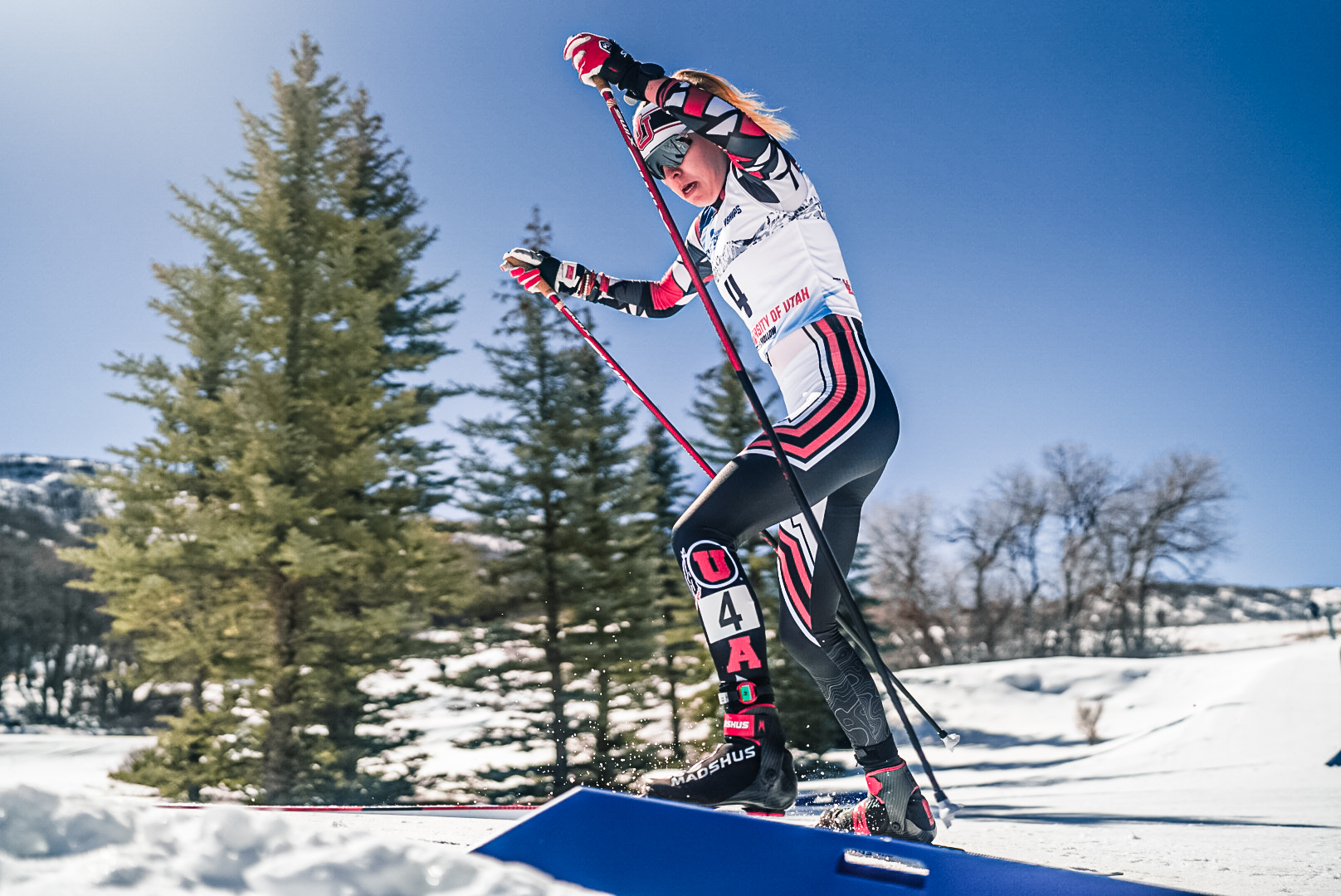
    Sophia Laukli takes the collegiate national title in the 15 k skate in 2022. (Photo: Tobias Albrigtsen / @untraceableg)

    Middlebury to Utah: Building a Life Around Skiing

    Laukli chose Middlebury because, at the time, academics were the top priority.

    “I knew I didn’t want to be done skiing,” she says, “but it wasn’t the priority.”

    Covid changed everything. Remote classes allowed her to chase early World Cup opportunities without living on campus. Once Middlebury required students to return in person, the timing coincided with the rapid ascent of her ski career.

    That led to a transfer to the University of Utah.

    “Utah is built for athletes,” she says. Most classes were online and flexible. She chose economics not out of passion but practicality.

    “I didn’t necessarily choose the thing I thought was interesting,” she says. “I chose what would best suit my ski career.”

    Now, even as a full-time pro based in Norway, she’s studying again—an online Norwegian MBA.

    “I’ve never been someone who can come home from training and sit on the couch until my next session,” she says. “I think I was missing having more than just training.”

    Balancing skiing and school helps her prevent the sport from consuming everything.
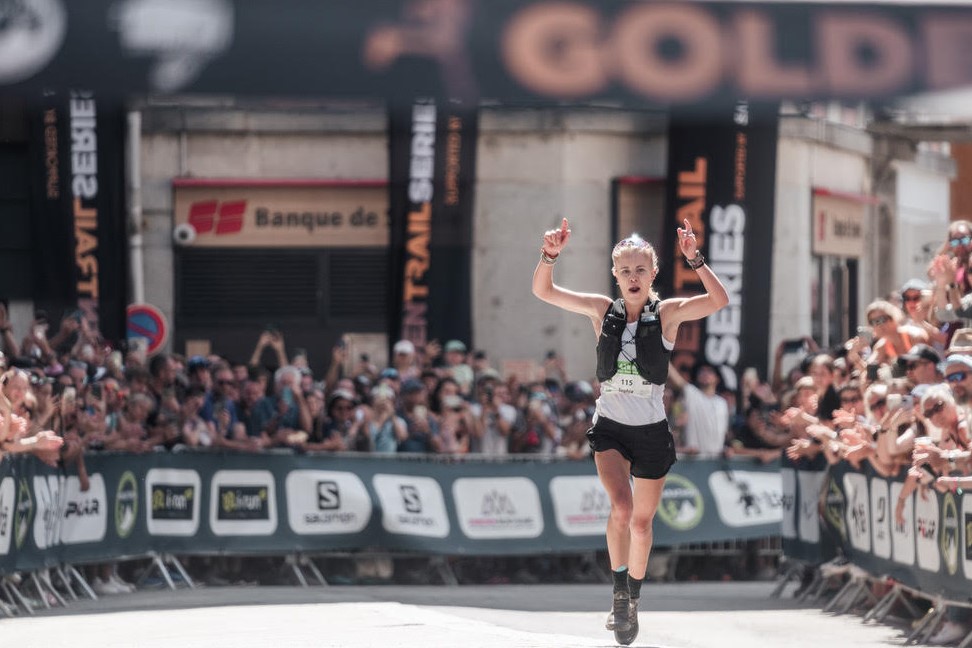
    Over flowing crowds filled the streets at the Golden Trail Series finish line in Chamonix in 2023. (Photo: GoldenTrailSeries and @the.adventure.bakery,® Mont-Blanc Trail Marathon.: ©GoldenTrailSeries® – Zegama Aizkorri – Jordi Saragossa)

    The Running-Only Experiment That Failed

    Last year, after the World Championships, Laukli decided to lean all the way into running. It seemed logical—if she’s good at running without specifically training for it, imagine how good she’d be if she did.

    “I always thought I’d be a much better runner if I had just run,” she says.

    So she tried it. No roller skiing. No ski sessions. Just running—every day.

    “I was running 10 to 12 hours a week,” she says. “And I was so tired each day. I was getting worse and worse at running. And obviously not good at skiing.”

    The experiment collapsed at a race where she felt utterly depleted. She flew home, frustrated and confused. That’s when she sat down with her boyfriend, Gjøran Tefre.

    “He said, ‘It’s fine. I’ll write a plan. Don’t freak out,’” she says. “‘We’ll get you a coach, but ski training is straightforward. We’re gonna baby you into ski training again.’”

    Two weeks completely off. Then a return to “textbook” ski training.

    Within a week of roller skiing, something wild happened: her running started feeling good again.

    The pattern was clear. She ran better when she trained like a skier.

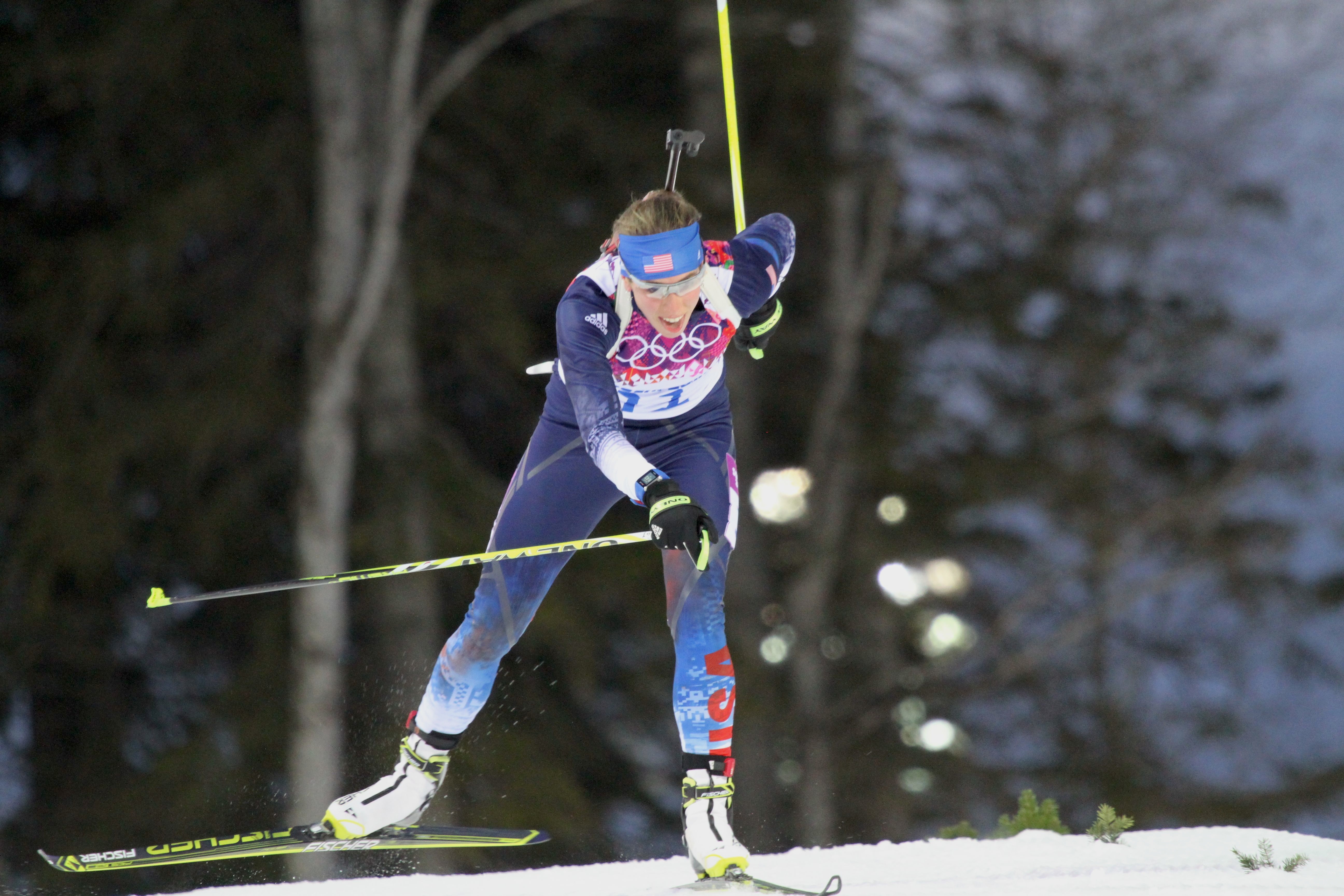
    Sophia Laukli (USA) during the World Cup 20km in Engadin (SUI). (Photo: Authamayou/NordicFocus)

    Kristen Bourne Saw The Same Thing

    “Last season was definitely a struggle for her, both running and skiing,” says U.S. Ski Team assistant coach Kristen Bourne, who monitors Laukli’s training load. “And she’s just trying to figure out why.”

    For Bourne, the shift wasn’t just physical—it was psychological.

    “I’m a huge believer that what makes a difference from a good athlete to a great athlete is the athlete who is very invested in their own process,” Bourne says. “The ones who are thinking, advocating for what they need—not just deferring to a coach because the coach’s word is gospel.”

    That ownership, she says, is new in Laukli.

    “She’s definitely leaning into that more this year,” Bourne says. “Which is really cool.”

    Sophia Laukli and Gjøran Tefre at the Cross Country Skiing World Championships. (Photo: Courtesy Photo)

    The Gjøran Factor: Coach, Partner, Check on Reality

    Mixing a relationship with coaching is a delicate thing. Laukli knows the risks—she’s heard them all.

    “I’ve been told by many people this is not a good idea,” she says. “And other people are like, ‘Wow, I wish I could do that.’”

    She also knows why it works.

    For one, they communicate constantly. For another, his intentions are pure.

    “One of the hardest parts of finding the right coach was that they either only cared about skiing or only cared about running,” she says. “He’s the only one who actually wants me to do well in both.”

    Still, she doesn’t call him her “coach.”

    “I want our personal life and work life to be separate,” she says. “We need other people in the room.”

    That’s where Bourne plays a key role.

    “At this level, athletes have so much experience—they do know what they need,” Bourne says. “So my goal isn’t to dictate everything. It’s to help Sophia articulate what she feels and translate it into training.”

    The two systems—Tefre’s daily presence and Bourne’s structured oversight—meet in the middle.

    One of the key themes that has emerged from all our recent interviews is the importance of making time for fun. Sophia Laukli and Gjøran Tefre embrace that notion entirely. (Photo: Courtesy Photo)

    The Norwegian Experiment: Simple Workouts, Serious Control

    When Laukli moved to Norway, she expected cutting-edge workouts—maybe some secrets behind the country’s dominance.

    “It’s almost been the opposite,” she says. “They’re so simplistic around ski training.”

    Five-by-ten-minute intervals around the Holmenkollen loop. The same long, easy days. Repeated blocks of threshold.

    “You’re gonna become better if you do five-by-ten once a week for 12 weeks in a row,” she says. “You’re gonna become better.”

    The key difference from the U.S.? Control.

    Almost every Norwegian skier has a weekly treadmill “profile test,” which involves six-minute stages at a 10 percent incline, with lactate samples taken at each step and heart rate recorded.

    “It’s to see if you’re in the right range,” Laukli says. “Not to get better each week.”

    Bourne sees value in that simplicity.

    “Sometimes a coach wants to prescribe the flashy intervals,” Bourne says. “But honestly, the athletes who can execute the basics really, really well—that’s where the gains are.”

    She sees Laukli finally embracing that mindset.

    “Athletes shouldn’t feel like training is something done to them,” Bourne says. “They should feel like they’re building something in collaboration with the coach. Sophia is starting to live that.”

    Laukli agrees that American juniors often overtrain because they don’t know any better.

    “If I go too hard too many times in a row, it’s a much worse year,” she says.

    The hardest part? Slowing down when training with Norwegian women who can drop her on almost every roller-ski interval.

    “Every interval I do here, I know I’m not gonna keep up,” she says. “At 17, that would’ve crushed me. Now I have evidence that I can beat them in the winter.”
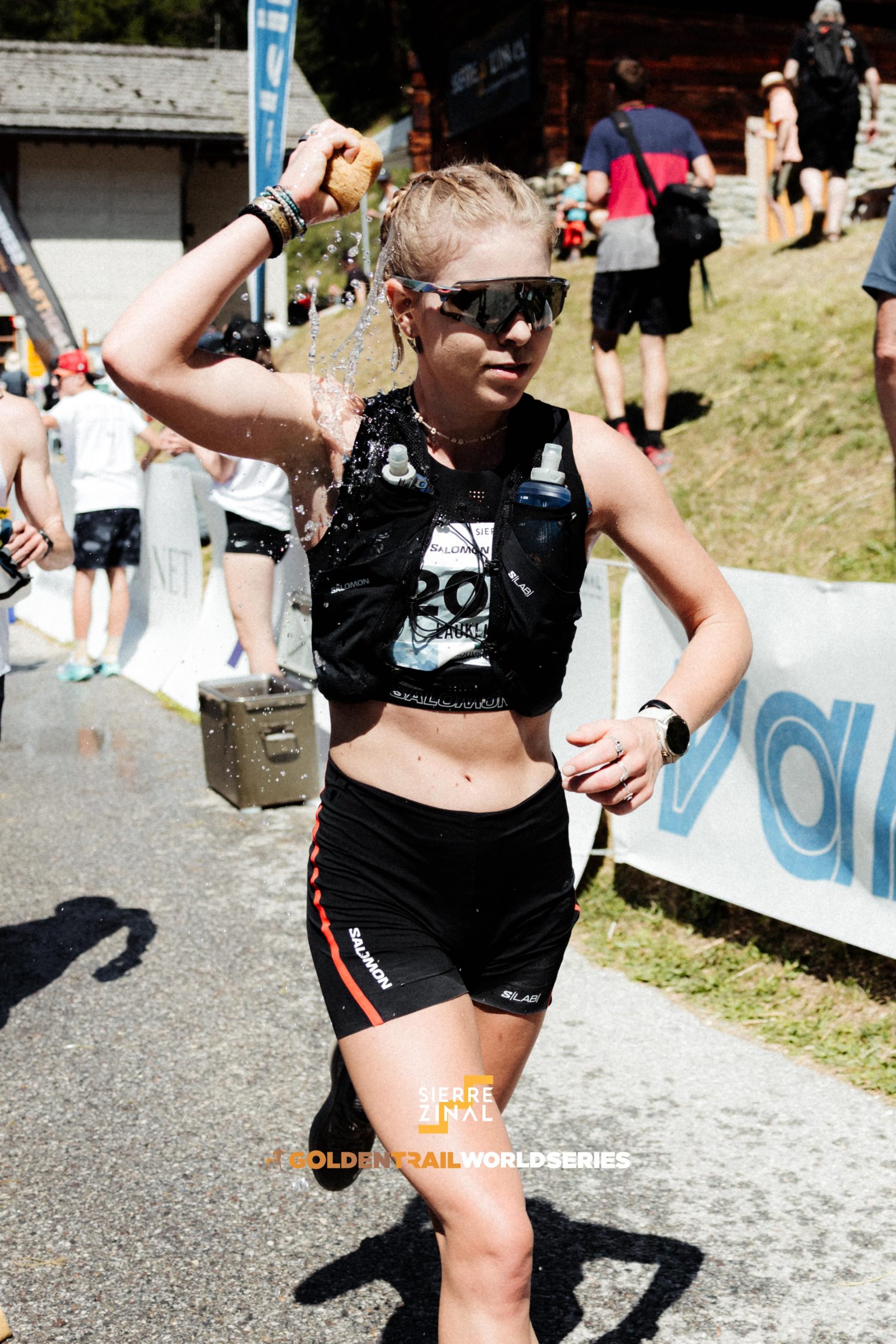
    Laukli racing Sierre-Zinal in the Gold Trail World Series in 2024. (Photo: @rising.story_@colinolivero_GTWS_SierreZinal

    Two Seasons, One Mindset

    Running and skiing back-to-back seasons creates year-round excitement—and pressure.

    “I have two competition periods,” she says. “It’s easier to motivate. But it also means I’m 100% consumed by performance all year.”

    That obsession became a barrier last year. Now, Laukli is working with Bourne and Tefre to shift her mindset.

    She has clear goals for skiing: the Olympic 10k, the Olympic relay, and the final hill climb at the Tour de Ski.

    She has equally specific running goals: above all, returning to Sierre-Zinal, where she once ran 2:53 on the iconic 31 km route.

    However, she’s no longer defining success solely by results.

    “There’s so much I’m working on—technique, tactics, how I ski courses,” she says. “It’s easy to be on a start line and focus on whether those things show up.”

    Bourne sees that evolution clearly.

    “Sophia has the instincts of a really high-level athlete,” Bourne says. “But learning to trust those instincts—rather than obsessing about the result column—is where she’s growing most.”
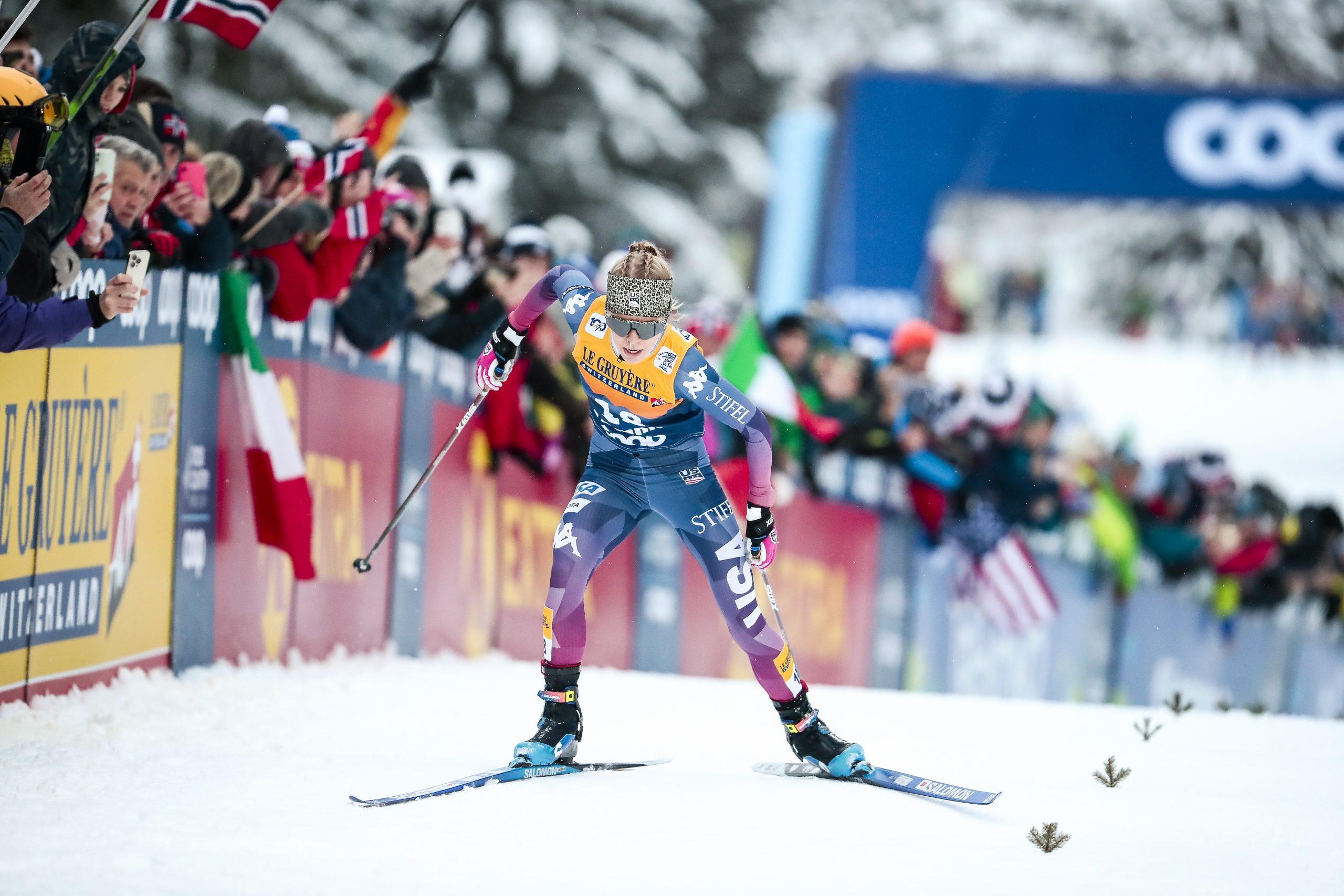
    Laukli nears the finish of the final climb of the 2024 Tour de Ski on Alpe Cermis, where she claimed the victory. (Photo: NordicFocus)

    Why Salomon Fits: One Athlete, Two Worlds

    For an athlete splitting her year between the World Cup and the Golden Trail Series, sponsorship could easily become complicated. Many runners work with running-only brands; many skiers work with ski-only brands. For Laukli, that would have been a logistical mess — and maybe even a dealbreaker.

    Instead, she found the perfect home with Salomon.

    “I’m super grateful that I get to have my sponsor, my main sponsor, support me in both,” she says. “Because then it’s a lot easier to focus on each season. I know that they’re supporting me in that.”

    That unified support matters. It lets her shift from skis to singlets without the politics of competing brand calendars and conflicting performance expectations.

    “I don’t really know if it would be possible for me to be a runner for another brand and a skier for a different brand,” she says. “Like, defending to them that I can’t run a normal running season because it’s the Olympics, or I need to drop World Cups so I can run better this year — that just wouldn’t work.”

    With Salomon, the opposite is true. Everyone’s aligned.

    “Having everyone be on the same team makes it manageable,” she says. “And a lot more motivating, because everyone has the same goal.”

    She works directly with Salomon’s France-based team, and Laukli lights up when she talks about the group behind her.

    “They’re all French,” she says, laughing — a nod to the company’s deep culture in both ski sport and trail running. It’s also a reminder that Laukli lives firmly in the middle of two endurance worlds that Salomon understands and embraces.

    That harmony matters. Her identity isn’t split; it’s blended. And Salomon is built for that.

    Sophia Laukli (USA) racing the World Cup Mass Start in Les Rousses (FRA). (Photo: Modica/NordicFocus)

    Sunny Weekends and Simple Breakfasts

    Some things have gotten simpler, like her pre-race breakfast.

    “I used to do peanut butter and banana,” she says. “Now I just have cereal. Apparently, simple is better.”

    World Cup life has also taught her the importance of flexibility.

    “You learn how to adapt,” she says. “Something will always go wrong on a race weekend.”

    When she’s asked for her favorite place on the circuit, she doesn’t hesitate.

    “Davos,” she says. “It’s sunny. You can have bad races, and it doesn’t matter because it’s a really nice place to hang out.”

    That small detail fits her evolving philosophy. Training is simpler. Goals are more balanced. And the sport—skiing and running—feels more sustainable.

    Somewhere between Maine and Norway, between Middlebury and Utah, between World Cup stadiums and alpine trails, Sophia Laukli has built a training model that doesn’t look flashy. It’s repetitive. It’s measured. It’s rooted in trust, communication, and doing the basic things right, over and over again.

    And if the Norwegians are right—and if Laukli’s instincts keep sharpening—those basics may be exactly what carry her to the front this season, in both sports.


    Love Stories Like This? Help Keep Them Coming.

    Feature interviews like this one take time, access, and care to produce. If you value thoughtful storytelling and independent ski journalism, please consider becoming a Voluntary Subscriber. Your support directly fuels the work we do to cover the people, places, and moments that make our sport special.

    Join the FasterSkier community!


  • Portland High School Seeks Head Nordic Coach

    Portland High School Seeks Head Nordic Coach

    The growing Portland-area high school Nordic team is in need of a new head coach for the 2017-2018 ski season.  This team is comprised primarily of students from the 3 public high schools in Portland, Maine, but also includes skiers from local private schools and public schools in neighboring districts that lack ski programs.  As a result. the Portland Co-op team is a diverse group of skiers from all ability levels and walks of life.  In the past 7 years the team has enjoyed a great deal of success producing multiple state champions, many Maine elite team members, and a handful of skiers who have gone on to ski for NCAA teams.

    The high school team enjoys a great deal of support and funding from the Portland School District and is also supported by the Portland Nordic Club, which is active in promoting the Nordic skiing life-style for all age groups in the greater Portland area.  In addition to working towards the improvement of local skiing facilities, the club supports growing and highly successful BKL and middle school teams.  The high school team has accordingly grown in size in recent years and is poised for even greater success this year and for years to come.

    Interested candidates should have a strong Nordic skiing background and enjoy working with the high school age group.  Preference will be given to those with high level racing and/or coaching experience.  Interested candidates should contact Aaron Duphily at aaduphily@gmail.com.

  • Whiton Heads Back to Maine To Lead University of Maine Presque Isle Skiers

    Whiton Heads Back to Maine To Lead University of Maine Presque Isle Skiers

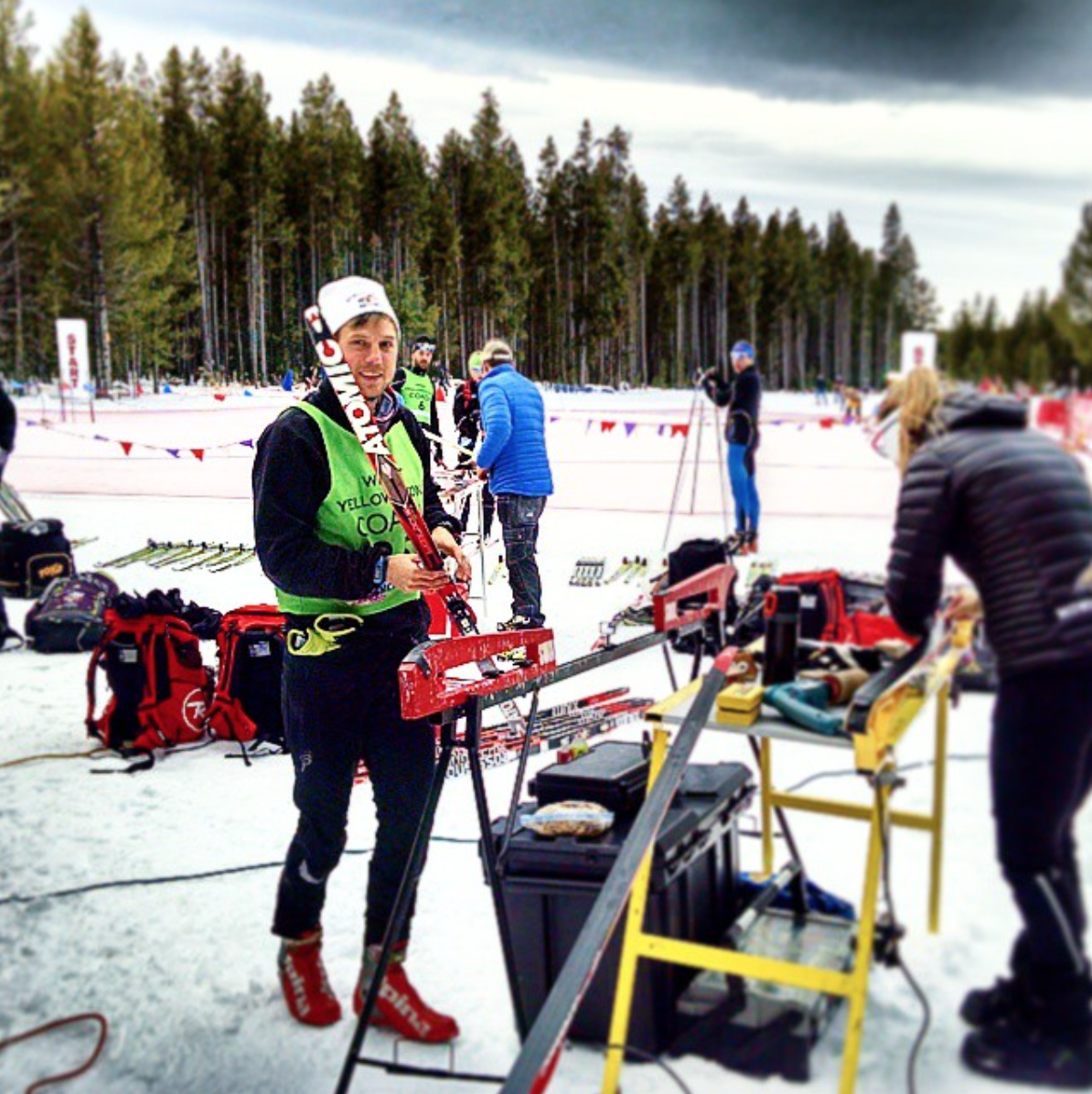
    Tim Whiton assisant coaching for Montana State University in West Yellowstone 2014. Whiton is moving to the University of Maine Presque Isle, where he will take over as head coach. (Courtesy photo)

    A Mainer for most of his life, Tim Whiton jumped on the chance to take his first college head coaching job back in his home state. It wasn’t just the chance to move back to New England that snagged his attention. As Whiton heads to the University of Maine Presque Isle (UMPI), he is also excited about trying to build up a program that has seen four other head coaches come and go in the last ten years.

    “Honestly, if you are a college skier and you like to ski and you like to train — and you actually like to ski, not just ski race — there is really no better place to be,” Whiton said. “You have two world-class facilities, one within five minutes, the other within 45 minutes. You have skiing six-plus months of the year, that’s unbeatable any place in New England. Long term, we are definitely looking at building that program to be competitive nationally.”

    Joey Bard, an UMPI alum himself, left as head coach this spring after two years with the program. Last season was a success for the team; the men took third place as a team in the 10 k classic at NCAA Regionals at Bates College, including a third-place finish by Connor Hrynuk, on a particularly warm and sloppy day.

    “I know that day was sort of an anomaly, but having talked to some of my other sources in Maine,  those guys are definitely really talented and definitely have been putting the work in,” Whiton said.
    “So hopefully results similar to that will be a little more consistent next year.”

    But UMPI often lands near the bottom of the results sheet at Eastern Intercollegiate Ski Association carnivals. They have no alpine team, which immediately means the Owls have only half the opportunity to score points. Last season, the team consisted of just six men and one woman, further hampering their ability to score points in the women’s races.

    It’s also a question of results. In the last five years, just six Owls have landed on the EISA ranking list, and the only one who actually qualified for NCAA Championships – Eirik Fosnæs – transferred to the University of New Hampshire the following year.

    So to build a program that is competitive nationally, Whiton has to do several things. One is to get more skiers. With last season’s sole female team member, Lydia Streinz, graduating, an immediate focus is to grow the roster.

    “We have two or three [women] who will definitely be there as freshmen, and a couple others I’m reaching out to right now to try to convince them to commit,” Whiton explained. “And a couple other boys. So the team will automatically be bigger than last year, and younger. Right off the bat, the goal is to fill some roster spots.”

    The second goal, then, is to raise the program’s results.

    “We want that program to be one of the best programs in the country,” Whiton said. “That’s a pretty lofty goal for any school in Maine to be saying that, especially Presque Isle, but the facilities are there.”

    As one strategy, he will be recruiting from nearby – “certainly, we want to give opportunities to Maine skiers” –  but also nationally. In years past the team had a strong contingent of athletes originally from the Midwest, but last season five of the seven members were from in-state. Whiton believes that the lure of lots of snow and world-class training should again draw student-athletes from outside the state.

    To help skiers make progress in training and racing, Whiton will also rely on a sports physiology laboratory that his wife, who is currently finishing her PhD, will eventually set up at the University.

    Whiton has had several bosses to learn the coaching ropes from. He graduated from Bates College in 2009, and since then has had two stints of assistant coaching at Bowdoin College under Nathan Alsobrook. He also coached the Gould Academy high school program in southern Maine, and while living in Bozeman, Montana, served as the assistant coach for Kristina Trygstad-Saari during her year of tenure at Montana State University (MSU).

    “I was pretty psyched to start with the MSU team,” he said. “We had two first-team All Americans that year, it really made me realize how much I enjoy [coaching], and not to toot my own horn too much, but that I was good at it. It was an awesome opportunity. It was a bummer that Kristina didn’t stay because I was excited about working there for a couple of years.”

    Whiton will be serving double duty as both ski coach and admissions officer, and he has already thought about why the school should seem attractive to potential athletes and students.

    A big reason is economic.

    “To be able to get a scholarship to ski out west, you have to be one of those athletes who is competitive with the European skiers,” Whiton said. “Or in the East, you have to be extremely competitive to ski at schools like Dartmouth or the University of Vermont, and/or you have to be able to afford it. Out-of-state tuition at the University of New Hampshire is over $40,000 per year, maybe $45,000. Presque Isle has really good academic programs, especially on the sports performance and athletic training side of things. It’s a great opportunity to save money and get a great education and then ski and ski race at a high level.”

    At UMPI, annual tuition for a Maine resident is currently $6,600, for estimated total costs of just under $18,000; for out-of-state students, estimated total costs are around $21,500.

    According to a university press release, U.S. News and World Report named UMPI among the 50 best regional colleges in the North, the 15 top public schools in the North, and the top ten regional colleges in the North in terms of graduates with the least debt.

    “I can think of a number of Maine kids in the last ten years who I know specifically, who could have developed into decent skiers, top-30s or top-20s at the EISA level, but they wanted to go to school in Maine and they couldn’t afford [private universities],” Whiton explained. “So they went to University of Maine, and they stopped ski racing. There’s a lot of potential to create more opportunities for athletes.”

    But even for without considering only those who already live in the state, Whiton also wants to tout northern Maine as a good place to put down roots (as he and his wife, Tara, are doing).

    “The opportunities in rural Maine are great for young people,” he said. “There’s not necessarily those concrete jobs, but the lifestyle and the community, if you want to be outdoors and you want a strong cohesive community, that’s all there. Having lived in a lot of parts of the country and a lot of rural parts, you see rural America just bleeding people slowly, especially young people… [but] if someone wants to be creative, there are endless opportunities to start small businesses, to plug into your community and really build something long term. I’m sure you remember with Maine Winter Sports, their goal was to use skiing as an economic engine for northern Maine. It’s sort of the same situation. We are trying to show people, especially young people, the opportunities that are there and how great it really is.”

    Whiton himself had one of his first experiences with serious ski training up in Maine’s Aroostook County, while he was still in high school.

    “The summer I turned 16, right as Maine Winter Sports Center got started I went up there for about two months,” Whiton recalls. “Pete Vordenberg was there, Dave Stewart, Holly Brooks, Eli Brown. They were the coaches for the summer. It was a small group of us. Mostly Maine kids, but a few from the Midwest. That was my first big foray into training year round.”

    Now, he will be leading young athletes towards senior-style training loads on that very same ground.

    “It is kind of a full circle,” he laughed.

  • Maine Winter Sports Center Kicks off $20 Million Dollar Endowment Campaign with Major Gift

    (Press release)

    Presque Isle native, Mary Barton Smith, has given a gift that, when matched, will generate $8,000,000.

    CARIBOU, Maine — Mary Barton Smith, whose $500,000 matching gift in February of 2014 kicked off a successful $1.4 million dollar fundraising campaign and gave the Maine Winter Sports Center (MWSC) new life, has given a $2,000,000 gift and an additional $3,000,000 matching gift to kick off MWSC’s $20-million-dollar endowment campaign. Fully matched, Smith’s gift will represent $8 million dollars in endowment contribution.

    When it was announced in February of 2014 that the MWSC would be losing its funding in April of that year, the future of the organization was in serious doubt. The MWSC immediately launched a campaign intended to secure the funding necessary to continue operations beyond April and give it time to develop a more sustainable and diversified funding model to move forward.

    “Mary’s belief in the Maine Winter Sports Center and its impact on the health and well-being of Maine residents has been transformative,” said Andy Shepard, President and CEO of the MWSC. “She has put us in a position to ensure that we can continue to have that impact by challenging others who share her commitment to Maine to join the campaign and give to the endowment fund.”

    Currently, the MWSC has two fundraising efforts running simultaneously. The first has been ongoing since February of 2014 and is reaching out to Maine’s foundations and corporations to support operations over the next three years. This campaign, with the ongoing support of best-in-class Maine brands, LL Bean and Emera Maine, will give the MWSC a bridge to our endowment-driven long-term sustainability. The second campaign-to generate the $20 million dollar endowment, will ensure that long-term sustainability-and is being kicked off today.

    “The endowment campaign will engage the help of individuals and organizations that share the MWSC’s commitment to a healthier Maine and to the effective stewardship of our remarkable natural resources, which serve as the classroom for MWSC’s programming,” said Dick Trafton, Chairman of the MWSC board.

  • After Coaching Para-Nordic to Three Medals in Sochi, Upham Joins Bates Staff

    After Coaching Para-Nordic to Three Medals in Sochi, Upham Joins Bates Staff

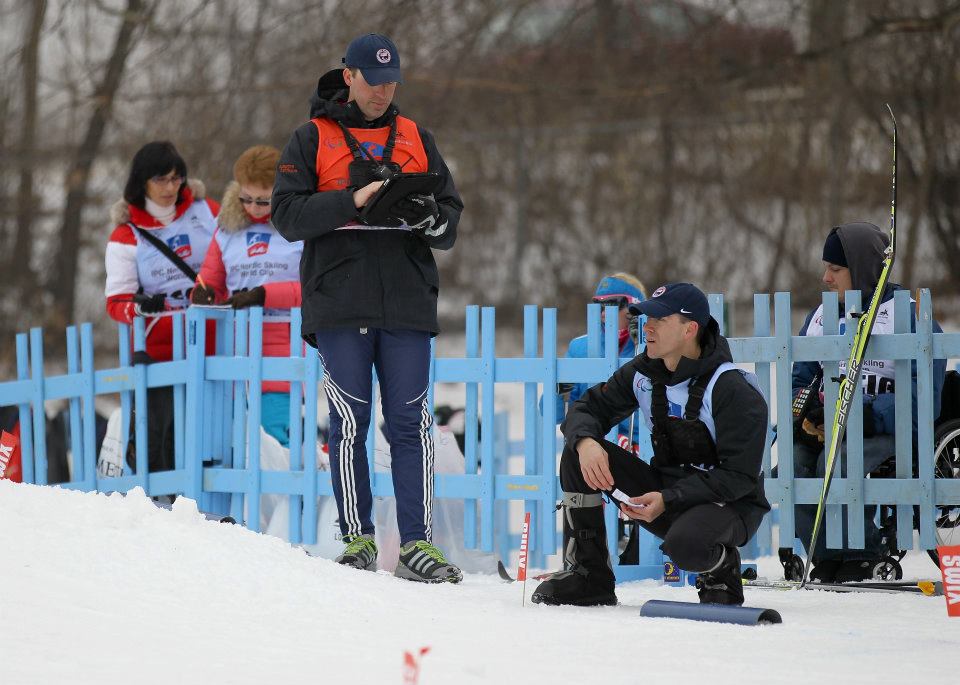
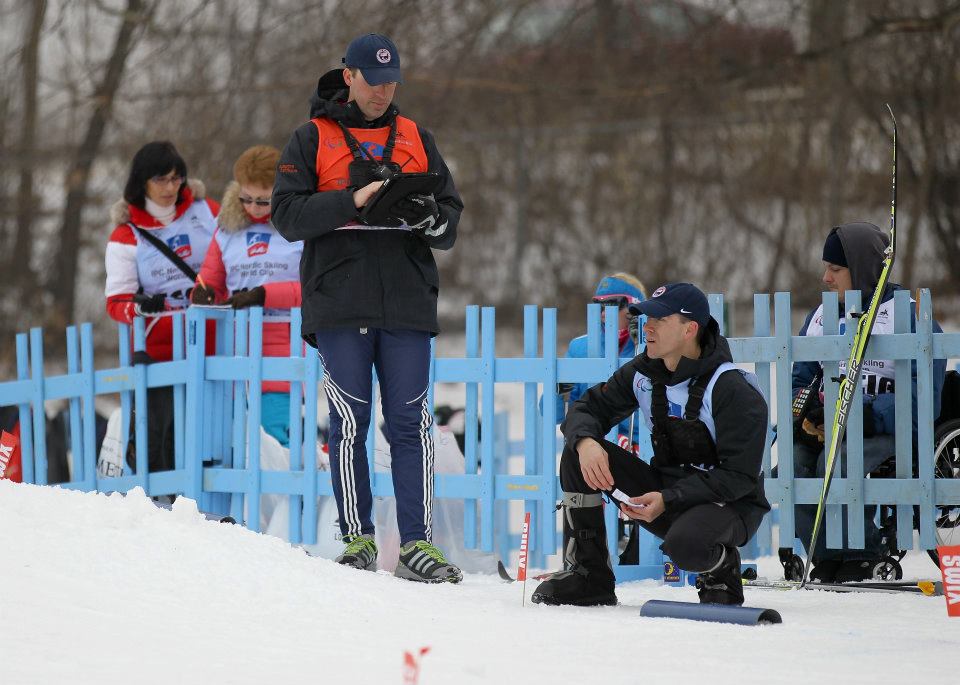
    James Upham (l) and Para-nordic High Performance Director, John Farra,
    Former U.S. Para-nordic head coach James Upham (l) and High Performance Director John Farra at the IPC World Cup in Canmore in December.

    For James Upham, becoming an assistant coach at Bates College this fall will be a big change.

    “I have only recently realized this, but I have always run my own show,” the until-recently Head Coach for U.S. Para-Nordic told FasterSkier. “Either as a head coach or a lone wolf running a lean, emerging program with minimal assistance. It will be an adjustment for me.”

    But on the other hand, it’s also coming home. Upham grew up in Wilton, Maine, and attended Mount Blue High School. En route to becoming a junior national champion in biathlon, his own training was firmly grounded in The Pine Tree State.

    “I’m really happy to be living in Maine!” he exclaimed.

    And so, after restructuring and the post-Sochi financial dip hit the Paralympic team hard (the Head Coach position was eliminated: “It came as a complete surprise and I was left emotionally devastated”) Upham found himself looking for a job and was thrilled to find one at Bates.

    “I have always wanted to experience the Eastern Carnival scene and this was a great opportunity that came up,” he wrote in an e-mail. “Becky Woods, the head coach, has been a friend since Bill Koch League racing days and I have some family connections to the College that make it feel comforting and supportive right away. The immediate challenge for me is that we can’t start working with the athletes until October, which is driving me nuts! I want to get going!”
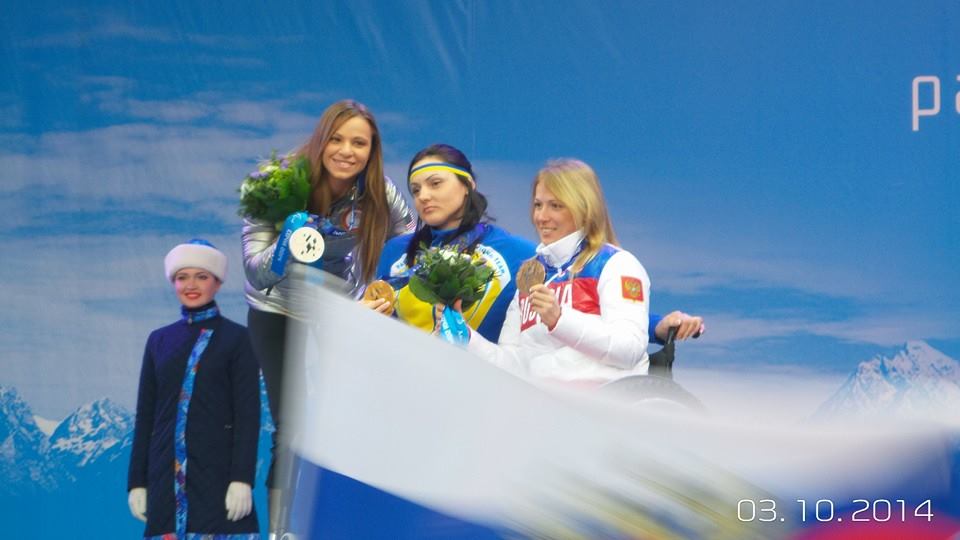
    Upham coached Oksana Masters (second from l) two two Olympic medals this February. She became the most successful female nordic skier in U.S. Paralympic history. (Photo U.S. Paralympics Nordic)
    Upham coached Oksana Masters (second from l) two two Olympic medals this February. She became the most successful female nordic skier in U.S. Paralympic history. Photo U.S. Paralympics Nordic.

    Bates is a Division III school, but sent one woman (Hallie Grossman, now a senior) and one man (Jordan Buetow, now graduated) to NCAA Championships last season. Their skiers have also often found success and junior and senior national championships, and the storied program also produced Olympians in Nancy Ingersoll Fiddler, Justin Freeman, and Haley Johnson.

    Upham said that he has already talked with Woods enough to tell that they agree on training philosophy, which will make the pair a strong team.

    “She has handed off some duties for me to manage, but for the most part, I think we will coach as a team and help support each other,” he wrote. “40 years of combined coaching experience should produce some success if harnessed properly. I am also a student of the game, so I am going to pick her brain every chance I get just like I do with all my other coaching friends.”

    Upham has a rich history of Nordic experience to draw on as he heads back into the college scene. He attended Northern Michigan University in the early 1990’s, then went on to coach the development program for the U.S. Biathlon Association in the 2000’s.

    Known as an excellent teacher of skate technique, in his time at U.S. Biathlon he was also the architect of a program that taught college skiing standouts to shoot – which has produced two Olympians so far, including Susan Dunklee, who now owns the best Olympic results by a female American biathlete, ever.

    Upham has always felt that college skiing sets athletes up for potential international success, and that’s an attitude that he will definitely be bringing to Bates.

    Susan Dunklee's 12th-place finish in the mass start at the Sochi Olympics was the best ever by a U.S. biathlete. Dunklee graduated from Dartmouth College having never tried biathlon - but joined Upham's program in Lake Placid, and the rest is history.
    Susan Dunklee’s 12th-place finish in the mass start at the Sochi Olympics was the best ever by a U.S. biathlete. Dunklee graduated from Dartmouth College having never tried biathlon – but joined Upham’s program in Lake Placid, and the rest is history.

    “I would like to help all the Eastern skiers get better,” he wrote. “Can some of them one day be internationally competitive? YES. That has been proven. I will do my best to help.”

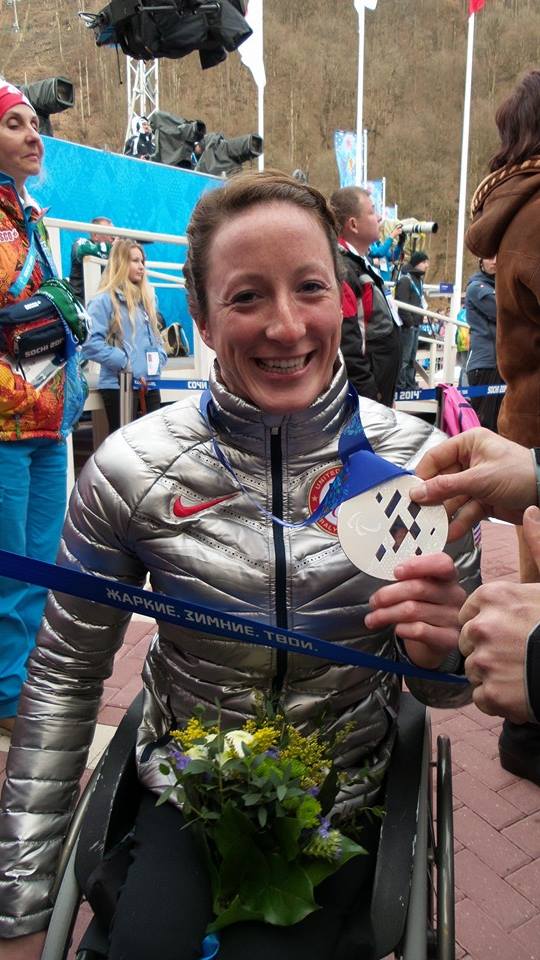
    His most recent job with the Para-nordic squad also resulted in great success: Oksana Masters won silver in the 12 k sit-ski and bronze in the 5 k, and Tatyana McFadden won silver in the sprint.

    Coaching the Paralympic team was a huge learning opportunity, Upham explained.

    “What I learned from the Paralympic side is that racing on an Olympic level course with limited use of your legs or arms or torso or vision is REALLY hard!” he wrote. “Training works. Finding the right dosage is the key. I learned a lot about how much athletes can handle.”

    The litany of challenges faced by his athletes was extensive – and in many cases goes well beyond what an able-bodied skier can imagine.

    “Imagine getting 40 medical bills- In one day,” he listed, as an example. “Imagine racing a World Cup a week after finishing radiation treatments… Imagine after multiple surgeries your bladder is now the size of a teacup… Imagine nearly every piece of your essential equipment needing to be customized and tinkered with constantly… Imagine being 20k out on a sitski training day and your pole breaks. How do you get back?”

    College skiers certainly have an easier road, but Upham believes that a lot of what he learned from his last group of athletes is extremely applicable.

    “Every day with the Paralympic team was a lesson in overcoming obstacles,” he wrote. “[It’s] all the same obstacles nordic athletes face everywhere: motivation, fatigue, finances, snow conditions, equipment, team dynamics, travel, time management, jetlag, etc., just exaggerated.”

    As he settles down in Maine – Upham just got engaged to his fiancée, Jill, and the two spent the summer painting a new house – the new college assistant is looking forward to bringing that same problem-solving attitude to a new role.

    “I have learned that life is going to throw you some obstacles,” he said. “Get busy. You can get through them.”

    Tatyana McFadden with her sprint silver medal in Sochi. Photo BethAnn Chamberlain/U.S. Paralympics Nordic.
    Tatyana McFadden with her sprint silver medal in Sochi. Photo BethAnn Chamberlain/U.S. Paralympics Nordic.
  • US Nationals, Men’s Classic Sprint Video

    US Nationals, Men’s Classic Sprint Video

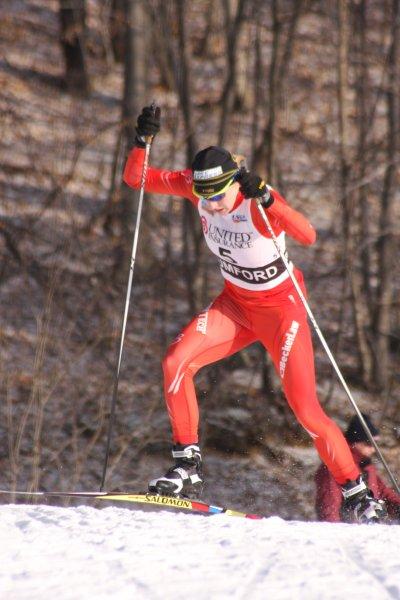
    RUMFORD, Maine – The final day of the United States Cross Country Ski Championship saw some controversy during the A Final of the men’s classic sprint on the trails of Black Mountain.  Torin Koos (BSF) skied away from the rest of the heat, but was later disqualified for a questionable move, so the second skier across the finish line Tyler Kornfield (UAF) was crowned the national champion.  While we don’t have footage of the contentious moment check out some of the other highlights.

    Contributing camera work by Alex Matthews and Audrey Mangan.

    Complete results of qualification.

    Complete results of the heats.

  • US Nationals, Ladies’ Classic Sprint Video

    US Nationals, Ladies’ Classic Sprint Video

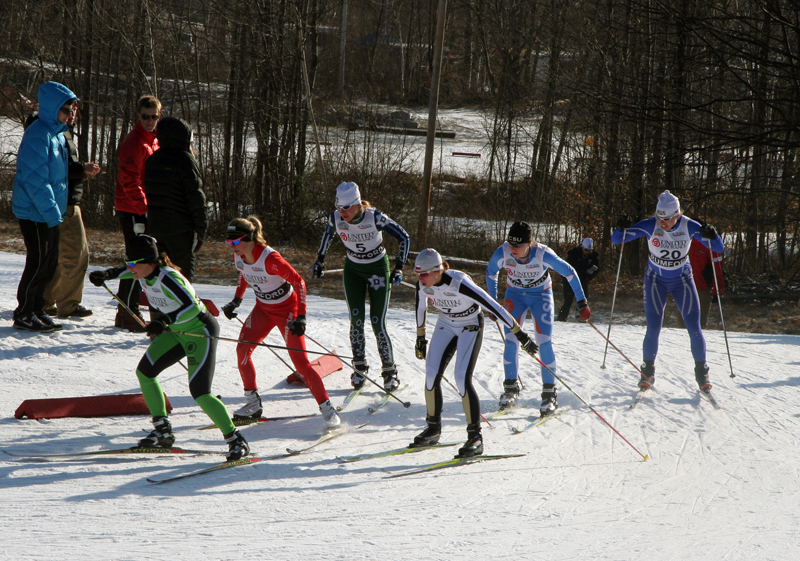
    RUMFORD, Maine – In the wake of the 2012 United States Cross Country Ski Championship natural snow has finally started to  fall and the racers move on to the next event on their schedule, but we take a look back at the final day of competition on the trails of Black Mountain.  Watch how the ladies’ classic sprint transpired.

    Contributing camera work by Alex Matthews and Audrey Mangan.

  • US Nationals, Men’s 30km Classic Mass Start Video

    US Nationals, Men’s 30km Classic Mass Start Video

    RUMFORD, Maine – For most of the racers in the men’s 30km classic mass start at the United States Cross Country Ski Championship there was one long effort, but for Noah Hoffman it was ski 20km and then race 10km as fast as he could.  Watch how things played out for Hoffman and the rest of the field.

    Complete Results: Men’s 30km Classic Mass Start

    Full Race Report: “Hoffman Uses Smarts, Grit to Win 30 K”, by: Alex Matthews

  • US Nationals, Ladies 20km Classic Mass Start Video

    US Nationals, Ladies 20km Classic Mass Start Video

    RUMFORD, Maine  — With falling snow and six trips up Black Mountain’s infamous ‘High School Hill’ the ladies’ 20km classic mass start was exciting.  Through the race the lead pack decreased from a mass to just five and by the time the skiers finally crossed the line it was the US Ski Team/CXC’s Jessie Diggins who got there first to win another title.  Check out how it unfolded.

    Complete Results: Ladies’ 20km Classic

  • Toko: 2012 US Nationals Classic Sprint Report

    Toko: 2012 US Nationals Classic Sprint Report


    Torin Koos – all alone in the A final. Photo: Toko.

    Tested and picked glide waxes yesterday as was the plan as I anticipated that today’s kick solution could be a demanding one.  It did some freezing raining last night before they groomed.  Still, the tracks got an ice glaze on them which made things a bit tricky this morning.  We tested kick waxes, straight base green, straight klisters, and klisters covered.  Before qualifying, our best wax was Nordic Green Klister covered by Nordic Red Klister.  It kicked better than straight Base Green binder, especially on the hard ice sections on the climbs.  It glided better than Red Klister covered with Nordic Grip Red.  It was our best wax this morning and was also used to success.  After qualifying, it got progressively colder, the wind blew a bit more, and the tracks dried out. The snow became more of a dry granular sugar.  We rewaxed the test skis and checked it out again.  This time the “Base Green Trick” was the best. This is where a short thick layer of Base Green Binder is applied, heated in, and smoothed.  After it cools, add subsequent layers of Base Green trying to keep it as smooth as possible. Make the layers shorter working toward the middle.  It is important to keep this application short – klister zone.


    It was a great week.  I was grateful for the super job Steve Bedard did testing and giving feedback.  He is a new Rossignol (and Toko) Tech Rep for New England.  I look forward to working with Steve in the future.


    Also, a huge congratulations to all of the athletes, but especially to our Jessie Diggins and Torin Koos for taking 6 US national titles between them this year!


    (Turns out Torin was DSQed.  This was a strange occurrence.  Here’s how FasterSkier covered the story.  Anybody who has witnessed World Cup sprints knows that as Eric Packer said, this type of thing happens all the time without incident or comment.  In fact, I saw other athletes do the same thing during Nationals including one of the top women 300 meters before the finish.  Nobody said a thing except “that’s racing”  Good luck with your appeal Torin!)


    Visit the official event page here to see more photos.


  • Sounds of Nationals: What was the Wax?

    The men's 30 k mass start. Photo: Flying Point Road.


    Rumford, ME – In this podcast Sam Evans-Brown talked to the techs who prepped some of the winners’ skis to find out what exactly was the right combination for a rocket pair of skis. And for those of you who’s eyes cross when wax talk starts, we ask how to get fast skis with minimal research. Have a listen…

    [podcast]http://images.fasterskier.com/2012/01/Classic-Podcast-Final.mp3[/podcast]

  • Video of US Cross Country Ski Championship – Men’s Freestyle Sprint

    Video of US Cross Country Ski Championship – Men’s Freestyle Sprint

    RUMFORD, Maine – With a strong headwind down the homestretch, the men proved that it was all about their position into the stadium, staying low and having enough energy for the final burst to the line.  When the snow settled it was Torin Koos who took his third straight sprint title.

    Contributing camera work by Evan Dethier.

  • Sounds of Nationals: Head Games in the Individual Start

    Caitlin Gregg (CXC) free skating into the stadium on her way to third. Photo: Flying Point Road.

    Rumford, ME – Ever wondered what’s the difference between a good day and a bad day? A lot of times it’s all in your head. Sam Evans-Brown put together this podcast talking to the skiers who made the podium in the individual start skate races at US Nationals. Listen in…

    [podcast]http://images.fasterskier.com/2012/01/Podcast-Skate-Ind-start.mp3[/podcast]
    All Flying Point Road photo proceeds will be donated to the National Nordic Foundation (NNF).

  • Video of US Cross Country Ski Championship – Ladies’ Freestyle Sprint

    Video of US Cross Country Ski Championship – Ladies’ Freestyle Sprint

    RUMFORD, Maine – A cold and windy day on the trails of Black Mountain resulted in tactical sprint races on Tuesday.  When the boots finally crossed the finish line it was a CXC sweep of the podium, check out how it went down.

    Contributing camera work by Evan Dethier.

  • US Nationals: Photos of the Ladies’ Freestyle Sprint

    US Nationals: Photos of the Ladies’ Freestyle Sprint

    RUMFORD, Maine – A firm and fast track in addition to a finish stretch that greeted the racers with a hard wind created a race that was full of tactics today on the trails of Black Mountain for the US Cross Country Ski Championship.  Here is a look at the ladies’ action.


  • Artificial Snow and Swix Preparing for US Nationals in Rumford

    Artificial Snow and Swix Preparing for US Nationals in Rumford

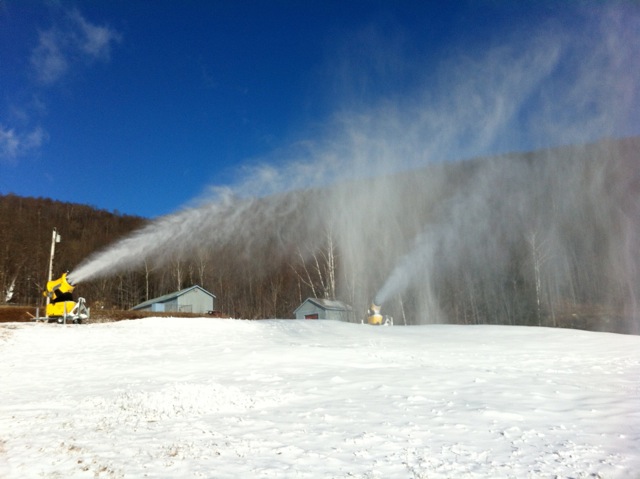
    Black Mountain, Rumford, ME – December 2011. Photo: Andy Shepard/John Bernard MWSC and Chisholm Ski Club.

    With US XC Nationals less than two weeks away, Mother Nature has been most uncooperative.  Fortunately, the organizing committee and volunteers in Rumford have picked up the slack and have the snow guns blowing at every possible opportunity.   The efforts and tireless hard work of the Chisholm Ski Club organization has stockpiled enough blown snow to cover the entire racecourses for the championships.

    Over the past 10 to 15 years, artificial snow has been needed and used at major international and national events.  Following this trend, Swix saw the need to develop a wax line that addresses the specific and unique qualities of artificial snow.

    The first version of a specifically developed artificial snow glide wax was Swix’s High Flouro Black Devil or “HFBD” waxes.  Leading up to the 2002 Salt Lake games, Swix embarked on a research and development program designed to incorporate a solid lubricant to its highly successful HF glide wax line.  Two plus years of testing and development led to the introduction of the HFBD line for the 2002 Games.

    With further testing and development, Swix found a new additive to use as a solid lubricant that has a considerably lower coefficient of friction in comparison to its predecessor.  This resulted in the formation of the new Swix High Flouro Black Wolf or “BW” waxes.

    The HFBW line from Swix is ideal for artificial snow in many ways.  First, artificial snow will be more aggressive and will be coarser grained when compared to natural snow due to the process by which it is created.  Compressed air and cooled water are the main ingredients of artificial snow, which create snow crystals that resemble ice particles rather than fresh, sharp natural snow crystals.  Thus, artificial snow crystals can create more friction compared to natural snow crystals.  The solid lubricant found in HFBW waxes will reduce the frictional coefficient of the artificial snow much more than normal waxes.

    Further, artificial snow will tend to have more foreign contaminates within the snow pack compared to natural snow.  This is due many factors, which include but are not limited to, quality of the water used in the snow making process, dirt and other contaminates brought onto the track by skiers and additives to the water that may be used in artificial snow making process.  These contaminates create “dirty snow” which increases friction between the snow surface and the ski base, creating additional dry type friction.

    BW waxes reduce dry type friction created by dirty or contaminated snow due to its high compression strength and its low shear strength.  The high compression strength aids in separating the two important surfaces in contact when skiing, the snow and the ski base.  Simply put, dirt and foreign contaminates are harder than natural snow crystals and they create additional friction compared with natural snow by penetrating the ski base.  The BW additive resists the penetration of these contaminates into the ski base and reduces this friction by acting like a deck of cards.  If pressure is applied downward to a deck of cards, they remain stable and uniform, resisting deformation or movement.  However, if the pressure is applied in a transverse or sideways direction, the deck of cards will slide very easily.  Using this analogy, a ski base waxed with BW will resist the foreign contaminates found in artificial snow and will slide over the artificial snow with less friction compared to normal waxes.

    The Cera F line from Swix is the icing on the cake when speaking about friction reduction and dirt resistance.  The purity of the fluorocarbons in Cera F is of the highest degree, adding in reducing friction, increasing dirt and foreign contaminate resistance and lowers surface tension by increasing the repulsion of water molecules.  Artificial snow contains all of these qualities, which make Cera F a must use for any important race.

    Swix will be at Black Mountain in Rumford throughout US Nationals, testing and providing waxing information to all the teams and competitors competing.  We will be located in the main wax building at Black Mountain, just look for the red Swix signs.  Happy Holidays!

  • New Quarry Road Trails in Maine Will Have “Something for Everyone”

    New Quarry Road Trails in Maine Will Have “Something for Everyone”

    John Morton talks with contractors as the new trails are cut. Photo courtesy of Tracey Cote.

    When John Koons was growing up in Waterville, Maine forty years ago, skiing was the thing to do.

    “When I was a youngster we had a ski hill,” Koons told FasterSkier. “It was sponsored and run by Colby College. It was an alpine slope, and we had snowmaking and we had lights, and it was really a wonderful place for kids to go.”

    But like so many small hills around New England and the rest of the country, the one in Waterville – which had originally opened in 1930 with a rope tow – eventually closed as costs increased and families became more willing to drive to larger, brand-name ski resorts farther away.

    That’s a problem, says Koons.

    “There hasn’t been anything around since,” he lamented. “And not everybody can afford to go to Sugarloaf, or any place, drive those miles with gas prices the way they are and pay fifty or ninety dollars for an alpine situation.”

    As a lifelong nordic skier, Koons had a vision for the site of the city’s old alpine hill on Quarry Road. Even though he grew up alpine skiing on the hill, he didn’t think that reopening the lift was a viable option economically. Instead, he wanted to get kids outside in a different way.

    “The reality of it is that operationally you can’t really run much of an alpine slope without a large amount of money and so on, Koons said. “But you could run a very decent nordic trail system with much much lower operational costs.”

    He wasn’t the only one who thought that Quarry Road could house great nordic trails. Tracey Cote, the head coach of the nordic team at Colby College in Waterville, had been imagining a trail system down the road from her office for at least a decade.

    “We would do our skiwalking out there, we’d also just go out there and run around a lot,” Cote said in an interview this week. “And so in the back of my mind and in the back of [my husband] Pat’s mind, we’ve always thought that this area had really great potential. We had talked about it probably ten years ago.”

    When she first had the idea of cutting nordic trails at Quarry Road, Cote said that she had assumed that the project would never happen. But then Koons became interested and began working on the project four years ago. After talking to staff and owners at touring centers all over New England, he began to have an understanding of the economics of building a trail system. Once Koons began working, the project took off.

    The college, which had owned the alpine hill, sold the land to the city of Waterville at a rock-bottom price with the requirement that it be developed for recreation; more land was bought later. In all the city now owns 120 acres around the old hill.

    “There are so many things – I can’t even explain in words – there are so many things that happened that just seemed really lucky, in a lot of ways,” Cote said. “But it was also through a lot of hard work on John’s part, and the city being interested and wanting to work with this sport and wanting to work with John, and wanting to work with the college.”

    Koons never had a doubt that the project would “go,” especially after a fundraising board was formed with other ski enthusiasts. The Friends of Quarry Road is headed by Koons, but includes Cote as well as the several parents of college racers and the city’s head of Parks and Recreation. His vision is of a four-season recreation area, and many of the pieces are already in place. In the winter, there will be both easy trails for recreational skiers and top-of-the line race trails for more serious athletes, as well as snowshoeing. In the summer, he anticipates starting a bike club. Since the venue is on a river, waterfront trails will be developed as well.

    “I would say that one of the great appeals of this recreation area is that there is something for everybody,” Koons said.

    While he had been optimistic from the start, Koons definitely faced challenges in getting the venue going. He described Waterville as a city that was once well-off, but has experienced a slowdown over the last few decades. The key to getting the cash-strapped municipality on board, he said, was to promise that the ski area would pay for itself once it was up and running.

    “One of the first things you have to do is let them know that it’s not going to cost the taxpayers any money,” Koons explained. “You have to demonstrate that you have a viable club and that you could generate funds to put into this from outside city sources. I think that’s very important: this really is its own thing. The city is the overseer and our Parks and Recreation department will provide a couple of people for the winter, but beyond that we will have to supply that from club efforts. I’ve always said from day one that this should be a revenue neutral situation, meaning that we should be able to generate enough revenue to pay for our operations.”

    Once Koons had assured city officials that he didn’t anticipate asking for continuing support, they took the unusual step of adding a $250,000 bond issue to the budget to fund the project. The measure passed, and Quarry Road was on its way to becoming a reality.

    “[That] is really a tremendous commitment because that’s taxpayer money, no question about it,” Koons said. “So that’s a wonderful commitment.”

    After the bond issue passed, the board stayed true to its word and raised almost $500,000 from a number of individual donors. Along with grants from the state Department of Conservation and the Harry Alfond Foundation and support from Colby, the project has received over a million dollars in funds.

    “That’s what’s so incredible about this project,” said Cote. “It’s not a college project. Although Colby has  supported it, it’s really a community project.”

    As of this spring, the site already had five kilometers of ski trails which were well-suited to touring. It hosts a youth ski club started by Cote and her husband Patrick, the Executive Director of the New England Nordic Ski Association; in just a few years, the club has grown to include 82 young skiers.

    “It’s really cool to see an area that hasn’t been exposed to skiing all of a sudden get really excited about skiing,” Cote said.

    Janice Sibilia, the competitive programs director at the New England Nordic Ski Association, saw the club continuing to grow as the venue gets bigger.

    “On a community level, these trails will offer opportunities to youth and recreational skiers, as well as the potential to develop a strong local club,” Sibilia wrote in an e-mail to FasterSkier.

    Recently, events at Quarry Road have included a winter carnival, paintball biathlon, and snowshoe races. But next year, the site will have even more to offer. The group is in the process of cutting two new two and a half kilometer loops which will be homologated for FIS competitions.

    “It was a total blank slate,” Cote said of the area before the trails were cut. “Imagine a sort of small, old alpine hill that has completely grown in, with a lift that was falling down… Somehow, early on we had enough money, or John Koons had raised enough money, that we brought John Morton in and said, here’s the parameters, what would you design?”

    Work on the new trails began this fall. Cote said that as she has walked the area she has difficulty visualizing how the trails will ski, but that Morton has assured her that it’s a “really good course.”

    Cote was enthusiastic about what the new trails would mean to her team. Although the Colby skiers have been practicing on campus for years, their home trails are not ski specific. Instead, they are running trails groomed by a snowmobile.

    “I don’t know that it will revolutionize practice time, but the quality of what we’re going to be on is going to be completely different,” Cote explained. “Now we’ll literally go one minute down the road – you could walk there, but we’ll probably load all the equipment into the bus – and we’re going to be on pistenbully-groomed trails that are homologated to the highest standard so they’re three skate lanes wide .”

    The trails will make hosting races easier, too. Until recently, Colby had hosted its Eastern Intercollegiate Ski Association races at Sugarloaf, an hour and half north of the school. But as the years went by, the ski area put less and less of an emphasis on racing, and hosting races there became more and more challenging. The last carnival race hosted by Colby was held 15 miles down the road at another new recreation area.

    Among other things, Cote was excited that with the new venue so close to campus, more students would come watch college races.

    “It’s close enough to our campus that kids can literally walk down from campus and watch,” she said.

    Currently, Colby only hosts college races every two years, partly because Waterville is at the extreme Eastern side of the conference and teams don’t like to travel so far. But with homologation now a requirement for FIS races, Cote wondered whether having a certificate would make Waterville a more popular site for college races.

    “I think a lot will probably depend on how good our events are when we put them on,” she said. “If we do a really good job then coaches will be more motivated to come here.”

    With two separate loops homologated, Cote hoped to be able to host the first college pursuit race. But she also looked at the big picture, and hoped that Quarry Hill would be the site of a variety of elite races, not just those for college athletes. Eastern Cups and even Junior Olympics are in the board’s sights, she explained.

    One big plus for the ski area is that it will have an extensive snowmaking system. Since it is situated on a river, there is plenty of water nearby, and Koons believed that it would be the best early-season venue in the East. And if that can bring racers to Waterville, he said, the city would benefit.

    “I think it was a selling point when we talked to the city people,” Koons explained. “There’s no question that meets bring in revenue to the city. The numbers are there. And that’s real money for hotels, restaurants, et cetera. And it’s good publicity for the city, which is largely in a pretty depressed area compared to what it used to be.”

    Not only would races be good for the city, Cote said, but that they would be good for teams, too.

    “Waterville has a bunch of cheap hotels and cheap restaurants, so that’s really good for people coming here,” she said. ” Because it’s on Interstate 95 it’s really accessible.”

    Sibilia agreed.

    “Of course, having more people drawn to the venue will have a solid impact on the local economy. Situated within close proximity to stores, restaurants and hotels makes it a win win for all parties.”

    She was confident that Quarry Road would soon be hosting high-level events, and said that having one more great venue would be a huge benefit for all of New England.

    “Having a venue such as this in New England will be a great asset in terms of being able to hold high level races,” Sibilia wrote. “Part of my role as Director of Competition Programming for NENSA is overseeing regional events like our TD Bank Eastern Cup series. The series is designed to provide all levels of athletes with good competition. This is crucial for athlete development but in the global picture, we also need the ability to host National level events to ensure our juniors, U23’s and seniors have the fastest skiers to push them.

    “These events also positively affect our coaches education and technical delegate programming by exposing everyone to the top level racers. The Quarry Road trails and nordic center will be able to manage all levels of events.”

    For Koons, all of this is great – but he’s less worried about elite racers than he is about members of his own community.

    “As far as motivating people, the very high end people such as the cross country teams, I mean, they’re already motivated,” Koons said. “They will go wherever they get the best deal or the best snow product. That’s just a fact of life. They’ll go to Canada, they’ll go to West Yellowstone. They will take care of themselves one way or the other.”

    Cote noted that the new trails are very close to downtown and just a hop, skip, and a jump from Waterville’s Boys and Girls Club, which both she and Koons hoped would draw in more community members.

    “Reaching out to kids who otherwise would not have this possibility or this experience at all, I think is a huge thing,” Koons said. “Especially with the various wellness programs with local hospitals… whatever you can do to encourage positive, active lifestyle changes for people who otherwise would not have that possibility, then you’ve done a huge service to the town and to the whole area.”

    Soon, he hoped, kids would be heading down to Quarry road after school just like he had when he was growing up.

    “I think that we’re a full four-season recreation area that happens to have a homologated FIS competition trail,” Koons said. “So I think that’s a pretty good thing.

    “Hey, we have winter, it’s here, and not everybody can afford to go to Florida or Arizona for the winter. So you might as well have fun with it. It goes by a lot faster if you can enjoy it.”


  • BNS Is Hiring

    Boulder Nordic Sport (BNS) is hiring! We are looking for prospective employees who are excited about skiing, the BNS brand and are looking to be a part of the leading cross-country ski racing source in the United States. With stores in Boulder, Colorado and Portland, Maine, BNS also operates a mobile race service trailer that travels to events around the US as well as an e-commerce web site at www.bouldernordic.com. BNS imports and distributes the SkiGo, Holmenkol, Guru, Innovax and Magnar brands into the USA.

    Interested candidates should send a resume with cover letter and salary requirements to jobs@bouldernordic.com.


    Available Positions

    Retail Manager

    • Boulder Nordic Sport seeks a Retail Manager for its Boulder, CO store. The Retail Manager will administer all aspects of retail operations including merchandising, employee scheduling, shipping, receiving and order fulfillment. Qualified candidates are detail oriented, good with people, have strong computer skills and have experience managing in the retail environment. Ski industry or specialty sport store experience is helpful but not necessary.
    • The Retail Manager position is a full-time, year-round position. Salary range is $45,000-$65,000 plus bonuses and benefits, depending on experience. Summer flex time is also possible.


    Retail Associates

    • Boulder Nordic Sport seeks Retail Associates for its Boulder, Colorado store. Part- and Full-Time Retail Associate positions are available September 15-March 15. Retail Associates will have a wide range of responsibilities ranging from sales and merchandising to fulfillment of internet orders.
    • Compensation: dependent on experience.


    Ski Stone Grinding and Service Technicians

    • Boulder Nordic Sport seeks experienced cross-country ski service technicians for its ski service department at our Boulder, CO and Portland, ME locations. There are also openings for Stone Grinding Technicians in Boulder. Qualified candidates should be good at working with their hands and have experience working with skis. Service Technicians will be trained by BNS’s Racing Service experts and will gain experience at our shops and at events performing ski service.
    • Compensation: dependent on experience.


    Stone Grinding & Ski Service Manager

    • Boulder Nordic Sport seeks a stone grinding technician who can be trained to run stone grinding operations and development at its Boulder, CO store. Responsibilities include operating and maintaining the stone grinding machinery, managing service technicians, developing and testing new grinds as well as working with athletes and teams to track grind performance. The right candidate could also take on some or all of the Racing Service Coordinator’s responsibilities (see below). The ideal candidate will have strong experience with cross-country ski racing service, be good with machinery and comfortable and skilled working with their hands. The Stone Grinding Manager position is a long-term, full-time position.
    • Salary: dependent on experience. Summer flex-time is possible.


    Racing Service Coordinator

    • Boulder Nordic Sport seeks a Race Service Coordinator to manage its cross-country ski racing service operations. The Racing Service Coordinator will manage the service team and marketing presence at events across the country. Responsibilities include coordinating Cross-Country Ski Racing Service at events across the US with BNS regional tech reps as well as travel to larger events to help perform service and organize the BNS team on-site. Depending on the candidate’s skills, this position can be a part-time seasonal position or can be combined with the Stone Grinding & Service Manager position to be full-time, year-round. The ideal candidate will have strong experience with cross-country ski racing service and be an expert ski technician proficient in kick and glide waxing, structure and testing. Additionally, the Racing Service Coordinator needs to be skilled with people, organization, communication and managing complicated projects.
    • Salary: dependent on experience.


  • Maine Racer Breaks Barriers in High School Skiing

    Maine Racer Breaks Barriers in High School Skiing

    Christina Kouros competing at Eastern High School Championships. Photo courtesy of NENSA.

    Over and over, Christina Kouros has told coaches, administrators, and journalists that she just wants to be part of the team. The sophomore from Cape Elizabeth, Maine, started out by joining her high school’s outdoor track team, and this winter she joined the ski team, too.

    Why is this impressive?

    Kouros was born without a right leg.

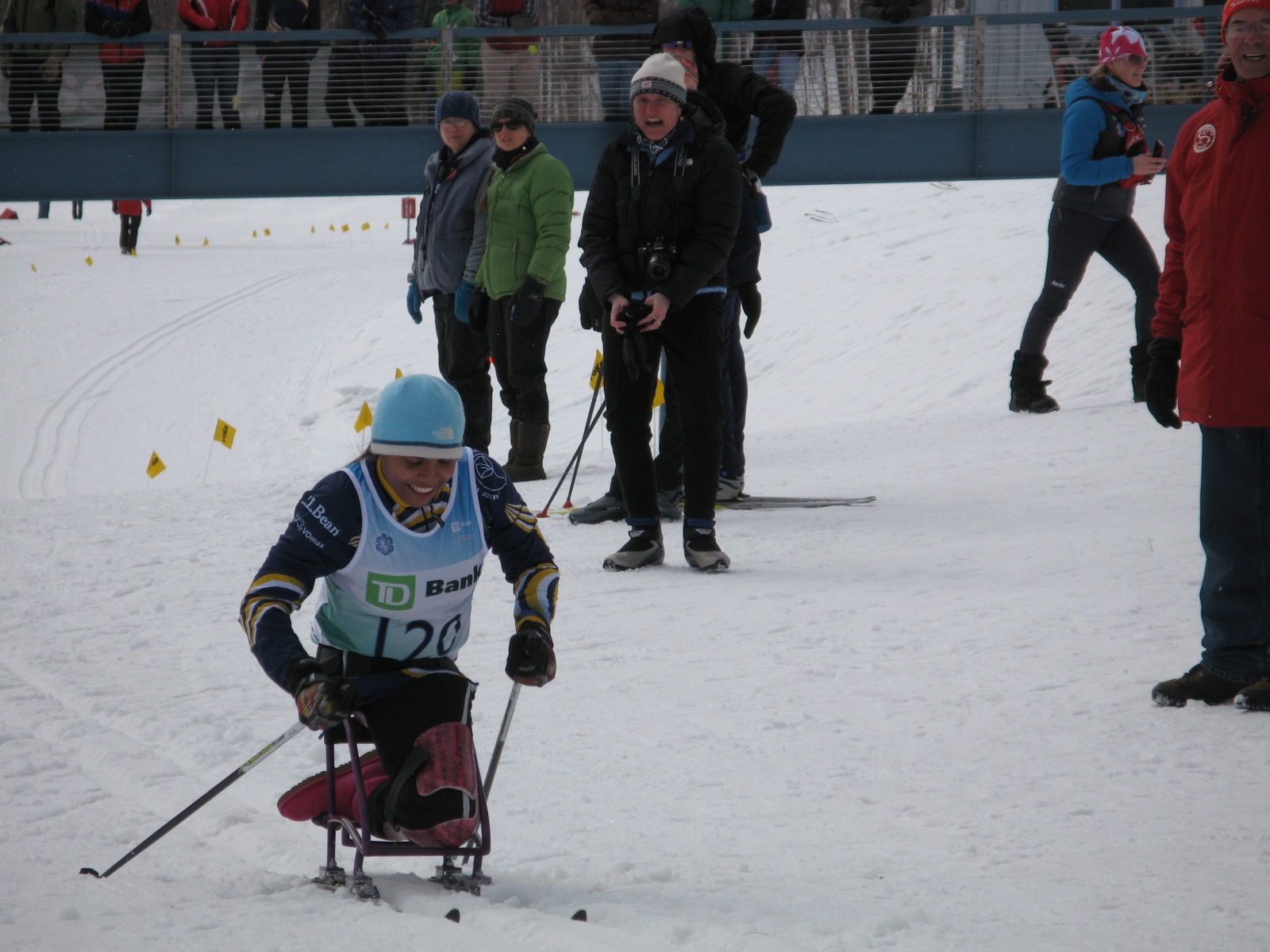
    But that hasn’t slowed her down. In the last two years she has represented her school using a bright orange racing wheelchair on the track and a specially-designed sit-ski on the trails. She also raced for Maine at Eastern High School Championships in Rumford this March.

    “It was really nice to be a part of the team,” Kouros told FasterSkier in an interview.

    She has become one of the first – if not the first – sit skiers in the country to compete in high school races.

    “I don’t think that there have been other sit skiers to compete in high school competition in New England,” New England Nordic Ski Association (NENSA) Adaptive Programs Coordinator Eileen Carey told FasterSkier.

    Kouros was not only accepted but embraced, cheered, and celebrated by the Maine high school ski community this winter, and everyone involved in her athletic career hopes that other states can learn from her example.

    First: Track

    Photo courtesy of Christina Kouros.

    Before she tackled skiing, Kouros started with outdoor track. Getting her wheelchair to practice was the easy part; getting to compete just like any other athlete was harder. Luckily, she had an open-minded and hard-working administrator on her side: Jeff Thoreck, Cape Elizabeth’s athletic director.

    “We had Christina participate in our conference track and field races,” Thoreck told FasterSkier in an interview, alluding to the 2010 spring season. “At that point, the Maine Principals’ Association (MPA), which governs our athletics for the state… didn’t have qualifying standards for wheelchair athletes because there hadn’t been a request.”

    As a result, Kouros couldn’t go any farther than her normal conference meets. Unlike many of her teammates, she couldn’t compete at the state meet. But Thoreck was ready change that.

    “Following that season, we started work with the MPA on coming up with some qualifying standards for wheelchair athletes for the state of Maine,” he said. “[We] worked on that through the fall, and that was passed by that group in the winter. So this spring, Christina is not only able to participate in our conference meets, but qualify for the state meets as well.”

    Kouros did just that, and on June 4th she competed in the 800 meter race at the Class B state championship meet in Augusta, Maine. In her orange wheelchair, she raced along with 20 able-bodied runners and posted a personal-best time of 3:23.96.

    Several news organizations throughout Maine have covered Kouros’s exploits on the track, and thanks to the new guidelines, two other wheelchair athletes competed for their high school teams this spring.

    “Christina has made a difference,” Thoreck said.

    Kouros, however, was the only one who qualified for the state meet – an accomplishment which was noted in many write-ups of the competition.

    Early Days on a Mountainboard

    Photo courtesy of Christina Kouros.

    After a successful 2010 season on the track, Kouros decided to try a similar approach with skiing. She had skied with Northeast Passage, an adaptive sports program based out of the University of New Hampshire, a few times before. So she asked Deven Morrill, Cape Elizabeth’s cross-country ski coach, whether she could join the team.

    “I didn’t bat an eye,” said Morrill. “I said, ‘Let’s do it!’”

    His enthusiasm was impressive, especially considering that Kouros had only been on snow “a couple of times” and Morrill had never coached a sit-skier.

    “There were a lot of challenges as a coach to get it all to work, with one coach and twenty-five kids on the ski team,” Morrill said.

    When the team began practicing, Maine didn’t have snow yet and Kouros was using a mountainboard that she had borrowed from Northeast Passage.

    “Something as a coach you don’t think about until you have an adaptive skier is that she’s on the mountainboard the first day of practice and I say, ‘Okay, you’re going to go up this hill and come down it, and we’re going to do hill intervals here while the other kids do intervals next to us.’ Well, it never dawned on me that she can’t turn. So it’s all these little things that you and I take for granted that you have to really think through as a coach. To say, ‘you’re right, you can’t turn, and the road does, so you keep running into the curb.’”

    In that situation, Morrill had to turn Kouros around on her mountainboard and help her get down the hill. When the team moved from dryland training to snow, he encountered plenty more moments when he had to think outside the box and alter his usual coaching strategy.

    And it wasn’t just on-the-ground coaching that needed to change. The whole theory of training is different for adaptive skiers, and Morrill had to think hard about how much he could ask of his athlete’s arms, especially in the beginning of the season.

    A teammate cheers her on at Eastern High School Championships. Photo courtesy of Christina Kouros.

    “It’s a juggling act as a coach… now you have an athlete who only has one set of muscle groups,” Morrill explained. “So that was another challenge with practices. On days when we’re doing leg strength, that’s not something she can do. Days where her arms were tired and we thought she should focus on her core, that’s what she did.”

    But while Morrill was learning, Kouros didn’t complain.

    “There’s not very many 15-year-old girls who will sort of throw caution into the wind and pride aside and say, ‘I want to do this, help me.’”

    Both Carey and Kouros had high praise for Morrill, who recently received the inaugural NENSA Adaptive Achievement Award.

    “Deven is an incredibly committed coach,” Carey wrote in an e-mail. “He has a busy full time job and coaches in addition to that, yet he always finds time to make sure Christina gets every opportunity to grow as an athlete.

    “We were in regular communication this winter, talking about training, equipment, you name it. We would have these ‘wouldn’t it be great if….’ conversations one week and the next week he would call saying he had done it and was thinking about how to make it better or what the next step was.”

    Finding Her Glide on the Snow

    But enough about Morrill. What did Kouros think of the high school ski team experience?

    “I really enjoyed it after the first two weeks,” Kouros said in an interview, without elaborating on how tough the initial period was.

    But that’s Kouros, said Carey.

    “Christina is an unassuming, positive kid who always has a huge smile, even through the toughest climbs,” she explained. “When you coach her, she doesn’t ask many questions, she just says ‘ok’ and goes out there and gets it done.”

    Photo courtesy of NENSA.

    Morrill was similarly impressed by the work ethic and courage that Kouros showed as the two of them worked to figure out how she could train with the team.

    “Who she is and her attitude is why she chose nordic sport,” Morrill said. “She didn’t care what sort of obstacles stood in her way, and that’s what made it kind of easy.”

    The wish that Kouros has stated so many times, to be part of the team, was fulfilled. Not only was she skiing, but she was skiing with her teammates, who would help her get her sit ski on the bus for practice and races and even ski at her pace during practice.

    “They’d have snow days, and I’d figure out that Christina and three of her friends had gone out skiing for the day,” Morrill said.

    By the end of the season, Kouros no longer needed Morrill’s help at practice. She could just go for a ski like the other athletes.

    “It was really nice to be a part of the team,” Kouros said. “I felt like I was like a normal kid and that I could do whatever they were doing. The coach didn’t have any doubt that I could do it… they were all very helpful.”

    Among the challenges Kouros faced was finding the perfect sit ski. After starting the season with a chair-style ski borrowed from Northeast Passage, she and her coaches realized that it wasn’t ideal for her particular disability. So Kouros, her doctor, her coach, and even the high school welding teacher got involved in making a better ski. It paid off, and she ended up with a ski where she could kneel instead of sitting.

    “I had a really good sled the second part of the season,” Kouros said.

    She also faced another big challenge. Because Maine (unlike, say, the International Ski Federation) didn’t have any guidelines for sit skiers competing in high school races, Kouros had to try to race the standard courses. She faced long uphills, steep downhills, and sharp corners, features which would throw even some of the best sit skiers, not to mention a 15-year-old girl competing in her first high school races.

    “I thought it was really hard,” Kouros admitted of her first high school competition. “But [Morrill] was right behind me the whole time. His encouragement helped me finish the race.”

    Morrill often skied behind Kouros in the races and sometimes had to help her up steep hills. Other times, the terrain forced them to take shortcuts on cutoff trails or simply through the trees to reach the next part of the trail which was safe for Kouros. If the shortcut involved crossing a road, Morrill would pick up Kouros, complete with her sit ski and poles, and place her on the other side.

    Through all this, Morrill said, he didn’t hear a single complaint from another coach, and while Kouros was initially intimidated by some downhills, she learned to just give it a try.

    “The breakthrough with her was that all of a sudden she was confident enough to do something that she really wasn’t all that confident about,” said Morrill.

    Her attitude, according to Thoreck, was infectious.

    “It’s been great for the [other] kids,” he said. “It’s a win-win. It’s been terrific for our students, and fantastic for Christina.”

    Morrill concurred.

    “The girls and boys on my team would have preferred to enable her to race instead of racing themselves, if anything,” the coach said. “They do their race and then it doesn’t matter how tired they are, they’re going to put on their warmups and go out on the course to cheer for Christina.”

    Although Kouros found happiness and success as a high school racer, she didn’t forget the program that had first gotten her on a ski, Northeast Passage. She competed in a few adaptive races as well as the White Mountain Classic 30 k, a distance that most able-bodied high school skiers would find intimidating.

    So just like other junior skiers who have a high school team and a club team, Kouros always had plenty of support.

    “I’ve met so many coaches,” she said. “There’s adaptive coaches all over the country, like my coach in New Hampshire. She has a whole team which is adaptive skiers… It’s really nice to have my high school team and all the adaptive skiers. I have two teams. It’s like the best of both worlds.”

    The Future

    Atop the Eastern High School Championships podium. Photo courtesy of NENSA.

    Next winter, Kouros will again be a fixture on the high school circuit. But she will also focus on adaptive racing and has a bigger goal in mind.

    “I will definitely keep doing adaptive races, and my goal is to go to the Olympics and show everyone the road that I went on in high school,” Kouros told FasterSkier.

    While the Paralympics might seem like an big reach to some, Morrill for one had no doubt that Kouros could reach her goal, thanks to her incredible work ethic.

    “I don’t see why she can’t do it,” he said. “So that’s it. That’s the goal we set, and I think that’s the goal she’s going to stick with.”

    The athlete herself was honest about what she’d have to do to get to Sochi.

    “I’m going to have to work harder,” Kouros said. “I’m going to keep doing high school racing. I have the next two years planned out, and then after that I’m not as sure. But I know I’m going to keep doing it in college. I’m going to keep strengthening to do longer races, and just keep doing what I’m doing.”

    And in a change of direction, Morrill will be right there with her. For several years, he had been meaning to quit coaching to focus on his other job. But while he had found assistant coaches or new head coaches for a few of the last years, and hoped to really leave after the 2011 season, he now says that he will keep coaching Christina, although he hoped to minimize his involvement in the high school team.

    Kouros isn’t the only one who hopes to improve in the next few years. Carey, NENSA’s Adaptive Programs Director, said that Kouros has given her a glimpse of what NENSA can accomplish.

    “My goal is for anyone, anywhere in New England to have access to equipment, programming and coaching,” Carey wrote in an e-mail. “One of the biggest challenges is reaching potential participants. Christina’s participation on her team and Deven’s commitment as her coach have bigger implications on adaptive skiing than their personal experiences.  When people see Christina cranking around the course on a sit ski, they think maybe they (or their sibling, friend etc.) can ski.

    “I think it will open up doors for other people who may not even realize skiing is a possibility for them.”

    For Thoreck, there are plenty more rules to tackle with the MPA.

    “It’ll be a little more work with the nordic, because it’s a little more technical with the course setups,” Thoreck said. “So that will be one of our obstacles. I think that everyone who participated in that committee to get those guidelines [for track] was extremely willing to make this work, and they did a lot of legwork and a lot of research.”

    While it’s a little bit harder to visualize what adaptive guidelines will look like for skiing, Thoreck was positive about what Maine could accomplish.

    “The coaches are extremely passionate and willing to accommodate and do what they can to make this work.”

    Did he have any words of wisdom for other coaches or administrators who might receive inquiries from adaptive athletes?

    “There might be some work involved, but when you have an opportunity like this, it doesn’t matter.”

  • The World Returns to Aroostook County, Maine

    The World Returns to Aroostook County, Maine

    Aroostook County Map

    More than a decade ago, Maine’s governor, Angus King commissioned an economic study which determined that New England’s largest state was actually two distinct, economic regions: the affluent southeastern coast, and the struggling, northern forests. Through the years, Aroostook County had been dealt a hat trick of economic setbacks: first, the emergence of Idaho as the nation’s premier source of potatoes, second, Quebec’s ability to process timber products more economically than Maine, and more recently, the Defense Department’s decision to close Loring Air Force Base in Limestone, eliminating thousands of civilian jobs.

    Moose Crossing Potato Fields

    What Aroostook County continued to have in abundance, however, was long, cold winters, an abundance of snow, and residents who valued hard work. Andy Shepard, formerly a winter sports manager for L.L. Bean, and Max Cobb, the driving force behind the U.S. Biathlon team, recognized the potential of northern Maine and approached the Libra Foundation of Portland with a plan to “reestablish Nordic skiing as a lifestyle to stimulate the local economy and inspire the youth of northern Maine.”

    Eleven years later, during the first two weeks of February, Presque Isle and Fort Kent will host the International Biathlon Union’s World Cups #7 and #8, welcoming athletes, coaches, journalists and fans from 30 nations to “The Crown of Maine.” Presque Isle, with a population of just under 10,000, and Fort Kent with 2,000 residents, are bracing for as many as 35,000 spectators during the 10 days of biathlon competitions and related festivities. The sport has become hugely popular throughout Europe and the events in northern Maine will be televised live to an estimated 120 million viewers across the pond. For several days in early February, devoted biathlon fans from northern Norway to the heel of the Italian boot will be glued to their televisions as their favorite athletes ski and shoot in the wilds of northern Maine. That constitutes far more fans, by the way, than a typical Monday Night Football audience here in the States!

    Fort Kent Crowd 2004 World Cup. Photo: Dennis Welsh.

    Adding to the excitement for American spectators will be the participation of a promising U.S. Team. Last season, Tim Burke of Paul Smiths, NY led the World Cup standings prior to the Olympic break, the first time any American biathlete had achieved that distinction. Both Lowell Bailey of Lake Placid and Laura Spector of Lenox, MA have earned top 30 finishes in prior World Cup events this season. Other U.S. Team members, who have lived and trained in northern Maine may enjoy a “home court advantage” which could translate into impressive results.

    Ft Kent, 2004 World Cup Racing. Photo: Dennis Welsh.

    Creating competition facilities in northern Maine capable of hosting world caliber events was a team effort requiring a diverse set of skills. A Nordic race venue in Fort Kent made sense because there was a well established, community ski club, desirable terrain not far from town, and a cadre of volunteers with experience hosting major, winter events. Although the base lodge of the Lone Pine Alpine ski hill was a logical focal point for all ski club activities, the only suitable location for a biathlon shooting range was in a natural bowl beyond the top of the ski lift, thus requiring a new start/finish area, warming lodge and racing trail network at the top of the hill. With funding from the Libra Foundation, the community of Fort Kent pitched in and within months was ready to host biathlon events. Their first Biathlon World Cup event in 2004 received rave reviews from international athletes, IBU officials and the hundreds of spectators who attended.

    Tim Burke’s First World Cup at Ft. Kent in 2004. Photo: Dennis Welsh

    A different challenge faced what would become the Nordic Heritage Center on the Presque Isle/Fort Fairfield town line. Much of northern Aroostook County consists of gently rolling potato fields. A successful competition venue must be relatively close to the population concentration; in northern Maine that means Presque Isle and Caribou. Only one significant, undeveloped ridge in the area fit the requirements, but it was carved into nearly a dozen, private parcels. The Nordic Heritage Center would never have been possible without the determination and negotiating skill Brian Hamel, a Presque Isle community activist who saw the potential of the project and secured the rights to all the necessary land.

    A decade ago, Andy Shepard, Max Cobb and others envisioned the reestablishment of Nordic skiing in northern Maine as a boost to the regional economy and an inspiration to the local youth. During the ten days of the IBU World Cup biathlon events in early February, an estimated 15 million dollars will circulate through the communities of Aroostook County, with the continued commitment and support of the Libra Foundation. In addition, several American athletes who make their home in The County, including a few who were born there, now represent the Maine Winter Sports Center and the USA in competitions across the country and throughout the world. In just over a decade, Max and Andy’s vision for reestablishing skiing in northern Maine has become reality.

    Over 5,000 kids in 72 communities across Maine Are Nordic Skiing Because of the Maine Winter Sports Center.

    Author credit: John Morton is the founder of Morton Trails (www.mortontrails.com), a trail design consulting firm which has been collaborating on recreational and competitive trails throughout the country for the past 20 years. Morton designed the World Cup racing trails in Presque Isle and Fort Kent as well as more than half a dozen other community trails in Aroostook County,ME.