From the FasterSkier archive — posts syndicated from athletes’ and coaches’ own blogs between 2004 and 2012, kept online as published. Current coverage is at fasterskier.com.

Tag: Mansfield Nordic Club

  • Among the oldest races in American cross country skiing, the 2022 Stowe Derby adds to its legend

    Among the oldest races in American cross country skiing, the 2022 Stowe Derby adds to its legend

    A pair of American skiing pioneers skied up Mt. Mansfield, Vermont in 1946, skied down to settle a bet, and in the process created a race that’s remained true to the individual and communal spirit that sustains nordic skiing to this day.
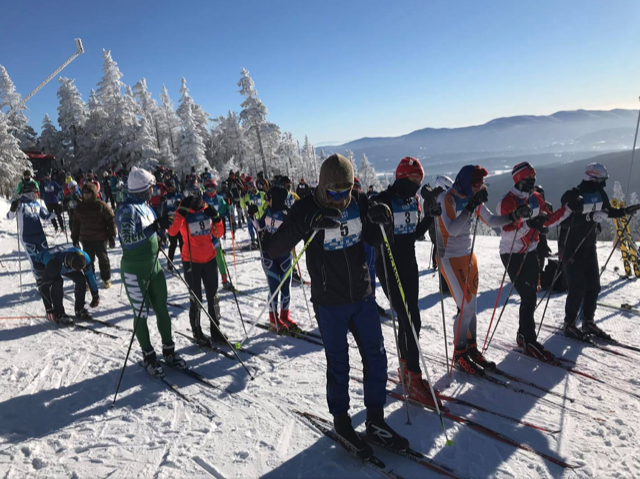
    Start line of the Stowe Derby at the top of Mt. Mansfield, Vermont. (Photo: Mt. Mansfield Ski Club and Academy)

    At one point in time, skiing was simply a way to get from point A to point B.

    Take stock of humans gliding on snow at this moment in 2022, though, and it can seem as if the world is too much with us. In Beijing, where the eyes of the world were recently fixed on skiing, trillions of dollars have been poured into constructing perfectly manicured laps that have increasingly become the sport’s preferred method of racing. Last week, the Olympic 30-kilometer women’s mass start entailed four laps of a 7.5 k course. The men’s 50 k race the day before was originally intended to simply up the lap count, six on an 8.3 k course. Then there’s the ever-dizzying array of equipment and disciplines. 

    The pandemic has seen the proliferation of alpine touring skis, and fights about who gets to use that equipment at what cost. Going from the metaphorical Point A of skiing – the individual euphoria and joy brought by juxtaposing the beating thrum of your heart and skis on the snow against the frozen world – to Point B – the kindred spirits who’ve taken the warmth generated and cultivated it into a genuine community – has become an increasingly difficult journey as those literal distances collapse on one another.

    Perhaps then, it’s time to make the distance between start and end too stark to ignore. Perhaps, point A can be set at the tallest point in American skiing’s home state, and point B at the town center of its most quintessential ski village.

    That’s just what the Stowe Derby intended to do when it was revived last Sunday in Stowe, Vermont.

    The goal: hold a race with 77 year old history in a way that’s representative of the venue’s skiing culture and heritage, imparting it to participants who will be ready to spread it far and wide.

    As race director Sarah Sterner said in an interview with FasterSkier, “Stowe’s heritage is a love of skiing. And not defining it beyond that. That’s what has lifted the Derby all these years, and it’s what we want the Derby to give people this year too.”


    It all started as a bet


    The Derby is part living history, and part tribute to the basic blocks that formed skiing in America. Telling its tale includes the key characters, in key places, and at key times, that came to define the sport we all do and love today.
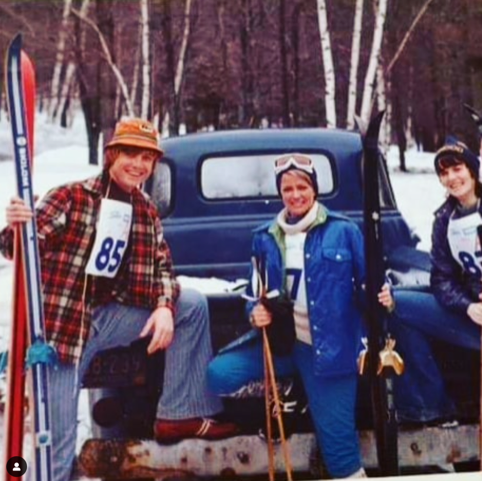
    Unknown skiers, but definetly a known time; bellbottoms, wood skis, and bamboo poles – 1970s at the Derby! (Photo: Mt. Mansfield Ski Club and Academy)

    That tale is oft-told, but not worn. It begins with two pioneers in Stowe in the early post-World War II period where optimism and inginuity spread to all corners and walks of American life. 

    Erling Strom was a Norwegian-born, American-made wanderer. After spending his childhood in Telemark, he landed in 1919 in Arizona, setting out to become a real life cowboy. His stint there though, was short. He set off for the high peaks of Colorado with his skis, where he grew into a last gasp of the old wild-West legends. He skied up Longs’ Peak, and later became the first person to ski up Denali. His feats landed him a job as a ski instructor at Lake Placid ahead of the 1932 Olympics, where he would spend the rest of his career and his life.

    Sepp Ruschp landed in America as the threat of Nazism spread over his native Austria in 1936. He was a cross-country national champion in the previous two years there, and had written all 90 ski clubs in the United States at the time looking for a job that would allow him to flee. The Mt. Mansfield Ski Club in Stowe responded, and he became the head ski coach there, and at the University of Vermont, before turning around to serve his newfound country with the 10th Mountain Division in World War II.

    When Ruschp returned in the winter of 1945-6, he and Strom were out skiing, scouting routes to erect a chairlift on the Mt. Mansfield slope above the town of Stowe. Prior to the war, Stowe’s ski trails had been a loosely defined set of forest roads put in as part of a Conservation Corps (CCC) project during the Great Depression. The first tow rope had gone up in the area in 1940, but Strom and Ruschp were of a generation where being proficient in backcountry touring, jumping, nordic and alpine racing were a requirement for a skier, and each had a quiver of skis including one or two pairs of hickory-made, pine-tarred, gliders.

    The first law of the endurance universe held – put two skiers together and they will eventually start talking about gear. Strom and Ruschp decided to test what would be the best single-pair of skis to start at the top of Mt. Mansfield, race down the 2,500ft slope, and then across the valley into town to the steps of the iconic Stowe community church. To decide, they organized a race.

    The first Stowe Derby ran on the last Sunday in February, 1946. According to an article in the Stowe Reporter from 1975, 12 men, all of whom were required to be over 35 years old, completed the 4.5 mile downhill on Mt. Mansfield, followed by the 5.5 miles across the valley to Stowe town. Sepp Ruschp won with a pair of nordic skis in a time of 1:03:36.

    Over the next twenty years, Ruschp and Strom raced the same course every year there was enough snow on the last Sunday in February. The single restriction, one pair and only one pair of skis, came to define the essence and spirit of the Derby. The 5.5 mi cross-country jaunt at the end of the downhill meant that nordic skis, which increasingly were becoming narrower, tended to be the choice. In waves of 5, skiers would start at the top of Mt. Mansfield, and most would eventually wipe out. That proved to be a human interest story, and drove up the number of spectators from the town below. Under Ruschp’s coaching, a generation of alpine talent was emerging from the Mt. Mansfield ski club, with the skill of these skiers directly proportional to the appeal of watching them have to master the art of having their heel free on the slope of Mt. Mansfield. At a Derby during the 1950s, you could watch the likes of local kid (and eventual Olympic ski champion) Billy Kidd heading down the slopes.

    Bob Gray of Putney, VT, winner of the 1972 Stowe Derby accepts his award from (R to L) Sepp Ruschp, race founder, and Johannes Von Trapp, who helped revive the race in the 1972. (Photo: Vermont Ski and Snowboard Museum)

    The Derby hit a rough patch in the 1950s that nearly saw it become lost to the unpredictability of New England winters. After a few years off in the 1960s, Johannes Von Trapp (of Trapp’s Family Lodge) partnered with the Ski Club to revive the Derby in 1972, which marked the beginning of the Derby becoming a fixture within – and a distillation of – New England’s vibrant ski scene. By 1983, the Derby saw what then race director Dudley Rood called 700 “enlightened lemmings” lining up to hurl themselves down Mt. Mansfield. 

    The Derby had found itself at a perfect confluence in Stowe, and New England, at a perfect time. The sport of cross country skiing had got an injection of interest, especially in Vermont, following Bill Koch’s silver medal at the 1976 Innsbruck Olympics. The New England collegiate carnival circuit ended its race season on the last Saturday in February, which allowed its racers to hit the Derby the next day. The field which had started with two of America’s most accomplished skiers of their generation had somehow maintained its über competitiveness on a course that was increasingly absurd when considering the direction of the sport.

    One of the skiers who joined along during these years was a man who became synonymous with Vermont skiing. Murray Banks helped found the Mansfield Nordic Club on the west side of Mt. Mansfield, and remembers clearly the “wool knickers, flannel shirts, and backpacks full of beer – ah yes, it’s the Derby” of the day.

    Judging by the memories Banks can most clearly recount – the Derby in these years as much about what happened when the skiing went wrong as it did when it went well:

    “[I remember] coming off a sweeping turn and seeing a skier from an earlier wave veering off the Toll Road, down a mogul run. A split second of indecision at Mach 1 and over I went with him. I like mogul skiing, but not on nordic skis. It was ‘Mr. Toad’s Wild Ride’ for a couple hundred meters…it was not uncommon to see people at the finish with blood on their bib in those days – an honor!”

    The Derby made its only concession to the march of time in 1987, when the development of skate skis, which Banks noted “made things so much easier,” caused race organizers to split the race between a skate competition held in at 10:00am, and the classic Derby (on classic skis) held at the traditional 12:00pm start.

    Even when conceding to time though, the Derby somehow made the development that kept it happily behind the times. In addition to adding the skate race, organizers also added a “Derby-meister” category – harkening back to the days of the “ski-meister” when jumping, cross-country, and downhill events in junior and senior ranks were scored cumulatively, rather than as separate disciplines.

    The catch: to compete in the Meister category, skiers would have to figure out how to go from Point B to Point A, coordinating their own logistics to catch a ride back to the base of Stowe to take the chairlift up to the top again after completing the skate, and hoping to arrive before their classic wave started at noon.

    Banks was there for the development, and recounts the asinine seriousness of it all:  “[You had] to bundle up for the chairlift ride to the start, strip down at the last second trying to stay warm, deliver your warmups to the snow cat that went to the finish, and then start race one. Then it was cross the finish line and immediately jump in the car, change clothes and boots, run the chairlift, and just hope it arrived at the top before your bib was called to the line. You skied out the rigor mortis through the first few turns. Skiing fast on skate gear is one thing, and then doing it moments later with kick wax on takes some adjusting.”
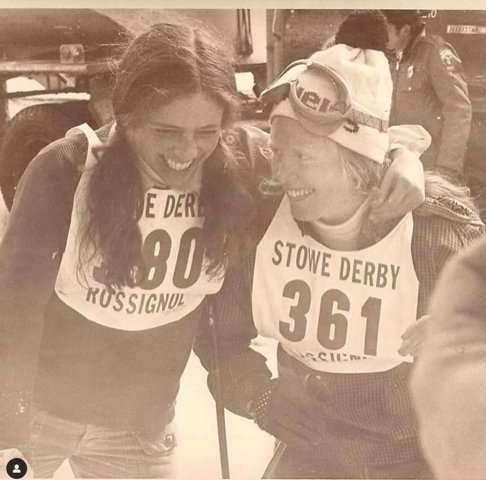
    Two racers embrace at the Stowe Derby finish line in 1974. (Photo: Stowe Reporter)

    The Meister though, in retrospect, seems like a natural extension of the event, rather than a new era.

    Sooner or later, someone would’ve taken the sheer joy of trying to reign your energy and movement on snow into forward motion found on the slopes of Mt. Mansfield, then experienced the self-affirming grind of the ski into town, found a whole group of people who loved it too at the finish line, and said “we should do that again!”

    As the Derby has gone on, that has been its mantra: “We should do that again.” First it was Strom and Ruschp repeating it, then a chorus through its first heyday (who’s brightest tenor was surely Murray Banks), and last Sunday, it was the intrepid voices of a new generation of Derby-goers and Derby-Meisters, ready to go from Point A to Point B via US skiing’s oldest, and most thrilling, route.

    The Derby Runs Again


    After the past few years in skiing, where pandemic and climate change have upended race calendars and race venues, the Derby that was held last Sunday felt like nothing short of a sign of hope.

    It’s impetus was in the hard-work of Sarah Sterner, race director, who was responding to a simple concern: “My kids said, ‘Mom, there has to be a Derby!’”

    Her vision for the Stowe Derby in 2022, though, quickly became one that was concerned with matching the full sweep of its spirit, “So much of this is about understanding the history and culture of the event – what did people love about the Derby before, what can we do to reboot the Derby in a sustainable way. Of all the Derby legends and lore, what do we need to scoop out the corners to make this go again and make it awesome.”

    That included building around the event’s edges while keeping to the traditional long and short course. There was a revival of the legendary Derby afterparty, which Murray Banks recounted was “one of the best afterparties in ski racing!”

    The prizes this year showed just how invested the Vermont ski community was in its oldest event. The winner of the Skate and Classic races received a full-on tuning setup from Caldwell Sports including sizing, grind, hot box, and hardening. For Juniors under 18, Pinnacle Ski and Sport in Stowe donated a new pair of Rossignol skis and poles. This version of the Derby also awarded prizes to those who could make the downhill run before town the fastest. The prime: a pair of winteralls from Ripton & Co.

    The careful planning yielded the first successful run of the Derby in half a decade. Between all short and long courses across classic and skate disciplines, there were over two-hundred skiers that successfully navigated the course. That included five Derby-Meisters, who all came out of Sunday adding a little bit to their own personal legends.
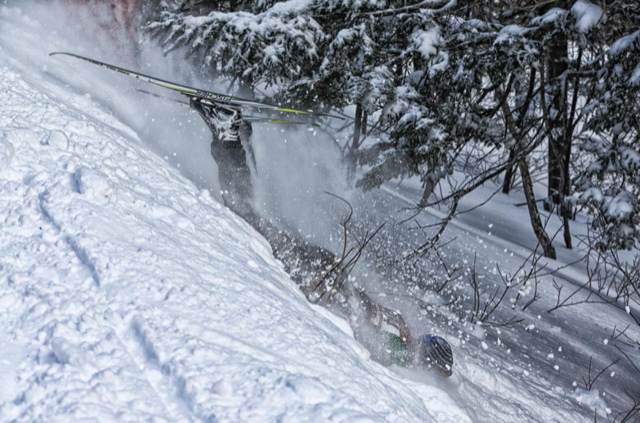
    A racer goes off the trail, a common sight at the Derby! (Photo: Mt. Mansfield Ski Club and Academy)

    There were no doubt spills and wipeouts that will still be talked about years from now, and a sense that after a New England winter that saw a foot of snow fall a week before this Derby, there is winter fun and spirit in droves that will sustain the Derby for years to come.
    Full Results


    Chaos and fun at the Stowe Derby. (Photo: Mt. Mansfield Ski Club and Academy)
  • Patterson, Harmeyer Win ‘Largest North American Rollerski Race’, NENSA Fall Classic

    Patterson, Harmeyer Win ‘Largest North American Rollerski Race’, NENSA Fall Classic

    2018 Olympian and Craftsbury Green Racing Project skier Caitlin Patterson (in the yellow bib as the NENSA Rollerski Race Series leader) en route to a win in the open women’s 10 k at the NENSA Rossignol Fall Rollerski Classic on Saturday, Oct. 13, in Jericho, Vt. (Photo: Dave and Carl Priganc)

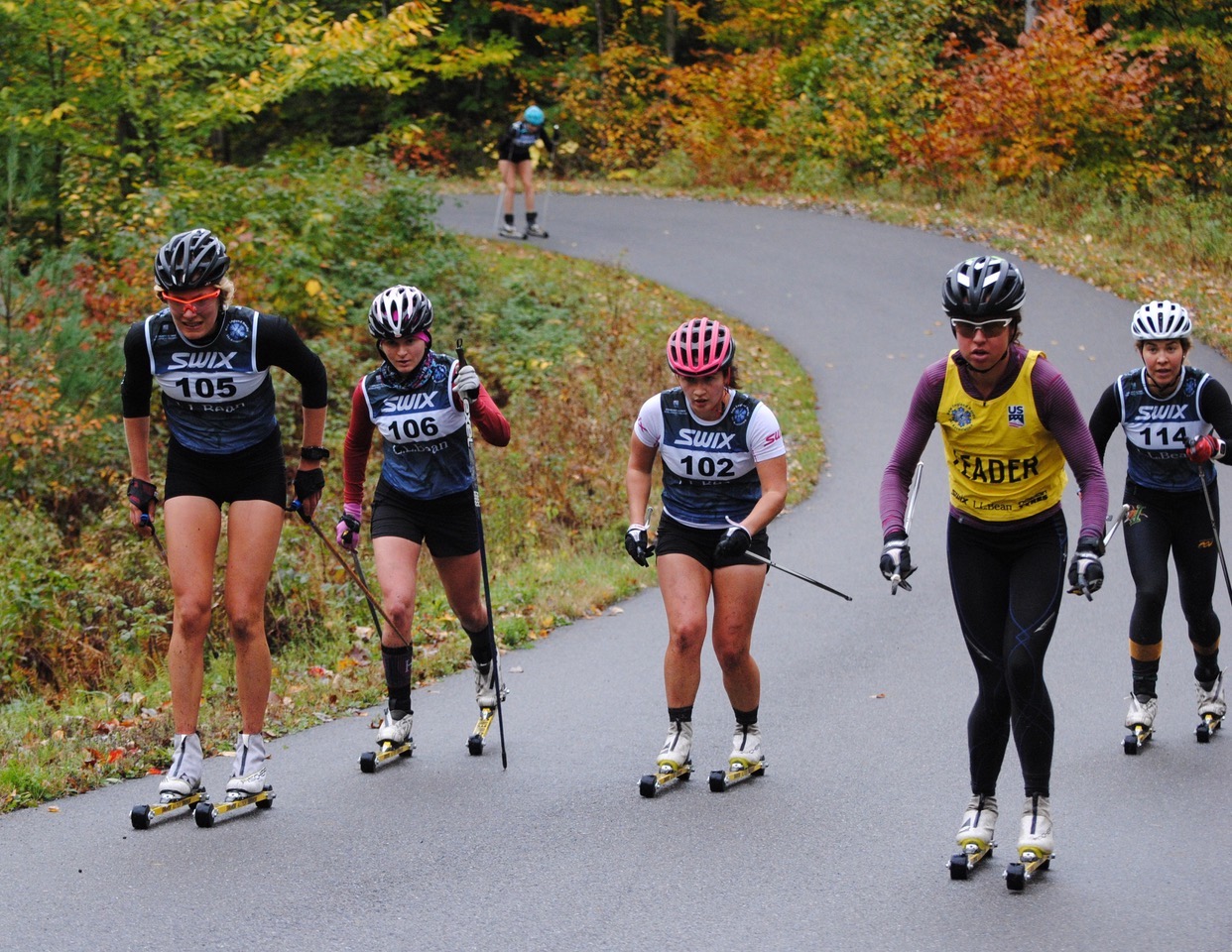
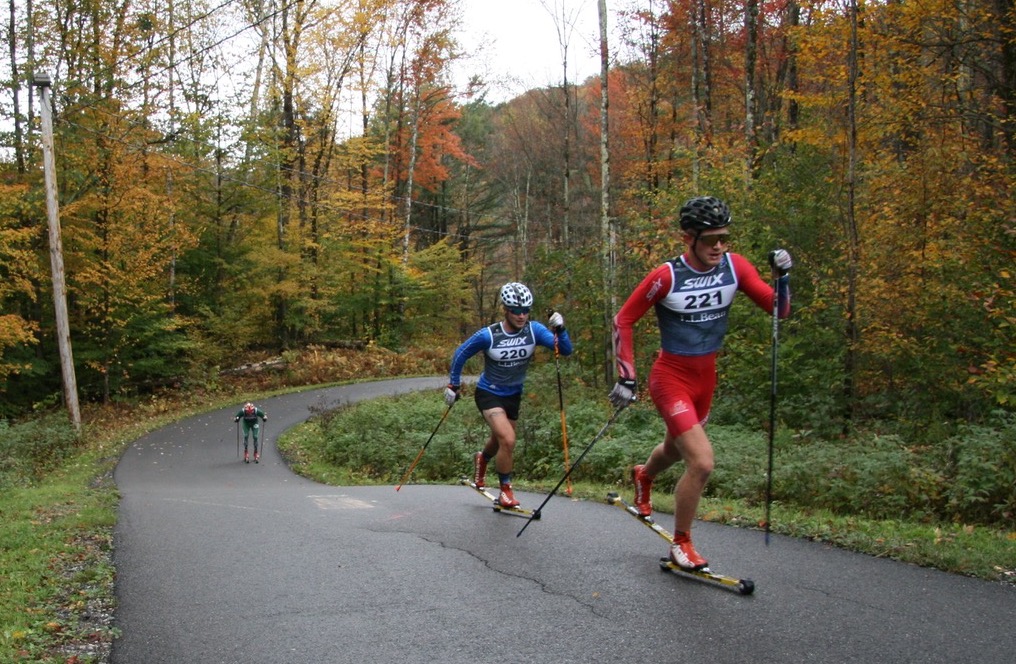
    This past weekend, more than 170 skiers descended upon the Camp Ethan Allen Training Site at the Vermont National Guard base in Jericho, Vermont, for the New England Nordic Ski Association (NENSA) Rossignol Fall Rollerski Classic. According to NENSA Competitive Programs Director Justin Beckwith, the field size nearly doubled from last year, and he believed 172 finishers made it the largest North American rollerski race.

    The event was hosted in conjunction with the Mansfield Nordic Club on Saturday, Oct. 13, which was described as a “chilly morning replete with the first snow of the year on Mount Mansfield as a backdrop” and rain drizzling throughout the day, according to a NENSA press release.

    In the 10-kilometer open (over-18) women’s race, Caitlin Patterson of the Craftsbury Green Racing Project (CGRP), also located in northern Vermont, took the win with a time of 25:14.4 minutes, about 18 seconds ahead of her Craftsbury teammate Ida Sargent (of the U.S. Ski Team) in second. About 30 seconds back from the win, Lina Sutro of the University of Vermont (UVM) placed third.

    Racers stride up a hill during the open men’s 10 k race at the NENSA Rossignol Fall Rollerski Classic on Saturday, Oct. 13, in Jericho, Vt. (Photo: Dave and Carl Priganc)

    In the open men’s 10 k race, another UVM skier and last year’s winner Bill Harmeyer won in 22:09.6, just 5.5 seconds ahead of Adam Martin (CGRP) in second. Another 12 seconds back, Kyle Bratrud, of the Stratton Mountain School (SMS) T2 Team in southern Vermont, placed third.

    Notably,  the top 30 in both the men’s and women’s senior races competed on matched Swenor Alutech Classic rollerskis. “We managed a fleet of 38 – 20 from our NENSA fleet and 18 sent out to us on loan from the Midwest fleet,” the press release stated.

    After the races, athletes were able to try out an agility ramp.

    “The whole day had a carnival-like feel with a balance of world-class competition and camaraderie,” the release noted.

    For more on this event and the highlights of the 5-kilometer U16 races, click here.

    Results

    Photos

    NENSA Rollerski Race Series standings (with two events left: Maine Agility Festival on Oct. 27 at Pineland Farms in New Gloucester, Maine, and Trapp Invitational Rollerski Race on Nov. 3 at Trapp Family Lodge in Stowe, Vt.)

    Series results

  • SuperTour, Eastern Cup Race Reports, and La Clusaz Photos

    Toko logo

    (Original e-blast)

    Sun Valley SEF logo

    SuperTour Race Reports

    For the SuperTour Races in West Yellowstone this year we had great packed powder conditions.  The snow seemed to have a bit more moisture in it than in other years, and with slightly milder overnight temperatures we stuck to the Red waxes by in large.  For both race days we played it safe mixing HF Blue and HF Red 1:1 for a base layer.  For powder we ran Toko JetStream Red 2.0, which ran 1st or 2nd in testing all weekend.  On sprint day we ran a cold block in the morning and once the snow had a cold glaze to it, we added a cold liquid with block which helped at high speed.  Gelso had great skis and was able to race from the front of the pack all day.  For the distance classic race we were racing in heavy snow storm and temp’s around 20 degrees, so we kept it simple with JetStream Red 2.0 block over the JetStream Red 2.0 powder and focused our energy on kick.
    The next weekend we made our way up to Silver Star for the SuperTours in Canada.  It was super cold all week training, but again great conditions, and luckily it got up into the upper single digits come race days.  The Toko brand ran super well in Canada as it always does in the cold.  The snow was cold enough where mixing Toko X-Cold Powder in with LF Blue for a base layer helped harden the skis.  From there it was Toko HF Blue, Jet Blue 2.0 Powder, and Jet Blue 2.0 Block.  Some of our guys were doubling poling the CL Sprint all day so glide was important.  As the tracks got skied in throughout the day we again found success mixing Toko Blue Helix with the JetStream Blue block.  By the Sprint finals and second race on the distance day we switched to Red Helixmixed with the JetStream Blue block.
    – Chris Mallory, Head Coach Sun Valley Elite Team
    MNC
    Eastern Cup Race Report
    A really productive and fun first weekend of racing at Craftsbury. A little bit of everything when it came to snow and weather!
    Day 1: Classic Interval Start
    Cold temps overnight on a manmade base, but a lot of fresh new snow the day of the race. For kick wax we were on a very thin Toko Green Base binder ironed in. We ended up on kick wax from another brand.
    Our paraffin layer was HF blue for earlier races, with a 2:1 mix of HF Bue:HF Redfor later races. We tested a fair amount of topcoats and Jetstream Blue Bloc 2.0was arguably the most reliable and consistent performer all day so that went onto all skis rotocorked. Later starters had a slightly warmer block from another brand mixed in with the Jetstream. For structure we ended up with just the linear Toko Blue Structurite pattern on the tail of all skis for the Open Women’s and Open Men’s Races.
     
    Day 2: Freestyle Pursuit
    Will Solow (Mansfield Nordic Club) racing in the Eastern Cup race at Craftsbury. (Photo: Gary Solow)
    Will Solow (Mansfield Nordic Club) racing in an Eastern Cup race at Craftsbury. (Photo: Gary Solow)
    It rained overnight with temps above freezing, but the course held up very well and remained stable and mostly firm albeit saturated.
    We saw a lot of this last year and I was really happy to have plenty of the right Toko products on-hand. From early-season temps to Junior Nationals last year, the Toko warm fluoros just seemed to be incredibly reliable and fast.
    All skis had a base of HF Red. A quick test in the morning showed that HF Yellow was not significantly better or worse, and so we stuck with the HF Red and focused on testing topcoats, application methods, and structure.
    We felt there was a pretty significant difference between powder and blocks and focused on using blocks to best effect. Our final call was Jetstream Yellowrotocorked, then brushed, with another quick hand-corked layer over that. After a final brushing, skis received Helx Red liquid on the first part of ski, with Helx Yellow on the rear.
    Early structure winner was a Swix tool that provided a left-angled and non-aggressive pattern, although at a somewhat large 1.5mm. As the course got more skied-in and churned up the tails of the skis received the combo of right- and left-angled patterns to form the crosshatch or “fishnet” pattern.
    Our skate skis seemed to be performing really well and with large packs of skiers it was easy to evaluate speed and glide. Reports from the racers were very good!
    – Adam Terko, Mansfield Nordic Club Head Coach
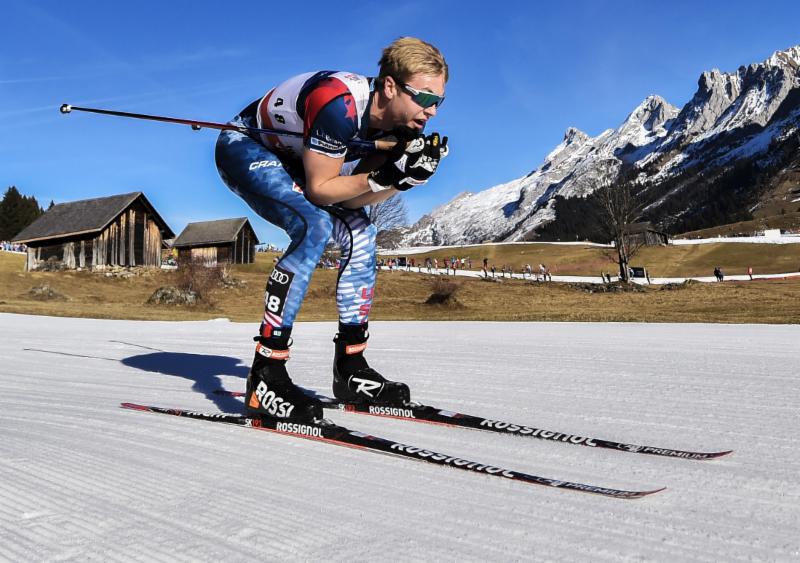
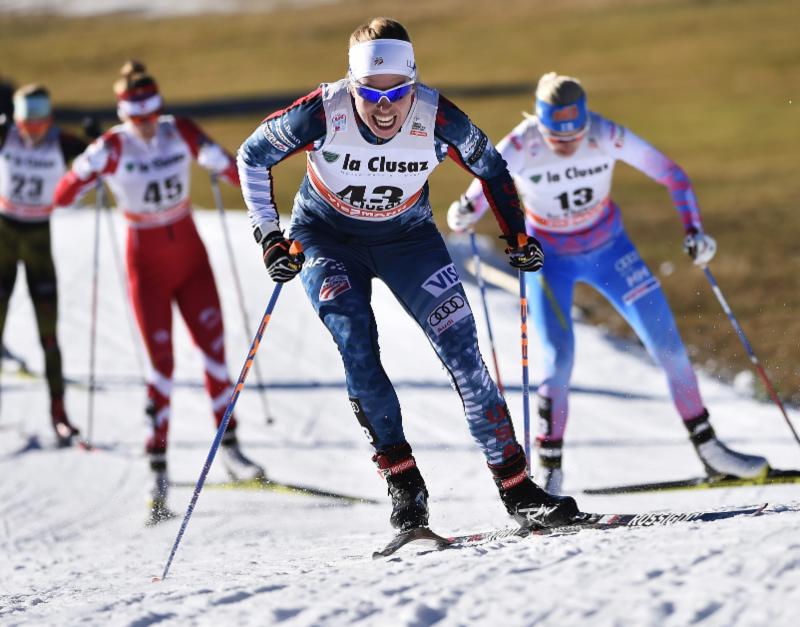
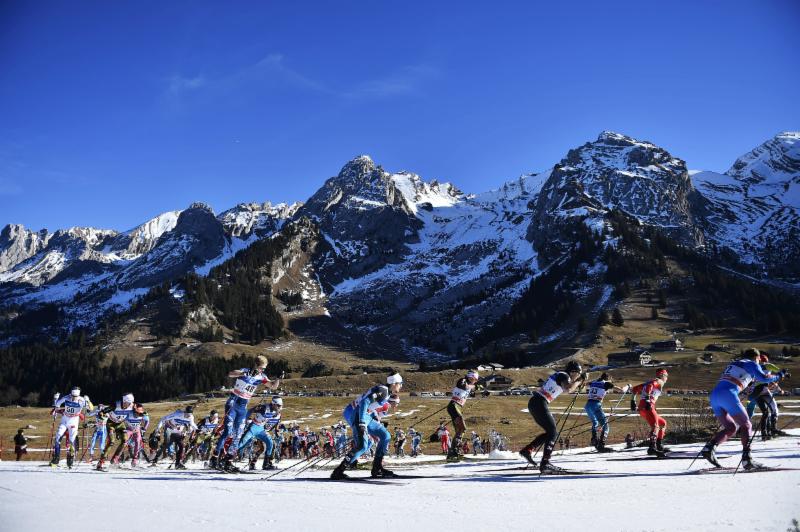
    Here are a few action shots of US Toko Athletes at the most recent World Cup races in La Clusaz, France. (All photos: Nordic Focus)


    (Photo: Toko/NordicFocus)
    Erik Bjornsen
    Rosie Brennan
    Rosie Brennan
    Erik Bjornsen in the field
    Erik Bjornsen in the field
  • Interview: Terko on Leaving St. Lawrence for Mansfield Nordic

    Interview: Terko on Leaving St. Lawrence for Mansfield Nordic

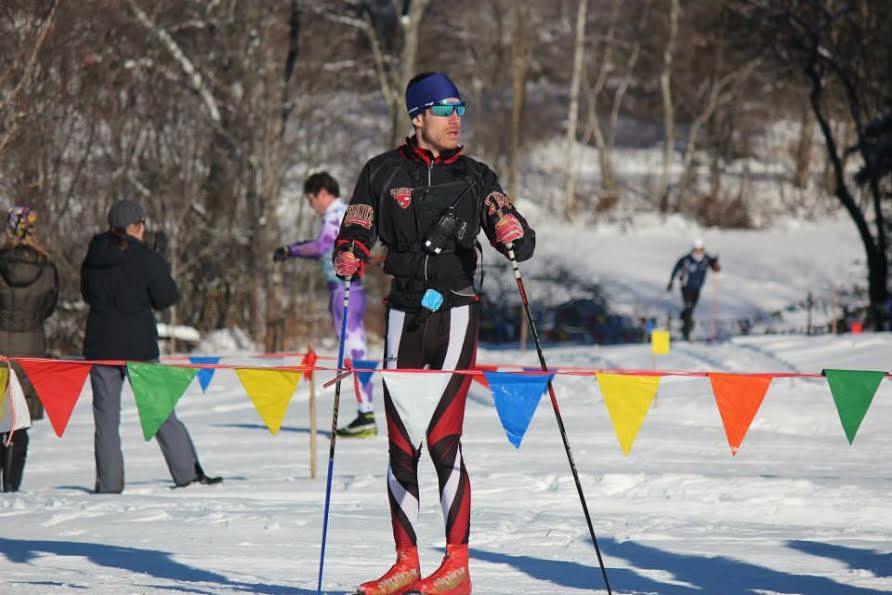
    Adam Terko, former St. Lawrence University Assistant Coach, is the new Head Coach and Executive Director at Mansfield Nordic Club. (Photo:  Kathryn Mulcahy)
    Adam Terko, former St. Lawrence University Assistant Coach, is the new Head Coach and Executive Director at Mansfield Nordic Club. (Photo: NENSA)

    Adam Terko came to St. Lawrence University as a skier and student in 2008, but his time at the school would last long after his racing and studies ended. After graduating in 2012 he joined the Saints’ coaching staff, bringing the same energy and spirit into his three years as coach as he had while on the team himself. During his years as assistant coach, he dedicated his time to write weekly recaps of the EISA collegiate carnivals for the FasterSkier community. Earlier this year, Terko decided to leave his position as the assistant nordic coach this spring to become the Head Coach and Executive Director of Mansfield Nordic Club, replacing current Head Coach Tim Weston who will officially depart the program in July of 2015, according to the team’s website. While the new head coach has been busying navigating his new responsibilities, he answered questions from former teammate and athlete Kathryn Mulcahy about the next chapter of his ski coaching career.

    FasterSkier: What are you most excited for with the Mansfield Nordic Club?

    Adam Terko: I’m from Vermont and I was personally supported by a lot of people from this area growing up. Having such a great support structure as I became a skier, I’m excited to be part of that from the other end. Also, in New England there is a lot of success and there is definitely a positive future here. I’m excited to be a part of and contribute to that future for kids from this area and Vermont as a whole.

    FS: What are you going to miss most about St. Lawrence University?

    AT: I came to St. Lawrence in the fall of 2008 as an athlete, so I think after spending seven years there it’s hard not to have a strong connection to the ski team and everyone that was a part of my experience throughout those years. I got to interact with a lot of great teammates and assistant coaches, as I’m sure is similar for a lot of people. But this is a great opportunity to move forward with my coaching career, apply what I’ve learned during my time at St. Lawrence and give what I’ve been given back to others.

    On a day to day operational level colleges, especially ones as well supported as St. Lawrence, are definitely benefited by logistical aids that I probably took for granted. For example, transportation, lodging budgets, waxing, equipment, and facilities of various types. Not to mention a corporate credit card (laughs).  At the same time I’ve already gotten to know a lot of people who have contributed a ton to Mansfield Nordic and provide so much for the skiers even without that kind of corporate structure. I think it’s great to have that personal investment and those kind of connections are what a ski club is all about.

    FS: When did you decide coaching was something you wanted to pursue as a career?

    AT: Sophomore or junior year of college. I had some success with my own racing but knew I probably couldn’t race professionally. But I knew I wanted to stay involved in the ski world and felt that coaching was a good way to give back, stay involved and pass on what I had learned. I tried to learn as much as I could from then on. Knowing I was interested in being a coach even before I was finished racing had me looking for opportunities to apply situations from both the athletes and coaches perspectives, to consider the positives and negatives and difficulties of both sides and apply that to myself in the shoes of a coach.

    FS: How do you think your youth is beneficial to you as a coach? In what ways is it a limitation?

    AT: I’ve only been removed from racing for a few years and in that time I was an assistant coach. During that time I tried to immerse myself in other opportunities for coaching during all seasons. I attended clinics at the Olympic Training Center in Lake Placid, worked with athletes in the summer from the college age and younger, and tried to take every opportunity I was given to learn as much as I could knowing I wanted to stay in the coaching field.

    As for limitations, at 25 I go into coaching knowing I don’t have a lot of experience, when experience is what brings success to many coaches. Realizing that, and going into every individual workout or race knowing that it is a learning opportunity is a way I’ve tried to approach it though.

    FS: What do you think the hardest part about being a head coach will be?

    AT: When you’re an assistant is easier for responsibility to be put on a head coach and I know that there are decisions that I will make that may not always receive unanimous support. But I’m always going to try to do what is best for the club and for the skiers and I need to trust that as long as I’m putting thought and consideration into my decisions I need to accept that I might not always please everyone all the time.

    FS: What do you think your strongest attribute as a coach is?

    AT: I think that on a personal level I’m pretty easygoing and very open and willing to collaborate and bring people together. Additionally, I think that I’ve learned the value of connecting with skiers and figuring out what success means for them at their level, whatever that level may be, and helping them to achieve that success. That could be related to results or what they enjoy doing for training, where they want to go in the sport and how they plan on achieving those goals.

    I would also say as a ski racer myself I went through times when I would consider myself successful, on a relative scale, and then there were times when I skied into the woods after a race and asked myself why I was doing this and how I could be struggling so much. I’ve experienced both ends of the spectrum and moments of disappoint and triumph and I hope that I’m able to put myself in a lot of different shoes depending on where a skier is at.

    FS: Where do you see yourself in ten years?

    AT: I have the intention of committing to this program seriously and helping the club grow. Some of my individual goals as a coach are to get more experience and connections nationally like coaching at REG camps and Junior Nationals. From there I’d like to experience coaching at an international level through coaching at World Juniors and U18 Scando Cups with the hope that the Olympics are in there somewhere down the road.

    FS: Final question, what are your race day coaching essentials?

    AT: Guru red kick wax, chocolate covered pretzels, energy and enthusiasm, good coffee, Neos, seltzer, preferably music at the wax bench, and a radio vest so I don’t keep getting mistaken for a high school racer.

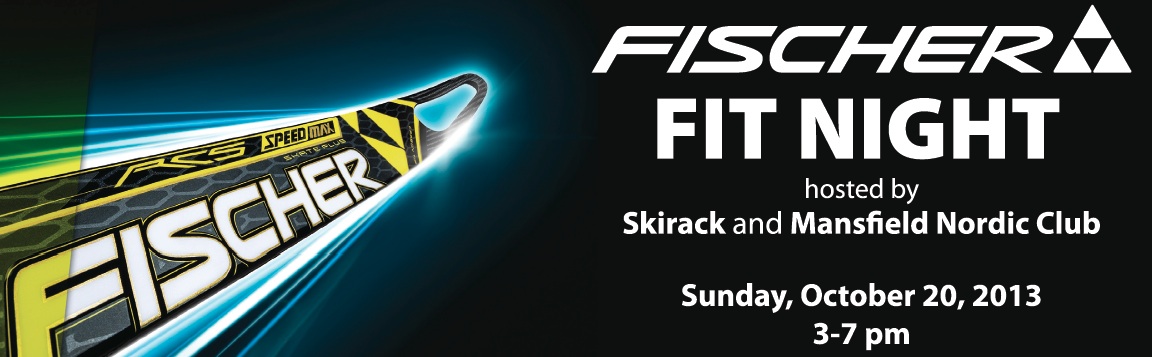
  • Fischer Fit Night on Oct. 20 in Burlington

    fischer fit night

    You’re invited to a special evening of Fischer products, prize drawings and pro race fits. Skirack, Vermont’s only Fischer Nordic Race Center, and Mansfield Nordic Club, 2013 NENSA Club of the Year, are proud to host Fischer Nordic Racing Director Chris Hall and Rick Halling, Fischer Nordic Promotions Specialist.

    Come in and check out the 2013/14 line of Fischer Skis, Boots, Bindings and Poles, including the revolutionary new Speedmax Skating and Classic skis, which utilize cold base bonding technology that protects the homogenous molecular structure of the base, increasing wax absorption and maximizing ski speed. See why seven out of the eleven athletes on the US Cross Country Team have committed to race on Fischer Skis through the 2014 Games in Sochi, Russia.

    Event Highlights

    5 p.m.: NENSA award presentation & Mansfield Nordic coaches intro

    Snacks & refreshments * Pro ski & boot fitting * Waxing tips and tricks

    30% OFF last season’s Fischer Carbonlite Skis, Skate & Classic

    Fit Night special price: $437.50

    Special team pricing on all Fischer Race Equipment, including special orders

    Team Wax forms for 30% off this season’s Toko Products

    Swix Wax Team forms with discounts over 20% Off

    Sunday, Oct. 20 * 3-7 p.m.

    SKIRACK * 85 Main St., Burlington, VT * (802) 658-3313 * www.skirack.com

  • Mansfield Nordic Club Seeks Head Coach

    Mansfield Nordic Club Seeks Head Coach

    Mansfield Nordic Club seeks to hire a head coach for its BKL, Junior and Masters programs. A successful candidate will be enthusiastic, charismatic and well organized with a strong knowledge of technique, training plans, games, drills and ski related activities. The MNC Head Coach wears many hats, including: directing paid and volunteer coaches; coaching skiers age 8 to 80, beginner to national champions; organizing weekly training; and web site management. He or she will have the benefit of working flexible part time hours, adjusting with the seasonal demands of MNC’s year-round activities.

    MNC is centered in the towns of Underhill and Jericho, Vermont, in the shadow of Mt Mansfield, 30 minutes from Burlington, UVM and St Michaels College. We currently have over 200 Bill Koch League, junior, and masters skiers training June to March training at two locations: the Ethan Allen Biathlon Range in Jericho, a superb facility with 20k of groomed trails, lights for night skiing, race infrastucture and 5k paved roller ski loop; and at a beautiful farm in Underhill with groomed trails and a terrain park.


    For a full job description and salary range:

    murray@murraybanks.com

    or

    http://mansfieldnordic.nensa.net/