Tag: marathon racing

  • One For Your Bucket List: Crested Butte’s Alley Loop Marathon

    One For Your Bucket List: Crested Butte’s Alley Loop Marathon

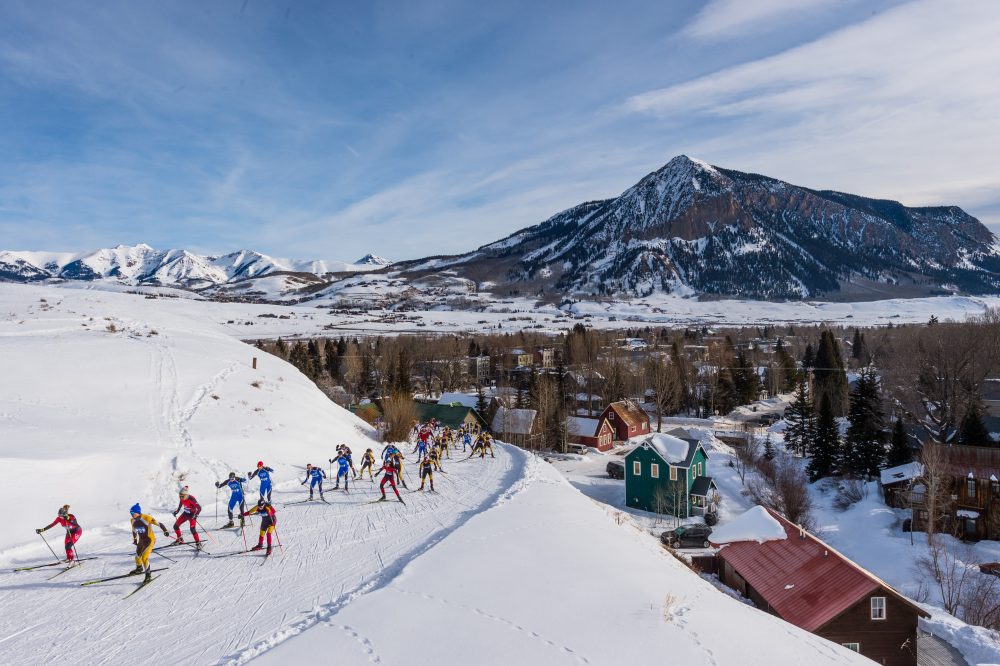
    Sent off in style: skiers take to the course during the 2020 Alley Loop Marathon in Crested Butte, Colorado. (Photo: Xavier Fane/CB Nordic)

    Rounding the final turn off Butte Avenue toward the Slate River Valley at the start of the second and final lap, I had my eyes peeled for a ride. There: the man dressed in a Birkebeiner-esque sweater with suspenders fastened to his Swix pants just beyond the — is that the Jamaican bobsled team?

    This is Crested Butte’s Alley Loop, titled a “Birkie qualifier with a twist”, a moniker that falls far short of capturing the infectious energy of this unique event. With four race lengths to choose from plus options for kiddos, the Alley Loop brings together a community of skiers of all ages, abilities, and costume intricacies. 

    Not convinced your whole party will want to race? There is a full weekend of offerings from the Elk Avenue Pub Ski Friday night where you and a group of friends can ski bar-to-bar in costume, completing quirky challenges and earning points on your scorecard along the way, to a casual Sunday brunch tour out to the Magic Meadows yurt. Unless you are averse to recreating in a beautiful place or indulging in good food and drink with friends, you will have fun at this event. 

    Nestled into the southern edge of Colorado’s Elk Mountains at 8,885 feet, the town of Crested Butte has preserved its integrity as a small and sleepy western town (along with steep real estate prices) with unlimited offerings for the outdoor junkie. For cross country skiers, this includes over 50 kilometers of groomed, variable terrain, trail: rolling meadows, steep climbs and descents, and gently graded beginner-friendly tracks, all with a jaw-dropping backdrop. In fact, the town is aptly titled “the Nordic Ski Capital of Colorado.”

    On the first weekend in February, the streets and alleys of downtown Crested Butte are transformed from a snow packed grid to a meandering strip of corduroy, welcoming skiers to the “best costume party of the year.” And they mean it. Though the origin of the tradition is unknown (perhaps some lingering 70’s and 80’s party culture at play?), the town takes advantage of every opportunity to play dress up. Word on the street is, “everyone in Crested Butte has a costume box”.

    While you may see a few tie-dye t shirts, retro race suits, and other small touches that are minimally impactful to aerodynamics on the race course, you will also note the full cast of Alice in Wonderland, Cleopatra and King Tut, a pair of blow up giraffes, and the garish orange 45th president skiing in jeans. 
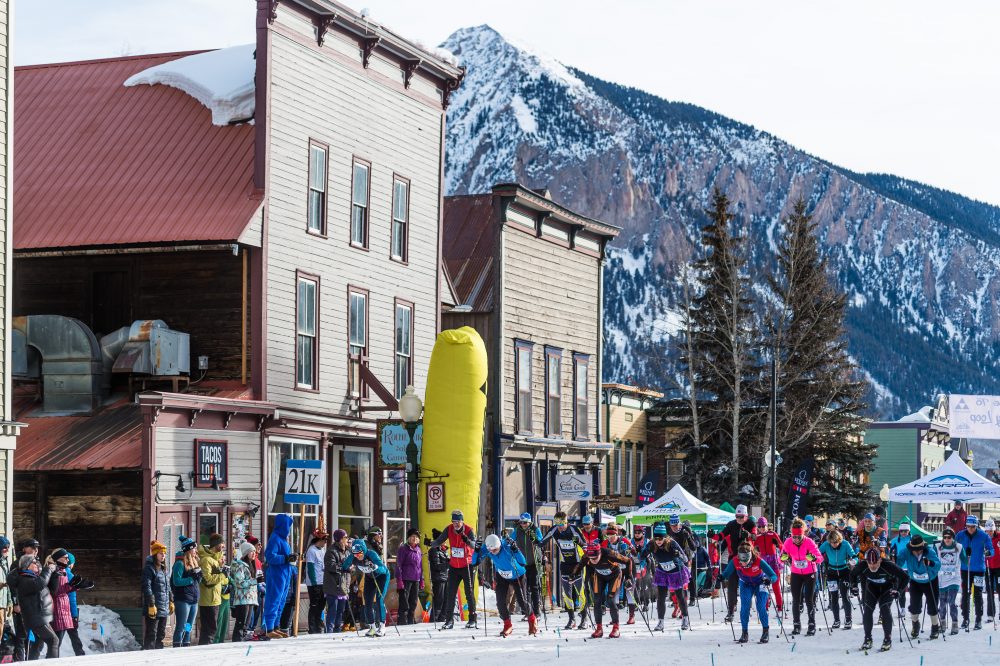
    In the heart of Crested Butte, racers take to the course at the start of the 2020 Alley Loop. (Photo: Xavier Fane/CB Nordic)

    I found myself struck by how much different this was from any event I had experienced. Competitive skiers there to ski fast and breathe hard blended amongst the larger population who were celebrating the simple joy of sliding on snow in a beautiful place with good company. 

    Director of Marketing and Development at Crested Butte Nordic Laura Puckett Daniels put it simply. “It’s ALL cross-sections of the whole community, not just nordic skiers in the nordic community.”

    What does this event do for the Crested Butte community and how does the town pull it off? More on that later, but first: the race. 

    Though both techniques are offered at the 21 and 42 k distance, it is perhaps a skater’s course, and this is where you’ll tend to find the larger and more competitive field. Case in point, the 42 k skate was won by Kyle Bratrud (SMS T2) for men and Rosie Frankowski (APU) for women. (You can listen to Frankowski’s thoughts on the event here.)
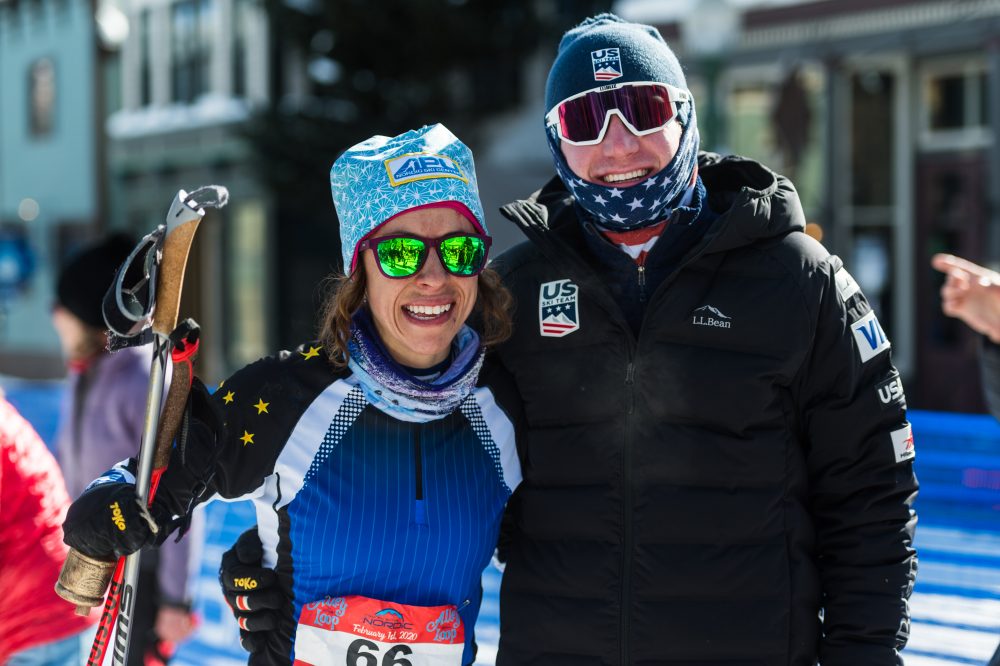
    Alley Loop 42-kilometer skate winners Kyle Bratrud and Rosie Frankowski. (Photo: Xavier Fane/CB Nordic)

    Shorter skis also make it easier to navigate the narrow alleys and bridges through town, and allow for top cruising speed through the gently undulating terrain found on the bulk of the course as it winds through the meadows of the valley floor.

    The course and profile of the 42-kilometer Alley Loop marathon in Crested Butte, CO. (Photo: cbnordic.org)

    If you do plan to kick and glide, be prepared to do a lot of double poling and kick double poling. With only one significant climb per lap (four total) on the 21 k course and two per lap (six total) in the full marathon, the Alley Loop has far less vertical than the Birkie, the Lake Placid Loppet, or the Craftsbury Marathon. Granted, you’re racing close to 9,000’, so your body and lungs will feel it regardless!

    Depending on how fruitful the winter has been, the snow in town can be a little dirty and gravely, and it’s good to consider the calculus of ski selection. Know that you may come away with a few dings in your boards from the roughly 1 k section in-town, but the vast majority of the course will be immaculate. If your race boards are due for a grind and the snowbanks indicate the generosity of Ullr, send it. 

    Anecdotally, we had a fairly unremarkable winter and the snowpack in the Elk Mountain region sits close to the median. The course was immaculately prepared, though the section in town did erode by the end of my second lap. I chose to race on an older pair of race skis, which accrued a few minor scratches — nothing in any way alarming. (Side note: the available wax service made these skis ripping fast and very fun to ski!) 

    Because of the street closures and parking limitations incurred by laying a race course through the streets of a small mountain town (and to take full advantage of pre and post-race celebrations), it can be very helpful to stay within walking distance of the start line or to rely on public transit.

    A narrow footbridge takes racers from town toward the Slate River Valley in Crested Butte. (Photo:Xavier Fane/CB Nordic)

    I had a wonderful stay at the Elk Mountain Lodge, just two blocks off Elk Ave, along with several other Alley Loopers. The home-cooked breakfast was delicious and the community style table around which it was eaten fostered conversation with the other skiers who had also traveled to Crested Butte for the event. Being so close to the start, it was also possible to get out for a warm up ski, then de-layer and stay warm inside the lodge until the last minute — totally clutch as temperatures had only reached the low teens by go time!

    One final note on the race. At the start of the 21 k, a race official noticed the all-male start line and invited any female podium hopefuls to take a spot either in the front of one of the many start lanes or to start between two lanes staggered just behind the front row. As the double pole start turns quickly into a sprint to the base of a steep climb, early positioning is important, and as someone looking to race near the top of the field, I greatly appreciated this nod. Kudos to the Crested Butte Nordic Counsel for looking out for and supporting fast women! (The 21 k skate was won overall by APU’s Becca Rorabaugh.)

    Back to the spirit of the Alley Loop, which is arguably the most compelling reason to make the trip. To better capture its energy and do justice to what it takes to pull off such a feat, FasterSkier spoke with head groomer Dean Davis.

    A sno-cat lays perfect corduroy and track through a sleepy alley. (Photo: Xavier Fane/CB Nordic)

    “It’s just so cool to groom your town,” said Davis. “That is something that is just so unique, that not a lot of cat operators get to do. I love that aspect of it.” 

    That’s not to say that the process is easy or uncomplicated. Davis says he loses sleep over the Alley Loop in the middle of the summer, despite working it for 13 years. Some of the course in town is prepared up to a week in advance, and some of Elk Avenue (the town’s main strip) is laid two nights in advance. But because the final steps close down access to homes and businesses, a large amount of work must take place the night before. 

    “That all just happens in one fell swoop on Friday night and my heart is pounding. The amount of stress I go through on that night and the weeks leading up is through the roof.”
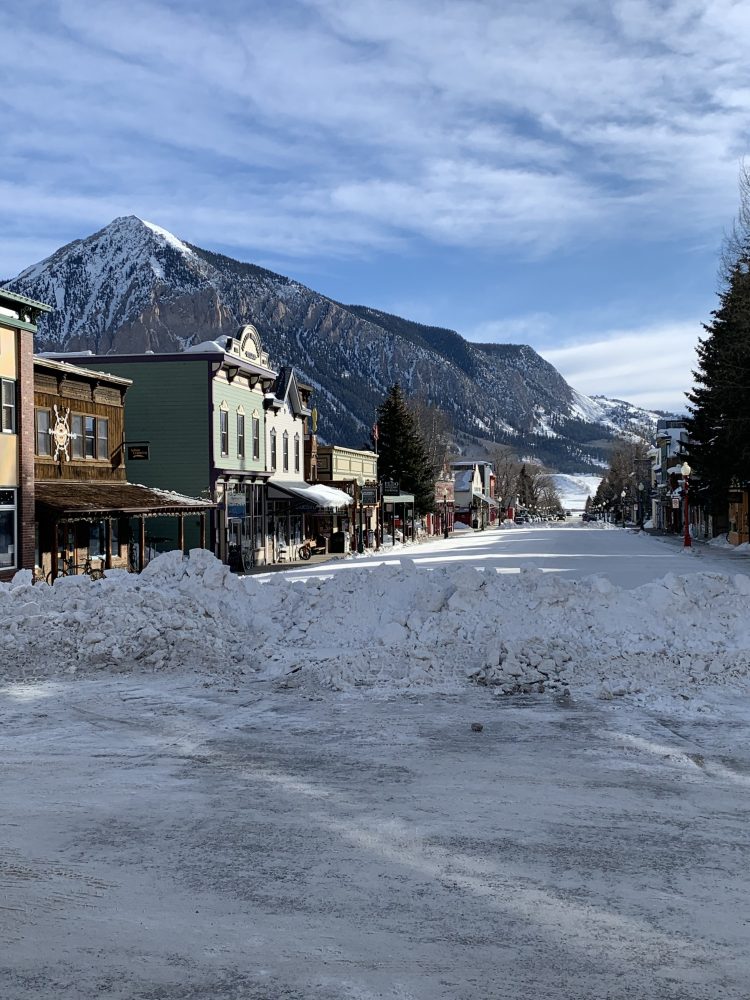
    Elk Avenue transforms from main drag to race course.

    The majority of the snow, which is taken from piles of snow that were stashed around town after being removed from the streets during storms, is laid using two loaders and a grader. Sno-cats make the final passes to groom and set track where possible. 

    This machinery has its handling well-tested through this process.

    “Our [sno-cats] barely fit down some of these alleys where there’s gas lines on both sides of you and there’s an electric line above you… I had one year, it was a pretty big snow year, where I was driving so close to a VW bug that was completely covered in snow that I was practically driving over it. Really, my track setter was just hitting the edge of the top of the roof even though there was two feet of snow on top. It didn’t hurt the car, but I had to be very aware of it.

    “I’ve had years where there is so much snow that I am driving through the alleys and looking into people’s second floor bedroom windows,” he laughed. “That’s kind of crazy”

    Aside from dodging obstacles, clear, frequent, and proactive communication with the town, its residents, and the local police department is essential to enforce street closures and parking restrictions. On top of other race preparation, the team at CB Nordic is going door to door two weeks before the race handing out reminders and placing them on parked cars. 

    Despite their best effort, the instructions are not always adhered to. This year, Davis estimated that an above-average 13 cars were towed. 

    What Davis loses the most sleep over, however, are the effects of Murphy’s law. His biggest fear is a sno-cat breaking down in the middle of the night.

    “You’ve just got to look out for what could get in your way. Anything from ‘cats breaking down to ‘do you have enough snow that year?’”

    Davis’ biggest fear is a sno-cat breaking down in the middle of the night. He explained that he has a local welder on call and ready to respond at any hour of the night, and that he is sure to stock up on hydraulic fluid, spare o-rings, and parts, which will hopefully remedy whatever issues that arise.

    Mechanical problems aside, it is always an eventful night. At 2 AM, it’s the juxtaposition of the grooming team hard at work and the debauchery of those who have stayed at the bar until closing time. Davis recounted being flashed, mostly by ladies, and multiple occurrences of someone (who may be well past the legal limit) trying to drive their car through the course, only to become stuck. 

    “It sure pisses me off because I have to go fix [the course] after they do it, but it’s always entertainment for me.”

    After surviving the late night shenanigans and setting a spectacular course, Davis likes to kick back with breakfast and a bloody mary at McGill’s Restaurant near the start on Elk Ave. In his words, he is “so psyched to be done [grooming] and can just watch the costumes go by.”

    The Jamaican bobsled team makes their way through the alleys of Crested Butte. (Photo: Xavier Fane/CB Nordic)

    For him, this is the true magic of the event.

    “For the most part, everybody loves it. People that don’t even do it come out just to watch all the crazy costumes. It really brings the community together on that day. A lot of people do it for the seriousness of the race, but most of the community just does it for the good times. The bacon stands in the alleys and the people rooting you on. People will set up whole parties in the alleys in back of their house — it’s just so fun to barbecue and listen to everyone laughing and having a good time.

    A different kind of aid station alley-side in Crested Butte. (Photo: Xavier Fane/CB Nordic)

    “I’m definitely grooming for the true racers, but the real fun of it for me is just to see all my friends just try to chug around the course. Some of them haven’t been on skis all year and they do the 5 k in a suit they can barely walk in.”

    As a parent himself, Davis finds that the kids races, in particular, tug at his heart strings. 

    “I love watching the kids just doing their best out there.”

    The Alley Loop offers a 1 or 3 k option for little ones. The kids events are seen off by Murray Banks, a CB local who became a motivational speaker after a robust career as a celebrated teacher and champion triathlete turned ski-racer. Banks is deeply rooted in the local cross country community and coaches both the youth and masters programs. 

    “He always leads the kids on in the morning and his enthusiasm is something to die for… his attitude is just so positive and the kids just love him. It melts me.”

    So whether you’re looking for a family-friendly weekend in the mountains, a pre-Birkie altitude camp and tune up race, or a rowdy weekend on snow with friends, Crested Butte has something for you at the Alley Loop. Put Saturday February 6th, 2021 on your calendar. I’ll see you there!
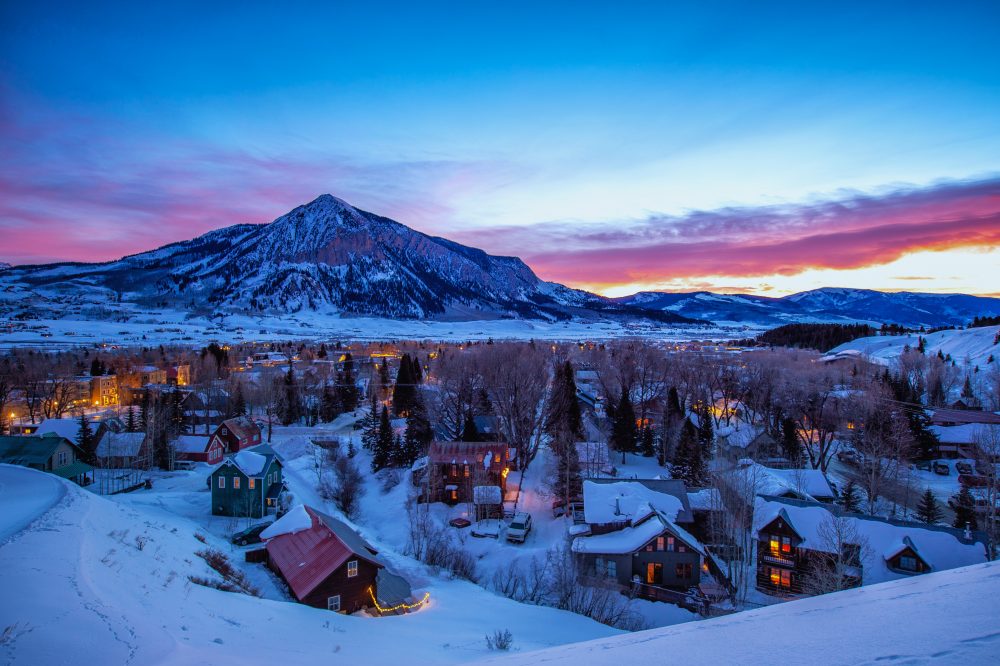
    Sunrise over Crested Butte on race morning. (Photo: Xavier Fane/CB Nordic)
  • The Worldloppet Cup Comes to an End; Ben Popp Discusses the Results of the Worldloppet Annual General Meeting

    The Worldloppet Cup Comes to an End; Ben Popp Discusses the Results of the Worldloppet Annual General Meeting

    On June 17th, an update was posted on the Worldloppet International Ski Federation website following the annual general meeting in Isafjordur, Iceland to announce the end of the FIS Worldloppet Cup series. While skiers will still be able to earn FIS points in each of the individual marathon races across the globe, the series will no longer be sanctioned by FIS, meaning cumulative points earned by the winners will no longer be totaled and there will no longer be an overall Cup champion each year. The Worldloppet Ski Federation believes that this will shift the focus away from the recruitment of elite skiers toward better serving the larger popular ski community.

    “In order to meet our vision of being the voice of popular skiing, we feel like we have to strengthen our focus on the popular skiers,” said Epp Pall, the CEO of Worldloppet in the announcement.

    Ben Popp (American Birkebeiner Ski Foundation courtesy photo)

    FasterSkier spoke with Ben Popp, the Executive Director of the American Birkebeiner Ski Foundation (ABSF), about the background of the Worldloppet Cup, the discussions that took place at the meeting and the impact this decision will have on the American Birkie and more broadly, on the Worldloppet. 

    The History

    Popp explained that twenty years ago, the Worldloppet Ski Federation was approached by FIS about running a marathon championship series, as FIS was responsible for running the shorter World Cup events. The FIS sanction did not include monetary resources, but Worldloppet accepted the proposal. It seemed to be an opportunity to unite popular skiing and elite skiing by having recreational skiers line up with World Cup level athletes at marathons around the world. 

    “The interesting thing about the Worldloppet is that it’s sort of the funding of skiing when you look at it,” explained Popp. “There are about 140,000 people that ski the different Worldloppet races a year that are paying full price for skis or watching [the World Cup] on TV. They really are the economy of skiing. So it was this concept of maybe this is the first step in marrying the elite World Cup skiers to the popular skiers, which are driving it financially.”

    However, despite a strong concept, the Worldloppet did not feel that the cup was achieving what it set out to do by taking that first step, partly due to the amount of money available to support the Cup. 

    “In concept it’s great, but in reality, the prize money is not that great,” stated Popp. “It varied anywhere between $25-40,000 euros per year based on how many teams were in it. Sometimes there were seven cup races, sometimes nine, so that fluctuated. And the reality was that it was a struggle to get athletes.”

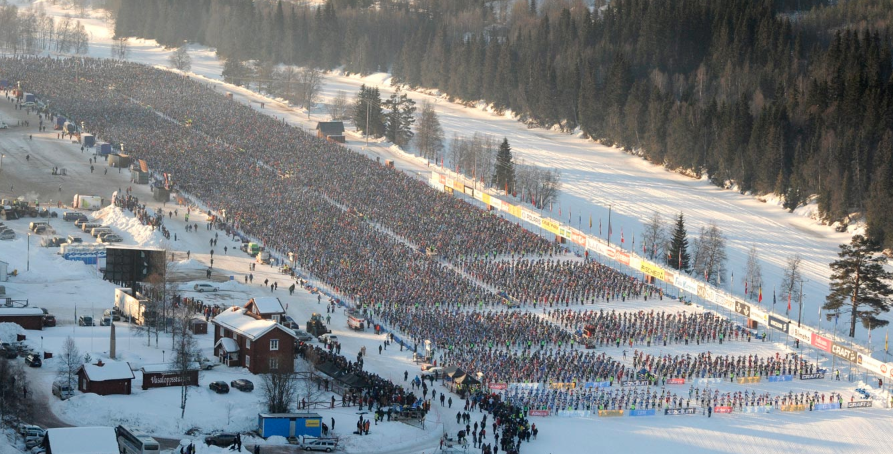
    12,500 racers participated in the 90-kilometer classic race at the Vasaloppet in Mora, Sweden in 2019. (Photo: vasaloppet.se)

    Because each race had a limited budget and trade teams were unable to fund athlete travel to the different races, the race organizers were couldn’t draw sufficient depth in the elite field, in particular, for the overall cup standings which were a cumulative result of multiple races. Last year, only four women raced four or more of the seven World Loppet Cup races, and only eight did so for the men. Like the World Cup, the winner of a race earns 100 points, 80 for second, 60 for third, and so on. Because of the lack of depth, an athlete who won one event would place in the top-10 in the overall, as was seen in the men’s results this year. 

    “So the competition wasn’t there, and I think overall, the cup was not doing what it was designed to do, which was to draw high-level athletes to the popular ski races to try to marry popular skiing with the best skiing in the world,” Popp explained. “So that was the premise and it wasn’t really happening.” 

    Because of this, the Worldloppet decided it would be best to reallocate the resources focused on recruiting elite athletes and issuing prize money into better serving the popular ski community. Popp described this as “an evolutionary time for the Worldloppet” and an opportunity to reconsider the purpose of the federation. 

    “FIS does a great job of managing and overseeing World Cup skiing at the highest level,” stated Popp. “Which is awesome. What is that the Worldloppet does? We’re really good at popular skiing and marathons where there are lots of people. So maybe our role is not so much trying to manage and somehow marry elite level skiers who are the best in the world to popular skiing. Maybe we should just be the voice for popular skiing and the resource for popular skiing. Whether that’s calendars or travel or whatever it is to make those events more accessible for more people to travel around the world and ski. Maybe that’s our role.”

    He added that some of this reevaluation reflects adapting to the needs of a more modern ski community. When the Worldloppet was started in 1978, there was little opportunity for popular skiing, air travel was more difficult, and access to the internet was limited. 

    “It was a great first step at creating opportunity for popular skiing,” said Popp about the inception of the federation. “Now, travel and information is much more accessible and easy. I think the shift from the Worldloppet standpoint is going to be a good one because it allows the Worldloppet to focus its energy and resources on what kind of things can we provide for popular skiers around the world that will enable them to ski more races. And to really bring that ski community together, similar to what FIS does for the World Cup level of races.” 

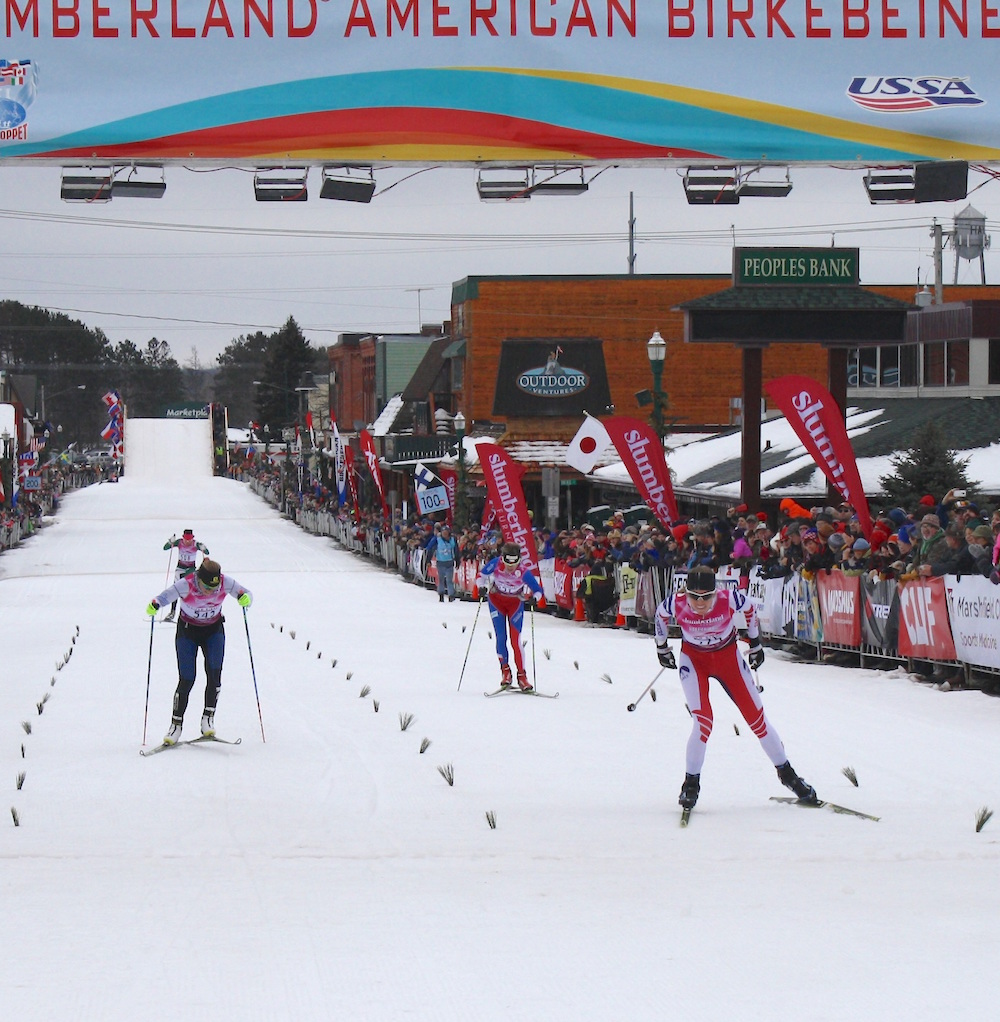
    Erika Flowers of the SMST2 Team (r) racing to third in the 2016 American Birkebeiner in Hayward, Wis., ahead of Italy’s Elisa Brocard (l) and Klára Moravcová of the Czech Republic in fourth and fifth, respectively. (Photo: Worldloppet)

    The Impact on the American Birkie

    As the American Birkebeiner has not consistently been a member of the Worldloppet Cup Series, the cessation of the cup does not have a significant impact. Popp explained that ABSF was spending about $10,000 per year to be a member of the series on the years they were included, which he thinks could be better used to recruit domestic skiers.

    buy temovate online

    “If the goal was to bring elite level skiers here, we’re better off using our dollars to pay the Kikkan Randall’s and Alex Harvey’s and those athletes to come,” he said. “Because they are what really draw our tie to the [North American] popular skiers.” 

    Popp illuminated that the majority of Worldloppet Passport holders are in fact from the United States. 

    “So that tells us that at the Birkie what we need to do as part of the Worldloppet is: how can we educate the American skiers or give them the information they need to go ski overseas?” he questioned. “Whether that’s at the expo or by using our distribution list. So the loss of the cup wasn’t so important so much as it helped tell us what the skiers might want or need.”

    Further Discussions at the Worldloppet Meeting

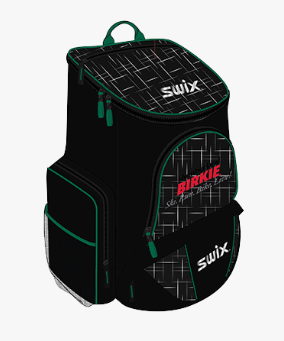
    Participants in the 2019 Birkie had the option of purchasing this reusable gear bag as part of the American Birkebeiner Ski Foundation’s green initiatives. (Photo: birkie.com)

    Apart from the FIS Worldloppet Cup decision, participants in the Worldloppet Annual General Meeting collaborated on other topics including green initiatives to make the Worldloppet events more environmentally friendly. In recent years, the ABSF has introduced a custom reusable gear bag manufactured by SWIX which is available for purchase at registration for Birkie events. This bag can replace the plastic bags previously issued to hold participants warm up clothing and additional gear that needs to be transported from the start in Cable to the finish in Hayward. 

    The Worldloppet members are considering designing a Worldloppet gear bag for the same purpose, which could be used at any Worldloppet event. Not only would this reduce plastic usage, it would also be another way to unite popular skiers participating in the races.

    Popp concluded that he walked away from the meeting in Isafjordur inspired by the unity in the goals of the Worldloppet Ski Federation, despite the drastic differences between the size of different ski communities or number of participants in events. The Ushuaia Loppet in the Southern Patagonia region of Tierra del Fuego, Argentina drew approximately 250 racers to its races, while the Vasaloppet which finishes in Mora, Sweden hosted over 12,500 skiers in the 90-kilometer marathon alone (see second photo above). 

    “You have this huge disparity of infrastructure, business structure, and all those things, and yet, it’s pretty unanimous when everyone gets together,” said Popp emphatically. “’How do we get more people skiing and racing and loving the sport, knowing that it’s really still a small fragment of the population?’ So it’s always really energizing to come away from the meetings with that sort of excitement and new or different ideas.”

    The start line of the Ushuaia Loppet, a 50-kilometer classic race in Tierra del Fuego, Argentina (Photo: ushuaialoppet.com/)
  • The Norwegian Birkie: Something You Just Have To Do

    The Norwegian Birkie: Something You Just Have To Do

    Stephanie Howe (left), Taylor Leach and Sarah Max (right) at the 2011 Engadin. (Photo courtesy of Howe)

    The XC Oregon skiers posted solid results at the Engadin Ski Marathon in Switzerland last weekend and are ready to take on the Norwegian Birkebeiner on Saturday.

    Now fully adjusted to the time change, the XC Oregon racers are excited to race from Rena to Lillehammer, 54 kilometers in challenging, exposed, open tundra terrain with a 3.5-kilo backpack. The venerable event that has been a staple on the calendar for almost 75 years.

    Brayton Osgood, 29, is coming off a solid performance at the Engadin last weekend where he was the top American and finished 24th overall, is excited about the Birkie and hopes to build on that experience on Saturday.

    “For the Birkie I have pretty much the same goals as I had going into the Engadin. I want to ski with the lead group until the race gets serious, and then put out a good effort from there to the finish,” Osgood said to FasterSkier, noting that at the Engadin, the only thing missing was enough juice for the last couple of kilometers.

    “So, if I can finish things off a little better than I did at ESM, I’ll be very pleased, but mostly I want to make it to the finish and have some good memories when it’s all said and done. I won’t say I want to have a good time out there, because that’s a pretty tough standard to live up to during a race,” Osgood added.

    (Article continues below the photo)

    16,000 racers annually enter the Norwegian Birkebeiner. (Photo: Inge Scheve)

    Something a skier has to do

    While Osgood has tried his hand at the Birkie before, his XC Oregon teammates Taylor Leach, Stephanie Howe and Sarah Max are new to the legendary race.

    “As a skier, the Norwegian Birkie is one of the races you have to do in your lifetime,” Howe said.

    With her previous marathon results, including winning the women’s freestyle Gatineau Loppet in February, Howe has landed herself a spot in the FIS elite wave. That certainly adds some performance pressure, but Howe still wants to enjoy the experience.

    “I hope to have fun! I am starting in the elite FIS wave, so I’m a bit nervous. It should be fun though, I love climbing, and I hear there should be plenty of that. The biggest challenge for us will be to select the correct skis and wax,” Howe explained.

    Less pressure

    Leach and Max said being new to the event adds some uncertainties, but also cuts down on the expectations and self-inflicted performance pressure.

    “I have never done the Norwegian Birke before, but I have wanted to do this race for a long time. so I am really excited, a little bit nervous because it seems like a challenging course. As I have dedicated most of my winter to coaching, I do not have many expectations. My goals are to ski technically well, have a smart race and enjoy the experience,” Leach said to FasterSkier.

    The same is true for Max.

    “I’ve never done the Birkie. I don’t have much in the way of expectations, which is the beauty of doing a race that is completely unfamiliar,” Max said.

    Additionally, the Norwegian Birkebeiner will represent some extra challenges for Max, who is fairly new to classic skiing. Given that the course covers 54 kilometers of varying, exposed and challenging terrain, Max is hoping for good kick from Rena to Lillehammer.

    “This is only my fourth or fifth classic race ever. My hopes are to have good kick throughout the race,” Max said.

    (Article continues below the photo)

    Being new to classic skiing and new to the Norwegian Birkebeiner, Max (XC Oregon) is hoping for wax conditions a little less tricky and frantic than these. From the start at Rena in 2007. (Photo: Inge Scheve)

    A legendary race

    Since the inaugural Birkebeiner race in 1932, the Norwegian Birkie has only been cancelled seven times, most of them due to World War II (no race in 1941, 1942, 1943, 1944, and 1945).

    But in 2007, when the XC Oregon trio Brayton Osgood, Marshall Greene and Zach Violett, attempted to cross the mountains, the Birkie was cancelled due to blizzard conditions, high winds and literally no visibility in the open. The racers in the first couple of waves, which were allowed to start, were called down from the mountain and brought back to the start at Rena.

    XC Oregon's Birkie crew in 2007: Zack Violett (left), Brayton Osgood, and Marshall Greene (front). They were turned around early. (Photo: Inge Scheve)

    That first wave in 2007 included the XC Oregon skiers, who said they encountered head winds so strong that it was hard for even large skiers to make headway into the wind, let alone stay on the tracks that quickly disappeared from windblown snow on the tundra.

    In 1948, the owners of the event could not agree on whether to develop the Birkie into an elite competitive race or focus on participation and recreational skiers. The race was not held, but the owners worked out their issues and now the Birkie is a mass-participation event, maybe the largest and best-known ski race in the World.

    The lure of the marathons

    For Leach, 25, the European marathons represent crowds and atmospheres unmatched anywhere in North America.

    “The big European marathons are a different experience to racing the US, there are so many people. Even our biggest race, the American Birke, is not even close to the size of many of these races. Although when it comes down to it, racing is racing, regardless of where you are,” Leach said, explaining that as a junior coach with the Mount Bachelor Sports Education Foundation in Bend, she doesn’t have the opportunity to do many races for herself in the meat of the season.

    “The Engadin and the Norwegian Birke were the only races that I was planning on doing this year, I did get to race at Crescent Lake a few months ago and I may be able to race the Great Nordeen but these European races were really the focal point of my winter,” Leach explained.

    For Max, 36, now a veteran of the European marathon circuit, the European marathons have become the main focus of the season. But equally the overall experience is easily just as important as the race aspect.

    “I’ve done about half a dozen European marathons now, and while I consider them my main focus, the races are really just a good excuse to travel around, meet interesting people and eat euro breakfasts,” Max said to FasterSkier.

    Stephanie Howe won the 2011 Gatineu Loppet (Photo courtesy of XC Oregon)

    For Howe, 27, the European marathon races are the reward after a long domestic season, and the European racing experience is icing on the cake.

    “They are kind of a bonus at the end of the season. I didn’t have a lot of expectations since I haven’t raced in Europe before. I’m also still new to the marathon distance, but I am learning. In terms of overall season, these races were something I was looking forward to all year,” Howe said.

    Return on Investment

    In Downing’s opinion, ski marathons are a great return on investment for athletes who can’t do a lot of travel to follow the USSA SuperTour or Canadian Nor-Am series, but want to race a stacked field. For many of the XC Oregon racers, the marathons serve as motivation, variety and a season goal.

    “For any athlete that isn’t interested in the SuperTour-format races and prefer longer events with guaranteed field strength, the American Ski Marathon Series domestically and World Loppet internationally are the way to go. Particularly for female athletes, or any athletes with limited travel time, the value of the marathon circuits is super hard to beat,” Downing said.

    For XC Oregon as team, marathons are one more way get exposure and experience.

    “What we (as a team) are getting out of the World Loppet starts is keeping athletes motivated and excited plus many great to good results over the years,” Downing said to FasterSkier.

    Downing lists off that just this season, XC Oregon has placed four female athletes in the top ten at World Loppets: Evelyn Dong third place at the American Birkie, Kristina Strandberg’s Engadin Ski Marathon eighth, Sarah Max’s fourth at the Gatineau Loppet freestyle and Stephanie Howe’s first place in the Gatineau Loppet classic.