From the FasterSkier archive — posts syndicated from athletes’ and coaches’ own blogs between 2004 and 2012, kept online as published. Current coverage is at fasterskier.com.

Tag: marathon

  • Sovereign2SilverStar Ski Marathon: Building a New Event

    Sovereign2SilverStar Ski Marathon: Building a New Event

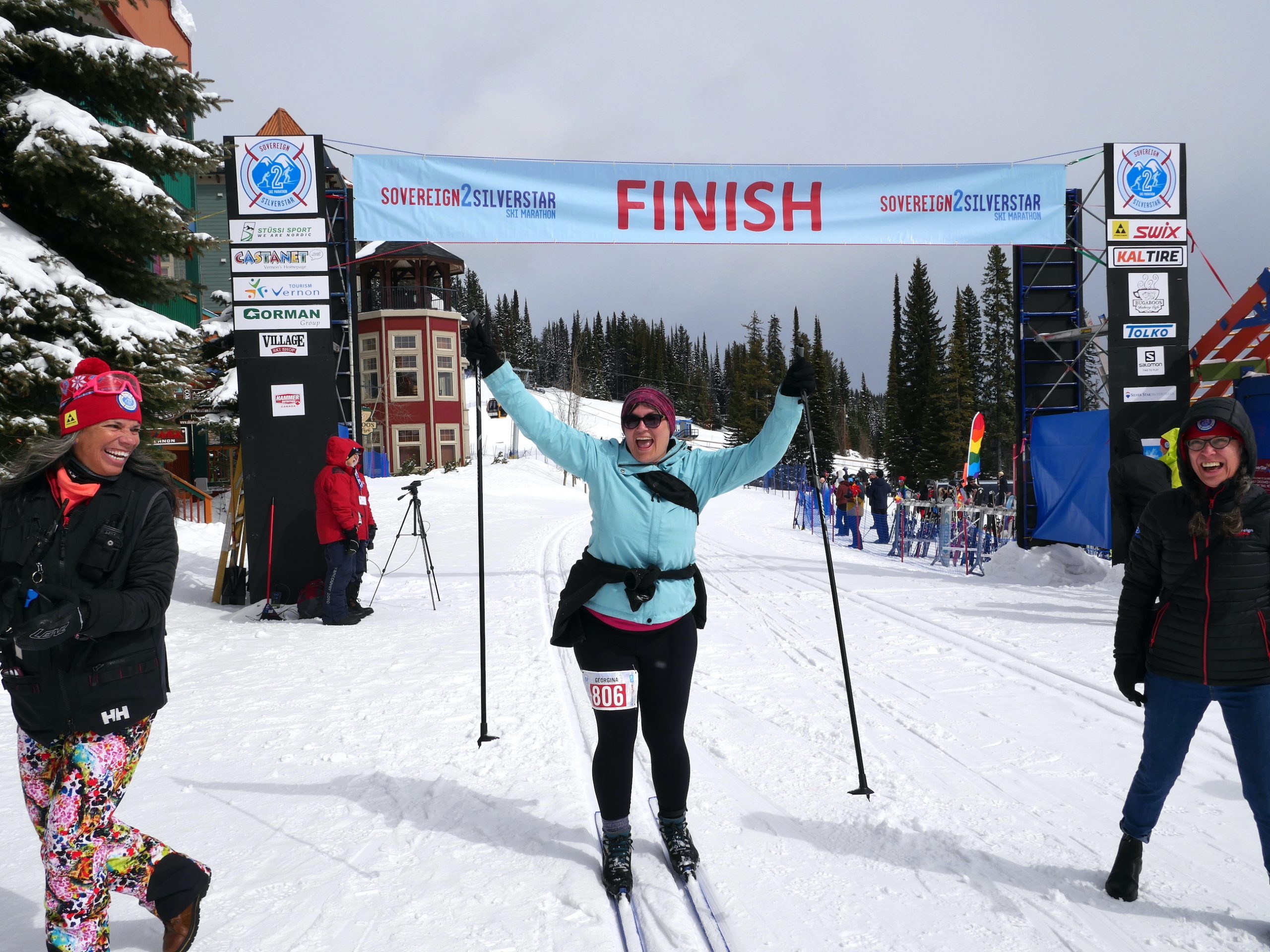
    Finishing with a smile at the Sovereign2SilverStar Ski Marathon (photo: Peggy Hung)

    Disclaimer: The author skied both days and was one member of the large S2S organizing committee. This may seem like a conflict of interest, but also allows a more detailed look behind the curtain at how a new event was built.

    Click here to learn more about the origins of the Sovereign2Silverstar Ski Marathon, and to take a look at the successful first year of the event.

    ***

    The motto for S2S was ‘finishing is winning’, a phrase that also served as the touchstone for the bigger decisions.

    The members of the Organizing Committee (OC) had a lot of experience hosting ski races, from local loppets to Canada Cup/SuperTour weekends to World Cups, and even a combined Nationals plus SuperTour Finals that got cancelled by a pandemic in 2020. A destination event is a different beast, however. High-level events under the FIS umbrella don’t need marketing: athletes follow the events calendar. Local loppets are advertised with a few posters at the neighbouring ski areas. FIS events have required distances, homologated courses, and rules for everything.

    A destination event, by definition, has to entice skiers to travel. In the midst of a pandemic, this is not as easy as it once was, even to a destination with quality late-season snowpack and a mountain backdrop. The question then becomes, ‘What can be done to make the event attractive?’ Immediately followed by ‘how can we keep the participants, volunteers, and local community safe?’

    Year 1 went well, with lots of smiles generated.
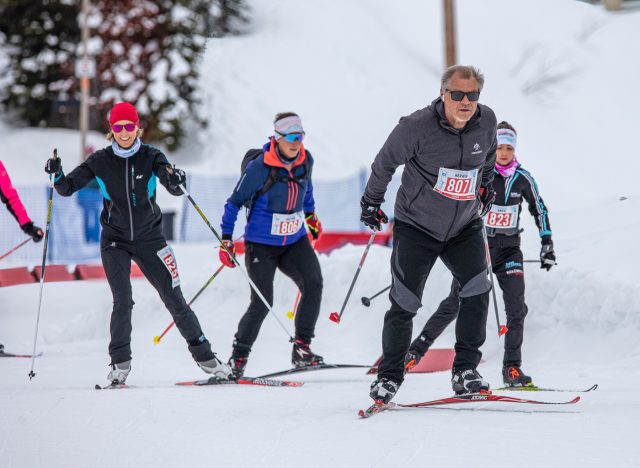
    One of the 21km waves heading out of the stadium on S2S Skate day. Look closer for a mix of ages, a pair of headphones, and a backpack. (photo: Robert Conchie)

    Which skiers?  

    The club already hosts high level events in nordic and biathlon, which led the OC to a focus on inclusion for the new event.

    To get a larger number of skiers, it is necessary to look outside the group of committed competitors and attract recreational skiers. Thus, the motto ‘Finishing is Winning’ was chosen to both appeal to non-racers but also give the OC a vision to follow.

    The motto led to a list of goals: Inclusive. No time limit. Small waves. No technically difficult course features. A minimum of climbing, but enough to discourage classic racers from double poling on skate skis.

    When?

    One of the original goals was to show the trail system at its best, which means late March and early April. March is most often the big snowfall month and has been the choice for the annual 30km for two decades. The elite skiers always visit in early December or late November for Continental Cup races. As a result, generations of racers have visited just before the skiing gets really good. 

    The OC wanted to add to the season calendar instead of competing with existing events. Choosing the same weekend as the American Birkie, for example, would limit future growth.

    The early 2021/2022 international calendar had no events for April 2nd and 3rd.

    Using historical data, there is a 70% chance of blue hard wax skiing on the first weekend of April. Unfortunately, history doesn’t account for climate change and the increasing risk of extreme weather. In 2021, the Vernon area set new records for lowest precipitation in March, April, and May, based on data going back to 1904. In June, heat records were broken all over BC and Washington state. Then, an atmospheric river in November washed away all four highways to Vancouver and dramatically thinned the snowpack.

    With the extreme 2021 weather as a backdrop, there was some nervousness about hosting in April. Club members are usually committed to cycling and paddling by mid-March. An entire web page was devoted to showing what April skiing looks like.

    The final choice also became an effort to change perceptions. In a year where many people were limiting travel and pandemic rules changed monthly, success would depend on persuading local skiers to keep skiing into April. Early data suggests there were more skier visits in late March and early April than previous years.

    Shortly after the OC committed to the dates, the Fossavatn moved to the same weekend and in December the Alex Harvey Classic was announced. The worldwide calendar is crowded, and there really aren’t any ’empty’ weekends.

    Course Design

    At this venue, a long flat double pole route is simply not an option. Sovereign Lake is a small pond and the flat trail around it is less than 1km long. Spectacular mountain views like Canmore or Toblach require nearby mountains and the twin ski areas are just part of the Interior Plateau that was eroded less after the glaciers receded. What the OC does have is twisting, rolling trails through a coniferous forest, tonnes of snow, and a few beautiful viewpoints.

    Many of the OC had skied in events with fast downhills, wild corners, road crossings, and chaotic starts. To be inclusive to newer skiers, the course would avoid tight switchbacks, avoid steep climbs, and be relatively flat.

    Starting in the Sovereign Lake stadium and finishing on Main Street in SilverStar village were the main selling points. With that decided, the Alder Point loop was essential, with views of the Monashee mountains on one side and views of many alpine runs busy with skiers on the other. That decided, it was a matter of building a route with no repeats, no technical sections, a moderate amount of climbing, and exactly 42km long.

    There were many candidate routes that met the requirements, but there was also a 40km route that was more fun to ski.

    After some debate, the OC decided that the fun 40km course fit the ‘Finishing is Winning’ motto best. The first 10km is a flat warmup before the climbing starts. There are three ‘long climb’ sections with about 70m gained over 3km. The finish is a gentle 3km downhill leading into a ‘feature’ finish onto Main Street.

    Exact distances can be important. While every long-time skier has done events that are very different than advertised, some participants want precision. And precision usually means that their watch or phone records the exact advertised numbers.

    There are two common causes of GPS accuracy errors: mountains and trees. As the venue is well equipped with both, the OC quickly learned that only the homologated loops had accurate mapped distances. A sub-team was recruited to get more accurate map data using LIDAR data.

    Scanning through Strava on April 3rd, most of the 40km skiers posted distances between 38km and 41km. The measured elevation gains varied even more. 

    The 21km course splits from the long course at the 5km point, heading directly to SilverStar while the 40km skiers ski a 17km loop to arrive at the same intersection from another direction. The 21km course also skips the final climbing section up Howie’s loop and on the Bergstrasse alpine run.

    Making the 21km a subset of the 40km course and using the same course both days resulted in a huge reduction in volunteer effort.

    Small Waves

    Many of the OC had skied in major events where there were queues at the first pinch point. To be inclusive to non-racers who aren’t used to skiing in a pack, the decision was made to spread the skiers out so they could watch the scenery instead of the butt of the skier in front. The final choice was a series of waves, spaced three minutes apart.
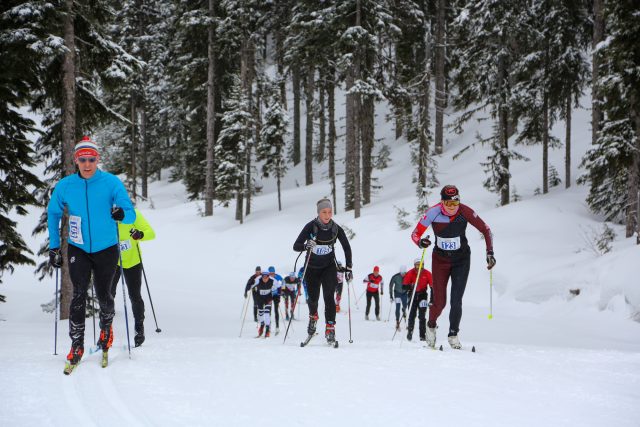
    One of the larger packs 4km into the 40km. (photo: Paul Pickard)

    The largest wave had 42 skiers and it spread out quickly. The telephoto and steep hill combine to compress the B wave group above, which is actually spread out over about 100m of the short climb.

    The first pinch point on the 40km course is at 21km, where the packed trail is only 6m wide and there is just enough room to skate two abreast. The lead pack on classic day was three skiers here, mostly because the short climbs in the Zumas tend to explode packs. 

    A few skiers didn’t like the small waves while most participants loved the space to ski at their own pace. The elite skiers were indifferent to wave size, possibly because they would immediately ski away from any size of group.

    Working Together 

    SilverStar Mountain Resort is a commercial alpine ski area answering to shareholders, with trails for nordic, snowshoeing, and fat biking. Sovereign Lake Nordic Club is a 3,200 member ski club set in a provincial park, answerable to the nordic skiing members and BC Parks. Twin nordic areas to be sure, but fraternal not identical.  

    The differences between the areas can sometimes make it challenging to reach win/win consensus, but the desire to work together gets there in the end. 

    The local community has dreamed of a joint nordic event for years. In 2021, three people came up with a vision that both areas could say yes to, resulting in the birth of the 50/50 event committee. That name was abandoned, as it was quickly apparent that any 50km course would be more epic than inclusive (see an example course profile here).

    The local snowmobile club loaned us 500m of one of their trails for five days, allowing the removal of two tricky hairpins and giving locals a new experience.

    Learning From Others

    The US Birkie and the Gatineau OC’s provided example budgets, registration advice, examples of what can go wrong. And then each event provided a top OC volunteer to spend an hour answering questions from the S2S OC. The nordic skiers on the OC thought this level of assistance was extremely helpful, but not unexpected. The alpine skiers on the OC were surprised that major events would actively help their ‘competition’. 

    Cortina-Dobbiaco is a good example of a fun event: point to point, one day for each technique, and a big effort to create an experience beyond the race.

    The Vasaloppet is an example of how to grow big, but also an example of crowd management. 

    Other events the OC took ideas from include the Birkenbeiner, Engadin, Hoppet, Merino Muster, Moonlight Classic, and Ski To The Sun.

    The decision to join the Visma Ski Classics challenger series was a surprise. One of the Cortina-Dobbiaco OC had explained the economics of the ProTour series, which put that idea on the year six or later list. Then it was discovered that the chief of volunteers knows every skier in every country, which led to a Norwegian friend of his making a pitch for the Ski Classics Challengers series and a cost-effective way to connect with a worldwide group of skiers who like to build vacations around ski events.

    The Region

    Vernon is an unusual place. The three lakes are just under 400m above sea level. The mountain bike trails at Kalamalka lake sprawl up the east ridge to 1,400m. Some years, the lower mtb trails are good all winter. Other years, the snow level is lower and bikers are waiting for April for the trails to dry. The nordic trails are higher, ranging from 1,500m to 1,915m. Skiing starts in October, with grooming beginning in early November. In April, the grooming stops when the supply of skiers runs out. In non-pandemic years, the Spring Fling snow camp in May provides an opportunity to start the new training year on groomed snow. SLNC and SilverStar have a combined 105km of nordic trails, groomed daily.

    Vernon is a ‘small town’ of 40,000 people with strong sports communities and a high proportion of retirees. Silverstar village has a smaller population and an even larger sense of community. Some of the volunteers that committed hours as course marshals on the alpine run crossings are alpine skiers who have never tried nordic skiing.

    Charitable Partner

    Our target audience of adults who travel to ski events could be called privileged. With so many skiers who appreciate what sport has given them, the OC wanted to find a charity that could give sport to others. KidSport is an organization that helps financially disadvantaged youth participate in organized sport and the local chapter was a good fit for our goals.

    The first year of any event is financially challenging and breaking even can be difficult. With an unknown event during a pandemic that wasn’t ending as quickly as hoped, there was uncertainty around raising a significant amount of money for the cause. Thanks to strong support from sponsors, volunteers, and skiers, the event raised $8,000, about 20% of the local division’s annual budget.

    It turns out that partnering with a charity makes it easier to attract sponsors and volunteers, an unexpected but welcome benefit.

    Promotion

    There is a popular quote: ‘if you build it, they will come.’ A more useful version would be ‘if you invite people, they will come.’
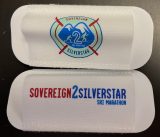
    A good logo and wordmark means the swag looks good.

    Partnering with an alpine ski area comes with some significant advantages here. SilverStar has a marketing team with skills far above what is common in the North American nordic community. A stunning logo, word mark (that ‘text’ brand image), event colour scheme (based on both areas’ existing colours), and a branding document allowed the OC to present a consistent and attractive package to skiers, volunteers, and sponsors.

    While ‘branding’ has always been an essential element in creating a successful business, it is equally valuable in building a new event. Many of the participants commented on how much this first event felt ‘organized’ and ‘polished’. A big part of that comes from providing a good athlete experience, but the polish is a direct result of that branding document.

    Volunteers

    Last on the page, but not last in importance. Over 250 volunteers worked tirelessly to bring energy and enthusiasm to the event day experience. Dozens of skiers made the effort to find someone wearing an ‘OC’ bib to talk about the atmosphere generated by the volunteers.

    How much did the OC value the volunteers? When the financial team had to make hard choices to be ready for a last minute cancellation by any of three levels of government, one of the expenses eliminated was a toque for each participant. Because if you spend all the entry fee money in advance, how will you provide refunds?

    The Volunteer team worked with one of the sponsors to give every volunteer a toque (a toque is a ski hat to Americans, a beanie to Brits). Thanks to supply chain constraints we all are living with, the sponsor had to pay the expense months in advance. Another sponsor provided food and drink for a volunteer party on Sunday afternoon. Many of the elite skiers and past Olympians known to FasterSkier readers made the effort to connect with the volunteers at the party.

    In the end, the volunteers are what brought smiles to the participants faces. The event will need those people next year, which means showing volunteers the love is one of the biggest steps towards a successful second year.


  • Skiers Running Fast: Four Skiers Break 3 Hours in NYC Marathon

    Skiers Running Fast: Four Skiers Break 3 Hours in NYC Marathon

    https://www.instagram.com/p/B4asgDrgDRA/

    FasterSkier previously reported on four boldface names, former Winter Olympians all, who were planning on racing the 2019 New York City Marathon: Brian Gregg, Kikkan Randall, Ida Sargent, and Liz Stephen. Gregg had announced plans to run a 2:40 to 2:45 marathon. The three women were all planning to break 3 hours. All four runners met their goal.

    In chronological order:

    Brian Gregg logged an official time of 2:44:30 (all times discussed in this article are chip times; in a field of 50,000, it takes even top-1,000 finishers some time to reach the starting line, making the gun time somewhat unfair), meeting his goal with 30 seconds to spare. He was 336th among 30,000-plus men, and 360th overall. He went through the halfway mark in 1:19:37 before slowing somewhat over the final miles.

    Kikkan Randall crossed the finish line in 2:55:12, good for 51st woman (out of nearly 23,000 women) and just inside the top thousand overall (990th). She exhibited textbook pacing, recording a half-marathon split of 1:29:09 before speeding up over the final miles. Her slowest mile after the 20-mile mark was mile 22, which took her 6:41. She ran mile 26 in 6:21, and the final 0.2 miles at a 6:18 pace.

    Liz Stephen ran nearly the entire race with Randall and Sargent; she and Randall had the same time through mile 25. At that point Randall pressed ahead slightly, putting 25 seconds on her friend and teammate by the finish line. Stephen ran mile 26 in “only” 6:35 en route to finishing in 2:55:37. Stephen was 55th among women and 1,031st overall.

    Ida Sargent ran with Randall and Stephen through mile 22 before dropping off the pace slightly. She finished less than two minutes back of Stephen in 2:57:22, good for 75th woman and 1,209th overall.

    New York Road Runners reports that the average finishing time for the 2018 NYC Marathon was 4:40:22.

    Among Randall’s copious media appearances in the days leading up to Sunday’s race, she appeared on Ari Ofsevit’s BirkieGuide.com Podcast, along with Brian Gregg, early last week. Gregg at one point discussed his transition to running for the marathon buildup, then frankly observed, “Running is hard.” Randall concurred, “Amen!”

  • Olympic Tidbits: Canada’s Whitten 7th in Cycling TT; Kristina Valjas 9th in Beach Volleyball (Updated)

    Olympic Tidbits: Canada’s Whitten 7th in Cycling TT; Kristina Valjas 9th in Beach Volleyball (Updated)

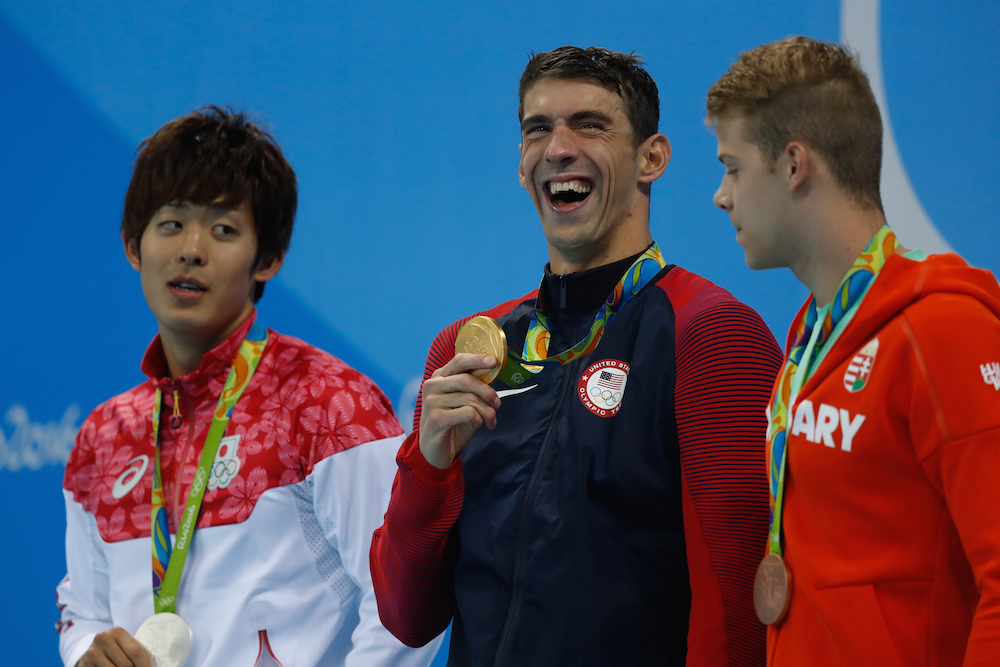
    American Michael Phelps after winning his 20th Olympic gold medal in the 200-meter butterfly stroke. (Photo: Wikimedia Commons/Fernando Frazão/Agency Brazil)
    American Michael Phelps after winning his 20th Olympic gold medal in the 200-meter butterfly stroke. (Photo: Wikimedia Commons/Fernando Frazão/Agency Brazil)

    Note: This Olympic roundup has been updated to include the results of Czech skier Eva Vrabcová-Nývltová (who placed 26th in the Rio Olympics marathon on Sunday) and Kristina Valjas, Lenny Valjas’s sister (who finished ninth in the Olympic beach volleyball tournament on Saturday). 

    Vrabcová-Nývltová 26th in Marathon

    In her first Summer Olympics, Czech World Cup skier Eva Vrabcová Nývltová placed 26th in the women’s marathon on Sunday in Rio de Janeiro, Brazil, finishing in 2 hours, 33 minutes and 51 seconds (9:47 behind the winner). Kenya’s Jemima Sumgong won it in 2:24:04, outlasting Bahrain’s Eunice Jepkirui Kirwa by 9 seconds, while Ethiopia’s Mare Dibaba took bronze in 2:24:30.

    Three Americans placed in the top 10: Shalane Flanagan (6th), Desiree Linden (7th) and Amy Cragg (9th).

    Valjas Represents Canada in Beach Volleyball

    There’s Olympic blood in the Valjas family. This summer, Kristina Valjas, the older sister of Canadian national-team cross-country skier Lenny Valjas, qualified for her first Olympics in beach volleyball in Rio. And on Saturday, Aug. 13, her run with teammate Jamie Broder ended with a match against another Canadian team, Sarah Pavan and Heather Bansley.

    After what was dubbed the ‘Clash of Canadians’, Pavan and Bansley advanced to the quarterfinals with a 2-0 win (21-16, 21-11) over Valjas and Broder. Valjas and Broder went 2-1 in the preliminary round and end up ninth in the Olympic tournament overall.

    At 6-foot-2, Valjas is two years older and a few inches shorter than her 6-6, 27 year old brother. Pavan, her competitor on Saturday, is 6-5 and outreached Valjas.

    Fourcade on Phelps

    Michael Phelps is an inspiration to Martin Fourcade. That’s what the 10-time world champion, two-time Olympic gold medalist, and five-time defending overall International Biathlon Union (IBU) World Cup champion told Le Parisian this week. Fourcade, 27, said he is hooked on watching Olympic swimming and has “tremendous admiration” for the 31-year-old Phelps, the most decorated Olympian of all time with 26 medals, 22 of which are gold.  What does he like most about him? His story of renewal. “It’s impressive,” Fourcade said, adding that he likes Phelps’ jovial demeanor.

    Whitten Seventh in Time Trial

    Tara Whitten (Photo: Canadian Olympic Team)
    Tara Whitten (Photo: Canadian Olympic Team)

    Former Canadian national cross-country skier Tara Whitten, of Calgary, placed seventh in the women’s Olympic cycling time trial on Wednesday in Rio de Janeiro, Brazil. Whitten finished the 29.8-kilometer course in 45:1.16, 34.74 seconds behind winner American Kristin Armstrong (who won her third-straight Olympic time trial).

    “A medal was the goal but I’m extremely proud of my 7th place finish yesterday,” Whitten tweeted.

    Whitney’s compatriot, Karol-Ann Canuel of Gatineau, Que., placed 13th.

    “When I crossed the finish line, I realized that [Whitten] was tentatively in first place, and that I was third,” Canuel told the Canadian Press. “She cut about one minute to my time, so I said to myself: ‘Wow, Tara might make an upset.’ I think she was happy with her performance and she was feeling great. Good for her.”

    Whitten, 36, is a three-time world champion and two-time Olympian in cycling. At the 2012 London Games, she helped the Canadian team to bronze in the women’s team pursuit and placed fourth in the omnium (a multiple-race track cycling event). Earlier this year in March, she was injured while inspecting the road course in Rio when her bike collided with the back of a bus. She was knocked unconscious and broke a bone at the base of her scull, according to a University of Alberta article. Despite her training interruption and subsequent delay in being named to the Canadian Olympic team, Whitten made the cut and returned to Rio.

    Before her career as a cyclist, Whitten was a national-team skier and silver medalist at the 2003 Nordic U23 World Championships. She reached the 2005 Nordic World Championships, but missed qualifying for the 2006 Winter Olympics the following year. In 2007 at the age of 27, she became a competitive cyclist and captured her first world championship medal in 2009. This past June, she earned her PhD in neuroscience from the University of Alberta. According to the Canadian Olympic Team website, she’ll be looking for a post-doctoral position after the Rio Games.

    Nordic Nations Lead Medals Per Capita

    Check out MedalsPerCapita.com, and you’ll likely notice a trend: three of the top five countries are Nordic countries. Computer scientist Craig Nevill-Manning has tracked and ranked the world’s nations by how many medals they’ve won per capita since 1896, and Finland and Sweden are at the top with 17,904 and 19,649 people per medal, respectfully. Denmark is fourth (after Hungary) with 31,176. Norway is just outside the top five with 33,595 people per medal. When ranked by gold medals specifically, Norway ranks fifth, with Finland and Sweden are first and third, respectively.

    “The main reason the Nordic nations have been so successful in the Olympics is the same reason many argue they’re successful in other domains: They’re tiny countries,” Business Insider reporter Chris Weller explains. “One gold medal translates to a much greater medal-per-capita count in Finland (population: 5.4 million) than it does in the US (population: 313 million).

    “To put the domination in perspective: In order to match Finland’s medals per capita, the US would need to have earned an additional 15,000 medals throughout its Olympic history — a mind-boggling, if impossible achievement given that Medals Per Capita totals its current medal count at 2,401.”

    But population aside, Nordic countries have a history of being extremely successful at the Olympics. Business Insider points out that Finland, with just 1.6 percent of the U.S. population, has earned 12.5 percent of the U.S.’s total medal count. “That over-representation is likely a testament to the snowy Northern European countries’ strength in winter sports,” Weller writes. “They do their best in cross-country skiing, ski jumping, and speed skating.”

    At the Rio Games, Denmark is currently 13th in the medals-per-capita count, Sweden is 15th, and Norway is 22nd. Finland has yet to place. Among other skiing nations, Slovenia is first, Kazakhstan is 10th, Slovakia 11th, and Switzerland 12th.

  • Sisu Ski Fest Announces Three New Events for 2014

    The SISU Ski Fest is excited to announce a new partnership with Milje’s Ski Trails for the 5th annual SISU Ski Fest held on January 11th 2014.  In a continuing effort to improve and grow the SISU Ski Fest, we will now offer three snowshoe races at Milje’s Ski Trails in Wakefield, MI.

    “Adding these three new events, on top of our already impressive list of events, makes the SISU that much bigger and allows the SISU to involve more of the community, encompassing the whole Gogebic Range,” said Chris Whitburn, Media Consultant for the SISU Ski Fest.

    Greg Miljevich, owner and operator of Milje’s Ski Trails, had this to say when asked about hosting these exciting new events: “Milje’s Ski Trails is proud to host the inaugural snowshoe race of the SISU Ski Fest.  We are excited to showcase our unique and beautiful trail system and welcome everybody from the leisurely walkers to the serious snowshoe sprinters.  The event includes a 2K, 5K and 10K timed races which will guarantee an exciting finish.  We look forward to help promote a healthy lifestyle of outdoor silent sports in the beautiful Western Upper Peninsula.”

    Look for more information and exciting news from the 5th annual SISU Ski Fest coming to Gogebic County January 11th 2014 in the very near future.

    About SISU SKI FEST

    The SISU Ski Fest (SSF) was chartered in 2010 as a 501(c)(4) non-profit organization dedicated to promoting silent sports with emphasis on cross-country ski racing and generating economic activity in the Ironwood area.

    The SISU Ski Fest is comprised of 5 ski events, the 42K SISU Marathon, 21K Heikki Lunta Half Marathon, Taste N Tour, 3K & 5K Junior SISU and the 2K Lapset Loppett; and 3 Snowshoe events:  2k, 5k, and 10k timed races. Go to www.sisuskifest.com for more information and contact information.

  • Counting Down: 7 Days to a Marathon

    Counting Down: 7 Days to a Marathon

    Brian Gregg
    Brian Gregg

    Counting Down: 7 Days to a Marathon

    Brian Gregg is a member of the CXC Team Vertical Limit.  Equipment Sponsors: Vertical Limit apperal, Salomon skis/boots/bindings, Toko Wax, Polar Heart Rate Monitor, Swix Poles, Rudy Project Eyewear/Helmet, Marwe Rollerskis, Nordic Ultratune Stonegrinding, Podiumwear custom race apparel.

    Assuming you have been training regularly, have your travel booked and know where to find your skis, boots, and poles the hard work in preparing for a marathon is done.  Here is a general outline for a taper before the race and a few tips to help you make the most of your marathon.

    Seven Days until the start of a Marathon

    7 Days Out: Over Distance Ski (3-4 hours)
    Get out for a long ski, 3-4 hours at a super easy pace.  Use the same technique as you plan to race (i.e. skate or classic).  Going longer than your predicted race time will make the effort on race day shorter and feel ‘easier.’

    6 Days Out: Recovery Day
    Let your body recover and rebuild from your OD workout.  Hydrate well and make sure to replenish all glycogen stores by eating plenty of carbohydrates.

    5 Days Out: Threshold Intervals 5*6-8m
    You should be feeling pretty good after your rest day.  You need to remind your muscles how to move quickly.  Find terrain similar to the race course and ski just below your race pace. I would recommend 5 intervals of 6-8 minutes for 30-40 minutes of fast skiing.  Focus on technique and stay relaxed.

    4 Days Out: Easy Ski(1 hour)
    Give your muscles a break by switching to the opposite technique of the race (classic or skate)

    3 Days Out:  Medium Distance Ski (1.5-2 hours)
    If you are feeling good, keep the pace easy but go a bit longer so your body remains familiar with exercising for a long period of time.

    2 Days Out: Easy Distance Skiing w/ Speed (1-1.5 hour)
    Throw in a 5-10 ‘speeds’ of 10-30 second efforts at a pace similar to or just above race pace

    1 Day Out: 20-30min Ski
    Try and stay off your feet as much as possible.  Go for a short 20-30 min ski or jog to help keep you relaxed.  Pack your bag; prepare you feeds/snack for tomorrow to be

    Race Day: Race
    Treat this day like any other day.  Get up have a normal breakfast and give yourself plenty of time to get to the start and enjoy the day.

    Before a Marathon

    Travel
    Plan your travel to be as smooth, quick and stress free as possible.  If you are flying look for direct flights and plan to avoid rush hours and minimize night or poor weather driving.  Remember to get out for a walk or jog after travel or sitting for long periods of time.

    Wax
    It is always nice to have fast skis but a marathon is really the time to invest the time and money.  Check online for service representatives recommendations and if you don’t have it in your wax box go out and support the local shops.

    During a Marathon

    Feeds
    Find out what your body likes during your long training sessions.  We have enough glycogen stores in our muscles for about 1.5 to 1.75 hours and a marathon is generally longer than that so it is a good idea to refuel several times midrace with something.  Try different gels and sport drinks at varying concentrations.  If you are particular to a certain brand, flavor, or mix you may want to consider carrying your own bottle.  If you do choose to ski with a bottle practice drinking from it while moving.  You may even want to arrange for a friend to hand you a bottle or gel during the event.  Caffeine is something to play around with too.  I enjoy a little flat Coca-Cola/Red Bull mixture with about 25 minutes to go.

    Equipment
    Make sure your equipment is all in working order prior to race day.  Check your poles to make sure that the straps are the way you like them.  Also check that your baskets are the right size and have plenty glue.  Try out any new gloves, hat, boots or skis in training sessions before the race.

    After a Marathon

    When you finish the race there is a good chance that you will be a little out of it.  A little planning can go a long ways in making your post-race experience more enjoyable.

    Warm Clothes
    It is important to get into warm dry clothes as soon as possible.  Hopefully you will be plenty warm when you cross the finish line but you will cool of quickly in your sweaty clothes.  Many race organizers provide bags to put your warm-up clothes in at the start and will have them waiting for you at the finish line.  If this service isn’t provided you may consider bringing a bag from home to ensure your clothes stay dry while you are racing.  Remember how good it feels after a race to put on a pair of clean dry socks.  A nice cotton sweat shirt is good too.

    Cool Down
    Ski around a bit after you finish the race to let your body flush out some of the lactate and hard work from your system.  You may not feel like doing this but this will go a long way toward making you feel better in a few hours.  At the very least get out and walk around for fifteen minutes and cheer on other competitors.


    Replenish Fluid and Energy
    Your body needs it and will likely crave it.  Take advantage of the race food provided.  It is also a good idea to throw a water bottle, snack and some cash into the warm clothes bag.  I always enjoy a treat from the bakery after a long race effort.  Try and get a meal in within an hour of the finish and make sure it includes some protein.

    Communication Plan
    It is fun to share the race experience with friends.  Before the gun goes off, make a plan for how you will connect after the race.  Do cell phones work at the race venue?  Are you going to meet at the finish line or the food tent?  It might seem like a silly thing to plan for, but it easy to get lost in the crowd at big races and have some people waiting at the finish line, others at the food tent and some at the car.

    Enjoy
    Great memories and best friends are made during marathons.  Enjoy the process of preparing for, racing in, and celebrating your marathon experience.