Tag: marathons

  • Competition and Camels: Brooks, Koos, Fritz, and Nishikawa on China’s Tour de Ski

    Competition and Camels: Brooks, Koos, Fritz, and Nishikawa on China’s Tour de Ski

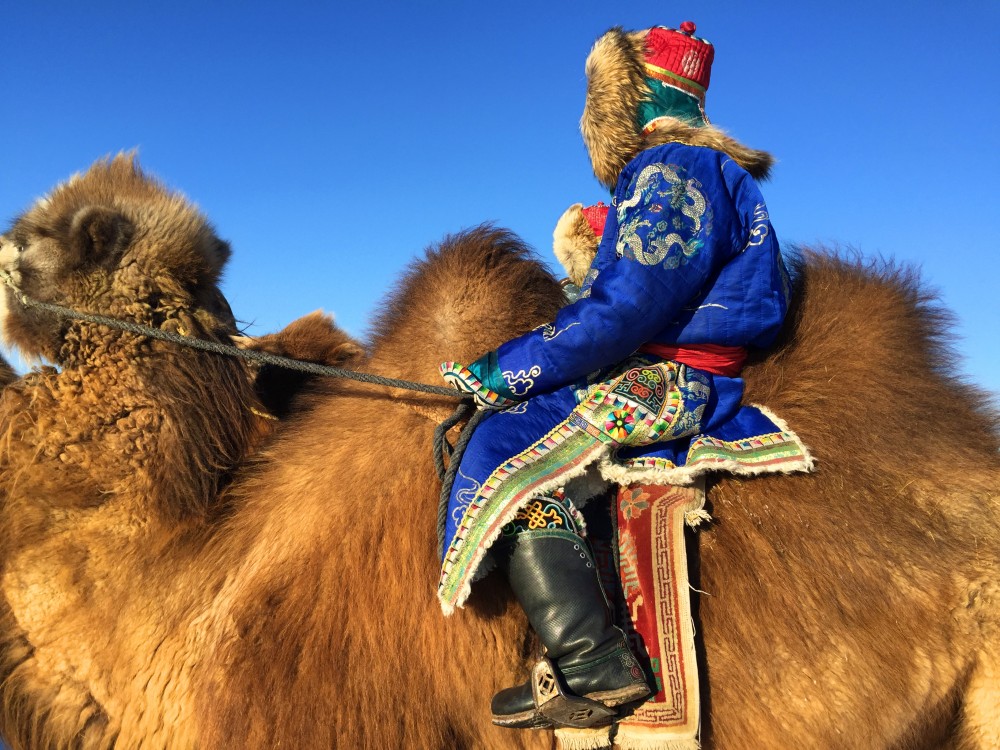
    Competitors at this year's China Tour de Ski spent their post-race recovery watching and riding camels in  Xiwuqi, Inner Mongolia. (Photo: Courtesy photo from Koos)
    Competitors at this year’s China Tour de Ski spent their post-race recovery watching and riding camels in Xiwuqi, Inner Mongolia. (Photo: Torin Koos)

    Does riding a camel count as a post-race cool down? For nordic competitors in the 2016 China Tour de Ski, it definitely did.

    “The last day [of the China Tour de Ski], we had a sprint race in a place called Xiwuqi. Then in the afternoon we got to go and ride camels and see a camel race. I mean who does that?” exclaimed Holly Brooks, an Alaska Pacific University (APU) elite team member, two-time Olympian and most recently, a China Tour de Ski competitor, in a phone interview. 

    Torin Koos, who also raced at this year’s eighth edition of the China Tour de Ski (TdS), shared in Brooks’ surreality of a post-race jaunt on an unusual four-legged friend.

    “There was a camel race going on and the athletes got wind of it and wanted to go. So the [event] organizers arranged a bus for us to go out there after the final races,” Koos, a four-time Olympian and currently an investigative news producer for KSL TV, the NBC station in Salt Lake City, said on the phone. “When else are you going to do your post-race recovery at a camel race in Mongolia?”

    On top of camels, this year’s China TdS involved five stages of racing: a 1.2-kilometer freestyle sprint for Stage 1, another 1.2 k freestyle sprint for Stage 2, 50 k classic mass start “Vasaloppet” for Stage 3, 3.8 and 5.7 k mass starts for Stage 4, and finally a third 1.2 k freestyle sprint for Stage 5.

    “Each stage was unique in and of itself. I mean, we had five races in three different venues,” Brooks said of the race schedule, which spanned from Jan. 1-7.

    Another American racer, Lauren Fritz of APU explained on the phone, “They don’t block off a lot of time for travel. [Koos, Brooks and I] flew into China and got in at midnight” on Dec. 30.

    “We had all of the next day to chill … then we raced the first stage [on Jan. 1]. The next day we took a 6 a.m. bus to a train station, took a two-hour train ride to the city, then another bus to our hotel. We raced two more days and then we got on a bus for 17 hours to Inner Mongolia for the last two stages of racing.”
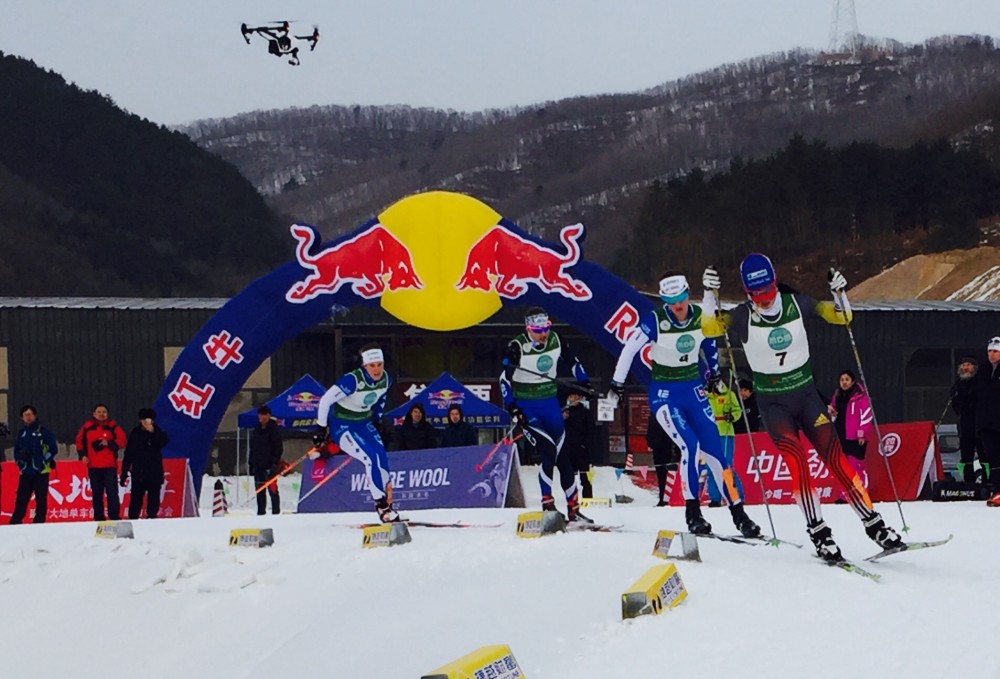
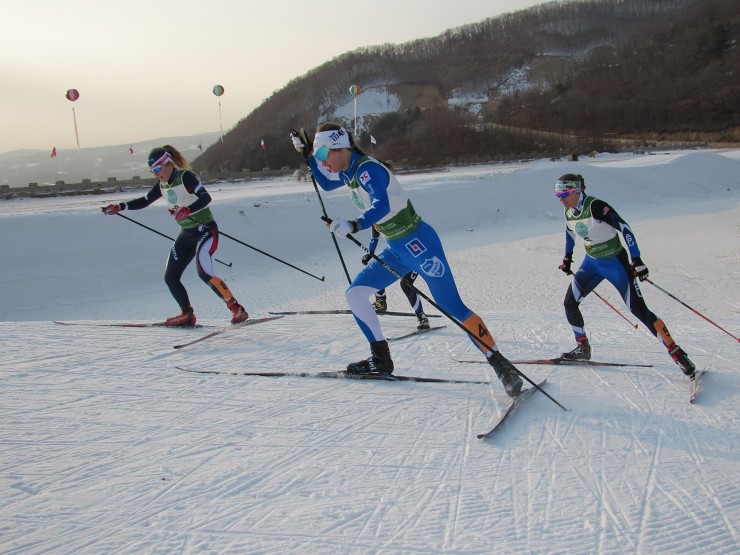
    Right to left: Qu Ling (CHN), Mimmi Bjørn (SWE), Lauren Fritz (USA), and  Linda Danvind-Malm (SWE) during Stage 1 of the women's 1.2 freestyle sprint on Friday, Jan. 1 at the China Tour de Ski in Yanji. Fritz placed fourth overall, Brooks (not shown) missed the final in fifth place. (Photo: Courtesy photo from Brooks)
    The Stage 1 women’s sprint, (from right to left) with Qu Ling (China) leading Mimmi Bjørn (Sweden), Lauren Fritz (U.S.) and Linda Danvind-Malm (Sweden) on Jan. 1 at the China Tour de Ski in Yanji. Fritz placed fourth overall, Brooks (not shown) missed the final in fifth place. (Photo: Holly Brooks)

    While a 17-hour bus ride the day before a race does not appear in most skiers’ training logs, neither does a 3.8/5.7 k freestyle mass start race in Inner Mongolia.

    “A 3.8 k prologue mass start is a pretty crazy race,” Fritz recalled. “It was a 1.9 k loop and the girls did it twice.”

    Racers in the fourth stage launched into a steady 500-meter incline out of the start, especially unforgiving after 1,500-kilometers of bus travel the previous day.

    “You could V2 the whole hill if you had good skis, so it was a hammer-fest out of the start,” Fritz said. “It was pretty cold out, I didn’t really warmup that well and because we had a 17-hour bus ride the day before, I was pretty tired. Definitely got to the top of the hill after V2ing the whole thing and was just toasted.” 

    The 27-year-old went on to finish 10th overall, 43.31 seconds back from the women’s prologue winner, Terese Andersson of Sweden, who topped the 3.8 k freestyle mass start in 10:10.76.

    Just 1.22 seconds behind Andersson in third place, Brooks felt that with more closing speed the prologue title could have been hers.

    “It was kind of fast and furious,” Brooks said. “They had a really good course and I was up there to start, but without the training I just didn’t have the finishing speed for the last 200-meters.”

    Brooks spent much her fall unable to train, due to a rollerskiing accident that left her needing reconstructive surgery in her thumb’s ulnar collateral ligament.

    “I rollerskied into a pile of sand and I got up and my thumb was bent backwards … so I had surgery in late September and was in a cast for two months,” she explained.

    This year, Brooks has also been working to complete her masters degree in counseling psychology, which she said has taken priority over ski training.

    China Tour de Ski Race Schedule:
    Stage 1: (Jan. 1) 1.2 k freestyle sprint Yanji, Jilin
    Stage 2: (Jan. 3) 1.2 k freestyle sprint Changchun, Jilin
    Stage 3: (Jan. 4) 50 k classic Changchun, Jilin
    Stage 4: (Jan. 6) 3.8/5.7 k freestyle mass start Xiwuqi, Inner Mongolia
    Stage 5: (Jan. 7) 1.2 k freestyle sprint Xiwuqi, Inner Mongolia

    “Last year I chased the marathon scene and really kind of raced myself into submission,” she said. “I did 11 marathons and traveled by myself for four months in Europe … and at the end of the season I was just exhausted. So I ended up taking a lot of time off this summer. Then this fall, I was working full time on an internship and in grad school.”

    The other American to finish third in Stage 4 was Koos, who crossed the line just 1 second after Swedish skier Lukas Johansson, who won the men’s 5.7 k freestyle mass start in 13.56.5.

    “I definitely felt like I could have won it. I kind of got taken out on the next-to-last climb so I was battling back up [to the front] for a bit,” Koos explained.

    However, both Brooks and Koos felt that as the Tour progressed, so did their ski racing.

    “I was starting to feel better and better as the Tour went on. I think I was also getting further away from having the flu,” said Brooks, who spent much of the final week in December battling illness.

    “That last qualifier somehow I was able to win it by eight seconds which I was super pumped about, but then once again, I just didn’t have the final finishing speed,” the 33-year-old Washington state native added. Brooks placed second in the Stage 5 freestyle sprint.

    “Definitely the highlight was going to Inner Mongolia,” Koos said. “I’ve never seen so many cameras out on a race course. There were hundreds of people out there taking pictures. It had this big-time feel, but in the middle of nowhere.”
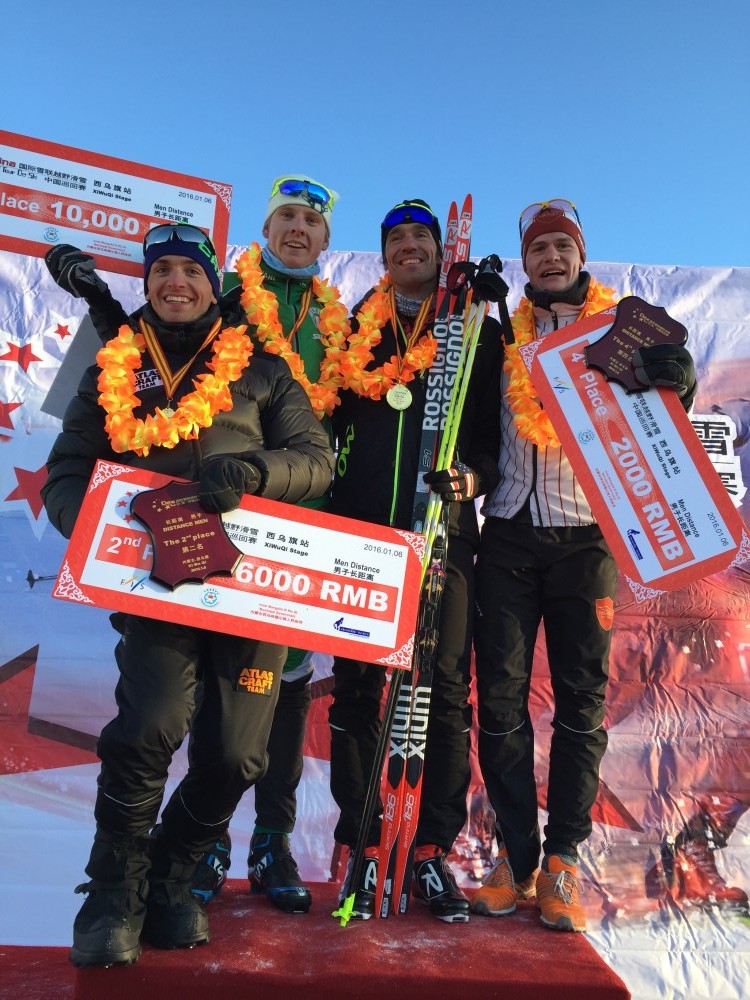
    Left to right: Second place finisher, Daniel Máka (CZE), race winner Lukas Johansson (SWE), third place Torin Koos (USA), and fourth place finisher Torben Svensson (SWE) stand on top of the podium with their prize money from the Stage 4 men's 5.7 k freestyle mass start on Wednesday, Jan. 6 at the China Tour de Ski in Xiwuqi, Inner Mongolia. (Photo: Courtesy photo from Brooks)
    (From left to right) The Stage 4 men’s 5.7 k freestyle mass start podium, with second-place finisher Daniel Máka (Czech Republic), race winner Lukas Johansson (Sweden), American Torin Koos in third., and Torben Svensson (Sweden) in fourth sharing the top spot of the podium with prize money in hand on Jan. 6 at the China Tour de Ski in Xiwuqi, Inner Mongolia. (Photo: Holly Brooks)

    “I also raced the best in Mongolia and it didn’t hurt getting on the podium [in the mass start],” he added. “I won the the sprint [qualifier] there, but couldn’t quite get it done in the rounds.” 

    On Jan. 7, the final day of racing, Koos advanced to the quarterfinal in the freestyle sprint. However, since only the top four advanced to the final in all of the China Tour de Ski sprint events, Koos missed moving past the semifinal and finished in fifth overall.

    “All in all, it’s a little bit different when you’re working full-time and your priorities have changed a little bit,” 35-year-old Koos said of his training coming into the China TdS. “But I think as the Tour went on, I was getting stronger and I think I left there at a pretty high level.”

    Based off their sprint race results from Stage 1 and Stage 2, Koos and Brooks were accurate in deeming themselves improved by the Tour’s finale.

    In the first freestyle sprint, Koos qualified for the quarterfinal, but did not move on to the semifinal, ending the day in 11th.

    Canadian Graham Nishikawa, the lone Canadian competitor at the China Tour de Ski, raced to sixth that day.

    “I always wanted to compete in the Tour de China and this year it worked out. It was a great event! The organization was stellar and the racing was really fun,” Nishikawa wrote in an email. “We got to see so much of China and travel to places that I would have never otherwise seen. The racing was good for me. I had some bad luck with breaking poles, but raced fairly consistently everyday.”

    Nishikawa, 32, is a member of the Para Nordic World Cup Team as a guide for Brian McKeever.

    For Brooks, Stage 1 left her in fifth, just outside of the women’s final after qualifying for the quarter and semi. Fritz broke the bubble, moving all the way to the final, where she placed fourth.

    “The sprints were my focus because I’ve had the most success in sprinting before,” Fritz said. “And they went pretty well, I had a few tactical errors and a little bad luck. Didn’t quite achieve what I wanted, but I was still pretty happy.”

    Stage 2 brought the racers to Changchun, where they raced the second freestyle sprint. Here, Koos bested his previous result, finishing fifth overall, just outside of the final. Nishikawa moved into 13th.

    Fritz once again advanced all the way to the final in the second freestyle sprint. Coming into the finishing stretch, she found herself in second, closing in on first place. However, with 150-meters to go, Fritz said someone stepped on her pole and she crashed, ultimately finishing the final in fourth.

    Brooks qualified for the quarterfinal and semifinal that day, but didn’t advance to the final and finished the day in seventh overall.

    “I’ve never seen so many cameras out on a race course. There were hundreds of people out there taking pictures. It had this big-time feel, but in the middle of nowhere.” — Torin Koos on the racing atmosphere in Inner Mongolia

    The 50 k Classic Vasaloppet and More

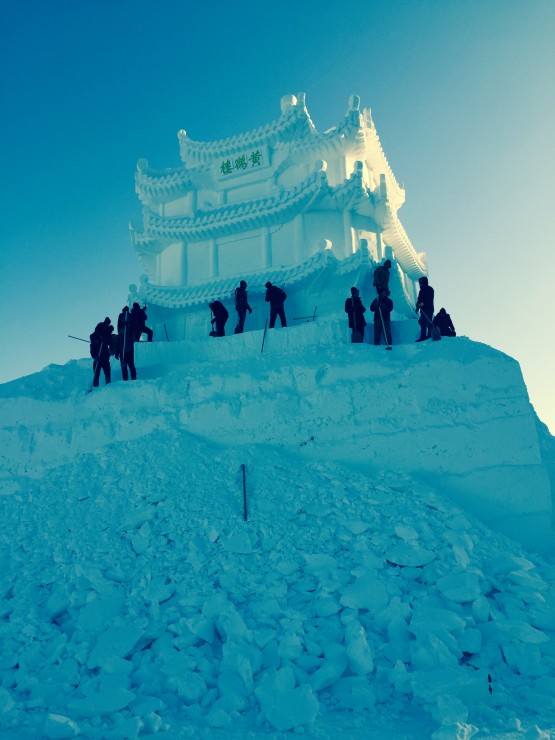
    Snow castles and carvings that might even put Italy’s Roman Pantheon to shame — if not for the risk of melting — marked the lap lane to the China TdS 50 k Vasaloppet.

    “Some things about China you just can’t believe. People think that we do things bigger than anybody in the U.S., but in some regards, it’s definitely not true,” Koos said. “Like, at the Chinese Vasaloppet, they had these sculptures that we were skiing by and it was something that you could maybe envision Las Vegas doing.”

    This year’s China Vasaloppet promised athletes 50 k of skiing through the Jingyuetan National Forest Park, located in the northeast Jilian Province of China.
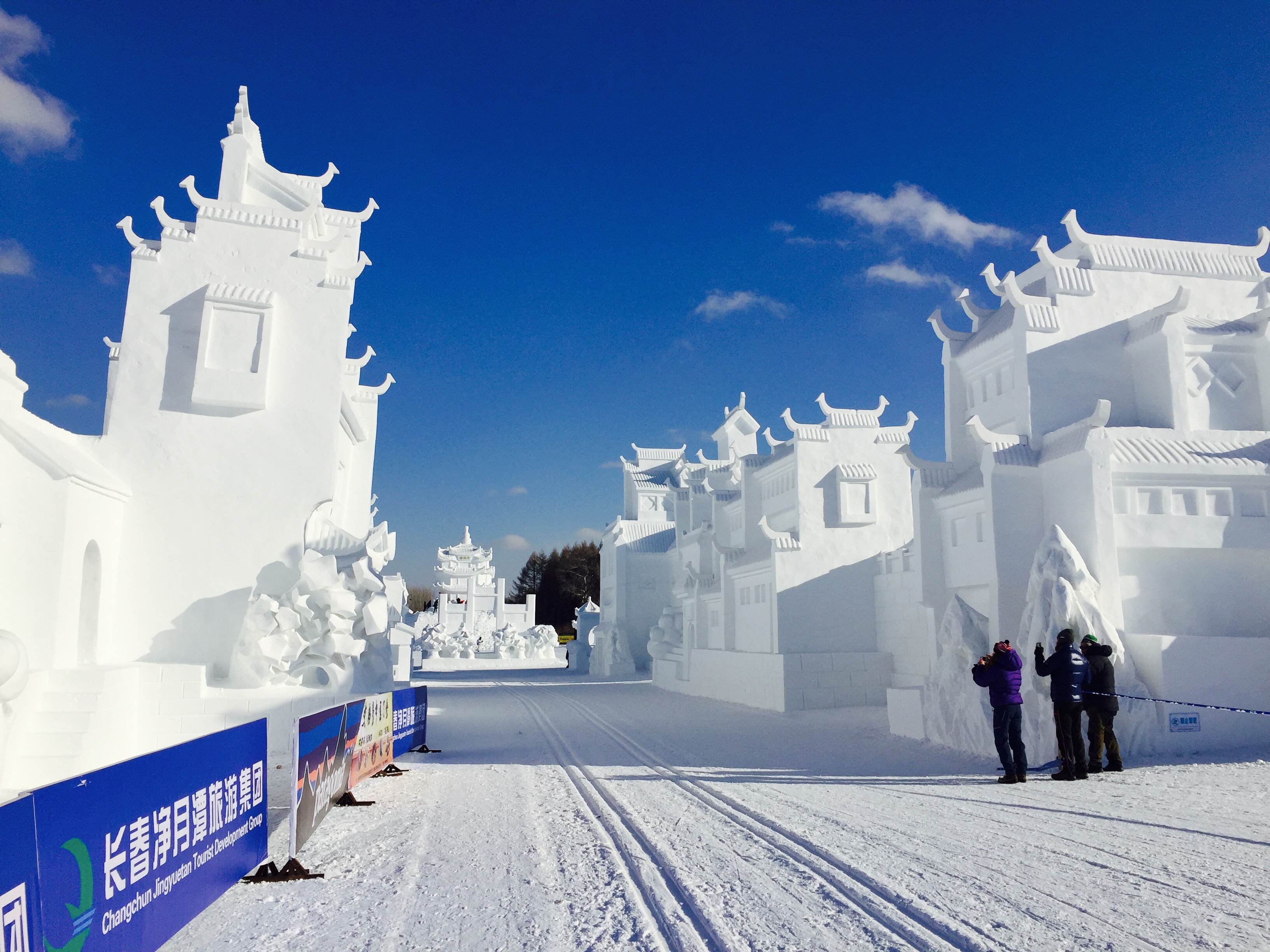
    Sculptures surround the lap lane for the 50 k classic Vasaloppet marathon on  Monday, Jan. 4. at the China Tour de Ski in the Changchun Jingyuetan Park. (Photo: Courtesy photo from Brooks)
    Sculptures surround the lap lane for the 50 k classic Vasaloppet marathon on Jan. 4. at the China Tour de Ski in the Changchun Jingyuetan Park. (Photo: Holly Brooks)

    “Racing through snow sculptures that are five stories tall, I mean it was magnificent,” Brooks described. “You’re doing a lap lane through pavilions, doves, and castles. I’ve been in a lot of stadiums in my life, and I’ve been in a lot of marathons all over the world and this was incredible.”

    A total of 258 racers showed up for the two-lap marathon and while not everyone finished, most soaked up the sunny skies and spectacular snow artwork that surrounded them during the race. 

    In the women’s event, Brooks led the Americans in sixth overall in 2:43:33.9, about 9 1/2 minutes behind the race winner Qinghua Ma of China, who completed the 50 k course in 2:34:08.1. Fritz finished 11th (+16:23).

    “I’ve been in a lot of stadiums in my life, and I’ve been in a lot of marathons all over the world and this was incredible.” — Holly Brooks on racing the Chinese Vasaloppet 50 k classic

    The men’s field saw Czech skier Petr Novak take the overall 50 k win in a time of 2:19:26.3. Koos finished 12th, 8:05.5 minutes behind Novak. Nishikawa finished about a second after Koos in 13th.

    Along with a marathon through snow mansions, the China TdS boasted festival banquets almost every night.

    “On this trip, every other day we were having a banquet or a celebration,” Brooks said. “Just the atmosphere and the ambience, I actually turned to someone and said, ‘I see why the Chinese don’t come to the World Cups very often, they seriously do it up in their own country.’ ”

    Brooks was not alone in thinking that the tone of the Tour made for an enjoyable racing experience.

    “The whole attitude at the tour was so different and it was really refreshing,” Fritz said. “If you were in the top few you were gunning for some good prize money… but once the skis came off it was way more fun than a normal SuperTour race trip, because there’s no pressure and everyone’s there to have a good time.” 

    A couple Americans did pocket prize money, though for Koos, it did not stay there long.

    “I won a few hundred bucks or something. It was enough to buy me a sweet custom made grey suit in Beijing, so I’m looking pretty dapper these days. When in China, you just got to live it up to the fullest,” he said.

    “If I had skied just a little bit faster I could have made some real money,” he added. “Maybe that’s motivation for 2017.”

    Brooks also came away from the week with monetary winnings. However, the all-expense paid trip remained more important.

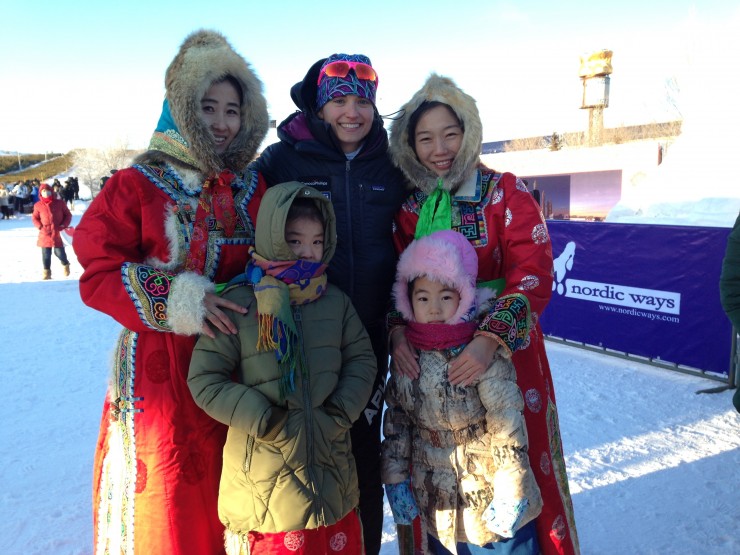
    There’s a company called Nordic Ways, a Swedish Tour Companyand they do everything,” she explained. “The bought my [plane] ticket. You show up at the airport and there’s someone holding up a sign with your name on it. All the transportation, three meals a day, everything is covered.”

    Overall, Brooks finished the Tour in fourth, Koos placed sixth in the Tour, Fritz was the seventh overall woman, and Nishikawa the 10th overall male.

    “There are so many ways to be a cross-country ski racer and I’m just really enjoying having new experiences, having new adventures, and reinventing myself every season,” Brooks said. “I feel like I really accomplished that by going to China.”

    Women’s Results: Stage 1 | Stage 2 | Stage 3 | Stage 4 | Stage 5 |

    Men’s Results: Stage 1 | Stage 2 | Stage 3 | Stage 4 | Stage 5 |

  • For Better-Feeling Marathons, Try Taking More Feeds

    For Better-Feeling Marathons, Try Taking More Feeds

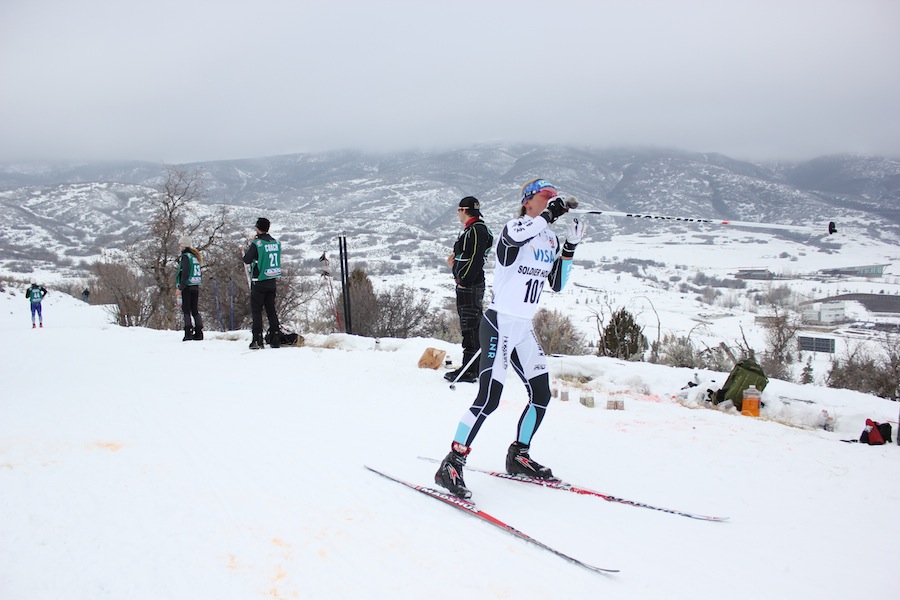
    Caitlin Gregg (Team Gregg/Madshus) gets a feed on the high point of the course in the 20 k freestyle mass start at U.S. nationals at Soldier Hollow, Utah, last January.
    Caitlin Gregg (Team Gregg/Madshus) gets a feed on the high point of the course in the 20 k freestyle mass start at U.S. nationals at Soldier Hollow, Utah, last January.

    What’s the best strategy for feeds in a ski marathon? How many carbohydrates do you need, and how often?

    That’s the question asked by a team of researchers from Mid Sweden University in Östersund and the University of Bath in Great Britain. With a group of experienced, but not elite, adult ski racers, they investigated high and low carbohydrate feeds delivered at high or low frequency over the course of several 30 k rollerski time trials on a treadmill.

    The results were recently published in the Scandinavian Journal of Medicine and Science and Sports. While the skiers did not perform differently under the various feeding regimes, a number of physiological variables did change.

    “The take-away message I would give to athletes, from this study, is to understand how nutrition can affect metabolism,” lead author Ben Stocks wrote in an email. “There are certain metabolic things we want to see during endurance exercise… One of those is maintenance of normal blood sugar levels and this study would suggest that, on average, drinking smaller volumes of carbohydrate more regularly is beneficial in that regard. Additionally, the little and often approach appears to cause less discomfort than the larger drinks taken less often.”

    The feeds were calculated to provide particular rates of carbohydrates per minute, with amounts calibrated to each athlete based on how long they took to ski between the set distances where feeds were delivered.

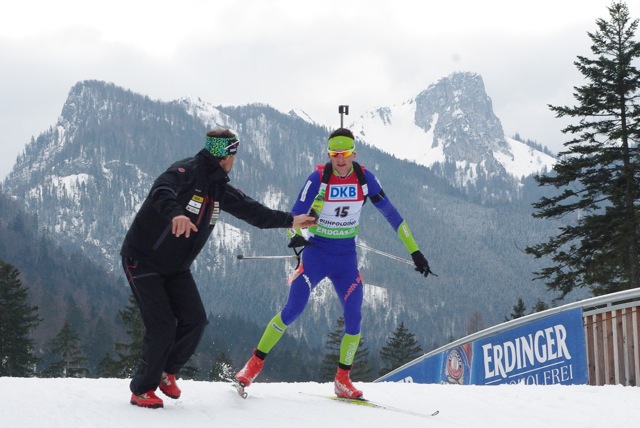
    Jakov Fak of Slovenia fueling up en route to a World Championship title in the 20 k individual at 2012 World Championships in Ruhpolding, Germany.
    Jakov Fak of Slovenia fueling up en route to a World Championship title in the 20 k individual at 2012 World Championships in Ruhpolding, Germany.

    The high carbohydrate treatment delivered about double the rate of the low carbohydrate treatment. In the low frequency treatment only two feeds were given, while six were given in the high frequency treatment. This required also adjusting the amount in each feed, so that in the high frequency treatment athletes only received a third as much carbohydrate per drink.

    The treadmill was slowed for the feeds as well as blood sampling, somewhat mimicking a downhill on the racecourse (although of course treadmills can’t go downhill). Each athlete did four time trials, one for each feeding regime, in a randomized order with at least four days in between.

    The researchers found that with only two feeds, athletes could not maintain a normal, steady blood sugar level.

    “This is important because glucose is transported from the blood into the muscles and forms a critical fuel during exercise performance,” Stocks wrote in his email. “We know from studies in other sports, such as cycling, that a reduction in blood sugar levels is related to the onset of fatigue and, therefore, an inability to continue exercising at the same intensity. Maintaining blood sugar levels is therefore a crucial strategy to maximising performance in endurance sports.”

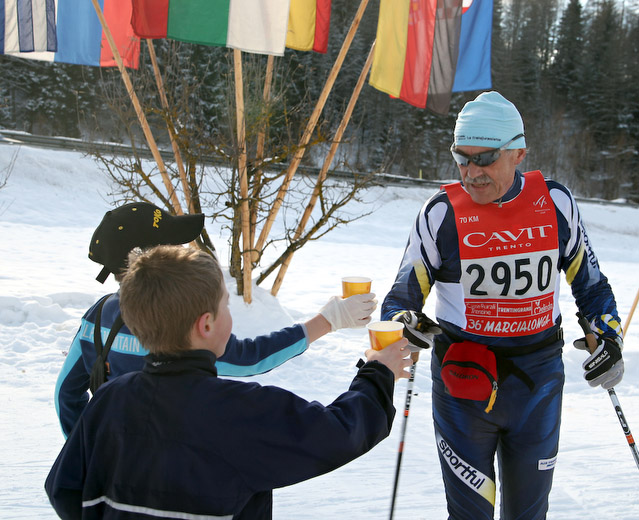
    Feeds aren't just important for naitonal and world champions! Kids hand out drinks on the  Marcialonga trail in Italy.
    Feeds aren’t just important for naitonal and world champions! Kids hand out drinks on the Marcialonga trail in Italy.

    They also found that athletes experienced greater gastrointestinal discomfort when consuming a lot of carbohydrates but only infrequently.

    However, performance did not improve under any particular feeding regime. Instead, times to complete the 30 k test improved with each successive time trial, no matter what order the treatments were completed.

    “Increased gastrointestinal discomfort is not going to improve performance and, anecdotally, will negatively affect performance in some individuals,” Stocks wrote. “Therefore, in the absence of any obvious performance effects, increased gastrointestinal discomfort and poorer maintenance of blood sugar levels suggest to us that low frequency carbohydrate drinking should not be a recommended strategy.”

    As for the amount of carbohydrate delivered, there didn’t appear to be major differences in physiological variables between the high-carb and low-carb feeding treatments when both were delivered six times over the course of the time trial. Frequency seemed to be more important than amount.

    One suggestion in the paper was that after a baseline carbohydrate ingestion rate of 1 to 1.3 grams per minute, adding more and more carbs doesn’t give much benefit, at least over the 30 k distance. In a longer race, that may change as the body would be forced to dip into and deplete glycogen stores.

    While the results seem to be clearcut that frequent feeds provide for a better race experience, if not necessarily better performance, Stocks cautioned that the real takeaway message was to get to know your body.

    “It is important to stress that every individual responds differently to these things and that it is important to work out for yourself how different nutritional approaches affect you,” he wrote. “While it may be difficult to measure blood glucose without visiting a specialist sports science centre, your feelings of gastrointestinal discomfort are easy monitor, as is your performance and that is the ultimate goal. Get to know what works best for you.”

  • Norwegian Birkebeiner Announces Contingency Plans, Backup Trail After 2014 Cancellation

    Norwegian Birkebeiner Announces Contingency Plans, Backup Trail After 2014 Cancellation

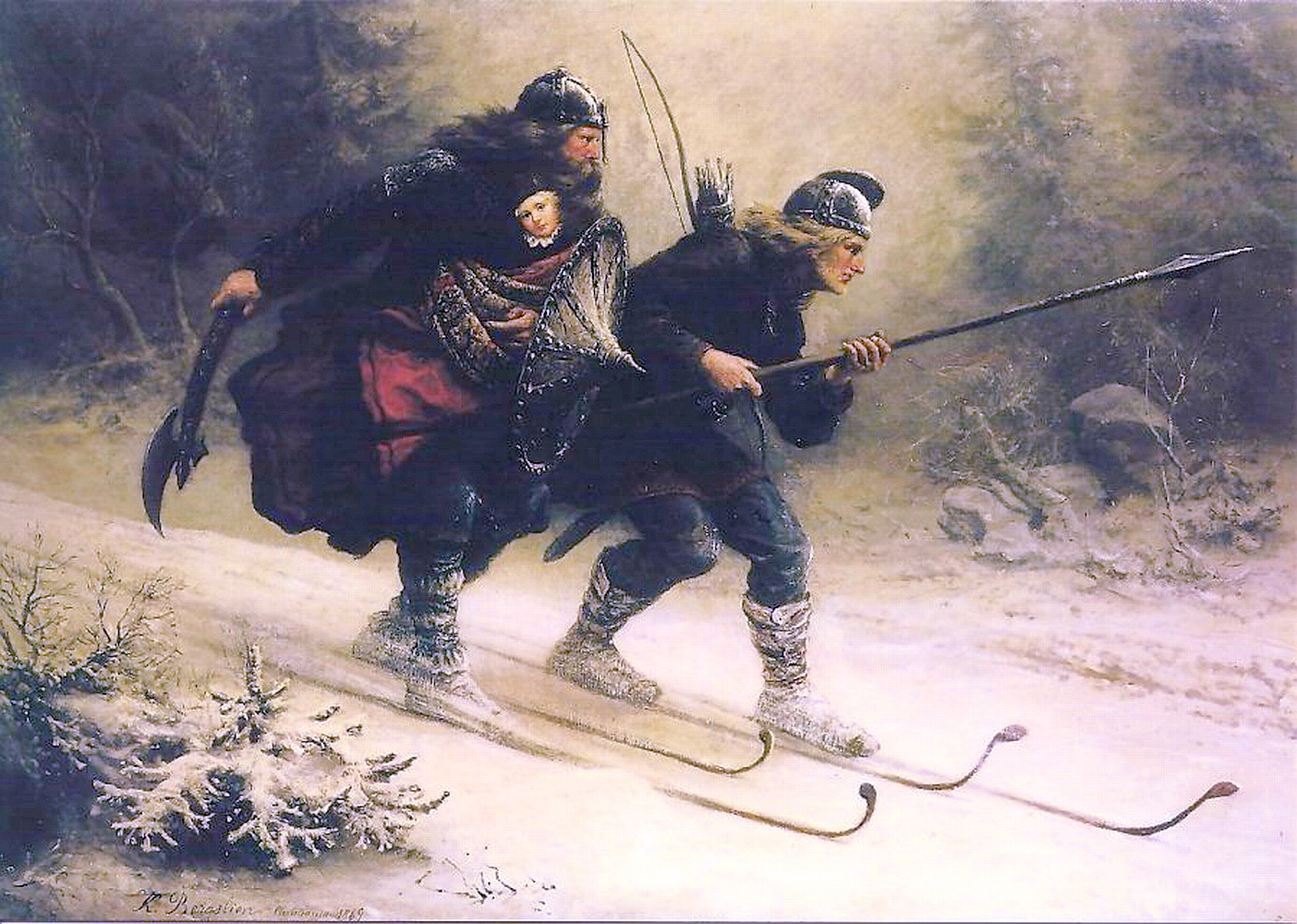
    Birkebeinerne_ski01After a disastrous 2014 event which saw the title race canceled on race morning due to dangerously high winds in the mountains, there has been much soul-searching in Norway as to how the Birkebeiner ski marathon can go forward (or whether the organizers were being wusses).

    Last week, organizers of the 54 k classic race from Rena to Lillehammer announced changes they are making to safeguard the competition’s future.

    Chief among them is the addition of a new section of trail in the Hemmedalen nature reserve, to be used as a backup if for some reason the trails over the mountains are too dangerous.

    This comes as a great relief as organizers had mentioned developing a back-up course as early as the first few days after the failed 2014 races, but in early October NRK reported that negotiations for the location of new trails were fruitless. Allegedly, organizers and landowners could not come to an agreement over the fees to be paid for use of the land.

    The new 14 k section swings to the south of Raudfjellet, the high point of the course where winds were so extreme in March.

    Additional precautions are being taken in the mountains, too, with a new weather station set up in Raudfjellet to accurately assess wind and weather. The Birkebeiner is also retaining its own meteorologist, John Smits, to interpret this and other data and give better forecasts for race day.

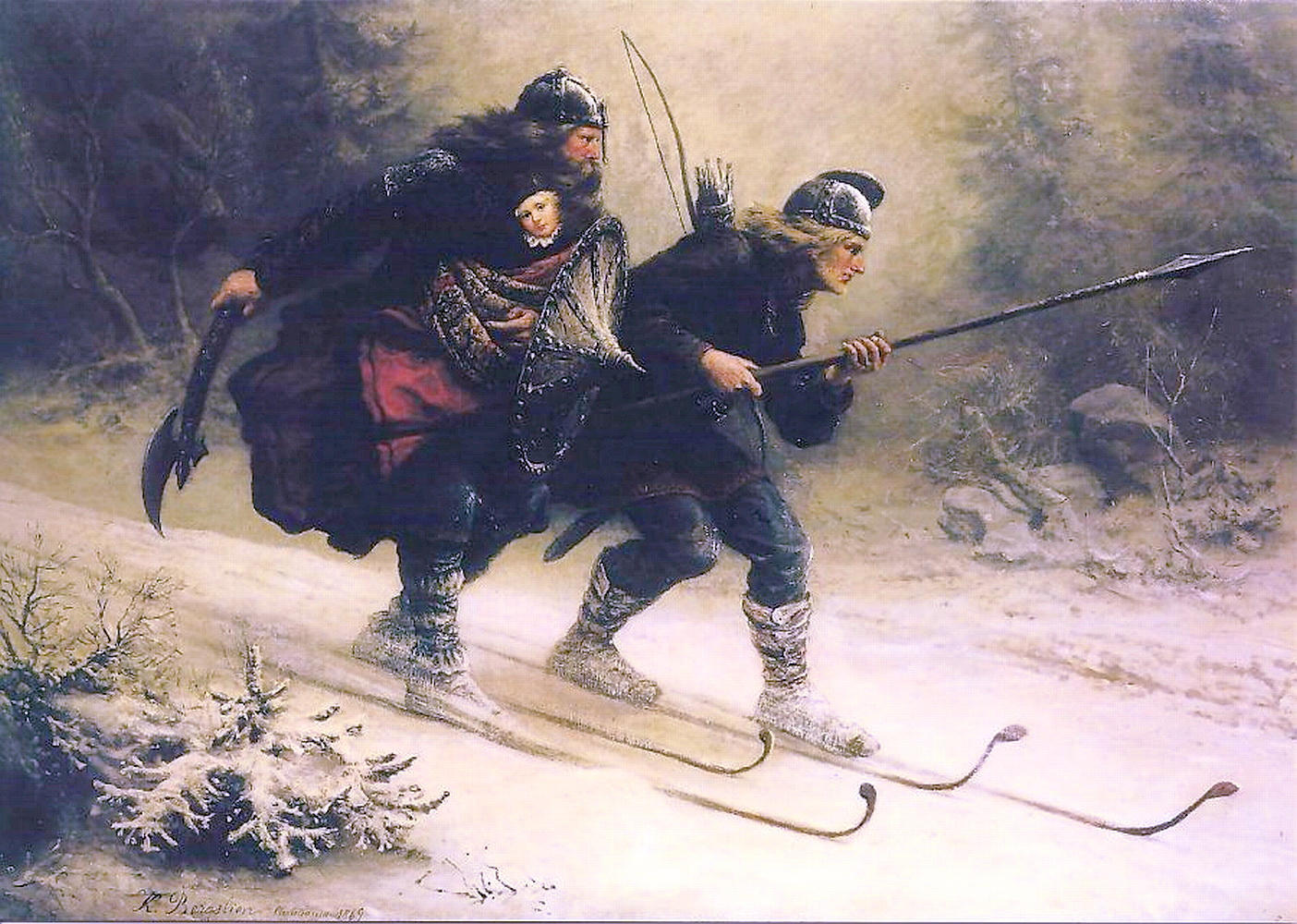
    The organizers announced that they will be ramping up their inspections of participants’ backpacks, which are required to be 3.5 kg in weight (to represent the baby prince carried over the pass by the original Birkebeiners) and include items such as an extra jacket and pants, food and drink, and extra long underwear. By making sure that all racers have this extra gear, organizers say they will be less worried about inclement weather.

    They also announced that in case there is a low snow year, they are working on saving snow to be deployed onto the trail.

  • Give Me The Blåbärssoppa and Nobody Gets Hurt: An American at the Vasaloppet

    Give Me The Blåbärssoppa and Nobody Gets Hurt: An American at the Vasaloppet

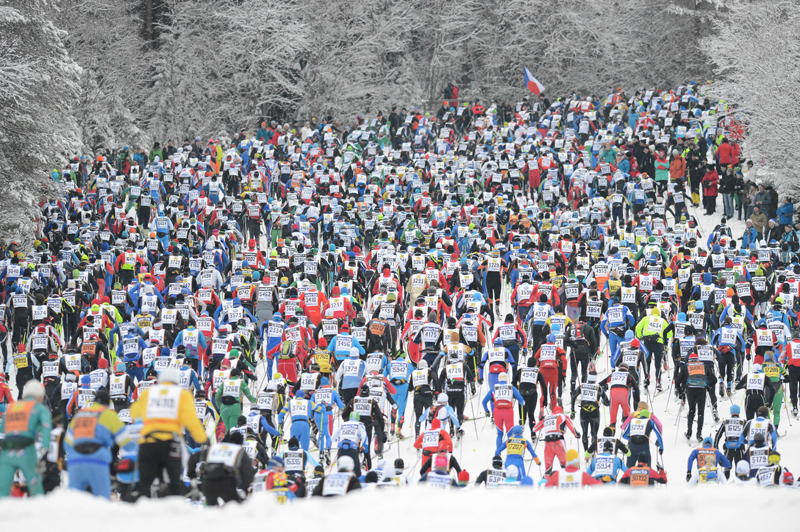
    The first hill on the Vasaloppet course. 15,800 skiers start at once, and it took me 35 minutes to go three kilometers. Photo: Rauschendorfer/NordicFocus.
    The first hill on the Vasaloppet course – and it looked a lot worse by the time I got there. 15,800 skiers start at once, and it took me 35 minutes to go three kilometers. Photo: Rauschendorfer/NordicFocus.

    MORA, Sweden – I just climbed into a car with three people I don’t know: Lars and Raffa, tall jovial Swedes, and Ingunn, a beautiful wispy-thin Norwegian. After a quick trip to the grocery store, we’re trying to navigate our way back through Mora. The problem is, it is two days before the Vasaloppet, the only thing that ever happens in Mora. Traffic is at a standstill.

    Eventually, we make it to the other side of the town. My three companions are having a lively discussion in Swedish which I don’t understand. After a series of hesitant turns, I can see the thought “ah well, screw this” pass across Ingunn’s face and next thing I know, we’re driving the wrong way down a one-way street. Then the men jump out of the car and Ingunn and I come to rest in something that is not a parking space.

    “The liquor store,” she says.

    The three are supporting a friend at the Vasaloppet, and to get through tonight and tomorrow until they actually have something to do on race day, they are going to need some booze. I know their friend Mattias, who generously offered to let me join their group, a godsend since organizing yourself for a point-to-point race is pretty complicated. But Mattias is off testing wax, so here I am.

    The men eventually return and Raffa tells me to sit in the front. Soon we’re back on the road. Lars and Raffa are packing snus and drinking beer (and doing who knows what else) in the back seat, and the beautiful Norwegian is driving with one hand on the wheel and a distinct attitude of ennui.

    We are making our way toward Sälen, the start of the famous 90 k Vasaloppet and where we will stay this weekend. Along the way we pass the race trail quite a few times. It’s raining out. There are people skiing and it looks completely miserable.

    Mattias has told me next to nothing about where I’ll be staying and who I’ll be with. Cryptic and strangely capitalized e-mails have told me that it will be very crowded in the house, but there will for sure be space for one more; that a woman has already cooked all the food so I should just plan to eat with them; and to bring sheets.

    When we arrive in Sälen (after a few wrong turns and confusion along the way), I walk into a cheerful, large cabin that appears freshly decorated along a tasteful black-and-white theme. It’s warm and smells like dinner. The kitchen is already full, but not of people I know. In fact, of the 15 or so people who will be staying in the house this weekend, Mattias is the only connection I have. He’s not here.

    “Welcome to Robin’s team!” a middle-aged woman named Lenita tells me and gives me a hug.

    We sit down for dinner. They try to tell me what the food is, but decide it can’t be translated. Even after we’re done with the meal, I have no idea what I have just eaten. It’s delicious though – rice and some sort of meat in a sauce, and we sprinkle flaked coconut, peanuts, crushed pineapple, and banana slices on top.

    “It’s one of Robin’s favorites,” Lenita explains. “Good luck food.”

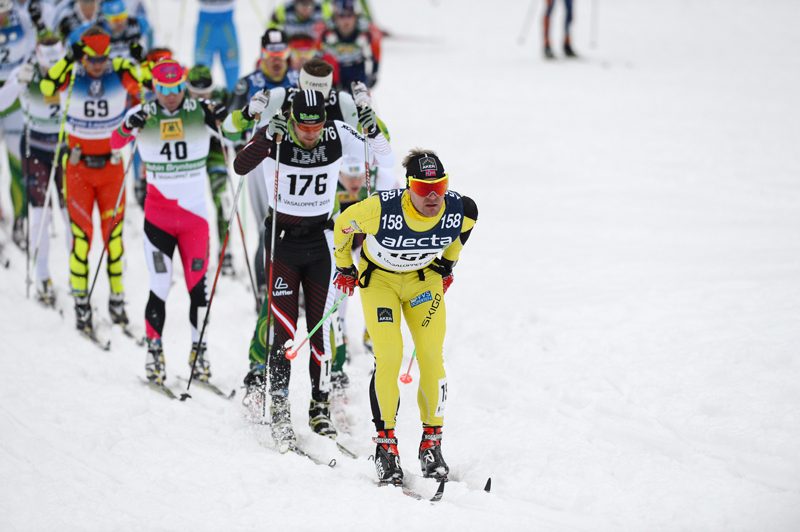
    Robin Bryntesson, in bib 40, skiing the Vasaloppet.
    Robin Bryntesson, in bib 40, skiing the Vasaloppet.

    As it turns out, I have joined Robin Bryntesson’s team for the weekend.

    Yes, that Robin Bryntesson – the famous Swedish skier, a two-time U23 sprint champion who might be best-known to North Americans because he won the World Cup team sprint with Emil Jönsson in Vancouver back in 2009. It turns out that Mattias grew up with Robin in the tiny town of Rossön, and the two are something like best friends. The gang from Rossön is all here, family and friends alike, to support Robin in his quest to win the Vasaloppet. I’m along for the ride.

    * * *

    I’m not here to win the Vasaloppet. When I moved to Europe a year and a half ago, I thought I should try some of the big ski marathons. The Vasaloppet was the one I was least interested in – too much double-poling, I really need hills – but was living in Sweden, and if you’re a skier you can’t leave Sweden without doing the Vasaloppet. I signed up, buying an entry off the black market website startplatser.se from a guy named Micke who wished me luck.

    “Please race hard for me,” he wrote in one of our last e-mail exchanges. “I will think of you.”

    Come Vasaloppet time, I was even worse off than I had expected, fitness-wise, because I had just gotten back from the Olympics. The race trails in Sochi were not open to journalists like me, and there weren’t any other trails to ski on. Even the running was inadequate. Not that it mattered – I had brought my running shoes and envisioned long training runs in the Sochi sun, but I was working far too many hours to have any energy for training. I called it the “live high, train not-at-all” strategy.

    So, three days after arriving home from Russia, I was still exhausted and at a huge sleep deficit. I hadn’t skied in a month. The weather was warm and I secretly wished that the race would be canceled. Instead, they brought snow in and used helicopters to dump it on the course. Anything for the Vasaloppet.

    On Friday, I got on a train for Mora. Direct route, no connections. I wore a raincoat and could not have been less excited. I’m pretty sure that’s not how you’re supposed to feel right before you do the biggest ski race in the entire world.

    But it’s hard to feel discouraged when you’re with Team Robin. First, there is Robin himself. Everyone had been friendly, but Robin was even more friendly and even more outgoing. Just watch the video on the front page of his website and you will get a sense of this. He has founded his own team and the uniforms tend to be hot pink with strange patterns and other bright colors.

    All this, combined with the fact that it’s Team Robin, goes strongly against the Jantelagen, a de facto cultural law of Sweden about how you conduct yourself. Some examples of the Jante laws:

    #1: You’re not to think you are anything special.

    #7: You’re not to think you are good at anything.

    #9: You’re not to think anyone cares about you.

    So to have a garishly rainbow uniform and advertise your own name is distinctly un-Swedish. But people love Robin. It’s his personality, but perhaps also what he stands for. Robin has diabetes, and spends a lot of time and energy working with kids who also have diabetes, and generally raising awareness about how it’s possible to still be anything even if you are diabetic.

    Robin’s title sponsor for the Vasaloppet was Changing Diabetes, a campaign by the pharmaceutical company Novo Nordisk. Saturday morning I helped shoot a little video of Team Robin, in which he explained how his suit had been specially doctored to hold his insulin monitor and transmitter, and how the whole team (gleefully messing around in the background) would be supporting him with lots of feeds to keep his blood sugar stable.

    It’s not just a public persona. When I arrived that first night, Robin walked right up, introduced himself, and asked if I’d had trouble picking up my bib. More than most of the others, he made sure to translate bits of conversation into English so I’d sort of know what was going on. I couldn’t believe that anyone was doing this for me, a fat out-of-shape American girl seeded in start group six who would take many more hours than him to ski the 90 k.

    * * *

    Saturday unfolds in a haze of jokes, laughing, skiing, and race prep. Besides Robin, his friend the biathlete Magnus Jonsson was also racing, and another friend Anders Strid, who is now a coach in Östersund and tells me he is both helping and racing. We all go skiing on Saturday. It’s the first time I have skied in a month and I feel surprisingly good.

    We relax all afternoon at home, but I still begin to get a sense of what it takes to try to win the Vasaloppet, especially if you have diabetes. First there are the predictable things, like skis. Mattias is out all day testing wax and structure. He’s in the garage waxing skis until late at night. He’s out again at 3 a.m. the next morning, and he and Robin’s brother Pierre shuttle back and forth to test and rewax race skis.

    But the logistics are even more complicated. There are no less than seven cars in the driveway. On race day, three of them will get “Vasaloppet Elitservis” signs to put in the window so that they can drive the road from Sälen to Mora and take turns onto smaller roads that serve as access points for the more remote parts of the trail. Each night we talk for over an hour about how to coordinate all the feeds and the timing of who can drive to which spot.

    Or, they talk – it’s in Swedish and I have no idea what they are saying. I pretend to not be bored. Mattias sits beside me drinking a beer and occasionally translates something.

    To keep morale high for this huge group of people who are helping Robin, we pool our money to bet on a race horse. Lars, one of the guys who had originally picked me up in Mora, drives trotting horses. He organizes the betting. I pay my 100 crowns. Maybe we’ll all get rich.

    I sleep on a blow-up mattress in the living room, next to Robin’s aunts, who snore loudly. One of them tells me that if it’s too much, I should stick a sock in her mouth, but only if it’s a clean sock. Then she bursts out laughing. Everyone laughs here.

    Then, it’s race day. I wake up at 5 a.m. to find much of the crew has been awake for quite a while already. I try to eat as much porridge as I can (I try milk and jam this time) and organize my things. Jonas, one of the helpers, has agreed to drive me to the start.

    Here’s how the Vasaloppet starts: it is divided into an elite group, plus ten more seeding groups based on your times in other races. Everyone lines up in a giant pen in their start group, but at 8 a.m. the lines are all raised at once and 16,000 people take off together. There are horrible bottlenecks as the trail quickly narrows down. On top of that, less than a kilometer into the race there is a huge hill which is quite steep at first but becomes more gradual, lasting at least a kilometer or two in total.

    Robin, Magnus, and Anders don’t have to go early – there are something like 250 people in the elite wave, and so they can show up and grab their choice of starting positions. I, however, am in start group six. There are 1,500 people in start group 6 alone, and over 5,600 in front of us. I don’t want to be in the back of my start group. Some people have showed up as early as 4 a.m. to line up at the front when the gates open at 5:30. I don’t need to be on the front line either, but I want to get there early.

    I pack everything into Jonas’s car and say my goodbyes. Everyone wishes me luck.

    “Have you eaten enough?” Mattias asks.

    I tell Mattias I love him for making me amazing skis, and he tells me to wait to say that until after the race.

    We leave the house at 5:45. Normally it would take seven minutes to drive to the start, but the traffic is horrible. Eventually Jonas has to just drop me off on the side of the road because he has to return to the house and then head out again to go do his job with feeds. I jog the rest of the way to the start.

    It’s just like so many other huge marathons. There are people milling about everywhere, huge DHL trailers to drop off your bag (tagged with your bib number) for transit to the finish, separate number-tagged trash bags for your warm-up clothes which you should keep on until just before the race starts. In the middle of each start group is a giant raised platform where there are women dancing along to music and urging skiers to dance too, to help stay warm. I have an hour and a half to spend here. I manage to snag a place in the fourth or fifth row of group six and make friends with two Finnish guys next to me. After a fun but disconcerting weekend, I feel at home: some things about ski racing are the same no matter where you go.

    * * *

    What is there to say about the race? It takes me 35 minutes to go the first three kilometers, through the bottlenecked start and up the first part of the big hill. I manage to not fall down, not get tangled, not break anything. I heed the advice to keep my poles close to my body, and try to do what Mattias had said and look far up ahead of me to see which lines were moving the fastest.

    It is kind of exhilarating. I am still searching for gaps 10 k into the race, when I realize that I should probably calm down. There are 80 k to go. Settle back and enjoy the ride, don’t use up your energy now.

    Every marathon has its high points and low points, and I don’t just mean in terms of topography. You’re guaranteed to feel terrible at least once or twice. I feel pretty bad, about 30 k in, for a while. But I stop to eat a couple of times and make good use of the feed stations. I don’t like blueberries, but I guzzle blåbärssoppa (blueberry soup) like it’s my job. I start feeling better. In fact, I feel pretty great. I can’t really believe it.

    Then, with about 30 k to go, I feel decidedly not great. I bonk: run out of energy completely, glycogen stores depleted. It’s hard to come back from a bonk, to un-bonk yourself. You can eat, but you have crossed a line that is something quite definitive. I stop on the side of the trail, eat a bar, and feel a little better. Just a kilometer later, though, I’m be back to walking. There is no long-term solution for a bonk.

    I try to console myself: I had already skied 60 k, which is farther than I had ever raced in my life. If it were a normal marathon, I would have been tired at the end but things would have gone pretty well. I would be finished already. Making it 60 k before having major problems should maybe be considered a victory, especially considering that probably nobody had prepared for this race worse than I had.

    But it is hard not to get depressed. 30 k to go is a long, long way. You ski, or walk on your skis, painfully and slowly, only to learn that these minutes that have felt like a lifetime have only brought you to the point where you have 28 k to go. Like 30 k, 28 k is a long, long way.

    At the finish: I was not moving as fast as this picture suggests. Photo: Simon Evans.
    At the finish: I was not moving as fast as this picture suggests. Photo: Simon Evans.

    On top of that, the trail is a mess. There was natural snow for the first 30 k or so, but then it was trucked-in snow. It is warm and everything fell apart completely. The slush is deep and in many places there are no tracks at all. People are falling down all around me, getting their skis caught in piles of slush or divots in the trail. It’s a minefield. I am proud of this one thing, that I did not fall down.

    I want to quit, but I couldn’t: Mattias and all of Team Robin got me to the start. I have to finish, for them, even if I do horribly. Doing horribly is still better than dropping out.

    Hundreds of people flow past me. Maybe even thousands. Everybody and their brother is passing me, and their father is passing me, and maybe even their grandfather. A snail or a turtle could both ski faster than I am skiing.

    You have not bonked until you bonk with 30 k left in the Vasaloppet. Only then do you understand the true meaning of “bonk.”

    The last feed station is with nine kilometers to the finish, and they surprise us with coffee. I am elated. The caffeine gives me a burst of energy and for the next few kilometers, I hook on to a group of two other women and we are double-poling well, passing people. My original time goal had been six hours, but now I glance at my watch and guess that maybe, if I stay with this group, I could make it in seven hours. But five kilometers later I have been dropped and I’m dying again. Really dying.

    The last two kilometers are maybe the worst of the entire race. Even though I am so close, I don’t know how I can possibly keep moving.

    You ski over a small bridge before descending to the finish, and as it happens, my club teammate Simon is standing there with his camera. I can only imagine how many hours ago he had finished. He waves and I practically stop skiing as I beseech him, no pictures! Please! Allow me some dignity!

    Then I am done. Seven hours and six minutes. I couldn’t even make it under seven hours, but who cares, I’m finished.

    * * *

    I eventually find Jonas, who has agreed to also pick me up at the finish.

    “Congratulations!” he says. “You did great!”

    I don’t feel like I did great. I feel like an unprepared idiot.

    I hand my skis over to a storage area where they are tagged with a number, then get on a bus to the area where we can collect our bags. I haven’t planned well, and although I have clothes to change into, I have no other socks. I put my bare, wet feet in my running shoes and walk back to find Jonas. We had talked about eating in the cafeteria, but I just want to go home.

    I ask how Robin’s race went. Not perfectly, it turns out. He was with the lead group until deep into the race, but a few feeds didn’t go as planned. Whether because of that or the complexities of racing or his disease, Robin’s blood sugar crashed. Jonas said they first noticed because for the last 20 k, Robin was supposed to be taking feeds on the right side of the trail. But he didn’t remember, and stayed on the left side.

    Later, he was woozy, and “cross-eyed.”

    Miraculously, though, he hung on to finish 52nd, less than two minutes behind Norway’s John Kristian Dahl, who won. He was in a good mood afterwards.

    “What a stud,” I say. “We say that in America.”

    “We say, he has a big forehead,” Jonas said wistfully. “Doesn’t translate.”

    In the car we talk to the family, most of whom are on their way back to Rossön. They all congratulate me. Mattias texts me that “the conditions was tuff” and that I did a great job.

    A lot of people dropped out. I didn’t. And I can cross the Vasaloppet off my life’s to-do list.