From the FasterSkier archive — posts syndicated from athletes’ and coaches’ own blogs between 2004 and 2012, kept online as published. Current coverage is at fasterskier.com.

Tag: Mark Rajack

  • Notes & Quotes: Post-Race with Nearly 50 North Americans at the STC

    Notes & Quotes: Post-Race with Nearly 50 North Americans at the STC


    With 49 North Americans competing at the Ski Tour Canada (26 Canadians and 23 Americans), there were a ton of tales to be told after the first two stages in Gatineau and Montreal, Quebec, respectively. FasterSkier did its best to check in with most of the North American racers.

    Check out some of the best of our post-race interviews from Day 1 and 2 below (and a guide to team affiliations at bottom*).

    For more on the top North American finishers, read our race reports:

    Stage 1 (Gatineau): Women’s freestyle sprint | Men’s freestyle sprint

    Stage 2 (Montreal):  Women’s 10.5 k classic mass start | Men’s 17.5 k classic mass start 

    What’s it like racing in Canada?

    Canadians:

    “Being able to race in front of a home crowd and going around the course twice and hearing my name, like, left, right and center was pretty crazy. It was definitely just an incredible experience.” — Alannah MacLean (NDC Thunder Bay), after finishing 63rd in Gatineau sprint

    “It was the loudest race I’ve ever done. It was crazy to hear all the noise. It was motivating.” — Olivia Bouffard-Nesbitt (CNST), 49th in sprint

    “It was just really amazing to be at home and have so many people watching.” — Katharine Stewart-Jones (NDC Thunder Bay and originally from Nakkertok), 68th in sprint

    “It’s really exciting because I get to race in front of my friends and family, which doesn’t happen very often, so that’s great to hear my name when I’m racing.” — Cendrine Browne (CNEPH/CNST), 55th in sprint

    “It was an amazing atmosphere. So many people cheering, and I felt a little distracted…” — Dahria Beatty (AWCA/CNST), 45th in sprint

    “The ambiance was pretty good and helped me a lot to do a good race.” — Simon Lapointe (Skinouk), 82nd in classic mass start

    “Racing in front of a home crowd and just having so many fans out cheering for us is really special.” — Emily Nishikawa (CNST), 66th in sprint

    “At every corner, at every point of the course there was a roar. It’s surreal racing in front of the home crowd. Looking to the crowd, and recognizing so many faces that are there to support you.” — Mark Rajack (Trinidad & Tobago/XC Ottawa), 86th in the sprint

    “It’s just so great that we have such great volunteers and the organizing committees of all these places are really, ah, it’s fantastic.” — Devon Kershaw (Canadian World Cup Team), 50th in the sprint

    “Having this many races here at home is a nice advantage for us, not having the jet-lag and [such]. It’s pretty special being able to race in front of the home crowd.” — Graeme Killick (CNST), 76th in the sprint

    “Just tons of people cheering your name, and just cheering for Canada, so it’s really fun to be at home.” — Len Valjas (Canadian World Cup Team), 37th in the sprint

    Americans:

    Katharine Ogden (SMS/USST) racing to 59th in the women's 10.5 k classic mass start in Montreal, Quebec, at the second stage of the Ski Tour Canada. (Photo: Flyingpointroad.com/NNF)
    Katharine Ogden (SMS/USST) racing to 59th in the women’s 10.5 k classic mass start in Montreal, Quebec, at the second stage of the Ski Tour Canada. (Photo: Flyingpointroad.com/NNF)

    “It was exhilarating.” — Katharine Ogden (SMS/USST), 62nd in sprint

    “It’s nice that people are speaking English and we can use our phones. There’s a lot more comfort involved than being over in like Finland or somewhere.” — Tad Elliott (SSCV), 81st in sprint

    “The crowd is awesome. There’s so many Americans out here and it’s something special.” — Noah Hoffman (SSCV/USST), 74th in sprint

    “Everything here is awesome. The fans are amazing, like half of them are from the U.S. I think, and the other half are from Canada so it’s pretty awesome to be here.” — Liz Stephen (USST), 59th in sprint 

    “I grew up in Vermont so it’s not that far. It really helps. It makes everything feel more comfortable. Any taste of home on the trail is amazing.” — Jennie Bender (BSF), 51st in classic mass start

    “There were a lot of people cheering for us. A lot of Americans, a lot of Canadians. … Hope for even bigger crowds for the rest of the tour.” — Scott Patterson (APU), 75th in sprint

    “It was awesome. You hear your name everywhere.” — Dakota Blackhorse-von Jess (Bend Endurance Academy), 54th in the sprint

    Bonus: Great Britain

    “There were a few people cheering me on, that was nice.” — Andrew Musgrave, 44th in sprint

    What can you say about this opportunity?

    “These are my first World Cups so I’m just going out here and learning as much as I possibly can and seeing what the next level of skiing is.” — MacLean, 64th in classic mass start

    “It’s a really good team atmosphere. Everyone’s really stoked to have the opportunity to do these races in Canada.” — Michael Somppi (NDC Thunder Bay), 68th in sprint

    “To have 12 girls here is just incredible. It’s really important for our women’s program.” — Nishikawa

    “To have such a huge girls team is so awesome. I don’t think it’s ever been this big, and we’re all super supportive of each other. I think it’ll be a super-fun Tour.” — Annika Hicks (Canmore Nordic), 71st in sprint

    “I’m racing against people that are four years older and have lots more experience than me so I’m here for more experience.” — Marie Corriveau (CNEPH/Canadian National Junior Team), 67th in sprint

    “This is my first tour of World Cups, my first World Cups ever. So really every race is kind of a new adventure.” — Annie Hart (SMST2), 61st in classic mass start

    How are you feeling?
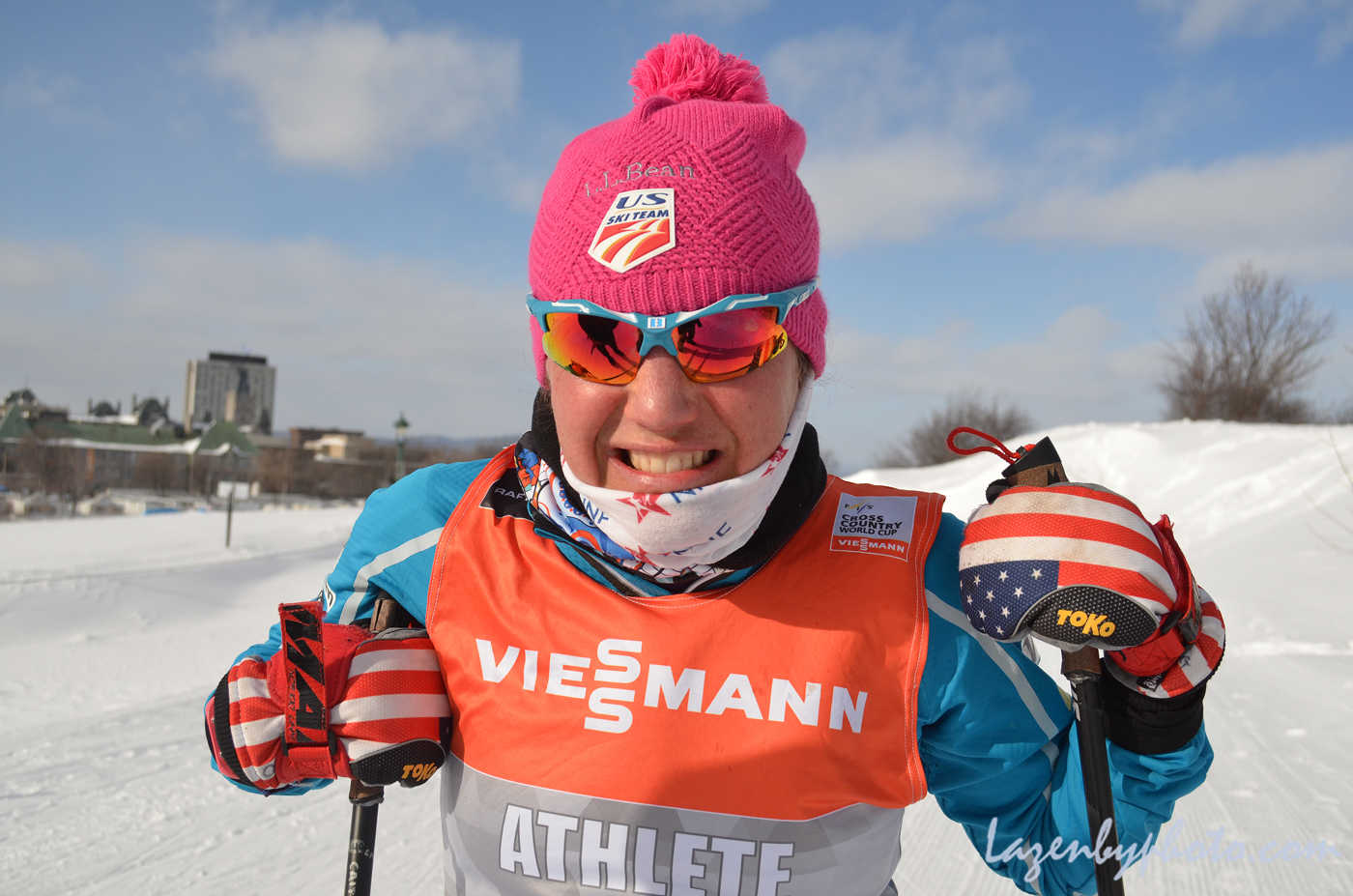
    Caitlin Gregg (Team Gregg/U.S. Ski Team) training on the course in Quebec City. (Photo: John Lazenby/Lazenbyphoto.com)
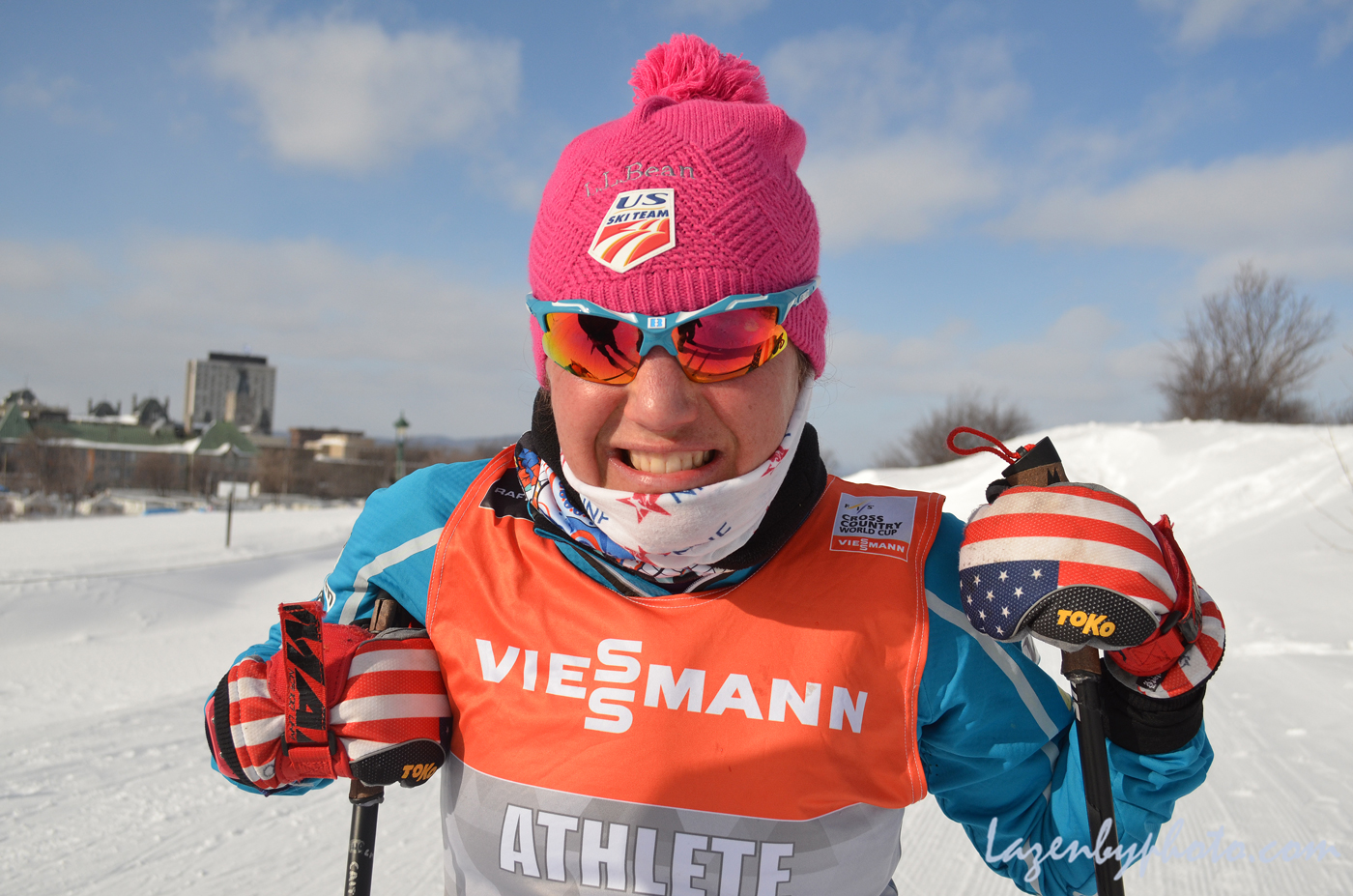
    Caitlin Gregg (Team Gregg/U.S. Ski Team) training on the course in Quebec City. (Photo: John Lazenby/Lazenbyphoto.com)

    “I’m feeling really good. I have a ton of energy and I can tell that I want to just keep going and going and going, kind of that long-distance kind of style racing.” — Caitlin Gregg (Team Gregg/USST), 47th in classic mass start 

    “I’ve been getting over a chest cold after the last World Cup [in Falun]. I don’t know why, it was just a terrible recovery. I’ve been able to ski the last week, but I’ve only done two intensities and they both really sucked. So, all things considered, the lungs held up OK with the temperature, but I was just missing a bit of a snap.” — Valjas, after sprint

    “I had a bit of issues with my back seizing. I’ve been struggling with that my last couple races.” — MacLean, 64th in classic mass start

    “I had a couple crashes out there, broke a pole and my back seized on the second lap after the first crash. The first lap went really well actually, and I was right up there in the group and I felt like I was skiing well. After the tucking section, I came into the second lap and stood up and just, bam, my back completely seized. The last two laps were a real struggle.” — Beatty, 65th in classic mass start

    “I don’t know what was going on, I was just so tired by the top [of the course]. …The body was doing something weird to me today.” — Andy Shields (NDC Thunder Bay), 76th in classic mass start 

    “I took a few spills, which sent me back a bit, but I felt good so I’m happy with that.” — Russell Kennedy (Canmore Nordic), 74th in classic mass start

    What was your strategy?

    “I took a lot of energy from the crowd and I just went out as hard as possible.” — MacLean, after sprint

    “I really tried to stay composed. Everyone was rushing at the start. I kept my eyes opened, stayed on my skis and skied relaxed…  Though I fell in the first lap like many others.” — Browne, 48th in classic mass start

    “I just really wanted to survive it, you know, not get lapped. As silly as that seems, setting the bar pretty low, I haven’t had great classic races this year so it was a concern in the back of my mind and I’m happy to have survived. … I raced the first 3 k as if it was a 3 k race. I was kind of racing for my life out there, trying to get up as far up into the field as I could, as soon as I could to avoid crashes and bottlenecks and it worked.” — Bouffard-Nesbitt, 53rd in classic mass start

    “I started really far back because I fell in the sprint … so it was just a matter of, let’s see how many spots I can move up, and I think I got about twenty so that was good.” — Bender, after the mass start

    What were the course and conditions like in Montreal?
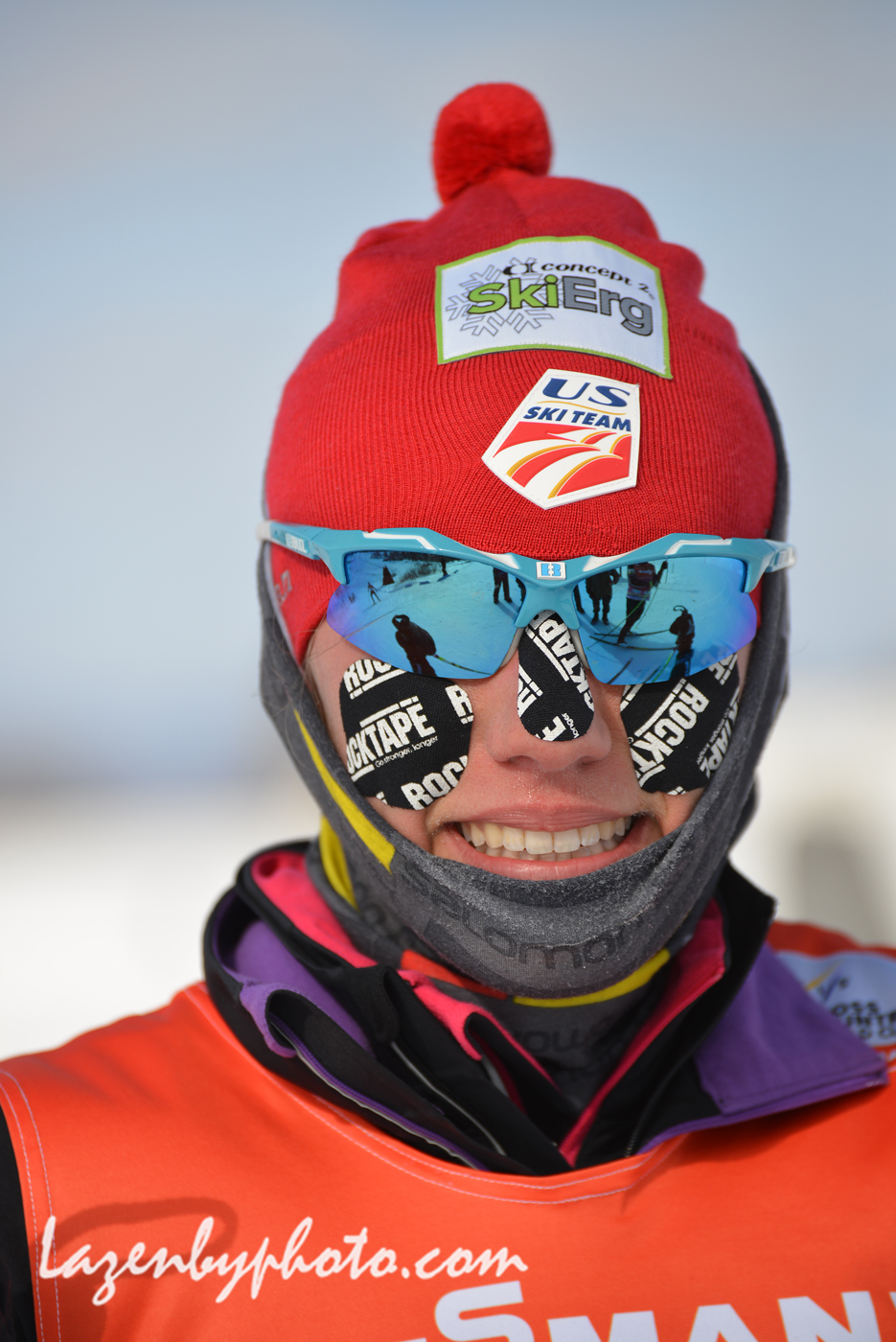
    Kaitlynn Miller (Craftsbury Green Racing Project) on a cold training day in Quebec City on Thursday before the third stage of the Ski Tour Canada. (Photo: John Lazenby/Lazenbyphoto.com)
    Kaitlynn Miller (Craftsbury Green Racing Project) on a cold training day in Quebec City on Thursday before the third stage of the Ski Tour Canada. (Photo: John Lazenby/Lazenbyphoto.com)

    “It was a really technical course. The downhills were really icy and really hard to stay on your feet at some points, especially after some of the grueling uphills. I managed to stay upright and it was a success in that sense, but I wasn’t able to hang onto the group for as long as I would’ve liked.” — Knute Johnsgaard (CNST), 69th in classic mass start

    “I started pretty far back. I was seeded 75th and I noticed right up the first hill that I was in dead last. I’m thinking, ‘Oh man, something didn’t go right with that start.’ It was kind of a weird course with sharp downhills that got skidded to ice so it just scraped off all your wax and then it was like, herringbone and double pole, herringbone and double pole.” — Patterson, 55th in classic mass start

    “The downhills were very icy and very sketchy. Some of the most sketchy downhills I’ve had in a race. It was very icy around the turns and we were just all doing our best to stay on our feet and try not to get in any pileups.” — Eric Packer (APU), 67th in classic mass start

    “It was a tough day. I think the conditions made the course and the race even more challenging. But it’s always a learning experience for me, only my second World Cup today so I’ll take what I can get.” — Jenn Jackson (NDC Thunder Bay), 63rd in the classic mass start

    “I really enjoyed the course and just the energy of everyone cheering. My family and friends were there to watch so it was really fun.” — Kaitlynn Miller (CGRP), 39th in classic mass start

    What are your goals for the Tour? 

    “I think all the Canadian girls are searching for those top 30s, and if a few of us can get it that’s gonna be great.” — Andrea Dupont (RMR), 56th in the sprint

    “Definitely trying to stay in the competition every race. … My goal is really a top 30, and I hope to get it one of these races.” — Beatty

    What race are you most looking forward to?

    “Very excited about having two 15 k skates.” — Brian Gregg (Team Gregg), 83rd in sprint

    “The pursuit in Canmore. It’s a course I know pretty well, and I had some great races on the exact course like for trials and other events. So I’m really excited to race the pursuit.” — Killick

    “I’m excited to go back to Quebec, but I’m really looking forward to Canmore. For me that’s home. That’s a home venue.” — Blackhorse-von Jess (of Bend, Oregon)

    “The classic sprint in Canmore. That suits me, that is my best event I think.” — Bob Thompson (NDC Thunder Bay), 52nd in sprint

    “I think each event presents it’s own learning experiences and challenges, but a classic sprint in Canmore — I really enjoyed the classic sprint in Canmore on the NorAms — so hopefully we can have some good races there.” — Jackson, 58th in sprint

    “Just getting to ski a lot of World Cups is a pretty awesome opportunity. Definitely looking forward to more of the distance races.” — Ogden

    “I’m quite looking forward to the skiathlon in Canmore, but there’s going to be a lot of good stages, good crowd here, so I think all of the stages will be fun if the crowd is good the whole way.” — Musgrave, after the sprint

    “The other athletes here worked their entire lives to be here. I literally started [skiing] three years ago and I just showed up. So my goal here is to come here and do justice to the sport and not erode the validity and integrity of the sport that these athletes worked so hard to create.” — Rajack, after the sprint

    Also:

    We missed NorAm leader Kevin Sandau (AWCA), but this video he made before the Ski Tour Canada sums up a lot (click here to view on YouTube)

    *Guide to North American teams:

    Canada:

    – AWCA: Alberta World Cup Academy

    – CNEPH: Pierre-Harvey National Training Centre (Centre National D’entraînement Pierre Harvey)

    – CNST: Canadian National Senior Team

    – NDC Thunder Bay: Thunder Bay National Development Centre

    – RMR: Rocky Mountain Racers

    USA:

    – APU: Alaska Pacific University

    – BSF: Bridger Ski Foundation

    – CGRP: Craftsbury Green Racing Project

    – SMS: Stratton Mountain School

    – SMST2: Stratton Mountain School T2 Team (elite team)

    – SSCV: Ski & Snowboard Club Vail

    – USST: U.S. Ski Team

  • For Aspiring Skiers, World Championships Qualifier Much More Than a Race

    For Aspiring Skiers, World Championships Qualifier Much More Than a Race

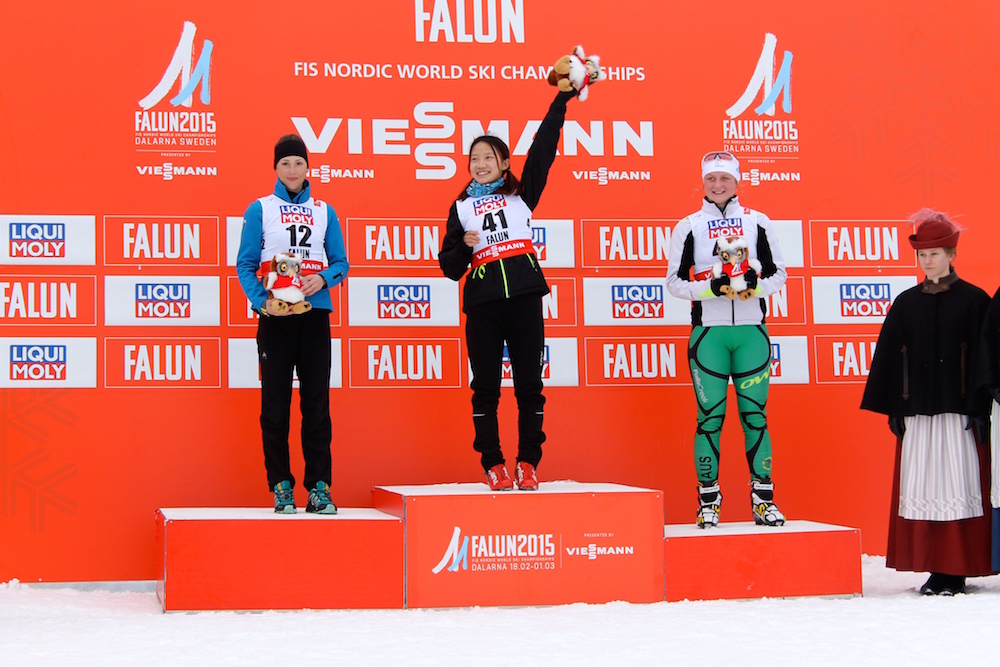
    Seventeen-year-old Chi Chunxue celebrates her qualifying win on Wednesday in the women's 10 k freestyle, which advanced her along with the top 10 to the remaining distance races at 2015 FIS Nordic World Ski Championships in Falun, Sweden.Bosnia and Herzegovina's Tanja Karisk placed second (+49.3) and Australia's Casey Wright was third (+1:07.5).
    Seventeen-year-old Chi Chunxue (c) celebrates her qualifying win on Wednesday in the women’s 10 k freestyle, which advanced her along with the top 10 to the remaining distance races at 2015 FIS Nordic World Ski Championships in Falun, Sweden. Bosnia and Herzegovina’s Tanja Karisk (l) placed second (+49.3) and Australia’s Casey Wright was third (+1:07.5).

    By Colin Abbott

    FasterSkier’s coverage of the 2015 FIS Nordic World Ski Championships in Falun, Sweden, is brought to you by the generous support of L.L. Bean, now featuring a complete line of Kikkan Randall training wear.

    FALUN, Sweden — The buzz is building at the 2015 FIS Nordic World Ski Championships with the completion of the first races in Falun. Wednesday saw the individual-start distance qualification races take place with 45 women and 69 men and women skiing 5 kilometers and 10 k, respectively.

    These initial races did not crown world champions, but they have another purpose that is just as important to the athletes racing. These races offer the opportunity for skiers that have not in the past year made the minimum International Ski Federation (FIS) point standard for men (90 points) and women (120 points). The top-10 men and women in these races qualify for the remaining distance races at World Championships (the skiathlon, individual start and mass start).

    Athletes selected with these races are part of a nations quota of starts. Most countries with a regular presence on the World Cup have athletes with low FIS points and select teams long before the start of the World Championships. This leads to lesser-known ski nations concentrating on these races as an opportunity for athletes to qualify and participate in World Championships.

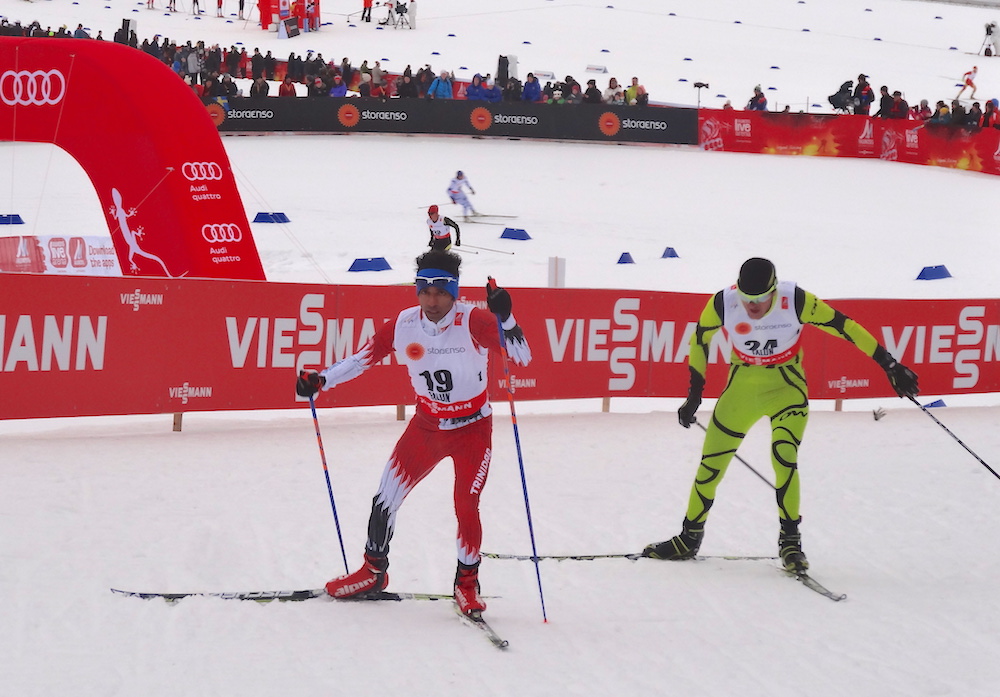
    Mark Rajak racing for Trinidad and Tobago in Wednesday's 10 k freestyle individual start qualification race on the first day of 2015 World Championships in Falun, Sweden.
    Mark Rajak (19) racing for Trinidad and Tobago in Wednesday’s 10 k freestyle individual start qualification race on the first day of 2015 World Championships in Falun, Sweden.

    After the races on Wednesday, FasterSkier caught up with skiers hailing from countries where many citizens will never see snow. Trinidad and Tobago, Iran, Australia, and Brazil offered us a glimpse into the role of skiing in their nations.

    The Australian ski program has grown into a World Championships team that includes 11 athletes and six support staff. Central to their success as a nation is a development program termed the “Victorian squad” — an inclusive, tiered learn-to-ski program focused on teaching children how to ski and supporting athletes who want to race. Those young racers have athletes such as Callum Watson and PK Kovacs to look up to now which, according to 22-year-old skier Mark Pollock, is key to motivating and developing high-performance skiers.

    At a certain point, the lack of snow makes it difficult to progress as an athlete in Australia. Their best skiers are seeking out options to continue skiing in other places. Last summer, Pollock trained with the Bridger Ski Foundation in Bozeman, Mont., while his teammate Jessica Yeaton trained with Alaska Pacific University in Anchorage, Alaska. These training initiatives taken by Australian athletes have allowed them to improve their depth and competitiveness internationally, with Yeaton qualifying for the nation’s full-fledged World Championships team outright.

    Fabrizio Bourguignon racing for Brazil  in Wednesday's 10 k freestyle individual start qualification race on the first day of 2015 World Championships in Falun, Sweden.
    Fabrizio Bourguignon racing for Brazil in Wednesday’s 10 k freestyle individual start qualification race on the first day of 2015 World Championships in Falun, Sweden.

    Brazil was represented by three national team members on Wednesday: one woman, Mirlene Picin, and two men. Leandro Lutz, 33, and Fabrizio Bourguignon, 38, have both been skiing for a number of years. Like Yeaton and Pollock, Lutz decided that in order to optimize his training, an on-snow location was necessary for part of the year. Lutz chose to spend the first half of this winter in Denver, Colo., to train on snow in order to prep for three months of racing in Europe. And like Australia, Brazil is experiencing a growth in the popularity in skiing. According to Lutz, there are seven Brazilian junior racers currently in Europe — three racing the IBU Youth/Junior World Championships in Belarus and the remainder racing FIS junior races in Scandinavia.

    Racing the sprint on Thursday is another Brazilian, Leandro Rubella. Two years ago, Rubella started a social project in Sao Paulo to help children from impoverished families escape violence and poverty and establish the skills needed to live a good life. This project took the unlikely form of a learn-to-rollerski program. A key message of this initiative is that “anything is possible.” The hope is that a citizen from a country with no snow can make it to the Nordic World Championships, a child born into poor circumstances will see that it is possible to overcome the most difficult challenges.

    The birth of a similar program may soon occur in another tropical country, Trinidad and Tobago. Mark Rajack, 33, toed the start line Wednesday afternoon in Falun to compete for the Caribbean island nation in his first international race. Even though Rajack, who has lived in Ottawa, Ontario, since a young age, has only been skiing for two years, he sees the potential for skiing to bring positive changes to his native country.

    Rajack sees benefits similar to those envisioned by Rubella in Brazil. In addition to teaching important life skills, Rajack sees a rollerski program as a way to teach citizens a skill that would allow immigrants from Trinidad and Tobago to easily integrate with societies in the Northern Hemisphere, should they choose to leave their country. This vision originated with the positive experience Rajack has had with the ski community in Ottawa.

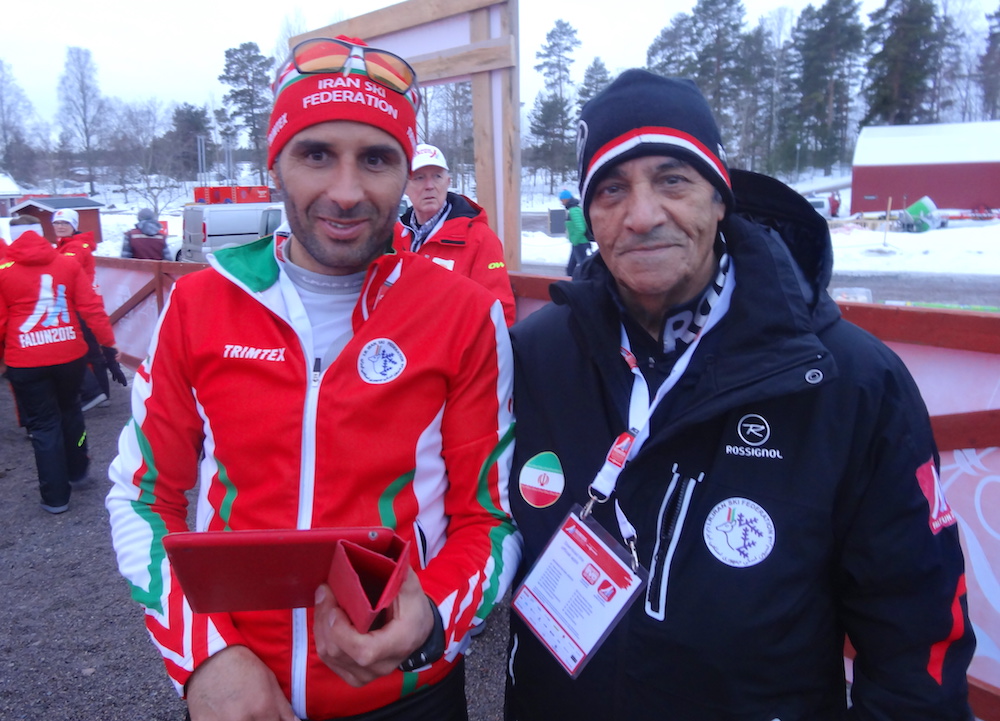
    Seyed Sattar Seyd of Iran (l) with his coach after the men's 10 k freestyle individual start qualification race on the first day of 2015 World Championships in Falun, Sweden.
    Seyed Sattar Seyd of Iran (l) with his coach after the men’s 10 k freestyle individual start qualification race on the first day of 2015 World Championships in Falun, Sweden. He placed eighth to qualify for the remaining distance races at the championships.

    Seyed Sattar Seyd posted one of the best Iranian cross-country skiing results ever on Wednesday after finishing eighth in the men’s qualifying race. Seyed, 27, is an experienced racer, having competed in both the 2010 and 2014 Winter Olympics.

    Iran now has a FIS-homologated race site at Knoor, approximately 60 k outside its capital of Tehran. Much of the training done by Iranian athletes happens within the borders of Iran and it appears that the current government will assist in keeping it that way. The addition of a biathlon range is planned for the Knoor facility in the near future and the Iranian contingent here in Falun sees a bright future for the sport.

    Below are the top-10 competitors that qualified for the remaining distance races at 2015 World Championships. Those who did not qualify have the opportunity to race Thursday’s 1.4-kilometer classic sprint qualifier.

    OFFICIAL RESULTS 

    Women’s 5 k freestyle

    1. CHI Chunxue 1998 CHN 13:33.8
    2. KARISIK Tanja 1991 BIH +49.3
    3. WRIGHT Casey 1994 AUS +1:07.5
    4. TRNKA Anna 1994 AUS +1:07.8
    5. MUIZHNIECE Anda 1991 LAT +1:09.7
    6. PASHKOVSKA Inga 1992 LAT +1:37.3
    7. PAPP Ildiko 1982 HUN +1:39.1
    8. KIROSKA Rosana 1991 MKD +1:44.9
    9. KLAUZA Laima 1969 LAT +1:47.0
    10. GALSTYAN Katya 1993 ARM +1:49.2

    Complete women’s results

    Men’s 10 k freestyle

    1. BELOMAZHEV Stanimir 1988 BUL 23:56.8
    2. PLAKALOVIC Mladen 1991 BIH +16.6
    3. KONYA Adam 1992 HUN +31.4
    4. HULGAARD Lasse 1991 DAN +47.6
    5. SLOTINS Roberts 1991 LAT +54.5
    6. SMRKOVIC Rejhan 1991 SRB +57.8
    7. PAIPALS Janis 1983 LAT +1:05.1
    8. SEYD Seyed Sattar 1987 IRA +1:11.4
    9. HADZIFEJZOVIC Dzevad 1991 SRB +1:23.3
    10. ANGELIS Apostolos 1993 GRE +1:30.9

    Complete men’s results

    About the Author: Colin Abbott hails from the Yukon Territory where he learned to ski and race from a young age. Years later his life mostly revolves around skiing. At the moment, Colin is racing for the Yukon Elite Squad and the Carleton Ravens university team. He sits on the board of directors for Cross Country Canada and is involved in the education and womens committees there. He has also started writing ski-related articles for XCOttawa and FasterSkier and for the next week is supporting the Trinidad and Tobago team at FIS Nordic World Ski Championships.

  • In First Full Season, Canada’s Mark Rajack to Race for Trinidad and Tobago at Worlds

    In First Full Season, Canada’s Mark Rajack to Race for Trinidad and Tobago at Worlds

    Mark Rajack Rollerskiing with XC Ottawa; photo credit: Dave McMahon, XC Zone.
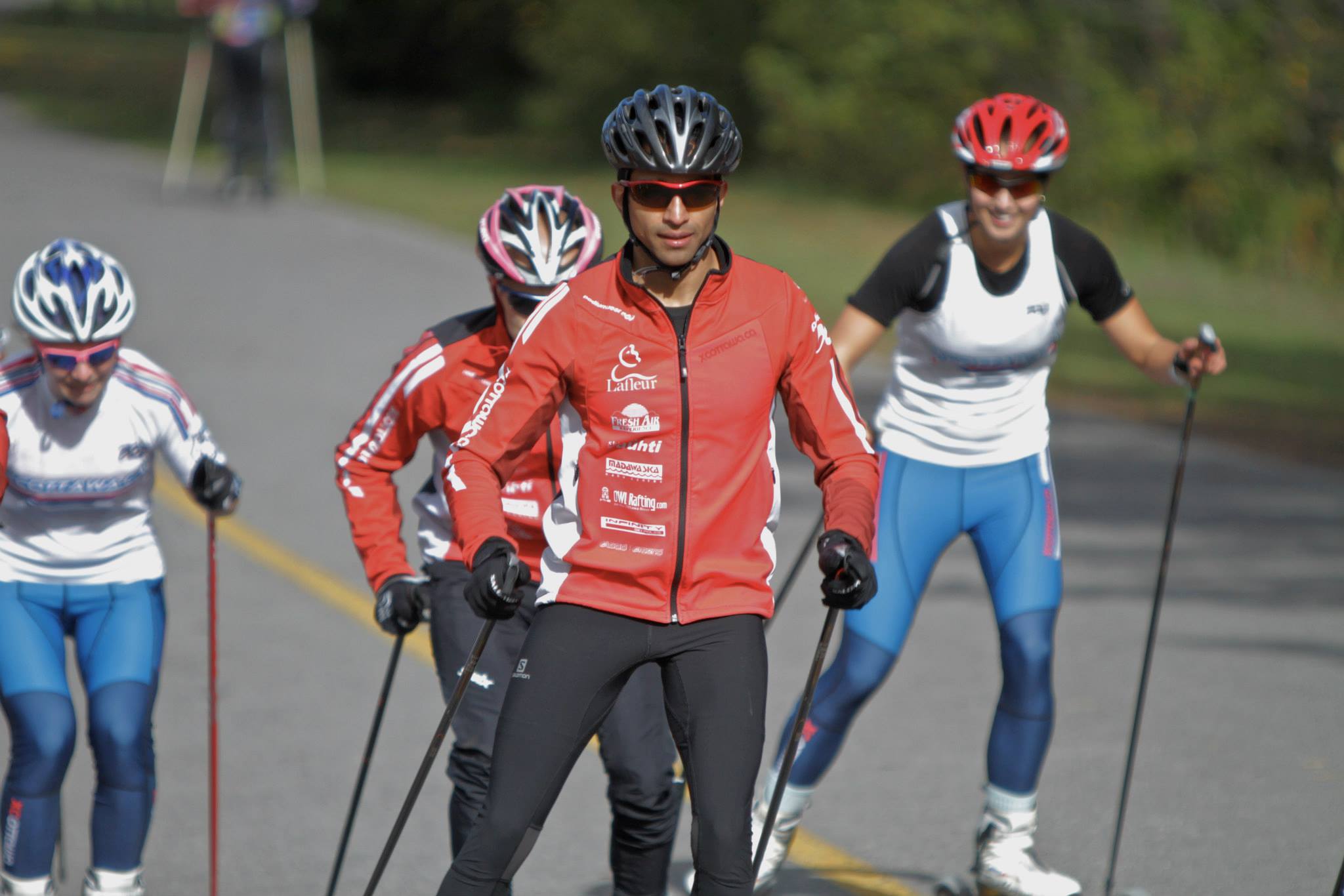
    Mark Rajack rollerskiing with XC Ottawa on Oct. 5. (Photo:Dave McMahon/XC Zone)

    OTTAWA, Ontario — Mark Rajack, a dual citizen of Canada and Trinidad and Tobago, was first introduced to nordic skiing two years ago in 2012, but in the time since, he’s not only learned to ski and compete in his new sport, but he’s also set his sights higher than many will in their skiing careers.

    Rajack, 33, lived in Trinidad and Tobago until the age of 6, at which point his parents were drawn to Ottawa for a job opportunity. From the time of his move, it would still be almost three decades until he would discover cross-country skiing.

    “You don’t come from a tropical country with a background in winter sport,” said Rajack, mostly a recreational cyclist before skiing. “I didn’t know that Gatineau Park [Ottawa’s largest ski-trail network and outdoor destination] existed until I started working at the local bike-and-ski shop.”

    Discovering Skiing

    “I started [skiing] the year I turned 32 and it was an accident,” he explained in an interview at Carleton University on Sept. 3.

    He wanted to learn how to fix bicycles so he got a job working at a bike shop. In the process, he got to know some ski racers who worked part time at the same place. 

    “A lot of the bike shops here are ski shops in the winter, so it was through the racers working in that ski shop and through their community orientation that they managed to bring me on and just teach me to ski from scratch,” he said.

    Rajack’s initiation was not exactly a cake walk.

    “It was horrible,” he recalled. “I had no glide. It was too cold. I got the wax wrong and with no technique it was just a struggle from the very start to the very end. And it was because I was expressing my struggles in skiing that a member of XC Ottawa said, ‘You know what, I’ll take you out and I’ll teach you to ski properly on my Zone-1 [easy] days.’ ”

    That skier was 23-year-old Andre Marchand, a longtime XC Ottawa skier and now Rajack’s good friend.

    “I remember Mark picking up the technique instructions I was giving him pretty quickly,” he wrote in an online message. “It was impressive, and then after about 40 min of some pretty good technique skiing from a newbie, he just started falling over here and there, on downhills but also on flats… Now he’s regularly skiing for 2 or 3 hours at a time with Team XC Ottawa and he has no problems doing that!”

    Looking back, Rajack stressed the importance of the local ski community and the type of person it takes to get a newcomer excited about a sport and its culture.

    “It takes people who are fully inclusive and I’ve found that in the ski community we have here in Ottawa-Gatineau,” he said.

    Rollerskiing with XC Ottawa; photo credit: Dave McMahon, XC Zone.
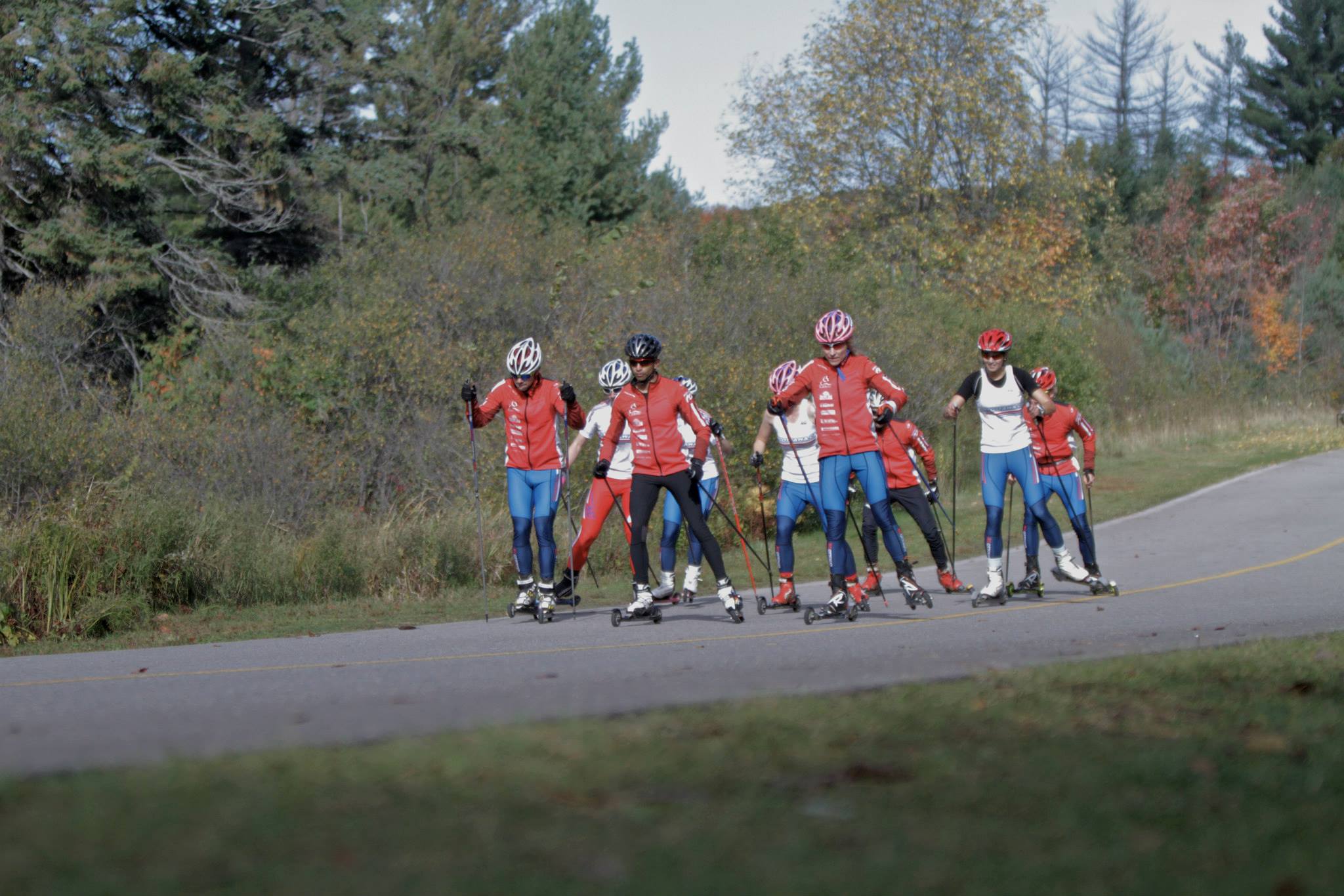
    Gatineau Parkway rollerskiing with XC Ottawa. (Photo: Dave McMahon/XC Zone)

    Setting Goals

    After getting on snow a few more times his first winter, the season of 2012/2013, Mark decided he wanted to venture deeper into the world of his newfound sport.

    “I went to a race in Val Morin [in Laurentides, Quebec] with Andre just to see what it was about,” he said. “When I went to the race, his dad took me to the wax tent. His dad explained how races operate, I saw the culture behind the race, I saw the environment and I knew instantly that it was something that I would enjoy. It was then that I decided that I would try to get into racing. That would be the long-term goal.”

    Just 1 1/2 years down the line, Rajack is a member of the Trinidad and Tobago National Ski Team and aiming for 2015 World Championships in Falun, Sweden, and 2018 Winter Olympics in Pyeongchang, South Korea.

    One-and-a-half years down the line, Rajack is a member of the Trinidad and Tobago National Ski Team and aiming for 2015 World Championships in Falun, Sweden, and 2018 Winter Olympics in Pyeongchang, South Korea.

    “It took about three-to-four months before the idea entered my head that I had the option to ski for Trinidad and Tobago and then I started to look into it,” he said. “It was only through a fluke joke. Some of the skiers I was with were critiquing some of the techniques of the non-snow countries at the [2013] World Ski Championships and only then did I think, ‘You know what? That could be me!’ ”

    It just so happened that Trinidad and Tobago has a ski association, already linked to the International Ski Foundation (FIS), the president of which is a skier who lives in Calgary. Once Rajack made that connection, it was a matter of applying for his FIS license. With a mountain of ski technique and experience to climb, he set off to join a team.

    Naturally, he wanted to join Marchand, so he applied at XC Ottawa. It didn’t matter that he had no skiing or endurance sport background, “they were still able to justify bringing me on because I fit their mandate of national and international competition,” Rajack explained.

    With the pieces starting to fall into place, he jumped headfirst into the world of nordic racing and started to compete last February.

    “The premise of last year [2014] was learn to ski and race locally,” he said.

    He started with Eastern Canadian Championships in Cantley, Quebec, where he placed 53rd in the 15 k freestyle and 50th in the 20 k classic mass start — last in both events.

    “Next year’s focus is a different one,” he said. “Next year, there’s a focus on more NorAms than local races and I’m aiming to break the 300 FIS-point limit,” which is the FIS standard for Olympic qualification.“I always get that Jamaican bob-sled team reference,” he said.

    The other big focus for him this season is World Championships.

    “Me being the only skier for Trinidad and Tobago competing at an international level, I basically by default have qualified for Falun,” he said. World Champs differs from a standard World Cup, which has a tougher points criteria.

    “But when I get [to Falun] I have to qualify for the distance race,” he added. “It’s likely that people in my situation will only get to race the 10k free and then the classic-sprint qualifier.”

    Getting to race at least two races at World Championships will provide Rajack with a wealth of experience, and he was excited for the opportunity.

    “Without a doubt I’m very much looking forward to it,” he said.

    He’ll have a support team there to help him with waxing and other preparations, including coach Mike Vieira and Colin Abbott, a competitive skier with the Yukon Elite Squad. Rajack estimated the whole trip will cost him around $850 dollars, with complimentary accommodations, and he explained Viera and Abbott are paying their own way to support him.

    Abbott spent three years with XC Ottawa before leaving the city to train full time for another three years.

    “I kept close ties with XCOttawa and heard about Mark joining the team long before I met him,” Abbott wrote in an email. “I returned to Ottawa this year to complete my studies at Carleton University and met him in September this year. From what I have seen of him so far he is motivated, realistic and open to critical feedback. I believe he has the ability to make the 300 FIS point cutoff to qualify for the next Olympics in Korea.

    “As far as international success, he will probably never be a medal contender on the World Cup,” he added. “His technique is his biggest weakness right now and he knows it. He’s put in a lot of time this summer focusing on becoming more efficient.” 

    The Sacrifice

    With a new focus on racing, Rajack finds training taking up more and more of his time.

    “I’ve put my career on the back grill for the moment,” he said. “As a teacher with the Ottawa-Carleton district school board, I very well could have made choices that would’ve led to me being a full-time teacher at this point. I’ve made the decision to continue substitute teaching to focus on my skiing for the next four years.”

    “In terms of finances, too, I was at one point saving for a downpayment on a house,” he said. “Potential house [or] potential Olympics.”

    In a place like Canada, where high-performance skiing does not hold the same clout that it does in other countries, there’s always the pressure, both societal and financial, to follow the path of least resistance: school, job, house.

    “I think it takes a bit of bravery to not lead that scripted life when there’s a lot of pressure to conform,” Rajack said.

    “I think it takes a bit of bravery to not lead that scripted life when there’s a lot of pressure to conform.” — Mark Rajack, Canadian dual citizen and Trinidad and Tobago’s lone national cross-country ski team member

    But he’s willing to make the sacrifice — even without financial assistance from the Trinidad and Tobago government.

    “At this time, the government is unable to provide support,” he said. “And I understand the challenge of understanding what someone like me is trying to do, especially that I’m, right now, off the island.”

    Unfortunately, that puts him in a sort of no-man’s-land for funding. Without the Trinidad and Tobago or the Canadian governments helping him out, and with the limited workload that he is able to fit in around training, finding sponsors will be one of the many challenges for Rajack in the coming months.

    What does he see as key in his preparations for international competition?

    “It just comes down to trusting people who have done this their whole lives, listening to them and believing that, if I follow what they do and if I keep my effort and dedication up, I’ll be well under that 300 FIS points standard by the time the Olympics roll around,” Rajack said.

    The Greater Good

    XC Ottawa; photo credit: Dave McMahon, XC Zone.
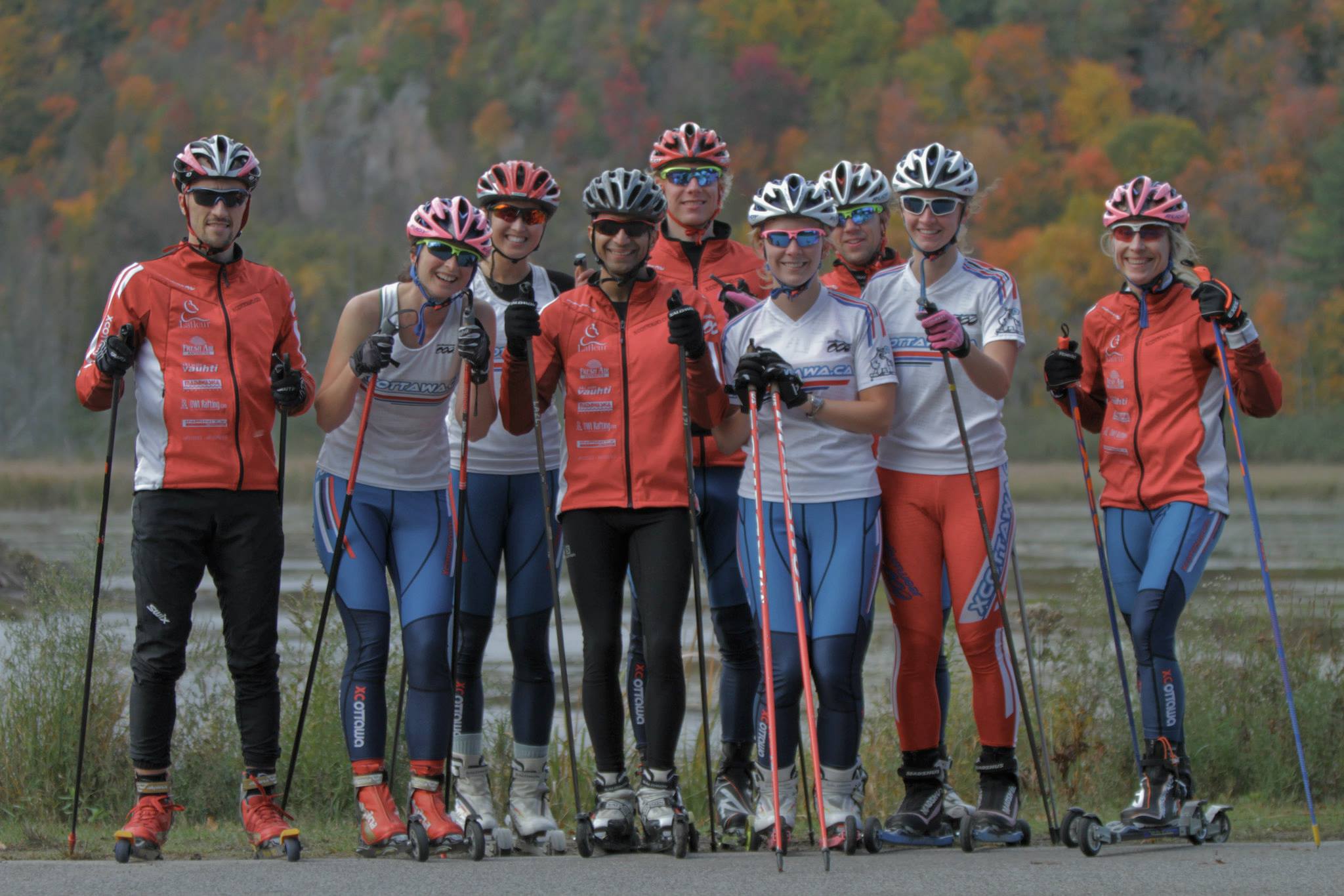
    XC Ottawa skiers in early October, including Mark Rajack (front c) and Andre Marchand (to Rajack’s right). (Photo: Dave McMahon/XC Zone)

    At the end of the day, it’s not all about the Olympics for Rajack. His dream is to help grow the sport that has already given so much to him and, in doing so, help those new to winter climates who struggle with getting used to the colder season just as he did when he moved to Canada.

    “There’s no way for me to be living in Trinidad and training to ski but if I could wish anything, ultimately, it is that we develop a rollerski team in Trinidad and Tobago,” he said. “In the same way that you have North American athletes who play tennis and golf who go down south to do whatever golf camps and tennis camps in the states, well the reverse can be true. We’ll take those rollerskiers and bring them up to [The Forêt] Montmorency or Nakkertok and get them time on snow and then put them in competition.

    “I don’t know if that will ever happen, but there’s always the dream and then there’s the reality — that would be the dream,” he continued. “The reality is that it will probably just be members of the Trinidad and Tobago diaspora [who become involved in skiing], which is spread right across the world. You’ve got Trinidadians living in every corner of the world and many of them, like me, live in northern climates and, like myself at one point, the winter is a significant negative impact on their quality of life.”

    “If, through my efforts, I could help a Trinidad and Tobago kid get to the World Cup in a way I would feel that I had made the World Cup as well.”