Tag: Marquette

  • Torchia on the Ups, Downs and All He’s Learned Since His First USST Nomination

    Torchia on the Ups, Downs and All He’s Learned Since His First USST Nomination

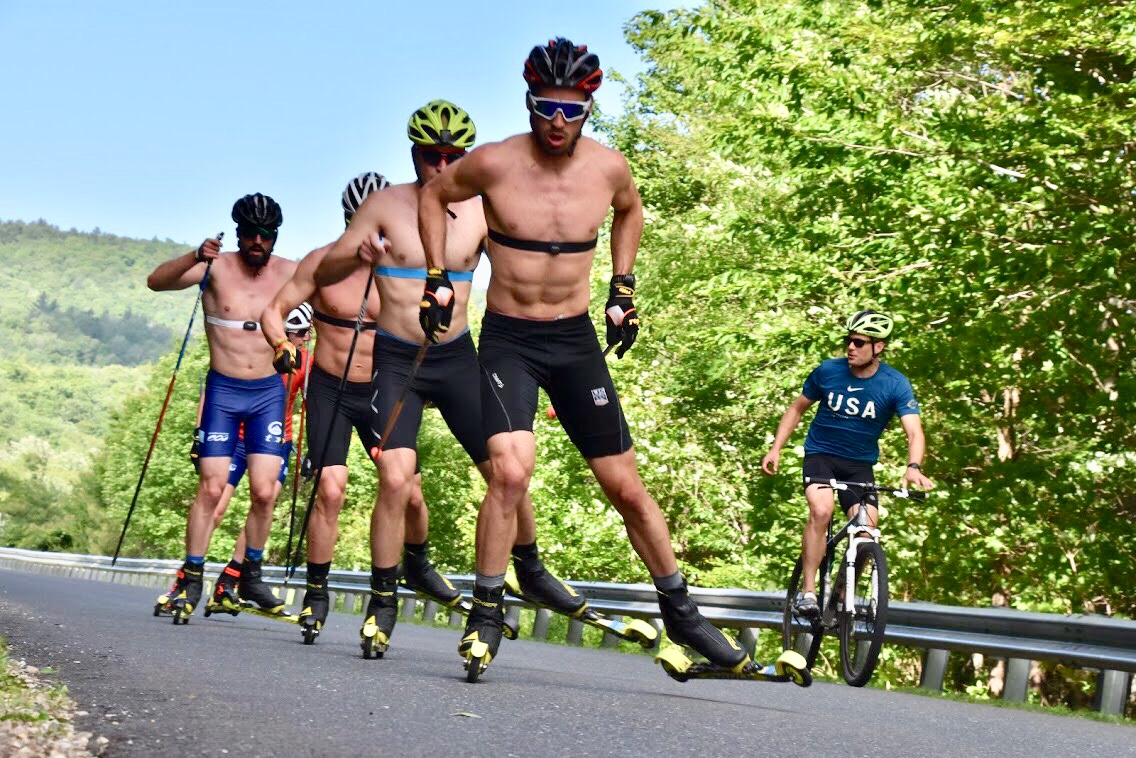
    Ian Torchia (front) leading L3 intervals with the Stratton Mountain School (SMS) team in June. (Photo: Pat O’Brien)

    Two summers ago, with just five miles left of the Marquette Trails Fest 30-mile mountain bike race, all Ian Torchia could hear in his head was the voice of Krystof Kopal, his Northern Michigan University (NMU) teammate, snidely saying, “You drop out again?”

    Fifteen minutes earlier, Torchia had careened into a tree. After dusting himself off, he remounted his bike, but not before noticing his left wrist was badly injured.

    For a moment, Torchia considered pulling out of the race. Thoughts of Kopal, however, kept his feet on the pedals. A few months earlier, Kopal had given Torchia ceaseless verbal flak for dropping out of the 2016 Spring Series 50-kilometer ski race due to cramping. 

    “[Kopal] was playing in my head … so I finished the last five miles with a broken wrist,” Torchia, now 22, recalled on the phone this summer, noting that it wasn’t until after he had finished the race that he found out it was broken.
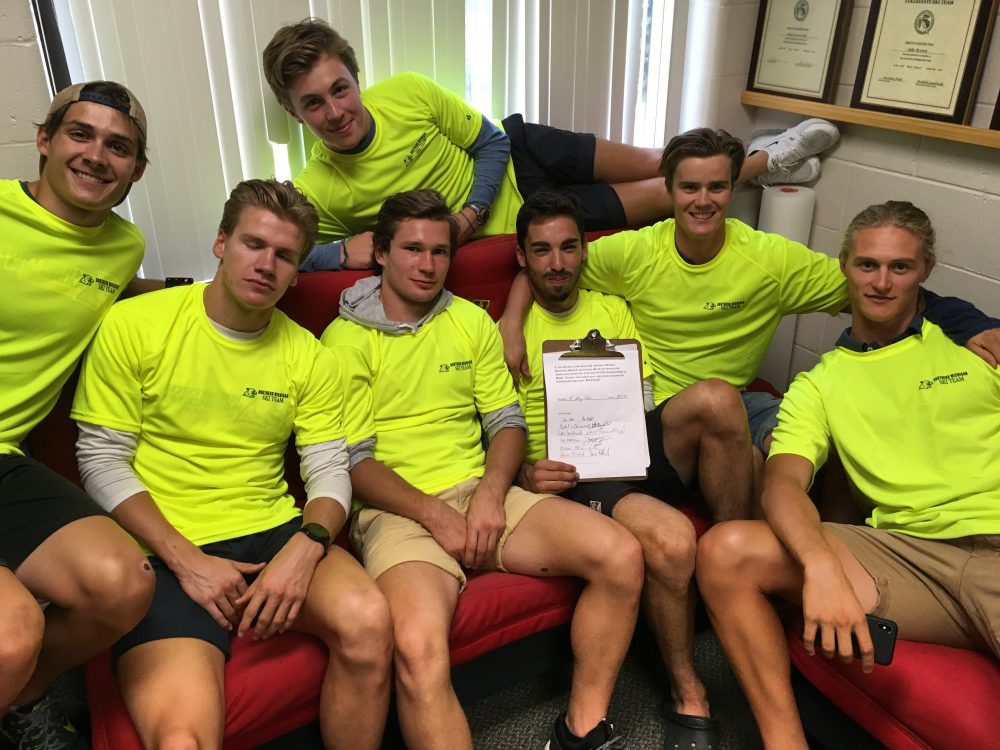
    The NMU men’s ski team with Ian Torchia (third from r) in late August. According to Torchia, the paper he’s holding is a contract. “If we win [the] team NCAA title [this winter], they get to tattoo my gluteus maximus,” Torchia wrote. (Photo: Andy Keller)
    Shortly after, Torchia had his wrist examined by doctor and was told he would need to have surgery. The procedure — scaphoid fixed via percutaneous fixation–left Torchia in a cast. 

    About a month before his crash, Torchia had been nominated to the U.S. Ski Team (USST) D-team and invited to two national-team training camps that summer. Torchia had intended to attend both camps, regardless of whether his wrist was healed or not.

    Fourteen days after his accident, Torchia departed Marquette, Michigan, his “home” since he began attending NMU in 2014, and headed for Eagle Glacier, Alaska, the location of the first USST camp.

    On the glacier, he skied with either one pole or none at all. When he returned to Marquette, the pattern continued for another two months. It wasn’t until the end of August that he had his cast removed. 

    “I kept training super hard with the broken wrist,” Torchia said.

    All that training led Torchia to what he recalled as being “in pretty good shape” leading up to November. Then things started to go south. Fast. Right around Thanksgiving, Torchia was exhausted and experiencing severe night sweats.

    buy inhalers

    “If you type in ‘mono’ on Google and look at the symptoms, I probably had seven out of the eight,” he said. “But I at the time was thinking ‘It’s just a bad virus. It will pass.’ ”

    The symptoms continued. Torchia’s girlfriend suggested he get tested for mononucleosis. He didn’t. 

    “I didn’t want to believe her,” Torchia said. 

    Soon enough he had to. In mid-December, hypothermia forced him to drop out of a race. At 2017 U.S. Cross Country Championships in Midway, Utah, he felt sluggish and “off” during training, so he visited a walk-in clinic in Park City. The doctor tested for mono, and the results came back positive. 

    “The doctor was kind of nonchalant about it,” Torchia said. “He came in and was like, ‘Oh yeah, you’ve got mono, but nordic skiing isn’t a contact sport so you should be good to go and ski at nationals. I was like, ‘Oh, sweet…that’s not how it works.’ ”

    Following the diagnosis, Torchia decided to skip nationals and return to his hometown of Rochester, Minnesota, for the holidays. He stopped exercising for a month before gradually returning to training.

    “A lot of different skiers messaged me saying, ‘On this return, you need to take it really easy,’ ” Torchia said. (One of those skiers included Tad Elliott, who caught the Epstein-Barr virus in 2014 and went on to win a national title in 2016).

    Torchia took their advice, as well as that of his NMU head coach, Sten Fjeldheim, who has helped other athletes diagnosed with mono safely return to training. The two worked out a meticulous day-by-day plan for Torchia’s return. Torchia redshirted the 2017 college season, but by March, he was back on skis.

    “I wasn’t really thinking about what other people thought,” Torchia said when asked if he was worried whether others were questioning his USST nomination during that time.

    “I was thinking more about the next steps,” he continued. “Like the day to day, ‘Oh, my morning heart rates are going down,’ or ‘This next weekend I can start running again.’ … I think before [mono], I was riding really high on skiing, and it was … a big, big part of my life. Getting mono kind of let me take a step back and realize, OK, there are other things [besides skiing].”
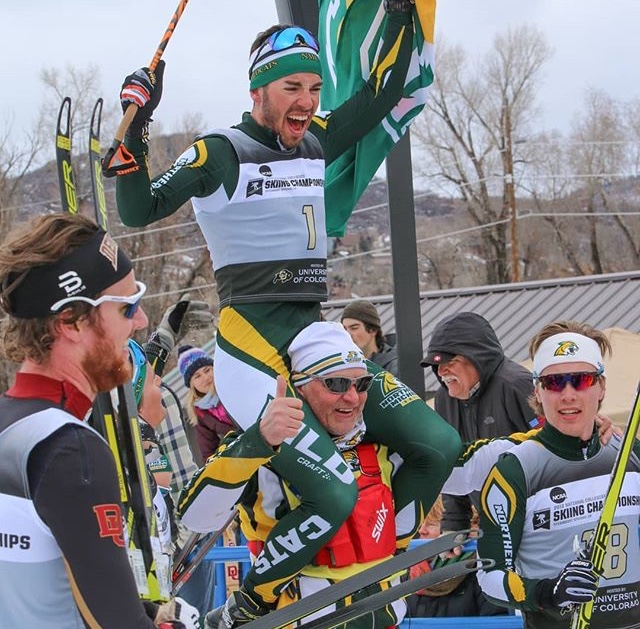
    Ian Torchia (1) on the shoulders of Northern Michigan University Head Coach Sten Fjeldheim after he won the men’s 20-kilometer freestyle race at 2018 NCAA Skiing Championships in Steamboat Springs, Colorado. (Courtesy photo)

    Mono not only gave Torchia a little perspective, but also an extension on his time to compete in college. By redshirting in 2017, Torchia retained eligibility to compete in 2018 (as a junior) and 2019 (as a senior). In his fifth year at NMU, he is currently working toward a master’s degree in exercise science.

    This past March, he won the 20 k freestyle at NCAA Skiing Championships to become NMU’s seventh NCAA champion in program history. In the other race at 2018 NCAA’s, the 10 k classic, he placed fifth for All-American status. Earlier last winter, Torchia qualified for and competed at U23 World Championships in Goms, Switzerland.

    “I try to look at the positives that mono brought,” Torchia said. “That first season of being on the USST brings a lot of pressure and inadvertently getting mono kind of lessened that. Afterward, when I got renominated to the team [last spring], I was like, ‘OK, they’ve given me this second chance, so I need to take it.’ ”

    Torchia was renominated to the D-team for 2017/2018 and again this past spring for the 2018/2019 season. After his third-straight nomination, he approached his summer with revitalized vigor. For the first time since enrolling at NMU, he decided to spend some time training outside of Marquette, largely as a result of a wedding invitation from his USST teammate, Erik Bjornsen. In July, Bjornsen and Marine Dusser were married in Villard-de-Lans, France.
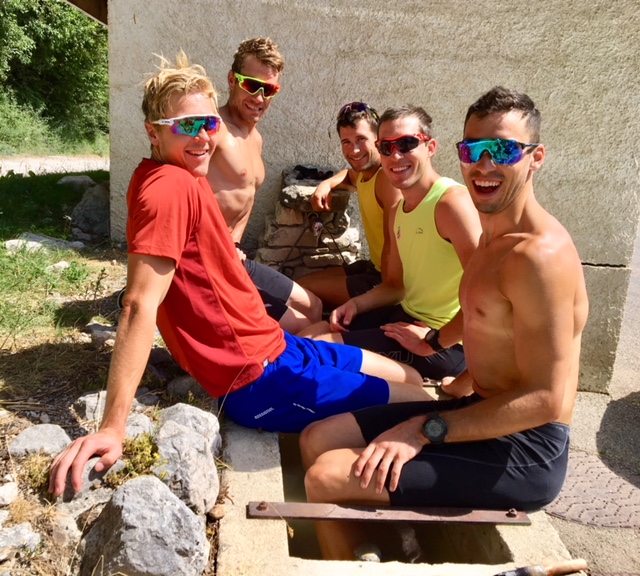
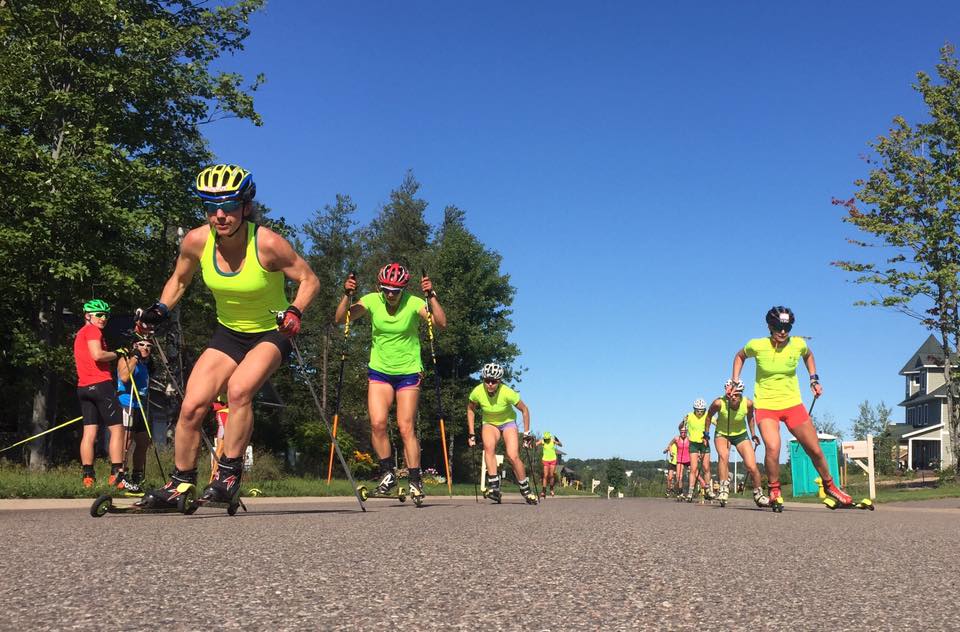
    Right to left: Ian Torchia, Paddy Caldwell, Adrien Backscheider, Simi Hamilton, and Erik Bjornsen during a post-interval cool down in Villard-de-Lans, France. (Courtesy photo)

    “After getting Erik and Marine’s ‘save the date’, I knew there was no way I was missing the wedding,” Torchia explained.

    After the wedding in early July, Torchia remained in France for the USST men’s training camp. The camp lasted 10 days and featured what Torchia described as “hard rollerski intervals and epic mountain runs.”

    He was accompanied by three teammates, Bjornsen, Simi Hamilton and Paddy Caldwell, and their coach Chris Grover. French national-team member Adrien Backscheider joined the group for interval sessions.

    Following the camp, Torchia had made arrangements to stay in Europe for another two and a half weeks, which was partially prompted by his Norwegian teammates at NMU. Over the years, many had encouraged him to travel to Norway and compete in the famed Lysebotn Opp, an uphill rollerski race in Norway’s Blink ski festival.

    Before heading to Sandnes, Norway, for Blink, Torchia made two stops. First, Oslo, where he stayed with his former NMU teammates Fredrik Schwencke, a native of the city, and Kristen Bourne, an American citizen currently training with the Lyn Ski Club in Olso.

    “Pretty lucky to have so many great friends and teammates that put me up throughout the trip,” Torchia wrote in an email.

    Torchia spent a week in Oslo before traveling to Kragerø, where he visited his current NMU teammate Mathias Aas-Rolid. A native of Redalen, Norway, Rolid has a cabin in Kragerø that he opened up to Torchia for “a pre-Blink training camp”.
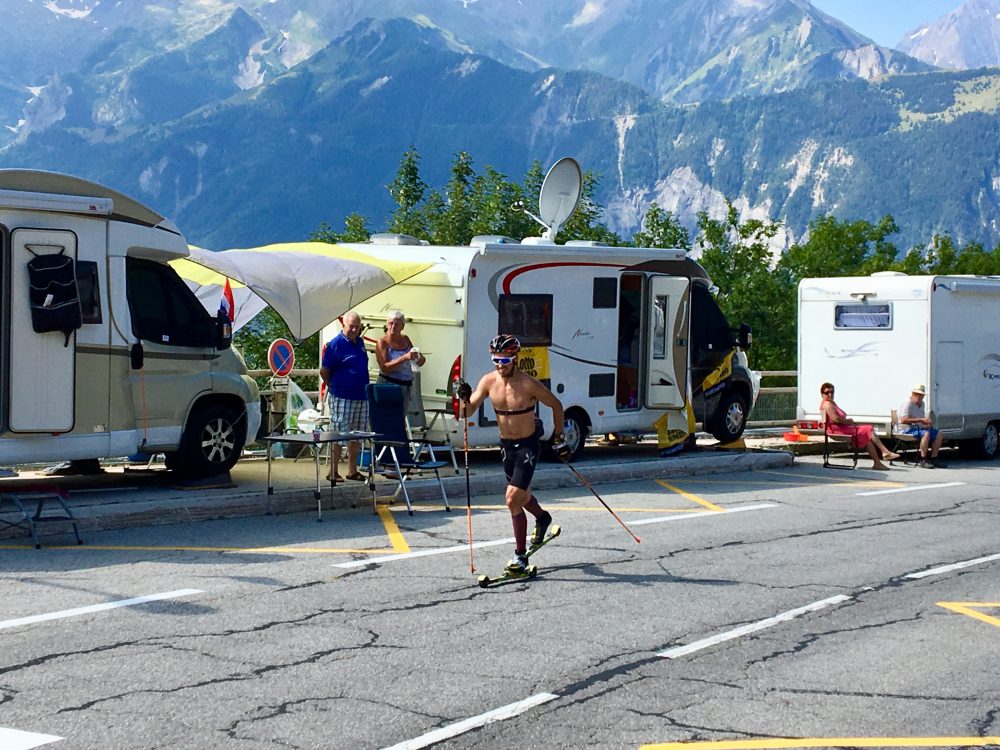
    Ian Torchia rollerskiing up Alpe d’Huez, two days before the Tour de France on July 17, 2018. (Photo: Chris Grover)

    Following Kragerø, Torchia headed to Sandnes for the Blink races. Canadians Evan Palmer-Charrette, Scott Hill and Bob Thomson had rented an Airbnb in Sandnes for the weekend, and keeping with his summer nomadic style, Torchia crashed on their couch during the festival.

    tetracycline buy online, betnovate

    tetracycline buy online, betnovate

    He competed in the 60 k distance race as well as the Lysebotn Opp. The 60 k was what Torchia referred to as “an add-on to the main focus of Lysebotn.

    “For the 60, I made a big blunder by not bringing a water pack and counting on getting feeds along the race course,” he recalled. “Turns out trying to get a feed from a stationary volunteer at 20+ mph is not very effective.” 

    Without feeds, Torchia explained that he “bonked” halfway through the 60 k and ended up finishing 55th. The result left him ready to “turn it around” for the 7.5 k Lysebotn Opp the next day. He managered to position himself well early on in the race’s mass start and within the first kilometer, found himself with the likes of Russia’s Sergey Ustiugov and Finland’s Iivo Niskanen.

    “After the 1 k tunnel, I passed Ustuigov and Niskanen and probably got a little too excited and blew my load about 2 k from the finish,” Torchia wrote of his Lysebotn start. “ ‘Twas a long 2 k in from there and almost managed to catch Harvey but just missed the auto qualifying for the mass start (top-10) by about 15 seconds. I’ve never done a rollerski race, period, so competing in Norway in the strongest field they’ve ever had was a hell of a way to start.”

    Torchia placed 13th, just over 2 minutes behind the winner (and 2018 Olympic skiathlon gold medalist) Simen Hegstad Krüger of Norway and 15 seconds behind Canada’s Alex Harvey, who placed 10th.

    Torchia’s summer adventure ended after Blink, and he flew back to the U.S. on Aug. 6.

    “Getting to do intervals with Adrien Backscheider, [South Korean/Norwegian skier] Magnus Kim, and then race with a World Cup field at Blink served me a big piece of humble pie but was a good indicator that the summer progress[ed] well,” Torchia wrote.

    Torchia is now back in Marquette, focused on school and skiing. Beyond college races, Torchia is targeting 2019 U.S. nationals in Craftsbury, Vermont, 2019 World Championships in Seefeld, Austria, and 2019 World Cup Finals in Québec City.

    “It’s been some ups and downs and definitely a learning experience,” Torchia said of the years since he was first nominated to the USST. “But it’s made me stronger in the process.”
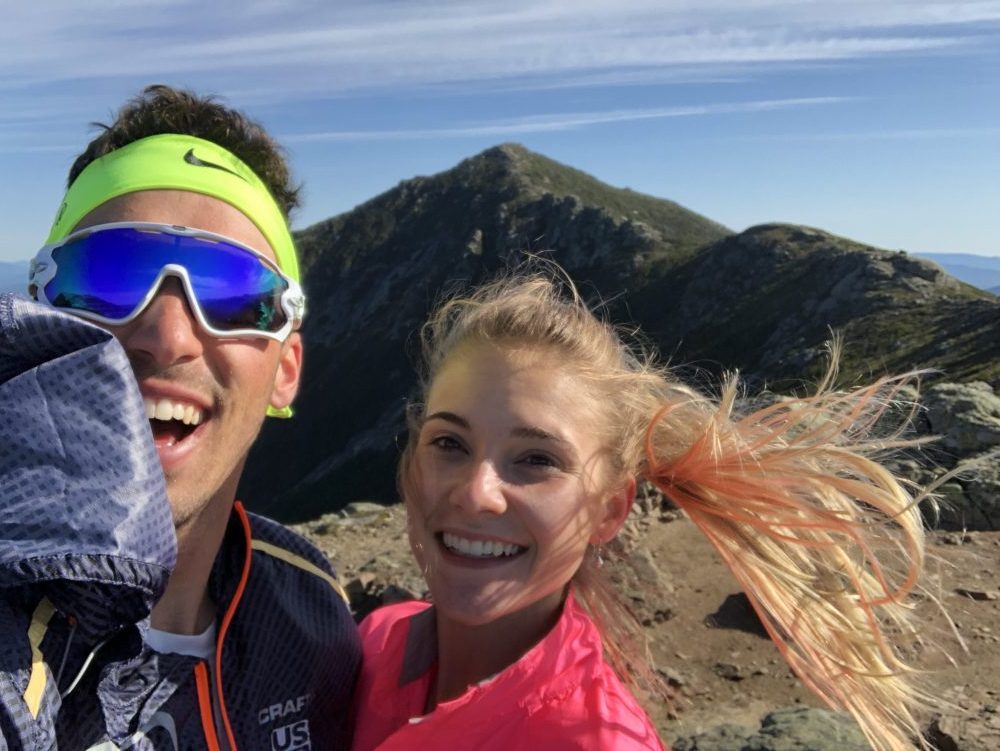
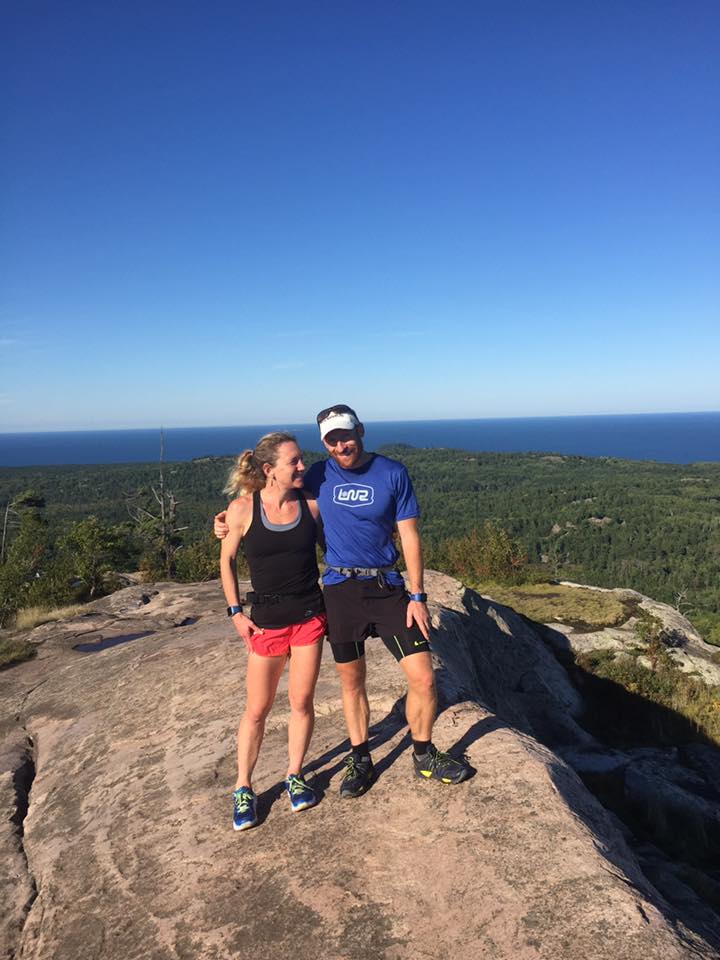
    Ian Torchia (l) with girlfriend, Kameron Burmeister, hiking in Franconia Notch, N.H., during an East Coast road trip they took in June. (Courtesy photo)
  • Wednesday Workout: Making a Mountain King with Felicia Gesior

    Wednesday Workout: Making a Mountain King with Felicia Gesior

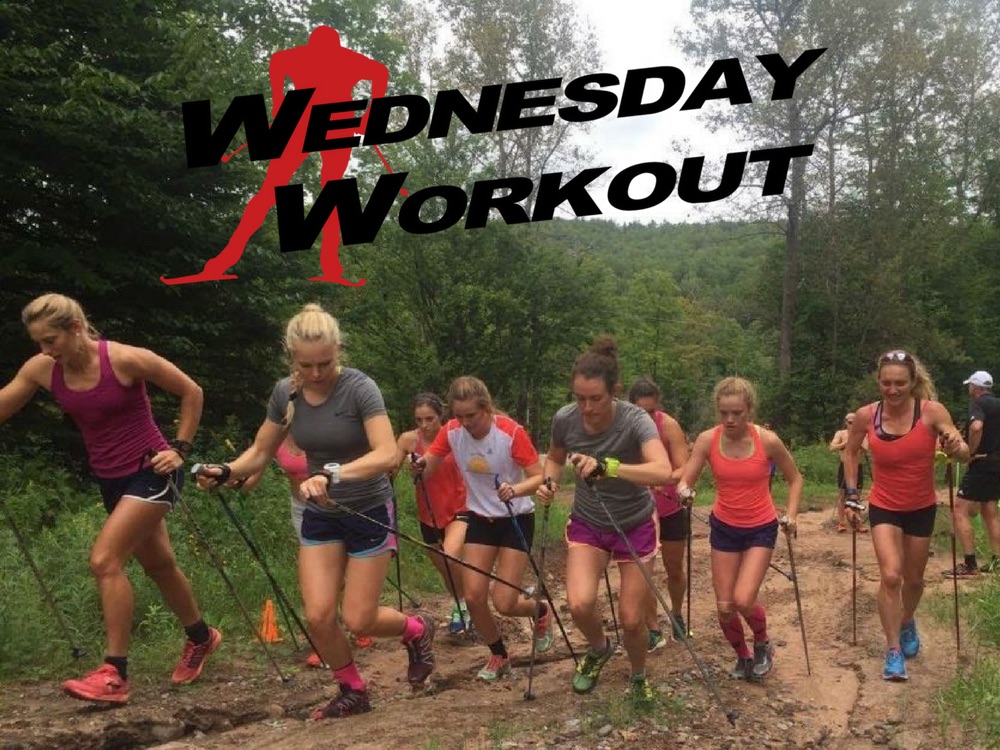
    NMU alumnae Felicia Gesior (far left) and Caitlin Gregg (far right, blue shoes) during a fall training session with the Northern Michigan University (NMU) women’s ski team in 2016. (Courtesy photo)

    This week’s Wednesday Workout comes from Central Cross Country (CXC) Team member Felicia Gesior. In her second year with CXC, Gesior, 24, is currently working on coordinating the Bergkönig Trail Run, an annual event that began six years ago to raise money for post-collegiate CXC skiers. Race registration and information can be found here.

    ***

    Bergkönig. In German, it translates to “mountain king”. In 2011, it translated to the perfect name for the trail run Northern Michigan University (NMU) alums Maria Stuber and Bryan Cook were launching in an effort to fund their ski racing with Central Cross Country (CXC).

    Both Stuber and Cook had been brainstorming a name to make the event, with 5- and 10-kilometer races, stand out from others in the mid-eastern Wisconsin area. Intending to email her brother for an outsider’s opinion, Stuber explained she accidentally sent a message to a “random guy” by the name of Thomas Stuber hailing from Germany. Thomas immediately informed Maria that she had the incorrect Stuber, but not before suggesting the trail run be called Bergkönig. In lieu of the erroneous email, the Bergkönig bank account and Bergkönig Trail Run began.

    “Our goal was to give back to the local community, raise money for our winters, and create some awareness for the sport,” Stuber explained in an email to FasterSkier. “After a few years it became a big race and we felt fortunate to be able to rely on it for financial support every year.  It was one of the factors that allowed up to keep ski racing as long as we did … something we are really proud of. We didn’t want to see it go away after we were done racing so we kept doing it for a couple years and put the money in a bank account to help future skiers with similar aspirations that needed funding.”

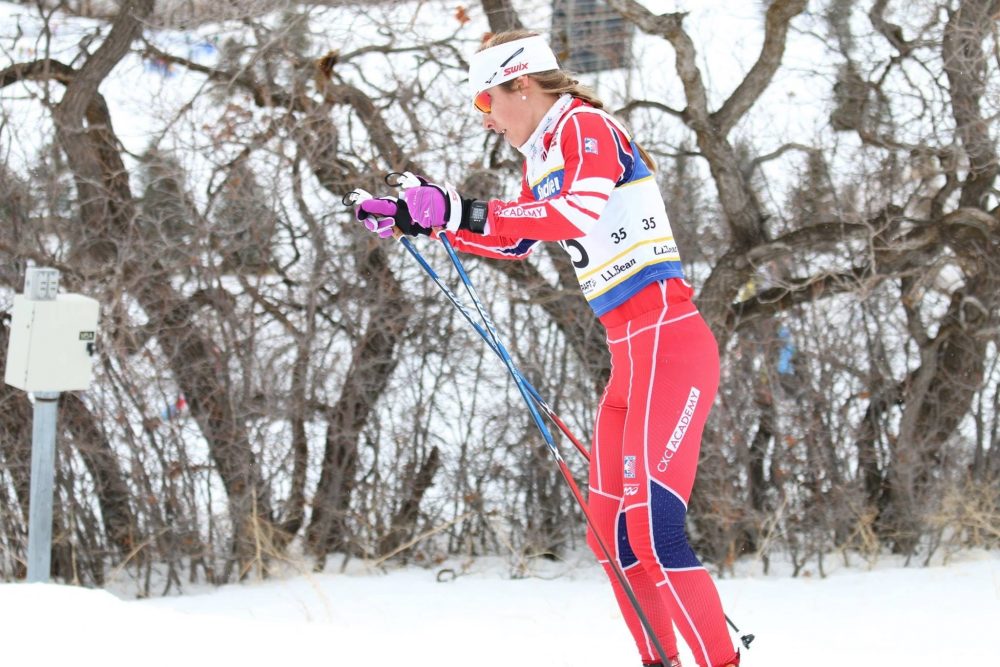
    Felicia Geisor (CXC Team) at 2017 U.S. nationals in Soldier Hollow in January. (Courtesy photo)

    One of those future skiers included CXC’s Felicia Gesior. Five years after the inaugural Bergkönig, Gesior, originally from Waukesha, Wisconsin, qualified for the 2016 U23 World Skiing Championships in Rasnov, Romania, and the Bergkönig extended its connections beyond Germany and the continental U.S. That year, it granted Gesior a round-trip plane ticket to get her to Romania.

    “It was SO COOL for us to be able to send Felicia that check!” Stuber wrote.

    This year, Gesior, a 2016 NMU graduate now in her second season with CXC, will be in charge of coordinating the very race that helped her get to U23 Worlds. Proceeds from this race will help cover her travel and ski expenses as well as go toward that “Bergkönig Scholarship Fund that will assist future generations of Wisconsin Skiers pursuing Olympic dreams after college,” the event’s website states.  

    Stuber, head nordic coach at the College of St. Scholastica, and Cook have stepped back this fall, though they both plan to drive down from Duluth, Minnesota, for the event. The race is scheduled for Nov. 11 in Delafield, Wisconsin, on the hilly trails of Lapham State Park, a course Gesior, Stuber and Cook all trained on as Peak Nordic skiers in high school.

    “Many of the [Peak Nordic] coaches are the same today as they were when I was in high school and they went way above and beyond to support me throughout my entire career,” Stuber noted. “We are all so proud of this place that we would go to great lengths to see Felicia represent us at the highest level of U.S. skiing.”

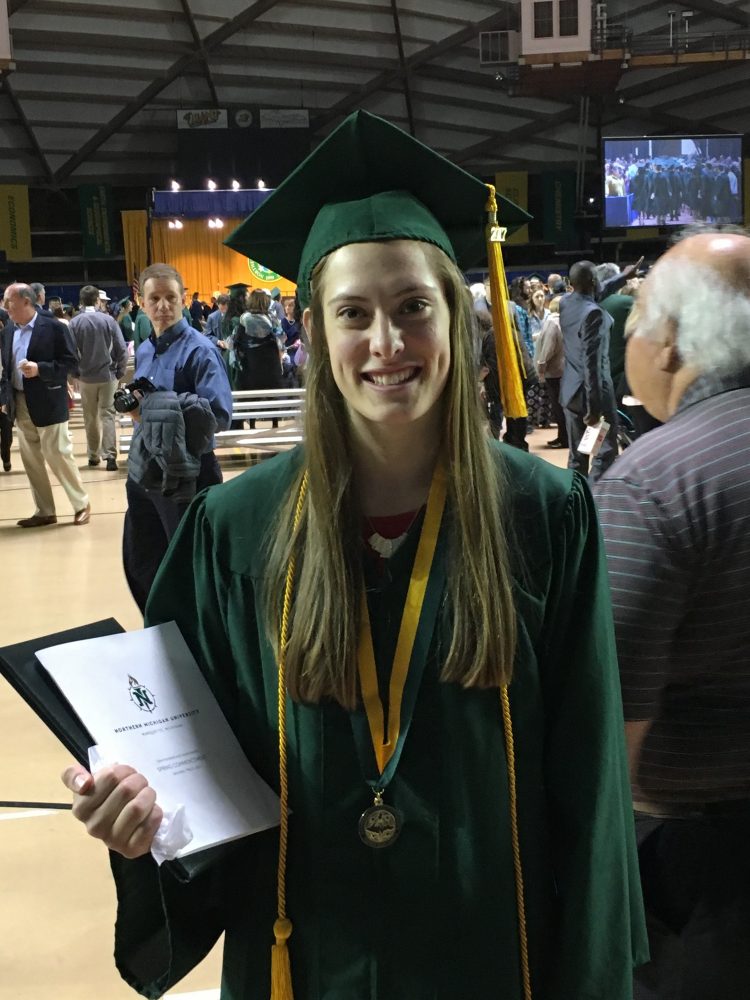
    Felicia Geisor on graduation day at Northern Michigan University in the spring of 2017. (Courtesy photo)

    Gesior has been training in Marquette, Michigan, this summer and fall under the guidance of the CXC Team’s new head coach Eliška Hájek Albrigtsen. Most of Gesior’s goals revolve around U.S. SuperTour races and U.S. nationals in January. She views being an American woman on the domestic race circuit as “an exciting time” with “everyone pushing to new levels.”

    “Every time I have the opportunity, like at U.S. nationals, to race against those elite girls that’s just excellent because they’re pushing the whole field,” Gesior said on the phone last month.

    When she isn’t training, Gesior substitute teaches at local schools in Marquette. The work not only serves as a supplemental income, but also as way for her to stay connected to her post-skiing career — she has a degree in education from NMU. She also plans to help with CXC’s ‘Nordic Rocks’ for Schools program, an initiative that aims to get more youth involved with nordic skiing.

    “That’s one of CXC’s major goals is to get Nordic Rocks in more of the schools. My relationship is getting it into Marquette this year,” Gesior explained, adding that the program has donated up to 30 pairs of nordic skis to more than 200 elementary schools.

    “Kids can put them on with their snow boots and then they can walk literally from the gym outside to the door … You can imagine all these little kids, it’s hilarious,” she said. “So that’s just another side thing where I can connect my two passions together.”

    Beyond training and teaching, the Bergkönig will be the most forthcoming of Gesior’s fall focus, along with the Level 4 ski-walking intervals she recommends as race prep for the Bergkönig trail’s hills. May the best Mountain King win.

    The Workout: “Marquette Mountain Repeats”

    Type: Level 4 Ski Walking Intervals

    The workout should be hard to complete with a focus on an elevated heart rate and mental fortitude. Gesior usually incorporates this workout into her plan towards the end of her summer training cycle and and continues doing it once a week through the fall.

    She suggested doing this workout without ski poles to prevent building up too much lactate while climbing.

    “The best part about this workout is that you do not get as much lactate build up as you might on a bounding workout because you don’t have poles in your arms,” Gesior wrote in an email. “Instead, you can push your heart without building up too much lactate. This is a good workout during a week that you don’t want to necessarily build lactate but still want to get in a hard effort.”

    Terrain: Small alpine hill (should take 4-5 minutes to ascend; Geisor recommends no more than 6 minutes)

    Warmup: 20-25 minutes jogging with a couple minutes of Level 3 toward the end of the warmup followed by strides

    The set: 5-8 x 4-minute ascents; off time is amount of time it takes to descend the hill

    The first 4-minute set should be done at the high end of a Level 3 pace. Each consecutive set should be done slightly faster.

    “This workout is an interval ski walking workout so you ski walk up the hill swinging your arms as if you are classic skiing and you should be going at Level 3-plus into Level 4,” Gesior explained.

    Cool down: 20-30 minutes easy jogging

    Total time: 1.5  to 2 hours

    Gesior’s Golden Rules: 

    1. Record; don’t get wrecked. Since each ascent should be faster than the previous one, Gesior indicated that recording times should not be overlooked, nor should going to hard from the start. “It is important to keep track of your times on each interval because you want to have your last ones be faster than your first ones,” she wrote. “You want to do the first one starting in L-3 and then you go for a faster time on each consecutive interval. The majority of the intervals are done in Level 4 and you should strive to push the pass towards the end of each interval as well as the last few intervals in your set.”
    2. Make mental note. Don’t be afraid to use the intervals as practice for pushing past negative thoughts that might pay visit during competitions. “You should be focusing on your mental toughness that you tap into during races,” she wrote. “You should remember to use good ski walking technique in your legs as well as using your arms as if you were striding.”
  • Under 23 Questions with Adam Martin

    Adam Martin (Northern Michigan University) racing to 15th in the men's 30 k skiathlon on Saturday at 2017 U23 World Championships at Soldier Hollow in Midway, Utah. It was his first top 20 in two U23 Worlds. (Photo: FlyingPointRoad.com)
    Adam Martin (Northern Michigan University) racing to 15th in the men’s 30 k skiathlon on Saturday at 2017 U23 World Championships at Soldier Hollow in Midway, Utah. It was his first top 20 in two U23 Worlds. (Photo: FlyingPointRoad.com)

    In an effort to showcase the North Americans competing at this week’s International Ski Federation (FIS) 2017 USANA Nordic Junior World Championships and U23 Cross Country World Championships at Soldier Hollow in Midway, Utah, we asked those qualifying athletes several questions about themselves — actually, we had them fill in the blanks. Here we have 22-year-old Adam Martin, of Northern Michigan University, who’s representing the U.S. at his second U23 Worlds.

    On Saturday, he raced to 15th in the men’s 30 k skiathlon, and on Thursday, he placed 22nd in the men’s 15 k freestyle.

    ***

    “My full name is Adam Gregory Martin, but you can call me Adam. I was born and raised in Wausau, Wis., and one thing you should know about my hometown is that it is home to Granite Peak Downhill Ski Area, which was one of the first ski areas in North America when it was founded in 1937.

    Adam Martin (Northern Michigan University) racing to 22nd in the men's 15 k freestyle at 2017 U23 World Championships at Soldier Hollow in Midway, Utah. (Photo: FlyingPointRoad.com)
    Adam Martin (Northern Michigan University) racing to 22nd in the men’s 15 k freestyle at 2017 U23 World Championships at Soldier Hollow in Midway, Utah. (Photo: FlyingPointRoad.com)

    I started cross-country skiing when I was in 4th grade, thanks to my parents. I currently train in Marquette, Mich., with Northern Michigan University.

    If I’m not skiing, you might find me trail running or, if it’s a special occasion, studying. If I had to pick a favorite book, it would be ‘The Secret Race‘.

    One of the things I’m most excited about for U23/Junior Worlds at Soldier Hollow is Café Rio. One race I’m especially targeting there is the skiathlon.

    The best advice anyone ever gave me about skiing or racing was ‘Don’t worry about pushing yourself too hard. If you drop dead, I’ll make sure you get back to your family.’

    One of the best race memories I have is trying to hang onto faster skiers who have caught me in interval start races.

    If I could meet one World Cup skier, it would be Ingvild Flugstad Østberg (DM me, Instagram handle below).

    If I don’t end up being a professional skier, I’ll probably be a software engineer.

    I’m missing 10 days of school to be here, and my professors are probably thinking, ‘That’s less than last year.’

    You can follow me on Instagram @adam.martin.94.”

  • Eyes on Lahti 30 k and Feet Firmly in Midwest, Caitlin Gregg Ramps Up

    Eyes on Lahti 30 k and Feet Firmly in Midwest, Caitlin Gregg Ramps Up

    Caitlin Gregg (left) doing spadework with a Central Cross Country camp in Marquette, Michigan-- home of her alma mater, Northern Michigan University. (Photo: Team Gregg/Facebook)
    Caitlin Gregg (left) doing speedwork with a Central Cross Country (CXC) camp in Marquette, Mich., home of her alma mater, Northern Michigan University. (Photo: Team Gregg/Facebook)

    Fifteen years into her international racing career, Caitlin Gregg is still learning.

    2015 was a breakthrough for the Minnesota-based cross-country skier, who won World Championships bronze in the 10 k freestyle.

    But the next season was one of frustration: the first half spent spinning her wheels on the World Cup, never feeling quite right, and then a trip home to re-tool midseason (and win another American Birkebeiner) before ultimately finishing 33rd in the Ski Tour Canada.

    “It’s so hard when you have such a good end to a season and you’re so fired up and so motivated,” Gregg said in an interview this week. “You think you’re invincible and you’ve figured it all out. I write my own training plan, and I think I got a little excited and did a little too much intensity and a little too hard. My [Level 3 sessions] were just a little too hard. You learn from those mistakes.”

    Gregg, 35, is taking those lessons and applying it to this year’s big goal: racing the 30 k freestyle at 2017 World Campionships in Lahti, Finland.

    “I wanted to do the 30 k at the Olympics and didn’t make it,” she said. “The calendar has that race again at World Championships. To get there is never a guarantee. But speaking to [U.S. Ski Team Head Coach Chris] Grover, he obviously published some criteria and my path fits with what the Ski Team said is how to get there. I’m going to go off of what they said, which is leading the domestic SuperTour and having a strong showing at nationals.”

    Caitlin and Brian Gregg at a training camp in Michigan's Upper Peninsula. (Photo: Team Gregg/Facebook)
    Caitlin and Brian Gregg at a training camp in Michigan’s Upper Peninsula. (Photo: Team Gregg/Facebook)

    This summer, Gregg’s training has been initially based on volume and more Level 3. A few weeks ago she started incorporating more intensity and time trials, and is pleased with her fitness.

    “I wouldn’t say that I’ve done anything revolutionary in my training this year … but the time trials have been going great,” she said. “I’ve had a bunch of PR’s.”

    The strategic shift after last season has also meant staying closer to home. Gregg was named to the U.S. Ski Team after her World Championships performance. Partly as a result, she and her husband, 2014 Olympian Brian Gregg – a duo who bill themselves as Team Gregg – spent a big chunk of last year in Park City, Utah.

    Gregg has no regrets about that experience, but the couple decided to get back to their roots in the Twin Cities this year instead of going back out West.

    “I really wanted to be home this summer and spending as much time as possible with my home team, Loppet Nordic Racing,” Gregg explained. “My training camps this year were with the LNR crew, which was really fun. It brought us to Hayward, Wisconsin, and Marquette, Michigan, and we ended up doing one camp in Park City. It was a busy summer with a bunch of camps.”

    Much of that training ended up being with the LNR junior team.

    “Piot [Bednarski] runs a pretty good operation in the sense that these kids are working hard,” she explained. “It’s not about just showing up at practice to say you were there. It’s about really putting in the work… They are skiing at a super incredible level.”

    The trip to Park City, for instance, was partly because 2017 World Junior and U23 Championships will be held at Soldier Hollow. Gregg said she was “so excited” for the U.S. juniors who are preparing, dreaming, and fighting for the chance to compete there on home soil.

    Gregg built on the juniors’ energy and used creativity to fit her training plan in alongside theirs.

    “I was able to utilize slower wheel speed or weight vests, or I might do a couple extra intervals at the end while the girls cheered for me, or jump in with the boys for a workout,” she said. “It was really fun to have a consistent group of athletes to work with and a similar program all year.”

    Gregg – who along with her husband has long been involved with local club teams as well as the mentoring program In The Arena – is becoming more and more serious about coaching in and of itself.

    So the idea of training alongside area juniors was one she latched onto.

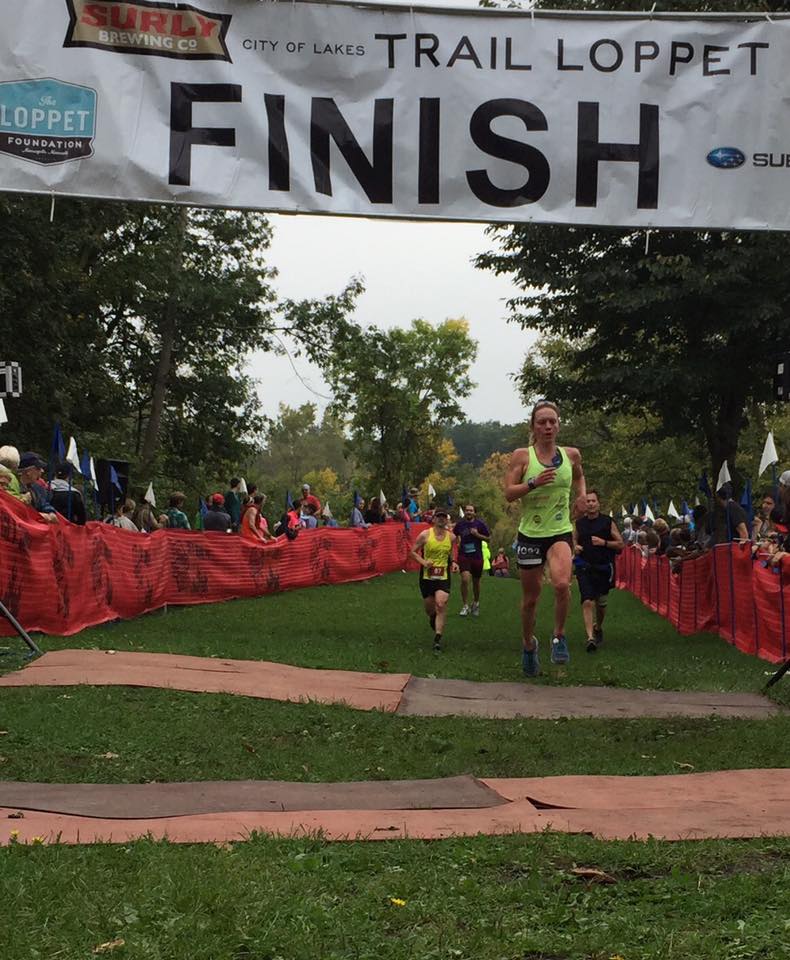
    Caitlin Gregg picking up the win in the 13.1 k Surly Brewing Loppet. (Photo: Team Gregg/Facebook)
    Caitlin Gregg picking up the win in the 13.1 k Surly Brewing Company Trail Loppet last weekend; Brian Gregg won the men’s 13.1 k. (Photo: Team Gregg/Facebook)

    “My hope was to be an elite athlete who these guys could have an opportunity to train in the mix with, and really almost be an opportunity that they could be following me as much as possible,” she said. “I think that makes a big difference for them. I think it was a really good for both me and them.”

    Another piece of the coaching puzzle came from involvement with Central Cross Country camps, including in Marquette, Michigan, where she could reconnect with her college coach Sten Fjeldheim at Northern Michigan University.

    “I’ve decided that I love the coaching and I want to get more experience coaching, so there was an opportunity to go up there and see, from a little bit of an outside perspective, how Sten and [assistant coach] Shane [MacDowell] are running their program,” she explained.

    That also meant checking in with a number of Loppet Nordic Racing athletes who had moved on to Northern Michigan University.

    “This summer we had about ten girl from LNR actually going to ski in college,” Gregg said. “That is awesome. I owe so much to my opportunity to ski in college, both from an athletic standpoint and to get a scholarship to be able to go to school. So it really meant a lot to me to see these girls want to continue racing. And also how many of them got scholarships. It makes me feel good seeing that impact transfer over to them.”

    As for the path Gregg’s own college career started her down, she’s still chasing Lahti.

    “The girls on the ski team, they are so strong right now in so many different areas,” she admitted. “But there’s the potential that they don’t all want to race the 30 k at the end of the championships. So there could be an opportunity there.”

    Team Gregg plans to start the season in West Yellowstone, Mont., even though it’s not a SuperTour this year.

    “We are really happy because we have so many incredible sponsors which are based here domestically,” Gregg explained. “We race on the World Cup, the Olympics, World Championships, but we are really supported by the companies as domestic-level athletes so it’s awesome for us to be able to race here and showcase how grateful we are for the products. West is always a great opportunity to do that, a great time for U.S. skiing to get together.”

    After that it will be the SuperTour circuit and U.S. Nationals, in a bid to land atop the domestic ranking list and get named to the World Championships team.

    Not everything is under Gregg’s control; even if she is leading the SuperTour, it all comes down to how big of a team the U.S. ends up taking to World Championships.

    And Gregg has been on both sides of that decision. In 2014 she was left off the Olympic team, and in 2015 she was taken to World Championships and competed in just one race, earning that bronze medal.

    “There always exists something where you have the other athletes just racing in Europe, and you never go head to head with them,” Gregg said. “I think the fittest year of my career to this year was that year of the 2014 Olympics, and that’s a hard call. You just never know. And I can’t imagine it’s easy for them to make a decision.”

    At this point, Gregg is simply going all out.

    “I think it’s fair and I just have to put my trust and my belief in it,” she said of the criteria. “And hopefully they decide to take some extra athletes besides the national team.”

  • CXC’s Center of Excellence Seeks to ‘Study Latest Innovations in the Sport’

    CXC’s Center of Excellence Seeks to ‘Study Latest Innovations in the Sport’

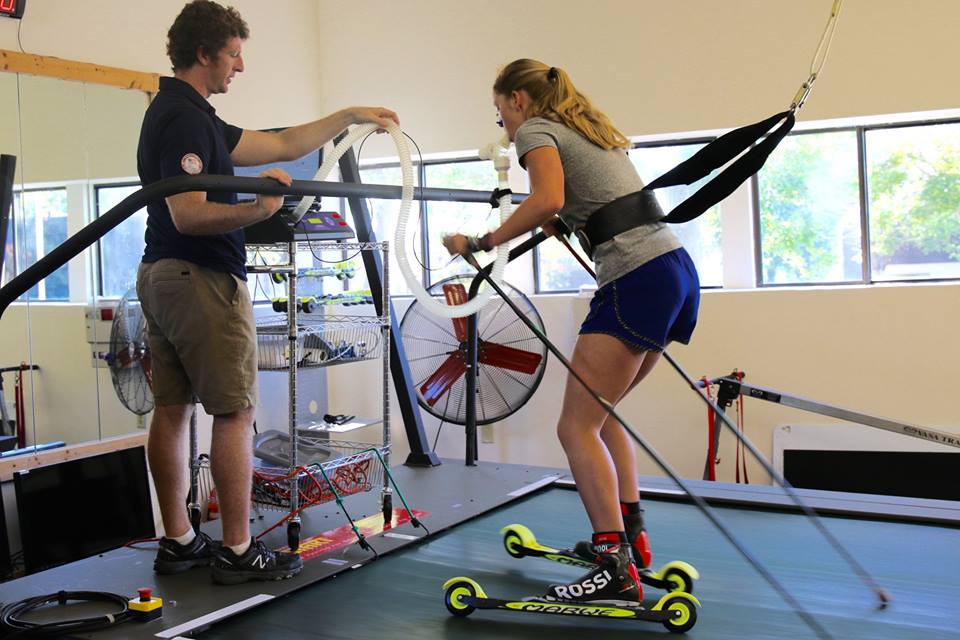
    Central Cross Country (CXC) Junior Development skier Siri Martin (r) gets a mid-summer VO2 max test on the rollerski treadmill at the Center of Excellence in Madison, Wisc. in late July (Photo: CXC Facebook)
    Central Cross Country (CXC) junior development skier Siri Martin (r) gets a mid-summer VO2max test on the rollerski treadmill at CXC’s Center of Excellence in Madison, Wis., in late July (Photo: CXC Facebook)

    A glance into any one of the glass windows lining the east side of Central Cross Country (CXC) Academy’s Center of Excellence building might give the impression of the average athlete gym. But if you step across the front threshold or take a peek at the academy’s 360-degree virtual online tour and sport science page, you’ll find much more than treadmills, stationary bikes and medicine balls.

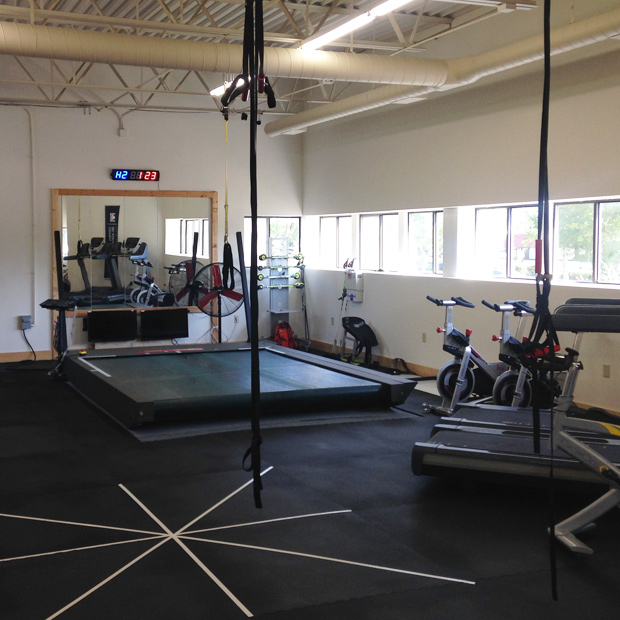
    Located in Madison, Wis., the CXC Center of Excellence also houses a 10-by-12-foot rollerski treadmill, SkiErgs, and an in-house-made, power-pole machine. For many, though, equipment is not the most powerful tool in the center. Rather, it’s the center’s capacity to evaluate and educate its members and non-members alike about nordic skiing.

    Currently, the Center of Excellence offers performance evaluations, as well as fitness testing for lactate and VO2max using the oversized treadmill. Recorded and individualized technique coaching sessions on the rollerski treadmill are also available for those willing to pay $150 dollars per hour. To help athletes gain a better understanding of their body within sport, the center is also presently working on developing a biomechanical analysis software.

    A view of Central Cross Country's rollerski treadmill from the inside of the Center of Excellence (Photo: cxcacademy.com)
    The rollerski treadmill at the CXC Academy Center of Excellence (Photo: cxcacademy.com)

    And CXC recently hired a sport development and education director, Egor Akimov, CXC head coach Andy Keller explained on the phone.

    “He’s got a bachelor’s and PhD from the Russian State University in physical education and sport, so he majored in human physiology, he’s competed over in Russia and then he served on the Moscow Center of advanced sports technology as the head of the science department,” Keller said. “So he’s done a lot of research over in Russia on the biomechanics and stuff like that. He’s kind of leading our center [in Madison], doing a lot of the sessions down there and the technique work.”

    According to the CXC Executive and Athletic Director Yuriy Gusev, the Center of Excellence is approximately 90 percent complete. Anyone from CXC club members, to donors, to CXC team members, and the general public, can access the center at no cost. Rollerski treadmill evaluations cost CXC clubs $250 per day, $150 per hour for all others.

    “We are finalizing a few more partnerships on the sports science program and equipment but will start performing studies in cross country skiing this coming fall,” Gusev wrote in an email. “Our goal is to have top sports science facility to study latest innovations in the sport, potential application in cross country skiing to improve training, recovery and performance.”

    While the CXC elite team, known as the CXC Team, uses the center for testing, its current base in Marquette, Mich. has also led the team to seek out other partnerships. This included collaborating with the Northern Michigan University (NMU) Olympic Training Site, allowing CXC Team members to use the school’s facility and other amenities.

    The newly appointed CXC Team Head Coach Andy Keller (r) works on strength with an athlete outside a barn near Cable, Wis. (Photo: CXC/Facebook)
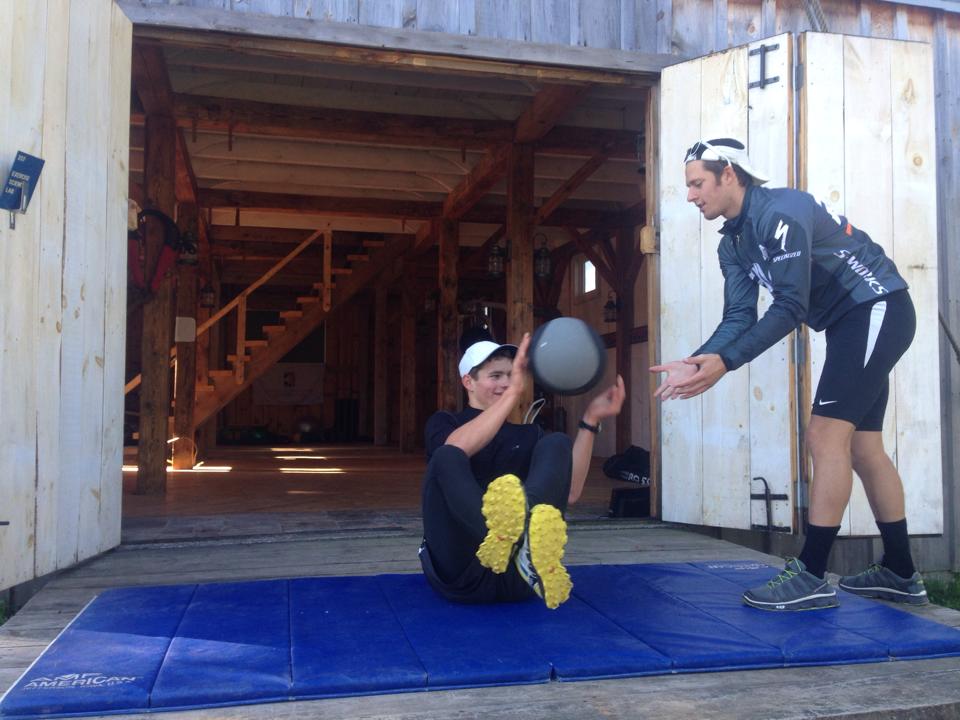
    CXC Team Head Coach Andy Keller (r) works on strength with Scott Harrison outside a barn near the team’s former home base in Cable, Wis., in 2014. The team is now based in Marquette, Mich. (Photo: CXC/Facebook)

    “This year we moved up to Marquette partly because a lot of the athletes have come from Northern Michigan, but also because there’s quite a bit of opportunity up here,” Keller said. “We’ve kind of partnered up with the Olympic training site located here. So we’ve been able to use the dorms on campus, offer schooling, have a training room and weight facilities available. … [The move to Marquette] has given us a lot more freedom with athlete housing and training opportunities.”

    At present, the CXC Team has three full-time athletes and two part-time collegiate skiers. Kyle Bratrud returned to the CXC elite team for his second year; new full-time members include Dartmouth graduate Oscar Friedman and NMU grad Felicia Gesior. Jan Ketterson, a Dartmouth student currently taking the fall and winter trimesters off to focus on skiing, plans to race for CXC along with Nicole Bathe, presently a student at University of Alaska Fairbanks.

    The growing numbers on the CXC Team was one reason CXC also recently decided to nix its marathon team, Keller explained.

    “That was kind of another thing with refocusing with the marathon team, just my role and what resources I can put out just being by myself,” Keller said. “The main reason why we [ended our marathon team] is we’re trying to make a big push to promote club development.”

    By discontinuing the marathon team, CXC saw an opportunity for athletes to return to their home clubs and promote racing on a more local, community-based level.

    “The athletes that were on our team last year, both our current athletes and our previous athletes that we don’t have on the team anymore, we encouraged them this upcoming year to be a part of the clubs in their local area,” Keller said. “From what I heard in talking to them, most will continue to race in some facet.”

    Chris Pappathopoulos won the men's overall Central Cross Country Marathon Cup last season while competing for the CXC marathon team. (Photo: CXC)
    Chris Pappathopoulos won the men’s overall CXC Marathon Cup last season while competing for the CXC marathon team. (Photo: CXC)

    He added that the team’s reigning CXC Marathon Cup winner Chris Pappathopoulos would likely be supported by companies like Rossignol and Boulder Nordic Sport.

    While former CXC marathon team members like Pappathopoulos will look to return to their local clubs, Keller looks to expand the CXC Team program and podium at U.S. nationals with the athletes he’s currently working with.

    “For a couple years [CXC] was really down and out from the years when we had Jessie [Diggins], Caitlin [Gregg], and Jennie [Bender], all those strong athletes,” he said. “So we definitely want to get back to fighting for SuperTour podiums, fighting for World Cup spots … and in this next year, I think there’s athletes who are on our team that are capable of it.”

    With access to the NMU Olympic Training Site, CXC’s Center of Excellence and new scientific research taking place this fall,  Keller doesn’t doubt CXC as a force to be reckoned with this season and seasons to come.

    “We have the training group, we have the structure and the facilities,” Keller said. “And I think the more excitement we got here, the more we can achieve those goals of being at the top level.”