Tag: Martha Rockwell

  • The Life That Grew Our Sport: John Caldwell, 1928–2026

    The Life That Grew Our Sport: John Caldwell, 1928–2026

    John Caldwell, born November 28, 1928, passed away February 27 at 97 years old. John’s contribution to cross-country skiing in the United States is unquestioned.

    John Caldwell, November 28, 1928 — February 27, 2026. (Photo: Robert George)

    He was a 1952 Olympian in Nordic Combined. He wrote several books on cross-country skiing that became our training guidance, our bibles, in the early and mid-1970s. He was a long-time teacher and coach at The Putney School, an early U.S. Ski Team coach, and a member of the coaching staff at the Winter Olympics in 1960, 1964, 1968, 1972, and 1984. In the mid-1990s he founded the New England Nordic Ski Association (NENSA), stepping in to fill a regional void the U.S. Ski Association had abandoned at the time.

    That’s the high-level resume. But that doesn’t capture what happened. It’s beyond me to catalog everything John did for the sport. What I can offer is a personal perspective, what it was like to grow up skiing with his influence.

    Left to right: Jennifer, Peter, Sverre, Tim, Hep, and John. (Photo: Courtesy Image)

    My earliest memory of JC was driving to Putney with my dad to buy a pair of skis from him. Later I saw him at the Washington’s Birthday races, local races in Putney, the Samsonite/Dannon Series, and the night races of the late ’60s and early ’70s.

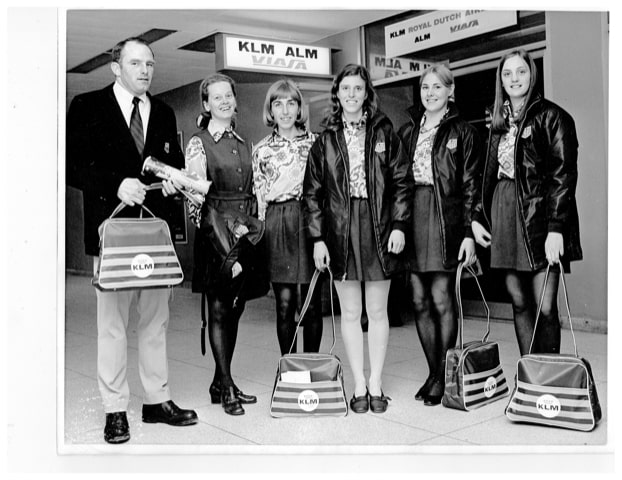
    In 1967 or so, John reached out to Inga Löwdin in Sweden to bring women to the U.S. to race. That exchange helped spearhead women’s skiing in this country, particularly the career of Martha Rockwell, then a student at Putney. In the early ’70s he also brought Norwegian skiers over to compete in what was then a surprisingly robust night race circuit in the Northeast.

    I’m not sure he was thinking in terms of “athlete development” as we define it today. His goal was simpler: to grow the sport. Get people involved. Raise the level by exposure.

    He was integral in founding the Washington’s Birthday race in southern Vermont, one of the first popular cross-country races in the country. The race rotated locations from Marlboro, Guilford, Brattleboro, Putney, and Westminster West. It reportedly grew from 54 participants in the first year to several hundred within just a few years.

    It was not an accident, even before Bill Kochs success the sport was going through a growth and participation spike that fuels the sport still today.

    In junior high I would go up to Putney School for occasional training sessions. I remember skiing long loops and being far behind. In high school, Labor Day training camps organized by JC brought national team skiers into our backyard, Bob Gray, Tim Caldwell, Charlie Kellogg, Peter Davis, Joe McNulty. That was normal in Windham County. There were always good skiers and cyclists around for a workout.

    Chris Osgood, Mary Heller Osgood, Jennifer Caldwell (daughter), Peter Caldwell (son) and John Caldwell arriving in Australia for a ski trip. (Photo: Courtesy Image).

    By the early to mid-’70s, Putney graduates like Bob Gray and Martha Rockwell, along with the next wave, Bill Koch, Tim Caldwell, Stan Dunklee, myself, were training and competing together more regularly. John didn’t “coach” us in the modern sense. He rarely prescribed workouts. Instead, he would ask what I was doing for training, then share what he was hearing from Russians, Norwegians, and Finns.

    “This is what they’re doing. Maybe it makes sense to try it.”

    Between 1974 and 1978, and through the 1980 Olympics in Lake Placid, our local group trained together more often. Long runs from Putney to Saxtons River and back. Weekly 50–60 km roller skis, usually ending at the Caldwell sauna. For a few years we did a 220-mile bike ride straight up or down the spine of Vermont, depending on Bill’s forecast of prevailing winds.

    John didn’t script those sessions. He didn’t stand there with a stopwatch. His influence, and his openness to ideas from abroad, shaped the key workouts we implemented. Many of them still hold up today.

    I spent a lot of time around Putney in those years, so JC and I worked frequently on technique. He pushed me to experiment. Not necessarily because he knew the movement would be faster, but because adapting to new movement patterns develops skill. Most of our technical work happened on uphill’s. Back then, equipment and grooming limited how much time you could gain on flats and downhills. Uphill efficiency mattered most or so I thought. We worked on short, quick tempo striding. Shuffling. Even running movements not far from what people now call the Klaebo run.

    John Caldwell and the art of flexing skis. Here, he’s helping his granddaughter Sophie Caldwell, a former U.S. Ski Team member, pick skis in 2017. (Photo: Sophie Caldwell)

    In December 1979, John was contracted by the U.S. Ski Team to work with me in early, season Nordic Combined World Cups. I was skiing well and trying to hold form heading toward the 1978 World Championships in Lahti. I’m not sure how much he knew about ski jumping at that point. But he knew enough to keep things relaxed and low-key in the days before competition, including an afternoon visit to the Hofbräuhaus in Munich.

    In Reit im Winkl, I was third in jumping and won the cross-country by a substantial margin. That week, at least, he did just fine as a coach!

    At the 1982 World Championships he was there in a wax-support role. Back then, that mostly meant Swix Purple or Toko glide and a binder plus hard wax for kick. There wasn’t extensive testing. Athletes prepared their own skis. He was there as support team, especially for those of us from the Putney Ski Club. His last international trip with us was the 1984 Olympics in Sarajevo.

    In later years, John served on a steering committee overseeing the U.S. cross-country program. I’d like to say it was a productive collaboration between staff and the steering committee. It wasn’t. The structure didn’t allow for effective dialogue. Good intentions don’t automatically produce good governance.
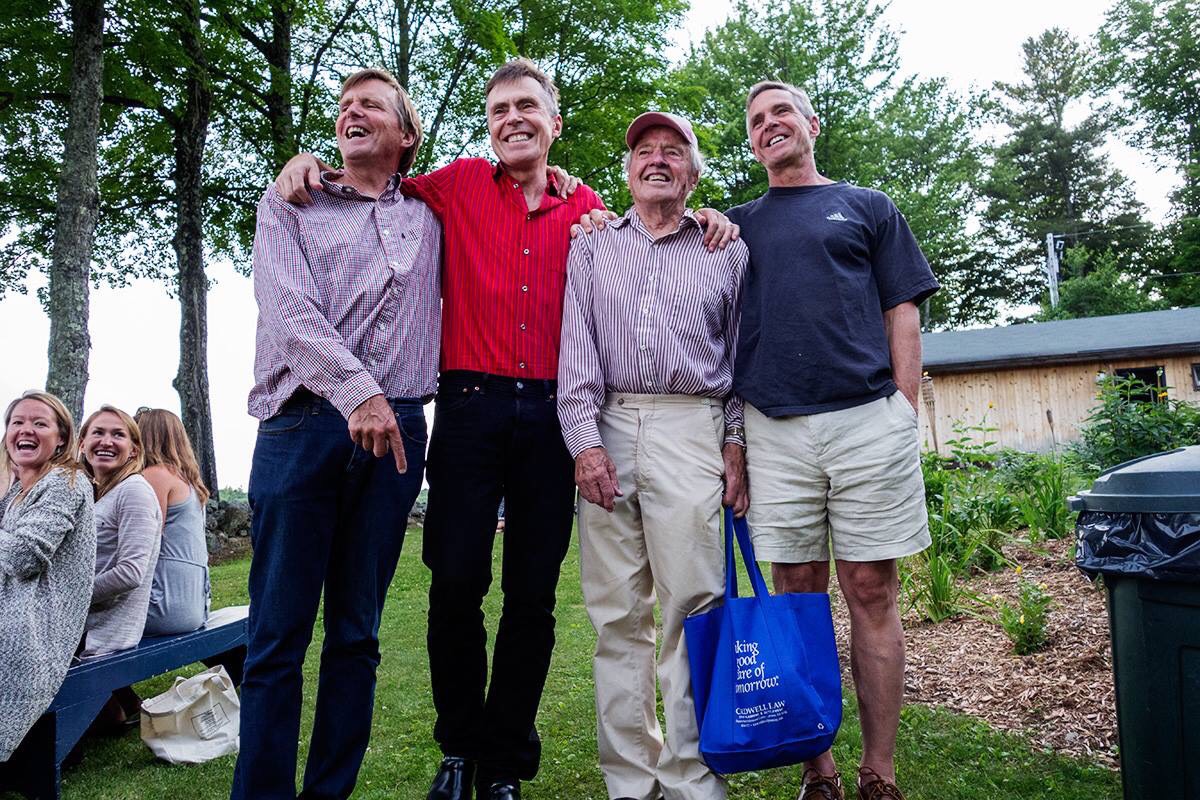
    From left to right: Sverre Caldwell, Tim Caldwell, John Caldwell, and Peter Caldwell. (Photo: courtesy Sophie Caldwell)

    In the early to mid-1990s, I worked at Stratton Mountain School. Being close to Putney again meant more time with JC, and many discussions that eventually led John to the formation of NENSA. As a founding board, we saw the early organizational stages and the hiring of its first staff. Summers often included time at the sauna, the best conversations happened when only a few of us were there, often ending around the big dinner table.

    The last 30 years of my friendship with John were mostly phone calls, emails, and the occasional Facebook comment. Often cryptic. Once, commenting on a photo of me skiing in my 60s, he wrote that I still skied like a donkey. Not entirely inaccurate.

    Other times it was, “What do you make of the results at X race?” Or, “Whose technique is best?” He was always curious and engaged. Thinking about the sport at a higher level than most others during those years

    The last time I visited him was last June during a short trip through New England. Tim told me it was JC’s nap time, but I was on a tight schedule and stopped in anyway. The caretaker let me into his apartment. I walked in and said, “JC, what the hell is going on?” Before he even saw me, he replied, “Galanski, what the hell are you doing here?” We spent two hours talking about old times, friends, and family. Mentally, he was as sharp as ever, even as his body was failing.

    John’s contributions to skiing can be measured by the roles he held, the teams he coached, and the organizations he helped build. Harder to measure, and ultimately more important, is what happened in southern Vermont simply because he was there. A culture took shape that valued learning and curiosity, exposure to the highest levels, and consistent, broad-based participation. Athletes trained hard, thought broadly, and held themselves to a higher standard, without being told to do so. John didn’t try to manage the sport or own its direction. He created the conditions where it could grow. And for decades, it did.

    This all happened because of him.


    Listen to an interview FasterSkier’s Jason Albert did with John Caldwell in 2017


    Note: An official obituary for John Caldwell has been published by his family. Those wishing to honor John’s legacy may consider making a donation to New England Nordic Ski Association (NENSA), the organization he helped found to strengthen and grow cross-country skiing in the region. Contributions in his memory will continue the work he cared so deeply about — supporting athletes, coaches, and the future of American Nordic skiing.

     

    John Caldwell, front left, with his, Hep, and all 10 of their grandchildren. Photo: courtesy of Sophie Caldwell.
  • A Trailblazer in Women’s Cross-Country Skiing: Alison Owen-Bradley is Inducted to U.S. Ski & Snowboard Hall of Fame

    A Trailblazer in Women’s Cross-Country Skiing: Alison Owen-Bradley is Inducted to U.S. Ski & Snowboard Hall of Fame

    Since the opening of the U.S. Ski & Snowboard Hall of Fame in 1956 there have been 448 members inducted, only two of whom are female cross-country skiers. The Hall of Fame website states that, “the honored members voted into the U.S. Ski & Snowboard Hall of Fame represent the highest level of national achievement in America, featuring prominent athletes and snow sport builders whose accomplishments showcase American skiing and snowboarding.”

    The first woman cross-country skier to receive this honor was Martha Rockwell, who was inducted in 1986. Thirty-four years later, Rockwell’s teammate and a trailblazer in the sport, Alison Owen-Bradley was admitted to the Hall of Fame as a member of the Class of 2020.  

    Heading out in bib #1 is Alison Owen-Bradley at the Sapporo Winter Olympics in 1972. (Courtesy photo)

    The list of Owen-Bradley’s accomplishments is lengthy. A brief glance at her race results highlights her prowess as an athlete, beginning around 1970 when she competed at World Championships in Czechoslovakia at the age of sixteen. Speaking to this formative experience, Owen-Bradley said, “I was so involved in sport and loved the sports that are now pretty common for girls, but there wasn’t really a place for it [yet], and so we made our own places. I got to go to the national team camp with the U.S. Ski Team and then Europe and see these women racing, and really fit, and loving their sports and it was like, yeah I want this life…

    “It heightened my world view of what was possible for a young girl from Washington to pursue.” 

    Owen-Bradley went on to represent the United States at two Olympics (Sapporo 1972 and Lake Placid 1980). In 1978 in Telemark, WI she won the first-ever women’s World Cup cross-country race (although FIS categorizes this race as a “test” event). At the conclusion of the 1978/79 race season, Owen-Bradley finished seventh in the FIS World Cup standings, the highest ranking for a U.S. woman for the next 33 years. The following season, she finished second in the Holmenkollen 10k in Oslo, Norway. “We had tremendous results [in that era] that I think sometimes aren’t known, or they’re overlooked,” reflected Owen-Bradley. 

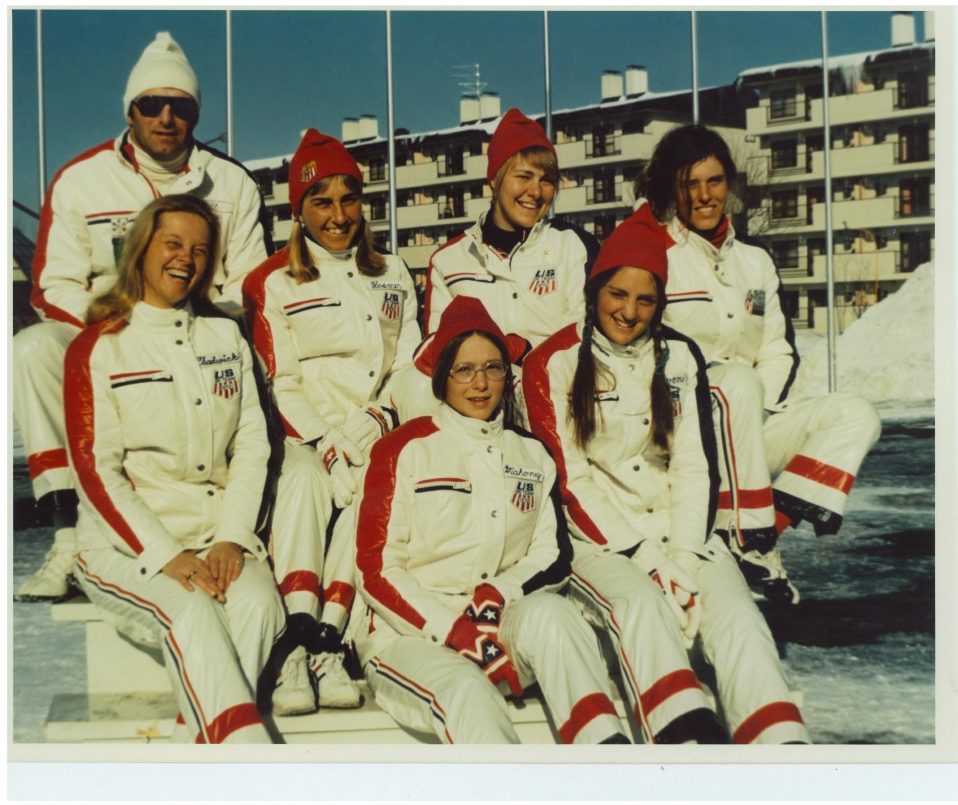
    The first Women’s cross-country Olympic Team. The 1972 Games were held in Sapporo, Japan. Top Row: Marty Hall, Trina Hosmer, Barbara Britch, Martha Rockwell.  Bottom row: Gloria Chadwick, pseudo Chaperone, Margie Mahoney, Alison Owen. (Courtesy photo)

    But numbers on a page are only half of the story. Owen-Bradley’s contribution to skiing, particularly to women’s skiing, goes far beyond her race results. Growing up in Wenatchee, WA as a member of an active family, Owen-Bradley started nordic skiing after her father saw an ad in the paper for the local cross-country ski team. “He said, ‘Hey, let’s go try that because we love running and hiking and [other outdoor sports],’ so we started that and it was all new,” explained Owen-Bradley. Not long after, Owen-Bradley became the first girl to compete at Junior Nationals. She relayed the story of how at the pre-race meeting the organizers wouldn’t let her compete, stating that “this is a race for boys.”

    A team leader from the Pacific Northwest (PNSA) delegation responded, “show me that rule.” Since that rule couldn’t be found in writing, Owen-Bradley was allowed to compete. “I raced and then, the next year, and from then on, they had a place for girls,” she explained. “It was a fun time because women weren’t racing marathons, they weren’t really allowed or incorporated into the endurance sports world, and it was just fun to watch it [explode] like popcorn, it was happening everywhere,” she said, speaking to the rise of women competing in sports. “It was really fun to be there [at Junior Nationals] as the first girl, I think I was like 13 or 14 or something and almost everything you’re doing is new in your life, so that was just one more new thing.”

    Owen-Bradley’s coach at the time was Herb Thomas, and it was he who presented Owen-Bradley her medal at the Hall of Fame induction ceremony. Thomas came from Middlebury to start the ski program in Wenatchee which she joined. “He let me do it. You know, he encouraged me. He broke open the door for me to do it,” said Owen-Bradley. In the years that followed, there were other men who played an integral role in Owen-Bradley’s success.

    “At the beginning, for me, not having a lot of opportunity in sport, I can say that the opportunities I did have came from men,” she explained. “There were no women breaking trail for me, you know, I didn’t have them as coaches, I didn’t have women cheering me on.” 

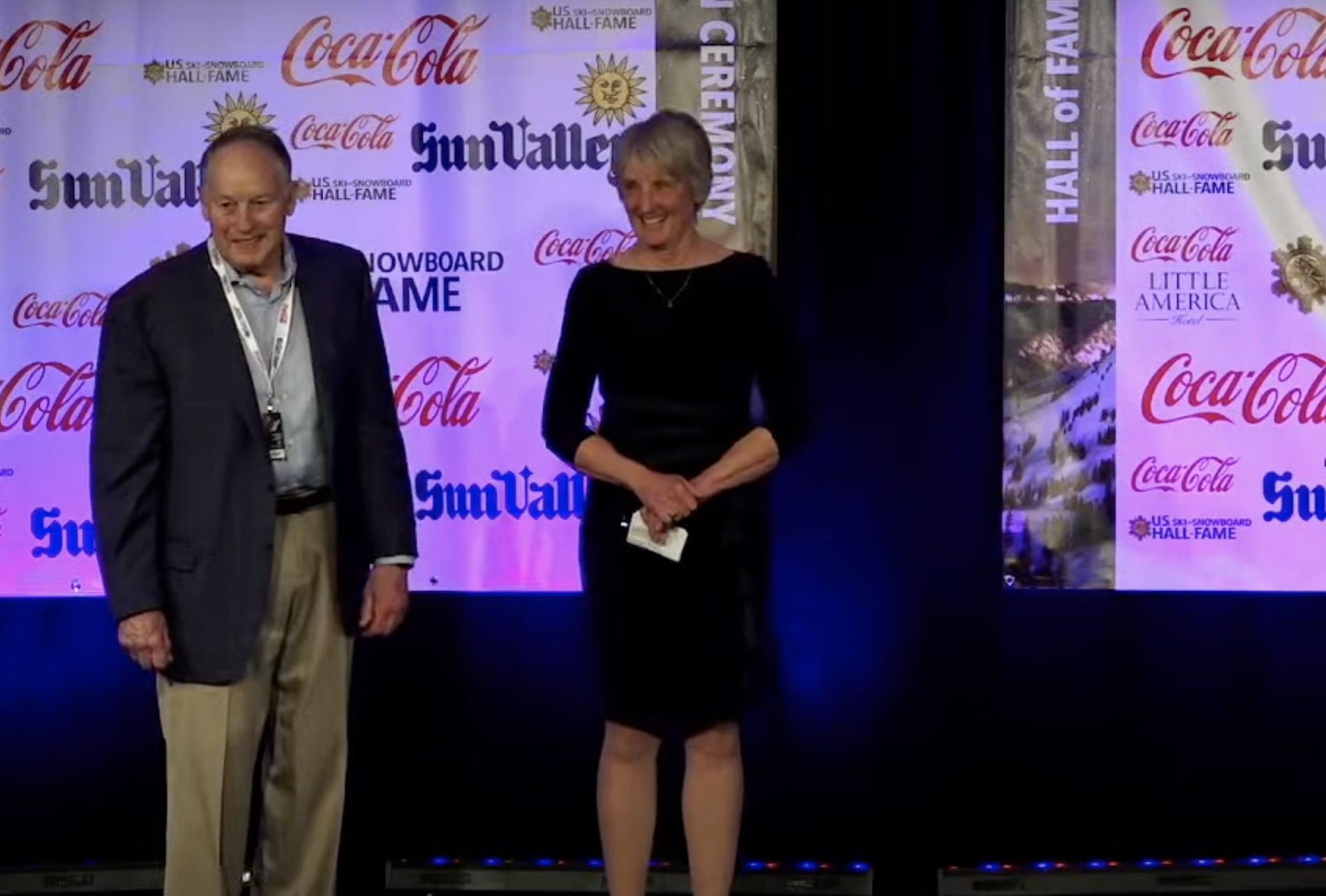
    Herb Thomas and Alison Owen-Bradley at the U.S. Ski and Snowboard Hall of Fame induction ceremony (photo: USSSHOF livestream)

    In particular, Owen-Bradley singled out Marty Hall in her acceptance speech, saying he was perhaps the most important person to thank in regards to her success. She shared an example of how when they traveled to Europe to compete, the first U.S. women’s national team coach was given the runaround by the European coaches with wrong addresses, no translator, and the more. It soon became clear that something needed to change and so Hall headed to Europe to take over. “He really made a place for us,” Owen-Bradley explained, “They didn’t hire him in the first place, because he was a bit strong and maybe not sensitive and everything, but he was strong in the coaches meetings. He read the rule books, he knew what was going on, legally, and he made them speak English.”

    At a time when women’s racing was just being established this was more important than ever. “He kept a place for us,” said Owen-Bradley, “that we had a possibility to get good and we weren’t on the sidelines, we were right in the middle of it all, he knew what was going on and he made a place for us on the world stage.”

    For his part, Hall corroborated this story and added, “my athletes meant everything to me. I would fight to the death for them.” When asked about Owen-Bradley specifically, Hall described her as “a woman before her time.” He said that she “had all the components.”

    “Some of the things that she got pushed into or taken to go way beyond when she should have been ready, but it didn’t bother her,” he reflected. “She didn’t crack, never had any problems doing what she was supposed to do.” Hall shared that it is great to coach an athlete like this. “She understands movement real well, she was good at anything she did as an athlete,” he said. 

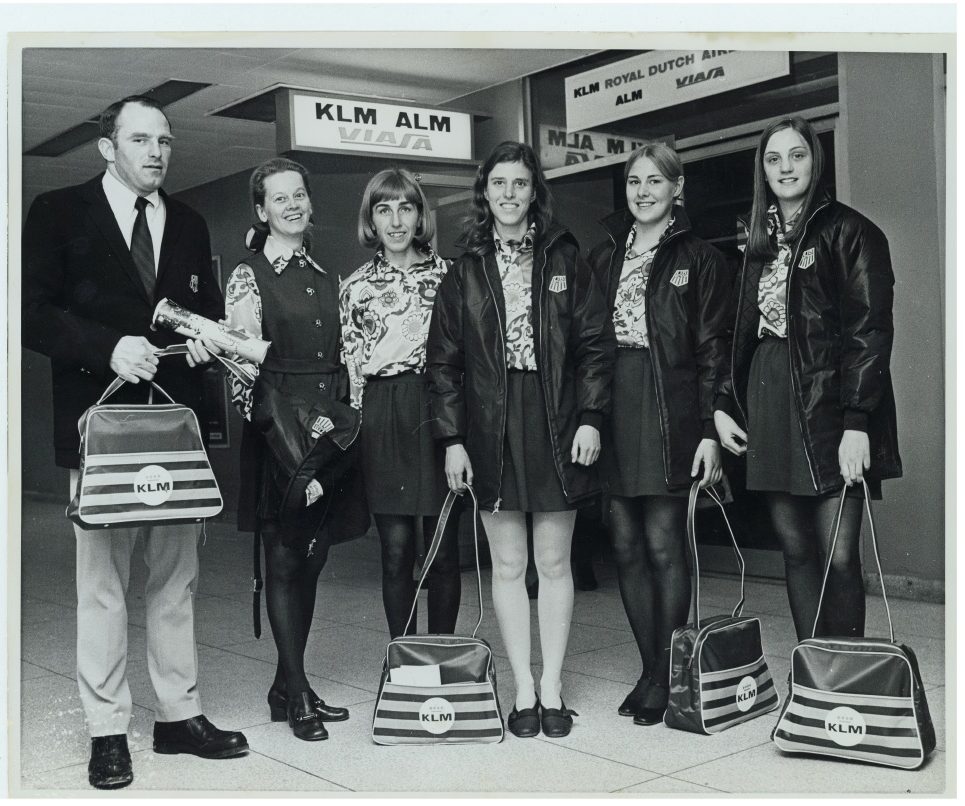
    The first U.S. women’s World Championship cross-country team on the way to Czechoslovakia in 1970. From left to right: coach Marty Hall, Coach, chaperone Gloria Chadwick, Trina Hosmer, Martha Rockwell, Barbara Britch, and Alison Owen. The U.S. team took four skiers as the relay at that time was a three-person format. (Courtesy photo)

    When asked about important elements in the progress of women’s skiing, Owen-Bradley responded, “I really appreciate the men who said ‘no, come on women do this. It’s really fun. There’s no reason women can’t do this stuff.’” She emphasized the important role these men played saying,  “I really appreciate the men in my life, who opened the door, kept them open, kept the naysayers away- and then as things have evolved and grown, obviously, naturally, women are taking more of a role in allowance in helping other girls and women do that.” She went on to say, “and that’s awesome. That’s, you know, the natural progression, and I love to see that. And that’s why, with US NOW, the Olympic women’s group, taking initiative, giving awards, leading the way for other women and showing that we are a leader in sport and with each other. So that’s the natural evolution of it that I see.”

    In her acceptance speech at the Hall of Fame ceremony, Owen-Bradley reflected on how much progress there has been in women’s skiing since she first began saying, “where are we going to be in another 50 years?…[it’s] so exciting to think of the barriers we break.” Particularly in light of the recent Olympic results from the U.S. women’s team, Owen- Bradley said, “even now, it makes me so teary eyed, to think about that in in one lifetime, my lifetime, to go from girls not having sports, not having a place, to being a shining star on the world stage of a sport that that was there was no place for girls. It’s so fulfilling.” She gave a shout-out to Kikkan Randall as well, saying, “and the icing on the cake of that was Kikkan doing the absolute best coverage, covering her teammates… She brought so much understanding and furthered everyone’s knowledge.” 

    Having witnessed the sport achieve these major milestones, Owen-Bradley pondered the future of cross-country skiing, “You know, it just feels like my life journey of being in sport, and being in cross-country especially, where will we be in the next year? That’s for this generation to lead now. And where are we going and what’s next for the women, but also the men, of our nordic community and sports community?”

    She continued by saying:

    “It’s not an easy road ever, but you know, that’s why we’re in it because we challenge ourselves and if we didn’t want challenge, we wouldn’t be in sport. And what you do is you come up against your weaknesses and you figure out how to get through them or you don’t get better… I mean, that’s the cool thing about sport is you test yourself and then you get better.” 

    Alison Owen-Bradley racing to first in the inaugural women’s World Cup event in 1978 in in Telemark, Wisconsin. (Courtesy photo)

    When asked what it means to both her and to the cross-country sport community, to receive recognition for her achievements and to be the second female cross-country skier inducted to the Hall of Fame, Owen-Bradley replied, “Well, it is interesting that I’m getting the recognition now.” She explained that they give the award for different categories and said, “maybe part of the recognition comes from, you know, a lifetime involvement in skiing. I think maybe I cross over a little bit, you know, my life has been very influenced by and I participate in a lot of ways in cross-country skiing.” She continued by saying, “I think it’s important because it shows where we’ve been, and hopefully, where we’re going. So, it’s fun to get the award.” Owen-Bradley acknowledged that her “life has moved on.”

    Though skiing still occupies much of her time, “I’m focused on a lot of things,” she explained, “ I didn’t wait for [the award] to happen to make my life good or anything. I’m doing a lot of really great things that I enjoy.” 

    Alison Owen-Bradley and her daughter, Kaelin, high in the Bridgers (Courtesy photo)

    These days, Owen-Bradley can be found near Boise, Idaho on a small farm she calls her “sanctuary”. Still quite active, she is an engaged participant in a program called, Starting Strength. “It’s a weightlifting program that I have found a lot of benefits for myself,” she explained. Additionally, Owen-Bradley is very involved with her family; she has three grandkids and a daughter who coaches skiing in Bozeman, Montana. “It’s really fun to have that continuity,” she said, referring to generations of skiing families. “I think it really helps to have grown up in it, and [to have] parents that know about it and can pass it on and build it generation to generation.” 

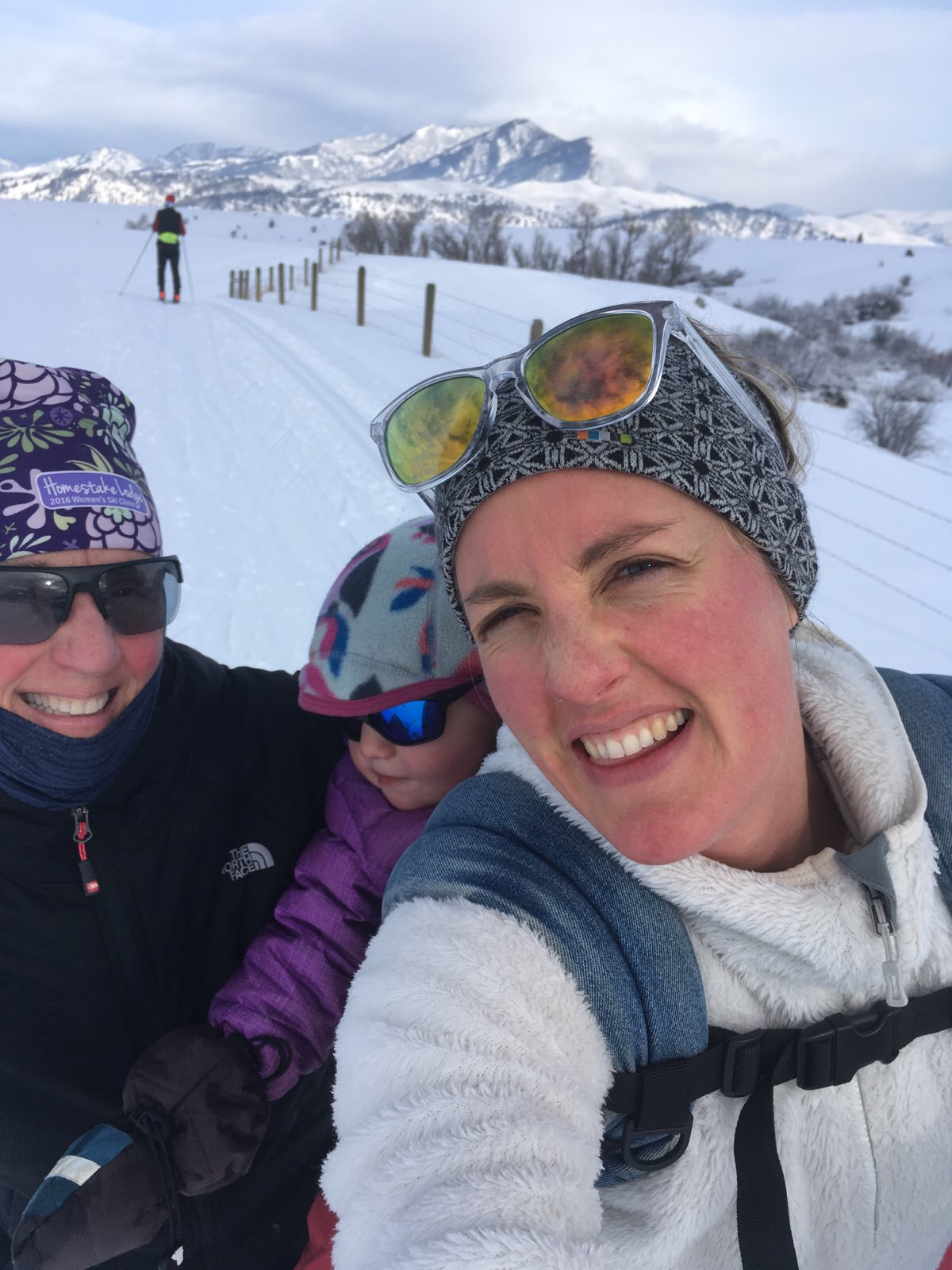
    Three generations of Bradley skier women. “I wouldn’t have been in a backpack with my Mom and Grandma out enjoying winter when I was my Granddaughters age. Love how it’s normal now” says Owen-Bradley (Courtesy photo)

    Speaking more broadly to the growth of a cross-country ski community and culture in the U.S., Owen-Bradley emphasized the importance of recognizing the contributions of those who have encouraged and shaped this growth. “There’s a lot of people that have [put] their life-force energy on building the ski culture in our country, and that’s why I like to see more awards given.” She explained that she is working on nominating another woman for the Hall of Fame to “shine the light that the women’s lives have been growing the sport and yet [we] only have two women in the Hall of Fame after sixty years.” Given the numerous different categories that you can be nominated for, Owen-Bradley has a list of ideas and possibilities.

    “There’s a lot of women that deserve a lot of credit for where the women’s program is now. Men too, but I’m focused on the women.” 

  • US Nordic Olympic Women Name Caldwell and Maubet Bjornsen as 2020 Gold Rush Award Recipients (Press Release)

    Press Release
    50th anniversary of the first U.S. women’s team to compete in a World Championship-level event: The U.S. women’s Nordic World Championship Team in 1970: Head Coach Marty Hall; Gloria Chadwick, chaperone; skiers Trina Hosmer, Martha Rockwell, Barbara Britch and Alison Owen (l-r). (Photo: Hall collection)

    This week a healthy gathering of the US Nordic Olympic Women, (US NOW), came together in a virtual meeting organized by group members Kikkan Randall, Alison Bradley and Sue Wemyss.  The group had planned to meet up at this year’s Minneapolis World Cup, after having met and enjoyed their first reunion last March, at the Quebec City World Cup. Determined not to be deterred by the World Cup cancellation, modern day technology and the online possibility afforded by Zoom meetings allowed for this modified second reunion to proceed.

    Twenty-three of the fifty-three total women who have represented the US in cross country skiing at the Winter Olympics were present.  They spanned the five decades of American women’s teams at the Games, from the first one in 1972, through the most recent in 2018. Despite their wide ranging spread of home locations, from Maine to Alaska, they were able to meet on their computer screens, get to know each other a bit more, and reconnect with teammates they may not have seen for years.

    The meeting, led by US NOW President Kikkan Randall, began with each woman introducing herself, and sharing personal information including Olympic year(s), current location and current occupation.  A central piece of the meeting was the introduction of the newly renamed “Gold Rush Award,” and its presentation to two very deserving co-winners this year.

    For some background, at the group’s first reunion during the March 2019 Quebec City World Cup event, the Inga Award was presented to Rosie Brennan for her courage and determination in coming back from mononucleosis to achieving her best international race season to date.  Since then, the award has been given a new moniker: The Gold Rush Award. Founding members of US NOW decided to make this change to honor American ski heroines of both the past and present, rather than the Norwegian mother of baby prince Haakon of Birkebeiner fame.

    Researching early women’s skiing in the US revealed that in the High Sierra during the Gold Rush era, women skied cross country for long distances, had races and were highly regarded for their skiing skills.  The US NOW members pursued gold of a different sort in their quest to stand atop an Olympic podium. This goal was finally achieved at the 2018 Olympics in PyeongChang, where Kikkan Randall and Jessie Diggins earned the Gold Medal in the Team Sprint.

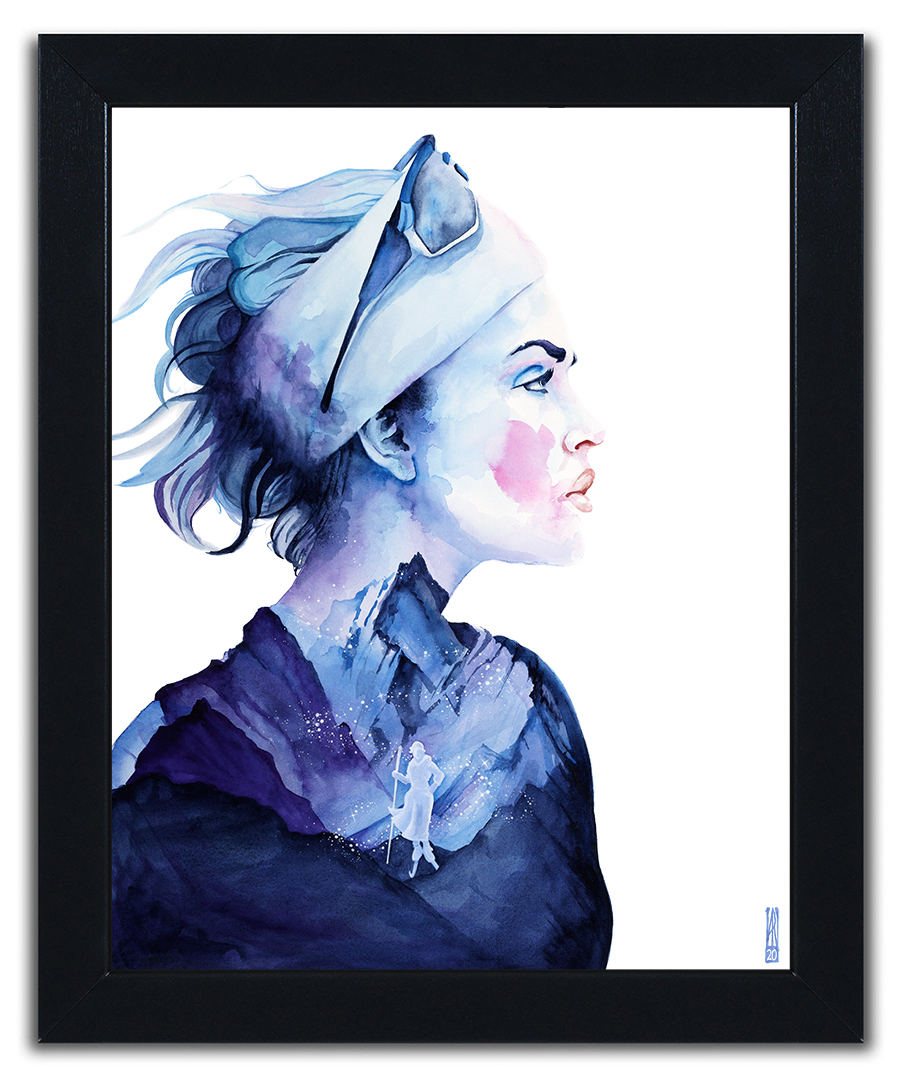
    This year the award was given to current US Ski Team members Sadie Maubet Bjornsen and Sophie Caldwell for their exceptional grit and grace dealing with exceptional challenges and continuing to push ahead in their ski careers and life with positivity and success.  A unique watercolor picture, depicting the qualities of grit and grace in women’s cross country skiing from a long past era to today, was created by artist Andy Rogers of Alaska.  Maubet Bjornsen and Caldwell will receive their own copies of this painting, while the original will land in the U.S. Ski Team’s Center of Excellence in Park City, Utah.

    The meeting ended discussing ways to continue keeping the group active and engaged, as well as potential projects to continue the legacy of US NOW.  Continuing a book project sharing the histories of past US cross country women skiers that was begun by the current USST members is one goal for the group, combined with the collection of oral histories of these women who raced over the span of five decades.  US NOW has made a couple applications for grant money to help cover the costs of these projects. A book project committee was formed and is accepting new members and any available assistance. The virtual meeting closed with gratitude and well wishes amongst the members, and a spirit of connection and support for both past and present women’s cross country skiing and skiers in the United States.

    Gold Rush Award: (Artist Andy Rogers)
  • John Caldwell on the Beginning of U.S. Women’s XC

    John Caldwell on the Beginning of U.S. Women’s XC

    The women’s team sprint medal ceremony at the 2018 Winter Olympics in PyeongChang, South Korea, with (from left to right) Sweden’s silver medalists Charlotte Kalla and Stina Nilsson, American gold medalists Kikkan Randall and Jessie Diggins, and Norway’s bronze medalists Marit Bjørgen and Maiken Caspersen Falla. (Photo: FlyingPointRoad)

    (Note: This article has been updated to include clarification from Sara Mae Berman on her results in the 1971 national 50-kilometer ski race in Putney, Vermont)

    ***

    What did John Caldwell have to say after the U.S. women’s gold-medal performance on Wednesday at the 2018 Olympics? We asked Caldwell, a 1952 Olympian and one of the founders of the U.S. women’s cross-country program who coached the U.S. Ski Team through five Winter Olympics (1960, 1964, 1968, 1972, and 1984), and he wanted to take the opportunity to explain how the team came to be in order to give some perspective on how far it’s come. The following was written by Caldwell, 89, of Putney: 

    “It hasn’t been easy to get to where we are after today. Lots of the reports mention how many years it’s been, or that it’s been 564, 321 days (or something like that) etc., and they are all true. Better they knew a bit about the development and could write about that. So that’s what I intend to do here.

    In the Oslo Olympic Games in 1952, the Finnish women ran the same course as the guys one day and their times beat our times. Of course we didn’t have a women’s team then.

    I coached the FIS Team to Oslo in 1966 (Gallagher, Elliott, Gray, Damon and C Matis) and the manager, Bob Tucker, and I wanted to get females started skiing more in the US. So we met with a Swedish official named Inga Lowdin and she told us we should work to make sure people don’t think you need Amazons (females) to be good at xc. “I will send you some  “girls” that will help your development of xc.”

    Martha Rockwell, member of the first U.S. women’s Olympic team in 1972 (Photo: U.S. Ski & Snowboard Hall of Fame)

    Tucker and I had to lock the big boss in a closet — well, almost — in order to get funding for airfares, something on the order of $3500. Three Swedes came over in 1967, including Toini Gustafsson and Barbro Martinsson, who both won gold medals at the Autrans OWG in 1968. They made their first stop in Putney and encouraged Martha Rockwell to race the next day, thus starting her international career.

    A few years earlier Martha had led off for a team at the Putney Relays. Girls didn’t race then and so she was teamed up with two boys. She beat a couple of boys from a near-by prep school to the finish and one was seen shredding his skis afterwards on a handy fence.

    Sometime in the late ’60s we ran a National 50k at Putney. Sara Mae Berman wanted to race, but no long races were run for the female sex. I entered her with the guys on a 5 x 10 k loop. She was quite far behind when she came by on her 4th lap and I stopped her for a moment or two, showed her our timing clock on a little stand, along with a pencil and paper, and told her to just time herself because I had to go inside and award prizes. She finished and I will wager her time is registered somewhere. We ran a tight ship in those days.

    [Note: Berman wrote FasterSkier and sent a copy of results from that race, which was held in 1971, to clarify that at least one man finished behind her. Her husband Larry Berman explained in another email that her time was not originally listed, “but the timers recorded her and I wrote down her splits. At the end of 4 laps, there were 3 men behind her.”]

    So our first ladies international team didn’t materialize until 1970 when we sent them to the FIS World Championships in Vsyoke Tatry in Czechoslovakia.

    All along the way in these years there was precious little club skiing. Almost all of it happened in secondary schools and colleges. Divisional committees dictated races to fit the school and college schedules. Year-round XC training was a rarity, mainly due to the fact there were few year-round coaches available. So as a nation, we floundered. The transition to club skiing was slow and I hesitate to try and explain it or point to significant events, but thank goodness, it happened.  Now we are fairly well set up with a pretty good club system. The secondary schools are feeding some clubs and a lot of colleges, the colleges are doing a good job of developing skiers with their four-year programs and they help feed the clubs with good seniors. The clubs also help feed the colleges with good skiers from their junior ranks.”

    ***

    See also: Olympic Roundtable with Brooks, Vordenberg, Fiddler, and Crawford