Tag: Martin Jonsrud Sundby

  • Sundby Tops Again; Harvey 9th in Lillehammer Mini Tour

    Sundby Tops Again; Harvey 9th in Lillehammer Mini Tour

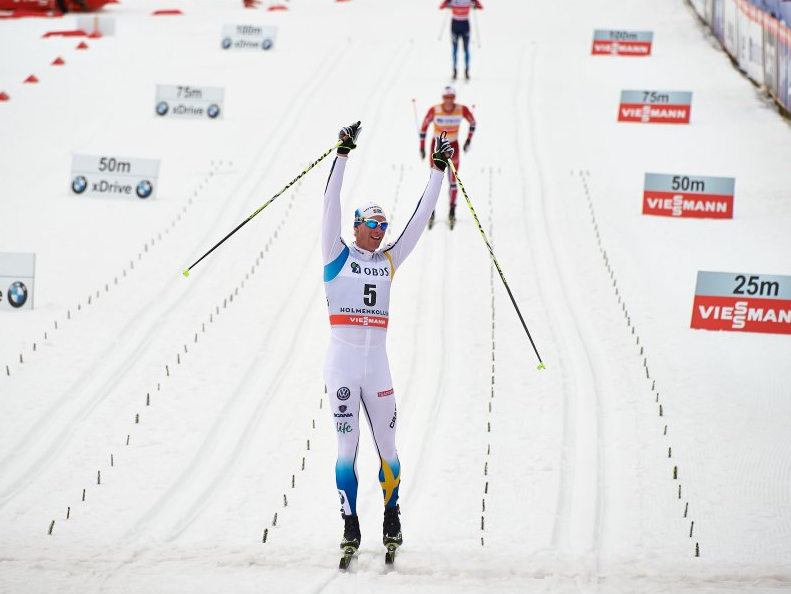
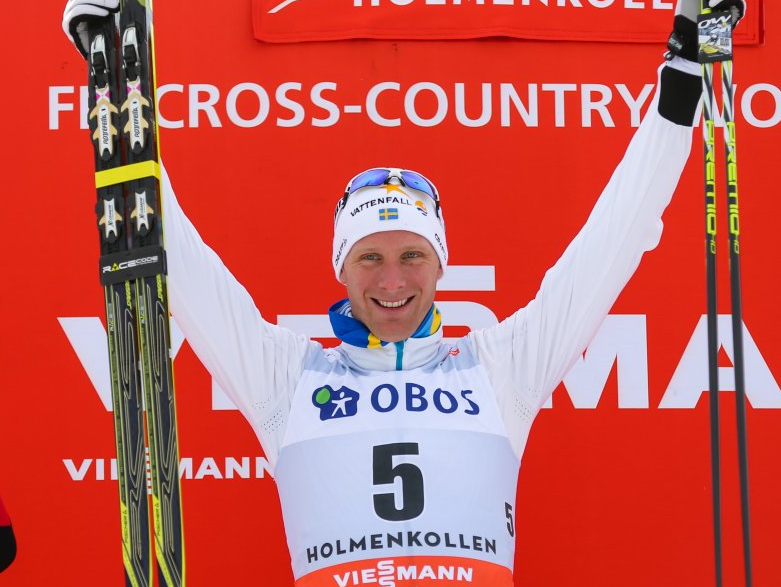
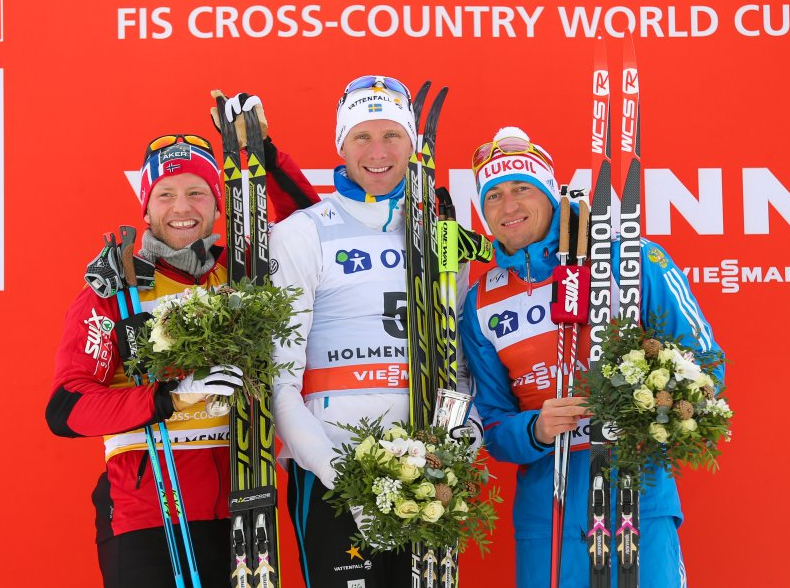
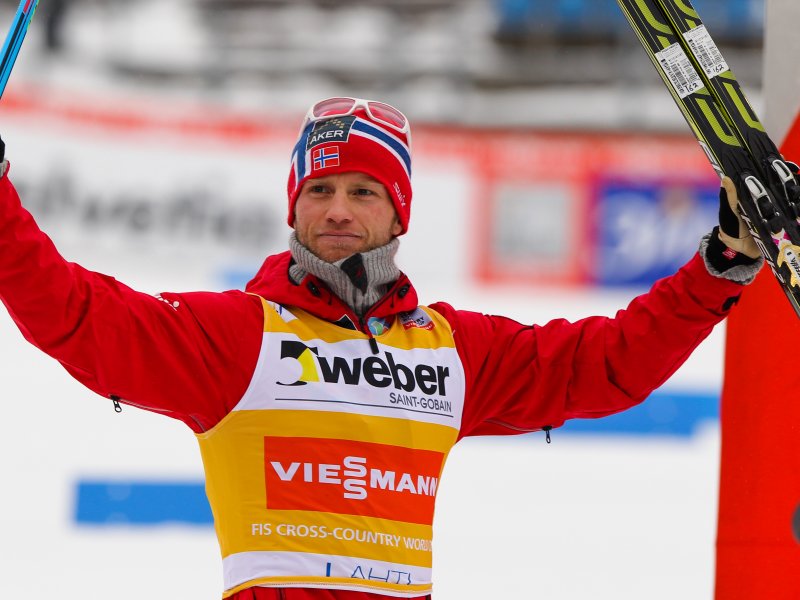
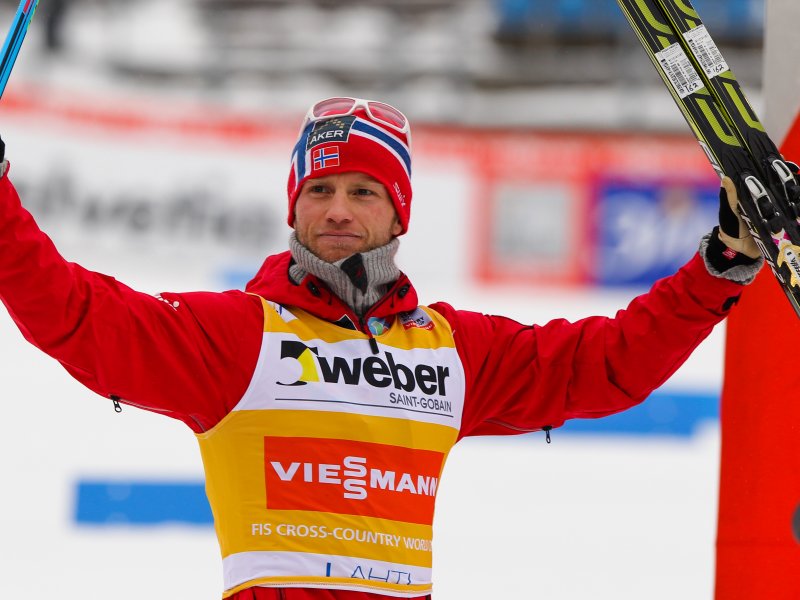
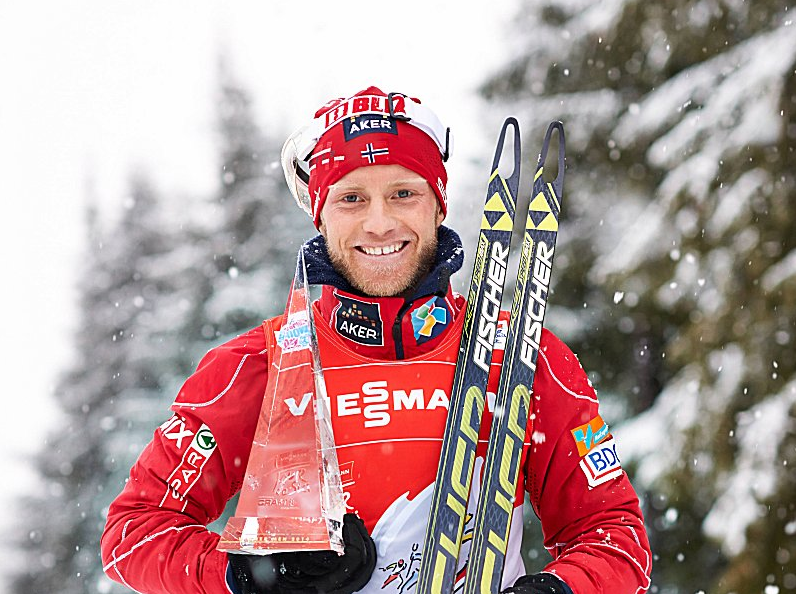
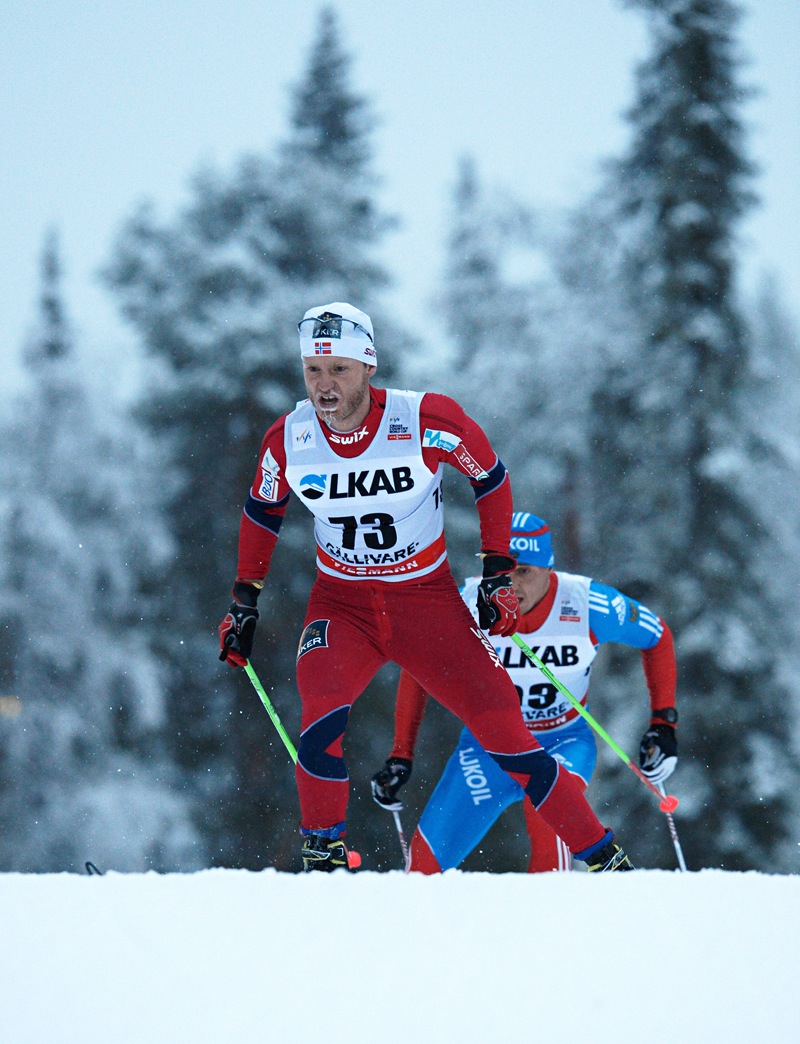
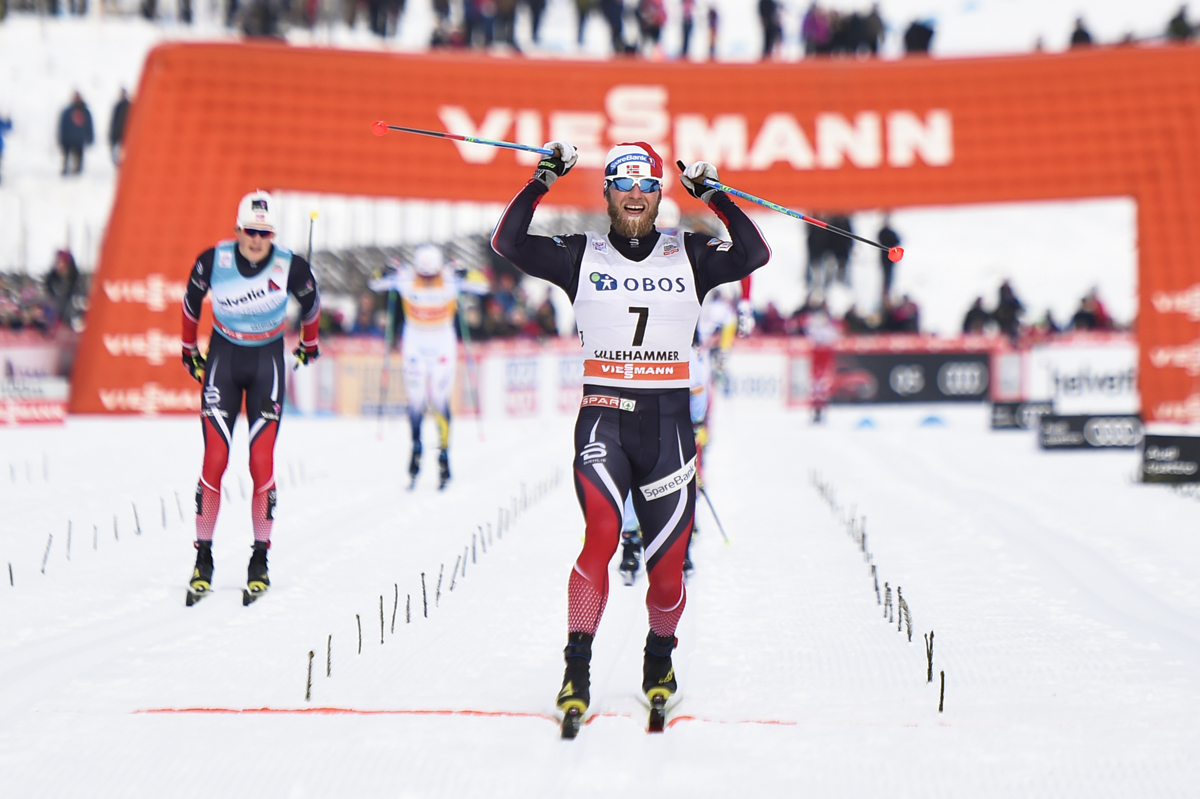
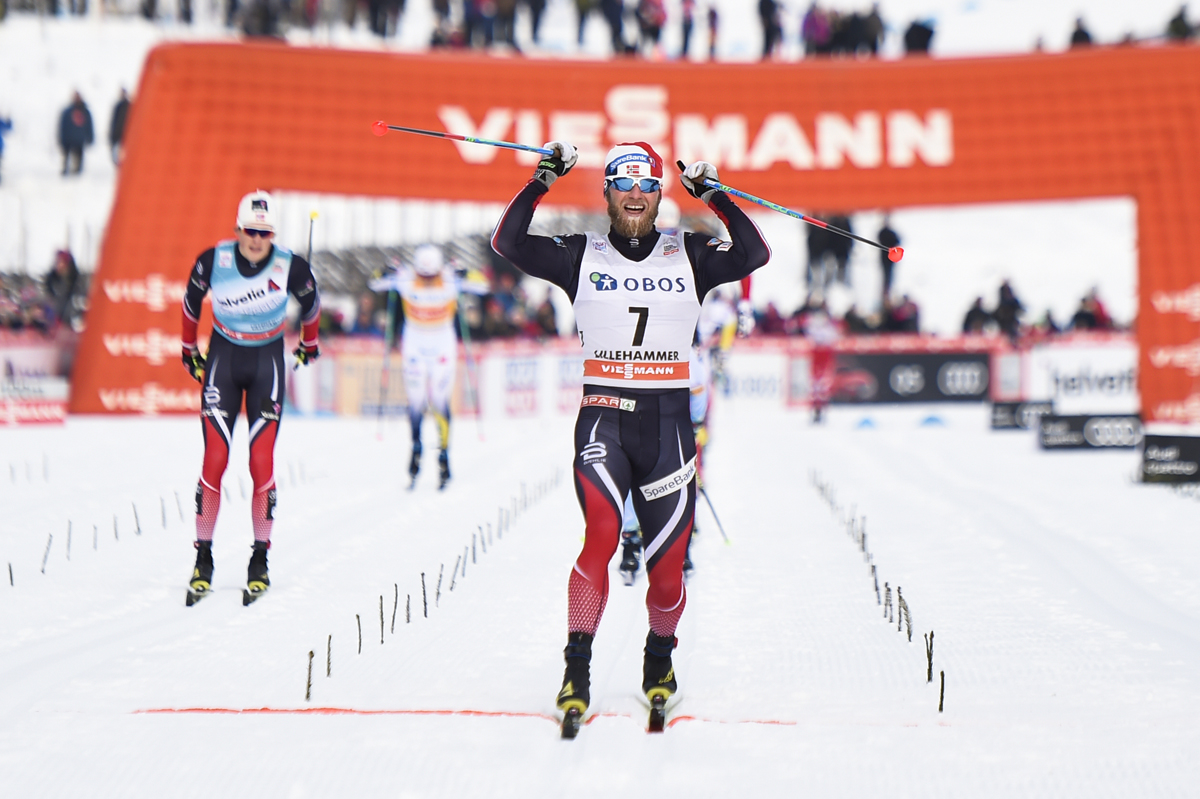
    Martin Johnsrud Sundby of Norway celebrates his 15 k pursuit win on Sunday, the final day of the first mini tour of the season in Lillehammer, Norway. (Photo: Fischer/NordicFocus.com)
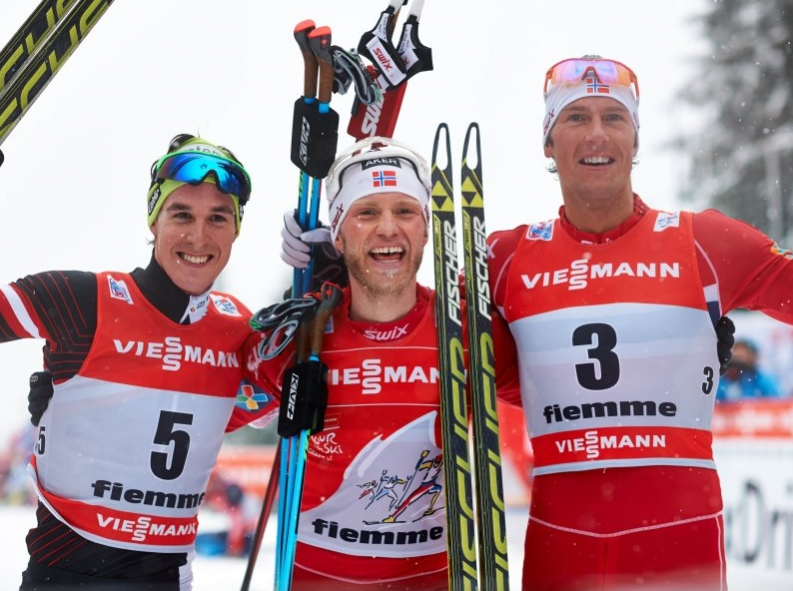
    Martin Johnsrud Sundby of Norway celebrates his 15 k pursuit win on Sunday, the final day of the first mini tour of the season in Lillehammer, Norway. Another Norwegian, 20-year-old Johannes Høsflot Klæbo (l) placed second. (Photo: Fischer/NordicFocus.com)

    Note: This article has been updated to include comments from U.S. Ski Team member Noah Hoffman and APU skier Eric Packer. 

    When exactly was the race’s defining moment on Sunday during the final mini-tour stage, a 15 k classic pursuit in Lillehammer, Norway?

    It wasn’t at the start when tour leader, Sweden’s Calle Halfvarsson, cruised out with a 28-second head start on the next released skier, Russia’s Sergey Ustiugov.

    It wasn’t the time check at 2.2 k, despite a growing chase group rife with Norwegian colors. At that point, Halfvarsson strided powerfully with a sizable 49-second lead on the likes of Norway’s Martin Johnsrud Sundby.

    Here’s the moment.

    Around 8.3 k heading up the course’s longest climb, Halfvarrson’s skis slipped. On cue, Halfvarrson glanced behind as if the catch to come couldn’t be over too soon.

    It was like a band of released hounds chasing down the maimed fox. The time back to the chasers had shrunk to 22 seconds.

    The group of salivating oncomers included Sundby and teammates Finn Hågen Krogh, Emil Iversen, and Pål Golberg, Johannes Høsflot Klæbo, Simen Hegstad Krüger, and Sweden’s Marcus Hellner, Finland’s Matti Heikkinen, and Canada’s Alex Harvey.

    From then on the Swede seemed to ski in fear.

    The catch came four kilometers later. Then Sundby tried make the race his own. He had an eight-second lead with a little less than two kilometers to go. But this is not a dominate Sundby. His skiing is somewhat more subdued. His attack less of a kill shot and more of an alpha’s warning that he’s still there.
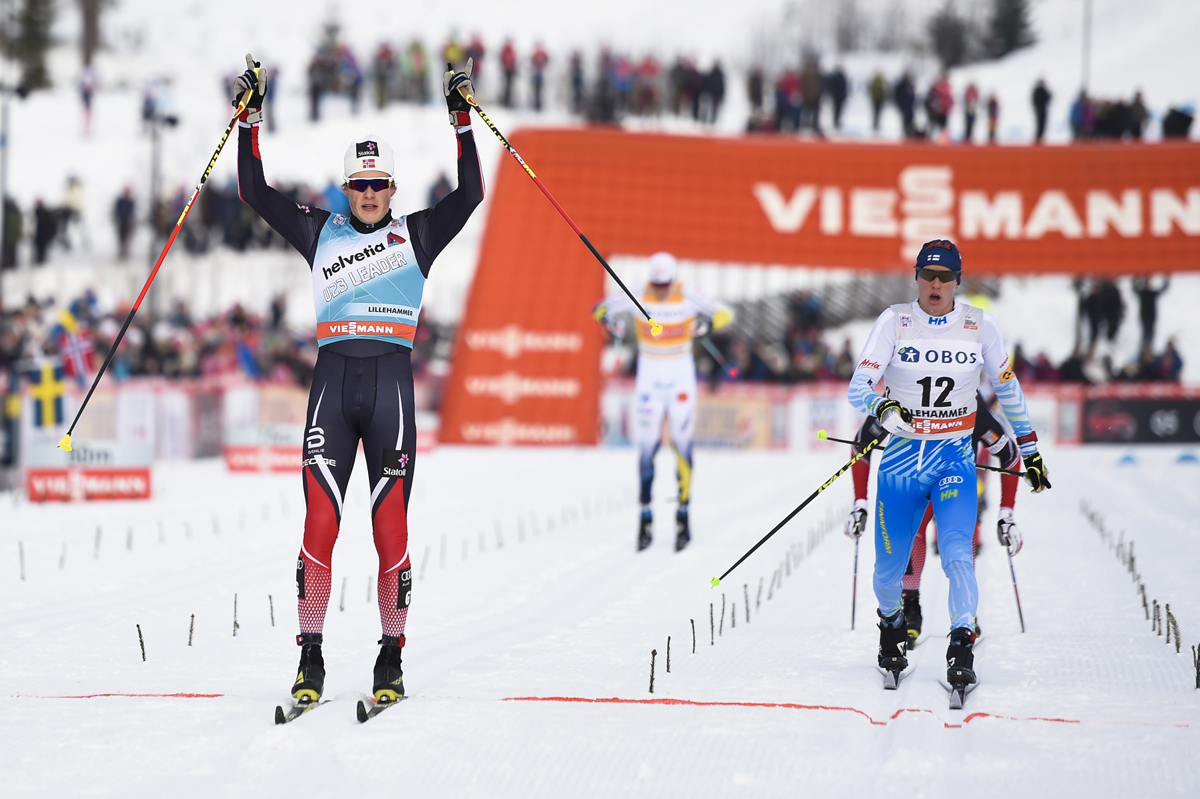
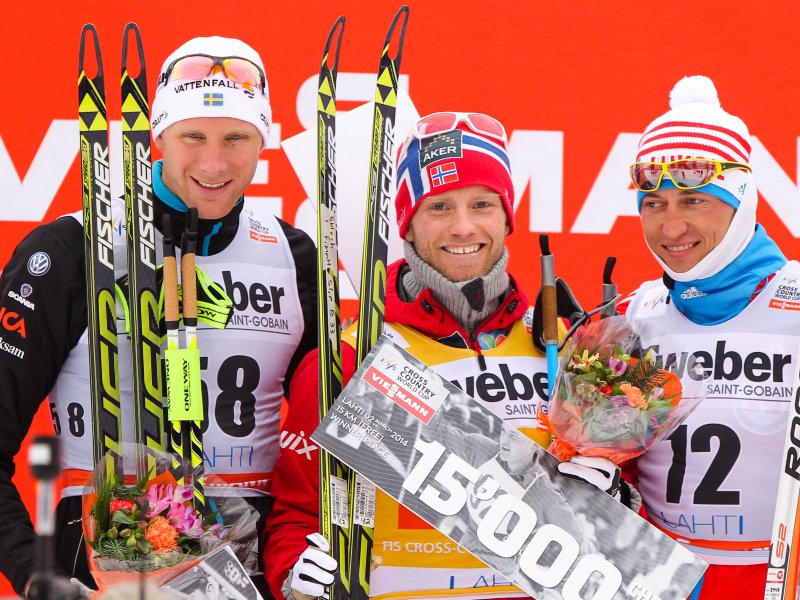
    Norway's Johannes Høsflot Klæbo celebrates his second-place finish in the men's 15 k classic pursuit, ahead of Finland's Matti Heikkinen (12) in third, at the World Cup mini tour in Lillehammer, Norway. (Photo: Fischer/NordicFocus.com)
    Norway’s Johannes Høsflot Klæbo (l) celebrates his second-place finish in the men’s 15 k classic pursuit, ahead of Finland’s Matti Heikkinen (12) in third, at the World Cup mini tour in Lillehammer, Norway. (Photo: Fischer/NordicFocus.com)

    Sundby hung on for the stage and overall Lillehammer mini tour win sharing the podium with 20-year-old, second-place finisher Klæbo (+2.3), and fastest time of the day skier Heikkinen (+2.7) in third.

    “It was an interesting race,” Sundby said during the post-race press conference. “Calle set quite a good pace from the beginning. It looked like he had full control of the race. Suddenly after five or six k, he struggled with the kick, and we really had a chance to catch up with him. I tried to make my move when we left the stadium for the last time. I tried to keep the pace high all the way up on the longest hill. Luckily I gained some meters and won in the end.”

    Leaving Lillehammer, Sundby finds himself in a familiar color: he’s wearing yellow as the overall World Cup leader. Halfvarsson is 34 points back in second, Klæbo is third overall, 46 points back.

    Harvey Hunting in Front and Kershaw Moving into the Points

    Coming into the third and final day of racing in Lillehammer, Canada’s Harvey sat in eighth place, 51 seconds back from Halfvarsson and one second behind Sundby, the seventh starter in the pursuit. Strategically speaking, Harvey had his Norwegian rabbit. The only question was could he hang on?

    Affirmative. No matter where you checked for race stats, live in Lillehammer, an Internet stream, or live FIS timing, you’d see Harvey’s name and the maple leaf. Up until 12.2 k, Harvey stuck to the chase group like a limpet.

    “I think I had the fastest skis in the group,” Harvey told FasterSkier’s reporter in Lillehammer.  “But I went too limited on the kick … on the hills I was drifting because I couldn’t really go … but it’s my mistake because our skis were really, I think we had the best skis in the field today. But I took a pair that was a little too aggressive I think.”
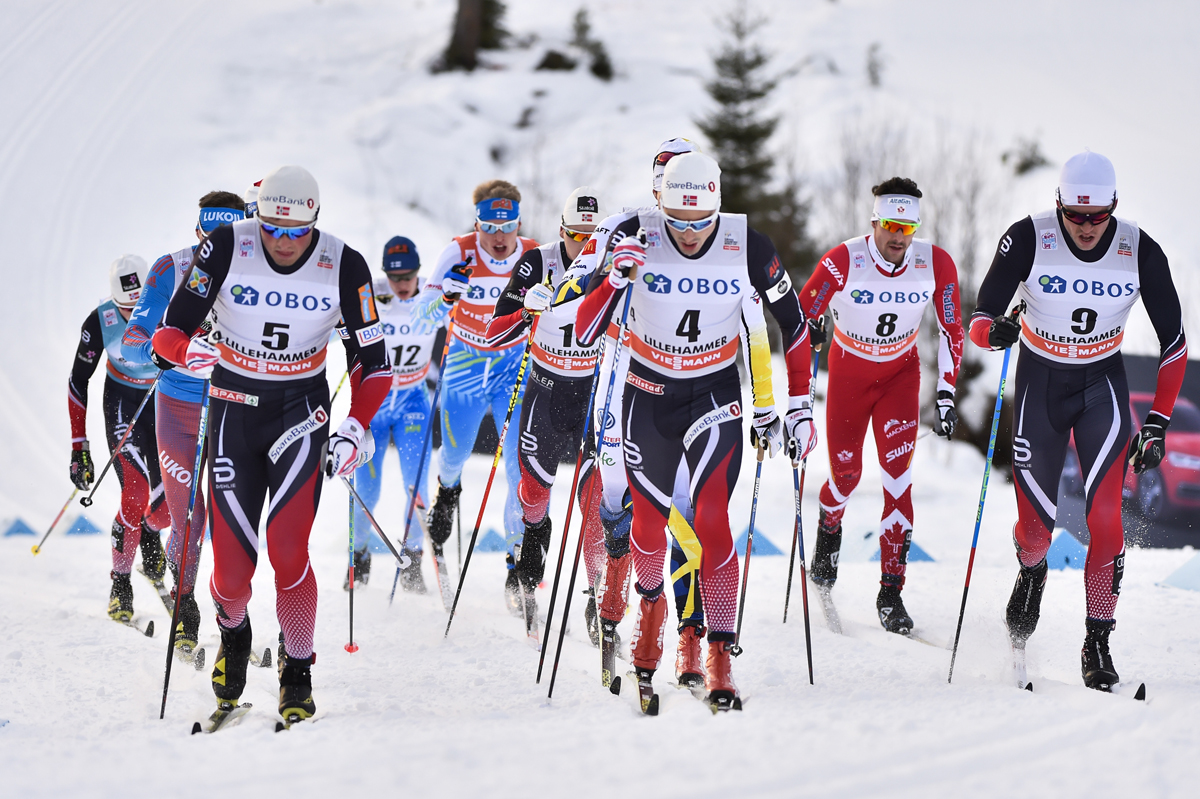
    Norway's Finn Hågen Krogh (4) and Emil Iversen (5) leading the charge in the men's 15 k classic pursuit on the final day of the World Cup mini tour in Lillehammer, Norway, with Canadian Alex Harvey (8) in the mix. (Photo: Fischer/NordicFocus.com)
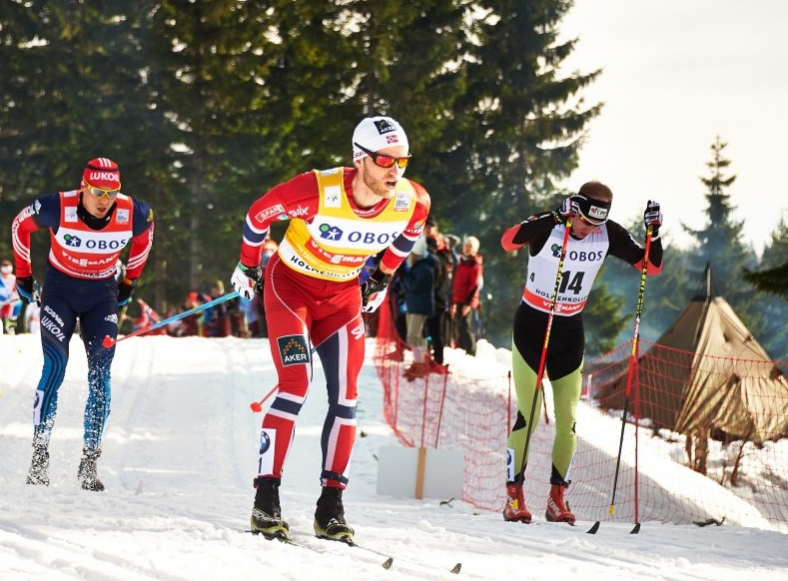
    Norway’s Finn Hågen Krogh (4), Emil Iversen (5) and Pål Golberg (9) leading the charge in the men’s 15 k classic pursuit on the final day of the World Cup mini tour in Lillehammer, Norway, with Canadian Alex Harvey (8) in the mix. (Photo: Fischer/NordicFocus.com)

    As the finished neared, Harvey eventually lost 16 seconds to the Sundby pack, ultimately placing ninth overall in the mini tour. Harvey added that he’s feeling confident after the three-stage Lillehammer mini tour. “I mean three races, three tops 10’s. I think the fitness is really steady and everything, the support team, the equipment has been really steady.”

    For some perspective on Harvey’s enthusiasm, here’s some context: after last year’s opening three-day Ruka mini tour, Sundby won the overall by 44 seconds. The next 2015/2016 weekend in Lillehammer, a 30 k skiathlon, Sundby again soloed to a 44-second win. During Weekend 3, in the 30 k freestyle in Davos, Switzerland, it was Sundby in first by 20 seconds.

    2016/2017 on the World Cup has begun with diminished margins for Sundby. A win is still a win. But for skiers like Harvey, Sundby is more human.

    “It gives us confidence I think,” Harvey said of the more-level World Cup playing field. “This year there’s nobody you know that’s invincible as compared to the last couple of years, so that’s motivating for everybody.”

    Harvey’s next stop is an all skate weekend in higher altitude Davos with a 30 k and sprint lined up. “Now we have to rest,” Harvey said of his week ahead. “Three races in three days is hard on everybody, and with a travel day coming up, we are going to have to recover from that. And then coming up in altitude, you got to really monitor your body well and re-test your equipment because that’s a new type of snow in central Europe. There is a bit more humidity in the snow and it’s a bit different … now it’s race-race, recover-recover, race-race, recover-recover until pretty much until the end of the season.”

    Harvey, who skied the sixth-fastest time on the day, leaves Lillehammer ranked 10th overall on the World Cup.

    The next best Canadian finisher was his fellow World Cup Team member Devon Kershaw who started 43rd, 2:01 behind Halfvarsson. Fifteen k later, Kershaw had moved up to finish 27th (+2:08.5) after skiing the 23rd-fastest time on the day.

    “The last stage was the one brighter spot of the mini tour,” Kershaw said over the phone. “The sprint didn’t go that great then the 10 k didn’t go that great either.”

    On Friday, Kershaw placed 42nd in the sprint. He was 40th on Saturday’s 10 k skate. “But I have been feeling good since the start of the season,“ Kershaw added. “I am just missing that fifth gear, but the legs and body are working well. I just can’t get into that last gear that you need on the World Cup to really compete at the top top.”

    Despite lacking that fifth gear, on Sunday Kershaw was set up with plenty of opportunities to pick off skiers.

    “Today was fun to move through the pack a bit and it’s too bad I couldn’t quite get to that next group in front of me,” Kershaw said of his attempt to close the gap to a group of skiers fifteen seconds in front. “I tried with everything I could to get on that group, but I just wasn’t strong enough today to make that last jump and that would have made it a lot easier, to have some skis to follow instead of of just plowing along at the sharp end of my group. But I cannot complain, I started the day 43rd and finished 27th. I did as good of damage that I could in 15 k. It was a step in the right direction for sure.”

    Kershaw, is now an Oslo resident as he’s married to former Norwegian star Kristin Størmer Steira. Kershaw said Steira’s father, mother, and sister all reside in Lillehammer and constituted a small-but-vocal Lillehammer fan club. Kershaw’s father-in-law served as assistant chief of competition during the mini tour. On Sunday, Kershaw’s wife, sister, mother-in-law, and even the family dog (who Kershaw stated was well trained and didn’t bark) were all trailside to see the Canadian veteran move into the World Cup points.

    The remaining Canadian finishers were Len Valjas (World Cup A-Team) in 46th (+3:44), Graeme Killick (World Cup B Team) 51st (+3:53.9), Knute Johnsgaard (U25 Team) 70th (+6:20.3), Bob Thompson (NTDC Thunder Bay) 79th (+8:16.3), and Andy Shields (NTDC Thunder Bay) 81st (+9:57.3)

    For the Americans, U.S. Ski Team (USST) member Noah Hoffman continued to show improving form on Sunday.

    Stage 3’s pursuit found Hoffman starting in bib 48, 2:08 back. Hoffman finished Sunday’s pursuit 36th after skiing the 29th-fastest time on the day (+1:30.2).

    “After last week’s disappointment I was really just looking to have a solid race where I skied within myself, with energy, with relaxed muscles, clean muscle environment and just tried to demonstrate my fitness a little bit,” Hoffman said on the phone Sunday night. “Both days I tried to do that and I think I was pretty successful both days. Certainly none of the results this weekend were something to highlight my season … I’m obviously looking for more, but a big step in the right direction from last week and that’s really much all I can ask at this point.”

    During the offseason, Hoffman implemented a training plan with a large percent increase in training hours.

    “He skied well and I think he is still coming out a little bit from underneath the load of all the training he has done,” U.S. Ski Team Head Coach Chris Grover said. “But the last couple starts he really feels like he is going in the right direction.”

    Erik Bjornsen (USST) began the day in bib 44 and dropped to 57th (+4:33.3)

    Unfortunately for Erik, he had good skis, but he chose to go a little too thin on the wax I think,” Grover said of Bjornsen’s day. “He was too slick, so he started out really well. But with the massive climbs out there he just fatigued in a hurry and started going backwards after a bit … Erik is definitely disappointed because he wanted to ski well today. He had been looking at targeting this race and has been looking at it for a long time. He was pretty bummed out.”

    Simi Hamilton did not start and the remaining U.S. skier in the mini tour, Eric Packer (APU), placed 68th (+5:45.1).

    Despite his 68th place on Sunday, Packer, who emailed from Oslo before boarding a plane to Zurich, Switzerland, remains a sponge when it comes to the World Cup. “It’s been an awesome experience racing over here for period 1,” Packer explained. “The level of the competition is definitely high, and it’s been an adjustment getting used to racing WC vs Supertour, but I’m definitely learning a bunch and finding things to work on.”

    Although energized coming into the fall training season, Packer fell ill for the first three weeks of November. The Anchorage based skier took a full twenty days off from intensity training before traveling to Europe for period 1. “On the plus side, I think the illness allowed me to get some really quality rest, and my energy levels are great,” Packer added. “I can feel my form improving with each race, and am looking forward to the racing ahead.”

    84 skiers completed the mini tour. Packer started day 3’s 15 classic pursuit in bib 75, and placed 68th overall. Yet he skied the 58th fastest time on the day (+3:23.1). Only two places back from Ustiugov’s ski time, who began the race as the second starter. “The 15k Classic Pursuit in the Lillehammer mini tour went well for me, and was a big step in the right direction,” Packer wrote about the mini tour’s last stage. “I had a tough starting spot, toward the back of the field, but was able to bridge up to a good group and pick off some spots.   I finally felt like my body was working like it should, and ended up 58th for time on day.  Obviously I still want better, but for period 1 racing, and for distance, I was happy with the result.”

    World Cup racing resumes Saturday, Dec. 10, with a skiathlon in Davos, Switzerland.
    Results | Winner of the day Final mini-tour standings 

  • Richardsson Triumphs at Holmenkollen 50 k, Sundby Secures Overall World Cup Title

    Richardsson Triumphs at Holmenkollen 50 k, Sundby Secures Overall World Cup Title

    Daniel Richardsson wins Holmenkollen. Photo: Fischer/Nordic Focus
    Daniel Richardsson wins the Holmenkollen 50 k. Photo: Fischer/Nordic Focus


    Daniel Richardsson of Sweden carefully paced himself throughout the grueling 50 kilometers to win in Saturday’s classic mass start World Cup at Holmenkollen in Oslo, Norway.

    The race started fast, with skiers hungry to win the bonus points located 3 k into the course at the top of the long Frognerseteren climb. Noah Hoffman of the USA called these bonus points, 15 to the winner on each lap, the “easiest points on the World Cup,” and they made for a tempting prize.

    Martin Johnsrud Sundby of Norway, the overall World Cup leader, wasted no time in trying to secure his grasp of the title, and charged ahead up the climb just minutes into the race.

    Start of men's Holmenkollen 50 k. Photo: Fischer/Nordic Focus
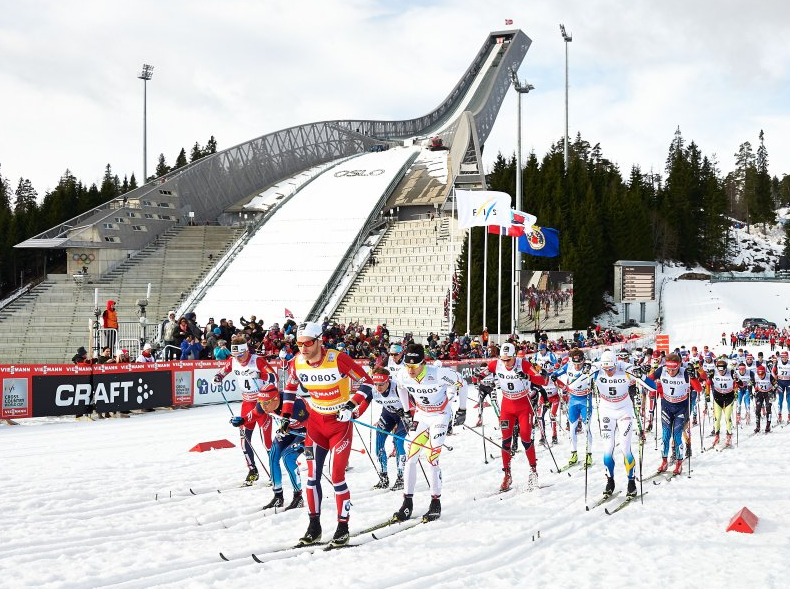
    Start of men’s Holmenkollen 50 k. Photo: Fischer/Nordic Focus

    Two kilometers into the course Simi Hamilton of the USA could be seen skiing up front with Sundby, climbing up toward the bonus points with Oslofjorden visible far below. Soon the pace increased up the slope and Hamilton fell back, but Hoffman managed to take second at the bonus points, just behind Sundby.

    Sundby continued to stay in front and by 10 k he was stretching the race out as it headed into the second bonus points at 11.3 k. As Hoffman described it, “I’ve never seen anything like that, where the best skier in the world decides to go the second time up the climb, not even 10 k into the race at that point. Sundby was pushing the pace at the bottom of the climb; if it was just about the points he did not need to go that early. It looked to me that he was trying to blow the race open, which he did successfully.”

    10 k into the race there were four other skiers left with Sundby: Alexander Legkov of Russia, Finland’s Livo Niskanen, Sweden’s Richardsson, and Lukas Bauer of the Czech Republic.

    After the second lap all of the leading skiers pulled into the ski exchange except for Bauer, who looked to make a breakaway on the other four men. Bauer gained a twenty-second advantage by opting not to change skis. Sundby and Legkov led the chase, and Bauer’s advantage lasted less than four kilometers. By the 20 k marker he had been caught.

    At this point Richardsson also ran into trouble when he somehow fell in the loose snow coming around a corner. “I thought it was useless, clumsy, [I’m] done,” he said of his fall. “It was a bit tricky in the curves.” Richardsson recovered, and soon caught up.

    Sundby did the majority of the work at the front of the race, cheered on by the raucous crowd at Holmenkollen. 33 k into the race Sundby took the lead pack into the exchange for the second change of skis. Legkov, Richardsson, and Niskanen followed close behind him. Bauer had been dropped by over 30 seconds.

    Shortly after the exchange it was Niskanen who was unable to stay with the pace, and by 36 k he was 18 seconds behind Sundby in the lead.

    Sundby leads the race. Photo: Fischer/Nordic Focus
    Sundby leads the race. Photo: Fischer/Nordic Focus

    With three men left in contention for the race, it was Sundby and Legkov who traded leads, with Richardsson skiing behind the two. Sundby at times appeared fatigued in the lead, stumbling at one point up a climb, and at the top of Frognerseteren he comically slouched and hung his arms when Legkov looked at him inquisitively to see if he would continue to lead.

    Yet Sundby was strong enough to make an attack up a climb at 47 k, his last bid to win the day. Richardsson managed to stay with the Norwegian, but Legkov lost contact by a couple of seconds. The Russian fought to catch up and nearly did, but soon fell back again.

    Sundby led over the last hill, and as soon as the Holmenkollen stadium came into view with 800 meters left, Richardsson took off with a burst of speed that an exhausted Sundby couldn’t match.

    Richardsson carried his lead into the finish line to win with a time of 2:07:29. Sundby was second, securing the overall World Cup title, and Legkov was third.

    After the race Richardsson told FIS, “The speed was very high from the beginning. The bonus sprints helped to increase the pace. I had a small crash in a downhill and lost some seconds on Martin [Sundby] and Alexander [Legkov]. Then I decided to take it easy and save some energy for the finish. I had a difficult summer but I always believed I could be winning again. It feels great to win in Holmenkollen. I hope a big crowd is coming to Falun next week.”

    Richardsson’s difficult summer referred to an accident that occurred outside his family home when a camper van struck Richardsson and a close friend while they were changing a tire, killing his friend instantly and causing Richardsson a femoral fracture and tore the cruciate ligament in his knee.

    Daniel Richardsson. Photo: Fischer/Nordic Focus
    Daniel Richardsson. Photo: Fischer/Nordic Focus

    Talking to Swedish newspaper Expressen after the race, Richardsson said, “It’s been a long road and walk. But I’ve always believed in this. I had a dream, and you have to believe in what you do. I found a form of exercise that works. I have become more careful in what I do.”

    A proud Richardsson met with the Norwegian royal family after the race, as the Holmenkollen tradition dictates. However, the Swede was unfamiliar with the appearance of the king and was uncertain if he was speaking with the Norwegian monarch.

    “It was a little awkward at first,” said Richardsson.  “I did not recognize him at first. He congratulated me. He thought it was a nice race and that it was funny that a Swede had won.”

    For Sundby, who finished second last year at Holmenkollen to Legkov, it was a little frustrating to be the runner up. “It sucks to be second again,” Sundby said to NRK, “but I nailed the World Cup. And that’s huge for me. I’ve dreamed about it since I was little.”

    “I really tried to win but Daniel [Richardsson] was stronger and smarter than all of us. I did not have a chance in the finish against him,” Sundby told FIS. “It was really fun to race today, we were a small group skiing upfront. The crowds were incredible. I tried to speed up in the second lap. We managed to open a good gap. We had a good dynamics in the front group.”

    Indeed, Sundby and Legkov appeared to work well together, and at one point Sundby gave Legkov a fist bump at the top of Frognerseteren.

    Sundby’s aggressive pace throughout the race may not have won him the race in the end, but he secured 81 bonus points throughout race, enough that he had secured the overall World Cup title before he even crossed the finish line.

    Only five Norwegians have won the prestigious Crystal Globe: Vegard Ulvang, Bjørn Dælhi, Thomas Alsgaard, and Peter Northug. “I’ve looked up to many of these athletes my whole life, so to be on such a list is very large,” said Sundby.

    The podium at the 2014 Holemnkollen 50 k. Martin Johnsrud Sundby, Daniel Richardsson, Alexander Legkov (l-r) Photo: Fischer/Nordic Focus
    The podium at the 2014 Holemnkollen 50 k. Martin Johnsrud Sundby, Daniel Richardsson, Alexander Legkov (l-r) Photo: Fischer/Nordic Focus

    “I’ve slept many a night out in a tent, waiting for my role models who were going out to ski the 50 k,” said Sundby to NRK, recalling the tradition among fans to sleep out on the course the night before the race. “I still remember when I was 10 years old sitting in the woods here, along with Simen Østensen, and that year [Pietro] Piller Cottrer won the race here. It’s really fun to be in the position that I am now the one out on the course.”

    “I am little bit disappointed about third place,” said Legkov, “However, I am stronger in free technique so third place in classic feels like a victory. After Sochi in Lahti I have been both mentally and physically tired. I felt in better shape today.”

    In a television interview Legkov also said, “I think Daniel [Richardsson] was a little lazy today, but it was a good tactic.”

    Holmenkollen was the final race for Tobias Angerer’s long career for Germany. The 36 year-old capped off a 15-year World Cup career Saturday that has included winning the Tour de Ski and the overall World Cup twice.


    Results:

    1. Daniel Richardson (SWE) 2:07:29.5

    2. Martin Johnsrud Sundby (NOR) +8.2

    3. Alexander Legkov (RUS) +14.5

    4. Livo Niskanen (FIN)+1:22.3

    5. Lars Nelson (SWE) +1:55.3


    North American Results:

    14. Alex Harvey

    29. Noah Hoffman

    51. Erik Bjornsen

    54. Simi Hamilton

    56. Reese Hanneman


     Full Results


  • Sundby Extends World Cup Lead With Lahti Win

    Sundby Extends World Cup Lead With Lahti Win

    Norwegian Martin Johnsrud Sundby is back on top following a disappointing Olympics, winning the men’s 15 k freestyle in Lahti, Finland.

    Sundby entered the Olympics as the overall World Cup leader after winning the 2014 Tour de Ski, but managed just a bronze in the opening skiathlon in Sochi, before notching a thirteenth and two fourths.

    He took a measure of revenge today, however, besting Sweden’s Daniel Richardsson by 10.7 seconds with Alexander Legkov of Russia another half second back in third.

    Martin Johnsrud Sundby (NOR) celebrates his win in the Lahti 15 k freestyle. (Photo: Fischer/NordicFocus)
    Martin Johnsrud Sundby (NOR) celebrates his win in the Lahti 15 k freestyle. (Photo: Fischer/NordicFocus)

    Legkov won the Olympic 50 k in which Sundby was fourth, and Richardsson took third in the 15 k classic, arguably Sundby’s strongest event, and was part of the gold medal winning relay team.

    “I wanted to ski good today,” Sundby told FIS News after the race. “I was very motivated to succeed again.”

    Shut out of the medals in four of six Olympic races, the trip to Russia was disaster for the Norwegians. Sundby, however is now looking ahead with the goal of earning his first overall World Cup title.

    “The Games did not go the way I wanted, so I wanted to be ready to fight for the yellow bib,” he said after the race.

    Sundby led from 3.4 k on, trailing only Great Brittain’s Andrew Musgrave at the first checkpoint 1.5 k into the race.

    The Norwegian made his move with approximately 3 k to go. Until that point, both Legkov and Richardsson stayed within just a few seconds of the top spot, but between 11.3 and 13.4 k, Sundby extended his lead to 10 seconds, cementing the victory.

    The men's podium in Lahti (Photo: Fischer/NordicFocus)
    The men’s podium in Lahti (Photo: Fischer/NordicFocus)

    Richardsson overcame a 2.2 second deficit on Legkov over the last 1.6 k to take second.

    Legkov said he felt “very good” in the race, but that it was “not easy to concentrate on the World Cup again after the gold medal in Sochi.”

    Richardsson also felt good, similarly pleased to maintain form after the Olympics.

    With warm temperatures, the course was soft and icy, but according to Sundby, it did not break down further during the race.

    “I think it was the same for everybody. There was not a big difference during the laps,” he said.

    Sundby now leads the overall World Cup by 388 points over teammate Chris Andre Jespersen. Legkov is in third, 441 back.

    Of Note:

    – Jespersen did not race for Norway

    – With Anders Glørssen in fourth, Finn Hågen Krogh in fifth and Sjur Røthe in sixth, Norway placed four skiers in the top six. Norway ended the day with seven in the top thirteen.

    – Early leader Musgrave finished 27th.

    – 20-year-old Florian Notz of Germay was 7th in his first World Cup race. He was 10th in the 15 k classic at U23 Championships.

    – Olympic sprint bronze medalist, Emil Jönsson of Sweden finished 30th.

    Results


  • Sundby Wins Tour de Ski, Hailed As Best Skier In The World

    Sundby Wins Tour de Ski, Hailed As Best Skier In The World

    Martin Johnsrud Sundby, Winner of the Tour de Ski.  Photo: Fischer/Nordic Focus
    Martin Johnsrud Sundby, Winner of the Tour de Ski. Photo: Fischer/Nordic Focus

    Martin Johnsrud Sundby led the final stage of the Tour de Ski and never looked back as he skied to his, and Norway’s, first victory in the event’s history.  Sundby, who has skied in every Tour de Ski, called his feat a “dream come true” and, overcome, said, “I have a great feeling, deep into the soul.” Chris Jespersen of Norway, skiing in his first Tour de Ski, captured second place. Of his effort on the big climb, he said, “towards the end I thought, ‘Now I die.’”

    Facing falling snow that grew heavier as the race progressed, Sundby began his day with a 49 second advantage over his teammate Petter Northug.  Starting in third, Jespersen left 38 seconds after Northug. With Alex Harvey of Canada missing from the fourth position, Austria’s Johannes Dürr was the next in line to start, leaving the gates just over two minutes after Sundby.

    The course looped once widely around the stadium before exiting for the approach to the base of the Alpe Cermis. An interval timing station at 1.8k showed that Sundby was skiing fast, exiting the stadium for the second time in 4:11.  Northug, chasing, passed the marker in 5:01, having lost a second on Sundby already.

    Leaving the stadium, the course followed a gradually descending trail for over three and half kilometers to the base of the climb. At the 4 k marker, midway between the stadium and the start of the climb, splits indicated that Sundby had increased his lead on Northug to 55 seconds. As Northug passed the timing check, he took off his glasses and threw them off the trail.

    Jespersen was the next to cross the 4 k marker, 1:09 behind Sundby, gaining ground now on Northug who was only ahead of him by 14 seconds. Next through was Dürr, leading Sweden’s Calle Halfvarsson and Russia’s Ilia Chernousov, 2:11 behind Sundby.

    As the trail began to steepen at the base of the Alpe Cermis, Jespersen caught Northug, and just before the time check at 6.2 k, Jespersen passed him. They were now 58 seconds behind Sundby.

    Dürr led the second chasing pack through at 2:23, having lost 22 seconds to Sundby on the approach. Behind him were Chernousov, Halfvarsson, Alexander Legkov of Russia, and Sjur Røthe of Norway.

    Alexander Legkov racing in the 2012 Tour de Ski.
    Alexander Legkov

    Less than a kilometer later, at 7.1 k, Sundby increased his lead to second place with Jespersen now 1:01 behind him and Northug trailing by a second.

    Behind Northug by 1:13 came Dürr who was pulling Chernousov with him. A five second gap separated Chernousov from Legkov, whose heart rate had already reached 182 beats per minute, with 1.9 k of climbing left in the race. Røthe stuck with Legkov, but Halfvarsson, the tall Swedish sprinter, was beginning to fall off the pace, now five seconds behind Røthe.

    After 7.1k, the course steepened. The challenging climb and subsequent curves were reminiscent of a giant slalom course being skied backwards. Sundby skied through this smoothly.  Jespersen, too, seemed to still be skiing within his limits, but behind him Northug looked tired; his form looked haggard as he bore all his weight down on his poles. Jespersen was pulling away from Northug who could muster no response.

    The 8.1 k split told the story clearly: Jespersen was now 21 seconds ahead of Northug who looked to be in no condition to catch back up. Jespersen had also pulled back a couple of seconds on Sundby, but with only 900 meters of race remaining, it looked like it would Sundby’s day.

    northug thumbNorthug found himself facing a new threat, however, in Dürr, who was now 36 seconds away from catching him, and he mut have known the Austrian was approaching. Dürr had now dropped Røthe by 21 seconds, and Chernousov, who had been skiing with Dürr a kilometer earlier had blown up. The Russian was now 43 seconds behind Dürr and had been passed by Røthe and Legkov.

    After the 8.1 k marker, the trail steepened again, this time to its most severe grade, a 28 percent slope. Sundby V1’d up the slope with an apparent ease that was belied by the tortured expression on his face. It was an impressive performance up a slope that has seen former Tour leaders like Dario Cologna of Switzerland reduced to single sticking up its formidable pitch.

    Northug, on the other hand, didn’t look particularly graceful up the precipitous climb. Dürr who could see him, and his place on the podium, tantalizingly ahead skied after him hungrily, and on the top of the steep pitch, caught him.

    At 8.5 k, 400 meters after the last timing interval, a grimacing Sundby led, comfortably ahead of second place Jespersen by 53 seconds. Dürr was 1:31 after Sundby, with Northug struggling to stay with him. Behind Northug by 36 seconds was Røthe, who had dropped the hard-charging Legkov on the last pitch by 28 seconds.

    With 500 meters remaining, Sundby skied ahead, looking pained but not slowing in any apparent way. Jespersen, too, seemed steady in his skiing. The battle for third was also short-lived. Northug, skiing frantically behind Dürr as the course cut back and forth up the summit of Alpe Cermis, soon lost his form and appeared to have given up as Dürr skied away from him, less than half a kilometer from the finish line.

    Petter Northug finishes.  Photo: Fischer/Nordic Focus
    Petter Northug finishes. Photo: Fischer/Nordic Focus

    When Sundby reached the finish line, with his family watching from the sidelines, he did not slow down to celebrate or grab a Norwegian flag. Instead he powered through the finish, a long spindle of saliva hanging involuntarily from his mouth. He had no effort left for a celebratory arm raise, but could only muster the strength to push up his falling glasses.

    Jespersen, approaching the finish line, turned over an amazing finishing tempo, jump skating through the finish to second place in the Tour de Ski, and with the second fastest climb of the day.

    Dürr, too, came through the finish line as quickly as he could, setting the fastest time of the day and taking third place in the Tour de Ski. He raised his hands and yelled happily as he collapsed on the snow.

    Northug, finishing fourth, was caught by Sundby after he crossed the finish line. Sundby looked to have some words of consolation for him.

    Røthe was next across the line in 5th. He also recorded the third fastest time of the day.   He was followed by Legkov, Norway’s Tord Asle Gjerdalen, Chernousov, Halfvarsson, and Didrik Toenseth of Norway.

    Podium of the Tour de Ski.  Photo: Fischer/Nordic Focus
    Podium of the Tour de Ski. Photo: Fischer/Nordic Focus

    In all it was a very good day for Norway, with six men finishing in the top ten of the Tour de Ski, and narrowly missing out on a double podium sweep, with the Norwegian women taking the top three spots in their race.

    Ivan Babikov of Canada, the last Canadian man in the Tour and a formidable climber, had another impressive day on the Alpe Cermis, having the fourth fastest day and skiing his way up from 21st to 16th, despite breaking a pole. In 2009 Babikov posted the fastest time up Alpe Cermis and was second in this same race last year.

    “I have no idea why I’m good at this stage,” said Babikov following last year’s climb. “Where I grew up there were no hills. Everyone feels the pain at some point on the hill. Maybe I am able to cope with the pain a little better than others. People always ask me why I’m good at it and I don’t know. I just love climbing and I just go with it.”

    Noah Hoffman of the US, also the lone American left in the Tour, skied his way from 31st to 25th overall. Hoffman said of his race, “I felt like I started hard, but the guys who started behind me caught me at the finish of the sprint loop. I struggled a little bit in the gradual downhill, the soft conditions are really challenging for me.” On the climb he went to work, moving from 30th to 25th. He stayed strong at the end, passing three skiers in the last kilometer.Hoffman is eager to return to the final climb in 2015, “I feel like I’m a better climber than I’ve shown on my two efforts on Alpe Cermis,” he said, “so I’m looking forward to another opportunity next year, and I really feel that I can have a top 5 or win the climb. I think climbing on skate skis is real strength of mine.”

    Hoffman
    Hoffman

    Sundby is a true veteran of the Tour de Ski, having skied in all eight editions of the race. His performance in this year’s Tour was worthy of a champion—he made it to the final of every sprint competition, and as a result skied the maximum distance possible in the Tour, and was a threat for the podium in all but one race.

    He told FIS after the race, “This a dream come true for me. It has been a long way to here. This is my 8th Tour de Ski.  It is an amazing moment for me. I did not have the best day today. I had to take it easy and go medium pace not to be totally tired soon. It was tough going first in the snow; it was quite slow.  Olympics is the main goal for the season. It will be interesting now to see how my body responds after the Tour de Ski.”

    For Sundby, his victory is a crowning achievement in a ski career that has developed slowly and steadily over the years. Norwegian newspaper Dagbladet called for Sundby’s name to be added to the pantheon of Norwegian sporting heroes for his achievement as a complete skier. “I have a great feeling, deep into the soul.” said Sundby to NRK after the race, “There is an awful lot of hard work behind this victory. There are a lot of emotions inside now.” An emotional Sundby told the Norwegian broadcaster, “Don’t ask many questions, I’ll start to cry.”

    Sundby’s success has been the result of many small adjustments: more rest, less weight training, changing the way he records his training log, and refining his technique over the summer at Holmenkollen.  Last but not least he has improved his diet, telling Dagbladet that, “It took a long time, but now I have discovered that Coke and potato chips are not the right thing to eat after exercise…It is very good, but it does not provide any energy in the long term.”

    Sundby was initially annoyed with the change of the Tour format due to the poor snow available in Oberhof, Germany.  He voiced his grievances to Dagbladet before the start of the prologue, calling it a “parody of cross country skiing” and grumbling about a lack of a venue change and the Tour being solely designed for television. After the prologue however, it occurred to Sunday that the training he had done made the new Tour format optimal for his abilities and he set about doing what he could to win it.

    Johannes Dürr.  Photo: Fischer/Nordic Focus
    Johannes Dürr. Photo: Fischer/Nordic Focus

    Jespersen for his part was an unknown factor heading into the Tour, his first ever. When asked by Dagbladet if he ever thought before the start of the event that he would finish second, he replied, “I really thought I was going to win, so…I ‘d at least hope so. But the tour was settled with the long race [Friday’s 35 k pursuit] with Martin in front.  He is a worthy winner.”

    His remarks to the Norwegian press didn’t quite match his comments to FIS, saying, “I had a great race today.  I am very satisfied with second place. I tried to open very hard, when I passed Petter I tried to keep the pace high. I hope the shape will continue and I can perform well in Sochi. This season I had planned to do long distance competition so I am little bit surprised about the result.” To Dagbladet he said of the race, “It was great fun to go today.  I was fit and had good skiing.  But towards the end I thought, ‘Now I die.’ Luckily I got more power as I approached the top.”

    Dürr confessed his excitement at taking third in the Tour. “It is awesome to be on the podium of the Tour de Ski,” he told FIS. “I can hardly realize it; it came too fast. After yesterday I had some hope for a podium. I knew I would need a perfect day and skis. I had great equipment today—not only today but during the whole Tour.  I just gave it all and went totally full speed on the uphill.”

    Johannes Dürr, with fans.  Photo: Fischer/Nordic Focus
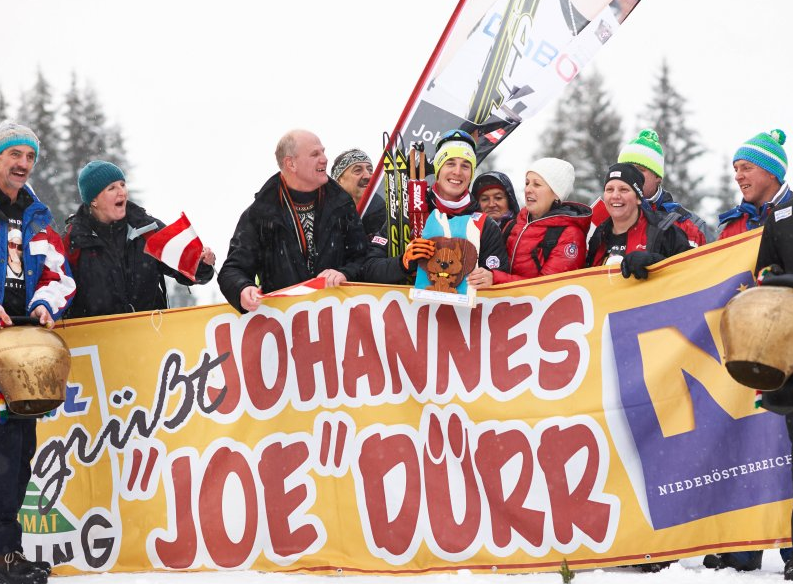
    Johannes Dürr, with fans. Photo: Fischer/Nordic Focus

    To the Austrian newspaper Der Standard, Dürr said, “I have only looked forward. As Northug briefly focused on me, I started to doubt it. But then [once across the finish line] everything that is in me, is brought out,” said a happy Dürr.

    Northug, despite losing two places to finish outside the podium, did not express bitterness about his race. “I thought it would be uglier,” he told NRK. “I did not lose too much, and I got help from Chris [Jespersen]. Had I been alone, I’d have lost a minute.” He added further, “I got help from Chris and Dürr. When I went into the ground, I thought there were many that would pass me…I thought Legkov and several others were coming behind me and would walk past.” Northug said he was pleased to have finished at all in the top ten.

    The 27 year old conceded to NRK that his goal of winning the Tour de Ski, one of his great dreams, is fading, saying, “I should have been four minutes into the ground” and, “I think I’m too fat to win the Tour de Ski.”

    Results 


  • Sundby Holds Off Russian Assault for Ruka Triple Victory

    Sundby Holds Off Russian Assault for Ruka Triple Victory

    Martin Johnsrud Sundby (NOR) on his way to capturing the men's 15km skate title in Gaellivare (SWE). Photo: Nordic Focus/Fischer.
    Martin Johnsrud Sundby (NOR) on his way to capturing the men’s 15km skate title in Gaellivare (SWE) in 2012. Photo: Nordic Focus/Fischer.

    Martin Johnsrud Sundby (NOR) held off Russians Maxim Vylegzhanin and Alexander Legkov in the homestretch to claim victory in the Ruka Triple mini-tour.

    The Norwegian responded to a ferocious attack by Legkov with just two kilometers to go before making his own move on the final climb. Both Legkov and Vylegzhanin kept pace, but Sundby held the all-important pole-position into the hairpin turn at the back of the stadium, setting up well for the final 75 meter sprint to the finish.

    An excellent closer, Vylegzhanin came on strong, overtaking his teammate before running out of snow and his chance for the win.

    On another frigid day in Finland, racers contested a 15km freestyle pursuit, the first time the final day of this three race set was held in the skate technique since 2011.

    With new rules in place that cut stage race sprint bonus seconds in half, the field was tightly packed entering the final race. Another skier hit the course on average every two seconds, and 30th place was just 57 seconds off the lead.

    Top seed, Eldar Roenning (NOR), a self-admitted poor skater did not start, leaving Dmitriy Japarov (RUS) in the pole position.

    The lead pack quickly formed with sprinters and weaker skaters falling off the back in the first of six 2.5k laps. By the 5k mark, the top contenders had formed up, with Legkov, Sundby, and another Norwegian, Chris Andre Jespersen working at the front.

    Legkov could be seen testing his competition, and in a prescient moment, attacked early and hard on the steepest climb of the loop early in the third lap. He immediately backed off, but the 2013 Tour de Ski Champion was clearly serving notice that he would be a force for the remainder of the day.

    As the group approached the halfway mark, Frenchmen Maurice Manificat and Jean Marc Gaillard joined up, following Swedish stat Marcus Hellner. The trio had come up from the mid-twenties at the start, knocking roughly 50 seconds off their starting deficit.

    Just behind, two more men were battling to gain contact with the leaders. American Noah Hoffman, starting 1:02 down in bib 38 made contact just before the lap, as did Petter Northug (NOR).

    Wile the two latched on at similar times, they did so with varying levels of energy. Hoffman looked relaxed and strong as he settled into the pack, while Northug, clearly not in top form barely managed to maintain contact right at the back of the leaders.

    Northug, who has struggled with illness this fall, started 13th, 30 seconds down, and right in front of Legkov. He could not ride up with the Russian early, and it appeared unlikely that Northug, winner of this event last year, would be able to defend his title.

    While jockeying continued, Sundby and Legkov continued to do most of the work at the front, both continuing to look strong. Hoffman climbed as high as third, but a tactical error entering the fast downhill on the third lap, dropped him to the pack of the pack, and out of position for the final loop.

    The pace raised and fell as different skiers probed for weakness. Legkov accelerated several times, only to back off again.

    Unsurprisingly, when the race hit the steep climb with just over a kilometer to go, he reprised his attack from the second lap, this time showing no mercy. Sundby and Vylegzhanin responded, and within a few hundred meters, held a lead of 7.5 seconds.

    The podium had been decided, it was just a question of the order.

    The trio continued to pull away through the gradual terrain before Sundby made his move on the sprint hill up to the stadium. Jumping completely off the snow with each powerful V1 stride, he initially appeared to be moving away.

    But Legkov would not be sprung and pulled up, nearly fully abreast of the Norwegian, Vylegzhanin locked in just behind.

    Sundby did not get lear, but he earned the front spot into the tight hairpin at the back of the stadium, giving him first step into the homestretch.

    He needed that small boost, as Vylegzhanin, one of the few men who has bested a top-from Northug in a final distance sprint, came charing up over the short homestretch.

    The Russian got by Legkov, and most likely would have passed Sundby had the finish line arrived.

    Sundby told FIS after the race that he worked hard in the summer on his finish sprint, training with his brother to improve his speed. The work clearly paid off and Sundby was clearly thrilled with the start to his season.

    “This was beautiful,” he said with a broad grin in the finish area, after exclaiming “It is too cold here…”

    Sundby won his first World CUp race here in Kuusamo 5 years ago – a 15k classic. He has experienced significant ups and downs in his career, including struggles with asthma and a cardiac arrhythmia in 2011.

    He told Norwegian broadcaster NRK that his is not the biggest talent, but he is “sick-stubborn.”

    He continued “when I decide to try to achieve something, it’s blood, sweat and tears to get it. It is my strength, that I do not give up.

    Legkov, despite slipping to third, was also happy with his performance. “My shape has been good, and the result today gave me confidence for the next moths,” he told FIS. He is looking to defend his Tour de Ski title and of course, focus on the Olympics in his home country.

    Manificat, who was stuck at the back of the lead group when Legkov broke, did his best to bridge up. He never had a chance, but was clear in fourth holding off the young Sergey Ustiugov (RUS).

    Hoffman crossed in 9th, posting the fastest time of the day, 7.5 seconds ahead of Manificat.

    Northug completely lost contact with the lead group at the break, and came in just ahead of the first chase group to take 13th.

    Results

    Of Note:

    – Lukas Bauer (CZE), winner of the 10k classic on Saturday, battled in the lead pack, despite being significantly weaker in skating. He ended up 11th.

    – Hellner had the 3rd fastest time of the day.

    – Johannes Duerr (AUT) was 4th on the day, skiing from 54th to 18th.

    – Russia placed four in the top-10 and seven in the top-30.

    – Norwegian sprinter Paal Golberg, a surprising 4th in the classic, slipped to 23rd in the final standings.

    – Another Norwegian sprinter, Ole Vigen Hattestad, who earned his first ever World Cup distance points in the 10k, placing 20th, did not fare as well in the skate. He slipped from a start position of 9th down to 50th.